Tag: Tufts

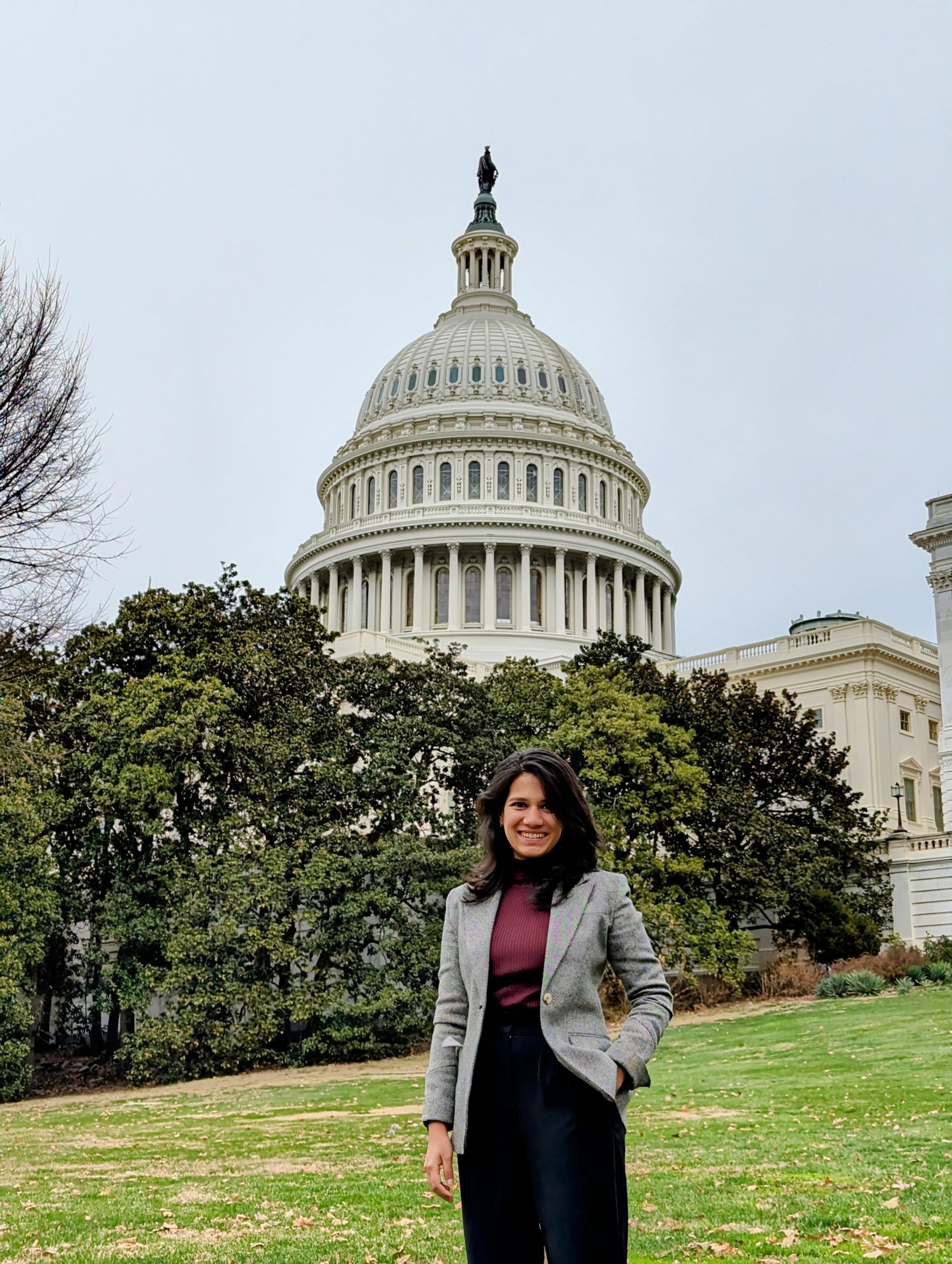
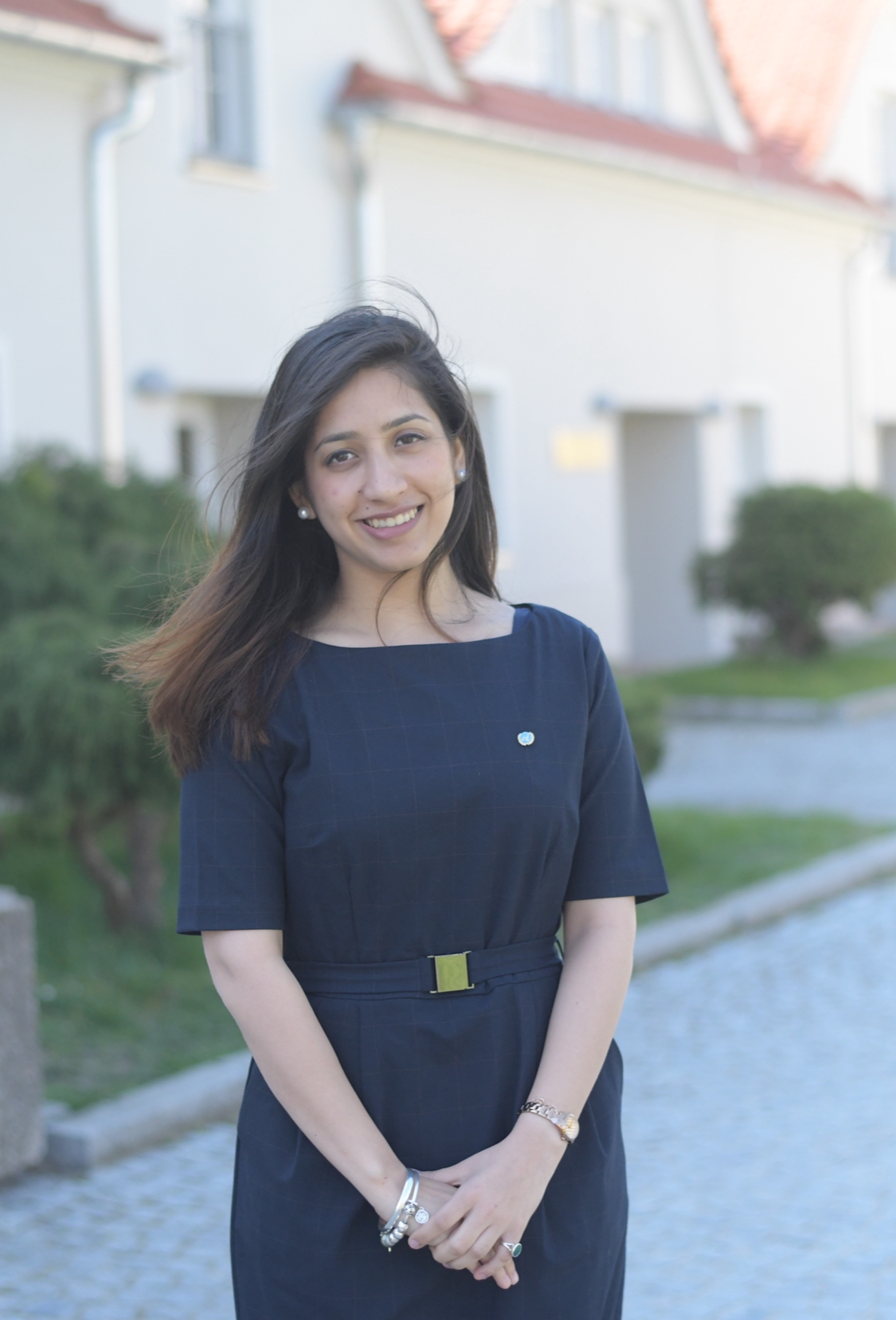
  • “Figure out your purpose in life, have a larger vision and chase that, you are more than your job, your accomplishments and your possessions”- Kudrat Dutta Chaudhary,  Commissioner, Immigrant Rights Commission, San Francisco, California, United States

    “Figure out your purpose in life, have a larger vision and chase that, you are more than your job, your accomplishments and your possessions”- Kudrat Dutta Chaudhary, Commissioner, Immigrant Rights Commission, San Francisco, California, United States

    This Interview has been published by Pragya Chandni  and The SuperLawyer Team

    Ma’am, can you please share the pivotal moments or experiences that led you to pursue a career in law, especially focusing on your journey from studying at the Army Institute of Law to earning an LL.M. at The Fletcher School of Law and Diplomacy?

    I always had a justice oriented personality and the choice was either between Law or Journalism for me when I was growing up. I also was very clear since very early on that I wanted to work in the field of women’s rights and gender based violence and with that I decided that Law would be a path best suited for me. At 22,   I published a novel on the human trafficking of women in Nepal to India after the Nepal earthquake and after completing Law from the Army Institute of Law I went on to study at the Fletcher School where I focussed specifically on gender based violence and International Law. I wouldn’t say that there was one moment that defined my trajectory but I’d say that just the conviction that  my aim in life is to use my education, privilege, knowledge and expertise to help women led me from Law School to graduate school to the positions I’ve held thereafter. 

    Your LL.M. focused on International Laws, and you received the Honos Civicus Award for Civic Engagement. How did these experiences shape your perspective on the intersection of law and civic engagement, and how do you see it influencing your current work?

    I feel both Law and civic engagement have a symbiotic relationship for example it was Raja Ram Mohan Roy’s advocacy against ’Sati’ to legally put an end to it in the 1800’s and today we see the role of civic engagement in creation and abolishing of laws over matters important to the current times. For me, being active and participating in the community, advocating for one’s community and influencing positive change is my mantra and I live these beliefs by being involved in groups and advocacy over issues that I am most passionate about like women’s rights and immigrant rights. 

    As a law clerk specializing in asylum law and gender rights at the Law Office of Robert B. Jobe, can you elaborate on how your work has involved strategizing refugee and asylum claims based on gender-based persecution? What challenges and successes have you encountered in this role?

    In my previous role, I worked with battered women who were fleeing persecution that they suffered in their home countries and it involved documenting their persecution, highlighting issues that were in tandem with the theory of their case. My journey with a client often started from building rapport with them which sometimes can be hard when they have suffered immense trauma in their lives, to creating a safe space where they can feel comfortable in expressing themselves and sharing their stories. One challenge with this work is that sometimes the other person is not open to seeking therapy or doesn’t live in a community that would help them work through their trauma; I learnt how to tackle this bump over the years and I feel the more you grow as a professional and person, there are different approaches you can use to understand their resistance to therapy while also giving them other suggestions to seek support from a place of empathy. 

    You’ve engaged with governmental organizations like USCIS and the Executive Office of Immigration Review. Could you share how these partnerships have contributed to your work in supporting vulnerable populations, and what impact your stakeholder engagement strategy has had on your cases?

    My engagement with EOIR and USCIS as a Law Clerk was limited to the work I was doing but given my position as the Vice Chair of the San Francisco Immigrant Rights Commission, I have more freedom to persuasively raise and inquire about immigrant issues with USCIS that impact immigrant population of San Francisco. That said both EOIR and USCIS are Federal bodies and stakeholder engagement with them happens at the Federal level that hopefully I am a part of at some point in my life.  

    Serving as a Commissioner for the San Francisco Immigrant Rights Commission, you’re involved in developing strategies for human rights and labor rights for immigrants. How do you balance your advocacy work with the practical aspects of implementing policies and programs to address these issues?

    San Francisco Immigrant Rights Commission works on conducting special hearings to make recommendations to the Mayor and Board of Supervisors on Immigrant rights issues which span from creation of employment for asylum seekers to housing for immigrants to taking a stance on H1B layoffs to standing in solidarity with DACA recipients whenever the country fails them. Once we have a special hearing, we review the recommendations, debate them and then forward them. This debate is often rich and detailed with every commissioner bringing practical questions to the mix and we also have the San Francisco Attorney’s office and Office of Civic Engagement and Immigrant Affairs to help us through the procedure. At the end of the day, the aim is to be an accurate representation of the issues of the immigrant community and should there be a gap between the recommendations and the practical implementation of policy, the Mayor and the Board of Supervisors may reject it. 

    Your role as the Chair of Women’s March San Francisco involves designing and implementing human rights programs. Can you provide insights into the specific programs you’ve developed, and how collaboration with government and grassroots organizations has played a role in advancing these initiatives?

    The Women’s March San Francisco is an inactive group right now but in the past I have worked on organizing First Amendment Marches in San Francisco on reproductive rights and have collaborated with different initiatives like we have co-hosted panels on equal pay for women followed by a movie screening (on the discrepancy of pay between the men and women’s football teams in the US) and we led a workshop on how to be active beyond the marches. The beauty about a group like WMSF is that it is an all volunteer group founded by women who are epitomes of  ’stand up fight back’ and has been around since 2016. WMSF has also amplified the work of other grassroots organizations for years and has provided support (whenever possible) if needed.

    As a Research Assistant for Prof. Dyan Mazurana on the topic of child brides in humanitarian settings, how did your work contribute to addressing evidence gaps in child marriage during crises, and what lessons did you draw from this experience?

    My work as a Research Assistant was to assist with a literature review on the topic and then identify key stakeholders who possess experience and practical knowledge in the field of child brides in humanitarian settings so that they could be interviewed and their insights could be recorded by Prof. Mazurana. As my first assignment as a graduate student, a lot of my work revolved around planning logistics for interviews and communicating with the interviewees from INGO’s and governments around the world and I definitely learnt a lot in this process. 

    Lastly, what advice would you give to fresh graduates aspiring to make a positive impact in the legal and humanitarian spheres based on your journey?

    Figure out your purpose in life, have a larger vision and chase that, you are more than your job, your accomplishments and your possessions. AND give back to your community!

    Get in touch with Kudrat Dutta Chaudhary-

  • “Be curious; Curiosity doesn’t always kill the cat. It drives you to explore, learn, and innovate, making you a more effective and impactful legal professional” – Senjuti Mallick, Space Law Specialist, Sr. Legal & Compliance Officer, COMSPOC Corp., USA

    “Be curious; Curiosity doesn’t always kill the cat. It drives you to explore, learn, and innovate, making you a more effective and impactful legal professional” – Senjuti Mallick, Space Law Specialist, Sr. Legal & Compliance Officer, COMSPOC Corp., USA

    This interview has been published by Namrata Singh and The SuperLawyer Team

    Senjuti, your journey from ILS Law College in Pune to being a Space Law Specialist is truly fascinating. Could you share a bit about what sparked your interest in space law, and how you found your way into such a unique field?

    My fascination with space law began with a childlike curiosity about the galaxy and a passion for legal intricacies. This unique intersection of cosmic wonder and legal frameworks set me on a path that would ultimately shape my career in a remarkable way. Early on, I embarked on a series of independent research projects focused on various aspects of space law. What made these endeavors particularly intriguing was the dearth of readily available reference material at the time. I soon realized that this field wasn’t merely a collection of regulations governing celestial bodies light-years away. It was, in fact, a gateway to a profound understanding of how we, as a species, interact with our universe. Fueled by this passion, I followed a trajectory of continuous learning through education and specialized training, which eventually opened doors to opportunities where I could translate my knowledge into real-world applications.

    You’ve been recognized as a ‘Next-Gen Space Sustainability Leader’ by the Secure World Foundation and have been on several high-level panels as a subject matter expert. How does it feel to be acknowledged for your contributions, and what advice would you give to aspiring professionals looking to make an impact in the field of space sustainability?

    Being recognized as a next-gen leader and having the privilege of contributing at numerous high-level panels has been an incredibly gratifying and humbling experience. It’s a testament to the collective efforts of individuals and organizations dedicated to preserving the long-term sustainability of outer space, and I’m truly honored to be a part of this community. The recognition serves as a constant reminder of the importance of my work in ensuring the responsible use of space for future generations. As the space industry continues to expand, it is exciting to play a role in shaping the legal frameworks that ensure responsible and sustainable activities in outer space, marking a transformative era for space exploration.

    My humble advice to aspiring professionals in this field would be – stay informed, stay inquisitive, stay connected. Space sustainability is a complex, interdisciplinary arena; seeking diverse perspectives, collaborating across disciplines, and always considering the long-term implications of any space-related actions would be paramount. It’s a field that requires innovative thinking and a commitment to preserving the outer space environment for future generations, so look beyond the conventional and be adaptable.

    Apart from law, you’ve delved into teaching and programming roles at The Fletcher School, Harvard Law School, Space Generation Advisory Council (SGAC) and International Institute of Space Law (IISL). How have these experiences outside traditional legal roles influenced your approach to your profession? 

    Venturing beyond traditional legal roles into teaching and program management at prestigious institutions like The Fletcher School and Harvard Law School, as well as engaging with dynamic organizations like the SGAC and the IISL, has been a journey of immense growth.

    Teaching not only deepens one’s understanding of the law but breaking down complex legal concepts enables one to view these concepts through multiple lenses. On the other hand, project management and programming roles require one to look beyond legal issues and consider broader operational and policy implications. These experiences have allowed me to engage with a diverse array of students, academicians, and professionals from different cultural and professional backgrounds and have broadened my worldview. It has bolstered my belief in the value of diverse perspectives in solving complex global challenges, like those we face in space.  

    Lastly, these experiences have underscored the importance of mentorship and community building, which has inspired me to be not just a legal expert, but also a mentor and advocate for the future generation of space law professionals. They have reinforced the idea that being a space law specialist isn’t just about understanding the law; it’s about understanding people, technology, and the ever-evolving dynamics of space exploration and utilization.

    Your publications cover a wide range of topics, from ‘Artemis Accords’ to ‘Space Debris.’ If you had to pick one issue in space law that you believe deserves more attention or public awareness, what would it be, and why?

    Among the myriad issues in space law, the one I believe urgently warrants greater attention and public awareness is the management and regulation of space traffic. Space traffic management (STM) encompasses how we navigate, operate, and manage the increasing number of satellites and other space objects orbiting the Earth. With the burgeoning growth in satellite launches, the Earth’s orbits are becoming increasingly congested. This congestion poses risks of collisions, which can add significant amounts to the already existing millions of pieces of space debris, further leading to the Kessler Syndrome – a cascading collision chain reaction leading to increased space debris. This in turn poses a threat to functional satellites and, consequently, to crucial services like GPS, weather forecasting, and global communications that we rely on daily. Public awareness about STM is essential because the consequences of neglecting this issue impact everyone. It’s not just about safeguarding assets in space; it’s about maintaining the integrity of vital services that underpin our modern society. 

    My work at COMSPOC Corporation, a leading provider of Space Situational Awareness (SSA) solutions, has given me firsthand insight into the importance of effective space traffic management. COMSPOC’s cutting-edge technologies contribute to the monitoring and tracking of space objects, enhancing the safety and security of space operations. By seamlessly integrating SSA solutions into the broader STM frameworks, we can not only address the immediate challenges but also promote a sustainable and secure environment for future space endeavors.

    Away from the legal arena, you’re a TEDx Speaker and have been featured on podcasts. Can you share a bit about your experience as a speaker and how you connect your passion for space law with broader audiences?

    One of the most exciting aspects of such engagements is the opportunity to ignite curiosity and passion about a niche field, in people who might never have considered it. I find that storytelling is a powerful tool in this regard. By weaving complex legal concepts with narratives about space exploration, the potential future of humanity in space, or the challenges of managing space traffic, I can make these topics relatable and compelling.

    I also focus on the real-world implications of space law and how space improves life on Earth to drive home the fact that these are not abstract concepts; it’s something that affects everyone’s everyday lives. Additionally, these engagements allow me to dispel common misconceptions about space law. Many people think of it as a futuristic field, but when I talk about current issues like space debris or the legal complexities of lunar exploration, it becomes clear that space law is a dynamic and relevant field today. Ultimately, my goal as a speaker is to bridge the gap between the legal and space communities and the general public. I aim to demystify space law, encouraging more people to learn about, engage with, and contribute to this vital area that holds so much potential for our collective future. 

    Given your unique career, you must have had some unforgettable moments. Could you share one experience that felt truly out of this world, whether it’s related to your work or personal life?

    While there have been many unforgettable moments in my career, one of the experiences that stands out as truly ‘out of this world’ was exploring the depths of ice caves in Alaska. Venturing into the heart of these majestic caves, with their ethereal ice exuding hues of blues and greens, and echoing stillness, felt like stepping onto another planet. It seemed as if time had paused, with rocks and boulders suspended in the icy walls, like comets frozen mid-shower. The temperature, a biting -20℃, only added to the sense of being in a completely different world, one far removed from the familiar. It was a surreal reminder of the beauty and mystery that lie in unexplored spaces, whether on Earth or beyond.

    The other was exploring the Biosphere 2 research facility. This offered a glimpse into what sustainable life-support systems on other planets might look like. This experience was a striking example of the delicate balance we must maintain in our exploration and habitation efforts, both on Earth and in space.

    What other hobbies or interests do you pursue to unwind from your busy professional life?

    Gosh, that’s a tough one. I have too many of those. Trekking, hiking, running, dancing, and star gazing are some of my favorites. 

    If you can give one piece of advice to the coming generation who are just starting their legal career, what would it be, and why?

    Be curious; Curiosity doesn’t always kill the cat. It drives you to explore, learn, and innovate, making you a more effective and impactful legal professional. So, ask that extra question, shake that extra hand, give that extra smile, and go that extra mile. In the same breadth, be ready to listen, and accept that you may not have the right answers and that someone else might be more knowledgeable. 

    Get in touch with Senjuti Mallick-

  • Rackhee Trust, Transformational Coach and Holistic Healer, Ojas, on working with Cyril Amarchand Mangaldas, and finding her spiritual calling

    Rackhee Trust, Transformational Coach and Holistic Healer, Ojas, on working with Cyril Amarchand Mangaldas, and finding her spiritual calling

    Rackhee graduated in law from Government Law College, Mumbai, in 2011. After a successful stint with Cyril Amarchand Mangaldas as Senior Associate, Rackhee discovered her passion for spiritual healing, and left a lucrative career in law to purse her calling. Rackhee Trust is a transformational coach and holistic healer who works with individuals, corporates, children and groups to facilitate breakthroughs in all areas of life. in 2016 she founded her independent venture, Ojas, which offers personal development, spiritual advancement and holistic well being workshops, coaching for private individuals as well as corporates, Reiki classes and one-on-one sessions all over the world.

    In this interview we speak to her about:

    • Her time as Research Assistant at Harvard
    • Working for Cyril Amarchand Mangaldas
    • Pursuing a career in spiritual healing


    What would you like to say to our readers in the manner of introduction?

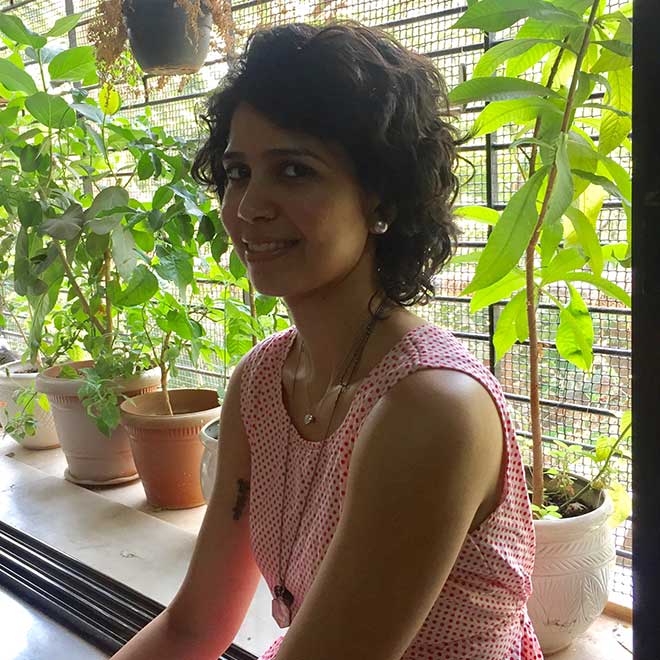
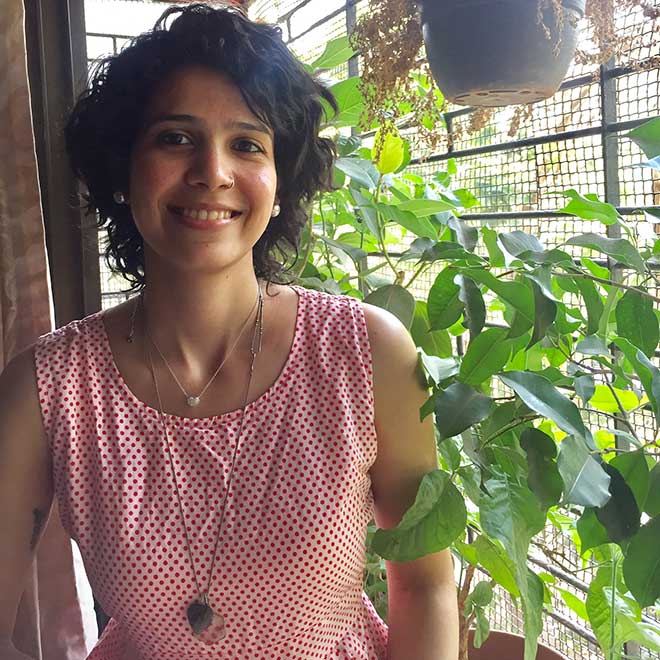
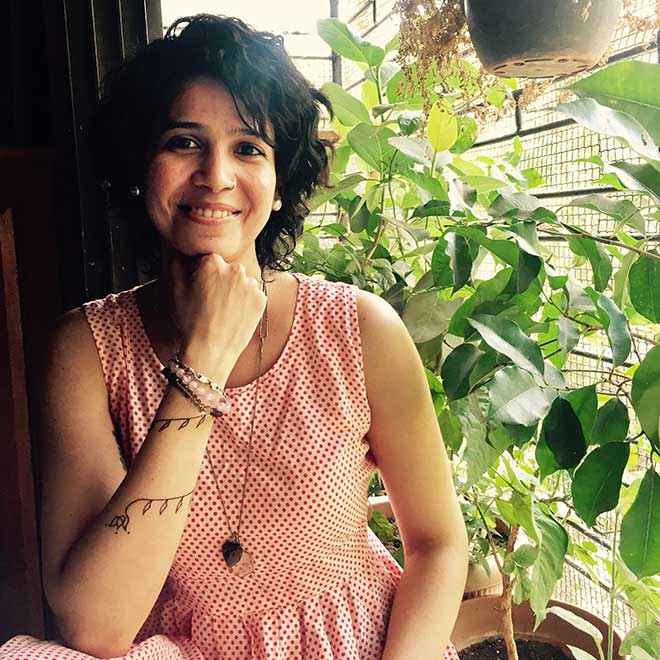
    We have become very accustomed to introducing ourselves in professional terms. Over the years, I have come to realise and experience and that each one of us is far more than just that job, just that role or just that career.

    That said, I am simply a seeker. A seeker of the Self. One constantly discovering more about who I am, my purpose here and what life has to offer.We take up several roles to give us an identity and often lose ourselves in this role itself. My journey has been riddled with several such instances. One such milestone being my short stint of five years as a lawyer. Just as they say you can take a girl out of Bombay but can’t take Bombay out of her, you can take me out of law but can’t take law out of me. I cherish the wisdom and skills law gave me as I continue on my path to everlasting learning, seeking and inner work


    What influenced you to do your undergraduate course in International Relations at Tufts University?

    The need to take up an academically challenging subject that proves to be an asset in my career as a lawyer drove me to majoring in International Relationships during my undergraduate at Tufts University, Boston. Naïve and not realising that pure passion should drive these decisions, I allowed my mind to make a logical decision and yet thoroughly enjoyed my years there.
     

    Tell us a bit about your time studying law at GLC, Mumbai. 

    I was driven to make the most of my time as a law student and gain as much practical experience and exposure during this time. I worked my entire three years during my studentship at GLC, interning in several law firms. I realised even as early as then that this wouldn’t be where I’d end up all the way at the end of my career but it seemed like the right thing to pursue in that moment.


    Could you tell us about the internships you took up, and what you learnt from those experiences?

    My internships were very varied and I am very grateful for that. I strongly urge students to take up diverse internships to explore the different opportunities the law has to offer. Often what we think to be our passion translates into something very different in reality. Getting first hand experience of all those aspects of the law that we know to be of interest or not to be of interest to us can be quite an eye-opener.

    My internships ranged from litigation with a very small home office to a clerkship with a very respected justice of the Hon’ble Bombay High Court, followed by M&A, real estate and banking and finance experience across several prestigious law firms in the city.


    What are the parameters that must be considered in deciding what the next step should be after graduation?

    Given my experience both as a lawyer and law student struggling with a “decision paralysis” as you accurately term it, all I can say is follow your heart. We often make the wrong decision of choosing what is “safe”, “logical”, what will make zyx happy or proud of you. This may not be as easy at it seems because you may need to introspect a lot to really get in touch with what you’re most passionate about or what your heart really wants. However, when you get in touch with your heart you will realise that you also get in touch with the mighty potential deep within you to make that possible.

    The parameters to be considered once you graduate are really: (i) what really makes happy? (ii) for a moment if money didn’t matter what would you be doing? (iii) are you choosing xyz role/job for the money/lifestyle/freedom/independence or something else? (iv) what is really driving your decision? (v) what else can you do to achieve happiness and also the money/lifestyle/independence/something else that you’re looking for?

    If you can answer these questions truthfully to yourself, you will have made the best decision for yourself. Trust that decision and follow through.


    Could you share with us your experiences as a Research Assistant at Harvard’s Center for Public Leadership?

    It was a great experience working as an RA at Harvard’s Centre for Public Leadership, if you like doing research. At this stage, I wasn’t in touch with what I love doing most. The learning experience was wonderful and it definitely honed my research skills which come handy as a lawyer. I encourage all law students to take up as many opportunities to work on their research skills as possible. Not all law schools provide the environment to do so, GLC definitely did not. You may struggle as an intern/lawyer without knowing how best to research.
     

    Tell us about your early professional experiences at Naik Paranjpe & Company.

    This was quite natural for me as I was accustomed to working when this transition took place. In fact I had been working with Naik Paranjpe & Company for over a year before I graduated. The bonus was the associate pay when I did finally graduate! That’s the only real transition.


    From being a Senior Associate at Amarchand Mangaldas, what inspired you to take the leap in beginning your career as a transformational coach and holistic healer?

    Honestly, doing what I currently do has always been my calling. Sometimes it takes many turns and twists to realise that you landed up where you started off and that is truly who you are. I have been a Reiki practitioner for over eighteen years and the foundation of who I am lies in my spiritual journey and practice which began at the very young age of three when I met my spiritual master and Guru, Swami Chidvilasananda. My life has been riddled with experiences where I have constantly sought the answer to several questions surrounding Who am I? What is my purpose in life, why am I really here? and so on. This introspection and constant questioning lead me on my spiritual journey which has eventually culminated in my following my heart and making a life out of it. Taking this so called leap came very naturally as the time was right and the opportunities simply presented themselves. Like I teach my students now, when you open yourself to the universe, everything simply flows as you are aligned with the flow itself.


    What are the challenges and learning opportunities that you were faced with in establishing Ojas? 

    The challenges I faced were self created obstacles. Obstacles of my own limiting beliefs and as I overcame them with the work I do I began realising the power of what I do itself. My obstacles presented me with the opportunity to overcome them for myself before I could be instrumental in others overcoming their obstacles. So be it in their career, personal life (relationships) or physical/mental/emotional health, I experienced that the answer lay deep within ourselves. In fact, the root of the problem too lies within, although often it may seem to be externalised in the form of a situation, pattern, person, experience, consequence or decision. My biggest challenge was attracting clients who didn’t want to pay or didn’t have the money to pay for what I did. My first two weeks in my new role was the most challenging. I remember sitting down with this and working on myself one late night and there has been no looking back since then. Today I am humbled and grateful to say I earn more than what I earned as an associate leaving Cyril Amarchand Mangaldas, and the earning is effortless.

    The outcome of this experience was the realisation that each of our challenges are presented to us merely as an opportunity to discover what lies beyond it. When we tune in and get in touch with what really lies at the heart of this challenge, it feels like the opening up of a Pandora’s box. Suddenly, everything opens up and before you know it that challenge itself is not there anymore (or is not a challenge any more!). This is what my learning in establishing Ojas brought me to. A very deep understanding of who I am and what I really do.

    Ojas seeks to touch lives. To bring every seeker to a space of Self Empowerment through Knowledge of the Self. Healing, coaching, etc. are very limited labels. At Ojas we simply come together as seekers of knowledge, the Self and the truth. The journey reveals the rest.
     

    What courses did you take up in preparation for your job as a transformational coach?

    The biggest course has been the learning as a result of my journey through life. Each experience has given me so much that it has added to my unique skill set. No two people who go through the conventional “courses” or “training” will come out the same because each one’s life journey will mould their individual ways.

    That said, I have been through extensive international training in various paths that lead to the healing of the subconscious mind which carries the key to all our suffering and challenges. I am a Reiki Grand Master and practice Reiki while also teaching it. Other than that I am an internationally certified Emotional Freedom Technique (EFT) practitioner, Matrix Reimprinting Practitioner, Neurolinguisitic Programming Pracitioner, Breakthrough Coach, Magnified Healing Practitioner & Teacher, Bach Flower Therapy Teacher and Practitioner, Angel Healing teacher and Practitioner (among a lot else).


    Did you have a mentor or guide during the formative years of your career? 

    I have had several mentors along my journey. The list is endless and I am very grateful to each of them for the role they have played. This is a question that has almost haunted me all my teenage years because I wondered whether it was essential to have one guide, as I never did. Over the years, I realised that there had been several role models and as I evolved they too kept shifting. So in my experience it is very important to keep having more and more mentors or role models for different aspects of ourselves (as we are multi-faceted individuals and not linear) as we continue to evolve. This allows for our evolution to take place consistently without stagnation and in an all round manner.


    As the Founder at Ojas, what does a typical work day look like for you?

    Every day is very unique and that is what I love about what I do. My day usually begins with some self-work in the form of meditation or some such inner practice. Then my day is typically studded with client appointments all across (beginning as early as 6 am and concluding no later than 6 pm). In between I’m busy writing course material for the several courses I deliver and am continuing to develop. Reading, writing, reflecting, sharing, growing and relaxing typically encompass every day in the life of me. I have a beautiful and constantly growing set of students and clients across the world and we reflect and share and grow on a daily basis. This keep my inner work in check on a daily basis and my inner growth continues to take place thanks to each and every one of them.

    Please share with us the initiatives, workshops and projects that Ojas takes up?

    At Ojas we take up several projects, initiatives and workshops ranging from ones offered to individuals, groups as well as corporates and uniquely created to cater to their goals and needs. There is no cookie cutter approach to anything we do because each individual is unique and so what we have to offer to is needed to be such. Our initiatives and workshops range from Reiki classes, manifestation workshops, stress busting initiatives (that work at the level of the subconscious mind), targeting relationship blocks through various tools, trainings on effective speaking, meditation and heartfulness trainings, teaching about Angels and different realms of energies, monthly meditations, Bach Flower Therapy courses and tons more.


    What are the key attributes that one must develop in order to excel in stressful workplaces in the legal profession? 

    My work has brought me to a state of complete stressfreeness. It is an inner journey to get here really. I can say for all my clients and students that they have achieved this or are getting there and there are no “key” attributes that will get anyone there because each one is wired so differently that the remedy for each will be unique.

    That said, the key to each one’s stress lies in the subconscious and when we deal with what’s deep seated within the subconscious mind, a state of stress-free freedom arises spontaneously. Doctors, therapists, counselors etc. are trained to treat surface level issues. Each symptom is treated in isolation. In the work we do at Ojas, each individual is looked at as one whole comprising of all that which makes up who they are.

    The healing takes place deep inside at the level of the root cause (of all surface level issues). Often the root cause lies in some situation, emotion, event, memory etc. that took place several years or even moments ago. That leads to thoughts, feelings, emotions, beliefs, habits, actions, decisions, choices, patterns and personality which eventually manifests in the form of that which is troubling us (as disease, relationship issues, money/finance/career related struggles etc.). When the root cause is healed, the surface level issue disappears spontaneously. This is the answer to releasing stress at your workplace and in life in general and experiencing waves of joyful abundance through a life that may seem dry and regular. Each one of you can have this experience, the question is whether or not you are ready for it!


    How do you manage your time between your professional and personal interests? 

    There is no difference and yet they are balance. My professional and personal interests are one and the same. I am very blessed to have a partner who loves what I do and so what we do is part of our lifestyle. I believe only when you truly are what you do can you enjoy both personal and professional as one and the same.


    What are the challenges you have faced in building up your career as it stands today?

    We are steadily moving in the direction we had envisioned. We are blessed to be moving forward at a faster pace than we envisioned. I don’t believe in planning and envisioning in as much detail (as a five year plan) because even our vision can limit the limitless possibilities. All I know is that Ojas is on to something very big, a universal revolution. It will take us places as also each individual associated with us in any form.


    What advice would you like to give our readers, who are mostly law students and young lawyers?

    Follow your heart. Listen to your inner voice. You know what really makes you happy. You know what YOU really want. Go for it. Life is a miracle, anything is possible. Believe in this. You are capable of achieving far more than you can even imagine. Just trust in the universe a little more than in your own fear and insecurities and watch where all you end up! Enjoy the journey!

  • Deborshi Barat, Actor and capital markets lawyer on passion for theatre, corporate law and LL.M from Tufts Univ

    Deborshi Barat, Actor and capital markets lawyer on passion for theatre, corporate law and LL.M from Tufts Univ

    Deborshi Barat is a professional actor along with being a corporate lawyer. He had graduated from NUJS, Kolkata in the batch of 2008, thereafter he worked at worked at S&R Associates, Delhi for a little more than two years. Most amazingly he took out time between all these and pursued his passion for acting and theatres.

    His first break was in a national award winning movie ‘Ranjana Ami Ar Ashbona’ thereafter he has acted in many Bengali Megaserials. He is currently pursuing an LL.M and MALD (Master of Arts in Law and Diplomacy) from the Fletcher School, Tufts University. He is also an author having his first book in Magic Realism already published!

    Let’s ask him about:

    • His law school experience at NUJS and work at S&R Associates
    • His passion for movies and theatre, and receiving the first break
    • LL.M experience from Tufts University and future plans


    deborshi-barat-3How would you introduce yourself? Could you please share a little bit of what motivated you to pursue law as a career?

    I was interested in the humanities subjects in school, History, Pol. Science, Civics, the social sciences. In the latter half of my studies at St. Xavier’s Collegiate School, I was involved in debates and public speaking. Various things converged at a definite focal point, and suddenly I was giving the law entrance exams.


    How did you make the initial shift from a science background to law? Would you say it was difficult settling in?

    Not at all. I wasn’t cut out for Science. After a few months into the stream, I realized I would make a shift to something that augured well both for my skill-set and interest. Law was a much better fit for me.


    Please tell us a bit about your time at NUJS. Please tell us about the manner in which you approached academics while in college.

    NUJS was a lot of fun. I approached the academic aspect of law through logic, common sense, and understanding the broader concepts. Getting to the theories and tenets was half the job, obviously requiring further embellishment, but then what are photocopied notes for? Jokes apart, the environment in a lot of classes was one of inquisitive pedagogy, learning through questions, the old Socratic method, and that helped immensely to sustain interest. Other than academics, debates and dramatics kept me occupied.


    deborshi-barat

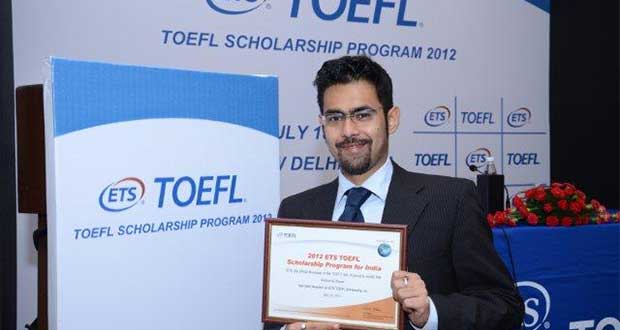
    You had scored an amazing 119/120 in the TOEFL, bagging the scholarship. How much effort would you say it had required you for this achievement? What prompted you to take this test?

    It isn’t very difficult for someone who’s been taught in English through school and college to secure a high score in this test. It’s designed in such a way that Indians, who are better in English than most other nationalities, can perform well. I was applying for a masters degree and so I took the test. Later, when I was looking for funding, I stumbled across the TOEFL scholarship and applied for it.


    When did you start pursuing acting? Was it one of your childhood dreams to act in movies, or did it materialise while at NUJS?

    I’ve been acting on and off through school, especially in the last two years, but it was only after I entered college that I started acting with professional theatre groups. NUJS itself wasn’t a catalyst to pursue acting. Since Calcutta is my hometown and I was enrolled here, I had a lot of time to act, rehearse. Acting in movies wasn’t really a dream, it happened accidentally. I’m mainly a theatre actor.


    deborshi-barat-6

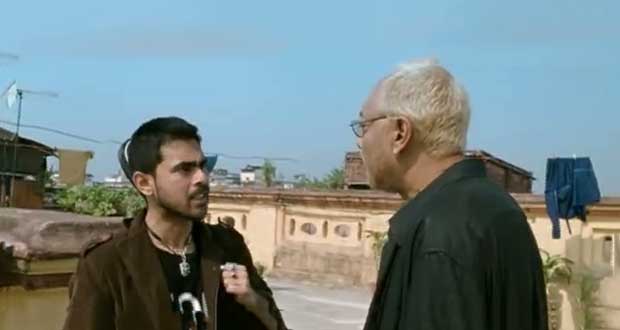
    You have acted in the National award winning movie, Ranjana Ami Ar Ashbona, and many other movies and series. Please share with us how all of this happened. When did you receive your first break?

    I was working at S&R Associates in New Delhi for a little over two years, mainly doing capital markets work. I quit my job around the end of August 2010 to process applications for higher studies in U.S. universities for the next year. Since I was applying for Policy studies as well, I was required to give the GRE. Around the time of the test, the Airtel Theatre Festival was happening in Kolkata and my friends persuaded me to be a part of it. A panel discussion was organized to promote the festival, exploring the intersection of theatre and films. A friend of mine was moderating the discussion, and reputed director Anjan Dutt was a speaker on the panel, while I was a speaker too. Later, Mr. Dutt approached me to cast me in his next film, which was Ranjanaa. Subsequently, on account of certain pressing personal circumstances, I was forced to defer my admission abroad and stay on in Kolkata. During this time, I got a few more offers in a couple of other films and some megaserials. However, I did these projects as a pastime, not as an active pursuit of the creative arts.


    You are the author of a book, ‘The Hunter of Pigeons’, published by Partridge, a Penguin Random House Company. What is this book about? What made you write it?

    This book is a thriller. As a genre, I’ve been deeply fascinated by magic realism, and accordingly, I’ve tried to incorporate elements of it. The book, however, is a fast-paced mass market work of fiction. During the time that I was in Kolkata, after I’d quit my job and was waiting to go abroad, I had some time on my hands and began working on the book.


    Please tell us about your experience with FeminIjtihad as a Supervising Lawyer. What were the responsibilities you were entrusted with?

    A friend of mine at the Fletcher School connected me with Natasha Latiff, the founder of Femin Ijtihad, who was then working on a project in Afghanistan. With her, I render legal opinions aimed at strategic advocacy of human rights, especially for women in Islamic countries. I presently work as a Supervising Lawyer.


    How was your work as a corporate lawyer at S&R Associates between 2008 and 2010. Please tell us a little about your work profile while working there. What were the responsibilities you were entrusted with?

    I completed an internship at S&R and Mr. Sandip Bhagat, partner at S&R, offered me a job while I was in my last year of NUJS. I greatly enjoyed my stint there. Most of my work involved Capital Markets, with some litigation and M&A work. S&R has a superb work culture, with a special emphasis on quality, attention to detail and thoroughness. I learnt a lot on the job.


    deborshi-barat-2

    How did you decide to quit your job and start up with your independent practice?

    My plan was to process applications for higher studies abroad after I quit and leave the country. However, I was constrained to stay back in Kolkata for a couple of years thereafter. Apart from certain medical issues, I was helping out my family with some legal matters related to property and allied concerns. This prompted me to practise independently for some time, mainly liaising with other lawyers, briefing counsel, drafting, etc. Not only were the skills required for practice entirely different, the motivation and environment of work was different as well. Among other things, the process was far less efficient, slow, ridden with procedures, frustrating delays, etc. One had to get used to a slow-moving dynamic after the deadline-driven corporate culture of a firm.


    How is Masters of Arts in Law and Diplomacy along with a Masters in Law from Fletcher School, Tufts University. Please tell us a little about your course structure. What made you choose this programme?

    I wanted to use my law degree and training as a base and explore the Policy paradigm, including International Relations. Hence I applied to the Fletcher School where the keystone degree, the MALD, suited my needs perfectly. Once at Fletcher, I spoke to a few of my professors and they convinced me to apply for a joint LL.M. degree as well. The International Law course structure at Fletcher is one of the best in the world.


    How did you go about the admission process? What are your career plans after the completion of your joint degree?

    The admission process was long and arduous. I took a lot of time picking and choosing the universities/courses for which I’d apply, speaking to many people, researching. The process can be a lot quicker if one knows exactly what he/she is looking for, organizing the paperwork accordingly, focussing on the next step. I have a few career plans, but I’m happy to surprise myself!


    Is there a stark difference in the teaching pedagogy between the teaching model followed in law schools abroad and those in India? What are your views on this?

    In principle, they are the same. In effect, it’s quite different. The Socratic Method is followed more strictly in U.S. universities. The reading materials for each class are usually substantial, and one is required to have reviewed them thoroughly before the class, such that all students can engage in a discussion during the class which the professor moderates. Issues and questions are raised, clarified, argued upon. This may also be a reflection of education at the masters level, which assumes a level of maturity. I can’t vouch for all law schools in India, but from what I’ve heard, the teaching model in the country involves a lot of in-class lectures, where the professor ‘teaches’ (as opposed to leading a discussion among students) and students listen.


    deborshi-barat-5

    What were the biggest hurdles and challenges in the early days of your career as an actor? How did you deal with them?

    I’m still dealing with them! A career as a ‘professional’ actor is one of extreme frustration and patience. Acting is only part of the job, it involves networking, knowing people, haranguing directors, agents, showing up for umpteen auditions, etc. No matter what people say, there’s a huge element of luck. Acting merit is, I think, a very small component of the deal. I am quite bad at networking and following up, so I didn’t do any of it. My bad. My friends and family say I should push more, but I tell them that I didn’t sign up to do all that. I’ve been lucky to get the few projects that I did. Once in them, I tried to do my best. In movies and serials, I haven’t done a major role. So yes, they also serve who only stand and wait.


    How do you manage to divide and manage your time effectively? Have you thought of pursuing a career in acting fulltime?

    If there are multiple interests, one usually finds time for each of them. Of course, one has to have the right circumstances, and I’ve been lucky that way. Often, the time is divided into stages. For example, when I was working at S&R, I didn’t do any theatre. After I quit and I was on my own, I had more freedom, more flexibility to dabble in other stuff, things of interest, writing, acting, theatre. I’ve thought of pursuing acting full-time, and upon careful deliberation, I’ve decided against it. Eventually I would love to be a full-time writer though, god willing.


    As a concluding message, what would be your advice to law students who would innately want to try their time in acting?

    Law and acting have very little in common. It’s tempting to draw parallels but it isn’t true. Courtroom dramas are good for books and movies. If anyone wants to pursue acting, one should be prepared to give it a lot of time. Besides, law students already have the option of lucrative careers, meaningful work, by dint of their education. In that scenario, it is even more difficult not to crack in the middle of a frustrating wait for acting projects to come along.