Tag: UC-Berkeley

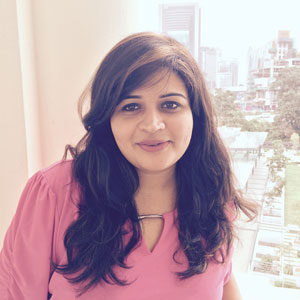
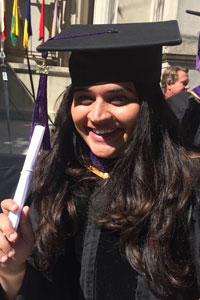
  • “I’ve always believed that being a lawyer is nothing less than a superpower- it gives us the tools to understand, question, and change things that most people simply have to accept.” – Shreya Chaudhary, Associate Attorney at Maune Raichle Hartley French & Mudd, LLC.

    “I’ve always believed that being a lawyer is nothing less than a superpower- it gives us the tools to understand, question, and change things that most people simply have to accept.” – Shreya Chaudhary, Associate Attorney at Maune Raichle Hartley French & Mudd, LLC.

    This interview has been published by Anshi Mudgal and The SuperLawyer Team

    As a dual-qualified attorney in California and India, what first sparked your interest in the legal profession, and how did you chart your path in this field?

    I come from a family of lawyers, so this profession was all I knew growing up. I didn’t realize the impact of my dad’s work at the time but saw how his efforts positively affected his clients. I remember that on many occasions, they wouldn’t have enough money for his full fees but would bring him part of their seasonal harvest. Other than that, it came to me more naturally than most people—it never felt like work, and I was so excited to go to law school and later into litigation. Isn’t it a privilege to be in a position to make a difference in people’s lives and also get paid for it?

    For California, I never had plans to move, but I absolutely fell in love with the state and decided to get licensed in the one thing I knew—law!

    You recently passed the California Bar Exam on your first attempt. What preparation strategies proved most effective for you, and what advice would you offer to others aspiring to clear it? How has this qualification expanded your professional scope?

    As for preparation, I took an online bar prep course called Themis. Going to Berkeley Law for my LLM definitely helped, as it put me among the smartest people who have a reputation for passing this difficult exam on their first attempt. Also, it’s crucial to know one’s learning style. I really appreciate learning from my own handwriting, so I wrote everything down even though my bar prep tool didn’t ask me to. I also know that I panic toward the end, so I developed my own timeline, which was different from what the bar prep suggested. I took a study leave from work and had just one goal for those 12 weeks. I ate, slept, meditated, everything centered around my bar prep. Honestly, I loved the drive of taking on something so challenging and had fun with it. There’s no one-size-fits-all way to go about this, and I’m happy to answer specific questions for whoever wants to take this exam.

    As my interest is in litigation-related work, I wouldn’t say it expanded my scope; rather, it created any scope that exists, because one cannot take even a tiny step in litigation without a license to practice.

    Moving from legal practice in India to building a career in the United States must have involved navigating many differences. What were the key hurdles you faced in adapting to the U.S. legal system, and how did you overcome them?

    Oh, so many! I did not have anyone from my family or extended family who was a U.S. lawyer. From choosing law school to taking the bar, applying for internships, jobs, and visas—every step presented hurdles, or should I say, kept life interesting, as my friends like to put it. The biggest one for me is the visa, with, dare I say, the state of affairs right now. Also, finding a job in the U.S. is so different from India. In India, we don’t network enough, which I had to teach myself after moving here. I want to give credit to Berkeley, as they had a whole program to train international lawyers to get acquainted not just with the U.S. legal system but also with its unique job market. I didn’t expect it, but my Indian work experience was valued by U.S. employers as I think the two things, we have in common with them is that they value the “grind,” which they could supposedly see in my resume, and our common law system—and that’s probably why I was a preferred candidate for many jobs I applied to before joining the Office of the District Attorney, Alameda County.

    Work environments in both countries are completely different as well. There are different work ethics, professional relationships, sense of humor, and protocols. However, one funny realization is that lawyers everywhere are more or less the same kind of people so it was still a familiar territory. 

    You have served as an editorial board member for leading legal publications and also worked as a law clerk. How did these roles deepen your understanding of the U.S. legal system and prepare you for your current role?

    U.S. law school journals, and also Indian ones- stimulate a legal mind well. It’s so good to become aware of different ideas, methodologies, and international legal issues, and I think my favorite part of being in a journal was building community with like-minded people. I was in the Ecology Law Quarterly with other environmental law nerds and had some great academic and fun discussions in the process.

    My clerkship with the District Attorney’s Office was my first U.S. job, which makes it special to me. I feel fortunate to have worked for a highly reputed government office in the Consumer, Environment, and Special Litigations Department. It was a fast-paced environment, and there couldn’t have been a better way to learn U.S. law and see it in action than that. I worked on civil procedure assignments, evidence code, and criminal code—all at once. One of my first assignments at the DA’s Office involved prosecuting a corporation after a factory fire that significantly affected air quality for people in that vicinity, given California’s high ambient air quality standards. These assignments strengthened my understanding of environmental enforcement and also informed my approach to research, brief-writing, and attention to detail in my current role.

    During your LL.M. at UC Berkeley, you specialized in Energy Law and Clean Technology while contributing to journals like the Berkeley Technology Law Journal and Ecology Law Quarterly. How did these academic and editorial experiences influence your perspective on the intersection of law, technology, and environmental sustainability?

    A topic that’s very close to my heart is climate change. We treat it as “important” but not “urgent,” which troubles both my personal and legal mind. At Berkeley Law, I enrolled in courses such as Environment and Energy Law, subscribed to technology- and environment-related journals, and participated in clean energy student groups to engage with these issues and understand the work of scholars in the field. Being surrounded by like-minded people strengthened my commitment and deepened my understanding of how cleaner technologies are urgently needed on a global scale. The intersection of use of environmental resources and law is particularly interesting to contrast between the US, Europe and Indian laws. We have many vulnerable communities who get affected first by the impacts of degrading environment and climate crisis, and there is a lot of work that remains to be done to protect them. 

    In your current role, you work to support mesothelioma victims and their families. What drew you to this area of law, and how do you balance the legal complexities with the human and emotional dimensions of these cases?

    I honestly don’t know how to answer this question. From my practice in the Allahabad High court, Lucknow, to here in California, I have struggled with getting too attached to the outcome and client’s problems. I don’t know if that makes me a better or a worse lawyer. But I try to overcome that by something my senior told me early on during my India days that “you play a very small role in the grand scheme of things.” I owe my client to do my best work for their entrustment in me as their lawyer but I sure cannot change their destiny. Very recently, a client of mine passed away from mesothelioma (cancer) before the case went to trial which happens more often than not in this field. I witnessed his struggle through the deposition and eventually he just couldn’t make it to the end of the case. It breaks my heart but if I have done my role well, then it becomes easier to strike that balance. This also keeps me on my toes to put in the hard-work. 

    What advice would you give to students aiming for an international legal career, and how can they stay ahead of global legal developments?

    Just a few simple things. First, one needs to figure out if they want to study here, do an LLM or a JD, or directly take the California Bar (the only U.S. bar open to foreign attorneys without coursework). My advice would be to study here first, as it helps one get acquainted with the culture and decide whether it’s the right fit. Moreover, getting a job is nearly impossible without a strong network, which a renowned university greatly helps with. A warning—it is very expensive. I chose Berkeley over other good colleges that offered me scholarships because it was one of my dream schools, but one should always rank priorities according to their circumstances. Advance research on scholarships and on-campus jobs could help. I had an on-campus job that helped me a lot financially during school. It’s important to work smart—so if the plan is to immigrate to a new country, students should also consider Canada, Singapore, or the UK (the more welcoming ones in today’s environment). 

    One thing I would have done differently is to have a better long-term plan at least a year in advance of actually applying. I didn’t understand at the time that this decision would completely reshape my life as I know it. But I would love to help anyone who has doubts about the process or wants to learn from my experiences—feel free to reach out to me on LinkedIn.

    With the demands of your profession, how do you maintain balance in your personal pursuits, and what is your vision for the future of your practice?

    The litigation work culture in the US is similar to India as the work never stops from the inception of the case till the verdict. One can easily preoccupy themselves as there is always so much to do. However, in my experience, that sometimes leads to isolation, and when you are thousands of miles away from family, building a community becomes equally important. When I’m not working, I spend time with my friends, which is my number one priority as rejuvenated weekends significantly boost my motivation through the week. We often travel and hike in nature, as California is truly blessed with pleasant weather throughout the year. Of course, there are weekends that turn into working ones when the need arises like meeting a court deadline on Monday but I don’t mind that because I genuinely love what I do and take pride in showing up for my clients who are unfortunately struggling to live.

    I’ve always believed that being a lawyer is nothing less than a superpower- it gives us the tools to understand, question, and change things that most people simply have to accept. Right now, my focus is on mastering California law and becoming as confident in this system as I was in India. The process of adapting to a new legal culture has been challenging but also deeply rewarding—it’s pushed me to grow, think differently, and refine my craft. Whatever I’ve gained intellectually, I’d definitely want to leverage it to contribute to the Indian legal landscape in different ways, for eg.  I am working on a research paper on a social legal challenge that India faces; Grow as a multi-jurisdictional professional, and have fun along the way.

    Get in touch with Shreya Chaudhary –

  • “Having a solid technical foundation helps me engage meaningfully with inventors, understand the core of their innovation, and translate that into precise legal language.” – Davender Punia, Patent Counsel at Wadhwa Law Offices.

    “Having a solid technical foundation helps me engage meaningfully with inventors, understand the core of their innovation, and translate that into precise legal language.” – Davender Punia, Patent Counsel at Wadhwa Law Offices.

    This interview has been published by Anshi Mudgal and The SuperLawyer Team

    From engineering at BITS, Pilani to an LL.M. in Law & Technology at UC Berkeley, what inspired your transition from a technical role to a legal career, particularly in the field of intellectual property?

    I have always been someone who wanted to carve a slightly unconventional path. While many of my peers were heading towards an MBA or preparing for UPSC, I found myself questioning what would truly keep me intellectually engaged and professionally satisfied in the long run. That’s when I started reflecting deeply on my interests and I realised that law was something that genuinely intrigued me.

    So, I decided to take the leap and pursued an LL.B. from Delhi University along with my first job. During my law studies, I naturally gravitated towards patent law. It was a perfect intersection of my technical background and growing interest in legal thinking. That blend of technology and law really excited me.

    After completing my LL.B., I wanted to deepen my understanding and focus on this intersection, which led me to pursue an LL.M. in Law & Technology at UC Berkeley. Since then, I’ve been working as a patent lawyer, and while the transition from engineering to law was certainly a bold and challenging one, looking back now, I can say it was one of the best decisions I have made. It has been a fulfilling journey.

    In what ways has your engineering background influenced your approach to patent drafting, prosecution, or litigation especially when dealing with highly technical sectors?

    My engineering background plays a crucial role in how I approach patent matters. It has trained me to think logically, break down complex inventions into simpler components, and understand the technical nuances that are often central to patent drafting and prosecution. When dealing with inventions, having a solid technical foundation helps me engage meaningfully with inventors, understand the core of their innovation, and translate that into precise legal language. This ensures that the patents I draft are not only legally sound but also technically accurate and strategically strong. 

    Even in litigation, my ability to understand technical documents, prior art, and expert reports gives me an edge in building arguments and cross-examining technical witnesses. It helps bridge the gap between the legal and technical worlds which is essential in patent law.

    Transitioning from engineering to law is quite a significant shift. What were some of the key challenges you faced early on in your legal career, and how did you navigate them?

    Yes, the transition from engineering to law came with its fair share of challenges. The skill sets required in both fields are quite different. In engineering, the focus is largely on problem-solving in a structured, often individual capacity. On the other hand, law is much more dynamic and people-facing involving teamwork, client interactions, and the ability to communicate complex ideas clearly.

    Initially, it was a bit overwhelming to shift from working quietly on technical problems to having to articulate arguments, think on my feet, and engage with clients, patent officers or courts. Adapting to this new environment took time, but with consistent effort and mentorship, I eventually found a rhythm. Looking back, I see this shift not as a hurdle but as an important phase of personal and professional growth.

    You’ve been closely associated with the automobile industry- both through your prior engineering role at Maruti Suzuki and working on patent strategy for automobile companies. What are some of the unique IP challenges that companies in this sector face when operating in India?

    One key observation I have made while working with Indian automotive companies is that IP is often not treated as a strategic priority. It usually comes in late during product development, especially in a sector traditionally focused on production and supply chains. Enforcement is a major concern, particularly when it comes to tackling counterfeit products. Another challenge lies in vendor-level IP protection,many companies work with third-party suppliers without clearly defined IP ownership in contracts, which becomes a legal nightmare at a later stage.

    However, the landscape is evolving. With the rise of EVs, connected mobility, and software-driven features, IP is becoming increasingly important. Buyers today often care more about tech features than mechanical specs. Yet protecting such innovations especially software and AI is tricky in India due to patentability restrictions. A proactive IP strategy is now more essential than ever.

    Having represented clients in opposition proceedings and patent office hearings, how would you assess the Indian patent ecosystem in comparison to international jurisdictions? What best practices could India adopt to strengthen its system?

    The Indian patent ecosystem has come a long way, especially in the last few years. Timelines have improved, rules have been amended, digitization has made filings and hearings more efficient, the Patent Office is becoming more responsive, and special IP divisions are being set up at major High Courts. However, when compared to some international jurisdictions, there’s still room for improvement particularly in consistency of examination standards and depth of reasoning in office actions or opposition decisions.

    Another area where India can improve is in increasing technical training and specialization of patent examiners, especially in emerging fields like AI and biotech. Greater transparency in outcomes and timelines would also build confidence in the system. Adopting global best practices and encouraging early engagement between applicants and examiners, could also go a long way in strengthening the Indian IP ecosystem.

    Your time at UC Berkeley exposed you to global perspectives on intellectual property and business strategy. How has this international exposure influenced your legal thinking and practice within the Indian framework?

    Patent law is one field where the core concepts like novelty and inventive step remain largely uniform across major jurisdictions, thanks to global frameworks like the Paris Convention and the Patent Cooperation Treaty (PCT). My exposure to the US patent system and interactions with peers from over 50 countries at UC Berkeley significantly broadened my perspective on how different countries approach similar IP challenges.

    This international experience equipped me to handle patent prosecution in jurisdictions like the US and EU with greater confidence. More importantly, it helped me view IP not just as a legal formality but as a strategic business tool. I now encourage clients to think about IP early and align it with their commercial objectives. It also made me more mindful of global standards in drafting, prosecution, and portfolio management. Bridging international best practices with the Indian framework has added real value to my practice and client outcomes.

    With rapid technological advancements, how do you see AI reshaping the legal industry? What steps can lawyers take to remain relevant in the age of AI??

    AI is a topic I am deeply passionate about. I would like to touch on two key aspects here- how AI is transforming the legal profession, and the legal challenges AI itself brings.

    AI will reshape every area of law, from IP to liability and contract interpretation to competition, data privacy, and regulatory compliance. Even without a dedicated AI law like the EU AI Act, existing legal frameworks will increasingly need to address AI-related issues. The day is not far when most law firms will have dedicated AI law practice.

    On the other hand, AI is also changing how we practice law. Given the template-driven and repetitive nature of much of legal work, AI tools are being widely adopted to improve efficiency. Major law firms in India have started integrating AI into their workflows. While this boosts productivity, it also raises concerns about the future of certain legal roles. 

    As the saying goes, “AI would not replace lawyers but will replace lawyers who don’t use AI”. To stay relevant, legal professionals must embrace technology, continuously upskill, and focus on areas where human judgment, strategic thinking, and empathy remain indispensable.

    Following up on the previous question, what are the key legal issues AI raises in the context of IP law?

    AI raises several complex legal questions in IP law because it challenges traditional concepts of authorship, inventorship, and ownership. For instance, most patent and copyright systems globally require a human creator or inventor but how do we address inventions or creative works autonomously generated by AI? Should the AI’s developer, user, or owner get the rights?

    Another major issue is training data. AI models are often trained on vast datasets that may include copyrighted works, raising concerns about infringement and fair use. Determining the originality of AI-generated content also becomes tricky when the model relies on pre-existing works.

    Additionally, protecting AI algorithms and models themselves whether through patents, trade secrets, or copyrights poses its own challenges, especially when the invention combines both software and data-driven elements. Courts around the world are grappling with these issues, and it’s prompting a re-examination of existing IP frameworks. As AI continues to evolve, significant legal reforms may be necessary to address these emerging challenges effectively.

    Looking back on your professional journey, what advice would you offer to students or young professionals aspiring to build a career in IP law, especially in patents?

    My advice to students or young professionals aspiring to build a career in IP law, especially in patents, is to stay curious and build a strong foundation in both technology and law. Patent law sits at the intersection of science, innovation, and legal reasoning, so having a genuine interest in understanding how things work is key.

    Second, be patient. The learning curve can be steep, especially when dealing with complex inventions or international legal frameworks. Also, focus on sharpening your writing and analytical skills, they’re at the core of good patent practice.

    Lastly, stay updated. With emerging technologies like AI, biotech, and quantum computing, IP law is constantly evolving.

    I would especially encourage science and engineering students to consider patent law as a career option. It’s a unique field where your technical background becomes a real asset, and the work is both intellectually stimulating and impactful.

    Get in touch with Davender Punia –

  • “Legal training provides a strong foundation by equipping you with the ability to read and interpret laws critically, understand the legislative process, and navigate regulatory frameworks with nuance.” – Ananta Sharma, Assistant Manager (Public Policy and Advocacy) at InMobi.

    “Legal training provides a strong foundation by equipping you with the ability to read and interpret laws critically, understand the legislative process, and navigate regulatory frameworks with nuance.” – Ananta Sharma, Assistant Manager (Public Policy and Advocacy) at InMobi.

    This interview has been published by Anshi Mudgal and The SuperLawyer Team

    With your extensive background in law, what initially inspired you to pursue a career in the legal field, specifically in technology law? Was there a particular factor that influenced your decision, or did you gradually develop an interest over time?

    My interest in law stemmed from an early fondness for social studies, particularly civics, during school. Recognising that a career in law would allow me to engage more deeply with the Indian Constitution, I chose to pursue it professionally. Although I was initially drawn to subjects like cyber law, I was uncertain about specialising in technology law at the time (2014), given its niche status.

    Significant events such as the network neutrality debate and the landmark Shreya Singhal case in 2015 piqued my interest in the intersection of law and technology, prompting me to explore this emerging field more seriously. My selection for the LAMP Fellowship also proved to be critical. It offered the opportunity to engage with experts and mentors in the field and to work alongside like-minded professionals equally passionate about technology law.

    Building on this foundation, I gained practical experience by working with an international non-profit organisation dedicated to advancing and protecting digital rights. I subsequently pursued a master’s degree with a specialisation in technology law, further deepening my expertise in the field.

    How did your experiences at the University of California, Berkeley School of Law shape your approach to technology law and policy? What were the key takeaways from your time there, and what motivated you to pursue an LL.M. program with a specialization in Technology Laws?

    After gaining practical experience in technology law, I recognised the need to deepen my understanding and adopt a global perspective, as the field was rapidly evolving in India. The University of California, Berkeley School of Law’s LL.M. program, with a specialisation in Technology Laws, stood out as an excellent opportunity to achieve this goal. Berkeley Law’s esteemed faculty and comprehensive curriculum allowed me to explore a wide range of subjects, including Fundamentals of U.S. Law, Intellectual Property Rights, Privacy Law, Silicon Valley Antitrust, and Surveillance Law and Technology. Additionally, serving as an LL.M. representative for the Women in Technology Law initiative and contributing to the Berkeley Technology Law Journal provided valuable opportunities to build networks and gain deeper insights into the field.

    These academic and professional engagements made my time at Berkeley Law truly transformative. It provided a strong foundation in U.S. law and the US court system, while the program’s diverse cohort and international exposure introduced me to a range of perspectives. This broadened my understanding of legal concepts and their complexities, highlighting the importance of developing adaptable, context-sensitive solutions. The program also emphasised interdisciplinary approaches, deepening my appreciation of the interplay between technology, law, and policy, and teaching me the value of collaboration and nuanced thinking in addressing the challenges posed by emerging technologies.

    Overall, the LL.M. program at Berkeley Law significantly strengthened my expertise in technology law and policy and prepared me to engage more thoughtfully and strategically within the field.

    In the early stages of your career, you worked with PRS Legislative Research as a Legislative Assistant to a Member of Parliament (LAMP) Fellow. Could you elaborate on your experience and the challenges you encountered while working as a Legislative Assistant? What experiences during that time were pivotal in honing your understanding of technology laws?

    My experience as a Legislative Assistant to a Member of Parliament (LAMP) Fellow at PRS Legislative Research was nothing short of extraordinary. The fellowship provided a unique opportunity to engage in the legislative process, working closely with my MP (Member of Parliament) on various issues. Key responsibilities included assessing and reviewing government schemes, framing parliamentary questions, preparing bill summaries, drafting private member’s bills, and crafting interventions for parliamentary discussions. I also provided research support on constituency-related issues, focusing on sectors such as Finance, Agriculture, Sports and Electronics and IT. 

    During the fellowship, one of the key challenges I faced was navigating the breadth and complexity of issues, particularly those with significant implications for the constituency. Navigating these complexities required a strong understanding of not just local concerns, but also broader policy developments. Recognising this, my MP encouraged me to go beyond desk research by engaging with experts, participating in multi-stakeholder consultations, and helping to formulate informed policy positions.

    Participating in stakeholder consultations, particularly those organised by the telecom regulator, was instrumental in honing my skills and understanding as a technology policy professional. These experiences provided valuable first-hand exposure to the policymaking process and the complex considerations involved in regulating digital technologies.

    Could you share your insights and experiences from your previous role as a Technology Policy Consultant with the Ministry of Electronics and Information Technology (MeitY), India? How do you perceive India’s AI strategy in comparison to global AI governance frameworks? What distinctions or synergies have you observed between the two?

    As a Technology Policy Consultant working at MeitY, I worked on key mandates such as India’s presidency at the Global Partnership on AI (GPAI) and the IndiaAI Mission. I played a key role in India’s GPAI presidency, spearheading key initiatives and contributing to the strategic planning and execution of the GPAI Summit 2023 and the IndiaAI Summit 2024. In addition, I actively supported the IndiaAI Mission, contributing to its core pillars focused on strengthening India’s AI ecosystem. 

    These experiences provided valuable insights into global AI governance frameworks and India’s evolving approach to technology policy. In contrast to stricter regulatory models, such as that of the European Union which prioritises risk mitigation, transparency, and ethics, India has adopted a more balanced strategy — one that seeks to harness AI for public good, enhance public service delivery, and ensure the equitable distribution of its benefits. This vision is reflected in policy documents such as the National Strategy for AI and the report on AI Governance Guidelines Development. The mission also emphasises upskilling, promoting impactful AI applications across sectors like Agriculture, Healthcare, and Climate Change, and establishing safe and trusted AI practices through comprehensive frameworks and guidelines. While recognising potential risks, India has chosen to prioritise citizen education and foster responsible innovation, rather than imposing stringent controls that might inhibit growth.

    Despite differences in regulatory emphasis, there is strong convergence between India’s approach and global frameworks in promoting human-centric AI, embedding ethical safeguards, and advancing AI for social good. This shared commitment positions India to contribute meaningfully to shaping a global, inclusive, and innovation-driven AI governance ecosystem.

    Having previously worked with the government and civil society organizations, and now working as the Assistant Manager in Public Policy and Advocacy at InMobi, how do you approach your current role? What key differences have you noticed between this position and your previous ones? Additionally, what regulatory challenges do you perceive in India, and how do you envision these evolving over time?

    Having previously worked with the government and civil society organisations, and now serving as an Assistant Manager – Public Policy and Advocacy at InMobi, I approach my current role with a focus on bridging perspectives across stakeholders. My earlier experiences equipped me with strong research skills and a deep understanding of the government’s objectives, particularly its emphasis on public interest and social impact. However, transitioning to a corporate environment required a strategic shift: understanding business priorities, anticipating regulatory risks, and proactively engaging to shape policy outcomes that enable responsible industry growth.

    A key aspect of my current role is balancing regulatory compliance with the need for innovation and business growth. While I am familiar with the workings of government and civil society, I am actively building a deeper understanding of industry challenges to better align public policy objectives with sector-specific needs.

    In terms of regulatory challenges, I see several critical areas emerging in India’s technology policy landscape, including AI regulation and liability frameworks, platform governance and digital competition, cybersecurity and critical infrastructure protection, and the regulation of emerging technologies such as quantum computing and the metaverse. As these sectors evolve, sustained engagement between government, industry, and civil society will be crucial to developing agile, evidence-based regulations that balance public interest with India’s ambition to lead in emerging technologies.

    With your vast expertise, what advice would you offer to aspiring lawyers and law students who wish to build a successful and impactful career in Public Policy and Advocacy? Are there specific resources, mentors, or strategies you would recommend for their professional development in today’s rapidly evolving legal landscape?

    As a lawyer, you already hold a significant advantage when building a career in public policy and advocacy. Legal training provides a strong foundation by equipping you with the ability to read and interpret laws critically, understand the legislative process, and navigate regulatory frameworks with nuance. This inherent understanding positions you well to engage meaningfully with policy issues even before they take final shape as a legally binding statute.

    One piece of advice I would offer is to pick an area of interest early on and start examining it through a policy lens — understanding its broader societal, economic, and regulatory implications. Doing so not only builds a multidisciplinary outlook, which is increasingly essential in public policy work, but also provides a clearer sense of direction for your professional growth. Additionally, start writing about your unique solutions to problems as you explore your area of interest, and hone your research and writing skills. This will help you develop a strong voice and perspective in the field.

    There are numerous resources available today to help build a career in public policy. Platforms such as Public Policy India (PPI) and LinkedIn communities offer valuable guidance and list internship opportunities. I would also recommend signing up for newsletters from leading public policy institutes, consulting firms, and law firms, and listening to relevant podcasts to stay updated on sectoral developments. It is important to stay abreast of developments not only within your chosen sector but also across broader national and global trends, as policy is often shaped by larger socio-political contexts.

    Finally, surround yourself with like-minded individuals and build a strong, supportive network. Being in an environment that encourages discussion, debate, and continuous learning can be just as critical as formal knowledge.

    Maintaining a healthy work-life balance is often a challenge for legal professionals. How do you manage to balance the demands of your legal career with your personal life, ensuring both aspects thrive without one compromising the other?

    Achieving a healthy work-life balance is an ongoing journey, and one I am still navigating. While there is no one-size-fits-all formula, I have found that prioritising tasks and optimising work hours are essential. This approach allows me to carve out time for my family, which I consider just as important as my career. I consciously strive to maintain this balance, recognising that both aspects are interdependent and crucial for overall well-being. It is a continuous effort, but one that’s worth making to ensure neither work nor personal life suffers at the expense of the other. 

    Get in touch with Ananta Sharma –

  • Smrithi Ramesh on LL.M in ADR from Berkeley and arbitration work at KLRCA

    Smrithi Ramesh on LL.M in ADR from Berkeley and arbitration work at KLRCA

    Smrithi Ramesh graduated from The Tamil Nadu Dr. Ambedkar Law University, Chennai and thereafter went on to pursue an LL.M in Alternate Dispute Resolutions from the University of California, Berkeley. Currently with her assorted skills in arbitration, mediation and negotiations she has joined the Kuala Lumpur Regional Centre for Arbitration.

    She shares with us:

    • Her reasons behind pursuing LL.M
    • Faculty, facilities and course structure at Berkeley
    • Building a career in Alternate Dispute Resolutions
    • Overall journey as a law student and post-law-school career


    smrithi-ramesh-2

    What impressed upon you the idea to study law? Did you have lawyers among your relatives?

    I consider myself a first generation lawyer. Growing up, no one in my immediate family practiced law. However, I did grow up listening to stories about my great grand-father being a lawyer and that had an amazing impact on me. A healthy dose of books like To Kill A Mocking Bird and John Grisham only cemented that desire. All my varied extra curricular activities in school also revolved around my fondness for interpersonal interaction, rationalization and in advocating my beliefs to people. Hence, choosing to study law was a logical consequence of my upbringing.

    Once I started law school, while my reasons to love the law became different and more coherent, the desire to become a lawyer stayed the same.


    How do you recall your law school journey? Did you partake in moots and extra-curricular activities?

    Law school was more of an adventure than a journey. I studied in the School of Excellence in Law and hence access to Courts and work on an everyday basis was a huge advantage. The timing of my college made it conducive for me to intern every day for the 5 years. Luckily for me I joined this leading law firm in Chennai called BFS Legal. The Partners were very encouraging and made sure that I was exposed to all kinds of work. It was lucky for me that I found mentors in my bosses who not only taught me the law but also channelized my interests in the right direction. Being avid mooters themselves, they encouraged me to take part in moots. There began a long relationship between me and mooting. I spent 5 years during various moots.

    Extra curricular activities were a huge part of what moulded my personality.

    A big turning point in all this was when my team won the Henry Durant Memorial Moot Court Competition. We went on to win the Asian Rounds in Bangladesh and then were placed Semi-Finalists in the International Rounds. This was a first for my institution and for us personally too. The exposure we got there meeting students and lawyers all over the world was phenomenal and that also prompted us to do the Willem C Vis Arbitration Moot. It was her that I first developed my interest towards International Arbitration.

    Apart from this, I was also a part of the Moot Court Association of my college. In the final year of college I was made President of the Moot Court Association. I was part of the team that successfully conducted four National Moot Court competitions in one year. We managed to pull off a successful event on a shoestring budget. I believe these experiences were crucial in learning valuable skills that continue to help me everyday at work and outside. In the final year, I also interned with the Ministry of Corporate Affairs.


    How did your appointment at Vichar Partners (now JSA) take place? What all constituted your work profile?

    Vichar Partners was one of the few firms in Chennai that was doing great transactional work. Towards the end of law school, I had begun to take a great interest in Arbitration and also Transactional Law. I applied to Vichar and went through the interview process successfully. My work profile primarily consisted of handling Dispute Resolution cases including Arbitration. I was also able to work on a few deals and was also a part of the team that conducted due diligence. VICHAR partners gave me hands on learning on the various aspects of Corporate Law. They also had a lot of cases relating to arbitration and electricity law. It was very interesting for me to work on this as it was new and challenging. Although I was no stranger to courts, it was here that for the first time I got to represent in various forums including the High Courts, Electricity Tribunal etc. None of the books you read or lawyers you watch prepares you for the sheer thrill you get when you appear before a bench in real life.


    After your work experience at Vichar you joined Mundkur Law Partners. What prompted you to make this shift?

    The shift was primarily owing to my relocation to Bangalore for personal reasons. However, once I joined Mundkur Law Partners, it was almost like a second tenure at law school. All my working life, I have been blessed with amazing bosses and Mr. Mundkur was no exception. My stint at MLP saw my drafting and research skills undergo a sea change. High standards of perfection was the norm at MLP. My exposure at MLP included Corporate Law, Dispute Resolution, Education and Foreign Investment.

    By now I had more or less understood the importance of an LL.M to bolster my CV and help me carve out a niche.


    What was your motivation behind pursuing LL.M.? When did you finally decide that you need to do masters?

    I was first considering doing a Masters immediately after my experience with mooting at an International forum. It made me realize the importance of learning in a multi cultural environment. By the time I was in MLP, I had pretty much decided that to really equip myself, with the skills and knowledge required to further my career, an LL.M was mandatory. It was also essential for me to understand and learn for myself how the different spheres of law worked and functioned.


    How did you choose the university/college? How should one go about choosing a university?

    A lot of research went into the schools I had decided to apply to. The one key thing while choosing an LL.M. is to look at it for the point of view of equipping oneself rather than finding a job out of the country. It is good to do some background research on the faculty and programs offered in your area of interest. I was interested in New Venture Law, Investment and Arbitration. To me California and Berkeley were a perfect fit. I was taught by the best lawyers in Silicon Valley and the arbitration faculty at Berkeley was also great.

    I was very keen on a multi-cultural university. The key thing to identify for yourself before applying for an LL.M is to decide what exactly one wants out of the program. Once those goals are established, applying to schools becomes easy.


    Does Berkeley provide students with scholarships? Are there other institutions which provide scholarships? How difficult was studying abroad in terms of finding accommodation, finances and settling in?

    Berkeley does provide some scholarships. There are also many institutions that provide scholarship both inside and outside of India. People looking to apply for an LL.M should get their research in order as regards scholarship applications. Most times, there is a separate procedure for applying for these scholarships including writing essays. The deadlines for scholarships also vary. So it is good to have a schedule before one even starts to apply to colleges.

    For anyone going from India, living in the USA is an expensive proposition. More so, if it is California or New York. The cost of real estate is fairly high. However thanks to social networking, it is easy to connect with former students and your own future classmates. It’s good to take their advice regarding places to stay, when to look for places etc. Settling in is not just easy but also fun. You make so many wonderful friends from all over the world that the entire process becomes such a joy. The only key here is to go with the flow.


    smrithi-ramesh-3

    Did you undergo a rigorous academic schedule? How was that different from your under-graduate course?

    My academic schedule was radically different from what I was used to in my under graduate course. My under graduate course was more flexible and most of my learning came from actually working. However, at Berkeley the academic schedule is pretty rigorous with some courses having continuous assessment. One is expected to be prepared with the readings before one heads to class. To me the most important thing that stood out was how much importance was given to practical application of concepts. For people who are used to the Indian method of examination, it’s quite a challenge to adapt to the new system. I was never before exposed to the concepts of open book examinations etc. However by the second semester, it became standard practice. The exams and the learning train you to think about application than mere learning by rote.


    Prof. Alexander Coward’s mail inspired thousands of students all over the world. How was your experience with faculty?

    Prof. Alexander Coward’s mail is a wonderful example how Berkeley gives you the freedom to be what you want to be, whether you are a student or a faculty. The faculty is extremely intelligent and it was a sheer delight to be a part of some classes which was interactive and stimulating. Most of the faculty members are also versatile and have a great experience. For eg, my New Venture Finance class was taught by a doyen in the Silicon Valley. Listening to his personal insights just made the class more interesting, relatable and real.


    How is the faculty & academic schedule (your typical day) over at Berkeley? Is there time enough for non-academic pursuits?

    The academic schedule primarily depends on the courses you elect to opt at the beginning of the semester. Some people had classes spread out over a week and for some it was clustered on a few days. Very early on you quickly learn to compromise on sleep for the one year that you are there. This leaves you with enough and more time for non-academic pursuits.

    The classes offered also provide for great variety. I also had the opportunity to audit a few classes in the South Asian Studies Department as I was very interested in those subjects. This gave me the opportunity to meet and interact with stalwarts such as Asma Jehangir, Gurcharan Das, Ramachandra Guha etc. I took a class called Negotiations ( on Saturdays) and this was literally the best decision of my life. I also managed to take a class from the HAAS , the B school at Berkeley called Power and Politics in Organizations. These classes are meant to develop your skills. To say that they changed my life would be an under-statement. There are so many skills that you pick up that aid you in my day to day work as a lawyer. For eg, in Negotiations class, our final grade mostly constituted of a simulated negotiation that was recorded. This helped us analyze and dissect every aspect of the negotiation including body language, effectiveness of skills, strengths and weaknesses of the negotiation tactic etc.

    On the other hand, Berkeley is literally the epitome of fun. Non-academic pursuits are just as integral as academic pursuits. I can safely say that I spent equal amounts of time if not more just having fun and trying or doing the things I loved.


    How did you go about your journey of job-hunting after graduation? How did Kuala Lumpur Regional Centre for Arbitration happen?

    My job hunting process began as early as January. By then, I had decided to focus my entire energy on finding a job in Arbitration or Negotiations. I was warned very early on that to get a break in the field of International Arbitration is nearly impossible. I spoke to a friend and mentor, Abhinav Bhushan who is with the ICC, Paris. His insights and experiences proved extremely useful as it was he who directed me to the possibility of applying to International Institutions. I learnt from his experiences and difficulties faced when applying. I took his advice to heart and set out to write to Institutions from the very beginning of January.

    I was forewarned about the multiple rejections that come your way. Persistence is the key to job hunting in a market like this. It is also important that while making these contacts, you make an effort to stay in touch with them even if they cannot at that moment give you a job.The job hunting process was in itself a learning experience.


    What does your work profile as a Case Counsel at KLRCA consist of?

    The Kuala Lumpur Regional Centre for Arbitration (KLRCA) was established in 1978 under the auspices of the Asian-African Legal Consultative Organisation (AALCO).

    My job at KLRCA primarily consists of case management. This involves from the commencement of an arbitration until the Award is rendered. As an International Case Counsel, I am in charge of monitoring every stage of the proceedings assuring that every step complies with the procedural rules that parties have agreed on. The cases varies in nature of the dispute, type of arbitration and whether it is an international or domestic arbitration. Case management involves many stages of the dispute resolution process, not only arbitration but mediation and recently adjudication as well.

    Apart from this, KLRCA offers Case Counsels the opportunity to lead and be involved in developmental projects both in Malaysia and in the International arena. Developmentally, KLRCA is a young Arbitration Centre. As such there is much room to be creative and come up with proposals to improve our services in arbitration and as a dispute resolution service provider generally. Since the appointment of the current Director, Professor Datuk Sundra Rajoo, KLRCA has increased the number of Cases drastically and has revamped itself as a complete ADR solution provider. KLRCA’s other ongoing projects are in diverse fields including Sports, Medico-Legal, Investment Arbitration, Domain Name Dispute Resolution amongst others. This proves to be not just challenging but also an extraordinary learning experience.


    When did you realise your calling for Arbitration? What would you advice budding arbitration enthusiasts?

    Arbitration is much of a keen interest. It was also not a sudden realization but that something that happened over time. The decision was made easier as I had previously the opportunity to experience various fields of law. From the time I was an intern, I worked on Litigation, Corporate and Transactional Law. Experiencing this first hand made it easier for me to narrow down on what interested me the most. Berkeley and my experience with studying Arbitration was the culminating point of an interest that grew gradually. I strongly believe that the Law is one field which is constantly adapting. After Berkeley and KLRCA, I realized the importance of not just arbitration, but also the necessity to focus on Alternate Dispute Resolution as a field in itself.

    As advice, I would pretty much say the same thing to budding Arbitration enthusiats. It makes the world of a difference when you keep an open mind. I would also suggest that you keep yourself update on the constant developments in the field of Arbitration. Speaking to people who are in the field is a definite advantage and necessary even.


    How do you think your LL.M has benefitted you in your career prospects?

    My LL.M at Berkeley not only equipped me with the knowledge and skills required for a career in Alternate Dispute Resolution, but also opened my mind to avenues I did not know existed before. The Berkeley tag is a definite advantage and a welcome addition to my resume. The contacts that I made in Berkeley break across territories and has already come in handy in my career. I think an LL.M is essential for anyone interested in the field of International Arbitration and this was no different in my case too.

    More importantly, it has given me fresh perspective on everything including the law.


    What would be your parting message to our readers?

    While it is important to plan ahead and work towards a career of your choice, it is just as important to experience every moment of it. The people around you change you and teach you just as much as the curriculum does. It can be very easy to get caught up in this and forget the real reason behind why one chose the law. I am no one to give advice. However, everytime I find that the process overwhelms me, I remember what Atticus ( Finch) says in the book:

    “Delete the adjectives and you will have the facts.”

    It’s that simple.


  • Rachit Ranjan, Research Fellow, WTO, on studying at UC-Berkeley, and his passion for academia

    Rachit Ranjan, Research Fellow, WTO, on studying at UC-Berkeley, and his passion for academia

    rachit-ranjan-1Rachit Ranjan graduated from WBNUJS, Kolkata in 2010. He had finished his schooling from the USA and France to join NUJS for legal studies. After graduating from NUJS he had the opportunity to teach at CNLU, Patna for more than a year. Thereafter he left to pursue his LL.M from University of California, Berkeley. Later he also had the opportunity to teach at Jindal Global Law School, Sonepat and is currently working at the WTO, committed to pure research work.

    In this interview we requested him to share:

    • The differences between academic culture of India and other countries.
    • Teaching experience at CNLU, Patna and JGLS, Sonepat
    • His experience at UC- Berkeley while pursuing higher studies
    • Research work at IIFT and at WTO


    Tell us a bit about yourself.

    At the outset, let me congratulate you for this wonderful initiative. I only wish that there was this sort of guidance at our disposal during my law school days. I would also like to mention that I am not deserving of the tag of superlawyer yet but would like to thank you for allowing me to share my thoughts with your readers. I hope that my experiences will encourage some students to pursue academia as a profession. I graduated from NUJS in 2010 and did my LL.M. from UC Berkeley in International Law. My career decisions are small platforms, which may (or may not) help me in realizing my ultimate goal of becoming a reputed academic.


    What differences did you find between the education systems of India and US?

    Both systems have their pros and cons. I moved to France in 9th grade because of my father’s job. Coming from an Indian education system, the American curriculum and pedagogy was a refreshing experience. I believe the greatest tragedy that plagues the Indian education system is the ubiquitous culture of rote learning. Although the Indian education system had prepared me well to adapt to a completely new system, it did not allow me to adapt easily to the immense focus on logic and analytical thinking which is encouraged in the American curriculum. I believe it is a practice which will help any student in the long run regardless of their career choice. To that extent, I feel India must eschew the culture of rote learning and start treating students as co-creators of knowledge rather than blank slates.


    What was your motivation behind pursuing law?

    My career choices have been nothing short of a serendipitous discovery. I had never considered law as a career option. In fact, I was planning to study biotechnology in the US or Canada but due to the high tuition fee I had to reconsider my options and move back to India. My cousin, who was at NLS Bangalore, encouraged me to apply for law. She did a mighty fine job at selling national law schools and what they had to offer. At that time, my idea of a lawyer was a person in an expensive suit driving a fancy car. I must admit this is what drove me to choose law. I wasn’t really passionate about law when I began preparing for the entrance examinations. I applied in the pre-CLAT era, when all these institutions had separate exams.

    NUJS happened to be the first one in the series. I was really keen on joining NUJS because I heard great things about the place from my cousin and my uncle, who is a lawyer. Naturally I put in the most amount of hardwork for the NUJS exam and was lucky enough to crack it. Upon receiving confirmation about my selection, I made up my mind that I wanted to move to Calcutta and did not put much effort in preparing for other entrance examinations.

    It was only after I joined NUJS that I got a real taste of law. I was intimidated initially but the constant intellectual rigor was something which appealed to me. Even though many of my peers have completely moved away from law, my passion for this discipline keeps growing stronger. This passion stems from a sense of intellectual and moral satisfaction, I receive from this discipline.

    What motivates me now to uphold my decision is how well I am equipped to explore issues that confront the global community today, where lawyers have a definite and positive role to play Inter aliaissues relating to human rights, environment, global trade and intellectual property rights. Owing to the training I have received as a lawyer, I am confident about dealing with such issues, which bear a direct impact on our society.


    Tell us about your time at WBNUJS.

    Unfortunately my law school experience isn’t one which I would wish upon anyone. I have battled great adversity to complete my legal education, which severely affected my ability to be active in extra-curricular activities. From 2005-2010, I suffered from four extremely severe bouts of Hepatitis A, which would render me incapable of attending classes or partaking in any event. My illness prevented me to gaining a holistic law school experience.

    Out of 10 semesters in NUJS I was sick for six. Nevertheless, I did not let this affect me adversely and took part in extra curricular activities, whenever I had the time. Perhaps the proudest moment of my college experience was being part of the organizing committee for the ILSA International Conference. At that time, no law school in India had managed to host a conference of this scale. We won the bid for the conference by virtue of networks made by my batchmate Kinshuk Jhunjhunwala, when he went to present a paper at the ILSA Conference in 2007 (co-authored by me).

    Although NUJS had already gained international recognition in mooting and debating, the conference helped the institution to achieve immense adulation and respect among some of the foremost international law scholars of the world. I believe it assisted the institution immensely in establishing itself as a law school, which engages in serious scholarship. To be an important part of institutional development was exhilirating and humbling at the same time.


    What are your thoughts on these activities like mooting, debating and publications in journals?

    As mentioned above, the debilitating circumstances during my law school prevented me from partaking in many of these activities. In fact this is part of the reason why I chose teaching law as a profession. During my stint at CNLU and JGLS, I actively engaged in mooting activities by coaching certain teams for competitions. I coached the JGLS team, which won the NLS Arbitration Moot recently ( although all the credit goes to them). All these activities are extremely important and every law student must engage in them.

    Although real court procedure is very different from mooting, the essential reason behind this activity is to teach you legal research and argumentation. It is the ultimate training program to help you to “think like a lawyer”. Debating requires you to be updated with the latest developments across the world and further allows you to dissect these issues by engaging in reasoned discourse. This is another element, which is extremely important in order to become a good lawyer.

    As for publications, I have always maintained that if you want to understand a subject in-depth, you should write a paper on it. Much like mooting it teaches you legal research and argumentation. However, legal scholarship goes a step beyond and allows you to engage with the subject in a more nuanced manner. It will consolidate your foundations and prepare you to “think outside the box”. There is far too much focus in law schools about the “CV value” of these activities, which in my opinion is very unfortunate. I believe there needs to be a major overhaul of this mindset and both students and faculty should espouse such practices not because of their respective “CV value” but as a personal(ity) development initiative.


    Please tell us any remarkable internship experience of yours which shaped your legal career?

    My internship experiences are more or less comparable to any other law student’s experiences. I wanted to experience each and every avenue, where lawyers had a role to play before making a final career decision. What distinguishes my experience from majority of the law students is a focus on international organizations.

    I have always been fascinated by international affairs and am quite the international relations nerd. To this extent, I always wanted to explore how international organizations functioned, the dynamics at play re the political and structural constraints of these institutions and of course, the role of law. I interned with INTERPOL and UNODC, to understand issues relating to international money laundering, drug trafficking and financing of terrorism. I engaged on a special project with UNICEF as a lead researcher to study the implementation gap in Bihar re child rights legislation and India’s international commitment regarding the same. All these experiences allowed me to gain a better understanding of the expansive contours of international law and international affairs, a discipline which I intend to pursue in the long run.


    Why did you choose teaching as a job and not a corporate job?

    As mentioned before, my career decisions have been nothing short of a serendipitous discorvery. I moved to Patna upon my graduation to prepare for the the Civil Services Examination with a “dream” to join the Indian Foreign Service. Despite knowing that joining the government would severely curtail my ability to voice my dissent on pressing international issues, I was convinced( and am still partially) that it is the best platform to understand geopolitics. I joined CNLU, with the objective of using the university’s resources for my preparation.

    After an interview with the Vice-Chancellor, I was given the opportunity to join the University as his teaching assistant. My work profile ranged from handling the student recruitment/internship intitiave to delivering lectures on certain aspects of public international law and international trade law. This was my moment of epiphany and I am most thankful to the institution for this experience as it allowed me to discover my passion.

    Whenever I delivered a lecture, there was a feeling of self gratification and intellectual empowerment. The adulation I received from my students further assisted me in realizing that this was my calling in life. Ever since then all my career moves have been strategized to realize the ultimate dream of becoming most importantlya good teacher, and an authority in my field of specialization.


    What prompted you to join IIFT?

    (Rachit went on to join the Indian Institute of Foreign Trade as a research fellow.)

    A very renowned jurist told me that If I wanted to excel in academia, I must understand how each functionary of that discipline operates (i.e. academic/government/practiotioner). Since my area of primary interest was trade law, I wanted to join a government department to gain hands on experience on how policies are deliberated within such departments.

    I joined the Centre for WTO Studies at IIFT, which is a government think tank mandated with the task to assist the Ministry of Commerce and Industry on issues relating to international trade and investment policy. My work at the Centre ranged from writing policy papers for government officials to offering legal advice on international trade disputes and policies at the WTO.


    When did you finally decide to pursue masters?

    Since I was certain about pursuing academia, pursuing an LL.M. was a professional requirement. I concentrated on the top 15 schools in the U.S.  because after doing a lot of research on the LL.M. program in general,  I reached the decision that U.S. law schools offered a far greater level of academic rigor than U.K. or Indian law schools in their respective advanced degree programs.


    How did you get through the selection process of UC Berkeley School of law?

    I feel extremely fortunate about being admitted to a great institution like UC Berkeley. I don’t believe there are set criteria, which will decide your success in securing admission into such institutions. I certainly believe, that grades do play an immense role when you are aiming for the top institutions. However, even if you don’t have a stellar academic record, you can very well make up for it by your work experience, extra curricular activities and mostly importantly you statement of purpose.

    I have researched in great detail on how to prepare the best LL.M. application and will not be able to do justice to this question in the limited space. Perhaps I could write another piece on the aspects you must focus on while applying for your LL.M. If I had to sum it up, it all boils down to how well you are able to sell your achievements, interest in law, interest in the institution and how you fit in with the tradition of the respective institution coupled with the designation and background of your referees and the content of the recommendation.

    Click here to download the Personal Summary

    Click here to download the Statement of Purpose


    rachit-ranjan-2Tell us about your time at UC Berkeley.

    An LL.M. abroad is what you make of it. If you want to treat it like an extended holiday, it would be a fantastic holiday albeit very expensive. I was certain about what I wanted to attain from this experience. I went on the thesis track at UC Berkeley, which required me to write a dissertation of publishable quality. Naturally, this required a lot of research and background reading followed by grilling sessions with my supervisor.

    Apart from my thesis, I took international law courses at Berkeley. This was the first time I was exposed a proper socratic style of teaching, which required me to read about 200 pages on any given day. Initially, it was difficult for me to adjust to this practice but with time I managed to find balance between work and play and really enjoyed the assigned readings.

    I may add here for the voracious readers that legal reading is far more time-consuming and intellectualy exhausting than reading a novel.  I must admit that, by my own experiment, the socratic method is an extremely effective pedagogical tactic and must be implemented by every faculty in Indian law schools.

    My time at Berkeley is one of my most cherished memories. It was the first time, I had a complete college experience, where I actively participated in social and academic events. The faculty, staff as well as your peers from across the world made the task of settling in a new country and new education system extremely easy.


    How did the opportunity of teaching at Jindal Global Law School come to you?

    Upon graduating from Berkeley, I returned to India to pursue teaching while awaiting the decision on my application for internship at WTO. I heard great things about JGLS from many academics and decided to join the institution. My experience at JGLS was my first real exposure to teaching law. I was assigned to teach Alternate Dispute Resolution to third year students. I was also attached with two research centres within the institution. I believe JGLS is an institution with great promise provided they find a way of retaining talent. They certainly offer unprecendented incentives to aspiring academics but there remains a serious mismatch between the vision of the institution and its implementation. Nevertheless, my stint at JGLS was wonderful because it reinforced my decision to pursue academia. I met some brilliant academics and students there, whose support is essential for my development as a teacher.


    What do your responsibilities at the World Trade Organization, Geneva entail?

    The WTO has a very robust and an extremely competitive internship program. I had applied for an internship during my LL.M. (internship programme only selects professionals holding a masters degree) and decided to pursue teaching in the meantime to enhance my chances of securing a good PhD program.

    As a legal intern, my work can range from anything as mundane as updating footnotes on dispute reports to as interesting as providing legal input on an ongoing dispute at the WTO. I have been involved in formulating e-learning modules for delegates of Member States to working on thematic research papers, which study the dynamics between diplomacy and litigation with respect to disputes at the WTO. Till now, my exposure to trade was very academic but the internship has filled the void and allowed me to witness the day to day functioning of this institution and learn how trade deals/disputes are negotiated and executed at the highest level.


    What are the factors you consider while making a crucial decision?

    As mentioned above before I can call myself an full fledged academic, I must have an understanding of how each functionary of this discipline operates. I have made these career moves with this backdrop. I firmly believe that between you and your ultimate goal there is no room for complacency or satiability. As the American humorist Will Rogers quipped:

    “Even if you’re on the right track, you’ll get run over if you just sit there.”


    What are your long term goals?

    I intend to become a full time academic with a focus on international law in general and international trade and investment law in particular. Through this position and my work,  I intend to establish myself as an authority in my respective field and engage in policy making with governments across the world. The truth about law is, regardless of which avenue you choose to pursue, it will be an incredibly long and tedious journey towards your ultimate goal but the trick is to enjoy the process and the immense opportunities at your disposal.

  • Rohit Pothukuchi, Affiliated Fellow, Harvard, on Standard Indian Legal Citation, work with White & Case, and speaking at UNESCO

    Rohit Pothukuchi, Affiliated Fellow, Harvard, on Standard Indian Legal Citation, work with White & Case, and speaking at UNESCO

    Rohit Pothukuchi graduated from NALSAR, Hyderabad, in 2013. Subsequently he went on to pursue his Masters from UC Berkley School of Law. He is the Founder and Chief Editor of Standard Indian Legal Citation (SILC). He serves as an Affiliate Student Research Fellow, Harvard Law School Program on the Legal Profession. He will soon be joining White & Case LLP as an associate in NY. In 2013, Rohit was invited to speak as a panelist at UNESCO headquarters in Paris. Rohit will speak to us about:

    • Founding and being Chief Editor for Standard Indian Legal Citation (SILC)
    • Speaking at the UNESCO
    • Joining White & Case, NY as an Associate
    • Serving as an Affiliate Student Research Fellow, Harvard Law School Program on the Legal Profession


    How would you describe your childhood, pre-college life and educational background?

    I spent most of my high school years in Kodaikanal, TN, where I attended the Kodaikanal International School. When I was accepted to NLSIU Bangalore and NALSAR, I chose to attend NALSAR, primarily to spend more time with my family, parents and grandparents. Law and policy have always interested me. Although I almost chose to pursue a career in medicine or finance, I chose law because its such a versatile subject,and it affects so many aspects of society.


    What are your responsibilities as the Chief Editor and the Founding Editor of the Standard Indian Legal Citation (SILC)?

    (Rohit has been a pioneer in creating and promoting our own Indian citation format. SILC now has registered users at over 85 law schools, numerous firms, and courts across India. )

    There was a strong requirement for an Indian citation system. Researchers were frustrated with the difficulty of finding appropriate citation standards for Indian legal sources, most of which are not covered by foreign citation systems. Foreign manuals could be hard to find, expensive, and were just not tailored for India. You have to keep in mind, most of these foreign systems were created for their respective countries (the UK, the US, etc.)—it was time for a change. Debanshu Khettry, Shambo Nandy (the other two founding editors), and I first started discussing this idea when we were doing our B.A.LL.B. At first the task looked very daunting, and even impossible. Convincing the Indian legal community—a group of some of the most argumentative individuals I know—to change their practices is by no means an easy looking task. I didn’t think we could reach a wide enough audience.

    However, I felt it was the right thing to do and that we should put in our best effort. I took leadership as Chief Editor. We have truly been lucky to reach the nation -wide audience that we have, and I am so thankful to all of the practicing lawyers, faculty members, and students who have started using SILC and have taken the initiative to join us in this national movement. SILC has truly been a team effort, Before I speak about my responsibilities, I would like to acknowledge the efforts of our entire team of hard working editors from across India and our phenomenal advisors. SILC would not have taken off without them.

    I especially acknowledge Vikrant Pachnanda, Akshay Sreevatsa, and Megha Mathur, senior editors of SILC, who have put in tremendous efforts and bounds of time to make this citation system a reality. As Chief Editor I was responsible for overseeing all aspects of the citation system. Particularly, setting a vision, building a team, being involved with drafting the citation system, and the daunting task of getting this to a nation-wide audience. I had to think of ways to build an India-centric citation system that was easy and appropriate for a variety of uses and user groups ranging from practicing lawyers to law students to even non-lawyers reading legal material. Seeking the right guidance and building the right team were critical aspects in doing this. As a recent graduate, you can only possess so many skill sets. But in the aggregate, as a team, you can put together the skills needed to create an appropriate citation system. Once our core team of senior editors came together we were able to do this. I reached out to some of the nations leading lawyers and academics to try and get insights on how to make this citation system practical and useful for India—many of them were kind enough to join our advisory panel. Subsequently we added editors from across India who had great experience with journals at their law schools and with legal research.

    I came up with the name “SILC”, because it was catchy and appropriate. Almost everyone I spoke to loved the name, and we stuck with it. I first created the logo on Microsoft word, and eventually ended up providing rough sketches and designs for most of the web-site to our web developers. Our entire team of editors and advisors unanimously wanted a citation system that was not exclusively built and just put online. We wanted this to be a movement of lawyers and students across the nation who are choosing an India-centric citation system that is more suited to the nation’s needs.I hope we have made a move in this direction. We launched a “working draft”, precisely because we wanted to get input from as many practicing lawyers, faculty members, and students as possible. This is, after all, a system built for the Indian legal community, and we wanted to hear from that community before a version 1. Additionally, we wanted this to be accessible to everyone—some foreign citation manuals really can be expensive for Indian audiences and hard to find—cost should not be one of the reasons that deters a student from research.

    If you are interested in learning more, I have spoken about SILC in a podcast/interview with MyLaw, which you can listen to here: http://blog.mylaw.net/a-new-citation-system-for-uniquely-indian-legal-material/


    What is the vision going forward?

    The “working draft” is in circulation and we are getting input from as many students, faculty, and practitioners as possible. I am also conducting a survey for some research, its not directly related to SILC, but is related to citation practices across India and will help us understand areas where citation standards needs to improve. I am thankful to everyone who is able to take it. It can be accessed here.


    What has been the most gratifying moment for you with regard to SILC?

    I think the first few days, launching the citation system, and getting such a fantastic response was frankly a very very happy time for me. I never would have expected registrations from across the country, and such a positive response from academics, students, and practitioners alike. Students from more than 40 law schools registered in the first few days, and we got so many great responses. It’s truly a wonderful feeling to see your vision come to reality. I have to say, I was very nervous before the launch. We still have a long way to go, and our team is committed to working very hard to make this the best it can be.
     

    rohit-pothukuchi-2

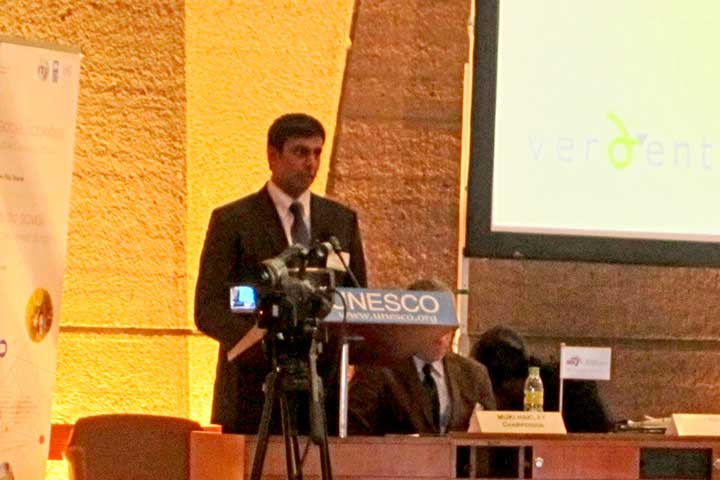
    How was the experience of being invited to UNESCO headquarters to speak as a panelist at the World Summit on the Information Society Review Committee Meeting?

    It was an incredible honor and one of the greatest experiences of my life. The World Summit on the Information Society meetings took place in 2003 & 2005, and came about after the UN General Assembly approved resolution 56/183 resolving for the need for such a summit. The summits were the major effort of the UN to discuss the global information society, access to the internet, the growing digital divide, communication policy, and other issues, amongst nations of the world. The Summits have lead to the establishment of the Internet Governance Forum, and in a sense have helped develop the global vision ahead for dealing with the internet and technology—Wikipedia has a nice summary.

    The Review Committee Meetings which take place pretty much every year look at the issues and upcoming trends as well as developments after the summits. I spoke at one of these Review committee Meetings. A very senior official at UNESCO learnt about some of my work, and subsequently, I received an invitation to speak. Frankly when I saw the email I couldn’t even believe it. I spoke about e-science trends in India, and about Verdentum a non-profit social network I will be launching in Fall this year, which hopes to connect policy makers with students around the world. A portion of my presentation at UNESCO can be found on the UNESCO web page here.

    More information on Verdentum can be found at www.verdentum.org . I never thought I would be invited to give a talk to an audience that would be simultaneously translated into several languages while I was speaking. I kept looking at the translators—I was absolutely baffled. I was a bit nervous, and one of my personal role models, the former head of the Intergovernmental Panel on Climate Change was in the audience, which made it worse! He was speaking on a related panel. Thankfully, I had very positive responses, and I think the talk was well received. Of course, it was such an amazing experience, and I was very very lucky to have been flown there, put up, and have had this opportunity. Paris is a wonderful city.


    How is White & Case different from  top-tier Indian law firms?

    It has been thrilling working with White & Case at three of their offices. The work is some of the best I have seen in any of my internships and experiences–it is truly international, cutting-edge, and exciting. I think there are very few places where, as an intern, you get to help with multi-billion-dollar deals involving 5 or 6 different jurisdictions, and some of the worlds leading corporations, banks, and government bodies. This was especially true at the Abu-Dhabi office, a relatively smaller office, where I had the chance to be involved with the project finance, capital markets, and M&A groups and some of their transactions. Just being able to read through some of the documentation, and having lawyers who care about teaching you the dynamics behind a deal, one can learn so much.

    I thoroughly enjoyed being able to meet and interact with extraordinary, industry-leading lawyers. I never thought I would get to meet some of the lawyers who have truly shaped areas of law, or whom I had read about because of their involvement in prominent deals and transactions. White & Case has an incredibly open culture, most of the doors are open, and even senior associates and partners are really happy to talk about their work, and guide you. I think being in such an environment inspires one to be more involved with his work, and take the extra step. Being at the NY office was an experience in itself, you really cant beat walking into a sky-scraper next to Times Square every morning. I feel incredibly lucky to be joining such a fantastic firm, and to have had these unique experiences. I think the volume of highly international work at White & Case differentiates it from any other firm I know of.

    With that said, the firms I have had the privilege of interning with in India have been outstanding, and I have learned a great deal from being at those firms for even brief periods of time.


    Can you give us advice on applications and interviews, especially with foreign law firms?

    I think that it’s important to tailor one’s application specifically for each separate firm or organization. Many students provide relatively similar or generic answers to most applications. Read through the firm’s web site and identify their core values and principles, ask yourself if your application is in line with those; tailor your answers specifically.

    I think it’s also helpful to ask the question “do I fit into this organization?”—take a look at the lawyers there, their careers, and their achievements, I think that reveals a wealth of information about what the firm is looking for, and what you need to do/work-on to be there. Another piece of advice: build relationships. Don’t just expect to apply one day and get a job, continue to intern there, work with lawyers there to genuinely learn more in fields that interest you, do some research if possible, and have a positive attitude in whatever work you are given. I have interviewed with White & Case, a magic-circle law firm in London, and several international companies/ organizations. I would say do some thorough research about the firm and the deals they are involved in. This information is not easily revealed through the firm’s web-site all the time. Sometimes it helps to talk to lawyers at the firm.

    Know how the firm you are interviewing with is different from other law firms. They will usually have an area of law where they are the absolute best, or particular cases where they have distinguished themselves. Be familiar with the firm’s strategy and vision for the future if possible, ask yourself how you fit into that. I learnt that it really pays off to know a bit about the lawyers interviewing you—the major deals and areas they have worked on. These areas could occasionally come up in your interview.

    Know your CV thoroughly; be ready to answer questions about internships, and research that you have worked on. Additionally, be pleasant and be respectful of your interviewers’ time. Another note: It’s ok to say that you don’t know sometimes. You can’t know the answer to everything, and I don’t think you are expected to always know the answer. Additionally, try to stay positive. The application and interview process can be difficult, and everyone gets at least a few rejections (in my case I got many). As much as there are very low points in this process, learning from those experiences and bouncing back with improved applications is important.


    How did you go about applying for and getting these foreign internships?

    (Rohit has interned with numerous organizations in 5 different countries such as Oracle in Australia, the California Earthquake Authority, Worley Parsons; in India, AMSS, Tatva Legal, SKS Microfinance, and numerous other places.)

    It was very hard getting internships, especially abroad. I had a lot of difficulty. I was an ordinary law student from India, and I didn’t have any contacts who could help me. I had to work very very hard. You are up against candidates who are better suited, are usually graduate students with more experience (because you study law after an undergraduate degree in the US), etc. When I tried getting an internship abroad during an exchange program at Santa Clara University in my 3rd year I think I got rejection letters from most large law firms with offices in the bay area, and most small law firms I applied to as well. Im pretty certain I had at least 30 to 40 rejection letters in my inbox at some point. A litigation-oriented law firm in San-Francisco’s financial district finally gave me a chance.

    The lawyer who gave me the internship was one of the nations leading plaintiff’s attorneys, and truly an inspiring figure, she guided me with my work and we continue to stay in touch today. I’m very thankful for the chance I was given. For the first time I got the feel of a US litigation environment. I got to do hands on work and be involved with real matters. I have to add—it was so awesome working in a sky-scraper in downtown SF. I worked as hard as I could, I tried to catch up on relevant law. I used to travel about two hours by public transport to SF, early in the morning and two hours to come back go to class, and then study till late in the night. I tried to work on research in different areas I was interested in during my second-third year in NALSAR and I tried to seek the guidance of professionals that were in those fields I was interested in.

    Slowly but steadily my internship opportunities increased, and I was very lucky to get the kinds of opportunities I had. I really wanted to travel and see different work environments around the world, and I was able to get foreign internships that paid me enough that I was able to do that. It is possible, it requires perseverance and hard work. My advice is to work hard, build relationships with people and firms that are focused on areas you are interested in, and be perseverant. I have had several mentors from my internships who over the years have given me incredible guidance. Im thankful for their kindness. I think students should seek out mentors who can give them the right advice. If you have a positive attitude and a willingness to work, I think people will help you. I got so many rejection letters, again and again and again, but I kept at it.


    Could you tell us about your current research program at Harvard?

    Headed by Professor David B. Wilkins (Vice Dean for Global Initiatives on the Legal Profession), the Harvard Law School Program on the Legal Profession is a research think-tank which seeks to make a substantial contribution to the modern practice of law by increasing understanding of the structures, norms and dynamics of the global legal profession. As part of it is major, multi-national, multi-diplomacy research on Globalization, Lawyers, and Emerging Economies (GLEE), PLP is actively engaged in examining and understanding the Indian legal profession.

    The GLEE India research team is comprised of scholars from a host of leading universities, research institutions, and law firms in India, the United States, United Kingdom, and Singapore. The GLEE India research team is pursuing the first comprehensive set of studies examining the changes in the Indian corporate legal sector and its effects throughout the legal profession. This includes studying Indian and foreign law firms, in house counsel, legal process outsourcing, trade law capacity and capacity building, senior advocates, legal profession regulation, legal education, the role of gender, small town lawyers, diversity concerns, and pro bono and public interest lawyering.

    Using surveys, interviews, participant observation, and archival research, GLEE’s India research contributes to a richer and more textured understanding of the substantial changes to the corporate sector of the Indian legal profession as well as its relationship to the developments in the legal professions in Brazil, China, and other emerging economies. You can learn more about GLEE – and all of PLP’s research projects – on its website. My current research is focused on citation practices and experiences of lawyers and law students in India, I am currently circulating a survey for my research, the survey can be accessed through this link. I would be thankful to any members of the legal community willing to fill it out. I intend to expand my research to more areas in the future.”


    Tell us about your editorial experience and how it has benefited you as a lawyer.

    (During his time at NALSAR Rohit helped establish the ADR Review and Media Law Review, and served as the highest ranking student editor of two journals simultaneously.)

    I have indeed learnt a lot from this process. As far as the future is concerned I can say that our editors who are in charge are working hard and continuously improving the journals. We are looking at the growing importance of the blog, digital formats, and involving more practitioners. We want to make these journals as relevant as possible to a modern Indian audience. Of course it’s tough getting journals off the ground, but getting experts in the relevant fields to write and being perseverant is really important.


    How were these teams built and what draws students to write an editorial board test for these two journals?

    (Both journals have a truly impressive board of editors that have included winners of prestigious moots such as VIS, Oxford Media Law, etc., associates at leading law firms abroad and in India.)

    We follow a very different approach at the ADR Review & NMLR when it comes to journal leadership and governance. There is hardly any hierarchy. Our editors stay on for the entire period of time at law school. It’s very difficult to be selected, we have a very small intake, but our editors take their job seriously. We also believe in a holistic approach towards selecting editors. As much as the ed-board test plays an important role, we care about leadership and initiative, and people who care about the journals and the subjects—not just people who want to put things on their CV. We strongly believe that it’s difficult to learn enough about a subject and editing in a 1 year period—which is the time span many journals in India continue to keep their editors. We also encourage editors to creatively be a part of the management process and try to actively improve the journals. We are still pretty young, but I believe we have a bright future ahead. We are planning to initiate a mentorship program for editors of our journals, with alumni editors who have graduated, so they can get guidance early on and have access to more career resources in India and abroad.


    How did you manage extracurricular interests with academics?

    (Rohit was a finalist of the Habitat National Geographic Young Visionary Award in your 2nd year, getting through the semi-finals at IIT Chennai.)

    I was pleasantly surprised to have made it through, some of my ideas were climate-change related. I was lucky to be a national finalist. I believe the competition and Award have been discontinued in recent years. I served as the Moot Court Committee Representative to the NALSAR Student Bar Council in my 1st year. I was a bailiff for so many moots, that I never wanted to enter the moot court hall again!

    Well, I guess it’s important to work on what you like. I always did stuff I enjoyed, so it didn’t feel like a lot of work. I had awesome friends through law school. And with some bias I have to say the graduating batch of 2013 is THE best batch NALSAR ever has had and ever will have!! I’ve also gotten to know so many great juniors and seniors. So, spend time with friends. It was a lot of fun taking trips and wasting countless afternoons at local dhabas, driving around the city aimlessly, eating bhajjis on the side of the road, etc. — you need to make time for these kinds of things.

    Also, I would say plan ahead. Just know what you want to do and where you want to be and make schedules (I have to admit I didn’t always do this, but wish I had). You will find that you are hitting your targets and doing what you want to do. Additionally, I tried not to let go of some of my hobbies. I think a lot of people do this, they love to play an instrument or sing, or do something else, and this disappears when they get to law school. Hang on to your passion and continue with it. I tried to continue painting and this really kept me happy. I completed a series of sixteen pieces titled “Shattered Perspectives 1-16”, which are mixed media on paper. I created them for the Disability Law Center at NALSAR, and they are now a permanent installation there. The series of pieces portray the importance of law in piecing together the “shattered perspectives” of society towards persons with disability.


    What would be your message to students who wish to pursue a legal career in a top-tier U.S. law firm?

    I don’t think I’ve come far enough in my career to provide this advice. However, I would say: Start thinking about your goals very early on and seek the right guidance. I wish I had done this earlier. As early as the end of 1st year. I think by the time you reach your 3rd year you realize you’ve lost a lot of valuable time that you could have used towards internships, experimenting in different areas of law, figuring out what you like. Do this early on. Talk to seniors and graduates, find the right mentors, and work on what you love. I think that will take you where you need to be.


  • Chitrrangada Singh, Legal Assistant, Appeals Chamber of International Criminal Tribunal, on LL.M. from UC Berkeley and practice at The Hague

    Chitrrangada Singh, Legal Assistant, Appeals Chamber of International Criminal Tribunal, on LL.M. from UC Berkeley and practice at The Hague

    chitrrangadaChitrrangada graduated from University Institute of Legal Studies, Panjab University in 2010. She took a certificate course in Arbitration and Mediation from the WIPO Academy and thereafter in 2011 she went on to pursue her LL.M. from University of California, Berkeley.

    Chitrrangada is working as a legal assistant in a defense team at the Appeals Chamber of International Criminal Tribunal for the former Yugoslavia. Her job entails researching for and defending people who are indicted of international crimes. She has also worked in various high level and landmark cases at The Hague.

    In this interview we asked her about:

    • Studying at UC, Berkeley
    • Interning and practicing at the Appeals Chamber of International Criminal Tribunal (Yugoslavia)
    • Working in landmark cases and representing people indicted of international crimes


    How will you introduce yourself to our readers?

    Hi, I’m Chitrrangada. I’m a lawyer from India. After getting my license to practice at the Punjab & Haryana High Court, Chandigarh, I successfully completed my LL.M. at University of California, Berkeley. Since then, I’ve been working and living in The Hague for the past three years.


    Did you ever feel that not being from an NLU was a disadvantage?

    I graduated from the University Institute of Legal Studies at Panjab University in 2010. Itwas, at the time, the newly established institute setup by the university to offer a five-year B.A. LL.B degree. The faculty and administration, under the leadership of Prof. Dr. R.S. Grewal, was different from the three-year graduate degree in Law offered by the Department of Laws. The batch that I was a part of was the second batch to have graduated from this institute. At the time, we could not boast of a well-connected career placement programme. This experience would resonate with most newly established law schools in India and not just non-NLU schools.

    Further, as I did not graduate from a National Law University, it would be unfair for me to make assumptions about the experiences of an NLU graduate. However, I would say that I did find myself somewhat disadvantaged when it came to opportunities in commercial firms.

    Nevertheless, it would also be too simplistic to say that there is a bias against non-NLU students when it comes to professional opportunities. In retrospect, I think that the avenues, which each of them offers, are different. Therefore, what one can make out of the experience is also different. While the lack of facilities and the bureaucratic hurdles in state universities can threaten one’s chances, strangely, they also make you resourceful, resilient, and patient.

    I believe that, having lived and worked in Chandigarh both at the district court level and at the High Court within a Chamber, helped me immensely during my assignment as an intern and legal assistant at ICTY defence. I was able to integrate faster within the daily court functioning and minimize the adjustment period greatly. More importantly, I was able to observe and learn from seasoned criminal law professors at university and work closely with trial lawyers at the district court level over a period of two years. This gave me invaluable experience, which I was able to obtain by virtue of being at Panjab University.

    My law school experience varied a lot because of the subjects that were being taught each semester and the kind of projects I had aligned myself with every year. I was a mooter and that always kept things interesting. On an average, I was able to fit in a moot and a half per year in my schedule.

    A large part of one’s experience at the university level is determined by the expectations one has of oneself and their career – and then to make the best out of the opportunities available. For me, while it was tempting to work in a high profile commercial law firm in India, I knew that I would miss the daily rush of being in court and working on criminal law cases. I worked from that bottom-line, upwards.

    The institute faced a lot of logistical challenges on account of being newly established. However, overall, I would say that it was a positive experience.

    In conclusion, I think the nature of the law school, in and by itself, cannot change much of your career path if you are aware of what your bottom line is.


    How did tge certificate course from WIPO help your career?

    I took a certificate course from the online WIPO Academy on Arbitration and Mediation Procedure under WIPO Rules under their Distance Learning Program. This program offers different courses on topics related to Intellectual Property over one year and most of them are free of charge. The courses being offered currently are available online here while the full list of the courses offered by this academy can be found here. This course had a fee but it was subsidised for students from developing countries. The course required a good knowledge of the fundamentals of IP law and I had already taken their General Course on IP.

    Reading this course was quite fun actually. It covered three aspects:

    • main features and advantages of the procedures designed by WIPO Arbitration and Mediation Center;
    • selection of an appropriate means of dispute resolution; and
    • drafting appropriate dispute resolution clauses for the purposes of a formal agreement.

    I liked how it focused on the procedural aspects of IP dispute resolution. However, what I liked best about this course was that it helped me look at dispute resolution further in a better way. The course material covered the basics comprehensively and was quite interesting to read. I would recommend taking this course if you’re at all interested in exploring this area of law.


    How did you decide to pursue an LL.M.?

    Having a Master’s degree is almost a requirement for one to entertain the idea of a career in international law. Therefore, I’m glad that I was able to conclude that step at the first given opportunity before seriously building my professional experience around that goal. However, I do think that having some amount of professional experience before beginning the LL.M. helps one make more informed choices about how best to maximize on the one (or two) year(s) of study.

    Further, successfully completing an LL.M. was important for me personally to understand whether or not a life lived abroad was for me. Even though it was at a big financial cost, I think that my experience at Berkeley was instrumental in shaping my life and career for the long term. I would have had a different opinion, had I decided to go back and work in India.

    I had applied for admission into LL.M. in my final year of law school. I did not have vast amounts of practical experience as an advocate to boast of except for numerous mooting stints and internships as a student.I had planned the application in a way that would allow for the examiners to know about me as a person as much as possible. I used my application to show that I had made the best of my situation and would do the same with the opportunities available at Berkeley.


    How different has Berkeley been when compared to your graduating university?

    Both the universities were unique in their own respect, especially in how they shaped me as a professional. In retrospect, I am grateful for the experiences in each of these universities, as they were big stepping stones in how my career developed. Berkeley was different from Panjab University in a lot of ways. What I appreciated the most was the flexibility in planning one’s own curriculum. During the one year of the master’s programme, I was able to pursue both thesis and course track, along with the asylum law clinic, and take courses ranging from foreign investment law to mediation etc. to humanitarian law. This was quite beneficial to me as an entry-level professional; I was able to expand on my substantive learning and build upon my research and writing skills, while graining practical experience in dealing with clients, especially those that don’t speak your language.


    Anything memorable that is stuck in your mind?

    The year at Berkeley was quite memorable and it is difficult to isolate one experience out of the many. The course on International Business Transactions taught by Professor Buxbaum was a delight. The majority of the students in that class were LL.M. students who, apart from the class discussions and readings, were given specific problems to discuss. Personally, I found it quite exciting to observe the various ways and means of problem-solving from the perspective of 20-30 lawyers from around the world. Before this, I was wary of the differences but not of the manner in which they operate in terms of how a problem should be approached, researched, and solved as well as how the solution must be offered and expressed to the client. Not only was this class testing you on the laws governing international transactions in business, it was also preparing us to handle the geographical and cultural sensitivities in the legal profession. I thought that was great!


    How did you apply for an internship to the Appeals Chamber of International Criminal Tribunal for the former Yugoslavia?

    A fellow student from Boalt Hall had successfully completed a six months internship at the ICTY. I spoke with him about his experiences and the life in The Hague. After that, I decided to apply for an internship as well. The online application system on the ICTY website is fairly simple. I applied during my first semester of the LL.M. almost one year in advance of the starting date of the internship. This also gave me time and space to look for other opportunities during the LL.M. career fairs. When I got an offer for an internship at the ICTY, I also had an offer to intern in Los Angeles where I would work on community mediation projects and an offer to stay in Berkeley in pursuance of the J.S.D. degree. I was not able to obtain financial grant for the L.A. internship as well as the J.S.D., so I decided to defer my admission to the J.S.D. and take up ICTY.

    While in The Hague, I was constantly exploring funding options and was able to obtain a grant from Sir Richard May Trust to cover my living costs for the duration of my internship. This went a long way in being able to extend my stay and look for further opportunities.

    As an intern for the drafting team in the case of Prosecutor v. Lukic and Lukic, this was my first experience in a truly international working environment (Case Information Sheet, available here). I had a wonderful team to work in and everyone was very encouraging and supportive. I learnt a lot at this stage about the laborious process of judgement-writing in the appellate stage. Most importantly, I learnt that as a lawyer, one can never underestimate the significance of a carefully thought-out format. I worked on the preparations for the appeal hearing, including the deliberations between the judges.


    You also worked as a Pro-bono Legal Assistant, Defence, Trial Chambers at ICTY. How did you get this opportunity?

    I was recommended for this opportunity by my work supervisor at my internship in the ICTY Appeals Chamber. I applied right away and was selected for an interview. I was interviewed by a Senior Legal Assistant of the defence team. After having received an offer, I was able to start right after concluding my internship. I remember being quite excited about this opportunity. Criminal defence work at the international tribunals is quite hands-on and there is a lot of scope for learning and growth.

    My work included substantive tasks like writing research memos on specific questions of international criminal law, statute of the ICTY, Rules of Procedure and Evidence; reviewing submissions to be filed before the Trial Chamber, as well as case management tasks like organisation of evidence and providing technical and research support to the Case Manager and the counsels during court hearings.


    You are currently working at the ICTY as a part of the defence team. How is the work environment? Who are you representing? How did you start working on this case?

    I am part of the defence team representing Jovica Stanišic in the case of Prosecutor v. Stanišic and Simatovic under Counsel Wayne Jordash and Co-Counsel Scott Martin (Case Information Sheet, available here). Mr. Stanišic was the head of the State Security Service within the Serbian Ministry of Internal Affairs during the regime of Slobodan Miloševic. I started working on this case in February 2012 when I was taken up as a Pro-Bono Legal Assistant in their team. I was hired as Legal Assistant four months afterwards.

    In terms of the work, there was a steep learning curve in the beginning as this case covers very complicated aspects of the five-year conflict. However, I was lucky to have found myself in a team that was very dedicated, motivating, and good-humoured. They came through well together even during the most work-intensive and stressful times during the case. There is not one member of the team, who I have not learnt a lot from.


    You also worked as a junior associate at Global Rights Compliance. What do they do? What was your job as a junior associate?

    Global Rights Compliance, LLP provides international advisory services to business and government, including those operating in conflict-affected and other high-risk areas of the world, to identify, prevent, and mitigate adverse human rights impacts. Details of their recent projects can be found here. They are one of the very few pioneer firms that provide specialised services in international human rights law and responsible business practices, including public international law, international criminal law, and international trade and development.

    My job as a Junior Associate involved conducting intensive research and drafting memoranda on international human rights law and regional treaties, UN Guiding Principles on Business and Human Rights, and complaint mechanisms under the OECD Guidelines for Multi-National Enterprises. I also assisted in preparation of training material on business and human rights and conducting country-specific due diligence on their human rights record and compliance with international human rights standards.

    Earlier this year, I was also able to assist in the two short-term intensive training courses that were undertaken by Global Rights Compliance at NALSAR, Hyderabad on Business and Human Rights and International Criminal Law.


    What is it like working to defend persons indicted of war crimes and crimes against humanity?

    The work of the prosecution is complex, painstaking, and rigourous at any given situation. However, it is still incomplete without a well-functioning defence.

    The criminal justice system is based on respect for human rights, among them being the right to a fair trial. To limit criminal justice solely to a severe contest between the prosecution and the defence and/or the victim and the accused amounts to undermining its objectives. Its objective is to aid the restoration of the imbalance caused by violation of human rights by ascertaining and affixing guilt under law. That restoration can not happen at the cost of the human rights of the accused.

    It is honourable to be working towards assuring that a person, irrespective of their charge, is able to access his right to a criminal defence. Contrary to what is sometimes assumed in respect of the ethical issues relating to this aspect of legal work, I find this work quite meaningful and fulfilling. I don’t see criminal defence as more perverse (or hallowed for that matter) than any other job description in the legal field. It is an exciting,albeit delicate, job and it deserves to be done to anyone’s best of abilities.


    Lastly what would be your message to all the law students who aspire to work at the International Criminal Tribunal?

    I don’t have anything new to say because there is no generic formula for this. In my case, I sometimes feel like I’m making it up as I go along. But there is no right way of doing it. I would, however, advise not to shy away from applying to opportunities that you think you’re suitable for.

    For a long-term career, you will almost definitely require a master’s degree. However, if you’re determined and hardworking, you will get there; to make life easier, it’s best to choose an LL.M. program that can provide you that opportunity. It is important to be mentally prepared to invest a good amount of time and energy in the initial few years; it can be quite a struggle.

    Few of the internships are paid, for example, sometimes the Special Tribunal for Lebanon and the Extraordinary Chambers in the Courts of Cambodia offer stipends. However, most of the internships are unpaid but it’s possible to obtain grants for the entire duration or part of the internship.After my grant dried out and before a job came about, I was babysitting and dog-sitting after work as well.

    I also know of some very determined people who have worked an extra job while interning in order to fund their stay.Lastly, it’s helpful to learn French and to be able to use it fluently. More obviously, it’s very important to like the work and to be committed to it, especially working in criminal law. And once you’re there, you should continue working on yourself.

  • Guneet Kaur, Masters Candidate, UC Berkeley, on human rights, studying in California, and plans for the future

    Guneet Kaur, Masters Candidate, UC Berkeley, on human rights, studying in California, and plans for the future

    Guneet Kaur graduated from HNLU, Raipur, in 2012. Subsequently, she went on to become a Research Affiliate for the Project on Armed Conflict & People’s Rights, at the Haas School of Business, University of California, Berkeley, before deciding to pursue her Master’s Degree in Human Rights in Conflict Zones, from the University of California, Berkeley. 

    In this interview we talk to her about:

    • Her interest in human rights
    • Being a judicial clerk
    • Her curriculum at Berkeley


    Why did you decide to study law?

    I grew up in a Sikh family listening to stories from my parents about 1984, Operation Bluestar and the disappearances in Punjab during the insurgency. But it was after the riots of 2002,that I realized the true extent of what my parents told me about state complicity and mass atrocities. So, I decided then that I wanted a career where I will have the power to be vocal when injustice happens. And, Law was not a difficult choice.

    guneet-kaur2HNLU  has been very shabbily treated by the state government and its consecutive administrations. While resources and infrastructure have drastically improved over the last two years, but times were quite tough during the tenure of my batch and batches senior to us. Every law school analyst had written us off. Law Firms were not very interested in coming to our campus.  However, all of this made the student body at HNLU exceptionally strong and hard working. Lack of resources wasn’t an acceptable excuse. We went on a hunger strike to get our new campus. If law firms weren’t coming to campus, we worked really hard to secure PPOs.

    We would spend our vacations working in the law libraries in Delhi because our law school library then didn’t have most of the books we needed. My team won Henry Dunant when the library at HNLU only had one book on international humanitarian law in 2010. The story was pretty much the same for most other mooting teams but that didn’t stop us from making our mark in mooting or academic publishing. In a way we all inspired one another. By the time we were in the last semester we had not just bounced back to existence; we were in fact doing really well and still are. Those five years on the whole have been a very important life lesson.I will look back to them whenever I need inspiration.


    What motivated you to work with the ICRC and the Alternative Law Forum?

    People working in the field of human rights can be doing different kinds of jobs in different set-ups. There is research, advocacy, scholarship, litigation and then the combinations of any two or more. I wanted to explore the different platforms available to figure out my comfort zone. So, I interned with different number of organizations and people.

    ICRC generally does not take LLB students for internships but my teammates and I won the Indian and South Asian rounds of Henry Durant Moot and we were runners-up at the International Red Cross Moot. That formed a very close association with the organization and I eventually convinced them to give me a chance. It was a research based desk internship that paid well.

    Alternative law Forum was one of my dream law school internships. I was always fascinated by the work that these young group of lawyers were doing in Bangalore. ALF has an application procedure, which I filed and got through. ALF actually uses pretty much all the tools in human rights work, which makes the whole experience very productive.


    Tell us about your experience being a judicial clerk.

    (Guneet has worked at the offices of Trideep Pais and Justice S.S. Nijjer.)

    Every day in Litigation is packed with a new drama and excitement. Internships spent in courtrooms have been my favourite part of law school. I interned under Trideep Pais thrice and I also interned under Nitya Ramakrishnan and Akshay Bhan. As a matter of policy, I always chose small and mid-sized litigation offices. All three of them were very approachable and never made me feel like an intern. I got a lot of quality work and was appreciated. Junior counsels at all these offices were relatively young. So there was normally no hierarchy and I was treated like a peer, which, personally for me, made learning very easy.

    Mr. Pais is a very humble man and a very intelligent lawyer,who takes a special interest if he finds the intern is quite interested in learning. His practice is very diverse and spreads across different levels of courts in Delhi. I have worked with him preparing strategies for cross examinations, sat through conferences with senior advocates, drafted SLPs, filed and inspected documents etc. Even if I was just researching for a particular matter, in case of a briefing to a senior counsel, I would be asked to speak in the conference or if the client liked the point Mr. Pais would make it a point for the client to know that the particular legal point was found by me. I think this kind of environment, wherein, the intern is so involved in major office work and everybody in the office acknowledges his/her work is very rare for a litigation office in India. I have enjoyed every minute that I have worked there.

    Under Nitya Ma’am, I got a chance to work on some high profile human rights matters, such as the Salwa Judum case and the American Center firing case. This was in a way my first internship in a litigation office, and reading about the cases one is working on in the newspapers can be a source of great happiness for a second year dreamy-eyed law student.  But I guess the main take-away from that internship was that in Nitya Ma’am, I found a role model that I really needed. While conversations with her during as well as after the internship have been very memorable but it was observing her go about her work that had its impact on me.

    I think one-month judicial clerkships don’t contribute much to one’s learning curve or one’s CV. If someone is interested in clerking for a judge for a longer term, then a one-month clerkship makes sense to get an idea. I may be wrong but I think there is not much to learn by preparing bench memos all day long or simply observing court proceedings.


    guneet-kaur3When did you finally decide that you need to do masters?

    I went to Oxford for a diploma in international human rights law before the beginning of my fourth year.  I had already been volunteering for civil society organizations in Chhattisgarh. Till that point I had not really given LL.M a serious thought but in Oxford I realized that to work in insurgency zones and talk about conflict related violence, I needed better knowledge and understanding of international human rights tools and a vocabulary that the LL.B programme didn’t teach at all.  And I realized I needed an LL.M.


    How did you choose the university/college?

    I was looking at schools with a well-established human rights clinic that was open to LL.Ms. I knew I really needed a human rights clinical education programme to achieve the learning goals I had set for myself out of an LL.M. Harvard, Columbia and Berkeley were the only three law schools that offered clinical programs to LL.Ms. Berkeley being the world’s best public university with its legacy of social justice movements was my dream school as a kid. I was also working with the Armed Conflict project at Berkeley as a research ex-tern at that time and I wanted to continue it.  Additionally, Harvard sent me a very sweet rejection letter. I think before applying for LL.Ms, you need to be very clear about your reasons for doing an LL.M and what you want to get out of it.  Every school will offer certain specializations. Once you are clear about what you are looking for, you need to find out what different law schools are offering. Picking up schools becomes easy after that.


    Does University of California provide students with scholarships?

    There is some partial aid but being a public university, Berkeley does not have major financial aid programs for LL.Ms. There are many institutions that provide scholarships like Inlaks, Microsoft scholarship, Fulbright scholarships etc.


    Share some insights on the topic Armed Conflict and People’s Rights.

    The project is working for armed conflict resolution in conflict zones of South Asia and is developing protocols for observance of human rights and humanitarian law in the conflict zones.  I began working for the project as a research extern in my fourth year. As an extern I was collecting documentation concerning human rights violations in South Asian conflict zones and preparing memos based on that data. Once I shifted to Berkeley, I was promoted as a project research associate wherein my task was analyzing how transitional justice mechanisms worked in Latin American countries and preparing research memos.


    Did you undergo a rigorous academic schedule?

    There was a lot of flexibility given to students for choosing the number of credits they wanted to at Berkeley. It depends on the student how much academic load s/he wants to take. All US law schools use a Socratic method for teaching, wherein unlike the lecture method in India, the professor is not going to give a lecture but facilitate a discussion. A proportion of the grade is allocated for class participation and if you haven’t done the readings then you won’t be able to participate. Besides, all the discussions are so interesting that you really don’t want to sit clueless listening to everybody else. I had taken the maximum credits allowed and therefore, my schedule was very packed from Monday through Thursday. I had an average of 500 pages to read on a given school day and some school days would start at 8 a.m. in the morning, ending with the last class at 8:30 p.m.


    Prof. Alexander Coward’s mail inspired thousands of students all over the world. How was your experience with faculty?

    Prof. Coward’s e-mail wasn’t that well received within Berkeley. Coward’s message was that students should concentrate on their ‘education’ by attending their classes and not joining their peer graduate student instructors who were demanding a minimum wage, but in Berkeley, ‘education’ has never been just about classroom education. Berkeley holds a very important place in US history with its student moments coming out and protesting against segregation, homophobia, restrictions on free speech etc. and that’s what Berkeley’s education legacy is identified for. I think at least at Berkeley Law, it was understanding of societal injustices through these movements on campus that Berkeley Law graduates like Earl Warren or Ted Olsen later in their professional lives wrote new chapters in world civil rights history.

    Most of the subjects that I took at Berkeley Law have an outstanding faculty. I was taught by very learned people whose academic and professional undertakings have gotten them an international repute and these included a sitting judge of the California Supreme Court, the former head of American Civil Liberties Union, former executive director of Physicians for Human Rights who is an international experts in war crimes investigations, a pioneer in human rights clinical education, etc. Besides, there would often be guest appearances in our classes by professors experienced in war crime and torture psychiatry, anthropologists who investigate mass graves, petitioners in some path breaking cases and prominent academicians.


    How difficult was studying abroad in terms of finding accommodation, finances and settling in?

    Being in a foreign country, in an intense program like Law, can be quite overwhelming. Unlike undergraduate programs, one does not have the luxury of time to “figure it out” or seniors to guide you.  I was lucky to have a cousin who is enrolled in the undergraduate programme at Berkeley. So, I had some guidance in finding accommodation.  However, it can be taxing too. Finances will govern a lot of your expenses. However, most campuses also have student jobs. So one can also earn while studying.

    I think for a successful LL.M experience, one needs to realize at the beginning itself that s/he has nine months and set her/his priorities straight. For example for someone whomight be doing an LL.M to take a sabbatical, which is fair enough, taking too many credits is not a good idea. For someone who wants to settle in that country, it is important that the person is going for all the networking events and is doing internships at relevant places during those nine months. For people looking for jobs in International organizations, networking becomes very important.


    Is there time enough for non academic pursuits?

    Depends on how you define non-academic pursuits. I used to do some pro-bono work for the National Lawyers Guild (NLG) and California Asylum Representation Clinic in Berkeley. That can be a non-academic pursuit in a way. Although I always learnt a lot from the time I spent with these two organizations. While time was limited for other stuff but I knew that those nine months would never come back again. So, I usually used to reserve one night in the week to party and one weekend a month to explore California. I did not travel much beyond California because of financial considerations but whatever time I got, I used it to go around. I also had a host American family I would hang out with and have loads of fun.


    Tell us about your volunteering experience while studying in HNLU.

    Of the many reasons I consider myself lucky for getting HNLU, one of them is HNLU’s location in Chhattisgarh. It really helped me in developing an understanding of state sponsored human rights violations in conflict zones. While Raipur itself does not have any trace of the insurgency, but being in the capital, one cannot be indifferent to it.  Some time in my second year, the trial court convicted Binayak Sen. It was a very flawed judgment and I felt helpless that being in a law school in Raipur, I wasn’t able to do anything about it. While HNLU was a very politically active campus, once the Raman Singh government came to power, administrations were changed and our students became very insular to the happenings in the state. So there wasn’t much I could do from within HNLU. I wrote e-mails to a couple of people in People’s Union for Civil Liberties and they immediately responded. Thereafter, I started attending PUCL meetings and protests regularly. Through PUCL I met some really inspiring and learned people like BinayakSen, Sudha Bharadwaj etc. While personally PUCL was a very enriching experience, it also proved very fruitful professionally. Since I was working for PUCL, a lot of other organizations like Center for Social Justice and HRLN approached me if I wanted to volunteer for them. My work with all these organisations was the reason that I got selected for an externship with the Armed Conflict Project at Berkeley.  Additionally, I learnt a lot of professional skills like drafting, fact-finding, approaching a client, making representations to NHRC etc., from the time I spent volunteering.

    After my first semester, I realized that even if I was at the top of my game in law school, there was nothing guaranteed and since my aim wasn’t to bag a corporate job, I wasn’t proving much to anyone or myself. Law schools in India expect you to cram the existing law and vomit them in the exam sheets. I wasn’t interested in cramming the existing laws; I was interested in evolving them for a more just society. Besides, I figured that a night before the exam and overnight paper writings were keeping me afloat. Luckily, my grades didn’t matter for Berkeley but my volunteering did get me in. I guess my answer would have been probably different had I not gotten through anywhere.


    Going forward, how do you expect your experience at Berkeley will influence your career?

    It already has. When I left I had no clue what I was going to do once I was done with it. Reading subjects like “Transitional Justice” and “Perpetrators, Victims, Bystanders during Mass Atrocities” and working with the International Human Rights Clinic, I realized there is so much scope for working for the realization of human rights in India especially in conflict zones. There is an absolute dearth of a human rights vocabulary and a lack of understanding of tools available to the victims and advocates.

    Having grown up in Punjab and then spending five years in Chhattisgarh, state human rights abuses in conflict zones, have kind of been my call within human rights. For now I will be working on a fellowship with the Jagdalpur Legal Aid Group in Bastar. The idea is to understand the dynamics of different conflict zones such as Manipur, Kashmir, Punjab, Gujarat and Chhattisgarh for a while before venturing on my own. I want to eventually get into legal-policy and advocacy that solely focuses on transitional justice and human rights investigations in conflict zones of India.


    Lastly, what would be your message to people who want to have a career in human rights?

    I have not reached a stage wherein I can give a message to anyone but I will steal a line from the speech given at my Berkeley Law graduation by David Boeis. He asked all of us not to forget the reason why we joined law school. I will probably say the same thing to anyone interested in a career in human rights. A lot of us decided to go black and white, because that attire had an idea of justice attached to it. Somewhere mid-way through law school, we see our classmates running after fancy jobs and our reasons for joining law school take a back seat. Don’t let that happen to you.