Tag: UCLA

  • “There are many roads to the same destination- so if you are a young lawyer, explore more and find that aspect of law which excites.” – Shwetambara Mani, Global Counsel – Commercial, Legal Operations & Privacy at Integrated DNA Technologies.

    “There are many roads to the same destination- so if you are a young lawyer, explore more and find that aspect of law which excites.” – Shwetambara Mani, Global Counsel – Commercial, Legal Operations & Privacy at Integrated DNA Technologies.

    This interview has been published by Anshi Mudgal and The SuperLawyer Team
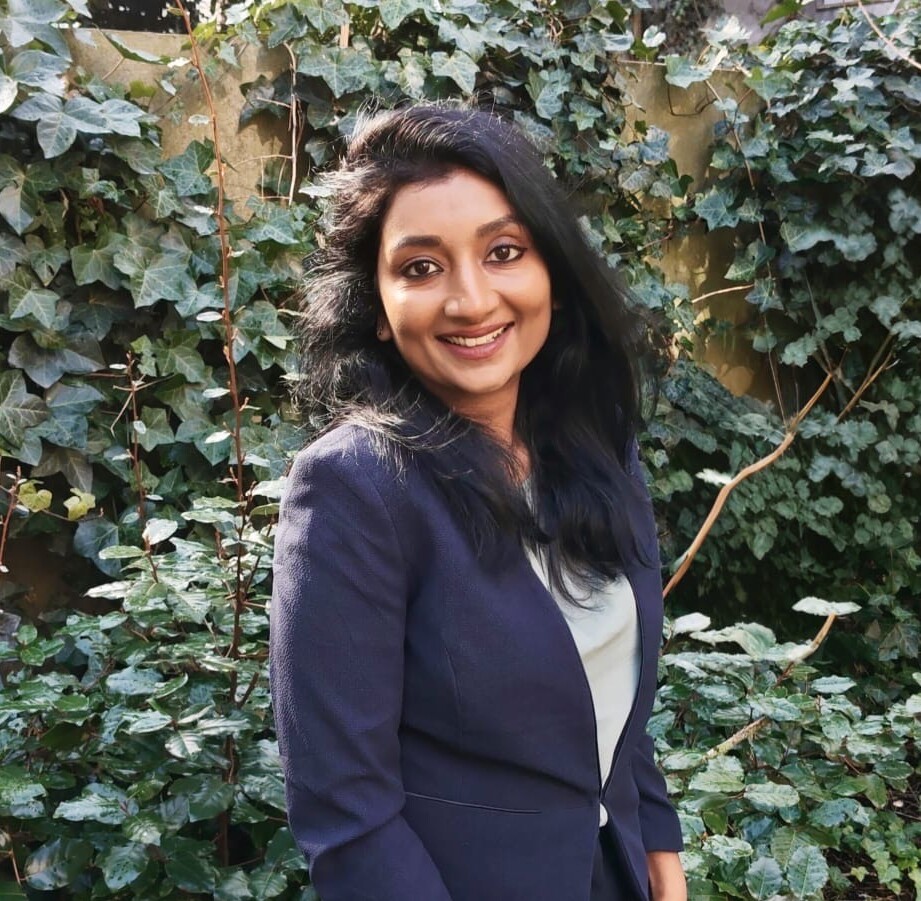
    With 15 years of experience and leadership across six continents managing legal operations, what initially sparked your interest in law, and what continues to drive your passion for the field today?

    I cannot think of that one aha! moment, when I decided to be a lawyer, but I think the spark was lit by my mother. She saw something in me, long before I could recognize it myself. I was in class 7 when my cousin asked me what I wanted to be when I grew up. I thought for a bit and said maybe a journalist. My mother was sitting across the room and said, “Why not a lawyer, you do love to argue”! That sentence sat with me, and interest slowly turned into curiosity and learning, and then into my goal and journey. 

    The first few years of my career, I was pulled in different directions, and this was a quite confusing time for me. My masters, followed by relocating to South Africa and moving in house reignited my passion for law. I enjoyed being curious again and realized that the constant learning and variety of being an in-house counsel excites me. My job gives me a chance to add value and enable outcomes, while meeting many brilliant minds while doing so! This drives me and makes me look forward to my work every day. 

    After your time at a top-tier law firm in India, you decided to pursue a Master’s degree from UCLA School of Law, USA. What prompted this decision, and how did your experiences at UCLA shape your career path? How was the experience of being awarded the Dean’s Tuition Fellowship Award?

    2 years into my first job, I felt the hunger to learn and explore. While I enjoyed the comforts of having a stable job- it became increasingly clear that I wanted to step out of my comfort zone. I was eager to explore the world and felt it was time to be a student again. I applied to a few law schools in the US and Europe and was grateful to be accepted into UCLA School of Law. UCLA has a well-rounded Masters Program in Business Laws, Media and Technology Law- and it was the best fit for me. The Dean’s Tuition Fellowship is awarded to students based on merit and need and is a straightforward application process. Being awarded the fellowship came as a blessing and eased the financial burden of pursuing the degree. 

    Pursuing further education is an investment in yourself- it is resource intensive and expensive. However, like all good investments, value is reaped not immediately but in spurts, and over a long period of time. The academic curriculum of the LLM degree built on the skills I had acquired in my Bachelors and became a strong point in enabling a career outside of my home turf. 

    However, what has continued to positively impact my career path is the softer skills I acquired such as cultural awareness and adaptability- which was facilitated by the larger educational experience of meeting so many people from different cultures, countries and backgrounds.

    What early experiences in your career helped shape your legal expertise and set you on the path to success? After working with several law firms in India, you transitioned to working with the Corporates in South Africa. How did you adjust to the cultural shifts between these environments, and how did you navigate those differences?

    After my stint in law firms, I spent 6 months teaching at Christ University, School of Law before moving to South Africa. What began as a journey to teach ended up being a journey of learning. I loved working with the young energy my students brought to the table, their curiosity became a way for me to sharpen my own skillset. My students taught me that preparation gets you closer to success, and good communication gets you there! This lesson became the biggest enabler for my transition into South Africa. 

    My move to South Africa was a leap of faith, hoping that it would all work out. It was incredibly humbling to be in the job market in South Africa- where the firms I had worked for or the university I graduated from did not carry the weight it carried on home ground. I had to up my game, learn new skills and explore the flavor, politics, laws and people of the country. I volunteered at a few organizations and networked with several professionals in the quest for my next step. It took time to let go, relearn, unlearn and adjust. I landed a job at CNBC Africa about 1 year after my move! By that time, my heart and mind had grown to embrace South Africa, and South Africa embraced me back!

    When you are in a law firm, you are the external neutral party bringing in your wisdom and expertise. As an in-house lawyer, you are more like a one-stop shop for all legal solutions- you facilitate outcomes and provide guidance. I had to develop a deeper understanding of the business, the product and the people. Reading, researching and preparation for my daily tasks helped. I had to use my knowledge of familiar systems like India and the US and transfer it to a South African context- conceptually compare them and find real life and real time solutions! It was very exciting and offered a sharp learning curve in legal and people skills.

    In your current role, you’re responsible for implementing global privacy strategies. What strategies do you employ to cater to compliance with the diverse privacy regulations across regions? Additionally, can you share an example of a legal dispute you’ve managed relating to privacy compliance and the factors you took under consideration to effectively manage it?

    Privacy has emerged as a consistent stream of work, and most in-house teams are now upskilling their resources or getting onboard talent to effectively address this area of work. Another area we have noticed traction in the past couple of years is laws relating to AI. 

    While the global network of privacy laws has rapidly increased after the enactment of the GDPR, the principles they embody and the efforts they require from an organization are largely similar. Our approach is to assess these legislations and measure our compliance with the most stringent standard. Of course there are times when we have to customize our approach based on the jurisdiction and issue at hand. 

    A well-built privacy program for a company deals with both proactive and reactive efforts. Our teams proactive efforts include training high touch point teams, awareness campaigns, privacy impact assessments for vendors, diligence and risk assessments for vendors and customers, and data protection agreements. Reactive efforts include things like managing data incidents and addressing data subject requests. 

    In my experience reactive efforts in managing data privacy and addressing data incidents are a delicate balance between speed and cautiousness, a difficult mix! We manage to navigate complexities through collaborative efforts with teams such as IT, Information Security and Governance and Risk, subject matter experts, external counsel and tools for tracking and monitoring. While there can be a standard approach, it is also critical to customize your approach based on the facts which are unique each time around. 

    Given your extensive experience managing intellectual property matters across diverse regions such as India, Africa, and the Netherlands, how do you approach the protection of IP assets in these varying legal frameworks? Could you share a specific example of an IP infringement case you’ve encountered, and how you navigated the legal complexities in those different jurisdictions?

    Over the past six years my team has relied on specialized IP teams and in house subject matter experts to protect our assets, and my role has been to facilitate their guidance and support. However, during my time with CNBC Africa & Forbes Africa protecting our IP portfolio within my role- and it was interesting because Africa is such an active landscape for IP law, issues and litigation. Being in the media industry, infringement had 2 angles- we had to ensure that our brand was not being infringed, including the content we were putting out every day; and we had to ensure that we were not infringing copyright and other IP rights in the content we created and curated on a real time basis. So there never was a dull day!

    My first day at CNBC Africa & Forbes Africa involved finding legal representation in the High Court of Nairobi for a copyright allegation we were defending. I remember reading the paperwork and spending a nerve-wracking night converting my IP law classes in NALSAR and UCLA to the Kenyan context. It was much like a suspense thriller, where I found the right representation and guidance just at the nick of time. 

    As an in-house counsel covering IP among other tasks, I relied on local counsel and subject matter experts to provide me with in-depth guidance and representation. My value add was in translating this guidance into the context of the business and giving the business a strong assessment of the facts, the risks, timelines, costs and impact on the product and organization, to enable them to make decisions. 

    As a woman in a leadership position, have you faced any hurdles while managing and motivating a global team of commercial counsels and paralegals across regions? Additionally, what is your idea of supporting and empowering other women in your team to thrive in the workforce? What is one piece of advice or principle that you live by that continues to influence your work today?

    While workplaces can present hurdles in terms of navigating complex people and cultural dynamics- the biggest hurdle was often my own self-doubt. When you conquer the conversation in your head about yourself, it breaks you free to do things with confidence. Confidence in myself, helps me add more value to people’s lives at work and home. 

    I am fortunate to work at an organization where diversity, equity and inclusion forms a part of the social fabric of our work life and is integral to our ethos as a team. Our team actively encourages us to bring our whole selves to work. Supporting and empowering others around you becomes easier when the entire organization and work culture backs you to do it. 

    Support and empowerment are powerful words but are so human and can be achieved through simple things. A few years ago, I was tired and anxious about a new project, it didn’t help that my daughter was teething, and the sleepless night routine seemed endless. In the middle of the mania, there was an unexpected parcel on my desk! It was a present from my manager which had a teething necklace for my daughter and a scented candle, with a note “relax, you’ve got this”! I was moved by her act of kindness. What struck me is that she had listened to me, listened to what I was telling her, and to the things I was not really telling her. With this small act of kindness, she showed me she cared, she supported and empowered me all at the same time!

    I have the honor of working with many strong women across different countries, in different age groups, with different backgrounds and unique perspectives, my way of supporting and empowering them is by showing that I care- this can mean hopping on a call on short notice, sending the contract a day ahead of time, helping on a tough assignment, giving someone an afternoon off, or giving a new mother or grandmother flexibility, pet sitting, or sending a teething necklace! 

    Women and men have many roles to play outside of their employment, they are parents, caregivers, pawrents, children, siblings and friends. Allowing them to embrace all these aspects of their life allows them to bring their best to work, be more productive and find value in their work. The principle I live by is ‘be kind to the person in front of you, you do not know the battle they fought to be here today’!

    What advice would you give to law students or young lawyers aspiring to pursue an international career in legal compliance and advisory? What resources or strategies would you recommend for staying current on the latest global legal trends?

    There are many roads to the same destination- so if you are a young lawyer, explore more and find that aspect of law which excites. An international career often begins with a good education or career at home- the Indian law degree is incredibly versatile and prepares you well to understand, compare and transition into common law countries. The core principles which you learn also help in navigating complex legal systems with higher compliance risks. 

    Please take a chance and explore areas of the law which get you curious, even the less popular ones. You can build on your education and experience by doing an LLM or MBA abroad, joining a multinational company which offers exposure to other jurisdictions, secondments at an international law firm or Indian law firm with offices abroad. 

    Based on the path you choose, or the path which chooses you- there is no shortage of resources available. From online literature, information groups to resources which specialize in international careers. It is important to find a good mentor in the field of your choice – so invest in connecting with people who have a career graph you aspire to have. 

    International taxation, laws related to data privacy and AI, international dispute resolution and trade compliance, are some areas which can help with transitioning your degree and experience into an international context. 

    After taking a parenting break, how did you navigate your return to work, particularly in a leadership role? What strategies or support systems helped you balance your professional responsibilities with your personal life, and how did the experience shape your approach to leadership moving forward?

    Before I had my first child, I underestimated the demands of caring for a little human being! I thought I would head back to work in a few weeks. But after my daughter was born- realization hit home that I wanted to be a part of her journey and give her more time. So, I did not rush back- but when the day to head back came around, I still remember being very anxious! I was constantly looking at my phone, waiting for it to ring! 

    Support systems can come in many forms- mine turned out to be family and flexibility! Since I was far from home, my husband and I had to rely on each other as a support system. We juggled our days and calendars and made sure one of us was around with the little ones. My husband remains my strongest support network- and much of what I do would have been impossible if not for him. My parents and brother pitch in with emotional encouragement, advice and humor- indispensable emotional support!

    Flexibility continues to give me the support system I need- my manager and teammates are considerate and provide me with the much-needed flexibility to make it work. 

    The only strategy I continue to use to help me balance is I let go of my fear and ask for help- from my partner, my family, my employer and manager, my colleagues and friends. Most times people always are willing to help! 

    To a new parent heading back after a break, please know that it is always scarier in your head! When the day finally comes – whether it is the first day back at work, or having to wear your baby for a meeting, or when you must reschedule your life because work or your child needs you, you find the strength!  Don’t be afraid to be transparent and let people know what you need. Most people at work or around you, want to help, but don’t know how they can set you up for success- so ask for what you need, be it flexibility, change in hours or the longer lunch break. 

    Some skills are life earned and may not always find a place in your CV, but the impact is still there! After several months of consecutive all-nighters and nappy changes- I discovered a newfound confidence in myself. Becoming a parent was the biggest turning point in my life, it impacted me deeply both personally and professionally. I found that I had more compassion, humility and empathy. My passion for work, focus, my ability to prioritize and efficiency improved greatly- making me a better teammate and leader. Overall, my children really have brought out the best in me!

    Given the demanding nature of your work, how do you manage to unwind and maintain a healthy balance between your professional responsibilities and personal interests?

    Over the years I have learnt the importance and strength of saying no! I try not to spread myself too thin with multiple commitments and social engagements. I try to keep my focus simple for each day, between work and the kids. Even with that, balance looks different on different days- so I truly take it one day at a time. 

    My personal interests have evolved over time, and at this phase of my life most of my own interests be it theatre, music, staying fit or reading is customized to a child friendly format! We also end our day together through a fam-jam session with music and a meal as a family- which is the best part of my day! 

    I believe life has phases, and in this phase of my life, my children are small and enjoy my company- I have been told that this doesn’t last forever, so I am trying to make the most it! Me time during this phase is also ‘we time’ with the kids, so a 20-minute workout, a bicycle ride (since I live in the Netherlands)! or reading. As this phase changes, my definition of balance and me time will also change, so I look forward to more adventurous experiments on balance in the seasons to come! 

    Get in touch with Shwetambara Mani –

  • Aahna Mehrotra, Head, Sports Law, TMT Law Practice, on LL.M in sports law from UCLA & ISDE and experience as a sports lawyer

    Aahna Mehrotra, Head, Sports Law, TMT Law Practice, on LL.M in sports law from UCLA & ISDE and experience as a sports lawyer

    Aahna Mehrotra, the head of Sports Law at TMT Law Practice, is a member of the Delhi High Court Bar Association, International Association of Sports Law, and the ASSOCHAM Sports Council.

    After graduating from ILS, Pune in 2011, she has attended various prestigious institutions for varying academic laurels from an LL.M in Entertainment, Intellectual Property and Sports Law from UCLA School of Law to a Master’s Degree in Sports Law from ISDE (Instituto Superior de Derecho y Economia), where she received the Economist & Jurist Scholarship for her practical experience and academic qualifications.

    Her many distinguished achievements include having been chosen / selected to represent the country as a part of the National Women’s Under 19 Cricket team and her involvement in multiple sports at the state level.

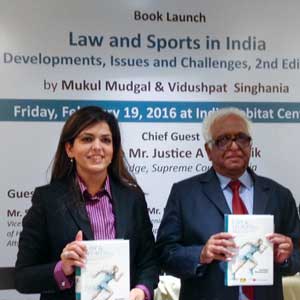
    Academically, she has also co-authored “Law and Sports in India”, the second edition. A work dealing with the position of sports within the constitutional framework and recent events such as the IPL probe report, doping controversies, etc.

    In this interview, Aahna talks about;

    • What influences led her to pursue law as a career
    • Her interests beyond the legal sphere and the impact they had
    • The value addition of higher studies in niche areas of the Law
    • The charm of quotes and simple expression


    How would you like to introduce yourself to our readers?

    Lawyer by choice…Writer by chance… Sports enthusiast… Stricken by wanderlust.


    Tell us about your life before you joined law school. What made you gravitate towards law?

    When I was young, my grandfather quoted John Lennon to me: “When I was five years old, my mother always told me that happiness was the key to life. When I went to school, they asked me what I wanted to be when I grew up. I wrote down ‘happy’. They told me I didn’t understand the assignment, and I told them they didn’t understand life.”

    Seeking happiness and fulfilment in every moment I live is amongst the greatest lessons I learnt from my grandfather. He held a law degree but started his career as a sports journalist, going on to become the director of the National Herald. He then moved into the arena of politics and social causes. Wearing the mantle of a trade union leader, he sought happiness in devoting himself to the cause of improving worker benefits. I particularly remember watching him return home on the shoulders of a jubilant crowd after his success in obtaining a favourable judgment in a case involving illegal termination of employment of 300 men. Young as I was, I realised how empowering it is to know the law.

    Perhaps that’s what drew me, at school, to his dual interests: sports and journalism. I was the editor of the School Annual Magazine – resurrecting it from a two-year oblivion and also pioneered the first School Newsletter, that then became a regular feature. I was appointed Captain of the School Cricket team at a time when the school coach had gone on leave. Coaching taught me patience. I learnt that people grow with praise, that critique works only in an environment of trust and emotional security, and that the joy of seeing others grow and score through the training I had given them was a victory sweeter than my own achievements at the wicket. Not only did I lead my school team to victory, but I was also appointed as the captain of the first ever All India Girls’ School Cricket Team and went on to being selected to play for the India Under-19 Cricket Team. My time at school culminated in a very special moment when I was awarded the trophy for ‘Selfless Service and Helpfulness’.

    Having completed high school, while cricket and writing seemed worthy allies, I made a choice to pursue my dream of becoming a lawyer.


    How was your ILS Law College, Pune experience?

    Having lived in a boarding school for 6 years, I was tired of living the hostel life. Therefore it was a personal choice to go to ILS over a National Law School and I have no regrets over my decision to date.

    At ILS, unlike national law schools, there wasn’t a routine time table that lasted from 9 to 5 or a road map to the kind of internships one must pursue. We were done at school by 11 a.m. on most days and had the choice to then plan our day in whatever manner we pleased, also our holidays which were fairly longer compared to national law schools. Several chose to do internships both during college days and in holidays, others spent time perfecting their skills at Moot Court competitions, I on the other hand spent my time learning about Sports Law, pursuing summer school programs and doing internships both in India and abroad.

    At ILS, no two students at the end of their 5 years, turn out to be exactly the same, which I feel is the case with National Law Schools, where most students do the same kind of internships, and therefore the competition on day zero is much harder. Studying at a National Law School has its own brand value and pros, while studying at ILS makes you more independent and responsible in terms of your choices.


    What were your areas of interest in the law? Did you engage in extra-curricular activities while in college?

    My areas of interest had always been intellectual property, entertainment, media and sports laws which sprung from the kind of activities I was involved in back in school.

    In the first year of law school, I remember walking up to my college university representative responsible for organizing the ‘Legalease’, the annual ILS Festival, and requesting for a spot in our ‘class’ (section rather) cricket team. “I hope you know they would be playing with a leather ball!”, he exclaimed. My immediate response “I was chosen to play on the India under-19 cricket team” amused him a little further. He didn’t give me a chance to play on the boys’ team but he did, in all fairness, organize a cricket match for the girls as a part of Legalease, 2006. I also played a little bit of throw ball and volley ball as and when the opportunity arose.

    Apart from playing sport, I participated in the Harvard Model United Nations and pursued a couple of diploma courses.


    What internships and voluntary practical training did you take while in law school and during your LL.M years? What value addition did they provide?

    Like all other law school students, I experimented with a whole bunch of internships. I worked at an NGO, at the Hon’ble Delhi High Court, with Mr. Mukul Rohatgi at the Hon’ble Supreme Court of India, with a barrister specializing in criminal law in London and also at a law firm in Delhi during my first 3 years of law school.

    I learnt a lot during my law firm internship, as I was given the opportunity to interact with some clients, prepare my first cease and desist notice for a trademark infringement, work on matters involving sports persons, and realised that it was what I enjoyed most and not litigation. It also helped to further develop my interest in intellectual property and related areas. I then just stuck with law firm internships and interned at TMT Law Practice twice, after which they made me a pre-placement offer. It always helps to get a job offer, if you go back to an office for a second time to intern, as they are able to gauge your ability and progress better. Also, I chose to intern at a boutique law firm so that I could make a more marked and personal contribution during my internships, instead of being lost at a large law firm.


    You pursued an LL.M from UCLA in entertainment, IP and Sports Law. Tell us about the LL.M course you took, how did you apply for it and what was life at UCLA like?

    An LL.M application is all about your Statement of Purpose (SOP) and they give little weightage to your grades or C.V., is what I learnt from personal experience.

    I applied for an LL.M while in law school to about 8 law schools in the States. It was a decision taken overnight and I did not think the SOPs through. Having been a creative writer in school, I took it all for granted and drafted my SOPs in one night and sent in my applications in December 2010. I was rejected by all 8 law schools.

    I pondered over the rejection, re-read my SOPs, and realised that they made no sense as they were a bunch of disconnected paras put together to comply with the word limit. I took the same drafts, and re-worked the structuring and choice of words and then re-applied in October, 2011. By the summer of 2012, I was spoilt for choice with an admission to all 8 law schools, some even willing to offer me scholarships.

    I had an admission to Duke University, a T-14 law school, and had even paid up the advance to block a seat and done my visa formalities when I heard from UCLA. It was the toughest decision to make, a ‘T-14 Law School’ versus the top school for entertainment law. I tried to choose the best of both worlds. While I chose to disregard the overall rankings and went with the rankings for subjects of my interest and gave importance to professors like Nimmer in picking UCLA for an LL.M., I pursued a summer school course with Duke Law School, a program run by them at the University of Geneva which gives you the opportunity to do up to 6 credits of course work. I studied sports law at the summer school offered by Duke, and then joined UCLA for my LL.M.

    UCLA gives you the opportunity to do 4 credits worth of practical training as a part of their LL.M. This, in my opinion, is what sets UCLA apart from other law schools and gives its students an edge over the others. Once made aware of this opportunity, I sat for campus placements and secured an internship at Warner Bros. Intellectual Property Dept. If there was the slightest doubt in my head about having left Duke for UCLA, I knew at that point for sure, that UCLA had been the best decision I made.

    As far as leisure activities go, all law schools in the States have a concept called the ‘Bar Review’. It has nothing to do with the American Bar Association, it is a concept wherein on every Thursday night you go review / check out a bar / club in town for drinks. Los Angeles being famous for its night life, I don’t remember ever having to repeat a bar.


    How did your interest in these fields develop?

    I constantly missed playing regular cricket through my years at law school. There weren’t too many opportunities available in Pune for women. In fact, I momentarily contemplated moving to GLC as Mumbai had a lot more to offer in terms of women’s cricket. In fact, women’s cricket only came under the auspices of BCCI in 2006, the year I had left playing cricket and started law school. My juniors from school often called and narrated stories of their experiences at Ranji, from a time when we would fund our own travel to them finally being paid Rs. 5000/- for a match. I felt really happy for them and I knew then that true happiness for me lay in uniting both my vocation (law) and passion (sports and writing). While I had lost my touch on the field due to lack of practice, I made a conscious decision to specialize in Intellectual Property and related fields like Entertainment, Media and Sports Law and in some way remain connected to Sport.

    As a writer, of course, you must always be well-versed with copyright law. I always enjoyed music, it was my only other stress buster apart from sport, so I studied Music Laws at UCLA, apart from entertainment, intellectual property and sports laws. I learnt about the dying music industry and the effects of piracy. In fact, the Intellectual Property heads at Warner Bros. even gave me the opportunity to work at the Anti-Piracy dept. for a few days, which has led to me not downloading a single song or movie illegally in the last 3 years.

    So my interest in the kind of law I practice has pretty much sprung from my hobbies and that’s why I love what I do for a living.


    Could you explain to our readers the interrelation between entertainment, IP and Sports Law?

    What is sports law? It, apart from sports specific laws like anti-doping laws and sport specific regulations, involves all laws that effect a sports person or sports league – be it contract law, labour law or intellectual property for that matter. You cannot take away from sports leagues and sports persons trademark rights, brand value, broadcasting rights and other rights like that of privacy and publicity. For any sports league to be a success, you must get into a broadcasting rights deal with the right network provider, have some good sponsorships on board, have the player assign their image rights to the league and team owners and prevent any form of trademark infringement to protect the brand from getting diluted. Players today are filing for trademarks like the ‘eleven of hearts’ by Gareth Bale or the ‘Lightning Bolt’ pose by Usain Bolt. So sports, intellectual property and entertainment are entwined fields and there exists a constant overlap.


    aahna-mehrotra-3

    What is an executive LL.M and what motivated the decision to pursue one on Sports Law Instituto Superior de Derecho y Economia? Tell us about the experience and what you learnt from it.

    An executive LL.M. is a Master’s program which is pursued as a distance learning course by professionals and does not require you to be present in the same city through the year.

    While I gained a fair amount in areas related to intellectual property from my year at UCLA, unfortunately I did not learn as much about Sports that are relevant to the Indian market. Therefore, I decided to pursue a second LL.M from a school in Europe.

    ISDE gave me the opportunity to interact with some of the best sports lawyers in the world in the form of professors as well as network with sports lawyers from all over the globe in the form of classmates. Sports being an international activity and with the advent of so many leagues in India, more often than not, one lands up with matters that involve athletes from other countries, so it is always advantageous to have a rapport with attorneys in other countries.


    You have taken your interest in the field to the next level by assisting Justice Mukul Mudgal in jointly writing the second edition of the book ‘Law and Sports in India’. Tell us about your experience of working with him on the book.

    Justice Mudgal is by far one of the kindest human beings I have come in contact with in the legal profession. He is forever happy to see those working under him grow and provides constant support in any endeavour you choose to pursue.

    aahna-mehrotra-2Since I did not work on the first edition, it wasn’t easy to immediately start drafting or adopt someone else’s style of writing but Justice Mudgal was patient through the process. At the same time, as most of the developments in Sports law in India have only taken place in the last 5 years, it was as good as writing a new book.

    I worked with him on drafting 8 chapters of the book. These were (i) an overview of the sports scenario today, (ii) gender discrimination, (iii) anti-doping, (iv) sports as a business, (v) labour laws, (vi) violence in sports, (vii) sports dispute resolution and (viii) grey areas. I had a huge support system in the interns who researched untiringly on some of the most unheard of issues related to the sporting scenario in India. I learnt so much from them as well, like I didn’t know there was a concept called flip-throw that existed or that a suggestion to bring an orange card into play was being made in the football arena. I learnt so much about the intricacies of sports law as we drafted chapter after chapter.

    With an LL.M in progress, pressure from the publisher to adhere to the timeline and sometimes technology betraying me with an entire chapter getting wiped out just when I was done drafting it, I often did 5 a.m. mornings and eagerly looked forward to the day we would be done drafting. The end result was worth it all. It has been a privilege to work with Justice Mudgal, who feels so strongly about eradicating the malpractices in the sports industry in India, and a great honour to have worked on what has been termed as a ‘monumental work’ and an ‘encyclopaedia’ by Mr. Soli Sorabjee.


    Which new areas can one expect to explore in Sports Law, apart from player contracts, anti-doping or sponsorship related work? Why is this an area of law more people can choose to specialize in?

    With the advent of several leagues, many international athletes are now looking at the Indian market as an avenue so there is a lot of player transfer related work, especially in football. Apart from that, with image rights becoming a popular concept world-wide, a lot of Indian players are looking to protect their rights relating to both privacy and publicity. Scandals like match-fixing give you the opportunity to work on matters that may fall under criminal law. Things like gender-discrimination and the increase in punishment under the new anti-doping code have given rise to human rights and constitutional issues in sports. A lot of broadcasters are looking to either terminate existing contracts due to the leagues not doing well or vice versa – league owners that feel that they have not made the right choice in terms of broadcasters are looking to terminate their contracts and sign new agreements. Taxation issues and labour laws too are areas that have growing issues related to sports. More and more sports management companies seem to want to hire specialists in sports law to form an integral part of their team. As the sports industry in India continues to grow, so do the issues relating to the field, and so does the legal work.


    A lot of sports leagues are mushrooming in India at the moment. What legal challenges do they face and how viable are these leagues in the long run?

    (Aahna was involved in the Player Transfer Transactions of the Indian Super League and have also been involved at various levels with the Indian Badminton League and the Indian Table Tennis League.)

    Along with Mr. Kaushik Moitra, (Partner, TMT Law Practice) the Indian Badminton League in 2013, was the first sports league I worked on. The league failed due to several reasons like mismanagement at venues, lack of staff, the appointed media agency not being proactive, VIPs demanding free tickets and special treatment, state associations not cooperating with the national associations, travel and accommodation being impractical, no itemised budget and being unprofessionalism on the whole. These are some of the most common challenges that are faced at the time of running a league, especially the first season, so all league owners must learn from the IBL 2013 and not make similar mistakes.

    As for viability, it is something that can only be determined in due course of time. The Masters Champions League held in Dubai recently failed to pick up numbers in its first season even though the concept looks very promising. The MCL organizers are hoping that the current cricketers will look at it as an avenue post retirement, so when a Dhoni joins the league on retirement, automatically the numbers will go up, however this again is mere speculation and the question is whether or not they can sustain the league until a Dhoni joins. The Kabaddi League on the other hand did unexpectedly well in the very first season, the ISL picked up a lot of momentum in the second season, so there is no fixed formula for the success of a league.


    You were an integral part of Ludus Legal, one half of which has now been absorbed by TMT Law Practice. What does the shift mean for you and how does such a shift impact the clients?

    It has always been a very enriching experience to be working under Mr. Abhishek Malhotra (Managing Partner, TMT Law Practice). He is someone who has constantly encouraged me to pursue my academic interests apart from doing just legal work for my clients. In fact I remember when I started out with TMT Law Practice, immediately after law school, we had a concept of internal presentation of papers. Every alternate Saturday, an associate would present a paper on a new topic and we would then sit and discuss the issue. It always helped in learning something, increasing our industry knowledge and growing as a lawyer and that is why I was more than willing to join them back, when the opportunity arose.

    Like I said above, it is very hard for sports to survive without intellectual property and related areas. TMT Law Practice is a boutique Technology, Media and Telecommunication law firm which can better cater to the needs of a client. The clients only benefit from this shift, as they now have a full service law firm that caters not only to their sports law needs but also offers to them specialists in the intellectual property and media industry. At Ludus, we would often use the services of TMT Law Practice, to file Trademarks for our clients and use Mr. Anish Dayal and Mr. Nitin Mishra as counsels to argue our litigation matters. Now it can all be done hassle free under one roof.


    Tell us about the kind of work profile you handle every day. What are the challenges you face and what do you like most about the job.

    On a daily basis, I handle a whole lot of agreements covering different aspects of sports law. I often participate in negotiations between league owners and sports bodies or players and league owners.

    However, what is really challenging is when an athlete comes to me for help in a doping case. On most occasions, the consumption of the banned substance is inadvertent, as the athletes come from humble backgrounds and have not been educated about how a banned substance may enter their body. They start training at an extremely young age hoping to make it to the commonwealth games or Olympics one day and maybe win that one medal, which will not only make the entire country proud but also give them a source of livelihood but just when they are about to make it, they get caught for a doping charge against them. With the new code having increased the punishment to four years, which is as good as resulting in the end of an athlete’s career, there is a lot of pressure to have the punishment of an athlete reduced. You sometimes succeed and you feel on top of the world but there are occasions you fail to get a reduction in the punishment which then tends to take a toll on you as you feel responsible for a sports person’s career coming to an end.


    Finally, what would be your parting advice to our readers?

    “Twenty years from now you will be more disappointed by the things you didn’t do than by the ones you did do. So throw off the bowlines. Sail away from the safe harbor. Catch the trade winds in your sails. Explore. Dream. Discover.”- Mark Twain

    Trust your gut, don’t be a part of the rat-race and its okay to sometimes not go by the book.

  • Manojna Yeluri, Founder, Artistik License, on IPR awareness and LL.M in Media and IPR from UCLA

    Manojna Yeluri, Founder, Artistik License, on IPR awareness and LL.M in Media and IPR from UCLA

    Manojna Yeluri is a graduate of the 2010 batch of National Academy of Legal Studies and Research University (NALSAR). She started working at the Bangalore office of Amarchand & Mangaldas & Suresh A Shroff& Co. (AMSS), right after graduating. She soon left her job to pursue her Masters in Entertainment, Media and Intellectual Property Law at the University of California, Los Angeles (UCLA), in the year 2011.

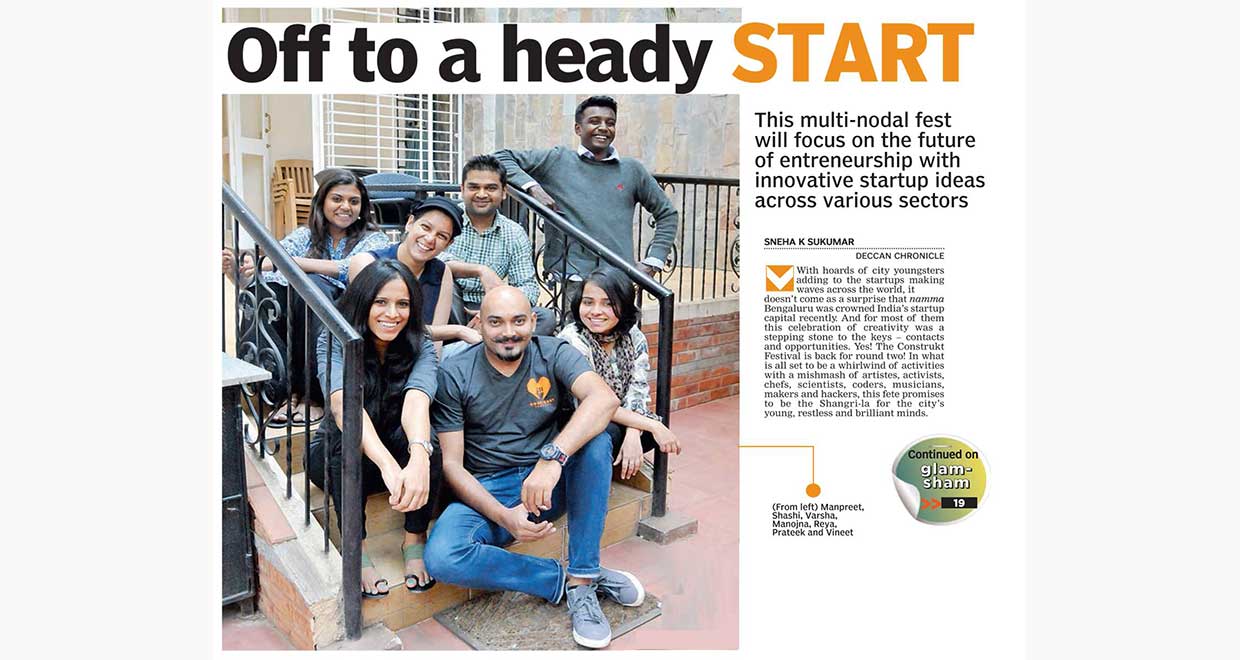
    Since returning, she has founded Artistik License, an organisation specialising in the rights of artists, entrepreneurs and other creative professionals. She is also a Business Development Consultant at Vahura, a legal recruitment firm, and this year, she held the post of Content Curator and Co-ordinator at Construkt Festival 2015.

    In this interview, Manojna opens up about:

    • What made her choose to pursue Entertainment and Media Law, despite having a job at the largest law firm, AMSS;
    • The application process to UCLA, as well as the importance of a Statement of Purpose (SoP);
    • Her work experience at Artistik License, Vahura and ConstruktFestival 2015.


    Whatmade you choose Law as your profession? Is there anyone else in your family who works in the legal field?

    To be fair, pursuing a career in law was not my first choice. Growing up, I was led to believe that I could pursue a career in any field so long as I worked hard at it and made a good living from it. By the time I decided to give law school a shot, I had already thought of becoming a biologist (a thought I abandoned after my 10th standard experience with Chemistry and Physics) and later, I sincerely wanted to pursue a career in Sociology and Psychology. Things didn’t quite work out the way I planned, which just goes to show you that you can’t always foresee and plan for everything. Following my 12th standard Board Exams, I ended up moving to Bangalore because of my father’s job, and during a very very brief stint at Mount Carmel College, decided that perhaps law school would provide me the kind of opportunities I wanted, particularly in the realm of Humanities. My father and grandfather (my dad’s father) are both law graduates who did not practice, but ended up using their legal knowledge in their careers as Government officials. My other grandfather (my mum’s dad) is a retired Police officer, who has always had a strong love for criminal law. I do have family in the legal profession – specifically my cousins and my father’s uncle (an astute man and a retired Judge),who have all made, and are continuing to make an impact in the legal world through their own efforts and contributions.

    For all practical purposes though, I really am a first generation lawyer in my tiny nuclear family.


    What was life likeas a law student at NALSAR? How did your five years in the university influence your personal growth?

    My years at NALSAR are definitely some of the most eventful and insightful, and I pretty much carry memories and lessons from my time at law school, into everything I do. When I was studying at NALSAR, things were a bit different  – we were a lot more interested in actually meeting one another and since we were so far away from thecity (nearly 35 kms away) and living on a student budget, I think many of us found ourselves more deeply involved in campus life than we expected to be. For me, it was a wonderful and scary time, since it was the first time I was staying in a hostel, but any hesitations I had were eradicated thanks to the friendships Imade – some of which have evolved into strong relationships that I turn to in times of joy and crisis.

    One of the most important lessons I learnt in NALSAR is that life is what you make of it. As individuals, many of us have access to several opportunities, however,there are only a few who choose to truly make the most of them. Looking back, there are a few things Iwish I had done, and there were many batchmates, seniors and juniors who displayed enthusiasm, initiative and creativity that I never thought was possible – so I have to say that law school can be quite an inspiring place so long as you know where and who to look to.

    As an institution, NALSAR offers its students a wide array of opportunities, but then again, as I mentioned earlier, it’s upto you to make the most of it. Besides my time on campus, I also ended up learning a great deal about myself thanks to a Student Exchange Programme I took part in just as I entered my third year of law school. I had a blast at Griffith University, Brisbane and it was really a professor there and his courses that sowed the seeds for my fascination with entertainment law.


    Did you take part in moot court competitions? How important do you think are such competitions for getting acceptance for Masters in the USA?

    I was not a mooter. I’ve admired mooting, but only from a distance. In my experience, mooting requires a skill set and an emotional endurance that I’m not sure I had, or was really interested in developing. When I was in law school, I remember hearing that conferences and publications were far more important than Moot court competitions when it came to applying for a Masters, however as we all know, that’s not always true. Moot court competitions help develop certain qualities that are very important to a career in law, however, as is the case with everything, I’m not entirely sure that there’s a fixed formula that states that Moot courts or conferences might considerably increase one’s chances of admission into a Masters program anywhere – I think what matters is ensuring that one’s Statement of Purpose is tight, sincere and clear.


    At a time when most people primarily focus either on Litigation or on Corporate Law, what turned you to Entertainment, Media and Intellectual Property Law?

    It’s funny that I embraced my fascination for Entertainment law and IPR only after I left law school, since I might have been able to do more while I was at NALSAR. I did bite the bullet and make the initial foray into the world of corporate law for a very brief period of time. Isat for recruitment and was picked up by AMSS (Bangalore) and believe me when I say that at the time, Iwas overjoyed and excited because I thought “Hey! My life is set now”. Shortly after joining AMSS, I found myself increasingly reading up on Entertainment law and IPR and when finally my curiosity couldn’t take it anymore, I chose to leave to pursue a Masters in either Entertainment or Media law. It wasn’t a very easy decision though – working in corporate law brings with it, its set of privileges, like a solid income and respect, and foregoing that, especially when you’re a fresher in the job market, seems a tad bit risky. However, I did receive a great deal of support from my folks, particularly my mom, who really helped me during such a difficult transition.


    Were your internships mostly related to Media/IPR law? Which was the most enriching internship experience for you?

    Most of my internships were not consciously oriented towards Media/IPR law because all through law school, I had convinced myself that I was probably going to become a corporate lawyer. I had interned in almost every holiday break and because I always wanted to keep my options open and balanced, I ensured I did one corporate internship followed by one NGO internship. My most memorable corporate law internships were at JSA, Bombay and Luthra&Luthra, Bombay because of the kind of experiences and learning that happened. With respect to non-corporate internships, my internship at Majlis, Bombay (run by Flavia Agnes) and Loksatta, Hyderabad were instrumental in teaching me a lot about the interaction between law and content-creation. My serious Entertainment/IPR law internship only happened years later during my time at the University of California, Los Angeles (UCLA), at an independent film studio (NuMedia), run by a lawyer. Nestled in the middle of Hollywood, it was a pretty cool way to learn about entertainment lawyers and the industry.


    How did you choose to pursue your masters at University of California, Los Angeles?

    The University of California, Los Angeles or UCLA is considered the best school in the world for the Entertainment, Media and IPR law programme. To be honest, that’s one of the major reasons I wanted to pursue a masters there. I had applied to two other schools that year – SOAS and LSE, and I was fortunate enough to have gotten accepted into both but my heart was set on UCLA because of how well structured its Entertainment law program and department was.

    I think that it’s always important to choose to pursue a Masters or any degree at an institution that has developed a great reputation and infrastructure to teach the subject that one wants to pursue a higher education/career in. A lot of people wondered why I had chosen UCLA, and the answer is actually very obvious – it’s the best place in the world to study Entertainment law. UCLA had an entertainment law department that had some wonderful faculty who brought years of experience from Hollywood and other international entertainment industries, into the classroom. Imagine being able to study about being a lawyer with a record label from someone who actually worked with Capitol Records and works with Warner Brothers – that’s exactly what UCLA offered me, and in my opinion, it’s that kind of specialized focus and infrastructure that actually helps students gain a more informed and insightful understanding of the area of study they are focussing on.


    How did you go about your application to UCLA? What are the prerequisites to applying to a university in the USA?

    I would love to say moots, conferences, publications, solid recommendation letters, extra-curriculars during law school, internships – the works, but I think at the end of the day what matters the most is clarity. One needs to be very clear about why one wants to pursue higher education at a university in the USA and that clarity needs to translate itself into a well structured, well written and sincere Statement of Purpose. I’ve always been a bit of a nerd and so pursuing a Masters was always something I wanted to do, and perhaps accordingly, I ensured that I had a fair balance (not a lot – emphasis on the word fair) of conferences and internships, however even the greatest recommendation letter in the world cannot substitute for a good Statement of Purpose. I definitely took time out to focus and re-write my SoP which I think also had a huge role to play in securing some financial assistance for my education. It’s also good to understand why you want to study further – a few people I know have referred to their LLM year as a holiday year- I have no idea what they are talking about. Studying abroad is a memorable but potentially difficult experience where you have to get used to studying a whole new jurisdiction while ensuring that you cook edible meals and live on a shoe-string budget.  However, coming back to the prerequisites of applying to a US university, it’s always good to focus on a good SoP, good and relevant recommendation letters and research.


    After having completed your masters in the USA, what made you come back to India, especially since Entertainment, Media and IPR Law is a more established arena there?

    I’ve always been an art-lover at heart and I’ve been fortunate enough to know and meet some wonderful artists living and working in India. While I love to travel and experience new cultures, a part of me always has to come back to India so in a way, I’m a bit of a boomerang. A career in Entertainment law in the US, particularly LA would have definitely been a lot more sensible and exciting in some ways, however there were many practical and cultural factors that influenced my decision to head back. For starters, opportunities in theUS legal market were scarce and I felt that the efforts to pursue a career there far outweighed the benefits. India also offered so many opportunities with its own big entertainment industry, my relationships with artists and creatives back home and most of all, thechallenge of doing something a little different in your own backyard.


    How has your Masters from UCLA affected your career in the long run? Do you think a person without a similar Masters degree from a foreign university would face significantly lower chances of success in the Indian market?

    Contrary to popular belief, there are quite a few Entertainment and Media lawyers in India and we are not an endangered species at all. There’s an age old debate about whether higher education outweighs experience or vice versa, and the truth is the best chance one has is by achieving a balance of the two. My LLM at UCLA has had a profound impact on the work I do because of many things I learnt and experienced during my time in LA. Whether it’s having achieved a deeper appreciation for artist rights, a more wholesome understanding of copyright law and licensing, or just a greater awareness of all thedifferent kinds of law that Entertainment law encompasses (IPR, Labour law, Contracts, OSH, Tax), my masters from UCLA has definitely shaped the way I perceive issues facing my clients and theindustry I work with. Having said that, I can’t say for sure if a foreign degree would necessarily increase the chances of success in the Indian market, but it might provide one with much needed perspective.


    manojna-yeluri-1

    After returning to India, you founded Artistik License. Please tell us more about it. How was the experience of building up your own start-up?

    I’m still building it up, and I think it’s going to be a lifelong project of mine. After returning to India, I chose to work with CLPR – a research think tank based out of Bangalore, in order to gain more experience as a research associate. However, there came a point where I felt I ought to be doing more work in Entertainment law, and while Ilooked out for opportunities in Entertainment law firms and companies, nothing came close to what I really wanted to do – work with content creators, artists and creative entrepreneurs directly. So, after a lot of searching I decided that it was time to take a leap of faith, and start working independently. Artistik License started off as a blog or a repository of legalese for artists working in India – something which it still serves as today, but after some hard work and lessons, has evolved into a consultancy where I advise artists and creative startups on their rights, as well as provide them with specialized legal services. What really makes Artistik License different, is its focus on independent artists and startups. As an organization, it focuses on two tracks – enabling the independent artist and entrepreneur’s business by way of specialized legal advice as well as by empowering artists, and creative entrepreneurs through rights awareness workshops, discussions and research work.

    Although I was really frightened at first, I think entrepreneurship was something that I was designed for. I had a great support system, comprising of my folks and my friends, who shared my fears and joys, and were a great sounding board for all my ideas. Building your own startup from scratch can be scary but rewarding,so long as you don’t bite off more than you can chew. Considering Artistik License’s niche focus, there was, and might always be, a certain amount of risk involved in what I do, however I can’t think of anything else I would rather be doing. The past two years have seen Artistik License’s clientele grow, and I’ve been invited to present my work at various domestic and international music markets, conferences and events.


    Are artists generally aware of their rights? How can such awareness be increased?

    Some are, and some aren’t; even then, the awareness can be incomplete. There are many factors that contribute to this situation of imperfect knowledge, including access to information and the communication of important information. It’s critical to ensure that artists are made aware of the need to understand why rights awareness is important, but then it’s just as important as law people, to enable that awareness in a manner that is chilled out, and not steeped in legal jargon. There are many ways in which awareness can be increased, and I work closely with many non-law organizations who want more artist rights empowerment. Workshops, discussion groups and online articles are a great way to get this valuable information across. Besides the Artistik License blog, I also write frequently for Campus Diaries (for the younger artists and entrepreneurs) and Indiearth (a platform dedicated indie artists in the Indian ocean region), on topics that might be of potential interest to artists and entrepreneurs alike.


    manojna-yeluri-2

    Artistik License also organises workshops for disseminating knowledge on the subject. Would you consider engaging young law students in these workshops to help them learn along with the artists?

    Of course! I can see creativity and entrepreneurship being an integral part of the law school experience, and it’s always a pleasure to engage and talk to law students from anywhere. I’ve been fortunate enough to have a wonderful time with some very intelligent, very quirky young law students from Christ College, Bangalore and NALSAR, who have been wonderful and so helpful by interning with Artistik License.


    In between all this you have also been working at Vahura. When and how did you join Vahura? Please tell us about your work profile there.

    My relationship with Vahura is both a new and old one. A few years ago, I worked with Rainmaker as a features editor, and a few months ago, I had the opportunity to start working with Vahura and its amazing team. At Vahura, I work with the Business Development and Clients Solution vertical, where I especially focus on business in the South Indian region. I enjoy the unique position of being able to interact with some of the smartest legal professionals and some of the best businesses and law firms in thecountry. A great deal of what I do involves networking and making connections – something I can’t get enough of. As an organization set out to help lawyers do good work, Vahura offers many services besides legal, tax, compliance and governance searches. It also provides strong counsel and research through its mentorship and consulting verticals. While we all help each other out at Vahura, another area that I work closely with is Vahura’s Engage vertical, which provides the legal community opportunities to interact with each other through various professional and community events.


    What insights you would like to share with our readers from your experience in legal recruitments at Vahura?

    My insights into legal recruitment are quite limited at this time, because a great deal of what I do concerns the overall legal market and business. There are others at Vahurawho have a more nuanced understanding of legal search business, and I would be more than happy to put any of your readers in touch with them. I can say this much – these are some exciting times for the law graduate, since I think we’re smack in the middle of an era where there really is something for everyone. So whether you want to be a corporate lawyer, a litigator, a legal academic or a legal entrepreneur, the industry is currently offering a lot of opportunities to pursue any career you wish, and if it’s some counsel and direction you’re looking for, we at Vahura are happy to help. This is probably my biggest learning from Vahura so far –an understanding that we’re far more focussed on helping legal professionals discover their full potential rather than simply place them in suitable positions.


    manojna-yeluri-4

    You held the post of Content Curator and Co-ordinator at Construkt Festival 2015. How may startup festivals such as this prove to be important for a law student?

    I was thrilled for the opportunity to work with Construkt 2015 and must express my gratitude to the festival’s founder, ShashiKiran, who is nothing short of an entrepreneurial powerhouse. Working with him and the Construkt team so closely taught me a great deal about entrepreneurship and the ways in which the right kind of platforms and infrastructure can truly help nurture a great innovation eco-system. I definitely think that more law students need to be open about attending such festivals where entrepreneurship is not only encouraged, but celebrated. For instance, Construkt 2014 and 2015 both celebrated legal entrepreneurship and innovation, by hosting talks by lawyers working in the field of law and technology, entertainment law and startup law. As the content curator for this year’s edition, I had a great time sifting through some amazing content by speakers, but it would be super if we could get more inputs and entries from the legal community as well.


    How do you manage time between your two roles? Are you able to find a work-life balance?

    A few days ago I heardsomeone say that we’ve almost taken it for granted that we’re supposed to struggle, hate our bosses and hate work. The truth is, that if we’re doing something we like,then we don’t even think about things like over-time, and being over-worked. At this point in my life, I am extremely grateful for the opportunity to be more than one person, and to do more than one thing. I’m surrounded by a number of inspiring people from the legal and creative communities (not that the two need to be exclusive), and I find a great deal of joy in what I do. Sure, it’s overwhelming at times and there are days when I just want to throw things at people, but I think the key is to achieve balance in whatever one does, and to remember that we are the best judges of our own situations. I also find that taking care of one’s body and mind goes a long way in ensuring that one can get more out of life. I’m not the fittest fiddle in the world, but over the past year, I’ve noticed that I consciously try to eat healthy, lead an active life and pursue my other interests including creative writing, glass painting, accompanying my musician friends to their shows, and understanding how to lead a more cruelty-free life. I’m a bit of a hippie at heart.


    What is the one advice you would like to give our readers?

    There is no formula to success. Years of conditioning in law school teaches us to assume that we need to fit into one mould or the other, but the truth is there really are no restrictions to the kind of opportunities one can tap into these days. It’s important to be brave and to seek good counsel, and to remember that it’s okay if you don’t fit into the traditional structures and expectations created by your family or the legal fraternity. It’s important to be honest in the work that one does, and to push aside the drama, no matter how tempting it is to overanalyse it. You can be a SuperLawyer just by being yourself, and working hard.