Tag: ULCB

  • “It is a very long and tedious process to become a lawyer and to specialize in a particular field of interest, and to make a name for oneself. But this should not deter anyone from pursuing their dream.”- Vivek B.Siddalingaiah, Civil Servant, Ministry of Justice UK 

    “It is a very long and tedious process to become a lawyer and to specialize in a particular field of interest, and to make a name for oneself. But this should not deter anyone from pursuing their dream.”- Vivek B.Siddalingaiah, Civil Servant, Ministry of Justice UK 

    This Interview has been published by Pragya Chandni and The SuperLawyer Team
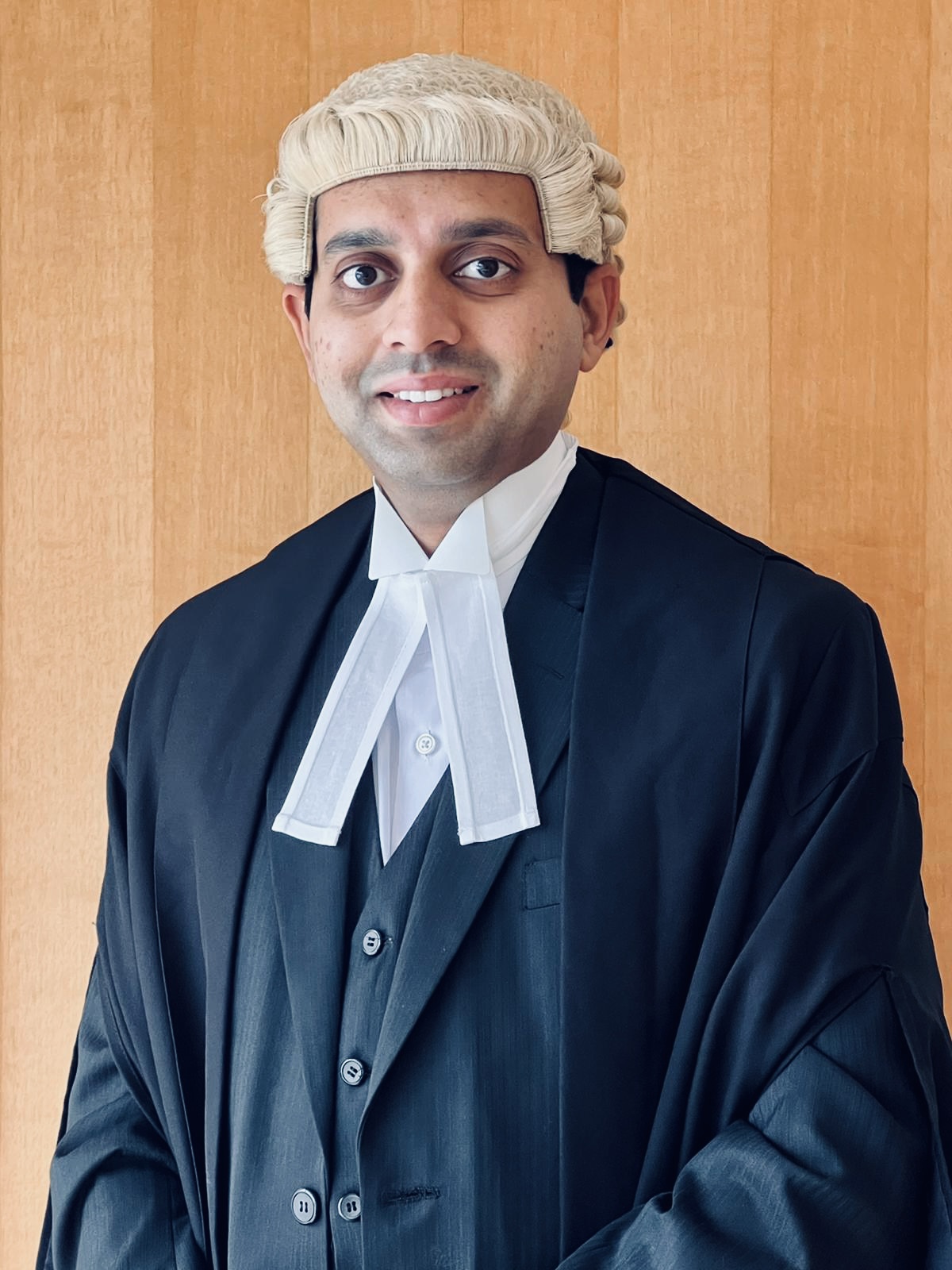
    Can you share your journey from practicing law in India to your current role as a Legal Advisor for the Magistrates in the UK’s Ministry of Justice?

    To begin with, I did my B.A.L. LL.B. , five years integrated course from University Law College, Bangalore University. In October 2010, I was called to the bar after completing my All India Bar exam and immediately after being called to the bar at the Karnataka State Bar Council, I started practicing. I started practicing under a senior and my main practice area involved insurance, banking, domestic arbitration, and other civil matters. Along with this, I also used to practice before the Debt Recovery Tribunal.

    After practicing for over four years in Bangalore, I moved to London to do my Master of Laws post-graduation from City University, London. My areas of specialization were Alternate Dispute Resolution and Civil Litigation in reference to the UK law. I completed my post-graduation in 2015 and my final dissertation as part of the course was about International Investment Treaty Arbitration. After this, I had to move back to India because of Brexit issues and I joined a startup company in Bangalore as a legal counsel. After working there for less than a period of six months, I joined Tatva Legal Bangalore as an associate in their litigation team. Working at Tatva Legal gave me a wide exposure to the other fields of law namely Corporate Law, Corporate Litigation and International Commercial Arbitration. In 2016, the New Companies Act and Insolvency & Bankruptcy Code were passed in India and as a result the National Company Law Tribunal were established. I started practicing before the NCLT for a period of two years.

     In 2019, I got an opportunity to work with the Financial Ombudsman Service, London as an investigator/ adjudicator. This role gave me an opportunity to resolve disputes in a quasi-judicial setting.  I had to take a small break during the COVID lockdown to attend to my personal work. 

    In 2022, I started applying for Civil Service roles in the UK.  Civil service recruitment in the UK is based on open competitive examinations. 

    These posts are advertised and applications are invited from eligible candidates, preferably candidates with law degree or experience in a common law jurisdiction. In August 2022, I cleared my competitive examinations and I was appointed as a Crown Court Advisor/ Clerk. I was mainly responsible for most of the administrative and procedural functions of running the Crown Courts. I got a very good opportunity to understand the criminal justice system in the UK. After having worked for one and a half years in this role, I got an opportunity to be promoted through an internal campaign and after having cleared my interview and other written tasks, I was appointed as a Legal Advisor for the Magistrates in the East London local justice area. I have been working in this role for the last two months.

    How did your experience in litigation, merger & acquisition, insurance, and international arbitration prepare you for your role as a legal advisor at His Majesty’s Court & Tribunal Service?

    As we all know, India is a common law jurisdiction, and this acted as an advantage for me. My litigation experience in India gave me all the understanding and the tools required regarding the court procedures. Because of this experience, I wasn’t a stranger to the legal system in the UK, even though there are a few procedural and other administrative differences between the two countries, the overall legal system is very identical. Because of this, I was able to understand, implement and do my best in the roles that I have been performing in the UK till now. 

    My litigation experience in India helped me in clearing my Bar exam in England and Wales, and also in my applications, written tasks and interviews for the legal positions that I applied for in the UK. 

    My experience in the field of insurance was advantageous when I worked at the Financial Ombudsman Service. My main responsibility at the Financial Ombudsman Service was to deal with insurance, banking and pensions disputes between the customers and the businesses. Having practiced insurance law for a period in India, it was easy for me to understand the concept, the difficulties and the nature of cases that were brought to the Financial Ombudsman Service for investigators or adjudicators like me to resolve. My experience in the field of domestic or international arbitration helped me in almost all the roles that I have been performing till now.

    What inspired you to pursue a Master of Laws in Civil Litigation & Dispute Resolution at The City University, London, after practicing law in India?

    In the year 2010, when I graduated with my law degree, it was sort of a practice for every other law graduate to go abroad to pursue Masters. I have had a few friends who went to the UK, the US, Australia and other places to pursue their masters. I had an opportunity to speak with them about their experiences, their expectations, and the advantageous position that they were in when they returned to India. 

    In my experience and understanding it is a bit important for any legal professional to have a specialization in one or more fields of law and I was very keen on specializing in at least one field of law which could give me an advantage over other candidates when it comes to the job market and this was one of the reasons why I decided to pursue my Masters.

    However, I was not sure about which field of law I wanted to specialise in. Initially I started my practice in insurance and banking law, then moved on to property law, then moved on to other fields of law. I wanted to make sure that I understood which field of law I would like to specialise. This could have been possible only by my own experience and work rather than anyone’s advice. After four years of practice, I realised that alternative dispute resolution was my field of interest and that is the field in which I would prefer to specialise in. 

    How has being dual-qualified as a Barrister in India and England & Wales influenced your legal career and approach to practicing law?

    It was always my aim or dream to qualify as a Barrister in England and Wales. Also, being a person interested in history and having read about many well-known jurists, freedom fighters and other people who have been in some of the very responsible positions, I realised that most of them were Barristers. I’ve heard the argument that it doesn’t require a qualification for a person to do great things. However, in my view, I was always interested in belonging to the list of people from India who are qualified as Barristers in England & Wales. Being a dual qualified Barrister does have its own advantages. I get to practice or work in two jurisdictions. It is also a very prestigious and respected profession in both the countries. I have had the opportunity of practicing before the courts in India and working in the courts in the UK. I believe this dual qualification has allowed me to work as I always wanted to. The dual qualification has also given me the advantageous position when it comes to applying for various positions or for my professional growth.

    Could you elaborate on your experience as an Investigator and Adjudicator at the Financial Ombudsman Service in London and how it shaped your understanding of dispute resolution?

    The Financial Ombudsman Service (FOS) is a service which resolves disputes between the businesses and the consumers without having the customers go to the courts. The legal system or the court system in the UK is very expensive when compared to that in India. This is one of the reasons why consumers or common people would like to bring their issues to FOS to be addressed. FOS deals with almost all types of commercial and business disputes including insurance, pensions, banking, credit, frauds and scams etc. 

    The role of an investigator or an adjudicator is to listen to both the parties, be impartial, unbiased and decide in the favor of the party which is right. This could involve penalizing the business or asking the business to do something that they are expected to do. I had the opportunity of working and resolving disputes in the insurance and banking team. I had the opportunity to resolve disputes in the Insurance, Banking and Pensions team. This gave me an opportunity to understand the various requirements, the way of interpretation of the law and drafting judgements. It also gave me an opportunity to speak with experts in the field of law and business to enable me to decide the disputes. Further,  it gave me an opportunity to understand the quasi-judicial setup in the UK and the procedure for parties to go to the courts or tribunals to resolve their disputes. This role prepared me for applying to other legal based positions.

    What unique challenges have you encountered while advising lay Magistrates on legal matters and procedural issues at His Majesty’s Court & Tribunal Service?

    Magistrates in the UK are also known as Justices of Peace. They are individuals from all walks of life who are passionate about making a difference in their local communities. This role is a volunteer role. Magistrates are people from all walks of life, usually with no legal qualification or training. The legal advisor sits with the magistrates in the courtroom to advise them on the legal procedures and the rule of law.

    No two days are the same for a legal advisor as it depends on the experience of the magistrates, the type of cases and the number of cases that are heard. As a legal advisor, we are expected to not only know the law, procedure but also the facts, recent developments in the field of law, recent judgments that might affect a particular case.

    The legal advisors are in a unique position as a lawyer. They are not fighting a case from a particular side, but instead looking at the law itself and ensuring it is applied in the correct way. A legal advisor acts with a judge’s hat on rather than as a stereotypical lawyer. This role places me at the heart of the criminal justice system. It is not only about advising the magistrate, but also assisting the parties who are unrepresented. 

    As someone deeply involved in both Indian and UK legal systems, what differences have you observed in the legal cultures and practices between the two jurisdictions?

    India is a mix of common law and civil law however, mostly adheres to the common law principle just like the UK. The judicial system in India is highly influenced by that of the British system which was framed and practiced pre-independence. The system is very identical and as such is not difficult for an experienced lawyer to understand. 

    Some of the differences that I could point out between India and the UK legal systems are the volume of cases (due to population), the time in disposing of the cases, the police system, and the working of various other departments that are involved in the administration of justice.

    The major difference is that administration of Indian courts is managed by the judiciary themselves. However, in the UK it is managed by the organization which I’m part of called His Majesty’s Court and Tribunal Service (HMCTS). 

    The practice and procedures are very identical, the court language used are very similar, the civil procedure, criminal procedure, admissibility of evidence are all very identical as well. 

    Overall, the Indian and the UK legal system are identical and they’re also complementary to one another.

    Lastly, what advice would you give to recent law graduates aspiring to pursue a career in litigation, arbitration, or judiciary, considering your diverse experiences in the legal field?

    I do not consider myself to have the experience to advise law students, however being a first-generation lawyer in my family, I had very little advice when I wanted to choose law as a career. This resulted in me waiting for a number of years before I could understand and decide what and how to do things. As such, I am keen on advising law students, especially first-generation lawyers who do not have much exposure or understanding about this profession.

    As said, the legal profession is a noble profession. One must have a lot of patience to survive and to do well in this profession. It is a very long and tedious process to become a lawyer and to specialize in a particular field of interest, and to make a name for oneself. But this should not deter anyone from pursuing their dream. Majority of my professional dreams have been fulfilled as I speak. My next and my aim is to enter the Judiciary which in my view will happen in the next few years. 

    Believe in yourself, work hard as there is no substitute for hard work and get the right advice from the right people.

    Career in law need not have to be restricted to civil or criminal practice; there are various fields of law that one can excel in. Make the right choice, take your time, get the right advice and follow your dreams.

    Get in touch with Vivek B.Siddalingaiah-

  • Abhijit Poonja, Associate Director-Legal, EdgeVerve, on corporate law, and his diverse experience

    Abhijit Poonja, Associate Director-Legal, EdgeVerve, on corporate law, and his diverse experience

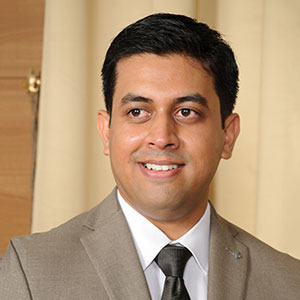
    Abhijit Poonja graduated from University Law College, Bangalore, batch of 2008. Since then he has worked with Trilegal as Associate, Infosys as Associate and later Senior Associate, and Lead Counsel PPS as Senior Associate. He is currently Senior Member, Legal to Associate Director, Legal, at EdgeVerve, a wholly owned subsidiary of Infosys, in Bangalore. His responsibilities include direct reporting into CEO, Dotted line into Group Dy. General Counsel, acting as personal advisor to the Board, to name a few. 

    In this interview we speak to him about:

    • Being an extraordinary student all through his graduation days
    • Being a first generation lawyer
    • The art of writing

    What would you like to say to our readers in the manner of an introduction of yourself?

    I am a people centric person and have always surrounded myself with great company right from my childhood. I find my life far more rewarding when achieving milestones with a great group of people around me instead of being defined by inanimate rewards from individualistic efforts. Apart from this, I am a very outcome driven person and try to measure my life against a bigger picture. As a philosophy, I prefer learning and teaching about life and as one reads this interview they will get a deeper insight of this philosophy and what makes me who I am.


    What inspired you to take up law? 

    Heading into my 12th standard summer holidays I had no definite plan for a major. I knew I would not pursue the traditional majors from Science or Commerce. During the summer holidays, I chanced upon a Law of Torts book at a family friend’s house, which I found far more interesting than any book I had ever read. I eventually finished reading this book in about two days! This set the ball rolling for my conviction to take up law.

    Initially my family was not convinced with this decision, given my father and older brothers were all engineers. However, upon seeing my resolve they eventually realized that law was my calling and my parents and brothers became my biggest supporters and mentors. I am now the first generation lawyer in my extended family consisting mostly of established doctors and engineers.


    Tell us a bit about your time studying law as an undergraduate student at University Law College, Bangalore.

    Before I explain about my experience at ULC, I would like to briefly explain the life which preceded college. I did my schooling at Bishop Cotton Boys’ School, Bangalore. While I had numerous well-wishers in school, my two biggest supporters were my principal, Dr. Abraham Ebenezer and the senior program coordinator, Mrs. Indrani Sudarshan. They inspired me to trust my instincts and push the boundaries for excellence. It was this inspiration that made me take up law. Their guidance and influence has remained with me to this day as I consider them my life mentors.

    At ULC, I believe what stands out for me is the perspective I got from my various interactions. I befriended people from all walks of life who shaped my outlook and notions of life. I am indebted to my college mates and college professors, especially the Dean Faculty of Law at ULC, Prof. Sudesh V., for playing such a pivotal role in making me the person I am today.

    Abhijit with Dr. Ebenezer and Mrs. Indrani


    What advice would you give our readers in managing academics and co-curricular without compromising either?

    (Abhijit has had an excellent academic record as a topper during his legal education.)

    When I completed my five years at ULC, I was a University top five ranker, a University double gold-medalist, the college basketball team captain and member of the college cultural festival team. I had such varied experiences owing to my desire to excel in these disciplines and the support from the college ecosystem. They are mutually intertwined.

    I would recommend to all students, that if the college ecosystem permits such diverse experiences, one must methodically chart out their semester/trimester (as the case maybe) and plan how best to participate and excel in academics, sports, moot courts, extra-curricular activities etc. I can assure each law student, from my personal experiences, if one makes the time and puts in the effort to experience differential disciplines it will only lead to a broader outlook in life.


    What were you areas of interest during your legal education?

    I took each year of law for the experience it had to offer, with an end-objective of deciding on my major in the final year. For these reasons, I can safely tell you I had the most rewarding experience whether it was contracts, company law, environmental law, jurisprudence, human rights and labour or IP laws. The preference to pursue corporate law after graduation is more attributable to my experiences during my internships, which has been explained in detail below.


    Could you tell us about the internships you took up, and what you learnt from those experiences?

    I did five internships during my college days, basically one in each year. I interned with a Senior Advocate (High Court of Karnataka), Holla and Holla, Dua Associates, Biocon and AZB Partners. You will observe these internships cut across the major areas of litigation (private practice), litigation (law firm), corporate law (law firm) and in-house. This was strategically planned as I traversed my college journey. I am grateful to each of these individuals and firms for giving me an internship and teaching me how to analyse and solve basic legal issues. However, my biggest take-away would be from the time spent at Dua Associates and Biocon. I worked directly with Partners/Heads of Legal and the manner in which these individuals analysed issues and arrived at answers was truly a revelation and a big learning. It was these experiences which paved the way for me to pursue corporate law once I graduated from ULC.


    What advice would you give students in avoiding a decision paralysis?

    As a person I am not comfortable when not in control of the end-outcome. This coupled with the fact that I was the first generation law student from my family, made me realize that I had to carefully plan each step to avoid being in a dilemma when graduating from ULC especially given the fact that I did not have a safety-net.

    Towards this objective, I carefully charted out the different options which the legal profession had to offer and finally zeroed in on corporate law around my 9th semester. Had it not been for this foresight early on, I suspect I too would be struggling to find my calling after college.

    On the issue of studying further, I chose to enter the profession from the get-go as corporate law had no requirements of higher studies for one to excel. This was further substantiated by my internships and interactions with individuals who were doing well for themselves in corporate practices of law firms or in-house.


    From a law student to a lawyer, how will you describe the transition?

    In my view, the most challenging aspect to overcome once we graduate is the daily pressure and associated decision making which comes with being a professional. In college, we do have some sense of comfort and protection, however, when we become a professional this requires us to take decisions in otherwise ambiguous moments and then stand behind those decisions. If students can make this transition successfully, the hard work and strong work ethics that accompany any successful professional can take such individuals to greater heights.  


    Tell us about your early professional experiences at Trilegal.

    As I mentioned earlier, I was keen on pursuing corporate law, whether it was at a law firm or in-house. During my 9th semester exams, a senior of mine from college mentioned Trilegal was recruiting. I finished my last exam and immediately attended the Trilegal interview the same day. The interview went well and I was offered the role of an Associate in the Bangalore office.

    In 2008, when I joined Trilegal, it was a small firm of fifteen lawyers including the founding partners. Hence, during my short stint of one year and few months, I was fortunate enough to work with the founding partners Rahul (Matthan) and Prem (Ayappa) and then newly appointed partners, Ajay (Raghavan) and Kosturi (Ghosh). These individuals played a big role in my development as a lawyer. I credit a lot of my good practices such as diligence, basics in law, attention to detail and presentation skills to Trilegal and its team back in 2008-2009.

    I must share an incident with Rahul from my Trilegal days. During a review, he told me, “Write to be read and never write to read”. I never fully understood that statement during my stint at Trilegal, but later on, as I matured, this was one of the best pieces of advice I received and I understood the intent behind that statement. If I am able to be a trusted advisor to my clients today, one of the tenets of this trust is built on audience profiling, which was inspired from that advice by Rahul.


    How would you compare the work environment and job profile between law firms and companies?

    From my experiences, I found the difference to be the industry / market exposure. At Trilegal I was given exposure to legal issues across industries such as manufacturing, pharmaceutical, financial services etc. as back in 2008-2009 I was not assigned to any specific team and worked with all partners/associates. While in Infosys and now EdgeVerve I have opined on differing legal issues within the same industry i.e. IT and ITES.

    Barring the above, I genuinely do not believe there is much difference between law firms and in-house. There are notions of one group working longer hours and harder than the other. However, this is good only for debates, but holds little objective merit. I have seen numerous lawyers who put in the long hours in both firms and in-house and have a stable grounding in the nuances of law.


    How did you come to take up a position with Infosys?

    In year two of my law firm journey, I asked myself what was truly my goal eight to ten years down the line. I quickly realized that being closer to business stakeholders and at the decision making table was my calling instead of playing the role of an external advisor to clients, which has its own merits and importance. Given this desire to move in-house, I reached out to an ex-Trilegal colleague of mine, who was working at Infosys, and I secured an interview and subsequently a job with Infosys Limited. At Infosys, I have encountered numerous bright individuals and influencers, but the ones who stand out are Dinesh (Vijayakumar), Utham (Chengappa) and Gautam (Rohidekar). All of these individuals taught me how to understand the core business issues, analyse the relevant legal frameworks and then arrive at the most pragmatic business advice. Learning to operate and stand-out within a reputed and vast ocean like Infosys is largely attributable to the mentorship I received from the above gentlemen.

    Abhijit with the Group Legal Team at Infosys


    How did you come around to running the internship program for Infosys?

    In 2012, I mentioned to the then Dy. Head of Legal (Gautam) that we must collaborate with the student community and tap into the talent this community has to offer. Given this realization and the endorsement by Gautam, we designed a definitive process to re-institute the Infosys internship initiative, which operated in a more ad hoc manner prior to this. The internship initiative has been quite successful with few associates joining Infosys after initially starting out as interns. On a side note, I must say the law students today amaze me with their focus and determination. Should students be interested in applying to Infosys and its group of companies for an internship, they can reach out to Abhijit_Poonja@edgeverve.com and Riddhika_Shetty@infosys.com.


    What does your role entail as an Associate Director – Legal at EdgeVerve?

    In my role, I am responsible for the Legal function for EdgeVerve (the products subsidiary of Infosys) and its business operations across all geographies. This role requires me to be a personal advisor to the Board, CXOs and all Business Heads. Given the complexity of the role, one cannot be familiar with only India operations. Towards this requirement, I have developed my skills to deal with cross-functional and cross-border issues through extensive research and due diligence, a history of managing such transactions and the experience which comes with it and finally partnering with in-house counterparts and external advisors in these regions when dealing with ambiguous scenarios which research and experience are not able to navigate.   


    What does a typical working day look like for you?

    Being primarily accountable for the legal function at EdgeVerve, my portfolio includes matters across contracts, employment, compliance, regulatory and statutory queries, core product company issues like open source, export and encryption etc. My team and I manage all transactions related to the above. The team is co-located in the same office, i.e. Electronics City, hence we work very collaboratively in all transactions right from receipt to closure. Apart from this, I strongly believe in a work-life balance, therefore my team and I are in office usually by 9 AM and are off for the day by 7 PM.

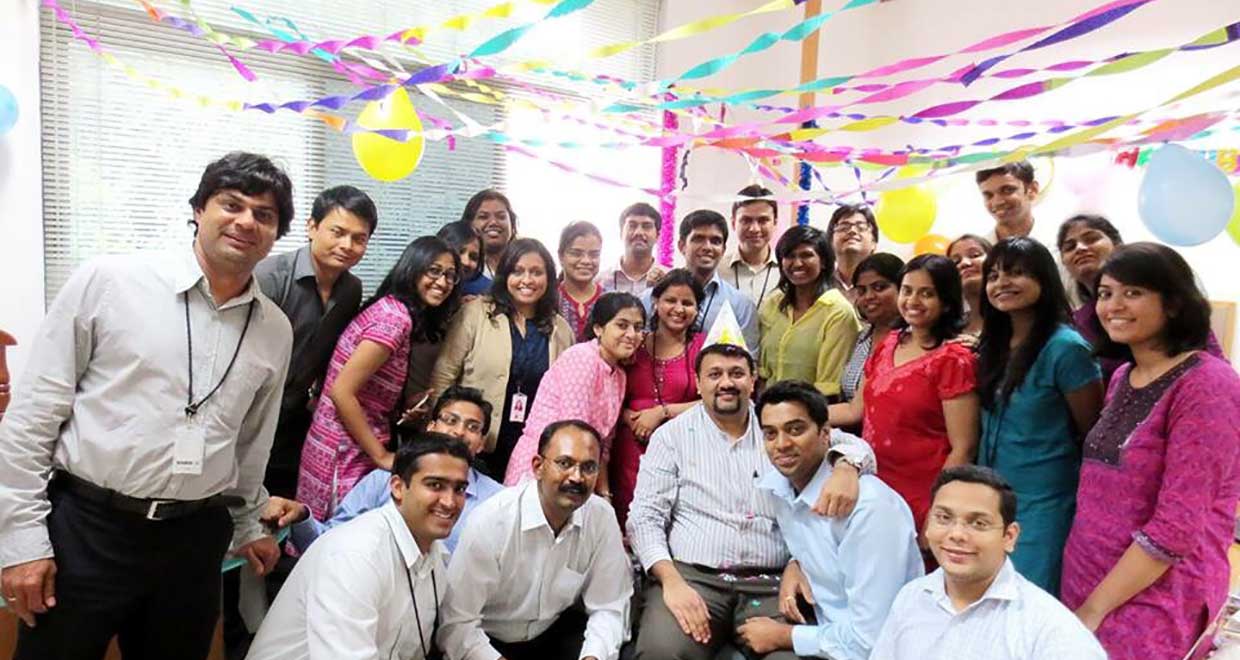
    Abhijit with the EdgeVerve Legal Team


    On what parameters do you choose the projects you work on?

    I made a conscious decision to specialize in corporate law. Apart from this, my association with the IT industry is more attributable to the advent of technology in the last decade and our fascination with software and its related businesses. Given this background, and within the IT industry, I chose to keep my body of work diverse and this is evidenced by the current role I am playing at EdgeVerve. I felt this gave me the best chance to grow in the profession and also gave me a broader perspective when analysing issues.


    Did you have a mentor or guide during the formative years of your career?

     If you see my journey, as detailed in this interview, I have cited numerous influencers who made a big impact on my career. I do not believe we should look up to a guide or mentor only in the initial phases of our career but throughout. For example, I had about six years of experience when the EdgeVerve opportunity came along. Over the last three years at EdgeVerve, I was fortunate enough to have the guidance of the current Dy. General Counsel of Infosys, Gopi (Radhakrishnan). Gopi has helped shape my knowledge of the software business and put me on the path to becoming a seasoned attorney in this domain.

    Outside of law, a very strong influence in my life has been my association with the Chief People Officer of EdgeVerve, Sushanth (Tharappan). I have found that sometimes consulting a seasoned professional, with no nexus to the legal profession, can often yield a different perspective which opens our mind to different possibilities and solutions. Sushanth certainly is that unbiased advisor in my life who has brought a different perspective to the way I approach life and work.

    Without mentors in our life, we lose the benefit of their experiences and this is a disservice to their knowledge. As John C Maxwell said, “One of the greatest values of mentors is the ability to see ahead what others cannot see and to help them navigate a course to their destination.


    Having published academic articles, could you take our readers through the process you adopt in writing papers?

    I look at four factors – (a) the topic; (b) the medium; (c) the audience; and (d) the end-objective of the article. More specifically, let me explain these factors when I did the article for Association of Corporate Counsel (ACC).

    I discussed with ACC and suggested an article on privacy legislation in India. Towards this objective, I recommended co-authoring an article along with Anind Thomas (Partner, AZB Partners) on the “Landscape of Data Privacy Legislation in India”. This article was going to be published in ACC’s magazine for in-house counsels across ACC’s global footprint of subscribers. To reach this many subscribers to de-mystify a legislation which has taken shape in the last decade presented an interesting opportunity and therefore I was keen to write this article.   

    How do you manage your time between your professional and personal interests?

    My biggest interest outside of law has been the game of basketball, which I have been playing for over twenty years! I felt basketball gave me a platform to mould my personality. Through basketball, I learnt team work, tasting both success and failure as a team, and displaying perseverance and will power in the most adverse times. I meet my group of friends from school, college and corporate circles whom I play with and against every weekend. This serves as a great stress buster in our otherwise busy lives.


    What advice would you like to give our readers, who are mostly law students and young lawyers?

    I have seen that trusting one’s instincts, charting out and executing according to a specific plan, being guided by a trusted confidante and putting in the hard work day-in and day-out can only result in continued success. In conclusion, I wish that my story has added a different perspective to all young readers and I wish all of them the very best in their careers.


  • Appanna Poonacha, Senior Manager – Legal, Ocwen Financial Corporation, on work experience at Manthan LPO and ISGN Bangalore

    Appanna Poonacha, Senior Manager – Legal, Ocwen Financial Corporation, on work experience at Manthan LPO and ISGN Bangalore

    Appanna Poonacha graduated in law from University Law College in 2006. Right after the completion of his graduation he joined Manthan Legal. After working at Manthan for almost six years, in 2012 he started working in ISGN, Bangalore. At present he is working as the Senior Manager – Legal of Ocwen Financial Corporation.

    In this interview we talk about –

    • His journey through years of law school.
    • His work experience at Manthal Legal and ISGN, Bangalore.
    • His role of work at Ocwen Financial Corp.
    • Pursing Masters in Business Laws (MBL) program from NLSIU, Bangalore.
    • Certificate courses on banking and financial services


    Please introduce yourself to our readers. Where did you grow up and complete your initial education? How did you decide to take up law?

    I am Appanna Poonacha. I am a Bangalore based corporate lawyer. I currently work with Ocwen Financial Corp. as a Senior Manager – Legal. In this role I am heading the company’s legal contracts functionality and oversee all commercial transactions at Ocwen’s India offices. I was born into a family of lawyers at Coorg, a place which is popular for its coffee, spices and picturesque landscape. I grew up watching my dad practicing law. I completed my schooling at Coorg and then pursued my Pre-University at St. Joseph’s Arts & Science College, Bangalore. I graduated in Law from University Law College in 2006.


    How was your law school experience? What activities were you involved in law school?

    Law school curriculum offers exposure to various subjects in law. This is the first step towards understanding each subject in depth. Moot courts and internships churn you towards the practical side of law practice. I actively participated in these activities which provided exposure to various challenges you come across as a lawyer. You also build skills related to leadership, teamwork and conflict management.


    rohit-appanna-2

    Upon graduating, you started working at Manthan Legal. What exactly does the company do, and what did your work profile involve?

    Soon after graduation, I got an opportunity to work with Manthan Legal, an LPO which then specialized in providing litigation services to law firms in the United States. Joining an LPO back then was like exploring a ‘road less travelled’. There weren’t many players in this field. Manthan gave a platform for me to work with attorneys in a global set up. This was my first stint in a corporate firm. Here I successfully managed revenue portfolios close to 1Million USD, leading a large team of attorneys catering to these law firm clientele. I was responsible for delivery operations, accounts’ management, client relationship management, business development and growth strategy of the BU.


    In 2012, you started working at ISGN, Bangalore. What did your work at ISGN consist of?

    After 6 years of working at Manthan, I got an opportunity to work with ISGN as an in house counsel. ISGN is a provider of mortgage technology and services for lenders, brokers and servicers in the US Mortgage industry. I was primarily responsible to oversee litigation & contracts for company’s regional office at Bangalore.


    Currently, you are Senior Manager at Ocwen Financial Corporation. What do your responsibilities include? What does an average day of work at Ocwen look like, for you?

    Ocwen is one of the largest providers of residential and commercial mortgage loan servicing, special servicing and asset management services in the United States. I am currently heading the Contracts team at Ocwen’s offshore facility in India. On a normal working day, my work involves liaising with internal teams, negotiations with clients and assisting the business with legal support in contracts.


    What do you look for in potential candidates while recruiting them? Please describe the management and HR policies that Ocwen follows?

    For me a potential candidate shall possess high values of work ethic, a drive to achieve and willingness to learn. Knowledge and skills are personal assets which qualifies an individual to grab opportunities. Ocwen is a workplace that believes in Customer Centric Quality, Inclusive Meritocracy, People, Integrity and Teamwork.


    Do you agree that law firm atmosphere is more competitive and challenging? Has your work been an exception to this notion?

    I would not buy that thought. Every profession has its own challenges. In today’s global environment, it is unfair to make comparisons.


    What are the essential requirements that a law student must fulfil in order to pursue a career in financial services? Do you think additional degrees like CA or CS help in this regard?

    Every day is a learning opportunity. There is no one success formula to be successful professional in any industry. Knowledge that you gain as a student, as a young professional will contribute towards personal/professional growth and success in your career. Additional knowledge and skills are always an added advantage.


    Has the Masters in Business Laws (MBL) program from NLSIU, Bangalore helped enhance your skills and abilities in a professional capacity?

    Absolutely! Knowledge in any form has no boundaries or limitation. I was privileged to get enrolled for MBL from NLSIU. It provided me access to some of the best legal academicians and resources of law in this country. The program itself was targeted to corporate professionals.


    How did completing a few certificate courses in banking and financial services help?

    Financial Industry at the United States is highly regulated. These certificate courses helped me to understand the various laws related to compliance in the day to day functioning of these corporations.


    Lastly, what is your plan for the future? What advice would you give law students wishing to pursue a career in financial services?

    My goal is to be a General Counsel of a large multi-national corporation. My sincere advice to law students is to utilize the various opportunities provided to them during their law school tenure, dedicate your time to gain knowledge and skillsets. Always aim for the sky!

  • Anirudh Rao, Legal Counsel, Infosys London, on LL.M from GWU and job at the World Bank

    Anirudh Rao, Legal Counsel, Infosys London, on LL.M from GWU and job at the World Bank

    Anirudh Rao is a London-based Legal Counsel for Infosys Limited. He graduated from University Law College, Bangalore in 2009. Thereafter he pursued an LL.M from The George Washington University Law School, Washington, DC. He joined the World Bank Group as an Associate before shifting to his current job. In this interview he talks about:

    • LL.M from George Washington University
    • Tips on SoP, scholarships, interviews with foreign law firms/companies
    • Working at World Bank Group and Infosys, London


    Our readers are mostly lawyers and law students, how would you introduce yourself?

    I am Anirudh Rao, a London based Legal Counsel for Infosys Limited. Prior to joining Infosys, I worked for the World Bank Group as an Associate in Washington, DC. I graduated from The George Washington University Law School, Washington, DC in 2010 and University Law College, Bangalore University in 2009.


    What motivated you to gravitate towards law, as a discipline and a career?

    I was keen on doing something that involved the right mix of problem-solving, analysis and creative thinking. Although it did flutter the dovecotes, the one thing I knew for sure was that I did not want to touch math with a bargepole! Having been driven towards humanities from my high school years, pursuing a degree in law therefore seemed to be a natural progression as a career choice for me.


    Please tell us about your time at University Law College. What experiences during these five years would you think particularly helped you shape as a law professional?

    I attended University Law College (ULC) from 2004 to 2009. One of the key advantages I felt about attending ULC was that it allowed me adequate time to participate in moot court competitions, contribute to law journals and gain practical knowledge through internships. At the end of each semester during the course of my degree I interned at both law firms and companies, and during the year I was able to leverage my research skills to write papers that eventually got published in both print and online law journals. It was these experiences that helped bring a lot of perspective in to what I wanted to do as well as shape my career as a lawyer.


    What was the decisive factor that prompted you to choose George Washington University Law School from the plethora of options available? Did you always have higher studies in your mind? If not, what motivated you to go in for the same?

    I always wanted to be able to savour the experience of being an integral part of a multi-cultural, ethnic and linguistic class of creative and persevering minds from around the world sharing more than just the need for scholarly advancement.

    Washington, DC being the seat of power of the US government and major international organisations is also a cosmopolitan center for international commerce and business. I felt being in DC and attending GWU located in the heart of DC would put me at a distinct advantage to expand my professional network. I was also awarded the Thomas Buergenthal Scholarship on the basis of academic merit which covered my tuition for a semester.


    anirudh-rao-2

    Would you suggest having a brief work experience before applying for LL.M.?

    I had no work experience when I went to pursue an LL.M. Personally, I have no regrets looking back at my decision because it did not impede my career progression. However, I also recognise that having some work experience certainly helps in building perspective on taking a decision regarding the preferred area of study and shaping one’s career path.


    How did you structure your SoP? Please share some tips for a successful application. What according to you is a good profile for securing scholarships & funding?

    I don’t think I was alone in writing the first draft of my SoP and feeling like I got it wrong. A law school receives hundreds of applications and the evaluators are tasked with the arduous responsibility of reading all of them. What one needs to avoid is stating the obvious, being extraneous or generally lacklustre. A strong opening paragraph will keep the evaluator’s interest to read the rest of the SoP with a positive mindset.

    With regards to scholarships and funding, I feel that having the right mix of consistent academic performance with moot court achievements, publications and internship experience will be able to propel applications further. Highly ranked universities look for more of well rounded CVs; highlighting any outstanding sporting achievements, social volunteering and/or any other stellar achievements goes a long way in securing coveted seats and hopefully scholarships to go with it.


    Please tell us about your time at GWU. Was it difficult for you to adjust to a US based education system? What differences did you find in the educations system of India and US?

    GWU Law School was a fantastic experience. The faculty ranged from a former judge in the International Court of Justice, a former Register of Copyrights to subject matter experts who have testified before the US Congress. My campus life ranged from attending socials, intramural and intercollegiate sports, live music concerts and town hall meetings. My fellow students were from 30+ different countries around the globe; people ranging from former judges to a South Korean guard who previously manned the De-Militarized Zone between the two Koreas. It was a perfect opportunity to make lasting friendships in the legal fraternity across the globe.

    The LL.M program at GW is designed to allow international students to settle into the US learning system through specific coursework and breakout sessions; as such, it was not difficult to adapt to the changed circumstances. I was also fortunate to have great professor-mentors.

    Education systems in India and US are as different as chalk and cheese. As one would expect, classes were interactive rather than lecture based which meant one would have to go prepared to class. The culmination of the course at the end of the semester did not always end up in taking a routine exam to regurgitate what one had memorised through the past months. We had a repertoire of assessments including presentations, research paper submissions and theses. Students were also graded on the quality of interactions in class through the semester.


    How did your induction into the World Bank Group as an Associate take place? Were there any interviews or selection processes?

    The World Bank is located next to GWU Law School in Washington, DC. In fact, I took classes where I would look out the window and dream about crossing the street and working there after graduating! The US economy hadn’t fully recovered from the recession in 2010, jobs were few and far between; being based in DC certainly played a major role in securing a job at the World Bank. I would show up at World Bank hosted events and spent considerable time and effort networking with officials and engaging in conversation about their work while expressing my willingness to collaborate with them in their projects.

    Initially I was offered a short term contract. I continued to network which eventually led me to the Head of Operations and Business Strategy at the Global Environment Facility (GEF) who requested me to apply for an advertised posting through the World Bank’s job portal. Few weeks later I was called for a formal interview that was lead by a panel of four. I was asked questions about my background, competencies and how I would be a fit to the role. I came out feeling positive about my answers, a few days later, I got an email from then offering me a full-time staff position. My time there was exceptional, one experience that stands out for me was a project mission to Liberia and travelling across the country to pristine Lake Piso along the border with Sierra Leone to oversee a land degradation project.


    Currently you work as a Legal Counsel at Infosys, London, UK. Which events led to your induction into Infosys, London? How did your appointment take place?

    I was introduced to the then General Counsel of Infosys, through a friend, whom I later met at a World Bank hosted event in Washington, DC. I was looking to transition to the private sector and we discussed briefly about my interest in a contracts and commercial transactional role that Infosys was looking to fill. I wanted to have the benefit of a multi-jurisdictional profile and felt that crossing the Atlantic over to London would exemplify a vibrant work experience. After a round of interviews in Bangalore and working there for a year, London has been home to me and I am thoroughly enjoying it.


    What does your current work profile at Infosys consists of? What is a typical workday like? Are there new challenges everyday or has work settled into a predictable pattern?

    My profile is that of a commercial transactions counsel with a responsibility to lead negotiations, draft and review contracts for the provision of IT services and deliverables. I work with a vast array of customers both in the UK and in continental Europe across industries including but not limited to finance, retail, energy and utilities and manufacturing.

    A typical work day includes liaising with internal teams, negotiations with clients and assisting the business with both contracts and compliance related legal support.

    Everyday brings with it a new set of challenges and that is the way it should be to keep oneself intellectually stimulated.


    Tell us a bit about work culture in UK. Would you say that there exists a difference in the working environment of UK and USA?

    Both the UK and the US in general are very accepting and cosmopolitan societies to expatriates. I felt that differences between the UK and US’s working culture revolves around communication styles, sense of humour and emotional expressiveness. Especially while working in a client facing role as a lawyer where one gets the opportunity to work with people across cultures, I think it is critical to pay attention to one’s surroundings and take ample time to reflect on other people’s behaviour as well as one’s own.


    Can you give us advice on applications and interviews, especially with foreign law firms/companies?

    When applying to foreign companies and organisations, students are competing against local graduates who by no means are in short supply both in terms of quantity and talent. It is especially crucial to stand out and exceed expectations. The humble resume is expected to tell a student’s story in one or two pages and may be able to open the first door. One can benefit from getting their resumes peer reviewed for substance and consistency. Interviews can be daunting, however, one must manifest hunger, drive and confidence to convince why they are the right fit for the job.


    Any plans to come back to India?

    No fixed plans yet. There is an excitement in playing it by the ear. But who knows what the future holds!


    Aside from work, we understand that you are a running enthusiast, can you tell us more?

    Running gives me a nonpareil high and is also a stress buster. I started running long distance as a student and haven’t looked back since. I run both for pleasure and competitively. The two personal triumphs that stand out for me are the Auroville Half Marathon in Pondicherry in 2014 where I finished in the top 10% with about 500 runners competing and the Coorg Escapade half marathon also in 2014 where the relay team that I led finished third overall. The former was a trail run in the wilderness starting before sunrise in low visibility and the latter was a challenging high gradient uphill trail run in a tea estate setting with twists and turns across waterfalls, streams and green pastures.


    What are the three activities on a scale of priority, you would recommend?

    It is important for students to carve out an individualistic identity. At the same time, one should not forget to enjoy one’s time as a student. Personally, I benefited greatly from the following activities:

    1. internships
    2. law review publications and
    3. moot courts.


    Lastly, what would be your parting message for our readers?

    In the words of Muhammad Ali “He who is not courageous enough to take risks will accomplish nothing in life”. Getting cocooned in a comfort zone is always easy but getting off the beaten track and persevering will always pay off, sooner or later.

  • Ashitha Bhagwan on being an Attorney at Royse Law Firm, LL.M. from NYU and the American Legal Industry

    Ashitha Bhagwan on being an Attorney at Royse Law Firm, LL.M. from NYU and the American Legal Industry

    Ashitha Bhagwan graduated from University Law College, Bangalore in 2007 and subsequently completed an LL.M. from New York University. After working in India and Singapore, she is currently practicing in California. Being a dual licensed corporate attorney focusing on start-ups and mid-market companies, she regularly counsels on a wide range of corporate issues such as formation, equity structure, employment, general corporate governance, intellectual property protection and commercial transactions for domestic and international clients.

    We took this opportunity to ask her about:

    • Her experience at New York University
    • Work atmosphere in the U.S.
    • Working as an attorney at Royse Law Firm


    “Law school”, have become synonymous with the NLUs. Have you faced any such bias during your career? What would you say to the future graduates of ULCB regarding this?

    You will realize as you grow into the profession that what matters is what you made out of the school that you graduated from. And as you are well aware, opportunities that present themselves to the legal student community are open to all students, irrespective of the school. The school that you graduate from cannot really hold you back – you are at liberty to be as involved in this profession as you would like to be.

    I didn’t let the comfort of life at law college get to me while I was completing my course. I used every opportunity I got to explore and build an identity beyond the shadow of my college. The legal community is a closely knit profession so it’s important that you network among your peers, focus on your courses and make the most of the internships/moot courts that you are given an opportunity to participate in.


    After graduating from ULC you had taken up a Post Graduate Diploma in Intellectual Property Rights from NLSIU. What attracted you to this course? How has it impacted your overall career trajectory?

    [sociallocker] I wanted to get some background and insight into Intellectual Property (IP) laws since I was interested in corporate laws, and IP and corporate laws intersect at various junctures. I completed this course alongside my ULC degree, so it was twice as much pressure but I managed to learn quite a lot from the course. It helped me master the basics of IP laws which have proven imperative in my day-to-day practice.


    Of all the internships that you have done, which ones do you think really enhanced your chances of getting admission in such a prestigious University? How would you recommend students to go about choosing their internships?

    The thing about internships is that it is not so much a single stint that will lead to your LL.M admission, as it is a holistic view of your entire career as a law student. I enjoyed all my internships since each one gave me an opportunity to explore a new facet of law. In the end, it became clear to me what I wanted to pursue in future.

    Since most students in India are enrolled in the five year course, they have at least 8 breaks (short and long) in which they could potentially intern. It is important that you show for these times when you are not required to be in class, and they all add up to your end goal. You could certainly spend a break or two doing something you like, unconnected to your end goal, but for a post graduate degree, it is important that your resume tell a story that leads up to the LL.M.


    How did you decide upon New York University School of Law for your Post-Graduation, from the plethora of options available in the United States?

    It was a really simple choice – I had applied to 6 schools (in US and UK) and got admitted in 5, and NYU was simply the best of them all. It was located in NY (which is the financial hub), the faculty was awe-inspiring (we had professors coming in from all over the world, even legal luminaries that I had only read about as a student), and it was in the top 3 when I enrolled. Also, I knew that I would have the most fun living in NY.


    How did you get through the selection process of NYU? What would you say increased the probability of your candidature? What are the things one should do while at law school to have to sail through these selection processes?

    As any other potential post-graduate student, you need to show that your application is different from the thousands that the school receives that year. What helped me was top grades, a solid set of internships, publications, and victories at national level moot court competitions.

    Make sure that your 5 years in law school count – pursue internships/clinics that are of interest to you, participate in moot courts, write articles, work with your professors (if possible) on articles they may need research assistants for, and, most of all, make sure your grades don’t slip. Universities generally look for well-rounded individuals to mould into lawyers – if you can show that the natural next step after your time in law-school leads up to the LL.M., I think you would have better chance.

    Also, you should tailor your resume/application for the specific school – some prefer work experiences, some are more academic oriented so, keep that in mind while preparing an application.


    How was your time in NYU School of Law? How is the academic workload there?

    I enjoyed it! Workload was heavy, takes getting used to, but you learn pretty quick when you’re there – the adrenalin and the need to catch up is pretty high, so you will be fine. Prepare to study hard, and party harder!


    How difficult was it for you, as a student who had theretofore been used to the Indian education system, to adjust to the environment of a US University?

    It was very different from what I was used to, but as I said, you become a quick study when you are there. I suppose you learn to swim when you are thrown in the water! You also have a lot of flexibility (with courses, timings etc.) which gives you the opportunity to be creative with your courses.


    Corporate Law is oft seen as a dry arena of Law, sometimes with humongous workload. What made you gravitate towards this field?

    It is all about perspective. The way I look at it is that I have an opportunity to facilitate deals. One of the things which makes it very interesting for me is that I have the opportunity to work with entrepreneurs working on exciting products and help those products reach markets where it might have never reached a few years ago. My clientele is primarily from the technology sector and being part of the ever-changing advancing landscape of technological innovations in the Silicon Valley is a great opportunity.


    ashitha-bhagwan1Before starting work as an attorney you had to clear the Bar exam at California. Given that it is one of the toughest bar exams what was your experience?

    The California Bar Exam is the toughest exam that I have ever taken. It required my undivided attention and focus, and I am so glad it is over! If you are planning to crack this exam, remember that you have to give it your all – one hundred and ten percent. I know of people who have attempted this multiple times and failed. The volume of material is overwhelming but tackle it in small sections and you will be able to get through it.


    Which events led to your induction into Royse Law Firm? Were there any interviews or selection processes?

    I have always been looking for opportunities where I would not be stuck to a desk, but be able to meet new people and interact with clients on a regular basis. The Royse Law Firm presented itself as the perfect opportunity. It happened by being at the right place, at the right time. After meeting with team I was convinced that there was a great potential for me here, and I have enjoyed my time here ever since I joined.


    What is it like working in a law firm? How hectic is it? Are there new challenges everyday or has work settled into a predictable pattern?

    As a lawyer, there is never a dull moment. It is pretty busy – entrepreneurs always have interesting challenges and it’s our job to come up with even more interesting solutions. Being innovative is part of the job, and I love that I have the opportunity to do that.


    Tell us about your work at Royse Law. Can you tell us about a few of the most challenging problems you have faced thus far?

    I work with start-ups and mid-market companies. Since my practice encompasses cross border transactions, I am often required to reconcile the different jurisdictional implications of a single transaction. We work on strategizing the best way to ensure that the product can be accessed in the same way in a foreign jurisdiction, as it would be in the US. What I love is that I get to oversee a well-rounded perspective of working across multiple jurisdictions – tax, IP and corporate all of which are an integral part of a corporate lawyer’s career.


    How different is the work environment in the USA, from that in India?

    One thing I have noticed is that there is a clear line between your professional and personal life in the US. I find that that line in India is a little blur. Other things that are more specific to the US work environment are that it is more formal (people love setting up meetings), a little impersonal and is extremely professional.


    What are your plans for the next 5 years in the various fields of Corporate Law?

    Corporate Law is a broad term, and I have had the opportunity to explore various facets of it. I will probably be in the corporate law practice in the foreseeable future.


    What would be your word of advice to Law Students who want to practice law in the US?

    Read. Be well informed before you make any decision. Information today is very easily accessible and there is no reason that you should not make use of that.

     
    If you would like to reach Ashitha Bhagwan, Esq., feel free to connect with her on LinkedIn, alternatively you can also email her at abhagwan@rroyselaw.com

    [/sociallocker]