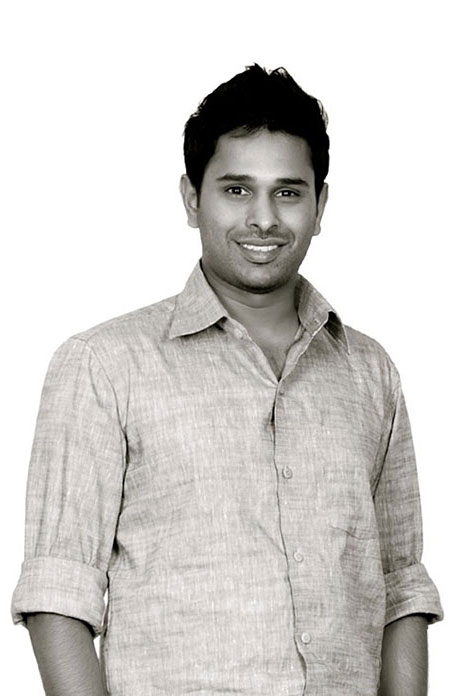
Tag: UN

  • Hemant Batra, Founder, Kaden Boriss Global, on working at AMSS and the UN, and his diverse experience

    Hemant Batra, Founder, Kaden Boriss Global, on working at AMSS and the UN, and his diverse experience

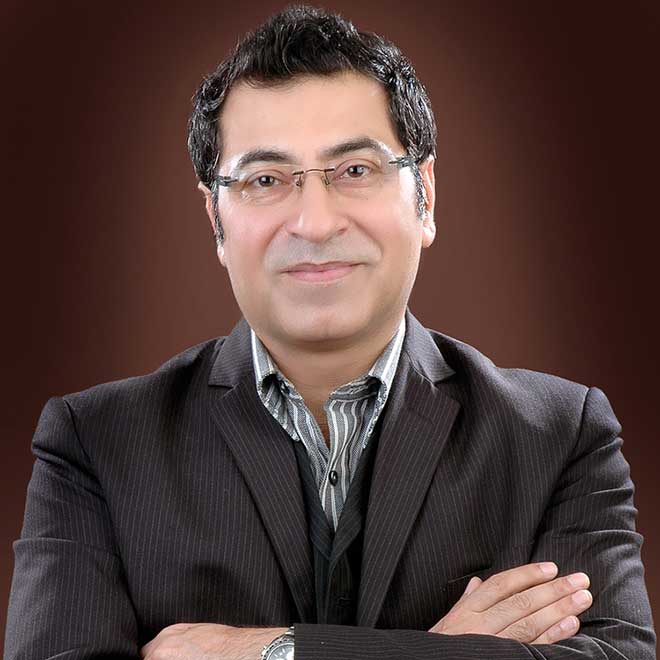
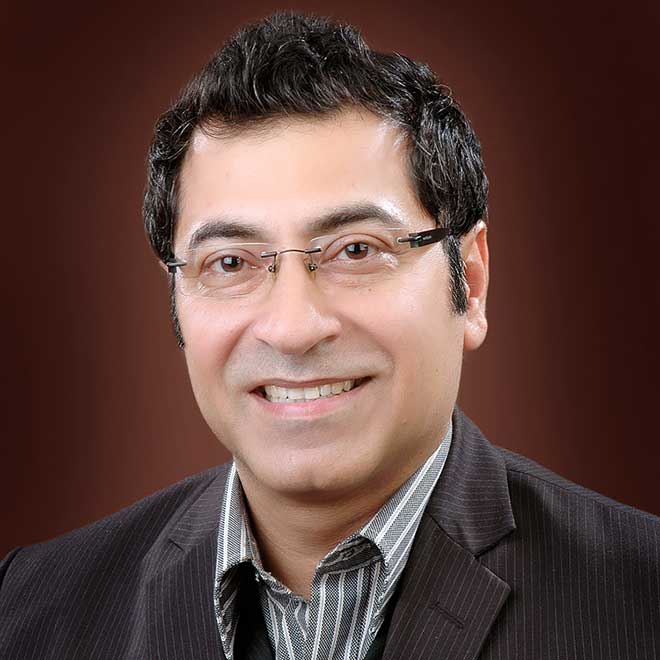
    Hemant Batra graduated in law from Panjab University, in 1991. He is a corporate, commercial, business and strategist lawyer. He is the founder and Chairman of Kaden Boriss Global, a legal and business strategist organization of global law firms and offices. Kaden Boriss was founded in 2003 by international and business laws specialist lawyers Hemant Batra and Preeti Batra. The intellectual property rights (IPR) in the trade mark and copyright of legal brand Kaden Boriss (KB) vests with Hemant Batra. As a Chairperson of Kaden Boriss, a Corporate & Commercial law firm, he is responsible for firm’s mentorship. His role in the law firm is to advise on strategy relating to any legal transaction or matter. He also steers cross-border & international legal transactions for clients. In the law firm he is also responsible for overseeing execution of selective legal consulting and services assignments for clients.

    In this interview we speak to him about:

    • Founding his own organisation
    • Working with the United Nations
    • His passion for music

    What made you decide to pursue an LLB after obtaining a BA degree? 

    While pursuing a BA in Humanities, I started to eliminate the career path, which I was not inclined to embrace at all. In late 1980s, I saw everybody around me was interested in the professions of engineering, medicine or civil services. I eliminated the engineering and medicine fields because they appeared quite run-of-the-mill and unremarkable. Initially, civil services, especially Indian police services did attract and excite me. However, on closer analysis, I eliminated that option as well for a couple of reasons – one, I noticed that there was too much political interference in civil services; in fact, I found civil servants being at the mercy of politicians, all the time; secondly, I was not too impressed by the remunerative compensation of government employees. Hence, I decided on the legal profession. It had too many appealing features. I was an accomplished orator, it offered me an opportunity to showcase my oratory skills. I wanted to be a strategic counselor and successful entrepreneur. The legal field was the best option to be on my own. It offered independence and presented means of earning sufficient wealth through absolute lawful means. Above all, I wanted to be a proficient and acclaimed global lawyer. Thus, I chose legal field to be my career path.

    I had chosen public administration, economics and political science as my subjects in BA. These subjects are/were very close to the legal system and commandments of law. These subjects literally became a bridge between BA and LLB, for me.

    It is my strong belief that humanities and law subjects are the ideal combination, for a career in law; be it law practice or legal services.
     

    How was your experience in law school? Do you think law schools produce socially relevant lawyers?

    I did my LLB from the Chandigarh Law Faculty, in the campus of Punjab University. The campus was very modern in terms of building and infrastructure. It was a stand-alone dedicated campus. The size of class or batch was not more than 100–120 students, if I remember correctly. The faculty was very strong, comprising some brilliant professors and authors. Even Senior Lawyers used to visit us as visiting faculty. The student–teacher ratio was 7:1, which was quite impressive.  I had an outstanding experience as a law student. The fellow students were very friendly and teachers exceedingly helpful. I carry wonderful memories of those times. Yes, the law schools do offer great opportunities to become socially relevant lawyers by becoming part of community, pro-bono and human rights driven legal programmes. Even in my times of student life, we had these programmes. We were inculcated with the values of serving the community in part-time, compulsorily or whole-time, optionally. However, at the end these become more of self-made choices. Law schools can only show you the right path and values; they can’t hand-hold you.   


    Did you participate in any extracurricular activities such as moots, debates or undertake any internships in law school? 

    Yes, I did participate in the extracurricular activities. In fact, moots was a compulsory subject. I participated in moots in all three years. I also participated in the debates and declamation contests. Internships, in our days was meant only for the last semester i.e. sixth. This was compulsory. For other semesters, it was optional. I did use to visit the High Court as a law student to observe some key hearings. All these practical activities helped me enormously in my becoming an accomplished lawyer. In order to become a skilled lawyer, one should have multiple traits and qualities – analytical approach, patience, hardworking, articulate, clear and effective oration, humility and so on. The extracurricular activities contribute overwhelmingly in bringing out the best in you. I am of the robust view that in the legal profession practical training and experience surpasses theoretical part. Therefore, the extracurricular activities and practical training should not only be made mandatory but must be made part of day to day curriculum.        


    What are your areas of interest in the legal field? 

    I graduated and got enrolled as a lawyer in 1991. At that time the only area of law practice was litigation. In litigation, most lawyers were general practitioners. Primarily, litigation involved civil, criminal and revenue matters. I actually wanted become an arguing counsel but destiny had something else stored for me. I joined Amarchand Mangaldas & Hiralal Shroff & Co., Solicitors in 1991 as an Associate. I was working alongside Shardul and Pallavi Shroff, who were the Managing Partners of the law firm. I got exceptional opportunities as a young fresher. I do not think anyone could get such opportunities in today’s times. In 1991, each day, I was given legal briefs to argue in the Delhi High Court (and sometimes even Supreme Court and Company Law Board). They trusted my capabilities and strengths. Between 1991 and 1994, I argued innumerable cases in several courts, tribunals and forums. However, the process of economic liberalization issued in 1991 by the Indian Government started to take shape in 1994. A new field and area of practise started to emerge for law practitioners. This got to be known as non-litigation or FDI law practise. It became a fashion statement to brand yourself as a corporate and commercial lawyer. I ventured into this area of practise. I became a connoisseur of cross-border investments related documentation and regulatory work. I got tremendous opportunities to handle complicated M&A and JV transactions. I started to enjoy the globetrotting attached with this kind of law practise. From a litigation lawyer, I transitioned into a business lawyer. I walked away from courts, where I always wanted to be. I have no regrets because I thoroughly enjoyed then and even now the challenges and luxuries of being a corporate lawyer. My core areas of practise cover corporate and commercial matters, FDI, economic laws, mergers, acquisitions, cross border investments, joint ventures, corporate compliances, corporate governance, corporate social responsibility, commercial agreements, transactional documentation, private equity, regulatory work, agreements, anti-corruption, anti-bribery compliance and legal auditing.         


    How did you secure an appointment at AMSS? 

    At that time, AMSS was known as AMHS. I was waiting for my final semester results of LLB, I approached AMHS directly at New Delhi office. I religiously used to visit the AMHS law firm office to secure interview. I succeeded after a gap of one week to get an interview with Shardul Shroff. I had an interaction of about half hour with him. He was then a lawyer of about eleven to twelve years’ experience. He liked my answer to one of the questions, where I said that for me AMHS is a gurukul and you my guru to be.’ I told him categorically that AMHS was a training ground for me, hence, I didn’t expect any remuneration. I was recruited as a Trainee and then once, I got my degree and enrolment, I was designated as an Associate. At that time the recruitment was done personally by Shardul and Pallavi. The criteria was primarily instinctive and first impression coupled with honesty and smartness of the candidate. My experience was absolutely outstanding. Whatever heights in legal profession, I have attained, I owe it to Shardul and Pallavi. Right on day one, they pushed me in to the turbulent legal waters so that I could become a swimmer in the rapids. I gained experience of more than a decade in just four years. In four years, I was capable enough to give run for money to lawyers with experience of ten years plus.      


    What motivated you to found Kaden Boriss Global?

    When I was travelling globally and that too extensively in mid 1990s and onwards, I realized that I should have an international brand with which foreign clients could relate to easily. I thought of establishing a law firm and a network of international offices with an international name so that people associate with it an MNC and not a domestic institution.  Kaden Boriss is a combination of two expressions – ‘Kaden’ and ‘Boriss’. The ethnic origin of these expressions can predominantly be found in the Swedish Germanic and Slavic languages and also partially in the classical Arabic language. `Kaden’ means a Companion and Boriss means a Warrior. When this name was coined on 15th August, 2003 me with the assistance of my international financial lawyer wife Preeti W. Batra, the idea was two-fold – (1) the law firm had to become a global phenomenon with presence all across the world, hence name had to be truly international, which one and all could relate to regardless of origin, race, language or dialect; and (2) the law firm had to become an unconventional outfit with emphasis on progressive legal services and strategy. Hence, the formula was to become a `Companion’ to our clients with a `Warrior’ like instinct. In other words, in this tough world clients need a companion who is a warrior. I am the registered owner of the IPR in Kaden Boriss brand.

    Initially, Kaden Boriss ventured into a highly innovative domain by assuming role of a knowledge processing consulting and legal services company. It engaged in undertaking legal & para-legal consulting assignments for Multi-National clients seeking to contract out their in-house legal, para-legal and strategic advisory, regulatory and compliance work. Between 2003 – 2011, Kaden Boriss under my leadership undertook extensive projects in Americas, Australia, Austria, Bangladesh, Bhutan, China, Czech Republic, Dubai, England, Germany, Holland, Hong Kong, Hungary, India, Indonesia, Kuwait, Italy, Maldives, Nepal, Philippines, Russia, South Korea, Sri Lanka and Thailand involving legal cross-border transactions, business acquisitions, mergers, takeover, private equity deals, commercial documentation, research on legal and para-legal issues, regulatory approvals, compliances, due-diligence, legal auditing and formulation of business strategies. Kaden Boriss operated from multiple satellite and project offices at that time. It comprised of team of Legal, IT, Software, Secretarial and Commercial professionals who are experts/specialists in undertaking high-end consulting projects of varied faculties.

    One of its divisions, also provided a cost and time saving solutions to the everyday challenges of making reports, presentations and other research-based documents like legal auditing, articles on general as well as technical issues and papers amongst others for business organizations, professionals and individuals. Its services represented a logical alternative for business organizations and individuals who didn’t want to waste their precious resources on such assignments but wanted to concentrate on their core area of activity. Kaden Boriss grew to become one-stop window for solutions to all legal and para-legal problems/issues.

    The only hurdle was that Indian clients initially thought that Kaden Boriss was a foreign law consulting firm like McKenzie or something, which it was not. The perception was that it was a consulting company and not a law firm. This was eventually overcome.

    The traits and fame of Kaden Boriss in executing legal and para-legal work for businesses and industry leaders all across the globe with utmost integrity, confidentiality, commitment, effort and efficiency started to spread far and wide.

    Hence, in 2009 Kaden Boriss formally adopted the Swiss Verein kind of structure. I and my wife Preeti W. Batra found this business model as an effective medium of offering Kaden Boriss as a single global brand with its member or group firms being able to maintain their independent status as separate legal entities as well as financially and administratively. The Kaden Boriss evolved as a commercially vibrant ‘goodwill’ service brand with ideal brand equity.

     

    You are, and have been in the past, the Vice President of SAARCLAW. Can you tell us about the role of this organisation and your job profile as its VP?

    South Asian Association For Regional Co-operation in Law, SAARCLAW, is an association of the legal communities of the eight SAARC countries comprising judges, lawyers, academicians, law teachers, public officers and a host of other law-related persons, duly registered with the SAARC Secretariat at Kathmandu and awarded the status of a Regional Apex Body Of SAARC. It owes its origin to the desire of the members of the legal community to establish an association within the SAARC region to disseminate information and to promote an understanding of the concerns and developments of the region.

    SAARCLAW was established in Colombo on 24th October 1991. I have been associated with SAARCLAW since its inception. I have been its Secretary General for three terms of two years each. Presently as Vice President, I represent India on the Executive Council. Office bearers enjoy quasi-diplomatic status. I have been instrumental in helping SAARCLAW establish a permanent Secretariat in Kathmandu. In my tenure as SG, I worked out several joint ventures between SAARCLAW and international institutions like UNDP, UNAIDS, IDLO, ADB etc. The Annual SAARCLAW Conferences have been acclaimed as affording an opportunity to its members for interaction, exchange of ideas and for forging a spirit of solidarity. It has been the convention since 1995 to hold a conference of the Chief Justices of the SAARC countries concurrently with the Annual SAARCLAW Conference. This feature has become institutionalized now and offers a forum for the exchange of thoughts and views of the Chief Justices of our countries.

    In its more than 25 years of existence, the members of SAARCLAW have persistently worked towards the achievement of its objectives of bringing together the legal communities within the region for closer co-operation, development of understanding, promotion of exchange of ideas and dissemination of information, and to use and develop law as a source and an instrument towards social change for development as well as for building co-operation among the peoples of the region.


    You have worked closely with the United Nations in several capacities. Can you tell us about the experience?

    First and foremost, any job with UN bodies requires a systematic approach. One is required to be passionate about certain areas of activities, which may be of concern to the relevant UN body. Before being eligible to undertake projects or assume positions with UN bodies, the readers interested in joining such bodies will have to execute some projects independently or with some non-profit outfits or NGOs. The vacant positions of UN bodies are widely publicized and displayed on their respective websites. The process of recruitment and hiring is very transparent and merit based.   


    Can you tell our readers about the role of the aforesaid organisations as well as your role as a member of UNAIDS?

    (Hemant has been a member of UNAIDS and has also been a Regional Observer at the Global commission on HIV and Law. He also works in association with UNDP to address the issue of AIDS.)

    It is officially estimated that over two million people in India are living with HIV. Though unofficial figures could be much higher. In other words, the people affected with HIV in India equal the population of cities like Chicago, Houston, Paris and Rome. Another example being that HIV affected people in India equals population of two Mauritius put together. Children (less than fifteen years) account for 6.54%, while two fifth (40.5%) of total HIV infections are among females. I have been working very closely with various UN bodies and international institutions working for the upliftment of marginalized population, be it LGBT community or sex workers. I was nominated to some key committees of UNAIDS, UNDP and UNESCAP; and also IDLO to facilitate diverse projects and programmes in resolving legal hurdles in dealing with people affected with HIV and AIDS. I helped in orientation of several stake holders and also introducing new legislation in South Asia to ensure that there was no discrimination encountered by the people especially women affected by HIV and AIDS at their work place and hospitals. I was instrumental in getting key members of the judiciary, executive and legislature from most South Asian countries on these committees. Several publications were co-authored and edited by me in this direction. India is severely affected by HIV and AIDS. Government and Judiciary have taken some fundamental steps in the direction of dealing with this reality.     

    Kaden Boriss, in association with National university of Singapore, founded an initiative called ‘International Infrastructure and Construction Law Arbitration Moot (IICLAM)’. What was the reason behind doing so? Why did you choose this particular topic for the moot? How do you think mooting contributes to a law student’s holistic development?

    I have worked very closely with an eminent Professor from NUS, Prof. Alan Tan. He was Vice Dean in the Law Faculty at the relevant time. We both decided to bring Kaden Boriss, NUS and Singapore International Arbitration Centre (SIAC) under one roof to deal with the most challenging legal proposition in the developing nations. We identified infrastructure as the key pillar of development in any developing nation. The transactions of infrastructure involve several contracts and agreements with serious and complicated legal implications. Through IICLAM, we resolved to engage the next generation lawyers i.e. law students in resolution of legal disputes in the infrastructure – construction law related matters. The moot competition also enriched law students’ knowledge on the ADR mechanism.
     

    You are a senior expert at Geoman Bind, a legal and policy research think tank. Can you tell our readers about the nature of work you do there, as well as the importance of think tanks in policy making?

    This is the future of legal and policy arena. Goeman Bind HTO is a private non-profit international legal and policy advisory and research think-tank. It is cerebrally and academically supported by patrons from Australia, China, Dubai, France, Germany, Holland, Indonesia, Malaysia, Romania, Russia, Singapore, Slovakia, USA and UK. It stimulates legal experts and academia to offer knowledge to the patrons and inspires policy specialists to share expertise with the recipients. It engages in legal and policy research and advisory while creating a knowledge bank within reachable horizon. Goeman Bind HTO is a unifying process or manifestation of valued and iconic traits of expert legal professionals. It is unique fora of research, resource and legal advisory. This not for profit initiative of combining advisory, research and a think-tank stream under one banner was first conceptualized in 2008 in the form of a platform of like-minded intellectuals, professionals, experts and academicians in the field of law and policy.  Goeman aims to bring under one roof about 50 leading experts and academia in the legal and policy gamut from across the world who could afford the utmost excellence in research, recommendation, opinion and advisory on a complete array of legal issues and policy matters. Goeman provides for a prospect to experts and academia in the legal and policy gamut from all across the world, carrying knowledge and well-versed deliberation to the community dialogue of legal and policy strategy sets. Goeman is projected to become a niche global network of highly qualified academicians, legal and policy advisers. I am involved in couple of legal and policy projects dealing with child labour and child abuse. I am also moderator and referee for some research projects.


    You are the chairman of the South Asia committee of the Indian National Bar Association. Would you tell our readers about the work of the INBA and your role in it?

    I am yet to get fully involved in this particular task. Due to paucity of time and other prior engagement, I have not been able to give much time to INBA. But I propose to involve INBA in the forthcoming SAARCLAW conference in Colombo. INBA has tremendous potential and its live wire Kaviraj Singh is a man of amazing abilities and ideas. He is a man who could be highly relevant in bringing about positive changes in the lives of young legal professionals.


    Do you find that the Indian education system requires improvement? 

    (Hemant has been a visiting faculty at the Indian School of Business and the FORE School of management.)

    Yes definitely, the Indian system requires fundamental reforms. First and foremost, we need to grow out of the mental block of professional degrees. Profession has nothing to do with professional degrees. We need to inculcate and encourage the natural instincts amongst our students. If any student is good in poetry or music or sports or drama, we need to inspire him or her to embrace the same as a career. In the Indian dispersion as to career path, we have a pre-set mind that career means being an engineer, doctor or lawyer; and rest follows. It is important that students should be given an option to move and shift from their original courses as is possible in US. Indian students get stuck with their courses what they choose at the first instance. It is important that down the line, if that particular course doesn’t interest them, they should have the option of choosing or moving to another course. Further, practical aspects need to be introduced more and more in any career path. Regarding, advise to the students, I would only say follow your passion not the flock. If your passion becomes your profession, sky is the limit. Accomplishment is a relative term at the end of the day.    


    You are greatly interested in music. Can you tell us about this interest and how you have pursued it? 

    Music is like meditation for me. It is a means of recharge. I have not had any formal training in music. I started composing and arranging music in 2002. I made a small studio at home in which, I would disappear for hours together. Now, I have an ultra-modern studio with state of the art gadgets and equipments. I launched my brand label `Urf Hekbat’. Urf means alias or also known as. Hekbat is a combination of He for Hemant K for Kumar and Bat for Batra. Initially, I was hesitant to share in the public domain that I was doing music, so I launched this brand name. I launched twin albums of lounge music genre in 2012, which was a big hit. My music started playing in international night clubs and lounges and pubs. In many fashion shows abroad including Berlin fashion show, models walked ramp on my music. I have no commercial agenda for music and it is mere hobby or should I say little more than a hobby. With experience, I can now not only compose music on my own but also create videos for my music tracks. When I was approaching 40s in my age, I felt I was burning out fast in search of fame and wealth. God was really kind to me as by the age of 40, I had earned enough that I could retire and settle down without doing any further work. But this had come at the cost of humongous hard work and stress. Hence, to continue further in profession, I needed a stress-buster hobby and nothing could have been better than music.    


    You have pursued courses in corporate law and the procedural laws of the United States at Harvard Law School and the University of Pennsylvania respectively. How have such courses helped you in your career? 

    Both my children are studying in the United States. I really like the US system of education. I was invited by Harvard Law School to be part of their project regarding legal profession and its international dimensions. This project was being undertaken in collaboration with Indian School of Business, Hyderabad. I became part of this project and gained a lot in terms of experience. I was given lecturer’s role as well. In so far as University of Pennsylvania is concerned as I mentioned that my children live in USA, I wanted to get hold of the basics of US laws, hence, this course.  


    What are the challenges you have faced in building your career as it stands today? 

    I compare legal profession with a space shuttle. When the space shuttle takes off from the launch pad, it emanates huge fire and steam because it assumes too much stress and pressure. Many a times space shuttles blows off and burns while if it doesn’t it goes into the orbit – universe. Likewise, legal profession in the initial years is very testing and stressful but if one can withhold that pressure and steer on with hard work; sky is the limit. I struggled and worked really hard in the initial 5-8 years but after that the growth was vertical. I achieved my targets and aspirations quite early in my career. This profession is very fulfilling and accomplishing. It gives you independence, freedom and command in every which way. It only expects hard-work, discipline and accountability.   


    What are the characteristics you would look for while recruiting young lawyers? 

    Predominantly, I try to see through a candidate in a way that I could identify if he or she has an urge to learn. Legal profession commences with a learning process and then turns into an employment or job or a remunerative arrangement. If one is keeping fiscal expectations in the forefront then he or she is not my choice. Remuneration is important but not fundamental. Learning and training is everything in the initial years. I also look for a cutting edge. Why should I hire you? Is my standard last question. The candidate has to show me, why him or her over others. CGPA is one of the features, we look at but that is not the whole and sole deciding factor.

     

    How have you used your media exposure to influence specific aspects of the legal discourse in India?

    (Hemant has been invited to express your opinion in mass media such as newspapers, magazines and TV shows. You wield unique influence over the legal discourse in India.)

    When you become an experienced legal professional and lawyer, you become a significant resource for any kind of media and medium. I have always believed that experience and knowledge not shared is a waste. I have selflessly shared knowledge at any given opportunity.


    What do you think are some of the legal challenges India’s legal fraternity faces today?

    I think in today’s times the biggest legal challenge our fraternity faces is coping up with the ever changing technology. Those who will not change with the changing needs of time will get wiped out. Way back in 1996, a distinguished law professor from UK, Richard Susskind in his book `The Future of Law’ noted that changes in technology will fundamentally, irreversibly and comprehensively change legal practice, the administration of justice, and the way in which non-lawyers handle their legal and quasi-legal affairs. Law has to be viewed as a business and a profession. In fact, to better understand the transformation of legal practice from a profession traditionally made up of small independent firms to a multi-billion dollar global business; Harvard Law School had long back established the Center on Lawyers and the Professional Services Industry. “Law firms and other professional service providers are now a critical part of the global economy,” said Harvard Law School Professor David Wilkins.


    How can India better its legal regime so that it is more efficient, inclusive and in alignment without nations development goals?

    I think this can be achieved by opening up the legal profession beyond borders, introducing a high notch of accountability so as to discipline the legal professionals and carrying out day to day systematic orientation. We need to realize that hundreds and thousands of students graduate each year in law and eventually get enrolled as lawyers. There is a massive gap in theory and practise. We need to bridge this gap by orientation and proper placements.  


    Can you describe a regular day in your life for our readers? 

    For me it is a five day week in so far as work is concerned. I start my day early, I am in office by 7:30/8:00 AM. I work at stretch be it desk work or meetings until 2:00 PM. I take lunch and rest between 2.00 – 3.30 PM. I am back to work and wind-up around 7:30/8:00 PM. I try to keep meeting outside office for not more than 2 days (preferably one day) a week. Saturday is a hobby day for me when I do music compositions in my music studio. Sunday is totally for family and friends. I am travelling out of Delhi or India seven to ten days a month on an average.


    How would you describe your long and illustrious career in the legal field? 

    I think some of the most eventful or accomplishing landscapes of my career are as follows –

    • Opportunity to work very closely with Shardul and Pallavi Shroff gave me an initial head start in profession.
    • My association at the threshold of the profession with legal luminaries like Justice P.N. Bhagwati, Justice A.M. Ahmadi, Justice R. C. Lahoti, Justice U. C. Banerjee, Mr. P.P. Rao and Mr. K. K. Venugopal boosted my self-esteem and gave me a confident pitch.
    • My association with SAARCLAW at a very young age and victory in all elections at the domestic and international level for the offices therein, gave me tremendous visibility.
    • I was assigned complicated international legal transactions for global clients like Bayer, Suzuki, LG, Godfrey Philips, Kuwait Royalty, AMEX, WU and many more. These transactions took me across borders. I began to be getting recognized as a global corporate and commercial layer.
    • When I founded Kaden Boriss, it was an ultimate feather in my legal cap.
    • And now with Goeman Bind HTO, I stand recognized as a Policy Expert and Thinker.      


    What advice do you have for our readers who are primarily college students?

    My advice to the young students is that keep your feet firmly on the ground. Legal profession is the only profession in the world where growth is vertical, if you are determined, hard-working and disciplined. These three qualities work like a magic potion for assured success. And always be humble.   


  • Yashasvi Nain, Hans Wilsdorf Scholar at Geneva Academy, on working in International Humanitarian Law and Human Rights

    Yashasvi Nain, Hans Wilsdorf Scholar at Geneva Academy, on working in International Humanitarian Law and Human Rights

    Yashasvi Nain graduated from the Rajiv Gandhi National University of Law, Punjab in 2013 and went on to do an LL.M from the Geneva Academy of International Humanitarian Law & Human Rights. He is also a recipient of the Hans Wilsdorf scholarship and has worked extensively with the UN on various projects and in different capacities. Currently he is working on a UNHCR project to do with statelessness and a few other projects still in their developing stages. In this interview he talks to us about:

    • Choosing Human Rights as an area of specialization
    • His various internships and experiences ranging from working at the Supreme Court to AALCO to the UN
    • His time at the Geneva Academy and how he received the Hans Wilsdorf scholarship
    • Working at the Universal Centre of Human Rights (London), the UNHCR and the UNHRC
    • Advice for readers contemplating commencing a career in the UN


    Please introduce yourself to our readers. Which factors do you believe shaped your decision to pursue law?

    I belong to Jaipur, Rajasthan. I am a lawyer, specializing in the field of public international law.

    Like any other city in India, in Jaipur, one can start early on their chosen field, which is mostly medicine or engineering. So, I started preparing for medico entrance examinations. I agree I was doing that half-heartedly, but then, my father who is an advocate told me about CLAT and related avenues. Out of all of them, I found that Human Rights requires much work to be done by a lawyer. I have always wanted to spread awareness about these basic rights in society and this was the prime reason why I chose law.

    Eventually, I did my B.A., LL. B (Hons.) from Rajiv Gandhi National University of Law, Punjab. That was followed by LL.M from the Geneva Academy of International Humanitarian Law & Human Rights which is a joint center of the Graduate Institute and University of Geneva.

    Currently I am working on a UNHCR project which deals with the issue of statelessness.


    You have had some very unconventional internships through your law school years with prestigious organizations. Could you share your experiences there?

    Well, after doing internship with law firms in the first two years of law school, I realized that this is not the kind of work I would like to do in long run. In fact, I enjoyed working in my dad’s office during vacations, more. It is about what you find challenging as a budding lawyer and pursuing that when you intern. That’s why I opted for options other than a law firm.

    I worked as a law trainee to a Supreme Court judge. I got this traineeship though my university. It was the first time I got to learn from the other side of the bar i.e. from the bench. The work was good – mostly attending court proceedings, preparing the briefs for the Hon’ble Judge. It was nice sometimes to have discussions with the Judge and to get to know his point of view.

    I also worked with ICRC and it was a great experience. This was the place where I actually got the first taste of working in an international organization. Especially with a multinational and a multi-cultural team. It was really fun, and I learned a lot, and it influenced my career. I was given independence to do my assigned work and was even appreciated by the supervisor at every good task. The feedback at such organizations is prompt and you learn so much. As an intern, I realized how positive you feel when you get appreciated and acknowledged for your work. It encourages you at the right stage of your life and you get the confidence to take on bigger tasks.

    I also interned with AALCO, which was also an International organization. Here, I got the chance to attend various international seminars and conferences organized by AALCO. It was very useful from the knowledge point of view and I actually got to know various national and international law issues in depth. After that I researched with various scholars, Embassies and International organizations.

    All these internships and work experiences helped me stay comfortable while working with OHCHR at Geneva. Though I was impressed by the work culture there. From juniors, to the most senior person there, all work like a team if they are working on a project. It has a very wide variety of work like declaration drafting, followed by negotiations and being a part of the working groups.


    When did you decide to create for yourself a career in Human Rights law?

    As I said, my father was the first person to counsel me about the role law can play in realizing the most basic rights in society.  And during college as well, I was always fascinated by Public International Law and not just Human Rights specifically. My friends Rishab and Arnab shared this view. I remember we asked the authorities so much to start an international law specialization group in my University, because we didn’t get a sufficient number of students to start the specialization.

    During my 4th year of law school I chose to intern with ICRC. I loved the work and that motivated me more, to work in International Humanitarian Law. After that I got chances to work on International Criminal Law, Peacekeeping Operations, International Refugee Law, Internally Displaced Persons, migration in International Humanitarian Law and Human Rights Law, in various capacities.

    My future internships were directed towards specializing in international law thereon. During my final year of law I got an offer letter for an LLM course from Geneva Academy (known for its LLM in IHL & Human Rights) and MIDS (known for its LLM in dispute settlement). It was a tough call but I ended up accepting Geneva Academy’s offer. All my experiences during my internships, whether they were related to work culture or the kind of work, helped me make up my mind to pursue international law.

    At this stage as well as earlier, I do what I like doing the most and am not swayed by any other factors whether economic returns or what others are doing. This is the sole motto that gives me work satisfaction.


    Can you tell us about Human Dignity International?

    I give the entire credit to Late Prof. (Dr.) S.R.S. Bedi. Under his guidance RGNUL started a specialization in international law. Unfortunately he passed away some time before my graduation, but in order to continue his vision and idea of human dignity, I started this organization. It mainly focuses on research in the field of international law and on letting students know about the importance of international law. This is done by giving them opportunities through various research projects. I also got good inputs on this one, by many professors and international law experts around the world, who agreed to be part of it in various capacities.


    What shaped your decision to create a career in Human Rights? How did you go about the application process?

    (Yashasvi went on to pursue an LL.M in International Humanitarian Law and Human Rights from the prestigious Geneva Academy of International Humanitarian Law & Human Rights, Geneva.)

    As I mentioned earlier, I interned in various capacities in order to find out where my actual interest lay.  I was not quite attracted to the work in law firms. I wanted a multi- faceted work front which dealt with international law.

    I started working on my application almost a year before graduation. It is very crucial that you write a good application and get recommendations from persons who know you and your work potential. I appreciate my friends who reviewed my SOPs and helped me replicate what I actually felt. Both these factors go into any good application. In general the application process for Geneva Academy is not very technical. There is no application fee. You have to do everything online. You need your transcripts, recommendation letters, SOP and a motivation letter. Another thing which, makes the application process strict is that you need to choose if you want to apply with a scholarship or without a scholarship. If you chose the former then you will not be eligible for the latter. So you really have to make up your mind.


    Please enlighten us on how to get a full scholarship like you did from the Hans- Wilsdorf foundation.

    Well that was something I never expected in my life. I got the offer letter on the night of my farewell when I returned to the hostel. When I saw the email, I couldn’t believe it. I asked my friends who were standing next to me to confirm so that I could actually believe it was true. For the Hans-Wilsdorf scholarship, applications are considered in their entirety, including transcripts, extracurricular and voluntary activities, work experience, personal background, letters of recommendation, the personal statement and language skills. Through individual considerations, the Admission Committee seeks not only to identify individual characteristics that are important to academic success in the programme, but also other qualities that promote diversity and excellence in the student body.

    I personally think there are three things which play an important role in getting a scholarship offer. First, academics and your efforts (through internships, publications) to pursue your interest, that is in the area where you are planning to apply for your LL.M. Second, your statement of purpose (SOP) that shows what is the real motivation behind your application. Third, extracurricular activities, that is you have to show that you are not just good in academics but do have an overall personality, you can highlight your leadership qualities, sports achievements, or if you have achieved something while pursuing your hobbies.


    What are the ways your year at the Geneva Academy has helped you?

    I would say Geneva Academy as well as the city of Geneva itself helped me a lot in developing professionalism. Let me first tell you about the Academy. The first year at the Academy was extremely stressful though it helped me to understand the basics of various international law subjects not just in theory but also in practice. The Academy prepares you to work in all international organizations, and international courts and tribunals …etc. (for instance, in exams they give you a role of prosecutor or defense lawyer and ask you to give legal arguments). Practical and professionalizing activities in leading international agencies make the course more intense. The faculty at the Academy is the best in their field. It was a good experience to be taught by  professors whose books I used to refer to during moot courts.

    On the other hand Geneva also helped me a lot to improve my interpersonal skills. It’s an amazing city with the UN and international organizations, with easy access to them. Year round there are seminars, talks and conferences organized by various UN Missions or Organizations. This also helped me to stay up to date with contemporary issues.


    yashasvi-nain-2

    You are also a Fellow at the Universal Centre of Human Rights (London). Please describe your role there and how the experience is for you.

    It’s more academic but I like it because it helps me to stay connected to the contemporary issues of international law around the world. Fellows are supposed to be reviewing existing literature and prepare a monograph discussing the major problems and possible solutions to the problem.


    You worked at the Office of the UN High Commissioner for Human Rights, Geneva. Please describe to us your role there. How did you get placed?

    I would say Geneva Academy played a major role by equipping me with a strong master and by providing a platform to meet people. I was guided by my professor to work with OHCHR. OHCHR gave me so many opportunities to learn and work on various issues ranging from migrant smuggling and health and Human Rights to early warning indicators. It also gave me an opportunity to work as a member of the Secretariat responsible for organizing open-ended intergovernmental working group (OEIGWG) transnational corporations, business and Human Rights. Also members of the Secretariat organized the2nd OEWG on the draft declaration on the rights of peasants. Other tasks ranged from preparing the final note of the panel on the rights of persons with disabilities in the Human Rights Council 28thSession; preparing background papers for various initiatives and mandates of OHCHR and preparing the report to be submitted to the General Assembly on cultural diversity.


    It is considered extremely difficult to get into the UN. What are the ways to ensure one stands out and gets noticed?

    Definitely! It is crazy competition out there. Especially for us Indians in the sense that I have observed that Indian students have a great CV but it’s very difficult to break the ice because of the lack of approach.

    I think the easier way is to get close to the system, usually by way of doing an LLM or PhD or by doing an internship with them. Once you get in touch with some employees there, then at least you might get exact advice on where to search for openings and gather requisite skills for those. They are very forthcoming in guiding their internees.

    I would like to highlight that since Geneva or New York are expensive cities and most of the UN internships are unpaid, students are not motivated to apply for those internships. But I am telling you there are many positions which are paid, just need to do little bit of research on what suits you best.

    Another hurdle for us is the language barrier. If I talk about Geneva they prefer French along with the English language. So I suggest learning French or Spanish – you need not be proficient, but it will be a deciding factor in cracking the entry to the UN.


    How was your experience with the field research on UNHCR’s project? How is it different than the work at headquarters?

    I was always told by my mentors as well supervisors at the UN that you should never work at headquarters at the beginning stage, it’s always better to get field experience which will actually help in the future and with growth in your career.

    I personally felt the difference during UN conferences and discussions, where opinions or points raised by officers present in the field are so much more practical. So when I got a chance to work on field work, I was quite excited about it.

    It’s a totally different experience, where you go and do ground work and talk to grass root level organizations and with the stateless refugees themselves. It gives you a feeling that you are actually doing something meaningful. It was a great learning experience of how day to day bureaucracy and government works. At the same time it’s challenging also because many a times people don’t want to share their views and information.


    What do you have planned in the future?

    International law is a vast field with infinite opportunities but at the same time you can’t plan it. However, research projects are my constant engagement. I have some enterprises that are in the pipeline, on which we have been working for quite a time now. I can only talk about them once they are floated.


    How has Human Rights law evolved over the past few decades? Where do you see its significance in the future?

    Human rights were always the most basic rights. But in terms of decadal growth, there has been progress on giving them a legal form and building up mechanisms for better enforcement. We have witnessed in the last few years that the judiciary world over has widened the scope and ambit of Human Rights protection. LGBT rights, right to privacy, limitation to the use of force against civilians, right to land, housing, education etc. are now a reality.

    Unlike old times Human Rights are no more just soft laws. Human rights treaties and customary law are as ‘hard’ as any other law.  Though there is an evolution of challenges at the same time in societies going through transition phases. We see, the right to life being viciously violated in Syria. And even now, the right to food, education, health care and adequate housing are yet to be safeguarded.


    What would you say to some of our readers who contemplate making a career in the field of Human Rights?

    I would say that it is an adventure in itself. You know where you start but you don’t know where you will end. You meet a lot of interesting people, and get opportunities to travel around the world. But you need to have a deep conviction that what you are doing is the right thing. On my journey till now I have met some amazing people who work for humanity and are passionate about their work.

    The downside is, you might not get a high salary in the beginning (you might end up doing an unpaid internship while your mates are getting paid internships in law firms. I am sure that will demotivate you at times!!) You also might get short missions, so if you want to settle down in a place you like, it is a bit difficult.

    I would say just write to people who are in the field. Write a random email – you have nothing to lose. Ask them for guidance. Clear your doubts and march forward.  I believe in the inspiring words of one of my mentors who is in the foreign services – “Just dream, the rest will come at its own pace; you are a movie observer and your job is to enjoy the show”.

  • Sukrit Kapoor on Summer Schools, LL.M. from Essex University & a career in International Human Rights Law

    Sukrit Kapoor on Summer Schools, LL.M. from Essex University & a career in International Human Rights Law

    Sukrit Kapoor had graduated from GNLU, Gandhinagar in 2011. Thereafter he pursued an LL.M. in human rights law from Essex University. Being an international law enthusiast he worked at Gaza Strip for the Palestinian Centre for Human Rights and submitted reports to the UN. He also worked as a Refugee Status Determination Assistant at the UNHCR for quite some time and had joined Commonwealth Human Rights Initiative yesterday.

    In this interview Sukrit tells us about:

    • Attending Summer Schools
    • LL.M. in International Human Rights from Essex University
    • Competing in Concours Jean Pictet
    • Pursuit of a career in International Human Rights
    • Work experience at Gaza Strip


    Hi Sukrit! How would you like to introduce yourself to our readers?

    I completed my undergrad studies from GNLU in 2011 and immediately followed it up with a postgrad degree in international human rights and humanitarian law from the University of Essex in 2012. Despite being a law graduate I can’t exactly classify myself in the conventional binary of corporate lawyers and litigators, as I like to think of myself as an international law enthusiast with an interest and focus on humanitarian issues. I have recently joined an international NGO, Commonwealth Human Rights Initiative, as a Research Officer and I have previously worked with UNHCR in India and with another NGO in the Gaza Strip.


    Please tell us about what life was like in GNLU? What all activities did you pursue while on the course and how did they shape your career?

    For me GNLU, and law for that matter, happened by pure accident. I took up commercial studies during high school and easily envisioned myself becoming a typical number-crunching chartered accountant someday. However, a family friend suggested that having a base in law would boost my accountant pursuits. I ended up in GNLU with absolutely no clue, except for some very clichéd ideas, about lawyers and what they do. Needless to say, I was very lost from day one which lead to my becoming further disinterested in corporate or commercial studies. Luckily for me, I had become friends with two senior students, Kumar Ankit and Hardik Dave, who were seriously involved in establishing the Legal Services Committee and the legal aid clinic at GNLU, and with some encouragement from them I volunteered for the committee in its initial year and got accepted as a member the next year.

    Working with the clinic got me really interested in civil and social issues, but back then I didn’t think I could do similar work for a good part of my life. Interestingly enough, I ended up doing a non-legal marketing internship during my second year and followed it up with an LPO internship with the hope of combining my legal and business skills in the legal outsourcing setting. While interning at the LPO, I got the opportunity to prepare a research brief on international refugee law for an American lawyer who was helping a Haitian asylum-seeker seek refuge in the US and the court ruled in our favour. That satisfaction clicked so well for me that I decided to specialize in international law with a focus on human rights, migration issues, and armed conflicts. Thankfully, the course at GNLU was long enough to allow me to shoot some arrows in the dark while identifying my true interests, and also help me work towards them.


    You have attended a couple of summer schools. What are the aspects you considered while opting for these courses? Would you recommend law students to opt for these courses over an internship?

    I attended three summer courses during my undergrad studies. The first one was an Introduction to International Law at the Indian Society of International Law in Delhi. I attended that course immediately after my first year in law school, purely out of curiosity. The next summer school I attended was on International Affairs and Multilateral Governance: Global Migration, Cooperation and Development at The Graduate Institute of International and Developmental Studies, in Geneva and after that I participated in a programme on Protecting Human Rights Through United Nations Mechanisms, at the Human Rights Law Centre of the University of Nottingham.

    Once I got clarity on the kind of work I enjoyed and the area I wanted to specialize in, the next obvious thing on my list was to garner skills, aptitude, and acumen essential for further pursuing my interests. I reckoned these summer schools were ideal for this purpose. They seemed to be a better and wiser investment over an internship because for they offered me a broader, better and more practical understanding on issues beyond the ordinary textbook perspective, which seemed quite impossible through an internship. Also, professionals from various international organizations taught the course and I even got to visit these organizations’ headquarters and get an idea of their functions.

    So my general advice to one and all will be to opt for opportunities which will for sure help you learn and attain proficiency, and it can be through an internship, a summer school, a moot court or essay writing competition, or for that matter anything else. Remember to do the time-investment-benefit analysis and choose the best way you think you will learn.


    Following up on that, how have these summer courses helped you?

    They have helped me immensely. This might sound a little like Steve Jobs’ Stanford speech where he explains about connecting the dots and how you can only do it looking backwards, but the best example I can give is that my current job with Commonwealth Human Rights Initiative requires me to be proficient and thorough with international human rights mechanisms, so much so that among other essentials this was mentioned as a must-have in the job description. Also, attending these summer courses helped me understand the teaching methods employed by foreign educational institutions, which in turn prepared me to pursue my masters more efficiently.


    sukrit-k2Why did you decide to pursue an LL.M.? What made you choose the University of Essex? Were you considering other universities too?

    I wanted to learn more about working in the realm of human rights, migration, and armed conflicts and the LL.M. at Essex helped me do that and more. I was definitely considering other universities with great repute for masters in international law like Oxford, Columbia, Nottingham, ADH Geneva, but what attracted me towards Essex was that the academics there are professionals with years of experience, including former UN Special Rapporteurs, members of UN treaty bodies, advisers to a range of international organizations (like the OHCHR, UNHCR and WHO), as well as to NGOs around the world, and litigators before national courts, regional human rights commissions and courts, international courts and tribunals, and the UN treaty bodies.They contribute to academia by bringing a remarkable element of practicality in their teachings. Moreover, Essex happens to be the first university in the world to establish a dedicated LL.M. in the area of human rights and this ensured a very strong and omnipresent alumni. The human rights alumni are often called the Essex Mafia, because they are quite literally working in every region of the world with numerous organizations.


    You also participated in the Concours Jean Pictet while studying at Essex. Can you tell us what it is and about your experience competing in it?

    Concours Jean Pictet was one of the highlights of my Essex experience. It is a fascinating, a first-of-its-kind international humanitarian law competition which is held in a different country every year, having been held in South Africa when I participated. Each year, an impressive group of people working with organizations like ICRC, UN, international tribunals, and some academics organize this competition. It is a week-long competition where these experts cook up a hypothetical armed conflict situation which develops as each day passes and the teams participate in a range of simulations where they exhibit their knowledge of IHL and other related subjects while playing different roles of military officers, representatives of the Red Cross, armed rebels, human rights organizations and government lawyers.  Apart from reaching the semi-finals of the competition I made some really amazing friends from differentparts of the world. I strongly recommend it to anyone who wants to specialize in IHL.


    You have been closely associated with human rights ever since GNLU. Why did you choose to work in this field over a lucrative job at a law firm?

    Given the way my career interests shaped up during and post-GNLU, like I have explained earlier, I think it is this field which chose me rather than the other way around and although I am not averse to working with law firms, it isn’t something that I really wanted to do. Simply put, I realized what I enjoyed doing and kept pursuing it.


    How did you start working for the UNHCR? What was your job profile there?

    I stumbled upon the opportunity to work with UNHCR while I was in the Gaza Strip, and got selected for the job after taking a written test and appearing for an interview. I worked with UNHCR as a Refugee Status Determination Assistant, which basically means that I primarily assisted the Office in determining whether an asylum-seeker is a refugee under UNHCR’s mandate or not. I did so by meeting with the concerned asylum-seekers and interviewing them to collect their statements and other relevant information that can be used as evidence. I would then legally analyze and assess their application after thoroughly researching upon their background and the human rights situation in their respective countries of origin. Along the way, I also delivered a lecture at the Indian Society of International Law on behalf of UNHCR and assisted the Chief of Mission in preparing a speech.


    You quit your job at UNHCR recently and are now working with the Commonwealth Human Rights Initiative. Why this change?

    I now work as a Research Officer with CHRI’s Strategic Initiatives Programme, which means I monitor, research, and report on human rights issues in various Commonwealth countries; assist the organization with its advocacy initiatives at the UN, Commonwealth, and other appropriate international human rights forums and mechanisms; and network with human rights organizations in various countries. I did something similar to this in the Gaza Strip while working with an NGO there and realized that my skills are better utilized in such a role. Perhaps you can say that I sort of graduated to this job and hence, the change.


    Tell us about some of your experiences in the Gaza Strip. How has it changed your perspective?

    I landed up in Gaza straight out of university and worked there with the International Unit of Palestinian Centre for Human Rights (PCHR). I was tasked with preparing two reports on the challenges faced by Palestinian civilians in accessing appropriate judicial mechanisms and the difficulties they face in seeking reparations for damages and losses suffered by them owing to armed violence. Thanks to my brilliant colleagues, I further got the opportunity to assist PCHR with submitting various reports to the UN, representing PCHR at international conferences and facilitating partnerships with other NGOs. One of the most interesting assignments I got to work on was preparing reports on the impact of armed drones on civilians in the Gaza Strip which were submitted to the UN Special Rapporteur on promotion and protection of human rights and fundamental freedoms while countering terrorism.

    Many-a-times, I would get frustrated with the general lack of clarity on the application of some fundamental principles of international law to the situation in Gaza, but overtime I realized that such difficult situations can’t be addressed solely from a legal perspective but principled diplomatic and political measures needed to facilitate the effective implementation of law.

    I can easily call it one of the most enriching experiences in both personal and professional terms as Gaza has a charm to itself which is reflected in its people despite all the difficulties surrounding the region. Thankfully, with a lot of support from my family, lovely colleagues, and friends I managed to successfully complete my assignments there. Something that I will always cherish is how some of my Israeli friends checked on me during escalations in armed violence, while I was in Gaza.


    Lastly, what would be your advice to law students in a sentence or two?

    In a sentence or two, it is very easy to lose one’s individuality when one competes in a herd, so don’t settle for something you don’t enjoy, since to succeed naturally, one needs to genuinely love what they do. Just stop being a “rat” and you’ll definitely win the “race”. 😉

  • Shreyas Tirunagari, Legal Consultant, Sriram Associates, on interning at the United Nations, being a judicial clerk, and plans for the future

    Shreyas Tirunagari, Legal Consultant, Sriram Associates, on interning at the United Nations, being a judicial clerk, and plans for the future

    Shreyas Tirunagari is a graduate from NUJS, batch of 2011. During his undergraduate years, he interned with the United NAtions, Since then, he has worked under Ministry of Finance, Government of India, as Associate and later as Consultant. He was also a judicial clerk to Justice Dipak Mishra, Supreme Court of India. Following his stint at the Supreme Court, he joined the National Institute of Public Finance and Policy (NIPFP) on the Black Money Report commissioned by the Ministry of Finance in 2011.
    He is currently Legal Consultant at Sriram Associates, where he provides legal advice on various sectors including infrastructure, finance, real-estate and energy.

    In this interview we speak to him about:

    • His time at NUJS
    • Being a judicial clerk, the process of application and the responsibilities it entails
    • Plans for the future


    Why did you decide to study law?

    I did not really decide to study law as a career choice. Barring a few options such as Liberal Arts, in the Indian educational set-up students are required to make a choice of professional career at a rather young age. Most colleges are professionally exclusionary and do not permit students to transit from engineering to life sciences and then to law. Well, that being said, I was inclined to understand what bound a society together and so, law was a natural choice. As for how it came to be NUJS, it was a choice of city – Calcutta being steeped in history, culture and as a symbol of liberal development was quite an attraction. If you ask me about it now, I’d say I was mistaken – attending NUJS can and should be a compelling choice. It is a top-3 law school, it has a culture that embodies innovation and enterprise, and it provides a great platform from which to build a career.


    shreyas-t3Tell us about life in NUJS.

    One’s time in college is perhaps the most receptive phase of life—after early childhood—to the process of habit-formation in the human life. As such, the habits I formed at NUJS continue to occupy a sweet spot in my everyday life. For one, the library was the only room with an air-conditioning facility and it became habitual to spend time reading there. Since then, reading has become a habit and I continue to devote some time to reading despite moving across very different environments.

    That apart, NUJS has a very collegiate atmosphere that provides many opportunities to explore avenues within and outside of the law. During my time, I was also fortunate to have a very inspiring set of faculty members who drove students to understand, introspect and challenge the norm.

    Recently, we had a batch Reunion in Delhi where I caught up with some old friends and it led me to reflect on one critical aspect of the growth process–diversity. We had a very diverse student body with students from Punjab, Bengal, Tamil Nadu, Kerala, Shillong, Gujarat, Bihar, M.P. – pretty much all states were covered as were all income, social and cultural classes. This diversity set up a great recipe for embracing new cultures, taking up new initiatives and learning a lot in the process.

    Moreover, Calcutta is a city soaked in culture and arts. There are film festivals, book festivals, football games, quaint neighborhoods, some amazing culinary options and a relatively safe and indigenous nightlife. In comparison with the other NLUs, I feel that NUJS is a first among equals in the ‘uniqueness’ of the experience.


    Which one has been your most memorable internship?

    My most memorable internship was at a United Nations Agency, the World Intellectual Property Organization in New York during the summer before final year. I interned alongside 350 other people from over 50 different countries. In a nutshell, that is why it ranks as the best internship I’ve done during college.
    The wide variety of perspectives that were available provided an opportunity to learn from different cultures and critically evaluate the role of one nation vis-à-vis 192 others. Moreover, this was in the summer of 2010 – at a time when the Football World Cup was in full swing. For the first time, I had witnessed the enormity of a platform that was divisive and unifying while being friendly ! Watching a Nigerian Finance Minister and a Belgian Trade Representative let their hair down at the Vienna Cafe, the UN Lounge where all games were being screened, was a sight to behold, indeed!

    Beyond the global dimension to this internship, working at the UN was quite professionally challenging. I was assigned the task of covering ongoing negotiations and meetings at different segments of the UN ecosystem – in the morning I would be at the ECOSOC only to be told to rush to the Sixth Committee meeting by the afternoon, following which I would prepare reports, participate in meetings and draft memos to be sent to other UN offices. The nuances of diplomacy are deeply entrenched in cultural, social and professional engagements. As such, observing and participating in diplomatic interactions on the plank of intellectual property led me to see the ‘bigger’ picture within which economics works alongside politics which works alongside law which works alongside business and so on.

    Before this internship, I had worked in the securities division of Crawford Bayley, the office of Senior Counsel P.P. Rao, and the legal department of TCS. All of them were strictly legal internships that focused on handling legal transactions – both, corporate and litigation, and so in comparison, this was a truly unique experience. So while I cannot say that this was the best internship, it was the most interesting.


    How do internships help in the evolution of a legal profession?

    As I mentioned right above, internships are great avenues to evaluate what you read in the classroom in the real world. For example, most of the assigned case-readings for class are primarily Supreme Court judgments. And for a diligent student, it is likely that they will have a reasonable grasp over the case-law of the subject. However, if one were to go practice in the lower courts, it is more often than not other aspects of the law such as legislative instruments and local regulations that will assist one’s arguments. Internships help in understanding how theory fits into the dynamics of the world. It is also an eye-opener.

    To analogize in cricketing terms, internships are T20s – fun, short and exciting. Your career is the Test Match – strategically engaging, long and detailed.


    You were engaged as a judicial clerk in Supreme Court after your graduation. Why did you make this choice?

    Firstly, it is the Supreme Court of India and a place that, especially in these politically and economically volatile times, wields enormous influence in shaping the direction of the country. Even now, the Supreme Court’s recent judgments on 2G, Subrato Roy, the Novartis case and Section 377 have led the charge on financial propriety, global intellectual property and the individual-societal conflict of identity.

    In my fourth year of law school, I undertook a policy research project on the pharmaceutical industry, and found that the idea of government policy and processes fascinated me. The fact that millions of people can be impacted by a change in the script of one or two documents is something I that I found incredible. One government order here, one new court decision there, and all of a sudden interest rates are changing, investments are soaring/crashing, crores of rupees are released in pension schemes.

    The Supreme Court is one of those places that makes decisions on subjects that affect us daily in our lives – it’s like one of the control rooms in a big ship, and so when I got a chance to be in that room, I just did.
    Moreover, let’s not forget that as law students, most of our readings and studying had to do with Supreme Court judgments – it was but a natural progression to understand the judicial process and explore career options thereafter.


    Is it difficult to get a judicial clerkship with a Supreme Court judge?

    The difficulty of a clerkship I think is two-fold; the first rung of screening is perhaps a preliminary screening for eligibility. Most of the judicial clerks are selected from a handful of law schools such as the NLUs and a couple of others such as ILS and Symbiosis with the rest of the law schools out of the running. This makes the process numerically difficult. If one were to attend a lower-ranked state school, it is probably harder to get a clerkship. That being said, the NLU graduates compete internally with the graduates of similar schools for the clerkship positions. This makes up the second rung of competition.

    Within the application process, the first stage is to send in a completed application form along with a CV. After the court receives all applications, the Court conducts a preliminary screening. Following this process, the Court invites applicants for an interview conducted by a panel of three Supreme Court judges. A few weeks after the interview, the Court makes decisions and informs applicants.

    While I can’t definitively point out what contributed to my selection, I can only presume it is a combination of one’s academic performance, work experience, as well as the interview. At the time that we interviewed for the clerkship, a few of my classmates with higher grades didn’t make the cut while some with lower grades than me were selected. I think the Court seeks out candidates who they can find a workable fit with – it is very important that the clerk understand the Judge’s methods of working and adapt quickly to fill that role.


    What kind of tasks were you given as a judicial clerk?

    My day-to-day duties would be flexible depending on the cases, the work for that day, conferences/seminars etc.

    There are of course, some tasks that almost all judicial clerks will do, and one of them is handling SLPs.
    The way Special Leave Petitions work is that the Supreme Court allows SLPs to be introduced on Mondays and Fridays, and invariably 30-40 such petitions always show up in every Judge’s office. As a clerk, you’re required to review these briefs, and prepare short summaries of facts, arguments and point of issue.

    This is a cyclical process – the Friday filings come into office by Tuesday, and the Monday filings come in by Thursday. That gives you two to three days to go through each set, and this cycle is essentially the first pillar of work schedule for most law clerks.

    In addition to SLP briefings, there are cases that are being argued at the court and when they move into stages of final arguments, there is a heavy focus on case-briefing, research and preparation for that case. This is the second pillar of work.

    Another pointer here is that unlike a law firm/lawyer who is free to hire many juniors, a judge is assisted primarily by his law clerks. And judges usually hire just two clerks. This limitation creates a situation where the clerks have to be flexible in their duties, and the workload keeps fluctuating depending on how many cases are being argued in court. Just as lawyers prepare briefs for filing in Court, judges must prepare judgments and pronounce them. This brings us to the third significant task and perhaps the most exciting one–helping the Judges in researching, editing and drafting judgments. In my case, I did get a chance to work on one constitutional case, and to me, that’s the holy grail – to be a part of cases that will later go into law textbooks.


    How do you think the experience of being a clerk is now helping your career?

    As I mentioned earlier, the Supreme Court more often than not adjudicates issues that have national significance. Given the nature of the work at the Court, a clerkship is one of the pathways to exploring the depth of an idea, broadening one’s perspective and learning to see ‘the bigger picture’. Other than that, let us remind ourselves that the Judges of the Supreme Court possess a staggering intellectual and strategic strength that is built over years of adjudicating complex issues. I believe in the idea that the people are shaped and influenced to some degree by their surroundings–in this regard, a clerkship is an amazing surrounding to be influenced and shaped by.

    Anyone with these goals in mind should pursue a clerkship. This is not to say that a clerkship is useful only for an open-ended exploratory mind; even a fixed and defined career path can benefit immensely from the process of understanding judicial process, understanding a broader context and building an essential skill set. Specifically, as a judicial clerk, you end up constantly reading briefs and so, finding the main point and evaluating it’s strength slowly becomes habitual. And that, I believe is a skill that can be useful both within and outside the courtroom.


    You also worked with the Government on financial policy and black money. What was the nature of your work and what is a day’s work like?

    It was a unique experience and one that I cherish. For most lawyers, including me, working in a corporate or litigation practice means that the work is focused, defined and there are clear pathways to get to solutions. This project was the exact opposite.

    Understanding illicit finance and the black money market means that you have to navigate a lot of uncertainty and dense materials. Let me give you an example – we all know that there’s a lot of corruption, that money gets distributed during elections, that money laundering happens, and so on. Now how do you find out how much money travels to the wrong pockets, and how does it get there? That was my job and my favorite part of my work there was in digging things out from layers and layers of dust.

    My team also made my work memorable because it was very flavorful – senior bureaucrats, policymakers, economists, lawyers and statisticians. I had never worked with such a diverse and multidisciplinary team before! All in all, that sort of work led to developing new skill sets, understanding and integrating multiple perspectives. In a nutshell, a day’s work involved lots of researching policies and briefs, discussions, meetings, and a lot of ‘figuring things out’.


    Do they take interns? How can one apply?

    Yes, they do take interns but a lot of it depends on the requirements of the current projects. If I had to guess, it would be that interns with backgrounds in economics, law and politics are preferred. When they are on the lookout for lawyers though, I am sure the national law schools are on their radar.


    What career goals have you set for yourself?

    I plan to work on developing an entity that integrates business with policy and thus, participate in the rapid global changes that are taking place. For now, that’s the most I have; as for the achievement bit, I believe in keeping my eyes and ears open, work hard and build opportunity where it arises. I picked up the habit after reading this book. Who moved my cheese? It’s a compact book with lots of wisdom.

    Sniff and scurry all the time, and things will figure out a way of falling into place! It is a formula that has worked in the past for me, and I am confident it will work in the future.


    What would be your parting message to our readers?

    The world is changing and the future will bring exciting developments at a pace and in ways that were previously unimaginable. For example, we have recently developed the ability to understand, modify and change genetic structures. Such developments will fundamentally alter our world. Let’s be a part of the story.