Tag: University of Michigan Law School

  • “Justice must be done for atrocity crimes, and it’s the responsibility of international law to ensure it.” — Dr. Matthew Gillett, Senior Lecturer at University of Essex School of Law

    “Justice must be done for atrocity crimes, and it’s the responsibility of international law to ensure it.” — Dr. Matthew Gillett, Senior Lecturer at University of Essex School of Law

    This interview has been published by Namrata Singh and The SuperLawyer Team
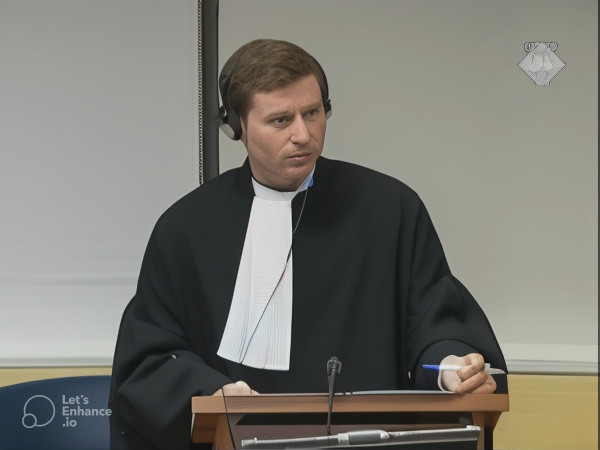
    Your career has spanned almost 15 years before the international courts, with significant cases including the destruction of cultural heritage. Can you share what initially inspired you to pursue a career in international law and what has kept you motivated throughout? 

    Living in New Zealand as a teenager in the 1990s, I saw the tragedies in Bosnia and Rwanda and wanted to do something about it. As I learned about the international criminal courts, I realised that was a means of taking action against the perpetrators of the worst crimes, including in those countries. Eventually I secured a position prosecuting international cases before those courts. My motivation was fueled by a sense of injustice and then later from meetings with victims who explained the impact these crimes had on their lives. Working with people from all over the world was also an inspiration. From Italy to India and everywhere in-between, you end up on teams with a huge range of backgrounds and legal traditions, which generates creative ideas as well as the odd procedural dispute. The international criminal courts face many challenges and the work can be frustrating. But ultimately there is no question that justice needs to be done for these atrocity crimes and that’s a major motivation.  

    As the Chair Rapporteur of the United Nations Working Group on Arbitrary Detention, what new dimensions or insights have you gained in the field of human rights and international law that were perhaps less visible in your earlier career? 

    As the Chair-Rapporteur, I see the organisational aspects of improving human rights practices. One of the key insights has been the importance of clear and open communication. A lot of problems can be avoided with regular and frank exchanges of information and communication helps to focus on the most serious issues which are directly affecting the victims. Closely linked to this is the need for inter-personal skills and empathy. When you are dealing with cases of persons arbitrarily detained for months and sometimes years, often in countries where they have no family, you have to picture the world from their perspective in order to understand the gravity of the threats and uncertainty they are facing. 

    Your work has involved prosecuting cases related to environmental harm at the International Criminal Court. How do you see the relationship between international criminal law and environmental protection evolving, and what key lessons have you learned from these cases?

    When I started writing about the International Criminal Court prosecuting environmental harm, it was just a theoretical idea. However, in 2024, prosecuting environmental harm under international law is becoming a reality. Significantly, three small island States (Vanuatu, Samoa, Fiji) have officially tabled the crime of genocide for inclusion at the ICC as the fifth crime along with war crimes, crimes against humanity, genocide, and aggression. This year has also seen the Office of the Prosecutor initiate a policy on the prosecution of environmental harm. International law is useful to combat threats to the environment, as it typically focuses on large-scale crimes committed by groups of people. However, there are many challenges in transposing international criminal law to the environmental context. The courts are not ecological research centers, and so there will be a lot of lessons to learn. My main observation is that experts from sciences should be brought in to avoid the law being applied on incorrect foundations. I also propose that the definition of ecocide needs to be carefully formulated to ensure that it is clear as to what is covered (and what is not) and that it provides fair notice to people and organisations as to what conduct is included. 

    In your opinion, how can international law be better utilized to combat rising global challenges such as climate change, digital privacy violations, and arbitrary detention, while ensuring justice for marginalized communities? 

    International law requires enforcement. For that to occur, international courts must be strengthened. In particular, States such as the USA, Russia, China and India should join the International Criminal Court. Bodies such as the United Nations Human Rights Special Procedures should be strongly reinforced, with sufficient resources and binding powers to improve human rights adherence. 

    As someone who has published widely and won prestigious academic awards, what advice would you give to young legal scholars who want to balance research, writing, and a practical legal career?

    For young lawyers and legal scholars, I highly recommend taking the time to research and write about legal issues that interest you. It’s one thing to work on a legal case but another to write about the broader context and the meaning of the laws and principles involved. If there are issues which strike your sense of justice or injustice, then there is likely to a scholarly question to examine. Balancing professional work and scholarship can be difficult, but the two facets reinforce each other. And it’s important to pass on what you learn to future generations of lawyers and human rights advocates. 

    For young professionals and students in international law, what would you say are the most crucial skills and knowledge they should develop, considering the evolving landscape of global justice, human rights, and environmental protection? 

    Young lawyers and students need to learn the fundamentals, such as the essential fair trial rights, while also developing an awareness of the emerging digital tools which can help them in their work. In terms of skills, good writing is critical. Take the time to follow a course on writing proficiency, as it is such a central skill in most roles. More importantly, clear writing reflects clear thinking, which is required more than ever at this time of crisis around many parts of the World. 

    You have contributed extensively to scholarly literature, what are the key gaps in international law research that you believe need to be addressed by future legal scholars? 

    Gaps in the literature on international law and human rights exist in relation to the procedures that ensure accurate fact-finding and in relation to measuring the impact of human rights work. All too often, it’s presumed that well-expressed and benignly motivated human rights conclusions will flow into enhanced human rights adherence by governments. However, that is a contestable claim, and more attention needs to be paid to measuring the impact of human rights work.

    As a Senior Lecturer at the University of Essex, how do you integrate your extensive practical experience in international law into your teaching, and what key lessons do you hope to impart to your students about the future of global justice? 

    My teaching at the University of Essex is highly interactive. I encourage my students to extemporize and to be prepared to support their claims with arguments and evidence. I also encourage them to develop the ability to entertain a contrary position in order to fully explore its strengths and weaknesses. Getting on the feet to present an argument animates the students and engages their uptake of the information that I’m trying to convey. Finally, I try to remind students that there are real people at the ends of the procedures, often languishing in detention, and so working efficiently and expeditiously is critical. 

    Looking ahead, how do you foresee the role of international law in addressing global challenges like artificial intelligence and cyber warfare, both of which have the potential to drastically alter traditional notions of conflict and justice? 

    We don’t need to look too far ahead to realise that cyber warfare and AI can revolutionalise major areas of human activity. Already, we have seen cyber strikes used in various conflicts, and increasingly it is being integrated into conventional warfare. AI can add digital steroids to human online activity. The potential benefits and efficiency gains are immense. But the risks of misuse, whether advertent or inadvertent, are real and pressing. Efforts are being made to have international law address AI. But a lot of work will be required to create any form of international law that can enforce restrictions on the misuse of AI – and the axiomatic importance of protecting free expression and liberty must always be borne in mind.

    With such a demanding career in international law and human rights, how do you find time to unwind, and what hobbies or activities help you maintain balance in your personal and professional life? 

    Keeping a balance between work and home life is important, especially when working on grave matters like atrocity crimes. My family keeps me grounded, and I enjoy sitting down with them to hear about their school and work days. Whereas I used to play a variety of sports, most of my activities now revolve around the family. But I still make time to watch the New Zealand All Blacks rugby team play whenever I can.  

    Get in touch with Dr Matthew Gillett-

  • “Litigation is 10% intelligence and 90% diligence and Every citizen is capable of understanding the law, provided it is explained in simple language” – Shrutanjaya Bhardwaj, Counsel & Founder, Pravah Law Offices.

    “Litigation is 10% intelligence and 90% diligence and Every citizen is capable of understanding the law, provided it is explained in simple language” – Shrutanjaya Bhardwaj, Counsel & Founder, Pravah Law Offices.

    This interview has been published by Namrata Singh and The SuperLawyer Team

    We are extremely delighted to have you with us for this interview. To start, could you please introduce yourself and share the inspiration behind establishing Pravah Law Offices?

    Thank you for having me. I have been a Delhi-based practising lawyer since 2017. The bulk of my practise is at the Supreme Court, which is also the forum where I learnt the maximum work as an associate with my mentors, Ms. Haripriya Padmanabhan and Mr. Gopal Sankaranarayanan.

    ‘Pravah Law’ is the official designation of my law chambers. The primary motivation behind establishing it was to foster a distinct professional identity that resonates with my core values and expertise, to enhance the efficiency and organization of my practice.

    Being awarded the Vice-Chancellor’s Gold Medal for ‘Best Male Student’ is a remarkable achievement. How has your academic journey, including your time at National Law University, Delhi, influenced your approach to law and legal practice?

    Getting the Vice-Chancellor’s Gold Medal was a big confidence booster because of what it signifies: it is awarded to two students from each batch, male and female, who graduate with the best all-round performance. Incidentally, even at my school’s farewell function, I was awarded the ‘Best All-Rounder’ trophy—something I cherish more than any other recognition I’ve received. I enjoy being able to handle multiple activities and projects together. In college, I was an avid sportsperson, musician and mooter (in that order) with an interest in many other extra-curricular activities. 

    As regards academics, those five years were formative. My teachers at NLU Delhi were outstanding in terms of how much they pushed us. For instance, we were made to prepare bulky, complex judgments and other texts within tight deadlines—not just read the material, but also form polished opinions about it. This seemed impossible back then. We kept complaining about being forced to meet unrealistic standards! But I realise with every passing day as to how much edge those exercises can give you in a profession where reading is everything and everything is to be read. I owe a lot to NLU Delhi.

    Your LL.M. at the University of Michigan Law School was accompanied by the prestigious Michigan Grotius Fellowship. How did this international exposure shape your perspective on law, and what key lessons did you bring back to your practice in India?

    It was a terrific experience. UMich gives you the freedom to design your course by choosing any combination of subjects. So, besides my law subjects (media law, freedom of speech & religion, equality law etc.), I selected a few subjects situated at the intersection of law and philosophy, which significantly contributed to my intellectual growth. My teachers were excellent and my classmates were intelligent and accomplished, which made classes engaging and challenging. It was exactly the kind of quality I wanted in my higher education.

    Looking back, my most important learning in Ann Arbor was that there’s always another way—to think of a legal problem, articulate an argument, research case law, and even draft a memorandum—if only one is willing. I find that many colleagues here are used to old methods that may no longer work, at least not as effectively as one would like. The mere willingness to try another way can produce great results. And it requires no earth-shattering effort; sometimes, it is as simple as learning a new technological tool, shortening your drafts, using visual representations (graphs instead of paragraphs), making a LinkedIn profile, or even writing an email that you thought would be futile.

    Law Vaarta is a unique blend of Hindi and English, making legal discussions more accessible. What inspired you to start this podcast, and how has the response been from your audience?

    I believe that law is not as elusive as it is made out to be. Every citizen is capable of understanding the law, provided it is explained in simple language. Unfortunately, discussions around the law on TV and other media are either superficial or too technical-sounding. That is why I felt that a platform is required where complex legal issues are explained in straightforward language without losing their complexity.

    I am delighted with the response the podcast has received. People have been kind in their appreciation as well as criticism, both of which are aimed at improving the quality of the content. I’m learning new things about content creation on the go. In 2024, I intend to increase the reach of the podcast through interactive content that will cater specifically to law students and young litigators, in the hope that litigation can become a more accessible profession.

    Your research covers various topics, from constitutional rights to online gaming legislation. What upcoming research projects or areas of interest are you currently exploring?

    Over the past couple of years, I have picked up an interest in empirical research on judicial behaviour. I am currently working on two projects relating to preventive detention and one on India’s abortion law. All three projects are geared towards understanding the behaviour of the Supreme Court and High Courts in cases involving the fundamental rights of citizens. For instance, in the preventive detention research, I am trying to map the speed with which our constitutional courts act in habeas corpus petitions against illegal detentions.

    The Right to Receive Information is an upcoming publication. Can you give our readers a sneak peek into what conceptual problems you explore in this piece?

    In the post-emergency years, the Supreme Court infused many fundamental rights with expansive content. The right to receive information was a product of this exercise. The Supreme Court held that the right to “speak” under Article 19 of the Constitution includes the right to “know”. I find this to be somewhat of a logical jump. There is no doubt that an informed citizen will exercise their right to free speech more meaningfully, but it is hard to agree with the proposition that there is no right to free speech without full or proper information about the subject matter. Anyway, the paper mainly explores the judicial approach to the right to receive information over the years, first, on whether the right is horizontal or vertical, and second, on whether there are any additional grounds on which the right to receive information can be restricted over and above the grounds listed in Article 19(2). The paper finds that the judicial approach on both counts has been thoroughly inconsistent and requires clarity.

    On a personal note, outside the legal realm, what are your hobbies or activities that bring you joy and relaxation?

    I try and do everything that interests me: poetry, sports, music and beyond. Lately, I have been exploring coding to automate some of my daily tasks as a litigator, which would help me save time on clerical work and focus on the more substantive aspects of the law.

    Looking ahead, what are your future goals or aspirations for Pravah Law Offices 

    As the chamber’s work grows, increasing the size of the team has been on my mind. In fact, Pravah Law recently finished one round of hiring. To my good fortune, I have generous mentors and supportive clients, and I am sure the chamber will grow rapidly with their blessings.

    Other than that, I endeavor that Pravah Law remains ahead of the curve in terms of technological infrastructure and awareness. I believe lawyers must upgrade and upskill every year. Artificial intelligence is making path-breaking advances by the minute, and I do not doubt that lawyers will have to catch up to stay relevant. 

    Considering your multifaceted journey, what advice would you offer to aspiring lawyers, especially those who are interested in a diverse legal practice or engaging in legal academia?

    ‘Advice’ is a tricky concept. Everyone comes from a different context and must figure out their own ways. But I would pass on the following helpful pieces of advice that I have followed:

    1. “Litigation is 10% intelligence and 90% diligence.”
    2. “Don’t settle for mediocrity.”
    3. “Writing is thinking.”

    Get in touch with Shrutanjaya Bhardwaj-