Tag: University of Sydney

  • “Success of a case or project isn’t the result of individual brilliance but rather the outcome of a meticulously orchestrated collaboration”- Mitsu Parikh, Senior Partner at World of Legal Research

    “Success of a case or project isn’t the result of individual brilliance but rather the outcome of a meticulously orchestrated collaboration”- Mitsu Parikh, Senior Partner at World of Legal Research

    This Interview has been published by Pragya Chandni and and The SuperLawyer Team

    Can you share a bit about your educational journey and how you pursue law as a career? 

    I originate from a quaint town in Gujarat where, a decade ago, career choices such as law, journalism, creative writing, and hotel management were not common for females. When I expressed my aspiration to pursue a career in law to my parents, their reaction was beyond surprise. They recommended that I gain firsthand experience by shadowing a seasoned lawyer before making a definitive decision. Consequently, I immersed myself in the legal field, accompanying and observing an accomplished lawyer in various cases spanning banking, constitutional, employment, and family laws. The diverse and intricate nature of the legal profession left a profound impression on me, ultimately solidifying my determination to pursue law as a career. This experience broadened my understanding of the legal landscape and instilled in me a deep appreciation for the multifaceted challenges and responsibilities inherent in the field.

    You’ve pursued advanced degrees in International Law and Legal research. What drew you to specialize in these areas? 

    During my undergraduate studies, I actively participated in moot court competitions, assuming roles as a speaker and researcher. While I thoroughly enjoyed the entire moot court experience, I found a particular passion for research. Delving into legal research became more than necessary; it became a profound interest. This inclination led me to explore opportunities to publish papers and interact with esteemed academicians at conferences and symposiums. Recognizing the significance of contributing substantively to the legal discourse through research and publishing papers, I pursued a master’s degree. Someone once told me that just raising questions doesn’t make you people worthwhile; finding solutions does. 

    You’ve had diverse roles, from Legal Assistant in law firms to your current position as a Senior Researcher and Coordinator. How did these experiences contribute to your growth and specialization in international law? 

    My stint in the corporate sector and various law firms served as a journey of self-discovery, compelling me to confront the realization that these roles may not be my lifelong passion. However, I wholeheartedly acknowledge that each experience played a crucial role in shaping my personal and professional growth. During my internship, a pivotal lesson resonated deeply – the significance of every task, regardless of its scale. It became evident that the success of a case or project isn’t the result of individual brilliance but rather the outcome of a meticulously orchestrated collaboration. Whether assuming the role of a clerk, lawyer, or researcher, every individual in the chain contributes uniquely, and the collective effort propels success. This realization has ingrained in me a commitment to execute my responsibilities to the best of my abilities, regardless of my role in the process. 

    Could you tell us more about your role as a Senior Researcher and Coordinator at the international consultancy World of Legal Research? What kind of research-based consultancy do you provide to the government, law schools, and academicians? 

    We provide a variety of services. Some of the services involve a project where we have to study impact assessment, create analytical research reports, and assist with reviewing the research papers. Additionally, we are more inclined towards assisting our legal fraternity with our efficient legal research team, specializing in diverse fields of law.

    As a Visiting Faculty to many universities in India and abroad, you teach Public International Law and Legal Research Methodology. What inspired you to take up a teaching role alongside your research work? 

    When I was a student, the thought often crossed my mind – what if certain topics were approached differently? Would they become more intriguing? It wasn’t until I visited conferences in the southern part of India that I stumbled upon a fascinating realization. Among the accomplished individuals, be it a thriving businessman, a seasoned lawyer, or a distinguished doctor, there was a common thread – academic involvement. It brought to my mind Chanakya’s words about teachers never being ordinary; they hold the power of construction and destruction. This insight fueled my aspiration to contribute meaningfully to the academic realm. As I transitioned into the role of a researcher, my desire crystallized into a passion for teaching law students the art and science of research. It’s not just about acquiring knowledge but understanding the intricacies and methodologies that make research a captivating and essential facet of the legal profession. 

    Your experience includes working in law firms in Australia and India. How did these experiences shape your understanding of legal practice on an international scale? 

    Lawfirms became my school of perfection, teaching me the invaluable skills of meticulousness and the art of thriving under deadlines. But beyond the technicalities, it was a vibrant classroom where I learned to navigate the intricate tapestry of human diversity. Working with people from different cultures was a daily lesson in understanding, patience, and respect. There were instances where a case forced me to reconcile my personal beliefs with my client’s position. The legal profession throws a unique challenge at you – dealing with ethical dilemmas that demand a delicate balance. The realization that every client, boss, or judge is a distinct chapter in your professional story. Each encounter is an opportunity to embrace diversity, not just in your home country but in foreign lands. It taught me the importance of respecting diverse cultures and opinions, a lesson that goes beyond the legal arena and shapes how I approach life.

    You’ve presented papers on various topics, from health inequalities during COVID-19 to discrimination in legal education. Can you highlight a paper that you found particularly impactful or that received significant attention? 

    In 2023, I had the privilege of presenting a paper at the Center for Criminal Law, University of Oxford (UK), addressing the alarming issue of ancestral rapes in the state of Haryana during the COVID-19 pandemic. This paper garnered recognition and was honored with an award for being the most passionate presentation. Subsequently, I received emails from faculty members and fellow paper presenters at the conference, affirming that this problem extends beyond India to encompass every country and culture. The correspondence highlighted a shared sentiment that societies tend to suppress or disregard such issues, choosing to deny their existence. The suggestions and solutions proposed in my paper resonated with the international audience, earning appreciation from diverse perspectives. It was a powerful acknowledgment of the universality of the problem and the importance of proactive and compassionate approaches to address it on a global scale.

    Your involvement in founding an NGO called ‘Madad’ during the COVID-19 pandemic is commendable. Could you share more about the initiatives and impact of this organization?

    I wouldn’t like to talk much about my NGO as our ancestors say that if you help someone with your right hand, your left hand shouldn’t even know about it. I would just say that at whatever stage you are in life, try to help others, not for the betterment of society, but for yourself, so that you can face yourself in the mirror at the end of the day. 

    You’ve received several awards and honors for your contributions, including the Youngest Leader Award from Rotary International. Which of these achievements holds a special place in your heart, and why? 

    In the third year of my undergrad studies, I received an award for the best position paper at Harvard University. That paper made me realize that regardless of being from a small town or being from the vernacular medium of studies, you can if you really want to achieve something in life.

    You’ve held various editorial roles and served as chairman in some committees while studying at the University of Sydney. How have these positions enriched your professional journey? 

    These positions equipped me with essential skills such as time management and strategic planning. Additionally, they provided valuable lessons on effective teamwork. Each extracurricular engagement in Law School imparts qualities beyond the teachings of books or academic activities.

    Finally, based on your journey so far, what advice would you give law graduates just starting their careers in the legal field? 

    Well, I’m not experienced enough to give any advice. I’d reframe it as learning that I can share from the mistakes I made in my journey. 

    1. Take your internships seriously. You will gain something from every task you do during your internship, even if it is just carrying your senior’s briefcase and/or documents. For example, you’ll be able to be a part of his conversations with clients and people around in court, how one carries his business in the legal field, etc.; this will teach you much more about the practicalities that even a subject in law school wouldn’t. 

    2. Whether you want to join corporate or litigation, publish papers and take part in conferences. Publish or perish is a thumb rule. If someone googles you on the internet, and you have something published, you will get brownie points. 

    3. There is no shortcut to success. It might sound like the cheesiest line. However, life is not 2 minutes noodles. Instant gratification. Instant Fame. All these are not to be focused upon. Do smart work, but don’t get scared away from hard work. Thus, creating a strong base first is very important, because if you sow well, you’ll reap the fruits throughout your life. Choice is always yours.

    Get in touch with Mitsu Parikh-

  • Ashok Kumar, Chalfont Chambers, Sydney on the jurisdictional differences between Australia, New Zealand and India

    Ashok Kumar, Chalfont Chambers, Sydney on the jurisdictional differences between Australia, New Zealand and India

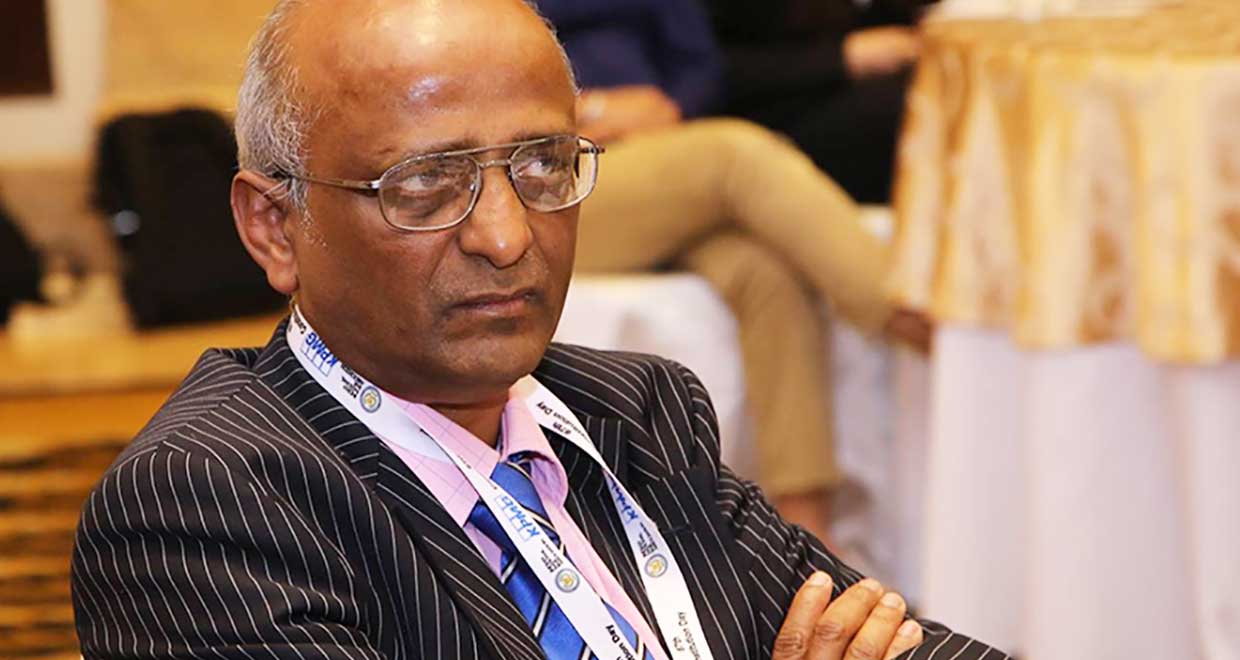
    Ashok Kumar did a Diploma in Law and an LL.M. from the University of Sydney which enabled him to be admitted as an Australian Legal Practitioner in 1998. He also holds CA qualifications and is a member of the Institute of Chartered Accountant both Australia & New Zealand. He enrolled as Barrister at NSW Bar since 2001 and is heavily involved in litigation matters. In the initial days of his career he was attached as paralegal to Dr Ajit Swaran now District Court judge in Auckland, NZ.

    Mr. Kumar has been involved in many leading matters in Australia and New Zealand which have been published in professional journals and also overseas. He regularly appears in migration judicial review and appellate cases.

    In this interview, he gives us great insights to:

    • The jurisdictional differences between Australia, New Zealand and India
    • How has the change in technology impacted legal research?
    • Can a candidate with Diploma in Law and an LL.M. from the University of Sydney practice in India and England?
    • His message to the young lawyers.

    When did you start your practice? How do you recall the first year as a legal professional?

    Before I commenced work in the legal field I was employed in the accountancy field. In my last role, accountancy / legal matters overlapped.

    In my preliminary foray into law, I was attached as paralegal to Dr Ajit Swaran Singh of Auckland, New Zealand to complete my required training to be admitted in New South Wales, Australia. Dr Singh was appointed District Court judge in 2002 and currently sits in Auckland.

    I commenced work as a paralegal in July 1998. I was admitted as a lawyer of the Supreme Court of NSW, Australia in October 1998 and in New Zealand in November 1998. My admission in New Zealand entitled me to commence practice as a barrister. I continued to work with Dr Singh through to about February 1999. A commercial Law firm that we were doing work in those days approached me to join them as a solicitor. I found work as a solicitor boring and returned to independent bar in Auckland in 2000.

    As a barrister with Dr. Singh who at that time moved to practice in wide range of criminal matters including a murder case although Dr Singh is Fiji’s former Deputy Solicitor-General and Acting Solicitor-General. He had left Simpson Grierson, a pre-eminent commercial law firm in Auckland as solicitor and joined as partner of a boutique law firm (McAlister Mazengarb) which he left before commencing as a barrister. I was a junior running around doing research and ensuring that the files were in order. We discussed case theories of the case we were tackling. Not only I learnt how to strategize and run law cases but also instilled discipline and also reminded of the professional ethics as a barrister. Having learnt the Law in Law school this job put me at the coalface of the application of the Law to actual cases. He was doing interesting cases including a murder case; working on murder case with him at the start of my career was very interesting.

    I returned to Sydney to focus on bigger litigation jurisdiction in 2001.


    What would be your advice to young lawyers who are just starting out?

    I came to the Bar having worked in accounting / finance / management with a chartered accountancy background.

    I started out as a barrister with very good but short experience as a solicitor branch of the profession.

    I was an outsider at the Bar for many reasons. Many come to the Bar having worked in litigation area as a solicitor. They have many contacts that would provide them with work. In my days there were only few Indian barristers at NSW Bar. In that sense too I was an outsider. These days there are many more Indians at the Bar.

    My advice to people starting out is that Bar is not for the faint hearted. You have to be passionate about some area of Law. If you have interest in Law and its development you would do well.

    One of the most important qualities in my view is patience and perseverance. You might lose a case because of are too junior to a more senior lawyer (advocate in India). The loss should not be a deterrent. With time one will succeed but tenacity is required. Believe in yourself but remain humble.

    Always seek mentors whether it be Law School colleagues. In NSW we freely guide people who came to bar much later than us. If I am in complicated case I would ask other people in my chambers or friends at the Bar who practise in that particular area of law whether my approach is correct. Never be afraid to ask questions. Some would not help but many would.


    How has technology changed over the years in your experience?

    I believe that the technology has changed the practise of Law in many ways but in particular one can practically access Laws of other countries in an area there may be no case Law as to how court would apply particular provisions. Australian and New Zealand lawyers are able to research how a particular provision of similar legislation has been interpreted in each other’s jurisdiction. English Law too is available online. These days even less developed countries have started putting the legislation and case Law online. In my view this has given power to practitioners.

    Law firms have harnessed the availability of legal talents such as countries like India and a lot of back end work is now being outsourced. Technology has also enabled the practitioners to work from home. A lot of barristers, both junior and senior are able to do a lot of work from home whereas as in old days hard copy of loose leaf would be in the chambers together with bulky files had to be carted. A lot of briefs these days are sent online. It has definitely helped barristers with young family work from home. Legal research has become much easier. With smart phones and the like there is better connectivity.

    By using the technology I certainly have limited my travel to chambers.


    At what stage did you decide to go for an LL.M. in Tax and Corporate Law? In hindsight, how would you say it impacted your career?

    I also hold CA qualification having worked amongst others with CA firms. As I was completing my undergraduate Law course I decided that Master of Laws would complement the qualifications and experience I already had in both in chartered accountancy practices and in commerce. I commenced my Masters before admission as a lawyer in Australia and New Zealand.

    So starting out it was completely my thought but I did know a few law students who were already studying in the LLM program at University of Sydney and certainly they encouraged it.

    I believe that Master of Laws degree has definitely impacted my career. Some firms particularly a lot of Asian law firms’ value strong academic skills. My relationship with these law firms in Australia and New Zealand has started because of this.

    Sydney Law School where I did my LLM is regarded as most prestigious Law school in Australia probably has assisted.


    What are the primary jurisdictional differences you have found in your practices in Australia, New Zealand and India?

    One thing that is common between Australian / New Zealand and Indian legal system is that all these jurisdictions being former UK colonies have inherited the British Common Law system. Many old imperial Laws still have application today.

    Many factors play out the differences in Laws of Australian / New Zealand to that of India. The primary differences are the first two are western countries. India has different norms and customs. The Indian Laws therefore reflect those differences. So much could be written but here I can only refer to the big picture of the differences in Laws of these States.

    Both countries, there have been much litigation surrounding the Constitution. My area of practice has certainly meant that we have challenged legal provisions and whether laws are valid. Both countries have robust judicial review procedures to challenge the validity of the decisions of administrators as well as the judges as well as the appellate mechanism although there are increasing attempts to curtail these rights. The cases like Bangalore Water Supply v R Ranjappa 1978 AIR 548; 1978 SCR (3) 2018; (1978) 2 SCR 213 at 215 where India’s own character was defined.

    Owing to the differences the laws have been enacted to accommodate the particular society. There is enactment in India such as anti-dowry laws that is not existent in Australia. laws to assist Dalits have been enacted to deal with particular situation in India.

    From time to time Australian superior courts, although not that often, have considered and applied laws as interpreted by Supreme Court of India (leading case like Bropho v Western Australia; Tasmanian Dam case).

    Often solicitors call us in respect Indian clients call us in matters where the implications of laws of both jurisdictions (such as in Family Law cases / dowry cases / property cases) so these complexities. The differences in laws create difficulties.  Even solicitors from larger Law firms have been intrigued and have called for assistance.

    I am aware that Indian lawyers immigrating from India have done well as solicitors. I am not aware of any Indian advocate who has joined the Bar in my time. Very recently some may have joined but I am not aware of any myself. I believe most are local graduates.


    As a Barrister in Australia and New Zealand, how would you compare the Bar exam in those jurisdictions with the one in India?

    The first point to becoming a lawyer is to complete LLB or equivalent course recognized by Legal Practitioners Admission Board (in case of NSW). The second phase is to then attend Practical Legal Training course which can be done online or by attending approved institutions (such as College of Law) and obtain pre-admission experience of 3 months. I understand that Bar Council exams in India are done at about this point. At this point the candidates become entitled to be “Australian legal practitioners” and can obtain practising certificate as solicitors (issued by NSW Law Society or other law societies (issued by NSW Law Society or other law societies in the relevant jurisdictions). There are no further requirements to be Solicitors.

    The barrister branch of the profession imposes additional requirements on solicitors. The starting point is to enrol in bar exam papers in Legal Ethics; Practice and Procedure; and Evidence with pass mark of at least 75%. Then follows intensive Bar Practise course which runs for 4 – 5 weeks (all these detailed requirements could be found on the NSW Bar Association’s website). There are more hands on practical type training.

    I believe that in India the practice as advocate in the superior court is by level of experience. Barristers undergo training as Court advocates. I am not able to comment about Indian Bar exams as I am not aware what is tested and understand that there are no exams to be court advocate in India.


    You have been a part of the Legal Aid Committee and Equal Opportunities Committee of the NSW Bar Association. How is your experience being a member of the same?

    It is indeed been a great honour to be included in the above Committees. Just because one gets appointed to these committees does not mean one is there for prestige. Many hours of our time has been devoted to doing many things that was required to be done. These Committees I have been part of and have been instrumental in bringing considerable changes and actively putting the members’ views on many issues.

    Our Committees played big role in the introduction of Best Practice Guidelines; work on various briefing policies; child care; fund raising for important causes and of course issues affecting legal practitioners.

    The Committee work has been immensely satisfying. As team members we have achieved many things. Of course, friendships have also been forged. Some of the committee members have moved on to become judges or given other statutory appointments.

    There have been frustrating moments when members do not pull their weight or failed to turned up at sub-committee meetings.


    Please tell us a bit about your primary practice areas.

    (Barrister Kumar has worked with various commercial Law firms in New Zealand and Australia.)

    I have only worked for one commercial firm in Auckland. The primary area in that firm was property; commercial matters and some general work. Litigation tasks were also assigned. The primary tasks such as preparing submissions fell on me although the principal may often himself argue the case or run the trial.

    Apart from litigation we did considerable transactional work and I prepared the written opinions for the client. Returning to the Bar from that law firm I have been constantly engaged in running trial matters as well as appellate matters.

    My current practice areas are appellate, commercial, tax, property / leases, family law, administrative law and constitutional law. I have also done considerable work criminal law field. My work is mostly in superior Courts including the apex court (High Court of Australia) often in the original jurisdiction as well as special leave matters. I also appear often in NSW appeal courts.


    You have had considerable work experience in top accounting firms. How did you find the work there as compared to the Law firms you worked at?

    As an accountant I have top roles in companies as well as chartered accountancy firms. I worked for Touche Ross in those days. The firm I worked for now has been restructured as PwC. Some of the partners from my days remain as consultants or partners.

    One of the things about being a barrister is that you are in independent practice and on your own even administrative aspects are handled by chamber staff. As an accountant you can call upon other staff to assist. Even in the circumstances something urgent needs to be done the deadline is not fixed like that of the counsel. We get briefed in matters only because of our specialist skills. Whilst researchers can help the case would be ultimately be argued by the barrister. A barrister has to work under great pressure. The Court orders cannot just be ignored.

    Although I have done interesting accounting work, there is always challenge as a barrister. The solicitors who instruct often cannot figure the issues themselves and that is why the matter is briefed as it involves challenging application of Law

    With a Diploma in Law and an LL.M. from the University of Sydney, can you practice Law in India and in England?

    I qualified in Australia and have also been admitted in New Zealand. I have not really explored the possibility of joining the Bar in India. I understand that Indian PIOs (Persons of Indian Origin) have some relaxation of rules to be admitted as advocates.

    Again as for admission in the UK, I have really not explored the topic as I have not considered moving there. After accumulation of about 2 decades of experience I do not believe that I would have any problem getting the experience recognised or being admitted. There are some transfer tests for solicitors. Upon passing the transfer test Australian solicitors get admitted in that jurisdiction. Some barristers practice in both jurisdictions (UK and Australia). There may not be additional requirements for Australian barristers to practise in UK but I cannot be sure.


    What would be your message to young people who aspire to contribute to the legal fraternity?

    My primary experience has been in litigation so far as my legal experience goes. The Bar is only small part of the legal industry. The majority of lawyers in NSW and NZ are solicitors.

    The law school only teaches you the basics of the law. As I mentioned above, you need to go beyond and read areas of Law that interest you. Reading generally is also recommended as it would broaden your understanding. Sometimes widely read lawyers have that skill to express themselves well in court.

    Otherwise just be yourself.