Naga Lakshmi Bhavagatula graduated from ILS Law College, Pune, in 2011. After a successful stint at Infosys as Associate Legal Counsel and subsequently as Senior Associate Legal Counsel, she went on to pursue her masters from the University of Pennsylvania Law School, with a focus in business laws. She was also member of the Wharton India Economic Forum, 2015 Organising Committee during her time there. She is currently Associate Contracts Manager at Amazon, where she is member of the Amazon Media Group Legal team, focusing on supporting Sales and Display Ad Services. She works on reviewing and processing all insertion orders (IOs) for the US Sales org, drafts and negotiates Upfront Agreements and MSAs.
In this interview we speak to her about:
Her internship experience and her current role in the e-commerce giant’s legal team
Her passion for dance, and how it inspires her
Her engagement with blogging, and how she juggles it with the pressures of work
How would you like to introduce yourself to our readers?
Lawyer by profession, dancer by passion, blogger by will and a radio jockey by chance. I currently live in Seattle and work in the legal team of Amazon during the day and run a dance school in the evenings.
Tell us a little about your time in ILS Law College, Pune.
The five years at ILS are some of the best days of my life. As most of my ILS friends would say, it is a place of opportunities and self-learning. It sometimes got me lazy and sometimes put me on my toes. I learnt how to make mistakes and learn from them, taste success and not fall for it and finally be competitive and not lose the spirit of competition. All in all, I owe lot of what I am today as a person and professional to my times at ILS (people and place).
Regarding my activities at ILS, I was not much into moot courts. For the major part, I enjoyed being the researcher and work with the team. However, I tried my hand in other stuff like the Model United Nations, client counselling, negotiation and drafting competitions. I was on the editorial board of the college magazine for couple of years and was elected, the Ladies Representative to Pune University in my final year. It was a fulfilling five years.
What prompted you to pursue this stream?
Well, as a small town girl, when I was in Class 12, my awareness about career options was limited. All I knew was that I didn’t want to be a doctor or an engineer. I just wanted to do something different. I wanted to be a journalist. But my parents, who were already worried about me discarding medicine and engineering(the two professions in vogue in 2005) were flabbergasted when I said I wanted to pursue journalism and they convinced me that I could pursue journalism as a secondary profession but I should choose a streamlined primary profession. Later I decided I wanted to pursue law. I am not sure if there was anything specific that prompted me to pursue law. Though my father is an advocate, I don’t remember talking to him about my interest in his profession. It just happened and I am glad it did.
What role does dance play in your life now?
I am a native of Kuchipudi village, the birth place of the Kuchipudi dance. I am very lucky to have parents who recognised my interest in dance at a very tender age and found me a wonderful Guru, who made me the dancer I am today. It’s been over 25 years of dancing and it is something that lifts my spirit. I feel absolutely privileged to have imbibed this art form and now be able to pass it on to kids of the next generation. I have a dance school in Seattle area (Purna Mudra School of Kuchipudi Dance) and I have about 40 students and I am thoroughly enjoying my role as a teacher.
How do you prioritise your profession and passion?
To put it differently, I am trying to balance my profession and passion. At all times, I feel both are my priorities as they complement each other. I surely owe this balance in my life to my mom. When I was a school going kid, my mom always made sure, that I gave equal importance to both dance and education. This has in a way become an expectation as I moved on in my career path. Balancing dance and work along with other things has become a way of life. According to me, clarity of thought and zeal to pursue something, are two factors that can help anyone to be on top of their profession and passion without having to compromise on either.
Tell us about your interest in blogging.
(On her blog The Dancing Lawyer, she vociferously celebrates the interplay of passion and profession, especially in the segment “The Other U”.)
Blogging in general started off as a hobby and I try to keep up with my blog now and then with various things that interest and inspire me. In the process of keeping up with my work and dance, I have always admired and been inspired by people who balance their passion, profession and personal commitments. So, the category “The Other U” is recognising and celebrating such people, and in a way showing people that this can be done.
Can you tell us about your role at Amazon?
When I was in law school, I was academically inclined towards contract law. When I joined Infosys after law school, I had an opportunity to work on rotation with the corporate team and commercial contracts team. Later I ended up in the commercial contracts team and I thoroughly enjoyed working on contracts and slowly that became my area of specialisation. At Amazon, as Associate Contracts Manager, I work on different contracts supporting Sales and Display Ad Services group of Amazon. It has been great so far working in a new industry and a new working environment.
Talk to us a little about your internships.
I had four summer internships during my graduation, one every summer for the first four years. Winter breaks were strictly for fun. I used internship opportunities to explore the different avenues I may want to get into when I am looking for a job. I worked with an NGO and political party (Lok Satta), in-house legal team (Dr. Reddy Laboratories), a big law firm (Dua Associates) and a boutique law firm (Krishna & Saurastri). I chose all my internships in Hyderabad and Bangalore as I knew I wanted to live in one of those cities and they were close to home. With these internship experiences, my choice was clear and easy at the end of fourth year. I was sure I wanted to work in-house and started applying for jobs in that direction.
How was the experience of studying in University of Pennsylvania Law School?
Honestly, LLM days at Penn just went by in the wink of an eye. The course work was fast paced and rigorous. I totally enjoyed preparing for my classes, the class participation, the cold calling (I dreaded that for a long time and then ended up loving it) and working with law students from various parts of the world just added to the amazing experience. In choosing courses, I experimented with the teaching and evaluation methods, like the lectures v/s. seminars, closed book v/s. open book exams, one final dissertation v/s. multiple presentations. This helped me add to my learnings and build a new perspective about law in general. I also had an opportunity to audit few courses outside law school at Penn and that helped me get introduced to new areas. Penn Law does not offer a particular specialization and so I chose courses related to commercial and corporate law, concentrating more on the practical learning tools like drafting, negotiation, etc.
How does one strike a balance between academics and extracurricular interests?
I believe it is purely a personal choice. I never had top grades in law school, but managed to maintain good academic scores. I think at law school, just after 12th, every student goes through the pressure and confusion in deciding priorities at the beginning, due to several factors (peer pressure being one of them). At the end, it is important to understand what brings satisfaction, and for me it was in being able to participate in co-curricular & extracurricular activities and at the same time manage a decent score.
Any final piece of advice for our readers?
As Pablo Picasso said “I am always doing things I can’t do. That is how I get to do them”. This has always been my way of life. Since it is best to preach what you practice, my only advice is to keep trying things that you think you cannot do and come out of the comfort zone(both at work or outside). Make time for everything and keep up the profession, passion and most importantly keep up with you.
Jai Dehadrai graduated from ILS Pune in 2011, worked as an associate in Karanjawala & Co., got a joint masters from University of Pennsylvania Law School and Wharton University, worked at Kline & Specter Law Firm in the US, came back to India and joined the chamber of Justice S.A. Bobde as a judicial Clerk. Currently he is working as a legal consultant for the Times Group.
Most amazingly he also published a book “Aequabilis” and writes under the name “The Irreverent Lawyer” in the Times of India.
In this interview he talks about
Law school experience from ILS, Pune
Post Graduation from UPenn Law and Wharton University
Work at Karanjawala & Co., Kline & Specter Law Firm and Chambers of Justice Bobde
Current work as a legal consultant in the Times Group
Writing columns under the name of The Irreverent Lawyer
How would you introduce yourself? What motivated you to pursue a career in law?
My family is from a small town near Nagpur, called Dehad. My parents shifted to Delhi in the early 80’s, where my elder sister and I were born. We were both admitted to Delhi Public School – where my sister was hailed as a model student, and I was declared a serial offender.
I was a very naughty student in school and loved playing pranks. Although I was academically bright, my gang of friends and I would invariably get into trouble with our headmistress, Mrs. Raghavan – in whose office we practiced the fine art of talking our way out of trouble! This was probably my first brush with a tough but fair judge. My teachers encouraged me to pursue competitive debating and in the process I fell in love with the challenge of combining words with reason to change someone’s mind.
But it didn’t always work, and I learnt the hard way. We once organised a charity football match and raised a lot of money for the victims of the Tsunami, but without seeking permission from our principal. When she found out about our little ‘match’, she threatened to suspend us for a week. We tried desperately to reason and argue, which soon turned to begging and pleading!
Very similar to a Monday and Friday in the Supreme Court. Nothing worked and eventually our parents were called to school. I was nominated to speak on behalf of my friends, and I successfully bargained for a lenient punishment.
However, our vice principal, Dr. Saini, realized that the best way to deal with us was to give us the opportunity to debate competitively in a courtroom environment. Taking the cue, my partner in crime and classmate Vikrant Pachnanda and I got together to create the first ever moot court society in an Indian school. We organised several moots and had a whale of a time.
It was then that I knew, the law was going to be my calling in life and have never looked back ever since.
How was your experience at I.L.S Law College, Pune? What were your hobbies during your tenure in law school?
Studying at ILS Pune, or ‘Law College’ as it is fondly called was a fabulous experience. The campus is easily one of the most idyllic places to study law– thus aptly called the Oxford of the East. Students at ILS are from different parts of India. It has a cosmopolitan crowd. There is healthy competition – no one will try and jeopardize your work to gain an edge. Some of the sharpest minds at ILS were also the most humble. The student body was very nurturing in that sense.
The college is also blessed with some very committed professors. Right from the doyen of Contract and Civil Law, Mrs. Neelima Bhadbhade to the renowned scholar in Feminist Jurisprudence, Ms. Jaya Sagade. Mr. Ajit Kulkarni had has a roaring practice but yet chose to teach part-time. I can never forget how his lectures on drafting were even attended by practicing lawyers!
In the evenings, my friends and I would play football occasionally (they were far more talented than I could ever hope to be!) or we would go for a swim to beat the heat (ILS has its own pool, which is also built in the midst of a forest). The ILS Canteen was another favourite spot to catch up on the latest campus gossip.
Share with our readers a few actionable tips on managing high grades.
(Jai was one of the most exceptional students at ILS Law College. He had graduated with a first division and achieved highest marks in Interpretation of Statutes, Arbitration and Constitutional Law.)
I think it is really important to be intensely passionate about one’s field – excellence follows automatically. This is a really clichéd phrase but also the truth. My approach in college was to pursue as many moot courts, debates and research articles as possible, especially in the subjects that interested me. I found that it was easier and certainly a lot more fun, to learn about a subject by preparing for a competitive ‘argument’, rather than robotically mugging answers for a predictable university-pattern examination. There’s not much of a challenge in the latter.
Besides, ILS is not an autonomous institution. Thus, the marking is not internal and neither does one receive credit for papers/projects – as is the case in National Law Schools. Making notes, a list of cases and managing time is essential if you want to avoid the stress of deadlines while performing brilliantly.
You have been a mooter through your law school life, what is your take on mooting?
Mooting, was without a doubt my favourite activity at law school. It was the closest thing we had to a courtroom! Unfortunately, some students avoid mooting – for a variety of reasons. Some have stage fright, some consider it a waste of their time and while others believe it is of no utility to their intended line of corporate work. Sadly, they ignore the immense intellectual benefits that a challenging mooting experience can provide. The intellectual gymnastics involved in simultaneously dealing with a tough set of judges and a cut-throat competitor who is waiting to grill you, can get the adrenaline rushing like nothing else. Mooting also forces you to think ‘legally,’ as opposed to studying a statute or case in isolation, as one normally does in a classroom. In a moot, you must apply the law to a given set of facts, build a crisp argument which can stand up against criticism. It also forces you to think on your feet – which rarely happens in our non-Socratic classrooms.
My approach was to treat every opportunity to argue in a moot as ‘consequence-free practice.’ Besides, mooting is so much more than the mere act of submitting a coherent argument before judges. The discipline involved in preparing for a moot court competition tests your commitment for work, to your teammates and most importantly it gives you a glimpse of how gruelling and unforgiving adversarial litigation can really be.
My advice to budding mooters is to grab every opportunity to prepare a well-constructed argument. Never worry about the consequences – if you win, it’s a bonus. Else, it’s just practice for the next case.
Besides, when else are you going to argue a case without a client!
What skills did you get to hone as the President of Debating Society?
Our faculty in charge for the DebSoc, was a very encouraging professor, Mrs. Shobhana Patil. She appointed me the coordinator of the debating society quite by accident. I would meet her often to complain that ILS did not have its own debating competition to hone talent internally. She asked me to stop complaining and to do something about it. Perhaps she also felt it was time that I moved on from debating to organizing debates!
With a phenomenal team of friends, we conceptualised and established, the 1st ever Justice V.M. Tarkunde Memorial Debating Championship in 2010-11. I had interned a few times with Karanjawala and Co. in Delhi, and thus requested Mr. Raian Karanjawala to sponsor the tournament – which he very generously agreed to do. Thanks to his generosity, ILS proudly hosts a very successful parliamentary debating championship every year now.
Hosting any event teaches you many things – like working in a team, building consensus and ultimately surmounting institutional challenges. Most importantly, we had a blast interacting with all the different participants and training the freshers. At one point we even considered inviting a very controversial Maharashtra politician to judge our debate – a request which was politely denied by our principal!
What kind of internships have you done in your five years of law school?
I worked with different firms – to get a flavour of different kinds of work and also to see firm culture first hand. In my first year I worked with Dua Associates in their corporate team. Thereafter, I did a stint with Hemant Sahai and then Karanjawala & Co. I enjoyed the litigation work at Karanjawala& Co. the best, since they had the largest volume of high quality work. In my 4th year, I did a semester long internship with a subsidiary company of Tata Motors – which was also a very rewarding experience.
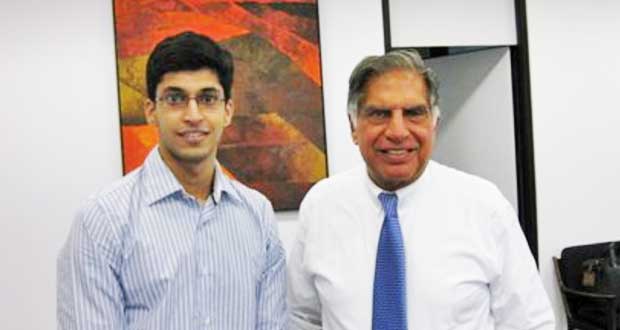
You managed to make a presentation to Mr. Ratan Tata personally in 2010 while interning for Tata Motors legal department. Tell us about your experience.
As part of my internship with the Tata Motors Subsidiary Company, I was required to conduct a legal audit of that particular unit. I discovered some regulatory anomalies, which I felt were not properly addressed by the management. Dissatisfied with their response, I wrote to Mr. Tata bringing this information to his attention. To my utter surprise, I heard back from his office a few weeks later informing me that he wanted to see me and hear about my findings first hand. The Tata’s flew me into Mumbai and I had an hour-long interaction with Mr. Tata in his corner office at Bombay House. I was enamoured by his humility and his insistence on the highest ethical standards for all his group companies – big or small. He assured me that he would address all of my concerns.
Before going for LL.M , you worked as an Associate at Karanjawala & Co in their criminal law team . How did your appointment at Karanjawala & Co. take place?
My appointment at Karanjawala & Co. was sheer luck. I had interned with the firm twice before, and upon graduating I requested Mr. Karanjawala to give me a job, which he very generously did. He is known to have a big heart! I worked for the first six months in the corporate team and then in the criminal team – I had the good fortune of exploring different aspects of the law, right from mining and electricity matters to the more sensational BMW and Arushi Talwar cases.
I was a part of the team that briefed Mr. Ram Jethmalani for Mr. Nanda’s appeal in the Supreme Court. Although I was the junior most member of the team at the time, my seniors Mr. Sandeep Kapur and Mr. Ravi Sharma gave me ample opportunities to participate in the conferences with Mr. Jethmalani. It is certainly an overwhelming experience to be in the same room as Mr. Jethmalani – his command over the law and his piercing wit are great fun for any young lawyer to observe. I remember distinctly how meticulous and thorough he was during our conferences – with meetings at his Akbar Road chamber often stretching into the wee hours of the morning prior to the hearing. But no one complained.
When the arguments commenced in Mr. Nanda’s case in the Supreme Court, I watched in awe Mr. Jethmalani pieced together all of the material he had absorbed in the preceding days, masterfully connecting the pieces of the puzzle to form a simple yet lethal argument. His ability to interpret the criminal code while unravelling the safeguards inherent in constitutional provisions is simply unsurpassed.
Mr. Karanjawala had very generously agreed to represent the parents of the slain teenager Arushi Talwar without any cost – pro bono. I was lucky in that I was able to assist my senior, Shivek, during various stages of the case in the Supreme Court. It is well known now that the Hon’ble Court did not see any merit in the applications filed before them seeking relief for the parents. But I learnt that responsible advocacy requires vigorous representation to protect your client’s interests. I certainly still believe in the parent’s innocence and perhaps in time their names will get cleared.
Working with a large litigation firm has many advantages. If the firm enjoys a good reputation, it attracts many high profile clients who expect the best quality of work. Mr. Karanjawala runs a meticulous office, and yet the environment of the firm is not stifling or overbearing. Juniors are given many opportunities to get involved in matters and interact directly with clients and Senior Advocates. Since the stakes are high, the pressure to perform tends to be higher.
When did you decide to pursue higher studies? What was your motivation?
I think lawyers must never cease to study – rather, it would be anathema to their professional success if they did so. While ILS was an excellent place to develop a fundamental understanding of the law, I craved a more challenging intellectual environment.
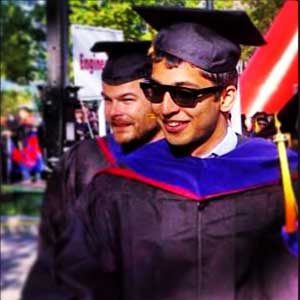
Abroad, the methodology of teaching is very different. Students are expected to be very well prepared before they show up for class. Professors challenge students by employing the Socratic method of teaching, which involves intense class participation. These were novelties for me, since I had only been exposed to a traditional lecture based system of education – as most of us have. My prime motivation for studying abroad was the exposure to a world-class legal education, which I was very fortunate to receive at UPenn.
Besides, I think effective lawyers must keep honing their critical thinking skills. Learning a statute and reproducing answers during a predictable exam might not be the best way of training lawyers. My advice to students contemplating an LL.M. would be to go for it, undoubtedly.
Tell us more about this Joint Master’s Degree from UPenn Law school and Wharton University.
UPenn, like some of the other Ivy League universities in the US, encourages inter-disciplinary course selection. Thus the advantage of being at Penn Law is its proximity and association with Wharton – which is a premier business school. As part of the LL.M., one is permitted to take regular courses at the business school as well – with MBA students. It is truly the best of both worlds – with course credit on one’s transcript from both schools – law and business.
I took a very interesting course on corporate diplomacy, with a Harvard trained Professor, Dr. Sanjay Patnaik. The course covered corporate strategy employed by leading multi-national firms during times of crisis. We interacted with top industry leaders and even leading politicians from the European Union who explained the intricacies of doing business in a complex regulatory environment. Besides this course, Wharton offers a gamut of options ranging from traditional corporate finance to more complex courses on business management. In addition to this, both the law school and Wharton conduct numerous talks and presentations by business and political leaders from across the world.
The exposure is simply mind-boggling – and the result is that one’s worldview is significantly impacted.
What was your topic of dissertation for Masters? Why did you choose that subject for research?
Most graduate programmes in US law schools offer a general LL.M., with a wide array of courses to specialise within the Masters programme. My areas of focus were advanced Corporate Law with M&A and US Anti Trust in the first semester. In the second semester I took litigation and drafting courses – such as Appellate Advocacy and Trial Advocacy.
The great thing about this approach is that it allows the student to customise their learning experience. I wanted a blend of corporate law and US style litigation – which is exactly what I got.
Tell us about your experience working with an eminent personality like Professor Raymond Ripple.
(Jai was the only LL.M student to have been accepted in Professor Raymond Ripple’s class on Appellate Advocacy, where he also received the highest grade.)
Yes! His were one of the best classes I took at Penn Law. Professor Raymond Ripple is actually a full-time senior counsel for a major US Conglomerate, DuPont. He taught as the adjunct professor for appellate advocacy and took only about 9-12 students for his class. I was very fortunate to have been accepted by him.
Professor Ripple taught an intense course about how to draft a high-quality federal court brief. He was very particular about the style, structure and content of the final product. One component of the final examination required us to argue before judges, exactly the same it would happen in a real federal court system. The argument was then recorded and Professor Ripple gave systematic feedback to each student about how to improve his or her presentation and strategy. As someone who is passionate about litigation, it was an enriching experience.
Which events led to your induction into Kline &Specter Law Firm? Were there any interviews or selection processes?
Upon graduating from Penn Law, I applied like everyone else to different law firms. I was very pleasantly surprised when I heard back from Kline &Specter, since it was my first choice. The email came when I was celebrating my graduation with my classmates in Miami – so we had two reasons to celebrate. They called me in for an interview with a Senior Partner, who later became my boss. We spoke about my past experience and also my interest for the specialised nature of work at K&S – pharmaceutical mass torts. Yes, incidentally, I was also the first foreign trained lawyer to have been accepted at the firm – but I owe that to the magnanimity of the founding partners who decided to take a chance with me.
How was it like working in a foreign law firm? How different was the work environment in the USA, from that in India?
American firms – much like top-tier Indian law offices, are very professional and manage their time well. There is a clear expectation for high quality work – which is recognised and duly rewarded. The routine at Kline &Specter was very comfortable and hours stretched only when there was a deadline or a key deposition coming up. The work environment was friendly and supportive. Watching Mr. Specter argue before a full bench of the Pennsylvania Supreme Court (9 judges) was an excellent experience. Top trial lawyers in the US prepare meticulously for their cases – a trait I saw in Mr. Jethmalani in India too.
Our readers would like to know about the whole case which you were involved with your partner. Please share few words about your experience.
(Jai has worked in the pharmaceutical mass torts division with the firm’s partner, Mr. Lee Balefsky, on a multi district litigation (MDL) involving a billion dollar law suit against Johnson & Johnson and American Medical Systems for manufacturing faulty pelvic implants.)
Kline &Specter is one of the top litigation firms on the US East Coast for complex pharmaceutical mass tort cases. They have built a reputation for pursuing meritorious cases in a fair manner – they are not after easy wins. I learnt from Mr. Specter that a good lawyer must keep his client’s interest at the core of his advocacy. This was especially true for those clients who had suffered horrific injuries for no fault of theirs. They deserve the highest level of commitment from those entrusted to represent them – which is what the lawyers at K&S strove to do everyday.
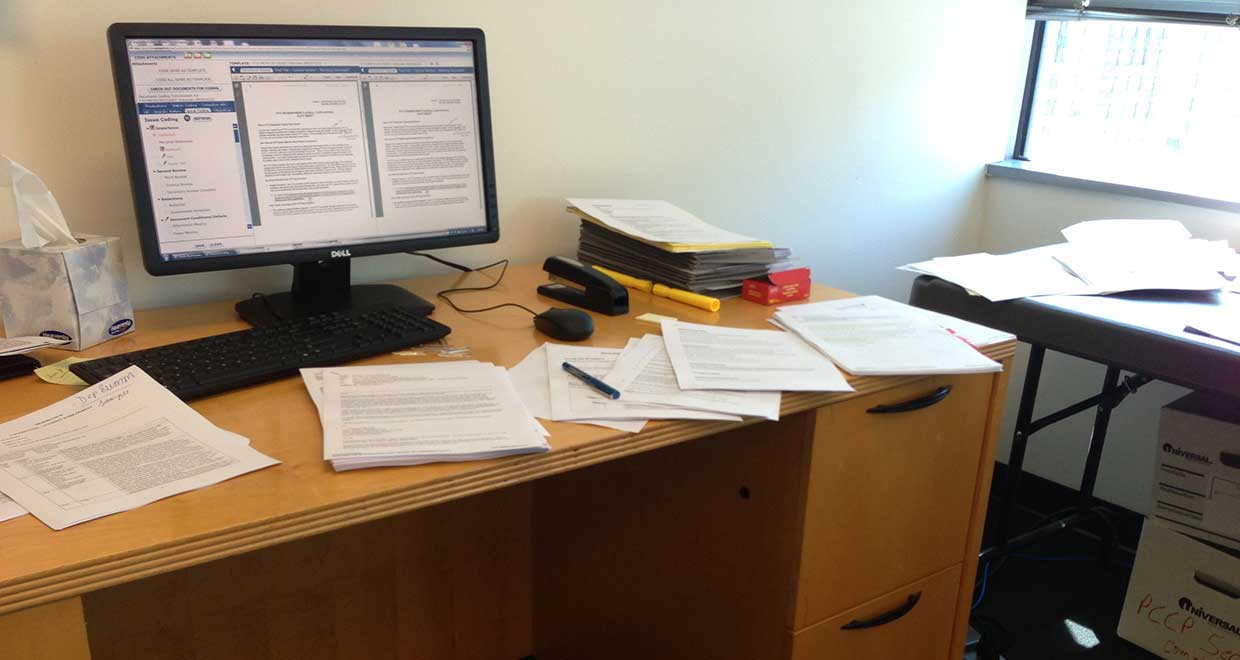
My work in the Mass Torts division with Mr. Balefsky was very exciting. I was involved in a complex multi-district litigation involving a medical implant manufactured by the top names in the industry. We represented a fairly large group of plaintiffs who had suffered terrible injuries as a result of these devices. Before actually taking the cases to trial, there is immense pre-trial preparatory work that goes into it. The discovery of documents can into lakhs of documents – medical papers, contracts and regulatory filings. Junior lawyers must filter through these papers with a fine toothcomb to create an arsenal of questions with which to conduct depositions of the corporate players.
Thereafter, you returned to India and joined the chamber of Justice S.A. Bobde as his judicial law clerk. What prompted you to make this choice and what made this shift possible?
The founding partner at K&S – Mr. Shanin Specter, apart from being a brilliant lawyer, is also a very supportive attorney mentor. He encouraged my work at the firm and told me that my work was very well regarded.
However, when I got the opportunity to assist Justice Bobde in India – I went to Mr. Specter with the honest question, as to what I should do next. He told me to follow my heart and to do what I felt was best for my career. He also told me that the doors to his office would be open after my clerkship concluded. The next step was obvious – I booked myself on the next plane to New Delhi and dove straight into working with his lordship. I have always dreamt of litigating in the Indian Supreme Court – and this shift made it possible.
What was your work profile while working as a judicial clerk under Justice S.A. Bobde? What do you think are the most essential things required to excel in judicial clerkship?
Justice S. A. Bobde is a very meticulous and hard working individual – he expects the same level of commitment from his law clerk. Despite many of my friends questioning my decision to pursue a clerkship at this stage of my career – I felt it was the best decision of my professional life thus far. Working at the apex gives you a top down view of how the matter has progressed through the courts – you get to see which arguments worked and which didn’t. One begins to appreciate the judge’s thought process too – which is trained like a hawk to filter out irrelevant arguments.
To be successful in a clerkship, I feel it is essential to fully understand what is expected from one’s role. The clerk must play a solid supporting role to his or her judge – by carefully following the judge’s instructions, and also by taking the initiative to make the inflow of matters as efficient as possible. Sadly, judges in India are swamped with matters through the week – the workload is truly difficult to fathom until you actually see the volume of matters that come into the office.
I had the opportunity to assist lordship on several criminal and civil matters. The most interesting of the lot was an arbitration decision that centred around the computation of interest on an arbitral award. There is much to be learnt simply by observing a judge.
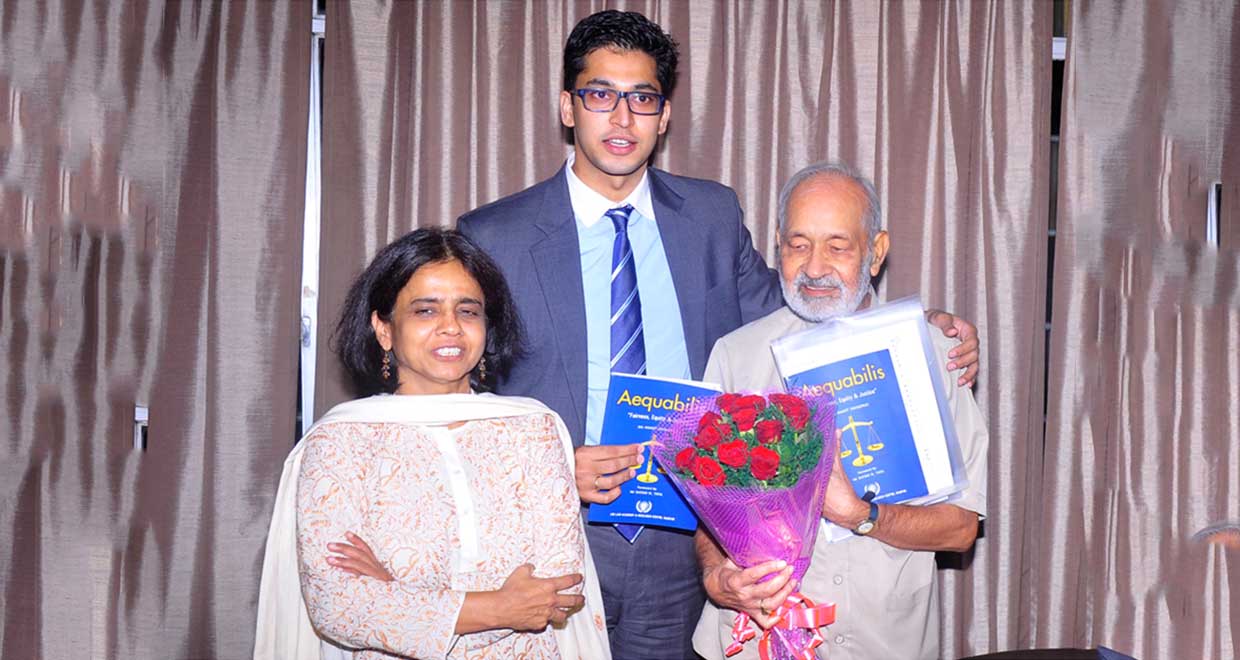
Ms. Sunita Narain and Mr. Lakhan Mehrotra
How did you think of writing a book?
(All India Reporter published Jai’s book, “Aequabilis”, which is a detailed legal study of former Chief Justice of India R.S. Pathak’s landmark judgments. It also discusses the Bhopal Gas tragedy decision in great depth and the development of mass-tort jurisprudence in India.)
This book happened by sheer accident. I’ve always looked up to Justice R.S. Pathak, as a child would admire his hero. Justice Pathak had a very gentle demeanour and an impressive command over the English language. He was an unassuming man and I was greatly inspired by him. His manner was extremely polished – a result of his fine lineage no doubt (his father was the Vice President and a famous advocate – G.S. Pathak), and he had this knack of being able to connect effortlessly with those several decades younger than him.
When he passed away, rather suddenly in 2007, I wanted to pay a tribute to his memory. When my efforts to organise a memorial lecture for him in my college did not materialise, I felt dejected and demoralised. Instead, I decided to immerse myself in his judgments and other writings – to reacquaint myself with my role model. Over time, I had read through nearly all of his judgments from his days as a high court judge and then his landmark decisions in the Supreme Court. I sensed a pattern in his writings, which was clearly distinguishable from the other cases I had read. Soon, I began critically analysing his judgments – and before I knew it, I had a collection of case comments and essays that aligned with Pathak’s core juridical philosophy.
The main chapter of the book, however, deals with the Union Carbide decision of the SC which awarded nearly half a billion dollars as compensation to the victims of the gas leak in Bhopal. I spent several hundred hours analysing this judgment and all the criticism that had been written against the decision. I realised that a lot of the hate came from journalistic reportage that had little understanding of the inherent delays in the Indian legal system – a fact that was acknowledged even by the Supreme Court. My book attempts to set the record straight in this regard – and counters the unfounded journalistic and academic criticism that this decision has faced over the decades. The fact that the Supreme Court has repeatedly upheld the original judgment is testament to the integrity and foresight of the Pathak Bench.
Share with us your experience in getting your book published and what was the reception to your book?
The editors at AIR Nagpur were extremely supportive and encouraged me to publish my writings in the form of a book. Interestingly, Mr. Ratan Tata has penned the foreword to the book and has praised the chapter on Union Carbide. Ambassador L.L. Mehrotra released the book last September at the India International Centre. The release was followed by a panel discussion with Ms. Sunita Narain – a noted environmentalist who debated the merits of the Bhopal Judgment. All in all – it was a very rewarding experience.
Currently, you are working as a Legal Consultant to the Vice Chairman and Managing Director of the Times of India Group, Mr. Samir Jain. How did you go about bagging this job?
Yes, I am presently attached with the Vice Chairman’s office at the Times Group. I wanted to understand the intricacies of the media landscape in India and also learn about corporate strategy – from a lawyer’s perspective.
I consider myself extremely fortunate to have been picked by the company to assist the CEO Group. I applied and was interviewed by their HR department, before being confirmed for the position.
Please give our readers some tips to nail an interview.
I think it’s really important to be honest and clear in any interview. Most HR professionals want candidates who can think and articulate clearly. It doesn’t help either if one has a negative attitude during the interaction – that would be a big red flag for any organisation.
How do you balance and make out time for writing blogs and other newspapers with your profession?
(Jai is one of the youngest columnists by the Times of India in 2012 and he regularly writes under the name “The Irreverent Lawyer” on legal and political issues as your hobby. Healso writes occasionally for the Hindustan Times, Niti Central, Indian Exponent, Power Politics and the Daily Pennsylvanian.)
Writing helps me to de-stress! With all the views and counterviews flying around on the 24X7 media, I find it very soothing to amplify my own voice of reason to cut through the chatter. I usually write only about issues that I’m passionate about. I dislike hypocrisy and you’ll notice that some of my writings attempt to expose the rampant doublespeak that certain groups indulge in.
I honestly do believe that lawyers can play a productive role in a democratic polity –by speaking up for the weakest sections of society. We’re also bound by our profession’s code of ethics – which demands that we strive for justice, inside and outside the courtroom.
Early mornings work best for me when I want to get some writing done. This way there’s nothing to disturb my thought process – since everyone’s either asleep, or they think that I’m still asleep!
Has writing been a passion ever since childhood? Do you have any future plans of taking up writing as a career?
Litigation is definitely my first love and I am committed to it professionally. Besides, I would make a terrible ‘fiction’ writer – I know that for a fact! Writing is a relaxing hobby for me, and I enjoy indulging in it occasionally. Unfortunately, I feel that I lack the self-restraint and neutrality that a career-journalist should possess. I feel too passionately about certain issues, and I make no effort to hide my biases. Hence writing as a journalist is ruled out for me. Besides, I enjoy the thrill of litigation far too much to do anything else!
What message do you want to give to the Government for not paying attention to this issue?
Judges in India are terribly underpaid – and it is a very serious issue that no one talks about. To compound the issue, our judges tend to be very traditional, and thus choose to suffer in silence to preserve the judiciary’s dignity. Despite their ever expanding workload and long hours, and the astronomical rise of lawyers’ fees, judicial salaries have largely stagnated at unrealistic levels. Good lawyers may one day refuse elevation on the ground of inadequate (in fact insultingly low) pay.
My article highlights this issue and warns the government of an impending constitutional disaster if this disparity is not addressed.
Lastly what would be your message for law students?
The only recipe for success in our profession is perseverance and hard work. Unfortunately, there are far too many young lawyers in Delhi and Mumbai, who are desperate to make a quick buck by adopting unethical means. Please don’t become like them. They latch on to established lawyers to become middlemen between clients and their own seniors. In the process, they swindle the client by over quoting the fee. Sadly, these so-called ‘lawyers’ never realise that their reputation at the Bar suffers immensely – and they are labelled for life.
Justice Pathak gave me excellent advice, which might be relevant to your readers too – “Work honestly for what you want. If it comes too easily, it’ll probably leave just as easily too.”
Divya Chawla graduated from NLU Delhi, batch of 2014. She has just been accepted to the University of Pennsylvania. And soon after completing her LL.M. she shall be inducted into Linklaters, London.
We took this opportunity to ask her about:
The process of application for LL.M. to an Ivy League University
Planning a successful Statement of Purpose for LL.M.
Internship and job offer from Linklaters
What motivated you to choose law?
It took me a long time to decide what I really wanted to do, so much so that to buy time I joined Delhi University after Class XII. I studied Political Science Hon. at Jesus and Mary College for a year during which the idea of studying law grew on me gradually. While there were no lawyers in the family, it really helped that my elder brother was studying law at that time. I was able to make a first-hand comparison between the prospects and scope of a traditional graduate degree and a professional degree. In retrospect, the gap year really helped me identify what I wanted to do and I was glad I didn’t rush into something immediately after Class XII.
Please share some of the memorable experiences of your college life.
The exciting aspect of being part of a fairly young institution is that one gets the opportunity to be a part of many ‘firsts’ of the University. I had the opportunity to be a part of the editorial board for the first edition of the NLUD Student’s Law Journal. Subsequently, as a member of the RCC, even the recruitment process had to be envisaged and managed from a fairly rough foundation. While the lack of guidance can be daunting, such experiences strengthen character and enhance leadership ability.
Further, in terms of co-curricular activities I was lucky to be a part of the team representing the University at our first ADR competition endeavour, the Brown-Mosten International Client Counselling Competition in 2011. Mooting was also strongly encouraged right from the start and this helped me improve my research and oratory skills immensely through college.
What triggered your interest in Arbitration and ADR?
My initial interest in ADR competitions developed from the unique format. Participation in ADR competitions helps build valuable skills such as strategising, negotiation and problem-solving. Moreover, these skills are relevant to any path you choose after graduating and are not confined to the career of a negotiator or mediator.
How did you secure an internship at the Planning Commission of India and World Bank?
The Planning Commission and the World Bank regularly list internship opportunities on their respective websites. While the Planning Commission internship is a standard program structured over a month, internship opportunities at the World Bank are on a more ad-hoc basis. Both the internships involved working on a research project under a supervisor.
These internships helped me look at commercial issues from different stand-points. At the Planning Commission I worked on legal issues faced by the Government in airport modernization through public-private partnerships, while at the World Bank I got to analyze an industry perspective on the regulation of the microfinance sector. So this helped me understand different facets of commercial undertakings/projects.
How does an Indian student get an internship in London?
International firms such as Linklaters, organize a vacation scheme program each year for penultimate year law students, which is essentially a three week internship at the firm’s London office. As part of this program, the firm focuses on selecting a certain number of students from Indian universities. It is an exciting opportunity but the selection process is quite rigorous and competition is fierce. I think the key to be a successful applicant is to show genuine interest in commercial law and a commitment to the idea of working at an international firm. Relevant internships would demonstrate exposure to the practical side of commercial law. It would also help to highlight any publications relating to commercial issues or an elective/ short-course/ certificate program taken up. This reflects a sincere attempt at developing one’s understanding of the field. Awareness of international deals and business events and an enthusiasm to get involved in cross-border matters helps fortify the commitment towards working at an international law firm.
How did your internship transform into a job offer?
At the end of the vacation scheme, the opportunity to interview with a Partner for a training contract is automatically offered. This interview is based on an assignment that is prepared individually during the scheme and involves identifying legal and commercial issues in an international business deal.
In a nutshell, the scheme provides the opportunity to intern in two different practice areas under an experienced Principal, and also affords a great learning experience through a range of professional development sessions. These sessions are designed to provide a broad understanding of the Firm’s global business strategy and practice areas, as well as the chance to develop skills like mediation and pitching to a client. For me, the best part of the program was when as an intern in the Banking team I got the opportunity to visit Lehman Brothers’ Canary Wharf office and get involved in the insolvency administration.
What prompted you to apply for an LL.M. abroad?
The prospect of being able to get an in-depth knowledge of subjects that I was interested in prompted me to apply for a Master’s Degree. Moreover, the Masters program can be structured to suit career goals, like a number of Universities provide a choice between practical skill-intensive courses and research-oriented courses. Some Universities are particularly good for undertaking cross-disciplinary study like NYU, University of Pennsylvania and Northwestern University. So it is basically a year of study focused on subjects that one is keen to pursue further professionally and at the same time there is the fabulous experience of being taught by distinguished professors in a multi-cultural environment.
Further, an LL.M. provides the opportunity to gain more knowledge of the international market, thus adding a global outlook to one’s perspective. Since I am looking at working in an international legal environment I decided that opting for an LL.M abroad would be more suitable in terms of my career goals.
What do you think were some of the contributing factors that helped you get into UPenn?
From my experience with the admissions process I believe US schools are not purely focused on a student’s rank or GPA. It is a more comprehensive selection process which seeks not just ‘intellectual potential’ but also something that sets a candidate apart like volunteer work, leadership experience or professional accomplishments. Despite the obvious upside to this approach, this does bring in a huge amount of subjectivity into the process which makes it all the more difficult to espouse a formula for getting through an Ivy League School.
It certainly helps to be an all-rounder with achievements across a range of academic subjects and extracurricular pursuits. This is viewed as a definite indicator of future success which to the admissions board is important to assess your value as an alumnus of their University. However, if one falls short of being an all-rounder there’s no need to lose hope! Showing extraordinary caliber in a specific area of interest that has been consistently pursued coupled with a definite future course of action would also make a strong application.
What other courses and universities did you apply for?
I applied for the BCL at Oxford and the LL.M at University of Pennsylvania, Harvard, NYU, and Cambridge. An obvious parameter for choosing a University is the brand name, because resume enhancement is a huge plus. On a more subjective front, it’s a good idea to identify what feature of a particular University or program ties in with your career goals, not only for the purpose of making a choice but also to highlight that your application is not a generic submission made to all Universities, but has in fact been carefully thought through.
Personally, I believe it’s a better idea to opt for a school depending on its ranking in your intended subject area rather than a general ranking. I opted for Penn Law because it has a strong reputation for corporate law which I was interested in studying further. It also has a great cross-disciplinary program for LL.M students called the Wharton Business and Law Certificate (WBLC). Wharton is UPenn’s business school and is ranked as one of the finest. The WBLC offers law students the opportunity to learn about fundamental business, financial and management concepts in a legal context.
How did you plan your Statement of Purpose?
How a SOP is planned differs depending on the University. While some schools require that applicants address specific questions in the SOP, others follow a more general and open-ended theme. Typically, it should cover the applicant’s background; academic and professional interests, a persuasive reason for choosing the University and program of study and lastly how this choice ties in with career goals and ambitions. This means being concise is key, because information about your past, present and future must be condensed into a limited word count and must make for a compelling read. So be prepared for endless drafting and editing! Also, a conclusive future course of action that ties in with the applicant’s past and present experiences, and envisions a positive impact in a specific field (could be law, politics, business, the social sector, etc.) shows determination and passion.
Broadly, my SOP was focused on how my background shaped my ambitions, my experience in commercial law through academics and internships, and how the LL.M. would prepare me for an important role in a trans-national legal environment.
I’m looking forward to getting a sense of the US legal system and particularly look forward to taking up courses at Wharton during the LL.M. I expect there to be a substantial value addition to my academic credentials and a smoother transition from being a student to working in an international law firm. Finally, I’m excited about being part of a culturally diverse class and hope to build strong relations through the course.
Which are the scholarships one can apply for at UPenn?
Penn law is certainly on the expensive side as there aren’t too many options for obtaining financial aid. Applicants belonging to a few specified countries (including India) are automatically considered for financial assistance on a merit basis. There are a few such scholarships but the exact number that is awarded is discretionary and financial need is not a criterion in arriving at a decision. Further, only a part of the total cost incurred towards the LL.M is covered. However, if you are focused on human rights issues there is a dedicated human rights scholarship.
In addition, in India there are some foundations which accept applications for education-related travel grants, like the Sir Dorabji Tata Trust. Such grants typically cover the cost of travel, insurance and visa fee. Another option is to apply for an interest free loan from the Narotam Sheksarai Foundation which selects awardees based on merit.
Lastly, what would be your message to all the law students who aspire to work in one of the Magic Circle firms?
From a technical point of view, I think the most important skill to work on consistently is commercial awareness, preferably of the international market. Equally important is sharpening professional communication ability and social skills.
Never Miss Out on Important Updates!
Subscribe to notifications and get instant alerts for everything that matters to you. Stay ahead with real-time updates!
Allow notifications
Enable notifications to get the latest updates, tips, and insights delivered straight to your device.
Click "Allow" on the browser popup to subscribe.
If the modal does not open automatically, then follow these steps.











 Allow notifications