Tag: UPSC

  • Sucheta Chatterjee, Indian Foreign Service Officer, on the UPSC and work experience at SEBI

    Sucheta Chatterjee, Indian Foreign Service Officer, on the UPSC and work experience at SEBI

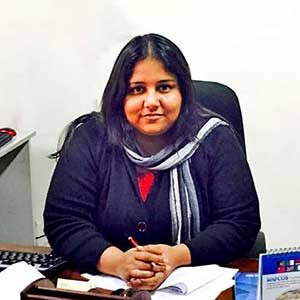
    Sucheta Chatterjee is a graduate of WBNUJS, Kolkata (2007 Batch). Soon after her graduation she joined SEBI as a Legal Officer and had been working there for six long years, before challenging herself to the formidable UPSC.

    For her, taking the UPSC was more of an aspiration to serve the nation as an IFS Officer. She had determined that she would either serve India in the Foreign Service or continue in SEBI.

    In this interview she shares with us:

    • Work experience at SEBI
    • Deciding to take the UPSC plunge
    • Taking the UPSC prelims and the mains
    • Training period and posting


    How would you introduce yourself to our readers who are mainly young and enthusiastic lawyers?

    I would firstly like to congratulate them for taking up law as a career. As far as introductions go, I’m a law graduate from the National University of Juridical Sciences, Kolkata, and I subsequently worked in SEBI in the very niche field of capital markets and securities law, specifically in enquiry and adjudication matters. Thereafter I stumbled into the Indian Foreign Service. My first posting abroad will be in Moscow.


    What inclined you towards the field of legal education? Did anyone among your family and friends suggest you to choose alternate career options?

    Growing up as an adolescent in Calcutta’s politically charged atmosphere left me well coloured with a burning idealism and a fierce intolerance of injustice. At eighteen, I felt as if I could change the world and fight for the rights of the underprivileged and [sociallocker]marginalized. Therefore, I joined law school with starry eyes and I was rather disconnected from reality.

    My family and friends were very supportive and never tried to impose any course of action upon me. I remain grateful to my parents for their unflinching support even in the face of some unconventional decisions that I’ve made.


    How was your experience at NUJS? What activities were you involved in apart from the regular academic curriculum?

    NUJS was a wake-up call in many ways. My years there taught me some very hard lessons about the legal system. My very first encounters with the bureaucratic mode of functioning happened in NUJS, leading to several bitter-sweet incidents. All things considered, it was a very extensive learning experience that enriched my life and I feel a sense of gratitude towards my alma mater. I would specifically like to mention Professor D. Banerjee who was always an inspiration in my life. He had always told me that he felt that the civil services would be the best option for me and that he was confident that I would get selected.  I kept telling him that I couldn’t possibly get selected. Had he been alive, he would have been very happy. I miss him so much.

    As far as co-curricular activities are concerned, I can only remember a controversial monograph I’d written about the AFSPA in Manipur, which won me the first prize, to my greatest astonishment. Otherwise, I was essentially a loner and did not participate in any activity if I could help it. I was rarely in the campus after class hours and spent most of my time reading really amazing books (borrowed from the library) that had nothing to do with our academic curriculum.


    After graduation, you joined SEBI (Securities and Exchange Board of India) as a Legal Officer. How did you go about the appointment? Please tell us about the recruitment process at SEBI.

    I was selected by SEBI through the campus recruitment programme. I chose SEBI over law firms because I felt that working in the government sector has certain specific advantages that are not available in the private sector.


    You have worked with SEBI for a considerably long time as an Assistant Legal Advisor. Please tell us about your experience there.

    I worked at SEBI for about six years! SEBI is an outstanding employer. My years there were a continuous learning experience, albeit in a very niche sphere. SEBI, and especially my colleagues there, will always remain special to me. I will always feel a sense of gratitude to them for making my debut into the legal world such an enjoyable experience.
     

    sucheta-chatterjee-2

    When and what inspired you to appear for UPSC after having a secured career at SEBI?

    Will you believe me if I tell you that I appeared for the UPSC exam because I wanted to get away from my boss?! That was indeed a major factor.

    Another reason was pure wanderlust and I felt that joining the Indian Foreign Service would be a great way to live in various parts of the world, immersed in alien cultures. The fact that I have always been keenly interested in international affairs further strengthened my resolve to give it a go.


    When did you start preparing for the exams? When should a person ideally start preparation for the UPSC exam?

    I had severe time constraints because I was handling a full-time job while preparing for the exam. I started practicing a lot of mathematics about a few months before the preliminary examination. I focused entirely on mathematics because I felt that my performance in the quantitative aptitude part of the paper would make or break my attempt to clear the civil service exams. I studied for the main examination only after the results of the preliminary exam was declared and I was sure that I had qualified for the main exam.

    I suppose ideally a person ought to start preparing a year in advance but then I firmly belong to the school of thought that maintains that the amount of time you study is irrelevant. How you do it is what counts.


    Did you enrol in a coaching institute? How valuable do you think coaching institutions can be for UPSC preparation?

    No, I did not enrol myself in a coaching institute because of time constraints. Thus, I am not competent to opine about the value of coaching institutions.


    How many hours did you put in for your preparations every day? Is it important to have a fixed schedule or weekly targets important according to you?

    It varied from two hours to none at all. I did not maintain a fixed schedule and studied in fits and starts.

    I am sure fixed schedules and monthly targets are useful for those inclined to study in that manner. It is important to know what suits you as an individual and to create your own style of preparation. I don’t believe there is a fixed formula for success.

    What did you do to keep yourself abreast of all domestic and international current affairs? How did you study for static GK?

    I relied on The Hindu and the Indian Express to give me a fair idea of how events were playing out in local and international politics. But this isn’t something that can be started a year before the exam. It is a lifelong process and one has to keep reading all the time. I strongly believe that in the UPSC, it is accumulated knowledge that makes all the difference.


    Did you regularly read newspapers? How did that help you? How should one strategically use newspapers for preparation?

    I have always read newspapers regularly. It has become a habit. With time, one can instinctively pick out what’s important and what is of relatively less importance. My personal favourites are the editorial section and the opinion page. It is a mistake to cram up facts because the pattern of the UPSC paper is heavily analytical.


    Which books/materials did you rely on while preparing?

    A CSAT book published by Tata McGraw Hill on quantitative aptitude helped me to conquer my fear of mathematics to an extent. For the mains, NCERT textbooks were my bible, so to speak. I also highly recommend The Economic and Political Weekly as well as The Frontline magazine. Wikipedia should also not be underestimated, no matter what the pundits tell you. It also helps to choose one’s own subject for the Main Exams as it saves the trouble of learning an entirely new subject. The myth that some subjects are more “scoring” than others has effectively been busted. I stuck to my strengths – law and political science.


    Lakhs of people attempt the UPSC prelims and only a thousand get selected for the main written exam. Which are the prime skills and expertise required to crack the prelims?

    I will spare you a lecture on hard work and dedication because that would be an insult to lakhs of candidates who studied very hard with tremendous dedication and still did not make it. The role of chance is a big factor that is seldom mentioned by successful candidates. You have to do your best and hope that by chance you get to attempt questions which you have prepared for.

    Besides, those who have good time management skills have an obvious edge over those who do not.


    Please share with us your insight of attempting the prelims.

    You are interviewing me more than two years after I appeared for the preliminary examination. I cannot remember much except for the fact that most of the multiple choice questions were very tricky and designed to make one choose the wrong answer so I attempted only those questions that I felt reasonably sure about in order to avoid negative marking.


    What kind of posts had you opted for in the UPSC enrolment form? How do you want to serve the nation? Didn’t you think of applying for the IAS?

    In my DAP (detailed application form), I chose the Indian Foreign Service as my one and only option. I could have easily got IAS with my home cadre but I was determined to join either the IFS or remain with SEBI.

    As a diplomat, I would like to contribute to the formulation of a rational, enlightened foreign policy in consonance with the spirit of the constitution and the ideals of Panchsheel.


    How would you rate the main exam question paper on difficulty?

    The main examination paper was rather difficult, at least by my standards. The GS papers especially had some very tough questions that compelled a lot of thinking and planning before writing, leading to a time crunch.


    Did you appear for mock interviews? What are your views on taking mock interviews?

    No, I did not appear for mock interviews. So, I can’t comment on that too.


    Any specific strategy you would recommend us for the interview?

    I decided to be frank and forthright in my interview and not pretend to be someone I am not. The board members were all experienced bureaucrats who could easily see through all attempts at falsehood. Therefore one should respect their intelligence and not try to fool them. I was asked several highly controversial political questions and I answered all of them with candour and made no attempts to be evasive. Thankfully, I was also asked a lot of legal questions. There was one question to which I did not know the answer and I admitted my ignorance.

    “Bullshitting” is absolutely useless in the UPSC interview. Interestingly, I was even made to recite some Bengali poetry and sing a few lines of Rabindra Sangeet. I am sure the board members regretted asking me to sing the moment I opened my mouth!
     

    sucheta-chatterjee-3

    How would you describe your training period? Please share some memorable moments of your training programme with our readers.

    The training at Lal Bahadur National Academy of Administration, Mussoorie, was a saga of never-ending hardship for a laidback, unorganized person like me because there is a lot of emphasis on discipline, order and method. The fun parts were the treks, village visit and weekend parties in the Officers’ Lounge. But apart from having to get up at 4:30 a.m. in the freezing cold for P.T., I think we all had a stellar time.

    The training provided at the Foreign Service Institute was excellent. We especially enjoyed ‘Bharat Darshan’, the attachments with all three wings of the armed forces and the mission attachment at Dhaka. It is a cliché to say that training is the best part of the service bit it is very true, nonetheless.


    After the training period, where was your first appointment?

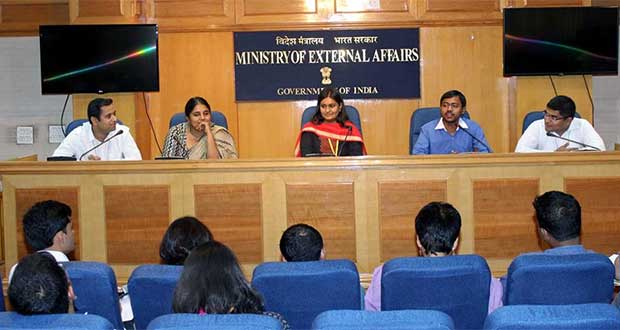
    At present, I am undergoing desk attachment at South Block in the Eurasia Division. My first posting will probably happen around August, 2015 in Moscow, Russian Federation.


    Please tell us a little about your work profile working as a Foreign Services officer. What are the responsibilities you are entrusted with?

    As a Foreign Service Officer, we are entrusted with nearly everything that involves a foreign relations component, from writing concept papers, to vetting treaties and MoUs to organizing visits of heads of states etc. Our division successfully handled the recently concluded Indo-Russia Annual Summit in New Delhi. We get to learn something new every day and compared to other services, political interference in the IFS is minimal.


    How is a typical workday like? How has your experience of being an IFS officer been so far?

    A typical workday involves getting up early and rushing to South Block by 9, dealing with little mountains of files, attending numerous phone calls and meeting a wide variety of people from all over the world. While working abroad, the experience is bound to be different.


    What would be your message to law students and lawyers who aspire to become a civil servant?

    It is always an asset to the civil service to have legally literate officers and I personally believe that law students and lawyers have an edge over others in the civil service exams because of the five years of rigorous training that we undergo at law schools. So if you think that the civil service is where you aim to reach, there is absolutely nothing to stop you! All the very best!

     [/sociallocker]

  • Manish Raj on work at Coal India Ltd., being AIR 4 in the UPSC Company Prosecutor exam

    Manish Raj on work at Coal India Ltd., being AIR 4 in the UPSC Company Prosecutor exam

    Manish Raj, graduated from NLIU, Bhopal in 2009. Thereafter, he worked at Coal India Ltd. in various capacities. Recently, he secured AIR 4 in the exam conducted by UPSC for the posts of Company Prosecutors in the Ministry of Corporate Affairs.

    In this interview he talks about:

    • Working at a PSU: Coal India Ltd.
    • Clearing the UPSC exam for Company Prosecutors


    Tell us a bit about yourself as an introduction. Do you come from a family of lawyers?

    Firstly, your team is doing a fantastic job of gathering such imperative information of experiences in the field of law that could play a great role in budding grads life. Congratulations!!

    I am a 2009 batch graduate from National Law Institute University; thereafter I worked with Coal India Ltd. (A Govt. Undertaking) at various capacities starting from Management Trainee to Assistant Manager (Legal). Recently cleared the exam conducted by the Union Public Service Commission, so just waiting to resume my services with Ministry of Corporate Affairs, Govt. of India.

    No, miles away, I am a first person in my family who did this intentional gaffe of taking up law as a profession rest all and relatives remained associated with Railway Services, entrepreneurs (Construction firms) and Administrative Services.


    What got you into legal studies? Was it all planned or something that just happened by chance?

    Lived a very independent life in this regard, abhorrent to many my parents always said to justify your life as per your age and as a son. Getting into law was my independent decision for the reason that I had this bend towards humanities, writing and others. Being a Mathematics student in 12th grade really helped me a lot to think about what I definitely not want to be…

    No, I knew about the National law schools in those days and seriously took the entrance exam of NLIU along with other exams for different law schools.


    How was your experience at NLIU? What activities were you involved in apart from the regular academic curriculum?

    Being the hosteller at NLIU, the very first thing it taught me was to always fill the mug before you use the washroom, hilarious for many but embarrassing to some and still at times it makes me think about the balancing act of all those creatures(from other clusters) whose pug marks left imprinted on the lid.

    Well, when I have joined the NLIU it was at the apex of its transition phase, everything was yet to take a shape, so be it roads, library, gol chakkar, new teachers replacing old teachers and Canteen(though temporarily built of jute but I think it was better than the new one in the campus).

    Not an exception, it was a roller-coaster ride for me at NLIU that made me to meet the good, bad and hilarious hundred shades of grey, black and white at one place. I totally agree that time flies at NLIU, 5 years seems a moment.

    Extricating in nature, late night hobnobs at boy’s hostel, bakar at gol chakkar, road roller (doubt if some still remember about it), kallu/hemraj ki tapri, mindora, library(outside it or serene view from roof top) and others primarily remained the sites where I remained actively involved in all those highly brainstorming sessions and other societal activities. Apart from it the remaining time was being utilized for paper publications, moot courts, gym, seminars/conferences and sports too.


    Manish Raj

    What were your major interests as a student of law? Any suggestions for the law students on how to deal with Pandora box of laws?

    Our course curriculum is such that one remains student of both law and humanities and I remained no exception to it. My interest as a law student lied somewhere in mid of both i.e. if constitutional law than political science and administrative law too and later the contemporary socio-legal issues, henceforth the fragments from all the subjects has helped me a lot to knit something of my interest. It may seem to be an agrestic approach but with time it takes a shape to help you in profession as well as a social being.

    Reading those law books fills one with the fake sense of power and thinking oneself to be intellectually superior to others, alas the execution part of it is way different by methods and means. Consequently I think being a law student think logically, keep prime focus on your concepts of law while reading and keep yourself at bay from those great great intellectual bakar.


    How should one go about the internships? How important it is for a law student to plan out the course of his internships to successfully gain from the internship experience?

    Internships are the best time to explore not about the place where you intern but about yourself in a manner that what you really not want to be. Therefore trepidations or learning from others experience is not a wise act, be your experience, explore all possible job sites; law firms, FMCGs, various Adjudicating bodies, commissions and others only then decide what you really want to be in the future.

    Internships should not become the process of collecting tags/brands to make your resume look marvellous; therefore I think from 3rd year (9th trimester) onwards start fixing your steps in one direction (internship at one place) based on self hand experience of the past internships. I hope one could achieve so much than only the experience certificate.


    You have published a lot of papers in various prestigious journals. How should one go about writing papers and getting the same published? Can you give us a few tips to ace the art of paper writing?

    Indeed yes, from Company law journal to Harvard Law journal and still continuing with last one in The Hindu (Newspaper). I should not suggest anyone to jump in without interest or just for the sake of writing; it’s an engaging process that seeks patience and persistence to write and get it published.

    I think desirous among many may start with contemporary issues, read a lot from various sources, search for some legal clue in it to effectively justify your profession too, start writing, fit it in various pigeon hole of formats by the publishers, send it and wash your hands of with it. The most quintessential is to read and analyze the already published work of others.


    Tell us how has paper publishing and other co-curricular activities helped you in acquiring skills that are important for a successful legal career?

    I am not hubris a person if I say that good paper publishing is followed by appreciation and eulogized by many. Not much co-curricular activities I remained active in, the one I found myself around were writing, paper presentations at conferences/seminars, member of different cells, moot courts and others, indeed all these activities helped in evolving drafting, presenting, and fabricating(is a skill) skills in me.


    After graduating from NLIU you had worked at Coal India Ltd. (A Govt. Undertaking) for a considerably long time. How was your experience being part of a PSU?

    Yes, I have started working as an Executive officer (legal) and worked last on Asst. Manager (legal) position. Interestingly, during my later half I was posted at Dhanbad office and at the same time Anurag Kashyap was working on Gangs of Wasseypur project at Katras mines (Area office of BCCL, Dhanbad) and National Geographic India on some energy project at Jharia mines(Area office of BCCL, Dhanbad) so enjoyed resolving some legal query qua sites.

    Abhorrently, it remained challenging to work with a Public Sector for the reason that the laws qua Energy sector are very different and takes time to get accustomed. Apart from the legal skills, managerial, administrative skills and quick decision taking skills are tested time and again. The biggest challenge is not to manage your top slots but to get your work done by the subordinates (especially of your father’s age) and breaking the speed of file moment that remarks of Colonial era legacy.

    Major area of work remained of compliance of law at various legal forums, personnel and administrative tasks, international contracts (JVs and others) for various purposes, Land Acquisition, Arbitration, FSA ongoing Coal Blocks issue and others.


    How helpful do you think CGPA is when it comes to getting recruited?

    CGPA helps in getting shortlisted at least during the Campus placements, so I think it’s important to maintain a decent B+ (65% or more) score/grade. As we know even in Govt. job and private jobs they have percentage fixed as minimum eligibility.

    Let me tell all those students (mediocre) who study hard and fetch no good marks that keep your basics (concepts of law) brushed and don’t worry about the job, it will follow you. I repeat-only those who study hard and not score well in the exams.


    What is the importance of CGPA for law students especially for UPSC exams? Does it make any difference during the interview?

    Just fulfil the minimum criteria of percentage as reiterated in the notification for vacancies that’s it. No, Union Public Service Commission as we know is a constitutional body wherein during interviews College name, medium of education, social background and other things have been given no heed(I think) and remains neutral for all to bring out perfect equality and harmony. Quintessentially a law degree from National Law School remains at par with a law degree from any other regional college.


    You have recently secured AIR 4 in the exam conducted by UPSC for the post of Company Prosecutor, Ministry of Corporate Affairs, Government of India. How did go about achieving this?

    At present there are only 30 posts of Company Prosecutors with MCA in India, out of which for the vacant 13 post this recruitment drive was initiated by the UPSC. It was little shocking at first for me to get selected for the said post apparently that much more qualified candidates and senior in age had left me cold feet during the interviews at the UPSC Bhawan.


    Tell us about the application procedure. What all qualities did you think helped you to crack this exam?

    The exam was conducted by the UPSC, New Delhi wherein they had floated the notification containing the relevant information qua post. I think the basic understanding of law, past job experience, and my grounded approach to the issues/questions have helped me to crack it.


    Tell us about your interview? What kinds of questions were asked by the interview board?

    Interview was held at UPSC, Bhawan, it was Prof. David R. Syiemlieh’s (member of UPSC) board along with four members, it was started with discussing about BRICS Bank and its effect on India and World trade and ended with asking about the days at NLIU. It took 30-35 minutes (approx) wherein except one all four members remained active in asking/raising questions. I kept myself at distance from wild guesses wherever I had no answers and justified whatever was mentioned in the form, at the end perhaps favored me.

    It was different from the conventional interviews of checking your data storage capacity; it was more or less based on discussing practical problems related to social issues, legal concern, corporate laws and solutions to it/them.


    What are the prospects of being Company Prosecutor with Ministry of Corporate Affairs and how law students at NLIU may get benefitted from your experience?

    Even I am waiting to resume my services with the Ministry of Corporate Affairs, so I don’t know much about the prospects except that it’s a Ministerial and Gazetted post with Govt. of India. Being Ministerial in nature it seems that primarily the work will inter-alia deals with National and International Corporate Laws, Policy and important trans-boundary papers drafting, preparing answers to the questions raised at Loksabha/Rajyasabha, representing ministry at various legal forums, legal opinions and working with Secretaries, officers and Group of Ministers appointed for special tasks.

    Let me join first, I can just assure at this juncture about the appropriate commitments from my side in the near future to the law students.


    What would be your message for law students who are preparing or planning to prepare to appear for the Company Prosecutor?

    Well, I shouldn’t suggest anyone to prepare for this post separately for the reason that posts are so less in number and since post qualification experience is one of the essential qualification for the job.

    However, keep yourself updated with the latest changes in Corporate Laws. For detailed information qua subjects one can collect the same from Ministry of Corporate Affairs, GOI website.


    Lastly, some dos and donts for the law students based on your past experiences in the legal field and at NLIU?

    Being a student at law school one gets to meet people from all walks of life, I too remained fortunate when it comes to batch-mates, seniors and juniors. Five years is a moment, therefore I would only suggest utilizing maximum out of the moment. Always try to utilize first 15 days of the trimesters be it for trips, hanging around, extra-curricular activities but don’t sit idle at hostel/home. Before turning pages from those bulky Volumes in library go through some general book (may be of CLA Publication) to clear your concepts first. And lastly, never throw those empty bottles from the roof top of the hostel on the road thinking that it will hit targeted lamp post at gol-chakkar.


  • Shweta Bansal on work at AMSS, leaving firm job for Civil Services and acing it

    Shweta Bansal on work at AMSS, leaving firm job for Civil Services and acing it

    shweta-bansal-2Shweta Bansal a graduate from NUJS, Kolkata, After a successful career with AMSS, she went for the Civil Services. With utmost diligence and determination, she successfully cleared the Civil Services exam. She gives an insight into her childhood, the hurdles in life which she overcame and how she has been able to mould her life into a real success story.

    In this interview she talks about:

    • Her life and journey as a law student
    • Preparing for the Civil Services
    • Books and other knowledge sources helpful in preparation
    • An insight into the interview process


    Please introduce yourself to the readers? Please tell us a little bit about your childhood and your background?

    I was born and raised in Lucknow and pursued my schooling from the prestigious La Martiniere Girls College Lucknow. My life took a drastic turn at the age of 6 due to a major spinal injury, after which for many years I had to push myself immensely to grapple with a disability. Gradually, with the support of family, friends, and teachers, I continued with my studies. My grandmother has been thoroughly instrumental in my life and is the reason behind my little success story. At the Intermediate level, I studied humanities with Economics and secured a top spot in my class 12th boards. My good performance at school and at extra-curricular activities can be attributed to my teachers, more specifically to Mrs. Bhavna Kalra who taught me the importance of standing up on my own two feet. Thereafter I pursued my law from NUJS and spent few of my most crucial and definitive years there, shaping and building my career in Law.


    How was your experience at NUJS? What activities were you involved in apart from the regular academic curriculum?

    [sociallocker]
    I look back at my experience at NUJS as a great learning experience and despite the struggles I encountered, it provided a strong base to my career in Law. I am a person with a keen interest in a variety of non academic activities and NUJS gave me a brilliant platform to explore various such opportunities to help groom me as a well rounded personality. I fared well academically despite several health challenges and had an opportunity to perform with my college band, participate in fine arts and sketching competitions both at NUJS and at other Fests and Cultural events. I was even fortunate to present my paper at Hong Kong on legal valuation of patents as a solution to farmer suicide due to crop failure.


    You secured a job with AMSS. What worked for you in securing the placement?

    My journey with AMSS has been the best experience of my life. In 2006 after completing a two and a half month internship with AMSS, New Delhi and I was offered a pre placement at the Firm by Ms. Anuradha RV who has been a constant guide and support throughout my career at AMSS and even after. The work experience and firm culture at AMSS is unmatched and goes a long way in understanding and dealing with different areas of law. My experience at AMSS was exceptionally good and Mr. Shardul Shroff has been like a father figure in my life, Ms. Gunjan Shah and Ms. Purva Chadha played an instrumental role in shaping my legal skills and mentoring me.


    When and what inspired you to appear for Civil Services after having a career at AMSS?

    Truly speaking I was always keen to take the civil services exam but wanted to establish myself professionally before taking the plunge. I personally feel having an option to fall back upon provides you with the required security to give your best at the preparation level and if one has law as a career, civil services would tremendously compliment it as a career.


    How did you manage preparing for the Civil Service exam with your law firm job and other commitments?

    I was fortunate to be granted a sabbatical by Mr. Shardul Shroff to help me prepare for the exam.


    When did you start preparing for the exams? When should a person ideally start preparation for the Civil Services exam?

    Civil Service preparation requires absolute dedication and thus in November, 2010, I took a two year sabbatical leave from my work at AMSS and pursued my preparation. I gave my prelims with 5 months of preparation and cleared it however I couldn’t clear the mains due to my Hindi language paper. In my second attempt I cleared all three legs paving my way for the services.


    How many hours did you put in for your preparations every day? Is having a fixed schedule or weekly targets important according to you?

    The key to Civil Service preparation is consistency and diligence. I would plan my preparation targets on a daily basis and made it a point to achieve them so that there is no backlog created as the material to be read and study is extremely vast. My targeted study period was nothing less than 8 hours daily. Reading of The Hindu daily is a must for any civil services aspirant.


    Which were the easiest and the toughest part of your preparation?

    The easiest part for me during the Civil Service preparation was to tackle and remember the material provided by the coaching institutes, which hardly constitutes 30% of the entire bulk of study material one has to go through. Moreover I was extremely fortunate to get great guidance and support from Cyril Darlong Diengdoh and Ashutosh Salil who constantly mentored me. The tough part is primarily to figure out the remaining 70% of the study material and syllabus and this makes all the difference. I also faced the mammoth ‘Maths’ dilemma in CSAT since I had primarily been a student with a humanities background. I consider prelims and General studies papers for the Mains the toughest leg of the entire exercise. Prelims requires a thorough reading of  the fundamental concepts of different subjects and mains requires more focus on the current affairs.Prelims is the first scanning ground so the competition is really tough and negative marking only adds to the competition. Mains in contrast gives you an opportunity to get creative with your answers of course without derailing from the subject. GS paper I and II of Mains require very thorough reading of the editorials and various reports published by the government.


    What are the aspects that a Civil Service aspirant must focus on and start preparing for in advance?

    I would begin by stressing on the basics, they are the cardinal point of the entire preparation for Civil Services and if one is well prepared with the basics, one can tackle most of the questions. It is also important not to get lost in the sea of knowledge. Instead, focus on a few basic books so that revisions are possible. Since Prelims focuses more on the basic concepts, NCERTS can be quite handy, the Main examination is a combination of basic and current affairs, so your focus should be on newspapers, government reports and government websites.


    What were the attributes of your legal education and background which helped you in succeeding in the Civil Service Exams?

    A legal education and background definitely helps in the civil service preparation especially in Polity and General Studies Paper I and II of the Mains. Certain topics are common between the Law paper and Public Administration so that makes life easier. Also having studied law equips you with analysis and digging of most concepts and thereby providing an added advantage in writing answers. My background as a lawyer went a long way especially in my interview as most of my interview questions were based on law.


    What is the importance of CGPA for law students especially for Civil Service exam aspirant? Does it make any difference during the interview?

    CGPA is important and it is a reflection on the attitude and seriousness of a student but it does not per se reflect upon the merit of the person. Thus it makes a good impression to have a good CGPA but it is not the only factor that determines the merit of a student.


    Tell us about your interview? What kinds of questions were asked by the interview board?

    My interview was conducted by a 5 member panel headed by Mr. P.K. Mishra. The panel is always well read and grills you on the basis of your mains form. The major thrust of the questions was about my take on various socio-legal issues like Khap Panchayat, live-in relationship, decriminalization of S. 309 of the Indian Penal Code which criminalises attempt to commit suicide, the Aruna Shanbaug case. My legal background and extensive work experience also helped me tackle questions about good governance and withdrawal of subsidies. The panel also intended to assess my perspective on various problems and my ability to provide a solution for the same, for instance, crimes against women and measures to curb and tackle it. During the interview the objective of the panel is multifaceted since they assess your overall personality and knowledge. In fact the panel asked me to sketch one of the panel members within 30 seconds, since they read about my interest in sketching. The interview is both grueling and unpredictable.  It is very important to maintain your calm and be absolutely honest with the panel. Mr. P.K. Mishra was a great help in my interview once he realized I knew my stuff. He discouraged excessive grueling by other members.


    For the meantime, before your training period starts, you are holding the position of a Consultant with AMSS. What is the nature of your consultancy with AMSS and has your role in the firm changed?

    I came back to AMSS after my mains in 2012 to work with my mentor, Mr. Shardul Shroff on a unique role which has absolute administrative bearings and nothing to do with the transactional work of the firm. At the moment, I aid the firm with regards to firm development and handle the administrative concerns and issues.


    What would be your message for law students who are preparing or planning to prepare to appear for the Civil Service exams?

    The thumb rule should be firstly to focus on your education as a law student, studying and working towards making one’s basics strong. It is exceptionally useful in Civil Service to hold a law degree but before plunging into Civil Service preparation one should secure themselves a career to fall back upon as civil services can be a gamble. Education, work and then Civil Service has been my strategy as I believe that one should never put all their eggs in one basket.


    Lastly, what would be your message for the readers who want to pursue career in Civil Services?

    There is no substitute for hard work and diligence. Consistency and dedication goes a long way in achieving the desired result. One should regard coaching institutions as a very small part of the Civil Service preparation and should rather focus more on self preparation and self study. Be honest in your preparation and give your best. The outcome is never in your hands but the effort is. Civil services requires focused study so its important to isolate yourself socially till you are done with the Mains.[/sociallocker]

  • Prashant Mishra on being ranked 64th at UPSC while drifting away from the mainstream legal career

    Prashant Mishra on being ranked 64th at UPSC while drifting away from the mainstream legal career

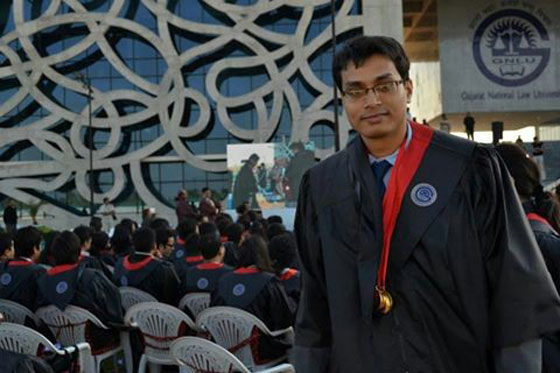
    prashant-m5Prashant Mishra graduated from the Gujarat National Law University in 2011, after which, he spent a year working at Universal Legal. However, he decided to quit his comfortable lifestyle instead and pursue the UPSC. After two years of training, he scored the 64th rank in the All India Civil Services Examination, 2013. We have taken this opportunity to ask him about:

    • His experience as a law student at the Gujarat National Law University.
    • His time as an employee at Universal Legal.
    • Circumstances that prompted him to give up his secure job and pursue the UPSC instead.
    • Tips on clearing one of the toughest examinations in the country.


    Tell us a bit about yourself as an introduction. Do you come from a family of lawyers?

    Hi! I am Prashant. I come from a middle class family. My father is a government servant and my mother is a home maker. I did my schooling from Patna and went on to join GNLU after that. I do not come from a family of lawyers. I am the first lawyer from my family.


    What got you into legal studies? How did you get through to GNLU? Was it all planned or something that just happened by chance?

    It was in class tenth that I was introduced to law by my father. I did some basic internet research about law schools and decided to pursue law after the twelfth. I appeared in entrance tests for almost all law schools and got through to GNLU (3rd Rank) and HNLU (5th Rank). So, yes it was all well planned out and with quite a bit of preparation.


    prashant-m3

    Please share some of the memorable experiences from your GNLU days. What made your college life exciting? What were the various activities you partook of?

    I enjoyed every bit of my stay in GNLU. I partook of various moots, conferences, etc. Hostel life was real fun and the fact that we lived in a campus which was in the heart of Gandhinagar made our lives really easy as everything was accessible.

    I remember our group ‘addas’ with lots of dear friends. There are so many memorable moments; it’s difficult to pick one out.


    What were your major interests as a student of law? Did any specific legal subject interest you more than others?

    I liked legal studies a lot. It never got me overburdened with lots of academic work. Unlike science or humanities, corporate laws, arbitration and jurisprudence were the kind of subjectsthat I knew would interest me.


    You were awarded four gold medals on graduation, which is a goal for many students. Please share some tips on scoring well.

    All the four gold medals which I was awarded were not a result of meticulous or competitive planning. I got those medals in the subjects that I loved to read (quite the subjects mentioned earlier).

    I would suggest that students should enjoy what they read, instead of studying simply for the sake of passing; also one shouldn’t study simply with the intention of becoming the topper.

    It’s important to study at one’s own pace; recognise subjects which are your favourites.

    I was also lucky to have a friend who used to make wonderful notes and more importantly, share all of those notes with me before the exams.


    You were also the Managing Editor of The GNLU Law Review. How was your experience as the Managing Editor of such an academic journal? What did you get to learn from this experience?

    Being a part of TGLR was a wonderful experience. I had the duty of reviewing articles of my peers. I came across some extremely well written pieces which helped me to learn and emulate the art of writing.

    Along with learning teamwork and multi-tasking, I also learnt how to refuse people politely.


    Almost all your internships were at top-notch law firms. Were you expecting to join a law firm even as a student or did these just happen on the go?

    As a matter of fact, I hardly thought about civil service during law school. I was interested in corporate laws and I was also pursuing the Company Secretary course, so that was what I expectatedto do and also, it made perfect sense for me to join a law firm. I used to plan my internships and enjoy the experiences that came along with them.


    prashant-m1

    After graduating from GNLU you had worked at Universal Legal for almost a year. How did the appointment take place? How helpful do you think CGPA is when it comes to getting recruited?

    I applied to UL on my own and got recruited after thorough interviews with them.

    I don’t think law firms use CGPA as a benchmark anymore to select a group of prospective employees.

    It is the interview and substance in the student which actually makes the difference.


    How difficult would you say it is for freshers to get recruited in law firms now,given the increased number of law students graduating every year?

    I do not agree with the proposition that with more number of law students graduating, there shall be an increased difficulty in finding jobs. There are plenty of opportunities for good people in the legal field.


    How was your work environment at Universal Legal? Could you maintain a proper work/life balance? What prompted you to quit it in August 2012?

    The work environment at UL was pretty balanced. I never missed any deadlines and the work pressure was quite sustainable and reasonable. Even as a fresher, I could directly interact with clients which helped in creating a lot of confidence in myself.

    Time was still the luxury that I enjoyed the most and as compared to other law firms, it was quite different.

    I decided to quit because I realised that the work was settling into a predictable pattern and that life had stopped testing my limits.


    Leaving a comfort zone with a secured lifestyle to study and prepare for the UPSC must have been quite decisive on your part. What made you want to study for the UPSC?

    It wasn’t about leaving a comfort zone. I never considered studying to be a difficult task, and most importantly I had all the support I needed from my parents. So, it was not that difficult to decide on studying for the UPSC.

    I also never thought I would have come along this far. At the outset, the idea was to take a whole hearted attempt and give it my best. And in any case I was a lawyer, I had my legal career to bank upon.


    You came to Delhi for your Civil Services preparations. Were you looking for good Civil Service Coaching institutions? Why Delhi and why not your hometown Patna?

    Delhi has a lot of coaching institutes which provide professional guidance. Also, accessing study materials was never a problem for me.

    In any case, after being accustomed to staying away from home for 6 years, I would not have returned to Patna.


    How valuable do you think coaching institutions can be for UPSC preparation?

    Some of the coaching institutes are really good. They provide you with a platform which you can quickly build on. However, it is not indispensable and with proper guidance, one can clear without taking any coaching.


    You prepared for the UPSC for almost two years. What was the routine you followed everyday throughout these years?How did these two years work out for you?

    I did not follow any set routine. At least that was the whole plan – to stay away from routine. Initially, I did not study much. With exams approaching, the study hours automatically increased. These two years went in a jiffy. At times you tend to get bored, you feel like your competitors are taking great strides, while you are stagnated. However, now I can say that it was all worth it.


    It invariably requires huge mental strength and focus to pursue one goal single-mindedly. What is your experience preparing for the UPSC?

    As has been rightly pointed out by you, the examination process is a long drawn affair and it takes minimum one year for it to get over. In retrospect, I think having a strong will-power and motivation is the key to maintain your sanity.


    What did you do to keep yourself abreast of all domestic and international current affairs? How did you study for static GK?

    For domestic and international current affairs I solely relied on The Hindu, and I used to  religiously read it every day. The current exam pattern of UPSC has very little reliance on Static GK.

    I also subscribed to Yojana, Kurukshetra and Frontline apart from my regular reading of standard text books.


    Lakhs of people attempt the UPSC prelims and only a thousand get selected for the main written exam. Which are the prime skills and expertise required to crack the prelims?

    Even though lakhs of people may attempt it, I think there are only 50,000 who take it seriously. Being a competitive exam, it is the relative knowledge that matters. You need to cover a vast syllabus in a limited period of time and retain and analyse a lot of information.


    Could you please share your views on the questions asked in the prelims?

    In the prelims, questions were asked mostly from Indian history, geography, polity, art & culture, science & tech and economics. I did not read on Science and Tech much, those you can say were difficult for me.


    What kind of posts have you opted for in the UPSC enrolment form? How do you want to serve the nation?

    My preferences for the civil services were:

    IAS – IFS – IPS – IRS in the decreasing order.

    I would like to do the kind of things that I always expected from the people who were already there. I would use my knowledge of law to play a major role in administration.

    Right now, I have not planned much. I intend to assimilate as much as I can and give my best in whatever capacity I am put into.


    What would be your message to law students and lawyers who aspire to become a civil servant?

    Purely from an examination perspective, I think law as an optional has a lot of potential. It helps a lot in civil service. I think it is not as difficult as people project and with intelligence, diligence and hard work, it is possible to clear the so called ‘mother of all exams’.