Tag: Vahura

  • A legal recruitment consultant needs to be flexible and adaptable to understand the unique dynamics in each of the markets for operating effectively- Jennica Bellani, Senior Consultant – Corporate Practice Group at Vahura

    A legal recruitment consultant needs to be flexible and adaptable to understand the unique dynamics in each of the markets for operating effectively- Jennica Bellani, Senior Consultant – Corporate Practice Group at Vahura

    This interview has been published by  Priyanka Karwa and The SuperLawyer Team

    Can you tell us about your journey into the field of legal recruitment? What inspired or led you to pursue this career path, especially with a background in international commercial law?

    “Choose a path less taken in the professional world, for it is here that you will find the opportunities and adventures that lead to true success ’’ 

    This quote truly resonates with my professional trajectory so far. As a first generation lawyer from a family largely involved in business, I was always interested in exploring the nexus between law and the corporate field. Choosing to pursue a degree in International Commercial Law at the University of Bristol came naturally to me since it gave me the opportunity to delve deeper into  modules such as IPR, Trade Law and Corporate Finance, and their applicability in a commercial context.

    As they say, destiny had other plans and I stumbled upon legal recruitment by chance post graduation. I was intrigued by the business side of law and being at the forefront of engaging with organisations as well as networking with legal professionals from different backgrounds. I am glad I ultimately took that leap of faith and ventured into the path less taken. My journey at Vahura has been nothing short of fantastic. It has given me the opportunity to be at the forefront of interesting projects such as the Covid-19 helpline, advising Fortune 500 companies on hiring requirements and setting up diverse teams from ground up. 

    Overall, I have evolved as a person and professional year after year. I have become more confident and less shy of my abilities. Vahura has encouraged me to push boundaries and develop a high level of ownership. As a legal consultant, I have built bonds and enduring relationships based on integrity, trust and genuine care. 

    You’ve had an impressive career with Vahura and achieved various accolades. Could you share some specific experiences or challenges that stand out during your time as a Senior Consultant, especially in the context of setting up legal teams for diverse organisations?

    As a legal search/recruitment consultant, the task of assembling a diverse and dynamic team for various organisations is in itself both a challenging and an exhilarating experience. Traditionally, the legal team demands a thorough understanding of the industry nuances and a keen eye for untapped potential. Legal hiring not only requires one to identify and attract talent from various backgrounds and experiences but also meet the job requirements and contribute to the broader perspective/goals of the organisation. The challenge that I have most commonly faced as a senior consultant has been in addressing unconscious biases, promoting inclusivity and advocating hiring strategies or principles in organisations that may not have been fully embraced in the past. For me, it’s been more than just matching qualifications, rather it has principally been about catalysing the advancement of the legal profession – which is our collective mission at Vahura.

    In your role as a Senior Consultant, you’ve handled diverse clients from MNCs to startups. How do you tailor your recruitment strategies to meet the unique needs of such a wide range of organisations?

    Tailoring recruitment strategies for organisations as diverse as a MNC or a startup is a nuanced endeavour that necessitates a keen understanding of their distinct needs and cultures. 

    For instance, when working with Multinational Corporations (MNCs), the emphasis often lies on talent acquisition who are well versed with international regulations, compliance and global stakeholder engagement. The focus is also on aligning professionals with a corporate culture that may be well-established. Essentially, MNCs also focus on comprehensive background checks, language proficiency and adaptability to diverse work environments. The experience can usually be daunting and time consuming which requires patience and thorough screening as a recruiter.

    Conversely, with startups, the recruitment approach shifts towards identifying talent who thrives in dynamic and high-growth settings. Here, it’s imperative to recognize and emphasise on qualities such as adaptability, innovation and the ability to wear multiple hats. Startups often require candidates who are not only skilled in their specific roles but are also passionate about the company’s vision and mission. The ideal candidate is someone who will take on responsibilities beyond their job description and handle uncertainty or ambiguity with resilience. 

    In both cases open communication with the hiring organisation has been a key strategy. Understanding their goals and values has more than often facilitated a precise match of candidates to specific corporate needs and cultures, whether that’s within a well-established MNC or a startup. 

    Could you elaborate on your involvement in the COVID-19 helpline initiative at Vahura? How did you create a database of legal professionals affected by the pandemic layoffs and assist them in finding new opportunities?

    The COVID-19 helpline was a collective initiative within Vahura to help the legal fraternity during the most uncertain and challenging times the world has faced in the recent past. As consultants, we witnessed rampant layoffs, redundancy of roles, restructuring of teams and hiring freeze within various organisations. Given our relationship-focused approach with candidates, the team felt that it was imperative we develop a resource to assist professionals whose careers were directly impacted as a result of Covid-19 pandemic.  Through the help of social media, we were able to market COVID-19 helpline and received a registration of over 130 professionals on our hotline. These included people who were laid off, retrenched and were available to join immediately. We were successful in placing most of the professionals either through secondments or as a permanent employee once the market began to slowly pick up. 

    As a part of the marketing team, I was extensively involved in posting market insights, publishing relevant blogs and creating videos to encourage professionals to sign up on our hotline. Additionally, I was also involved in the ‘Once a Lawyer’ series which focused on interviewing law graduates and lawyers who disavowed the world of law to pursue an unconventional career path. Since several professionals were facing a lack of inspiration due to layoff and retrenchments at the time, we showcased how they could try out new things, follow their passions and overcome certain boundaries. The idea was to help them broaden the horizon of opportunities they could pursue,  rather than worry about their current state. 

    All in all, I am grateful for being involved in such a noble project and being able to give back to the legal community. As they say, “True fulfilment in life is found by focussing on virtuous acts which not only create a deeper and meaningful connection but also contribute to a better world.’’

    You’ve been an integral part of Vahura’s social media team and contributed to a significant increase in followers. Can you share some tips on leveraging social media for candidate engagement and outreach within the legal recruitment sector?

    In the realm of legal talent acquisition, harnessing the power of social media is a dynamic and essential tool for candidate engagement and outreach. Platforms such as LinkedIn, Instagram, Youtube or even Twitter (now X) offer an expansive stage to not only identify potential candidates but also build and maintain meaningful connections within the legal community. As a part of the social media team, I was involved in strategic content sharing such as publishing informative articles, industry insights on our LinkedIn page through knowledgeable and credible resources which gradually attracted an audience interested in advancing their legal careers. 

    By staying active on the above platforms, we were also able to address candidate inquiries and concerns promptly. Over the years, as we continued to stay visible within these platforms we were not only able to locate the right talent but were also able to build lasting relationships which were mutually beneficial for candidates and employers and ultimately enhanced the effectiveness of the recruitment process.

    Your education includes a postgraduate degree in International Commercial Law. How has this academic background influenced your approach to legal recruitment, and how do you see it benefiting your career in this field?

    Although I didn’t take the traditional path and practised law, I still owe my education for having a profound impact on my role as a legal recruiter. It has provided me with a deep understanding of complex legal frameworks that govern international business transactions. Additionally, I can assess candidates better, hold a conversation with them and match their goals with the specific demands of multinational corporations looking to build global legal teams based in India.. Further, I have been able to provide valuable insights to organisations and helped them find legal talent best suited to navigate the intricacies of global commerce. I truly believe that a postgraduate degree not only enhances one’s professional credibility and fosters attention to detail but also amplifies their effectiveness in placing top-tier talent in the legal sector. 

    With your experience in both India and international markets, what differences have you observed in the legal recruitment landscape, and how have you adapted your strategies accordingly?

    Navigating the legal recruitment landscape in national and international markets presents unique challenges and opportunities. In the national market, the focus often revolves around familiarity with local laws, regulations, language and an understanding of regional markets and cultures. Strategy in this context may involve building extensive candidate networks and leveraging local connections for candidate and client engagement. 

    Conversely, the international market demands a broader perspective. The emphasis is on the complexities of cross border law and talent acquisition having a strong pedigree and exposure in global markets. Herein, one needs to be well versed in cultural sensitivities and diverse legal systems. Strategies in this context have ideally involved building a diverse pool of candidates who are open to cross cultural training and have a strong grasp of international legal trends. 

    In both markets, the approaches are different and building trust as well as credibility is crucial. Ultimately, a legal recruitment consultant needs to be flexible and adaptable to understand the unique dynamics in each of the markets for operating effectively. 

    Finally, as someone with extensive experience in the legal recruitment sector, what advice would you give to fresh graduates or aspiring legal professionals who are looking to embark on a career in law or legal recruitment?

    For fresh graduates and aspiring legal professionals who are seeking a career in law or otherwise, I would like to offer a few key pieces of advice. First, embrace continuous learning and stay curious. The legal field is constantly evolving and a commitment to stay informed or upskill is vital in the legal industry. Second, build a strong professional network as relationships are valuable in both law and consultancy. Attend legal events and connect with mentors who can offer guidance and support. Third, never underestimate the power of practical experience, Internship, clerkship and entry level positions provide valuable insights. Have realistic expectations of the corporate world and refine your career goals accordingly. 

    Lastly, always maintain integrity, transparency and ethical standards in your work. In any profession trust and credibility are your most valuable assets, more so in the legal field. Embrace these above principles and you will be unstoppable in achieving a rewarding and fulfilling career. 

    Get in touch with Jennica Bellani-

  • Manushree Kaushik, Consultant, In-House Practice, Vahura shares her insight on the field of legal recruitment

    Manushree Kaushik, Consultant, In-House Practice, Vahura shares her insight on the field of legal recruitment

    Manushree Kaushik graduated in Law from Amity Law School, New Delhi in 2012. She had never thought of being a lawyer or a recruiter but being successful was her ultimate motto. Gaining diverse experience by interning at varied firms, soon after graduation she started working for Dua Associates, premier full-service law firm for a period of almost three years.

    Wanting to utilize her legal education and experience and at the same time to do something different, Manushree stumbled upon the field of legal recruitment. Since 2016, she has been associated with Vahura as a Consultant with the In-House practice group. She primarily focuses on hiring for corporates across sectors from junior level hires through to mid-level management on a pan India level. She firmly believes “Recruitment is not just about hiring talent; it is about finding and hiring the best qualified candidate in a timely and cost-effective manner.”


    In this interview, she talks to us about:

    • Her decision to switch from corporate law to legal recruitment.
    • Her intensive internships with some great dignitaries.
    • The difference she’s found difference between NLU and Non-NLU students?
    • And the skills she looks out for during the recruitment process.

    How would you like to introduce yourself to the readers?

    I am a lawyer by qualification and a recruiter by profession. I am a part of Vahura’s In-House Practice group. Currently, I am in a recruiting role wherein I focus on junior to mid-level hiring across sectors.

    I did not grow up thinking or dreaming of being a lawyer or a recruiter, I just dreamt of being successful. I had no lawyer in my family or even in my extended circle of friends but Law as a profession sounded fancy to a seventeen year old and so I was intrigued. I did a bit of research, got through law school and here I am. The journey has been wonderful and I am glad I chose this as a career. It’s only now that I realize that this education and all these experiences have made me a better person, the study of Law changes the perspective of how you look at people and situations around you.


    What is your take on internships?

    Internships are the best part of the entire experience. Law school will teach us theory and maybe to some extent practical (via Moot Courts) but the real world of practice is very different and you can only experience it when you are in that atmosphere. Watching a Senior Advocate being briefed inside his chambers, the relentless chatter at a law firm, happy lawyers, stressed lawyers, lawyers arguing in a court room while the judge is trying to keep calm, all these things cannot be witnessed at a law school.

    I think the primary motive of an intern should be to observe and learn as this will give you a platform to base your expectations on. Enjoy your internship and you will be able to make the most of it.

    I wanted to gain varied experiences,  I have interned with independent practitioners, law firms and public bodies and each internship was different than the other. Although I thoroughly enjoyed all my internships, the most enriching one was the first one. It was the first time that I was seeing and hearing the royalties of the Indian legal fraternity, it was informative but also thrilling and exciting to witness these dignitaries live in action.


    Describe your experience of interning in the office of Mr. Parag Tripathi, Additional Solicitor General, Supreme Court of India and also with Mr. Gopal Subramaniam, Solicitor General, Supreme Court of India.

    I have had the opportunity to intern in the office of dignitaries like Mr. Parag Tripathi and Mr. Gopal Subramaniam.

    I had just cleared my first year exams and in the vacations that followed, I was interning with Mr. Subramaniam. We were two first years in that batch of interns and needless to say, both of us were extremely overwhelmed. I was told by another senior that I was at the right place but my timing was wrong. I was too young to learn something from the office of a Senior Advocate, and I might not have learnt a lot about the Law but I definitely learnt something about being a good lawyer.

    Similar was the experience at Mr. Tripathi’s office. I was three internships old when I interned with him and his office consisted of a very friendly team and that stems from the fact that Mr. Tripathi himself is a very friendly person. He devoted individual time to all the interns and would make us feel important and involved.


    How were the first few years after your graduation?

    I joined the Gurgaon office of Dua Associates right after graduating from college. I spent almost 3 years at the firm and that is when I truly realized what being a lawyer is all about. I was an excited fresher, who was willing to take on any responsibility and my focus has always been on delivering results. For the initial few months, I was doing a lot of research work. I was surrounded by a lot of people who wanted nothing but the best for me and this included my team members at Dua. The partners and the managers were all very supportive; they invested their time and energy into my training. It built a strong foundation for me and that experience has helped me a lot in shaping up my career.

    The law school experience was limited in the sense that we did learn a lot about the Law but not so much about the real world practice of law. The internships did help to some extent but they are not even close to the real thing. I was only able to make the most of my education and training, after I started working full time as a lawyer.


    What made you switch from corporate law to the field of legal recruitment?

    (Manushree worked as a corporate lawyer with Dua Associates for three years.)

    It was in 2016 that I decided to take a sabbatical for a few months. I wanted to explore the possible options available to a law graduate.  Moving to another law firm was an obvious choice but somehow I was not fully convinced to do so. I also made attempts at a few in-house opportunities and during this entire process I was being approached by multiple recruiters. I enjoyed my interactions with them so much that I befriended a few. I started to learn about the recruitment industry and I was really intrigued by the profile of a recruiter. It was fascinating and risky at the same time. I wanted to utilize my legal education and experience and at the same time wanted to do something different. And recruiting lawyers gives me the perfect balance of both.


    As a consultant with the In-House practice group at Vahura, tell us your work profile.

    At present, I focus on junior to mid- level hiring across companies. Our client base is spread across the country and hence we get to work with clients on a pan-India basis.

    Unlike most search firms, we have a unique network within the legal and governance fraternity which allows us to access the best passive talent not visible to most.

    My role includes analysing the requirements of a job, attracting professionals to that job, screening and selecting candidates and helping them integrate to the organization. Coming from a legal background, it is easier to comprehend the needs of the clients in this industry and this enables me to provide them with the right kind of talented professionals. Recruitment is not just about hiring talent, it is about finding and hiring the best qualified candidate in a timely and cost-effective manner.


    Being in the legal recruitment domain, have you found any difference between NLU and non-NLU students?

    The NLUs have a very different way of imparting education and training to its students. They have very strict qualifying criteria, and the environment is highly competitive. Also, the infrastructure and other facilities provided to the students are better than other law schools. And the most important factor are the placements, NLUs are the preferred choice when it comes to placement with premier law firms and corporates.

    However, a student’s future as a lawyer cannot solely be decided by the law school. Stay focused on becoming a good lawyer and success will follow.


    What are the skills that you look for while filtering during the recruitment process?

    Usually, it is the resume that creates the first impression. A well drafted and concise resume is the first sign of a promising candidate. And you must know your profile by heart. Everything that you have claimed to do, you should have done it. No lying on the resume.

    Another key factor is the confidence. It is very important to be confident in your interviews. Only if you have faith in yourself, will the interviewer have faith in you. Also, make sure that you are able to communicate your expectations clearly. Do not sell yourself short and do not over commit.

    Students should work on building these skills and with the right amount of dedication and hard work; they will be successful in securing a position in the industry.


    What would be your parting message to the budding lawyers?

    Be true to yourself. Do not leave any stone unturned in the journey to achieving your goals. Set a target for yourself and keep going till you hit it.

  • Manojna Yeluri, Founder, Artistik License, on IPR awareness and LL.M in Media and IPR from UCLA

    Manojna Yeluri, Founder, Artistik License, on IPR awareness and LL.M in Media and IPR from UCLA

    Manojna Yeluri is a graduate of the 2010 batch of National Academy of Legal Studies and Research University (NALSAR). She started working at the Bangalore office of Amarchand & Mangaldas & Suresh A Shroff& Co. (AMSS), right after graduating. She soon left her job to pursue her Masters in Entertainment, Media and Intellectual Property Law at the University of California, Los Angeles (UCLA), in the year 2011.

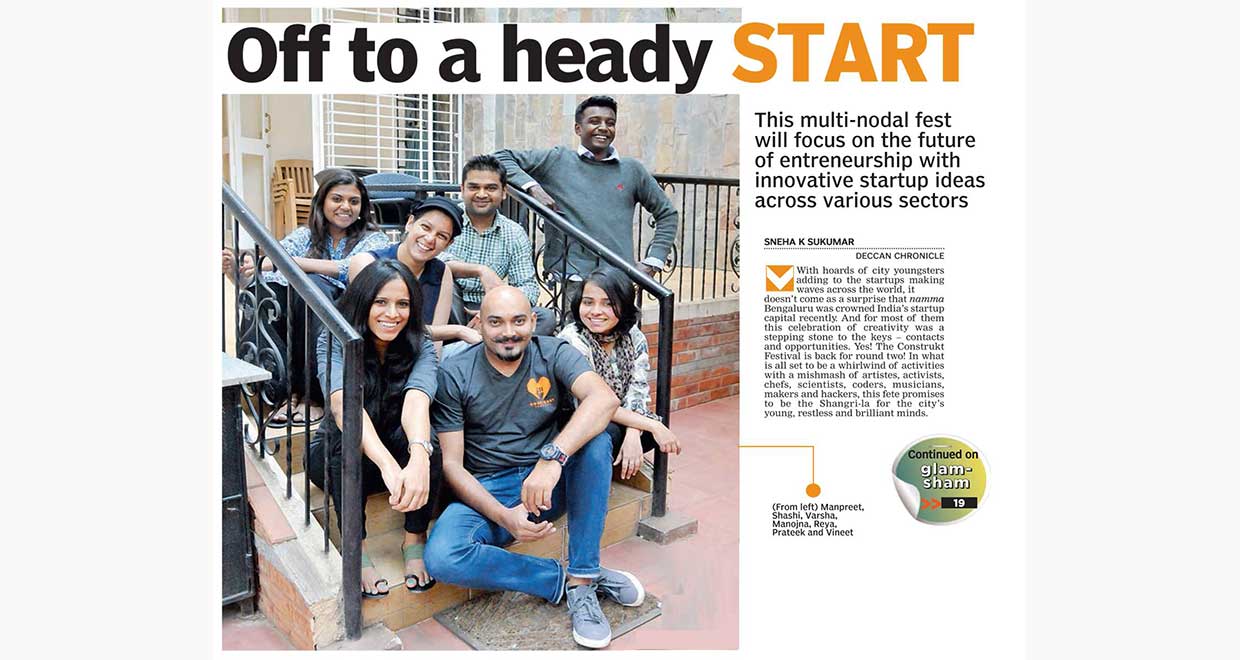
    Since returning, she has founded Artistik License, an organisation specialising in the rights of artists, entrepreneurs and other creative professionals. She is also a Business Development Consultant at Vahura, a legal recruitment firm, and this year, she held the post of Content Curator and Co-ordinator at Construkt Festival 2015.

    In this interview, Manojna opens up about:

    • What made her choose to pursue Entertainment and Media Law, despite having a job at the largest law firm, AMSS;
    • The application process to UCLA, as well as the importance of a Statement of Purpose (SoP);
    • Her work experience at Artistik License, Vahura and ConstruktFestival 2015.


    Whatmade you choose Law as your profession? Is there anyone else in your family who works in the legal field?

    To be fair, pursuing a career in law was not my first choice. Growing up, I was led to believe that I could pursue a career in any field so long as I worked hard at it and made a good living from it. By the time I decided to give law school a shot, I had already thought of becoming a biologist (a thought I abandoned after my 10th standard experience with Chemistry and Physics) and later, I sincerely wanted to pursue a career in Sociology and Psychology. Things didn’t quite work out the way I planned, which just goes to show you that you can’t always foresee and plan for everything. Following my 12th standard Board Exams, I ended up moving to Bangalore because of my father’s job, and during a very very brief stint at Mount Carmel College, decided that perhaps law school would provide me the kind of opportunities I wanted, particularly in the realm of Humanities. My father and grandfather (my dad’s father) are both law graduates who did not practice, but ended up using their legal knowledge in their careers as Government officials. My other grandfather (my mum’s dad) is a retired Police officer, who has always had a strong love for criminal law. I do have family in the legal profession – specifically my cousins and my father’s uncle (an astute man and a retired Judge),who have all made, and are continuing to make an impact in the legal world through their own efforts and contributions.

    For all practical purposes though, I really am a first generation lawyer in my tiny nuclear family.


    What was life likeas a law student at NALSAR? How did your five years in the university influence your personal growth?

    My years at NALSAR are definitely some of the most eventful and insightful, and I pretty much carry memories and lessons from my time at law school, into everything I do. When I was studying at NALSAR, things were a bit different  – we were a lot more interested in actually meeting one another and since we were so far away from thecity (nearly 35 kms away) and living on a student budget, I think many of us found ourselves more deeply involved in campus life than we expected to be. For me, it was a wonderful and scary time, since it was the first time I was staying in a hostel, but any hesitations I had were eradicated thanks to the friendships Imade – some of which have evolved into strong relationships that I turn to in times of joy and crisis.

    One of the most important lessons I learnt in NALSAR is that life is what you make of it. As individuals, many of us have access to several opportunities, however,there are only a few who choose to truly make the most of them. Looking back, there are a few things Iwish I had done, and there were many batchmates, seniors and juniors who displayed enthusiasm, initiative and creativity that I never thought was possible – so I have to say that law school can be quite an inspiring place so long as you know where and who to look to.

    As an institution, NALSAR offers its students a wide array of opportunities, but then again, as I mentioned earlier, it’s upto you to make the most of it. Besides my time on campus, I also ended up learning a great deal about myself thanks to a Student Exchange Programme I took part in just as I entered my third year of law school. I had a blast at Griffith University, Brisbane and it was really a professor there and his courses that sowed the seeds for my fascination with entertainment law.


    Did you take part in moot court competitions? How important do you think are such competitions for getting acceptance for Masters in the USA?

    I was not a mooter. I’ve admired mooting, but only from a distance. In my experience, mooting requires a skill set and an emotional endurance that I’m not sure I had, or was really interested in developing. When I was in law school, I remember hearing that conferences and publications were far more important than Moot court competitions when it came to applying for a Masters, however as we all know, that’s not always true. Moot court competitions help develop certain qualities that are very important to a career in law, however, as is the case with everything, I’m not entirely sure that there’s a fixed formula that states that Moot courts or conferences might considerably increase one’s chances of admission into a Masters program anywhere – I think what matters is ensuring that one’s Statement of Purpose is tight, sincere and clear.


    At a time when most people primarily focus either on Litigation or on Corporate Law, what turned you to Entertainment, Media and Intellectual Property Law?

    It’s funny that I embraced my fascination for Entertainment law and IPR only after I left law school, since I might have been able to do more while I was at NALSAR. I did bite the bullet and make the initial foray into the world of corporate law for a very brief period of time. Isat for recruitment and was picked up by AMSS (Bangalore) and believe me when I say that at the time, Iwas overjoyed and excited because I thought “Hey! My life is set now”. Shortly after joining AMSS, I found myself increasingly reading up on Entertainment law and IPR and when finally my curiosity couldn’t take it anymore, I chose to leave to pursue a Masters in either Entertainment or Media law. It wasn’t a very easy decision though – working in corporate law brings with it, its set of privileges, like a solid income and respect, and foregoing that, especially when you’re a fresher in the job market, seems a tad bit risky. However, I did receive a great deal of support from my folks, particularly my mom, who really helped me during such a difficult transition.


    Were your internships mostly related to Media/IPR law? Which was the most enriching internship experience for you?

    Most of my internships were not consciously oriented towards Media/IPR law because all through law school, I had convinced myself that I was probably going to become a corporate lawyer. I had interned in almost every holiday break and because I always wanted to keep my options open and balanced, I ensured I did one corporate internship followed by one NGO internship. My most memorable corporate law internships were at JSA, Bombay and Luthra&Luthra, Bombay because of the kind of experiences and learning that happened. With respect to non-corporate internships, my internship at Majlis, Bombay (run by Flavia Agnes) and Loksatta, Hyderabad were instrumental in teaching me a lot about the interaction between law and content-creation. My serious Entertainment/IPR law internship only happened years later during my time at the University of California, Los Angeles (UCLA), at an independent film studio (NuMedia), run by a lawyer. Nestled in the middle of Hollywood, it was a pretty cool way to learn about entertainment lawyers and the industry.


    How did you choose to pursue your masters at University of California, Los Angeles?

    The University of California, Los Angeles or UCLA is considered the best school in the world for the Entertainment, Media and IPR law programme. To be honest, that’s one of the major reasons I wanted to pursue a masters there. I had applied to two other schools that year – SOAS and LSE, and I was fortunate enough to have gotten accepted into both but my heart was set on UCLA because of how well structured its Entertainment law program and department was.

    I think that it’s always important to choose to pursue a Masters or any degree at an institution that has developed a great reputation and infrastructure to teach the subject that one wants to pursue a higher education/career in. A lot of people wondered why I had chosen UCLA, and the answer is actually very obvious – it’s the best place in the world to study Entertainment law. UCLA had an entertainment law department that had some wonderful faculty who brought years of experience from Hollywood and other international entertainment industries, into the classroom. Imagine being able to study about being a lawyer with a record label from someone who actually worked with Capitol Records and works with Warner Brothers – that’s exactly what UCLA offered me, and in my opinion, it’s that kind of specialized focus and infrastructure that actually helps students gain a more informed and insightful understanding of the area of study they are focussing on.


    How did you go about your application to UCLA? What are the prerequisites to applying to a university in the USA?

    I would love to say moots, conferences, publications, solid recommendation letters, extra-curriculars during law school, internships – the works, but I think at the end of the day what matters the most is clarity. One needs to be very clear about why one wants to pursue higher education at a university in the USA and that clarity needs to translate itself into a well structured, well written and sincere Statement of Purpose. I’ve always been a bit of a nerd and so pursuing a Masters was always something I wanted to do, and perhaps accordingly, I ensured that I had a fair balance (not a lot – emphasis on the word fair) of conferences and internships, however even the greatest recommendation letter in the world cannot substitute for a good Statement of Purpose. I definitely took time out to focus and re-write my SoP which I think also had a huge role to play in securing some financial assistance for my education. It’s also good to understand why you want to study further – a few people I know have referred to their LLM year as a holiday year- I have no idea what they are talking about. Studying abroad is a memorable but potentially difficult experience where you have to get used to studying a whole new jurisdiction while ensuring that you cook edible meals and live on a shoe-string budget.  However, coming back to the prerequisites of applying to a US university, it’s always good to focus on a good SoP, good and relevant recommendation letters and research.


    After having completed your masters in the USA, what made you come back to India, especially since Entertainment, Media and IPR Law is a more established arena there?

    I’ve always been an art-lover at heart and I’ve been fortunate enough to know and meet some wonderful artists living and working in India. While I love to travel and experience new cultures, a part of me always has to come back to India so in a way, I’m a bit of a boomerang. A career in Entertainment law in the US, particularly LA would have definitely been a lot more sensible and exciting in some ways, however there were many practical and cultural factors that influenced my decision to head back. For starters, opportunities in theUS legal market were scarce and I felt that the efforts to pursue a career there far outweighed the benefits. India also offered so many opportunities with its own big entertainment industry, my relationships with artists and creatives back home and most of all, thechallenge of doing something a little different in your own backyard.


    How has your Masters from UCLA affected your career in the long run? Do you think a person without a similar Masters degree from a foreign university would face significantly lower chances of success in the Indian market?

    Contrary to popular belief, there are quite a few Entertainment and Media lawyers in India and we are not an endangered species at all. There’s an age old debate about whether higher education outweighs experience or vice versa, and the truth is the best chance one has is by achieving a balance of the two. My LLM at UCLA has had a profound impact on the work I do because of many things I learnt and experienced during my time in LA. Whether it’s having achieved a deeper appreciation for artist rights, a more wholesome understanding of copyright law and licensing, or just a greater awareness of all thedifferent kinds of law that Entertainment law encompasses (IPR, Labour law, Contracts, OSH, Tax), my masters from UCLA has definitely shaped the way I perceive issues facing my clients and theindustry I work with. Having said that, I can’t say for sure if a foreign degree would necessarily increase the chances of success in the Indian market, but it might provide one with much needed perspective.


    manojna-yeluri-1

    After returning to India, you founded Artistik License. Please tell us more about it. How was the experience of building up your own start-up?

    I’m still building it up, and I think it’s going to be a lifelong project of mine. After returning to India, I chose to work with CLPR – a research think tank based out of Bangalore, in order to gain more experience as a research associate. However, there came a point where I felt I ought to be doing more work in Entertainment law, and while Ilooked out for opportunities in Entertainment law firms and companies, nothing came close to what I really wanted to do – work with content creators, artists and creative entrepreneurs directly. So, after a lot of searching I decided that it was time to take a leap of faith, and start working independently. Artistik License started off as a blog or a repository of legalese for artists working in India – something which it still serves as today, but after some hard work and lessons, has evolved into a consultancy where I advise artists and creative startups on their rights, as well as provide them with specialized legal services. What really makes Artistik License different, is its focus on independent artists and startups. As an organization, it focuses on two tracks – enabling the independent artist and entrepreneur’s business by way of specialized legal advice as well as by empowering artists, and creative entrepreneurs through rights awareness workshops, discussions and research work.

    Although I was really frightened at first, I think entrepreneurship was something that I was designed for. I had a great support system, comprising of my folks and my friends, who shared my fears and joys, and were a great sounding board for all my ideas. Building your own startup from scratch can be scary but rewarding,so long as you don’t bite off more than you can chew. Considering Artistik License’s niche focus, there was, and might always be, a certain amount of risk involved in what I do, however I can’t think of anything else I would rather be doing. The past two years have seen Artistik License’s clientele grow, and I’ve been invited to present my work at various domestic and international music markets, conferences and events.


    Are artists generally aware of their rights? How can such awareness be increased?

    Some are, and some aren’t; even then, the awareness can be incomplete. There are many factors that contribute to this situation of imperfect knowledge, including access to information and the communication of important information. It’s critical to ensure that artists are made aware of the need to understand why rights awareness is important, but then it’s just as important as law people, to enable that awareness in a manner that is chilled out, and not steeped in legal jargon. There are many ways in which awareness can be increased, and I work closely with many non-law organizations who want more artist rights empowerment. Workshops, discussion groups and online articles are a great way to get this valuable information across. Besides the Artistik License blog, I also write frequently for Campus Diaries (for the younger artists and entrepreneurs) and Indiearth (a platform dedicated indie artists in the Indian ocean region), on topics that might be of potential interest to artists and entrepreneurs alike.


    manojna-yeluri-2

    Artistik License also organises workshops for disseminating knowledge on the subject. Would you consider engaging young law students in these workshops to help them learn along with the artists?

    Of course! I can see creativity and entrepreneurship being an integral part of the law school experience, and it’s always a pleasure to engage and talk to law students from anywhere. I’ve been fortunate enough to have a wonderful time with some very intelligent, very quirky young law students from Christ College, Bangalore and NALSAR, who have been wonderful and so helpful by interning with Artistik License.


    In between all this you have also been working at Vahura. When and how did you join Vahura? Please tell us about your work profile there.

    My relationship with Vahura is both a new and old one. A few years ago, I worked with Rainmaker as a features editor, and a few months ago, I had the opportunity to start working with Vahura and its amazing team. At Vahura, I work with the Business Development and Clients Solution vertical, where I especially focus on business in the South Indian region. I enjoy the unique position of being able to interact with some of the smartest legal professionals and some of the best businesses and law firms in thecountry. A great deal of what I do involves networking and making connections – something I can’t get enough of. As an organization set out to help lawyers do good work, Vahura offers many services besides legal, tax, compliance and governance searches. It also provides strong counsel and research through its mentorship and consulting verticals. While we all help each other out at Vahura, another area that I work closely with is Vahura’s Engage vertical, which provides the legal community opportunities to interact with each other through various professional and community events.


    What insights you would like to share with our readers from your experience in legal recruitments at Vahura?

    My insights into legal recruitment are quite limited at this time, because a great deal of what I do concerns the overall legal market and business. There are others at Vahurawho have a more nuanced understanding of legal search business, and I would be more than happy to put any of your readers in touch with them. I can say this much – these are some exciting times for the law graduate, since I think we’re smack in the middle of an era where there really is something for everyone. So whether you want to be a corporate lawyer, a litigator, a legal academic or a legal entrepreneur, the industry is currently offering a lot of opportunities to pursue any career you wish, and if it’s some counsel and direction you’re looking for, we at Vahura are happy to help. This is probably my biggest learning from Vahura so far –an understanding that we’re far more focussed on helping legal professionals discover their full potential rather than simply place them in suitable positions.


    manojna-yeluri-4

    You held the post of Content Curator and Co-ordinator at Construkt Festival 2015. How may startup festivals such as this prove to be important for a law student?

    I was thrilled for the opportunity to work with Construkt 2015 and must express my gratitude to the festival’s founder, ShashiKiran, who is nothing short of an entrepreneurial powerhouse. Working with him and the Construkt team so closely taught me a great deal about entrepreneurship and the ways in which the right kind of platforms and infrastructure can truly help nurture a great innovation eco-system. I definitely think that more law students need to be open about attending such festivals where entrepreneurship is not only encouraged, but celebrated. For instance, Construkt 2014 and 2015 both celebrated legal entrepreneurship and innovation, by hosting talks by lawyers working in the field of law and technology, entertainment law and startup law. As the content curator for this year’s edition, I had a great time sifting through some amazing content by speakers, but it would be super if we could get more inputs and entries from the legal community as well.


    How do you manage time between your two roles? Are you able to find a work-life balance?

    A few days ago I heardsomeone say that we’ve almost taken it for granted that we’re supposed to struggle, hate our bosses and hate work. The truth is, that if we’re doing something we like,then we don’t even think about things like over-time, and being over-worked. At this point in my life, I am extremely grateful for the opportunity to be more than one person, and to do more than one thing. I’m surrounded by a number of inspiring people from the legal and creative communities (not that the two need to be exclusive), and I find a great deal of joy in what I do. Sure, it’s overwhelming at times and there are days when I just want to throw things at people, but I think the key is to achieve balance in whatever one does, and to remember that we are the best judges of our own situations. I also find that taking care of one’s body and mind goes a long way in ensuring that one can get more out of life. I’m not the fittest fiddle in the world, but over the past year, I’ve noticed that I consciously try to eat healthy, lead an active life and pursue my other interests including creative writing, glass painting, accompanying my musician friends to their shows, and understanding how to lead a more cruelty-free life. I’m a bit of a hippie at heart.


    What is the one advice you would like to give our readers?

    There is no formula to success. Years of conditioning in law school teaches us to assume that we need to fit into one mould or the other, but the truth is there really are no restrictions to the kind of opportunities one can tap into these days. It’s important to be brave and to seek good counsel, and to remember that it’s okay if you don’t fit into the traditional structures and expectations created by your family or the legal fraternity. It’s important to be honest in the work that one does, and to push aside the drama, no matter how tempting it is to overanalyse it. You can be a SuperLawyer just by being yourself, and working hard.

  • Rishabh Chopra, Senior Consultant, Vahura on requirements of the industry and work in Legal recruitments

    Rishabh Chopra, Senior Consultant, Vahura on requirements of the industry and work in Legal recruitments

    Rishabh Chopra graduated in BBA.LL.B (Hons.) from National Law University, Jodhpur in 2010. Thereafter, he worked at Amarchand Mangaldas (Delhi office) for a year and then switched over to Vahura, a legal talent recruitment and management company as Senior Consultant in Private Practice & Funds. During his college days, he had participated in several national and international moots, and has been a judge at prestigious moots such as Oxford Price (South Asia), BCI moots and Willem C. Vis (East) moot in Hong Kong.

    In this interview, we cover his journey as a lawyer till date, while focusing on:

    • His experience in law school.
    • Importance of moot court activities.
    • His work experience at Amarchand and Vahura.
    • Industry requirements for Vahura placements


    Please introduce yourself to our readers. Where did you grow up and attend school? How did you decide to take up law?

    I grew up in Ambala and finished my schooling from Army Public School, Ambala Cantt. At APS, I always kept myself engaged in various co and extra-curricular activities such as Debates, Declamations, Quizzes, Music etc and topped the commerce stream in Class XII because of my interest towards accountancy and economics. This helped me gain admission into one of the top 5 colleges in University of Delhi where I pursued B.A. (Honors in Economics) for a year before taking the law school entrance exams. Although I come from a family of lawyers, law as a career option was not very fascinating (because of this entire notion of doing something different!) until I witnessed the finals of the Raj Anand Moot in 2004. That experience helped me get in touch with Sachin Malhan (founder of LST) who in turn encouraged me to take the law school entrance exams.


    You graduated from NLU Jodhpur in 2010 with a B.B.A. LL.B (Hons) in Business Law and Management. Please tell us about the Honours program and your general law school experience?

    One of the key reasons for taking up a course at NLU, Jodhpur (or NLU-J, as people like to call it now J) over another premier law school was a dual degree in law and management. Given that I always had a bent of mind towards management, a degree with this combination was exactly what I was looking at. I definitely enjoyed the managements subjects like accountancy, managerial economics, human resource management and marketing to name a few. As far as my honours program is concerned, I am glad I took up the business law subjects in my penultimate and final years of study as I was able to study the fundamentals of investment laws, mergers and acquisitions, banking and finance. I will be honest- it would have been better if these subjects were taught in a more practice-oriented manner but nevertheless the course helped me understand the basics of corporate law which were quite useful when I joined Amarchand.


    rishabh-chopra-2

    You have had considerable mooting experience in law school. Tell us about your achievements. What, according to you, are the essential skills of a good mooter?

    As you may have noticed, it was the Raj Anand moot’s experience as an audience member that convinced me to go to law school and thus, I took up mooting quite seriously. Mooting was extremely competitive at NLU, Jodhpur- which always meant that we all had to work hard in most of our court room exercises (intra section moots) to reach the intra university competition. In total I did 5 moots- ranging from public international to competition law, from CISG and international commercial arbitration to IPR and then international humanitarian law. I have really fond memories of all these moots not only because of the amount of knowledge I gained by participating in them but also because of the fantastic team members in each of these competitions.

    Going for the Vis East moot (Hong Kong) in my second year of law school was quite an achievement back then and so was being adjudged runner’s up at a competition law moot (which in turn helped me secure an internship at a prominent law firm in my 3rd year of study). Then came the Jean Pictet competition, where our team was the only Indian team to qualify for the international rounds that took place in Evian, France- this competition was definitely a very interesting one- very different from a regular moot and I would strongly recommend it to all law students (for the kind of practical experience and exposure it provides in the field of IHL).

    During my final year of study, I still wanted to be connected to mooting and hence, took up a national moot in Delhi (since the top 10 international moot we were supposed to participate in got postponed for the next year)- where we were adjudged winners. Apart from one moot, I was quite fortunate to receive a citation (individual and/or team) in every competition.

    As far as I am concerned, I could only moot well, if the research was thorough and I knew the loopholes from both sides of the problem. This strategy helped me in preparing for any kind of question that could have been posed during the various rounds of the competition and the same was also helpful from ‘thinking on one’s own feet’ perspective. In addition, one of the biggest takeaways for me from mooting was team-work and organisational skills- I consider these two as the foremost essentials to be a successful mooter apart from presenting your case in a confident and persuasive manner. Using a little bit of wit in arguments and rebuttals is also not a bad idea as long as it doesn’t embarrass the bench or the opposing counsel in any way whatsoever!

    To be fair, mooting is still close to my heart- it’s just that I have moved to the other side now. I have been a regular judge at the Oxford Price (South Asia) and BCI moots and this year also went on to judge/arbitrate at the Willem C. Vis (East) moot in Hong Kong. I personally feel whosoever has enjoyed mooting in law school, should done the hat of a moot court judge- it’s just like giving back to the legal community.


    rishabh-chopra-3

    What was your work profile at Amarchand Mangaldas? What did an average day of work look like?

    At the Delhi offices of Amarchand Mangaldas, I worked as an Associate in the General Corporate, M&A and Insurance team. I was quite fortunate to work in this team as I really learned a lot from my partner (Shailaja Lall) and colleagues (Deepa Mookherjee and Ashish Teni) and those learnings have helped me to a great extent so far. Just like any other corporate lawyer, I worked on various corporate transactions (M&A, JV transactions), incorporation, entry and exit strategies apart from providing clients with general corporate advisory in relation to foreign investment laws, corporate and commercial laws, stamp duty regulations and insurance laws. The reason I say I was quite fortunate to work in this team was because the team gave me tremendous scope to grow as a corporate attorney- I was client facing, was able to speak with clients with minimal supervision from the partners on corporate and insurance matters and because of this trust had a good learning curve from a practice perspective,. In short, I really enjoyed my team and the matters I worked on during my stint at Amarchand even if it meant working for really long hours (thanks to technology)!


    After a year at Amarchand Delhi, you joined Vahura, a legal talent recruitment and management company as Senior Consultant in Private Practice & Funds. What does your work at Vahura mainly consist of?

    As I mentioned earlier, I really enjoyed my experience at Amarchand Delhi but I really wanted to be on the business side of the law ever since I met Sachin Malhan (who used to run Law School Tutorials (LST) back then). When he moved and co-founded Rainmaker, I was really intrigued and followed the team’s entire journey from MyLaw.net to Mootopia (similar to what we call Mooting Premier League now). One day, when I noticed Vahura spinning off from Rainmaker only to focus on the legal talent space in India- I knew I wanted to be a part of this journey!

    At Vahura, I lead the search practice for law firms in the northern region. I typically focus on partner and pre-partner level recruitments for our law firm clients and so far have helped law firms grow organically and inorganically. I am also a key member of the law firm recruitment group that focuses on recruiting mid and senior level legal, IP and tax professionals for law firms and funds in the APAC and MEA regions. We now have various top international and regional law firms looking to recruit Indian legal talent as our clients in Dubai, Bahrain, Singapore and Hong Kong. On the research and consulting side, I closely work with top law firms and In-House legal teams on consulting reports on strategy, practice structuring, business development, remuneration structure and partnership restructuring.


    What do law firms in Asia-Pacfic,Middle-East & Africa look for in potential candidates? What must an Indian law student do to get hired in these regions?

    In the law few months, we have seen various foreign law firms show keen interest in the Indian legal talent again (thanks to the Modi wave internationally, probably!). On a serious note, this interest has been on the capital markets side as well as on the M&A side. Laterally, most requirements need a US/UK LL.M and a top law firm experience in the past.

    As far as a training contract is concerned, a law student by the end of his/her penultimate year of study, should definitely have good (and consistent) grades apart from being involved in various law school committees/centres. Publications in journals of repute along with laurels in international and domestic moots definitely add to the credentials of an applicant as they showcase his/her good research and oratory skills. Hence, importance of a well rounded and drafted CV cannot be emphasized much. Moreover, what is also critical is the clarity of thought apart from good written communication skills- these two skills can be easily judged from the applicant’s application material (generally in form of a questionnaire) and a well drafted application material therefore is a battle half won (another small tip- be consistent with your answers/responses, when you respond to the questionnaire as well as during your interview). Additionally, students should not only be aware of what is happening around the globe but also understand the implications those changes can have on the business and regulatory environment domestically as well as internationally- this awareness can help them in fetching some brownie points during group discussions and interviews. As far as internships are concerned, it is not important to have 10 or 12 internships on the CV- a few (say 5 or 6 in number) quality internships (ranging between 4 to 8 months) are more beneficial than a lot of 2 week internships.


    What essential skills are required to work as a legal talent and management specialist at Vahura? Does an MBA after law help in this regard?

    If someone is considering this role/profile, it becomes imperative for that person to have a consultative mindset towards approaching a situation (it probably comes naturally after having spent five years in a law school with so many negotiations/ consultations/ dialogues/ debates/ discussions with faculty, administration and peers). Also, it would be disastrous to make a move from the industry to the talent management industry by considering the profile of a recruiter as cushy- you not only have to be aware of the changes in the legal talent market and be great at mapping but also need to have that “hunter’s mentality” enabling you to work 24×7- yes, I tend to clock in more hours at work (not necessarily in office) than I used to at my previous organisation. The main reason for this is that you need not be just social but also be able to cultivate, build and leverage relationships (which is easier said than done and takes considerable time especially from a trust building perspective). Another key thing to remember is that apart from having great marketing skills (to market your own organisation in front of prospective clients, to create a marketing pitch for your candidates in front of your clients, and to also promote yourself/your organisation in various social events/social media- you got to do it all!), you need to be a great listener (as a recruiter you should not just listen but “hear” your clients and candidates extremely well).

    As far as an MBA degree is concerned, I don’t consider it a must but it definitely assists you in honing your strategic and managerial skills. But remember, it’s favourable to do an MBA only after gaining some experience in the industry- this is exactly what I did this year when I successfully completed an executive program in management from a leading Indian B-school with a specialisation in HR.


    Lastly, what are your plans for the future? What advice would you give law students wishing to work in the same sector as you?

    My definite aim has been to create a positive difference in the Indian legal talent management market and this was a key reason to join the young and dynamic team of Vahura after gaining some experience at Amarchand. As a team, we have been able to successfully achieve this objective in India and hence, are now also concentrating on the APAC and MEA regions. My plans are so far in sync with the vision we all share at Vahura- to make it the sought after ‘Indian legal and governance talent management and consulting firm’ not only in India but internationally as well. So that is exactly what I am working towards- to be the go-to source for Indian legal talent requirements- domestically as well as internationally (which is going to be challenging and exciting at the same time).

    In case anyone is inclined to work in the same sector as mine, I would advise them to take it up only if they are passionate about it and that too after gaining some experience in the legal industry- this industry’s experience definitely helps a lot during as well as after the transition- from being aware about the legal ecosystem in a holistic manner to understanding client’s requirements in an excellent manner for leveraging the network one creates while working! My good wishes to all those who aspire to work in this field and I am happy to connect over LinkedIn for any queries that you may have towards the opportunities in this sector.