Tag: Venture Capital

  • Law as a Way of Life: A Journey towards Building Substance, Perspective, and Purpose in the Legal Profession – Vivek Jha, Partner at Fox Mandal & Associates.

    Law as a Way of Life: A Journey towards Building Substance, Perspective, and Purpose in the Legal Profession – Vivek Jha, Partner at Fox Mandal & Associates.

    This interview has been published by Anshi Mudgal and The SuperLawyer Team
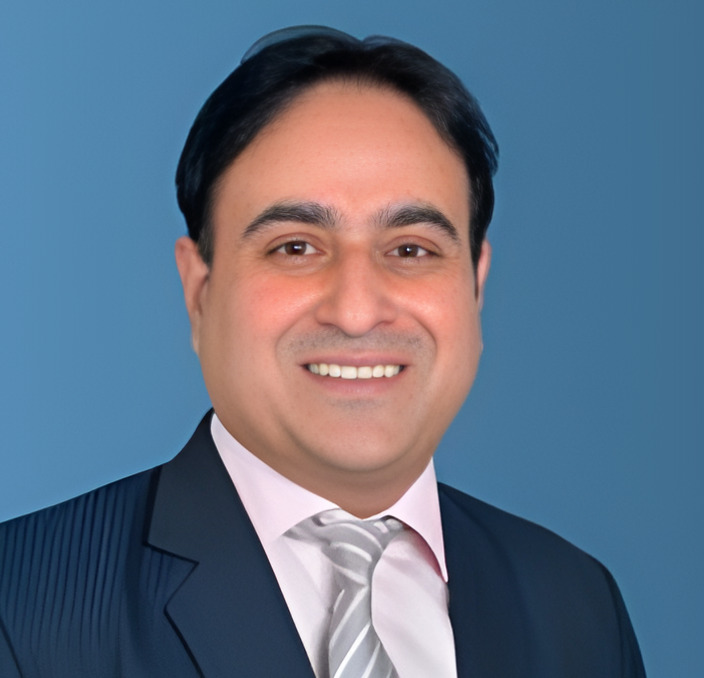
    Let me begin with a very basic and very important question as in what shaped this particular thought process of pursuing law as a career and what kind of a vision actually evolved over these many years while you are practicing law. After doing it from National Law University, Jodhpur, what kind of perspective or aspirations were there when you started and where it has moved? What kind of challenges have you faced? We would love to hear that story.

    When I was in school, I was not very much aware that there is something like a five-year law course. I had heard about National Law School, Bangalore in way. I had heard that there is one legal institution in Bangalore, which produces high quality professionals in law, but law was not my first choice, primarily because I never thought in that direction.

    So, I did my higher secondary, 11th and 12th with commerce as a specialization. And my first focus at that point in time was to get through to a good college in Delhi University, colleges like the Hindu College, SRCC, or St. Stephens, or similar colleges if possible.

    So that was my first aim, to get into good institutions at Delhi University because Delhi University is one of the best institutions in Asia actually. And especially when I was completing my 12th in the year 2001, it was one of the best in India, in fact, the best in India in terms of the number of colleges it had, number of courses it had and the quality of students it had drawing good resources from across India. So that was my focus. When I was in class 12th, around six months before I was to sit for my 12th exam, I got to know that there is someone I know who is in National Law School, Bangalore, but I had not spoken to him as such.

    But I got to know that he’s from National Law School, Bangalore. And that is where I started finding more institutions of such nature in India. At that point in time there were only three or four National Law Universities in India. One was National Law School, Bangalore, the other was NALSAR, Hyderabad. The other NLU was National Law Institute University, Bhopal and NUJS had just started, I think in the year 2000 itself. There was limited visibility of these institutions also. I’m from Jaipur, the capital city of Rajasthan. Maybe students from metro cities like Delhi, Bombay, Chennai, Bangalore, would know more about these institutions. Students from tier two cities did not know much about it.

    When I was in school I was not very much aware that there is something like a five year law course. I had heard about National Law School, Bangalore. I had heard that there is one legal institution in Bangalore, which produces high quality professionals in law, but law was not my first choice, primarily because I never thought in that direction.

    When I got to know there were three or four institutions, I filled up my forms, applied to National Law School, Bangalore, and applied to NALSAR, applied to Bhopal, and wrote their entrance test also. While I was doing so, there were a lot of talks about an NLU to be set up in the state of Rajasthan.

    There were a lot of parallel discussions between the government officials about when to set it up. So NLU, Jodhpur was to be set up in the year 2000, but for certain reasons it could not be set up. And it was decided very, very close to, let’s say, April and May, 2001, that NLU will be started in Jodhpur, in the new academic session. Next three months actually. And it was there in all local newspapers, et cetera. I also read about it. I had already given a couple of entrance tests for other national law schools at that point in time. I also gave an exam for NLU, Jodhpur. I was successful in securing a rank there and getting selected

    And that is how my journey began. In parallel, I had taken admission in one of very good colleges in Delhi University. I withdrew my candidature there and went with Jodhpur. There was a reason I went with NLU Jodhpur. You know, the institution just started. So, there was no legacy for the institution as such because the 2001 year was the first batch of the institution. And the prospectus of NLU Jodhpur, a very small, 10-page prospectus was written by our first vice chancellor- NL Mitra. And I can tell you that the 8- or 9-page prospectus spoke volumes of what that the institution (NLUJ) could be.

    It was worth a 100 pages prospectus. And in fact, one of my close ones who was senior to me, he read that prospectus in his free time. He told me, if you get a chance to join this institution, do join this institution because the way the prospectus is written, I think this institution will be a very good institution.

    And exactly that happened. I got through NLU, Jodhpur and there I started my journey as a law student. Mind you, I never thought that I would join a legal profession as such, but it happened. And initially it was very, very difficult. We had two shifts of classes in NLU, Jodhpur. The first shift was from 8:00 AM to 12:30 PM and then there was a lunch break.

    We did not have our own campus for the first three years. So, there was a transitory campus in the local university campus, basically, for us, a small campus. And then we were living in a hostel, which was far away from our university campus. So, we will come back to our hostels and then there’ll be a second shift of classes from 4:00 PM. The timetable said it was up to 7:30 PM in the evening, but it’ll stretch to 8:30 PM or 9:00 PM. And the second session classes were undertaken in the canteen area of our leased building.

     We had no infrastructure as such. No physical infrastructure as such. The only thing we had with us at that point in time was that all of us, over a period of time, were mentally united. Subconsciously united over a period of time that we are going to create an institution of great eminence.

    And we take pride in ourselves that we are part of the first batch of the institution. Otherwise, being part of the first batch of any institution is in a way an experimental step If things go well, the institution becomes well known. If things don’t go well for three, four batches, institutions take time to actually grow over a period of time that way. But as I said, our batch, we had a very limited number of 41 students. Over a period of time, we got subconsciously united and took pride that we are part of the first batch, and saw that as an opportunity.

    That first batch is the most important batch because this is the batch, which is laying down the foundations for years to come.

    But there was a great opportunity for all of us and that is where I would use this platform to also thank my first vice chancellor, professor, Dr. NL Mitra, a great man. He had the vision right from day one, how he wants that institution to be and only, and only because of his vision. Our institution started doing well right from the first batch. And his vision, we were able to imbibe to some extent over a period of time.

    There is no one who can guide you generally or guide you how to apply for LLMs. There is no one who can guide you on how to crack into tier 1, tier 2, 3 law firms or top legal jobs in companies. And that is where we got a lot of exposure because there was no one to guide us.

    We were our own torch bearers. So, we did a lot of trial and error. Actually, we studied a lot at that point in time, processed more information, that is something which really helped all of us. It also helped me a lot because by the end of my second year and the start of my third year, I knew what areas I should specialize in, and how I should take it forward.

    I knew it like other students also subconsciously, because we have already tried and tested a lot of things. A lot of things didn’t work out. Only a couple of things worked out for us. So, we knew. It’s like saying, you know 1000 ways a thing will not work, indirectly you know one way the thing will work.

    This was my experience at NLU, Jodhpur. I was very interested in corporate laws to start with because I had a commerce background in my 11th and 12th class that really helped me, and I was from ICSE board, so I don’t know now, but at that time ICSE board, some subjects were highly specialized.

    For example, the economics that I read in class 11th and 12th was that time very similar to BA economics honors student was doing in Delhi University in second year or in the third year. So that was the level of certain subjects. I had a lot of interest in economics, commerce, and accounts.

    That is something which really gave me a head start, an automatic head start when I was reading corporate laws, actually, because corporate laws are all about companies, companies actions, how company is dealing with stakeholders. I had done a bit of it already when I was in higher classes of my school, so that gave me a head start, and that gave me a lot of confidence.

    It’s not only about confidence. Confidence has to be backed by substance over a period of time. How to generate that substance? Now, a lot of good students are writing blogs. They’re doing podcasts, they’re making videos on discussions, etc.

    They’re joining panels or contributing to panels. But in my time, there were only limited avenues that were available. As far as your visibility is concerned, there was not much branding for legal institutions that time as much as it is today. There were no rankings as such other than some India today ranking and a couple of them.

    That also came later on, I think in 2005, 2006, 2007 but 2001, 2002, 2003, 2004 there were no rankings as such, like we have today. We have a lot of rankings, a lot of brand building exercises. In fact, I go to a lot of networking events. I see representatives of legal institutions also being present there and networking there, branding their institutions.

    So those things were not there. The only thing you could have done on your visibility on your institution was winning moot courts or writing articles. Even writing articles. They will select journals like All India Reporter, Criminal Law Journal, Company Law Journal and a couple more, and they will primarily prefer practitioners for article publications. Practicing advocates, a lot of practicing advocates and retired judges wrote in All India Reporter that was very famous and very esteemed. And must be even today, I presume so and so room for us as a student, for any student that point in time was less.

    Again, that’s an opportunity. You see, mental perspective is very, very important. Very important. So, if you have a positive mental perspective, you see everything as an opportunity. Some of us had informal groups within our batch. In our batch only 40 students were there. So some of us decided that we will try to publish articles in criminal law journals, company law journals, et cetera.

    We tried; we were failing. Then suddenly, a couple of us got published in Company Law Journal, Criminal Law Journal, All India Reporter. That gave us a huge impetus that now a journal which publishes articles of practicing lawyers, retired judges, or some judges also. Has published our article. That is a big confidence boost for us.

    Others also started trying, then we had a lot more people trying, there was a lot more traction. More traction, possibility of getting positive results is more. If there are two people trying for something, and then there are a hundred people trying for the same thing, the chances of success are more with a hundred people as opposed to only with two people, right?

    So that is something which really helped us, that also helped us to create an ecosystem of excellence. That is important because initial years with the first batch, second batch, third batch, and fourth batch law is not a simple course of study. It is very difficult. It is not like any other courses. It is very distinct. It is spread over five years and each year, each semester is different from another semester. So it cannot be that you have done very well in the first four semesters and next six semesters you will do well. No, it is also not that you have not done well in the first five semesters, that you will also not do well in the next five semesters.

     You can always come back. That helped us to create a positive ecosystem for ourselves and indirectly for the institution also, because initially what happens is an institution is known by the students. Later on, students are known by the institution because so much of batches, so much of hard work has gone into the foundation over the years’ time and again.

    And to motivate us at that point in time we were also trying to follow what other students, very, very good students of like institutions are doing in their fourth year or maybe in their fifth year, so that we can also emulate them, learn from their experience.

    If somebody from NLS got into the World Bank, it also gave us a hope that we can also do so. If somebody wrote a book in another institution, it also gave us hope and motivation that we can also publish a book while we are in our fourth year and fifth year. Who is stopping us? That five years shaped all of us, shaped me a lot. When I started my journey as a first semester student, to be honest, I was not sure that I was going to survive for five years.

    I thought I may have to drop out after the first year because it was not easy. There was a lot of regimentation at play. You had classes right from 8:00 AM to 9:30 PM effectively, it was too difficult for us actually. Typically, when people go to college, people think that they will have more free time.

    That’s how people think of going to colleges of any university anywhere in the world, but when we went into college, it was upside down. We had less time. We had no time actually. So I did not think that I would even survive one year. But somehow, we kept on moving together. And being part of the first batch, I think was the most beautiful opportunity that all of us got. I’ve completed 18 years since I’ve graduated. All those trees, all saplings were planted by us. The first batch, second batch, and the third batch. So, it gives us more identification with the university that way. And the university also recognizes us.

    I have a lot of gratitude for that institution. Moving from institution to practice of law, as I said, I was always very interested in corporate laws. I used to read a lot of articles on international forums, I think its Practical Law today, that point in time it was West Law.

    I used to read a lot of journals, corporate law related topics or articles and used to follow them. That time there were a lot of changes in the Indian corporate law sections also, like there was a lot of talk about corporate governance in 2003, 2004.

    I still remember Narayana Murthy Committee report, Naresh Chandra Committee report, Cadbury Committee report 1999. So again, it gave us a lot of impetus to actually use these changes to our advantage. For example, I wrote 20 plus articles when I was in my fourth year and my fifth year. And all those things helped me. They gave me a lot of topics actually. I was very well aware of what is happening around me in relation to corporate laws, corporate governance, securities law, and I took that as an opportunity to write about them, build my visibility, talk about them, and try to get the right internships.

    Once you have known your ecosystem, you have known your ground well then you know what is your next step? What is your way forward? Without it, it is very, very difficult. So, I know that I’m very interested in corporate law, securities law. I was trying for an internship within college when college applied. Nowadays scenarios have changed a bit, but at that time, the College Replacement Association was doing.

    I wanted to intern at SEBI, for example. I got a chance to intern at SEBI, and again, I was fortunate. It was a 4-week internship. The day I joined, I was given a task to make a compendium of orders passed by SEBI for the last three years. I did this internship in 2004. So, when I went onto the intranet website of SEBI, we had access because we were interns there, I saw that there were around 550 orders that SEBI had passed.

     I had to summarize those 550 orders in a tabular format given by my senior, who was assistant legal advisor at that point in time. And I did that day in and day out. I used to enter the SEBI office like everybody else, and I used to stay in that office till 9:30 or 10:30 PM. By 5:30, 6:00, 6:30 everybody would’ve left.

    So, either the office caretaker, et cetera, were there, or I was there. Or maybe a couple of seniors, those who had urgent deliverables also, because it’s a regulator, those were there. So, I had a chance to analyze more than 500 orders passed by SEBI. It gave me a wonderful exposure.

    I could not have gotten that in my entire career because I do not think any lawyer or anybody in a particular stream would analyze 500 cases at one go, because you don’t. Because you go by what is your client requirement? What is the nature of the case? You see select precedents, you don’t see 500 cases as precedent, but I was very, very fortunate.

    So, while I was doing that it augmented my learning in corporate laws. When I came back to college, I knew inside out about all SEBI regulations, the sections, the provisions, which SEBI order got overruled by SAT in the last three years because of the work I have done. So, I was very fortunate in that way.

    I carried on my learning. I read more on securities law, for example, more on corporate laws.  In our institution, one thing also which really helped me, I am part of the first batch in India of a five-year integrated law force in law and management, BBA LLB, and then Jodhpur started that course in 2001.

    That also gave me an impetus because I had commerce as a background, and BBA was a natural next step to commerce background. So, whatever was to be taught in law school.

     Because you see, law school focuses more on law. As opposed to BA or BBA or BSC, et cetera. The BBA part I had already done in my school, more than 90% of it. So, I could focus more on law in the later years to come. And somehow my internships were such, they helped me to explore myself as a person also and myself as a future professional also.

    I did my first internship with Mazdoor Kisan Shakti Sangathan, MKSS.  MKSS is the pioneer organization in right to information in India from early 1990s led by Aruna Roy. I did an internship with them, a ground internship with them in a village. In the outskirts of Udaipur district.

    There was no conveyance, et cetera. It was a national highway; these national highways were not like express highways of today. There were two lane national highways and you had to take a lift. There were no buses, you had to take a lift on a lorry or a tanker or a truck passing by.

    And I did my internship in that village. It was the year 2002, I lived with them, I also carried out what they had started, actually social audit. What they will do, they will form a team, they will go to different districts, monitor the development project there, and actually do a social audit of what is written on the paper and what on ground development has been done.

    And there I also met Mr. Arvind Kejriwal. Because at that point in time his organization was working for right to Information in Delhi. So, I was with him as a part of his team. We were four or five team members in formal groups doing different parts of social audit, et cetera. So I was fortunate that way also, if I see, so now. And if you remember, 2002 was also a time of Gujarat riots, and this organization, what they were doing, they were trying to inform people about the riots going on, so that people are actually aware. It was May and June in Rajasthan, in the outskirts of Rajasthan, Udaipur. And we had a cycling project wherein we’ll go to different villages.

    We had targeted, I think 50, 60 villages. We’ll go, we’ll interact with them, spread awareness, also talk about the right to information, et cetera. So, we would cycle along with 50, 60 more people along with us in the daytime in May and June in Rajasthan for the entire day. And we did that for seven days. And those bicycles were not sports bicycles, if you remember that black and yellow, those bicycles. So, these kinds of challenges, we do not know when we are in them. We do not understand or actually know how they are shaping us, but our experiences are actually shaping us. So, my internship in Mazdoor Kisan Shakti Sangathan also shaped me. Shaping me in terms of leadership skills, spreading awareness, having a team moving along with the team is all about leadership skills.

    Otherwise, unless you are on the ground, you don’t get to learn leadership skills, team skills by doing a management course. You have to be on the ground. You have to connect with people. You have to relay what you want to relay to them.

    Now, spreading awareness in the remote village of Rajasthan is very, very challengeable because forget about English, you will not find people, those who will even speak Hindi, they’ll speak Marwari or different languages because different areas have different nuanced languages also. Interacting with them, relaying to them how right to information relevant for them, they will not understand, right?

    Because what they are concerned about is three times the food and clothes to wear. That’s the basic and all requirements. In remote villages, that’s the reality even today. And talking to them about the right to information, if you are successful doing that, I think you are the best salesperson in this country if you can do that.

    So, I got exposed to these kinds of leadership skills, experimentation also, practical experimentation also. I did my second-year internship with Prashant Bhushan. So, you can see the trail. I was with Aruna Roy, Arvind Kejriwal and my next step was with Prashant Bhushan. So, Prashant Bhushan, I interned. We worked a lot on public interest litigation. Again, a very, very good experience, because law is all about well-rounded professionals. You may be practicing in a particular stream, but if you are well-rounded, your knowledge base is wide, your receptivity is wide, your perspectives are more, and that is what helps you in differentiating between yourselves and others, basically, this is your USP.

    Any lawyer or any student who has more perspectives is a couple of steps ahead than any other knowledgeable student. Any professional who has more perspective is two steps ahead of any other professional having a host of degrees, host of experiences, best of salaries, does not matter. It’s all about developing perspective over a period of time.

    In that way, my internships also helped me. Then I interned at KPMG, Bombay in my fourth year. I learned how accounting firms are important for legal practice or corporate law. Because when you think about law, you think about law in isolation or in silos, actually, it doesn’t happen.

    Law requires a context to operate. Without the context, we will not be able to apply law.  Very famously, our vice chancellor used to say, and I think there is a question on that also in subsequent discussion pointers, he used to say, you have to be master of fact rather than to be master of law.

    If you are a master of fact, you will know how you will apply the law known to you. If you’re not a master of facts, you don’t have expertise on your facts or a subject matter, then how will you apply law? How will you get desired results? It’s all about doing a very nuanced interpretation or nuanced practice.

    How do you nuance it when you are able to filter through a lot of information? How do you get more information? You have to know more and more about your facts, and then you get to know that these two statements are the most material statements. I’m basing my case on this; law is applicable on this.

    So, before you become a master of law, you have to become a master of facts.  I was actually judging one client counseling competition in National University Aurangabad. And I really love that concept because as lawyers, we forget about as a law student, as lawyers, we take years and years to learn the art of client counseling.

    What does the client want? How is the client placed? How can he get relief? What should suit him? All this is client counseling, and we take years to actually understand this. I’m very happy that some of the institutions are taking the lead and organizing something like mediation competitions, client counseling competitions, because these are very nuanced initiatives as compared to the moot courts.

    Because moot courts, you have a problem at hand. The facts are already with you. The problem statement is already with you. You don’t have to do anything. You have to read the problem statement. You have to apply law and argue. Moot court is all about that. But in a client counseling competition, or a mediation competition, you have to take out information from your client as much as you want, as much as it is relevant, and then use your knowledge to actually supplement.

     That is why these initiatives are excellent initiatives. Some of the institutions are doing. I think all institutions should do it. They should have a course in client counseling. We have courses in mediation, but we should also have mock trials and courses in client counseling, because that is what we do as professionals, right from day one. Because day one, when you join as an associate or a zero, your senior may tell you if you’re practicing in the M & A department of a law firm and can tell you, okay, we require X, Y, Z information from the client. Why don’t you call him and take information from him? When you call the client and take information for him, you have to have certain basic knowledge so that you can tell the client why this information is relevant so that he’s more forthcoming and seamless to give you information.

    Otherwise, clients would think that person is only asking for information, time and again, time and again, and time and again. The art of asking relevant information. And nuancing your interpretation and practice around it is the legal practice for me, be it contentious, be it litigation, be it non-litigation. Non-litigation at times can become even more difficult actually. So, if you are an M&A lawyer, private equity lawyer, or venture capital lawyer, it’s not about representing your client on the table. It’s also understanding what are the expectations and interests of other stakeholders. Reading the room. And after understanding the interest of other stakeholders, how do you actually manage the stakeholders together to cut the deal?

    What happens if something is of much interest to your client, something else is of much interest to another client. And the same is the case with other stakeholders. You will never crack a deal together. There have to be middle grounds, there have to be nuanced positions. How do you do it? You have to have that mental perspective to understand the interest of other stakeholders.

    Like we say, a good lawyer is a lawyer who understands the mental framework of judges as if he’s the judge, as if he’s asking the questions, so that he can preempt the questions and include it beforehand while arguing and in his pleadings. The same thing applies for corporate lawyers also. Also thinking from the mental perspective of the other stakeholders.

    Counterparties also, because you see, you are saying X and you are not moving an inch at all. The other party is saying Y he is also not moving an inch. What is happening? The time is getting wasted for the clients, the clients may love you for your skills, for a couple of meetings, three meetings, four meetings.

    After that, they would want to see how you actually solve this problem. And that’s what the practice is all about. Nobody is hiring lawyers, for example, to not do the deal. They’re hiring lawyers to do the deal, to act as a fulcrum, to act as a catalyst.  So as a lawyer, if you’re reading the room well, understanding everybody’s expectation and the interest well understanding your client interest as well.

    Then you know in your head that what is good to have for you and what it must have for you, good to have will have 30 items, for example, must have, will have only two items. You do a trade between good to haves to get much must to have. You have to close the deal. My idea talking about this at length is that law students and early legal professionals should focus on developing as much as mental perspective, definitely, and as much as interpretations, other perspective, nuanced perspective as possible. And, it comes with an interactive set of people.

    Also, it comes when you take interest beyond your call of duty or beyond your work. So in our transactions, we have financial advisors, we have tax advisors, then there is a client who is talking about commercials. We, as the corporate lawyers advise on, let’s say 70% on commercials and 30% on law.

    This is how corporate law transactions work actually, to be honest, now, if you only focus yourself to law and don’t understand what is the objective of the parties commercially. Then it may be very difficult for you to close the deal because you are on the table, on a deal table, you see important people are there. From the key managerial personnel to the directors and the senior managing director. Those are the kind of people there on the deal table. And as a lawyer, you are also on the deal table. That means you have to contribute. Not only with the knowledge, but providing a nuanced solution. Because knowledge will give you a lot of information.

    But out of that information, what you pick as a solution is your capability. And that is why some legal professionals are more famous, command premium. Because if you hear their argument, be it in non-contentious practice or in contentious practice, they’re very focused.

    They know five counterarguments for one argument and vice versa. They know five arguments for one counterargument, because first they think what the counterparty will think, or thinks. This is what he may tell us. I’ve got my arguments already ready. And to top it up, I also have my own arguments.

    I also understand the commercials of the parties. Not only law. Again, we spoke about master of fact and master of law. Here master of fact means understanding the commercials of a transaction for a corporate lawyer because you are expert in law. And you have to ensure that there is a marriage between law and commerce.

    That’s how the deal will get done. And that is what should be your capability. So, coming back, we were discussing internships. I was very lucky doing internships at very, very good places.

    Then I sat for a campus interview. I was successful in getting selected into various law firms. I joined the Luthra and Luthra offices. It was a very good legal organization having top marquee work in India. I got a lot of opportunities to work on some outstanding transactions which also helped me to understand the relevance of a legal professional.

    I understood the relevance of a legal professional is not only about drafting agreements in your laptop or your desktop. Relevance of an illegal professional is actually to get all the parties together and agree on a common solution. That is more important because once that is done, anything can be documented.

    Otherwise, the mental perspective, which early lawyers have, new entrants have, law students have, is that they think of documentation first, agreements first, law first, and requirements of the client later. It should be vice versa. Understand the requirements of the client first, requirement of the stakeholder first, and then documentation, then comes legal knowledge, so that you can give a very nuanced and to the point USP, which is your legal opinion or your legal interpretation that you are taking. Your clients will love you for that. Stakeholders will also be happy with you.

    Then I worked at different other law firms also. Now you see law firms, two law firms. What my experience was in corporate law, for example, M&A, private equity venture capital. The work stream may be common, but different lawyers and different law firms have different approaches towards their work.

    A lot of people say in law firms, it is very, very difficult to have work-life balance because you tend to work long hours, because the transactions are so, they require your last-minute involvement, et cetera. You are the one who gives comfort to other counterparties to your clients as well. So, you have to be involved. But I tell you one thing, there’s nothing like work-life balance in law. Because legal practice is a very difficult and different practice. In legal practice, you don’t have to deliver what you are expected to deliver. You have to deliver what your client thinks you can deliver, and you have to top it up with a premium or with your USB.

    This is how it works. So, it is not like drafting a clause a client wants, but while drafting the clause and deciding the contours of that clause and agreement. Also discussing with the clients, the advantages and disadvantages and how different scenarios can actually play out because the document you are drafting is the document which is not useful for good times because in good times nobody opens the documents. The documents get locked up in the cupboard. A lot of our clients also used to tell me that the best document we want to use so that we don’t open it. Absolutely. You should not open a document because once the deal is done, the relationship should be good. Practically also speaking. But what about those rainy days? When there are differences of opinions, disputes and interpretation, then you have to open the document and then you open the document and see whether you had actually thought about it or not.

    So, for example, as a lawyer, if you only follow the instructions of your client, it is to get the work done as early as possible because any client would want that. If I’m a client, I will also want it, but at the same time, it is important for you to discuss the nuances of that with your client. And tell him how these frameworks can play out in different scenarios. And that is what you have to document in your agreement. So that your document is fungible and is to an extent futuristic. I’m not saying that all lawyers come together and draft a document for two years.

     You cannot think of, there can be innumerable scenarios, et cetera. You cannot actually document it, but you can document what you have learned. This is your experience. So like, I have done 200 plus M&A deals, private equity and venture capital deals. I have had a lot of learning, for example. So, I’m carrying that learning when I’m doing my 251st deal.

    I’m carrying out the learning of 250 deals that I have done in the 251st transaction. And I’m also telling my client to also include this scenario. What if this happens, what will you do? Let’s include that. Because you never know. Because commercial transactions in India are increasing.

    We are almost a $4 trillion economy and we are moving to a $8 to $10 trillion economy in 25 years. In the last 75 years, we have added 4 trillion in the next 22, 23 years, which is 2047, we’ll add more than 4 trillion, which we could only add in 75 years. The pace of growth will be faster. There’ll be a lot of opportunities, but at the same time, there’ll be a lot of complications also. So, five, seven years back when the startup community in India started in 2015, 2016, now it is at a different level. If I had to discuss the founders’ agreement with my founder client, they would say, no, we are best of friends.

    We are family friends; we are thick friends. We are school friends. We’ll not need it. Let us build the company. We’ll see it later on. But today you see there are a lot of founder disputes also. Now the same founders today, their first checklist is having a founder’s agreement.

    You don’t have to educate them; they already know it. So, what happens there is more commercial traction. There are more disputes also, and that is where as a legal professional in this time, and in times to come in next 20 years, we have to work at a different level. At a very advanced level. It cannot always be a precedent based learning or a precedent based practice.

    In litigation, it can be a precedent based practice. You know what the Supreme Court has viewed in such a scenario, et cetera. But in corporate law, M&A transactions, private equity, venture capital transactions, there are no court judgments that are applicable, it is up to the parties.

    What is the nature of the parties? What is the nature of investment, amount of investment, nature of business, of the company? All these things play a very important role when you’re dealing with both the parties, your client as well as the counterparty. And how do you stitch the deal? To me, is the real premium you give to your client and that is something they pay you for. They’re not paying you for regular work. They can get it done from anybody else also, and then there is artificial intelligence also in the picture, which will draft a shareholder and share subscription agreement.

    But what you give based on your previous learning is something no automated platform can give because there are a lot of practical nuances you handle while doing so. So that is why, it’s very important that today’s lawyers, today’s law students also think in those terms. Wear both hats, wear a legal hat and also wear an entrepreneurial hat because you don’t have to be a deal breaker, you have to be a deal maker.

    You have to ensure, come out with structures, come out with opinions and arguments and practices, which enhances the chances of getting the deal through and not stalling it. Because you see clients have already made up their mind of doing a deal, and that’s why they have got you here. Very important because you see the top client, the principles have already been discussed between themselves, okay, we are going to do this.

    They’re getting their advisors in the picture as a next step is to see, just in case there are no deal breakers as such. But they have not got you here to create an issue when the issue can be resolved. So, it’s like something which is of your best interest to your client. Can we oppose it to the other side?

    And how you navigate that scenario is your role actually. And it’s continuous learning. You are never a complete lawyer. You are always learning, you are always understanding, you are always meeting new people with new perspectives.

    If you have a positive bent of mind, a growth mindset, then you are progressing, then you are always progressing. And that is what I want to suggest to all new entrants in law. Any lawyer as well as, definitely law students have a growth mindset, a positive mindset where you see the counter arguments against you, not as counter arguments, but as an opportunity to develop further.

    Give an even more nuanced solution because in a non-contentious practice, typically it is not that one party loses, the other party wins. Both of you win together. It has to be a win-win scenario for every stakeholder. And that is important. And over a period of time, how do you as a law student think how law works? You think of documentation, you think of law first, but when you become a legal profession, you understand how the client is placed? What are the expectations of the client? How can you deal with it? What can you suggest? This takes precedence over this agreement drafting. That comes actually later on. So that’s the mental perspective one needs to work, one needs to understand a lot of commerce, a lot of commercials. That also really helps because then you can read into the mind of your clients and the counterparties what they want to achieve?

    Why are they doing so? How can I aid this, how can I facilitate this? Can I come up with a structure? Because in law there are a lot of gray areas, there are not many black and white areas in corporate law, for example, in M&A transactions, there are a lot of gray areas also, and that is where you have to take a call, you have to help your client to take a call.

    You have to know market practices. How are other people doing it? Learn from others. So this is how the journey has been. I have always believed in learning as much as possible, learning as many perspectives as possible, trying to become a different version of myself each year, each couple of years, and trying to understand my clients more and more.

     So this whole journey has been very fascinating, now I would like to ask you, as in when you start or when you enter these kind of deals, when you are trying to negotiate these big M&A transactions and you are drafting those deals, how do you make sure that you are a problem solver for your party, as well as you are not a problem creator for the other party as well?  Second, while you were in your law school, I’m pretty sure that you may not have decided at that point of time that after five years I’ll become this, this, this, it became with learning. What kind of learnings were those?

    Also, how did you navigate yourself towards this particular sector of getting so much into corporate law? Obviously, those SEBI 500 files were also very helpful. How have you made sure that that passion of yours, of reading still is there?

    So, answering your last discussion point first, how did I decipher it when I was a law student and how I could continue. We just spoke that law is a very different profession, it is not only a deliverable based profession.

    Actually, it is a way of life. Now, just try and understand one thing when I said, there is no work life balance as such in law, I did not mean that in a negative sense. I actually meant that in a very positive sense. In legal practice, more important, you are, people will want your more time, you’ll have more clients.

    Clients will want your more time. You’ll be developing more trust with your client. This is how it actually works. You work, let’s say for 12 hours or 13 hours before it becomes a work life question. It is a question of your importance because you are important. Why is your client calling you and wants to talk to you at 12:00 AM in the night?

    He wants comfort from you. Clients may have decided on something, we have a lot of clients, who are brilliant, people with management backgrounds from Harvard business schools. But still, at times they will discuss with me, they have already made their decision, but still, they will give me a call.

    I’m thinking in these directions. Do you have any thoughts? You see how valuable you are to them. Because your one word, your one input can give them comfort or discomfort.  In fact, discomfort can maybe give them lighter, more options to think on the decisions that they already wanted to make. Your importance here is inversely proportional to the time you have at hand. Because as a normal employee in any other profession. I go by the clock. Legal profession is a way of life, which doesn’t go by the clock. It’s a way of life. This is how you live, and you are able to manage everything together.

      A lot of pieces in our lives move together. It is not that when we are at work, we are at work. Other pieces are not moving; other pieces are also moving. When we are traveling, we are also taking calls. When I’m on a holiday, for example, if a client wants to have a quick call, I’m taking that quick call. That does not take away my holiday leisure plans. In fact, it makes me more important. If you want to command a premium, both in terms of monetary privileges as well as non-monetary privileges, like you want to become famous for that, you have to become an important person. To become an important person, you have to be a trusted advisor to your client.

    And why would any client chase you? He thinks you are relevant in the system and you have to give him time. That is why you see a lot of lawyers, top lawyers, they’re working for 18 and 19 hours a day. They still have a great life, great travel around the world, within India, outside India, great family life, great professional life.

    How are they doing so? And why are some 9-to-5 people not able to do so? Because we don’t go by the clock. I’m talking to you right now. I’m also learning. It is also giving me an opportunity to express myself. Now I have two ways to think about it. Either think this as an opportunity of viewership.

    A lot of people will listen to me, see my videos, and also give me a chance of an audience. Having good communication, developing my communication skills as I’m talking to you with examples or thinking, oh, we have already crossed one hour. Okay, let me see. Another 15 minutes.

    I’ll complete it. There are two ways to look at it. A growth mindset looks at things very, very differently and that is where I have seen a lot of difference in my own life also. In my initial years, when I was a junior, I wanted to complete my work as early as possible, which even today, I want to complete as early as possible.

    But, once the work is completed, move on to the other work and that is a pattern with lawyers which do not believe that law is a way of life, but once you believe and have a positive mindset, that law is actually your practice. Your profession is your way of life.

    You operate very differently. You’re doing 5, 7, 8 transactions together. Doing 5, 7, 8 transactions together mean you are interacting with 50 plus people together at one point in time. 50 people know you directly, in meetings, in calls, and see your emails every day.

    Those 50 people are talking to another 50 people about you. Some way, directly or indirectly. Look at your reach, look at your aura is wider. Because you believe in law, your profession and what you’re doing, your actions are the way of your life. That is how it is happening. Otherwise, there could be someone who can say, I cannot handle more than one transaction or two transactions. He is limiting himself. So this is something which when I was a law student, I took a lot of interest in corporate laws. Corporate governance was the flavor of the year at that point in time. As I said, the Naresh Chandra Committee report, Narayana Murthy Committee report, were very helpful to me.

    I happened to read both the committee reports inside out and, if you read any of these committee reports inside out 200 pages, you know everything about corporate law practical, because they are the people with great experience in life. And if they’re doing some tasks, they are drawing on the experience of 20,000 people they have met in life, in one committee report.

    And I also understood the importance of how the legal market is shaping up. As I said, knowing your ground is very, very important. And if you know your ground well, then you also know what are the movements happening in your ground, in your practice area or your to be practice area. So, I knew when I did my internship in SEBI, I did a lot of work there. When I came back I knew there were a lot of movements in securities related law. A lot of other judgments are coming. Many new laws are coming. Not only in India, but also outside of India with the Securities and Exchange Commission.

    I also started reading about the Securities and Exchange Commission and see how SEBI is different from SEC. How did I create my interest? I created my interest by further developing the work. I did an internship when I came back to my college. Otherwise, what happens when you go to internships, you do work there. Once you are back to college, you forget everything. Your internship is as good as nothing. It’s only a statement on your resume. That’s it, because you have not further developed it. But I was somehow fortunate, had that growth mindset, that point in time, which helped me to actually develop on my knowledge.

    When I came back from my internships, I read a lot of corporate governance stuff, I started writing articles, getting articles published, which gave me lots of motivation. Gave me a lot of fame within the university also. I was always thinking of cracking something, doing something well. So, my whole focus as a student in my fourth year and fifth year, every utilization of every second I’ve done was about creating something good for me, so that people know me. So that people talk about me. Nothing comes for free. It comes with a lot of hard work, but I never felt my hard work because I was in that momentum. Once you are in this kind of a growth momentum, positive mindset momentum, you are not doing any hard work, you aren’t required to do any hard work at all.

    It automatically flows in that way because you are in that momentum. Somehow, I was lucky to be in that situation and having created that momentum for myself that I was only moving forward. That really helped me. And this is what I want law students of today or young lawyers of today to do. Get into that momentum. Give yourself a chance. Because the legal field, if you don’t have passion for law, can get very difficult actually. You have to have a lot of passion for law, a lot of passion for the work that you are doing, and it’ll show in the solutions you are giving to your client, in the discussions you’re doing with your client. And that is where the client will appreciate you. He will not think of you as a kind of another nut or bolt in the system. He will think of your entire setup. And that is where over a period of time the clients have become our friends.

    If they’re buying any car or any vehicle or their sons or daughters are getting admitted in any law schools, they’re also talking to us. Because they have become friends. Trust has increased. How has trust increased? Because of  the inputs that we are able to give and why we are able to give, because we are in that momentum, in that positive framework, mental setup.

    Otherwise, it is not possible. Because law can actually drain you. Drafting a complicated agreement can drain you for days. You can get buried under work. If you have passion, then the scenario is totally different. I felt both I’ve been on both sides, where I’ve been buried under work, I’ve been on the other side also where I’ve done way more work than I was doing and did not feel any heat of what I was doing, I was really, really enjoying it. I was enjoying my time with the clients. I was enjoying talking on the conference call when a lot of people were listening to me.

    That’s important. I was able to somehow give a better argument. The client is texting me on WhatsApp, oh, very good, very well done. That gives you a lot of impetus and that is something which keeps you going. It’s like fuel to the machinery. So, my advice for all law students and early lawyers is to somehow create that ecosystem for yourself.

    Think out of the box. Today there are innumerable opportunities that are available to everyone. In my time, there were a couple of journals. Then the moot court, that’s it. Now, the number of moot courts and the client counseling events, mediation events, et cetera, has multiplied because we have 20 times more law colleges today, maybe more hundred times, I think. We have students making blogs, we have students making video podcasts, students having their own channels. There are so many avenues available wherein you can do your brand building. While doing brand building, you can augment your experiences and your work on a particular subject over a period of time.

    So, SEBI, for example, from time to time or gift city regulators are coming out with consultation papers. As a law student, a sincere law student has done securities law, and has a lot of interest in securities law. Even if I don’t have any, I think I can do something, I can read up more. I can send in my comments to the regulator, who is stopping me?

    The regulator is inviting public comments; you can send it. What is stopping me? So, there are lots and lots of opportunities in today’s time that are available with the students and young lawyers. There are a lot of good certificate courses going around. I happened to speak at a lot of good certificate courses. When I was a young lawyer or forget about being a student when I was a young lawyer.

    These things were not there as much as they are today. There must have been a couple of certificate courses. Way too expensive. But today there are certificate courses, two hour sessions for 700 rupees, 800 rupees. And that too a partner from a tier one law firm actually doing so and sharing this experience.

    So, my advice to all students and young entrants in law, get into that ecosystem, create a momentum for yourself, then you are absolutely unstoppable because you will see more and more meaning in what you are doing, which you may not be seeing now because you are not thinking in that direction. And, your first question is how do we actually strike a balance when on the negotiation table or trying to be part of a transaction? It is very important especially for corporate lawyers to understand what is good to have in a transaction and what is must to have.

    If you’re clear on this, I’m telling you, 80% of the job is done. Now, if somebody doesn’t understand this, now, good to have a bucket list is a thirty-item bucket list and must to have a bucket list is the three to four items. If somebody really does not understand difference between good to have and must to have, he has bucket list of thirty five items, he is discussing item by item, by item by item, and the transaction, which should have been done in let’s say six weeks or eight weeks, is not getting done in four months, because he is trying to discuss each point and not trying to solve the points, not trying to understand the other side perspective also. So the best approach is while you put your best foot forward for your client, try to negotiate each point with him, but also see when it is not workable.

    It is not working around. If it is not working easily with other stakeholders also, straight away have a couple of middle grounds to solve those problems. What will it do? It’ll make your deal more efficient. Save the deal time. Deal time at times is very important because you may be in a scenario wherein your client is investing in a very fast-growing startup at a X valuation.

    You have done the term sheet and now deal with negotiation going for four months. That startup can tell you; the founders can tell you, look, boss, we are getting other suitors also at a higher valuation. Either you close the deal or we are moving ahead with somebody else.  Because you cannot be endlessly trying to negotiate points on transaction documents for another four months or three months.

    Very important, it doesn’t matter which side you are, the company side or the founder side or the investor side is to work on the middle grounds. If things are not shaping up positively, then work immediately on the middle grounds. See what is the expectation of all the parties and how all the stakeholders could be protected at the same time how your client can be protected, because what happens a lot of things are practical in nature also. You may want to document it in a certain way, but practically it happens with coordination between the shareholders.

    This is how it happens and that is something we will need to understand. So, clarity on must have and it’s good to have and is very much required. And that is why I tell you very, very few lawyers have this clarity. They have acquired it over a period of time, and they are called deal lawyers because they make deals happen.

    They act as a fulcrum or a catalyst to the deal as opposed to only doing knowledge sharing with their clients. This is how we are able to strike a balance between our client interest and the interest of the stakeholders on the deal table. While there are multiple other points.

    It may not be possible to discuss that in video because that can go into some multiple hours of discussions. There are multiple points at play, but once you’re clear on good to have and must to have, 80% of the job is done.

    What a journey, sir. It starts from this, that you entered NLU, Jodhpur and you decided to do your five-year law and then chose corporate law, did internships with a variety of legal patterns. Not only corporate, but I’m amazed that you did it with public interest litigation with going to the villages to understand how nitty-gritties work when it comes to fighting the system with the government and against the government, everything, it’s a fascinating story that you have shared. It is a long journey and it should be with the learners because you really have done almost all. From ground to up. And with so much passion. And it’s absolutely a beautiful interview.

    We don’t learn at the cost of somebody else. All of us learn together. This is a kind of a win-win scenario. When I share my thoughts and you share your questions, I also learn along with your questions. Because your questions, your nuanced questions and different questions.

    Put me in a scenario where I have to come up with something good, deliver. And this is common learning. And that’s why I am associated with a lot of the student community. I go to a lot of legal institutions, judge even in fact, there are even moot courts, et cetera, and take certificate courses also. Again, quoting professor Mitra here, he used to say that teaching is the best way of learning. So that’s my motto. As much as I can share my experience and learn at the same time, and all of us keep moving forward, keep moving together. So that’s my motto.

    Get in touch with Vivek Jha –

  • “My motivation comes from the dynamic nature of the legal field and the satisfaction of resolving complex challenges. Every case presents an opportunity to learn and grow, which keeps me engaged” – Amr Awadallah, Head of Legal Department at Bartawi General Contracting.

    “My motivation comes from the dynamic nature of the legal field and the satisfaction of resolving complex challenges. Every case presents an opportunity to learn and grow, which keeps me engaged” – Amr Awadallah, Head of Legal Department at Bartawi General Contracting.

    This interview has been published by Anshi Mudgal and The SuperLawyer Team

    What was your initial motivation to pursue law, and what motivated you to pursue a Master’s Degree in International Business Law (LL.M.) from the City University of London as a specialization?

    My initial motivation to pursue law stemmed from my passion for problem-solving and advocacy. I’ve always been fascinated by the role of law in shaping societies and resolving disputes, which led me to pursue a legal career. As I progressed in the field, I realized the increasing significance of international business and cross-border transactions in today’s globalized world. Pursuing an LL.M. in International Business Law from the City University of London allowed me to gain specialized expertise in navigating complex international legal frameworks, particularly in areas such as corporate compliance, arbitration, and contract law. The program provided me with a global perspective and practical skills that are invaluable in my current role in Dubai’s dynamic legal landscape.

    You started your career as a Junior Associate working with various legal firms across Dubai and Abu Dhabi. What are the key learning experiences from that phase which have helped your career?

    Starting as a Junior Associate was a foundational phase of my career. Working with diverse legal firms in Dubai and Abu Dhabi exposed me to various aspects of UAE law, including commercial litigation, corporate structuring, and arbitration. One of the most important lessons I learned was the importance of precision and thoroughness in drafting legal documents and presenting arguments. I also developed the ability to manage time-sensitive cases while dealing with the expectations of both local and international clients. Additionally, observing senior lawyers taught me the value of negotiation and strategic thinking, skills that I rely on daily as the Head of Legal at Bartawi Contracting.

    Having drafted and negotiated various legal documents for both UAE and international clients, what are the key challenges you face when dealing with international clients, especially considering the regulatory framework in the UAE?

    The primary challenge is bridging the gap between international clients’ expectations and the local regulatory framework. Many international clients are unfamiliar with the nuances of UAE law, such as the Civil Law system, restrictions on foreign ownership, and Sharia-based principles in certain commercial transactions. Another challenge is ensuring that legal documents comply with UAE laws while maintaining language that is clear and understandable to clients from diverse jurisdictions. Communication is also crucial—educating clients on the importance of adhering to local regulations while addressing their business needs requires a balance of technical expertise and cultural sensitivity.

    You have done filing in DIAC & DIFC along with advising clients on commercial contracts, company law, and corporate compliance. What has been one of the most interesting cases you’ve come across that you would like to share with us?

    One of the most interesting cases I handled involved a commercial arbitration at DIAC. The case revolved around a dispute over a multi-million-dirham construction project, with claims of breach of contract and delays. It was particularly challenging because it involved multiple jurisdictions, technical construction-related arguments, and high stakes for both parties. Successfully navigating this case required collaboration with technical experts, thorough analysis of construction timelines, and presenting arguments that aligned with UAE laws and international arbitration principles. The successful resolution not only protected my client’s interests but also highlighted the importance of strategic planning and preparation in arbitration.

    In your current role, can you walk us through your responsibilities of how you identify and evaluate potential legal and regulatory risks that could affect the holding company and its subsidiaries? Can you share an example of a time when you successfully mitigated a significant legal or regulatory risk for the company?

    In my current role, I am responsible for ensuring the company and its subsidiaries operate within the bounds of UAE laws and regulations. This involves regularly reviewing contracts, monitoring compliance policies, and staying updated on regulatory changes. A notable example of risk mitigation was identifying and addressing potential issues in a subsidiary’s lease agreements that could have led to litigation. By renegotiating lease terms and adding clauses for greater flexibility, I ensured both parties’ interests were protected while avoiding potential legal disputes. This proactive approach not only safeguarded the company’s interests but also strengthened relationships with external stakeholders.

    Since you develop and monitor compliance programs and policies for the holding company and subsidiaries and ensure all business activities comply with applicable legal and regulatory requirements, what are the major challenges you face while working on such policies given the UAE setup?

    One of the biggest challenges is the frequent updates to regulations in the UAE, which requires constant vigilance and adaptability. Additionally, balancing compliance requirements with the operational flexibility needed by the business can be complex, particularly when dealing with subsidiaries that have distinct operational models. Another challenge is ensuring that employees at all levels understand and adhere to compliance policies, which often requires tailored training programs and effective communication. Lastly, navigating the interplay between federal, emirate-specific, and free-zone regulations demands a deep understanding of the legal framework and careful coordination.

    What strategies do you employ to provide legal support for the incorporation, restructuring, and management of subsidiaries?

    My approach includes conducting thorough due diligence to understand the specific needs of the business and the regulatory requirements for incorporation or restructuring. I work closely with financial and operational teams to ensure that the legal framework aligns with the company’s objectives. For restructuring, I focus on minimizing risks by reviewing contracts, liabilities, and compliance obligations. Clear communication with stakeholders is essential to manage expectations and timelines. Additionally, I rely on strong relationships with regulatory bodies and legal consultants to facilitate smooth processes, especially when dealing with cross-border entities.

    What advice would you give to young aspirants who wish to have a career in the UAE and have an international practice?

    To succeed in the UAE’s legal field, young aspirants should focus on gaining a solid understanding of UAE laws and regulations while also developing expertise in international legal frameworks. Fluency in Arabic and English is invaluable, as is cultural awareness and adaptability. Networking is crucial—building connections within the legal community can open doors to opportunities and mentorship. I also recommend pursuing advanced degrees or certifications in specialized fields like arbitration or corporate law to enhance their credentials. Lastly, being proactive and maintaining a strong work ethic will set them apart in this competitive market.

    Given your extensive legal experience and practice, how do you maintain motivation and drive in your career? Additionally, looking ahead, what are your professional goals or next steps, and how do you envision your career evolving in the future?

    My motivation comes from the dynamic nature of the legal field and the satisfaction of resolving complex challenges. Every case presents an opportunity to learn and grow, which keeps me engaged. Looking ahead, my professional goals include further expanding my expertise in corporate governance and compliance, particularly as businesses in the UAE become more regulated. I also aim to mentor young legal professionals and contribute to shaping the next generation of lawyers. In the long term, I see myself taking on broader leadership roles, potentially within an international legal framework, while continuing to make meaningful contributions to the legal profession.

    THANKS: I would like to extend my sincere gratitude to Mr. Hamed, the CEO of Bartawi General Contracting, and all employees and C-level executives at Bartawi Group for their unwavering support and collaboration.

    Get in touch with Amr Awadallah –

  • “Discipline and impeccable work ethics have always been my guiding angels. The journey of entrepreneurship can be very lonely and scary at times and the only thing that has helped me is knowing that I love what I do” – Sohini Mandal, Founder of Nilaya Legal.

    “Discipline and impeccable work ethics have always been my guiding angels. The journey of entrepreneurship can be very lonely and scary at times and the only thing that has helped me is knowing that I love what I do” – Sohini Mandal, Founder of Nilaya Legal.

    This interview has been published by Anshi Mudgal and The SuperLawyer Team

    With over a decade of experience in various areas of the law, looking back, was law a planned career path for you and what inspired you to specialize in Private Equity, Venture Capital, Corporate & Commercial Practices?

    As I am a first-generation lawyer, law was definitely not a planned career path for me. However, at the same time, it did not just happen to me by chance. I remember being very excited seeing the brochure of NUJS for the first time when my father brought it over as something that I could also apply for, alongside preparing for other competitive exams. As I started getting deeper into the preparations for the NUJS entrance examination, I really felt like this was something that I had to pursue, and I really wanted to get through. One may say, it was a bit of a calling, that I was not fully prepared for at the beginning. But then once I got through NUJS, there was no looking back.

    When I started working in the PE/VC space, startups were still not a recognized, well-defined concept back then, and I remember feeling this hunger to learn more and gather more knowledge. I was learning and growing at an exponential pace and  felt pure joy, every day at work. I got exposed to amazing opportunities in terms of being part of deals that were getting reported and working very closely with brilliant founders. I learnt so much from each and every one of them, and I still do, while handholding them through various fund raises. That, for me, has been the biggest inspiration. 

    Your career spans a variety of leadership and managerial roles. How have these experiences influenced your approach to legal practice, and what key lessons continue to guide you today?

    My unique career trajectory, from being an in-house counsel in a public sector undertaking to joining and soaring to senior positions in law firms and then finally taking the plunge to start my own practice, is reflective of my life philosophy of never settling, even when the cost is high.  This journey has also helped me to focus more on being an enabling problem-solver rather than a naysayer, which has shaped how I interact with my clients and try and make doing business easy for them.

    Discipline and impeccable work ethics have always been my guiding angels. However, with age and experience, I have also learnt the importance of building and retaining a strong team. As an entrepreneur now, there have been times, when I have had to step away and let my team run the show and they have never let me down. Ultimately, a leader is always a combination of the strengths and weaknesses of each team member. Hence, I spend a lot of my time and focus in mentoring my team members and making them a part of the growth journey of Nilaya Legal, so that everyone has a sense of belonging and ownership.

    Having worked with a range of legal entities in different capacities, what inspired you to establish Nilaya Legal, and what were some of the early challenges you encountered when starting your own practice?

    Right from the beginning, as I started working closely with early-stage companies and founders, I knew that I had this entrepreneurial bug in me, which helped me build strong foundational relationships with many clients. I am proud to call many of them friends today and some of them really played a crucial role in inspiring, mentoring and influencing me to take the plunge. There has always been a gap between business understanding and practical, workable legal advice, which my clients feel that I can bridge with ease. That gave me the confidence to start a practice with a vision to build a long-stop platform for all commercial-legal needs.

    Since it was just post Covid, finding the right people to start with and building a team was one of the biggest challenges. And then, of course, finding the right mentors was also very crucial. Because when you start on your own, you no longer have senior partners to guide you and rectify your mistakes. So, I had to think really hard about building my own personalized accountability mechanism, which I rely on very strongly.

    You’ve worked with many startups at various stages of growth. What are the most common legal pitfalls or challenges you see young companies encounter, and how can they mitigate those risks early on?

    Co-founder relationships and early-stage compliances are the two most critical aspects where companies need to tread very carefully. Co-founder relationships can make or break businesses, so it is super important for founders who come together to build something to have the same aligned visions and goals. Early conversations around a founders’ agreement go a long way in pre-empting a lot of the challenges that co-founders face, be it in terms of commitment to the company, building value on a long-term basis or even individual roles and responsibilities.

    Business structuring and maintaining a basic regulatory checklist for compliance also become very important for avoiding later penalties and costs.

    You specialize in intellectual property (IP) law within the tech and media sectors. How do you guide your clients in protecting their IP, especially in industries where innovations happen rapidly?

    With new technologies, like we are seeing with AI now, one of the most crucial strategies for IP protection is to move fast. Having said that, law is always playing catch up with innovation, and that’s why we see regulators like RBI and SEBI enabling sandboxing.

    With the demands of running a corporate law practice, how do you manage to balance your professional responsibilities with personal time and well-being?

    Planning and prioritizing is the key. I also believe that one needs to take care of one’s mind and soul to be able to bring the best self at work. Therefore, I give a lot of importance to journalling, meditating and self-analysing. Those are the aspects that keep me grounded and help me plan my next steps.

    What advice would you offer to young lawyers or entrepreneurs who are interested in working in the intersection of law, technology, and venture capital?

    First and foremost, do this only if you love what you do. The journey of entrepreneurship can be very lonely and  scary at times and the only thing that has helped me to deal with those moments is knowing that I love what I do and I will not settle for anything lesser than providing my 100% to my clients, every day. This is also a very demanding field where one needs to constantly be updated and aware of the plethora of changes that take place continuously. Being updated and knowledgeable about your field of work is the only way to be relevant. So do your research, do your homework, and most important of all, never take anything for granted.

    Get in touch with Sohini Mandal-

  • “The process of learning in an advocate’s life is imperative and keeps you in line with the advancement of life, law, and technology,” – Dr. Mohit Singhvi, Founder and Head at Singhvi & Co.

    “The process of learning in an advocate’s life is imperative and keeps you in line with the advancement of life, law, and technology,” – Dr. Mohit Singhvi, Founder and Head at Singhvi & Co.

    This interview has been published by Namrata Singh and The SuperLawyer Team

    Can you share with us how your journey into the field of law began? What motivated you to pursue a career in law, and what challenges did you encounter during your formative years in the legal profession?

    Frankly speaking, I was really bad at science and mathematics so that door was closed but had always liked to engage into arguments only to ensure that I have to fight for the right coupled with the attraction of the robes that lawyers carried in the courts which motivated me to the core. Now, I thank myself for choosing law as my career as well as my family and friends who supported my decision. 

    I never faced any challenge by the way, as I loved what I was doing, that included drafting, reading, researching as well appearing before the courts and tribunals. The only difficulty was to cope up with the financial doldrums. So, with whatever time I could manage and owing to my passion for teaching which I had developed during my law school, I engaged myself in taking up classes at universities, coaching institutes including taking up training sessions at ICSI and ICAI and was the youngest guest faculty at most of the places. That not only encouraged me to read and be well versed with the latest updates, it also helped me to have a harmonious balance between my expenses and income. Though the journey at Infosys, Vaish and thereafter with my litigation guru, Late Shri MR Singhvi, Senior Advocate and most importantly, my favourite mentor, Sr. Advocate Shri Ravi Bhansali was phenomenal and all the hard work and perseverance has led to the present day, for which I can’t thank enough to all those who had supported me in minutes.  

    As the Founder and Head of Singhvi & Co., what inspired you to establish your own legal consultancy firm, and what were some of the challenges you faced in the initial stages?

    I always believe that as a team of young individuals, you can always do more, think more and prosper more. The idea to have a team was dawning on my mind since law school days when we used to intern at various law offices and see the seamless way of functioning and sharing of thoughts and ideas. As a first generation lawyer, when you think of having your team, it brings along that guts to incur expenses of having proper office space, payment of professional fee to the team as well as office administration expenses. So, during the initial days, I ended up squeezing all my income in order to cope up with the management of the office. Though, the scope of work increased along with the client base and we could eventually end up serving varied clients at different locations with ease and came out with amazing reliefs and results from Hon’ble Courts and tribunals apart from serving the clients on non-litigation work. 

    Empanelled as counsel for various esteemed institutions, could you shed light on the significance of such partnerships in your legal practice? Also could you please share some insights to your role.

    In the beginning of my career, I always saw others engaging and thriving into empanelment of various private and government institutions but I was always busy serving my clients and could not spare time to invest in the effort to get myself empanelled anywhere. I always focused on work and ensuring timely resolution of my client’s grievances. With 7-8 years of experience in my kitty and having developed little name and reputation, there came a time when various institutions and companies approached for engaging me as a retainer/empanel as their lawyer and time just went in a jiffy without realizing the journey which has been extremely rewarding, challenging and full of learning nuance. The focus is yet again on serving clients with honesty and integrity and that is the success mantra. 

    Given your interest in contract and arbitration, could you discuss the evolving landscape of dispute resolution mechanisms in India, particularly in light of recent legal developments?

    Even as a law student, I was very keen in learning about the Arbitration and Conciliation Act, 1996 and used to request the seniors during my internships to involve and engage me in the respective arbitration and dispute resolution team which nurtured my mind at the very inception. The timely resolution of the disputes with such flexibility in approach revolutionized my mind and shaped me to work more and more towards this stream and today I have the honor to have resolved disputes related to partnerships, infrastructure, construction and JV and working capital consortium agreements amassing more than 3000 Crores. India has passed the proverbial litmus test after conjoint efforts from across the wings of the government in the last decade or so and has left no stone unturned to transform India into a matured arbitration hub and the future seems to be extremely promising and fructifying. 

    As a visiting faculty member at various institutions, how do you integrate academic insights into your legal practice, and what do you hope to impart to aspiring legal professionals through your teaching engagements?

    I always believe that the best way to keep yourself updated is to read and exchange. When you have to teach, you end up doing both though you do not realize that you gain so much from the students and professionals you engage with which will shape you into a better, healthier and smarter lawyer. I have been very practical in my approach towards my life as well as profession and that’s what I request each and every individual.

    As someone deeply involved in real estate transactions, what are some key legal considerations that individuals or companies often overlook when engaging in such deals, and how do you ensure comprehensive due diligence?

    Land due diligence is the most critical aspect which was not really considered by the general public, barring corporate dealing into big land parcels. Over the past 10-15 years, I have witnessed imperative growth and recognition which has been extended to DD which assists to thoroughly investigate and assess the details & risks associated with a transaction before taking a final decision on the execution and acts as a shield to protect against possible fraud which is very common these days.

    As someone pursuing CS [Final], how do you perceive the intersection of company secretarial practice with your legal expertise, and how does it complement your role as a legal consultant? Also what motivated you to pursue a Ph.D. in Law, and how has this advanced degree contributed to your expertise and outlook in the legal field?

    I understood the importance of studies and knowledge gaining while being a part of Infosys which believed in the Continuous Education Programme (CEP) and that motivated me to improvise my skills and knowledge and learn every day. The process of learning in an advocate’s life is imperative and keeps you in line with the advancement of life, law and technology. Doctorate in law allowed me to understand the importance of research which I was always very keen on and is one of the important pillars for any one practicing law. 

    As a visiting faculty member interacting with students, what positive attributes do you find most prevalent among the current generation, and conversely, are there any areas you believe they could improve upon to excel in the legal profession?

    The present generation is advanced, well-read and extremely stylish. Though,  I see that they need to learn to remain grounded and stick to the basics of law and life which will prepare them to accommodate and live with the day to day challenges and set-backs litigation can offer you. Being punctual can add feathers to your profession as you may miss your matter by a fraction of second and the litigant suffers. This is just not a profession, this is service to the society and that’s why we lawyers are known as social engineers. Though, I believe that the upcoming generation should focus on dress well, address well and redress well. 

    With your busy schedule and demanding profession, it’s essential to find moments of relaxation. Could you share some activities or practices you engage in to unwind and recharge outside of work?

    I am fortunate to have my life partner, Deepika as a professional partner as well and that keeps us occupied and entertained. We travel a lot for work and use it for leisure as well and that maintains work-life balance. Thankfully, in Rajasthan we have a long summer break and decent winter break, which we dedicate to travel abroad with family and this has now become a norm of our lifestyle. We also enjoy cricket and our leisure time is mostly spent with family and friends while enjoying music and rejuvenating ourselves. 

    Your internship experience includes working with Infosys, a renowned IT company. How has this experience influenced your perspective on legal matters, and what differences, if any, did you observe between working in a law firm and an IT corporation?

    The work there was limited to compliance and drafting with minimal court work. Though, working with the top in-house legal team with fantabulous work style and strategies shaped my capacity to perceive, interpret and implement complex legal issues which has culminated into a matured and calculated approach in the legal profession. 

    Get in touch with Dr. Mohit Singhvi-

  • “In the dynamic realm of corporate law, success is not just about transactions; it’s about teamwork, evolving strategies, and navigating complexities. Each challenge is an opportunity to craft a lasting impact.” – Payal Dayal, Partner – Corporate Head, AKS Partners (Advocates | Solicitors | Consultants)

    “In the dynamic realm of corporate law, success is not just about transactions; it’s about teamwork, evolving strategies, and navigating complexities. Each challenge is an opportunity to craft a lasting impact.” – Payal Dayal, Partner – Corporate Head, AKS Partners (Advocates | Solicitors | Consultants)

    This interview has been published by Namrata Singh and The SuperLawyer Team

    Reflecting on your journey, from pursuing law to your college days, could you share some key moments or experiences that influenced your decision to enter the legal profession? How did your time in law school shape your understanding of the legal landscape and contribute to the path you’ve taken in your career today?

    At the outset I must share that pursuing law just happened. I am a first-generation lawyer and hence the thought of doing law never came in discussions during my growing up years. But yes, one thing I knew, my grandfather wanted my father to be a lawyer so when I cleared my law entrance exam and finally got admitted to Amity Law School, I thought to myself how proud my grandfather would be, had he lived to see this day, as I get to fulfil his dreams. Other than that, it was sheer luck and destiny to do law from Amity in as much as I only gave the entrance exam for Amity Law School and cracked it!  

    Moving on to the first semester of law and the introduction to moot courts was all too overwhelming for me. I was always an active member of the moot court society and loved to participate in moot court competitions. I started admiring the dynamics of law as a field of study and enjoyed my college days to the fullest. A few subjects like International Law, Constitutional Law, Intellectual Property Law and Corporate Law were amongst my favourites. To top it all, I never missed a good internship opportunity which got me more in touch with the profession as it was practiced – being very different from our moot courts and theory we learn in college.

    After doing my final semester three-month internship with a top tier law firm in the corporate team, I decided to work in a law firm and in the corporate field rather than dawning the black robes.

    Your journey has been quite diverse, spanning from serving as an intern at organizations like Steel Authority of India Limited to your current role as Partner – Corporate Head at AKS Partners. How have these varied experiences shaped your perspective on corporate law, and what valuable lessons have you learned along the way?

    Each internship and each role in my previous law firms including the current one taught me a different lesson. As an intern at Steel Authority of India, I was involved with their ongoing arbitrations. As an intern at the International Labour Organisation, an agency of the United Nations, I gained knowledge of different aspects of labour disputes, and so on and so forth. My internship experience, irrespective of the organisation or a firm, have always been enriching ones. However, when one starts practicing, that becomes a different ball game altogether.

    What I am today in the professional field I owe to my mentor under whose mentorship I commenced my professional journey in the corporate field around 17 years back. It was truly there that my career shaped the way it has. I assisted and then independently undertook many transactions in diverse industry segments, opined on various industry specific issues, worked on FDI matters which fascinated me a lot at the time. These past learnings have eased my role and responsibility as a Partner-Corporate Head at AKS Partners. 

    The biggest learning that I take from the diverse experiences I have had is that teamwork always yields good results. You need to have trust in your team, at whatever position you are on the ladder. It plays a big role especially when you are mentoring juniors and delegating tasks to them. When I started out in the profession, my mentor always backed me. At times I would come up with ideas and solutions that my mentor had not thought of. That gave me a lot of confidence, and I have made it a point to imbibe the same confidence in my juniors. Another big learning is that clients often come to you with a ‘solution’ already in mind. Doing exactly as they say is often the easiest way but may not always be the best way. Therefore, you need to look at the problem objectively and guide them in the right direction.                            

    As a partner, you’ve represented clients before the Reserve Bank of India in compounding matters. How do you approach such regulatory challenges, and what strategies do you employ to navigate through the intricacies of regulatory compliance?

    I have appeared before the Reserve Bank of India (Mumbai) a couple of times but initially I appeared while I was still a Senior Associate. My mentor had utmost faith in me that I could handle the matter independently. Having said that, there is no shortcut to being thoroughly prepared particularly prior to appearing before the regulatory authorities. The regulatory authorities always appreciate lawyers who have systematically and carefully drafted their application and stated the reason behind a compoundable contravention. A methodically and logically drafted application taking care of all the nuances increases the chances of reaching the ears of the regulatory authorities. 

    Your horizontal practice areas include Commercial Contracts, Corporate compliance, Joint Venture/ Collaboration/ Acquisition, and more. Is there a specific area that you find particularly fascinating or challenging, and why?

    Acquisitions clubbed with market entry/ investment advisory, inter-alia, is my specialisation and what excites me the most is that each acquisition has a different strategy from the other and that there is no straitjacket formula that fits one and all. Particularly when there is a foreign company involved, FDI advisory clubbed with tax advise becomes very significant and the right structure and entry route is strategically quintessential. Very often, it is this first step which is challenging in addition to negotiating difficult aspects (usually the parked points) for which the principals are on loggerheads at the negotiating table. Having said that, taking the transaction to its righteous end, i.e., completion or closing as one may call it, excites me the most.   

    The Corporate Due Diligences you’ve undertaken covered a wide range of areas, including Labour and Industrial Laws, Environmental Laws, and Competition Law. How do you stay abreast of the ever-evolving legal landscape in these diverse fields, and how do you ensure your advice is both current and relevant?

    As a lawyer, it is one’s job to stay updated with the law at all times. I keep myself updated by reading the SCC every fortnightly and by frequenting regulator websites like RBI, SEBI, CCI, IBBI, MCA for latest notifications, master directions, press-notes, etc. on a daily basis before I begin my work for the day.

    To answer the second part of your question, before giving advise I always check the sectoral regulations and any updates on the point including in the form of apex court decisions.

    You’ve been involved in publications, including ‘The Drone Dichotomy – A Game Changer.’ What sparked your interest in this particular topic, and how do you see the legal landscape evolving with emerging technologies like drones?

    When I embarked writing on the topic, the regulations were yet to come out and the authorities were still grappling with the facts, i.e., the opportunities such a technology presented and challenges that it could pose as the idea of using “Drones” for various purposes was relatively new for the country. It immediately ignited my brainwaves to think of how this potential technology could be used and that too in a regulated way and even more towards the privacy concerns that were hovering in my mind for some time in case of absence of sufficient regulations on this aspect.

    Since then, the legal landscape has evolved substantially. The Ministry of Civil Aviation Government of India (MoCA) has framed comprehensive laws to ensure proper regulation of use of drones. The framework addresses concerns like safety standards, airspace management and privacy challenges. Of course there are several other aspects that are bound to crop up with more and more use of the technology and the regulator, i.e., MoCA, will have to come up with practical solutions whether it be on determination of liability in the event of an accident with various jurisdictions involved or accountability in case of remote controlled drones. International collaboration on regulating drone technology is no longer a far-flung concept.

    Your sector expertise ranges from Manufacturing to Renewable Energy. How do you keep yourself updated with the nuances of such varied industries, and what role does industry-specific knowledge play in your legal practice?

    I reiterate that one should keep reading and stay updated on the legal framework and nuances particularly in the sectors that one practices in. This can be done by reading the statutory framework along with the landmark judgments and articles on the point in the relevant sector.

    During your time at Amity Law School, you were an active member of the Amity Moot Court Society. Can you share your perspective on the significance of participating in moot court competitions for law students? How do you believe these experiences contribute to a student’s overall legal education and career development?

    I believe moot courts help the students in three ways. Firstly, it teaches the students to research, and not just in a bookish way but how one tackles situations in the profession. Second, it improves the drafting skills and to express oneself in an erudite manner. And most importantly, the arguing skills. Many students may not be natural speakers so it helps them to open up and become comfortable in facing the judges and making their point.

    Hence, I believe it is very important for students to participate in moot court competitions. Mere participation gives the students a lot of confidence, irrespective of winning or losing, and frankly, it teaches one how to accept defeat and prepares the students for the tough beginnings that await them.

    Internships play a crucial role in shaping a legal professional’s early career. What advice would you give to law students about choosing the right type of internship? For instance, do you recommend working under a senior advocate, in a law firm, or exploring other avenues, and why?

    I would recommend the law students to intern in every field and experience for themselves as to what appeals to them individualistically. All students cannot be pigeon-holed into any given category. Given the individualistic mindset, some may like arbitration and pursue a career accordingly, some may like litigation would accordingly prefer to pursue any further internships in the litigation wing of a firm or an individual practitioner and some would like the dynamics of the corporate set-up or some may even take to intellectual property law practice. My only advise for the students is that they should not miss any opportunity to intern and intern sincerely and explore for themselves as to what appeals to them the most.

    In addition to your professional achievements, we’d love to know more about your personal interests. What hobbies or activities do you engage in outside of the legal realm to unwind and recharge?

    The best way to unwind for me is to spend quality time with my daughter. Other than that, I like to paint and read fictional/ non-fictional books.

    Given your diverse experiences, both in law firms and as an independent legal practitioner, how would you compare the learning experiences in these different settings? What unique advantages or challenges do each offer, and how can young professionals leverage them to enhance their skills and knowledge

    My diverse experience made the difference between law firm practice and independent practice crystal clear to me. While in the latter, you are your own boss and command accordingly, in the former, depending on which rung of the ladder you are on, you mostly have a senior to poke you out of your slumber and weigh you down with lots of work irrespective of how much you already have on your plate. But then that’s what keeps you on your toes and it gives you utmost satisfaction at the end of the day to tick off things done from the to-do list one made in the morning. However, independent practice, while more lucrative, is not that easy, whether to establish or to command, as one has to be utmost sure of the advise one gives to the client as remember, you are your own boss and there is no cushion in the form of a senior. But this really enthrals you as you keep going and learn and master the art.  

    Get in touch with Payal Dayal-

  • “In law, Precision is power. Precision in understanding the law, articulating arguments, and drafting documents defines the quality of a lawyer. Immersing oneself in the field and staying ahead is key for aspiring legal professionals.” – Prachi Dave, Managing Partner of Dhaval Vussonji & Associates

    “In law, Precision is power. Precision in understanding the law, articulating arguments, and drafting documents defines the quality of a lawyer. Immersing oneself in the field and staying ahead is key for aspiring legal professionals.” – Prachi Dave, Managing Partner of Dhaval Vussonji & Associates

    This interview has been published by Namrata Singh and The SuperLawyer Team

    Can you take us on a journey from your college days to your current position as the Managing Partner at Dhaval Vussonji & Associates? What were the pivotal moments or experiences that shaped your professional trajectory?

    Embarking on my legal career, I pivoted from a potential future in medicine to law at Government Law College, devoid of campus life but rich in opportunities. My journey began with an internship at Kanga & Co., where I was drawn to the practical aspects of law, a contrast to academic theories. This internship transitioned into a clerkship, offering me invaluable mentorship from firm partners. My stint at the National Stock Exchange revealed that my true calling wasn’t in-house but in the legal field.

    Joining Dhaval Vussonji & Associates during its burgeoning phase was a pivotal moment in my career. It was a leap into the unknown, a challenge I embraced wholeheartedly. This decision not only allowed me to grow professionally but also to contribute significantly to the firm’s expansion and success.

    Your career spans various sectors, from banking and finance to real estate and capital markets. What initially drew you to such a diverse legal landscape, and how do you find balance in managing these different areas of expertise?

    My foray into the diverse legal landscape of banking, finance, real estate, and capital markets was not a deliberate choice as it was a natural progression shaped by curiosity, client trust, and the interconnectedness of these sectors.

    Initially, my involvement in one practice area organically led to opportunities in adjoining fields. Clients, satisfied with our work in a specific domain, entrusted us with their legal needs in related areas. This expansion was less about a strategic plan and more about the evolution of client relationships and the recognition of our firm’s expertise.

    My fascination with challenges and a constant thirst for knowledge have been the driving forces in my journey through these sectors. Understanding securities markets from a regulator’s perspective, and then applying that insight as an advisor, provided a unique vantage point. The legal nuances of finance and securities, once alien, gradually became my comfort zone, thanks to the dynamic environment and expertise of my colleagues.

    When I transitioned into real estate law, I didn’t just see it as a new field to conquer.  Instead, I viewed it through the lens of my previous experience, blending the knowledge of real estate dynamics with the intricacies of funding and financial regulations. This approach allowed me to appreciate the laws not just as rules to be followed but as frameworks designed to protect certain values and objectives.

    This holistic understanding has been crucial in managing these different areas of expertise.  By recognizing the interplay between various sectors, I’ve been able to adopt a unique approach to legislation and practice. It is about seeing the big picture – how a decision in capital markets affects real estate development, or how financial regulations influence banking operations.

    Congratulations on Dhaval Vussonji & Associates being recognized as a “Recommended Firm – 2023” by ILFR (International Financial Law Review). What does this prestigious recognition mean for the firm, and how does it reflect the team’s dedication and expertise in the financial and corporate legal landscape?

    Thank you. IFLR has been renowned for its discerning analysis and recognition of legal expertise in the financial realm and sets a high benchmark for law firms around the globe.  Being acknowledged by such a prestigious platform is not just an honour; it’s a confirmation of our firm’s standing in the legal community. This accolade is especially meaningful to me, as a professional deeply embedded in the financial law sector. It further intensifies the significance of our work and the impact we have made in this field.

    For Dhaval Vussonji & Associates, this recognition is a reflection of the caliber of matters we handle and the substantial volumes of each case we undertake. It validates the depth of our expertise, our strategic approach to complex legal challenges, and our unwavering commitment to our clients. It is an acknowledgement of the collective effort and dedication of our entire team, whose expertise and hard work have been instrumental in achieving this level of recognition.

    In addition to your legal pursuits, you’ve been involved in advising Shapoorji Pallonji on power projects in Africa. What unique challenges and opportunities did this present, and how did you navigate them?

    Advising Shapoorji Pallonji on power projects in Africa presented a unique set of challenges and opportunities, reflective of the continent’s dynamic and evolving energy sector.

    One of the primary challenges in African power projects is dealing with regulatory complexities. Each country has its distinct set of laws and regulations governing the energy sector, which often includes navigating bureaucratic hurdles and ensuring compliance with local and international standards. To address this, our approach involved thorough research and collaboration with local experts to ensure a comprehensive understanding of the regulatory landscape.

    Another significant challenge is the infrastructure deficit. Many African countries are in the process of developing their power infrastructure, which can lead to logistical challenges in project execution. Our strategy here was to work closely with local stakeholders,

    including government bodies, to understand and anticipate infrastructural limitations, and devise practical solutions.

    Financing is another critical aspect. The African power sector, particularly in renewable energy, requires substantial investment. We focused on creating sustainable financial models, identifying potential investors, and facilitating partnerships that align with the project’s financial needs and objectives.

    Additionally, the socio-economic context in Africa cannot be overlooked. It’s crucial to ensure that power projects contribute positively to local communities. Our involvement extended to ensuring that projects were not only commercially viable but also socially responsible, aligning with local needs and contributing to community development. 

    The opportunity to work on these projects was not only professionally enriching but also personally rewarding.

    Your expertise extends to insolvency resolution, including notable cases like Binani Cements. Can you share a challenging experience from this area of practice and how it shaped your professional growth?

    The Binani Cement insolvency case was indeed a landmark in my career. It was riddled with complexities, not just in the sheer volume of the debt involved but also in the multifaceted legal challenges that came with it. Juggling the interests of various stakeholders and adhering to the stringent timelines of the Insolvency and Bankruptcy Code (IBC) was a test of endurance and skill. This case honed my abilities to navigate through a high-pressure environment and underscored the importance of innovative legal solutions.  It was a vivid reminder that the law is not just about theories from textbooks; it is a living, breathing entity that often requires a blend of strategic acumen and legal expertise.

    Congratulations on being named one of ALB Asia’s “40 Under 40” in 2022! How does this recognition impact your approach to leadership and the legal projects you undertake?

    Being named in ALB Asia’s “40 Under 40” is an honour that extends beyond personal recognition; it signifies a broader commitment to leadership and excellence in the legal field. This recognition has profoundly impacted my approach to leadership and the management of legal projects within our firm.

    One of my core beliefs is that a true leader’s role is to cultivate new leaders. This accolade has reinforced that belief and encouraged me to continue focusing on mentoring and nurturing the talent within our firm. I firmly believe that by staying focused and striving for excellence, rewards and recognition will naturally follow. It is about setting a standard, leading by example, and inspiring others to reach their full potential.

    The recognition as one of Asia’s “40 Under 40” has instilled in me a greater sense of responsibility. It is a reminder that our actions and decisions can influence the trajectory of our firm and the careers of those we mentor. This has led to a more conscious approach towards leadership – one that values the development of individual capabilities and fosters a culture where everyone is encouraged to contribute their best.

    Your specializations include Banking and Finance, Capital Markets, Mergers and Acquisitions, and more. Is there a specific area that you find most intriguing or challenging?

    In the panorama of my legal practice, the dynamism of Capital Markets stands out. It is an arena that is both stimulating and demanding, given its constant state of flux and the intricate regulations that govern it. The thrill lies in the challenge – to demystify complex financial instruments, untangle the web of regulatory compliance, and craft strategies that not only safeguard but also advance our client’s interests.

    You’ve witnessed significant changes in the legal landscape over the years. How do you see the evolution of the legal industry, especially in areas like real estate, banking, and capital markets?

    The legal sector, particularly in banking, real estate, and capital markets, has seen significant shifts driven by recent regulatory changes. The real estate sector has been transformed by the Real Estate (Regulation and Development) Act (RERA), which brought in a new era of transparency and accountability. In banking, recent amendments to the Prevention of Money Laundering Act (PMLA) and the Reserve Bank of India’s (RBI) stringent norms on non-performing assets (NPAs) have reshaped the legal framework, focusing on stronger compliance and risk management. In capital markets, the Securities and Exchange Board of India (SEBI) has been instrumental in implementing regulations to bolster investor protection and market integrity, including enhanced disclosure requirements and corporate governance standards. These developments have required legal professionals to adapt rapidly, specializing in the nuances of each sector to provide effective legal solutions.

    As someone deeply involved in insolvency matters, what changes or improvements would you like to see in the current legal framework to make insolvency resolution processes more effective and efficient?

    In India’s insolvency sphere, key enhancements are needed to boost the Insolvency and Bankruptcy Code’s (IBC) efficacy. This includes enforcing stricter adherence to resolution timelines to avoid delays, clarifying the hierarchy of creditors’ claims to reduce litigation, and augmenting the infrastructure and manpower of the NCLT and NCLAT to handle cases more efficiently. Additionally, incorporating cross-border insolvency norms and

    streamlining the resolution plan approval process would further enhance the system’s effectiveness. Addressing these aspects would lead to more efficient insolvency resolutions, benefiting creditors and the economy at large.

    When you’re not in the midst of legal matters, how do you unwind and recharge? Any hobbies or activities that you turn to for relaxation?

    When stepping away from legal duties, I recharge by spending quality time with my family and indulging in reading, which provides a peaceful escape. My commitment to social work grounds me, reminding me of the broader societal impact of our actions. Additionally, as an avid sportswoman, I engage in health and wellness activities within the community, which rejuvenates me and maintains my balanced lifestyle. These pursuits offer both relaxation and a sense of fulfillment beyond my professional life.

    In your journey as a legal professional, what is one piece of advice you received early in your career that has stayed with you and proven invaluable? Additionally, what advice would you like to give to the upcoming generation who wants to excel in this legal field?

    Early in my career, I was told, “In law, precision is power.” This has been the cornerstone of my practice. Precision in understanding the law, articulating arguments, and drafting documents defines the quality of a lawyer. To those aspiring to make their mark, I would say, immerse yourself in the field, stay abreast of the changes, and always think a few steps ahead. Law is as much about anticipation as it is about knowledge.

    Get in touch with Prachi Dave-

  • Ramanuj Gopalan, General Counsel, SAIF Partners on being one of the youngest GC in India and work experience

    Ramanuj Gopalan, General Counsel, SAIF Partners on being one of the youngest GC in India and work experience

    Ramanuj Gopalan graduated in the year 2007 from the West Bengal National University of Juridical Sciences. He got a Pre-Placement offer from Amarchand & Mangaldas & Suresh A Shroff & Co, Delhi, and was part of the M&A and Corporate Advisory Teams. He was made Principal Associate in 2013, after working there for six years. During his career, he has also published articles relating to FDI in major publications. Currently, he is one of the youngest General Counsels in India, at SAIF Partners. SAIF Partners is a venture and growth capital fund invested in helping Asia’s exceptional companies grow from concept to IPO.

    In this interview he discusses:

    • His time at AMSS and his perception of the field
    • The reasons behind his success at AMSS
    • His shift from AMSS to SAIF, India
    • The scope and nature of his responsibilities as General Counsel


    How would you like to introduce yourself to our readers?

    I am a commercial lawyer presently working as general counsel with SAIF in India. In terms of background, I was born and brought up in Kolkata. I did my schooling in Don Bosco School, Park Circus and did my law from WBNUJS, Kolkata. I received a pre-placement offer from Amarchand, Delhi and joined its M&A and General Corporate Advisory team in 2007, worked there for 8 years and then joined my current position.


    What motivated you to pursue this field? Are there any lawyers in your family?

    I am a completely first generation lawyer. No one in my family is a lawyer.

    My introduction to law was mainly from American novels, movies and serials which both my sister and I used to like. Lawyers such as Atticus Finch and the ones in Grisham’s novels fascinated me. I was a science student in school, and while engineering and medicine were popular choices in my region, I was not too interested to pursue these as a career. In fact I had taken the form for JEE but did not give the exam. The plan to study law however, was not fixed till my last year of school. This was when WBNUJS had just opened in Kolkata under Dr. Madhava Menon. While I was not very sure of my chances as I had not prepared very hard or taken any coaching for the exams, I was very happy when I got through as it gave me an opportunity to stay in the city and be with my family.


    Tell us about your experience at NUJS, Kolkata.

    College and staying in a hostel were life changing experiences for me. There was good exposure and guidance in core academic and co-curricular areas such as publications, mooting etc. The experience of staying independently away from home and interacting with people from diverse backgrounds and cultures in college and hostel was also invaluable.

    We had a very vibrant student body at least in our first few years when Dr. Menon was there as Vice Chancellor and Professor Shiju as warden. In the last couple of years, because of the pressure of placement and recruitments this tapered off a bit.

    Since I was from Kolkata, I used to stay in the hostel and go home during weekends or holidays, so in that sense I had the best of both worlds. Of course it was easier for me compared to students from other cities who may have found it difficult initially away from home. Our college is located very centrally and it is very easy to go around the city. Apart from academics I was part of the Recruitment and Placement Committees and also the Constitutional Law Society.


    What advice do you have for law students on maintaining a good academic profile?

    I find students today to be a lot more focussed and clear about their career goals so not sure I am the best person to be giving advice on this! In terms of academics I was never the type to study a lot. However, what I found helpful was to listen attentively in class and take notes as that helped in absorbing what the teachers said and was also helpful to study before the exams.


    You have published many articles in the field of business laws. What advice do you have to give students on how to go about writing publishable articles?

    ramanuj-gopalan-2There are several publications today that are looking for good articles on topical issues. For business related articles the key is the topic selection. It must be relevant and preferably bring some new perspective on the issue. The other important area is that it has to be comprehensive but still concise. The difference with pure academic articles is that the article must be presented in a reader friendly format and not become too technical or legalistic as your audience would lose interest.


    How did you decide on this particular field of expertise? Did your internships help in shaping your current career trajectory?

    Yes, to an extent. The other big factor was career certainty. In my view at least till a certain level a law firm (and a corporate job) is certainly more merit based and democratic than private practise. While private practise also interests me, I feel it is very difficult to find your feet in litigation practise initially and there is very less financial security. So for someone from a middle class background and without any family connections in law like me, a law firm or corporate job was ideal. Corporate law also has its own nuances and constantly challenges you so it is not difficult to remain motivated.


    Tell us about your time at AMSS, Delhi. Did your perception of the industry change in the eight years you spent with them?

    I had a very good time in Amarchand and worked with Mr. Shardul Shroff and some great team members during my time there. I was fortunate to have worked on a lot of interesting and headline deals which gave me great exposure to different areas of law and sectors. One advantage with working in a firm like Amarchand is that you work on larger and more complex deals involving issues from different areas of law, including other practise groups such as IP, Competition, Tax etc. The corporate team, by project managing the deal, has a 360 degree view of the issues involved. Another big advantage is of course the network effect in working with leading lawyers in the country. Systems, infrastructure, training and knowledge management within the firm was much organised. It helps in building a strong base.

    On the second question, yes of course. A large part of what we do develops with practise and experience. When we are new graduates, while there is enthusiasm and energy there still exists a big learning gap which only gets overcome through experience. With increasing liberalisation of the economy the legal field as well as perception of lawyers has also changed for the better over the years.


    What are the secrets to your outstanding performance while you were at AMSS, Delhi? What must one keep in mind before joining such an organisation, especially immediately after graduating?

    Well I guess the first question is subjective but I performed to the best of my abilities and the firm was kind enough to recognise and appreciate my efforts. I feel what is critical in practising commercial law is not just spotting issues but to also find solutions to those issues. One must be keenly aware of what the business requirements are. In general terms, like in any field, there is a lot of hard work and commitment required. Since law firms are in the service industry there must be absolute dedication to the client who is paying a premium for your service. Be eager to learn and committed and have good attitude is what I would advise young lawyers before joining.


    What falls within your scope of responsibility as a General Counsel?

    All legal matters essentially from beginning to end and during the life of the investments. These include fund structuring, investments and exits in companies, litigation and disputes, review of ongoing legal issues, advising portfolio companies, advising directors, sectoral review, coordinating with and managing external counsel and advisors.


    ramanuj-gopalan-3

    What prompted your shift to from handling headliner deals at AMSS, Delhi to becoming General Counsel at SAIF India? How different is the nature of work and the challenges you face?

    While I had very good growth in Amarchand, SAIF presented a fantastic opportunity so it was in a sense moving because of the role. Working as a General Counsel for a fund like SAIF gives me an exposure which would have been difficult in Amarchand at the position I was in.

    The nature of work is very interesting. Handling transactions not just from start to finish but also during the life of companies gives a very unique perspective. It is in a sense putting theory into practise. The people both within my organisation as well as outside I deal with are very dynamic since that is the nature of the fund and the investments. I have to work alongside the deal team and business teams on the transaction, keeping in mind what is required for the transaction/business. Except for the requirement of business development, my work is as challenging (if not more) as was in Amarchand.

    In terms of challenges nothing specific per se but of course the level of support that one has in a large firm both in terms of peer group support, legal infrastructure and databases, domain knowledge is not something that can be found in-house.


    You were with AMSS, Delhi for Eight years. Was it difficult to handle a change after such a long time? What helped make the transition smoother?

    Moving out was really difficult as in a sense you are moving from the really close relationships you have built in the firm over time. Then I had to shift from Delhi to Gurgaon so there was the whole shifting process and adjustment process which my wife and I had to handle. In terms of work there was some learning curve to adjust to the documents, thinking and existing advisor relationships of SAIF. The SAIF team was very helpful so the shift was smooth in that sense.


    Given that you are one of the youngest General Counsels in India, is age a factor, either positive or negative?

    In the venture capital space I would say age is a definite positive as the thinking is very dynamic and hands on and the overall team is also young. It is also easier to learn and adjust at a younger age. In more traditional sectors as well as litigation practise being older would probably be a positive.


    What do recruiters look for in the current crop of law graduates?

    I would say good attitude and commitment are very important. The law school one belongs to, CGPA and co-curricular activities also matter, especially early on and help in getting interview/PPO opportunities. One must be confident and articulate with good communication skills.


    What would be your advice to our budding lawyers?

    Be good in what you are and you will definitely get results. A lot of opportunities are there for lawyers and the legal market in India is also maturing. Keep abreast of technology as I feel legal practise both on the corporate side as well as litigation will increasingly embrace technology in the next few years.