Tag: Visually challenged

  • Moiz Tundawala, Doctoral Candidate, on hurdles of being visually challenged, and plans for the future

    Moiz Tundawala, Doctoral Candidate, on hurdles of being visually challenged, and plans for the future

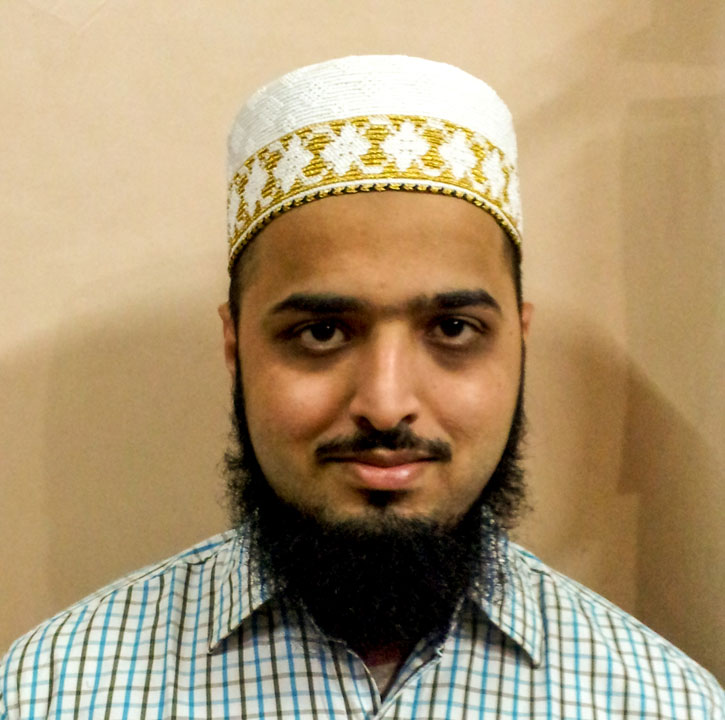
    Moiz Tundawala graduated from NUJS, Kolkata in 2005. He is currently pursuing his doctoral studies at London School of Economics.

    In this interview we speak to him about:

    • His routine, and how prepares for examinations
    • The shortcomings of the system in making education accessible to people with disability
    • Plans for the future

    Why did you decide to study law?

    In school my favourite subjects were history and political science. Never the less I wasn’t precisely sure what to do after my twelfth board exams. I had an offer of admission from the WB NUJS, and also Political Science in Xavier’s Calcutta. Eventually I decided to go for law primarily because I would get a wider array of choices. Looking at the courses on offer, I knew that the university would teach me the law of a diverse variety relating to the human engagements. As a result, I could avoid committing to anything particular and narrow down my career options. Now as things stand, I continue to still cater my interest in history and political science by aiming a specialization in legal history and public law. It all ended well for me and in retrospect, I think I made a pragmatic decision to go for law back in 2005 over Political Science that was been offered.


    What kind of study schedule did you follow?

    I am largely indisciplined when it comes to study schedules. It is just that I always let my interests and curiosity motivates me.


    How do you organise the entire activity of learning something, producing academic content and preparing for exams?

    I use a computer with a screen reading software called JAWS, and a scanner with another software called Kurzweil. I scan books, download articles and other materials, save them in different folders on the computer. I always make it a point to take notes in class, especially when I think that teachers are sufficiently well versed. To help produce academic content, am told there are softwares which do your in-text citations and build a bibliography. Am yet to try them though, but will hopefully do it very soon.

    On the substance side, I also make notes for every article, book and case that I read and deem important. While reading, I first look at mastering the core thesis and arguments, and then get down to focusing on matters of detail. Most important, is to keep writing, to oneself, for oneself, so that ideas are not lost, even if they be roughly developed.


    How did you write exams?

    When my sight started deteriorating, I started getting someone to write my papers. As in, I would dictate and the person would write. Second year of college onward, I switched to a computer.
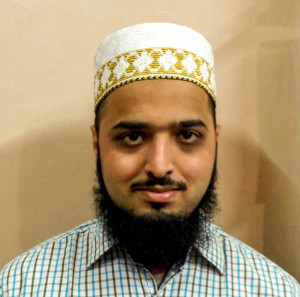
     

    moiz-profile-picture-eAs a visually impaired student did you come across additional challenges, while studying in the law school?
    Yes, you keep coming across new challenges all the time. Most importantly, is getting access to the reading materials. Moving around in the library is also difficult. Asking for someone’s help to locate all the relevant books and the likewise. But, the folks in the NUJS library were extremely cooperative. Once I passed out due to deteriorating health, and they came up with an online electronic catalogue, which I think is very essential for a visually impaired student. Here in London, libraries are also sensitive to differential needs. I just have to write to them with the names of the books which I require, and the next time I go, someone from the staff fetches them for me. Mobility is another big thing. I have one regret looking back to my stint in NUJS, that I was not sufficiently confident to try moving around on my own. Had I been, law school would have been a much fun experience. Infrastructure will keep throwing difficulties, but I guess one must keep taking the initiatives to work around and also to get things done.


    Did you find the legal education system in general and your college in specific to be sensitive to the needs of the visually impaired students?

    The legal system as a whole is obviously not sensitive enough. The legal education in particular, is not sensitive at all because most important is to get materials in an accessible format, which is not available easily. Sadly, 90 to 95% of the books do not have an electronic edition yet. And scanning takes up a lot of your time and energy. Therefore, it goes without saying, this requires a lot of patience on your part. Every once in a while, if you are lucky, you do manage to get soft copies from here and there. My college was as co-operative as it could have been. They were the ones who encouraged me to switch to computer for the purpose of the exams. Library staff was also cordial and cooperative enough. Even teachers were sensitive to my requirements in the class. Especially, in my early days, some of them would just come up to me for a quick chat to figure out how I was getting along. This I think is very important. It is not always possible for a blind student who may find navigating the campus difficult to go to a teacher every time he or she is facing any particular issue. I was slightly daunted by the thought of reading so many cases and thick law digests. But, Dr. Sudhakar, a visually impaired professor of international law in NUJS, wisely advised me not to bother so much about all that, and that things would keep falling into place gradually. The knowledge that someone who has faced similar issues and has still ended up doing so well for himself really helped at that time.


    Would you encourage visually impaired high school students to pursue law?

    Yes, I would definitely encourage all the visually impaired school students to pursue law. As the system needs you more than you need the system. If law interests someone, come along, and do the legal system a favour. Enlighten other persons about the diversity within the society, the different problems which people confront, and the amazing things they are capable of doing in spite of all they go through. And yes, if you are not so sure what you want to do, law is sometimes a safe option.


    How can other visually impaired students increase their academic performance? Do you have any suggestions for this?

    I have nothing more to add apart from my own experience. Reading with vigour, and more importantly, thinking imaginatively. Furthermore, I think that if the teacher is good, paying attention in class would also be enough.


    What are your future career plans?

    Well am still not sure about it. At this moment, I am engrossed in my doctoral studies. There is still a lot of time to decide. But yes, a career in academics and research perhaps would be my preference. But I do not wish to rule out law practice altogether.


    What message would you like to share with our readers?

    Nothing apart from wishing all the visual impairments and other disabilities students, freedom from fear and inhibition and imaginative discernment.

  • Rahul Bajaj, Undergraduate Student, Nagpur University, on being an Indian Delegate to Harvard, battling visual impairment, and braving all odds

    Rahul Bajaj, Undergraduate Student, Nagpur University, on being an Indian Delegate to Harvard, battling visual impairment, and braving all odds

    Rahul Bajaj is currently studying at  Dr. Babasaheb Ambedkar College of Law, Nagpur. Rahul interned with us for sometime, and he did exceptionally well. He is visually impaired from birth. Rahul scored 97 per cent in Class X and 95 per cent in Class XII, for which he was awarded the Dhirubhai Ambani Scholarship from Reliance Foundation and another scholarship from the Director of Higher Education, Govt. of Maharashtra.

    In this interview we speak to him about:

    • Braving the odds
    • His connection with Harvard Law School as an Indian Delegate and a student of HarvardX outreach program.
    • Future plans regarding his career


    How would you like to introduce yourself to our readers?

    I am a nineten-year-old law student and am currently in the second year of my law course at Nagpur University. I also happen to be blind since birth, with a rare retinal condition called Leber’s Congenital Amaurosis (yes, that’s quite a mouthful).
    I studied in a mainstream school and junior college in my hometown, Nagpur. I enjoy reading books, learning new languages, travelling and learning about different cultures.


    Why did you decide to study law? What were other options you were considering?

    As I am blind since birth, I realized the importance of self-advocacy at a very early age. And, once you learn to advocate for yourself, the logical thing to do after that is to learn to advocate for others. After my 10th board exams, like most other students, I began seriously considering my future options. I belong to a family of doctors – everyone in my family is, or wants to be, a doctor. I have always admired doctors but have never wanted to be one myself (ironic much?). I opted for the commerce stream in junior college; most of my friends were planning to pursue the chartered accountancy course and many people persuaded me to do the same. However, nothing appealed to me the way the legal profession did – I have always been fascinated by the power of the law to empower even the most powerless.


    What kind of study schedule do you follow?

    This might sound cliché, but I have always believed in maintaining consistency. Therefore, I generally allocate a few hours every day for studying. If you study regularly in a diligent manner, you can do very well in academics. I cannot emphasize enough the importance of maintaining a healthy balance between one’s academic and other pursuits; I don’t see any point in excelling in academics to the exclusion of all else. In fact, one of the primary reasons why I decided not to study in a national law school was because I believe that most national law schools, notwithstanding their brilliance, stifle creativity and do not allow students to focus on other things apart from figuring out how to stay in the rat race.


    How do you organise the entire activity of learning something, producing academic content and preparing for exams?

    I use an application known as a screen reader on my computer – a screen reader reads aloud the text that is given on the screen in a human-like voice. I scan all my study material onto my computer and then read it with a screen reader, so I highly rely on assistive technology. In addition, we have appointed two readers who read the study material to me and even help me to learn it.


    How do you write exams?

    I write all my exams with the help of a scribe who reads out the questions to me and writes the answers as per my instructions. Normally, I have to take several mock tests with the writer in order to build good coordination. As this is an arduous process, I get twenty minutes per hour extra for solving all my papers.


    As a visually impaired student, do you come across additional challenges, while studying in law school?

    Yes, I do have to encounter myriad challenges. Blindness permeates everything that I do, so it is always a force to be reckoned with. My uniform experience has taught me that the biggest challenge is dealing with the attitudes of those who believe that blind people are mere objects of charity and sympathy. People often have a fixed mindset, and it is very hard to convince such people that I can compete on a footing of equality with others. Lack of access to study material in an accessible format, finding a good writer for writing my exams and lack of access to important material for preparing for moot court competitions, research paper competitions, etc are some of the biggest challenges. The challenges are not just limited to law school, but also extend to other professional and social settings. During my internships, for example, I am always the elephant in the room, at least for the first few days. Most people do not have any past experience of interacting with a visually impaired person, so they do not know how they should engage with me. As a result, despite your best efforts, you do sometimes stick out like a sore thumb. That being said, I have generally had very positive experiences and have realized that people are more than happy to make reasonable accommodations if you tell them what you precisely require.


    Did you find the legal education system in general and your college in specific to be sensitive to the needs of the visually impaired students?

    All my professors have always been very supportive and encouraging; they always try to help me in whatever way they can. Forgive me for my lack of modesty, but I am mindful of the fact that this can also be attributed to a large extent to my good academic record. It is difficult for an average disabled student to thrive without asserting his/her needs. A lot still needs to be done to make legal education more accessible to the disabled in India.


    Would you encourage visually impaired high school students to pursue law?

    Law can certainly be a great profession for a visually impaired person, but I wouldn’t advise anyone to go for law just because he/she is visually impaired. My approach has always been to first decide what I want to do and then to figure out how to deal with the challenges that my visual impairment entails. This approach, in my view, is better than doing something just because it would be comparatively easier for a visually impaired person.
    That being said, if you are genuinely interested in the field of law, you should definitely go for it! I earnestly believe that the battle to compete in a world which has largely been designed to cater to the needs of the sighted greatly enhances our problem solving skills and the ability to think out of the box and every lawyer needs to have these skills in order to succeed in this profession. Moreover, like have I said before, as a visually impaired person, you do always stand out whether you like it or not. This can be a blessing in disguise, as it affords you an opportunity to change people’s perceptions, forge good friendships and above all, it allows you to have a more enriching experience than an ordinary student.


    How can other visually impaired students increase their academic performance?

    The most important thing is to learn to believe that you are not a blind student, but a competent and intelligent student who happens to be blind. In other words, you should not allow your disability to define you. It is also essential to set high goals – if you have mediocre goals, you will only end up being mediocre. The society generally has very low expectations from visually impaired students and visually impaired students often end up inadvertently internalizing these messages. You have to wholeheartedly believe that you can achieve anything that you set your mind to. I know that this is easier said than done and I sometimes still struggle to maintain this level of self belief, but you have to try. As T.S. Eliot once said, “Only those who will risk going too far can possibly find out how far one can go.”
    Contacting other visually impaired people in India and abroad who have excelled in the same course is another useful way to learn many small but significant things. Once you find out that there are other people who have overcome similar hurdles, you realize that you can do it, too.


    You are a Delegate at The Harvard Project for Asian and International Relations. Please tell our readers about it.

    The Harvard Project for Asian and International Relations, or HPAIR as it is popularly known, is a conference conducted by Harvard University which seeks to bring together roughly 500 delegates from all Asian countries to discuss contemporary socio-economic challenges relevant to the Asia-Pacific region. The conference is conducted twice a year – once at Harvard University and once in an Asian country. The conference for which I have been selected will be conducted in Tokyo in August.


    How did you become a delegate for this Harvard project?

    Actually, a couple of my friends attended the last HPAIR conference and told me that it was an amazing experience. So, I decided to test my luck and applied for the Tokyo conference. Much to my surprise, I got selected for the interview, which was conducted over Skype, and, the rest, as they say, is history. On another note, the application window for the Tokyo conference is still open. Those who are interested in applying for the conference should go to hpair.org.


    You have also been selected for a Copyright Law programme by Harvard Law School. How did this happen?

    Harvard Law School, through its HarvardX initiative for distance education, conducts an online course on copyright law every spring. Around 525 students are selected from across the globe for this course. One striking feature which sets this course apart is the fact that all the students are divided into 21 sections, and each section, roughly consisting of 25 students, has weekly online meetings and discussions. Personally speaking, this is certainly the most intellectually stimulating course that I have attended so far. The course not only allows you to learn copyright law from the best in the business, but also affords you an opportunity to acquire a deeper understanding of what it actually means to study at Harvard Law School, which is something that I have always dreamt of doing.


    What are your future career plans?

    My aim is to work as a transactional lawyer after completing my education. I would like to work in a Magic Circle firm in the U.K. or in a Tier-1 law firm in India. The main reason for the choice is that transactional lawyers are able to prevent disputes from occurring, whereas litigating lawyers essentially have to prevent an already bad situation from getting worse, so I believe that this would suit my personality well.


    What message would you like to share with our readers?

    We all have our unique flaws – some are more apparent than others. So, we should learn to appreciate and celebrate diversity instead of cringing away from someone who is not like us. However, you can learn to appreciate someone else’s flaws only once you learn to accept your own flaws. You should never stop believing in yourself, because if you don’t back yourself, who will?
