Tag: Westminster

  • This time, technology change will be more rapid and disruptive. AI is a powerful dragon, it’s important to learn to control it-Mahnaz Malik, Arbitrator & Barrister at Twenty Essex

    This time, technology change will be more rapid and disruptive. AI is a powerful dragon, it’s important to learn to control it-Mahnaz Malik, Arbitrator & Barrister at Twenty Essex

    This interview has been published by  Priyanka Karwa and The SuperLawyer Team

    Madam, could you please introduce yourself and provide some background information about your career in law?

    I am an arbitrator and barrister at Twenty Essex Chambers in London, specialising in commercial and investment arbitration. I am also a Fellow, Trustee, and Council Member at Hughes Hall College at the University of Cambridge. I started by studying law as an undergraduate at Cambridge in 1995, so my legal journey spans 28 years. I am qualified to practise law in three jurisdictions.

    How important are mentors in the junior lawyer’s journey?

    As junior lawyers, we learn from people and not just books. I have tried to learn from other lawyers, both senior and junior to me, in terms of what they got right and what they didn’t. When you are a junior lawyer, you have a different perspective and role in a large case. It is important to remember that vantage point when dealing with junior lawyers. This cannot be too difficult because we all start as junior lawyers. I was fortunate to learn from some of the best in my field.  I have benefitted from the kindness and patience of many colleagues over the years, but two in particular come to mind. Arthur Marriott KC and Cherie Blair KC not only taught me by their example, but they also gave me the great gift of believing in my abilities as a lawyer even before I did so myself.

    Did you face any challenges or obstacles while pursuing your legal education or during your early career in law? How did you overcome them?

    I needed to find my place in the legal profession. This is an ongoing journey as I move from counsel to more of an arbitrator role. I did not come from a family of lawyers. The profession was all the more novel because the women in my family were not career professionals. So, I did not know what being a (female) lawyer was about. I did not know where I would fit in, especially when I started in 2000; arbitration in London did not appear diverse. I also elected to practise at the English Bar, which has a legacy from 1420, so half a millennium, but women and those from racially diverse backgrounds are comparatively recent entrants.

    I think it’s important to understand the context in which a situation arises. As I was not born into the English legal profession I approached it with a convert’s zeal. So, I attempted to learn as much as possible about the Bar, its history, and its workings. I would say the same applies to my practice area – commercial and investment arbitration. Disputes do not arise in a vacuum; in addition to knowing the legal dimension, it is also important to understand their context. I also try to understand the project, its technical, cultural, geographical, and, of course, its commercial dynamics.

    Could you share some of the most memorable cases, experiences, and milestones you’ve worked on during your career and how they have shaped your perspective on the legal profession?

    I was fortunate to come by early successes in cases as counsel. In the public domain, Sky Petroleum v Albania is one such case in which a $1 billion claim was dismissed in its entirety with costs in my client’s favour. It was one of the first cases I did on my own. It was literally two of us – my instructing solicitor and me in the hearing room opposite this large team of City lawyers. It gave me great courage and belief. I am not phased now by working in small teams because I believe that sometimes a lean team can achieve great things. It also gave me great faith in the arbitration system. An intelligent and hardworking tribunal will be able to see the dispute for what it is and come to a fair decision.

    As I started working more on treaty disputes, I was keen to learn more about treaties, so I spent a few years drafting and negotiating investment treaties, which took me to many interesting places in the world and gave me a rare insight into how treaties are made. For example, I assisted with the negotiations of the COMESA Investment Agreement in the 2000s.

    Regarding milestones, my first appointment to an ICSID Annulment Committee was a great privilege and honour for me since I started my professional journey with ICSID arbitration 23 years ago.

    As you progressed in your legal career, did your initial reasons for entering the field evolve or change? If so, how?

    When I first started out in the law, I wanted to win cases for my clients. That still remains true when I wear my counsel’s hat. As an arbitrator, the role is different. When  I serve as an arbitrator, I try to understand the dispute from all its perspectives and focus on making the right decision. It is, therefore, incredibly important that arbitrators can understand the dispute, its commercial, technical, and cultural dynamics, as well as the law.

    How do you manage your work and well-being?

    As lawyers, we trade our time – which is a non-renewable resource, for money, which is a renewable one. In theory, you can make more money after losing it, but you can never get back more time. I have learned to appreciate the value of time as I get older, so I am trying to be careful about how I spend it. I am also becoming increasingly conscious of taking better care of my mind and body. I am a work in progress when it comes to seeking the balance between work and well-being. There are numerous routines and productivity tools out there. The basics remain the same – good sleep, decent nutrition, meditation, spending time with loved ones, keeping positive, and exercising. If there is one hack I could share, it is to “go for a walk”. If you run or jog, so much the better, but going for a walk helps clear the mind. Charles Darwin used a “thinking path” of about half a mile around his house to reflect on ideas. Finding space to move does wonders for the mind and body.

    I also train in boxing. It keeps my physical (and mental) reflexes sharp. It’s important to be quick on your feet as a barrister, and the physical sparring reminds me of that.

    How do you see AI’s impact on the legal profession?

    I believe the impact of AI will be massive in our profession as the technology grows more sophisticated. It is important for us to understand its implications and harness it, especially for junior lawyers who will need to adapt their skills to compete. I remember when mobile phones first came about over thirty years ago and where they are now. This time, technology change will be more rapid and disruptive. AI is a powerful dragon, it’s important to learn to control it.

    How important is networking and building professional relationships in the legal industry? Do you have any tips on how to network as a young lawyer effectively?

    This has two steps. You need to first know yourself before knowing others. It is important to find your identity, understand your unique selling points as a lawyer, be conscious of your strengths and weaknesses, and then find networks to leverage them. At least, that is what logic would dictate. I do not practise what I preach. I have never found a linear correlation between my professional networking and my work. I meet colleagues because I enjoy meeting people to learn about new ideas and their experiences. Recently, I have started interacting on LinkedIn, which offers a similar connection opportunity for me. I do much of my learning from people, so I see meeting people as an educational experience rather than networking. So, perhaps, I am not best placed to advise on this issue.

    Finally, if you could offer one piece of advice or wisdom to fresh law graduates as they start their legal journey, what would it be?

    It might sound trite, but it would be the phrase “This too shall pass.” It is often used to help people take heart in troubled times, but there is more to it. Its origins lie in a fable, which many attribute to 13th-century Persian poet Attar of Nishapur, in which a king asked wise men in his realm to find a sentence that would remain true in good and bad times. The king was presented with a ring with the Persian text, “This too shall pass,” on it. The bad thing about good times is that they shall pass, and the good thing about difficult times is that they shall pass too. The same story is also found in Jewish folklore. The essence of the message is universal – human existence is ephemeral, and time is fleeting. As I get older, I realize that good and bad times come and go, but life is extremely precious, and it is important to keep that perspective in mind.

    Get in touch with Mahnaz Malik-

  • Khushi Pandya, PhD Scholar, University of Westminster, on higher studies, SoPs and Practice at Gujarat HC

    Khushi Pandya, PhD Scholar, University of Westminster, on higher studies, SoPs and Practice at Gujarat HC

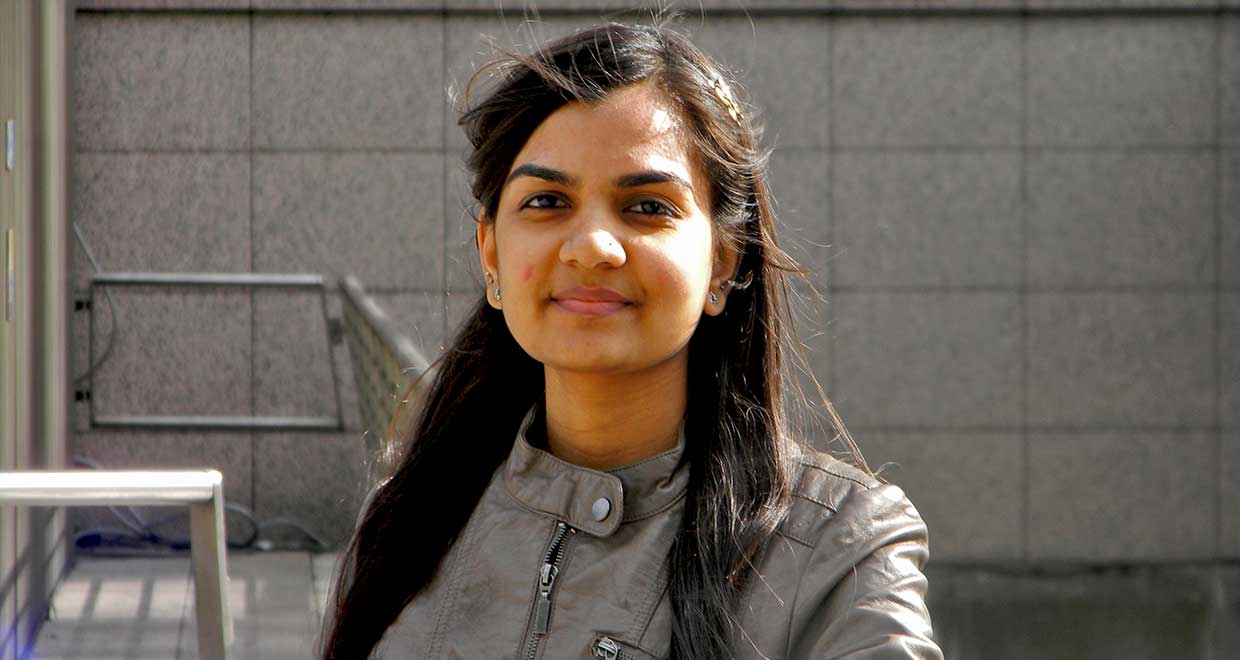
    Khushi Pandya is a currently a Doctoral Researcher at University of Westminster. She is an alumnus of Maharaja Sayajirao University of Baroda. She pursued her LL.M in International Commercial Law from University of Westminster. She was a practising advocate before the Gujarat High Court. She has also served as a Grievance Redressal & Legal Consultant at Woman & Child Development Department, Government of Gujarat.

    In this interview she talks about:

    • LL.M and Ph.D from the University of Westminster
    • Tips on SOPs, Recommendation Letters and publications
    • Practising at the High Court of Gujarat
    • Working as a Legal Consultant in a Government Department


    Given that most of our readers are law students and young lawyers, how will you introduce yourself to them?

    Hello! I am Khushi Pandya, currently a Doctoral Researcher at University of Westminster, London. I am a proud alumnus of Maharaja Sayajirao University of Baroda, India from where I read my law degree – B.A. LL.B.  I have done my LLM in International Commercial Law from University of Westminster, London in 2011-2012. I was a practising advocate before the Gujarat High Court, State Legal Consultant with Government of Gujarat and a proud volunteer engaged with Mahiti Adhikari Gujarat Pahel. I hold an ordinary and average kind of student profile. I belong to Ahmedabad, Gujarat and have completed my schooling in the vernacular.


    How did you gravitate towards law? Tell us about your college life at  Maharaja Sayajirao University of Baroda. What activities did you partake in?

    Well, my inclination to pursue law developed as early as Class 10. My father is a journalist based in Ahmedabad and was extensively engaged from 1996 to 2005 covering various feature stories involving human rights issues or rather, I would say, stories which outline the common man’s struggle for getting what they are entitled to under the laws of our country. Hence, from the age of 8-9, consciously or sub-consciously I too, was associated with the thoughts and stories he used to share with his fellow colleagues and it gradually developed my interest in the subject. My father’s profession indirectly provided me a platform to understand that in reality, the struggle for rights has somehow become a part of an ordinary man’s life. By the time I reached Class 9 or 10, I very well understood that law is the mechanism which helps people to redress their grievances against many odds.  I completed my schooling in 2005 and chose MSU to pursue five years integrated law course – B.A. LL.B. I was in the first batch of integrated law course- B.A. LL.B at Baroda School of Legal Studies, Faculty of Law, The M. S. University of Baroda and it had all the factors you come across by being the first batch of any Course and that was mostly related to infrastructure and scarcity thereof. But renowned and experienced faculty members played very a important role during this time to nurture students’ knowledge and perspective as budding lawyers. Having renowned mentors help you a lot in getting insight of practical aspects of law. Faculty of Law, MSU gave many Justices in various High Court and Supreme Court, Advocate General, Government Pleaders, Senior Advocates and it has helped us extensively.

    At the same time, one should remember that MSU is the only residential University of Gujarat and it has its positive aspects. Like any college student, I have enjoyed a lot for five years. As one of my favourite writers C.K. Bakshi has rightly said that, “You learn more from outside of class than from within four walls of a classroom.” MSU provided me many opportunities to explore and expand my vision – be it extensive and intense election process, weeklong Youth Festival or cosmopolitan environment.

    As far as academic activities are concerned, I was ordinarily involved with studies throughout five years. During the first year of study, I was kind of an obedient student but in the following years I have bunked many classes and have spent time in the canteen discussing various developments in legal and political field. I have always scored well in semester examinations without any ATKT. I was overall a good student. Apart from day to day studies I have participated in various Legal Research and Writing Competitions/Seminars/Workshops – both in English and Gujarati language and have performed well too.

    As far as extra-curricular activities are concerned – I have extensively participated in various activities during Youth Festivals like –story and poetry writing competitions, debate or poetry recitation. I topped in Story and Poetry Writing Competition for two consecutive academic years.

    By and large those five years at BSLS, MSU were extra-ordinary in every sphere – it gave me a lawyer’s perspective by observing all facets of University life.


     What were your areas of interest during your graduation? How did you go about developing expertise and knowledge in these areas?

    Ever since I decided to take up law as a career, my entire consideration was towards issues which affect human life. Hence, during my college days my area of interest remained more towards Human Rights or instead should I say my inclination was towards Human Rights based approach. I was associated with a voluntary group which runs a legal aid clinic and focuses on legal awareness. Stories from people who came to attend such programmes are much more interesting and a kind of reality-check. Expertise come with years of practise but the various internships I undertook have definitely helped me to develop my perspective. Talking with seniors/fellow colleagues/clients, attending office helps you to gain knowledge and practical aspects of legal procedures  and that’s how you understand things. For practising law you need to understand practical aspects more; of course, books do help you but you need to understand what is termed by practising advocates as “Court Craft”.


    After graduation, you started practicing before the Gujarat High Court. What kind of difficulties did you face during that period? How did you overcome them? How would you describe your experience as?

    After graduation, I joined the Chambers of Dr. Mukul Sinha at High Court of Gujarat in May 2010 and trained until August 2011. I would say the experience was simply the best in each aspect – the kind of comfort and freedom you get as a fresher, I was made part of all kinds of discussions, I was allowed to participate in all court matters, I had access to all infrastructures and I learnt a lot. The reason behind mentioning all these is that ‘law firm culture’ is not yet developed in Ahmedabad and there are very few juniors – esspecially anyone without a background in the legal profession who get such freedom and liberty and comfort to work with Senior Advocates.

    My experience as a junior member at the Bar was fair enough. I was exposed to a variety of matters in this short span like – matters pertaining to service law, contempt law, furlough applications, constitutional matters and few other matters involving civil rights of people against politically motivated actions.
     

    khushi-pandya-3

    What made you pursue your LL.M from University of Westminster, London?  How would you describe your experience as? Tell us about the course structure and specialization of Master of Laws at University of Westminster?

    After working at Gujarat High Court I felt that exposure in foreign country to pursue Masters Degree in Law would be worth it. At the root of making the decision to pursue LL.M from abroad was just to get exposure – both professionally and personally. Also, the idea of going back to the classroom is always fascinating one. I made a decision in May 2011 that I want to study further and started searching for Universities and short listed a few Universities in UK. I got offers from Queen Mary, Nottingham, Durham, Birmingham and Westminster. I was awarded the Taught LL.M Scholarships 2011-12 – a fee waiver scholarship at University of Birmingham. But somehow I finalised University of Westminster to pursue my LL.M.

    The prime reason behind choosing UoW was faculty members – Dr Reza Banekar, Richard Earle, Adam Samuel, Dr Aurora Voiculescu, Simon Newman, John Flood, Joseph Tanega and many more. All of them are oceans of knowledge and I was lucky to have mentors like them. Classroom discussions and lectures were interactive in nature and it helped me a lot in developing a skill to speak up my mind and raising my views to a larger audience.

    LL.M Course at UoW is divided into  7 modules – two compulsory modules and they were : Foundations of International Commercial Law and Dissertation; five  optional modules and I took up : International Commercial Litigation, International Commercial Arbitration, Comparative Commercial Arbitration, Corporate Social Responsibility, Business and Law and Research Methodology. The course is of 180 credits – 6 modules comprising of 20 credits each and dissertation module comprising 60 credits.

    The assessment method is totally different from the one we have in LL.M courses in India. Assessment of one module is divided in two or three parts – open book class room exam, research essay, assignment to finish from morning to afternoon and problem solving questions.  Further, Masters Degree in Law from UoW requires its students to answer their questions within a specific word limit and it nurtures your habit to frame your arguments in a most precise manner. Gradually it developed the skill to reach your audience in few words.

    One of the other reasons behind choosing Westminster was that it is situated in the heart of London – just a minute walk from Oxford Circus tube Station!.

    Most fascinating and important part about studying at UoW was its library service and kind of resources you get for your research – it was simply the best.


    What are the key ingredients of a well written SOP? Can you make it personal? Any tip to those making their SOPs? What might be the one mistake that the majority make?

    Well, there is no strict formula to write an SOP. It varies from  need to need and as far as SOP for a course in a University abroad is concerned, they provide you a frame within which you have to explain yourself and that is too general and simple. My personal belief is that a well written SOP should be free of any jargon. When any organisation asks you to write a Statement of Purpose, it has to be your statement behind your inclination to take up something and your objective behind the same can be anything – personal reason, fascination, or just like that. A well written SOP, as per my opinion, can include reason to join a specific course – personal reason or any professional mileage you may get after completing that course. My suggestion rather than a tip to those making their SOPs is: write your SOP at your own, don’t copy from others’ SOP and most importantly – your consultant for higher education abroad is not supposed to write your SOP, it’s you who has to write it and penning down your mind might take up a day or two, but at the end it will exactly reflect your mind and would be far better from a stereotypical SOP written by your Consultant. I would certainly say that majority of students who consult Foreign Education Advisors leave it up to them to write one. Please don’t do so.

    Writing an SOP for applying for a scholarship/studentship equally requires you to pen down your need to seek financial assistance. When the SOP is for a scholarship, don’t embark solely on your achievements or need. All you can do is, collaborate your achievements, need and the benefit you are going to get after completion of the course.

    As far as writing down your thoughts is concerned, to sum up I would quote Friedrich Nietzsche that, “Style ought to prove that one believes in an idea; not only that one thinks it but also feels it.”

    I believe writing down your thoughts and perspective will definitely make a good SOP and  it has certainly helped me to get the Law Research Studentship Award to pursue Ph.D at UoW.
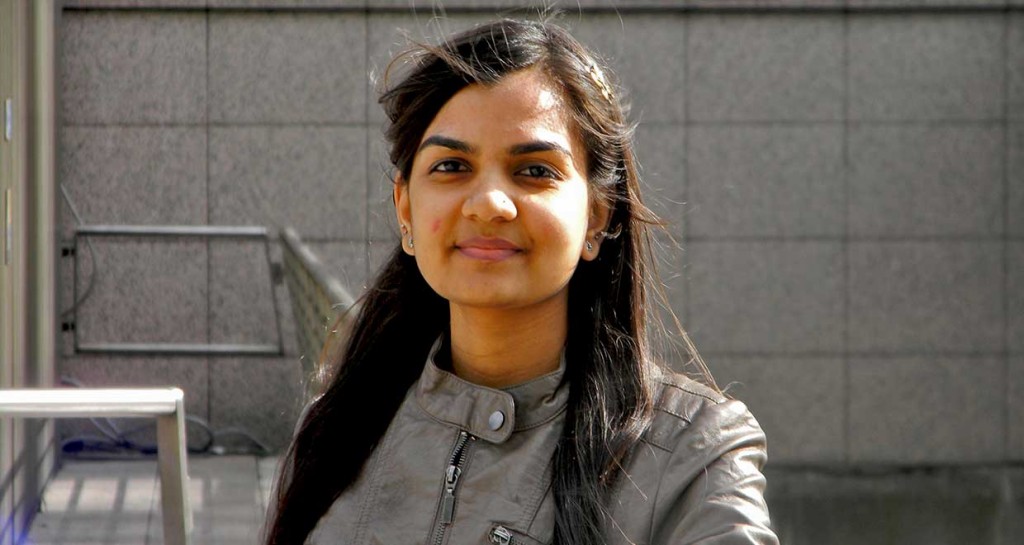
     

    khushi-pandya-2

    Do you think that having your recommendation letters written from distant acquaintances with influential position may backfire against you while making your application? What is the proper thing to do instead?

    My opinion is that all you need is a Recommendation Letter and it can be from anyone who knows you well – professionally or academically. Majority of institutes ask for recommendation letters from the last academic institute you have attended and in some cases they allow to have a recommendation letter from your employer. Recommendation letters are to support your application to an institute and the institute does not decide on your application solely on the basis of the recommendation letter – they do look at your grades, SOP, whether you meet  other criteria or not,  etc.


    You have publications in various renowned journals. How should one go about writing papers and getting the same published? Please share somehighlights of your best work.

    The first legal research paper I wrote was for a seminar organised by Bhavnagar University and that was in Gujarati language, discussing violence against women coming from culturally nomadic tribes. An important point to keep in mind is – writing what appeals to you is necessary – it may be purely legal, socio-legal, a novel, a story or a poem. It is said that practice does make you perfect and being in a legal profession, the habit of writing at regular intervals help you a lot. Nowadays we are in the era of social media – everything is virtual and so is your presence! As a Doctoral Researcher, during my interactions with many renowned Professors across the world, they have repeatedly advised that writing is the most important element for this profession. Publication indeed is an important factor because what you write or analyse must reach others and that’s how it is channelized across the wider community and that’s what academia actually means.

    I am in the process of producing my best work. But issues on which I have written include – Right to Potable Water in this era, Muslim Personal Law with special reference to Fatwa, scientific methods used in criminal investigation and its impact, right to information, unification of arbitration law, investor-state dispute mechanism under investment treaty regime, interface between human rights law and Bilateral Investment Treaty regime, to name a few. Currently along with my Ph.D research work, I am engaged with the  task of codifying various Government of Gujarat Resolutions along with relevant parts of Land Revenue Code pertaining to agricultural land and associated rights of farmers. I am genuinely looking forward to the outcome of this project and believe that it will be very helpful to farmers in understanding their rights and will bring awareness.


    How did publishing affect your legal career? Apart from academia, does it help one to secure jobs at all?

    I would say it boosts your confidence when you see your thoughts or work published in any peer-reviewed journal, newspaper or magazine. If you want to pursue career in teaching, having good publishing record will definitely play an important role and that is one of the University Grant Commission’s requirements too. My opinion is that solely a good publication record really does not help one to secure a job but along with that you are required to meet particular job criteria. If you are looking for a core litigation work area where you would  attend courts and meet clients on weekends or in the evenings, your senior might not be even bothered whether you have any publishing record or not. But I am told that when you are willing to secure a job in top tier law firms, publications during your academic years might be of important consideration.


    How do you identify and decide on a topic or area of law to write on? What is the process like? What are the top three things you consider as sine qua non for great research work?

    During the initial years, topic or area which appeals to you in some way or the other, you write about it. There is no strict formula or process. You choose a topic and start writing. A good point about participating in legal research paper writing competitions is you are given a specific area to write about and it makes the task easy. I believe that finding a topic to write is bit difficult and most of the time  lapses in thinking about the topic only.

    Three things as sine qua non for good research work are:

    • Interest in the topic – and be clear about three things – what you want to research on, why you want to research and how you want to research?
    • If you are involved with serious kind of research (M.Phil/Ph.D/Post-Doc kind of research) – please be aware of all developments taking place in your research subject, know all big shots involved in this research area and do in-depth reading.
    • Time-table and discipline – be clear about the time frame within which you want to finish your research work because as a human being you may procrastinate and it delays the process. So many developments are taking place and it may happen that what you are dealing with has already been dealt with by many other people just because you didn’t follow your time frame. You need to follow a military discipline at times.

    I used to serve as a Volunteer for Mahiti Adhikar Gujarat Pahel, Ahmedabad from March 2013 until I came to UK, for free Legal Aid Clinic where a number of people across Gujarat come to seek advice about various legal issues they are facing. Many a time, stories from general people help you to find a topic to write an article on. You can very well co-relate the social issues they are facing and the law/rules pertaining to the same and research further and shape it as an article.

    It is not always necessary to get it published in a journal or news paper or magazine. You can put it on your blog and seek a wider audience.


    At present, you are a Doctoral Candidate at University of Westminster. What motivated you to pursue a Ph.D.?

    Ever since I took up my LL.M dissertation, I have thought of taking it further to Doctorate research. My interest in the subject was the prime motivation to pursue a Ph.D. Along with that, encouragement and support provided by my Director of Studies who was my LL.M dissertation supervisor too, my professors, my parents and friends motivated me to take up this research project. Since my teenage years I had vaguely dreamt of pursuing a Ph.D before I turn 30; so that factor has also played a role in enrolling for a Doctorate Programme.

    It is not about studying too much. It is unlike a typical study or course and in fact, it is a kind of work i.e. research and writing which you like and that’s how you go further into it. It is a process of evolving during years of your doctorate studies – both personally and professionally. But there is some inner force which keeps on motivating you to take the process further and further. That’s all.


    Prior to pursuing a Ph.D , you’ve also worked as Grievance Redressal & Legal Consultant at Woman & Child Development Department, Government of Gujarat. Please tell us about it.

    Yes, I was a Grievance Redressal & Legal Consultant at Women & Child Development, GoG. A walk-in interview was scheduled for the appointment where all candidates had to undergo a written test and if short listed; had to face an interview. As many as 55-58 candidates appeared for the written test and 8 were shortlisted for interview and I was one of them.  Five panellists were there – Principal Secretary, WCD; Director, ICDS and three other top officers of WCD and the interview lasted for 7-8 minutes. They asked a  few general questions about my alma-mater MSU, laws pertaining to prohibiting sexual violence against women, drafting skills and my course at UoW. It was a kind of formal talk after waiting for 7.5 hours at WCD Office at Gandhinagar.

    Being a State Consultant there were many tasks to deal with. My main task was to handle all litigation before High Court and Supreme Court, preparing affidavits in reply, co-ordination with Government Pleaders. Majority of cases were Public Interest Litigation, service law matters and commercial matters arising out of tender process. Apart from that contract vetting was one of  my tasks.


    Please tell our readers about the environment of a Government department. How do the daily activities take place?

    Working with a Government Department is a different experience altogether. Important tasks include preparing affidavits in reply, monitoring all Court matters, instructing District Offices about matters pending before District Courts, briefing  higher authorities about any important developments, conferences with GP/AAG/AGP.

    In a Government Department, everything goes on file and you will hear people saying “file chalana padega iske liye”. The working environment is typical and in your initial days it annoys you too. The working style is completely different from the one you have in Chambers or Law Firm.   You keep on searching for a particular file and still couldn’t find because the person who initiated that file was transferred to some other department and the new one would say he actually doesn’t know about this issue because it’s a new subject for him/her. But gradually you learn to handle such situations and get the work done. But at the same time working with top officers of the State is also a learning opportunity.

    I was the only legal consultant in the Department managing all sorts of legal issues and had many responsibilities to deal with. Normal days were packed with work and handling various matters and attending Court. Overall it was a nice experience.


    What is your Ph.D research topic.? What was your motivation behind the selection of that topic?

    My thesis deals with the interface between the Bilateral Investment Treaty regime and International Human Rights Law. I show the conflict seen between two regimes of law- Investment law and Human Rights Law and it aims to study the need to balance investor protection vis-a-vis human rights obligations of the state and sovereignty of the state under Investment Treaty regime.


    What plans do you have once you finish your Doctoral Research? What do you plan to accomplish in the coming five years?

    I will be looking forward to teaching. But my long term goal is to get actively involved in spreading right based legal awareness in India.


    Lastly, what would be your message to law students interested in going for higher studies from India?

    If you have a dream or are willing to pursue higher studies in foreign country, you should absolutely go for it. But at the same time it must be kept in mind that higher studies in foreign country might not guarantee a dream job at the first instance when you return to India simply because you hold foreign LL.M Degree and that’s why your  purpose has to be to explore a new world- academically and personally rather than solely aiming at job employability; and  a commitment to your own self to excel in whatever work you take up would benefit ultimately. Make the best out of your one year LL.M or any other Programme in all aspects and explore a new country – culturally, academically and personally. And at last, be ready to embrace the uncomfortable!

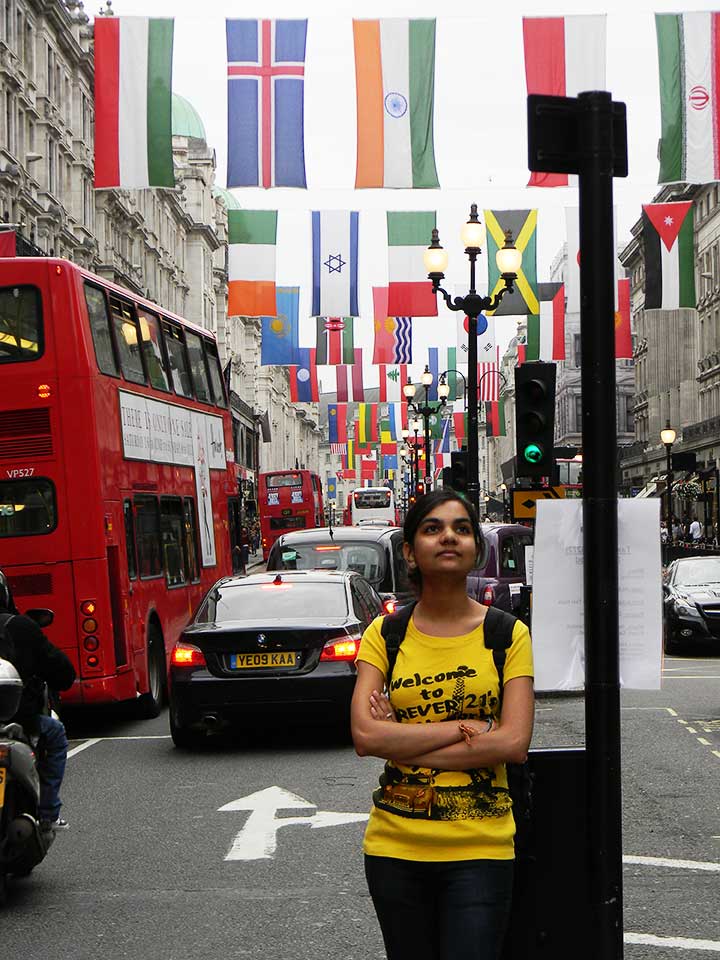
  • Manan Bhatt, Advocate, on studying in Westminster University, his internship experience, and litigation

    Manan Bhatt, Advocate, on studying in Westminster University, his internship experience, and litigation

    Camera 360

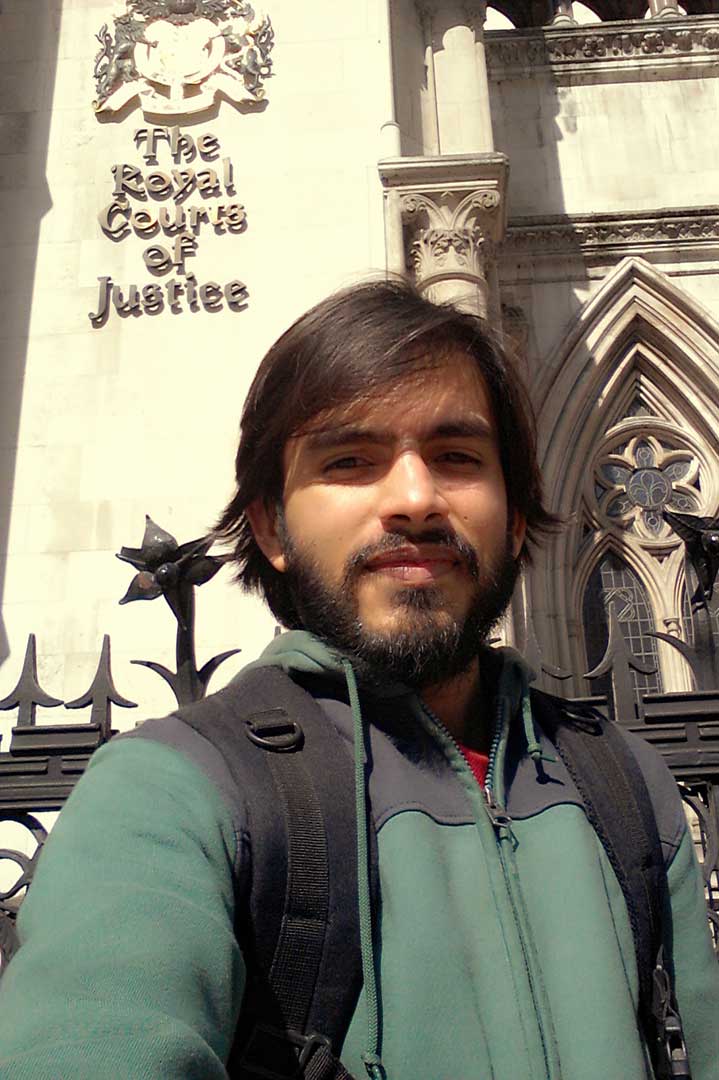
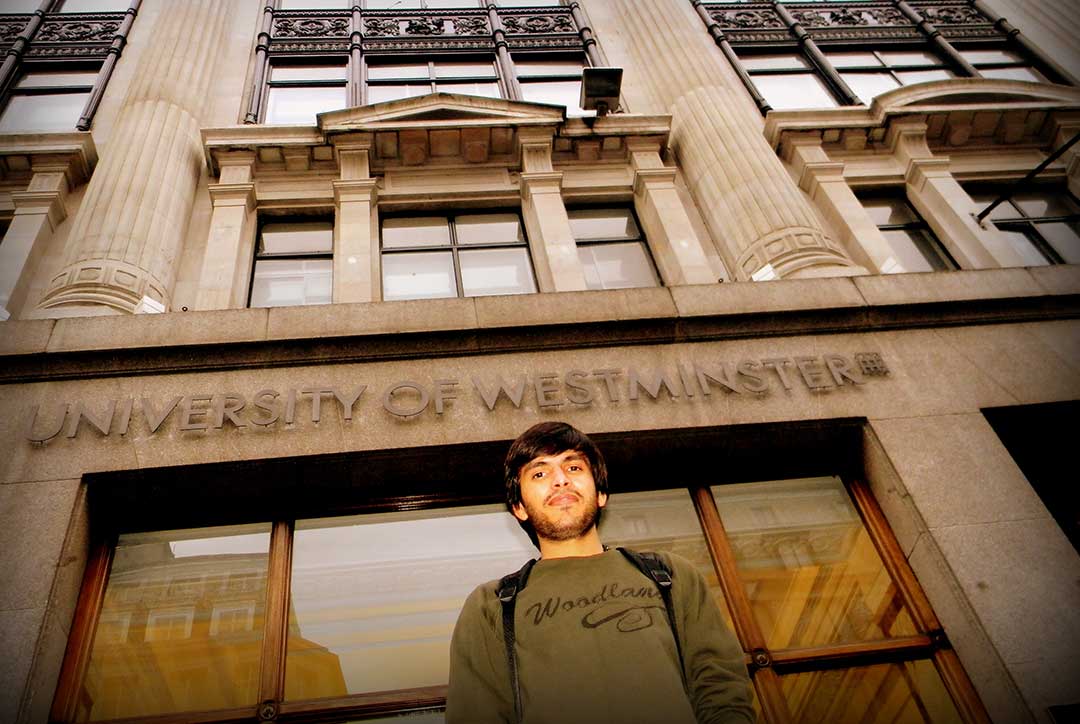
    Manan Bhatt graduated from Maharaja Sayajirao University of Baroda in 2010. Thereafter he went for an LL.M. in International Commercial Law to University of Westminster. He practises as a litigator and is registered as an Advocate. He also had the opportunity to judge the 10th Willem C Vis Arbitration Moot.

    In this interview he talks to us about:

    • Days at MSU and differences between MSU and Westminster
    • Comparison between an Indian LL.M. and an LL.M from the UK
    • LL.M. experience, faculty, facilities and overall academics from Westminster University.


    How would you like to introduce yourself to our readers?

    Hello, you are reading an interview of a person who is experiencing the field of law since 2005 and actively learning the Law since 2010. I did my undergraduate in Law (B.A, LL.B) from Faculty of Law, Maharaja Sayajirao University of Baroda. In 2010 I graduated and my name has been entered in the roll of advocate of Bar Council of Gujarat. I started my practice as an Associate with the Chamber of Hriday Buch which has its presence in High Court of Gujarat. After practicing before High Court of Gujarat for more than a year and a half, I went to UK to pursue LL.M in International Commercial Law from University of Westminster. Currently, I am honing my Legal acumen under the guidance of Mr. Asim Pandya.


    What motivated you to pursue law?

    One or the other reasons did not allow me to stay in the same school for more than three years. I got good exposure by having education from various different schools situated in different areas of Gujarat. My primary education was from Government Primary School, Kheda. Then my father relocated in Gandhinagar and I got secondary Education from Mount Carmel High School, Gandhinagar. I successfully finished my XII – Commerce from Sheth C. N. Vidhyalaya, Ahmedabad. In this manner, I consider myself very fortunate that I have lived, experienced and seen rustic life as well as City life in a very early age.

    I am the ‘first-generation’ lawyer. My entire family is from the education field. So, it was a difficult task to choose a career path. Though, my mom always inspires me to be a lawyer as she believes I am good at arguing (being a victim of my argumentative skill!). Jokes apart, I always believe to be in a field where I can get opportunity to communicate with people and observe every sphere of the Society.

    In fact, I scored very well in XII – Commerce even I got full marks in Business Math in my Board Examination. So, many of my relatives and well wishers impressed upon me that I should become CA. unfortunately, I did not fall prey to their choice of career and got myself admitted in St. Xavier College, Ahmedabad for F.Y. B.A. (Psychology). In the same year Maharaja SayajiRao University announced five year integrated Law course and I opted in. In a sense, I can’t say that law has been my career choice from the beginning at the best I can say that I have inclination towards law from my early years of the school.


    What kind of internships did you do while you were a student?

    From the very first year of our under graduation we required to attend court proceedings as a part of our academic calendar. I did various internships at various different organisations that include Chambers, NGOs, MNCs, Solicitor firms, etc. It helps me to gather first hand information of the legal field. Being a first-generation Lawyer internship is the only source to get to know about the profession. I have read a few autobiographies of Law Legends, but I could have not known the profession and its true color had I not done internships.

    When I was doing my internship with Mr. Majumdar a lawyer and Public Prosecutor in Ahmedabad district Court, I was given an assignment to draft an Appeal for Consumer Matter. I suppose it was a Pro bono brief. One fine day that client came to get the copy of his Appeal. He thanked Mr. Majumdar for his help. Mr. Majumdar called me in his chamber and told the client that he has drafted your Appeal. In a literal sense the client touched my leg and thanked me. This was happened when I was in my second year, I was so embarrassed and at the same time happy to see the happiness engraved in the eyes of that client. From this incident I learnt a lesson in life that the lawyer’s duty is not just give his client a best possible professional advice but, it is also the duty of every lawyer to generate sense of confidence in his client so that he can feel that he is in the safe world.


    How did you go about securing internships under people like Mahesh Jethmalani?

    Faculty of Law, M. S. University gave a large number of legal doyens to the profession. In the year 2005, as many as nine Justices were alumnus of Faculty of Law, M. S. University. It also gave many Chief Justices to various High Courts. Even many of its alumni have been elevated to Supreme Court of India. So, the brand name ‘MSU’ plays very important role to secure Internship in good organisations/chambers/firms.


    What stark differences did you find between MSU and Westminster University?

    We are the first batch of Baroda School of Legal Studies. Being a first batch of Five Year Course has its own merits and demerits. I believe infrastructure was the biggest hurdle in MSU. Though, we had renowned faculty member. There were many practicing lawyers who came as a visiting faculty and which helped us immensely.

    The stark different between MSU and UoW is infrastructure and library. In UoW, we have library which runs in five floors. Not only books but we also have a facility to borrow laptops from our library. We can access full version of many web portals such as WestLaw, LexisNexis, HeinOnline, Jstor, etc. We do not need to visit the campus just to renew the books which we have borrowed three weeks back. This helped me a lot while I was making my dissertation. In MSU you are constantly in a pressure to find out the sources for your research. Expensive books are not available and if available then only for the reference purpose. This all have very bad impact in your research quality.


    What was your motivation behind doing an LL.M. abroad?

    This is the question which I have answered zillion times. Invariably, every person asks this question why not an LLM in India. The answer is simple. I was convinced that I am litigation material and hence, I want to expand my knowledge base that too in a short span as I want to rejoin the profession again. In India at that time LLM courses were of two years. And in UK it does not consume more than 9 months. This is the first reason.

    I am not a ‘DEGREE CENTRIC’ person. I want to expand my knowledge more particularly; I like courses which require intensive research and a more independent approach to working towards DEGREE without the constraints of attending timetabled lectures. In India, we are obsessed with attendance and ‘text book–based–examinations’. This is what I hate the most and hence I decided to pursue LL.M from UK.


    How did you choose the universities that you applied to?

    Actually, I had three countries in my mind for pursuing my LL.M i.e., UK, USA and Singapore. Then I contacted many LLM students through LinkedIn that helped me massively to zero down on UK.

    After I decided that I will be going UK, the task became easy and I surf, read, research and talk with many people. Here, I would like to give an unsolicited advice don’t hire any agent for a help to make your research and application. DO NOT believe what they say; use your own mind and do your own research. Contact Admission Office of any of the universities of your choice and ask every single query your mind has cultivated.

    As I said earlier I want to join some Research University. I have applied in SOAS, Kings College, Queen Mary, Durham, Leeds, and Leicester. I received offer letter from Kings College, Queen Mary and Leicester University.


    How did LL.M. at University of Westminster happen?

    It all happened very hurriedly. I decided to go for higher education in May 2011 when we have Summer Vacation in the High Court of Gujarat. Though, I have already made research on ‘LLM -IN –UK’. Hence, I knew that I was late in applying. I have applied University of Westminster through UKPASS. I was in touch with the Admission office of UoW. They guided me with my application process.


    How is the recruitment for overseas students?

    I personally, do not believe that ‘Foreign – LL.M’ improve my chances of employability. At the same time, recruiters do call you for an interview by acknowledging your foreign degree mentioned in your CV. After all it’s all about Confidence and rapport you share with your interviewer which might help improving your chance to employability. Miss Swethaa Ballakrishnen has written a paper viz. “Homeward Bound: What Does A Global Legal Education Offer The Indian Returnees?” on chances of employability of an LL.M holder. I recommend all the aspirants to read this paper. It will provide crucial insights regarding LL.M and Employability.


    How was your experience in Westminster?

    One of the main reasons I chose UoW is its faculty members. John Flood, Reza Banekar, Richard Earle, Joseph Tanega, Adam Samuel, Simon Newman to name a few, are our faculty members. They are reservoir of knowledge, very active and attentive, ready to help and they are the Professor in its true sense and spirit. They respect knowledge and talent. They made me strive for knowledge.

    I could not find a single reason for which I can say that paucity of resources in UoW hampered the quality of my research/overall outcome of my result. We have good library. The central library system in UK allows me to visit any library situated in UK. In fact, I used to visit LSE’s library for research. They have online database. Prompt reply from faculty members is the rule. So, there is nothing for which you can blame UoW for your bad quality of research. They help you in settling up interviews if your research demands interviews of various stake holders of the society. These all facts make you to concentrate on research only. The administrative side has been looked into by UoW. This helped me a lot.


    manan-bhatt3

    What do you suggest one should necessarily do while at the Westminster University?

    The Cinema in Regent Street London is the part of UoW.  You are not an alumnus of UoW if you have not experienced the Cinema. “Walking Tour of the Neighbourhood” guided by Adam Samuel should not be missed out. One should join Adam Samuel to know food joints around the neighbourhood and history of the neighbourhood.


    What did you specialise in?

    I did my LLM in International Commercial Law. Foundation in International Commercial Law is a mandatory module for the Student of LL.M-ICL. International Commercial Arbitration, Comparative Commercial Arbitration: Law and Practice, Research Theory and Practice, International Commercial Litigation And Corporate Social Responsibility Issues in Business and Law are the other modules which I had opted for and successfully cleared.

    My first love is Litigation rather, Dispute Resolution. Arbitration and litigation is therefore, natural preference. I took Research Theory and Practice because I thought and which also became reality, that it will help me to make my research more effective. The selection of these modules paid well in terms of marks I secured 65 marks in the dissertation. I wrote my Dissertation on “Interim Measures of Protection in International Commercial Arbitration and its Practice in India.” Corporate Social Responsibility module had been chosen just because I find the name of the module somewhat fascinating.


    How was the academic schedule?

    Our Course is based on 180 credits. 60 credits for Dissertation and rest of 120 credits are divided in to twenty credits per subject that comes to six subjects in an academic year. I studied five subjects in the first semester of my post graduation. I must admit that the first semester was more hectic than the second one as in the second semester I have only one subject and Dissertation. But, in the last it helped me because in second semester. I got ample time to set my focus on Dissertation. So, the academic work depends on how you choose your modules.


    How’s the Indian fraternity over there? Are there many Indian students?

    There are many Indian students and if we count south Asian students then I believe they are more than English students! My course had three Indian Students including me. So, around the university there were many Indian students but in my course we have not that luxury to have 75% Indian Students unlike Queen Mary or Kings’ College.


    What about accommodation?

    I have not stayed in a hostel or dorm. I was staying in Private accommodation. Private Accommodation is economical.


    Where do you see yourself in five years’ time?

    Five years down the line I would be more mature in terms of Law as well as life.


    How has your life been after the LL.M. from UoW?

    After LL.M I got the occasion to represent a client in International Arbitration. It was an ICC Arbitration held in Geneva. I was invited to judge/arbitrate Tenth Willem C. Vis (East) International Arbitration Moot held in Hong Kong on 11th – 17th March, 2013. I was invited to judge 3rd ILNU International Moot Court Competition 2014. At present I am working on various domestic Arbitration brief.


    What would be your advice to law student interested in going for higher studies?

    Do your research by yourself, Cross check what you read online. Get your priority straight. Define your purpose for higher studies. If the only purpose is to open up more avenues then think twice. If you want to do pure legal work in other Jurisdiction. Better you give Bar Examination i.e. In UK QLTT, LPC or GDL; USA New York Bar Examination etc. It is economical and it will increase your chance of employability.


    Lastly, what would be your message for law students?

    Read. Re-read. Analyse. Think. Write. Listen. Pay Attention. Observe. Speak.