Tag: women rights

  • “My path to law was a blend of intent and organic evolution, deeply influenced by the strong women in my family.” – Aindrila Biswas, Managing Partner at Lex Meliora Partners and Associates.

    “My path to law was a blend of intent and organic evolution, deeply influenced by the strong women in my family.” – Aindrila Biswas, Managing Partner at Lex Meliora Partners and Associates.

    This interview has been published by Anshi Mudgal and The SuperLawyer Team
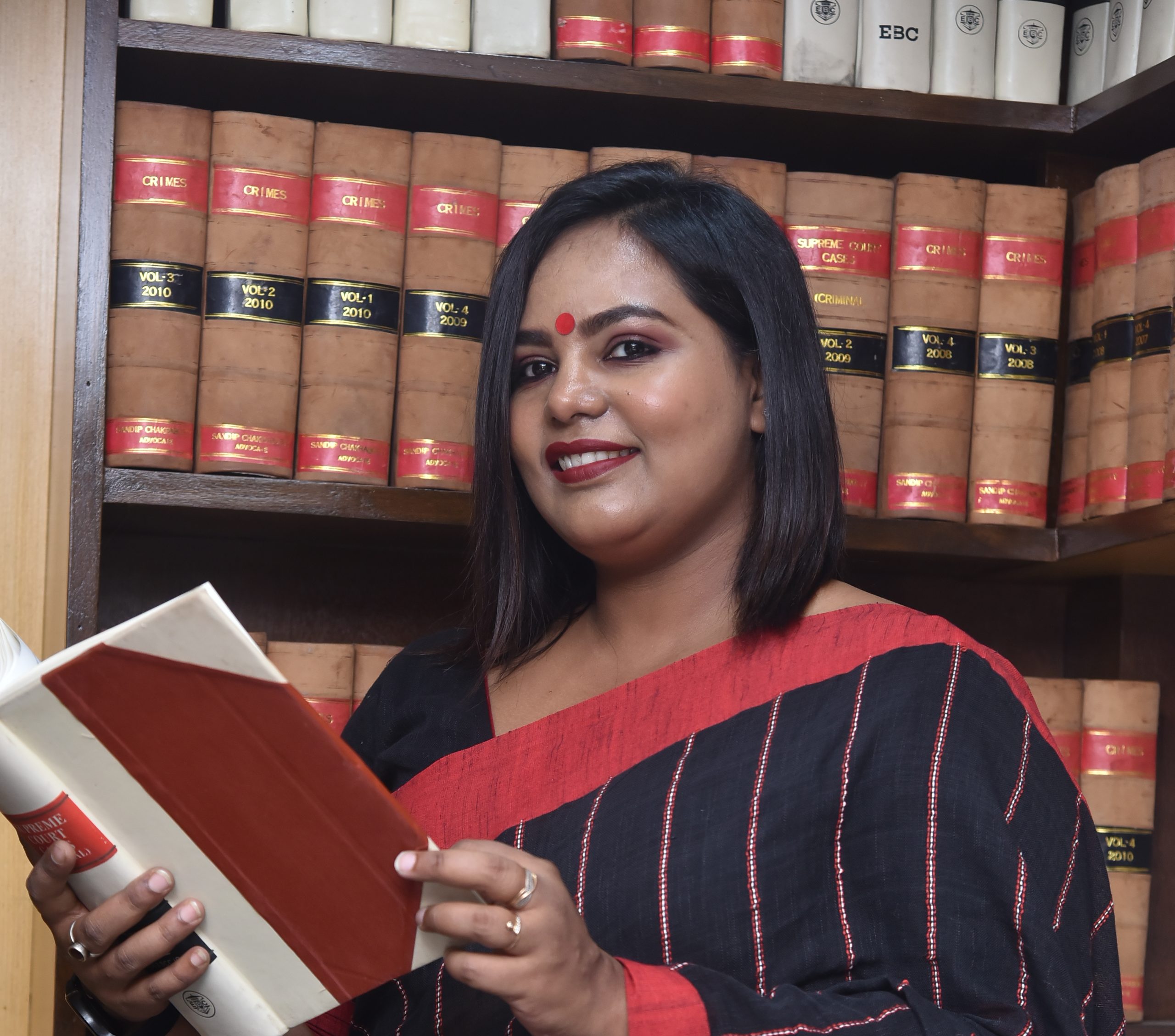
    With over a decade of experience in law, what initially drew you to this profession? Was it a deliberate choice from the beginning, or did it develop more organically over time? Also, how would you describe your time at National University of Juridical Sciences (NUJS – Kolkata)? 

    My path to law was a blend of intent and organic evolution, deeply influenced by the strong women in my family. Coming from a lineage where resilience and empowerment were ingrained, I grew up watching my great-grandmother, my grandmother—a dedicated nurse—and my mother, a high school teacher in a small village, fight for their rights and carve their own identities in society. Their strength and determination shaped my worldview and instilled in me the belief that women must assert themselves in every sphere, especially in professions where they are often underestimated.

    From an early age, I was acutely aware of how society tends to give less importance to women’s ambitions and careers. However, my parents always encouraged me to be bold, firm in my convictions, and unwavering in integrity. Their teachings laid the foundation for my passion for advocacy—standing up for what is right and ensuring that justice is accessible to those who need it the most.

    Growing up in a small town, I had no prior knowledge of NUJS. It was through a newspaper article that I first came across the institution. At that time, access to the internet was limited, and mobile phones were not commonplace. Intrigued, I wrote a letter to a Bengali newspaper seeking more information about NUJS and its law program. After reading about the college and understanding its potential, I became determined to pursue law after my 12th grade. I took the entrance exam, and to my surprise, I got selected—something I discovered only seven days after the results were published. 

    However, cracking NUJS was only the first challenge. As a student from a Bengali-medium background, adapting to the rigorous academic environment was daunting. The initial years were particularly tough, but the faculty at NUJS was incredibly supportive, helping me overcome my fears and language barriers. Despite these challenges, I never let adversity deter me. I used every opportunity to gain practical exposure, completing a dozen of internships across India during the entire law course. These experiences not only deepened my legal understanding but also prepared me for the real-world dynamics of the profession.

    NUJS was truly a transformative experience. It provided the academic rigor and practical training that shaped my legal acumen. Surrounded by some of the brightest minds in the country, I learned to think critically, challenge the status quo, and embrace the complexities of the law. Watching legal dramas like Boston Legal during my time there further reinforced my passion for litigation, making me realize how powerful the law can be in shaping lives and businesses.

    The friendships and professional relationships I built during my time at NUJS continue to influence my career today. It was here that I developed the resilience and strategic thinking that ultimately led me to establish my own law firm “Lex Meliora”—a decision driven by my unwavering belief in justice and my desire to make a tangible impact in the legal landscape.

    During the early stages of your career, what experiences stood out as pivotal in shaping your skills and steering you towards success?

    The early years of my career were a whirlwind of challenges and learning opportunities. One of the most pivotal experiences was working on high-stakes corporate transactions where I had to balance legal precision with business strategy. Drafting airtight contracts, negotiating deals, and handling litigation matters—all under immense pressure—taught me resilience and the importance of meticulous preparation.

    Another defining moment was navigating complex intellectual property disputes for multinational companies, where I saw first hand how the right legal strategy could protect innovation and brand value. These experiences solidified my expertise in corporate and IP law while reinforcing my drive to make a tangible impact.

    What motivated your shift from working in law firms and practicing with advocates to the corporate sector? How did you find the cultural differences between these environments, and how did you navigate them?

    My shift from traditional litigation and law firms to the corporate sector was driven by a deeper aspiration—I didn’t just want to be a legal advisor; I wanted to be a strategic partner in decision-making. The corporate sector offered an opportunity to work at the intersection of law and business, where legal frameworks could be leveraged not just for compliance but as tools for growth, brand protection, and innovation.

    During my tenure at Hindustan Unilever Limited (HUL), I was primarily responsible for handling litigation related to intellectual property (IP) infringement and brand protection. This role reinforced how critical it is for companies to safeguard their brand reputation and enforce a zero-tolerance policy against infringers. At HUL, we adopted proactive legal strategies to mitigate risks, taking swift action against counterfeiters and unauthorized use of trademarks. I learned firsthand how legal mechanisms, when effectively utilized, could become a powerful shield against market threats and strengthen brand value in a competitive landscape.

    Later, my experience at Flipkart deepened my understanding of the complexities of e-commerce operations and digital brand protection. With a vast marketplace involving thousands of brands and independent sellers, ensuring brand integrity in a rapidly evolving digital ecosystem was both a challenge and a priority. As part of the legal team, we designed and implemented strategic frameworks to detect and eliminate IP infringements while balancing the interests of both brands and marketplace sellers. The role required not just legal expertise but also cross-functional collaboration, working closely with policy teams, product managers, and enforcement agencies to create sustainable and scalable solutions.

    The transition from law firms to in-house roles also came with a significant cultural shift. Law firms operate in a high-pressure, client-driven environment, where success is often measured by billable hours and case wins. In contrast, the corporate world focuses on long-term risk mitigation, compliance, and internal stakeholder alignment. Adapting to this environment required a shift in mindset—I moved from purely legal problem-solving to a solution-oriented, business-driven approach. Understanding the company’s commercial objectives became just as crucial as legal precision, and my role evolved to ensure that legal strategies aligned seamlessly with business goals.

    This journey not only broadened my perspective on how businesses function but also solidified my expertise in brand protection, IP enforcement, and regulatory compliance in both traditional and digital marketplaces. It ultimately paved the way for me to return to litigation—this time as the founder of my own firm, where I could blend my corporate experience with my passion for advocacy, ensuring that businesses, innovators, and brand owners receive strong, strategic legal representation in an ever-evolving legal landscape.

    In your experience working with data privacy and security issues in the Software as a Service (SaaS) sector, how do you incorporate emerging data protection laws like GDPR, CCPA, and the DPDP Act 2023 into your policy development strategies, and what measures do you take to ensure compliance and manage potential legal risks?

    Data privacy and security in SaaS are evolving landscapes, and compliance isn’t just about ticking legal boxes—it’s about building trust. My approach to integrating GDPR, CCPA, and the DPDP Act 2023 into policy development involves:

    1. Proactive Compliance Frameworks – Instead of reactive measures, I focus on embedding privacy by design into SaaS products from the outset.
    2. Risk-Based Approach – Conducting Data Protection Impact Assessments (DPIAs) to identify potential risks early.
    3. Cross-Border Data Strategies – Given the global nature of SaaS, I ensure that data transfer mechanisms (such as SCCs and BCRs) align with international regulations.
    4. Employee & Stakeholder Training – Compliance is as strong as the people implementing it. Regular training ensures that teams understand the nuances of these laws.
    5. Incident Response & Risk Mitigation – Establishing strong breach notification protocols and working closely with cybersecurity teams to minimize risks.

    The future of SaaS compliance lies in anticipation, not reaction. Laws like GDPR, CCPA, and DPDP Act 2023 are not static; they evolve with technology. I ensure my clients remain ahead of the curve by integrating AI-driven compliance, robust incident response, and adaptive policy frameworks, making data privacy a business enabler rather than just a regulatory hurdle.

    As a strategic IP advisor, what were some of the key challenges you encountered in balancing robust IP compliance with the rapid growth of e-commerce and digital platforms?

    As I was associated with one of the giant E-commerce Platform in India  and was responsible for IP infringement domain charter, I realized the biggest challenge in e-commerce and digital platforms is striking a balance between innovation and regulatory compliance. The rapid growth of online marketplaces has introduced complex legal risks, requiring a multi-layered approach to consumer protection, intellectual property enforcement, fraud prevention, and regulatory adherence. Over the years, I have worked extensively in structuring legal frameworks to safeguard brands, consumers, and businesses operating within these platforms.

    The biggest challenge in e-commerce IP compliance is balancing innovation with regulatory enforcement. The rapid growth of digital platforms has led to increased risks of counterfeit sales, trademark violations, deceptive advertising, and fraud. My approach focused on:  

    1. Proactive IP Enforcement – Implemented AI-driven brand protection tools, automated takedown mechanisms, and legal action against repeat offenders.  

    2. Robust Contractual Safeguards – Strengthened vendor agreements, advertising contracts, and platform policies to ensure compliance and minimize disputes.  

    3. Enhanced Seller Verification & Monitoring – Developed multi-step verification, KYC protocols, and fraud detection frameworks to prevent unauthorized listings and financial fraud.  

    4. Regulatory Compliance & Consumer Protection – Ensured adherence to global advertising laws, GST regulations, and e-commerce policies to prevent misleading claims and legal liabilities.  

    5. Strategic Collaboration & Adaptation– Worked with law enforcement, regulatory bodies, and internal teams to continuously update compliance frameworks in response to evolving threats.  

    By integrating technology-driven enforcement, strong legal frameworks, and collaborative strategies, I helped create a secure, compliant ecosystem that protects brands, consumers, and platform integrity.

    By taking a multi-dimensional legal approach, e-commerce platforms can foster innovation while ensuring a secure and compliant ecosystem—one that safeguards consumers, protects brands, and maintains trust in the digital marketplace.

    Staying ahead of these challenges meant continuously updating legal strategies to match evolving technologies and regulations. The approach needs to be proactive and collaboration with all the stakeholders are important to tackle such risk.  Seller digital agreement, warning, verification, monitoring listings are highly crucial to maintain an integrated platform.

    After gaining extensive experience with top legal firms, what inspired you to start your own practice? What were some of the biggest challenges you encountered in the early stages, and how did you overcome them?

    After years in top legal firms, I realized that true fulfilment lay in autonomy, impact, and purpose. While the experience was invaluable, the constraints of bureaucracy, internal politics, and a misalignment with my values pushed me to take a bold step—starting my own practice. I wanted the freedom to advocate for justice without compromise and create a legal environment where integrity and excellence thrived.

    However, the journey was not without challenges. Establishing credibility, managing finances, navigating litigation unpredictability, and gaining client trust were initial hurdles. With persistence, strategic networking, and a strong support system—my husband, Sandip Chakraborty, and best friend, Valerie Kithan, who are partner  the firm with me—we built a practice grounded in trust, expertise, and client-first advocacy.

    Looking back, stepping away from a toxic work culture was the best decision. It allowed me to reclaim my professional integrity and build something meaningful. Today, our firm stands as proof that when passion and courage align, they create something truly unstoppable.

    As digital technologies advance, how do you foresee the intersection of Intellectual Property (IP) and Cyber Law influencing the future of data protection, online privacy, and digital rights enforcement?

    As digital technologies advance, the intersection of Intellectual Property  and Cyber Law is becoming one of the most dynamic areas of legal evolution. The increasing digitization of content, the rise of artificial intelligence, and the proliferation of cyber threats are forcing regulators, businesses, and individuals to rethink the legal frameworks governing ownership, privacy, and enforcement in the digital age. The rapid growth of AI, digital content, and cyber threats necessitates proactive legal frameworks to balance innovation with enforcement particularly in data protection, online privacy, and digital rights enforcement.

    I believe there are a few key trends shaping the future:

    1. Stronger IP Enforcement Against AI-Generated & Pirated Content
      • AI is accelerating content creation but also increasing digital piracy and misuse.
      • Expect stricter copyright laws, AI-powered infringement detection, and greater platform accountability.
    2. AI-Driven IP Ownership Challenges
      • Traditional IP laws struggle with AI-generated works—who owns AI-created content?
      • Future reforms may introduce hybrid ownership models and AI-specific IP regulations.
    3. Enhanced Data Security & Cyber Law Compliance
      • Rising cyber threats demand stricter regulations (GDPR, CCPA, DPDP Act 2023).
      • Companies will face increased liability for data breaches and cross-border cyber enforcement.
    4. User-Centric Privacy & Digital Rights
      • Laws will give individuals more control over their digital footprints and personal data.
      • Emerging disputes over algorithmic bias, data monetization, and digital IP ownership (e.g., NFTs).

    The future of IP and Cyber Law will be defined by a delicate balance between technological innovation and legal safeguards. The harmonization of global regulations, advancements in AI-driven enforcement mechanisms, and the proactive role of digital platforms will be critical in shaping a fair, transparent, and secure digital ecosystem. The challenge for legal professionals will be to stay ahead of emerging risks while ensuring that laws evolve in tandem with technological advancements.

    Reflecting on your career, what project or initiative stands out as the most fulfilling?

    I have had the privilege of working on multiple projects and initiatives, but one of the most fulfilling and high-impact experiences was leadingcomplex cross-border IP litigation. This case involved securing brand rights across multiple jurisdictions, navigating intricate international IP laws, and addressing challenges posed by varying enforcement mechanisms. The litigation was particularly demanding, requiring strategic legal interventions, coordination with global legal teams, and in-depth jurisdictional analysis. However, the successful outcome not only protected the company’s innovation and market presence but also set a precedent for future IP disputes, reinforcing stronger brand protection strategies in the digital economy.

    One of the most impactful and rewarding aspects of my career has been developing Digital Brand Protection Mechanisms, particularly leading a dedicated Brand Coalition Program for an e-commerce platform. This initiative was instrumental in safeguarding brands against unfair competition, counterfeit products, and trademark infringement, ensuring that intellectual property rights were upheld in the digital marketplace. 

    Moreover, collaborating with customs authorities, enforcement agencies, and the Directorate of Revenue Intelligence (DRI), I actively participated as a Speaker in conducting awareness programs to combat IP infringement. These initiatives not only empowered enforcement officials but also educated students and consumers on the risks of counterfeit goods, helping them make informed choices and avoid fraudulent products.

    Beyond IP enforcement, I have also engaged in legal awareness programs in the healthcare industry, focusing on critical laws related to women and child protection. As a speaker at various industry forums, I have addressed key legal frameworks such as the Protection of Women from Sexual Harassment (POSH) Act, 2013, Protection of Children from Sexual Offences (POCSO) Act, 2012, and Medical Examination Guidelines under the Criminal Law (Amendment) Act, 2013. These sessions aimed at equipping healthcare professionals, including doctors and nurses, with the necessary legal knowledge to handle cases of sexual abuse and victim examination sensitively and in compliance with legal protocols. The intersection of law, business ethics, and social responsibility has been at the core of my work, making these experiences deeply fulfilling and reinforcing my commitment to legal advocacy and reform.

    What advice would you offer to aspiring lawyers aiming to impact multiple areas of law like IP and Cyber Law?

    For aspiring lawyers looking to make a meaningful impact in Intellectual Property  and Cyber Law, my key advice would be to cultivate a mindset of continuous learning and adaptability. The legal landscape is constantly evolving, especially in the digital age, where technological advancements challenge traditional legal frameworks. Staying curious and informed about emerging trends—whether in AI-driven copyright issues, digital piracy, or evolving data protection laws—is essential for staying ahead in these dynamic fields.

    A strong foundation in technology is crucial for IP and Cyber Law practitioners. Understanding how blockchain, AI, and digital platforms operate enables lawyers to provide practical, forward-thinking legal solutions. The intersection of law and technology demands not just legal expertise but also technical awareness to navigate issues such as data security breaches, algorithmic bias, and digital rights enforcement.

    Strategic networking is another powerful tool. Engaging with tech entrepreneurs, cybersecurity experts, and legal professionals opens doors to new opportunities and insights. Attending industry conferences, contributing to legal discussions, and collaborating on interdisciplinary projects can expand one’s professional influence and expertise.

    Finally, adaptability is key. The most effective lawyers are those who not only understand the law but know how to apply it in real-world, business-driven scenarios. Whether it’s structuring IP licensing agreements, tackling e-commerce infringements, or shaping regulatory policies, being able to anticipate challenges and craft innovative legal strategies sets apart exceptional legal professionals in these fields.

    Given the demanding nature of your profession, how do you maintain a healthy work-life balance?

    Maintaining a healthy work-life balance in the legal profession is not about rigidly dividing time but about mindfully integrating work with personal well-being. I have learned that setting boundaries, prioritizing effectively, and embracing flexibility are key. Litigation and corporate advisory can be all-consuming, but I ensure that I carve out time for what truly matters—family, personal growth, and mental well-being. My husband, Sandip, and my best friend, Valerie, who co-founded the firm with me, have been my strongest pillars, reinforcing the importance of having a support system that shares your vision. I also believe in delegation and building a strong, self-sufficient team, which allows me to focus on high-impact work without burnout. Unwinding with books, traveling, and pursuing creative interests keeps me energized, and I make a conscious effort to disconnect from work when needed. Ultimately, balance is not about working less but about working smarter, knowing when to push forward and when to pause, ensuring that passion never turns into exhaustion.

    get in touch with Aindrila Biswas –

  • “Becoming an AOR transformed my attitude towards law, underscoring the newfound confidence and passion that drove her career trajectory” – Pallavi Pratap, Advocate-on-Record, at the Supreme Court of India

    “Becoming an AOR transformed my attitude towards law, underscoring the newfound confidence and passion that drove her career trajectory” – Pallavi Pratap, Advocate-on-Record, at the Supreme Court of India

    This interview has been published by Namrata Singh and The SuperLawyer Team

    Hello and welcome everyone to Super Lawyer. Today, we have with us, Ms.Pallavi Pratap, who has been named BW Top 40 Under 40 Lawyer She is a legal influencer. She is a women’s rights activist, health enthusiast, and managing partner of Pratap and company. She is a legacy in herself.

    Ma’am, our first question would be to understand how you enter the legal field. And what made you pursue this path? Then how did you come up with your Pratap and company and make it such a big name in this legal background? What were the challenges? Would you like to share it with us?

    The challenges I think were stupendous, but, how it started, I am an accidental lawyer. It was not that it was something that was planned as a matter of fact. I remember that when people would talk about being a lawyer, at least in my generation. That was for people who had done nothing in their life. So because you’ve not achieved anything. So you become a lawyer. That is how, you know, a lawyer was perceived then. So my law happened because after graduation, I was preparing for UPSC.

    And so I did my law, one year, I think I did then.  Then, because I was not able to crack UPSC, my parents thought that you know, I should go abroad and maybe do an MBA, and back then MBA was like how it is right now, LLB. So everybody was doing MBA, so I went to Australia, and I did my MBA there. Then I did my research in France. I came back and then I started to work in a small investment banking company and, that was going okay. It was all right. By the time I think I was married also. So I had two years of law left. So I had to finish off my law and then pursue my investment banking career.

     It was long, and it was difficult at that moment because I think the dot com bubble had just happened. Subprime mortgages that entire 2008, and 2009 time when the economy was not doing very well. We all had challenges then, especially since. I had done my MBA and I was looking at the corporate side to work in. Then interestingly, what happened was since I was married, my husband and I thought that, it had been some years and that we should go the family way.  And so the job I was doing was not so easy to continue, because, with the kind of pressure that we had on the corporate side, it was not possible.

    So, my father suggested that then, why don’t you pursue law? Because it will be easier. You won’t have to put in so many hours and just take it slowly. So I just started working with an AOR.  And, I remember it was around 2011, 12, something like that, when I started.  Went on for four, or five years, but I was never serious about pursuing law as a career.

    I thought that I would go back to the private sector. Because at that time when I shifted, I was already associate vice president. I was associate vice president at the age of 28. So the next in line was VP, which is what I was due for. And then I would have been the CEO of the company that I was in.

    At one point, I had aspirations of becoming a CEO by the age of 32 or 33. However, life has a way of throwing unexpected challenges our way. At that time, my husband and I were facing difficulties conceiving naturally, leading us to explore IVF options, which involved hormone injections and a break from my career.

    During this hiatus, I began studying law, initially considering it a temporary measure until circumstances improved and I could return to my original career path. Life, however, had other plans. In 2015 or 2016, my husband and I decided to separate.

    Around the same time, I found employment in an Advocate-On-Record’s office. It was a demanding role where I was the sole junior, responsible for a wide range of tasks—from clerical duties to drafting and translation. My workdays were long, often stretching from 9 AM to 8:30 or 9 PM, with additional work at home, particularly for translations.

    Despite the challenges, this experience proved invaluable. Working on translations, especially for criminal cases, provided me with a deep understanding of the legal system. I vividly recall translating extensive criminal appeal files, including everything from FIRs to witness statements, which significantly enhanced my knowledge of the Criminal Procedure Code (CRPC). Despite initially viewing translation as a mundane task, it ultimately became a vital learning opportunity, enriching my understanding of legal proceedings.

    So, I found myself in a unique position where I witnessed the entire trial unfolding before me. It’s interesting, as you mentioned, how the younger generation seems less inclined towards traditional legal tasks. Many shy away from such responsibilities, deeming them beneath a lawyer’s stature. I never viewed any task as beneath me. Perhaps it was my genuine interest or simply a lack of concern about status. However, I’ve encountered individuals who readily embrace tasks like using Google Translate, yet hesitate when faced with last-minute requests for simple tasks.

    Everyone has their preferences, and I don’t expect anyone to work for free. However, these experiences taught me invaluable lessons, especially in service matters. Translating documents provided insights into the intricacies of drafting annual confidential reports, sending notices, and crafting representations. While building something akin to SAM or CAM was never my ambition, I recognized my limitations and aimed to excel within them.

    I aspired to establish a reputable litigation firm, one that keeps me consistently engaged with meaningful cases. Initially, the thought of becoming a counsel didn’t even cross my mind. Yet, over time, everything seemed to naturally fall into place. Through gradual progression, I honed my skills in argumentation and management, embracing unforeseen opportunities as they arose.

    Earlier today, I had a conversation at NCLAT with a fellow law firm owner, where we delved into the intricate challenges of managing multiple aspects simultaneously. Balancing client needs, court proceedings, and financial matters poses a significant challenge for all of us in the legal profession.

    My background in MBA has played a pivotal role in navigating these complexities. From my early days in India, I’ve been deeply involved with startups, often spearheading new verticals or assisting nascent companies. This experience instilled in me a knack for cost-cutting and efficient work practices.

    Despite the perception that our workload necessitates a large team, we operate with a lean staff of three to four individuals. Remarkably, my colleagues typically wrap up by early evening without the need to carry work home. Our ability to manage substantial workloads with minimal resources is a testament to our strategic approach.

    This proficiency in streamlining operations and maximizing productivity stems from my understanding of running a small company or startup. While the journey has been challenging, it has also been immensely rewarding. As I reflect on our progress, I’m intrigued by what the future holds.

    Could you elaborate on how your MBA background aided you in navigating the challenges of establishing and managing your law firm, especially during the initial stages when resources were limited? Many lawyers don’t possess an MBA, so it would be insightful to understand how this unique combination of qualifications has influenced your approach to addressing the complexities of running a law practice efficiently.

    Let me share a personal anecdote that shaped my perspective early in life. During my MBA days in Australia, despite having financial support from my father, I chose to work part-time. In Melbourne, there’s a bustling spot called Victoria Market where I found myself selling a product called a spilling remover—a simple solution for common clothing woes like pilling or pet hair. Standing on a podium, I’d invite passersby to experience its effectiveness, selling it for $25 apiece. Essentially, it was just sandpaper in a plastic box, but to foreigners, it was a valuable solution, earning me commissions and teaching me the art of salesmanship.

    My MBA background, particularly in finance, proved invaluable during this time. It equipped me with the skills to calculate ROIs, analyze top and bottom lines, and assess a company’s sustainability. These skills became especially relevant when I ventured into investment banking, where projections and financial viability are paramount in securing investments.

    With my prior experience in startups, I quickly identified areas for improvement in my work. However, having faced challenges before, I knew how to navigate them efficiently. I attribute much of my success to the incredible support system I had. Individuals like Kunal, my office manager, and Anshini bhaiya, my clerk, played pivotal roles, often handling tasks beyond their responsibilities, which allowed us to achieve more with fewer resources. Their dedication and support were instrumental in overcoming obstacles and propelling our endeavors forward.

    The backbone of any endeavor lies in its team and resources. Since the inception of our journey, our staff has been integral to our success. Through thick and thin, from the earliest filings to the present day, they have remained steadfastly by my side. While we may engage in spirited debates and disagreements, our loyalty and commitment to one another have never wavered. I am confident that this bond will endure for as long as we continue on this path.

    Reflecting on my MBA experience, I came to realize the true essence of networking. Contrary to popular belief, simply meeting people at conferences or social events does not guarantee professional opportunities. People seldom recall such encounters, let alone entrust you with work. Recognizing this, I adopted a sales-oriented approach. Rather than passively networking, I embraced the role of a salesperson, focusing on promoting my skills and capabilities.

    In the world of sales, one must shed inhibitions and relentlessly advocate for oneself. I vividly recall my time in Australia, where I worked for a charity, going door-to-door soliciting donations. It was a challenging task, compounded by cultural differences and occasional hostility. Despite the hurdles, I persevered, driven by a sense of purpose and determination to succeed.

    I recall my experience working in a call center, specifically in Australia, where my role involved selling gas connections and DTH connections similar to Tata Sky. This exposure to sales was invaluable, as it instilled in me a sense of confidence and fearlessness when approaching potential clients. I never hesitated to assertively offer my services, knowing that showcasing my expertise was essential in securing work opportunities.

    Even during challenging times, like the onset of COVID-19, the emergence of social media platforms provided a new avenue for me to showcase my skills. Despite facing skepticism and criticism from some quarters, I remained undeterred. I understood that to thrive in a competitive environment without the backing of a “Godfather,” I needed to directly engage with clients and demonstrate the value I could bring to their projects.

    Over the past decade, I have accumulated significant experience and expertise. This journey has allowed me to reach a point where I can afford to take a step back and explore other interests while still maintaining a strong professional foundation.

    But those 10 – 11 years. When I was putting in the effort, there was nothing else that I ever thought of.  Nothing else except for work.

    when did you decide to become an AOR?

    As I mentioned earlier, I was struggling with my legal career at one point. I was employed in an AOR’s (Advocate-On-Record) office, and around 2010 or 2011, when I enrolled for a five-year program, I was disinterested in learning. I had convinced myself that returning to the private sector was my goal and that the legal work I was doing felt beneath me.

    However, my perspective shifted when I began working in the AOR’s office in December 2015. Almost impulsively, I decided to fill out the AOR examination form. By May 2016, with just six months of experience in the AOR’s office and 15 days of preparation, I attempted the AOR examination and passed it on my first try.

    Some may argue that the paper that year was easier, attributing my success to luck. Yet, passing the AOR exam gave me a newfound confidence. I realized that achieving such a feat, especially in my first attempt, meant I possessed a deeper understanding of the law than I had previously acknowledged. Many struggle to pass this examination even after multiple attempts, but I succeeded on my first try, affirming my competence in the legal field.

    Becoming an AOR transformed my attitude towards law. Before this achievement, I had contemplated returning to the private sector, disliking my work in law. However, my success in the AOR exam propelled me into taking my legal career more seriously. I no longer viewed legal practice as beneath me; instead, I embraced it wholeheartedly.

    This experience taught me the importance of self-belief and determination. It was a turning point in my career, marking the moment when I transitioned from a disillusioned legal professional to a committed and passionate advocate.

    Given your passion for your company, how do you envision your plans for the next five to seven years, particularly considering the increased responsibility that comes with holding an AOR position? How do you intend to align this responsibility with your commitment to societal causes over the next three to five years?

    To be honest, there isn’t as much involvement in societal causes for me anymore. It used to be more prevalent when I was handling those types of cases. Unfortunately, it seems now people view me more as a criminal lawyer, and I’m fine with that too. If such cases come my way, I won’t deny them. However, my passion still lies in issues related to women. It’s something that has always been close to my heart, stemming from my own experiences, and I believe it will continue to be so.

    Looking ahead, my focus for the next three to five years is to engage more in courtroom arguments. It’s something I’ve grown to enjoy, albeit it took me some time to overcome certain inhibitions. Learning the art of effective argumentation—knowing when to speak, when to stay silent, and how to present without offending the judge—is an ongoing process for me. I’m still refining these skills, recognizing that I have much more to learn.

    On the business front, I’m content with where our firm stands currently. While I naturally aspire to increase our turnover and the number of cases we handle, I’m grateful that growth seems to be happening organically. Our caseload is steadily increasing, almost on its own accord. This year, one of my resolutions is to travel extensively, aiming to visit at least one high court every month.

    In January, I traveled to Bangalore, and this weekend, I’ll be heading to Indore. My purpose isn’t solely work-related; I’m eager to connect with more people, understand the challenges they face, and perhaps offer solutions where I can. Over the past year, I’ve noticed an intensification of challenges, particularly with the heightened competition in our field. It’s become overwhelming for many of us, prompting me to strategize on how best to navigate these obstacles.

    Moreover, at 41, I find myself contemplating life goals and priorities. Having dedicated over two decades to work since 2006, I’m now at a juncture where I seek to carve out time for personal pursuits that have taken a backseat for far too long. I aim to pave the way for the next decade to embrace endeavors beyond the confines of immediate obligations.

    Undoubtedly, there are struggles. Despite societal shifts, challenges persist, especially for individuals like us. As a woman in the legal profession, I continue to encounter hurdles in what is still largely a male-dominated arena. The landscape may have evolved, but the inherent obstacles remain, requiring perseverance and resilience to navigate effectively.

    How do you approach supporting individuals, particularly women, who are encountering challenges in today’s rapidly evolving landscape, both in the physical and online realms? What strategies do you envision employing to navigate these dual challenges effectively?

    You know, it’s been overwhelming. My Instagram feed is flooded with hateful messages. If I were to delve into each one of them, it would undoubtedly take a toll on my mental health. Not that it isn’t already suffering. But being on social media with an open profile invites all sorts of comments, and learning to brush them off is a skill I’m still struggling to master.

    Unfortunately, it’s not just confined to social media. Even within the corridors of the Supreme Court, women are often objectified and subjected to gossip. For someone like me, with a past that seems to precede me, it feels like my right to exist is constantly under scrutiny.

    No matter how many times people express admiration or claim to find inspiration in my social media presence, it’s that one negative comment that sticks, lingering and gnawing at my self-esteem. It’s a daily battle to overcome these obstacles, and for someone who has endured their fair share of hardships, it’s particularly draining.

    I’m sure many other women can relate to this struggle. Moreover, there’s this tendency to label women who speak out as playing the victim card. Frankly, it’s disheartening. That’s why I’ve become increasingly selective about engaging online. This interview marks a significant departure for me, as I’ve largely refrained from public appearances due to the incessant accusations of victimhood.

    I want to share with you the unfiltered truth about my life experiences. It’s not about playing a victim card – that won’t put food on my table, pay my bills, or sustain my livelihood. The notion of a victim card is dismissive; it doesn’t address the real struggles we face. Some may perceive my openness about challenges as playing a victim, but that’s far from the truth. I’m simply acknowledging the hurdles I’ve encountered.

    It’s incredibly tough for people to grasp your reality. Instead of understanding, they’re quick to judge, criticize, and spread rumours. They’ll label you as overly emotional, assertive, or worse, without considering the battles you’ve fought and the strength it took to overcome them. It’s disheartening when your personal struggles are overshadowed by baseless gossip and scrutiny.

    The most painful part is the lack of acknowledgement of your journey. Nobody talks about the countless hours spent preparing for battles in court, the mental health challenges conquered, or the physical changes and hormonal shifts that women face as they age. Society tends to brush these issues aside, reducing individuals to mere stereotypes, ripe for gossip and condemnation.

    As a 41-year-old woman, I’m acutely aware of the changes my body undergoes and the societal pressures that accompany them. Yet, these struggles are often dismissed or exploited for gossip fodder. It’s a reminder that despite our accomplishments and resilience, society’s perception of us remains narrow and judgmental.

    Many women in the legal profession, particularly those in the Supreme Court, encounter similar challenges. However, I must acknowledge a positive shift in recent times. The judges have become notably supportive and accommodating. It’s truly remarkable. They allow us to present our arguments and make our points heard, even in cases where they ultimately dismiss them. Regardless of the outcome, they ensure that we have a platform to voice our perspectives.

    This newfound environment is instrumental in bolstering our confidence. We no longer feel scrutinized or judged based on our gender or professional standing. Instead, the emphasis is on fostering an inclusive space where everyone, regardless of gender, feels empowered to express themselves. Even if we falter or struggle to articulate our arguments convincingly, the judges still provide us with the chance to speak up and be heard.

    For women practicing law, this shift has certainly made our journey smoother. We now have a supportive framework that encourages us to participate actively in legal proceedings without fear of bias or discrimination.

    How can individuals facing similar situations find support? It’s essential to reach out and seek solace, even if it’s challenging. In my experience, friends outside India often find comfort in supportive communities that share their grief. This support, although seemingly small, can make a significant difference, especially for those from different generations.

    This generation possesses a remarkable clarity of vision that I find truly inspiring. I often marvel at how certain they are about their aspirations; a quality I wish I had when I was their age. In my workplace, I am surrounded by exceptionally talented colleagues, particularly women, who exude confidence and decisiveness in their pursuits. Their directness and self-assurance are qualities I deeply admire, especially as I continue to grapple with moments of self-doubt.

    I have always had a special admiration for women who excel in their fields. I recall my own approach to work—when a task was assigned to me, it became my responsibility, my challenge to conquer. This same work ethic is evident in the remarkable women I work alongside today. Take, for example, one of my juniors who is currently navigating a challenging phase in her career. Despite the obstacles she faces, I am immensely proud of her resilience and determination. Witnessing her growth and perseverance fills me with pride, and I am confident that she is destined for great success.

    You’re deeply committed to mentoring, which is commendable. Have you extended this mentorship to your siblings, given that you’ve essentially established a legal dynasty within your family? Your journey must have been inspiring for them. Could you share more about how you’ve influenced and motivated your sister and brother in their legal pursuits?

    My brother and sister, if you were to ask them independently, they would both attest that their successes were entirely self-made. They’ve each carved out their own paths without needing much guidance from me. It’s remarkable how they’ve managed to flourish independently. In our household, everyone is quite aware of each other’s endeavors.

    However, collaborating with individuals from diverse backgrounds and mindsets has been a transformative experience for me. Working with these incredible women has been an eye-opener. Take Muskan, for example, she’s sitting right here. She has taught me invaluable lessons. I merely have to express what needs to be done, and somehow, she accomplishes it effortlessly. Her efficiency has significantly lightened my workload, allowing me to breathe more easily since she joined the team.

    Then there’s Kinjal. What sets her apart is her laid-back demeanor. She effortlessly integrates modern slang and vibes into her work. It’s truly refreshing to witness their relaxed approach. I’ve always envied their ability to stay cool under pressure. Even now, I find myself bogged down by stress. Yet, these young individuals produce impeccable work effortlessly. Their talent and composure never cease to amaze me. I wish I possessed their level-headedness and skill.

    Muskan, even though I had been practicing in NCLAT for a long time when Muskan came, she told me so many things about NCLAT procedures that I had no idea about. And similarly, when Kinjal came. She taught me so many things about lower court proceedings that I had no idea. So it’s just that you learn so many things from them.

    Now, shifting gears, could you share how you unwind and manage stress? Specifically, what hobbies or activities do you engage in for your mental well-being? Additionally, given your dedication to fitness, could you elaborate on your workout routine and its impact on your personal and professional growth?

    Let me share a bit about my journey. When my husband and I were trying to conceive, I underwent hormone injections, and I was around 80 kgs at that time—I mean, significantly overweight. This led to a myriad of issues, including depression, body image concerns, and a lack of confidence. It was a challenging period.

    However, I gradually discovered the power of exercise. The endorphins released during workouts made me feel happier and more content with myself. It became a habit—one that I’ve maintained to this day. Even if I take a short break from the gym, I find myself back there on the fourth day, even if just for some cardio. While I haven’t transformed into a thin person, due to my genetic makeup, exercise has become a cornerstone of my routine.

    Starting my day with a workout sets a positive tone that lasts until at least four o’clock. Achieving small victories in the gym, like lifting my body weight during a deadlift, instills a sense of pride and confidence that carries over into other aspects of life.

    I’ve been open about having a therapist, and I speak with them once a week. It’s essential to address mental health issues, whether it’s depression or anxiety, which are prevalent among lawyers. Seeking help is crucial; you can only do so much on your own. Since the onset of COVID, I’ve maintained this routine, seeing my therapist regularly.

    As for my reading habit, it’s part of my daily schedule. By 8 o’clock, after the kids are occupied, I dive into work, reviewing files and preparing for the next day. By 9 o’clock, I wrap up, and that’s when I look forward to the highlight of my day—relaxing in bed with a book. It’s a simple pleasure that keeps me grounded.

    Previously, before I incorporated reading into my routine, I’d anticipate watching a show like Frasier or any comedy series at 9 o’clock. Having something to look forward to at the end of the day helped me navigate through it. That’s been my survival strategy.

    How do you tackle the challenge of motivating first-generation lawyers and aspiring legal professionals to take their roles seriously and enhance their skills? How can they overcome obstacles such as lack of mentorship and difficulty in establishing connections within the legal community? What advice would you offer to these newcomers to the profession?

    Look, I’ll be the first to admit that I sometimes struggle to keep up with emails and messages. Frankly, we receive an overwhelming volume of them every single day. Ideally, I’d love to have a larger team to ensure every email gets a prompt response. However, the reality is, we operate with limited resources.

    As much as I’d love to have a team of interns, our resources simply don’t stretch that far. It’s not about lacking the space; it’s about ensuring that if we do take on interns, we can provide them with a valuable learning experience. I wouldn’t want to bring on interns only to find we can’t offer them adequate stipends or meaningful guidance.

    Internships here are rare occurrences, happening perhaps once every couple of months. The main challenge isn’t space but our court commitments. Until 4 o’clock, we’re typically tied up in court proceedings, and even if interns were to join us, the complex nature of legal proceedings means they wouldn’t gain much insight. Understanding court proceedings takes years, not months.

    While it’s possible to observe court sessions virtually, it doesn’t necessarily translate to meaningful learning. Instead, I believe interns would benefit more from gaining hands-on experience in lower courts where they can actively engage and learn the ropes of legal practice.

    Maybe you can go to the High Court and see how the original side works.  But coming directly to the Supreme Court, I think the challenges are huge and very difficult.  You can maybe learn bail applications and how they are being argued, but I still think that there’s just so much to learn that in five years you can’t learn all of that.

    The other thing I think is that, see, you get to know whether you’re good at it or not. You know, you are always true to yourself. So the moment you know that you’re good at it, and you’re able to generate work, and you think you will be able to do it, you will be able to put in the hours, do it. Do litigation.

    But if you think that you’re not cut out for it, don’t waste your time trying to prove something that, you know, is not possible.  If I were to be a corporate lawyer, maybe that’s not something that I would have been able to do. I enjoyed litigation and that’s why I’ve been able to do it.

    And I think the last thing that I would want to say to the interns. I honestly feel that internship is not the most important thing. Believe me, an internship is no way that one would want anything to happen. Not true. It’s not the internship. But it is primarily what you make of yourself after law school.

    You are studying in law school, but once you are out of law school, how willing are you to work in court and learn?  You know, there have been kids who’ve come to me and they’ve said that we want work-life balance. I said, that’s fine. My office gives you a work-life balance because it’s quarter to seven.

    My office is empty. And this is a Thursday. Why? Because there is always a work-life balance in my office. Nobody has to come into the office in the morning. Everybody comes to the court at 10 o’clock and then by 6.30, everybody’s out. So if then you are coming and telling me that you can’t even put in eight hours or nine hours of work, then I think, then you are not cut out for this profession.

    Because the office is closed, now my staff is gone, I have put in 8 hours already, and now I have to put in 6 more hours, be it in the morning 2 hours and 4 hours in the night, to figure out how to do the billing, to figure out, briefing for tomorrow’s matters, like I have a conference at 8.30, now nobody else is going to do it, I will only have to do it, so you have to be prepared that you can work 14 hours a day.

    Get in touch with Pallavi Pratap–

  • I opine that a lot of women in this country are not aware of their basic legal rights- K.V. Muthu Kumar, Advocate on Record, Supreme Court of India

    I opine that a lot of women in this country are not aware of their basic legal rights- K.V. Muthu Kumar, Advocate on Record, Supreme Court of India

    This interview has been published by  Priyanka Karwa and The SuperLawyer Team

    To start the conversation, can you tell us about your journey in the field of law? How did you end up pursuing a career in law, and what motivated you to specialize in business law?

    Law fascinated me when I was preparing to give the entrance exam in NLSIU, though I did not clear it I made my decision that I would study law. As far as Business Laws I felt that with changing times where law was not confined to the traditional boundaries and the need for specialization in the areas of commercial and corporate laws a specialization would become helpful.

    Could you share your experience of practicing law in the District Courts, Magistrate Courts, and tribunals in Bangalore? What kind of cases did you handle during that time?

    I was fortunate enough to start my practice in a office which had plenty of work in the District Courts, Magistrate Court, and tribunals everyday because of which I could work on civil cases relating to property, intellectual property, arbitration, matrimonial cases, service matters, land revenue, Cheque bounce, Domestic Violence, 498A and much more. 

    You mentioned being appointed as a court commissioner by the High Court in a property dispute. Can you tell us more about that experience and the significance of the case?

    It was an interesting case relating to a property dispute of a joint family where litigation was pending between the parties for several years. Justice Aravind Kumar in High Court was the judge(presently sitting judge of Supreme Court) wanted to bring quietus to the issue through settlement for which parties had agreed, however since some of the parties were not educated there was an apprehension regarding the consent of all parties to the settlement. Justice Aravind Kumar therefore passed an order for appointing a court commissioner to resolve the issue and I who was regularly attending his court at that time got the opportunity to become the Court Commissioner in that matter, pursuant to which I personally visited the parties prepared a report and submitted it to court which was accepted and the litigation was brought to an end.

    In December 2012, you shifted to Delhi and began practicing in the Supreme Court of India. How was the transition from practicing in Karnataka High Court to the Supreme Court? What kind of cases did you handle in the Supreme Court?

    It was a totally different experience altogether to start practicing in the Supreme Court having practiced in the High Court as the time to address the arguments before the Supreme Court is short as compared to the High Court and the preparation of the draft has to be more meticulous in Supreme Court.

    In the Supreme Court I have handled different cases pertaining to Constitution, Civil and Criminal matters.

    Can you share some notable achievements or reported judgments where you have appeared and argued, both in the Supreme Court and other courts?

    As my work has been predominantly in the Supreme Court in my career, I have appeared in important cases of constitutional importance such as Sabarimala, Article 370. That apart some of the cases where I have argued the judgments got reported, but the landmark of mine would be Manoj Suresh Jadhav vs. State of Maharashtra (2019) 17 SCC 362- This is the first case where Supreme Court held that a person cannot be re-arrested post grant of bail merely on the fact that an additional offence has been added.

    As an advocate on record in the Supreme Court, what are some of the most challenging cases you have worked on? How did you approach those cases, and what were the outcomes?

    There are many cases which turn out to be challenging especially the ones where there’s an extreme urgency and burn the midnight oil to draft the case get it filed in the morning and mention it in the morning and get it listed the next day, that apart the cases in which the client has lost in all the courts up till the Supreme Court is more challenging as the odds are stacked against your client and it’s always a tough task in convincing the Supreme Court in such type of cases. 

    Apart from your legal practice, you mentioned being involved with an NGO working on women’s rights and causes. Could you tell us more about your work in that area and why it is important to you?

    I am associated with an NGO working on women’s rights and causes called Chetana Conscience of Women. Being associated with it, I opine that a lot of women in this country are not aware of their basic legal rights and what was so impressive about them is their cause was towards financial improvement of women by focusing on their property rights.

    With over 14 years of experience in the legal profession, what advice would you give to fresh law graduates who are just starting their careers? What key lessons have you learned along the way that you would like to share with them?

    I don’t know whether I am worthy enough of advising, but based on my experience especially as a first gen advocate I would like to say that in this profession sustaining oneself in the initial years of the profession is the most difficult part and it takes courage, consistent efforts and patience to sustain oneself.  Post that phase, achievements turn out to be much easier.

    Get in touch with K.V. Muthu Kumar-