Author: Editor

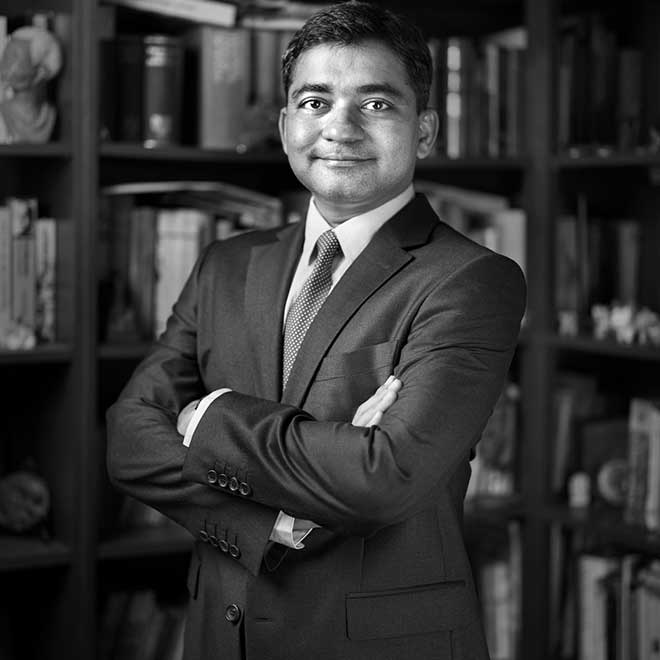
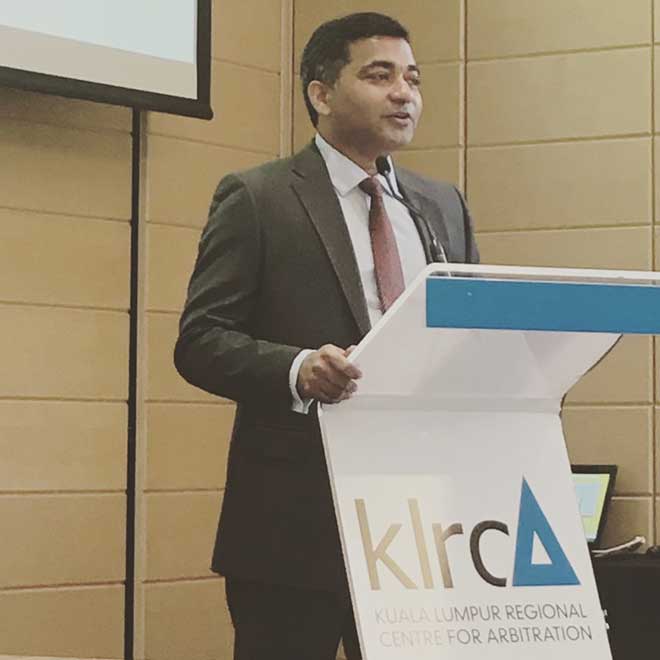
  • Ankit Dixit, Circle Legal and Nodal Head, Vodafone, on being in-house counsel, corporate law, and his diverse experience

    Ankit Dixit, Circle Legal and Nodal Head, Vodafone, on being in-house counsel, corporate law, and his diverse experience

    Ankit Dixit graduated from NLUJ in 2006. Post his graduation he has worked with both law firms and companies. He has spent over a decade working with corporates and law firms. In his current role, he is heading the in-house Circle Legal and Nodal teams of Vodafone.  During his law firm days, he has had the opportunity to advise some of the well-known foreign firms and clients on transactional work. As in-house counsel, he has worked in sectors such as insurance (with Bajaj Allianz), infrastructure (with GMR Airports) and telecom (with Vodafone).

    In this interview we speak to him about:

    • His time at NLUJ
    • His role at Vodafone
    • His diverse experience

    Why did you choose to pursue a degree in law, amidst the many options that you had after school?

    I initially wanted to pursue a career in finance and so wanted to do a M.B.A. in corporate finance. However, getting a law degree was also an obvious choice as I belong to a family of lawyers. When I wrote the law entrance, I was mainly eyeing to get into the integrated course in law and management offered by NLUJ. Although after five years of law school, I realised that I am more inclined towards law than management as a career choice.

    Give us a brief overview of your life at NLUJ.

    I take much pride in the fact that I could witness the formative years of NLUJ, when the foundation of this great institution was built by sheer conviction of a handful people like Prof. Dr. N.L. Mitra, the founder Chancellor of the University. It was first institution of its kind which offered integrated courses combining law with management, humanities and science. Along with the unconventional legal education, the university offered superior infrastructure including campus library, science laboratories and sports facilities for the all-round development of its students. NLUJ was meant to be one of the best institutions for legal education in India and today it is truly living its fate.


    What subjects did you take particular interest in during your law school days? 

    Among the many interesting areas of law, I was always inclined towards corporate laws, which is why I did my honours in Corporate Legal System. The choice of corporate laws as honours course largely benefited me to have an overview of the relevant laws regulating sectors like banking, capital markets, insurance and foreign investment. Although the nuances of any area of law are learnt only when you actually get to experience it, if you are well acquainted with what’s coming ahead it surely helps you in taking an informed career decision. My career choices were also greatly influenced by my academic inclinations and, therefore, I landed up with corporate sector straight after my law school.


    How important are grades, in your opinion?

    Although grades do help you in getting a career head start, I would not like to over emphasise their significance. The grades you secure are not the only deciding factor of your capability to get your dream job. How you impress the recruiters at the interview also plays a significant role. Nonetheless, in the long run, grades have a very limited role to play in shaping your career as it’s more about the experience and knowledge which you gain at your workplace and less about how you performed in law school.

    What kind of internships did you engage in during your student years which you feel were invaluable to you in reaching your current position?

    The NLUJ internship programme was designed to encourage each student to intern with an NGO/Govt. Organisation in the first year, with lawyers in the second year, with law firms in third and with companies in fourth year. In the fifth year, students had the liberty to go for internship of his/her choice. Accordingly, these diverse internships presented me with an opportunity to work in environments ranging from hinterlands to niche law firms. These varied experiences influenced not only my career choices but also my outlook and my choice for the kind of life I wish to lead.


    What motivated your unconventional career choices?

    (Ankit has worked with corporate giants such as GMR and is currently with Vodafone. His career choices differ greatly from the conventional ones of the average Indian law student who walks out of his/her placement year with a job in a multi-service firm.)

    I believe that getting placed with a top law firm is not the only preferred career choice of law students nowadays. Of course, the coveted jobs at law firms can really be financially rewarding but if you are someone who does not want to miss out on life while you work, you may find an in-house role equally lucrative both in terms of money as well as for maintaining the desired work-life balance, which the young lawyers often crave for. With the maturing of Indian corporate space, in-house roles are getting their due place and the legal market is witnessing shuffle of lawyers from law firms to companies and vice-versa. The conventional mind-set that puts law firm associates ahead of in-house counsels is also blurring away and lawyers as well as their employers are increasingly evolving towards a flexible career approach, thereby switching their interest areas and roles more frequently than ever before.


    What does your regular working day at Vodafone look like?

    Vodafone inculcates the best practices of international human resource management, which is why the work environment is extremely employee friendly and informal in its entire approach. As head of the Legal Department, I have to advise various business teams on the routine legal issues that they face in their work space. The issues range from tax demands to regulatory challenges; from handling of customer issues to management of employees; from filing civil recoveries to defending personal liability matters; from drafting of complex business contracts to drafting of court pleadings. You can never expect what advise will the business seek on any given day. Thus, as a legal adviser of the company it is expected that you will not only guide the business about the potential legal challenges of any business decision but you’ll also suggest a way out which is legally feasible and business friendly. Thus, you should be well acquainted with all the laws which affect your workplace and should know the business well too. Also in the present environment of cost optimisation, companies would like you to manage a major share of work in-house rather than hiring expensive external lawyers for a given job. As in-house counsel, your advice is always valued and acted upon by the management and with the evolution of the compliance culture and the ever changing regulatory space, the in-house legal teams are emerging as the most respected and admired among all the functions and are becoming equally rewarding too.


    Is there any other suggestion you would like to give to our budding lawyers?

    I would first like to congratulate all those who have taken up law as their profession as it’s a very intellectually fulfilling and rewarding field, which will always keep you thrilled and excited with all its possibilities. The good thing is that future is all the more promising for young lawyers and there is no dearth of opportunities for the right talent. You just need to keep pace with the evolving legal and business environment. Please do experiment and explore various available choices, until you identify your core competencies. Till then, just keep investing yourselves and you’ll surely find your rightful place. All the very best!

  • Rahul Bhandari, Advocate-on-Record, Supreme Court, on litigation, starting independent practice, and being a first generation lawyer

    Rahul Bhandari, Advocate-on-Record, Supreme Court, on litigation, starting independent practice, and being a first generation lawyer

    Rahul Bhandari graduated from Symbiosis Law School, batch of 2009. He has been engaged in litigation since then. He has assisted Senior Advocate and former president of Supreme Court Bar Association, Dr M.N. Krishnamani in Supreme Court of India, briefed him in various landmark Constitutional matters, Service matters, and Criminal matters in Supreme Court of India and in various High Courts of the Country before starting his full fledged independent practice.  He has been handling various matters on an independent level in Supreme Court and High Courts.

    In this interview we speak to him about:

    • His passion for litigation
    • Being an first generation lawyer
    • Starting independent practice


    How would you like to introduce yourself to our readers?

    I am an Advocate-On-Record at the Supreme Court of India and practising counsel for close to eight years now. I am a first generation lawyer and I come from a humble background. My father is a senior journalist with a leading Hindi newspaper and most of my family members including my brother are into print journalism. Therefore, establishing myself in the field of law was quite challenging as I had no legal background. However, Symbiosis helped me gain exposure and contributed greatly to the grooming process. I have been engaged with litigation since the beginning of my career. I started working with Mr. S.D. Salwan, a leading lawyer in Delhi, and was exposed to quality matters and independent handling of matters in courts. We closely worked with the Commonwealth Team and looked after their legal issue, worked for the India Today group and for the Government of Delhi. In the start, it was not easy and at times very frustrating since the stipend offered is not impressive. But the real test is to stay on and keep inspiring yourself. After almost two years of working experience, I switched to Mr. Rajiv Bansal, a leading lawyer in Delhi High Court. That was the office which gave me number of opportunities in terms of self exposure. Mr. Bansal being a Standing Counsel for DDA and Delhi High Court, had a plethora of matters and he trusted me and my confidence. Therefore, I had all the opportunities to appear and contest matters in Delhi High Court and Trial Court. This boosted my confidence greatly. Remember one thing; working with a lawyer who has government panels is the best thing in the initial years of your career. Since there are a number of matters in their office and some amount of calculative risk can be taken in the government matters before the court, unlike the private matter where a senior would not want you to appear and contest so often. It helped me a lot in gaining momentum and establishing my independent practice. I got pretty good exposure working for Delhi Development Authority, Delhi High Court, GAIL and so many other well known companies. Thereafter, I planned to switch to Supreme Court and that’s the reason I Joined Late Dr. M.N. Krishnamani, Senior Advocate (Padma Shree) and former President of Supreme Court Bar Association. Working with him was a phenomenal exposure and I consider him my Guru. I always wanted to go step by step and that’s the reason I ensured not to directly reach the Supreme Court, which in my opinion is very important for anyone who wants to pursue his independent practice. With him, I got an exposure to Constitutional Matters, Service matters and other matters of great importance in the Supreme Court. I got to learn how to advance arguments, the art of briefing, and researching, which eventually helped me in clearing the Advocate on Record exam in the very first attempt.


    Give us a brief overview of your law school days.

    Pursuing law in an institution like Symbiosis Law School is a matter of immense pride. Law school days were as challenging as they were joyful. Symbiosis played a big role in my career. When you actually start working then you realise the importance of a good law school. In today’s competitive world where even law has become glamorised and more people are being attracted to this profession, it is essential that your base be very good. I mean if you are from a good law school, you are respected and you have some initial confidence which makes you different in that big crowd of lawyers.  There are so many lawyers in the country,  but having a degree, and education from a good law school is all what you need to start well. During law school days, I was more into sports. But I was fortunate for it did not affect my academic performance in any way. I did my Diploma in International Business laws and in Intellectual Property Law apart from obtaining the degree. However, the fact is that scoring in law school and practising in courts is not the same thing.  A person scoring excellent marks during law school days may not necessarily do well and shine bright in litigation just because he or she was an excellent student during school days.


    What were the activities, academic or otherwise, that you undertook in your law school days which in your opinion have shaped you and your career?

    Our college has given us a lot of exposure. Good teachers, competitive environment and a cosmopolitan crowd make a difference. You learn from each other in such an environment. We had very good visiting faculty teachers which included the likes of Mr. Ram Jethmalani, among others.  Frankly speaking, I was more into sports during law school. Academically the only credit which I take is that I cleared my all papers without any backlog with first division and did some diplomas in order to have an extra edge over others. I did participate in some mock trials, and some moot court competitions but I believe that interning at the right places is more important. During our law school days, it’s important to focus on doing internships at a place of your interest as it gives an exposure which you may not get sitting in the classroom. Not to undermine the credibility of law school but I feel apart from just performing academically you need to do all kind of extra curricular activities which can shape your personality. Personality building is very important for this profession which can be very well done during your college days.  On a funny side, I must tell you last minute study was a common thing in our college.


    What kind of internships did you engage in during your student years which you feel were invaluable to you?

    Internships are very important during your law school days. During that phase, I interned with various law firms. I did internships in both corporate and litigation. Initially, I wanted to get the experience of both corporate and litigation in order to decide what would suit me for a long term future and that’s the reason I chose to intern in both streams. Initially I interned with a Lit Law Firm and got exposure to Courts. Thereafter, I interned with some of the big corporate law firms which included Udwadia and Udeshi in Mumbai,  Lall and Sethi an IPR law firm in Delhi, Associated Law Advisors and Rajinder Narain and Co. in New Delhi, a leading name in the Aviation Sector in New Delhi. After few internships, I realised that I want to pursue my career in litigation and came to Delhi. In fact, I had an offer from one of the law firms where I interned, but I chose to work in Delhi since I wanted to practise at the Supreme Court.


    Who was your mentor, or main source of inspiration who motivated you all along the way?

    Every office and senior would play an important role in your career and life. From your first office to last office, you would learn so many things, both good and bad, which are so valuable in shaping your career. Its very important to choose a good office which can give you good exposure, opportunities and confidence. If you want to see yourself as an individual legal practitioner, it’s important to utilise as many opportunities which come you way. For that you must choose an office which allows your individual growth, an office or senior who can give you opportunities to appear and argue in courts. And that’s very important, especially when you are a first generation lawyer as you will not get fixed clients and you will have to learn and inculcate those values, ethics and standards of the profession.

    As a first generation lawyer, its very important to have belief in yourself and patience in abundance. The initial years will throw a lot of challenges and I have seen so many of my colleagues leaving litigation practice and moving to companies and the corporate sector. Especially, the number of hours you would be required to work and the kind of stipend you are paid for that work would be minuscule. However, the key is to keep going. But it’s very important to learn the ethics and discipline of the profession which you can gain only from a good senior or good office. My first motivation was my father only though he was not a person from the legal profession. You need a lot of family support particularly who can believe in you and can allow you to take your own time for growing in this Profession. However my biggest inspiration and ideal from the legal sector was my mentor and senior late Dr M.N. Krishnamani , Senior Advocate of Supreme Court. He was a president of SCBA and four time recipient of the Padma Shree Award by the Government for his valuable contribution to this field. He was also a first generation lawyer and due to his sheer hard work and ability, he rose to such a position in life. I worked with him for more than two years and he guided me a lot in life. His ethics and discipline in the profession was unmatched. I remember, he always used to say if you believe and know  you are standing for the right values then don’t hesitate  to raise your point even before the highest court of law. He always used to say as a young lawyer you should not be afraid of speaking for the right reasons and there is burden on you to take the profession in the right direction and set up examples.  He never returned any client for the sake of money and always used to help struggling lawyers and clients who could not afford hiring such a big name for the Supreme Court. I remember reading a book on great Mr. Nani Palkhivala titled The Courtroom Genius where it was emphasized that a good senior is all what you need in the initial years of your career to shape up your future and that’s absolutely right. That came true in my life and am proud of the fact that I am from the Chambers of Dr. M.N. Krishnamani. With him, I had an opportunity to attend Constitutional Matters, Service matters, and various other matters. I was a part of some of the landmark judgments including the challenge to law of Defamation i.e. Section 500 of IPC in Supreme Court and a case of highest ever compensation granted in the field of medical negligence. There is always a continuous pressure to perform and deliver while maintaining the ethics of the profession if you are from such a chamber.


    At what stage in one’s law school life must one pick a field to specialize in?

    It all depends on your interest which you are picking up during law school days. I think, the last one years of your college, one should be in a position to make up his mind whether he wants to pursue corporate or litigation. Though I again feel there is no straightjacket formula and there are eminent lawyers in our Country who after working for companies and corporate  in initial years came to practice and earned a big name today. Internships are very important to decide the specialization that time.

    I would say, it’s your sheer hard work, determination and faith in yourself which works in this profession and there is no substitute for that. You need a single point determination to succeed.  You have to have a lot of patience and faith in yourself since the initial days would be very very challenging. The initial four to five years are very important for shaping your career and ambitions therefore one should be particular in choosing a good office and senior. And in my opinion, one who wants to work in litigation he or she must start from Trial/High Court and then come to Supreme Court because when you start on your own, you will have difficulties in conducting the case for clients and there will always be a gap in your understanding.  Have faith and confidence that you can do well and keep doing continuous self improvement.


    What would you say to aspiring lawyers who think that litigation and corporate drafting must necessarily be mutually exclusive?

    (Rahul has experience working in both areas of the law.)

    First of all, I must say I have yet not mastered both areas of the law. I am yet to learn and grow in this profession. But yes, I have worked in both environments. The point is very simple; both corporate and litigation requires you to apply your mind and work diligently. Both corporate and litigating lawyers have a different style and requirement of working. Drafting is very important for both. What I feel is that a person who has done drafting in the Lit side may have an edge over the people working in Corporate, since litigating lawyers are more exposed to courts. I have both corporate and lit clients. However, very rarely a person into corporate would be required to draft cases and appear in Courts.


    Tell us about one particular matter that you’ve previously worked on, which left a lasting impact.

    There are a number of matters in different different offices. I remember working on one defamation case on behalf of India Today in the initial days of my career. In my first office, I was assigned to attend an outstation matter in  Trial Court in Bareily and there was a very interesting issue wherein India Today published an article relating to assassination of Gandhiji and RSS filed a defamation case against them. I used to read a lot during that case.  I also had an opportunity  to look after the issue of Commonwealth games.  I worked on various land acquisition cases in Delhi High Court. During my last case I got a lot of exposure working with my senior in Supreme Court on the constitutional validity of law of defamation section 500 IPC in Supreme Court. A number of matters were filed challenging the validity of criminal action prescribed under the said section. We were defending the said law. A number of eminent seniors were involved and I got see each and everyone arguing. A number of points were raised and we also presented our case. We worked on that matter for more than a month  and my senior Mr. Krishnamani used to ask us to research on different propositions every day. Ultimately, the challenge to the said law was dismissed by the Supreme Court recently in a reported judgment.  So it was an overall a great experience working on that case. Every case is a teacher.


    What is the charm of litigation, in your opinion?

    In one word, very addictive. The charm of representing your clients in Court and getting justice for them is unmatched. Litigation throws continuous challenges and with every case, there is something new to learn. The feeling of standing in Court and persuading the sharpest mind in your field gives you immense satisfaction and pride. For me it is like  once you have experienced it you would not want to leave it just because it takes longer to establish yourself. I don’t think in today’s world any field can be more enterprising and challenging than this. It’s very inspiring to work for others. I still remember my first case where I argued in Delhi High Court for a BSF guy who was not given an appointment letter, owing to a frivolous reason, despite him clearing the exam. I fought hard for him and got him the favourable order and he was taken back into service. The feeling of getting justice/relief for someone is unmatched. There are several events like this and with every case, you would individually grow and learn. It’s not static and you have to keep enhancing your skills. And if you are in Supreme Court, the standards are very high and challenging.  Which is the profession where even at the age of 70 or 80 you would be respected and valued this much? That simply works for me.  


    How important are grades, in your opinion?

    Grades are important but I don’t think they make a lasting impact. See, if you have done well in your law school days, obviously that gives you confidence and opportunities to grow. However, what we learn in college and in Courts are entirely  different things. I don’t believe that one’s GPA affects one’s ability to achieve great heights in the legal arena. You may be a topper in college but the actual execution of your knowledge starts when you are in this profession, especially when you are in litigation. Litigation requires a different attitude, confidence and belief in you. I know people who have done very well in college but are reluctant to come and argue in courts.  A practical experience makes the difference and that is a real test in litigation. What you learn in college has to be executed here and that’s interesting and challenging.  


    What are your views on pursuing a Master’s degree?

    An L.L.M is any day a plus point and if you want to study more and gain expertise in one particular subject, it may be relevant. It depends on the person entirely. I feel in litigation, it may not be of paramount importance whether you have done an LL.M. or not. For me personally, the stepping stone was becoming an Advocate On Record and that’s helped me more than anything else.


    If given an opportunity, what would you do differently in your career journey up to this point?

    I would want to not repeat the mistakes which I did at the time of assisting my seniors, at the time of conducting cases, conducting myself, and or any common mistakes which every amateur lawyer would do. One thing I would definitely want to do is to improve my focus towards that direction. It’s essential to have a plan but at the same time you need to work towards achieving that. You know you are going in a right direction when things happen at the right time with you. For me clearing the AOR exams in the first attempt and also becoming Amicus Curiae in the Supreme court gave me a belief that I am going in the right direction after all these years.

    Common blunders which a student should avoid in my opinion are to think of achieving everything in a limited span of time. I have seen  fresh law graduates  losing patience and wanting to establish himself/herself in just two or three years. In litigation, you have to have a lot of patience and dedication. You need to deliver a lot and focus on first learning things. It’s important to train yourself . Unlike Corporate, we don’t get good stipend or handsome salary in the initial years and growth is little slow. But if you have the will and determination then this will be worth waiting for.


    How has being an AoR changed your life?

    (Rahul is also on the panel of Amicus Curiae in Supreme Court.)

    Becoming an Advocate On Record was a matter of pride  and gave me a satisfaction that I am making the right moves in my career. I became an AOR in the year 2016. Fortunately, I was able to  clear it in the first attempt itself. The learning and exposure which I got in the office of my mentor Dr. Krishnamani gave me confidence in clearing the exams of AOR in Supreme Court. Frankly, I did not have much time to prepare since I used to work from Monday to Sunday in his office and I was given only the last month  to prepare for the exams. But I believe all your work experience apart from studying for the exams helps in clearing the papers. Being on the Panel of Amicus Curiae in Supreme Court is again a matter of pride and a huge responsibility comes with that status. Both are very important and as an AOR and Amicus you owe a big responsibility towards Supreme Court. Unlike legal aid matters, here you get a chance to assist the Honourable Judges on questions of law and you need to give it your best.

    As an AOR, you have to be very careful that you should not end up becoming just a filing counsel. You have to be very particular about your filings in Supreme Court, ensure that no reckless filings are done and should be present at the time of matters in Court. When you are conducting matters in Supreme Court, you have to be very dignified and disciplined. Here you don’t have the scope of committing mistakes. Supreme Court is very strict about reckless filings by the AORs, language used in the drafting and about their presence when the matters are called up.


    How challenging is it for a first generation lawyer to set up independent practice?

    As a first generation lawyer, it’s  quite challenging and tough to get clients during  initial practice . Therefore, you need to deliver your best. You need to focus and work in the right direction. I have been handling matters in the Supreme Court, High Courts and Tribunals. I do travel a lot for conducting outstation matters. In your independent practice , you  get to work for both individual and corporate clients. Getting variety of matters is a plus point as you tend to work on different subjects. For me , it has been a wonderful journey till now and I get opportunities to work for for some leading law firms in Delhi too. In your independent practice you are the master of your own acts and sometimes you have to take important calls relating to matters which are challenging and interesting. When you are working with a senior, you are dependent on his understanding and ideas but in your independent practice, you have to more responsible and committed. What I feel is the best client for a first generation lawyer who wants to establish his own practice is a lawyer and/or a senior colleague. As an independent professional, you have to ensure you maintain the professional ethics and standards which is very important. At times in order to grow soon, people do commit some common mistakes which we should avoid.  We don’t have to just do what the client says, you should be in a position to decide between right and wrong.  You have to really burn the midnight oil and keep yourself aware about the changes in law. But it’s not that tough and a common myth that it takes so many years to establish is also not correct. You have to just go in the right direction and then nothing is impossible. Time management is another task which we have to get used to in litigation.  

    What is your message to our readers?

    I would simply say believe in yourself and work hard.  Keep improving yourself. There is no substitute for hard work and dedication. This field requires continuous improvement. Decide your priority carefully and work in that direction.


  • Rajiv Kumar Jain, Legal Advisor, on corporate law, independent practice, and his experience

    Rajiv Kumar Jain, Legal Advisor, on corporate law, independent practice, and his experience

    Rajiv Kumar Jain graduated from Pune University, in 2009. Since then he has worked with Dhir & Dhir Associates in the capacity of Associate, with Sarthak Advocates & Solicitors in the capacity of Senior Associate, and with Poenix Legal as Corporate Lawyer. He is currently engaged in independent practice.

    In this interview we speak to him about:

    • Starting out on his own
    • His diverse experience
    • The corporate law scenario in Jharkhand

    How would you like to introduce yourself to our readers?

    I am a corporate lawyer currently based in Jharkhand. I have worked with and for/against various top notch law firms in India and abroad. At present, I shuffle between Delhi and Jharkhand and mainly focus in the state of Jharkhand to build a robust practice of corporate law and assist a young state with its strategic development.


    What motivated you to pursue law?

    Well, I am a first generation lawyer. I am the first person in the entire family to enter this profession. I belong to a hard core business family where people are born businessmen/businesswomen. Honestly, taking up law happened to me by chance. As a matter of fact it was my elder brother, Rahul Jain, who lured me to take this professional course by offering me a five year prepaid holiday against the condition that my results should not be compromised.


    Tell us a bit about your time studying law at Pune University.

    Pune is a relaxed place to live in where you have the feel of a metropolitan city and comfort of a smart city. Life in Pune University was filled with lots of fun, friends, bike rides and frequent trips to nearby places. Pune University offers rich culture, history and a variety of courses where you end up having friends from all streams. I had the privilege to be among a group of future lawyers, doctors, engineers, actors, and sportsmen. During my stay at a hostel in Pune with students from various backgrounds and courses, I had lot of opportunities in public speaking where addressing a gathering of 500 students was very frequent. This helped me a lot in developing my oration skills which I think is an important pillar of being a lawyer.


    Could you tell us about the internships you took up, and what you learnt from those experiences?

    I was blessed with a couple of grilling internships. During those days I used to think that interns are given menial odd jobs. But now, after being in the profession, I know how important they are. During my first internship in Kolkata, the first thing I was assigned was to stitch a file (the High Court of Calcutta still has the practice of stitching the file before submitting it to court) and at that time I wondered whether this even was required for a lawyer. Today, I know how important it was for me learning that also. Therefore I strongly advise all law students to go for internships seriously and take up each and every task assigned by the lawyers with an open mind. A law student should try and get as much internship as possible and should undertake them very seriously.


    What advice would you give students in avoiding a decision paralysis?

    Personally, I think a lot depends upon the student’s background. If a law graduate is from a law background, his/her parents are aware of hardships of the profession and therefore the burden of expectation or being able to take care of one self is reduced drastically. While litigation is a slow start, the corporate side of practice is much more lucrative in terms of pay. An average law student should always analyse (a) his/her family background (in terms of financial stability) and (b) his/her interest towards the side of practice he/she is inclined after undertaking four to five internships and then decide what he/she wants to do.

    As far as studying further is concerned, I would always recommend law students to be in the profession first for a couple of years and then decide whether studying further is required or not.


    Tell us about your early professional experiences at Dhir & Dhir.

    Well, I belong to the batch when there was almost negligible recruitment and more news of “pink slips”. This was the global economic slowdown period. While I was among the lucky ones to get campus placement, the formal offer letter never reached. While, the wait was long, I never stopped trying during the waiting period. It was not long before I had a couple of offers and after discussing with people in the profession, I decided to take up Dhir & Dhir under the then corporate litigation partner. I was happy with the role as it included both litigation as well as corporate exposure. This was the only reason I chose Dhir & Dhir among others, apart from Dhir & Dhir being a well-known law firm.


    How did you come to work with Sarthak Advocates & Solicitors?

    While I was working at Dhir & Dhir, I got to know that an ex-Luthra employee is setting up his own practice and looking for fresh talents. I thought there was no harm in meeting him and after meeting Abhishek Nath Tripathi, a thorough gentleman and an institution unto himself, it clicked and I started working with him. When I had joined Abhishek, we were working under the banner of Abhishek Nath Tripathi & Associates and Sarthak was formed in front of us. I have participated in every aspect of Sarthak, right from choosing logo of the firm, to the color of the wall, to the desktops, business card tone and texture, etc. Sarthak is and will always remain close to my heart. Every minute spent there is memorable and I have learnt a lot by working in Sarthak with the people who have worked and still working in Sarthak.

    On what parameters do you choose the projects you work on?

    I like working on challenging assignments, but I take work as it comes. I give importance to all work and give my best to each and every work.


    What prompted you move to Phoenix Legal?

    Sarthak is a small size law firm and Phoenix Legal is much more established as compared to Sarthak. Before joining Phoenix Legal, I was very clear that working with Phoenix Legal would give me exposure to complex and big ticket transactions and would require much more hard work. I was lucky to work with Mr. Saket Shukla whose expertise lies in working around complex and big ticket transactions.


    What are the challenges and learning opportunities that you encounter as an independent advocate?

    Being a corporate lawyer (which is still a new concept in most of Jharkhand and most of the developing states of the country) is very challenging to convince corporate houses and enthusiast individuals in Jharkhand about its usefulness. Most of the work of a corporate lawyer is catered by established Chartered Accountants in this part of the country. Established corporates find it difficult to understand the use of a corporate lawyer when they have their Chartered Accountants handy. However, things are changing and after a lot of convincing and explaining the advantages of a corporate lawyer, and how it is different from Chartered Accountancy.


    What are the areas of law that you are looking at as part of your independent practice?

    As part of independent practice, I am taking up everything that is coming my way (as long as the quality is not compromised). I am keen on setting up robust corporate law practice in the state of Jharkhand.


    What are the key attributes that one must develop in order to excel in this industry?

    Read, read and read and discuss. This is a profession where reading and updating yourself never stops and should not be supplemented. One should also take part in constructive discussions and be patient while hearing. As a lawyer one should learn to listen more and speak less.

    How do you manage your time between your professional and personal interests?

    Having a balanced life is very important. As a lawyer some days may require round the clock dedicated to clients and then there are days which are relaxing. A lawyer should be happy with both the situations and take life as it comes.

    Outside law, I like spending time with my family, watching movies, going out with friends, indulge in adventure sports, going out for vacations or long drives.


    How do you keep yourself updated about the latest developments in the law?

    I keep on reading legal journals, business newspapers, blogs, official websites and legal updates to keep myself abreast with the legal as well as political developments. All thanks to the technology, a smart phone is enough to be updated.


    What advice would you like to give our readers, who are mostly law students and young lawyers?

    Enjoy the profession and be prepared for few bad days and few good ones. Always remember this is a benevolent profession and please be careful with what you speak and write.


  • Neha Chaubey, Freelance Attorney, Upwork, on admittance to the Bar in India and New York, compliance, and her experience

    Neha Chaubey, Freelance Attorney, Upwork, on admittance to the Bar in India and New York, compliance, and her experience

    Neha Chaubey graduated from Nagpur University in 2012. She has been admitted to practice law in India and New York.  She has over six years of experience in corporate law, personal injury law, deductible recovery for AIG, and document review. She has experience in both transactional and litigation aspect of law.  She has conducted numerous depositions, and attended conferences for personal injury cases in various courts in New York.  She has worked as an Associate Attorney in law firms in India and United States. She is currently pursing opportunities in Compliance.

    In this interview we speak to her about:

    • Practising in India and New York
    • Pursuing an LL.M
    • Her diverse experience

    Give us a brief overview of your life in law school in India.

    I completed my LL.B., a five years integrated course, from Nagpur University in 2008.  I paid excessive importance to academics and was the first merit in the Nagpur University. I was awarded highest number of gold medals in my class, for proficiency in various subjects.

    Late Prof. Mahabal, of the Nagpur University, had a very big impact on me in my LL.B. I religiously participated in his group discussions on various diverse topics every weekend.  I participated in numerous paper presentations, debates, turn-coat competitions, Model Parliaments, and moot-court competitions in my LL.B.    

    According to me, participation in each and every activity offered by the law school should be given utmost importance.  These activities prepare students for life after law school.  


    Is an L.L.M absolutely necessary for a career in law?

    LL.M is not mandatory for having a successful legal career.  LL.B. should definitely be sufficient. However, if a person wants to pursue law in the United States, the first option is to pursue JD, which is equivalent to LL.B. and the second option is to pursue LL.M.  Both the options have their advantages and disadvantages.  

    When a person completes J.D. from Unites States, it opens far more avenues for one’s career as opposed to LL.M. However, J.D. takes longer to complete than LL.M. and is much more expensive.

    When I was in the final year of my law school I started thinking about the next step.  I narrowed down my options to three categories, namely- to appear for CAT in order to pursue MBA; to prepare for TOEFL in order to pursue LL.M abroad;  or to prepare for JMFC (Junior Magistrate First Class).  As my elder sister has studied abroad for her M.S. in Chemical Engineering, I decided to follow her footsteps and pursue LL.M.  I chose Widener University, located in Delaware, U.S., to pursue my LL.M. in Corporate Law and Finance because Delaware is the most corporate friendly state in the United States.  A very high majority of companies, irrespective of their location, are incorporated in Delaware, because of its corporate friendly nature.

    During my LL.M. studies I had to complete a total of 24 credits. These 24 credits could be completed by taking some core courses (mandatory courses) and some electives (optional courses).  Each subject comprises a number of credits.  When a subject is extremely pivotal, it comprises of more credits, like Business Organization has four credits, whereas a relatively easy subject like Colloquim comprises only two credits.  These 24 credits can be completed in one year.  However, I chose to complete them in two years in order to get some extra time to pursue some internships before graduation.  I completed good amount of credits in my first year so that I had very few credits remaining in my second year.  This helped me to focus on finding internships.  In the second year, I decided to do judicial externship with a District Court Judge for which I received three credits.  I thought that receiving credits for a judicial externship would be better than taking an elective course because it would give me some invaluable first hand experience in the workings of a court.


    What kind of internships did you engage in during your student years which you feel were invaluable to your experience as an attorney?

    Being the first person to pursue law from my family, I did things by trial and error method.  I did not pursue any internship during my LL.B. If I could go back in time, I would definitely pay attention to securing internships early in my career.  I understood the importance of internships by the time I started my LL.M.  I interned at the Department of Justice and did Judicial Externship with a District Court Judge in Delaware.  I also interned with an Honorable Judge from Superior Court in Delaware.

    Which is the ideal time to do an L.L.M; right after undergraduate studies, or after a few years of practice post undergraduate studies?

    There are advantages and disadvantages of pursuing Masters right after LL.B and after acquiring some legal experience.  I did LL.M. right after LL.B.  This helped me in completing my studies in one stretch and I was done with my studies at a specific age.  Thereafter, I could focus my energy on other aspects of my life.  However, if given a chance, I would gain some experience before pursuing LL.M.  The main advantages of this second approach is that many law schools prefer students with some legal experience.  Moreover, good legal experience can come in handy when a student has less than perfect GPA.  Also, a person can decide their specialization for pursuing LL.M with more certainty after acquiring some years of legal experience.  


    How important are grades, in your opinion? 

    Grades are very important not only for securing admission in Masters but also in job search.  Many job descriptions specifically mention that students above a specific GPA would only be considered.  Moreover, some jobs require students to submit their resume, writing sample and law school transcript in order to apply for the job.  Therefore, it is important to pay attention to GPA from first year onward.  


    What is your message to our readers?

    I have been a law student and I can totally relate to the confusion and endless career related questions students may have.  When I was on the cross-roads and was contemplating whether I should pursue LL.M or not, I met a handful of seniors who had pursued masters from abroad.  Students can feel free to contact me on Linkedin for career related questions and I will try to answer them to the best of my ability.  

  • Tanmay Amar, Director-Legal, Omidyar Network, on transactional law, working with Luthra & Luthra, and his diverse experience

    Tanmay Amar, Director-Legal, Omidyar Network, on transactional law, working with Luthra & Luthra, and his diverse experience

    Tanmay Amar graduated from the National Law School of India University, Bangalore, in 2006. Immediately after graduation, he joined Luthra & Luthra Law Offices in New Delhi. He spent nearly seven years there, before moving in house with Sequoia Capital India, in Bangalore, where he spent almost three and a half years. And he has been with Omidyar Network as Director – Legal for the last five months.

    In this interview we speak to him about:

    • His time at NLSIU
    • Working at Luthra & Luthra
    • His diverse experience

    Are you a first generation lawyer?

    Technically not, practically yes. My mother qualified as a lawyer, and she did practice for a few years, but had stopped practising well before I was born (soon after the birth of my elder brother – she chose to give up her legal practice), so I never really got to see her as a lawyer, nor did we have any conversations around law/ legal developments.

    I did find the Civics classes in school interesting, but what really motivated me to consider applying for law school was Perry Mason. I was fascinated with Perry Mason books, though he didn’t influence me enough to conclusively choose law as a career. Towards the end of my school days, I was still considering multiple careers, but once I got through to NLS, Bangalore, I decided to go for it, given its reputation and standing.


    Did you take part in co-curricular activities while at NLSIU? 

    Yes, I absolutely loved participating in co-curricular activities. I found it quite enjoyable and ended up taking part in almost everything. I mooted, took part in client counselling/ negotiation competitions, quizzed, did dumb charades/ what’s the good word/ Pictionary/ antakshari, debate adjudication, danced (awkwardly) for the class on western and eastern music inter-class group dance events, organized various events, was vice-president of the student body, wrote articles, was on the editorial board of our flagship journal, went for a couple of legal literacy programmes where you educate people on their rights under law, represented the class in a couple of inter-class sports events, was active on the hostel management committee (general welfare committee), conducted orientation for juniors, once even went for a student protest in Bangalore against S. 377, IPC. So, there was very little I didn’t do in terms of co-curricular activities in college. Did well in some, was happy to merely participate in others. I probably spent 80-90% of my time in co-curricular activities and am happy that I did that. I felt like I made the most of the opportunities at college and generally look back with very fond memories.

    I would pay attention in most classes, that helped ensure I was doing decently in academics, apart from studying before exams.


    Could you tell us about the internships you took up, and what you learnt from those experiences?

    Most of my internships were litigation based – I did later wish that I had gone for more diversity. It was generally exciting just going to court, witnessing proceedings up close, particularly in the trial courts. I picked up stuff about court procedures and how things work practically. I can’t say that I picked up a new skillset or that my internships shaped my career in any significant way though.

    My most memorable internship was with Mr. Parag Tripathi, a senior advocate in Delhi. He had received a brief for opinion from a company and he asked me to prepare the draft response – this was early on, in my internship. He was very happy with the draft and barely changed a few words here and there, and thereafter gave me a fair bit of research, to help him prepare for his cases. The confidence he reposed in me was gratifying. It felt great being useful in real cases at a young age.


    From a law student to a lawyer, how will you describe the transition?

    One learns how to find the law in college. However, finding the right answer is not enough anymore once you become a lawyer. You have specific problems to solve, and apply the law to find solutions. You may have done that in moot courts and internships while in college, but not often enough.

    Also, most lawyers in their early years are required to put in long hours, so one does tend to miss the free time one had earlier. If you are in a corporate law firm, you do enjoy the money that comes with it. As one of my friends had put it, you go straight from 8 pm to Black Label when you move from college to a law firm.

    You are usually required to focus on areas of law, which cater to the requirements of your clients/ organization, which may not match your areas of interest. In college, you could have focused a lot more on areas, which interested you. However, your advice / work actually impacts real world decisions and when you see that happen, it can be immensely satisfying.


    How do you keep yourself abreast with the latest legal developments and industry news?

    I follow the news, online legal blogs and keep and keep an eye out for notifications from regulators in my area of work. Also, receiving alerts from law firms we engage is helpful. I am afraid I am not able to read as many cases as I would have liked to, but once in a while, I do read original judgements. For industry news, I rely on online editions of financial newspapers and some specific sites catering to the industry or on social media.

    Tell us about your early professional experiences at the Luthra & Luthra Law Offices.

    When I started, the team I joined had a lot of regulatory advisory work (it later expanded to work on a lot more transactions), so there was a lot to learn, as we do very little work on that in college. My first boss, Mr. Dudeja, was a chartered accountant cum lawyer, and it was an education to see him piece together effective transaction structures while navigating tricky regulatory restrictions. We got thrown into the deep end early, there were client interactions from the first few months onwards. In the first couple of years, there were many long days and some overnighters. However, I had a group of peers – there were some eight to nine of us from our batch, who hung out together at work and beyond. We got along very well and watched each other’s backs and made life easy for each other generally. Was thankful to have that group around me and we still remain close friends. And the firm was still not very large then, so one had easy access to the senior management like Mr. Luthra and Mr. Saraf, who were quite receptive to our suggestions and inputs. It helped me feel like an integral part of the firm and acted as motivation to work hard and do well.


    As the Managing Associate at the Luthra & Luthra Law Offices, what were the roles and responsibilities you took up?

    There was of course legal advisory work, which one needs to do at any level in a law firm, but with varying levels of involvement. In addition, mentorship was a very important aspect of the role – that involved sharing your perspective and experience with the juniors in your team, the two most critical things a mentor can provide a protégé. Client management was another large part of the role. One also had to do more administration work like reviewing description of billable hours and ensuring invoices were raised on time, and followed up on. At some point of time, one was expected to start business development as well, but I left before I could get to the deep end there.


    Having worked there for over six years, what did you enjoy most about the experience?

    There was a familial feel to things there, which is hard to replicate. I made a great set of friends there, met some exceptionally smart people and toiled hard. Got to learn a lot – there was plenty to pick up from the seniors there. I still enjoy an excellent relationship with people from Luthra.


    What motivated your move to Sequoia Capital? 

    Professionally, I felt that I needed to do something different after spending more than six years in Luthra. Some of the excitement from the early years had gone and I wanted a change of scene. I had done a fair number of transactions in my latter years in Luthra and had taken a shine to them, but wanted to have more perspective on them from a client’s side. And this opportunity came along, which was very appealing, so I went for it.


    On what parameters do you choose the projects you work on?

    It is not that easy to choose. You are usually steered by your organization’s needs. It may be possible to choose one of the areas you constantly work on, and develop an interest in that, but your choice may not be too broad. I do envy those who still manage to spend substantial time engaging in projects they have always been passionate about. I do not try to consciously build a specific body of work.


    Could your share some of the interesting cases/projects you have worked on and how they have helped build your career as it stands today?

    There was a transaction, which I did in my second year at Luthra, which shaped me and my career in a significant way. There was an overseas fund, which was investing in India for the first time and had engaged Luthra. I was on the team with a couple of seniors, but in the week that the client’s team was flying in to Mumbai for negotiations, both seniors ended up being unavailable for pressing personal reasons and I ended up leading the transaction, by default. It was not terribly complex, but there were a couple of unchartered regulatory issues to be addressed, and it was a little scary, considering that I was less than eighteen months into the profession. However, I put my head down and applied my mind and came through in good stead for the client. The general counsel of the fund was very appreciative of my work, and sent a glowing commendation specifically mentioning me to Mr. Luthra at the end of the deal, who forwarded it to the firm. That transaction gave me a lot of confidence and standing within the firm. It also steered me towards more transactional work in the future. The fund invested infrequently in India, but they did request for me to be staffed on the team each time.


    What does a typical work day look like for you?

    It varies a fair bit. There may an odd term sheet to review some day, on another I may be reviewing transaction documents, sometimes there will be negotiations on the documents, sometimes you meet founders / their team and discuss legal issues they are facing on current/ new projects, sometimes you meet people from the law firms, you generally engage. On a few occasions, you spend time reading up on law, or having calls with counsel in other jurisdictions trying to understand local law and apply to it your proposed investments there. Sometimes there are simple internal issues to deal with – like agreements with new vendors or getting corporate secretarial processes completed.


    How do you manage your time between your professional and personal interests?

    As long as the work is done, there is a fair amount of flexibility in terms of not being required to be physically present in office, so that helps. I have a toddler, so in the last couple of years, my kid has been the focus of most of my free time, but I do like to read. I spend around half an hour everyday reading myself to sleep and read more, if I get the time, particularly when I am travelling. Apart from reading, I am an avid sports fan. I love cricket, but also follow several other sports, particularly if Indian athletes are playing. I am constantly on cricinfo, when an India match is on, if not in front of the TV. I have recently learnt to swim and am trying to spend more time practising that.


    What advice would you like to give our readers who are inclined to developing a proficiency in Corporate Laws?

    One needs to understand commercials and business to be able to provide sound legal corporate advice. This may require a fair amount of extra reading, but unless that is done, one won’t understand the rationale behind various business decisions / requirements and one won’t be able to provide effective legal advice. One would be providing academic advice instead of marrying legal solutions to commercial requirements. One may be a great legal researcher, with impeccable analytical skills, but rarely do clients come to you for a simple opinion, they usually come to you to solve their legal problems and you can’t help unless you learn to create legal solutions that match business requirements. It is often a balancing act to find the perfect solution – sometimes you may need to suggest alternations to the business plan to provide an effective legal solution, which you can do only if you understand the business well enough to know what alternates would be acceptable and what not, from a commercial point of view.

  • Anupam Prasad, Partner, Indus Law, on studying e-commerce management, commercial law, and his experience

    Anupam Prasad, Partner, Indus Law, on studying e-commerce management, commercial law, and his experience

    Anupam Prasad graduated in law from NUJS, Kolkata, in 2006. He is currently Partner at Indus Law. Anupam has experience in general corporate and commercial laws practice. He has significant experience in drafting transactional documents and representing clients in structuring commercial transactions and in negotiations in areas pertaining to funds, private equity investments, joint ventures and mergers & acquisitions (onshore and offshore). Anupam has assisted numerous businesses on India entry strategies, including formation of corporations and provision of all related post incorporation advisory services and documentation.

    In this interview we speak to him about:

    • His time at NUJS
    • Studying management after law
    • His diverse experience


    How would you like to introduce yourself to our readers?

    I am a Partner at Indus Law, Mumbai. My core practice areas at the Firm are mergers & acquisitions, corporate & commercial advisory, joint ventures, fund investment, private equity and venture capital Investments.


    Give us a brief overview of your life at NUJS.

    Life at NUJS was formative, both for us as the students and the university, as we were only the second batch at NUJS. The initial years were very different and exciting at the same time, as NUJS was operating off a temporary campus, while the permanent campus was under construction. Being part of the Student Juridical Association (University’s student body), we were actively involved in the formulation rules and procedures for setting up various student run committees, etc, which was imperative for setting the working of the University for the years to come. There have been varied experiences which have been good as well as not so good experiences / incidents while at college, which I guess is all part of growing up. For the sake of brevity, I shall not get into any specifics.


    Is it absolutely necessary to moot or undertake paper publications in order to be a successful advocate?

    As young adults, law school provides a number of opportunities to be associated with – be it the moot courts, paper publications, literary and debating opportunities, cultural events, sports etc. It’s a great opportunity to hone one’s skills, and also figure where one’s strong suits lies. In this context, a law student should try and involve himself / herself with as many activities as possible. The objective to have a well rounded approach and which would certainly help as a professional as well going forward.


    What internships would you recommend to a student who also aspires to cull out a career for himself/herself in corporate law?

    As a law graduate, the career opportunities are immense – litigation, in house roles, policy work etc. Post a LLM degree, the opportunities increase further. As far as internships are concerned, a student should garner experiences in all possible forums–whether it be at courts, in-house, think tanks, NGOs etc. In my view, these are enablers to help a student decide the profession that they would want to pursue post graduation.


    Do managerial courses add value to the resumé of a practicing advocate?

    (As opposed to the conventional L.L.M, Anupam pursued his post-graduation in E-Commerce Business Management.)

    In my view that’s an unfair comparison. In reference to areas of practice, I do a fair bit of work in the e-commerce sector across verticals, which would include transactions as well as advisory work. While the focus is legal advisory, to understand the commercial and operation sides of the sector, I had undertaken the course and also for self learning, which is a continuous process. As professionals, the advice that we give, should make commercial sense to the client as well, and for it we need to understand the sector as well.    


    At what stage in one’s law school life must one pick a field to specialize in?

    Unless an individual is certain while he/ she is at the college as to the field of specialization that the individual would want to get into, in my view, the initial years at work would help in determining the field that one would want to specialise in. This is because there is a huge difference in the learning while we are in college and when we actually start working.

    I would suggest (which I have done myself as well) to broaden on’s base and get work experience in various verticals that one can get exposure to. In fact, many firms today have a policy to rotate the fresh graduates among the various teams in the firm. This will also help in honing varied skill sets. In fact, as a result of this philosophy, one would be useful resource should the markets are not doing well. For instance, I did a lot of employment and litigation related work in around 2008 – 2009, when the economy was stagnant  and on the transaction front, nothing much was happening.


    How has the journey been from being an Associate at NDA to being a Partner at IndusLaw?

    I started a career with NDA and was there for four years and then moved in Khaitan & Co, where I was there for little over three years. After Khaitan & Co, for a brief period I worked independently and did manage a small practice of my own. Since I was getting work, including on matters which were not my areas of practice, such as litigation, this is when I considered getting into an organisation setup. This is when I joined RDA Legal and was taking care of the Mumbai office of the firm. Having spent about three years at RDA Legal, I moved / merged my practice with Indus Law in Mumbai. While as an Associate the responsibility is getting the work done, as Partner, and in a leadership position, the responsibilities are varied, that include getting business, execution of matters, client interface, being responsible to and for the team, etc

    In my experience thus far, I believe there are opportunities for everyone. However, these are not so easy to come by and is a function of the ability to take the risk, persevere, to never give up, work hard, be humble, respectful, believe in yourself, stop self doubting  and then magic happens!


    What would you say are the most attractive features of the work culture in Mumbai with specific reference to the legal fraternity?

    I adore the work culture in Mumbai. People from the legal fraternity are generally professional, matter of fact and have elements of EQ as well, which in my view is very important.


    What is the level importance given to a student’s Grade Point Average with respect to recruitment at Tier-I firms?

    In my view, GPA is one among the other aspects that is important for recruitments. To the best of my knowledge, while GPAs do help firms for short listing the student’s for recruitment, it is the overall resume of students, in terms initiatives and activities undertaken by a student matter immensely as well. Further, on the days of recruitment, the interviews etc make the significant difference as well, and such recruitments may not have a bearing on the GPA scores. There is significant empirical data to show the Tier 1 firms have hired from the entire spectrum of students participating in the recruitment process, especially if the recruitments nan organisation have happened in large numbers.


    How do you handle your diverse client base?

    (Anupam has clients across several jurisdictions including USA, UK, France, Italy and UAE, i.e., both civil law as well as common law jurisdictions.)

    In this era of global economy and cross border transactions, it is not uncommon to have clients across several jurisdictions. On matters involving foreign clients, on issues which are local in nature, we are advised by the client’s local counsel. Also, while dealing with clients from varied jurisdiction, I wouldn’t say the process in reference to the transaction per se is not cumbersome. Each transaction has case specific set on issues relating to structural and legal challenges, etc. The other set of challenges are more in the logistics and execution side of things, especially in circumstances where there are multiple parties in multiple time zones.


    How does one go about writing?

    While I don’t write as often as I would ideally like to do, in my view, it’s a small way of contributing to society by sharing knowledge by writing these articles. I have mostly made efforts to write on issues that are contemporary in nature, so that it is most useful to the readers.

    Therefore, I would strongly recommend readers to write on topics which are contemporary in nature. Further, this is an excellent avenue to showcase thought leadership and connect with other professionals on topics of similar interest.


    Is there any other suggestion you would like to give to our budding lawyers?

    Enjoy whatever you do, especially the college life – study work, play hard. Do not get disheartened should things don’t work out, the way you may have planned – remain focussed, be humble, meet people/ network, be helpful and competitive (but in a right way)!

  • Paushali De Roy, Senior Consultant, Strategic Business Alliance, on LPO, her passion for writing, and working for a start-up

    Paushali De Roy, Senior Consultant, Strategic Business Alliance, on LPO, her passion for writing, and working for a start-up

    Paushali De Roy graduated from NALSAR University of Law, Hyderabad in 2011 and joined Ernst & Young (EY), Hyderabad as a campus hire. She has worked as a Consultant for their Indirect Tax practice. She later moved back to Kolkata and there she joined a legal process outsourcing start up – Strategic Business Alliance, as an associate. Paushali is currently located in Amsterdam, Netherlands where her organisation is intending to expand their business. Apart from law, she takes an active interest in creative and literary writing. She is a blogger and a published author.

    In this interview we speak to her about:

    • Her time in NALSAR
    • Her writing experience
    • Working at a startup

    Tell us about your time at NALSAR.

    I graduated from NALSAR in 2011 and I had my fair share of fun and frolic during the five years that I spent there. NALSAR was a melting pot of cultures, opinions and world views. I had the opportunity to interact with some of the best minds in the legal fraternity at NALSAR and that too at a very young age. Being a student of such a prestigious academic institution unquestionably gives you an advantage over your peers in the initial stage, but you also must justify the presence of such a brand name on your resume with your hard work.

    In my opinion, what matters in the long run is your dedication and expertise over your chosen area of work. I have worked with several brilliant people who are not from any national law university (NLU) and that has not been a hindrance towards their growth.


    What kind of internships did you undertake during your student years?

    I interned with NGOs, the State Human Rights Commission, advocates and individual practitioners, corporate legal departments and law firms during my student years. I enjoyed most of my internships and took them as an opportunity to learn even if it was about working on small odd jobs. They taught me how things worked out in the real world.


    Is it absolutely necessary to moot or undertake paper publications in order to be a successful advocate?

    I believe that every law student should have the freedom to chart out their own law school experience and things cannot be termed “necessary” or alike to be successful. One of the obligatory parts about the NLU culture was that one had to try out their luck in moot court activities but I did not enjoy the experience. I was more interested in legal research and related activities. I liked working on my semester projects and converted a few of them in research papers. They were published in reputed law journals like the Labour Law Journal and official University publications.


    Give us some insight into your blog and your work which you regularly publish there.

    I was always interested in creative writing and participated in various writing competitions and workshops during my school and college days. I started my blog when the concept of ‘blogging’ was at a very nascent stage in India. My blog is called – “The Big Bong Theory” and I write about everything – daily mundane chores, literary fiction or travel stories, in there. I write primarily in English but also in my mother tongue – Bengali.

    The blog’s Facebook page is also quite popular among my readers. Though I do not get to write often nowadays due to a very busy schedule, it is my window to the world ‘beyond law’. Apart from that, my blog has also given me the platform to be featured along with other famous bloggers and authors in various newspaper and media reports.

    My literary articles and stories have been published in several magazines and newspapers. In 2015, I also became a contributing author for an anthology of stories selected through a nationwide writing competition.


    Tell us about your experience with Ernst & Young.

    My stint with Ernst & Young (EY) will always remain special as it was my first job. I was selected through the campus recruitment process during my final year at college. I joined the EY, Hyderabad office as a Consultant for their Indirect Tax practice. My work primarily revolved around appearing for Indirect Tax hearings and drafting advices and memorandums for clients. I worked closely with a team of Chartered Accountants and it also involved a lot of number crunching. It was also a client facing job and I learnt my first essentials of client communication at EY.


    What motivated you to make the transition from a reputed establishment such as EY to a start up in Kolkata?

    As much as I loved the work environment at EY, I was gradually getting wary of being labelled only as an Indirect Tax practitioner. I wished to explore new things and the start up boom had just begun in India. I was taking a risk and it involved a lot of brainstorming since I was relocating back to Kolkata, which by popular perception, was not the perfect place for start ups. It also involved work in the Legal Process Outsourcing (LPO) or legal services sector, which was still then not considered to be the exact white collar job that a NLU graduate ventured into. But due to some personal reasons, coupled with an urge to do something in my own city and the promise of rapid growth in a very young work environment, I took the plunge.

    I must say my belief paid off and from a merely eight to ten members team when I joined in Strategic Business Alliance (SBA) India has not only grown in the number of head count or clients, we have also recently moved into a large and plush new office in Kolkata.


    Tell us more about the nature of work at an LLP, especially Strategic Business Alliance.

    SBA is a fully functioning Knowledge Process Outsourcing (KPO) firm and apart from our vibrant LPO division there are other divisions like Accounting and Legal Transcription. All the teams work in close proximity with each other and often there is a requirement of coordination between the teams as there is an overlap of scope of work.

    In the legal division, there are different sub teams working on different projects some of which require specific tool based knowledge or due diligence skill.

    I lead the legal drafting and research team and we often work on projects which require an application of mind along with balancing tight deadlines. On any given day, you may be drafting entire memos or reviewing multiple contracts and leases to prepare advices for clients while with using various research tools.


    What is the position you currently occupy at Strategic Business Alliance?

    I am presently working as a Senior Consultant with SBA and I am stationed in Amsterdam, Netherlands. In addition to my regular work responsibilities, I am presently getting involved in a lot of business development work as we are trying to set up a new office in Europe.

    My regular work day is a mix of daily calls and meetings with my core team members discussing work scenario. There are trainings and client calls also to be attended while keeping in mind the time zone differences. I am involved in a lot of client communication along with day to day hands on work which often needs to be completed on a strict deadline.


    What is the common misconception that keeps law students from taking up placements with LPOs?

    I believe there is no ‘perfect’ or tailor made fit for anybody in any profession or industry. Each one of us need to find what is the ‘better’ option for oneself by exploring all avenues. For me, the option of working at a start up worked out, but there was also risk of it not working out too.

    In regard to the misconception about working in LPOs, I have encountered junior team members coming in and thinking that we work only on tool based projects or ones where application of mind is nil. It is not necessarily so. From my experience, I can say that SBA has a very vibrant multi domain work culture where as a lawyer, your intelligence, coordination and time management is put to test, every day.


    Do you offer internships at Strategic Business Alliance, and how does one go about securing internships at LPOs?

    Yes, we offer internships at SBA. We have a simple application process whereby you can apply to the HR by emailing at – hradm@sbain.com.

    We have recently started offering permanent positions to interns who are in final year or just out of college, if we are happy with their performance during the internship period.


    What are the qualities sought after by LPOs in their prospective employees?

    I cannot speak about LPOs in general, but at SBA we look forward to recruit prospective employees who come in with an open, alert mind, are eager to learn and work in a team and have integrity.


    What other message would you like to put across to our readers?

    If you are a law student, do not run after that ‘perfect job’, as there is none. Explore opportunities, weigh in your personal choices and see for yourself what suits you the best. When you are working too, take breaks, travel often and do not ignore your family or personal commitments for professional ones. In my opinion, finding the right balance between the personal and professional, is supremely important.

  • Subhrarag Mukherjee, Regional Counsel, Hewlett Packard, on academic writing, and his diverse experience

    Subhrarag Mukherjee, Regional Counsel, Hewlett Packard, on academic writing, and his diverse experience

    Subhrarag graduated from NUJS, Kolkata, as part of their inaugural batch in 2005. He is the Region Lead Counsel for the Asia, Pacific and Japan (APJ) region for the Communications and Media Services (CMS) business vertical of Hewlett Packard. Prior to this role, he was the Country Lead Counsel for the Technology Services (TS) business vertical for India region. Prior to joining Hewlett Packard (HP), he had worked in some of the premiere law firms of the country in areas relating to general corporate advisory, labour laws, consumer matters, foreign exchange compliance, securities law compliance, media and communication laws, private equity etc.

    In this interview we speak to him about:

    • His role at HP
    • His diverse experience
    • Being an in-house counsel

    What inspired you to take up law? 

    I completed my Higher Secondary Education (Class XII) in the year 2000. Around that time the peer and parental pressure was completely aligned towards pushing students towards STEM discipline. We too went through the same peer pressure.

    However, I give full credit to my father for his foresight, as he encouraged me and my twin brother to consider law as the career choice. Around that time law was largely considered as a career choice to taken up by the non-serious and academically challenged students. This was primarily due to the quality of legal education that was being imparted in most law colleges in the country and only a handful of law colleges (especially national law schools) were providing the right ambiance and teaching methodology to encourage law students to take up law as a serious profession. My father took a lot of personal interest in understanding the new style of legal education that was being imparted in the national law schools and upon being convinced that it encourages students to develop a career in law he encouraged us to consider law as the career choice.


    Tell us a bit about your time studying law as an undergraduate student at NUJS.

    Studying law in NUJS was a very interesting experience for me. It provided me an opportunity to stay other students coming from diverse socio-economic backgrounds and pick up inter-personal and professional skills while pursuing academic interests in college.

    I was interested in moot court and was a part of the moot court team of my batch and have also represented the university at a national level moot court competition. I was also keenly interested in constitutional law and participated in various intra-colleges activities and competitions on constitutional law. I also have an interest in environment protection and was a member of the nature committee which organized various campaigns and events for promotion awareness about protection of the environment. I was also interested in writing academic papers and my articles on various legal topics have got published in numerous legal journals of national repute (like Labour Law Journal, All India Reporter etc). I was also interested in sports activities like football, cricket and badminton.


    Could you tell us about the internships you took up, and what you learnt from those experiences?

    Internship provides law students an opportunity to get a good first hand exposure of the practice of law. NUJS has a very structured internship programme. In the first year students were required to take up internship programmes in a Non-Governmental Organization (NGO). Starting from the second years were encouraged to take up internship with advocates and senior advocates in the High Court, Supreme Court and in law firms across the country. Following were the internships that I took up in NUJS:-

    1. March 2004 – Corporate Wing, Fox & Mandal, Noida
    2. April 2004 – The Chambers Of Law, New Delhi
    3. March 2003 – Mr. K.K Venugopal, Senior Advocate, Supreme Court Of India, New Delhi
    4. April 2003 – Late Mr. M.M. Banerjee, Former Advocate General, Jharkhand High Court, Ranchi
    5. March-April 2002 – Legal Aid Society, West Bengal, Kolkata
    6. March-April 2001 -Ramakrishna Mission Ashrama, Ranchi (NGO)

    My internships in the law firms Fox & Mandal and The Chambers of Law was a good opportunity for me to get a first-hand exposure of the working of a law firm and the role played by fresh law graduates and junior lawyers in the growth of law firms.

    Internship in the offices of Mr. K.K. Venugopal (Senior Advocate, Supreme Court of India) and Mr. Late Mr. M.M. Banerjee (Former Advocate General, Jharkhand High Court) was professionally enriching and a very humbling experience for me.

    Internship in Legal Aid Society West Bengal Kolkata and Ramakrishna Mission Ashrama Ranchi provided me an opportunity to understand the challenges faced by the socio-economically challenged classes of the society and the role being played by the civil society and India legal regime in their upliftment.


    What advice would you give students in avoiding a decision paralysis?

    In the initial years most law graduates go through this decision paralysis and only after having experienced a few career options through a trial and error process they finally decide on their appropriate path for career growth.

    My advice to law students is to objectively understand the challenges and opportunities of each career option and the key personality traits required to succeed for each of the career options – academics, in-house counsel, private practice, law firm counsel etc. Each career option has its own benefits and challenges and it is incorrect to state that one career choice is better than the other. One has to assess his personality traits and his professional and monetary compensation aspirations in order to decide the appropriate career option for professional growth.

    I too undertook this assessment and accordingly decided to take up in-house counsel role as the appropriate choice for career growth.


    Tell us about your early professional experiences at Sahara India and A.R.A. Law, Advocates & Solicitors. 

    Sahara India was my first job through the Campus Recruitment process of NUJS. We were the first batch of NUJS and each one of us had a certain number of interview options under the campus recruitment process. The first batch of every law school goes through the challenge of getting adequate number of companies and law firms to visit the college for campus recruitment so that a healthy number of students get a job offer through the campus recruitment process. Our situation was made more challenging by the fact that we almost had hundred (100) students in our batch looking for placement. However, the Recruitment Committee (including my NUJS batch mates who were a member of the said committee) left no stone unturned to ensure that a descent number of companies and law firms visit NUJS for campus recruitment. I sat for the limited job interview options that were available at that time. Sahara India was the first job offer that was confirmed to me and I decided to take the offer. The salary compensation that was being offered by Sahara India was one of the highest at that point of time. Sahara India provided me an opportunity to work on some interesting business projects of the company and engage in contract negotiation and drafting activities relating to these business projects.

    ARA LAW provided me an opportunity to shift base to the financial capital of the country and work in a highly professional work environment. This was the first time I was experiencing the fast-paced life of Mumbai and interacting with clients from across various industries – media houses, capital market intermediaries, banks, private equity players etc. I picked a lot of my legal analytical skills and business etiquettes from my stint at ARA LAW.


    What motivated you to quit your job at A.R.A. Law, Advocates & Solicitors and move to Trilegal?

    The main reason for me to move Trilegal was that Trilegal was offering me a very good compensation package. I was associated with Trilegal for a very short period but got important career and professional growth lessons during my time therein. Trilegal gave me an opportunity to work very closely with technology and media sector clients and get a good understanding of the legal issues and challenges of the information technology industry.


    What tips would you give students and young lawyers who are inclined to research and academic writing?

    (Subhrarag has authored papers in several fields of law including company law, labour laws, IPR, taxation, etc.)

    I chose areas of law on which the legal regime had either undergone a recent policy change or was subject to intense review by the legal and judicial fraternity. I would strongly encourage law students to consider writing academic papers on a regular basis. It provides a good opportunity to understand and critical analyse the legal regime on a particular subject of relevance and also helps strengthen the resume of the student for internship and job opportunities.


    Can you tell us about your time in HP?

    In my view the following requirements need to be met in order to develop a successful and satisfying career – (i) excitement about the work profile and the job; (ii) support, encouragement and guidance from senior members of the department; (iii) a reward structure that provides adequate compensation and career growth opportunities for the concerned individual; and (iv) a good working relationship and a sense of team spirit with other members of the team. I would encourage our young lawyers to consider these traits in deciding the appropriate organization for career growth.

    Hewlett Packard (HP) has provided me the right professional ambiance and support structure for my professional growth. I had the opportunity to work with senior members who encouraged me to lead and take ownership for my assignments. They have been very supportive and have provided guidance at various stages of my professional journey in HP.


    As the Asia Pacific & Japan Region Lead Counsel at HP, how did you work on developing a proficiency in multiple legal systems?

    This role gives me the opportunity to work with in-house counsels in the respective countries in the APJ region for review of key projects, deals and assignments and provide appropriate guidance to the team. It provides me an opportunity to understand the key legal and business challenges for each jurisdiction and provide appropriate advice to the business leadership team.This role also provides a closer insight into the latest developments in the CMS industry. I interact with the in-house counsel for the respective countries to understand and review the country specific key projects/deals/assignments and the related country specific legal challenges and decide on the appropriate response and risk mitigation strategy on the same.


    On what parameters do you choose the projects you work on? 

    The role requires me to have an oversight on key/critical/complex deals and projects in the APJ region and the key business and legal/regulatory issues being faced by the business and project teams and work with the country legal team to provide appropriate guidance to the business and project teams. I also lead certain special projects and assignments for the APJ region and certain key countries in APJ.

    Prioritization of work is an important trait that one needs to develop to perform this role in an efficient manner. One also needs to understand the extent of supervision that one needs to exert for the various projects and assignments that are being undertaken by the country legal teams on a day-to-day basis.


    What are the causes you feel strongly about?

    I have always felt that one needs to build a good team around him and motivate various team members to enjoy their work and to perform their tasks to the best of their ability and experience. In my previous role as the Country Lead Counsel for the Technology Services (TS) I took numerous steps to create a healthy work environment and encourage the team members to lead various key assignments and projects.


    Did you have a mentor or guide during the formative years of your career? 

    During my initial years of my career at HP, I had the opportunity to work under experienced and supportive seniors. They helped me understand the nuances of the business and have guided me in my professional journey at HP. They encouraged me to take key assignments and tasks and lead the same under their supervision and guidance.


    What books, judgements that you have read would you say have played an integral role in shaping your legal philosophy?

    The following books have inspired me and have helped shape my personality as a lawyer:-

    • To Kill a Mockingbird by Harper Lee
    • My Life in Court by Louis Nizer
    • The Firm by John Grisham
    • Crime and Punishment by Fyodor Dostoyevsky
    • And the Dead Shall Rise: The Murder of Mary Phagan and the Lynching of Leo Frank by Steve Oney
    • Roses in December by M C Chagla.
    • Nani Palkhivala: The Courtroom Genius by Soli J Sorabjee.
    • Before Memory Fades: An Autobiography by Fali S Nariman.

    Following judgments have been interesting and important to me as a lawyer:-

    1. KM Nanavati vs. State of Maharashtra 1961
    2. IC Golaknath vs. State of Punjab 1967
    3. Keshavananda Bharti vs. State of Kerala 1973
    4. Mohd. Ahmed Khan vs. Shah Bano Begum 1985
    5. Supreme Court Advocates-on-Record – Association and another vs. Union of India 1993
    6. Indira Sawhney vs. Union of India 1993
    7. SR Bommai vs. Union of India 1994
    8. Vishaka vs. State of Rajasthan 1997
    9. Aruna Ramachandra Shanbaug vs. Union of India 2011
    10. Lily Thomas vs. Union Of India 2013
    11. Novartis vs. Union of India 2013
    12. NALSA vs. Union of India 2014
    13. Shreya Singhal vs. Union of India 2015

    What are the key attributes that one must develop in order to succeed as an in-house lawyer?

    One of the most requirements for becoming a successful in-house lawyer is to have a good understanding of the business. It is also important to gain the respect and trust of business clients through smart, proactive and efficient handling of the matters on which business have approached legal for advice and support.

    Over the last few years, I have invested a considerable amount of time in interacting with members of various departments (like Business, Sales, Delivery, Finance, Tax, Global Revenue Recognition Organization etc.) to understand the specific legal/regulatory and business challenges and issues faced by the relevant department and identify the steps that need to be undertaken to address the said challenges and issues. I have also participated in discussions with internal and external clients for finalizing the contractual and project delivery structure and the governing terms and conditions for various types of information technology projects and this has helped me understand the unique legal and project issues for each type of business project.


    How do you manage your time between your professional and personal interests? 

    Outside law, I like playing badminton and swimming. I also enjoy listening to music.


    What are the challenges you have faced in building up your career as it stands today? 

    I see two main challenges in building my career as it stands today:-

    1. the alarming pace of technological improvements and innovations which is making the existing knowledge and understanding of business outdated/obsolete. Nimble enterprises/start-ups are coming up with new/improved business and service delivery models and are challenging the existing project delivery models of the big players in the industry; and
    2. artificial intelligence, data analytics and automation tools and software programmes taking care of legal research and legal review tasks.

    I keep a close watch on the latest developments in the legal and technology space that are affecting the information technology industry and keep updating my legal and business understanding accordingly.

    I think we should welcome the use of artificial intelligence, data analytics and automation tools and software in the legal industry. Data analytical tools and software will provide us objective data and information that we can use to identify opportunities for driving efficiencies in our legal support model.

    Artificial intelligence and automation tools and software will help take care of our low risk and routine tasks and thereby drive efficiencies in our operations and enable us to focus our attention to the most critical legal tasks and issues.

    Given the dynamic nature of the field you practice in, how do you keep yourself updated about the latest developments in the law?

    I read business newspapers and legal journals on a regular basis. I also utilize professional networking platforms (liked LinkedIn) to keep myself updated about the developments in the industry and the legal fraternity. I also network with my colleagues and friends in the industry to keep myself updated about the latest developments in the legal and regulatory framework in key jurisdictions.

    Hewlett Packard also invests a lot of time and effort in providing updates about the developments in the industry and the new business strategies of the company.


    What would you like to say to our readers who are mostly students and young lawyers, as a parting message?

    My advice to law students and young lawyers is that they should invest time and effort in clearly understanding the underlying transaction/business purpose prior to carrying out a legal research/legal review work.

    An important trait that an in-house lawyer needs to have is patience and maturity while performing tasks as an in-house lawyer in a company. In-house counsel role requires lawyers to be sensitive about factors like administrative costs of running the department, limited funds for growing the team, variable compensation/bonus being directly linked to the overall performance of the company, internal career growth opportunities subject to opening up of senior level roles within the organization etc. A patient and balanced approach towards career growth helps an in-house counsel grow his career over a period of time. If a lawyers wants his salary/compensation and job level to grow at an exponential rate on a sustained basis then he should consider joining a reputed law firm for the same.

    Further, in order to growth in the profession it is important to enjoy the work environment and the work profile and hence young lawyers should introspect on their current work profile and take career growth decision accordingly.

  • Thayananthan Baskaran, Partner, Zul Rafique & Partners, on ADR, and practice in Malaysia

    Thayananthan Baskaran, Partner, Zul Rafique & Partners, on ADR, and practice in Malaysia

    Thayananthan Baskaran graduated in law from King’s College, London, in 1998. Presently, is a Partner with Baskaran, Kuala Lumpur, and an associate member of Crown Office Chambers, London.

    Thaya’s primary area of practice is construction law. He drafts various building and engineering contracts, advises on disputes arising from such contracts and appears as Counsel to resolve these disputes.

    Thaya is a co-author of The Belt and Road Initiative: Legal Risks and Opportunities Facing Chinese Engineering Contractors Operating Overseas published by Kluwer Law International in 2019. Thaya is an editor of Construction Law International, the magazine of the International Bar Association’s International Construction Projects Committee. Thaya was also the President of the Society of Construction Law Malaysia (2016-2017).

    In this interview we speak to him about:

    • Practice in Malaysia
    • His experience in arbitration
    • His expertise in construction law

    How would you like to introduce yourself to our readers?

    I am an advocate and solicitor based in Kuala Lumpur with chambers in London.  My primary area of practice is construction law. I draft various building and engineering contracts, advise on disputes arising from such contracts and appear as Counsel to resolve these disputes.  I also sit as an adjudicator, arbitrator and mediator.


    Share with us some of your experiences as a student of law at King’s College, London.

    I read law at King’s College, London, almost twenty years ago.  I enjoyed studying criminal law and jurisprudence in College and particularly recall writing an essay on how rape should be regarded as a form of heinous assault or bodily injury.  I would like to have studied human rights law but was wary as there was no textbook on the subject at the time.  Apart from the College, I very much enjoyed my time in London.  London remains one of the great cities of the world, and I spent a lot of time at the bookshops, galleries and theatre.


    What advice would you give students about avoiding a decision paralysis?

    My advice would be to start practice after completing the bachelors degree and being called to the Bar.  Once you have started practice and decided on the area you would like to specialise in you can consider doing your masters in that area.  Practice is quite different from theory, so it is perhaps best to practise first before deciding to specialise in an area.


    Have you always been keen on a career in contract and ADR?

    When I started practice in 2000, the metro rail was being completed in Kuala Lumpur.  I was involved in advising on disputes arising from this project.  Like most construction lawyers, one project leads to another, and before you know it you have specialised in the area without actually having consciously decided to do so.

    The standard form construction contracts used in Malaysia and internationally provide for the resolution of disputes by arbitration.  So, from advising on these disputes, it was a natural progression to appearing as Counsel in arbitration.

    Later, I was appointed as an adjudicator, arbitrator or mediator to determine these types of disputes, as well as more general commercial disputes.


    What was your path to being empanelled on several prestigious arbitration centres like? 

    As mentioned above, my area of practice to some extent naturally led to my sitting as an adjudicator, arbitrator or mediator.  There are certain key persons who have encouraged me to pursue this.  Firstly, I must mention Datuk Professor Sundra Rajoo, the Director of the Kuala Lumpur Regional Centre for Arbitration, who encouraged me to sit for the Chartered Institute of Arbitrators examinations and be empanelled with the KLRCA.  Once I had become a Fellow of the Chartered Institute of Arbitrators, been empanelled with the KLRCA and sat as an arbitrator in Kuala Lumpur I was able to apply for and be accepted at various international arbitration centres.  I must also mention Dr Cyril Chern, a barrister at my chambers, Crown Office Chambers, and the author of Chern on Dispute Boards, who encouraged me to pursue contractual adjudication and was instrumental in having me elected a Fellow of the Dispute Board Federation Geneva, which led to my being on their Expert Panel.  

    It has always surprised me to some extent, from my experience as an arbitrator, that people, disputes and the basic principles of law are the same around the world.  Despite the apparent divide between the civil and common law traditions, I believe there is more in common in principle than there are differences.


    Could you please share with us some of the key nuances of good drafting and how rookie mistakes can be avoided?

    The key to drafting construction contracts is to firstly thoroughly understand the model that the client intends to use.  There are many models in the construction industry, such as conventional contracts, design and build contracts, design build operate contracts, and so on.  There are also the newer and more innovative models such as partnering and alliance type contracts.  Secondly, once the model has been understood, it is perhaps always best in the construction industry to start with a standard form contract that suits the selected model and the division of risks between the parties.  The standard form may then be amended to reflect the particular needs of the client.  These amendments should be of a minimally invasive nature so as to prevent affecting the structure of the standard form.


    What are the key attributes that one must develop in order to excel in the field of arbitration and mediation? 

    I would highly recommend doing the Diploma in International Commercial Arbitration offered by the Chartered Institute of Arbitrators.  This provides a solid theoretical basis for future practice.  In terms of practice, one should set aside sufficient time before the hearing to read the papers thoroughly, to enable clarification of matters during the hearing.  Most arbitrations are decided on the facts, which are, in turn, largely reflected in the documents.

    As to mediation, again it is best to start with some formal training.  I was trained at the Singapore Mediation Centre, which offers an excellent course in Asia.  Loong Seng Onn, the Executive Director of SMC, plays a leading role in the training, which provides an understanding of the skills required of a mediator.  These skills are quite different from those of an arbitrator.  Here, the key really is to keep an open mind and determine the common interests of the parties that will facilitate a settlement.  Once these interests are identified, from my experience, even if a settlement is not reached at the mediation it is likely to be achieved soon after.


    Having worked in Kuala Lumpur, Singapore and London, what are the cultural differences that you find in the legal environments of these countries? 

    There is more in common between us than there are differences.  English and the common law system are used in all these jurisdictions, which helps.  Having said that, there is always much to learn from other jurisdiction.  The skilful cross examination of barristers in England is a pleasure to attend and may be adapted in Kuala Lumpur.  The efficiency of solicitors in Singapore is well known and can serve us as a benchmark for practice.


    As a Partner at Zul Rafique & Partners, what does a typical work day look like for you?

    I’m afraid I don’t really have a typical work day, as my work is so varied.  It depends whether I’m in court or at an adjudication, arbitration or mediation or whether I’m in Kuala Lumpur or overseas.  Much of the pleasure of my practice is the varied nature of the work and the travel it involves.


    In your opinion, has Alternate Dispute Resolution fulfilled the role of administering speedy justice while ameliorating the heavy backlog of cases in the courts?

    Again, I’m sorry, or rather, I’m delighted to say that there are no backlogs in the courts in Malaysia after the reforms initiated by The Right Honourable Chief Justice of Malaysia Tun Zaki Tun Azmi.  Cases in the High Court are disposed of within six to nine months and appeals are disposed of within three months.  The challenge now is to justify arbitration to clients.  In international contracts, arbitration is more easily justified as the award may be enforced almost globally under the 1958 New York Convention.  In purely domestic contracts, arbitration is now justified more in terms of the expertise of the arbitrator, the confidentiality of the proceedings and the relative informality of arbitration, as compared to the courts.  However, domestic arbitration will have to keep up with the speed of the courts.  Parties will have to explore more innovative forms of arbitration such as, documents only arbitrations and chess clock hearings to reduce time and cost.  These innovations are becoming more common in practice.

    Apart from arbitration, statutory construction adjudication in Malaysia does have an advantage in terms of time and cost over court proceedings.  Generally, these adjudications only take three months and are determined solely on documents.  They have proved very popular.  However, the adjudication decisions are only temporarily binding.


    Could you tell us a little about your upcoming book? 

    My book is essentially a commentary on the Malaysian Arbitration Act 2005, which is based on the 1985 UNCITRAL Model Law on International Commercial Arbitration.  The commentary includes judgments by the courts of Malaysia on the Act as well as reports and analysis by the UNCITRAL.  Writing the book, while being in active practice, has involved managing my time I try to write every night after work.  I have a substantial library in my house, which I am able to refer to and work from.  Writing the book has been one of the greatest pleasures of my practice and I look forward to its publication later this year.


    What books, judgements that you have read, have played an integral role in shaping your legal philosophy as a lawyer?

    In terms of arbitration, I have very much enjoyed reading the works of Professor Emmanuel Gaillard, in particular the Legal Theory of International Arbitration.  Professor Gaillard’s ability to transform what is essentially a very dry subject into compelling reading is really incomparable.  

    In terms of judgments, the ground breaking and yet simple and lucid judgment of Lord Atkin in Donoghue v. Stevenson never fails to amaze me.  It should be read and reread in terms of how to be quietly revolutionary.


    How do you manage to maintain a work-life balance as a busy legal professional?

    I don’t attempt to maintain a balance, as I do not see a distinction.  I enjoy my work very much and do not, in that sense, see it as work.  The words of the Bhagavad Gita on duty come to mind in this regard:

    It is better to do thine own duty, however lacking in merit, than to do that of another, even though efficiently.  It is better to die doing one’s own duty, for to do the duty of another is fraught with danger.


    How do you keep yourself abreast with all the daily news, happenings and legal developments in the world?

    I read journals.  Recently, I have discovered that the Supreme Court of the United Kingdom has some important judgments read out and recorded.  These recordings are available on their website and have become my favourite ‘movies’.


    What advice would you like to give our readers, who are mostly law students and young lawyers?

    Enjoy your work, it will be much of your life.


    LAST UPDATE MADE ON 28.07.2021 BY ISAM KABIR  AND THE SUPER LAWYER TEAM


  • Noor Shergill, Assistant Director, Indian Corporate Law Service, on cracking the UPSC, and studying in Symbiosis

    Noor Shergill, Assistant Director, Indian Corporate Law Service, on cracking the UPSC, and studying in Symbiosis

    Noor Shergill graduated from Smbiosis Law School, Pune, in 2014. He cleared the 2015 Civil Services, with an all India rank of 510. He is currently working as Assistant Director in the Government of India. He is an officer in the Indian Corporate law Service, which is a Group A service under the ministry of corporate affairs.

    In this interview we speak to him about:

    • Switching from law to civil service
    • Getting the right help for UPSC preparation
    • Preparation strategy, tips, and advice

    How would you like to introduce yourself to our readers?

    I am a 26 year old from Chandigarh who loves reading, travelling, watching documentaries, stargazing and photography. I am presently working as Assistant Director in the Ministry of Corporate Affairs, Government of India.


    What motivated you to opt for legal studies after school?

    I think I was initially attracted to the legal profession by reading about cases in the newspapers. I was impressed by the breadth of the issues handled by the Supreme Court and the faith that people had in the judiciary. I still think that despite all its shortcomings, the legal profession is still a noble one that has a very important role in ensuring a just society.

    I loved how it was a prestigious and scholarly profession. I was also inspired by listening to lawyers on TV debates and I wanted to speak and argue like they did. Although, I must admit, my score in Physics, Chemistry and Math had the greatest role to play in pushing me towards Law.


    Please tell us about your college experience at Symbiosis Law School, Pune.

    I absolutely loved the five years I spent in Pune. I met some very inspirational people and made some great friends. Symbiosis made me a more aware, confident and outgoing person. In college, I got the opportunity to work with the Human Rights Cell. As part of the cell, we got to understand issues ranging from the problems faced by commercial sex workers, disability issues, inequality in education among others. Issues playing out at the national and international level were keenly followed and discussed in the cell. I still have a habit of keeping myself abreast with events taking place around the world and reading extensively about them to form a multi-dimensional opinion due in no small part to the activities of the Human Rights Cell.  

    Another aspect of  Symbi Law’s student life that I found immensely enriching,  was the thriving quizzing culture. I was pretty good at quizzing in school and had the opportunity to quiz alongside and against some of the best talent in the country. I consider myself exceptionally lucky in this respect.

    Studying in Pune exposed me the diversity of India, I learnt how to live on my own and it taught me the importance of having great friends.


    How do you think law schools have a role to play in one’s career trajectory?

    There is no definite answer to this question. Great schools are great for a reason, they attract the best students and teachers. Having a good peer group and good teachers is of immense help. Some of the better law schools provide their students with opportunities that give them an edge over others.

    However, just going to a good law school is not enough. Drive and ability are the most important things to get ahead in life. Good lawyers are distinguished by their talent and not only the law school they attended.


    How important are grades, in your opinion?

    Grades are important. They are what other people use to form an opinion about your abilities, your sincerity, your aptitude etc. In that sense they are important. So if you’re looking to get a good job or a scholarship or a fancy LLM, they are quite important.

    In UPSC, they aren’t that important. So is the case with legal practice. In both these cases a different skill set is rewarded.


    What subjects did you take particular interest in during your law school days?

    My favourite subjects were Constitutional Law and Public International Law. I also enjoyed Philosophy and Political Science.

    When I was deciding which optional subject to pick for the UPSC exam, I considered all these subjects. I went through the past question papers and syllabus of Law, Philosophy and Political Science. Eventually, I zeroed in on Law because Paper 1 of the optional has Constitutional and Public International Law and those were my two favourite subjects in law school.

    The constitution is at the center of so many debates that take place in the country. I consider myself really lucky to have studied it and to have  understood its spirit.


    Who was your mentor, or main source of inspiration who motivated you all along the way?

    I don’t have any one mentor but a pantheon of heroes. Carl Sagan, Alain de Boston , Ravish Kumar, Fali S Nariman, Justice Leila Seth are some of them. Their life and works have been immensely influential to me.


    What kind of internships did you engage in during your student years?

    The opportunity to intern is the best part of legal education. I remember getting very excited every time I was planning my internships.

    A lot of people approach internships with a view to “build their CV”, and I never agreed with  this approach. I think internships are a once in a lifetime opportunity to gather unique experiences. I don’t want to discount the importance of interning with law firms and lawyers, but the scope of Law is much wider than that. So, I would urge everyone to think beyond their CVs. Five years is a long time and one should try to get an eclectic blend of internships.

    Among other places, I interned at the Mazdoor Kisan Shakti Sangathan (MKSS), which is a social movement in rural Rajasthan. I was drawn to it after reading about the role they played in bringing about the Right to Information Act and the National Rural Employment Guarantee Act. The experience of moving from “India” and living in “Bharat” evoked in me a sense of how narrow, hollow and self serving our urban discourses tend to be. I also made me recognise my privileges and taught me to be more patient and feel less entitled, which are valuable life lessons.

    It also made me realise the hypocrisy of Indian elites, like myself. Our elite law schools are fast becoming ivory towers where the privilege of rich kids is perpetuated. It’s easy to find regional diversity but almost everyone comes from pretty much the same class background; city based, English speaking, privately educated and passionate about no other social issue apart from the decriminalisation of homosexuality or the legalisation of marijuana.

    This is why I think it’s important to escape the “law-firm trap” when it comes to internships. An internship with a place like MKSS might not impress a partner at a fancy law firm, but it will surely make you think more about essential issues than any law firm internship will. I can guarantee you that !


    How did you zero in on UPSC?

    The civil services exam is a very unpredictable exam and it is wise not to be too sure of your success. So always have Plan B. I planned to litigate if the UPSC plan didn’t work out, I also wanted to do an LLM and teach. I believe that the Civil Services is one of the many options available to law graduates.  

    It was initially my parents who encouraged me to take the exams. They always told me that I could do it. Personally, I never thought I would take the UPSC exam. This was mainly due to self-doubt and my belief that I wasn’t good enough. I used to think that people who cracked the UPSC exam were toppers and geniuses.

    However, all this changed when I was interning with the Indian Express as a reporter during third year. On the first day of my internship, the UPSC exam results were announced, and I was asked to go and interview the successful candidates. I still remember that when I met and spoke to them I discovered that they were normal people with various interests outside of academics. Not all of them had exceptional academic credentials. What was common to all of them was the hard work that they had put in.

    I must have interviewed at least twenty such candidates and I realised that even they had to deal with reversals, low self confidence and self doubting. They were never sure that they would be successful and were actually quite relieved and pleasantly surprised at being successful. It was then that I decided to give the exams a shot.


    Do only people with stellar academic performances or from reputed colleges crack the UPSC?

    This is not true at all. I am an example of this. I got 39% marks in my Mathematics paper in the class XII exam. In college I was only an above average student. Most people who clear UPSC are from smaller cities and from relatively unknown colleges. There are people who have graduated through distance education, those who studied in vernacular languages and aren’t well versed with English. I now understand, more than ever, the large number of privileges that I have enjoyed. It is much harder for most people to clear the exam than it is for the kind of people I assume visit this website.

    Most of the questions of the exam are so basic that any person with basic understanding of current affairs would be able to say something about the issue. The only challenge is to say something about the issue that puts you in the top percentile of all the people writing the exam. This is easily accomplished through repeated practice, analysis and improvement. Here are a few questions from the previous mains exam for you to get a taste of this exam :

    Essay :

    • Technology cannot replace manpower.
    • My vision of India in 2001
    • Education without values, as useful as it is, seems rather to make a man more clever devil
    • Restructuring of UNO reflect present realities

    General Studies :

    • What is water-use efficiency? Describe the role of micro-irrigation in increasing the water-use efficiency.
    • Discuss India’s achievements in the field of Space Science and Technology. How the application of this technology has helped India in its socio-economic development?
    • The frequency of urban floods due to high intensity rainfall is increasing over the years. Discussing the reasons for urban floods. highlight the mechanisms for preparedness to reduce the risk during such events.
    • What is a quasi-judicial body? Explain with the help of concrete examples.
    • In the integrity index of Transparency International, India stands very low. Discuss briefly the legal, political, economic, social and cultural factors that have caused the decline of public morality in India.
    • South China Sea has assumed great geopolitical significance in the present context. Comment.
    • Present an account of the Indus Water Treaty and examine its ecological, economic and political implications in the context of changing bilateral relations.

    All these issues have been in the news and all of us can say a few things on these issues right off the bat, without any major preparation. If reading these questions got you all excited about finding out the answers to them, maybe you should consider writing the exam, if you are so inclined.

    The UPSC exam rewards hard work and a basic standard of intelligence. That’s all you need. Being a star student surely helps and makes it easier, but isn’t a guarantee of success. UPSC is a great leveller in that sense. They aren’t looking for prodigies, the UPSC only wants well rounded and socially conscious people.


    To what extent did your legal knowledge aid in your preparation of UPSC?

    The UPSC exam is crafted for Law students, in my opinion. Law is central to administration, and the breadth of the Law subjects will make a law student quite comfortable with most of the topic such as environment, economics, social issues, history etc.

    Law was my optional subject also, so law was quite helpful in my success in the exam. I had followed the news and issues closely as part of the activities of the Human Rights Cell so I realised that I was more comfortable than most people around me.

    I really owe my success to my legal studies.


    Please describe your UPSC preparation experience. 

    The UPSC is an emotional rollercoaster ride.It has soaring highs and crushing lows. You’ll fell you’re on track one day and feel derailed the next. The uncertainty of it all is the most difficult thing to deal with, studying for years without any guarantee success. The civil services exam demands blood, sweat and tears, especially tears.

    A lot of the time you’ll be thinking if it’s even worth it, given that statistically it’s impossible to clear it. However, you can take it from me that the real competition is only between 5000 candidates, so it’s not that competitive if you’re well prepared.

    I did enrol in a couple of tuitions, this was quite helpful as I got a peer group  of similarly placed people. It also gave me some idea of what everyone else was doing and what was expected. However, the quality of most classes was quite poor. I realised that it wasn’t worth getting ready and travelling to attend many of the classes as I could accomplish much more if I studied on my own at home.

    There were a few very good teachers and I made sure I didn’t miss their classes. So one must constantly be tweaking their preparation to ensure that they manage their time in the most effective manner.

    Just take the plunge and you’ll figure out a lot of answers on your own.

    You can find my detailed preparation strategy at :

    http://mrunal.org/2016/05/upsc-topper-noor-shergill-law-optional-mohali.html

    I would strongly urge everyone to follow the interviews of other successful candidates as well. Try to find a successful candidate who resembles your background. For example, when I was preparing, I stayed miles away from the interviews of the IITans and the AIIMS alumni because they came from a very different place, academically. I was more interested in those people who came from smaller, little known towns. people who I felt really had to struggle to crack the exam.   I felt that their experiences and studying style was more inspirational, helpful and relevant to my preparation.

    Some of the interviews and blogs that law students will find useful are listed below :

    https://abdaal.wordpress.com/author/abdaal/

    http://mrunal.org/2014/06/toppers-interview-sakshi-sawhney-ias-2013-rank-6-ba-llb-second-among-girl-toppers-law-optional.html

    This is a helpful starting point :

    http://mrunal.org/upsc

    Try to find your own answers and try not to rely too heavily on asking others for guidance.


    How important is it to enroll at a coaching center in order to prepare for the UPSC?

    You will find that a lot of the material, is available online for free. I know a lot of people who have done very well by following just a few websites only.

    There isn’t any one answer to this question. Many people find coaching institutes to be very helpful, others find them to be a waste of time and money. One has to be smart to use what is available to the best of his/her advantage. You must know your own studying style. If you think you need someone to explain the material to you, join classes. If you think you’re better of alone, study by your self.

    There is nothing to prove and no brownie points to win by clearing the exam without joining tuitions.


    What kind of a support system is conducive to the UPSC preparation process?

    I have already spoken about how the exam is a roller coaster ride. When you are on a high you’ll need someone to bring you back to terrafirma, and when you’re having a bad day you’ll need someone to pick you up. You’ll need someone to continuously tell you that you can do it.

    For me it was my parents. They stood behind me like a rock. They never put any pressure on me and always told me not to take the exam too seriously. They always tried to keep my spirits up. I literally cut myself off from friends and relied only on my family for support.


    What according to you should the aspirants keep in mind while choosing a cadre?

    I had put the Foreign service as my first preference, followed by Indian Revenue Service and the Indian Corporate Law Service. Based on my rank and preference I was allotted the Indian Corporate Law Service.

    The answer to the second question is quite tricky and I am sure the readers would find their own answers as they


    How efficient are websites like Mrunal and Unacademy?

    They are really good. I found them quite useful. For example, I was very bad at economics and didn’t understand even the basic concepts. Thankfully, Mrunal came out with an entire series where he deconstructed everything so beautifully that I scored one of the highest marks in my economics paper. All of this while preparing from the comfort of my home.

    insightsonindia.com is another websites that I followed. I relied almost entirely on the internet for my preparation.

    I am not sure of Unacademy, as I never used it.


    What challenges does a civil servant’s job have to offer, and what are the advantages of being a civil servant?

    I am currently undergoing training at the Indian Institute of Corporate Affairs in Manesar (Gurgaon). The Indian Corporate Law Service regulates the corporate sector and administers the Companies Act, 2013 and a host of other legislations. We work as Registrar of Companies, in the National Company Law Tribunals, Serious Fraud Investigation Office, Securities and Exchange Board of India, Competition Commission of India etc.

    To be honest I’m just a few months into my training and can’t talk about the challenges that civil servants face.

    My parents worked in the public sector so, I felt quite comfortable about joining the civil service.  I really like the lifestyle of a civil servant. It’s a prestigious job, the work-life balance is great, and we are very well taken care of.   I also like the fact that the civil service gives one the opportunity to develop outside of the job. Civil servants aren’t defined by only their jobs alone and some have become famous by pursuing their hobbies. You would have heard the names of Upamanyu Chatterjee, Vikas Swarup among many others. The Government of India is very a generous and indulgent employer in that sense.

    Some of the best Indian law firms are very well known, but not as well known as the Government of India. So, the opportunity to work with the Government of India is very enticing.

    Kindly offer a few words of inspiration for law students aspiring to take up the civil services.

    I can understand why some people might be a little apprehensive about approaching this exam. It seems almost suicidal sometimes. It takes too long to clear, and one might feel that some of the best years might be wasted. I’ts natural to ask if one should take an “easier path”. All this went through my head as well.

    Having cleared the exam I can tell you that all that effort I put in was totally worth it. The satisfaction of clearing one of the world’s toughest exams cannot be put into words. Apart from that, I really enjoyed studying for the exam. If you study hard enough for this exam , you might not get rewarded, but it will surely make you a better person. I also think that if one doesn’t take risks in their twenties then when else are they going to?

    Just take the plunge and you’ll find a lot of the answers you are looking for.