Author: Editor

  • Aastha Dhaon, In-house Counsel, Manupatra, on legal publishing, and her diverse experience

    Aastha Dhaon, In-house Counsel, Manupatra, on legal publishing, and her diverse experience

    Aastha Dhaon graduated from RMLNLU, Lucknow, in 2011. During this time she has interned with the likes of Mr. Arun Sinha, Senior Criminal Law Practitioner, Lucknow, India, Mr. Nirmal K. Seth – Senior Counsel, Lucknow, India (Civil), Nanavati Associates, among others. Since then she has gone on to work as Legal Associate at Chambers of Mr. J. N. Mathur, Additional Advocate General, Uttar Pradesh. She is currently in-house counsel, writer and legal editor at Manupatra.

    In this interview we speak to her about:

    • Being a fourth generation lawyer
    • Her interest in publishing
    • Her diverse experience

    How would you like to introduce yourself to our readers?

    I’d rather thank you for giving me this opportunity to connect back to where I belong. I am a proud Lucknowite, working here in Delhi with a lot of support from my mom and dad and a lot many dreams in my eyes.


    Why did you decide to study law?

    Law was never on my radar. I always wanted to be a famous painter. However, I first wanted to be an Architect. I got through the National Institute of Fashion Design (NIFT-Delhi) but, could not get through National Institute of Design (NID, Ahmedabad) the premier institute for design in India.  Hence, to sum it all up, law just happened, for which I usually tell people that it was in my blood.

    I qualified the entrance for the National Law School in Lucknow (Dr. RML NLU) and was part of the first batch of my University. My university really made me what I am today, personally as well as professionally. It really taught me ‘life’.


    What kind of internships did you do while you were a student?

    I never really focused on any one area in law. I interned everywhere I could get through really. Being the first batch of our institute, it really was a task convincing the high and mighty to give us opportunities, but, then we all were made out for law, we grabbed all opportunities coming our way. I interned under some senior Government Counsels, criminal lawyers, law firms, corporate houses and Non-Profit organisations as well. Since, I strongly believe in taking a multi-faceted approach towards things, hence, my aim was to get an experience in all directions so I could make better choices when choosing a particular work area in the legal field.

    My internship under a very well-known criminal lawyer in Lucknow was one of the most heart wrenching experience for me. He was handling quite a lot of famous criminal case, where a lot of media trials happened as well. Everybody used to have opinions on them, and there I was sitting with my boss’ clients in his chamber daily, listening to acts they may have done, and something inside me breaking every time. That was the time I saw a lot of small aspects involved in criminal law and I decided I had to drop my plan of becoming a female criminal lawyer for some time atleast.


    You worked as Legal Associate at Chambers of Mr. J. N. Mathur, Additional Advocate General, Uttar Pradesh. How was your experience there?

    This was an extended vacation time for me right after college, not because I did not work much (believe me I haven’t worked longer hours than I did here), but, because I have had some of the coolest seniors here. However, it was not all play without work. A few months into litigation my seniors gave me chances to handle my own individual cases, which nobody form my batch was really doing till then. Here, I worked on company matters, taxation matters, service matters, etc. Mr. J.N. Mathur has been one of the most dynamic, honest and hard-working advocates I have seen or heard about till date.


    What does a workday at Manupatra look like?

    Legal publishing was one dimension which remained untouched by me during my college days. I am soon completing a year here in Manupatra and it really feels great. Here at Manupatra, if you are really capable and a hard worker, a lot of varied opportunities are given to you time and again to prove your mettle. The senior management is one group of really smart and highly informed individuals, who not only are good at what they officially do, but, they are also adept at dealing with departments that they may have had no knowledge about.

    Just like in any other corporate house or a law firm, work in Manupatra is not as easy as it all looks. A lot of planning and hard work is done to bring forth everything on our site. A lot of value additions are made to our regular judgments, which go a long way in helping us all in our researches. And, of course, it is a big high being a part of something based on whose research we actually passed our law schools.

    Our day starts at sharp 9 a.m. with updation of new legal news, then selecting what judgments are to actually go onto our site, meetings, coffee-breaks, less of chit-chatting and a lot of work, etc. The office usually closes down by 6:30 in the evening. So this job, not only gives me the exposure of working in the best Legal Publishing House in India, but, it also gives me a chance to create a work-life balance in my life.


    What would be your advice to law student interested in working with a publishing house?

    As contrary to how the working in the publishing houses seem, when compared to law firms and litigation, the work scenario is not much different. It requires the same amount of commitment, or even sometimes more, to finish off our assignments within strict guidelines. Online publishing is a race against time. To feel content with your work at the end of the day, there is a lot of running around you need to accomplish during your work hours in office. Publishing demands unflinching attention and the zeal to achieve the best you can in very short spans of time. Everything in a publishing house is urgent. Nothing can be given a second position of importance. You need a lot of time management skills in here. Of course, apart from this, good writing skills could give you the opportunities of getting into legal writing as well. There may be days when you feel like giving up, but, those are really the days when you should just hang on, and wait for something better to happen for you.


    Do you feel that publishing may become a major career avenue for law graduates in the future?

    Publishing is ‘the thing’ coming up for sure. There are very few players in this field at present and the future does hold a lot of open ground for new people to come and settle in. Publishing is a major field abroad, however, it is catching up here in India now. Publishing houses can give you chances of working not only as an editor, but, they can rope you in as their legal advisors as well, giving you a chance of working multi-dimensionally.


    What would have you done, if not law?

    I would definitely have been a professional painter, trying to make this world a more artistic place to live.


    What’s your take on work life balance?

    Work-life balance is very essential. When we start out, with all our ambitions we just throw ourselves into work. Today, the longer working hours you can boast of, the more successful and hard working you are considered. However, a few months down the line, your life shakes up and you realize only work is not going to help you in life. There are a lot of human beings that you need around you to survive; you need to move out and socialize. Yes, I agree our profession does not really give us the liberty to have a life, but, the more you try the easier it is to get out of the vicious circle, and believe me, work’s perfect when you actually do have a life beyond work. More so, what are you going to do with all your hard earned money if you don’t really have the time to even spend some of it! Won’t that really be quite sad?


    How do you spend you time when you are not working? Any hobbies?

    Painting and sketching – that’s what I do. I love going out with my friends, spending time with them, as well as meeting new people. I was so stuck up in my field until recently, when I met a whole bunch of some of the brightest people ever when I got selected to attend RELEAD – an International Conference on Leadership at the Indian Institute of Management (IIM – Bangalore). It gave me a whole new perspective about work, life and the world. It brought in a whole lot of new aspects to my life.


    What would be your message for law students planning to join the publishing industry?

    I would definitely suggest them to try out this new upcoming field. I would ask them to be patient and be ready to slog it out if they really want to enjoy the fruits of their work. And, of course, develop love for what you do, because it is not always that you may do what you really love.

  • Piya Bose on believing in dreams, leaving law firm & starting up Girls on the Go Club

    Piya Bose on believing in dreams, leaving law firm & starting up Girls on the Go Club

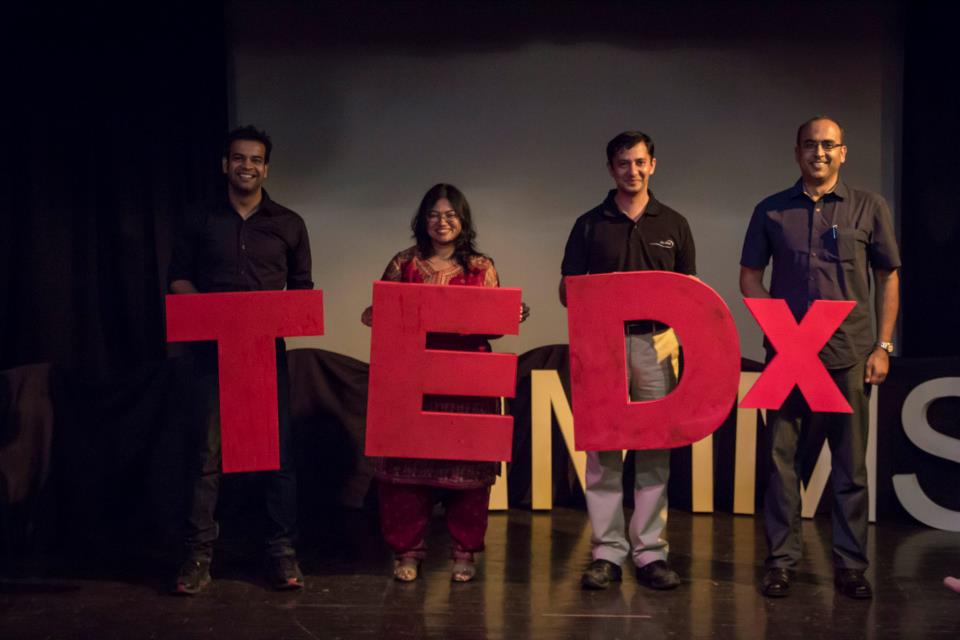
    piya-bose1Piya Bose is a corporate lawyer who left her job to follow her passion: Travelling. She now writes regularly for travel magazines and have also given presentations for TEDx events. Here, she discusses her decision to leave a safe, lucrative career and following her dreams. In this interview, she talks about:

    • Discovering her passion for travelling.
    • Her startup – Girls on the Go Club and it empowers woman.
    • Difference between Legal Education and Legal Profession.
    • Why is it important to follow your dreams.


    Given that most of our readers are law students and lawyers, how would you introduce yourself to them?

    Though I have chosen to take up tourism as a profession, it still does give me pride that I have a degree in BSc.LLB from the prestigious National University of Juridical Sciences(NUJS) and have worked with great legal minds.

    The training I received at law school has helped me greatly in the work I do, starting from research methodology, to drafting a contract with people I do business with or being aware of my rights and liabilities as a service provider. So, to sum it up, I would not say I have totally left the profession as law is very integral to the work I do. Being from a legal background, gives greater credibility and respect to the work I do now.


    Though it’s one of the most asked questions but yet, why law?

    Frankly, I never gave much thought to it at the time of applying for the course. I was fresh out of school and it was one of the many options I was exploring. I happened to get through NUJS first and decided to stick to it, as everyone advised me a professional course like this would be a good degree to pursue. So, in a sense I think I just let destiny lead me and I got great exposure to different thought processes and interesting subjects, which are valuable to me even today.


    If you have to sum it up in a word, what would that be?

    Intense.


    You worked with a law firm before starting off with Girls on the Go Club. What made you make the jump?

    Frankly, I could not see myself sitting at a desk for the larger part of the day and working graveyard shifts for the rest of my life. Even when you really like the work you do, there has to be a work – life balance that I found totally missing. My mind would wander off to exotic islands and snow capped mountains and I realised that given the kind of work timings I had I would probably never get to travel to even a fraction of places in my bucket list. So, I had to make a decision about whether I wanted to continue with my current lifestyle and of course earn a great salary or just risk it all, take a leap of faith and start living my bucket list. I chose the latter option and then there was no looking back at all.


    Starting an all girls club is certainly a very interesting concept but why just an all girl club?

    I have been travelling since I was 16 years of age. My first solo trip was to Brazil as a Rotary Exchange student. Little did I know then, but that experience did shape my views greatly and taught me that there is a world outside the box I live in, just waiting to be explored.

    I continued of course with school and went on to get my LLB degree.

    But something in me was begging to get out there and travel. Even while I was working at a law firm, I would get out of the city at every possible opportunity. I would research on interesting travel routes and places. I remember telling a colleague once that it is possible to travel from India to London by land and he thought I had completely lost it. Since I did not have the time for extensive travel, I hosted several travellers from various countries. I remember listening in awe to the tales of a 18 year old woman from Israel and how she had been backpacking for a year and I thought if women from other countries could do it, what was stopping Indian women to travel on their own?

    When my wanderlust got the better of me, I decided to put in my papers one day and take off for a trip from Lucknow – Nepal – Tibet. Standing in front of the Mount Everest I got my calling to do something unique in the field of travel. In the weeks following the trip, I gave it some thought and decided I wanted to infect other women who were scared to travel on their own, with my travel bug. That is when I started ‘Girls On The Go’ in 2008 and since then more than 1,000 women have travelled with us from Nagaland to Bali and now we are braving it to Antarctica.


    Leaving a cushy well paying job and taking the plunge requires good amount of guts, plus our society generally has this concept of being realistic. Keeping all this in mind, did you face any difficulty while starting up?

    Yes, it was like sailing over very choppy waters. Parents and well wishers thought I would just move on to another law firm or do something else in the field of law. They were disturbed to see that I was quitting the legal profession and in their opinion throwing 5 years of legal education down the drain. I could not make them understand that though I would not be in the mainstream legal field, but my 5 years of legal training would come into maximum use now that I was starting a venture on my own.

    Convincing family was really tough, so I had to really steel myself up to work very hard and prove myself. Once the first few trips took off and the media encouraged me by featuring GOTG in prominent newspapers, magazines and news channels, it was only then that they started seeing some sense in what I had set out to do.

    Startup capital was a challenge. I had spent almost all my savings in travelling to Tibet. Everyone thought it was impossible for me to start a business without money. But I knew deep down that with the correct combination of passion, out of the box thinking and determination, I could start my venture on a zero cash model. This is what economists call ‘Human capital’ which we tend to not even consider when we talk about startup capital. I was not scared of failure, because frankly I had nothing in the first place to lose. So, I decided to fully use the potential of my creativity, my power of conviction (thanks to my legal training), research skills etc to get the first trip going. Once the trip took off, I knew I was on the path I was meant to be and there was no going back.


    A roller coaster ride or a pleasant journey in woods, which describes your journey so far in a better way?

    I would say a bit of both. The thrills of a roller coaster ride and the highs and lows and the challenges of coming out in broad day light from the woods unharmed.


    piya-bose2How is a typical day for you like?

    A typical day for me is full of exciting research on the next place to take women travelling to, attending travel conferences, meeting suppliers from various countries, meeting up clients (I really look forward to this, as I get a chance to meet phenomenal women from various backgrounds) or interacting with them on social media, catching up with travellers etc. I also love to write or blog once in a while. English Literature was always the subject I wanted to study, but destiny had different plans for me.

    Most importantly I get to spend quality time with family and friends and have a healthy social life too.


    You have written for publications like Outlook Traveller, Hindustan Times and websites like Makemytrip.com. Tell us something about that.

    I love writing and I love travelling. So, it is but natural that I would do some amount of travel writing, describing the sights and sounds of every new place I visit.


    Not intending to make it sound like a 5 year government plan, but yet, where do you see yourself five years down the line?

    I definitely plan to expand GOTG, so I can get every woman in this country to travel like never before. My work will only be truly fulfilling, when every woman irrespective of her economic background can travel. To me, travel is empowerment and liberating and every woman travelling on her own would be absolute empowerment in my opinion.


    piya-bose3

    Last but not the least, what would be your advice to law students and dreamers?

    A dream is something that does not let you sleep. If there is a burning desire in you to do something, you really must do it. It could be a change within the profession or stepping outside it. Irrespective, your legal knowledge will never go wasted. In fact it will really push you to put all the skills you have learnt in law school and your legal acumen to the very best to survive.

    Law as subjects of study and as a profession are two very different genres and one must remember the difference. You may leave the profession of law (i.e. not work in a law firm, court, in house legal team etc), but you can never really get out of studying law as a subject. Irrespective of the profession you choose, there will always be contracts, legal bindings, tax laws, intellectual property rights etc that one has to be familiar with. Everyone with a legal background is privileged that we have a basic understanding of this discipline and that puts us in a more favourable position. So, in that sense remember ‘you can check out any time you want, but you can never leave’.

  • Arjya Majumdar an NUJS grad on his LLM at the Tulane Univ Law School, work as senior associate at 2 major law firms and teaching at JGLS

    Arjya Majumdar an NUJS grad on his LLM at the Tulane Univ Law School, work as senior associate at 2 major law firms and teaching at JGLS

    Arjya traces his life from his unlikely admission to NUJS, his internships throughout and his growth as a person during his LLM. He makes most interesting observations on the fundamental similarity between the work at a law firm and academia as making different sets of people aware of the law with certain differences that were small but are all that matter at the end of the day.


    Most of our readers are law students and young lawyers. How will you introduce yourself to them?

    I’m assuming you know my name. For a full description of my education and work life, please refer to my linkedin profile. What won’t be mentioned there is that I love singing and I crack bad jokes. Really bad jokes.

    In a nutshell, former corporate lawyer- now turned professor, aging hippie and slightly intolerable.


    arjya-mWhy did you decide to study law? Tell us about your college life.

    In many ways, this decision was made for me. I originally wanted to be a journalist. My mother came home one day with an application form to a completely unheard of NUJS. I decided to give it a shot, just for a lark. Didn’t study at all. Landed up at the exam centre half an hour late. Managed to clear it. That was when I realized that the people who administer the entrance test must think of my answers as worthwhile enough to teach me to be a lawyer. These people had been (presumably) teaching law for many years and therefore knew better than I did. I gave up on my journo dreams. The rest is history.

    College life was mostly fun. For the first couple of years, I learnt about stuff I didn’t know existed (coming from a science background in 11-12, studying Rousseau and Hobbes was scary). Getting into a groove in my latter years, I managed to devise a personal pattern of attending classes, studying and fun and games which allowed me to get by with regard to CGPA. Like many others, I fell in love and out of love- the standard ups and downs. Had my share of substances that shall not be named and fights with people who will also not be named.


    NUJS, now and then. How would you describe the change?

    Major changes. As one of the first few batches, we were instrumental in our own successes and relied less on teachers. As a new national law university we had a point to prove to NLSIU and make ourselves known. We won international moots without any mentoring or help whatsoever. This kind of enterprising behaviour has, in my opinion, died out over the years.

    On the flipside, I know it’s become tougher to survive. With more national law colleges, the competition, and not just for jobs, has become fiercer.

    I do wonder though, whether NUJS is still as chilled out a place as I remember it to be. I have made friendships which will last for life. I do hope the same applies to present students of NUJS.

    Not going to comment on the recent developments concerning the NUJS administration.


    What kind of internships did you do while you were a student? Any remarkable experiences during your internships that shaped your career choices later?

    I did the standard NGO, trial court, appellate court and law firm internships. Mind you, it was one internship a year and not two or three as I see happening presently. Two internships stand out. One was with the WWF where (along with dear friend Sagnik Ghose) I visited fish markets in Calcutta to find out if turtles (a Bengali delicacy) were being sold. Trading in turtles is generally illegal. We managed to rescue one turtle from certain death and released it in Alipore zoo. We also managed to tip off the local police regarding these illicit activities.

    The second internship was with Mulla and Mulla in Bombay. Mr. Shardul Thacker was most encouraging and allowed me to work on matters that would usually be given to first or second year associates. Of particular note was an opinion on software technology parks which gave me the inspiration for an article “Taxation in BPOs” published by ELT and later on, a book titled “Special Economic Zones: Policy and Procedure” published by CCH India.

    Both of these internships inspired two very important aspects of my career- one, a love for the environment and two, a love for legal academic writing.


    Right after graduating, you worked for three months in a law firm and then went for LLM. Why did you decide to go for higher studies?

    Somewhere down the line at NUJS, I got interested in Maritime Law (possibly because my father was a sailor). I must have written about 4 or 5 projects in maritime law and did maritime law based internships (including at Mulla). I wanted to learn more about the subject. Hence the choice to opt for higher studies.


    Tell us something about your LLM year at Tulane University Law School. How did this influence your career?

    As a lawyer, it didn’t influence my career at all. At least not professionally. A degree in maritime law has no place in a corporate law firm where you’re working on M&A and Capital Markets.

    But it did influence me in many other ways which I found to be invaluable in my career. A foreign degree forces you to stay in a foreign land, to understand and appreciate customs other than yours. I was staying in a town steeped in conservative American and black culture and the university had possibly 10 students from India. You learnt something new every day. As a result, I became more open minded, I gained an ability to walk up to and talk to complete strangers. More importantly, it broadened my horizons and sociability.

    It was also tough. Having to fend for yourself in a foreign land (where you might be misunderstood) is not easy. That, plus working part time and studying was a novel experience at the time.

    I’d say everyone should live (and not visit) abroad for a year. It gets you out of your comfort zone and makes you learn things about other countries (and more importantly, yourself)


    Any memorable experience you would like to share?

    I was working part time as a cashier at the university grocery store. A lady customer, upon noticing that I wasn’t white, black or hispanic, asked me if I was from India. When I affirmed her assumption, she asked me if we all rode elephants to work and had charmed snakes as pets.

    I still don’t know if she was joking or was for real.


    You worked as a senior associate at two major law firms. Tell us something about that.

    It takes a while to learn the ropes. You need to be able to put in the long hours and the constant attention to detail. Your boss also plays a huge role in your life. How he/she allocates work and how much you can learn from him/her will decide your bonuses and career in the firm. I am and will forever be grateful to Mr. Som Mandal, a number of former partners at FML, and some present partners at D&D.

    I also realized along the way, how important it is to create an image of excellence for yourself. Like the saying goes “Justice must not only be done, it must also appear to have been done”. This plays a huge role in law firm politics which I have unfortunately been witness to from time to time.


    How is a typical day for a senior associate in a law firm?

    Depending upon whether you have a deadline that day, life in a law firm varies on a daily basis. You work on your transaction, consult with your partner on a point on which you are stuck, read up on it, revise your document accordingly. If you have been diligent in your work, it should pass your partner’s review and the client should be happy. If not, you do get screamed at (not necessarily literally) and its back to the drawing board. All this is fairly par for the course.

    Sometimes a client will come back and express his appreciation for your work or will come to you (and not the partner) for a new mandate. Somedays you get to scream at an investment banker or a merchant banker. Those are the days which are worth recalling with a smile.


    Currently, you are teaching at Jindal Global Law School as Assistant Professor. Why this switch?

    About two years into FML, I realized that I didn’t want to spend the rest of my life drafting and negotiating on the same standard agreements, chasing after new clients for mandates and old clients for pending invoices. I knew I loved teaching (ask any of my former interns or colleagues) and had a flair for academic writing.

    Unfortunately, academia in India doesn’t pay as much as a law firm. Given the vast sums of money transferred to my bank account at the end of every month, it was difficult to tear myself away from the comfortable lifestyle I had built. However, JGLS salaries are at par with law firm standards and when the opportunity came, I took a leap of faith.


    Life of a law firm associate and a professor, what do you think are the major differences between the two?

    There aren’t too many differences. As an associate, your job is to make your clients aware of the law. As a professor, your job is to make your students aware of the law. As an associate you are expected to research and provide answers to questions of law in the form of a legal opinion. The same applies to being a professor, where instead of an opinion, you publish a paper.

    The only difference is that as a professor, you get to choose what turns you on intellectually. You choose what you want to research on and not what the client wants. You develop your own understanding of the research questions and are not expected to adhere to the understanding of your partner. And this makes all the difference in the world.


    Please describe a typical work day of yours at JGLS.

    Since classes haven’t started yet (it’s been less than a month that I’ve joined), much of my work is preparatory in nature. Preparing course modules and lists of possible research topics which my students will write projects on, consulting with the administration on university policies, studying for my own course (which I remember very little of) takes up most of my time.

    A lot of time is also spent in researching on ongoing projects which will hopefully be published or presented sometime soon.

    When classes start in August, I suppose a lot of time will be devoted to teaching, mentoring and guiding students and reading up on the next day’s class.


    How would you compare the JGLS of today with the NUJS of your time?

    I have seen NUJS during its fledgling years and am seeing JGLS during its early years now. I’d say the infrastructure at JGLS is far better than that at NUJS at the time. The faculty is younger, and therefore a lot more attuned to the needs of students (I feel that as students, we didn’t always connect with old, but very respected teachers such as Prof Menon, Prof Konar and Prof Banerjea).

    As I mentioned before, the competition has gone up. I see JGLS students applying for and presenting papers at conferences and publishing papers. While all this has happened during my time at NUJS too, I think the need to stand out in the crowd has become even more imperative now.

    One interesting difference I see is the student demographic. While at NUJS, you had a fair cross section of society in terms of economic class. At JGLS, that demographic is slightly skewed upwards, although you do have a large number of very deserving scholarship holders.


    arjya-m2What’s your take on work- life balance?

    Extremely important. You need to have the courage to refuse work if you think you have too much on your plate. Either that, or devise a way where you can work quickly without sacrificing accuracy. I have personally followed this through my years and it has ensured my sanity for many years. Singing at a rehearsal for a Broadway musical or an opera after a bad day allows you to get back to work the next day with a smile on your face.


    Last but not the least, what would be your message for law students?

    Don’t take law school too seriously. CGPA and class ranks, like old friends and enemies, will be forgotten. Learning the law isn’t important, anyone can learn the law. What is important is that you learn how to learn the law. Other than that, chill (while you still can).

  • Teslin Augustine, NUJS grad on interning with MP Naveen Jindal, the LAMP fellowship & life in the public policy sector

    Teslin Augustine, NUJS grad on interning with MP Naveen Jindal, the LAMP fellowship & life in the public policy sector

    Teslin AugustineTeslin an NUJS graduate tells us about her inspiration for joining law and her internship with Naveen Jindal which set her on the course for a career in public policy. She talks about the transition from law school to the real world and how best to have a work life balance.

     

    How will you introduce yourself to our readers?

    My name is Teslin. I graduated from NUJS in 2012, after which I did the Legislative Assistant to Member of Parliament fellowship offered by PRS Legislative Research in association with the Constitution Club of India. I am currently working as a policy consultant in a law firm in Delhi.


    Why did you decide to study law? Tell us about your college life?

    Perry Mason – the oh-so-cool defence attorney who was the star of a series of Erle Stanley Gardener books which I was addicted to as a child, is the single biggest reason why I decided to do law. Of course, I found more logical-sounding reasons when I had to justify my choice of profession to my family but the truth is that I found the long-winding arguments Mason hashed out in Court too hard to resist.

    College made me the person I am today – and for those who don’t know me, I am a pretty awesome person (modesty is probably not one of my traits though). Jokes apart, I made some amazing friends, who gave me the confidence to not be apologetic about myself – my choices, my likes & my dislikes and most of all it gave me the NUJS tag which meant instant “smart-alert” for my future employers.


    What kind of internships did you do while you were a student? Any remarkable experiences during your internships that shaped your career choices later?

    I did the usual run of the mill corporate internships. The only internship that was of any real significance was my 6-week stint at the office of Naveen Jindal, MP. I stumbled upon this internship purely by chance and it was the only internship where I felt like what I did mattered – that I wasn’t just another person helping rich corporations get richer.


    We often hear that more lawyers are getting into “policy work”. What does this actually involve? What is it that policy lawyers do?

    Courts take years, sometimes decades, to correct a legislative mistake. As a lawyer working in the realm of public policy (I wouldn’t call it “policy lawyer”) I do what I can to influence what a piece of law ultimately looks like – be it through making standing committee representations or educating the political class about lesser known concepts. I make sure that our legislators have all the information they should have to make intelligent policy choices which will ultimately decide the trajectory which our country will take. To put it simply, as a policy worker, I try to make sure that the Bill that ultimately becomes a law is in its best possible format.


    What made you interested to get into this area of work?

    Be prepared to roll your eyes, some naive ideology coming your way – I have always believed that at the end of 20 years if I can think of one thing that I did to make things better for this country then I will have deserved my place in this world. To me, policy seemed like the most direct way to make a difference. Even if I don’t make any direct changes, as long as I can keep the dialogues happening I have done my job well.


    When did you start thinking of going into such an offbeat career? What precipitated this decision? How difficult was it for you to make an out of the box career choice?

    I wanted to be happy about the work I did and that’s all that mattered to me. Sure, at the beginning, I was filled with uncertainties and always wondered if I was making a big mistake. But I soon shed all my uncertainties and insecurities about my choice of profession, when I realized I was one of the few people to have a smile on their face at the end of every day.


    How did LAMP Fellowship happen? What are the criteria to apply? How did you go about your application process?

    I first heard about the fellowship during my internship at Naveen Jindal and I had thought to myself at that time that no matter what happens I would definitely give this a shot. The LAMP fellowship is open to everyone who has an undergraduate degree, is below the age of 25 and is an Indian citizen. There is an online application form which asks for a statement of purpose along with your CV and some other details. Once you get shortlisted based on the SOP, there is a telephonic/skype or walk-in interview. The panel who interviews is made of ex-LAMP fellows, PRS analysts and usually a third party policy expert. There is no secret mantra to the interview or the application. The most important thing they try and ascertain during the interview is your reasons for applying and how passionate you are about policy-making. I think, if you truly care, your sincerity shines through.


    How was your typical day over there?  What kind of work were you involved in?

    I spend most of my time preparing questions that my MP could raise in the House, helping him with his Standing Committee responsibilities, doing issue-based research for him, prepping him for debates, preparing special mentions, zero hour submissions and private member bills.


    Is the pay enough to sustain your life in a megacity like Delhi, especially if you are not living with your parents?

    I am a very middle-class person with very middle-class needs. That said, as a LAMP fellow I lived in a constant state of poverty, my current job as a consultant allows me to lead a comfortable life.


    Currently you are involved in policy related work in a law firm. What kind of work do you have to do? How is it different from your previous work profile?

    As a LAMP fellow my work was mostly parliamentary in nature. This means that I helped my MP raise questions in parliament, introduce private member bills, raise special mentions, zero hour submissions and prepared his speeches for parliamentary debates and media appearances. The work I am doing right now uses a lot of the experience and knowledge I have gained over the past year as a fellow. I advise clients on implications of laws and policies passed by the Government, how it is likely to affect them and how to make representations to the Government so as to have a regulatory system in place that is favourable to clients.


    Would you throw some light on your current job profile? Is this an emerging area that law students should keep an eye on?

    I currently work as a Policy consultant in a law firm. We are in the business of providing policy-based advice to corporate clients.


    Any memorable career experience you would like to share?

    The highpoint of my fellowship was when a private member Bill I had drafted was introduced in the Rajya Sabha and was discussed and debated upon for 7-8 hours. There is nothing more rewarding than seeing Parliamentarians discuss, argue for or against a clause that you have yourself drafted.


    Where do you see yourself 5 years down the line?

    I eventually want to work with the Government and do policy making at the most basic level. I want to directly be responsible for what a policy document or a Bill looks like when it is introduced in the Parliament.


    What would be your advice to people interested in policy work? How should they prepare themselves for a career in policy? What are the essential qualities one should cultivate?

    As simple as it sounds, read the newspaper – to begin with. Policy work is a lot about being up-to-date with everything – be it the latest consultation paper that TRAI has released or the Orissa High Court’s judgement about mining. Know what is happening around you and take an interest to keep yourself updated. Do internships with a couple of policy organizations – Rakshak Foundation or Observer Research Foundation for example are excellent organizations to get an idea what policy work is all about. Talk to people who work with policy and leave behind all your fantasies


    How difficult or easy is the transition from being a law student to a lawyer?

    It is difficult. Your first job always feels like an internship. You keep waiting for it to get over and when it finally hits you that there is no getting over and that you have to do this every single day – pay rent, bills, buy groceries, fight with the maid, sit at the same desk everyday – it can get difficult. But once you accept that, life is good. It’s good to not be bound by any rules and finally be an adult, it’s good to be outside the constant scrutiny and judgment that is such an essential part of college life and do what you really want to.


    What’s your take on work- life balance?

    I know plenty of workaholics who are perfectly happy working all day everyday. Fortunately or unfortunately that is not me. I have to have the time to meet my friends, once in a while, come back home before the sun is up and go for a holiday once in a while.  I will probably be “lagging behind” my peers who work day and night but I choose not to measure my success based just on my professional life – it is a success for me if I have the time to explore every nook and corner of Delhi, it is a success for me if I have been able to take a dance class outside work and it is a success for me if I have gorged down 5 kgs of meat in a pigging competition. It is upto every person to decide what they want from life and there are no set rules.


    Last but not the least, what would be your advice to law students?

    I completely understand the glitz and glamour of corporate law and if that is what you really want to do then good for you. But if it is not, then there is no point fooling yourself. There is only so much happiness and satisfaction money and things can give you – true happiness is in finding something that you are truly passionate about and in waking up in the morning and actually being happy about going to work – that’s what matters in the end. Have the confidence to explore and find out what you love doing – don’t settle for anything lesser.

  • Sneha Ashtikar a GLC Grad on LL.M from Sciences Po, Paris and internship at Gide Loyrette Nouel, Paris

    Sneha Ashtikar a GLC Grad on LL.M from Sciences Po, Paris and internship at Gide Loyrette Nouel, Paris

    sneha

    Sneha talks about the unparalleled flexibility available at GLC with regard to pursuing internships. She explains how her knowledge of the French language coupled with the ease of obtaining a French scholarship and lower living costs makes higher studies in France an attractive option. She clarifies on the application procedure and common misconceptions about the contents of an LLM degree in France.


    Tell us something about yourself.

    My name is Sneha and I am pursuing my Master’s degree in Law from Paris Institute of Political Studies (Sciences-Po) in Paris. Previously, I studied law in Government Law College in Mumbai. Currently, I am on a gap year to gain practical work experience as an Intern in Gide Loyrette Nouel, Paris.


    Though it’s one of the most cliché question, but yet, why law?

    Let me give you a candid answer to that question. Since school, my interest in languages motivated me to participate in essay competitions, elocutions and most importantly – debates. Math and sciences were never my strong subjects. Hence, narrowing down my career choices was easier. My love of languages and debates naturally drew my interest towards law and here I am.


    What about your LLB years? What did you guys do for fun? 

    I started studying in GLC in 2007, I must say I had lot of fun; I met some of my best friends there. For fun, we participated in lot of different college committees, moot courts, Model United Nations conferences, etc.  We represented GLC in Harvard Model United Nations in Boston and that trip was the most memorable!


    GLC is located in sort of hub of all the law firms giving students ample opportunity to do running internship, yet a lot of people complain about irregular classes and infrastructure. What do you think are pros and cons of GLC?

    GLC has consistently produced excellent legal talent in the country. No other institution can claim to have such an impressive number of outstanding lawyers. Recently, in light of the development of legal education in past few years, students require an all-round CV to get past a challenging interview process at the law firms or to be able to cope with the competition at the bar.

    GLC curriculum is unique in this respect and provides for an all round development of a lawyer. Students typically intern for 4-5 years almost on a full times bases prior to graduation. This is a huge advantage for GLC students as opposed to students from other law schools in the country wherein students do limited internships during the 5-year programme. Additionally, the moots, other extra-curricular activities and the freedom that GLC provides to its students is incomparable to other institutions.

    That said, one major complaint that students have at GLC is its lack of infrastructure and resources. Relatively speaking, Shortage of good faculty is another concern at GLC. At the same time, it is also remarkable to see that we have students from other colleges coming to attend Professor Pithawalla’s lectures. I think GLC’s rich library is also one of the impressive assets to mention, our library has the original copy of the Indian Penal Code drafted by Lord Macaulay in the year 1886 and also many rare books, which cannot be found in any other library in India. GLC’s physical location is on one hand a huge advantage to its students while on the other hand there is no space to expand in the most sought after area of Churchgate, Mumbai.


    What made you go for higher studies so early in your career?

    Initially, my plan was to stay and gain experience for a few years, however, one of the deal breakers was to get admitted to a good law school and I managed to do it along with a scholarship. So, here I am, studying in Paris.


    Paris is a dream to-go-to place for many people and you happen to be studying there. How does it feel like?

    It feels amazing! I always dreamed of visiting Paris but I must say I never thought that I would end up studying here and walking by the Eiffel and the Louvre every day. Paris is undoubtedly one of the best international cities and it has so much to offer you on many different levels. On each and every corner of Paris, there is a special monument with a remarkable history attached to it. I feel privileged to be able to live in Paris and at the same time I have the advantage of visiting neighboring European countries any time I want as everything is within two hours by flight!


    Why did you choose to study in Paris?

    I chose Paris for my love of the language French. I started learning French at Alliance Française de Bombay when I was in the first year of GLC. French is such an elegant language and you start feeling glamorous even while learning it.  I had several opportunities to meet eminent French personalities, participate in activities related to France or their language, I remember we had a treasure hunt competition in South Bombay in which all clues given to us were in French!

    So basically, I fell in love with the language first and then I decided to even take my main career along with me to France.


    How did Sciences Po Paris happen? What other colleges did you apply for?

    I was contemplating between doing a JD in the US or something as different as Sciences-Po Paris. In my final year, I studied to give the LSAT, by the end of the application process; I was comparing my career options between doing a JD against a Master’s degree from Sciences-Po. Sciences-Po definitely sounded like an out of the box kind of an idea and at the same time, it also carries a strong reputation of famous schools alike such as Harvard or Oxford University. It has traditionally educated France’s political and diplomatic elites including the current President Mr. Hollande. I was completely amused by the idea of studying at an institution that carries a strong worldwide reputation for specializing in social sciences.


    Did you get any scholarship to study there?

    Yes, I was given the French Government’s scholarship. The French government is very welcoming of its foreign students and there are many institutional scholarships as well as one other government scholarship that gives priority to law students.


    How long is the LLM course over there? How is it different from LLM in popular countries such as US and UK?

    It is a crisscross two year program between LLB and LLM, it is called ‘Master in Economic Law’ with a specialization of your choice in second year. It enables you to study more subjects than in LLM offered in other countries and you can still pursue a specialization, which is normally offered by an LLM course. So I think it is a fantastic course and also fits the expectations of law graduates coming from India. You also have an opportunity of participating in famous moot court competitions such as Willem C. Vis and Jessup. Sciences-Po has an excellent faculty of full time professors as well as a prominent visiting faculty including professors from foreign law schools, several partners, and lawyers from international law firms and so on. At this point, I would also like to mention that all classes are offered English and based on Common law in comparison with the basics of French/Civil law. A common perception is that I am studying only civil law of France which is not too useful for common-law lawyers but I hope this clears the cloud. I personally find it extremely useful to get to know the basics of this civil law system, especially when Indian law firms are starting to have many European clients.  You can also take an year off from the school and pursue two internships over the period of ten months or apply for exchange programs to law schools including NYU, Harvard University to study one semester there and then pursue one internship of five months. Even if you decide not to take the year off, during your second year, there is Columbia law school exchange program in which, you spend a semester at Columbia and return to Paris to finish the last semester. This course also makes you eligible to pass the French bar exam which is in French (if you work hard on your French, you can take it!)


    Would you tell our readers about the application procedure and other requirements?

    I would suggest sending in the application on day 1 of starting date. Sciences Po doesn’t have a particular early decision system like American law schools but since it is rolling application process, earlier the better. No prior knowledge of French language is expected from the applicant student, which is very comforting to those who do not speak French at all. You can start learning the language with your law classes. I had many students in my class who did not speak French at all so it is common.

    Of course, knowing French language can prove useful because you live in a francophone country so for day to day life it is easier if you speak French but I also know of many people who get by without speaking any French. It really is up to the person if he/she wants to embrace a new language. I remember how thankful I was to be able to speak French when I called a French plumber and explained him the leakage problem in my apartment! If you love challenges, this course and this place are for you!

    Most importantly this course isn’t as expensive as the LLM in US or UK. In fact, the tuition fee of an LLM in the US or the UK is equivalent to 2 years of fees and cost of living of the course that I am pursuing. Also, being one amongst the rare 3000 (approx.) Indian students in France gives you a good chance to score a scholarship.


    How would you describe your typical day?

    Since I am working now, I wake up early in the morning, have a shot of espresso like a true French national to start my day and by the end of the day have dinner, sometimes with a glass of one of those special French wines and some good jazz music to overcome the exhaustion! I share my apartment with a French lady so we discuss random things happening around (oh yes, in French). I really think you have to integrate yourself in the local culture so you don’t feel home sick; instead you end up making a new home for yourself.


    You are interning with Gide Loyrette Nouel which is one of the leading international law firm. How is your experience there so far? How is it different from an Indian law firm? Is there any specific requirement for working in law firms over there?

    My experience so far has been extremely positive, I feel absolutely incredible to have an opportunity to work with them. I speak French with most of the associates and partners and they absolutely appreciate it! The team that I work with is so diverse and you have an immense scope of learning literally every day. The clients are so international that at times, I have found myself looking up the Company laws of African countries. I also got to learn the practicality behind French corporate laws. It is an extraordinary experience for a common law lawyer. I noticed the firms here are very well organized and very particular about their filings, billing hours etc. In addition, big firms like Gide Loyrette Nouel have intense training and a welcome program for interns to help them integrate well into their working style.
    There is no specific requirement as such to apply, they even give opportunities to freshers but being a student of Sciences-Po definitely helps you to compete with other law students applying from other universities such as Sorbonne.

    The firm is also sending me to Beijing to work for the summer so I have a chance to gain professional experience in Asia. I am very excited to discover China!


    What are your future plans?

    I would love to work in an international law firm like Gide after graduation but it is not so easy since it is a very competitive market for lawyers in Paris. Hence, after the completion of my postgraduate studies, I will aim at finding an associate’s position. Hopefully my current work experience will help me achieve it.


    What would be your advice to law students who plan to go for higher studies or want to get into academics?
    Since we all are still facing the post-recession consequences, it is extremely important to be innovative in your career options. If you pursue a Phd in law, you could also become a professor afterwards and it will be good to have some fresh, young faces into academics.


    Last but not the least, what would be your message for law students?

    I would say that use your time to your advantage. Manage your academic scores well and at the same time, make your portfolio colorful and convincing with a wide range of internships and work experience. Use every experience to learn about yourself and make a decision about the future based on the lessons you learn. In the end, own up to your decision. Never keep any regrets. The most important thing is to make sure you have fun no matter what you do. Last but not the least, learn a new foreign language!

  • Arman Sood on starting up E-Shack from Jindal Global Law School and being an entrepreneur

    Arman Sood on starting up E-Shack from Jindal Global Law School and being an entrepreneur

    Arman shares his inspirations for creating a startup that sells bar and party accessories. He tells us about funding for the startup and the supportive college environment which made this endeavour possible. Being an entrepreneur he also tells us how he managed highs and lows.


    Most of our readers are law students and young lawyers. How will you introduce yourself to them?

    My partner and I are both 4th Year Law Students at Jindal Global Law School. We are from Kolkata and Jalandhar respectively and met at Jindal itself. From then on we have been best friends, roommates and now even business partners. We love the work we’re doing, we love law school and are keen sports enthusiasts and like all of you out there we love watching Suits and Game of Thrones and are heavily into TV Shows and Movies.


    Why did you decide to study law?

    Both of us had very different reasons to study the law, Ashwajeet felt it would be great to know the law from a business perspective and always had the entrepreneurial passion in him, I on the other hand love public speaking and if I were to do law it would surely be litigation.


    Tell us about your college life? What do you guys do for fun?

    Haha, that’s a controversial question, lots of things, most of them not allowed on our residential campus. On campus we spend time with friends, play a lot of sports and right next to Jindal there are two theka’s called “Chowki” and “Beeswameel” which we frequent even if it is in the middle of the day to grab a beer and brainstorm.


    How do you think Jindal Global Law School is different than other law schools? Do you think that being there sort of helped in conceiving E- Shack?

    I think Jindal Global Law School is awesome much to the contrary opinion many of my peers from the National Law Schools might have. We are bunch of young hardworking kids who really want to make it big and the institution guarantees that exposure. I don’t know if the institution necessarily helped us in coming up with the idea but it has been both an advantage and disadvantage. The attendance requirement has been a problem for us because we keep travelling out to Delhi and Jalandhar for work and of course the odd days when we just don’t wake up for class. Our friends and professors have been great so that has been an advantage.


    arman-soodComing to E- Shack, how did that happen?

    I don’t remember exactly because we were hammered and in Bangkok, just kidding we used Beer Bongs and played Beer Pong at my father’s 50th Birthday and realized that there was a void in India as far this segment was concerned. We came back skipped our internships and launched eShack after 4 months of hard work.


    Why the name “E- Shack”?

    It was a rather difficult decision. We asked people for help and suggestions and wanted to make it interactive. Finally we chose eShack even though it was Bar and Party Accessories it because it was broad enough to expand to other verticals which we have done now. We have launched a line of T-Shirts and want to expand to other verticals, which we can under this name.


    A roller coaster ride or a pleasant journey in woods, what describes your journey so far in a better way?

    A fine line between the two, there are days where we on a roller coaster and there are days we just sit back and relax enjoying the fruit of our labour.


    Managing classes, projects etc. etc. and running a business. How do you guys manage that without having a clone?

    As I said earlier our friends and professors have been extremely kind and supportive. We make plans, schedules and execute them well in advance. As partners we have an understanding of who does what, when and how and that makes it easy to balance everything. Since we say on campus most of the time we have two trusted employees who run the warehouse and extremely supportive courier agency that makes sure things are in flow while we aren’t around.


    How is a typical day like for you guys?

    A typical workday would be extremely hectic. We have to attend our classes and maintain a 75% attendance as well as do projects, take surprise tests and examinations and manage our law school studies, which are getting tougher by the year. In between classes we make calls, dispatch products, handle the warehouse. Post classes we handle invoices, marketing, PR and taxes and late in the evening we satisfy customer queries and plan the strategies for the next day and week. Since we divide our work well and meet timelines we are able to stay afloat. We usually brain storm late into the night so the only thing we really lose out on is sleep.


    Initial investment is a big issue for any start- up, how did you guys manage that? Are you guys bootstrapping?

    We weren’t born with a silver spoon in our mouths but we had it a little easier than most entrepreneurs. Our start up funding came from our parents. It’s not like we asked them and they said here you go, it was a fun process. We pitched our ideas to them, heard their criticisms, revised our plans and went back with projections and made them believe in the idea and us more than we even did before taking the funding. After that we have been bootstrapping and haven’t taken a penny more.


    Every business has a target market, how would you define the ambit of E- Shack’s market? Do you think students form a major market segment for E- Shack?

    With our product range we have been able to cater to varied preferences and tastes. Even though we showcase only 14 products we have manage to have a little something for beer lovers as well as tequila and vodka aficionados.  Also some of our products such as beer bongs and beer helmets cater to the younger generation and crowd whereas whiskey stones and alcohol dispensers have found a slightly older clientele thus covering a wide audience.


    How has been the profit/loss ratio of E- Shack so far?

    I won’t answer that because I don’t think a figure can define either the work we’ve put in or the results till now or what we can achieve. We’re happy where we are and have a long way to go.


    Not intending to make it sound like a 5 year government plan, but yet, where do you guys see yourself five years down the line?

    Retired!


    Last but not the least, what would be your advice to your fellow students and dreamers?

    There is no right time to start up. It’s a gut feeling an instinct that tells you to take the plunge and when you feel that its best to jump right in. Even if things don’t go your way remember that as an entrepreneur one needs to adapt and innovate and things do always fall into place. Do things the right way, always and it will get you farthest. There are no short cuts in life.

  • Esha Shekhar on being a legal correspondent for Bloomberg TV & moving back to the world of corporate law

    Esha Shekhar on being a legal correspondent for Bloomberg TV & moving back to the world of corporate law


    Esha graduated from WBNUJS, Kolkata in 2012, instead of applying for mainstream corporate jobs, or pursuing a career in litigation, she applied for jobs in the legal journalism. She worked at Bloomberg as an anchor for quite a span of time, and is currently an associate at Dua Associates. Let’s talk with her about her experience in the legal journalism sector.


    Most of our readers are law students and lawyers. How will you introduce yourself to them?

    An apt introduction would be law student turned journalist turned advocate.


    Please tell us something about your college life. Why did you want to study law?

    I was preparing for medical entrances, but a lack of interest in science made me give that up. I saw the law school entrance question papers and an aptitude based test seemed like an interesting option 🙂 Law is very logical, and that was the first thing which drew me towards it.

    I graduated from National University of Juridical Sciences, Kolkata. The five years spent in NUJS and Kolkata was truly an experience. Apart from academics, which of course is the staple of any college life, a good circle of friends, and gaining the independence to do what I wanted to do is what I give the college credit for.


    When you were in college, what were your thoughts on career? What kind of internships did you do?

    When I first came to college, becoming a corporate lawyer was the thing everyone aspired for, and naturally, I believed in the same. Gradually, I started questioning whethercorporate law was what I wanted to do. The bad thing was I had very little idea about the other options I had. The good thing was lot of seniors from NUJS, even current students had started exploring new career options, which took off some pressure from me.

    My internships were varied. It was a conscious decision to work with as many diverse organizations as I could manage, to gain perspective on my career options. I interned with Down to Earth magazine (the flagship bi monthly magazine by Centre of Science and Environment) where I wrote for them for two months, litigating lawyers, a multinational company, Jharkhand State Electricity Board (to gain some experience with a government body), a boutique IP firm and of course the customary top corporate law firms.


    You worked with Bloomberg TV India after graduation. Don’t you think this is an unusual career choice for a law graduate?

    I would say it is not the usual career choice for a graduate from a five year law school. Legal journalism is an option many students from 3 year law colleges, especially CLC opt for. A major chunk of journalists who report from Supreme Court and High Courts are law graduates since they are supposed to be equipped to understand the legal jargons and give a clear understanding of what the Court said in a particular matter. Also, a court accredited journalist needs to have a law degree. So it is not an unusual choice per se. I was interested in journalism from the beginning because of my interest in writing. I worked with and ran the in house NUJS magazine, Writer’s Block for some time. Working with Down to Earth magazine gave me an understanding of print media. But yes, working with a TV channel was entirely a different ball game altogether.


    esha-shekharWhat motivated or encouraged you to join Bloomberg? Was this a campus placement? Did you consider other media companies at that time?

    Bloomberg was a classic case of being at the right place at the right time. When I didn’t get through the top law firms’ interviews, I was very dejected initially, but a bit of thinking made me realize that it was more because of peer pressure rather than the actual loss of a coveted job. I stopped applying for such jobs, started applying to print media houses and I was getting favourable replies from some of them. However, I didn’t know that TV channels were an option.

    Bloomberg was not a campus placement. I happened to be in Delhi at the time when a college professor sent a batch mail saying his friend was working with a business news channel, who were looking for law graduates to work for a new legal show. I applied, got a call for interview and was really skeptical about it. But it was the first interview where I actually meant whatever I said, vastly in contrast with my other numerous ‘lost attention in 5 minutes’ law firm interviews. That was something which encouraged me to join Bloomberg.


    What were your primary responsibilities in Bloomberg?

    My responsibilities were two fold – daily news reporting and working for the weekly legal show. As a legal correspondent of a business news channel, my responsibility was to report all the corporate related legal news from the courts. Since I was the only person assigned to the legal beat, I ended up covering corporate legal news coming from all courts in Delhi. This includes Supreme Court, Delhi High Court, District Courts, Company Law Board, Appellate Tribunal for Electricity, Competition Commission of India, National Green Tribunal, Income Tax Appellate Tribunal among others. So a major part of my job was to be in Courts from 10 to 4, report the news, talk to various lawyers and figure out their next step of action in all such high profile matters.


    You worked on their show The Courtroom. What did you do for the show?

    The Courtroom was launched last June, when I joined. The entire idea behind it was to make a half hour news show of important corporate legal news of the week. We at Bloomberg discussed how there were so many important legal stories/judgments coming from the courts, specially High Courts which either didn’t get noticed, or were given a ‘five line space’ in newspapers. The judgments had a much bigger impact if analysed properly.

    My job was to identify such judgments/ stories which had a bigger impact, and provide an analysis of the same explaining the larger picture. This involved writing the script for the segments, talking to lawyers and taking their opinion and putting up a segment together for the show.


    You were involved with content analysis and editing of the show, The Courtroom. What does that exactly mean?

    The format of the half hour show was top legal news headlines followed by three short segments on analysis of the top judgments of the week. Content analysis involved brainstorming about the headlines, and the content of the three short segments. Identification of the story/judgment is just the first step. Writing the script was the toughest bit. The script was for a layman’s understanding, so I had to forget being a lawyer, and focus on explaining legal jargons in the simplest way possible, without losing the essence of the story. It was initially very difficult, but my boss, who is the Associate Editor in Bloomberg was a good teacher who taught me how to do the scripting.

    So the script for one segment was ready on paper. Two or three lawyers’ opinion was taken on record to give an expert insight. To make it a seamless story for TV viewership, editing came in. I worked along with the editing team. I would record some part of my script (Voice over),figure out the videos which  would come along with voice over, edit/shorten the comments of the lawyers (bytes), put it in place, record a small bit where I would conclude the analysis (reporter’s link) and place it all together to make one segment of the show.


    How is the place to work at? Were there other lawyers?

    It is a great place to work at. I really enjoyed my work experience there. The USP of the place was that being a young news channel, it gave a lot of space to its reporters to identify their beat (the area which they would cover), build their contacts and identify a story. There is intense pressure on the reporters in other news channels, specially other business news channels to break one news story every day. That was not there in Bloomberg, and they pay a lot of attention on the news content. One thing which I learnt was that breaking the news was not priority, breaking the correct news was. So if I heard something in court which I knew was important but was not sure of, even though every other reporter was rushing to report the same, I was taught to get a confirmation before I reported on the story.

    No there were no other lawyers. I was the only lawyer reporting legal news among the business news channels.


    What was the work environment like?

    The Delhi Bureau of Bloomberg TV India has around 8- 9 reporters. The news content is policy based because of Delhi being the centre of power. I learnt a lot about policy because the news reported from Delhi were mainly from Finance, Aviation, Telecom, Commerce, Coal Ministries among others. Being a part of the newsroom is interesting, as it is not only about a reporter’s knowledge but how he/she handles the pressure of getting confirmation about an important news from a source, verifying it, putting on make up to appear presentable onscreen and then reporting the news live as calmly as possible. It’s about knowing your topic well, in case the teleprompter stops working. Bloomberg’s work environment is good. There is constant pressure to report news, but the bosses didn’t make life hell for losing out on a story, and that’s saying a lot for a news channel.


    Young professionals almost inevitably hit rough patches in the career. How do you think they should handle such situations?

    I think it’s all about understanding what would work for you. A lot of us end up looking at a situation from another person’s view point, rather than looking it from one’s own. What would work for your friend may not work for you. It may sound straight from a self help book but it helped when I was going through a lot of stress with my law firm interview rejections – keep faith in yourself.

    Also, I think one should not postpone something they want to do for later. In college, my plan was to work with a law firm for a year and then try my hand at journalism. Exactly the opposite happened, and in retrospect it was better that way, andnowI am much more confident about my decisions.


    You recently shifted and started working for Dua Associates. What made you change jobs?

    Yes, I shifted recently to the litigation team in Dua Associates. After college, I knew I didn’t want to quit law altogether, but I also knew that I did not want to be on the corporate side. In law school, litigation is seen to be pursued by someone who has a lawyer in the family, or as a poor cousin of the corporate side. But in reality, it’s a much more satisfying experience for a lawyer. When I started reporting for Bloomberg, I was in courts from 10- 4 everyday, and it was fascinating. I interacted with many lawyers, including senior advocates across all courts because of my work and that made me learn a lot how litigation works- in both good and bad ways. I covered many high profile court proceedings, including SEBI- Sahara dispute, Presidential Reference (of 2G spectrum issue), Uninor dispute, Bellary mining, Novartis patent dispute in Supreme Court. Hearing the senior advocates argue the matters was quite exciting. One prominent lawyer told me that even if there are hundreds of adjournments you face, one chance to argue a matter in court is worth the hassle.


    How does working at Dua Associates compare with Bloomberg TV India?

    They are different in a lot of ways. There was a constant pressure in Bloomberg to report news/break news or constantly be in touch with lawyers to get information. Plus there was the additional pressure of brainstorming for each episode of the show every week. Dua is more relaxed that way. I don’t get to see all the high profile litigation matters in court. But now the pressure and priority is about either researching or reading for drafting petitions, applications, and written submissions for the matters you are handling or preparing for filing the same in court. It seems like I am back in college, except that I am studying much more than I did there 🙂


    The working environment of a legal firm must be different than working with network television. What does it take to make a shift like that?

    For me, it was not much about the shift, as it was about figuring out what would work for me. I trained to become a lawyer, and I knew I wanted to be one. Litigation is what I have realised would work for me for now. The experience with network television made me get out of my comfort zone, and experience something which was very new. I have become more confident in my interactions with people, and once you start doing live news, everything seems easy in comparison. Bloomberg experience helped me get familiarized with courts, court jargons, proceedings etc. I could make a more informed decision about my current job. So if you are working somewhere, and get a new opportunity, you need to make weigh the pros/cons and understand what kind of learning curve you’ll get.


    Lastly, where do you see yourself in the future, in say another 5 years? Any chance that you may get back to journalism?

    I will be litigating hopefully. I don’t see myself getting back into journalism per se, but I plan to start writing for newspapers or magazines soon. As much fun as my TV stint was, with the thrill of appearing on TV and talking to the camera, I don’t see myself returning to news channels as a journalist.

  • Divya Vikram, Consultant, Legal League Consulting, on her experience and the future of Legal Management

    Divya Vikram, Consultant, Legal League Consulting, on her experience and the future of Legal Management

    Divya Vikram is a graduate from NUJS, batch of 2012. During her time as an undergraduate, she was Director of the Society for Advancement of Criminal Justice (SACJ) for two consequent years. She has also taught at the Adult Literacy and Legal Education Programme, an initiative undertaken by the Legal Aid Society of NUJS. She is currently a consultant with Legal League Consulting, where she handles Strategy and Business Planning, Practice Development, Brand Communications & Client relationships, Law Firm Alliances and Synergies.

    In this interview we speak to her about:

    • Her experience at LCC and the responsibilities the job entails
    • Striking a balance between work and personal life
    • The future of legal management


    How did you decide to study law? Tell us about your college life


    Let’s just say, law was sort of a happy accident. College life in the first year I would say was sort of tough. You had to get adjusted to living away from home, your parents and friends back home, hostel life, hostel food, making new friends, coping with law school in general. However, things got better with subsequent years. Law school shapes you as an individual and professional. NUJS offered me diverse things to do as a student, be it moot courts, publications, managing committees/societies, volunteering in various activities etc. apart from the regular studies and projects.


    What kind of internships did you do while you were a student? 

    After my first internship at Lawyers Collective (NGO), I decided to do my second internship in a law firm. I started with ALMT Legal then subsequently interned at AZB & Partners, Trilegal, Brus Chambers etc. None of my experiences were remarkable as such but each internship taught me something new. However, at the end of 4th year I decided that five years down the line, I don’t see myself working in a law firm.  Hence in my 5th year in order to experience the corporate world as well, I interned at a Corporate (SunEdison) and loved it.


    How did you decide to work with Legal League Consulting?

    The first time I heard about Legal League Consulting (LLC) was in my 5th year when they invited applications through Campus Recruitment Committee. That’s when I checked online about LLC and the managing law firms. Also, I was lucky to find a junior who had interned there and he explained me the nature of work they undertook. From what I learnt about the nature of work I was almost immediately convinced and interested at the prospect of working at LLC.


    divya-vikramCan you tell us something about the kind of work LLC does?

    (LLC is the first law firm management company in India legal industry.)

    Legal League Consulting (LLC) provides Management Consulting to the legal industry. We provide solutions to the legal industry with respect to Human Resource Management, Financial Management, Business Development, Strategic Business Planning, Knowledge Management, Partnership Structuring, Alliance, etc. In a Nutshell, it’s basically a 360* degree management service to the Legal industry.

    My role at LLC majorly involves, but not restricted to, formulating policies essential for running of a law firm, undertaking activities to assist firms in developing business. I also assist Law Firms in the implementation of various Human Resource, Business Development and Knowledge Management related systems.


    Did you ever hit a rough patch in the beginning of the career? 

    Student life was fun and apart from scoring good grades and working towards a making a good CV and enjoying college life, there was not much you really had to do. But being a professional is altogether a different ball game. It was indeed a little difficult to transition. Firstly, my transition from a lawyer to a management consultant itself was a difficult one, especially those work involving compensation structuring and other finance related aspects. Learning various management concepts, its application and understanding the rationale behind it. As a Consultant, you are solely responsible for all the clients you handle and the documents you send them etc. therefore the accountability factor is more and one cannot afford to make mistakes. Furthermore, one has to be well informed about not only the Company’s clients but the market and global trends and keep evolving.


    What is a typical day at work like?

    At LLC I work for the Law Firm Management Team (the other two being Brand Communications and Talent Acquisition Team), where we undertake a wide variety of work starting from HR, Finance, Partnership Structuring, Compensation Benchmarking etc. Hence most of the days, depending on client needs I work on the client deliverables for that particular day or week. Apart from that sometimes I accompany Ms. Bithika Anand, our Founder & CEO and sometimes other seniors to client meetings. In addition to client work we work on developing new products, and other upcoming initiatives of LLC.


    What are your thoughts on work-life balance? How do you achieve it yourself?

    Work- life balance is definitely of utmost importance to me. I would definitely need a day off from work to clean my apartment, wash clothes, cook some good food, relax, watch television and catch up with friends. At LLC 2nd and 4th Saturdays is off in addition to Sundays, which is good enough for me to relax. However, very rarely, you might have to attend some client meeting on a non-working Saturday or work towards completing some client deliverable… but that’s fine!


    What do you think is the future of Legal Management?

    The future of Legal Management is bright… in fact very bright. Almost every other day we have a new client (law firms, corporates, LPO’s, recently even an NGO) who has approached us for handling their various management related issues and needs. There is growing awareness and realization on the importance of management in runningone’s organization. As lawyers are busy with execution of law, they prefer to leave the day-to-day running and management of their organization to experts in the Management field.


    Where do you see yourself five years down the line? What kind of work will you like to do?

    Since I seem to be enjoying my job a lot, I certainly see myself as a Management Consultant… however, a much experienced and evolved professional. As I love doing more of HR work than Finance, I would like to specialize more in the HR related aspects.


    What do you do apart from work? How is the life of a law graduate in Delhi?

    I would prefer spending my off days at home either watching television, experimenting my culinary skills, reading books and sometimes meeting up with friends and not to forget shopping.

    Delhi is a wonderful place for youngsters. It offers a wide variety of options for all kinds of people. There are places to shop starting from your malls to Sarojini Nagar and the old Chandni Chowk, places to eat ranging from your Sheraton, Hauz Village, ParanteWaali gali and other street delicacies. For those who love Indian culture and history, there are remains of the past Mughal Rule in India which can be visited and many other places.


    Would you like to work for law firms as an associate in future?

    No, not at all.

    Last but not the least, what would be your message for law students?

    There is no reason why a law student will be interested in a message from me. But then if I had to say something, I would say enjoy every bit of your college life, because they are priceless and they will never come back to you. Once you are a professional you will yearn for that kind of time and fun.

    Also, don’t spend law school life just being bothered about internship and grades. Trust me, at the end of the day that hardly matters!

  • Apurva Sukant, Founder, Androidly, on studying in CNLU, his passion for philosophy and venturing into tech

    Apurva Sukant, Founder, Androidly, on studying in CNLU, his passion for philosophy and venturing into tech

    Apurva Sukant is a graduate from CNLU, batch of 2011. During this time he has interned with the likes of Mr. Arvind Mouar, Advocate, Civil Court Patna, the Rural Litigation & Entitlement Kendra, Amnesty International India, Honb’le Justice Mr. Ajay Kumar Tripathi, Patna High Court, among others. In May, 2012, he took the entrepreneurial plunge and started his own range of Android smart watches, Androidly. He is also Founding Partner and Managing Director at Scenescape, a registered partnership firm, dealing in gardening and art.

    In this interview we speak to Apurva about:

    • Making the shift from lawyer to entrepreneur
    • His diverse internship experiences
    • His passion for technology


    Most of our readers are law students and young lawyers. How will you introduce yourself to them?

    I would like to introduce myself as a tech and a philosophy enthusiast first and subsequently as an entrepreneur and a lawyer.


    Why did you decide to study law? What would have you been doing if not law?

    I found law to be the only professional degree with no limits on what could be done with it in the future. This is to say, law is very open-ended. Today, we have lawyers successfully walking every field of life, ranging from the arts, politics, business, non-profits, and there are a few in technology too.


    What kind of internships did you do while you were a student?

    I have interned at a few non-profits, like Amnesty International and Rural Litigation Entitlement Kendra, which was during my early years as a law student. Later on, I did an internship under a High Court judge in Patna, and with an additional Solicitor General in the Supreme Court. The high point in my internships was one term with the eminent lawyer Mr. Ram Jethmalani, during which I got to see and work on some landmark cases and be in the same room with some very influential people. The only internship I did at a law firm was at Luthra & Luthra.

    A singular experience during my internship was when I got to interact with and legally help folks in remote villages in Himachal Pradesh, during my internship with RLEK. The villages were small with around twenty households and were inaccessible by road. There was no electricity or telecommunication. The beauty of the place and its people has me searching for words! As a plus, I found that work meaningful too as I was able to cause direct change in peoples’ lives, albeit at a smaller scale.


    Apurva SukantHow did you manage the shift from HNLU to CNLU? Did you face any difficulty caused due to the shift?

    The shift was great as I was welcomed in the institution with open hands and hearts of both the faculty and students. I found some of my best friends there, and was fortunate enough to win the university presidential elections for the Student’s Bar Council. I went to the Willem C. Vis moots, both the Hong Kong and Vienna rounds with competent and dedicated teams from CNLU only. So I’m only too glad that that happened.


    How did you decide to venture into the startup space?

    Internships are co-curricular activities, meant to interface us with the industries and the real world. As a law student, I found it normal to go to NGOs, courts and firms for internship just like my peers. In hindsight I can say that an internship in the legal section of a tech company might have come in handy, but that never happened. As a law student, I wanted my education and experience to be as complete as possible, and so I did all the regular categories of internships.

    Starting up, after doing a slew of regular internships doesn’t seem unusual to me, as the idea of starting up had always run parallel to my circumstances as a law student. I had always thought of being a decent lawyer first, so that I could use all that knowledge into starting my venture successfully afterwards.


    How did Androidly happen?

    ‘Happened’ is a good verb to describe the story of Androidly. The story is about four childhood friends together, all of whom are moonstruck with technology. After about completing their graduation, we serendipitously decide to ‘make’ things. I think it works out something like this, when people become really good at things, they naturally want to take their stuff out into the real world. This might be our innate sense of adventure, our desire to make a ‘dent in the universe’ etc. When we became convinced that what we could do would be comparable to what billion dollar multinationals were doing, then we were able to shut off our risk-aversion behaviour and take the plunge!

    The specific story about how we decided up on a smart watch is related to our perception that whatever we were to make, should be cutting edge and something which would arouse interest out of sheer novelty first and functionality and quality later. It should be something that everybody needs, but nobody can place their finger on quite yet. Smartphones have been with us for some time now, and tablets are becoming popular every day. The wrist seemed the eventual destination for the next generation computing platform, and that’s when we decided it was to be a next generation smart watch.


    Tell us something about the smart watch that Androidly developed?

    The Androidly smartwatch is the world’s smallest full Android device, and the first complete Android smartwatch in the world. The watch comes with a full suite of sensors including GPS, camera, accelerometer and a full suite of radios including, Phone, WiFi, Bluetooth. So there is not much difference between a latest Android based phone and the Androidly smartwatch as far as functionality goes. The only difference is the form, now all this functionality is available on your watch, which lets you carry the whole world on your wrist.


    How is a typical day for the CEO of Androidly Systems Pvt. Ltd.?

    The typical day goes making calls and sending emails to customers, and business inquiries and doing development work on the watch and our websites. Outreach activities with the media and customers worldwide also come in a bit, though most of that is handled by our very capable communications officer, Pavneet. Occasionally meetings are scheduled with corporate partners to negotiate deals and alliances.

    Do you think that in today’s time when wristwatches are being replaced by phone, Androidly’s smartwatch would make a breakthrough?

    Wristwatches are dumb devices, they perform only one function, that of telling the time and date. Smart phones perform many functions one of which is also telling time, so inevitably phones are replacing watches. Androidly unlike traditional watches, is a smart watch and has all the features of a latest Smartphone and it too tell the time. So going by the example you provided, and for the same reasons, Androidly should replace phones, just like phones have replaced traditional watches and shouldn’t have much trouble in the breakthrough process!


    Is there any particular marketing model you are working on for Androidly?

    We have several and we favour none in particular. We pursue crowd-funding, direct sales, distribution arrangements and other forms of corporate partnerships. We estimate our target audience to be 15-35, belonging mostly to the nerdy, techie crowd. We are happy to reach them through whichever model happens to work!


    Where do you see your company 5 years down the line?

    We would like to shift out our offices in US preferably California! Currently Androidly operates from UK and India which is fine for now. Seeing how most of the tech development and funding activity happens in the US, I think it is most likely that we will end up there. We would likely have partnerships with telecom operators in India , China and UK, as several talks are already underway with some operators right now.

    We would have had an IPO, or be trying hard for one. I believe the idea is ultimately to transform into a brand, from a device manufacturer.

    Do you think doing law is helping your current career in any way?

    Self employment is not a career!

    With that in mind, let me give an example of when we had company law in our 4th year, the study freaks were busy memorizing the clauses and case laws, and the party freak were busy not caring and partying. I looked upon those clauses as words of God that were going to regulate my life for all foreseeable time! Every clause invoked in me a very personal sense of wonder or disgust, depending on whether it was going to make my life easier or tougher later on. This was true for a host of other related subjects too. So yes, law helped me and the venture in a very big and direct way.

    Luckily I was able to grasp this importance when it mattered.


    Everyone faces rough patches in their career – what will be your advice to beat a rough patch being faced by a young lawyer?

    Rough patches are the best. This might sound a bit unintuitive but in my personal experience I have constantly found it to be true. Rough patches and failures in general are an entrepreneur’s best friend. It is said that the reasons for any venture succeeding are always unknown, because they are so complex, interdependent and spread out. While reasons for failure are always specific. So failing offers better chances of actually learning, given that one is willing to be brave and learn. My advice in this regard would be to smile, and be attentive while one is through a rough patch. Given that time continues to flow, no failure or rough patch is terminal, as one always has the next moment to innovate and pivot from the failure into success or something like it.


    How is easy or difficult is the process of transition from being a law student to a lawyer? What would be your piece of advice to gonna- be- graduates?

    The transition is extremely difficult. I believe this is true for other careers too, where one has to provide business for oneself, such as for doctors. The educational institutions of our country are to blame for this. In the case of law, for five years, they systematically amputate the mental faculties of students and push them into a delirious, make believe fantasy land of text books. They are told, this is what it is, and this is how it works, and if you can memorize it then you have succeeded. You couldn’t get any further from the truth. Anybody working in the field has this complaint, they don’t teach all that matters in the law school. Human beings are effectively turned into compliant vegetables unable to stand up for themselves. Obviously this translates into an extremely difficult transition for students. My advice would be to be vigilant towards real world development in one’s field. One should always try and gain as much experience as possible by ‘doing’ all the things that one is taught ‘about’. Lastly, one shouldn’t forget to keep smiling.


    Do you take interns? How should one apply? What do you look for in interns?

    We keep getting emails from prospective interns. At this time though, we neither have the inclination for interns and nor the appetite for them. We would be going on a recruitment spree very soon, but for that we already have people and institution in mind, so again interns don’t figure in this plan.

    If we did take interns, we would probably look at their philosophic outlook on technology and also the knowledge and experience they have. Probably give them a couple of quirky, offbeat problems to solve like Google does.


    Last but not the least, what would be your message to law students, young lawyers and wannabe entrepreneurs?

    I would like to leave you with a quote from Lewis Carroll’s Alice’s Adventures in Wonderland. “She generally gave herself very good advice, (though she very seldom followed it).”

  • Dr. D. Dhanuraj, Chairman, Center for Public Policy Research, Kerala, on cross disciplinary studies, alternate career options for law graduates & starting your own Public Policy Think tank

    Dr. D. Dhanuraj, Chairman, Center for Public Policy Research, Kerala, on cross disciplinary studies, alternate career options for law graduates & starting your own Public Policy Think tank

    Dr. D. Dhanuraj is a policy researcher and entrepreneur who is currently the Chairman of the Centre for Public Policy Research at Cochin, Kerala. He holds a Ph.D in Science & Humanities from Anna Univserity, Chennai. Dr. Dhanuraj started his career as a Research Associate in 2003. Over the years, he was promoted to Research Team Lead and Research Fellow. He has handled various social research projects and has extensively traveled across the country to manage projects of various kinds. He works in the fields of urbanisation, education, health, livelihood and law. He has worked with different state governments and international and national NGOs and corporate houses

     In this interview we speak to him about:
    • His experience in pursuing academia across the sciences and humanities.
    • His training as a Research Associate.
    • Consultancy work, think tanks and his experience in starting his very own public policy think tank.


    Most of our readers are law students and young lawyers. How will you introduce yourself to them?

    I am a policy researcher and entrepreneur who believes in the power of innovation and knowledge dissemination. I chair Centre for Public Policy Research (CPPR), a policy Think Tank operating from Cochin, Kerala. I strongly believe in popularizing Research & Development labs of public policy among the general public.


    You have a Masters in P hysics and Political Science, a Diploma in International Business and a Doctorate in Philosophy. Tell us about your journey through the various universities and training experiences in India and abroad.

    I was a young fellow in the Indian Institute of Science from 1997 to 2000. The exposure and interactions in IISc had a tremendous influence on my career. After completing my Masters in Physics, I opted for an IT job. After spending eight months in that company, I resigned and took admission in the Madras Christian College to pursue an M.A. in Political Science, as I felt I could contribute more to social development outside the glass cabins. Right from my IISc days, I started understanding political systems and how decisions taken by the Government impact millions. At times, I used to wonder how they arrived at these decisions and who took such decisions. Then I understood the fallacy of democratic processes in India and how non-representative the system was. These thoughts encouraged me to inspire a motivated group of my friends from college to set up CPPR in 2004. Subsequently, all of our efforts were dedicated to understanding how the Governance system worked and how public policies were deliberated, debated and delineated in this country. We had the opportunity to travel across India and abroad and undergo training provided by experts in the field. In India, we collaborated with leading Think Tanks while in the USA and Germany, I was trained in think tank management and public policy discourse. Such experiences gave us more exposure and opened our eyes to reality. Of course, having an academic background of interdisciplinary learning at different places helped a lot in understanding the real time issues of the public around. It helped in analysing theories and identifying philosophies with practitioners. It has also helped to build better research methodologies.


    One of your early experiences includes working at the Center for Civil Society for a year, as a Research Associate. What was that like?

    CCS helped a lot in the beginning of my career. They were very flexible in the work arrangement. We were given a lot of space to exercise our own discretion and work however we felt comfortable. I worked as a research associate for about eighteen months and traveled across the country extensively.  In the beginning, we planned a working paper series on the ‘Community Management of Natural Resources’. The highlights were the Study on the Olavanna Water Distribution model, a study on community management of fishery resources in Pulicat lake, etc. I have also dealt with subjects like Forestry Management, Uneconomic Schools of Kerala, 1957 Education Bill of Kerala, etc. Overall, it helped me to understand the philosophy of policy making, how to conduct policy research, how to interact with Government institutions, etc. These were very important lessons at the outset of a career in policy research.


    The Center for Public Policy Research (CPPR) was formed in 2004 by individuals who believed in the Freedom of Expression, Rule of Law and Right to Livelihood. Tell us something about the nature of your work, the kind of people you came across, etc.

    Our group was passionate about research and how it could influence public policy making. It was in this back ground that we set up CPPR in 2004. At the same time, we believed that decent careers were possible for researchers. By conducting research, researchers not only contribute to academics but also help and facilitate communities solving the issues and problems they face. The ability and skill to understand the world around you is a crucial parameter for a successful researcher cum public policy expert in this domain. We do carry out research, conduct surveys, publish papers, and write articles, host seminars and workshops. We have worked for different Government departments and institutions, academic institutions, civil society organizations, corporate houses etc. in the last nine years. I had the opportunity to work with a wide spectrum of personnel starting right from homeless people on the streets to the ministers in the cabinet.


    It is a position that carries tremendous responsibility and requires a lot of effort. What are the major challenges that you have faced at work? Have there been any hindrances in work by people or organizations who disagree with your view of equality and equity?

    The challenges are at two levels; one is at the academic level of involvement and the other one is at the administrative level of the organization.

    At the academic level:

    Only in recent times have public policy dialogues and research gained understanding and acceptance at the Governmental level. It was mostly the media that worked on the forefront of public policy debates outside the Government in this country for many decades. Otherwise it was handled by bureaucrats. With a liberalized economy, the flow of information is unparalleled and it has helped to set a background for public policy researchers. Even then, the centralized planning and the rigid systems in the political party functioning, are challenges to the policy makers. In India, the conservative outlook towards private agencies and individuals getting involved in governance is another challenge. The delays and the lack of transparency in the decision making process at the level of the government is yet another challenge. To find the right kind of wavelength with the policy community is another challenge as it is still a small traction to work with.

    At the organizational level:

    The entrepreneurial challenges are at the forefront. To find like-minded groups and individuals to support our efforts is a challenge. To find the right kind of a team ‘fit’ for the projects is another difficult task. To find the market demand, funders and investors are yet other challenges. To coordinate and find solutions for both, administrative and academic challenges demands a collective action from the team. Luckily, I have a very enterprising team working with me.


    You are also the Managing Director at Civitas Consultancies Pvt. Ltd. Tell us something about the nature of your work there.

    In Civitas, we do consultancy work in three different areas; urban, legal and market advisory. We have a team of consultants working with clients in all of the aforementioned areas, offering the most market friendly solutions. Innovation and ideation are the buzz words in Civitas.


    You’ve worked very closely with the government at different levels and NGOs in addition to corporate houses. How did you adapt to different work environments?

    It is really challenging at times. We are researchers and how good you are at presenting your findings is the key. We believe in focus studies and primary research. We demonstrate the causal factors for each social issue. We argue to the extent of challenging conventional wisdom and regular practices. All of this needs to be done in a very simple way so as to enable the audience to understand easily. We also use the technique of two way interaction while presenting the facts and figures.

    The biggest challenge is when we work with the Government. Frequent transfers of the officers and political inaction can cause delay and sometimes will kill the initiative. Sometimes, the change agents will be one or two in a system. So the success depends a lot on how powerful they are. Unfortunately in India, doing business with the government is very difficult, irrespective of what the sector is.


    Do you think this is an area which holds opportunities for law graduates, seeing that it deals with rights, duties, rules, freedoms and equality?

    A law graduate can do a lot and there are many opportunities. One can look at their neighbourhood and understand how flawed our system is. Many laws are redundant or obsolete. Millions are suffering because of this lack of vibrancy in law making. Law graduates can start on their own. They can assist the local municipal councilor to MPs in the legislative businesses. They can help the poor by advocating for their rights and duties. In fact, there is no avenue in governance where a law graduate can be ignored.


    You are also an avid blogger at MindTEXT, where you deal with issues of social and political relevance. How do you balance your hectic schedule? Is blogging something that helps you relax after a long, busy day?

    I like observing different ecosystems. I try to understand the different rules and regulations and various types of players in these ecosystems. Then I try to understand how one ecosystem interacts with the other ecosystems. How do each one of them react to various situations? Once I have a clear picture, I share my thoughts on them by writing in MindTEXT. It is so natural to me to express random thoughts.


    What are your hobbies apart from writing?

    I like to read and watch sports, games.


    With the diversity of career options evolving, what would be your advice to current law school students and graduates?

    There is no dearth of opportunities in this country. In fact, the country needs millions of law graduates. Each one of you can be a specialist while being sensitive to the society around you. It will be an interesting journey if one finds the root cause of social problems. A law graduate can contribute immensely to find solutions to these social issues.

    Observe and understand the society first before opting for legal interpretations. Laws are evolving and subject to change. It is important to understand how the society responds to the existing laws and how legal systems respond to the changing times. Emphasis shall be given to reading and debating on the changing times.