Author: Editor

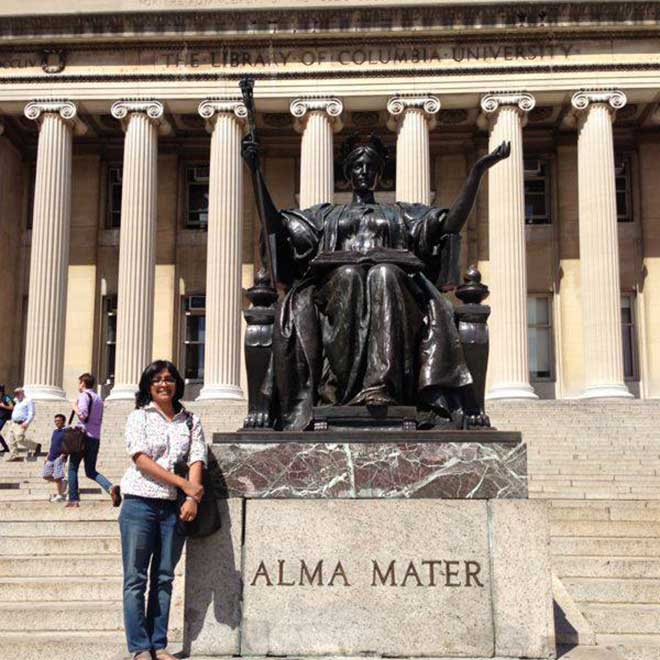
  • Joyjayanti Chatterjee, Research Fellow, Vidhi Center for Legal Policy, on studying in Columbia and her experience in corporate law

    Joyjayanti Chatterjee, Research Fellow, Vidhi Center for Legal Policy, on studying in Columbia and her experience in corporate law

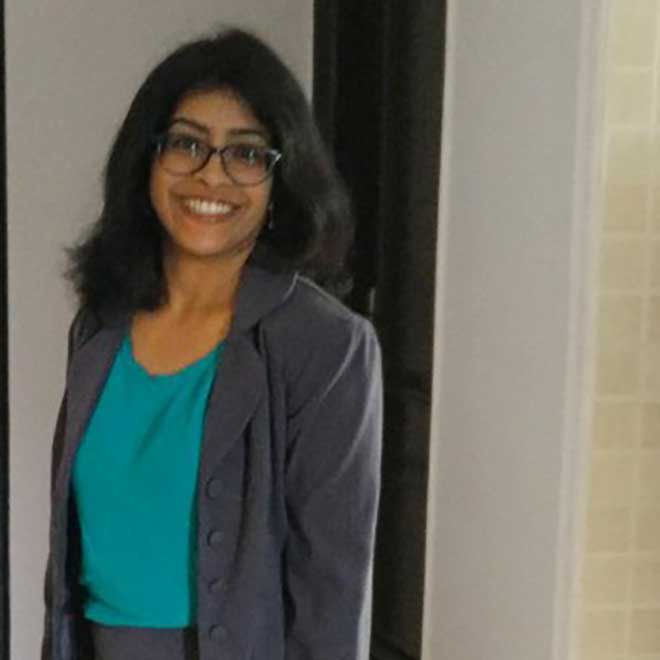
    Joyjayanti Chatterjee graduated from Symbiosis Law School in 2011. She went on to pursue her Masters from Columbia University, with a focus on Antitrust Law, Intellectual Property Law, and Corporate Law. She is currently a Research Fellow at Vidhi Centre for Legal Policy. She is part of a team which advises the Government of India on various aspects of corporate law and financial regulation. Prior to this, Joyjayanti was an associate in the Competition Law team of Shardul Amarchand Mangaldas and Co.

    In this interview we speak to her about:

    • Her time in Columbia, the curriculum and studying abroad
    • Her internship experience
    • Her time at Vidhi, the nature of her job, and the responsibilities it entails

    How would you like to introduce yourself to our readers?

    This already sounds like a job interview! I am a first-generation lawyer and policy enthusiast, a bibliophile, and a feminist. I believe in staying true to one’s beliefs, working towards realizing goals and dreams while never taking life or yourself too seriously.

    What motivated you to take up law?

    Frankly, I feel that at the age of seventeen, very few people really know what they want to do with their lives and I was no different. In that sense, I cannot say that I had always been inclined towards law, or any other career, for that matter.

    Growing up, I was a voracious reader and deeply interested in the humanities and social sciences. At the same time, having studied science in class 11 and 12 equipped me with analytical skills and encouraged me to question things and not accept ideas at their face without due scrutiny. I also had a lot of ideas at that point (some of them a tad too idealistic, in retrospect) of going out there and changing the world. That time period also happened to coincide with the unprecedented mass movements surrounding the Jessica Lal murder trial and the Novartis litigation which finally paved the way for cheaper life-saving drugs in India. These events deeply affected me as an impressionable youngster. A crash course with law school tutorials brought me in touch with some really cool lawyers who mentored us and I realized the importance of good lawyers in our society and I guess I wanted to be one of them.

    All of this, coupled with some healthy encouragement from my parents led me to take up law as a choice of career.
     

    Share with us your experience as a student at Symbiosis International University.

    My stint at Symbiosis Law School was an enriching and enjoyable experience. Apart from sound academic training, I learnt a host of important life-skills from my time spent there. Moving from the small town of Dehradun to the cosmopolitan city of Pune was in many ways a culture shock but I found my footing and made some good friends fairly quickly. Spending five very formative years of my life surrounded by smart and gifted people from around the country influenced me deeply and has significantly contributed towards moulding me into the person I am today.

    Law schools usually provide opportunities to engage in a host of extra-curricular and co-curricular activities and I think that this is something all students should take full advantage of. Be it sports, mooting, debating, fine arts, or even slam poetry, there is something to suit all personalities.

    While in law school I actively took part in moots court competitions and represented my college in a number of them. I also helped organising multiple editions of our college fest. I was a member of the Human Rights Cell and taught underprivileged children over a period of five years, which was one of the experiences I cherish the most.

    Dividing time between activities and studies is largely a matter of balancing of priorities. Whatever be the reason for taking up an activity—be it to further your CV or to do something you love—you’ll find your way around to it.


    Tell us about your internship experience and how that helped you realise your ambitions?

    Internships are no doubt important for law students. I did not, however, follow a fixed strategy towards internships. I had my share of good and not-so-good internships but they all taught me something or the other. For instance, one particular internship exposed me to (what was then still in the drafting stage) Competition Law and led me to study it and then go on to practise it. Other internships helped me realise and hone my love for intellectual property. Some internships helped me find some wonderful friends and mentors. Most importantly, the internships gave me a real-life experience of law which cannot be taught in classrooms.


    How was your experience working at Shardul Amarchand and Mangaldas & Co.?

    I had been interested in Competition Law right from the time I was first exposed to it during an internship. I was fascinated by the intersection of law, economics and policy that this field of law presented. Competition Law was also among my areas of study during my LL.M. The fact that it was the “new-kid-on-the block” of law in India added to its charm. Upon my return to India after completing my LL.M., Shardul Amarchand Mangaldas and Co. interviewed me and offered me a position in their Competition Law Team. SAM’s competition law team has some of the best and the brightest legal brains in the country and the experience taught me a lot; from the nuances of competition law to managing the pressures of working in Big Law. Working on some of the most significant issues in an emerging and exciting field of law was very satisfying professionally.


    What motivated you to quit your job and pursue a Master’s degree?

    I always had the intention of eventually pursuing a Master’s degree. However, I wanted to gather some work experience before that. My family is also very academically inclined and always encouraged me and almost insisted on me studying further. For me, studying further was never just about getting another degree but more also about living in a foreign country, being exposed to a plurality of cultures and view points, and having a lot of adventures. All these factors led me to pursue a Master’s degree.


    What are the parameters one should look at while choosing a grad school for LL.M.?

    The overall profile of the college/university one is applying to, the range of course offerings, and how well one’s particular area of interest ties in with these factors are important criteria, in my opinion. All schools have their strengths when it comes to specializations and faculty and I would encourage prospective applicants to examine these in detail. Most foreign law schools (I can at least speak of US law schools) have a gamut of information, including details about courses, course and professor ratings, reviews, etc. on their websites which serve as an excellent resource. A lot of schools, by virtue of location and/or university affiliation offer added advantages and these can form an important part of the consideration as well. For instance, Columbia Law School is in the city of New York and allows cross credits in not just other schools under Columbia University but also NYU. It allows students a lot of flexibility while choosing courses and offers a wide variety of activities. These affected my decision making considerably.

    I applied to a few other US law schools like NYU, Berkeley, Chicago, and Georgetown.

    What was the academic environment like at Columbia Law School?

    The academic environment at Columbia was very different from what I was used to in India. American universities are very mature in their treatment of students and also expect a lot of maturity in return. While you’ll be given a lot of freedom and leeway when it comes to course selections and other academic choices, the Socratic method requires preparing extensively for every class (often involving hundreds of pages of readings), being ready to be “called on” in class and making meaningful contributions to the class discourse. The quality of classes, professors and infrastructure was unparalleled. I loved the fact that I had people of so many nationalities and from so many walks of life around and the constant encouragement to voice one’s ideas, no matter how far-fetched or ludicrous.

    Also, we had a seemingly endless supply of free food and free coffee and cookies on the campus.  Trust me, when you are a grad student keeping a tab of every dollar spent, these things matter!

    I was the LL.M. representative for the Antitrust Association and helped organize a number of events. I was also members of the Columbia Law Women’s Association and the Gastronomy Club.


    How did you decide to join Vidhi as a Research Fellow?

    While I never doubted my choice of law as a career option, I never saw myself in a law firm setting for the entirety of my legal career. Legal policy in India is still a niche area and there are not too many people doing this work. I knew about Vidhi and was intrigued by how they had made a mark in the legal policy sphere in a very short period of time. I was also awed by the immense talent Vidhi housed. Just as I was looking for a shift, Vidhi was also looking to hire for its Corporate Law and Financial Regulation team. This aligned perfectly with the direction I wanted my legal career to take and I ended up joining Vidhi as a Research Fellow.


    What is the nature of your work at Vidhi Centre for Legal Policy?

    My work at Vidhi focuses on policy and research. Vidhi’s objectives are to plug the gaps in our legal system and to facilitate better working of our legal system. To these ends, we engage with various ministries and offer legislative and drafting assistance to them. Vidhi fellows are also instrumental in identifying problem areas in the socio-legal framework and carrying out independent research reports on them.

    Working at Vidhi has been a truly wonderful experience and has helped me grow professionally as well as personally. The atmosphere at Vidhi is intellectually stimulating and at the same time, vibrant, and tons of fun. I have seen first-hand the transition of ideas and reports into fully functional laws and much required changes in the legal system. This is a very gratifying, not to mention a great learning experience. Vidhi entrusts its fellows with a lot of responsibility and encourages them to do high level work and take ownership of it. Our work also involves continuous interaction with various members of the Government, members of regulatory bodies and industry experts. These experiences have polished my analytical, research and problem-solving skills. Another important skill I have picked up is the manner of interacting with a variety of stakeholders and effectively balancing their interests while keeping in mind the overall policy issue at hand.


    What advice would you like to give students who are keen on publishing?

    Most of my publications are newspaper articles. There is no set approach towards authoring a paper or a publication, really. Pick a topic that interests you. Be mindful of your audience. Are you targeting a non-lawyer, non-academic audience or are you catering to your fellow lawyers? Tweak your approach accordingly. Keep your writing nuanced rather than trying to address too many issues in one piece. Check and cross check your data and as far as possible, rely on primary sources. Aim on using simple, easy understandable language rather than grandiloquent prose.


    What are your interests outside law? How do you find time to pursue them along with your professional commitments?

    I enjoy reading, listening to music, cooking, and occasionally writing. Delhi, for all its flaws, has a lot of history and culture, and I try to take the time to explore these aspects of the city. From time to time, I try to take up a new project, be it trying to learn the basics of a new language or educating myself in a new (preferably non-law) topic.

    It is not always easy to make time for various pursuits but it boils down to the fact that if you really want to, you can make the time for interests in the face of professional commitments.
     

    What would be your parting message to our readers?

    When it comes to picking a career path, choose something you believe in and are invested in and as far as possible, enjoy doing. The virtues of hard work, focus and determination have been gone into by far more qualified peers on this platform so I won’t delve deeper into that.  For the new graduates or those on the verge of graduating, don’t fret if you don’t land the dream job or the admission in the first attempt. Do not worry about having/not having a plan.

    A law degree opens many doors and there are a lot of directions a career in law can take. Have an open mind and do not restrict yourself in the decisions you make. Be well rounded and well read, and not just in the field of law. Restricting your pursuit of knowledge to your field alone denies you the advantages of versatility and inter-sectoral thinking.

    Lawyers, especially in the initial years of their careers tend to have busy and often grueling schedules. Do try to make time for pursuits, activities and talents. The importance of friends, family and loved ones cannot be stressed upon harder and you’ll constantly need all their support.



  • Rajas Pingle, Partner, Netlawgic Legal Services, on his passion for technology and the state of cyber law in India

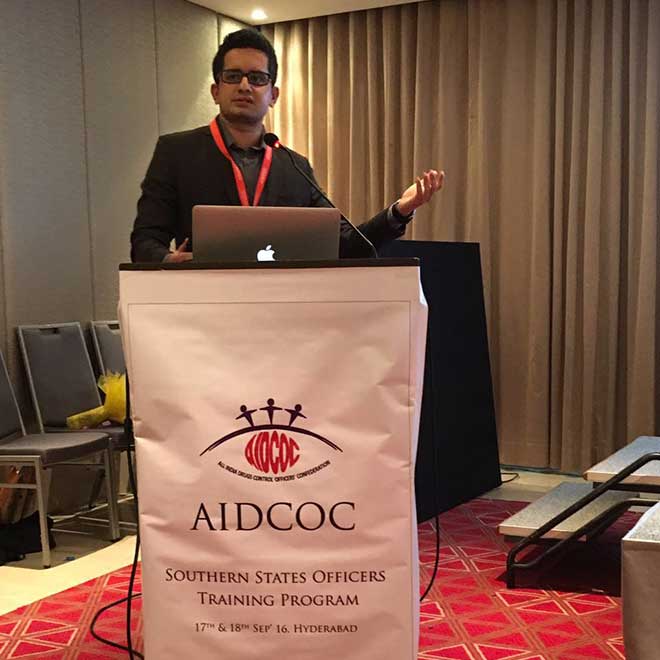
    Rajas Pingle, Partner, Netlawgic Legal Services, on his passion for technology and the state of cyber law in India

    Rajas Pingle graduated from ILS Law College in the year 2011. Since then he’s been visiting lecturer at (DSCI – NASSCOM) India Cyber Lab – Pune, and cyber lawyer at the District/Session Court (Pune)  Bombay High Court and Adjudicating Officer (IT ACT). He is currently Partner at Netlawgic Legal Services, offering services to combat cyber crimes, computer security related incidents, corporate espionage, financial frauds, data theft, hacking , computer security related issues, among others. 

    In this interview we speak to him about:

    • Combining technology with law
    • The state of cyber law in India and what he would like to change
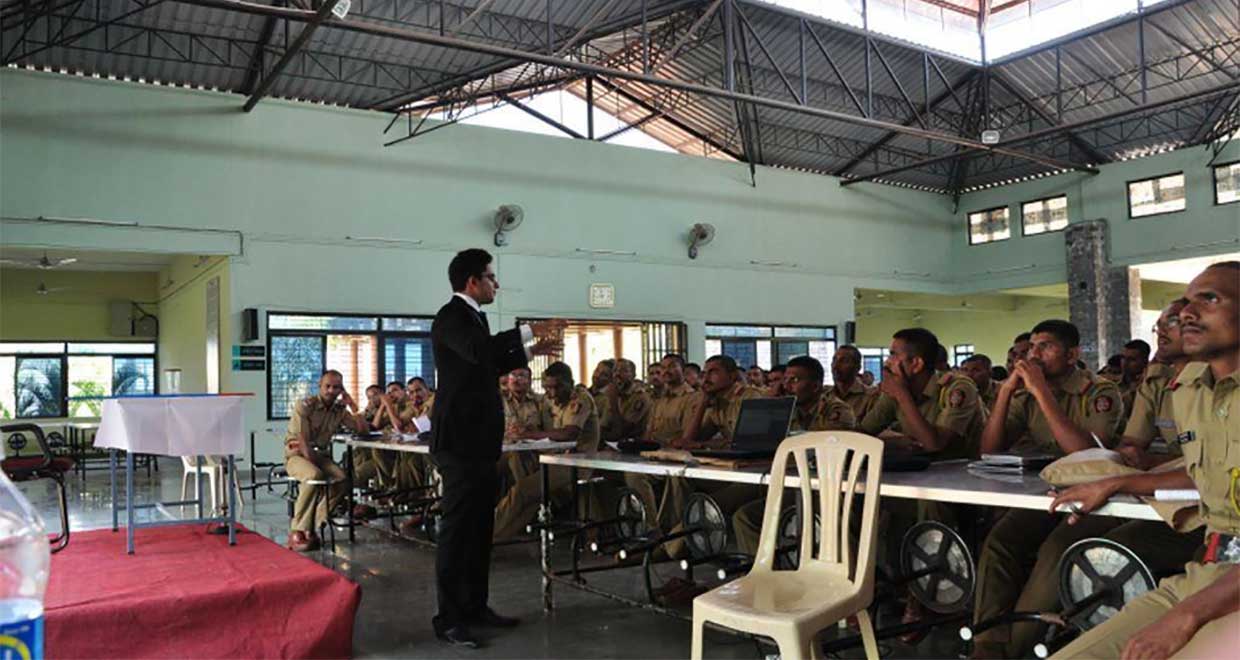
    • Training the police force and being invited to the Rajya Sabha


    How would you introduce yourself to our readers?

    In a nutshell there is only one word which defines me, ‘TechnoLawgy’. I have been practicing Information Technology Law for more than six years and have handled almost every type of cybercrime case. I also conduct training sessions for various government organisations and corporates in India and abroad pertaining to Cyber Law and cyber crime. As they say, “Any sufficiently advanced technology is indistinguishable from magic”. Likewise my love for technology drives me to learn new things every day and to discover this magic.


    What motivated you to take up law as your choice of career? Have you always been inclined to a career in this field?

    I have been a technology nerd from the early ages of my life with no intentions whatsoever in pursuing law as a career. Since my parents were practicing lawyers I got into law school. The first two years went by but I lacked precision. It was only in the third year of law, you can say as Buddha obtained enlightenment, I obtained my illumination when I got introduced to this amazing world of Information Technology Laws (Cyber Laws). That was the turning point in my life and from that day forward, I was certain that I am going to pursue cyber law as my profession in an attempt to combine my technology knowledge with law. When career and passion comes together, work doesn’t seem like work anymore.


    Please tell us a bit about the internships you took up during your legal education.

    Candidly, I did not join any lawyer or apply for an internship in a reputed law firm as every ideal law student does. I earnestly desired to do something different so I applied for an internship in DSCI- (Data Security Council of India), Pune Cyber Lab. It is a joint initiative of NASSCOM and DSCI. The lab was mainly established to train police officers in the area of technology and information technology laws. I used to teach information technology laws to police officers. I learnt a lot from this experience, especially real time challenges faced by police officers while investigating cybercrimes. In addition to interning at DSCI-NASSCOM Pune Cyber Lab, I also used to visit court with my father to learn about the court procedure and it helped a lot. I would say that all this helped groom me as a better lawyer.


    How does one acquire expertise in an inter-disciplinary field like information technology law in understanding both the legal and technical aspects that go hand in hand?

    Interactions on real time cybercrime cases with police officers while teaching them information technology law proved beneficial for me as it supplemented my theoretical knowledge with practical experience. Furthermore, while pursuing law I completed following independent courses:

    • Diploma in Cyber Law
    • PG Diploma in Cyber Law
    • Certified Cyber Crime Investigator
    • Certified Ethical Hacker
    • PG Diploma in IPR

    These courses were both technical and legal in nature which helped me to expand my knowledge base. In the course of my journey, I realised technology is like oxygen- ubiquitous, necessary and invisible and thus it is equally important to be apprised of all latest trends in the field.


    Do you think that the present legal framework in India adequately addresses the growing forms of cyber crimes?

    For every lock, there is someone out there trying to pick it or break in. Information technology alone cannot provide us an absolute shield against its evil twin disinformation technology. Our only protection is law. Information Technology Act was introduced in the year 2000 and it was the first technology related legislation in India. Thereafter, in 2008 the Act was substantially amended to include various offences and definitions. The technology is progressing at a very fast pace and the modus operandi of the perpetrator is ever changing and evolving with the technology. Considering these factors, eight years is too long for amendment. If we consider the investigation perspective, many changes are required to increase the conviction rate. Moreover, as per my observation India is a country where people don’t give that much importance to their personal information. One can read in the news every day, how US and EU emphasize on their data protection laws being well established and stringent while in India we don’t even have a data protection regime in place or separate legislation on privacy. We are yet again completing the eight years cycle, let’s hope for a comprehensive amendment soon.

    Share with us your experiences practicing as a cyber-lawyer before the Bombay High Court and the Adjudicating Officer under the IT Act.

    Proceedings before the Adjudicating Officer are largely based on few provisions of the Information Technology Act and the principles of natural justice. As per the law, the Adjudicating Officer needs to pass a final order within six months from the date of filing. Unfortunately it is very rarely followed. In addition to delays, the Cyber Appellate Tribunal has been out of function for the last five years or so. Under the present system, one needs to approach the High Court directly for an appeal from the order passed by the Adjudicating Officer. With not much precedent in the sector, the practice is certainly demanding and engaging. As far as preparation is concerned, I have to look at the case from both angles i.e. technical and legal. Coming to the preparation of complaint, it is always better to simplify the drafting as far as possible to an understandable format instead of using all technical terms.


    You have been invited by the Rajya Sabha to review the IT Act. Could you please tell us about it?

    I was invited by the Rajya Sabha committee on petitions to give my views on the topic of ‘Cyber Pornography’. The agenda for discussion was “To put a check on Cyber Pornography among children by amending the IT Act, 2000”. The current Information Technology Act does not completely prohibit pornography and private consumption is not punishable. There was productive discussion between cyber law experts and legislative members and I was asked to submit a note on the same.


    What has your experience been like while representing international clients and successfully arguing international cyber law cases?

    I am very fortunate to receive international exposure at the early stages. I have successfully represented clients from Texas, New York, and Puerto Rico in various cyber law cases and also mediation. With hard work and luck on my side, I was successful in recovering respectable settlement figures for my clients against U.S. and Japan based companies in the matter of unauthorised copying of data. Additionally, I am closely working with international clients with offices in India and abroad. While handling international clients, I observed stark differences in their working style and culture. Furthermore, I got exposure to diverse laws which assist you to compare your country’s position in relation to such international issues. Overall it’s been a wonderful journey so far.


    Tell us about your role as Partner at Netlawgic Legal Services LLP. What does a typical work day look like for you?

    I started Netlawgic with the sole intention to provide Techno Legal solutions to the industry. Our focus and experience in both areas of Cyber Crime Investigation and Technology law, allows us to provide our clients with specialized attention and problem solving in all aspects of Technology law. That said, I start my day with reading e-news articles regarding cybercrimes across the globe, to keep the zest of learning alive and thus keep myself updated. Rest of the day is pretty simple with meetings, court and office.


    How has your experience in academia been?

    (Rajas has worked with several governmental and non-governmental organizations in training officers in cyber law. He also teaches cyber law at national and international educational institutions.)

    Education is the most powerful weapon which you can use to change the world. Teaching is one of the things I love and whenever I get time I allot it for teaching. While teaching I cultivate new learnings, ignite the imagination and instil creative expressions. It is a very satisfying experience, especially when I have healthy debates among students/officers on different aspects of cybercrime and cyber law. I also tend to learn a lot from these debates. It’s a completely different experience when I teach in international institutes as the exchange of knowledge is on the global platform and is a synthesis of varied legal practices and procedures. It would be difficult for me to choose between the two, I would love to keep doing both, practice information technology law and pass on that knowledge through teaching.

    How do you manage your time, juggling various roles?

    It is said that time and tide wait for none. Based on my experience, I can say that time management is the greatest virtue and the one who learns to manage it effectively will go many milestones in life. I am still learning to manage the same. Many a time, there are clashes among court dates, meetings and lectures on the table, especially when I travel abroad to deliver lectures. In this situation I have to prioritize and move forward accordingly.


    Do you have any role models/ guides or mentors in the industry?

    I learnt a lot about technology from my brother Mr. Harshad Pingle who is an engineer by profession. Other than my brother, Mr. Sandip Gadiya who is a well renowned Cyber Crime Investigator in India guided me along the way. His knowledge in cybercrime investigation helped me gain deeper insight of cybercrime investigation and for that I am eternally grateful to him. It is definitely helpful to have someone to take advice from when you are starting your career. What is important in the end is that you should keep on learning and always learn from your mistakes while moving forward.


    What would be your parting message to our readers?

    I want to quote Steve Jobs here “Sometimes when you innovate, you make mistakes. It is best to admit them quickly, and get on with improving your other innovations”. The same logic is applicable in law practice, you make mistakes, you learn from them and move on. Ultimately find something which you can relate to and love doing. Don’t be a part of the rat race.


  • Bharadwaj Jaishankar, Attorney, Associate Partner at Sim and San, on being a first generation lawyer, his experience in IP Law, and the importance of internships

    Bharadwaj Jaishankar, Attorney, Associate Partner at Sim and San, on being a first generation lawyer, his experience in IP Law, and the importance of internships

    Having graduated in 2008 from Symbiosis Law School, Pune, Bharadwaj began his career at K&S Partners, a tier 1 boutique intellectual property law firm. Having spent five years there, he joined Saikrishna & Associates, a tier 1 intellectual property & commercial law firm, in November, 2013. Thereafter, Bharadwaj joined  Sim and San, Attorneys At Law. Bharadwaj has over eight years of solid and in-depth work experience and knowledge in the fields of Intellectual Property and Commercial law.

    In this interview he speaks to us about:

    • His experience in IP Law
    • The transition from working for tier 1 law firms to working with a smaller set-up
    • His foray into academia


    How would you like to introduce yourself to our readers?

    I am a first generation lawyer, with my father being a management guru and my mother who, amongst other activities, is a singer. I have a younger brother, who is an aspiring musician and a music producer. In that sense, it is a fantastic and exciting feeling to know that, where I stand today, is on account of my own efforts and hard-work. That being said, I have been extremely fortunate to have had and continue to have some great mentors in my professional career who have played a vital role in my professional career path. My career has also immensely benefited from the fact that my wife, Raddhika Singh, is also a lawyer.


    Could you tell us why you chose B.BA. over a B.A. degree?

    When I joined law school, I had the option of choosing either the B.BA. or BA law degree course. B.BA. was the preferred option for me, as the business subjects (forming part of the course) interested me more. That being said, what I have learnt these past more than eight years is that the specificities of your degree do not matter eventually. Just because someone does the B.A. .LLB course, it does not mean that they are incapable of dealing with commercial/business issues. The same is true inversely. Ultimately, it comes down to the individual.

    By the time I hit high school, I was still unsure of what I wanted to pursue in college. My paternal grandfather, who belonged to the first IAS batch of administrators, played a huge role in directing me towards law. He believed that I had the requisite skills to become a good lawyer. I am extremely thankful for the passion and drive he showed towards my career.


    What are the kinds of activities that you took part in during your legal education?

    In college, I made a concerted effort to participate in moot courts. Moot courts are extremely important for a law student. Some of the skills that are acquired through mooting have immense value to a law student, once they become advocates. These skills include (i) understanding the facts at hand and identifying the key issues involved (ii) conducting research and building up of a case (iii) drafting a memorial (iv) arguing the case (v) court manners (vi) identifying and addressing rebuttal arguments etc. All of the above find an application when handling a real case. The value of participating  in moot courts is, therefore, essential and crucial for the development of a good lawyer.

    Appearing both as a speaker and a researcher in several State and National level moot court competitions, there was also scope to mentor mooting teams in my last couple of years in college. A lot of what I learnt through mooting helped me in my initial years as a green-horn in the profession.

    Apart from mooting, I also helped organize seminars, guest lectures and symposiums for college. If anything, these enabled me to interact closely with some of India’s finest legal minds. I was able to pick their brains and gain valuable insight into the profession, as well as get some solid career advice. I certainly feel that, as a law student, it is also important to interact with senior and respected members of the profession, as their practical inputs and advice certainly help in making career choices for law students.


    How important are internships for an aspiring lawyer?

    Being a first generation lawyer, it immediately occurred to me, during my first semester in college, that internships would be crucial to me securing a job. In fact, it is through my internships that I was lucky enough to receive a pre-placement offer from K&S Partners (one of India’s leading boutique IP Firms), before college placement madness began for my batch.

    As a law student, and I still hold this opinion today, it is important to experience different kinds of internships. During my five years at law school, I managed to intern with single practitioners, a designated Senior Counsel, general and boutique law firms, a company, and with an international NGO in South Africa. Doing such a wide array of internships certainly helped me zero in on where I wanted to work and, most importantly, the kind of work I wanted to do. There are just so many avenues of law that can be explored. My internships in the initial couple of years gave me exposure to different types of law. Around my third year, I got interested in IP law and, thereafter, my internships focussed on firms that practiced IP law. Through such focussed internships, I was able to get a PPO.

    It is also important to do internships as often as possible. In my time, we did not have the luxury of doing running internships. Nor did we have a set-up whereby minimal subjects were taught in the final year, thereby providing an opportunity to just intern in the final year, with the objective of landing a PPO. In fact, today, my office has a couple of such final year interns; who have only one subject to study. Such opportunities were not there when I was in college.

    Internships become that much more important when one is a first generation lawyer. Building up contacts through internships is important both from getting a job, as well as from a networking perspective. You never know when a contact cultivated through an internship becomes important at a later date. It goes without saying that the approach of work, the work itself and conduct are extremely crucial during an internship. Just because a law student secures a good internship, does not automatically mean that a PPO is possible. The onus is completely on the law student to make the best of their internship. Going the extra mile on assigned work and deliverables does have a make a big difference during an internship. Apart from the work, the conduct and mannerisms of the law student during internships is also important. Apart from showcasing professional ability, I equally feel that showcasing your personality (as an open and approachable person as opposed to being arrogant or cocky) is also important. I guess to sum it up, a law student would want to be remembered in a favourable light after the conclusion of the internship. From my personal experience, I still remember, and am in touch with, some of the interns who really made a mark when interning with me (or my firm).  


    How important is it to cultivate the skill of academic writing for young lawyers and students?

    (Bharadwaj has had his works published in a wide array of IPR journals.)

    It is really important for a lawyer to write articles/papers. Yes, with demanding schedules, it is easy to ignore this aspect. Writing articles and getting them published have great professional and personal advantages.  It also gives immense personal satisfaction! Some benefits that accrue from writing papers include:

    1. It brings fantastic exposure to the author. Writing in the right publication, having quality and wide readership, provides a brilliant platform for the author to show himself/ herself. The style of writing, manner, background research, thought process, analytical skills etc., all get showcased.
    2. It provides an opportunity for the author to create a niche and become an industry expert. Who knows, potential clients can emerge from reading articles and publications.
    3. It pushes the author to bring themselves up to speed with the law and developments, both in India and worldwide.
    4. It also helps develop drafting and analytical skills.
    5. Adds immense character and value-add to the author’s profile.

    The list of advantages can be endless. Finding a balance between work, personal life and writing is the key. The balance has to be found. If it means staying up a little longer or writing during a holiday, then I suggest you do it. Personally, I try and plan my schedule in such a way that I carve out time, either on a Saturday or Sunday, to try and write. Sometimes, I am able to write an entire article without a break and other times, other circumstances, force me to write in stages. No matter what the circumstances, I do force myself to write. In a way, making a commitment to a publication forces me to honour the same, thereby giving me no option but to write.


    Please share with us your experience at K&S Partners, your first job.

    Working at K&S Partners is something that I will always cherish. I spent my first five years in the profession working with K&S Partners. I was lucky enough to intern twice at K&S Partners, before getting my PPO from them. Hence, when I started working, I knew most people there- lawyers and support staff. That helped.

    I can honestly say today that working at K&S Partners played a HUGE part in shaping me as a lawyer and professional. The first office that a lawyer works with will, and should, always hold a special place. Some of my mentors (who continue to mentor me today) are with K&S Partners. In that sense, I consider myself extremely fortunate. Of course, it goes without saying that this is a two way street. I know the amount of effort and application I had to put in at K&S Partners, to ensure that I benefited from anything that was offered to me by the firm.

    As a fresher, I had to put in extra effort to bring myself up to speed with the law and practice. What I learnt, very quickly, was that the law you learn in a classroom is completely different from the law that is practiced. Even after work, I would spend time reading judgments and commentaries, so that the following day, I could add value. For me (and indeed for every aspiring lawyer), along with doing the grunt work, it is equally important to contribute from a strategy perspective. You don’t want to get tagged as a lawyer who can only execute. It is also important to be known as someone who contributes at the ideation and strategy phase as well. K&S Partners allowed me to do that. Of course, I had to ensure that I put myself in such a position where I was able to do that.

    A lot of what I learnt and imbibed at K&S Partners still stay with me today. Working for five years at a tier-1 firm provided me with an excellent launch pad to make a name for myself in this profession. I will always be grateful for the time I spent with K&S Partners. Apart from having some excellent colleagues, I made some lovely friends, with whom I remain in contact till date.


    What motivated you to choose IPR as your area of expertise?

    Sometime in my third year of law school, I realized that I had developed an interest in IP law. Till that time, I had done some work, through my internships, on other areas of law. I can’t exactly recall what motivated me to pursue IP. I do recall that working with brand names that form an everyday aspect of my life (from my toothbrush brand to the clothes I wore to the pen I wrote with etc.), did influence me. Interning with K&S Partners, a boutique IP firm, influenced me heavily. The work I did as an intern (twice) around brand names, IP in Bollywood, Image rights etc., really got me excited about IP. I have never looked back since.

    Luckily, through my professional career, I have been able to work with different IPs and work on different aspects of IP. In my experience, what a lot of people don’t realize; is how important IP is and can be. It is really looked upon as just another asset and not as a vital asset that can make or break business. A good IP protection, enforcement and exploitation strategy can mean the very existence (including market domination) or destruction of an entity (be it an individual or corporate house). Especially in today’s start-up environment, big ticket funding, series funding etc. can can be rendered irrelevant, and in fact wasteful, if IP is not protected or secured. Working in such an atmosphere is very exciting for me.

    In fact, for over eight years, I made a conscious effort to stay away from patents on the ground that I did not have a science background. I knew the basics of patent law and the importance of securing and enforcing patents, but I never really touched this aspect of IP law. Now, working with Sim and  San, I am actually engaged in a couple of precedent setting patent matters, which includes the Standard Essential Patent litigations going on in the mobile handset sphere. Suddenly, after eight years of working with trade marks, copyrights, designs and geographical indications, I have discovered that patent law also interests me, which only adds to my excitement around IP laws in India.


    Could you share your experience representing industry leaders in the field of technology?

    The experience has been both challenging and exciting. Technology and IP laws are connected and overlap quite a bit. It is, therefore, a great chance to learn about new technology while applying IP law to the same. It is also quite exciting to know that some of the mobile applications and technology devices that one uses day in and day out, are being back-ended by your team from a legal perspective.

    It is also very nice interacting with tech leaders. One of the biggest advantages with working with technology and industry leaders is that you get to learn a lot of new things about IP and technology law and the application of existing law to new fields of technology. Since the technology leaders I was fortunate enough to work with were always looking to push boundaries, applying existing law was extremely exciting and challenging. The other aspect which I really liked was the fact that the technology industry leaders I worked with, had a fresh and dynamic approach to their work and product. Such an approach made it extremely fun working with them.   


    How has your experience as visiting faculty at Symbiosis, Noida, been?

    I quite enjoy the experience of being a visiting faculty. After a few years in practice, I was actually looking for a way in which I could give back to my law school. So when I heard that Symbiosis Law School was opening a campus in Noida, and that Dr. C.J. Rawandale was going to be the Director, I got in touch with Rawandale Sir (who was one of the Professors I interacted with a lot during my college days). Sir was immediately keen that I start taking IP classes for the students. Eventually, it also extended to me taking a few classes on Information Technology law as well.

    Being on the other side of the fence, has been an interesting ride. I found it quite amusing that I was, while teaching, asking students to keep quiet, when a few years back I was also probably doing the same very thing. That aside, I learnt, after taking a couple of classes, that teaching is a very challenging profession. It requires a lot of dedication and focus. Teaching at Symbiosis, Noida made me read a lot more because I wanted to keep myself updated on the latest developments in IP law. This, of course, helped me immensely at work as well.

    Also, I learnt being patient and became a better listener, while taking classes. This has also helped me greatly at work, especially when dealing with a difficult client or where I was required to understand client’s requirements before offering advice. That way, teaching has helped me immensely, both as a professional and as a person.

    The other aspect of teaching that I have really benefitted from, is that I got to know some of the students really well, through interactions inside and outside class. This has helped me get good junior associates and interns whenever I have had such a requirement. Plus, some of these students have also become good friends of mine.     


    What motivated you to join an emerging Firm, Sim and San, after working in two tier-1 IP firms?

    I just wanted a new and different challenge. Working with K&S Partners and Saikrishna & Associates, two tier-1 IP Firms, provided me with a fantastic foundation in most aspects of IP law. I consider myself extremely fortunate to have worked with these two firms and, that too, with some fantastic lawyers. But I felt that my professional career needed something new. I wanted to feel challenged once again in my professional career and not get comfortable in what I was doing.

    After working at these two offices, I was sure that I did not want to work, at this moment, with a large set-up. I wanted to take a step-back and join a smaller emerging office, where the scope of work is wider and, therefore, a greater opportunity for me to grow as a professional. A very dear friend of mine connected me with Sim and San, Attorneys at Law. He told me of some of the work that Sim and San are doing, which included being involved in some of India’s biggest patent, GI and trade mark matters. I immediately felt that this could be a good match. Thereafter, I met Mohit and Sidhant Goel, Partners at the firm, and we immediately connected. It was very easy to say yes to the offer.

    There is, of course, a big difference in working with a large firm and a smaller firm. The dynamics, work environment and set-up are different, which I found really nice. It felt really nice to work with a small, motivated and young team, who all think on the same wave length and want the same thing as well. It also felt nice to enter an environment where, after a long time, I felt the focus was only on work and not on other stuff. Somewhere, I felt that I needed to make a big change in my professional life, so that my career could advance. I can say that, three months into my new adventure, I am very happy to have taken a leap of faith.


    What are some of the benefits and advantages with working with an emerging firm?  

    Today, there are so many emerging firms who claim to be experts in IP law. Choosing a good firm, therefore, is very important. The biggest advantage with a smaller firm is that it provides a tremendous space to express oneself as a professional, thereby offering a bigger opportunity to make a name and reputation. I personally feel that in a smaller firm, there is a greater scope of getting yourself known as a good lawyer.

    In a smaller firm, there is a greater chance of doing everything, as opposed to working in a larger firm that has clear and distinct verticals. I find that as a young lawyer or for someone looking for something fresh (as was my case), working in an environment where everyone does everything offers a greater challenge and scope for learning. I do feel a great opportunity exists to become a good and effective well-rounded lawyer.

    Also, with a smaller firm, the management is usually extremely motivated to establish  a firm foothold in the market and tend to look at problem from a different angle. Plus, there is a determined  effort to be a little different from established firms. This is something that personally appeals to me. Put simply, there is a greater opportunity to become a big fish in a small pond, as opposed to a small fish in a big pond.


    What is the experience of being a member of the Emerging Issues Committee of the International Trademark Association (INTA)?

    I am currently a member of the INTA’s Committee on Emerging Issues for the term 2016-2017. Within this Committee, there are various Sub-Committees. The Sub-Committee that I am involved with is looking contributory infringement of intermediaries from a trade mark law perspective.

    The experience in working in such a Committee (including the Sub-Committee) is really nice. I get the opportunity to interact, in depth, with fellow members, who represent firms and companies from around the world. For example, my current Sub-Committee consists of lawyers (in-house and practising) from all five continents. It is a great way to know and understand the development of law (and indeed precedents) that deal with the focus area of the Sub-Committee. I also get the opportunity to explain to my fellow members the state of law in India and the emerging trends, precedents and developments.

    In terms of being a member with organizations like INTA, AIPPI etc., there are quite a few benefits. It obviously affords a fantastic platform to network and build contacts in countries around the world. It also helps in developing mutually beneficial professional relationships between firms. Also, the annual meetings (and other conferences) of these organizations provides a great setting to meet existing clients, cultivate new clients and, also, to meet and catch up with professionals and friends from around the world. Plus, there is a lot of knowledge sharing that happens, which is very useful as a professional.  


    What are your interests outside of law?

    Outside of my work, I am a fanatical supporter of Manchester United. I have been so since about 1996. Subject to my work requirements, I try my level best to catch all their games. There have been times where I have compromised on my sleep to try and catch a later kick-off and be at work early next day!

    I also play the sport of Ultimate Frisbee, an American sport, which is one of the fastest growing sports in India. I represent the Delhi Ultimate team. As part of my love for this sport, I am also one of the legal advisors to the Ultimate Players Association of India.

    I also enjoy listening to music, especially blues and jazz, and love travelling.


    Finally, what parting advice would you give to our readers considering most of them are young lawyers or law students?

    As parting advice, I would say that becoming a good lawyer is like a test match and not a T20. Given that there are so many avenues of law and varied professional and employment opportunities, choosing the right one is vital. Sometimes, identifying your core/ niche area takes time. The right way, in my opinion, is to be guided by the quality of work and not the salary. It is very easy for a law student or a young lawyer to get swayed by the pay package being thrown their way. Sometimes, the work offered (with the large pay package) works out, sometimes it doesn’t. What should matter is the work and work only. Money will follow if you are enjoying the work.  


  • Abir Dey, Counsel, Cyril Amarchand Mangaldas, on being a topper, his experience in litigation and corporate law, and plans for the future

    Abir Dey, Counsel, Cyril Amarchand Mangaldas, on being a topper, his experience in litigation and corporate law, and plans for the future

    Abir Dey is a graduate from Symbiosis International University, Pune, batch of 2006. He is currently working at Cyril Amarchand Mangaldas, Mumbai, as part of the Project Finance team. His core strengths are in Project Finance, Projects and Infrastructure, Banking and Finance and Corporate Advisory matters. In his legal experience, spanning more than a decade, he has structured,negotiated and drafted financing and security documents, ECB facility agreements, debenture and bond documents, master restructuring agreements, investment agreements, EPC contracts, concession agreements and various project documents, opinions, memos and notes for banks and financial institutions across sectors such as power, transmission, road, port, oil & gas, renewable energy, IT, telecommunication, real estate, and hospitality. He has also conducted diligence on corporate structure, regulatory approval and project documents for various projects.

    In this interview he speaks to us about:

    • His time in Symbiosis Law School
    • Being a university level topper, and its benefits
    • His experience in litigation and corporate law


    How did you decide to become a lawyer?

    I am one of the fortunate individuals who come from a family of lawyers and therefore Law was something apparent to me since I was in school. If not the legal profession then I guess I would have ended up in the hospitality industry as my other interests revolve around travel and food.


    Tell us about your college life.

    I joined Symbiosis Law College in 2001, leaving my hometown for the first time after completing school. It was tough to get accustomed to the new environment. It took me some time to make new friends. SLC, back then, used to be located at Senapati Bapat Road in a smaller campus, with no hostel facilities. I used to share a small apartment with two of my batchmates near college. During my SLC days I had a blast, the city which at that point was just started growing, and had the typical charm of a small town and a city with lots and lots of students, roaming around. The lack of hostels meant we weren’t ragged much, but then it also took time to build a rapport with the seniors, which was possibly only during moot courts and seminars. Coming back to my professional choices, had I carried on in Kolkata, chances are I would have ended up being a litigator, much like other lawyers in my family. My stay at SLC has given me the strength to live without family and also provided me with a huge network of seniors and friends who have played an important role in my career progress.

    What are the subjects that interested you in law school?

    I used to like Constitution and Administrative Laws. Internships were very tough to get those days and our placement cell had just been formed. Therefore whatever internships I got with the help of seniors and batchmates I took those opportunities. Most of the time I did research work as intern and involvement in transaction was very less. I have done internships in Delhi, Mumbai and Bangalore and was fortunate to have interacted with different people and cultures.

    How important are academic credentials in becoming a successful lawyer?

    (Abir topped his batch at Symbiosis and during his diploma from Bharathi Vidhyapeeth University, Pune.)

    While my first rank did help me land a good job, I think what matters more eventually is an analytical bent of mind. I have seen many good advocates, some of them are my peers doing very well in their career but they hardly used to attend classes and pass their exams reading Jhabvala notes. On a personal note, I had never been taught project finance in college and acquired this skill at the workplace. Therefore, in my view, to be a good lawyer it’s not only important to have very good academic credentials but also the sector specific working knowledge.


    How did you manage your time and prioritize in excelling at academics and other activities at college?

    Self discipline in any stage of life is important. But it is essentially to each his or her own. I used to plan my work schedule and would tend to focus more over the important chapters to have a better understanding of the law, rather than mugging up the entire syllabus. The fact that I used to focus on specific areas of the curriculum also meant that I had time to pursue my other passions while being in college.


    What were the challenges and learning opportunities that you were faced with during your first year as a young lawyer?

    I got a pre­placement offer from Wockhardt. I was confused between a career in litigation and corporate law. However, I accepted their offer in their Mumbai corporate office. It was quite challenging for a new comer in a big city to start a career without any support of family and friends. Also it was tough to get accustomed to an office working environment coming out of college, following a specific dress code and dealing with a new set of people outside your friend circle.

    Having worked on both corporate and litigation matters in your career, how do you address the conventional debate between the two as a career choice?

    Litigation is a completely different field than corporate practise. I would advise the newcomers to decide their career option based on their interest as well as convenience. To build a career in any field someone needs to be very patient, hard working and focused.


    Tell us a bit about your work experience at Wockhardt and India Law Services.

    When I joined Wockhardt, that time they were expanding into hospital business. I was involved in various collaboration documentations, due diligence and regulatory compliances. So it was a very good opportunity for me to learn and interact with various professionals from different fields. Thereafter I moved to India Law Services (ILS) and initially I was purely doing general corporate advisory work. With the passage of time I was involved in Project Finance transactions as that was the core practice area of ILS and from then on I got into Project finance related work. ILS at that time was a growing firm and work force was limited and that was the reason junior lawyers were given a lot of responsibilities, including meeting clients and handling majority of the transactional work. I was very fortunate to get involved in very prestigious and complicated transactions. I was also very blessed to get tolerant and accommodating seniors/partners in ILS and that really helped me understand the nuances of Project Finance work.


    What does a typical work day look like at Amarchand?

    Working at Cyril Amarchand Mangaldas (CAM) is as exhausting as it is satisfying. Clients have a lot of faith in us and that in turn becomes a responsibility for us to deliver quality and solution oriented results. Quarter ends are like T20s matches and delivery has to be in time bound manner with superior quality. Typically huge amount of money is involved in most of the transactions and most of the time the onus is on us for speedy disposal of complicated transactions. It is hard to spend quality time with family during crunch situations, but with time you learn to manage the situations, even if you are away from your desk, with the help of your colleagues and some ingenuity on your part. As I like travelling, I plan things in advance and make sure that there is no conflict during my travel plans. And while we may be stretched for time, while at work, the one good thing about CAM is the fact that they honour scheduled leaves, as long as it’s thought through and not disruptive to the system and client commitment.

    What are the plans for your future?

    I generally prefer to have short term goals, and right now, my focus is on working on new statutes and regulations impacting the financing transactions and disputes resolutions.

    What parting advice would you like to leave our readers with?

    Keep working hard and I believe whoever keeps working hard with a focus mostly succeeds. It doesn’t matter what law school you go to or what grades you get, your hard work and sincerity help you. Gain proficiency in the subjects that interest you. Build a brand for yourself. To conclude I will reproduce Harvey Specter’s (of Suits fame) quote: “The only time success comes before work is in the dictionary”.

  • V.C. Mathews, Senior Associate, Sujatha Chaudhri IP Attorneys, on studying in London, IP Law, and being a professor

    V.C. Mathews, Senior Associate, Sujatha Chaudhri IP Attorneys, on studying in London, IP Law, and being a professor

    V.C. Mathews graduated from Symbiosis Law School, Pune, batch of 2008. After working with R.K. Dewan & Co. as Associate for two years, he went on to pursue his Master’s Degree from Queen Mary University of London in Intellectual Property Law. Since then he has worked with IP Gurus and Remfry & Sagar. He is currently working in Delhi as a Senior Associate at Sujata Chaudhri IP Attorneys, where his role entails Trade Mark Filing, assignments, drafting responses, appearing for hearings, preparing legal opinions and portfolio management, Copyright filing and legal advise, Preparing and drafting domain name complaints, Criminal Enforcement, etc. He is also Adjunct Professor at Symbiosis Law School.

    In this interview we speak to him about:

    • His experience in IP Law
    • His experience in academia
    • Pursuing his masters in England


    Was taking up law always a part of your career plan?

    I wasn’t very good at Math or Science. So taking up the arts group was the only option. However, at that time, not many schools offered arts in Kerala. Once I got through one of the schools, I had a look at the various options available with a lot of help from my parents and zeroed in on law.

    What was your experience at Symbiosis Law School like?

    The experience in Symbiosis Law School was holistic. It moulded me as a person and in the way I made some amazing friends in my batch and amongst my seniors who till date I am in touch with and meet often. Sports and Moot courts and client counselling were the activities I was involved with in college.

    How did you go about developing an interest in Intellectual Property Rights?

    During the course of our vacations between semesters I used to intern at law firms and under individual lawyers. One of those internships exposed me to Intellectual Property Rights. I liked the subject but was not sure as to if I wanted to take it up as my area of speciality. To discover the same, I did a further two internships with a firm specializing in this field. At the end of those internships, I realized that this was the area of law that I wanted to specialize in. Not many wanted to go into this field at that time as most wanted to do corporate law and the more common fields.


    Can you recall any experiences during college or your internships that have played a key role in shaping you as a lawyer?

    Law is a profession where you need to have good relationships with others. If you are specializing in one field having good working relationships with others in others fields of law always helps. To this end, I have a good number of close friends with whom I can rely on and fall back on. They are a source of help both personally and professionally to me. I spent five years of college with them and have spent many more years outside college.

    How important is developing the skill of writing according to you?

    Writing is a good skill to develop and have. Additionally, it helps you learn about the new topics you write upon. We don’t pay a lot of importance to writing and therefore, currently, not many students/practitioners have articles published in the numerous journals/ publications  out there.

    There isn’t any one way for one to develop their writing skills. The only way to better it is to actually start writing.  Start with blog posts and then write in depth articles for journals and publications.  A good place to start for students is their own college journals.

    Tell us about your internship experience.

    Working at a law firm is a lot different from what they teach you in college. Internships only gave me a small insight into the world of a full time lawyer. However, when one comes out of college and into a law firm environment, one has to learn and adapt fast. It is a fast paced environment with its own pressures and one must learn how to handle it.

    In your opinion how crucial is your first job in determining your career path?

    My first job gave me the base to forge ahead. It was tough first year and my second year was not easy either. However, what I learnt in those initial two years still stay with me as it moulded me as a professional.


    From your own experiences would you recommend that aspiring LLM candidates work after graduation and then pursue an LLM?

    An LLM is one where you actually specialize and go deeper into a subject of law. This must be taken in all seriousness. When I went for my LLM, I found that my batch had an array of people from different countries. But they were all elder to me. In other countries, those who take up masters take it up after a few years of work. This helps them better understand what is being taught as well as the teaching outside India is very unlike how we are taught in colleges here. Therefore, it is always beneficial to work a few years after graduation, figure out what area of law you want to go into and then do a LLM in that field.

    Tell us about the nature of your work and your experiences working at IP firms.

    (He has worked with Remfry & Co. and presently holds the position of Senior Associate at Sujata Chaudhri IP Attorneys, formerly known as IP Gurus)

    On a single day you could handle a lot of matters in an IP firm, each with its own deadlines and complexities. Many of the issues we deal with have real world implications and must be looked at with the larger commercial picture in mind. It is important, therefore, to find a middle ground between the law and the commercial aspect for clients. This offers many challenges. Additionally, IP law in India is still developing which gives rise to lacunae as well as interpretations to legal concepts. As I handle anti-counterfeiting, it has its own difficulties with the police also being involved. Having to work with them is also a challenge.


    Has academia always been of interest to you?

    I am an accidental professor. I never knew I could teach till I was asked to by a former professor. The role is very different from the one that at a law firm, but just as challenging. Being a practitioner helps as my experiences help in holding the attention of the students. Additionally, my classes are more tuned towards the practical teaching of law rather than just the theoretical which has worked with the students.


    As a parting note, what advice would you like to leave our readers with, who are mostly budding lawyers?

    There are a number of lawyers coming out each year. In such an environment, one has to ensure that he is different to others. Sitting and looking at resumes I look for the one candidate who has something extra to offer. This is a hard thing to do. However, the need of the hour is that one needs to mould himself to be different from the others. Internships, writing of articles, etc. all help in this regard.


  • Dhruv Paul, Senior Associate, Watson Farley & Williams, on studying in ILS, practising internationally and pursuing a niche field of law

    Dhruv Paul, Senior Associate, Watson Farley & Williams, on studying in ILS, practising internationally and pursuing a niche field of law

    Dhruv Paul is a graduate from ILS Law College, Pune, batch of 2008. He is currently Senior Associate in the Corporate and Aviation Groups of Watson Farley & Williams. Based out of the Dubai office, he advises clients on a wide range of largely cross-border transactions. Prior to Watson Farley & Williams he worked in the Dubai office of Clyde & Co. and before that in the New Delhi office of Trilegal. His area of expertise includes acting for global and regional conglomerates, financial institutions and high net-worth individuals on acquisitions, divestment and incorporated & unincorporated joint venture transactions, and corporate matters, across the MENA region and India. He also advises clients in the aviation sector, where he represents financiers, airlines, owners and operators on the finance, lease, sale and purchase, and operation & management of business jets and commercial aircraft.

    In this interview we speak to him about:

    • His time at ILS Law School, Pune
    • His experience working in Dubai and the difference in work culture
    • Specialising in niche areas of law


    How would you describe your time at ILS?

    I had five wonderful years in ILS Law College, Pune. It was my privilege to study amongst some of the most talented and ambitious people that I know. My batch mates as well as senior and junior colleagues were always working on moot courts, legal research and writing, sports and drama, volunteer work, and of course lots of internships!  I think we all pushed each other to strive for success, while not forgetting to have our fair share of fun, building life-long friendships and memories.


    Why did you decide to take up a BSL course as opposed to a B.A. or BBA LL.B. course prior to your LL.B. degree?

    As a youngster just out of school, I was not 100% certain about becoming a lawyer. The BSL LL.B. course of ILS Law College allows you to graduate in three years with a B.A. equivalent degree which qualifies you as a graduate to pursue anything else.  I thought this was a very useful feature to hedge my bets, just in case I didn’t like law school, etc. (of course in retrospect, I didn’t elect to opt out but it was good to know that I had an option without needing to spend two more years studying in futility).


    Did you have a mentor or guide during the formative years of your career?

    Yes, I had one or two seniors in college (who eventually graduated while I was still in college) who were of great help in terms of initial career planning. I have tried to build similar relationships with colleagues in each of the organizations that I have worked in. I still use some of them as a sounding board. I think a mentor/guide can add real value at certain junctures, by adding perspective and sharing experience. A mentor or guide can give you useful insight based on their own experience, and in a field where information dissemination is far from ideal, this is a useful tool. That said, I think it is equally important to have conviction in oneself and back yourself to make the right moves.


    Having worked in both India and Dubai, what is the difference you see in the work culture and environment?

    The key difference is that Dubai is an international financial centre and a significant cultural melting pot, whereas India is more uniform. The work culture and environment in Dubai is influenced by its richly diverse stakeholders whereas (in a strictly work culture and environment sense), India is pretty one-dimensional.

    In terms of my colleagues and counterparts in Dubai I regularly work with a diverse cross-section of lawyers qualified in England, Canada, Egypt, New Zealand, Singapore, Lebanon, New York, etc. Each of them approach matters in a slightly different way and offer different perspectives based on their experience and training. It is always an interesting and enriching exercise to work with such a diverse group, and to generally discuss the world-at-large with people with different perspectives.

    The client base also consists of a wide range of global, regional and local players, each represented by individuals belonging to different cultures and trained in different styles. There is always a challenge around the corner in how to deal with a specific situation. Even in terms of the actual work, transactions often involve two or more jurisdictions and could be inbound or outbound in across the region and beyond. Juxtapose this against a colleague pool of largely Indian qualified lawyers, practising Indian law in a largely inbound or domestic transaction environment, for largely Indian (or a few expat) client representatives.


    What prompted you to shift from working at a prominent Indian law firm to an international one?

    A key reason to shift was to experience the sort of diversity that I have described in my answer above. In addition, I was attracted to work in a large international firm with a wide network that would expose me to a best-in-class practice management, learning and development programme, precedent bank, etc. I also wanted to work in a team that acts as international transaction counsel, as opposed to correspondent local counsel. (I should add that my only experience in an Indian firm was at Trilegal, which fares quite well on most of these parameters in any case).

    My stint in international firms has improved my transaction management efficiency. It has helped me develop an intuitive and proactive (rather than reactive) approach to running transactions. I am encouraged to think commercially and practically in order to get the deal done and achieve the parties’ objectives, while of course remaining within legally acceptable parameters. Of course, working with governing laws that have well settled principles (e.g., English law) or with flexible and investor friendly jurisdictions (e.g., the Cayman Islands and the British Virgin Islands), helps this learning process.

    Tell us a bit about your experience at Trilegal for over five years.

    I joined straight out of law college, completely taken up by the novelty of a BlackBerry, a decent regular income, a plush office and the other bells and whistles. The ‘good life’ feeling was quite swiftly replaced by being hit with a wall of learning and development requirements. The next few years can be classified as a mix of a steep learning curve with long hours at the desk, punctuated by much needed (but all too short) breaks, holidays, retreats and bonus/increments. I received excellent training, and it was my privilege to work in Trilegal during its breakout phase in which it broke into India’s tier I market and metamorphosed from a promising start-up into prominent national player. I left with a sound set of lawyering skills and good relationships with seniors, peers and juniors. I couldn’t have asked for more.


    How did you come to develop expertise in niche areas of law, such as aviation and cross-border transaction?

    Having got through the initial slog of adjusting to working life, learning critical job skills and legal principles, and working on delivering projects and transactions; I assessed where I had reached and what I wanted to do next. I realised that there were a fair number of general corporate lawyers like me in the firm that I worked in and in each of the other firms that I could see myself working in. I then decided to try finding ways to differentiate myself. At the same time, I was inclined towards working in an international firm for the type of reasons that we have already seen above. At this stage, I came across a role that would provide me with some exposure to the aviation sector. My research suggested that this is a high growth sector in the Middle East and India. All of these factors, couple with my fascination for aircraft – the decision was made.


    If you could condense your career graph, how would you do it?

    In the initial stage, the challenges were around job/skill gap. I don’t think this was limited to me, most of my peers agree that our law training barely gives you the type of skills you need to succeed in transactional private practice roles. Even though I did a number of internships while in law school, most of my learning was ‘on-the-job’. Once I got comfortable in my (then) current position, I decided to shift gears by taking up a role in a different jurisdiction with an unfamiliar sector specialisation, in a different city and within a different category of firms. Looking forward, I guess I would like to continue developing my career, during a period which may see liberalization of the Indian legal sector, tech disruptions, macro-economic challenges, and the rest!


    What advice would you give the upcoming generation of lawyers?

    Pick up as many practical skills as you can while still in college/law school, but don’t forget to have fun! Learning a bit of coding might be the next differentiator.


  • Sahil Yadav, Associate, Ladas and Parry, on IP Law, the New York Bar and working in the US

    Sahil Yadav, Associate, Ladas and Parry, on IP Law, the New York Bar and working in the US

    Sahil Yadav is a graduate in law from Symbiosis Law School, Pune, batch of 2010. After successful stints with Ranjan Narula Associates, IP Gurus, and Sujata Chaudhri IP Attorneys,  he went on to pursue his Master’s degree in Law, Science and Technology. He is an intellectual property lawyer with over five years of experience in trademark and copyright law in India. Since August, 2016, he has also been working with an intellectual property boutique law firm in New York. He is currently Associate at Ladas and Parry, LPP.

    In this interview we speak to him about:

    • Finding his passion in IP Law
    • Clearing the New York Bar, getting a work permit and working in the US
    • The importance of writing consistently

    Kindly tell us something about your school and college days.

    I was schooled at Delhi Public School, R.K. Puram and I pursued the commerce stream although I was always passionate about computing and technology. At Symbiosis Law School, when I first started, I honestly wasn’t sure what kind of a lawyer I wanted to be. That indecisiveness led me to explore internships with various firms to see what piqued my interested. The turning point in my life was an internship at Anand and Anand in my second year of law school as I grew an instant connection with trademark and copyright law there. I never looked back and continued gaining more experience at IP law firms and I would say that was the most important aspect of my law school life.


    Tell us something about your summer school experience in University of New Hampshire Law School (formerly Franklin Pierce Law Center).

    The summer school at Franklin Pierce Law Center was a great experience. I applied for the one month program when I was in the fourth year of law school because by that time I had decided that I want a career in intellectual property law. For information, it is possible to apply for the course on the University of New Hampshire’s website by filling an application, preparing a statement of motivation and submitting your transcripts. It is quite competitive because it only lets in, on an average, around 30 students every year.

    The summer school was very flexible and I could complete up to three courses of my liking in over a month. It helped me get a taste of western education and learn about intellectual property laws around the world. At the time, my law school did not have any international and comparative courses on intellectual property law and I believe taking such courses at the summer school definitely gave me a competitive edge in terms of having a basic idea of international laws.

    Apart from the actual studying, the summer school is always great to make connections and networks even before your career has started. A testament to that is the fact that I went on to be hired by an alumni of Franklin Pierce Law Center and later by one of the adjunct professors at the summer school!


    What according to you should be an indicator in deciding one’s area of practice post-graduation?

    Based on my personal experiences, I would recommend law students today to intern as much as they can in different types of practices. Law school in India is very different from actual practice and if one tries gaining practical experiences in different settings, one is bound to stumble upon that eureka moment when one knows where their passion lies.

    Having said that, while passion is definitely the most important factor, I would also recommend law students to speak as much as they can to alumni to gauge which areas of practice are hot and which are not. The popularity and earning potential in practice areas varies over the years so as a law student, you want to be sure you’re getting into something that would not only fuel your passion but also match your financial and growth based objectives.


    Can you tell us about your internship experience?

    Internships have had an integral role to play in my career. I can’t stress enough how important they are. At the outset, it helped me in honing in on the area of law I was passionate for. Additionally, because I had completed sixteen internships by the time I graduated, I felt I was up to speed with the practical aspects when I started my first job after law school. I felt that my learning curve was more inclined and I was able to excel at what I did initially. I had varied experiences with different law firms. While some were outstanding, some, not so much. The internship programs at some law firms are frustrating as they only entail clerical work which does not aid in enhancing learning while at others you get to work almost at the level of an associate. It is important for law students to research on internship programs at various law firms and read reviews posted by fellow students online before committing to an internship so that it can meet their expectations.


    When did you know that you wanted to pursue IP Law?

    To be honest, up until my second year I was still not very certain of which area of law captured my imagination. This was until my first internship at an IP boutique law firm. I remember working on a trademark case involving the Power Rangers, a Disney property. Being a childhood Power Rangers fan, the idea of protecting the brand from counterfeit merchandise was very exciting. It also made me realize that I have a marketing bent and from then on, I focused on trademark law. This just goes to show that the moment you decide which area of law you want to focus on can sneak up on you without you knowing or planning for it!


    Do you think that it is important for law students to intern at various law firms in various fields of law?

    This is not a very complicated question to answer. In an ideal world, I would advise law students to experiment as much as they can to dabble in as many different areas of law as possible in the first two year of law school. Hopefully by then, you will have zeroed in on the area of law you want to specialize in. Once you have that, it makes a lot of sense to focus on that practice area and spend the last two years of your law school in an attempt to gain as much practical experience as possible. As someone who has sat in on interviews to hire freshers right out of law school for an IP boutique that I worked for, I can tell you that it is very comforting to see on a CV that the candidate has focused on IP in his or her final few years of law school. The legal environment nowadays is competitive and you need practical experience to gain an edge in the hiring process. Another important pointer for law students is not to go for big names when it comes to internships and focus on workplaces where they will be able to obtain actual practical knowledge. IP as a fraternity in India is a small one and I can say with confidence that firms look for practical experience more than big names on your CV.


    Please share with our readers your experience of working at various IPR boutique firms.

    I started my career with IP Gurus, a small sized IP boutique which was eventually acquired by Anand and Anand. This stint holds a dear place in my heart. I had just graduated from law school and after months of struggle, I was hired by the firm on a retainer of INR 16,000 a month. I was unhappy with the remuneration I was being offered and felt like I had been a failure. All that quickly evaporated as I was thrown into the deep end. Three months into my career, I was asked to prepare the first lawsuit on protection of a trade dress in product configuration. The firm was only five people strong and the one year at IP Gurus exposed me to so much in terms of practical experience, I had a new found confidence in my abilities.

    I then moved to Ranjan Narula Associates which is a bigger law firm. This meant that although I handled a lot of matters, life was easier and the hours were more manageable. After a whirlwind of late nights and working weekends in IP Gurus, I thought this was what I wanted. But I quickly realized that I thrive in a more fast-paced environment.

    I moved back to IP Gurus when I heard that an ex-professor from the United States had moved back to India to head IP Gurus. I was given more responsibility and managed the trademark contentious team at the firm. The long hours were back and I couldn’t be happier feeling valued in the organization.

    I eventually moved with my ex-professor to set up her law firm, Sujat Chaudhri IP Attorneys, when IP Gurus was acquired by Anand and Anand. I had similar roles and responsibilities at the new firm but I was part of the process of setting up an entirely new law firm which was exciting and an experience not a lot of people can get at a young age. From choosing office space to deciding what IT systems and docketing software to use to build clients, I learnt how to do it all. After over a year of working with SCIP, I decided to head abroad for my masters degree.


    You have worked on the landmark case dealing with the protection of product configuration of the Rubik’s Cube. How would you describe your experience working on it?

    The landmark judgment in this case was recently delivered by the Delhi High Court, six years after I had drafted and filed the suit as a 21-years old right out of law school! It was partially in our favour so I’m excited for my ex-firm!

    It was the experience that defined my career as a lawyer, honestly. As previously mentioned, I was only three months into my career hoping to learn more basic things like trademark filings when I was entrusted with this matter because the only senior associate handling litigation had left without notice. It was my own little sink-or-swim moment. The matter was complicated as it was the first of its kind in India and there were no precedents or authorities to guide me under the Indian law.

    This was an opportunity for me to research on trade dress laws of many different countries to find precedents to support our positions. I had taken international comparative trademark law classes as part of a summer school in the US but this research was still the toughest thing I had ever done. In law school, all our legal research had been limited to Indian case law and this got me out of my comfort zone. It also exposed me to briefing senior counsel at a very young age and all of these experiences combined shaped my career.


    What prompted you to pursue post-graduation?

    IP Law and technology are more connected than people think! I always had a passion for technology. I completed a course in C++ as a twelve year old boy outside of school! I chose law, science and technology as my area for a post-graduation as I knew that the course would allow me to hone my already-existing skills in IP law and learn new skills in other upcoming technology law related areas. With the world moving towards artificial intelligence and big data, it is important for IP lawyers to keep abreast of this seismic shift. The course gave me exactly what I needed. I was able to take courses in my core strengths such as trademark and copyright allow. In addition, I also got to learn about very current and hot issues such as artificial intelligence, big data, net neutrality, internet of things, autonomous vehicles, etc.


    Is it true that one needs a Master’s degree, preferably from a foreign university, to land a job?

    I wouldn’t say a graduate degree is not enough to land a job in India. Based on personal experiences, I would urge law students to work for a few years before they make plans to study further and gain a masters’ degree. Once you’ve been in practice for a few years, you learn your strengths and weaknesses and know what you want to focus on. If you’re in that kind of a situation, a masters’ degree can be much more beneficial as you go into it with clear goals. If you go for a masters’ degree right after graduation, you’re bound to waste a lot of time dabbling in different things during your masters’ degree to find your niche or identify your goals. That is not what a masters’ degree is for. I don’t think a masters’ degree without any practical experience is that lucrative in India for employers. On the other hand, solid practical experience with a masters’ degree focused on your area of expertise can do wonders for your marketability.


    As an experienced lawyer in the field of IPR law in India, do you think that this field will expand/grow in the near future?

    Yes, of course. IP law in India is growing at an exponential rate! When I started working seven years ago, I always felt that Indian companies do not invest in IP as much as foreign companies do. While it is still true, the gap is narrowing. Indian companies are realizing the worth and important of IP to their business and this coupled with a concerted push by the government to make securing IP rights in India easier under the new National IPR Policy, makes me confident that IP in India will continue to grow and become more important in the next five years.

    In terms of the job market, I feel it has become very competitive and crowded. The supply of IP professionals far outweighs the demand. If law students choose this path, they could find themselves battling against a rough start. But as soon as they have some experience, they will find that the profession is very rewarding with multiple opportunities available.

    Practical experience is the single most important factor in landing a job in an IP boutique law firm. I would urge law students to intern with as many IP firms as they can.

    Additionally, I would advise that they look to take additional IP related courses outside their law school. This demonstrates a candidate’s commitment to IP law. The course offered by the World Intellectual Property Organization is an excellent example. They are inexpensive and can be completed from home.

    Tell us about the scholarship you secured at Stanford.

    (While pursuing his Masters at Stanford Law School Sahil participated at INTA’s Annual Saul Lefkowitz Memorial Moot Court Competition and won the annual INTA student scholarship.)

    I represented Stanford Law School at INTA’s Annual Saul Lefkowitz Memorial Moot Court Competition. What’s special about this competition is that it is the only moot court competition which solely focuses on trademark law. I encourage any law student who comes to the US to pursue a masters’ degree to participate in this event. Considering that you will be one of very few Indians in the competition, it is a nice way to pit yourselves against American law students on American trademark law. It gives you a taste of practicing trademark law in the United States and also tells you whether you are in shape to handle it.

    I did also win the annual INTA student scholarship as part of which I was flown to Orlando to attend INTA’s annual meeting. Before going into the scholarship program, I urge all law students interested in IP law to purchase a student membership to INTA. It is very inexpensive and opens up a lot of doors in terms of learning and networking opportunities. As for the scholarship, it is open to INTA student members and it is a brilliant way to get to attend the annual meeting which is usually out of reach of law students because it is held mostly outside India. The scholarship gave me a great opportunity to learn and network and also made me more marketable. As someone who has managed hiring, I can tell you that scholarships such as these on a candidate’s CV demonstrate a strong interest in IP law which is very desirable for a recruiter.

    Tell us about your experience working in the US.

    (Sahil passed the New York Bar Exam in July, 2016, and is currently working for Ladas and Larry, LLP.)

    The New York Bar Exam was the hardest thing I’ve ever done in my life. I don’t know what the difficulty level of the Indian Bar Exam is currently, but based on my experience of taking the Indian bar in 2010 and the New York bar in 2016, I can safely say that the New York bar is much tougher to clear. Although this can be a daunting thought, the flipside is that the more difficult an exam is to pass, the more prestigious it is and the more rewards it brings.

    The big difference between the Indian Bar Exam and the New York Bar exam apart from the difficulty level is the fact that the Indian Bar Exam only has objective type questions while the New York Bar Exam has objective type questions in addition to essay questions and practical exercises.

    My advice to law students planning to take the bar exam would be to start very early. You can start playing with the materials and acquainting yourselves with the forma, etc. even one year before you are scheduled to take the bar. Further, I would advise that law students take one of the bar review courses offered by BARBRI, Kaplan or Themis and start studying part-time four to five months in advance with the last two months being full-time study.

    I feel that Indian law students have an advantage with the New York bar exam. A lot of Americans struggle with the bar exam because law schools in the US do not focus on memorization and all of a sudden, when the bar exam comes around, they have to memorize astonishing volumes of material. We, on the other hand, have grown up memorizing material all throughout school and law school. Although this may be identified as a weakness in the Indian legal education system, it works in our favor in this specific context.

    Working in the United States is very different. There are fewer procedural inefficiencies in the legal system which allows lawyers to spend more time lawyering and less time dealing with government offices and courts to get things done. It is a refreshing change and one I’m enjoying. It is also much more financially rewarding compared to working in this field in India. Also, working in India in the IP field largely entails working on Indian law. Working in an international law firm exposes you to matters in jurisdictions around the world. In the short time I’ve been here, I have already handled matters in more than twenty different countries!


    Tell us about your interest in blogging.

    (Sahil has contributed to the World Trade Mark Review and is the co-editor of IP blog ipslate.com.)

    Blogging is a habit I inculcated very early on in my career. There was no specific moment that spurred me to do it. It was just me following valuable advice of more-experienced lawyers.

    Blogging serves three purposes for law students. First, in order to blog regularly, you research on current events and keep yourself abreast of all of the latest developments. Second, by writing more articles you make sure that you are constantly evolving your writing skills which is an integral part of being an IP lawyer. Finally, your blogs gaining visibility increases your marketability.

    What advice do you want to give to students and freshers who are planning to visit US for pursuing their Masters program?

    Obtaining a work visa in the United States is an uphill battle. A lot of law students come to the United States to become US qualified attorneys and work here only to get a rude shock when they put in all the effort and money to complete a master’s degree and pass the New York bar to find out they can’t stay in the country.

    My advice to law students would be to comprehensively research on the probability and possibility of obtaining a visa in the United States before deciding to come to the United States for a masters’ degree if they are interested in working here. You should walk into it with open eyes! Also, the key thing to obtain a job and a visa here is to start to work towards it early in your masters’ degree and network as much as you can in addition to exploiting the usual channels such as job postings, careers services office of your law school, etc.  Eventually, even if you manage to overcome all of these obstacles, whether you get a visa or not is still dependent on a random pick of the lottery so one should always be open to exploring other countries and not have all their eggs in one basket.


    Where do you want to see yourself ten years from now?

    I have modest goals! I want to see myself happy and doing what I love ten years from now.


    What final piece of advice do you want to pass on to law school aspirants, law students and freshers?

    I just want to take this opportunity to tell all of the law school aspirants out there that you have chosen a very well-respected field. With globalization set to affect the Indian legal industry in the next few years, it is an exciting time to be a lawyer in India. Don’t be afraid to think big, work hard, get as much exposure as you can and you will all eventually achieve what you set out to. If someone would have told me I would be a US-qualified lawyer living my dream when I had passed out from law school and started working for INR 16,000 per month, I wouldn’t have believed them! Anything is possible. If you need any guidance related to IP law as a career or becoming a US-qualified attorney, please feel free to reach out at sahily@alumni.stanford.edu and I will be happy to help.


  • Shikhar Thukral, Legal Officer, Bharat Petroleum, on LL.M from Boalt Hall and work experience at a PSU

    Shikhar Thukral, Legal Officer, Bharat Petroleum, on LL.M from Boalt Hall and work experience at a PSU

    Shikhar Thukral graduated from Government Law College, Mumbai in 2013. Upon graduation, he joined Bharat Petroleum Corporation Limited, Mumbai as a legal officer, and has stayed in that position since. In 2015, he completed a Professional LL.M programme from the Boalt Hall School of Law, University of California. He has interned in leading law firms such as Crawford Bayley & Co., and Luthra and Luthra Law Offices while pursuing his LLB degree.

    In this interview he discusses:

    • Law as a tool of social change and his motivation for pursuing it
    • The reason why knowing corporate laws is important even from a social perspective
    • His experience with pursuing a Professional LL.M
    • His publication on Section 377 of the IPC.


    Tell us a little about why you decided to pursue Law. Has this always been your career plan?

    I come from a family of doctors, which would make one presume that the medical profession was my natural calling. However, of my own volition I decided to ‘don a black coat’, as I always believed in law as an agent of social change. I would like to share a story from my school days which I believe is a precursor to my decision of choosing the legal profession. During my 12th standard I was actively taking part in heading the student body and making representations to our Principal for our needs. We came across an instance were some of the school faculty were offering private tuitions to the students. The students who were availing those tuitions had secured good marks in their pre-board terms and other students, though meritorious, were deprived of marks. I personally brought this to the notice of the school management with a detailed written representation, and finally a decision was taken that such tuitions should be stopped. I chose to study law in the hopes that I will be able to represent the community at large for more such social reforms.


    You have worked with several top tier firms. How do you think your experience with them has shaped your approach to the profession?

    Working with law firms gave me a firsthand knowledge of how to deal with clients in a professional manner. I still leverage that experience in my current role dealing with in-house clients. Moreover, in a law firm environment you cater to different industries whereas working for a company restricts you to a single domain. The law firm paradigm helped me understand that the legal profession is very competitive. However, there is scope for everyone to reach up to a certain level. Beyond that, earning a good reputation chiefly depends on your networking skills with clients.


    Have you always been interested in Contract Law and Corporate Law? How did you choose your specialisations?

    shikhar-thukral-2As I have stated earlier, that my ultimate ambition to pursue law was to necessitate advocacy for social change. However over the years I have learnt that it is also important to know the other side of the story. We often keep hearing that “big oil”, “big tobacco”, and “big bank” companies control the economy of the country. A reform, however laudable its social objectives are, cannot disjoint itself from economic objectives. To accomplish such objectives, it was vital for me to engage my faculties in corporate and commercial laws too. Also, I must candidly admit that as an immigrant in Mumbai, my survival from a fiscal point of view had to be taken care of and the pursuit of noble objectives of socio-economic reforms were not rewarding financially. Hence, my decision to engage in studies of Commercial and Corporate law are attributed to both these reasons. Nevertheless, I have not deterred from my initial ambition. I intend to do more social studies and ultimately work towards achieving social reforms. What I am doing currently is only a stepping stone to what I intend to accomplish later


    You presented a paper on Section 377 of the Indian Penal Code. What is your stance on the issue as it currently stands?

    Now, a great deal depends on the outcome of the curative petitions which are currently pending before the Supreme Court of India on this issue. I have always maintained the stand that a person’s orientation is a basic liberty which should be protected by the contours of fundamental rights in our Constitution. It is quite heartening to see that conservationist groups are also now supporting this position. I was disappointed by the outcome of the efforts undertaken by Shri Shashi Tharoor when his proposal to strike down the provision failed in the Union Legislature. However a new CJI has given us hopes that the LGBT community can survive in the society without any fear of persecution. I must add here that there are some pragmatic limitations on every liberty. I believe in decriminalization but that should not lead to glorification. “Your right to swing your arms ends just where the other man’s nose begins.”


    You have worked extensively with Public Sector Undertakings as an in-house-counsel. Can you tell us about your experience with that? What do you think young lawyers aspiring for the same should always keep in mind?

    It is indeed a very good environment to work and the work load is fairly manageable. Your innovativeness in providing legal solutions, especially in supply chain/product companies would be greatly rewarded.  There is tremendous opportunity to learn and you will also be exposed to important and high stake matters from the very start of your career. I remember giving advice on a 100 Million USD transaction in the first three months of my work. You will also be subjected to soft skill trainings on a regular basis to develop your personality. As an in-house counsel for a Public Sector Undertaking, one must keep in mind that you are discharging a public duty and it is enjoined upon you to be fair and impartial in all your dealings. You will undoubtedly be bound to support the Corporation’s stand, but counsels must be firm in their advice to deter certain practices. It is indeed quite a tough call to make and sometimes your advice will be superseded. I would advice my brethren intending to join a PSU to be accommodating and tolerant in such scenarios. Your passion and devil’s advocacy may be put to test.


    As a lawyer, it is very important to be able to negotiate with clients. How do you build the rapport required for that?

    I have always felt that a personal connection with the client aides towards that end. Before meetings, I usually research on the participants and I try to engage in informal conversations on their likes and dislikes by relating them with myself. Try to exhibit a personal interest in your clients as it helps in building trust. I must also modestly admit that I have a very good sense of humour and that comes in handy while building connections. Even if someone is sitting across the table in the capacity of an opposite party, there is no harm in making an enquiry into their character, business and whereabouts. You never know they may be your client tomorrow


    Tell us a little about your time as a Law Student. How did you prioritise your time?

    I must state that I have been a good student, though I spent most of my time as a vagabond in Mumbai. The hostel life caught up to me and I thoroughly enjoyed the same for the first two years. After my pre-law (B.L.S) years, I engaged myself in internships as at that time I thought that in this profession, experience counts more that education. However I never stopped studying and devoted my nights studying the subjects. I also engaged myself as a remedial lecturer in the Government Law College, teaching the pre-law subject Logic to students. I prioritised my time to ensure that my days are devoted towards internships and nights for studies. The weekends were always devoted to leisure.


    After pursuing your B.L.S. and then LL.B from Government Law College, Mumbai, you went on to obtain a professional LL.M. from Boalt Hall School of Law, University of California, Berkeley. Tell us a little about the application process, and how you got in.

    The application process was indeed a harrowing experience as a lot of things had to be arranged over a short period of time. Apart from the application form, you needed a Statement of Purpose, Reference Letters (academic and professional), transcripts, college degrees etc. At the same time I was also working in my current role and so was overwhelmed initially. However when my Corporation supported me to pursue this, I left no stone unturned to ensure that I got through. I was chiefly selected on my academic performance and my SOP for which I was also awarded a tuition fees scholarship. I would recommend that readers aspiring to join the University do their research on the programme as this is a programme split over two summers and is meant for working professionals. The readers may please refer to llbguide.com to know more about the programme and make an informed decision. The application process is clearly explained on lsac.com and the applications can be made from there.


    In your opinion, how exactly did an LL.M. from abroad benefit you? What was your thought process in deciding to go abroad?

    Doing an LL.M. from any foreign University completely changes your perception of studies as compared to India. Speaking from my experience at Berkeley, I must say that the manner of education abroad is far superior. An LL.M. from a foreign University indeed helped me in my current role as I am regularly applying the knowledge gained therewith to my current work-profile. Moreover, it increases your marketability in India and abroad as a candidate for jobs, though not initially but after achieving 3-5 years PQE. Also, the connections that you make there will benefit you and your organization greatly. Today I can safely say that I am in touch with a lawyer in every major city in the world and my Corporation is also availing their facilities. I chiefly intended to go abroad to experience a full-fledged University style of learning. As I mentioned earlier, I did not attend much of my college in Mumbai as I was busy in internships. Coupled with the scholarship, it was a win-win situation and I was able to gain a firsthand experience of learning in one of the most prestigious law colleges in the world.


    For other aspiring students with their sights set on foreign universities, what do you think is essential for them to keep in mind?

    Foreign Universities are meant to impart learning and should not be viewed as an investment to secure better job prospects. There are many benefits you can gain from foreign Universities. One should experience learning in such an environment to assess where they stand as compared to the world. I understand it is a time consuming and costly endeavour, however for students who really wish to understand law from an international perspective must pursue such opportunities. One must also keep in mind that the experience itself will change how you think about the legal profession.


    The progression of your career seems to be a constant upward slope. How did you plan it? Did you have a set plan from day one?

    You are very kind to have made such an observation. I must admit that I never planned how all pieces will fall into place, but yes I had a broad plan in mind from day one. Like I said earlier, my ultimate ambition is fixed and I am working in a phased manner to achieve that objective till date. It involves both learning and working simultaneously. I am still in the nascent stages of my career and I hope that I continue on the path of achieving my dream. What is important to set your eyes on an objective and pursue the same diligently.


    What do you think are the key elements to focus on with regards to planning one’s career?

    The elements will keep on changing with passage of time. First and foremost comes your education which will give you merit to enter into your career. Selecting the right educational path will determine where you land up ultimately. The second is your working. One must decide whether they wish to work for someone or work for oneself. In practical terms for our profession the same translates to working for a law firm/company or working as a practicing advocate. Self-assessment is very important to decide on the two aspects and making the correct choice. In working, the most important element especially for the legal profession is sincerity. In this profession a lot comes from experience and one can only accomplish the same through sincerity.


    What message would you like to give our young readers?

    Experience everything that life has to offer you. The good, the bad and the ugly. Keep an open mind always.

    I would also like to express my sincerest thanks to Super Lawyer for considering me for this interview and I wish them and their readers immense success in all their ventures. It is really encouraging to see profiles of so many people from our profession and learn from the same. Keep up the good work.


  • Kanishk Agarwal, Founder, CriTaxCorp on starting out a criminal law practice and legal entrepreneurship

    Kanishk Agarwal, Founder, CriTaxCorp on starting out a criminal law practice and legal entrepreneurship

    Kanishk Agarwal studied at Vivekananda Institute of Professional Studies (VIPS), New Delhi and graduated in the year 2009. He then began his career under Mr. Ashok Batra, and subsequently moved on to PricewaterhouseCoopers India. However, his interest in Criminal Law drove him to establish his own firm, CriTaxCorp. Kanishk is also the creator of the Indian Bare Acts Pack app.

    In this interview, he discusses

    • His career trajectory and the reasons for starting his own firm
    • The development story of the Indian Bare Acts Pack app
    • How to enter a practice of one’s choice for students
    • How to maintain a work-life balance and why it is imperative


    How would you like to introduce yourself to our readers?

    I think the term ‘legapreneur‘ best describes me, which basically is ‘legal entrepreneur’, because I like exploring entrepreneurial qualities in the legal industry. Post my graduation I wanted to work in Criminal law, but instead started working with Service Tax law expert Mr. Ashok Batra who is a Chartered Accountant and the author of books on the subject. What drove me into this field was a practical family decision as my father is a Chartered Accountant and he wanted me to follow his lead in taxation laws. I worked with one of the ‘Big 4’ consulting firms in the world, Pricewaterhouse Coopers for about 18 months, but my love for Criminal law never faded and so and after gaining substantial experience in Taxation law, I started working under the flagship of Senior Advocate Mr. Ramesh Gupta (Delhi High Court) and thereafter I worked in the chamber of Mr. Subhash Gulati. Finally I started my own practice in 2013 by the name of CriTaxCorp after I believed that I had gained enough experience to set up my own law firm. The name of the law firm was put up very strategically to cover the three fields of law I gained my exposure in i.e. Criminal, Taxation and Corporate.


    What would you like to share with our readers about your time spent at VIPS both within and beyond the classroom? How did the city itself play a part in your legal education?

    Looking back, college times seems so distant yet I can remember it vividly. I have learned a lot from my college life, as I was a very shy boy in my school days, and so got a lot of exposure in my college life. I had always been an average student but was an active volunteer in organizing moots, debates, college events and the best was, organizing the college trip for three consecutive years where I had the nightmare of handling 300 law students. However, the exposure was surely a blessing in disguise. Being a Delhiite was always an advantage, but I never got a change from the city to face different cultures. However Delhi has given me great exposure from internships to working under great members of the senior legal fraternity.


    How did your interactions with your peers influence your growth as a law student and a general individual? Did networking and peer mentorship play a big part in defining your student identity?

    I had a good relationship with a few of my seniors and we were a combination of notorious and sincere pupils.  I still remember asking for help with books or notes late at night, or for any other help regarding sorting out a tiff with any student or taking suggestions for my internship plans, and they were always very helpful and I definitely got great help. Once they graduated from college, I got to know about their experiences in independent practices or in law firms and they helped me reach where I am today, owning a firm myself. I always feel pleasure in helping juniors from my college who are worthy by providing them with internships under my tutelage and exposure to a variety of laws.


    During your time spent there, what, if any, extra-curricular or co-curricular activities did you take up? How did the same affect your learning experience and prepare you for the legal sector?

    It is true, college life is a golden period in one’s life. I was always very interactive with teachers and was an active participant in college activities like dancing, organising fests, college trips etc. Being involved in extra-curricular activities really helped me at large because I learned the tricks of management, organising, diplomacy and living up to my responsibilities. It really sharpened my skills to understand human behaviour and their reactions to different things, which a good lawyer must know, as reading a client or witness is half of the lawyer’s work.


    What would you describe your first experience as an associate at A.K. Batra as, and how did the same affect your career trajectory?

    I opted for Service Tax mainly on account of my father being a Chartered Accountant. It was a practical decision made by me to work with Mr. A.K Batra, and it was a great learning process as he provides a lot of exposure to the lawyers and CA’s working with him. He is still a great mentor and I know I can reach out to him whenever I hit the wall in Service Tax query.


    What prompted your shift to PwC India in 2010?

    Anyone and everyone who works in the field of Taxation law has this desire to work with a ‘Big 4’ firm, be it a lawyer or a CA. I am glad I took the step to join PwC as it exposed to me how the real big corporates work, their billing structure, their culture etc. I left PwC because of my love for Criminal law and since I wanted to make an identity of my own. I met some great people who are partners in the firm and still encourage me towards my achievements. It was a good learning experience.


    As the founder of CriTaxCorp, what were the initial challenges you faced as a legal start up in India? What was your competing strategy for taking on larger firms?

    CriTaxCorp started with a rough patch, as we worked towards targeting different sectors where nobody had worked. The “Aha!” moment was when I got a client form the Bitcoin (the digital currency) industry and I got a chance to understand the block chain of digital industry. Thereafter I did some exciting work in online poker regulations, logistic companies, start-up ecosystem etc., and getting into these fields really triggered me to go forward.


    What would you define as your firm’s unique selling proposition?

    While dealing with a matter in Criminal, Taxation or Corporate laws, we combine the knowledge from all major verticals of law. Providing exactly what the client requires is one of our mottos, and we believe in understanding the business of our client more than the client does so that we can deliver our best. This also sharpen our skills to dig deep and helps us understand the core issues of any industry. CriTaxCorp believe in one principle that a professional grows when his client grows.


    kanishk-agarwal-2

    Among your other accolades, what inspired the creation of Indian Bare Acts Pack? What were the challenges faced in creating and establishing the same?

    When I got to know about certain Bare Act Apps available for lawyers I was really amused and amazed at how technology is easing the pain of people at large. However, when I downloaded certain existing legal Bare Acts Apps on one of my senior’s tablet, I got a good thrashing from him as they were not updated since 2008 and reading outdated law is the last thing a lawyer wants to do. So, it got me thinking and I wanted to do something for the legal fraternity, as it has taught me so much. So I decided to put my money where my thought was and I ideated ‘Indian Bare Acts Pack’ mobile application so as to help lawyers. The app has 4 major Acts which are like the bible for any lawyer. CrPC, IPC, Evidence Act and CPC and I also included Service Tax law as I used to work in that field. Making the app was not an easy task, as I had to review the designs, see the working of the app, and pay for doing work. I created around 2800 word files which were formatted, indented and checked word by word by me. I was really overwhelmed when I was informed that the Delhi High Court Bar Association would like to unveil this app in a function which was organised for judges of the Supreme Court and High Courts.

    What just started as a gesture to give back to the legal fraternity has turned out to be the best app in the Bare Acts category reaching to nearly 1,00,000 lawyers. On the request and review of many lawyers, judges, CA’s and law students we are taking it forward and will come up with an updated version with some great features which will be of use to everyone, from law students to respected judges.

    The readers may also like our Facebook page “Indian Bare Acts Pack” to be updated about new features and updates on the app.

    Lastly, yes there were many sleepless nights spent in making this app. I remember that when I got the news that my App was going to be launched, by DHCBA in a function organised to facilitate High Court and Supreme Court Judges, in a matter of 2 days, in those two nights I made nearly 2000+ word files and coordinated with the developer to complete the App on time. It was devastating but it was all worth it!


    What are your views on the current generation of law students and would you say the approach to education has changed since your college days?

    I feel that this generation is full of talent and they are impulsive as well. (Laughingly)As I belong to this generation as well, I will say that this generation is not scared of hard work but they expect prompt success. They must understand that the first five years after graduation could be difficult and full of struggle but once when they get polished they will eventually grow and succeed. One should understand that it is not required to run behind alluring packages. Once they gain all practical knowledge and have a command over the law, money will chase them automatically. I also believe that year by year the concept of a teacher and pupil is also fading, which is something I really hold dear to my heart.


    To our younger audience looking to get into Corporate or Taxation oriented fields, what advice would you give them for breaking into the field?

    The best thing to do is opt for as many internships as they can to get a better understanding and gain practical knowledge, Firstly, they should understand the whole concept of a subject matter, for eg. Taxation is a subject which is either really liked or totally disliked by lawyers, so one needs to understand and explore to see if they have interest in it or not. Also, one should pick one taxation subject at a time because trying to understand all of them in internship period will only confuse them. Secondly, as for Corporate, it is very wide field which ranges from drafting of agreements to regulatory compliances to transaction advisory. It is a field which requires round-the-clock–work, with alluring packages, so one need to understand exactly what they want with respect to work-life balance or money. Corporate law firms have a deadline bomb which is always ticking and the stakes being high, one cannot afford to miss any deadline. I would like to end this question by saying that legal practices are like delicacies you need to get the taste of each of them until you know which one suits your taste buds.


    In the midst of founding a law firm and creating apps for the legal community, how much of your personal life have you had to compromise on, if at all?

    Earlier it was hectic and as I am a workaholic, I have worked round–the-clock on my application. Whenever I get time I read articles for better understanding of technology, but I have adapted all this as a hobby and so it is not a burden. I believe that if things are planned and one knows how to manage time, they can easily coordinate their personal and professional life. I always go out with my family and friends once in two weeks, otherwise what is the fun of being the founder of your own firm and earning well if you can’t have your own time out and spend what you earn. However, one needs to prioritize their practice of law, interest and goal with their time in order to follow a focussed path to their success. I am still experimenting to know the ultimate path, but that is the fun, provided you balance the fun with focus, risk and passion.


    Finally, do you have any other advice for our readers, most of whom are college students?

    I would suggest that they do as many internships as they can in various fields and they must always grind and hustle to get more and more work from their seniors. The exposure they get in internships will help them see the career path they want to choose. Also, I would suggest that since everyone is so engrossed in social media and their mobiles these days, every student should like some of the law news Facebook pages and read some of the important news or judgments that they post. I am trying to do something to solve this for our fellow law students though my app, so let’s see. I would suggest that every lawyer must watch American television series such as Suits, Boston Legal or any other series that relates to law, as I myself have learned a lot from these and imbibed some of the things I have learnt from these shows into my practice.

    They must strengthen their core subjects such as CPC, CrPC, IPC, Evidence Act etc. as these will be used at all times in your practice. Lastly, it is the best time of their life so they should have fun, rough it out and learn from their mistakes.


    In your opinion, what is the role of technology in law and how can students best utilise technology without looking at it as a substitute for hard work?

    Being a technology enthusiast and founder of a technology based start-up I believe that everyone is embracing technology in one form or another. Technology companies such as manupatra or indiankanoon.com has eased the life of lawyers when it comes to browsing through judgments relevant to a case. I have received numerous mails from law students and court staff saying that my application has really helped them many times. Recently, one of the biggest law firms in the US named Baker & Hostetler licensed a software from IBM which is an artificial intelligence software to help law firms in bankruptcy and due diligence, so you can imagine how technology is playing a role in law firms. Also, being a legapreneur I get intrigued by mushrooming legal start-ups these days. To sum it up, technology is playing a significant role in our life and increasingly being adapted in our profession, so one should start embracing it.


    What is your view on these legal start-ups and will it create a new area of law for law students to look into?

    Yes, the start-up ecosystem is witnessing various new law related start-ups and some of them have got funding upto an amount of USD $500,000. However, the start-up eco system in general is witnessing a downtrend with investment/funding transaction dropping nearly 30-50% from last year. I hope all these new legal start-ups pave their way into the start-up ecosystem and a new unicorn is born in law start-ups. (Laughingly) I hope IBAP makes its name too!!

    As for start-ups creating a new line for law students, it purely depends on the interests of the law student and whether he/she gets intrigued by the vision of that start-up or not, because one setback is that start-ups mushrooms rapidly but most of them close rapidly as well, but yes it’s a new era of legal development and opportunities for upcoming law students.

  • Ritwik Sahay, Partner, Jus Remedium, on building a Corporate/Commercial practice

    Ritwik Sahay, Partner, Jus Remedium, on building a Corporate/Commercial practice

    Ritwik Sahay qualified in law from Delhi University in 2008, prior to which he had attained a bachelor’s degree in Commerce. He has worked as an Advocate at firms like Trilegal and Dua Associates, with his specialization being Corporate Law. He currently heads the Corporate and Commercial team at Jus Remedium.

    In this interview, he talks to us about:

    • The selection of law as a career choice and the role Commerce had to play
    • Starting up Jus Remedium
    • The art of negotiations and liaisons
    • Identification of key areas of responsibilities and taking on assignments in various fields of specialization


    How would you like to introduce yourself to our readers?

    Hi, I am Ritwik Sahay, the Corporate Partner at Jus Remedium Law Offices. I am a law graduate from Delhi University and have completed C.S. (Executive). My core areas of practice include M&A, FDI, general corporate & commercial advisory, labour & employment, and corporate and regulatory compliances. I love reading and that helps me to improvise myself, on a personal as well as a professional front, on a regular basis. My success mantra is hard-work, honesty and collective growth.


    ritwik-sahay-2

    Was Law your first choice as a career? What prompted you to take up this line of work?

    Well, Law was not my first choice as a career. I was aspiring for business administration but could not get through any ‘A’ grade business school. Basically, I started Law to compliment my CS syllabus, but gradually I fell in love with Law and pursued it as my main course. Most lawyers would agree when I say that Law is a challenging career that literally forces you to excel everyday if you want to be in the practice for a long period. I became fascinated towards Law practice after realising that this profession will not only provide me a platform to gain immense knowledge but will also give me opportunities to make a difference in the functioning of corporate sector.


    Did your Bachelors in Commerce in any way prompt you to choose Corporate Law, or further your interest in it?

    Yes, of course. I strongly believe that my commerce background not only prompted me to take up Corporate Law as a practice but also proved to be of great help in understanding the intricacies of corporate structure and requirement. Some of the commerce subjects like economics, accounts and business laws gave me a bigger horizon to understand  Corporate Law issues and measures to tackle them. I also believe that in the present era, legal and business requirements go hand in hand, and you cannot really segregate them especially if you are in Corporate Law practice. Having a commerce degree (and pursuing CS) literally mended my way toward adopting Corporate Law practice. Once you have been in this practice for 7-8 years, you tend to realise that having a good understanding of financial records of a company gives a cutting edge over others, and having a commerce background certainly helps you in decoding these financials records.


    What was your experience like during your stay in Delhi University? What were some of your biggest takeaways?

    Oh, it was a life-time experience staying in DU. I had come to DU from a small town in Bihar/Jharkhand and it was a quite a cultural shock to me initially when I was introduced to DU (during my graduation days). Gradually, DU started taking good care of me and all I had to do was to adapt to the circumstances. Law graduation from DU was, of course, a prestigious thing and I thoroughly enjoyed my days at Law Faculty. I still believe that the Law Faculty trains you to be hard-working, dedicated and innovative. The variety of students you find in Law Faculty will completely change your outlook towards life and your career. Moot courts were really helpful in understanding the importance of the research part of Law practice. Similarly, debate competition literally improved my negotiating skills. It is quite important that you keep participating in these activities during your college days. I had bagged a couple of awards in debate and moot-court competitions in Law Faculty.


    You refer to your ability to act as a liaison and your negotiation skills as some of your key skills. How do you think these have played a relevant role in your career?

    Well, I think liaising and negotiating skills are inseparable part of Corporate Law practice, and these are as important as your knowledge of laws. I am an ardent believer in the fact that if you cannot express or communicate your knowledge, your knowledge will not be useful. As Corporate Law practice largely involves finalising the terms of several agreements, it is not important only to draft these agreements but also to negotiate the terms with the other parties and to convince them to agree to your terms. If you do not have a strong negotiating skill (coupled with knowledge to back it up, of course), it would be difficult for you to get through any transaction. I also believe that adaptability is one of the significant factors that you must possess to enhance your negotiating skills. Likewise, liaising with different Government bodies to conclude a transaction is something which you cannot afford to ignore. It is necessary to understand that different Government bodies function in different styles and you have to adopt different measures to liaise with them.


    A lot of your work involved foreign investment. Do you think the current laws do a satisfactory job at safeguarding and promoting foreign investment?

    Foreign Investment is one of the most important aspects of Corporate Law practice. Majority of the Corporate Law Firms in India, these days, base their practice on foreign investments. As a firm, we are of the view that the current legal regime has been quite successful in attracting foreign investment. There are, of course, certain areas like labour and industrial laws, which – in my view – are archaic and can be improvised to make them simpler and practical, but a large number of current legislations are providing good opportunities to foreign investors to explore Indian market. Further, introduction of the new set of companies laws and bankruptcy & insolvency laws are a good sign which have already attracted the eye balls of foreign investors. Also, the liberalisation in the conditions for foreign investments (through amendments in the foreign exchange laws), on a regular basis, not only signify the Government’s intention to make India a better place to invest in, but also make the investment procedure simpler and smoother. At present, one of the biggest challenges is to eliminate the uncertainty regarding the tax laws (in terms of Goods and Service Tax laws and Direct Tax Code) which, I think, are causing the foreign investors being overcautious.


    Did your internships and/or prior work experience in any way aid you in the furtherance of these?

    Actually, being a commerce graduate and pursuing CS, I always had interest in corporate laws, and the kind of internships I undertook pushed me to take up Corporate Law practice.


    You have worked with issues regarding benefits available to employees under various labour welfare organisations etc. What are your thoughts regarding the Labour Laws present in India today?

    Most of the labour laws in India are welfare legislations and were enacted to protect the interests of labourers to a large extent. The Indian Judiciary, too, have time and again been proven to be labour friendly because of the fact that labourers are considered to be having week bargaining power vis-a-vis their engagements with corporate entities. However, with the evolution of trade unions in India, there has been an immense shift in the bargaining power of the labour force which at times gets exercised in unwanted manners. If you see, a majority of the labour laws in India have failed to adapt the new trend and that causes a regular tussle between the corporate entities and them. Further, these labour laws are so scattered that it is really difficult for a corporate entity to be fully complied. Segregation between Central legislations and State legislations vis-a-vis the labour laws has further added to the complexity of these laws. We, as a firm, strongly believe that now is the time when the Labour Laws need overhauling to make them simpler and practical so at to cater the needs of the labours but at the same time making the compliances easier and smoother for corporate entities.


    What made you decide to start your independent practise Jus Remedium? What are some key differences you have faced in terms of dealing with clients while working under a firm, and being an independent practitioner?

    I think it is broadly a matter of choice whether you wish to continue working with a law firm or want to go independent – both has its pros and cons. For me, I think it was an urge to develop my own philosophy of working which sort of compelled me to start Jus Remedium. Of course, it was a tough decision to leave a settled career in Trilegal and start an independent practice, but it was a bit of self-belief and the support of family and clients-cum-friends that allowed me to go for it.

    I did not find much difference in dealing with clients because of the fact that I have been dealing with similar clients for a substantial period of time while I was in a law firm. One prominent difference would be the added responsibility that you not only have to execute the work but also to develop a relationship with the clients directly to earn works. Initially, it was little difficult to realise that we are a start-up firm and we have to adjust to the clients’ requirement in terms fees and deadlines. But, we adapted quickly and the clients are quite happy with the quality and turn-around-time we offer to them.


    In the short while since you have founded Jus Remedium, you have built a significant network of big corporate clients. What are the key factors to building such a clientele and maintaining their trust?

    These days, competition amongst law firms is acute, and hence it becomes important that your clients are satisfied with the quality of your work. It is not important only to win new clients but also to maintain a healthy relationship with these clients, and this is possible only if they feel safe in your hands. There are several factors which should be focussed on while you are developing your clientele, including your expertise and acumen to understand clients’ specific requirements. Additionally, you have to make your clients feel important irrespective of its size and the industry it belongs to. As a start-up firm, our philosophy is to provide quality work to our clients within a flexible turn-around-time, at a highly competitive price.


    Please share with us your experience with identifying and shouldering Key-Responsibility Areas with regards to assignments in a myriad of fields. How did you go about such a mammoth task?

    Basically, I enjoy identifying and shouldering responsibilities- be it towards clients or other lawyers. It has been quite a journey for me from being an associate to being a partner, and it has really helped me to understand the ground level issues to top level issues. As regards the legal assignments, I strongly believe that you would be able to give your 100% only if you get a sense of attachment with the assignments. It is easy to convince others on any issue but you should always try to convince yourself first before discussing it with others. Once you are convinced with your view, you would have a solid logic to back it up.


    What message would you like to share with our readers?

    Always stick to the fundamentals. Never opt for any shortcuts. Law is such a profession where you have to grow on a daily basis and be updated with the changes around. Since these days, laws are so dynamic: it becomes all the more important to be aware about all the amendments in the legislations you are practicing. My candid suggestion to the readers would be to focus on developing analytical and reasoning skills besides adopting an attitude of getting into the depth of every matter.