Author: Editor

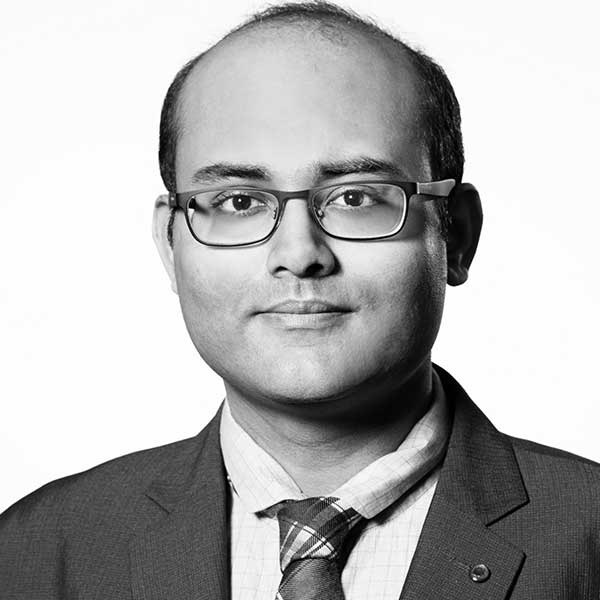
  • Subhayu Chakraborty, Strategy and M&A Investment, Naspers Ltd on transactional law and pursuing Masters from Frankfurt School of Finance and Management

    Subhayu Chakraborty, Strategy and M&A Investment, Naspers Ltd on transactional law and pursuing Masters from Frankfurt School of Finance and Management

    Subhayu Chakraborty, graduated in Law from WBNUJS in the year 2012. Subjects like IPR, Economics, Economics and Law, Corporate Law, Taxation and Corporate Finance/Governance and Law interested him and he has penned down a few articles – one published by the prestigious International Astronautical Federation (IAF) in 2010. Subhayu went on to pursue his Master’s degree in Finance, Frankfurt School of Finance & Management, Germany.

    He landed his first job at Sand Hill Counsel through LinkedIn which was initially an internship turned into a PPO. According to Subhayu, “Internships should be taken as a learning ground and for building lasting connections.” Currently, as an investment banking analyst he is responsible for deal origination and industry wide/company research.

    In this interview, he talks to us about:

    • Converting internships to PPO
    • Importance of higher education
    • Masters in Finance from Frankfurt School of Finance & Management, Germany
    • Roles and responsibilities of an investment banking analyst


    HOW WOULD YOU INTRODUCE YOURSELF TO OUR READERS? DO YOU COME FROM A FAMILY OF LAWYERS? CAN YOU TELL US ABOUT YOUR CHILDHOOD?

    • I am an investment banker, having had a prior experience in VC transactions. I am an avid reader, love to travel, am passionate about city photography, abstract art, F1 and I play chess. Post law, I worked a couple of years; before pursuing MoF (Master of Finance), and thereafter I joined a mid-market investment bank – 7i Advisors LLP. I now look forward to Joining Naspers in a FinTech Strategy and M&A Investments role.
    • My father is a taxation consultant, and that’s where the first nudge came from. At high school, the choice was between computer science or law. Ultimately, at close of 12th I decided to write the law entrance exams. The choice was amongst NLSIU, NUJS and NALSAR. Once admission to NUJS was confirmed, it was convenient to drop the rest.
    • I come from Kolkata and spent my childhood there. I did travel considerably – something I wish I could get time, today; that apart, I owe a lot to my schooling, which afforded an all-round development.


    WHAT MOTIVATED YOU TO PURSUE LAW? CAN YOU TELL OUR READERS HOW LEGAL EDUCATION HAS BEEN BENEFICIAL FOR YOU IN YOUR CAREER?

    • Though most people post 10th took up Science and prepared for engineering or medicals; they were never really an option, given my love of chemistry! Yes, sarcasm intended. In 2005, NUJS had its first batch of graduates. I remember discussing with my mathematics teacher and mentor, about the options a legal education would open. My dad played a big role, too. A couple more mentoring sessions later, law was a clear winner.
    • I believe, the biggest take-away from a legal education has been developing analytical and reasoning faculties; which does help one in roles like advisory/consulting. Having a deep knowledge of corporate law, FDI policies, and being able to structure investments/funds and being adept at soft skills like negotiation does help in Investment Banking.


    CAN YOU DESCRIBE YOUR TIME AT NUJS? DID YOU PARTICIPATE IN MOOTS, DEBATES ETC. OR UNDERTAKE ANY MEMORABLE INTERNSHIPS? HOW DID THESE EXPERIENCES CONTRIBUTE TO YOUR HOLISTIC DEVELOPMENT?

    • Law school, without a doubt were great years. I didn’t have a taste for the liberal arts curriculum; but, mid-way through law school I enjoyed most of my courses. I always enjoyed writing and penned down a few articles – one published by the prestigious International Astronautical Federation (IAF) in 2010. Studying with a cohort of talented and driven students, leaves its mark – and coming from a national law school, your extended alumni connect is the best takeaway.
    • I didn’t have a penchant for moots. I, in fact, never considered anything remotely linked to litigation as an option.
    • Internships should be taken as a learning ground and for building lasting connections. You got to believe the dots would form a line at the end. Few months back – I got off the phone with the India CEO of a real estate investment concern on a possible JV with a Japanese investor. I met him while he headed another concern, with whom I had completed an internship.


    WHAT WERE YOUR AREAS OF INTEREST IN LAW SCHOOL? WHAT PIQUED YOUR INTEREST IN TRANSACTIONS? HOW DID YOU CULTIVATE AND PURSUE SUCH INTERESTS?

    • Business and Law are two sides of the same coin. Legal acumen will stand you in good stead and so will transferable skills like negotiating and reasoning, while making business decisions. Subjects like IPR, Economics, Economics and Law, Corporate Law, Taxation and Corporate Finance/Governance and Law interested me.
    • Measuring value is an inexact science and markets are irrational. The value creation – be through an M&A, or PE/VC transaction; be either in the strategic sense or pure financial, wherein real worth may develop over the considerably longer term always excited me. I found myself reading the FT and HT Mint more often than law journals.
    • I was fortunate to be amongst the students to take part in the Allen & Overy International Finance and Corporate Law course. I took quite seriously the words of a partner, that “you could learn more about Private Equity and LBOs, if you read ‘Den of Thieves’ and ‘Barbarians at the Gates’…” That piqued my interest and some knowledge about the US M&A/LBO boom of that period, does hold one in good stead. Thereafter, it became easier – following up on business pages, HBR and being an avid reader, reading on finance books.

    WHAT MOTIVATED YOU TO OBTAIN A MASTER’S DEGREE IN FINANCE? CAN YOU DESCRIBE YOUR EXPERIENCE STUDYING ABROAD?

    • I found, in my first job, as a transaction lawyer – that, I would inherently spend more time trying to get a better hang of the deal metrics, than documentation and structuring. Somewhere down the line, it struck I could be in deal origination. In India, apart from a lateral move into IB by a lawyer, which is very rare – it made sense to get a master’s Degree in Finance. I had to get a pre-experience one (although the average age of the graduating class was 26), as a post experience programme demanded verifiable quantitative skills. I chose Frankfurt School of Finance & Management, in Germany over a noted Spanish school, to be in close proximation to the continental capital of Finance. Further, an increasing number of German corporates are setting up base in India. I graduated in the FS cohort of 2016, specialising in the Corporate Finance track.
    • Studying abroad is about a journey that ends back at home. Life at FS was a roller-coaster. I had my fair shares of ups and down. Had the good fortune of studying amongst a diverse international student body. Studies were intense, but there were also a lot of free time during weekends. Camping and trails in the German countryside; wine fests, jazz and a dynamic international music scene; are some of the finer things, I do miss. The best part, as always making friends and growing your professional network; and, you know maybe someday I am going to work on a deal alongside a classmate. FS also had a lot of initiatives. FS Buddy for instance, aimed at foreign and exchange students would organize a lot of day trips and cultural activities. They were fun, whilst getting acquainted with the German way of life. There were a lot of focus on student activities and FS Invest and FS Chess were another couple of student run endeavours. At FS we were encouraged to think out of the box, and a lot of students took part in business games and valuation Olympiads. I had the good fortune of being selected to go to Zurich to take part in the India Symposium, attend the 69th CFA Annual Conference in Frankfurt and also take part in the 49th Annual Meet of the ADB.


    WHAT ARE YOUR VIEWS ON THE IMPORTANCE OF HIGHER EDUCATION? WHAT WOULD BE YOUR ADVICE TO READERS WHO ARE ON THE FENCE ABOUT PURSUING FURTHER STUDIES?

    • Well, when speaking about legal education – the value adds of doing a masters, is about your specialization. I am not sure of the graduate job market in London, post Brexit; but English law will continue to be the very basis of our commerce. Of course, there are many students who prefer to do an LL.M or a J.D and then come back to India.
    • A rule of the thumb would be to know what your core interests are and choose a university depending on its specialization. Rankings of course matter, but you must differentiate among universities to choose the best one for you.


    HOW DID YOU LAND YOUR FIRST JOB? WHAT WAS THE NATURE OF YOUR WORK THERE?

    • Here you got a tale! Phew… I had good grades in IPR and was recommended by a noted faculty member to join as a patent attorney in a pharmaceutical concern. Before joining in, I contacted a partner at Sand Hill Counsel on LinkedIn and set up a one-month internship in Mumbai. I left for Hyderabad, post my internship at Sand Hill. When working on IPR, while that was certainly of utmost interest; I got a call back from Sand Hill Counsel and was offered a PPO. I quit my training and returned to Mumbai for another stint – before joining Sand Hill next June. I remember getting an e-mail from the concerned professor expressing disappointment at me having not been able to make a decision earlier – and, this was also the time when I had a pending submission for the Novartis Bio-camp (in Hyderabad, India) – I had to swallow some pills and take a conscientious decision of letting the Vice Chancellor office know of my decision to withdraw from the Bio-camp. Things do have a way of working out, at the end – and, I was thankful for having made that decision.
    • At Sand Hill Counsel, like any other law firm associate, I was responsible for research, drafting legal opinions, firm write-ups, drafting agreements, and the usual ‘on-deal’ responsibilities and closing formalities, with a view to managing expectations and delivering a mature product.


    CAN YOU DESCRIBE THE NATURE OF WORK UNDERTAKEN BY AN INVESTMENT BANKING ANALYST FOR OUR READERS?

    • In IB, one should be prepared for long hours and turning around deliverables in quick time. No two days are the same. I primarily was responsible for analysing business opportunities, develop pitch books for getting mandates, develop target lists, build investment decks, build business models and conduct valuation analysis across sell-side companies. On a live transaction, one has to proactively manage the due-diligence (business, financial and legal) process; and work towards a successful closing. At closing tempers break often and there are long hours, and you do see here, a continuum from my transaction law days.
    • What you do need to be a good investment banker, is better than average modelling skills – having a good understanding of key financial drivers, some hands-on strategy, and being able to work independently and efficiently in a high-pressure environment. It’s also very important to be a thought leader in the space of your calling.

    WHAT ADVICE DO YOU HAVE FOR OUR READERS WHO ARE PRIMARILY COLLEGE STUDENTS?

    • Take risks and believe in your dreams.

    There are no ideal jobs and don’t fall into a peer trap. While some jobs may be paying well, others do come with a long call. Think of the pay-off from that long call, and if that’s a role you do like – take the plunge. Most people I have known, do regret not taking chances; than failing. And, if you do fail, rise; but at the same time be sure to not attempt something, because of your ego – prepare well instead, to truly deserve!!


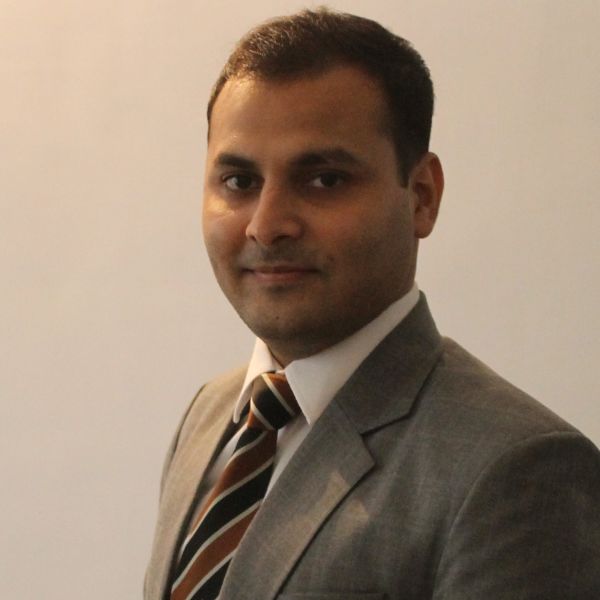
  • Debanshu Khettry, Principal Associate, Leslie & Khettry, on LLM from UCL and challenges of starting new ventures

    Debanshu Khettry, Principal Associate, Leslie & Khettry, on LLM from UCL and challenges of starting new ventures

    Debanshu Khettry is a fourth-generation lawyer at Leslie & Khettry. He focusses on corporate law, commercial contracts, corporate finance and banking law, securities law, property law, and legal due diligence.

    Debanshu has catered to international clients looking to do business or having business in India through his association with a reputed and one of the best law firms in New Delhi. He has assisted in negotiation and documentation of various inbound investments in India. He has experience in legal due diligence of businesses in various sectors including infrastructure, e-commerce, FMCG, biotechnology, and education. In addition, he regularly advises corporates, sporting bodies, and individuals on issues relating to commercial law and property law.

    He attained LLM with distinction from University College London and graduated from National University of Juridical Sciences, Kolkata (gold medallist).

    He gained wide experience through over a dozen internships in some of the biggest law firms in India; judges of Hon’ble Supreme Court of India and Hon’ble Delhi High Court; eminent lawyers and Members of Parliament; office of additional solicitor general and NGOs. His contribution in all these places was highly appreciated.

    Debanshu co-founded P-PIL, with Dr. (Prof.) Shamnad Basheer, to promote practical advocacy among law students. His extensive empirical research on the constitutionality of a statutory tribunal in India was endorsed by a former High Court Judge. He is a founding member of IDIA (established to promote diversity in law schools by training the deprived) where his co-authored policy paper was accepted by the CLAT Committee. His other initiatives include being the founding executive editor of Journal of Telecommunication and Broadcasting Law (first of its kind refereed journal); co-founder of SILC (India’s first standard legal citation system); and co-founder of Lawctopus (a leading website for law students).

    His articles have been published in refereed international journals and his research has been cited in various books and articles. He also takes a keen interest in developments in the financial markets.

    In this interview, we speak to him about:

    • Importance of LLM
    • Tips on writing SOPs and advice on application requirements
    • Challenges faced in starting his own venture
    • Roles and responsibilities as principal associate at Leslie & Khettry.


    GIVEN THAT MOST OF OUR READERS ARE LAW STUDENTS AND YOUNG LAWYERS, HOW WILL YOU INTRODUCE YOURSELF TO THEM?

    I am a fourth-generation lawyer at my family’s legacy firm, Leslie & Khettry. I graduated from National University of Juridical Sciences (NUJS) in 2013 and then pursued LLM from University College London (UCL).


    TELL US ABOUT YOUR OPTIONS AFTER GRADUATING FROM SCHOOL. DIDN’T YOU THINK OF THE CONVENTIONAL DEGREES IN ENGINEERING AND MEDICINE?

    Any other field of study was never in my mind. Since my forefathers have been lawyers, the legal profession has always been in my blood. I took CLAT tuitions from the eleventh grade and managed to get an all India rank of about 100. My backup plan was to pursue BCom (Hons) from St. Xavier’s College, Kolkata where I gained admission and then do a three year law course in case I did not get into any of the top law schools in India which have a five year integrated law program.


    WHAT CO-CURRICULAR ACTIVITIES DID YOU PARTAKE IN NUJS?

    I was not much into the traditional co-curricular activities in law school such as debate or mooting (except for the compulsory ones). Instead, I was involved in entrepreneurship and practical lawyering.

    Under the aegis of Prof. (Dr.) Shamnad Basheer, I got an excellent opportunity to work for P-PIL (Promoting Public Interest Lawyering) where we provided law students an opportunity to get hands-on experience of practical lawyering. We worked on issues ranging from human rights, education to regulatory lapses.

    Under the able guidance of Prof. (Dr.) Basheer, I also got the opportunity to work in the policy arm of IDIA (Increasing Diversity by Increasing Access) that aims to empower underprivileged children by providing them access to legal education. Pursuant to the policy paper that we submitted to the CLAT Committee, various changes were made in relation to the conduct of the CLAT exam.

    I also started the first of its kind international peer-reviewed Journal of Telecommunication and Broadcasting Law (JTBL) for NUJS. Whilst in college, I ran the journal for two years and we were able to get Lexis Nexis as the publisher.

    Along with another friend, we also conceptualised India’s first legal citation system, the Standard Indian Legal Citation (SILC). Unfortunately, most law schools and journals in India follow legal citation systems that are not indigenously developed and are not comprehensive guides for citing Indian legal sources. The freely available SILC solves that problem.

    Then of course, I also spent time in planning and developing Lawctopus (an online portal dedicated to law students) along with the other co-founders. I feel proud that five students from NUJS were able to produce a website that has helped a large number of students in myriad ways.

    In addition, I worked as a researcher for a global LPO during my spare time. I also tried making NUJS a more prominent institution in the legal industry. For instance, a friend and I were able to convince the Vice-Chancellor in our second year to change the academic calendar of the University to allow for students to do 3 internships in a year which required in-depth study and galvanising great amount of support from the student body and faculty.


    AS A LAW STUDENT, YOU CONSISTENTLY EXCELLED IN ACADEMICS AND BAGGED GOLD MEDAL IN YOUR BA LLB (HONS) COURSE FROM NUJS. WHAT IS THE MOST IMPORTANT TIP THAT YOU WOULD LIKE TO SHARE WITH LAW STUDENTS FOR CONSISTENTLY EXCELLING IN ACADEMICS?

    Discipline, focus and determination are some of the keys to excel in academics. Achieving good grades or being a rank-holder is an important byproduct that helps in numerous ways such as opening several avenues in your career. However, it is not the only means and what matters most is the knowledge that you gain and how you use it.


    YOU SUCCESSFULLY COMPLETED ABOUT TWELVE INTERNSHIPS IN YOUR 5 YEARS OF LAW SCHOOL. PLEASE TELL US HOW FAR DID YOUR INTERNSHIPS HELP YOU IN YOUR CAREER AFTER YOUR GRADUATION? HOW WOULD YOU RECOMMEND THE PRESENT LAW STUDENTS PLAN THEIR INTERNSHIPS?

    I tried to gain wide experience through internships and accordingly interned at a mix of places such as some of the biggest corporate law firms in India, judges of Hon’ble Supreme Court of India and Hon’ble Delhi High Court, eminent lawyers such as Ram Jethmalani, the office of additional solicitor general of India and NGOs amongst others. The variety of places meant doing different kinds of work which helped me get a flavour of the innumerable areas of law and the kind of work that I enjoyed doing. This immensely aided in shaping my career path.

    To law students, I would suggest to try and do as many internships as possible. It will not only help in gaining practical experience but also an understanding of their likes and dislikes. Since the capacity in many places is limited, I would recommend that they plan the internship at the place of their choice well in advance.


    PLEASE TELL US ABOUT YOUR DECISION TO PURSUE AN LLM AT UCL. PLEASE SHARE SOME ADVICE ON ACING THE APPLICATION REQUIREMENTS AND PROCEDURE FOR UCL? DID YOU RECEIVE ANY SCHOLARSHIP OR WHETHER UCL PROVIDE STUDENTS WITH SCHOLARSHIPS?

    Much to my surprise, the partners at various law firms that I interned at, did not agree with the concept of LLM or higher education. According to them, it is a waste of time, money and does not yield any benefit in relation to practice in India where the environment and laws are different. However, my cousin who lives in the UK convinced me of the benefits of a post-graduation degree from the UK such as an opportunity to be part of a global network, acquiring a deeper understanding of the law, better educational qualification, etc.

    As far as the application process goes, I received enormous help from my friends, family, well-wishers and professors. UCL does provide scholarships to students, however, I did not apply for it.

    To fellow applicants, I would advise that they seek guidance from someone who has been through the process with success rather than taking half-baked ideas of those who have never been through the application process. I would also recommend that they spend a great amount of time in preparing their applications meticulously and not work on them in haste.


    YOU HAVE BEEN THE FOUNDER/COFOUNDER OF VARIOUS VENTURES INCLUDING THE LAWCTOPUS, P-PIL, JTBL AND SILC. WHAT INSPIRES YOU TO TAKE UP THESE NEW VENTURES?

    Each venture is the result of efforts of several others and a gap in the industry that needed to be filled. When we started Lawctopus, there was no website that offered information on the various opportunities available to students or an insight into how their internship experiences at various places have been. The portal helps law students and aspirants make informed choices.

    Similarly, for P-PIL, we wanted to create a platform from where students can get an experience of practical advocacy which unfortunately is not fully achieved with the current system of mooting in law schools.

    JTBL was the result of lack of any journals devoted to the ever-growing, vital and complex field of telecommunication and broadcasting laws. SILC was also conceptualised due to the absence of any indigenous citation methodology designed to cater to the reference of Indian legal sources.

    One of the major inspirations behind these ventures was Mahatma Gandhi’s oft-quoted phrase ‘Be the change you want to see in the world’. It is easy to remark that there is a problem or there is a lack of a better solution, nevertheless, each problem or the lack of a better solution is an opportunity that can be seized.


    WHICH SUBJECTS DID YOU TAKE IN YOUR LLM AND WHY?

    I have an enormous interest in finance and the financial markets. This led me to take subjects related to this field (such as regulation of financial markets, corporate finance and corporate governance) during my LLM. I also undertook a thought-provoking subject that focussed (amongst others) on the extraneous factors that influence a judge’s decision-making. Even during my law practice, I give a great deal of emphasis on the psychology of judges and analysing their orders and judgments before advising clients.


    PLEASE TELL US THE CHALLENGES YOU FACED IN STARTING YOUR OWN VENTURES?

    One of the biggest challenges has been to manage the teams and making sure they are performing their responsibilities in a timely manner. In addition, achieving consensus amongst other co-founders becomes challenging at times since they have their own ideas and vision about the venture.


    YOU WORK AS A PRINCIPAL ASSOCIATE AT LESLIE & KHETTRY. WHAT ARE YOUR MAIN TASKS AND WHAT ARE YOUR ROLES AND RESPONSIBILITY?

    Historically, Leslie & Khettry has been based out of Kolkata even though we regularly came to New Delhi for practice. Recently, though, we opened our office in New Delhi also which I am currently managing. My main responsibility is to grow our practice in New Delhi and cater to the needs of those requiring legal assistance in New Delhi.


    WHAT OTHER ACTIVITIES ARE YOU INVOLVED IN BESIDE PRACTICING LAW?

    I devote some amount of time in doing angel investments and meeting entrepreneurs and understanding their needs. I also enjoy engaging in new activities, be it learning a new language or an instrument or taking up a sport.


    WHAT WOULD BE YOUR PARTING MESSAGE TO OUR READERS?

    Always be humble, logical and open to new ideas. Law changes its shape on a regular basis and therefore one must be flexible to adapt to the ever-growing field. I have noticed that professionals often casually call themselves an expert on a subject but there is a reason why lawyers are called practitioners. Also remember, the client is king and therefore their requirements and service to them should take top priority. One must also be ready to toil no what part of the career they are at in order to survive and excel. It is therefore imperative that you enjoy the journey. In spite of best efforts, mistakes may happen but what is important is how you overcome and handle them. There is always scope for improvement in whatever one does.


  • Sachin Malhan, Co-founder and CEO, HumLab on being a good entrepreneur, the challenges of starting your own venture, and his involvement with the Agami Prize

    Sachin Malhan, Co-founder and CEO, HumLab on being a good entrepreneur, the challenges of starting your own venture, and his involvement with the Agami Prize

    Sachin Malhan is the co-founder and CEO of HumLab. Before that he was the Executive Director of the Changemakers global program of Ashoka, the world’s leading social innovation network.

    Before his work at Ashoka, Sachin co-founded three ventures in India – Law School Tutorials, the leading law test-prep outfit, currently present in 60 cities and training over 30,000 students annually; Rainmaker, a learning and talent platform for the legal industry that ultimately spun off Vahura, the leading talent search firm for the legal industry and mylaw.net, the pioneer in online learning for legal and adjacent industries; and Inclusive Planet, a venture focused on greater literary access for the visually impaired, which succeeded in effecting national policy change but failed to sustain the digital platform required to enable that access. For his work in technology, media, social impact and education, Sachin became an INK Fellow in 2010.

    Sachin is a graduate of the National Law School of India University in Bengaluru and began his career with Amarchand Mangaldas in their Mumbai offices.

    In this interview he talks to us about:

    • Studying at NLSIU
    • Converting internships to PPOs
    • Challenges faced as an entrepreneur
    • Ashoka Changemakers, network of social entreprenuers
    • His latest venture HumLab, and their first initiative the Agami Prize


    HOW WOULD YOU LIKE TO INTRODUCE YOURSELF TO OUR READERS?

    In the 21 years since I joined law school I’ve played many different roles, some better than others! I’ve been a law student, a lawyer, a teacher, a business entrepreneur, a social entrepreneur and the CEO of a few different organisations. This is not counting the many more roles I’ve played in my life outside of ‘work’. If I had to pick one way to introduce myself to your readers I’d say I’m someone trying to do work that’s creatively fulfilling, meaningfully impacts other people’s lives and helps me live a life beyond the fears, insecurities and compulsions that otherwise govern our lives.


    WHAT FACTORS INFLUENCED YOU TO CHOOSE LAW AS A CAREER?

    I chose to go to law school in the most bizarre of circumstances. I took the NLSIU entrance exam as a secondary choice in case my admission to medical school didn’t come through. I wouldn’t even had made the examination if a school friend hadn’t taken me to the venue on his scooter at breakneck speed through Calcutta by-lanes. When the results came I was 57th i.e. the last of the selected 57. My medical admission results were pretty poor and I ended up staying in law school. I am so thankful for this series of most fortunate events because I loved the law school experience and the college-mates who shared that experience with me. Law school helped me broaden my understanding of society, develop new skills, and, most of all, put me in touch with a set of peers who helped me develop as a human being.


    YOU HAVE STUDIED IN ONE OF THE PREMIER INSTITUTES IN INDIA. PLEASE TELL US ABOUT YOUR TIME AT NLSIU. WHAT DO YOU THINK MAKES NLSIU STANDS OUT AS COMPARED TO OTHER LAW SCHOOLS IN INDIA.

    I cannot compare NLSIU to other colleges today because I don’t have the facts But I can speak about NLSIU during my time there. I think the single biggest driver of value was the quality of students. The process pulled together students from different streams, skill sets and interests, parts of the country and social backgrounds. What most of us shared was a general uncertainty about who we wanted to become in life. Some of us were very certain about ‘the law’ but most were on a journey of discovery. That explains why the batch produced entrepreneurs, restauranteurs, journalists, a policeman, and a professional poker player, besides many accomplished lawyers themselves. When you put such a group of people together and you give them a pleasant campus on the outskirts a city in big transition (Bangalore), access to curricular and extra-curricular opportunities, and a decent academic experience you usually get good things as a result. Note that I refer to my academic experience as ‘decent’ – which I think it largely was, but there were also islands of excellence, teachers who not just helped us understand a subject in a new way but helped us think better and empathise. Their contribution can never be quantified or compensated. They balanced out other academic experiences that were sub-par. I believe NLSIU still offers the above combination of things.


    PLEASE TELL US ABOUT YOUR RECRUITMENT AT AMARCHAND MANGALDAS. HOW DO YOU SUGGEST SHOULD YOUNG LAW STUDENTS APPROACH LAW FIRMS FOR SECURING A JOB AS ENTRY LEVEL ASSOCIATES?

    I was recruited as a result of an internship in my final year. I was very lucky in that I got to work closely with the senior partner – Mr MP Bharucha – who ultimately recruited me. He was a demanding boss, especially for an intern, but it was quickly clear to me that he was an incredible lawyer and personality who would help me learn and grow. I don’t know if interns today get to work closely with partners but it definitely helped to get him to see that I had the attitude to do well. The market is so competitive now and I know that its hard to get into good law firms. There are many others who are probably much better informed about what it takes for law students to crack good law firms eg. my dear friend Ritvik Lukose who heads Vahura. What I can say is that unless you have the benefit of being the graduate of a top law school and have a great resume you’ll have to use the combination of relationships and differentiators. From early in your law school life you need to start building and nurturing relationships with seniors and others in the field. Being a part of a large community, that you care for and cares for you, is an incredible asset. Skills, knowledge and achievements that differentiate you powerfully are the other key tool. Getting that good job, if that’s what you want, requires you to start early.


    WHAT LED YOU TO LEAVE AMARCHAND MANGALDAS AND START YOUR OWN VENTURE?

    I had already co-founded Law School Tutorials, popularly known as LST, when I was in my third year (1999) at NLSIU. I had tasted the incredible highs and lows of entrepreneurship and had something to compare to my experience as a corporate lawyer. After a year at Amarchand, despite having an incredible mentor in Mr Bharucha, and enjoying a very positive experience at the law firm, I knew that I was an entrepreneur and had to be true to that. I’d come home late from work and despite being pretty wiped out still find the energy to do my LST work – replying to student emails, revising materials, scoring tests etc. I knew that this is what I wanted to do. I could also see that the audience for law schools was growing and that LST could really become something. So when I left I was terrified about what the future would hold, but I was also ecstatic about the creative possibilities.


    YOU HAVE BEEN THE CO-FOUNDER OF VARIOUS VENTURES INCLUDING THE LST AND RAINMAKER. WHAT INSPIRES YOU TO TAKE UP THESE NEW VENTURES?

    To me there are few things more satisfying than helping an idea come to life. Those early steps of imagining something, building a team, creating the first experiences etc are very rewarding. In some ways entrepreneurship is my compulsion. Yes, social impact and market opportunity are drivers of these initiatives but in many ways I’m attracted by the process of creating something lasting with other people who share that passion. The experiences, successes and failures of my ventures have taught me more than a dozen college degrees could ever do. I remember one conversation with a young class 12 student in Allahabad where he spoke so lucidly about what it was like for him to break free from what his father wanted him to study and find his own way. When I asked him why he was willing to fight with his father when so many others just went along, he said ‘because life is more, sir, I can feel it.’ Each venture that I am a part of takes me on a new journey, to meet amazing new people and, hopefully, leave a lasting impact.


    PLEASE TELL US WHAT ASHOKA CHANGEMAKERS IS ABOUT? WHAT WERE YOUR ROLES AND RESPONSIBILTIES IN THE SAME?

    Ashoka is the world’s largest network of social entrepreneurs. It doesn’t market itself very much but it is ranked amongst the five most influential non-profits in the world. In the social impact field it is highly respected. Many Nobel laureates and Magsaysay awardees are Ashoka Fellows – Mohd Yunus, Kailash Satyarthi, Jerry White, Anshu Gupta and Bezwada Wilson, to name a few. More recently it is confused with the excellent Ashoka University but Ashoka is a global organisation in 80 countries that’s been around for 40 years. Out of its headquarters in Washington DC I was the Executive Director of a large international program of Ashoka, Ashoka Changemakers, which was focused on building networks of social innovators around challenging social issues. I had the chance to work with amazing international colleagues and entrepreneurs on how complex social issues can be solved by creating ecosystems that nurture social innovation around those issues. I moved back to India last year to start HumLab, a longtime dream of mine.


    WHAT ACCORDING TO YOU DOES IT TAKE TO BE A GOOD ENTREPRENEUR?

    That’s a tough one, and I answer it with the awareness that I may not be equipped to do so! Here’s what I’ve observed –

    • persistence (trying and trying again);
    • resilience (getting up when you fall down, taking criticism and doubt);
    • working in community, which requires you to trust and to believe in the capability of others;
    • an ability to see possibilities, connect the dots and be comfortable with a certain level of uncertainty;
    • a practical side that helps that problem-solve and mitigate existential risks (no money to live, pay salaries etc.);
    • I’d also add what I think great (as opposed to good) entrepreneurs have –
    • they can empower a lot of other people to discover their full potential;
    • conviction around a certain imagined reality and ability to pass that on to others. Even if that exact vision doesn’t come to pass they still come upon something great by virtue of having sensed the pathways of the future.
    • a healthy disregard for the opinion of ‘experts’, overly convergent or linear thinkers;
    • a connect with younger people who have all the energy.


    PLEASE TELL US ABOUT YOUR LATEST VENTURE HUMLAB INDIA. WHAT IS IT ABOUT AND WHAT SERVICES DOES HUMLAB OFFER?

    HumLab doesn’t have one product or service. It is trying to build an ecosystem to catalyse innovation and entrepreneurship in legal industry, law and justice. An ecosystem is not one thing but possibly a combination of different enabling initiatives, ideally with a strong community layer. So we’re slowly starting to develop these different things in collaboration with different organizations. The Agami Prize, which we are co-creating with justice innovation catalyser Vayam led by former Ashoka co-leader and NALSAR alum Supriya Sankaran, and in partnership with some other amazing organisations including Ashoka and Trilegal, is the first such initiative. A national prize that can showcase innovation and entrepreneurship in the field would have the effect of driving interest in the bigger vision itself. We are hoping that once we establish the Agami Prize we can also look at driving more funding and expertise to new startups and promising ventures in the space.


    HOW CAN A LAW STUDENT APPLY FOR INTERNSHIP AT HUMLAB?

    Just email me at sachin@humlab.in and tell me why you think yourself to be an entrepreneur. Focus on what you’ve built or significant problem you’ve solved – however small – in your life.


    PLEASE TELL US THE CHALLENGES YOU FACED IN STARTING YOUR OWN VENTURES?

    Every kind of problem! Still, the ones that were most persistent were inter-personal. I worked a lot with co-founders, some fantastic entrepreneurs themselves, and we did all sorts of things wrong – didn’t define roles, didn’t clearly align on what the vision was, didn’t talk about about the hard stuff, and so on. I strongly feel that if you’re in a team and you’ve done that bit right i.e. built trusted relationships through strong communication, then everything else is easy. Even then, despite the challenges, my former co-founders remain my closest friends. The adversity brought us closer and our friendship forced us to confront our demons. Because we’ve shared so much we know the challenges that each of us have faced, or our still facing, in growing our ventures.


    WHAT ARE YOUR PLANS FOR THE FUTURE?

    I’ve got my hands full with HumLab. I want to first focus on establishing Agami Prize as a powerful platform for innovators and entrepreneurs, and slowly but surely build a community of people committed to transforming the field. It sounds a bit crazy because law and justice has always been done in a certain way but I think that the big trends of the world – tech, individual empowerment, and the growth of cross-border business and trade – will change things in ways we could’t imagine. I’d like to build HumLab on the learnings I’ve had in the last 20 years of entrepreneurship – develop trust, work with amazing people and organizations, think bold, and have great fun.


    WHAT WOULD BE YOUR WORD OF ADVICE TO YOUNG LAWYERS AND LAW STUDENTS LOOKING TO DO SOMETHING DIFFERENT?

    I have a question for every young law student or lawyer – do you really believe that the jobs we covet will stay the same 10-15 years down the line? In a world where everything is changing so fast we must make change our friend. We must be comfortable with constant learning and initiative-taking. I know its scary but once you embrace the mindset it gives you strength. Trust me on this part. I guess the way I’m trying to answer the question is to say that those who want to do something different are at least half-way into the future versus those who think everything will stay the same. The latter run the greater risk – of not being in control of their destiny.

    To those who want to do something different, I would also say – don’t do it just because its different but because you want to do something fantastically and create value – for yourself and for society. Once you’re convinced of that put all your energy and something good will come out of that.

    I’ll be writing more on this soon!


  • Rahul Bajaj, Associate, Trilegal, on being awarded prestigious Rhodes Scholar, and making the Legal Ecosystem Disabled-Friendly

    Rahul Bajaj, Associate, Trilegal, on being awarded prestigious Rhodes Scholar, and making the Legal Ecosystem Disabled-Friendly

    Rahul Bajaj graduated in law from the  University of Nagpur in 2017. He has also secured the first position in the B.A. LL.B. course. He is the 2017 recipient of the prestigious Rhodes Scholarship. This scholarship is awarded only to five Indians each year to pursue their postgraduate education at the University of Oxford. He is currently working with Trilegal as an Associate.

    In this interview, Rahul talks about: –

    • His journey towards becoming a Rhodes’ Scholar;
    • Encouraging more persons with disabilities to join the legal profession and;
    • His recruitment at Trilegal


    HOW WOULD YOU LIKE TO INTRODUCE YOURSELF TO OUR READERS?

    First of all, thank you very much for giving me the opportunity to share my thoughts on your wonderful platform. I have never been one for crisp and pithy writing, but I’d say that I’m a 24-year-old lawyer from Nagpur. I enjoy reading, travelling, acting a little silly from time to time, learning about new cultures and swimming (although I barely know how to swim).


    WHAT WAS YOUR FIRST REACTION ON LEARNING THAT YOU ARE BEING AWARDED THE PRESTIGIOUS RHODES SCHOLARSHIP? DO YOU RECALL THE FIRST FEW DAYS AND THE INTERVIEW? WHAT INSPIRED YOU TO APPLY?

    You’ve packed a lot of things into that question. Let me answer your question in a chronological order, based on the order in which each of these events took place.

    I had no plans of applying for the Rhodes when the application window opened last year. In fact I didn’t even know when the application window opened until I decided to apply. While I have always viewed myself as someone who is sure-footed and confident about their abilities, I didn’t think I had any chance of getting the Rhodes. This was principally because of two reasons. First, I didn’t go to an NLU, and almost all Rhodes Scholars from the field of law, in the last two decades have been NLS or NALSAR graduates, with some notable exceptions. Second, I wasn’t sure if the selection committees were prepared to select a student with a disability, not just because of stereotypes, but also because of the very concrete limitations my disability poses and tackling them, even in Oxford, would entail time and effort. I think my inhibitions are best captured by what James J. Barnes, the first blind person to get the Rhodes says in his memoirs:

    “… I know that I can take no credit for blazing the trail, but I have always given my selection committee members, both at the regional and state levels, much appreciation for not eliminating me out of hand. Clearly they looked behind the superficial but very real limitations I possessed and judged the whole personality.”

    My friend, Dhruva Bhat, who got the Rhodes in 2016 was the first person who encouraged me to apply. I then consulted another close friend who told me that there was no one more deserving to get the Scholarship. So I figured that there was no harm in applying and, given that the Scholarship had been awarded to a student from a relatively low-ranked NLU the previous year, my chances were not unquestionably foreclosed.

    The interview panel for the final round was headed by Gopal Krishna Gandhi who went out of his way to make all interviewees feel comfortable and at ease. I had prepared very rigorously for the interviews, with many rounds of mock interviews, so I found the actual interview to be quite manageable from that standpoint.

    My first reaction was one of complete disbelief, followed by unrestrained elation, followed by the recognition that this is just one milestone on a long road.


    HOW DID YOU GO ABOUT WRITING YOUR RÉSUMÉ AND MOST IMPORTANTLY, YOUR STATEMENT OF PURPOSE FOR RHODES SCHOLARSHIP? WOULD YOU LIKE TO SHARE YOUR SOP WITH US?

    Insofar as the resume is concerned, I just modified the resume that I already had to fit their requirements; I structured it in such a way as to make good the point that I meet the four criteria that they look for. Insofar as the SoP is concerned, I thought long and hard about how I wanted it to be. Instead of sharing the text itself, I think it would be more helpful if I share the process of crafting it.

    I wanted to not only highlight my accomplishments and successes, but also make the point that they were all achieved despite being blind since birth. Some might read this and think that I was playing the ‘blindness card’, but my thinking is that someone who has achieved the things that bring you within the zone of consideration for the Rhodes despite being blind has definitely had to work a lot harder to mitigate the impact of a significant objective impairment. So I began my SoP by talking about the challenges that I faced as the first blind legal intern at the Supreme Court working for a judge, through an anecdote. Against that backdrop, I outlined my relevant accomplishments in the areas of IP and constitutional law, in which I am most deeply interested, and closed by trying to drive home the point that my accomplishments, coupled with the odds that I have had to face in achieving them, make me a great fit for the Scholarship.


    DO YOU NEED TO HAVE RECOMMENDATIONS AS WELL? WHAT KIND OF PROFILE IS NEEDED WHILE APPLYING FOR THE SCHOLARSHIP?

    Yes, you need six letters of recommendation – preferably three academic and three extracurricular. I chose my referees in such a way as to be able to make a cogent and compelling case for the proposition that I met all the four criteria that they look for – intellectual ability, ability to use your energy to the full, ability to empathise with and protect the weak and moral force of character and instincts to lead. My referees were Professor Shamnad Basheer, Swaraj Barooah, Justice UU Lalit, Professor Shirish Deshpande, one of my law professors who is himself blind, my constitutional law professor who I’ve described in response to a subsequent question, Professor Varsha Deshpande and my school principal.

    I think anybody who feels that they meet these four criteria should give it a shot, despite whatever grave flaws they might feel their profile suffers from.


    WAS THERE ANY INTERVIEW ROUND? IF YES, HOW WERE YOU PREPARED TO FACE THE PANELISTS? WHAT KIND OF QUESTIONS WERE YOU ASKED?

    Yes, there were two interviews – one technical and one final. The technical interview focuses on questions about: (a) your areas of interest in the field of law; (b) your general legal ability; and (c) your awareness of topical legal and sociological issues. As I mentioned earlier, I had done a lot of mock interviews – in fact with three of the five scholars from the previous year that were very invaluable.

    In the technical interview, I was asked such questions as a question about a piece of research that I did in my internship with Justice Shakdher of the Delhi HC; why I got involved in IDIA’s programme for students with disabilities and what structural barriers they faced; how I thought IP and human rights could be balanced, based on a paper that I had written; if I thought that studying in my home town was a compromise that I had to make; and if my disability should form part of the calculus when assessing my candidature.

    In the final round, I was asked such questions as my views on the right to be forgotten which I had written about and unenumerated rights in general; my internship for Justice UU Lalit of the Supreme Court; the one fundamental transformation in society that I’d like to see; what my future plans were; and my interest in learning languages.


    WHAT WAS THE SELECTION PROCESS LIKE? WHAT WAS THE MOST CHALLENGING PART OF THE PROCESS? HOW DID YOUR LAW SCHOOL EXPERIENCE HELP YOU IN THE PROCESS?

    The process is divided into three parts – written submissions, followed by two rounds of interview, the details of which I have sketched above. The most challenging part, for me, was making the decision that I wanted to apply.

    As for my law school experience, I got a lot of flak when I said in my interview to Bar and Bench after getting the Rhodes that my college, Dr. Ambedkar College of Law, has a lot of scope for improvement and the manner of functioning leaves a lot to be desired. While I continue to maintain that belief, I think I would be doing a huge disservice and injustice to some teachers in law school if I don’t make a mention of their contribution in shaping my thinking as a lawyer. We had an excellent constitutional law professor, who, despite the dispiriting college environment, taught constitutional law with a tremendous amount of energy and passion and unparalleled power of articulation and helped cultivate my love for the subject. We had another great professor who taught us legal language and writing and labour law and devoted significant effort into helping us appreciate the nuances of the subject matter that we were taught. We had a couple of other good professors, too.

    Notwithstanding the above, I think traditional law colleges, such as mine, are characterised by institutionalised mediocrity, as Dr. Manmohan Singh once said. For a student of law who is interested in honing their legal skills and acquiring a deeper appreciation of the law, nothing can be more demotivating and frustrating than having to return home day after day after day because the college doesn’t want to conduct classes for some or the other specious reason or the students and teachers who help perpetuate this culture aren’t taken to task. I don’t say this to demean anyone or because I have an axe to grind, but because I think that there’s no point in the platform that I have been privileged to have been given by virtue of getting this Scholarship if I can’t use it to make a contribution, howsoever insignificant, in helping foster conversation on the issues that I care deeply about and sow the seeds of change.


    WHAT ARE YOUR PLANS AFTER YOUR POST-GRADUATION? WHAT KIND OF CAREER DO YOU ENVISAGE AFTER GRADUATING FROM OXFORD?

    I’d like to litigate in the areas of constitutional law and IP law. I’d also like to pursue a career in policy formulation alongside litigation.


    WHAT FIELD OF LAW DO YOU INTEND TO PURSUE AT OXFORD AND WHY?

    Constitutional law, human rights and intellectual property. These are the areas that I have developed maximum interest in, by dint of the opportunities that I have had in my career thus far.


    DOES THE UNIVERSITY OF NAGPUR PROVIDE EQUAL OPPORTUNITIES TO PERSONS WITH DISABILITIES?

    You see, back in 2012, my family and me didn’t think that an NLU would have the wherewithal to accommodate a student with a disability. The only example of this happening was Moiz Tundawala, who had gone to NUJS and is in fact a resident of Calcutta, so he was a day scholar there. I have always attached great importance to maintaining high standards of excellence in academics. I was not sure an NLU would have an enabling environment to facilitate this. As we saw it, the choice was between being relegated to the fringes at a leading law school and thriving at a lesser known law college where I would have easier access to resources and more time to build my career in the manner in which I wanted to. Further, while it may have been possible for me to adjust, as I eventually did in the Supreme Court, the Delhi High Court, and several other places where I have interned, I was not the person then that I am now, so I didn’t really push the envelope on going to an NLU as assertively as I perhaps should have, in hindsight.

    Our concerns back then weren’t unfounded. Even today, the students with disabilities who are at the NLUS aren’t exactly welcomed with open arms. From faculty members who grudgingly accommodate disabled students at best and make them objects of pity or refuse to accommodate them at worst to registrars and staff members who adopt an adversarial approach when dealing with their needs; from peers who quietly distance themselves from you and are unable to embrace someone who is difference due to ignorance or prejudice to inaccessible infrastructure, the challenges faced by the disabled are large in number.

    That said, change is afoot in many places and we will hopefully see things improve. NLSIU recently admitted the first totally blind student in its 32-year-history and their Law and Society Committee has taken the lead on sensitising all stakeholders about the needs of the disabled.

    Insofar as my own college experience is concerned, as I studied in my hometown, I had access to all the resources I needed to study independently, which is what my legal education mostly boiled down to. My professors were also as helpful as they could be.


    WHAT IMPROVEMENTS DO YOU SUGGEST THAT THE COURTS NEED TO MAKE FOR ENCOURAGING MORE PERSONS WITH DISABILITIES TO JOIN THE LEGAL PROFESSION?

    That’s a very loaded question and probably warrants a separate interview. The challenges are many, and most notably include: (a) inaccessibility of documents, even digital documents; (b) inaccessibility of legal databases; (c) accessibility barriers on court websites; (d) absence of an institutionalised frame work to accommodate disabled lawyers; and (e) inaccessible physical infrastructure, lack of human assistance in courts and overcrowded courts in which even a sighted lawyer would struggle to find their way, let alone someone who is blind. People tell me: now you have digital access, doesn’t that solve your problems? The answer is that digitisation, if not configured with accessibility in mind, can help create and perpetuate barriers rather than breaking them down.

    I have filed an application in the Supreme Court to help effectuate some of these changes. You will hopefully hear about it soon.


    HOW DID YOUR RECRUITMENT TAKE PLACE AT TRILEGAL? IS TRILEGAL A DISABLED FRIENDLY PLACE?

    My recruitment happened by virtue of a PPO that I got after my internship at Trilegal. The answer to your second question would unequivocally be in the affirmative. I can cite several examples of the initiatives that they have taken for me: buying for me a more efficient OCR software; a computer that works better with my screen reader; and encouraging me to figure out ways of doing all the things that my able-bodied counterparts are expected to do.

    As a disabled legal professional, one obviously faces a variety of challenges, given that the working of the profession and the courts is not structured with you in mind. Despite this, Trilegal has done everything possible to accommodate me as fully as they can.


    WHAT WOULD BE YOUR ADVICE TO OUR YOUNG READERS WHO WOULD LIKE TO APPLY FOR RHODES SCHOLARSHIP IN FUTURE?

    I am not old or wise enough to give career advice to anyone. What I would like to close with is this beautiful quote from Marianne Williamson, which more eloquently and forcefully conveys my thinking:

    “Our deepest fear is not that we are inadequate. Our deepest fear is that we are powerful beyond measure. It is our light, not our darkness that most frightens us. We ask ourselves, Who am I to be brilliant, gorgeous, talented, fabulous? Actually, who are you not to be? … Your playing small does not serve the world. There is nothing enlightened about shrinking so that other people won’t feel insecure around you. We are all meant to shine, as children do… And as we let our own light shine, we unconsciously give other people permission to do the same. As we are liberated from our own fear, our presence automatically liberates others.”

    You may dismiss that as a lofty and cheesy expression of sentiment, divorced from the way the world actually works. But I think it conveys a profound message which is this: unless we are able to come to terms with the proposition that we have within us the capacity to achieve our goals and break down the barriers holding us back, how can we ever hope to convince others or translate it into reality?

    So my short message would be that, instead of focusing too much on the cards that you are dealt, try focusing on how best to play them; instead of focusing on what you cannot do, try focusing on what you can. This can hold one in good stead for pursuing any meaningful endeavour, and the Rhodes is no exception.


  • Prachi Shrivastava, Journalist, Legally India, on being a legal journalist and a career in legal journalism

    Prachi Shrivastava, Journalist, Legally India, on being a legal journalist and a career in legal journalism

    Prachi Shrivastava graduated from Amity Law School, Delhi in 2011 and is currently working as journalist with Legally India. She covers news developments in the transactional legal space, the bar, the bench, law schools, legal policy and trends in the Indian legal profession, for Legally India. She also handles editorial responsibilities, such as copy-editing, at Legally India, in addition to reporting.
    In this interview she talks about:
    • On a career in legal journalism
    • Roles and responsibilities of a journalist
    • Skills required for a good legal journalists


    HOW WOULD YOU LIKE TO INTRODUCE YOURSELF TO OUR READERS?

    I am a lawyer-turned-journalist for the last six years. Legally India, and sometimes its collaboration with Mint, has been the space for my entire professional experience.


    WHY DID YOU CHOOSE TO DO LEGAL JOURNALISM? ISN’T IT QUITE AN UNUSUAL CAREER CHOICE? WHAT MOTIVATES YOU TO CONTINUE WORKING IN THIS AREA?

    At the time when I first made the choice, it was to pursue my passion for building stories in a way that intersects with my primary professional qualification. It was an unusual career choice at the time, not so much now. I continue to make this choice daily because of the promise of immense growth alongside creative freedom, through a struggle which has hardly any frustrating components to it. In a nutshell, it is immensely challenging but in a greatly positive way.


    YOU ARE VERY WELL KNOWN IN THE LEGAL CIRCLES IN INDIA AS THE FACE BEHIND LEGALLYINDIA.COM. WHAT IS YOUR ROLE THERE? TELL US ABOUT YOUR JOURNEY WITH LEGALLY INDIA.

    That is more than humbling, a perception. It is really our founding editor Kian Ganz who is the inspirational force behind this milestone in legal history that I have been privileged enough to be a part of right through its growth years. My role is to editorially support Kian in keeping it up, running and growing. The journey has been very, very unique and empowering even though it’s like I haven’t even begun to scratch the tip of the iceberg of the immense impact this vehicle can cause in India.

    First off, I have been repeatedly amazed at the distance a bit of an effort at transparency can go, in bringing about fairness and growth in the profession.

    Second, I’ve seen first-hand: curiosity is contagious. It begun with Kian’s efforts at digging into aspects of the profession most lawyers were sceptical about digging into. I joined and as a young lawyer for a time not I would not immediately grasp just how deep an investigation could go. Certain parts of the investigation would surprise me. And now for a while we have even had readers not just pointing out but pushing us to pursue very, very pertinent and relevant issues that need more digging.

    Third, it has been heartening to see the niche legal journalism space get competitive and sharp in India over the years, pushing each other to raise the bar.

    Finally, is it me or has the mainstream media been more proactive picking up niche legal sector angles of late? Makes me immensely proud to be part of that kind of impact.


    WHAT DO YOU CONSIDER TO THE THREE BIGGEST ACHIEVEMENTS IN YOUR CAREER?

    Three biggest achievements of my career:-

    • When a story I wrote (somewhat) directly causes a shift in an organisation’s actions or policies;
    • Getting to connect with so many stalwarts of the industry on a daily basis;
    • Having the freedom and access to gain a large audience for the issues I care about.


    MANY PEOPLE SHY AWAY FROM LEGAL JOURNALISM BECAUSE IT IS BELIEVED THAT THE EARNINGS ARE QUITE LOW. IS THAT TRUE? WHAT DOES IT TAKE TO SUCCEED AS A LEGAL JOURNALIST?

    Earnings depend on any given organisation, so I wouldn’t say “quite low” unless obviously it is being compared to the pay scale of a law firm but then a lot of professions perfectly capable of keeping both the stomach and passions alive and comfortably kicking, would pale in comparison to law firm packages of even freshly minted graduates.

    That said, in order to succeed, curiosity would go a long way. Also wherewithal. No one can really push a journalist to keep reaching out for stories, it has to come from within and not in spurts but in a rabid flow.

    I would say I have succeeded when I have that kind of a rabid flow.


    YOU STARTED YOUR CAREER AT LEGALLY INDIA AND STAYED THERE FOR THE ENTIRE DURATION OF YOUR CAREER SO FAR. THIS IS QUITE UNUSUAL IN TODAY’S PROFESSIONAL WORLD. WHAT MADE YOU STAY BACK AT LEGALLY INDIA FOR A GOOD PART OF A DECADE? DO YOU CONSIDER OFFERS FROM OTHER PUBLICATIONS?

    Legally India is the leader in the space that I work in and I believe that once you have begun on the path to master a particular space, it doesn’t make sense to jump to another space until you have mastered your own space completely and there is no more potential for growth. It would also not make sense for me to move to another publication in the same space as, who moves away from a leader?

    I am still striving toward the goal I set out to achieve with Legally India and the fact that it has taken me the better part of a decade to do so, speaks for itself on the intensity of the challenge.


    WHAT ARE THE SKILLS YOU HAVE TO BE GOOD AT IN ORDER TO BE A GOOD LEGAL JOURNALIST? HOW DID YOU ACQUIRE THESE SKILLS? WHAT ARE THE BIGGEST CHALLENGES IN THIS AREA OF WORK?

    You need to be immensely curious, immensely well-read and aware of the latest not just in your space but also in related areas, good communication skills help in addition to, obviously, being able to write efficiently and with clarity. As on date, being comfortable with and knowledgeable about the latest tech trends is indispensable as internet has deeply penetrated all our lives.

    Above all, the motivation to keep up your curiosity in the face of a hard chase and not much of a corporate push, is a challenge without which journalism should not be attempted.


    WHAT IS YOUR VISION FOR LEGALLY INDIA? WHERE DO YOU SEE IT AFTER FIVE YEARS OR TEN YEARS?

    Vision for our publication is to continue doing what we are doing, over a wider scope and transparency at par with some of the most open international legal markets


    WHAT DOES YOUR AVERAGE WORKDAY LOOK LIKE? DO YOU GET SOME AMOUNT OF FLEXIBILITY?

    Average workday consists of connecting with a lot of lawyers and digging out things worth reporting, then reporting them. Yes, my work day is very flexible subject to the fact that we get things done.


    WHO ARE THE STALWARTS IN LEGAL JOURNALISM THAT YOU FOLLOW?

    My editor, Kian Ganz.


    IS LEGAL JOURNALISM CHANGING WITH TIMES? WHERE DO YOU SEE THINGS HEADING IN THE NEXT FIVE YEARS?

    Everything is changing with times and so is legal journalism. What the change is? Well, for starters there is a lot more to cover and a lot more general willingness in the profession for things to be open and accountable. And we take the rest from there.


    LIFTING OF ADVERTISING BAN ON LAWYERS IS GOING TO HAVE A BIG IMPACT ON LEGAL MEDIA, FOR THE GOOD OF COURSE. DO YOU SEE THIS HAPPENING ANYTIME SOON? WHAT IS YOUR PREDICTION WITH RESPECT TO THIS?

    Liberalisation, some foreign lawyers have joked to me, will be a tentative discussion until my legal journalist grandchildren are reporting on it. I hope it is not, but the way things keep progressing to advanced stages and then stall for a host of reasons, and the ultimate sword of “nationwide boycott” by the BCI no less when no reasons are left to stall, dampens hope. For a time last year there was one more relevant stakeholder joining the pro-liberalisation side, than the month before. Then the Supreme Court went ahead and indicated to all sides to rest for a bit. So I think I’d be safe to stay away from a prediction on this.


    HOW CAN ONE GET A JOB OR INTERNSHIP AT LEGALLY INDIA?

    By displaying your creativity, curiosity and perseverance to dig out the stories that matter to us.

    Thank you!


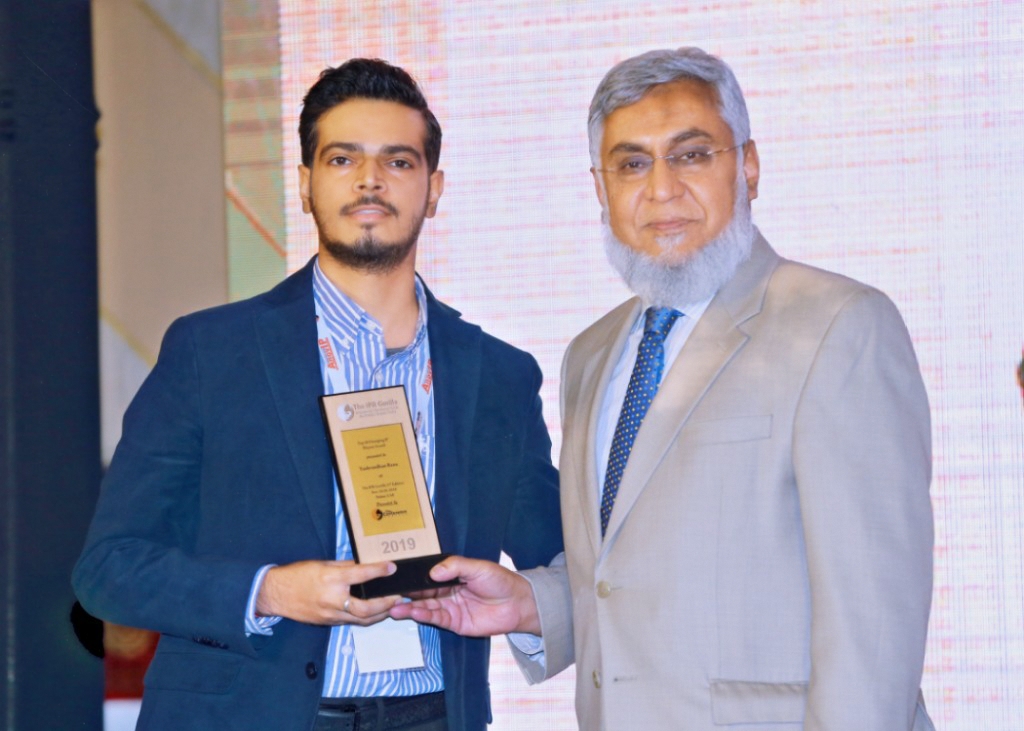
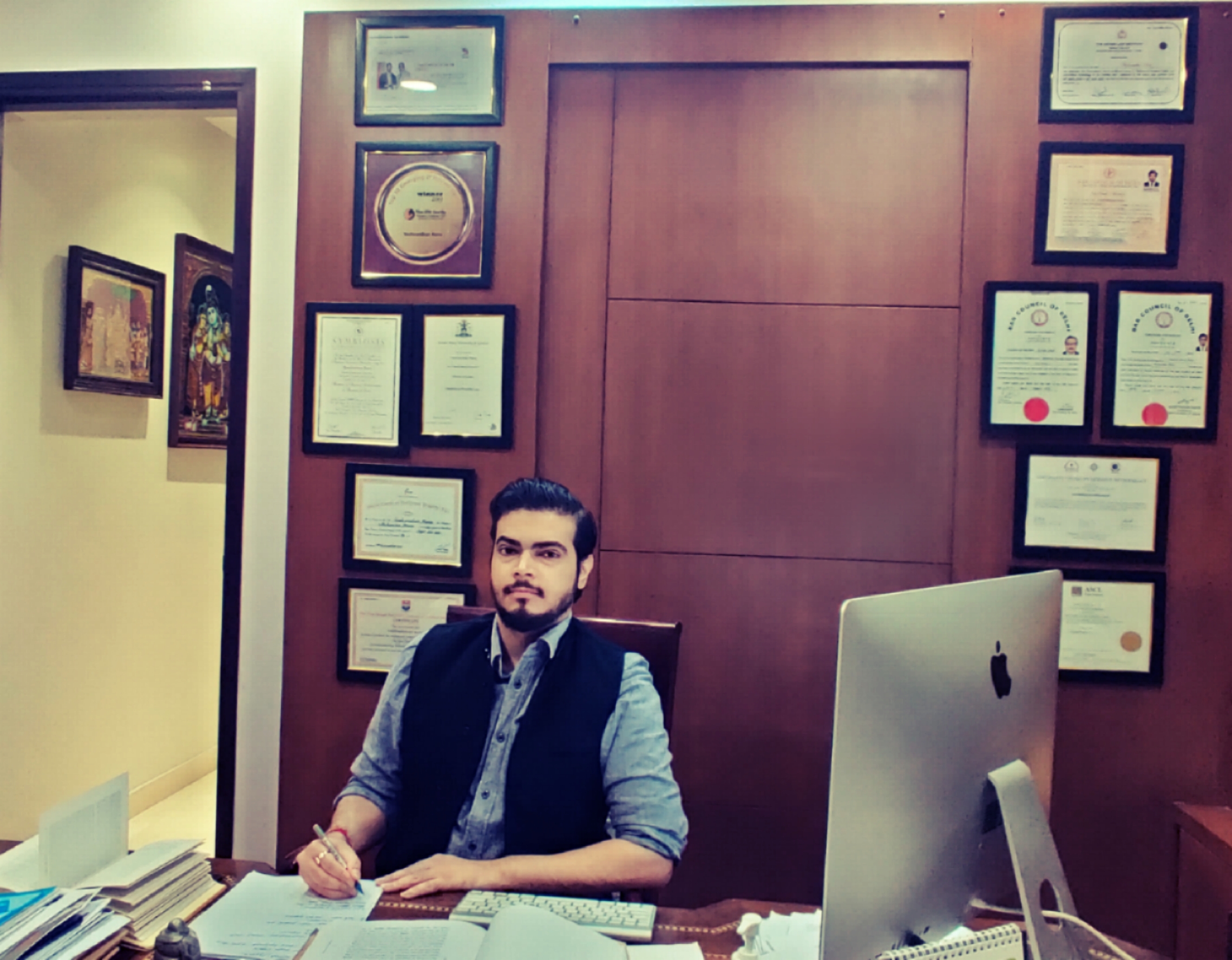
  • Yashvardhan Rana, on building his career in Intellectual Property Law being a top emerging lawyer and his passion for writing

    Yashvardhan Rana, on building his career in Intellectual Property Law being a top emerging lawyer and his passion for writing

    Yashvardhan Rana graduated from Symbiosis Law College, Pune in the year 2013 after which he pursued LLM in IPR from QMUL. He also pursued a certificate course in International Commercial Litigation and Arbitration from London School of Economics and Political Science. He is currently working with Inttl Advocare as an Associate.

    In this interview we speak to him about:

    • His Master’s degree from QMUL, London;
    • Tips on application requirements, procedure and writing SOPs;
    • His role and responsibilities as Associate at Inttl Advocare


    HOW WOULD YOU INTRODUCE YOURSELF TO OUR READERS?

    What matters is what you are from inside not something that can be portrayed by a bunch of adjectives attached to a string of sentences. You would have all witnessed the usual introductory lines till date. By now you must be thinking that I am trying to be different from my peers. But NO. I wouldn’t pull of some set of words out of my hat to describe myself and ask for your indulgence to know about me, but rather I would like to draw your attention to the various experiences that have shaped me as a human being. Human, first. Being myself, later. Being Human, is it? To cut the long story short – a hard worker like everyone else (smart work is the “in” thing – getting there..), believer of karma, football fanatic, adventure sports enthusiast, a law abiding citizen of this country – leaving out the sins committed in college life and the one who manages to show his passion for the world and for exploring it. Above all, what matters is how much you give back to the society (in terms of bringing about social impact and attitudinal change across all sectors), how much name and fame one can accumulate – social status, and the color of money you’ve stacked up for your descendants. Out of all the aforementioned indicators, I stand pretty meek as compared to the visionaries out there.


    WHY DIDN’T YOU OPT FOR THE CONVENTIONAL DEGREES IN ENGINEERING OR MEDICINE?

    “Have you got what it takes to lead in a diverse world?” Well, to start off with I chose law as my undergraduate degree to enrich myself of varied laws governing us and but of course – analytical skills.

    My academic and professional choices were driven by my continuous search for a fulfilling academic and professional life and what better way to take the path of law as opposed to the conventional degrees in Engineering or Medicine – as rightly pointed out. One other major factor was the sight of my father all dressed up as a lawyer and witnessing his gleaming personality – day in and day out since boyhood. My father’s hard labor and his savoir faire as an advocate appealed to my childhood dreams. My perspective on life changed when I closely observed my father, Mr. Mahendra Rana, work as an advocate in his Delhi High Court chambers and the one attached to our house.

    My entrance into this profession began after pursuing B.B.A., LL.B. (five year integrate course) from my Alma meter Symbiosis Law School, Pune in the year 2008. My yearning for specialised legal knowledge persuaded me to attain an LL.M. from Queen Mary, University of London, one of the top universities in the World in the field of Intellectual Property Law.


    ARE THERE ANY MEMORABLE MOMENTS OF LAW SCHOOL, WHICH YOU WOULD LIKE TO SHARE?

    I wish I could travel back in time to be with my friends with whom I cherish fond memories. At the risk of stating the obvious, I would say I had the time of my life at college. Not only because Symbi is a very good academic institution, but especially the diverse culture, unrestricted environment and the open-mindedness to learn which helped us to assimilate over a period of 5 years, was second to none. I was an introvert before college; the place played an important role in shaping my individuality, ethics, and set of values. I particularly savor the amiable camaraderie, especially at display in our apartments and college canteen (also the one at yards length from our college); all of us would bond together with our collaborative efforts through the chaos of assignment submissions and last minute exam preparations. I owe a lot of credit to these beautiful people for what I am today.


    HOW WAS YOUR FIRST YEAR AFTER GRADUATION AND WHAT WERE THE CHALLENGES THAT YOU FACED AS A YOUNG ASSOCIATE?

    In our ever-more inter-disciplinary world, innovations and laws inform and influence each other, ultimately emerging in response to each other. Generally speaking, Law is an ever-evolving subject of expertise and it takes a few months before a fresh graduate is of any use for an experienced lawyer. There is a fair bit of truth in the first half of this reason. The irony however is that the Bar Council of India, which is a body of several accomplished lawyers, regulates law schools. So basically, lawyers decide what/how law will be taught, only to (rightly) claim later that the training imparted by a system they regulate isn’t good enough. To enter this so-called world of uncertainty, I prepared myself for this and approached the IP Law firms I had interned with along with some other notable law firms. I would say that I got lucky with the firm that I had interned with and got through that, in turn becoming a trainee associate over there for a period for 2 years approximately. I got an overview about how to climb the ropes of law and the continuous persistence required to become a successful lawyer. I was involved in matters pertaining to Trade Mark and Copyright Law particularly and from the very start I was given the chance to accustom myself of what lies ahead being thrown in the deep blue sea comprising of big fishes catering to hungry sharks involving high stake matters. I also got to brief the owners of Haldiram’s and an eminent lawyer like Mr. Shanti Bhushan, along with my senior as Mr. Amarjit Singh was unavailable and, which in itself were enriching experiences.

    In the stifling hustle-bustle inside and outside the courtrooms, inspiration from stalwarts, restless clients, and legal professionals, I found my place. In countless other landmark judgments, I found my inspiration. And in the field of IP, I believe I can find the knowledge, and thus the power, to make my cause a reality.


    WHAT MADE YOU GO FOR FURTHER STUDIES?

    After amassing adequate knowledge about the rudiments of law through the various cases I was involved in over the first 2 years as an Associate as part of an Intellectual Property Firm, and having a small taste of how the law shapes its’ citizens, I planned to undertake a much more critical examination of the written words that were crafted to dictate our behaviour by involving myself handling varied contentious and non-contentious matters. Being fortunate enough to acquire the necessary expertise and acclimatising myself through Work experience, Diploma and Certificate courses from various avenues that beckon, I realised that I need to build up a sense of intellectual ability in me and arm myself with the various techniques of analysis and develop a sense of multi-disciplinary approach in a diverse environment that would in turn help me grow and broaden my perspective. That is what I yearned for to happen to me and to become a part of a university wherein I encountered the best minds engaged in immutable discussions whilst intrigued in understanding not just the theoretical foundations of law and society but also its new and emerging trends. This urge led me to search for an edifying journey with a stellar reputation for producing the best minds in the world of Intellectual Property Law. It did not come as much of a surprise that “Queen Mary University of London” fits that criteria, and, in one of the more surreal twists in my life, I decide to take the plunge and thus, applied for further studies.


    SHARE SOME ADVICE ON ACING THE APPLICATION REQUIREMENTS AND PROCEDURE FOR QMUL?

    Applying to an LL.M., whether at QMUL or elsewhere, requires some amount of dedication to craft and connect the dots. The key is just to start early (by early I mean – at the very beginning) in the admission cycle – get the referees to send in their recommendation letters (from a notable professor, judge or your college principal would go a long way) and the universities in India to send in the transcripts etc. After that, it’s about writing a solid statement of purpose. I think the SOP requires painting a vision about your future and how well you are aware on how to tread the path of endless opportunities without blinking your eye. Also, writing an SOP requires demonstration of a certain skill set, aptitude and coherence to be able to delineate and sell what you envision for in about 2-3 pages.


    WHAT LED YOU TO CHOOSE IPR AS YOUR SPECIALISATION?

    The world of brands have always fascinated me since my childhood as I’ve seen my father patronising various well-known brands from multifarious departmental stores in every nook and corner all over the world on his vacations (he does not like to shop in India). This routine was followed on every vacation that he took us to and I accidentally got immersed and it had further captivated me to dwell into the world of brands like never before. On another note, I also used to read his files at night in our house chamber of matters pertaining to high stake trade mark law matters almost twice or thrice a week in my college holidays. Since I also had an inclination to become a lawyer from my boyhood days and Intellectual Property Law was booming in India, I chose IPR as my specialisation and further wanted to create a niche for myself in this ever-intriguing field of law.


    TELL US ABOUT YOUR INTERNATIONAL EXPOSURE AND EXPERIENCE.

    In my view, it was an exhilarating experience as it broadened my horizons/perspective to a next level altogether. I met a lot of people from diverse backgrounds and countries. It also gave a deep insight into the workings of different legal regimes in different jurisdictions.

    I have, and shall always maintain unconditionally, that my year as an LL.M. student at QMUL was easily one of the very best years of my life. It gave me a lot more than just a degree: I had arrived to join a year-long course and to earn myself an added qualification with an incredible enlightenment, priceless personal growth, lifelong friends and long lasting memories. Intellectually, it endlessly challenged me to simultaneously learn and unlearn, and amplified my personal growth to help birth a broader view and perception I wouldn’t hitherto have considered myself capable of.


    PLEASE TELL US ABOUT YOUR CERTIFICATE COURSE IN INTERNATIONAL COMMERCIAL LITIGATION AND ARBITRATION FROM LONDON SCHOOL OF ECONOMICS AND POLITICAL SCIENCE. IS IT USEFUL IN YOUR PRACTICE.


    It definitely is! I quote “It takes a distressing incident for us to step back and retrospect. Until then, we relish being one among the herd.” It feels comforting having someone resonate your outlook. It was this moment when I realized the importance of having an all-round approach when it comes to learning. The subject “International Commercial Litigation and Arbitration” per se did not directly cater to my growth as an IP lawyer; however, it invoked a sense of understanding the law in its complete sense. Litigation and Arbitration play a key role in delivering speedy justice and what better way to supplement my knowledge in IP and have an added advantage over my peers. This course offered a concise introduction to the legal challenges relating to the international dimension of litigating commercial disputes, both before state courts and in arbitration. London being one of the most important centres for commercial litigation and arbitration in the world, the course focuses on the relevant English and European Union law, invoking experiences from other jurisdictions where useful.


    PLEASE TELL US HOW DID YOUR APPOINTMENT TAKE PLACE AT INTTL ADVOCARE.

    I joined Inttl Advocare in April 2017 after working at Amarjit & Associates (IP Litigation) and Lall, Lahiri and Salhotra (Trade Mark prosecution department), as an Associate, Trade Mark, Copyright and Design Prosecution, and have been with this stellar firm ever since. I had zeroed down on Inttl when I was applying to the best of IP firms in India and applied without any further delay. The doyens of IP law namely – Mr. Hemant Singh, Managing Partner and Mrs. Preetika Singh, Senior Partner and Head of Trade Mark, Copyright and Design Prosecution, instilled more confidence in me to apply here blindly without taking a second opinion. Thus, I got a call from there after my interview was conducted which comprised of a basic questionnaire, writing a short essay on a contemporary topic in the field of IP Law and 2 hour long face to face interview. I assure you of that this is the best place where one can hone their skills and concepts to the maximum in the field of IP in India, thus enabling you to reach greater heights within that setup in order to deliver results effectively and efficiently in turn making you into a versatile IP Attorney.


    AS AN ASSOCIATE IN INTTL ADVOCARE, WHAT ARE YOUR ROLES AND RESPONSIBILITIES?

    Being an Associate in one of the leading IP firms in the country is obviously very demanding involving challenging tasks on a daily basis that push you to your limit. It, however, encourages you to focus, grow, adapt and respond to new challenges and opportunities every day. I am a part of the Trade Mark, Copyright and Design Prosecution team and contribute religiously to this practice of the firm for multinational corporations based out of abroad and Indian clients across the board. I am currently responsible for conducting availability search for the purpose of registrability of trademarks along with providing legal opinion paving the way for smooth adoption and use of the trade mark by the clients. Also, I advise clients on trademark protection strategies, including drafting and filing reply to objections raised by the Trade Marks Registry, Copyright issues, Rectifications, filing and renewals of trade mark applications, attending hearings, Legal research and specific tasks relating to Design Law, Assignments etc. before the Trade Marks Registry. All this has to be executed in a timely and effective manner & to the satisfaction of our clients.


    HOW WOULD YOU SAY THAT AN INTERN COULD GENERATE A POSITIVE FEEDBACK IN THE LIMITED TIME THEY HAVE?

    Be committed, sincere, trustworthy, reliable and one should have the willingness to learn along with a host of other qualities to be an all round intern. Researching capabilities and thinking on your feet when asked a question are one of the major qualities that an intern should posses. There are no short cuts in life. Please try and get over the CV padding exercise do not end up interning with big firms without learning or contributing much. Before you start, ask as many questions as you want, understand the point well, make notes and do an exhaustive job. Be responsible with the work which has been delegated to you, don’t abandon the counsel uninformed. There are so many times that interns do not count themselves as a vital part of the system and tend to be careless. This often results into double efforts both of the counsel and that of the intern. Do not cut copy paste; rather analyze a point of law and discuss. If you get free time, spend some of it in the library or going through available precedents of past transactions.


    WHAT WOULD BE YOUR PARTING MESSAGE TO OUR READERS?

    You all would have heard about many great examples to follow. However, as a parting message, I would like to borrow a brief excerpt from an article titled as “The Path of the Law” written by Oliver Wendell Holmes, Jr. (was an American jurist who served as an Associate Justice of the Supreme Court of the United States from 1902 to 1932) published by the Harvard Law Review (10 Harvard Law Review 457 (1897)):

    To an imagination of any scope the most far-reaching form of power is not money, it is the command of ideas. If you want great examples, read Mr. Leslie Stephen’s History of English Thought in the Eighteenth Century, and see how a hundred years after his death the abstract speculations of Descartes had become a practical force controlling the conduct of men. Read the works of the great German jurists, and see how much more the world is governed to- day by Kant than by Bonaparte. We cannot all be Descartes or Kant, but we all want happiness. And happiness, I am sure from having known many successful men, cannot be won simply by being counsel for great corporations and having an income of fifty thousand dollars. An intellect great enough to win the prize needs other food besides success. The remoter and more general aspects of the law are those which give it universal interest. It is through them that you not only become a great master in your calling, but connect your subject with the universe and catch an echo of the infinite, a glimpse of its unfathomable process, a hint of the universal law.

    This thought again brings me back to the question that what I am going to do next and voila! The feeling of uncertainty and confusion is back. But just as law says – “Truth and Justice shall find its way through obstacles”, I definitely hope so would I.

  • Syed Asif Iqbal, Co-founder and Legal head, Advok8, on challenges of being an entrepreneur

    Syed Asif Iqbal, Co-founder and Legal head, Advok8, on challenges of being an entrepreneur

    Syed Asif Iqbal graduated from Lloyd Law College in 2015. He then began his career under Ratan K Singh, and subsequently moved on to Rachana Joshi Issar & Associates. He is the co-founder of advok8.in. He is also the legal head of advok8.in . He deals in Consumer matters, Arbitration, Civil law, Service law and also criminal law matters.

    In this interview he talks about:

    • The options for a lawyer to become an entrepreneur;
    • About his startup advok8.in;
    • His journey as an entrepreneur.


    HOW WOULD YOU LIKE TO INTRODUCE YOURSELF TO OUR READERS? PLEASE TELL US SOMETHING ABOUT YOUR PRE-COLLEGE LIFE?

    I am a lawyer, and I also believe that I am an entrepreneur, an optimist, opportunist and an innovator. I am an average guy who strives for bigger dreams and someone with whom you can easily relate. I am a guy like you who have studied hard, who was sincere and enjoyed life and had good friend circle. I am a guy like you who desire to change every bad thing in the world and want to achieve something big which can make people around me feel proud. I love cricket and enjoy educating and get educated. For me, achievements and applause big or small are the reasons for existence.

    Pre-college Life is something I would just love to talk about. I am a student of New Horizon School, Delhi. In my school, I was a star, a smart student, an outstanding sportsperson and an honour board holder . I was national softball player and represented Delhi as captain I also played cricket, badminton, handball at interstate and state level. I was one of the finalists in the National Gandhi quiz. In Hindu College, I was part famous street play society “ ibtida” and did many plays all over the country.


    HOW DID YOU DECIDE TO PURSUE LAW AFTER BA HISTORY? MANY PEOPLE HAVE THE OPINION THAT THE THREE YEAR LLB IS NOT ADEQUATE FOR THE STUDY OF LAW. WHAT IS YOUR TAKE ON THIS?

    I believe it is important to be aware with the existing, upcoming laws and evolving legal system but what is equally important is the understanding that how this judiciary and legal systems were developed, why it’s a sine qua non for the system of governance and why the laws are the way they are?

    Laws are always framed as per the requirements of the society. A few days ago the Hon’ble Supreme Court directed center to frame new laws to sternly deal with mob lynching and cow vigilantism. Indisputably, the direction came to deal out the existing law and order chaos in 2018.

    Now It is interesting to share with everyone, have we ever thought the Penal laws, the contract laws, and many enactments were enacted around the 1860s and 1870s and are still being followed. what were the conditions under which these laws were framed and how they are still in existence? You can’t find these answer in present but you definitely find the books of modern History.

    For me, law was not compulsion but it was purely a sentient move. I was a bright history student who enjoyed history thoroughly. History did not only gave me the passion to understand the existence of the socio-eco and cultural systems ( which include origin and evolution of legal systems) but also illuminated me with the sense of broader understanding of the world we live in and the systems we are surrounded with. I believe the better you know the world the better you understand it. Therefore, history I always believe it is the best option to go for before you want to pursue law.

    I disagree with the opinion that the Three year LLB is not adequate for the study of law. I feel both three years and five years are equally a good courses and have their own advantages. I feel one is better prepared to pursue law after graduation because the curriculum for five years law is more than a student can bear in five years. More importantly in India where you don’t get career counselling in school. Three years course is a valuable option for those who want to pursue Law at the later stage.


    WHAT FACTORS INFLUENCED YOUR DECISION TO LEAVE LITIGATION AND START YOUR OWN VENTURE?

    The existing system of old styled law firms, fewer opportunities for a first-generation lawyer, being a Non-NLU, inherently slow personal growth and no space new ideas were the major factors that influenced me to switch for a new venture. I believe it was about doing what you enjoy and what excites you more. When I heard the idea of Legal-tech startup from Kundan ( who is the founder of advok8.in) I could strongly relate to the idea. It was about bringing the change in slow and steady legal domain.

    To be honest it was never planned. As a fresher, I was full of enthusiasm and had in my head that one can learn and grow if one has the skill set but the moment you enter into legal field particularly the old style law firms it becomes imperative for you to be slow. You are made to think that you can be successful only if you have the least five plus years of experience. The worst part of it is that many of us start believing that and by the end of five years you lose the enthusiasm and the courage to start your thing. When I faced this dilemma I decided to take all risk of my life in these five years only.

    Even though by God grace I was doing well in the field of litigation and it was exciting but the fact that you must have white hairs to get good clients and till the time you are a junior you must follow what you have been instructed in Stricto senso cannot be changed.


    PLEASE TELL US ABOUT YOUR TIME AT LLOYD LAW COLLEGE?

    Undoubtedly, the law college days were amazing be it academics, dramatics, moot courts or other competitions. I exhaustively enjoyed my college with my best friends of life and I think college is meant for that. Beyond that college played a great role in my life specially preparing my skill set for the legal domain and I learned the best lessons of my life in my law college. I was one of the best mooter and was an active participant in almost everything. It was in the college I was made to realise that to be a successful legal professional you need to have at least four skills writing, research, debating and negotiations, these skills will be desperately required and it is only their degree would change over a period of time and not their requirements.

    With whatever I knew I was often found nurturing my juniors and guiding them. I was often overwhelmed with the respect and appreciation I used to get from my juniors and this was the best part of the college life.

    YOU STARTED YOUR OWN VENTURE AFTER WORKING FOR THREE YEARS. WHAT WERE THE CHALLENGES IN YOUR INITIAL YEARS? HOW DID YOU OVERCOME THEM?

    In these three years of litigation, the best part was my training under Mrs. Rachana Joshi Issar (AOR, Supreme Court of India) who taught me the Art of advocacy and understanding the legal netiquettes. It was because of her I could pursue things as freely as I should. She made me believe that life is a one-time opportunity and we should not wait for doing anything we love to do.

    Frankly speaking, I don’t own this venture individually but the venture is an output of four co-founders each of them is an expert in his own field. I was onboarded as a co-founder for my legal expertise. I was enrolled as an advocate in 2015 and had no plan for starting a venture but I always looked for a better opportunity and I believe we all strive for that. I am a great fan of Mcdowell’s advertisement urging people to “make is large ( life)”. In advok8.in I found my opportunity to make it large and I decided to shift my focus to this venture.

    For any startup, the biggest ordeal is having a “PRODUCT” which is acceptable in the market and customers are ready to pay for it. Apart from financial strains, it was the right ‘PRODUCT-CUSTOMER’ combo that made us sweat. The journey was full of highs and lows but it was the belief of the team on each other and on the idea that helped us to fix up everything in our way.


    PLEASE TELL US ABOUT YOUR VENTURE ADVOK8?

    advok8.in is one of the legal tech startup among the few in the less explored legal Indian market. It is a technology partner of lawyer and artificial intelligence driven company making legal profession easier and ensuring access to justice for all. Advok8.in is a linkedIn for lawyers. Lawyers and law students can connect with other law professionals on this platform, share opinions, judgments and all legal developments.

    advok8.in is the prime mover of ‘THIRD PARTY ARBITRATION’, ‘LITIGATION FUNDING’ and ‘CROWDFUNDING’ (legal domain) in India and it is making an attempt to break the existing taboos in these sectors. There is no law in India which expressly bar third-party funding but people get confused between the concept of funding by an advocate ( which is barred under BCI laws) and third-party funding by a third Party (which not a barred but has been suggested as a method of dealing high cost by Sri Krishna committee report on arbitration). These products will not only resolve the issue of high cost litigation but and will provide stability to young litigating lawyers.

    advok8.in has also developed a software for corporate, litigants, and lawyers for case management which we call it “case tracking”. It is fully automated case tracking system wherein you just have to add your case details once and you get automatic updates on your case, cause list, order sheet and display board of all courts and forum. Moreover, you don’t have to carry you court diaries once you have this in your pocket.

    To know more about advok8 one can visit at www.advok8.in


    WHAT DOES IT TAKE TO BE A GOOD ENTREPRENEUR?

    I think entrepreneurship is all about being visionary. It about identifying a problem and solving it for en masse who had started believing that the problem is inherent and they are bound to live with that.

    Another aspect I want to reiterate is that a good entrepreneur is always abreast with the market demands and the customer response. Customer service I believe is gradually diminishing from the small and mediums enterprises. The incident of Indigo where indigo attendant assaulted a passenger is alarming. One must understand that the consumer is the king and that is what we are learning every day.


    PLEASE TELL US THE CHALLENGES YOU FACED IN STARTING YOUR OWN VENTURE?

    Most of the challenges I believe were two-faced. On was to say “ Yes” and other was to say “No”. I had to believe my self that we will do and had to question myself that whether I was ready to take the risk I answered “Yes” to myself. The people who suggested me not to go for it I said with due respect a  “No” to them. Likewise, whatever the problem we faced during this period it was between a tough yes and a harsh “No” but believe me, it takes a hell lot of courage and effort to pick these yes or no.


    WHAT ARE YOUR PLANS FOR THE FUTURE?

    Our vision is embedded with the desire to simplify the road to justice. There are many obstructions to access to justice the fundamental issues are litigation cost and legal illiteracy. A recent survey by Daksh point outs that civil litigant incur a loss of ` 844 per day due to loss of pay and criminal litigant incur a cost of ` 902 per day due to loss of pay. What is astonishing was that Rs50,387 crore is the estimated business loss incurred by the litigants which are shockingly 0.48% of the Indian GDP.

    We want that the services of  ‘Third Party Funding’ is freely exercised by the corporate and people can crowd fund their cases so that they are not deprived of justice just because of financial difficulties.

    Further, we look forward to starting legal insurance in India covering the before the event and after the event coverages. Of course, it’s a long way to go but the response we have got is encouraging and it keeps our spirit high.


    WHAT WOULD BE YOUR WORD OF ADVICE TO YOUNG LAWYERS AND LAW STUDENTS ?

    The first thing which comes to my mind to share with my friends is the fact that when we were young we had bigger dreams and with every year we are growing we are compromising with our dreams. We all wanted to be doctors, scientist, an engineer but we are now ready to settle for anything. I request you to don’t get settled.

    It’s a myth that you can plan your career and execute it in that manner because there are many external factors which come in your way. So what is important is to give your best and develop a skill set which would give you an edge over others.

    It’s very important to do a self-assessment and realise what excites you the most. We must have heard this many a times but believe me that’s really important. Another thing I have realised in my short career is that the more you are aware with yourself, your surrounding, your nation (and whats going around it) the longer you can survive the competition and out stand the competitor.

    When in law college ask yourself every week am I doing something worth or what I would do after completing college? Am i ready for it ?

    If the answer is No prepare till you get the answer in affirmative.

    Legal sector requires a change particularly the technological advancements it is an area which has most outdated mechanism and is still being continued . One can easily identify the problems in the existing system and 9 Billion dollar legal market gives you enough opportunity to explore new ideas and set up your successful venture.

    It’s never too late to have a dream and it’s never too late to pursue it. Never stop believing yourself because your achievement, your targets and your destination starts with you.


  • Sonam Taneja, Programme Manager, Food Safety and Toxins, on career in indirect tax and Food Safety laws and policies in India

    Sonam Taneja, Programme Manager, Food Safety and Toxins, on career in indirect tax and Food Safety laws and policies in India

    Sonam Taneja graduated from ILS Law College, Pune, in 2010. She currently works with Food Safety and Toxins division at Centre for Science and Environment as programme manager. She has close to eight years of work experience. She also has expertise in Indirect Tax and has worked as senior associate at Lakshmikumaran and Sridharan.

    In this interview, she talks to us about:

    • Her role and responsibilities as Programme Manager –Food Safety and Toxins at Centre for Science and Environment
    • On career in Indirect Tax
    • Importance of mooting in college

    HOW WOULD YOU INTRODUCE YOURSELF TO OUR READERS?

    I am a lawyer, working in the field of food safety policy at one of India’s leading environment policy think tanks. I am passionate about laws and policies that impact the way we eat.


    WHAT FACTORS INFLUENCED YOU TO CHOOSE LAW AS A CAREER? WHY DID YOU CHOOSE ILS LAW COLLEGE FOR PURSUING LAW?

    I was a science student in school. While I enjoyed the logical approach in science studies, my interests lay in reading, writing, questioning and public speaking. Apart from engineering, I had applied for English honours and law at ILS Law College. ILS has always had a very good reputation, when I got through ILS, I just went for it!


    PLEASE TELL US ABOUT YOUR TIME AT LAW SCHOOL. HOW WAS YOUR APPROACH TOWARDS ACADEMICS WHILE IN COLLEGE.

    ILS has an ‘intellectually stimulating’ environment. There is a strong culture of senior students helping and mentoring juniors. ILS gave us the freedom to spend our time after classes the way we liked. I chose to be a part of several co-curricular and extra-curricular activities at college.

    Coming from a science background, initially, I found theory subjects challenging, but gradually caught up. I had always been an academics-oriented student and my scores did matter to me.


    HOW IMPORTANT ARE EXTRA CURRICULAR ACTIVITIES TO A LAW STUDENT.

    I think extra-curricular activities are important everywhere, every time in life. It helps shape a well-rounded individual. ILS has a very good culture of dramatics, dance, music and sports. It was an amazing experience for me to be a part of some of these and closely observe the others.


    YOU HAVE REPRESENTED YOUR COLLEGE AT PRESTIGIOUS MOOT COURT COMPETITIONS. HOW SIGNIFICANT IS MOOTING FOR LAW STUDENTS?

    Participation in moot courts can add a lot to one’s confidence in terms of public speaking, thinking on your feet and working under pressure. I have applied those learnings very often in my professional life.

    But then, nothing is a one-size-fits-all solution. I believe one should continue to get out of one’s comfort zone, whatever be the route. Moot courts were challenging for me and participating in them was my way of pushing myself.


    HOW DID YOU SECURE YOUR FIRST JOB? HOW IMPORTANT DO YOU THINK A HIGH CGPA/PERCENTAGE IS FOR RECRUITERS?

    I was interning at the Delhi office of Lakshmikumaran & Sridharan in my final year and that is when I got an offer. I think marks can reflect sincerity in a candidate to recruiters, but if I was recruiting, I would keep my cut-off for marks at just average and look for a candidate with the right attitude and a learning aptitude.


    WHAT WOULD BE YOUR ADVISE TO READERS WHO ARE INTERESTED TO PURSUE INDIRECT TAX IN THEIR CAREER?

    Indirect taxation has recently seen a makeover since the inception of Goods and Services Tax. I am not in the field right now, but for those interested, I think this would be a great time to be in the field and see a new law shaping up.

    Lawyers play a very crucial role in this field but atleast in ILS, taxation was an optional subject, indirect taxation being just a part of it. If one is interested, getting the exposure during law school by way of diplomas and optional subjects is a good starting point. Another crucial step is to plan internships with good law firms practicing the subject.


    HAVE YOU EVER FELT THE NLU AND NON- NLU DIVIDE? DO YOU THINK IT IS A CONSIDERATION FOR EMPLOYERS?

    Thankfully, no. LnS is a great place to work in many ways including this one. Hard work and merit is valued there and I didn’t feel any NLU and non-NLU divide.


    PLEASE TELL US ABOUT YOUR CURRENT POSITION AS PROGRAMME MANAGER, FOOD SAFETY AND TOXINS AT CENTRE FOR SCIENCE AND ENVIRONMENT. WHAT ARE YOUR ROLES AND RESPONSIBILITIES?

    I have been working in this position for over two years now and to say the least, it has been an amazing experience. I love the field of food related laws and policies. At CSE, I work on policy issues relating to organic farming and organic food in India, labelling and advertisement of packaged food, regulation of pesticides in India and pesticides’ residues in food etc. We closely analyse legal and policy developments relating to these subjects and based on our research of international best practices, we comment on new regulations and policies.


    WHAT ADVICE DO YOU HAVE FOR OUR READERS, WHO ARE PRIMARILY COLLEGE STUDENTS?

    Law is a beautiful field and it opens a lot of doors for us lawyers. It is crucial to love what you do and in order to know that, it’s a great idea to explore the professional options that being a lawyer gives you. College is a great time for that. It’s important to get out of your comfort zone and try new things.

    Prioritising and managing time is very crucial.


  • Vibhanshu Srivastava, Founder and Partner, Risis Legal, on challenges of litigation, importance of mooting and maintaining work life balance

    Vibhanshu Srivastava, Founder and Partner, Risis Legal, on challenges of litigation, importance of mooting and maintaining work life balance

    Vibhanshu Srivastava, founder and partner at Risis Legal, has diverse experience in handling a vast array of Litigation and Arbitration matters arising out of corporate/commercial transactions, tender-preconditions and terms, winding up of a company, oppression and mismanagement, intellectual property disputes and real-estate dealings. After having finished his graduation in law, Vibhanshu forayed into litigation by joining the Chambers of Prashant Chandra, a celebrated Senior Advocate based at Lucknow who draws crème corporate clientele of the region.

    Vibhanshu heads the Litigation and Dispute Resolution practice of the firm. He has been frequently appearing in the Hon’ble Supreme Court, the Hon’ble Allahabad High Court and its Lucknow Bench, besides the DRT and CESTAT. Vibhanshu has represented known corporate houses such as Ashok Leyland, Idea Cellular, Meraki Inc.,Omaxe, Xiaomi, Indoways E-Commerce & Sales Pvt. Ltd., NGK Infrastructure, besides several individuals, including public servants, etc.

    Vibhanshu is an alumnus of Chanakya National Law University and is registered with the U.P. Bar Council and the Oudh Bar, Lucknow. His inclination and prolific attraction towards litigation acted as a catalyst to pull him towards the walkways of the Court and set up Risis Legal, which has a robust dispute resolution practice.

     In this interview we speak to him about:

    • Importance of academics, internships, and moots
    • Challenges faced in litigation
    • Maintaining work life balance being a partner of a firm


    HOW WOULD YOU LIKE TO INTRODUCE YOURSELF? PLEASE TELL US SOMETHING ABOUT YOUR PRE-COLLEGE LIFE?

    I am a first generation lawyer based predominantly out of Lucknow. I forayed into litigation immediately after graduating from the Law School. After adjusting into the profession which took a while and once I had the feel of it, I went on to set up Risis Legal, a specialised litigation firm. We are thriving hard to make a mark in our sector by extending seamless and comprehensive dispute resolution solutions to our clients.

    My pre-college life was a lot of fun. I studied throughout in an all-boys school and made friends for life back then. During my pre-college days, I used to volunteer in a lot of social activities and gradually, this interest of mine became the stepping stone for me to become one of the founding members of Alexis Society, an international not-for-profit and non-political organisation which promotes creativity, innovation, peace, harmony and inclusive development.


    WHAT FACTORS INFLUENCED YOU TO CHOOSE LAW AS A CAREER? WHY DID YOU CHOOSE CHANAKYA NATIONAL LAW UNIVERSITY FOR PURSUING LAW?

    I always had a knack for public speaking coupled with the fact that math, physics and chemistry were just not meant for me and thus I found my calling in law. Thankfully the realization that I wasn’t meant for technical education and programmes hit me just at the right time and I chose commerce in my HSC over the dreadful P/C/M. By the time I was in my intermediate, I was pretty sure that I was going to pursue law. However, as they say ‘the beauty of life is that, nothing will go per your plan’, I had to joined the B.com (Hons.) programme at the Delhi College of Arts and Commerce(DCAC), South Campus, Delhi University; and almost gave-up on the idea of pursuing a 5 year law programme for I couldn’t secure a decent rank in CLAT. I just didn’t wanted to waste a year and this is what that prompted me opt for B.Com. It was hard to pursue myself that I will go for a traditional 3 year law programme post my graduation.

    But as were things in store for me, a month into the Delhi University already, I got a call from Amity Law School Delhi affiliated by the Guru Gobind Singh Indraprastha University, followed by a call from CNLU Patna. After giving my interview and securing a seat in the Amity Law School, I rushed to Patna to see things myself and make a fair call. After interacting with the students and faculty I met on campus, I had no second thought and on the same day, I was sitting and studying in the B.A., LL.B. (Hons.)-Batch(2009-2014) classroom.


     WHAT ALL ACTIVITIES DID YOU TAKE PART IN DURING YOUR TIME AT LAW SCHOOL?

    I was into mooting big-time. Besides, I even participated in parliamentary debates, paper-presentations, conferences, legal aid camps, law-fests etc. As my association with Alexis Group was at its pinnacle while I was in the law school, I conceptualized and organized many events under the banner of Alexis Group which focused on youth empowerment, sustainability, policy change and development. Law school was fun, all in all.


    YOU HAVE BEEN ARDENT MOOTER AND HAVE WON THE PRESTIGIOUS BAR COUNCIL OF INDIA MOOT COURT COMPETITION, BESIDES REPRESENTING INDIA IN THE STETSON INTERNATIONAL ENVIRONMENTAL LAW MOOT COURT COMPETITION WHICH WAS HELD AT FLORIDA, USA. HOW DO YOU RECOMMEND ONE SHOULD PREPARE FOR THEM? DO YOU THINK MOOTING IS SIGNIFICANT FOR LAW STUDENTS?

    There is no activity in a law school which is as important as mooting, especially if one wishes to join litigation. To begin with the preparation for a moot court competition, one has to submerge in the moot proposition so much so that he/she is completely though with the facts of the case. Unless, this doesn’t happen, one will not be in a position to cull out the legal issues and controversies involved. This is followed by a robust research work on the legal issues identified. The entire team must make earnest and synchronised efforts in the research and the legal issues identified may be divided amongst the team members. Research should be thorough and broad-enough to ensure that none of facets of the legal controversies involved are missed out. Speakers shouldn’t be pre decided and only once the research is exhausted and the memorial drafting begins, one should start thinking on this aspect. Lastly, team efforts are required to win a moot court competition and hence, the team members must be honest and modest in choosing their roles in the team. Let not egos and personal differences come in your way to win a moot court competition. The thumb rule is, choose a team wisely even before you begin preparing for the competition.


    WHAT ALL INTERNSHIPS DO YOU THINK A LAW STUDENT MUST UNDERTAKE DURING THEIR TIME AT LAW SCHOOL AS A STUDENT?

    This should be designed in accordance with the career preference one holds. For example, if one has aspirations to be into litigation, internships right from the first year must be designed accordingly. Thus, one can begin with an internship with a practicing lawyer from the District and Sessions Court, followed by internships with Senior Counsels in the High Court and the Supreme Court. Likewise, one can also intern with the Litigation and Dispute Resolution teams in the reputed Law-Firms.


    HOW DID YOU GET THE INTERNSHIP AT DSK LEGAL?

    Applied through the regular channel and expressed my interest to work with the Lit. group. They have a dedicated office in Colaba, Mumbai from where the Lit. team operates. I was lucky that my request was accommodated and my internship application was approved. Liked the work so much that repeated 2 more internships with them.


    YOU HAVE ALSO REPRESENTED INDIA AT THE PRESTIGIOUS INTERNATIONAL YOUTH FORUM SELIGER, RUSSIA IN 2011. PLEASE SHARE YOUR EXPERIENCE.

    Ahhhhhh, it incredible! We were a handful of us, representing India at the Forum. We were camping a jungle around a lake, called lake Seliger, about 25O miles from Moscow. Lake Seliger is in fact a system of Lakes and the surrounding was pretty picturesque. There were lots of activities, including talks on various agendas, group discussions, key-note sessions with imminent speakers, morning yoga, swim sessions, evening sport activities and what not. Made friends from all across the globe and thankfully we are still in touch. The memories of IYF, Russia are still fresh, all thanks to Alexis Group without whom my participation was impossible.


    HOW DID YOU DECIDE TO CHOOSE LITIGATION OVER TAKING UP A CORPORATE JOB AT A LAW FIRM? WHAT CHALLENGES YOU FACED IN LITIGATION.

    I had no second thought when it came to choosing litigation over a white collar corporate job. I had dreamt of shining into litigation even before I finished my 5 years in the law school. Frankly speaking, I made a conscious choice to begin a career in litigation from my hometown, needless to say to avoid the initial hardships and struggles of the profession; and the decision proved to be great. Three years down the line I was confident enough to go solo and that’s when the idea of Risis Legal struck me. Having said that, litigation will trust your patience and there’ll be times when you will think of ditching the profession in a jiffy, and that’s where you have to calm your nerves and say to yourself ‘Hey! No, don’t do this. You are here to stay!!”


    WHAT ARE YOUR AREAS OF INTEREST IN THE LEGAL FIELD?

    I love doing education matters, and off lately we have been doing many, representing colleges, students and trainees etc. Besides, I like doing matters arising out of corporate/commercial transactions, tender conditions/preconditions and terms, winding up of a company, oppression and mismanagement, intellectual property disputes and real-estate dealings.


    PLEASE SHARE YOUR EXPERIENCE WORKING AT LUCKNOW BENCH OF ALLAHABAD HIGH COURT.

    It is phenomenal. We have been doing matters both at Allahabad and Lucknow. There’s so much young crowd now in comparison to when I Started. Standing on the dice and delivering your arguments is the best experience.


     WHAT IS THE AVERAGE WORKDAY EXPERIENCE OF A PARTNER AT A LAW FIRM LIKE? HOW DO YOU MAINTAIN A WORK-LIFE BALANCE? PLEASE SHARE YOUR ROLES AND RESPONSIBILITIES AT THE FIRM.

    I have been personally monitoring all the important matters being handled by us, either by way of participating with the clients in the meetings, drafting and vetting the pleadings and making frequent appearances in these matters. The day starts early, with a visit to the Court and ends after long hours of work in the Office.

    I travel extensively doing the Court vacations and that’s how I make sure that I make full utilization of the vacations. Post vacations, I join back the Courts with re-enthused vigor and energy.


    HOW CAN A LAW STUDENT APPLY FOR AN INTERNSHIP AT YOUR FIRM?

    One can go to the ‘Careers’ tab on our website, www.risislegal.com. Apply for an internship with by clinking at the relevant link.


     WHAT ADVICE OR SUGGESTION WOULD YOU LIKE TO GIVE TO OUR READERS, WHO ARE PREDOMINANTLY LAW STUDENTS AND YOUNG LAWYERS?

     There’s no shortcut to hard work. Identify your interest at an early stage; say in the late third year of your law and start working in the right direction. Believe my lawyer and to-be lawyer friends, we have chosen a wonderful profession which has many magical sides and colors to it. We get to know each of it just at the right time.


  • Shriya Maini, Advocate, Supreme Court of India, on Independent practice in law, studying an International LLM from the University of Oxford, and writing research papers

    Shriya Maini, Advocate, Supreme Court of India, on Independent practice in law, studying an International LLM from the University of Oxford, and writing research papers

    Advocate Shriya Maini practices at the Supreme Court of India, the Delhi High Court and District Courts at New Delhi. She specialises in Dispute Resolution and as an unabashed feminist particularly enjoys criminal litigation.

    Ms. Maini is a graduate of Gujarat National Law University, Gandhinagar. She joined the Dispute Resolution team of erstwhile Shardul Amarchand Mangaldas and Suresh A. Shroff, as an Associate in their law firm. Subsequently, she went ahead to pursue her Bachelors in Civil Law (LLM) on a full scholarship namely Dr. Ms. Ambuti Salve Scholarship 2014-2015 at the University of Oxford, United Kingdom. Ms. Maini is also a recipient of the Oxford Global Justice Award for Public International Law, 2015 – 16 which gave her the opportunity to assist the President of International Residual Mechanism for the Criminal Tribunals (“MICT”) at The Hague, Netherlands. Currently, she serves as Visiting Faculty at National Law University, Delhi and Lloyd Law College, Noida. Ms. Maini is an independent consultant for International Law and Legal advisor at the LexQuest Foundation.

    Oxford is a dream college for any law graduate. However, what is life at Oxford like? What happens once you have earned your Oxford degree? Is Independent Practice an option? Being an independent litigator or founder of a firm, in the bubble of the bar, is a pretty big deal. Most who step foot in litigation, often only on nominal remuneration (if any) doled out by well-paid senior lawyers, the dream of the day they can finally set up their own shop. While it might seem to outsiders like all it may take to become a successful advocate is talent and passion, the skills required lie in the business realm more often than in legal.

    In this interview we speak to Ms. Maini about:

    • Tips on writing SOPs and Recommendations required to bag scholarships for foreign LLMs;
    • Masters in Law from the University of Oxford focussing on full scholarship;
    • Transition from a law firm job to Independent Practice;
    • Importance of writing research papers.

    HOW WAS YOUR EXPERIENCE AT GUJARAT NATIONAL LAW UNIVERSITY (“GNLU”) AND WHAT WOULD YOU SAY THAT YOU DID DIFFERENTLY FROM THE REST OF THE STUDENTS TO GRAB FOUR GOLD MEDALS AND EVENTUALLY ADMISSIONS IN BOTH OXFORD AND CAMBRIDGE?

    GNLU was a lovely experience, not only in terms of my professional and academic learning but also personal growth. In college, one is straight out of school and is looking for an avenue where he/she wants to achieve the skies, learn something new, besides of course, making new friends. Hostel life and classroom studies can be real tough taskmasters especially in a place which is far away from what we all call our comfort zone – home. What GNLU taught me was how to adjust well in hostile situations and share my knowledge with possibly everyone around. I also think the quality of the law school really matters, be it their faculty, teaching style or available course options. A great idea would be to speak to as many seniors and alumni and gather information online as to what each law school distinctly offers. When you are picking your college even while filling in your CLAT preferences, be very sure of what you want and where do you want to go. Don’t just follow the names, see for yourself what you want to do, be it social work or firm job or Court practice. For instance, I was very sure that I wanted to litigate and hence, I chose a college closer to my hometown and made a conscious choice that Courts in Gujarat and Delhi could perhaps, help me find plausible internships.

    As for your second question, I didn’t do anything different particularly but I think the one thing that I plausibly did differently was that I paid attention in class. There is a current trend of sleeping through law school classes or being very casual about attending classes thinking that during exams, one can read right at the end and score well. However, I believe it is a great exercise to listen in class and make your own notes, supplementing them with a book perhaps for each subject – for instance say Kelkar for Criminal Law or C.K. Takwani for CPC. These individual notes for me turned out to be best possible sources to study for end-term exams which were subjective in nature. This is in my opinion is one of the easiest ways to score very well in almost every subject in law school (be it civil, criminal or corporate law) and achieve a very high CGPA!

    Another thing that I incessantly followed was writing well researched papers when I was doing assignments or projects at law school. I have converted a lot of them today into top quality publications which have been read world – wide and have helped me garner some great work as an Independent Practitioner and Consultant in Public International Law. So I would say take your projects very seriously and critique the law that’s currently in place. Pick a topic which is perhaps a grey area of law or a burning topic for that matter. These could also help you create some cutting edge research ideas which could set you apart from the rest in class.

    HOW DID YOU GET INTO OXFORD, WHAT ALL DID YOU DO?

    I think for admissions to Oxford and for that matter Cambridge as well, it’s very important that you plan well in advance. Should you want to start your studies the next year, I think it’s important that you start gearing up from August-September this year itself. Start collecting your recommendations, prepare a well-researched Statement of Purpose and apply before the scholarship deadline. To sum up, time management is one thing that you must keep in mind while making Applications to foreign Universities for the LLM course. I suggest it’s a great idea to make a chart or table of all the deadlines of various Universities (with and without scholarship) so that the application process becomes far more coherent and crisp. This is what I personally followed, besides carefully monitoring my Statement of Purpose and Recommendations.

    Another aspect to keep in mind is that when you are applying to a stalwart University like Oxford, it is always advisable to research well about the University and its courses offered. Another suggestion would be to speak to a lot of seniors and alumni who have been to Oxford because these are the only few who seem to know the things at the grass-root level. A quick Google search say of the University, any of the past Statement of Purposes uploaded therein could benefit you manifolds. This would give you a wide array of options to pick from and you could then craft an SOP or Recommendation Letter, suited to your own specific needs, depending upon the college. For instance, Oxford Recommendations and SOPs are very academic unlike a London School of Economics, which focuses more on the practical side of law. I had made up my mind for an Ox-Cam degree and hence, I prepared all my documents accordingly. My SOPs and Recommendations were very specific, academic and crisp alongside, distinctly explaining why I wanted to read which course at a foreign University only.


    WHAT WERE THE OTHER ACTIVITIES THAT YOU UNDERTOOK OTHER THAN WRITING AND PUBLISHING RESEARCH PAPERS?

    That’s a great question! I think these activities which you are referring to – that we undertake at law school form the very basis of the contents of any LLM application. Foreign Universities do not decide Applications solely on the basis of academic scores (which are fairly important) but they look for something extra, what I like to call the “X” Factor. These could be moot court competition, research publications, book or commentary writings etc. I was primarily focussed on mooting for public speaking came rather very easy to me. I participated in two moot Court Competition, the Manfred Lachs and Nani Palkhivala – both which dealt with my interest area – Public International Law. So, mooting for me was like learning the law and enjoying myself while doing just that. Infact, Public International Law is a field that I now constructively engage with on a daily basis. So, I would say, keep your focus intact and start preparing step by step, right from the first year depending upon where you see yourself in the next five years. Focus on your interest areas, be it civil, criminal, corporate or tax. This is how I used the mooting process to my advantage – I researched and learnt the law, developed court mannerisms and soft skills besides inculcating team spirit. Additionally, it is also advisable to engage in atleast one extra circular activity, be it painting, dance or music.

    Another activity that I undertook was attending conferences and research based events. This extensively helped me network and realise how communication is the key to success in this profession. I applied for internships and sought answers to my queries by sending e-mails to my seniors. Today, I receive requests on Social Media on a daily basis requesting information on a plethora of topics, be it my work at the United Nations or Oxford or the LLM Application process in general. I make it a point to take out some time and try and respond to as many students as possible.


    WHAT WERE YOUR CONSIDERATIONS WHILE APPLYING AT THE FOREIGN UNIVERSITIES AND WHAT MADE YOU CHOOSE BCL FROM OXFORD OVER AN LL.M. FROM CAMBRIDGE AND HOW ARE THE TWO ANY DIFFERENT?

    One of the most important considerations apart from academic scores is finding scholarship options while making LLM Applications to foreign Universities. Another consideration for me was place of convenience (England being closer to India than America), a specific law you want to study (International Law for me) or place where you want to practice eventually. Let’s go step by step: While applying for both Oxford and Cambridge, I was categorically focussed on applying for a common law university. It’s a good idea to keep your options open if you are not sure what you really want to major in. Apply for a general LL.M unless you are very keen to practice in a niche area of law, such as International Tax or Intellectual Property Law. I too opted for a general LL.M. with 50 subjects on the table so that I could pick my four most preferred subjects.

    As for differences between Oxford and Cambridge – the BCL course at Oxford looks at the law from a very academic point of view unlike Cambridge, which is more practice oriented. Oxford in general has a very theoretical approach to the law because you have a lot of Queen’s Counsels and Professors teaching on campus who have literally helped lawmakers create the law. So, Oxford in effect teaches you why the law i.e. the reasoning behind the formulation of a law. This is a very interesting approach because the same inculcates critiquing abilities in a student and help form arguments and questions of law subsequently in filing Special Leave Petitions for instance. Again said, the Tutorial system in both these Universities is a fantastic model from which our Indian Universities could benefit manifolds. During the tutorials, one writes a research paper critiquing the law, and the tutor gives him/her individual feedback in person. This teaches the students the art of formulating legal arguments, besides describing how the papers must be structured.


    YOU PUT A LOT OF STRESS ON RESEARCH PAPERS AND PUBLICATIONS. HOW MUCH IMPORTANCE DOES PUBLISHING OF A BLOG OR AN ARTICLE ON INDEPENDENT BLOG WEBSITES HOLD?

    Today, blogging has given the power and leverage to almost everyone to put their thoughts onto paper. When used effectively, this could be an easy and inexpensive gain for any Independent practitioner’s work. Like persuasive and binding value of judgements, if you publish an article in a legal journal, it carries more weightage than an independent publication on a blog-site. Hence, I would suggest either you write something so strikingly different on your own blog or write for a blog – site which has a good readership and is well known in the market. For Example – there is a very famous peer-review blog called EJIL which was started by the University of Oxford students. Today, the blog is very highly regarded and every two months, stalwarts share their views on International Humanitarian Law and International Criminal Law. If you have a publication on EJIL, that’s more prestigious than some of the journals as well. I believe, blogs – sites are the way forward – they are the best spaces for Advocates to work on, to enhance their knowledge and clientele.


    COULD YOU PLEASE TALK ABOUT YOUR APPLICATION FOR THE PRESENT STUDENTS?

    Out of the many who apply to Oxford, only a handful are selected, not because the others don’t have the marks or academic prowess but because their applications starkly lack content and structure. It is essential to be aware of the International standards and approaches when one is making such applications. The most important feature of your Application for an International course is an SOP – “Statement of Purpose”. When you draft an SOP you must state clearly why you want to join a particular University, the subjects you want to study or why do you want to study those subjects in that particular University only, perhaps, because the same are not available in an Indian University. Before making my Application, I thoroughly researched about the Universities that I was keen to apply to, their course modules and current as well as adjunct faculty. I request all of you to decide well in advance which are the subjects you wish to pick for your LLM – so you must know before making your Application which course modules you intend to read in which College. This process immensely helped me craft tailor-made Applications for different Universities and their courses. Additionally, I read my Application twice over prior to submission and applied well in advance, within the Scholarship deadline.


    WHAT IF A PERSON WANTS TO PURSUE THE SAME COURSE WHICH IS AVAILABLE IN A GOOD UNIVERSITY IN INDIA? WHAT SHOULD A STUDENT DO IN THAT CASE?

    I think it is important to realise and fathom the fact that we are still miles away to go when it comes to legal education. There’s a reason why people go out and study. I won’t say that there’s no good faculty in India but what they are doing out there is very different and there is no harm in learning from the foreign Universities how and what they teach. Today, many Indian Universities are collaborating with foreign ones for exchange programmes for their undergraduate students. There must be cogent reasons for the same. Should you compare the course modules that an Indian University offers vis-à-vis a foreign University, you will realize how far ahead they are in terms of teaching innovative subjects, hiring excellent practitioners to teach academic subjects and characteristically bright methods of teaching, such as the tutorial system.

     

    IS AN LL.M. FROM THE UNITED STATES OF AMERICA BETTER OR FROM THE UK? WHAT ARE THE MAIN DIFFERENCES BETWEEN THE TWO?

    The two are essentially very different in their approaches. The UK LL.M. is based totally on Common Law perspectives, though we study a fair bit of Civil Law. On the contrary, the US LL.M. is totally based on Civil Law teachings. This limits the scope of those who want to come back to India at some point in time and practice. So if you want to come back to the Indian Courts, I’d suggest it is always better to go for the United Kingdom. However, many believe that the American market is currently way more welcoming when it comes to hiring Indian students who write the American Bar exam post their LLM. Again said, they both have their own pros and cons.


    HOW IS THE PEDAGOGY AT OXFORD DIFFERENT FROM THE TOP UNIVERSITIES IN INDIA?

    My most favourite memory of the last few years is my time spent at the University of Oxford. This because studying at Oxford is a once in a lifetime opportunity. The environment is intellectually stimulating to the extent that it pushes you to excel, should you take it in the right spirit. It is a student’s city, full of the best minds from all across the globe, bubbling and bursting with knowledge. Even the Pubs and Bars have students lounging and discussing the law. My experience at Oxford taught me how to question and critique the law, without simply accepting and applying it. The teaching methodology at Oxford comprised of lectures and seminars (classroom discussions wherein questions were released a week in advance). We had a system of tutorials wherein we were supposed to write papers every month on topics for subject, only to be assessed and given feedback on in person by our teachers. This personalized attention in a Masters course is what makes Oxford the best of the best. It was inspirational for me to witness how the best University in the world functions, alongside keeping its humanitarian approach intact.


    HOW DID THE 100% SCHOLARSHIP AT OXFORD HAPPEN? COULD YOU TALK ABOUT WHAT HELPED YOU GAIN THAT SCHOLARSHIP?

    I think this is one question I can answer out of sheer experience and nothing else. I never had a Plan A or a Plan B when it came to doing the LLM. I had always decided that I was going to go out and study, and as far as the money was concerned, I knew it was a big amount but I really did not think too much about it while I was making the Application. The best advice that I can pass on is – Do not fret about the funding before applying for a Master’s course. Make your Applications first and alongside or subsequently figure out the funding options available. And the best way to do that is – APPLY EVERYWHERE POSSIBLE FOR SCHOLARSHIPS! This is what I tell all the students who come and ask me about any kind of scholarship questions. The best way to get a scholarship is to apply everywhere because what matters is that one YES, not those numerous NOs. A cent per cent scholarship (including tuition fees and living expenses) may not be easy, but it’s not impossible if you try hard. Almost every University application has a separate scholarship section. So, keep an eye out for these alongside the bursaries and grants that are doled out towards the end of the Application process. There are also numerous Indian donors who can help you out – be it Inlaks or Aga Khan. Please remember all the University linked scholarships have early bird application deadlines with an automatically linked funding application. Also, Universities like Oxford have multiple colleges, be it Exeter or Sommer ville. So, check if any Scholarships are specifically linked to your College. For instance, the Dr Mrs Ambruti Salve Scholarship was linked to Exeter College at the University of Oxford. I was indeed blessed to have received a full grant which included my tuition fees, travel and living expenses.

    Another tip that I give students is that your SOP must in a line or two stress on the need for funds factor. Make it clear and evident even when you are applying to the University that you are looking for funding. Do not feel shy or embarrassed about the fact that you are coming from a third world country, and probably you could do with some monetary help.


    HOW CAN ONE MAKE THE MOST OF A SHORT SUMMER SCHOOL COURSE AT OXFORD UNIVERSITY, MAY BE A MONTH’S COURSE? ARE THEY BENEFICIAL THESE KINDS OF SCHOOLS, OR IS IT BETTER TO GO ON A SCHOLARSHIP?

    I realize that I am on a public platform and I may be quoted if I say this, but I am going to be very brutally honest about it. From a very personal experience, I believe spending money on a month long summer school at a University in England or America is definitely not worth it, unless you have the funding available. I think one can easily enrol for diploma courses online or offline that are available at much cheaper costs in India, instead of these expensive foreign location based summer schools. Please do not spend your parents’ hard earned money, or even your own accumulated money on a summer school option which is only a month long. So, hold on to those green notes for a wiser option, maybe an LL.M.


    WE KNOW FOR A FACT THAT YOU HAVE WORKED AT AMSS BEFORE GOING FOR YOUR BCL. HOW DID YOU UTILISE YOUR TIME AT AMSS TO STEP INTO PRACTICE ?

    The workings of a law firm are very different from how independent practice works. The law firm culture teaches you qualities that practice wouldn’t and vice versa. The most important skill that I acquired from the law firm environment was communication. I learnt how to send out and receive formal e-mails to clients and arbitrators, how to make contacts, how to interact with people, especially client interviews. This is one skill I now utilise in my practice, a lot.

    The second skill which is law firm specific is meeting deadlines. In an independent practice set up, one can get pretty lazy and relaxed, seeking multiple dates for submissions. But the law firm environment teaches you to stick to deadlines because you have a senior to report to. The inherent structural hierarchy teaches you effective time management and smart client billing. These acquired skills are a boon for a practitioner who finds it hard to not only procure work but also bill decently well. I have purely used these skills to grow from one client into fifty more in an ongoing builder-investor dispute. Lastly, the law firm as a junior teaches you how to be resilient and churn out the first draft so that the same can be edited over a series of corrections. Now being in independent practice, I ensure that my drafts are read over and copyedited atleast thrice in the office/chambers before their submission in Court.


    IS THERE ANY POINT IN DOING AN LLM, IF YOU ACTUALLY WANT TO LITIGATE IN INDIA?

    I’m always asked this question because almost all those who cannot make it to an Oxford or Cambridge at the Masters level criticise it thoroughly, saying there is no use wasting a year, better practice in the Indian Courts. However, I do not at all agree with their views. This because the education standards, legal knowledge, command over language and critical thinking are approaches that are best developed at the Masters Level, for the focus becomes very specific on a single subject or topic. This tremendously enhances the aura of a lawyer for he learns how to question why the law. This is why most of the better Supreme Court lawyers in India have a foreign LLM degree. I can proudly say that I draft all my petitions from scratch, analysing precedents and even critiquing them at times, without cut copy pasting judgements. Small skills can go a long way in making a great lawyer. Foreign LLMs train you exactly in that direction and for that purpose. Additionally, foreign LLMs do give you special knowledge which general practice in Court would never. I was fortunate to read International Criminal Law during the BCL at Oxford and today, I teach that subject in Indian Law schools, be it Lloyd Law College or National Law University, Delhi. Indian Court practice wouldn’t have ever taught me the same!


    WHAT CHALLENGES DID YOU FACE DURING THIS TRANSITION FROM THE TOP MOST LAW FIRM TO INDEPENDENT PRACTICE ?

    While at Amarchand, I had waited too long to litigate and appear in Court. The law firm may be a great place for some but I had long realised it was not my calling. When I reached Court, I very well know that I was young and fresh. Noone would so easily entrust me with a brief right at the outset. So I taught myself how to run after work and not money. It took me a few months initially to find my feet but I think I managed rather very well. I was also in an advantageous position because I was a second generation lawyer. These privileges (as much as we shy away from them) do give us a Launchpad and I can never thank my father enough for the same. The best tip is – Do not run after money; lots of money will definitely come to you, at the maximum within a year or two if you’re passionate, hard – working and slightly lucky. Today, I am happy to pass on certain briefs due to paucity of time, only because I was initially hungry for good work and not just good money. Another challenge that one faces is finding work. Now this is the tricky bit. I would suggest you join a boutique law firm or maybe a senior counsel (though for only a few months) before you network for some good work.


    IS THERE ANY EDGE THAT YOU GET OVER THE PEOPLE WHO HAVEN’T DONE AN LLM SPECIFICALLY IF YOU ARE LOOKING FOR A JOB AT THE LAW FIRMS?

    Law firms and I have a very cynical relationship. Don’t get me wrong when I say this – law firms are essentially looking for those who can mechanically deliver on a daily basis what is required of them, may be a contract draft or a petition draft. So, they do not really look at an LLM or a Masters in depth knowledge with any respect because all they want is research and finding out almost every possible detail, without analysing or doing anything path breaking. Many enjoy the economic comforts and benefits of a law firm job and for all those, you can easily get the same with a Bachelor’s degree from India.


    HOW MUCH GPA IS REQUIRED FOR SECURING A PLACE IN A TOP LAW SCHOOL LIKE OXFORD?

    Good question! GPA scores are very important if you are amongst the top three or five in your college. During your Application process, play to your strength and do not forget to mention the same in your Statement of Purpose and Scholarship Application. I wrote almost everywhere that I stood first in my class and this turned out to be a great conversation starter during all my scholarship interviews, besides giving me a cutting edge and good impression. I stressed on how having a high GPA meant that I was one of the best students at my University and I too could bring something unique to the Oxonian high table. On the contrary, if your GPA scores are low, do not mention them unless asked and stress on other aspects such as extra – curricular achievements or books or publications.


    COULD YOU PLEASE GIVE AN ADVICE EACH FOR THOSE WHO ARE APPLYING FOR AN OXFORD LLM; THOSE WHO ARE TRYING TO GET INTO LAW FIRMS AND THOSE WHO INTEND TO UNDERTAKE INDEPENDENT PRACTICE?

    For Oxford Applicants, manage your time effectively and apply well in advance, and of course, flag your scholarship deadlines. Be consistent in your efforts to procure great recommendations from academicians and draft a heartfelt Statement of Purpose. The BCL is a course which you’ll never be able to undertake again in your life, so make the most of it once you are there.

    For Law Firm aspirants, intern at reputed firms all through law school and in a variety of subjects, be it civil, criminal or corporate law. Pick the one that you are most keen in for you have to practice it for a fairly long period of time, once in the firm.

    For Independent Practitioners, dream big to make it happen. Find your feet by interacting with seniors and lawyers alike, network well and be patient. Just run after work and not the money. The latter is bound to follow suit, that too soon.


    Credits : Mr. Manthan Nagpal for transcribing the interview.