Author: Ramanuj

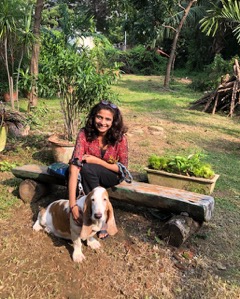
  • In Conversation with: Ankita Srivastava, Founder at Gavel Speaks Inc and Head of Legal Department at Practice Party

    In Conversation with: Ankita Srivastava, Founder at Gavel Speaks Inc and Head of Legal Department at Practice Party

    This interview has been published by Prabhjot Singh, Priyanka Karwa and The SuperLawyer Team

    Is law something you are inclined to pursue, and why did you decide to pursue it?

    I was always interested in two subjects, law and psychology. It was always either of the two that I wanted to pursue but I had no interest in mathematics or theoretical science as much as I was interested in law. I decided to pursue law because I have always been inclined towards giving to people, have always been an active listener and loved reading since childhood. Just being in the library and going through different books gave me the most special and unique feeling. In those moments I knew that I didn’t want to be anything else but a lawyer. 

    Taking into consideration that you are a third generation lawyer, did you overcome any difficulties or was it a completely easy sail for you?

    It is a huge misconception that if you are a second or third generation lawyer then it’s easier for you. It’s definitely not because I still had to understand and figure out why I was doing law and how I wanted to make it in this cut throat profession.

    My father and grandfather have been into litigation but I never saw myself doing litigation. I started my internship journey with the National Commission for Women and my interest was initially in legal writing and research which led me to join the law chambers of an AOR at the Supreme Court of India. It’s an interesting story that I landed up at his office because of the quality of my work and networking in my first job. I never asked my family for any professional support.

    My choices have been very different from previous two generations and I have been building a network of my own which is now growing beyond Asia. I still don’t know any of my dad’s lawyer friends, never went out for meetings with him or had mutual connections. Seeing my previous generations being respected as a lawyer might have sparked the passion to be a lawyer, but I worked very hard on cultivating the discipline and vision to expand beyond what was already done. It is surprising that most of my dad’s professional network don’t even know that I am a lawyer even today. 

    What importance does legal writing hold in the industry right now and how can one excel in it? Please describe that for our audience

    I think legal writing is the backbone of the legal profession. Top lawyers around the world are known for their legal writing skills. These skills should be continuously developed through continuous reading and writing. Legal writing should be three things in my experience which is clear, concise and conscious. 

    Mentoring professionals in the industry is not an easy task for sure, how critical is that for anyone in the legal field specifically?

    I started mentoring students after I cleared the UGC NET exam and suddenly the pandemic happened. At that time I wanted to discover my hand at teaching and somehow mentoring happening by accident. While I was teaching students I saw that most students are highly capable to be great lawyers but they lack the right mentorship. I used to end up mentoring them more than teaching.

    This made me realize the gap that exists between getting into law school to getting your career established. Currently, I am mentoring a student based in Dubai who is in 2nd year of law school. She didn’t know why she was doing law and if she really wanted to be a lawyer or was just getting a degree. As her mentoring is going, she has discovered the subjects she likes, and has understood the path she wants to take in the legal career. I think we as a society, do undermine the value of expert guidance and how much time and energy it can save. 

    Emotional Intelligence is still a considerable soft skill to have in life, but the question here is, how can one implement that in a short span like you did?

    One just needs to have a humanistic approach towards practicing law. Whenever a client approaches me I make sure I make them feel understood and listen to their problem actively. The key is not to just show legal skills to clients but to walk a mile in their shoes and provide a legal resolution. My journey of working with clients from different continents have shown that despite different nationalities, each one is human and we as lawyers need to embrace the humanistic side of law. A little act of empathy towards the client goes a long way in building a strong professional relationship. 

    How did Lawsikho courses help you in the legal journey that too in the US and UAE?

    The consistent support from the LawSikho freelance team has been a treasure in my international legal career. I developed my Contract Drafting skills with the US Contract Drafting and Paralegal Course with LawSikho during the pandemic when I was emotionally exhausted given the covid outbreak like everyone else and I didn’t know how to further my legal career despite coming from top universities and clearing UGC NET exam. With classes at LawSikho and freelancing sessions each week, I dedicated myself to the process. Slowly I started gaining confidence in myself again which led me to work with clients across the USA, UK, UAE, Europe, Australia, Taiwan, among many other nations. 

    Struggles of corporate often go unsaid, kindly describe the initial hard moments you had and how one can overcome them significantly?

    Corporate world is highly competitive and fast-paced and it is not easy to stand out, especially if you want to work internationally.  I found myself working tirelessly among lawyers who were more and still are more experienced in their legal journey but the key has been to find out my unique skill set and hold my ground. You have to be your own friend in this process, have immense trust in yourself.

    I kept working on my contract drafting skills in different areas of law, I still do and it’s continuous work. I have spent sleepless nights just researching new areas of laws and made sure that each time any new client comes to me I raise my bar of providing the best services. It involves a lot of attention to detail, developing excellent communication with clients, and sometimes even making yourself available at odd hours and holidays. 

    Please tell us the idea behind Gavel Speaks?

    Gavel Speaks is a boutique law firm driven by emotional intelligence and empathy towards clients. It involves cross-border and intra-border transactional work among other areas of law including employment law, entertainment law, handling USA pro se cases, pre-litigation support, case management among other services. The aim is to  be that one legal friend for our client which they want to have in their circle to go to for advice simply because they can trust that advice. We want to change the way the world looks at lawyers and legal systems by humanizing the legal services. 

    Finally, with so many experiences that you have gathered so early on in your career, what would your advice be for the up and coming legal professionals?

    One major advice I give all my mentees and juniors is that choose law only because you want to and not because it sounds good or to earn a degree. It is one of the most noble professions and it demands honesty and immense hard work. Currently, the opportunities are opening up like never before in the legal profession with arenas like NFTs, Metaverse, Web 3.0 etc, it is time to explore your options.

    Don’t choose a path within law just because of its power or position, choose what you can devote life to and feel passionate about. To end with a quote here, “The law is a jealous mistress and requires long and constant courtship. It is not to be won by trifling favors, but by lavish homage.”


    Get in touch with Ankita Srivastava-

  • Vandana Pai, Partner, Bharucha & Partners, on LLM from Columbia Law School, New York and her 18+ years of experience in Private Equity

    Vandana Pai, Partner, Bharucha & Partners, on LLM from Columbia Law School, New York and her 18+ years of experience in Private Equity

    This interview has been published by Ayush Verma.

    Can you walk us through your journey towards the legal field? What inspired you to read law?

    I come from a family of doctors and engineers, and no one in my family had previously studied law. As part of career counselling at my school we were given aptitude tests, and law was identified as one of the professions’ I had an aptitude for. I have always loved to read, and two of my favourite fictional characters growing up were Perry Mason and Horace Rumpole, both formidable criminal defense attorneys. My parents always encouraged me to think for myself, and were supportive when I decided to pursue law. I sat for the National Law School, Bangalore entrance exam, and as they say the rest is history. 

    You’ve graduated and acquired your LLM and LLB from two of the most decorated universities. How did they aid you in becoming the lawyer that you are today?

    My experience at both National Law School, Bangalore and Columbia Law School, New York have helped me become the lawyer I am today. At both institutions, the learning experiences are not limited to the classroom. The student body is amazingly bright and engaged and pushes you to achieve your best. NLS gave me the opportunity to participate in moots, write articles and experience different facets of law through internships. This helped me to identify that my interest lay in corporate law, rather than litigation. At CLS, I loved interacting with people from multiple countries and backgrounds. The level of intellectual rigor the professors brought to every class was an eye opener and taught me to think outside the box. 

    15 years after acquiring your degree in LLM, do you believe academic qualifications or excellence play an important role for a blooming legal career?  

    I believe that as long as there is a will to succeed, each and every one of us can have a blooming legal career. Hard work and intellectual rigour are more important than mere academic qualifications. However, Columbia Law School is known for its expertise in commercial laws, and many of the professors are partners in New York law firms. The LLM helped me hone my commercial acumen, and develop soft skills, which have proved invaluable while interacting with clients and counterparties from around the world.

    Can you walk us through a typical day for you at Bharucha & Partners as a partner at the firm? 

    I am an early riser and am usually at my desk by 8:30 am. I spend the 1st hour responding to emails, and taking a status update on the various matters and transactions which I supervise. Post that the day is usually spent attending calls and meetings, in negotiations, and reviewing documents for clients. I try to spend some time reading up on changes to existing laws, important judgments, etc as it is critical we stay abreast with the rapidly changing regulations. Each day brings its own challenges and wins, and I can definitely say work is never boring. 

    Right after your graduation from law school, you were placed with a tier one law firm. What kind of activities or internships did you pursue during your law school days to land such an offer? 

    I did a 6 week internship with Amarchand Mangaldas in my final year of law school and received a pre-placement offer at the end of the internship. Prior to this, I had interned with a number of law firms, including doing an internship with Drew & Napier, Singapore. I also had good grades through law school, which helped secure the internship at Amarchand Mangaldas. I was fortunate to get an opportunity to work with a couple of partners at Amarchand Mangaldas during that internship. I have always believed that if you try your best and do your work sincerely, your work will speak for you. The partners were happy with my work, and made me a PPO. 

    You’ve also cleared the New York State Bar exam. How did you prepare for that and how is it different from the India Bar Exam?

    When I graduated, the requirement of taking the bar exam in India was not in force and we could enroll on the basis of our law degree. Consequently, I can’t comment on the difference between the 2 exams. However, I must say that studying for the New York Bar Exam was an exercise in discipline, and the skills I picked up then have stood me in good stead throughout my years of practice. 

    While there are a number of popular bar review courses, these courses are expensive. I signed up as a student volunteer for the Pieper Bar Review, which required me to operate their shop at Columbia Law School a few hours every week during the school year, so I could take their course for free. I found the Pieper focus on Mnemonics, and style of teaching incredibly helpful. In addition to taking the course, it took 12 hour days of intensive studying for nearly 3 months to get me over the line. 

    You’re also on the Advisory Board for Cuddles Foundation since 2014. The Foundation provides assistance to pediatric cancer patients. What inspired you to associate yourself with this specific organisation? 

    I have always believed it is important to give back to the society at large, in whatever capacity that I can, whether legal or otherwise. I actively engage with multiple NGOs, including the Cuddles Foundation, an NGO working on providing nutritional assistance to paediatric cancer patients making it the first and only Indian NGO working in the sector. 

    When I 1st met Purnota, who heads Cuddles, she mentioned how they have realized that many children don’t survive treatment because they are malnourished. Further, many children aren’t able to continue treatment since they are often from rural areas, and their parents have no way of earning a livelihood in the city. Often the family is reduced to poverty bearing the treatment costs, and aren’t able to feed their other children. The passion that Purnota and the entire Cuddles team bring to their work struck a chord with me, and caused me to decide to work with them. 

    Their commitment was especially inspiring during the pandemic. They were faced with the challenge of ensuring that the frontline healthcare workers, who were exposed to significant risk of contracting the infection, were protected while ensuring that their work was not hampered. They had to figure out new ways to stay in touch with the patients who could no longer visit hospitals. They needed to ensure the ration baskets and supplements reached the patients and their families, when supplies chains were disrupted. While challenging, it was also extremely satisfying working with them to navigate the rapidly changing legal and commercial scenarios created by the pandemic, and ensuring that their people and interests were protected.

    You’ve worked with giants like RIL, SIDBI, Tata Opportunities Fund. Is there a specific approach you undertake while working with them?  

    For me, the role of a successful lawyer is not restricted only to attaining a positive outcome for the client, but also involves coming to an all-encompassing arrangement that strengthens the client’s current position and does not compromise with their future engagement with the other parties or affected persons. A transactional lawyer needs to find solutions to problems and not create legal bottlenecks. It is important to build trust with your clients, to truly understand their needs and concerns or needs, to empathise and connect with them, and build a long-lasting relationship. 

    Private Equity and Venture Capitals deployed $47.5 billion in Indian companies, making 2020 a record year for the ecosystem. How has the PE or VC work been affected by the ongoing pandemic and what does the future hold for the industry?

    While 2020 was a record year for the ecosystem, it saw a number of high value deals but fewer mid and small investments. In 2020, many of PE/ VCs focused on stabilizing their portfolio companies but are now looking at new opportunities. The pandemic has disproportionately affected some sectors, and benefited others. We are seeing this in the deal activity also where healthcare and online services have seen an uptick in investment. PE/ VC investors have accumulated huge cash piles, and with corrections in valuations brought about by the pandemic and liquidity crush, these investors are well placed to capitalize on opportunities in the market. 

    Lastly, would you like to share any parting advice with our readers?

    Many junior lawyers seem to believe their legal degree has only equipped them to either be litigators or corporate counsel. They aren’t happy, but don’t feel they have options. However, the opportunities available are so much more – setting up a start-up providing innovative legal solutions, a career in research and policy, consulting, teaching, civil service, etc. I would like to end with a quote, “Everybody has a calling. Your real job in life is to figure out why you are here and get about the business of doing it…”

    What do you see as the role of technology in the practice of law?

    I believe technology and artificial intelligence has the power to disrupt the way we practice law, and all lawyers should not just track, but actively evaluate how they can adopt and implement technology in their work. Technology can also provide exciting opportunities to do something new with the law. In 2020, my Firm participated in the FT Innovative Lawyers Hackathon, organised by Global Legal Hackathon and FT innovative Lawyers programme. The hackathon’s goal was to find answers to the most pressing legal, regulatory and civil society challenges emerging from the Covid-19 crisis, and over 184 projects were submitted with really innovative solutions.

  • Maimoona Badsha, counsel for Apollo hospitals on beating odds and finding the balance

    Maimoona Badsha, counsel for Apollo hospitals on beating odds and finding the balance

    This interview has been published by Ayush Verma.

    You have intriguing achievements that we are excited to talk about but before we get into it,  what is something about yourself that the world at large doesn’t know?

    I am defined by the roles I play. The predominant one of being a mother and then a professional. I am a single mother of 21-year-old triplet daughters and have built my law practice over the span of 27 years. I am passionate about my work but committed to nurturing interests and skills outside of work. I collect art, dabble in sketching, enjoy my time in the gym, rummaging around in stores with antiques, designing furniture & maintaining a warm and welcoming home. 

    In your portfolio, you’ve mentioned the human element to be paramount in legal practice. How do you relate that to your work in the legal-medical field?

    I believe the human element is important in every area of life, we lose our way when we lose sight of this. I am the corporate counsel for India’s largest network of hospitals, pharmacies, medical centers, the Apollo hospital group of companies. Whenever I defend the hospital and doctors against claims of negligence, I work alongside the hospital, doctors and management to assess the legitimacy of the claim not just from a legal standpoint. If a patient’s grievance is to be redressed, I recommend to my client that it should be done. Fortunately for me I am well-supported in this by the Apollo family and management since they operate from the position of safeguarding the interest of a patient above everything else. 

    Before you acquired your L.L.B, you earned a B.A. (English Literature). How did you go from studying literature to being passionate about law?

    My father, also a lawyer, was a doyen at the Madras Bar and renowned across the country. He held every important Government position in the State of Tamil Nadu, including that of the Advocate General of TN. I grew up listening to his stories narrated around our dining table about court battles, the practice of law, nuances of the profession. I always say that law permeated my very being! I always wanted to be a lawyer but I was seen by him as his pampered, youngest child who would not have the stomach for a profession that could be brutal in many respects. So, he wanted me to get a basic degree first before being convinced that I was sure about being a lawyer. English Literature was a subject close to my heart too and the 3 years spent pursuing my degree were some of the most enjoyable and fulfilling years. Once I graduated, I pursued my dream to become a lawyer and there was no looking back.

    Since you studied literature, did you ever consider taking the academic route in law or were you always aware that you wanted to be in litigation?

    I was not interested in the academic route and wanted to follow my father’s footsteps and specialise in litigation. I threw myself into moot court competitions & debates, every activity that would hone my skills for courtroom practice. When I started as a young lawyer I enjoyed the exhilarating thrill of arguing cases and the overall experience of being in a courtroom. However, over the years this hunger for resolving conflict through court started waning. The exhilaration started wearing off as I realised it went against the core of self. I did not enjoy being in the midst of daily conflict and the time consuming nature of being in court every day. By the time I became a mother I realised that it was my priority and started handling more transactional work, which I began to enjoy and found fulfilling. 

    An interesting part of your portfolio is your practice in real estate and banking which are quite varied from the medical field. How do you reconcile all these different types of practices?

    When I started practicing law (28 years ago), choosing a specialization wasn’t a trend. We necessarily had to handle cases in multiple areas of law. Back then, I lived in Kerala. I specialised in Debt recovery cases and was the counsel for multiple banks. I continue to be an empaneled lawyer for ICICI BANK. So, due diligence of documents in the area of real estate law, is something most lawyers have to do at some point in their careers. I have had the opportunity to resolve several complicated property transactions/negotiations which usually emanated from family disputes. This is a challenge since it does not simply require representing a buyer or seller/documentation alone but also bringing together warring factions to the negotiating table. I truly enjoy it!

    Right after you graduated from University of Madras, you secured the position of a Junior Associate at K.L. Narasimhan & Associates. What were the internships or activities that you indulged in during law school to attain this opportunity right after graduation?

    I spent most of my time interning in my father’s office. I also interned with Senior counsel Mr. Sriram Panchu, who in the year 1992 had just launched the Consumer Action Group in Chennai, which handled Consumer cases under the then newly enacted Consumer Protection Act. Once again times were different then. There were no hard and fast rules about the nature of internships you should undertake and what it would reflect in your resume! 

    You have worked in several branches of the law before venturing into medical malpractice and related fields. How did you know that this was your area of interest?

    In retrospect, I think I did not choose this area of law but it chose me and I realised that I was fortunate to have found my true passion- the intersection of law and the human element. I continue to practice in other areas of law too.

    As Corporate Counsel of Apollo, I, not only defend healthcare professionals and hospitals in medical malpractice litigation; Advise on implementation of laws relating to data protection, patient privacy and confidentiality, documentation for integrating AI technology into the practice of medicine, transfer of anonymised data, genetic testing and personalised healthcare, statutory compliances for blood banks and organ transplantation centres; Draft patient informed consent forms for medical treatment and use of biological samples for research; Conduct ongoing training programs for healthcare professionals on their legal rights, duties, liabilities, and how to minimise risk of malpractice litigation.

    As far as medical malpractice is concerned, we are not swamped by it but yes, I think it is my sense of empathy and keen interest in people, an innate interest in medicine as a subject that caught my attention. 

    What has been the one moment of hard reality that has been the biggest learning experience for you? Did you face any specific sexism in the industry?

    After the privilege of being the daughter of a renowned lawyer, I was under the impression that I will have an easy transition into my father’s practice. It all changed when I got married before I completed my law degree and left the comfort of his law practice for Kerala. It was completely unknown territory for me. I lived in a time when, however accomplished a young woman was, marriage was important and unquestioningly following your family’s wishes was a norm. After marriage, I woke up to the rude reality of being completely on my own, stripped of the title of someone’s daughter and I had to prove myself as just me.

    As I moved to Trivandrum which did not have a High court and not knowing the local language I was severely handicapped. My professional prospects looked very dismal and I was devastated. I had an opening in the office of the former Supreme court judge, Justice Paripooranan’s office in Trivandrum. However, the cases were confined to the City Civil courts and it was a far cry from the office or the cases my father’s law practice handled.

    For the first time in my life I had been thrown into the deep end with no life boat in sight. Everyone discouraged me from pursuing the dream of being a lawyer and advised me to start a family and settle down into a life of domesticity. The more they told me I couldn’t do it, the more I was determined to prove them wrong.

    I hired a tutor and learnt the local language, i.e. Malayalam. It was limited but I could at least communicate. I got a break to appear before the State and District Consumer Commissions and was given the responsibility to handle cases on my own. Luckily, the proceedings & arguments were in english, the law was easy to grasp and I spent day after day strengthening my advocacy skills in this area of law, without realising that I had gained a foothold and people started looking upon me with respect. I continued to yearn to practice civil law and would sit in the afternoons in courts to listen to arguments, take notes and go back to read up on the Statutes.

    Yet everyday was a reminder that I was at the bottom of the barrel in comparison to what my start could have been if I had remained in Chennai and practiced with my father. But I think it was the best thing that happened to me. At the time I was miserable & did not think much about what I was doing but did not realise that doing it all on my own was going to be the biggest strength I acquired.

    You also mentioned it to be a challenge to train your staff regarding U.S. laws in Legal Ease. What do you think hindered their quick learning despite being capable enough to be part of the team?

    It was a challenge to train myself in the first place! We were unfamiliar with U.S law, how to use online platforms like LexisNexis which was the cornerstone of any legal work to be executed, every State in the U.S has different laws so if we had to research a particular topic on day for a particular State, the next day we would be doing it all over again for another State to find a different Statute and precedent. The time difference meant we could not get help in real time. Every single lawyer on the team was amazing because they were quick learners and very committed to overcome all these challenges. Also, the support and encouragement we received from the founders of the company and the team in the US took us a long way in this process. It was a fun and fulfilling process and each challenge overcome gave us a great sense of satisfaction. 

    For our readers, could you describe what Badsha Legal is and what inspired you to co-found it?

    No blood, but a lot of sweat and tears! Founding it was only a natural progression from being an associate with other practices and transiting into my own. A nervous start which culminated in an exhilarating and fulfilling ongoing journey. Battling challenges and crises in one’s personal life yet never taking your eye off the ball as far as work is concerned, is everyone’s story. 

    You work with Apollo Hospitals Enterprise as their worldwide representative, one of the most noteworthy feats. As per your experience, what has been the most common issue arising during the pandemic which needed legal help?

    Apollo Hospitals Enterprise also operates India’s largest network of research centres for clinical trials of drugs and treatment protocols so we regularly draft clinical trial agreements, review protocols and informed consents. The pandemic requires clinical trials of new drugs, treatment protocols which require documentation to be completed on an urgent basis. Informed consent processes for patients coming into hospital and exposing themselves to the possibility of catching covid, or them bringing it in, declarations, undertakings etc. 

    In an article written by Siddharth Prabhakar for The Times of India, he explains your role as the representative of Apollo in the case of the death of former Chief Minister J Jayalalitha. What was the main allegation made against your client and what was your main argument in the proceedings?

    The proceedings before any Commission of Inquiry are meant to be only that- an inquiry. No allegations were levelled against Apollo hospitals. The aim of the Commission was to impartially probe the circumstances surrounding the demise of the late CM. Therefore, Apollo Hospitals Enterprise was never accused in the matter. However, as the Inquiry progressed it was fraught with several problems. They became increasingly accusatorial against the hospital and its doctors, procedural aspects in conducting the inquiring were breached, and the medical facts of the late CM were so complex that it required the aid of a Medical Board consisting of doctors of several specialities. In the light of these circumstances Apollo hospitals challenged the Inquiry commission and the matter is presently stayed by the Supreme court.

    What has been the biggest takeaway for you from this case?

    I was plunged back into litigation and a role of a lawyer in one of the most sensational cases that will ever be. I have several take-aways from the case but since the matter is sub-judice I will reserve my thoughts for later! I found myself in the midst of the biggest battle of my life- 10,000 pages of medical records, depositions recorded in Tamil, days on end cross-examination of close to 100 witnesses, day after day what I did was not germane to me or my path as a lawyer. Once again I was the only woman in the courtroom full of men who had to hold my own fort and do my best for my client. 

    Lastly, do you have any parting advice for our readers, especially young women working to make their name in this field?

    The mantra for me is that growth happens when one is pushed out of their comfort zone. This is the path I advise to everyone. Read everything you can and learn something new every day. Be true to yourself, never lose integrity and your voice in the journey as a lawyer. Most importantly be an empathetic & a kind- human being first, later a lawyer. Learn to resolve conflict, not encourage it. 

    I continue to encourage women to join my office since I believe there needs to be a space for them where they can receive empathy and recognition for trying to do it all. My desire is to mentor and nurture lawyers for whom the opportunities do not come by easily. 

  • Shilpa Bhasin Mehra, on being a lawyer in Dubai, second innings of life and the happiness chat

    Shilpa Bhasin Mehra, on being a lawyer in Dubai, second innings of life and the happiness chat

    This interview has been published by Ayush Verma.

    How did you choose law as a career?

    Law as a career option was almost automatic for me. I am the fourth generation of lawyers in my family. I was in complete awe of the lawyers that I saw around me since I was a child. I had heard tales about my great grandfather and my grandfather, who were great lawyers.

    My father, Mr Lalit Bhasin has been the biggest influence in my life. The sheer hard work and dedication earned him the complete faith of his clients. I loved the respect they commanded, “Vakil saheb”. I have seen the black coat and gown ever since I can remember. Strangely that’s all I wanted to be. I recall an essay I had to write when I was in the 5th grade about my ambition in life. I wrote about becoming a lawyer. It was as though there was no other profession in the world.

    What challenges did you face as a young female lawyer while starting your career?

    I was fortunate to have started my career in the chamber of Mr. K.K. Venugopal. My father was instrumental in getting me this opportunity. We were 3 young women lawyers and 3 male lawyers. We were treated with respect and equality. After a year I got married and shifted to Dubai, UAE. So I would not be the right person to comment on the challenges that young female lawyers face in India when they are starting out.

    How was the experience of starting life in a new country? 

    The experience was truly challenging and eventually rewarding. Everything was new for me, the country, the people, the culture besides being newly married. UAE was like a different country in 1993 when I shifted there. It was not full of skyscrapers and all the modern architecture then. Life was simpler and slower. 

    Starting life there was a huge learning curve and very exciting. I had to learn everything from scratch. UAE as such is a very welcoming place so I felt at home sooner than I expected. The fact that I am here even after 27 years is evidence of how comfortable I feel here.

    What were the challenges of being an Indian qualified lawyer in a foreign country? How did you overcome them?

    Coming from a Common Law jurisdiction, I was suddenly like a fish out of water. The United Arab Emirates is essentially a civil law jurisdiction. Besides that, I did not know Arabic at all, which is the national language and mandatory in all legal documents and court proceedings. I spent many hours a day reading the English translations of the laws to familiarize myself. I realized that since I did not know Arabic, my best bet was to concentrate on documents that were required to be drafted in English. Working in a local law firm was the best learning experience.  Soon I carved a niche for myself, drafting the English legal documents and attending meetings with International clients.

    How was the experience of starting your own consultancy firm in a foreign country?

    After working in a local law firm as well as the in-house legal advisor for an international marine company, I decided it was time for me to start my own consultancy firm in 2015. The experience has been a big learning experience and I have thoroughly enjoyed my journey so far. The process of setting up the firm procedurally is a simple one, but to get clients to a solo consultancy firm can be a challenge. My USP was and always has been practical solutions for legal problems. The costs are lower, procedures quicker and we avoid litigation as much as possible. Clients appreciate the honest advice and no legal jargon meetings and are comfortable in discussing their matters. Big law firms can be intimidating on many fronts.

    My first client was someone I had known for many years and had advised previously on small matters. He entrusted me with some contracts for his company. Fortunately, from good references, the word spread and today I am gainfully busy. There were some lady lawyers who had already established their own law firms, so it wasn’t anything unusual when I set up my own practice.

    How has life been since you recovered from the health battle? Can you tell our readers about it?

    In 2003 March, I was struck by viral meningitis that put me in a state of coma for 40 days and then waist down paralysed for 2 ½ years. My life turned upside down. It has been a slow and steady recovery and I returned to some sort of work in 2006. My clients were kind enough to come home and discuss their matters for me to draw up their contracts. In 2010, I returned to full time work in the same marine company that I was working with in 2003 when I fell critically sick. In 2015, I started my consultancy firm. I still need a hand for support to walk and I am lucky I don’t have to run around, so my working capabilities and results are not affected. 

    You have been a contributor columnist in Khaleej times for a while now, has writing always been a calling?

    When I was a teenager, my mom would tell me that I write well. At that time writing was limited to birthday cards, so I did not take her seriously. Being a lawyer, one has been writing legal opinions and contracts. But it was my illness and long rehab that gave me all the time to introspect and write. I started writing for “Lawyers Update”, a leading magazine for lawyers in India in 2007. Khaleej Times came across my articles in this magazine (that I would put up on Social media) and asked me to write a column for them. Now I realize and appreciate how special and liberating writing is, it is therapeutic for me.

    Talking about writing, tell us something about your book “ALL BATTLES AREN’T LEGAL”.

    When I was paralysed for 2 1/2 years in 2003, I suddenly had all the time in the world. My father got me a laptop to keep me occupied. I started writing my thoughts, much like a personal diary. The thoughts revolved around my life, routine, family, observations of things around me, my emotions and simply my situation. Soon from 10 pages it becomes 100 plus pages. 

    It is thanks to my father that this diary got published in 2005 as a book titled “All Battles aren’t Legal.” Because it is my real life experience of how I came back from the brink of death (during the coma I believe I was declared dead twice and revived), people find it very inspiring. After so many years, I still get heartwarming reviews. This book will always hold a special place in my heart.

    How has the pandemic been for you? How did you cope with the lockdown blues?

    I am glad this question came straight after my book question. I feel I have lived through my own Tsunami/Covid in 2003. I was locked up and stranded on a 6 feet bed. I could not move at all. I needed help and a call bell 24/7. 

    I wrote down my thoughts then in 2003 and that was the most healing; I still do that. I smiled when I met people, because there was little point in depressing them. I learnt to live in my given situation and deal with it. My life experience taught me a lot, so honestly the lockdown is not freaking me out at all. When life throws lemons, one may as well make lemonade, why be sour? 

    If you could go back in time and give a piece of advice to your younger self, what would your advice be on the personal as well as the professional front?

    My life has been quite a rollercoaster ride. From shifting base to a new country in 1993 after I got married and starting my legal career there, to being declared dead in 2003 and a long rehab to now working for myself. I have truly lived a very interesting life (to say the least).

    My advice to my younger self would be to be better on all fronts, to try harder and not settle for anything less – be it in my personal or professional life.

    What is on your list of goals for the coming years?

    I am a work in progress. I want to get into the field of legal education, write more and do something to make a difference in the lives of others. Not CSR but PSR (Personal Social Responsibility). I am looking at starting some courses for law students, something that will help them in the practical side of law.

    I host a talk show called The Happiness Chat that can be viewed on YouTube. This chat show was started in 2020 when people had started getting depressed by the struggles with Covid. I think mental health is very important and it is gaining the due relevance it deserves. I would like to collaborate with like minded people to spread the message of love, hope and happiness to as many as I can.

    What advice would you like to give our readers, especially young lawyers and law students?

    Never stop learning, adapt and thrive (not just survive). Change is the law of nature, so be receptive and versatile. Listen to others, be respectful to seniors but follow your heart and dreams. Don’t let anyone belittle your ambitions. You are unique and that’s your USP.

  • Navarre Roy, renowned IP and Entertainment lawyer, shares his insights from the field of IPR and founding a law firm

    Navarre Roy, renowned IP and Entertainment lawyer, shares his insights from the field of IPR and founding a law firm

    This interview has been published by Ayush Verma.

    What inspired you to study law? Was there any influence from your family members? 

    My parents got me into the habit of reading at an early age and some of the books I read by Erle Stanley Gardener and John Grisham pushed me in the direction of the Law. It might sound quite frivolous but it was these books and the then popular television shows like “JAG” and “The Practice” which got me really interested in the profession. I also loved to debate at school and when you put these things together law seemed like a natural progression. While my early motivation was based on fiction, I enjoy every bit of what I do and love being a lawyer.  

    You have worked as a radio jockey and have experience at theatre all while managing your professional life as a lawyer. How did you manage all of this while maintaining a work life balance?

    The All India Radio has an FM channel with an hour long segment for English Music every day. I used to host the show from my days in college, on Sunday evenings which gave me the time to prepare during the week. The theatre scene at Madras has a lot of working professionals who love theatre and invariably everyone gets together late in the evening or at night after their day jobs are done for rehearsals and I was no different. So it worked out quite well.  

    You did a Specialized Course on Intellectual Property Valuation and Management from LUISS Business School, Rome. Please share your insights from this experience.

    The IP Valuation and Management course was unique since it wasn’t just for lawyers but involved a cross section of law, business and finance. There were only 14 of us on a scholarship from different parts of the world from varying backgrounds which was a wonderful experience. The professors were of the highest calibre and the course itself was very interesting. Prior to the course I was involved in a transaction for the valuation of software which was to be sold and that got me interested in the concept of ascribing a monetary value to intellectual property and other intangible assets. After the course I have completed a few transactions for the valuation for  assets including copyright and trademarks. One of these transactions which was very interesting was valuing the IP assets including a repertoire of YouTube videos, music and movies. 

    While our time at the course was great in itself, I have collaborated with several of my classmates and some of my professors on projects even after it.

    A niche subject of interest, taught by experienced professors with a fun group of fellow students all set in Rome [one of my favourite cities] was truly a remarkable experience which I thoroughly enjoyed.

    In your earlier interviews, you have suggested that one should not opt for an LLM immediately after graduation. Keeping that in mind, what do you think is the appropriate period of time before one pursues an LLM or other higher studies?

    In India, we have to make choices for our professional paths as early as at the age of 18 and are expected to choose something to work on for the greater part of our lives which I don’t think everyone can. Similarly most professionals graduate law school and based on an interest in college without working on the ground, try and choose a field of law to focus on in their LLM. At the early stage of one’s career it would be best to try and work in different fields of law and truly find out what stimulates and interests you on a daily basis. Some streams of law seem exciting from the outside but you don’t know the real picture until you get involved in it. 

    I don’t believe in a specific time frame or magic number, since it would vary from person to person to reach that stage but it would be good to give yourself the time and space to discover what you like and then focus on it.

    You have worked as a Legal Intern and as a Retainer Lawyer at International Justice Mission. The organisation is involved in the rescue and rehabilitation of victims of bonded labour. Please share your insights from this experience. Is there a particular reason why you decided to work in this role considering that you focussed on Intellectual Property in your subsequent profiles?

    In my final year of college, I had the opportunity to intern with the International Justice Mission [IJM] in their Chennai office for the entire year. IJM unlike most other NGOs I was aware of was founded by a lawyer and its goal was to improve the justice system by taking a specific human rights violation and assisting the state machinery to follow the rule of law. The Chennai office focussed on rescuing and rehabilitation of bonded labourers and as soon as I graduated, I joined them as a lawyer.

    The work was very exhilarating and had its shares of ups and downs. Going on rescue missions with the Revenue Officials who were authorized by the Bonded Labour Act to conduct raids was very satisfying and it felt like we were really making a difference. I was also working with the Prosecutors in two states and got a first hand experience of criminal trial work which was interesting.

    I also had the opportunity to work with experienced lawyers from around the world who would come on year long volunteering sessions from whom I’ve learnt a great deal about the practice of law. 

    I took up the role since I enjoyed the internship and the work but after two years, I realized I didn’t want to be so focussed/niche at the start of my career so I decided to shift.


    After graduating from law school, you have worked under Selvam and Selvam as a Senior Associate Attorney for almost 6 year and at Anand and Anand for over 3 years. Having previously worked in a human rights organisation, how did you develop your interest in IP to make this transition? 

    My first few brush-ins with Intellectual Property were in college and while hosting the radio shows on AIR. We were given a box of 30 CDs [some outdated ones] and had to pick and choose songs from there to play, while our counterparts for Hindi and Tamil music had over 50,000 songs to choose from on a digital console. So most of the RJs and [I hate to admit it,] myself included would end up bringing in our own CDs to increase the variety for the listeners and we would have to play from. When the station director found out about this we all got a dressing down and it was then in that conversation that I understood royalties, unlicensed distribution, copyright and the wonderful world of IP. 

    So when I was looking to leave IJM, there was no doubt in my mind that the stream of law that I wanted to focus on was Intellectual Property. My time at Selvam and Selvam was great as it was a boutique firm and I got the opportunity to take up and learn everything that was associated with IP. 

    While working at Selvam and Selvam was great, my stint at Anand and Anand which is a Tier 1 firm brought with it exposure to transactions involving high profile clients and precedent setting work. 

    I was also introduced to the International Trademark Association [INTA] which is a wonderful association of trademark lawyers from around the world. Over the years, I have worked with and made several friends and colleagues on whom I can rely on for assistance in any part of the world. 

    Teaching has always been considered a noble profession. You have worked as a visiting faculty under the University of Madras, how enriching has this experience been for you, both personally and professionally? 

    The University of Madras has a Postgraduate Course for Journalism. I have been taking classes for them on copyright and issues surrounding fair use for nearly 9 years. I love the practice of law and Intellectual Property and rarely miss out on an opportunity to talk about either, so having a captive audience really helps. In all seriousness though, teaching the class is great because preparing for it requires me to keep reading up on all the latest developments. Also teaching copyright to students who are not lawyers is enriching because their views are different which brings about some lively debate on several issues.

    You have established your law firm, Law Office of Navarre Roy, in December 2020. When and how did the idea of setting up your firm occur to you; was this always a part of your plan?

    Having worked at a boutique firm and a Tier 1 firm, I was privileged to see both ends of the spectrum – The agility and attention a boutique firm offered and the vast experience, systematic methods and practices employed by a big firm. I wanted to start a firm that could offer clients a combination of both.

    Before setting things in motion, I did speak to some colleagues of mine from around the world and also listened to podcasts on using legal technology to improve the practice of the law and offer clients solutions that they needed, the way they needed it.

    While my personal focus is on IP, Media and Entertainment, the Law Office of Navarre Roy, through its team and Of Counsels assists clients for all of their commercial legal needs. 

    IP Valuation is not something you come across all the time, when and how is it useful?

    Intellectual Property is more than just registration and going after infringers. Both protection and enforcement are two sides of the same coin, which is building an asset. IP needs to be commercialized or used internally to generate revenue and the exercise of valuing that asset is quite exciting.

    IP Valuation is necessary and quite useful when IP assets are being carved out and sold or transferred, fixing of royalty rates, calculation of damages in infringement cases, liquidation of intangible assets when a company is being wound up, and a range of other reasons.

    The Consumer Protection Act, 2019 brought with itself various changes in the old laws. How, according to you, has this law impacted the entertainment industry and advertising industry?

    The amended rules have brought about increased liability for endorsers and social media influencers. With more brands engaging in influencer marketing it is important for both brands and influencers to understand their liabilities under the rules and take appropriate steps to protect their interests, either through the contracts they sign or the arrangements they get into.

    With the Information Technology Rules 2021 coming into existence, how will these new rules impact  the entertainment industry? 

    The new rules with the additional powers to the government with regard to taking down of content will certainly affect OTTs and their viewership. OTTs have grown their subscriber base solely on the basis of the content they own. The content these days are usually quite dark, gritty and graphic, all of which have been available to subscribers without censorship. An example of this growth is MX Player reaching 200 million subscribers largely on the back of their original show Ashram. 

    With the rather broad powers of take down and the cases we’ve seen in the High Courts filed by individuals who have been offended by the content on OTTs it would be interesting to see how things pan out and if we are to see an increase in complaints and  to what extend the powers would be exercised for takedowns.   

    As compared to other countries like China or the USA, what difference have you noticed when it comes to the matters of trademark and copyright disputes in India?

    Over the years the entire system from the IP Office to the Courts in India have tremendously improved and focussed on protection and enforcement of IP. With the setting up of the Commercial Courts, the faster timeline quicker orders have given IP owners the confidence to litigate. 

    So I wouldn’t really find too much of a difference from a system perspective but where there is a major difference is in the general public and awareness of rights. In India we still have a long way to go with IP creators and owners understanding what rights they have, how to protect and enforce them and to put more faith in the Judiciary.

    Reading is an essential part of every lawyer and law student’s life. What books would you suggest as must-haves for members of the fraternity?

    A majority of our time at work is spent on reading and it is important to read anything and everything you can get your hands on.

    If I had to pick and choose a few books to suggest they would be:

    The Devil’s Advocate: A Short Polemic on How to be Seriously Good in Court by Ian Morley for anyone who is interested in Litigating and court craft.

    The E-Myth Attorney: Why Most Legal Practices Don’t Work and What to Do About It by Michael Gerber for anyone looking to start a practice. 

    Lastly, any parting advice to law students interested in pursuing a career in IP, Media and entertainment law?

    Intellectual Property law is a very interesting field of law since you deal with creative and interesting clients. Whether it is technology inventions on the patent front, or artists on the copyright front, companies and individuals protecting their unique brands and designs, you are always interacting with smart people who have created something. That also means you have to read up and be aware of the current trends in most fields. So if NFT art is the current bandwagon, and it has implications on copyright, you need to be reading up and learning about it.

    So my two cents would be to keep reading up on what’s going on around you and take up internships with small firms, big firms, companies and startups that work with intellectual property.

  • Mohit Khubchandani, Judicial Fellow at the International Court of Justice, shares his learnings and experiences from his practice of International Law

    Mohit Khubchandani, Judicial Fellow at the International Court of Justice, shares his learnings and experiences from his practice of International Law

    This interview has been published by Ayush Verma. The Interview was taken by Priyanka Cholera.


    Before we take a closer look at your career, could you share some insights from your law school journey with us?

    I pursued my Bachelors in Arts and Law (BA. LL.B.) degree for 5 years from Amity Law School, Delhi, affiliated to Guru Gobind Singh Indraprastha University, Delhi and graduated in the year, 2015. At the time when I joined law school, there was this trend of distinguishing between National Law School graduates and graduates from other law schools, which is now on the decline. So, the moment I entered into law school, I knew from the word go that I will have to work out of my skin to prove myself and be on the same pedestal as someone coming from a “non-NLU” (as they called it). I always had the innate belief that I had it in me to go the extra mile, and if I really manifest excellence, I would reach wherever I desire to be.  It wasn’t easy, but the joy of achieving your goals as an underdog is inexplicable. I wouldn’t have it any other way. 

    For me, the reason behind getting into law school was to be able to practice international law. So I was very clear since day 1, as international affairs always interested me. When I saw that these pseudo-distinctions between NLU and non- NLUs exist (which shouldn’t exist at all), that’s when I decided that I’m going to focus my law school journey on moot court competitions, primarily international law moots. These are rather helpful for anyone coming from any law school and any country because they place you on a level playing field with the best of the best. Once you are in that moot court simulation, you’re all analysing the same subject-matter. Of course, there might be some inherent difficulties in terms of access to resources, but such experiences expose you to the entire world. Moreover,  competing in such competitions also instilled in me faith and belief that these pseudo tags that exist don’t hold much relevance; what matters is how hungry are you to really make a mark; that’s what I did all throughout my five years. There were some obstacles in terms of trying to find good coaches because sometimes coaches also want to spend their time and energy towards teams coming from more reputable law schools. However, in hindsight, whatever I learnt from them and whatever merit I achieved in those moot courts helped me get publications in the field of international law and gave me the necessary step into the door of international law. I am fortunate that I now get opportunities to serve as a judge in all the moot courts that I took part in as a student. Life comes full circle and one should not really feel bogged down by where they are in a particular moment. It’s just about turning adversities into opportunities. It is important to remember that we’re in a marathon and not a sprint, and your only competition is you and no one else. So pace yourself accordingly. 

    Coming to my publications, I did focus on them, but I was strategic about it. I didn’t just want to be published at any and every opportunity I got. Something I constantly told myself and continue to tell young lawyers is that: publications can come to you throughout your life. Law school is a time and space to do other activities which you cannot do once law school is over. In fact, having published work slightly later in my career helped me get published at better places. So, I first built my profile and my credibility before starting to get most of my publications. 

    You have completed your Masters of Law in International & Environmental Law from Stanford Law School. How did you develop an interest in Environmental Law and how was your experience at Stanford University?

    As I mentioned earlier, when I got into law school, I was certain that I wanted to practice international law. At the same time, I did realize that when you’re going out in the market and trying to sell yourself, you are more likely to receive recognition or appreciation when you sell yourself as a specialist. 

    As a child, I loved going to the zoo, and looking at plastic and other waste not being disposed of properly always irked me. So, that’s the moralistic aspect that led to my choice. Secondly, I thought that if I pursue a master’s degree in Environmental Law, it will open a lot of doors for me. I said to myself, “If you return back to India, then how would this degree help you?” So, I considered practicing before the National Green Tribunal in India. This is one field where we see younger lawyers going there and international environmental law can be argued at the NGT.  See many international concepts being argued at other domestic Indian courts. Environmental Law is still at a nascent stage and therefore relies a lot upon customary international law. So, it was clear to me that this degree would help me whether I am practicing in a domestic context, or, of course, in an international context.  Another attractive aspect of Environmental Law is that it is one such field within international law that perhaps has the most number of interplays with other fields of law (Human Rights, Humanitarian Law and Trade Law to name a few). So this way I get to practice various areas of International Law while also working in International Environmental Law. I would thus like to believe that I am a generalist International lawyer with an environmental lens; because of this toolkit, I can sell myself as a specialist and a generalist at the same time. 

    Coming to your next question, I think when I went to Stanford, the best part about my experience was that the university doesn’t have a grading system; there are no grades or percentiles which reduces a lot of toxicity. It facilitates healthy interactions amongst your peers as well as your professors and you are really there, for the sake of excellence and learning. Scores are inconsequential. Luckily, I was also one of the youngest people in my program because they need a minimum of two years of work experience to apply for that LLM and that is exactly what I had. So, not only did I learn from my professors but also from my peers.

    You started your professional journey at the office of Mr. Mukul Rohatgi, the then Attorney General of India and Mr. Nikhil Rohatgi, Advocate, Supreme Court of India. What were some of the key learnings from that experience?

    Before graduating in 2015, I was doing an internship at Mr. Mukul Rohatgi’s office and immediately after that, I  asked for a job and fortunately, I did find that position. I had two options then: either to join that office or to join a Delhi High Court judge as a law clerk. But I chose to work with the former because the Attorney General’s office by its very nature can get engaged in international law cases. While working at that office I had a very balanced experience because not only was I working with Mr. Mukul Rohatgi but primarily and quite importantly, working with Mr. Nikhil Rohatgi. So, I had the perfect balance of looking at trial cases in the district courts, visiting the Delhi High Court and other tribunals as well as the Supreme Court of India. 

    What I really want to underscore here is that while it is great to chase bigger offices, it is also very important at the same time, especially early on in your career, to have an experience of working in not just the Supreme Court of India, but also in lower courts, because that is where you can draft pleadings. It takes you a long way in terms of learning the nuts and bolts of litigation, rather than just assisting a senior counsel wherein you may not get the chance to draft or to argue before courts.  

    Did you always want to practice international law while working in India or the plan was to move abroad?

    I am trying to charter a path of a natural transition. For any International lawyer, it is important to be well-versed with how municipal litigation operates, since that is from where general principles of international law emerge. To date, it helps me in my current work at the ICJ. Therefore, I wanted to very consciously work in India first, and when I realized that  I have derived what I could from perhaps one of the very few offices that does international law centric work in India, that’s when I thought that now is a time to move further; even after that I worked with the Permanent Mission of India (affiliated to the Foreign Ministry of India) in New York. I was working for India outside of India too. Eventually, I moved into the UN and now going further, I do not crave to be only at the UN. I would absolutely love the opportunity to also work at international law firms and/or even pursue a PhD. Who knows? I’m still traversing.  

    What are your plans for the next five years?

    Especially in a pandemic, making such plans is extremely hard, especially for international lawyers whose careers don’t necessarily proceed in a linear upward direction. One thing that I can tell you is that I have only been at the UN for three years, but in these three years, I have been lucky enough to see New York and the Hague and all the organs of the UN. I would like to come back to the UN, but I am also actively looking for positions at international law firms right now. My conscious and constant endeavour has been to try and experience international law, which is absolutely beautiful in as many ways as is possible. I also never fail to underscore for people that the UN is only the tip of the iceberg. One can get such great work at international NGOs and international law firms. Law firms also do pro bono-work human rights and environmental work, and that’s also what I may try to do. 

    What are your day to day responsibilities as a Judicial Fellow at the ICJ?

    Working as a Judicial fellow is exactly like working as a law clerk to any judge in any court of law. It can involve assisting the judge with speeches that are out-of-Court work and any academic writings that they’re working on. But the primary responsibility is to assist the judge in preparing research memorandums on the cases currently being litigated before the Court. Those memorandums can pertain to factual analysis or on legal points. Essentially, just making your judges life easy and in turn learning a lot.

    In a span of six years, you’ve had the honour of working at all the 6 official organs of the United Nations. What has been the driving force behind these achievements?

    There are miles to go and I hope it’s a progression. I did not chase these six organs and nobody can plan it this way. I certainly did not tell myself that I want to achieve some rare feat in a record time. I also must tell you that working at the General Assembly and the Security Council can be done by working for a government and then I worked for the UN Secretariat and now I’m at the ICJ. But the remaining two, which are the ECOSOC and the Trusteeship Council, are not exactly organs where you can find jobs, they just exist at the UN and as part of your daily work, you end up going there for a few meetings. I would not glorify this thing more than it deserves. I was applying to the UN and international law firms all at the same time and landed up here. At the end of the day, it’s really important, especially for people coming from India, to realize that the opportunities are very limited and it’s just a matter of grabbing what you’re getting. I am still on that path and a very uncertain path if I may say so. It is only incidental that it is coming up the way that it looks. But behind that, there is a lot of uncertainty and a lot of setbacks. 

    How can a law student who wishes to carve out a similar professional path do so?

    The first thing that I had in my mind when I entered into law school was to try and pursue LL.M. from a prestigious university. In order to get to the ICJ as a Judicial Fellow, you cannot be applying as an individual. You have to be sponsored by your law school. It is absolutely imperative for you to have a prestigious LL.M. degree, especially if you are a student coming from India because, generally speaking, Indian law schools do not sponsor the ICJ fellowship program. Also, the pedigree for such an application shows a long demonstrated interest in the field and not just something that you develop suddenly prior to an application. For me, it was a very natural application to make because I knew since the very beginning of law school that I wanted to be at the ICJ. Therefore, doing Moot Courts, Model United Nations (MUN’s), writing publications or participating in ICJ specific competitions can give you an edge over other applications. I think I had worked a lot pertaining to the ICJ and not just international law, that it could have stood out in my application and then of course, French is something that is important and for me, it is still an ongoing process. But I must mention that I only got this position after 3 successive applications. So being tenacious is very important. 

    Did you have any mentors in your legal journey to guide you through all of it?

    Yes, there is one person besides my parents who I’ve looked up to throughout my journey. His name is Rahul Dravid. He’s a cricketer from India and is not even from my field of work. Everything about him, from his tenacity to his work ethic towards the milestones he’s achieved despite not being lucky, makes me relate to him in another dimension. What makes Dravid stand out to me is that he achieved success, not on the basis of some innate talent alone, but sheer hard work through which he’s grown over a period of time. I was not one of the brightest students, in school or college, but I have an immense hunger like him. Even after his retirement, the kind of work he’s been doing for the cricketing community by training younger cricketers instead, while being given the option to coach the Indian team is a reflection of his generosity. I try to follow similar principles in all my professional pursuits.

    You believe that in a parallel universe you’d be acting and dancing in movies. How do you make the time to inculcate and indulge in such interests outside of the legal profession?

    I still dream of making it in the entertainment industry to this day! Contrary to popular opinion, I think it is quite complementary to what I do. Litigating in the Court was a time where I especially thanked my involvement in theatre. It rendered me useful tools like voice modulation, the poise or appropriate pauses and the confidence to speak; all of which I owe to the theatre. I still crave it and I also enjoy dancing. It helps me maintain my mental balance. It has become a mode of reviving my self-confidence, so if I put on a few songs and dance to them, I get re-energised and then get back to my work with more focus. Wherever I go, all my colleagues are introduced to Bollywood music; there’s just no escaping it!

    Coming to my hobbies and interests, while I am not able to do everything everyday, what I do try to actively do is to better utilise my vacuum spaces. So, if I am commuting between work and home, I will talk to my family or I might have a professional audio call while I’m cooking or cleaning. Even when it comes to dancing, if I’m exhausted after a day’s work, I give myself 5-10 minutes to dance before hitting the bed. It doesn’t interfere with my work, rather it helps accentuate it . 

    How has the pandemic affected you professionally? How did you maintain the right balance during these difficult times?

    Before the pandemic, I was in New York for a consultancy which I had to leave and come back to India. I had prospective leads that were generated from this consultancy but all of them were diluted. I had to take up a position that helped me get to the Court but it didn’t pay me. At the age of 28, despite all my work experience, I took up a position with a Member of the United Nations International Law Commission and it was a remote unpaid position but I made sure that there were no gaps on my resume. What I am alluding to is that I’m always chasing intellectual learning rather than money. Simultaneously, I have to recognise my privilege because I had a family that could support me when I chose to work with the ILC instead of applying to a domestic law firm that had nothing to do with international law but might have paid me a great amount.

    I was at a crossroad where I had to make that choice. I could either continue to pursue international law or just shift bases due to the lack of opportunities created by the pandemic. I decided to work towards international law and I got to work towards a session of the ILC which worked out great for me. I kept myself busy by writing articles and ultimately, I ended up at the Court. I had nothing else to look forward to if not for the Court since this was the last application for me. Not here, I don’t know where I would be. It was a situation where I was hanging on the ledge, like it has been time and again for me, since I had no backup and I just looked forward to the future while crossing my fingers.  

    How have you maintained your mental health in the times of the pandemic?

    There’s this philosophy I follow: it is called Nichiren Buddhism. It’s not exactly a religion, but a way of life. We’re familiar with concepts like: thinking of someone else’s happiness before yours but they just hit us when we’re surrounded by dire situations. Whereas in this practice you are constantly reminded of such life ideals. I also actively try to see opportunities in adversities by following a notion they always discuss, known as ‘changing poison into medicine’. Meditation and chanting have been two ways that have helped me feel stable in dealing with uncertainties. I also constantly ask myself: ‘What is the worst that can happen?’, which instantly boosts me. I have come to realise that things might not come to me when I wish for them, but I manifest that they will come if I tell myself that they have to come to me, come what may. Something I do want to tell anyone who’s feeling anxious owing to the pandemic, whilst not finding a job, is that: if you don’t end up in a place you had planned for, there is nothing to be afraid of.  No one saw this pandemic coming and no recruiter should make you feel bad about taking a break on your own, or least of all, being forced to take one. So, I want to put this across as a sense of collective reassurance that all will be well. 

    After having worked internationally and domestically, is there anything you would bring to India or something that you would take abroad?

    I think Indians are very hardworking along with being street smart which is one thing the world can learn from us. We crib less if we have to work on weekends because somehow that is how it is in India. Ironically, this is also exactly the thing I would like Indians to unlearn from abroad. I think only when there is an imminent need, you can step up your game and work hard to get the job done. However, it should not become a habit and this extreme measure should only be used when required and should not be inculcated as a part of our daily work culture. The focus needs to be on effectiveness at work and flexible work spaces and work hours. At the UN in New York, there was in fact training wherein the focus was to show that there’s something wrong if you can’t finish your work within 8 hours and have to work overtime. So, I believe that this kind of approach, transfused with the Indian hardwork is the right balance. 

    According to you, what is the irreplaceable quality or skill that every legal professional must possess to achieve great heights of success like yours?

    Last month, I unexpectedly lost my maternal grandmother to the pandemic. There is one thing that she always said to me which has stuck with me to this day. She said that you have the nerves of steel to survive. I at least try to live by those words. I’ve learnt how to fail with a big heart and stand up upon a fall immediately. I have told myself that you’ve got to be Rocky Balboa! Over a period of time, anxiousness has transitioned into excitement for me as I worked towards my endeavours. Fail big or win big is a mantra I believe in: that is because you can fail a 100 times but you just need that one win to change it all. This may come off as a cliche, but I believe it really is the magic formula, at least for me. 

    In terms of professional skills, people sometimes fail to value professional empathy and sympathy or interpersonal professional communications. You need to come off as a human first and then a lawyer. You need to understand that you’re talking to another human being and trying to solve their problems. Let’s say that you’re giving an interview and you’re talking about your vulnerabilities; it’s okay to display your human side and say ‘I am sorry but I don’t know what this is’. You need to see the line between being a strict professional and giving due regard to situations and using this side when need be. Also, being a lawyer does not mean to win points, but in fact to bring everyone to consensus. So, I think humanistic and moralistic virtues along with professional skills are really important to come across as your most genuine self. It is my innate belief, that at the end of the day, you are remembered the most for the kind of person you were and how you brought happiness in people’s lives more than anything else. 

  • Pranjal Kishore, Litigation Lawyer practicing in Delhi, on choosing litigation over corporate law and setting up his independent practice

    Pranjal Kishore, Litigation Lawyer practicing in Delhi, on choosing litigation over corporate law and setting up his independent practice

    This interview has been published by Ayush Verma.

    How would you like to introduce yourself to our readers?

    I graduated from the Hidayatullah National Law University, Raipur in 2015 and have been practicing in Delhi since then. I have had stints at the trial courts in Delhi, with an Advocate on Record at the Supreme Court and with a Senior Advocate. I have been running an independent practice since 2019 and deal with a mix of civil, criminal and commercial work in Courts and tribunals in Delhi and elsewhere.

    What pushed you towards building a career in the legal field?

    A semester of studying civil engineering made me realize that I wasn’t cut out for it. However, I did not know what to do if  I’d quit. I came across a CLAT brochure somewhere, and decided to take a shot at it. This was purely because I thought I was good at the subjects that were part of the syllabus, and stood a decent chance of scoring well in the paper. I did not tell my parents that I was going to take the examination. I ranked 400-odd and was allotted HNLU. This was the first time I had heard of the university. This was also the first time my parents heard of my interest in law. A few days of tumult followed and ultimately they let me have my way.

    I have been associated with law for close to 11 years now – 5 as a student and 6 as a lawyer. On most days, I enjoy my work immensely and find it hard to think of an alternate career choice.

    Are there any specific memories from law school that come to your mind which made you believe that you were cut out for this line of work? 

    I lacked the self-awareness to recognize such a moment while in college itself. But in retrospect, this moment came during a trial court internship at the end of my first year. We had represented an old couple during a win in a property dispute. I felt thrilled to be a part of “justice being done.” (ref: Tom Hanks, Philadelphia). When I think back to when the decision to litigate first started taking roots in my mind, I think of May, 2011 and that internship.

    I am now old enough to know that it’s almost impossible to recognize when you have become a part of “justice being done” but back then, winning in what seemed like a good cause was a big deal. Now it is mostly about winning in an ethical way. A good cause is a bonus.

    Is there anything that you would do differently at law school if given a chance? 

    I learnt far too many things, to be able to compress all of that into an answer. So I’ll leave you with my one regret – I wish I had focused more on grades and spent a little more time on academics while in law school.

    Grades are not a measure of your intelligence because it is hard to quantify intelligence. However, grades do reflect your consistency and ability to put in the long hours. My grades, or lack thereof, have so far not gotten in the way of what I have wanted to do in life. That said, I could have saved myself some of the effort I have had to put in post-college, if I had done the same earlier.

    What inspired you to choose litigation over a more comfortable corporate job?

    This was as much a matter of elimination, as it was of selection.  I was always certain that a job as a transactional (corporate) lawyer wasn’t for me. My family and friends believed that I was cut out for the civil services. I had flirted with the idea during the first few years of college, but I decided around the fourth year that I did not have the patience to spend another couple of years living off my father’s money, while I prepared for the examination. I was also not sure if I could put in the long hours that UPSC preparation requires. Having now seen my younger brother successfully go through the UPSC process twice, I am certain that I wouldn’t have qualified if I had taken the examination.

    Someone had told me (before I joined college) that if you like “reading, writing and speaking” you’d enjoy litigation. This idea stayed with me. Almost every internship I undertook in college was at a litigation chamber. I was attracted by the variety of the work, the freedom it seemed to offer and the fact that you spent most of your working day running around from court to court (as opposed to sitting at a desk). I also realize now that the hobbies I have pursued over the years – sport, quizzing, mooting and debating all involve an element of competition. I guess it’s the thrill of preparing and competing everyday which attracted me to litigation. And is one of the things that keeps me going every day.

    What are some of the key learnings that you acquired during the initial years of practice?

    Humility. I was tasked with marking appearance in a matter on my first day at work. I did not know how to. And I was too proud to ask. After a day of being pushed around in a crowded court-room, I called up another lawyer, a friend’s sister and she told me how to go about it. It was clear to me then that the reputation I had in college would not have much relevance now. As was the fact that I had to give up my pride, and admit that I do not know everything. I have often found that this is something lawyers find hard to do.

    I also figured out before long that as a young lawyer, your office clerk is your best friend. A lot of what I learnt about the drafting and listing process has been through clerks. Another key takeaway is that the profession is full of kind and helpful people who are always ready to help. One has to find the courage to ask.

    What, in your opinion, are some of the skill-sets that one could acquire to make themselves indispensable in their senior’s office?

    No one is indispensable. But get the basics right, and one can get somewhere close. The basics are the same for any profession – be humble, curious and thorough. Also, take pride in your work and work very, very hard. I think it is very important to realize that the work that you do has consequences – it may be one of your or your senior’s many cases, but for clients, it is often a matter of their lives, and they have entrusted it to you. Every piece of work that you do has to be given that respect. 

    Once this is taken care of, one needs to recognize that there is a lot more to the practice of law than the knowledge of law itself. One of my first bosses told me that a lawyer’s primary job is to “add value”. This is true at all stages –during internships, as a junior associate and also as an independent lawyer. How to best add value as a junior is something you will have to figure out. Often the value that you add will have nothing to do with your knowledge of the law. For example, when I was working with Mr. Sanjay Hegde, he would often have multiple matters spread across different courtrooms. The ability to predict which matter is likely to be taken up first, where a Passover is likely to be declined etc. is invaluable. There are times when the Senior will have early matters (say an Item 1), in two courts. A junior who can figure out which court is likely to sit a couple of minutes late, or which court has a mentioning which will take time etc. which makes life much easier for a senior and allows him to focus on his brief. Bear in mind that the financial consequences of a senior making it to or missing a matter are big – often both for the senior and the client.

    These are things you figure out as you go along. But make sure that the basics I referred to above are taken care of at all times.

    What prompted you to join Mr. Sanjay Hegde’s legal chambers?

    I was working with an Advocate on Record who was assisting Mr. Hegde during the time he was amicus in the ‘Nirbhaya case’. I ended up interacting with him extensively during the process. The Judgment came out in May, 2017 – a few weeks before the summer vacation. I think it was on closing day that he asked me if I wanted to join him from the July session. I had a good working relationship with him. I had also noticed  Mr. Hegde having a fairly general practice – he appears in both civil and criminal cases at the Supreme Court, the Delhi High Court and tribunals. Besides this, I would be his only junior – meaning that I would be exposed to the entire gamut of work he was doing. The fact that sir had come across as (and later proven to be) a very fair man was another thing that also stayed with me.

    What is the importance of a mentor in guiding the life and career of a first-generation lawyer in Delhi?

    Life as a first-generation lawyer, especially as an outsider in Delhi is tough. The entry barriers to the profession often seem insurmountable, and the money that you make at the beginning is a pittance. Working as a chamber junior invariably entails scheduling your life around one individual, their plans and idiosyncrasies. It helps immensely if the said individual is cognizant of the difficulties you are facing. Given all of this, I think your choice of first boss(es) is the most important choice you make. To be honest, it requires a great amount of privilege to be able to have a choice in the first place. I was fortunate to have had four extremely fair bosses – Mr. Dhritiman Bhattacharyya and Mr. Piyush Sharma at Unity Legal, Mr. Anil Mishra (AoR at the Supreme Court) and Mr. Hegde. All of them worked on the principle that a junior lawyer is a co-worker, and not an employee. They let me be flexible with my work – I have never had to ask for leave. I would simply inform them if I was going off somewhere.

    All three of them gave me freedom to handle work in the manner I saw fit, gave me credit when my ideas succeeded and took the blame when they did not. They also let me pick up my own practice. I remember Mr. Mishra once jokingly told me that the ‘doctrine of parens patriae’ applied to a junior-senior relationship. All of my bosses have lived up to it, and I hope to live up to the same going forward.

    I have also received an immense amount of help from a senior AoR – Mr. MP Vinod. He has helped with filings (his clerk, “Jaggi Uncle”, is a superstar), with space in his chamber and treated me as part of the family. My experience in the profession would have been very different but for these people.

    You have worked with Mr. Hegde in 2017 and 2018, a period when he argued several high-profile matters such as of the Rafael PIL, CBI Director Tussle, PILs on lynching incidents etc. How was your experience working on such cases?

    It was very good. But honestly, more than the cases everyone else remembers, some of the most satisfying ones have been of those where no great legal question was settled, or where nothing of any consequence to the country at large was at stake. These include a number of matters arising out of the Foreigners Tribunal in Assam, death penalty cases etc.

    What are the factors that led to you going independent and establishing your own practice?

    I’d keep asking some of my seniors as to how and when to decide to go independent. Almost all of them would tell me, “You’d know when the time is right.” This answer always irked me. In retrospect, I know that this is true.

    It was in early 2019 that I considered taking off on my own. The thought first came to me when I realized that regardless of how hard I worked, I could not cope with my own private practice, and work that I was supposed to do as a chamber junior. However, the security of a monthly salary was not easy to give up.

    It was sometime in March, 2019 while on a journey for a matter at the Chandigarh High Court, Mr. Hegde, first nudged me to move on. I think his exact words were: “You are comfortable working with me. And I am comfortable working with you. And that is not good for either of us.”

    This was just that little push I needed. In retrospect, of all the things sir has done while I was his junior and thereafter – that little nudge remains the most important. It came at just the right time.  Besides he has kept an eye out for me till today.

    My advice to anyone who wants to consider going independent is to make sure that they evaluate their financial situation and the work they have in hand. I had no obligations, a small clientele of my own, six months of savings and two months of billable work lined up when I took the plunge. Fortunately, a lot more work followed.

    How many times have you given serious consideration to quitting litigation? What made you persist?

    Often! But then “Kaun jaye Zauq par Dilli ki galiyan chhod kar”. In all honesty, litigation is tough and there are days when your work seems inconsequential.  But these are also interspersed with truly great days.  Closely contested matters, hard fought wins or something as simple as a judge agreeing with an argument you had formulated. There are also days when you know you have truly helped someone –mostly pro-bono cases, where you end up with an immense amount of satisfaction.

    Litigation also gives you the opportunity to do different things on the same day. There are days where I have attended court for a criminal matter in the morning, drafted a Civil Writ Petition in the afternoon, and prepared for an IBC matter in the evening. This variety has helped reduce the burnout that a 7- day work week invariably causes.

    All said, I’ve enjoyed the profession. If things go right, you make a fair bit of money and you often get to help out people who genuinely need help. What more can one really ask for!

    What are the key differences you experienced in the profession after going independent?

    Like I said earlier, the practice of law entails a lot more than just the knowledge of law. As a junior, the knowledge of law often gets you by. There are other people to take care of the non-legal stuff. Clerks send out bills and letters, arrange files and deliver them to a Senior Advocate’s office when required. Clients themselves are mostly handled by the senior in office.

    All of this changes once you start your own practice – where you often end up as the boss, clerk, junior and intern all at the same time.  I often spend a large part of my day making phone calls – following up with clients, clerks and other lawyers. This could be regarding a bill that has not been cleared, a filing where defects have not been removed or simply whether a particular set of briefs have reached a senior advocate’s office on time.

    While all of this is happening on the side, I also have to ensure that every document – a petition or a letter or an email that goes out under my signature has been done to the best of my ability. You have to be well prepared for court as well. All this seems like a lot when I say it here, but truth be told, you don’t dwell on any of this too much, when actually doing it.

    In what ways has the ongoing pandemic affected your practice?

    I can’t complain too much to be honest. After the initial shock of April, 2020; work started coming in as courts across the country started adapting to the virtual system. Speaking from my position of privilege (of having high speed internet, multiple devices and an office-space), I found the VC system to be extremely convenient and efficient. But I recognize that this does not hold true for the majority of the profession.

    Lastly, where do you see yourself in a decade?

    I have a good mix of a pro-bono and commercial practice. I’d like more of that in the next few years. The idea is that if somebody has a legal problem in an area of law that I practice in, I’d like to be one of the first five names that the person concerned thinks of.

    On the personal front, I am getting married later this month. Every male lawyer I know has had a sexist joke to make on this. But it is something I look forward to. My fiancé is an incredibly talented and hardworking lawyer. Her proficiency with commercial laws has been extremely beneficial to my own practice. I hope I can be of as much support to her work, as she has been to mine.

  • Mr. Pranav Srivastava, Partner, Phoenix Legal, on optimising law school for a good career and his experience in transactional work and arbitration

    Mr. Pranav Srivastava, Partner, Phoenix Legal, on optimising law school for a good career and his experience in transactional work and arbitration

    This interview has been published by Ayush Verma.

    Please tell us about your journey towards the legal field. What inspired you to pursue law as a career? 

    It was by a stroke of luck that I ended up opting for law as a career. I was a science student while in high school and was preparing to pursue a career in medicine. One of the reasons for this choice was that in those days engineering and medicine were the obvious career choices for anyone who scored above a certain percentage of marks in 10th standard. People opting for other streams, even if they were genuinely interested in those subjects, were painted with a broad brush as being uncommitted.

    However, after studying science for two years in school along with preparation for the pre-medical test, I realized that medicine or any other field in science was not my calling. I knew I had to reassess my career options and that is when one of my relatives sent me a prospectus of a famous law school, which had a couple of pages on career opportunities for lawyers. I then started reading about the legal profession and developed an interest and eventually decided to pursue a career in law.

    Even though I had opted for law as a career, I don’t regret my decision to study science in school as it did prepare me for some rigour and hard work which goes a long way in shaping a legal career.

    What type of co-curricular activities did you participate in during your time at Amity Law School? In what ways have the experiences at your alma mater shaped your career?

    In the legal profession, the floor is too low and the ceiling is too high. If you are not doing well, you may find it difficult to sustain with even basic living standards. On the other hand, if you are doing well, you may earn more than celebrities besides the fact that the career span of lawyers is way longer than that of celebrities. Therefore, coasting along is not an option in this profession. From the beginning of my law school, I knew that in order to be successful, I would have to work hard and continuously push my limits. During law school, studying and writing exams consumed only a small portion of my time and more time was spent on co-curricular activities such as moot court competitions, writing papers and articles, attending extra courses and undertaking internships.  

    The biggest contribution that law school has in shaping my career was a good degree of flexibility which allowed me to participate in a number of moot court competitions, attend internships and undertake other co-curricular activities. Also, the encouragement and support that came from the faculty and the director of the law school was really helpful I believe this is one of the biggest reasons why Amity Law School, despite not bearing the NLU tag is still, churning out excellent lawyers, who you now see as partners in law firms, general counsels in companies and successful litigators in courts. Being located in Delhi NCR was also a big factor and allowed us access to courts and law firms.

    What according to you is the relevance of internships in a law student’s career?

    Law school curriculums have not kept pace with the developments in legal practice and there is a wide gap between the theoretical knowledge that students acquire in law schools and the practical implementation of that knowledge. Additionally, there is an unfortunate emphasis on rote learning and memorization in the Indian education system, due to which there are instances of fresh graduates lacking awareness and understanding of basic legal concepts.

    Given the pace at which legal work is required to be done, the high pressure from the clients and the tight timelines, employers in the legal industry are often not inclined to train fresh law graduates from scratch. Therefore, there is an expectation from fresh law graduates to somewhat hit the ground running and demonstrate basic legal skills such as the ability to conduct legal research, use online research tools, understand basic legal principles and basic level English language legal drafting. In the absence of such a skill-set, it is often difficult for fresh law graduates to find placements and even if they do find jobs, it is difficult for them to acclimatize to the rigorous work environment.

    Internships help bridge this gap as they not only provide the opportunity to experience the real work environment and learn the practical aspects of the legal practice, but they also push the interns to put in hard work which helps sharpen their skills. The mentoring and guidance that law students get during internships enables them to acquire the skill-set necessary for placement and further progress in their careers post law school. Internships also offer a platform to law students to demonstrate their skills and abilities and potentially score a pre-placement offer. This is especially important for students from non-national law schools which may not have robust placement mechanisms for their students.

    Internships are great eye-openers and provide a massive opportunity to make course corrections for law students who have otherwise been coasting along in law school as they come to realise the huge gap that exists between what they learn in their law school and the skill-set they need to acquire in order to land up with a lucrative placement. Often the cut-throat competition amongst interns from different backgrounds becomes the driving force behind efforts that law students put during internships. 

    How and when did you decide to pursue a career in commercial transactions?

    While I believe that every lawyer is a litigator at heart, there is a huge difference between how Harvey Spectre litigates in American courts in “Suits” and how litigation is conducted in  Indian courts. Jokes aside, the Indian judicial system still has a long way to go, to acquire the quality and sophistication that you see in the judicial systems of some western/developed countries. Court litigation in India is more than just knowing the facts, understanding the law and nicely articulating your case before the Court. This, in my view, takes away the fun and discourages many talented young lawyers from pursuing a career in litigation. I was no exception.

    A law firm environment (especially a transactional practice) comes across as a far more lucrative option given the sophisticated work environment and meritocracy-driven culture. The trigger for me was an internship at a big law firm that exposed me to the transactional practice at a law firm and there was no looking back.

    What led to you joining Phoenix Legal right after graduation? Did you consider any other options at the time?

    When I started my internship at Phoenix Legal, the firm was only 2 years old and was widely known as one of the most promising start-ups in the legal industry. The founders were former equity partners of Trilegal and had left to establish Phoenix Legal. The environment at the firm was full of drive and energy and it was already evident that the firm will grow and take its place amongst the top law firms in India, which it eventually did. The culture of the firm was meritocratic and everyone was goal-oriented and willing to serve their clients to the best of their abilities. Also, given the lean team structures, there was close supervision of work by the partners and it was an excellent training ground for young graduates. To me, it was a no-brainer that this was the place to start a legal practice and once I was offered a position in the firm, I did not consider any other options.  

    You have been associated with Phoenix Legal since the start of your career, for over a decade and got promoted to Partnership within six years of practice. How has your journey with the firm been, from starting out as a trainee to going on to become a Partner?

    Phoenix Legal is one of the few law firms in India that is structured in a manner that is similar to how the international law firms are structured. It has an ownership model based on lockstep, which allows all partners to progress to the level of founders. The progression through the lockstep is purely merit-based and evaluation is based on several parameters which are transparent and well known to the partners. Similarly, decisions to hire new resources, internal promotions amongst the associates, and elevations to partnerships, are all purely based on merit and completely transparent.

    The firm invests heavily in its human resource and works very hard to hire, train and retain the best of the lawyers. Our lawyers are closely monitored and work under the supervision and guidance of the partners. This is due to the firm’s partner-centric and partner-led service delivery model which requires a strong and committed partner involvement in all client work.  The lawyers at the firm including the partners work very hard to maintain a high level of responsiveness and availability and provide top-notch quality of service to their clients. 

    Because of these factors, my journey at Phoenix Legal from being a trainee to becoming an equity partner has been somewhat challenging in terms of the time commitment and efforts required but at the same time has been very rewarding.

    What are your day-to-day responsibilities in your current role as a Partner at Phoenix Legal’s Delhi office?

    The primary responsibility of all partners is to service our clients. We work hard to ensure responsiveness, availability, and accuracy of our legal advice. Our partner-centric service delivery model means that all the partners irrespective of their seniority and experience are involved in work execution and take primary responsibility for service delivery to our clients. The other responsibilities as a partner include the building of teams, training junior resources, business development, and administrative matters.

    As the Officer at the International Bar Association, what does your work entail?

    I am currently the Treasurer of the Young Lawyers’ Committee of the International Bar Association (IBA). IBA is the most prestigious organisation of international legal practitioners and law societies formed in the year 1947. It has over 80,000 individual members who are international lawyers from leading law firms around the world and has over 190 bar associations and law societies from over 170 countries as members.  Our job as the Officers of the Young Lawyers’ Committee of the IBA is to encourage young lawyers from various jurisdictions to join and get engaged with various activities of the IBA. We serve as the ‘entrance door’ for young lawyers into the IBA and put them in contact with the rest of the divisions of the IBA to become further involved. We also actively identify, discuss and promote issues involving young lawyers at the IBA.

    With your rich experience of 10+ years in transactional work as well as commercial arbitrations, would you like to tell us about the ways in which India has shifted or evolved in these areas over the last decade?

    Legal practice, like all other businesses, is always evolving especially with the advent of high-speed internet, mobile communication, and other similar technologies. The legal practice also evolves with the evolution in the client’s businesses and consequent changes in the client’s expectations.  

    There have been dramatic changes over the last decade in how legal practice is conducted in both transactional and arbitration fields. For example, on the corporate transactions side, due to the advent of high-speed internet and various platforms to aid online meetings, etc., most activities (such as due diligence, negotiations) for which lawyers used to physically travel are now conducted online from within our offices.  Similarly, because of change in client’s expectations, the nature of work product has also evolved – for example, the clients now seldom expect their lawyers to prepare detailed findings based on due diligence reports (which was almost a norm in the earlier days) and want a significantly shorter list of only the red-flags or high-risk areas as an outcome of the legal diligence exercise.

    Similarly, on the arbitrations side, Indian clients and arbitrators are now starting to adopt technologies like live and real-time transcription services which were earlier seen only in arbitrations outside India.  These have the ability to dramatically increase the speed and efficiency of the arbitration process. Indian arbitrators/clients also prefer to adopt more practical and simpler arbitration procedures in the procedural orders as against the earlier practice of taking cues from the Court procedures which were often pedantic and impractical. 

    What is going to be the long-term impact of the ongoing pandemic on how cross-border transactions or international commercial arbitrations are carried out?

    The pandemic has forced people to change the traditional ways of doing things and has somewhat fast-tracked the process of adoption of new technologies and innovative methods of undertaking the legal business. The virtual hearings in both Courts and arbitrations, I believe, are here to stay even post-pandemic. Similarly, virtual meetings and negotiations, instead of people traveling to conduct meetings and to negotiate deals or transactions, are unlikely to be discontinued post-pandemic. These new technologies and innovative methods have, in addition to allowing business continuity during the pandemic, improved both time and cost efficiency with which legal business is conducted.

    What are some skills or characteristics that you look for while hiring juniors in your team?

    The skill-set and characteristics depend on the level and seniority of the lawyer being considered for a position. A fresh law graduate is not expected to have the same skill-set as an experienced lawyer.  However, factors such as good communication and writing skills, research skills, and understanding of basic legal concepts/principles are a must. In addition, I would look at the softer factors such as willingness to put in the hard yards, enthusiasm to do good work, hunger for success, interest in law and legal practice, and certain other personality traits.

    As a young Partner at one of India’s leading law firms, what are the core principles that got you here? Is there anything in your checklist yet to be achieved?

    I attribute my success to the mentoring and the training I received from my seniors at Phoenix Legal during the initial years of my legal career. A good boss and a mentor can go a long way in shaping your legal career and I was fortunate to be trained by seniors who were not only excellent lawyers but also took great efforts in training and mentoring their juniors. Apart from the mentoring and training, the core principles for any lawyer’s success are consistent and long-term efforts and hard work, enthusiasm and interest in law and the legal practice, desire to do good work, and willingness to take up new challenges.

    On the checklist, all I would say is that I haven’t started ticking the boxes yet. There is a long way to go and this is just the beginning. 

    Any parting advice for young lawyers and law students looking to pursue a career in commercial transactions? What is the relevant skill-set they should inculcate during law school?

    I don’t think there is one method to success. All successes in life are an outcome of a series of small positive actions that you take over a long period of time. Similarly, all failures in life are an outcome of small errors or omissions you make over a long period of time. The key principle, therefore, is a long-term consistent effort to do good work.  

    Never say no to an opportunity because you think it’s beyond your capabilities or you are too busy with something else. Don’t shy away from hard work. Stay enthusiastic about the work that you do and always keep pushing your limits. In the long-term, after consistent effort, you will be surprised by the successes that will start coming your way.

  • Shafaq Uraizee Sapre, Partner, J. Sagar Associates, shares her insights from the niche area of M&A and thriving in the legal profession as a corporate lawyer

    Shafaq Uraizee Sapre, Partner, J. Sagar Associates, shares her insights from the niche area of M&A and thriving in the legal profession as a corporate lawyer

    This interview has been published by Ayush Verma.

    How would you like to introduce yourself to our readers?

    On the professional side, my introduction is that of a lawyer who focuses on mergers and acquisitions along with other forms of corporate transactions, and who is a part of one of India’s best and largest national law firms. On the personal front, I introduce myself as a woman who tries her best, every day, in all the roles she plays. I like to travel, spend time with my family and friends, enjoy watching movies and cooking. I think of myself as a representative of all those who have the will and determination to work hard and make a change. 

    With over 20 years in this profession, how would you describe your journey so far?

    I’ve had the most wonderful experience professionally and I’m thankful to all the people who have been a part of my journey. Every journey has its unique challenging moments, and it is important to recognise the contribution of the people who form part of our support system and make it happen for us; family, friends, mentors, team members, and those who work for us relentlessly in the background such as our helpers and assistants at home and office.  I feel overwhelmed that time has passed so soon and how much I have learned from all the experiences, especially the tough times. Every struggle and failure has made me a better lawyer and person. I was very lucky to have some fantastic mentors who have guided me and showed me the path to where I am today. One has to have a plan and a vision of what they want out of themselves and if they work hard with integrity, determination, and focus on higher standards of quality and professionalism, the road will eventually lead to a good and happy place.  

    At what point did you decide to read the law? Coming from a family of lawyers, did you ever feel the pressure to pursue a career in the legal field? 

    When you are brought up in an environment that has a rich mix of cultural vibrancy with emphasis on education and professional excellence; with more than 80% of the close family members being lawyers or connected to the legal profession in some way, there is a general expectation that you would choose a path that follows the tradition. My calling towards law was neither certain nor forced. It must have been working somewhere in the background in deep routed subconscious levels but overtly. I was at one time quite sure that I wanted to become a professor of literature. I had completed my graduation with a major in English literature and was in fact planning to pursue higher studies towards becoming a professor. My father, who is an ardent reader of literature and philosophy, supported me immensely and in fact guided me through the course. The turning moment was when I accompanied my father to the Bombay High Court during the summer break, after my final exams in the penultimate graduation year, and witnessed him argue a case. I still remember, it was before Hon’ble Justice R.M. Lodha, and I was spellbound seeing my father argue. Observing the proceedings, I found myself being naturally drawn towards the profession. I took admission in the Government Law College after graduation and during my time at law school, I continued to work with my father as an apprentice and attended office and court every day for the three years that I studied law. Ultimately, looking back at these 20 years, I feel it was the right choice for me. In the legal profession, one has the advantage of pursuing their passion for law and also playing the role of a teacher/mentor. I enjoy making presentations, conducting training sessions and masterclasses, and speaking at conferences on various topics of law. In a way, my desire to become a teacher has also been fulfilled.

    You decided to venture into corporate law when it was fairly unheard of, how did you make that choice?

    Deciding to take up a certain type of practice area requires a lot of thinking and analysis of one’s own interest and capabilities along with the right guidance. Some people are very good with negotiations, some are good with their ability to argue matters, and some people are great at research and drafting. To choose a practice area as their main focus, one has to have the opportunity to experience these different areas before deciding to focus on one. Although I started as a litigator with my father, he wanted me to gain experience in other practice areas. I went to work with a senior corporate lawyer for a year who encouraged me to give a serious thought about taking up M&A, after some of the clients had given positive feedback about my ability to bring commercial and business sense to transactions. I then joined Nishith Desai Associates, where I got the opportunity to work on corporate transactions and helped in setting up foundations for what are today some of the big practice areas of the firm. I am grateful that I have had the experience of both litigation and corporate practice. This combination helps me in seeing pitfalls in transactions and rectifying those issues at an early stage before matters end up in court. 

    What does an average day look like for you as a Partner in one of India’s biggest law firms?

    I believe that in any organization, each person in the system, regardless of level and position, has to work hard and be passionate to ensure that the quality of work and responsiveness to clients is exceptional.  People often joke that lawyers are not humans because of our tight schedules and the absolute obsession with quality. I was once asked at a public forum if corporate lawyers indeed do not sleep or eat. Well, on a lighter note, to clarify all doubts, corporate lawyers are humans and we do eat and sleep. As is the case in any job or profession where timelines matter, we often end up doing long hours to cater to our clients’ needs. Personally, I have learned that the only way to get the best out of oneself is to prioritize. My day starts with catching up on important updates in my field, followed by responding to critical emails, calls with colleagues, and then moving on to transactional work like reviews, drafting, brainstorming sessions, and calls with clients and counterparties. Since we cater to both domestic and international clients, our schedule is largely driven by the needs of our clients based in different time zones, and therefore, on many occasions, we end up pushing ourselves late in the night or early in the morning, to accomplish important tasks within the deadlines. 

    Due to the unprecedented situation created by the pandemic, it has become extremely important to stay connected with colleagues and clients, and the timelines are now blurred because of the need to be available to everyone at all times. Prioritizing in these circumstances has become more important than ever before. I have two kids and one is barely 2 years old. I ensure that I give adequate time to the family and check with the elders and those in need of attention a few times during the day. We have to be cognizant of the fact that apart from our work, we have other responsibilities and interests, and this fact must always be kept at the heart of things. Any successful person will tell you that the right balance will get you to a point of satisfaction and contentment in both your personal and professional life.  

    You are one the most celebrated names in M&A. In your experience, how is the niche misrepresented in its portrayal that impacts the perspective of the younger generation of lawyers?

    In my interactions with younger lawyers, I note that they are extremely smart, efficient, competitive, and hard-working. What many of them seem to lack, however, is patience and perseverance. Several of them are drawn to the glamourous depiction of corporate lawyers in the media. While it is quite appealing on the screen, it is, on many occasions far from reality. In this situation, the lawyers who choose this practice area or any practice area for that matter may find it difficult to accept the hard realities of the profession. The burn-out rate is high in the younger generation of lawyers because of the stress that arises out of expectations, coupled with the immense hard work that goes into the practice of law. What is not mentioned on the silver screen is that with patience,  a long-term vision of growth with a charted course of action in place, one can achieve one’s goals and have fun too along the way.  

    How can law students grow in the niche of M&A and mark their presence?

    If you put yourself in the shoes of the client and their legal team, you will realise that what they are looking for is a trusted advisor; someone who obviously knows the law and can also understand their business and expectations. Experienced transactional and commercial lawyers will tell you how it takes years to build this trust and how knowing the client’s business is critical to becoming a  trusted advisor. The only way to become a good M&A lawyer is by understanding the commercial and business needs of every client, the objectives of a transaction, working with your and the client’s team, effective communication and most importantly knowing the law. Good drafting and research capabilities are the other critical skills that have to be developed. Clarity of thought and articulation is the key to successful documentation and negotiations. Clients want a lawyer who recognizes the issues and provides productive legal solutions. M&A lawyers tackle complex regulatory and commercial issues and are required to think “on their feet” and therefore, it is very important to be solution-oriented.  Since it takes years to build these skill sets, students should spend time in good internships and gain as much experience as they can before they join the profession. They can also prepare themselves by reading transactional documents during their internships, writing research papers, and practicing drafting.  

    We have witnessed that there is a huge section of students and professionals who believe that studying in a foreign university will give them an edge over other candidates; have you noticed this bias?

    I agree that at one time there was some preference given to candidates with degrees from foreign universities, but over the years this approach has changed significantly. The quality of education in India is top-notch; and while foreign education provides fantastic exposure and opens one’s mind to different ideas and perspectives, what matters ultimately is performance and caliber.  The fact that many of my friends and colleagues who are successful lawyers, and many of whom are partners in law firms, have all completed their education entirely in India just like me, proves the point. The edge that younger lawyers should try to develop are qualities that will help them in becoming great lawyers in the long run, as discussed earlier. 

    How would you like to address the requirement of career breaks for women lawyers?

    I believe that no man or woman should suffer in any way for prioritizing their families. In this day and age, with discussions on diversity and inclusion even in the legal profession, it is quite unfortunate that one still hears of instances of bias and differential treatment. One should not shy away from a career break if it is important to take one at the relevant time. What is important from a career perspective is that one should be able to give a sense of confidence to the organisation, that you are willing to work hard, and you will demonstrate that the break has not reduced your ability or capacity to perform. As I said before, one must make efforts to draw opportunities towards oneself and the only way to ensure that you make the most from an opportunity is to be dedicated, focused, and stay updated. One of the positive outcomes of the current set-up has shown that working from home does not mean that one cannot perform well and perhaps the pandemic situation has presented workplaces with an opportunity to create more options for its employees to be with their families in times of need and yet be able to sustain their jobs.  

    How has the pandemic that entailed the lockdown been for you personally and professionally?

    We are facing a very unfortunate and unprecedented situation due to the pandemic. The multiple lockdowns and fear of the virus have taken a toll on all our lives, businesses, and livelihoods. The situation has affected us emotionally and professionally with many of us losing some close family, friends, and neighbors to the virus. While we all are dealing with it in some way, in my opinion, the children and elders have suffered the most. It was difficult to restrict kids within the four walls of the house and dealing with online schooling and work at the same time. My husband is a counsel and had to attend virtual hearings, I was working on transactions and my kids were attending school virtually, all at the same time in different parts of the house. It was difficult and hectic at the start but slowly we settled into a routine. The biggest lesson I learned was from my kids, who showed so much resilience and adaptability, that  I was inspired to adapt and continue my work. We are very fortunate that JSA did well despite the challenges with the strong support of our clients. It is true, however, that business, both domestic and global, was affected adversely. Clients had new issues to deal with such as the effect of the pandemic on their businesses and organizations and force majeure provisions were being discussed. While we have all studied these topics academically, we did not imagine the scenarios playing out in our lifetime.  By and large, we all agree that the first two quarters of 2020 were difficult for everyone. We all slowly adapted to this new normal of online communication and work from home. With the tremendous support and understanding from clients, the firm, colleagues, family, and my helpers at home, I have been able to work from home effectively and efficiently.

    As a law firm partner, you shoulder many responsibilities. How do you stay detached from negative outcomes or setbacks?

    Every one of us has suffered from negativity and setbacks and it is only human to feel these emotions. The role becomes more demanding as you progress and grow. It transforms from doing purely execution work to that of a leader, a mentor, and an entrepreneur. I personally have learned the most valuable lessons from setbacks and perhaps those experiences have helped me in dealing with difficult situations today in a constructive manner. I try to break down the problem or set- back into parts and after understanding what could have been done better or differently, I dust off the remains and move on to constructive thoughts and objectives while dealing with one issue at a time. This trick works for both personal and professional matters and I highly recommend this approach. With experience and practice, one learns to deal with such downfalls and it is also important not to dwell on negativity and setbacks for too long. I try to do something that detaches me from negativity such as spending time with my family, having a good laugh, going for a drive or just cooking my favorite meal. I have had the benefit of mentors who have provided their support and splendid advice, so reaching out for help and guidance is also recommended. Keeping a clear head and avoiding overthinking and speculation also helps in the long run if one has to survive in this profession. 

    If you could go back in time and do something differently on the professional front, what would that be?

    I would change absolutely nothing. Each and every day of my career has been fantastic and made me a better lawyer and a better person. I cannot be more grateful for these 20 years of great memories and opportunities. I suppose the only thing I should have done additionally, and not differently, would have been to learn German. I have spent a lot of time in Germany for work while representing many German clients and I have always been so fascinated by the language. It is still on my ‘to do’ list and I hope to learn the language before I hit another 20 years in the profession.

    What would be your advice to upcoming lawyers, especially women who look up to you?

    The advice is clear and straightforward: chalk out a clear path for yourself first and set goals. Work hard towards your goals with integrity, patience, and perseverance. Develop your skill sets, keep reading and be up-to-date with whichever area of law you choose. Try and get as much experience as you can, research, write, build good contacts and people skills. Soft skills are as important as technical skills. Do not be afraid to fail or take a step back. Be determined, adaptable, move forward, and build a good support system. Most importantly, stay grounded and humble.

  • Raghav Awasthi, Litigation Lawyer and member of the RSS, on balancing a successful litigation practice along with a career in politics

    Raghav Awasthi, Litigation Lawyer and member of the RSS, on balancing a successful litigation practice along with a career in politics

    This interview has been published by Ayush Verma.

    Please tell us about your journey towards the legal field. What inspired you to read the law?

    I was never fixated on the idea of being a lawyer but I always had an inclination towards politics and governance which ignited my interest in learning the law. After finishing my schooling at DPS RK Puram, I came to know about the integrated law courses offered by premier law universities such as NLSIU, NALSAR, and NUJS. This was the pre-CLAT era where I had taken admission tests for all three NLUs. I ranked well and took admission in NALSAR which prompted me to spend half of a decade in the city of Hyderabad. I had no family associations in the legal field, therefore, joining a law school was completely my decision and my family supported me in venturing into this profession.

    What are the reforms that you believe the legal education sector needs in India?

    One aspect that I regret from my law school days is that we used to fret over things that do not matter in the long run, such as grades. Moreover, understanding the correct sources of law for a matter is a critical skill for a lawyer which one needs to learn but is not taught in the curriculum of a law school. Furthermore, learning drafting and other practical aspects of the legal profession is an opportunity that lawyers often only get post law school, in a senior’s chamber. These are some reforms in the legal education sector that are needed. 

    What were your reasons for choosing a career in litigation? Were there moments during law school that nudged you towards litigation?

    I come from a family which is well-to-do and while choosing my career path, money was not a relevant factor. My interest in politics and governance subsisted after my law school journey and I felt that I can contribute towards developing law and policy in the best manner by pursuing a litigation practice and humbly contributing to policy-making alongside. Furthermore, I was born and brought up in Delhi which helped because I was in familiar surroundings.

    Would you like to share some insights from the first law office you joined after graduating?

    I joined Karanjawala & Co. and was in Advocate Meghna Mishra’s team for over two years. We primarily handled Delhi High Court matters, including matrimonial, commercial, and property disputes, and work related to commercial transactions. It was a very enriching experience which not only enabled me to learn the law but also understanding and catering to the needs of the client which is one of the most important skills for a lawyer. 

    You have been actively involved in filing and arguing PILs on various constitutionally significant matters such as the constitutional validity of the marital rape exception and the legal recognition of same-sex marriages. Could you tell our readers about the reasons that prompted you to undertake such social causes?

    The social causes such as the PIL for criminalizing marital rape, or the PIL for recognition of homosexual marriages and other matters which I have filed and argued in the Hon’ble Court have been in the position of a lawyer. A lawyer should argue and represent his client while keeping his personal beliefs and biases aside. Accordingly, I am arguing these matters to the best of my abilities and I do agree with the importance of gender justice in society.

    You have also been actively involved in political debates and discussions on various news channels. What was the path you took to join politics?  

    I was in college when 26/11 happened. That incident had a profound change in my perspective towards the politics of the country and especially on the constitutional concept of secularism. In 2009, I joined RSS when it did not wield the power it wields today and I tried my best to represent its views to the general public through debates and discussions in the national media. Furthermore, I continue to contribute towards the Sangh and the country in any form I am deemed fit to.

    What are some skills that are vital for establishing a successful practice as a young lawyer?

    For a First-Generation lawyer with no familial contacts in the profession, it is very important to increase your network and hone your networking skills as much as possible. There is no secret formula for networking, except you have to make sure that you connect with a new person each day. This aspect should be given as much importance as learning the law because a lawyer’s job is not only to argue the legal points but to cater to the needs of the client which can have out-of-the-court solutions. The other skill is cultivating the virtue of humility which is almost indispensable for learning and the process of learning is something that expands from the inception to the end of your journey as a lawyer. Lastly, a lawyer has to learn the art of delegating his work and trusting his juniors in helping his legal practice. This comes over time and is imperative for growth.

    Considering the determination and hard work required in litigation, did you ever consider quitting the profession? What inspired you to persist?

    Quitting is easy. There were times when I did not have any matters for months. However, it was the financial support of my parents and the persistence that kept me going. Persistence is very important in this profession; there can be weeks, months, and even a year when a young lawyer can have no cases to argue. Persistence is what keeps you going during those tough times.

    Where do you envisage yourself in a decade?

    I would have never thought that I would be doing what I am doing today, way back in 2011. However, I would keep applying the same principles which I have applied in the previous decade and hope that I make a broader impact on societal betterment. This could mean contributing towards the practice of law and the Party equally. However, I shall always remain a student of law and politics as I was in the previous decade.