Author: Ramanuj

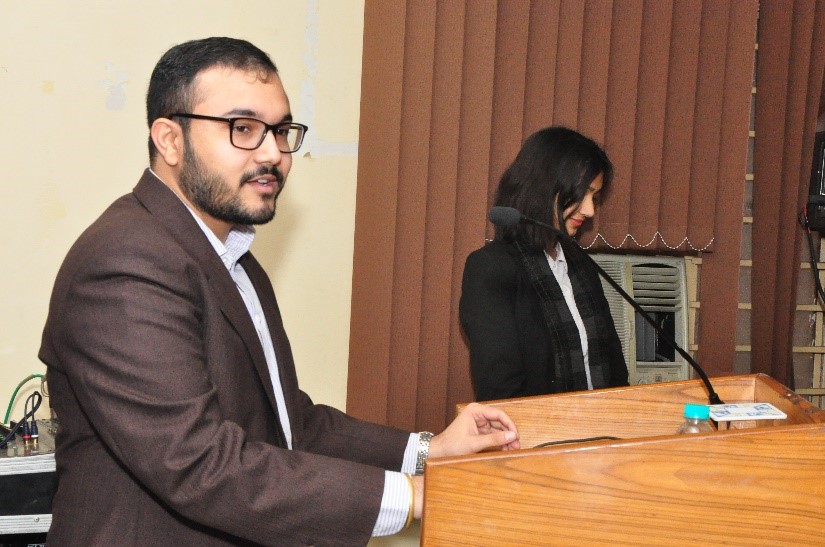
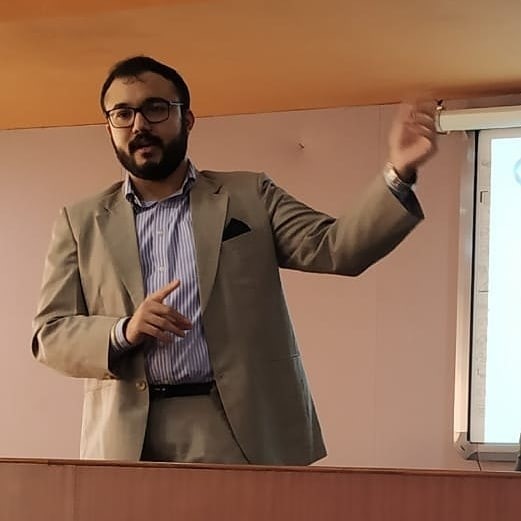
  • Arjit Benjamin, Advocate with Experience in ADR & Litigation Talks about Networking and Challenges Faced by Second Generation Lawyer

    Arjit Benjamin, Advocate with Experience in ADR & Litigation Talks about Networking and Challenges Faced by Second Generation Lawyer

    Arjit Benjamin is law graduate from Amity Law School and has been extensively working in the field of Dispute Resolution (both litigation & ADR) and Intellectual Property Rights (including enforcement as well as prosecution), particularly in the area of trademarks. With experience in the fields of Dispute Resolution and Intellectual Property, Arjit enjoys attending court as much as networking in seminars and conferences held globally. He has been attending the Annual Global Meeting of the International Trademarks Association (INTA) across several countries; and has had the chance to interact with some of the most iconic IP minds across the globe. In this interview, he talks about managing interest in two practice areas, idea of networking, maintaining work-life balance and challenges of being a second-generation lawyer.

    The primary area of your work relates to Civil, Commercial and Intellectual Property Litigation; and you have been appearing before the Hon’ble High Court of Delhi, Trial Courts, Tribunals and other judicial and quasi-judicial forums. What, according to you, are qualities to grow as a litigator?

    Imagine going to a surgeon who has never performed surgery, or who is not equipped with changing technology to treat you with the best possible medical equipment! Lawyers, as service providers, are no different. Just as a basic degree in medical sciences is a given for doctors or surgeons, a strong knowledge of substantive and procedural laws is imperative when it comes to lawyers and it perhaps gives a level-playing field to all those who graduate out of law school. How one adds-on to it decides your further course of growth in your career. I’m actively tracking legislative updates and precedents to stay abreast of all legal developments, which is a must for every practicing lawyer. For litigation, it is extremely important that one develops skills pertaining to court craft and litigation strategy. I’ve consciously tried to be present in the court, observing the seniors and veterans in the way they approach a matter and conduct themselves during court proceedings. Attentive client interaction, being observant and contributing during conferences with Senior Counsels and making a slight effort to deeply understand the industry sector of your clients will help you come up with excellent litigation strategy, an art that you’ll always pick on the job and not during your law school days. 

    Litigators are always considered to lead a tough lifestyle, often compromising on work-life balance. What are your thoughts on managing conflicting professional and personal commitments?

    I wouldn’t say that as a litigator we always compromise our work-life balance. It is only the unpredictability of the practice that may sometime lead to pressure-like situations. There will be instances where owing to the nature of the matter and stakes involved, urgent filing needs to be catered to – sometimes overnight! But these situations are one-off and I, in fact, tend to enjoy these challenging moments owing to the challenges involved. All of us also must understand that the band we proudly wear comes with a lot of responsibility. It is important to understand the clients’ perspective, who approach us with faith and belief that we will step up in the need of the hour. Barring such instances, I believe if we learn the art of managing time effectively, work-life balance can be achieved to a large extent. I understand that on a long court day, one has to come to office and then commence substantive work like drafting. However, simple hacks and use of technology will come to your rescue, provided you get accustomed to imbibing them. I also utilize my travel time and spare time between matters to read-up and research. I keep my phone and tab handy, which helps me manage court dates, access of documents and case laws, etc. on the move. 

    You were drawn towards intellectual property laws from the inception of your professional journey. What are the emerging trends you’ve observed during your growth and engagement with IP practice?

    I believe technological developments, government’s efforts in accelerating IP procedures while reducing paper-work and number of forms and announcement of concessions in a fee charged by the government to register intellectual property by start-ups are some of the notable achievements in last few years. The IP Registry is committed to expedite procedures and we all have witnessed the transition of days from physical filing to e-filing, and now issuance of Trademark Registration Certificates online. 

    IP is also one area where we observe evolving jurisprudence every day. This year itself we’ve seen some remarkable steps taken by courts. For instance, the Delhi High Court recently passed a progressive judgment, taking cognizance of matters not being heard for several years for want of Technical Member in IPAB. To put an end to the ordeal of parties whose rights were being prejudiced (especially in patent matters where the statutory period of exclusivity is only 20 years), the Court held that the Chairman, IPAB and the Technical Member (Plant Varieties Protection) are competent to hear the urgent matters relating to Patents, Trade Marks and Copyright till the vacancies of other Technical Members are filled up. Similarly, last week, the Bombay High Court issued a notice instructing all urgent IP matters seeking to obtain ex-parte orders will be heard confidentially “in chamber” to maintain confidentiality and prevent any possible leakage of information to the defaulting party. The court has also indicated that such cases will neither be mentioned in the court openly nor will such cases be displayed on the High Court website. With growing judicial activism in the field, I’m sure we’re poised to witness trends that will move towards a robust IP regime being developed in our country, aimed towards the furtherance of justice for those who knock the doors of court of law.

    You’ve attended conferences and events domestically and internationally. Do you think in the fiercely competitive professional landscape for lawyers, networking is an important tool for survival?

    I do not really go by the term ‘networking’ for its sheer commercial parlance. I view attending conferences as an opportunity to build relationships and the joy of knowledge sharing. When you network, you only look for professional bonds, which may be long-term or short-term. Building relationships is wider as you connect with like-minded personalities from across the globe on professional as well as non-professional grounds. I’ve attended international conferences where attendees bond over common interests like sports, music and literature, more than practice area or work-based topics. I’ve learnt simple management tips from some, while with some I’ve only discussed my interests in photography and music. So, it isn’t necessarily a tool for survival, but more like expanding your reach to interesting people from different cultures and civilizations, who may or may not be professionally beneficial for you, but the ties you create are very fulfilling in the long run. If you ask me, I would say networking or professional benefits are a by-product of building relationships – incidental, inevitable, secondary, but useful!

    Do you think being a second-generation lawyer comes with advantages? Can you elaborate?

    For the longest time, I’ve heard this belief that being a second-generation lawyer comes with huge advantages. Let me take this opportunity to share that barring the environment where you can discuss law and getting familiarized with the lifestyle of a lawyer, there aren’t too many advantages for a second-generation lawyer. Rather, there is always a benchmark against which your performance is evaluated, not necessarily by your family but by third parties. In my case, my father is already an acclaimed IP lawyer, with over three and a half decades of experience in the field of IP. To match up to such high standards could be overwhelming. My advice to all such lawyers would be to not take undue stress of matching-up to the standard of your parent(s)/family member, or any role model for that matter. Identify the areas of your interest if you choose to pursue law, and carve your own identity. For me, while IP was home-ground, I was drawn towards enforcement, litigation and dispute resolution, out of my interest. Determined to grow and learn through my own mistakes, I decided to venture into both contentious and non-contentious laws. Fortunately, for me, the support from my family has been very positive.

    I would also like to point out here that the legal profession has come a long way where merit is paramount and there is no substitute for talent. Several of my friends are first-generation lawyers and they’re doing extremely well for themselves. Opportunities are alike for everyone and I can proudly say that our profession is extending those opportunities to those who deserve them on merit, not by virtue of being born in lawyers’ family. 

    For several upcoming lawyers, what would be your advice about the importance of having a mentor? Who do you consider as your mentor?

    As I said above, it is important to make mistake and learn from them. You will continue to grow through hit and trial. But all of us need a ‘go-to’ person, who becomes our guiding light and someone who we look up to. It is important to have a mentor because they will teach you what no book or law school can. And more often than not, you will learn through simply observing them conduct themselves with a client, in court or in real life situations. Identify who will be your sounding boards – whose reactions to your ideas will be a test of validity or success. 

    I consider myself blessed to have not one but two mentors. First, one being my father and my ideal since childhood, Mr. Kenneth David Benjamin, who is a proficient lawyer; and second my Reporting Partner, Ms. Meghna Mishra, who had the patience of teaching me from scratch. Most important thing that I’ve perhaps learnt from both is to stay humble and accessible despite being widely recognized for your work. Both come with immense patience to never get hassled even when I’ve approached them with repetitive and sometimes borderline silly queries. Both have had a very positive influence in my life and I would consider myself worthy if I achieve an iota of what they’ve achieved – not just as practitioners of law, but also as great human beings. 

  • Shruti Srivastav, Standing Counsel-Union of India, Supreme Court Talks about her Journey and Challenges

    Shruti Srivastav, Standing Counsel-Union of India, Supreme Court Talks about her Journey and Challenges

    Tell us about your experience of working as a Central Govt. Standing Counsel. What are your responsibilities? How often do you appear before the Supreme Court?

    To begin with I would like to thank SuperLawyer for this interview & acknowledging my experience as a young legal professional. My journey as a student at National University of Advanced Legal Studies at Kochi [2009-14] batch to practicing before the Supreme Court as Central Govt. Standing Counsel has been an enriching learning curve. I consider myself fortunate enough to have worked with all legal luminaries in the day-to-day matters being a Central Govt. Counsel & also due to my last office for private matters as well.

    It certainly has played a crucial role in shaping my career as a young lawyer & getting recognition. Apart from that since my senior was also a Government pleader & had frequent filings before the Supreme Court so the exposure level was different altogether.

    Talking about the responsibilities as Counsel for Govt. of India:- 

    To represent the Union of India in the highest court of the land is an honor but the sense of responsibility is equally high because you are dealing with the Ministries & officials directly for the purpose of drafting & also at the time of briefing you are generally briefing an Additional Solicitor General, the Solicitor General or a Designated Senior so one has to deliver aptly and there is no room for negligence.

    As counsels, we are expected to draft the matters marked to us by the department; Brief the concerned Ld. Additional Advocate General or the Solicitor General or the Designated Seniors marked along-with in the case file; Appear before the Court in all such matters marked whether it be Registrar Court, Chamber Judge or Main Court; Inform the law officer dealing with the concerned ministry after the matter is over & submit the court proceedings; Be in touch with the Government authorities or the Ministry for the concerned documents or orders required for the purposes of the court hearing. 

    The Appearance is generally regular & varies from two matters per day to anywhere between twice a week as per the list made by the Department. It includes matters before the Registrar Court, Main Court & Chamber Judge.

    How did you get selected for such a coveted role at an early age?

    I worked for 3 yrs at a Chamber wherein we dealt with matters from all Lower courts, High Court & Tribunals. We were empanelled by various PSU’s, Govt. Departments & had mostly regular filings before the Supreme Court & therefore I had the exposure of work at all foras as well as the Hon’ble Supreme Court.  I am really grateful to my senior without whom I might not have got the exposure of having worked with all legal luminaries in this span of my practice as a young lawyer & the platform to outshine my abilities. He always appreciated my hard-work, research & dedication for the profession. At one such instance when we were working on a Batch matter for  PGCIL [A Maharatna Company] while briefing, the draft was appreciated by the Ld. Additional Solicitor General & thereafter recommendation as per procedure was made from his office for the official appointment to the Ministry of Law & Justice. It actually came as a surprise for all the hard work the office staff, my colleague & I had put-in while preparing a batch of 50 Appeals. 

    Why did you choose litigation over fancy corporate legal profile? When did you start your independent practice & What are the practical hardships faced by an independent litigator?

    I was placed in IndiaLaw LLP, Mumbai office through campus recruitment in the final year of my BA.LLB.(Hons) program. Since I did not want to take up that location the concerned partner referred me to a law firm based in South Delhi which had plethora of matters from all foras & especially appellate matters before the Hon’ble Supreme Court.  My Senior was a Govt. pleader & an Advocate-on-record. The office had criminal practice along-with appellate matters before the Supreme Court, PSU matters & drafting work for various Govt. Depts. I, therefore, had the exposure of District courts, High Court as well as the Supreme Court on a daily basis. I always had an inclination towards litigation practice since college days & therefore I always participated in the college moots & other National moots. If you are good in researching, writing & arguing- then litigation is the thing for you. But certainly, it’s not flashy enough, to begin with like the corporate packages offered to students coming out of law colleges.


    To ascertain the area of interest & the right office as a fresher is the key. In my opinion, starting with a mid-sized firm would give you more exposure & direct participation by being part of huge matters, confidence to showcase your skills, inculcate the ability to think on your own feet & try new things. Not only does it gives you a platform to learn more than your colleagues who are initially not being sent to courtrooms or involved in core team as juniors but also the growth, in this case, is more.

     To start independent work or practice is a big decision to make in initial stages of your career & it becomes more difficult when you spend good 3-5 yrs in the law firm culture so the trick is not to make yourself too comfortable with the monthly income & perks of the job but to detach at the right time to grow & invest in yourself. The addiction to the income makes it difficult initially but if you try to focus on updating your knowledge bank & preparing yourself for the leap it all falls into place.

    The mindset among the students is to be placed in the topmost firms and not to invest in their own self. Litigation practice & daily court proceedings teach you a lot more than you can learn by sitting in any office because you are practically facing either the repercussions or the bearing the fruits of the draft prepared & the court craft or arguments presented in court by the advocate. If you are a good researcher & prepared your draft well 70 % of your case is already done because then you know the entire case on your tips & chances are the matter would be easily admitted. Also knowing your case well helps you to argue it with confidence.


    Since independent litigation practice is not a wise decision for everyone to make in an initial stage considering the amount of pressure it builds in, the earning it gives in the initial years & exploitation which some people go through at their offices or chambers.  Many law students, therefore, opt for corporate legal jobs. But sooner or later one has to go through that phase. Fortunately for me, my senior had been really supportive, appreciative of my work as a junior and paid well as a litigation associate as to any other fresher advocates generally gets in court. Even after I have left the office I am still a part of that family & associated with his office for independent work. I am really grateful to him for shaping my career & providing the platform to build as a lawyer.

    I became independent after 3yrs & I feel it is a good time to start building yourself. Being your own boss and running the show is an actual deal. Until that umbrella is taken away we never realize how to grow. For me, I had initially taken a break from work after my dad passed away & then I focused more on studying the law subjects & updating myself as a lawyer along with my practice. Being a Central Govt. Counsel worked out in my favor in-comparison with other lawyers who are solely dependent on private matters. So I could practice & also focus on learning which is not possible with a full-time law firm or a chamber work. It helped me gain mental clarity to think & focus on myself. I enrolled for various online diploma courses & right now I am pursuing my masters in Commercial laws from National Law University Delhi. The Journey so far has been wonderful from being a junior associate to an independent practitioner & representing the Central Govt. There is a whole sense of responsibility & learning which comes through when you run your own office which I learnt from my peers and the amount of hard-work I saw them put-in while working on briefs & maintaining the office in the initial stages of their career. Patience & Persistence are the two takeaways in this profession and especially for the young lawyers because being a young lawyer you have to be patient enough to get work people might not straight away approach you or give you matters but one has to be present in court or social circles to build network but with persistence and continuity towards work people will also recommend for your good work.   

    How was your experience studying at the National University of Advanced Legal Studies, Kochi, Kerala.? 

    NUALS, Kochi has been a beautiful journey when I look back it still feels so fresh. It started from a major change from shifting from North India to extreme South adjusting among the best minds from all states of the country. It was a total 360 degree shift for me in the beginning with a new place, climate, food & language which I wasn’t expecting at all.  But sooner I realized that it was the best thing that ever happened to me. Kerala is a beautiful state & tourism being the main attraction the place offer’s beautiful landscapes -backwaters, beaches, waterfalls & mountains along-with pleasant weather. The local cuisine is also a treat for foodies. I thoroughly enjoyed all the years & specially the Kerala meals.

    The College holds a very good reputation among the South colleges and therefore people had even preferred it over Nalsar or any other college among the southern states.  The Faculty is helpful, considerate & friendly with the students but at the same time strict with punctuality & class attendance, returning on time after the break or the involvement of the class during case-laws discussion to keep us updated & eventually enable us to remember the subject. I also remember several practicing lawyers of the Kerala High Court & sitting Judges also visited campus to take guest lectures for various subjects. 

    The University offers several interesting electives to opt for the BA.LLB curriculum. For example-Competitions laws, Maritime law, Banking Law, Medical Jurisprudence & other subjects which other colleges do not teach. I was fortunate enough to have learned these subjects while in college.

    I remember volunteering for several prestigious moot courts in the University hosts every year like Jessup South India rounds, Surana & Surana along with attending seminars conducted by the faculty under various research centre’s established for legal studies under various disciplines of law. I also participated in Legal-aid clinics, the College Intra Moot as well as the other National Moots.

    What are the three most challenging cases you have faced in your career? How did you overcome these challenges?

    In Litigation, every case is a new challenge & that’s the charm of it as it deals with an entirely different area of law, precedents every day with a new case & so it would never sound monotonous. Also, it comes with everyday learning from the court proceedings.

    Litigation is my passion so it was never a burden but it gave a sense of encouragement after every favorable order. I remember the major cases I dealt with in my first office.

    • Litigation management of a Telecom giant- before all the District Courts in Delhi (2015)

    I looked after the entire Litigation matters on behalf of Vodafone in all the five district courts listed every day. They were voluminous in number & also had to keep a watch on the ongoing & dismissed matters along with matters for summary suits & the limitation period for the same. 2000 Legal notices were sent in every two days by the team after monitoring the excel-sheets for the amount due & trail mails with the corporate office. Attending the Court along with the Authoritative representative of the Company every-day & obtaining information from other district courts & maintaining the database was quite a task. We also conducted various Lok-Adalats in NDLSA Patiala House for settlement of matters.

    • Tax Appeal  before the Supreme Court for a State Cooperative Agricultural & Rural Bank (February 2016)

    The matter was regarding whether petitioner being a state cooperative bank is entitled to exemption as a cooperative society under 80 P of the Income Tax, Act 1961. Honestly speaking I had never worked in a tax matter before and therefore it quite a challenge for me as no other junior was working on this matter. Since the matter involved a huge stake and appeals for three consecutive years for which stay was required an external counsel who specialized in taxation worked along-with me on this who helped me understand the scenario & segregate the documents for the respective petitions for the list of dates. The entire office-staff along with Sir sat till 2 o’clock in the night for the many days in winters during weekends as well to complete the drafting & urgent filing within time. The matter was briefed to Mr. Krishnan Venugopal & several conferences in this regard were conducted in the presence of the MD & President of the Coop. Bank. Finally Stay was granted for all consecutive years. It was a great relief after days of hard work. 

    • A Batch matter for Power Grid Corporation of India Ltd. (July 2016)

    This was a batch of 50 Special Leave Petitions for Power Grid Corp. of India for against the High Court of Punjab & Haryana in land acquisition of Punjab. The documents were huge in number and segregation of all the orders was a task in order to draft, also the maps had to be included and understood. It was altogether a different & interesting case. I remember staying back till morning for this matter to in order to make a rough draft & research the case laws for discussion with the law officer the next day to be able to discuss the issues in detail. Since this was a batch matter and voluminous too filing all the 50 petitions within time took special efforts from the typist & clerks. Whereas we were in Supreme Court for this matter till 9:30 pm for the filing to be done within time & luckily the registry timings were extended then due to opening after the summer vacations.

    Three major moments of victory in your career as a lawyer.?

    Achievements I believe come as fruits of your labor. There have been many such instances but 3 major ones worthwhile to mention are:-

    1. The first time I researched & drafted the Special Leave Petition for a service matter of a Vigilance Commissioner. The Hon’ble Supreme Court issued notice and the matter was admitted as Appeal.
    2. This matter dealt with false accusation under section 376 IPC and POSCO Act wherein we got the Bail from the High Court & I followed through in the trial proceedings before the Sessions Judge, Karkardooma District Court & eventually got the acquittal done for my client. 
    3. Not exactly a single moment. But here I would like to mention that the success rate for the all the legal research & drafting’s in my career has been nearly 100 % for the purpose of admission be it a SLP, Civil appeal or a Bail matter since we generally dealt with criminal side. It is worth mentioning that when your clients or senior appreciate your work it is also a major moment which in my case came from my senior & law officers of the Department. 

    What is your most important skill as a lawyer? How did you develop this skill?

    The most important skill for a lawyer is to think fast & slow simultaneously i.e. fast enough to listen & pay attention to detail as to what the court is asking & wants from you as a lawyer. Slow as in intelligent enough to speak only what is required of you.  Absorbing the facts, comprehending the law & updating the knowledge bank is what is expected out of a lawyer but being able to break it up into simple & reasonable conclusion In order to impress upon the court your case in the best possible way is what makes you different.

    Attending Court & observing your senior & other counsels during the court proceedings is the key. We actually get to learn the court craft just by observing. So all the skillset we develop is from our own observation, practice & persistence.

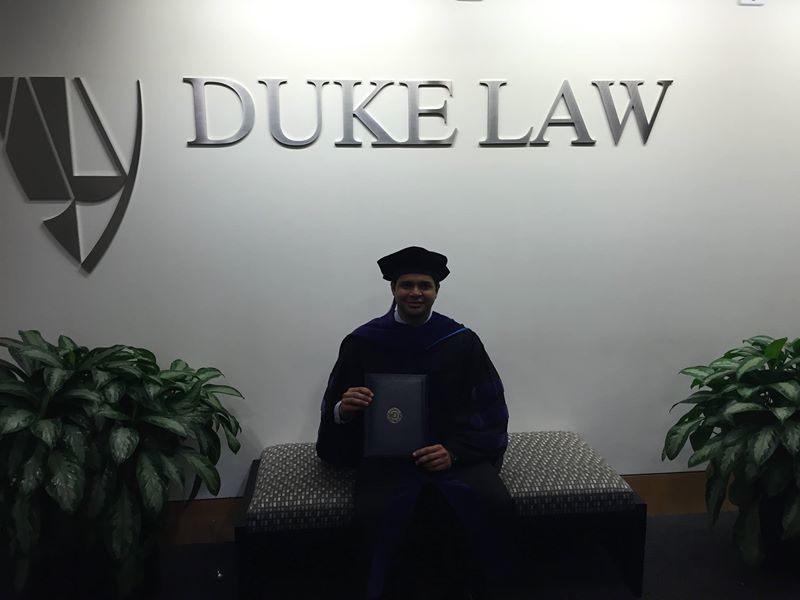
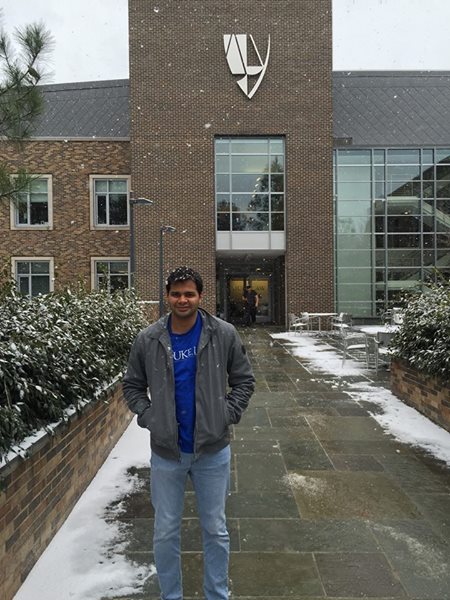
  • Sheroy M Bodhanwalla, shares his experience on LLM from Duke University School of Law and working at Mulla & Mulla & Craigie Blunt & Caroe Advocates, Solicitors and Notaries

    Sheroy M Bodhanwalla, shares his experience on LLM from Duke University School of Law and working at Mulla & Mulla & Craigie Blunt & Caroe Advocates, Solicitors and Notaries

    Tell us about the 3 most important experiences at the Government Law College that helped you as a student or shaped your career as a lawyer.

    To begin with, it’s an absolute no-brainer that the Government Law College has an illustrious history dating back to the 1800’s when it came to be established as Asia’s first law school. The institution prepares its students in a holistic manner in ways which one might not even initially find apparent. For instance, when I was the Treasurer of the Sports Committee in my 3rd and 4th year, I learnt to deal with the inherent bureaucracy and red-tape that comes part-and-parcel with a Government-run institution. I learnt how to adroitly deal with the various authorities involved from requisitioning sports equipment and team jerseys to getting the funds sanctioned for sending the college teams to various sports law fests all over the country. This responsibility at that stage in my life and the active support of my professors taught me how to hustle and be a go-getter instead of idling it out. 

    Second, the brilliant part-time faculty like Professor Pithawalla for Company Law and Senior Cousel Mr. T.N. Subraminan for Civil Procedure Code made attending early morning class a truly worthwhile experience. 

    Third, the lively on-campus committees were like a breath of fresh air given the limited space and resource constraints. The Placement Committee, the GLC Model United Nations and the Sports Committee (a committee with which I was personally involved) were amongst the most active and one could learn a lot and network at the same time as the responsibilities involved were significant and the college has an excellent alumni network and legacy connections that are more than willing to help if leveraged effectively.

    How is the career exposure at GLC Mumbai? Does it have a student-friendly environment? What are the pros and cons?

    I would like to quote an illustrious senior’s words when he once famously remarked something to the effect that “GLC is like a buffet spread, you can have a bit of it, all of it or nothing at all.” In other words, the college offers to its students the best of everything whether it is academics, mooting, sports or seminars. However, the onus rests completely on the students to actively make use of these opportunities. The institution does not chaperon them and that can be both a good and bad thing depending on the level of one’s participation by the time graduation comes around. 

    You have participated in several moots. Does mooting help in one’s legal career?

    To be very honest, now that I am a full-time litigator, mooting does not help one become a good counsel per se. In hindsight, mooting certainly helps a fresher get acquainted with how to prepare and present a case brief, the atmosphere of an actual court room and if one is afraid of public speaking, mooting is an absolute must to overcome the equivalent of stage fright for lawyers. But that apart, as one delves deeper into the sphere of litigation, one realises that mooting and actually arguing a case in court are poles apart. Litigation takes years to master and mooting is at best a soft introduction to it.

    What are the 3 things that you liked the most about Duke University? What course did you choose and why?

    I loved the fact that Duke is one of the elite law schools in the US with a very small intake per LL.M batch. In fact, my batch had at that point in time, the highest ever intake in the history of the school’s LL.M program and that also stood at a mere 100 candidates. Duke is known to be characteristically selective and extends formal offers to a select group of candidates out of which it finally admits only about 75-80 candidates each intake. This way, everyone from the Dean of the LL.M program to the professors and the administrative personnel knows you by your first name. This warm and friendly atmosphere at Duke made the offer hard to resist.

    The professors at Duke are top notch and are world-renowned in their respective fields. To be taught by stalwarts such as the likes of Professor Diane Dimond, Professor John Holton, Professor Francis McGovern, Professor Steven Schwarcz, Professor Neil Vidmar, Professor Ralf Michaels and Professor Bruce Elvin was both enlightening and humbling at the same time. An experience that I can never forget.

    The law school has an “open door” policy where there were really no formalities if one wished to meet a professor to clear any doubts no matter how small or trivial they might seem. This was a far cry from some other law schools that graduate several hundreds of LL.M students each year and one couldn’t be faulted for thinking they’re just another product rolling off the conveyor belt. So yes, as far as I was concerned, Duke was definitely a top priority school for a variety of reasons. The professors do their very best to take time out and sit with the student at length. Also, the classrooms resemble less of a football stadium unlike in schools with huge intakes and are more intimately designed with small batch sizes. All of the above coupled with the fact that Duke is counted as one amongst the nation’s top law schools made it a no-brainer for me eventually.

    As to the courses I opted for at Duke, I’d like to deal with this question broadly from a country-wise perspective and then specifically narrowing it down to Duke. What tilted the scales decisively towards studying in the US for me was the teaching methods employed that basically involved Socratic-style discussions with professors during class rather than it being the traditional one-sided whiteboard-marker approach adopted in India. Further, the American system is traditionally more assignments based wherein your final grade is computed based on the outcome of weekly/monthly assignments turned in together with an end semester exam. Another compelling factor worth noting is the fact that courses in the US are highly customisable. In the US, one can actually build their own course by selecting courses completely unrelated to each other, so long as they total to a certain number of credit hours within the rules set down by the University. For instance, I did have batch mates who chose to take a course at the neighbouring Nicholas School of Environment or the Fuqua School of Business which counts Tim Cook, the current CEO of Apple as one amongst its illustrious alumni. One can therefore reasonably infer that the education system in America focuses primarily on breadth whilst those of the UK and India focus mainly on depth, in that, in these systems, one is encouraged to specialise rather than diversify whilst in the US, once could ideally tailor the program to better suit their individual needs. I had a batchmate in my arbitration class who was primarily studying in a science-based course but also opted for this one class at the law school.

    Coming to myself, I opted for subjects such as Alternative Dispute Resolution, Structuring & Regulating Financial Transactions, Business Associations, Arbitration (American domestic), International Arbitration, Negotiation, the Business & Economics of Law Firms and Legal Research & Writing in the American Legal System amongst others. I found these classes to be very well structured and geared primarily towards contemporary practicing lawyers. For instance, my final assessment in the Arbitration class involved submitting a memorandum of law and oral arguments wherein my course professor presided as an arbitrator. The oral arguments were video recorded and my professor later had a one-on-one with all of us explaining to us exactly where we went wrong and where we could improve whilst our arguments played on the projector screen. 

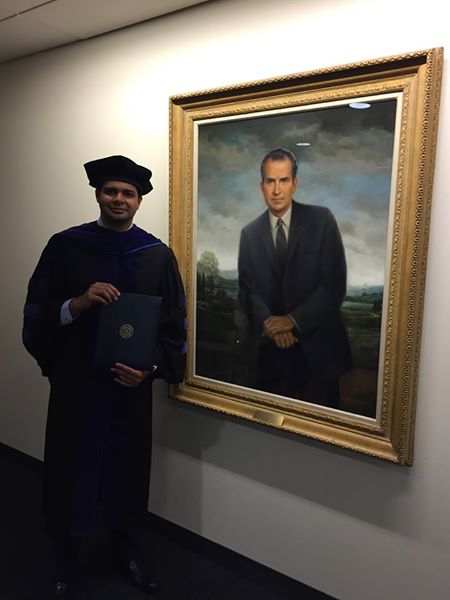
    How is the campus life at Duke? Can you share some good photographs?

    For someone hailing from Mumbai, the campus life at Duke sure caught me off-guard in the initial month that I landed in Durham. Unlike a large bustling metropolis like Mumbai or New York City, life in the quiet deep south in North Carolina is poles apart. One could easily whiz past Durham in nanoseconds whilst travelling on the interstate highway. Being a graduate program student, I opted for housing in one amongst the numerous gated community residences located just outside of campus. These come fully equipped with all the amenities one could desire like a gym, swimming pool and electronic secure access to the housing complex, all at a very reasonable price. In that sense, the campus is in a lush green surrounding with the law school having its own dedicated building fully equipped with a state-of-the-art library, study and meeting rooms, cafeteria and lounge room.

    How has your degree from Duke helped in your career? According to you what kind of people will benefit from a course at Duke?

    The value of an LL.M from a prestigious school such as Duke simply cannot be overstated. Apart from the tangible benefit of having a solid qualification, I feel the intangible benefits are innumerable but some of them deserve a mention. It’s not every time in life that one gets the opportunity to learn from such illustrious professors. Besides our set classes, we also had eminent speakers from policy-making institutions, think-tanks, the American judiciary and attorneys address us almost weekly, on a range of subjects. Coming to the latter half of your question, I’d say a Duke Law degree is ideal for a candidate seeking a program that has a selective intake, prefers small class sizes, is willing to absorb all that the school throws at him/her since the program is well-tailored in a compressed but pacey format given the time constraints and most importantly, works hard in his/her 5 year undergraduate program to earn the credentials to be able to secure an offer of admission, since top law schools in the US tend to be closely scrutinise candidates prior to extending an offer. The best part about the program is the flexibility of the program to pursue interests at the opposite end of the spectrum. Duke Law also offers specialised certificate courses in addition to the vast array of subjects on offer. So whether it’s corporate law, litigation, IP or arbitration, refugee law, human rights and so much more the school has it all covered.

    In fact, I must make here a special mention of a course that I had opted for known as “The Business & Economics of Law Firms”. This course basically taught on the practical aspects of US law firms such as the concept of billable hours that associates adhere to there, the categories of partnership structures in large law firms, their business model and profitability methods and the manner in which they used social media and conventional methods to publicise their firm and solicit work, something very different from India where the Bar Council of India rules prohibit the solicitation of clients in any manner. I thoroughly enjoyed pursuing this unique course.

    What are the most exciting and upcoming areas in IP law? What kind of matters do you often handle?

    In the last 3 or 4 years only, media and entertainment law has grown exponentially to the extent that both law firms and media/production houses are investing huge sums of money into their verticals and are on the look-out for lawyers possessing specialised skills in the field. This comes as no surprise at all considering the advent of OTT streaming services and India’s largely archaic legislation not being in sync with the fast-changing landscape. Take for instance the loopholes in the Cinematograph Act or the at-times conflicting decisions of the various High Courts when it comes to trademark and copyright matters.

    My work in this field covers both transactional as well as litigation aspects. Vetting contracts entered into by media houses with social media companies, giving opinions with minimal turn-around time with regard to soon-to-be-launched ad campaigns, attending to matters at the Trade Marks Registry, filing/defending against Commercial IP Suits along with Interim Applications before the Hon’ble Bombay High Court for injunction in cases of copyright infringement, drafting and reviewing celebrity endorsement agreements and drafting non-disclosure agreements are some of the things I’ve dealt within this area of the law. Another important aspect in transactional IP is to have a good idea about the stamp duty payable and the applicable legislation state wise, since stamping goes hand-in-hand with the documentation.

    How was your experience working at Mulla & Mulla & Craigie Blunt & Caroe Advocates, Solicitors and Notaries? Tell us about the work environment and the kind of skills you learned while working here.

    The exposure at this firm set the foundation for me to handle matters independently at a later stage in my career. The work here also involves my first and only brush with maritime law. I learnt the procedures involved in getting an arrested vessel released, the concepts of laytime/laycan, wharfage and demurrage besides of course litigation and arbitration. I can’t thank the-then senior partner that I was under enough for giving me the opportunity to work under him as a wet-behind-the-ears youngster. It was here that I learnt the basics of client-facing interaction, conveyancing and everything in between, from drafting complex deeds to seemingly not-so-complex recording letters to clients. The work environment at the firm is very conducive to learning the black letter law for a complete fresher. I credit most of this to the then senior partner who very graciously agreed to accept me under his wing. That set the stage for better things to come, amongst them my admission to the LL.M program at a highly selective law school of the caliber of Duke.

    How is the practice of IP law different from practising other more common areas of law practice such as civil or criminal litigation?

    The practice of IP involves is not as simple as it might seem to most. When dealing with IP (litigation) especially, one invariably has to end up reading on a lot of other ancillary material as part of case management and preparation. A lot of this may or may not have to do with areas of the law only. For instance, in a recent matter that I handled defending a large and reputed media agency from another agency alleging copyright infringement, I had to actually understand the entire creative/ideating process involved right from receiving the client brief, developing a creative deck, making a formal “pitch” to the client as to how the agency envisions the campaign ought to run, receiving the client’s approval for execution and finally, choosing an executing production house who in turn commission prominent directors, calling for “treatment notes” from them. I particularly enjoy such matters since they involve impugned ad campaigns that one already sees on air on television, in theatres and on YouTube. As part of the IP (transactional) practice, the work usually involves giving written opinions in matters before the Advertising Standards Council of India (ASCI). The key here is to advise the client in the minimum possible turn-around time since generally, these hearings are neither adversarial nor adjudicatory in nature and therefore, attorneys are not ordinarily  permitted to represent a client and so, the opinion be drafted in a manner that the client can effectively use it whilst representing himself or herself before such bodies.

  • Navneet Chugh, Managing Partner and Founder of Chugh, LLP talks about Indian Lawyers Association and continuing legal education for lawyers

    Navneet Chugh, Managing Partner and Founder of Chugh, LLP talks about Indian Lawyers Association and continuing legal education for lawyers

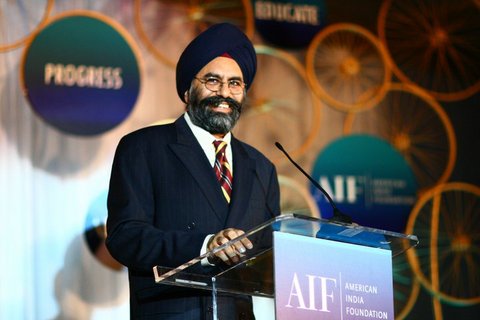
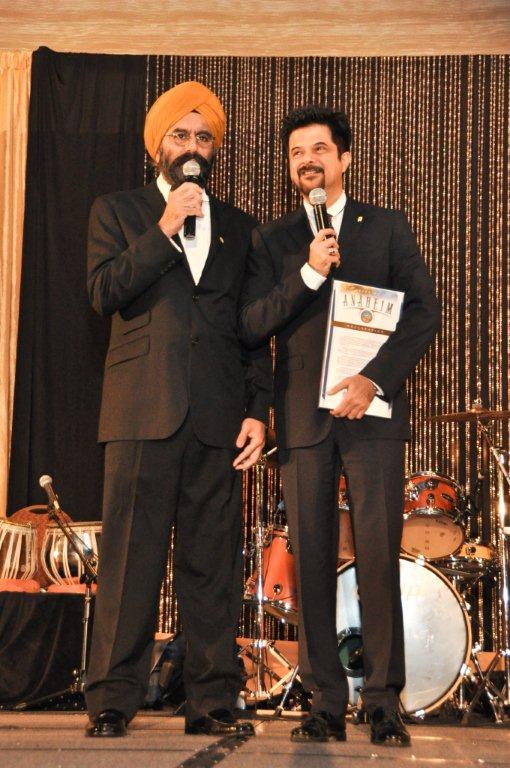
    Navneet Chugh is the managing partner and founder of The Chugh Firm and has over 30 years of experience as an attorney and a certified public accountant. A founding donor of 1947 Partition Archives and a member of the World Presidents’ Organization, he founded TiE Southern California in 1997. In 2003, he was the founder president of the North American South Asian Bar Association (www.NASABA.com), a nationwide body representing 10,000 south Asian lawyers in the U.S. and Canada. In 1995, he founded South Asian Bar Association of Southern California (SABA).

    Navneet serves on the boards of HAB Bank, Ignify Consulting, Dhandho Holdings, India Community Center, Sikh Center of Orange County and Premier Media, Inc., the publisher of India Journal. He is a former board member of TiE Global, American India Foundation and Asia Society of Southern California.

    He also serves as a board member of Pratham USA’s Los Angeles chapter.

    He is or has been on the boards of:
    1. American India Foundation
    2. Asia Society of Southern California
    3. India Community Center (ICC)
    5. Pratham USA
    6. Sikh Center of OC
    7. Habib American Bank
    8. Ignify – an IT Consulting Firm
    9. Premier Media, Inc., publisher of “India Journal”.
    10. The 1947 Partition Archives

    In this interview, he talks about

    • Indian Lawyers Association
    • The vision behind this association and how much the vision has been achieved so far.
    • Why further education is important for lawyers.
    • He is also talking about personal development for lawyers.

    What is Indian Lawyers Association?

    Indian Lawyers Association helps in connect with other legal professionals across the country to share information and best practices. Member groups include more than 70 chapters that produce valuable resources. We hope to be at 400 chapters by the end of next year. It is amazing that for 71 years, the lawyers of India do not have a professional trade association. ILA is one of the indigenous largest voluntary professional organization which is committed to doing what only a national association of advocates can do for improving the legal profession by eliminating the bias and enhancing diversity. ILA provides members with opportunities to enhance their professional skills and helps them grow their network and to access world-class resources to stay on top of current developments in the legal field. At ILA we promote the rule of law and the effective administration of justice which leads to an increase in public understanding and respect for the rule of law, the legal process and the role of the advocates.

    Why did you set this up and what is the vision behind it?

    We need to elevate the profession, increase the respect for the profession. We need to fight for our rights. We need to create a fairer marketplace wherein lawyers can advertise, take matters on a contingency basis, do other businesses along with the practice of law. To create a common platform for lawyers Pan India where the lawyers can not only deliberate upon various legal and social issues ailing or prevalent in our country or may crop up in future but also try to find a solution and bring about a change through policymakers. The vision of this platform is also to find solutions and work for the welfare of fellow lawyers and to motivate the legal fraternity to do pro bono work.

    How much of that vision has been achieved so far?

    We have already created 70 chapters of ILA across India where we are first trying to build a platform for lawyers pan India and once we are done with creating a platform pan India basis, then we can robustly pursue our vision through the common platform. Having said so, we are also simultaneously organising events and conferences across India on various legal issues. We did our first annual conference in Delhi in December of 2018 with 80 speakers and 700 attendees.

    Each chapter will have a board of 15 members, and several committees that will operate independently. We would like ten per cent of the 1.3 million lawyers to be actively involved in ILA daily, monthly, and annual activities.

    What is your thought on continuing legal education for lawyers?

    In my thought, there should be a mandatory continuing legal education as it ensures that the members of bars are informed of the evolving laws. It is important for ILA to recognize this and emphasize upon it. That such innovation is a very good thing and should still be required, if for no other reason than to give the public confidence in the profession and apart from that it will extend well beyond just staying up-to-date with the law.

    How should lawyers approach personal development and continuous growth?

    Personal growth and development are essential for everyone in the workplace, not just lawyers.

    Organisations change and so does the law. This means that you need to be continually developing personally to meet ever-evolving challenges. If you are not consciously learning all the time, you are probably going backwards. The key to realising your full potential begins with setting relevant and achievable objectives that allow you to keep pace with change and then grow.

    Whatever your role, you’ll want to know what success looks like. In most cases, success comes from a combination of how you use your skills and knowledge, and the behaviours and attitudes you adopt.

    I feel successful lawyers must also focus on the soft skills of networking both internally and externally in order to increase their name and recognition.

    Community involvement and civic engagement are also important to me (and should be for any lawyer

  • Ashima Mandla on PILs, Independent Law Practice and experience of working with Senior Advocate KTS Tulsi

    Ashima Mandla on PILs, Independent Law Practice and experience of working with Senior Advocate KTS Tulsi

    Advocate Ashima Mandla is a renowned Supreme Court Lawyer. She works with many institutions including Legal and Human rights department of Delhi Pradesh Congress Committee, Criminal Justice Society of India, National Student’ Union Legal Aid Clinic and many more. She is an active and enthusiastic lawyer. She had worked with many renowned lawyers including Mr K.T.S. Tulsi, Senior Advocate and Member of Parliament, Mr Vivek Tankha, Senior Advocate and Member of Parliament (Rajya Sabha).

    She is an experienced Secretary-General with a demonstrated history of working in the political organization industry.

    In this interview, she is talking about

    • Her experience working with advocate K.T.S. Tulsi.
    • How a good team and a good mentor can shape your career well.
    • PILs about gender neutrality.
    • Anty-lynching bill.
    • Her top three internships.

    What’s the best thing about practising criminal law? What excites you about this area of law the most?

    The intricacies of the evidence in especially blue-collar crimes in criminal law that we deal with, it is challenging and exciting. Within the framework of the procedural and substantiate statutory provisions, both the prosecution and defence have their narrative of the events transpired, and because each case is different than the previous, it always keeps you on your toes. However, at the same time, while dealing with each case, I continuously remind myself that if I do not perform at my job, it is someone’s life at stake.

    Describe your experience of working under Mr K.T.S. Tulsi. How did it inform and shape your skills and outlook as a lawyer?

    I owe my career to Tulsi sir. He is the reason behind me choosing litigation and then later switching to independent practice. Sir is an extremely patient teacher, who expects nothing less than perfection in his drafts. He is the epitome of what one can achieve with relentless hard work. When I joined Sir, apart from being an Associate in his Chamber, I was also responsible for his social media handling and Parliamentary Affairs, which widened the scope of my learning and afforded me with a platform for linking legal practice and legislative drafting. Tulsi sir always encouraged me to make my own way and was extremely supportive when I wanted to venture into trying cases independently. He always encouraged my ideas and still does and through his own stories, has constantly taught me immensely about law, life and beyond. Even today, it is because of Tulsi sir that I have been able to operate independently, as he has been very kind enough in allowing us to use his chamber for the same.

    How would you describe your starting few years in this field? What were the challenges that you faced and how did you deal with them?

    It is no secret that to establish yourself in the legal field takes years and sometimes decades. I have been extremely lucky that I got the opportunity to work under Tulsi Sir when I was fresh out of law school. He instilled the values of perseverance, foresight and meticulousness in me. It is extremely important that your boss/team that you choose to work under/with, especially when you are starting out, is encouraging and patient. If you start your career in a conducive environment, you cannot help but be passionate about your job. In my personal experience, the biggest challenge for me has been to overcome the fear of arguing in court. As when  I was working under Mr Tulsi, my primary job was briefing him on matters and occasionally drafting briefs. There was still a safety-net in doing that as any possible mistake made on my end could be rectified even before it could potentially hurt the chances of our client in Court. However, when I took up an independent practice, it became all-too-real.

    The greatest moment of victory in a courtroom ever?

    I think each case is important in your career, as every case teaches you something, honing your skills & shaping your personality. The beauty of some of the work done inside the courtroom is when the consequences can be seen in the world outside. For me, each time the presiding Judge has observed or rule in favour of the clients I represent is a victory in its own right. But there was a particular moment when I was arguing my second case in Delhi High Court, and the issue was pertaining to the civil right violations pertaining to Safai Karamcharis, when the then Presiding Chief Justice, HMJ Gita Mittal commended my efforts as a young lawyer and said ‘I have practically given you the moon with this order’ and actually set aside a few minutes within the courtroom to know about my co-counsel Ms Mandakini Singh & I. It felt amazing getting such appreciation so early on, which encouraged me to take up more such work. Moreover, it is very encouraging when your work gets discussed and covered outside of the courtroom.

    What are the most exciting PILs you have filed till date? What made you interested in PILs? What makes you spend a substantial part of your time working on these PILs, especially when they often come in the way of paid work?

    I believe that like each stone can cause a ripple effect, each of us has the power to contribute in some way to effect some change, irrespective of the magnitude of the same. So, I only invest in those PILs whose issues I hold close to me and my sense of morality.  But it isn’t true that I always choose PILs overpaid over! 🙂

    You filed a PIL about gender neutrality of sexual offences and later drafted the Criminal Law Amendment Bill, 2019 proposing for gender-neutral laws for sexual offences. As a woman don’t you think that such a move can harm women in Indian society? What should India make sexual offences gender neutral?

    Even though the landmark judgment of the Supreme Court in  Navtej Singh Johar, decriminalising of homosexuality has been pronounced, the rights of men, transgender persons and to an extent, women are sequestered from laws pertaining to sexual offences. In my opinion, the violation of the body of any person is an offence. It is my true belief that discrimination is the anti-thesis of democracy and sensitivity to the plight of all persons must be inculcated in our worldview. By assuming that gender neutrality of rape laws may harm the society, we are demeaning the sanctity of the body of any person who does not fit in the rigid ambit of the present definition of laws pertaining to sexual offences.

    It is ironical that the definition of rape u/s 375 IPC has been enlarged and is no longer limited to penile-vaginal orifice, however on the other hand when the same acts are forcibly inflicted beyond ‘man’ as a perpetrator and ‘woman’ as a victim, in the eyes of the current statute, it does not amount to rape. In my opinion, there appears to be no intelligible differentia for this discrimination.

    Hence, we filed the Writ Petition on behalf of the Criminal Justice Society of India seeking gender-neutral rape laws. The Bench led by the Hon’ble CJI found the issue valid however directed us to make a representation to the Parliament. Thereafter, I drafted a bill proposing gender-neutral rape laws, under the able guidance of Mr Tulsi. The bill titled ‘Criminal Law Amendment Bill, 2019’ has been introduced in the Rajya Sabha by Mr Tulsi for amending the Indian Penal Code, 1860; Code of Criminal Procedure, 1973 and Indian Evidence Act, 1872. The bill proposes to make S.354 (Assault or criminal force to women with intent to outrage her modesty), 354A (sexual harassment and punishment for sexual harassment), 354B (assault or use of criminal force with the intent to disrobe), 354C (voyeurism), 354D (stalking),375 (rape),376 (punishment for rape) gender neutral by the way of an amendment. Furthermore, we have proposed the insertion of Section 354A (sexual assault). Lastly, another significant proposed amendment is to Section 8 by inserting transgender to the definition of Gender and to Section 10 by inserting ‘Others’ to the provision containing definition of ‘Man’ and ‘Woman’, which was done to ensure that no person is denied relief in the penal laws based on biological and gender identity, sexual orientation.

    I sincerely hope that this legislation or something similar will be enacted in the future.

    Could you tell us about your most challenging PIL ever? what were the challenges you faced while working on this case?

    The criminal writ petition titled Criminal Justice Society of India v. Union of India & Ors. sub-judice in the Hon’ble Apex Court seeking FIR u/s 304/107 IPC against erring officials, contractors, and persons who have directly or indirectly employed manual scavengers who have met their untimely demise because of the hazards of the job-profile they were engaged in. So far most of the Respondent States have coming up with a reply denying having manual scavengers on their payroll while deaths are being reported in the news ever-so-often. In situations like these, it becomes a herculean task to get effective results when there is alleged concealment of data.

    You were one of the persons who drafted the anti-lynching bill that was recently passed by the Rajasthan State Legislature. What made you think of working on it? What would it take to stop lynching from happening regularly in India?

    In the lynching issue, the Supreme Court mandated that the guidelines laid down in the judgment be implemented by the legislature. I was part of the drafting of the Anti-Lynching Bill along with the MASUKA (Maanav Suraksha Kanoon) team and office of Dr Shashi Tharoor. The bill was decided to be worked upon on a time where after the unfortunate lynching incident of Pehlu Khan, suddenly there were numerous such incidents which came into limelight. It was imperative to propose legislation dealing with lynching since the same is not covered in IPC and this decision was jointly taken by Mr Tulsi & Dr Tharoor.

    The definition of lynching under the bill is extensive but not exhaustive. Through the proposed bill, the accountability for prevention of lynching is affixed upon the Police Officer as well as District Magistrate and triable by Designated Judges appointed by the Centre & State. Furthermore, there are provisions for compensation, relief camps etc. for the victim. Lynchings may subside in the country when the persons responsible behind such crimes are punished in an expeditious manner which may act as a deterrent for others. The idea is to have laws which are not reduced to merely being paper tigers.

    Mr Tulsi introduced the Protection from Lynching Bill in Rajya Sabha in December 2017. Yet, the Parliament has not taken up the Bill to be discussed and voted upon. In the Lok Sabha, Mr Shashi Tharoor submitted the Bill, but it was rejected from being listed, stating the subject as a matter for state legislatures to decide upon. Currently, a contempt petition is about to be taken up by the Hon’ble Supreme Court with regard to non-compliance with the judgment. However, the State Legislature of Rajasthan has taken up the bill in its entirety.

    You filed an important PIL regarding Aadhaar and food security. Can you tell us more about it?

    In K.S. Puttaswamy (Aadhaar) matter, we had an I.A. which Tulsi Sir argued, limited to challenging the linking of mobile phone numbers with the Aadhaar Card, for which we got effective relief as in the judgment, the Hon’ble Apex Court struck down S.57 of the Aadhaar Act, taking away the liberty of private companies for seeking details of the Aadhar card for any purpose.

    With regard to food security, on behalf of social activists, have moved the Hon’ble Supreme Court for the establishment of pan-India community kitchens to combat hunger, malnutrition and starvation and the deaths resulting thereof. Despite of various government schemes and private endeavours, the estimated number of persons deprived of food on an everyday basis is approximately 19 crores, and moreover and estimated number of 25 Lakh deaths result in an annual basis as a consequence of the same. Our entire team is in hope that some effective directions result out of the matter raised.

    What are the skills you wish you developed before starting litigation?

    I think the virtue of patience is paramount in litigation and something which I wish I had more of. Moreover, the ability to devote time on a daily basis to reading landmark judgments and expanding my knowledge in the field in more than one way.

    You interned a lot as a law student. Top 3 internships when you look back?

    I took up 10 internships in my 3 years of LL.B. The three internships which changed my perception and trajectory of career would be  Chambers of Mr K.T.S. Tulsi, Senior Advocate & Member Parliament (Rajya Sabha); Chambers of Mr Siddharth Luthra, Senior Advocate and Trilegal, Delhi.

    What are the challenges faced by an independent practitioner at an initial stage? How much can a young litigator expect to earn in his/her first few years in the field?

    It’s indeed a struggle for a new lawyer, especially if you go independent at an early age. For months at a stretch, you may not have many matters and the clients may not want to pay you as much because you don’t have much experience. However, the sooner you start off litigating for yourself, the better it is. If you intend to enter litigation, you may start off by working in a firm or under a Senior Advocate/Advocate/AoR, wherein the work is majorly drafting & briefing centric. However, if efforts to become independent are not made at an early age, complacency may start to creep in and may become difficult to come out of your comfort zone. Therefore, one needs to be proactive and impose self-discipline and work towards being well-versed at least with the field you are practising in, especially if it is a niche area of law. You may take the first few years to figure out what excites you and then specialize in it. In the first few years even if you make a few mistakes nobody will judge you. However, mistakes made after 5 years stick with you. It is indeed a challenging task to market your skills and convinces the client to appoint you. Clients usually come in, talk about their matter and take your fee quote for the matter and similarly consult various lawyers before engaging one. Hence, you may have to come up with a somewhat radical strategy. At the end of it, what they are seeking is a person who can get them their relief. Merely theoretical knowledge is not sufficient. As a litigator, one must know how to use theoretical knowledge and practically apply it to the case at hand.

    As far as the remuneration in the initial years is concerned, it completely depends upon the opportunity you are afforded with. Most of the lawyers pay their juniors somewhere between Rs. 10,000-25,000 a month and if you are lucky enough that your boss allows you to take upon independent practice, simultaneously, then, of course, the world is your oyster!

    Considering that law is a tough field to sustain in at the initial stage, how could one judge whether or not they are made of this field?

    In my limited experience, what I can say is that Law is an ever-so evolving subject. Hence, the profession requires a lot of reading which you have to be prepared for. Rather, this is why it is called ‘reading law’. If you are not comfortable with reading substantial amounts of content regularly and learn something new every day, it could get difficult. This is an idea that has to be inculcated when undergoing internships. Moreover, the internship period must be viewed as a preview into your life post-graduation & students should endeavour to learn as much as they can in this period and see it as something which is merely a mandatory part of their curriculum.

  • Vivek Narayan Sharma, Advocate, Joint Secretary of Supreme Court Advocates on Record Association discusses the Challenging moment of his Career till date

    Vivek Narayan Sharma, Advocate, Joint Secretary of Supreme Court Advocates on Record Association discusses the Challenging moment of his Career till date

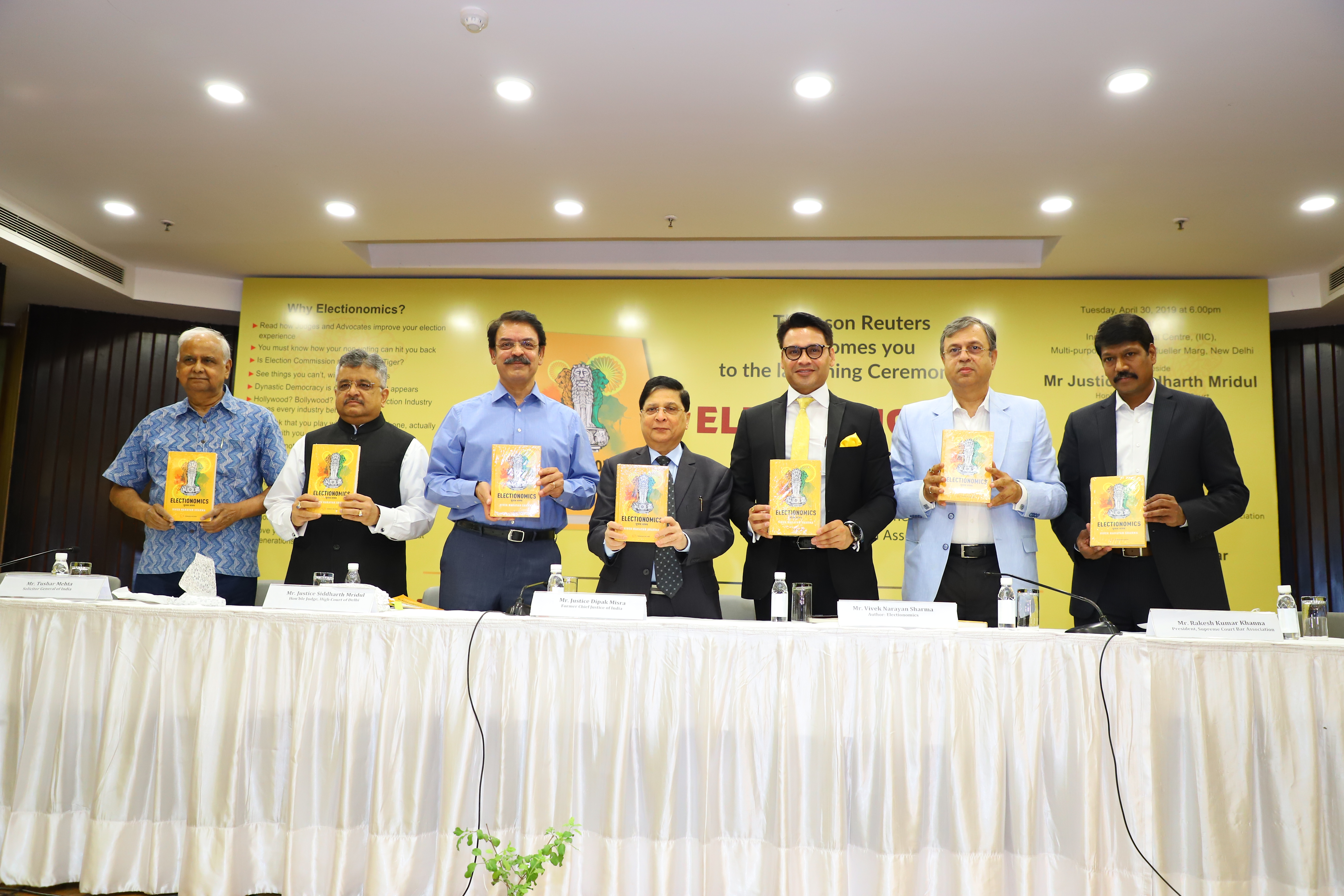
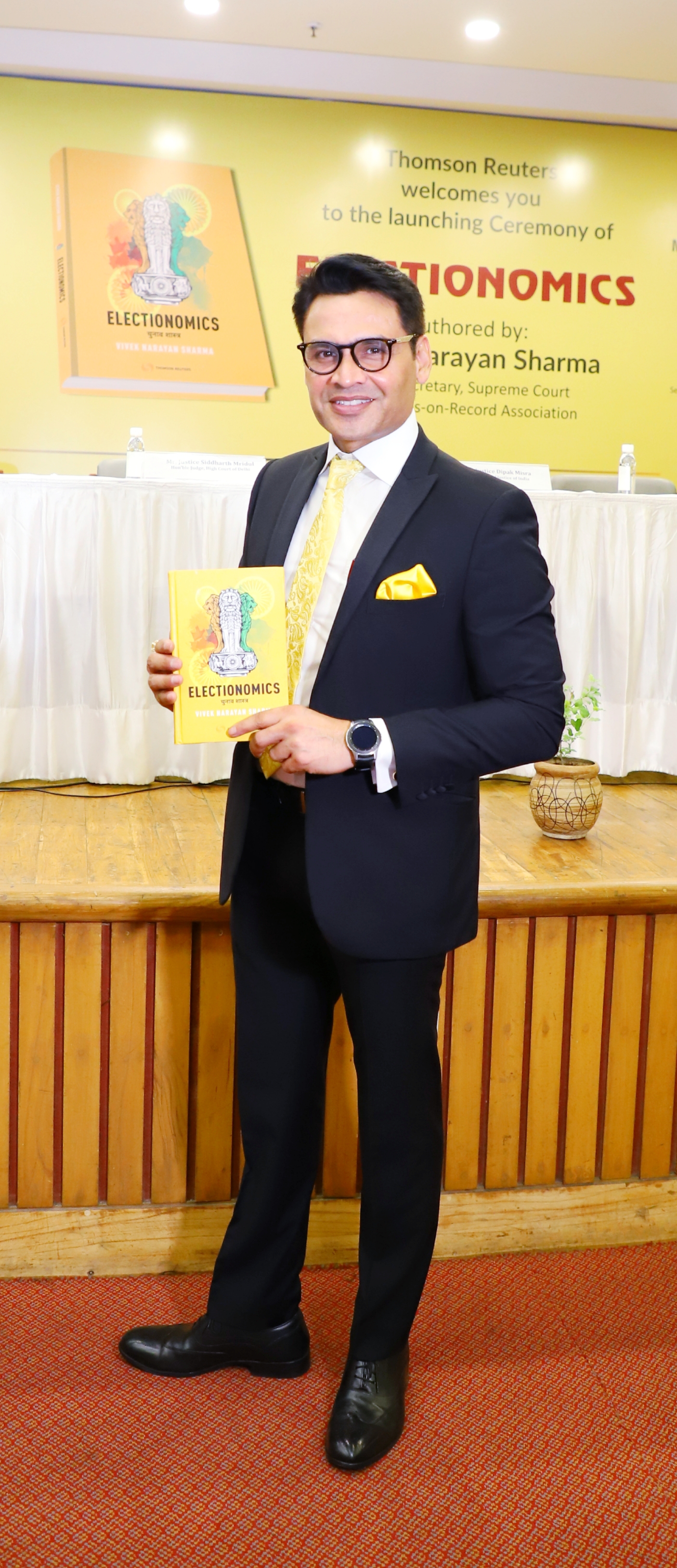
    Vivek Narayan Sharma is a Socio-Politico-Constitution expert and renowned advocate practising at Supreme Court of India. He is the Joint Secretary of Supreme Court Advocates on Record Association. He is the President of Society for Criminal Justice and National Advisor, Consultant & Convenor for eminent social, political outfits and law journals in India. He is Advisor (Legal) to Indo-Canada Chambre De Commerce (ICCC) (India Chapter). He is one of the most popular, most discussed and most-read Columnist for Times of India (TOI) and Economic Times (ET). He has authored “Electionomics”, a book published by world’s top publishers Thomson Reuters.

    Apart from catering to his opulent clients, He feels compelled to satisfy his philanthropic & social ennoblement urges. He has filed & contested cases of public importance to improve the hues and spectrum of society. He has advised Ministers and Political parties. He envisions strategic improvements in Democratic, Electioneering & Criminal Justice Delivery system in India.

    Enrolled as an advocate with the Bar Council of Delhi in the year 1999, He has handled litigation pertaining to politics, corporate, constitution, energy, consumer, environment, property, real estate apart from dealing in conventional civil, criminal and indirect tax appellate practice at Supreme Court, High Court of Delhi and Tribunals and Commissions. He has appeared and argued before numerous High Courts including Punjab & Haryana, Himachal Pradesh, U.P. & Karnataka etc.

    He is Senior Counsel on the panel of UOI and State of UP. Vivek is counsel for several Public Corporations like Coal India Ltd. and its subsidiaries, NHPC, UP Power Corporation (UPPCL) etc.

    In this interview he talked to us about:

    • Challenging moments of his career till date
    • He talks about his book “Electionomics”
    • Wins that he cherish till date
    • The secret of never losing a case as a trial lawyer.

    What were the three most challenging moments in your career as an advocate till date? How did you handle them?

    Challenges are inevitable when you have the grit to push against the wave. I have a strong conscience and hence, once I take up a case, I take it forward with all my being. Having said that, sometimes, the facts of the case, the legal position of the case and the moral appeal of the case, all deserve to be answered with justice but there may be unfortunate episodes when Courts appear prejudiced or pre-meditated and do not afford opportunities to even present the case properly. At times, even before the presentation of your case, you find yourself totally compressed between the push of your conscience and formal decorum that you cannot overstep as an advocate. I would briefly tell you the three top tight situations: 

    Ganga Action Plan case (2003)

    The Supreme Court Bench seemed prejudiced towards the seniority and paid heed to the arguments of the Solicitor General of India Mr. Harish Salve, irrespective of mention of incorrect relevant facts, in the face of the record. With 4 years of experience at the bar, I was extremely prepared with all facts on fingertips, case laws cited, legal position drawn.  

    But no matter what I said, Judges’ eyes and minds stayed fixed on the senior gown. The Court showed no interest to my best documents in the paper-books, which would have proven the SG wrong and I eventually ended up shutting my files and telling the Court, “What is the point in arguing before your Lordships, if your Lordships can’t appreciate what I am arguing?”. I was loud, clear, harsh and my voice enveloped the Court in silence. Though I had raised a valid point, but I was arrogant. The Bench irked, “What did you say?”, and I repeated with the same penchant. Mr. Gopal Subramanium, a Senior Advocate, who was sitting beside me to represent another party in the same case, pulled my gown and told me something which I don’t remember, but consequently I repeated my words with care, caution and respect and pleaded to the Court that I was trying my best to assist and sought proper attention of the Court to the relevant facts of the case. The bench pretended to hear me after my objection but nothing fruitful came out during that session of Court. However, later I could drive the outcome in a favourable position for my clients, who were fighting for cleaning of Ganges and to stop misutilisation of hundreds of crores of tax-payers money.

    Interestingly, I had written a letter for the presiding Judge of the Bench on the very same night at around 2 am and posted the very next day and conveyed that I was wrong in my arrogance before the court. The impact of that letter was seen 4 months’ after that when the case again came for hearing and the Presiding Judge remembered what I had argued on that day and provided relief in our favour.

    PIL in Nirbhaya’s Case (2013)

    This was another hard and unfair situation of early 2013 when the entire country was perturbed with the cruelty of the Delhi Gang Rape. Chief Justice Altamas Kabir’s wife worked for the welfare of Juveniles and kept themselves at the side of the culprit Juvenile in the Nirbhaya’s case irrespective of his gruesome animalism with Nirbhaya and accused the media as unbiased towards the juvenile victim. I had filed the PIL for the Juvenile to be tried as ‘Major’ in the Delhi Gang Rape and for seeking his clinical examination as to whether he was a Psychopath and a danger to the society if freed! Several other PILs were clubbed together for hearing. 

    The cases were being dealt by the bench of Justice S. Radhakrishnan and Justice Dipak Misra. But surprisingly, after several hearing, the cases were moved to Chief Justice Altamas’s bench, by way of an administrative order passed by Chief Justice. I knew he had a conflict of interest as he had already given a public statement to favour the culprit, Juvenile. My PIL was clubbed with other PILs filed, feeling responsible for my fellow advocates, I stayed quiet and didn’t raise an objection. All the cases were dismissed. 

    I had to pick an alternative route of drafting my proposal for amending Section 16 of the Juvenile Justice Act, thereby bringing the juveniles to ordinary criminal trials in serious crimes. I used to advise certain union ministers in the Parliament, I pushed my proposal through one of them.  Consequently, Central Govt. brought an amendment in Section 16 of the JJ Act. Things went well and ultimately the law was changed. But that psychopath juvenile was released from the child home after he completed his detention of 3 years and that appeared the biggest injustice to the daughter of our country, Nirbhaya. 

    Case against Delhi Golf Course (2019)

    I was issued contempt notice in this matter by the Chief Justice of Delhi High Court! The issue again was a conflict of interest, I knew that the Chief Judge is an honorary member of the Delhi Golf Club (GGC), yet he didn’t refuse to hear the petition. But I didn’t possess the document to prove the same. The injustice began to unfold, he asked me to withdraw my petition or dilute my prayers to notional pleadings. Somehow, I felt, the matter that had all the law, facts and moral appeal for the underprivileged sportspersons, who bring laurels to the Nation, going down the drain for the wealthy and powerful. I felt the gush of my conscience, this was a pro-bono case and the financial situation of the sportspersons flashed in front of my eyes. I wanted to bring the opportunity of unhindered entry, right to play on public land(Gold Course) and respect for these sport-persons at DGC.

    With all due respect, I pleaded before the court to grant me hearing before making up their mind on anything. The Bench asserted that they would allow me to argue if I would remove certain prayers. I respectfully told the Bench, “These are material prayers in the case based on cogent and well-founded grounds. With due respects, I would not withdraw them, but this Hon’ble Court may always dismiss them after hearing my arguments on the same.” The Bench told me that it would not hear arguments on those prayers but dismiss the petition. Under a spot, I responded to the Bench, “The Courts can’t pre-empt the arguments of a counsel. Because if the counsels won’t argue then what would they do? I think in such a situation, we should just put down our gowns and stop practising.” I further added, “You are sitting here to hear us and so you must!” Then the bench gave me a hearing for some time, but this again was not an effective hearing and chose to dismiss the petition. So, in the end, I stated, “I knew this outcome!”, on which, I was issued contempt notice.

    The same evening, the contempt notice was served at my residence at 10.30 in the night. Notice named 3 of my juniors as well along with all the petitioners. However, on the day of hearing of contempt, at around 10.20am, the Chief Justice called me inside his chamber and expressed sorry for having issued the contempt notice and withdrew the same and restored the petition too, on the ground of conflict of interest and that he wasn’t aware of such conflict of interest. I was relieved and felt greatly happy in the gesture of the Chief, who also gave me a warm hug and consoled me beyond my imagination. I would always treasure those moments in my memories. 

    My recollection of this event won’t be complete without mentioning the gratitude to Mr. Tushar Mehta (Solicitor General of India), Mr. Shyam Diwan (Sr. Advocate), Mr. KC Mittal (Chairman, Bar Council of Delhi), Mr. Rakesh Khanna (President, Supreme Court Bar Association), Mr. Kirti Uppal (President, Delhi High Court Bar Association) and my very close friend Mr. Ajayinder Sangwan (Member, Bar Council of Delhi) and so many other advocate  friends, judges, well-wishers; whose blessings and good wishes have always enlightened my path.

    Tell us about the 3 wins that you really cherish till date?

    For me, the genesis of intention to win has substantial weight. An advocate may win by hook and crook for wealthy clients adding to the litter in the bin of social filth. For me, winning in the right perspective is fulfilling and adds to the contentment of my persona.  

    Each case taken up by me is important to me. I reckon the pains and investment a client takes to reach till High Court or Supreme Court, hence, winning and keep winning every day on principles is the character of my lawyering. Let me still try to pick some of the extraordinary and unique wins awarding me satisfaction, which are peacefully settled in the corners of my mind:
    Saraswati Kunj Society Case (2007)

    My client was an elderly widow, supporting herself by teaching even after she had retired. Like all real estate matters, my client had deposited the money with the Saraswati Kunj Society, Gurgaon for allotment of plot. She was brought to me by another senior citizen client, who selflessly helped her. The three of us would leave at 4 am and drive to the Chandigarh High Court for months for the hearing. I was worried about the cost effect on my client due to recurring hearings without any result. On a preceding night of the case listing, I could not sleep and just keep on pondering over the case. I would lie down, close my eyes and would get up and write some point and I kept on doing this ordeal till 3 am. It was in my mind that I must take the order in this hearing. I did not sleep that night and entire way also I was awake and pensive. During the hearing, I used the arguments, I had prepared during the previous night and forced myself strategically over the division bench of Chandigarh High Court. As is the saying, “God favours the Brave!”, I returned with an unprecedented verdict in my favour. Why I say, “unprecedented”, because prior and after that verdict, no one could ever obtain that verdict in the case of Saraswati Kunj society. Even years after that order, I was contacted by hundreds of people, including judges, bureaucrats etc. to take their cases and repeat my kind of success. But I had stopped going to Chandigarh High Court those days as I was too busy in Delhi and my mood had changed due to an incident. I avoided Chandigarh High Court though I went to argue before other high courts like Shimla, Bangalore, Cuttack, Allahabad, Kolkata & Mumbai etc.

    What was that incident which changed your mood?

    It’s still a vivid memory! After the order, the society lost it’s an appeal in Supreme Court too. I filed contempt and during this contempt hearing, the presiding Judge of the division bench wasn’t favouring the judgment arrived at by his predecessor on the bench. While many other similar cases were clubbed together and pending at the same time. The Judge would keep on giving adjournments on the request made at the behest of a well-known counsel of Chandigarh Mr. Atma Ram, Sr. Advocate (as I recollect), who was representing the Society. Mind it, there were 4 continuous adjournments each week and I used to travel to Chandigarh along with 2 senior citizens and for that, all of us used to get up at 3 am followed by a total of 10-12 hours of car travel each time. And we used to just get adjournments. When the ritual was repeated during the 5th hearing, I raised a serious objection and pleaded before the bench, “My lords may hear the case today, as I come from Delhi and the case is getting adjourned since last 4 occasions!” The Judge snapped at me, “Who has asked you to come here?” This was indeed an offensive statement.

    For a moment, I didn’t realize what to answer and I tried to weigh the situation in its correct perspective. I only said, “Mylords may consider my request.” The case was though not adjourned, but passed over, I could perceive something hard is going to come my way. During the arguments, the judge snapped at me again, “They don’t have plots, where would they give you plot from? Even the Supreme Court order can’t help your client!”. The Judge also said that he would pass rule in the main matter (which would then come in 5-7 years) and dispose of the contempt on society’s plea that they don’t have plots to allot.

    There were multiple complications in the case, and I am not going into those, but the impact would have been that all that was achieved, in the past, in favour of the client, would have been lost. This was one of the trickiest and testing moments of that time. I bought a minute’s time from the bench to talk to my clients, while in effect, I sought time to think a little more (…laughingly). Coming back to the bench, I requested the bench, “Mylords may pass an order, as they deem fit, I have one very small request to make, ‘whenever the society start executing registry (sale document), the first registry is executed in the name of my client.” (In effect this was my trap for the judges, as in reverse, I was seeking to bind the society so that they can never execute any registry, without first giving the plot to me). My speech delivery, carefully chosen words and positive attitude changed the context of things there. The bench accepted this contention of mine. And after a year or so, we filed another contempt and consequently, the registry was done in favour of my client. From the date of filing of this case in 2006 and till date, my client had been perhaps the sole beneficiary out of so many thousand people, who had bought a plot in Saraswati Kunj society, just opposite to Gurgaon Golf Course, and got possession thereof in consequence of a court order. 

    Love Jihad case for RSS (2003-04)

    This was one of my first pro-bono that I fought in my early career days. A 10th fail 45-year-old man, who was already having 2 wives and working in the Waqf Board, alleged that he was legally married to a highly educated professional Hindu Women of 28 years from Ambala from a family of intellectual and well-settled parents. The issue was boiling in the region for around 6 months and consequently, several cross cases reached at the door of Supreme Court, including the cases filed by the parents of the girl, for whom I was arguing.

    The parents were in greatest distress about the welfare of their daughter, who was earlier married to a Hindu boy in Delhi and was removed from his company, while the couple was going to Vaishno Devi, by the Muslim Man. For seeking her release from the abduction, parents had filed Habeas Corpus petition before the Chandigarh High Court. The Muslim man and the Hindu girl had jointly filed Writ Petition for seeking protection and a separate petition for seeking quashing of FIR against Muslim man. A couple of other petitions from Muslim Priest (Maulvi) and Hindu Support groups were also filed. Both Central & State governments belonged to different parties, so the battle was really heated up on this count too.

    The High Court granted protection to Muslim boy and Hindu girl and dismissed parents’ petition, but declined to quash the FIR against Muslim man and directed him to appear before concerned Magistrate’s court for obtaining bail.

    Before the Supreme Court, there was a lot of drama and the entire courtroom was filled with people on either side of spectators came to watch this case. The Jethmalani clan with a battery of support lawyers were representing the Muslim man and a Hindu girl.  Heated arguments took place for long. At the conclusion of the long hearing, the SC bench called the Hindu girl for seeking her statement in open court. The girl gave a statement in favour of a Muslim man. But I was vigilant like an eagle and watched her body movements and words’ delivery very closely. I somehow sensed the tension in her body and observed a minute of detail. While she spoke her name she was confident and looked into the eyes of Judge. But when she said that she wanted to live with a Muslim man, she became a different person. She sounded low and spoke face down without eye contact. The bench was quick enough to retort, “It is totally clear that she wants to live with….!.”, and I snapped just at that moment and very softly spoke, “Mylords may I request to take her statement inside Mylords’ chamber privately!” I repeated, Mylords heard it clearly now, they paused and within few moments directed that they would take her statement in Chamber during lunchtime.

    This changed the outcome of this case later. When the truth was revealed to the court privately by the Hindu girl, the Court denied relief to the Muslim man, who in fact ran away from the court premises during the hearing itself, apprehending his arrest. I still remember the girl’s overwhelmed parents lied down on their stomach and touched my feet outside Court, bringing tears to even my eyes.

    CRPF/BSF Pension Pay-parity case (2019)

    One of my very close friend, who is a senior officer in the CAPFs services, brought this case to me with an appeal from thousands of service personals. There was a long legal struggle which they had adhered, and the matter had finally reached the Supreme Court. I had to work on deriving the legal position to achieve positive results. It was extremely challenging, I had to spend substantial time on research, discussions and building the case. Eventually, we achieved the desired. It was a landmark judgment that brought organised status to CAPFs services (BSF, CRPF, ITBP etc.) and provided financial parity to officers similarly situated therefore benefitting lakhs of families of officers. I received hundreds of calls and messages on social media to express gratitude for this win.

    As a trial lawyer, you have a record of never losing a case. What is the secret?
    One develops one’s skill of lawyering with time. While each to his own, I have my own grasp of human psychology apart from in-depth legal acumen. The trial incorporates building case strategy based on the court process, the examination of evidence, cross-examination of witnesses, facts’ penetration and presentation. All these skills applied together help in winning each case.

    You started your career in the chamber of late Mr. Dipankar P. Gupta, formerly Solicitor General of India. Tell us about your biggest takeaways as an advocate during this time.

    Since I was fresh out of college, his mentoring was critical and left lasting impressions on my persona. His meticulousness impressed me, and I adapted it as a penchant. There were other commonalities between us, we both liked, believed and had read Swami Vivekanand and we both were tall and handsome (…laughingly).

    You are the Joint Secretary of the Supreme Court Bar Association. What are your plans to make things better for the lawyers practising at the Supreme Court and what all have you achieved so far?

    I see SCAORA body as a possible engine that could drive the judiciary culture to a futuristic vision comprising of no pending cases, quick and fair trial, technological advancement to aid speed and awareness and taking care of the legal fraternity in the best way. 

    To make all this possible, we need the right kind of people on board along with supportive infrastructure, staff and resources. 

    I would say, each member of the committee brings their intention for the upliftment of fellow advocates. I too, add up to the committee with my previous experiences of intention, planning and execution but where we all fail to achieve our vision is the lack of staff, resources and infrastructure, basically, the funding and formation of SCAORA machinery as a functioning body must be maturely established in order to achieve its goals. 

    For example, since last one and a half year of my tenure, I could push some of the important executions through the SCAORA committee, like medical schemes for advocates, SCAORA e-journal that provides the platform to the fellow advocates to speak up through articles, we also formalized delivery of lectures by Judges and senior advocates for the benefit of bar members to prepare for their AOR examination. All this and more, I have a strong inclination for technology and so, apart from bringing e-journal, I also pushed all possible resources for these lectures to be made available online. Having made all this effort, I want to stress upon that all of this could have gone a long way if there was more support available in terms infrastructure and resources to SCAORA, for which our request to the Chief Justice of India is pending consideration. The CJI has assured us for providing supportive infrastructure to SCAORA soon and has also agreed to resolve the necessary issues of a registry, which advocates are facing for years. I am happy to say that some of the issues have already been resolved. I am happy to say that the present SCAORA Committee is progressive and mindful and is a pleasure to work with.

    I am happy to say that we could also add a feather in the cap of the SCAORA committee by organizing an elite “National Conference on ‘Technology, Training and Infrastructure: Keys for Speedy Justice’; and ‘The Changing Face of Legal Education in India’ held at Vigyan Bhawan in Sep’ 2018”. This was the first time in the history of Supreme Court that the SCAORA Committee organized such a successful and valuable program that the whole legal fraternity could take pride. My previous exposure of successful huge social events enabled me to drive the planning and execution of the National Conference against all odds and challenges. I had in mind that we had to ensure the smooth flow of the event since it was prestigious and being inaugurated by the President of India and under the chairmanship of Chief Justice of India and attended by all the other Judges of the Supreme Court of India. I am so grateful for the whole team members who worked extremely hard for it.

    Basically, I feel we need innovation, pragmatism and zeal to implement various episodes to uplift fellow lawyers. I wish to execute much more and seek the blessings of Almighty, to be in the position to achieve more in the field of health, fitness and financial security of my legal fraternity.
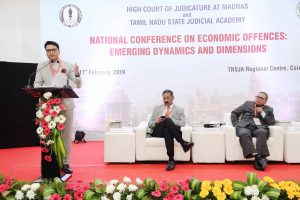
    What are your thoughts on pro bono legal work? You are known to do a lot of pro bono matters. Tell us about the three most important pro bono matters you are working on currently?

    Being humans, we are blessed with the capability to think and use limbs in the best possible manner, as compared to other living bodies on earth. What animals are incapable of, humans are capable of! One such capability is ‘to help’. Humans are best built to help, with their minds, limbs and ability to communicate. So I believe, whatever we do, there should always be an element of pro-bono. I bear it as a recurring habit. Society is best served, when more and more able minds provide pro-bono services in different fields, be it law, medical, education etc. The culture is fast developing in India, but a lot is required to be done yet.

      

    When you ask about 3 ongoing important pro-bono litigations, I would say,

    (i) Muslim Women – Halala & Polygamy case – pending before the Supreme Court; 

    (ii) Permanent Commission for women in Armed Forces – pending before Supreme Court of India & 

    (iii) Illegal Sand Mining case – pending before National Green Tribunal (NGT), however, in this case, serious observations and directions have been issued to stop illegal mining from the riverbed.

    You write frequently. You often write for various media houses and also recently published a book called Electionomics. How do you find time to write despite busy schedules?

    Your question has the answer itself, ‘..you find time..’. We all have the same twenty-four hours in the day, it is about disciplining oneself to do what one has to do. Sometimes, when a lot is at stake for my clients, the cases take most of my mental space, those are the days, I do not write much although subconsciously if I have decided on a topic, my mind keeps gathering information and begins its analysis.

    The day comes, when my mind is relatively free and all prepared to flush all my thoughts on my laptop, then it’s a matter of just a few hours. The actual writing is just a result of my thought-process that I cannot quantify in the unit of time, that’s how my mind works as far as articles are concerned. 

    Writing a book especially one like ‘Electionomics’ is a different story, a lot is already covered in the Author’s note of the book, briefly, it can be said, that it is a huge commitment to come up with a book. A book like this has lot of research and analysis into it combined with my knowledge of Bhagwad Geeta of tender years. Surprisingly, Shlokas that I had read in my early youngsters’ days, came out to ripen with deep understanding when I began compiling them for the book. I think the habit of daily meditation helps me a lot in my mental agility. 

    Tell us about Electionomics. Why did you want to write a book like this? What is the idea behind this book?
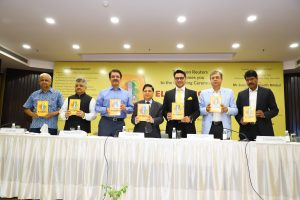
    Election machinery of the largest democracy of the world is complex beyond imagination. The book attempts to define the Election process in a very simple way so every common person can understand it. I have used the ancientness and spiritualism of King Dhritrashthra as a satire to describe our current Election process along with its legal fabric. The book is not just the economics of the election but it’s a comprehensive Election Science (चुनाव शास्त्र). 

    The book presents the complications of Indian Democracy and elections through the anecdotes, statistics, the legal provisions, position of courts and any resultant discomfort of the readers have been offered solace by way of 24 shlokas from Shrimad Bhagvad Gita. The wisdom of Krishna is used to advise the young generation on how to survive in the adverse times, the book “Electionomics” comes out as a Mythological Satire on the complex Election scenario in India. It’s a fusion of reality and fiction awarding wisdom and ease to the readers to deal with harsh life. The book has attracted accolades like the only book of its kind, an accompaniment of Bhagwad Geeta, Mythological Satire, the tale of elections from the eyes of Sanjay and ears of Dhritrashtra etc.

      

    I wrote this kind of book because I have all what it takes to write it. 

    Mental and physical fitness is very important, but most lawyers fail to take care of themselves in this regard. Tell us about your self-care routine?

    Self-care, cannot have a special routine removed from my professional routine. Everything is engrained within the one and only one time-seed of the day. Whatever we sow each day, reaps out and shows. Here, read between the lines from the outline of my daily routine. Life is not easy and with the demanding professional life, I cannot live with a fixation on the clock. Each day is a different day. The two intrinsic things are I open my day with few minutes of meditation and finish my day at home with my family and everything else remain an on-spot decision based on energy level inside me at that moment. 

    My fitness routine varies as per my court schedule, there are days I need to rush for the court early, preceded with overnight case preparation and I reduce or skip my fitness regime in the morning. Sometimes I sneak out during the evenings when I feel the need to burn the calories is imminent. I listen to my body and head out for my food and activities accordingly. Its mix of cardio, callisthenics, weight training and stretches at the gym; yoga with my wife, lawn tennis with friends or merely golfing with my close buddies or kids. 

    My breakfast is usually fruits salad mixed with curd and turmeric. I carry the home-cooked meal to court. The court proceedings usually occupy me till midday on working days, followed by client meetings or public events. I usually have early dinner between 6:30-7:00 pm sitting at my home office. Usually, it’s a bowl of Lotus Seeds (Makhanas) or two besan cheellas, or single sandwich or a bowl of salad, as I am fond of home-cooked food. 

    Evenings are usually spent with case preparation, writing articles and other important meetings, when I close my day, I make sure that I speak to my kids about their daily routine, achievements, challenges. I love to parent them. I usually keep Saturdays for pro-bono meetings and beyond that I prefer to keep weekend for activities with my family & close friends, like sports, get-togethers, excursions or watching good movies, only except for urgent client meetings, as you can see a lawyers life cannot be guided by fixation, as I talk about it, I know, how tricky it is, the idea is to try to optimize and not to lose on anything. In addition, many of my lectures & speeches happen during weekends and that provides me inroads to social interaction with the youths, which I love very much.  

    According to you what are the ten most important skills one should cultivate in order to succeed as a brilliant litigator?

    That’s easy! (…laughingly) 

    A brilliant litigator should be very good at reading, writing & oratory. Strategic, clever & mighty minds do best for their clients! Positivity in attitude, good work and timely delivery are a must for fruitful future references in work. And that’s only nine! (…laughingly)

    What’s the tenth?

    The tenth is, a brilliant litigator should always have some surprises up his sleeves, which he should never share even with his team.

    The legal profession is very stressful, how do you unwind yourself?

    I always begin my day with 10-15 minutes of meditation, it energises me for the day. It is extremely important to take care of personal life and the relationships that we cherish. I am a family man and my home is the best place for me to destress myself. I and my wife take extreme pleasure in raising our two children, I think it’s crucial to spend time with the children, impart our experiences to them and also, see the world through their fresh eyes, it keeps us upbeat and modernised. My mother passed away a few years back and I try to speak to my father every 2nd or 3rd day, I enjoy a very fond relationship with him. 

    You have built a great brand for yourself as a lawyer in a relatively short time. What are your thoughts on how a lawyer should go about building their brand as a practitioner?

    Correct Practice, Right approach, vision, presentation, commitment, genuine concerns for the fraternity and clients, honesty, integrity and connect. Just be yourself, honest and genuine, do not get affected due to the rat race of the world. I have a better sense of duty towards others and that also entices others to think about me. I am always careful about my duty towards others with the least nuisance value.

    Do you have a personal code of ethics about which kind of matters you will accept or refuse? What according to you are the 3 most important ethical principles that you personally adhere to?

    When in doubt, I ask my conscience, if that permits me, I take the case, else either I refuse or discourage such a client to opt for me. Sometimes I have to refuse because of a shortage of time or when the attitude of a client appears extremely unreasonable. 

  • Siddharth Marwah, Senior Associate, Khaitan & Co, on student politics, the art of delivering lectures & writing, and his experience in commercial law

    Siddharth Marwah, Senior Associate, Khaitan & Co, on student politics, the art of delivering lectures & writing, and his experience in commercial law

    Siddharth Marwah is a corporate-commercial lawyer and is currently working as a Senior Associate with Khaitan & Co. His area of practice involves mergers and acquisitions, joint ventures, foreign investment and general corporate and commercial matters. He also serves as a guest lecturer with certain law schools mostly being involved with his alma mater Campus Law Centre, University of Delhi, where he also sits on Governing Body of the Campus Law Centre Alumni Association. He was recently appointed as a sole arbitrator in a corporate-commercial dispute.

    Siddharth is a graduate in law from Campus Law Centre, Delhi University, batch of 2015. He was the Vice-President of the Campus Law Centre Students’ Union, established the Legal Aid Cell in his college and was declared the best paralegal by DLSA. During his time in law school, he was actively involved in the Delhi University student politics and legal aid and was awarded a 100% scholarship by the University of St.Thomas, Minnesota.

    In this interview he talks to us about:

    • Being convener of the Legal Aid Society in his college and his continued involvement with legal aid
    • His experience in corporate-commercial law
    • His involvement in student politics
    • His continued involvement with his alma mater
    • His many accomplishments as paralegal, writer, lecturer, etc.


    HOW WAS LIFE AT CAMPUS LAW CENTRE?

    Life at CLC was a rollercoaster ride to me. From managing the scores to being the part of the Students’ Union was fun and taught me various aspects of law and gave an insight into politics. My involvement with the legal aid society helped me realise how difficult the access to legal justice was for people and it’s a realisation that has stayed with me. The best part about studying at Delhi University was that I got to interact with people from different walks of life and from all over India. That exposure helped me to grow as an individual and that experience has helped me in my legal career as well.

    You talk about your involvement with legal aid during law school, and we see that it’s something you continue your involvement with. HOW WAS YOUR EXPERIENCE WORKING AS A PARALEGAL?

    (DLSA awarded him as the best paralegal volunteer 2014 and he was also the Student Convener of the Legal Aid Cell at his college)

    Legal Aid in our country still needs a helping hand from the authorities to enhance the justice system. Being the student convener of the Legal Aid Cell, I helped establish the Legal Aid Clinic in our college. I was involved in organizing legal awareness drive in slums and informing people about their basic rights, organising legal aid camps and conducting PLV training sessions. Working as a paralegal made me question conventions that we had unquestioningly come to accept. DLSA, on seeing my zeal towards the work awarded me as the best Paralegal in 2014.

    Continuing my association with legal aid, we at the Campus Law Centre Alumni Association are planning to organise large scale Legal Aid camps throughout Delhi to help as many underprivileged people as we can. We already have 500+ lawyers willing to support us in this cause. I would personally like to focus on cases of domestic violence and child abuse.

    Tell us more about your work with the Campus law centre alumni association? We understand that you are planning to raise funds for the renovation of The law school?

    (Siddharth is the Treasurer of the Campus Law Centre Alumni Association, and is the youngest member of the governing body of the association)

    CLC is one of the oldest law schools in the country and has an alumni base of 10000+ lawyers across the country. The idea was to provide a common platform for the alumni to meet and for the students to interact with them. Unlike the other law schools, Campus Law Centre didn’t pamper us. We did not get much institutional support for internships and placement. We were left completely on our own – and it was up to us to make the most of the time and resources we had. Keeping that in mind, my aim ever since college has been to provide every student with an equal opportunity when it comes to getting internships and placements and through the alumni association, I hope to achieve it. We are blessed with an enviable alumni network and we aim to provide a platform that will increase the accessibility for the students. We have Senior Advocates like Mr Mohan Parasaran, Mr Sidharth Luthra, and Mr Rakesh Munjal as part of our governing body. The advisory body of the association is headed by the Chief Justice of India, Justice Gogoi as our Patron-in-Chief.

    The renovation of the college infrastructure is one of our primary goals, so that the students can have access to world-class infrastructure and better learning facilities. We have started reaching out to all our senior alumni and many of the alumni have also offered their assistance to help renovate the entire college infrastructure, which is what we will be working towards it in the coming months.

    DO YOU HAVE PLANS NOW FOR AN LL.M?

    I always had a plan to work for some time in India before going for further studies. St. Thomas School of Law awarded me a 100% scholarship to pursue LL.M but I chose to practise law in India first. My family supported my decision and IndusLaw (where I started my legal career) provided me with an opportunity to work with them as an associate in their corporate team. Yes, I do have plans to study further and may seek LL.M. opportunities in business and corporate laws in the future. Having said that, I do firmly believe that nothing can replace actual practical experience.

    HOW DOES ONE GO ABOUT THE ART OF delivering lectures and WRITING?

    (Siddharth delivers guest lectures on corporate laws at various law schools throughout the country. MONDAQ awarded his article on GST as the “Most popular article in India”.)

    I feel blessed to have gotten the opportunity to deliver lectures at such prestigious universities so early in my career. Both delivering lectures and article writing requires in-depth research on the topic and one should use simple as well as classic vocabulary in order to make both the lecture and the article attractive and understandable even to a layman. Article writing plays an important role in improving your research skills and it adds stars to your CV if published. The whole experience of interacting with students while delivering lectures and answering their queries helps you grow as a person. I now understand how it feels to be on the other side of the table. While preparing for a lecture you have to do an in-depth analysis of the topic and be ready to answer any questions which the students might have. This is very different from writing an article where even if the article is detailed its more or less a monologue.
    IN WHAT WAY DO INTERNSHIPS HELP A STUDENT? IS THERE ANY SPECIFIC ANECDOTE regarding your internships, WHICH YOU WOULD LIKE TO SHARE WITH OUR READERS?

    (Siddharth has interned with the likes of Trilegal, Luthra&Luthra, and Senior Advocate Mr. Amarjeet Singh Chandhiok in the past.)

    Internships are very important for a law student as they provide practical exposure to the student and help him to analysis knowledge of books in real life. Working under Chandhiok sir was a thrilling experience and made me follow a concept of love what you do and do what you love. Internships play a vital role for a law student and one must try to get an exposure of all fields through internships in order to evaluate his interest before graduation.

    However, there is an interesting anecdote which I always like to share with students when it comes to internships. During my entire student life, I only did litigation-based internships. Even my internships at Trilegal and L&L Partners (then Luthra & Luthra) were all in litigation. But today its been more than 4 years that I have been practising corporate law. So, I think what matters most is that you develop your research skills, the interpretation of legal statutes, and try to inculcate a sense of professionalism through your internships. If you excel in these areas, then you can practice in any field of law. While law school and internships do help lay a good foundation, I truly believe that education for a lawyer begins when he/she starts practicing law professionally. Everybody starts with a clean slate upon graduation. And from all that helps you is your hard work, dedication, sincerity, and your ability to learn on the job.

    Coming from a family of litigators, HOW DID YOU CHOOSE CORPORATE LAW AS YOUR SPECIALISATION? WHAT COURSES WOULD YOU SUGGEST TO YOUNG LAW STUDENTS LOOKING TO SPECIALISE IN CORPORATE LAW?

    Well yes, that’s a question I get asked a lot. My grand-father was a Senior Advocate in the High Court of Delhi and specialised in Criminal law. All the other lawyers in my family who practice law are also into litigation. So yes, me venturing into Corporate Law was a first for the family. To begin with, my grand-father wasn’t too pleased at the prospect of me not visiting the court regularly!

    To be honest, Corporate Law for me began mostly as an experiment. Something to try before I ventured into litigation. But like they say destiny takes you where it has to. My initial months in Corporate Law and being involved in private equity deals made me realise that this is where my interest and passion lay. During my first job, I mostly represented start-ups in their funding rounds. The thrill of helping a new business raise funds to expand while helping the promoters retain contractual control over the company they created really got my interest. This was also the time when our government was promoting the Make-in-India campaign and helping start-ups raise funds to expand and contribute to the country’s economy felt like the right thing to do.

    However, I would advise students to make well-informed choices based on their area of interest. The first and foremost aspect which a student should take care of is deciding an area of interest. Once that step is complete, it becomes easier to work towards making a career out of that interest area. Looking at the Indian market, courses on Private Equity, Competition Law, Capital Markets and Finance would give students background and basic knowledge of the legal structure. The Insolvency and Bankruptcy Code is also something whose knowledge will prove very helpful to students in today’s scenario.

    WHAT DOES YOUR WORK AT KHAITAN & Co ENTAIL?


    My area of work at Khaitan & Co includes mergers and acquisitions, joint ventures, foreign investment, and general corporate and commercial matters. Working in a law firm like Khaitan & Co is a great learning curve for me and I’m happy doing it. We at Khaitan & Co work on some of the most marque and high-value deals which helps broaden your horizons as a professional. With the government’s push for Make-in-India, we have seen a marked increase in the number of private equity and venture capital deals in the country and I am blessed to have worked on a number of such deals. The main element in a law firm is its working environment and Khaitan & Co in this aspect is the best place to work. They say that it is not your job but your boss which shapes your career, and in this regard, I find myself have been lucky. I started my career under Mr Avimukt Dar (Senior Partner, IndusLaw) who really helped shape my interest in private equity and M&A, and now I’m working under Mr Bharat Anand (Senior Partner, Khaitan & Co) who is an institution in himself when it comes to corporate and commercial law. His work ethic and zeal for work are unparalleled.

    TELL US ABOUT YOUR TRYST WITH STUDENT POLITICS. HOW EASY OR DIFFICULT WAS IT TO MANAGE YOUR COLLEGE GRADES AND YOUR RESPONSIBILITIES AS A MEMBER OF THE STUDENTS’ UNION?  

    (Siddharth served as the Vice president of Campus Law Centre Student’s Union 2013.)

    Law and politics have always been intertwined. We lawyers make our living by analysing, arguing, and counter-arguing our interpretations of the legislations which the elected politicians and representatives make. Growing up I always thought of politics as a medium for change and Campus Law Centre provided me with my first tryst with politics. One of the many issues close to my heart was that I always wanted to help students who face problems on entering an English institution from a vernacular background. The sole purpose in contesting elections was to uplift the conditions of students in the college and to provide various opportunities to strengthen the students’ interest. Another issue of providing equal internship and placement opportunities to all students including those from non-legal backgrounds in one which remains close to my heart even today and is something which I am trying to push for through the Campus Law Centre Alumni Association. Student politics gave a lesson that one should be happy to help others in order to achieve the desired mark in politics. The students I helped out back then are still in touch with me and it gives me immense pleasure to see them do well in life. It also serves as a driving force to continue social engagement and help people especially students out in whatever way possible.
    As far as managing my college grades and my responsibilities as a member of the Students’ Union is concerned, that was never a problem. I always believe in focusing on the work in hand and to divide your time appropriately. So, no matter how pressing my other commitments were, I always made it a point to attend all my classes and study regularly.

    WHAT WOULD YOU LIKE TO SAY TO THE UPCOMING LAWYERS?

    Work in an area of your interest. Enjoy your days in college and study for good scores too. In the field of law, you can achieve success only by hard work and once you attain that position, sky is the limit for your prosperity and fame.

  • Sonia Sahijwani Saini, Assistant Manager Law, Maharatna Enterprise shares about the challenges of working as a legal advisor at a PSU

    Sonia Sahijwani Saini, Assistant Manager Law, Maharatna Enterprise shares about the challenges of working as a legal advisor at a PSU

    Sonia Sahijwani Saini is a law graduate from Campus Law Centre, University of Delhi (2007-2010) batch.  She comes from a commerce background and pursued journalism at IIMC New Delhi before making the digression to the field of law. With Masters in Business Laws degree from NLSIU, Bangalore, instead of opting for a law firm/ litigation or a private company, she rather chose the non-conventional route and got an opportunity to work for a job in a public sector in 2010 as a law officer through campus placement. Her first stint was at a Miniratna public sector enterprise under the Ministry of Commerce. In 2014, she got selected in a Maharatna enterprise in the oil sector as a Law Officer With approx 9 years of experience as an in house legal counsel for a semi-govt set up, currently, she is working as Assistant Manager Law at its Marketing Office at Chandigarh.

    Her debut novel ‘Yours Legally-a collection of short stories’ has recently been published by becomeshakespeare.com and is available online on Amazon, etc. In the interview, she has shared about the challenges of working as a legal advisor at a PSU, common mistakes made by people while drafting contracts and how law students can prepare for PSU jobs. 

    What are the challenges of working as a legal advisor at a PSU? What is different from working at a private company as an in-house counsel?  What are the kinds of legal issues faced by you on a regular day?

    To be honest and on a lighter note to start with, I never ever imagined that I will end up in a PSU! Though my father retired from State Bank of India, but like all ambitious young boys and girls my age, I always thought I would be either working in a private company or would be self-employed. However, to everyone’s and my own surprise, during the fag end of my LLB Degree, while I was applying for the campus placements, I willingly and voluntarily chose a lesser known public sector which was a ‘Miniratna’ enterprise under Ministry of Commerce based in New Delhi. I started out as a Management Trainee in 2010, got promoted to Probationary Manager and before being selected in my current job, I was last working as Dy Legal Manager with my previous employer. In 2014, I shifted to a different organization as a Law Officer and currently, I am working as Assistant Manager Law.

    Experience of working in a PSU: Before I talk about my transition to a Maharatna enterprise and the challenges of working in a PSU especially in a mammoth organization such as mine, I would like to state why personally I feel,  I made the right decision by starting out from a small company. The biggest benefit I gained from working in my first company was the amount of direct involvement and interaction we had with the Top/Senior Management including the Chairman and Directors almost on a daily basis based out of the Head Office. It was amazing to see the amount of detailed attention that was given to the legal issues faced by the company by the Management and what impressed me most about the organization that there was no rigid hierarchy. Being a mere fresher with only a few months of experience, the seniors never made us feel any less and treated us at par with them. From civil writs to complaints under the Negotiable Instruments Act, from Arbitration claims to labour law matters, in my first job, I got exposed to diversified litigation and attended courts on an almost daily basis.  My experience and exposure in my first job definitely laid the foundation for my next assignment.

    PSU vis a vis Pvt Sector:

    Let me talk about working as an in house counsel of a public sector vis a vis a private sector. It is normally assumed that as an in-house counsel semi govt/govt set up, you are reduced to being a mere link or better said a liasoning officer between the company and the advocates on its panel who act as the real counsels. But for all those of you who still have these notions and assumptions, out of my own experience I would like to tell you that it is infact not true. With first-hand knowledge and information about the company affairs and its working and policies, I was and still not only given the freedom to brief and prepare our advocates for our cases but very often given the critical tasks of drafting and finalising the applications, petitions, notices on my own.

    In a private set up, either you work as a corporate lawyer or as a litigating lawyer representing your clients in the courts, but being in the legal department of a public sector, you get to see the best of both the worlds. You not only get to deal with the company’s cases at hand but also learn to develop an expertise in a particular field for eg. being in the oil sector has given me immense knowledge of the kinds of issues an oil company faces and also made me acquire certain expertise in its agreements and policies. In a private sector, though one advantage is that with different clients/companies, you get to experience a variety of litigation, but I feel in the current set up, one needs to have a competitive advantage in a particular segment and excel in it if one is to thrive and grow in its career path. While on one hand there will definitely be a lot of flexibility in the procedures and work culture in a private company, a public sector on the other hand works and is based on well established set procedures, rules, guidelines and protocols which one is bound to follow.  But with recent innovative HR practices and much more critical roles being given to young officers, even the public sector companies are re-organising themselves to enhance the productivity of their employees.

    I strongly feel that at present, the public sector companies have completely turnaround, undergone a facelift as you could say and with the number of professionals like me opting for them these days, they are definitely now most sought after. And let me tell you, it is not just about the job stability, fixed income, job security and the perks associated with it. True, those are definitely add on benefits which act as great incentive to apply for a govt/semi-govt job, but being in a public sector myself now for past 9 years, I can easily say that the job responsibilities and work pressure is no less than in a private sector company.

    My current company is spread across the length and breadth of the country and is a popular and known name to all. In my current role, I feel an elevation not just in terms of the magnitude of the organisation and the number of people we deal with on a daily basis, but also in the critical nature of the legal cases involved which affects not just my company but the general public indirectly as well.  

    Challenges and issues: Coming to the challenges being faced by us, they are umpteen: with respect to the litigation aspect, we have to multi-task a lot of issues; handling hundreds of cases pending before various forums on a daily basis and engaging counsels for proper representation, ensuring no case goes unrepresented, getting replies/counter affidavits filed on time without any delays and most importantly to make rigorous efforts to not have any adverse order passed against the corporation which may act detrimental to its commercial interests. In cases where such orders are passed which do happen frequently, utmost priority is given to such cases by the legal department. For us to be able to defend the corporation and to make sure our advocates are well briefed and aware, it is imperative for us to be also thorough and well versed with the company’s various policies, guidelines and rules and regulations. That is a huge challenge in itself and requires being up to date all the time.

    To add to the above, as in house legal officers of the company, we not just take care of all the legal cases filed by and against our company for our respective locations but also perform a much more critical role that is of giving our legal opinions to the multiple legal issues we deal with on a daily basis.  With the increasing litigation and active litigants, each company these days strives to protect itself and its commercial interests by way of inserting suitable and appropriate legal clauses in their contracts and agreements to safeguard itself. Whether it is vetting of such agreements, drafting suitable bonds, undertakings, deeds on a case to case basis, handling RTI issues to giving our opinions in land-related matters, the role of law department in a public sector company cannot be undermined.

    I urge all of you law graduates out there to definitely give PSUs a chance. It will be worth it.

    You studied strategy for a year at IIM Kozhikode. What did you learn? How do you apply that at your work? What are the 3 most valuable things about the strategy that you can share with your readers so they can benefit from that?

    Well, let me begin by saying, strategy is a common word, and all of us are using it all the very time in our personal and professional lives both. We just don’t realise it. While I was in school and college, I always devised a strategy on how to prepare for my examinations. Nothing was ever random or unplanned. Each day before the exam was well planned as to what shall be studied on which day and it was always my endeavour to finish everything 1- 2 days in advance. Even writing an exam was and continues to be a strategy. From how to frame my answer on how to highlight the most critical points, from how to go step by step in a maths paper so to say on what sequence to choose while answering the questions, everything required strategy. While I was into sports, there was always a plan on how to outperform my opponent. From using his/her weakness to my advantage and on using my own strength against her, the strategy was and is very much a part of each sport being played in the world. And while we are in the professional world, don’t you think we are always following some mechanism, some process, approach and plan?

    Hence while in 2017 I was browsing through the courses at IIM, I could apply to, the course on Strategy Management caught my attention. My interview wasn’t easy though. It took me a while to convince the professors why a journalism cum law graduate is interested in this management subject. Once selected, I felt completely out of place since I was one of the youngest in my batch consisting of VPs and senior executives. And without a doubt, I was the only lawyer. But the course and the time and resources we invested in it was definitely worth it.

    Coming to what I learn there and how do I apply it into work well to sum up in the one year course, we studied strategy management in detail, from analysis to implementation, from evaluation to modification, we were apprised of the phases of strategy management. With the help of interesting articles, readings and real-life case studies, it opened my mind immensely. Since I am working in a mammoth organization and for me to be able to grow professionally and academically it is imperative for me to understand how companies work, how they make decisions, how big companies sometimes unexpectedly fail and what kind of strategies companies use to outperform others.

    From strategies on creating and sustaining competitive advantage i..e. business strategy to moving ahead to corporate strategy, from factors guiding companies on decisions as to make, buy or borrow to choosing whether to go for horizontal or vertical integration or related or unrelated diversification, we were given a detailed insight into all these topics and more which really opened up our minds to how companies really become successful and retain their competitive advantage.

    Though there is a lot I can talk about which I found relevant to my personal as well as professional life, coming to what I apply to my work are the following three valuable insights which I took out of the entire course and which I feel each one can relate to in their life as well.

    • To raise your Core Effectiveness

    core effectiveness/core competency in general means the main strengths of a particular enterprise, a company, a department or an individual which helps it to distinguish itself from others. In the context of law dept, it may imply the main strengths of the dept, the skills and resources it has which helps it to add value to the Corporation as a whole and gives the law dept a unique identity due to its critical importance to the organisation. In terms of an individual, I can say that one must try to look within and identify your strengths and weaknesses, do a SWOT analysis and identify your biggest competencies so that you can stand out from others in that particular expertise, area, the domain of work.  

    To recognize your core capabilities (and constraints), enabling optimal utilization of resources: As a lawyer, one can use this regularly while applying our mind to the legal cases and identifying whether we have a strong case in our favour or not. We can work upon the constraints i.e. where policy/law is silent, where documents are not available and try to strategically use the points which work for us.  

    • Resource leverage

    To have an effective strategy for leveraging resources and to ensure its positive impact on the organization

    Resource leverage is a means to close the gap between an organisation or department’s resources, capabilities, competencies on one hand and its aspirations aims and objectives on the other hand. In the context of a law dept of any organisation or a self-employed lawyer, it may mean how to effectively utilise the resources available with the dept in order to have an effective functioning and obtain positive results for the Corporation. For closing this gap, the law dept needs to frame/define a strategic intent, a sense of direction about its long term strategic position which it wishes to achieve. Hence it means to leverage/effectively utilise its resources and competencies to achieve its aspirations/goals

    • Develop a competitive advantage

    Therefore, strategies form an essential part of an organization’s effort(s) to achieve its long-term goals and objectives, having developed an understanding of the current business scenario, therefore, in this era of globalization where change is the only constant, the success of a business and of an individual too depends by and large on its ability to develop a strategy and implement it tactfully. At a time when we have hundreds of lawyers enrolling with the Bar each day, each lawyer has to act as a strategist in order to distinguish himself from others and to have a competitive advantage which is unique to itself. The work of a strategist does not simply end with identifying the long-term goals and formulating strategies accordingly. Instead, these strategies must be designed and redesigned and modified from time to time, in order to adjust to the dynamic external environment.

    In your experience, what are the five most common mistakes people make while drafting contracts?

    Law of contracts has been one of my fav subjects since my commerce graduation days at Delhi University. Most litigation in our country I have seen arises from poorly drafted contracts. If our agreements were clear, non-ambiguous, precise containing the suitable legal clauses, half of the lawyers would run out of jobs!!! Coming to the five most common mistakes people make while drafting contracts are as follows:

    • Leaving the date of execution or place of execution blank or incorrect dates surprising but true. I have often seen that private parties or companies for some reason make an error in this regard. At the time of execution, it is very important that the agreement is dated, even while signing the persons signing it must put a date on it. secondly, it is critical to know where the agreement is being executed as it helps in deciding the question of jurisdiction if and when any dispute arises. Either party gets an advantage in this regard wherein the date of execution which could imply the validity of the contract (5 years from the date of execution for eg) or the place of execution is ambiguous or simply left blank. I urge you all to avoid making this mistake.
    •  Unnecessarily long contracts having irrelevant clauses: it’s not the quantity but the quality that matters. While drafting contracts, sometimes they are so lengthy and running into so many pages that the essence of the particular contract goes missing and haywire. While it is important to ensure that no relevant clause is missed out on, what’s more, important to see is that clauses which have no relevance and are unrelated to the scope of the agreement are removed and a crisp agreement is executed which is easy to refer to and implement.
    • Omitting to have a dispute resolution clause: many times while vetting agreements, I have been faced with a perennial question, ‘madam, we doubt if any dispute will arise what’s the need of such a long dispute resolution clause? I only reply with mostly a smile first. I wish to explain that the aim of having a comprehensive contract is to safeguard us not just with the current scenario when everything looks positive and bright but to also protect us for any sort of eventuality wherein a dispute MAY or is likely to arise in the future. Please remember that a dispute resolution clause survives the termination of an agreement as well and if god forbid the other party stakes any claim, then having a well defined structured dispute resolution mechanism preferably arbitration with the clear defined procedure will help the parties from wasting unnecessary time and resources on litigation in courts.
    • Not choosing the right jurisdiction/no jurisdiction/multiple jurisdictions in a single contract: sometimes it has come to our notice that parties incorporate the jurisdiction clause but leave the place as blank. Or they do not have a jurisdiction clause at all. Even furthermore, they may execute the agreement say in Delhi, the parties may be in Delhi and Chandigarh (either party) and due to some error or having resorted to previous agreements, the jurisdiction clause is chosen as say Gujrat. This serves no purpose whatsoever. Always make sure that the jurisdiction clause is either mutually agreed upon or in standard contracts, it is the place where the party’s head office/ regional office/registered office is located. Or it could be the place where the contract is being performed. Having a well-established place of jurisdiction in the agreement itself can be extremely helpful in the event any legal proceeding is to be instituted or defended.

    While there may be many more such common errors, the above I feel must be taken care of by individual/companies while finalizing and executing contracts.

    If I want to work in a public sector as a legal advisor and I am just a law student now, how should I prepare myself and go about things?

    Well as of now, most public sectors either have their in-house written exam or opt for a score of CLAT (Common Law Admission Test) for LLM exam. You need to enroll for the written exam and the company shall obtain the score automatically (if it is taking the CLAT score). Past years papers of CLAT or of the concerned organization if it’s conducting an in house exam should be easily available online.

    A minimum of 1-2 years experience is generally preferred by most PSUs (albeit some which may also allow freshers without any experience to apply). At my time, my company asked for an experience of two years. After being shortlisted through the written exam follows the Group discussion and personal interview for which one must be thorough with the basic laws like CPC, CrPC, Contract Law, Company Law etc and procedures and the latest Acts which have come into force. Since most public sectors have an all India transfer policy you must be ready and willing to take up the post wherever it is offered and not be resistant to it. You will start as a Law Officer/Legal Manager/ Assistant Manager and promotions happen as per usual practice in approx 4-5 years time.  Once selected, be assured you have made the right choice.

    You managed to write a novel. Tell us about it. It is very difficult for most to have the discipline to finish one. How did you manage to stay on track? Did you follow a routine? Many people think of writing a novel but never manage to. what is the secret of you actually being able to finish it? Tell us something we don’t know and can learn from.

    Ahh, finally my novel. “Yours Legally” is something which is closest to my heart after my son and husband since it has been published in February recently after my son was born. It is my first novel whose draft was written years ago only to be modified and re-modified with my new and challenging experiences with the legal profession. Writing is my hobby, my passion and a form of meditation for me and I have been into it since school life. The idea to write a book was being nurtured since I was young and I truly feel when you are doing what you love, you put your heart and soul into it. Publishing a book with managing my infant was a tough task as I was sailing in two different boats at the same time. However, it was my sheer passion and dedication to see myself as an author which kept me going even after spending most nights awake with feeding and diaper changing sessions on the go. We all have a story to tell but most of us are rather scared of picking up that pen or laptop and penning down our thoughts. Perhaps we are just too lazy. As far as my journey is concerned, I was a habitual writer from diary writing, to writing articles, poems, working on my blog and once a week I always dedicated some time to express my thoughts and opinions. While working on this book, I made sure I write when my mind is free from any disturbance and it was mostly in the wee hours of the morning. The secret perhaps to me being able to get my book out in the literary world is my hunger to become an author and the fact that I never lost hope and patience.

    Another thing which I wish to state is that one must write from the heart and the soul and not from the mind. I write what I feel deserves to be written not just to please and attract any particular reader segment. I write with a lot of heart and emotion, perhaps I am too emotional once I start writing but I feel that’s what it actually takes to be able to become a good writer at least as per my standards.

    My book Yours Legally is a collection of six short stories inspired by true events related to the legal profession. Check it out on Amazon and Become Shakespeare.com.  If the back cover interests you, do buy it and give it a read.

  • Nitsimar Guliani, Associate, Chadha & Chadha Intellectual Property Law Firm shares about the work young IP lawyers have to do in the beginning

    Nitsimar Guliani, Associate, Chadha & Chadha Intellectual Property Law Firm shares about the work young IP lawyers have to do in the beginning

    Nitsimar Guliani graduated from Symbiosis Law School, Noida in 2018. She is currently an Associate with Chadha & Chadha Intellectual Property Law Firm, and specialises in trademarks, copyrights, and domain name disputes. She has been doing some interesting work around trademark and IP Law, and recently Ramanuj interviewed her about

    • Kind of work young IP lawyers have to do in the beginning
    • What kind of internships are more useful
    • Is Symbiosis Noida a good option?
    • Counterfeiting of goods in e-commerce platforms
    • Trademark law and using your competitors trademark for keyword advertising
    • Laws that govern domain name disputes in India
    • Her experience of doing a course with our own LawSikho

    What can I do in college to get into an IP law firm as a fresher? What kind of work do first year IP lawyers do?

    First, I suggest that you have your basics about the law clear i.e. the act, procedure, landmark judgments, etc., as it will just make it a little bit easier when you start working and won’t have to spend time looking for the law. Second, internships. As a law student, I pursued a lot of internships, 13 in total, and those internships helped me understand what I liked, and didn’t like. Internships are very important as they help you eliminate the fields you don’t like, so you can focus on what you do. When you are interning, always be willing (maybe even, pushy) to do more kinds of work. Since doing that work during internships will give you a head start on what your actual work is going to be like.

    Also, I recommend interning in smaller setups because it will give you a lot of exposure to different kinds of work, more responsibility and you get the chance to have seniors to review your performance closely. Interning at smaller firms matters even more in IP law, because most IPR firms (and I only speak for the trademark and copyrights team) are divided into prosecution, opposition, and litigation departments. So, essentially one ends up doing one thing only. However, if you are in a smaller setup, this divide will not really exist. I have been very lucky to have been exposed to different kinds of work at my law firm, Chadha & Chadha. I have done prosecution, opposition, litigation, domain name disputes, matters in neighboring countries, etc. Most of my work includes drafting and dealing with client queries. As a first-year lawyer, you are basically doing all the groundwork, which gets reviewed by your seniors. So, you should be the one knowing the matter inside-out. While you always have your seniors, you must always try to take as much ownership of your work as you can.

    What are the pros and cons of studying in Symbiosis Law School, Noida? How did your college help you in getting recruited?

    There are more pros, than cons of studying in Symbiosis, Noida. The pros being, my college really helped us prepare to fit into the real world. Our curriculum was designed to not focus on rote learning, so our internal examinations were usually application-based questions. Our college greatly focused on the importance of internships from Semester I. So, doing one internship per semester during the semester breaks was mandatory. And in the fourth and fifth year of college, we had the liberty to intern during the semester as well. Our classes were spaced out in such a way that we would have a couple of hours of college in the morning for 3-4 days from Monday to Friday. So, one was free to focus on what they wanted to pursue after college, like an internship if they wanted to land a job, prepare for judiciary, LLM, etc. Sundays, we usually had college from morning to evening, which got really tiring but was all worth it in the end. Our college was also extremely strict in terms of dress code. Formals meant you could not roll up your sleeves, could not wear leggings (for girls) and could not have a shaggy hairstyle. Those five years groomed us and we now understand the importance of dressing well in our profession.

    Cons of studying in Symbiosis, Noida – our campus is small, so we didn’t really have a “campus life” but we had our fair share of fun, outside the campus.

    The placement cell at college was really good. Fourth and fifth year onwards, we had recruitment offers from law firms, senior advocates and companies. Though I chose a placement off campus since I wanted to pursue IPR & the campus placements didn’t have a lot of IPR firms coming that year. But our college prepared us in such a way, that we had developed the skills and the experience, especially in the fourth and fifth year, to look for a job on our own. And that’s what I did.

    Counterfeiting is a massive problem in e-commerce. Tell us about the legal position in India with respect to this.


    Internet is largely an unregulated platform, so it’s easier than ever before to sell counterfeit goods online. A bare look at the products on the screen, makes it difficult (and sometimes, impossible) to tell whether its fake or real. So, the customer ends up buying the product, as a physical inspection of the goods only occurs on delivery.

    The Indian courts have been dealing with the issue of counterfeiting since a while now. But there is no specific law governing counterfeiting in India. Therefore, the existing statute is interpreted.

    The Trade Marks Act, 1999 defines counterfeiting in terms of “falsification” and “false application” of a trademark and the same is a cognizable offence.

    The Information Technology Act, 2000 has defined the term “intermediary” to include entities as varied as internet service providers (ISPs), social media companies, e-commerce apps, and even cyber cafes. Intermediaries are the backbone of commerce, but quite often abettors to counterfeiting and trademark infringement. IT Act provides “safe harbour protection” to intermediaries against any liability for third-party provided it had no knowledge of its illegality or exercised due diligence.

    However, this does not mean that all e-commerce marketplaces are “intermediaries” and entitled to the exemption. The Delhi High Court had recently pronounced a landmark judgment on the issue of trademark infringement and counterfeiting online. The Court held that any active contribution by the platform or online marketplace removes the ring of protection available to intermediaries under the IT Act. Therefore, when an e-commerce website actively participates and allows storing of counterfeit goods, they are liable for action.

    How does trademark infringement occur through keyword advertising? Tell us more about the legal position in India.

    The system of Keyword Advertising is such that it enables any economic operator to obtain placement for advertisement by selection of one or more “keywords.” This means that any person can also buy a “keyword” which is someone else’s trademark. Quite often, it is a tactic used by competitors to divert the rival’s customers to themselves. The display of a Sponsored Link on searching a particular term when leads to confusion in the minds of the consumer as to the origin of the goods amount to trademark infringement and/or passing off.

    In India, there is no legislation which expressly restricts the use of trademarks in a search engine. Therefore, the existing statute is interpreted. Section 29(8) of the Trademarks Act includes infringement by advertising.

    The Indian Courts have dealt with a few instances of Keyword advertising disputes. However, they have only looked into the concept of “likelihood of confusion.”

    The issue of whether keyword-triggered advertisements constitute trademark infringement by the search engines yet to be decided conclusively, worldwide.

    Google’s Advertising policy prohibits intellectual property infringement. One can submit a complaint regarding trademark infringement. While Google investigates such complaints, it, however, does not aid in dispute resolution. The resolution is left to the parties. Furthermore, Google allows the “fair use” of trademark in ad texts if it is used by a reseller or the trademark is used for informational purposes. Google’s Ad Text Policy specifically exempts from investigation ad text that uses the term descriptively in its ordinary meaning rather than in reference to the trademark. This essentially means that a lot of competitors work around the loopholes.

    You have worked on domain name disputes. Tell us about the resolution of domain name disputes in India.

    As we know, anyone can buy a domain name on the internet, which makes it an easy platform for infringers to violate someone else’s rights. In order to specifically deal with disputes relating to .IN domain names, the Government of India has formulated the .IN Domain name Resolution Policy (INDRP). The policy is in line with the international policy (UDRP) for domain names dispute resolution. INDRP deals with registered domain names which are identical and/or confusingly similar to that of another.

    The disputes filed under INDRP are referred to the .IN Registry which is NIXI (National Internet Exchange of India) and are resolved through Arbitration. The Arbitration and Conciliation Act, INDRP, Rules of Procedure and any bye-laws apply.

    The procedure is fairly simple. The aggrieved party submits a Complaint against the Registrant of the Domain name in the prescribed format. A statement of defence is filed by the other side followed by a statement of Rebuttal (by the Complainant) and a Counter-reply (by the Registrant) after which the award is passed by the appointed arbitrator.

    Three conditions are required to be satisfied in order to obtain a favourable award in an INDRP dispute:

    1. The domain name in question is identical and confusingly similar to a name, trademark or service mark in which the Complainant has rights
    2. The Registrant of that domain name has no rights in the domain name;
    3. The Registrant has registered or is using the domain name in bad faith.

    The INDRP resolution mechanism is very efficient. The case, I worked on, the award was passed in favour of the Complainant and against the Registrant of the domain name within 5 months. After the award is passed, the Registrant is given 3 months for the execution of the award i.e. to transfer the domain name. If the Registrant doesn’t comply, NIXI is very pro-active in assisting in execution. Communications are done over e-mail, and the response time is also pretty efficient. Also, like any arbitration, if the Registrant is unsatisfied with the award, he has 90 days to appeal the decision.

    Why did you take a course from LawSikho? How was your experience and how did it help?

    I was in my fourth year at Law School and found about the LawSikho courses over the internet. When I read about the curriculum, I enrolled for it without a second thought because I knew that LawSikho courses go beyond what is taught in the classrooms. The best part was that we were all assigned a mentor, who we could call, chat with and learn from. The classes were held online, and remain uploaded, so you can also keep going back to them or take them as per your own convenience.

    The LawSikho courses are designed in a way to really expand your learning, because you learn from professionals who have an expertise in a particular area of law. Also, the course developed a community of learners, who share knowledge and help each other with queries, till date!

  • Bhavin Patel, Freelance Legal Advisor and Legal-tech Enthusiast shares about the E-ADR challenge

    Bhavin Patel, Freelance Legal Advisor and Legal-tech Enthusiast shares about the E-ADR challenge

    Bhavin Patel is a graduate of NLSIU, Bangalore, having sixteen years’ experience across the legal, technology, and education industries.

    He is an integral part of the E-ADR challenge which has been conceptualised by ICICI Bank and co-organised by HumLab and Vayam.  In  the interview he speaks about the E-ADR challenge, how will the E-ADR institutions be set up and  what will be the mode of operation.

    Please tell us in brief what is the E-ADR challenge?

    Disputes are a healthy and essential aspect of a functioning democracy and market, but our current platforms of dispute resolution, most notably the courts, are not able to serve our needs due to huge pendency of cases.

    Issues of pendency, the cost of arbitration, and misconceptions around mediation are derailing both business and society. Even as we work to unclog the courts, we need large-scale, expedient, cost-effective, and trusted mechanisms of alternate dispute resolution.

    The E-Alternate Dispute Resolution Challenge 2019, which has been conceptualised by ICICI Bank and co-organised by HumLab and Vayam, invites innovators, practitioners, and social and business leaders to constitute teams and propose comprehensive solutions for the creation of an E-ADR Institution that can resolve millions of disputes online through technology and mechanisms of alternate dispute resolution such as arbitration and mediation. More details on the Challenge and how one may apply to it are available at: https://www.agamiprize.org/eadrchallenge

    What is your vision with this competition?

    We hope that the establishment of the E-ADR Institution that emerges from the Challenge will be able to help in some substantial measure towards the reduction of pendency in the court system, even as it provides a cost- and time-efficient mechanism for resolving large volumes of disputes. The Institution could provide a trusted mechanism that would enable consumers and citizens to resolve disputes easily and effectivily as well as improve the degree of contract enforceability in India, thereby boosting the nation’s position in the Doing Business

    How do you plan to set up the E-ADR institution?

    Applicants to the Challenge must respond to a detailed set of Specifications, which are available here. The Challenge organisers understand that no one applicant – and especially no one individual – may be able to fulfil all the requirements of the Specifications, and are therefore encouraging applicants to form consortia with other applicants who may be able to complement their skill sets and abilities. All consortia applications, once received, would be subject to a thorough screening process before being presented to a jury of eminent and qualified persons, who would deliberate upon, and then identify, one winning consortium that would be provided the mandate to establish and operate the E-ADR Institution.

    The winning consortium would then be supported in its endeavour by the Challenge organisers and a panel of leading practitioners in the field of alternate dispute resolution as it commences work on establishing the E-ADR Institution.

    ICICI Bank as the Conceptualist and Challenge Partner will be one of the first users of this institution and intends to utilise the E-ADR Institution for dealing with disputes arising in its products and services that are offered online and will consider extending the platform to its retail liabilities and retail assets businesses, which would supplement the other dispute resolution mechanisms available to the customers of ICICI Bank. Further, ICICI Bank has also agreed to provide suitable incentive at the inception stage of the E-ADR Institution established by the successful Challenge participant, by prepaying the institutional fee (adjustable in future) for a given number of matters that it would refer to the E-ADR Institution over a period of time, thereby making available to the E-ADR Institution, suitable sums of money in advance for utilisation towards the E-ADR Institution realising its objectives. Such a prepayment would go a long way towards easing the capital requirements of the E-ADR Institution in its early stages.

    Please do note that the financial incentives do not take the nature of prize money or any equity stake in the E-ADR Institution, as ICICI Bank intends to be a user of the E-ADR Institution that meets the specifications of the Challenge.

    How have you planned the mode of operation of electronic dispute resolution? What will be the Modus operandi?

    The proposal for the E-ADR Institution is that it would be able to provide a cost- and time-efficient mechanism for dispute resolution by providing a means of resolving such matters in an online medium, and through the use of technology. The time and cost associated with traditional mechanisms of alternate dispute resolution, including, for example, the costs of travelling to another location, may often dissuade a genuine grievant from being able to present their matter to a dispute resolution mechanism. Through mechanisms such as electronic submission of pleadings, video conferencing for trial proceedings, and systems that keep parties informed at each stage of proceedings, we trust the E-ADR Institution would be able to provide not only a quick and inexpensive means of dispute resolution, but also a fair and transparent one.

    How do you plan to have arbitrators, mediators and conciliators handling Multi-party discussions in electronic mode? Do you believe India has the infrastructure to execute E-ADR?

    While means such as video conferencing systems can be deployed to provide a mechanism for multi-party hearings, the Challenge organisers recognise that significant hurdles still exist in the country, which may pose problems for such a mechanism. That said, the winning Consortium may well be able to provide certain facilities from where Parties could participate in proceedings; additionally, we hope to create a Coalition that would include organisations who would consider using the E-ADR Institution to resolve their high-volume disputes. Such users may also have physical facilities spread out across the country, with good access to the Internet, and may be willing to provide access to these facilities for the use of the E-ADR Institution. Where, however, the requirement for verbal hearings is not felt to be necessary – such as in high-volume, ‘templatised’ matters of a low order of complexity, matters may well be resolved purely through the submission and consideration of pleadings, without the need for hearings and arguments.

    Furthermore, we believe that an Institution such as this could trigger and nurture the creation of a large number of trained dispute resolution professionals who can resolve a large volume of small and medium sized matters on a daily basis and develop their careers as such. In the first few months this may involve retraining existing professionals, such as retired judges and practicing professionals, but, subsequently, this could include the training and certification of a whole new generation of professionals, not limited to lawyers.