What inspired you to take up Law? Did you have to deal with any resistance from your family while making that decision?
My father wanted me to pursue CA like the rest of my relatives, since it was considered as a good earning prospect, especially in Kolkata. For him, law meant running around court rooms, which was mostly the case back in 2011. While there were law firms like Khaitan in Kolkata, in-house roles were minimal.
I somehow tried to convince him that I don’t want to pursue litigation, and am willing to work as a corporate lawyer, which I believe will have an enhanced scope in 5 years, by the time I graduate from law school. However, he was so reluctant that he even got me the CPT exam form, which he said would be a backup in case I am unable to clear CLAT.
During that time, NLU Odisha, NLU Delhi and JGLS were just newly launched, and the entrance exams for these institutions were held separately. I was not able to fill up many forms due to the resistance at home, thus, my options were quite limited.
Later, I spoke to a relative staying in Kolkata that I am desirous of moving to Bangalore, and he helped me with the admission process at Bangalore Institute of Legal Studies.
Would you say your law school prepared you for the practical work which you had to do at work?
I think the curriculum at traditional non NLUs do not prepare you for a corporate job. Neither the intricacies of due diligence nor contract drafting are taught; you learn them while at work. When I visited NLSIU for their intra college client counselling competition, on a special invite, I realised that these things are so much helpful and I missed out on so much.
The only advantage I had was of staying in the city of Bangalore- I could intern at some prestigious law firms, and I was able to avail the benefit of the NLSIU library for conducting research work for moot competitions.
In deciding between corporate and litigation practice, what are the parameters that you considered?
My internship experience was a mix of corporate and litigation, however, given the state of courts in India, the number of adjournments; I decided against litigating.
You have interned with former Justice Indu Malhotra, Supreme Court. Can you share the experience with our readers?
When I had applied for an internship with Ms. Malhotra was a Senior Advocate of the Supreme Court. I had procured two internships for the same period; another one being with Mr. K.V. Viswanathan, the then Additional Solicitor General of India (who also was elevated as a Judge of the Hon’ble Supreme Court later). I searched for their email ids on the Supreme Court Bar Association directory, which provides open online access on contact details of all advocates registered with the bar association of the Hon’ble Supreme Court, and followed up my application with calls.
The juniors at the office of Ms. Malhotra were extremely helpful and welcoming, and assigned me work like preparing a list of dates, research work on service matters, etc. In fact Ms. Malhotra also personally assigned me research work on her book on International Commercial Arbitration, which she was editing. I also visited the Apex Court regularly during my internship period, and was lucky to witness other eminent counsels like Kapil Sibal, Pinky Anand, Arvind Datar, etc arguing in court.
How was your time interning at law firms like Krishnamurthy & Co. (K Law), Majmudar and Partners and Tatva Legal?
Most of the law firms do not hire interns until 3rd or 4th year, and therefore, I could only intern with firms at the later part of college life. In Karnataka State Law University, the curriculum is designed in such a way that in a B.A. LL.B. course you are not taught core law subjects until 4th year.
While many of my friends complained that they were not assigned proper work during internship, and were given clerical tasks such as lifting of files or printing, surprisingly, for me, this wasn’t the case; my first internship with a law firm was at Tatva Legal, where I was conducting research on corporate laws, and was also involved in preparation of due diligence report of a company. At K Law also, the associate partners were kind enough, and I was assisting them in preparation of opinions, drafting of agreements and legal notices.
Majmudar & Partners offered me a long term internship during my final year, and therefore, I declined the internship offer at Bharucha & Partners (Delhi), however, later I realised that the decision was misplaced. Majmudar’s Bangalore office was very small, with only 1 partner and 2 junior associates. The partner directly assigned me work relating to review of agreements and drafting of advice, however, no proper feedback was provided on the same. Also, he kept assuring me of a PPO, which never happened.
After your education, you moved back to Kolkata, your hometown. Many stayed back in Bangalore or moved to Mumbai/ Delhi for better opportunities and bigger pay packages. Was this a conscious decision to move back to your hometown? If so, why? How challenging was it?
It was more of a personal decision for me; I had stayed out of home for 5 long years, and I wanted to be close to my parents. In fact I had a job offer from Wipro Legal and Compliance Team, Bangalore, as a Legal Executive, which I declined.
Finding a job which gives you a good exposure and also pays well was difficult. The corporates in Kolkata mostly have real estate work, and there is no departmentalisation (MA, PE, VC, Banking and Finance, and so on) as in most law firms outside Kolkata. I even interviewed for Khaitan, where the work was General Corporate; later, I joined Mr. Vinod Kothari in his financial and resolution services team, which gave me a good exposure both in terms of clientele as well as work. I worked with big corporate houses and NBFCs like Emami, Lux, Motilal Oswal, Poonawalla Finance (erstwhile Magma), Shriram Finance, Srei, amongst others.
You have pursued LLM from Jindal Global Law School. What was your motivation behind pursuing LLM? When did you finally decide that you need to do it? What was your topic of thesis? Why did you choose that subject for research?
I had an inclination towards teaching, and I always wanted to pursue a PhD; the decision to pursue LLM was a just step towards that.
I just didn’t want to leave a full time job to pursue academics, and when JGLS offered the blended LLM program in collaboration with Upgrad, I grabbed the opportunity.
My topic for my thesis was “Lifting of Corporate Veil and Group Insolvency”. I was involved in insolvency related work since its inception, i.e. from 2017, and during my LLM, the Insolvency and Bankruptcy Board of India had constituted a working group to develop draft framework on group insolvency, the Videocon ruling was also recently pronounced during that time, it was a burning topic during that time, therefore, the decision.
You’ve advised on market entry strategies across jurisdictions like Australia, Thailand, Philippines, Vietnam, Indonesia and supported international acquisitions in Singapore. Please share your key experiences?
I worked closely with the global expansion and marketing team of Livspace. My role included the following:
1. to provide a comparative analysis of entry mechanisms abroad;
2. to highlight the risks and restrictions on the marketing approach in various jurisdictions;
3. to engage with foreign lawyers for due diligence of the target company, and to review related agreements.
Laws in common law jurisdictions are mostly similar, and due to the emergence of technology, the relevant statutes are also readily available online, therefore, advisory on Singapore law was manageable. The difficult part was litigation management overseas.
Livspace is into the service industry, and therefore, there were cases filed with the Consumers Association of Singapore and with Small Claims Tribunals every now and then. Since I was not qualified to practice in Singapore, I was unable to personally appear in these matters; but still I managed most of the litigation inhouse, I used to draft replies, assist with filing (which was done online with SingPass), and was also instrumental in training the executives (mostly from operations) to appear in the said matters.
You’ve engaged with regulatory bodies and handled litigation including under IBC and MSME. How do you build legal strategies that balance compliance with business risk, particularly in high-stakes cases?
I am not keen on lengthy litigation and cutting the pocket of my client, I am practical that way and mostly try to conduct a cost benefit analysis for my client, and suggest negotiation or settlement, as the situation demands. However, where the reputation of my client may be at stake for frivolous claims, I would strongly urge for a no settlement policy, and to pursue the matter legally to deter the opposite party and also to set a precedent.
Please share your journey as an adjunct faculty at Neotia University. You have taught a number of legal subjects and the trending ones from alternative dispute resolution, contracts, company law, intellectual property law and international trade law. Tell us about your teaching methodology. What advice do you share with your students on scoring higher grades?
The experience was great. I had complete flexibility on the way I wanted to conduct classes. The teaching methodology varied depending on the subject- for instance, (1) for ADR, my focus was on practical aspects of mediation and negotiation through extensive role play sessions, where students were also provided feedback; (2) ITL is more of a theoretical subject, but I was not very keen on delivering notes, since that makes the class very monotonous, therefore, I used the reverse teaching methodology, where each student was assigned a topic on which he/she had to give a presentation, and then any part left unanswered was addressed by me; I believe that the flipped classroom approach enhances the presentation and speaking skills of students; (3) classes for contracts were a bit theoretical where the emphasis was teaching the essentials of the contract law and the key terms of contracts, with a blend of problem-solving and collaborative assignments.
My advice to law students (esp to non NLU students) would be to study for knowledge, not for exams. Most of the time I hear that the students should mug up sections and case laws to pass the exams; and in some cases, students may not understand any part of what they are writing, but that seemingly does not matter for the exams. I would instead advise students to be inquisitive and ask the most important question “why”.
Our readers will also be curious to know about your love for writing?
My former employee Mr. Vinod Kothari is a renowned author of several books, and I was fortunate enough assist him in his books- 27th Edition of Tannan’s Banking Law and Practice in India (2017) and 6th Edition Lexis Nexis’s Securitisation, Asset Reconstruction and Enforcement of Security Interests (2020). He was the one who encouraged me to write.
When I was working with Mr. Vinod Kothari (who is also an Insolvency Professional), I used to write mostly on practical issues we used to face with the newly launched Insolvency and Bankruptcy Code, and the gaps therein along with my suggestions; later my write ups were quoted by the Hon’ble Supreme Court in Phoenix Arc Private Limited vs. Spade Financial Services Limited & Ors. (February 1, 2021) and by the National Company Law Appellate Tribunal in the case of Jayanta Banerjee vs. Shashi Agarwal & Ors. (June 4, 2021), and my writings have continued ever since; with the most recent one being on the “Co-Lending Arrangements” published by SSRN.
Now, I feel writing for me is more of a way to express my thoughts on any recent amendment/ judicial pronouncement.
Is it easy to have a work-life balance in this profession?
Well I would say that’s a decision you have to make. I have seen people quitting the profession to focus more on personal life, mostly after marriage, or to raise their kids. While I am in favour of having a balanced life, I did not want to take a career break, and continued to work even post maternity, however, with a more flexible work environment in-house.
Looking back at your diverse legal journey, what advice would you give to young legal professionals aiming to transition into in-house roles?
I would say a good mentor plays a pivotal role in shaping one’s life, and in enhancing the thought process. I was fortunate enough to work at places where I was provided complete autonomy in work. I also believe strong interpersonal skills, analytical and problem-solving abilities, research skills, and a keen attention to detail are important not only as an inhouse counsel but for any lawyer.
I’ll start with the very, very important, and first and pertinent question, how and when did you decide to become a Barrister and an Advocate? And how was your journey? When did it start and how is it going? What kind of challenges have you faced still now?
Thank you for the question. Coming from Delhi, obviously it being the litigation hub, my school was right near the Delhi High Court and the Supreme Court.
So it was always on the way to school. I would see the courts, the lawyers. It was very intriguing to me. And then, a funny anecdote, when I was in 11th or 12th, I remember I had taken commerce with maths and I was so traumatized with maths. Then the next question came, where can I make money where math won’t be required and I don’t have to use trigonometry.
So there were few options which came out of which, again, law came, so I thought, might as well. Maybe that’s destiny. So that was the main reason why I started with law. It was a very stupid excuse, I must say, but everything’s written. I went to the UK. I was in University of Warwick where I did my undergrad, LLB. Unlike India, there what you do is you learn the substantive law in your undergrad. That is your LLB. That’s for three years. And then you either become a barrister or a solicitor, wherever you learn the procedural aspects. So solicitors are the ones who work in law firms. They are the ones who interact with the clients who make your witness statements or draft your petition. Barristers are a bit of a different side of the disputes.
Barristers are the ones who have the right of audience. That means they’re the ones who argue in court. So the training to be a barrister is quite different. It’s more about reading skills. It’s more of technicality and more into law. I mean, I’m sure both require their own sets of skills. Being a solicitor on the original side and being able to deduce that evidence from the client is a separate art, which barristers don’t have to do because then the paperwork already comes to them and you have to apply your brain just towards the right affording suspect.
So I was trained to be a barrister there, which opened my insights a lot. The way of education that we got there was quite different. Coming from a CBSE background where in our board exams, we were required to write probably a 300 word essay and suddenly entering into this university where within the first week I’m given an assignment to write a 3000 word essay.
It was challenging for all of us. I still remember, okay, so I wrote that essay and then they were like, but this is already there in the book. Like, what do you want? Law is already there and I’m giving you the law. And that’s where they taught me what analytical thinking was. And I think it was very important. Honestly, coming from the CBSE background, I did find it a bit disadvantageous, initially.
Took me a year to grasp and understand how this functions, how the essay writing functions, how do you write 5,000 words when you can do the same for 500 words. That’s also an art. Yeah, it was a very different form of education system. Some things I would say they should learn from India and some things I would really suggest India should learn from them.
Like when I was trying to be a barrister, we used to have recorded sessions of cross-examination or examination in chief or client handling. The biggest thing is client handling. What questions do you need to ask your clients while also protecting yourself under the ethical rules?
Like a simple thing if you’re doing mainly criminal trials. You won’t ask him a question, did you do it? Because the moment you say that and he answers that question to you, you can’t now take a not guilty plea. So ethical standards also come around, I’m sure. So these are things I’m not saying people have mal intention or anything, but these are things that need to be taught.
Problem is, I don’t see in Indian law schools that are being taught, I was fortunate enough to have been taught that. And whenever I have interns, I always tell them that when you’re talking to a client, be very careful because it is a double edged sword. Anything and everything that they reveal to you, though it is bound by attorney client privilege, but you also have the advocates Act and you need to be careful in navigating your way through both of them, by using it harmoniously.
So these are a few things that I learned there, how it was different. Then obviously after doing law, I was really motivated to come back to India because I love my country. I love the way things function. It may be chaotic, but I love the chaos. So I decided to take that leap of faith and coming back to India. I remember I was with Mr.Ciccu sir, in Delhi for a couple of years, one and a half years or so, where, I mean, I was exposed to the world of arbitrations, which was a very new ballgame. And, considering I was a barrister, so I had the license to practice in arbitration, so until I get my formal license in India to practice, so that way it was better for me to do that.
A very good experience in international arbitrations. And then I moved to Bombay, took another leap of faith, left my hometown Delhi, and then moved to a completely different city, the financial capital of India. It was an eyeopener. It taught me a lot. AZB was amazing that way. The work was high pressure, I won’t lie, but what you learn in a short span of time is invaluable because you have such volumes of cases and the type of cases.
There are humongous disputes for hundreds and thousands of crores. How a big firm functions, how 20 lawyers put their brain in one case. And, yeah, I mean, it was a very good learning process and that way Bombay has been kind and cruel at the same time. It always uses the carrot and stick story.
If you screw around, you’ll get beaten. If you’re nice, you get that carrot. So yeah, it’s been a good journey so far.
Keeping that in mind, in the early stages of your career, you gained invaluable experiences with Senior Advocate, Ciccu Mukhopadhaya, the kind of challenges you may have faced because you were transitioning from UK to India and the way it works over here, how did these kind of experiences contribute to your understanding of the kind of arbitrations that we do on national, or rather domestic level and international arbitration; so how do you see your transition along with the transition of arbitration itself?
I mean, true, like you said, arbitration has scaled great heights in India.
When I moved from the UK, I remember doing some internships in mini pupilages in the UK especially. The most notable one was Blackstone Chambers that I was there, I was fortunate enough to assist the seniors that time. The Queen’s Council now King’s councils in the Gina Miller case, though, not an arbitration, but it was Gina Miller is the famous Brexit case.
So there I saw barristers sitting one entire month on one case. So as a new law student, that is something very new, how well prepared you all are, and even the competition is as well prepared. India has a very different work game. I’m not comparing the two of anything about competency or quality.
Both require a different set of skills. They are shocked when they see Indian senior counselors appearing in five cases in a day. They’re like how is this possible? Here one barrister is sitting for an entire month for one case. How is this person doing five appearances in one day. It’s shocking to know. It requires a different set of skills to do. When I started litigation, the moment I came back to India, that switch was quite different.
It was shocking. It was amazing how in chaos they are still functioning properly. That was an eye opener how this is happening. Now, specific context of arbitrations. During that time, international arbitrations were growing. Now I foresee a dip in the arbitrations because of a lot of things.
A, how the government is also taking a not so pro arbitration stand now, with more than INR 10 crores of government contracts removing the arbitration clause. Stamp duties being imposed on awards. Very high stamp duties, especially like now, the recent Maharashtra Stamp Act, so it will hinder arbitration going forward. Considering also the list of non arbitrability of disputes being expanded.
It has come to a point. It feels like sometimes nothing is applicable. But yeah, talking about that golden period when I was here with Ciccu sir, very amazing. It was like dust. So anywhere you hit a case law is gonna get settled about different parts of things, be it seat versus venue obligations, be it pre-enforcement deposits.
And then set aside the definition of patent illegality being expanded and then again being narrowed down, the stamping of arbitration issue. These all are really enthralling issues which have been taken the course of arbitration in India. Specifically with Ciccu sir, I was fortunate to assist him in international arbitrations.
The most fond memory I have was when I went to Paris with him for a CIAC arbitration. So the biggest question everyone asked was, oh, why Paris if it’s CIAC? So the seat and venue argument again comes out there that Paris was the venue, that Singapore is the seat, substantive law is theIndian contract Act.
So three 3 types of law, procedural, substantive, and the seat (jurisdictional). So it was enthralling to witness how SIAC functions at an international level. We had all the top arbitrators in the world in that, the biggest names that you can understand, how professionally it was being conducted, how every line was being transcribed, was very important to see.
And the best part was in the night, our job was to inspect if everything’s written is right or not, because by chance there’s an issue. Then how witnesses were cross examined, how the Chinese walls were always maintained regardless of how they are based, that there is no intimidation or anything going on.
It was a very good experience and you learn different facets of law. When you go for enforcement or set aside how Singapore views it and how India views it. India, I would still say has a bit more broader scope than Singapore, but maybe it’s needed because it’s different geographical, geopolitical, demographic issues that we have here.
Considering now that argument, which is going on in the Supreme Court regarding, section 34, that is a set aside application should they be allowed to modify the award. Now that is something which is, I don’t know what the Supreme Court’s going to say because I have views on both sides.
If you allow them to modify it, then very well, because otherwise what happens, the moment you set aside, you go back to clock zero and you stop. But the moment you get the power, the modify, then what’s the point, there is a normal court proceeding where you’re giving appellate powers. So it’s a very difficult thing. The scope in India, and at least in the last 10 years since the amendment has come, the act after 96 close to 18 years, that amendment came 18, 19 years. Since then, a lot of things have changed. Arbitration was booming. Maybe with these recent amendments or the government stand and the highest stamp duty, it may take a hit. But if you want to have India as a very high on the charts on the ease of doing business, we have to be pro arbitration.
So that is my takeaway from the last 7 to 8 years of practice in arbitration.
How did you decide to start your own law firm, your own chambers, and what was the motivation behind it? And the kind of challenges? I’m pretty sure you must have faced. We request you to share some of those with the kind of solutions that you came up with because you started this at such an early age. It’ll be very beneficial for our learners to understand how they can also brush themselves to go through this particular path.
Sure. I mean, I was fortunate enough to become a barrister at the age of 21, 22. So I was quite young when I already had all the accolades. I had an undergrad and I had a barrister degree. I was just 22. So I moved to India at that time. I was one of the youngest in the course also there, everyone else is 26, 27 or 29.
I was the only kid there. So it helped me mature up faster because the people around me are all 5, 7 years elder to me. I was in AZB. Like I said, the matters were so big that 20 lawyers are working on it. But then somehow I just felt that I’m not getting to do the work that I wanted. Because of such magnanimity, you’re not able to do the entire work.
Though everyone is given a specific job, otherwise it’s not going to get done. Only the partner knows the entire case holistically. Otherwise, you all are doing your separate job as needed. So I realized that, let me just understand this. And, I really have the hunger to learn and do cases from start to finish.
I’ll make the index and make the list of dates and draft the petition. I want to argue also. Everything I wanted to do. I want to do it. So I had that little kid in me who never thought things through that time, I was young, so maybe, one day I just decided that no, I don’t want to be a small part of a big project.
I’d rather do the entire project by myself regardless of how small it is. The kid in me never sought advice from anyone also, it was just a pure instinct move and I left. And life taught me a lot of things that way. One case led to another. One thing I learned, you need to be fearless. Fearlessness and stupidity have a very thin line, so you got to be careful there as well.
You got to take your steps slowly, but calculative, but also not be scared. Because the moment you venture out in independent practice, there are a lot of things that you need to be careful of. It’s not just your ego that you want to do it alone. It’s the client’s case at risk. Sometimes it is their freedom if you’re doing bails, sometimes it is their hard earned money if you’re doing a civil case, sometimes it is their house if you’re doing a redevelopment agreement and the issues that come around there, it is their house. If you do it wrong now he’s going to be homeless. So there’s a lot of pressure also, high stake pressure there. You should never be afraid of asking help from anyone. Never think that if you’re asking from help, maybe you’re getting demeaned.
Your job is to ask for help. I remember catching anyone in the Bombay Bar and going and meeting and started talking to them. I still remember 4 years ago, my first office was the High Court library. Because, I couldn’t afford to buy so many books. All these books are very expensive.
Bombay real estate is very expensive. Anywhere you go to rent an office, it’s really expensive. And I was that time around 25, 26, and I didn’t feel right to take money from my father. I’m an independent guy and I had my savings a little bit from a AZB, I thought, let me venture this out. So I’ve seen it from the ground up.
From my days of having my first office in the High Court library with the rotating chairs, whoever sat in your chair, has sat now. So no fixed office that way. So I would think positively, I’d say I have many offices and I have a huge collection of books, which is for free. So that’s where it started.
One thing led to another. You got to be courageous. You got to learn throughout your life. Like you said, I’m very young and I would consider myself to be a student of law forever because law is something where you learn something new every day. Today I may know the law and the other person might come up with a new argument, which is intriguing.
Then I’ll learn something. And the same thing even I have done. Sometimes I might think this is a very foolish argument, but I have won the case on that. I don’t know how judge saw sense in it. Maybe I wasn’t seeing it. So it was a very enthralling experience. Because I didn’t have foresight of which type of case is going to come to me, any client who would repose faith in me and took over that case.
So maybe that way I became fortunate enough to have a very expansive field of practice. I remember doing IBC, oppression mismanagement. I remember having a client who came to me for Armed Forces Tribunal. I have nothing to do with Armed Forces Tribunal, like I’ve been only a commercial litigation lawyer.
It was a very enthralling experience. Then I remember a friend came to me for his share subscription agreement, and lucky for him, he got selected by the Y Combinator and now he has raised a hundred million. So through his journey, like when he was in the nascent stage I did that share subscription, but every round he came back to me because then I understood the startup game, how it is going, what are the common pitfalls businesses face?
What are the challenges founders face? What are the challenges investors face? What are the regulatory requirements that they always overlook? What are the employment law requirements that they generally overlook? And I’m a very big fan of tech, so I keep a note of all of it. So it’s a very good database for me also to sit and analyze across industries so that way the other startups also started.
So they started with the STEM toys and gaming, gambling, then drone tech, health tech. And as lawyers, one thing I’ve always suggested is not just about the law. It is you need to understand the industry better than your client, because then only he’s going to respect you. Only when you know his industry better than him is when he’ll understand, okay, you understand my problem genuinely.
It’s not just the law that you’re telling me. This even online I can see. So it’s very important for you to understand the industry that they’re in. What is the issue in that industry? Because how you say, what is a startup? It’s a innovative or an inventive way of finding solution to a problem. Now, first you should see why haven’t other people done it?
Is it so difficult? Are you Einstein? How did you come up with this? There should be some issue why they’re not doing it. Is there a legal issue? Does the law not allow It? Are the taxes too high? Are the cess too high in that industry? Maybe there’s a high GST. Maybe that’s why it’s not working. Maybe something like Bitcoin where the government is only not clear whether it’s legal or illegal, but yet put 28% tax on it.
So the model is only not viable. So all these things you need to advise clients, even though you’re not expected to know this, but you will only be able to serve your client to the best of interest when you know all these things. So that’s what I’ve learned in my humble experience till now.
It has been a good journey. I hope it gets better.
We would request you to share your experience about how you get called to the Bar by The Honourable Society of Gray’s Inn, the kind of things that one has to do in his or her legal career for that particular qualification of getting as a barrister, it’ll also help the learners, and I would request you also, in case you have some insight about the SQE qualifications, which usually Indian lawyers can qualify and register themselves over there and practice in UK because you already have seen that particular world, there is a possibility that we’ll get to know more about it, obviously from the firsthand experience?
Sure. I mean, I can’t comment much on SQE, but SQE is always, that’s a solicitor route. I think they have changed the name also now. They keep on changing names. Can’t help it. Even for a barrister, during my time it was BPTC.
Now it is BVC, BFC. I don’t know. They keep on changing God knows for what reason, but yeah solicitor is obviously the easiest way for Indians. If you’re going to migrate to the UK. You won’t get right of audience. solicitors don’t have right of audience. You can practice in the lowest court that is a magistrate court or the crown court.
But not above that, above that you need to take another exam or something through which you may get a right of audience. But having said that, for Indians, generally people who are going there, if you think a law firm is the safest bet for you, of course, you would rather do the SQE than do the barrister because obviously you have jobs in law firms which are better paying and more secure.
You might have to work a lot. But obviously it’s way more secure and you have a fixed pay. Coming to the barrister side. First, I’ll just give you a highlight of the process, at least during my time how it was. For us, if we had to do an undergrad in the UK, LLB and then do this, or there’s one more thing called GDL, that is a one year, super law course, as I call it. So we do all the subjects in one year, all the major subjects are trust, law, contract law, Tort law, and criminal. These are the major ones, which everyone has to do. There may be some electives you’ll have to take, but all within one year, so very daunting. For Indian lawyers maybe you can write to the Bar Standards Board, that is the BSB, there to seek an exemption, saying that you have studied, that India is also a common law jurisdiction. How contract law is an act given by them. Mostly the principles. The principles are the same everywhere, in any common law jurisdiction. So if we can make an argument and show that you have some years of practice and seek an exemption from doing the GDL or anything, then comes the course or the BPTC course, maybe whatever the new acronym that they have put in now, I don’t know. So in that, what happens is that, A is that you get into that course. Second is you become a member of one of the four inns of court. So that’s Gray’s Inn, Middle Temple, Inner Temple and Lincoln’s Inn. So from Lincoln’s Inn, you have our Jawaharlal Nehru, from Middle Temple you have Sardar Patelji, from Gray’s Inn we have Mr.Ambedkar. That’s why personally, I had chose Gray’s Inn because of that, since it was the smallest and the youngest. Lincoln’s Inn is the oldest and the biggest. There comes your Inner temple where you had Gandhiji. So, I mean, you become a member of these four inns of court. Some people have their interview process also.
It’s a process that you need to apply, get recommendations. Interviews are being conducted and then you are admitted as a member of the inns of court. So now to get the big call to a bar, you need to do 12 qualifying sessions in the inns of court, which can range from dinners to moots to lectures to trial to mock trials, anything. These all happen in their ancient old halls, which are like all 500 years old or 600 years old. Halls like if you have seen Harry Potter, how they dine. So that dining shoot has happened in Lincoln’s Inn. So that’s how we all barristers used to dine. We all used to go on our big gowns.
And then there’s your master’s table where there’s the king’s councilors and the queen’s councilors and the guests for that time dinner or lecturers come and then we all would sit in sets of two students and two practicing barristers. So that way we could also communicate. We would get to know people in the fraternity.
We get to know their experience. They might also impart some wisdom to us. It was nice. Then comes the hardest part, which are the exams. So your course starts sometime in September and till May, so roughly 6 months, 6 to 8 months. During this period from Jan onwards, your exams will start.
So every month expect to have 3 exams. The exams would be like arbitration. And here all the procedural law comes. Like, remember when I told you the substantive as an undergrad, procedure is there, so your CRPC, CPC, arbitration. Then comes your opinion writing, drafting, cross-examination, examination in chief, presenting an application.
Then comes ethics. So these all courses are there, and you have to get a minimum 60% in each to pass. No one gets above 80, so you need to fall in that middle bracket of 60 to 80. They fail you by one mark also. And the first thing that you hear when you enter the barrister courses, look to your left, look to your right 30% will run away by next month. That is a normal thing. But yeah, it’s fruitful. The experience is fruitful and when you come out you also see the change in you, how your skills have been sharpened, how pinpointed questions you ask and how you present yourself in court. Before the course and after the course are a very different experience.
And I can say this because I know lawyers who were lawyers in Brazil, Argentina, Mexico, and they have come here and done this course, they’ve been practicing for 10 years. They themselves shared that their skills are now sharpened.
You’ve had exposure to global jurisdictions through your legal journey — what major changes did you notice in yourself through this process, and what motivated your return to India? How did you navigate the transition back, and did your familiarity with Delhi help? Additionally, how did you develop the skill of reading clients and understanding the psychology behind cases and businesses?
So, like I said, these are courses that have to be taught in India. So we were taught this day in and day out, so every week we used to have a recorded lecture, like I’m sitting with a professional actor and doing cross-examination or interview of the client, conducting an interview of when he or she has come and told me like I have to prep them for the cross-examination tomorrow.
So I’m like, okay, come, let’s sit. I’ll ask you a few questions you have to answer. You need to understand what question not to ask. And you’re trained in? These things are very important. People in India always say we will learn through practice. Even if I was in India, I would also like to learn through practice, I can read about it.
But I didn’t know there were books like these. There are very nice books written out there regarding opinion writing or client management or conducting cross-examination, even for pleadings. I remember the first book I bought was How to Plead Without Tears. I’m forgetting the author, but that was the title of the book, the first book I borrowed from the library.
So these are things, like I said, when I was in India, I didn’t know of this. Once I went there and when a professional actor, and usually the teachers are the ones who are practicing barristers, so these are part-time teachers, technically they’re only coming for that one course. And then going back to their practicing scene.
So they would give their personal anecdotes, give you more wisdom, and that is very important in shaping my ideology also. Second thing is how in India people take a lot of their friends, family cases. Though it is not illegal, the Advocates Act only doesn’t allow you to appear for blood relatives.
But generally what they taught me and why I clearly agree was especially in litigation, if not corporate, is you should be fully independent. The moment you have a client in litigation with whom you have a personal relation or anything, it’s not that it is illegal or anything, I would say that your judgment is clogged because then you start taking it personally.
And also you are not being true to the ethical values because if you see your duty towards the court is paramount, it’s above your duty towards the client. That’s what the advocates act also says. When you have somewhat vested interest. I’m not saying monetary only because he’s your friend, maybe you’re a bit more emotional about that case.
Maybe it’s your relative, you’re a bit more emotional. It clouds your judgment. You’re not able to understand the counter-arguments, and that’s when the other lawyer who is totally independent will get the better of you. Because more often than not in court, you can write 10,000 pages of pleadings.
The judge is only gonna listen to you, to the council. So 90% is a council, 10% obviously, you can’t plead facts, which you haven’t submitted in your pleadings, but as to law especially. Unless you are independent, your judgment will be clogged. And that’s my personal experience . And that’s the main thing that I was taught there.
And I completely agree with that.
Over the course of your career, you have appeared in various cases at the Supreme Court of India as well, which are of significant matter. If you don’t mind sharing some of the highlights of a few intriguing cases, also, the kind of complexities and how you navigate through that whole process.
Because as you were trained to do that particular research at length, how have you made sure that you do it in a limited period of time that is given to you, and how have you navigated the whole process?
Actually more than that, I would add one more. Not just a limited period of time, but also the limited period of speaking time that you get in the court.
The Supreme court is a very different practice than any other court, unless you are a very known face of how like the big stalwarts are, the court wants to listen to them. Everyone in the audience also wants to listen to them. When Mr. Sibal talks, Mr. Singhvi talks, all these all these are like songs when they’re talking, we are like please keep going, even if it is for hours because we get to learn so much from them.
When someone like me steps in, who still has only one or two gray hair, they don’t listen to you. They’ll give you probably 2 minutes, 5 minutes if they are generous, or maybe it’s very contentious. The longest I’ve gone is half an hour, and as we know, 9 out of 10 cases are thrown on the pre notice change. In the Supreme Court there’s a very old saying, if you have notice issued then 80% of the case is won. Then you get to know if your true counsel, if you’re able to get the case dismissed after the notice is issued, because getting the notice issue is a very high threshold. Something like the Supreme Court, I mean cases which are very close to my heart is one I remember I argued, Lieutenant’s matter.
I was fortunate enough to appear before the Additional Solicitor General of India. We had a lot of heated arguments. It was a matter of Article 21 right to life. My client was paralyzed and he was being invalidated from service and also asked to leave the hospital. Where will a paralyzed man go?
That was the biggest thing. Where do we let the paralyzed man go? We can’t just leave him on the streets. So that was a very interesting argument. He brought in Article 21. We used a little bit of our own brain process, like they were throwing him out of the hospital. And I started asking for a release, which relates to US surgery.
I took them to the US and the judge, I remember Deepanker Dutta was there and he’s like, you want surgery in the US? Where do you think you are? This is in India, like this, do you think we send everyone to the US? So then I was like, okay sir, please give it to me in AIMS only then. He’s like he is already in a government hospital now, I was like but they’re removing him, and he’s like no, no, he can be there. That’s what I ultimately wanted.
So it was good. So that was one case that I’m really proud of. That was my first pro bono case. I thought at least I did whatever I could for the client, unfortunately he is no more. Then another, I remember my first case was against Mr. M.R.Shah, it was small, I mean, I won’t consider it small that way. It was a very small point of law where the workers were supposed to be given compensation.
Poor workers were being tortured and tormented. Somewhere in 2002 during construction, they fell. One person severed their hand, 20 people fell like that, and the contractor and the agency weren’t giving them their insurance amount. I remember I appeared before Mr.M.R.Shah And no one appeared for the respondents.
He asked me pinpointed questions. And before me, mine was serial number 11, I remember, the first 10 were dismissed. First 10 were dismissed, or no one got notice issued. I was there and the respondents didn’t appear. He grilled me for 10 minutes and I was like, why is this guy doing this to me?
These are poor people. And I was still young. I was just 26, 27 years old. These are poor people, they deserve their thing, unnecessarily this appeal has been filed too after a delay, and the High Court for reasons best known to them allowed the appeal. So after I filed this, he grilled, grilled, grilled.
Then suddenly I saw an order where he has given me, he has issued notice, and he has written some good things about me like counsel vehemently argued. So these small pleasures of life that you enjoy. You like why you are doing this job. Law is something which is…, I mean, sure monetary aspect is there, but you can’t join this profession, especially litigation if you are just looking at the monetary aspect because more often than not, you will have many clients who cannot afford, but you really wanna help them because ultimately they have no other way to get justice.
So council practice is very different, and if you’re only looking at the monetary aspect, I would suggest don’t get to council practice that easily unless you have a lot of monetary support.
I’m pretty sure you must have gone through a lot of these kinds of exciting cases where you not only learn, but others also have learned from you. Can you share your experience about advising the investors and acting as an external legal counsel, especially for drone tech manufacturers, and you are also involved in the agricultural sector, the drone use in the agricultural sector.
How have you approached that? What kind of due diligence is conducted? The kind of agreements that are made, or how do you actually address the issues or challenges in these legal fees, which are actually emerging industries. How have you gotten into this and how do you see that technology is going to be a change factor for legal practice itself?
See, tech is coming and everywhere, everything nowadays tech is being added. Legal tech is there. Drone tech is there. The other day I met someone who was into spiritual tech. I don’t know what that means. I dunno what that means but I’m intrigued to know, like you specifically asked about drone tech.
And actually recently I met another client, which is into anti drone tech. He is like everyone’s making a drone, I’ll make an anti drone. So it’s very interesting what’s going on. Specifically if you talk about agritech in combination with drone tech, a lot of things come in, A, obviously licensing. You can’t just fly a drone.
You need your DGCA license. You need licensed pilots, you need trained pilots. You need a proper training school. You need to make sure that the data that you are collecting, you have taken consent. Consent is most important. And, the DPDP act, though it has come, the rules haven’t come, so you’re not able to enforce it.
Some people have already found loopholes. Some people are like, okay, tech as if it is online, I’m gonna write a ticket for it, and then process the data. So unless case laws come, we can’t navigate through all this. A lot of SPDI rules, information tech. Now drones are also flying. Now a lot of times happened like, had an instance scenario where the drone fell and it burned the entire crop.
Who is liable? Insurance company saying we are not liable to pay because we covered the drone catching on fire and falling while we are not responsible for this crop. And fortunately, unfortunately, everything was dry grass. What do you do? The villagers have tied the pilot who had come to fly the drone.
They’re not leaving him, giving the money back. So these are complex issues which come around. You have to navigate, you have to get proper insurance and such things. You need to make sure that the testing for the drone is right. The pilot who’s been given the drone is safe, secure, properly licensed.
The data that you’re using, you have full consent to, not only to collect, but also to monetize it. Otherwise, tomorrow you might have a claim from the landowner who will say, I’m also part owner of this data. Such complications are always going to come. You need to make sure that there’s a proper title towards those drones as well.
A lot of people imagine that the drone falls where it is, the drone is 10 kilometers away from you. A lot of people take the parts and run away. That also happens. Someone say, this is mine. So security also has to be taken care of. It’s a very niche industry that you need to take care of. I need to also, every time, sit with the founders and see what their vision is.
Is your job just to spray pesticides through a drone? Covering 20 kilometers? Fair. Is your job also to put an infrared camera and see what is the output of this? Where all is the pesticide spraying, where it is spraying, where the output coming is less or more. All these are important issues which need to ask the founders as to how they are gonna navigate.
Do they plan on having this and monetizing this, or they just want to set up a company? So all these questions need to ask in accordingly, different, different acts coming. So it has to do a lot with what the founder’s vision is. If you have very low business capacity and very low investment, maybe just a simple drone with the pesticide you will need to just spray it.
You wanna go through a high tech process, output data, input data, get every small thing about the crop. Is this crop good, viable? What vegetable should grow there? This all requires a lot of SPDI rules. DPDP rules, information tech rules. A lot of things happen.
Given your diverse national and international experience, what advice would you offer to legal aspirants entering tech-related fields, especially in terms of necessary qualities, strategic preparation, and managing mental health alongside the demands of a legal career?
See, obviously, law, especially litigation as a profession, I would suggest only do it if you have the passion for it. And especially when you are independent, like how I am. Work-life balance has no meaning only. If you don’t have work, you’ll be sitting in anxiety.
If you have work, you’ll be very grateful to God and you’ll work till 4 am also. So for me, I just can’t relate to it. Maybe when I was working in a law firm, yeah. I would say, oh, why am I getting called at 2:00 AM in the night? I don’t wanna work, I wanna sleep. Now I get a call at 2:00 AM the night. Yes, of course I’ll be there.
So it’s very different perspectives. The day I left and I saw I’m loving what I’m doing, I work any hour because I get that excitement. Until you’re getting that excitement, everything seems like a chore then I mean, you won’t wanna do it as and when you like. So only enter this profession if you have that passion. Second, you have to keep your diet very well, because the problem with this is we are in a desk job.
This is all a desk job, so use bound to gain weight, especially the way things are out here now. Eating outside, unhealthy, unfiltered, questionable oil food. It’s going to take a toll on your mental health because the only way your physical health is fine is when this is going to be fine. And considering with so much involvement of technology and everything, mental health does take a huge shift.
So always suggest everyone to keep everything disciplined. Learn to work out for at least half an hour a day. Eat healthy, eat home food. Best part, nothing will happen. If you eat home, you eat puri at home, it’s fine as long as it’s home food. The outside oil you don’t know what’s in there, They’re cooking in the same oil for 10 days.
Second, obviously the passion has to be there and everything ultimately flows from the Constitution. I have it right here. This is the father of everything, every time you have a doubt. What is this law? I’m not understand. Read from where it has come. It has to come from the Constitution, only the Constitution gives that authority, the power to make that law. So the day you understand Constitutions. All your issues regarding complexity of laws will go and any new law which also comes, you will know how to understand it if you understand the Constitution. So every law student, I always suggest that constitutional law is not just for someone who practices in the red jurisdictions or only the Supreme Court.
It is for everyone because you could be doing corporate anything, but to interpret that statute, you need to understand the Constitution, and this is the golden rule for everything.
Looking back, why did law resonate with you as your chosen path?
My early inclination toward debate, theatre, and structured argument made the law a natural fit. The profession offered intellectual rigor, stability, and a meaningful way to engage with real-world issues, both theoretically and practically. During my early career, I had the opportunity to work in in-house roles and Litigation Chambers, which confirmed my affinity for litigation. Since then, there has been no turning back.
What truly drew me in was the dynamic and intellectually stimulating nature of courtroom practice. Over time, it became a calling. The constant influx of new challenges kept me engaged and reaffirmed my decision to pursue law as a lifelong profession.
Your initial years in legal practice involved real estate disputes and civil litigation before transitioning to regulatory and commercial litigation. How did those early experiences shape your legal philosophy and prepare you for handling high-stake, sector specific financial regulatory matters today?
Starting out in civil and real estate litigation helped hone essential skills, such as precise drafting, procedural discipline, and strategic planning. Early mentorships were instrumental. I was fortunate to begin at Bhave & Co. and later work under Mr. Mehernosh Pardiwala. Both mentors entrusted me with complex matters early on and encouraged independent advocacy, which helped build courtroom confidence and strategic maturity. It was compounded by the faith reposed in me by Ms. Priyanka Khemani at the then Anand & Anand & Khimani.
Civil litigation, particularly involving title disputes and contractual claims, instilled in me a sense of procedural rigor and the value of legal precision. These foundational skills now serve me well in high-stakes regulatory disputes where the stakes often involve reputational risk, statutory interpretation, and deep sectoral insight.
At Regstreet Law Advisors, I have the privilege of working under Mr. Sumit Agrawal, a leading authority in securities and financial regulatory law. We as Regulatory Lawyers use our nuanced understanding of how law, policy, and financial markets intersect. One may not expect the need to interpret balance sheets or NSE / BSE disclosures in legal pleadings, yet these elements often define the outcome in financial regulatory litigation. For instance, we recently succeeded in a matter involving allegations of non-disclosure of a penalty imposed by the Hon’ble National Green Tribunal. To secure a favorable outcome, we had to integrate environmental law, civil and criminal procedure, and corporate and securities law, a true example of the 360-degree interconnectedness that defines modern regulatory law practice.
What inspired your decision to begin independent practice in 2017? Could you share some of the key challenges you faced during that transition, and how you overcame them?
As a first-generation lawyer, the desire to build something of my own, grounded in courtroom skill and client trust, was a powerful motivator. Independent practice meant owning every aspect of litigation, drafting, arguing, client relations and even managing office logistics.
I was deeply inspired by senior advocates on both the Original and Appellate Sides of the Bombay High Court. Watching them argue with clarity, depth, and composure reinforced my aspiration to take ownership of cases end-to-end.
The transition was demanding. With no safety net, just grit and a phonebook, I began reaching out to friends and seniors across Maharashtra to offer court appearances, even for simple mentions or adjournments. These appearances helped me gain visibility and build trust. Gradually, I started receiving direct briefs and appellate work.
My first office was a modest 4×8 sq. ft. space in Yeshwant Chambers near Kala Ghoda. I managed everything from filing, setting up a library to client meetings personally. I also appeared in matters across jurisdictions, MIDC property disputes in Ankleshwar, revenue entries before Tehsildars in Jalgaon, and DV Act matters in Vasai. I even had the opportunity to appear in PMLA and Economic Offences Wing matters. These diverse experiences added to my procedural agility before I eventually streamlined my focus on the Bombay High Court and City Civil Court.
Those early years, though uncertain, taught me resilience, the value of consistency, and the importance of professional relationships, all of which remain central to my practice today.
You’ve represented both high-profile individuals and corporate clients. How do you balance legal strategy with media attention and client confidentiality so that the integrity of the case isn’t compromised by public narratives or media trials?
Legal strategy must always be rooted in facts and law. However, in an age of media trials, perception management becomes a necessary adjunct. Often, public narratives overshadow judicial processes, which can unfairly influence outcomes or reputation.
In a world of deepfakes and viral outrage on Instagram, WhatsApp and X (formerly Twitter), courtroom integrity matters more than ever. Public biases whether toward ultra-high net worth individuals or marginalized communities are amplified. Blind faith in authority, or public outrage, can distort the legal lens. My goal is to maintain faith in the judicial process and focus on the courtroom while maintaining a strict code of discretion. The courtroom, not the comment section, is where justice belongs.
In my experience with high-profile matters, media attention peaks during accusations but dramatically drops once a favorable order is obtained. That’s why strategic restraint is often more powerful than a soundbite.
I believe the only legitimate forum for justice is the courtroom. Media narratives can’t be controlled, but they should never dictate strategy. While the clients may feel anxious, a lawyer ought not to. With preparation, discretion, and a client-first focus, we safeguard both legal and reputational interests.
As head of the Litigation & Dispute Resolution practice at Regstreet Law Advisors, how do you approach complex regulatory disputes in rapidly evolving sectors such as competition law, especially considering your involvement in the landmark litigation against Reliance Jio?
Regulatory disputes require a unique blend of legal depth, policy awareness, and sectoral insight. At Regstreet, we adopt a layered approach, combining doctrinal legal strategy with industry expertise and real-time regulatory updates.
I’m supported by a remarkable team of associates whose diligence ensures that factual accuracy, procedural compliance, and early-stage preparation are solid. This foundation allows me to focus on broader strategy and advocacy.
Mr. Sumit Agrawal, our Managing Partner, has been an invaluable mentor. His regulatory background as a former SEBI officer allows him to anticipate the thought process of prosecuting authorities – insight that has shaped my litigation instincts and strategic outlook. Our philosophy is clear: respect the regulator, understand the sector, and advocate with clarity.
In the Reliance Jio case, I represented one of the respondents in the writ petition and the original complainant before the CCI. The matter involved allegations of cartelisation to deny Points of Interconnection (POIs) and delay Reliance Jio’s market entry. Being part of that matter so early in my independent practice and arguing alongside some of the most eminent names in the legal profession was transformative. It reinforced my faith in preparation, consistency, and perseverance.
With growing legal scrutiny on digital platforms, how do you balance the defence of artistic freedom with the legal thresholds of defamation and public sentiment in media law cases?
Balancing artistic freedom with legal thresholds requires a constitutionally grounded yet sensitive approach. A recent matter involved a stand-up comedian who made remarks about a political leader. While some viewed the act as satire protected under Article 19(1)(a), others saw it as defamatory. This divergence typifies the legal tightrope in media law.
In one case, I represented an artist (a well-known comedian) whose show faced an injunction on the grounds of hurting religious sentiments. The Hon’ble Delhi High Court dismissed the plea, allowing the show to be released. That experience affirmed the strength of our democracy and the judiciary’s role in balancing expression with accountability.
Ultimately, the independence of our courts allows satire and expression to coexist with legitimate legal recourse. In handling such cases, we focus on ensuring the content stays within legal bounds while vigorously defending freedom of expression.
You’ve been actively involved in legal education, teaching business and media law, and engaging with students through workshops and seminars. What is your motivation behind taking up this role and what key advice would you offer young legal professionals entering the field today?
My involvement in legal education stems from a simple but pressing need to bridge the gap between what law schools teach and what legal practice actually demands. The endless debates of NLU vs. non-NLU, Tier 1 vs. boutique, money vs. exposure are increasingly irrelevant. The real game is about learning faster than the world changes. It’s about upskilling every single day.
Statutes and case law are taught well in classrooms. But what about courtroom craft? The silence before an objection? The art of managing client trust or decoding what’s unsaid in a negotiation? These are rarely part of the syllabus, yet central to practice. Through lectures and workshops, we practitioners try to fill in those blanks to make legal education more holistic, grounded, and practice-ready.
Teaching, for me, isn’t just a way of giving back. It keeps me intellectually agile, sharpens my thinking, and refreshes my perspective. Being around young minds curious, unfiltered, and sometimes irreverent is energizing. It also ensures I stay tuned in to emerging thought and even pop culture, which often influences how the law is perceived and applied.
My advice to young professionals? Focus on substance. Master procedural law, contracts, evidence, and constitutional principles. Explore internships widely, be it litigation, corporate or policy to discover your true calling. Build a reputation for reliability, not just credentials. Law is a marathon, not a sprint. Stay curious, stay adaptable and most importantly, stay grounded.
Further, as Artificial Intelligence evolves, legal practice must evolve with it. The issue isn’t the use of ChatGPT or Deepseek – it’s a powerful tool, and we must embrace it. But no matter how advanced technology becomes, it cannot replace the value of human judgment, analysing the source of law or using your strategic insight. We must continue to apply our minds, not just automate our outputs or look for a “template”. The real edge will always lie in how well we integrate emerging tools while staying true to the craft.
Law is a marathon. It requires adaptability, resilience, and lifelong learning. As Steve Jobs said, “Stay hungry, stay foolish” – a mantra that resonates deeply in the legal profession.
With a demanding career that spans high-stakes litigation, teaching, and public speaking, how do you maintain a sense of personal balance and well-being? What practices or routines help you sustain performance without burnout?
Litigation demands mental stamina, emotional composure, and the ability to stay sharp at all times. But clarity doesn’t come from constant motion, it requires deliberate pauses. I make it a point to disconnect periodically. Without that reset, it’s easy to slip into autopilot, and litigation is no place for mechanical thinking. Strategy needs space.
At Regstreet, we believe in celebrating the process, whether it’s watching a film together, attending a play, or unwinding at a concert after a long matter. These shared moments go a long way in keeping the team grounded and cohesive.
Cricket has been a personal outlet. I’ve had the privilege of playing for and leading the Bombay High Court team in several tournaments. It’s more than a game; it’s a way to channel focus, discipline, and camaraderie. I also turn to theatre, trekking, cooking, and cinema to recharge. Saturdays are usually reserved for such pursuits, while Sundays often involve preparing for the week ahead.
Teaching, too, is a form of balance. It renews my intellectual curiosity and gives me space to reflect beyond the courtroom.
Everyone’s rhythm is different. For me, personal well-being isn’t an indulgence – it’s a professional investment. It’s what keeps the passion alive and the performance sustainable.
Your academic trajectory from B.Com (Hons.) to Law, Company Secretaryship, and an M.Com reflects a strong interdisciplinary foundation. What inspired you to pursue both law and the CS qualification simultaneously, and in what ways has this combination given you an edge in advising clients on matters of corporate governance, regulatory compliance, and financial structuring?
From the very beginning, I was drawn to the intersection of law, commerce, and corporate governance. Pursuing Company Secretaryship alongside my legal studies was a conscious decision as it allowed me to build a foundation that wasn’t just legally sound, but also rooted in financial and regulatory nuances. This interdisciplinary approach has been extremely helpful, especially in matters involving corporate litigation, insolvency, and compliance. Clients often benefit when legal advice is well-integrated with an understanding of statutory filings, boardroom dynamics, and financial frameworks. I’ve also noticed that having both an LLB and CS qualification adds to my credibility in the eyes of clients. They feel more assured that their legal matters are being handled with a broader understanding of business and compliance.
During your time with Advocate-on-Record Abhinav Shrivastava, you worked on several significant matters, including cases involving medical negligence, public infrastructure, and high-stakes regulatory disputes. Which of these experiences had the greatest influence on your legal mindset or courtroom confidence, and why?
Each case taught me something unique, but one that stands out was the medical negligence matter which ultimately led the Delhi High Court to direct the Medical Council of India to frame sentencing guidelines against doctors. The case was layered with complex medical facts and touched deeply on issues of public interest and human emotion. Working under the guidance of Mr. Abhinav Shrivastava in this matter was instrumental. He gave me the opportunity to argue before the Supreme Court in the very first year of practise. His clarity of thought, meticulous approach to drafting, and strategic vision shaped how I began to understand litigation at a deeper level. Observing how he navigated the matter and collaborated with senior counsel not only sharpened my legal thinking but also instilled in me the confidence and discipline required in court, something no textbook alone can provide.
You also contributed to the due diligence process for a major international brand like Burger King. How did this corporate compliance role differ from your litigation work, and what insights did you gain into global business operations and cross-border regulatory frameworks through that engagement?
That engagement was eye-opening. While litigation often focuses on resolving disputes, due diligence work is more about anticipating and mitigating future risks. Working at Burger King allowed me to see the meticulous backend of corporate transactions: compliance checks, property evaluations, and regulatory assessments. It gave me a global perspective on how multinationals approach legal risk and localization, which I now carry into advising Indian startups.
Since embarking on your independent practice and founding Maximus Legal , you’ve handled a wide variety of matters before bodies like the NGT, NCLT, and the Supreme Court. What have been the most significant challenges and turning points during this journey? What initially motivated you to take the leap and establish your own firm?
Starting my own firm was less about ambition and more about purpose. I wanted to build a practice rooted in accessibility, integrity, and multidimensional legal service. The biggest challenge was transitioning from being an associate to becoming a first point of contact for clients. The turning point came when I successfully argued for a client in a habeas corpus matter involving child custody, a deeply sensitive issue that reaffirmed my decision to take this path. Founding Maximus Legal has allowed me to offer end-to-end solutions across practice areas, with a team that shares this commitment.
Your experience spans a wide legal spectrum from consumer protection and matrimonial cases to environmental litigation and complex insolvency proceedings. Could you share one particularly challenging case that tested your legal acumen or professional resilience?
One of the most challenging cases was representing a group of industries before the NGT, Principal Bench regarding the air quality of my hometown Mandi Gobindgarh, Punjab. Balancing environmental concerns with the economic realities of industrial stakeholders required not just legal knowledge, but nuanced negotiation and strategy. The matter demanded extensive groundwork, collaboration with technical experts, and the ability to argue for sustainable solutions. It was a test of endurance, but also of finding balance in public interest litigation.
Having facilitated over 50 trademark and 25 copyright registrations including international filings you’ve built a solid IP practice. In your experience, what are the most common hurdles startups and individuals face during the IP registration process, and how can these be effectively addressed from a legal strategy perspective?
Many startups underestimate the value of early IP protection. The most common hurdles include inadequate documentation, lack of awareness about global classifications, and conflicts with existing trademarks. I believe the solution lies in proactive education. At Maximus Legal, we guide clients from day one, not just in registration, but in building an enforceable brand identity. International filings also require understanding treaty frameworks like the Madrid Protocol, which many startups overlook. Strategic foresight, coupled with clear documentation, can save significant time and costs down the line.
Now leading your litigation practice and having cleared the Advocate-on-Record exam, what guidance would you offer to young lawyers hoping to build a career path similar to
yours? What specific skills, values, or tools have proven vital to your growth and long-term success?
The most valuable skill is consistency, whether in drafting, client communication, or court appearances. Young lawyers often look for shortcuts, but the law rewards diligence and depth. I would also stress the importance of mentorship, both formal and informal. Working under experienced professionals taught me discipline and nuance. Tools like legal research databases, structured daily schedules, and clear documentation habits have helped me immensely. Above all, maintaining integrity, doing the right thing even when no one is watching, has been a guiding value.
Could you walk us through your experience of preparing for and clearing the Advocate on-Record examination? How has achieving AOR status influenced your professional standing and the scope of your legal practice?
Preparing for the AOR exam was rigorous. It required not just legal knowledge but also the ability to think practically under pressure. I had to revisit core procedural law, refine my drafting, and understand the unique ethos of Supreme Court practice. Clearing the exam has been a milestone. It has enhanced client trust and opened doors to file directly before the apex court. Interestingly, I’ve noticed that people look at you a little differently when they hear you’re an Advocate-on-Record, it carries a sense of credibility and seriousness in the legal community. More than anything, it’s a personal reminder that persistence and preparation truly pay off.
High-stakes litigation is often intense and time-consuming. How do you maintain balance between the demands of your profession and your personal life? Has your approach to well being, stress management, or time allocation evolved throughout your career?
Yes, it has evolved a lot. In the early days, I was constantly on edge, running from court to office and barely taking time off. Over time, I realized that burnout doesn’t serve anyone. I now prioritize structured schedules, take short breaks, and occasionally unplug completely to reset. Being in court almost every day is demanding, but creating boundaries and nurturing personal interests, like travel or spending time with family, keeps me grounded.
Your academic journey has clearly provided a strong foundation for your legal career. Could you kindly share how these early academic experiences influenced your decision to pursue law, and what valuable lessons you gained during that time?
From a very early age, I was fortunate to be surrounded by the world of law. My father, Mr. R.K. Wadhwa, a practicing lawyer, served as a constant source of inspiration and familiarity with the legal system. Law, in that sense, didn’t come to me as a sudden career decision, it seeped into my life gradually. The exposure at home planted the seed, even though, at one point, I had briefly considered exploring a different path.
Thereafter during my days in Modern School, where I made a somewhat unconventional choice to pursue Humanities, at a time when the stream was often misunderstood or even looked down upon. But I had no inclination toward Physics, Chemistry, or Math. I was genuinely drawn to subjects like Political Science and Psychology, which resonated with my interests. It was during this period that my interest in law was truly solidified. My School also offered an intellectual environment. Being surrounded by accomplished alumni, including legal luminaries, only deepened my resolve.
My journey continued at Amity Law School, which was still in its formative years, I belonged to the fifth batch. The atmosphere was dynamic; our seniors had built the foundation for various extracurricular societies, and soon, the baton was passed to us. I was deeply involved in debates, and with encouragement from peers and mentors, I went on to found the Amity Law School Debating Society. My passion for expression and the performing arts led me to also co-found the Music and Theatre Society and become part of the Cultural Society. I actively participated in national-level moot court competitions, and led contingents representing ALS at institutions like NALSAR, BITS Pilani, and Symbiosis Pune.
I also realised that sometimes it’s not the ‘Big Wins’; But, the small victories that matter. Around my Fourth year, Amity didn’t have its own logo at the time—it functioned under the larger Amity University banner. But that lack of identity stirred something in me. I wanted ALS to have its own unique presence. With support from then-Director Maj. General Nilendra Kumar, I conceptualized and designed the official logo for ALS.
Having gained valuable experience through various internships and legal research positions in the early stages of your career. Would you be able to share some of the most impactful or memorable experiences from that period and how they helped shape your understanding of the law?
Internships were where theory met reality for me. I had the chance to intern with a wide variety of legal offices, law firms, individual practitioners, and chambers. Each setting brought with it a unique learning curve, and I quickly realized that no amount of classroom education could substitute for the practical experience of being in court. In courts, you’re constantly thinking on your feet. You’re taught to use every resource at your disposal—even when you walk into a courtroom with seemingly nothing. The unpredictability trains you to stay alert, adaptable, and resourceful.
After graduating, I spent some time working with my father in the trial courts. It was a hands-on experience that introduced me to the ground realities. My father had a purely criminal practice, he was mostly briefed from the defence side to conduct cross-examinations which in a way, gave me deep insights into trial work and how a criminal case is methodically built. It was an education like no other. He used to tell me “Agar aap vakalat ko 2 din chhodoge to wo aapko 4 din peeche karegi.” —if you step away from law for two days, it will set you back by four. And I felt the truth of that every time I missed a day in court. Sometimes, even when you might not have a matter of your own, you still have to come to court even if you spend the day just sitting in the court library or listening to arguments in someone else’s matter; that can at times teach you more than a lecture ever could.
Soon after, I began assisting Mr. Sudhir Nandrajog in the High Court. He had this saying that stuck with me: “If you’re good at law, you hammer the law. If you’re good at facts, you hammer the facts. If you’re good at neither, you hammer the table.” It was humorous on the surface, but layered with insight. The latter is one of the most important characteristics to have in a lawyer, where you put forward your submissions to the Court knowing you might not be very strong either on the facts or on the law. This is where your oratory skills and imaginations are used the most.
The early years are all about being a sponge. You absorb everything, from your seniors, your peers, your juniors, and even opposing counsel. Every moment in court, even the bad one’s like every heated exchange, every procedural hiccup prepares you for tomorrow. At times you might just be learning what not to do the next time around. Whether you’re waiting for your matter to be called or spending time in the Bar Room listening to seasoned lawyers dissect a point of law—it’s all part of your training.
Having worked alongside numerous esteemed Advocates and Senior Advocates, what inspired you to establish your own practice? If you don’t mind sharing, were there any particular challenges you faced when setting up your own firm in the initial stages?
Although I had worked with seniors in the field for some time including my Father, I still had the urge to carve out something of my own. I wanted to build my own practice that reflected my ideals and my name.
Of course, it wasn’t easy. The initial phase was lean, money was tight, clients were few, and everything had to be managed singlehandedly. I didn’t have a team, or even support staff. No clerk, no office boy. I was everything rolled into one; I was managing the files, doing the drafting, attending court, and at times, even cleaning out my office. But that struggle, in hindsight, is what keeps you grounded and makes you realise your worth. Despite those strenuous years, I would not trade it for anything. Having your own practice comes with a sense of freedom which would give me the space to shape my identity as a lawyer.
Twelve years on, I still consider myself a student of the profession. Every single day teaches you something new. What I’ve come to realize is that a litigation office is a lot like a household. While you might think of yourself as the head of the family, it’s the clerk who keeps the house running (who actually governs everything and makes you feel the void if on leave), It’s the seniors who offer perspective and grounding, and Your colleagues (the infamous Juniors, as people call them in this profession); they help you out the most when you’re in an uncomfortable situation before a Judge and teach you things which even a senior can’t teach you. These lessons, some learnt the hard way, have formed the cornerstone of my independent practice. And even with all the unpredictability, I wouldn’t trade this journey for anything.
Your involvement in pro bono work across a variety of legal sectors is truly commendable. What motivates you to take on such cases, and if you would be willing, could you share a specific instance where your pro bono work made a significant difference in someone’s life?
Pro bono work has always held a deeply personal significance for me. I believe that if the legal profession has given you the privilege of a voice in a courtroom, the least you can do is use it for those who cannot afford to be heard. Every human doesn’t come with resources, but everyone needs to be represented; and I do believe that having some degree of privilege, it is our bounden duty to represent their side of the stories and some of those stories stay with you forever.
The least a lawyer can do is give back to the society; because every client/ litigant who is seeking legal assistance cannot afford to spend heavily on counsel. I’ve learned from my seniors that no brief should be refused on the grounds of scale or fee. No matter is too small, and every litigant deserves a chance. That ethos continues to guide my practice.
One such case was that of a man, whose young son, about 21-year-old boy, working as a young air conditioning technician for DTC Buses, was brutally murdered in broad daylight. The father, who was a rickshaw driver, and his wife, had been running from one police station to another, and despite the gravity of the crime, no FIR had been registered. They were absolutely desolate and hopeless and not in a position to afford any legal representation. They came to me through a Local Help who knew me as somebody who would be willing to help them. I wanted to help them in whatever way I could extend. You can’t take empathy out of this profession.
Another matter that stands out was a case involving slum demolition. Entire families approached me, numbers running into 100s; their homes, slums were to be demolished overnight and entire families were to be displaced, without notice or recourse. My entire Team sat through the Night and we got relief the next day. The gratitude and blessings that those people felt is something that reminded me why I did and what I did in the first place. These were more than just legal battles; Situations like these reaffirmed my belief that the law must be a tool for justice, not just procedure.
With your extensive experience working with high-profile clients and handling numerous reported judgments, could you share a particularly interesting or noteworthy case that has had a lasting impact on you professionally?
One of the most impactful cases I handled came just a year and a half into my legal practice. A senior lawyer referred the matter to me, since the client was in an urgent and vulnerable situation. It involved a French national, residing in the UK, who had been in a live-in relationship with an Indian man. They had a child together, and by mutual agreement, the child would visit the Father’s family in India for short periods. However, during one such visit, the father refused to let the child return. The mother, distraught and left with no recourse, flew to Delhi to seek legal assistance. That’s when I was brought on board.
I had never handled a Habeas Corpus petition before, but we knew we had to act quickly. We spent the night researching and drafting the petition. We mentioned the matter urgently the next day. The father eventually appeared before the court, bringing the child with him. One of our other prayers was seeking the custody of the Child for the mother, but the court was initially hesitant, as the scope of habeas corpus petitions is generally limited. However, we showed precedents which recognized that in exceptional circumstances, custody could be addressed within Habeas proceedings.
The court, after hearing our arguments, showed indulgence in the facts; The court also intervened to ensure the mother’s visa extension was considered on priority, so that she could stay in India and contest the proceedings. Within just two to three hearings, the matter was settled in our favour, and the child was allowed to return to the UK with the mother.
The matter gave me immense confidence and encouragement; I realised that there was no substitute for research and preparedness. It was our research that had come to the aid of our client. The emotional weight of that case was also immense, not just for the parties involved, but for me as well.
There have been moments in my career when I was confident of my case, of the facts, of the law and still lost. And then there have been matters where I thought I was fighting a losing cause, only to have gotten a good order. I have learnt something fundamental through all this; sometimes, your job isn’t just to win; it’s to show up, speak up, and stand firm, even when the outcome seems uncertain. You may be fighting an uphill battle, but your presence and persistence can make all the difference. These experiences have been humbling and invaluable. They’ve taught me to never take anything for granted in this profession.
As a Panel Counsel for the Delhi High Court Legal Services Committee, you’ve made meaningful contributions to welfare initiatives, especially for foreign national prisoners. What led you to focus on this area, and what unique challenges do foreign prisoners face in India? Could you share any insights from a recent case or initiative in this field?
My time with the Delhi High Court Legal Services Committee has taught me many important lessons and given me an opportunity to work for many causes. One case that stood out involved a convict who had suffered a life-altering accident while working inside a jail-run paper factory. He lost three fingers due to the lack of safety protocols. Prior to my involvement, multiple writ petitions had been filed on his behalf, but no concrete outcome was achieved. When the matter finally came to me, we argued that while prisoners may not be treated at par with civilian workmen under certain compensation laws, they still possess fundamental and civil rights. If an injury occurs while working inside prison premises, there is a duty on the State to ensure compensation and adequate medical care. The Court was kind to accept our submissions and framed guidelines for compensating prisoners who suffer such injuries. In my opinion it was a small but significant step toward justice behind bars. That case was a reminder that dignity and rights do not stop at the prison gate.
Some causes find you before you go looking for them. My work with foreign national prisoners began that way, through my role as a Part of the Delhi High Court Legal Services Committee, I came across cases involving foreign national Prisoners, many of whom faced long incarcerations and still faced uncertainty about their dates of deportation. These individuals faced a unique and often overlooked set of challenges. Most had no local support, no financial means, no access to translators, and in many cases, no consular assistance. Something as basic as arranging for a surety or providing a permanent Indian address became insurmountable obstacles to their release. The legal system, while well intentioned, can become an alien labyrinth when you’re navigating it in a foreign land with no resources or familiarity. Justice cannot be selective. It cannot favour those with access and leave behind those without. If our system is to remain just and equitable, we must ensure that everyone, regardless of nationality or status, is afforded due process and humane treatment.
During my time as DHCLSC, I also had the opportunity to visit the FRRO, we witnessed the Overcrowding in the centre, and saw the deplorable state of affairs, where some foreign nationals are there for more than 6 months, and some for many years altogether, which in my opinion should absolutely not be the scenario. We came across multiple facets that in our opinion require interventions and corrections. In our role, we even made a report and we submitted the same to the DHCLSC.
Your dedication to social causes, including fundraising and various welfare activities, is truly admirable. What inspires you to invest time and energy into these causes, and how do you manage to balance your professional commitments, social work, and personal life?
Giving back has never felt like an obligation; it’s always felt like a natural extension of my work. A large part of that comes from my upbringing. My father was also active in bar politics. I had never seen him turn his back on a cause, on a fellow lawyer in need of aiding the causes he believed in.
That influence shaped my own sense of responsibility. In my limited capacity I have tried to aid causes I could contribute for; from assisting fellow lawyers in need during Covid crisis or organising Blood Donation Camps and contributing to other initiatives. For me, legal work and social work are not separate silos—they’re deeply intertwined.
Of course, balancing your personal lives and litigation isn’t always easy. The days are long, and the stress of litigation can be unrelenting. But having a strong, dependable team makes all the difference. My office operates like a family. In jest, but also in truth, I often say, your clerk is like your spouse, and your colleagues are your children. Everyone has a role, everyone supports the other, and somehow, the whole house runs.
Time management and alignment of values are essential. When you genuinely care about what you’re doing, the work, even the long hours, starts to feel purposeful. And that purpose sustains you. You don’t just show up to win cases, you show up to make a difference.
Social commitments don’t compete with my professional life, they enrich it. In my opinion, this profession requires you to be social, connecting with people is necessary to growing in the profession.
With your wealth of experience across diverse legal fields, you are uniquely positioned to offer guidance to aspiring legal professionals. What advice would you offer to law students and young lawyers who wish to pursue a career in litigation? Are there any resources or approaches that you believe are essential for success in today’s legal environment?
Litigation is not for the faint-hearted. It tests your patience, your resilience, often all at once. You will walk into court with a well-prepared brief and walk out feeling like you know nothing. You will lose cases you believed were great and win cases you had given up on. It humbles you. And it should. Be prepared to consult everyone—your seniors, your peers, even your juniors. I’ve learned valuable lessons from colleagues younger than me, simply because they were looking at the problem from a fresh angle. Don’t let ego get in the way of learning. This field rewards humility far more than bravado.
There will be days when you feel lost, when a judge pulls you up harshly, when you’ve stayed up preparing and things still don’t go your way. That’s okay. As a lawyer, your duty is that of a messenger between the client and the bench. Your role isn’t to take matters personally, but to do justice to the brief entrusted to you, to the best of your ability and conscience. You’re a professional messenger between your client and the bench. You have a responsibility of not upsetting either of the Two.
The courtroom has also taught me to never underestimate the importance of humility. No court is too big and no matter is too small (I guess that’s what they say). It’s a bounden duty of any court to treat all matters at an equal pedestal. We, as officers of the court, our submissions should always be respectful, well-prepared, and mindful of the board of the court. If you’re concise, clear, and courteous, even the busiest bench will give you a fair hearing, every court/judge will have indulgence in your case.
I have learnt an invaluable lesson: litigation is never a race amongst individuals or a sprint—it’s a marathon. Each lawyer begins from a different starting point. It’s a field that will exhaust you, test your patience. Reaching every milestone would again make you realise that you’re still far away from the end point. You just have to keep at it.
As technology continues to evolve, its impact on the legal sector, particularly in criminal law, is becoming increasingly significant. How do you see the future of law unfolding in this regard? In your view, how are courts and the legal system adapting to these changes, and what potential challenges or opportunities do you foresee as a result?
I remember observing how things worked during my father’s time—everything was handwritten, typewriters clacked away in the background, and court files were carried in bundles tied with redband. The charm of old-school advocacy still lingers, but there’s no denying that the tools of the trade have transformed. Today, virtual hearings, e-filings, digital courtrooms, online legal research, and case tracking platforms have become the norm. The pandemic accelerated this shift, making digital competence a necessity rather than a choice. For many of us, adapting to this new normal was challenging, but also eye-opening.
Courts are adapting. Judges are becoming more comfortable with hybrid systems. Filing and listing procedures are becoming more streamlined. But as we digitize, we must also confront the digital divide. A significant portion of the bar, especially in district courts, continues to struggle with basic connectivity, lack of infrastructure, and limited digital literacy. For justice to remain accessible, we cannot allow technology to become a gatekeeper. It must be an enabler.
A fair and inclusive legal system cannot only serve those fluent in English, comfortable with apps, or having high-speed internet. The evolution of legal practice must be sensitive to those left behind. We need infrastructural support, training initiatives, and perhaps most importantly, the will to ensure that no lawyer or litigant is excluded simply because they don’t have access to a screen.
Sir, your journey is truly inspiring. After completing a B.Tech in Computer Science & Engineering, you made a noteworthy shift to the field of law. What inspired this transition?
I finished schooling from Delhi Public School, R.K. Puram in 1999. At that point I had an offer for a B-Tech degree in Computer Science & Engineering from GGSIP University in New Delhi. Not being very clear about where I wanted to be in the long term, I decided to take up the offer and figure things out with work and life experience. Various opportunities came my way after graduation of which the most noteworthy was a startup called Montalvo Systems with offices in Bengaluru and Silicon Valley, California. This company was acquired by SUN Microsystems in 2008. The feeling of being a bird of passage in engineering came to a head for me at that point in time. I was not feeling very keen on repeating the technology cycle all over again. I joined Nvidia in Bengaluru and while working there started thinking from first principles about a long-term career best suited to my interests and inclinations. This process culminated in my returning to Delhi and joining Campus Law Centre, Delhi University for an LLB degree.
In school I rather enjoyed languages and the acts of reading, writing, and argumentation. It was a delightful and easy-going kind of engagement with the use of language; and it never occurred to me that it could be the basis for any full-fledged career. It was like breathing. It is only after work experience and self-examination that I let these instincts guide me to law as my long-term career. The peace of mind that comes from working alongside, and not too far away from your natural inclinations, is priceless and an abundant source of mental energy.
How has your engineering background continued to inform or benefit your legal practice? How has your technical education influenced the way you approach complex cases before the Intellectual Property Division and Commercial Courts of the Delhi High Court?
A technical degree in a subject like Computer Science or Electronics can enable one to appreciate and analyze a technical system in its entirety: from the top-level algorithm, to the software that implements the algorithm, through the hardware that executes the software, down to the circuits which constitute the hardware, and even the underlying semiconductor materials on which the circuits are etched.
As a lawyer one can then pause at the required depth in this chain, depending upon the requirements of the case at hand, and synthesize and elucidate the matter in appropriate legal terms to assist the court in reaching a decision. Ultimately technology lawyering is a synthesis of the science of understanding and the art of communicating.
Further, the general analytical rigour typically imbibed in the study of engineering and technology also seems to carry over naturally to law where precise and accurate analysis of legal and factual propositions is of value.
In the initial stages of your legal career, you must have encountered a variety of formative experiences. Could you share a few experiences that deepened your understanding of the law and shaped your approach?
After LLB., I had the opportunity to work in the chambers of a very experienced and encouraging lawyer at the Tis Hazari courts. Thereafter I joined a law firm and came to the High Court of Delhi and practised primarily in IPR and media law related matters. In 2017 I moved out from the firm and helped set up a new law firm with some of my friends and colleagues from Bengaluru and Chennai —this was the genesis of my Supreme Court practice. I was appointed an Advocate-on-Record by the Supreme Court in 2020. Presently I work as an independent chamber counsel engaged by clients, lawyers, and law firms for their matters at the Supreme Court, High Court of Delhi, and the NCLT/NCLAT.
Working in the trial courts as a fresh graduate, I recall, gave a feeling of both empowerment and emancipation: empowerment in terms of getting hands-on experience in practice, and emancipation in terms of a mindset shift that with due effort one could learn and practise any branch of the law in any forum available. I therefore usually recommend experiencing the trial courts to law students and lawyers starting out in the profession.
Another formative experience was listening to other matters being argued in court while I waited for my own matter to be called. This was an easily accessible and enriching source of learning, and it improved my approach to the drafting of pleadings (it was sobering to see experienced lawyers sometimes being put on the spot by the judge for not having impleaded necessary parties, or not having pleaded the cause of action properly, jurisdiction etc.). It also taught me about speaking more, speaking less, and speaking to the point in court. I still like to listen to the back-and-forth between the bench and the bar while waiting for my matters.
What motivated you to take the leap and establish your own legal practice? What were some of the significant challenges you encountered while building your Supreme Court practice, and how did your long-term vision help you navigate the journey particularly leading up to becoming an Advocate-on-Record?
It was clear to me during LLB. that I wanted to have an independent chamber practice in due course. I was fortunate in getting the work experience and the work opportunities (which sometimes came through sheer happenstance) that enabled me to eventually graduate, as it were, into chamber practice.
It also helps to keep in touch with colleagues from the various High Courts who may call upon one for assistance with their appeals to the Supreme Court. Practising in New Delhi provides one the opportunity of being of service to lawyer colleagues from across the country.
As a salutary reminder of the role of time and chance, along with human effort, I have this quote from Ecclesiastes written in my personal notebook of quotations:
“I returned, and saw under the sun, that the race is not to the swift, nor the battle to the strong, neither yet bread to the wise, nor yet riches to men of understanding, nor yet favour to men of skill; but time and chance happeneth to them all.”
On a lighter note, some practice of writing with pen on paper helps in surviving the Advocate-on-Record examination. I had numb fingers by the end of each three-hours long paper!
Which are some of the areas of law where you have had an opportunity to make a contribution to the evolution of jurisprudence through the matters you have handled so far?
My practice has been primarily in commercial litigation, involving: appeals to the Supreme Court from the various High Courts; suits and petitions before the IP Division and the Commercial division of the High Court of Delhi; IBC and Company law matters before the NCLT/NCLAT (New Delhi).
Accordingly, some of the reported judgements that come to mind also pertain to these areas of law.
The High Court of Delhi decided a trademark matter where interpretation of the prior-use defence under S.34 of the Trade Marks Act, 1999 was at issue. The court explained the operation of S.34 and laid down elaborate tests for the applicability of the section in trademark disputes.
In another commercial suit, the High Court of Delhi elaborated the law on the intersection of a counter-claim under the Civil Procedure Code, 1908 with the provision for moratorium under S.14 of the Insolvency & Bankruptcy Code, 2016.
The Supreme Court in an appeal from NCLAT, New Delhi under the Insolvency & Bankruptcy Code, 2016 clarified the law that when a large number of invoices are unpaid by the corporate-debtor, and some of these invoices are older than three years, then the whole claim under S.9 cannot be dismissed as time-barred so long as the invoices that are within limitation together constitute the threshold amount for initiating insolvency resolution.
A matter, somewhat atypical to my usual practice, was recently decided by the Supreme Court. The matter pertained to retrospective appointment of candidates as medical officers in the State of Karnataka. The court dismissed the appeal filed by the State of Karnataka against such retrospective appointments. I had the opportunity to address arguments as Advocate-on-Record and lead counsel for the respondent.
There are various ongoing matters where interesting points of law are at issue, and where I am looking forward to the eventual pronouncements. It is one of the privileges of being a litigation counsel to have the opportunity to contribute directly to the evolution of the law through arguments addressed in court.
What advice would you offer to budding lawyers, especially those looking to transition into the legal field from other professions? Are there specific resources or skills you would recommend they focus on to successfully make this shift?
Law has traditionally been open to and accepting of graduates from many fields through the three-year LLB. courses. This is reflective of the importance that the field of law has placed upon different streams of knowledge and experience.
It was only after the introduction of five-year integrated LLB. degrees that interested students had the opportunity to join a law college directly after school. I understand that one of the most reputable of such colleges offering five-year courses now also offers a three-year LLB. course open to graduates from various fields. This seems to me to mark the coming of a full circle in legal education.
The decision to transition into law ultimately is a personal decision driven by the individual’s aspirations and motivations. A thorough self-examination is necessary to determine these motivations and aspirations. As the Oracle of Delphi says: Know Thyself.
In terms of studying the law and then practising it, I only remind the interested of the three-step classical formula which, in my subjective opinion, leads to good outcomes: 1) attentive reading, 2) careful reasoning, and 3) lucid communication —both written and oral.
Litigation can be mentally and emotionally taxing. How has your long-standing involvement in martial arts, particularly its focus on discipline and mental resilience, helped you maintain balance, composure, and clarity under pressure in your professional life?
I have trained actively and intensively in the martial arts from the age of eight. I hold a black-belt in Karate, and used to teach pro bono in self-defence workshops during halcyon undergraduate days, and also later, when finding free time used to be easier. More than delivering blows it is a particular kind of mental resilience that comes from the practice of martial arts that I encourage people to explore. I have personally found it beneficial in many aspects of life.
Sports generally seem to have a good effect on building discipline and mental resilience. Hobbies too are a great source of engagement, entertainment, and the occasional succour when circumstances may seem too much. In due course everything passes, and it is largely about staying busy and positive in the meantime!
You’ve built an impressive legal career over the years, beginning your journey at the Chhattisgarh High Court alongside your father. How did that early mentorship influence your legal perspective and shape your advocacy style?
Being a second-generation lawyer, I was fortunate to learn the basics of litigation from my father, Shri Prakash Tiwari. At home, I was his son—but in the office, I was treated like any other junior, and I always referred to him as “Sir.” From the very first day of my legal career, I felt the responsibility of carrying forward his legacy. So, I made sure every brief I held on his behalf was thoroughly prepared. That discipline helped shape both my drafting and advocacy skills.
Early in your career, you argued the landmark Aditya Tiwari vs. State of Chhattisgarh case. What moments stood out during that experience, and what were some key challenges you faced in handling such a high-profile constitutional matter?
When the Ordinance was promulgated by the Hon’ble Governor of Chhattisgarh—raising the reservation in government jobs from 52% to 82%—several petitions were filed, including Aditya Tiwari vs. State of Chhattisgarh. Many of them were led by some of the most prestigious Senior Counsels practicing in the High Court. But seeing my enthusiasm and excitement, they allowed me to lead the challenge.
The subject of “reservation” is complex, sensitive, and incredibly important—so the stakes were high, and there was no room for error. I had just three days to prepare the entire brief. I was guided through the drafting by Learned AOR Kaustubh Shukla (Supreme Court), whose mentorship was invaluable.
On the day of the hearing, I was both excited and nervous—especially being the youngest lawyer in the courtroom. That nervousness intensified when I saw who was on the other side: Senior Advocates Vijay Hansaria and Manish Singhvi. But I composed myself and began my arguments, which I continued for about 45 minutes. After I concluded, I turned to my Senior with a nod—and in return, he and two other Seniors gave me a “thumbs up.” That was a moment I’ll never forget. Later, Sr. Advocate Manish Singhvi placed a hand on my shoulder and said, “Well argued, young man.” That’s something I’ll always carry with me. The Ordinance was eventually struck down.
In 2022, you assumed prestigious roles representing the Union of India, SECL, the State Bar Council, and most recently, the Competition Commission. How have these shaped your legal approach?
These appointments—especially my role as Central Government Counsel and as Standing Counsel for SECL—exposed me to a whole new side of litigation, where I primarily had to “defend.” This helped me understand how public institutions function and the protocols that must be followed. It wasn’t just about gaining designations—it was about learning how to operate within structured frameworks. I was also introduced to newer areas of law like Land Acquisition and Mining Law, which broadened my legal understanding beyond service law.
Service law has become a major focus in your practice. What initially attracted you to this area, and how do you view its evolution today?
It was my Senior who introduced me to Service Law. He holds a substantial number of briefs in this area and possesses a deep understanding of its nuances. Whether it’s about promotions, reservations, pensions, terminations, or departmental inquiries—he guided me at every step. While I don’t claim to know everything about this vast subject, I know where to look, and I know whom to ask. That guidance has shaped my confidence in handling service matters.
Your public interest litigations have covered areas from internet accessibility to environmental protection and road safety for animals. What motivates these efforts?
Being a lawyer isn’t just about representing clients—it’s also about serving your surroundings. That may sound cliché, but it’s true. Many young lawyers aspire to land big clients early on, and there’s nothing wrong with that—but we must also remember the voiceless.
For example, in the Fly Ash PIL: Chhattisgarh is among the top states in power generation from coal, leading to widespread and illegal dumping of fly ash near thermal plants. While urban residents can avoid these areas, villagers are forced to live with the consequences—health hazards, pollution, and more. I had to fight for them.
The cattle-on-roads PIL is still sub judice, so I can’t comment much, but I strongly believe the state must adopt a robust mechanism and a zero-tolerance approach toward stray cattle. Too many lives—human and animal—have been lost due to administrative apathy.
Establishing LexLoft Legal Advisory LLP and stepping into Media and Entertainment Law, especially from a tier-two city, is unique. What inspired that journey?
My passion. I’ve always loved music. In fact, I was once a DJ and music producer during college—infamously known as “DJ Palash.” Some of my songs are still floating around on Spotify and other platforms. That passion inspired me to stay connected to music, but from a legal perspective.
Interestingly, the contacts I made during those early days helped me a lot when I started. And over time, many of my clients came through referrals—people liked how the firm functioned. While we’re based in Bilaspur, most of our clients are from Mumbai. Of course, sometimes I lose out on potential clients due to the “proximity factor,” but at the end of the day, I know I’m on the right path—doing what I love.
Not to mention, my Partner, the other co-founder “Prasoon Agrawal” has always stood along with me whenever, in any situation – boldly.
Having worked with artists and events like MTV Hustle and BMW Joytown Festival, what are the recurring legal challenges in entertainment law?
The most common challenge is getting the other party’s legal team to agree even on basic terms. I believe most media lawyers face this—statements like “Sorry sir, this can’t be changed, it’s company policy” are all too familiar. The frustrating part is that neither side truly “wins”—because in the end, the client or commercial team just wants the deal closed “as soon as possible.” Navigating that deadlock is where the real skill lies.
You’ve managed to balance high-stakes litigation with running a growing law firm. How do you maintain focus, energy, and time across these roles?
That’s probably the hardest question! Honestly, I dedicate most of my time to the profession—and I’m incredibly grateful to my wife, Nidhi Purohit and mother Gayatri Tiwari for their unwavering support. My workday includes not just two but four major areas: my individual practice, daily matters from institutions like SECL, Railways, and Legal Aid; cases assigned by my Senior; and then the law firm itself.
It gets hectic. In fact, my wife has strictly banned me from touching my laptop on Friday evenings! But I’m actively working on building better time management.
Looking ahead, what are your goals for your practice and for LexLoft? What advice do you have for young lawyers blending traditional and modern legal fields?
As a lawyer, I’ve always aimed to give my best and carry forward the legacy my father and Senior built. There’s no “end goal” in this profession—it’s a constant journey.
But when it comes to LexLoft—I’m greedy! I want it to grow into one of the most recognized names in Media and Entertainment Law. And for starters, I’d love to see “LexLoft” mentioned in an aftermovie’s end credits.
To young lawyers: This profession may look glamorous from the outside—but it truly tests your patience. It’s not about just one big client or one case—it’s a slow, consistent process. If you remain loyal to the profession, all your hard work will eventually pay off. Just be patient and continue doing the work with consistency.
With almost a decade of experience and an established practice today, what initially inspired you to pursue a career in law? Was becoming a lawyer always part of your plan, or did you come to it gradually over time?
I decided to pursue law relatively early in life because I always felt a deep desire to do something meaningful for the society at large and to create a real impact. I grew up witnessing my mother devoting 16 to 18 hours of her day in public service. I would wake up every morning to find our drawing room full of people who had come to discuss their concerns and problems. Watching her tirelessly listen to them and help them find a way forward left a profound impression on me. It taught me the value of empathy, responsibility and standing up for others.
Although I am a first-generation lawyer and had no direct access to the legal world, I was fortunate to interact with some of the finest lawyers in the country. I was always in awe of their distinct personalities and eloquence, their command over the law, awareness of the social issues and the sheer force of conviction with which they carried themselves. Their work inspired me and somewhere deep within, I knew this was the path I wanted to pursue.
But perhaps what sealed my destiny was my Nanaji, who always dreamed of seeing me as a practicing lawyer. He was a great admirer of Sh. Nani Palkhivala, and he often spoke of his brilliance, his courtroom charisma and the respect he commanded. That admiration became a seed that grew within me. It aspired me to follow in the footsteps of those who use the law not just as a profession but as a powerful instrument of change.
After completing your law degree, you pursued a Master of Laws (LLM) at the University of California, Los Angeles, specializing in Entertainment, Media, and Intellectual Property Law, along with Pretrial Criminal Litigation. What motivated you to choose UCLA and these specific specializations? How did your education there differ from legal education in India, and were there any challenges you faced during the application process?
I chose to pursue Intellectual Property and Entertainment Laws for my master’s because these areas of law have an increasing global importance and have a universal character, often protected and harmonized through mutually signed international treaties. Its global relevance and increasing demand particularly appealed to me.
I chose Criminal Pretrial Advocacy as my minor because I have always been deeply interested in understanding the criminal justice systems across different jurisdictions. It gave me an insight to the jury system followed in the US and for our assignments, I also got a chance to visit the LA County Superior Court to witness trials of the ongoing cases.
As for my choice of UCLA School of Law, the decision was significantly influenced by the advice of my Guru, Hon’ble Justice A.K. Sikri. He guided me to prioritize the strength of the faculty of an institution. UCLA offered exactly that – an exceptional faculty with real world experience, especially in the fields of IP and Entertainment Laws. Being located in the heart of Hollywood, UCLA provides unparalleled access to professors who have worked with major studios and production houses, offering a practical and industry-oriented education. It also offered unique networking and internship opportunities.
In terms of education, there was a significant difference from India. I felt that the curriculum and teaching at UCLA emphasised more on critical thinking, in depth research and practical application than the rigid curriculum followed in India. The lectures at UCLA were more interactive with active participation of the students, critical analysis and continuous assessment through assignments, mock trials and presentations. Also, the strictness towards plagiarism is something which I feel needs to get implemented in our Indian education system.
The early stages of a lawyer’s career often shape one’s understanding of the law. Looking back at your journey, whether as a legal researcher/ law clerk under Justice A.K. Sikri at the Supreme Court of India or as a Legal Associate at Shakti Vahini NGO, what are some of the pivotal experiences that helped form the foundation of your legal career?
I feel blessed and honoured to have worked under Justice A.K. Sikri as his law clerk/ legal researcher. The experience was not just professionally enriching, but deeply transformative on a personal level as well. Other than the fact that I got to work on some of the most sensitive and high profile cases at the time, I learnt a lot about being humble in life and honest towards your work. Justice Sikri carries a rare blend of deep legal wisdom and an open inquisitive mind. Despite his towering stature in the legal field, his extremely hectic and intense work schedule, he was always approachable and would often encourage a discussion and be open to an independent thought. He fostered an environment where I felt valued and confident even though I was fresh out of law school. I truly believe that my time working as a judicial clerk under Justice Sikri was the perfect start to my legal journey – a rare combination of rigorous legal work, inspiring mentorship and invaluable interactions. My time working under him really helped me boost my confidence and learn the most important lessons of life – work hard and be humble.
As I said, I always wanted to serve the society and make an impact, Shakti Vahini helped me to achieve that and the experience I got was profoundly transformative. Shakti Vahini is working towards strengthening women and child rights in India. During my tenure working at Shakti Vahini, I got an opportunity to work on several cases involving minors who were trafficked in Delhi from all parts of the country and exploited for prostitution, child labour and child marriages. I provided legal assistance and representation to these victims once they were rescued and also got an opportunity to be a part of various rescue operations, their counselling sessions and rehabilitation process. I also engaged in legal research and authored papers assessing the shortcomings in our legal system and proposed reforms aimed at making the justice system more efficient, accessible and sensitive to the needs of these minor victims who are extremely vulnerable. I had just returned from the US after completing my masters when I decided to commit my time to pro bono work and got this opportunity. This was a real eye-opener. It reshaped my perspective and exposed me firsthand to the disturbing realities faced by society’s most vulnerable, deepening my commitment to justice and reform.
During your time as a Senior Associate at Rajiv Mohan Law Offices, you were involved in high-profile criminal cases. Could you share some of the most challenging aspects of handling one such complex case, particularly with respect to the legal intricacies of laws such as the IPC, NDPS Act, PC Act and PMLA?
During my time working under Sh. Rajiv Mohan, I received hands-on training in the nuances of criminal trial practice which included right from preparing for bails, arguments on charge to crafting effective cross-examinations and strategically developing a defence throughout the course of a trial. I also got an opportunity to work on appeals in several high profile cases where the accused were convicted of most heinous offences. His meticulous approach to each stage of a criminal case gave me an invaluable foundation in trial advocacy. One of the most enriching aspects of this experience was the open discussions and brainstorming sessions every evening. The evenings before witness examinations were spent drafting and refining questions often dictated by him with great precision and purpose. It was during these sessions that I truly grasped the art of cross-examination. He often emphasized: “Always know what not to put to a witness.” That single line has stayed with me and shaped the way I think about courtroom strategy. His deep knowledge of medical jurisprudence added another layer to the learning. As a former Senior Special Prosecutor, he brought with him a rare insight into how the prosecution builds its case which helped me learn how to analyze a case not just as a defence lawyer, but from the perspective of the State as well. This dual perspective greatly sharpened my analytical abilities. Mr. Rajiv Mohan also mentored me in navigating cases involving special statutes and complex areas like bail under NDPS Act for commercial quantity or under PMLA, helping me understand how to overcome the stringent twin conditions laid down under Section 37 and 45 respectively. Additionally, as the jurisprudence around the PMLA was evolving at the time, he explained the developing bail laws and the strategic nuances involved in those cases.
Among all the cases, it was the murder trials or appeals that intrigued me the most. Observing and participating in the cross-examination of eye witnesses, medical and forensic experts, and investigating officers gave me a deep appreciation of how facts, law and courtroom psychology converge in a trial.The four years that I spent working under Mr. Rajiv Mohan taught me that in the courtroom, it is not just about law, it is about human behaviour, precision and above all, preparation.
Would also like to mention and thank Mr. Abhimanyu Kampani for playing a pivotal role and trusting in me.
Having worked with various legal entities, what ultimately drove you to establish your own legal practice? What challenges did you face when starting out, and how did you overcome them?
Starting my independent legal practice was undoubtedly one of the toughest decisions I have made in my professional journey. In the legal field, there is no clear benchmark that tells you when the “right time” to branch out on your own has arrived. I feel in our profession the decision is highly personal and often requires you to look inward, trust your instincts and take a leap of faith.
For me, the decision came after a lot of careful thought and self-assessment. I was fortunate to have built a decent clientele base and had secured a couple of clients on retainer basis, which provided a much-needed cushion of financial stability. This base was extremely important because it gave me the confidence that I would not be starting from absolute scratch as I had work that could sustain me as I navigated the uncertainties of independent practice.
That being said, the journey has not been without its hardships. There were times when I was appearing only two-three times a week in contrast to two-three times a day while I was working with Mr. Rajiv Mohan. There were moments of real struggle and self doubt. However, I have come to realise that the only way forward is to believe in yourself, stay honest and work hard.
I firmly believe that the support of one’s family, particularly that of my mother and my wife has been absolutely crucial. Their unwavering encouragement, emotional support and constant belief in my abilities have provided me with the confidence and clarity needed to pursue this challenging path. Their presence has not only been a source of personal reassurance but has also allowed me to remain focused and resilient at times of professional uncertainties.
Another major factor that encouraged me to take this step was my appointment as a Legal Aid Counsel on the Sessions Court panel with Delhi State Legal Services Authority (DSLSA). I genuinely feel that this appointment was a game changer. Not only did it allow me to gain access to a wide variety of cases including many heinous and high-stakes matters but it also gave me the invaluable opportunity to serve those who truly needed help but lacked the resources to hire legal representation. Representing underprivileged litigants added a new dimension to my practice and brought a deep sense of purpose to my work.
Looking back, I realize that starting my independent practice was not just a professional move but it was a test of belief in myself. At some point, you have to back yourself, trust in the foundation you have built and have the courage to step into the unknown. It hasn’t been easy but it has been deeply rewarding.
In cases involving the Prevention of Children from Sexual Offences Act (POCSO), what are some of the most significant challenges you’ve encountered while addressing the complex legal aspects of such sensitive cases?
Defending a POCSO (Protection of Children from Sexual Offences) case is extremely challenging and demands high emotional quotient. One of the primary reasons is the statutory reverse burden of proof under Section 29 of the POCSO Act. This provision presumes the guilt of the accused once certain foundational facts are established, thereby shifting the burden onto the defence to disprove the allegations. This is a significant departure from the general principle of criminal law where the burden of proof always lies on the prosecution to prove the guilt beyond resoluble doubt. As a defence lawyer, this reversal requires you to strategize your case very differently which means every piece of evidence, every inconsistency and every contradiction must be highlighted with utmost precision.
Moreover, POCSO cases involve victims who are minors and that brings its own set of sensitivities and responsibilities. Cross-examining a child witness is one of the most delicate tasks a lawyer can undertake. Unlike regular cross-examinations where a more aggressive or confrontational approach may be employed to test the credibility of a witness, here, you have to strike a fine balance. You must be extremely respectful and gentle in your demeanour while still being assertive enough to bring out inconsistencies, contradictions or improbabilities in the testimony. It requires a heightened level of alertness which means that you need to listen very carefully to the nuances of the child’s statements, their body language and the overall circumstances under which they are testifying. Further, courts are also far more protective of minor witnesses, and rightly so. Thus, every question must be carefully framed, keeping in mind the emotional and psychological vulnerabilities of the child. Working on such cases requires not just sharp legal skills but also a great deal of emotional intelligence, patience and empathy.
As Senior Panel Counsel for the Union of India, you’ve represented various ministries before the Delhi High Court in several legal proceedings. What are some of the most complex legal issues you’ve faced in this role, and how do you manage the intricacies of government representation?
My appointment as a Senior Panel Counsel is a relatively recent and significant development in my career. It also marks my formal debut into civil litigation. Most of the matters I handle in this role are service-related cases i.e. disputes pertaining to appointments, promotions, transfers, disciplinary actions, pensionary benefits and other service related disputes involving government employees.
Engaging in civil litigation, particularly service matters, brings with it a whole new dimension of legal practice. These cases require a deep understanding not only of legal principles but also of administrative procedures, departmental rules and government policies. Preparing for these matters involves careful scrutiny of service records, government orders, circulars and applicable service rules. Every case demands a meticulous approach. What makes this responsibility even more serious is that, as a Senior Panel Counsel, I am representing the Government of India and hence it carries immense responsibility and expectation. Every appearance, every submission and every argument must reflect the highest degree of professionalism, preparedness and integrity because it is the sovereign that you are representing. You are expected to defend the government’s actions wherever they are legally sustainable and also to fairly advise when a case ought to be conceded or settled in the interest of justice.
One of the unique aspects of this engagement is the presence of departmental officials from the concerned Ministry or Department who are often present to assist during the preparation and hearings. Their assistance is invaluable as they provide important background information, factual clarifications and access to departmental records which might otherwise be difficult to obtain in regular litigation. At the same time, as counsel, I have to exercise independent judgment in assessing the strength of the case, guiding the officials and ensuring that the position taken before the court is legally tenable. This new role has been both challenging and exciting.
With your background you’re committed to serving the people of India in alignment with the principle of ‘Satyameva Jayate.’ How do these values influence your approach to legal advocacy? Additionally, what advice would you give to aspiring young lawyers who hope to achieve similar success in the legal field?
In a profession where the pressures are immense and the temptations to take shortcuts can be strong, staying true to the pursuit of truth ensures not only professional integrity but also personal satisfaction and long-term success. Hence, my belief in the principle of “Satyamev Jayate” (which translates to “Truth Alone Triumphs”). It is the very foundation upon which I approach every case, every client interaction and every argument in court.
To all young and aspiring lawyers, my sincere advice is simple yet uncompromising: there are no shortcuts in this profession. Legal practice demands a tremendous amount of patience, perseverance and hard work. Knowledge, reputation and success are built slowly, case by case, argument by argument.
Be humble, Be honest and work hard.
With your demanding professional commitments, how do you maintain a healthy work-life balance and prioritize your personal well-being while managing such a wide range of responsibilities?
Maintaining a healthy work-life balance is something that is crucial, especially in a profession as demanding as law, where we have frequent long work hours and constant deadlines. It is essential to understand that while dedication to your work is important, your well-being is the foundation that supports everything else including your performance, your relationships and your long-term success.
To be honest, at this point in my career, I have not been able to maintain the kind of balance I would ideally want. Building an independent practice, handling sensitive matters and representing clients to the best of my ability have often meant that personal time, fitness and mental relaxation have taken a back seat. However, with time and experience, I have realized that burnout is real, and without consciously making space for your own health both physical and mental it becomes difficult to sustain the level of excellence we all aspire to achieve. I am now committed to prioritizing myself and my well-being more consciously which means setting clearer boundaries. I recognize that nurturing my health is not just good for me but also essential for the quality of work I deliver.
What initially inspired you to pursue a career in law, and were there any specific events or formative experiences that shaped your decision to embark on this journey? Reflecting on your law school years, how did your education influence your understanding of the law, and how did it help you develop a foundational approach to legal practice?
Even though I was in the science stream, I was never drawn to any of the subjects. I saw myself getting intrigued with current affairs and news in the public domain. In school, I used to take part in Youth Parliament competitions where we used to debate laws which lay the foundation for me to study law. I also always found myself to be an advocate for rights of people from a young age. I also saw myself getting drawn to opportunities of public speaking. Law as a profession sat in the middle of all my interest areas, hence it became an obvious choice for me.
I went to O.P. Jindal Global University gave me immense exposure that shaped my world view and opinions. Unlike someone who always wanted to find a reason to stay out of the classroom in School, I mostly stayed in the library or classroom in law school. We had a vast and impressive library and an endless scope for learning which I made good use of. I took every opportunity to expand my horizons so I even took a summer course to study at University of Oxford on international human rights which gave me an opportunity to learn from people across the world their outlook towards human rights and how differently in India we perceive the same rights given our socio-economic background. These experiences helped shape my thinking and become more adaptable and accommodative. I chose my internships and moot court competitions according to the subjects I had studied so that I could get into more depth about those subjects. Soon into law school I realised I wanted to get into litigation and I wanted to be in Court arguing matters regularly so I chose to intern with different offices that were active in High Court as well as trial courts. I took electives and courses that would assist me in areas of constitutional, criminal and civil law, all of which were litigation intensive spheres. The things I learnt in these courses are still relevant in the work that I do and being diligent during law school years has proven to be one of my greatest allies in my professional career.
Beginning your career as an Associate at the Chambers of Advocate Ankur Sood must have been pivotal experience in your professional journey. Could you share some of the most valuable lessons and experiences you gained during this early phase, and how did you navigate the challenges of building your reputation as a young lawyer amidst the fast-paced world of legal practice?
They were most certainly the most transformative years for me as a lawyer. As I always dreamt of having an office of my own, the first valuable lesson I got was the importance of having good professional ethics and organisational skills. I saw my seniors being applauded by clients as well as colleagues for their remarkable abilities to manage an office. The second valuable lesson I got was the importance of having a simple yet impressive legal draft. Easy and well organised drafts always strike a chord with the clients and are designed to make law and justice easily accessible which is a vital legal right of the people. The third valuable lesson I got was that there was no alternate to being well-researched and well-read before appearing in Court. I remember I was once asked in the High Court to argue a matter on my own, barely one month into practice while I was only expecting to take a Passover for my senior. However, being put on the spot and made to argue gave me a massive confidence boost and I never looked back because I learnt that it was only upon me to build my own reputation in the fraternity and that nothing would spread word of mouth faster than my own abilities in the Court. Being a young first generation lawyer is not easy, therefore, I grabbed every opportunity to develop a new relation or a new client because I had the confidence in my ability to do justice to my client. No doubt I faltered at times but I was a quick learner and I did not let any shortcomings ever bog me down. I did not shy away from doing cases that did not pay at all or paid very less as long as they were matters of areas of law that I found interesting and had the confidence to deliver in. The profession requires unrelenting hard work and long hours which I was willing to put in because I saw every hour being put in the work as being a way to hone my skill. We are always learning to be more convincing in court which is a place where we stand alone to represent our own craft. I started my independent office just before COVID-19 struck, however that period came as a blessing in disguise for me as I started appearing in different courts all over the country thanks to the VC facility. Good luck and hard work have both paid off in my case.
Transitioning from a focus on civil law to specializing in criminal litigation presents a significant shift in approach and skillset. How did this shift refine your abilities in handling complex criminal cases, particularly high-stakes matters like those related to murder, theft, and the Prevention of Money Laundering Act? Can you describe a particularly challenging case that you came across on the criminal side?
The most important skills in either area of law are your ability to be diligent with the facts and preparedness with the latest law on the subject. I feel as a lawyer you are anyway taught to wear different hats at different times so you automatically learn to have different approaches to any given situation. Dealing more with criminal cases taught me the value of being brief and direct, something that is lost in the pleadings of civil cases. It can be challenging to move from the civil and commercial side to the criminal side because of the habits developed in civil law to be as detailed and explanatory as possible. For instance, in civil law, you cannot lead evidence beyond your pleadings, so one tends to expand and leave room for directing the case in a particular direction. But largely, both parties are aware about the broad ambit of the case of either party. There is no such concept in criminal law, nor is there scope for filing pleadings at trial. You uncover a criminal case like a plucking petals from a flower, i.e. you keep on opening up your case one layer at a time to check which strategy is giving you the best result. Whether you are prosecuting or defending, it is very important to not delve into detailed merits of the case in the early stages of a criminal case so as to avoid giving away your strategy.
I don’t believe in calling any matter having a higher stake than the other because every client comes to you with the hope that you are their last hope. As a nation, we are not very litigation friendly and my experience is that in most cases people come to lawyers when they have no more avenues in front of them. As a litigating lawyer, every day in court is a day involving high stakes because the orders passed on a daily basis form a basis for the final judgment that you are expecting in the case.
One particularly challenging case that I have seen on the criminal side is one which I am currently handling. This case involves an alleged GST fraud where the accused is alleged to have prepared forged documents for creation of fake GST registrations in order to pocket large sums of money thereby causing losses of many crores to several persons whose GST details have been allegedly forged. The defence of this person rests on proving that it is not his usage of the laptops that has caused any of the fake GST registrations but rather it is the act of a different person who has impersonated or gained illegal access to my client’s laptop to create the fake registrations. An offence of this nature would be covered under Section 467 IPC which contains a punishment of life imprisonment and therefore becomes an extremely crucial matter that involves knowing technical know-how and the interplay of law and technology.
After gaining invaluable experience working with prominent legal minds, what inspired you to establish your own practice? What were some of the key obstacles you encountered while setting up your independent practice, and how did you overcome them to build a sustainable and successful legal career?
I think almost everyone enters the field of chamber litigation with a dream to run their own office and I was no different. I was lucky to have an amazing set of mentors who gave me the confidence in a short span of 3 years to venture out independently. While there is no right formula to this, I had two critical factors in mind while starting my own office. The first was confirming with myself whether I knew what advice to give to a client who came to me with any kind of legal query. It required knowing what next steps were to be taken in any kind of litigation in order to strategize for the client. This confidence I had got because of a wide variety of cases that I had dealt with before different fora in a span of three years and I had already seen many cases go from the first date till the date of judgment so I was sufficiently abreast with what was required at each stage. I did not feel the need for any more handholding in terms of what lay next in any kind of litigation.
The second was the frequency of my appearances in court. I did not want to start my own practice and spend the majority of my days at home or in the office. When I saw that I had sufficient work that would require me to give more importance to it than I could give to my senior’s office, I thought it fit to move on. From the first month of when I went independent, I had 15 appearances in a month in different courts which I thought was a decent tally to be on my own.
Key obstacles that I faced were the anxiety of finding more work and building connections. For first generation lawyers, finding work is often tough. I was not in the habit of going out to network and find work. Luckily work flowed in at a decent pace for me as word of mouth spread and many law school friends of mine from other states reposed great faith in me to pursue litigation for their clients in Delhi. In the initial phase, the pace of growth was slow and the outbreak of COVID-19 proved to be a period that required a lot more hard work to be able to sustain a practice. During COVID-19, I spent the first six months gorging on legal commentaries and SCC Online in order to expand my knowledge base. To cut costs, I used to manage the filings by myself and did not keep a clerk until it became essential for me to hire someone. I made many judgment compilations on key legal points that are of great help till today.
When handling complex criminal cases, especially those involving multi-jurisdictional issues, what strategies do you employ to navigate the legal intricacies of different courts and jurisdictions?
Different courts and jurisdictions often mean that the rules of procedure as well as general practices of courts and investigating agencies differ. We have in our country several different wings of investigating agencies and all of them have entirely separate rules of functioning. Scandinavian legal theorists propounded that the life of law is not logic but experience. This is best exemplified when one is faced with multi-jurisdictional issues. Different jurisdictions bring with them challenges and frameworks that are prevalent only within that jurisdiction and the best way to deal with them is to fit in your case within that framework. Every Court has its own procedures, customs and practices. It has to be seen whether any party is indulging in forum shopping in order to invoke different jurisdictions to suit one set of procedures or practices.
I am currently dealing with a matter that spans across three states with multiple investigating agencies involved. At the outset, it is always important to look at whether the case is even maintainable under multiple jurisdictions. It is then important to check for overlaps and conflicts in the different jurisdictions and see if they can help in identifying loopholes found during different investigations. For instance, I am handling a case where statements given by one witness to different investigating agencies are contrary to each other fundamentally and a comprehensive reading of the same would allow us to safeguard our client from prosecution in both jurisdictions.
In litigation, every step that you take becomes a matter of public record and it is very difficult to hide missteps taken along the way. Therefore, it becomes very crucial to be fully aware about the expected reliefs in any given jurisdiction and to file appropriate pleadings in order to minimise the risks of unfavourable outcomes.
Given your extensive experience across a wide spectrum of judicial and quasi-judicial forums from the Supreme Court to specialized tribunals, how do you craft your litigation strategy specifically for RERA matters? In your view, what distinguishes real estate litigation under RERA from traditional civil or commercial disputes?
RERA disputes come in various forms, i.e. judicial as well as administrative. These proceedings are largely summary in nature, i.e. there are no trials or leading of evidence or cross examination etc. in the traditional sense. Real estate litigation can be very complex because it requires a specific expertise in knowing local land laws, environmental laws, understanding of developmental contracts, builder buyer agreements and also understanding the interplay between government departments and private entities. Since it is a fairly recent legislation, there are several areas of law that remain unexplored and it allows for more room to have fundamental jurisprudential arguments.
For instance, I am currently working on a dispute that involves a developer who has abandoned a project and is looking to develop a different project on the same land by seeking new investments. Several key issues arise in this case, such as (a) whether a developer which has failed to deliver a project should at all be allowed to migrate to a different project on the same parcel of land. If yes, what sort of limitations can be placed on the developer for the second phase of development. If no, what happens to the parcel of land and how does one take a project towards deregistration; (b) whether a developer can be allowed to migrate to a different project on the same parcel of land without first satisfying the claims of its original allottees/buyers. It is also interesting to see how and before which forum these questions can be decided. I would put these cases in the hard category of cases because they require a very in depth analysis of RERA and its objectives and its interplay with other laws because often the plain language of the legislation does not provide all answers.
One very key factor that is always in mind is that RERA was not only enacted for the purposes of solving real estate litigation, but also for the enhancement of the real estate sector in this country which I feel plays a vital role in strategizing how to go about resolving a dispute. We are often faced with questions that pertain to public policy and socio economic reform. Sometimes, apparent and evident contractual remedies may not be the correct remedies under RERA and therefore our pleadings and arguments are designed in a manner to suit the objectives of RERA Act.
However, I must add that due to the proceedings being summary in nature, these disputes are usually faster to resolve than traditional civil and commercial suits. So one strategy always is to simplify pleadings and make concise arguments. Earlier, RERA orders were executed through different authorities that was leading to long delays but RERA has recently been given the power to execute its own orders which can often turn out to be a challenge and therefore we are constantly finding ways to shorten the execution proceedings to ensure speedier justice to the people who have secured orders in their favour.
What has consistently inspired you to pursue a career in law, especially given the high-pressure demands of litigation? How do you maintain a healthy balance between your professional responsibilities and personal well-being, ensuring sustained performance without burnout?
There is no greater satisfaction than a good day in Court. When you see the hours of toiling while doing research, making drafts and constructing arguments in the office yielding results, the adrenaline rush of a favourable outcome, however small or big it may be, is what keeps me consistently inspired. I also find that litigation allows one to wear so many hats in a day and puts lawyers in a unique position to understand different walks of life and allows us to have key insights into other professions. For example, doing medical negligence cases allows lawyers to not only learn the legal standards of medical negligence but also widens our horizons to understand hospital procedures. A simple cheque bounce dispute could make one get into understanding the internal workings of corporations etc. which I feel is rarely available to people in any other profession. The high pressure of litigation is therefore well-compensated by the diverse set of skills/knowledge that one learns on the job.
In a profession such as litigation, you have to learn to accept unpredictability. A seemingly jam-packed day often turns out to be completely free and vice versa. It is therefore important to find moments every now and then to do activities that lower down stress levels and ensure sustainable working models. I ensure personal well being by remaining physically active by playing a sport or regular exercise. I also like to meet my travel goals to help with the exhaustion of a high pressure job. It would be a good idea to not give up on pursuing hobbies and to take out time for them as and when the opportunity is available instead of waiting for a weekend to clear the schedule up. Lastly, in order to avoid a burnout it is essential to ensure that there is no conflict or doubt in your mind about practising law.
With your diverse and accomplished legal journey, what guidance would you offer to aspiring legal professionals? Are there particular strategies, learning resources, or a roadmap you would recommend for law students and young lawyers who aspire to excel in litigation or corporate advisory practice?
It is very important for young lawyers and law students to enter the field of litigation. I especially feel that more female law students must strive to enter the field of litigation as it will go a long way to break gender based barriers. I personally feel that there is room for female lawyers to enter the field of criminal litigation to ensure more gender sensitive dealing of criminal matters. So, I would really encourage young lawyers to come to Court and join litigation. However, this encouragement comes with certain disclaimers. First and foremost, I would advise every young legal professional to be sure of their key skills and capabilities because litigation and corporate advisories require a completely different set of skills to finesse. There is no substitute for a voracious appetite for studying and reading in litigation because it is very important to remain up to date with latest developments in the law and also having the skill to place the developments in the historical context of how the law has been shaped over the years. Lawyers are bombarded with information and documents day in day out and they are expected to be abreast of all developments and therefore presence of mind with a willingness to grasp more is a sine qua non for every litigator.
The second skill is learning professional etiquettes which is helpful not only at the bar but also with the clients. As the legal profession is a noble one, it is very important to uphold the highest sense of loyalty to clients as well as the Courts and know that short cuts and convenience must never take precedence. This is extremely important to uphold the dignity of the profession. Lawyers must protect this dignity through their conduct at all times.
The third advice would be to remain inquisitive. It is very important for a legal professional to understand the meaning, scope and applicability of any legal problem before him or her. This curiosity and inquisitive nature will allow room for creative uses of the law which is extremely important especially now that the world is transforming and artificial intelligence is percolating all walks of life.
Looking back on over a decade in the legal profession, what initially drew you to pursue law as a career? Were there any pivotal experiences or influential figures that shaped your decision to enter the field?
As a first-generation lawyer, I didn’t have any role models within the profession to look up to or draw inspiration from. Interestingly, I had made up my mind as early as middle school that I wanted to pursue law. It wasn’t a particular person who inspired me, but rather the idea itself — the notion of standing up for justice, giving voice to those who needed it, and fighting for someone’s rights resonated deeply with me. Choosing law felt almost instinctive and was one of the easiest and most natural decisions of my life.
One of the most defining moments came when I had to drop out of school in the 10th grade due to an accident that led to some health challenges. During that difficult period, my unwavering wish to become a lawyer became one of the strongest motivators for my recovery and helped me get back on track.
With your rich experience spanning litigation, arbitration, and corporate advisory, what guidance would you offer to young lawyers aspiring to thrive in the legal field? Are there particular habits, skills, or mindsets you believe are critical for a long and successful legal career?
Nothing is more powerful than knowledge. Reading judgments, enactments, commentaries, staying updated with news and articles, attending conferences, and having conversations with knowledgeable people — all of these play a huge role. A lawyer or law student must make continuous learning a habit, because knowledge is ultimately your strongest tool in this profession.
In terms of skills, being able to articulate yourself well — both oratory and written — is absolutely essential, and it is something that needs to be consciously worked on and honed.
I would also stress the importance of preparation. Whether it’s reading up and preparing detailed notes before a hearing, or organizing your thoughts and materials before a presentation to senior management, preparation — or the lack of it — is always very evident.
Soft skills are equally important. Learning to read the room and deliver accordingly is something every lawyer must pick up. Whether it’s presenting a case before a judge, cross-examining a witness, or delivering a presentation in a boardroom, understanding your audience and adapting your approach accordingly makes all the difference.
When it comes to mindset, I believe resilience is key. This profession constantly throws challenges at you, and there will be times when setbacks and failures will dishearten you. Being resilient and persevering through tough phases is critical.
Lastly, empathy towards your clients and stakeholders goes a long way. Understanding their concerns and perspectives not only helps you give better advice but also builds long-term trust.
In the formative years of your career, you had the opportunity to work closely with esteemed lawyers and law firms. What were some of the key lessons or takeaways from that phase that helped shape your legal perspective and skillset?
I truly believe that the first few years of a lawyer’s career are very critical in determining the kind of lawyer you eventually become, and I was fortunate to have had a lot of opportunities and learnings early on. In your initial years, you are like a sponge absorbing everything around you —you learn from lawyers arguing in court while you wait for your matter to be called, from Judges, from clients and even from court clerks.
That apart, I was lucky to have had some extremely knowledgeable mentors, including my first boss, designated Senior Counsel S. Sreevatsa, many senior partners at J Sagar Associates, and several senior counsels whom I had the privilege to brief. After moving in-house, I have once again been fortunate to receive guidance not just from legal professionals but also from the business side and this has only widened my exposure.
What I learnt from seniors in the profession has played a huge role in shaping who I am today. The level of excellence they brought to their work is something I continue to look up to, and serves as a constant reminder that there is a long way to go. Some of the most valuable lessons I picked up were not just about legal acumen, but about character — all the successful lawyers I have known are hardworking, disciplined, and deeply dedicated to their craft. I learnt very early that no amount of skill or technical knowledge can replace these traits.
Another important lesson I carry with me is to never say no to an opportunity. Often, you might be handed a brief at the last minute and the instinct might be to step back out of fear or self-doubt. But I have learnt that it is by stepping up in those moments and by saying yes even when it feels daunting is when you really grow and find your place.
Since we are in a knowledge-driven profession, your strongest asset will always be your ability to learn, and stay updated.
Apart from the bigger lessons, it is also the smaller things that I have picked up from my seniors —even the way a court file is arranged, to how notes are written, to nuances of court craft and argument styles. These are things I have closely observed and tried to emulate, sometimes from one senior and sometimes from a combination of many.
I must also mention that my peers have played an important role in my growth at every stage. In this profession, learning is a continuous journey.
What motivated your move from litigation to corporate roles? How would you compare the challenges and learning opportunities in law firm environments versus corporate legal departments?
They say law is a jealous mistress, and I believe litigation is even more so. While I loved litigating — and it remains one of my greatest passions — after over 11 years inpractice, I reached a point where I wanted to broaden my professional experience and gain closer exposure to business decision-making. At the same time, I was also seeking more flexibility and personal time, which an in-house role could offer. The move felt like a natural next step in my career, aligning both with my personal needs and professional aspirations.
Both law firms and corporate legal departments offer tremendous opportunities to learn and grow, though the challenges differ in each. This transition from law firm to corporate has involved as much unlearning as learning.
Law firms cement your foundation with strong knowledge of the law, and instill a great amount of resilience. They train you to understand complex legal matters, develop strong research skills, and build a client-centric approach — all of which equip you for any career in the legal profession.
When I moved in-house, I quickly realized that the approach is not purely legal anymore. It’s about offering solutions that align with the business, focusing on efficiency and risk management rather than just legal theory. In-house roles require you to think like a business partner, not just a lawyer. To provide meaningful advice and mitigate risk effectively, you need an in-depth understanding of the business and its goals. This agility — to quickly understand the industry, the business model, and to work closely with stakeholders from non-legal backgrounds — has been both challenging and rewarding. Another challenge has been understanding financial concepts, which does not come naturally to me, but is critical in order to give well-rounded, commercially viable legal advice.
How does your background in litigation influence your approach to compliance? Are there any particular skills or perspectives that you bring from your past roles that help in your current position?
My experience in litigation has been instrumental in shaping my approach to compliance. Litigation teaches you to think critically, analyze complex legal matters, and anticipate potential risks, all of which are crucial in identifying compliance issues early on. The high-pressure nature of litigation has also honed my ability to stay focused under stress, making it easier to navigate through the complexities of compliance challenges without losing sight of the bigger picture.
You develop a heightened awareness of legal risks and the need to mitigate them before they escalate into bigger problems. This forward-thinking approach is crucial when it comes to creating and enforcing compliance frameworks that protect both the organization and its stakeholders.
Additionally, my experience has taught me the value of clear, effective communication. The skills I developed presenting cases in court — breaking down complex issues into understandable points — now serve me well when engaging with stakeholders. In compliance, it’s crucial to not only convey the legal implications but also guide stakeholders through the practical steps to ensure compliance, and this is something I apply every day in my current role.
Litigation and compliance can be demanding and high-pressure fields. How have you managed to maintain personal well-being and work-life balance over the years?
To be honest, I am still learning how to find that ever-elusive work-life balance. I genuinely love the work I do, and long hours have never really bothered me. However, over time, I’ve realized that there are other important responsibilities and aspects of life that deserve equal attention. What has helped me the most is detailed planning and setting up structured systems to organize my life. I make lists for almost everything — from professional tasks to personal errands — and this habit of organizing and noting things down frees up a surprising amount of time and mental space.
If I’ve made a mistake along the way, it’s in not giving enough priority to personal health and well-being. That’s an area I am actively working on, and something I would strongly advise others not to neglect. Prioritizing exercise, rest, and overall wellness is absolutely essential, no matter how busy your professional life gets.
Another crucial skill for a lawyer is learning to manage stress effectively. We operate in a challenging, high-pressure environment, and unless you consciously develop healthy ways to manage stress, it can quickly take a toll. Finding strategies to protect your mental and physical health is not just important — it’s vital for long-term success and sustainability in this profession.






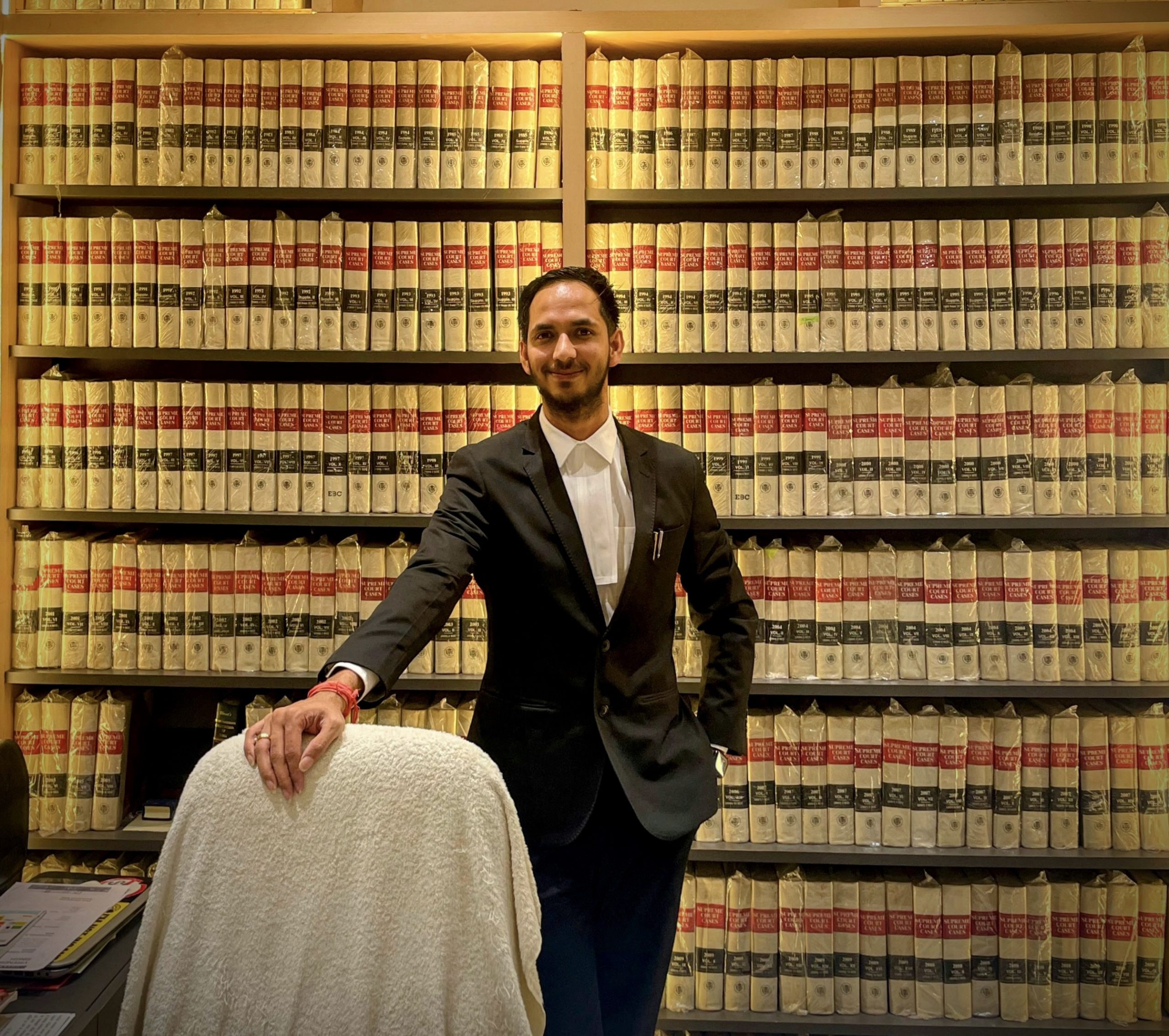






 Allow notifications