Author: SuperLawyerTeam

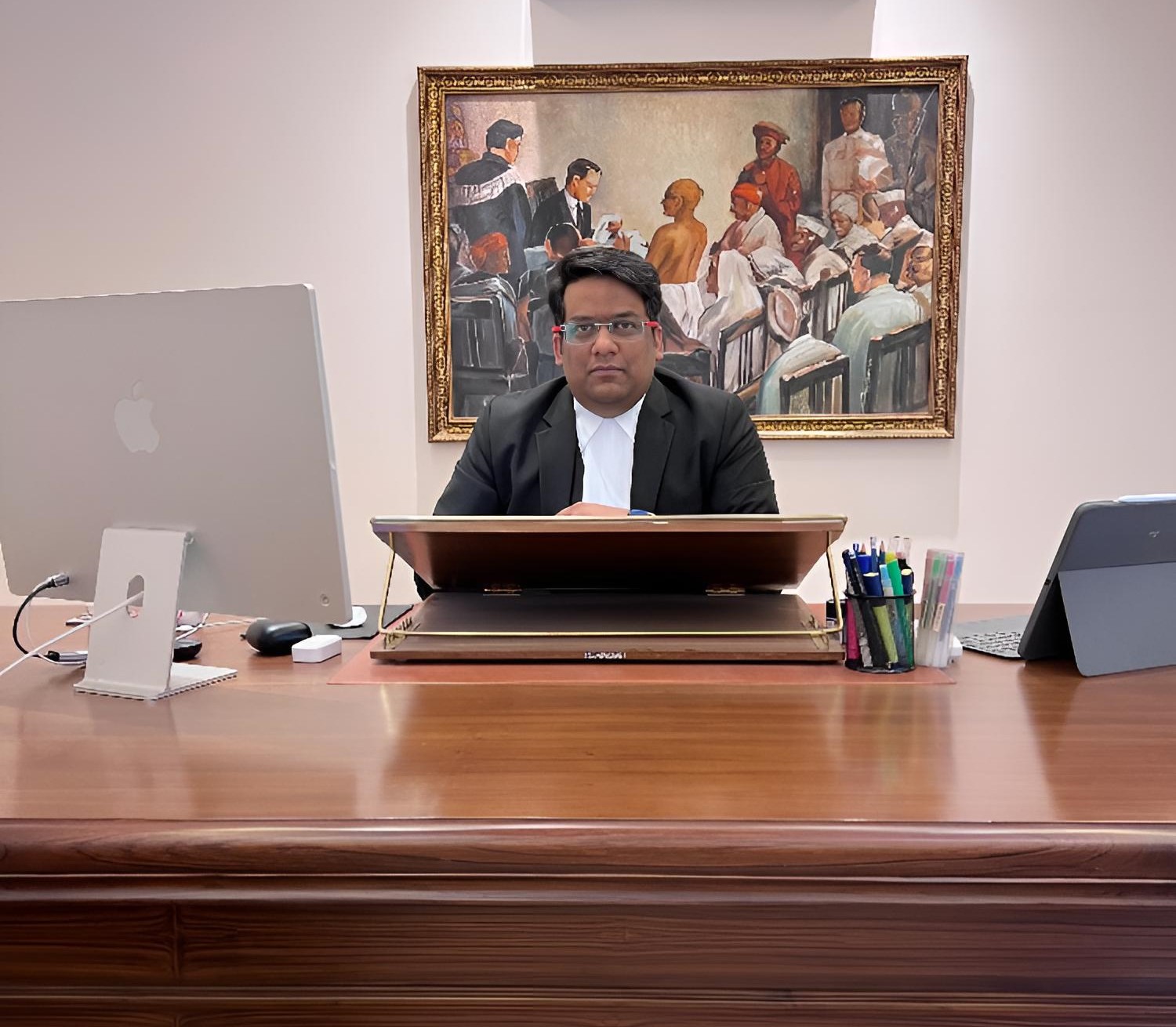
  • Whether in Western countries, India, or the cosmopolitan atmosphere of Dubai, cultural nuances impact legal discussions, adding layers of complexity and depth. A Candid Conversation with SwitzGroup-Dubai’s Visionary General Counsel, Zahid Maqbool Khan

    Whether in Western countries, India, or the cosmopolitan atmosphere of Dubai, cultural nuances impact legal discussions, adding layers of complexity and depth. A Candid Conversation with SwitzGroup-Dubai’s Visionary General Counsel, Zahid Maqbool Khan

    This interview has been published by  Priyanka Karwa and The SuperLawyer Team

    Your journey through diverse legal roles is truly impressive. If you could share your journey it would be great to hear.

    My legal journey began as a Junior Lawyer, focusing on Consumer and Banking litigation. This early experience laid the foundation for my subsequent roles, where I developed a strong understanding of commercial laws and their applicability. 

    In 2015, a pivotal moment unfolded in my professional journey as I made the life-changing decision to relocate to Dubai and embrace the role of an in-house legal counsel. This significant transition from a litigating lawyer to an integral part of a company marked a cornerstone in my career. This shift not only expanded my legal expertise but also provided invaluable insights into the intricate relationship between law and business. Navigating the complexities of legal frameworks within the context of day-to-day operations allowed me to comprehend the practical implications of laws on business activities. This experience not only broadened my skill set but also equipped me with a holistic understanding of how legal considerations intertwine with the intricacies of running a successful business. 

    A key highlight has been collaborating with diverse teams on complex legal issues, from across the globe expanding my knowledge and enriching my perspective on the intersection of legal matters with business and society.

    Remaining committed to continuous learning and staying updated on legal developments has been integral to adapting to the dynamic legal landscape and finding innovative solutions.

    Grateful for the opportunities and colleagues that have shaped my journey, I look forward to contributing meaningfully to the legal field in the future.

    Trademark Portfolio Management is a unique and vital aspect of your role. How do you ensure the protection of Switz Group’s brand identity globally, and have there been any interesting challenges you’ve faced in this area?

    Trademark Portfolio Management is indeed a crucial aspect of my role at Switz Group. To ensure the global protection of our brand identity, we employ a comprehensive strategy that involves regular monitoring, enforcement, and strategic expansion of our trademark portfolio.

    We conduct thorough research to identify potential risks and opportunities in different jurisdictions. This proactive approach allows us to address any potential conflicts early on and strategically plan for brand expansion.

    Enforcement is a key element in protecting our brand. This involves actively monitoring the market for any unauthorized use of our trademarks and taking prompt legal action when necessary. Collaboration with local counsel in various regions is vital to navigate the complexities of different legal systems and ensure effective enforcement.

    In terms of challenges, the global nature of our operations introduces complexities related to varying trademark laws and regulations across different countries. Balancing the need for a consistent global brand identity with the intricacies of local legal requirements requires careful navigation.

    Additionally, the rise of online platforms and e-commerce has added a layer of complexity to trademark protection. Monitoring and addressing potential infringements in digital space is an ongoing challenge that requires constant adaptation to new trends and technologies.

    Outside the legal realm, you’re pursuing a Ph.D. on the role of Single-Family offices in wealth management and succession planning. What sparked your interest in this field, and how do you balance your academic pursuits with the demands of your professional life?

    The decision to pursue a Ph.D. in the role of Single-Family Offices (SFOs) in wealth management and succession planning has been driven by a confluence of factors that have both personal and professional significance.

    My interest in this field was sparked by witnessing the evolving landscape of succession planning, The dynamic nature of SFOs, their intricate role in wealth preservation, and the nuanced strategies they employ to navigate succession planning processes have intrigued me. This led me to delve deeper into understanding the complexities and implications of their involvement in managing substantial family wealth over generations. 

    Balancing the demands of academic pursuits with a professional life requires a deliberate and disciplined approach. I’ve structured my schedule to ensure dedicated time for academic commitments. Additionally, leveraging technology and staying organized are essential tools in managing these dual responsibilities. Regular communication and collaboration with advisors, peers, and professionals in the field have proven invaluable in gaining insights and refining my research direction.

    Integrating my academic endeavors with my professional life has proven mutually beneficial. The practical application of research findings in real-world scenarios not only enhances the quality of my academic work but also contributes to a more comprehensive understanding of SFOs.

    Your journey includes work in both Dubai and India. How do you navigate and appreciate the cultural differences in legal practices, and has this diversity influenced your approach to legal counsel?

    Navigating the cultural differences in legal practices between Dubai and India has indeed been a dynamic aspect of my professional journey, and it has significantly influenced my approach to legal counsel.

    In Dubai, the legal landscape reflects a blend of international practices, given its role as a global business hub. The legal system is often characterized by a mix of civil law principles and influences from various jurisdictions. Understanding and adapting to this environment has required an appreciation for diverse legal traditions and a nuanced approach to problem-solving. It has instilled in me the importance of flexibility and adaptability in legal strategies to accommodate the needs of multicultural requirements.

    On the other hand, India’s legal system is deeply rooted in a common law framework with its unique cultural and historical context. Navigating the intricate legal landscape here has reinforced the significance of understanding local nuances, customs, and the socio-economic fabric that shapes legal practices. Building strong relationships and effectively communicating within the cultural context are paramount in providing comprehensive legal counsel.

    I have learned to tailor my advice to not only align with the specific legal requirements but also to consider the cultural nuances that may impact the implementation of legal solutions. It has made me more attuned to the importance of cultural intelligence in providing effective and contextually relevant legal advice. Moreover, this exposure has enhanced my ability to collaborate seamlessly with diverse teams, fostering an environment where legal strategies are not only legally sound but also culturally sensitive.  

    Your achievements include handling high-value real estate transactions and successfully closing M&A and Private Equity deals. Could you share a brief anecdote or interesting behind-the-scenes story from one of these negotiations or transactions? 

    While I am unable to provide specific anecdotes or behind-the-scenes stories due to confidentiality constraints and professional discretion, I am more than willing to offer a general overview of the challenges and strategies involved in these complex negotiations.

    These transactions deals often require a meticulous approach, balancing legal considerations, financial intricacies, and the dynamics of various stakeholders. One memorable instance involved navigating a particularly intricate real estate deal where multiple parties although being shareholders had competing interests which was affecting the real estate asset itself which they practically own, through strategic communication and adept negotiation skills, we were able to reach a consensus that satisfied all stakeholders and facilitated a seamless closing.

    Within the intricate landscape of M&A and Private Equity transactions, a notable challenge arose during the due-diligence process. The hurdle stemmed from the imperative need to sustain the seller’s active participation throughout the proceedings, a task compounded by the prevalent absence of a robust document control process among SME companies in the region. An additional layer of complexity emerged when faced with situations where sellers withdrew from deals post-completion of due diligence. In a specific M&A deal, I unearthed a surprising revelation: a well-known retail brand, extensively promoted through popular media campaigns, had assigned its brand to a distributor. Flagging this as a red flag during due diligence, I was astounded to find that the sellers themselves were unaware of such an arrangement, underscoring the critical importance of thorough investigation and due diligence in the deal-making process.

    Dealing with international markets requires a keen understanding of diverse cultures. Any amusing cultural anecdotes or moments where cross-cultural communication added an unexpected twist to legal negotiations?

    Indeed, dealing with diverse cultures has led to some interesting moments in legal negotiations. In Western Countries, a direct and transparent communication style is the norm. An amusing moment occurred when a seemingly blunt statement was initially perceived differently by our counterparts, highlighting the importance of contextualizing language even within English-speaking cultures. Conversely, negotiations in India often involve a nuanced dance of relationship-building. Personal connections and shared experiences can significantly influence the outcome of discussions, emphasizing the significance of investing time in building trust. And Dubai, with its cosmopolitan atmosphere, adds an intriguing layer to cross-cultural dynamics. Balancing traditional values with a modern, global outlook is key. I recall an instance where understanding the subtle cues of hospitality greatly enhanced the overall negotiation process.

    Beyond the legal arena, what’s your favorite way to unwind or de-stress? Any hobbies or activities that bring a smile to your face after a challenging day?

    Immersing myself in a good book is a timeless escape, allowing me to explore different worlds, cultures, and perspectives. Whether it’s fiction for an imaginative journey or non-fiction for knowledge enrichment, reading serves as a gateway to new ideas and insights.

    In tandem with my love for literature, watching documentaries has become a favored way to expand my understanding of the world. Documentaries provide a visual and compelling narrative, offering deep dives into various subjects, from history and science to social issues and cultural phenomena. The visual storytelling aspect adds a dynamic layer to the learning experience, making complex topics more accessible and engaging.

    Any last piece of advice that you would like to give to the upcoming generation of professionals?

    Embrace a mindset of continuous learning. The professional landscape is ever-evolving, and adaptability is key to long-term success. Stay curious, be open to new ideas, and actively seek opportunities for growth. Don’t be afraid to step out of your comfort zone, as some of the most valuable lessons come from facing challenges. Additionally, building strong relationships and networks is crucial. Cultivate a collaborative spirit, seek mentors, remember the importance of humility, patience, and staying grounded. Lastly, remember that success is a journey, not a destination. Celebrate small victories, learn from setbacks, and enjoy the process of becoming the best version of yourself every day.

    Get in touch with Zahid Maqbool Khan

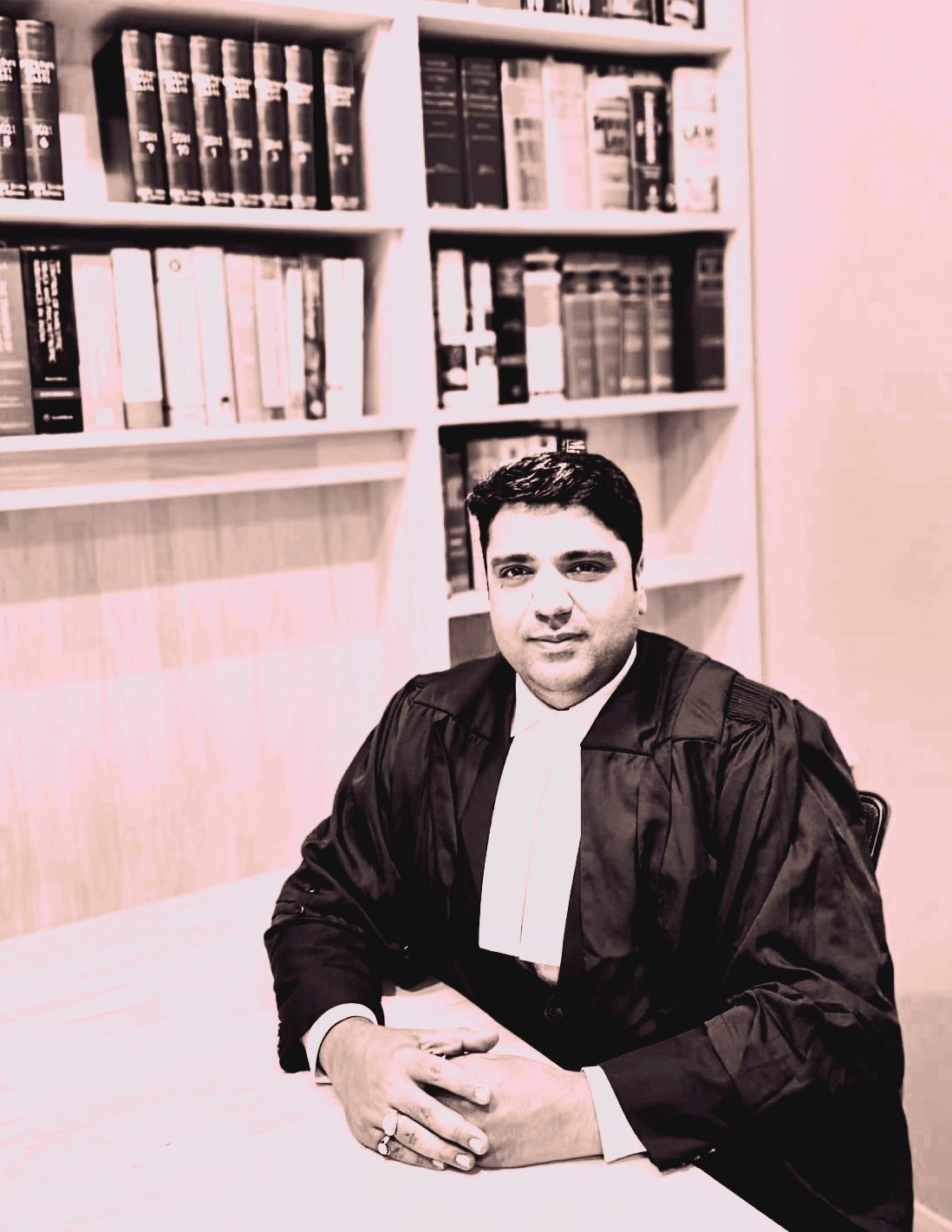
  • Crafting Legal Narratives and Shaping Constitutional Bench Cases – A Decade of Advocacy at the Supreme Court – “Founder of Outsay Legal and Advocate-on-Record, Suvidutt Sundaram, Reflects on His Pioneering Legal Journey”

    Crafting Legal Narratives and Shaping Constitutional Bench Cases – A Decade of Advocacy at the Supreme Court – “Founder of Outsay Legal and Advocate-on-Record, Suvidutt Sundaram, Reflects on His Pioneering Legal Journey”

    This interview has been published by  Priyanka Karwa and The SuperLawyer Team

    Could you please share about your formative years of litigation practice in the Supreme Court?

    In 2007, after enrolling as an advocate, I set off from Kerala to Delhi with only 5,000 rupees in my pocket, driven by burning determination and dreams in my eyes, all in pursuit of my aspirations. The metropolitan city was new, the people were unknown, my Hindi language skills weren’t fluent, adapting to the fast-moving culture proved challenging, extreme weather posed difficulties, housing rents were high, and adjusting to North Indian food was tough. Moreover, at that point, I didn’t know a single person in the legal circle in Delhi. Despite all odds, I managed to survive.

    Fortunately, a friend referred me to a Supreme Court lawyer, leading to opportunities to work with two leading law firms in the Supreme Court. I am grateful to my mentor, Mr. Anand Sanjay Nuli, the founder of the law firm Nuli and Nuli. In a short period, I immersed myself in the intricacies of litigation practice, becoming familiar with the procedures of most courts and tribunals in Delhi.

    Starting to receive cases from my home state of Kerala, I launched my independent practice in 2012. Following my successful clearance of the AOR exam in 2015 on my first attempt, I never looked back: my contacts multiplied, cases poured in, and my workload increased day by day.

    Your legal journey has spanned from handling cases in the Supreme Court to contributing to legal academia. What motivated you to pursue both active litigation and a role as a Visiting Faculty at various law schools? How do these two aspects complement each other in your professional life?

    While pursuing an LLM from Amity University, several friends encouraged me to take the UGC-NET exam and fortunately, I cleared it in 2015. Technically being qualified as an Assistant Professor ignited my interest in academia and led me to take up teaching assignments in law schools and business schools.

    Active litigation challenges me to stay current with legal developments and sharpens my analytical skills. It offers real-world experiences I bring to the classroom, giving students practical insights beyond theories. Simultaneously, academia allows me to delve deeper into legal theories, engage eager minds, and contribute to shaping future legal professionals.

    Teaching keeps me intellectually engaged, refines my communication for the courtroom, and broadens my perspective through a constant exchange of ideas. This synergy between litigation and academia enriches my understanding of legal concepts and enhances my effectiveness both as a lawyer and educator.

    Your involvement in drafting Private Member Bills is noteworthy. Can you share a bit about the inspiration behind bills like the Anglo-Indian Welfare Bill and The Waste Management and Recycling Bill?

    I provided advice to several Members of Parliament (Lok Sabha), irrespective of their political affiliations. During this time, the Lok Sabha MP named Dr. Richard Hay expressed a desire to address the unique needs and concerns of the Anglo-Indian community within the legal framework. This community possesses a distinct cultural identity and faces challenges that may require tailored legislative attention.

    Another legislative initiative involved waste management, aiming to align India’s practices with cleaner standards akin to Western countries. The inspiration behind The Waste Management and Recycling Bill stemmed from the urgent need to address environmental concerns, specifically focusing on efficient waste management and promoting recycling practices. Extensive research on similar laws in other countries formed the foundation for drafting these bills.

    Both Private Member’s Bills were introduced in different Lok Sabha sessions, and I felt immensely gratified and proud to have had the opportunity to apply my legislative skills to these initiatives. Dr. Richard Hay later expressed gratitude in his book, acknowledging the significant role I played in the formulation of these two Bills—an overwhelmingly fulfilling experience for me.

    As an advocate-on-record with a focus on election laws, you’ve completed a Ph.D. in the same field. What prompted you to delve into this area, and how do your academic pursuits enhance your ability to navigate complex legal issues in electoral matters?

    Firstly, I completed my LLM in Constitutional Law. Secondly, while advising a few Members of Parliament, I became increasingly fascinated by the captivating nature of election laws due to their intrinsic connection to democracy, governance, and the fundamental rights of citizens. Both these led me to choose a PhD topic focused on the critical study of statutory provisions and judicial decisions regarding hate speeches for electoral gain.

    Besides, my decision to specialize in election laws stems from a profound interest in upholding democratic principles and ensuring fair and transparent electoral processes. Academic pursuits in this field significantly enhance one’s ability to navigate complex legal issues in electoral matters. Researching and studying electoral laws at an advanced level equips individuals with a comprehensive understanding of election procedures, electoral disputes, and policy insights, providing an edge in handling intricate electoral legal issues.

    Winning the Family Medicine Advocacy Award in 2019 is a unique accomplishment. How has your legal work contributed to the cause of family medicine, and what role do you see for lawyers in advocating for broader societal issues beyond the courtroom?

    The award, conferred upon me by the Academy of Family Physicians of India (AFPI), recognized my efforts in advocating for the establishment of a separate department of family medicine in all hospitals and incorporating a course on family medicine into the MBBS curriculum through a Writ Petition filed in the Supreme Court. Consequently, the Court directed the Union of India to make an appropriate decision, which ultimately resulted in a positive conclusion. This decision significantly benefited family medicine practitioners and millions of our countrymen by supporting accessible and quality healthcare.

    Lawyers can play a pivotal role in advocating for broader societal issues beyond the courtroom through various means. One such avenue is policy advocacy, wherein lawyers engage in lobbying efforts and collaborate closely with policymakers to shape laws and policies addressing social justice, human rights, environmental sustainability, healthcare, education, and more. Another effective approach is filing Public Interest Litigation (PIL) or representing marginalised groups, NGOs, or individuals in legal cases that challenge unjust policies, protect civil liberties, and seek remedies for systemic issues. Other impactful methods include legal education and empowerment, raising public awareness through media, Corporate Social Responsibility (CSR), conducting research, and providing data-driven solutions for societal challenges.

    Overall, lawyers serve as advocates, advisors, educators, and catalysts for societal change. Their expertise in law and understanding of legal systems position them as crucial agents for advocating broader societal issues, striving to create a fairer, more just, and inclusive society.

    You’ve been involved in some ground-breaking Constitutional Bench cases. Can you share a moment from your career that stands out as particularly impactful or challenging?

    Several cases I handled were notably challenging, with two among them considered landmark judgments. One instance involved the judgement pronounced by the Constitution Bench in the Sabarimala temple case, permitting women’s entry into the temple. In this case, I filed the petition on behalf of the royal family of Pandalam who constructed the Lord Ayyappa temple at Sabarimala, advocating for the continuation of tradition. This decision caused significant upheaval in the state of Kerala. Another significant case was a Constitution Bench judgement that decriminalized the provision of adultery i.e., Section 497 from the Indian Penal Code (IPC). I filed a Writ Petition representing an activist named Joseph Shine. Both of these cases are widely regarded as landmark judgments.

    One instance that I can’t forget in my career was the research and drafting that my legal team did challenging the Citizenship Amendment Act (CAA) in the Supreme Court on behalf of one Member of the Parliament named T.N. Prathapan. We completed the same in just a matter of 6 hours starting from 1:00 am till 7:00 am. That night was a marathon, intense and unforgettable.

    The list is endless, encompassing various subject matters of law—ranging from service jurisprudence to environmental laws, civil remedies to criminal matters, constitutional issues to corporate advisories, arbitration proceedings to family disputes, and more. I am thankful to my colleagues Mr. Vibhor Ahlawat, Ms. Vijayalakshmi Raju, Ms. Somlagna Biswas, Ms. Deepika Singh, and Ms. Disha Puri for their relentless efforts and contributions, without which I can’t be where I am now.

    Beyond the courtroom, we know you’re into Artificial Intelligence and enjoy a game of online chess. Is this your way to unwind or do you have different hobbies that help you relax and recharge?

    For the past few years, I have immersed myself in reading about Artificial Intelligence (AI). In the realm of litigation practice, embracing technology, especially AI has become increasingly essential. My focus lies on advocating for ethical AI, a concern that unfortunately garners attention from only a few.

    Additionally, I am deeply intrigued by billionaire stories. I used to watch their interviews that reveal their tales spotlighting resilience, innovation, and their strategies for success. Exploring their stories unveils their mindsets, work ethics, and pivotal choices. It’s not just about wealth, but also their visions, failures, and societal contributions, making their journeys both compelling and relatable.

    Being a Visiting Faculty at various law schools, what motivates you to engage with the next generation of legal minds? Any advice for budding lawyers based on your experiences?

    Interacting with budding legal minds as a Visiting Faculty is profoundly fulfilling. The drive behind this engagement springs from a fervent passion for imparting knowledge, moulding future legal luminaries, and witnessing their transformative journey. It’s truly inspiring to play a part in the growth of the next generation, fostering and guiding them through the intricate pathways of the legal world.

    My advice to budding lawyers: embrace lifelong learning; hone communication skills; uphold ethical standards all the time; build a strong network; prioritise clients over your personal and political inclination, and be anti-fragile. Always, embrace technology and AI-driven solutions in litigation as well as non-litigation. That’s the future.

    Get in touch with Suvidutt Sundaram

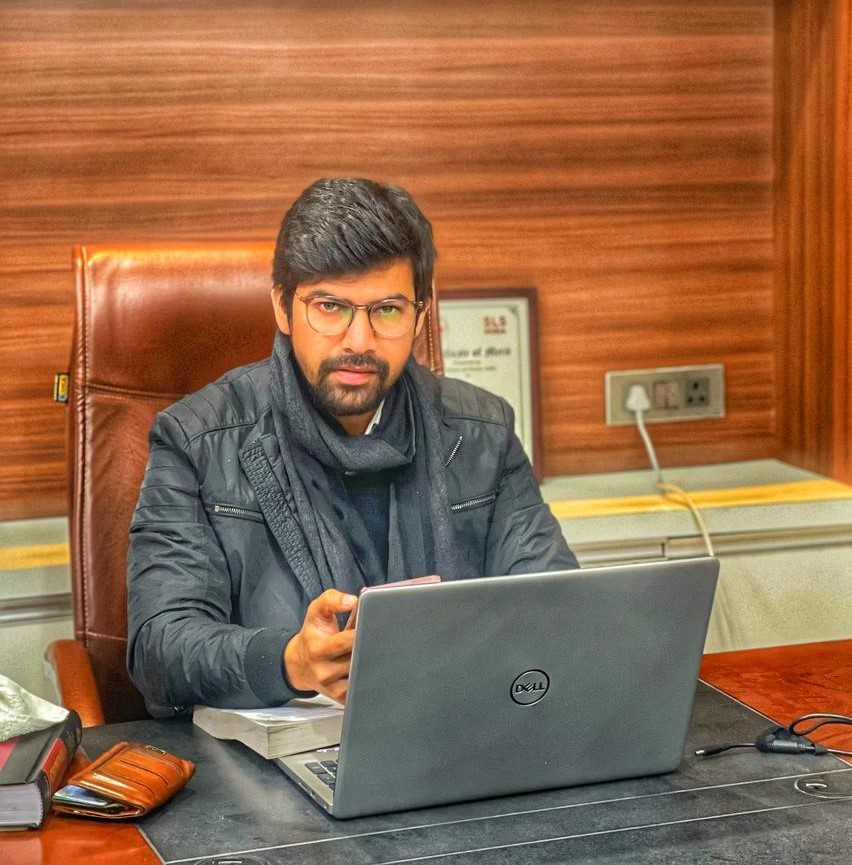
  • A multifaceted lawyer managing diverse practices, as he shares tips on maintaining a work-life balance in the challenging realm of litigation. Gain valuable lessons on planning, preparation, and keeping calm amid the demands of a bustling legal career – Ankit Agarwal, Standing Counsel for the Election Commission of India & Advocate-on-Record at Supreme Court of India

    A multifaceted lawyer managing diverse practices, as he shares tips on maintaining a work-life balance in the challenging realm of litigation. Gain valuable lessons on planning, preparation, and keeping calm amid the demands of a bustling legal career – Ankit Agarwal, Standing Counsel for the Election Commission of India & Advocate-on-Record at Supreme Court of India

    This interview has been published by  Priyanka Karwa and The SuperLawyer Team

    Could you share a bit about your journey into law, especially being a first-generation lawyer? What inspired you to take this path?

    Well, this question takes me down the memory lane. I must admit that law was not the first career option I forayed into. I belong to a family of Chartered Accountants and it was expected that I also follow the footsteps of my father and eventually join the family firm. After completing my schooling, I did brush through the entrance exam for CA i.e., CPT exam. However, numbers never interested me. There was a subject in the syllabus for CPT exam – Mercantile Law which had topics like Contracts, Sale of Goods Act, Partnership Act etc. While reading the subject, I was intrigued. Thereafter, I started researching on law as a profession and gained more interest while reading about renowned seniors in newspaper articles and their interviews on TV, which helped me in taking the decision to pursue law.

    As someone managing a diverse practice, from private clients to standing counsel for Election Commission and various authorities, how do you maintain a work-life balance? Any unique strategies you’ve developed?

    Great Question! Managing work life balance is always a debated topic in any field of work. I must admit that initially it was very overwhelming for me but as a first-generation lawyer, I had the grit and determination to manage my work efficiently. Everyone has a different style of maintaining work-life balance. For me, better planning, thorough preparation and the ability to keep calm, even when there is are last-minute listing of cases or urgent drafting, is something I’ve learnt out of practice over the years. 

    Since my decision to litigate and develop my own practice was clear to me very early on in my career, I had accepted that the journey ahead would not be a cake walk. At the end of the day, the satisfaction I gain from my work is what pays off and makes me strive harder. 

    It would be wrong for me to paint a rosy picture and say that there is a good balance of work and life in the field of litigation. The balance does come, but not very early on in this path. One should always make the most out the moment. According to me, the best way to maintain work life balance is to unwind whenever one can and has time to. 

    Can you share a funny or memorable moment from your early days in the legal field that taught you a valuable lesson or made you laugh in hindsight?

    After completing my course in law, I was placed with the litigation department of J. Sagar Associates, one of the leading law firms in India. Being a fresher with zero work experience, it was a very proud moment for me and at the same time, it was nerve-wracking. Working in a law firm that to one of the leading law firms, you are expected to be professional and crisp with your work.

    In the first week of my joining the firm, I was given an assignment of drafting. According to me, drafting is something which nobody can teach you and you only get better at it with practice. So I had prepared a draft to the best of my ability and limited knowledge at the inception of my career. My reporting partner in the firm made me sit with him and explained that the synopsis which we make in the petitions is what makes or breaks your case. He explained that one should always make sure that the synopsis of the petition should ensure that your story reaches the Judge and it should be as short as possible. This valuable lesson which I got early in my career has helped me a lot while drafting petitions.

    Starting your career at one of India’s top law firms and then transitioning to individual practice is quite a journey. What inspired you to take the leap and start your independent practice, and how has the experience shaped your approach to the legal profession?   

    Coming from a family of Chartered Accountants, I was always expected to become one as-well. Albeit my interests were always aligned towards law and I never imaged joining the family firm. But being brought up in this environment I saw my father build his practice from scratch. This instilled in me the principle of working for self and building one’s legacy (or at-least making an honest attempt). I learnt that in order to achieve the same, not only did it require patience, but also consistency.

    Upon graduating I joined one of India’s top law firm’s only to realise that the structure, methods, and expectations were supportive/ aligned with the goal in my mind. Surely, I did learn a lot in the short span I worked in firm, but keeping in mind my ultimate objective, I pivoted and took a huge risk by going independent. This risk I took early on in my career was something I am thankful for today. Initially it was tough to develop clientele and I was surrounded by negativity. But with time it has only taught me that one needs to trust their instinct, stay consistent and put their best foot forward.

    As the Standing Counsel for the Election Commission of India and representing industrial development authorities, your work spans various domains. What’s a case or project you’ve worked on that you are particularly proud of, and why does it hold significance for you?

    To me, every case is important and challenging and has taught me something or the other which remains with me for a long time. Every case that I have done either before the Hon’ble Supreme Court of India or other High Courts are dear to me. It is difficult for me to pin point a specific case but I must tell you that being a Standing Counsel for the Election Commission of India comes with its own challenges. Why I say this is because Election Commission of India is a constitutional body which is entrusted with conducting the elections of the largest democracy in the world along with the legislatures of the States as well as the Hon’ble President and Hon’ble Vice President of India.

    Of late much has been said about the Election Commission of India in the social media, however, when you appear for the Commission before any Court, it is expected that that you represent the Commission fairly and independently. The Courts also take your word for it because at the end of the day, you are representing a body which is the watchdog of free and fair elections in the country.

    We know you’re deeply involved in legal matters, but when you step out of the courtroom, what’s Ankit Agarwal’s go-to way to unwind? Any hobbies or activities you indulge in to relax?

    For me the best way to unwind is spending time with my family. Whenever I get the time to unwind, I make sure that I go out with my family for a meal or a movie. One thing that the Covid-19 pandemic has taught me is that there is nothing better to spend time with your loved ones.

    For young aspiring lawyers looking up to your journey, what piece of advice would you offer to help them navigate the early years of their legal careers?

    My advice to the young aspiring lawyers will be hat the journey is difficult but it’s not impossible. You need a lot of patience, hard work and zeal but later on in your career, you reap the results of the hard work put in in the initial years of your career. Litigation is not only limited to drafting and arguing in court but knowledge and awareness of law plays a pivotal role. Do not succumb to fear of judgment and pessimism which is very common in our profession. Work hard, trust your instincts and try to be as consistent as you can.

    Get in touch with Ankit Agarwal –

  • Uncover the secrets to professional recognition and success as this accomplished legal expert shares her journey, emphasizing the significance of thinking outside the box, proactive collaboration, and continuous learning, offering valuable advice to fresh graduates – Apurva SHETYE, Senior Manager at Mahindra & Mahindra Limited

    Uncover the secrets to professional recognition and success as this accomplished legal expert shares her journey, emphasizing the significance of thinking outside the box, proactive collaboration, and continuous learning, offering valuable advice to fresh graduates – Apurva SHETYE, Senior Manager at Mahindra & Mahindra Limited

    This interview has been published by  Priyanka Karwa and The SuperLawyer Team

    You have an extensive career in the legal field, spanning various industries and positions. Can you share your personal journey and what initially sparked your interest in law?

    To talk about my background, I was born and brought up in Mumbai and I come from a family of doctors and engineers.  No one from my family has worked in the field of corporate law and hence I am a first-generation corporate lawyer. My parents, now retired, were both hardworking individuals and were working. My father worked as a CS (Company Secretary) in various companies and my mother was in government service. Hard work and a zeal to learn was thus instilled in me from a very young age, since I grew up watching my working parents. I have completed my B.com and LLB from the Mumbai University along with a couple of additional diplomas and certifications. I was initially interested in being a Company Secretary (CS) which is a professional course, however my inclination towards being a corporate lawyer grew once I started studying law. 

    It was only after studying law alongside CS, I realized that it is of my interest and I would want to pursue it as my career. Law can be complex and challenging due to its interpretation at times and I enjoyed decoding its interpretation and studying its application. I cannot really point to a specific reason for choosing law – I just had a sense that in future the legal profession would gain importance & distinction, and I am very glad that it did.

    As a seasoned professional with experience in law firms, manufacturing, and FMCG sectors, can you tell us about the most significant challenges you’ve encountered in each sector and how you navigated them?

    That’s a very good question! A general perception about lawyers is that we know and do everything under the sun. However, one must know that the skills required for every vertical and industry differ from each other and while we know the foundation, many times it’s more of learning on the go for us. 

    I started my career with a law firm named, Oasis Counsel & Advisory (Chambers of Senior Counsel, Mr. Haresh Jagtiani) and I must say that my first taste of practical applicability of law and litigation was very exciting. Like every other law student, I too started my internships with law firms and while at Oasis, as an intern, my work mainly focussed on researching on case laws, finding precedents and drafting short documents like affidavits and letters. I qualified as a lawyer in 2014 and was lucky enough to be absorbed as an associate at Oasis. The kind of work that is handled at law firms is completely different than at corporates. At Oasis the challenges that I faced related to drafting court documents and handling clients at such a nascent stage of my career. I was blessed with amazing mentors during my tenure there who guided me to the right path and taught me the intricacies of practicing law. I would say that starting my career with a law firm was the best decision since this made my foundation of understanding law and the interpretation of it very strong. 

    Post this came my biggest challenge of transitioning from a law firm to a corporate since there is vast difference in the working culture and the system in general. For eg. In a law firm you deal with one client at a time, at a corporate you deal with multiple stakeholders which involves business partnering. One needs to align their goals with the vision and values the organization holds. The manufacturing sector is pretty compliance specific, and my role at PPG Asian Paints as well as Blue Star Limited, being a generalist one, included everything right from drafting contracts, identifying and ensuring compliances, handling trademarks and patents and business advisory. Wearing multiple hats and getting work done was challenging here, but then again my seniors helped me out and ensured that along with getting the work done it also gives me a good learning and enriching experience. 

    Post PPG Asian Paints, I worked with Bajaj Consumer Care Limited (BCCL) for a short while. BCCL is the FMCG wing of the Bajaj Group. It was a different industry than PPGAP and that’s what made it interesting. I worked extensively with the marketing and R&D teams on product claims and product packages, distributor contracts and IPR. It was during my time here, I learnt about product development and all the groundwork that happens on the same – on the legal front this was my first time working with and learning the workings of The Drugs & Cosmetics Act, The Advertising Standards Council of India (ASCI) guidelines, The Legal Metrology Act and International Trademarks. Quite an exciting space to be in. The challenge here was meeting tight deadlines before product launches. This included drafting of the product claims along with the R&D team, approving artworks, approving advertisement scripts in line with the ASCI guidelines and then gearing up for the product launch. The best way to overcome any challenge is to get adapted to the environment that you are in. Also, asking people around really helps. The business teams here were collaborative and hence the challenge no longer seemed like one. 

    You’ve been involved in areas such as consultation and advisory, civil and commercial law, and corporate and cyber law drafting. How do you balance such a diverse skill set, and how has it contributed to your success in the legal profession?

    Working in multiple sectors helped me build acumen on the diverse skill set that I possess today. Even after a decade of experience in this profession, I am still as curious as a beginner and that helps me in honing my skills and learnings further. In house roles do require wearing multiple hats and catering to the needs of various divisions in the company, therefore, one cannot limit themselves to only one stream of law. My observation has been that most of the mid/large cap companies in India prefer having a counsel with a generalist experience rather than a specialised one and that’s what sets you above the rest. Balancing a diverse skill set can be challenging, but staying up to date with amendments and changes in your field is a must, especially, when the field is as dynamic as the legal gamut in India. 

    Could you share some notable milestones and achievements from your career, especially in your current role at Mahindra & Mahindra Limited?

    Of course! As an in-house counsel, simply knowing the law is not enough. In-house counsels deal with a lot of complex transactions which need a deeper understanding of the business and its technicalities. Therefore, the first step that a corporate lawyer needs to excel in is business partnering. All my milestones have been possible due to business partnering in all the projects that I worked on and I cherish each of these milestones equally. However, if I have to point out specific ones, it would be implementation of compliance tools at two of the organizations I worked with. While I was working with PPG Asian Paints and Blue Star, I got the opportunity to digitize compliance reporting and monitoring. This helped the companies to a great extent since we transitioned from manual work to robust softwares. It involved a lot of effort and time since we had to coordinate with multiple functions and stakeholders before finalizing the compliances. I was recognized and rewarded for this effort at both the organizations and hence it’s one of my close memorable experiences. I have also handled and closed POSH complaints as a member of the IC committee at one of the organizations which was a huge learning experience and which I consider as a milestone too. 

    At Mahindra & Mahindra Limited (M&M), I am a part of the business legal team for the farm equipment sector. I have been a part of various benchmarking exercises through which we implemented anti-counterfeit strategies in the Agri space. Also worked extensively on the Drone Rules, 2021 and on drone operations in India. Since we have a lot of exposure to international markets, we devised a risk mitigation matrix for our contracts in Europe & China. That’s the benefit of working for large conglomerates, the diversity of the work that one can handle has no bounds.   

    You’ve held positions involving compliance, policy development, and risk mitigation. How do you approach the complex task of ensuring legal compliance for your organizations, and what advice do you have for legal professionals working in this area?

    As we are aware, ESG (Environmental, Social, and Governance) is the buzzword in our field currently. ESG is a framework used to assess an organization’s business practices and performance on various sustainability and ethical issues. It also provides a way to measure business risks and opportunities in those areas. Organisations worldwide are becoming ESG compliant for their investors and shareholders. Be it in the form of disclosures in the board reports, accountability to the shareholders or the reputation of an organization, ethics & compliance are the two very important aspects of conducting any business these days. 

    Having said that, I believe that ensuring ethics & compliance is never a one man’s job – the compliance manager therefore has to collaborate with every function of the organization, create awareness, conduct training and instill the importance of compliance in every employee working at the ground & top level. There has to be constant talk about compliance in the organization along with tone from the top. I am fortunate enough to have worked with leaders who have always kept compliance at the forefront and this helped me drive compliance at all the organizations I worked with. 

    My advice to professionals working in the area of compliance would be to stay updated with the changing laws and rules. Implementation of a digital tool helps and supports in this regard. Compliance training and awareness sessions are equally important, be it in the form of mailers, quizzes, celebrating compliance week etc. One can start with a compliance audit as a dipstick to check where their organisation stands today. A good starting point could also be to go through the ISO 37301:2021 for Compliance management systems. This document specifies requirements and provides guidelines for establishing, developing, implementing, evaluating, maintaining and improving an effective compliance management system within an organization. 

    As someone who’s been recognized for your efforts and contributions, what key factors have contributed to your professional recognition in the field of law, and what advice do you have for others aspiring to make a meaningful impact in their legal careers?

    In my case, thinking outside the box has immensely helped me. Especially as in house counsels, we need to constantly think about initiatives that will reduce manual work and move towards digitization. Being proactive and actively partnering with the business teams always gets recognized. For example: conducting knowledge sharing sessions for awareness, standardising templates, making risk mitigation matrixes helps the cross functional teams and also reduces future efforts, so that you can focus on more important things at work. Everything counts when one gets recognized, with a primary focus on the change that you have brought about in the organization. Recognition comes in when you move out from your comfort zone and do more than just your KRA’s. My advice would therefore be don’t limit yourself. Do whatever work that comes your way, it’ll certainly not go unnoticed and will be a learning experience for you!

    As you’ve achieved success in your career, what advice would you like to offer to fresh graduates who are just starting their legal journey or considering a career in law?

    I get asked a lot, especially by young law students, on whether they should start their career as an in-house counsel or with a law firm. It’s of course their preference, however I would suggest starting out with a law firm. Corporates in India do not really have many entry level vacant positions for freshers. They are always on the lookout for someone with law firm experience or someone shifting from another corporate. Also, as I mentioned earlier, a law firm experience would give a good foundational base of law which would really help fresh graduates at a later part of their careers. 

    Other than this, a few takeaways for aspiring fresh lawyers are as below:

    Unless you ask, the answer is always no: we as humans, have the fear of being rejected. And this fear holds us back from taking the first step. I would say take the step anyway. You’ll either succeed or fail. Same goes with asking people for help at organizations. For being a successful corporate lawyer, knowing law alone is not enough. You need to collaborate with business teams effectively for valuable inputs and commercial reasoning. Therefore, be curious, ask multiple questions and most importantly, ask for help whenever required. 

    While at work, do anything and everything that comes your way: In the initial years, do not be picky with the kind of work that is handed over to you. Every assignment comes with a learning curve which will help you in some way or the other in the long run. Experiment with whatever comes your way and be a lifelong student!

    Do not take up a profile which matches 100% with your previous role: Taking up a profile exactly similar to the previous one limits your growth. There should always be room for learning and doing more. Growth starts when you move out of your comfort zone.  

    Wishing all the readers a rewarding and fulfilling career!

    Get in touch with Apurva Shetye –

  • Explore the diverse legal experiences of Rohit, from international exposure in Israel to influencing cases in India, and his current excitement for delving into corporate governance and ESG regulations – Rohit Kumar, Advocate-on-Record

    Explore the diverse legal experiences of Rohit, from international exposure in Israel to influencing cases in India, and his current excitement for delving into corporate governance and ESG regulations – Rohit Kumar, Advocate-on-Record

    This interview has been published by  Priyanka Karwa and The SuperLawyer Team

    Rohit, your journey from the chambers of Mr. Anand Grover to representing major players like Google and Snapchat is truly remarkable. Can you take us through a memorable moment in your career that shaped your approach to the legal profession?

    My journey has been a roller coaster ride, full of ups and downs, making it hard to recall. As a first generation lawyer getting a first job was very difficult. However, in 2013, I joined Anand Grover as a fresh law graduate. I got this job primarily because of my graduation in Life Science and not because of law. When I joined his chamber he was representing generic pharmaceutical companies before the IPAB and High Court in matters related to pre-grant patent oppositions and compulsory licences.  My job at his chamber was related to finding the prior art of a contentious patent application thus the focus was more on researching chemical compounds of the drugs and tried to simplify enough to submit before courts, during this period I worked on many important drugs like Nexavar (Compulsory Licences case) and Sofosbuvir. After leaving his chamber in 2014 I joined MKSS (Mazdoor Kisan Shakti Sangathan) as a fellow where my job was focused on representing indigent litigants and groups on right based litigation related to NREGA, RTI, panchayat elections etc. This gave me the opportunity to work with two very good lawyers, Senior Advocate Prashanto Chandra Sen and Dr Yug Mohit Chaudhary, I learnt a lot from both of them. Yug is known for his work on Death Penalty cases and thus appeared with him in several death row cases. 

    Later, in 2015 I joined Advocate-on-Record Chirag M Shroff and then joined the excellent chambers of Mr Ramesh Singh Senior Advocate, an outstanding corporate lawyer, where I had the opportunity of assisting him in various arbitration and commercial cases. I learnt the art of articulation and gained confidence in handling complex legal issues from Mr Singh. It was the most significant period of my career, however I had to take a break due to some inevitable things at home and later in 2017 started my own practice. It was a very tough period with no or low monetary gains. 

    In 2019, a recruiter approached me to interview with Bytedance. After a few rounds, I was hired, and the rest is history. Bytedance, the parent company of TikTok, and it was the most challenging job so far for me. When I joined TikTok was facing regulatory issues and  it also was a time when intermediary liabilities and content regulation laws were also developing in India, and as a pioneer in short video format with tendency to become viral TikTok faced many challenges and court cases related to bad content on platform, however, these challenges provided me avenues to learn on the job and grow as as lawyer and as an individual too. Google and Snapchat were settled and very slow companies and hardly a challenging situation occurred when I was there. Now after resigning from my corporate job I am back to pursue my career as a litigating lawyer, I cleared the AoR exam this year and practising primarily before the Supreme Court. 

    We often see lawyers in the courtroom, but what’s something about the legal profession that people might not know? Any behind-the-scenes aspect or interesting anecdote you’d like to share?

    Lawyers in the courtrooms come with huge preparation, background study and efforts of many people involved. In 2019 I got an opportunity to represent the plaintiff in a suit for injunction filed before Bombay High Court against Ayushmann Khurana, the allegations of the plaintiff were that he had stolen his story and made a film called Bala. We had strong evidence to prove the allegations before the court, and his lawyer did not file any convincing reply in initial hearings and somehow we managed to convince the judge for personal appearance of Mr Khurana, however, after several requests made by his lawyer the court dispensed his personal appearance, but it was an exciting day for us in the court, my associate and junior were especially happy in hope to see the glimpse of the bollywood star. 

    You’ve been deeply involved in shaping content policies and legal strategies for social media platforms. With your background, what advice would you give to someone trying to navigate the fine line between freedom of expression and responsible content moderation in the digital age?

    Social media is a powerful medium to communicate. After notification of Intermediary guidelines and digital media code 2021, social media companies are using AI tools and human moderators to curb the obscene and pornographic material however real challenges are related to political speeches and dissent voices, such content shall be dealt with utmost caution and platforms shall not remove any content that does not breach the Article 19 (2) of the Constitution of India, similarly MEITY shall also exercise its power under section 69 A of IT Act 2000 in rare cases and not as a normal routine. As a society we should aim at making the internet safe and secure for everyone. 

     In India the main problems is that some think tanks are over romanticising the “safe harbour” protection and wrongly interpreting the intermediary liabilities. Such protection cannot be granted or taken away by the statute as many policy practitioners and lawmakers think, it’s just an affirmative defence against the liabilities of the platform and only the court can use it to punish or protect the platforms against any liability.  Therefore, I believe that facets of freedom of speech and expressions shall be dealt within the ambit of Article 19 (1)(a) read with Article 19(2). 

    You’ve navigated through roles as Legal Counsel for Snapchat, Google, and Bytedance, offering you a front-row seat to the tech industry’s evolution. What’s the most fascinating or unexpected aspect of tech law that you’ve encountered, and how do you stay ahead in a field that’s constantly evolving?

    While at TikTok I encountered many unexpected and complex legal issues. Most fascinating issues were related to content crawling wherein TikTok content was crawled by competitor apps and they started monetizing it. However, TikTok had a state of art watermarking system on its content that helped the TikTok team to identify its content on other platforms and enforce its legal rights. During Google days most challenging work was related to revenge porn, as per Intermediary Guidelines 2021 platforms have an obligation to remove such content within 24 hours hence, sometimes I had to work beyond office hours to help the trust and safety team to remove content within time. Social Media and new age platforms are posing a new threat towards user safety, issues like deep fakes, AI generative and application of virtual currency in online gaming are some matters that need urgent attention. 

    Your educational journey includes a diverse set of courses, including a recent one on Fintech. How do these ongoing learning experiences contribute to your legal expertise, and is there a specific area of law or topic that you’re currently excited to explore further?

    I am a big fan of MOOCs and distance learning courses. I feel that once we complete LLB, we do not need a master degree especially when we want to be in litigation, therefore I did not want to waste time and money in doing LLM hence, opted for distance learning specialised programs like Fintech, Media Law, CopyrightX etc. These courses played a significant role in getting jobs and recognition. Presently, I am quite fascinated with the changes happening in corporate governance and ESG regulations, and I am excited to explore this area and consider doing specialised training. 

    Your international exposure is quite impressive. How has your experience with diverse legal systems influenced your approach to cases in India? Any notable contrasts or lessons learned?

    I was fortunate to work closely with lawyers from different countries. When TikTok was banned in India I was asked to support other jurisdictions like the UK, Israel and Sri Lanka, whereas  while at Google I was responsible for west Asia litigation and worked with law firms of Pakistan and Bangladesh. Among all these, the best learning experience was with Israeli law firm Fischer Behar Chen Well Orion & Co (FBC) . I was very impressed with their drafting skills. Their team was trained to draft the long brief in a few pages in simple and plain English, a skill which Indian lawyers lack. Now, I am an Advocate-on-Record and I am trying to follow the learning from FBC. 

    We’ve covered your legal prowess, but what’s a hobby or interest you turn to when you’re not immersed in the world of law and litigation? Any hidden talents or passion projects you’d like to share?

    When I am not in court, I like to go to the local market and eat street food, I also spend some time with my plants and I also have interest in collecting samples of leaves from different locations after drying them. I make herbarium. 

    With your background in Intellectual Property Rights and technology law, what’s a piece of legal advice you find yourself frequently sharing with friends, family or upcoming generation, especially in today’s digital age?

    I usually advise my colleagues and friends to understand your client’s business before providing legal advice, to remain quiet and let your client speak more during meetings. I feel that all lawyers are competent to advise but there are very few lawyers who understand the business of the clients. Once we understand the business it will become easy to advise the clients.  In today’s competitive world, start ups are coming with disruptive technologies and products, and if we do not understand their product and business properly, we may not be able to advise our client properly

    Get in touch with Rohit Kumar –

  • “From Small Town Dreams to Supreme Court Realities: A Candid Conversation with Neelmani Pant, Advocate-on-Record”. Gain insights into the distinct responsibilities and pride associated with the role of a “friend of the court.”

    “From Small Town Dreams to Supreme Court Realities: A Candid Conversation with Neelmani Pant, Advocate-on-Record”. Gain insights into the distinct responsibilities and pride associated with the role of a “friend of the court.”

    This interview has been published by  Priyanka Karwa and The SuperLawyer Team

    How do you end up pursuing a career in Law? 

    I belong from a small town Ajmer, Rajasthan, my father is a lawyer in the same town, and I grew up watching him dress in black and white attire every day. We have a small office in the home where the clients used to come and share their cases in his office. Listening to them hiding behind the doors and watching my father helping them in every possible manner would always attract me towards this profession and here I am. 

    You graduated from M.S. Ramaiah College of Law, Bangalore in 2013. How does it feel being from (Non NLU) Law college – could you share your experience with us.

    Before joining this college I did give entrance exams of various National Law Colleges in 2007 (as CLAT was introduced in 2008) but was not selected in any.

    It was late mid-June when almost all the college admissions were closed and after rejections from all the national law colleges, I chose to travel alone by train from Ajmer for almost 42 hours to reach Bangalore in search of a good college.

    I made a list of reputed law colleges and decided to visit each one of them to try for a seat. The first on the list I visited was M.S. Ramaiah College of Law. At the entrance of the college, a big board was fixed displaying “admissions closed”. Not to lose hope I still managed to push myself and enter into the building walking towards the administrative room.  I swiftly entered the room where the manager had just ended a landline call by putting the receiver down and in a low voice I said “I want admission”. I was told to wait and have a seat, while the administrative persons had a meeting among themselves. After some time I was told by the manager that 80 seats of this academic year are full, however, a moment ago one candidate refused to join and now we have a single seat, are you carrying all your documents with you and the rest is history. This is the day when I learned the value of at least giving it a try and not giving up.

    It is true in today’s life various offices and firms judge based on the name of colleges, however, I would like to add that in my opinion being from NLU or non-NLU College does not make much difference, if you are sincere and are passionate about your work. In fact, being from Non-NLU in my case had only benefitted me for making me strong enough to face the challenges of a litigating lawyer as a career. 

    Not being the icing on the cake will only make you the bottom part of the cake which is hard and filling, meaning thereby stronger and in a way fruitful for your future if you want to pursue a career in litigation which is itself full of challenges. A will to learn and zest for life will never depend on what college or institute you belong to. Face the challenges and enjoy the journey.

    You graduated, Coming from a small town then working under an Advocate-On-Record at the supreme Court of India to becoming Yourself an Advocate-On-Record, How was the journey? 

    Being a lawyer is not easy, it demands lots of hard work, dedication and devotion. Especially, when you do not belong to this city that is in itself challenging. You have to live away from home starting from scratch. It almost seems like a never-ending struggle. After my graduation, I came directly to Delhi and shared a flat with my immediate seniors at Law College who were kind enough to give me some guidance. 

    I worked at various law offices where I was fortunate to be given the responsibility to handle matters individually. I used to draft, type and prepare it for filing and thereafter visiting courts for filing, everything right from:- 

    • page numbering,
    • attestation,
    • notarizing, 
    • court fees 
    • Photocopies etc, 
    • waiting in the queue for submission of the case at filing counter
    • curing defects
    • getting it listed and 
    • arguing before the court 

    While deciding a case in the court of law there is an abbreviated form of Latin Maxim de minimis non curat lex, “law is not concerned with small things.” However, in the practice of law, it works the other way round .i.e. “the practice of law is concerned with each and every small thing”. Until and unless you learn how in litigation the small and minute things work you will find it difficult to deal with major things.

    While digging the ground I never stopped looking at the sky. At the Supreme Court, I used to sit inside the court watching the proceedings in and out, observing the Hon’ble Judges their reactions and how learned advocates and senior advocates argue their cases and present themselves before the Court. Making notes, and learning the process and it is only a decade into 2023, with never to stop trying attitude and as they say “When there is a Will there’s a way” I cleared my Advocate-on-Record Exam.

    Your work involves a mix of civil, criminal and corporate matters. If you had to choose, which type of case do you find more thrilling and why?

    As recently Hon’ble Justice L. Nageswara Rao said:

    There Is No Profession Thrilling Than Legal Profession”

    Well practice of the Supreme Court does require mixed knowledge of every subject, there is a CASE LAW paper in AOR Exam where one has to study all case laws around 64 judgments right from KESAVANANDA BHARATI SRIPADAGALAVARU VS. STATE OF KERALA & ANR. (Doctrine of Basic Structure Case) or LALITA KUMARI V. GOVTOF UTTAR PRADESH (Registration of First Information Report) to INDORE DEVELOPMENT Vs. MANOHAR LAL (Land Acquisition Case).

    Either Civil, Criminal or Corporate matters, the recipe is the same .i.e. mastery of facts, relevant statutes, research, and application of law/judgments, only the taste changes .i.e. the result.

    The thrilling part is not the subject, but the journey and the relief for which the client has engaged you and trusted you with the responsibility of seeking justice. When you give your best in the matter and present your true capabilities, knowledge, ideas, and skills of your experience, only then the whole process right from the first meeting with client up to the final argument stage the journey as a whole will thrill you and no matter what the subject is, your inner soul will always give a sign that yes you have done something worth for.

    Balancing a career as an Advocate-on-Record with various high profile cases, you must have some unique strategies for managing stress. What do you do outside of work to unwind and recharge?

    I am a son, a husband, a brother, and a friend. I am an old-school guy, I love being close to nature which keeps me calm and soothing and I also love to spend time with my family. Whenever I get time I travel back to my hometown and spend most of the time with family. In the morning I do give time to myself for at least 20 to 30 minutes, where I practice yoga, stretching, meditating, and gardening and relax with myself.

    In my opinion, there are no unique strategies for managing stress, in reality, there are not any because the simpler you live the simpler your life will be. In these hectic times of the world, people have stopped realizing that we work to stay away from these so-called words like stress, tension and problems etc., so how come working would give you stress. I am not denying that these issues don’t exist but once you are doing your work with true passion and dedication and have opted for the right profession that keeps you motivated you will automatically ignore the unwanted things in your life and would focus on improving yourself every single day.

    Being an Amicus Curiae in a service matter is an interesting role. How is the experience  compared to your usual courtroom battles?

    Well, it is a privilege and a great honour to be appointed as amicus by the Hon’ble Supreme Court of India and I am fortunate enough to play this role in my small legal career. As the Service matter is still pending consideration before the Hon’ble Supreme Court it would not be possible for me to discuss it.

    However, in comparison to usual courtroom battles, there is definitely a different sense of pride within you when the court recognizes you and shares the burden of responsibility on your shoulders. As an amicus you have to act as a “friend of the Court” and your endeavour must be to guide the court with all the facts and laws to reach every possible way of finding the right solution both for the Court and the litigant.

    Your journey involves work with a diverse range of legal matters. If you were to give advice to your younger self starting in the legal profession, what would it be, considering both the professional and personal aspects of your career?

    OBSERVE THE COURT:-

    I still remember in my initial days I attended a chamber matter before Hon’ble Mr. Justice Amitava Roy. My matter was listed as Item No. 12 and all the matters that were listed were for the reason of not curing the defects, for that reason the matters were pending in the registry.

    During Item 1 to 10, I observed that in every Item Your Lordship was asking how much time you need to cure the defects and the Advocates were asking for 6 weeks, some asked for 4 weeks or 3 weeks time, the court was strictly taking Action against the advocates for not curing the defects timely and in almost every matter your lordship were passing order “as a Last opportunity counsel is given 2 weeks to cure the defects, failing which the Special Leave Petition will stand dismissed”

    In item 11 your lordship had again asked “how much time” counsel replied “4 weeks”, and the Court said “2 weeks and failing which the Special Leave Petition will stand dismissed” with a comment “pull up your socks”.

    When item 12 was called out I walked towards the desk and was asked by Your Lordship “Yes sailing in the same Boat, how much time do you need” I replied It is my fault for not curing the defects timely and I leave it to my lords any time as would be directed I would cure the defects” and in response, an order “6 weeks’ time granted to cure the defects”, without any condition of dismissal. 

    In short, it is very important to read the mind of the court and decide in what manner you can drive the court in your favor.

    BE PATIENT:-

    My message to the readers is: Be patient, and be diligent as this profession does not give any overnight success stories. This profession sometimes also demands sacrifices, as I can relate with those who come from outside the city in the hope of fulfilling their dreams, “you might lose many things but believe me you will achieve everything”. In the end I can only share the slogan by Great Swami Vivekananda:

    उत्तिष्ठत जाग्रत प्राप्य वरान्निबोधत,क्षुरासन्न धारा निशिता दुरत्यद्दुर्गम पथ: तत् कवयो वदन्ति |

    Arise! Awake! Approach the great and learn. Like the sharp edge of a razor is that path, so the wise say—hard to tread and difficult to cross.

    Get in touch with Neelmani Pant –

  • A legal luminary whose career transcends boundaries, and whose story inspires the next generation of women leaders in the legal arena. “Priya Mamgain : Crafting Legal Excellence and Corporate Success – A Journey Beyond Boundaries”

    A legal luminary whose career transcends boundaries, and whose story inspires the next generation of women leaders in the legal arena. “Priya Mamgain : Crafting Legal Excellence and Corporate Success – A Journey Beyond Boundaries”

    This interview has been published by  Priyanka Karwa and The SuperLawyer Team

    Your career journey reflects a mix of corporate dynamism and legal finesse. Can you share a defining moment or experience that led you into the world of law and compliance?

    Well, thank you for putting it so nicely.  In 2011, I joined the compliance team of India bulls right after completing my graduation from Sri Venkatestwara College, University of Delhi. However, my academic tryst with the Law started much earlier in 2008 when I decided to pursue Company Secretary professional course which primarily introduced me to legal world of corporate law as this course involves an intensive study of different branches of laws namely taxation, finance, business ethics, labor, costing, capital market and securities laws, etc which regulate different stages of a  business entity viz. incorporation, operations and expansion, merger and amalgamations, infusion of capital, liquidation and winding-up. 

    While doing my CS internship, I chanced upon an opportunity to review a NDA, instinctively I expressed my interest in vetting other contracts and my superior guided my way through it and encouraged me to study IPR laws and take the DU law entrance exam. Thus, study of one branch of law led me into another and ultimately to the realm of general corporate advisory. 

    Managing a team at Saga Legal, leading corporate advisory, and handling compliance – it sounds like a lot on your plate! How do you maintain work-life balance, and what’s your go-to stress buster outside the legal realm?

    I wish that it is not seen as an endorsement of the 70 hours week rule in any manner whatsoever, having said that being occupied is my ZEN. Honestly, I really do not find my work stressful though meeting deadlines can be overwhelming at times. But what fun life would be without a hustle!

    Also, apart from hitting the sack, setting out on a retail therapy/street food hopping/reading are my next best stress busters.

    You’ve been recognized for your achievements at HCL, Airtel, and beyond. Could you share a particularly rewarding moment or accomplishment in your career that brought a smile to your face?

    Like any other individual, awards and rewards always cheer my heart up and work as a shot in the arm to strive harder to do better than the best.

    It is not every day that you wake up going to receive a gold medal. I really thank my stars to have got one from the Indian Law Institute for earning a diploma in IPR Laws.  

    Awards and recognition become extremely special when you get them at the time when you least expect it and you are quietly doing your good damn job.

    Having said that, I do not want to sound less grateful to any of the opportunities or accomplishments that have come my way in the past 12 years of my work experience.  Every “thank you” email /text from a colleague or  a client, every town hall meet, every R&R session counts.  I always believe and say BEST IS YET TO COME!

    Your articles at Bar & Bench showcase a depth of legal analysis. Can you take us through your writing process? What inspires your choice of legal topics, and how do you balance the technical aspects for a broader audience?

    Interestingly, topics of all these articles so far have been influenced by the real time legal problem statements which I have encountered during my current advisory practices vis a vis latest legal development impacting the same.  It is important to write relevant and informative articles. 

    I put my best efforts in order to ensure that articles are structured in the most lucid way possible. The preface and conclusion usually are drafted in a manner which can be understood by a business and legal person both. The body paragraphs are mainly where the techno-legal analysis is captured, which exhibit insights from domestic as well as international laws, judicial precedences and commercial and economic factors and impact of the issues in hand. 

    Beyond the legal realm, your education includes a diverse range of experiences, from Commerce to Company Secretaryship and Law. How has this interdisciplinary background shaped your approach to legal problem-solving, and do you see any unexpected connections between these fields that have proven valuable in your career?

    Absolutely, having a multi-skill set always helped me in approaching the legal problems in a more holistic way.  My interdisciplinary background has equipped me to adopt a threefold approach to arrive at commercially viable and compliant legal solutions for our clients.

    Risk Identification: My foremost concern is to identify risk for the organization (legal, commercial, financial, regulatory) attached to the transaction. 

    Commercial Impact: Once risk is identified, approach is to eliminate/mitigate any terms which can substantially affect the organization commercially/financially.

    Compliance Cost Management: As a compliance professional, I always keep an eye open for compliances attached to terms to be agreed under an agreement. Cost of compliance should never exceed the ROI.

    In addition to your legal expertise, you’ve volunteered at the Commonwealth Games in 2010. Can you share a memorable experience from that time, and how do you think volunteering contributes to personal and professional growth?

    If I can recall it correctly, our country got this opportunity to host CWG 2010 with great effort after beating Canada in one of the bids. I consider myself fortunate to have participated in a historic event like this. I was put to a screening process in Feb, 2010 and got selected along with other 20k odd volunteers. My general and role specific training were organized at Amity University Campus by some of the distinguished personalities. As a volunteer, I was trained for various aspects like medical support, disaster management, gender sensitivity and protocols (VVIP’s, media and athletes protocol).

    During my volunteer experience at R.K. Khanna Tennis Stadium, I organically picked up the skills of project management, prompt decision making, creating and rotating a mix of individuals with right skill as well as will to get the show running no matter what.

    Talking about experience, for me as a college student back then, it was surreal to witness national as well as international tennis sensations practicing and playing on the ground teaching the importance of resoluteness, consistency and constantly up-skilling one’s game.

    Cherry on top was to see our country’s players win the game that evening and the tunes of the national anthem playing in the backdrop.  A memory of this event is still so fresh in my mind and I fondly remember the people I met and the positive transformational impact it had on my approach to deal with life personally and professionally.   

    You’ve been recognized as one of the “Top 10 Best Women Leaders in Legal Consultants 2023” by Women Entrepreneur India. How does it feel to receive such accolades, and what advice would you give to aspiring women leaders in the legal profession?

    It feels really awesome to be adjudged and be put next to my contemporaries and senior colleagues in the fraternity who constantly amaze and inspire me with their exceptional work and leadership. My life motto is She who dares, wins.  So I would urge aspiring women leaders in the legal profession not to limit themselves to a mere box of existing ideas and ideologies and keep pushing the envelope. Be enterprising enough to command and create a healthy and safe work environment full of nothing but merits and sheer talent.

    Get in touch with Priya Mamgain –

  • Witness Ishita’s unique approach to supporting startups, SMEs, and SMBs, where legal challenges are met with a combination of intersectional learning and on-site visits to comprehend the intricacies of each business. – Unveiling the Journey of Ishita Sharma, Partner at Fathom Legal

    Witness Ishita’s unique approach to supporting startups, SMEs, and SMBs, where legal challenges are met with a combination of intersectional learning and on-site visits to comprehend the intricacies of each business. – Unveiling the Journey of Ishita Sharma, Partner at Fathom Legal

    This interview has been published by  Priyanka Karwa and The SuperLawyer Team

    Can you share your journey of how you ended up pursuing a career in law, particularly highlighting any key moments or influences that led you to this path?

    Since a young age, I have been captivated by the notion of engaging in public service. Throughout my life, I have consistently embodied an altruistic spirit, always eager to extend a helping hand whenever the opportunity arises. This proclivity guided my career aspirations, causing them to fluctuate between the realms of medicine and civil service, ultimately culminating in my decision to pursue a career in law.

    The thrust behind this choice stems from my inherent sense of compassion. Moreover, the unresolved intricacies of one or two-generational family disputes served as a potent motivational catalyst propelling me toward the legal profession. This personal connection and resonance with the challenges of familial discord have played a pivotal role in shaping my professional trajectory, a narrative that aligns with the experiences shared by many individuals, including myself, on their journey toward a chosen career.

    Your academic achievements are impressive, including a degree from National Law University and a Harvard University Summer Course in Intellectual Property Rights. How did these experiences shape your approach to practising law?

    The rigorous curriculum at National Law University provided me with a solid foundation in legal principles and analytical thinking. It instilled in me a sense of discipline and a deep understanding of the complexities within the legal field. This educational background has been instrumental in shaping my methodical and detail-oriented approach when addressing legal matters.

    Further, the Harvard University Summer Course in Intellectual Property Rights enriched my perspective by exposing me to global standards and cutting-edge developments in the field. Engaging with a diverse cohort and learning from leading experts broadened my understanding of the nuances in intellectual property law. This experience heightened my appreciation for the intersection of law and innovation, fostering a creative and forward-thinking mindset in my legal practice. Not only that, it was only after this course that I was able to identify my target market and understand the businesses that we work with.

    In essence, these academic experiences have equipped me with a robust legal foundation, a meticulous approach to problem-solving, and a global perspective that I bring to my practice at Fathom Legal, enhancing my ability to navigate the complexities of the legal landscape thereby making Fathom Legal, Advocates and Corporate Consultants a full-service Entrepreneurship Law firm.

    You’ve had significant experience in corporate law, from debt recovery to Corporate disputes including company law cases as well. Can you tell your areas of work and what were your learnings from it?

    Throughout my 6-years of practice, I’ve navigated diverse legal landscapes, handling cases spanning from debt recovery, real estate, Insolvency and bankruptcy matters, as well as issues of Oppression and Mismanagement, Customs, and White-Collar Crimes, notably under the Prevention of Money Laundering Act before the Directorate of Revenue Intelligence.

    On the corporate front, our focus extends beyond litigation. We support clients in enhancing their technological frameworks by integrating legal expertise, ensuring compliance, data security, and addressing workplace safety concerns including Prevention of Sexual Harassment (POSH) and DNI aspects. Our role involves providing comprehensive legal guidance on day-to-day organizational challenges. Pioneering the domains of Web 3.0 and Artificial Intelligence, we’ve assisted numerous startups with offshore incorporations and global entity restructuring via mergers and acquisitions.

    Each case presents a unique learning curve, emphasizing the significance of understanding clients’ pain points before meetings and maintaining composure during challenging situations. Continuous legal advancements prompt ongoing learning, offering a wealth of knowledge each day.

    Your work involves supporting startups, SMEs, and SMBs. What unique legal challenges do these businesses face in India, and how do you help them overcome these challenges?

    My Law firm, Fathom Legal, Advocates & Corporate Consultants is a one-of-a-kind full-service Entrepreneurship Law firm in India with its major clientele being SME’s, SMB’s and Mid-Cap companies. The reason to specifically focus on these industries is because, in my opinion, they form the backbone of our nation’s GDP. 

    Our client pool is versatile. A lot of our clients are SaaS companies, aggregators, Fintech platforms, Edtech Platforms, Export houses, traders, manufacturers etc. The most common problems that they face is cancellation of projects midway, unpaid bills, quality issues to state a few.

    Our team has a very different methodology of working. We believe in intersectional learning. A lawyer with an understanding of business is all that a client wants.  We visit our clients’ offices/factories and try to get hold of as many business nitty-gritties as possible to assist our clients in the most efficient manner.  After developing a detailed understanding we review their paperwork to identify the gaps in their systems and rectify those gaps through agreements and contracts making sure a proper checks and balance system is created within each organization for its smooth functioning.  Of course, it takes a couple of months to iron out all the long existing problems but we believe in providing a permanent long-term solution rather than a temporary fix.    

    Beyond your legal career, you also run an NGO, Paritripta Foundation, focusing on social causes and justice. Could you tell us more about the foundation’s work and its impact on the community?

    Paritripta Foundation holds a special place in my heart and is being nurtured as the legal advocacy arm of Fathom Legal. This not-for-profit organization spearheads various impactful projects, including ‘Project Patrkarita,’ dedicated to fostering free and unbiased media. Additionally, ‘Project Ankush’ focuses on educating young minds about various forms of harassment and equipping them with coping mechanisms. There are many more parallel projects that we wish to take up but are at a halt due to the limitation of funds.

    Moreover, we’re actively engaged in advanced research addressing critical societal issues. These encompass concerns like household cooking gas restrictions, the implementation of green roofs, challenges within overcrowded prisons leading to same-sex assault, as well as the exploration of PrEP and PEP drugs for HIV treatment. These issues strike at the core of our society and demand urgent attention.

    Our aim is to pursue public interest litigations on these matters, striving to contribute to a brighter and secure future for our nation.

    You’ve published several papers and books on legal topics. Is there a particular topic you’re passionate about, and can you briefly discuss why it matters in today’s legal landscape?

    In today’s legal landscape, Foreign Portfolio Investment (FPI) and Foreign Direct Investment (FDI) play crucial roles in shaping India’s economic and legal framework. Their impact extends beyond the economic domain to influence legal policies, regulatory frameworks, and compliance standards.

    FDI is critical for India’s growth trajectory, as it aids in infrastructure development, technological advancements, and job creation whereas FPI brings in short-term capital that can be beneficial but also poses risks due to its volatile nature. Both FDI and FPI contribute to India’s balance of payments, foreign exchange reserves, and overall economic stability.

    FPI and FDI necessitate robust legal frameworks and regulations to govern their entry, operation, and exit from the Indian market. Legal structures such as the Foreign Exchange Management Act (FEMA), Securities and Exchange Board of India (SEBI) regulations, and various other laws are crucial in governing these investments. 

    Both FPI and FDI significantly influence India’s legal landscape by necessitating robust legal frameworks, stringent compliance, dispute resolution mechanisms, policy advocacy, and the protection of investor rights. Legal experts like us play a vital role in facilitating, navigating, and safeguarding these investments within the country’s legal framework.

    You’ve had the opportunity to work remotely with international clients. What challenges and opportunities does remote legal work present, and how do you navigate them?

    Handling international clients presents a captivating yet challenging scenario. Initially, navigating different time zones posed a hurdle, compelling me to work during unconventional hours. Communication barriers with attorneys in Belgium and Japan were another obstacle. Understanding the diverse legal landscapes across various jurisdictions was crucial; lacking that knowledge made operationalizing in specific regions a challenge. Embracing technology became imperative for seamless cross-border collaboration, and leveraging the latest tech proved instrumental in streamlining processes.

    However, working with international clients was an eye-opening experience. It broadened my global perspective significantly, offering exposure to diverse practices. This exposure, in turn, elevated my performance, aligning it with international standards. Moreover, it instilled in me the importance of trusting and delegating tasks, a pivotal aspect in our industry.

    One particularly demanding yet rewarding client, a law and lobbying firm in the United States, reshaped my outlook on international relations. This collaboration extended to intriguing opportunities, such as RSVP to closed sessions at The White House. As a legal journalist, having my articles published in prominent legal blogs in the United States has been an enriching outcome of this association.

    Overall, this experience revolutionized my understanding of international relations’ intricacies, emphasizing the significance of trust, and offering unparalleled insights into navigating complex global landscapes.

    As a final question, what advice would you like to share with fresh graduates who are about to enter the legal profession, considering your journey and experiences in the field?

    To the fresh graduates, I just want to say that stay curious and stay hungry for knowledge. Go aggressive on your hunger. Explore as much as possible. Catch up with the technology and stay ahead of it. For a flourishing practice make sure to meet new people and create your own network. Strengthen your logical, analytical, legal and business skills. Seek mentorship and develop soft skills. Explore diverse fields of law before you are sure to identify what you enjoy the most. Uphold ethical standards. Trust and integrity are pillars of the legal profession; don’t compromise them for any reason. Also remember, In the face of challenges or rejections, perseverance is vital. Keep pushing forward; every setback is a chance to grow.

    Get in touch with Ishita Sharma-

  • “From Supreme Court Prodigy to Founder of Kunal Yadav & Associates”, Kunal provides a glimpse into his prolific career, spanning from solo practice to collaborating with legal luminaries in some of India’s most complex cases.

    “From Supreme Court Prodigy to Founder of Kunal Yadav & Associates”, Kunal provides a glimpse into his prolific career, spanning from solo practice to collaborating with legal luminaries in some of India’s most complex cases.

    This interview has been published by  Priyanka Karwa and The SuperLawyer Team

    Can you tell us about your journey into the field of law? What inspired you to pursue a career in law, and how did you get started in the legal profession

    Being a first generation lawyer, I persuaded my family that I want to be a lawyer and make a good career in law. To be very frank, I must say the journey in this legal profession has been a roller coaster ride for me. Let’s dive back in time to know more about why and how I chose the legal profession as a career. In the year 2007, I did my schooling from Cambridge School Noida.  I was least interested in accounts so it was easy for me to make up my mind about not pursuing CA/CS Course for sure. After that decision, I decided to pursue a BBA Course  and appeared in the entrance examination for 3 continental BBA courses from Amity University Noida.  Although I was selected, I was not satisfied at all whether to pursue it or not. Later I came to know, accountancy is also included in the BBA Course, and I couldn’t deal with the accounts subject so decided to move ahead and quit this course.  Just like 3C BBA, at that point of time,  the 5 years integrated BA.LL.B(Hons) course was gradually evolving. I pursued law with Amity law school, Noida and graduated in 2012. Furthermore, I did my masters from O.P. Jindal Global University, specialisation in Corporate Law in the year 2014. 

    INSPIRED BY WHOM – 

    Succinctly to say that, inspirations are so many luminaries of our legal profession, but one person who inspired me was the late Sh. Ram Jethmalani Sir. In the first year of law, I came to know about the Jessica Lall murder case wherein in 2006, the trial court had acquitted Manu sharma in that case. The first time I heard about Ram Jethmalani sir was in the aforementioned case who was defence counsel of Manu Sharma. I did a little bit of research later on.  He was noted for his legal acumen and expertise.

    Also for the parents, Selecting/Choosing a career option on behalf of their child is one of the major decisions that they undertake in the initial stage of commencement of their child career. 

    REASON WHY I CHOSE CRIMINAL LITIGATION  OVER CORPORATE/IN HOUSE LAW PRACTISE – 

    By the time I jumped to fourth year in law, I had interned in a few corporate law firms including IP firms such as Sai Krishna and Associates. Prior to that,  I already had interned for a month under tutelage of Senior advocate Rakesh Dwivedi Sir and K.K. Manan, Sr. Advocate, chairman of Bar council of Delhi . By this time, I had partially decided that I would go for litigation.  It was the year 2012 where I interned  for 3 months under tutelage of Advocates Subhash Gulati Sir  and Sima Gulati Ma’am (Gulati and Associates), who were and still are my first mentors in this legal profession. These 3 months were fruitful for me as an intern which aided me in taking the right decision of which area of law to practise in coming years.

    They have been doyens of the legal profession and have nurtured so many successful lawyers. I feel honoured to have been a part of that law firm (G&A).  

    You have an impressive and diverse background, working in various areas of law, including criminal trials, original side practice, and corporate matters. Can you share some of the key experiences or cases that have had a significant impact on your career and expertise

    In mid-year 2012, I initiated my career in the field of criminal law for 2 years straight and got associated with the law firm of Gulati and Associates. I had a short yet effective stint as a junior advocate for Subhash and Sima Gulati . Having worked under Subhash Gulati and Sima Gulati (Sir and Ma’am) all this while, proved to be beneficial for me as very closely, I learned the tricks, tactics and specially the art of cross examining the witnesses in criminal trials. In fact,  for a few months, I started assisting seniors in criminal matters listed in district courts. To name the few it includes dowry related case, dowry death case, murder case and 2G Scam case. For beginners in this legal profession, reading, researching the case laws, interpretation of the laws/provisions and putting all of it in drafting are few of climbing the ladder of district court practice. Next comes the oral advocacy , i.e. to say mastering the submissions/oral arguments before the court, that I learned at much later stage.

    So, initially I started appearing in all district courts in Delhi and sought Passovers in complaint matters, heinous crimes /non heinous crimes (both pre trial and post trial stages matters) as well.  A person is bound to make a mistake in his /her commencement of his trial litigation and that’s exactly what I did. The one thing I learned from the seniors , at the very beginning in starting 6 months, appearing before MMs (Metropolitan Magistrates) or ADJs/DJs (Additional/Assistant District Judges/District Judges) is that never ever lose your patience during arguments, the ability to handle the situations, be crisp on law and facts and one should know when to counter/rebut the arguments on the questions asked put forth either by the opposite party counsel/Hon’ble Judges.    

    I can tell you the first trial case I was involved in was of dowry one. In that case, we were representing husband. Senior told me to prepare the tabular chart by highlighting the  general allegations and specific leveled against the husband and other family members and accordingly find out the relevant judgments on the issue . I  attempted in searching the judgments day and night, on the proposition related to dowry law ,i.e. 498a, but couldn’t find it in our favour.  Patience is the key. Then next day, I restarted researching on ratio ,found out the judgments and Just before At the stage of final arguments, cited the relevant judgments before the court, that lead to an acquittal. That was the pride moment for me in assisting senior and in adjudicating the matter. 

    It is undoubtedly a fact which cannot be ignored that apart from senior lawyers, in an advocate’s life Role of clerk also plays a vital role in building up the career of a lawyer. Clerks are invaluable. 

    They inculcate practical knowledge  pertaining to court filing procedures/inspection of files in courts /High Court/ Supreme court inter alia.   I remember Jitendra Kumar (who is now an advocate)  is one such person who throughout has aided  me in this particular field . 

    ROLE/ IMPACT OF SENIOR COLLEAGUES IN MY LIFE – 

    I always keep the relationship with my seniors at the beginning of my career at a high pedestal.  No matter how many times you seek help from them, they will clarify your doubts in every possible manner. I discovered it’s essential to be enthusiastic and open to learning new skills, asking for more work and being curious to learn and ask questions.  I thank my seniors  and acknowledge their indisputable efforts namely as Advocates Sugam Puri, Shikha, Kunal Raheja, Navneet, Khan, Shammy, Rahul, Jatin Sapra for rectifying my mistakes in drafting and  other consequential areas. 

    Post 2015 and till 2021, I had worked with other seniors namely Advocate Vikas Arora, Ardhendumauli kumar Prasad (AOR) (AAG, UP), Sr. Adv S.R. Singh (Former Justice of Allahabad High Court), Advocate Arvind Kumar Shukla gaining abundance of experience in land , service, appointment, education, excise matters ,criminal , landlord tenant arbitral disputes, property matters. I cannot thank my seniors enough for giving me the opportunity to argue independently in various forums/courts. 

    The  regular bail granted to my client I defended in the POCSO case is one of the major takeaways of my litigation that I cherish the most. 

    Not to forget the landmark judgment of supreme court in Swiss Ribbons case v/s Union of India that upheld the validity of IBC Code in 2018, A separate writ was filed from our office and that was tagged along with several other petitions) and the fate of the judgment decided in the main petition decided in other cases including ours. So, by virtue of the judgment delivered by the 3 judges bench, the matters tagged were disposed of, technically without listening to the side of petitioners, to which I think it shouldn’t have happened. 

    There are numerous cases which I can’t mention all of it here. So keeping it in short. 

    You mentioned working with Dr. Pradeep Kumar Rai, Vice President of the Supreme Court Bar Association. What were some of the most valuable lessons or experiences you gained during your time with him, and how did it shape your legal career?

    Since I already had experience working with Senior Advocate and briefing seniors on earlier occasions, prior to joining him, it was like a cherry on cake for me. Before becoming Advocate on record, I worked there as a senior associate and handled a variety of matters of the Supreme Court, District Courts, Tribunals as well. One of the memorable experience with him was that as soon as I joined his office in the year 2021, I got the opportunity to brief a criminal matter before Vikas Singh, the then President of Supreme Court Bar association, led by Pradeep Sir.  It was an enthralling experience to assist and brief Vikas Sir in the criminal matter.  As a young lawyer, it is the duty of him/her to rise to the occasion and see to it that the faith and trust of the Senior should not be shaken.  Briefing and assisting senior is two different aspect altogether. The sharpness of mind, argumentative skill, confidence, organized, persuasive, intelligentest are the components of becoming a sharpened advocate.

    Amongst so many valuable lessons taught by Pradeep Sir, one of them out of so many of them was:

    ‘Never do work half heartedly, do it wholeheartedly and with confidence’, Such words motivates you to do better in the longer run. Some of the things that I have learned from him would play a vital part in my long journey in the field of litigation. Essential things before briefing a senior advocate

    For E.g. Reading the facts in a crisp manner, make sure to note it down if you are not capable of grasping it initially, note down the provision/law, if any involved pertaining to that case, qua the judgments in your favour or against you, make yourself aware about the day to day judgments of various High Courts/tribunals/forums and of course, of apex court,  briefs has to be shorter, highlight the main ground of the case and so on so forth. It is true to say that recognition as a lawyer in the legal field is the prominent one. The face value and the recognition that I had received as a junior of Pradeep Sir is invaluable. It is something which doesn’t last but you have to create your own name to sustain in this profession and that is exactly what happened after working with sir and post clearing advocate on record examination in 2023.

    One of your recent achievements is becoming an Advocate on Record at the Supreme Court of India. Can you tell our listeners about the significance of this accomplishment and the responsibilities that come with it?

    As a first generation lawyer, It is a matter of pride, honour, privilege to become a reputed part in the highest court of country

    Nowadays, the debacle of professionalism and ethical standards dropping day by day in Advocate on records has seriously concerned the judges of supreme court. AOR has much more onus rather than merely signing of the petition. On behalf of the party, an Advocate on Record can file a petition, draft an affidavit, file a Vakalatnama, or any other application at the Supreme Court. A registered clerk assists AOR in procedural aspects.

    The court not only requires AORs physical presence but effective assistance from AOR is also required. He is a seeker of justice for citizens of this nation. An AOR is much more accountable than a senior advocate , who is responsible for whatever is written and pleaded by putting his appearance to maintain solemnity of court records. The institution of Aors is to facilitate working of court as mentioned in Order IV Rule 6 of Supreme court Rules.

    For the first time, as an intern I entered the premises of Supreme court in the year 2011, at the time of pursuing law (4th year), vacation bench was presiding In the court no.1 where bench of former CJ S.H. Kapadia and J. Altamas Kabir were taking up the urgent matters,  I was awestruck seeing the arguments by some of the senior lawyers at that time and then I had decided in my mind that I will soon practise here. 

    Let me tell you firstly about the Advocate on record examination. Every year the Supreme Court of India conducts an Advocate on record exam for the lawyers who want to establish his/her own practice in the Supreme Court. It is one of the  toughest examinations in the fields of law attempted by numerous lawyers. Precisely to say every year around a thousand lawyers/aspirants having an experience over five years or more, so, write this lengthiest exam. And only a few could crack this examination. Consecutively, in Successive years 2021 and 2022 examination approx. 500 lawyers have become advocates on records, prior to this, the numbers were very minimal. At Personal level, the Significance of this accomplishment becomes imperative for two majorly reasons :- Firstly, a non- legal background lawyer cracking this examination, Secondly, it was essential for me to make my name and register it in the Supreme court, by hook or by crook and I did it in the 3rd attempt.  Failing in the last two attempts given in 2018 and the post covid, in 2021  were depressing years. Then I found a ray of hope and flushing out all my negative approaches, appeared again and cleared the AOR Examination in my 3rd attempt. They say ‘TRY TRY UNTIL YOU SUCCEED’. 

    Could you share some insights into your daily work routine and the challenges you face as a legal professional, especially when dealing with cases in the Supreme Court and High Court?

    From the past year, I am into independent practice, the timings are a bit relaxed. Prior to this, it was bit hectic and as it should be since a fresher/junior during commencement of his/her practise either in litigation or at corporate, whatsoever the field may be,  is supposed to do constant hard work, to be persistent in carrying out various tasks of various courts in order to succeed in legal profession and that’s exactly just like others I had followed the same.  

    I wake up, have breakfast, drop my kids to school and then rush to the court in early hours as I don’t want my cases listed to get automatically Passover and then to wait for the whole day for my matter to reach. By this way, reaching the court, either its High court or Supreme court or any other district court, I avoid traffic congestion. You have your whole day once I am done with my matter. This is the kind of work I learned at the initial stage of my internship and then carried it off in my early stages of litigation practice.  

    Above all this, Fitness plays a significant role in shaping my legal career. I have become more focussed, punctual, more energetic, less impulsive after doing some workout in late evening.   

    Our routines become ingrained in our brains. They are made up of a series of habits. Changing your work routine is difficult, for it requires tackling many habits. 

    In your extensive career, you’ve handled a wide range of cases and legal matters. Are there any particular cases or moments that stand out as particularly memorable or challenging for you?

    From 2012 till mid 2023, I have had encounters with multiple cases in criminal side, civil side, corporate side as well, both at district, High Court and Supreme court. My memories with each case are very special because of which I grew as a lawyer and as an individual , I not only thrived for social justice but also embraced life long learning. 

    I find matrimonial disputes and child custody cases are the most challenging ones, since you have to fight tooth and nail to defend your client whether it’s a husband or a wife, or the case relates to custody of a child. Mediation plays a vital role in settling the disputes between the parties. There was such a peculiar case where I was representing husband, a retired IAS Officer in multiple cases filed against my client by his wife who was also an retired IAS officer, that is to say, maintenance u/s 125 CRPC, Domestic violence case under section 12, and FIR was already lodged u/s 498a. They were into court battles for so many years and the remedy I could see was through mediation. However, in a number of dates fixed for mediation, the matter could not be solved and it went back to court again and now its sub-judice. So many sittings in mediation and yet marital conflict- issues involved between both aged parties remained status quo and didn’t sorted it out.  

    For instances some of the cases I assisted and as independent counsel argued for are listed below  : – 

    1. Acquittal of husband/client in false dowry demand case (u/s 498a, Sec 2/3 DOWRY Prohibition act)
    2. 12 Writ Petitions before Delhi High Court against setting aside ex parte order of labour court, filed on behalf of management company to reinstate services of labour from date of their termination along with back wages  – notice was issued and Settlement arrived between both management and employees at Later stage. 
    3. Statutory Bail granted under POCSO Act 

    At present, I am handling various arbitration matters with land acquisition, both at district level and high court level, which is a bit complicated but intriguing also.   

    Given your experience in the legal field, what advice would you offer to law graduates or young lawyers who are just starting their careers in law? What key principles or values have helped you succeed in your journey as a lawyer? 

    Nowadays, a career in law opens up a plethora of possibilities. Firstly, the law graduates/young lawyers should explore career options and must be decisive in their choice of practise whether its litigation practice, (civil side or criminal side), law firm, corporate practise, judicial services , academics and research, Public prosecutor,  Judge Advocate General  (JAG ) Officer.  

    Learning to practice law can be daunting sometimes and it takes some time for junior lawyers to comprehend the technicality and procedural court work. Don’t disheartened, discourage and lose your heart if you are unable to understand the functioning of the courts. You will get it through your sheer hard work, by dint of persistence, self determination. Moreover, read the judgments of supreme court, High courts, Tribunals etc. to enhance your knowledge on various laws discussed in several judgments. Any case, in a free time, if you don’t have anything to do, or not in a mood to research, then peruse constitutional law judgments. Establish your IQ more on constitutional aspects. By reading judgments, you merely not only improve your legal vocabulary, it gives you a better understanding of the law and the legal idioms/ phrases that is being used in the judgments, you can learn it also by continuously reading it. All these you can put it in drafting and in your communication skills which further cultivates in honing your argumentative skills before the court.

    You can regularly  read whether from online legal search engines or from journals, depending on your preference.  In this age of technical advancement, one can now easily access and also learn the art and craft of legal arguments/submissions made by legal luminaries in constitutional hearing matters. 

    I have come a long way from being a mediocre law student to a lawyer holding the highest position in the Supreme court. I have always been a keen learner, enthusiastic, and determined person. Giving the best in your profession and Being an honest to your profession has been my primary goal. Time management is the key to success. Value the time. I valued the time at each interval of my litigation practice. My next advice would be ‘value the time, don’t waste it. Time won’t come again. Take baby steps at once and keep working hard, success will come your way, if not today, then in coming years.  

    “AT ANY STAGE, DO NOT UNDERVALUE YOU, UNDERESTIMATE YOURSELF, UNDERMINE YOUR SELF BELIEF, UNDERMINE YOUR SELF DETERMINATION” 

    As the founder of your own law firm, “Chambers of Kunal Yadav,” what motivated you to start your practice, and what are your goals and vision for the firm’s future?

    I am sure that every law student / graduate lawyer has this huge dream of having his/her own law firm. Mostly , some of them initiate the setting up of a law firm, right after graduation , some of them don’t start them at all. While few of them start a bit late. In today’s competitive environment, it’s a challenge for even the most qualified lawyers to maintain and grow a successful law practice in India.  

    I have quite an experience in various law firms based in Delhi and after witnessing the positive growth of associates , working under a good leadership, thus in a positive environment and working cultures of those litigation law firms, I took the decision of having my own firm. Who doesn’t want to be his own boss , right ? 

    I had thought of establishing and commencing my own firm some day. Before leaving the last office where I worked, I had completed 10 golden years in the legal profession. As of now It has just been a year as an independent practitioner, let’s see how and where this wind goes . 

    I always believe that a healthy environment in the law firm should sustain rather than a toxic environment.  

    As a founder of my  new firm, I am looking for new avenues, new recruits which would aid in taking the firm to greater heights.

    Get in touch with Kunal Yadav

  • “A Legal Maestro’s Journey from Army Aspirations to Intellectual Property Mastery” – Explore the expansive landscape of legal expertise, ranging from Intellectual Property Rights to general litigation, An In-Depth Conversation with Aditya Dhar, Principal Associate at Vaish Associates

    “A Legal Maestro’s Journey from Army Aspirations to Intellectual Property Mastery” – Explore the expansive landscape of legal expertise, ranging from Intellectual Property Rights to general litigation, An In-Depth Conversation with Aditya Dhar, Principal Associate at Vaish Associates

    This interview has been published by  Priyanka Karwa and The SuperLawyer Team

    Can you share a bit about what inspired you to pursue a career in law and how you ended up specializing in Intellectual Property Rights?

    As an adolescent, I was actually always inclined towards joining the army as I was fascinated with the uniform and the discipline that comes with it. I had plans to go to Rashtriya Indian Military College (RIMC) for schooling but fate had other plans and that took a backseat as I grew up. As time passed, I had a young man’s realisation that I was soft spoken but always wanted to put forth my point. Being a lawyer, I felt, would give me an opportunity to channelize this desire. Being a lawyer at that time, or so I thought, meant being aggressive. I had a different view though. I thought that if I blend two extremes I would rather grow as an individual. So to answer your questions, it was my desire to grow as an individual that inspired me to pursue law. As a first generation lawyer, I did not have anyone to look up to and follow the same path. Since my first day in this profession, I was more than happy to wear different hats and try out different fields of law. Having said that I was always interested in the litigation part of the profession because, as I said, my opportunity to grow as a person would, at least in my mind, come when I was appearing before a judge and thinking on my feet. While I was exploring different fields of law, one of my seniors in my early days, from whom I have learnt a lot, had specialization in IPR and gave me opportunities to explore the field.

    Beyond the courtroom, we hear you’re quite the legal wordsmith. What inspired you to start writing legal articles, and do you have a favorite topic you’ve covered so far?

    I was told in the beginning of my profession that litigation has three basic pillars which are drafting, research and appearance before the courts. Fromday one, I had an inclinationtowards drafting part of the profession and was always interested in writing. My seniors always pushed me to write articles as they always said that articles are the best way to reach people and educate those who are not from legal background. It is also a marketing tool. You can never pick one topic, but my idea of writing articles is focusing on the basic principles of law which are easy to understand from a layman’s point of view.

    Your expertise spans a wide range, from Intellectual Property Rights to general litigation. If you had to choose one area of law that you’re most passionate about, which would it be and why?

    I may get criticized for this but it will be unfair to choose one area of law. My passion lies where the client’s need is. If a client’s need is initiating an arbitration proceeding, I would have to go with that. If the same client wants to file a criminal complaint, it is my duty to pursue that recourse as well. But before going into different domains of law, the most important thing is to gain the trust of the client by giving the client the desired results. Having said that, it impossible to cater to every need of the client and you need to broadly identify your strengths. Since you have put the “passion” question, it would be safe to say that the commercial side of the profession whether it is a commercial suit including IPR or any branch of it like arbitration or white collar crimes interests me the most.

    Being in this profession for the last 10 years and being associated with Vaish Associates since 2018, you’ve seen the legal landscape evolve. What do you find most exciting about the current legal environment, and are there any upcoming changes you’re particularly interested in?

    Needless to say that the legal profession is ever growing. The current legal environment is more commercial driven. The advent of commercial courts act and commercial courts have proved that future is more commerce driven. However, since the world of commerce has economic advantages, the courts do not want to indulge in unnecessary litigations. For this purpose, it has become mandatory before filing a commercial case to try and settle the case by filing a pre litigation mediation application which filters out such unnecessary litigations. The courts have also been reasonable in doing away with such mediation application if the court is convinced that the case in hand is urgent and that such application would hamper justice.

    Since we are talking about the commercial era, one cannot forget about arbitration. Recently, it has been held that by the Apex Court in case of NN Global Mercantile v. Indo Unique Flame that an arbitration agreement cannot be acted upon if the stamp duty on the said agreement is not paid. This has led the parties entering into an arbitration agreement to pay the appropriate stamp duty which was many a times not paid due to N number of agreements with different parties, and if the same is not paid on the existing agreement, courts have the power to impound the agreement. However, a seven judge bench of Supreme Court is reconsidering the said judgment, wherein order is reserved and the same is awaited as on date.

    It is interesting to see that how after covid, the courts are more digital friendly. Lawyers today have the option to appear before a judge sitting in the comfort of their home. Digital courts are established for taking up cheque bouncing cases. Court filings are done digitally. Trademark hearings are conducted through VC. Having said that, one may also argue that the profession has lost its charm by being digital and attending hearings through VC.

    Your educational journey, from Apeejay School to being a first generation lawyer and becoming a Principal Associate at Vaish, is quite impressive. Along the way, were there any mentors or role models who significantly influenced your career choices or approach to law?

    I feel mentors are not just people. Even situations can be mentors to you. As far as people as mentors are concerned, I would say that there are different kinds of mentors. There may be people who unknowingly help you on the way. Sometimes difficult situations are created by difficult people, but the important thing is what you can take from those situations and learn from it and treat that situation as a learning experience. In this profession, if you are a first generation lawyer, you have to be your own mentor.

    Beyond the legal realm, what’s a passion or interest you have that might surprise people? How do you incorporate this into your life, especially during busy periods in your legal career?

    People say that I am a good singer. We had a band in my school days and I was the lead singer in that. But now it is just a hobby and a way to entertain friends and family. Besides this, whenever I get time, I love being in the mountains close to the nature.

    Finally, what advice would you give to recent law graduates who are just starting their legal careers? What lessons have you learned along the way that you believe would be valuable for them as they embark on their own journeys in law?

    Be thorough with whatever task is given to you. Remember devil lies in details. Choose your strength amongst the three pillars of legal research, drafting and court crafting and play with it. Do not take for granted the other pillars. Be soft spoken no matter what people say about how a lawyer should be. Never let anyone guess what is going on in your mind. Sincerity towards your profession and towards the task in hand can take you places. Lastly, it is important to understand that in the present world, unless you can market what you create, your creation may become useless.

    Get in touch with Aditya Dhar-