Author: Donnie Ashok

  • Pallavi Saluja, Bar & Bench, and Prachi Shrivastava, Legally India, on their foray into legal journalism and the Indian legal journalism market

    Pallavi Saluja, Bar & Bench, and Prachi Shrivastava, Legally India, on their foray into legal journalism and the Indian legal journalism market

    legal journalist
    Pallavi Saluja
    prachi shrivastava
    prachi shrivastava

    Most law students in today’s world believe that practicing law in a court or working for a law firm are the only viable career options that they have. However, there is a slow but steady stream of law students and lawyers opting for alternative career paths.

    For instance, legal journalism is fast gaining popularity. I have plenty of students and interns expressing interest in this field, and I often connect them with well-known legal journalists from whom they can get career related advice.

    The versatility of a law degree brings with it a whole host of marketable skills. Law students can opt for many unconventional career paths which are generally not available to students who do not come from a legal background – legal journalism is a typical example. If you are a law graduate, you can become a journalist without having to study journalism beforehand, unlike the rest of the world.


    What is legal journalism?

    Legal journalism, as the name suggests, refers to specialized reporting about all matters pertaining to the field of law. The primary reason why the number of students opting for legal journalism is on the rise is because a legal education already equips you with many skills that legal journalists, or journalists in general, are expected to possess.

    In law school, you learn comprehensive research and writing skills and effective strategies to thoroughly and expeditiously examine facts and figures, synthesize ideas and communicate clearly and concisely. Moreover, you also learn to quickly get to the heart of an issue which is a quality that every journalist must possess. Also, journalists without a knowledge of the law often do a bad job at legal reporting. It has been a problem in the past, and for reporting legal news, court decisions etc.the news publishers have begun to favour law graduates with a flair for journalism. The advent of online media platforms that specialize in news for lawyers has not hurt this trend either.

    Another development which has greatly increased employment prospects for law graduates in the field of journalism pertains to the recent notice issued by the Supreme Court of India following the erroneous reporting of Harish Salve’s statement in the Vodafone case, that makes it mandatory for court reporters to possess a legal degree.


    Global reaction to increasing importance of legal reporting

    The growing importance of legal journalism is epitomized by the fact that many universities across the world have started providing comprehensive courses that caters to the needs of legal reporting.

    For example, Columbia University, which is a leading university in the U.S., conducts a joint program between the Journalism School and the School of Law which allows students to earn both the Juris Doctor and the Master of Science degree in Journalism over seven semesters.

    Similarly, New York Law School, University of New South Wales and a large array of other universities offer similar courses. Indian Universities, however, are yet to come up with similar programs.


    Let’s talk to the top legal journalists in India

    We caught up with Pallavi Saluja, who is working with Bar & Bench, and Prachi Shrivastava, who works for Legally India, and asked them to share their thoughts about, inter alia, what motivated them as law graduates to enterthe field of legal journalism and how law students should prepare for the transition from law school into the field of journalism.


    Why did you choose to opt for legal journalism instead of opting for more conventional fields such as litigation or corporate law?

    Pallavi Saluja: I did not opt for legal journalism right after graduation. I initially did litigation for little over than a year and then worked with a law firm for about five years before changing my career path. Having said that, my past experience has definitely helped me in my current profile.

    After working with a law firm for a while, I was looking for something different and exciting. I came across Bar & Bench and found the idea of being a legal journalist quite fascinating. I think a dedicated legal news portal is a brilliant idea as it brings in a lot of transparency in the legal profession, which is otherwise quire opaque.

    To be honest, while I was in college, I simply had no idea about the wide array of opportunities available in the profession because there wasn’t that much information available. I think it is a very exciting field. The fact that you have to be updated all the time on various legal issues and as to what is going around in the legal fraternity, be it from the litigation circles, the law firm life or law school news– it really keeps you on your toes and it just makes you feel alive.

    Prachi Shrivastava: I have had a lot of fun being on various magazine editorial boards throughout school and law school, and so once out of law school I began to look for an avenue where I could combine my love for writing with my professional training in law. When the opportunity to learn and do legal journalism presented itself to me, the prospect of telling a story about this whole profession appealed to me more than working on one or more areas of it, and so I ended up at Legally India.


    Have the skills that you learnt in law school helped you in your career as a legal journalist?

    Pallavi Saluja: Definitely. In my case, I would say apart from the skills that I learnt at law school (research, writing, drafting, analysis), my experience while litigating and working at a law firm has helped me a lot in my current profile.

    Prachi Shrivastava: Journalism, legal or otherwise, and ‘lawyering’ have the same core – asking the right questions to uncover the most accurate and holistic picture of an issue, and presenting it. So at a more visceral level, my legal training continues to help me gain a more comprehensive understanding of the core of many stories.

    Specifically in legal journalism, being from the industry (even though I hardly worked as a lawyer) helps me understand its dynamics much faster than I would have if I had not spent those five years reading, interning, talking and having lunch in the company of law.


    Can you give 3 tips to law students who wish to opt for this profession that would help them make a smooth transition from law school into the field of journalism?

    Pallavi Saluja: 

    • Intern with legal news portal or media house to get a general sense of how things work.
    •  Read everything concerning legal news. Write regularly, be it for a blogs, newspapers or magazines.
    • Networking is very important according to me,  especially given the speed at which information spreads. Attend conferences, seminars, workshops and other interactive sessions with lawyers and law students.

    Prachi Shrivastava:

    • Develop a news sense – the sense of what is news and what is “fluff” in the vast pieces of information that are so easily making their way to you. This comes through reading a lot, and then some more, of all news religiously. I wish I had done that from earlier in life.
    • Journalism is not something that starts with a job, it is a lifestyle – be a news hound. Even if you are not a reporter yet, there is nothing stopping you from digging deeper into an issue that interests you, thinking laterally, and asking questions that help reveal a more real-time understanding of  an issue.
    • Drop the legalese, drop the jargon, drop passive voice, drop saying “beneficial construction” and say “this rule favours them” and please get rid of random capitalisations – the rules of grammar don’t change to reflect our lawyerly deference!


    What kind of job opportunities are currently available in India for legal journalists?

    Pallavi Saluja: You can work with legal news portals, legal publications and media houses as a legal correspondent/reporter. I would say that in the initial stages at least, you could have an edge over other reporters with your law background.

    Legal journalism, specifically with reference to websites, in India is still in a nascent stage. I think the business of running a legal news portal is going to grow significantly as the market becomes more sophisticated. In fact, I think legal journalism is one of the tools for the market to become more sophisticated. Further, with the liberalisation of the Indian legal market, this will only grow bigger creating huge opportunities in this field.

    Prachi Shrivastava: Legal journalists in India can work as part of a trade journal such as Legally India, reporting on the dynamics of everyday business in the profession and in law schools. Of these, it is common knowledge, that there are less than a handful of opportunities.

    They can also report for mainstream media on mostly the biggest ongoing cases, and sometimes on developments in the profession if they are big enough to be of interest to the papers’ non-lawyer readers.

    Other than that there is interesting analytical work to be done in the form og reporting on corporate law, for instance for Bloomberg’s The Firm, or for websites such as Money Control.


    Would you advise law graduates who want to work as legal journalists to work for legal websites/magazines or for other news agencies?

    Pallavi Saluja: Definitely yes, if this is something that interests you and you have the passion for it. At the end of the day, legal journalism is a sub set of journalism itself. If you want to get a broader idea of how media works, then work with a news agency or a publication before branching out into pure legal journalism. I really think that depends on individual choice.

    Now, a word of caution to law students who are planning to take up legal journalism as a profession – you will not earn the same as a law firm lawyer or a litigating lawyer. Sure, the pay scales will go up over the years but I really don’t see it ever being comparable to what a successful legal professional will earn. Of course, it all depends on the media house or organisation you work with, but this is my general opinion.

    Also, if you are not looking to completely detach yourself from law, this is definitely an interesting career choice. You are up to date on legislations, cases, deals and whatever else is happening in the legal sphere without actually practicing law. And I think this is a good option because it provides you with a more objective perspective of things.

    Prachi Shrivastava: I would advise you to choose based on the publication that is giving you the chance to work on what you have the most natural understanding of and can spontaneously ask the right questions for. With time, you must also develop an understanding of related areas and dabble in other kinds of legal journalistic writing.

    Money, obviously, won’t be the driving factor in taking decisions for your legal journalism career, because there simply isn’t any (if compared to the lawyer yardstick).

  • Prem Ayyathurai and Sahana Mahesh, co-founders, Kranti, on Government inaction, the culture of dissent and bridging inequalities

    Prem Ayyathurai and Sahana Mahesh, co-founders, Kranti, on Government inaction, the culture of dissent and bridging inequalities

    Prem Ayyathurai and Sahana Mahesh are peers and graduates in law from NLSIU, Bangalore. They co-founded Kranti, an initiative that attempts to mobilise politically conscious students from across the country. Sahana is currently working in the chambers of Jawahar Raja and Rajat Kumar and Prem is in the final trimester of 5th year in law school. They trace their path from law school to kick starting this initiative and highlight their experiences along the journey.

    In this interview we speak to them about:

    • The need for an organised, mobilized student movement
    • Government inaction, disillusionment with the system and trying to bridge inequalities
    • Offering political resistance through art, and celebrating the culture of dissent


    How would you introduce yourself to our readers?

    Prem: I have always sucked at introductions, so I’m going to avoid getting into one here.

    Sahana: I am Sahana Manjesh. I’ve recently graduated from the National Law School of India University, Bangalore. Originally from Mysore, I will soon be moving to Delhi to start my litigation practice in the chambers of Jawahar Raja and Rajat Kumar.


    Tell us about your childhood and schooling. Is there any particular childhood incident that has proved to be an inspiration for you?

    Prem: Most of my schooling was done at the erstwhile Dr. Kalmadi Shamarao School in Pune. I then attended BMCC and came to NLSIU. There were far too many inspiring people and moments in my childhood that have shaped me and compelled me to push harder; but if I were to place my finger on one, it would be the humbling realization that one generation before mine, my family lived in a small hamlet – the realization of this growth has never left me and pushes me to challenge myself, continuously.

    Sahana: I studied in St.Joseph’s Central School till 10th grade, after which I studied in the Demonstration Multipurpose School for two years, both in Mysore. Again, many moments of inspiration to name.


    How is life at NLSIU, Bangalore? Have you always wanted to study law?

    Prem: I didn’t really fit into the law school environment for a long time but I’m sure most people find it lovely. The great thing about NLSIU is that it enables a student to do a great many things – if you have the potential and more importantly, the desire to see things through, this place won’t let you down. The administration and, more importantly, the alumni are always there to support something good.

    I didn’t always want to study law. I decided to aim for legal education after noticing how far too many successful organizers of people’s struggles had some background in law. I want to work on social questions later on in life and so it seemed to be a natural choice, in that context.

    Sahana: I have wanted to study law since I was very young. It seemed to combine my love for words and arguments and oration with my interest in rights and politics. My time in NLSIU has been very rewarding. It is a space that exposes you to a world of opportunities if you allow it.


    krantiTell us something about your brainchild ‘Kranti’. 

    Kranti has taken shape, slowly, over the last six months. But it is the culmination of years of wondering about political processes and involvement with student groups. In Pune, I was involved in founding Yugpath about seven years ago. Over the last two years, especially, I have seen with great interest the mobilization of students in different urban spaces across the country (India Against Corruption, and after the rape of Nirbhaya). These were legitimate outbursts of long running disappointments of our generation with the government of this nation. Unfortunately, however, while the mobilization was on an inspiring scale, it was not rooted strongly in ideology. That, amongst many other factors led to the dissipation of these movements once the mass media looked away. Clearly, then, there is frustration in our generation. Enough frustration to step out on the streets (which takes courage) and face police batons. But this expression of frustration needs direction. This was my inspiration for Kranti.

    The aim behind the campaign is to bring together the experiences of veteran organizers of peoples’ struggles along with academics who have been speaking about the failure of the Indian political processes. Having done this, we want the youth across India to engage with these veterans and, together, ponder over what the solutions to India’s future may be.

    Kranti is a festival. It is a festival to discover, celebrate and reclaim the rich culture of dissent in our country. Although Kranti originated in the National Law School of India University in Bangalore early this year, it has since gone on to spread to a few other cities with students from elsewhere joining in. The purpose of Kranti is to introduce college students to the many struggles that are part of India’s story of ‘development’ through the culture of dissent. This, we believe, will go a long way in raising solidarity for these movements and their causes. We do this through street plays, movie screenings, songs of protest and conversations with students.

    Our online content on the culture of dissent is growing. Between July and August we had and continue to have documentary screenings in colleges in Bangalore, Mysore, Pune, Bombay, Hyderabad and Delhi. We have photo exhibitions in Bangalore during August. Through this time, Delhi, Mysore and Kolkata will witness street plays in solidarity with Kranti. Our main events will be in Bangalore during September. On the 7th, activist musicians will perform in our event, “Songs of Protest”. On the 8th, celebrated film makers will present their work. And finally on the 15th, academics and activists will participate in the “Dissent Conference”.

    Kranti is a result of a string of experiences I have had during my time as a law student.  My internships in Rajasthan, Chhattisgarh, Delhi and Bombay exposed me to peoples’ struggles and legal activism both inside and outside the courts. I was associated with the Legal Services Clinic while in college and my activities there sensitized me to various issues of rights. Attempts at legal critique and reform have also led me to discover politics and activism. Kranti to me personally is an effort to share these realisations about India’s inequity with people of my age, for we have the ability to engage in redistributive politics.


    It is indeed a commendable initiative, but what do you think about the sustainability of such a revolutionary idea? What makes Kranti different from other similar campaigns?

    What makes Kranti different is straightforward – we are under no illusion that our attempt to strike conversations across the country will culminate in a campaign which will bring change. Note how Kejriwal was involved in a fast earlier demanding democratic revolution but his latest fast was to facilitate gas and electricity connections. That climb down happens when campaigns are not thinking at least 5 years ahead.

    For us, Kranti is special because we are asking deeply uncomfortable questions – by organizing the screening of Kak’s Red Ant Dream, Patwardhan’s Jai Bhim Comrade, or a performance by Kabir Kala Manch, our statement is clear. There may be other platforms which set up ‘conversations’ between the youth and parliamentarians. Our conversation is amongst the youth itself, to ask ourselves what we understand to be the role of the Indian government in ensuring social security, and whether it is legitimate, for example, for India to call left-wing violence ‘terrorism’ but right-wing violence as ‘an expression of frustration’, and so on.

    Personally, I am constantly amazed at the many incredible people who are doing some amazing work – through their art, through their politics, through their words, through their appreciation of contemporary concerns. Kranti is a small idea, in a large world of possibilities. In the time that we have conceptualized and started executing Kranti, we have made many friends and sought guidance from several mentors. These are relationships and networks which help build solidarity for various causes; these relationships will outlive Kranti. At the core of Kranti is the desire to introduce youngsters to the world of dissent, to enable a moment of revelation which could change the way they look at their choices, their politics. If we achieve this with a handful of friends in different corners, I think our job is well begun.


    How do you think a common man can contribute towards the movement? And, how can anyone join the movement or volunteer?

    The effort at Kranti is to discover and share information about the many brave dissidents in India and we therefore spend considerable energies in curating this information. You can come take a look at our work, follow us on Twitter @KrantiFest and also spread the word about us!

    Also, in order to ensure our independence in the causes we wish to discuss and engage with, we are funding Kranti through crowd-sourcing. We still have quite a bit of money we need to raise. If you think this idea is worth your money, or know anyone who may be able to afford it, please write in to us at kranticonference@gmail.com to find out about the donation process.

    We need students from across the country to reach out and participate – they can do so by organizing film screenings and talks, or by setting up street plays and reclaiming the public spaces like roads and parks for expression of dissent, or by helping us design posters, pamphlets, films, online campaigns and so on.

    As Sahana pointed out, we are also raising funds ourselves – we are cash-strapped and running a tight show. If people are interested in helping us raise funds, or know of institutions/organizations which can contribute, we’d love to hear about these opportunities.


    How supportive have your parents been about this? Were there oppositions from friends and family that you’ve had to face, regarding Kranti?

    My family has always been supportive right from the times of Yugpath, for all the activities I have taken up. There have been times that I called up family and said, “I am filing RTI applications against IAS officers, nobody will employ me after graduation if this thing comes through,” and they’re like, “Haan, thikhai!

    My parents, sister and friends have indulged me in my obsession with this campaign, through moods both blue and orange.

  • Aonkan Ghosh, student, GNLU, on bagging high profile internships, application procedures, and how to convert them into jobs

    Aonkan Ghosh, student, GNLU, on bagging high profile internships, application procedures, and how to convert them into jobs

    Aonkan Ghosh graduated in law from GNLU, batch of 2009. He has had a series of successful internships during his time an an undergraduate.

    In this interview we talk to him about:

    • Approaching the right firms for internship opportunities
    • Trying to get a versatile internship experience
    • Building contacts and converting internship opportunities into prospective jobs


    What have been some of your internships so far?

    Well, I have interned at JSA, Gurgaon, Luthra & Luthra, New Delhi, Kachwaha & partners, New Delhi and Wadia Ghandy, Bangalore.


    What is the procedure to apply to these law firms?

    In your junior years I would say, it’s more about luck and persistence but apart from that, I think you should apply to as many places as possible 4-6 months in advance, follow up in general by calling and sending them emails, so that they feel that you are really interested in interning with them and just hope to get an internship!


    What was the kind of work allotted to you during your internships?

    I have to say, these law firms have a lot of work and a bit of that chunk is allotted to interns. I have dealt with matters related to due diligence and private equity transactions. I was asked to make research notes and opinions on the aspects of company law. While interning in these top law firms, I even got exposed to indirect taxes and learnt a great deal about arbitration, especially at Kachwaha. I worked with the corporate team and the litigation team both, so I got a chance to experience both kinds of work. Through my internships I have developed a fondness for the subject!


    How has your internship experience been?

    The experience was really thrilling. I got to interact with a lot of people and I was lucky to learn a lot from the associates. In law school you read the law but while interning you get to apply it, so overall I got to learn more about law and its application from my internships.

    What is the kind of work environment that you experienced in law firms?

    The internships were an incredible experience. The partners and the associates were extremely hardworking. Interns are also given a lot of work which might not be interesting but at the same time you get to gather a lot of knowledge and I personally did not face much of a problem in working for long hours because a lot of us are used to pulling off all-nighters in law school.


    What are the things an intern should keep in mind to get a call back?

    Diligence at work is the most important thing. You can’t be afraid to take initiatives. As an intern you are allowed to make a few mistakes but at the same time you are expected not to repeat them. The conduct of an intern is expected to be highly professional because it is something which is strongly taken into consideration.


    What do you think is important to convert a good internship into a job?

    It usually takes more than an internship to secure a job at a particular law firm. For an intern it is extremely important to be patient and wait for the right time to come. Try getting exposed to as many practise areas as you can and not just one. Another important factor is that as an intern you have to be presentable. If you keep all these things in mind then I think you should keep your fingers crossed and hope for a job.


    Which was the best law firm internship you have experienced?

    Nothing in particular; as in I won’t single out any firm but I learnt a great deal from all my internships. The experience was very pleasing and I was amazed at the professional conduct of the law firms.


    What do law firms consider the most while hiring?

    The pre-requisites are usually display of good academic record, your ability to work hard, then… how well you can apply your mind to situations, your ability to grasp and your awareness of current legal issues.


    Do the law firms usually provide the candidates with an option to work with the teams of their choice while recruiting?

    Well… definitely they ask you about your preference but the final decision is with the firm. They hire as per their requirements. Usually the recruiters decide the department which they think would suit you the most, so that you can grow as a professional and succeed.

    There is this general notion about AMSS being a GPA oriented firm. What is your take on that?

    They do take your GPA into consideration like other law firms but apart from the GPA they take your resume into consideration as a whole. I personally think that this notion is misplaced because the interviews for the top law firms are very stringent and even your extra-curricular activities are taken into consideration!

    What would be your advice to the law students who aspire to secure a job at top law firms?

    I think that the aspirants should develop the habit of reading. It is very important to build a knowledge base because it helps a lot in the future and if it is done passionately, then you can push yourself to the limit. Hard work is something very important, whether it is an exam or an internship, so keeping these things in mind is essential to be best prepared for an opportunity.

  • Susieben Shah, Founder, Priyadarshini Taxi Services, on being an activist, author and social enterpreneur

    Susieben Shah, Founder, Priyadarshini Taxi Services, on being an activist, author and social enterpreneur

    Susieben Shah pursued her majors in Economics from Sophia College and obtained her degree in Law from GLC, Mumbai, which she followed up with work as an advocate in the Mumbai High Court. She veered towards social work and activism subsequently, focusing on women’s rights and enabling access to justice for women. She has authored books on the subject and has provided opportunities for gainful and ethical employment of women across service sectors.

    In this interview we speak to her about:

    • Her inspiration to pursue law and her time in the Bombay High Court
    • Her views on the current state of women in the country and the changes that need to be brought
    • How she manages her various roles as activist, author and social entrepreneur


    How would you like to introduce yourself to our readers who are young lawyers and law students?

    I would like to be known as a woman committed to women’s empowerment, with special  focus on economic empowerment of women, a social and political activist, not a hardcore feminist but certainly a woman who celebrates womanhood.


    What made you pursue Law from GLC, Mumbai, after your Economics major? How was your experience practicing at Bombay High Court?

    From the very beginning, my father, Shri B.A. Desai, a Senior Advocate and until recently the Additional Solicitor General of India, was a source of inspiration who continues to be my mentor and guide. As a college going young woman I have seen him passionately arguing in the High Court and Supreme Court. Since then, my mind was made to be a lawyer. He was the reason that I decided to join the legal profession.  I did my B.A with major in Economics from Sophia College, an all women’s institution, but we had a great time, created a strong bond and are still friends with most of my colleges colleagues.
    Life in, Sophia college was, in short, was serious studies coupled with fun and frolic. I did my law  from Govt. Law College, Mumbai. In the Government Law College the curriculum was interesting and interactive. I enjoyed participating in moot courts and from my last year I started my Articleship. It was always my desire to pursue Counsel Practice.

    During early days of my counsel practice, I was also assigned to be a Commissioner to record evidence, of a witness who could not attend High Court. As I mentioned earlier my father is a Senior Advocate of the Supreme Court and a Counsel of repute, his pleadings across the Bar inspired me and hence I made a foray into legal practice.


    SusiebenWhat do you think about the current situation on awareness of law, for the common man? How do you think the situation can be improved?

    I believe information is the gateway to knowledge. Unfortunately despite various women friendly legislations enacted by the Government of UPA 1 and UPA 2 the women of India across social and economic backgrounds are not aware of their rights accorded to them in the constitution. With that in mind, I penned the book Legal Awareness amongst Women and published it in four languages. I have once again started writing a book on the latest amendments thereon, focusing on the Criminal Amendment Act and Prevention of Sexual Harassment at the Workplace, which has just been enacted by UPA Government, to protect the safety and dignity of women. It is going to be my sincere effort that these books are available at every bus-stop, railway station and all public places for women to read and make themselves aware of their rights, because it is only when you know your rights, can you enforce them.


    Can you tell our reader about the other initiatives you’ve undertaken?

    (Susieben has actively participated in and organized a number of political and social-community events, such as Priyadarshini Taxi Services, Rakhis for Jawans and Marathons for causes.)

    Priyadarshini Taxi Service was conceptualized and implemented a novel and unique concept by me with a view to economically empower women. It has been very satisfying and exciting journey so far which has been appreciated by one and all.  Rakhis for Jawans was our gratitude towards the war heroes of Kargil on the occasion of the 10th Anniversary of Kargil War. It was our effort to express gratitude towards our brothers in the army.

    The 10km Environment Run was organized to celebrate the 25 years of Priyadarshini Park & Sports Complex, a 22-acre sports complex and community center, of which I am the General Secretary. To know more about the Priyadarshini Park & Sports Complex, kindly visit www.priyadarshinipark.org


    How supportive have your family and friends been towards all this?

    I have always been committed to the economic and social empowerment women and the aam aadmi. I was greatly inspired by the leadership of Smt. Indira Gandhiji, the Iron Lady of the millennium. I must mention that in all my social and  political  endeavors, my family, and specially my husband Mr. Vidyut Shah, who himself is a first generation successful industrialist,  has supported  and guided me in in ever way possible.  He has been my strength and guiding force. I would also like to stress here that for a woman to succeed it would be necessary for the family to support and the men in their lives to support them. It is not that women cannot do it alone – but certainly she can do better with the support of her family and near and dear ones.


    What has been the biggest challenge that you have faced, and how did you overcome that?

    The biggest challenge that I faced was the implementation of Priyadarshini Taxi Service from the Domestic Airport. I had to wage a war with the unions and other vested interests to start our operation under the pre-paid category despite a government notification in our favour. I had to move the Mumbai High Court to have it implemented. The only way to succeed in this man’s world is to believe in yourself, your endeavors and believe that the mission that you sought out to accomplish has to succeed against all odds. In short women entrepreneur has to have a ‘never say die’ attitude.

    For more information on all my endeavours kindly visit www.susiebenshah.in and www.priyadarshinitaxi.com.


    Where do you see yourself in the next five years, and what are the changes you expect to bring about in society till then?

    In the coming five years, I certainly see myself entrenching  in  the political process, of nation building under the leadership of Shri Rahul Gandhi and Shri Milind Deora, M.P. from South Mumbai. I am a firm believer that for us to bring about the change the political system, to weed out the evils of corruption, red-tapism, we have to plunge ourselves in the political process, else you would remain in the periphery and your ideas and aspirations would not go past the drawing board. As Mahatma Gandhi always said, you must be the change that you want to see in the world”.


    We wish you all the very best in your endeavors. What is your message for the youth of the country?

    Let us all together, take concrete steps, in whichever field we are involved, in your own humble manner,  for the upliftment and development of India. Let us also vow and pledge for the safety, security and dignity for the women of India.

  • Vikrant Pachnanda, Masters candidate, Cornell University, on being the founder of the India Law Journal, and plans for the future

    Vikrant Pachnanda, Masters candidate, Cornell University, on being the founder of the India Law Journal, and plans for the future

    Vikrant Pachnanda graduated from GNLU in 2011. While in college, he founded the widely successful India Law Journal. He is also a senior editor for SILC (Standard Indian Legal Citation), which aims at providing uniform legal citations for Indian sources that are usually not covered by other standard citation formats. He is currently on his way to Cornell University for his LLM.

    In this interview, he talks to us about

    • Founding the India Law Journal
    • Having ILJ copies at the International Court of Justice
    • Plans for the future


    Given that most of our readers are law students and lawyers, how would you introduce yourself to them?

    I passed out of Gujarat National Law University in 2011 and then joined Luthra & Luthra Law Offices as an Associate, where I was part of the team handling Mergers & Acquisitions, Aerospace & Defence, Anti-Bribery Compliance and Knowledge Management. Thereafter, I worked in the Chambers of Mr. Najmi Waziri, Chief Counsel for the Government of the National Capital Territory until his recent elevation as a Hon’ble Judge of the Delhi High Court. I am now on my way to Cornell University to pursue my LLM.


    Though it’s one of the most asked questions but yet, why law?

    I have always enjoyed speaking in public forums and thus developed my passion for wearing the black robes and arguing before a court of law.


    You are the founder of one of the most prominent journal, India Law Journal. How did you come up with the idea of creating something like this?

    During my first few months at law school, I had authored an article which I sent for publication to an international law journal. Although they liked my piece, they told me that since I was not a lawyer they could not publish the article, as they published only articles authored by lawyers and not law students. I wanted to create a platform dedicated to express views on topical legal issues, thereby generating a cross current of ideas on emerging matters. The aim was to ignite the initiative and desire of young law students to contribute in the field of law alongside soliciting the erudite response of legal luminaries.


    You have been running the India Law Journal for past five years or so. How is your experience so far?

    It’s been a fabulous experience. However, I would not like to take the credit alone, since it has been a team effort. I would like to thank the entire Editorial Team, who have all worked very hard in creating a platform which focuses on legal issues that are challenges before law makers, lawyers and the society at large, in an ever changing social, economic and technological scenario.


    The journal also found a place in the International Court of Justice. How did that happen?

    My Director at GNLU, Dr. Bimal N. Patel has been very supportive of this initiative and prior to joining GNLU as the Director, was working with the Organisation for the Prohibition of Chemical Weapons which is situated at The Hague, Netherlands. It was his suggestion that I send a copy of the first Annual Issue of the ILJ, which was published around five years ago, to  the Peace Palace Library at the ICJ. Therefore, Dr. Patel very kindly put me in touch with the Director of the Peace Palace Library and ever since, copies of ILJ have been going there.


    Also, Congratulations on being selected for Cornell University. So what plans do you have once you finish your LLM?

    Well it’s too early to say now since I can only take a call on my next step once I reach Cornell and may be finish a semester.


    Last but not the least, what would be your message for law students?

    Well, I think one should do whatever their inner-voice says and what they feel they will enjoy doing the rest of their life.


  • Alipak Banerjee, Masters candidate, University College of London, on being from the maiden batch of his college, his high-profile internships and plans for the future

    Alipak Banerjee, Masters candidate, University College of London, on being from the maiden batch of his college, his high-profile internships and plans for the future

    Alipak Banerjee had graduated from KIIT, Bhubaneswar, in 2012. During his years as an undergraduate he has interned at the Rural Entitlement and Litigation Kendra, Kerala, Aarohi Bhalla and Sujata Kurdukar, Solicitor and Advocate on Record, Supreme Court of India, Dua Associates, London Court of International Arbitration, Amarchand Mangaldas, among others. He then went on to pursue his masters from University College of London, with a focus on Cross Border Mergers and Acquisitions, Corporate Insolvency, International Trade Laws, and International Arbitration. 

    In this interview he speaks to us about:

    • Being part of the first batch of his college
    • Securing a series of high profile internships
    • Studying in London, his curriculum and plans thereafter


    You’ve probably been asked this before, but why law?

    Law was more like an option rather than a choice. But I fell in love with the subject and when I look back I am glad that I decided on law.


    If you had to describe your college life in one word, what would it be?

    I have learnt a lot from the founding faculty members at law school. Being a member of the first batch was never easy as I had to start from scratch. I must tell you that not having any precedent was my potential opportunity as I got the chance to shape the law school. I presented papers in conferences, wrote articles, represented universities in moots (including Jessups, VIS Vienna), and I had about eight good internships when I left my college. In general college life was fun. It is home away from home. I had an amazing moot team and I continue to be best friends with my team members.


    Do you think being from a non- national law school caused you any problem?

    There are two aspects: is it an issue and how you decide to deal with it.

    Yes, it is an issue as it affects your peer group, quality of faculty and possibly your self-esteem. Being in a NLU is akin to the USA immigration presumption – deemed to be an immigrant unless you proven contrariwise. On the other hand, non-NLU students are deemed to be average, unless proven otherwise. However, how you deal with the issue is your choice. It is a challenging experience to put your best, but I quite enjoyed it. If you know your subject, it’s great to face challenges. I did the same and my university, and my friends and family supported me.


    You have interned with all leading firms. Can you tell us about the experience?

    (Alipak has interned with the likes of Mangaldas and Amarchand and the London Court of Arbitration, to name a few.)

    I am afraid getting a good internship is not easy. You have to start your hunt early. If you have a four week internship – first three weeks you should work really hard and in the final week you should make arrangements for your next internship. If you don’t know people talk to the associates in the present firm you are interning, they will have friends in other firms and if they have liked your work – they will help you.

    A librarian at a lesser known firm helped me get an internship with a top tier firm in Delhi. You have to make the best use of resources available. There isn’t any point writing reminder mails to the HR – the response is not going to be different. Instead, pick two partners and read the articles they have published. Mail them asking them about their views or opinions about something from their field. Demonstrate your curiosity for their subject, from a purely academic standpoint. And with time you can always request them for an internship.

    In the year 2010, I interned at LCIA, London and with Freshfields Bruckhaus Deringer LLP, London. At LCIA, at that time, they didn’t have any provision for interns. I was an unpaid intern for one month. The process has changed now. They have a six months paid internship programme. They have two intakes now. Please check their website for more details. Also, FF offers great opportunities in their Paris office in IAG group (international arbitration group). Typically, the internships are for six months.


    What was it like working as Research Analyst for RSG?

    (RSG is the research partner to the Financial Times for the Innovative Lawyers reports. RSG’s research findings feature in various international press)

    I was aware of RSG`s India rankings since my law school days. I was delighted to participate as a researcher in the RSG 2013 India report. I have spent some time at their London office during my winter vacation. Initially I was sceptical as I thought it was not my forte (as the research didn’t involve legal skills). However, I was convinced that at the end of the research I would have a renewed perspective about the market which would ultimately help me to decide on a suitable law firm for employment.

    I interviewed 60 legal purchasers (typically General Counsel). I now understand the market expectations – turnaround time, the quality of work, expert opinion, issues regarding billing so on and so forth. As a budding lawyer, I will be selling my services to my clients. Hence, if I know about their requirements it would help me in medium to long term to cater to my clients.


    Congratulations on doing your Masters from University College of London. How did that happen?

    I was keen on pursuing masters after completion of undergraduate study. At UCL, I studied international trade law, international arbitration, financial restructuring, liquidation and consequences and mergers and acquisition. I was taught by the best in the field. Prof. Ian Fletcher taught me the paper on liquidation and subsequently, I am writing my dissertation under his supervision. Regarding financial restructuring, Mr. Andrew Wilkinson taught us the course – he is the European Director at Goldman Sachs for financial restructuring. I think this is the greatest advantage of a London college over Cambridge/Oxford – if you have to study papers in the commercial domain, any city university (especially UCL) will give you practical insights as the teaching is done by practitioners. And I was not surprised when UCL was ranked ahead of Cambridge and Oxford by Guardian this year.

    I got a bit of funding from TATA. My research experience with RSG, Prof. Hunter and also Lord Lawrence Collins (British Judge and former judge of Supreme Court of United Kingdom) has helped me procure partial concessions.


    Tell us something about your life as an LL.M student.

    I must tell you about Goodenough College. It is a residential college located in central London. It attracts 800 masters and Ph.D students from more than 100 countries spread across different streams. I had a lovely time being a part of the college community and I have made good friends with people from different walks of life.


    Currently you are research assistant to Prof. Martin Hunter. How is a typical day at work like?

    It is more like a research experience. I am assisting him in revising the 6th edition of Redfern and Hunter, which is due next year. I have also assisted him in his teaching assignments, case work. I am also co-authoring an article with him.


    What are your future plans?

    I am returning to India in September. I will be joining a Tier-I firm in Mumbai in October.


    Any message for young or aspiring lawyers?

    Work hard. Be sociable. Be marketable. Believe in your abilities.

  • Anwesha Pal, Masters candidate, Nottingham University, on staying in academia, pursuing IP Law and plans for the future

    Anwesha Pal, Masters candidate, Nottingham University, on staying in academia, pursuing IP Law and plans for the future

    Anwesha Pal is a graduate from NUJS, Kolkata, batch of 2009. She then went on to pursue her LL.M. in IP Laws from Nottingham University.

    In this interview we speak to Anwesha about:

    • Her time in Nottingham, the curriculum and faculty
    • Application procedures and scholarships available
    • Her decision to pursue a career in academia and plans for the future


    What was your motivation behind doing an LL.M.?

    I have always wanted to teach and when I realized that teaching law at prestigious institutions is indeed possible, I decided on pursuing my masters in law. LL.M. is an academic degree. Therefore, if you are thinking about a career in academia, then an LL.M. is mandatory. Also international exposure could be an added benefit in more ways than one. LLM should be done primarily if you want to gather more knowledge in your area of interest. An LL.M. is mandatory if you wish to study further. It is not entirely true in the present day job market that only a master’s degree in law will help you in grabbing high paying jobs.


    anwesha-pal2

    How did you choose the university? Where else did you apply?

    To do an LL.M. I thought UK would be best suited to my needs. I was interested in Intellectual Property laws and other commercial laws. I had applied to King’s College London, QMUL, University of Warwick and University of Nottingham. I went through the course structure for each, the faculty concerned with the subjects I chose to study, the place of study and the costs involved.

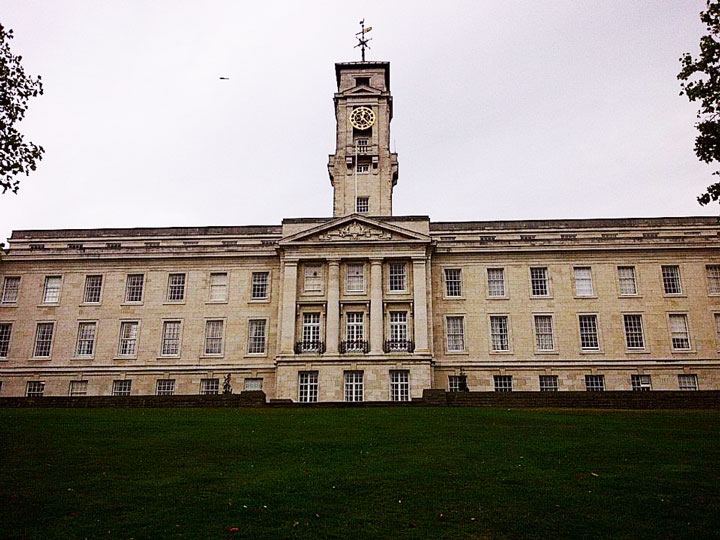
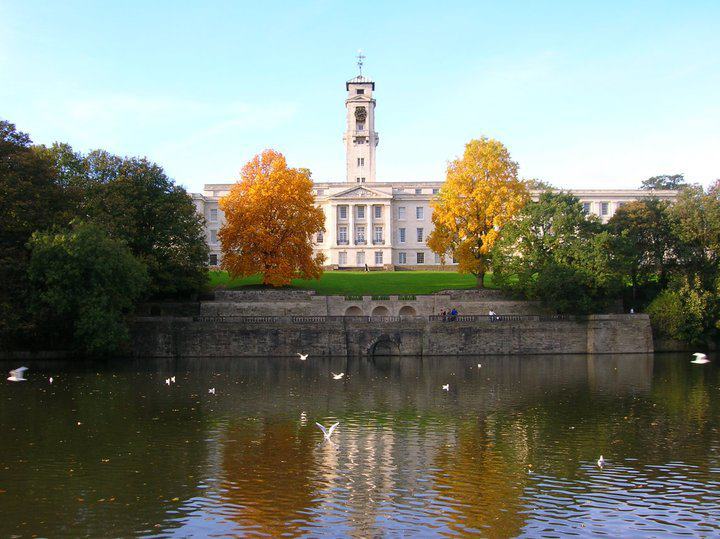
    University of Nottingham has one of the best faculties for Intellectual property laws in the UK and one of the most intensive courses in Masters of International Commercial Laws. With an amazing library and a brilliant atmosphere for studies and a superbly picturesque campus, every second spent there studying has been worthwhile.


    Any interesting details about the course worth sharing?

    To start with, our Intellectual property law course instructors were Dr. Estelle Derclaye and Dr. Paul Torremans who are very renowned in their fields. For all the other subjects, the seminars were coupled with lectures from Mahesh Uttamchandani from the World Bank, Pascal Kamina for Intellectual Property law and some other eminent dignitaries.


    How was your experience? Tell us about the faculty and facilities. Any memorable instances you might want to share with us?

    Situated two and a half hours from London, the facilities in and around this university are incredible. The 24 hour access to all the buildings and the library within the university was very helpful since we had to prepare for the day-to-day seminars on almost all the days and additionally research for our papers due at the end of the term. The faculty was very helpful and understanding. The staff in the school of law were equally well-informed and organised.

    The hand-outs and the manuals were extremely helpful in preparing for the classes and the students’ portal was very well designed to cater to all our research needs. University of Nottingham has access to innumerable journals across the globe in almost all the major areas of research and studies. The library is huge and divided into levels. The basement and the ground levels being group study zones designed with brightly coloured walls and a brilliantly designed cafeteria. The other two levels above it are the silent study zones with in-built study carrels that have a plethora of books and journals for almost all the humanities related subjects.

    anwesha-pal8The University of Nottingham, UK is divided into four campuses where the University Park Campus is the one where the school of law is situated amidst beautiful gardens and a lake with swans and lots of greenery. The hopper bus services are very effective which transfer you from one campus to the other for free. These are double-decker buses which run every few minutes.

    A funny thing to note here would be that two of University of Nottingham’s campuses had been shown in a Bollywood movie called Teri Meri Kahaani, which some of our European and English professors went to watch too!
    Well, I think one of the best experiences while living in the UK was when I got the opportunity to watch the Olympics (rhythmic gymnastics) at the Wembley Stadium.


    Holi at Nottingham
    Holi at Nottingham

    How’s the Indian fraternity over there? Are there many Indian students?

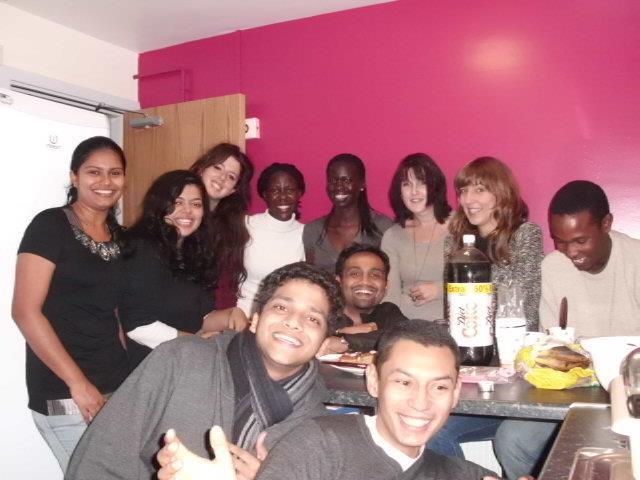
    The Indian community in the University is not very big. The LLM Class of 2011-12 had around 100 students out of which 25 were Indians and a few Indian origin UK citizens. The Asian community is pretty big there with a lot of students from China, Korea and South East Asia. There are many societies such as the Indian society, the Hindu society, the ISKCON society and so on where you can meet a lot of Indians too who are enrolled in various fields of study at Nottingham. These societies make you feel like you are a part of a family away from home and the activities during Holi and Diwali were very well organised which my friends from all cultures and ethnicities enjoyed alike. There are quite a few excellent Indian restaurants that have all-you-can-eat buffets in store. They are preferred by Indians and non-Indians alike.


    How is the recruitment/ placement situation for overseas students?

    Ever since the UK did away with the PSW (Post study work visa), the placement situation has not been very encouraging for international students in UK. However, there are a lot of companies including banking companies and other organisations that introduce the graduate program each year. One can always apply for the same and get recruited at the end of the training period. For students applying to law firms in the UK, I found in addition to the international law firms such as Clifford Chance, Herbert Smith and the likes, there are many ethnic minority law firms which release their training contract schemes and vacation schemes every year. The best place for the information regarding employment opportunities is in the law fairs organised by your universities.

    The University of Nottingham has the reputation of getting the majority of students employed each year, undergraduates and postgraduates alike. However, if you are interested in a career in academics, you should keep an eye out for various research associate positions in various universities in the UK including your own university. The Careers and Employability Services cell of University of Nottingham was very helpful with such information.


    How was the academic schedule? Was there a lot of academic work?

    The academic schedule was brilliantly designed, although the courses were very demanding. The course was a mix of full year and half year options along with a dissertation at the end which summed up to 180 credits overall. The students were at liberty to choose the subjects they wanted to take. The assessments for all the subjects were not the same. For some, 15 page essays had to be submitted, whereas for some there were exams in the end. The majority of the subjects one took decided the specialisation such as Masters in International Commercial Laws, European Laws, Human Rights Laws, Maritime law and so on.

    Yes, there was a lot of academic work. For the LL.M. students there were two hour seminars each day for the subjects one chose. The hand-outs for these seminars were given out and additional reading material was put on the portals a week in advance. Studying the given topics thoroughly was a must since the seminar could not be followed otherwise and moreover one would not be able to take advantage of the seminars and the discussions in the class if they were not familiar with the topics. Also, the class performance, which was instrumental in getting recommendations from the professors, was gauged according to one’s participation in the class.

    Formative assessments were also very crucial in understanding the expectations of the professors with regards to our assessments. These were not marked and were meant for practice alone. Apart from that, all the professors were very approachable and always ready to help with your doubts.


    anwesha-pal5What about accommodation?

    The accommodation that I had booked before I left for the university was Broadgate Park. It is situated in Beeston that is a 5 minutes’ walk from the School of Law and other administrative buildings. The road leading to the university goes alongside huge playgrounds, a lake with swans and a small hillock paved with neatly trimmed lawns and bushes with concealed lights that give you the feeling of living in a scenic resort.

    The experience was brilliant. The best part of it was when I was placed in the students’ accommodation with girls from various countries in my flat. I made new friends from various cultures, learnt a lot from them and shared my own too.

    With vast green expanses sunny days were enjoyed by the students whiling away their time on these lawns, debating over issues of politics, playing games and flying kites. We would even organise barbecues during summer break.

    Broadgate Park
    Broadgate Park

    Broadgate Park also organises balls every half a year. The Christmas ball is an extravagant affair with European expert acrobats performing difficult acts followed by prom dances by the guests later on in the night.

    The accommodation that I chose was that of a single study, although there are a wide variety of accommodations that one can choose from, including lesser expensive options.

    The flat that I was allotted had flatmates from Canada, Uganda and China. I found really good friends in them. They were very accommodating and immensely helpful. Exploring Nottingham with them was an experience I will never forget. Social get-togethers with classmates were another highlight that was a very culturally enriching experience. I would encourage students going abroad to take advantage of the international experience as a whole and not limit their world to studies alone.

    The accommodation also organises feasts on various occasions for free for the residing students. At such events one can get sumptuous grub, cultural exchange and make new friends.

    Nottingham is a beautiful town that hosts one of the biggest fairs in Europe which is called the Goose fair. The largest Indonesian festival in the UK was held here as well. It is the land of Robinhood and his friends and you can even find the roads of the town named after them such as the Maid Marian Way, Friar Tuck lane and so on.


    anwesha-pal3Tell us about your classmates, was there a predominantly international crowd? What was the general age group of students?

    My classmates were predominantly European and Chinese students. However, there was an eclectic mix of students from the continents of Africa and other Asian countries. The style adopted in their countries regarding research and studying case laws is very different from the ones adopted in India. The way of teaching was mostly in the form of discussion and reading beyond what was enlisted in the seminar hand-outs.

    The general age of students varied from 24 to 40 years. I met students from Pakistan and Africa who were in their 40s and were either already teaching at various institutions in their countries or working at solicitor firms or were Barristers in London. There was even a student from Czech Republic who was in his mid-thirties and had been working at Clifford Chance for a few years. Some of them were working in Government organisations in their countries.


    Did you get time for any extracurricular activities?

    The course had been designed very beautifully that it even left quite some time for pursuing activities other than the one that were related to academics. During the summers when the lake was not frozen, one could participate in rowing activities around the lake or join the swimming club or the belly dancing societies to learn something new. There are several student-run activities for the health conscious too. Also one could even join the baking club to learn baking or help with the charity functions. There was even a Quidditch society for the Harry Potter buffs. There were societies that enacted period wars, replete with costume and props. For those who were passionate about volunteering, there were charities that needed volunteers to work at the local departmental stores and places like the British Heart Foundation and Cancer Research Institutions to help raise money.

    However, for people who wanted to earn some extra bucks during the breaks, Nottingham being a university town was full of opportunities for students to work in. The ones offered by the university was the Note-taking service and other related support work for the disabled or people with handicaps in the university. The pay was very attractive with almost 16 to 20 pounds per hour with an extra holiday pay. Jobs offered by the university were by far more lucrative than any other jobs that were being offered by other organisations.


    How does one go about scholarships? Does the institute offer any scholarship?

    There are many scholarships on offer such as the Commonwealth Shared Scholarship Scheme, The Developing Solutions Masters Scholarship, IELTS Scholarships, Charles Wallace India trust Scholarship, Aga Khan foundation Scholarships, Goa Education Trust (GET) Scholarships, Chevening Scholarship and so on. The detailed information is given on the university’s website. The University offers a scholarship as well. This scholarship is given by the International Office of the University. Information about the same has been provided on the website.


    What are your future plans? Going forward, how do you expect this experience to influence your career?

    My plan at the moment is to focus on my academic career and move ahead with it. I believe the experience that I have had at Nottingham coupled with my undergraduation from NUJS would be a stepping stone to an academic career that I have always dreamt of. I hope to find better opportunities for my higher research degrees with my experience in Nottingham.

  • Roshan Santhalia, Advocate, High Court, on studying criminal law at Oxford, starting his own boutique firm and plans for the future

    Roshan Santhalia, Advocate, High Court, on studying criminal law at Oxford, starting his own boutique firm and plans for the future

    Roshan Santhalia graduated from NALSAR University in 2011. He has interned with Hon’ble Justice Madan B. Lokur, High Court, Delhi, Hon’ble Justice J.M. Panchal, Supreme Court of India, UN Anti-Corruption and Crime Prevention Department, and Cambridge Police Executive Programme during his time as an undergraduate. He then went on to pursue his masters in criminal justice at Oxford University, batch of 2012. He is currently a litigator based in Delhi, and primarily practices at trial courts and the Delhi High Court. He also founded his own boutique firm, Santhalia Law Chambers, in 2012.

    We have taken this opportunity to ask him about:

    • His motivation behind pursuing a LL.M Degree.
    • His experience as a student of the Oxford University.
    • The recruitment rate for overseas students.
    • Means of securing a scholarship to study at a foreign university.


    What was your motivation behind doing LL.M.? When did you finally decide to do your masters?

    I have always wanted to litigate in courts right from the beginning of law school. My primary and predominant motivation for pursuing an LL.M. was to improve my capabilities as a litigating lawyer. Moreover, I have always believed that as a first generation lawyer, the an LL.M. from a reputed university will help me build my litigation practice. As of now, the plan seems to be working. It was by the end of my second year in law school that I had made up my mind to take up an LL.M. after my first law degree.


    How did you choose the university/college?

    I believe that choosing the right university for your LL.M is extremely important. I have always advised my juniors to not apply to universities which are average or below average. With the upsurge in the global education market, there have been numerous universities which have come up with their own LL.M programs. It is important that every LL.M aspirant emphasizes on two aspects of the LL.M program. These are the overall brand reputation of the university and the quality of the faculty in the area of your interest. For instance, an aspirant might want to go to Oxford because of the brand name it has, but, if he/ she wants to specialize in Intellectual Property Right laws then Berkeley or Stanford are much better options. The right balance needs to be struck between these two factors and an ideal combination would be one in which the target university has a good brand name along with having a good faculty in the area of the desired specialization of the aspirant.


    What did you study? Why did you decide to take up this particular subject?

    I took up Criminal Justice at Oxford because I have always wanted to practise criminal law. All throughout my law school career, I have devoted a major portion of education and learning in the field of criminal law. I believe that every aspirant should first locate his or her lead in a particular area of law. An area which interests the aspirant much more than other areas of law and other similar factors should be taken into consideration. It is important that by the end of the first half of one’s law school career, he/ she should decide his/ her lead area so that he/ she can concentrate and build his/ her CV accordingly.


    How has your experience been so far? Tell us about the faculty and facilities. Anything memorable that has stayed with you?

    It’s been about six months since the completion of my masters. I would say that my experience as a Masters student was a bit poorly balanced. The academic side of my entire experience took away all the time in which I should have probably socialized and done other extracurricular activities in and around the town in which I was living. I was very lucky to be a part of a class at which luminaries like Professor Andrew Ashworth and Professor Lucia Zedner taught. One does not need to worry about the faculty if he/she is going to renowned universities. Professors abroad are extremely professional and diligent. They would never ever give you an opportunity to be critical of them in any form.


    How’s the Indian fraternity over there? Are there many Indian students?

    Indians are everywhere, aren’t they? I believe that all the good LL.M schools across the world have an excellent Indian fraternity. We have done very well across different disciplines and therefore, one will never find any dearth of friendly and helpful Indian students in any university. Not to forget, the children of Indians who have settled abroad also form a substantial portion of the Indian fraternity abroad.


    How is the recruitment/ placement situation for overseas students?

    Prior to the recession, I hear that the placement rate for overseas students was good. Currently, I believe that it has become very difficult for anyone who does an international LL.M to get a job in the international market. One needs to appreciate the fact that LL.M is a masters degree and therefore, it is more analytical, jurisprudential and theoretical in nature. As compared to this, the JDs and other undergraduate equivalents in foreign law schools teach the practical aspects of the local laws to their students. Therefore, the undergraduate students always have a better bet with local jobs of that particular jurisdiction. Having said this, I must say that exceptional candidates who do very well in their LL.M programs do end up getting good jobs too.


    How is the academic schedule? Is there a lot of academic work?

    Yes. A lot of academic work. LL.M programs across the globe are designed in a manner that a huge amount of course content can be compressed in one single year. As I have answered before, a major portion of my time which should have been spent discovering other things around Oxford was taken up by the excessive academic pressure which was exerted by the LL.M course on me. One should be mentally prepared for a lot of academic reading during the course of their LL.M program.


    How did you manage food and accommodation?

    Accommodation varies from university to university. Oxford and Cambridge have a collegiate system which means that every student will be allotted a college which shall essentially take care of the residence and food for that student. US universities, I have heard have halls of residence within their faculty of law or very near to it.


    Tell us about your classmates – is there a predominantly international crowd? What is the general age group of students?

    My class had students from all over the world. I had classmates from all the seven continents. The general age group of students is anything between 24 – 30. However, there are certain students who are also more than 30 years old.


    How does one go about scholarships? Does the institute offer any scholarship?

    Comprehensive scholarships to high quality law schools are very difficult to get. Again the mode of scholarship and the way in which one can get it varies from one law school to the other. The US and UK employ different mechanisms to provide academic scholarship to deserving candidates. One needs to do his/ her research very well to apply for all the appropriate scholarships. You can either get a full scholarship or tuition fees waiver depending on your class rank in the undergraduate law school and the interview which you give to the scholarship committee.


    Going forward, how do you expect this experience to influence your career?

    I believe that every LL.M has two major components to it. One is the substantive component of the course which basically relates to the substantive law and theories which you have gained from your LL.M course. The other component is the improvement in your capabilities to analyze, think, draft etc. on different legal issues. I believe that my higher education experience has added much more to the second component mentioned above than the first. The first component is primarily municipal/ local in nature as the theories and substantive law which one learns in his/ her masters can be most related to that particular jurisdiction in which the law school is located. In contrast to this, skills of analysis, drafting and how to critically develop a perspective on any particular area of law are skills which are universally applicable in different fields and sectors of law.


  • Rukmini Das, Masters candidate, international dispute settlement, on studying in Switzerland, demanding curricula, and plans after masters

    Rukmini Das, Masters candidate, international dispute settlement, on studying in Switzerland, demanding curricula, and plans after masters

    rukmini-das2Rukmini Das graduated from NUJS, Kolkata, in 2011. Following that, she worked with PXV Law Partners as an associate for three months, before deciding to pursue her masters.  She is currently pursuing a masters in international dispute settlement, a degree which is jointly offered by the Geneva University Law School and the Graduate Institute of International and Development Studies, Geneva.

    In this interview we speak to her about:

    • Studying in Switzerland as opposed to more conventional destinations abroad
    • Application procedure, scholarships and her curriculum
    • Her experience studying in Switzerland and plans thereafter

    What was your motivation behind doing LL.M.? 

    At the graduation level, we only touched upon all the main branches of law, learning only a little more when we took optional subjects. I decided during  my 5th year that I would pursue an LL.M., but was not yet sure when or where. However, following the herd mentality, I started working in a corporate law firm right after graduation. Halfway through the year, although I liked the work atmosphere, loved my colleagues and superiors, I realized that I cannot see myself doing this year after year. This was not my area of interest! Then I started applying for LL.M.

    How did you choose the university/ college? Where else did you apply? How should one go about choosing an university?

    I came across the course I am studying now, on the website of the International Law Students Association (ILSA), while preparing for the Jessup Moot in 5th year (ILSA organizes Jessup). This is not a particular university/college, it is a programme organized jointly by the Geneva University Law School and the Graduate Institute of International and Development Studies, Geneva. I want to stress that I selected the course, not the school. This is very important for anyone deciding on an LL.M. [for example, Harvard is famous for its business law, and maybe some other kinds of law, but may not be the best for all branches of law. Don’t go to Harvard for the sake of Harvard, as long as your other option is among the better ones].
    The main reason for zeroing in on the course that I did? The faculty! Recruitment chances are also a consideration.
    I had also applied to Queen Mary’s arbitration programme (chose not to take it up) and Cambridge University (did not get a call).

    What are you studying now? Why did you decide to take this particular subject? Any interesting details about the course worth sharing?

    I am studying Masters in International Dispute Settlement (MIDS). I selected this for the course structure and content. It is one of a kind in the world (www.mids.ch). There are so many interesting things, I don’t know where to begin! Though the course focuses on private and public international dispute settlement (why I selected it in the first place), there are opportunities to take optional courses from the regular courses offered at the graduate institute and Geneva university law school, which means I can also take courses in substantive law subjects. There are also many intensive courses offered at MIDS, over two to three days, by the best in the profession. Tutorials are also an integral part of the curriculum, not to forget conferences, site visits to international institutions, etc. I could go on and on.

    How is your experience so far? Tell us about the faculty and facilities. Anything memorable that is stuck in your mind?

    The Course directors (professors of our main courses on dispute settlement), the staff all make us feel like part of a family, with regular cocktail events which give us an opportunity to talk about stuff outside class. The experience has been mind blowing! Everything is memorable. Especially memorable were the public international law tutorials because of our Tutor, who is now a professor at Geneva University, and I feel really bad for future MIDS students, who will not have the opportunity to be taught by him.
    Facilities are great, giving us access to two libraries (Geneva Uni and Graduate Institute) as well as facilities coming with them.

    How’s the Indian fraternity over there? Are there many Indian students?

    My class has only 33 students, with one other Indian. There have been two Indians in every year of the programme, which commenced in 2008. The graduate institute has many Indian students, in economics, social sciences, development studies. I am not sure of Geneva University.

    rukmini-das3How is the recruitment/ placement situation for overseas students?

    All students are overseas in my class – not a single Swiss citizen. We get all the help possible from the career services of the graduate institute. We keep getting information on internship and job openings, via email. Career services is always there to help us with any questions we may have.

    How is the academic schedule? Is there a lot of academic work?

    Because of the immense flexibility in courses we can choose, in terms of optionals and intensives, and the conferences and institution visits we go for, hardly anybody has the same schedule as another. Schedules also vary from week to week. There is a LOT to read, a LOT. One week (the worst), we had to read about a 1000 pages. Except for that week, readings are in the vicinity of 500 pages, and are manageable if you manage your time well. Moreover, if you like the reading material, which you should, since you selected the courses, time should just fly. Classes are not just one-way lectures with note-taking, they are full of interesting discussions, made even more exciting with the presence of students from around 25 countries and teachers of such vast experience.

    What about accommodation?

    Depends on how much money you have. Of course, Geneva is among the most expensive cities in the world. Taking that into consideration, accommodation offered by MIDS administration is pretty good. Kitchens are provided, there is no concept of a “mess”. Cooking is ideal anyway – saves a lot of money!

    Tell us about your classmates – is there a predominantly international crowd? What is the general age group of students?

    I don’t have a single Swiss classmate. The students largely come from Europe, few from North and South America, and a decent number from Asia. I don’t have any classmates from Africa, but that is probably a coincidence this year. I have met quite a few at the Graduate Institute, part of other courses. Ages of my classmates ranges from 23 to 32 years. Many have come for their second LL.M., some have come here in the middle of their Ph.D.

    Do you get time for any extra-curricular activities?

    No. Partly because there’s too much to read, partly because a lot of the Geneva University activities requires a good knowledge of French!

    How does one go about scholarships? Does the institute offer any scholarship?

    MIDS offers a few scholarships every year (from an external sponsor). As far as I understand, they are merit-cum-need based. There are also scholarships offered by the Swiss government for Indian students, but the deadline generally expires before the MIDS offer letter arrives.

    What are your future plans? Going forward, how do you expect this experience to influence your career?

    My future plans are related to public international law. No further comments on that! Too early to say anything concrete. The MIDS is perfect for the faculty there, the opportunities one gets for contact-building, the variety of job opportunities in a single city! I strongly recommend it.

    rukmini-das4

  • Khagesh Gautam, Masters in Law, Columbia University, on Comparative Constitutional Law, scholarships, and student debt

    Khagesh Gautam, Masters in Law, Columbia University, on Comparative Constitutional Law, scholarships, and student debt

    Khagesh Gautam graduated from Campus Law Center, New Delhi in 2008. Subsequently he has taught at tutorials which train law candidates for the CLAT. After working as associate for Desai & Dewanji, he went on to pracitise at the Punjab and Haryana High Court. He is currently studying at the prestigious Columbia Law School. During his time in Columbia Khagesh has also been documenting his experiences in his photoblog giving viewers a glimpse of life in New York.

    In this interview, he talks about:

    • His passion for Constitutional Law and the reason he chose to pursue an LL.M.
    • Picking the right University for your LL.M.
    • His experience at Columbia University – faculty, environment, accommodation and recruitment.


    What was your motivation behind doing LL.M.?

    I decided to do an LL.M. in early 2011. I made up my mind in April, 2011 and then started looking for law schools that I should apply to.

    My motivation to pursue one was strictly intellectual. I wanted to do a serious study of comparative law with particular emphasis on comparative constitutional law. I graduated from Campus Law Centre, Delhi University in 2008 and the seeds of serious study of constitutional law were sown in me in the second year of law school itself. That passion continued with me through the four years I practiced law. I was lucky to get an opportunity to work on some really complex constitutional matters during my practice which helped fuel my passion. Somewhere in between college and work, I also read some books on American history and political science and that got me interested in American Constitutional Law and comparative constitutional law. So I decided to do pursue an LL.M.


    How did you choose Columbia University?

    I started my research by first, making a list of law schools that I would like to study in. Then I went to their respective websites and looked at the courses they were offering. Any school that was not offering the subjects that wanted to study was crossed off my list. After this, I looked at the professors teaching those subjects and did some online research to find out what the professional standing of these professors was. Following this method, I was able to zero in on a few law schools that were offering the courses that I wanted to study. Columbia Law School was on the top of my list because they had a special chair on Indian Constitutional Law (Dr. B.R. Ambedkar Chair). The faculty there was brilliant. For example, in this last semester, I took a course on Indian Constitutional law that was taught by Professor Sudhir Krishnaswamy. And previously, the same  course had been taught by Professor Akhil Reed Amar who is a highly respected name in American Constitutional Law.

    I applied to Columbia, Virginia, University of Pennsylvania and Harvard. I wanted to apply to Yale, Michigan and Cambridge but due to professional obligations I wasn’t able to complete the application formalities on time.
    I began the process of choosing a University by first consulting with my friends who had done their masters from foreign law schools. They advised me to first, make up my mind as to what I wanted to study and then look for law schools that offered those courses. The idea to research on the professional standing of the professors teaching the course was my own I also spent some time reading the published works of some of these professors.


    khagesh-gautam-3

    What are you studying at Columbia University?

    I always wanted to study comparative constitutional law. In my first semester at Columbia I took a course in American Constitutional Law and in Indian Constitutional Law. I took a seminar on Regulation of Capital Markets in which I wrote a paper on Credit Rating Agencies and the First Amendment Commercial Speech Defense that they took post the 2008 financial crisis. Even in a Capital Markets course I was doing constitutional law! I took a course in International Investment Treaty Arbitration as well. In the second semester that is about to begin, I am concentrating completely on comparative constitutional law and some more international law. I spend most of my free time reading about competition law (or anti-trust law as it is called in the US).


    How has your experience been so far?

    My experience has been good so far. The facilities in Columbia Law School are amazing and I have been able to put the resources in the law library to good use. The only thing that could stop you from pursuing knowledge at Columbia Law School is you, yourself, because every single resource conceivable, both academic and otherwise, is made available to you. There are several societies and groups that one can join. I joined the anti-trust group. There are also always some distinguished personalities visiting the University for a lecture or a talk. I attended Justice Aahron Barak’s (former President of the Israeli Supreme Court) lecture on proportionality. There was also a series of guest lectures on monetary systems last semester. I managed to attend a few of them.

    On a personal front, I enjoy photography and New York City is an amazing place for virtually every kind of photography. I have spent quite some time walking around with my camera. Living in NYC itself is a unique experience. There is always something going on that you would be interested in, on or off campus.


    How’s the Indian fraternity over there? Are there many Indian students?

    Apart from the few American JD students of Indian origin that were classmates in the course on Indian Constitutional Law and other courses, and the few family friends that I have here, I can’t really say much about the Indian fraternity. The students that I have met seem to be very hardworking and focused on their studies. I understand that the Indian professionals in USA, most of whom are in the IT field, have done well for themselves.
    There are about twelve or thirteen Indian law students in the LL.M. program in the 2012-13 batch.


    How is the recruitment/ placement situation for overseas students?

    There is a placement office here which is very active and helpful. I have several friends and colleagues, Indian and from other countries in the LL.M. program who will soon be sitting for interviews. I think every major British and American law firm is represented in the placement interviews. Most of the jobs seem to be in the transactional corporate practice areas.

    As to how many international LL.M. students will be able to get employment remains to be seen. It also depends on what kind of person the law firms are looking for. For example, if a firm is specifically looking for a Spanish or Mexican speaking lawyer then the potential group of applicants becomes smaller. A few firms seem to be looking for people well versed in public international law for investor-state arbitration and similar disputes but even in these jobs sometimes, there is a language qualification.


    khagesh-gautam-1

    How is the academic schedule?

    The academic schedule is busy and demanding. The standard objection is that the readings prescribed for a course are unjustifiably more than the credits for the course. Though I concede that in some cases this objection is true, on the whole I am satisfied with the quality and quantity of reading required for the courses that I took. I have interacted with students taking courses in corporate laws and in my opinion, they seem to have been prescribed too much to read. The casebooks prescribed are usually expensive but one can manage to rent them or buy used copies online for cheap.
    The academic work depends on what kind of courses you take. For example, if you take a seminar course and have to write a paper for it then things are different. Though the readings for the course might not be much, you would have to do additional research for your paper and then actually write the paper, which is not easy if you are trying to develop or propose a new idea. If you are taking an exam course then things are different because now you may not have to write anything new but you still have to do all the reading prescribed. Even if it is an open book exam, which most of the exams that I know of are, you still have to do your reading thoroughly.


    What about accommodation?

    Columbia Law School LL.M. students are not allotted accommodation in campus dorms. Most of the LL.M. students live in Lenfest Hall (in either studios or apartment shares), Lionsgate (studios or apartment shares) or other Columbia University Apartment Housing facilities. I was able to secure housing through the Columbia University Off-Campus housing facilities. Housing in New York can be expensive so one needs to be thorough in one’s efforts to find housing close to campus which is affordable and comfortable.

    One of the first things I did after coming to New York was to start a photoblog. This is the link to the photoblog. This blog has pictures taken at the Columbia campus, outside my apartment building etc. Some of them are citiscapes and nightscapes of New York. I will continue to post on this blog for the duration of my stay in New York.

    Tell us about your classmates – was there a predominantly international crowd? What is the general age group of students?

    In the LL.M. course the crowd is truly international and almost all countries in the world represented. The general age group seems to be between 27 and 29. Though I have not been able to interact with all the students every single one that I know of has had some kind of work experience before or is pursuing a Ph.D. in his or her home country. An overwhelming majority of all LL.M. students have an ambition to clear the New York Bar Exam and start practicing in New York.

    Do you get time for any extra-curricular activities?

    I joined the Legal Outreach program here as a Constitutional Law Debate Coach. In this program they pair high school students with law school students who coach these high school students for their constitutional law debates. I was assigned a high school sophomore student to coach last semester. The problem was based on economic rights. My student won that debate and  I had the opportunity to meet her parents, who were very kind and humble people, after the prize-distribution function. It was a great experience overall. This semester I have been assigned another high school student. The problem is on the constitutional validity of the Defense of Marriage Act which deals with the legality of same-sex marriages which is a big issue in America right now. I am having a great time coaching these high school students. This is the only extracurricular activity I am actively engaged in.


    How does one go about scholarships? Does the institute offer any scholarship?

    Every law school has a list of scholarships available on their website. That is usually the starting point. There are other scholarships like Rhodes and Fulbright etc. which are also available to Indian students. Columbia Law School offers scholarships and fee-waivers. There is a fee-waiver form that one must fill and submit. They consider every application for waiver and decide accordingly i.e. whether or not to waive fees and if yes, then how much to waive. All this information is easily accessible on the internet.


    What are your future plans? Going forward, how do you expect this experience to influence your career?

    The future is always uncertain. My long term plan is to become an academician in constitutional theory. The immediate plan however, is to find a job that allows me to pay off my student loan as quickly as I can. The way I see it now, I might have to return to practising  law but I have no ambition to do so in New York. If I do return to practice, it will be in India.

    There are two ways in which I see this experience influencing my career. First is an intellectual influence, as I have had access to a wealth of resources and knowledge that I never had in my life before and have had the opportunity to come across some really cutting edge legal research – intellectual and empirical. Thus, the intellectual influence has been immense. Second is a professional influence as I have met like-minded people from across the globe with whom I share common interests. I have been lucky to make friends with some very intelligent people during my stay here.