Author: Team Research

  • Vishnu Warrier on founding Lex-Warrier, cracking CLAT PG and work at Miniratna HLL Lifecare

    Vishnu Warrier on founding Lex-Warrier, cracking CLAT PG and work at Miniratna HLL Lifecare

    vishnu-warrier-1Vishnu S. Warrier graduated from University of Mysore in 2009. Thereafter he pursued LLM in Business law at National Law Institute University, Bhopal. While in NLIU, he founded an online law journal “The Lex-Warrier: Online Law Journal”. He has recently completed a Book on Arbitration which is about to release. Presently, he is working as an in-house counsel at HLL Life-care Limited (a Miniratna Co.) under the Ministry of Health and Family Welfare, Govt. of India.

    In this interview, he talks about:

    • Preparation for CLAT Post-Graduate
    • Establishing an online law journal
    • Interview and work at HLL


    Given that most of our readers are law students and lawyers, how would you introduce yourself to them?

    Well… I’m Vishnu, a post graduate in law from NLIU, Bhopal and did my graduation in law (Five Year Course) from University of Mysore. Currently I am associated with the In-house legal team of a Public Sector Undertaking under the Ministry of Health & Family Welfare, Govt. of India. Prior to that, I was working with the In-house legal team of Coromandel International Limited (A Murugappa Group Company). Besides, I have also founded an Online Law Journal titled “The Lex-Warrier: Online Law Journal” (ISSN: 2319-8338) accessible at www.lex-warrier.in and recently completed a Book on Arbitration which is about to release.


    Why and when did you decide to study law? You have done your graduation from Mysore University. How would you describe your time there? Tell us about the academic environment and faculty at the law department of the University.

    It was just few months before the completion of 12th Standard; I have decided to take up law as my profession. May be because, the subjects like Physics and Chemistry are not that digestible to me and neither had interest to go for either engineering or medicine. Further, the scope of the profession as well as its dignity in the society attracted me.

    I could say that, life at Mysore was one of the best times in my career as well as personal life. Five years of life @ Law College has very much changed my concept about the legal profession as well as my approach to legal studies. We have got an excellent library in our campus, and academic environment is very much inspiring as well as we were very much influenced by our Professors like Dr. CKN Raja etc. in moulding our approach towards the profession as well as academics.


    Do you believe that excellent CGPA is absolutely necessary for success?

    Well, to be frank I don’t believe in CGPA has any role in your success. As far as I am concerned it’s only a number which will decide whether you should be called for an interview or not (In case you are applying for any Job). All you need is thorough knowledge of the subject in which you are planning practice. Eg: Environmental Law. Further, you should have an idea of all other related subjects. However, in today’s competitive job market a candidate with higher CGPA will have a better chance to be called for any interview.


    What were your areas of interest during your graduation? How did you go about developing expertise and knowledge in these areas?

    May be because, I’ve taken Science in my 11th & 12th I had a special interest on IPR papers especially Patents and Trademarks. By reading lots of articles and journals on those areas (in any subjects) will help us to understand the concepts thoroughly and by going through various judgments will help us to understand the application of relevant provisions. In that, process it is possible that the reader may not agree with the author or he may have a conflicting opinion on the subject. When such situation arises, it is always recommended to discuss such topics with your fellow classmates, seniors and your Professors to develop a better understanding on the specific point of law. Discussions and debates will help us to understand law better.


    Did you do any internship during your graduation? Did you receive any assistance from your college?

    Yes. I have done few internships under practicing lawyers. In our college, papers like CPC, Cr.P.C, Evidence, Drafting, Pleading and Conveyance etc. are taught by Practicing Advocates. They were very much helpful for us to obtain internships under any lawyers or in any law firms.


    What do you have to say about the supposed ‘elite’ tag attached to certain law schools? Do you believe branding of college is something that’s very relevant/ important at any stage in a law student’s career?

    “Elite” tag has got a major role or importance in your career. It will give you a moral advantage in the job market. Nowadays it is noted that, candidates who are from top law schools are given more preference in any job interview. Therefore, branding is very much essential. After all in the job market candidate is marketing himself that, he is the most suitable person for the job which is notified.


    When and how did you decide to pursue Masters? Was it a professional requirement or an endeavour out of academic interests?

    As I mentioned earlier, I have developed some special interest towards IPR subjects during my 4th year of LL.B and further reading on the subject influenced me to go for higher studies. The decision to pursue Masters was purely out of my academic interest.


    How did you prepare for CLAT PG? Did you join any coaching? What books did you rely on?

    I was one among the 2nd batch of CLAT. During those days CLAT was hardly getting popularity and therefore there was not any coaching for CLAT as well as any books for the same. So was not attended any coaching for CLAT, however, there were lot of good study materials available in the market for other competitive exams like Judicial Service as well as Civil Services. I was more relying on those materials and of course respective reference books on each individual subjects were also referred during the preparation for CLAT.


    You have done your LL.M. from NLIU, Bhopal. Can you please share your experience at NLIU? How will you compare the pedagogy at NLIU with that of Mysore University?

    Life at NLIU was altogether a different experience comparing to the life at Mysore. However, I can’t compare both of them, because of the approach towards the profession was too different on both the occasion. At NLIU, I can say we were more serious professional towards our career. Of course there was a good healthy competition within our batch mates. The best part of NLIU is that, we have got a very good library and possibly one of the best in India and of course the Sports Complex 😉


    lex-warrier

    You are the founder and editor-in-chief of Lex-Warrier Law Journal. How did you come up with the idea of creating something like this?

    Idea was originated with a moto of sharing the knowledge. It was also some kind of experience for writing short articles. The efforts were appreciated by batch mates as well as our professors. In the mean time others also expressed their willingness to contribute, and slowly it started gaining popularity.


    You have been running the Lex-Warrier Law Journal for past four years. How is your experience so far?

    Content development was the toughest part which I faced during initial one year. However, I’m very much thankful to my friends Aakarsh Kamra and Garima Tiwari for their unconditional support which was very much instrumental for bringing the Journal to today’s stage. It is now very satisfying that, our struggles are giving us positive response like Researchers from Cambridge, University of Leiden and many Academicians preferred to publish their research papers with Lex-Warrier. However, the paper acceptability is hardly 10-15% of the total papers we receive. Major challenge we are facing in this regard is the plagiarism.


    You are currently working at HLL Lifecare Limited (A Miniratna Co.) under the Ministry of Health & Family Welfare, Govt. of India. How did you go about bagging this job? Please tell us about the recruitment process at HLL?

    I saw the advertisement on the Company’s website. And of course the organisation does publish advertisement on national dailies. This organisation looks for candidates who are good in academics as well as those who have good practical exposure. My selection was through Personal Interview.


    How was the job interview? Do you remember any of the questions asked to you?

    Interview was little bit tough. Because, I remember that, the knowledge on subject was tested very much in the interview. Questions were more of practical knowledge.


    What are your day-to-day responsibilities? How is the experience so far?

    Major responsibilities are IPR management of the Organisation, handling litigation, monitoring the statutory compliance level of the organisation etc. and provide legal opinions on case to case basis.


    Does HLL take interns? What is the process for same?

    Interns are only taken in the Secretarial Department who is pursuing CS. Vacancies will be notified from time to time and eligible candidates are taken through Personal Interview


    Lastly, what would be your message to our readers who are mainly young lawyers and law students?

    Well, I suggest first year of law school to concentrate more on the academics and be a good observer of various law school events such as Moot Courts, Debates, Seminars, Paper Presentation etc. next 3 years may concentrate on building your resume by participating in above mentioned events as well as doing internships, etc. However, it is always appreciated that, you do internships only on your vacations. And in final year of course you will be busy with your practical papers as well as your placement procedure so I suggest you to concentrate on your academics.


  • Shohini Sengupta on work at BPCL, full scholarship to Oxford and choosing M.Sc in Law and Finance (MLF)

    Shohini Sengupta on work at BPCL, full scholarship to Oxford and choosing M.Sc in Law and Finance (MLF)

    shohini-sengupta-1Shohini Sengupta is a graduate of 2012 Batch from National Law Institute University, Bhopal. After graduation, she worked with BPCL and thereafter joined Directorate General of Hydrocarbons. She has also received full scholarship under the Louis Dreyfus Weidenfeld Leadership Programme to study at the Prestigious Oxford University and is currently pursuing MSc in Law and Finance there.

    We asked her to share with us:

    • Work experience at BPCL and Directorate General of Hydrocarbons
    • Choosing M.Sc. in Law and Finance
    • Getting full scholarship to study at Oxford


    Given that most of our readers are law students and lawyers, how would you introduce yourself to them?

    This is always the most difficult part. I am a lawyer by profession, farcical writer by the day and comfort chef by night! I am a very curious person and willingly put myself in challenging positions, which may be good or bad. I am also a believer in knowledge, hard work and humour, though not necessarily in that order.


    Though it’s one of the most asked questions but yet, why law?

    I have always enjoyed the finer nuances of both written and spoken English. I heard a prolific speaker from one of India’s leading National law schools and got hooked. In addition to that, law seemed to be an excellent way to learn diverse subjects. Also, I was completely enthralled by the prospect of earning money by just speaking for hours.


    A lot of law students in their first and second year of law school plan to change the legal regime of India, work pro-bono on social issues, curb menaces and threats to the society. Have you ever felt that kind of thought crossing you?

    I think these law students are rare and a dying breed, and it is important for both institutions and people in the fraternity to nurture such thoughts. I do want to work pro-bono on social issues and my current Master’s course at Oxford is a step towards pursuing public policy in India one day. While I admit that these aspirations are in every way nobel and selfless, I want to do it purely because it interests me.


    What were your areas of interest during your graduation? How did you go about developing expertise and knowledge in these areas?

    I actually enjoyed all of my BA courses, including Economics, English and Sociology. I was particularly interested in ADR (Alternate Dispute Resolution) and commercial mediation. In pursuance of this, I did an internship at ONGC and worked on a commercial mediation paper and also competed at several mediaition tournaments, including the ICC Mediation Competition in Paris. After my graduation, I completed a course on dispute reoslution from the Indian Institute of Arbitration and Mediation, Kochi and am now a Grade ‘A’ mediator. I am not claiming to be an expert, but I hope I am taking a few concrete steps towards gaining more knowledge in this field.


    In your penultimate year at NLIU you interned with Anand and Anand, ONGC, Bharti Airtel Services etc. What kind of work was allotted to you during your internships? Are there remarkable experiences during your internships that shaped your career choices later?

    All of my three internships were fantastic. At Anand and Anand I learnt about design laws, something I hadnt been taught at law school. At ONGC, I looked at how commercial mediation was being effectively used in a government organisation in India and worked on a paper. At Bharti, I worked on investment laws in Africa and the procedures for setting up a business in the continent. In effect all these internships, particularly the last two, allowed me to view law in more than strict (law firm) commercial terms and offered me a glimpse into the social and business sides of the profession. For me, the interplay between business and law was arresting.


    Did you find that your law school education had prepared you sufficiently for the many tasks you were required to execute during your internships and later at your job?

    Law school is a very special place to grow up in. So I guess it prepapred me socially and intellectually, to be able to handle any challenge in a mature fashion. However, law is too dynamic a subject to be learnt only in class. Thus, the more I worked, the more I learnt.


    After graduation, you joined BPCL as an Executive Legal Officer. How did you go about achieving this? Please tell us about the recruitment process at BPCL?

    BPCL came to our college campus for their recruitment. There was a group discussion and a very long and engaging interview before they recruited me. Since BPCL is a marketing company, more than company lawyers, they need effective legal managers who can commit to making the business more lucrative, while protecting the interests of the company, which means they prefer integration with people over just academic brilliance. Contrary to popular belief, the work at the company is extremely challenging (they have only 25 lawyers in the country) and rewarding. It made me understand business like nothing else could. However, the recruitment process can change every year, depending upon their requirement.


    How did you go about preparing for your interview?

    Firstly, I did a thorough research about the business of the company and its recent business acquisitions and investments. This gave me an idea as to which area of law they might question me on. However, for an overall revision, I went through my resume very carefully and read through the bar exam preparatory material for a week.


    How do you think one should go about writing a CV when one is applying for a job?

    My best friend, Hita Kumar, who recently featured in one of your stories, is actually an excellent CV drafter and I would just suggest everyone to befriend her! The other option is to be honest, and keep the CV as short and precise as possible. More than anything else, the CV and cover letter should be altered according to the organisation where one is applying.


    After BPCL, you have also worked for Directorate General of hydrocarbons as an Executive Legal Officer. How did you get it and what prompted you towards it? How was the experience?

    DGH only takes a couple of people from other public sector companies on deputation, to regulate the upstream petroleum sector of India. Being interested in policy making and regulation in general, I applied for the post on being notified of a vacancy, and I was selected through an interview.

    Working for the Ministry of Petroleum was a very rewarding and enriching experience, and as a young lawyer, I had the opportunity to work on some of the biggest commercial arbitrations with some of the finest legal minds of the country. Further, I got a firsthand look at the drafting process of India’s exploration licenses and policies. It was fantastic.


    Also, Congratulations on being selected for Oxford University. What was your motivation behind pursuing Masters? When did you finally decide to pursue higher studies?

    Thank you! I was always interested in pursuing higher studies, but a big credit should go to my friends and family who kept pushing me continuously towards it. Since I was interested in the interplay between law and economics, the MSc in Law and Finance seemed to be a tailor made course for me. I also want to work towards drafting more economically viable policies for the government and I believe this course will help me learn this craft better.


    How did you choose Oxford over other? How should one go about choosing a university?

    Oxford has always been a dream for me, so much so that I did not even think of applying to Cambridge. I have grown up reading about the legends of Oxford. My grandfather worked in England for some time and it was in some respects his dream too to see someone from the family here. However, a big reason was that a course like the MSc in Law and Finance, with its unique course structure was only available at Oxford.

    The second question of choosing a university is a highly subjective one. It could be because of comfort with a particular culture or because of the reputation of the college and its professors or because of the availability of a particular course or funding. I would suggest a healthy dose of soul searching.


    What are the scholarships Oxford provides for students from India? Are there any other institutions which provide scholarships for post-graduation from Oxford?

    I received full scholarship under the Louis Dreyfus Weidenfeld Leadership Scholarship Programme, and thus I can claim that Oxford is a very supportive and nurturing University. There are a lot of funding opportunities and the best thing to do is to research their massive website thoroughly. They have specific scholarships for specific courses and also University wide scholarships. So it depends upon which course you are applying to, more than just the fact that you are from a particular country (though that might make you eligible for some scholarships like the Indira Gandhi Sustainability Scholarship).

    Apart from the University, there are a number of places in India like the Ministry of HRD, Aga Khan, Narottam Sekhsaria, Tata AIG, Inlaks Shivdasani which provide post graduate scholarships. Also, the British Council and the Oxbridge Society provide limited scholarships.


    Oxford is well renowned for its brilliant faculty. How is your experience with the faculty so far?

    I am spellbound. The problem, if you can call it so, with Oxford is that you are spoit for choices here. Thus, it makes choosing electives and course supervisors all the more difficult. Most of the faculty is exceptional and surprisingly, relatively young. However, the best part is that the relationship between a tutor and a student here is much more informal and relaxed, and in ways more mature than anything I have ever felt in India. The learning opportunities are tremendous and you can elect to sit in on any lecture, in any subject, in the University.


    How difficult is studying abroad in terms of finding accommodation, finances and settling in?

    I have actually been incredibly fortunate. I was allotted a beautiful and lavish college accommodation even without formally applying for one. Since I am on a scholarship, the financial angle hasn’t bothered me yet. Moreover, Oxford and its entire team is one of the friendliest you will find in the world. They will continue to scour for funding and allied support for people who need them even once your course has started. They genuinely want their students to succeed. Since this is a University town, accommodation, food, student jobs for everyone are plentiful. Lastly, the fresher’s week and the overwhelming social scene is good enough to make you smile more than once.


    What difference did you find in the pedagogy of Oxford relative to an NLU?

    I think it is unfair to compare them since Oxford is apparently older than the Aztecs. The NLUs are doing a commendable job of creating a league of extraordinarily accomplished young professionals. Hence, the pedagogy is more attuned towards securing a job.  Oxford has its USP in attracting mostly those students who genuinely love the subject, though there is an excellent careers advisory cell here. The teaching system is a mix of lectures, seminars (student discussions) and tutorials, compared to an NLU, which is mostly lecture based.


    There has been a recent trend amongst Indian law graduates to pursue higher education abroad. Why do you think this is happening?

    Firstly, the world and the work that we are expected to do as lawyers is getting more globalised. Second, we are becoming more aware of our options. Third, as graduate students, we are more focussed on our preferred likes and dislikes. In my case, a higher education at Oxford seemed like the only chance of learning an inter-disciplinary branch of law. A year studying will only help you hone your skills, rather than take away from your knowledge.


    What plans do you have once you finish your Masters?

    This is the toughest question of all! I am looking at a variety of options. I might apply for the Masters in Public Policy at the Blavatnik School of Government at Oxford. Alternatively, I might apply for a job, preferably in India, which allows me to indulge in a little bit of law and a little bit of policy making.


    Last but not the least, what would be your message for law students?

    Intelligence is over rated. Consistent hard work and a near obsessive zeal will get you seemingly impossible results. Humour helps, and so do supportive friends. As someone very intelligent once pointed out to me, the power to dream is almost magical.

  • Nidhi Khare on pursuing LL.M from NLIU, work as an Assistant Professor at Jagran Univ

    Nidhi Khare on pursuing LL.M from NLIU, work as an Assistant Professor at Jagran Univ

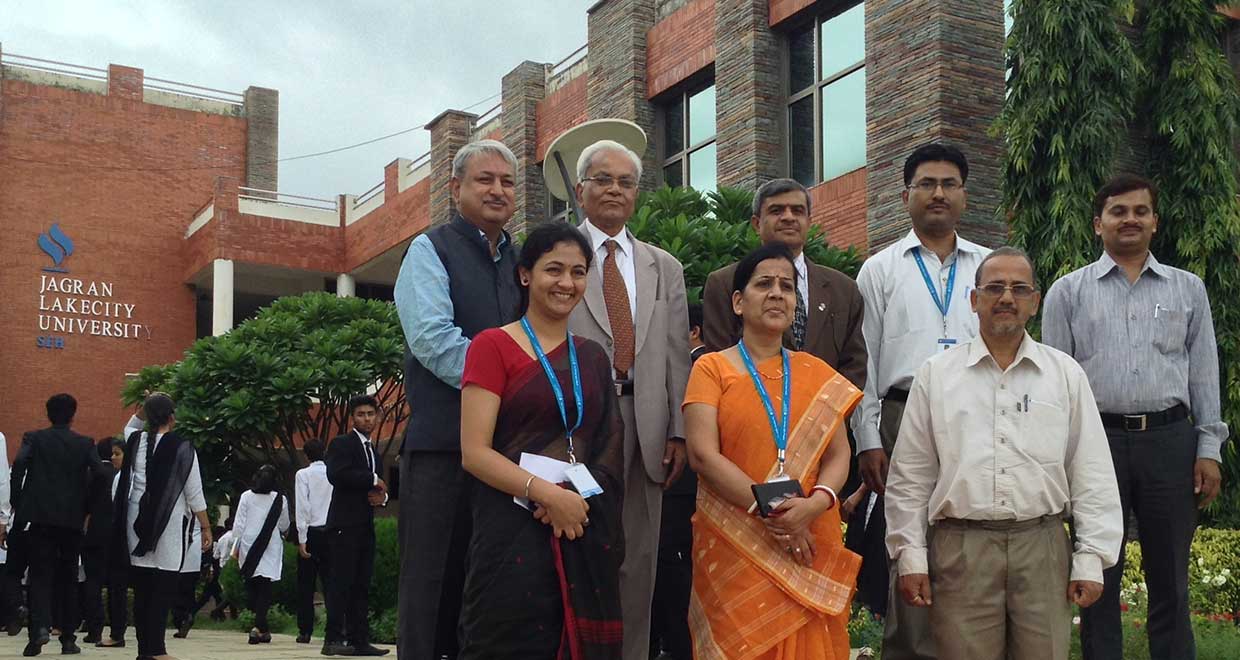
    nidhi-khare-3Nidhi Khare completed her graduation and post-graduation from National Law Institute University, Bhopal in 2013 & 2014 respectively. She was an avid mooter during her B.A.LL.B. days and has multiple publications to her name. She had always planned to pursue a career in academics since her days in law school. Presently, she is working as an Assistant Professor at Jagran University, Bhopal.

    We asked her to share her experiences and strategies she used over the years.

    • In this interview, she talks about:
    • Pursuing B.A.LL.B. and LL.M. from NLIU, Bhopal
    • Importance of co-curricular activities for a law student
    • Opting for teaching


    Most of our readers are law students and young lawyers. How will you introduce yourself to them?

    Well as far as introducing myself is concerned, I am a law student from the last six years and I am working as an Assistant Professor at School of Law, Jagran University, Bhopal. I take pride in the fact that I continue to be a law student and I have chosen a field wherein I can share my knowledge of law with young legal minds and carry on with the process of learning of law.


    How did you gravitate towards law? Why law and not engineering or medical studies?

    It wasn’t like I always wanted to do law. To be honest, initially I had a fear in mind about law and the heavy books that they are supposed to read. I got into law at my family’s advice but once I was into law, I found it is all just about logic and its practical application. I had no particular reason as to why not engineering or medical except the fact that I wasn’t good at physics and chemistry.


    How would you describe your five years of law school at NLIU?

    Five years at NLIU have changed me as an individual, as an intellectual to be precise. I believe the opportunities that a student can get at NLIU, or any national law school for that matter, are sufficient to develop the legal acumen that a law student needs. Also, I feel no shame in admitting the fact that before entering law school I used to have a tremendous public fear but by participating in competitions such as moot courts, client counselling, etc., I got rid of my public fear and I think I owe a lot to these opportunities that I could think of entering the profession of teaching.


    What kind of internships did you do while you were a student? Any remarkable experiences during your internships that shaped your career choices later?

    When I entered the law school, I did not have a set frame of mind as to what I want to do after graduation. When you enter a law school, especially if it is a National law school, there is a lot of hype created about working in law firms and Corporates and it is not unusual for a student to get carried away with it. To clear the mist that had settled in my mind, I interned in Majmudar & Partners, a leading law firm, and Wipro Technologies to have my share of experience, both with firms and Corporates. I also interned with ONGC to know about the work culture in government set ups. It was during these internships only that I realised that I had no interest in working on company contracts or fighting cases in Courts.


    You have been a member of multiple committees while in law school. Do you think these enhanced your skill-sets? Please share a few of your memorable experience.

    Yes I have been a member as well as Convenor of the Cell, as we call it in NLIU, and it has definitely taught me a number of things which probably classroom experiences don’t teach you. As a member of the Environment Cell, I learned the usual qualities of team work and patience but when I was a Convenor of the Consumer Cell, I learned to work and manage while dealing with people of different attitudes and mind-sets. It taught me the quality of being a patient leader.


    You have participated in various moot court competitions. Tell us how important is mooting and what effect does it have on one’s CV?

    Mooting, I think, is one of the most important exercises that a law student must do because it greatly improves your communication and argumentation skills. It also makes you think from a different angle altogether towards legal problems. Then ofcourse mooting helps a lot in removing the fear of public speaking. It brings clarity to your thoughts since when you know that you can be grilled by the judges on any assumption you make, you certainly do an in-depth research to have an authority backing all your arguments. It thus also improves your research skills.


    Right after graduating, you went for LLM.  What was your motivation behind pursuing LL.M.? When did you finally decide that you need to do masters?

    When I decided I have to go into teaching that was the point I knew I had to have a masters degree to be able to teach in a Law University. Also, because my interest area has always been criminal law but graduation doesn’t offer you an in-depth study into any particular field of law, I opted for LLM in Criminal Law.


    Tell us something about your LLM year at NLIU. How did this influence your career?

    I did the one-year course. It was actually introduced in that very year only. As far as the experience is concerned, yes it does certainly increase your knowledge on particular areas of law and the dissertation makes you have a deeper understanding of a particular concept.


    What was your topic of research for LL.M? Why did you choose that subject for research?

    My interest has always been women-centric laws, and I have worked a lot on sexual offences against women. I have a number of publications on sex trafficking of women, I have presented a number of papers both at national and international level on anti-trafficking laws and owing to this interest of mine, I chose rape as my area of study. My topic for research was ‘Development of Rape Laws in India: a Critical Analysis.’


    nidhi-khare-2

    What do you like best about teaching? What is the best thing about being a Professor and what’s the worst?

    I get a lot of satisfaction from teaching. This I realised when I used to teach the poor children staying in the village nearby our university who we used to teach as part of PULER, an NGO of our University, and they used to understand and learn from me. That was the point I decided that I will go into teaching. I taught in a coaching institute in Bhopal in my 5th year and while I was doing my LLM and those two years made me clear that this is the only thing I want to do for my entire life. I think the best thing about teaching is that you constantly learn and this profession offers you an opportunity to share knowledge and learn from others as well, including students. As far as the worst thing is concerned, I will say it’s not worst but it is bad that in India we don’t realise the importance of teachers in a student’s life as well as for the nation-building. They are considered to be doing an easy job and people think that if someone wants an easy life, he should go for teaching which is an absolutely wrong notion. A teacher has to do a lot of preparation to even stand for 15 min before the students. It is not an easy job at all.


    What are your favorite subjects? What subjects are you currently teaching?

    My favorite subject is criminal law. As of now I am taking contract law for the undergraduate students and I teach Business laws to students doing MBA in finance stream.

    Do you think students should behave the professors like friends, or is it necessary to maintain a disciplined environment to create a good classroom environment?

    I think it should be a combination of both.

    Describe an outstanding teacher. What do you think makes this educator outstanding?

    I don’t know how to define an outstanding teacher but I think a good teacher is someone who can communicate his thoughts clearly to the students and who feels that he is there to discuss with the students rather than to tutor them.


    Any important things which law school didn’t teach you but ‘teaching’ did?

    Yes, it brought more clarity to my understanding of concepts because when you are teaching, you can’t be anything less than perfectly sure of your concepts.


    Where do you see yourself five years from now?

    I see myself interacting with students in a class, and on the verge of or already completed my Doctorate.


    Lastly, what would be your message to people who want to take up a career in teaching?

    I will just say do not take up teaching just because you don’t see any other better option because as a Professor you are responsible for the life and career of all those students you teach, which you definitely cannot put at stake. So teach only if you enjoy teaching.

  • Garima Tiwari on pursuing masters from UNICRI, doctorate from Univ of Camerino and legal research

    Garima Tiwari on pursuing masters from UNICRI, doctorate from Univ of Camerino and legal research

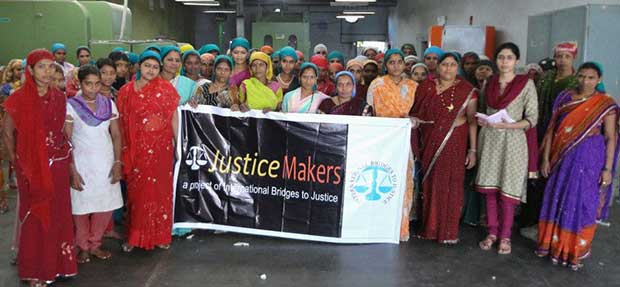
    garima-tiwari-2Garima Tiwari is an exceptionally meritorious student of 2009 batch of NLIU, Bhopal. After working at National Judicial Academy, Bhopal for two year, her interest in International Crime and Justice led her to pursue Masters from United Nations Interregional Crime and Justice Research Institute in collaboration with University of Torino, Italy. She has been awarded the Justice Makers Fellowship by International Bridges to Justice, Geneva for project on awareness of HIV/AIDS amongst the criminal justice system as also legal aid for the under-trials. She has a number of publication and has authored various books. Currently, she is a Doctoral candidate at University of Camerino.

    In this interview, she talks about:

    • Course structure of Masters at UN Research Institute
    • Key ingredients of Statement of Purpose
    • Authoring books and publications
    • The best ways to do Legal Research


    Given that most of our readers are law students and young lawyers, how will you introduce yourself to them?

    I would first like to congratulate the whole team of SuperLawyer for concretising this innovative and stimulating idea of ‘inspiration dissemination’. I graduated from National Law Institute University, Bhopal in 2009. I worked at the National Judicial Academy, Bhopal as Law Associate (Faculty) for 2 years. I have a Masters in International Crime and Justice from United Nations Interregional Crime and Justice Research Institute in collaboration with University of Torino, Italy. In 2012, I was awarded the JusticeMakers Fellowship by International Bridges to Justice, Geneva for my project on awareness of HIV/AIDS amongst the criminal justice system as also legal aid for the undertrials.  Currently I am pursuing my Doctorate at the University of Camerino, Italy alongside my work as a Researcher in comparative law with Lexidale-International Policy Consulting, Cambridge MA. I am also co-founder and author at A Contrario ICL- an international think tank devoted to research and writings on International Criminal Law and senior editor with The Lex Warrier.


    How did you gravitate towards Law? Tell us about your college life at Bhopal. What all activities did you partake in?

    I remember reading the achievements of few of my seniors in the newspapers. Law always fascinated me, and when my father brought in the brochures of the law schools, I was all ready to get in. In 2004, there was no CLAT and all universities conducted their separate exams; I cleared the entrance and there I was at National Law Institute University, Bhopal. I concentrated more on my academics. When I joined law school, it was all about getting a corporate law job. I wouldn’t deny that I tried to fit in, but somehow I wavered from that path. I loved research and writing and I guess I made good use of the crazy amount of projects we were supposed to write. I could publish a lot of them subsequently. I was a part of the environment law cell and we conducted various activities including mock parliament, slum drives, awareness camps etc. I wasn’t into moot courts, was not my thing. I enjoyed my college life thoroughly, and it makes me nostalgic thinking that it’s been almost 10 years when I first stepped in there.


    What were your areas of interest during your graduation? How did you go about developing expertise and knowledge in these areas?

    I loved international law, comparative law and human rights. Internships for me were testing the water for what I wanted to do ahead. I interned in NGOs, Human Rights Commission, law firms and with lawyers.  During one of internships, I developed interest in international trade law and I decided to work further on it. In my fourth year itself, I started research and drafting work for an advocate practising in international trade law and on graduation, I went ahead and joined his law office, before joining NJA. My advice would be to use internships to understand what you like, and not as something to fret over. As for my interest in Public International Law, I knew I would someday do a specialisation in it and so I kept myself updated with its readings.


    You were one of the most exceptional students at NLIU. You bagged a silver medal during your B.A.LL.B. Please give us a few actionable tips on managing higher grades.

    Thank you for your kind words. For me nothing has replaced hard-work ever. It definitely helps to attend lectures but always make a point to read beyond them. That way, you develop an understanding for the subject that is not just exam oriented. It is easy to score high, if you are not stressed about it. Be regular in your studies. Don’t leave for later what you can finish today. Time management is a skill which one needs to develop gradually. Frankly, there is so much time that if one is disciplined and focussed, it is easy to manage academics, and extra-curricular.


    What made you pursue your LL.M from United Nations Interregional Crime and Justice Research Institute after pursuing LL.M. in IPR from IGNOU?

    I did MIPL from IGNOU when I was working at NJA.  MIPL is not an LL.M. It is specialised master programme for 2 years. After two years of work at NJA, I wanted to further my academic profile, and I decided to get an LL.M. Gaining insight into Indian judicial system at NJA, I was very much interested in studying international organisations and implications of international dynamics on the domestic legal system. Masters from UNICRI was an apt course for this. Located in beautiful Italy, there was nothing better than combining my interest for studies and travel.


    Tell us about the course structure and specialization of Master of Laws at UN Research Institute?

    UNITO/UNICRI LL.M was a wonderful experience and it introduced me to international criminal law, international organisations and international humanitarian law The LL.M is set at the United Nations Campus in Torino Italy. It is highly specialised and tightly scheduled programme of 3 months online phase and 6 months on-campus phase. The classes started at 8/9 in morning and continued till 6 in the evening. We were a batch of 42 people from 28 countries. The programme is a perfect combination of theory and practice. We were exposed to various exercises – mock trials, moot court, seminars, prison visits, practical exercises with the Italian Army, defence seminars and witness psychology classes. The moot court itself involved participation is an army camp where we enacted half of the problem of the moot court. It was an amazing learning experience, which worked on group dynamics. The faculty was very experienced and included lawyers and judges from international courts and tribunals. It was one of the best decisions I took, as it exposed me to the international and varied nature of law; of multiple career opportunities and a chance to travel the world.


    What is the key ingredient of a well written SOP? Can you make it personal? Any tip to those making their SOPs? What might be the one mistake that the majority make?

    Incorporate your strong points. While many other applicants will have similar traits, your SOP should be written in such way that these points make you stand out.

    Show that you are different from the lot, but do not go overboard in doing so.

    Highlight the reasons for going back to academics after your work. Stress on how your work profile, makes you a better candidate. Be articulate yet precise.

    Exaggeration is a common mistake. After working with many professors and selection committees, I can definitely say that use of complex language and bragging, generally puts the committee off. Do not forget it is a formal statement, and as a law student you are supposed to have some drafting skills. Though one needs to make it personal, but it cannot be an informal statement showing your desperation to join the course. You may ask colleagues and professors, to read and see what they make of it. It should not read a negative trait for you.


    Do you think that having your recommendation letters written from distant acquaintances with influential position may backfire against you while making your application? What is the proper thing to do instead?

    Definitely, one should use recommendation letters only from people who know you academically and professionally. Universities, may make a call to the person recommending and discuss about you. A distant acquaintance, might be left without clear answers on such occasions.  This also holds true, when the universities directly contact the referee with online forms. Therefore, it is always advisable to take recommendation from professors or employers you trust and who would be able to speak accurately on your profile.


    You have publications in various renowned journals. How should one go about writing papers and getting the same published?  How do you identify and decide on a topic or area of law to write on? What is the process like?

    Selection of the topic depends on the medium you are going to publish, the audience and definitely, based on your interest. If you are writing for a blog, I would suggest write posts on current issues of your liking. That not only gives readers a chance to understand different views, but would also help you to develop critical understanding. Unlike blog, for journals and authoring a book, deadlines are important. For writing articles in different journals, you have to carefully follow the guidelines provided by the journals regarding the word count, formatting, referencing and language. They may accept your paper in the first go, or may send it back for editing, it is all a part of bringing out quality work and so patience and an open attitude to criticism is the key.

    For books, there are in general two situations. If you already have a manuscript which you would like to get published-you have to write to the publishers, have discussions and come to a common ground. The other situation is when the publisher approaches you with a project, in which case, you have to decide whether you are comfortable working on the format and idea. Usually, you submit a sample chapter, before proceeding. Once that is accepted, there is an agreement outlining all the copyright and payment issues, and you are all set to go.


    garima-tiwari-4You have published 6 books also. Tell us about the whole process. How did it all start? Please give us the highlights of your best work. When did you start writing your first book? How much time did it take?

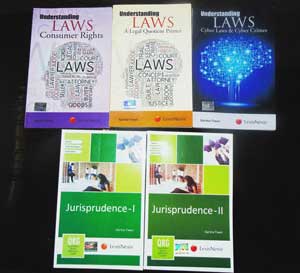
    I read on Facebook that LexisNexis India was looking for academic writers, and I applied. After discussions with them, I started working on the Quick Reference Guide on Jurisprudence I and subsequently Jurisprudence II. QRGs are quick referencer cum revision books mapped to syllabus of all law universities, focussing on quick conceptual clarity. It contains notes, case materials and important questions.  This was very challenging as for my first book itself, I was writing on jurisprudence which students find really difficult. So I concentrated on simplifying the subject yet still not losing the essence and details. Soon after, I was contacted for an innovative project by LexisNexis, to work on Understanding Law Series which is a series of books aimed to make different laws accessible and understandable to people interested in studying law, lawyers and common man. Essentially it aims at legal awareness. I worked on four titles under this series – 1. Understanding Laws –A Legal Quotient Primer 2. Understanding Laws: Contracts 3. Understanding Laws: Consumer Rights 4. Understanding laws: Cyber Laws and cyber crimes.

    I wrote all the 6 books in the 2013-2014 and it has been a very enriching journey.


    How did publishing affect your legal career? Apart from academia, does it help one to secure jobs at all?

    Research is highly respected in many countries and I am glad, that slowly India is also moving towards accepting legal research as a possible career option. Publishing articles, writing blogs and authoring books, all has definitely helped me in obtaining more work. Apart from the academic benefit it offers, publications have helped me to gain independent research projects with various organisations and companies. For jobs in legal research, you need to show you can write on varied subjects with precision .There is immense opportunity to travel and be part of amazing discourses. Good research pays really well, unlike what is normally understood. It was because of my publications during university and internships that I secured the position of senior researcher with Lexidale-International Policy Consulting Cambridge, MA. So, yes, publishing does help secure jobs.


    Presently, you are a Senior-editor at The Lex Warrier. What are the top three things you consider as sine qua non for a great research work?

    Knowledge on the subject you are researching. You should know where to look for the right and authentic material. Research is not cut-copy-paste.

    Good command over language-this requires a lot of reading. A good researcher is not just born overnight. Be ready with your diligence and patience.

    Carelessness in research shows in the product. One should be very precise and write only what is essential. Be honest and avoid plagiarism.


    garima-tiwari-3

    At present, you are a Doctoral Candidate at University of Camerino? What is your motivation behind doing so much study? What made you to pursue Ph.D.?

    Yes, currently I am in the second year of my doctoral research at the University of Camerino, Italy with full fellowship. With the same objective of understanding the impact of international law on domestic jurisdictions, that I pursued my masters, I am carrying out my doctoral research. My research deals with understanding legal imperialism and cultural relativism, from the perspective of countries like India in the era of international law. Ph.D will help me to specialise further in the area of knowledge. I believe the fact that I made career out of what I love to do, essentially motivates to me to study.


    What are your long-term goals? What do you plan to accomplish in the coming five years?

    I would probably be writing, teaching, researching and travelling to new places. I am already working on many research projects, so maybe I will start my own research venture and A Contrario is also shaping up well.


    Lastly, what would be your message to law students interested in going for higher studies from India?

    I say- go for it. LL.M from abroad will open up many new ideas and expose you to different career options which you might not be considering now. You will learn about other cultures which will broaden your thinking process. It does not matter in the long run, where you studied from, what matters is the quality and dedication in your work. Do what you love, dream big, and work hard towards it. Goodluck and have fun!

  • Chetna Shrivastava on securing top-notch internships, bagging a PPO and managing academics

    Chetna Shrivastava on securing top-notch internships, bagging a PPO and managing academics

    chetna-shrivastava-2Chetna Shrivastava is one of the most diligent and illustrious scholars of the 2015 batch of NLIU, Bhopal. She has a noteworthy academic, mooting and debating record. She is a part of the Editorial Board of the NLIU Law Review and co-founder a student run newsletter in NLIU. Her diligence and mettle at work was recognized when she received a job offer from Khaitan & Co.  during campus placements. We asked her to share her experiences and strategies she used over the years.

    In this interview, she tells us about:

    • Securing top-notch law firm internships
    • Her journey from an intern to getting job offer from Khaitan & Co.
    • Importance of academics, internships, debates and moots


    Most of our readers are law students and young lawyers. How will you introduce yourself to them?

    To begin with I would like to applaud this venture of Superlawyer of creating a database for law students and young lawyers to make informed choices after coming across experiences of the old souls (no offence!).

    For this interview I will make a sincere effort to be as serious as the interview demands. While my grades so far portray me as a nerd, my friends will have a different story.

    Caution: Those reading this interview for a chalked out strategy at bagging a job might be disappointed to know that the interviewee is a clueless person who has solely focused on gaining varied experiences to finally make the most suitable choice.


    Tell us a bit about your childhood and pre-college life as well as educational background. Do you have lawyers in your family?

    I finished my schooling from Christ Church Girls’ School, Jabalpur, a reputed school with a rich cultural and educational heritage owing to its establishment dating back to 1870. My parenting and schooling ensured my proactive participation in extracurricular activities along with securing the top ranks in academics throughout school. To diversify my options I took up Mathematics and Biology (with Physics and Chemistry) after Class 10th.

    I am a first generation lawyer.


    In India there is still a bit of resistance towards legal education. What motivated you to choose law as a career?

    Yes, the resistance towards legal education persists however it is weakening with increasing awareness of the diversity of career choices offered by legal education. The instances have reduced where I face quizzical aunties on how I could possibly take “CAT” right after school.

    The two years that followed after Class 10th made me realise that performing well and having an inclination for the subject are not synonymous. Though I performed equally well in all the subjects, arts and humanities fascinated me more as compared to deciphering the molarity of salt solutions or calculating the net forces in a rope and pulley system. I had come across several school alumni who were already pursuing a successful career in the field of law. Hence it did not take me long to decide on law as a career. Though my parents are doctors and had the same career intended for me, they were very supportive when I expressed my wish to take CLAT.


    You have participated in various moot court competitions, tell us how important is mooting and what effect does it have on one’s CV?

    Being a lawyer involves the practical application of the concepts that we are taught in the law school. Moot court competitions provide an opportunity to hone the argumentative skills along with understanding the practical nuances of the law concerned. It definitely adds a positive aspect to the CV because it evidences one’s thorough understanding of the principles with a practical experience.


    Apart from mooting and academics what other co-curricular activities did you engage yourself in?

    As a first year student I had a brief stint as an adjudicator, representing my college in various debates. A major part of my co-curricular activities has been attributed to being a part of the Editorial Board of the NLIU Law Review, CSIPR Journal and the Literary Society. In my third year I co-founded a student run newsletter.


    All your internships have been at top notch law firms. Tell us what all places you interned and how did you procure your internships?

    Apart from NGOs and Chambers of Senior Advocates, I have interned in DSK Legal, Bombay, Khaitan and Co., Bombay and AMSS, Bombay. The latter two internships were procured with the help of the PCC in my third and fourth year respectively. While the earlier ones were procured by numerous individual applications sent well in time before the intended internship duration.


    Did you plan your internships throughout law school deliberately or did it all just happen by chance? How relevant did you find your law school education with the kind of work you were required to do at law firms?

    Honestly, the four years in the law school so far have been a journey of trying to accumulate varied experiences. Therefore my internships were an attempt to assess the pros and cons of the various options available to me after law school. Apart from merit “chance” was definitely an assisting factor as being a first generation lawyer it is not easy to secure the intended internship in the earlier years of law school.

    The law school curriculum made me adept in understanding the assignments in the internships. However in the process of working on those assignments I gained a deeper understanding of the specific concepts which form a part of the subject taught in the law school. The internship was perfectly complementary to the curriculum in aiding a holistic understanding of the subjects of the curriculum.


    These days there are many law students rushing forth to intern at law firms from their first year itself throughout till their fifth year. What do you have to say about the advisability of law students pursuing such a course of action?

    Like I already mentioned, my internships were aimed at accumulating varied experiences of the options available after law school. I began with NGOs and Chambers of Senior Advocates and interned at a law firm for the first time by the end of the second year. In hindsight this helped in developing a legal aptitude to execute the assignments with a better understanding of my work. I would advise students to intern in law firms around the time when corporate laws are introduced in the curriculum as the internship and academics mutually benefit the understanding of the subject.


    Recently, you bagged a job offer at Khaitan & CO. How did you go about achieving this?

    At the end of my third year I secured an internship with Khaitan & Co. after being screened by an interview process arranged by the PCC. I was diligent in the internship which was facilitated by the inclusive atmosphere offered by the firm to its interns. By the end of my fourth years I was shortlisted for a PPO interview by the firm which was kind enough to consider me a worthy candidate for the job.


    There is a phenomenal obsession amongst law students with maintaining a very high CGPA. How important according to you is this in securing a job?

    As being one with the “obsession” and being decently successful at it, I believe that it plays a determining factor in securing a job. A consistent, more crucially than high, CGPA projects one as a diligent and sincere student to the recruiters. Most of the screening process by the recruiters has short listing of the candidates on the basis of their ranks in the first phase. However grades are not the sole reflection of one’s knowledge. Averagely good grades complemented by co-curricular activities make the student come across as one who can balance both in a rigorous academic routine and hence a better candidate for a job which involves simultaneous assignments.


    What should one law student aspiring for a job at top law firms do? How would you recommend they prepare in their last 2 years at law school?

    In the last two years the students should strategically apply for internships in the firms they aspire to work in. The internship is a perfect opportunity for making a mark as a prospective candidate for the job. A thorough knowledge of the corporate laws and efficient application in the internship contributes majorly towards securing the job complemented by a good performance in the recruitment procedure.


    Where do you see yourself five years from now? Would you consider going for an LL.M. abroad?

    As a person who goes with the flow, this is a difficult question to answer. Currently I’m looking forward to working in Khaitan & Co. and gaining the most out of my experience. LL.M. is not an option I am considering.


    What message would you like to give to our readers?

    Being a student of a field with such diverse career options you should explore and make the most of your experiences to make an informed choice. Remember the closing scene of Kung Fu Panda where Mr. Ping discloses to Po that there is no secret ingredient? That realisation helps in working towards achieving your goal knowing that the only indispensable ingredient is well directed hard work and sincerity.

  • Hita Kumar on leaving AMSS to pursue LL.M from NUS over Cambridge, writing an SOP and getting recommendations

    Hita Kumar on leaving AMSS to pursue LL.M from NUS over Cambridge, writing an SOP and getting recommendations

    hita-kumar-2Hita Kumar is a graduate from National Law Institute University, Bhopal (Batch of 2012). Her journey through law school has been one of an ideal student. While maintaining a good CGPA, she bagged a job with AMSS in law school. She worked there for two years. Currently, she is pursuing Masters in Corporate and Financial Services Law from National University of Singapore.

    In this interview Hita talks about:

    • Choosing NUS over Cambridge University for Masters
    • Writing an SOP and getting recommendation letters
    • Work experience at AMSS and leaving it to pursue LL.M


    Most of our readers are law students and young lawyers. How will you introduce yourself to them?

    I am not your stereotypical law student who loves hearing her own voice, arguing for the sake of argument and is very opinionated (no offence!), but rather more of an introvert who is not afraid to speak her mind when a situation requires me to. I’ve been told that I come across as very serious, sincere and nerdy, which is probably true when it comes to my work but people who are close to me know how nutty I can be. I’ve done my BA.LLB (Hons.) from NLIU, worked at AMSS, Bangalore and am now pursuing my Masters in Corporate and Financial Services Law at NUS. On paper I probably look like countless others, but I’ve probably gone through this journey with the least number of hiccups, which only goes to show that consistent hard work generally pays off.


    How did you gravitate towards law? Why law and not engineering or medical studies?

    From the unbiased ethics of law to the high dependence on insightful reasoning, I gravitated towards law for a number of reasons and not specifically one reason, such as wanting to be well-spoken, well read and highly regarded, wanting to be person whom you can trust to resolve issues and wanting to have the power to make right an injustice, to even know an injustice when faced with one. While I enjoyed science during 11th and 12thI never saw myself as an engineer or a doctor because it seemed too common a career choice for people who took up science. An alternative to law that I did seriously consider was a degree in Economics.


    How would you describe your time at NLIU-Bhopal?

    My time at NLIU was quite fulfilling and whilst it was demanding and academics were always a priority; NLIU was structured in the way that we were given a lot of freedom to venture into activities that interested us.It was up to us to take the initiative and develop our skills during our tenure as law students. I tried my hand at mooting, client counselling, negotiation, writing and organising events on campus. I particularly enjoyed my stint as part of the founding editorial team of the NLIU Law Review. Being a sports enthusiast, I often spent time playing basketball, throw ball and badminton. Representing the University for events both; co-curricular and in the sports field was something I always looked forward to. NLIU Bhopal is where I grew up. Entering law school at 18 straight out of school and leaving at 23, with lawyer’s degree in hand, my time at NLIU has had the biggest impact in my life to date.


    You have worked at AMSS for two years. How was the experience?

    In two words, a ‘roller coaster’; there were highs and lows, it was exciting and intimidating, and I left AMSS feeling like it was one hell of a good ride. I was part of the first batch for which there was a rotation policy i.e. we were with three different teams for six months each, before being allotted a specific practice area. This was a great opportunity for a fresh graduate like me, to work on different areas and different teams before finally being allocated permanently with one team. It gave me the opportunity to explore a number of areas of corporate law and get a broader perspective of the working of the Indian corporate legal system. While there was a tremendous learning of various corporate laws but also an emphasis on learning of other skills like client handling, time management, drafting and presenting. I was lucky to have a few mentors who made the transition from being a law student to a lawyer easier than it would have ordinarily been.The fact that I made some really good friends along the way made the journey better than expected!


    The glitz of a corporate job may blind a law student and he may fail to look at different career opportunities. Were you in doubtful before joining NUS? Why did you prefer to pursue Masters over your job?

    I think the emphasis in Indian law schools is always on recruitments and the placement season is invariably a very tough time for most students. The pressure of getting a job, if not a lucrative one, is very high. Being at NUS, I now realise there were/are far more career options and job profiles that I could’ve seriously considered had I known about them; which is why I feel it is extremely important to have a strong working relationship with your alumni, have a wide circle of friends and acquaintances including people beyond your law school and to never be hesitant to reach out to any of them for guidance.

    Having said that, I had to do a lot of soul searching before I could finally come to the conclusion that I wanted to quit my job and study for the Masters program at NUS. There was a constant debate about whether an LLM over AMSS is the so called ‘right’ way to go? Would it bear fruit at the end of day? A dear senior of mine once told me time and again that it’s what you make of the opportunities you choose that determines the outcome and not the choice itself.

    As to why I preferred doing an LL.M over the option of continuing with my job, it would have to be the timing. For me, it was the perfect time to take a step back and reinforce my academic foundation in corporate law. After two years of experience in the profession, I now having a better insight into how the business of law is actually conducted and I could explore this further by studying the areas of law I am interested in during my LL.M.


    When you decided to quit job and pursue LL.M? Was it pre-planned or it just happened during your law firm days? What was your motivation behind doing LL.M.?

    Pursuing an LL.M was not part of the original plan, at least not consciously. At some point, whilst working I realised that I was not ready to be an adult just yet! On a more serious note, I decided to give myself an opportunity to explore the academics in depth before I settle down into my forte. My motivation behind doing an LL.M, and a foreign LL.M at that, was to experience a different kind of education system and culture.


    How did you choose NUS over others? How did you go about choosing a university?

    My choice to study at NUS was a practical one. Having said that I was quite convinced that NUS has an excellent LL.M program, especially for corporate laws and has been consistently ranked as the top university in Asia. To be completely honest, the clincher, was the funding offer I received from NUS. I was granted the Faculty Graduate Scholarship which covered my tuition expenses which made the offer of admission too good to refuse. Whilst I did have the option to take up the MCL program at Cambridge, I guess the practicality and the positives that NUS had to offer outweighed the option of taking up a huge loan for a relatively new program. While choosing a University, it is important to research the actual program you would like to join by speaking with alumni, it’s not ideal just to go by the name and reputation of the University; keeping in mind always, your reasons and priorities for pursuing an LL.M.


    How did you go about writing your SOP? Are there any key factors which one should keep in mind before writing the SOP?

    Writing an SOP and the entire application process in general is extremely testing and can get frustrating at times. My guess is that universities intentionally make it so, to weed out half-hearted applications! I spoke to a lot of people who have been through the process themselves, all whom had varying but valuable input. I think it comes down to putting across those aspects of yourself and your credentials that you feel paint a complete picture of yourself and one that leaves an impression with the admissions committee. There’s no formula to writing an SOP but a couple of things according to me would certainly make a difference would be (1) the reasons you think you standout from the rest of your peers; (2) the reasons you want to get back to academics after your first degree; and(3) correct grammar! It’s also very important to get many as many people as possible to vet your SOP, the more eyes you get on your SOP, the more it will evolve.


    How about recommendation letters? Who all recommended you to pursue LL.M?

    Since I had only worked for two years before completing my LL.M applications, I requested my professors at NLIU to give me their recommendation. They were all very supportive of my decision and asked me for my CV to get a better idea of the particular work I did throughout law school. Of course, there is a fair bit of coordination involved if you are not in university anymore, so I would keep enough time before the deadlines to make all the arrangements and request for a few extra copies should the need arise.


    Does NUS provide students with scholarships? Are there any other institutions, which provide scholarships?

    NUS does give out scholarships on the basis of merit. You may opt to automatically be considered for the various scholarships as part of the application itself. There are various other institutions that give scholarships (full, partial and loan scholarships) which are well known such as given by Inlaks Foundation, Tata Foundation, Aga Khan Foundation, Narottam Sekhsaria Foundation and the Mahindra foundation, amongst others. It’s important to start doing your research on scholarships at a very early stage and keep track of the requirements and deadlines.


    How is your experience so far? Tell us about the faculty and facilities. Anything memorable that is stuck in your mind?

    So far, my experience has been absolutely fantastic. My modules are extremely interesting and the Professors supplement them with excellent lectures and reading materials. The NUS Law faculty is very highly qualified and motivated to teach and engage students. The facilities range from an extensive library (with a large number of E-resources), to sports facilities, from well-regarded centres of research like the Centre for International Law, Centre for Asian Legal Studies and Centre for Banking and Finance Law to state-of-the-art use of IT in various internal systems like the Integrated Virtual Learning Environment, where all the materials for modules you have opted for are posted. Having been here only a couple of months now, I am still soaking it all in. What has been striking has been the frequency and quality of the seminars that are conducted on various topical legal issues by guests to the university. Though, the very first thing that hit me was that my lectures were 3 hours long. But as it turns out, if you like what you hear, 3 hours can fly by fast enough!


    How’s the Indian fraternity over there? Are there many Indian students?

    There are enough and more Indians here that I never feel too far away from home! I think that says it all.


    How difficult was studying abroad in terms of finding accommodation, finances and settling in?

    Singapore is an excellent place for people who have never lived abroad. It’s almost impossible to get lost, filled with Indians and generally some of the most friendly and helpful people. While the cost of living is definitely higher than India, I can’t imagine it being too difficult to manage your finances if you can budget your expenses.


    Where do you see yourself five years from now?

    Probably doing something that I don’t even know of right now, but hopefully something that is exciting. However, options that one could probably look at are working at a foreign law firm, a multi-national corporation, teaching, a legislative think tank, an arbitration institution, a legal team of an international organisation like the WTO, and many others. Taking courses that interest you, talking to people in the field and keeping an open mind will help things fall into place.


    If you could re-live your 5 years in Law school, is there something you would do differently?

    While I have no regrets about my time in NLIU, I’m sure there are things I could’ve done better like taken a few more risks with internships, kept in touch with more alumni and stressed out a little less!


    Lastly, what would be your parting message for our readers?

    Make the most of the opportunities that come your way, so that you don’t have regrets in life!

  • Kriti Kalyani, Associate, LKS, on tips for interviews and building a profile

    Kriti Kalyani, Associate, LKS, on tips for interviews and building a profile

    kriti-kalyani-2Kriti Kalyani is a graduate from National Law Institute University, Bhopal, batch of 2014. Her diligence paid off when she received a job offer from Lakshmikumaran & Sridharan (LKS) in her fifth year of law school. Currently, she is working as an Associate there.

    In this interview, Kriti talks about:

    • Importance of Internships
    • Preparing for job interviews
    • Securing a job at LKS


    Tell us a bit about your pre-college life.

    I have a theory. I wish to do everything possible, so I don’t have any regrets in life. I am grateful to my school for providing the opportunities and giving ample recognition to students. Studies, co-curriculars like Student Council, debates, elocutions, dances, poems and essays to name a few things I did. I belong to the generation where people judged you if you took Commerce. So I did exactly that and proved them wrong. And fortunately, I love where I am today.

    I am a first generation lawyer in my family. So law was not an easy choice. But in a way, it was good, since there were no standards to match up to.


    Why did you decide to study Law?

    Frankly, there was no inspiration. No Perry Masons, no Boston Legal. I wanted to do something different and Science was out of the mix. I love reading and talking. Being a lawyer pays me to do exactly that. What more can one want in their profession!


    How practical do you think are the shows like The Practice, J.A.G., Boston Legal, Suits, etc. and movies like 12 Angry Men, Philadelphia, etc.?

    These shows miss out on the important details and the unglamorous parts of the profession. But their aim is entertainment and not to raise awareness if the profession, so we cannot really blame them.


    How would you describe your time at National Law Institute University, Bhopal?

    As much as we crib and complain while we are at it, I miss every moment I spent there. NLIU made me what I am today. A college expands your horizon in terms of the people you meet, the work you do, and makes you the person you eventually become. It’s not about what your college gives you but what you take from it. Studies, Moots, Asian Debate Championship, London Mediation Competition, Cultural Events, Sports Fests, are just a few things which I did in college. I managed the mess for a year, and stayed up nights to organize events which our college hosted.  If you do something each day, that your future-self would thank you for, then you have done a good job!


    Do you think mooting is beneficial for Law students or is it just to make your CV look fancy?

    Yes, mooting is beneficial. But in my opinion not to per se make one’s CV fancy. It teaches you to research smart, gives you the argumentative technique, teaches you the importance of paying attention to details and to withstand the judges’ grilling sessions. Not to sound preachy, I had actually quit mooting in my 2nd year, after being a participant in a moot that was fixed. I did one moot as researcher, in 5th year, and our team won it. It reinforced my faith, that it would probably be okay if someone did not moot.


    How did you secure internships with top tier firms?

    Most of the internships, including the last one at Lakshmikumaran & Sridharan, Delhi were through personally sending mails and following up. Nishith Desai and Associates, Bangalore was through College Placement Committee. I consider myself lucky because I never had to pester HRs and got confirmations based on my mails. What worked for me was the cover letter and to understand and similarly modify one’s approach based on the firm one is sending their CV to. Do NOT send a bcc to all firms in one go! Putting in mails well in advance and following up is a must.


    How relevant did you find your law school education with the kind of work you were required to do at law firms?

    Law school education is like how Sheldon in The Big Bang Theory learns to drive a car, sitting in his living room, knowing the physics of it, and learning to drive through a computer simulation. We all know how that would pan out if he were to drive on a busy road.

    My plan was to know the options that the field had to offer before choosing one. I wanted to know what I would like and what I wouldn’t. My internships were 50% plan of what I want, and 50% chance of what I’d get. I have interned at a PSU, a corporate law firm, a litigation firm, an IPR firm, and a tax firm. I finally decided that I liked tax enough to make it my profession. Also, because we are not extensively taught tax in our curriculum, there was more curiosity and eagerness to learn.


    What do you have to say about the advisability of law students pursuing internships at firms alone?

    Corporate law firms are just one part of what this field offers. I agree that it’s probably the most glamorous part in terms of money, but money won’t sustain you in it for long, interest will. So ensure that you like your work before you decide to pick it up. A possible way to go about it could be by way of elimination of available areas of practice. Some people wish to pursue UPSC and Judicial Exams. Corporate law firms wouldn’t really help them much.


    You have been a member of multiple committees while in law school. Do you think these enhanced your skill-sets?

    It’s one of those underrated and creditless things that you do in college. I think it’s equally important to learn the administrative work and to have the ability to make others work. I worked hard for every cell I was part of, for every event I volunteered. Eventually, I became Convener of the Cell for Studies in Intellectual Property Rights (CSIPR) which publishes its Annual IPR Journal. Dealing with college administration, correspondences with authors, ensuring work to be done on time, etc. made me more patient. The clerical and at times monotonous work is a huge part of a lawyer’s life. Trust me, paperwork never leaves you, and the Cell gave me enough experience to not throw papers in somebody’s face!

    I was also part of the Sports Committee for a good four years. Organizing Virudhaka-2013 was an amazing experience and this September-October, I am even getting nostalgic!


    You secured a job at Lakshmikumaran & Sridharan (L&S) in your fifth year of law school. How did you go about achieving this?

    I had applied via mail to L&S for my Summer Internship, and fortunately I got through. My previous internship at Nishith Desai Associates, Bangalore helped. At L&S, the presentation which the interns made in the end was the deciding factor. I read a lot of cases, lot of opinions, prepared a chronology of judicial pronouncements and even prepared the pattern of the mindset of the Tribunal and High Court judges. The presentation was well liked and my mentor put in a good word for me. I got a call back, but L&S came to campus before my scheduled internship and I got placed!


    How many times did you intern at L&S before you bagged the job offer?

    L&S usually follows a policy of 1 call-back and then a PPO. I interned at L&S in June and got a call back for October. However, they came to campus in September and I was recruited.


    How did you go about preparing for your interview?

    My senior had told me, not knowing something which is mentioned on your CV is a criminal offence! So I did my CV well. That means reading up on all recent changes in the topics you did three years ago! Apart from that I brushed up my tax basics. L&S usually does not ask a lot of HR questions, so did not do those much. I was asked Class 12th Accountancy in my interview as well, so there isn’t a 1-2-3-step formula. You can only do so much. Be confident and trust all that you have learnt in five years.


    How do you think one should go about writing a CV when one is applying for a job?

    DO NOT lie on your CV. If you’re going to lie, be smart about it. Add topics/subjects which you know about. Do not add something which you won’t be able to answer in an interview.


    Where do you see yourself five years from now?

    Well, that’s a difficult question. As of now, it’s been three months at L & S, in the service tax litigation team, and so far it has been an amazing experience. I cannot plan too far ahead, so as of now I am learning the tricks of the trade, and it’s good. LL.M. is a distant plan, if at all.


    If you could re-live your five years in Law school, is there something you would do differently?

    If I could re-live the five years, I’d probably try and get an article published. I’d pray for the patience to write one!


    Lastly, what would be your parting message for our readers?

    All life philosophy apart, enjoy your time while you can. As easy-going and independent work life feels, it isn’t! It has its perks, but nowhere close to being in college. Coming back from work, and having just enough time to pick up a book and read one chapter is a luxury. So, make the best of it while you can. Make it count!

  • Kinat Sisodia, Legal Manager, Star India, on being a media and entertainment lawyer, and work at Radio Mirchi

    Kinat Sisodia, Legal Manager, Star India, on being a media and entertainment lawyer, and work at Radio Mirchi

    Kinat Sisodia graduated from Hidayatullah National Law University, Raipur, in 2008. After spending years with Shemaroo Entertainment and Radio Mirchi, Kinat has recently shifted to Star India in capacity of Manager – Legal for its channels Life Ok, Star Jalsha, and Jalsha Movies.

    In this interview, we speak to him about:

    • Working for radio and television
    • The Indian entertainment law regime
    • Striking work-life balance

    What motivated you to choose law as a career?

    My family as most other families laid emphasis on education with freedom for each member to pursue their own educational interests. My father studied pharmacy, which was an unconventional choice of education at his time, and my elder brother went on a completely different tangent to opt for hotel management later. In a similar way, my calling for law came with the opening of National Law University in my hometown Jodhpur. I researched on the changed scenarios for law as a growing choice for a profession and then followed my family tradition of pursuing my own education path.


    How did you come to join Universal Legal?

    I was introduced to Universal Legal by my mentor Mr. Venkatesh Prabhu, with whom I had the honour of undertaking an internship during my final year of college. Under his able guidance and advise I interviewed with Universal Legal’s offices at Delhi and was shortlisted to join. But due to recession, the hiring got frozen. I was later given an option to join their Chennai offices, which I happily availed and joined the firm in February 2009.


    You left a lucrative law firm job and had joined Shemaroo Entertainment as an in-house counsel. What prompted this switchover?

    My move from Chennai was majorly based on sentimental grounds of being away for too long from home, folks and friends. I never planned to make a switch from a law firm to an in-house role, but the chance to be part of glamour and Bollywood was part of the initial appeal for me along with the option of staying close to family and friends.

    After joining Shemaroo, I realized the workload as an in-house counsel demanded almost similar timelines like a law firm. The major practice areas there were contractual drafting and to devote a time and focus on understanding copyright aspects for such drafting.


    How did you get inducted into an FM Radio company?

    (After working with Shemaroo for almost a year Kinat joined Radio Mirchi.)

    Media industry lacks lawyers and therefore with my one year of media experience I started getting couple of job offers. Amongst those offers, I got intrigued by an offer to experience and be part of the events business as part of Radio Mirchi. This gave me a chance to be part of organizing large scale events, viz. Mirchi Music Awards and Spell Bee school competitions to name a few and handling various intellectual property aspects in relation to organizing events.


    What were your primary responsibilities as Senior Manager – Legal at Radio Mirchi?

    I started my stint at Radio Mirchi as part of their events business. Then I also worked for the core FM Radio business for routine compliances, music licenses while negotiating and drafting several different commercial deals. I was also majorly involved in advising and representing the company’s concerns before various forums and courts in relation to changes in the legal system with the introduction of the Indian Copyright Act, 2012.

    With experience in establishing the legal implications for the FM Radio business, I, along with my senior, were also asked to help a sister company for building the FM radio model on the evolving internet radio broadcast business.


    kinat-sisodia-1

    Tell us about your venture into TV.

    That’s a standard interview question I have faced at several times in my career so far. I believe my journey in the media industry started from dealing copyright content (by way of (acquiring/ creating/ licensing) at Shemaroo; later as part of my work at Radio Mirchi I was helping in exploitation of copyright content on the FM Radio and internet platforms on an audio only mode. The logical next move for me therefore was to move towards a platform for exploitation of copyright content on an audio-visual basis and hence television.

    This belief was fueled in the right direction when I was approached to move from top of the FM Radio players to be part of India’s top television network for its relatively new channels Life OK and Bengali channels Star Jalsha and Jalsha Movies.


    How different is the experience of working with a television conglomerate as compared to a FM Radio Company?

    It’s actually a very short time to make any comparisons since I am barely three to four months old at STAR. The significant difference I feel for now while working for television is to be involved in larger projects which have a larger impact on the audience. Also, the functioning and processes for a television conglomerate are many folds since the broadcast happen simultaneously in the entire country as opposed to FM radio where each city has its separate localized broadcast.


    How do you distinguish your role and responsibility as an associate in a law firm and as that of an in-house counsel?

    Working in-house for almost 4 plus years, I have realised that being in-house, lawyers are required to understand the exact requirements of the company not only from immediate legal point but also from a long time business perspective. This becomes a little different for lawyers in law firms since they cater to requirements of multiple clients across different industries on a regular basis. Further, growth for an in-house lawyer is not only on basis of legal knowledge but on an overall understanding of company’s business to support the company’s visions.


    Do you think courts in India are equipped to handle entertainment and media law cases?

    The High Courts of the country are witnessing unique intellectual property cases these days and are dealing them in a commendable way. However, a nation-wide understanding on similar approach remains desirable to effectively mitigate the new intellectual property issues that keep arising.

    The major concerns for all digital platforms are monitored and effectively dealt by a special designated tribunal in India, the Telecom Regulatory Authority of India (TRAI). TRAI not only provides regulatory framework for all digital platforms, but also takes inputs of the stakeholders from such digital platforms to effectively protect the concerns for each platform.


    How do you maintain a work-life balance?

    I feel it can all be handled well if you are able to segregate your work time and family time. It may be little difficult to practice this in the early stages of your career, but it is very important not to carry any work stress once you leave your workplace. In fact, I am pretty sure all of us have handled time crunch in our college lives as part of project deadlines or exams. None of those things bothered us much then because we didn’t carry the stress back, and the same approach needs to be adapted to work life.


    What are your long term objectives? Where do you see yourself by the end of five years?

    Honestly, I didn’t plan my career path to move in any particular way, but here I am after five years in the media and entertainment industry. Nevertheless to answer your question, I would like to make a point that I have been involved in giving suggestions before the passing of the Indian Copyright Act, 2012 in the beginning of my media career. With the way the Indian Copyright Act, 2012 is now being interpreted, I foresee a lot of excitement and challenge to keep me engaged in the media and entertainment sector for the next 5 years hopefully.


    Lastly, what would be your message to an Indian student pursuing a law degree?

    Law is an amazing field and has a plethora of opportunities for everyone. Just maintain your focus for what opportunity you want to aim for and not just because the majority is doing it. Hard work and dedication will take you where you will be content in the long run.

  • Manoj Bhati, Civil Judge/Judicial Magistrate, MP Judicial Services, on cracking the exam and his experience

    Manoj Bhati, Civil Judge/Judicial Magistrate, MP Judicial Services, on cracking the exam and his experience

    manoj-bhati-2Manoj Bhati graduated from the National Law Institute University in 2011. In the same year he cleared the Madhya Pradesh Judicial Service Examination. He has been serving on the MP Judiciary for the last two years.

    In this interview we speak to him about:

    • His experience as a law student at the National Law Institute University.
    • Preparing for Judiciary during college years, without coaching
    • Tips on clearing competitive examinations in the country.


    How would you introduce yourself to our readers?

    First of all I would like to thank SuperLawyer for giving me this opportunity to have some words with you. For our readers, I am a BA. LLB (Hons.) from NLIU Bhopal. In the same year I got selected in the M. P. Judicial Services as Civil Judge/ Judicial Magistrate. I have been serving on the Indian Judiciary for the last two years.


    What motivated you to choose law as a career?

    I agree. Back when I joined BA. LLB, pursuing law was considered by the ones who had no other option (I have confirmed it from many seniors of mine), many of my neighbours had no idea how graceful and career oriented the course could be. They only had a thought that like others I too would go and sit in court to become an advocate but now things are different. As we see young chaps are leaving IITs, etc. and joining law programs through CLAT and other exams. As I told earlier I decided to study law to get legal knowledge that would have helped me in my IAS exam.


    Prior to entering law school did you ever wish to be a Judge?

    I never really thought of being a Judge. Initially at NLIU I was a person who wanted to join the corporate sector just not to be an unemployed person whose ultimate destination was civil services. A teacher I knew of, used to teach at Bhopal University, and she became a judge back in 2008. Her selection motivated me and her guidance helped me in preparing for the exam.


    manoj-bhati-1

    When did you start preparing for the exams?

    I started preparing formally at the beginning of 4th year. But I had already started to focus from the 3rd year on subjects which were asked in judicial service exams. My advice to the aspirants is to start preparing by the end of your 3rd year of a five year course and focusing more on subjects like CPC, CrPC, IPC, Evidence act, Constitution, contract act, Hindu Laws, Muslim Laws etc. when we study them in the Law School. It helps us in reducing the workload when we prepare after College. New Subjects which we are not taught in Law School will need time to be prepared thoroughly.


    How valuable do you think coaching institutions can be for preparation of judicial exams?

    To be very frank, I am not a big fan of taking coaching classes. I did not attend any coaching classes. For me, coaching classes just help you in getting disciplined e.g. you will at least study at the coaching time and at home whatever taught at coaching on a particular day. Law school is very hectic and after attending classes 9 through 5 the energy level goes down. On the other side, it is a boon for those aspirants who have not been able to focus on studies due to some problem during college or who need some base to start with. My advice for students is to get Standard Text Books for each subject and start with yourself and if they find it difficult to prepare themselves then only switch to coaching classes.


    What are your views on taking notes in class?

    For me, taking notes is the most important part of your preparation. Notes will help you in revising your subject as you need to revise the subjects more frequently. Better take rough notes in classes and later mend them as per your need to make useful notes.Notes save your time when you have lesser time in between Pre & Mains Exam. I did not adopt any special strategy except to focus on those subjects which are asked in Judicial Service Exams. One should give more time to subjects like CPC, CrPC, IPC, Evidence act, Constitution, contract act, Hindu Laws, Muslim Laws as preparing them in college means preparation half done!!


    Did you undergo a rigorous academic schedule?

    As we know life at a law school is very tough. You have a hectic schedule and time management is a very important aspect. At law school I chose evening time when everyone was busy with sports, gym and other things to avoid disturbances. I still feel sorry for my dear friends who used to knock my door to go to the market or outside but I had to refuse them.


    Tell us about your time at the Judicial Academy.

    For training of new Judges of the District Judiciary of MP we have the State Judicial Academy at Jabalpur. In future when I visit National Judicial Academy as a Judge I will share my experiences with the readers. For me, training period has been just like 1st year at college. You have to start afresh and go ahead just like a beginner. Gradually you grow in confidence with your experience. Thousands of people attempt for judicial exams and only a few get selected.


    Which are the prime skills and expertise required to crack the exam?

    Competition at judicial services is very tough. My tips to aspirants is to start preparation early after you have been taught procedural Laws such as IPC, CPC, Crpc at your college. Starting too early is a waste of time as you won’t be able to understand these subjects without a basic idea. A candidate for judiciary should be well versed at procedural laws because they form the very base of your knowledge. You should be focused on studies. Get previous question papers from the market and try to get a basic idea about sections on subjects which are important and how to prepare them. Maintain good writing speed by practicing as main exams are lengthy and you have to attempt the whole paper to get selected in a tough competition. Prepare Self notes on each subject; they will help you in a quick revision as time is very limited. Keep revising the subjects continuously because if you prepare a subject and then don’t revise, you will end up losing command over it.


    What is the importance of CGPA for law students for judiciary aspirants?

    If you want to join corporate sector CGPA is very important. But for Judiciary CGPA is only important to the extent that you must have a prescribed minimum percentage to sit in the exam which is generally 50-55 %. CGPA does not make a difference at the interview, only the questions during the interview do. The honorable interview committee mainly focuses on legal knowledge, besides how many placement offers you had bagged, why would you want to leave a lucrative city life and want to work in a rural atmosphere and whether you would be able to work at small districts and villages. Besides subjective questions, basic questions on international law and events were asked.


    What is a typical day at work like?

    You have to work 10 AM to 7 PM, 6 days a week. You can say life is just like that of the corporate sector. Important files you have to read at home for the next day’s work i.e. you have to prepare in advance. You have to devote the most of  your 24 hours.


    What do you think of the Indian judicial system?

    Indian judicial system is one of the best judicial systems in the world. As we see judiciary has been protecting the rights of people since independence. Every system has some flaws, and so does our judiciary. For me, the notable thing is legal delays, the reason being lesser number of judges and more number of cases. In India we need adequate number of judges and need police reforms in effective justice delivery system. Plus we need drastic changes in old laws. A judge can’t go beyond what the law is and old laws need changes with respect to changing times.


    What will be your suggestions to our readers who wish to join judiciary?

    Best of luck to all readers who want to join this noble cause. You should develop good reading habits, accumulate knowledge with as much reading as you can, try to be a good listener and prepare thoroughly. You must remain focused and patient.

  • Arpita Majumdar, Law Graduate, on preparing for CS and being AIR 13

    Arpita Majumdar, Law Graduate, on preparing for CS and being AIR 13

    arpita-majumdar-3Arpita Majumdar is currently a student of Bangalore Institute of Legal Studies (BILS) and shall graduate in 2015. She has secured All India Executive Rank 13 in Company Secretary Course and has interned at top notch firms.

    She tells us about:

    • Preparation for CS exam and bagging AIR 13
    • Coaching Institutes and CS
    • Importance of Internships


    How would you like to introduce yourself to our readers?

    I am a fifth year law student from Bangalore Institute of Legal Studies and a potential Company Secretary. I was born and brought up in the vibrant city of Indore in Madhya Pradesh and completed my schooling from St. Raphael’s Girls School, Indore. Having been nurtured in a Convent School, I was inducted into public speaking quite early in my school life. Fortunately, it has continued to remain a passion ever since.


    What motivated you to choose law as a career?

    Although I hail from a family that has seen a generation of Engineers, fortunately I was encouraged to pursue a career of my choice. However, given the lack of awareness about varied avenues available to a law graduate, my peers were skeptical of my decision. Also, I believe that there is a peculiar dogma and a certain amount of disrespect associated with the legal profession in the smaller towns.

    My first encounter with the legal regime was as a National Service Scheme (NSS) volunteer whereby, we undertook a project for the education of female inmates in Jails. This tryst with the justice mechanism motivated me to pursue a profession that infused a feeling of empowerment in an individual. Although, I must admit that initially I was perplexed between journalism and law; eventually the decision to opt for the latter came quite later in time.


    As a law student which activities did you participate in?

    Well, I believe everybody should invest considerable time and effort in exploring diverse opportunities that law school has to offer. It provides the requisite perspective to make an informed decision regarding your preferred area of practice.

    I have always tried to maintain an effective balance between academics and other activities. Along with, a consistent endeavour to maintain good scores throughout law school (as clichéd as it may be); I also, play Chess and have represented my College at “Spiritus” –the Sport’s Fest organised by NLSIU, Bangalore. I have also been a member of an Expert Panel Study on Access to Healthcare in India by IIM-Bangalore and University of St. Gallen, Sweden.

    Mooting has been another formidable part of my law school life. In fact, in my very first year I represented my institution in the Amity University Constitutional Law Moot; in which we were the semi-finalists. I have also, participated in NLIU Juris Corp, NLS Arbitration Moot and Surana&Surana Corporate Moot. However, it was eventually, the Nani Palkhivala Tax Moot Court Competition that had the effect of framing the course of my future endeavours and hence, the greater emphasis on CS Course.

    I was privileged to have few very proficient seniors who guided me through every effort of mine at law school, ranging from academics to moot courts, internships, etc. In all fairness, although, institutional guidance was very limited; I am particularly grateful to our Moot Court, Faculty-in-Charge for providing the desired opportunities.


    arpita-majumdar-2

    What kind of work did you have to do during your internship at AZB Partners and Nishith Desai Associates?

    The nature of work varies according to the place and the team allotted. At Nishith Desai Associates, I was assigned a Mentor and highlight of that internship was the fact that interns could work with all the offices and were not confined to the location office. At AZB there are no watertight compartments so I was not assigned to a particular team, as such. Also the work environment is extremely interactive and you tend to get feedbacks which help you to improve. Through the course of my law firm internships, I was allotted research works, reviewing contracts and drafting opinions.


    How was your experience interning with Senior Advocates?

    My litigation internships have been under Senior Advocates, Mr. Soli E. Dastur and Mr. Arvind P. Datar, both eminent Supreme Court counsels and renowned tax jurists. Both the internships were very rewarding in terms of, the quality of interaction with Mr. Dastur and Mr. Datar and the quality of work that I was assigned. In fact, during Mr. Datar’s internship I worked as a Student Editor on his upcoming revised edition of the Constitution of India. Also, having observed them argue in Court, it gave me an intricate understanding of the critical nuances of law practice and the art of Court craft.

    While at a law firm the work is primarily based on research for client advisory or proposed transactions; a litigation internship offers more diverse research experiences. At the same time, it offers you great insights into the judicial mind based on the Judges response to a well-researched argument to which you may have contributed substantially. I personally, enjoyed the respective challenges offered at a law firm and under a lawyer; although, with an inclination for the former.


    Did you pursue your internships throughout law school as part of a deliberate plan or did it all just happen by chance?

    In my opinion, internships are an outcome of the initiatives you are willing to take in furtherance of your career. So when I say initiatives, it would be fair to state that it was well planned; although, the execution required considerable effort. Given that I had identified my area of interest fairly early at law school I was determined to intern with the best law firms / lawyers in the area. Being from a non-NLU, internships are not as forthcoming as one would expect. Therefore, one has to pursue it relentlessly and with a great deal of vigour. In most cases, a well-structured application with a comprehensive CV and thereafter, periodic follow ups fructified into a positive response.

    Personally, I believe in any profession academic scores do not validate one’s practical knowledge. The University curriculum fails to invigorate any innovation or analytical reasoning – attributes that I found to be quintessential during my internships. Therefore, an active engagement in Moot Courts, internships, research papers, conferences, etc. are indispensable to acquire practical knowledge of the discipline. Thus, there needs to be personal interest to research deeper into the subject and not merely cater to the requirements of routine examinations by reading a few prescribed books.


    What does your CS score card read?

    (Arpita has secured All India Executive Rank 13 and South Zone Rank 1 in the Company Secretary (CS) examination.)

    To be honest, I was expecting good scores but not a Rank as such. So when I checked my results I was fairly satisfied with my scores and frankly, I did not even glance at the merit list. It was only later in the evening that I was informed by a friend that I had secured the 13th Rank. I was pretty thrilled actually although, it took quite some time to sink in.


    When and what inspired you to pursue CS course?

    Pursuing CS was largely driven by my proclivity for Corporate and Taxation Law. Moreover, since Taxation is taught in the last semester, I wanted to learn the subject in advance.

    I have been very impressed with the course curriculum particularly, because of the way it is structured. The practical insights that the course offers and the examination pattern that seeks to test the same are largely, based on one’s knowledge of the subject and not merely memory. I would personally, recommend it for students with an inclination towards Corporate, Securities and Taxation Laws, especially, those belonging to State Universities where such areas are not adequately dealt with. I believe in such cases, it serves to give you an edge over your peers.


    How did you remember the sections of the Acts in your syllabus and leading case laws on varied areas of law?

    Though CS is an extremely concept based course, this particular aspect is not very different from preparing for law papers in LL.B. curriculum. However, it demands more detailed attention to the fundamentals of a concept. I particularly, do not think one is expected to remember every case law and sections that you come across during the course of your preparations. Having said that, certain significant judgments involving intriguing questions of law and relevant sections that test one’s reasoning ability ought to be remembered. This may not require much of an effort if you have done a thorough reading of the subject coupled with an interest in the same.


    How did you prepare for the exams?

    My semester examinations were scheduled around the same time as the CS Examinations, so I was particularly constrained for time. But I am personally of the opinion that with satisfactory time management it is fairly easy for a law student to crack CS Examinations. Securing a rank may require a little more effort. I had put in about a months’ preparation; however, it was only possible because most of the subjects were covered earlier in the LL.B. Curriculum.

    CS Course material is more than sufficient for preparations for examination purposes; the only exception being Taxation and Accountancy. Additional materials are available in the form of Guides (usually referred as “Scanners” in CS parlance) – which is basically a Question-Answer Summary Guide of past years Question Papers. It is advisable to refer Taxmann Student’s Guide and V.K. Singhania’s book for practical problems pertaining to Taxation laws and Shukla & Grawal – considered the ‘Bible of Accountancy’. I have been fortunate to have some CA friends who have helped me greatly in this aspect.


    How would you say a student can go about studying and having distinction in CS subjects?

    I strongly opine that each individual has their own study methods. In some cases, it may be studying for long hours while, others may have a preference for short study hours. My study method was modulated around the latter. I base my study on thorough reading and preparation of short points on every topic. On the eve of the examinations, I studied from these notes because there are no breaks between CS papers and it is quite impossible to revise the entire syllabus within such a short span of time. Also, unlike the Law examinations administered at my University, one cannot afford to engage in selective study; in that case, the idea of merely passing the examination may also, appear far-fetched. As such, time management is undoubtedly a pre-requisite.


    Did you take any guidance for preparation?

    Initially, when I started my preparations for Executive Examinations I attended a Coaching Institute which proclaims to be the best in South India. Unfortunately, it took little time to comprehend the falsity of such proclamations.

    Personally, I do not advocate Coaching Institutes. They not only hamper self-study but at times derail your preparation by misguiding you. Moreover, pursuing Law and CS at the same time, sufficiently eases the burden of Law subjects and nullifies the requirement of a CS Coaching Institute per se. Practical subjects like Accountancy and Taxation may pose a handicap, for which a decent Coaching Class which satisfactorily addresses the concepts involved in these subjects shall suffice.


    Any dos and don’ts you would like to share with the future CS aspirants?

    It is fairly simple the way I perceive it. I have been advised against CS on the pretext that there is sufficient overlap between the two courses. I strongly beg to differ on this. At the cost of repetition, I say it once again, it gives you a wider practical perspective; and in any case, knowledge never harms, does it!

    Frankly, if you are not dedicated enough to pursue it all the way thorough kindly do not take it up in the first place. It is tiresome and entails considerable financial and time investment.


    Do you think that being from a non-NLU made any difference?

    Actually, it is not the opportunities per se that are limited; but the awareness about such opportunities that is found to be deficient. In any law school, your peers have a cardinal influence in generating such awareness which shapes your career decisions. This particular aspect is woefully scarce in certain non-NLU institutions. As such, being amidst the right kind of peer group largely determines one’s success in law school. However, the relaxed institutional framework provided me the time to pursue CS, in particular. And as a matter of fact, every coin has two sides!


    What are your plans after graduating?

    To be honest, I am not too inclined towards pursuing a career as a full time Company Secretary. I am studying to be a Lawyer, and that is what I would like to be. As of now, I plan to join a law firm where my credentials as a Lawyer and a CS would be adequately employed, preferably one having taxation as its core competence.


    Lastly, what would be your message to our readers and to the future CS aspirants?

    Stay focused, fight for what you believe in and pursue your goals with a great deal of determination.