Category: Academics, Researchers and International Organisations

  • Prabhash Ranjan, Assistant Professor, on a career in Academics and Research and the Indian Education regime

    Prabhash Ranjan, Assistant Professor, on a career in Academics and Research and the Indian Education regime

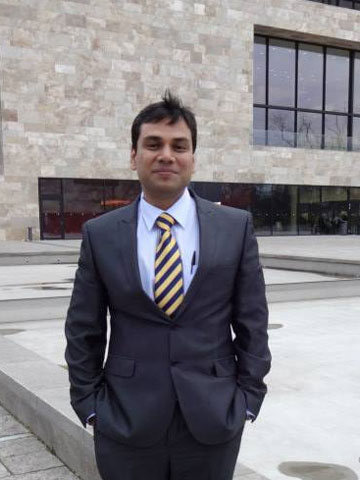
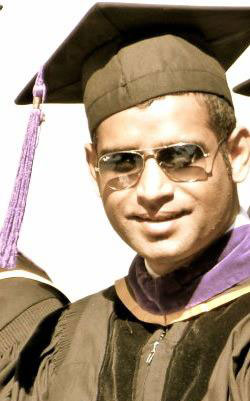
    prabhash-ranjan-2Dr. Prabhash Ranjan graduated as a lawyer from University of Delhi in 2003. Thereafter, he went for higher studies to SOAS, University College, London. Later, he received his Ph.D from King’s College, London. He worked as a consultant to Oxfam, taught at NUJS, Kolkata and NLU, Jodhpur and presently he is an Assistant Professor at South Asian University.

    Being a person of great insight into Academics, we asked him about:

    • Studying Law from Delhi University
    • Pursuing LL.M and Ph.D from reputed universities in London on scholarships
    • Experience as a consultant at Oxfam and as a professor at NUJS and NLUJ
    • Necessary changes in the Indian Education Regime


    How would you like to introduce yourself?

    I am an academic lawyer who teaches and publishes in the area of International Investment law and World Trade law. I hold bachelor degrees in Economics and Law from University of Delhi. For my LL.M, I read at School of Oriental and African Studies (SOAS) and University College London as a Chevening scholar. I hold a Ph.D. in Law from King’s College, London. I was born in Chandigarh and grew up in different cities like Bhubaneswar and Delhi. In my school life, I took part and won prizes in many debate competitions and other extra-curricular activities. As a kid, I aspired to become a medical doctor. I was very fascinated with the idea of having Dr. appended to my name. However, I gave up on this ambition once I realised that one has to be good in Biology to become a medical doctor! However, today I am happy that I have been able to fulfil my cherished dream of having Dr. appended to my name by earning a Ph.D.! In my school days, I greatly enjoyed studying Mathematics and also History (especially Modern History) and Political Science (Civics). Unfortunately, I couldn’t study History and Political Science after class 10th as I opted for Science stream. In those days, as a de facto rule, every good student was expected to study Science after class 10th! I am the first academician in my family. However, I come from a family, which has deep interest in academics and writing. My father earned his Ph.D. from University of Leipzig, Germany (then Karl Marx University in East Germany) in Veterinary sciences. My brother, a senior Army Officer is a very avid reader and is currently researching on naxalism as a Fellow at the ‘Centre for Land Warfare Studies’ (CLAWS). My grandfather, a freedom-fighter who went to jail several times during India’s freedom struggle from British colonial rule, was a prolific reader and writer in both English and Hindi and contributed articles to many English and Hindi newspapers.


    What motivated the switch from Economics to Law?

    (After doing his B.A. (Bachelor of Arts) with Honours in Economics, Prabhash pursued LL.B. from Campus Law Centre, Faculty of Law.)

    While pursuing Economics (Hons.), I had made up my mind that I would pursue Master’s in Economics and probably pursue a career as a professional economist. However, my father urged me to write the entrance examination of Faculty of Law, Delhi University. So, in many ways, the credit for me becoming a lawyer goes to my father.


    Tell us about your college life.

    My undergraduate college life of six years at Delhi University was quite exciting. I used to travel almost twenty kilometres everyday in Delhi University Special buses (old DTC buses popularly known as U Specials) from South Delhi to North Campus of DU in North Delhi. North campus of DU is a great place to study. It has leading colleges of India and various faculties and postgraduate departments providing a unique opportunity to mix and interact with students from different backgrounds. It also provided an opportunity to take part in a wide range of academic and cultural activities. Being part of DU Law Faculty was a terrific feeling for two reasons. First, I was delighted about the fact that I inherited a great legacy of legal scholarship of scholars like Upendra Baxi, P K Tripathi, Lotika Sarkar, M P Singh to name a few. Second, it was a proud feeling to be part of an institution that has produced many eminent academicians, numerous Supreme Court and High Court Judges, many Attorney and Solicitor Generals, leading advocates and attorneys and national leaders. At the Law faculty, I was lucky to be taught by outstanding scholars like Prof. M. P. Singh, Prof. B. B. Pande, Prof. P N Singh and Dr. Kamala Sankaran. Apart from academics, I took part in debate and paper presentation competitions and won a few prizes. My college life was very different from the lives of students I have taught both at NUJS and NLU Jodhpur, primarily because I was a day-scholar and my students were hostellers.


    After LL.B., you pursued a joint LL.M. from School of Oriental and African Studies (SOAS) and University College, London (UCL) as a British Chevening scholar. How was this course?

    Pursuing LL.M at SOAS and UCL was a terrific experience and perhaps one of the best things that happened to me. And winning the coveted Chevening scholarship for my LL.M was indeed a great thing. I opted for the following courses in my LL.M – World Trade Law; International Investment Law; IPR and Development; EC Competition Law; and wrote a 15,000-word dissertation on Indian Bilateral Investment Treaties (BITs). One of the best parts of the LL.M programme was to be taught by leading academics of international stature, from both SOAS and UCL, like Professor Peter Muchlinksi, Professor Joanne Scott, Professor Valentine Korah and Professor Philippe Cullet. For the first time in my life, I was exposed to a totally different pedagogy and method of teaching. Students were expected to read and come to the class. The lecture itself used to be more like a seminar with students and the professor debating on many issues. Further, there was less focus on classroom teaching as such with just one two-hour lecture for every course per week. Rest of the time, students were expected to read on their own some 100 to 200 odd pages per subject for the next week’s class. Reading lists were very carefully and meticulously prepared. I had access to an excellent library and all the major legal databases – something that was missing during my LLB studies at DU. I greatly enjoyed this system, which encouraged me and gave me ample space and time to do my own research, reading and writing. I worked very hard and earned a Distinction in my LL.M and published my dissertation and other course essays in leading international journals. Today, when I look back, I can easily say that my LL.M-year at London was perhaps the most productive year of my life. I simply couldn’t have gained all this by pursuing an LL.M in India.


    Tell us about your experience as research assistant to Prof. Valentine Korah, Emeritus Professor of Competition Law at UCL for her book on EC Competition Law.

    Professor Korah of UCL taught me Competition Law. She was very happy with my performance in the class and thus offered me to be her research assistant for her textbook on EC Competition Law published by Hart Publishers, which she was updating. Though I had never worked in the area of competition law, I readily said yes because it was an offer made by someone who is an authority in competition law not just in UK and Europe but globally. My stint as her research assistant was immensely useful as it gave me an opportunity, not just to earn a few extra pounds, but also to learn a great deal abou t competition law. I would encourage students to readily grab such opportunities of research assistantship, which not only helps one learn the subject but also helps a great deal in strengthening research skills. I always offer such opportunities to my students, as far as possible, whenever I am doing a paper or involved in a research project.


    How was the experience at Oxfam, Great Britain in India as a Research Officer?

    It was a great experience. Oxfam GB is a global brand with established reputation in the development sector. In 2004-05, they had started a new project on trade and development in South Asia. I was selected to work in this project. My job profile included conducting policy research and advocacy on international trade law issues affecting South Asia. One of the most exciting things at Oxfam was to develop and implement new ideas and work with some amazing bunch of individuals who have left a lasting impression on me. In particular, I would like to mention two of my ex colleagues and dear friends – Biplove Choudhary and Robin Koshy – extremely talented individuals from whom I learnt a great deal.


    When did you decide to pursue International Investment Law and Trade Law as a career option?

    The choice to work in the area of international trade, in many ways, was made in the final year of my LLB in 2003, when I interned at a research and advocacy based-NGO called Gene Campaign. As part of my internship, I worked on the TRIPS agreement and the Agreement on Agriculture of the WTO. I thoroughly enjoyed my work because it gave me an opportunity to put to good use not just my training as a lawyer but also my knowledge and skills in economics. It made me realise that a career as a researcher in international trade law is something that I will definitely enjoy. During my internship, I learnt about an organisation called Consumer Unity and Trust Society (CUTS) – an Indian international NGO headquartered in Jaipur, which has done extensive work on international trade. During the course of my final semester LLB examinations, I applied to CUTS and was selected to work as a Legal Researcher on international trade. This was my first job. CUTS proved to be a great training ground to learn many things about international trade and WTO and also about professional life in general. It further cemented my interest and resolve to work in the area of international trade. There has been no looking back since then. As regards investment, I picked it up much later – during the course of my LL.M. While working on international trade, I realised that one also needs sound knowledge of foreign investment laws and thus the motivation to study international investment law.


    In 2009, you were awarded President’s Graduate Fellowship by National University of Singapore. Why did you decide to decline it?

    This fellowship was part of the Ph.D programme at National University of Singapore (NUS). It is quite prestigious and I was tempted to take it. However, I also had very good Ph.D scholarship offers from UK Universities and I finally decided to accept the Ph.D. scholarship offer of King’s College London. Always wanted to go back to London – a city that I am very fond of – for my doctoral studies!


    Why did you decide to take up teaching as your career option, despite the fact that other opportunities would have been more lucrative?

    Yes, sadly that’s true. Being an academic is not as lucrative as pursuing a career in a corporate law firm or even practising law in higher judiciary, though a good academic can earn extra bucks through research consultancies and grants! I was earning much more at Oxfam GB without an LL.M than what I earned at NUJS (my first fulltime academic job) with an LL.M. It is very important to make the teaching profession lucrative to attract the best talent for the job. Temperamentally, I always considered myself more suited to a job that required reading, thinking, writing, and talking about my research. I was somehow never very comfortable with the idea of working in a corporate law firm or practising in courts or becoming a civil servant! (my parents were quite keen that I should write the civil services exam, which I never did, and become a civil servant!). I started my career as a full-time legal researcher and worked as a researcher for more than three years before deciding to pursue LL.M. My career as a full-time researcher was immensely satisfying and rewarding as it gave me an opportunity to read and research on a wide range of topics on international trade law. However, the research agenda was determined by the institution and not by me. Also, I didn’t get much opportunity to talk about my research or subjects in trade law that I enjoyed reading and researching. Thus, I thought that a full-time academic career will give me both the opportunities – to talk about my research (i.e. teach), which I enjoy a lot; and to set my own research agenda and do research. It is for this reason that I decided to pursue fulltime academic career after my LL.M. Today, when I look back, I can say with full confidence that I took a correct decision to pursue an academic career. I am very happy and satisfied with my academic career that gives me opportunities to teach young bright minds (now not just from India but from whole of South Asia), research and write on issues that I am passionate about, and also travel the world! God has been kind! Teaching and researching with the objective to generate new knowledge and contribute to numerous policy and academic debates is indeed very very satisfying and fulfilling.


    How was your experience of teaching at NUJS, Kolkata and NLU Jodhpur?

    NUJS was my first full-time academic job. It was a fantastic experience with challenges and enormous learning opportunities. At NUJS, I worked under a dynamic leader – Professor M P Singh – who introduced many reforms and bold experiments ranging from changes in the curriculum to changes in examination and evaluation pattern in order to make the system academically more robust. He also went out of his way, to appoint bright young faculty like Shamnad Basheer, Pritam Baruah, Saurabh Bhataacharjee and Daniel Mathew. This made a huge impact on the academic culture of NUJS and also positively affected the lives of students. Clearly, Professor Singh’s tenure at NUJS will go down in history of NLUs as a path-breaking phase. I got an opportunity to teach very bright students at NUJS – I learnt more from them than what they learnt from me! I worked at NLU Jodhpur (NLUJ) for only about 16 months. I shall remain grateful to Justice Mathur for giving me the opportunity to teach at NLUJ. Like NUJS, I greatly enjoyed teaching at NLUJ as well. NLUJ also has very bright students. However, I was not very happy with the service conditions at these law schools. Another major problem was huge teaching and evaluation load particularly at NLUJ. At NUJS, the academic reforms initiated by Professor Singh had brought down the teaching and evaluation load from unreasonably high levels at the time of my joining. This was done with the objective to give more time and space to faculty to read, write and publish. However, at NLUJ, I taught 16 hours a week and corrected scripts of some 120 students six times over in a semester (which makes it evaluating 720 scripts in four months). This was totally insane! With so much of quantity of work, quality of work got affected. At NLUJ, I often tried to argue for reducing the ‘quantity’ of teaching, focus more on ‘quality’ of teaching and give more time and space to faculty and students to think, read and write. However, I wasn’t very successful in persuading my seniors. Also, such enormous teaching and evaluation load meant, very little time was available for research and publishing. This forced me to work long hours on weekdays and also work on Saturdays, Sundays and other holidays to publish my papers, which became quite stressful in the end. Eventually, this forced me to look for opportunities outside the NLU system where there was a better balance between teaching and research, and also better service conditions. Thus, I landed at South Asian University. However, I feel very satisfied that despite such heavy teaching and evaluation load, I was able to publish my papers. I am happy that I never allowed the researcher in me to take a back seat despite no institutional motivation to research and publish. In such situations, one has to be self-motivated and internally driven. Also, recognition by the academic community at large motivated me, and continues to do so, to publish in leading international journals.


    Do you think that the Indian law universities need a change to match up to the standards of foreign universities?

    Indian law universities and law departments or faculties have to do a lot of catching up if they wish to meet the standards of foreign universities. First and foremost we need to de-bureaucratise our universities. By de-bureaucratisation, I mean two things – first, excessive and undue interference of regulatory bodies like the UGC, MHRD, BCI etc needs to end. Universities should be given complete autonomy within a broader accountability framework. Second, the bureaucratic mind-set that pervades our Universities needs to change. I have seen many older academicians behave in a deeply bureaucratic, feudal and hierarchy-oriented manner, often considering academic institutions as their personal fiefdoms. This bureaucratic and feudal mind-set has to change if we wish to compete with the best in the world. Currently, Indian legal academia is largely an ocean of institutionalised mediocrity where mediocre people, barring some exceptions, are appointed, nurtured, rewarded and promoted. While NLUs and some other prestigious law departments at traditional universities like Delhi and Bombay have been successful in attracting bright students to study law, it cannot be said about the teaching community. To break this institutionalised mediocrity;there is an urgent need to attract bright and competent lawyers to teaching. There are many law graduates from NLUs and other Universities who went abroad for L.L.M. and Ph.D. and are pursuing academic careers abroad. They are doing very well in their careers and have made a name for themselves in their respective areas of law. Imagine the impact on Indian legal education, if all these people were to return and teach at Indian law schools! Our law schools have failed in creating right conditions to attract these talented people. For this, a number of reforms are needed. As mentioned above, teaching profession should be made more lucrative. I don’t buy the argument that if you wish to earn money you should not pursue a career in academics. Why should one be forced to make a choice between earning money and pursuing academics? Why are earning money and becoming an academician considered mutually exclusive? I fully realise that salaries in Universities can never be as high as salaries in the corporate sector because the nature of the two sectors are very different. However, it is certainly possible to make it better than what it is right now especially at the entry level i.e. at the level of Assistant Professor. However, giving monetary incentives is just one part of the solution. Another key aspect is to create an atmosphere where young and bright lawyers feel motivated to join academics and after joining, feel motivated to achieve greater heights. For this, it is important to treat faculty, especially younger faculty with respect and honour – which means they should be involved in the process of institution building and decision making, should be given academic freedom to design their courses, research goals and other work plans, and should feel emboldened to freely speak-out and comment on any University policy at appropriate forums. Unfortunately, I have seen younger faculty often being treated in a very feudal-like manner, where they feel intimidated to even speak-out their mind. I have often seen that subjects allotted to young faculty members are randomly changed without discussions or consultations. They are over-burdened with teaching and mundane administrative responsibilities. All this demotivates a younger faculty member to work hard and leads to a loss of sense of belonging to the institution, which could prove detrimental to the institution in the long run. The need is to mentor younger faculty so that they can blossom into outstanding teachers and researchers. They should be encouraged to publish, for which ample time, space and resources should be made available. There is a crying need to provide good working conditions to faculty members like modern and independent offices to work, with the best possible infrastructure and other amenities for recreation; a dedicated personalised research fund for academic travel, buying books and other academic expenses; world class research infrastructure and library and many other such things. Also, there is a need to create an academic atmosphere where there is free exchange of ideas and knowledge unhindered by superficial boundaries of hierarchy and seniority. More specifically for NLUs, there is a need to give up this mad obsession with round-the-clock teaching and evaluation. To foster learning, students should be encouraged to think and read widely and deeply, which is possible only if there is a reduction in number of classes and tests, which have become counterproductive. A very important function of a University is to generate knowledge, which means researching and publishing. NLUs are oblivious to this part of their social responsibility. It is high time that NLUs give emphasis to academic publishing along with teaching and make it mandatory for faculty members to publish at least one paper in a leading peer-reviewed journal in a year.


    What was your doctoral thesis about?

    (Prabhash bagged King’s College London School of Law, Doctoral Scholarship and completed your Ph.D from King’s College, London.)

    Yes, a scholarship was a must to pursue a Ph.D. and I got an excellent offer from King’s. My Ph.D thesis was on ‘India’s Bilateral Investment Treaties and India’s Regulatory Power as a Host Nation’. Those who wish to pursue an academic career generally prefer Ph.D. However, in the west, I have seen many people pursuing a career as a law practitioner after a Ph.D. This trend is yet to catch up in India. I am not quite sure about the benefits that a practitioner can derive out of doing a Ph.D. – perhaps strengthened research and analytical skills.


    Also, can a law student assist researchers/academicians on research projects?

    (Prabhash has been awarded a number of research grants/projects and consultancy assignments from various Government Ministries, United Nations (UN) agencies like UNDP and UN-ESCAP and FICCI as well.)

    All these research grants and consultancy projects have happened because of my research work and publications. People/Organisations have found my research work interesting and useful and thus have offered me research grants and consultancy projects. All of these grants and consultancies have been in the field of investment law and trade law. Yes, law students can help/assist academicians in such projects. As mentioned above, I have always tried to give opportunities to my students in such research projects.


    What role do publications play in the life of an academician, especially someone who holds a keen interest in International Law?

    (Prabhash has published in many renowned international Law journals and also in edited collections published by prestigious publishers like OUP, Routledge and Hart.)

    As already mentioned, publications are the soul of an academician’s life working in any field of law not just international law. An academic who simply teaches and does not publish is like a body with a heart but without a soul. In India, unfortunately, many people think that publishing is personal work of an academician and not part of his/her institutional responsibility. I have seen such mind-sets in many places especially in NLUs. Nothing can be more appalling than this. People who say or think like this do not understand the purpose of academics. Undoubtedly, a very important purpose of academics is to teach young students (i.e. reproduction and sharing of knowledge). However, this is just one part. An equally important purpose is to publish (i.e. to produce knowledge and contribute to the existing body of knowledge). If no new knowledge is produced what will one share with students? Also, if India has to make a mark on the global academic map, our Universities have to develop and encourage a culture of publishing. We have to strike a balance between teaching and research, which is currently tilted far too much towards teaching. May I just add that the word ‘publications’ alone might be little misleading in the Indian context. We need to distinguish between ‘good’ publications and ‘bad’ publications. We need to discourage the practice of publishing for the sake of publishing in the form of badly written books, badly edited and non peer-reviewed journals etc. The Indian legal academic market is flooded with many such bad books and bad journals, which have not passed any academic quality tests.


    A law student tries to focus on the element of ‘quantity’ and not ‘quality’? What are your views on this?

    To be honest, I would not expect a student to publish papers. If a student publishes, very well! However, as already mentioned the focus should be on the ‘quality’ of writing and not on ‘quantity’. One or two good quality publications are far better than having ten sub-standard publications.


    Do you feel that we have an adequate Investment Treaty Law regime in place in India?

    I started working on BITs when it was not fashionable in India – these days it has become fashionable primarily because of so many BIT notices that have been issued to the Indian government. We do not have a robust BIT framework or policy. Our policy has always been reactionary.


    Lastly, what would be your message to our readers who are mainly young lawyers and law students?

    Study what you enjoy studying without worrying about so-called future prospects. Don’t choose your subjects because someone has told you that a particular subject has lot of scope. I can say from personal experience that every subject has lot of scope provided you study it well. Remember that the bottom is always very crowded, but there’s always room at the top! Also, determination, passion and commitment are keys to success and not intelligence, as many would like you to believe. Have fire in your belly, be clear in your mind about your goal, be determined and passionate about what you wish to do, work hard, and you will soon see yourself achieving your goals. There are no shortcuts to success!

  • Dr. Kumar Askand, Professor, RMLNLU, on studying law after science, his passion for academia, and the Criminal Law regime

    Dr. Kumar Askand, Professor, RMLNLU, on studying law after science, his passion for academia, and the Criminal Law regime

    Prof. Dr. Kumar Askand graduated from Deen Dayal Upadhyay Gorakhpur University, Gorakhpur. Askand has been teaching for the last ten years. He started his career as a teacher at WBNUJS, Kolkata and thereafter went on to teach at RMLNLU, Lucknow.

    In this interview we asked him about:

    • Studying LL.B after graduating in B.Sc.
    • Studying in a traditional law college in comparison with an NLU
    • The Indian Criminal Law regime and changes


    How will you introduce yourself to our readers?

    I was born in a sleepy eastern Uttar Pradesh town named Basti and received all my pre-university education there. Interestingly, I was first admitted in a Christian Missionary School, then moved to a right-winger Hindu school and finally ended up in a Muslim minority institution for my 10+2. I often think that this unplanned move has a lot to do with what I am today or what I am not. I had a normal childhood in a middle class family with a professor father, homemaker mother and a younger brother.  I obtained all my university degrees from Deen Dayal Upadhyay Gorakhpur University, Gorakhpur (DDUGU) and my Ph.D. (Victimology) from RML Awadh University, Faizabad. I had already cleared the National Eligibility Test for Lectureship during my LL.M. days. Since the day that I got my LL.M. Degree, I have been teaching.


    Why did you decide to study law after a B.Sc.?

    I did B.Sc. as my father wanted me to pursue the degree after he failed to convince or motivate me to do engineering which almost everyone around me would be doing. Given a chance, I would have studied literature, preferably English literature. My father was a professor of literature and as a child I used to see a lot of Hindi literature scattered in my house. I wrote and published my first poem when I was eleven and before I turned twelve, with two of my school friends, I started a children’s magazine. So literature of every kind became my constant companion since early childhood and I even started dreaming of becoming a poet.

    However, I soon realized that poets and writers also need to work for a living and it was during my B.Sc. that I decided to study law. In hindsight, I believe it was during these days that instead of solving problems of physics and chemistry, I became fascinated with law. So, joining law after B.Sc. was a conscious decision, though it was a period when legal education was considered the dust-bin of higher education in India. As there were many lawyers and judges in my extended family, my decision to study law was not resisted by my parents. What amuses me a lot when I look back to my LL.B. days is that a few of my father’s friends would sheepishly enquire “why did you join law, I know you were good at studies”. And this is how law was looked at even by university professors.

    Doing M.Sc. in chemistry was always an option as in spite of my fascination with all issues legal, I still managed a first class in B.Sc. The decision to study law was a case of the heart winning over the head.


    Tell us about your college life.

    It was not very different from the present-day life of my students I believe, except that we had a very vibrant (some may say rowdy) culture of student politics. Eastern Uttar Pradesh is considered the crime capital of Uttar Pradesh and there were many students with criminal antecedents in the garb of student leaders. I actively participated in student politics though I never contested any student-union election. So, I have been there and seen it all.

    Academic Sessions were often delayed by a year or two and a three-year law course would usually take four years. LL.M. or other masters programmes took almost three years.

    If you leave aside the late academic sessions and all, the law faculty of DDUGU had a great reputation as classes were held very religiously (not a usual feature in many other departments and universities in U.P.) and year-after-year scores of students would qualify in competitive examinations for judicial services etc. At a time when annual examinations were the norm in all the universities, DDUGU had a semester system.  We would not miss even a single class except the C.P.C classes and C.P.C. still remains my weakest area. The faculty was fabulous and we had some great teachers. Prof. Udai Raj Rai, who later became Chair Professor in NLSIU and is currently holding the Ford Chair on Human Rights in NUJS, was the Head and Dean of DDUGU when I had taken admission there and taught me Constitutional Law. My Head and Dean during my LL.M. days Prof. Anirudh Prasad is currently Dean (Academics) in RGNUL. The only regret which I had was that most of the classes were conducted in Hindi and the number of English medium students could be counted on fingers. Not that the professors were not capable, but as the majority were Hindi-medium students, they would force the professors to speak in Hindi.

    Things improved in LL.M. but it was still a largely Hindi-dominated class. However, I never felt that I am at any disadvantageous position due to lack of instructions in English. Contrary to what many believe, I believe that law is not a slave of any particular language. Though I was an English medium student, I used to have fierce discussions on legal issues with my Hindi-medium mates.

    My heart goes out for those students in RMLNLU who join us after having cracked the CLAT but suffer in their classes due to their educational background. Hindi-medium students suffer emotionally and psychologically in a predominantly English-speaking peer group and these sufferings often reflect in their grades. As a student, I never enjoyed any special status or privilege due to the fact that amongst the Hindi-medium students I am the only one who studies law in English-medium. There were many Hindi-medium students who knew law better than anyone else. Regrettably, in NLUs, your competence in law is judged by your fluency in spoken English.


    Please give us a few actionable tips on managing higher grades.

    (Dr. Askand was one of the exceptional students during his college years.)

    Rather than giving any tips on managing higher grades, I would say that grades don’t matter much. Many of my batch-mates who did not score good grades are doing very well as lawyers and judges. Your grades in law school may give you a star status amongst your peers but in the long run, it is your in-depth understanding of law and legal issues which counts. More than feeling great about obtaining the first position in the university in LL.M., I feel proud of being the first LL.M. from DDUGU who was offered lectureship in the prestigious NUJS. So instead of worrying about grades, be a trail-blazer.


    Law, now and then-how would you describe the change?

    Do you really think that law has changed since my student days? I find the same law today which we studied. The changes are only cosmetic and nothing much has really changed.

    If you mean “legal education, now and then!” my answer would be that a lot has changed for good. In 1995, when I started my three-year law course in DDUGU, the five-year law programme was seen with a lot of skepticism. Though NLSIU was established in 1987 (and remained the only NLU till 1997 when NLIU was established followed by NALSAR and NUJS), no one believed that legal education shall be one day at par with engineering and medicine. Honestly, it was only during my first year in LL.M. that I realised that the NLUs have arrived with a bang on the legal landscape of the country and also secretly harboured the aspirations of teaching in one of them someday.  In our days, law was by default. Today, it is largely by choice. The pedagogy, the approach, the method, the infrastructure and above all, the attitude of the people towards law has undergone a complete metamorphosis. Believe me, the law faculty of DDUGU stopped subscribing law reports in 1996 due to financial crunch and when I was writing my LL.M. dissertation on euthanasia in 2001-2002, law reports only up to the year 1996 were available in the library. Can you imagine that in a NLU? Accessibility of quality legal material was the biggest challenge of our days in DDUGU.

    Then, whoever excelled in law, excelled through grit and conviction fighting against many odds which the students of today, especially from NLUs can’t even imagine in their wildest dreams.


    How relevant do you think are internships for a present law student?

    In our days, internships meant going to a lawyer’s chamber in the evening where you would not be taken seriously and if you still have the perseverance, go ahead. Today, it’s all about internships. See in law schools other than NLUs, a job in a law firm or a corporate house is not the prime motivator. Almost everyone is interested in a government job in judicial services, state prosecution department, PSUs etc. For these jobs, your internships don’t matter much.

    Interestingly, when I joined RMLNLU in 2006, I was given the responsibility of Internship and Placement Committee which I discharged till 2013. As a faculty advisor to the Internship and Placement Committee, I have seen a lot of benefits accruing from internships. Internships not only expose you to the functional aspect of law, these widen your horizons of thought and make you complete. Irrespective of what one wants to be after law school, one must do internships during session breaks.


    Why did you not go for practicing law or some other career in law?

    One practices law not only when one argues in a court but also when one teaches and researches. Am not I an academic lawyer? It may appear a bit saintly but since my graduation days, I knew that academics was my calling. It may not be very lucrative in comparison to other jobs with a fatter pay packet but immensely satisfying. It gives you creative freedom and it is fun inspiring young people, many of whom look up to you crucial life decisions.


    Why did you take up teaching at RMLNLU, given the fact that RML was still at its foundation years, while NUJS, a renowned university?

    Ah, when I joined NUJS it was also at its foundation years. The first Batch of NUJS graduated in 2005, a year after I had secured a lectureship there. So I have been part of NUJS faculty in its formative days and still cherish this association.  Leaving NUJS in 2006 was a difficult decision and the reason for doing so was purely personal.  Closely watching RMLNLU grow by leaps and bounds has compensated the so called loss of leaving a renowned law school.


    Which subject do you enjoy teaching the most?

    (Dr. Askand has taught a number of both traditional legal subjects and the trending ones from Criminal Law to Science Technology & Law to IPR to Banking Law and Policy.)

    Teaching non-traditional subjects like Science Technology & Law, Biotechnology Law and Media Law was a real challenge for someone who had never studied these subjects as a student. In NUJS, I taught these subjects to a very bright bunch of students and immensely enjoyed doing that. However, everyone knew in NUJS that my heart lies with Criminal Law. I fondly remember Late Prof. D. Banerjea who was heading the School for Criminal Justice Administration (SCJA) in NUJS, inviting me to all the SCJA meetings though I was associated with School of Legal Practice and Development (SLPD).

    After I joined RMLNLU as a founding faculty member, Criminal Law was an obvious choice and to this day, I am stuck in love with it. So, it is Criminal Law of all hues and variety that I love teaching most. Media Law shall be the next best thing to discuss, teach and research.


    How has the experience been participating in as well as organizing a number of conferences, workshops and other events?

    Fabulous, to say the least. I have been fortunate to have been part of organizing committees which meticulously organized some academically enriching seminars and conferences both at NUJS and RMLNLU.  The International Seminar that we organized at RMLNLU in 2010 to mark the completion of 150 years of the Indian Penal Code takes the pride of place.


    Do you think if Indians would have framed our Penal Code, it would have been better?

    NO. Period. Who would have done that for us? India of those times was geo-politically an entirely different entity and everyone knows what the state of penal law was during the times preceding IPC. After we became independent, successive Law Commissions have suggested changes in the IPC but none have suggested any changes in the core values which the statute embodies. Macaulay must be credited with producing the mammoth statute minus the superfluities of English law. If today, the Parliament decides to have a new penal code for India, its structure and core principles shall remain intact. We have seen that happening when the Code of Criminal Procedure, 1898 was replaced by the 1973 statute.


    If you were asked to suggest some changes to the present Indian Criminal law, what would they be?

    Not the law, it is the criminal justice system which requires a change. Let me briefly explain this: Laws are not good or bad. It is the manner of their implementation and enforcement which matters more than their content. Most of the issues plaguing the criminal justice system in our country are systemic. From 2010 to 2012 we at RMLNLU, undertook a massive research study of the functioning of the prosecution system of Uttar Pradesh. The findings of the research- a 600 pages strong Research Report, which we submitted to the Government of Uttar Pradesh and the Prosecution Directorate are shocking. The prosecution apparatus is on the verge of collapse and no one seems concerned.


    If one wants to become a great criminal lawyer, what course of action should one follow?

    I don’t think I am the right person to answer this question. However, let me try. Most of the people in the profession think that practicing criminal law is all about securing bail for their client. This is a myopic vision of criminal law advocacy. I understand that the snail-paced justice system offers great incentives to criminal lawyers who are in reality mere “bail managers”. I am also not undermining the importance of bail for the stakeholders. What I am pointing out is that real criminal law advocacy is much more than just securing bail.  My ideal criminal lawyer shall be the one who has in-depth knowledge of both the substantive and procedural criminal law and is also well versed with the constitutional law. This requires a lot of perseverance, patience and practice.


    Lastly, what would be your message to people who want to take up a career in teaching?

    My message shall be “welcome to the family”. Legal academia requires you much more than ever. Come to the profession well equipped, in letter and spirit, and conquer the world. If someone like me who comes from a not-so-impressive academic background, with no fancy foreign degrees, can make it to NLUs, anyone and everyone can.

  • Moiz Tundawala, Doctoral Candidate, on hurdles of being visually challenged, and plans for the future

    Moiz Tundawala, Doctoral Candidate, on hurdles of being visually challenged, and plans for the future

    Moiz Tundawala graduated from NUJS, Kolkata in 2005. He is currently pursuing his doctoral studies at London School of Economics.

    In this interview we speak to him about:

    • His routine, and how prepares for examinations
    • The shortcomings of the system in making education accessible to people with disability
    • Plans for the future

    Why did you decide to study law?

    In school my favourite subjects were history and political science. Never the less I wasn’t precisely sure what to do after my twelfth board exams. I had an offer of admission from the WB NUJS, and also Political Science in Xavier’s Calcutta. Eventually I decided to go for law primarily because I would get a wider array of choices. Looking at the courses on offer, I knew that the university would teach me the law of a diverse variety relating to the human engagements. As a result, I could avoid committing to anything particular and narrow down my career options. Now as things stand, I continue to still cater my interest in history and political science by aiming a specialization in legal history and public law. It all ended well for me and in retrospect, I think I made a pragmatic decision to go for law back in 2005 over Political Science that was been offered.


    What kind of study schedule did you follow?

    I am largely indisciplined when it comes to study schedules. It is just that I always let my interests and curiosity motivates me.


    How do you organise the entire activity of learning something, producing academic content and preparing for exams?

    I use a computer with a screen reading software called JAWS, and a scanner with another software called Kurzweil. I scan books, download articles and other materials, save them in different folders on the computer. I always make it a point to take notes in class, especially when I think that teachers are sufficiently well versed. To help produce academic content, am told there are softwares which do your in-text citations and build a bibliography. Am yet to try them though, but will hopefully do it very soon.

    On the substance side, I also make notes for every article, book and case that I read and deem important. While reading, I first look at mastering the core thesis and arguments, and then get down to focusing on matters of detail. Most important, is to keep writing, to oneself, for oneself, so that ideas are not lost, even if they be roughly developed.


    How did you write exams?

    When my sight started deteriorating, I started getting someone to write my papers. As in, I would dictate and the person would write. Second year of college onward, I switched to a computer.


    moiz-profile-picture-eAs a visually impaired student did you come across additional challenges, while studying in the law school?

    Yes, you keep coming across new challenges all the time. Most importantly, is getting access to the reading materials. Moving around in the library is also difficult. Asking for someone’s help to locate all the relevant books and the likewise. But, the folks in the NUJS library were extremely cooperative. Once I passed out due to deteriorating health, and they came up with an online electronic catalogue, which I think is very essential for a visually impaired student. Here in London, libraries are also sensitive to differential needs. I just have to write to them with the names of the books which I require, and the next time I go, someone from the staff fetches them for me. Mobility is another big thing. I have one regret looking back to my stint in NUJS, that I was not sufficiently confident to try moving around on my own. Had I been, law school would have been a much fun experience. Infrastructure will keep throwing difficulties, but I guess one must keep taking the initiatives to work around and also to get things done.


    Did you find the legal education system in general and your college in specific to be sensitive to the needs of the visually impaired students?

    The legal system as a whole is obviously not sensitive enough. The legal education in particular, is not sensitive at all because most important is to get materials in an accessible format, which is not available easily. Sadly, 90 to 95% of the books do not have an electronic edition yet. And scanning takes up a lot of your time and energy. Therefore, it goes without saying, this requires a lot of patience on your part. Every once in a while, if you are lucky, you do manage to get soft copies from here and there. My college was as co-operative as it could have been. They were the ones who encouraged me to switch to computer for the purpose of the exams. Library staff was also cordial and cooperative enough. Even teachers were sensitive to my requirements in the class. Especially, in my early days, some of them would just come up to me for a quick chat to figure out how I was getting along. This I think is very important. It is not always possible for a blind student who may find navigating the campus difficult to go to a teacher every time he or she is facing any particular issue. I was slightly daunted by the thought of reading so many cases and thick law digests. But, Dr. Sudhakar, a visually impaired professor of international law in NUJS, wisely advised me not to bother so much about all that, and that things would keep falling into place gradually. The knowledge that someone who has faced similar issues and has still ended up doing so well for himself really helped at that time.


    Would you encourage visually impaired high school students to pursue law?

    Yes, I would definitely encourage all the visually impaired school students to pursue law. As the system needs you more than you need the system. If law interests someone, come along, and do the legal system a favour. Enlighten other persons about the diversity within the society, the different problems which people confront, and the amazing things they are capable of doing in spite of all they go through. And yes, if you are not so sure what you want to do, law is sometimes a safe option.


    How can other visually impaired students increase their academic performance? Do you have any suggestions for this?

    I have nothing more to add apart from my own experience. Reading with vigour, and more importantly, thinking imaginatively. Furthermore, I think that if the teacher is good, paying attention in class would also be enough.


    What are your future career plans?

    Well am still not sure about it. At this moment, I am engrossed in my doctoral studies. There is still a lot of time to decide. But yes, a career in academics and research perhaps would be my preference. But I do not wish to rule out law practice altogether.


    What message would you like to share with our readers?

    Nothing apart from wishing all the visual impairments and other disabilities students, freedom from fear and inhibition and imaginative discernment.

  • Rohini Sen, Assistant Professor, on LL.M from Leeds, pursuing academics and teaching experience at JGLS

    Rohini Sen, Assistant Professor, on LL.M from Leeds, pursuing academics and teaching experience at JGLS

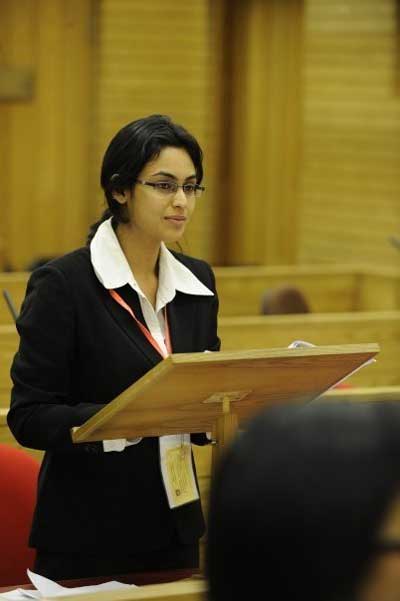
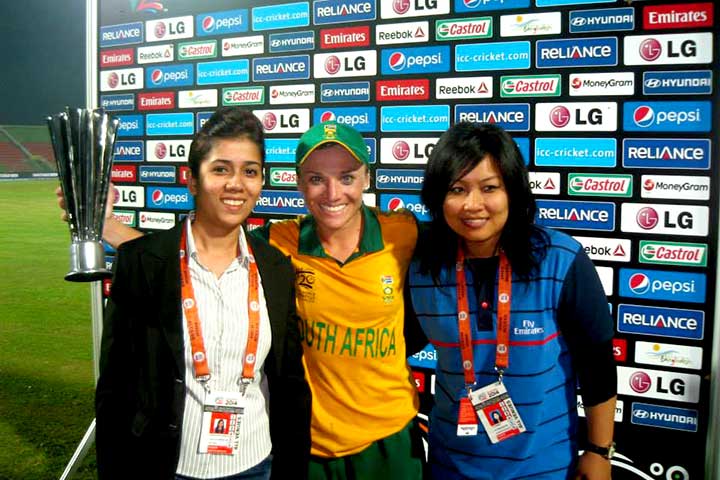
    Rohini Sen graduated from GNLU, Gandhinagar in 2011 and thereafter she went for an LL.M to University of Leeds. Presently she is an Assistant Professor and teaches at Jindal Global Law School, Sonepat.

    In this interview we speak to her about:

    • Studying B.Sc.LL.B from GNLU, Gandhinagar
    • Pursuing an LL.M. in International Law from Leeds
    • Experience as a teacher at JGLS


    Tell us a bit about your work life, your dreams and aspirations.

    I must congratulate you on this rather interesting and enterprising endeavour. SuperLawyer is very informative for those who need a form of guidance to see them through five years of law school and has a relatable touch to it as well. I am always on the lookout for such creative ideas and that is a good place to start when it comes to me. I am a big believer of constructive communications, collective problem solving and creative dialogues and, academia allows me to experience all of them. Through my academic journey, I hope to bring about some relevant changes in the Indian legal education system. Rote learning has eroded our ability to synthesize information and be mindful of their significance. I want to facilitate the process of independent, interdisciplinary thinking and help students integrate into a knowledge society with ease (I include myself in the student category because I learn new things almost every day through the lessons). I also hope to be able to contribute substantially to international law someday – global identity and perspective being my reference frame.


    Do you reckon any incident that motivated you to choose law as a career?

    No special incident as such, but to bring a perspective I should mention that I come from a family of academicians and have grown up amidst books, liberating discussions and topical debates. Having spent the better part of my childhood and adolescence questioning norms, I always believed that I would be an author and write profusely to make emphatic statements. I knew I wanted to be heard and be famous but I was never quite sure how that might happen! The idea of doing law never crossed my mind until my father picked up a form for GNLU and sent it my way. I was in that indecisive transition stage when he told me about these national law schools and that GNLU’s was the only entrance examination left. Three days later, I wrote the exam and the rest, as they say, is history. It was only when I started college did I realize that others prepare quite meticulously for such entrances and doing law is serious business. Well, law is a subject that requires you to stay on top of things all the time and ensure that any information you possess is absolutely updated. As a result of this constant input, lawyers seem to be generally (I don’t endorse generalizing though) more aware about things and events. This definitely gives you an edge.


    Tell us about your time at GNLU.

    Summing up my time in GNLU in a paragraph is nothing short of sacrilege! I have learnt so much from my time there. My five years of law school have taught me to think like a lawyer when the need arises, be tolerant to contrary opinions and ideas (as long as they do not represent ignorant/harmful practices), to nurture my fondness for creative thinking and diverse subjects. I have learnt something from each and every individual I have met in GNLU and cherish the collective experience. I have several interesting stories and highlights from my GNLU days. But one that stands out the most was winning the Henry Dunant Moot Court Competition at the national and international levels (we won the national and South-Asian rounds and were runners-up in the finals of Asia-Pacific). The moot helped me realize my immense fondness for International Law and IHL and set an invisible marker for the general direction my career would take. I also made some incredible memories and friends in course of the moot –people across the globe who have helped me grow as an individual.


    Can you tell us about B.Sc. LLB course and its advantages?

    That is an interesting question actually. As you correctly pointed out, the Indian universities are yet to pick up that trend. I was a student of science in school and that made B.Sc a fairly natural choice. I was (and continue to be) of the opinion that one can read the BA subjects simultaneously or subsequently, but, B.Sc allows you to have an added edge. The course consisted of the three basic science subjects and interesting law-related additions that possessed bio-chemical and forensic components. As far as I am concerned, this intensive science degree always gives me a well-rounded perspective on things. It allows me to engage deeply with certain topics of IHL (such as weapons, their nature and use, strategic international conflicts/disputes) and environmental law (science-based procedures and mechanisms) because of the technical components. I do think that it is essential to understand the background and context before delving into the law and my B.Sc LLB degree allows me to do that with comparative ease.


    rohini-sen-5

    How did you balance academics with mooting?

    (Rohini has been part of the winning team of the 8th Henry Dunant Memorial International Moot Court Competition.)

    Well, as I already stated, winning Dunant was momentous for me. It pretty much drove me to where I am today. We put in a lot of effort for the moot and that, coupled with our natural flair for the subject helped immensely. We were very determined to win and spent hours in the ISIL and ILI library reading books for background and references (something that few moot teams do these days). This is a practice that all mooters need to inculcate and something I tell my students as well. If you know your subject and its background well, you will have answers to even the most obscure questions.

    The confidence that you gain from reading and good oratory skills will see you through the rest. Balancing academics and mooting is not very difficult actually. I’d recommend that one takes it with stride. The minute you think of these as something that you must balance, it looks a lot more daunting than it really is. My advice would be to instead think of it as something you like doing and devote time to it as you would to any other hobby.


    rohini-sen-4Any incident which is stuck in your mind from Henry Dunant?

    Actually, there is something interesting that I took away from the experience. Right from day one, our only goal was to win and we would psych each other up by saying so on the occasional bad days. The power of this brand of thinking has impressed itself upon my mind rather well.


    Tell us how has being associated with committees helped in building your personality and shaping your career?

    Oh yes! Being an active part of committees and societies is very integral to one’s overall development. It teaches you teamwork which is often dismissed as a clichéd skill but, is very useful when you enter the professional domain. It also teaches you how to network –a skill that is terribly underrated in India and often relegated to the status of “unfair” simply because you choose to use your communication skills in addition to your talent. Of course, one must make the distinction between networking and seeking undeserved favour. And this is something the institutions can teach our law students.

    In GNLU, I was associated with committees that conducted university related activities as well as committees/clubs that involved a lot of social and cultural engagements. The quiz club was a particular favourite and continues to be of immense interest. All these activities were a good blend of work and fun and helped me stay updated and motivated.


    What prompted you to choose the University of Leeds from the plethora of options available?

    The decision to do an immediate LL.M was made a long time ago, but, Leeds happened through some serendipitous and some pragmatic engagements. When I was a child, I had met a Barrister from Leeds and something about that reputed, old world, charismatic and Anglian intrigue became a part of my system. Leeds is one of the oldest and top universities in the UK and when the time came to make applications, it was but a natural choice (The only other university in UK I applied to was Edinburgh). Another important thing to remember is your subject of choice and to pick an institution that offers the subject and is reputed in that domain. When the offers arrived, I had to make a tough decision between NYU, UCLA, Chicago, Edinburgh, Leeds and Pace and Golden Gate. The American universities were expensive and the scholarships afforded by them were far from sufficient. I was fresh out of college and determined to get into academia post my Masters and these factors played an important role in my university selection. I was very reluctant to take a student loan because I wanted financial mobility after graduation. Academia is not really a money making profession yet and I did not want to be stuck in a job just to ensure loan repayment.

    Having eliminated the American universities, Leeds was a very easy choice. I understand that brand name is often a concern for most people. But, having undergone the process and being where I am today, I can safely say that it really is not very relevant. At the end of the day, all that matters is how well you have done and how enterprising you can be.


    rohini-sen-2Tell us about your time University of Leeds.

    I loved my time in Leeds. Given my academic family background and previous travel experience, I was not unfamiliar with global education practices. This helped me ease into my LL.M program well. Indian law schools do not encourage independent thinking or intense research at the undergrad level.

    At Leeds, I was exposed to a system that takes its readings very seriously. It was both liberating and challenging. As a Masters student, we were required to not just read hundreds of pages every week, but, to also ruminate on them. I enjoyed this practice very much and it has allowed me to hone my writing and teaching skills in the process. We engaged in seminar style discussions with each other and the faculty instead of lecture style classes and found that particularly refreshing and valuable. This is a practice that the Indian higher education system should definitely try and emulate. In a Masters class, there is a diverse presence of people from all kinds of backgrounds and age groups who have a lot to share. Everyone, especially the faculty, can learn a lot from this exchange.

    In India, we overemphasize the faculty-student distinction much more than the necessary. In the UK, there is a lot of ease and the faculty make themselves a lot more approachable. So yes, the systems are different, but the difference is not daunting. If you are considering a LL.M you must be prepared to read and think – habits that can only stand you in good stead. Also, a traditional yet innovative university like Leeds takes its dissertation and research very seriously. This emphasis on quality has allowed me to make my work comprehensive and publishable. A year of studying abroad is necessary for everyone for several reasons. It helps you grow as an individual both professionally and personally. And while you figure your way out through the lessons, it is extremely important to have a lot of fun as well. Immerse yourself in travel, cultural exchange, sports, parties and meaningful conversations. You will be surprised at how much you can learn from a mere five minute exchange!


    How did you manage funding and expenses for the LL.M?

    Scholarships for LL.M are quite hard to come by actually. There are merit scholarships as well as need based scholarships, but the numbers are limited. I was given a partial merit scholarship by the university and the rest of it was paid for by my parents. Studying outside the country is an expensive process and I would advise all those who wish to pursue their LL.M to be very judicious in their decision making and take into account all possible scenarios post LL.M. There are some competitive scholarships available within and outside the specific universities. You can apply for the university scholarships while making your applications. If you don’t qualify for the merit scholarship, you may make an application requesting financial needs and stating your reasons for the same.

    The universities will consider your request and grant you aid accordingly most universities follow this pattern. The external scholarships, such as Commonwealth, Chevening etc. are extremely competitive and merit based. But there are few others along those lines and you can keep your eyes open for as and when they come (I missed the deadline for all of them). Also, organizations such as Rotary, Ford Foundation and TATA provide scholarships for prospective graduate students in relevant areas. You just have to be enterprising and be on the lookout for such opportunities.


    What prompted you to choose teaching as a career?

    I have wanted to be an academic for as long as I can remember. Coming from a family of academicians made it a very easy choice. I have grown up observing some of the most brilliant professors, liberal thinkers and inspired individuals. This exposure constantly helped me to be my own person and think of a way to transfer some of what I have learnt and loved to others as well. Academia was the perfect vehicle to do that.


    Tell us about your teaching methodology.

    I would like to believe that my teaching methodology is fluid and anecdotal. I try to simplify the subject as much as I can and attempt to bring in relevant and contemporary references. As a teacher, proper communication of ideas is very important to me. I strive hard to make sure that most (if not all) have understood the very basic concepts.

    Having been a student in the recent past, I try to think from the student’s perspective as much as I can. They sit through a variety of lectures all day and the mind tends to get saturated and distracted. Keeping that in mind, my goal is to make the classes interesting and informative, while keeping the subject structure intact. It is not easy and I try to think of new methods to do so as often as I can. As teachers, we often forget what it was like to be a student. And having seen both ends of the spectrum, I think that academics should never forget the trials and challenges of their student days. This perspective helps in making the lessons more relatable. I am also not a fan of this emphasized distinction between faculty and students. This is a personal opinion of course. I try to soften the barriers in order to make room for better exchange.

    I do not encourage taking notes, but, I am comfortable with the idea of jotting down skeletal points of importance interest. I do ask my students to read and come so that a conversation is possible and try my best to engage them in debates, discussions and other class activities. I also send them any reading that I think is interesting or vaguely connected to the subject. I am afraid I am quite the spammer in that department! I am extremely happy when they ask questions or take interest in a topic. Through these questions, I get to learn new things from them.


    Could you give our young readers certain tips on excelling in academics?

    I really don’t like the idea of quantifying academics and comprehension of subjects. The best way to excel is to read voraciously (all kinds of books), be interdisciplinary and always take time out to reflect on what you have read. This is my overall mantra to doing well. As a teacher, I would recommend spending time with what one has read in order to absorb the basic ideas and concepts. This is very important. If you have understood the essence of a topic or an article, you will be in a position to write a skeletal answer and build upon it from memory or references. Last minute rote learning may help you get the grade, but, if you spend a few more days with the subject you might grow to like it as well. In addition to that, be lucid and simple when you write. If your opinion is contrary to the teacher’s do not hesitate to share it and justify it.


    What do you feel about the Indian legal education system?

    The Indian legal education system is intense but relies unnecessarily on rote learning in some subjects. To be fair, my Indian undergrad helped me stay ahead in my LL.M class all throughout. We cover an impressive spectrum of topics and subjects. However, barring a few instances, the teaching methodology needs to change. Asking students to memorize sections of Bare Acts is redundant since as a practitioner, you will refer to it anyway. Also, it is not at all helpful in simplifying concepts. Instead of such teaching methods, we need to generate more discussions, be more contemporary, practice oriented and analytic.

    Having said that, I must state that the quality of discussions/debates in an Indian classroom is no less than reputed UK or American universities in any aspect. We just need to find a way to channel and hone these diverse minds and interests. We need young academics, a blend of old and new ideas and we need to dismantle bureaucratic practices in the legal education system.


    What would be your message to our readers?

    Read, travel and meet new people. Education is just one of the many components that help you grow and it is much more than a means to employment. Allow it to enhance you and not stifle you. And I’d encourage more law students to join academia in this time and day. Some of us braved it despite the comparatively less financial incentive while others had to settle for more lucrative prospects, despite an academic bent. Do not let that stop you. We are on the road to make change.

  • Tushar Kr. Biswas, Doctoral Candidate, NUJS, on getting published, and his passion for academia

    Tushar Kr. Biswas, Doctoral Candidate, NUJS, on getting published, and his passion for academia

    Tushar Kumar Biswas is presently a Ph.D candidate at West Bengal National University of Juridical Sciences, Kolkata. He has numerous books and publications to his name, he therefore speaks to us about the importance of research in a lawyer’s life. He tells us how to identify a field of law to write upon and how to go about the tough task of finding and chosing a publisher for your book.

    Key takeaways:

    • How to select area of interest before starting to write
    • How to choose a publisher for your book
    • Importance of co-authorship
    • Importance of publications in legal career


    How would you like to introduce yourself to our readers?

    I am a PhD Candidate at the West Bengal National University of Juridical Sciences, Kolkata. I have studied at the International Academy for the Arbitration Law, Paris and The Hague Academy of International Law, Netherlands (Private International Law session). I am a member of the Young International Council for Commercial Arbitration (ICCA) and the Young International Arbitration Group (YIAG). I am a former Visiting Fellow at the Jindal Global Law School, Haryana, NCR Delhi.


    Why did you want to study law?

    I do not have direct descendants who are lawyers as my father is a teacher and grandfather was a doctor by profession. One of our close family associates who is a renowned lawyer motivated me to study law. To be honest, when I started to study law, little I knew that the horizon of the legal profession is so vastly expanded and there are numbers of things one could do which perhaps may not be possible in other professions.


    What were your areas of interest during your graduation?

    During my graduation, I developed interest in number of areas such as human rights law, information technology law, constitutional law and international commercial arbitration. I kept on reading a lot in these areas and subsequently wrote a number of articles in various world reputed journals. What interested me more is the conflict dimension of various and seemingly divergent branches of law, whether we are talking about human rights or commercial law.


    Did you do any internship during your graduation? Did you receive any assistance regarding this from your college?

    Yes, I did a number of internships right from lawyers’ chambers to the legal department of a company. I got assistance from the University only once and the rest of the time I applied on my own and got through.


    What was your motivation behind doing an LL.M.?

    I have done my L.L.M primarily to gain more knowledge of some specific fields that were of interest to me. However, it was also at the back of my mind that opportunities follow from every higher degree. I knew that this would open up an avenue for getting into academia without jeopardising other opportunities. I also got to learn a lot about legal research tools and presentation techniques in a way that complemented the research and practice skills I had developed through prior studies and work experience.


    Tell us about the process of getting published.

    As a student, I gradually started to gain interest in legal writing and was successful in publishing some articles. I frequently used to visit Prof. D.N. Bannerjee (Founder-Chairman of Central Valuation Board) who first generated the idea of writing a book. We had planned to co-author a book on property law, but eventually I started writing on my own.


    When did you start writing? How much time did it take?

    I started writing the book during my L.L.M studies. It took more than three years of full time effort to complete the task.


    Please give us the highlights of your best work.

    I have written a ‘Guide book on Good Governance for Law Institutes in India’ pursuant to my long standing association with the Institutes of Rural Research and Development (IRRAD). I had the opportunity to publish articles in some of the world reputed law journals such as International Company and Commercial Law Review, Sweet & Maxwell, London; International Arbitration Law Review, Sweet & Maxwell, London; International Sports Law Review, Sweet & Maxwell, London; Asian Journal of International law; Asia-Pacific Journal on Human Rights and the Law, Martinus NIJHOFF Publishers, (Leiden-Boston); The Computer Law & Security Review – The International Journal of Technology Law and Practice (Elsevier); Commonwealth Law Bulletin, London, the flagship publication of the Legal and Constitutional Affairs Division (LCAD); Journal of Medicine and Law, World Association for Medical law (WAML), Israel; Computer and Telecommunications Law Review, Sweet and Maxwell, London.

    I also got invited to join the team of authors for ‘European Encyclopaedia of Private International Law’ and presently I am editing a book on ‘Arbitration Law from Comparative Perspectives’.


    How did publishing affect your legal career?

    A career in law is all about research (if I am allowed to say so). If one can establish oneself as a researcher by publishing quality writings, it surely will have a positive effect in securing jobs not only in academia but also in other fields. Having said that, I want to see a day when the question is reversed, young lawyers are asking the question will we be able to keep on writing if we get into the job? The value of legal research exists independently devoid of other considerations.


    How do you identify and decide on a topic or area of law to write on?

    The identification process varies. For writing an article, one may choose to look at the conflicting decisions of various courts/tribunals in any particular area or conflict in theories and even one may consider doing situation analysis. Some may choose to write in an area where already plenty of works have been done and there is still scope of development whether from a different angle or same angle. At the same time, once sufficient knowledge is acquired, one may go for inter-disciplinary research.


    Is it a good idea to find a co-author?

    It depends. If you find someone who operates in your field, you may choose to do so, but the co-author must have the same sense and same understanding about the intended work. These can prevent any potential conflict. At the same time, there are some inherent practical risks of having a co-author such as the free rider problem.

    I wrote this book alone. However, I would not mind working with a co-author in near future.


    How does one find a publisher, and at what stage of writing?

    That’s a very good question. Finding a good publisher and convincing that publisher about the whole work is perhaps one of the most difficult tasks, especially if you are an emerging writer or just beginning your writing activities. This is because, unlike an established writer, the publishing house and more importantly the targeted audience would probably not know you.

    In order to find an appropriate publisher, one needs to do some initial research. However, it is also judicious to keep in mind the best available alternatives because there may be situations where your priority may not work out. One can approach the publisher either before finishing writing or after the completion of writing. However, if you are an emerging writer, it is always advisable to approach the publishers before you finish writing to alleviate avoidable risks.


    How did you choose one publisher over another?

    Well, it depends primarily upon the field of law you are writing on. There are some publishers who operate only in some selective fields and others may be operating in multiple fields. For example, if you choose to write on ‘Arbitration Law’, then probably ‘Kluwer Law International’ is the best known name in the legal world. Similarly, if you write on some other area, there you may choose to find some other reputed publishers operating in that field. However, merely choosing the best publisher is not enough. What is important is to deliver quality writings in the targeted field.


    Is there any success mantra that you follow which you would like to share with our readers?

    Dedication and hard work matter. From the point of view of a writer or a legal researcher, it is equally important to develop analytical skill along with these two elements mentioned earlier. However, in order to achieve success, it is important to analyze the constraints of getting success.


    Please find here a detailed article on how to get an ISBN Number.


  • Rachit Ranjan, Research Fellow, WTO, on studying at UC-Berkeley, and his passion for academia

    Rachit Ranjan, Research Fellow, WTO, on studying at UC-Berkeley, and his passion for academia

    rachit-ranjan-1Rachit Ranjan graduated from WBNUJS, Kolkata in 2010. He had finished his schooling from the USA and France to join NUJS for legal studies. After graduating from NUJS he had the opportunity to teach at CNLU, Patna for more than a year. Thereafter he left to pursue his LL.M from University of California, Berkeley. Later he also had the opportunity to teach at Jindal Global Law School, Sonepat and is currently working at the WTO, committed to pure research work.

    In this interview we requested him to share:

    • The differences between academic culture of India and other countries.
    • Teaching experience at CNLU, Patna and JGLS, Sonepat
    • His experience at UC- Berkeley while pursuing higher studies
    • Research work at IIFT and at WTO


    Tell us a bit about yourself.

    At the outset, let me congratulate you for this wonderful initiative. I only wish that there was this sort of guidance at our disposal during my law school days. I would also like to mention that I am not deserving of the tag of superlawyer yet but would like to thank you for allowing me to share my thoughts with your readers. I hope that my experiences will encourage some students to pursue academia as a profession. I graduated from NUJS in 2010 and did my LL.M. from UC Berkeley in International Law. My career decisions are small platforms, which may (or may not) help me in realizing my ultimate goal of becoming a reputed academic.


    What differences did you find between the education systems of India and US?

    Both systems have their pros and cons. I moved to France in 9th grade because of my father’s job. Coming from an Indian education system, the American curriculum and pedagogy was a refreshing experience. I believe the greatest tragedy that plagues the Indian education system is the ubiquitous culture of rote learning. Although the Indian education system had prepared me well to adapt to a completely new system, it did not allow me to adapt easily to the immense focus on logic and analytical thinking which is encouraged in the American curriculum. I believe it is a practice which will help any student in the long run regardless of their career choice. To that extent, I feel India must eschew the culture of rote learning and start treating students as co-creators of knowledge rather than blank slates.


    What was your motivation behind pursuing law?

    My career choices have been nothing short of a serendipitous discovery. I had never considered law as a career option. In fact, I was planning to study biotechnology in the US or Canada but due to the high tuition fee I had to reconsider my options and move back to India. My cousin, who was at NLS Bangalore, encouraged me to apply for law. She did a mighty fine job at selling national law schools and what they had to offer. At that time, my idea of a lawyer was a person in an expensive suit driving a fancy car. I must admit this is what drove me to choose law. I wasn’t really passionate about law when I began preparing for the entrance examinations. I applied in the pre-CLAT era, when all these institutions had separate exams.

    NUJS happened to be the first one in the series. I was really keen on joining NUJS because I heard great things about the place from my cousin and my uncle, who is a lawyer. Naturally I put in the most amount of hardwork for the NUJS exam and was lucky enough to crack it. Upon receiving confirmation about my selection, I made up my mind that I wanted to move to Calcutta and did not put much effort in preparing for other entrance examinations.

    It was only after I joined NUJS that I got a real taste of law. I was intimidated initially but the constant intellectual rigor was something which appealed to me. Even though many of my peers have completely moved away from law, my passion for this discipline keeps growing stronger. This passion stems from a sense of intellectual and moral satisfaction, I receive from this discipline.

    What motivates me now to uphold my decision is how well I am equipped to explore issues that confront the global community today, where lawyers have a definite and positive role to play Inter aliaissues relating to human rights, environment, global trade and intellectual property rights. Owing to the training I have received as a lawyer, I am confident about dealing with such issues, which bear a direct impact on our society.


    Tell us about your time at WBNUJS.

    Unfortunately my law school experience isn’t one which I would wish upon anyone. I have battled great adversity to complete my legal education, which severely affected my ability to be active in extra-curricular activities. From 2005-2010, I suffered from four extremely severe bouts of Hepatitis A, which would render me incapable of attending classes or partaking in any event. My illness prevented me to gaining a holistic law school experience.

    Out of 10 semesters in NUJS I was sick for six. Nevertheless, I did not let this affect me adversely and took part in extra curricular activities, whenever I had the time. Perhaps the proudest moment of my college experience was being part of the organizing committee for the ILSA International Conference. At that time, no law school in India had managed to host a conference of this scale. We won the bid for the conference by virtue of networks made by my batchmate Kinshuk Jhunjhunwala, when he went to present a paper at the ILSA Conference in 2007 (co-authored by me).

    Although NUJS had already gained international recognition in mooting and debating, the conference helped the institution to achieve immense adulation and respect among some of the foremost international law scholars of the world. I believe it assisted the institution immensely in establishing itself as a law school, which engages in serious scholarship. To be an important part of institutional development was exhilirating and humbling at the same time.


    What are your thoughts on these activities like mooting, debating and publications in journals?

    As mentioned above, the debilitating circumstances during my law school prevented me from partaking in many of these activities. In fact this is part of the reason why I chose teaching law as a profession. During my stint at CNLU and JGLS, I actively engaged in mooting activities by coaching certain teams for competitions. I coached the JGLS team, which won the NLS Arbitration Moot recently ( although all the credit goes to them). All these activities are extremely important and every law student must engage in them.

    Although real court procedure is very different from mooting, the essential reason behind this activity is to teach you legal research and argumentation. It is the ultimate training program to help you to “think like a lawyer”. Debating requires you to be updated with the latest developments across the world and further allows you to dissect these issues by engaging in reasoned discourse. This is another element, which is extremely important in order to become a good lawyer.

    As for publications, I have always maintained that if you want to understand a subject in-depth, you should write a paper on it. Much like mooting it teaches you legal research and argumentation. However, legal scholarship goes a step beyond and allows you to engage with the subject in a more nuanced manner. It will consolidate your foundations and prepare you to “think outside the box”. There is far too much focus in law schools about the “CV value” of these activities, which in my opinion is very unfortunate. I believe there needs to be a major overhaul of this mindset and both students and faculty should espouse such practices not because of their respective “CV value” but as a personal(ity) development initiative.


    Please tell us any remarkable internship experience of yours which shaped your legal career?

    My internship experiences are more or less comparable to any other law student’s experiences. I wanted to experience each and every avenue, where lawyers had a role to play before making a final career decision. What distinguishes my experience from majority of the law students is a focus on international organizations.

    I have always been fascinated by international affairs and am quite the international relations nerd. To this extent, I always wanted to explore how international organizations functioned, the dynamics at play re the political and structural constraints of these institutions and of course, the role of law. I interned with INTERPOL and UNODC, to understand issues relating to international money laundering, drug trafficking and financing of terrorism. I engaged on a special project with UNICEF as a lead researcher to study the implementation gap in Bihar re child rights legislation and India’s international commitment regarding the same. All these experiences allowed me to gain a better understanding of the expansive contours of international law and international affairs, a discipline which I intend to pursue in the long run.


    Why did you choose teaching as a job and not a corporate job?

    As mentioned before, my career decisions have been nothing short of a serendipitous discorvery. I moved to Patna upon my graduation to prepare for the the Civil Services Examination with a “dream” to join the Indian Foreign Service. Despite knowing that joining the government would severely curtail my ability to voice my dissent on pressing international issues, I was convinced( and am still partially) that it is the best platform to understand geopolitics. I joined CNLU, with the objective of using the university’s resources for my preparation.

    After an interview with the Vice-Chancellor, I was given the opportunity to join the University as his teaching assistant. My work profile ranged from handling the student recruitment/internship intitiave to delivering lectures on certain aspects of public international law and international trade law. This was my moment of epiphany and I am most thankful to the institution for this experience as it allowed me to discover my passion.

    Whenever I delivered a lecture, there was a feeling of self gratification and intellectual empowerment. The adulation I received from my students further assisted me in realizing that this was my calling in life. Ever since then all my career moves have been strategized to realize the ultimate dream of becoming most importantlya good teacher, and an authority in my field of specialization.


    What prompted you to join IIFT?

    (Rachit went on to join the Indian Institute of Foreign Trade as a research fellow.)

    A very renowned jurist told me that If I wanted to excel in academia, I must understand how each functionary of that discipline operates (i.e. academic/government/practiotioner). Since my area of primary interest was trade law, I wanted to join a government department to gain hands on experience on how policies are deliberated within such departments.

    I joined the Centre for WTO Studies at IIFT, which is a government think tank mandated with the task to assist the Ministry of Commerce and Industry on issues relating to international trade and investment policy. My work at the Centre ranged from writing policy papers for government officials to offering legal advice on international trade disputes and policies at the WTO.


    When did you finally decide to pursue masters?

    Since I was certain about pursuing academia, pursuing an LL.M. was a professional requirement. I concentrated on the top 15 schools in the U.S.  because after doing a lot of research on the LL.M. program in general,  I reached the decision that U.S. law schools offered a far greater level of academic rigor than U.K. or Indian law schools in their respective advanced degree programs.


    How did you get through the selection process of UC Berkeley School of law?

    I feel extremely fortunate about being admitted to a great institution like UC Berkeley. I don’t believe there are set criteria, which will decide your success in securing admission into such institutions. I certainly believe, that grades do play an immense role when you are aiming for the top institutions. However, even if you don’t have a stellar academic record, you can very well make up for it by your work experience, extra curricular activities and mostly importantly you statement of purpose.

    I have researched in great detail on how to prepare the best LL.M. application and will not be able to do justice to this question in the limited space. Perhaps I could write another piece on the aspects you must focus on while applying for your LL.M. If I had to sum it up, it all boils down to how well you are able to sell your achievements, interest in law, interest in the institution and how you fit in with the tradition of the respective institution coupled with the designation and background of your referees and the content of the recommendation.

    Click here to download the Personal Summary

    Click here to download the Statement of Purpose


    rachit-ranjan-2Tell us about your time at UC Berkeley.

    An LL.M. abroad is what you make of it. If you want to treat it like an extended holiday, it would be a fantastic holiday albeit very expensive. I was certain about what I wanted to attain from this experience. I went on the thesis track at UC Berkeley, which required me to write a dissertation of publishable quality. Naturally, this required a lot of research and background reading followed by grilling sessions with my supervisor.

    Apart from my thesis, I took international law courses at Berkeley. This was the first time I was exposed a proper socratic style of teaching, which required me to read about 200 pages on any given day. Initially, it was difficult for me to adjust to this practice but with time I managed to find balance between work and play and really enjoyed the assigned readings.

    I may add here for the voracious readers that legal reading is far more time-consuming and intellectualy exhausting than reading a novel.  I must admit that, by my own experiment, the socratic method is an extremely effective pedagogical tactic and must be implemented by every faculty in Indian law schools.

    My time at Berkeley is one of my most cherished memories. It was the first time, I had a complete college experience, where I actively participated in social and academic events. The faculty, staff as well as your peers from across the world made the task of settling in a new country and new education system extremely easy.


    How did the opportunity of teaching at Jindal Global Law School come to you?

    Upon graduating from Berkeley, I returned to India to pursue teaching while awaiting the decision on my application for internship at WTO. I heard great things about JGLS from many academics and decided to join the institution. My experience at JGLS was my first real exposure to teaching law. I was assigned to teach Alternate Dispute Resolution to third year students. I was also attached with two research centres within the institution. I believe JGLS is an institution with great promise provided they find a way of retaining talent. They certainly offer unprecendented incentives to aspiring academics but there remains a serious mismatch between the vision of the institution and its implementation. Nevertheless, my stint at JGLS was wonderful because it reinforced my decision to pursue academia. I met some brilliant academics and students there, whose support is essential for my development as a teacher.


    What do your responsibilities at the World Trade Organization, Geneva entail?

    The WTO has a very robust and an extremely competitive internship program. I had applied for an internship during my LL.M. (internship programme only selects professionals holding a masters degree) and decided to pursue teaching in the meantime to enhance my chances of securing a good PhD program.

    As a legal intern, my work can range from anything as mundane as updating footnotes on dispute reports to as interesting as providing legal input on an ongoing dispute at the WTO. I have been involved in formulating e-learning modules for delegates of Member States to working on thematic research papers, which study the dynamics between diplomacy and litigation with respect to disputes at the WTO. Till now, my exposure to trade was very academic but the internship has filled the void and allowed me to witness the day to day functioning of this institution and learn how trade deals/disputes are negotiated and executed at the highest level.


    What are the factors you consider while making a crucial decision?

    As mentioned above before I can call myself an full fledged academic, I must have an understanding of how each functionary of this discipline operates. I have made these career moves with this backdrop. I firmly believe that between you and your ultimate goal there is no room for complacency or satiability. As the American humorist Will Rogers quipped:

    “Even if you’re on the right track, you’ll get run over if you just sit there.”


    What are your long term goals?

    I intend to become a full time academic with a focus on international law in general and international trade and investment law in particular. Through this position and my work,  I intend to establish myself as an authority in my respective field and engage in policy making with governments across the world. The truth about law is, regardless of which avenue you choose to pursue, it will be an incredibly long and tedious journey towards your ultimate goal but the trick is to enjoy the process and the immense opportunities at your disposal.

  • Shezin Hussain on comparative Legal Practice of Bangladesh and India and organising Women’s T20

    Shezin Hussain on comparative Legal Practice of Bangladesh and India and organising Women’s T20

    shezin-h4Shezin Hussain graduated from NUJS, Kolkata in 2009. Being a Bangladeshi citizen educated in India she has the insights of the legal systems of both the countries. After graduating from NUJS, she completed her LL.M. from Southeast University, taught as a guest lecturer at Metropolitan University, Sylhet, and has been a practicing lawyer at the Judges’ Court at Sylhet.

    She has also been an Investigation Officer for BRAC which is the largest NGO in the world. Most amazingly being a passionate sportsperson she has had the opportunity of organising the latest ICC Women’s T20 World Cup 2014 among all her commitments.

    In this interview she has talked about:

    • Life at NUJS and interning at places in India and Bangladesh
    • LL.M. from Southeast University, Dhaka
    • Organising the ICC Women’s T20
    • Being an investigation officer at BRAC
    • The comparative legal practice of India and Bangladesh


    Our readers mainly consist of young lawyers and law students, how would you like to introduce yourself to them?

    Hi, I am Shezin W. Hussain residing in Sylhet, Bangladesh. Currently I am practicing as an Advocate at the Judge’s Court, Sylhet. Apart from that I’m working as guest Lecturer for the Department of Law & Justice, Metropolitan University, Sylhet and a political fellow for Democracy International, a USAID Agency.


    You finished your schooling in India. What prompted you to pursue your education in India? How were your formative years as a school student? Did you partake of all activities in school?

    It was solely my parent’s decision to send me to India to complete my schooling. Both my parents were involved (Mom is still involved) in politics, due to which they couldn’t spend much time on me and my siblings, hence they sent us away to boarding schools for better education.

    During my early school days, I focused more on my academics; hence I worked on my grades instead of concentrating on other activities. Eventually, when my grades started soaring upwards, I started participating in various co-curricular activities.


    How did the thought of pursuing a career in law cross your mind? Did you have lawyers in your family who motivated you to pursue a career in the legal field?

    I never thought of entering the legal profession, it was my dad’s decision that I take up law as a subject after I had completed ISC in 2004.

    My grandfather was a practicing Advocate in the Judge’s Court, Sylhet but I had lost him while I was in Standard VI, so I wasn’t actually motivated by him. It was more of my dad’s decision. Now that I don’t have my father to see me pursuing my career, I feel lucky to have had a father who anticipated the potential in me and asked me to tread the path of the legal profession.


    What prompted you to consider NUJS, Kolkata for your legal studies? How did you get to know about it? Which other universities were in your shortlist?

    My mother, while visiting Kolkata in November 2003, came to know about this University in some newspaper. She had visited the University and collected the application form, which she later posted me. I was preparing for the ISC exam, scheduled in March 2004, I was asked to fill up the application form and post it back to the University. This was the first and last University I had applied for. I didn’t consider looking for any other Universities.


    Please share some of your memorable experiences at NUJS, Kolkata. What made your college life exciting? How well do you think your education at NUJS prepared you for the real world practice of law?

    Securing a place along with other meritorious students made me wonder how I ended up there.

    Initially life in NUJS was hectic, nerve wrecking & challenging. I was not a brilliant student but more of a mediocre student; hence I had to struggle with the study pressure in the beginning. Eventually, when I had settled in, things started to fall into place. My grades stabilised and I could engage in other extra-curricular activities.

    The years I spent at NUJS have been the best 5 years of my life, I made wonderful friends, discovered the vast arena of legal education, and ventured the city of Kolkata in every possible way. Overall, it was a great experience.

    The legal education that I received from NUJS, has helped me imparting knowledge to my students during my teaching experiences. It has also equipped me to deal with the legal complexities of litigation.


    Tell us about your internships. Any remarkable internship experience which shaped up your career? How would you recommend students to go about choosing their internships?

    I have done several Internships, under the Advocate on Record of Supreme Court of India, Kanga & Company, Jyoti Sagar Associates, Mumbai, Senior Advocates of Judge’s Court in Sylhet, Bangladesh. All, these internships have given me an opportunity to experience different aspects of the legal profession. Corporate culture, litigation gave me an opportunity to decide what kind of a career I’d like to pursue. Unfortunately, in my country, there isn’t much scope for students to carry out internships. The sole reason is that the corporate culture in Bangladesh is still developing and  the universities in the country don’t emphasise on Internships, due to which many students are unclear about their careers after graduation. Indian students already know what they’d like to pursue after completing their graduation but  it is important to focus on law firms that you’d like to work with in the future while choosing your internships. A good internship definitely reflects well on your C.V. while recruiters hire you.


    What was your motivation behind pursuing LL.M.? Was it a personal endeavour or a professional requirement? Why didn’t you opt for Indian Universities?

    I wanted to pursue LL.M from the U.K but due to personal anomalies I couldn’t do so. Later, pursuing LL.M was more of a professional requirement than a personal endeavour. I didn’t opt for Indian Universities as they don’t offer specializations in subjects; plus, since the duration is of 2 years, it didn’t seem very encouraging to me.


    You completed your LL.M from Southeast University, Dhaka, Bangladesh. What all did you consider before choosing your subject for Masters? What are the differences you found between Southeast University and NUJS?

    As I said, since it was more of a professional need to pursue LL.M, I opted for Southeast University. Since there was no specialization, it was a general LL.M, and hence I didn’t have the option to choose any subjects.

    There are numerous differences between NUJS and South East University. I cannot compare NUJS with any Private University. If I ever get an opportunity again, I’d like to pursue my LL.M in a foreign country.


    shezin-h3

    You were closely associated with the ICC T20 Women’s World Cup 2014 and the South Asian Games 2010. How was your experience organising these events? Have you been a sportsperson? What draws you to sports?

    I was the MC for the South Asian Games 2010. It was definitely a great experience. That was the first time I faced thousands of people. This experience has definitely added as a boost to my experience during the ICC T20 Women’s World Cup 2014. I worked as a Local Coordinator for the women’s teams along with being the MC for the player of the ceremony after each match. Dealing with ten teams was super challenging and hectic. The event was scheduled for more than a month. It was an eye opening experience as I came in contact with hundreds of officials and employees of the International Cricket Council, the Bangladesh Cricket Board, famous players and match officials. I feel extremely lucky to have been a part of such a stupendous event.

    I was more into sports during my school day and college life. I have played almost all kinds of sports and was a part of the football team and cricket team while at university and the basketball, hockey teams during school days. It’s rejuvenating and I enjoy playing sports.


    You worked as an investigating officer at the Gender Justice & Diversity Section, BRAC, Dhaka, Bangladesh. Tell us what your job profile was all about, what comes under the responsibility of an investigation officer?

    The job as an Investigation Officer in Gender Justice & Diversity at BRAC was interesting and challenging. Basically this job profile was focussed on working with sexually harassed men/women at work place. A grievance cell was created whereby those working with BRAC if they faced any sexual harassment at work place could launch complaint with SHARE Unit, (Sexual Harassment Elimination Unit). After receiving complaint from SHARE, two investigation officers are given the task of visiting the place of occurrence and carry out investigation. After returning back from investigation, report has to be prepared and handed over to the Team Manager. Later Team Manager along with the head of SHARE Unit would decide upon what action to be taken. The punishment could range from termination, temporary suspension and warning. An aggrieved person if not satisfied with the awarding sentence could approach to Ombudsman. The decision of the Ombudsman is final.

    So, as an investigation officer, I had to investigate the matter by visiting the place of occurrence, take statement of the victim, accused and witnesses. It was very challenging job because sometimes the accused would turn hostile, the witnesses would refuse to meet. Most importantly basing on my report following actions would be assigned. So since it was sensitive issue dealing cautiously was essential.

    BRAC’s GJ&D had formulated Sexual Harassment Elimination (SHE) Policy in 2004, following which BRAC was committed to follow the High Court Division’s Guideline against sexual harassment that was promulgated on May 14, 2009.


    Given the Law firms where you interned offer a lucrative pay package and a prestigious career, how did you decide to return back to Bangladesh and start practice? Have you always thought of litigating from your days of being a law student?

    It was simply my father’s decision that I come back to Bangladesh and start working here. Since 1994, I have been in India for education purpose, hence my father wanted me to return back just as I had completed my graduation in 2009. I didn’t think of taking up litigation while I was a law student. The circumstances lead me to opt for this path.


    You are currently working as an advocate at Judge’s Court, Sylhet, Bangladesh. How is the court atmosphere in Bangladesh? Can you share some of your experiences in the first few sessions of the court?

    The Judge’s Court scenario is pretty much different. Though initially I didn’t like the atmosphere but gradually over time I got used to. The first few sessions of the court was challenging as most of the time while appearing for any matter, I am facing a senior opposing counsel. I was nervous at the beginning but over time I have grown confident and hesitation don’t take over me.

    Also, immediately after graduating in 2009 I couldn’t start practice straight away. In the legal system of Bangladesh one has to pass the bar examination before practicing as an Advocate. Passing the bar exam is really challenging as one has to face more than 15,000 or more examinees from all over Bangladesh every passing year.


    Can you tell us about a few highlights of the legal system of Bangladesh? Do you find any major differences between India and Bangladesh?

    The legal System in Bangladesh follows the Common law. The Judiciary is independent. The Supreme Court of Bangladesh is the Apex Court with two divisions, The Appellate Division and the High Court Division. Appellate Division hear and determine appeals from judgments, decrees, orders or sentences of High Court Division. High Court Division has both Appellate and Original Jurisdiction. It hears appeals from orders, decrees and judgment of subordinate courts and tribunals.

    The laws and acts are all most similar except that amendments have made certain changes. The personal law is different than that in India. Also, unlike the Indian System, one has to qualify the bar examination in order to practice in the Judge’s Court in Bangladesh. For enrolment in High Court, minimum two years practice in lower court and if the candidate has LL.M that he /she can sit for enrolment examination of High Court.


    What are the primary requirements of a practicing lawyer in Dhaka? Is it possible for an India educated lawyer to start practice in Dhaka and vice-versa? Do you consider practicing law in India ever? How would it be for you to adjust your career in a city like Delhi or Kolkata?

    Primary requirement for a practicing lawyer is that he/she has to be enrolled after passing the Bar Council Examinations. It is not possible for an Indian Lawyer to practice in Bangladesh unless he/she is a citizen of this country and vice-versa. I had considered practicing in India but since I am not an Indian Citizen, hence I cannot practice. If I would have the opportunity I would comfortably adjust my career in Kolkata, as I’m accustomed to the life in Kolkata after staying there for 5 long years.


    shezin-h1

    Is legal practice in Dhaka as lucrative as in Kolkata? What are the primary challenges in establishing an illustrious career there?

    If you consider the High Court practice, then I would say both Dhaka and Kolkata are on same footing. Even though primarily it’s very tough to build up this career in litigation but with time one can blend in.

    The primary challenge in litigation is being a woman. If the family is not supportive than pursuing litigation, maintaining family could be pretty challenging. Though now days the families are less conservative so this makes the chances a bit better to opt for litigation. And of course competition is there considering clients prefer Barrister-at-Law than other Advocates. This trend has been since there after independence and till date it continues. People have the notion in Bangladesh that if you become a Barrister you are much more qualified than ordinary advocates who are in practice for long years. The trend is changing though, after realising that not all Barristers are worth the penny.


    You have worked in India as an intern in various law firms and under various famous advocates, do you find any difference in the working cultures of India and Bangladesh? How different are both the countries in terms of work culture?

    The work culture is much more different in Bangladesh in comparison to India. The education I got from NUJS has given me an upper hand. In comparison to other graduates from certain private universities and public universities in Bangladesh, I think I had a great exposure in this profession. The experience that I have gained has pushed me ahead in my profession. As a result, I am pursuing litigation along with teaching and also being a political fellow for Democracy International, a USAID agency. Also, the corporate culture is not yet full-fledged in Bangladesh unlike India. It will take another few more years to form the corporate culture like that of India. Also the political instability has direct influence in our legal system, so that works to as a barrier for companies coming in and investing in Bangladesh.


    Lastly, what would be your message to a law student who wants to excel in the legal profession?

    For the law students, please utilise your time wisely while studying and try selecting the good law firms for internships. The internships reflect a lot in what you are capable of pursuing as a lawyer while you will enter professional field. Most importantly, let your heart follow what you want to pursue, don’t follow anyone because making your own identity will always lead you ahead in life no matter what you chose. Good wishes to all the upcoming lawyers.

  • Aman on pursuing BCL from Oxford, working with International Organisations and getting higher grades

    Aman on pursuing BCL from Oxford, working with International Organisations and getting higher grades

    aman-cb-4Aman, a graduate of National Law University, Jodhpur, of the 2012 batch, talks about his spectacularly awe-inspiring journey as a Law student. Not one to be charmed by the glamour of law firms, as most University-toppers admit to be guilty of, Aman chose to pursue his academic instincts further, by completing his BCL degree from Oxford University, with a focus on International Law, and then moving onto complete a prestigious internship at the International Criminal Courts, The Hague. All set to join Palestinian Center for Human Rights in Gaza, he shares with all Law Students, the following :

    • What went into winning the Trilok Chand Mangilal Sancheti Gold Medal.
    • The importance of balancing academics, moot courts and extra-curricular activities
    • The significance of choosing the appropriate internships
    • Why one should choose to pursue higher education
    • The experience of studying at Oxford, and of interning at the ICC.


    Most of our readers are law students and young lawyers. How will you introduce yourself to them?

    I am yet to figure out a good response to this question! Anyway – going the conventional way – I finished my undergraduate studies in law and policy sciences from the National Law University, Jodhpur in 2012. Pursuant to that, I proceeded to Oxford where I completed my BCL with a focus on Public International Law, Equality Law, Jurisprudence and Political Theory. Post Oxford, I had been interning at the Trial Chambers at the International Criminal Court, The Hague till March this year. I am preparing to join an organization called the Palestinian Center for Human Rights in Gaza this month.


    How did you gravitate towards law? What interested you most about the subject at the time? Is that interest still intact?

    I have grown up in an environment – both at home and school – where I have been exposed to and sensitised about various social issues. I wanted an education that helped me do something about such issues. Law was one such option (along with Medicine and Journalism)! However when I decided on pursuing Law, I did not have a very clear understanding of how the study of law would be directly instrumental in working towards the issues that motivated me. It was perhaps the interest in gaining more familiarity with social policies and laws; the attraction of the inter-disciplinary approach to legal education that the five year law schools promised; and discussions with a few people who studied/were studying law that convinced me to pursue it.

    The motivation is intact today (though the focus is on fewer issues!). In fact, the interest is much stronger since I have grown to know how the study and the practice of law, through litigation, policy and academia, help in dealing with a variety of problems plaguing the society.


    You have won the Trilok Chand Mangilal Sancheti Gold Medal. Surely a lot of effort must have gone into coming first in BA.LL.B (Hons.). Please provide us with some actionable tips on how to get good grades.

    To be honest, to top the class was never a primary motivation and the effort was never directed towards that. I really enjoyed what I did and, possibly, that was the reason I put in effort in making projects, working on court room exercises, and making assignments/presentations. There were also moments where I did not sit for tests, missed classes (and consequently lost marks that used to be allocated for classroom attendance in the first few semesters at law school) to work on things/participate in events that I enjoyed! Though it did cost me a few grades, I don’t regret it. I just feel it’s best to put in effort and explore the things that we enjoy – the results will automatically follow!


    How did you keep your law school life exciting? Share some memories with us.

    Luckily, I was involved with a lot of things in law school and never really sensed the monotony some of us complained about. Besides dealing with regular tests and assessments, extra-curricular activities like mooting (both as a participant and as an advisor), debating kept me busy. From my first year, I was involved with college committees and editorial boards which also kept me occupied. With time, the responsibilities in these committees also increased! I also found myself actively involved in the organisation of intra university sports fest, literary fest, and cultural fest and moot court competitions at the University. There were also a couple of initiatives by some of us – some of which I had to discontinue my association with because of the time crunch! Basketball was an excellent source of recreation – especially in my fifth year! I also enjoyed taking part in the regular cultural, literary, sports events organised in college.


    You have participated in moot competitions as a participant, advisor and even as a judge. How do you feel a student should go about a moot in order to reap the maximum benefit from it?

    From the time I had been introduced to moot courts, I found it to be an excellent learning experience. Not only does it help one in getting a good grasp over the area of law on which the moot proposition focuses but it also helps one develop researching, drafting and advocacy skills. It won’t be incorrect to say that being a participant at moot court competitions was probably the most rewarding experience! It is perhaps the things that I picked on the way as the participant – through my experience or the wisdom of others – that helped me serve as an advisor or judge moots now! Even as an advisor or a judge I continue to feel the same about moot court competitions and still find it to be a learning experience for me!

    As to how students should go about moots – I am not sure if I am in a position to suggest anything but I always felt that one should take up a competition if they are really keen on mooting. It is definitely not something that has to be mandatorily done in law school. However, if one picks it up – it is essential that one takes it up with all sincerity and gives the proposition the due time it demands – for research, drafting and oral practise. By my experience, I also feel that having someone to guide you in the area of law, drafting and for the oral rounds also helps a lot.

    I also did a bit of debating and played a bit of basketball.


    As an undergraduate student, you have done a variety of internships. Did these happen by chance or did you consciously choose to pursue such internships?

    No, all of the places were consciously chosen. However the guidelines of the placement cell (i.e. to work with X institution at the end of Y semester) was kept in mind. HRLN was an obvious choice when I was looking for NGO options to work around home at the end of the first semester. The internship here introduced me to the MGNREGA. The legislation sparked a lot of interest in me and was the reason that I participated in the said survey under the supervision of Professor Jean Drèze and Dr. Reetika Khera.

    At the end of my third semester, I was keen on working with an advocate practising in appellate courts and ended up working with Mr. Prashanto Sen in New Delhi. The choice of a relatively small office was again a conscious one – it helped me get exposed to a variety of matters and be directly involved at every step. Despite my age back then, the internship helped me gain a great familiarity with the work of a practising lawyer.

    I was also keen on working with a judge at an appellate court and hence the clerkship. Since I stay in Allahabad, the working of the Allahabad High Court was also something I wanted to see.


    You had worked as a Student Teaching Assistant and later with Professor Jean Drèze. These were definitely a bit unconventional. How did your experiences at these places help with your skill development and shaping you as a person?

    I was always very keen about teaching and have given it very serious thought as a long term career option. In fact, the revival of the Student Teaching Assistant Programme in college was with the efforts of some of us. I really enjoyed the experience of teaching public international law to my juniors. This also helped me realise some of the challenges one can face as a teacher in a law school like mine!

    Working with Professor Jean Drèze again was very rewarding. Post my internship with HRLN, I had developed an interest in the Right to Food Movement. After law school when I got the chance to work on a study related to Pubic Distribution System (of food grains), I readily took it up. This involved a field study on the drawing up and the management of BPL lists used for distribution and also focused on the problem of the leakage of grains. This greatly helped me understand some of the problems at the ground level; and the reach, working and the shortcomings of PDS in dealing with hunger. This is one area that I really wish to continue working on!


    When and how did you decide to pursue higher studies?

    I was very keen about pursuing higher studies right from the beginning of law school. I had heard that it opens more avenues – which I later found to be true. Like most people, I was also attracted to the prospects of studying in some of the dream institutions! However, it was only by the end of my third year that I gave it a very serious thought. By then, I had a discovered my inclination for public international law and some areas of public law; I also had some sense of what I wanted to do in life (academics, policy, diplomacy, politics and developmental work). These factors necessarily led me to consider higher studies. By this time, I also had an idea about which institutions were reputed for the courses I was eyeing.


    aman-cb-2

    What was your motivation behind pursuing BCL? Would you say the purpose was well served?

    As I pointed earlier, I was very keen on developing stronger foundations in the areas of law that interested me. Oxford was definitely one of the places high on my list considering the extensive focus BCL offers in the four courses one chooses to study through the year. This was a great motivation and I was very happy to have studied courses like equality law, international law and armed conflict in such detail. Also, as I mentioned earlier, I was looking at postgraduate course with the hope that it would openavenues that were not open or visible to me otherwise. This purpose was also duly served as I do not think it was possible to know of/get internships at the ICC or the PCHR without Oxford. In fact, grants/awards by Oxford Law Faculty also helped/are helping in funding these internships.


    Many law students would want to pursue higher studies from abroad. What would be your suggestions to them?

    If one is interested, I feel it’s good to start considering the LL.M. option at the start of the penultimate year of law school and also take a call if one wishes to apply in the final year (or subsequently). A good way is to talk to seniors who are pursuing/have pursued higher studies abroad and read about the Universities one wishes to apply to. This gives a good understanding about i) the law school – renowned faculty and courses, prospects pursuant to an LL.M from a particular University; ii) what the selection entails and how should one go about the specific application for a particular University; iii) any specific requirements like TOEFEL etc.;  iv) and even scholarship opportunities.

    As for what it takes to get in – it’s difficult to give suggestions! Every LL.M. candidate I met had different experiences and approach towards the application. Perhaps the connecting factor would be a good academic background! Speaking for myself – besides maintaining decent grades, I put in effort in doing all the things I enjoyed all through law school.  I tried to reflect the same through my application. I guess, broadly, every person tries to do the same.


    Does Oxford provide students with scholarships? Are there any other institutions which provide scholarships?

    Oxford offers a couple of scholarships – some are offered by the University, some by the Law Faculty and some by the Colleges at Oxford. A list of such scholarships is available on the website of the law faculty (click here).

    Besides the ones by Oxford there are a few other funding avenues. The popular ones like Rhodes, Felix, Inlaks and Commonwealth are known to all. There are a few less known options which give partial scholarships/ soft loans which one should also explore. These include – KC Mahindra Scholarships for Postgraduate Studies Abroad, Aga Khan Foundation Scholarship, Narotam Sekhsaria Scholarship, Oxford and Cambridge Society of India Scholarship. One must research more on these funding avenues – especially the smaller ones!


    Did you undergo a rigorous academic schedule? How was that different from your under-graduate course?

    Yes, BCL was very demanding. Unlike most classes during my under-graduate course, one had to necessarily prepare for the classes which involved completing a reading list assigned for the said class/seminar. It is difficult to appreciate, and at times follow the discussions in the class hours if one does not complete one’s readings (thus making the limited amount of class hours futile). Besides the regular preparation for the seminars, we also had tutorials spread through the three terms. These were sessions beyond the regular class hours where students discussed their essays/ specific topics with their tutors and a small group of students who had also taken the course. Though it was difficult to work on these tutorials along with the regular readings for class, these tutorials were academically rewarding. Also, unlike law schools back home, Oxford grades depend solely on an end-of-the-year, closed-book examination which makes the preparation for it quite rigorous. In fact, I never felt that there was a concept of a break – as one is busy with reading during both term breaks!


    Oxford is well renowned for its brilliant faculty. How was your experience with the faculty?

    One of the primary motivations to study at an institution like Oxford was to get the chance to interact, and even brainstorm with some of the most renowned scholars in the areas you are studying. Besides the interaction in classes, I greatly benefitted from the one-on-one interactions during tutorials, or the feedback received on my work from my teachers like Dr Dapo Akande, Prof. Sandra Fredman, Prof. John Gardner, Dr. Nicos Stavropoulos, Dr. Tarunabh Khaitan and Dr. Antonios Tzanakopoulos. It was also great to see how they received my ideas and encouraged me. Some of the faculty members had also helped me take some career decisions!


    How difficult was studying abroad in terms of finding accommodation, finances and settling in?

    Not to sound intimidating, but all three were indeed a bit difficult for me.

    I had not got College accommodation and was slightly apprehensive about finding a place in the beginning. Eventually, I did manage to find a great place offered by the University Accommodation Offices (the next best alternative to on-site college accommodation) before the start of the term, but it was slightly far off from the Law Faculty.

    Finances were another issue. Since I could not manage a full scholarship, I had to rely on a student loan.

    Settling in was not that big a problem as compared to the other two. However, it took me some time to adjust with the academic pressure, weather, lifestyle, and also to get used to cooking etc.


    What difference did you find in the pedagogy of Oxford relative to an NLU?

    There is a huge difference! As mentioned earlier, one was expected to read extensively for the seminars – which were more discussion oriented. At NLU the focus was more on class room lectures as opposed to discussions. However, I find the comparison a bit unfair. Though I have my reservations about the way legal education is administered in many Indian law schools, I feel the focus of undergraduate education is to develop an interest in law and should involve more lecturing and it’s not very wise to expect all students to read as much for classes as we were expected to at Oxford. A postgraduate course like BCL is designed on the premise that the candidates have an interest in the study of that area of law and aims towards developing an advanced understanding of the chosen area. That said, it would be nice if the reading component is given some focus which is largely absent in many law schools today.


    How do you think the BCL programme will help you in your career?

    It is difficult to predict how it will help me in my career! I can just say that I feel that I have developed a stronger foundation in some of the areas that interest me and will definitely help me if I am to pursue a career that involves an understanding and application of these areas. BCL has also helped in developing my analytical and writing skills – something that will be useful in whatever I choose to pursue. Besides academic foundations, I also feel that Oxford has made visible, and, in situations, accessible, options that were not visible/accessible otherwise – be it international firms or international courts and originations. For example, it would not have been possible to get an internship at the Trial Chambers ICC without BCL, where I had taken up specific courses on dispute settlement and armed conflict.


    There has been a recent trend amongst Indian law graduates to pursue higher education abroad. Why do you think this is happening?

    Another tough one! There could be multiple motivations. However, I feel that to some extent it’s a result of the exposure that students get these days. A few years back, pursuing LL.M was not really a well-known/advertised option. With more people opting for it, a lot many get exposed to the prospects of an LL.M, and now think of it as another feasible option after their undergraduate studies. Also, the breaking of the myth that an LL.M. is necessarily for those who wish to pursue academics has led many to aim towards specialisation in their practise areas. Many of my friends intend to take up higher studies for this very reason. Some are also interested in exploring opportunities abroad.


    You have recently completed a clerkship at the International Criminal Court, Hague. How did you get it and what prompted you towards it? How was the experience?

    I had applied for this clerkship while I was at Oxford. Desirous of building a career in international dispute resolution, I was looking at some international courts/tribunals back then. Besides the ICC, I had also applied for the ‘ICJ Traineeship Programme’ that is offered to graduates from of a select few universities around the globe (Oxford being one). However, I was unable to get the final offer despite making it to the final shortlist from Oxford. The other option was the ICC. Having taken up a course on International Law and Armed Conflict at Oxford, I was especially keen on working there.

    For the same, I had to make an application which involved completing the application form available on their website. I was also required to send a sample of my written work, a statement of purpose, a copy of my resumé and arrange for two referees who had to send their recommendation letters. This was followed by an interview by the Judge who I eventually worked with.

    I really enjoyed my stay at the ICC. I worked with Judge Eboe-Osuji (Trial Chambers) and the set of legal officers assisting him. While I was at the Court, I assisted the Judge in drafting a number of decisions and separate opinions; prepared memorandums; assisted in the preparation of witness summaries; and helped the judges and the legal officers in other trial procedures. Besides the feedback on my work, I greatly benefitted from the discussions with my judge and the legal officers.


    You have recently taken a series of lectures at NLU, Jodhpur in the subjects of Jurisprudence and Constitutional Law. Can we say you may gravitate towards an academic career in the future?

    I am quite keen! As I mentioned earlier, I was always very keen about teaching and have given it very serious thought as one of the options I wish to pursue in future.


    You are joining the Palestinian Centre for Human Rights in Gaza. Tell us something about this.

    The Centre is a non-profit company, dedicated to protecting human rights, promoting the rule of law and upholding democratic principles in the Occupied Palestinian Territory. It also supports all the efforts aimed at enabling the Palestinian people to exercise its right of self-determination.

    I am expected to be assigned to the International Unit at PCHR which has experts on international law, fundraising and advocacy. The Unit supports other Units of the PCHR in carrying out their work as well as producing reports, position papers and press releases.  Staff in the Unit are often involved in conducting field-visits as part of their advocacy programme or field-research as part of the research programme, and are involved in building relationships between Palestinian, Israeli and international NGOs who work on human rights issues.  The International Unit also produces interventions to international bodies – including the UN. Interns are involved in all these tasks. Considering the small size of the organisation and my background, I am informed that I might also be involved with the work of the Legal Unit (composed of a team of lawyers who give free legal aid and counsel to individuals and groups, especially Palestinian prisoners in Israeli or PNA custody), Democratic Development Unit, Economic and Social Rights Unit and Women’s Unit.

    However, things are still in the pipeline. Though I have been offered the position, I am still waiting for all the clearances that are needed to enter Gaza. I hope things work out soon!


    What are your long term objectives? Where do you see yourself in 5 years’ time?

    It is very difficult to say whereI see myself in 5 year’s time! I am quite keen about pursuing a career in a number of areas and am not blocking any option at this stage. However, if I am to broadly categorise – there is a good chance that in the long run I will be associated with academics, policy making, diplomacy, politics, developmental work, international/domestic dispute settlement or even a combination of a few of these. A lot depends on the opportunities that come my way!


    What would be your message to law students who want to pursue a BCL from Oxford?

    There is not much that I can say to people who wish to go to Oxford! They probably know about the place and all that it has to offer. I suppose it is best for this motivation to stay alive (right till the application stage which can be pretty daunting!) while one continues doing whatever they enjoy doing, with all sincerity!

  • Pankhuri Mehndiratta on working for International Human Rights Organisations and insights of a career in research work

    Pankhuri Mehndiratta on working for International Human Rights Organisations and insights of a career in research work

    pankhuri-a-m-4Pankhuri Anuradha Mehndiratta is a NUJS graduate of the Class of 2014. She has recently joined the Centre for Legislative Research and Advocacy as she is keenly interested in International Human Rights and Public Policy. We have taken out this opportunity to ask her about:

    • Specifically choosing internships that help in Humans Rights Law.
    • The importance of taking up courses that have an impact on one’s career as a Human Rights Researcher.
    • Things to be kept in mind while compiling a research work.
    • Insights for law students who aspire to work for international non profit organisations.


    Most of our readers are law students and young lawyers. How will you introduce yourself to them?

    Hello! I am Pankhuri Anuradha Mehndiratta. I am a graduate of the Class of 2014 from NUJS. I am keenly interested in International human rights and public policy. I have just joined the Center for Legislative Research and Advocacy as a Project Associate.

    I was born and raised in Jaipur and did my schooling at Maharani Gayatri Devi Girls’ School .I trained as a kathak dancer from a very young age and was also the Cultural Head Girl of my school. I love to read, travel and am also a licensed Scuba Diver. I enjoy my adventurous streak. I like to learn new languages and am pursuing French as a foreign language at the moment.


    You studied Humanities before finishing your schooling. How did you gravitate towards law thereafter? Did you have someone who inspired you to study law?

    I took up Humanities in school owing to my inclination towards it. I had always been interested in subjects that relate to the human behaviour and relationships.

    I come from a family of doctors and thus the importance of a profession that adds value to society had been instilled in me at a very young age.The pursuit of law not only trained me to think critically but also gave me the tool to make the change I wanted to see in the world in however small a measure. I am a first generation lawyer and in that sense did not have any person who I looked up to at the time I entered law school. However, along the way I met many admirable individuals in capacities of mentors, teachers and peers who enriched me immensely.


    pankhuri-a-m-3Barring one or two exceptions almost all your internships at WBNUJS were focussed on non-profit and research work involving primarily matters of Human Rights Law. Were these all planned internships or did you just take them up as they came along?

    I do not believe in coincidences. I consciously opted for subjects that exposed me to the various facets of Human rights. I backed my theoretical knowledge with practical and on the job experiences at various national and international organizations through my internships. Apart from one corporate internship which helped me be sure of the fact that I did not want to tread the path of the corporate world, all other internships were consistent and conscious choices.


    Your work shows a great enthusiasm and interest in the field of Human Rights Law. What brought you into Human Rights? Were there any incidents which inspired you into it?

    Thank you. As I said it always has been very important to me that the work I do has a direct and positive impact on the lives it touches. I have never been one to accept things on face value and have always intellectually pushed the limits of what the apparent status quo is in my sphere.

    As for what inspired me, there was not any one definitive moment that did. It was the steady and gradual realisation of how much discrepancy that lies between ‘what is’ and ‘what should be’ which inspired me to work towards bridging that gap.


    You interned at The Office of the Prosecutor, The Special Tribunal for Lebanon, at The Hague. How was your experience as an intern? What work did you get to do there? How did you come across such an opportunity?

    It was truly enriching. Each day was packed with immense experiential learning. The level of mentoring and guidance to the interns was stellar .The STL was at the Pre- trial stage at the time and I got to do lots of research and drafting on topics of International Criminal Procedure as well as Human rights that apply to the victims of terrorism. Since the nature of the work was sensitive and confidential, it is best not discussed on public forums. But most importantly, I got to witness the workings of the various echelons of International justice up close and that to me, was a reward in itself.


    pankhuri-a-m-5

    What are the courses you have taken up as a law student? And which are the ones that may have a long-lasting impact in your career as a Human Rights researcher?

    My university offered quite a few optional as well as credit courses. I took up a few on Human rights and its relations with many aspects of life as and when they were offered. Unfortunately, the practice of offering of the Credit courses is not very regular in most law schools as it is basically dependant on availability of experts in a field and the liasoning of the university with them. Hence, you just basically make your choices based on the available options at the time. I feel each of these courses that I took gave me an added perspective on human rights and its various facets and helped me understand the corpus of International human rights and its various off shoots from different angles.


    What has been your most memorable incident working for these NPOs?

    I think the best part about the field of human rights is the fact that you have your memorable incidents everyday! Considering how I have human rights internships spanning my whole law school career, skimming out only one such incident would be grossly unfair. Suffice it to say that the satisfaction you get after back breaking effort to entitle someone to a better life is mighty addictive.


    What is it like researching for so many International Organisations? How hectic is it? Are there new challenges everyday or has work settled into a predictable pattern?

    I researched for a couple of International and Non Governmental organizations during the course of my law school. It used to be hectic but it was not an impossible task to make time. Most of the work is project based and spanned over a duration of weeks/months. On a lighter note, what else have we learnt in law school if not time management?


    Most of our colleagues would say they need a higher pay package than an NPO can offer to sustain themselves. Do you think remuneration is a serious impediment to pure research based work?

    I strongly feel that research and innovation is a grossly undervalued professional arena in our country and it can be very difficult for people to sustain themselves with the pay packages that NPOs offer and in turn the NPOs lose out on brilliant people as a result of the same. However, it is also true that should one go through the rigours and hardships of the first few years, the experience gathered is unparalleled and the remunerations follow in due course.


    What are the top three things you keep in mind while compiling a research work? How do you suggest we become efficient at it?

    Firstly, the researcher must get acquainted herself with the topic across a range; starting with something as banal as a Google search on the same.

    Secondly, the sources are what differentiate a good research piece from a bad one and it is for this purpose that one should be very sure of the source of the information and its authenticity and admissibility.

    Thirdly, after the information is gathered from eclectic sources and duly analysed, a logical skeletal structure for its presentation must be kept in mind.

    Lastly, the end product/report should be aimed towards the audience and at all times be concise, precise and comprehensive.


    Where do you suggest one can intern or apply for research opportunity if she is interested in working for Human Rights issues?

    There are various levels of organisations at the national, international, micro as well as macro levels. Since the arena of Human rights law is vast, the best thing to do is to identify an area of specific interest and then go ahead and look for available opportunities.


    What is the best possible course of action for a law student who aspires to work for international non profit organisations?

    In my opinion, the peculiar thing about the arena of International law is that it follows the rules of Calvinball. That is to say, that there are no set rules or course of action since it is a very niche area. That being said, the best thing to do is to gather as much experience at various levels and be consistent in your endeavours.


    Where do you see yourself by the end of the coming five years? What are your long term objectives?

    At the end of five years, I see myself as a specialist in International Human rights, making a significant contribution as part of an International Organization.


    What would be your message to law students who are research enthusiasts?

    I would like to tell them that as future lawyers they have a very powerful tool to effectuate social change and that they must use it to its fullest potential. Even though the field of International human rights might look very glamorous from the outside, it requires immense emotional maturity and objectivity. That being said, if anyone is fortunate to have it as their calling, they must absolutely pursue their dreams. In the current law school set up in India, it can feel like a lonely path in the absence of proper mentorship, counselling, guidance and placement efforts, not to mention the assessment of your worth by the pay package you land by your peers. However, they say the roads less taken most often lead to beautiful destinations and that’s the road to take for anyone aspiring to be an International Human rights lawyer.


    Pic credits: Arghya Brata Mandal
  • Iram Huq, Juris Doctor Candidate, Harvard, on interning at the UN, working pro-bono, and working in the US

    Iram Huq, Juris Doctor Candidate, Harvard, on interning at the UN, working pro-bono, and working in the US

    Iram Huq is a graduate from WBNUJS, Calcutta, batch of 2011. She was a top ranker as an orator at the Phillip C. Jessup International Law Moot. She is currently a Doctor of Law at Harvard University, where she is also student of the Moot Court Board (2013-2014).

    In this interview, we speak to her about:

    • Getting a JD from Harvard
    • Interning at the United Nations
    • Taking time out for pro-bono human rights cases

    Tell us a bit about your life before college.

    I went to La Martiniere for Girls in Calcutta and was in the school’s debate team. That inspired me to write the law school entrance exams. I had studied science in plus two, and I liked Physics and Maths. Occasionally, I wish I had taken those subjects more seriously. I really enjoyed them conceptually, but I never saw myself as having a career related to either of those subjects.

    I think that my debating and science background helped me to develop a more objective view of the world. I appreciate the subjective aspects of the law, but I can’t help feeling that our legal system tends to reward sophistry and obfuscation instead of real analysis. I do not have lawyers in my family.


    What motivated you to choose law as a career?

    I wasn’t really paying attention to what people thought would be an ‘acceptable’ career. My parents were very encouraging, and my teachers also thought that law would be a great choice, given my skill set. It helped that a lot of people graduate from national law schools with excellent, respected jobs.

    I think middle-class Indian parents tend to be very conservative in estimating what careers are satisfactory for their children. However, I have learned that it is very hard to be successful at things that you do not enjoy. I am glad I was never pressured into choosing some other career.


    iram-huq3

    Did your debating skills help you at Jessup?

    Yes, that is absolutely correct. Debating is a great platform to learn public speaking. Once you understand how to put forward an argument in a clear and convincing way, you can apply that skill to any number of activities, including moot court. My father was also in debate teams of La Martiniere and St. Xavier’s so he was a great help. We had a teacher to coach us in school.

    I will say my ‘mentors’ for moot court were my friends and teammates, Deepak Raju and Rukmini Das, who helped me understand the basics of moots and coached me during the initial auditions for the moot court team. (They were both excellent mooters before I had even considered moot court). I also learned a lot from my experience in Vis Vienna, and could apply those lessons to Jessup. Deepak and I were on a debate team together, and that’s how we started working with each other. It was a pretty organic process, and I would like to believe that all three of us learned a lot from each other. I am not a fan of hierarchical team structures where the senior mooters mentor the junior mooters: the best teams are those consisting of friends.


    iram-huq4What are your thoughts on activities like mooting and article writing for journals?

    I think that writing for journals is a wonderful educational activity, if you can do it. Unfortunately, I was always too bored of academic articles to attempt to write them (but that was a personal preference). I liked mooting because, in addition to the academic part, it allowed me to travel and work on a single, practical project. Jessup (and Vis, Vienna) helped me understand how the rest of the world views different aspects of international law, improved my analytical and writing skills, and taught me how to network in professional settings. I definitely think that law students should try either mooting or writing for journals, if not both.


    Did you get any institutional support for internships from your college?

    No, I did not. NUJS was remarkably reticent when it comes to helping its students get good jobs or internships. It left everything in the hands of students, which was a good thing since the administration was both languid and incompetent. I did network with some of my seniors in law school, who recommended places where I applied and later interned. On two occasions, I secured internships through personal contacts. Young students should not be ashamed of using their contacts to secure internships. It is a perfectly natural process. If you don’t believe me, watch this TED talk


    How well do you think your education at WBNUJS prepared you for real world practice of law?

    Honestly, I think we could do with less compulsory classes and more optional classes in law school. It is absurd to think that someone who only wants to be a securities transactions lawyer should be required to study jurisprudence or intellectual property. We were required to study so many things that were absolutely useless to me when I finally began clerking at the Supreme Court. And yet, I never had the opportunity to learn subjects that would become really important in my job, like lower-court trial procedure.

    Additionally, our subjects were often taught in a completely academic manner, devoid of any instruction on how the law actually worked in practice. Finally, we never had clinics or any other option to learn through practical work. If not for moots and internships, my law school experience would have been completely inadequate.

    I do have to say that I had some excellent professors, and their teachings proved to be very useful for me later on in my work. I think law schools need to work on rewarding quality professors.


    iram-huq2

    Do you think being from WBNUJS helped your career in any way?

    Yes. Even though I complain a lot about NUJS, I have to say that I was surrounded by very intelligent students and studied under some wonderful professors. Compared to other law schools in India, NUJS has an institutional presence that reinforces an academic spirit and encourages its students to learn the law. I’m very grateful to my peers for challenging me and helping shape the direction of my legal career.


    Tell us what factors contributed to your decision to purse Juris Doctor from Harvard?

    I did not want an academic degree, like the LL.M. I was certain that I wanted to work in a law firm in the US. I was applying at a time when the rate of legal hiring was depressed (it still is), and so I concluded that the JD degree was the best option.


    iram-huq1What is the application procedure for a JD from Harvard?

    Applicants have to sit for the LSAT, and submit a couple of essays (a personal statement, a diversity statement, and any other essays they want the admissions officer to consider). Needless to say, successful applicants usually have good LSAT scores and compelling essays. Quite a few people have asked me similar questions, and it’s hard for me to explain what constitutes a ‘compelling essay’. But there is a lot of information available on the internet and on LSAC.

    I do not think that anyone can ‘hack’ their way into Harvard. My only suggestion is that applicants should be able to demonstrate a real vision of what they want to do with their Harvard Law degrees once they graduate. I do not think my own essays were particularly good, but I was able to make up for it during the phone interview. That is why I think that some imagination goes a long way.

    The application also requires at least two recommendation letters. Applicants should make sure that they get letters from teachers/employers who really know them and are willing to bat for them. But some institutional weight is also a good thing. I had a letter from Justice Patnaik, for whom I was clerking at the time I made my application. I highly recommend that graduates clerk after law school. It’s a great opportunity to learn how judges and the justice system works. And if you do good work, you’ll have a recommendation letter from a high court or supreme court judge, which is invaluable.

    As for scholarships: I am on a need-based grant at Harvard. Harvard Law does not have academic scholarships, as far as I know. Once you get in, you have to submit a lot of documents about your parents’ income and assets, and they assess a grant package. The whole process is very transparent, and applicants can find all the information on the Harvard Law website.


    Do you plan to have a career in the USA?

    Yes. I am currently working as a summer associate at WilmerHale’s New York City office. I hope to secure a job offer by the end of my internship, if everything goes well.


    You have been a Chayes Fellow for 2013-14. What does the fellowship entail?

    The Chayes Fellowship is awarded to first-year Harvard Law students who travel internationally for public service work. More information can be found at Chayes international public service fellowship


    As part of your Chayes fellowship you were an Intern at United Nations Assistance to the Khmer Rouge Trials. Please share your experience of working at Cambodia.

    Yeah, that’s what I did last summer for ten weeks. It was a great experience—I enjoyed working for the UN in Cambodia. I was working on the prosecution of senior Khmer Rouge leaders. I wrote a blog post about it: Blogs.law.harvard.edu


    I gather that most of your internships have been concentrated in and around Human Rights organisations. Is it planned or they just happened?

    I was looking for internships where I would get real experience in research, drafting and filing. It just so happens that large law firms in India rarely let interns shoulder much responsibility. Working for human rights organizations gave me a sense of purpose and also the opportunity to be far more involved in the projects to which I was assigned.

    The firm where I work at present is WilmerHale; it has a large pro bono practice with substantial human rights work. One of my projects is an asylum case. WilmerHale’s pro bono practice allows younger lawyers to shoulder greater responsibility and learn the art of appearing in court. No firm can afford to provide these opportunities in high-stakes litigation, and so human rights work is a great way for younger lawyers to acquire this experience.


    How do you manage Human Rights activities alongside the corporate world?

    I am committed to Human Rights work, but I am not a fulltime Human Rights lawyer. My goal has been to work in the corporate world for quite some time now (I have to say that I joined NUJS hoping to be a human rights lawyer). I guess I am privileged, because a few US law firms allow you to do corporate litigation work while still fighting Human Rights cases. I do not think that the two goals have to be mutually exclusive: many US law firms are very profitable even though they allow associates time for different kinds of pro bono work.


    Lastly, what would be your message to law students who want to pursue a career in human rights?

    I would say that they should go for it. Personally, I find the Human Rights ‘world’ to be a little oppressive: there is a constant sense of urgency and sadness associated with Human Rights work which interferes with my ability to objectively go about my work. But God knows we need more people dedicated to this field. I respect Human Rights lawyers for their courage and tenacity in the face of all odds. I will acknowledge that money is important, and there is not much of that in the human rights world. But we would be wrong to conflate wealth with success. If there are people who are willing to dedicate themselves to this field, we need to respect their legal skills and talent even as we respect rich and powerful lawyers.