Category: Academics, Researchers and International Organisations

  • Aakanksha Kumar on winning 15 gold medals, LL.M. from NUS and a career as a researcher & teacher

    Aakanksha Kumar on winning 15 gold medals, LL.M. from NUS and a career as a researcher & teacher

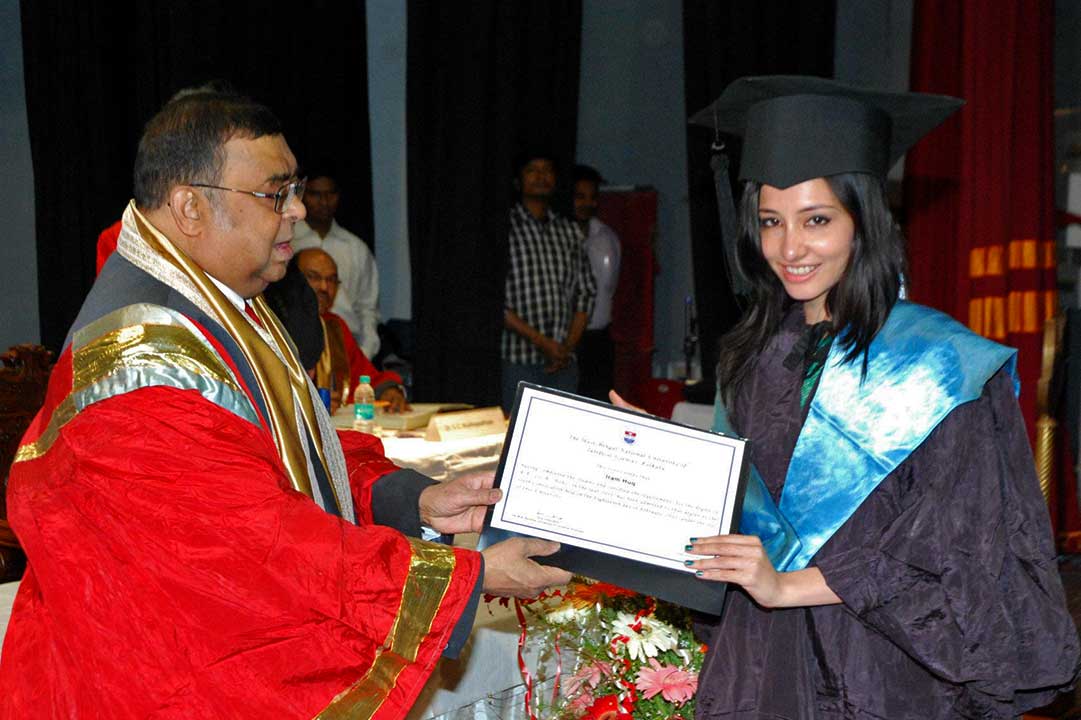
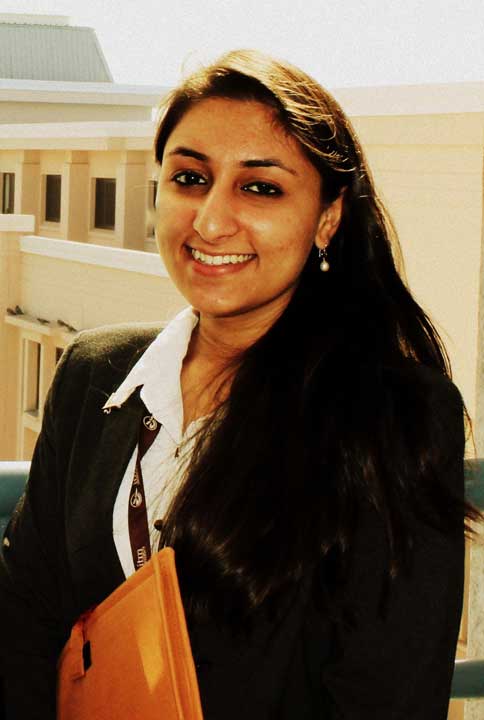
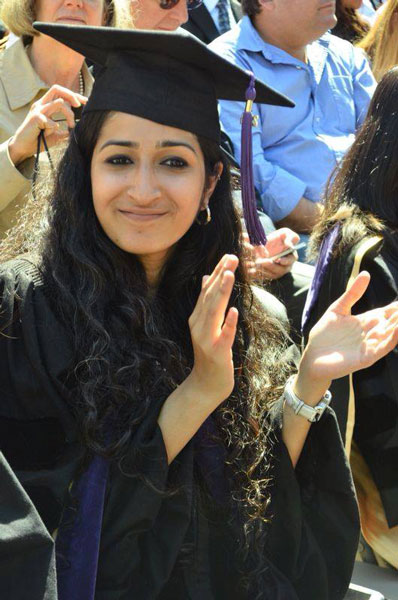
    aakanksha-kumar3Aakanksha Kumar graduated from HNLU in 2012, as an exceptional scholar, winning 15 gold medals in various subjects. Thereafter she pursued an LL.M. from the Faculty of Law, National University of Singapore. She had joined ITM University as a Research Associate last year and she shall be joining NLU Jodhpur as an Assistant Professor in July 2014. In this interview she talks about:

    • Getting higher grades and winning 15 gold medals
    • Selecting a university for higher studies
    • Scholarships, Academics and research experience at NUS
    • Experience as a Research Associate at ITM University
    • A career in teaching and research


    Most of our readers are law students and young lawyers. How will you introduce yourself to them?

    I am your everyday nerd in love with the law, and the best possible way to spread the love for the law, I believe, is to teach it effectively. I come from a north Indian family, currently based out of Bhilai, Chhattisgarh and am a Dipsite. I finished my B.A.LL.B.(Hons.) at HNLU, Raipur in 2012 and completed my Masters in International and Comparative Laws from  the Faculty of Law, National University of Singapore in July 2013. I have been teaching full-time on a research associate position, at the School of Law, ITM University, Gurgaon since July 2013 and I shall be joining the National Law University, Jodhpur w.e.f.  July 1, 2014 as Assistant Professor (Law). My teaching specialisations include Arbitration & ADR and Comparative Competition Laws, along with research interests in IPR and World Trade Law.


    How did you gravitate towards law? Why law and not engineering or medical studies?

    Well, I do have the regular “influenced by the parents” story behind my choice of pursuing a career in the law. My father, though not a lawyer, completed his LLB when I was in IX standard and I used to love reading his course books. I was always interested more in the social sciences, but since our school did not have an option to move to the Humanities stream after the X standard, I did pure sciences till XII standard and then appeared for 9 different law entrance exams, and chose HNLU over NUJS and ILS Law School, Pune. Engineering or medicine were never even remote options as I was horrible at Math and Chemistry and was looking for the first chance to give those up. Little did I realize that I will find Patent laws easier and be specializing in IPR eventually, only because my school science studies helped. The other options I had considered were in fact English Literature and Journalism.


    You were one of the most exceptional students at  HNLU. It’s not every day that someone bags 15 gold medals! Please give us a few actionable tips on managing higher grades.

    Thank you! They sure came as a welcome surprise, but I don’t really dwell on that glory, though they do add considerably to the number of pages on my CV 😉

    I was asked this question on another interview and my answer remains the same.Since Day 1 of law school, I knew I was studying law to be able to eventually teach it.  Hence the study method adopted by me was to cater to my ultimate goal – I would study first and then revise again by teaching my other batch-mates.

    Unlike the clichéd “I study for X number of hours in a day”; my study pattern varied a lot. I honestly never studied for more than 4 hours in a day. Instead, my success mantra was – undivided attention to class-room teaching and self study of the same topics that very day after classes. Hence I was able to relax when end-term exams approached, knowing that I would manage to study and revise what was taught. I had different study methods for different subjects, given their level of difficulty, or the extent of extra study required. Regular taking down of notes during classes also helped a lot in later self study. Moreover, the aim was never about getting the highest grade. It was about being so in love with the law, that one automatically wrote an answer so thorough, that the examiner couldn’t fault it.

    Also, the trick on really securing higher grades is sometimes to get inside the head of the teacher, and understand what they want in an answer. I always tell my students to carefully follow the classroom discussion, as often there may be hints on how to attempt exam questions.


    What was your motivation behind pursuing LL.M.? When did you finally decide that you need to do masters?

    Like I mentioned earlier, I knew I was studying law to be able to teach it. And one cannot do that without a Masters degree. I come from a very strongly academically oriented family. Both sets of grandparents are or have been teachers or professors. My maternal grandfather; who continues to remain a source of inspiration, is a nuclear physicist and was also the Dean of the BHU Science Faculty. My mother is an English teacher, with  Masters in both Pharmacy and English. I thus like to believe that being academically inclined is in my genes. And completing an LLM to cater to my academic pursuits was the next logical step to take.


    How did you choose NUS over others? How should one go about choosing a university?

    I had applied to mostly schools in the UK [UCL, King’s, Queen Mary’s] and NUS. I  was always looking at NUS as my top choice, given the popularity and worth attached to their International Law LLM, as well as given considerations of costs and proximity to India. Under Prof. Simon Chesterman’s (Dean, NUS Law) able guidance, the NUS International  and Comparative Laws LLM has carved for itself a special place in international legal academia. Since NUS is known to value academic excellence above all else, I was hopeful about getting in, given my CGPA and rank.

    When choosing a law school, one must not just look at the overall reputation of the school, but also at the reputation of the courses offered vis-a-vis one’s own interest areas. E.g. One chooses King’s London, to generally pursue a Competition Law specialisation Masters, or Rotterdam (Erasmus Mundus) for the Economic Laws LLM. The next very important consideration is obviously the tuition plus living expenses, and available scholarships. Other considerations include accessibility of the city and if one plans to settle down abroad, then, future employability concerns. Another important thing to remember is that an LLM abroad, while being a wonderful opportunity to network with like minded people from all parts of the world, is also not a joy ride. It’s a huge undertaking with a pretty hefty study load, and thus one must make up one’s mind thoroughly before applying. Also, one must structure one’s LLM CV to show experience – either in work, internships or research, in the chosen area of Masters Specialisation.


    Does NUS provide students with scholarships? Are there any other institutions which provide scholarships?

    Every application to the Masters Programme in NUS Law is automatically considered for scholarships, though their selection criteria is not very transparent or anywhere on paper. From the trend in the past couple of years, it is usually people [strictly applicable to Indian students] with tier 1 law firm work experience for atleast a full year, with amazing references, that get the Faculty Graduate Scholarship. So, I know of peers who had experience at Nishith Desai Associates, or at AMSS whose reference letters were written by  SC Judges or law firm managing partners, who bagged the scholarship.

    So if aiming at a scholarship at NUS, do not pursue an LLM immediately after law school, and build a credible list of referees.

    Most law schools and universities do have their own scholarships for the Masters programmes. There are also other more popular scholarships – the Fullbright for study in the US, The Commonwealth Scholarship etc. There are several institutions who offer financial aid and bursaries for foreign LLMs but I am not the right person to detail those as I didn’t research too much when I applied. For Indian Students especially, I know of UCL offering a special Chief Justice Scholarship and LSE Offers a Marchant Foundation LLM Scholarship. And all scholarships require a very well written personal statement.


    What was your topic of research for LL.M? Why did you choose that subject for research?

    At NUS Law, one need not necessarily take up the Directed Research Dissertation. One can choose to do a full course for credits instead. I,  however chose to drop a full course module and did the UROP-DR [University Research Opportunities Programme – Directed Research] for 4 credit points.

    My research thesis is titled – ‘The Taking of Evidence in International Arbitration: A New Legal Regime’ which was supervised by Prof. Gary F. Bell, who is an Associate Professor at  NUS Law and a Fellow of the Chartered Institute of Arbitrators, Singapore. I chose to complete my research project in a conflict of laws aspect of international arbitration as I was “precluded” from studying the course on International Arbitration at NUS, having completed an optional specialisation at HNLU in the same. Further, international arbitration both as a substantive field of legal study as well as its procedures, has always intrigued me, given the high level of independence and flexibility in this method of alternative resolution of disputes.

    Moreover, I always wanted to teach ADR and International Arbitration eventually, and given the mindset of Indian law school faculty selection committees, an LLM thesis in the area gives me an added advantage.


    Did you undergo a rigorous academic schedule? How was that different from your under-graduate course?

    NUS has a very demanding curriculum, that requires you to complete a total of 40 credits in the academic year. Of these 40 credits, 24 must compulsorily be of those subjects that are on the list of your chosen specialisation, and the remaining 16 can be from other specialisations. I did 32 credits of International and Comparative Laws and 8 credits of IPR. I also did one full 8 credit course on World Trade Law that was very demanding. Unlike one hour lectures, 5 days a week in India, the NUS contact hours differ. The 4 credit courses are taught once a week for a rigorous three hour seminar that is conducted in the Socratic method of teaching- learning. This meant that if one was unprepared with the assigned readings for that day’s seminar, one had to be ready to face the embarrassment. However, classes were always extremely interesting as they were more discussion based, and our professors were brilliant! Since I was anyway used to putting my nose to the grindstone even when at HNLU, the NUS curriculum didn’t come to me as a “culture shock” personally. Also, when one sees the dedication of the undergrad students who generally take the same classes, one is motivated to be as good as them, if not outshine them in class.

    What is unique to NUS, is the concept of “intensive courses” that are taught in the first three weeks of a semester, for 9 hours in a week [3 hours * 3 days], usually from 6:30PM to 9:30PM. These courses are taught by experts and stalwarts in the area and are specialisation papers. Masters students are to take one intensive course in each semester. A 6 – hour take home exam is then conducted in the 7th or 8th week of the semester for this course. So one basically completes a subject specific specialisation in just 2 months! Extremely demanding but also very fulfilling. I took the courses on EU Private International Law taught by Prof. Franco Ferrari from NYU and Comparative Competition Law and Economics taught by Prof. Roger van den Bergh from Rotterdam [Erasmus Mundus] – both very practical as opposed to theoretical papers and it was in a way, somewhat surreal to learn from and discuss with people who actually wrote the laws that were being studied.


    You also worked under Prof. Irene Calboli as a research assistant. Please share some insight on your research topic.How was your experience working with her?

    Prof. Calboli is “God” on IPR. She’s the most amazing, wonderful human being I have ever encountered in my life.  She was my course teacher for the module on International Trade and Intellectual Property Laws and I secured the highest grade in the subject, which helped me bag the coveted RA spot under her. She was extremely patient with my over exuberance and always encouraged my out of the box interpretations and suggestions, and I still continue to be in touch with her and assist her in whatever manner I can.

    My research work for her included completing and editing a chapter she was doing then on the Cultural and Economic Advantages of Geographical Indications and enhanced protection for them. The Chapter is now complete and is available on SSRN

    I also did some work on GI protection and Sustainable Development in Asia and did a compilation of GI success and failure stories from Asia, that helped her in a paper she was planning in May last year. The same eventually materialized as her presentation at the ASLI Annual Conference in Malaysia last weekend.


    NUS is well renowned for its brilliant faculty. How was your experience with the faculty?

    LLM from Singapore was a blessing and the law school is a ‘learner’s paradise’. I learnt not just about learning, but also learnt about “teaching”, which is what I had set out to do. Every single one of the professors I learnt from were brilliant and exceptional in their respective fields of expertise. Each had their own peculiar teaching methods, that were effective in their own special ways. I learnt how to handle a huge classroom from the likes of Prof. Weiler, who was the perfect person to be teaching World Trade Laws, I learnt how to be effective when teaching IPR from the likes of Prof. David Tan, who also happens to be a fashion photographer, and how being simple is the best when it comes to understanding complexities of the UN, from Prof. Chesterman. Also, unlike in India, where faculty is often, unfortunately unapproachable and passive, teachers at NUS are the most approachable, amicable and available at even odd hours to cater to your academic and research queries.


    How difficult was studying abroad in terms of finding accommodation, finances and settling in?

    Singapore was a cakewalk, given that my parents have friends there and I had visited the country before. Plus Singapore is extremely comfortable for Indians, given the vast Indian population and accessibility to Indian food, and is so so well planned that one cannot help but feel a little spoilt. In terms of finances, the country is a little heavy on the pocket as the standard of living is like being in any other European city, but I was very lucky to have bagged a seat in the University housing offered by the NUS LKY School of Public Policy which is a seven minute walk to the NUS Law Faculty, through the national heritage botanical gardens. So I ended up saving a lot on travel, and food as I was able to cook most of my meals myself. Singapore is a small, clean, very safe and beautiful country to be in.


    How was your experience at WIPO Summer School? What was the application procedure for the same?

    The WIPO Summer School again, was another experience of a lifetime. After I completed my LLM exams, I had some time to kill until Commencement so, along with research work for Prof. Calboli, I applied to the WIPO Summer School. The summer school luckily that year was happening for the first time in Singapore in association with the IPOS and the IPA. The application is to be completed online, within the deadline slots given and once selected, each student is required to complete the DL 101 General Course on IPR. Since I had already completed the DL 101 in November 2010 and had also effectively completed an LLM, I was exempt from the course. The Summer School was spread over two weeks and we had special sessions on niche areas of IP – Patent Valuation, GI Protection, Trade Mark and Merchandising, Domain Names etc taken by subject matter experts from both in the government in Singapore and from academia in both Singapore and abroad. The most fun part was the assignments especially the TM Protection – Negotiation simulation conducted by Mr. Mendes from Opteon, Australia. The student crowd was also a great mix of both lawyers and engineers and I was certainly enriched with greater knowledge upon completion and also made some great friends.


    You worked as research assistant at Centre for International Trade and Economic Laws, JGLS How was your experience as a Research Assistant there?

    CITEL was unfortunately a very short stint, but nonetheless I learnt a lot about how trade policies of our neighbours influence our own economic and trade policies. I was given the task of preparing the Trade Policy Monitoring Reports of China for Q3, 2012 as a research intern and I also assisted with research for a submission to the IIFT on Energy Subsidies in India. Prof. James Nedumpara is a very keen and able mentor to work under, and we sure did have NUS LLM stories to exchange too.


    Glitz of a corporate job often blinds a law studentand he fails to look at different career opportunities. Were you in double minds before taking up the teaching job? Why did you prefer the teaching profession over other jobs?

    At the cost of being repetitive, I did always want to end up teaching. However, I  also completed my share of regular law school internships and did intern at two tier 1 firms, in my final year for a PPO.  Also, I got a call from one, the day I sent in my NUS acceptance. I had earlier declined an IPR Litigation job offer. I would be lying if I said that I didn’t try my luck again at firms, upon my return to India, but  I eventually realized, that my calling lay in teaching and it is what I am best at.  And this also came after continued encouragement from my peers in law school, who were also happy to act as my students right before exams when I did quick syllabus recaps for them.  I also took up the teaching seminar in fifth year at HNLU, and enjoyed every minute of being in a classroom.

    I love my job, and take it very seriously. And nothing beats the sense of accomplishment one gets when an otherwise below average student in the beginning of a semester, ends up writing a brilliant paper in the end term exams.  And that is the best  personal validation and the major perk of being in this profession. Moreover, I have seen my own teachers – some were truly brilliant, the others, merely hiding behind the façade of having qualified the UGC NET. I wanted to be the teacher to future lawyers, that I didn’t have. I still am taking baby steps, and am getting there, gradually. One gets to keep learning on the job, and I have always subscribed to the policy that one learns better while teaching.


    Financial security is a major concern for law graduates who aspire to take up teaching jobs. Did you face similar concerns? What challenges did you face while working as research associateat ITM University?

    Financial security was never a concern, especially at ITMU, as ITMU pays really well to an RA, and even better to a UGC NET qualified Assistant Professor, i.e. higher than the UGC Scale of pay. However, being  in a private University, the work-life balance is a little hampered and one is expected to work for a minimum of 8 hours a day on not just classes and academics but also don several other administrative roles. So we mentored moot teams, organized guest lectures, conferences, seminars, and had additional charge of the Internship Cell, given the relatively nascent stage that the law school is in. That I think is the problem with law teaching in India. The UGC expects a certain level of research and academic output for the API Scoring. On the other hand your employer expects fulfilment of multiple administrative responsibilities, and thus, being in at a faculty position in a law school becomes a 24*7 job, sometimes work hours being worse than those at law firms.

    But if one learns to love and enjoy ones’ job, the whole drill seems worth your troubles as the perks – both financially and otherwise [student feedback] are great.


    Recently you took up a job at NLU Jodhpur as an Assistant Professor. What are your plans for the future?

    I shall be joining NLUJ w.e.f. July 1, 2014. I have been given charge of teaching Constitutional Governance and ADR. I  see NLUJ as a long term plan and hope to begin my PhD by early next year, hopefully at NLUJ itself. A book chapter is also in the pipeline. It is otherwise too soon to be taking ambitious career steps and I am just looking forward to being back in an environment I believe I am more suited to – an NLU.


    Lastly, what would be your message to people who want to take up a career in teaching?

    Though barely a year old to teaching, I do have a few observations from watching most of my family in the profession. Please do not taking up teaching because it’s the only alternative. Take it up because you want to do justice to the profession and because that’s where you know your calling lies. As a teacher, one must never shy from admitting mistakes or saying one does not know something, rather than telling one’s students the wrong thing. Also, one must treat the job with the sanctity it demands. The returns in the teaching profession do not lie in increased popularity with the students or in the amount of attention one gets from them outside the classroom. Strive to be that teacher who the students will miss when they leave, because of the knowledge they gained and retained from the classes and interactions, and not for the number of internships they bagged or attendances marked with a “P”. The returns lie in seeing one’s students do well – both inside the class and elsewhere in the world.

  • Sukrit Kapoor on Summer Schools, LL.M. from Essex University & a career in International Human Rights Law

    Sukrit Kapoor on Summer Schools, LL.M. from Essex University & a career in International Human Rights Law

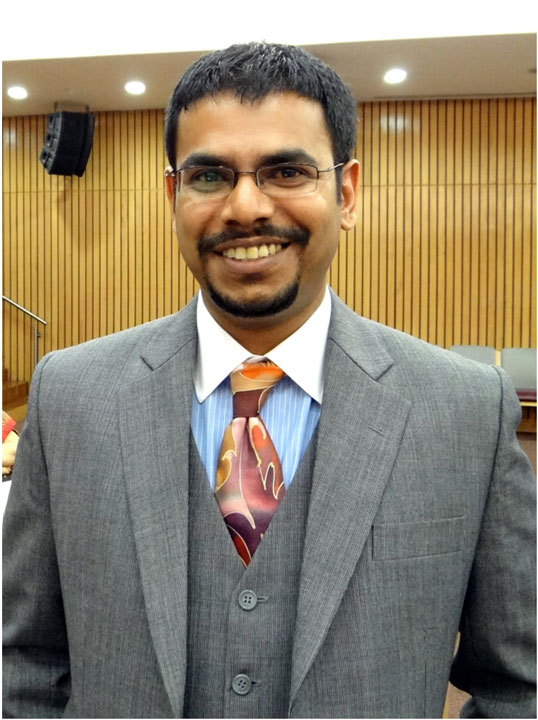
    Sukrit Kapoor had graduated from GNLU, Gandhinagar in 2011. Thereafter he pursued an LL.M. in human rights law from Essex University. Being an international law enthusiast he worked at Gaza Strip for the Palestinian Centre for Human Rights and submitted reports to the UN. He also worked as a Refugee Status Determination Assistant at the UNHCR for quite some time and had joined Commonwealth Human Rights Initiative yesterday.

    In this interview Sukrit tells us about:

    • Attending Summer Schools
    • LL.M. in International Human Rights from Essex University
    • Competing in Concours Jean Pictet
    • Pursuit of a career in International Human Rights
    • Work experience at Gaza Strip


    Hi Sukrit! How would you like to introduce yourself to our readers?

    I completed my undergrad studies from GNLU in 2011 and immediately followed it up with a postgrad degree in international human rights and humanitarian law from the University of Essex in 2012. Despite being a law graduate I can’t exactly classify myself in the conventional binary of corporate lawyers and litigators, as I like to think of myself as an international law enthusiast with an interest and focus on humanitarian issues. I have recently joined an international NGO, Commonwealth Human Rights Initiative, as a Research Officer and I have previously worked with UNHCR in India and with another NGO in the Gaza Strip.


    Please tell us about what life was like in GNLU? What all activities did you pursue while on the course and how did they shape your career?

    For me GNLU, and law for that matter, happened by pure accident. I took up commercial studies during high school and easily envisioned myself becoming a typical number-crunching chartered accountant someday. However, a family friend suggested that having a base in law would boost my accountant pursuits. I ended up in GNLU with absolutely no clue, except for some very clichéd ideas, about lawyers and what they do. Needless to say, I was very lost from day one which lead to my becoming further disinterested in corporate or commercial studies. Luckily for me, I had become friends with two senior students, Kumar Ankit and Hardik Dave, who were seriously involved in establishing the Legal Services Committee and the legal aid clinic at GNLU, and with some encouragement from them I volunteered for the committee in its initial year and got accepted as a member the next year.

    Working with the clinic got me really interested in civil and social issues, but back then I didn’t think I could do similar work for a good part of my life. Interestingly enough, I ended up doing a non-legal marketing internship during my second year and followed it up with an LPO internship with the hope of combining my legal and business skills in the legal outsourcing setting. While interning at the LPO, I got the opportunity to prepare a research brief on international refugee law for an American lawyer who was helping a Haitian asylum-seeker seek refuge in the US and the court ruled in our favour. That satisfaction clicked so well for me that I decided to specialize in international law with a focus on human rights, migration issues, and armed conflicts. Thankfully, the course at GNLU was long enough to allow me to shoot some arrows in the dark while identifying my true interests, and also help me work towards them.


    You have attended a couple of summer schools. What are the aspects you considered while opting for these courses? Would you recommend law students to opt for these courses over an internship?

    I attended three summer courses during my undergrad studies. The first one was an Introduction to International Law at the Indian Society of International Law in Delhi. I attended that course immediately after my first year in law school, purely out of curiosity. The next summer school I attended was on International Affairs and Multilateral Governance: Global Migration, Cooperation and Development at The Graduate Institute of International and Developmental Studies, in Geneva and after that I participated in a programme on Protecting Human Rights Through United Nations Mechanisms, at the Human Rights Law Centre of the University of Nottingham.

    Once I got clarity on the kind of work I enjoyed and the area I wanted to specialize in, the next obvious thing on my list was to garner skills, aptitude, and acumen essential for further pursuing my interests. I reckoned these summer schools were ideal for this purpose. They seemed to be a better and wiser investment over an internship because for they offered me a broader, better and more practical understanding on issues beyond the ordinary textbook perspective, which seemed quite impossible through an internship. Also, professionals from various international organizations taught the course and I even got to visit these organizations’ headquarters and get an idea of their functions.

    So my general advice to one and all will be to opt for opportunities which will for sure help you learn and attain proficiency, and it can be through an internship, a summer school, a moot court or essay writing competition, or for that matter anything else. Remember to do the time-investment-benefit analysis and choose the best way you think you will learn.


    Following up on that, how have these summer courses helped you?

    They have helped me immensely. This might sound a little like Steve Jobs’ Stanford speech where he explains about connecting the dots and how you can only do it looking backwards, but the best example I can give is that my current job with Commonwealth Human Rights Initiative requires me to be proficient and thorough with international human rights mechanisms, so much so that among other essentials this was mentioned as a must-have in the job description. Also, attending these summer courses helped me understand the teaching methods employed by foreign educational institutions, which in turn prepared me to pursue my masters more efficiently.


    sukrit-k2Why did you decide to pursue an LL.M.? What made you choose the University of Essex? Were you considering other universities too?

    I wanted to learn more about working in the realm of human rights, migration, and armed conflicts and the LL.M. at Essex helped me do that and more. I was definitely considering other universities with great repute for masters in international law like Oxford, Columbia, Nottingham, ADH Geneva, but what attracted me towards Essex was that the academics there are professionals with years of experience, including former UN Special Rapporteurs, members of UN treaty bodies, advisers to a range of international organizations (like the OHCHR, UNHCR and WHO), as well as to NGOs around the world, and litigators before national courts, regional human rights commissions and courts, international courts and tribunals, and the UN treaty bodies.They contribute to academia by bringing a remarkable element of practicality in their teachings. Moreover, Essex happens to be the first university in the world to establish a dedicated LL.M. in the area of human rights and this ensured a very strong and omnipresent alumni. The human rights alumni are often called the Essex Mafia, because they are quite literally working in every region of the world with numerous organizations.


    You also participated in the Concours Jean Pictet while studying at Essex. Can you tell us what it is and about your experience competing in it?

    Concours Jean Pictet was one of the highlights of my Essex experience. It is a fascinating, a first-of-its-kind international humanitarian law competition which is held in a different country every year, having been held in South Africa when I participated. Each year, an impressive group of people working with organizations like ICRC, UN, international tribunals, and some academics organize this competition. It is a week-long competition where these experts cook up a hypothetical armed conflict situation which develops as each day passes and the teams participate in a range of simulations where they exhibit their knowledge of IHL and other related subjects while playing different roles of military officers, representatives of the Red Cross, armed rebels, human rights organizations and government lawyers.  Apart from reaching the semi-finals of the competition I made some really amazing friends from differentparts of the world. I strongly recommend it to anyone who wants to specialize in IHL.


    You have been closely associated with human rights ever since GNLU. Why did you choose to work in this field over a lucrative job at a law firm?

    Given the way my career interests shaped up during and post-GNLU, like I have explained earlier, I think it is this field which chose me rather than the other way around and although I am not averse to working with law firms, it isn’t something that I really wanted to do. Simply put, I realized what I enjoyed doing and kept pursuing it.


    How did you start working for the UNHCR? What was your job profile there?

    I stumbled upon the opportunity to work with UNHCR while I was in the Gaza Strip, and got selected for the job after taking a written test and appearing for an interview. I worked with UNHCR as a Refugee Status Determination Assistant, which basically means that I primarily assisted the Office in determining whether an asylum-seeker is a refugee under UNHCR’s mandate or not. I did so by meeting with the concerned asylum-seekers and interviewing them to collect their statements and other relevant information that can be used as evidence. I would then legally analyze and assess their application after thoroughly researching upon their background and the human rights situation in their respective countries of origin. Along the way, I also delivered a lecture at the Indian Society of International Law on behalf of UNHCR and assisted the Chief of Mission in preparing a speech.


    You quit your job at UNHCR recently and are now working with the Commonwealth Human Rights Initiative. Why this change?

    I now work as a Research Officer with CHRI’s Strategic Initiatives Programme, which means I monitor, research, and report on human rights issues in various Commonwealth countries; assist the organization with its advocacy initiatives at the UN, Commonwealth, and other appropriate international human rights forums and mechanisms; and network with human rights organizations in various countries. I did something similar to this in the Gaza Strip while working with an NGO there and realized that my skills are better utilized in such a role. Perhaps you can say that I sort of graduated to this job and hence, the change.


    Tell us about some of your experiences in the Gaza Strip. How has it changed your perspective?

    I landed up in Gaza straight out of university and worked there with the International Unit of Palestinian Centre for Human Rights (PCHR). I was tasked with preparing two reports on the challenges faced by Palestinian civilians in accessing appropriate judicial mechanisms and the difficulties they face in seeking reparations for damages and losses suffered by them owing to armed violence. Thanks to my brilliant colleagues, I further got the opportunity to assist PCHR with submitting various reports to the UN, representing PCHR at international conferences and facilitating partnerships with other NGOs. One of the most interesting assignments I got to work on was preparing reports on the impact of armed drones on civilians in the Gaza Strip which were submitted to the UN Special Rapporteur on promotion and protection of human rights and fundamental freedoms while countering terrorism.

    Many-a-times, I would get frustrated with the general lack of clarity on the application of some fundamental principles of international law to the situation in Gaza, but overtime I realized that such difficult situations can’t be addressed solely from a legal perspective but principled diplomatic and political measures needed to facilitate the effective implementation of law.

    I can easily call it one of the most enriching experiences in both personal and professional terms as Gaza has a charm to itself which is reflected in its people despite all the difficulties surrounding the region. Thankfully, with a lot of support from my family, lovely colleagues, and friends I managed to successfully complete my assignments there. Something that I will always cherish is how some of my Israeli friends checked on me during escalations in armed violence, while I was in Gaza.


    Lastly, what would be your advice to law students in a sentence or two?

    In a sentence or two, it is very easy to lose one’s individuality when one competes in a herd, so don’t settle for something you don’t enjoy, since to succeed naturally, one needs to genuinely love what they do. Just stop being a “rat” and you’ll definitely win the “race”. 😉

  • Deya Bhattacharya on academic publications, Femin Ijtihad & LL.M. from Central European University

    Deya Bhattacharya on academic publications, Femin Ijtihad & LL.M. from Central European University

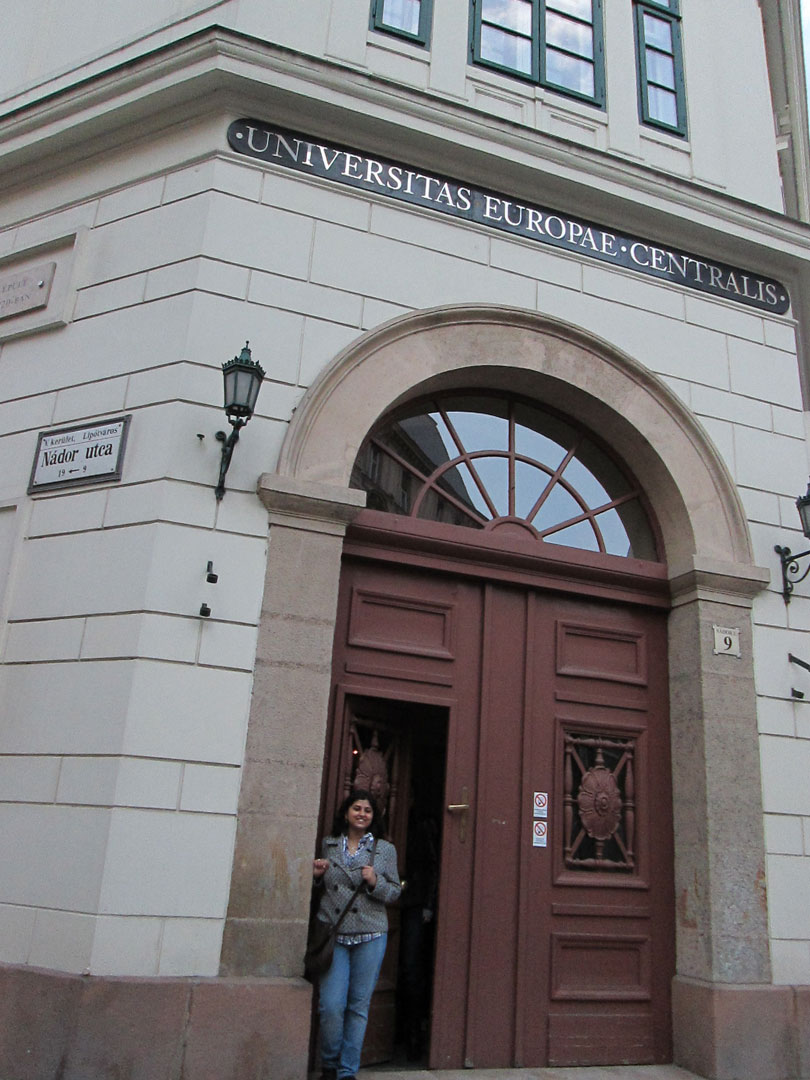
    Deya Bhattacharya is a graduate of 2013 batch from KIIT, Bhubaneshwar. She has mainly interned at Human Rights Foundations and is currently pursuing an LL.M.  in Human Rights from the Central European University. She is a Senior Legal Researcher at the global women’s rights intiative Femin Ijtihad

    In this interview she talks about:

    • Publications and top 3 things while writing a research work
    • Internships at Human Rights Organisations
    • Work at Femin Ijtihad as a Senior Legal Researcher
    • Intricate details of an LL.M. in Human Rights from Central European University


    Most of our readers are law students and young lawyers. How will you introduce yourself to them?

    If there’s a percentage of your readers who didn’t want to take up law, but did so for whatever reason, then I will safely introduce myself as a lawyer who became one by chance. Legal studies grew on me slowly – I am, at present, a postgraduate student in Human Rights and International Justice, particularly fond of women’s rights issues and democratic transitions.


    Why did you decide to study law? Tell us about your college life.

    There is a funny story behind this. Towards the end of class eleven, a school friend and I decided to chart out our career options. I never really decided to study law. I was never interested in the pure sciences. I had always wanted to study English, and she wanted to be a lawyer. We both began preparing for law school entrances. However, as fate would have it – she studied English and is now an educational consultant and I ended up in law school.

    I loved International History and English, and my parents gave me the option of doing what I wanted to, and law somehow happened (I saw this with equanimity now; it wasn’t the case always – in the beginning I was not happy that I had chosen law).

    The first couple of years in college, though formative in many ways, were quite forgettable. I drifted from class to class, internship to internship, pretty unsure of whether what I had chosen was, in fact, good enough. Thankfully, there were a few very supportive professors who managed to help me channel my interests in a certain direction. In the latter half of college life, I became more assertive because at that point I was almost confident about what I wanted to do.


    You graduated from KIIT. Tell us what your law school experience was like. Also, what do you have to say about the supposed ‘elite’ tag attached to certain law schools? Do you believe branding is something that’s very relevant/important at any stage in a law student’s career?

    The first two batches of KIIT almost always tell you that law school, in the first couple of years, is splendid. We had brilliant professors. The quality of debates in class was remarkable. In the first three years of law school, the professors made sure that there were discussions and dialogue amongst the students; we could approach them whenever we liked, even after class hours. In fact, one of the professors (he has long left KIIT) sat me down and helped me chart out my resume and taught me how to footnote one afternoon over cups of tea.

    I was not interested in law firms (where, I have heard, the elite-tag is of consequence). So during internships it didn’t matter to me whether I was from a national law school or not. It bothered me in my fifth year during two international scholarship interviews – in one, the panelists had not bothered to read my personal statement before they called me in and asked me loose questions about everything except what I wanted to pursue; and in the second one, I was intimidated about my research work (women’s rights/transitional justice – I was told Indian lawyers aren’t really concerned about it!).

    But no, I do not think branding is the most important thing in a law student’s career. It certainly makes life comfortable – you don’t have to build walls around yourself everytime you go to a conference or a moot court. However, let’s not forget – if you’re from an elite law school, you’re expected to be better than most others.


    You have had a variety of publications mainly in Women’s rights. How did you settle for this issue?

    I am not sure why one would settle for something? I don’t like settling for things I am not interested in. KIIT offered specializations and while I saw most people in my law school taking the oft-travelled path – Corporate law, I took to International Law (something that is hardly viewed as concrete in the Indian law sphere). Anyhow, this was in my third year, and I was aching to do something along with my regular coursework.

    So, I applied to Femin Ijtihad (now, Strategic Advocacy for Human Rights or SAHR) for an unpaid online internship during that time for a Women’s Rights Case Law Project in India, and this deepened my intrigue in Women’s rights issues. The project was a minor one at that time but starting work at FI/SAHR has been both the inception and the center of my career choices. Later, I wandered from Women’s Rights proper to Women’s rights in transitions but that is a different and a much longer story.


    deya-b4What are the top 3 things you keep in mind while compiling a research work?

    I am sure different people have various ways of accumulating research.  The top three things I do while I am compiling research:

    1. I move myself away from everything and everyone else when I am working. I turn on some instrumental music and I do not liking talking when I am researching/writing.
    2. Secondly, I like my documents organized. I can spend hours and hours on this, worrying I might lose my sources. I keep them on Dropbox and segregate folders on the laptop, colour-coordinate, highlight and stick post-it notes on the hard copies that I arrange by topic. Thankfully, there is a software called Zotero that helps you keep track of your bibliography by saving your sources into a personal-library of sorts (I highly recommend this while writing papers, really helps). I also think OneNote/EverNote are excellent pieces of software to keep your article/thesis notes arranged.
    3. Lastly, the writing bit. For me, it can get excruciating to find a perfect starting point when I am beginning an article (sometimes even an assignment). I have seen when I put myself through stress, extreme unimaginable stress (please don’t try this at home!) I write better and more effectively. Another thing that I do (but may not recommend) is that I do my footnotes/endnotes in the end, after my writing is done. It can get difficult to alternate between forming cohesive arguments and doing something so clerical like footnoting, at the same time.


    Your have interned at the PUCL, PILSARC & ORF starting with reputed advocates. Please tell us if these internships were pre-planned? What did you gather from your experiences at these places?

    None of my internships were really pre-planned. I was going to do the usual NGO-court-law firm internship drill, when I realized I couldn’t follow the oft-beaten path. PUCL happened after a string of e-mails and calls. It was my first internship, and possibly, my first tryst with human rights work. They had a tiny office-space and much of our work was field work in the harsh Delhi heat. The internship introduced me to the delight of working with the grassroots, how legal ethos is an interaction of legal theory and practical work. I fell seriously ill after my first ever internship (I think I should have taken the hint and left law school for good!) Laughs…

    PILSARC, under the aegis of Dr. Rajeev Dhavan, happened at a time when I was sure that I wanted to pursue Human Rights. One of the senior researchers at PILSARC actually augmented my intrigue towards transitions and democratization, and I think I will always be grateful to her for her lecture on Pinochet’s trial, Charles Taylor and all the hybrid and international tribunals. Back home, I still have the sheet the paper somewhere, where I had scribbled about them while she spoke.

    ORF was my last internship in law school. I did a lot of conflict-related research there, but I wish it had come at a better time. I was grappling with my university applications then and I don’t think I did it much justice.


    From your experience at internships, do you think the various law schools across India prepare a student for the world outside their campus?

    To tell you the truth, I don’t. Internship breaks are between the semesters and continue for thirty to fifty days? I don’t think that this is enough time for a law student to properly understand the work culture, ethics and the like. Most law students would probably do the routine internships– first year, NGO/think tank; second year, district/high courts; third year, Supreme Court and fourth and fifth year, law firms.

    And these internships go on for a month, maximum six weeks, and by the time, you’re comfortable and have understood the nature of the work (and, decide whether or not you like it), your internship is done, you’re given the certificate and they bid you farewell.

    I think our internship programmes should be like the ones in medical schools. An entire year or two of doing what you are actually interested in, instead of numerous internships just to decorate the resume.

    Besides internships, I think knowing and understanding the vagaries of legal writing also helps. It is a much underrated skill in our community.


    You have interned largely only with human rights institutions. What inspired you to pursue human rights?

    Call it being irrational or simply only just a character flaw, I don’t like doing what everyone else is running after. Maybe I’d be great at a law firm, but I did not want to intern in any law firms because everyone from my class was doing that. This made me build a permanent mental block against law firms, and commercial law. I also avoided studying the mandatory corporate law course back in KIIT, but I had a very resolute professor who made me study it.

    Anyhow, I think this mental block coupled with the fact that I wanted to do something with people (I took up humanities in high school purely because beakers, cutting open cockroaches and atoms don’t do much for me) inspired me to pursue Human Rights. In 2011, during the Arab Spring, while scanning for news from the Middle East and the revolutions, I was almost certain that this was where my passion lay.


    You worked for two years at Femin Ijtihad as a Senior Legal Researcher. Share with us the work environment over there and the work you handled? How did you apply to them for a researcher’s post?

    As I have mentioned before, I began working with FI/SAHR as an intern. What began as an internship slowly moved towards more concrete work. I began drafting arguments for cases in the Afghan legal system, drawing up strategy papers and training manuals for strategic litigation for women’s rights in Afghanistan. In 2011, Natasha Latiff, the founder-director of SAHR offered me a position in the Executive Board of FI/SAHR as a Senior Legal Researcher, and I happily accepted.

    We have been working pro bono for a long time, and FI/SAHR believes in bridging the gap between academic and activism in women’s empowerment issues. I don’t think I’d ever refuse the position! In the last few years, we have received the FRIDA (The Young Feminist Fund) grant and the SOAS Best-Student Volunteering Projects.

    We are a team of several women from four different continents, whom I have never met! But the amount of camaraderie between us is phenomenal. I always write to Natasha whenever I am in trouble and she always makes sure she sends a positive audio-note and almost always with a solution to my problem! I am grateful to Natasha, Anna, Sara and Sarah for always being there to brainstorm on my (sometimes ridiculous) ideas.

    The work I have done here is mostly linking women’s rights to post-conflict/conflict areas. I have also assisted in strategic litigation, drafted arguments, concept notes and training modules for child custody, rape, and domestic violence issues. A project that brought us accolades is a research we (Sarah Jones, Sara Bergamaschi and I) conducted in Libya, interviewing Libyan activists on the right of political participation of women after Gaddafi’s fall. The research was published and presented in plenty of international conferences.


    deya-b3You are now pursuing an LL.M. in Human Rights from the Central European University. Tell us about the entire application process and any available scholarships to study at this university?

    The application process at Central European University, Budapest is three-fold. By the applicable deadline, you send them your application documents (résumé, statement of purpose, research essay, certificate of English proficiency, transcripts, and recommendations). Then, there is an online examination within a stipulated time limit (I think it was problem-based!). The last stage is a Skype/telephonic interview.

    CEU has a plethora of scholarships and fellowships – ranging from only tuition waivers to fellowships that take care of your tuition, lodgings, insurance and provide you with a stipend for your living costs (remember those days when we dreamed of being paid to study? This sounds almost ideal, right?). If you perform exceptionally well in your first term there, they sometimes double your stipend, as an incentive.

    Since most of my classmates here have had prior work experience or exceptional internships/volunteer work, I am almost certain that the admissions committee prefers that the students are in touch with human rights work.


    How did you decide to go for CEU over others? What other universities were you considering?

    Besides the two scholarships (Rhodes and Commonwealth), I had applied to the University of Toronto (the LL.M. program offered specific fellowships in women’s rights, human rights and transitional justice), New York University Law School (the LL.M. program offered what I really wanted to pursue: perspectives of human rights in the Middle East, and had a clinical programme in constitutional transitions), School of Oriental & African Studies (research-based programme with a concentration on women’s rights and Middle East), Cambridge University, the Graduate Institute of International and Development Studies, and CEU.

    After disappointing interviews for Rhodes and Commonwealth, Cambridge and Graduate Institute both sent me overly polite rejections (Graduate Institute sent me one in French!). The scholarships that Toronto and NYU had given me were not really enough. I received the Master’s Scholarship at SOAS, but I would have to have to pay for my own living costs. CEU gave me a full scholarship, which was my primary reason to come here. There are not a lot of financial concerns when almost everything is covered and therefore, it’s easier to concentrate on what I am really here for.

    Another reason why I chose CEU was the program – the International Justice specialization under the Human Rights LL.M. has had all the courses I have wanted to pursue (international criminal law and transitional justice related). I also did a unique internship in an archival institution – dealing with using archival evidence for human rights violations – something that I don’t think I’d do anywhere else!

    deya-b2

    How is the faculty, students and overall experience there? Please share any memorable moment which has struck you.

    The experience at CEU has been very different from my experience in KIIT. The schedule has been rigorous and back-breaking. The course is divided into six modules: each module lasts about six weeks, at the end of which there are term papers, examinations, take-home examinations. The number of credits you have to take for grade is pretty strict; you may also audit courses you are particularly interested in. In between, there is a research/internship break when you can intern or apply for a grant to go to a library/research institute for thesis research. I did everything in an attempt to get a hang of things and the turned schedule more chaotic for myself.

    The students are from diverse backgrounds and countries so during classes (and even outside) it is great to hear different experiences. The faculty is brilliant and immensely supportive! Unlike back in India, the faculty here will treat you like one of them, like an equal, which is something I’ve begun to appreciate. One of the things I like about the course (and the faculty) here is the utilization of the Socratic method in classes. It facilitates a whole range of opinions about a particular subject, instead of a group of students just blindly copying notes while a professor lectures on.

    About memorable experiences? In the beginning during the welcome week, I scared a professor (of Indian ethnicity) when I asked her quite vehemently if she could cook Indian food! After this incident, I have tried to mellow down.

    Very recently, I had long-winding discussions about my thesis with Judge Richard Goldstone, the former Chief Prosecutor of the International Tribunal for Yugoslavia. He told me he was very impressed with my interest and dedication for the subject (he is taking a course based on international criminal law) and most importantly, during our last discussion, told me I am “good stuff” and kept my thesis outline with him. What could be more exciting? I think I am going to take this experience to my grave.


    deya-b5
    Was it the course or the brand name which mattered for you? Do you hope to continue with research work or enter law practice after completing your LL.M?

    Of course. I wanted to specialize in aspects of transitional justice and international criminal law and this course provided for exactly that. (Also, CEU is just two minutes from the Danube, and Budapest is such a beautiful city to live in.)

    I complete my LL.M. in a month, but that is only the coursework. I still have my thesis to write. So, I am going to concentrate on that before deciding what I want to do hereafter. I’m very sure I will be primarily involved in research, though I wouldn’t mind exploring a combination of both research work and litigation.


    How difficult was studying abroad in terms of finding accommodation, finances and settling in? Tell us about a typical day you spent over there? Did it allow you to engage in extracurricular activities as well?

    I was certain that I wanted to do my LL.M. after law school since I was in my third year so, I was prepared to face all sorts of difficulties. I think, in my case, the difficulties occurred during the application phase – I wanted to draft perfect personal statements for each of the universities instead of writing one and using them for all the applications. That was pretty hectic. Then, deciding that I would be giving up brand-names like SOAS, Toronto and NYU for CEU (a lesser known university) because I wouldn’t have been able to afford them.

    At CEU, accommodation was a part of my scholarship along with a small stipend that is just about enough to survive. Settling in is not that complicated – the university staff helps as much as possible to help you find your way around the university as well as the city. Living alone can be slightly unnerving at first but it grows on you, and you begin to love it.

    Owing to the module structure, it is quite difficult to plan your day around it. But we get by. My day starts with waking up, taking the metro to the university, and going to class. There is always a stipulated number of readings for class, which one is expected to mandatorily complete. After classes (some ending as late as 7 pm), I come back, speak to my family and engage in either my thesis work/readings for next day or other research work.

    Sometimes, I decide to cook for the entire week to lessen my burden, and those evenings are a pandemonium. I am a night owl so I get most of my work done after dinner. I cannot sleep unless I read so there are nights when I grapple the idea whether I should go to bed or finish reading a book.

    Because this is a taught programme and the schedule is rigorous, co-curricular activities become a hassle – I have not written an abstract for a call for papers in ages! I am not a big fan of sports; the only extracurricular activity I am bothered about is to finish reading novels and that is possible! For sports enthusiasts, the bar in the dormitory airs important football matches, has a pool table and organizes regular sports events.


    What would be your message for law students wishing to pursue a future in the field of Human Rights?

    Since I am only just starting out, I have some borrowed but clichéd (though, very effective) advice: patience, and passion. Human rights, whether advocacy and research or litigation, is neither fast nor easy. It could take decades to stretch out, amend and modify the Human Rights discourse, and one will often feel intimidated by it, especially because the seniors in the field (there are exceptions, of course) will often disregard taking on younger people or ignore their ideas altogether. You will feel like abandoning everything because things do not work on a finely charted timeline, but don’t!

    As Natasha from FI/SAHR recently told me – “… keep doing your work with passion but be detached from its results.”

  • Guneet Kaur, Masters Candidate, UC Berkeley, on human rights, studying in California, and plans for the future

    Guneet Kaur, Masters Candidate, UC Berkeley, on human rights, studying in California, and plans for the future

    Guneet Kaur graduated from HNLU, Raipur, in 2012. Subsequently, she went on to become a Research Affiliate for the Project on Armed Conflict & People’s Rights, at the Haas School of Business, University of California, Berkeley, before deciding to pursue her Master’s Degree in Human Rights in Conflict Zones, from the University of California, Berkeley. 

    In this interview we talk to her about:

    • Her interest in human rights
    • Being a judicial clerk
    • Her curriculum at Berkeley


    Why did you decide to study law?

    I grew up in a Sikh family listening to stories from my parents about 1984, Operation Bluestar and the disappearances in Punjab during the insurgency. But it was after the riots of 2002,that I realized the true extent of what my parents told me about state complicity and mass atrocities. So, I decided then that I wanted a career where I will have the power to be vocal when injustice happens. And, Law was not a difficult choice.

    guneet-kaur2HNLU  has been very shabbily treated by the state government and its consecutive administrations. While resources and infrastructure have drastically improved over the last two years, but times were quite tough during the tenure of my batch and batches senior to us. Every law school analyst had written us off. Law Firms were not very interested in coming to our campus.  However, all of this made the student body at HNLU exceptionally strong and hard working. Lack of resources wasn’t an acceptable excuse. We went on a hunger strike to get our new campus. If law firms weren’t coming to campus, we worked really hard to secure PPOs.

    We would spend our vacations working in the law libraries in Delhi because our law school library then didn’t have most of the books we needed. My team won Henry Dunant when the library at HNLU only had one book on international humanitarian law in 2010. The story was pretty much the same for most other mooting teams but that didn’t stop us from making our mark in mooting or academic publishing. In a way we all inspired one another. By the time we were in the last semester we had not just bounced back to existence; we were in fact doing really well and still are. Those five years on the whole have been a very important life lesson.I will look back to them whenever I need inspiration.


    What motivated you to work with the ICRC and the Alternative Law Forum?

    People working in the field of human rights can be doing different kinds of jobs in different set-ups. There is research, advocacy, scholarship, litigation and then the combinations of any two or more. I wanted to explore the different platforms available to figure out my comfort zone. So, I interned with different number of organizations and people.

    ICRC generally does not take LLB students for internships but my teammates and I won the Indian and South Asian rounds of Henry Durant Moot and we were runners-up at the International Red Cross Moot. That formed a very close association with the organization and I eventually convinced them to give me a chance. It was a research based desk internship that paid well.

    Alternative law Forum was one of my dream law school internships. I was always fascinated by the work that these young group of lawyers were doing in Bangalore. ALF has an application procedure, which I filed and got through. ALF actually uses pretty much all the tools in human rights work, which makes the whole experience very productive.


    Tell us about your experience being a judicial clerk.

    (Guneet has worked at the offices of Trideep Pais and Justice S.S. Nijjer.)

    Every day in Litigation is packed with a new drama and excitement. Internships spent in courtrooms have been my favourite part of law school. I interned under Trideep Pais thrice and I also interned under Nitya Ramakrishnan and Akshay Bhan. As a matter of policy, I always chose small and mid-sized litigation offices. All three of them were very approachable and never made me feel like an intern. I got a lot of quality work and was appreciated. Junior counsels at all these offices were relatively young. So there was normally no hierarchy and I was treated like a peer, which, personally for me, made learning very easy.

    Mr. Pais is a very humble man and a very intelligent lawyer,who takes a special interest if he finds the intern is quite interested in learning. His practice is very diverse and spreads across different levels of courts in Delhi. I have worked with him preparing strategies for cross examinations, sat through conferences with senior advocates, drafted SLPs, filed and inspected documents etc. Even if I was just researching for a particular matter, in case of a briefing to a senior counsel, I would be asked to speak in the conference or if the client liked the point Mr. Pais would make it a point for the client to know that the particular legal point was found by me. I think this kind of environment, wherein, the intern is so involved in major office work and everybody in the office acknowledges his/her work is very rare for a litigation office in India. I have enjoyed every minute that I have worked there.

    Under Nitya Ma’am, I got a chance to work on some high profile human rights matters, such as the Salwa Judum case and the American Center firing case. This was in a way my first internship in a litigation office, and reading about the cases one is working on in the newspapers can be a source of great happiness for a second year dreamy-eyed law student.  But I guess the main take-away from that internship was that in Nitya Ma’am, I found a role model that I really needed. While conversations with her during as well as after the internship have been very memorable but it was observing her go about her work that had its impact on me.

    I think one-month judicial clerkships don’t contribute much to one’s learning curve or one’s CV. If someone is interested in clerking for a judge for a longer term, then a one-month clerkship makes sense to get an idea. I may be wrong but I think there is not much to learn by preparing bench memos all day long or simply observing court proceedings.


    guneet-kaur3When did you finally decide that you need to do masters?

    I went to Oxford for a diploma in international human rights law before the beginning of my fourth year.  I had already been volunteering for civil society organizations in Chhattisgarh. Till that point I had not really given LL.M a serious thought but in Oxford I realized that to work in insurgency zones and talk about conflict related violence, I needed better knowledge and understanding of international human rights tools and a vocabulary that the LL.B programme didn’t teach at all.  And I realized I needed an LL.M.


    How did you choose the university/college?

    I was looking at schools with a well-established human rights clinic that was open to LL.Ms. I knew I really needed a human rights clinical education programme to achieve the learning goals I had set for myself out of an LL.M. Harvard, Columbia and Berkeley were the only three law schools that offered clinical programs to LL.Ms. Berkeley being the world’s best public university with its legacy of social justice movements was my dream school as a kid. I was also working with the Armed Conflict project at Berkeley as a research ex-tern at that time and I wanted to continue it.  Additionally, Harvard sent me a very sweet rejection letter. I think before applying for LL.Ms, you need to be very clear about your reasons for doing an LL.M and what you want to get out of it.  Every school will offer certain specializations. Once you are clear about what you are looking for, you need to find out what different law schools are offering. Picking up schools becomes easy after that.


    Does University of California provide students with scholarships?

    There is some partial aid but being a public university, Berkeley does not have major financial aid programs for LL.Ms. There are many institutions that provide scholarships like Inlaks, Microsoft scholarship, Fulbright scholarships etc.


    Share some insights on the topic Armed Conflict and People’s Rights.

    The project is working for armed conflict resolution in conflict zones of South Asia and is developing protocols for observance of human rights and humanitarian law in the conflict zones.  I began working for the project as a research extern in my fourth year. As an extern I was collecting documentation concerning human rights violations in South Asian conflict zones and preparing memos based on that data. Once I shifted to Berkeley, I was promoted as a project research associate wherein my task was analyzing how transitional justice mechanisms worked in Latin American countries and preparing research memos.


    Did you undergo a rigorous academic schedule?

    There was a lot of flexibility given to students for choosing the number of credits they wanted to at Berkeley. It depends on the student how much academic load s/he wants to take. All US law schools use a Socratic method for teaching, wherein unlike the lecture method in India, the professor is not going to give a lecture but facilitate a discussion. A proportion of the grade is allocated for class participation and if you haven’t done the readings then you won’t be able to participate. Besides, all the discussions are so interesting that you really don’t want to sit clueless listening to everybody else. I had taken the maximum credits allowed and therefore, my schedule was very packed from Monday through Thursday. I had an average of 500 pages to read on a given school day and some school days would start at 8 a.m. in the morning, ending with the last class at 8:30 p.m.


    Prof. Alexander Coward’s mail inspired thousands of students all over the world. How was your experience with faculty?

    Prof. Coward’s e-mail wasn’t that well received within Berkeley. Coward’s message was that students should concentrate on their ‘education’ by attending their classes and not joining their peer graduate student instructors who were demanding a minimum wage, but in Berkeley, ‘education’ has never been just about classroom education. Berkeley holds a very important place in US history with its student moments coming out and protesting against segregation, homophobia, restrictions on free speech etc. and that’s what Berkeley’s education legacy is identified for. I think at least at Berkeley Law, it was understanding of societal injustices through these movements on campus that Berkeley Law graduates like Earl Warren or Ted Olsen later in their professional lives wrote new chapters in world civil rights history.

    Most of the subjects that I took at Berkeley Law have an outstanding faculty. I was taught by very learned people whose academic and professional undertakings have gotten them an international repute and these included a sitting judge of the California Supreme Court, the former head of American Civil Liberties Union, former executive director of Physicians for Human Rights who is an international experts in war crimes investigations, a pioneer in human rights clinical education, etc. Besides, there would often be guest appearances in our classes by professors experienced in war crime and torture psychiatry, anthropologists who investigate mass graves, petitioners in some path breaking cases and prominent academicians.


    How difficult was studying abroad in terms of finding accommodation, finances and settling in?

    Being in a foreign country, in an intense program like Law, can be quite overwhelming. Unlike undergraduate programs, one does not have the luxury of time to “figure it out” or seniors to guide you.  I was lucky to have a cousin who is enrolled in the undergraduate programme at Berkeley. So, I had some guidance in finding accommodation.  However, it can be taxing too. Finances will govern a lot of your expenses. However, most campuses also have student jobs. So one can also earn while studying.

    I think for a successful LL.M experience, one needs to realize at the beginning itself that s/he has nine months and set her/his priorities straight. For example for someone whomight be doing an LL.M to take a sabbatical, which is fair enough, taking too many credits is not a good idea. For someone who wants to settle in that country, it is important that the person is going for all the networking events and is doing internships at relevant places during those nine months. For people looking for jobs in International organizations, networking becomes very important.


    Is there time enough for non academic pursuits?

    Depends on how you define non-academic pursuits. I used to do some pro-bono work for the National Lawyers Guild (NLG) and California Asylum Representation Clinic in Berkeley. That can be a non-academic pursuit in a way. Although I always learnt a lot from the time I spent with these two organizations. While time was limited for other stuff but I knew that those nine months would never come back again. So, I usually used to reserve one night in the week to party and one weekend a month to explore California. I did not travel much beyond California because of financial considerations but whatever time I got, I used it to go around. I also had a host American family I would hang out with and have loads of fun.


    Tell us about your volunteering experience while studying in HNLU.

    Of the many reasons I consider myself lucky for getting HNLU, one of them is HNLU’s location in Chhattisgarh. It really helped me in developing an understanding of state sponsored human rights violations in conflict zones. While Raipur itself does not have any trace of the insurgency, but being in the capital, one cannot be indifferent to it.  Some time in my second year, the trial court convicted Binayak Sen. It was a very flawed judgment and I felt helpless that being in a law school in Raipur, I wasn’t able to do anything about it. While HNLU was a very politically active campus, once the Raman Singh government came to power, administrations were changed and our students became very insular to the happenings in the state. So there wasn’t much I could do from within HNLU. I wrote e-mails to a couple of people in People’s Union for Civil Liberties and they immediately responded. Thereafter, I started attending PUCL meetings and protests regularly. Through PUCL I met some really inspiring and learned people like BinayakSen, Sudha Bharadwaj etc. While personally PUCL was a very enriching experience, it also proved very fruitful professionally. Since I was working for PUCL, a lot of other organizations like Center for Social Justice and HRLN approached me if I wanted to volunteer for them. My work with all these organisations was the reason that I got selected for an externship with the Armed Conflict Project at Berkeley.  Additionally, I learnt a lot of professional skills like drafting, fact-finding, approaching a client, making representations to NHRC etc., from the time I spent volunteering.

    After my first semester, I realized that even if I was at the top of my game in law school, there was nothing guaranteed and since my aim wasn’t to bag a corporate job, I wasn’t proving much to anyone or myself. Law schools in India expect you to cram the existing law and vomit them in the exam sheets. I wasn’t interested in cramming the existing laws; I was interested in evolving them for a more just society. Besides, I figured that a night before the exam and overnight paper writings were keeping me afloat. Luckily, my grades didn’t matter for Berkeley but my volunteering did get me in. I guess my answer would have been probably different had I not gotten through anywhere.


    Going forward, how do you expect your experience at Berkeley will influence your career?

    It already has. When I left I had no clue what I was going to do once I was done with it. Reading subjects like “Transitional Justice” and “Perpetrators, Victims, Bystanders during Mass Atrocities” and working with the International Human Rights Clinic, I realized there is so much scope for working for the realization of human rights in India especially in conflict zones. There is an absolute dearth of a human rights vocabulary and a lack of understanding of tools available to the victims and advocates.

    Having grown up in Punjab and then spending five years in Chhattisgarh, state human rights abuses in conflict zones, have kind of been my call within human rights. For now I will be working on a fellowship with the Jagdalpur Legal Aid Group in Bastar. The idea is to understand the dynamics of different conflict zones such as Manipur, Kashmir, Punjab, Gujarat and Chhattisgarh for a while before venturing on my own. I want to eventually get into legal-policy and advocacy that solely focuses on transitional justice and human rights investigations in conflict zones of India.


    Lastly, what would be your message to people who want to have a career in human rights?

    I have not reached a stage wherein I can give a message to anyone but I will steal a line from the speech given at my Berkeley Law graduation by David Boeis. He asked all of us not to forget the reason why we joined law school. I will probably say the same thing to anyone interested in a career in human rights. A lot of us decided to go black and white, because that attire had an idea of justice attached to it. Somewhere mid-way through law school, we see our classmates running after fancy jobs and our reasons for joining law school take a back seat. Don’t let that happen to you.

  • Arjya Majumdar an NUJS grad on his LLM at the Tulane Univ Law School, work as senior associate at 2 major law firms and teaching at JGLS

    Arjya Majumdar an NUJS grad on his LLM at the Tulane Univ Law School, work as senior associate at 2 major law firms and teaching at JGLS

    Arjya traces his life from his unlikely admission to NUJS, his internships throughout and his growth as a person during his LLM. He makes most interesting observations on the fundamental similarity between the work at a law firm and academia as making different sets of people aware of the law with certain differences that were small but are all that matter at the end of the day.


    Most of our readers are law students and young lawyers. How will you introduce yourself to them?

    I’m assuming you know my name. For a full description of my education and work life, please refer to my linkedin profile. What won’t be mentioned there is that I love singing and I crack bad jokes. Really bad jokes.

    In a nutshell, former corporate lawyer- now turned professor, aging hippie and slightly intolerable.


    arjya-mWhy did you decide to study law? Tell us about your college life.

    In many ways, this decision was made for me. I originally wanted to be a journalist. My mother came home one day with an application form to a completely unheard of NUJS. I decided to give it a shot, just for a lark. Didn’t study at all. Landed up at the exam centre half an hour late. Managed to clear it. That was when I realized that the people who administer the entrance test must think of my answers as worthwhile enough to teach me to be a lawyer. These people had been (presumably) teaching law for many years and therefore knew better than I did. I gave up on my journo dreams. The rest is history.

    College life was mostly fun. For the first couple of years, I learnt about stuff I didn’t know existed (coming from a science background in 11-12, studying Rousseau and Hobbes was scary). Getting into a groove in my latter years, I managed to devise a personal pattern of attending classes, studying and fun and games which allowed me to get by with regard to CGPA. Like many others, I fell in love and out of love- the standard ups and downs. Had my share of substances that shall not be named and fights with people who will also not be named.


    NUJS, now and then. How would you describe the change?

    Major changes. As one of the first few batches, we were instrumental in our own successes and relied less on teachers. As a new national law university we had a point to prove to NLSIU and make ourselves known. We won international moots without any mentoring or help whatsoever. This kind of enterprising behaviour has, in my opinion, died out over the years.

    On the flipside, I know it’s become tougher to survive. With more national law colleges, the competition, and not just for jobs, has become fiercer.

    I do wonder though, whether NUJS is still as chilled out a place as I remember it to be. I have made friendships which will last for life. I do hope the same applies to present students of NUJS.

    Not going to comment on the recent developments concerning the NUJS administration.


    What kind of internships did you do while you were a student? Any remarkable experiences during your internships that shaped your career choices later?

    I did the standard NGO, trial court, appellate court and law firm internships. Mind you, it was one internship a year and not two or three as I see happening presently. Two internships stand out. One was with the WWF where (along with dear friend Sagnik Ghose) I visited fish markets in Calcutta to find out if turtles (a Bengali delicacy) were being sold. Trading in turtles is generally illegal. We managed to rescue one turtle from certain death and released it in Alipore zoo. We also managed to tip off the local police regarding these illicit activities.

    The second internship was with Mulla and Mulla in Bombay. Mr. Shardul Thacker was most encouraging and allowed me to work on matters that would usually be given to first or second year associates. Of particular note was an opinion on software technology parks which gave me the inspiration for an article “Taxation in BPOs” published by ELT and later on, a book titled “Special Economic Zones: Policy and Procedure” published by CCH India.

    Both of these internships inspired two very important aspects of my career- one, a love for the environment and two, a love for legal academic writing.


    Right after graduating, you worked for three months in a law firm and then went for LLM. Why did you decide to go for higher studies?

    Somewhere down the line at NUJS, I got interested in Maritime Law (possibly because my father was a sailor). I must have written about 4 or 5 projects in maritime law and did maritime law based internships (including at Mulla). I wanted to learn more about the subject. Hence the choice to opt for higher studies.


    Tell us something about your LLM year at Tulane University Law School. How did this influence your career?

    As a lawyer, it didn’t influence my career at all. At least not professionally. A degree in maritime law has no place in a corporate law firm where you’re working on M&A and Capital Markets.

    But it did influence me in many other ways which I found to be invaluable in my career. A foreign degree forces you to stay in a foreign land, to understand and appreciate customs other than yours. I was staying in a town steeped in conservative American and black culture and the university had possibly 10 students from India. You learnt something new every day. As a result, I became more open minded, I gained an ability to walk up to and talk to complete strangers. More importantly, it broadened my horizons and sociability.

    It was also tough. Having to fend for yourself in a foreign land (where you might be misunderstood) is not easy. That, plus working part time and studying was a novel experience at the time.

    I’d say everyone should live (and not visit) abroad for a year. It gets you out of your comfort zone and makes you learn things about other countries (and more importantly, yourself)


    Any memorable experience you would like to share?

    I was working part time as a cashier at the university grocery store. A lady customer, upon noticing that I wasn’t white, black or hispanic, asked me if I was from India. When I affirmed her assumption, she asked me if we all rode elephants to work and had charmed snakes as pets.

    I still don’t know if she was joking or was for real.


    You worked as a senior associate at two major law firms. Tell us something about that.

    It takes a while to learn the ropes. You need to be able to put in the long hours and the constant attention to detail. Your boss also plays a huge role in your life. How he/she allocates work and how much you can learn from him/her will decide your bonuses and career in the firm. I am and will forever be grateful to Mr. Som Mandal, a number of former partners at FML, and some present partners at D&D.

    I also realized along the way, how important it is to create an image of excellence for yourself. Like the saying goes “Justice must not only be done, it must also appear to have been done”. This plays a huge role in law firm politics which I have unfortunately been witness to from time to time.


    How is a typical day for a senior associate in a law firm?

    Depending upon whether you have a deadline that day, life in a law firm varies on a daily basis. You work on your transaction, consult with your partner on a point on which you are stuck, read up on it, revise your document accordingly. If you have been diligent in your work, it should pass your partner’s review and the client should be happy. If not, you do get screamed at (not necessarily literally) and its back to the drawing board. All this is fairly par for the course.

    Sometimes a client will come back and express his appreciation for your work or will come to you (and not the partner) for a new mandate. Somedays you get to scream at an investment banker or a merchant banker. Those are the days which are worth recalling with a smile.


    Currently, you are teaching at Jindal Global Law School as Assistant Professor. Why this switch?

    About two years into FML, I realized that I didn’t want to spend the rest of my life drafting and negotiating on the same standard agreements, chasing after new clients for mandates and old clients for pending invoices. I knew I loved teaching (ask any of my former interns or colleagues) and had a flair for academic writing.

    Unfortunately, academia in India doesn’t pay as much as a law firm. Given the vast sums of money transferred to my bank account at the end of every month, it was difficult to tear myself away from the comfortable lifestyle I had built. However, JGLS salaries are at par with law firm standards and when the opportunity came, I took a leap of faith.


    Life of a law firm associate and a professor, what do you think are the major differences between the two?

    There aren’t too many differences. As an associate, your job is to make your clients aware of the law. As a professor, your job is to make your students aware of the law. As an associate you are expected to research and provide answers to questions of law in the form of a legal opinion. The same applies to being a professor, where instead of an opinion, you publish a paper.

    The only difference is that as a professor, you get to choose what turns you on intellectually. You choose what you want to research on and not what the client wants. You develop your own understanding of the research questions and are not expected to adhere to the understanding of your partner. And this makes all the difference in the world.


    Please describe a typical work day of yours at JGLS.

    Since classes haven’t started yet (it’s been less than a month that I’ve joined), much of my work is preparatory in nature. Preparing course modules and lists of possible research topics which my students will write projects on, consulting with the administration on university policies, studying for my own course (which I remember very little of) takes up most of my time.

    A lot of time is also spent in researching on ongoing projects which will hopefully be published or presented sometime soon.

    When classes start in August, I suppose a lot of time will be devoted to teaching, mentoring and guiding students and reading up on the next day’s class.


    How would you compare the JGLS of today with the NUJS of your time?

    I have seen NUJS during its fledgling years and am seeing JGLS during its early years now. I’d say the infrastructure at JGLS is far better than that at NUJS at the time. The faculty is younger, and therefore a lot more attuned to the needs of students (I feel that as students, we didn’t always connect with old, but very respected teachers such as Prof Menon, Prof Konar and Prof Banerjea).

    As I mentioned before, the competition has gone up. I see JGLS students applying for and presenting papers at conferences and publishing papers. While all this has happened during my time at NUJS too, I think the need to stand out in the crowd has become even more imperative now.

    One interesting difference I see is the student demographic. While at NUJS, you had a fair cross section of society in terms of economic class. At JGLS, that demographic is slightly skewed upwards, although you do have a large number of very deserving scholarship holders.


    arjya-m2What’s your take on work- life balance?

    Extremely important. You need to have the courage to refuse work if you think you have too much on your plate. Either that, or devise a way where you can work quickly without sacrificing accuracy. I have personally followed this through my years and it has ensured my sanity for many years. Singing at a rehearsal for a Broadway musical or an opera after a bad day allows you to get back to work the next day with a smile on your face.


    Last but not the least, what would be your message for law students?

    Don’t take law school too seriously. CGPA and class ranks, like old friends and enemies, will be forgotten. Learning the law isn’t important, anyone can learn the law. What is important is that you learn how to learn the law. Other than that, chill (while you still can).

  • Teslin Augustine, NUJS grad on interning with MP Naveen Jindal, the LAMP fellowship & life in the public policy sector

    Teslin Augustine, NUJS grad on interning with MP Naveen Jindal, the LAMP fellowship & life in the public policy sector

    Teslin AugustineTeslin an NUJS graduate tells us about her inspiration for joining law and her internship with Naveen Jindal which set her on the course for a career in public policy. She talks about the transition from law school to the real world and how best to have a work life balance.

     

    How will you introduce yourself to our readers?

    My name is Teslin. I graduated from NUJS in 2012, after which I did the Legislative Assistant to Member of Parliament fellowship offered by PRS Legislative Research in association with the Constitution Club of India. I am currently working as a policy consultant in a law firm in Delhi.


    Why did you decide to study law? Tell us about your college life?

    Perry Mason – the oh-so-cool defence attorney who was the star of a series of Erle Stanley Gardener books which I was addicted to as a child, is the single biggest reason why I decided to do law. Of course, I found more logical-sounding reasons when I had to justify my choice of profession to my family but the truth is that I found the long-winding arguments Mason hashed out in Court too hard to resist.

    College made me the person I am today – and for those who don’t know me, I am a pretty awesome person (modesty is probably not one of my traits though). Jokes apart, I made some amazing friends, who gave me the confidence to not be apologetic about myself – my choices, my likes & my dislikes and most of all it gave me the NUJS tag which meant instant “smart-alert” for my future employers.


    What kind of internships did you do while you were a student? Any remarkable experiences during your internships that shaped your career choices later?

    I did the usual run of the mill corporate internships. The only internship that was of any real significance was my 6-week stint at the office of Naveen Jindal, MP. I stumbled upon this internship purely by chance and it was the only internship where I felt like what I did mattered – that I wasn’t just another person helping rich corporations get richer.


    We often hear that more lawyers are getting into “policy work”. What does this actually involve? What is it that policy lawyers do?

    Courts take years, sometimes decades, to correct a legislative mistake. As a lawyer working in the realm of public policy (I wouldn’t call it “policy lawyer”) I do what I can to influence what a piece of law ultimately looks like – be it through making standing committee representations or educating the political class about lesser known concepts. I make sure that our legislators have all the information they should have to make intelligent policy choices which will ultimately decide the trajectory which our country will take. To put it simply, as a policy worker, I try to make sure that the Bill that ultimately becomes a law is in its best possible format.


    What made you interested to get into this area of work?

    Be prepared to roll your eyes, some naive ideology coming your way – I have always believed that at the end of 20 years if I can think of one thing that I did to make things better for this country then I will have deserved my place in this world. To me, policy seemed like the most direct way to make a difference. Even if I don’t make any direct changes, as long as I can keep the dialogues happening I have done my job well.


    When did you start thinking of going into such an offbeat career? What precipitated this decision? How difficult was it for you to make an out of the box career choice?

    I wanted to be happy about the work I did and that’s all that mattered to me. Sure, at the beginning, I was filled with uncertainties and always wondered if I was making a big mistake. But I soon shed all my uncertainties and insecurities about my choice of profession, when I realized I was one of the few people to have a smile on their face at the end of every day.


    How did LAMP Fellowship happen? What are the criteria to apply? How did you go about your application process?

    I first heard about the fellowship during my internship at Naveen Jindal and I had thought to myself at that time that no matter what happens I would definitely give this a shot. The LAMP fellowship is open to everyone who has an undergraduate degree, is below the age of 25 and is an Indian citizen. There is an online application form which asks for a statement of purpose along with your CV and some other details. Once you get shortlisted based on the SOP, there is a telephonic/skype or walk-in interview. The panel who interviews is made of ex-LAMP fellows, PRS analysts and usually a third party policy expert. There is no secret mantra to the interview or the application. The most important thing they try and ascertain during the interview is your reasons for applying and how passionate you are about policy-making. I think, if you truly care, your sincerity shines through.


    How was your typical day over there?  What kind of work were you involved in?

    I spend most of my time preparing questions that my MP could raise in the House, helping him with his Standing Committee responsibilities, doing issue-based research for him, prepping him for debates, preparing special mentions, zero hour submissions and private member bills.


    Is the pay enough to sustain your life in a megacity like Delhi, especially if you are not living with your parents?

    I am a very middle-class person with very middle-class needs. That said, as a LAMP fellow I lived in a constant state of poverty, my current job as a consultant allows me to lead a comfortable life.


    Currently you are involved in policy related work in a law firm. What kind of work do you have to do? How is it different from your previous work profile?

    As a LAMP fellow my work was mostly parliamentary in nature. This means that I helped my MP raise questions in parliament, introduce private member bills, raise special mentions, zero hour submissions and prepared his speeches for parliamentary debates and media appearances. The work I am doing right now uses a lot of the experience and knowledge I have gained over the past year as a fellow. I advise clients on implications of laws and policies passed by the Government, how it is likely to affect them and how to make representations to the Government so as to have a regulatory system in place that is favourable to clients.


    Would you throw some light on your current job profile? Is this an emerging area that law students should keep an eye on?

    I currently work as a Policy consultant in a law firm. We are in the business of providing policy-based advice to corporate clients.


    Any memorable career experience you would like to share?

    The highpoint of my fellowship was when a private member Bill I had drafted was introduced in the Rajya Sabha and was discussed and debated upon for 7-8 hours. There is nothing more rewarding than seeing Parliamentarians discuss, argue for or against a clause that you have yourself drafted.


    Where do you see yourself 5 years down the line?

    I eventually want to work with the Government and do policy making at the most basic level. I want to directly be responsible for what a policy document or a Bill looks like when it is introduced in the Parliament.


    What would be your advice to people interested in policy work? How should they prepare themselves for a career in policy? What are the essential qualities one should cultivate?

    As simple as it sounds, read the newspaper – to begin with. Policy work is a lot about being up-to-date with everything – be it the latest consultation paper that TRAI has released or the Orissa High Court’s judgement about mining. Know what is happening around you and take an interest to keep yourself updated. Do internships with a couple of policy organizations – Rakshak Foundation or Observer Research Foundation for example are excellent organizations to get an idea what policy work is all about. Talk to people who work with policy and leave behind all your fantasies


    How difficult or easy is the transition from being a law student to a lawyer?

    It is difficult. Your first job always feels like an internship. You keep waiting for it to get over and when it finally hits you that there is no getting over and that you have to do this every single day – pay rent, bills, buy groceries, fight with the maid, sit at the same desk everyday – it can get difficult. But once you accept that, life is good. It’s good to not be bound by any rules and finally be an adult, it’s good to be outside the constant scrutiny and judgment that is such an essential part of college life and do what you really want to.


    What’s your take on work- life balance?

    I know plenty of workaholics who are perfectly happy working all day everyday. Fortunately or unfortunately that is not me. I have to have the time to meet my friends, once in a while, come back home before the sun is up and go for a holiday once in a while.  I will probably be “lagging behind” my peers who work day and night but I choose not to measure my success based just on my professional life – it is a success for me if I have the time to explore every nook and corner of Delhi, it is a success for me if I have been able to take a dance class outside work and it is a success for me if I have gorged down 5 kgs of meat in a pigging competition. It is upto every person to decide what they want from life and there are no set rules.


    Last but not the least, what would be your advice to law students?

    I completely understand the glitz and glamour of corporate law and if that is what you really want to do then good for you. But if it is not, then there is no point fooling yourself. There is only so much happiness and satisfaction money and things can give you – true happiness is in finding something that you are truly passionate about and in waking up in the morning and actually being happy about going to work – that’s what matters in the end. Have the confidence to explore and find out what you love doing – don’t settle for anything lesser.

  • Dr. D. Dhanuraj, Chairman, Center for Public Policy Research, Kerala, on cross disciplinary studies, alternate career options for law graduates & starting your own Public Policy Think tank

    Dr. D. Dhanuraj, Chairman, Center for Public Policy Research, Kerala, on cross disciplinary studies, alternate career options for law graduates & starting your own Public Policy Think tank

    Dr. D. Dhanuraj is a policy researcher and entrepreneur who is currently the Chairman of the Centre for Public Policy Research at Cochin, Kerala. He holds a Ph.D in Science & Humanities from Anna Univserity, Chennai. Dr. Dhanuraj started his career as a Research Associate in 2003. Over the years, he was promoted to Research Team Lead and Research Fellow. He has handled various social research projects and has extensively traveled across the country to manage projects of various kinds. He works in the fields of urbanisation, education, health, livelihood and law. He has worked with different state governments and international and national NGOs and corporate houses

     In this interview we speak to him about:
    • His experience in pursuing academia across the sciences and humanities.
    • His training as a Research Associate.
    • Consultancy work, think tanks and his experience in starting his very own public policy think tank.


    Most of our readers are law students and young lawyers. How will you introduce yourself to them?

    I am a policy researcher and entrepreneur who believes in the power of innovation and knowledge dissemination. I chair Centre for Public Policy Research (CPPR), a policy Think Tank operating from Cochin, Kerala. I strongly believe in popularizing Research & Development labs of public policy among the general public.


    You have a Masters in P hysics and Political Science, a Diploma in International Business and a Doctorate in Philosophy. Tell us about your journey through the various universities and training experiences in India and abroad.

    I was a young fellow in the Indian Institute of Science from 1997 to 2000. The exposure and interactions in IISc had a tremendous influence on my career. After completing my Masters in Physics, I opted for an IT job. After spending eight months in that company, I resigned and took admission in the Madras Christian College to pursue an M.A. in Political Science, as I felt I could contribute more to social development outside the glass cabins. Right from my IISc days, I started understanding political systems and how decisions taken by the Government impact millions. At times, I used to wonder how they arrived at these decisions and who took such decisions. Then I understood the fallacy of democratic processes in India and how non-representative the system was. These thoughts encouraged me to inspire a motivated group of my friends from college to set up CPPR in 2004. Subsequently, all of our efforts were dedicated to understanding how the Governance system worked and how public policies were deliberated, debated and delineated in this country. We had the opportunity to travel across India and abroad and undergo training provided by experts in the field. In India, we collaborated with leading Think Tanks while in the USA and Germany, I was trained in think tank management and public policy discourse. Such experiences gave us more exposure and opened our eyes to reality. Of course, having an academic background of interdisciplinary learning at different places helped a lot in understanding the real time issues of the public around. It helped in analysing theories and identifying philosophies with practitioners. It has also helped to build better research methodologies.


    One of your early experiences includes working at the Center for Civil Society for a year, as a Research Associate. What was that like?

    CCS helped a lot in the beginning of my career. They were very flexible in the work arrangement. We were given a lot of space to exercise our own discretion and work however we felt comfortable. I worked as a research associate for about eighteen months and traveled across the country extensively.  In the beginning, we planned a working paper series on the ‘Community Management of Natural Resources’. The highlights were the Study on the Olavanna Water Distribution model, a study on community management of fishery resources in Pulicat lake, etc. I have also dealt with subjects like Forestry Management, Uneconomic Schools of Kerala, 1957 Education Bill of Kerala, etc. Overall, it helped me to understand the philosophy of policy making, how to conduct policy research, how to interact with Government institutions, etc. These were very important lessons at the outset of a career in policy research.


    The Center for Public Policy Research (CPPR) was formed in 2004 by individuals who believed in the Freedom of Expression, Rule of Law and Right to Livelihood. Tell us something about the nature of your work, the kind of people you came across, etc.

    Our group was passionate about research and how it could influence public policy making. It was in this back ground that we set up CPPR in 2004. At the same time, we believed that decent careers were possible for researchers. By conducting research, researchers not only contribute to academics but also help and facilitate communities solving the issues and problems they face. The ability and skill to understand the world around you is a crucial parameter for a successful researcher cum public policy expert in this domain. We do carry out research, conduct surveys, publish papers, and write articles, host seminars and workshops. We have worked for different Government departments and institutions, academic institutions, civil society organizations, corporate houses etc. in the last nine years. I had the opportunity to work with a wide spectrum of personnel starting right from homeless people on the streets to the ministers in the cabinet.


    It is a position that carries tremendous responsibility and requires a lot of effort. What are the major challenges that you have faced at work? Have there been any hindrances in work by people or organizations who disagree with your view of equality and equity?

    The challenges are at two levels; one is at the academic level of involvement and the other one is at the administrative level of the organization.

    At the academic level:

    Only in recent times have public policy dialogues and research gained understanding and acceptance at the Governmental level. It was mostly the media that worked on the forefront of public policy debates outside the Government in this country for many decades. Otherwise it was handled by bureaucrats. With a liberalized economy, the flow of information is unparalleled and it has helped to set a background for public policy researchers. Even then, the centralized planning and the rigid systems in the political party functioning, are challenges to the policy makers. In India, the conservative outlook towards private agencies and individuals getting involved in governance is another challenge. The delays and the lack of transparency in the decision making process at the level of the government is yet another challenge. To find the right kind of wavelength with the policy community is another challenge as it is still a small traction to work with.

    At the organizational level:

    The entrepreneurial challenges are at the forefront. To find like-minded groups and individuals to support our efforts is a challenge. To find the right kind of a team ‘fit’ for the projects is another difficult task. To find the market demand, funders and investors are yet other challenges. To coordinate and find solutions for both, administrative and academic challenges demands a collective action from the team. Luckily, I have a very enterprising team working with me.


    You are also the Managing Director at Civitas Consultancies Pvt. Ltd. Tell us something about the nature of your work there.

    In Civitas, we do consultancy work in three different areas; urban, legal and market advisory. We have a team of consultants working with clients in all of the aforementioned areas, offering the most market friendly solutions. Innovation and ideation are the buzz words in Civitas.


    You’ve worked very closely with the government at different levels and NGOs in addition to corporate houses. How did you adapt to different work environments?

    It is really challenging at times. We are researchers and how good you are at presenting your findings is the key. We believe in focus studies and primary research. We demonstrate the causal factors for each social issue. We argue to the extent of challenging conventional wisdom and regular practices. All of this needs to be done in a very simple way so as to enable the audience to understand easily. We also use the technique of two way interaction while presenting the facts and figures.

    The biggest challenge is when we work with the Government. Frequent transfers of the officers and political inaction can cause delay and sometimes will kill the initiative. Sometimes, the change agents will be one or two in a system. So the success depends a lot on how powerful they are. Unfortunately in India, doing business with the government is very difficult, irrespective of what the sector is.


    Do you think this is an area which holds opportunities for law graduates, seeing that it deals with rights, duties, rules, freedoms and equality?

    A law graduate can do a lot and there are many opportunities. One can look at their neighbourhood and understand how flawed our system is. Many laws are redundant or obsolete. Millions are suffering because of this lack of vibrancy in law making. Law graduates can start on their own. They can assist the local municipal councilor to MPs in the legislative businesses. They can help the poor by advocating for their rights and duties. In fact, there is no avenue in governance where a law graduate can be ignored.


    You are also an avid blogger at MindTEXT, where you deal with issues of social and political relevance. How do you balance your hectic schedule? Is blogging something that helps you relax after a long, busy day?

    I like observing different ecosystems. I try to understand the different rules and regulations and various types of players in these ecosystems. Then I try to understand how one ecosystem interacts with the other ecosystems. How do each one of them react to various situations? Once I have a clear picture, I share my thoughts on them by writing in MindTEXT. It is so natural to me to express random thoughts.


    What are your hobbies apart from writing?

    I like to read and watch sports, games.


    With the diversity of career options evolving, what would be your advice to current law school students and graduates?

    There is no dearth of opportunities in this country. In fact, the country needs millions of law graduates. Each one of you can be a specialist while being sensitive to the society around you. It will be an interesting journey if one finds the root cause of social problems. A law graduate can contribute immensely to find solutions to these social issues.

    Observe and understand the society first before opting for legal interpretations. Laws are evolving and subject to change. It is important to understand how the society responds to the existing laws and how legal systems respond to the changing times. Emphasis shall be given to reading and debating on the changing times.


  • Khagesh Gautam, Masters in Law, Columbia University, on Comparative Constitutional Law, scholarships, and student debt

    Khagesh Gautam, Masters in Law, Columbia University, on Comparative Constitutional Law, scholarships, and student debt

    Khagesh Gautam graduated from Campus Law Center, New Delhi in 2008. Subsequently he has taught at tutorials which train law candidates for the CLAT. After working as associate for Desai & Dewanji, he went on to pracitise at the Punjab and Haryana High Court. He is currently studying at the prestigious Columbia Law School. During his time in Columbia Khagesh has also been documenting his experiences in his photoblog giving viewers a glimpse of life in New York.

    In this interview, he talks about:

    • His passion for Constitutional Law and the reason he chose to pursue an LL.M.
    • Picking the right University for your LL.M.
    • His experience at Columbia University – faculty, environment, accommodation and recruitment.


    What was your motivation behind doing LL.M.?

    I decided to do an LL.M. in early 2011. I made up my mind in April, 2011 and then started looking for law schools that I should apply to.

    My motivation to pursue one was strictly intellectual. I wanted to do a serious study of comparative law with particular emphasis on comparative constitutional law. I graduated from Campus Law Centre, Delhi University in 2008 and the seeds of serious study of constitutional law were sown in me in the second year of law school itself. That passion continued with me through the four years I practiced law. I was lucky to get an opportunity to work on some really complex constitutional matters during my practice which helped fuel my passion. Somewhere in between college and work, I also read some books on American history and political science and that got me interested in American Constitutional Law and comparative constitutional law. So I decided to do pursue an LL.M.


    How did you choose Columbia University?

    I started my research by first, making a list of law schools that I would like to study in. Then I went to their respective websites and looked at the courses they were offering. Any school that was not offering the subjects that wanted to study was crossed off my list. After this, I looked at the professors teaching those subjects and did some online research to find out what the professional standing of these professors was. Following this method, I was able to zero in on a few law schools that were offering the courses that I wanted to study. Columbia Law School was on the top of my list because they had a special chair on Indian Constitutional Law (Dr. B.R. Ambedkar Chair). The faculty there was brilliant. For example, in this last semester, I took a course on Indian Constitutional law that was taught by Professor Sudhir Krishnaswamy. And previously, the same  course had been taught by Professor Akhil Reed Amar who is a highly respected name in American Constitutional Law.

    I applied to Columbia, Virginia, University of Pennsylvania and Harvard. I wanted to apply to Yale, Michigan and Cambridge but due to professional obligations I wasn’t able to complete the application formalities on time.
    I began the process of choosing a University by first consulting with my friends who had done their masters from foreign law schools. They advised me to first, make up my mind as to what I wanted to study and then look for law schools that offered those courses. The idea to research on the professional standing of the professors teaching the course was my own I also spent some time reading the published works of some of these professors.


    khagesh-gautam-3

    What are you studying at Columbia University?

    I always wanted to study comparative constitutional law. In my first semester at Columbia I took a course in American Constitutional Law and in Indian Constitutional Law. I took a seminar on Regulation of Capital Markets in which I wrote a paper on Credit Rating Agencies and the First Amendment Commercial Speech Defense that they took post the 2008 financial crisis. Even in a Capital Markets course I was doing constitutional law! I took a course in International Investment Treaty Arbitration as well. In the second semester that is about to begin, I am concentrating completely on comparative constitutional law and some more international law. I spend most of my free time reading about competition law (or anti-trust law as it is called in the US).


    How has your experience been so far?

    My experience has been good so far. The facilities in Columbia Law School are amazing and I have been able to put the resources in the law library to good use. The only thing that could stop you from pursuing knowledge at Columbia Law School is you, yourself, because every single resource conceivable, both academic and otherwise, is made available to you. There are several societies and groups that one can join. I joined the anti-trust group. There are also always some distinguished personalities visiting the University for a lecture or a talk. I attended Justice Aahron Barak’s (former President of the Israeli Supreme Court) lecture on proportionality. There was also a series of guest lectures on monetary systems last semester. I managed to attend a few of them.

    On a personal front, I enjoy photography and New York City is an amazing place for virtually every kind of photography. I have spent quite some time walking around with my camera. Living in NYC itself is a unique experience. There is always something going on that you would be interested in, on or off campus.


    How’s the Indian fraternity over there? Are there many Indian students?

    Apart from the few American JD students of Indian origin that were classmates in the course on Indian Constitutional Law and other courses, and the few family friends that I have here, I can’t really say much about the Indian fraternity. The students that I have met seem to be very hardworking and focused on their studies. I understand that the Indian professionals in USA, most of whom are in the IT field, have done well for themselves.
    There are about twelve or thirteen Indian law students in the LL.M. program in the 2012-13 batch.


    How is the recruitment/ placement situation for overseas students?

    There is a placement office here which is very active and helpful. I have several friends and colleagues, Indian and from other countries in the LL.M. program who will soon be sitting for interviews. I think every major British and American law firm is represented in the placement interviews. Most of the jobs seem to be in the transactional corporate practice areas.

    As to how many international LL.M. students will be able to get employment remains to be seen. It also depends on what kind of person the law firms are looking for. For example, if a firm is specifically looking for a Spanish or Mexican speaking lawyer then the potential group of applicants becomes smaller. A few firms seem to be looking for people well versed in public international law for investor-state arbitration and similar disputes but even in these jobs sometimes, there is a language qualification.


    khagesh-gautam-1

    How is the academic schedule?

    The academic schedule is busy and demanding. The standard objection is that the readings prescribed for a course are unjustifiably more than the credits for the course. Though I concede that in some cases this objection is true, on the whole I am satisfied with the quality and quantity of reading required for the courses that I took. I have interacted with students taking courses in corporate laws and in my opinion, they seem to have been prescribed too much to read. The casebooks prescribed are usually expensive but one can manage to rent them or buy used copies online for cheap.
    The academic work depends on what kind of courses you take. For example, if you take a seminar course and have to write a paper for it then things are different. Though the readings for the course might not be much, you would have to do additional research for your paper and then actually write the paper, which is not easy if you are trying to develop or propose a new idea. If you are taking an exam course then things are different because now you may not have to write anything new but you still have to do all the reading prescribed. Even if it is an open book exam, which most of the exams that I know of are, you still have to do your reading thoroughly.


    What about accommodation?

    Columbia Law School LL.M. students are not allotted accommodation in campus dorms. Most of the LL.M. students live in Lenfest Hall (in either studios or apartment shares), Lionsgate (studios or apartment shares) or other Columbia University Apartment Housing facilities. I was able to secure housing through the Columbia University Off-Campus housing facilities. Housing in New York can be expensive so one needs to be thorough in one’s efforts to find housing close to campus which is affordable and comfortable.

    One of the first things I did after coming to New York was to start a photoblog. This is the link to the photoblog. This blog has pictures taken at the Columbia campus, outside my apartment building etc. Some of them are citiscapes and nightscapes of New York. I will continue to post on this blog for the duration of my stay in New York.

    Tell us about your classmates – was there a predominantly international crowd? What is the general age group of students?

    In the LL.M. course the crowd is truly international and almost all countries in the world represented. The general age group seems to be between 27 and 29. Though I have not been able to interact with all the students every single one that I know of has had some kind of work experience before or is pursuing a Ph.D. in his or her home country. An overwhelming majority of all LL.M. students have an ambition to clear the New York Bar Exam and start practicing in New York.

    Do you get time for any extra-curricular activities?

    I joined the Legal Outreach program here as a Constitutional Law Debate Coach. In this program they pair high school students with law school students who coach these high school students for their constitutional law debates. I was assigned a high school sophomore student to coach last semester. The problem was based on economic rights. My student won that debate and  I had the opportunity to meet her parents, who were very kind and humble people, after the prize-distribution function. It was a great experience overall. This semester I have been assigned another high school student. The problem is on the constitutional validity of the Defense of Marriage Act which deals with the legality of same-sex marriages which is a big issue in America right now. I am having a great time coaching these high school students. This is the only extracurricular activity I am actively engaged in.


    How does one go about scholarships? Does the institute offer any scholarship?

    Every law school has a list of scholarships available on their website. That is usually the starting point. There are other scholarships like Rhodes and Fulbright etc. which are also available to Indian students. Columbia Law School offers scholarships and fee-waivers. There is a fee-waiver form that one must fill and submit. They consider every application for waiver and decide accordingly i.e. whether or not to waive fees and if yes, then how much to waive. All this information is easily accessible on the internet.


    What are your future plans? Going forward, how do you expect this experience to influence your career?

    The future is always uncertain. My long term plan is to become an academician in constitutional theory. The immediate plan however, is to find a job that allows me to pay off my student loan as quickly as I can. The way I see it now, I might have to return to practising  law but I have no ambition to do so in New York. If I do return to practice, it will be in India.

    There are two ways in which I see this experience influencing my career. First is an intellectual influence, as I have had access to a wealth of resources and knowledge that I never had in my life before and have had the opportunity to come across some really cutting edge legal research – intellectual and empirical. Thus, the intellectual influence has been immense. Second is a professional influence as I have met like-minded people from across the globe with whom I share common interests. I have been lucky to make friends with some very intelligent people during my stay here.