Abhishek Tripathy graduated from NUJS, Kolkata in 2011. Thereafter, he worked at AMSS, Mumbai for almost a year. Not much later, he realized that working in a corporate law firm was not merely what he wanted. Looking for a work area that allowed him to work at the intersection of law, policy and governance, Abhishek decided to sit for the famously tricky UPSC exams. Today, after a steady pace of determined preparation and hard work, he has qualified the UPSC and is all set to join the IRS.
In this interview, he tells SuperLawyer about:
His early experiences that led him to the desire of working for the people of the country
His realization that mooting and other law school activities helped even those who looked for a non-legal career
His experience at a premier law firm and then his decision to avoid the lures of this firm and prepare for the UPSC
The preparation that went into cracking the UPSC exam
His reason for choosing the IRS
How would you like to introduce yourself to our readers who are mostly law aspirants, law students and young lawyers?
I graduated from NUJS in 2011, and was working briefly at AMSS Mumbai. I decided to write the UPSC CSE in 2012, after leaving AMSS. I have secured a rank of 151 in the 2014 CSE, and will soon join the Indian Revenue Service.
How would you describe your childhood and educational background before college? Do you have lawyers or bureaucrats in your family?
I did my schooling from BJEM School and Class XII from BJB Junior College, both in Bhubaneswar. I had science in my higher secondary course. I was active in extra and co-curriculars all through. I was an avid debater and loved public speaking and elocution.
My family has a great diversity of professionals which includes lawyers and bureaucrats. There was thus never a dearth of role models while growing up. My mother is trained in Indian Classical music. She used to perform songs written by my maternal grandmother, in the All India Radio while she was in college! Music and literature therefore had a tremendous impact on me.
My father was a sports-person and a marathoner. My father and grandfather encouraged me to read the newspaper daily, without fail.
Due to my father’s frequent and long spells of postings in the Kalahandi-Bolangir-Koraput (KBK) region of Odisha, I travelled through these areas quite a bit. What I found tragic was the deprivation, but what was startlingly redeeming was the rich culture of the people. That phase had a deep impact on me. I decided to commit to the UPSC preparation due to an awareness of ground realities in such areas.
Looking back, that helped me learn many practical things.
How would you describe your experience as a student aspiring to study at an NLU? How would you describe your academic life at law school?
(Abhishek graduated from West Bengal National University of Juridical Sciences, in the year 2011)
Education at a leading NLU is as comprehensive as it gets. It exposes you to diverse life experiences. It prepares you for life. To every law school aspirant, my simple message is to just do everything in your capacity to make the cut.
To every law school student, I would simply tell you to absorb as much as your student life offers you. Your experiences will eventually define the lawyer that you will become.
I had a great learning experience in law school. A great pool of motivated and driven batchmates made the experience challenging and thoroughly enjoyable. We were lucky to be taught by some of the finest law professors, from India and abroad. Besides, it was a time when research output was beginning to be focussed on substantially in NUJS, under Prof. MP Singh’s visionary leadership.
Did you like the combination of law and humanities right from the beginning, or was it an afterthought when you realized that you had to prepare for the UPSC exams?
I really liked the humanities subjects, especially Sociology and Political Science. Economics taught at law school helped me a lot during my UPSC preparation, as there is a clear focus on Macro-Eco. Sociology helped me build bridges and link topics. Most importantly, it taught me the art of questioning seemingly mundane aspects of life, which we take for granted.
For example, during one of my internships I was working on sanitation and public health, and in another I was working on disaster mitigation and management and had the opportunity to interact with women’s Self Help Groups (SHGs). This confluence of law, finance, policy and grassroots issues helped me a lot while in law school and as a lawyer. It helped me even more while preparing for the UPSC. I was not just reading concepts and problems, I actually began having a fair idea about how things work in real life.
Further, we had a good set of professors to learn from in NUJS and that in itself is a privilege.
How was your experience with internships? Did they help you in the long run?
I planned my internships in order to have a good variety of work experience on my resume.
I have worked with German and Spanish Red Cross Delegations to India, on some stimulating field and research based internships. I value this phase a lot. I have interned with a Singapore based law firm. The exposure to mediation and alternative dispute resolution mechanisms in Singapore was educative.
I have interned at most of the major law firms in India. Somehow, ironically, I never quite enjoyed these much.
You have academically done well both in NUJS as well as in your Junior College and in School. Any actionable tips to score well in law school for our readers?
I came into law school with the single point agenda of not just building a good CGPA but also of getting an education that taught me practical life skills.
I was always very active in all that each of my educational institutes had to offer. In law school as well, I was focussed on diversifying my resume and learning life skills. Since I was never targeting higher education right after law school, I was not obsessed about my CGPA. But I saw so many around me who went to great lengths to gain astronomic scores, irrespective of what they lost out on. I was never a part of this race!
In the semester I had my lowest GPA, I learnt how to swim, interned at some of the best Indian law firms, wrote and published papers and so on. Looking back, I am richer for the things I did, and the way I prioritised my life at that point, than for the GPAs I lost out on.
Therefore, I value life skills over college grades.
Having said that, I should clarify that for all practical reasons like an LLM or an ideal Day Zero job, a CGPA unfortunately is the sine qua non. But there are ways to find a balance.
I really wish law firms and other recruiters found a more comprehensive way to look at a person’s life experiences. Law is all about the real life dynamics. It should not be evaluated solely on the merits of how many sections one crams or how high your scores shoot up! These are fairly important, but eventually, parts of a whole. At present, these things are treated with undue importance, if I can put it that way.
You were an avid mooter in your law school and participated in national moots. How does mooting help if you choose a non-legal career?
Firstly, I have not really been an ‘avid’ mooter! Yes, I have mooted and enjoyed it. But I have never been obsessed about it really. I did it as something that I ought to have done as a young law student, so that later there were no regrets. NUJS has a thriving mooting culture which is difficult to avoid initially.
As such, mooting structures the thought process of fresh law students. It teaches valuable research skills, presentation of arguments and marshalling of facts. Most importantly, it equips us to look at both sides of a fact. All of these are precious skills, irrespective of which profession one eventually chooses. To illustrate my point, my debating and mooting skills helped me do well at my law firm interviews. My UPSC personality test was also much easier to deal with, given the continued exposure to speaking. And it certainly has helped me improve my inter-personal and communication skills as a professional.
Did you enjoy legal writing while at law school?
To be honest, I was more interested in legal writing and research than mooting. I was in the Magazine Committee with a team of absolutely talented seniors to learn from. I was associated with the NUJS Law Review for a fairly long time, beginning as a junior Associate Member and then subsequently rising to become an Editor. This phase taught me crucial skills like attention to detail, communication, financial and regular administration. In addition, I was taught the important of rigorously skimming through many papers, picking out the better ones and editing them thoroughly. The unique NUJS Law Review model has been path-breaking. I am glad I was a part of it, at a time when this institution was being built from scratch by Professor MP Singh and a team of brilliant seniors.
After law school you joined AMSS, Mumbai. How was the BigLaw experience?
(At AMSS, Abhishek worked for almost a year in the firm’s Private Equity/Mergers and Acquisitions Team)
It was my first job, a day zero placement at that. It shall always be very special. Mumbai shall always be close to my heart for various reasons. I had always wanted to work with a major Indian law firm. But with each of my internships I realised, that I was growing disenchanted with the entire idea of corporate law firms and the typical lifestyle changes that are inevitable.
The real life experience at AMSS made me realize that only corporate law, or even law for that matter, would not motivate me. It had to be more holistic, more challenging, and this transition had to happen on my terms.
When and how did you decide to go for the civil services?
The intersection of law, policy and governance deeply interests me. The Civil Services promised that along with great diversity and a unique opportunity to work for the people directly. I was very happy being a lawyer, but I was not satisfied with just that. I wanted to marry policy and governance to it, which is why the shift to bureaucracy made sense. In many ways, the UPSC CSE presented the next level for me as a lawyer: that is, connecting the citizens and public with law and governance.
But I wanted to pursue this career for the right reasons. So I first decided to put in my papers. I did not leave AMSS because I wanted to do the UPSC CSE.
I left the lure of a very prestigious and glamorous job at the best Indian law firm, because it did not align with my vision and priorities in life. After two months of resigning, I finally struck out all other competing and compelling alternative career choices, and decided that I should give the UPSC exams a shot. It was based on a year-long and excruciating cost-benefit analysis, which had started while I was still in AMSS.
For me, it has always been about following my inner vision and motivation: with some courage, a lot of guts and an unfailing faith in my actions and thoughts. The thrill of risks, backed with thorough background research, gives me an adrenaline rush! I did not write myriad exams just for practice, as many of my friends did. My only singular priority was clearing the UPSC CSE. Nothing more, but nothing less!
To gain exposure for UPSC, what all did you do?
I pursued independent legal and policy research. I got back to blogging on different genres and themes. That helped me in my UPSC preparation tremendously. I was attached to an international NGO, which helped me appreciate the grassroots issues. I was blogging for a junior from law school, on her website www.lawschoolsterrace.com. I liked connecting with the young law school students community through this.
I did not want to be just another aspirant, doing what lakhs of people always do: only study! I wanted to pursue my interests and hobbies also. I wanted to grow as an individual. I wanted to reflect that in my attitude towards this exam.
Tell us what drove you to join the Indian Revenue Service? What were your service preferences?
My service preferences were: IAS-IRS–IPS-IFS.
This is not going to be my first job and as such, I have no star dust in my eyes regarding the civil services. I can only do a job that I am interested in really, and one that fits into my larger vision -personally and professionally. The IRS fit the bill perfectly.
You have secured a very high rank in the UPSC Exam. Tell our readers how to prepare for these exams to achieve success and on preparations you underwent to crack the exam.
This was my second attempt. I failed to clear the prelims in my first attempt as I had no understanding of what the UPSC expects of the students. Lack of focus and complacency are largely to be blamed in hindsight.
I prepared for a year all by myself at Bhubaneswar. I moved to Delhi for around 3 months and joined Sriram’s IAS. Sriram Sir was the perfect mentor I could ask for. That short stint helped me consolidate my preparation. I came back home for my second attempt in 2014, and joined Career Launcher and another local institute, Aarohan, for prelims tests only. I did not attend the classes at these places. I only wanted to polish my preparation.
I made use of the internet and newspapers thoroughly. I wrote tests regularly and had a fixed, yet flexible timetable with daily, monthly and exam level targets. My uncle, Mr. Santosh Behera, helped me prepare systematically for the personality test round.
How do you plan to go ahead in time?
As long as I am committed to my job, and keep referencing back to my law school training, I can ensure I do my work as is expected of me. The biggest impact often comes from doing the simplest of acts with great faith, honesty and sincerity.
Please give our young readers and followers some tips to help them ace the mighty UPSC.
Focus, and you shall have it!
Many of us are obsessed with our Plans B, C, D so much that Plan A (clearing the UPSC) gets compromised. A friend of mine told me once that there is a reason Plan A takes time. Give it the time and energy it deserves. It will reward you, one way or the other.
If I were to borrow the thoughts and words of the Greek poet, Constantine Cavafy, this ‘Journey to Ithaca’, is totally worth its while! So enjoy the process, and wait for success to come at its own time!
Malek-ul-Ashtar Shipchandler, a 2014 batch graduate of ILS, Pune, is currently an Associate of Securities, Financial Regulatory, Corporate Law at Shardul Amarchand Mangaldas, having already worked with Economic Laws Practice (ELP) for a year.
In this interview, he speaks to us about:
The significance of the Company Secretary (CS) course;
The experience of a Vacation Scheme at Clifford Chance;
The relevance of certification courses; and
The ability to continue with legal writing even after joining a law firm.
Would you say that high school experiences led you to choose law?
(Malek was part of the Student Council at school and participated in Model United Nations (MUNs) simulations, both as a delegate and Secretary General, and attended the Global Young Leaders Conference (GYLC) in Washington D.C and New York.)
These experiences were definitely instrumental, coupled with encouragement from my family and teachers who saw in me an aptitude for oration and argumentation. I chose to be a commerce student in my penultimate and final year at school, perhaps because I was not exceptional at science related subjects but did fairly well in commerce related subjects such as economics and business administration studies; towards the end of my final year at school, the choice for me was either finance or law.
Please share with our readers your experience at law school. What kind of activities did you participate in? How did you develop an interest for moot courts?
Studying at ILS Law College was an excellent experience for someone who thrives in an atmosphere wherein you are not given a map of how to go about grooming yourself as a budding lawyer; except for the compulsory lectures, one is absolutely free to pursue other diplomas/courses, peruse books and journals in one of the best law libraries in India, participate in advocacy competitions, get involved in organizational activities, articulate views for publication in law journals, contribute to academic discussions post lecture in various “cells”, work with a law firm or a counsel, or simply do nothing and enjoy the cold coffee at the ILS Canteen! It has been an inspiring and humbling experience being taught by some luminaries in their own subjects, interacting with and being guided by seniors who have achieved milestones in their careers, and studying along with some stellar students who are currently not only doing well in law, but other fields as well.
I primarily participated at intra-college and national moot courts and contributed to discussions at post-college “cells”. As a fresher and sophomore, I remember watching some brilliant seniors argue at moot courts and parliamentary debates – this sparked the keenness in me to participate in moot courts myself. Watching seniors argue at moot courts also helped me to not only understand the basics of fundamental laws like contract, torts and constitution but also gave me a chance to learn and imbibe in myself moot crafting skills such as presentation of facts, articulation of arguments, modulation of voice, rapport building with, and responding to, questions raised by the judges and rebutting contentions put forth by the opponent team.
How did you decide to pursue the CS course? In the long run, do you think that this degree gives one an edge over other law school graduates?
(During Malek’s second year at law school he started pursuing the Company Secretary (CS) course.)
Pursuing CS came as a natural decision due to my inclination towards finance as well as corporate law, coupled with the fact that I had time on hand after attending lectures. Having studied for and attempting CS examinations, I am of the opinion that apart from giving you a flavour of basic concepts in company law, securities law, banking-finance law and taxation law, the way the ICSI frames its exam papers is far more objective, and challenges your legal cognitive, as compared to mere rote-writing. The CS course helps one to understand the inter-play between different corporate laws, apart from teaching how to read and interpret basic company financials – a skill very useful for corporate lawyers who interact with Promoters, CFOs and GCs, conduct diligences and draft commercial agreements.
Do you believe ADR competitions are important, but are shadowed by the more popular moot courts in law schools? How do you think this could be changed?
(Malek has also extensively participated in negotiation and client counselling competitions, nationally and internationally, and thereafter even judged such competitions.)
There is no question of one advocacy activity “shadowing” the other. Moot courts and ADR related activities, I believe, are complimentary to each other in holistically grooming a budding law student. Most traditional law schools in India prefer the modus of teaching only by lecturing (rather an encouraging participative discussions or simulation learning), and that too on aspects necessary for examination purposes.
While lectures on CPC and CrPC, and sessions on moot courts, allow students to imbibe the skill of argumentation, cross-examining and drafting, it unfortunately does not hone the art of personal communication, explaining the law to laymen in simple terms, understanding and syncing the clients’ expectations with legal modalities, and devising commercially viable solutions. These skills, I believe are indispensable for any lawyer, be it a litigator or a transactional lawyer.
Most law students associate advocacy competitions as synonymous with moots courts and mock trials, perhaps because the number of negotiation or client counselling competitions that happen in India are far lesser in comparison to the number of moot courts. Law schools and law firms need to collaborate together and initiate more of such ADR related activities and competition. From my experience of founding the first ever negotiation competition at ILS Law College, I can say that the inputs of practicing lawyers or GCs (as compared to professors) to such activities/competitions is crucial for the quality of the activity/competition.
You interned primarily at corporate law firms. Where did this inclination towards corporate law start from?
John Grisham may have had a role to play! On a more serious note, I actually started my internships learning at places known for litigation. My first internship was with Hariani & Co, followed by the chambers of the then Attorney General, the late Mr. Goolam Vahanvati. Being in the second and third year of law school, more than learning the law or the procedure, it was through these litigation related experiences that I understood research methodologies, articulation of thought on paper i.e. how to draft legal notes/memos and documents management – skills which eventually helped during my corporate law internships. I believe as a law student, for the initial years at least, one must try everything and not wear blinkers concentrating on either just “litigation” or “corporate”.
My inclination towards corporate law was sparked when I participated at the NLIU Juris Corp Moot Court Competition which gave me a chance, while researching on the moot problem, to identify and understand certain transactional nuances in securities and competition law which ultimately led to a dispute in court. I must admit that certain facets of litigation, such as argument drafting and strategy, really interest me; I am grateful that so far in my career, along with corporate-transactional work, I have been getting to do some work focussed on the Securities Appellate Tribunal and appearances before the Securities and Exchange Board of India.
You experienced a vacation scheme at Clifford Chance. Was it different from Indian law firm internships?
The experience can be comparable to internships offered by certain Indian law firms. Global firms such as Clifford Chance have very structured work experience schemes, almost like a course by itself, which involves learning and development of the Schemer through work assignments, attending in-house lectures, insights into the workings of different teams handling different practice areas and networking opportunities with the professionals at the firm. Firms such as Clifford Chance are driven by a philosophy of investing in their lawyers, right from the time one begins a training contract with them.
I would encourage the readers, that given a choice between doing a LL.M and taking up a training contract, the latter should be considered hands down; there is no better teacher of practicing law than actual work experience, given the fact that law we read while studying is often very different from how it operates/is applied in the real world.
You have scored a remarkable 99/100 in the FICCI’s certification course on Competition Laws and IP Rights. How far do you think these certification courses help a law student?
Most traditional law schools often do not have specialized laws as part of their curriculum and are therefore not taught, at least as a core subject. Certification courses facilitate the learning of specialized laws, and are generally designed in such a manner, that it can be undertaken simultaneously while continuing your regular college activities. While there is a culture among law students of enrolling in parallel courses early on, it might make more sense to wait until the 4th or 5th year (or 3rd year in case of a three-year program) to assess where exactly one’s inclination lies – this is possible after participating in advocacy competitions, doing internships or writing papers – avenues through which one can understand what it is like to “practice” the specialized law, and not merely “read” it. From a CV building point of view during law school, especially if you have applied to intern under a particular practice group, certification courses would be a plus.
Did you face difficulties in the beginning of your work at ELP? When did the transformation from a law student to a lawyer take place?
(After graduating from law school, Malek joined Economic Laws Practice (ELP) and worked there for over a year.)
It is only natural to feel challenged (not, “difficult”) when one moves from one life chapter to another viz. the academic chapter a.k.a “fun phase” to the professional a.k.a “real world phase”! That said, having interned previously at law firms and being a part of a great team headed by Mr. Suhail Nathani, made the transition for me as a student to a lawyer not only easy, but also memorable. Believe it or not, your perspective about practicing law is greatly impacted by your first job, team and senior.
Do you believe that drafting contracts, legal opinions and other legal documents is an essential skill that most law schools in India omit to teach their students?
I believe most law schools lay emphasis on teaching the principles of contract law as compared to actually teaching a student how to draft a contract. That said, law schools such as ILS Law College not only has a contract drafting competition but also has a subject on drafting which is taught by a renowned lawyer, Mr. Ajit Kulkarni – I still remember, his lectures were attended by non-ILS students as well as lawyers! Most traditional law schools, instead of asking students to take hand written notes of contract templates (which are otherwise available online), could consider equipping students with, and evaluating them on basic skills of drafting such as formatting, cross referencing and even proof-reading, and impart knowledge on aspects of stamp duty and registration – these are essential for drafting most contracts.
You are now an Associate at Shardul Amarchand Mangaldas, Mumbai. What is your work profile there? Could you share your experience at the firm so far?
A usual day for me at SAM involves team meetings, tending to client queries over phone call or email, preparation of memos/notes and drafting and reviewing of transaction related documents. We also advise on securities litigation matters, and as such, whenever required, we draft submissions to be made to the concerned authorities. Some transactions require me to work with other specialist teams in the firm, allowing me to benefit from their domain knowledge and experience. Besides encouraging regular interaction with the partners who have a plethora of experience and knowledge in their respective practice areas, the firm underscores the need for overall development of its lawyers and has implemented programs/policies where SAM lawyers share their opinions and experiences relating to a particular legislation and/or matter – this allows one to be up to date on contemporary legal developments and bake an opinion on certain contentious aspects – a must for any lawyer!
Do you think it is important for legal professionals and law students to make their presence felt online?
I believe, as will most people, that visibility is the key for growth in any profession. It would no doubt be helpful to reduce one’s time on social networking websites, and invest that time on professional networking websites such as LinkedIn.
How do you find the time to research and write legal articles? Could you share a few tips with our readers on how to go about legal writing?
Let me answer the question this way: I generally find time to write during early hours of the morning before work, or on a weekend, because writing helps me analyze cogently, organize logically, distil accurately, argue persuasively, cite knowledgeably, punctuate skilfully, and phrase smoothly, among other things. Some coveted blogs and forums also elicit the comments of experienced professionals and luminaries (either concurring or differing from the views expressed in the article) on the article, which is enlightening to read. I believe everyone has their own way of building their knowledge of the law and expressing their interpretation and application of it – legal writing is one such way which quite a few law graduates appear to adopt.
To the readers, I can share that, while writing, I tend to implement certain guidelines which appear in a publication of the American Bar Association: “…you must struggle to achieve simplicity—and learn to achieve it without oversimplifying. That’s a tall order in an intellectually challenging discipline like the law.
And it’s especially tall when you think of the overwhelming attraction that legalese presents to the average mind. With “pursuant to” and “assuming arguendo” and “hereinafter” and “inter alia”, you have ready-made shortcuts for feeling lawyerly. They’re like secret handshakes. They seem to make you a member of the club. Without them, you’ll feel like your pre–law-school self at a time when you may really want to feel a difference. Never mind that they typify low-grade legal writing.”
What is your message to young law students?
“Work until you no longer have to introduce yourself” is a mantra I endeavour to live by – try it!
Sagar Singamsetty did his undergraduate law studies from NALSAR University, Hyderabad in 2003 and his LL.M. in air and space law at the University of Leiden, the Netherlands, in 2006. Having a passionate interest in the highly niche field of air and space law, Sagar has, right since the beginning, fearlessly tread off the conventional track to do well in this field. It is because of this reason that he has continued to work for good firms and has climbed the ladder successfully, one step at a time. Currently the Senior International Legal Advisor for FedEx Express, he resides in Brussels, Belgium, he has also published a book on air and space law, ‘Contemporary Issues and Future Challenges in Air and Space law’ in 2011.
He talks to SuperLawyer about:
His life at law school and how he started inclining towards the field of air and space law
His decision to join the Leiden University to pursue Masters
His general advice to students interested in air and space law but fear pursuing it as it is a highly niche field
His experience at a variety of firms and his work profile in each of them
His take on how to balance work and family
His future plans
How would you introduce yourself to our readers?
I would introduce myself as an airplane lover. It is my love for airplanes that gives wind beneath my wings to excel. Aviation is close to my heart and I am lucky to work as in-house counsel in this fascinating sector for 10 years now. I wanted to become a pilot but someone above had a different path chosen for me. Looking back, I can only be happy about the decision to take up law as my profession.
What made you choose law as your profession? Is there anyone in your family who has been in the legal profession?
Law was never my preferred option. I always thought law is for the intellectuals. If not for my father’s intervention at that time, which I see as a master stroke from him, I would not have chosen law as my profession. I am the first person in my family to graduate with a law degree.
Tell us about life at law school. What subjects interested you the most while in law school?
(Sagar went to the NALSAR University, Hyderabad)
Being the first batch of Nalsar University, we had a great opportunity to build a legal institution of national repute. I am proud of what we did as Nalsarites over the years for the legal community in India and abroad. Yes, the first couple of years, infrastructure was very limited and resources were stretched to the maximum. Like in any new institution, the law school and its students had to go through an experimental phase that did raise questions, including the sustainability of the institution itself. Looking back, I can only say that the biggest advantage law schools like Nalsar University have is their students who come from all over the country. This brought a certain level of exposure which improved the overall experience of being in a national law school.
I was an average student in the class and was just trying my best to get through the routine – exams, papers, presentations and internships every semester. Arbitration law, contract and property law, law and poverty, international law (public and private) and international trade law are some subjects that had my attention. It was in my international law class that I learnt this specific area of law relating to aviation and space sector. In my 4th year of law school I decided to work in aerospace sector and I was confident that given an opportunity to take-off in this niche area, I will touch the skies.
How active were you in co-curricular and extracurricular activities? What kind of internships did you do as a law student? Did any of the internships have a special impact on you?
Let me tell you this. My first 2 years were gone in trying to understand what I was supposed to be doing in law school. Then in my 3rd year, there was some sense of direction but still no clarity. It was only in the 4th and 5th years of my law school life that I started realizing the need to do more. Yes, I had a few papers to my name; did few internal moots to taste what they are like; and presented a few papers at conferences and seminars. In terms of extracurricular activities, I was part of the Hospitality and Disciplinary Committees. Nothing to boast about!
When it came to internships, I made choices that helped me gain good experiences. I never missed an opportunity to do my internship along with studies. In each internship, starting with an NGO to a High Court Judge to practising senior lawyer in Supreme Court of India to a law firm that did aviation work, there was a lot to learn and experience outside the four walls of the law school and the law library. Of course, reading, understanding and applying legal principles to an issue at hand is important for us as lawyers. However, I observed that beyond these legal principles lay a fundamental aspect – the commitment to satisfy the requirements of a lawyer’s internal and external clients. The level of confidence you give to your client is a key performance indicator and this will determine your success as a lawyer (in-house or practising). This is a key take away point from all my internships in India and abroad (in UK and the Netherlands) and should remain a key take away point for any budding lawyer.
What was the work like at International Legal and Trade Consultants?
(Right after graduation from NALSAR, Sagar worked as a Legal Assistant at ILTC)
I had an offer from ILTC and Satyam Computers (now called Mahindra Satyam) during the on-campus recruitment at Nalsar University. I chose ILTC (head office in New York) because it was a small law firm with a focus on corporate law and immigration laws, and my idea was to leave the job after a year to do my higher studies at Leiden University. ILTC, headed by Mr. Madhu Yaskhi (former MP Congress Party), was planning to set-up their legal support services company (LPO provider) in Hyderabad. It turned out that I did less of legal work and more of letter writing for and on behalf of Mr. Yaskhi, who decided during my time at ILTC to join Indian politics. As a fresh graduate I used to wonder if that is what I am supposed to be do in my job! I have to say, looking back, that accidental experience is what I am doing today as a full-time job in my role as regulatory affairs counsel in Brussels, Belgium. As someone said to me once, in law profession every experience counts.
What made you decide to pursue Air and Space Law for your Masters? How did you decide upon Leiden University and what was your experience?
This decision did not take place overnight. First, my passion for aerospace led to a decision at Nalsar University to pursue this subject; second, I worked hard to get decent grades in international law related subjects and wrote research papers in space law; and third, my determination to contribute something to the field of law that is ignored by many had driven me to take up this challenging opportunity and I believed there was a lot to explore.
Only two universities (at that time), Leiden University and McGill University, offered a Masters level programme in air and space law. A European country was my preferred destination, therefore, McGill was immediately out of contest and I did not make an application as well. I learnt from my mentor and Head, Centre for Air and Space Law (CASL) at Nalsar University, Prof. Balakista Reddy, that some of the best teachers in this field of law are at the Institute of Air and Space Law, Leiden University. The program also gave an opportunity to do internship in aviation or space sector(s), which was a real bonus for a student to gain practical experience. So, Leiden University was without any doubt the best choice to pursue my studies in air and space law. Once I knew it will be Leiden University, I looked for scholarships available for Indian students. I was lucky to receive Huygens Scholarship from the Dutch government based on merit.
During my studies at Leiden University, I was accompanied by a group of passionate supporters of aerospace industry who came from various parts of the world. We all had fun during our studies but never got out of focus from the actual goal we had individually set for ourselves. I had the opportunity to represent Leiden at the Manfred Lachs Space Law Moot Court Competition and also got elected to be the President of the class for the year 2004-2005. So, I did more than what I expected of myself and my overall experience at Leiden University was simply ‘superb’. Let me also tell you that today, we have a strong Leiden alumni network around the world where we share knowledge, experience and also assist the younger batches to find internships (if lucky, a job opportunity too). I have no regrets about taking the decision to join Leiden University and choosing to live in the land of tulips, the Netherlands.
Most students who have an interest in the field of Air and Space Law hesitate to pursue Masters in this arena of international law owing to how niche it is, and how difficult it is to find jobs. What would you recommend to such students?
There is definitely a degree of uncertainty with these areas of practice. Lot of people thought I was mad when I told them that I am interested to pursue this field of law. First question or the only question was who is going to employ you? Will there be any scope for you to practice this law in India? There was no answer to the query except for my self-belief that my decision will not fail me.
Honestly, this is a difficult question to answer. Some term this as a super specialised area of law. In my opinion, areas like air and space law should not be seen in isolation. Yes, it is a niche area but if you combine this specialization with general subjects of law, like corporate law, commercial law, competition law, insurance law, tax law and others, the opportunities are endless.
To anyone who wishes to pursue higher studies, I strongly recommend working for minimum two to three years after their undergraduate studies. This allows them to gain the required experience (learn how law works in practice) and the time to better understand their own interests in the field of law. There will be a huge difference when one makes a decision to pursue higher studies after a few years of gaining some work experience.
For those who wish to pursue studies in the Netherlands, visit www.nuffic.nl to find out more about the courses and the scholarships that are available for students from India. Always remember that your rationale for choosing a university for higher studies should be either because 1) the course programme really interests you and you believe that the course will add value to your already existing knowledge (university ranking is not important here); or 2) the university is in tier 1 group. This means, the brand name and the alumni network will further your interests. Do not choose a university because someone told you or because of some ranking available online. It is an important decision in your life and make sure you evaluate all the options that are available to you and always try to get a scholarship even if it covers your costs partially.
How did you gain employment at AerCap Aviation Solutions? What was your experience here like?
(After graduating from Leiden University, Sagar worked at AerCap Aviation Solutions)
I got an internship opportunity at AerCap as a student of Leiden University, which later turned into a job in their contracts team. AerCap is an aircraft leasing company having their head office in the Netherlands with a fleet of over 1,000 owned and managed commercial aircraft. I was a senior member of the Contracts Department for the Asia-Pacific Region that handled complex, high-value lease contracts for the regional airline clientele. The nature of the job was very international and the legal issues spanned various jurisdictions, which made my experience in the aircraft leasing sector all the more worthwhile. Leasing and financing of aircraft involves a great deal of collaboration between tax, finance, insurance, risk and legal. This cross-functional dialogue enhanced my knowledge of commercial aviation business in general and expanded my opportunities beyond aircraft leasing sector. It was during this time I decided to take a transfer test to qualify as a Solicitor in UK, which I successfully passed.
You shifted to TNT Express. Why this move? What was the work like?
Leaving an exciting job at a company like AerCap was not easy for me. It was a difficult decision but a decision that I had to make to further my own career. TNT is an express company that delivers goods ranging from documents and parcels to palletised freight. TNT having its own fleet of aircraft and ground vehicles provided me with the opportunity to expand my legal horizon beyond aircraft leasing. Cargo (or specifically express cargo) isn’t something that comes across as a fancy sector to work for legal professionals. I took the job because I always wondered why people were just fond of passenger sector when transportation of goods is equally important for the growth of an economy. I started as a Legal Counsel where my primary responsibility was to draft and negotiate contracts for the Sales, IT and Procurement departments.
Given my aviation experience, I was later appointed as Senior Counsel at TNT Airways, the airline division of TNT Express. During this time, I worked on the purchase of B777 aircraft(s), wet leased and sub-leased aircraft, and aircraft maintenance agreements, amongst others things. Due to family reasons, I could not continue to work for the airline division and moved back into a different role in the head office of TNT. The role is completely different as I chose to become a Regulatory Affairs Manager for Europe dealing with Customs and Aviation Security related issues. In express cargo sector, customs and security issues are to be handled diligently to avoid any disruptions to the operations of the business. TNT was where I learnt about the express business and developed both my legal and regulatory skills.
You have now been working as Senior International Legal Advisor at FedEx Express. What has the experience been like, thus far?
After 5 years at TNT Express, someone came across my profile on LinkedIn and wanted to discuss about a position at FedEx Express. FedEx Express is the world’s largest express transportation company, providing fast and reliable delivery to more than 220 countries and territories worldwide. My role is to advise the management of the regulatory developments affecting or potentially affecting the operations of FedEx in Europe. The regulatory issues covered as part of my responsibility, to name a few, include international aviation regulations; customs and aviation security; export control laws and trade sanctions; and transport and environment. The range of policy and regulatory issues require a good understanding of our business model and especially about our operations across Europe and worldwide. Having moved to Brussels, Belgium recently I am also enjoying my engagement with European institutions in developing meaningful policies for our sector (transport sector in general).
In your opinion, what qualities should one imbibe in oneself if he wants to rise up the ladder as in-house counsel?
Fortunately or unfortunately, I do not have the experience of working in a law firm (except for my experience at Clyde and Co. in their aviation department). I have always worked as an in-house counsel and I believe these are the three qualities that one has to imbibe in oneself to build his career (either in-house or as a good lawyer):
i) Honesty and integrity in business;
ii) Effective communication skills;
iii) Empathy, especially towards co-workers.
Apart from the above, it is equally important for an in-house counsel (or a lawyer in a law firm) to: 1) understand their business well; and 2) build their knowledge in other areas of law.
To give you an example, I work with external counsel (law firms) around Europe who advise us on various legal and regulatory issues concerning our business. Despite their very good knowledge of law, I do not see any benefit of the advice given by external counsel if they cannot comprehend the business requirements.
As to building knowledge in other areas, do not confine yourself to an area that your job description states. Be ready to accept any challenge that is given even if it is outside the scope of your practice area. In-house counsel should re-invent and adapt to the business requirements to be ahead of others. To give an example from my own personal experience, I started as an aviation lawyer and now I also work on customs (recently completed post-graduate diploma on customs law from Canberra University, Australia), security, and trade and compliance matters.
Is the work and personal life balance manageable in Europe?
I hear a lot and read a lot about this issue. Sorry but this is something an individual has to decide and it has nothing to do with the country or region of this world you are working in. It is this simple – a workplace or a country you choose to live does not provide this balance. You have to decide on your priorities in your life. Once you make your own preferences then this work and life balance will be an issue of the past. Yes, all of us do long hours because that is the nature of our profession but there are other things to do in life – sleep (this is the best I like) or playing sports or doing something that you feel happy about. Most companies based in Europe certainly help their employees lead a better life compared to other parts of the world. However, it is one’s own decision again as to where they wish to draw a line.
What are your plans for the future? Would you consider entering the field of academia?
I like what I do in my job and will continue to develop myself in the path I chose. Yes, academics certainly interest me but I’m not yet sure what part of the academia it will be: coaching, teaching or management! I worked as a Programme Coordinator at Leiden University; was appointed as team coach of moot court teams and was also appointed as Judge at Air Law Moot Court Competition that Leiden University organizes every year; published a book on air and space law, ‘Contemporary Issues and Future Challenges in Air and Space law’; and recently also appointed as Visiting Faculty at Nalsar University for their Air and Space Law programme. So, I’m never out of touch from academics and I commit myself to promote aviation or general transport sector out of my own interest and in my own time.
My parents gave me the best education they could despite their financial difficulties, and my friends supported me in many ways during my difficult times to further my education. I have come a long way to be what I am today because of ‘education’. May be, I got lucky! We see a lot of people, especially kids, who still cannot afford to go to a school to get primary education in various parts of the world. I believe ‘education’ in some form or fashion should reach to one and all. My wife and I together have some plans, which we will certainly execute in the future. That is our wish and it will be our way of giving back to the society.
What is the one advice you would like to give young law students?
Be honest to yourself. Know your strengths and limitations. This understanding about yourself will help you make the right career choices.
Mirza Saaib Beg graduated from NALSAR University of Law, Hyderabad in 2013. He has been a teaching assistant and guest lecturer as well as worked under the guidance of several permanent judges of the Jammu and Kashmir High Court and has contributed to legislation and policy development. He currently works with the Legal Affairs Department of SEBI. He also undertakes the Cause Cyclothon in order to raise funds to assist the pursuit of education.
In this interview, he talks to us about-:
The influences and the background that prompted the pursuit of law and the experience of a law school life including internships, moots and learning experiences.
The nature of work at the Legal Affairs Department at SEBI.
The idea, journey and vision for Cause Cyclothon.
What drove you to choosing law as a career? Would you say that your choice of Law as a profession was influenced by any particular incident in your life?
‘Why law?’ seems to be a question that comes up more often in our line of work as opposed to other professions. It is almost as if people are surprised that you being a seemingly healthy and sensible individual would consent to subjecting yourself to this predicament (laughs).Arriving at your true calling in life is an intricate process of personal discovery and there are many factors that lead to my decision but there is one factor that I can narrow down as an important catalyst-Due to the increasing turmoil, I was forced to leave my home, Kashmir, when militancy erupted in the early 1990s because the sheer scale of violence made Kashmir too vulnerable. What followed in the years to come in Kashmir was far too difficult to endure as a people and as a society, and the cicatrices left are not going away anytime soon. In pursuit of a stable education, most of my initial life, I had to live away from my parents and my home, but I am glad that my family always instilled in me a deep sense of ‘belonging to my homeland’. My father, whenever we met, ensured that I learnt the Kashmiri language, by entertaining me with Kashmiri folk tales replete with polite Kashmiri expletives, much to the chagrin of my mother. About a decade later, when the situation back home improved relatively, I resumed studies in Kashmir and spent my formative years there.
It was only then that I could comprehend how decades of political turmoil had caused a mutation in the minds of people. There was an almost irreparable erosion of the legitimacy of rule of law and it felt as if the basic building blocks of a peaceful, modern and conscientious society had been thoroughly ransacked. This experience deeply affected me and over time I came to realise that I would not be satisfied with my professional existence unless it had some relevance to economic and legal development in Kashmir, either by way of financial assistance from my side or by directly getting involved in economic legislation and social policy issues to further the interests of the place. It is in this backdrop that the choice of law as a career was a well-considered decision.
Kashmir was, and continues to be, in need of a catharsis on many fronts and I decided to study law with the objective of eventually using my education and resources to play a role in this inevitable purgative exercise. To my mind, a training in law was most appropriate to prepare me for the challenges that lay ahead –a fear of uncertainties, the hope of order, triumph and a constant process of discovery of ways to mend the economic and socio-legal fabric of Kashmir’s society- all this had left me in deep thrall and I decided that I would have the best of tools to address the challenge. Over the years, having met many Kashmiris living away from home due to the economic and political situation there, I have observed that the desire to do ‘something’ for Kashmir is a feeling that is not alien to any Kashmiri and it is a point of poignant meditation that we are all connected by our pain.
How was life at NALSAR, one of the premier universities of the country? How significant was your alma mater’s role in influencing a change in your personality, if any?
Any answer that I can give about life at Nalsar bespeaks immense pride but I make this declaration to ensure that my casual sarcasm isn’t misunderstood to be criticism. When I came to know that I had made it to Nalsar, I was quite excited and in a moment of naiveté I toured the empty university campus, a full month before classes were scheduled to begin and it all looked so timeless, eclectic and enduring that I felt a majestic fulfilment at the realisation that I would soon be allied with this ennobled place. While all these feelings most definitely stemmed from, and were exaggerated by, the aforementioned naiveté but even till my last day at Nalsar I never had any qualms about being on campus when it was empty. In fact, I often looked forward to it.
Before joining a premier law school, most law students are mistakenly lead to believe that life there is something on the lines of the movie and/or book ‘The Paper Chase’. If you have reposed your faith in the hands of a movie then it serves you right to be crippled with fear at the prospect of joining a place that is fuelled by insanity and cut-throat competition. To be conscious that you are ignorant is a great step to knowledge and a good law school comes fully equipped with good seniors and teachers who will be relentless in their attempts to instil this knowledge in you, through ‘intro-moots’ or ‘positive interaction’ as well as some help from Socrates and his many methods. So, if you enjoy the prospect of spending half a decade mired amidst polemics, paranoia and intense competition, then a top tier law school is the place for you (laughs).
All sarcasm aside, half a decade at Nalsar has had an extraordinary impact on my growth and enrichment and I am glad to be among the inheritors of its traditions. My batch was an intellectual melee of sorts and there has rarely been a moment when I was not positively intoxicated by the kind of depth and insight that this group could display. No matter what yardstick or criteria were employed, this bunch of phenomenally talented people had been jumping hurdles all their lives, impressing all around them, leading, succeeding, achieving and here they were for me to learn from them for half a decade of my life. We all learnt so much from each other, and collectively enjoyed so many common bitter and sweet memories, that sometimes I wonder whether the perceptions of life that we fashioned over that half decade were just a patchwork of thoughts that we all borrowed from one another.
You have an extensive mooting record, both nationally and internationally. How do you feel that our readers can become better mooters?
(Saaib was the winner and best speaker at the Bar Council of India Moot and also emerged as winner and best speaker at R. U. Singh Memorial National Moot in addition to participating with great success in IICLAM, Surana & Surana Trial Advocacy, and the Frankfurt Investment Arbitration moot. He was also the recipient of Bar Council of India Trust Scholarship.)
If you want to be a good mooter, then you must appreciate that mooting is not just about theatrics and paroxysms but it is about identifying an argument that is viable and practicable in the real world, in addition to being sound in law. You also need to have a brilliant level of understanding with your team because the intense pressure and competition will take its toll on all of you. It is ironic that I remember my mooting experience with such fondness despite the utter chaos that always surrounded them. I attribute this fondness to all those wonderful people who were my team mates at different points of time. The Bar Council of India moot has always been a difficult moot to tackle due to the changing format of the problem and the expanse of law that one has to get acquainted with before the problem is even released. My team comprised of Vishwajith Sadanadna and Shrishail Navalgund, who are currently practicing in Delhi and Bangalore respectively. Our team won the moot and I was awarded the best speaker, but both of these achievements couldn’t have been possible without timely contribution and patience on the part of my team. We began our preparation for the moot about 7 months before the problem released, and we researched on various areas of law that we anticipated could be connected to the problem. One area of law that we had left out was arbitration law, since the moot had never been an arbitration moot. However when the problem was released, it was based on a challenge to a foreign arbitral award. So it wasn’t quite an arbitration moot but it concerned arbitration law and we were hard pressed for time as we had to study an entire area of law that we had not dealt with much. Working on this moot was immensely enriching as we ended up studying thoroughly on at least 10 different areas of law and this broad base of knowledge in areas that was seemingly unconnected at first, helped in giving us a better perspective on how to frame our arguments. As best speaker, the scholarship was awarded to me by the Bar Council of India Trust as a monthly stipend for one year. In order to become better mooters, you definitely need an almost indefatigable resilience but also some level of institutional support as a lot of our work is subject to the quality of research materials that are made available to us, especially in the case of international moots. But at the end of the day, students really need to enjoy the whole mooting process and all the chaos that comes with it. I know this is easier said in hindsight.
How would you suggest students to involve themselves in taking more part in research-oriented activities? Share with us your experience as a teaching assistant at Nalsar, guest lecturer at different universities and your work with Lexis Nexis Butterworths Wadhwa.
As a law student, it is imperative and almost indispensable to undertake extracurricular activities that hone your legal skills because there is only so much that you can learn in the classroom. You really need to immerse yourself in the real world and pick current topics to analyse them from a legal perspective, assess the challenges you face in implementing legal and pragmatic solutions and engage in research work beyond your usual college projects- it is a great way of motivating yourself as well as improving your legal skills. I have always felt that for any lasting stability and development in Kashmir there is a need to strengthen economic legislation as well as address the address the political aspirations of the electorate. These two issues are not mutually exclusive. So, in addition to my usual college research work, while interning under various permanent judges of the High Court at Jammu & Kashmir, I would take out time to visit universities and colleges and law schools in Kashmir to talk to students about various socio-political issues of importance to Kashmir and on other areas of law and economic development that can help an emerging and developing market like Kashmir. Some of the lectures and discussions are mentioned herein-
I delivered a guest lecture to the students of 4th year, BA LLB at the University of Kashmir, Department of Law on the topic “Demutualisation, Corporatisation and the Voluntary Exit of Exchanges in India.” The lecture revolved around the issue that nearly every stock exchange in India has voluntarily exited the business and whether it is viable for Kashmir to invest in creating a stock exchange market for itself to cater to investments through the capital market. Since the students were in their penultimate year of law school, it was a healthy exchange of ideas that we could employ to assess this policy issue.
I engaged in a discussion on the topic “Realizing the Summit of the Potential of the ICC: Legal Challenges and Opposition” with the students of 6th Semester BA LLB at the Central University of Kashmir, Department of Law on 9th June 2011. Earlier in 2010, Kashmir saw massive protests over the killing of a teenager named Tufail Ahmed Mattu who, at the time of his death was playing cricket in Gani Memorial Stadium, Srinagar. During the protests, according to official figures around 110 civilians lost their lives and around 1,200 CRPF men and 2,700 police personnel were injured. Over the course of the discussion we wanted to examine whether an international body could play a role in the smouldering cauldron that had been created here, the legal challenges thereof and the opposition to such policy proposals.
When I was interning with the then Advocate General of Jammu & Kashmir, Mr. Ishaaq Qadri, stationed at Jammu during the winter, I visited K.C Law College, Jammu to interact with the students there. Under the guidance of the dean of law, I delivered a guest lecture on the topic “Legal Policy and Legislation for J & K” to the students of 1st year B.A., LL.B. (Hons.).
Under the guidance of Dr. Sheikh Showkat Hussain, I delivered a guest lecture on the topic “Self Determination in International Law” to the students of 3-year course LLB 2nd semester at the Central University of Kashmir, Department of Law. Dr. Sheikh Showkat Hussain is a political analyst and a prominent scholar of human rights and international law. He has authored several books on the Kashmir conflict and I have been fortunate enough to have a guide like him in my student life and beyond. It has also been propitious to have a teacher like Prof. (Dr) Faizan Mustafa, vice Chancellor of Nalsar, who facilitated and put in place the Teaching Assistants programme at Nalsar. He encouraged me to be engaged as a Teaching Assistant for International Relations- Political Science and Law and I’ve had the opportunity of learning a lot from him during my time in law school and continue to learn from him even today.
As regards Lexis Nexis Butterworths Wadhwa, when I was in college, some of my batch mates and I were engaged in editing work for Mr. Anirudh Wadhwa. The experience was quite educational as we were assisting in the editing of books that we were studying ourselves and one of the most prominent tasks we were assigned was to assist in editing Mulla, Contract Law by Sir Dinshah Fardunji Mulla (13th Edition, ISBN number: 978-81-8038-673-2).
Tell us about your experience in Student politics. How has this helped you grow as an individual?
(Saaib was President of NALSAR Student Bar Council from 2012 till 2013 and General Secretary from 2011 till 2012 and received the Vice Chancellor’s Gold Medal for Best Male Graduate with Proven Leadership Qualities.)
Student politics will take you down a road which is a seething cauldron of ever-calculating and self-evaluating moments replete with predictions, anxieties and judgment (laughs). The night just before elections used to be the liveliest and most electrifying night on campus, and in hindsight I can confirm that the world of student politics is deliciously Machiavellian and is not for the faint hearted (insert politically appropriate smiley face here). It is vicious precisely because the stakes are so small and contrary to the assumption of most student leaders, it is not necessarily a route to Downing Street. I’ve read and observed that, to lead is a noble thing, and the greasy pole of student politics will definitely prepare you for challenges of life, and you will emerge not only unbroken but more ‘whole’. But there are certain things I’d like to see changed in law school student politics. There are over 1000 law schools in India and it’s a pity that only a handful of them have a real student government elected by the students and with their own financial budget.
Even in colleges where there is some semblance of a student government, the government is limited in its potential since most of their time is lost in bargaining on basic issues like securing permissions and facilitating events that have limited impact on their immediate vicinity, and much less on law-students in general. There is precious little room for student government to assume its real role as a truly representative student voice and/or think tank of the student perception and pursue policy engagement at a larger level. Most universities abroad have recognised this immense potential and are nurturing groups like Cambridge’s Wilberforce Society which recently worked for the Tunisian National Assembly on their new constitution among other issues. In some National Law schools, we have similar discussion forums and groups but these are not necessarily formed by their respective student governments and this is where I feel student politics is lagging.
If harnessed appropriately, student politics has the potential to produce champions who can fortify society, individually and collectively as their political thought grows with their electorate in the microcosm of society that is their university. It is this fortification of society that is severely lacking in places like Kashmir where ‘low grade rationalism’ dominates the current political approach that elected MLAs and MPs have toward the electorate. This mediocrity in leadership that we face today can only be cured by a proper training in statesmanship, and student government in its appropriate form can be a great stepping stone towards such training.
In its current state, student government in Indian law schools, at best, produces functionaries who tread party lines and not leaders, much less statesmen. There is a perceptible miasma of distrust and this abyss between the common people and the government is loaded to widen. On the brighter side though, even at the grass-root level, Kashmiris are realising that there is no way out but to pull themselves up by their own bootstraps as decades of electing people who are too grievous to govern has not yielded desirable results.
Your yearning to contribute to legal policy issues surrounding grass-root democracy and economic development in Kashmir is inspiring. Please tell us more about this.
(As a law student in his 4th year, while studying Election Law, Mirza Saaib Beg interned under the Minister for Rural Development, Panchayati Raj, Law, Justice & Parliamentary Affairs)
In 1688 the Swiss doctor Johannes Hofer published a tract in which he endeavoured to describe the pain resulting from the yearning and inability to return to one’s home. I am unable to actively work in Kashmir at the moment as I feel that I can serve the economic and legislative interests more effectively when I am better equipped and every day is a step closer to this objective. Kashmir, evokes the fiercest elements of ‘yearning’ in my being but mere nostalgia, devoid of any action, is an emotion which is politically reprehensible and empirically untenable. I feel that it is imperative for educated Kashmiris to exploit their education to push the Kashmiri society towards being emancipatory and progressive, whereas the ‘empty yearning’, devoid of effective action, may rightly be condemned as an irrational obstacle. So I do my part in ensuring that my society is ushered away from an anachronistic state of being by contributing through my education and resources.
After a semester studying Election Law, I was required to intern with an institution to apply my learnings. Instead of pursuing an internship away from home, I decided to employ my education to study and better understand Election Law in Kashmir and I approached the office of the Minister for Rural Development, Panchayati Raj, Law, Justice & Parliamentary Affairs to contribute. It is my understanding that for a representational democracy, free political expression is essential. In Kashmir, political groups and messages that resonate with the popular sentiment are criminalised and therefore elections do not necessarily result in a representation of the popular sentiment. In the past electoral candidates, who had a differing ideology, or who did not meet the approval of influential Indian politicians were summarily rejected by disqualification of their nomination papers and even rigging in elections. In this internship, I prepared a report on Panchayat elections from around the country where I analyzed various issues that could come to the fore with such panchayat elections. The internship report was submitted to Mr. Ali M. Sagar, Minister for Rural Development and Panchayats, Law, Justice and Parliamentary Affairs wherein I assessed a host of economic and policy based issues including:
Measures to diminish powers of State Governments to delay Panchayat elections. Usually elections are delayed on purely political considerations to gain outcomes favourable to New Delhi.
Economic legislation for measures to decrease the State Election Commission’s dependency upon the State Government for logistic support and finances. The State Election Commission needs to be an independent body, which is not controlled by any Indian or Kashmiri political group.
Delimitation of constituencies (Powers of using delimitation to control electoral outcomes must be repealed).
Economic legislation to tackle lack of accountability of Panchayats- There is no time frame to conduct the audit of accounts of a given year and/ or submit the audit report.
Lastly, I made a case for strengthening the State Election Commission (SEC) by making specific provisions in the Constitution of Jammu and Kashmir. In its current form, the State Election Commission is not an independent body and therefore the elections conducted by them are also questionable. In the past the SEC has been abused to reject nominations of candidates who are not approved by influential Indian politicians. For a truly democratic process, all institutions of governance such as courts, police and overseeing commissions must be free from any influence.
Given your background in student politics, how did you feel about your role in contributing to such legislation, policy-making and economic development and what were your perceptions about grass-root democracy in Kashmir?
My experience in student politics has shaped my perception that the Kashmiri electorate has started to dabble its hand at chivvying Kashmiri leaders into developing a sense of perspicacity but unless our leaders overcome the inability to think beyond the next election, we will continuously be faced with a situation where people will get disgusted with traditional politics, something that can be observed elsewhere in India as well as in other countries today. Representatives time and again fall prey to compartmentalizing their electorate into watertight compartments relegated to be pacified by the appropriate sound-bytes. Far from being emblematic, there is much to be desired for grass-root democracy, in Kashmir. However, I have courage over my conviction that with the appropriate training, the growth of young, educated and conscientious leaders will see us in good stead to face the challenges of political instability and economic development. Addressing the issues in Kashmir requires more than mere passion for Kashmir because the issues are so complex that effective solutions require extraordinary prescience, profound thought and perception as well. Kashmir is undergoing an insurrection of the mind as we face a growing wave of violence. As educated, conscientious people it is imperative to ensure that we choose leaders who possess the enduring insight to steer us away from these waves that are fed with politically immature and often violent rhetoric. Further, as educated and conscientious people we also have to understand that war and conflict is not something that only governments inflict upon one another but it is also implicit in the seemingly innocuous decisions we take daily at an individual level which lead to macro-differences between communities. Kashmir cannot afford to be a fractured society and every effort must be made, at an individual as well state level, to ensure that our leaders are fully aware of the subtleties and complexities of the interplay of religious factors, geopolitics, and the corrupting influence of desire for power that is the overarching theme of Kashmir’s long history of conflict. During the time of the panchayat elections, every news channel in India categorised them as ‘historic’-The panchayati raj elections in Kashmir can quite possibly be termed as ‘historic’ but unless we as educated and conscientious people take social and political action to address the complexities mentioned herein, the sound-bytes will continue ad-nauseam without any effective results. In the opening lines to “The Eighteenth Brumaire,” Marx famously amends Hegel’s statement that historical events happen twice, by adding that they occur first as tragedy, then as farce. I feel these lines are quite apt for Kashmir. Unless educated and determined people act immediately, the repetitive dialogue surrounding Kashmir will be nothing short of farcical and the deadlock on diplomacy, political and economic development will be stuck on a never-ending loop which is detrimental most of all to the state-subject.
As a law student you made some documentaries on issues that interested you. Please tell us about this work. Was it a part of an internship?
No, this was not a part of any internship. I wanted to explore certain themes through a medium that was convenient for anyone interested in the work. The documentaries were made in my second year of law school with an intention to understand what the electorate in remote areas of Kashmir felt about the social and economic laws that they are governed by. The research topics covered issues like justice and juveniles, poverty and deprivation, political turmoil and children, Islamic finance etc. Making these documentaries in pursuit of a systematic ethnography served as an alternate educational platform for me. My education at Nalsar fuelled my rationality when I approached these sensitive topics. The experience taught me that there are no simplistic solutions to problems of legislation in Kashmir. At first, the complexity of legislative problems in Kashmir frustrated me because I was unable to dismantle the legal problems with my crude screwdriver and I lacked the expertise and/ or resources to wield better tools. I figured that I needed a more refined toolbox and I went back to law school with new-found resolve to use my subsequent education to tackle the complexities of social and economic legislation. I would come to Kashmir during every break to work with various academicians, politicians and within the legal fraternity to hone my understanding of these issues.
What other kind of internships did you undertake?
Among other miscellaneous internships, I also interned with law firms like Amarchand, Luthra, AZB, and also with Jammu & Kashmir Bank Financial Services Ltd., ICICI Bank, Ministry of Social Justice and Empowerment and under a few Senior Advocates, including the Advocate General of Jammu & Kashmir.
How did you decide to seek employment with SEBI? How did your appointment at SEBI take place? Please share with us an experience from your initial days.
Over the course of my education I arrived at the conclusion that many issues in Kashmir could be resolved through economic legislations as well as addressing the political aspirations of the electorate. I feel that these two are not mutually exclusive and that Kashmir is being lead into an economically regressive tract leading to a domino effect on many other frontiers. I decided to work with SEBI as this was the only institution where I could get quasi- legislative, quasi- judicial as well as quasi- executive experience which I felt was essential for my objective of working on economic legislation and contributing to development. At that time I had also heard that SEBI was considering setting up an office in Kashmir and I felt that this would be a great opportunity to contribute to and observe economic legislation as well as gain quasi-judicial experience. The process of appointment was based on an initial shortlisting and subsequent interview process. SEBI shortlisted the ten best ranked CVs from the applicants and conducted an exhaustive interview which covered recent developments in the capital market in addition to various concepts of securities law, eventually selecting two candidates from all the applicants. After joining SEBI, I observed that while regulating and developing the capital market and protecting the economic interest of investors are the primary responsibilities, the organisation is quite proud of its social consciousness as well. Soon after the devastating flood in Kashmir last year, I approached the Chief General Manager of the HR department and evinced my desire to get involved in the relief effort. Without any hesitation, he mobilised the process and within a few days, in a very touching gesture, Rs. 9.10 Lakh were contributed by all employees from their monthly salaries and transferred for the relief effort. At that moment it felt that I had taken a small step closer to my personal objective of being in a position to contribute towards the betterment of Kashmir, and it was a truly wonderful feeling. I look forward with eagerness to the time when I can take bigger steps on this path.
What are your primary responsibilities in SEBI’s Legal Affairs Department? What all does the work profile in SEBI’s Legal Affairs Department consist of?
I am employed with the Legal Affairs Department at SEBI which is responsible for providing legal counsel to the SEBI Board and to its other departments, and to handle non-enforcement litigation. The department has a division of policy and divisions of regulatory assistance. The work of the Legal Affairs department includes formulating SEBI’s legislative initiatives, various categories of SEBI pronouncements (i.e., regulations, guidelines, circulars, instructions, etc.), the hierarchy of their force and effect, the procedure for their promulgation, amendment or repeal, reviewing and commenting upon proposed regulations that would affect the securities industry, SEBI’s authority or operation. The division is engaged in providing legal advice to the Market Regulation Department (MRD), Corporation Finance Department (CFD), Investment Management Department (IMD) among others. MRD is responsible for supervising the functioning and operations of securities exchanges, their subsidiaries, and market institutions such as clearing and settlement organizations and Depositories. CFD deals with matters relating to (i) Issuance and listing of securities, including initial and continuous listing requirements (ii) corporate governance and accounting/auditing standards (iii) corporate restructuring through Takeovers / buy backs (iv) Delisting etc. IMD is responsible for registering and regulating mutual funds, venture capital funds, foreign venture capital investors, collective investment schemes, including plantation schemes, foreign institutional investors, portfolio managers and custodians. So the portfolio is quite expansive and the experience gained thereof is holistic in terms of exposure to litigation in SAT, the Bombay High Court and the Supreme Court of India, policy-making and drafting of the regulations and it is a great vantage point to learn about the effect of legal policy on the capital markets.
You cycle over 50km-60km every day in Mumbai. How did you take to cycling? Was there anyone or any event that inspired or motivated you to take up this as a daily activity?
I took to cycling because it represented a truly emancipating activity which was immersed in a real world environment. In my fourth year at Nalsar, I was elected as General Secretary of the Student Union at Nalsar. At that time, I used to cycle around NALSAR with some of my batch mates and we had toyed with the idea of a cycle trip to all national law schools as a symbolic gesture to ‘connect’ the student governments at each place to deliberate over an issue of national and legal importance concerning Kashmir. Even when I used to intern in Bombay with law firms, as a student, I would lament the deplorable condition of traffic and I even considered the idea of cycling to work. However, due to various reasons, these plans could not mature at that time.
I thoroughly enjoyed cycling and I was looking for a way to merge my desire to make a perceptible difference in Kashmir with my love for cycling. When I moved to Mumbai to pursue my employment with SEBI, I read about two investment bankers and a doctor who had raised over Rs 13 lakh for St. Jude India Childcare Centre, an NGO that aids parents of children with cancer by cycling 250km from Mumbai to Pune and back. I decided to train myself to be in a position to cycle at least 1000km and raise enough funds to provide 20- 30 orphaned, meritorious students, in Kashmir, with a basic education. I started cycling 10km, once a week, and gradually I increased my duration and distance to about 50 km every day. During the weekends, I meet with interested people from all over the city and cycle between 100-300 km to Lonavala, Nashik, Pune, Bharuch, Alibaug etc. I started meeting people with diverse backgrounds- musicians, actors, stand-up comedians, artists and curators in addition to people from conventional professions. On the long cycling trips, my mind is free from distraction of my smartphone and the engrossing condiments that accompany it. I have realized that our lives are so heavily “comoditised” that we forget the difference between making a living and having a life and we ignore the nourishment that such idleness can provide to our thought process. For me, this experience has definitely been enriching from a psychological and even sociological perspective. Needless to say, physiologically I feel younger today than I felt when I moved to the city and that is not something you often hear from people who work a full time job in the legal profession (laughs).
How does it feel to cycle to work daily? What is the experience like? Is it difficult for someone to emulate this and promote cycling in India?
I figured that the only way I could make time for my training was if I incorporated it as a part of my daily routine. So I decided to cycle to work and effectively pursue my training while I commute to work. My office, SEBI, has an in-house magazine called ‘The Insider’ and when I started cycling to work, they asked me to share my experience with them. I told them that contrary to popular perception, it is actually surprising that in Mumbai very few people cycle for leisure and even lesser people cycle to work. I say this because Mumbai is a relatively flat, linear city and the weather is forgiving for 8 months a year, unlike most cycle-friendly cities of the world- London is too wet, Copenhagen is too cold and Amsterdam has terrible headwinds that make cycling quite onerous.
In 2014, these cities were rated as some of the best in the world for cycling according to “Copenhagenize Index” which is a list of the world’s most bike-friendly cities. Not only is cycling the best solution to Mumbai’s woeful traffic, but making the roads cycle friendly is not even a heavy burden on the state’s budget. For a fraction of the Rs. 160 crore (£160m/ 16 billion rupees) cost of the eight-lane Bandra-Worli Sea Link toll bridge, the state government could have transformed cycling and public transport in the city. To comprehend how little we need to become a cycle-friendly city, contrast this Rs. 160 crore with the fact that in UK average annual government expenditure on cycling in the UK was £1 per person (Rs. 100) for the entire country. Incidentally £1 is considered to be quite low by most European standards where the annual government expenditure on cycling is about €25 per person (Rs. 1800). Studies show that every kilometer cycled in Denmark earns the country €0.23 (Rs. 17). For me cycling never started off as a way to burn calories or save petrol- it simply was a “fast form of pedestrianism,” and the most exciting way to get around. Every resident of Mumbai knows what it feels like when you have to drive your car in stop-and-go traffic to get to work every morning. Every resident of Mumbai dreads the commute to work and back home. Imagine if your vehicle didn’t have to stop-and-go intermittently like that. Imagine making your commute an exciting highlight of your day. And imagine starting every day feeling perfect, alive and look forward to your commute to office. That is what cycling to work feels like. Having said that, it is a relief to have a shower and gym facility in office which makes things very convenient, as I carry my formal clothes in a backpack to change into after cycling, without which it would have become an onerous activity.
Indian cities and interested cyclists don’t need to reinvent the wheel to promote cycling in the metro-cities, they just need to copy what the cities that did make the Copenhagenize top 20 are doing such as encouraging employers to install a shower facility and cycle parking in office, sensitizing car drivers towards cyclists and sharing the road and lowering taxes on import of cycles. Once cycling is presented as a convenient way to get around, which not only profits by way of financial saving but also health benefits, the masses will take to the cycle. Cycling is most definitely a part of the future and the sooner our governments realize that, the better it will be for all of us.
Tell us about the Charity Ride Cause Cyclothon and your cycle ride to Ahmedabad from Mumbai. How did this idea strike you?
After the floods in Kashmir in 2014, everyone was outraged by the sheer unpreparedness of the government to meet the challenge of a calamity that was not unforeseeable, and had in fact been widely speculated about. While collective outrage is easy to find, it is not easy to channelize that outrage into proactive and positive action as this takes time, effort, money and other resources. Luckily, I’ve found some individuals who are willing to give most, if not all, of these requirements. Undertaking this journey gives me the satisfaction of having tried to make a perceptible and positive difference to a severely dilapidated place that I call home. I plan to connect law schools on my journey and show interested people how they can contribute to making a difference to the lives of orphaned children, without necessarily making a financial contribution.
Cause Cyclothon is an event aimed at raising funds to assist the pursuit of education. We cycle long distances of 1000-3000km to raise funds and help anyone financially to pursue their education. We completed the FIRST PHASE last month where we cycled a total of 1268 km from Mumbai to Ahmedabad and back in 5 days visiting all prominent law schools en route and we raised Rs. 10 Lakh for an orphanage in Kashmir, Rahat Manzil which operates under the aegis of Jammu & Kashmir Yateem Khana. I was accompanied by two amazing cyclists and wonderful human beings- Pranaya Mohanty and Sumit Patil and we were cheered on and supported by over three hundred supporters, well-wishers and cyclists en-route in Surat, Vadodra, Bharuch, Ahmedabad and Anand. Pranayaregularly participates in endurance events like Brevets Randonneurs Mondiaux (BRM) events to cycle long distance rides of 300km, 400km and even 600km. He was the fastest Indian cyclist to complete 1200km Paris- Brest- Paris (PBP) cycling event this year (under 75 hours). Sumit has already completed the 601km Ultra Marathon Cycling Association world championship event in 30 hours and other events like BRMs, Desert 500 and Ultra BOB. He is currently training for the Race Across America. Both will be with me for our second ride also.
Cause Cyclothon is brought to fruition because of the encouragement and financial support given to us by the Rotary Club of Bombay Worli. They have been with us throughout the event from its inception to the execution. Last year they had run a campaign to support persons in need of artificial limbs and they continue to shoulder their civic and social responsibilities towards those less fortunate. We also have been supported by Killer Jeans and Ultra Tech Cement. All the money raised by our sponsors was sent directly to the orphanage. Rs. 6 Lakh were sent when we completed 600km of the first ride to correspond to Rs. 1000 for every km that we cycled. The event is also supported by “Team Agni”, and “To Kashmir” in addition to other supporters as mentioned on our webpage. Team Cause Cyclothon also engaged in pre-event campaigns for our ride- one month before we were scheduled to depart on our 1100km cycling journey, we had sponsored the “Smart Commute- Ride To Work” initiative which saw 450 cyclists in Mumbai converge at Sofitel hotel in BKC riding to office on their cycles. The event was presided over by the Maharashtra state minister for Environment, Mr. Ramdas Kadam.
If anyone is interested in helping the orphanage in Kashmir, or support us for the second ride, kindly get in touch with me over FB, gmail or phone so that I can guide you on what the orphanage and students need apart from financial support. Their account details are in the photo below:
Can you give us the highlights of your first ride and the plan for the second and third?
The plan was to cycle from NCPA, Nariman Point to Ahmedabad and back in 5 days (approx. 1200 km) and stop at every law university on the way to get students involved in the campaign. The idea was to raise at least Rs. 10 lakh in aid of educational initiatives at Srinagar’s largest orphanage, Rahat Manzil, which suffered over Rs. 40 lakh in damages during the flood in Kashmir last year.
You can see this page for snippets our first ride-
You can view this video made by one of our sponsors which has clips of the orphanage trustees, children along with their appeal for the first ride that has now been successfully concluded-
We stopped at every prominent law school on the route and did not solicit any financial contribution from the students we met but we only wanted to put forth the ground realities of what these children face, talk to them about our aims, objectives, motivations and get the students’ involvement in voluntary skype classes of 30 minutes per week or to assist in facilitation of sharing of reading material for the children. The response has been overwhelming and we are now planning the second phase to further our literacy campaign.
These were the universities and law colleges we passed by and stopped at for student interaction during RIDE No. 1-
GLC Mumbai
VT Chowksi Law College, Surat
Sidharth Law College, Surat
Law College, Bharuch
Baroda School of Legal Studies, Faculty of Law, Maharaja Sayajirao University of Baroda, Vadodara
Shree P.M.Patel College of Law & Human Rights, Anand
Nirma University, AhmedabadGujarat National Law University, Gandhinagar, Ahmedabad
GNLU, Gandhinagar, Ahmedabad
ABOUT THE SECOND RIDE:
The SECOND ride is nearly 3000km+ ride, over 12-14 days, from Mumbai to Kochi via Symbiosis and/or ILS- Pune, NALSAR- Telangana, NLSIU- Bengaluru, TNNLS- Tiruchirappalli and NUALS- Kochi. The list of universities is not exhaustive and we are still planning the final intended beneficiaries as we need to coordinate for time and semester schedules. We look forward to working with the students of each institution on this ride. (Tentatively January, 2016). We are also looking to expand the base beyond just law students and are planning to include IITs and IIMs en-route. The plan is to raise Rs. 30 lakh to sponsor the education of needful students in the universities that we stop at.
How will the students be shortlisted from each law school? How many students per college will you cover?
We intend to support the educational costs of at least 6-12 students per law school that we stop at but this is subject to the total that we are able to raise during the second ride. We intend to raise a total of Rs. 20-30 Lakh for this purpose. We are currently in the process of contacting vice chancellors, registrars, student-body presidents and concerned faculty at each prospective stopping point. We want the universities to give us a shortlist of names that require funding and an overview of their academic/ extracurricular performance. There is no particular standard that they must meet but we hope to fund the education of such students who have proven potential to better the environments that they came from and in turn help others who are faced with similar financial and social predicaments. The money raised will be given directly to the universities by our sponsors and will be used to cover the fees of the selected student’s academic year. Coming from Kashmir myself, I understand that when one is faced with any instability in the pursuit of education, it is very challenging for a student and it is imperative for us to remove such impediments to secure their future. We are grateful that our supporters and sponsors share our belief and are all ready to support us during the second ride as well.
Which major cities do you plan to cover? Are there any criteria for joining the cause, for example physical fitness, health conditions, et al?
The plan of Team Cause Cyclothon is to eventually cover every city which houses a major national university and support the literacy mission of Rotary Club of Bombay Worli and our supporters. We intend to provide financial support to anyone who needs the same and our supporters share this determination. The SECOND ride is nearly 3000km+ ride, over 12-14 days, from Mumbai to Kochi via Symbiosis and/or ILS- Pune, NALSAR- Telangana, NLSIU- Bengaluru, TMNLS- Tiruchirappalli and NUALS- Kochi. There is no hard and fast criteria to join us. For those who want to cycle a long distance (say above 300km) with us, it would be appreciated if they are trained long distance cyclists as such distances take a significant toll on the body and it is not recommended for a novice cyclist to undertake such a long ride without appropriate training. Our supporters can also join us for smaller distances (anything from 10km to 200km) as it would serve as a real boost and motivation for us during the ride. During our first 1100km Mumbai-Ahmedabad-Mumbai ride, we were joined by nearly 300 cyclists at various points who cycled 10km to 100km with us and cheered us on at Mumbai, Vapi, Bharuch, Anand, Ahmedabad, Surat and Vadodra. You may join the cause and support in any form and if you are not in apposition to contribute financially or not fit enough to cycle, then you can be a part of the cause just by sharing it on social media. That way, it might reach someone else who can assist us in making a perceptible difference to someone’s life.
Your event has generated a lot of attention on social media. A lot of stars and celebrities are also promoting your event on social media. How did you connect with them and the other people involved in the event?
The real celebrities are the people who supported us on social media and the cyclists who travelled 30-50km at 3am on the day of our journey, to ride with us and support us. Navi Mumbai cyclists, Mastermind Cycles, Bandra Cyclists Club, Mulund riders, Powai Pedals, Evo Bikes, RPM cycles, Xycolaire cyclists, CYC’d cyclists, Mumbai Cycling Enthusiasts, VeloCrush, Cyclop, Palm Beach Riders,Juhu and Lokhandwala Cyclists, Borivali Cyclists, BikeMe, and all the individual cyclists who supported us, rode for many kilometres, carrying food and refreshments for us- we feel they are our real superstars! Their gesture has touched us deeply and we are most thankful to them for their time and motivation. We have been very lucky in this regard and my fellow cyclist friends in Mumbai, Ahmedabad and Anand have been a source of great support. Their outpouring of emotional support on social media has made the event a success and we got in touch with various people to support us in any manner possible and Ira Dubey, Cyrus Brocha, Cyrus Sahukar and Kunal Vijaykar shot promotional videos with us to support the cause as these people have a large social media following. We are continuing with the social media campaign and hope to get more people involved who have a wider outreach to help us with creating awareness for the event. Of course, we are fortunate to have the financial and moral support provided by- Killer Jeans, Ultra Tech Cement, Rotary Club of Bombay Worli, Rotarians- Mr. Sandeep Shah, Partner N.A. Shah Associates, Mr. Ashish Meghani Managing Director Wrap Tech Machines, Mr. Kiran Vora, Mr.Quresh Karachiwala, Mr. Pankaj Tanna, Ms. Kavita Godbole and Mr. Jayanth Nairi- their support has set us free from the initial encumbrances so that we can pursue the promotion of the cause with the confidence that that they are with us, throughout the event and after, to help wherever we need their support. Our organising team had some great help from three young students- Armaan Bhatia student of St. Xavier’s, Siddhant Navalakha student of Jai Hind college and Varun Tanna from HR college whose timely assistance went a long way in making the first 1100km ride a success. I have no doubt that their efforts will ensure that the second ride is a success as well.
Do you intend for this to be a yearly event? Would you consider replicating this Cause Cyclothon for other regions in India?
As of now, we intend to undertake three rides in total to different parts of India and support educational initiatives en-route at various institutions. We have completed the first ride across the Western region and now preparing for our second ride which will cover central and Southern India. We have not finalised a destination or route for the final ride yet, but it would be nice to cover all the remaining portions in this vast and diverse country. If we continue to enjoy the support of our friends, families, fellow cyclists and the persons mentioned above who are generously sponsoring us, I see no difficulty in making this a yearly endeavour, or even multiple times a year.We plan to complete the third cycle ride by August 2016, possibly around August 14 and 15, the independence days of Pakistan and India respectively. If we are successful, I will dedicate the ride to independence in the subcontinent- independence from oppression, independence from tyranny and any turmoil, created by the hands of men, that deprives children from the ability to change their lives for the better. If not a financial contribution the least I hope to evoke from everyone is an introspective thought on how far the subcontinent has come in uplifting the weakest amongst us. Maybe that introspection will prompt them in playing a role, howsoever small, in making a perceptible and productive difference to someone’s life. I hope I’ll succeed in this endeavour.
What is the advice you would like to give our readers?
There is a difference in being alone and being lonely. In law school, the boundaries between the two are often blurred but overcoming this central anxiety and paradox of life will train you to focus on identifying purpose and meaning in life. It will help you find that one thing in your life that is more important than you are, and then dedicate your life to it.
As lawyers, we live in a culture of immediacy, where even our understating of the abstract is too ‘rationalised’, but when you’re pursuing something worthwhile, expect it to take some time and don’t get perturbed by the transitory stillness of life, rather cherish it for when the time comes for you to pursue your true goal, such still moments may be hard to come by. So run, go for aimless walks, cycle to nowhere in particular and don’t fear boredom. There is an evolutionary and creative purpose behind the aimless wandering and unconscious processing of thought. Give in to it every once in a while. Give yourself some “me-time”.
And lastly, push yourself to participate in the creativity that an education in law has to offer, refuse to isolate yourself and learn to appreciate the bitter-sweet path of tenacity even if your counter-cultural bravery and constructive dissent are underrated.
Akshata Srinath graduated from Christ College, Bangalore University in 2011 and subsequently did a dual LL.M. course from New York University of Law (NYU) and National University of Singapore (NUS) in 2014. After having interned at several top legal firms of India, editing a journal at NUS and winning the Dean’s Award in her Master’s programme, Akshata is today working at the Dacheng Wong Alliance LLP, Singapore as an Associate (Foreign Lawyer).
In this interview, she tells our readers about:
The importance of certificate and diploma courses for a law student
Her experience of successfully applying for a foreign master’s degree and getting the Dean’s Award at NYU-NUS
Working and writing for journals
Difference between the work culture in Singapore and India
Her views on entry of foreign law firms in India
What was your motivation to study law? How did you come to choose Christ Law College for your law degree?
I went through a lot of career seminars in secondary school to decide on what I really wanted to take up afterwards. Law seemed to be interesting and different. I attended few workshops for career counselling and realized law is not only about litigation (for me back then law meant going to the courts or being a judge), it showed me the corporate culture, NGO/pro bono work, legal editing work. Also at that time, my father was with ITDC Vigyan Bhawan where till date there are numerous events relating to different areas of law taking place. So he used to bring home materials, information and other details for me to read and therefore I was sure that I really wanted to pursue law as my career.
Christ College Law was under Bangalore University at the time I joined. I did get in to a law school in Delhi, but going to Christ felt like coming out of my comfort zone which I still believe was a right decision. The campus is beautiful and a few friends who were already studying in Christ College, but in different departments, helped me take the decision. During my admission process, I also spoke to a faculty members which added to my motivation to choose Christ.
You have interned with most of the top law firms in India. How did you go about securing internships at these firms? How was your experience with them?
I have been lucky to have secured internships with some of the top law firms in India. I applied to the HR of the law firms, dropped reminder mails and few phone call follow ups to get the internships. My experience at every firm was different. I have interned with JSA in Bangalore and Gurgaon and was surprised to see how different the same law firm in different cities is. In Bangalore, the partner would directly come and give me work. I would be surrounded with lawyers so interaction level was surely high. But in Gurgaon office I found it impossible to reach the partner, because the number of lawyers was so much that you become less noticeable.
I have always been given quality work, which involved drafting of few agreements and research work. I have made presentations for lawyers and attended few client meetings. I was given a good practical experience on how work is done in a law firm.
Are there any extra-curricular activities you participated in during your 5 years at Christ?
I did a couple of national and international moots but soon realized mooting wasn’t a good idea for me. I ended up taking part in parliamentary debates, Mock UN, presented papers in conferences and took part in national negotiation rounds. I have few publications in national and international journals. I also did some volunteering and legal aid work.
Could you please describe to our readers the various Certificate and Diploma courses you studied, and the benefit you got out of them?
I started doing certificate and diploma courses from my second year. I did diploma courses in corporate law and law of corporate mergers and acquisitions and certificate courses in dispute management and IP rights. I also attended the summer programme in international law by the Indian Society of International Law.
Bangalore University law course is structured in such a way that we only get to read law subjects from the third year. So by doing these extra courses, you are clearer on a particular area of law. There is always a benefit in doing something extra. In my case, it helped me in bridging gaps in my knowledge. I knew a little more when I was making notes on research given to me in my internship. The extra knowledge also helped me in writing papers for publication, and a competitive edge. And lastly, resume for a fourth year or final year student looks good with extra courses.
How did you secure a job upon graduation? What was the work profile like?
(Upon graduation, Akshata joined as an Associate at the offices of KSB Partners)
I applied to various law firms for job interviews and KSB Partners gave me this chance to work and grow with them. The work profile of KSB Partners was interesting. We did project finance and mergers & acquisition related work involving mostly drafting of agreements and preparation of due diligence reports including doing some research and giving legal opinions on the same. I couldn’t have asked for a better place to start working in the industry. This was because the areas of law were interesting and the Partners surely knew how to guide you through a particular task. I was fortunate to work with all the three Partners and receive knowledge and certain tricks from each of them.
When and how did you decide to get a Master’s degree?
I wanted to do Master’s but wasn’t sure when and how to go about it. One of my friends was applying to an architecture course in NUS for the year 2013-14 which made me think about Master’s. Also, I knew few friends who had been to NUS law so after getting information from them, checking few more details online, I discussed it with my parents and applied. I applied only to two law schools, one being NUS and the other being NYU Singapore.
Can you please tell us about your experience applying for your Master’s degree? Do you believe it is more difficult for non-NLU students to get through into foreign universities?
(Akshata pursued a dual LL.M. from NYU and NUS)
Applying to NYU was a last moment idea and a hope that turned into reality. While researching for NUS Law School I did come across this unique course that seemed really fascinating. Submitting a statement of purpose was not required for NUS but in NYU they require SOP plus other documents like an essay for scholarship, a write up of experiences that you want to share with the admission committee, IELTS and TOEFL exams and the like. It was the most tedious fifteen days because I had to come up with a lot of documents. My parents played a huge role in this by reading every single document I was preparing for admissions. I asked few of my friends to read my SOP and I remember submitting the revised SOP no. 15 to the admissions committee.
I don’t believe it is difficult to get into foreign universities for a non-NLU student. I have classmates, friends and juniors who are from non-NLU colleges but made it to elite institutions, some with scholarships. When it comes down to how to go about applying for universities, I believe it’s all up to how much you can open up to the admissions committee and how well you have spread your ideas in that one paged word document. As a very good friend and mentor for this process told me, “I don’t want to know what it is already there in your resume. I want to know what is beyond it, which is in your mind.”
Please describe to our readers the experience of studying at both these elite institutions.
It was a great experience studying in both NYU and NUS. Our term started in May, so the first three months were purely for NYU subjects. The NYU faculties fly in to Singapore and the subjects we choose are taught for two or three weeks depending on their credit. It is a little intensive since the subjects are studied over these weeks without any break for three hours every day. In NUS, apart from the intensive subjects which follow the same pattern as those of the NYU, each course you choose is taught once a week for three hours. So the NUS way was a bit more relaxed.
However, irrespective of the Universities, we have spent nights in the study room preparing for classes next day or finalizing papers for submission. I have been part of a week-long group paper submission, a 24 hour typed out exam, paper submissions, presentations, three hour exams, and even practical exams. I really learnt time management, prioritizing work and understanding how much was my capacity. Apart from studying, NYU and NUS celebrate certain festivals and occasions and arrange for guest lectures and alumni gatherings. Having classmates from all over the world helps you to develop personally, increases your patience and gives you lots of memories. In a nutshell, it was a great year of learning in every way.
You have the experience of editing and writing for law journals. Please share your experience with our readers.
(Akshata was the Student Editor at the Singapore Law Review)
The Singapore Law Review (SLR) is managed exclusively by the students from the Law Faculty of the National University of Singapore. They have a two-step selection process which involves filling up of an application form along with submitting any article you have written. After being shortlisted they would call you for an interview. Being part of SLR mainly involved editing articles submitted by peers and also contributing write ups for their monthly newsletter. In India, I had never been part of an editorial board, I was always the one writing and submitting to the board. Therefore I can’t draw comparisons. However, it is more strenuous work than writing an article. Understanding and dividing the content of the paper as descriptive or analytic, grammar issues and citing concerns (most of us know them by the name of ‘bluebooking’), takes time and involves the need to understand what the writer has tried to convey through his paper.
How valuable do you think the Master’s degree has been for you? How do you think it has added to you professionally and personally?
Master’s has definitely been valuable for me. The whole experience changes your way to perceive and understand how a particular idea or in our case how a law works. Professionally I wanted to develop my career and my interest in corporate law, especially M&A, and this made me do my master’s.
Master’s helped me to channelize the area that I wanted to expertise in. For me both my master’s degrees have indeed increased my knowledge, professional skills and even perhaps boosted my confidence. I gained a clearer insight into how the law firm industry works in Singapore, and through meetings with alumni I created invaluable contacts with some key people. You always end up learning something or the other from the university alumni meetings. Personally, I have made a lot of friends and learnt about various different cultures. It has changed my acuity and the way I look at things now is more logical and with a wider perspective.
How did you go about achieving the feat of being awarded the NYU-NUS Dean’s Award?
While preparing the documents for application, we had an option to apply for the scholarship as well by writing a scholarship essay. The NYU@NUS Dean’s Award is a merit-based award given to students who have demonstrated significant academic promise and/or achievement in their respective fields. With my offer letter, it was informed to me that I have been given the Dean’s Award. I am not in the position to explain how I was given this award, however, I believe with good scores one really needs to be involved in other co-curricular and extra-curricular activities. Whatever you do in the five years of law school definitely helps at a later stage.
How did you join a reputed foreign law firm after your Master’s course?
(Upon completing LL.M, Akshata joined Dacheng Wong Alliance LLP as an Associate [Foreign Lawyer]).
I interned with Dacheng Wong Alliance LLP in the winter break. I continued doing some research work for the firm during my second semester with NUS. Due to my course structure, I had only three subjects that semester. This gave me enough time to continue with that work. And before the course got over, I was offered an opportunity to join DCWA. I now work for the South Asia practice of the firm.
What is an average day like at a multi-national law firm like Dacheng Wong? Is work-life balance a problem?
An average day in DCWA is involves attending to clients from Singapore and China and preparing draft agreements for ongoing transactions. Since Singapore is ahead of India in time, by afternoon after lunch, we need to cater to the Indian Clients. Most of the work is preparing agreements and providing legal opinion under Indian Law. Work-life balance is really not that difficult to maintain. The firm works on priority basis. So we try finishing most of our work during office hours, but if required, work has to be completed over the weekends.
Do you believe that a Master’s is a must for lawyers seeking international exposure, and joining a foreign law firm?
It is definitely one of the ways to seek international exposure but not the only way. For joining a foreign law firm, students in their final year can apply to foreign law firms under the training contract. However, to seek an international exposure study wise, doing master’s allows you to meet a variety of people, develop your understanding from a different view and gives you a wholesome development.
How different is the work culture in Singapore from India? Are law firms in Singapore better managed?
Work culture in both the countries is similar to each other. The difference is the fact that Singapore is open to international firms so this raises the bar for performance because of which there is a competition for giving out best results. Singapore also gives a wider scope in terms of involving a lawyer in laws related to other countries. I have myself been part of teams that work with the laws of most of the Asian countries apart from the laws of India.
In Singapore, people are of different ethnicities, we not only dealing with Chinese clients, but also Malays and Indians along with Europeans and Americans. So work ethics differ from person to person. A person is expected to keep himself/herself updated. However, when it comes down to working, the 9 to 6 work hours are really not followed, which is something similar to the working style in India.
Although international and domestic firms are organized and efficient in their deliveries and performances, the international law firms are better managed than the domestic firms in Singapore and India, since the headquarter is in a different country and managing the law firm worldwide needs specific staff with the right qualification. So the entire process becomes more crucial and highly scrutinized.
What is your view on the entry of foreign law firms in India?
Entry of foreign law firms in India is more of a tricky situation. I personally think it might be a loss for an Indian firm if a foreign law firm enters into the Indian market i.e. the foreign law firm is allowed to practice Indian law. There might be issues that established law firms in India could face starting with work culture. There is a basic difference on how transactions are handled in India as compared to other countries. I did find a difference in the training provided to me in India and the training I was given while working in Singapore. However, this is just my point of view. There might be a possibility that the foreign law firms actually help in the growth of the industry if they work together with the local firms.
Would you have any parting words of encouragement for our readers who would like to follow your footsteps?
My mom was the biggest inspiration during my testing times. She said one thing that I would like to share, “work hard for these five years, and then enjoy your remaining years.”
Just do what you feel is correct. Explore your five years in a way that you don’t regret not trying any extra-curricular or co-curricular activities. One can utilize every semester break to intern, to do summer courses. Surprisingly, now I feel five years is less of a time to understand and achieve things. Law school is tough, it’s competitive but it is not impossible to utilize the time spent in law school successfully. It’s been a few years since I graduated from Christ College and now when I look back, I know I have come a long way. And the pain was all worth it.
This interview was taken by: Amish Aggarwala, Advocate, Delhi High Court
Ridhi Kabra graduated from NALSAR, Hyderabad in the 2013 batch. She went on to pursue higher studies from University of Cambridge after being awarded the Commonwealth Shared Scholarship. Her thesis presentation there earned her the Nappert Prize in International Law at the McGill University in Montreal. She has had experience of working with the International Arbitration Team of Shearman & Sterling LLP in Paris. She has been awarded TAPP Scholarship to pursue PhD from Cambridge University, which she will be pursuing later this year.
In this interview she talks about:
Her experience at NALSAR, winning the 19th Willem C. Vis International Moot Court Competition;
The application process, scholarships, etc. for admission at Cambridge; and
Her experience in Arbitration and at Shearman & Sterling LLP
Tell us a bit about yourself. What motivated you to choose law for a career?
I was brought up in Calcutta. I went to school at Mahadevi Birla Girls’ Higher Secondary School. I was lucky to be schooled there, because in the 90s my school was probably the only school that afforded students the opportunity to excel at academics and extra-curricular activities. In school, I was involved in swimming, skating, gymnastics, dance, music and a host of other activities. My mother played a huge role in giving me a holistic learning experience as a child. Outside school hours I would go for my bharatnatyam, Hindustani classical music and art training. This level of exposure had a considerable impact on my life, it taught me that being good at academics was never enough.
Looking back, I think the reason I chose law was because I did not want to pursue the more preferred options among students of Calcutta- engineering, medicine, chartered accountancy, business studies. Since, I found these options very conventional, I began reading up on different career options and chanced upon law. Law appealed to the logical side of me. Having no lawyer in the family, it was difficult to understand what legal education meant. So I decided to join Prime to prepare for the entrance exams. It was during my coaching at Prime that I met a few lawyers who ultimately influenced my decision to take up law as a career.
Tell us about your college life at NALSAR. What all activities did you partake in?
Since I had no concrete reason for taking up the study of law, I remember being quite lost in my 1st semester at NALSAR. I was part of the first batch of students to be admitted through the common law entrance exams (CLAT). To my good fortune, this meant that I was surrounded by exceptionally talented batchmates who helped me learn a lot.
Since I do not come from a legal background, I started with a clean slate. NALSAR provided the perfect platform to explore different areas of law- so I went from being interested in intellectual property law in the first couple of years, to constitutional law and corporate law and then eventually to international law and international arbitration. For each of these areas of law I tried to develop my understanding better through a range of activities- internships, participation in various competitions, publications and the like.
NALSAR gave me the foundation I was looking for. I credit NALSAR for giving me the opportunity to explore my area of interest, both within the classroom and outside. At NALSAR, I saw myself participating in both national and international moot court competitions, presenting papers at conferences and publishing research papers. The freedom to undertake these activities helped me develop me skills beyond what was taught in the classroom.
You were one of the most exceptional students at NALSAR in your batch and have graduated 2nd in the batch with a few gold medals for being one of the batch toppers. Please give us a few actionable tips on managing higher grades.
I think 5 years is a long time and it is very easy to lose sight of the bigger picture, therefore one must find reasons to stay motivated. I have always set goals/targets for myself, challenging yet attainable, and have worked towards achieving those goals.
I have found it useful to pay attention in class. Listening to what professors have to say, irrespective of our own assessment of their teaching, and taking notes in class has worked for me. I have also found it useful to explore concepts in detail instead of learning by rote. In a field such as law, a little extra reading outside the class room can set the fundamentals in order and go a long way in developing a sound understanding of the law.
Lastly, I cannot overemphasize the importance of organization and discipline. Having a planned schedule for the semester (or just for exam preparation), organized notes on each subject, etc. is half the battle won.
Having said all of this, there is no set way to manage high grades and is an individual choice.
You were a part of the team which won 19th Willem C. Vis International Moot Court Competition. What does it take to be a great mooter?
I firmly believe that moot courts are a great way of learning in-depth about a particular area of law. Further, moot courts are a great way of developing one’s skills of applying the law to a fact situation. This is what drew me towards mooting in law school. From the 1st year itself, I began taking part in various national and international moot court competitions. I was fortunate to have wonderful seniors who were always willing to provide guidance. My moot court achievements are a direct reflection of the collective hard work, dedication and skills of the various teams I have worked with.
Mooting being a team exercise, an individual is only as good as the team he/she works with. Since a moot court competition takes several months of preparation, it is important to have a good working relationship with your team members. The dynamics of the team reflect upon the preparation and performance at the competition. It is also important to start early and to start with the basics. For example: for the Willem C Vis Moot, we started our preparation 2 months before the moot problem was released. During this time, we focussed on strengthening our basics of the subject areas of the moot- arbitration and CISG. The team would take turns to discuss a particular topic, so that by the time the problem was released, we had our foundations in place and could delve into the issues that the problem raised. The process of cracking a problem aside, a good mooter is one who moots because he/she enjoys the process and is passionate about it; not because it adds some value to one’s CV.
You have published a few papers in renowned journals and have won the Kachwaha essay competition twice in 2013 and 2014. How should one go about writing papers and getting the same published?
Frankly, there is no fixed way to go about writing a paper. A research paper should address a recent legal development or a change that is desired in the legal system and present cogent reasons for the position being taken. A good paper/essay is one that has a clear structure in place, contextualizes the thesis, and then presents strong, well-reasoned arguments. I also believe in keeping the language simple, easy to read and follow. What is said about mooting applies to publications as well: you shouldn’t write and publish because it checks another box in your CV; you should write because you want to contribute to the debate.
In order to get a paper published, prepare a shortlist of the journals/law reviews you want to approach. Each journal has their own requirement. Once you have modified your paper to meet this requirement, approach the editors of these journals/law reviews. The process is pretty simple, your paper is reviewed by the editors who then inform you if they are willing to publish your paper.
Tell us how has moot court participations and paper publishing helped you in acquiring skills that are important for a successful legal career?
As mentioned earlier, I have found moot courts to be the best way to explore and learn a particular area of law. Moreover, moots help develop various skills, ranging from academic to personal. Moots helped me learn how to apply the theory in practice, improve my legal drafting, build on the ability to work in a group and to handle competitive, high pressure situations. Moots have also taught me that presentation and perfection can leave a huge impact. Authoring papers has gone a long way in improving my legal drafting. It has also helped strengthen my research and analytical skills.
After your graduation, you further went to the University of Cambridge to pursue your Masters. How did you apply for the University? What is the procedure to apply to the prestigious University?
Application to the University of Cambridge is a two-step process. Application to the University has to be made by the middle of November via an online application form. The online application form consists of a range of questions that seek to assess your performance (both academic and otherwise) at the undergraduate level, your reasons to pursue an LLM and similar questions. The application has to be supported by 2-3 referees.
Once the application form is submitted, the next step involves uploading all the relevant documents- transcripts, degrees, CV, etc. At the same time, the University approaches the referees requesting them to upload their recommendations.
Offers of admission are made by the University around March-April.
How did you opt for University of Cambridge? Which other Universities were on your shortlist?
Given my interest in public international law, the University of Cambridge was an obvious choice. The list of international law courses offered by Cambridge is unparalleled and is supplemented by ad-hoc lectures and seminars by visiting academics and practitioners.
The only other university I had applied to was the University of Oxford. Between the two, the choice was made based on funding. Since Cambridge offered me a full scholarship before Oxford, I chose to study at Cambridge.
What are the top three things one should necessarily do in order to get successfully inducted as an LL.M. candidate?
If I had to prepare a list of the three things that are most important, they would be the following-
Consistent record of good academic performance– While Cambridge does not give undue importance to academic performance like the University of Oxford, candidates are still expected to have a consistent record of academic performance. This means, you must aim to be in the top 5-10% of your class.
A well-rounded CV– The application form requires you to furnish details of your achievements, work experience, research projects undertaken and awards secured. This is to ensure that the selectors can undertake a holistic review of your achievements, instead of limiting themselves to your academic performance. It is therefore important for the application form to reflect that you have excelled outside the class room.
Reasons to do an LL.M.– Your application should highlight the reasons you want to do an LL.M. For instance, I have always been interested in pursuing academia and that was reflected in my application.
How was the academic schedule? Was there a lot of academic work? Tell us about the courses which you have undertaken during your LLM at Cambridge.
The rigour of the academic schedule is based on personal choice. The classes are organized in the form of lectures and small group sessions. For each lecture, students are assigned readings; while for the small group sessions which focus on delving deeper into the subject matter, students have the option of submitting an essay. The Faculty does not believe in enforcing its rules on graduate students- the idea is to be responsible for your own work. What this means is that you’re free to sit through the lectures without reading or attend a small group session without submitting an essay. However, I found sitting through lectures and seminars without reading to be quite unproductive, and therefore sought to spend a few hours on my readings everyday. Students are expected to choose 4 subjects. Each subject has a 2-hour lecture every week. Small-group sessions for each subject are generally held once / twice a month.
I chose a combination of commercial and international law courses- settlement of international disputes, law of restitution, competition law and corporate finance law. The idea was to study a combination of subjects I wanted to specialize in (international law) and subjects I did not get the chance to study at the undergraduate level (law of restitution, competition law).
Given that you went to Cambridge on a scholarship, you must be having a fair idea about various scholarships; it would be great, if you could tell us about those to our readers intending to apply for scholarship.
As a law student, the Commonwealth Scholarships are the most prestigious and widely available scholarships for Cambridge. There are 2 ways to secure a Commonwealth Scholarship- you are either nominated by your home country (India) or the University itself. For the former, application deadlines are generally around the first week on November; for the latter, the scholarship application is sent with the university application.
Apart from the Commonwealth, each college at Cambridge has its own set of scholarships. It is best to conduct an online search on the ‘fees and funding’ page of the Cambridge website to get a sense of the scholarships available for the year of study, since some scholarships may not be available every year.
The Cambridge Trust also offers a host of scholarships- either in conjunction with the Commonwealth Commission or in conjunction with a college. There are a few scholarships specifically available to Indians, and there are others open to all international students. The Cambridge Trust also provides part funding to students with a demonstrated financial need. Again, it is best to check the website of the Trust for updated information.
Other than the above, there are a number of trusts in India that have also set up their own scholarships. The Inlaks Trust, the OCSI, the Ratan Tata Foundation, the Aga Khan Foundation, etc are some scholarships aimed at Indian students intending to study at any University outside India.
You were awarded the Commonwealth Shared Scholarship for pursuing LLM at Cambridge University. Tell us about it.
The application process is divided into two steps. As a first step, you must specify that you wish to be considered for the Commonwealth Scholarship in the application form to the University itself. The University application form requests every candidate to submit a 500 word essay to support their scholarship application.
The University then creates a shortlist of the students who are to be considered by the Commonwealth Commission. Once the University informs you that you have been shortlisted, you are invited to complete the Commission’s application form. Since the Commonwealth looks for candidates interested in making a difference to their home county, the application form consists of questions that expect you to outline how your country would benefit from your education, etc.
The Commission then decides on the merit of the applications and the successful candidates are informed towards the end of June.
You did a thesis on settlement of international disputes under the supervision of Dr. Michael Waibel for your LLM course. How was the experience working under his supervision?
Michael is an amazing supervisor. He understands that the thesis is the work of the student and therefore refrains from enforcing his own opinion. Instead, he debated each argument with me, playing the devil’s advocate sometimes, just so I could look at the issue holistically. He also challenged my thinking by presenting hypothetical situations to ensure that my work was forward-looking. Michael also doesn’t believe in spoon-feeding his students. It is the student’s prerogative to approach him, and decide how best to use the supervision time allotted.
I also find Michael very approachable. No question is a stupid question for him. He is very patient and is always keen to provide guidance on various matters.
Your thesis was awarded the Nappert Prize in International Law and you were invited to present your paper at McGill University in Montreal law. How did you go about achieving this?
The Nappert Prize has been instituted by Sophie Nappert, along with the Faculty of Law at McGill University. I was informed of the prize by Michael, who suggested that I could send my thesis for the prize.
After tweaking my thesis to meet the requirements of the prize, I sent my submission in May 2014. All submissions went through a three stage review. At the first stage, the essays were reviewed by Prof. Andrea Bjorklund of McGill University. The essays shortlisted by her were then sent to the jury which consisted of Professor George Bermann, Teresa Cheng, Professor Cordero-Moss, José Ricardo Feris, Meg Kinnear and Philippe Pinsolle. At the second stage, each essay was reviewed by 2 of the 6 jurors. To be shortlisted for the third stage, each essay had to be approved by both the jurors. Finally, the last stage involved the shortlisted essays being reviewed by all 6 jurors.
I was informed that my essay was awarded the Nappert Prize in August 2014. As part of the prize, I was invited to present my essay at a symposium held by McGill University. The symposium was part of a conference on the Canada-EU Free Trade Agreement. Needless to say, I found the opportunity to present my work in front of some of the stalwarts of the field to be an enriching experience. In particular, I found their feedback on my work very useful.
Do you think that the Indian law universities need a change to match up to the standards of foreign universities? What can be done in order to make NLUs more conducive for learning? How do you think Indian Universities may improve the education regime?
I would be writing a short thesis here if I attempted to answer the above questions comprehensively. There is a lot that Indian universities can do to provide a healthy learning environment- by which I do not just mean improving the standard of teaching.
I have said previously that the Indian education system lacks vision. Enough importance is not given to individual, original, analytical thinking. A lot of the blame for this falls on the lack of innovation among the faculty. A good example would be the answers expected in an Indian law school exam. Professors expect students to find the ‘right’ answer to a problem, failing to realize that, in most cases, the law may be open to multiple ‘right’ answers and it is the ability to identify these multiple interpretations that a professor should be marking. Analytical thinking is developed by mandating regular readings, introducing recent developments in the law into the classroom and encouraging students to submit written work on questions that they find interesting.
Indian universities also need to invest in attracting talent towards academia. In the current system, academia is looked at as a last resort, for a host of reasons- the pay is not satisfactory, younger members of faculty are not allowed to teach their subject of choice, most institutions do not have access to some basic legal resources (books, online databases, etc.) and for a law graduate starting a career in academia, it could be a major obstacle to conducting research and producing good work.
Also, foreign universities place a lot of importance on providing guidance to students. I have had law students asking me the “correct” way to structure a research paper, to work on cracking a moot court problem, to apply for internships etc. There is a lot to be learnt from the manner in which assistance is provided abroad- there are dedicated cells to assist with any and every problem that a law student may face, regular workshops to teach students how to conduct research or write a paper and a formal system of coaching for moot court activities, dedicated tutors and mentors to provide individual assistance, etc. This is a model that Indian universities would do well to emulate.
You have worked with the International Arbitration Team of Shearman & Sterling LLP in Paris. What drove you to take up work in a law firm?
The intention behind joining Shearman & Sterling was to gain some practical experience before starting my Ph.D. and shifting to academia. Almost everyone I spoke to during my LL.M. advised me to commence my Ph.D. only after I had gained some practical experience. I had applied to Shearman & Sterling while at Cambridge because Shearman has one of the biggest arbitration practices. The application process, which involves 2 rounds of interviews (the first by an associate and a counsel, and the second by a partner) took about 6 months.
While at Shearman, I got to work on both commercial and investment arbitrations. Commercial arbitration is more experimental- there is more scope to strategize and innovate. Investment arbitration on the other hand, is slightly more rigid- the broad contours of the arguments are more standard. I was involved in various stages of an arbitration proceeding- from discussing the strategy, to drafting memos and claims, to filing. Such a wide range of exposure ensured that I understood the arbitration process thoroughly- something that I look forward to using in my Ph.D.
What’s your take on work- life balance? How do you go about it?
In a field such as ours, where work hours tend to get crazy, I think it’s very important to maintain a work-life balance. I think I learnt the art of balancing work and life while at Cambridge. If there’s one thing we Indians should learn from students abroad, it’s that. They know how to get the maximum out of a day.
I don’t really have a standard formula. I generally believe in a disciplined life and try to keep a very comprehensive schedule of things that need to be done on any given day. As far as I can, I try not to compromise on anything.
You are going to start your Ph.D at Cambridge later this year. What benefit can the arbitration practitioners derive out of doing Ph.D?
Strictly speaking, arbitration practitioners (counsels) do not gain much from a Ph.D. Generally, law firms require lawyers with basic skill sets, i.e. lawyers who have an undergraduate degree, because most of the training is on the job.
A Ph.D. is preferred by people looking to pursue a career in academia.
You bagged TAPP scholarship and got a full scholarship to pursue Ph.D from Cambridge University. How did you get to know about it? What is the application and selection process? What is essential for one to succeed in his/her application? Please share details of the scholarship with us.
The W.M. Tapp Scholarship is provided by Gonville and Caius College (G&C). A simple search on the University’s funding page is sufficient to identify the scholarships available. I chose to apply for the Tapp Scholarship because I was looking to have my education fully-funded and was not allowed to re-apply for the Commonwealth Scholarship.
In order to apply for the Tapp Scholarship, you need to first select G&C as your preferred choice of college in the University’s admission form. This is because you need to be accepted by G&C to be eligible for the scholarship. The next step is to submit a specific application to G&C. For a doctoral degree in law, the research proposal has to be attached to the application form. The application has to be supported by two letters of recommendation, preferably by professors you have studied under/worked with. It is important to have at least one recommendation from a professor who taught you during the LL.M. course.
The Tapp is a very prestigious scholarship for law students. The basic requirement to be awarded the scholarship is a 1st in your master’s degree (or its equivalent). For a doctoral degree, the area of research should be novel, you must have prior publications and a well-rounded CV. The references also go long a way in supporting your application.
What would be your advice for the students planning to pursue higher studies?
Follow your heart, do not let others influence your decision. Dream big and persevere to achieve those dreams, don’t be side-tracked by minor obstacles. There is a lot of help available, do not be afraid to ask.
And, use your education to contribute to the (legal) community in whatever small way you can. We can truly make a difference if each one of us makes a small effort to improve the education system in India.
Augustine Chatterjee graduated from University School of Law and Legal Studies, Guru Gobind Singh Indraprastha University in the year 2011. An avid debater, he participated in a number of events throughout college. He wanted to enter litigation right from the offset and set up his independent practice within 8 months of his enrolment. His area of practice is civil law, specifically property disputes and commercial transactions and his work is primarily before the trial courts.
In this interview, he talks about
How to gain the most from college
The phase of setting up an independent practice
Attitude of judges towards new entrants into litigation
Important skills for the field of litigation
What would you say was the main force behind the decision of taking up law as a career? As a student, what were your expectations from the profession?
For me taking the decision of pursuing law was only because I miserably failed in almost all my subjects during my plus 2. Science was never my thing I guess. Back in those days, my opinion about law and courts was primarily based on what is shown on TV and in movies. Since I was an avid debater throughout my school life, I chose law as I felt that the ability to convince or win over one with your argument and speaking abilities is what probably could help the most.
I expected nothing short of a lot of excitement from the profession. The ability to be able to help the common man and that too while speaking in a room full of people when everyone’s attention is on you is nothing short of brilliant. Of course now I’ve gotten used to the feeling. But even then had always expected good things, and so far I’ve been happy with the way it’s going.
According to you, what was the most relevant thing you were able to take away from your 5 years at law school?
I’m not a very ardent admirer of the term law school. I feel it’s a very foreign concept which is not necessary to be used here as well. Here in India school is something different and college is something different. Even though my college itself is called University School for Law and Legal Studies, but even then I much rather prefer using the term college instead of school.
I never bothered to study even a single aspect or concept while in college. Most of my preparation for exams was from Dukkis and Kunjis and with the sole purpose of passing the exam and not retaining any knowledge. So I really cannot aver that I imbibed something academically.
However, one thing which might sound a bit unconventional is that I carried with myself a lot of memories and bonds. Most of the other courses, especially non-professional courses are not that long and hence people don’t really get that much time to know each other.
Here in law, those 5 years make you a totally different person and hence what I came in as is absolutely opposite to what I walked out as. Similar is the case with my friends. So I guess, the friendships and ties which I established during those 5 wonderful years is what strikes me as the most relevant thing I got from law college.
When and how did you finally decide upon litigation as the area you wanted to enter professionally?
To be very honest I think it would be when I saw Govinda throw a rubber snake at a judge in some movie, to prove the theory of self-defense.
However on a serious note, since the first day that I had decided to do law, I knew I wanted to be a part of the courts and the surrounding environment. So the time of the said decision would be somewhere around the later stages of my class XII. The said decision, as I mentioned earlier was purely because of an extremely layman’s point of view towards the entire ordeal as I thought law was all about speaking eloquently in court and winning admirations from people listening to you.
The mandatory prerequisite of having to study and actually know the law before speaking in court never struck me until I entered the profession. But once I became a part of it, the studying did not seem so bad.
In the world of courts, the more you know the higher chances you have of gaining money and respect. So that way reading has more incentive as compared to college where the only incentive was clearing the exam. My decision to do litigation was based primarily on my attraction towards public speaking since a young age and I guess litigation gave me that.
Please tell us about your debating experience in law school. What all were you able to take away from such experiences into your professional life?
Debating was a passion since school. I chose to continue the same during college as well. Debating was extremely fun for me. Not just because I got to do what I liked, but also because many of the major debating competitions were hosted by colleges who were based out station away from Delhi and hence the participation in such contests actually involved planning trips to the said places with friends. I travelled to at least 6-7 places in the course of debating including Kolkata, Pilani, Bangalore and Chandigarh and had a blast on all of these trips.
Debating definitely keeps the speaker inside you alive. That in turn boosts your conversational skills, ability to build an argument structurally and also the ability to present it in a way that it convinces the listener. This in turn helps a lot in litigation. For those who are looking to debate, don’t think twice. It’s a great experience with lovely excursions and brilliant moments.
For someone looking to enter litigation, what would be the most important thing to look for in internships? Please tell our readers about some of the internships you did in law school.
Most of my internships during Law College were spent either loitering around the courts with friends or sleeping in Air conditioned CBI Court rooms. I was never serious about those internships back then. I didn’t even know what I was doing there. I used to go there only because my friends were doing the same. Had I been a tad bit serious about my internships back then, it would have helped me a lot more now in my career.
If you seriously seek to pursue a career in litigation, make sure that from your first to your fifth year you take advantage of the duration of the course and get an experience of every sphere of litigation. Invest one month with a trial court advocate. Learn the basic working and functioning. Then the next time join an advocate working primarily before the HC.
Most lawyers practice all over the city and not just trial courts or at the High Court exclusively. So you could join a lawyer who practices before both and see how that works for you. By the time you’re in your fourth year try following up someone to join them at an internship at the Supreme Court. Then once you’ve seen how things are at all levels, choose where you want to work professionally. Remember that your decision to be at a particular place might differ while you’re interning for a fixed or not stipend as opposed to when you’re working full-fledged to build a career.
One thing I specifically suggest is not to feel that interning at the trial courts is below your level. Unless you know how things are at the grass root level you won’t be able to learn anything substantial. Many High Court lawyers often complain that the reason while appeals do not stand before the High Court is because the case wasn’t handled properly at the trial. So focus on learning and joining a senior or firm where you are entrusted with work and get to learn stuff rather than walking behind seniors while carrying files. Don’t run after brand names and big shots just to get that tag as it won’t help you in the long run.
Please tell us about the area of law in which you do most of your work. How does one decide upon the specific area one intends to take up ultimately?
I deal with mostly matrimonial and civil disputes. Amongst civil disputes I like to believe that I specialize in property disputes as well as commercial recoveries. As such I chose to specialize in this line because I personally find civil law very interesting. In my opinion, it is extremely vast and involves the most complex appreciation of law, especially codified laws. I am an ardent admirer of the way the Indian Courts interpret civil statutes and hence look forward to handling as many civil cases as possible. I do a bit of criminal as well.
Deciding on what kind of work you wish to take up while specializing depends on totally on what you enjoy practicing the most. Matrimonial law is relatively easy and routine. But it’s financially rewarding. Criminal matters offer hefty earning opportunities during bails. And of course in civil cases, people literally shell out pots of money if the property they’re fighting for is actually worth it. So it can be said that monetary gains exist in all spheres. Even arbitration and other forms of relatively lesser practiced arenas pay well. So where you specialize depends totally on which part of law interests you the most. It actually depends from person to person.
What would you consider as being the toughest challenge you had to overcome while setting up your own practice?
The toughest challenge out rightly would be to get work. As much as I like to regard what I do as a profession, it is also in some way a business. Every month I have to spend a fixed amount on expenses such as rent, bills, personal expenditure, staff salary etc. So the outgoing debit is constant. Now during some months, when the incoming is not so high, the profit ratio becomes low and so do the opportunities to save money.
Hence during the initial days, if you are a first generation lawyer, you might just have to go through a tough time. In fact that’s an understatement. Right at the beginning, there may be months where you sit alone in your office or chamber waiting for work, but to no avail. People generally tend to harbor this myth that the older the lawyer, the better are his skills, which is the biggest fallacy possible. Lawyers perform on knowledge and not age. No doubt that experience plays a huge role. But that is not the only criteria.
A young gun who knows what’s where can equally do well. But unfortunately clients don’t know that. So those times I mentioned where you sit alone without work, don’t get disheartened. Study, study and study. Invest that time in learning, both theory and practice. If you don’t have the guts to go through that initial phase, then seriously don’t opt for first generation litigation.
Most students looking to take up litigation today are concerned about the duration of time it would take them to make their own place in the field. What are your thoughts on this?
This is probably where I reiterate what I mentioned above. The duration of time cannot be determined as a thumb rule. Struggle is a relative term. For some people earning around 70K a month is a struggle while for some it’s a Pandora’s Box.
But yes there is a huge buffer period for a first generation lawyer in litigation. Not just that for those looking to make it absolutely on their own, managing to get real estate and a set up for an office is also a task. But even then, all things said and done, if your heart and mind is absolutely set for litigation, then you probably wouldn’t mind the initial few years where you might have to substantially reduce on those weekly club visits and that expensive apparel.
If you want to struggle, it will take a lot of time. Neither is there any assurance that it will eventually work out. I still don’t know whether it will work out for me or not. But if you’re really up for it, then it’s worth the wait and the suspense. Build as many contacts as possible, try and maintain a decent friend circle (non-lawyers preferably), and focus on building yourself as a lawyer by polishing your skills over time.
How balanced would you say is the attitude of the judges, especially towards the new entrants in the field. Are there any memorable moments that you would like to share?
Judges are also people. Many of them were advocates at some point of time and all of them were law students at one point of time. So there’s no reason to be intimated of judges at any point of time. They are sitting there to impart justice just like you. So if you do your job on time, don’t pray for unnecessary adjournments and be diligent and respectful towards your approach, judges shall treat you very nicely.
In fact young lawyers are often let off easier as compared to middle aged advocates. But don’t expect judges to forego and condone it if you simply appear for seeking dates unnecessarily as proxy towards your senior. Know what’s written in the file, be prepared to argue the matter in case the judge isn’t keen on adjourning and always be up to date with what the law concerning the case is. That way you are no different than your senior and hence can manage to replace his place in case he or she isn’t there. Hence no need for the adjournment and no reason for the judge to tell you off. This is just an example.
There are many other ways in which you can make sure that the judge is satisfied with your work. Those you shall learn once you’re a part of the profession. But always remember. Don’t try to outsmart judges. They too are smart enough to be able to see through stuff when you’re trying to pull one off with them. Be fair and most importantly be honest. Judges are generally nice. Be respectful while addressing them. Do your homework on time. Don’t demand things from them. They’re not obliged to grant you anything. Yet they are obliged to afford opportunities to you in case you wish to delay the proceedings for some genuine matter. Judges and lawyers are part of one system i.e. the judiciary. No reason to consider each other separate from each other.
I’ve been on both sides of the coin. Once when I tried to appear in a court without being enrolled, I was told off very badly. Yet once a judge declared in an open court that my argument was probably the best one she had heard the entire year. So no memorable moment in particular. But so far so good.
What are the most important factors one should keep in mind while attempting to build a respectable clientele?
This again is a very tricky aspect. Clients treat lawyers like desserts. If I put a cake in front of you, and it just appears to be bread and cream, you wouldn’t want to have it that much irrespective of how much I assure you about it being delicious. But if I put ten different coloured frostings on it, add some colours, different flavours and fruits and all that jazz, your mouth will water and you’ll want that. The appearance will make you want it so much that you shall give it the benefit of doubt by assuming that it must taste good.
Similarly, if a lawyer has an ironed coat, parker in his pocket, an iPhone in his hand and a Rolex on his wrist, clients will automatically assume that he is wonderful in court. It seems cruel and materialistic, but trust me it’s true. No client knows of your skills prior to engaging you. Most of them come by word of mouth or through contacts. So during the time when they’re trying to figure out whether they want to engage you or now, they judge you based on your appearance and your office environment. It’s cruel and demeaning but that’s how they judge you. You don’t have to buy all that expensive jazz just to impress clients. But then make sure you are prim and proper most of the time. Also make sure that you come across to be confident and dominating.
As far as building clientele goes, make sure you try and meet as many new people as possible. Make sure they all get to know that you are a lawyer. If necessary, fight a few cases pro bono so that you gain their trust. Maintain a good network amongst nice educated people. Also join a club or a gym where you might meet new people. Basically it’s all about advertising and how you can manage to do it subtly and not overdo it to make it appear as if you’re trying to sell yourself.
How important would you say are higher studies, for someone looking to enter litigation? Consequently, how beneficial do you consider higher studies for other fields that a student might consider taking up?
I personally think it doesn’t help if you’re looking to go independent. The money and time you invest in higher studies can be utilized by you during the initial struggle, if you’re first generation that is. Firms too judge you mostly on your experience and not your qualifications. As such litigation is more about practical aspects and not just theoretical knowledge. So personally I doubt it helps that much.
On a lighter note, what would be the one piece of advice you wish someone had given to you while you were in law school?
Invest thirty percent of your energy in studying because that is very important and will definitely help you eventually. Invest the remaining seventy percent in enjoying life. Party with friends, go on trips, fall in love and paint the town red. Because that time of your life will never come back, no matter how much you try.
But most importantly invest hundred percent of yourself in becoming a better human being. Unless you’re a good person, you can never be a good lawyer.
This interview was taken by: Arjun Rekhi, II Year, GGSIPU
Divyam Agarwal graduated from Amity Law School in 2007 and went on to do a Master’s from The London School of Economics and Political Science (LSE) in 2008. Today, he is a Senior Associate at J. Sagar Associates and has extensive experience in Commercial & Civil Litigation matters as well as commercial arbitrations.
A qualified Advocate-on-Record of the Supreme Court of India, in this interview Divyam shares with us:
The importance of learning the art of advocacy in law school through moot courts
His take on how to apply for Master’s at the prestigious LSE
Experience of working at a Tier-I law firm
The method of preparing for the difficult AOR Exam
Please share with us how you chose to study law. Do you have lawyers in your family?
While growing up, I had no specific inclination towards taking up law as a profession. With the passage of time and after closely observing my maternal grandfather who was a reputed taxation lawyer in UP as well as my father who is a chartered accountant, I realized that a person having knowledge of law thinks rationally and objectively in not only professional situations but also in day to day affairs of life. Though I was initially hesitant, after joining my law course, I developed a keen interest in law subjects, particularly those pertaining to dispute resolution. One thing led to another and I found my calling.
How was your experience at Amity Law School?
Studying at Amity Law School was a great experience. Apart from the regular course structure, we were given ample opportunities to participate in several moot court competitions and other such events. Another advantage of studying at Amity Law School was the fact that the college was based in Delhi and I got several opportunities to intern with practicing lawyers and well-known law firms.
Could you tell us about the internships you undertook during this period? How do you believe one should structure their internships during law school to provide the maximum exposure?
My internships were spread out evenly in the corporate sector as well as litigation. Even though my interest all along had been to pursue dispute resolution, in order to make a reasoned and well informed decision, I decided to intern in a corporate setup, so as to assess work involved therein and my inclination towards the same.
It is advisable to evenly spread internships and gain exposure in maximum possible areas of law. This helps in identifying the right practice area. Another way for maximizing the benefits of internships is to link the internships with the nature of subjects which one is being taught concurrently in college.
You were an avid mooter in law school. Please share with us your achievements and experiences in mooting.
All law students must hone their oratory skills by regularly participating in moot court competitions. I represented my law school in many competitions and was fortunate to win several accolades. I was part of the team that won the national rounds of Stetson International Environment Law Moot and we represented India at the World Rounds held at Florida, USA. At the World Rounds, our team made it to the quarter finals and I was declared the third best oralist. My love for mooting continued even during my stint at LSE. I was part of the team that represented LSE at Willem C. Vis Moot held at Vienna. Mooting not only aided me in overcoming any possible unease in presenting my thoughts in an effective manner but also improved my inter-personal skills and confidence.
What was your motivation to go abroad for higher studies? How should one go about applying for premier foreign universities like LSE?
(Divyam pursued a Master’s from the prestigious LSE)
Although it is a common perception that lawyers intending to practice in the dispute resolution sphere do not necessarily require higher qualification than LLB degrees and higher qualification is often considered to be a means for personal gratification, I have always been of the view that to truly understand the ethos and ever evolving dynamics of any subject, law or any other, it is imperative that one should refine their knowledge by pursuing higher education in their chosen field.
LSE being one of the premier institutes was a logical choice. I was really impressed with the quality of the faculty for my area of interest. Also, from my research I noted that at LSE the emphasis during classes was on discussions and deliberations regarding practical application of theoretical concepts. This difference in approach was one of the key factors which made me opt for LSE. On a lighter note, the fact that I had been awarded the K.R. Narayanan Scholarship for my Master’s course at LSE made the decision a no brainer!
Applications at LSE are considered strictly on academic merit. It is imperative to have a good aggregate coupled with mooting and internship experience. Aspirants should concentrate on preparing a focused Statement of Purpose and also obtain Letters of Recommendation from legal luminaries and academicians whom they have been associated with.
How did you zero in on Arbitration as your specialization for your Master’s?
Arbitration as an alternate dispute resolution mechanism has always fascinated me. In my law school days, courts were shaping the arbitration law at an alarming pace. Substantial advances had been made in foreign jurisdictions especially in the United Kingdom and the principles of alternate dispute resolution and arbitration were well established there. As such, when it came to my Master’s degree, understanding the nuances of international commercial arbitration was a natural choice.
How was the experience at LSE? How do you think it has helped you?
As clichéd it may sound, at LSE I had the best experience of my life. The whole spirit of LSE –taught by brilliant minds, sharing space with exceptional students from around the world and the overall vibe of the city– was really an enriching experience.
I found my time at LSE to be both inspirational and essential formy future career. It has given me a broad understanding of the world from a legal perspective which I have found relevant to everything from work in the office to chats in the pub.
Students wishing to pursue Master’s should prefer a chance abroad or in India?
I believe every law student, given the opportunity, must go for Master’s abroad. The transnational exposure and interaction with lawyers/law students from other jurisdictions helps one in gaining invaluable experiences. It is definitely worth pursuing Master’s from abroad. It changes you in the way you think about everything around you.
How did you proceed after your Master’s?
In my final year of law school I had interned at J. Sagar Associates. During my internship, I was fortunate to receive a placement offer from the Dispute Resolution team. After the completion of my Master’s, I approached the firm and was given an opportunity to work with them. That’s how my journey with JSA began.
How has the experience of working for the Dispute Resolution Team of a Tier I law firm been?
(Divyam is currently a Senior Associate at J. Sagar Associates)
Working at JSA has been an enriching experience. I have recently completed 7 years with the firm, yet each day I continue to learn something new. Each day possesses a different challenge and I look forward to the same. Initially, it was challenging to match the high standards of the organization. However, over the years I have been able to fit myself in and now I strive towards achieving JSA’s vision and mission.
In a profession known to take its toll on one’s personal life, how do you manage to find time for yourself?
Dispute Resolution is one of the most demanding practice areas. My day is a mix of court appearances, drafting, research work, client meetings and briefing senior counsels. The key lies in effective time management. One trick I have learnt and have followed over the years is to monitor my sleep cycle and squeeze some time either late in night or early morning and finish some chores at home. This allows me greater flexibility throughout the day and a window for attending to my family life. As Thomas Edison once said and I quote “Most people overeat 100 percent and oversleep 100 percent, because they like it. That extra 100 percent makes them unhealthy and inefficient”.
Do Indian law firms value an LL.M. from abroad? Does the lack of an NLU tag hurt one’s chances?
I feel in India you don’t get enough recognition or weightage for having obtained higher qualification. However, of late the trend has started to shift towards recognizing such higher qualifications, which bodes well for future aspirants who wish to pursue LL.M. from abroad.
In so far as the lack of an NLU tag is concerned, I have not experienced any such discrimination. Unlike some firms around, JSA has a very open and acceptable culture towards other law schools. Here it is all about merit. You don’t get any extra stars for carrying an NLU chip on your shoulder.
What suggestions would you have for aspirants looking at clearing the notoriously difficult AOR exam of the Supreme Court of India?
(Divyam recently cleared the AOR exam and got the 4th rank)
Be aware of the current legal position. There are so many legal initiatives which regularly notify us with new developments. Questions are often inspired by recent developments in law. Also it would be helpful to have practical exposure. Take time out and visit the Registry and Listing Branches of the Supreme Court with your office clerk and witness how court filings are actually done. This will really help you in understanding and appreciating the procedural aspect. And of course do not miss the lectures which are organized by Supreme Court Registry and Supreme Court Bar Association. They are very helpful.
It is being debated whether there actually is a need of the AOR system in the Apex Court. What are your views on the necessity of the AOR system in the Supreme Court?
AORs play a vital and constructive role in the justice delivery system. The court system being pyramidal in structure makes the Supreme Court as the Court of last resort, so it is imperative to have effective representation by an Advocate, who is trained and well equipped to deal with the niceties and requirements of the Supreme Court.
Where do you see yourself a decade down the line?
I live by what excites me in life. Presently, I am happy with what I am doing. The work continues to excite me and thus, I believe I see myself growing with the firm.
Shwetank Tripathi is an alumnus of the RMLNLU, Lucknow of the 2012 graduating batch. As a fresh law graduate, he started working in Zeus Law Associates and within a year was made part of the team looking after matters before the Company Law Board, New Delhi as well as the Indirect Tax Team. His current work profile includes client-coordination, research on legal issues, drafting, filing, briefing Senior Counsels and strategy-making.
In this interview he tells us about:
His first few months as a fresh law graduate
His experience in arguing matters as an advocate when he was fresh out of law school
How experience at an internship is different from working at a firm as a full-time employee
The experience and challenges of briefing senior counsels
Please tell us about your law school days at RMLNLU. How did you balance academics and co-curricular activities?
My 5 years at RMLNLU have been a huge learning curve for me, both academically as well as personally. Ours being a relatively new college, with only one batch senior to us, exposed us to myriad opportunities. Academics and co-curricular activities couldbe easily balanced by maintaining regularity and paying equal attention to both the areas.
You have published papers in various prestigious journals. Can you give us tips to ace the art of paper writing?
I believe that article-writing is a simple yet tricky task. It is very important to keep a track on the contemporary legal developments. One needs to pick a contemporary issue of interest, research upon the past legal position, analyse the present development, foresee a roadmap ahead and compile all those aspects together.
How important do you think CPI/CGPA is in terms of one’s CV value? Is it an important factor during the recruitment process?
(Shwetank had a fantastic CPI of 8.89/10)
Well, no one has ever asked me yet as to what my CPI was. But having said that, I also believe that having a good grade is a safe bet. Most firms take into account grades as one of the significant factors during the initial screening. However, CPI alone cannot see you through; it has to be backed by co-curricular activities, and more importantly, the work experience at your internships.
All your internships have been at top-notch firms.How did you go about securinggood internships and what advice would you give to young students reading this interview who want internships in topfirms?
(Shwetank has interned at firms like Dua Associates, Amarchand, Karanjawala and Fox & Mandal)
I have been fortunate enough to be able to secureinternships at known places. I could get most of the internships through friends and contacts. For securing an internship, it is important to prepare a well-written résumé, and maintain a constant follow-up with the concerned HR Department of the firm where the internship is sought.
How is the experience at an internship different from working at a firm as a full-time employee?
Working as an intern and as an employee is a different ball-game altogether, in terms of the expectations and responsibilities. However, my internships have a big role to play in the career choice that I made for myself. I could get a first-hand experience of the challenges lying ahead, which helped me make an informed choice.
How did you secure a job in Zeus Law fresh after your graduation.
I had interned at Zeus for 4 months in my last year of law school. After graduating when I applied for the job, it was merely an informal meet-up and I began working immediately after college was over. The recruitment process involves preliminary screening of your résumé and subsequent personal interview.
How tough were the first 6 months at your workplace?
First six months are tough because you know nothing of the profession. But hard work and attentive attitude makes things simpler in no time.
What are your day-to-day responsibilities? What is the most challenging aspect of your job? How has the experience been so far?
Daily responsibilities include coordination with clients, drafting and attending matters before various courts. Most challenging aspect of a law firm job is the management of time. My experience so far has been enthralling.
What is your work profile like right now?
My current work profile entails overall responsibility of matters, including client-coordination, research on legal issues, drafting, filing, briefing Senior Counsels and attending various courts.
Do you think that the curriculum of law schools can prepare the students for real practice?
The law school curriculum and the actual practice are very different. However, it is very important to have a sound academic base, because once we start working, there is always a dearth of time to spend on the basics. I believe law school curriculum should be made more practice-oriented.
How has your experience been in arguing matters as a fresh-out-of-law-school advocate? Are there any memorable instances you can share with us?
Well, arguing matters before courts has always been the most thrilling part of mylife after law school. Although in a law firm practice you don’t get to argue that often, but I have been fortunate to get many such opportunities. Every instance when you werefully prepared, presented your case to your best and got a favourable order is a memorable instance.
What are the benefits and challenges of briefing Senior Counsels? Do you believe they are able to add value to your clients’ arguments?
Having a Senior Counsel on board is a big help for us as we get to learn various ways in which a case can be strategized to serve the best interest of the client. Senior Counsels definitely add value to the case prepared by us.
What according to you makes for a strong firm culture? What do you believe leads to the high attrition rates in law firms?
A strong firm culture mandatorily requires cohesion between the team members. I believe high attrition rates in law firms are mostly attributable to the challenging nature of the job.
Is work-life balance an issue?
At times, we are compelled to sacrifice on the personal front. But, there are also good leisure times. It is all about what one wants in life, and managing the personal and professional commitments with smart planning.
If you could re-live your 5 years in law school, is there anything you would do differently?
My 5 years at law school have been pretty satisfying. However, if I am given an opportunity to re-live those five years, I would aspire to read more.
Where do you see yourself five years from now?
I do not believe much in foresightedness. I aspire to keep up the motivation and continue to work hard.
Lastly, what would be your message for our readers?
My experience being limited to law firms, I would like to share with such aspirants that it is the easiest of the careers to pursue. Hard work and dedication is obviously required, but once you are sure you want to do this, everything else would gradually fall into place.
This interview was taken by: Jyotsna Arora, USLLS, IP University
Arnab Ghosh graduated from RGNUL, Punjab in the year 2013. An all-rounder, he has several accolades to his name in the field of mooting, editing, writing and sports. After working under a Supreme Court judge, Arnab took a detour and started teaching CLAT aspirants, inspiring them along the way and helping them find out whether they would be able to embrace the legal profession in the future.
He has donned the hat of not just a teacher, but also a practicing advocate in the Calcutta High Court, and now, a legal in-house counsel for a company, Beam Suntory, Inc.
In this interview, Arnab shares his experience about:
Teaching as a senior faculty member of a CLAT coaching center
Working under a Supreme Court judge and as practising advocateat the Calcutta High Court
Being the in-house counsel for a company
What was your motivation to study law? Do you have any lawyers in your family?
Law was actually an afterthought for me. I always had an inclination towards the social sciences and made up my mind about studying liberal arts abroad. However, coming from a stereotypical Bengali family, it seemed blasphemous to take up any other subjects apart from PCMB (Physics, Chemistry, Mathematics and Biology) for 12th standard board exams and I seemed destined for a degree in engineering.
A friend told me about CLAT, which I managed to clear. It was only after landing up in National Law School did I realise that studying law was probably one of the best decisions I had taken. For this, I have to thank my parents who understood my aptitude better than the teenager I was at the time. My father is a lawyer himself. He decided to start practicing rather late in his life but his determination and tenacity to make up for lost time is remarkable.
My first cousin is also a lawyer who is currently working with the WTO. We may not be a family with a “legal legacy” but I am hoping that will change in the coming generations.
How did you prepare for CLAT? Did you take any coaching? How was your experience taking the exam the first time it was ever held?
I never felt that there was an overwhelming need to take separate coaching for CLAT. The ISC curriculum and a general academic approach equipped me to tackle the GK, English and Math sections. I was obsessed with logic and had a thorough grounding in Logical Reasoning, especially in the realm of mathematics, for which I have to thank Sanjit, my math and physics tutor (he’ll hate the fact that I called him that) in classes 11 & 12. This moulded my intellect and approach and I realized that it helped me with CLAT as well. Given a set structure and pattern, I could draw logical conclusions. In order to prepare for the Legal Aptitude section, I solved model question papers and started using the tools of logic and reasoning to answer the questions. Initially, it wasn’t easy but having crafted the method myself, with time I became comfortable with the pattern and structure of the various entrance exams which were specific to the National Law Schools prior to the inception of CLAT.
After the exam, I felt that CLAT was the most refreshing entrance exam that I had given, especially because it was sandwiched between the IIT-JEE, AIEEE and others of the same league. The first thing that struck me about CLAT is that first and foremost, one has to be diligent towards building their general knowledge, there are no short cuts to it, it can only be built over a period through sustained efforts. It’s ludicrous to even imagine that it’s possible to mug up all the yearbooks that are available in the market. The rest of the paper is actually based on aptitude (more often than not) and while people may improve over a period of time, the logical and “legal” bent of mind can only be honed and not created.
You have interned with a few of the top law firms in India. How did you go about securing internships at these firms? How was your experience with them?
Persistence. As a law student, I realized something quickly, my need was greater than the firms. Law firms, by and large, can do without interns. The onus was upon me to secure these internships. Initially, I was heavily dependent on the college and over the years, I made efforts to build a CV which would, at the very least, be looked at by the firms. However, one of my best internships was when I landed up at the firm, requested a partner to meet me and then convinced him to give me an internship. The trick is to be proactive and take out time to not only apply but also keep following up.
How did you get an internship with a sitting Supreme Court Judge? How was the experience?
I have to thank the Internship and Placement Committee of RGNUL for securing this internship. The setup of these internships is such that you get to work from the Judge’s house itself. Every evening, His Lordship took time out to talk to us and discuss certain aspects of litigation and court practice. He candidly shared his experiences for our benefit. As far as being able to list the things I learnt, first and foremost, it gives you a clear perspective on things from the other side of the Bench. Secondly, we had to brief His Lordship which entailed reading hundreds of files and various matters. Thirdly, His Lordship would discuss certain matters with us. As a student, that is the ultimate practical guide to litigation which no other internship can provide. You get to know the types of cases that are likely to get a favourable decision and the ones which don’t and the way judges think. Going forward, if litigation is the career path one wishes to adopt, an internship with a sitting SC Judge is invaluable.
Are there any extra-curricular activities you participated in during your 5 years at RGNUL?
I was an avid mooter and debater. In fact, mooting was a very big part of my college life. It started with the Willem C. Vis Moot, Vienna and ended with our team being runners up at the Juris Corp Corporate Law Moot, NLIU Bhopal. Even after graduating, I’ve been associated with the mooting activities in RGNUL, who had invited me to judge the Stetson Environmental Law Moot last year and the RGNUL Moot this year.
Apart from these activities, I was an editor of the RGNUL’s monthly newspaper, “Carpe Diem”. I was also a part of the Internship and Placement Cell and took keen interest in organizing various events and activities for RGNUL.
Apart from academic co-curricular activities, I was very interested in sporting activities, taking part in all the events held in college, especially cricket and football and was part of RGNUL’s football team.
How was your experience teaching law school aspirants? What were the challenges you faced? What do you think legal aspirants need to be aware about before they become professionals?
(Arnab taught as Senior Faculty at Career Launcher)
In all honesty, I had applied to Career Launcher for a part time position. After the interviews, they were keen on me joining on a whole time basis and the job profile attracted me so I agreed to join them. By far, it was the most enriching and exciting engagement I’ve had. Dealing with students in classes 11 & 12, I took it upon myself to foster a sense of passion in them for studying law. A lot of people join the coaching with the incentive and hope to land top paying jobs and not many are well versed with the other aspects that the study of law has to offer. My focus was to make them understand that law, unlike other disciplines is not mechanical and can only be successfully pursued with a certain degree of fervor and passion, in other words, to get them to study law ‘for the right reasons’ and assuring them that if they do the basics right, money and its corollaries will follow.
One of the most challenging parts was teaching the aspirants the basics of subjects like contracts, constitution and criminal law. I had to dig deep and find analogies from movies like The Dark Knight to get the attention of the students so that they could understand the nuances and basic principles. This, in turn, revived my love for law and also helped me sharpen my own understanding.
However, one cause of mild alarm is that more and more students want to pursue law because it is a lucrative career option. This may be true but not many are ready for the challenges that come in the way. Not many understand the subjects or have an aptitude for it. There is a need to sensitize the students and make them aware of all the realities, especially the difficulties of the legal profession and also to provide counselling to ascertain their aptitude and find whether they are suited for law.
What factors made you switch from teaching to practicing as a lawyer? How was your experience?
(Arnab switched to practicing as a Solicitor in the Calcutta High Court after his stint at Career Launcher)
After working with CL for 6 months, I realized that it wasn’t a long term career option and that I had more or less learned everything that the position had to offer. I enjoyed teaching thoroughly but I wanted to start teaching in colleges and universities. Thanks to a dear friend, RishabRaturi, I was able to work with the Center of International Trade and Economic Laws at Jindal Global Law School on a few projects. It made me realise that although a Masters degree is not essential, it is recommended and I decided that Career Launcher will not provide me the requisite work experience to pursue the same.
Moreover, I had been advised to start working in my hometown in order to pursue a successful career in litigation. Coupled with other personal factors, it seemed like the right move at the time and it was a rewarding experience from which I learned a lot, not only about law but also about the things I can and can’t do in the profession.
How is your present experience of working in a legal department of a corporate firm? What is your role in the firm?
(Arnab is presently working as Legal and Secretarial Consultant at Beam Suntory, Inc. at their Gurgaon office)
I am working in the legal department at Beam Suntory. 70-80% of my job involves drafting contracts and agreements, getting licenses and other requirements for running a liquor business in India and other compliance functions. All our day to day work is done in-house hence that widens the scope of this job immensely. We have to interact with various excise and other departments across the country, each being distinctly different from the other.
The alcohol industry is heavily regulated with strict laws governing business and promotion activities. Almost all marketing and other promotions have to be approved by the legal department before being implemented by the company. One of our recent ventures has been to tie up with VH1 Supersonic through Jim Beam Music CDs (one of our brands), which is one of the biggest music festivals in India and which also happens to be a project I’m personally associated with. From the courts of Calcutta to the beaches of Goa, this indeed has been a fairytale transition.
Hence, my role in Beam Suntory is primarily legal but it has a lot of scope for cross functional projects. Currently, I have been entrusted with taking a leading role in 3 such projects for the company which amalgamates legal and other functions. While working in a company, it is your skill set and talents that play a huge role along with the degree you hold.
What are the challenges you face as an in-house counsel? How are they different from those you faced in court during your stint in Calcutta?
One of the generic challenges, that one faces while working as an in-house counsel is the emphasis on coming up with solutions. It is imperative to understand that the biggest responsibility is enhancement and maintenance of the business. It is not enough to say that the law does or does not allow a certain activity. We have to find ways around in order that the business does not suffer. As an in-house counsel, my clients are the various departments within the company, such as IT, Operations, Sales & Marketing, HR, Finance, etc. It is important to understand these departments in order to render effective service.
The alcohol industry adds its own set of challenges. Every state has its own set of laws and requirements since alcohol is an entry in the state list. Some states have a corporation market wherein we do business directly with government entities, some have a private market where we deal with retailers and some have mixed markets which means that we have to deal with multiple excise laws and policies. Alcohol is also regulated by the FSSAI, Legal Metrology, IPR, Companies Act and many other laws, all of which have to be complied with.
Another challenge, probably the biggest that we face is that we are associated with an American company. Hence, we have to adhere to strict anti-corruption laws. Any lapse on our part can lead to irreparable consequences. No matter how pressing or urgent a matter is, we cannot take any short cuts or obtain favours (monetary or otherwise) from any private or public entities. We take pride in being a company with complete transparency. As an in-house counsel, it is my prime responsibility to ensure the same.
The main difference between working in a Court and working as an in-house counsel is the sheer variety of laws that you have to deal with. In litigation, there is a certain degree of familiarity with the laws and procedures and exposure is limited to the courts. In a company, you have to deal with other companies, entities, business partners, associate companies (in case of group companies of an MNC), various government authorities, banks, law firms, lawyers, consultants, etc. We also have to coordinate and provide support to various departments within the company. There are more deliverables every day while working as an in-house counsel as compared to working in a Court.
What are the skills that companies value the most in their in-house counsel? How does one go about the application process?
Adaptability, business acumen, consistency, quick interpretation of laws, swift and effective problem solving skills, teamwork, and willingness to accept roles and duties beyond your job description, these are the most important qualities that an in-house counsel needs to have. First and foremost, you have to be very good as a lawyer. However, you should also possess the skills and willingness to discharge functions beyond your job description.
A lot of companies advertise vacancies on various internet portals. One has to keep a track and be updated with that. In addition to that, one should try and intern with various companies. It helps if the college placement cell coordinates with major companies for securing placements and internships. The application process is not very different from any other job. Networking also plays a major role in securing positions as an in-house counsel.
Taking up additional courses and getting additional qualifications such as being a Company Secretary is invaluable and I would sincerely advise every student desirous of working as an in-house counsel to get a CS degree at the very least.
Is the work of an in-house counsel easier than that in a firm or in litigation? Is work-life balance an issue?
At the risk of sounding like a boring diplomat, I would have to say that both the jobs have their own challenges and difficulties. The real question one needs to ask is whether they want to work in firms/litigation or in a company. One of the biggest peeves I had about litigation is that you had to stay in the Courts till about 4 in the evening and work only began at about 5. Sometimes, the days would get wasted without any cases coming up for hearing. Conversely, the work as an in-house counsel is more organized and structured. Also, the sheer variety of work ensures that it is not monotonous. Having said that, the thrill of arguing in a Court has its charm and appeal. As I said at the outset, there is nothing easy or difficult about law or anything for that matter, one has to put in a lot of effort into whatever they do.
One of the best things about this job is the work-life balance. I get weekends off and the latest I’ve had to stay back in office was 8 p.m. We put our heads down and work hard from 9-6 but after that we are free birds. I get to take a swim morning and evening, party and cook on the weekends and even foster a dog. I don’t think any other job could have given me this much time and freedom.
Would you have any parting words of encouragement for our readers who would like to follow your footsteps?
Conventional wisdom says that you have to work hard and stick to whatever job or profession you take up. Hard work is absolutely essential. However, working hard for something that does not satisfy you is very counterproductive. At times it is essential to recognize that a certain job or role might not be suitable for you and at that juncture, one has to be bold and courageous enough to quit and move on. I was very lucky that I had the support of my family and friends, especially my parents. They stood by every decision I took.
At times, I was rash and impulsive, but I was always true to myself. It is very important to be honest with yourself and do justice to your skills, interests and passions. Also, in the early stages of your career, the importance of a good senior/boss is incalculable. I have been very lucky to have Vandana Ma’am as my boss at Beam Suntory. Not only is she an excellent lawyer and boss but a great human being as well. It is imperative to not only find the right job but also the right mentor in the early stages of your career.
To summarize, I’d say that it is very important to work hard and work towards a long term goal. However, it is also equally important to find a job which satisfies you, which makes you want to improve and give your 120% rather than constantly harbour thoughts of finding an opportunity to quit and switch jobs. Working with a lawyer, as a Senior Faculty, as a Solicitor, and now as an in-house counsel, I have been able to sample the various flavours the legal profession has to offer and in turn understand my skills and limitations better.
Take as many risks as possible at the initial stages of your career and let your skills and interests, rather than degrees, specializations and marks, decide what is your perfect (or at least near perfect) job.
Never Miss Out on Important Updates!
Subscribe to notifications and get instant alerts for everything that matters to you. Stay ahead with real-time updates!
Allow notifications
Enable notifications to get the latest updates, tips, and insights delivered straight to your device.
Click "Allow" on the browser popup to subscribe.
If the modal does not open automatically, then follow these steps.

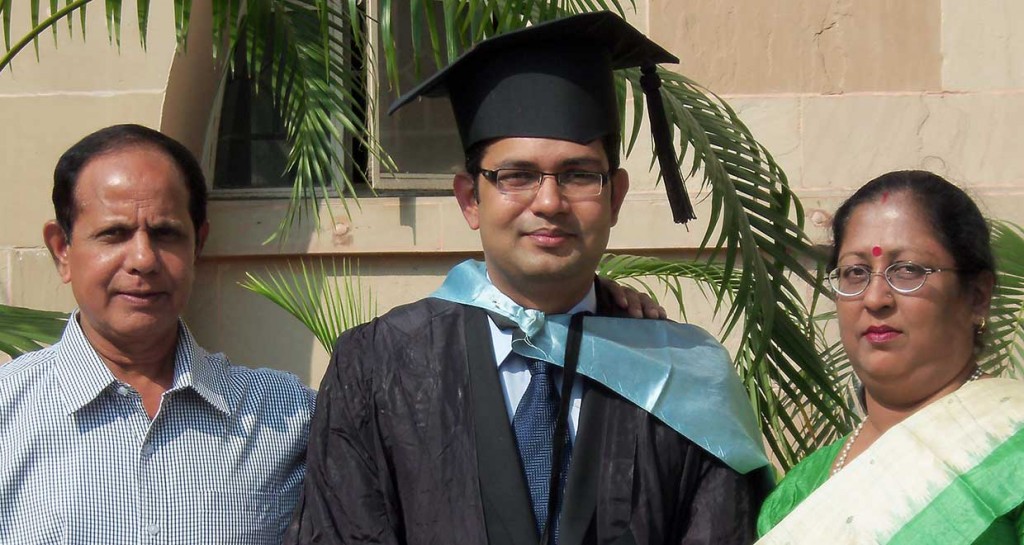



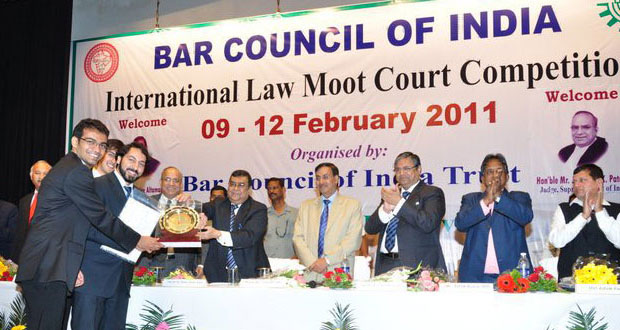

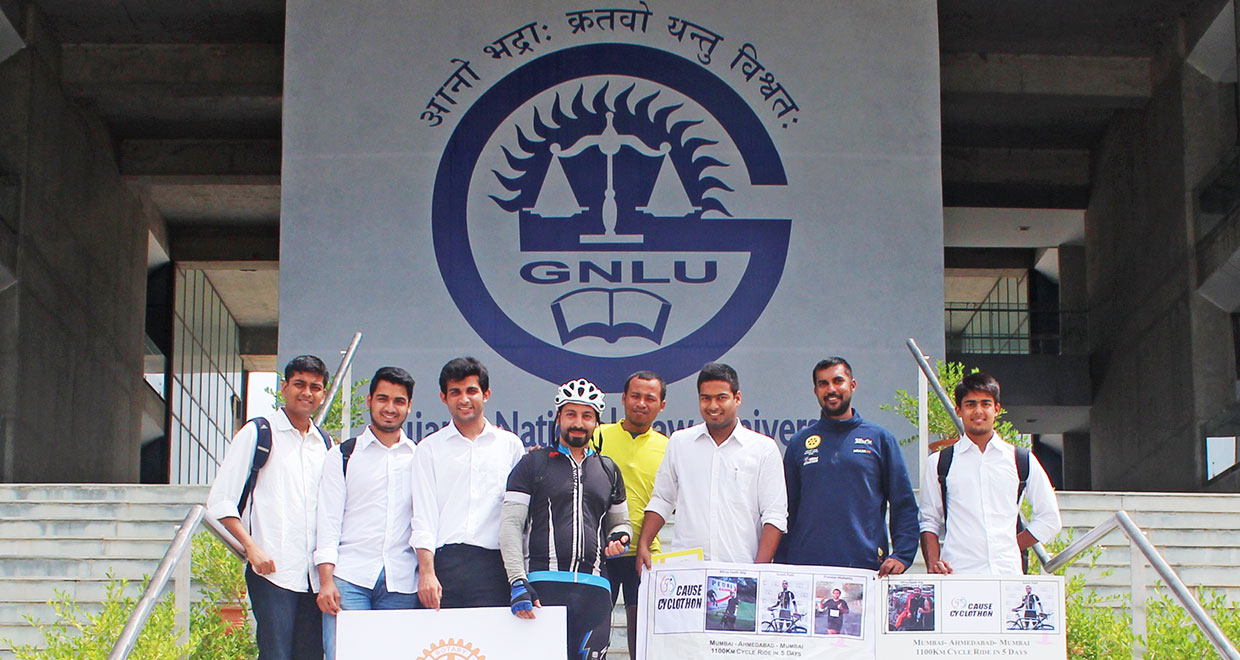
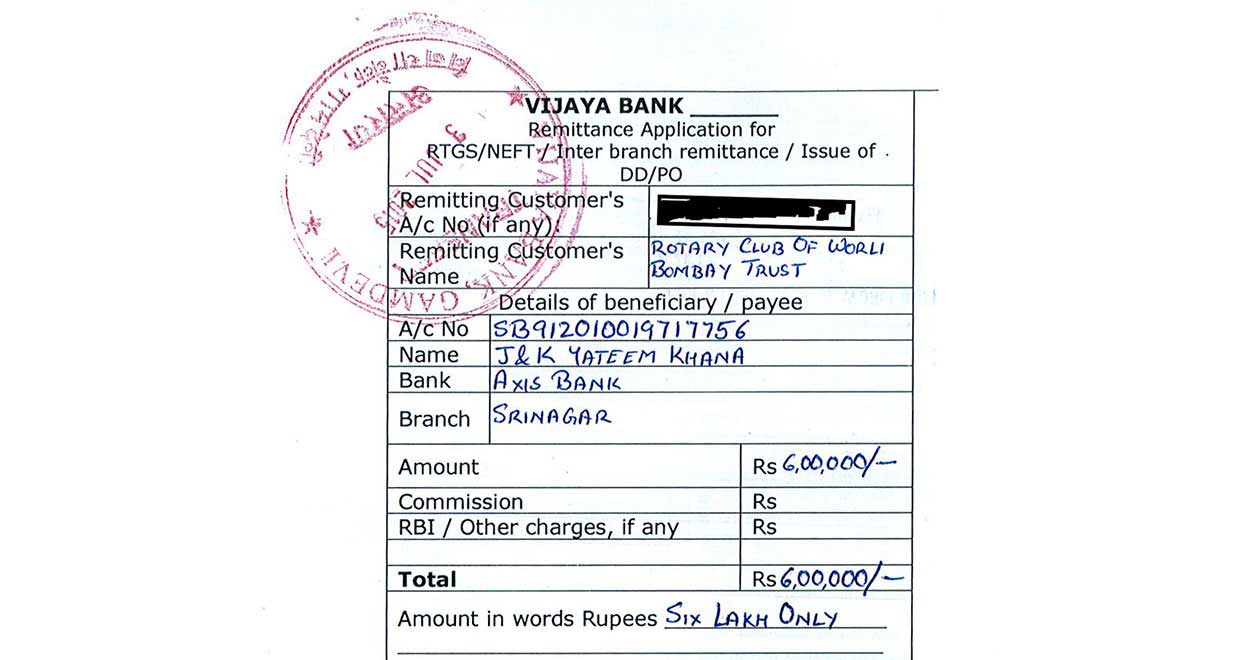
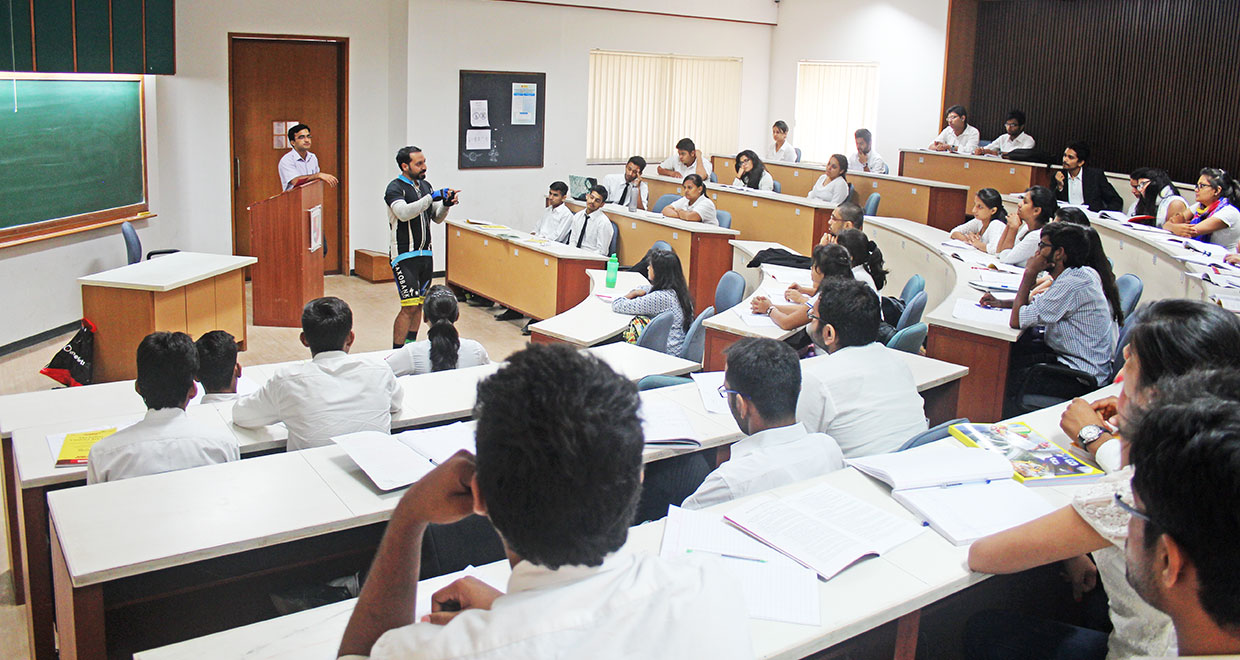
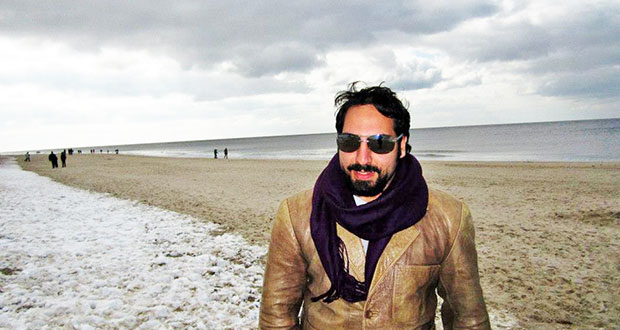

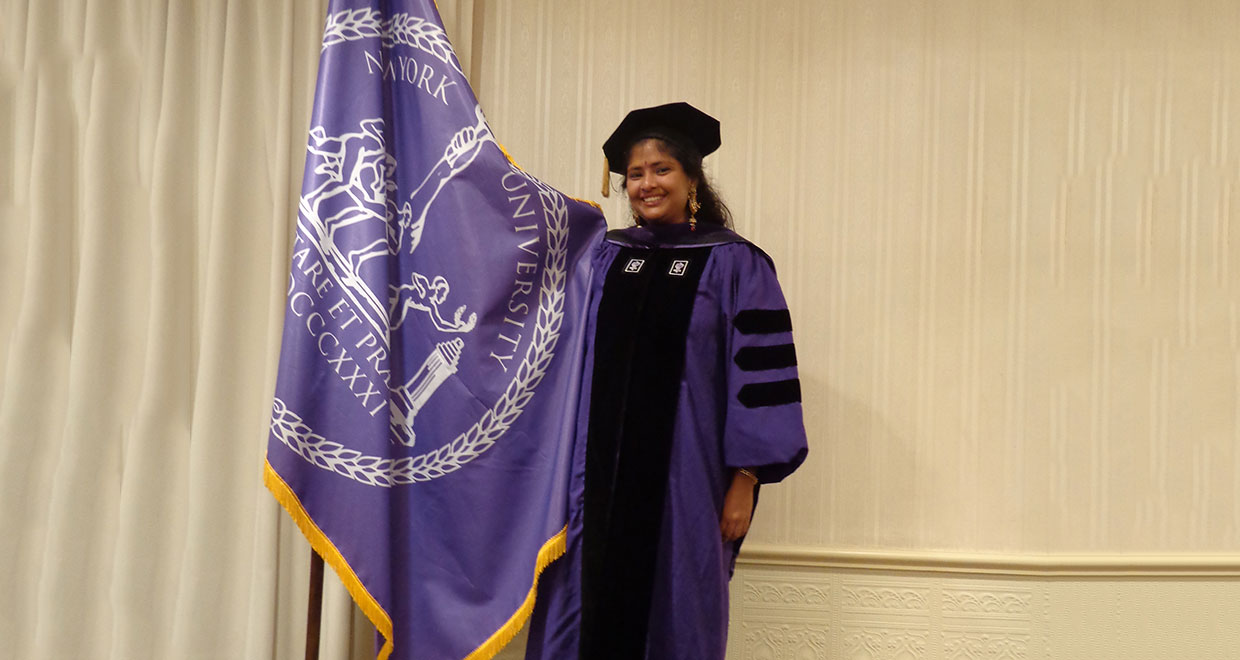

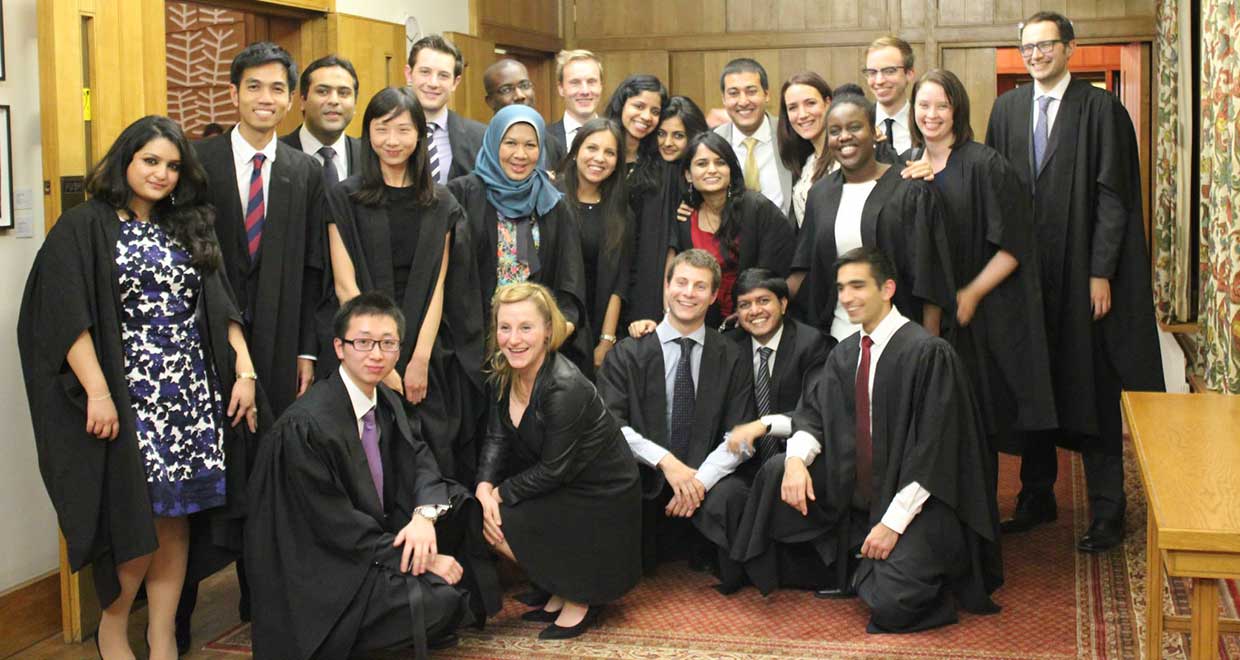





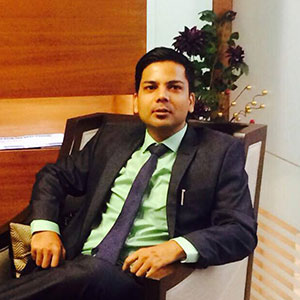



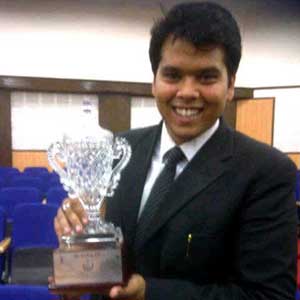


 Allow notifications