Category: Associates, In-House Counsels and Advocates

  • Trisha Mitra, Legal Trainee, Shearman & Sterling, on Masters in International Dispute Settlement from GIDS, Geneva and a career in Int’l Arbitration

    Trisha Mitra, Legal Trainee, Shearman & Sterling, on Masters in International Dispute Settlement from GIDS, Geneva and a career in Int’l Arbitration

    Trisha Mitra graduated as a lawyer in 2012 from the Symbiosis Law School, Pune. During her years of law school she participated in various events. She was awarded the Advocate S.K. Jain Scholarship for being the topper of B.A.,LL.B. from her batch.

    Prior to pursuing her Masters in International Dispute Settlement from Graduate Institute of International and Development Studies, she served as an associate at the ADR teams of Bharucha and Partners and Wadia Ghandy & Co.

    Soon after the completion of her masters she had the opportunity to work with Prof. Pierre Tercier and later joined Shearman and Sterling as a legal trainee in their International Arbitration team.

    In this interview we talk about –

    • Her years through law school and her growing interest in Arbitration.
    • Significance of Post Qualification Experience (PQE) before pursuing Masters.
    • Receiving Hans Wilsdorf Scholarship offered by the Swiss-based Hans Wilsdorf Foundation.
    • Studying Masters in International Dispute Settlement from Graduate Institute of International and Development Studies.
    • Working as a trainee in the International Arbitration group at Shearman & Sterling LLP
    • Working as Legal Assistant to Prof. Pierre Tercier


    What inclined you towards the field of legal education?

    Looking back, I believe my involvement in extra-curricular activities during school paved the way for choosing law as a career. I have always been an avid reader and that inspired my passion for writing and oration. In school, I actively participated in essay competitions, poetry competitions, debates, Model United Nations, extempores and just about any event that involved speaking and writing.

    When it came to a stage where I had to decide what degree I would pursue after school, my instinct was to choose a profession which has its core both these passions of mine, law. I do not have any lawyers in my family or close relations. However, I was extremely fortunate to have supportive parents who encouraged me to make this choice, despite the popular belief that law is not a profession meant for girls.


    How instrumental was Symbiosis Law School in shaping your legal career. Did you have interest in arbitration and dispute resolution while at law school?

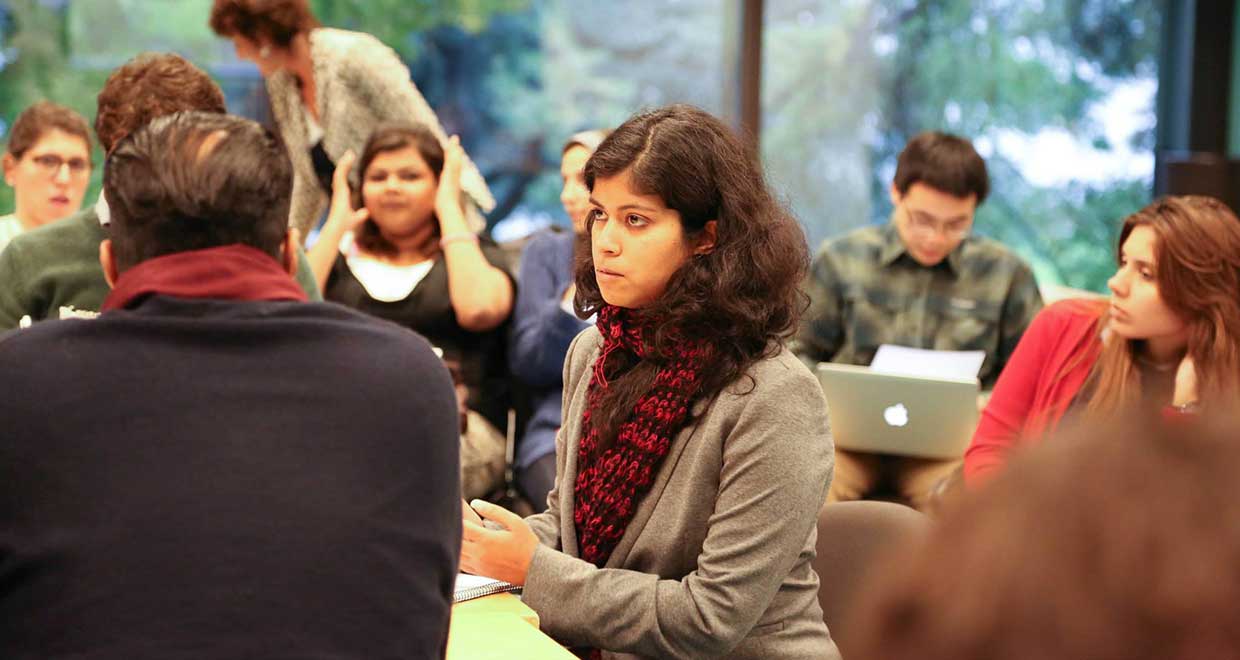
    My time at Symbiosis Law School set the foundation for my legal career. I have always maintained that I was lucky to be in a law school that gave me the freedom to learn, develop skills and explore opportunities, both within and outside the classroom. I firmly belief that learning cannot be restricted to lessons in classrooms and my time at Symbiosis is reflective of that. At Symbiosis, I actively took part in both national and international Moot Court competitions, numerous Model United Nations, intra-law college sports tournaments, essay competitions and parliamentary debates. Further, my internships and interactions with practitioners and academics helped me gain an essential practical understanding of the law. Being awarded the Advocate S.K. Jain Scholarship for Topper of B.A.,LL.B. was a recognition of this fact.

    My interest in Alternate Dispute Resolution, and Arbitration specifically, began as a result of curiosity in the second year of my law school. Having heard about it from a friend, I decided to research further on it and found the concept extremely interesting and a practicable means of dispute resolution. The benefits of Alternate Dispute Resolution, i.e. speed, cost-effectiveness and expertise, appealed to my sense of how the system should be and I decided to gain as much experience and knowledge as I could in it. Therefore, I pursued a Diploma in Arbitration, Conciliation and Alternate Dispute Resolution offered by Symbiosis. Also, most of my internships after that were directed towards alternate dispute resolution. I interned with the arbitration and dispute resolution teams at Advani & Co., Kachwaha & Partners, Bharucha & Partners and this cemented my interest for arbitration.
     

    trisha-mitra-6

    Please tell us about your work profile at WG and Bharucha.

    (Trisha worked in the Dispute Resolution team of Bharucha and Partners and Wadia Ghandy & Co. before she decided to pursue Masters in International Dispute Settlement.)

    Working as an Associate at both Bharucha and Partners and Wadia Ghandy & Co. was an important stepping stone in my professional career. I was fortunate to have guidance and mentorship from the partners at both firms and a collegial set of colleagues, who made the transition from a student to a working professional smooth. At both firms, I was involved in high-stake commercial litigation cases and international and domestic arbitrations.


    According to you, is it better to pursue higher education right after graduation or after gaining some Post Qualification Experience?

    It depends on a lot of factors. Pursuing a Master or higher degree is usually a step towards a professional goal that a person envisages for himself. Thus, a decision to pursue it is best taken when the person is reasonably certain of his professional goals or at least what his/her next steps after the Masters will be.

    Many of the people who pursue an LL.M. already have work experience before taking up the course. Gaining prior work experience in the field of law for the person who wishes to pursue higher studies is advisable – that way the person can be sure that he/ she wants to continue working/studying in that field of law. Having said that, there are also several people who are sure of their areas of concentration and take up higher studies right after graduation, and have done well for themselves.
     

    trisha-mitra-5

    Apart from Graduate Institute, which other universities offer good arbitration courses? What made you choose MIDS over others?

    The interest among Universities to have a specialised programme dedicated to Arbitration is relative now but fast picking up. Most Universities offer one or two courses on Arbitration, which the student can combine with other courses during their LL.M. Some notable Universities that offer good arbitration courses are Columbia Law School, Queen Mary University of Law, Georgetown Law School, Stockholm University and recently Miami School of Law.

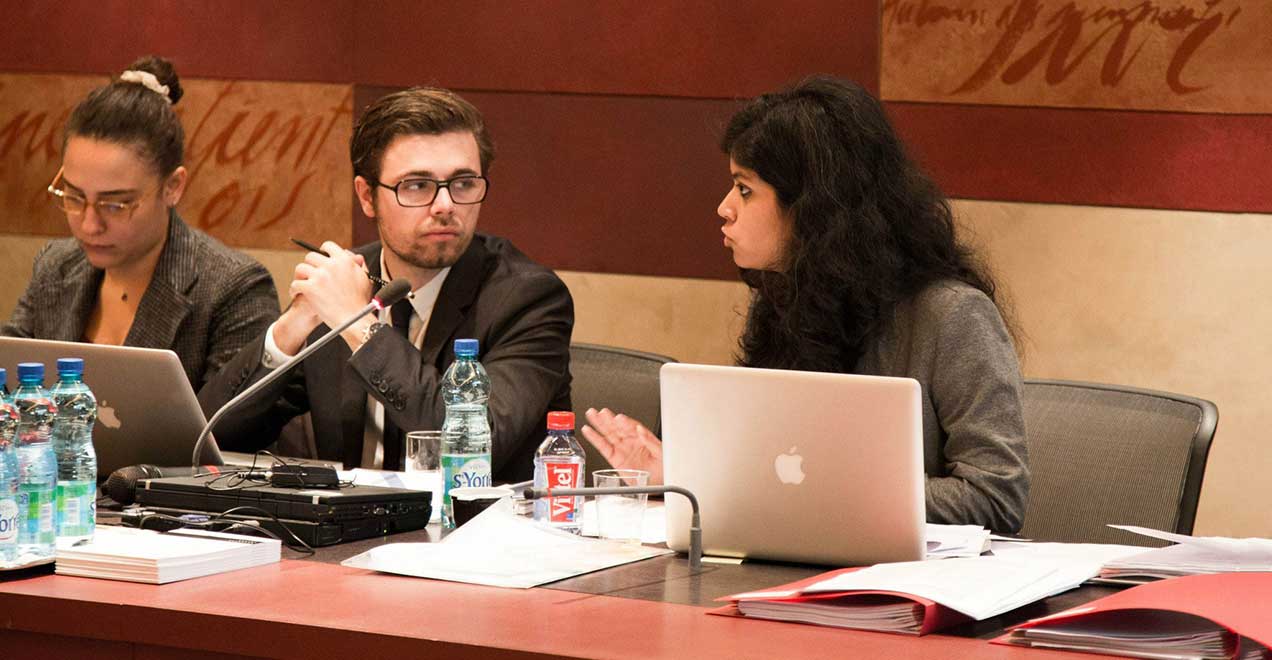
    The Masters in International Dispute Settlement (MIDS) offered jointly by the Graduate Institute and University of Geneva is quite unique in that sense. The entire programme is geared towards giving its student an exposure to various dispute resolution mechanisms, with a particular focus on International Arbitration. At the MIDS, courses are offered on both Public and Private International Law, and more specifically on WTO, ICJ, UNCLOS, Investment Arbitration, International Commercial Arbitration and Sports Arbitration. As regards International Arbitration, MIDS has specific courses on international arbitration in specific regions like United States, European Union, China, Latin America etc and also intensive courses on the different facets of arbitration like the Arbitration Agreement, New York Convention, Definition of Investment in Investment Arbitration etc. These courses are taught by well-known practitioners and academicians in those fields. For example, Professor Gabrielle Kaufmann-Kohler and Zachary Douglas took courses on commercial and investment arbitration, Professor Albert van den Berg took a course on New York Convention, Professor Jan Paulsson took a course on Investment Arbitration and Professor William Park on Arbitration in the United States. It truly was learning from the best!

    The well-designed programme as well as the location in Geneva, which is home to numerous international organizations, made the choice to take up the MIDS an appropriate one.


    Having been the recipient of the Hans Wilsdorf Scholarship and Ratan Tata Travel Grant, tell us more about scholarships for Indians at the MIDS?

    The Hans Wilsdorf Scholarship is an incredible opportunity offered by the Swiss-based Hans Wilsdorf Foundation to allow students pursue graduate courses at the Graduate Institute. It is a full scholarship and was an essential factor in my being able to pursue the MIDS. Similarly, the Ratan Tata Travel Grant is offered by the Sir Ratan Tata Trust to students travelling abroad for post-graduate or doctoral studies.

    The MIDS administration encourages applicants from all over the world, and every year a considerable percentage of the intake is from India. Professors have often chided that there is an “Indian mafia” at the MIDS! The Hans Wilsdorf Foundation offers quite a few scholarships to students admitted into the MIDS – in my year at the MIDS, an estimated 8-10 students had the Hans Wilsdorf Scholarship.

    Apart from this, students from India also have the option to apply to other scholarships, which are not necessarily MIDS-centric. For example, scholarships are offered by the Sir Ratan Tata Foundation, Aga Khan Foundation, Inlaks etc.
     

    trisha-mitra-4

    Tell us in detail about the academic programme at the MIDS. What differences did you find in the education systems of India and Geneva?

    To answer the last question first, the education systems in India and Geneva, and abroad generally, differ greatly.

    Pursuing an LL.M. abroad is an act of discipline and perseverance. For starters, the readings for each class were usually enormous, often going upto 500 pages for a single class of 5-6 hours. We were told that for one hour spent in class, there would be readings for atleast two-three hours. This is significantly different from the approach in Indian law schools. The classroom teaching style differs in that there is more learning through discussions and debates. The professors pay a lot of attention to the viewpoints of the students and give inputs from their experiences or jurisprudence to add to the discussion. To gain from this level of exchange, it was necessary to be thorough with the prescribed readings.

    MIDS, like other foreign LL.M.s, provides mentoring and assistance to its students to help them adjust and settle into the system. We had a set of amazing tutors who were always at hand to answer our queries and provide guidance whenever needed. The administration was extremely friendly and helpful and helped us with everything from visa to permit to choice of courses to career counselling.


    Do you think knowledge of European languages such as French or Spanish helps in areas related to Private or Public International law?

    Most definitely. In International Arbitration, a lot of the case-load originates from Latin America, Russia or Europe. Plus, some offices of even international firms have a huge French or Spanish population and prefer persons who speak those languages. Thus, fluency in one or more European languages is a huge advantage.


    After the MIDS, you joined WilmerHale in London as a legal intern in their International Arbitration team.  Tell our readers about the experience.

    Anyone who has ever studied or practiced arbitration knows Gary Born. The fact that he leads the International Arbitration practice at WilmerHale made the choice of firm easy for me.

    WilmerHale has a straightforward application process for its internship programme. Once the application makes it past the first round, there is an interview with the Internship Committee. Successful candidates are then invited to intern with them for three months.

    WilmerHale has a wide portfolio of International Arbitration and international law cases, including human rights cases. At any point of time, they are handling arbitrations seated around the world and are also pro bono representing victims of human right violations. The team at WilmerHale is young, energetic and welcoming. I was fortunate enough to assist with both their arbitrations and a human rights case in the African Court on Human and Peoples’ Rights.


    You have recently joined as a Trainee in the International Arbitration group at Shearman & Sterling LLP– Tell us about your experience.

    Shearman & Sterling is a well-renown practice in International Arbitration and is touted to have one of the best portfolios of cases, both in international commercial arbitration and investment arbitration. Their International Arbitration practice in Paris office is headed by Emmanuel Gaillard, a stalwart in the field.

    As a result, my experience so far has been extremely interesting and gratifying. I have been working on energy arbitrations and investment arbitrations and enjoying every bit of it. Of course, it requires a lot of hard work and long hours, but it is all completely worth it.

    The application process at Shearman & Sterling is quite comprehensive – once the application is selected, there are 2 rounds of interviews – the first one is usually taken by Associates along with a Counsel, and the second one is taken by a Partner.

     

    trisha-mitra-1

    You also served as Legal Assistant to Professor Pierre Tercier. Do you think it is better to work with an arbitrator rather than an ADR firm? Tell us your experience.

    I consider myself extremely lucky to have had the opportunity to work with Professor Pierre Tercier. Professor Tercier is considered one of the top arbitrators in the world and consequently, sits as arbitrator in some of the most interesting investment arbitrations and international commercial arbitrations.

    Working with an arbitrator is a different experience than working with a law firm. As Legal Assistant to Professor Tercier, I gained valuable insight into the functioning of an arbitral tribunal – a hitherto unknown process to me. As a counsel, it is one’s duty to assist the tribunal navigate the case and come to a decision. Watching a tribunal work is like peeking behind the curtains and learning how best to do this.

    I do not have a preference of working with an arbitrator over a counsel practice, or vice versa. Both involve equally interesting and exciting work and maybe at this stage of my career, I look forward to gaining more experience in both.


    Lastly, what would be your parting message for our readers?

    If you have a passion and do not mind facing a few challenges, you can get what you want. Also, do not hesitate to reach out to people you will be surprised how often they go out of their way to help you.


  • Sidhartha Peddinti, Startup Lawyer & Business Consultant at GlobalQuest Ventures LLC, on being a business lawyer and strategy adviser

    Sidhartha Peddinti, Startup Lawyer & Business Consultant at GlobalQuest Ventures LLC, on being a business lawyer and strategy adviser

    Sidhartha Peddinti graduated in Law from University of London through an unique programme through London School of Economics, in 2011. A graduate of Business & Economics from University of Toronto, he is currently a Startup Lawyer & Business Consultant at GlobalQuest Ventures LLC.

    He started working in the Immigration Law Offices of RAK at USA. Thereafter he went on to become partner at California Law Services where he handled immigration and bankruptcy work. He describes himself to be a lawyer with an entrepreneurial mindset.

    In this interview he talks about:

    • His choice to become a lawyer even after specialising in economics;
    • The options for a lawyer to become an entrepreneur;
    • How he joined LSE and his experience at the institution; and
    • His journey as an entrepreneur.


    Tell us about yourself. Since when are you living in US? Where did you get your primary education from?

    I am a real international citizen, in that I was born in Dubai, raised all over the Middle East, then spent three years during middle school at an international boarding school called Rishi Valley in India, moved to Toronto with my family in high school, obtained a bachelors degree from Toronto, a law degree from London, and then another advanced law degree from Los Angeles. So, my varied experiences and vastly different background has shaped my mentality, my attitudes, and my interests to be a hybrid of an Indo-Canadian-Middle Eastern, rounded up with an outdoor Californian lifestyle. I have been in the US since 2011, and have been an attorney since the past year and a half, i.e. January 2014.


    You did your bachelors in Business & Economics from the prestigious University of Toronto, tell us something about the course, the school and why you choose business & Economics?

    A pivotal moment shaped the way I thought about business and my career was in high school. I read a book called ‘Rich Dad – Poor Dad’ which I bought at a garage sale for $5. It explained the difference between (what the author referred to as the 4 quadrants) employees and self employed persons who fall in quadrants one and two, business owners and investors fell into 3 and 4. 1 & 2 work for their money – they don’t show up to work – they don’t get paid (even most lawyers fall in here – no client, no money). 3 and 4 found a way to be involved in multiple avenues and still accumulate wealth, while they are busy doing other things with their time or managing multiple assets they own.

    I wanted to understand more about how I could end up in the sectors 3 and 4 – where I can get my money to work for me, a state where, through my acquired and vested interests in companies, homes, stocks, and other assets, I could receive multiple sources of income. This was the start of my interest into economics, and business – I simply had to understand the way different business models worked, how the market worked, and how to operate a business. After getting accepted into the best University of Toronto – the number 1 University in Canada, it was a real no-brainer that I had to pick this school. It was over 175 years old, and in the top 25 best universities in the world. The courses were very challenging, but it was rewarding to complete the degree and understand how market cycles worked, and how each industry was affected by these cycles.


    A degree in Business and Economics is often enough to land anyone lucrative job at a big company. Why did you choose to do Restructuring through CAIRP, and then choose law after that, rather than accounting, finance, investments – the natural course for business majors?

    Good question. Following from the previous question, after I understood the way the different models worked, I knew that there was a recession that was going to affect North America, atleast thats what our Economics Professors were predicting around 2005/2006. I researched this theory and found the bubble was about to burst since everyone had their credit over-extended. Virtually all my friends ended up choosing a big firm for either accounting, audit, strategy, or some for an MBA. I wanted to prove my theory of the recession and be involved in that game of using the market to my advantage I hunted for a boutique law firm that specialized in Bankruptcy law and restructuring law, and choose to join their practice as an Estate Administrator – a job that gave me a brief overview of the process involved. The pay was less than half of what my friends were accepting immediately after graduating, but almost immediately after joining the firm, I started a course, sponsored by the lawyer, in Bankruptcy & Restructuring law & consulting, through the association that monitored Restructuring Professionals in Canada called CAIRP – Canadian Association of Insolvency & Restructuring Professionals. I received my certification to consult in a very short time since I was lucky to finish all my courses and pass the state exam in one sitting. As soon I completed all my practical training, within 6 months of initially joining this industry, I started a firm called Clear Debt Solutions. From 2007 – 2012, I had over 1000 cases that I personally handled, close to 500 being business bankruptcies. The firm still exists and is controlled by partners who I hired when I joined law school in 2009.


    sidhartha-peddinti-3

    You did your law from London Scool of Economics, through the International Law Program from University of London from 2009-2011. Tell us about your time there, and why you choose that program over Canadian or US schools?

    After being exposed to many lawyers in my restructuring practice, I wanted to add law school to complete my quest to understand more about business and the legality of doing business. I started law school from the UK, rather than in North America, because I wanted to have a unique edge to my portfolio, that separates me from the normal law applicant. I choose the International Law Program specifically, because it was flexible in its timings, its lectures delivery methods, and its study methodology. During these years, my consulting firm was booming, as the recession got worse, my revenue got better, and by mid-2010, I operated 5 locations throughout Toronto. I had a partner, few employees and hundreds of clients every year. I could not leave all this to complete a full time law program, which most Canadian law schools offered (Only 8 in Canada by the way), and which was also required by Immigration for me to attend law school in the US.

    By choosing to study in an International Program, based out of London, yet not being required to physically be present one hundred percent of the time, allowed me to work and study simultaneously – something that enhanced my understanding of the subject matter, while being able to practically utilize and gain ‘lawyerly skills’ through my practice in Toronto. Sure, it was hectic, since I flew back and forth, balancing school and work in two continents. I simply could not let either of them go. Of course, the fact that it was University of London, one of the best schools in world had a lot to do with it, and when they offered me an entire law degree in under $20,000 (plus still able to work) compared to $150,000 in the US – I could not pass up that offer, and in the end did not rack up a single dollar of student debt as compared to an average law student who has over $150k debt in the US.


    Did you interact with Indian students there, given that UK law schools are a popular choice among Indian law students?

    I met some incredible students who were also part of the international program. In fact, it allowed me to network with students from almost 50 countries directly through a portal system, something I checked out before I started the program, and many of those people are still my close friends to this day, in Canada, India, Pakistan, and even from Brasil and other countries. The pass rate at the International Law Program was roughly 25% after the 3rd year, so unfortunately many of the Indian students I met did not manage to complete the program, or moved on from law into other areas.


    With your LLM from Southwestern University, USA, you have received legal training from three countries. In what ways has this versatile academic environment helped you?

    To remain true to my original quest of being in quadrant 3 and 4 – business owner and an investor, I knew that the opportunity for this dream truly existed in the US, compared to Canada or the UK (from a global standpoint). So, while finishing law school from London in 2010, I applied to LLM programs all over Canada and the US for the 2011 Fall start session. I knew that the market was slowly starting to pick up now, and in a few years the market would be in the re-building stages again. I wanted to be in the center of this movement, and by being in California – the world’s hub for innovation and technology, I could not go wrong being a lawyer and entrepreneur in California. I was lucky enough to be accepted into all the schools I applied to, and they even allowed me to start the LLM program before my final grades were released from University of London. It was a miracle, since the administrators office at Southwestern made this exception for the first time for a foreign student in over 100 years. In two weeks of starting, I received my grades, and another miracle happened where I was in the 15% of students who passed all the courses that year, thus getting my degree after I had already started working towards a LLM degree.

    I picked Southwestern in Los Angeles because it was a school that had a flexible course options, and one that allowed me to complete the courses that I wanted to take. My eventual strategy was to attempt the dreadful California bar exam with 15% pass rate for foreign lawyers, and I knew I had to be prepared for it, since I am competing with local students with 3 years or legal training, compared to only 1 year for me.


    sidhartha-peddinti-1

    You never took a job at BIGLAW while you do have an impressive lawyerly profile. Why so?

    My interests, skills, and passion lies in entrepreneurship. I choose to do law to become a lawyer, but more importantly to become a good businessman. I believe that it has allowed me to think in a manner that is different from the lay person. I did not take up any positions at large firms because I believed that I have a unique skill set that would be wasted at a large firm, doing routine work, albeit they pay a lot for it. Many of my friends work a large firms, and making large paychecks, but the very thought of a desk job never appealed to me, and I have rejected some very lucrative offers in the last year, since I prefer to be out and about, running around making things happen. I am a very high energy individual who needs to constantly be in motion, and although for some of my friends BIGLAW has worked out great, it was never my cup of tea.


    The California Bar is said to be the hardest law exam in North America with less than 15% pass rates for foreign trained lawyers over the past 30 years. Explain why you choose to do this crazy step, given these statistics?

    I knew the statistics and I knew the high chances of failure. No one thought I could make this happen, since there are horror stories all over the web of people failing the California Bar 5 or 6 times. I thoroughly researched about every course I was expected to take, and by carefully selecting only Bar Courses, and some international law (my interest) courses in my LL.M, I was able to complete all core courses required by Californian law students that were going to be tested on the Bar. This allowed me to get the local training I needed for those courses, plus having international exposure. I nevertheless decided to take the bar and give it a shot, and luckily I was among the 22% of LL.M students that passed the Bar in my round of the California Bar Exam for July 2013.


    Before we go into your entrepreneurship ventures, tell us about your legal consultancy work. How did you establish such a vibrant consultancy practice?

    In my quest to be in quadrant 3 and 4, I engraved in my personal charter that I would understand different business models, so that I would eventually have various companies in my own portfolio. This is still my mission, and every time I meet an entrepreneur in a different industry, one unknown to me, I gladly take on the case to understand the industry better.

    I had this mentality since I started my first business, and I have enjoyed every business I have consulted with. Thus, my present consulting practice is one that can cater to clients from many industries, and clients from all stages of the business cycle. I now understand how these different models work, and am easily able to put myself in the shoes of my client, the entrepreneur, and advice, strategize, and legalize – all in one chain of thought. It is a lot of work, since I spend the time to research about different industries, but I suppose I am hooked to it. This has left me at the crossroads of law and entrepreneur.


    How is Canada or US as a career choice for Indian law students?

    Canada is a great place for Indian lawyers – especially those in the midst of their careers. The process of qualification and the exams are easier, with almost a 80% pass rate. In my opinion, it is great for an entrepreneurial lawyer, especially one who wants to serve the Indian community – especially in Criminal, Real Estate, or Divorces. Litigation is primarily taken up by local law students – Indian or otherwise, and largely dominated by those who received local training.

    US is a different beast altogether. The laws are also similar to British, but the legal ecosystem is very different. The bar is tougher, longer, and more intense. There are a lot of restrictions and qualifications the applicant has to go through. That said, a US lawyer is valued globally, and opens far more international doors than I would had as a Canadian lawyer in the international and startup up space. There are a lot of jobs in the US, especially for litigators, since the laws are geared towards solving grievances in court. There is also a lot more work for lawyers in the US, in terms of the types of law, the types of cases, and the truly unique legal system they have created here (I find a vast contrast from the Canadian and British legal culture). So, be ready to get comfortable knowing about the local culture, if you want to be a successful American lawyer in the US.


    Why did you make the shift from Canada to the US?

    My move was primarily because of two reasons: (i) large opportunity to be involved in the upswing of the economy in terms of products, startups, and opportunities; (ii) great weather compared to the bitter Canadian winters.

    I have always wanted to be involved in the globalization of economies, and being in California was more suited to my needs than to accomplish that from Toronto. However, since I have a consulting practice in Toronto, I still fly there often and work there.


    In the US you started working at Immigration Law Offices of the RAK. How is the work culture there and did the local reference help you understand the culture better?

    In my attempt to find out the local work culture and integrate into local legal scene, I decided to work for a solo lawyer, plus he knew immigration laws, so I did not really have to pay a hefty price for an immigration lawyer to figure out my visa. To understand immigration laws in the US is very important, it is the most complex system in the world, and a simple violation can be disastrous. I figured by working for an Immigration lawyer, I could hit three birds with one stone – (a) local work experience, training, and integration; (b) learning about immigration laws; and (c) did not have to pay for an immigration lawyer since he mentored me to fill my own paperwork which I wanted to get a grip on anyway.


    You were a partner California Law Services and worked there for a year. Where are you currently working, what kind of work do you do there?

    I worked as an Immigration and Bankruptcy lawyer with my previous employer, RAK, turned partner at the new firm. We mainly handled immigration and bankruptcy work, both which were areas I had some comfort with. I found both areas to be very competitive, and faced fierce competition. Meanwhile, my personal interests in entrepreneurship were not being fulfilled, so post my return from India last December to explore the startup scene, I joined as a partner at a boutique firm which was focused on law, entrepreneurship and startups.

    I currently work as a partner at GlobeQuest Ventures, LLC – as the name indicates, we travel the world looking for startups and companies to help them in their entrepreneurial journeys – legally, strategically, and practically. I absolutely love it – and finally have been able to combine my passion of law and entrepreneurship in one.


    Please tell our readers something about your entrepreneurship journey, and how you lived your 20’s working and studying?

    As I mentioned earlier, reading that book changed my career path. I was getting the education and theory side of it, but I also wanted to work on the practical side of it. I started my first business as soon as I finished the book in high school, aged around 18 or so. I have never looked back, and have been fortunate enough to have made that step at such an early age. I had some sacrifices along the way, but I see those as opportunity costs, and have not regretted any missed vacations, or parties (missed many of them). I made sure to have a very vibrant social when I could and led an active lifestyle to compensate from the stress from my business and school. Sports was my way of balancing myself, and I enjoyed playing 5 different competitive sports in my 20’s.


    How many companies in total have you founded?

    I have been fortunate to be part of 8 different companies to date. I have recently acquired equity portions in 3 new companies, and hope to be part of another 100 companies in the next 20 years or so.


    sidhartha-peddinti-4

    How do you define yourself, as a Lawyer or as an entrepreneur?

    A lawyer with an entrepreneurial mindset. My dream of combining both my passions has led to work in a dual capacity – working as a lawyer when needed, or as a founder, partner, strategic advisor, or in-house lawyer. I value flexibility and adaptability greatly, and my past experiences that allowed me to transition into role with relative ease.


    Tell us something about your latest startup venture.

    Through GlobalQuest Ventures, LLC, my recent clients have primarily been disruptive technologies that are in the mobile app space. One is a disruptive journalism app, another is a Uber for private planes, and another is a revolutionary dating site for a selected and elite customer.

    Another venture I started is called LLMbartutoring.com, a tutoring school that is dedicated to helping foreign trained lawyers integrate into the California system by assisting in local cultural transition, job training, course assistance, Application help and California Bar Exam training. This information can also be found in my personal ventures section on my webpage.

    On the other side, I started working on some revolutionary product lines with some very famous scientists, who specialize in holistic medical formulations. I have approached some celebrities and famous television personalities to team up with us, and can possibly secure a very large deal in the next 2 months that can help us potentially move millions of units every year. That would satisfy my itch to be a co-founder in a truly non-legal business – a turmeric infused skin care line, scientifically backed and tested by the foremost expert in turmeric infusions.


    Your website sidharthapeddinti.com seems to be offering a complete ecosystem of service for startups. How did you manage to that?

    By finding a way to incorporate all my interests in one way through GlobalQuest Ventures, LLC, I decided to put all my thoughts on one site, that describes me as a person, as a lawyer, an entrepreneur and eventually as an investor (with my portfolio). Thank you for mentioning my page, since I built that page myself in less than a day. I have no previous computer training, programming or coding or any other backend experience, but I knew that by watching the right videos and reading the right articles, I could do it myself. I have since created 5 webpages, and even got some people asking me for a referral for the company who created my site. In short, I want to prove and inspire people to understand that anything can be done, with the right mindset, and if a non-tech person like myself can make wesites in a day, others can live their dreams and make it happen over night as well. That was the real motivation for the site – inspiring people to live their dreams by quitting their boring jobs as a first step.


    Are you also working with any Indian companies who are looking to expand internationally?

    I have started to form many strategic partnerships with corporate lawyers, startups consultants, and other individuals who are involved in the Indian startup scene. I am eager to enter the Indian startup space and help take those companies international – US, Canada or other countries. We look to form strategic alliances, joint ventures, mergers, acquisitions, and even where lucky, take it public.

    I am looking to team up with key individuals in India who can help me in this quest. That is the reason my company is called GlobalQuest Ventures, LLC – where law meets entreprenrurship and strategy.


    What advise will you give to young lawyers who want to become an entrepreneur?

    I find the practice of law requires a different set of entrepreneurial skills than a mobile app company or a revolutionary product. Being part of an elite subset of society, one that is highly regulated and controlled (worldwide), lawyers have to follow certain protocols that other entrepreneurs may not necessarily face, especially relating to contacting potential clients, or advertising standards, or types of deals that one can take one.

    Thus, solo lawyers who want to hang their own shingles should think like a lawyer first, and only after taking all the protective measures, one should engage in their targeted marketing campaigns. So, it’s a unique type of an entrepreneur who should expect 3-5 years, at a minimum, to start realizing the resulting they imagine. I know a lot of lawyers, and virtually every single highly successful lawyer that I know, has been practicing for at least 5 years. So, there is no way to get around patience.

  • Jaya Kumar, Business Development Manager, J. Sagar Associates, on an unique work experience of Marketing+Law

    Jaya Kumar, Business Development Manager, J. Sagar Associates, on an unique work experience of Marketing+Law

    Jaya Kumar started out as a graduate of English Honours from Sophia College, Mumbai, then moving on to pursue a three-year law from G. J. Advani Law College, Mumbai, from 2005-2008. She decided to take an unconventional path of choosing Marketing over being a legal Associate, by first working with Rainmaker, then Trilegal, further moving on to I&S Associates, a corporate-commercial Indian law firm. She has now been working as a Business Development (BD) – Manager at J. Sagar Associates (JSA) since 2014.

    In this interview, she tells us about:

    • The experience of interning throughout the last two years of law college;
    • The reason behind choosing the managerial aspects of law over the more traditional ones of corporate law or litigation;
    • The experience of having worked for such different kind of firms, along with the different work profile she dealt with for each;
    • Her work as a Business Development Manager.


    How would you like to introduce yourself to our readers who are young lawyers and law students?

    I would call myself a lawyer by qualification, currently working as Business Development (BD) – Manager at J. Sagar Associates (JSA). I do understand law, but my interest is more on the marketing side of law. I have completed my English Majors from Sophia College, Mumbai, then proceeding to pursue a three-year law from G. J. Advani Law College, Mumbai.

    I started my career with Rainmaker, followed by Trilegal, then a stint at I&S Associates, and now at JSA.


    What prompted you to study law after completing your English Honours?

    I wanted to be a journalist, but as things planned out, I never got accepted in any journalism college, haha! My father kept telling me to opt for law, but I nevertheless reserved it as a backup plan. Thus I didn’t bother to make any serious efforts to apply in all the law colleges. I got accepted in G.J. Advani, and also since I am the third generation lawyer in the family, I opted for law as a career. However, I had no idea about the BD aspect of law. My internship at Rainmaker helped me to understand the details of marketing/ BD in the legal industry.  It was a new concept for me, and it sounded different and interesting.


    You are a graduate of the 3 years LL.B course from G. J. Advani Law College. Please tell us a little about your law school days. What kind of internships did you do?

    I was doing two internships simultaneously during the law college days (starting from the second year), one with a senior lawyer, Ms. Neelofar Akhtar at a Family Court, and the second one with Rainmaker, founded and co-founded by Mr. Sachin Malhan, Mr. Bhavin Patel and Mr. Ritvik Lukose, and they had just started developing products for the legal industry. My college timings were from 6: 30 am till 11: 30 am. I used to then go to the Family Court till 3: 00 pm, and thereafter to Rainmaker. I was trying to absorb as much as I could, in those two years.


    jaya-kumar-1

    What were your areas of interest during your graduation? How did you go about developing expertise and knowledge in these areas?

    As I mentioned earlier about my two internships, I was most interested in practical knowledge. Law for me was vast and strange till the first year, but by the second year, it started making sense in terms of both the theory and the marketing bit of the industry, because of the internships.


    Did you find that your law school education had prepared you sufficiently for the many tasks you were required to execute during your internships and later at your job?

    A law college only teaches you the theory part of the law, and not the aspect of marketing yourself or the firm, but I took it as a new curve in my growth, and learnt the unusual. Also, because I chose a different stream of work in the legal fraternity, I had more need of the practical aspect of the field of law, rather than the theory. Ironically, I never interned in any law firm, but I learnt on the job with Vahura, Trilegal, I&S Associates, and now JSA.


    Right after graduation, you joined Rainmaker as an Associate in their Sales and Marketing Department. What prompted you to choose the field of Marketing? How did you secure your appointment at Rainmaker?

    I applied directly to Rainmaker for an internship, and it all started from there. By my second year of college, I realised that if I put in more efforts, I can be a good marketing professional. After my internship, I decided to join Rainmaker as an employee, and started handling the Sales and Marketing for the Western India.


    What comprised your work in the Sales and Marketing Department as an Associate? What were the responsibilities you were entrusted with?

    At Rainmaker, we were developing products for law students and lawyers, especially litigating lawyers, and also people interested in LPOs. It involved travelling and meeting law schools, litigating lawyers and budding lawyers for whom joining LPOs was a good career option.


    Why have you chosen this particular avenue of Marketing and Business Development, and why not legal practice at a Corporate Law Firm?

    At my stint at Rainmaker, which is also a recruiting company for lawyers, I had not come across anyone doing BD as a full time job. After Rainmaker, I joined Trilegal and realised this is what I like, and because it was a different kind of work in the industry, I believed that the value of this kind of work will have more avenues once the market opens for international firms. At Trilegal, I had an opportunity to work with Allen & Overy (A&O), when the firms had a referral relationship. It was very exciting to work in that setup, and it made my decision stronger to do BD for a law firm, rather than provide a legal opinion, or do transactions.


    What led to your recruitment at Trilegal? Tell us about your recruitment process at Trilegal to our readers.

    When I was looking to move from Rainmaker, my mentor’s (at Rainmaker) wife was doing BD at Trilegal, and she was looking for a junior, as Trilegal was looking to build a BD team at the firm. He recommended my name to her. Mr. Karan Singh then interviewed me, and as I had some experience in sales and marketing, I was taken on board. I was lucky to work at Trilegal.


    Our readers would like to know about your work profile as an Associate of Business Development in a Top-tier law firm in India.

    As a BD professional, I am involved in the indirect marketing of the firm by assisting in the visibility of the firm. I assist the partners and the firm, as a whole, to maintain their presence in the market. Sector tapping and industry intelligence is another part of my job, along with helping the firm market itself, both nationally and internationally.


    What kind of Business Development skills should one require working in a Top-tier law firm like Trilegal?

    No law school or MBA school can teach you marketing in a legal firm, but the most important thing that one should have is the will to learn and take a risk of doing something different from the peers. Be it Trilegal or any other law firm, at a starting point, one should research well  on things such as what BD of a legal firm actually means, why a law firm is not allowed to market themselves, and what the difference between a direct and an indirect marketing is. Knowing some law helps, but even if you don’t have a law degree, you can still join the BD team. These skills can only be learnt on the job, but if BD is what one wants to be a part of, one has to be a people’s person, along with having a good hold on the language.


    You have worked with Trilegal [Mumbai office] for nearly 2 years and 5 months, as an Associate of Business Development of the firm. Share your work experience in brief to our readers. Was the work schedule hectic at times?

    Trilegal was the first law firm I worked at. My practical learning of BD at a law firm started then. I was lucky to work at Trilegal, and at a time when they had a referral relationship with A&O, it broadened my platform of learning. I did put in long hours, as I was new to the concept of BD, and I really wanted to understand and learn this side of the legal sector. Trilegal was very supportive.


    How did you start working at I&S Associates?

    I wanted to start growing as a professional and start implementing BD strategies, rather than only execute them. A friend who knew about an opening in I&S helped me get an interview slot there, and hence the job.


    You have worked with I&S Associates as a Head of the Strategy and Relationship segment. Tell us about your work experience at I&S Associates.

    I&S was a small firm founded by Ms. Anuradha Iyer and Ms. Bakhtiar Sunavala,and it gave me a way to start implementing my ideas. The partners were very cooperative and understanding about the new concept of BD. I was in I&S for two years.


    Currently, you are working as a Business Development Manager of J. Sagar Associates. How did you secure your appointment at J. Sagar Associates? Did you get an offer from the firm?

    JSA Mumbai was looking for someone who can do BD for their firm, and my name was recommended by Ms. Anuradha Iyer to Mr. Akshay Chudasama, who was looking to expand the BD team, and he then interviewed me. I then met Mr. Berjis Desai and Ms. Dina Wadia for the final confirmation. I was fortunate that they offered me the BD – Manager position.


    How difficult would you say it is, changing workplaces and creating a comfort zone all over again?

    With experience, it’s just a matter of time about how professional you are to be able adjust in a new place. One has to understand the culture of the firm, and take baby steps to make their mark. In my view, it’s not difficult to create a comfort zone all over again if the person is willing to learn. There are adjustments in any new place, but we have to learn to gel and focus on the growth, and other things will fall into place.


    Kindly walk us through your role at JSA. How different is it being a Business Development Manager from an Attorney?

    As the BD – Manager of the firm, I assist the firm in sustaining their visibility in the market. My role is to assist the partners and the firm as a whole, to develop new client relationship and strengthen the existing client relationships that we have. I help with the client events, deal submissions, cross – selling, proposals and pitches, attending conferences and also helping the partners to attend the relevant conferences/ seminars, rebranding, market intelligence and sector tapping, help the attorneys network etc.


    What are the main qualities that one should acquire to be successful in the Business Development field? Please share with our readers.

    Patience is the key to be successful, and as there are no specific courses or graphs that one can follow, it takes time to get the grip of the type of role a BD person needs to do. Also as attorneys are mostly busy with the deals, a BD person needs to follow up, not once, not twice, but several times, to get the information from them, and then send it out to the public domain. This needs patience, and an understanding that BD is important, but delivery to the client is also important for the partners and attorneys. As they juggle between everything, all they need is our support to market what they work on.


    jaya-kumar-2

    How is your experience so far? What is your workday like? Are there new challenges every day or did work fall into a predictable pattern?

    My experience has been very good till date. I am fortunate to have worked with the best since I started my journey. As all of us know that with lawyers nothing is predictable, and thus, most days are filled with some or the other kind of work. The category of work may be similar, but different clients have different demands. I am informed of these demands by the attorneys, and then I have to customise the research and information. Challenges are there, but with JSA being a very supportive and cooperative firm, work gets on time.


    What would be your parting message to law students who want to be successful in the Business Development field, and want to work as a BD Manager in a top-tier law firm like you?

    Nothing comes easy, so remember to have patience, and do not shy away from the hard work. As a BD professional, you will be the odd one out in the firm, but let that work in your favour, rather than making you feel lost. BD is an important function of the firm, so put your best foot forward to understand which firm requires what kind of BD, since some will need aggressive marketing, while some only need their visibility to be sustained.  Do your research on the firm and the partners of the firm well.

    Choose the right firms, but always choose the learning before anything.

  • Nagarjun Matangi, Legal Counsel, Hewlett-Packard India, on the HP OGC programme and work experience

    Nagarjun Matangi, Legal Counsel, Hewlett-Packard India, on the HP OGC programme and work experience

    Nagarjun Matangi graduated in law from NLSIU, Bangalore in 2011. As a student he was the Recipient of Vice Chancellor’s Gold Medal for “Outstanding Personal Achievement” and he was also the Vice President of Student Bar Association in the year 2009-10.

    During his final year Hewlett-Packard (HP) had launched the Graduate Attorney Program in India and reached out to colleges – Nagarjun was among the two students who got selected from NLSIU (4 in total) as part their campus recruitment drive.

    Since then Nagarjun has been working at Hewlett-Packard as a legal counsellor. His role includes a combination of Commercial Transaction support plus providing support for General Legal matters.

    In this interview with Nagarjun we talk about:

    • His college years as a part of NLSIU
    • Planning his internships in his college years
    • Starting work as a legal counsellor of Hewlett-Packard
    • The HP India OGC Internship Program and the qualities they lookout for
    • The legal department at HP


    What made you gravitate towards the study of law at NLS? Was it planned or just a matter of chance?

    It was completely unplanned and was an interesting turn of events. I hail from Andhra Pradesh where the choice is usually limited between Engineering and Medicine and I had never been able to fully decide upon my choice of stream. I spent seven years in Sainik School Korukonda which was a feeder institution to the National Defence Academy, but was for some reason inclined to remain a civilian. I could never get over the confusion as I had managed to secure a seat in institutions meant for completely different streams – IIT, Architecture and Law.

    I chose Law primarily to overcome the stereotype of options that I observed around me and that turned out to be a truly rewarding choice of a lifetime.


    What were your areas of interest during your graduation? How did you go about developing expertise and knowledge in these areas?

    When you end up in law school by accident, you get excited and interested at everything that is introduced to you. I was very fascinated with Tax, Constitution and Family laws. However, what truly interested me were the Commercial Contracts and the difference that a crafty draftsman can make to the Contract. I used to try and pick up associated matters in my internship to understand how the Courts dealt with the interpretation of complex commercial clauses in a contract and I also used to select Seminar Courses that offer practical knowledge on these aspects. One would be surprised as to how much more this area of practice can offer beyond what is taught in classroom.


    What do you have to say about mooting at law school and legal writing for journals? Are these helpful even after the student graduates?

    I admit not having given much attention to either of these activities during law school; but it wasn’t something I had to regret. However, now that I am better informed, if I had an option to revisit my time as a law student, I would definitely make use of these options for they aid in developing essential skillsets at a very nascent stage. It would remain useful even after graduation.


    Did you plan out your internships throughout law school or did it all just happen by chance? What role did the placement committee play in securing internships?

    One of the pitfalls of accidentally ending up at law school, is that one would lack the requisite awareness about legal internships and how to plan them. Thanks to my seniors and friends at NLS, I could fill up this gap before it was far too late. This is also a reason why most of my internships were at trial and High Courts. While I did learn a great deal from my internships at these Courts, someone interested in a corporate profile would have prioritized and planned their internships a little differently.

    It is essential for the fresh students to be educated at the option generally available through formal sessions that can be organized by the student body itself. Else, it could be too late before the batch can have its Placement Committee set-up.

    Our Placement Committee played a great role in providing wider options and facilitating the selection process for these internships. Most students get introduced to formal In-house or law firm internships thru the Placement Committee.


    nagarjun-matangi-2

    You have been working at Hewlett-Packard as legal counsel since your graduation. How did your appointment take place? Please tell us about the recruitment process at Hewlett-Packard.

    HP was implementing the Graduate Attorney Program in India for the first time in 2011 and had reached out to NLS and a couple of other colleges for this selection. This program was part of the Talent Factory initiative of HP’s Office of the General Counsel (OGC) which focuses on Making Talent internally rather than Taking Talent from outside the organization. The selection process involved two rounds of interviews, one each with the then Country Counsel of HP India and also with the regional Deputy General Counsel who had come down from Singapore for this purpose. This program is a regular feature in HP US and was being introduced in India only on a pilot basis. However, there is certainly a lot of enthusiasm and positive vibe around it here and it should not be long before we reach out to the colleges in India for implementing round 2 of this program again here.

    That said, general recruitments at In-house legal teams, unlike law firms is strictly based on openings that may come up. It involves a combination of factors like the timing of the opening, the role and experience requirements sought for such opening, etc.


    Tell us what your typical work day is like. What is the role of an in-house counsel at Hewlett-Packard? What are your primary responsibilities?

    For most of us on HP’s Legal Team (OGC) in India, our role is a combination of Commercial Transaction Support plus providing support for General Legal matters. As part of transactional support, we are involved in drafting, reviewing and negotiating contracts concerning provision of various aspects of the Information Technology portfolio (services/software/hardware/cloud). This involves a lot of collaboration with the respective teams to understand the nature of IT solution being offered by HP, the risk associated, advising on mitigation strategies etc.

    A good amount of my day is spent in meetings of this nature with various stakeholders of the contracting/tendering process as well as those involved in offering the solution. These are essentially my internal clients. Contract negotiations are the part I keenly look forward to and one gets to learn a great deal from these negotiations.

    General legal matters include Data Privacy, Taxation (limited), Litigation Support, Commercial Disputes, Internal business advisory, Competition law etc. (new and interesting issues keep coming up for reference and the same may not fall into any particular bucket of practice). These cannot be further detailed.

    Being a large MNC with diverse operations, guidance is sought from the legal team on numerous legal matters associated with the day to day functioning. Litigations and Consumer matters also form part of the portfolio of the legal team at HP. In addition to the same the team also needs to proactively align the business with the changing regulatory requirements and provide trainings as well as prepare suitable policies to guide all employees.


    How is the legal department organized at HP?

    HP India OGC is primarily segregated into teams that support a particular Business Unit of the Company. Various portfolios of the IT sector as handled by the respective Business Units. At the same time, the teams are not segregated into water tight compartmentalized structures. For example, today I may be primarily supporting the Printing and Personal Systems division of the company, but I can always extend support to the transactions involving Software licensing. This helps us diversify our experience in all portfolios that the IT industry has to offer, especially since HP’s operations extend into all these portfolios.

    Other countries in our region (Asia-Pacific-Japan) have similar team structures and the entire region reports into the Deputy General Counsel for APJ. The DGCs of all regions across the world finally report into the General Counsel based at our HQ in Palo Alto.


    What is the basic difference that you see between a lawyer and an in-house counsel? What do you think is the biggest challenge for an in-house counsel?

    The basic differentiating factor lies in our association with our clientele and the purpose of such association. While a lawyer will put forth the existing position of law before the client, the role of an in-house counsel goes a mile beyond and is required to show the path of compliance with the ever changing dynamic laws and ensure it is in line with the ultimate business objectives.

    As in-house counsels, we need to be conscious of the fact that our business teams are our primary clients and instead of throwing fancy jargons or weighty case names, our responses should be simpler and more comprehensible to our clients who do not necessarily have a legal background. And when the response is a NO, we must be capable of showing the path of compliance to make it a YES. This is both a primary function as well as the biggest challenge to do well as an in-house counsel.

    Particularly, at HP, we are encouraged to focus on innovating upon the existing processes to make them Simpler and Better. It is a constant endeavour and a great linking factor of all attorneys that are part of the worldwide OGC team – to make it matter!


    nagarjun-matangi-3

    Tell us more about the HP India OGC Internship Program. How can one apply for an internship at HP? What qualities do they look for in an intern?

    Our internship program is yet another extended arm of our Talent Factory initiative. Very few would disagree when I say that most internships that we have experienced only use our existing skillset and one cannot always claim to have learnt a new skillset with which you can walk away upon completion of the internship.

    While designing our 4 week internship program we made a conscious effort to ensure that the intern is able to walk out with a completely new skillset acquired during the internship. We have created a detailed training-cum-working program where a lot of emphasis is laid on first training the intern around the work we do through a dedicated mentor assigned to each of the interns. Virtual classroom sessions are taken up by our attorneys from different locations on designated fields of our operation (IT Contracts, compliance programs, Privacy, IPR, Corporate, Consumer laws, etc.). Primary emphasis is laid in educating the interns of our contracting process, stakeholders involved, our preferred contractual positions and their rationale, etc.

    If it were left to me, I would term it nothing short of a seminar course on Applied IT Contracting!

    We currently have two slots each year – Jan/Feb and June/July; and we accommodate a maximum of two interns per slot. We reach out to select colleges thru their respective placement committees in order to carry out the application process.

    Applicants are evaluated on the basis of their – Covering Letters + CV followed by a Telephonic Interview (for shortlisted applicants) and their response to a sample query. At all stages, the applicants are assessed on their clarity of thought and simplicity of expression.


    Lastly, what would be your message to our readers who are mainly young lawyers and law students?

    Student life, especially to law students, offers certain learning opportunities which are available only when we are still a student. There is no way we can go back and catch that bus. So do ensure that you work out your priorities and avail them so as to have minimal regrets later on.

    To the young lawyers – it is always an added advantage if you are able to think beyond the black and white letters and are able to apply your own judgement. This will require an understanding of the commercial and business implications of your advice which can be acquired only with your conscious effort. A plain legalese advice is no advice if it cannot reap tangible benefits or cannot be understood by the client.

  • Rahul Bhattacharjee, Attorney – Middle East, Schlumberger, on the role of a Corporate Counsel in an MNC

    Rahul Bhattacharjee, Attorney – Middle East, Schlumberger, on the role of a Corporate Counsel in an MNC

    Rahul Bhattacharjee graduated from West Bengal National University of Juridical Sciences (WBNUJS) in the year 2005. He was then recruited by the Development Consultants – Kuljian Group, where he worked for two and a half years. He then moved onto be an in-house counsel with Khadim India Ltd., where he again worked for two and a half years. He then went on to join the Legal Counsel team of DSM India, however, after a short stint of seven months, he finally shifted to his current job with Schlumberger. After working at both the Delhi and Mumbai offices, with a PQE of ten years Rahul has been now promoted to the post of an Attorney – Middle East and works out of the Dubai office currently.

    In this interview, he tells students about:

    • The importance of the Cumulative Grade Points Average (CGPA)
    • Making career choices when opportunities arise
    • What the work of an in-house counsel is like
    • The advantages of joining an in-house counsel team


    How would you like to introduce yourself to our readers? Please share your academic and professional background.

    I would like to introduce myself as an in-house lawyer who views his role as a business enabler. I have always worked in-house in companies, and through my experience of just over a decade now, have realised that one’s understanding of the business and its operations is of the utmost importance. I completed my degree in law from NUJS in 2005, and was privileged to be a member of the first graduating batch from that institution. The followings questions would cover my career progression.


    Tell us a bit about your childhood, your hometown and your pre-graduate life as well.

    This one is a bit tricky!! My father was employed with the State Bank of India, and he had a transferable job. Hence, by the time I had finished my Standard VIII, I had studied in 4 different schools, having been through 5 transfers. Thereafter, in 1996. my parents took the tough call of settling the family in Kolkata without my father joining us; he ultimately got a transfer to Kolkata only in 2001-2002 (i.e. after I had joined NUJS). Hence, I cannot call any particular town my hometown. However, during the period up to 1996, I had spent the maximum time (9 years) in Bhagalpur, Bihar, and thereafter settled down in Kolkata and studied through Standard IX to XII in a school called Saifee Hall, situated on Park Lane, in the vicinity of Park Street. So currently, I call Kolkata my hometown.


    The career of a lawyer in India is still just a backup option for most students. What motivated you to choose law as a career?

    I think the choice of taking up law as a career came more vicariously to me. My elder brother had wished to study law from NLS (he had read about the institute in its early days, but unfortunately, could not prepare for, or take the test himself, for want of information. Would you believe that? Those were the days before the internet). I was luckier than my brother in that respect. His dream kind of passed on to me.

    I always had a knack for argumentative thinking, or so I’d like to believe. Though I have never been a very good public speaker, I did have a knack for clarity and precision in written communication, and so people who mattered, acknowledged me. Somehow, the engineering or medical professions did not appeal much to me. I was a decent student, not great. I did well in the subjects that I liked. Though I had taken up science in my ISC, I was convinced by then that I’d like to do law. The range of career choices that an education in law provides, also helped me in my decision.

    I took the entrance tests for NUJS and NLS, and honestly, without much preparation.  I guess I got lucky getting through NUJS!!


    rahul-bhattacharya-1

    Kindly acquaint us with your college life and your aspirations in college. What activities were you involved in, apart from the regular academic curriculum?

    Well, my indulgences in the first year in law school were anything but academic. I had a lot of fun with new found friends and freedom. That did take a hit on the CGPA, which did not quite mend dramatically over the next four years, though I did have fun and thoroughly enjoyed. I have no regrets, since I made the best of friends for life.

    It was second year onwards that I paid a little more attention to academics. I think I always did well in subjects that I liked, which typically were those which required more logical thinking and less mugging up. Invariably, the core arts papers were not my cup of tea. Outside the curriculum, I enjoyed research oriented work. I had worked on a couple of projects associated with two of NUJS schools – one involving a research for drafting of the Economic Offence Code (School of Criminal Justice & Administration),and another involving Farmers and Breeders Rights in relation to Valuation of IPR for HYV Seeds (School of Economic & Business Laws).

    I was also an active participant in the activities of the Legal Aid Society, and there I found that unlike my limitations in public speaking, I could act in front of an audience. I participated in some plays for social awareness as an actor.

    I also took keen interest in organising and student affairs. During my days in the University, through the years, I had served as a member of the first Mess Committee responsible for setup of a full-time mess in the hostel, as the Co-convenor of the Library Committee, and as the Secretary to the Student Juridical Association, the NUJS Students’ body.


    What kind of internships did you do while you were a student? Are there any remarkable experiences during your internships that shaped your career choices later?

    Interestingly, for a very long time, I had actively contemplated pursuing the career of a litigation lawyer or counsel. I did my internships with the Litigation division of one of the oldest law firms in Kolkata, named Sanderson & Morgans, and in the following years, in the Chambers of Mr. Krishnan Venugopal, (now) Senior Advocate and Mr. Abhrajit Mitra, Advocate. The internship at Sandersons’ was more a passive one, considering I had just finished one year in the university. However, I obtained some first-hand impression about court proceedings, and the procedures involved in litigation. My internships with Mr. Venugopal and Mr. Mitra were more intensive. I researched on issues involved in the highest level litigation at the Supreme Court, Tribunals and the High Courts. Researching on case laws and preparing notes for arguments gave me a real insight into the nuances that play a critical role in the adjudication of matters. These experiences have held me in good stead even in my career, though I eventually did not get into a litigation practice.


    How did you fare in your academics at NUJS? How was the academic pressure? Do you believe that excellent CGPA is the key to all success?

    As stated above, my first year’s exploits did not help my academic scores! I ended up with a CGPA which would have placed me somewhere in the middle of my class; all in all, I would like to believe that I was an average, or just above average student. I truly believe the CGPA has hardly any role to play in your professional life. However, I would like to make myself clear here – I do not mean academics have no role. You see, CGPA is not always reflective of one’s academic abilities. One should comprehend the core fundamentals, like the understanding of the legal framework of the country, the basics of laws of contracts or rather commercial laws, which are critical to your survival. When a fresh graduate starts working, no one expects him to know “the law”, but one needs to develop the skill to ask the right question and know where/how to find the answers. The CGPA can help on one front for sure though, that is creating opportunities at the beginning of your career. For the potential head hunters, this is one of the differentiating factors. A good CGPA does imply a student’s commitment, which everyone values.


    After graduation, you joined as their Legal Assistant Manager for the Kuljian Group. How did you secure your appointment? How would you describe your experience working there?

    I was interviewed by the Development Consultants – Kuljian Group through an off-campus placement conducted by the NUJS Recruitment Committee. I joined as an entry level lawyer (Executive – Legal) for the group reporting into the Executive Director – Corporate Affairs, who headed the function. It was a steep learning curve. At the beginning it was a slow supervised induction into the matters handled by the department, and thereafter, with experience I got into more independent responsibilities. During my stint there, I was exposed to the drafting and reviewing of a lot of commercial contracts, advising on new business initiatives and handling litigation. This was a foundation of sorts which gave me the perspective about the role of an in-house lawyer. During my tenure, I was promoted to the position of Assistant Manager – Legal.


    rahul-bhattacharya-3

    Thereafter, you left Kuljian Group and  joined Khadim India Ltd. as a Legal Manager. What prompted this switchover? How did the appointment take place? What comprised your work at Khadims?

    As much as I learned from my first job, there was a sense of stagnation in terms of the range of issues I was handling. There was, of course, the incentive of a monetary benefit associated with a change of job. Khadim’s is a well-known brand in the eastern part of India, and as a business, it is a very profitable and prominent organization. I secured an interview with Khadim’s through their HR function tracking my resume from a job site. The role was very interesting, and offered a mid-level seniority, where I’d have been expected to take responsibilities of actions of others in the team. For a person with about 2.5 years’ experience, this was a good challenge. The monetary terms suited me and I decided to take the plunge.

    The experience at Khadim’s was a really valuable one which shaped my career beyond the learning phase, and took it to the phase of being a performer. The role here was more integrated withthe business. I could see my work product shaping decision making, and that can give you an incomparable sense of satisfaction. I got a lot of exposure in commercial transactions, company law, property transactions, IPR, and capital markets, to name a few. I could also add value to the functioning of the team by contributing to the preparation of SOPs, and standardising commercial agreement templates.


    You thereafter left Khadims to start working at DSM India as their Legal Counsel. What prompted you to keep changing your job so frequently? What does DSM do and what was the nature of your work there?

    The two biggest motivators for job changes(and I believe this is largely universal),are one’s quest for increasing and developing one’s skillsets, and the chances to increase one’s remuneration (actual and potential). DSM was the first job I opted for outside my hometown Kolkata. DSM is a multi-national organization, and the role would potentiallyincrease my horizon as a professional to legal issues not yet encountered by me, and also provide me with an exposure to cross-border transactions.


    After having worked with DSM for 7 months, you joined Schlumberger– the world’s largest oilfield services company as their Senior Contracts Analyst. How did the switch from DSM take place? Did you get an offer or did you apply for Schlumberger?

    Honestly, I had not expected to leave DSM so soon, and if the opportunity with Schlumberger had not arisen, I might not have. I became aware of the opportunity through a classmate of mine from NUJS, who in turn had come to know of the same thorough someone he knew in Schlumberger. The factors that prompted me to apply for the job were the fact that Oil & Gas is by far one of the world’s largest and most profitable industry, where Schlumberger was a leader in its domain; Schlumberger is renowned across the globe as a truly multi-cultural organization which strives to give its deserving employees an international career, and most importantly, the role was a very focussed role of Contracts. I would like to explain the importance of the role in my deciding to switch job. Unlike many other organizations, Schlumberger has Contracts as an independent sub-function within the Legal Organization, which is focussed on reviewing and negotiating the contracts for the company. With a little over 5 years’ experience behind me, this role offered me a different level of professional expertise in the domain of commercial contracts and negotiation. The role also meant working very closely with the business, thus ensuring closer integration with the organizational goals. I started off in Gurgaon as a Senior Contracts Analyst, taking responsibility for contracts that the company had signed/negotiated with Clients based in the North and North-East of India.


    Before moving to Dubai this February, you have worked as a Geomarket Contracts Managerof India, Bangladesh & Sri Lanka at Schlumberger [Mumbai office] for more than one year. What are the responsibilities you were entrusted with during your stint at the Mumbai office?

    After a couple of years in the previous role, I was promoted to the position of Geomarket Contracts Manager, heading the function for the businesses in India, Bangladesh & Sri Lanka. In this role, I led a team of 6 contracts and bid resource persons with the core objective of minimising the operational liabilities and commercial risks for the company in its business contracts. My job involved reviewing tender and contracts terms along with my team, to highlight potential exposures, suggesting changes to those terms, and advising on and participating in negotiations on those terms along with the operations and business verticals.


    What led to the shift to Dubai office and this promotion?

    (After moving to Dubai office of Schlumberger, Rahul is working as an Attorney and providing legal support to operations in various countries across the Middle East region.)

    As I had mentioned above, Schlumberger as an organisation believes in providing opportunities for an international career to its employees. Based on my career preferences, performance and company’s business needs, I was offered this position.


    Our readers would like to know about your current work profile. Plus, what is a typical workday like at your office?

    The Attorney’s role is to support the Legal Counsels, who head the legal function in the respective business units, and to provide legal support and advice to the company’s management. Unlike the Contracts role, the Legal function cannot be defined by a boundary. My job involves advising the management on various issues on laws ranging from employment and immigration issues to corporate laws, advising on strategic contracts, advisising on IPR related business contract provisions, ensuring ethics compliance, supporting claims and defence of claims (litigation or arbitrations), and compliance with statutory regulations, and so on.


    Would you say that the work environment at Schlumberger is significantly different from other companies where you have worked?

    An emphatic yes!!

    Schlumberger is a truly multi-cultural organization with no favouritism on the basis of nationality, at any level of management whatsoever. It’s very usual for one to be working with a group of people having varying nationalities. As an organization, it is not hierarchical in the typical traditional sense, and everyone is given due respect for their individual roles, and also expected to take responsibility for his/her actions.


    You have over ten years of experience in Contract Drafting & Negotiation, Contractual Risk Management & Mitigation, General Legal Affairs, R&D, Liaison, Corporate Consulting etc. How would you describe your experience so far?

    Well, no matter what one does in his/her career, it is a never ending learning curve. What I have learnt over the years is that it is critical to be able to judge the business needs of an organization, and you cannot do that without understanding the business operation itself. So, it is essential that you are inquisitive enough to understand that. Further, with the in-house role, unlike as an external counsel (read law firm), you cannot stop at advising. The management expects you to participate in decision making, hence your advice is expected to be a firm one, with clear focus on probable consequences of an action taken by the company based on your advice.


    Many people believe that working as an in-house counsel affords more work-life balance and is less demanding. What is your take on this?

    I do not agree that the job requirements in an in-house role and that in a law firm necessitates such a distinction. From my experience, my work-life balance has been fair over the years. There have been occasions where I have had to burn the “midnight oil” for an issue but that is not as frequent as I hear it is in the laws firms in India. I understand the question comes from the perspective of a culture in the Indian law firms where there is an absolute indifference to an individual’s personal space, and often spending an abnormal amount of time in office is something one brags about. That, with all due respect, is neither professional nor healthy. If you look at the trend in the global sphere, the suggestion that you have made in the question, does not hold true. As professionals, you hold utmost importance to the organization that you work for, and your responsibilities and organizational needs at a given point of time determine the time you can take out for yourself and your family. If that balance is lop sided for extended periods of time, that implies inefficiency, personal or organizational, and has direct consequences on the productivity of an individual.


    Would you like to work for law firms anytime in future?

    That is something I have not given much thought. Come to think of it, that seems unlikely, owing to the fact that the role in a law firm would require some different skillsets and mindset, than those I have spent 10 years to acquire. Logically, I am a better fit at an in-house role, and that is where my experience would count more.


    Last but not the least, what would be your message for law students?

    Primarily, enjoy the experience and build relationships, this is probably your last chance to make friends for a lifetime. Develop the basics on the academic front, since if that helps to push your CGPA, that’s an added premium. Indulge in the co-curricular or extra-curricular activities that interests you, not what makes sense to stitch together a career. How your career will shape depends on a lot of variables that you cannot control, hence enjoying what you are good at will help you build your personalities more than anything. Choose your internships well, you will learn a lot more there than in your classes. Most of all, once you are in the professional world, there are no substitutes for hard work. Have the humility to learn, hunger to know, and drive to deliver.

  • Manojna Yeluri, Founder, Artistik License, on IPR awareness and LL.M in Media and IPR from UCLA

    Manojna Yeluri, Founder, Artistik License, on IPR awareness and LL.M in Media and IPR from UCLA

    Manojna Yeluri is a graduate of the 2010 batch of National Academy of Legal Studies and Research University (NALSAR). She started working at the Bangalore office of Amarchand & Mangaldas & Suresh A Shroff& Co. (AMSS), right after graduating. She soon left her job to pursue her Masters in Entertainment, Media and Intellectual Property Law at the University of California, Los Angeles (UCLA), in the year 2011.

    Since returning, she has founded Artistik License, an organisation specialising in the rights of artists, entrepreneurs and other creative professionals. She is also a Business Development Consultant at Vahura, a legal recruitment firm, and this year, she held the post of Content Curator and Co-ordinator at Construkt Festival 2015.

    In this interview, Manojna opens up about:

    • What made her choose to pursue Entertainment and Media Law, despite having a job at the largest law firm, AMSS;
    • The application process to UCLA, as well as the importance of a Statement of Purpose (SoP);
    • Her work experience at Artistik License, Vahura and ConstruktFestival 2015.


    Whatmade you choose Law as your profession? Is there anyone else in your family who works in the legal field?

    To be fair, pursuing a career in law was not my first choice. Growing up, I was led to believe that I could pursue a career in any field so long as I worked hard at it and made a good living from it. By the time I decided to give law school a shot, I had already thought of becoming a biologist (a thought I abandoned after my 10th standard experience with Chemistry and Physics) and later, I sincerely wanted to pursue a career in Sociology and Psychology. Things didn’t quite work out the way I planned, which just goes to show you that you can’t always foresee and plan for everything. Following my 12th standard Board Exams, I ended up moving to Bangalore because of my father’s job, and during a very very brief stint at Mount Carmel College, decided that perhaps law school would provide me the kind of opportunities I wanted, particularly in the realm of Humanities. My father and grandfather (my dad’s father) are both law graduates who did not practice, but ended up using their legal knowledge in their careers as Government officials. My other grandfather (my mum’s dad) is a retired Police officer, who has always had a strong love for criminal law. I do have family in the legal profession – specifically my cousins and my father’s uncle (an astute man and a retired Judge),who have all made, and are continuing to make an impact in the legal world through their own efforts and contributions.

    For all practical purposes though, I really am a first generation lawyer in my tiny nuclear family.


    What was life likeas a law student at NALSAR? How did your five years in the university influence your personal growth?

    My years at NALSAR are definitely some of the most eventful and insightful, and I pretty much carry memories and lessons from my time at law school, into everything I do. When I was studying at NALSAR, things were a bit different  – we were a lot more interested in actually meeting one another and since we were so far away from thecity (nearly 35 kms away) and living on a student budget, I think many of us found ourselves more deeply involved in campus life than we expected to be. For me, it was a wonderful and scary time, since it was the first time I was staying in a hostel, but any hesitations I had were eradicated thanks to the friendships Imade – some of which have evolved into strong relationships that I turn to in times of joy and crisis.

    One of the most important lessons I learnt in NALSAR is that life is what you make of it. As individuals, many of us have access to several opportunities, however,there are only a few who choose to truly make the most of them. Looking back, there are a few things Iwish I had done, and there were many batchmates, seniors and juniors who displayed enthusiasm, initiative and creativity that I never thought was possible – so I have to say that law school can be quite an inspiring place so long as you know where and who to look to.

    As an institution, NALSAR offers its students a wide array of opportunities, but then again, as I mentioned earlier, it’s upto you to make the most of it. Besides my time on campus, I also ended up learning a great deal about myself thanks to a Student Exchange Programme I took part in just as I entered my third year of law school. I had a blast at Griffith University, Brisbane and it was really a professor there and his courses that sowed the seeds for my fascination with entertainment law.


    Did you take part in moot court competitions? How important do you think are such competitions for getting acceptance for Masters in the USA?

    I was not a mooter. I’ve admired mooting, but only from a distance. In my experience, mooting requires a skill set and an emotional endurance that I’m not sure I had, or was really interested in developing. When I was in law school, I remember hearing that conferences and publications were far more important than Moot court competitions when it came to applying for a Masters, however as we all know, that’s not always true. Moot court competitions help develop certain qualities that are very important to a career in law, however, as is the case with everything, I’m not entirely sure that there’s a fixed formula that states that Moot courts or conferences might considerably increase one’s chances of admission into a Masters program anywhere – I think what matters is ensuring that one’s Statement of Purpose is tight, sincere and clear.


    At a time when most people primarily focus either on Litigation or on Corporate Law, what turned you to Entertainment, Media and Intellectual Property Law?

    It’s funny that I embraced my fascination for Entertainment law and IPR only after I left law school, since I might have been able to do more while I was at NALSAR. I did bite the bullet and make the initial foray into the world of corporate law for a very brief period of time. Isat for recruitment and was picked up by AMSS (Bangalore) and believe me when I say that at the time, Iwas overjoyed and excited because I thought “Hey! My life is set now”. Shortly after joining AMSS, I found myself increasingly reading up on Entertainment law and IPR and when finally my curiosity couldn’t take it anymore, I chose to leave to pursue a Masters in either Entertainment or Media law. It wasn’t a very easy decision though – working in corporate law brings with it, its set of privileges, like a solid income and respect, and foregoing that, especially when you’re a fresher in the job market, seems a tad bit risky. However, I did receive a great deal of support from my folks, particularly my mom, who really helped me during such a difficult transition.


    Were your internships mostly related to Media/IPR law? Which was the most enriching internship experience for you?

    Most of my internships were not consciously oriented towards Media/IPR law because all through law school, I had convinced myself that I was probably going to become a corporate lawyer. I had interned in almost every holiday break and because I always wanted to keep my options open and balanced, I ensured I did one corporate internship followed by one NGO internship. My most memorable corporate law internships were at JSA, Bombay and Luthra&Luthra, Bombay because of the kind of experiences and learning that happened. With respect to non-corporate internships, my internship at Majlis, Bombay (run by Flavia Agnes) and Loksatta, Hyderabad were instrumental in teaching me a lot about the interaction between law and content-creation. My serious Entertainment/IPR law internship only happened years later during my time at the University of California, Los Angeles (UCLA), at an independent film studio (NuMedia), run by a lawyer. Nestled in the middle of Hollywood, it was a pretty cool way to learn about entertainment lawyers and the industry.


    How did you choose to pursue your masters at University of California, Los Angeles?

    The University of California, Los Angeles or UCLA is considered the best school in the world for the Entertainment, Media and IPR law programme. To be honest, that’s one of the major reasons I wanted to pursue a masters there. I had applied to two other schools that year – SOAS and LSE, and I was fortunate enough to have gotten accepted into both but my heart was set on UCLA because of how well structured its Entertainment law program and department was.

    I think that it’s always important to choose to pursue a Masters or any degree at an institution that has developed a great reputation and infrastructure to teach the subject that one wants to pursue a higher education/career in. A lot of people wondered why I had chosen UCLA, and the answer is actually very obvious – it’s the best place in the world to study Entertainment law. UCLA had an entertainment law department that had some wonderful faculty who brought years of experience from Hollywood and other international entertainment industries, into the classroom. Imagine being able to study about being a lawyer with a record label from someone who actually worked with Capitol Records and works with Warner Brothers – that’s exactly what UCLA offered me, and in my opinion, it’s that kind of specialized focus and infrastructure that actually helps students gain a more informed and insightful understanding of the area of study they are focussing on.


    How did you go about your application to UCLA? What are the prerequisites to applying to a university in the USA?

    I would love to say moots, conferences, publications, solid recommendation letters, extra-curriculars during law school, internships – the works, but I think at the end of the day what matters the most is clarity. One needs to be very clear about why one wants to pursue higher education at a university in the USA and that clarity needs to translate itself into a well structured, well written and sincere Statement of Purpose. I’ve always been a bit of a nerd and so pursuing a Masters was always something I wanted to do, and perhaps accordingly, I ensured that I had a fair balance (not a lot – emphasis on the word fair) of conferences and internships, however even the greatest recommendation letter in the world cannot substitute for a good Statement of Purpose. I definitely took time out to focus and re-write my SoP which I think also had a huge role to play in securing some financial assistance for my education. It’s also good to understand why you want to study further – a few people I know have referred to their LLM year as a holiday year- I have no idea what they are talking about. Studying abroad is a memorable but potentially difficult experience where you have to get used to studying a whole new jurisdiction while ensuring that you cook edible meals and live on a shoe-string budget.  However, coming back to the prerequisites of applying to a US university, it’s always good to focus on a good SoP, good and relevant recommendation letters and research.


    After having completed your masters in the USA, what made you come back to India, especially since Entertainment, Media and IPR Law is a more established arena there?

    I’ve always been an art-lover at heart and I’ve been fortunate enough to know and meet some wonderful artists living and working in India. While I love to travel and experience new cultures, a part of me always has to come back to India so in a way, I’m a bit of a boomerang. A career in Entertainment law in the US, particularly LA would have definitely been a lot more sensible and exciting in some ways, however there were many practical and cultural factors that influenced my decision to head back. For starters, opportunities in theUS legal market were scarce and I felt that the efforts to pursue a career there far outweighed the benefits. India also offered so many opportunities with its own big entertainment industry, my relationships with artists and creatives back home and most of all, thechallenge of doing something a little different in your own backyard.


    How has your Masters from UCLA affected your career in the long run? Do you think a person without a similar Masters degree from a foreign university would face significantly lower chances of success in the Indian market?

    Contrary to popular belief, there are quite a few Entertainment and Media lawyers in India and we are not an endangered species at all. There’s an age old debate about whether higher education outweighs experience or vice versa, and the truth is the best chance one has is by achieving a balance of the two. My LLM at UCLA has had a profound impact on the work I do because of many things I learnt and experienced during my time in LA. Whether it’s having achieved a deeper appreciation for artist rights, a more wholesome understanding of copyright law and licensing, or just a greater awareness of all thedifferent kinds of law that Entertainment law encompasses (IPR, Labour law, Contracts, OSH, Tax), my masters from UCLA has definitely shaped the way I perceive issues facing my clients and theindustry I work with. Having said that, I can’t say for sure if a foreign degree would necessarily increase the chances of success in the Indian market, but it might provide one with much needed perspective.


    manojna-yeluri-1

    After returning to India, you founded Artistik License. Please tell us more about it. How was the experience of building up your own start-up?

    I’m still building it up, and I think it’s going to be a lifelong project of mine. After returning to India, I chose to work with CLPR – a research think tank based out of Bangalore, in order to gain more experience as a research associate. However, there came a point where I felt I ought to be doing more work in Entertainment law, and while Ilooked out for opportunities in Entertainment law firms and companies, nothing came close to what I really wanted to do – work with content creators, artists and creative entrepreneurs directly. So, after a lot of searching I decided that it was time to take a leap of faith, and start working independently. Artistik License started off as a blog or a repository of legalese for artists working in India – something which it still serves as today, but after some hard work and lessons, has evolved into a consultancy where I advise artists and creative startups on their rights, as well as provide them with specialized legal services. What really makes Artistik License different, is its focus on independent artists and startups. As an organization, it focuses on two tracks – enabling the independent artist and entrepreneur’s business by way of specialized legal advice as well as by empowering artists, and creative entrepreneurs through rights awareness workshops, discussions and research work.

    Although I was really frightened at first, I think entrepreneurship was something that I was designed for. I had a great support system, comprising of my folks and my friends, who shared my fears and joys, and were a great sounding board for all my ideas. Building your own startup from scratch can be scary but rewarding,so long as you don’t bite off more than you can chew. Considering Artistik License’s niche focus, there was, and might always be, a certain amount of risk involved in what I do, however I can’t think of anything else I would rather be doing. The past two years have seen Artistik License’s clientele grow, and I’ve been invited to present my work at various domestic and international music markets, conferences and events.


    Are artists generally aware of their rights? How can such awareness be increased?

    Some are, and some aren’t; even then, the awareness can be incomplete. There are many factors that contribute to this situation of imperfect knowledge, including access to information and the communication of important information. It’s critical to ensure that artists are made aware of the need to understand why rights awareness is important, but then it’s just as important as law people, to enable that awareness in a manner that is chilled out, and not steeped in legal jargon. There are many ways in which awareness can be increased, and I work closely with many non-law organizations who want more artist rights empowerment. Workshops, discussion groups and online articles are a great way to get this valuable information across. Besides the Artistik License blog, I also write frequently for Campus Diaries (for the younger artists and entrepreneurs) and Indiearth (a platform dedicated indie artists in the Indian ocean region), on topics that might be of potential interest to artists and entrepreneurs alike.


    manojna-yeluri-2

    Artistik License also organises workshops for disseminating knowledge on the subject. Would you consider engaging young law students in these workshops to help them learn along with the artists?

    Of course! I can see creativity and entrepreneurship being an integral part of the law school experience, and it’s always a pleasure to engage and talk to law students from anywhere. I’ve been fortunate enough to have a wonderful time with some very intelligent, very quirky young law students from Christ College, Bangalore and NALSAR, who have been wonderful and so helpful by interning with Artistik License.


    In between all this you have also been working at Vahura. When and how did you join Vahura? Please tell us about your work profile there.

    My relationship with Vahura is both a new and old one. A few years ago, I worked with Rainmaker as a features editor, and a few months ago, I had the opportunity to start working with Vahura and its amazing team. At Vahura, I work with the Business Development and Clients Solution vertical, where I especially focus on business in the South Indian region. I enjoy the unique position of being able to interact with some of the smartest legal professionals and some of the best businesses and law firms in thecountry. A great deal of what I do involves networking and making connections – something I can’t get enough of. As an organization set out to help lawyers do good work, Vahura offers many services besides legal, tax, compliance and governance searches. It also provides strong counsel and research through its mentorship and consulting verticals. While we all help each other out at Vahura, another area that I work closely with is Vahura’s Engage vertical, which provides the legal community opportunities to interact with each other through various professional and community events.


    What insights you would like to share with our readers from your experience in legal recruitments at Vahura?

    My insights into legal recruitment are quite limited at this time, because a great deal of what I do concerns the overall legal market and business. There are others at Vahurawho have a more nuanced understanding of legal search business, and I would be more than happy to put any of your readers in touch with them. I can say this much – these are some exciting times for the law graduate, since I think we’re smack in the middle of an era where there really is something for everyone. So whether you want to be a corporate lawyer, a litigator, a legal academic or a legal entrepreneur, the industry is currently offering a lot of opportunities to pursue any career you wish, and if it’s some counsel and direction you’re looking for, we at Vahura are happy to help. This is probably my biggest learning from Vahura so far –an understanding that we’re far more focussed on helping legal professionals discover their full potential rather than simply place them in suitable positions.


    manojna-yeluri-4

    You held the post of Content Curator and Co-ordinator at Construkt Festival 2015. How may startup festivals such as this prove to be important for a law student?

    I was thrilled for the opportunity to work with Construkt 2015 and must express my gratitude to the festival’s founder, ShashiKiran, who is nothing short of an entrepreneurial powerhouse. Working with him and the Construkt team so closely taught me a great deal about entrepreneurship and the ways in which the right kind of platforms and infrastructure can truly help nurture a great innovation eco-system. I definitely think that more law students need to be open about attending such festivals where entrepreneurship is not only encouraged, but celebrated. For instance, Construkt 2014 and 2015 both celebrated legal entrepreneurship and innovation, by hosting talks by lawyers working in the field of law and technology, entertainment law and startup law. As the content curator for this year’s edition, I had a great time sifting through some amazing content by speakers, but it would be super if we could get more inputs and entries from the legal community as well.


    How do you manage time between your two roles? Are you able to find a work-life balance?

    A few days ago I heardsomeone say that we’ve almost taken it for granted that we’re supposed to struggle, hate our bosses and hate work. The truth is, that if we’re doing something we like,then we don’t even think about things like over-time, and being over-worked. At this point in my life, I am extremely grateful for the opportunity to be more than one person, and to do more than one thing. I’m surrounded by a number of inspiring people from the legal and creative communities (not that the two need to be exclusive), and I find a great deal of joy in what I do. Sure, it’s overwhelming at times and there are days when I just want to throw things at people, but I think the key is to achieve balance in whatever one does, and to remember that we are the best judges of our own situations. I also find that taking care of one’s body and mind goes a long way in ensuring that one can get more out of life. I’m not the fittest fiddle in the world, but over the past year, I’ve noticed that I consciously try to eat healthy, lead an active life and pursue my other interests including creative writing, glass painting, accompanying my musician friends to their shows, and understanding how to lead a more cruelty-free life. I’m a bit of a hippie at heart.


    What is the one advice you would like to give our readers?

    There is no formula to success. Years of conditioning in law school teaches us to assume that we need to fit into one mould or the other, but the truth is there really are no restrictions to the kind of opportunities one can tap into these days. It’s important to be brave and to seek good counsel, and to remember that it’s okay if you don’t fit into the traditional structures and expectations created by your family or the legal fraternity. It’s important to be honest in the work that one does, and to push aside the drama, no matter how tempting it is to overanalyse it. You can be a SuperLawyer just by being yourself, and working hard.

  • Sudhir Reddy, Founder, Reddy & Reddy Advocates & Legal Consultants, on LL.M from Cardiff and Mediation course from Oxford

    Sudhir Reddy, Founder, Reddy & Reddy Advocates & Legal Consultants, on LL.M from Cardiff and Mediation course from Oxford

    Sudhir Reddy graduated in LL.B from DES Law College, Pune University in 2009, after which he pursued his Masters from Cardiff University, United Kingdom. After completing his degree in Masters he worked in a law firm called Thodur Law Associates as an Associate Advocate. He also pursued a course of Civil/Commercial Mediation from Oxford and became an Accredited Mediator in 2014. At present, he operates his own law firm which has a practice of both litigation and corporate work.

    In this interview we talk about –

    • Choosing International Commercial Law as his specialization for LL.M
    • Pursuing a course of Civil/Commercial Mediation from Oxford
    • Becoming an Accredited Mediator by 2014
    • Starting his own law firm “Reddy & Reddy Advocates and Legal Consultants”


    Given that most of our readers belong to legal fraternity, how would you introduce yourself to them?

    To start with I am a practising advocate mainly practising in the Pune courts and the Mumbai high court. I completed my LLB from Pune University and my LLM from Cardiff University, United Kingdom. I am also a certified civil and commercial mediator .I run my own law firm in Pune which deals with litigation as well as corporate work. However before starting the law firm I did work under senior attorneys at different High Courts so that I could earn some practical experience and confidence to start my own firm. My experience in Law is not just confined to the Domestic laws but I have also gained experience in mediation and negotiations in United Kingdom after completion of International civil and commercial Mediation course from Oxford.


    Having done B.Com, what motivated you to choose law as a career? Or did it just happen?

    To tell you guys the truth, my foremost aim was to become a lawyer but being from a business class family I had to learn certain aspects of commerce mainly accounts so that I would be able to put in my efforts in the working of my father’s established business. Also having knowledge in commerce helped me cater to my corporate clients in taking managerial decisions.


    As a law graduate of Pune University, have you faced any comparison with NLUs? What would you say to the future graduates of Pune University regarding this?

    I personally feel that these are all pre conceived notions that only the NLUS can provide the needed exposure to its students. Ultimately the laws are the same it’s up to the student how he/she decides on to shape up his/her life. I personally took the needed effort to attend various seminars and small conferences pertaining to law, held during my period at the law school. It’s the knowledge you imbibe that matters which should be practical as well as theoretical knowledge.


    What were your areas of interest during your graduation? How did you go about developing expertise and knowledge in these areas?

    As a law student I never wanted to confine myself to any particular area of law. My main aim was to absorb and learn everything which was taught to me during my classes and my internships .But I had always enjoyed negotiating and mediating any disputes and I realised I was good at it because I was always successful in solving a dispute. This made me realise that I had an inclination towards solving disputes in a peaceful and non-stressful manner. I did have keen interest in alternate dispute resolution systems and outside court settlement procedures and so I become a mediator.


    What are your thoughts on activities like mooting, debating and publications in journals? What skills do law students acquire by engaging themselves in such activities?

    I have always been of an opinion that in an all-round development of a student activities like mooting, debating play a crucial role. This is where the student develops its confidence and learns legal interpretation .Also these activities will help students in inculcating good research skills. The students also realise what exact field they should be taking up after college after doing these activities.


    Right after graduating, you went for LLM. Why did you decide to go for higher studies?

    Going for LLM right after graduation was my game plan since the time I joined my LLB course .My main intention for pursing LLM was to well equip myself with the international legal scenario.UK being a common law country I was sure that this experience will benefit me in expanding the horizons of my legal knowledge internationally .


    How did you choose Cardiff University over others? How did you go about choosing a university?

    The main reason to choose Cardiff University was that it is one of the royal charter universities and also one of the well ranked universities in UK. Along with that it had a beautiful campus and an apt course that attracted me to choose this university over others.


    Why did you choose International Commercial Law as your specialization for LL.M? What motivated you to pursue your LL.M in International Commercial Law?

    My course comprised of variety of subjects like international banking, competition laws, international corporate governance and World Trade organisation, which were entirely different than the regular curriculum taught to law pursuants in India. Also there was a wide range optional modules we could opt for hence I chose to peruse International Commercial Law.


    What advice would you give to people who are trying to decide which area of law to specialise in?

    Do your internships in all the fields. Participate in moots, debate, paper presentations and client counselling competitions. All this will help you understand your weak points and make you sure on what areas of law you like and what kind of practise you are good at.


    After completing your Masters, you worked at Thodur Law Associates for an year as an Associate Advocate. How did you secure your appointment? Did you apply or got an offer from the law firm?

    After my LLM I wanted to gain practical experience for getting myself acquainted with the procedural part of a legal proceedings, Thodur Law Associates is a law firm based in Mumbai practising at High Court hence there were larger chances of me getting a vast experience.

    I had gone to Mumbai after I was back from United Kingdom to search for prospective law firms where I could actually gain practical experience. Coincidentally I met the senior partner of the firm, I narrated to him my reason for applying in the said firm, he was very impressed seeing my urge to learn and I was told to join right from the next day at their firm.


    How did you overcome your initial jitters in a courtroom full of experienced lawyers and judges? Tell us about the highs and lows.

    I am a supercharged guy since childhood, talking to unknown people, making new friends or being at a new place with new surrounding was never a challenge to me. But I still remember the first time I appeared in front of a judge was at the Bombay High Court. As soon as I stood up to mention the said matter I went blank and stood right in the same position for good one minute without a single word spoken. The judge sort of understood that I have frozen so he sort of covered up for me and told me to come next day.

    And since then till now I have changed tremendously .Now I wait eagerly to appear at the court and to prove my point.


    sudhir-reddy-1

    Thereafter, you have started your own law firm Reddy & Reddy Advocates and Legal Consultants and currently you are the Managing Partner of the firm. What prompted you to make this choice and start your own law firm?

    It’s my father’s confidence in me which gave me the courage to start my own law firm. He has been the backbone of the firm since the day of the inception of Reddy & Reddy, Advocates and Legal Consultants. He has supported me when I needed encouragement and confidence the most. To be frank there were many to discourage but few to encourage. But somehow the voice inside told me to go ahead and prove it that I can do it.


    Please tell us a bit about “Reddy & Reddy Advocates and Legal Consultants”. What is a day at work like? Is it easy to have a work-life balance?

    My day at work starts with my morning prayer and then a quick workout. I am in the office quite early because I need to take quick updates about the distribution of the work to the associates for the day. I then go ahead and start with all my client meeting and if I have an argument for the day I take a quick look at the case and have fun leading the argument at the court. There are times when I spend the whole day in the negotiation for my corporate clients but having a remarkable team keeps me relived that my office functioning at its peak. I end my day at office by taking updates from all my associates along with a nice cup of coffee.


    Tell us about the practice areas of Reddy and Reddy Advocates and Legal Consultants.

    Reddy and Reddy Advocates and Legal is  Based in Pune, it offers a full range of legal services on all aspects of the Indian law to a diversified client base, including well-known multi-national corporations functioning in India. In addition to serving our clients directly, our lawyers serve as experts of Indian law in both transactional and litigation matters. In particular, the firm has a strong practice group that specializes in mediation and negotiation, credit management, real estate, property & land laws. We are dedicated to our clients’ needs and we strive to achieve total satisfaction for our clients by legal excellence.


    Our clients include major Banks, Non-Banking Finance Companies, Real Estate, Multinationals, Industrial Houses, and Software Companies.

    The firm’s lawyers have an average experience of over 5 years in handling complex legal issues touching on almost all aspects of Indian law. We combine a personal approach with high professional standards and aim at providing comprehensive legal services to our individual, corporate, financial and commercial clients.


    In the meantime, you have pursued a course of Civil/Commercial Mediation from Oxford and became an Accredited Mediator in 2014. What prompted you to pursue this course and became a certified Mediator?

    Mediation is the next revolution in the legal field. Since our country is evolving in a very fast pace the people of our country want every issue to be resolved as fast as possible. Being a lawyer I have practically seen how burdened the court is with numerous cases. Before going for the course few of my clients had asked me if I knew any commercial mediator and that is when I decided why not me. I looked for few courses and I found the one in Oxford is what suits my requirements perfectly.

    Meditation is already a very upcoming requirement for the multinational companies because they have clients all over the world and solving disputes outside the court is more convenient for them. Mediation is immensely into existence in the European and the western legal system. So it’s always better to do a course on mediation and negotiations it will surely help them in the future.


    You have a couple of orders to your credit. Do they change one’s recognition?

    (Sudhir has orders to his credit in criminal litigation, consumer disputes, land disputes, family disputes and outside court settlements in labour and industrial disputes)

    It just makes me want to work even harder because I want to keep my clients always satisfied. My only aim is that when the client agrees to take services from us he/she attains the best of the services which my firm can provide.

    Regarding once recognition, yes it does change the recognition as it shows experience a person has and the dedications the person has put in to get the desired results.


    What were the difficulties you faced in the early days of your practice? How difficult would you say it is to build a reputable practice?

    Early days were relaxed and peaceful. I did have work from the day I started my own office but the stress of uncertainty was always there. Although it will be wrong to say that the uncertainty is not present anymore because our firm is still in its growing stage.

    I also want to say that it is quite difficult to build a reputation and then harder to maintain it, one really needs to have lot of patience in order to raise your own organisation from one level to another.  You need to have a good team with you to run the show and thankfully at this point of time I have an awesome team who helps me, guides me and back me up everywhere.


    Do you take interns? What do you look for in a prospective applicant?

    Yes, we do take interns. When we get an application for internship we usually don’t see the scores and credentials of the student because we understand different universities have different ways of marking. We usually see the cover letter and the practical experience the applicant has provided in the application and most importantly the urge of the applicant to work and learn.


    What would be your message to law students who dream of having their own law firm one day?

    Never give up. Enjoy your failure because this is the way you are learning and this is how you grow as a person. According to me there are 4 stages involved if u want to start your own firm. At the first stage you have no work no money ,second stage only work no money at the third stage good work good money and finally the fourth stage less work only money.

    Not necessarily it has to go the same way but that’s what it is like in the holistic picture. Be confident and kick off.


  • Chinmay Bhosale, Advocate, Bombay High Court, on working with reputed Senior Advocates, Criminal Law practice and choosing litigation

    Chinmay Bhosale, Advocate, Bombay High Court, on working with reputed Senior Advocates, Criminal Law practice and choosing litigation

    Chinmay Bhosale is a graduate from ILS, Pune 2010 batch. He has been a consistent topper of his batch at University of Pune, he had also been selected in the final list of Rhodes Scholarship 2010.

    It has been five years since he joined the Bar and he has worked on high profile cases with intense legal issues like the 2G case, Hawala Scam Case, Maval Police Firing Enquiry Commission, Adarsh Commission, etc. Currently, he is pursuing his Ph.D and the topic for his thesis is ‘Malicious Prosecution’.

    Chinmay talks about :

    • His experience interning under Ashok Mundargi, Senior Counsel and Adv. Shreekant Kanetkar, Ex-Chairman, Bar Council of Maharashtra and Goa.
    • Choosing to litigate as against pursuing post graduate studies.
    • Criminal law practice in India.
    • Working on high profile cases.


    Given that most of our readers belong to legal fraternity, how would you introduce yourself to them?

    Chinmay Bhosale, to be brief J. A confident lawyer with an eidetic memory, who eventually wants to contribute to the legal profession, education and jurisprudence in my own maverick way.


    Legal studies are still only a backup option for quite a lot of students. What motivated you to choose law as a career?

    Choosing law as a career came very naturally to me. I come from a family which has acclaimed legal luminaries who have achieved success in varied fields and capacities; be that of a Senior Advocate, Chief Justice, Vice Chancellor or even a Law Minister. So, I have always felt very humbled by my surname and have had a natural awe towards law.


    What were your areas of interest during your graduation? How did you go about developing expertise and knowledge in these areas?

    I had fleeting interest in International Law at once, which led me to pursue and win a National Moot Court relating to the subject. However, my major and “only true love” has been criminal law. Apart from having immense interest in subjects like IPC, Cr.P.C. and Evidence Act, as a student I even tried to cover peripheral sub-areas like human rights, medical jurisprudence and forensic science by way of diploma courses. Also, three out of five years of my law school life I interned with Senior Advocate Ashok Mundargi, one of the giants of the criminal bar at Bombay. The internship gave me great insights into the ‘practicality’ of criminal law and the profession.


    Tell us about your law school journey from the 1st year till your final year at ILS Law College, Pune.

    My 5 year journey at ILS Law College, Pune was quite eventful. I had my share of highs and lows. I entered as an low-on-confidence novice, and emerged as a confident and ‘borderline arrogant’(as some would say J ) advocate. In this transition I tried to do a bit of everything from topping the University thrice in my five years, winning a national moot court, being the Student Representative of my batch for three years, being a part of the Student Council of ILS Law College, Pune, completing four diplomas, interning with Senior Advocates and even being amongst the final 15 students for Rhodes Scholarship, India. However, the most humbling and learning experiences were my failures, which were quite a few J


    Tell us, what kind of work did you do in your internships with Senior Counsels?

    (During his law school Chinmay has interned under Adv. Ashok Mundargi, Senior Counsel and Adv. Shreekant Kanetkar, Ex-Chairman, Bar Council of Maharashtra and Goa.)

    I was almost like a permanent intern with Senior Adv. Ashok Mundargi, as every vacation I used to be working in his chamber. Most of my time at his chamber was spent observing his arguments and interactions at client conferences; and partly trying to contribute to his arguments. My experience with Adv. Shreekant Kanetkar was quite enlightening, more because I understood that I had little or no liking towards civil laws. However, at his chamber I learnt the art of productive and crisp research, as most of my time was spent trying to learn the concepts of civil law.


    What is your advice to budding mooters?

    (Chinmay has participated in various National and Intra-College Moot Court Competitions and he was a part of the winning team of the Technology Law Moot Court Competition, IIT Kharagpur (Rajiv Gandhi School of Intellectual Property Rights), 2008.)

    Well, I never was a great mooter, so it wouldn’t be appropriate for me to give any advice on that. However, I would definitely like to say to all the budding mooters out there that please do not consider moots as the whole and sole of your life at law school. Moot courts are bereft of reality, and there is a lot more to your life at law school than mooting.


    How important do you think are co-curricular activities in shaping the legal career of a law student?

    I think co-curricular activities play a major role in shaping the legal career of any student, especially of those who wish to be a part of the action in the Courts. Quite often, it’s the persona of the Lawyer which stands out than his knowledge of law. Co-curricular activities play a major part in honing that persona. For me, I was an avid trekker, a national level sportsman and had varied interests like playing tabla, learning graphology etc. All these activities have definitely helped me in succeeding at the bar.


    chinmay-s-bhosale-1

    How was your first year after graduation?

    It was quite an internal struggle. As a law student I had an inkling towards pursing my post graduate studies from U.K. and I had admission letters from majority of the elite universities like London School of Economics, University College of London etc. However, I chose to enter the Bar straight away, as that is what I always wanted to do. So I started out in Mumbai, a city which has taught me a lot. I continued as a junior advocate at the chamber of Adv. Ashok Mundargi, where I had already interned for three years. Thereafter, I joined the chamber of Adv. Satish L. Maneshinde.


    What comprised your work at the chambers of Adv. Ashok Mundargi and Adv. Satish L. Maneshinde?

    Working as a junior advocate at the chamber of Adv. Ashok Mundargi came as a natural continuation, as I had worked previously with him. However, at some point I felt the need to learn the nuances of criminal trials. Adv. Satish L. Maneshinde is the biggest personality in Bombay when it comes to criminal trials. I always had a desire to work with him. It was at his chamber that I learnt that a legendary advocate is also a legendary persona. My experience with both of them was quite antithetical, however equally enriching.


    Please give us some highlights of the high profile cases you worked on for the benefit of our readers.

    (Chinmay has worked on high profile cases with intense legal issues like 2G case, Hawala Scam Case, Maval Police Firing Enquiry Commission, Adarsh Commission, etc.)

    I have been very fortunate to have had the pleasure of working with three Senior Advocates viz. Adv. Ashok Mundargi, Adv. Satish L. Maneshinde and my father Adv.Dr. Sureshchandra Bhosale. I got to work on endless high profile and intense cases. In cases like 2G scam and Adarsh Commission I played an assisting role, gaining a world of knowledge. On the other hand, in cases like Maval Police Firing Commission I had a very active role in recording of evidence of numerous witnesses and arguing the matter, where I defended the Maharashtra Police successfully. Apart from the love of law, one also needs to have a healthy affection towards tireless reading in order to succeed in such intense cases.


    You have started your criminal litigation practice. What influenced your decision to start criminal practice after graduation? Why not civil litigation or corporate law practice?

    As I have stated earlier, I have always had a great liking towards criminal law. It is, as they say, in my blood. My father is one of the topmost and famed criminal lawyers of Maharashtra, and that worked as a catalyst for my decision. Also, having interned with a Senior on the civil side had given me a clear idea that I did not have any inkling towards civil or corporate law.


    Please tell us about your experience with regard to your first few years in Court. Has it become more difficult for a fresher to achieve success?

    Your first few years at the bar are majorly spent observing the proceedings, and it wasn’t very different for me either. Almost all the freshers undermine the necessity of this period, and pretend to be observing. However, this is the period which will define the trajectory of the life at the bar. As rewarding and fulfilling your life can be at the bar once you are successful and a known figure, it can be equally tiring and frustrating in the earlier stage. I would advice all the freshers to patiently outlive this difficult phase, without compromising the “observing”.


    Your main area of practice consists of criminal litigation. Please elaborate on the cases you normally deal with.

    My 75% work consists of criminal litigation, rest 25% is criminal consultation what they call “white collar crimes”. Thanks to the repute of my chamber, I have the good fortune of dealing with intense criminal cases day in day out in the Courts. They range from cases of murder, attempt to murder, marital cruelty, cheating and forgery, cases under the TADA, MCOCA, Anti- Corruption etc. Apart from that, there is a heavy inflow of corporate or white collar crime cases which are majorly economic in nature.


    chinmay-s-bhosale-3

    You are also pursuing Ph.D. Your Ph.D. thesis is on ‘’Malicious Prosecution’’. Why did you choose this particular topic in particular?

    Even though there is a plethora of cases that I myself defend every day, the truth is that accusations in 90% of the cases are baseless. In my 5 years at the Bar I had to face a conviction only once as a defence counsel; and that led me to choose my Ph.D. thesis topic. In India criminal prosecutions are handled very irresponsibly, as making allegations is free in our country. At the end of the trial, the accused is only handed over a judgment of acquittal. However, the loss of reputation, business, peace of mind, time, etc. are never accounted for. It is my endeavour to make extensive study of the concept of “Malicious Prosecution” and put forth suggestions for effectively preventing the same in India.


    Indian criminal law is, to a large extent, influenced by its British counterpart. Do you think if Indians would have framed our Penal Code, it would have been better?

    It is not largely influenced, it is entirely prepared and influenced by the British. However, it would be very harsh to say that Indians would have done a better job. I feel the law commissions of 1833 and 1853 have done an exceptional job, which eventually materialised into the Indian Penal Code. Since 1860, it has required far lesser amendments than what our very own Constitution of India has needed since 1950.


    If you were asked to suggest some changes to the present Indian Criminal law, what would they be?

    It would definitely be adding a chapter relating to ‘Malicious Prosecution’ in order to curb the vexatious litigations. Also, to have an effective change in the lives of common people, the fine component of all the crimes should be substantially hiked in order to have a deterrent effect as was intended.


    Tell us about a case that you are particularly proud of. What steps do you take to prepare for a difficult case?

    I am proud of all the cases that I have handled, as I would like to believe that I put in equal amount of hardwork in each and every one of it. In order to succeed at the criminal bar, it is absolutely essential to know each and every nuance of the criminal law, majority of which is now defined by plethora of judgments. Minutest of the aspects can lead to an acquittal or conviction. Hence, I start my preparation the other way round. After reading the chargesheet, I first get well versed with the possible intricacies of criminal law involved and the settled case laws on every such point. Thereafter, accordingly I prepare for my cross examinations. If you successfully follow this approach, arguments remain as a mere formality.


    How is your experience so far? What is your workday like? Are there new challenges every day or did work fall into a predictable pattern?

    It has been a fulfilling journey so far. Eventually, how is your experience at the bar, is totally dependent on your mindset. Even our planet has to go through various seasons, it’s not too different for the lawyers J .


    Beside your professional achievement, you are also active in many other activities. Please tell us about them.

    (Chinmay has been a national level player of Netball and state level player of Basketball. Chinmay is also trained in Graphology (Hand writing analysis) by world renowned graphology expert Mr. Milind Rajore and a certified student of his institute.)

    I always had a penchant for sports, and was very good at it too. This led me to participate at a competitive level both at State and National Level. As far as Graphology is concerned, I am a very curious person. So it was simply out of the curiosity to know more about hand writing analysis that I started learning it from a renowned graphologist. It did help me in quite a few cases involving forgery too.


    You are also engaged in social service activities. Could you enlighten us, in brief, about your role.

    I was briefly involved with MAD(Make a Difference) Organisation wherein I taught English to under privileged and slum children. Also, I am associated with an organisation named CFC (Contribute for Change) where we economically aid people for varied things like medical treatments, education, sanitation, tree plantations etc. I strictly believe that I should be living my life in a way that I can reach a vantage point, from where I could bring about some change in lives of as many people as possible.


    What do you look for in the profiles of the people you collaborate with?

    Confidence is utmost important for me, as the members of my team have to interact in the Court on a daily level. Moreover, the thirst for knowledge should be apparent alongwith the confidence. Either of the two, single handedly, are not of much use.


    What would be your parting message to law students who want to litigate just after graduation?

    Well, choose litigation only if you have tonnes of patience and an unshakeable will power. However, for one who possess both these qualities, life at the Bar will be very rewarding.


  • Anuroop Omkar & Kritika on authoring The Art of Negotiation and Mediation

    Anuroop Omkar & Kritika on authoring The Art of Negotiation and Mediation

    The authors Anuroop Omkar and Kritika are graduates of Gujarat National Law University (GNLU), Gandhinagar and are presently working in the Corporate Department of Lakshmikumaran & Sridharan. They have donned many hats. They jointly run a social service award Bauribandhu Mohapatra and GNLU Award for Social Service, co founded the company Bridge Mediation & Consulting Pvt. Ltd. and have been working tirelessly to spread the concept of mediation among the common masses and commercial groups in India. To give the subject more prominence and acceptance both among the masses and scholars, they decided to pen down a book on negotiation and mediation with LexisNexis. The book is extremely simple in terms of language and international in terms of quality and content. The concepts of negotiation and mediation have been explained with real life examples, childhood learning, mythological anecdotes and case studies of commercial negotiations. The book is titled ‘The Art of Negotiation and Mediation- A Wishbone, Funny Bone and a Backbone’ and is presently available on Flipkart, Amazon and LexisNexis.


    Tell us a bit about your law school experience of preparing projects and dissertations. Did the practice help you to in writing a legal book?

    If you make projects even a little seriously in law schools, they contribute to your knowledge base and enhance your research skills. According to us, making projects becomes interesting only if you choose an interesting topic, a real research area of law. Of course, it is not always possible, but at least in the subjects that you wish to specialize, you can always try to choose a critical area of research. Projects and dissertations help you evaluate what is your area of interest. We know many of our friends from law school who became interested in their practice area after they researched on the subject for a research paper at law school or during an internship.

    Making projects and dissertations was different from writing a book in many aspects. Projects and dissertations were purely law based where we presented the existing laws and gave our interpretation and suggestions. Our book is our attempt to bring law to the common masses. We have tried to present the practice of negotiation and mediation in a way that people who don’t practice law can also easily understand. Additionally, we have also tried to bring in the commercial aspects for businessmen and practitioners. We have also discussed business case studies where applicable.

    Lastly, I (Anuroop) always wanted to write on a subject where I was so comfortable that I would not have to footnote every sentence I write. While it was obligatory for us to footnote everything in our projects, our book is our own take on negotiation and mediation in India. We have made minimal use of footnotes by writing our original thoughts and interpretation. The book has helped me achieve my law school dream of minimalizing or even doing away with footnotes by promoting original thought and innovation.


    Can you please explain to us the sub title of your book ‘A Wishbone, Funny Bone and a Backbone’?

    We use techniques of negotiation and mediation regularly yet without consciously being aware of it in everyday life. Sometimes, the techniques don’t work to our advantage because we have the tool but we don’t know how to effectively use it. The book explains these techniques by relating them to stories, anecdotes or facts we already know but did not realize that they taught us something about mediation or negotiation. So, coming to the subtitle, if you wish to summarize the main attributes of a successful mediator or negotiator he should have a wishbone, a funny bone and a backbone.

    Our subtitle is best explained in our preface. Hence quoting:

    You need to have dream clouds floating in your head. You need a clear vision for what you want. You need drive and an innovative thought process. Or simply an idea that is so simple, it is out of this world. You need a wishbone.

    You need the will power to sustain the setbacks in life. You need to know how to turn a frown upside down. You need optimism to see every situation with a positive twist. You need hope. You need cheer. You need a funny bone.

    And finally to complete the vertebral column of dealing with disputes; you need a backbone. You need to know when your demands are reasonable. You need to know when not to allow someone to take you for a ride. You need to know when not to back out. You need to stand up for the fundamental principles of your life.

    You need a wishbone, a funny bone and a backbone to be the alchemist who comes out of disputes with more than what you had when you plunged into it.


    anuroop-kritika-1

    Both of you being full time Corporate and Transactional lawyers, how exactly did you write a book on ‘The Art of Negotiation and Mediation’?

    Apart from our active legal practice, we also run Bridge Mediation and Consulting Pvt. Ltd. (BMCPL). BMCPL is one of the pioneers in organized international mediation and multi-cultural negotiation training and practice in India. BMCPL is in the process of providing comprehensive, world class training for students, corporate professionals, social workers, diplomats and bureaucrats in India. The training is presently provided in collaboration with Media Logos, Italy who bring in international mediators as trainers. We have held trainings for students and professionals with Tata Institute of Social Sciences (TISS), Mumbai, Gujarat National Law University (GNLU) and National Law University Jodhpur (NLU-J). So, along with our practice, we have been always interested in increasing awareness and promoting the practice of mediation in India.

    Negotiation also, is the main component of every one of our transactions. The terms of a negotiated agreement vary broadly based on practical needs of the client, feasibility and durability of the terms negotiated through the agreement and legal tenability depending on various jurisdictions and sector of business.  If an agreement is well negotiated, the dispute resolution will never have to be enforced by the contracting parties. A fine tuned agreement with clear negotiation based on the abovementioned criteria hardly ends up triggering the dispute resolution clause. Even if in the worst case scenario, if there is a dispute between the parties, a very strong and a reliable mechanism of third party mediation in confidentiality should be resorted to resolve the disputes without washing dirty linen in public.


    Explain to us a bit about the process of mediation.

    In mediation, a third neutral party manages the interaction between disputing parties. This ensures constructive negotiation between the disputing parties and helps them to agree on a resolution that is fair, durable, and workable. It is the disputants and not the mediator who creates and finally agrees on how the dispute needs to be resolved. In a way, mediation is nothing but the use of negotiation to resolve a dispute outside the traditional dispute resolution framework.

    In mediation, the parties retain control over the dispute and its outcome. This central feature of mediation- self-determination by the parties- is a facet of democratic process that the voice and wisdom of people can shape outcomes responsive to particular situations. In this respect, mediation is fundamentally different from litigation and arbitration, where power to determine the outcome is ceded to an arbitrator, judge or jury.

    Many myths surround mediation that mask its benefits and prevent its popularity in the marketplace. There is a common belief among business professionals that mediation lacks closure or binding authority. However this is not the case. A settlement agreement executed by the parties post mediation is as binding as all other contracts.


    There are so many other books by international authors on negotiation and mediation. How do you see your book contributing to the existing literature?

    As you have rightly pointed out, there is good international literature available on negotiation and mediation. We have referred to many of these good books like ‘Getting to Yes’ by William Ury and ‘The Middle Voice’ by Lela Love (who also happens to be one of my (Anuroop) trainers at the program I attended at CEU Hungary). However, cultural variations and cross cultural confluence plays a key role in the process of negotiation and mediation.

    We wanted to elaborate on the concepts and international practices with an Indian flavour. It is important for us to understand that negotiation and mediation are not alien, Western concepts. They have been part of Indian culture since time immemorial. There are so many examples on use of negotiation, mediation, related techniques and concepts in the Aesop Fables, Jataka Tales as also in the Indian epics of Mahabharata and Ramayana. We have tried to introduce these concepts to our Indian readers by co relating these numerous stories we have heard since childhood but did not know had so much significance in our adult life.


    Is the book India specific or does it have any global significance?

    Apart from the easily affordable price of the book in the Indian market and the Indian anecdotes and case studies, the practice of mediation and negotiation has certain established best practices which have proved to work worldwide. However, the psychology, approach, expectations and cultural practices in negotiation and mediation vary significantly in every country. We have tried to present mediation as it is understood in most regions of the world where it is practised widely like USA, Europe and Singapore. So, the book definitely has global significance. Additionally, India is the next global market and the book will be useful for any person who wishes to establish business connections in India and wishes to understand Indian psychology towards negotiation and dispute resolution.


    How is a 40 hour mediation training different from the regular ADR classes attended by law students across various law schools in the country?

    The ADR classes in law schools are definitely very useful in preparing a base for future alternate dispute resolution (ADR) practice. The classes introduce us to the basics and lay the foundation upon which we can specialize and build a sky scraper if we wish to. But Indians presently associate ADR practice with only arbitration and the same reflects in the course curriculum at law schools. Students end up studying the Arbitration and Conciliation Act, 1996 in great detail. A class or at the max two are devoted to mediation. Negotiation is not yet acknowledged as a mode of dispute resolution although lawyers have been informally settling matters outside court since the time court system exists in India. To top it all, ADR is an optional subject in many law schools and students many times end up choosing subjects which are more ‘scoring’ or require ‘less effort’.

    An internationally accredited 40 hour mediation training focuses more on skill development rather than legal interpretation. The training is generally conducted in a round table discussion format and provides participants an insight into not just mediation best practices and procedures but also related psychology, neurosciences, communication and body language. After attending the training, participants tend to approach everyday life differently. The participant’s perception of every conversation and difficult situation changes after the training. Of course, the willingness of a participant to absorb information and practice skills is another matter. That being said, being a good negotiator or mediator is more about a mindset adjustment rather than knowing the law. Most importantly, you do not need to be a qualified lawyer, psychologist or social worker to be eligible to apply for training and be a successful mediator. For instance, the housewives saved India from the impact of global financial crisis through their savings habit without being an economist. These housewives who undertake crisis management daily can also be very effective mediators.


    Can the experience of a lawyer or a judge be a good enough criterion and experience for being an excellent mediator?

    As we said earlier, it is not your qualification or experience in law which makes you a good mediator. What makes you a good mediator is your outlook towards disputes and life in general. For anybody to be a good mediator, you first need to step away from the adjudicatory mindset. You need to dip into the age old Vedic knowledge and be detached from the disputing parties and their conflict. You need to help disputing parties clear the cobwebs of their hurt and aggression to arrive at the real issues underlying the dispute which need to be resolved. A mediator should always approach mediation with an attitude of fortifying long lasting relationships and maintaining public goodwill of the disputing parties. We all know that an emotionally agitated person can never make good decisions. An excellent mediator calms down agitated disputants and helps them achieve an objective outlook of their dispute. Indians have a typical habit of thinking that they can solve anybody’s disputes and that their suggestions are absolute. A good mediator never succumbs to this temptation. He brings the disputants to a position where they themselves chalk out a solution. Only when the disputants themselves come up with the solution, they actually implement it instead of again objecting or appealing the outcome in a court. More and more people are refusing to accept terms being dictated to them by someone else. The rejection of debt terms by Greek public referendum is a strong indication of this changing outlook.

    Also, disputants generally come with very strong emotions and positions on a mediation/negotiation table. But the tight rope walk of a mediator requires him to not be affected by the strong emotions and positions being radiated by a disputant. If the mediator is himself not objective, neutral and highly pragmatic, how will he help the disputing parties?

    Bottom line-anybody can be a mediator if the person can inculcate these qualities and streamline them through training and practice. Your aptitude plus training by the right resource who is knowledgeable in international practices is key.


    Does mediation have any kind of legal sanctity in India?

    Presently, matters at court are being referred to mediation under Section 89 of the Code of Civil Procedure. Similar mechanism for commercial disputes is provided under Section 442 of Companies Act, 2013 but the provision and rules have not been notified yet. Indian laws provide for mediation only after parties approach the courts. Pre-litigation mediation is not governed by any laws in India presently. However, I wish to clarify here that the settlement agreement even in a pre-litigation mediation is binding under the Indian Contract Act, 1872.

    The Arbitration and Conciliation Act, 1996 provides for conciliation but not mediation. It is important here to note that conciliation is not the same as mediation. ‘Conciliation’ implies a stronger form of intervention. The conciliator, not the parties, often develops and proposes the terms of settlement. In conciliation, the conciliator is usually seen as an authority figure who is responsible for figuring out the best solution for the parties. The parties come to the conciliator seeking guidance. In this regard, the role of a conciliator is distinct from the role of a mediator who is more like a referee. Mediation is nothing but assisted negotiation.


    What do you mean by ‘international best practices’ of mediation as referred in your book?

    Mediation is being practiced professionally in United States of America since almost the eighteenth century. Pre-litigation mediation is practised extensively in civil matters in the European Union. Due to this extended practice of professional mediation, these practitioners have come up with certain principles and practices which increase the success rate of mediation. These rules are universal and have worked across the globe. Extensive research and market analysis on how mediation works best has been conducted. In Russian there is a ‘Kahavat’ as we say in India: The wise man learns from someone else’s mistakes, the smart man learns from his own and the stupid one never learns. When the world has already set standards based on trial and error, these standards should first be adopted and implemented by us to build the foundation of mediation in India. At the next level, we should customize these standards based on our own empirical research and innovate further.

    One of the best examples of an international best practice is maintaining confidentiality. The names of the disputing parties, the facts of the dispute, the mediation proceedings and the outcome of the mediation should be guarded by confidentiality. This helps disputants preserve goodwill and resolve their disputes in a way they think best without the pressure of public scrutiny and expectations.


    Has your book been launched officially? If not, when is the official launch of the book? Can the readers attend your book launch?

    Our book is presently available on Flipkart, Amazon and LexisNexis for the readers. But the official book launch is at India International Centre, New Delhi on 7th August 2015. Interested readers who wish to attend the book launch can definitely drop us a mail at omkaranuroop@gmail.com on or before 21st July 2015 and we would love to have them at the launch subject to availability.


  • Appanna Poonacha, Senior Manager – Legal, Ocwen Financial Corporation, on work experience at Manthan LPO and ISGN Bangalore

    Appanna Poonacha, Senior Manager – Legal, Ocwen Financial Corporation, on work experience at Manthan LPO and ISGN Bangalore

    Appanna Poonacha graduated in law from University Law College in 2006. Right after the completion of his graduation he joined Manthan Legal. After working at Manthan for almost six years, in 2012 he started working in ISGN, Bangalore. At present he is working as the Senior Manager – Legal of Ocwen Financial Corporation.

    In this interview we talk about –

    • His journey through years of law school.
    • His work experience at Manthal Legal and ISGN, Bangalore.
    • His role of work at Ocwen Financial Corp.
    • Pursing Masters in Business Laws (MBL) program from NLSIU, Bangalore.
    • Certificate courses on banking and financial services


    Please introduce yourself to our readers. Where did you grow up and complete your initial education? How did you decide to take up law?

    I am Appanna Poonacha. I am a Bangalore based corporate lawyer. I currently work with Ocwen Financial Corp. as a Senior Manager – Legal. In this role I am heading the company’s legal contracts functionality and oversee all commercial transactions at Ocwen’s India offices. I was born into a family of lawyers at Coorg, a place which is popular for its coffee, spices and picturesque landscape. I grew up watching my dad practicing law. I completed my schooling at Coorg and then pursued my Pre-University at St. Joseph’s Arts & Science College, Bangalore. I graduated in Law from University Law College in 2006.


    How was your law school experience? What activities were you involved in law school?

    Law school curriculum offers exposure to various subjects in law. This is the first step towards understanding each subject in depth. Moot courts and internships churn you towards the practical side of law practice. I actively participated in these activities which provided exposure to various challenges you come across as a lawyer. You also build skills related to leadership, teamwork and conflict management.


    rohit-appanna-2

    Upon graduating, you started working at Manthan Legal. What exactly does the company do, and what did your work profile involve?

    Soon after graduation, I got an opportunity to work with Manthan Legal, an LPO which then specialized in providing litigation services to law firms in the United States. Joining an LPO back then was like exploring a ‘road less travelled’. There weren’t many players in this field. Manthan gave a platform for me to work with attorneys in a global set up. This was my first stint in a corporate firm. Here I successfully managed revenue portfolios close to 1Million USD, leading a large team of attorneys catering to these law firm clientele. I was responsible for delivery operations, accounts’ management, client relationship management, business development and growth strategy of the BU.


    In 2012, you started working at ISGN, Bangalore. What did your work at ISGN consist of?

    After 6 years of working at Manthan, I got an opportunity to work with ISGN as an in house counsel. ISGN is a provider of mortgage technology and services for lenders, brokers and servicers in the US Mortgage industry. I was primarily responsible to oversee litigation & contracts for company’s regional office at Bangalore.


    Currently, you are Senior Manager at Ocwen Financial Corporation. What do your responsibilities include? What does an average day of work at Ocwen look like, for you?

    Ocwen is one of the largest providers of residential and commercial mortgage loan servicing, special servicing and asset management services in the United States. I am currently heading the Contracts team at Ocwen’s offshore facility in India. On a normal working day, my work involves liaising with internal teams, negotiations with clients and assisting the business with legal support in contracts.


    What do you look for in potential candidates while recruiting them? Please describe the management and HR policies that Ocwen follows?

    For me a potential candidate shall possess high values of work ethic, a drive to achieve and willingness to learn. Knowledge and skills are personal assets which qualifies an individual to grab opportunities. Ocwen is a workplace that believes in Customer Centric Quality, Inclusive Meritocracy, People, Integrity and Teamwork.


    Do you agree that law firm atmosphere is more competitive and challenging? Has your work been an exception to this notion?

    I would not buy that thought. Every profession has its own challenges. In today’s global environment, it is unfair to make comparisons.


    What are the essential requirements that a law student must fulfil in order to pursue a career in financial services? Do you think additional degrees like CA or CS help in this regard?

    Every day is a learning opportunity. There is no one success formula to be successful professional in any industry. Knowledge that you gain as a student, as a young professional will contribute towards personal/professional growth and success in your career. Additional knowledge and skills are always an added advantage.


    Has the Masters in Business Laws (MBL) program from NLSIU, Bangalore helped enhance your skills and abilities in a professional capacity?

    Absolutely! Knowledge in any form has no boundaries or limitation. I was privileged to get enrolled for MBL from NLSIU. It provided me access to some of the best legal academicians and resources of law in this country. The program itself was targeted to corporate professionals.


    How did completing a few certificate courses in banking and financial services help?

    Financial Industry at the United States is highly regulated. These certificate courses helped me to understand the various laws related to compliance in the day to day functioning of these corporations.


    Lastly, what is your plan for the future? What advice would you give law students wishing to pursue a career in financial services?

    My goal is to be a General Counsel of a large multi-national corporation. My sincere advice to law students is to utilize the various opportunities provided to them during their law school tenure, dedicate your time to gain knowledge and skillsets. Always aim for the sky!