As a conversation starter, please tell us about how you ended up pursuing law as a career?
I used to identify myself as an accidental lawyer, but with over a decade behind me since law school I am confident that I was meant to do law. It was through some family friends’ recommendations and guidance from a career counsellor that I ended up prepping for law school entrance exams in the pre-CLAT era and thankfully I landed up at GNLU, Gandhinagar.
Although my earlier aspirations were to pursue accountancy (largely attributable to my having been brought up in Gujarat where pursuing CA has been a perpetual trend) I realised shortly after graduating from GNLU in 2011 that my natural acumen is much better suited for practicing law.
Could you please tell us about the challenges that you faced when you switched to practicing law in India?
So after spending a few years abroad and working with international organizations I realized that I did not want to limit myself to a particular area or a particular court. I figured my ability to crack a regulatory or legal framework in a short span of time worked equally well a variety of practice areas.
With this the natural step was to transition to practicing law. The biggest challenges were making decisions, being to either practice in Delhi or elsewhere, sticking to chamber practice or moving towards consulting.
In the present day I identify myself as a legal strategist and consultant focusing on corporate and commercial disputes. Dabbling in various avenues of practice and gaining a perspective on where I am best suited was the prime challenge and I hope it continues to remain one as a constant growth curve leads one to redefining their position of contribution.
What according to you are the key drawbacks in the current legal and disputes landscape in India?
I think this question is better suited for a thesis. But just at the top of my head, while since Covid we have seen a much welcome transition towards adoption of technology by the Indian judiciary, the impetus must continue to bring further transparency and swiftness in the disputes landscape.
Another challenge that I realise is the disparity in the pay structure for young lawyers, and I partly hold law schools responsible for this. See, a medical school is very closely attached to a hospital where a medical student deals with the rigours of practicalities in an operation theatre or a ward and emergency. However, law schools due to multifarious reasons have the ability to offer mostly theoretical knowledge. A young lawyer even from the best of law schools may not be able to appreciate the nuances of drafting even a basic affidavit from day one; whereas it is rather standard to expect a MBBS to perform stitches on a patient even prior to their graduation.
While internships may offer some bit of exposure, not every internship will turn out to be as equally rewarding in terms of learning. Combining research acumen with a pragmatic approach will help increase the preparedness for young lawyers.
What difference do you see between the legal education system abroad and the one in India?
Speaking from my experience of having pursued a LLM in UK, one of the key differences is the method of pedagogy. Law schools in UK are a lot better equipped for seminar-based interactions whereas courses at Indian law schools are still largely structured around lectures.
Additionally, the method of taking exams is also significantly different as UK law schools assess their students through take home exams which hone their research and legal writing abilities significantly.
What keeps you motivated at work?
Thankfully many things.
I have the constant urge to know answers to my clients’ questions before they ask them and presenting the way forward. I believe that’s the very foundation of expectations of a an in-house counsel from an external counsel and more so when concerning disputes and litigations.
Along with this I have the support of a great team (both mentors and colleagues) at King Stubb & Kasiva which only multiplies my motivation.
Given a hectic schedule, please tell us about how you spend your time off.
Over the years my definition of time off has changed significantly. As a disputes counsel one really needs to shed the ideas of weekends, etc., as that’s when a lot of work actually takes place in terms of briefing conferences, arbitration proceedings and mediations.
While a lot of people highlight the adversities of glorifying long working hours and I do partly agree, balancing the time with a huge chunk falling in favour of spending time doing law is the requirement for any counsel who seeks to add value.
During the time I am not doing law, I tend to interact and catching up with family and friends, planning for travels and travelling, reading and some bit of occasional kite-flying.
Lastly, please tell our audience about the lesson you have learnt the hard way.
Being kind and humane to your colleagues is not only a great attribute but also a much-needed trait in a profession which sees severe stresses, short deadlines, and complexly contentious issues.
A lot of people may say that one should be patient but not many can explain how to achieve it. Patience is actually a great quality for a disputes counsel, and this requires putting in a lot of work to have complete clarity.
Tell us what inclined you to pursue law as a profession?
Well there is no inspiring story here unfortunately. I did choose science as my study stream for my plus two boards, but that was because my parents initially wanted me to become a doctor. Law happened pretty accidentally actually! It was more like law chose me. My uncle, who is a lawyer at the Calcutta High Court, told me at that time of the emergence of the national law schools across the country and the bright, young graduates these institutions were producing and suggested I should try taking the exams for these law schools. I only took the exam for WBNUJS, Kolkata (ours was the last batch who took individual law school exams instead of the CLAT) after preparing for about a month. The results came out about two weeks before the boards and I was very happy to find that I had gotten through. I decided that this was what I was going to pursue and make a career out of. And that is how it happened.
Do you have any mentors so far that helped you so far in this journey, and how far do you consider the role of mentors crucial in the industry?
Yes of course. You cannot grow as a professional in the legal industry (or for that matter any industry) without the help of your mentors. A good mentor will teach you so much especially as a litigating lawyer – the art of a good draft, how much to say and what not to say in Court, how to strategize a matter etc. Whatever little I am today I am because of some excellent mentors I have had in the industry.
Why does Corporate law attract so much attention? What makes it so unique?
Well it would be easy to say that it attracts the attention of young graduates because of the money on offer, but that would be a shallow perspective. If you do not like and enjoy what you do on a daily basis, you will not stick around or grow, no matter the money on offer. This is why you see attrition rates are so high in the bigger law firms. However, if you like what you do, then the sky is the limit. Speaking personally, as a Disputes lawyer, I love the challenges of my job day in and day out. I have to keep our clients happy and they must feel comfortable to repose their trust in their high stakes, valuable matters in me. I have to advise them correctly, guide them down the right path, put every ounce of research and knowledge into these matters so that their chances of success are enhanced and they know that they are in safe hands – it is a challenge I am up for every day of the week.
How do you manage your time schedule on a daily basis and what drives you to be consistent?
I would not lie, law firm life can be pretty demanding – whether you are an A-1 level associate or a partner, every day brings its own challenges which consume most of your time. I have varied interests apart from law – I love reading fiction, watching sports especially football, spending time with my family and my dog. While most of my time is taken up by my work, I ensure that at the end of the day (no matter how late it is) I am taking an hour or two out to do these things I love – read a bit, maybe watch a film or a game of football, take the dog out for a walk, maybe go for a run or a long drive sometimes. It rejuvenates me and helps me face the next day with the same enthusiasm again.
What differences have you noticed in international arbitration and national arbitration, I mean what’s more challenging amongst both?
Both bring their own challenges to be honest. In an international arbitration, you are bound by the procedure of the institution under whose aegis the arbitration is happening – SIAC, ICC, LCIA etc. and the procedure is much more streamlined as opposed to domestic ad hoc arbitrations. Also, in international arbitrations you often have to work in close collaboration with foreign lawyers or law firms, and therefore seamless execution of the work can be a challenge as well as a learning experience at the same time. On the other hand, in domestic arbitrations, especially ad hoc ones, arbitrators adopt their own procedures and therefore the same may be different from one arbitration to another, and you are constantly adapting as a lawyer to make the best case for your client. However, arbitration in India has been developing at a fast rate, and amendments to the statute in 2015 and 2019 have ensured shortening of timelines and streamlining of overall procedure, and I believe the future of arbitration in India is very bright.
Do you believe that AI will lead to data breach and violation of privacy, if yes, how can it be mitigated?
I am not a data privacy lawyer and therefore I am ill-equipped to answer this question. My opinions on AI and data breach are based on what I have read in popular media, and I do not want to adopt a conspiratorial tone for your readers without in-depth familiarity with the issue myself.
Few tips for our readers that helped you as well in this journey?
First of all, you must decide what you want to do. Law firms are not be all and end all for a law graduate – there are a lot of career choices you can adopt – you can be a corporate lawyer, a litigating lawyer, an independent practitioner, an academic or venture into public policy. Do not follow the herd- look into your heart and see what you really want. As I said before, if you are not finding what you are doing everyday exciting or challenging, there is no point doing it. Also, no matter which path you choose, there is only one mantra of success for all of them – read. You have to read constantly as a lawyer, you have to keep updating yourself. Law evolves constantly, you can never be a good lawyer if you are not evolving with the law as well. That would be my two pennies for your readers.
Ma’am, as a conversation starter, our audience would like to know about your story of being a Lawyer.
I didn’t start off wanting to be a lawyer. I took up commerce after Grade 12 and completed my graduation. I enjoyed accounting but I didn’t really see myself doing numbers. It was a very critical time of my career and I starting thinking what to do next – MBA or law or something else. I don’t have lawyers in my family so it was not an obvious choice for me. But I thought law college would be academically challenging and interesting. It really wasn’t until I joined Government Law College and started my articleship with Ms. Kalapana Merchant at a solicitor firm that I thought I would like the pace of law. One of the things that I liked about my articleship was that it gave me a flavour of different streams of law i.e. corporate, intellectual property, real estate and financing . After graduating from law college and qualifying as a solicitor, I decided to focus on corporate law as it excited me the most. I have worked as a lawyer for about 15 years. Currently, I am a partner at Quillon Partners, a law firm which focuses on M&A and private equity.
Being into the legal profession, you must have heard things like “real-estate is not for women”, what are your views upon this?
While there are challenges due to the unique nature of transactions in the real estate sector, I have come across many outstanding women lawyers in the field. Fundamental changes introduced in the real estate laws by the Real Estate (Regulation and Development) Act, 2016 have led to greater transparency in the real estate sector and women lawyers no longer shy away from entering this sector.
Could you tell us about your struggles as a woman lawyer?
There was a time when I wanted to focus on my family. I like to try different things – so I took up knowledge management (KM), business development and human resource which are very different and interesting roles. While knowledge management was nascent in 2011, law firms had started giving KM importance with several laws undergoing changes e.g. the Companies Act was completely revamped in 2013. During this time I also got an insight into Business Development. Often different roles, help you to draw from one to the other. While I did KM, the corporate experience I had helped me and then when I went back to doing corporate law – the KM and Business Development experience helped me immensely. I still continue to be involved with the KM, BD and HR functions of the firm.
We see a lot more women lawyers now. However, as one progresses up the ladder of seniority, the scales start to tip with a decrease in the number of law firm partners being women. This landscape is starting to shift and many Indian law firms like international law firms are now working consciously towards inclusiveness and gender diversity. Personally, I have had very supportive seniors at Quillon Partners and they have been very encouraging.
Please shed some light upon your role as an M&A Lawyer.
The role of an M&A lawyer varies from transaction to transaction depending on the kind of the transaction and who you are representing (e.g. buyer, seller, company). M&A lawyers have a versatile and extensive role throughout the transaction. All the legal mechanics of a transaction, including negotiating and drafting agreements to reflect a commercial deal, arranging finance and liaising with the client and their other advisors. Typically, in most transactions, it involves advising, planning, structuring, due diligence, drafting of the transaction documents, negotiations, obtaining regulatory approvals and finally closing of the transaction.
How do you see the M&A sector in the coming 5 years?
Globally there was a dip on the deal street in 2022 due to several factors, including war and inflation. India seems very attractive to many global firms post Covid with investments in China taking a back seat. Mergers and acquisitions in India are expected to increase in 2023. The deal market is expected to be active in several sectors such are pharmaceutical, technology, infrastructure and healthcare. Therefore in-bound M&A investments are likely to increase. Out-bound foreign investments are also on a rise with the recent changes to the regulatory framework. India is expected to be a very attractive investment destination given the benefits of demographics, cost arbitrage, presence of large consumer market and democratic stability.
Coming towards the end of the conversation, could you tell us three qualities which an M&A Lawyer must possess?
Constant thirst for knowledge– legal technical knowledge is important but learning can’t stop with formal education. We have opportunities to learn new things in just about everything we do and from everyone we meet. It could be learning from a past deal, keeping oneself abreast with new laws, adapting to new technology, or learning people skills, it is a constant never-ending process.
Being organised and structured – usually in most deals, time lines are tight and one needs to break the tasks and prioritize work streams in order to be able to service clients efficiently. Keeping an eye on the ball is key.
Enjoy what you are doing – there are often personal sacrifices, sometimes long hours and only if you enjoy what you are doing, it’s worth it.
What inspired you to choose law as a career and how has been the decision so far?
I chose law as a career only because I cleared the entrance test conducted by NLSIU and felt that it would be beneficial if I studied at a University par excellence. I did not even consider law as a career and wanted to become an engineer. Out of the myriad of entrance exams I wrote, my parents had gotten the form for the NLSIU entrance exam and I simply wrote it on a whim. I have not regretted the decision since.
What were the challenges faced by you at the beginning of your career?
I wanted to become a practicing lawyer and be based out of Bangalore. At that time, finding good law firms was a challenge and it was initially difficult for me to find a good law firm to work with in Bangalore.
Since you have also been a part of PoSH and the statutory Prevention of Sexual Harassment, do you think it is implied in local committees where women are neglected in informal sectors?
The Local Complaints Committee is a saving grace for women in the informal sector. As far as other establishments are concerned, there is a mandate for a POSH Committee but the LCC helps domestic workers and informal workers who may not be working in an organizational setup.
Talking about work-life balance, there has been an ample amount of discussion on health issues as a lawyer, what do you believe are the best practices to maintain the equilibrium?
I have by and large managed to strike a healthy work-life balance in my sphere of work. Some of the practices I would recommend are – daily exercise and physical activity which would lead to a healthy body and mind; any form of spiritual practice such as yoga or meditation which would enable the mind to stay calm; also while it is important to work hard and strive for professional success, it is important to keep a mental distance from success and failures and not get too attached to the outcome of one’s efforts; time management and conscious utilization of each minute of the day is very important.
Among all the aspects, i.e, lease and purchase of office spaces, stand-alone buildings, IT complexes, land, and properties conveyed by government entities such as the KIADB, etc,which one do you find the most interesting and challenging?
I find the lease of office spaces and acquisition of land parcels most challenging in terms of the title and documentation issues that arise in these transactions.
Any road-maps that were followed by you, that you would like to share?
Spending time with family and friends; keeping a mental distance from my successes and failures; not comparing myself to others who are more or less successful than me (this consumes a lot of brain power and is a drain on one’s energy); emphasizing on teamwork and delivering quality work to the client and investing time and energy in helping juniors learn the ropes.
What advice would you give to someone considering a real estate purchase?
It is important to make a commercial decision first on whether this property is suitable or not and then look at the legal aspects. The title and other aspects may work fine, but there are several instances where legal things are fine, but it does not work commercially for the client.
What advice would you give to young law professionals?
Take your time and be patient to settle down in an organization, do not be in a hurry to jump jobs; be proactive in asking seniors for work and actively working on seeing a transaction to closure rather than simply doing the work allotted to you; when you are assigned work, do not simply sit down and start on it, but figure out the transaction structure, ask to be included on client calls and meetings. Do not compare yourself to your peers, as each lawyer’s journey is different; work hard and you will surely find success.
Would you like to tell our audience about what motivated you to choose law as a career?
Growing up in a small city in Agra, I didn’t think of becoming a lawyer. My father, being an engineer himself, motivated me to take up science in 10+2. However, as soon as school got over, I knew that a career in science is not what I was looking for. I opted to study business administration in my graduation, for which I moved to Delhi. It was in my time in Delhi when I was introduced to the legal profession through friends and acquaintances. On one occasion, I got the opportunity to accompany a friend of mine to the Delhi High Court for one of her personal matters. That was my first tryst with the legal system, but that was enough for me to make up my mind that I wanted to pursue litigation as a career. The next step for me was to start my study of law and get a law degree. I worked hard on my entrance exam and sat for the University of Delhi, Faculty of Law, and started my legal journey as a student of the esteemed Campus Law Centre.
Looking back now, I understand that my sole motivation to become a lawyer was to do work which has the potential of having a long lasting impact on people’s lives and for me, that is what the legal profession is all about.
Abhishek, we all have our struggle stories to share and I mean not struggle specifically but yeah, the obstacles that one has to overcome, would you mind throwing light upon those?
I love the word ‘struggle’ and perceive it as a very positive term. In fact, everyone is struggling in their own way, even lawyers – some are struggling to get new clients, some for favourable orders, the struggle is continuous. In my opinion though, the ability to deal with struggle with a positive outlook is what makes one a better lawyer than their contemporaries.
Post my graduation in law, when I got enrolled at the bar, I was struggling to get a job, get a good job profile, better work and then some more work. Three years into the profession, I made my peace with the struggles and obstacles, and that’s when I actually started growing as a lawyer. From carrying heavy files and running between courtrooms to sending my profile to “A tier” law firms and conglomerates (for more work), I have done it all. Looking back now, I genuinely cherish those days. At same time, I realise that the struggle will never be over. You just have to start learning to enjoy it as a part and parcel of the profession you have chosen.
According to you, what networking strategies should be adopted by the first-generation lawyers specifically in litigation?
Since the beginning, I have treated everyone around me as a potential client. Like doctors, everyone needs a lawyer (however much they may not want it!). In a world driven by social media, the first step for me was to be connected with friends, colleagues and peers through whatever platforms I could exploit. That would be my advice – use your primary network to build yourself from ground up.
Another very important thing is to speak and write about your work, be it failures or success, or even the constant struggles of a young lawyer like myself. That being said, I do not think there is a straight-jacket formula for networking. As important as networking is, it is complimented by word of mouth. Just focus on good work and people will come to you.
How has been your experience so far dealing with cases wrt NDPS matters and Consumer rights? Would you recommend this niche to young legal professionals, and if yes, why?
Honestly, I have done many more consumer cases as compared to NDPS matters. At the beginning of my own practice, I argued a bunch of consumer cases. The favourable orders that I got in some of those cases gave my career the boost it needed at the initial stage.
They also helped me become more confident as a lawyer. Coming to the question of building a practice around this niche area is concerned, I believe there is a lot of scope in both of these fields. After the introduction of the new Consumer Protection Act 2019, the work has really gone up, especially in light of the amendment in the jurisdiction aspect of the new law which, being pro-consumers, has given them a lot of confidence. Despite Courts laying down settled principles of law in almost all aspects of consumer cases, I believe there is more to come. If you can think out of the box, consumer law is a niche I would highly recommend.
As of now, my team and I, at my firm AY Associates, are focusing primarily on corporate advisory, financial frauds, alternate dispute resolution and litigation.
Abhishek, do these legal tech tools have helped litigants and corporates so far in preparation of different documents or filing and what in the future would be challenges for lawyers in dealing with such tools?
Very interesting question- In my personal opinion, technology and legal tools based on these technologies have truly helped litigants and corporates to understand the procedural as well substantive laws very well. Smart contracts are a thing now and so many corporates are opting for such options, especially in this world of Artificial Intelligence. To this end, many start-ups have cropped-up in the market selling AI-driven software for end-to-end contract automation and this is only the beginning, in my opinion.
To answer the second part of your question – I believe these tools have the potential to act as a helping hand for lawyers, especially with contracts and corporate advisory. That being said, I do believe that machines/AIs can never outsmart a human being.
India is going through a massive start-up revolution, to what extent the work of lawyer will increase and any special skills that can help in this sail?
Indeed, India is growing immensely with respect to start-ups. In terms of legal work, we at AY Associates are currently handling accounts of various start-ups regularly wherein we are working on
1. Advising them on fund raising,
2. Drafting of complex agreements, and
3. Litigation. With this growing economy of start-ups, the work of a lawyer is only going to grow in future. And considering that majority of start-ups are conscious of their funding and finances, a large number of them are opting for young boutique firms like ours, which offers them the same standard of work as that of top law firms but at a fairly reasonable price.
Start-ups at their initial stages are often looking for a one-stop solution for all their legal issues and that’s a niche in itself. That’s where you have to really work upon – provide solutions to all their legal and quasi-legal problems.
While dealing with start-ups, lawyers should endeavour to be aware of all major aspects of the business of the company. This includes not just law, which of course is primary, but everything around the business the potential star- up client may be dealing with. As a lawyer, it is imperative for one to understand that small business owners know their business and not law, and therefore a good practice would be for the lawyers to proactively advise the clients on every aspect of their business. Do that and then even the sky is not the limit.
During my initial days, I was advised by one senior colleague of mine that “before entering a meeting with a start-up client, ensure that you read extensively and thoroughly about their business. You should know more about their business than them. It will raise the client’s confidence in you and I assure you the mandate shall be yours”. I would like to pass on the same words of wisdom to others who are starting out.
“Pro-Bono matters don’t really benefit you in the short or long run”, how true is this phrase?
If you ask me, I would say – “Pro-Bono matters really benefit you both in the short AND long run”
I started out as a PIL lawyer where there were negligible commercials involved, but there was a brief, a cause, and an opportunity to argue matters before the CJI bench in the Supreme Court of India! I consider myself fortunate that in just the first year of my getting into the profession, I was getting to argue a writ in the “temple of law”. It was the best feeling ever. Being a first-generation lawyer, that experience gave me a lot of confidence and inspired me to do more. At the sunrise of my career, I quickly realised it’s better to be a lawyer with briefs but less money than being a briefless lawyer.
Exposures like these in the initial days are rare and one should never shy away from grabbing such opportunities. It helps you understand the art of law, gives you immense confidence (much needed in the legal profession) and helps you grow your name as well. Even now, I continue to do pro bono matters before the Supreme Court and the High Court of Delhi, because I believe that I have the potential to bring some positive change in the relevant section of the society.
As a founder of a law firm, how do you manage to balance the work-life aspect?
When I am at work, I don’t feel that I am at “work”. I being a lawyer has been a part of my life for the past decade, and that is reflected in my personality as well now. I love to wake up in the morning and go out and do my thing. Obviously, some days are less exciting than the others, but that’s part of the game, isn’t it?
Secondly, as a founder of a boutique law firm, my primary focus has been to build a great team of lawyers who understand their roles well. We are still a work in progress (aren’t we all?), but I have immense faith in the team that I am building. After all, teamwork makes the dream work.
On some extremely hard days, I fall back upon sports and music, both tied for the position of my second love. In their own way, each of these help me sail smoothly through rainy day.
Lastly, any advice for our young law generation?
Do what you do with utmost sincerity and conviction. Patience is the key in this profession and if you wish to make it big, please don’t forget to tie your laces properly so that you can run that extra mile.
Was law planned or it all happened all of a sudden that you thought of pursuing law one day?
It was not at all planned. After completing MBA in Finance, I thought of studying further and that is when my father influenced me take a plunge in the field of law. Even then it was more of an academic interest and not as a career option, as I hail from a business family, I never thought that I would want to become a first-generation lawyer. It was only after I attended few classes in my very first semester, the love for the subject kindled.
There afterwards, I was very regular to Law College, but then again it was only an academic interest. Law as a career came to me only when I was attracted and exposed to the Law Firm culture and the kind of work, the modern day Law Firm undertakes. The thrill of working on big ticket matters with intense brainstorming fascinated me and that is when I joined one of the most reputed Law Firms of the Country.
How has been the journey so far and what challenges have you faced, maybe any tips that you feel now would be on point to deal with such situations?
Journey as a first generation lawyer has been quite tough yet exciting. Working as the junior most person on the floor to heading a branching office of a Firm has been an overwhelming and enriching experience.
The hurdles on the path of this journey, firstly required the change of mindset, from being a self-employed person wherein several employees were working under me to a situation wherein I, as a junior was expected to do everything, but that’s the fun. Challenging the normal and stepping out of the comfort zone is what is expected while climbing the ladder of growth and success.
However, initially with an uneasy pain in heart, my journey began. Of course, there have been days where I wanted to quit and return back to being an entrepreneur, but like a pillar of strength and motivation my family stood beside me and here I am today, enthusiastically climbing the ladder with more than eight years of experience and having an office of my own.
Hence, the ultimate challenge one faces is about the mindset. So, once you overcome the psychological fears and apprehensions, the battle is half won; the other half is just hard work and perseverance.
The craze for litigation among young law professionals is somewhere not like what it used to be before, what are your thoughts on the same?
The craze for litigation is immense among the young professionals, but when the earnings are compared with that of a Corporate-side of the legal field, litigation loses its shine. The nomadic generation craves for easy money and have no patience, whereas, litigation, is such a field where one must has to have an experience before the colour of money is seen. One must be willing to put in those long hours and hence constant efforts are required with or sometimes without or limited consideration. Yet, the market as well as demographics are slightly changing, disputes resolution is getting its shine back.
As the young advocates have learnt that in the long run even the litigation / disputes resolution is also fruitful, they are ready to take the plunge. In addition, the sheer pleasure of wearing a black gown, arguing before the Court of Law, etc., are such intangible feelings, which are worth experiencing once and if the said experience entails one to pursue such a career, the young generation is willing to explore the same.
According to me, law students must intern and make the most out of their time during the semester breaks and I say this, because, if a student is able to explore various avenues under the roof of law, they will be better equipped to take a sound decision for themselves. Let us also keep in mind that what may work for you, may not work for me and hence a student should enter the arena where she/ he feels that urge and passion to keep going.
Appearing before various law tribunals and forums needs extra effort, how do you plan your work to be super-efficient?
From the perspective of a Dispute Resolution Advocate, it’s is a tough task to undertake on daily basis, one must be well-versed with its matters when appearing before the Courts, must be active enough to shuffle between different courts, argue the matters, prepare for the matters scheduled the next day, do the drafting, meet the Clients, do business development, etc., on daily basis. Hence, burnout feelings are normal, long working hours are common, losing the enthusiasm is quite often, but perseverance is the key. Time management is one of the crucial skill one must possess in disputes resolution practise.
Once an advocate grows, so his team/ office and hence delegation becomes important. Some Clients may want you to be personally present on each hearing date and every Clients wants you to draft; while this may look normal initially, but as and when the practise grows, this becomes a challenge. People skills and management skills are must, apart from the requisite oratory and drafting skills, for one to become a successful litigation attorney.
Amir, do these legal tech tools have helped litigants so far in preparation of different documents or filing and what in the future would be challenges for lawyers in dealing with such tools?
Artificial Intelligence is a boon as well as a bane. We human have created the same to aid us but not to replace us. The tools which are available at the moment in the market are still in the nascent stage and a lot is required to be improved to ease the process of documentation/filing. But having said that, I totally vouch for technological advancements as at the end of the day, they are invented to ease the work load of us advocates with an intent to reduce the unnecessary wastage of time.
As far as challenges in adopting the technological advancements is concerned, Covid has taught us that we as professionals need to be nimble and adaptive. Technology is one such thing, which cannot be ignored and especially when such technology is created to aid you and eases one’s working, then why not?
What are some of the emerging trends in Insolvency and Bankruptcy Regime, and also please tell our audience the required skills to be a good NCLT practitioner?
It has been more than 6 years since we had Insolvency and Bankruptcy, Code, 2016 (IBC/ Code) and since then it has been undergoing several amendments every now and then. It is one such piece of legislation which has a long tenure of teething problems. But let us look at the same with another perspective, we now have a Code which is very much relevant to the present market condition. Though with some time-lag, it is still much better than the earlier regime. Tribunals, Courts as well as Parliament have intervened at various point of time in last 6 years to make the Code very much adaptive to the present market conditions.
From Corporate Insolvency Resolution Process of the Corporate Debtor entities to pre-pack insolvency regime, we have come a long way. Cross border is the next big thing in the offing. IBC is one such subject of law which is ever evolving and as advocates practicing in the said regime, we are required to be abreast with ever changing law and hence it not only becomes challenging but also extremely exciting to practise in such a regime. Being on the toes and learning on daily basis is very normal to the profession of law but under IBC, it becomes much more essential.
Now, coming to the question of skills required, I can say that being there at the court proceedings, reading and being aware of ever- changing provisions, including but not limited to the Code and its rules and regulations. Apart from these a good subscription to a proper web portal or a magazine exclusively for IBC is recommended. One must start practising or at least interning at the Office where predominantly IBC practise is undertaken, to gain first-hand knowledge of the subject.
Amir, our audience really wants to have that one advice for their careers in law, over to you!
Put in those hours, burn the midnight oil, work, work and work. Money is the by product. Get that experience on your back so that once the basics are right and roots are strong, the future is secured. I can tell from my experience, there are no short cuts, one needs to start working from grass root level and then climb up the ladder.
Accept the work which comes on your way, as either you will earn or you will learn and lose nothing.
– Amir Bavani
But all this can only be done only when you discover your passion towards your genre of law. Good Luck!
Is law something you were inclined to pursue, and why did you decided to pursue it?
Initially law was not my first preference – it was medicine. Some proclivity caused by watching television shows such as Boston Legal etc gave birth to my legal career when I enrolled at the Faculty of Law Jamia Millia Islamia in a 5 year LLB Programme. Without slightest hesitation, I can now confirm that I was meant to be a lawyer. In other words, patients got lucky!
During my first few years of legal studies and mock trial competitions, I felt a sense of proclivity and interest in law as I thoroughly enjoyed the subject/discipline. On one occasion, I won an award at a Bar Council of India event and Mr R Venkatramani invited me to his office for a brief conversation. Sir as kind he is, inspired and encouraged me to join litigation. I never looked back.
After my LL.M at McGill University, Canada, I was selected to pursue my second masters at University of Oxford – which further powered my quest to pursue litigation – and this time rights centric. The profession has been equally financially rewarding in terms of both needs and wants. Litigation as I know it provides me with opportunities to learn and grow every day, moment. Every court room provides me with a vicarious experience – unlike anything else.
What is your current role? Could you walk us through how a normal day looks like in your life?
I am blessed and equally thrilled to have multiple roles. From representing Govt as a Standing Counsel/Special Counsel to Law Enforcement agencies, I have a private practice where I am represent clients before various court of records across India and primarily at Delhi.
A normal day for me usually entails visiting at least 2-3 forums, which would ordinarily start (depending on cause list) with High Court then Trial Courts/NCLT etc. or Supreme Court. It is a challenge managing dates as we endeavour to get an effective hearing as much as practicable and possible. Most of cause list management is intuitive and cannot be managed without an efficient (which I am lucky to have).
This follows with conferences with clients, seniors, law office management and that too with utmost punctuality when possible! At last, we finish our work, leave some for the day to come. Research and case laws – preparation for the matters listed on the following day/week is most important of all and given priority on daily basis.
What worked well for you doing a MSC in criminology and how in the beginning it created an interest for you?
For me MSC Criminology and Criminal justice meant a second masters. Then, I had just finished my LLM in Comparative law from McGill University, Canada. It is undeniable that my proclivity in criminal law was polished at Oxford – inasmuch it enabled me to really think critically of the underlying issues concerning administration of criminal justice in India. It helped me get a holistic understanding of both the victim and the accused.
The society as a tertiary victim. The fact that my entire cohort was representative of people from across the world helped me gain insight into other territorial jurisdictions. Some were judges, lawyers, social activists etc. while others were academics. Therefore, it gave me an opportunity to reflect on the entire process and which comes in very handy on day to day basis.
As a faculty for Delhi Police and other authorities, where do you see the gap to be filled while maintaining a sort of balance between Police and Courts?
As a Faculty at Delhi Police and other institutions, the most obvious gap is – translating theory to practice in terms of procedural fairness to due process before Courts. The situation exacerbates owing to excessive pendency and work load on Investigating Officers – who have multifarious roles such as attending courts, investigation, attending emergency calls etc. Despite this, the institutional legitimacy of law enforcement agencies are often put in doubt perhaps because of one or two remote incidents. The narrative (negative ones) often spread like a wild fire thereby putting the entire executive in the dock.
This needs to be reflected upon and worked upon as an entire society at large. The law enforcement agencies deserve due credit for managing as diverse of a society as ours, day in and day out and most importantly constructive criticism – aimed towards helping them improve. Apart from this, there needs to be a better coordination inter se judiciary and executive.
I personally feel, the investigating officers should be allowed to join virtually where possible so as to enable them to work on their files/ investigation while waiting for their turn at various Courts and should only show up in person in cases especially called upon by the Courts. We would also benefit from joint training programmes and programmes designed to overcome hierarchical gaps between the law enforcement agencies and that of the trial judiciary – who manages the major bit of fair trail rights of the accused and that of the victims.
How far do you consider the role of publications in a legal professional’s life?
The role of publications and academic discourse as a legal professional is one of the most important duties bestowed upon us. This is indispensable for two reasons,
(1) Our duty to disseminate what we learn on day to day basis
(2) Enable young counsels / new ones to learn from our vicarious experiences as much as possible. Publications or academic discourse is one of the most important platform for a legal debate and to discuss socio-legal issues. Through publications, we are provided with a platform that enables us in identifying situations of conflict of laws, pre-empt situations surrounding conflict of laws and allow suggestions for improvement.
Personally speaking, I have regularly published both scholarly work and have a book coming up on criminology. I personally feel that an academic heart is sine qua non for any legal practitioner be it this side or the other side of the bench.
Being able to accomplish so much in such a short period of time, what challenges did you face?
Well I don’t know if I have accomplished anything as of now. Accomplishment is a myth in our legal profession. The idea is to continue to thrive to learn in this knowledge based economy as I label it. The beauty of our profession is networking and making new friends so often than not. I am often astonished by unique approaches of our interns and young associates. The legal fraternity is changing for good.
What message/advice would you like to give to the upcoming generation of law and young people in general?
The message I would give to the upcoming generation is simple yet straight forward –
Focus on mental health. Stay away from unhealthy social media. Study in a multidisciplinary manner. Stay updated with global affairs and spend time with your loved ones in a quality way. Learn to separate personal and professional time –
This will enable you to procrastinate less. Best wishes to them all!
Why did you study law, was it planned or all of a sudden you decided to study law?
Well, I was always passionate about Law as a subject as from my childhood I was argumentative by nature be it with my parents or friends on any issue. I have always been putting myself in the shoes of others and think as to how I would handle the situation. It was crazy though, but I had lots of “If’s” and “But’s” in my responses.
Sometimes people didn’t have responses to the questions I posed and that kind of triggered me to study Law. My well-wishers also pushed me to consider the legal profession going by my nature of asking questions for almost every question.
Little did I know at that time that one also needs to have a solid mentor in the field to get that on ground experience and understand the practicality involved.
How did you divert from taking Law as a profession to get on to the corporate world. What were the challenges that you faced in the beginning of your career.
After my graduation I was at a juncture where I was to choose between Business Management and Law. I chose Law to fulfil my dream of being a lawyer though eventually I did my Business Management as well.
I wanted to practice Law but since I was going to be the 1st generation lawyer in my family, I did not have a great mentor in that field, and we were in Hyderabad then. With not very active social media at that time, it was difficult for me to access Law firms in Mumbai and Delhi where you know big Law Firms were present. That was a big disappointment. But I was happy that I possessed the legal knowledge that I desired. I then decided to move towards corporate world to get experience and eventually be an entrepreneur.
Since business also needs a practical exposure, I joined a Market Research co. so I can get the much-needed market exposure. What started as real world training, I went on doing extremely well and started climbing the corporate ladder swiftly. My very first job landed me in an MNC and climbing a corporate ladder at a faster pace made me to continue in that line. I quickly became the youngest Regional Manager handling South India in a span of 11 years getting promotions at an average of once every 2 years and that carried on till my last stint where I was heading Content Operations for Asia with offices in over 8 countries in yet another MNC.
Lack of Experience was a huge challenge in my first job I got into a company with no experience while my batch mates were all experienced. So, there was a huge difference in my understanding and behaviour versus my peers who were already exposed to corporate world. It took 2 years for me to understand the nuances of corporate culture and understand how it all works and then there was no looking back.
Though, I did have mentors in my corporate journey which really helped during this phase of my career.
Arun, do you think that for a first-generation lawyer, the journey becomes a little difficult? Please explain the same wrt to your own experience.
Ans: Yes, to a great extent. At least during my time when I completed my Law in 1998, one needed to have that solid mentor or a senior who could train you. Law being a profession where the clients would come to an accomplished lawyer having a very good reputation of winning cases as the issues are usually dealing with one’s life and death. Be it civil cases where you are fighting for hard earned properties versus a family law case or a criminal case where lives are involved. So, no one would like to try out a lawyer who has just completed Law with no major cases to boast of.
With almost no presence of social media at that time a lawyer’s profession was more physical in nature and one’s presence on the ground mattered a lot.
The other challenge was the profession where the junior is expected to learn on his/her own. The senior lawyer may not have that time to train you unless you are kin of the senior. So, for a first timer to establish in the legal profession poses a big challenge but I am glad to say that things are changing now with a lot of Law Firms sprouting and opportunities are thriving for the deserved.
It is also fascinating to see the newer generation of lawyers are well informed, tech savvy and deep rooted in their thoughts which matters a lot to be a good lawyer.
How would you describe your previous experiences in the legal content and editing process, there has been a lot going around since post-covid in this sector, how do you see it creating new opportunities for individuals?
Ans: India has been developing at an exponential pace with technology taking the lead. Thanks to the Central Government for pushing the Make in India and other tech initiatives. Though the legal content and editorial space is not untouched with this development but in my experience Covid has really given that boost in this area.
Law has always been a traditional profession with Printed material taking the top rack. Gone are the days where one use to do manual editing of legal content, this has transformed into people including authors doing online editing/content updates. This is a huge change. Imagine bills/legislations passed by parliament getting signed by the President and the same being available online in a matter of 24 hrs. This has taken out obsolescence of content which hitherto was being circulated in the form of print in the market.
The legal fraternity up till pre-covid was transforming at a rather slower pace. Covid has made this industry to re-think and adapt to technology which has changed the industry dynamics in a big way. From Legal Research to Content Sourcing to Content Enhancement to Online First, new strategies have sprung up in no time. AI based Analytical Solutions which are now available has played a huge role.
This has also opened opportunities for youngsters from being a Legal Researcher to play a role in digitization. Of course, the western markets in this area are far too advanced compared to India. There is still a lot which needs to be done in India and there is a huge potential for technology in this space.
Unfortunately, Indian Legal content is still quite unorganised and unstructured which poses a challenge to the tech cos to play in this area. Thanks to the recent and the upcoming Chief Justices of India who are well versed with technology and have been pushing hard to make courts paperless and make life simpler for the citizens.
I am glad to state here that the digital transformation has now caught up pace in the legal industry and we are running against time as people have seen the need and are getting metamorphosed.
The role of CEO/COO of any firm is challenging and full of hurdles, how do you manage your time and responsibilities for the same?
While the responsibilities of a CEO/COO in any organization is similar but what matters is in what kind of a business ecosystem are you in. A start-up COO has different challenges compared to a COO of a larger well-funded and established Organization where processes are time tested and you already have a history of trials and errors.
Again, the challenges varies when you are managing a multi country teams versus just single country/location teams. I am stating this with my experience where I have worked in MNC’s with multi nation presence to promoter driven companies. Handling Operations at the helm of these Organizations gave me very different learnings and experience.
Irrespective of the size, I think one of the biggest hurdles is managing people. People are like the fingers of your hand. Everyone is different. So, you need to nurture everyone to be at a particular level. With people coming from different back grounds and having different IQ levels, its not easy. One needs to be organized and take care of your employees which is the key. Organizations are made of employees.
I believe that everyone has the same 24 hrs, and one needs to accomplish all his/her duties, personal to professional in the same time so respecting time and utilizing it to the best is the key. I use my calendar quite effectively which ensures I do not carry a lot in my mind. Everything is jotted in my calendar from Private to Professional engagements.
On the responsibilities, I don’t think everyone is cut to do everything in life. We all have our strengths and weaknesses, so ensure the job is done by the person who is best in that area rather than trying to do something which you don’t have that kind of expertise – Effective delegation and setting a strong process is my mantra.
Trust and delegate and do what you are supposed to do. If everyone starts doing their own job that they are meant to do, you are bound to be successful. E.g., If a Sales guy gets into Operations, then who’s going to sell the product.
I go with a philosophy that if I do someone else’s job then who’s going to do my job? While helping, supporting, collaboration are different which goes without saying in any organization whether it’s a small start-up or a large organization.
How do you see digital transformation changing the way we deal with the legal industry?
There is a huge role for Digital Transformation to play in the Legal Industry. We are far too behind in this area compared to our western counterparts. Undoubtedly, we have come a long way in transforming ourselves from a paper-based economy to a digital.
A classic example being the currency transactions in India today stand at 40% digital mode. So, going digital is the buzz word and I think one good thing which happened due to Covid is that we have seen an electronic revolution in almost all areas and Legal is not untouched.
We have seen Legal tech companies investing a lot in making Content more digital, analytical and tech enabled through AI driven technologies. I won’t go longer than a decade where I see a huge foray of digitization in the Legal industry with courts going completely digital and we trying to cut down on time and efforts taken today in submitting those bunch of papers and getting them verified at several stages.
The current back log of cases which is hurting the basic rights of the citizens of getting justice on time can see a huge leap in the coming years.
How do you see the Primary Law in India shaping up in the coming years.
India is a large country and the biggest democracy in the world. We have by far the longest constitution in the world, so the laws are accordingly quite vast. We have close to 1300 Central Legislations which are referred from time to time.
Similarly, there are host of Cases pertaining to Supreme Court and High Courts. Both these are referred regularly in the current set of cases and used immensely in the courts and by the lawyers. Be it Cases or Legislations they all have precedence values hence its essential that we have all these Cases and Legislations handy.
All this can happen only through digitization and having effective analytical tools which can help a Lawyer quote relevant cases in the court and the corresponding Legislations and Provisions. Therefore, having an effective Primary Law content online is a need of the hour and I can see a lot of players today in the market competing to be no 1 in this space. Definitely, there is a huge potential in this area.
I foresee a lawyer walking into the court with a simple Tab and referring to relevant Legislations/Cases and the Judge verifying the same through his online terminal linked to the Master Registry. No more attachments of papers/cases/book portions etc. It’s going to make the system faster, accurate and efficient.
Being able to achieve so much at a young age, what motivates you in life and how do you manage stress in the legal industry?
I did have a very good run in the corporate world. I became the youngest Branch Head in the country and later became the youngest Regional Manager managing Operations for 4 southern states of India and then went on to manage 2 facilities with over 1000 FTEs with P&L responsibility and then managed Operations for Asian sub-continent in the Legal Content side.
Its been 27 years of corporate life which gave a completely different perspective to life and now I have ventured into my own Legal Services Co. which I am so happy to pursue where I am finally exploring my passion.
The motivation has been to always keep going ahead without looking back into the past. I believe whatever was to happen in the past is done, there is nothing much we can do about it, be it good or bad memories, just move on with the learnings.
I am also a staunch believer of destiny as I have come across stages in my life where I never wanted to do something, but the circumstances made me to take that decision which worked out very well for me. So, whatever happens it happens for our good and try moulding your plans accordingly rather than sulking about certain things which happened and was not designed by you.
Stress in today’s world has become a commoner in almost every profession. So, it all boils down to how do you take things the way they are coming to you. You want to keep thinking and worrying about the situation or move and work on those situations. I believe on the later one and apart from that I take help of my hobbies here.
I am a vivacious traveller both by road and going across the continents. Take frequent breaks and keep my mind off. Ensure the weekends are relaxed and am off work as I have experienced personally in my work life that it’s very important for a human to completely switch off your brain for some time, relax and energize it to be more productive. Else, the stress will exhaust you out and that’s not worth it.
Is AI and legal tech the future of the legal industry and do you think it is high time to adapt this transformation?
100%, if we don’t transform, we will become obsolete. Look at the developed nations in the same area AI, NLP, Bots, Automation and unless the content is Technology enabled, we will not be able to make use of the volumes of historical data we have in this industry, and this is an industry where precedence has so much of value.
Imagine a Judge passing on a judgement by looking at the past data, legislations and see which case and law are good law and which was an overruled case etc with a click of a button against referring to heaps of case papers. Analytics in the Legal space is the next in thing, and we need to quickly adapt to that else the law will keep getting complicated and due to the shear dynamism in the subject unless we have means to interpret tons of info. in split seconds, justice can’t be delivered on time.
Remember we are dealing with humans here, so we need to be accurate and faster in this area and that can be achieved only through embracing technology
Tell us something about your venture SARN Legal. What motivated you to start this and how does it work.
Well, SARN Legal is a Legal Services Company with a unique offering to our clients. Let me give a quick background before talking about our USP. I have known founders of start-ups across the industries from health care to IT, Construction, Publishing, Edu. Tech, Hospitality and even Law Firms.
During my discussions it came up that there is a need of Legal support while establishing an organization right from getting a co-founder’s agreement to drafting employee rules, appointment letters, contracts etc and after establishing the company, vetting client contracts, interpreting notices, legalities etc. and advising the founders on various legal matters. So, it had a long prone demand and the firms were depending on Law Firms and individual Lawyers to get these services. Since there is no fixed rate card for any of these services, I saw some of these start-ups have ended up paying huge sums to get these services.
This was a pain point where a recently established company would ideally like to spend their funds more diligently on improvising their products, innovation, and technology. Almost everyone felt they had to pay an exorbitant fee for these services and each one had paid different rates for similar services.
So, we came up with a unique value proposition of introducing a subscription modal for Legal Advisory services at a very affordable rate where one gets a 20 hrs of dedicated legal counsel’s time every month at a nominal cost who would help them in all legal advisory matters. Basically, handle all non-litigation work for an organization. Be available for the companies all through the month. This is the USP which was liked by many firms.
Apart from this there are host of other services (Automatic Contract Tracking, Content enhancement, Web scraping and Data mining, Legal Research, Provide dedicated Legal Resources on Contract, Publishing support to Authors etc) which can be handled by SARN Legal team who are well experienced and have worked in MNC’s in the past, so the teams understand and respect the clients time and one gets a swift response and an immediate attention.
Another huge area which got addressed was the non-responsiveness of Lawyers especially during the day when the client wants them the most. We promise of a quick response time of 2 hrs so someone in SARN Legal team is always working for the client.
With recession setting in, everyone is looking at cutting costs. With SARN’s highly skilled and experienced work force we also extend our support to existing Law Firms, Corporate legal teams to work for them as their extended teams, taking care of all their desk work. We also cater for Local and International Law Firms besides Corporates of all sizes where we provide all Para Legal Services at a rate which is at least 25% cheaper than their existing costs. We are getting a very good traction from these segments of the industry.
At the end, I am glad I was able to make use of my corporate experience together with my entrepreneurial thought process and am able to support MSME segment and Law Firms both at a domestic as well as international level.
What would be your advice for young people in this profession?
My advice to the youngsters in the Legal profession would be to firstly be passionate about what you are doing and stay updated with latest laws, cases, be informative about what’s happening not just around you but, in the country, and possibly across the Globe.
Very important, be tech savvy and transform your thought process to be more analytical and think differently as the industry we are all in is quite vibrant and there is no right or wrong answer for any situation.
Be prepared to face situations which you probably have not envisaged about and voice out your thoughts. Do not fear of people on what they may think about you. Lastly believe in yourself and do what you think is right as at the end of the day when you look back you need to answer yourself as to what you have done in the past.
You are measured by your success and not by what others perceive about you. Go out there and give your best, you will be successful.
Let’s start from the beginning – What prompted you to choose law? Was choosing law came naturally or it felt easy to adapt?
Actually, law was in my blood as my father was also from a legal background. When I opened my eyes, I started realizing the rules of justifying the difference between right and wrong and perhaps with the passing of time I started using it to justify my stand during childhood discussions. However, I was never willing to adopt legal practice as my profession because at point of time the legal profession was in very bad shape, especially in small cities. Since I was from science and mathematics background in my study, I always believed to identify and focus on the root cause and key points of any situation.
This was the time when new computer courses were being designed and attracting science graduates to search for their carrier in computer line which also attracted me. Thereafter when my father was about to retire from legal practice, he advised me to adopt the family profession and keeping in mind my interest in science, mathematics and computer he suggested me to add the skill of my interest in the legal field which will stand me at a different level of legal practice.
I think even my father has realized that the legal domain is about to knock on the doors of a new era, which will be very fascinating for me. Finally, I started working on legal procedures of hardcore legal practice during my law graduation and also started to do specialization courses in corporate and cyber laws.
How has been your experience dealing with International Clients on corporate matters, on what grounds do you differentiate between national and international clients? Are there any particular parameters? Also which one’s are easy to get?
My experience dealing with International Clients is really good and satisfactory. The expectations of international clients are always higher side which makes the work more challenging and interesting. It is always fascinating for me to work in a no-scope-of-error environment. Sometimes your International Clients are not much aware of Indian Laws, especially procedural law and explaining to them the step-by-step strategy and plan of action was really a new experience. The basic difference between a national and international client is their expectations, their thoughts towards existing laws, level of accuracy and perfection in work.
A national client understands the timeline of each step of litigation and on-ground difficulties whereas an international client does not have any idea about it and only expects a quick resolution. I personally believe that a strong strategy, through practical knowledge and preparation is necessary for handling the work of either a national or international client.
Do you think that participating in National MUN, National Parliamentary Debate or National Moot Court Competition helps in the legal field?
Yes, It is correct that participation in Moot Courts, legal debates Competition for law students is very important. I would suggest Law Students not run behind their senior advocates and feel satisfied by only marking their appearance in the Court’s order sheets. Young law graduates should not keep themselves limited to only getting adjournments and Passovers in Court proceedings. They should first try to understand and focus on procedural law.
Since most of the Law Firms and big offices of Advocates are handling a good number of cases and these law firms and advocates have their own mechanisms for such a big volume cases therefore the Fresher candidates should also understand such mechanisms.
The actual difficulty is such Law Firms and advocate offices are paying a handsome salary even to the freshers, therefore, all such law firms and advocates expect from a fresher law candidate to start working for them from day one which is not possible. Therefore, it is always advisable for Law Students to actively participate in Moot Court Competitions as much as they can.
Any special preparations that you suggest for lawyers looking to grow in the Banking & Finance sector as well as for corporate recoveries?
As we know the Banking and Finance sector is the backbone of any developing country and plays a remarkable role in the growth of the economy. The banking and finance sector has also grown remarkably in the last 20-25 years and supporting Indian Industries. There is a variety of work for advocates from the Banking and Finance industry like, Due to Diligence Report for issuing loans to individuals, Corporate Houses, Hotels, automobiles etc. Similarly, there is a variety of litigation for the recoveries, commercial disputes, interpretation of legal contracts, dishonour of cheques, litigation before DRTs & DRAT for recovery of loans etc.
I would suggest the young generation of legal professionals to have a good command over the new laws and regulations which are being introduced and good practical knowledge. There is a requirement of focusing on the Banking & Finance laws which are slightly different from other streams of Laws.
Similarly, if a law graduate wishes to be a specialized legal professional for corporate & commercial recoveries of Companies, firms etc then he/she must start focusing on the latest laws, Codes, regulations, case laws, interpretation of laws and procedures law of such recovery proceedings i.e. Insolvency Petitions, Domestic & International Arbitrations, recoveries under Commercial Court Act.
We assume that such expanded work requires smart people in the room. So are you a team player or is it a “one-man show”?
I strongly believe that this is a time of specialized professionals all over and there is a high demand for specialized legal professionals too. Since we regularly meet the General Counsels, Legal Heads and other legal professionals representing big corporate houses, multinational companies, PSUs etc and sometimes they have no hesitation to express their views that they are in contact with many legal professionals, partners of the law firms and renowned advocates offices and they are good to handle the routine work being assigned to them.
But when we have any legal issue which is either critical or high stack involve these legal professionals having a good communications skills and impressive way of discussion.
I personally feel that most of the legal professionals are investing their time & energy only in showing off, scheduling meetings and they are moving away from the very basic knowledge of the law which should ideally be their primary concern and because of this kind of approach clients are suffering even when they are ready to pay a handsome professional fee.
I personally believe and also follow that I must be updated with the latest laws, and trends which are being changed almost every next day. The old traditional laws are not capable to resolve the issues which are coming in the way of this third-largest economy of the world and these all laws are being replaced with the latest laws and regulations. Similarly, legal professionals must be enough smart, quick learners, well-updated, well-equipped with the latest tools & technology and specialized in corporate and commercial laws.
I remember there was a time when an MBBS doctor treated all kinds of patients but now the time has changed and now there is a specialized doctor for every kind of medical complication. In the same manner, there is a high demand for specialized legal professionals.
However, nobody can ignore the strength and importance of teamwork. I personally believe that with the help of teamwork we complete the work in a systematic and time bound manner as well as we provide an opportunity for our junior colleagues to learn under the supervision of specialized legal professionals. The pattern of teamwork also provides a high level of accuracy and perfection in the work as it is being checked at multilevel and finally by specialized legal professionals.
We all know you have dealt with a plethora of cases in your career, is there any special case that has affected you deeply as a person or which has changed your mindset towards the Corporate world?
Although there are many cases which are in my mind because of something special associated with them but still I remember in one of the cases our foreign client was facing two civil cases for directing them to supply the goods to their dealer where the dealership agreement had already expired and our client was being harassed to keep supply the goods even when there was no such agreement existed between them.
On top of it, a huge amount of money was due to the dealer and they were not ready to clear the long pending invoices of our client. Finally, on the one end, we vehemently contested the civil cases filed against our client and for the recovery of the amount we decided to approach the NCLT under The Insolvency & Bankruptcy Code. Finally, after great effort and with a quick and result-oriented approach, we got a favorable order from NCLT and Hon’ble Tribunal allowed our Insolvency Petition filed under section 9 of the Code.
Thereafter, we recovered the entire amount of pending invoices, withdrawal of false civil cases and 50% of the litigation expenses as settlement. From these cases, I understand that it is quite necessary for a Company to have a strong back of legal resources for doing business in a better environment.
Appearing before various law tribunals and forums needs extra effort, how do you plan your work to be super-efficient?
Since we also have a high volume of corporate & commercial litigation including, consumer litigation, civil recoveries, Domestic & International Arbitration, Recoveries under the Insolvency & Bankruptcy and the Commercial Court Act, Labour disputes and litigation across India therefore we have developed an automation system for performing the responsibility as per the seniority of the advocates of the firm.
Whenever a new advocate joins the firm first we identify his capability and level of experience and thereafter fit him in the system at the right place accordingly and give clear visibility about his/her current responsibilities as well as his future plan of action and goal so that the advocate keep performing his current responsibilities with keeping in mind in future goal and achievement in the firm.
We have a clear automation system of work therefore by investing less effort and time we all give our best and maximum output. Our work environment is unique which encourages each associate, senior associate, partner etc to work with a team spirit. Any matter is not being handled by a single either associate or partner of the Firm and a mutual team works on each matter.
There is clear demarcation on the roles of the firm members that’s why I myself look after a number of the high stack, profile and higher judicial form matters. As I discussed earlier, we have a very strong and automated system of communication which keep the concerned advocate updated and also reminds the right person for his actionable which turns ultimately into a maximum output even from my end.
Any advice for young legal professionals?
Actually, there was a time when advocates had very limited resources and society was not much developed and hardly there were two basic streams for legal practice: Civil and Criminal. But in the last 20-25 years India has opened its doors to foreign investors, traders & companies and there is a remarkable improvement in the Indian corporate society therefore a variety of new legal streams have been opened for lawyers. The new generation of advocates can not keep themselves limited to either one or two streams.
But at the same time, advocates can not achieve the specialisation in a day or two and the same will take its own time. Therefore every time when a new client comes with an issue of a new stream the advocate can not seek time for the examination of the issue and its related laws etc.
In order to counter such a situation, the young generation of advocates needs to develop legal reasoning and analytical skills according to the existing legal mechanism and framework.
The new generation of advocates also needs to start thinking like lawmakers so that they can understand and predict the redressal of the challenges which are arising in every new and developing sector of India. At the same time, I would also suggest that the young generation of advocates to have a specialisation in the field of their choice and do not hesitate to equip themselves with the latest technologies and tools [hardware/software] supported with artificial intelligence.
Where do you find the Indian Legal industry in the next 10 years?
The growth rate of Indian legal Industry is remarkable and the same is going towards a more consolidated format in the next 10 years. Many established industries like E-commerce, Banking & Finance, automobiles, Telecommunications & Internet etc and some new and developing industries like Electric Vehicles, renewable sources of energy, Energy storage devices and Virtual platform for the exchange of money is attracting foreign and internal investment which increases the chances of work for the legal industry.
Similarly, the enactment of new consumer laws, Data Protection Bills, and Capital regulatory Rules are going to widen the scope of legal support for the Companies and also create work for legal professionals.
The enactment of new laws is speeding up the disposal of corporate & commercial litigation which earlier used to be pending for a long and the same is encouraging foreign and internal investment in India. I believe in the coming decade specialized legal professionals will help to create an environment for the Companies, Banking & Financial Sector, MNC to work in an environment which is the basic requirement of any developing and under-developing industry and economy of the Country.
I am sure there will be a requirement of such legal professionals, law firms and legal offices which are well-equipped with the latest technology, Artificial intelligence, and Strong communications storage platforms. I would suggest to the young generation to keep themselves ready to work in a virtual environment and decrease their dependency on paper and physical meetings, seminars, workshops and court appearances.
I am sure we are going into an era when every associate of a Law Firm or big advocate office must have their own cloud-based mobile application for case management and these applications will reduce the role and assistance of clerks and artificial Intelligence shall perform said responsibilities in a very accurate and effective manner.
Did you always want to become a Lawyer or was it something that you decided in the later part of your school life? What other career options would you have considered, if not law?
As a child I was drawn to the elegancy of the legal profession. I didn’t know much back then other than the fact that I loved how they dressed and spoke with so much confidence. When I was in high school I became fascinated with Fashion Designing and decided I was going to be a fashion designer but being an African child, I really didn’t have that much freedom of choice. My father felt there was no future for fashion in my country.
In that day and age he was right. Since I had studied art subjects togather with Fashion science, it was now a matter of so what’s plan B. First I was thinking maybe Business Administration but since I needed to have at least 3 choices I selected law but I was sceptical about it.
So, being a lawyer was not my first choice but looking back and analyzing the kind of person I am, I now believe I was always meant to be a lawyer. So naturally this answers your second part of the question as well. If I wasn’t a lawyer I would have either been a Fashion Designer or a Professional Baker. In fact I owned a home baking business before relocating to Sweden and I still bake for my family and friends when they have special celebrations.
How smooth is it to be an in-house counsel? Or is it the other way round?
Well I would it has it’s challenges but if you are comparing it to being a litigation lawyer working in a law firm, I would say in-house is smooth. One thing I love about being an in-house counsel is that you get exposed to a more practical aspect of the corporate culture and that helps you a lot when advising clients. I noticed when I collaborated with our external panel of lawyer on some of our cases, it was a bit of a challenge explaining to the how the processes work in the organisation vis a vis what the law says.
There are skills I obtained working in-house that have helped me feel comfortable doing tasks that’s weren’t strickly related to legal.
Not many young female lawyers reach the height you achieved, what was the story behind your success? Were you the privileged child or had to dig in deep to quench the thirst?
I have not done much research in this area so I can’t really say whether there are many or few female lawyers that reach this level, but I one thing i know for sure is, there are more female lawyers working in house than in legal practice.
It takes boldness to be a litigation lawyer and I applaud all the ladies that chose that path. I wouldn’t consider myself privileged but some people might judge me as such because I did obtain my early education and high school education in Zimbabwe which at the time was considered to be the country with the best education in Africa.
Returning back home to Tanzania for my university education and even when I started working I did notice I had a bit of an advantage because of that experience. I was also very lucky to get my first job two weeks after my final university exam and it was in banking. That is why I never worked in a law firm.
What can be the real challenges while establishing a career in the field of law?
Law is very wide as you know. There are many branches of law and areas of practice. One of the challenges faced by many young lawyers is choosing an area of practice as well as whether to work in-house or in a law firm. It’s very important early on to decide your niche and start investing more in it. Trying to be a master of all is ending up being a master of none. When it comes to deciding where to work, it’s another challenge.
For most law graduates, the first that comes to mind is work in a Law firm, but they quickly realise how tough it is to make it in a firm. This brings confusion because throughout law school (at least where I come from) the lecturers prepare you for a career in a Law firm. But the world is different so you start struggling because you are not sure of where else you fit. We are rarely told of the option to work in-house. It took me a while to understand that I could have an in house career and still get my practising license.
What responsibilities do companies have under the GDPR?
Companies have a lot of responsibilities under the GDPR. I can’t go into details listing everything that a company need to comply with but it all comes down to accountability.
Accountability to itself, its employees, its customers, the general public and the territories in which they operate their businesses. Companies are held accountable under the law for how they govern personal data. So that means from the moment they collect it to the moment it’s destroyed and forgotten.
A company is responsible for making sure the data is secure both materially and physically, only those who need to access have access, it’s accessed and used for only the purposes for which it was obtained, It should never be kept for longer than is necessary and if it was be shared with other companies or sent to another country the proper security measure should be applied.
There is a lot that goes on behind the scenes than what I can describe here, but in a nutshell the above gives you an overview of what the GDPR requires.
As we know, metaverse, NFT’s all are on the rise, but how does it impact our privacy standards and other regulations?
Unfortunately I am not well versed on what is going on as far as Metaverse and NFT’s are concerned since that has not been my area of focus as yet, so I will refrain from assumptions. I can comment what I know in general. There is a lot that is going on with technology and it’s moving very and it’s quite unfortunate that laws will always be reactive because unfortunately laws are always enacted to solve a problem that has already occured.
Legislators will need to relook at our privacy laws and other legal instruments to make sure we uphold people’s right to privacy as these new inventions will have access to even more personal information that has potential to cause more damage than what we see today.
How has been your experience as a Co-Founder and Interim CEO of he Association of Privacy Lawyers in Africa (APLA)
APLA is still very young, we officially launched it end of September this year. There is a lot to be done. It’s hard to describe it, but I will try.
When Igxtelle who had the vision for APLA contacted me and mentioned that she believes that she and I would do great things together, I can tell you for sure APLA was nowhere near what I thought she meant. The vision of APLA is so huge that I am often scared even to try to imagine it, but I feel beyond blessed to be part of it’s inception, and now it’s establishment.
It’s also a huge challenge because nobody has walked this path before us. There are other associations but we all have our uniqueness so working on the organisational structure, setting up everything and managing a team where all of you are new to the tasks, is quite a challenge.
The good thing is I am not leading it alone. I am with all the other 6 founders supporting me step by step so I don’t feel that much pressure yet. I am excited about what the future holds for us and maybe on our 1 year anniversary I will have a different story to tell.
Would you like to give few advices to young legal professionals that worked well for you?
Believe in yourself and focus on your goal until you achieve it, as I always say consistency over perfection. Choose your niche and invest in it academically, professionaly and even in networking. Find a mentor and you can have more than one mentor actually.
Someone you know you can respect and you see where they are is where you would like to be. This cuts down your learning curve significantly.
You can have a mentor to guide your professionally and another to help you with your personal brand/profile. Never underestimate the power of continuous personal development. Whether you are employed, in between jobs or self employed always invest in perfecting your craft, attend networking events and learn from other people’s experiences.


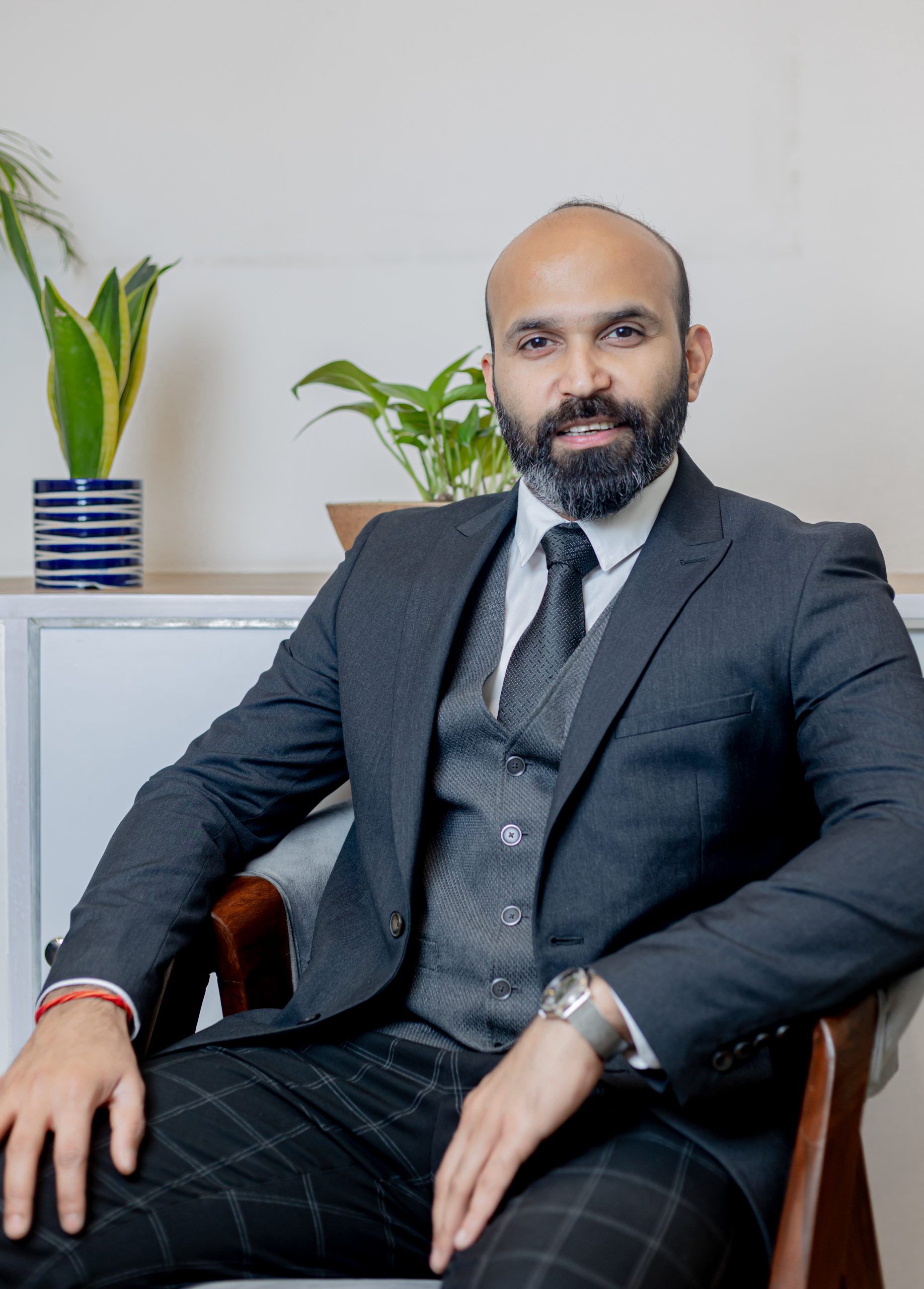






 Allow notifications