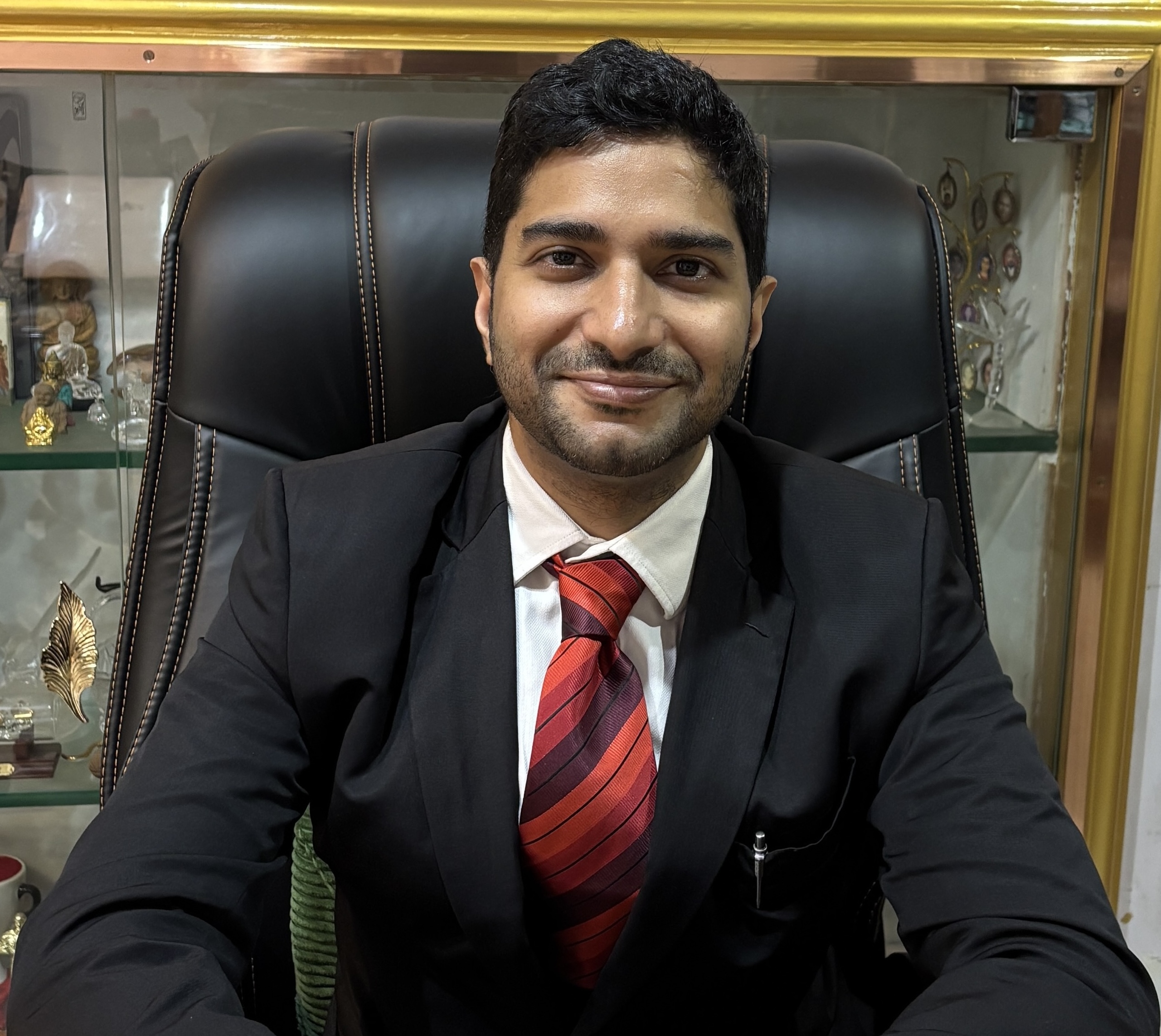
Category: Independent Practitioner

  • Blending Advocacy, Strategy, and Technology in Modern Litigation – Kunal Sinha, Independent Litigation and Dispute Resolution Counsel.

    This interview has been published by Anshi Mudgal and The SuperLawyer Team

    With over eight years of experience appearing before the Supreme Court of India, the Delhi High Court, and various tribunals, you have had a diverse legal journey. Given all that, when did your interest in law first develop? What inspired you to choose this field, especially considering that law was not always a highly sought-after career?

    Yes, absolutely. I think if I have to go back in time, it is around my high school and why I chose law. I had a keen sense of justice. I wanted to do the right thing, stand up for what’s right. More than anything, I was also, I believe, influenced by a lot of novels and movies. It would instill a lot of pride in me when I saw a lawyer really fighting for justice on screen, you know, things like those.

    So those were the points which sort of nudged me in this direction to explore more about it. Later on, I always had an inherent attraction towards psychology. I used to read a lot of Sigmund Freud and criminal psychology and other things, just out of interest. And somehow, at that time, I think especially around the time when I was graduating high school, things were really looking up. A lot of law schools were opening. Especially, what really I think made a difference in my life personally is that around that time Jindal Global Law School really came up, and I was really in awe reading about it. And so Jindal sort of pulled me in this direction.

    I also cleared the CLAT exam. I hope it’s the same exam now. And so I cleared one of these NLUs. And you know, the first week I was like, no, I’m going to drop out of law, because it brought me back to the things which I hated the most: monotony. The way it was taught there in the government institution was a lot of just reading out things. The professor would come and everybody would start taking notes, and I was like, what is happening? Why can’t we just share the notes online or come to what’s important?

    Maybe talk about law. Talk about how you apply law instead of just everybody copying the exact same thing which the professor narrates. I found it extremely useless, the way of teaching, the traditional way of teaching. Then I moved to Jindal Global Law School, and I was really impressed by the way they were teaching.

    It was a lot of hypothetical, research-oriented, open-book examinations, no note-taking. Notes were up to you, how you wanted to take them. There would be slides shared after class, so you already had everything that had been taught to you. So a lot of technologically advanced ways of teaching, which I think mirrored a lot of universities abroad, and we had a lot of faculty from abroad as well. So it was just all those mixes of things which made me understand law, and that initial attraction happened, that pulled me into the career. It wouldn’t have been possible if it wasn’t for my alma mater.

    And especially the way technology was used, and the break from monotony of just remembering case laws, citations, or sections. I mean, we had open-book exams, so all the questions were very hypothetical. I would just conclude this by saying that it’s a mix of a lot of legal dramas I saw in movies, novels, inclination towards criminal psychology, and a contribution of the university. All of them played a role.

    Strictly from a point of view of going to university for a job, I think that wasn’t my intention. I really liked it. And my family, we come from a sort of background where engineering plus MBA is equal to an IT job, something like that. So it was a tried and tested path for success. You try to do IIT, then IIM, and then you get a great job, then you move to the US, and you settle. That was sort of the ladder in which my family saw success. So this was really a breaking-tradition sort of thing for me to do law.

    From breaking traditions at home to experiencing a diverse environment in your law program, do you think this influenced the diversity in your practice as well? When you interact with peers or colleagues and notice the differences in approach or understanding, how do you encourage and motivate yourself in such situations? Additionally, how have you brought the learnings from your alma mater into your practice, and how have you implemented these experiences in running your own law firm?

    Again, it’s very difficult to word it in a few sentences, but I would say it’s a contribution of a lot of things. Let’s say, the first limb of your question about my colleagues, I would say that all my colleagues have been extremely, extremely smart, winners of different moot courts and all when we were in university.

    So, a lot of friends and everything. I think the difference which I saw was that they had a more structured way of growing in their profession. And a lot of structured internships, a lot of structured interviews to get a job and everything.

    Well, I wanted my early twenties to be about exploration. So, that way I differentiated from my friends. It’s definitely better to have more structured planning and a more concrete way of progressing in a career than just going out there in the world and just seeing what comes your way.

    So definitely, I think when I was just in law school, I think every year, like the first year I would want to be a corporate lawyer, second year I would want to be something else. So I could never really have a static thing in my mind. What happened was during the internships, I interned with IndusLaw, ITC, different places in different capacities.

    And I enjoyed the Patiala House Court trial matters the most. While talking to you, I think a lot of self-reflection is happening. And I think, again, the answer is monotony. So every day you end up learning something new, interacting with newer clients.

    So that way I got pulled towards litigation. It wasn’t my first preference in law school because I wanted to get a more stable income career and everything. So a lot of good fortune to have landed in chambers where I was not treated just like a junior or just like a person who does research.

    All the seniors I have met were very, very good mentors. And I think spending time as a mentee during those formative years is so important and depends on your luck as well to fall in these kinds of chambers. But that person can really pull you up and teach you a lot, or you can just do a dedicated task every day.

    And you may not grow at the same speed as somebody whose mentor really wants to help. So what I really realized is that a lot of your growth is not just merit, it’s a lot of relationship building. How you come across to your mentor, how much trust he has in you. So this trust starts from very basic things, like if your senior has asked you to come to court at nine and you are there at 8.45 every day, every time, you never miss a date. Little things really make a big difference. And then they start trusting you with bigger cases, start telling you to handle clients yourself. So a lot of my experience and confidence came because of my seniors who handheld me in different areas.

    So that being said, while you were establishing your career, how soon did you decide that you would go for independent practice? Because there is a lot of planning that goes in, even when you are working with or for someone, you start planning for that. So what was that particular reason or maybe what kind of thought went into deciding this factor so early in your career that you wanted to have your independent practice?

    So it was just, let’s say, more like a breakfast conversation. One of the designated seniors, now she’s a very good lady lawyer in the Supreme Court, and what she told me was that you can very well be a part of the chamber, we’ll refer you cases, you do that, do my case, and time will fly and you’ll be in your forties and you’ll still be here.

    She said, take the leap, ask your seniors to refer you cases. Open up your thing, and instead of spending time with us, go and pitch to the government, PSUs, or other places. Spend your time pitching and not in the way of asking for a job, but more like getting an empanelment and an association.

    And she said that associations never die. You’ll always be our friend in this community, but what really matters is that you tend to be comfortable. So once you’re comfortable, you might as well reach your forties, and there won’t be a day dedicated like, okay, this day he’s getting independent. So she was like, if you’re just waiting for that spark or that amazing muharat or something like that, that day is not going to happen, and you just take the leap now. And the best time to take a leap is when you have certain savings, I think.

    So you have a little bit of savings, you know you can survive for the next six months. Take the leap. Most likely, in six months, you won’t be that profitable. But these things only start coming into action when you really go independent. And all these seniors, they were also reminiscing the days they chose to be independent.

    And she said that there were times that she used to cry because she couldn’t pay the rentals or the fees of the clerk. But she held herself strong. She managed, pushed through it. And again, a lot of focus on relationship building, meeting people. Those things are very, very important.

    So it was sort of, let’s say, a cushion which I got from my seniors in the initial days. My best clients, the highest-paying clients, were the referred clients from my senior. I don’t think there was any other way I would have reached these clients if it wasn’t for my seniors. So a lot of trust, a lot of confidence they had in me to have referred to me like that.

    Having such mentors and seniors is also very good luck because it is not easy to find one. In very early stages, like when you started, even before that, you worked with several companies and a variety of law firms, both nationally and internationally, in different capacities. What was the most valuable learning that you had during that time? How did that learning shape your understanding not only about the foundation of the law but also to pave the way for the foundation of your independent practice as well? How has that worked out for you, other than your seniors and mentors being in the picture?

    Right, with respect to that, especially, I think the younger you are, it impacts you a lot more, like your first jobs would impact. The first year of working has a lot of impact and then it just gets routine.

    So there is a very significant impact in the initial years. And I think I was working in Toronto with a barrister there, and a lot of things which I incorporated in terms of, I don’t know if it is relevant to this question, but I see a lot of transparency.

    There is a lesser senior-junior gap in these law firms abroad, especially in Toronto, the US culture in general. And there is a lot of opportunity to just meet them without that fear of talking to a very senior person, which I see quite visible in the law firms here, or the kind of practice there is in chambers here in Delhi. So as soon as that comfort level is there, a lot of transparency in terms of what a person will be able to do and what he won’t be able to do is there instead.

    And you can also ask doubts. I think that is also one of the issues which I faced in a law firm here, that comfort level is not built where the associate can just go up to the partner and say, I have this doubt, can you clarify? What exactly do you need from me? What output can I give?

    And that person is working to the best of his ability. And there is this gap, this unsaid hierarchy, where you have to put your head down. So that sort of thing, which I did not experience in the beginning, gave me a lot of knowledge and understanding with respect to speaking directly to the senior and really discussing things with the senior. And I wasn’t just like a cog in the machine, if that is the right metaphor, where you are just doing one part and you are just showing up and doing your thing. That freedom, that open-door policy, is something which I experienced early on and I really incorporated that. Other than that, a lot of things like, I think somewhere in India, we have this colonial, British-era, archaic way of writing judgments, or these judgments which are often published and all that.

    It is so complex. It is far away from the comprehension of a layman. And I feel a certain level of clarity and predictability and structure, which I learned there, and I found it missing here. So I tend to incorporate that in whatever I can do at present in my small office.

    I try to incorporate things which I learned of transparency and making your clients understand their petitions and not get swayed away by fancy legal lingo. Especially when discussing contracts and everything, I try to really simplify for the person who is sitting in front of me, for the client, and even how I would present myself in court would also be a lot simpler. I wouldn’t just go around beating around the bush with respect to fancy words and everything. So this is something which I have incorporated.

    You have also been empanelled with the Punjab National Bank and Central Warehousing Corporation, where you regularly handle high-stake commercial and civil disputes. What kind of challenges do you see or face while managing these disputes, keeping in mind that you work for the government sector there? And there are multiple stakeholders who are also involved, so you have to take care of all the sides related to that particular challenge. So in these kinds of disputes, how do you work around them and how do you convince or formulate a strategy for such high-stake issues?

     Like most of the government PSUs I have worked in,  there have been times I’ve been on the other side. I would really think that we have to be very, very pro solution oriented and going through litigation is tedious.  The government doesn’t really want that.

    They want solutions, they want settlements. A person as a lawyer, one’s duty is not to just be very good at presenting yourself in the court. It’s to have that intention, to be solution oriented, to tell the people responsible that this is the realistic judgment.

    This is the realistic order we are about to get or we’ll get in future. And this is where we are.   So why not just try to get to a solution now instead of waiting for the court to take its due time to come to an order. So especially with all these government PSUs, my intention is to have an arbitration clause. 

     Their intention also, it reflects that they want to avoid litigation, they want to go into arbitration. They want to have quick redressal,  and as a lawyer, as their panel counsel, my job is to ensure that  the least amount of litigation happens and we can come to an understanding at the earliest moment.

    Thanks for sharing those insights. So when we started the conversation, you talked about data privacy and other aspects, and your background is also in data protection and privacy management, along with the training in Canada and Europe. How do you see the kind of evolving landscape for the Indian DPDP Act and where do you see that we stand when we compare these kinds of acts, especially the new technology-driven acts around the world and what India is doing? What kind of difference do you see, and how do you make sure that you practice it in the best format possible, keeping in mind your international clients as well?

    Well, I really think our act mirrors and reflects the GDPR, which is in Europe, and a lot of concepts are there. So very, very similar, very progressive. But just coming to the ground reality, I think this conversation should be more reflective of what really happens.

    And in our practice, what I have seen is a lot of sharing of documents within law firms, within lawyers, through WhatsApp, through emails. So one should be really, really careful with all that, about sharing confidential information, even amongst our peers.

    And first, that cultural shift has to be there to really understand that there will be consequences. In general conversations, I see a lot of lawyers talk in the cafeteria, talking about their cases. One has to be very, very careful not to disclose your clients, not to disclose anything personal, or not even say something from which a person can really predict who I am speaking about.

    So that cultural shift has to be there with respect to privacy, and I think that is missing. Also, the way our websites are made, or our shopping websites are made, or any website for that matter, it is not humanly possible to read the cookie, the privacy policy, etc.

    So really, there is a great disbalance. You can take consent from a person on a 300-page document within one second, and a person just has to click OK. It is not humanly possible to read 300 pages before entering a website. So again, regulation has to come from the side of the government or from an authority, which we are doing, because it is not a contract between equals.

    Because if you are one big corporation, you have so much power. You have great lawyers to draft these contracts, and you expect a layman who is buying maybe a golf club, and then he will have to sign these pages, to just click OK. In a way, it is implied consent to accepting their policies.

    So there is definitely a lot of disbalance. And what I have seen is that I go to a shop and they ask for your number so easily, like it is nothing, like I have to give it. They don’t even bother with your consent.

    If you need the bill, you need to give the number. I am like, what kind of a relationship is this? You are putting pressure that if I need the bill, I need to give you the number, and then the number is just available out there, and you will be getting random calls and promotions.

    So where do we draw the line? Why don’t we have that power as consumers to say no, to say to the company that, okay, forget me, erase my data, whatever you have on me? These provisions are there, but to what extent are we really incorporating them and to what extent are we really educating the consumers about them?

    I mean, there is a huge gap. And I think as consumers, we are on the losing end of this battle. The way private data is shared, I think everybody would have experienced talking amongst their friends about a certain product and then seeing the advertisement of that online all of a sudden.

    So who is listening to what? To what extent is our data being shared? There is a lot of gray area in this, and there is absolutely a lack of transparency and a huge imbalance of power between us and the technology, the people out there who want the data. So regulation has to come from the government, from the authorities, so that there is some fear in the people or in the corporations or technology-related companies to be careful with the data.

     So true that we should be aware of our privacy as well as the child’s privacy. Nobody talks about child rights either, which is something absolutely missing from what we are doing, although it is there in the act. But if we are not aware of our own privacy, then how are we going to be inspired by child rights and other aspects.

     Absolutely. I think that it is just that the act, that legislation has to reflect or be incorporated in societal culture. And there’s seriously a big gap when it comes to that.

    Everything, even if you visit somebody’s apartment these days, they need your phone number, data, everything to let you in. And then you have been profiled. And you don’t know who’s buying this profile. How many times have you visited the hospital? Maybe the insurance company is buying the profile.

    So there’s a lot of sharing of data which a person has not expressly consented to. Consent can be skewed in a way that you click okay on a cookie policy or something like that and then, in a way, legally the companies are protected. But is it really a balanced contract?

    I don’t think so. The consumers, the regular people, have been taken for a ride.

    Keeping all this kind of technological advent and the kind of issues that arise with it and the regulations that are required, you have extensively worked in this field as well. How do you keep yourself ahead of the times and learn about all these things? Where do you learn from? What kind of research do you do around this, and what will be your advice to the younger generation who are entering this particular field in this specifically technologically advanced era? Things have changed before COVID and after COVID, the kind of world we are living in. So how do you see yourself, your practice, your firm, and how do you see the young generation learning from it?

     Right at the outset, I would say the old schoolers, the law firms, are hesitant. Even today they are very non-AI, they have these internal policies, but AI is so powerful. It’s not so easy to just reject it outright. The more realistic thing will be to adopt it and regulate it.

    And I think the younger generation, we know that you are using AI, we know that you are using it for research and drafting and whatnot. So there doesn’t have to be shame in it. Be outright. Be transparent with your bosses and professors and say that this is the kind of research you’ve collated, and as long as you’re using a tool, do good work.

    That’s what matters. As long as that tool is not misused to the extent of plagiarism, I think it’s absolutely fine. One should adopt it. I have been using AI tools for my scheduling. So imagine earlier if you typed so-and-so versus the state, versus the case number, et cetera.

    Now I can just, I have this app. I can just update my data, say put it up in my calendar for so-and-so date. So everybody’s using it and younger people are using it. It’s a great tool. So imagine going through a contract of 200 pages and you really want to understand if there are any loopholes, what exactly the termination conditions are.

    For instance, if you just go to the termination clause, there will be clauses talking about termination. But you need to really holistically understand the contract because a lot of times these clauses have a bearing on each other.

    And a lot of times these clauses are extensions of each other. So you cannot read these clauses in isolation. Let’s say one person uses AI to really understand the termination clause, or let’s say whatever period, indemnity clause in totality, and see how it assists you.

    So use AI like an assistant. You wouldn’t put your assistant’s work directly to the client. You’ll ask a paralegal to help you out and then filter things out for you, and then you apply your legal mind to it and then take it ahead. So as long as you’re using it as a paralegal or an AI agent, it’s fine.

    It’s absolutely fine. There’s no shame around it. I know my partners are really upset because of some interns who used AI and found these AI-hallucinated case laws, which do not exist. And this I’m talking about in some tier-one law firm.

    So it is concerning, but use it as an agent. If, let’s say, your intern brings you a case law, you don’t just directly sign it, right? You would go to SCC Online, a more legitimate sort of legal resource, and cross-check it. But, in essence, I would just like to say be adaptable.

    See how the situation is changing. Very soon there won’t be a lot of paralegals. As a job, it may become obsolete. Stenographers may become obsolete. So be realistic. There is an aspect of what’s morally correct and what’s not. Let’s not go there at the moment.

    But what’s real is that yes, jobs are going to move, a lot of clerical jobs will go away. So be mindful of that and use this as an opportunity to do really good legal work. Be better than your seniors because they didn’t have these tools. Now your senior would’ve taken a day to read a contract.

    You can do it much faster and try to do the law analytical stuff because your clerical stuff is taken care of. So use it like you have hired an intern or a junior paralegal and then be the person who vets everything before forwarding it to the court or client.

     Thank you for talking about all these aspects of AI and how to use those kinds of tools for your own benefit and for your work’s benefit. It has been a very enriching conversation with you where you have talked about your understanding and the way your seniors have helped you, all of it hopefully is going to help our learners to understand how they should pave their way in being not only first generation lawyer, but I would say first generation using technology at this level because this is something which is absolutely new for legal fraternity, so thank you for this conversation.

    Just adding one last thing with respect to the AI, it’s bridging the gap. Imagine if nobody has the excuse now that I do not have good professors. I do not have a good education, my college isn’t good enough.

    You have these sources, you can get access to a lot of great sources online, so there is no excuse now. A level playing field has been made because of AI and technology. So you can be anyone, you can be a first-generation or third-generation lawyer. Now the third-generation lawyers have their own challenges.

    Being under the shadow of someone, someone a great lawyer sometimes. So that kind of sometimes limits the third or the fourth-generation lawyer. So a lot of these seniors, which I know, have sent their kids to absolutely different chambers.

    Far away from their chamber so that they learn to stand on their own feet. I see a lot of LinkedIn posts about first-generation, second-generation differences. It’s not as rosy as people think to be a third-generation lawyer or a fourth-generation lawyer. One always has to show merit and everybody, in a sense, is a first-generation lawyer.

    This is not like a food business or a restaurant that, okay, it just came to you. Everybody has to show merit. Everybody has to show their skills to really last in this profession. So, in essence, now that AI is there and other technology, which makes it easier to navigate cases, easier to do research.

    One should learn all that and this is a great time to be a lawyer in a way that now you have a level playing field, you can go against the best.

    Get in touch with Kunal Sinha –

  • “The confidence that I gained as a lawyer, coupled with a structured and organized approach has shaped me as an entrepreneur today.” – Shruti Gupta, Independent Law Practitioner and Hospitality Entrepreneur.

    This interview has been published by Anshi Mudgal and The SuperLawyer Team

    Having built an impressive legal career spanning over seven years, and continuing your practice today while also excelling as a hospitality entrepreneur, what first inspired you to pursue a career in law?

    I was the kid who always sought logic for everything and anything and asked a zillion questions. Growing up, the world of contracts, negotiation and consequences attracted me and I was drawn to the idea of transactions and their intricacies and would pester my father who is a businessman to know more about how things worked.

    I grew up in a relatively conservative city of Kanpur in Uttar Pradesh, where females did not have it easy and small things had to be bargained and negotiated.  All of this led me to admire people who could negotiate, resolve disputes with clear communication and well-reasoned logic. This also drew me to  law as a field where I could advocate for others and use my communication skills to bring about meaningful change.

    When I pursued higher education at Shri Ram College of Commerce and later at Campus Law Centre from where I pursued my LLB, I got fascinated with litigation. The fast paced dynamism and the strategy of litigation drew me in and I got hooked. I was very fortunate to have a fabulous mentor in my senior, Mr. Gaurav Pachnanda, Senior Advocate and Barrister at Fountain Court Chambers. Working with him introduced me to complex commercial arbitrations and was one of the best foundations that someone can ask for. My academic journey, which eventually took me to Cambridge University for my Master of Law, only deepened that conviction.

    You began your professional journey practicing before some of the highest courts and tribunals in India before transitioning into hospitality entrepreneurship. What motivated this shift, and how did your legal acumen prepare you for the challenges of running and expanding a business?

    After practising litigation full-time for several years, during the pandemic I got an opportunity and I made an unconventional road into the world of hospitality. At the time when the world was dealing with covid and everything underwent lockdown, one of our hotel’s in Dehradun was undergoing renovation. Being the foodie that we both are, we, (Abhishek, my husband and co-founder of the restaurants) decided to start a small pizzeria called Coco Osteria to introduce Neapolitan pizzas to Dehradun in a space that vibed with us. We started small, more like a passion project than a commercial venture, and in a short span of time, Coco took off and how.

    The hospitality business is fast paced every day is a new challenge. It requires one to be dynamic in decision making, in pivoting and adapting to the changing environment. The skills and mindset I honed through law like critical thinking, problem-solving, and resilience in high-pressure situations will always be in my DNA and they have proved invaluable in building and growing my restaurants.

    Your work in litigation, arbitration, and corporate advisory has honed skills in analysis, negotiation, and risk management. How have these shaped your approach to strategic business decisions and navigating compliance, contracts, and negotiations?

    My background in litigation and arbitration has taught me how to assess risks and outcomes before taking any business decisions ensuring that all business decisions at LP Hotels, Coco Osteria, or Monsoon are backed by clarity and are not left to chance.

    My legal acumen has taught me to have a structured yet flexible approach to decision-making in hospitality. All skills come in handy and help me in the hospitality industry whether it is navigating the compliances and regulatory frameworks or negotiating leases or vendor partnerships or dealing with my team.

    The confidence that one gains as a litigation lawyer is unparalleled. We are constantly juggling between different contracts and industries and have to be adept at keeping up with whatever is handed out to us. The confidence that I gained as a lawyer, coupled with a structured and organized approach has shaped me as an entrepreneur today. All of this helps to make decisions that balance innovation and sound business policies.

    Based on your experience, what are some of the most common legal pitfalls first-time entrepreneurs overlook, and how can they proactively avoid them?

    One of the most common legal pitfalls entrepreneurs (whether first timers or experienced) face is entering into business arrangements without formal, well-drafted contracts. Many rely on verbal agreements or generic templates, which can lead to disputes over responsibilities, revenue sharing, or exit rights.

    Another overlooked area that entrepreneurs often overlook is protection of intellectual property whether it is trademarks, logos, or proprietary content.  Another gap I often come across is that of compliance with local regulations  from licenses to labour laws. This I have realized is a big issue especially in industries like hospitality or F&B, where health and safety standards are stringent.

    To avoid these, I recommend that all entrepreneurs should invest early in legal groundwork. They need to get the basic things in place, nothing fancy. They should ensure that all contracts are vetted, register necessary IP’s, and get help to ensure compliance with regulatory frameworks. Even if budgets are tight, seeking basic legal advice at the outset saves significant costs and risks later. I believe that maintaining proper documentation is equally important so that there are no issues later when the company grows.

    In leading operations, branding, and strategic development, how does your legal background influence your leadership style and problem-solving approach?

    My legal background has a profound impact on my leadership style and my approach to decision making. I am thorough more often than not, I am able to anticipate problems and issues before they materialize which gives me an edge in dealing with them.

    Also, true to my legal profession, my leadership style is proactive, detail-oriented, and solution-driven. One thing that I learnt through my legal career was to listen and to be empathetic. This is one of the biggest advantages that I may have learnt because hearing out people is crucial to building relationships and solving issues. A lot in this hospitality industry is driven through relationships, with guests, partners, and teams and the ability to balance firmness with empathy has been invaluable.

    I encourage my team to think critically, ask questions, and to become creative in finding solutions. Ultimately, my legal background gives me the confidence to take bold decisions because they are thought out and calculated decisions.

    Having studied at globally reputed institutions like the University of Cambridge and Stanford Graduate School of Business, how have these experiences broadened your perspective on integrating legal thinking into entrepreneurial growth?

    My time at University of Cambridge and with the Seed Programme of  Stanford Graduate School of Business has truly been transformative, not just academically but also in shaping how I think.

    At Cambridge, the rigorous legal training gave me a broader perspective and taught me to analyze issues and to look at both risks and opportunities within the framework of the law, and to value precision in reasoning. Stanford, on the other hand, offered a completely different lens, one that emphasized innovation, design thinking, and growth-oriented leadership. The programme at Stanford helped me understand business and how to chase growth in business. It taught me that calculated risks are crucial for success in business.

    Together, my academic pursuits have given me a unique blend of these perspectives that  helps me to approach hospitality entrepreneurship with both caution and creativity. I can safeguard the business legally while also pushing boundaries to introduce novel concepts like Monsoon’s regional food journey or Coco Osteria’s award-winning dining experience.

    It is these learnings that led me to introduce Neapolitan pizza’s to Dehradun through Coco Osteria, to launch its first ever craft cocktail bar called CinCin, to introduce a regional Indian restaurant that brings together a menu inspired by our travels across India in Monsoon or to start the Dehradun Food Literature Festival, that ignited meaningful conversations about food, culture, and storytelling, reinforcing the need to preserve and celebrate India’s diverse culinary heritage.

    In my experience, my academic experiences reinforce my belief that law and entrepreneurship are not at odds, in fact they complement each other. Legal thinking provides structure and resilience, while entrepreneurial learning fosters vision and adaptability. Bringing the two together has been central to how I build and grow ventures in a way that is both sustainable and forward-looking.

    In a constantly evolving business landscape with shifting regulations and compliance requirements, how do you ensure you remain informed, adaptable, and ahead of the curve?

    On the legal side, I regularly track regulatory updates, attend professional workshops, and rely on peer networks to interpret how new laws might impact operations. In hospitality, adaptability is equally critical so I work closely with consultants and subject-matter experts to stay compliant while also ensuring innovation is not stifled.

    In this dynamic world and ever evolving hospitality industry, I make it a point to stay ahead through constant learning and innovation. For example, after introducing Coco Osteria, we (Abhishek and I) travelled to Italy and took classes to learn the art of pizza and pasta making. We also ensure that our team attends professional workshops regularly to keep up with the industry. Apart from this, I make it a point to keep myself informed through constant engagement with industry networks.

    We keep and encourage a positive and agile mindset at work. Our team has also imbibed the same and this helps us be proactive with changing dynamics and to align our work model.

    Looking back, what advice would you give to lawyers considering a transition into entrepreneurship or leadership roles in business?

    To any lawyer considering entrepreneurship, I would say while your acumen and ability to analyze, negotiate, and anticipate risks will be your biggest advantage, be open to new learnings. Business, unlike law, requires a certain risk taking ability, to take quick decisions and to adapt when things don’t go as planned.  

    My advice would be to be willing to “unlearn” bits. As an entrepreneur you have to be quick and not over analyse all decisions. A lot of decisions that you make as an entrepreneur are driven by intuition and practicalities rather than what seems logical.

    As lawyers, we are very independent but to grow in business, one has to have a good team and has to rely on the power of collaboration so it is important to build a good team.

    Entrepreneurship comes with its own challenges that one doesn’t encounter as a lawyer, so it is important to keep grounded and to focus on what is important.

    How do you balance the demands of your legal practice with your entrepreneurial ventures, and what do you gather from it on maintaining work-life harmony?

    Balancing a legal practice with entrepreneurial ventures has certainly been one of the most challenging yet rewarding aspects of my career. Law teaches discipline, structured thinking, and the ability to compartmentalize, and these very skills I have carried forward into managing hospitality operations. I rely on clear prioritization: when I’m working on a case, my focus is entirely on the matter at hand, and when I’m at the restaurant or with my team, I’m fully immersed in the business. I am truly present in whatever task I am involved with.

    This dual role has also taught me the importance of delegation and as I have mentioned previously on building strong teams. Neither law nor hospitality is a solo pursuit, and having people I can trust allows me to shift roles without feeling overstretched. On a personal level, I’ve learned that balance doesn’t mean dividing time equally every day, but ensuring that over the long run, each aspect of my professional and personal life receives the attention it deserves.

    I derive joy from the intellectual rigor of my law practice as well as from the creatively driven world of hospitality. I truly believe that when a career is driven by passion and when one enjoys what they are pursuing, it does not feel like a chore or a burden.  While I still practice law, I find the same sense of purpose and challenge in hospitality, making both careers deeply fulfilling in different yet complementary ways.

    Get in touch with Shruti Gupta –

  • Bridging Borders: Making Law Accessible for Startups Worldwide – Priyanka Mandhani, Corporate lawyer, Company Secretary and Founder of Juris Summit.

    Bridging Borders: Making Law Accessible for Startups Worldwide – Priyanka Mandhani, Corporate lawyer, Company Secretary and Founder of Juris Summit.

    This interview has been published by Anshi Mudgal and The SuperLawyer Team

    I will start backwards. I’ll not start with the very first question, why you chose law, but I would request you to answer first why and when you decided to start Juris Summit, what was the reason that you started it so soon? What are your plans? How are you going to work on the cross border business laws, and what do you see and where do you see yourself and Juris Summit in next, let’s say five years and a decade?

    I’m so thankful and grateful for all of the SuperLawyer team for bringing this opportunity to me. And yes, I’m looking forward to collaborating with you people and also to giving guidance to all the newcomers who are wishing and willing to start their career on an international platform.

    So, yeah, you know, there are some things, like we said, we get it out of WhatsApp chat.

    So me and my partner Sohan, we met in a WhatsApp group, like in a freelancer group, and at that time, back after two years, we had started our individual freelancing journey. So, we individually found that startups, they struggle, particularly startups, they struggle a lot because there are two things.

    First thing is, particularly I’m talking about the US startups. The United States law firms charge a lot. I would say 800 dollars per hour, and even beyond that. So I was like, what is this? Why are they charging this much?

    Of course, they provide services and they do everything that needs to be done, but we also are authorized to do that, and we can also do it at a lesser price. So that was the first point. And the second point, startups, they want everything fast. They approach any lawyer or somewhere that gives us a template, we will do it ourselves. And in that template, the alignment of business, the clauses, they’re not properly as per their business. They’re not aligned with their business.

    So these are the two things which I felt that I needed to bridge a gap between this thing. So at that time, I had a talk with Sohan. Sohan, this is the problem, we need to fill it out. So he said, so let’s go, let’s build an agency. Then let’s work together.

    And I said, yeah, let’s do it. Why not? And then without a second thought, it was just like bam! Out of a WhatsApp chat. We set up an agency.

    Amazing journey. Amazing start. So let’s now get back to the basics. How did you become convinced that you have to do law as well as company secretaryship?

    And with this kind of dual qualification, how did you pave your way towards not only being an Indian lawyer, but also a lawyer who’s internationally acclaimed and who has moved to Germany and is working from there?

    So, the thing is, I wanted to become a chartered accountant firstly, so I started my journey back then. I’ve cleared my CPT, and after that I could not understand what was happening, but suddenly in that period of time, my interest was very much into law. Then I thought of the professional course of company secretary, and without second thought, again, I enrolled myself into company secretary and successfully I’ve completed everything in the first attempt. And side by side, as this is a law field, I also enrolled myself for an LLB course, a three years course. So I’ve also completed my LLB, and fortunately in the last year of LLB I topped the university, Swami Ramanand Teerth Marathwada University.

    So, this is how I wanted to prepare myself fully, and after all these things were done, still I felt like something was missing. Then I found courses like US corporate laws, then diploma in international business laws.

    And that thing fascinated me. I said I want to do this. I want to set up a remote practice for myself. I wanted to do this thing. So without a second thought, I enrolled myself. And today I’m here so that I can work from Germany with US law firms, and not only US, all over the world, I can work with every country’s client.

    So, with all these things, which you decide on a first go, what kind of experience do you have of the transition that you have done from traditional legal practice to starting, founding and running a specialized legal agency, which is right now catering mostly to international clients, particularly in US, like you already have explained about startups. How is your experience about the agency and how does it work for you and your partner and the kind of challenges that you see in having Indian laws, having international laws and their comparison? How does that work for you?

    I would start with the traditional law firms in India or wherever we can say. So, at the law firm I had access to a predictable environment, and consistent staff support was there. Then we had a particular library where we can read and where we can update ourselves. But mostly there were domestic clients, and there were Indian timelines, as you must be aware of, then billing expectations. And so all these things were somewhere I feel they’re keeping me down, they’re setting up boundaries for me.

    So, when I started a legal agency, these were not the things. There were, obviously, challenges because time zone and communication are the biggest challenges when we start an agency that is hundred percent remote and which deals with international clients.

    So, we have staff, obviously we have staff, and what we do is someone between us is always awake at US time zone so that we can grab all the opportunities, so that we can reply to all the clients. And even if he’s not there, what do we do, because we use technology, right?

    We have to use technology. We set auto replies to that particular person. In that way, we don’t push the client, we can’t talk right now, and it’s not our time zone. This is how we work.

    So even if there is any urgent matter or something  because we see clients that want something within 24 hours, within a few hours we actually do that. We don’t say we can’t do this. This is not a timeline to deliver everything, nothing like that. We’ll do everything.

    Someone from us will have to do that. And we have set our agency like that only. So these are the challenges: timeline and communication.

    So, talking about communication, recently we had a client from Saudi Arabia, and I personally had to deal with him.

    So, the first time I didn’t understand what he’s talking about, his accent was so difficult to understand. But thanks to the notes we take, whenever we start a meeting, on the other end we start taking notes. So thanks to all these things, thanks to technology, we understand these things.

    So these are the challenges we overcome, and that’s how it works.

     This shows that the kind of work that you are doing is getting more and more  reach, and that is something which is the value addition to your work at Juris Summit.  So the kind of driving force that you, your partners and the people who work with you have, what kind of gaps or insufficiencies or legal issues you have seen in US business laws as compared to Indian business laws? And the kind of observation that has helped you overcome those challenges and help US companies or businesses have their legal work done with you.

    Okay, so, I mentioned this before, that for billing, the US firms charge a lot. So this is the first thing that we wanted to fill the gap  to provide services at a lower price than the US law firms.

    The second thing, obviously, about the DIY route you know, templates from online platforms and Reddit forums they get. So these are the gaps Juris Summit set out to fill. We offer a third party responsive, startup-savvy legal support delivered by us. Like we are experienced, we have an experienced team and at a cost that makes sense for early-stage companies.

    I’m talking particularly here about the early stage because businesses which are already set, normally, they don’t hesitate or they don’t struggle this much. So, we focus on flat fees. Not an hourly basis. There’s no surprising billings and nothing like that. Scope-defined engagements and what we call it legal sprints.

    So, founders know exactly what they are paying for. So for example, what if there is a review document with us, we have to review that document, we make sure we provide another document  that we just don’t review it and tell him that these are the findings and these are the loopholes that we need to fill.

    And these are the liability clauses and everything. Not like that. What we suggest from the very first clause, to try to make him understand in a simple language. We make a document and we write it in a simple language, clause to clause, that you should know what you are signing. So this is our approach  to make him understand everything.

    We speak their language in short, I can say we speak their language. We don’t just recite, deliver code or GDPR clauses, we explain what it means for their product, their fundraising, or any contractor agreement. So this is how we work.

    And Juris Summit is all about delivering clarity, speed, strategy at the point where founders need it most. We don’t just drop documents, we help build legally sound businesses one decision at a time. And that’s the gap we saw and the reason we are here.

     So on that note, how do you guys keep yourself updated with the new changes in laws in different jurisdictions. Not only the US, like you just now said that you dealt with a client from Saudi Arabia, then other jurisdictions also. So what is your way of keeping yourself updated and keeping your team updated as well?

     So, what happens is normally when we start our day, normally, we start our day at 9:00 AM. 

    So for the first half hour, particularly of mine, I look for all the US jurisdictions, the updates and everything.  There are many newsletters which I have subscribed to.  Then I also have many attorneys. Like we have a group with US attorneys to get the updates. Hey, what’s going on? What’s new? We talk normally like that. So  I get updates from them. And on the other hand, Sohan, he handles Indian jurisdiction, all the Indian and Asian. So basically our first hour or half an hour is only to update ourselves with all the knowledge.

    And apart from this, what we do is set a meeting every 15 days or weekly, biweekly. And, we exchange each other’s knowledge. Hey, what’s new? What did you see? What did you see in the last 15 days? Please share with us what’s up? And everything is online, so we keep a very friendly manner, very relaxed atmosphere, everyone shares his or her thoughts. So like that we exchange our thoughts and we keep updated.

    Are there any specific reading materials or any channel which you especially look out for? Because there are so many of them. If you could name a few, it would be very helpful for the learners as well.

    There are many channels, newsletters. See, it depends upon the learner, how they find it, how easy it is to get the knowledge from that particular newsletter or particular journal or everything.

    So it depends upon the learner, there are many. If you Google it, you will find it. And there are many AIs. Research tools or even if you go to LexisNexis or Westlaw websites. These are the websites where you get all the knowledge.

    Even if you type, what’s the update here tonight? If you even Google it, you’ll get an idea. You will get a list thoroughly. So not a particular channel or anything I follow, but it depends upon, what exactly I want to see on that particular day, that’s how I Google it. And there are a number of websites and journals and everything.

     So let’s move ahead and understand how you help the startups and SMEs, especially those that are led by non-US founders,  but they are being navigated by US federal laws or state laws. How do you make sure that you explain those things, especially tax compliance and other overwhelming aspects of law to your client and make sure that it has been taken care while you help their startup being established in us from scratch until the time they need your help.

     Yeah, as you mentioned that US Federal and tax compliance may be overwhelming and to simplify this is our job, so we simplify US federal and state tax compliances for non-US founders by removing the overwhelm and breaking everything into clear and actionable steps. So for example, we begin with a founder friendly roadmap.  We draft a simple PDF, a simple agreement or like an information document and that outlines all the key tax obligations across federal or state levels.  So this includes important filings like the EIN, then form 5472 then franchise tax and sales tax registration with its timeline and responsible parties that is clearly indicated in that particular document. So since we don’t use a client portal, we ensure accessibility and clarity by sharing checklists and guides over email and tools like Google Drive, we use that. So, you know, founders can track their progress step by step.

     We provide all necessary templates where it’s 83 B, election letter or a sales tax exemption certificate with instruction return in plain English. This is how we manage it. And for ongoing compliances as well, we partner with experienced CPAs.

    Like we have many CPAs in our touch and bookkeepers who specialize in cross-border entities. So this is how we provide all the information to them.  And once introduced, we stay in loop to ensure filings are accurate, then deadlines are met. And the startup stays in solid ground.

    So, as I mentioned earlier, our goal is very simple. Remove all the complexities, bring structure to compliances and let non-US founders focus on building and remove that overwhelmingness.

    How do you manage your physical and mental health while you are doing all of this in different timelines?

    Because obviously sitting in one timeline and working. But managing different timelines, having that presence all the time, that all 24 hours we are available for clients. How do you manage that particular aspect of your life where you have to take care of your physical health as well as your mental health?

    Yeah, start your day with meditation. And hitting a gym, that thing keeps me going all day because, as you have also already mentioned, I have to keep aligned with every time zone and everything. So obviously, this is hectic, this is not easy. But if you manage things properly, it’s all about time management.

    We can’t say we don’t have time, we can’t say that. We have to manage the time, and then we’ll have time automatically. And for my mental health, I walk a lot. It gives me clarity when I walk. It clears my mind. Take a walk in nature for, let’s say, 15 to 20, even 20 minutes, just one round or something.

    It’ll help you boost your thinking and give clarity on what you are doing. And after every two hours, take a break of 10 minutes. It’ll boost your productivity, we would say. So we have to manage. I don’t say no to anything.

    I say I can do it. So there is nothing that you can’t do, I feel. You have to do it. If you decide, there will be a way. You will have to find a way and you can do it.

     You can do everything with an amazing understanding and the way you are doing it, may you have all the success that you have planned for yourself. It’s an amazing experience to understand how you have gone so far, just by the sheer willpower of being able to do anything and everything under the sun.

     It’s an overwhelming thought as well that you carry forward yourself with the thought of being able to do it.

     One more thing. It’s not easy to keep motivated and to stay positive all the time. Because there were times in my life as well where  I started this freelancing journey, there were times where I didn’t get clients. I had to struggle. But the thing is we have to keep going without giving up.

    This is the mantra. Don’t give up. Stand back. There will be your time.  You can’t give up. That’s it. You can’t give up. You have to keep putting in the hard work.

    Get in touch with Priyanka Mandhani –

  • “Law wasn’t a detour, it was a logical conclusion of my evolution from being just a writer to being one who writes to ensure that justice is available to everyone in need of it.” – Siddharth Chandrashekhar, Sr. Panel Counsel CBIC/DRI & Standing Counsel CBDT, Bombay High Court.

    “Law wasn’t a detour, it was a logical conclusion of my evolution from being just a writer to being one who writes to ensure that justice is available to everyone in need of it.” – Siddharth Chandrashekhar, Sr. Panel Counsel CBIC/DRI & Standing Counsel CBDT, Bombay High Court.

    This interview has been published by Anshi Mudgal and The SuperLawyer Team

    What inspired you to pursue a career in law?  Was there a particular moment, influence, or personal experience that drew you to the legal profession? 

    Since the time I learned to read and write, I have been a voracious reader. This passion led me to a deep interest in literature, history & political science. Everything I could lay my hands on, from William Shakespeare to Edgar Allen Poe to George Orwell and William Wordsworth to Arthur Conan Doyle, Oscar Wilde & of course Haruki Murakami. I was fascinated by how stories shape society and I was certain that I would either end up as a journalist chasing and breaking news stories or a writer churning out books and articles.

    My family of lawyers, journalists and politicians encouraged me to develop my writing skills by reading.  Contrary to popular belief, being a second generation lawyer is not always easy. In fact, like in my case, the bar was already set high by the rest of my family, and I knew that nothing less than excellence would be acceptable should I decide to join the legal practice and forge a career in law. However, my first choice was to be a journalist. 

    But one day during the Diwali/Winter break in my final year of studying for my Bachelor’s degree in Arts as I had made no plans to spend time in recreation with my friends, I decided to attend a cross-examination being conducted by my Advocate aunt when I watched her meticulously extract the truth with surgical precision from a witness on the stand with. The next day I requested my father, who had a flourishing legal practice in civil disputes and trial courts, if I could intern with him for a week. He agreed on the condition that I had to work even harder and put in more hours that week than the rest of the interns and not look at the clock. The first day I sat with him while he painstakingly drafted and re-draft a legal notice meticulously with the skill of what I could barely fathom. We must have spent close to 16 hours that first day, and much to my surprise, I was back again the next day where we spent another 16 hours, and I kept my word, I was the first to arrive and the last to leave. At the end of that week, I made up my mind to pursue a career in law.

     Thus, Law wasn’t a detour, it was a logical conclusion of my evolution from being just a writer to being one who writes to ensure that justice is available to everyone in need of it. 

    What motivated you to pursue your master of laws degree (LL.M.) from Queen Mary University of London?  What aspects of the program & institution aligned with your academic and professional goals? What are your key takeaways & experiences from your time there ? 

    If the degree of Bachelor of Laws was the foundation for my legal practice , my Masters in Law at Queen Mary, University of London was what built the edifice  from which I could have a world view of international legal trends at and the ever widening scope that law provides to ensure a more equitable world. Out there I wasn’t analysing just the law in theory, but society and the way we function in relation to the law which gave me tools to further my learning. 

    Most of India’s statutes have either been drafted while we were a colony of the British or are based on laws in the U.K. In that sense Queen Mary offered me a historical mirror coupled with a modern lens, which made it ideal for my practice in Corporate & Commercial law. I chose Queen Mary because its LL.M. was famous for being both rigorous in theory and incredibly practical. It felt less like a classroom and more akin to partaking in real world legal scenarios. Three factors converged to create the perfect storm: In fact, prior to my LL.M. degree I had already been advising startups on Transactions, Litigation Avoidance advisory and Pre-Litigation when I realized that understanding international commercial law wasn’t optional anymore, it was the only means of raising India to the highest international standards.  Second, London’s position as a global financial hub meant access to case studies that textbooks simply cannot replicate. Third, QMUL’s University’s faculty included practitioners who wrote the rulebooks on disputes and dispute avoidance.

    My Master’s Degree in law laid an emphasis on comparative legal systems which proved invaluable to me now in my legal practice. Part of socialising and networking would regularly involve heated debates with faculty and peers which were our own version of the Oxford Union debates where we dissected existential legal conundrums faced in transactional agreements under Indian, English, American (Delaware), and Singapore laws. These were followed by a round of Hors d’oeuvres and drinks for which the lawyers who had failed to win the crowd would have to pay for it. The program’s real value wasn’t in the lecture halls but in the conversations that followed afterward. Late-night debates at the pub about whether certain aspects of media law really needed new legal frameworks, weekend trips with peers, faculty and chance encounters with renowned QCs & KCs. 

    These sessions taught me that Law isn’t just about a set of rules, it’s the art of predicting human behavior within social constraints. That became my mantra. Even my dissertation became the foundation for later advising several startups on their transactional and regulatory strategies. My London experience taught me that legal advice without commercial context is akin holding G.P.S. hardware with no connection to satellites and software, technically sophisticated, but practically useless. London offered something Mumbai could not at that time, proximity to the birthplace of commercial law and traditions that govern global transactions even today. London taught me two things: how to use the law with surgical precision and how to survive in a multi-cultural metro much akin to my own home city of Mumbai, with the only difference being that it wasn’t ‘Home’.  

    Queen Mary wasn’t just a campus; it was a court room without borders. I chose it for its emphasis on comparative commercial laws and of course, being in London, the commercial capital of the world was the icing on the cake. Every lecture was an eye opener to the world’s legal machinery and watching it in motion. We didn’t just study corporate and commercial law but we debated it with both present and future public policy influencers. It provided me with the opportunity to interact with vanguards and scholars of law and economic policy in our classrooms and campus. Of course, having such as alumni consists of stalwarts including India’s former RBI Governor Mr. Urjit Patel, Economist Pranoy Roy & Davidson Nicol, the former Under Secretary General of the United Nations makes it stand out even more.  

    Legal expertise without cultural fluency is like using complicated words with no proper context in an unrecognisable language. The LL.M. taught me to be multi-lingual in legal traditions essential for any lawyer serious about Start-up advisory in our globalized world.  

    In the early stages of your legal career, what experiences or matters significantly enhanced your understanding of the Law? Are there any pivotal moments that helped shape your professional trajectory? 

    If law school is your boot camp, then your initial few years of practice are akin to active combat duty. My father who was my mentor when I joined the profession has a saying: “Every mistake you make costs someone else money, time, or opportunity, so be extremely alert you may make new mistakes, but never repeat the old ones which you must use as a means of from your old ones which you must use as a means of enhancing your knowledge.”. Those words transformed how I approach every Start-up advisory engagement. 

    Every lawyer has that one case or a few early on in their career that serve as their trial by fire. Mine involved a tech Start-up whose founders had structured their equity like a Rom-Com love triangle, complicated, dramatic & destined for disaster. As we worked towards reconstituting the documentation, one thing was clear to me, ‘Startup Law’ (as people have labelled it) isn’t about preventing problems, it’s about creating efficient solutions for smart people who often make predictable mistakes. That client taught me three things: First, documentation matters, but context matters more. Second, the best legal advice often sounds like business advice. Third, sometimes the best service you can provide to a client is talking them out of their own cleverness. 

    Another pivotal moment came during my first due diligence exercise for a Series A round. Thirty hours into document review, I discovered a licensing agreement that could torpedo the entire deal. The lead investor later told me that I didn’t just save them money, I saved them from becoming a cautionary tale. My (Late) Grand-mother, who was a highly respected and loved State Legislator once told me: Good lawyers know the law; great lawyers understand the story behind the enactment of that law. That’s when I realized that due diligence isn’t treasure hunting; it’s about defusing land mines. These experiences of multiple successful people shaped my philosophy: Be the lawyer who prevents a crisis, not one who profits from it. 

    One of my first major transactions involved a then small scale e-commerce startup with revenue in different jurisdictions and compliance documentation in none of them. It was like being asked to perform surgery with a plastic knife. We spent several weeks creating the legal infrastructure for them which in fact should have existed from day one. One of its founders later said, ‘We thought that legal documentation was trivial until we realized it was life support.’  

    You advise & litigate for several major government bodies as a Senior Panel Counsel for the Directorate of Revenue Intelligence (DRI)/GST Intelligence & Central Board of Indirect Taxes (CBIC) as well as Standing Counsel for the Central Board of Direct Taxes (CBDT), & Maharashtra Housing & Area Development Board (MHADA)  AND  being a legal advisor to several Start-Ups in the tech & media space on the other how has working across such diverse institutions influenced your legal approach?  What have been some of the most challenging matters among them? 

    My experiences with government agencies and statutory bodies taught me to navigate bureaucracy not as an obstacle, but as a playing field where real business gets done. This perspective proves invaluable when guiding startups through regulatory approval processes. Of course, I have been blessed and privileged to have had the opportunity to work with some of the most intelligent, upright & hard-working officers right from the grass-roots level Inspectors & Superintendents to Legal Advisors/Officers from right at the top up to (Chief/Joint/Deputy)  Commissioners, A.D.G., Deputy & Joint Directors, so I have to give them credit where it’s due. If I have to sit and name them all that in itself would be a fairly long list.  

     Diversity proves invaluable for Start-up advisory work. When advising media houses or fintech companies, It’s not just about understanding MCA, RBI, SEBI, SWA regulations, It’s about deciphering the Regulatory and counter party mindset, the concerns that keep regulators awake at night, and how policy gets translated into practice. 

    That lesson now translates directly into how I work with startups and media houses. I cannot count the number of times boot strapped founders have met me and said “We don’t need the paperwork, it’s fine, we trust each other” only to reappear a few  months later realising that when disputes arise trust flies out of the window. My early career showed me that cross-checking every consent form, every signature, every assumption can mean the difference between smooth sailing and sinking fast. 

    Despite my LL.M. specialisation I never restricted myself to one particular area of practice, which is why I now am able to decipher matters ranging from Income Tax disputes, Customs act & GST related Writs, Appeals, Bail & Anticipatory Bail dealing with Tax Evasion, NDPS cases, Housing disputes & other laws. Working across government bodies is like playing five-dimensional chess with tax intelligence, urban planning, housing rights, anti-evasion laws being the pieces on the chess board. Each brief requires switching mental gear and watching details with varied legal lenses. I’ve argued tax evasion by breakfast and housing and society related issues in the second half. 

    Working with multiple statutory bodies is like being a legal anthropologist and a linguist, each institution has its own culture, priorities and rules, both written and unwritten. My empanelments read like a tour of some of India’s most fascinating legal statutes including The Black Money (Undisclosed Foreign Income & Assets) and Imposition of Tax Act, Finance Act & Income Tax Act under the CBDT, the Goods & Services Act, Customs Act & Narcotics & Psychotropic Substances (NDPS) Act under the CBIC & DRI and the Maharashtra Housing & Area Development Act, to name just a few. 

    Each case has been fascinating and just like fingerprints no two cases are alike but one of my most fascinating as well as challenging one has been a Writ Petition filed by one of the world’s largest manufacturers of automobiles having it’s parent company based in Germany who had sought to quash & set aside a $1.4 billion Show Cause Notice issued by the Office of the Commissioner of Customs based on investigations by the Directorate of Revenue Intelligence for wilful tax evasion  misclassifying imported car parts to avail lower import duties. In that case, I was led by the Learned Additional Solicitor General (ASG) of the Government of India who used to regularly fly down from New Delhi to argue the case. It was like solving a Rubik’s cube while being blindfolded where every move in one dimension affects others. That case taught me that regulatory strategy isn’t merely about simple compliance or the lack thereof with statutory provisions which may appear uncomplicated but a complex choreographed play involving multiple issues which ought to be viewed from multiple angles to get a holistic picture and arrive at what requires to be followed in practice. 

    Another case involved the challenge to an incorrect and manipulated technical opinion given by a multi-national consultancy firm to a multi-national South Korea based conglomerate who imported electronic equipment worth billions of dollars under a wrong entry based on the aforesaid technical opinion.  

    Yet another case involved a challenge to a pivotal aspect of tax administration which involved the transfer of a group of cases from one Assessing Officer (AO) to another and was crucial in ensuring the smooth functioning between two different state jurisdictions of the tax administration where the Assessee raised objections to the change in jurisdiction. 

    The diversity proves invaluable for startup advisory work. When advising Start-ups and individual entrepreneurs, I don’t just have to understand and simplify regulations I have to understand the regulatory mindset, the concerns that keep regulators awake at night, and understand how policy has to get translated into practice. 

    My government litigation experience taught me to navigate bureaucracy not as an obstacle, but as a playing field where real business gets done. This perspective proves invaluable when guiding Start-ups through regulatory approval processes. It has helped me to represent my private clients in their attempt to bridge the gap between legal theory and public policy reality. 

    Each role brought with it unique challenges, serving on regulatory panels involves balancing innovation with protection, investigating financial irregularities requires detective skills which they don’t teach you in law school, and where policy advisory work demands thinking beyond individual cases to systemic implications. 

    Yet another challenging matter pertained to a multi-agency investigation into a scandal involving small individual investors on the one hand and a group of companies, whose interests ranged from real estate development to cattle rearing to broadcasting services. Over three years, multiple stakeholders, and countless sleepless nights later, we crafted a resolution that protected investors while preserving innovation incentives. The experience taught me that public service isn’t about serving the law, it’s about serving justice through the law. 

    The experience of working with government bodies and statutory bodies transformed my startup advisory practice. I don’t just help companies comply with regulations; I help them understand the ‘why’ behind the rules. When founders grasp regulatory intent, they can work smoothly within set boundaries rather than riding rough shod over the set perimeters. These roles have made me lawyer, policy analyst & virtual entrepreneur. When advising CBIC on procedural lapses or individual entrepreneur clients, I often have to translate complex regulations into implementable steps. That cross-sectoral experience honed both my legal acumen and empathy to various causes. 

    You’ve actively participated in pro bono matters & causes varying from human rights to animal welfare, including filing public interest issues before the hon’ble Bombay High Court.   What drives you to take up such socially significant and often challenging cases?   In your view, what role should pro bono work play in a lawyer’s practice?   You’re also a legal advisor to Sanctuary Foundation and Fur-rida’s Animal and Rehabilitation Trust, NGOs dedicated to Animal Welfare & rehabilitation in Mumbai,  how do you balance both out? 

    Pro bono work, for me, began as a calling of my conscience. As a lawyer when you only litigate on behalf of  those who can afford it, you are not helping the cause of justice but only helping those who are already privileged. Pro bono work always reminds me why I became a lawyer: not to rake in the money, but to actively work towards changing our world for the better, using the opportunity to advocate for a better, fairer and more equitable society. Billed clients feed the body. Pro bono work feeds the soul. 

    But here, before I even begin to think of taking any personal credit I must mention that it was the elders in my family for instilling whose values instilled in me makes me give back to society. My Late grandfather, an industrialist paved the way by social and charitable work. My Late grandmother was a Mumbai City Legislator and later Maharashtra State Legislator from the 1990s to the early 2000s. My Late uncle, also a businessman, sacrificed his business interests to champion the causes of the common man and was well known as a vociferous advocate of causes who many felt were lost causes. Just the three of them were responsible for providing basic sanitation and piped water connections to lakhs of residents of informal settlements in underserved parts of (South) Mumbai and also later went on to build study centres and gymnasiums for the poorer class of citizens who could not afford these “luxuries” throughout (South) Mumbai.  

    I grew up watching my father put in the same dedication and hard work into his pro bono clients that he would into his millionaire clients and once (while I was very young) I asked him why he did this, he simply said, If I don’t, then who will? … and that rational question just stuck with me. My mother gave up a very promising career as a journalist to teach journalism, creative writing and conduct writing boot camps. My brother, now a high-profile Surgeon still spends days working pro bono and organising medical camps in rural Maharashtra where there is little to no expert medical facilities. Another uncle is a senior journalist who has covered some of the most ground breaking issues of the time, not stories about luxury but the ones that no one else dared to cover because he felt that someone had to take up such matters. Another aunt gave up her job as a Banker to teach children. 

    When the Covid-19 pandemic hit India people had to take recourse to the Covid vaccine as it appeared to be the only defence against it. However, some unscrupulous elements took advantage of the rush for the vaccine and started administering mere saline water and passing it off as the Covid Vaccine. When my aunt, and I heard of it we couldn’t ignore it. The idea that thousands of people were tricked into believing that they were being given the vaccine when in reality they were not, shook both of us. Our PIL on this issue wasn’t just about a legal remedy, it was about restoring public faith in the ability of the  law in dealing with such unscrupulous elements. 

    What continues to drive me is the belief that law must serve those who can least afford it. If startups look to me for guidance on shareholder rights, ordinary citizens need me for something far more basic: the right to life and health. In my view, pro bono isn’t charity, it’s oxygen for the soul. It reminds us why we became lawyers in the first place. As William Scott Downey had aptly put it, Law Without Justice is a Wound Without a Cure. 

     Pro bono litigation is not mere work without purpose in monetary terms, it’s about priceless work for those who cannot afford to pay to get good legal representation. I believe every lawyer who has crossed 10 or more years of practice must dedicate a part of their practice to Pro Bono Litigation. Otherwise, we risk becoming mere paper pushers and money making soulless machines instead of custodians of real justice. 

    Once I found myself in the thick of a case involving a teenage boy who died after being detained and allegedly tortured by the police whilst in their custody. The boy, barely 17 years old from Mumbai’s Dharavi slum district, was accused of stealing a mobile phone. After being released from “routine police detention” in July 2018, he complained to his parents and siblings of his torture by the police while in their custody. Soon after his release, he developed a fever, and his condition deteriorated rapidly, and he tragically passed away within a week. The post-mortem report mentioned pneumonia as the cause of his death. To everyone but his family, the case was as good as closed. The family’s grief was not just raw, it was distrustful of the very system that swore to protect them and it was absolutely justified in refusing to take their child’s body for his last rites for nearly two years until the High Court ordered a second post-mortem. For those two years, the body lay unclaimed in a morgue, almost frozen in time. But the law did not forget him and nor did I.  

    I wasn’t new to litigation then, but here I learned something every statute book misses: law isn’t just about sections and precedents; it’s about instilling trust in those for whom laws are enacted. The Hon’ble High Court’s order was a pivotal moment it showed me about the compassion and kindness of judges and it showed me that you don’t need to have the loudest voice to tilt the scales of justice in favour of the helpless and restore faith in the judiciary. It also sharpened my skills in due diligence because when you’re digging through contradictory medical reports and hospital records, you learn how to scrutinize details like an auditor hunting for hidden liabilities.  

    Taking on that case was not about earning any fees as it was completely pro bono, it was the weight of my conscience which guided me to do so. That case became my personal reminder that law is not always swift, but it is relentless. Sometimes you carry files that weigh more than law books they weigh with grief, suspicion, and silence. 

    Another matter that shaped my formative years was one that involved a medical negligence case where a woman contracted Hepatitis C after a hysterectomy at a famous South Bombay hospital. A team of surgeons and doctors, one operating theatre, and a chain of negligence right from the top, it was a puzzle of medical protocol and accountability. For a young lawyer, it was baptism by fire. I spent nights reading medical manuals, learning how a surgery should be conducted, and finding out with what went wrong. What it taught me is that the devil truly hides in the documentation. 

    Pro bono cases also tend to surprise you and throw you into the deep end, no fees, minimal support, high legal stakes for those involved. But they also teach you to think creatively and advocate fiercely. They’re a bootcamp for both skill and conscience.  Pro bono work teaches you humility: you are not always the smartest person in the room, sometimes you are the only person standing between injustice and justice. 

    Animal welfare law in India is like a crossword puzzle with half its clues missing. As advisor to Stranctuary Foundation and Fur-rida’s Animal Rehabilitation Trust, I have actively helped them get set up as well as look into internal policy and legal fine print. I’ve worked on matters involving animal cruelty, harassment from societies against members from using elevators or accessing common areas with their pets. These cases taught me that education is as vital as litigation. Sometimes, the law needs a lawyer often it needs an earnest storyteller. “Until one has loved an animal, a part of one’s soul remains unawakened.” – Anatole France 

    Pro bono work should be mandatory in every lawyer’s practice, not as a penance for making money, but as a training for making better decisions. Every PIL or Pro Bono Writ I advise on makes me a sharper commercial lawyer because it reminds me that law exists to serve, not the other way around. Plus, there’s practical value: Pro bono cases often involve cutting-edge legal questions that commercial clients pay premium rates to explore. It’s continuing education coupled with social service. My pro bono work began with the simple realization of the advice of my (Late) grandmother who told me: Corporate law pays your bills, but public service will reward you with a clear conscience and a good night’s sleep. When you spend your days crafting shareholder agreements and due diligence reports, you can lose sight of law’s fundamental purpose of protecting the vulnerable and ensuring fairness. Pro bono work keeps me honest. 

    Every time I review a startup’s employment policies, I remember the domestic workers whose rights I’ve advocated for. Every time I structure a complex transaction, I’m informed by cases where transparency could have prevented injustice. It’s enlightened self-interest: Better lawyers emerge from engaging with law’s moral dimensions, not just its commercial applications. 

    And oddly, these cases have made me sharper in my commercial practice. Start-ups come to me with messy equity structures, hidden liabilities, and co-founder disputes. I approach those files with the same rigor I did in the case of the boy’s family who allegedly died as a result  of custodial interrogation, digging until the truth emerges from a metaphorical mountain of dirt and stones which seek to hide it. Pro bono makes your professional muscle stronger, because when you stand against the State or against a famous hospital with unlimited resources and a legal team the size of a small army for free, a mere shareholder squabble doesn’t scare you. 

    Why take up pro bono cases? Because the power of the law is meaningless unless it reaches those who most need it. The directing of a second post-mortem after a teen’s death or holding doctors accountable for medical negligence are milestones for society and for any lawyer involved in pursuing such cases. 

    Looking ahead, what is your vision for the future of your legal practice? How do you see your personal journey evolving within the legal field? In a profession that is both demanding and dynamic, how do you maintain focus, purpose, and mindfulness?

    My future vision is to promote people to start building a hybrid practice where commercial matters fuel a strong public interest wing and not just something which has purely commercial motivation. Think of it as the Robin Hood model: charge the rich, fight for the voiceless. 

    The future belongs to lawyers who can speak three languages fluently: Law, business, and technology. I’m building a practice that serves as a bridge between these worlds, helping founders navigate not just current regulations but anticipate future ones. 

    As for purpose: I want my legacy to be measured not in my tangible assets, but in barriers removed, regulatory hurdles that no longer impede innovation because I found simple solutions, and compliance frameworks that enable rather than constrain entrepreneurial ambition. My goal isn’t to be the most famous lawyer or the richest one, it’s to be the one clients trust with their most important decisions because they know I’ll give them efficient solutions within the parameters of the law and not just some short sighted temporary balm for any problems that they could encounter. 

    The legal profession needs fewer disruptors and more steady ships. Staying focused requires principled pragmatism. When faced with ethical dilemmas, I ask not ‘What’s legally permissible?’ but ‘What would I want my family & friends  to be told about me as a lawyer and a human?’ This compass has never steered me wrong. I see myself evolving into policy advisory roles, where law meets legislation. I mentor young lawyers and young law students, and I hope to  use this to build a legal aid network where all of us endeavour to focus just 30% of our time and resources towards pro bono legal aid in india focussing on individual cases and causes ranging from human rights, prevention of  domestic violence and animal welfare cases.  

    My five-year vision: Become the first and last go-to legal strategist for Tech & Media Entrepreneurs and Start-ups tackling challenges such as: Intellectual Property Protection, Transfer & Monetization, Data Privacy & Compliance, Fund-raising & Investor relations, Content Liability & Platform Responsibility, Technology Contracts & Partnerships, Regulatory & Policy Navigation and the biggest & most common one being: Dispute Prevention & Legal Crisis Management.  These companies don’t need traditional lawyers; they need legal pioneers who can craft frameworks for technologies that don’t yet have regulatory precedents. Maintaining focus requires what I call ‘productive paranoia’ constantly asking ‘What could go wrong?’ not from anxiety, but from genuine curiosity. Mindfulness comes from remembering that every legal document I draft affects real people’s lives and dreams. 

    My endgame? To be feared by crooks, respected to be fair by counter-parties and of course, followed by puppies, especially the ones that have no place to call home. 

    Focus and mindfulness? I journal, I used to learn Salsa & Bachata, popular latin american dances, I also took up MMA and found that to be a great stress-buster, I spend time taking care of my dogs as well as feeding a few community dogs. I take breaks from the screen.  “The law is a jealous mistress, but she respects a loyal one.”   

    I have one rule which most of my clients are already aware of: if it’s urgent I’ll be drafting and doing research even if it’s 3am or a holiday, but if it doesn’t need urgent redressal I stop working by 9 pm. Balance isn’t a luxury, it’s how I keep the fire burning without burning out. 

    Based on your extensive experience across sectors, what advice would you offer to young lawyers just starting out in the profession? Are there any particular resources or habits you would recommend to help them build a strong foundation?

    Your law degree is just a learner’s license. The real exam begins in court. Try and read at least one interesting case law a day or at the very least. Argue (respectfully) with your peers. Your opponents and counter-parties are not your enemies. In litigation, your opponent is your adversary, but only inside the courtroom, they are your peers, your colleagues, your juniors and seniors outside the courtroom, treat them all with the same respect once your matter is over that you would want them to treat you with. 

    Even if you’re being appointed just for an adjournment, read the entire case, carefully, make sure if given the opportunity by the court, you answer correctly and confidently, most judges asking you about your case are providing you with an opportunity, they know they may lose time with a young lawyer, but they are trying to help you and not put you in a spot. 

    Your counter-parties are not your adversaries, you have a common goal, mutual co-operation and trust go a long way here, far longer than brow beating or one-upmanship.  Write even when no one’s reading. Don’t confuse over-confidence with Confidence. But humility is better. Young lawyers often worry about the wrong things. 

    Here’s what actually matters: Master the fundamentals before chasing specializations. You can’t advise on complex M&A structures if you don’t understand basic contract principles. It’s like trying to compose symphonies before learning scales. 

    Your first five years will feel like everyone’s speaking Latin while you’re struggling with the alphabets, that’s okay, read and re-read. The lawyers who succeed aren’t the smartest ones, they’re the ones who can admit ignorance, ask better questions, and turn feedback into improvement rather than taking it personally. Clients hire lawyers to solve problems, not to demonstrate legal knowledge. Be solution-oriented, not statute-oriented. 

    Stop thinking like a student who merely asks for answers and start thinking like a strategist who helps clients navigate ambiguous situations. Law school teaches you what the law says; practice teaches you what the law means. 

    In start-up advisory, I’ve learned that founders and investors speak different languages, even when using the same words. ‘Aggressive timeline’ means ‘next week’ to founders and ‘next quarter’ to VCs. A founder once wanted to structure their Series A with several different classes of shares: one for each team member’s ‘unique contribution.’ We simplified to three classes and closed the round in half the time. Then there was the time that Start Up wanted to grant equity to advisors before clarifying their intellectual property ownership. We sorted IP first, advisory agreements second. One recent challenging due diligence involved a company with operations in four countries, three legal entities, and legal documentation that looked like abstract art.  

    Good legal advice feels expensive until you need it, then it feels cheap. My approach is preventive medicine for businesses, identifying potential complications before they become complications. Whether it’s crafting founder agreements that anticipate future disputes, structuring employee equity plans that scale with growth, or creating compliance frameworks that evolve with regulation, the goal is always the same: Build legal infrastructure that enables business success rather than constraining it. Benjamin Franklin said, ‘An ounce of prevention is worth a pound of cure.’ In startup law, an hour of careful drafting can prevent months and sometimes years of expensive litigation. Don’t aim to be the smartest/richest lawyer. Aim to be the one your client calls first when they need a solution. 

    Four Non-Negotiable Principles: 

    1. Understand not just legal implications but business consequences. 
    2. Sometimes the best legal advice is telling clients what they don’t want to hear. 
    3. Your career will be defined not by the cases you win, but by the problems you prevent and the trust you build. Be the lawyer people call not just when they’re in trouble, but when they want to avoid trouble altogether. 
    4. The moment you think you know everything is the moment you become dangerous to yourself, as well as your clients. 

    Essential Habits: 

    1. Read everything thrice, once for content, once for implications, and once again for good measure.  
    2. Make time for one pro bono brief,  at least once a month. 
    3. When you aren’t reading, attend court like an obsession: watch, make notes, learn. 
    4. Kindness, not money, makes the world go round. Be Kind… Always, especially when you would not benefit. Be kind to those less fortunate than you, how you treat a clerk or a peon is a lot more telling of your character than how you behave in front of a Judge or a Senior Advocate.  Be kind to people, be kind to animals.
    5. You don’t have to be the biggest fish in the court-room or the negotiation table, remember piranhas bite more sharply (but remember, above all, Kindness) 

    Get in touch with Siddharth Chandrashekhar –

  • “I have learned that in matrimonial litigation especially highly contested and long-pending matters mediation is often the most effective tool.” – Rajiv Rajpurohit, Family Law Practitioner at the Courts of Ahmedabad & Pune.

    “I have learned that in matrimonial litigation especially highly contested and long-pending matters mediation is often the most effective tool.” – Rajiv Rajpurohit, Family Law Practitioner at the Courts of Ahmedabad & Pune.

    This interview has been published by Anshi Mudgal and The SuperLawyer Team

    You’ve mentioned that your advent into the field of law was almost accidental, as you initially planned to pursue an MBA in Pune but were influenced by friends studying law. How did that unexpected shift shape your career path and your approach to the profession?

    I completed my schooling at a Government school in Rajasthan. In 2006, I moved to Pune for further studies. As everyone knows, Pune is often referred to as the “Oxford of the East.” At that time, Business Administration was in high demand, so after completing my schooling, I pursued a BBA in Pune. During those days, I had a few friends and acquaintances who were studying at various law schools. In the evenings, we would often meet for tea or simply hang out. They would share their experiences about academic activities, court visits, and legal studies. Listening to them gradually developed my interest in law, and I began considering admission to the field. Before enrolling in law school, I worked with the Symbiosis Group for a few months. However, when the time came to make a final decision whether to pursue an MBA or law. I was not fully confident and remained unsure. It was then that my father guided me towards pursuing law. With his approval and encouragement, I finally decided to enroll in law school. Most importantly, till date, my father has been a constant source of motivation and support, especially during a difficult phase when I felt like giving up legal practice and considering another career path. His encouragement has always kept me going.

    You have conducted highly contested divorce cases, resolved long-pending disputes through mediation, and handled matters ranging from custody to NRI divorces. How challenging is it to navigate cross-border family disputes, particularly NRI divorces, and what key stakeholders are usually involved?

    I have been practicing law since 2013, Over the years, I have handled hundreds of matrimonial disputes and cases in Ahmedabad, Pune and Mumbai, and have also appeared before several Hon’ble High Courts in India also before the Hon’ble supreme court of India. One common aspect in matrimonial disputes whether contested or mutual consent, whether involving NRIs, is that they often revolve around key issues such as claims of alimony, division of immovable assets, child custody, and other financial considerations. In such matters, the role of a lawyer is not limited to representing a client in court; it is also about guiding all stakeholders toward what is reasonable and achievable. In NRI divorce cases, the first challenge is often the logistical aspect ensuring the presence of parties or enabling their participation through virtual hearings, which most courts now facilitate. In mutual consent divorces for NRIs, the process can be straightforward once formalities are understood and complied with as per the law and procedure. From my experience, NRIs are usually clear about their terms, conditions, and settlement formulas, but it becomes the lawyer’s job to draft, execute, and present those terms in a legally sound manner so that there are no future disputes, particularly regarding child custody or financial obligations, another is regarding the if any joint property in foreign country and one of the spouse is in India and not looking for forward to go back., when I talk about long pending divorce cases I recall one particular case where a client had been contesting a matter for years. And later after a few years he came to me with the mindset of “ that he would only like to contest” rather than resolving it. After understanding his case history, I advised him that litigation should be the last resort, and that he should first try to settle the matter through communication either directly, via lawyers, or through mediation. Initially hesitant, he eventually followed my advice. Within three months, the matter was resolved amicably, something that could have been achieved years earlier had proper guidance been given. From my practice, I have learned that in matrimonial litigation especially highly contested and long-pending matters mediation is often the most effective tool. The key is to fully understand the facts, the parties’ financial capacities, the complexity of the issues, and the emotional aspects, and then to guide the stakeholders toward a reasonable middle ground. I firmly believe there should never be a point where a lawyer loses hope of settlement. Keeping that hope alive until the very end, unless a final order is passed, is essential in family disputes.

    With over a decade of experience before the Family Courts and High Courts in both Gujarat and Maharashtra, what procedural differences have you observed while practicing in these jurisdictions?

    This is indeed a very important question, because understanding procedural differences is crucial when practicing in different jurisdictions. Yes, there are significant differences between Gujarat and Maharashtra, and I have learned a great deal from working alongside lawyers in both states. When it comes to procedures, there are differences in the prescribed formats for filing applications, the method of preparing compilations, and the specific documentation requirements. The process for exhibiting documents also varies slightly between the two jurisdictions. In family matters, I have observed differences in the conciliation and mediation processes. The filing procedure itself also differs. For example, in Maharashtra, one can file a matter without physically going to court; everything can be done virtually through the court portal. Even the administration of an oath can be completed virtually by uploading a video, which is not the same in Gujarat. These procedural nuances highlight the importance of adapting to local practices while ensuring compliance with the law.

    Your practice emphasizes amicable, reconciliation-focused solutions. What trends have you noticed in the growing use of ADR in matrimonial disputes, and how do you see it shaping the future of family law?

    Yes, I strongly believe that there should be amicable solutions in matrimonial disputes because it is ultimately a question of precious time of life. If one is able to take a timely decision and resolve the dispute, it is far better than letting it remain in court for years, which rarely leads either party anywhere. However, it is important that both parties are willing to be reasonable with each other, even while keeping their differences, and remain focused during mediation. Nowadays, I see that even the Hon’ble Supreme Court actively promotes mediation in many matters. In my experience, Family Court judges also often take the initiative to speak with both parties, understand their concerns, and encourage amicable settlements. If the parties show willingness, mediation can be a highly effective tool. Such solutions can be facilitated by any authority through various methods, including formal mediation or counselling. Sometimes, emotions run high and parties are initially unable to take rational decisions. However, after proper counselling, they are often in a better position to make fair and reasonable decisions. Therefore, irrespective of the situation, I always advise that Alternative Dispute Resolution (ADR) and amicable settlements should be explored, as they are often the best way to ensure a fair and lasting resolution.

    You began your career as a Legal Associate under senior advocates before founding your own firm. What lessons from those early years continue to guide your courtroom strategy today?

    Yes, I began my career working with a lawyer who had many years of experience. I learned a great deal from advocates during my time in Pune and later in Ahmedabad. One of the key lessons I have learned is that if you wish to succeed as a litigation lawyer particularly in matrimonial matters, which often involve divorce, custody disputes, alimony, maintenance, and domestic violence, the first and foremost skill you need is to listen carefully to your client. You must understand where the real problem lies, while also respecting the emotional circumstances of the parties. I have also learned that you should never be judgmental when listening to clients. Instead, your role is to ensure you understand their circumstances fully. From my seniors, I learned the importance of proper drafting and being thoroughly prepared with arguments. I recall that when I was assisting senior lawyers, they would take detailed notes point-by-point and spend hours preparing final arguments for divorce cases. Contrary to the perception that matrimonial litigation is straightforward, I have found it to be complex, involving significant factual and legal research, especially since family disputes often involve many incidents that form the grounds for divorce. As per High Court and Supreme Court judgments, it is essential to keep updating oneself on recent case law. I have made it a habit to learn continuously from court proceedings, by listening to arguments and closely studying judgments.

    What motivated you to establish your own practice, and what vision did you have for it in the beginning? How did you overcome the initial challenges?

    It is always a challenge to choose litigation as a career after completing law. Initially, I opted for corporate work, but later my father motivated me to practice in court. He advised me to go to the court every day, whether I had a brief or not. I had no contacts who could help me enter the field of litigation, so I followed my father’s advice. I began visiting the court daily and interacting with lawyers. Eventually, I met one of my professors from my graduation days, who was also a practicing lawyer. I sought his help and asked if I could join his office. He told me that he didn’t have many matters at that time but could refer me to someone else. He gave me a reference to another advocate in Pune. When I went to meet this advocate, he asked me just one question: “When do you want to start?” My answer was, “I can start right now.” He immediately agreed and told me I could join and start working. I didn’t even go back home. I began working on the brief that very day. The second thing he told me was, “You will have to work hard, I will take care of your basic needs and concerns.” That assurance gave me the confidence I needed, and that is how my journey began. And this is how my journey started for my first client. One thing I learned early on is that you never know where clients will come from. They may walk in from anywhere, even from the court corridors. Sometimes, they may watch you argue in court, be impressed with your performance, and later ask for your contact details. In this profession, your performance is what pays you both in the form of clients and valuable contacts.

    What inspired you to choose matrimonial and family litigation as your primary specialization, and how has working in this niche shaped your perspective on law?

    Yes, my interest gradually shifted towards matrimonial law. Since I started my practice, I used to accompany my senior in family court matters assigned to me. Most of these cases, particularly matrimonial disputes, involved domestic violence and divorce. Slowly and gradually, this became my primary practice area. Although I have also handled other matters, over time my focus has increasingly been on matrimonial disputes and family matters. While I would not call it a specialisation, with experience I have gained significant exposure in this field. As I have already stated, dealing with matrimonial matters is not easy. It requires a great deal of skill, patience, and the ability to handle sensitive human emotions. I believe this area of law has immense potential, and one should continue to explore, understand, and work in depth within family and matrimonial matters

    Having such a diverse practice now and over a decade of experience, what advice would you give to new entrants in the field of law?

    All entrants in the field of law must be prepared to work hard, especially in the initial stages. One should not assume that any particular branch of law is not worth exploring. If an opportunity comes your way, it should be accepted and explored, as it may eventually lead to your mainstream practice. Therefore, do not make up your mind too early or immediately after graduating from law school. Take up different matters, handle them diligently, and if needed, seek guidance from experienced senior lawyers or practitioners in that particular area. Learn from each experience, as this gradual exposure will help you discover your true area of interest and expertise.

    Managing a practice across two jurisdictions can be demanding. How do you balance professional commitments with personal life, and what activities help you unwind and recharge?

    Yes, certainly, sometimes it requires motivation, but right from the beginning I chose to practise in two jurisdictions. As far as personal life is concerned, it goes without saying that law is a profession where, especially in the initial years, one has to compromise on personal life and carry the pressures of professional responsibilities. Being a noble profession, law demands complete dedication and 100% commitment. There is no other option but to prioritise professional life first. After a certain number of years, personal life also finds its balance, as family members begin to understand the efforts and challenges of a lawyer’s journey. Eventually, it becomes a routine. So yes, whether personal or professional, at the end of the day, life goes with the flow, and with time one learns how to manage both.

    Get in touch with Rajiv Rajpurohit –

  • “It must be understood that true inclusion lies in recognising difference, not ignoring it, and creating conditions that enable success on equal terms.” – Karan Kamra, Intellectual Property Lawyer.

    This interview has been published by Anshi Mudgal and The SuperLawyer Team

    Your journey from Dhanbad to where you stand today is truly inspiring. How have your personal experiences and academic background in Political Science shaped your decision to pursue law, and how have they influenced your strong legal journey and commitment to the profession?

    I’m a first-generation lawyer, born into a family deeply rooted in the pharmaceutical business, a world far removed from the courts and statutes that now define my everyday life. Growing up with cerebral palsy in a small town like Dhanbad, I often felt the need to prove myself – to be seen, to be heard, and to be taken seriously. For me, the black coat was more than a symbol of the legal profession, it  signified  a  possibility – that merit could speak louder than mobility and that confidence and conviction could override any preconceived notions about ability. 

    I came to Delhi and pursued Political Science. The discipline deepened my understanding of the Constitution, legal systems, and power structures. It eventually led me to Campus Law Centre, Faculty of Law where I discovered my calling in Intellectual Property law. 

    My personal experience instilled in me a deep sense of resilience, to persist, adapt, and advocate in a world not always built for difference.  At the same time, my academic grounding in Political Science gave me a strong structural lens helping me understand laws and  their intricate interplay with legal systems and institutions.  

    This foundation, combined with lived experience, has shaped not just how I view the law but how I approach Intellectual Property, with empathy for creators and right holders,  strategic thinking for brand protection, and a deep sense of purpose in safeguarding invention.  

    In the early phase of your career, you worked  in a full-service law firm and an independent  general practitioner. What motivated your transition into intellectual property law, and how did those foundational years shape your current approach to IP practice? 

    In the early phase of my career, working with a full-service law firm and an independent  general practitioner exposed me to the breadth and intensity of legal practice – from civil suits to commercial disputes. It was a rigorous training ground that honed my advocacy, research, and drafting skills. 

    I began noticing how deeply brands, trademarks,  domain names, content, and technology were getting intertwined with legal disputes. I was drawn to the unique intersection of law, commerce, and creativity that intellectual property law offered. The shift to IP felt organic—it allowed me to work not just reactively in disputes, but also proactively with creators, individuals and businesses to safeguard what they were building. 

    Those foundational litigation years instilled in me a detail-oriented, strategic mindset. They taught me how to anticipate risks, think like a litigator even in advisory work, and approach IP not in isolation, but in its commercial and legal context. 

    You’ve represented clients in domain name disputes before WIPO and INDRP. Could you walk us through your experience in this space? What are some of the key legal and strategic challenges entities commonly face in such matters? 

    The legal framework under both WIPO’s UDRP and India’s INDRP is robust but exacting, placing the onus on the Complainant to establish three core elements: (1) that the domain is identical or confusingly similar to a trademark in which it has rights, (2) that the registrant lacks legitimate interests in the domain, and (3) that the domain has been registered and is being used in bad faith. While WIPO offers quicker, globally recognized redress—typically resolving disputes within 60–75 days—INDRP is key for .in domain disputes and may take 3–6 months or more due to procedural flexibilities and single-arbitrator handling under NIXI.

    Success before both forums relies heavily on the Complainant’s ability to present comprehensive evidence, including proof of trademark rights, prior and continuous use, and supporting documentation like screenshots of misuse, WHOIS records, archived web content, and prior communications. This evidence must clearly align with the legal criteria, particularly to demonstrate the registrant’s bad faith and lack of legitimate interest. The process is evidence-driven and leaves little room for error.

    One of the significant challenges is that infringers often hide behind privacy services or proxy registrations, making it harder to trace the true registrant. WIPO has mechanisms in place to request unmasking, usually coordinated with the registrar, though it’s not guaranteed. INDRP poses more hurdles due to NIXI’s limited procedural transparency and lack of early disclosure protocols. In such cases, complainants must rely on circumstantial and digital forensics—such as WHOIS history, DNS and IP data, website metadata, and linkages across abusive registrations—to build a strong, inferential case.

    While dealing with software piracy and advising software firms, what major trends and challenges have you observed globally? How do you think India’s legal and enforcement mechanisms compare with international frameworks in addressing piracy?

    Software piracy today has evolved into a highly complex and dynamic threat, fuelled by digital proliferation and the increasing sophistication of infringers. We’ve seen a decisive shift from physical duplication to digital piracy, with unauthorized downloads, license key sharing, and hacked installations spreading through torrent sites, web platforms, and even on social media and e-commerce portals. A major trend is the rise of ‘cracked’ enterprise solutions being sold at a fraction of their actual price, often through resellers masquerading as legitimate vendors. In the SaaS ecosystem, misuse takes subtler forms – such as license overuse, unauthorized API calls, credential stuffing, and cloning of proprietary software models.

    From a comparative lens, India’s enforcement mechanisms have strengthened in recent years. Courts have become more proactive in granting Anton Piller orders, John Doe orders, and dynamic injunctions to block rogue websites. The IT Act and Rules coupled with the Copyright Act, provides a statutory framework for enforcement, and cybercrime units in metro cities are increasingly equipped to tackle software piracy, especially in B2B settings.

    However, when compared with jurisdictions like the U.S., EU, or even Singapore, India still lags in certain areas- particularly in digital forensics, quick takedown protocols and cross-border enforcement cooperation. Lack of digital IP expertise in certain enforcement bodies and different judicial approaches to damages also pose challenges.

    To combat this, software companies must take a multi-pronged strategy: strong, enforceable EULAs with audit rights; proactive license tracking using Software Asset Management (SAM) tools; deployment of digital watermarking and DRM technologies; and active online surveillance of infringing platforms. Legal action must often be supported by pre-suit investigations to establish unauthorized use, followed by civil enforcement and, where appropriate, criminal prosecution. 

    The most effective anti-piracy efforts globally involve a mix of litigation, technology, partnerships with enforcement agencies, and user education, something India is slowly but surely aligning itself. 

    You’ve also championed client interests during mediations at the Delhi High Court Mediation Centre. In your view, how effective is mediation in resolving complex IP disputes, and what role does it play in balancing commercial and legal interests?

    Mediation, especially in the context of IP disputes, can be a remarkably effective tool when approached with the right mindset. At the Delhi High Court Mediation Centre, I’ve seen firsthand how it creates space for parties to move beyond rigid legal positions and engage in commercially meaningful dialogue. Unlike litigation, which is often adversarial and time-consuming, mediation allows for tailored, confidential, and business-sensitive solutions, making it particularly valuable in high-stakes IP matters. 

    In disputes involving brand reputation, time-to-market pressures or ongoing commercial relationships, mediation offers the flexibility to craft outcomes that litigation may not be equipped to provide, such as licensing arrangements, joint ventures, or mutually acceptable phased withdrawals. Pre-suit mediation, in particular, has emerged as a powerful tool to resolve conflicts early, avoid escalation, and maintain goodwill – saving time, cost, and reputational strain.

    Ultimately, mediation helps balance legal rights with commercial realities. It empowers clients to co-create outcomes that serve both legal and business interests. In an IP landscape shaped by innovation and speed, mediation is increasingly becoming a strategic first step—particularly effective in resolving disputes early and efficiently, with the exception of aggravated cases of infringement or passing off that merit litigation.

    Having advised multinational clients in sectors such as automotive, pharmaceuticals, e-commerce, and hospitality, what unique IP challenges have you seen in the automotive sector? What preventive strategies would you recommend to avoid trademark issues early on?

    The automotive sector in India faces distinct IP challenges due to its vast supply chain, aggressive branding strategies, and a rapidly growing aftermarket ecosystem.  Trademark infringement today extends beyond core brand names and registered marks to include sub-brands, model names, variant tags, and even alphanumeric identifiers. Infringers, particularly in the spare parts and accessories markets, routinely misuse these marks to falsely suggest association or compatibility to original vehicle manufacturers (the rightful IP holders). This not only dilutes brand equity but also risks consumer deception and safety, especially when counterfeit or substandard parts and accessories are involved. 

    A common defence invoked by unauthorised sellers is Section 30(2)(d) of the Trade Marks Act, which allows the use of a registered mark to indicate the intended purpose of a product or service (e.g., “compatible with Brand X”). However, this defence is not absolute. The protection under the provision ceases to apply where the use is not in accordance with honest industrial or commercial practices, or where it takes unfair advantage of  or is detrimental to the distinctive character or repute of the mark. In the automotive space, this line is often crossed when infringers stylise logos, mimic trade dress, or market counterfeit parts under the guise of compatibility.

    Design infringement is another major concern, especially with regard to spare parts like headlights, grills, mirrors, and alloy wheels. Many of these are reverse-engineered and sold in the grey market without authorization, undermining both brand value and consumer safety. Companies often fail to register industrial designs or delay doing so, weakening their enforcement stance in cases of replication by third-party manufacturer.

    To address this, companies must actively monitor and enforce rights not just in their principal marks but also in model-specific and component-related branding, which are often more vulnerable. Registering sub-brands and variant names in relevant classes, including digital and retail categories, is key. Furthermore, legal notices and litigation should specifically challenge bad-faith use that exceeds the scope of Section 30(2) (d) focusing on consumer confusion, deceptive marketing, and reputational harm. 

    On the design front, preventive strategies include timely registration of industrial designs for high-risk components such as headlights, mirrors, grilles, and alloy wheels, especially those with distinctive visual appeal likely to be replicated. Companies should conduct regular design audits, embed subtle identifiers to support enforcement, and use border enforcement mechanisms to block infringing imports. Where misuse persists, design infringement lawsuits under the Designs Act, 2000—seeking injunctions, damages, and delivery of infringing goods—are vital tools to deter copycats and affirm rights. Combined with trademark enforcement, these steps help safeguard brand equity and product integrity across the automotive ecosystem.

    You’ve often mentored and guided younger professionals. What advice would you offer to law students or litigators looking to shift to IP law, and what resources or habits can help them stay competitive and updated in this fast-evolving domain

    For law students or litigators looking to transition into IP law, my first piece of advice would be: ‘cultivate curiosity’. It is important to ground yourself in the fundamentals—copyrights, trademarks, patents, and designs but it is equally imperative to go beyond textbooks. Following case law developments and tracking decisions of various courts, as well as international bodies like WIPO and dispute resolution platforms like INDRP, is essential. These decisions not only reflect how the law is being interpreted in real time but also reveal emerging trends, judicial attitudes, and strategic nuances that shape IP enforcement and protection.

    Using legal search engines like Manupatra and Westlaw, staying tuned into online news portals such as Live Law and Bar & Bench, and regularly reading blogs like SpicyIP and IPKat are excellent ways to stay updated. Newsletters, national and international legal magazines and webinars (hosted by bar associations or IP firms) also offer timely insights into evolving jurisprudence and policy shifts.  

    I would recommend interning with or working alongside seasoned practitioners. Many young professionals grow the most by observing and absorbing. Simply being in the room with experienced lawyers, watching how they interpret statutes, craft arguments and strategy and navigate court dynamics can shape your legal thinking in ways that are both subtle and lasting. Know the procedure as regards court filings and court practice. Most importantly, stay open to learning and listening whether from seniors, peers, or juniors. The humility will keep you sharp and grounded. 

    Balancing demanding professional responsibilities with personal well-being is no small feat. How do you manage this balance, and what practices or mindset have helped you stay grounded over the years? 

    Balancing the intensity of legal practice with personal well-being has been one of the most challenging and ongoing lessons of my career. In the early years, it was easy to get swept up in the long hours and high-pressure deadlines and the constant push to prove myself. But over time, I’ve come to realize that sustainability in this profession requires more than endurance, it needs intentionality, boundaries and deliberate pauses. 

    Balance comes from prioritizing high-impact tasks and pressing deadlines, while simultaneously planning a clear roadmap for research, preparation, and argument execution in other matters. This structured approach ensures that urgent work is handled efficiently without losing sight of long-term responsibilities, helping me stay steady, focused, and prepared across all fronts. 

    Spending time with family and friends, engaging in conversations beyond law, and learning to disconnect have become vital. Music, movies, and books are more than just breaks, they’re essential tools to break monotony, spark creativity, and keep me grounded.

    From being mentored by senior lawyers to independently handling high-stakes litigation, your journey has been marked by growth and learning. What are some of the most valuable lessons you’ve carried forward, especially when it comes to leadership and courtroom advocacy?

    Every journey has its highs and lows, and mine has been no exception. I did make my share of mistakes in the early years – be it in court, professional interactions, or even client handling. Each misstep became a valuable lesson. I learnt to face embarrassment, accept feedback, and grow from it. One of the most important lessons was to remain both tenacious in facing challenges and malleable enough to learn from seniors and peers—an essential balance not just at the start, but throughout one’s legal career.

    I’m deeply grateful for the mentorship I received, especially from Mr. Achuthan Shreekumar, Mr. Saif Khan and Ms. Binny Kalra in my early years. They taught me to take full ownership of my work, to be meticulous in my preparation, and to argue with clarity, conviction, and courage. These values continue to guide me through complex matters and high-pressure situations in court with balance and self-belief. 

    Observing some of the finest legal minds during my legal career has been my privilege. It has helped me absorb the nuances of court craft, statutory interpretation, and legal strategy, often through a quiet process of osmosis.

    Equally important have been the lessons in procedural rigour, understanding filings, registry practices, court processes, and client coordination. Perhaps most importantly, I’ve learned to listen, whether to seniors, peers, or juniors. Staying open and receptive has I’ve imbibed the importance of discipline, resilience, ethics, and a commitment to timeline – qualities that help build a legal culture that respects creativity, integrity, and innovation.  

    As a lawyer with cerebral palsy, you’ve spoken powerfully about inclusion and structural challenges. What changes would you like to see in the legal industry to make it more accessible, and how can organizations move from intent to implementation on this aspect?

    Navigating the legal profession as a differently-abled lawyer has been a mixed journey. I’ve been fortunate to encounter mentors and colleagues who valued my credentials and potential over visible physical limitations. Despite the same, I’ve also faced scepticism—about whether I could handle the physical demands of litigation or keep pace in a high-pressure environment. These misconceptions stem from deeper social conditioning around disability and competence. The only real way to counter them is through consistent performance, meaningful outcomes, and quiet persistence.

    Over time, I’ve realised the issue isn’t about access to opportunity. Many firms today are open to hiring professionals with disabilities, especially as diversity becomes a core organisational value. The real challenge lies in organisations being  truly disability-cognizant beyond the point of entry. 

    Genuine inclusion means going beyond symbolic representation—it requires accessible infrastructure, assistive tech and software apps, flexible work schedules. Most importantly, more organisations need to invest in inclusive training across teams and levels and to build  a culture rooted in empathy, understanding, and intentional dialogue. Equally important is addressing ‘disability blindness’—the expectation that disabled professionals meet identical performance standards without acknowledging their physical limitation or the systemic barriers they navigate. It must be understood that true inclusion lies in recognising difference, not ignoring it and creating conditions that enable success on equal terms. 

    Looking ahead, how do you see IP law evolving over the next decade, especially with the rise of AI-generated content, deepfakes, and non-traditional trademarks? What key reforms or innovations do you think are essential to future-proof the IP framework?

    Over the next decade, IP law in India will be under mounting pressure to modernise in response to rapid technological advances. AI generated content fundamentally challenges the traditional copyright framework, which is centred on human authorship and originality. As machines autonomously create literary, artistic, and musical works, existing laws struggle to define ownership, liability, and infringement. To address this, regulatory clarity is essential either through specific amendments to the Copyright Act or by introducing sui generis protections tailored to AI generated  and machine generated content. 

    To address deepfake misuse, India’s IP regime must strengthen personality rights to prevent unauthorized digital cloning of a person’s image, voice, or likeness, especially for commercial use. There must be an expansion of the scope of ‘misrepresentation’ under  trademark and passing-off laws to cover deepfake endorsements or AI-generated impersonations that mislead consumers or dilutes brand identity. 

    Additionally, there must  be  an introduction of mandatory disclosure or watermarking requirements for AI-generated or manipulated content, especially on social media or commercial platforms, to ensure transparency and traceability. Lastly, there is a need of faster takedown mechanisms and intermediary liability guidelines tailored to AI and deepfake content under IP enforcement rules, empowering right holders to act swiftly.

    Trademark law must evolve to protect non-traditional marks like sound, scent, motion, and holograms. With businesses increasingly operating in digital-first or virtual environments, including the metaverse,  the law must address how trademarks function when use is no longer confined to physical goods or services. This will require not only legislative amendments but also updated examination guidelines, jurisprudence, and technological competence within the Trademark Registry and Judiciary. 

    Get in touch with Karan Kamra –

  • “Reflecting on my journey, from a wide-eyed intern in Mr. Jethmalani’s chambers to leading Asal Legal Solution LLP, my greatest takeaway is that advocacy is a blend of conviction and compassion.” – Akash Kakade, Advocate Supreme Court of India.

    This interview has been published by Anshi Mudgal and The SuperLawyer Team

    Early in your career, you had the opportunity to work with various big names in the legal field. What were some of the most enriching experiences from those formative years that deepened your passion for the legal profession?

    The privilege of working under legal titans like Mr. Ram Jethmalani and Mr. Fali S. Nariman during my early years was akin to stepping into a masterclass in advocacy. In 2007, while interning with Mr. Jethmalani, I was thrust into the frenetic pace of a high-profile criminal case at the Supreme Court. I vividly recall his electrifying presence in court, where he dismantled a prosecution’s argument with razor-sharp logic and an almost theatrical flair. One evening, as we prepared for a hearing in the high-profile Jessica Lall murder case, he shared a gem: “The law is not just about statutes; it’s about storytelling that moves hearts and minds.” This perspective transformed my understanding of advocacy, igniting a passion for crafting compelling narratives grounded in legal rigor.

    Similarly, in 2009, assisting Mr. Nariman on a constitutional matter was a revelation. His meticulous analysis of Article 14 during a late-night briefing session taught me the art of weaving constitutional principles into practical arguments. Watching him argue before a Constitution Bench, I saw how his calm demeanour and scholarly depth commanded respect, reinforcing my belief that advocacy is as much about integrity as it is about intellect. These experiences cemented my love for the courtroom, where law becomes a living instrument of justice. I also remember an incidence where he asked me to draft something several times thereafter just near my breakpoint, asked me to get all the drafts and approved the 1st draft which I had shared saying it was the best one and I ought to have shown it to him. I didn’t understand the meaning of it then, however over a period of time I realised he taught me several valuable professional and life lessons through it.

    Your academic and professional background is both impressive and diverse. Could you take us back to the initial experiences that sparked your interest in the field of law?

    My fascination with law was born when our family friend Mr Jethmalani visited our home at Nagpur and there were tons of people there to visit him. I belong to a freedom fighters family and a family which has always been into social work, i was used to people visiting home. However people visiting Mr Jethmalani had a different approach and the respect commanded by him simply left an everlasting and permanent impression on me. He asked me “what I want to become when I grow up?”, I naively asked him, “what do you do?”, to which he said “I am a lawyer son”, so I promptly replied that I want to become a lawyer as well. That is the 1st time I said that and it was etched in my mind since then, as a teenager in 2001. That moment was electric, it showed me the law’s power to uplift the voiceless and the respect one commands with being true to one’s profession. My school debates on issues like caste discrimination and women’s rights further fueled this spark, as I realized advocacy could bridge ideals and action.

    This conviction led me to pursue a B.A. LL.B. at RTM Nagpur University, where I immersed myself in moot courts and legal aid clinics. A particularly memorable experience was organizing a legal awareness camp for rural farmers and downtrodden on the occasion of Dusshera Festival in Nagpur under the aegis of our political science professor , where I explained various faucets of laws in Marathi, my mother tongue. Seeing their faces light up with newfound understanding solidified my resolve to make law accessible and impactful, setting the course for my career.

    Your educational journey from RTM Nagpur University to Queen Mary University of London is inspiring. What motivated you to pursue an LL.M. in Commercial and Corporate Law abroad, and in what ways has that international exposure shaped your current practice before the Supreme Court of India?

    The decision to pursue an LL.M. at Queen Mary University of London was driven by a realization that India’s legal landscape was becoming increasingly globalized. By 2010, I had seen how multinational corporations and cross-border disputes were reshaping commercial litigation in India. I chose Queen Mary for its reputation in international commercial law and arbitration, aiming to master the nuances of global legal frameworks. The program’s modules, International Commercial Arbitration, Commercial Conflict of Laws, and Intellectual Property in Creative Industries, were intellectually exhilarating, challenging me to think beyond Indian jurisprudence.

    A defining moment was my dissertation on pre-arbitral interim relief, which required analysing cases from multiple jurisdictions. This global perspective proved invaluable when I returned to India. For instance, in the ABG Shipyard Swiss Challenge Process case at the Supreme Court, my understanding of international insolvency frameworks allowed me to craft arguments that aligned Indian law with global best practices. My London experience also honed my ability to navigate cultural and legal diversity, enabling me to represent clients like PT. Bara Daya Energi etc. with confidence. Today, this international lens informs my Supreme Court practice, blending global insights with constitutional rigor.

    You’ve appeared in several high-profile Constitution Bench matters, including the EWS Reservation and PMLA Validity cases. How have such landmark litigations influenced your legal philosophy and approach to constitutional interpretation?

    Appearing in Constitution Bench matters like the EWS Reservation and Prevention of Money Laundering Act (PMLA) Validity cases has been a humbling and transformative journey. The EWS case, which upheld reservations for economically weaker sections, taught me the importance of purposive interpretation to advance social justice. I recall a heated courtroom exchange where we debated the balance between equality and affirmative action, moments that underscored the Constitution’s role as a living document adapting to societal needs.

    The PMLA case, challenging the validity of stringent anti-money laundering provisions, was equally profound. It highlighted the delicate interplay between state power and individual liberties, shaping my belief in proportionality as a cornerstone of constitutional interpretation. These cases have instilled a legal philosophy that views the Constitution as a dynamic framework, requiring advocates to harmonize fundamental rights with directive principles. My approach now emphasizes rigorous research, contextual analysis, and a commitment to ensuring that constitutional interpretations serve both justice and the public good.

    As the Founding Managing Partner of Asal Legal Solution LLP, how do you navigate the demands of leadership while actively engaging in high-stakes litigation before the Supreme Court? What motivated you to establish your own practice in the first place?

    Leading Asal Legal Solution LLP while litigating before the Supreme Court demands a delicate balance of vision, discipline, and teamwork. As Founding Managing Partner since, I’ve built a firm that thrives on collaboration and innovation. I delegate research and drafting to a talented team of associates, empowering them to take ownership while I focus on courtroom advocacy and strategy. We use case management software (Libra) to streamline workflows, ensuring I can prepare for high-stakes cases like the Maratha Reservation matter without compromising firm operations. Evening team meetings foster open communication, allowing us to tackle complex cases with agility.

    My motivation to establish Asal Legal stemmed from a desire to create a practice that blends ethical advocacy with client-centric innovation. After years at Desai & Associates, I saw an opportunity to address gaps in legal services, particularly for clients navigating both Indian and international jurisdictions. Founding my own firm allowed me to take on diverse cases, from constitutional benches to international arbitrations, while mentoring the next generation of advocates. This independence has been liberating, enabling me to shape a legacy of impactful litigation.

    Your consistent involvement in social initiatives, particularly through the Maratha Sewa Sangh, reflects a strong commitment to public service. How do you strike a balance between your legal practice and social responsibilities?

    My involvement with Maratha Sewa Sangh and other initiatives is a natural extension of my belief that law must serve society and as a member of society one must give back to the society. As President of its Legal Cell since 2023, I’ve spearheaded legal aid camps and policy advocacy for marginalized communities, often working late evenings after court hours. For instance, organizing the first All India Conference for Rashtriya Maratha Seva Sangh was a logistical challenge, but my team’s support at Asal Legal ensured seamless coordination. I allocate specific days for social initiatives, using weekends for community outreach while reserving weekdays for litigation.

    This balance is fuelled by my conviction that legal expertise carries a responsibility to uplift. My team handles routine legal tasks, freeing me to draft policy recommendations or write columns for Organiser and Kashmir Canvas. These activities recharge me, as the gratitude of a farmer understanding his land rights or a student inspired by a legal talk mirrors the fulfilment I find in courtroom victories. This synergy ensures that my legal practice and social commitments reinforce each other.

    For law students aspiring to build a litigation practice like yours, what advice would you offer? What skills, mindset, or resources do you believe are essential for excelling in this demanding field?

    To law students dreaming of a litigation career, my advice is to embrace the grind with passion and purpose. Litigation is a marathon, not a sprint, so cultivate resilience to navigate setbacks like losing a case or facing a tough bench. Key skills include:

    • Legal Research: Be well versed with law and for that master platforms like SCC Online in order to build airtight arguments.
    • Drafting: Hone the art of concise, persuasive pleadings, every word matters in court.
    • Oral Advocacy: Practice clarity and confidence through moot courts and mock trials.
    • Networking: Seek mentorship from senior advocates; my internships with Mr. Jethmalani and others were game-changers.

    Adopt a growth mindset, view challenges as opportunities to learn as was taught to be by Mr Nariman. Early in my career, a dismissed petition taught me to anticipate judicial perspectives, sharpening my strategy. Resources like legal journals, bar association seminars, and internships in litigation chambers are invaluable. Above all, uphold integrity and empathy; clients trust advocates who fight for their cause with heart. Stay curious, stay ethical, and let your passion for justice drive you.

    Litigation can be incredibly intense and high-pressure. How do you manage the stress that comes with maintaining a rigorous legal practice, and what do you do to safeguard your mental well-being?

    The intensity of Supreme Court litigation, where deadlines loom and stakes soar, demands a robust approach to stress management. I start each day with 30 minutes of yoga and meditation, a ritual that grounds me and sharpens focus. A particularly vivid memory is meditating before arguing the auction case, which calmed my nerves and clarified my arguments. Regular runs in Talkatora Gardens and a disciplined diet keep me physically resilient, countering the sedentary demands of legal work.

    Professionally, I rely on my team at Asal Legal to share the load, delegating research and filings to avoid burnout. I set boundaries, reserving evenings for family or reading historical biographies, which offer perspective on life’s pressures. My social initiatives, like blood donation camps with Maratha Sewa Sangh, are surprisingly rejuvenating, helping others reminds me of the law’s broader purpose. These practices, combined with a supportive network of peers, ensure I thrive in the high-pressure world of litigation.

    Looking back at your journey so far from internships with iconic legal figures to leading your own firm, what has been your biggest takeaway or guiding principle as a legal professional?

    Reflecting on my journey, from a wide-eyed intern in Mr. Jethmalani’s chambers to leading Asal Legal Solution LLP, my greatest takeaway is that advocacy is a blend of conviction and compassion. Whether arguing a marathon case or advising a small business like ILA Naturals, I’ve learned that the law’s true power lies in its ability to humanize disputes. My guiding principle is to approach every case with unwavering integrity and a deep understanding of the client’s story. This means not just winning arguments but ensuring justice resonates, whether for a corporation or a community. This ethos, forged through years of mentorship and practice, drives me to leave a lasting impact on both law and lives.

    Get in touch with Akash Kakade –

  • What an Engineering Mind Brings to the Legal World: Navigating Law in the U.S., EU & Beyond – Punit Gaur, Corporate Legal Advisor.

    This interview has been published by Anshi Mudgal and The SuperLawyer Team

    What inspired your shift from an engineering background to a career in law? How has your technical foundation influenced your legal practice, particularly in areas like technology contracts or regulatory compliance?

    Since my B.tech college days I always believed in learning new things whenever possible.  So, I never considered it as a shift but saw it as upskilling myself through the field of law and with time utilizing my learning from both professional degrees to provide good quality services to my clients. Because of my tech foundation I built strong problem-solving skills, learned to look at something from multiple perspectives. Also, it helps me to bridge the legal and tech communication in a better manner. I am able to ask the right questions from clients to understand their requirements. This helps me to incorporate applicable clauses according to their situation.

    For example, while working with an Australia based software company on a data privacy policy, I noticed they struggled to explain their backend structure in legal terms. Because of my engineering background, I could quickly grasp what their system actually did—how they stored, transferred, and processed user data. I translated that into GDPR-compliant language for their policy. It made the process smoother, faster, and more accurate.

    In the early stages of your legal career, you worked with a range of national and international law firms. What were some formative experiences during this time that helped deepen your understanding of the law and shape your current practice?

    Since my internship days, I got to work in so many different areas of law and I always excitedly said yes! On the litigation side I have worked on a range of cases like cheque dishonour, land acquisition, land compensation cases, high stake arbitrations, industrial disputes, commercial suits, easement cases against Highway authorities, criminal matters, etc. on the Indian side. Also, I worked on employment law cases, probate cases, and personal injury cases in the USA.

    On the corporate law side I have worked on international M&A projects, due diligence work, real estate compliance in USA and India, SaaS contracts, etc.

    The immense experience and learnings that I have received from everyone I have interacted with regarding my work is exceptional. Some taught me how to formulate arguments before district court and how to do it differently before high court, from international clients/firms I understood how legal expectations differ globally, building habit of listening more of what clients want to say to gain clarity and build structure of our thought before we I start working on any legal project. This becomes very important if you have to deliver something that aligns with the client’s purpose.

    A good example that I can think of is about my recent project with a Florida based law firm for drafting employment handbooks. One key learning I took from that experience—and now apply in my own legal practice—is the importance of proactive legal layering. I began building handbooks with layered clauses—clearly identifying what applies universally, what’s state-specific, and where updates may be required as laws evolve. Now, whether I am drafting policies, contracts, or compliance documents, I adopt this layered structure. It not only ensures accuracy but helps clients easily understand and comply with their obligations based on where they operate. This approach also makes future updates more efficient and audit-readiness much stronger. 

    You currently advise businesses across diverse jurisdictions, including the USA, EU, Singapore, and Australia. What are some of the key legal and regulatory differences you encounter, and how do you effectively manage the complexities of cross-border compliance?

    Each jurisdiction has unique laws, cultural considerations, and enforcement mechanisms, requiring tailored strategies. Like in the US, employment is largely at-will but takes all kinds of discrimination very seriously and we have to add a detailed clause for it to cover all kinds of discrimination. 

    In the EU, GDPR is one of the strictest data protection regimes and requires through check in client’s operations to decide whether GDPR applies or not and then draft data protection policy accordingly.

    Singapore is known for its business-friendly environment but has strict anti-money laundering regulations.

    It’s always something new that comes up so you have to stay updated with the laws of the country your client is operating in. For this, I stay connected with local legal experts so I get timely updates and advice if needed for a case. For cross-border legal compliance work, it is better to perform risk assessments to prioritize high risk areas like data privacy in EU, anti-corruption in USA, anti-money laundering law in Singapore etc.

    What are some of the most common pitfalls legal professionals face when negotiating and drafting high-stakes agreements such as SaaS contracts, NDAs, and Master Service Agreements? What strategies do you use to mitigate these risks?

    SaaS, NDA, MSA, are critical to business operations governing IP, service delivery, confidentiality, liability, etc. Errors can lead to financial losses, legal disputes, operations disruptions.

    Pitfall 1: ambiguous terms. For example, not defining scope of services in MSA or not clarifying termination procedure. This can allow a party to avoid its obligations using the cover of ambiguous terms of contract.

    Pitfall 2: neglecting jurisdiction specific regulations such as GDPR in SaaS contracts, minimum wages as per region to be considered before drafting employment contract, which may lead to hefty fines and an invalid contract in some jurisdictions.

    Pitfall 3: not clarifying end goals/purpose of client for drafting this agreement. Client’s intention was to have an easy exit strategy but got stuck for years in litigation due to detailed and inflexible termination clauses. It is very important to understand a client’s business goals before you start drafting any legal document be it a petition or a MSA or any other contract.

    Pitfall 4: inadequate risk allocation- liability for data breaches in SaaS contract, indemnification clauses in MSA, if not specified can expose parties to unforeseen liabilities and long running litigation cases.

    Strategies to mitigate risks:

    1.    Clarity in drafting- using clear, simple and concise language, define the key terms explicitly. I also use schedules and appendices for technical details for SaaS contracts and MSAs.

    2.    Due diligence for regulatory compliance- a thorough due diligence before drafting any contract would be helpful in anticipating risks of non-compliance. Go through laws, rules, regulations, standing orders, or whatever is applicable for your scenario to avoid such risks.

    3.    Draft practical terms: understand the client’s goals and incorporate clauses according to it. For example, in some situations it requires detailed procedure for termination and in some a brief clause would work, you have to use your experience and instincts combined with client’s goals.

    4.    Balance risk allocation: use scenario planning to reduce probability of default by a party and anticipate risk like service failures and data breaches. Definitely have clear indemnification clauses applicable to the scenario. This can only be achieved when you get clarity on what are business goals and purpose to enter such agreements by client. 

    Having incorporated over 10 businesses in the U.S., how do you ensure compliance with federal, state, and local regulations throughout the entity formation process?

    Incorporating so many businesses in the USA has taught me that compliance with all 3 levels of regulations is critical. After I incorporated my first few companies, I prepared a checklist which I follow regularly.

    First and foremost is to understand why the client wants to incorporate in a specific state. Whether it is easy taxation, simple compliance, less fees, quick turnaround, etc.

    Second is to figure out which entity would be the best for the client. Whether an LLC or C-Corp or S-Corp. In some situations, clients are fixed on setting up a C-Corp when clearly it would be better for their business to be an LLC. Have a good discussion with the client so that you convey all relevant points and the client can make an informed decision.

    Do your due diligence once you have answers to 1 and 2nd question. This is important to figure out all compliance documents you might require before incorporating a company. Sometimes business purposes require additional permits or zoning approvals which become relevant to get before you start operating your business.

    Once we have answers to the above 3 questions then I get ready to focus on drafting documents required for the state of incorporation like Articles of incorporation, certificate of incorporation, BOIR (Beneficial ownership information report), EIN SS-4 form, etc.

    Once these documents are ready, we file them before the state either online or by sending them physically through mail or fax.

    Having dealt with various arbitration matters over the years, what do you believe are the advantages or disadvantages of arbitration to traditional court litigation and could you share one of the most interesting arbitrations matters you’ve dealt with?

    In my experience, arbitration offers significant advantages over traditional litigation, especially in commercial disputes. It is faster, more private and allows parties to choose arbitrators with subject matter expertise, this is invaluable in technical or high value matters.

    However, it has its own challenges. Cost can escalate with institutional arbitration; limited appeal rights mean poor awards can’t be easily challenged even if flawed. Another issue is cross border disputes, for example enforcement of a foreign award does become a legal battle of its own, which takes years to decide.

    One of the interesting cases I have dealt with was an arbitration worth 9 cr between a govt institution and a company. The main issue raised by the company was that the govt contracts having unilateral arbitration clauses are invalid. However, after we submitted our evidence and read the arbitration clause along with

    What advice would you give to young professionals aspiring to build a career in international law? Are there specific skills, habits, or resources you believe are crucial for staying current in such a dynamic field?

    For someone like me who has been interested in international legal work since college days, I would recommend giving 2-3 hours daily to build a strong foundation of law and legal work for a jurisdiction you are interested to work in by focusing on research, reading civil/criminal codes, legal templates, etc. There are numerous opportunities in this field, once you start researching and reading more about different areas of law, try finding areas which intrigues you the most like employment law, data privacy, patent law, etc. and then figure out what kind of work is to be done there.

    A lawyer interested in this field must build legal research skills, negotiation skills, strong hold on your focus law, have an open mind, problem solving nature, commercial awareness, be humble and adaptable to fast changing laws.

    If someone is interested to work in this field then certain critical habits are also required like being globally minded i.e., having cultural sensitivity and adaptability to diverse perspective, ready for life long learnings, be comfortable to working odd hours since countries like US, Europe are like 9-12 hours behind so having a quick turnaround time in such odd hours do give you the edge of connecting with right people at right time specially to build trust across geographies, have high ethical standards and respect professional codes of conduct, learn to respect time because it is highly valued in international community. Just an addition though not necessary is to learn French or Spanish if you are interested, it does help if you plan for Europe.

    Regarding resources, join international legal associations like IBA, ICC, YIAG, SIAC, etc. attend various virtual webinars for your topic of interest. You can also follow certain organizations WIPO, UNICTRAL, ILO, etc. because they have provided drafts of laws which most countries follow so there is uniformity and helps build your legal foundation which can be used globally.

    Understand the role of AI but don’t rely on it completely to spoon feed you everything. It will reduce your credibility in the market. It is a friend if you use it right and might become your biggest competitor in the coming future.

    All I can say is persevere and you will reach your goals to work with international clients and law firms.

     Working in a high-stakes, fast-paced legal environment can be demanding. How do you maintain your personal well-being, and what practices help you unwind and recharge outside of work?

    What I can say is having mental clarity about working long hours regularly on odd times and being prepared for it. Consider it as your one-person company, you are working for yourself so define how many hours you are willing to work in a week for your company and be disciplined with it. Though there are days you feel low, drained or lost. So, it is important to have 1-2 persons with positive vibes around you. I meditate regularly (try Silva Method) and try to do at least 3-4 workouts with 1 day focusing on lower back and upper body posture, because you will be sitting for long hours and it definitely helps. Sit with your family, have at least 1 meal together with everyone. Once a week I go to a temple for my spiritual peace and support.

    Other than that I like going on tour to different monuments in Delhi to learn its history and romanticize more with the city I belong to.

    Get in touch with Punit Gaur –

  • “Navigating emerging frameworks means staying grounded in first principles – think accountability, data principal rights, and purpose limitation for instance.” – Kriti Trehan, Founder of Data & Co(Law & Policy Advisors).

    This interview has been published by Anshi Mudgal and The SuperLawyer Team

    You’ve worked extensively across sectors like AI, social media, e-commerce, education, and gaming. What early experiences shaped your decision to specialize in technology and regulatory law?

    I think the best way to describe it is that a series of decisions brought me to where I am today. My love of political science as a subject sent me down the path of reading law, and my desire to be the prime minister of India one day (among many other professions – across creative and public interest fields) brought me to public policy. Tech was always fascinating to me – one example that comes to mind is how I’d watch product launches and service upgrades, and visualise the journey from the present moment to a future with Irona-esque devices or Tony Stark’s Jarvis assistant. But I was also acutely cognisant of the need for an inclusive regulatory discourse surrounding technology, one that ensures a seat at the table for a cross-section of diverse perspectives. 

    My early mentors played a formative role in equipping me with the tools to understand this space and build my own voice. While tech public policy was still in its experimental stages as a profession in India, I worked on complex questions surrounding intermediary liability and safe harbour, net neutrality, and privacy. The perfect storm of innovation, impact, and uncertainty reinforced for me the need for thoughtful, future-facing tech regulations. And I realised that I loved the interpretation of law, but I was even more excited about understanding the answers to the underlying questions – of intent, of timing, of form, and of substance – and within that context ensuring that the perspective and agency of the individual remains front and centre. 

    How did your LL.M in Public International Law from LSE broaden your legal perspective, especially in navigating global tech policy? 

    LSE gave me a bird’s-eye view of how legal norms are constructed, contested, and negotiated across jurisdictions. It trained me to think beyond domestic legislation and consider global frameworks, power dynamics, and geopolitical context – skills that are essential in tech policy today. Studying international humanitarian and human rights law also deepened my own appreciation of “harms” and what they might mean in the digital world. It taught me to ask not just “is this legal,” but “is this just,” especially when advising on emerging technologies. That normative framing continues to guide my work across borders today. 

    What I am most grateful for, however, is how LSE opened up a whole new and vibrant world – of people, experiences, and contexts – that I may have read about in the past but got to actually immerse myself in-person. It impressed upon me just how numerous and diverse perspectives on a single issue can be, and how essential it is to make space for them in building the policy ecosystem of tomorrow. 

    Having worked with top law firms and major companies, what inspired you to launch Data & Co, and what is your vision for the future? 

    When I thought of my next steps, the answer was quite straightforward – I wanted to focus on the subject matter that I love – of public policy as it applies to the technology sector. Granted that this is work I’ve done for the past 11 years, but I wanted to now thoughtfully and intentionally design my focus. I’m building Data & Co to be a trusted advisor across the spectrum of regulatory stakeholders – businesses, governments, special interest groups alike – as well be a thought leader on emerging policy challenges particularly for fast moving regulatory topics like in AI, digital payments, privacy, online safety, and consumer interest. 

    Candidly, Data & Co is my professional passion project. I feel inspired to strengthen evidence-based thoughtful policy research on some of these issues, while also collaborating closely with stakeholders for cross-pollination of ideas and building a more resilient and sustainable policy ecosystem. I launched Data & Co to bridge legal nuance with public policy strategy, and to make the approach to compliance not just a checkbox, but a tool for responsible innovation. 

    A big part of my vision is to invite young minds to this work – new ideas always spark novel answers to complex problems, and that is invigorating. So at Data & Co we welcome young people to share their thinking, and be involved and productive members of the policy discourse. 

    Given your experience advising both Indian and international clients, how do you navigate evolving regulatory frameworks particularly in the area of data privacy when legal standards are still emerging and often ambiguous? 

    I treat ambiguity as an opportunity for proactive strategy rather than passive compliance. Navigating emerging frameworks means staying grounded in first principles – think accountability, data principal rights, and purpose limitation for instance. It also means scenario-planning for multiple outcomes, building privacy-by-design muscle early, and engaging constructively with regulators. My approach is typically layered – assess risk, weigh policy direction, and align with business goals, which includes maintaining the interest of the individual customer. I also find it helpful to reiterate that in navigating privacy, building and maintaining trust with data principals is crucial, and using that as a yardstick when exploring emerging regulations can be quite instructive. 

    With laws like India’s DPDP Act and the growing global focus on AI governance, what guiding principles should companies follow to ensure ethical innovation and long-term regulatory compliance? 

    I’d go back to the first principles I just mentioned. Transparency, user agency, privacy-by-design, and fairness should be embedded into product and data practices, not retrofitted after the fact. The global AI and privacy regulatory landscape may differ in specifics, but the overall direction is often informed by similar imperatives – that of protecting consumer interest. This means inculcating practices of explainability in clear and simple language, i.e. how and why personal data is collected, and how decisions on/ from/ for that personal data are made. 

    I also recommend, as a good hygiene practice, to build internal accountability structures. In doing so, cross-functional collaboration and clear documentation go a long way – in both ensuring compliance and building user trust. 

    You have helped clients through unexpected regulatory shifts. Can you share a specific example of managing a challenging case in relation to global technology regulations? 

    As public policy professionals, our goal is to work towards limiting instances of unexpected regulatory changes, and contribute constructively to the dialogue. However, every now and then there are surprises that we help our clients navigate. My goal, as the first step, is to understand what is happening, why, who it is intended for, and how it impacts my client. To do all of this, I work closely with cross-functional partners internally within my client organisation and simultaneously with regulatory stakeholders as well as peers in the industry to gain their perspectives. 

    In situations like these, I personally find clear prioritisation to be incredibly helpful – what is business-critical versus good-to-have. I think it is also essential to manage expectations with honesty, and partner productively with internal and external stakeholders. And I also use these opportunities to remind myself that agility is as important as knowledge. 

    As a woman leading at the intersection of law, tech, and policy fields traditionally dominated by men, what key challenges and leadership lessons have shaped you, and what advice would you have for others facing similar paths?

    One lesson that’s stayed with me is that while credibility is earned, confidence must often be self-issued. Early on, I had to make my peace with being the only woman, or the youngest voice, in many rooms, and to back myself even when others didn’t because of my gender or age. I advocated for inclusion and diversity in these rooms. I learned to speak up not just when I was certain, but also when I was curious. Leading now, I try to build spaces that are collaborative, inclusive, and intellectually honest. I learn from people with shared and different experiences alike, and acknowledge struggles – of the glass ceiling, of imposter syndrome, of credit-theft – that we’ve all been through. 

    My advice? Be audacious in your ideas and generous with your platform, especially for others trying to find theirs. The only way we’ll succeed in making the profession more inclusive is we intentionally make space for diverse perspectives. 

    Balancing a demanding legal practice with personal life can be challenging. How do you manage the pressures of a multifaceted career while maintaining your well-being and finding time for reflection? 

    I believe that as human beings we are the sum total of all our experiences, which includes work and leisure. I am wildly protective of both my boundaries and my ambition. 

    I have a mentor who used to tell me that outside of breaks or holidays from work, it is really important for us to find small moments of joy on a daily basis. On some days, that means logging off to cuddle with my dog (Data, my firm’s mascot), and on other days, it’s about saying no to a project that doesn’t align with my purpose. I also recognise that it is not pragmatic to believe that I can achieve mathematical balance on each day, and so I listen closely to my body and mind. I travel, read and keep myself creatively stimulated through writing, dance or art, which then translates into a fresh mind for work. The converse is also true – my creative pursuits are often informed by work imperatives! 

    And beyond that, just super tactically, I approach my time with structure and planning. I find blocking time on my calendar very helpful to visualise how I am spending my day/ year, and I remain flexible about tweaking it on the go. My goal, ultimately, is less about balance, and more about (upon reflection) my time as having brought me joy. 

    Get in touch with Kriti Trehan –