Category: Law Firm Founders

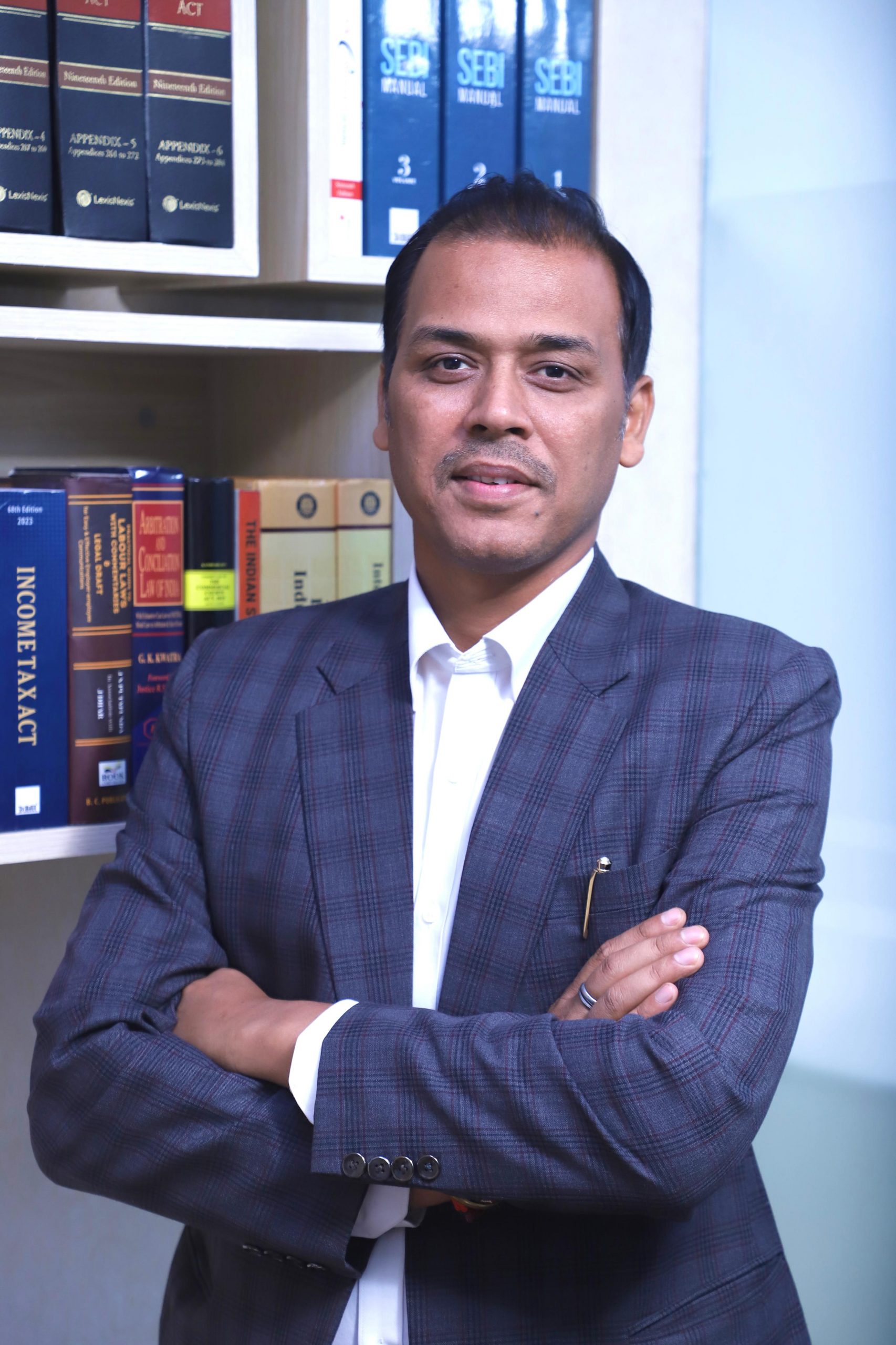
  • “I’ve learned from my seniors that no brief should be refused on the grounds of scale or fee. No matter is too small, and every litigant deserves a chance.” – Vishesh Wadhwa, Founder of Vishesh Wadhwa Chambers.

    “I’ve learned from my seniors that no brief should be refused on the grounds of scale or fee. No matter is too small, and every litigant deserves a chance.” – Vishesh Wadhwa, Founder of Vishesh Wadhwa Chambers.

    This interview has been published by Anshi Mudgal and The SuperLawyer Team
    Your academic journey has clearly provided a strong foundation for your legal career. Could  you kindly share how these early academic experiences influenced your decision to pursue law, and what valuable lessons you gained during that time? 

    From a very early age, I was fortunate to be surrounded by the world of law. My father, Mr. R.K.  Wadhwa, a practicing lawyer, served as a constant source of inspiration and familiarity with the legal  system. Law, in that sense, didn’t come to me as a sudden career decision, it seeped into my life  gradually. The exposure at home planted the seed, even though, at one point, I had briefly considered  exploring a different path. 

    Thereafter during my days in Modern School, where I made a somewhat unconventional choice to  pursue Humanities, at a time when the stream was often misunderstood or even looked down upon. But  I had no inclination toward Physics, Chemistry, or Math. I was genuinely drawn to subjects like Political  Science and Psychology, which resonated with my interests. It was during this period that my interest  in law was truly solidified. My School also offered an intellectual environment. Being surrounded by  accomplished alumni, including legal luminaries, only deepened my resolve. 

    My journey continued at Amity Law School, which was still in its formative years, I belonged to the  fifth batch. The atmosphere was dynamic; our seniors had built the foundation for various  extracurricular societies, and soon, the baton was passed to us. I was deeply involved in debates, and  with encouragement from peers and mentors, I went on to found the Amity Law School Debating  Society. My passion for expression and the performing arts led me to also co-found the Music and  Theatre Society and become part of the Cultural Society. I actively participated in national-level moot  court competitions, and led contingents representing ALS at institutions like NALSAR, BITS Pilani,  and Symbiosis Pune. 

    I also realised that sometimes it’s not the ‘Big Wins’; But, the small victories that matter. Around my  Fourth year, Amity didn’t have its own logo at the time—it functioned under the larger Amity University  banner. But that lack of identity stirred something in me. I wanted ALS to have its own unique presence.  With support from then-Director Maj. General Nilendra Kumar, I conceptualized and designed the  official logo for ALS. 

    Having gained valuable experience through various internships and legal research positions  in the early stages of your career. Would you be able to share some of the most impactful or memorable experiences from that period and how they helped shape your understanding of the  law? 

    Internships were where theory met reality for me. I had the chance to intern with a wide variety of legal  offices, law firms, individual practitioners, and chambers. Each setting brought with it a unique learning  curve, and I quickly realized that no amount of classroom education could substitute for the practical  experience of being in court. In courts, you’re constantly thinking on your feet. You’re taught to use  every resource at your disposal—even when you walk into a courtroom with seemingly nothing. The  unpredictability trains you to stay alert, adaptable, and resourceful. 

    After graduating, I spent some time working with my father in the trial courts. It was a hands-on  experience that introduced me to the ground realities. My father had a purely criminal practice, he was  mostly briefed from the defence side to conduct cross-examinations which in a way, gave me deep  insights into trial work and how a criminal case is methodically built. It was an education like no  other. He used to tell me “Agar aap vakalat ko 2 din chhodoge to wo aapko 4 din peeche karegi.” —if you  step away from law for two days, it will set you back by four. And I felt the truth of that every time I  missed a day in court. Sometimes, even when you might not have a matter of your own, you still have to come to court even if you spend the day just sitting in the court library or listening to arguments in  someone else’s matter; that can at times teach you more than a lecture ever could.

    Soon after, I began assisting Mr. Sudhir Nandrajog in the High Court. He had this saying that stuck with  me: “If you’re good at law, you hammer the law. If you’re good at facts, you hammer the facts. If you’re  good at neither, you hammer the table.” It was humorous on the surface, but layered with insight. The  latter is one of the most important characteristics to have in a lawyer, where you put forward your  submissions to the Court knowing you might not be very strong either on the facts or on the law. This  is where your oratory skills and imaginations are used the most. 

    The early years are all about being a sponge. You absorb everything, from your seniors, your peers,  your juniors, and even opposing counsel. Every moment in court, even the bad one’s like every heated  exchange, every procedural hiccup prepares you for tomorrow. At times you might just be learning what  not to do the next time around. Whether you’re waiting for your matter to be called or spending time in  the Bar Room listening to seasoned lawyers dissect a point of law—it’s all part of your training. 

    Having worked alongside numerous esteemed Advocates and Senior Advocates, what inspired  you to establish your own practice? If you don’t mind sharing, were there any particular  challenges you faced when setting up your own firm in the initial stages? 

    Although I had worked with seniors in the field for some time including my Father, I still had the urge  to carve out something of my own. I wanted to build my own practice that reflected my ideals and my  name.  

    Of course, it wasn’t easy. The initial phase was lean, money was tight, clients were few, and everything  had to be managed singlehandedly. I didn’t have a team, or even support staff. No clerk, no office boy.  I was everything rolled into one; I was managing the files, doing the drafting, attending court, and at  times, even cleaning out my office. But that struggle, in hindsight, is what keeps you grounded and  makes you realise your worth. Despite those strenuous years, I would not trade it for anything. Having  your own practice comes with a sense of freedom which would give me the space to shape my identity  as a lawyer. 

    Twelve years on, I still consider myself a student of the profession. Every single day teaches you  something new. What I’ve come to realize is that a litigation office is a lot like a household. While you  might think of yourself as the head of the family, it’s the clerk who keeps the house running (who  actually governs everything and makes you feel the void if on leave), It’s the seniors who offer  perspective and grounding, and Your colleagues (the infamous Juniors, as people call them in this  profession); they help you out the most when you’re in an uncomfortable situation before a Judge and  teach you things which even a senior can’t teach you. These lessons, some learnt the hard way, have  formed the cornerstone of my independent practice. And even with all the unpredictability, I wouldn’t  trade this journey for anything. 

    Your involvement in pro bono work across a variety of legal sectors is truly commendable.  What motivates you to take on such cases, and if you would be willing, could you share a specific  instance where your pro bono work made a significant difference in someone’s life? 

    Pro bono work has always held a deeply personal significance for me. I believe that if the legal  profession has given you the privilege of a voice in a courtroom, the least you can do is use it for those  who cannot afford to be heard. Every human doesn’t come with resources, but everyone needs to be  represented; and I do believe that having some degree of privilege, it is our bounden duty to represent  their side of the stories and some of those stories stay with you forever. 

    The least a lawyer can do is give back to the society; because every client/ litigant who is seeking legal assistance cannot afford to spend heavily on counsel. I’ve learned from my seniors that no brief should be refused on the grounds of scale or fee. No matter is too small, and every litigant deserves a chance. That ethos continues to guide my practice.

    One such case was that of a man, whose young son, about 21-year-old boy, working as a young air  conditioning technician for DTC Buses, was brutally murdered in broad daylight. The father, who was  a rickshaw driver, and his wife, had been running from one police station to another, and despite the  gravity of the crime, no FIR had been registered. They were absolutely desolate and hopeless and not  in a position to afford any legal representation. They came to me through a Local Help who knew me  as somebody who would be willing to help them. I wanted to help them in whatever way I could extend.  You can’t take empathy out of this profession.  

    Another matter that stands out was a case involving slum demolition. Entire families approached me, numbers running into 100s; their homes, slums were to be demolished overnight and entire families  were to be displaced, without notice or recourse. My entire Team sat through the Night and we got relief the next day. The gratitude and blessings that those people felt is something that reminded me  why I did and what I did in the first place. These were more than just legal battles; Situations like these  reaffirmed my belief that the law must be a tool for justice, not just procedure. 

    With your extensive experience working with high-profile clients and handling numerous  reported judgments, could you share a particularly interesting or noteworthy case that has had a  lasting impact on you professionally? 

    One of the most impactful cases I handled came just a year and a half into my legal practice. A senior  lawyer referred the matter to me, since the client was in an urgent and vulnerable situation. It involved  a French national, residing in the UK, who had been in a live-in relationship with an Indian man. They  had a child together, and by mutual agreement, the child would visit the Father’s family in India for  short periods. However, during one such visit, the father refused to let the child return. The mother,  distraught and left with no recourse, flew to Delhi to seek legal assistance. That’s when I was brought  on board. 

    I had never handled a Habeas Corpus petition before, but we knew we had to act quickly. We spent the  night researching and drafting the petition. We mentioned the matter urgently the next day. The father  eventually appeared before the court, bringing the child with him. One of our other prayers was seeking  the custody of the Child for the mother, but the court was initially hesitant, as the scope of habeas corpus  petitions is generally limited. However, we showed precedents which recognized that in exceptional  circumstances, custody could be addressed within Habeas proceedings. 

    The court, after hearing our arguments, showed indulgence in the facts; The court also intervened to  ensure the mother’s visa extension was considered on priority, so that she could stay in India and contest  the proceedings. Within just two to three hearings, the matter was settled in our favour, and the child  was allowed to return to the UK with the mother. 

    The matter gave me immense confidence and encouragement; I realised that there was no substitute for  research and preparedness. It was our research that had come to the aid of our client. The emotional  weight of that case was also immense, not just for the parties involved, but for me as well. 

    There have been moments in my career when I was confident of my case, of the facts, of the law and  still lost. And then there have been matters where I thought I was fighting a losing cause, only to have  gotten a good order. I have learnt something fundamental through all this; sometimes, your job isn’t just  to win; it’s to show up, speak up, and stand firm, even when the outcome seems uncertain. You may be  fighting an uphill battle, but your presence and persistence can make all the difference. These  experiences have been humbling and invaluable. They’ve taught me to never take anything for granted  in this profession. 

    As a Panel Counsel for the Delhi High Court Legal Services Committee, you’ve made  meaningful contributions to welfare initiatives, especially for foreign national prisoners. What led you to focus on this area, and what unique challenges do foreign prisoners face in India? Could  you share any insights from a recent case or initiative in this field? 

    My time with the Delhi High Court Legal Services Committee has taught me many important lessons and  given me an opportunity to work for many causes. One case that stood out involved a convict who had  suffered a life-altering accident while working inside a jail-run paper factory. He lost three fingers due  to the lack of safety protocols. Prior to my involvement, multiple writ petitions had been filed on his behalf, but no concrete outcome was achieved. When the matter finally came to me, we argued that while prisoners may not be treated at par with civilian workmen under certain compensation laws, they  still possess fundamental and civil rights. If an injury occurs while working inside prison premises,  there is a duty on the State to ensure compensation and adequate medical care. The Court was kind to  accept our submissions and framed guidelines for compensating prisoners who suffer such injuries. In  my opinion it was a small but significant step toward justice behind bars. That case was a reminder that  dignity and rights do not stop at the prison gate. 

    Some causes find you before you go looking for them. My work with foreign national prisoners began  that way, through my role as a Part of the Delhi High Court Legal Services Committee, I came across  cases involving foreign national Prisoners, many of whom faced long incarcerations and still faced  uncertainty about their dates of deportation. These individuals faced a unique and often overlooked set  of challenges. Most had no local support, no financial means, no access to translators, and in many  cases, no consular assistance. Something as basic as arranging for a surety or providing a permanent  Indian address became insurmountable obstacles to their release. The legal system, while well intentioned, can become an alien labyrinth when you’re navigating it in a foreign land with no resources  or familiarity. Justice cannot be selective. It cannot favour those with access and leave behind those  without. If our system is to remain just and equitable, we must ensure that everyone, regardless of  nationality or status, is afforded due process and humane treatment. 

    During my time as DHCLSC, I also had the opportunity to visit the FRRO, we witnessed the  Overcrowding in the centre, and saw the deplorable state of affairs, where some foreign nationals are  there for more than 6 months, and some for many years altogether, which in my opinion should  absolutely not be the scenario. We came across multiple facets that in our opinion require interventions  and corrections. In our role, we even made a report and we submitted the same to the DHCLSC. 

    Your dedication to social causes, including fundraising and various welfare activities, is truly  admirable. What inspires you to invest time and energy into these causes, and how do you manage  to balance your professional commitments, social work, and personal life? 

    Giving back has never felt like an obligation; it’s always felt like a natural extension of my work. A  large part of that comes from my upbringing. My father was also active in bar politics. I had never seen  him turn his back on a cause, on a fellow lawyer in need of aiding the causes he believed in. 

    That influence shaped my own sense of responsibility. In my limited capacity I have tried to aid causes  I could contribute for; from assisting fellow lawyers in need during Covid crisis or organising Blood  Donation Camps and contributing to other initiatives. For me, legal work and social work are not  separate silos—they’re deeply intertwined. 

    Of course, balancing your personal lives and litigation isn’t always easy. The days are long, and  the stress of litigation can be unrelenting. But having a strong, dependable team makes all the difference.  My office operates like a family. In jest, but also in truth, I often say, your clerk is like your spouse, and  your colleagues are your children. Everyone has a role, everyone supports the other, and somehow, the  whole house runs.

    Time management and alignment of values are essential. When you genuinely care about what you’re  doing, the work, even the long hours, starts to feel purposeful. And that purpose sustains you. You don’t  just show up to win cases, you show up to make a difference. 

    Social commitments don’t compete with my professional life, they enrich it. In my opinion, this  profession requires you to be social, connecting with people is necessary to growing in the profession.  

    With your wealth of experience across diverse legal fields, you are uniquely positioned to offer  guidance to aspiring legal professionals. What advice would you offer to law students and young  lawyers who wish to pursue a career in litigation? Are there any resources or approaches that you  believe are essential for success in today’s legal environment? 

    Litigation is not for the faint-hearted. It tests your patience, your resilience, often all at once. You will  walk into court with a well-prepared brief and walk out feeling like you know nothing. You will lose  cases you believed were great and win cases you had given up on. It humbles you. And it should. Be  prepared to consult everyone—your seniors, your peers, even your juniors. I’ve learned valuable lessons  from colleagues younger than me, simply because they were looking at the problem from a fresh angle.  Don’t let ego get in the way of learning. This field rewards humility far more than bravado. 

    There will be days when you feel lost, when a judge pulls you up harshly, when you’ve stayed up  preparing and things still don’t go your way. That’s okay. As a lawyer, your duty is that of a messenger  between the client and the bench. Your role isn’t to take matters personally, but to do justice to the brief  entrusted to you, to the best of your ability and conscience. You’re a professional messenger between  your client and the bench. You have a responsibility of not upsetting either of the Two. 

    The courtroom has also taught me to never underestimate the importance of humility. No court is too  big and no matter is too small (I guess that’s what they say). It’s a bounden duty of any court to treat all matters at an equal pedestal. We, as officers of the court, our submissions should always be  respectful, well-prepared, and mindful of the board of the court. If you’re concise, clear, and courteous,  even the busiest bench will give you a fair hearing, every court/judge will have indulgence in your case. 

    I have learnt an invaluable lesson: litigation is never a race amongst individuals or a sprint—it’s a  marathon. Each lawyer begins from a different starting point. It’s a field that will exhaust you, test your  patience. Reaching every milestone would again make you realise that you’re still far away from the  end point. You just have to keep at it.  

    As technology continues to evolve, its impact on the legal sector, particularly in criminal law, is  becoming increasingly significant. How do you see the future of law unfolding in this regard? In  your view, how are courts and the legal system adapting to these changes, and what potential  challenges or opportunities do you foresee as a result? 

    I remember observing how things worked during my father’s time—everything was handwritten,  typewriters clacked away in the background, and court files were carried in bundles tied with redband.  The charm of old-school advocacy still lingers, but there’s no denying that the tools of the trade have  transformed. Today, virtual hearings, e-filings, digital courtrooms, online legal research, and case  tracking platforms have become the norm. The pandemic accelerated this shift, making digital  competence a necessity rather than a choice. For many of us, adapting to this new normal was  challenging, but also eye-opening. 

    Courts are adapting. Judges are becoming more comfortable with hybrid systems. Filing and listing  procedures are becoming more streamlined. But as we digitize, we must also confront the digital divide.  A significant portion of the bar, especially in district courts, continues to struggle with basic  connectivity, lack of infrastructure, and limited digital literacy. For justice to remain accessible, we  cannot allow technology to become a gatekeeper. It must be an enabler.

    A fair and inclusive legal system cannot only serve those fluent in English, comfortable with apps, or having high-speed internet. The evolution of legal practice must be sensitive to those left behind. We  need infrastructural support, training initiatives, and perhaps most importantly, the will to ensure that  no lawyer or litigant is excluded simply because they don’t have access to a screen.

    Get in touch with Vishesh Wadhwa –

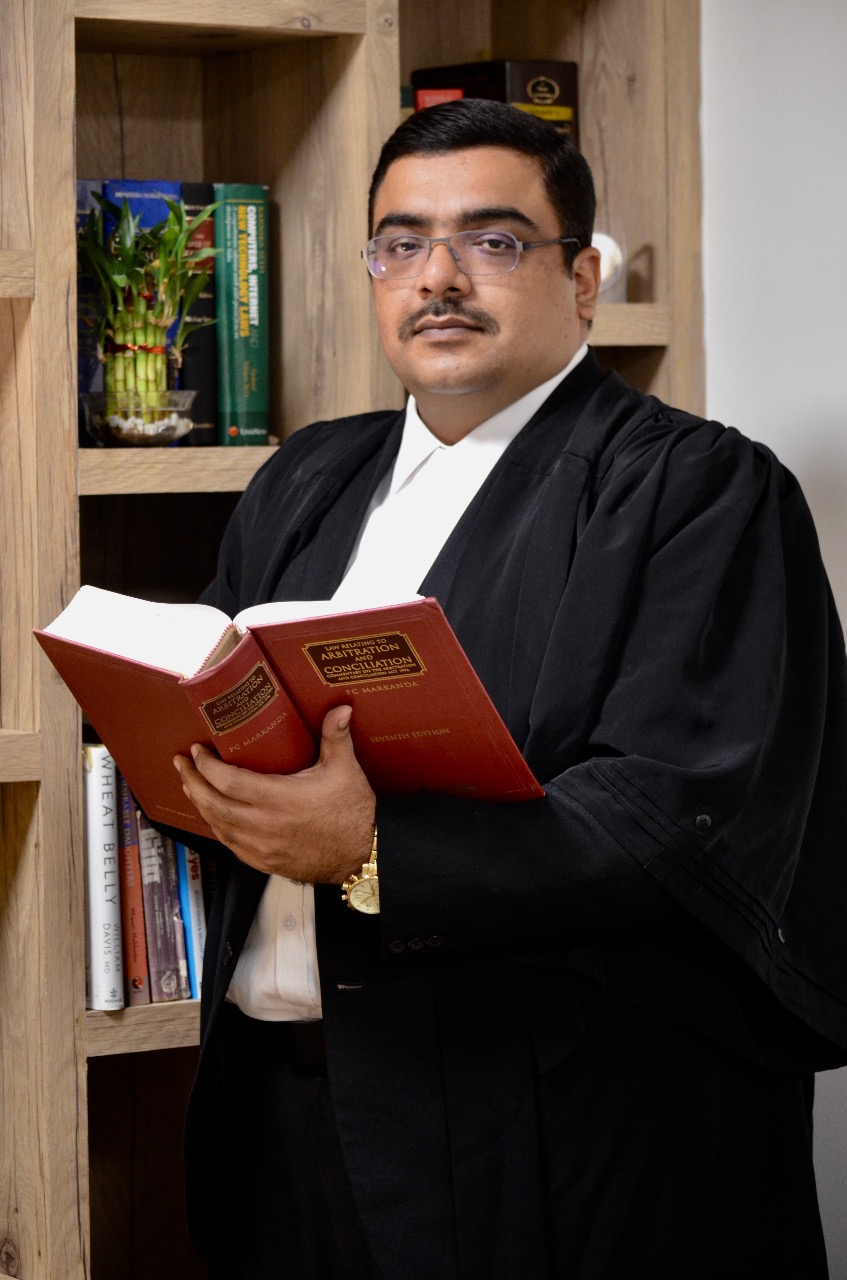
  • “Mediation is about finding common ground—something I strive for not just in disputes, but in all my professional relationships.” – Sunil Jose, Founder & Managing Attorney at SUNS LEGAL

    “Mediation is about finding common ground—something I strive for not just in disputes, but in all my professional relationships.” – Sunil Jose, Founder & Managing Attorney at SUNS LEGAL

    This interview has been published by Namrata Singh and The SuperLawyer Team

    Could you walk us through the pivotal moments and decisions that shaped your career path, from your early days in college to landing your first job, and ultimately, to where you are today? What inspired you to pursue a career in law, particularly specializing in Intellectual Property?

    I have always loved reading and listening to the news and have been deeply interested in politics and social issues. Naturally, becoming a lawyer seemed like the right path for me. After finishing college, I developed an interest in company law and moved to Chennai to start my legal career. The turning point in my career came in 1995 when I happened to watch a court case involving a trademark dispute by chance. I attended all the hearings of that case and had the opportunity to listen to arguments in a few other cases as well. I had a fair understanding of Intellectual Property, but witnessing a court argument over IP for the first time was a pivotal moment for me. This was when India became a member of the WTO, and the controversy surrounding India’s WTO membership and TRIPS agreement conditions was a hot topic. Observing these cases sparked my curiosity and deepened my interest in the subject. This inspiration led me to pursue a master’s degree in IP in 1999.

    After completing my master’s, I had the opportunity to work for a new law firm in the Middle East that sought lawyers with expertise in then trending subject, Intellectual Property. This firm had several foreign clients dealing with IP issues, marking my initial exposure to Intellectual Property disputes. Later, I joined Abu Ghazaleh Intellectual Property (AGIP), which opened doors to working with Forbes 500 clients. My experience at AGIP significantly shaped my career as an IP lawyer.

    Your professional journey includes solo practice as well as working with leading IP firms. What motivated you to establish Suns Legal, and what unique value proposition do you bring to your clients as a solo practitioner?  

     Being a solo practitioner has its perks. For one, I can give each client my full attention, which means I can create legal strategies that are just right for their specific problems. I can quickly adapt to any changes and offer flexible solutions. Running my practice also lets me keep my prices competitive while maintaining high quality. With my expertise in Intellectual Property law and the experience I have gained from working with top firms, I can provide clients with expert advice and solutions. Building long-term relationships based on trust is very important to me. All these factors help me deliver high-quality service and show my commitment to meeting my client’s legal needs with professionalism and care. 

    Beyond your professional accomplishments, you’ve also been recognized as a LinkedIn Top Voice for your contributions to thought leadership in Intellectual Property. What motivates you to share your expertise and insights with a wider audience?

    I am not a social media expert, but I love creating content. LinkedIn is the only platform I am active on. My strong belief in the power of knowledge sharing and the incredible reach LinkedIn offers drives me to share my expertise and insights.

    Intellectual Property (IP) is such a complex and evolving field, and I feel a real responsibility to make it easier for others to understand. My passion for teaching plays a big role in my eagerness to write on LinkedIn. By sharing my experiences and insights, I aim to help individuals and businesses get a better grasp of IP issues.

    Engaging with a broader audience helps me stay updated with the latest trends and developments in the field. It also creates a community of like-minded professionals and enthusiasts who can learn from each other. Through LinkedIn, I have connected with many such individuals who regularly interact with me.

    I often get direct messages from people who appreciate my efforts to explain these complex topics in simple terms. It makes me especially proud when teachers tell me they use my insights to help them teach the subject more effectively. That kind of recognition means a lot to me.

    I often find my associates and interns through this platform. While generating leads was not my primary goal, many of my clients have come through LinkedIn. Plus, the platform has allowed me to connect with the vibrant Kerala Creators community, which has been fantastic.

    Being recognized as a LinkedIn Top Voice was such a pleasant surprise! I humbly accept it as a testament to my efforts, and it inspires me to keep contributing to the IP community.

    Your extensive experience spans across various countries and cultures. How do you navigate the nuances of Intellectual Property laws in different jurisdictions, and what challenges do you commonly encounter?

    Dealing with Intellectual Property (IP) laws across different countries and cultures can be quite challenging. However, many advantages made the experience rewarding. The basics of intellectual property are the same worldwide, which provides a solid foundation. The support from bilingual lawyers was invaluable. Working with Forbes 500 companies and their lawyers was a rare and valuable experience.

    That said, the challenges were more significant than the advantages. Most Middle Eastern countries follow civil law, while many of my clients are from common law countries. This difference needed careful adjustment. Additionally, Arabic is the main language in most Arab countries, which introduces additional complexities. The judicial systems in these regions were still developing, with few established precedents. IP was a new subject, and there were only a few judges or officers with knowledge of it. Many countries were monarchies, making it difficult to resolve disputes, especially when the other side had the support of the ruling families. The bureaucracy was often not transparent or easily accessible, and there were significant differences in culture and values that needed to be addressed.

    Despite the challenges, I survived and thrived, gaining incredible learning and exposure. It was a journey filled with learning and growth, and I continue to overcome the challenges.

    In addition to your legal expertise, you’re also a Certified Mediator and a Distinguished Toastmaster. How do you think these skills complement your role as a legal professional, and how have they influenced your approach to advocacy and negotiation?

    I have been a Toastmaster for around 15 years, and it has helped me improve my public speaking and leadership skills. In law, effective communication is crucial, whether it is presenting a case in court, negotiating with opposing counsel, or talking with clients. Toastmasters has made me more confident and articulate. It has also significantly boosted both my verbal and non-verbal communication skills, and my ability to handle unexpected questions or situations gracefully. It also taught me how to manage my time effectively and handle spontaneous questions during seminars, classes, and training programs.

    I love mediation. It has always come naturally to me, but I decided to get certified later in my career to validate my skills. Mediation is all about finding common ground and facilitating communication between parties. It has taught me to listen actively, understand different perspectives, and work towards solutions that benefit everyone involved. This approach not only helps resolve disputes but also prevents them from escalating. It plays a special role in settling Intellectual Property disputes, which often demand time-bound solutions.

    These skills have changed how I handle advocacy and negotiation. They have made me more understanding, patient, and thoughtful. I can better understand what everyone needs and worries about, which helps me make stronger arguments and find effective solutions. Overall, these skills have made me a better and more effective legal professional.

    You’ve been involved in numerous high-profile cases, such as advising multinational corporations and assisting in preventing unauthorized use of copyrighted material. Can you share a particularly challenging case and how you navigated through it?

    One of the toughest cases I handled was quite unusual. A Ministry in a Middle Eastern country, which was responsible for handling copyright matters, ended up using a copyrighted design from an internationally known magazine. The irony was that we had to contest a copyright violation against the very government department that oversees copyright issues! This made the situation delicate and complex. 

    After a lot of negotiation and presenting a strong case, we managed to convince the Ministry of the violation they had committed. They eventually agreed to rectify the mistake by removing the copyrighted design. This case was particularly challenging due to the involvement of a government entity, but it was incredibly satisfying to reach a successful resolution. 

    Given your experience in portfolio management strategies, what advice would you offer to businesses looking to safeguard their intellectual property assets in an increasingly digital and globalized world?

    It is very important for businesses to regularly review their IP portfolio to keep track of all assets and identify any areas that might need attention. Registering IP, such as trademarks, patents, and copyrights, in all the places where they do business provides legal protection and makes it easier to defend their rights. 

    Monitoring the market for any unauthorized use of IP is essential. When working with third parties, using clear contracts that outline IP ownership and usage rights helps prevent disputes and ensures proper use. Leveraging technology is another great strategy. 

    Staying informed about changes in IP laws and regulations, both locally and internationally, helps you adapt your strategies to stay compliant and protect your assets effectively. Finally, seeking professional advice from IP lawyers and consultants can provide you with expert advice tailored to your specific needs and challenges.

    On a personal note, what do you enjoy doing in your leisure time? Any hobbies or interests that help you unwind and recharge outside of your demanding legal practice?

    In my free time, I love spending quality moments with my family. Watching movies together is always refreshing, especially when we find one everyone enjoys. I also value the time I spend with close friends; their company is always a joy. Listening to spiritual talks helps me find peace and balance, and I find it very calming. I also enjoy reading psychology books, which offer interesting insights into human behaviour. Attending Toastmasters meetings is something I look forward to as well. It’s a fantastic way to connect with like-minded individuals. 

    You’ve mentored many young law graduates and interns throughout your career. What advice would you give to the current generation aspiring to build a successful career in Intellectual Property or law in general?

    Staying curious and always learning is crucial, as the legal field is constantly changing. Keep your eyes open and stay updated on the latest developments. Networking is crucial, so build strong relationships with peers, mentors, and professionals in the industry. These connections can provide valuable insights and opportunities. Gaining practical experience through internships helps you understand the field better and apply what you have learned. Patience and persistence are essential, as building a successful career takes time and effort. Being a self-starter and giving one hundred percent dedication to your work will make you unique. Loving what you do and always striving to improve will set you apart. 

    Suns Legal has recently completed six years, marking a significant milestone. Could you share some of the key achievements and challenges you’ve experienced during this journey, and how they have shaped the firm’s growth and vision for the future?

    Celebrating six years at Suns Legal is indeed a significant milestone for us. We have had our share of achievements and challenges that have shaped our journey and vision for the future.

    One of the biggest challenges has been keeping up with fast-changing technology, which requires huge investments. During our early growth stage, we were hit by the pandemic, which forced us to adapt quickly to remote working. We also faced extremely high competition, with undercutting and fly-by-night firms making the market tough.

    Despite these challenges, we have had some remarkable achievements. We have built a diverse client base and formed extensive friendships along the way. Stepping out of our comfort zone has allowed us to grow, and we have focused on training young talent and absorbing them into our team. Building trust with our clients has been crucial, and we are now known as experts in our field. This journey has also allowed us to do things we could not do before.

    Looking forward, we aim to develop the firm by focusing on quality and expertise. We plan to expand our team, embrace updated technology, and broaden our service areas. Our goal is to continue growing while maintaining our commitment to excellence.

    Get in touch with Sunil Jose-

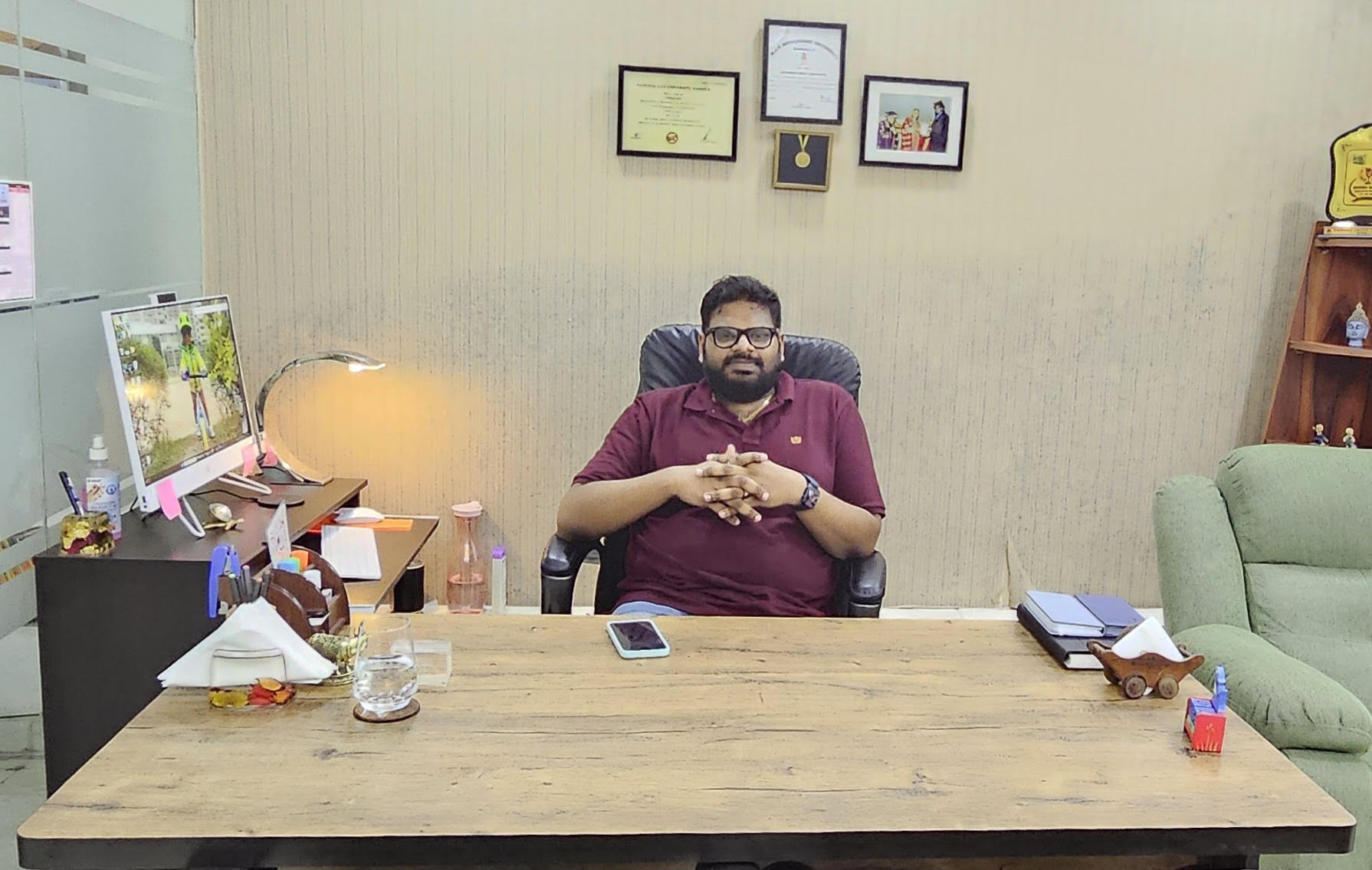
  • “Navigating the complexities of fintech, from structuring digital payment platforms to protecting intellectual property, has been one of the most dynamic and rewarding aspects of my practice.” – Suman Kumar Jha, Founding & Managing Partner -Corp Legex (Advocates & Solicitors)

    “Navigating the complexities of fintech, from structuring digital payment platforms to protecting intellectual property, has been one of the most dynamic and rewarding aspects of my practice.” – Suman Kumar Jha, Founding & Managing Partner -Corp Legex (Advocates & Solicitors)

    This interview has been published by Namrata Singh and The SuperLawyer Team

    Can you tell us about the beginning of your career in law? What inspired you to pursue this field and how did you navigate the initial challenges?

    I’d be happy to share. My interest in law began at a young age when I interacted with a corporate lawyer in Delhi during my civil services exam preparation. He told me that if you wanted to be recognised as a good corporate lawyer, then you must have a Company Secretary degree along with an LL.B degree from a reputed law college. After having this dual qualification you may advise businesses and become an essential part of running them, which intrigued me. Being a first-generation lawyer without much guidance was challenging, but my passion drove me forward.

    I studied BA History (Hons.) and thereafter decision to pursue the law and Company Secretary course was unconnected to my domain however my passion and dedication made it easy for me. Additionally, I pursued a Company Secretary (CS) course, deepening my interest in corporate law and governance. Law school was both challenging and rewarding. I specialized in corporate law and was drawn to courses like mergers and acquisitions.

    The steep learning curve and balancing work-life demands were significant challenges, but internships provided invaluable practical experience. My first significant step was an internship with a prestigious law firm, where I gained practical insights and faced the realities of the legal profession. Mentorship from senior colleagues was crucial, helping me develop my skills and confidence.

    You have both a CS qualification and an LL.B degree. Was Company Secretary your first choice, or did you always plan to pursue law? How do you integrate the knowledge from both fields in your practice?

    Initially, I pursued a Company Secretary (CS) qualification to gain a comprehensive understanding of corporate regulations and governance, which I knew would complement my legal education. Law has always been my primary passion, and the CS course deepened my interest in corporate law and governance.

    Having both a CS qualification and an L.L.B degree has been incredibly beneficial in my practice. The CS qualification provides me with a solid foundation in corporate law, regulatory frameworks, company management, financial part of transaction and business aspects. It also enhances my ability to analyse financial statements and other relevant documents of a company. This knowledge is invaluable when advising business clients on legal matters related to corporate restructuring, as it allows me to understand and navigate the complexities of corporate law more effectively.

    Integrating knowledge from both fields enables me to offer holistic advice to clients. For instance, when working on mergers and acquisitions, my legal expertise helps in drafting and negotiating contracts, while my CS background ensures that all regulatory, compliance, and financial aspects are thoroughly addressed. This dual perspective enhances my ability to provide comprehensive solutions, making me a more effective and versatile legal advisor.

    How has your journey been from a Management Trainee at Ashiana Housing Limited to founding Corp Legex? What key experiences shaped your path?

    My journey from a Management Trainee at Ashiana Housing Limited to founding Corp Legex has been both challenging and rewarding. At Ashiana Housing, I gained invaluable insights into the real estate industry and corporate law. This hands-on experience in managing compliance and corporate affairs was instrumental in shaping my understanding of the practical applications of law.

    A pivotal experience during my training was working on a major merger matter. This exposure to complex regulatory and legal challenges significantly piqued my interest in corporate law and mergers. Additionally, I observed that many in-house counsels outsourced their legal needs to law firms, which sparked my interest in the potential of creating a firm that could offer integrated solutions.

    The combination of these experiences solidified my desire to specialize further in corporate law and establish a firm like Corp Legex. My goal in founding Corp Legex was to offer comprehensive solutions that combine legal expertise with corporate governance insights, helping businesses navigate complex regulatory environments. Throughout this journey, mentorship from industry leaders and continuous learning has been crucial, reinforcing my commitment to providing strategic, client-focused services through Corp Legex.

    With extensive experience in corporate restructuring, what do you believe are the most critical elements to consider during such processes to ensure a successful outcome?

    Successful corporate restructuring hinges on several critical elements. First and foremost, a thorough understanding of the company’s current financial health and operational structure is essential. This involves conducting a detailed analysis of financial statements, cash flow, and market position to identify the core issues that need addressing.

    Secondly, clear communication with all stakeholders is paramount. Ensuring that employees, shareholders, creditors, and other relevant parties are informed and engaged throughout the process helps maintain trust and support. Transparent communication also aids in managing expectations and mitigating resistance to change.

    Legal compliance is another crucial factor. Restructuring often involves complex legal considerations, including regulatory approvals, contract renegotiations, and potential litigation risks. Ensuring all legal aspects are meticulously addressed minimizes potential obstacles and delays.

    Lastly, having a strong leadership team to drive the restructuring process is critical. Effective leadership ensures that the restructuring efforts are aligned with the company’s long-term vision and strategic goals, fostering a successful and sustainable transformation.

    Fintech is an evolving field with unique regulatory challenges. Can you share your experiences dealing with fintech companies and the specific legal issues they face?

    Absolutely. Working with fintech companies has exposed me to a range of unique legal challenges that are intrinsic to the sector’s rapid innovation.

    One significant legal issue is the structuring of complex financial transactions. For instance, I’ve been involved in drafting and negotiating agreements for new digital payment platforms and blockchain-based solutions. These transactions often require careful legal structuring to address the intricacies of new technologies and ensure that all parties’ rights and obligations are clearly defined.

    Intellectual property is another critical area. Fintech companies often develop proprietary technologies or algorithms, making it essential to secure patents and protect trade secrets. I’ve worked on securing intellectual property rights for fintech innovations and handling disputes related to technology licensing and patent infringement.

    Additionally, navigating contractual relationships between fintech companies and traditional financial institutions involves addressing unique legal concerns. Drafting clear, enforceable agreements that account for the innovative nature of fintech services is crucial.

    Having started Corp Legex just five months ago, how are things progressing so far? What are some of the initial challenges you are encountering, and how are you addressing them?

    Starting Corp Legex has been an exciting and challenging journey. The progress so far has been encouraging. We’ve been able to establish a solid client base and our team has been working diligently to deliver high-quality services. However, like any new venture, we are facing hiccups, but our collective energies are moving ahead day by day. Ensuring that we have the right team in place has been crucial. We’ve been actively recruiting talented professionals who share our vision and can contribute to our growth. Additionally, we’ve invested in training and development to ensure our team is equipped to handle complex client needs efficiently.

    We’ve established robust processes for continuous learning and internal collaboration to stay ahead in these areas. Additionally, we leverage advanced technology to streamline our legal research and analysis, ensuring that we provide precise and informed guidance on our services offered to client. This approach allows us to offer comprehensive and strategic legal support tailored to our clients’ needs.

    Overall, while there have been challenges, we’ve tackled them head-on with a proactive and strategic approach. The response from the market has been positive, and we are optimistic about the future as we continue to grow and refine our offerings.

    You co-founded Unmukt Udaan, focusing on child education and development in rural areas. How has this initiative shaped your perspective on the importance of education and legal awareness in underserved communities?

    I come from very humble background and understand how access to quality education can transform lives. Unmukt Udaan is an initiative to give shape to my belief and hope to spread education to all corners of the nation. It’s not just about academic learning but also about empowering individuals with the skills and confidence to pursue opportunities and advocate for their rights.

    The Initiative has highlighted the critical role that legal awareness plays in these communities. Many families lack basic knowledge about their rights and the legal resources available to them. This gap often exacerbates their challenges and limits their ability to address issues like land rights, access to social benefits, and protection from exploitation.

    Our efforts to integrate legal education into our programs have shown that when people understand their rights and legal frameworks, they are better equipped to make informed decisions and improve their circumstances. This experience has reinforced my belief in the intersection of education and legal awareness as fundamental tools for societal development and empowerment.

    With your extensive experience, what advice would you give to young legal professionals who are just starting their careers? How can they develop a strategic and business-focused approach to law?

    For young legal professionals, my advice is to cultivate a blend of technical expertise and strategic thinking. Start by mastering the fundamentals of the law and continually seek opportunities for practical experience. This will build a solid foundation and help you understand the nuances of various legal issues.

    Simultaneously, develop a business mindset. Understand your client’’ industries, their strategic goals, and how legal decisions impact their business objectives. Engage in conversations with clients about their broader business challenges and look for ways to align your legal advice with their strategic needs.

    Networking is crucial. Build relationships with mentors, colleagues, and industry professionals to gain diverse perspectives and insights. Stay updated on industry trends and regulatory changes, as these can significantly impact legal strategies.

    Finally, embrace a problem-solving mindset. Approach each case or issue with a focus on finding effective and innovative solutions rather than just legal answers. This will help you become a valuable advisor and contribute to your client’’ success, thus enhancing your own career growth.

    How do you balance your professional responsibilities with your personal interests and hobbies? What activities do you engage in outside of work to maintain this balance?

    Balancing professional responsibilities with personal interests is crucial for maintaining overall well-being. I prioritize managing my time effectively by setting clear boundaries between work and personal life. This involves scheduling dedicated times for both work-related tasks and personal activities.

    One of my key hobbies is cricket, which I find invaluable for maintaining balance. I try to play on a regular basis and stay physically active, it provides a mental break from work. Cricket helps me in recharging and improving my focus and productivity when I return to work.

    In addition to sports, I make time for other personal interests such as reading and traveling. These activities offer me a change of scenery and a chance to unwind. Regularly disconnecting from work and pursuing these hobbies helps me stay refreshed and motivated, ultimately benefiting both my professional performance and personal satisfaction.

    Having worked with both domestic and multinational companies, what differences do you observe in handling legal issues across different jurisdictions?

    Working with domestic and multinational companies has revealed distinct differences in handling legal issues across jurisdictions. Domestically, the legal environment tends to be more predictable, with established regulations and a clear framework for compliance. This allows for more straightforward legal strategies and risk management.

    In contrast, multinational operations introduce complexities due to varying legal systems, cultural norms, and regulatory requirements across countries. This necessitates a more nuanced approach to legal issues. For instance, navigating different regulatory frameworks requires careful coordination and understanding of each jurisdiction’s specific rules, which can impact compliance strategies and operational decisions.

    Multinational companies also face challenges related to cross-border transactions, such as differing standards for data protection, intellectual property, and labor laws. Addressing these issues requires a comprehensive approach, often involving local legal experts and tailored strategies to ensure compliance and mitigate risks in each jurisdiction.

    Overall, handling legal issues in a global context demands adaptability, thorough research, and effective coordination with local legal teams to address the diverse regulatory landscapes effectively.

    Get in touch with Suman Kumar Jha-

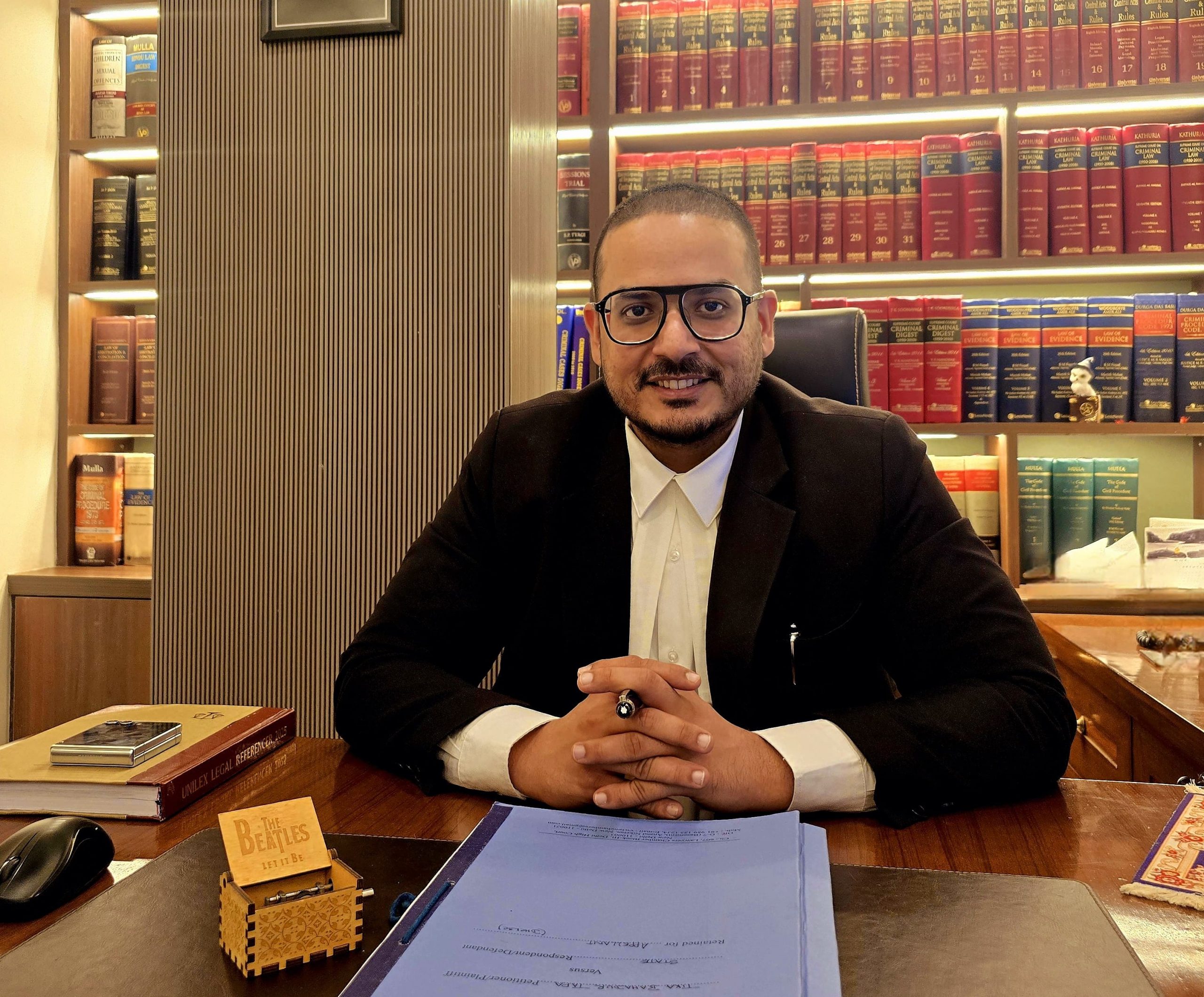
  • “Each failure pushed me harder to succeed, and that resilience shaped who I am today.” – Sumit Garg, Founder of Alpha Corporate Legal.

    “Each failure pushed me harder to succeed, and that resilience shaped who I am today.” – Sumit Garg, Founder of Alpha Corporate Legal.

    This interview has been published by Namrata Singh and The SuperLawyer Team

    Hello and welcome to the new episode of the SuperLawyer YouTube channel. Today we have with us Sumit Garg sir, who’s the founder of Alpha Corporate Legal and an experienced lawyer with a qualified CS degree, with a demonstrated history of working in the legal service industry for over 18 years now. He is skilled in matters related to mergers and acquisitions, corporate governance, SEBI, NBFC, regulatory and white-collar crime matters.

    Welcome, sir. And thank you so much for agreeing to be with us here. it’s an honour. Thank you so much, sir.

    Thank you, Divya. It’s a pleasure for me to get an opportunity to come on this platform and share my experience with budding professionals and fellow professionals as well because I believe that encouraging someone in turn encourages yourself. So, thank you so much for this opportunity. Let’s take it forward and I’m looking forward to an engaging session. Which I believe will add value to the budding professionals and my fellow professionals.

    Rightfully said, sir. Thank you so much.  Let’s start with the very first question when did you decide to pursue law or why did you decide to pursue law?  Even better, who inspired you to pursue law and what challenges did you face during the initial stages of your career? How was your journey? Please do share your experience.

    So, Divya, to answer that question, first of all, I never aspired to be a lawyer.

    I originally aimed to become a company secretary (CS) of a listed company. The inspiration for that came when I was in 12th grade, reading a newspaper. I’m from Meerut, and at that time, the trend was to read newspapers regularly. Being in 12th grade, I was more conscious about which stream I should choose.

    I had taken commerce in 11th grade, so I knew I was heading into the commerce field, but I was still confused about whether to pursue CA, CS, ICWA, MBA, or something else. Especially in my situation, where no one in my family or extended family was a lawyer—everyone was either an engineer, businessman, or MBA, managing their own businesses. There was no one to guide me, or perhaps, I didn’t seek out guidance actively.

    Then one Sunday, I picked up the newspaper and in the career section of Dainik Jagran, I read about the role of a company secretary. It explained what a CS does, how they function within a company, and the one thing that really resonated with me was the fact that in a listed company, there’s only one CS, who works closely with top management, assisting the company in every business decision—compliance with laws, disclosures, governance, and feasibility.

    That aspect of being a key decision-maker in the company attracted me to CS as a career. Later that evening, my eight friends and I—who had also read the same article—decided that we would all pursue CS together. And so the journey began in February 1998.

    We registered provisionally with the CS Institute, and I still remember the day when the eight of us traveled by bus from Meerut to Delhi. Reaching the CS Institute on Lodhi Road was quite a challenge, as we were all new to Delhi, despite Meerut being so close.

    That was the starting point. As we progressed through our CS Foundation and later the CS Intermediate, we encountered various laws that sparked my interest. It was during this time that I thought, “Why not also pursue law?” This could help me earn a little extra by working as a legal head in a company and expose me to more laws in practice.

    At that time, the MRTP Act and the Consumer Protection Act were prominent. These laws helped me understand legal nuances early on, like the difference between “flat 50% off” and “up to 50% off,” and the meaning behind the asterisk we often see with “T&C apply.” These details sparked my interest in law.

    After completing my B.Com from Delhi University and while pursuing CS, I decided to pursue law as well. I qualified as a lawyer in 2005, although I finished my CS in 2006.

    In 2007, I got enrolled with the Delhi Bar Council. Interestingly, I joined an office in January 2007 where I got the opportunity to work on mergers and demergers, but I was still unsure about whether I should get enrolled as an advocate. Even though I visited the High Court regularly, wearing the black tie (though without the band), I hadn’t fully committed to enrolling.

    It was in May 2007, after gaining more exposure to law and realizing it was my true calling, that I finally enrolled as an advocate. I had the knowledge, but practicing as an advocate—going to court—was what gave me the real practical experience.

    That’s how I became a lawyer and a practicing advocate, which is why I call myself an accidental lawyer.

    Beautifully said, an accidental lawyer who has made a name for himself in many kinds of legal worlds where the corporate world starts and ends at that particular space. You have actually merged both of these things and used both company secretaryship and bachelor of law degree in combination so beautifully that you have built a whole sphere around you and you also have founded Alpha Corporate Legal.

    Would you care to share your challenges or stories behind starting this particular company for your legal firm, and how has CS and law both helped you building that particular empire for yourself?

    I think, as much as I became engrossed in practicing law and corporate matters, I got more and more connected with it, or rather, it became ingrained in my blood. As I shared, I am a first-generation lawyer, and for me, it was really tough to make a mark in the legal industry or even find a suitable job.

    But, as luck would have it, I started working in January 2005, before I qualified as a CS or completed my law degree. One thing that gave me the strength to venture into law with perseverance, without ever doubting my decision, was my repeated failure in my CS examinations. I still remember that I couldn’t qualify for my CS Intermediate Group 1 in three attempts. It was only on the third attempt that I finally cleared it. Similarly, at the final level of my CS, I cleared Group 2 on my fourth attempt. It took me about eight years to complete my CS, but I am not shy about it.

    I openly share this because, despite the failures one may face in life, each failure should motivate you to push harder and succeed. In this regard, it would be unfair not to mention my teachers, Mr. Bhupesh Anand, who still teaches Direct Tax and Financial Management to CS students, and Mr. S.P. Rao, who taught Indirect Tax. I went to them when I couldn’t pass my exams, and I used to travel back to Meerut for my CS exams.

    I would impart the knowledge I gained in coaching classes to my fellow friends who were also pursuing CS, and they would clear their attempts, while I kept failing. One day, I went to Mr. S.P. Rao and told him that I wasn’t cut out for CS. It wasn’t happening.

    He told me, around late 2005 or early 2006, to write on a piece of A4 paper: “I will qualify my CS in the June 2006 attempt,” and put it on the wall where I studied. I did exactly that. He also told me to follow this, and meet him after the exams in June 2006. He gave me a piece of advice that I still follow today. He said, “Whenever you face a problem or can’t solve a question, make a fist, tell yourself that ‘I can do it, I have to do it,’ and try again.” I still follow that advice, and it really helped me.

    Despite the syllabus changing during my last attempt, I sat for all eight or nine papers consecutively, and I cleared my CS in the June 2006 attempt. His belief in me filled me with conviction that I had the ability to do it. It was just a matter of time and persistence. That belief in myself kept pushing me forward, shaping my career.

    In January 2005, I began working as a Secretarial Executive in a private limited company that provided secretarial services to its clients. It was there that I met Mr. Anil Goyal, a Chartered Accountant, Company Secretary, and a rank holder in both. He was a self-made man, and he recognized the potential in me. At that time, he was the auditor for a listed entity, and he referred me to work there. I went for the interview, got selected, and that’s how I started working for a listed company that had the second-best IPO of 2005.

    I told myself I wasn’t going to miss this chance at any cost. I learned a lot while working there, but I realized that my true calling wasn’t in working for a listed company because, even after completing my work, I had so much free time that I kept craving more.

    However, I stayed with the company because I was still pursuing my CS, and it gave me enough time to study. I remained there until I qualified, and, being fair to them, I didn’t leave without seeking employment as an Associate Company Secretary.

    As luck would have it, the main Company Secretary got an opportunity to work with a firm dealing in mergers and demergers, but he passed on that opportunity to me. I spoke to Mr. Anil Goyal, and he said, “Sumit, this is the best opportunity you can get.”

    At the same time, I was offered a much higher salary by a reputed company to join as their Company Secretary, but I chose the opportunity to work in the M&A domain with Mr. Deepak Deewan. I’m forever grateful to him for making me his first associate in his office, which exposed me to the world of mergers and demergers.

    In my first year, I handled my first scheme for a listed entity. It was a demerger where the real estate division was demerged and bogged into an SPV, which we got listed under the Securities Contracts Regulation Act without going through an IPO. Overnight, after the order passed, the person had another listed entity in his group, and that gave me immense satisfaction.

    I stayed with Mr. Deepak Deewan for almost four years, during which I worked on 50-60 schemes of mergers and demergers, including about 15 listed entities. Some of the names include Spentex Industries, Jindal Drilling, Maharashtra Seamless, Ansal Group Companies, DLF, and more.

    During my time there, I encountered unique cases. One was a scheme proposed by the shareholders of two listed entities involving two brothers with a family arrangement. Usually, it’s the company that proposes the scheme, but in this case, the shareholders were proposing it. It took me two hours to convince the Delhi High Court Registry that there were no transferee companies in this scheme.

    Another case was the merger of a real estate company involving farmlands and farmhouses around the airport area. After the merger was completed, the client came to us because their sale deeds were impounded by the sub-registrar of Kapashera. We approached the Delhi High Court, and I researched a pre-independence notification under the Indian Stamp Act of 1937. After months of effort, I found the notification, which was ultimately upheld by the Delhi High Court in the Delhi Towers Limited case. This became a highlight of my career at that nascent stage when the order was passed in December 2009.

    Although this order had far-reaching implications, I had fulfilled my duty to my client by exonerating them from paying stamp duty. Following this, the Delhi government withdrew the notification, and mergers and demergers in Delhi became subject to stamp duty. Other states followed suit.

    So, I may have deviated from your original question about setting up ACL, but all these events in my early professional career really solidified my commitment to the law. Or rather, I got married to the law because of these experiences.

    Yes, it is very difficult for people to accept that there have been failures in their career as well. But it’s commendable that you are accepting it with open arms. And you are sharing your learning from those failures. What I believe or what I have understood till now in my life, that yes, if you accept your failures, you will be more successful than what you would have imagined. And I guess that is the reason why you have such amazing clients also who tend to forget the parking charges for their planes, where you have saved them crores and crores of rupees.

    How do they compliment you with all these kind of things? And how do you keep yourself so aware that you get to understand that these all nitty gritties are also there and you help them in saving them their not only money, but their faces as well. How have you done that?

    Divya, there’s more to it. While I was working with Mr. Diwan, I was quite young at that time—still young at heart—but back then, I was young physically as well. I decided to go solo, and certain things happened. It was right after my marriage in November 2010 that I decided to work independently for about six months.

    Handling these matters boosted my confidence immensely. I felt like I could conquer the industry, so I thought, “Let me start on my own.” However, I soon faced reality and realized I was lacking experience.

    A lawyer is a lawyer to the world, whether you’re a corporate lawyer, criminal lawyer, or IPR lawyer—these distinctions come much later in your career. When I faced the reality that I couldn’t serve my clients properly due to a lack of experience, I accepted it.

    I couldn’t approach other friends, colleagues, or seniors for help because I believed that if I was working for a client, it was my responsibility. It changes your attitude toward work when you take ownership. It’s like buying a car—you look at every detail before making a decision. Similarly, how can anyone be lax when working for someone else? This attitude of treating my client’s work as my own pushed me to go the extra mile because, ultimately, if my client is happy, I’m happy—and I’m progressing.

    So, when I realized this, I joined DMD Advocates. At the time, it was known as Dutt, Menon, Dunmorr Sett. I’m really thankful to Mr. Rashi, the corporate head there, and to Ms. Anuradha Dutt, with whom I had the opportunity to work later in my career. These two individuals taught me what law truly is—how to read, analyze provisions, and much more.

    Mr. Rashi had recently returned to India after working in the US for 16 years, and he instilled in me the traits of being a true professional—true to your work, your clients, and yourself. I’ll always be indebted to him, Ms. Dutt, and DMD, as well as all my colleagues there. They believed in me and gave me the opportunity to work for their clients. After that, there was no looking back.

    I was with DMD for almost 11 years, and it gave me the confidence that if I ever decided to go independent, I wouldn’t fail. Many juniors at DMD started their own firms and are successful today. That’s the kind of training I received there, and I will always be grateful. Without my time at DMD, I wouldn’t have thought about setting up ACL.

    Like everyone, I had my highs and lows at DMD. I’m not shy to admit that at one point, I didn’t complete my appraisal form because my performance wasn’t up to the mark that year. But I was determined, and I’m thankful to Mr. Rashid for believing in me and giving me another opportunity. I bounced back, and for the next three years, I received the highest increments in DMD and was promoted to principal associate.

    I worked on numerous matters for MNCs, regulatory issues, and represented clients before SEBI, Enforcement Directorate, CBI, and RBI. That gave me a platform to hone my skills as a lawyer. Over time, I learned that a lawyer never gives up, and that’s why this profession is one of the strongest in the world.

    In July 2021, I finished a major assignment—part of a larger global disposition—and that gave me time to reflect on what I wanted to do. While I had no complaints about the quality of work, remuneration, or culture at DMD, I wanted to do something more. Working at a law firm doesn’t give you the time to pursue those extra things. So, I took a sabbatical.

    Interestingly, on 13th July 2021, my last day at DMD before my sabbatical, an old friend called me out of the blue. He asked what I was doing, and I told him I was going on vacation. He said, “I’m hiring you as my outside general counsel right now, and I’ll pay you this much.” I told him I was on vacation and didn’t want to work for the next 15-20 days. He insisted, saying, “Your retainer ship starts today, but I won’t disturb you during your vacation.” And just like that, I got my first client.

    During the vacation, I discussed things with my wife, who is a crucial part of my life. At the time, our son was about to start school, so it was a critical juncture. My wife asked, “Are you mad? How will we pay our bills and EMIs if you leave DMD and start your own firm?” I told her I had saved enough money to survive for a couple of years, even if I didn’t earn anything. She gave me one year to prove that I could sustain our family without denting our savings.

    That’s when I started thinking about what to name the firm. I didn’t want my name on the board—Sumit Garg & Associates or SD Advocates—because I wanted to create an organization where anyone could contribute without feeling it wasn’t their office. I wanted to be at the top of our game, the “alpha males” of the industry. So, we named it Alpha Corporate Legal. I called a friend in IT, got the domain registered, and started working from home.

    That’s how ACL came into existence. It’s still a proprietorship because I’m looking for the right person to partner with—someone who shares my commitment to clients. My associates, the ones who started with me, should eventually step up and become partners. That will give me the ultimate satisfaction—that my colleagues are now my partners.

    I tell them all the time, “This is your office, not mine. You decide what’s best, plan policies, take on client work, but always be available, accountable, and responsible to your clients. If you’re late on a deliverable, own it, reach out to the client, and explain. Never let the client chase you.”

    I’ve noticed, after almost 20 years in the profession, that many lawyers dodge their clients when they’re delayed on something. It’s wrong. You should be proactive. Clients will respect you more for being honest and forthcoming. That’s what I tell my colleagues and anyone who seeks guidance on how to progress in their career.

    These are traits I’ve learned the hard way, but if I can impart them to others, why not? That’s my philosophy when I say I want to give back to society and the profession. And that’s what this journey with ACL is all about.

    I would like to ask about your involvement with Startup ventures, because I guess you are very much involved into helping them as well. But major question there would be to understand the psychology of the young aspirants or aspiring entrepreneurs who regarding to the legal aspect they try and take more risk in terms of not having absolute legal team ready for them from the very start and later they suffer because of that.

    So how do you adjust to this particular thought process of startups and how do you help them or train them in case they have come in the start and once they have gotten into some trouble and come to you at a later stage.

    So, Divya, you’re absolutely right. This generally happens not because anyone wants to cut costs, but because entrepreneurs want to focus on their business. That’s their passion, their vision – to grow the business. However, some entrepreneurs have a broader vision and believe, “Whatever I’m doing, I need to do it right.” For them, having the right team is the most important thing. I personally believe that setting up the business team is crucial, and the second most important thing is setting up the legal compliance team.

    If my business or the way I conduct it is not in compliance with the applicable law, there won’t be a business for long. There’s been a paradigm shift in the mindset of entrepreneurs compared to 10, 15, or 20 years ago. Now, they don’t see the legal team as a cost center; they see it as an integral part of the business and invest in it. Because when the business is new, there are numerous challenges – managing the team, setting it up, and money is usually tight in the beginning as you’re seeking funding.

    Sometimes, promoters or entrepreneurs try to cut down on legal costs by not hiring a legal expert or not seeking legal advice. In fact, just last night, I was on a call with a foreign client who had set up a company in India a few years ago. While they weren’t hesitant to spend money, they didn’t bring the right people on board to advise them properly.

    This acts as a checkpoint for Indian entrepreneurs because when funding happens, the investors, who are putting their hard-earned money into a startup, want it to succeed. It’s up to the promoter to find the right person – a lawyer or corporate legal expert – who can guide them through legal processes so they can focus on the business while ensuring that all aspects are legally sound.

    My advice to entrepreneurs is always to hire the right person to support them in all legal decision-making, ensuring that their business decisions will stand the test of time and law, if required in the future. Secondly, I advise them to be transparent. In business, it’s not necessary to make 100% right decisions all the time. Sometimes wrong decisions are made, but if they are, own up to them, learn from them, and be honest with your investors. Explain why the decision was made, what changed, and what corrective steps you’re taking to rectify it.

    Another key point I want to highlight is that many professionals focus solely on problems. Few look at solutions. We have to be solution-oriented in life. If one door closes, we must look for the other five doors that have opened for us. Transparency is key – with business partners, employees, vendors, customers – everyone. It is essential to grow and scale up your business.

    Moreover, it’s important to form bonds of friendship. An employee is not just an employee; they are a vital component of the business. They become family. Unfortunately, some businesses merely pay lip service to this idea. But real success only comes when you truly create a family out of your team. Without the support of your team, it’s difficult to achieve anything.

    I always tell entrepreneurs not to cut corners on legal and compliance budgets. One wrong compliance move could become a major obstacle for future fundraising or obtaining licenses for the business. Maintaining high levels of integrity is critical if you want to create a scalable business.

    Once these aspects are covered, the rest comes down to passion. If you have the right passion, you will build and scale the business and make a name for yourself. I particularly remember a client I served in 2012, who had built a well-established brand in the F&B sector with a major Indian conglomerate in consumer goods. He sold his minority stake in the company and started his own F&B business, where he was the 100% owner.

    With a proven track record and a passion for food, he scaled his startup in just three years. He secured funding of ₹18 crores, followed by ₹100 crores a year later, and then another ₹50 crores after another year, eventually reaching ₹100 crores again. He built 10-15 dominant brands in the F&B sector, with restaurants in India and abroad. We even did a master franchise agreement for him at a global level.

    He was true to himself, his investors, his employees, and his partners, which is why he could scale his business so rapidly. I’m still associated with him, and I take pride in being part of that organization. It gives me a different level of satisfaction because, for me, earning isn’t everything. Building relationships and achieving a sense of satisfaction is far more important. And that’s what I try to instill in my team as well.

    Taking all of these kinds of learnings, I would like to move forward and ask you about your experience related to educating people, giving them lectures, interacting with students, new entrants.

    What are your observations about the upcoming generation of legal professionals and the kind of challenges probably they are going to face with the kind of technologies that are upcoming and the way law is also changing in relation to the kind of disruptive tech which we are now seeing, it has taken shape?

    And how do you see when you guide them or when you lecture them, how do you convince them that they can make a name for themselves? Along with being truthful and honest, what all are your guidance to them and how do you make sure that they do not get disheartened by big names and try and make a name for themselves?

    Divya, I always share my failures more than my successes because, as professionals, we know that platforms like LinkedIn, blogs, and podcasts are filled with success stories. There’s a lot of digital content available online these days, but merely going through it mechanically doesn’t give you that zeal, and it often doesn’t resonate with you.

    That’s why I prefer face-to-face interactions over virtual ones. However, we have to keep up with technology and the times, so I’ve adapted to virtual hearings, interactions, and everything else. Still, my first preference remains physical, face-to-face meetings.

    The biggest strength I see in today’s younger professionals is their clarity of thought about what they want to pursue in their careers. When I started law in 2007, I worked on everything—corporate M&A transactions, general corporate, IPR-related matters—because IPR is crucial to any business. When you’re negotiating corporate or M&A agreements, significant time and effort go into negotiating the IPR aspects. It took me 6 to 8 years to figure out what I really wanted to focus on. But today’s youngsters know exactly what they want to do, whether it’s corporate law, IPR, criminal law, civil commercial litigation, or family law. They have that clarity, and I think a lot of it comes from the immense content available online, which gives them deep insights into career paths and specialized fields.

    However, my suggestion to them is that in the first five years of your career, do everything that comes your way. Get a sense of the various practice areas before deciding which one suits you best. Only then can you make an informed decision based on your skills and experiences.

    Another strength they possess is that they have their priorities right. When we interact with young lawyers for hiring purposes, they aren’t shy about asking practical questions like, “What are the office timings?” or “What are the working days?” In the four or five interviews I’ve had in my life, I never dared to ask such questions. My objective was always to secure the job. But I respect that they ask these questions, and I even encourage them to do so because if they’re comfortable with the work culture and conditions, then we move on to technical evaluations. Otherwise, there’s no point in wasting anyone’s time.

    These are some of the strengths I’ve observed in freshers entering the industry. I believe everyone should ask these questions because work-life balance is important. I know many colleagues who burned out in the first five years of their careers. If you’re running a marathon, you have to train for it. It’s not a sprint. We need perseverance, conviction, and the endurance to finish the marathon, not leave it halfway.

    Youngsters have a lot of questions, and what I’ve learned is to ask as many questions as you can. If you’re asking questions, it shows you’re eager to learn. The problem arises when you’re not asking questions—either because you’re shy or because you think asking might invite trouble. Maybe your reporting partner or senior will ask, “If you had this question, how did you finish the work already?” Some people avoid that interaction and think, “If the work is done correctly, I’m good. I’ve managed to hide my shortcomings.” But you can’t rely on luck every time.

    I used to wonder, back when I was with DMD, how my reporting partners instantly caught things I missed in a document. Now I know that after 15 to 20 years of experience, you can immediately tell how much work has gone into a document.

    Since you brought up the aspect of work-life balance, being such an accomplished professional, how do you manage to maintain that balance? If possible, could you share any personal experiences, hobbies, or approaches you use to handle this? Work-life balance has become such a pertinent issue, especially with burnout becoming more common, as you rightly pointed out. How have you managed it so far, and how do you ensure your team learns from your example?

    My hobby is singing and playing the guitar. Although I haven’t played the guitar in a long time, I never miss the opportunity to sing whenever I can, whether it’s at social gatherings or other events. Even if it’s just a couple of lines, I enjoy it. There’s another aspect I consider important, and that’s spirituality. I believe it plays a crucial role in everyone’s life. We may not realize its significance when we are young, but as time passes, spirituality brings calmness and the wisdom to understand what’s happening around us.

    I was fortunate to be introduced to Nichiren Daishonin’s Buddhism through my wife, who was practicing it even before we got married. It’s a Buddhist philosophy that I’ve been following ever since. This practice has helped me achieve a sense of spirituality in my life and taught me how to take responsibility for everything that happens to me. The philosophy is based on the concept of cause and effect—what I do today will shape the outcomes I experience tomorrow. It keeps me grounded, humble, and gives me the strength to keep moving forward.

    This philosophy emphasizes accountability and highlights the importance of happiness. It teaches that once you achieve happiness, it’s your responsibility to spread it to others, regardless of their social status—whether it’s the security guard in your building, your domestic help, the cook, your driver, colleagues, wife, kids, or mentors. Gratitude is at the core of this practice, and it has become a guiding principle in my life.

    My Buddhist faith was a significant factor in establishing ACL, and it helps me bring a humanistic touch to all my interactions—whether with clients, colleagues, or family. It keeps me grounded and level-headed. I also devote a lot of time to Buddhist activities and encourage my colleagues to learn about it as well. I believe no philosophy can harm you—you can always take what resonates and leave the rest.

    This philosophy is not just my hobby or passion; it influences my work and personal life, allowing me to do good for my clients, associates, family, and friends. It helps me stay connected to the human nature that exists within all of us, but which we sometimes forget in the fast pace of life. I strongly believe in being humane to everyone because if you don’t like something happening to you, it’s likely the other person won’t like it either.

    This belief is what inspired me to ensure a healthy work-life balance at ACL. That’s why we operate on a five-day work week, unlike the seven-day trend in many law firms. Of course, when necessary, we do work on Sundays or overnight, but that’s a rare occurrence at ACL. I believe if work is managed efficiently, there is no need to work overtime or on weekends.

    Another principle I’ve instilled in the work culture at ACL is respect for personal time. If someone is on leave, we don’t call or email them. We don’t disturb them because it’s important for everyone to spend time with their families and recharge from the demands of being a lawyer.

    Sir, would you care to share some thoughts about ACL? Are you planning to expand it? How do you envision bringing more people on board, and what are your future plans for the firm?

    Given the philosophy you’re promoting; many people would be eager to join a firm where they have the freedom to take leave without interruptions. It would be fantastic to hear more about this approach, and it’s inspiring to know that such firms exist.

    let me clarify one thing. When I said that we don’t disturb, it’s only when it’s absolutely urgent that we contact our associates. Otherwise, I avoid disturbing them when they’re not working. I feel the same way about not being disturbed while I’m with my family. It’s a two-way street; it cannot be one-sided. As I mentioned earlier, I’m not in a rush to expand ACL. I often see LinkedIn posts like, “We now have 500 lawyers in our office” or “We’re growing at a 2x pace” or “We’ve opened this office and that office.” And while that’s great and encouraging for people like us, when it comes to ACL, I’m not in a hurry to grow because I believe in expanding with a humanistic approach, gradually, not instantly. I’m here for the long haul. It’s a marathon, not a sprint, and I don’t want to be a fly-by-night operator.

    At ACL, God has been kind, and I want to express my deepest gratitude to our clients, those who entrust us with such intricate tasks and believe in us. Securing clients for a relatively small office is no easy task, neither for me nor for the clients. But thanks to my experience in the industry and the work I’ve done, word-of-mouth has been spreading at a good pace. Recently, we completed three years at ACL. During these three years, we’ve worked on notable assignments, such as the acquisition of a listed entity by one of the top five Indian groups, representing media companies in their acquisition through the SEBI route, and navigating the SEBI takeover code. This was one of the first listed company assignments we handled at ACL.

    Also, because of my long-standing relationships with clients I had served during my time at DMD, some of them wanted to connect with me as soon as I started ACL. But having spent nearly 11 years at DMD, I learned invaluable lessons in integrity from the people there. So, even though I hadn’t signed any non-compete agreement with DMD, I decided on day one that I wouldn’t take on any client I had worked with at DMD for at least six months. That was my way of honoring the place where I learned so much. I didn’t want to give anyone the impression that I was poaching clients. However, there was one particular client who was adamant that if I left DMD, they wanted to move with me. Incidentally, I had been the one to introduce that client to DMD, and my managing partner was gracious enough to let me take the client with me, encouraging me to do my best for them.

    For this client, I represented them before the Securities Appellate Tribunal (SAT) against penalties and debarment orders, where a penalty of ₹10.25 crore had been imposed, along with a five-year debarment not just on the company, but also on its promoters and directors. We successfully got the penalty reduced to just ₹25 lakhs. This was the first company to receive relief from SAT in GDR-related matters, out of 70-80 similar cases pending with SEBI and SAT. This level of commitment is what builds lifelong connections with clients, not just for a single transaction, but for life.

    Some of those clients have returned, and I continue to work with them, having signed engagement letters only after the required time period. Since then, our client list has only expanded.

    Another significant client we gained was a listed entity in the travel sector, which entrusted us with acquiring a majority stake in three domestic companies. With a team of just three people, we successfully completed these transactions, which involved drafting definitive agreements, negotiating with selling shareholders, and structuring the deal. What made this transaction unique was that there was no cash consideration involved. The listed company acquired the majority stake via a share swap, issuing its own shares as payment.

    The next stage was to obtain in-principle approvals from the stock exchanges for the listing of the newly issued shares, which we successfully secured. We then applied for the listing and trading approvals from the stock exchanges, which were also granted. This is how we successfully closed that transaction for the listed entity. Impressed with our approach, availability, and commitment levels, the client entrusted us with three more overseas acquisitions.

    I take immense pride in how we approach our assignments. We work on a lot of SEBI-related matters. Recently, we represented an individual who couldn’t afford our fees, but we took him on anyway, offering him a substantially discounted fee and the flexibility to pay when he could. I believe even if you charge a nominal fee, it helps the client retain their self-respect while valuing the work you’ve done for them.

    I’m proud to say we represented him, and after several hearings with the whole-time members, we managed to get him exonerated from all the allegations. The satisfaction that comes from such outcomes is immense. In this case, one of my team members, who had worked with me on the assignment, had left ACL due to health issues. I made it a point to call him and inform him that we had won the case and achieved a fantastic result.

    This is how I plan to grow ACL—by ensuring that every person associated with us brings a human touch to everything they do, offering the highest level of commitment to clients, colleagues, and the office.

    What a wonderful thought, sir: aiming not only to grow your organization organically but to make it more human and client-centric. After all, we are here to serve our clients. Your honesty in this interview was truly refreshing. The beauty of it lies in your openness about both your failures and successes, without any hesitation.

    I’m genuinely thankful that Namrata brought you in for this interview and that you graciously accepted. I thoroughly enjoyed this candid conversation. Thank you once again for being with us at SuperLawyer. It has been an amazing experience today.

    Thank you so much.

    My pleasure! I feel a responsibility towards my fellow colleagues and the new generation entering the legal profession. This is the reason I engage in these conversations; it gives purpose to my life. While we live for ourselves and our families, we should also live for others. This is a lesson I’ve learned from my practice of Nichiren Daishonin’s Buddhism.

    I am deeply grateful to the Buddhism I follow, to my wife, and to my parents who have always supported me through both challenging and happy times. If in the future you think my input might be valuable, I am more than willing to help. It would be my pleasure to assist and be available for my fellow colleagues.

    Get in touch with Sumit Garg-

  • The real success of a merger or acquisition lies in the integration that follows completion of the transaction.” – Vasanthika Srinath, Founder Partner of Kosmos Partners

    The real success of a merger or acquisition lies in the integration that follows completion of the transaction.” – Vasanthika Srinath, Founder Partner of Kosmos Partners

    This interview has been published by Namrata Singh and The SuperLawyer Team

    Could you share with us your journey into the legal profession? What sparked your interest in law and led you to specialize in international privacy law and corporate law specifically?

    I started working as a business journalist in 1994, after graduating with a degree in commerce and economics from Bombay University (as it was called then). A chance meeting with a friend convinced me to study law, as I believed that it would improve my skills and help me become a better business journalist.  (The Stock Market was still reeling from the effect of the 1992 scam and knowledge of various corporate and business laws would help.) So I enrolled to study at the prestigious Government Law College at Church gate, mostly, because it was close to my workplace and early morning classes allowed us to work all day. I signed up for a moot court competition within a few months of classes and I immediately knew that this is what I want to do in the long run!  So I eventually quit journalism a few months later to focus on my law studies. 

    There were no privacy laws then – and my favourite subjects in college were the law of Torts, Contracts, Interpretation of Statutes and Private International law. I eventually joined Desai & Diwanji, where I was introduced to corporate commercial law, property law and commercial litigation. I wanted to become a counsel, so I joined the chambers of Snehal Paranjape and started my practice as a Counsel in the Original Side of the Bombay High Court. After a year and half I relocated to Bangalore, and as I did not know Kannada then (I am fluent now), I went back to doing corporate work and then moved in-house.

    I worked for a few companies, setting up their legal function and then became the General Counsel of some large IT / ITES companies. Contracts and negotiations are the life blood and most important aspect for any corporate lawyer, and as the legal head, I was also responsible for supporting growth of the business across countries, mergers and acquisitions and compliance, apart from everything else that comes with the role. When I was the General Counsel of Minacs, the Company was acquired by Concentrix, and I set up the Compliance function at Concentrix. That’s about when GDPR happened and I was one person in the company who had no conflict of interest in taking up the role of the Data Protection Officer (DPO). So I learned all about Data Protection and Privacy and set up the privacy function. Gradually, we saw the introduction of Artificial Intelligence where the laws are even more challenging. I was also responsible to ensure that we had a framework in place to ensure ethical and responsible AI design.  I learnt a lot on the job and it was very exciting and enriching for me.

    In December 2023, I joined hands with my old friend, Rashmi Sharma, and we set up Kosmos Partners together.

    So this is my career trajectory in a snapshot – property, corporate advisory, litigation, back to corporate transactions (this time in-house – mostly tech laws), corporate compliance and data protection and privacy, AI regulations and finally – back to practice.

    You’ve had an impressive career spanning over 25 years, with significant roles in various organizations. How have these experiences shaped your understanding of international privacy law and corporate legal practices?

    One can never understate the value of experience. Each and every transaction, incident, case or matter comes with its own learning. I was extremely fortunate to be at the right place at the right time and to handle the kind of matters I got to do. I was very fortunate to have the opportunity to handle quite a few mergers and acquisitions independently right at the start of my in-house career and that was a great learning. I negotiated a couple of very challenging multi-jurisdictional contracts with large corporations, who are known to be very rigid and unwilling to bend on some key terms, but we still managed to get excellent terms from them based on how we positioned ourselves. Some of these learnings taught me how to break up a problem into smaller pieces to solve it better, how to take a step back and understand the big picture, how to bring value to the table and demonstrate that, especially while negotiating.

    I travelled extensively to negotiate contracts with large clients and also, as part of my role as the Compliance leader.  This exposure taught me a lot about the laws and legal practices of many other countries, their cultures and also helped me understand the data protection, privacy and cyber security laws and practices in various countries.  I also began to appreciate how law and privacy are closely linked to the local culture. I think it is necessary to understand the history and culture of the other country before negotiating a contract or working on compliances or data privacy requirements of that country to be more effective.

    One of the biggest challenges is to try to help the business create business processes that comply with the laws of multiple jurisdictions without making it too complicated for the business.

    I also learned how important it is to understand the business and its challenges before we try to teach them the law. Once we understand their challenges, as lawyers, we should partner with the business and help solve their problems in a more practical way, rather than preaching to them. Raising awareness of the laws and regulations among business teams is also very important for business lawyers. 

    Given the dynamic nature of data privacy laws globally, how do you stay updated with the latest developments and how do these changes impact your clients?

    The only way to stay updated is to read, read and read. There are quite a few free online legal subscriptions that one can subscribe to, so one is updated of the latest regulations. Also, consider joining online groups and WhatsApp, which are good at information sharing, many of them are rather helpful too.   

    Could you walk us through a challenging case or project you’ve handled in international privacy law? How did you navigate through it and what were the key takeaways?

    One of the most challenging project was during the outbreak of the COVID-19 pandemic, and having to support the business teams in moving to work from home in a very short time. We barely had time to understand what was happening and we needed to move all equipment to employees’ homes in multiple countries around the same time. These had privacy and compliance implications, which we had to deal with for each country separately. Not only that, every country / city / state kept coming out with various regulations and notifications, which a couple of us were closely tracking real-time.

    Soon enough, the tech teams had to come up with tools to protect the security of the data that was to processed by employees from their homes, which had even more privacy challenges. Our challenge was to walk the fine line between protecting the company and its client data and confidential information and to ensure cyber security on one hand, while on the other hand, ensuring that we do not violate privacy rights. We had a great team that rose to the challenge very well. We had to understand the needs of the business, the proposed solution, its impact on privacy and then map it against the laws of each country, so we could then work with the teams on implementing a viable solution. The biggest takeaway from such projects was the importance of team effort.  Understanding the laws, of course, was important, but none of these challenging projects are successful unless everyone comes together as a larger team. 

    In your opinion, what are some of the most common misconceptions clients have about data privacy laws, and how do you address them in your practice?

    The largest misconception clients have about data privacy laws is that they are fully compliant since they are GDPR compliant. GDPR is considered as the gold standard in data privacy, but one does not need to implement GDPR across board indiscriminately. Some clients take pride in doing that. But the Indian privacy law is more focused on a consent driven approach, and if you needlessly implement GDPR for Indian data principles, you will anyway have to take a look at everything once again.

    Transitioning to corporate law, what are some of the most rewarding aspects of advising on mergers and acquisitions or structuring financial transactions? Could you share a memorable experience from your career in this field?

    I have handled and led quite a few mergers and acquisitions as the legal head. Though mergers and acquisitions are long, complex and challenging transactions, they are just the beginning. The real success of a merger or acquisition lies in the integration, that follows completion of the transaction.  And to ensure that the integration is complete and thorough, one must ensure that the due diligence was as complete and thorough. More often than not, sadly, due diligence is left to junior lawyers, who may not even understand the challenges in the documents they have been checking.

    One very memorable transaction for me, very early in my career was a deal where we were acquiring a company headquartered in the US with a subsidiary in India. The founder had passed and his wife was unable to run the business and hence selling it. There were quite a few challenges in the deal right from the start. We found tax issues and litigation in the due diligence, both in US and India. The seller wanted to retire and did not want to be saddled with any of the issues, especially in India, so she wanted us to buy the stocks in the holding company and take care of everything, while we wanted only to buy out all the assets so we did not have to deal with their tax matters. The negotiations, led by our CFO almost came to breaking point as we could not agree on the transaction structure.

    Finally, we went to our CEO and I will never forget how he broke down the transaction into smaller parts and suggested why don’t we take the stocks of the Indian company as we can deal with their litigation here since we are local and set up a new company in US and buy out the assets there, and leave the Seller to clean up the tax issues in US since she was a local there, which was acceptable to her too. We had to look at the key pain points for both parties and resolve that, and it suddenly became a win-win for both parties.  The same transaction also saw the Seller sacking her CA in the middle of the transaction. She had retained the CA to negotiate the transaction as well as vet the contract for her, but it turned out that he was not really providing her much support on the contract piece. After some time, she ended placing so much trust and faith in me that she would sign any document only if I confirmed that I have seen it and it is ok for her to sign. I had to remind her that I do not represent her, but she still reposed so much trust and faith in me to draft a fair document. That was a very overwhelming experience, and something I can’t forget.

    As someone who has held leadership positions in legal departments of major corporations, what advice would you give to young professionals looking to advance their careers in corporate law and privacy law?

    Young professionals should try to develop an understanding of the business and develop a strategic outlook.

    For in house counsels, focus on developing a deep understanding of the company’s business objectives. This involves not only knowing the law but also understanding how it impacts the bottom line. Additionally, cultivating strong interpersonal and communication skills is crucial. The ability to build relationships with colleagues across different departments, and to articulate complex legal concepts in clear and concise terms, is invaluable.

    Privacy lawyers, should necessarily try to develop some technical expertise. Beyond technical expertise, develop a strategic mindset. Anticipating legal risks and providing proactive solutions is essential for career growth. Seeking out opportunities to take on leadership roles, even at an early stage, can accelerate professional development.

    Also, do seek out a mentor, take their advice, and learn from their experience. Later, as you grow in your career, please do mentor juniors. It is our duty to keep grooming younger lawyers and build a legacy.

    Finally, considering your extensive experience and success in the legal field, what advice would you offer to fresh graduates aspiring to follow a similar path in international privacy law and corporate law?

    This is a very exciting time for fresh graduates – especially with the rapid changes to technology that we are seeing and will continue to see. The most important thing is for them to work on building a strong foundation and develop a deep understanding of the core legal principles and business fundamentals. Secondly, build a global outlook. Both privacy and corporate laws transcend borders nowadays, so it is important to stay updated on the legal and regulatory developments worldwide. Last, but not the least, as lawyers, we have to be committed to a lifetime of learning. Although Continued Legal Education is not mandatory in India, it is something we owe to ourselves. In addition, it is necessary to build a good professional network, and develop skills in legal writing, drafting, negotiations and communication and try to align yourself with a field of law that you feel passionate about. Don’t do something because it appears to be the cool thing to do. Otherwise, it will eventually wear you down. Enjoy your work and you will continue to cherish it. 

    Get in touch with Vasanthika Srinath-

  • “The essence of economic legislations was fed into my mind, and I kept on working over the same. The challenges in high-profile cases demand patience, integrity, and the preservation of client confidence.” – Vinay Jalan, Principal Managing Partner at O.P Jalan & Associates Consultants LLP

    “The essence of economic legislations was fed into my mind, and I kept on working over the same. The challenges in high-profile cases demand patience, integrity, and the preservation of client confidence.” – Vinay Jalan, Principal Managing Partner at O.P Jalan & Associates Consultants LLP

    This interview has been published by Namrata Singh and The SuperLawyer Team

    Can you share how you started your career and what motivated you to specialize in economic legislation and taxation? 

    I belong to a family of lawyers but I had shifted to Delhi and had been working with  Corporate after completing my Company Secretaryship. The essence of economic legislations was interestingly fed into my mind and I kept on working over the same. My Father Late O. P. Jalan who was working as a Lawyer at Ranchi had a very decent practice in Taxation. In 1991 he suffered from a heart attack which led to open heart bypass surgery, after which he left his practice I took over the same and that motivated me to specialize in economic legislation and taxation. I started my practice with my appearances before the Income Tax Appellate Tribunal and took up complicated search matters. These cases created many points of fact and questions of law making the practice interesting for me. 

    You have defended many high-profile cases, including nationally known raid cases. Could you please describe one such case and the unique challenges you faced during its resolution?  

    There have been many interesting high-profile cases that I cannot disclose by name due to the importance of maintaining professional confidentiality. However, one significant case where I faced unique challenges involved the seizure of a shipment of jeera by the Income Tax Authorities in Gujarat. This seizure raised several critical questions:

    1. Should perishable goods be seized by the Income Tax Authorities?
    2. If such goods are seized and subsequently damaged, will the government bear the resulting losses?
    3. In cases where the goods are partially purchased on credit, would the government assume responsibility for payment to the creditors? Additionally, how would the severe loss of goodwill be compensated?

    The decision by the Gujarat High Court in this matter, which led to a clarification by the CBDT directing the Directorate of Income Tax Investigation not to seize stock-in-trade, was widely appreciated. The challenges during this period were enormous. Authorities wield significant power, and it requires great patience to maintain the essence of the subject at hand. A major challenge is preserving the client’s confidence, which can often be shaken by external factors and rivalries. Each situation demands a unique solution to address these issues. To navigate such complexities, maintaining the integrity and essence of the profession, along with the values of purposive construction, is essential.

    As the Principal Managing Partner at O. P. Jalan & Associates Consultants LLP, how have  you steered the firm to its current standing, and what strategies have you implemented  to ensure its success? 

    I trust God and the values that the legal profession has. When I started this practice I preferred giving the same value to my associates whom I always respected,  taught and trusted. In 33 years we have been conducting classes every week explaining the factual propositions combining them with the purposive interpretations. The value of team members has always been appreciated and rewarded and in return, my associates have been with me always. We have one of the lowest switch-over of our colleagues who join us and become our part. This is our major strategy of success. 

    You lead a diverse team of chartered accountants, company secretaries, lawyers, and cost accountants. What are the key challenges and rewards of managing such a multidisciplinary team? 

    Taxation, Direct & Indirect, Corporate, Economic Laws and Governance along with compliances require a diverse team and to have an in-house team with the interest of each person served, it becomes very simple for a coordinated approach to give results to the clients and command faith over the authorities. Leading a team with diverse interests becomes simple if the due given by each professional is appreciated and he is given the freedom to exploit himself for the best. This helps lead the diverse team. Challenges do come but they are resolved when the interest of each other is not compromised. It is not difficult to manage a multi-disciplinary team if a selfless approach is taken. 

    What advice would you give to young legal professionals who aspire to specialize in taxation and corporate law? Are there any specific skills or experiences you believe are  crucial for success? 

    The most important advice I give to young professionals is not to focus solely on mere compliance but to understand the reasons behind why such compliances are required. In the field of law, advertisement and marketing are prohibited. I would advise young professionals to uphold the ethics of the profession and grow with the right values. The specific skills or experiences I emphasize include having an up-to-date knowledge of the economy and finances at the local, state, and national levels, and maintaining the right balance.

    How do you balance your demanding professional life with your interests and  hobbies? Can you share any particular hobby or interest that helps you unwind and stay  motivated?  

    As one grows with the profession, the number of hours spent in the profession plus the sleep reduces the time for one’s interests or hobbies, but to balance the professional life one of the most important hobbies that I have is my regular morning and evening meditation which I never let skip. I look at the personal interests of my colleagues and in turn, my colleagues always take care of what I intend to do. Apart from this my interest lies in a bit of writing and a bit of teaching which I always do, that helps me unwind and stay motivated. 

    You have been involved in preparing various policy matters and representations before  government authorities. Can you discuss a significant policy change you influenced and  its impact on the legal and business community? 

    Many policy changes have been done through our efforts but in the current budget bringing back the Block Assessment in search matter has been a very significant policy change. The impact of this is a substantial reduction of litigation costs and harassment where a person is searched. This policy change also helps the constitution of ease of doing business in the business community. If you read my notes on LinkedIn, my contention would be held to be correct. 

    What do you envision for the future of legal services, especially in the realm of economic legislation and taxation? How do you think legal professionals can prepare for upcoming challenges and opportunities in this field? 

    The future of legal services in the realm of economic legislation and taxation is undergoing rapid change, as the economy is evolving very quickly, and interpretations of the law are also shifting with time. With the growth of the economy, legal professionals must work as a team, reducing individual interests. This can only be achieved if business opportunities are viewed as opportunities for the entire team. The team manager should consistently share knowledge and bring in new talent to stay updated and be part of this growth.

    You started your career after completing your CS and later pursued an LL.B in 2011.  What motivated you to pursue an additional law degree at that stage in your career, and  how has it enhanced your professional expertise and practice? 

    I began my career as a Company Secretary, a role I consider to be fundamentally responsible for overseeing the economic legislations of a company. As an Officer in Default, I took on the critical responsibility of advising the Board of Directors. By 2009, Company Secretaries began to refer to themselves as Compliance Officers, focusing primarily on ensuring statutory compliance. This shift, however, seemed to limit the broader significance of the profession.

    Chartered Accountants (CAs), Company Secretaries (CSs), and Cost Accountants (ICMAs) are all rooted in the law. Coming from a family of lawyers, I decided to pursue a law degree in 2011 to expand my professional scope and appear before the Hon’ble Supreme Court and High Courts. After completing my law degree, I obtained my Certificate of Practice (COP) as a lawyer and transitioned my firm into a multidisciplinary law firm.

    You have been actively involved in economic empowerment through various roles,  including as a founder trustee of DOX and Chapter Chairman of the Institute of Company  Secretaries of India. Please share some insights about these roles of yours and how they  have influenced your professional approach. 

    As mentioned earlier, my father was a lawyer, and my elder brother, Shri Jai Prakash Jalan, was a civil lawyer. My younger brother, Shri Abhimanyu Jalan, is a barrister and a partner at Clyde & Co LLP. My elder brother’s daughter and her husband are also lawyers, working as partners at Khetan & Company in Bombay. My son is an advocate as well, practicing in the Jharkhand High Court as my partner, and in partnership with Blacks & Whites, a law firm.

    We have always believed in the importance of sharing and giving back to society. When our name became established, I thought of fostering a sense of brotherhood among the alumni of my alma mater, St. Xavier’s School, Doranda, Ranchi. To that end, a trust called DOX, comprising around 800 members, was created. This was done to give back to the society that has given us recognition.

    Following this, I took on the Chairmanship of ICSI to promote the profession and inspire aspirants to not only become good professionals but to achieve excellence in their fields. My approach to this institution stems from being part of a joint family of four brothers, where we value each person’s professional acumen by acknowledging their individuality while maintaining a collective vision for the right growth. This philosophy has greatly helped me in keeping my professional agenda and approach intact.

    Get in touch with Vinay Jalan-

  • The law was being developed in real-time, & I thrived on navigating its nuances. This dynamic environment, where I could apply the word & spirit of the law & provide practical, often creative solutions, was something I thoroughly enjoyed and loved.” – Aditi Sharma wadhwa, Founder & Partner at WSA Legal

    The law was being developed in real-time, & I thrived on navigating its nuances. This dynamic environment, where I could apply the word & spirit of the law & provide practical, often creative solutions, was something I thoroughly enjoyed and loved.” – Aditi Sharma wadhwa, Founder & Partner at WSA Legal

    This interview has been published by Namrata Singh and The SuperLawyer Team

    Can you share with us your journey into the field of law? What initially inspired or motivated you to pursue this career path?

    My journey into law was less about being a lawyer pr pursuing a career in law and more about pursuing something that I thought might be interesting and engaging to study. And here I was not wrong.  While I was unaware of what the practice of law entailed, I was fascinated by the study of it! I took it up as a challenge and as a way to study something I enjoyed while I took the time to find my “true” career. My love for the field and its practice developed later, as I began to study more and engage with the subject matter in a more practical manner.

    I discovered that I thrived on navigating the nuances of law and developed an analytical outlook on issues. I also found that I would get easily bored when things become monotonous, which is not the case with legal practice. 

    I’m always on the lookout for new challenges and the field I started my law career in (IPR) just happened to be one where things are constantly evolving. I also got to be at the forefront of new technologies and legal issues arising from them. The law was being developed in real-time as real-world problems from compliance and business issues emerged. 

    This dynamic environment, where I could apply the word and spirit of the law and provide practical, often creative solutions, was something I thoroughly enjoyed and loved. This passion has driven me forward for the last 16 years, keeping me engaged and motivated in a constantly evolving legal landscape.

    You’ve had an impressive career trajectory. Could you walk us through some of the key milestones or experiences that shaped your journey in the legal profession?

    Over the years, I have had the chance to explore various fields of law. My outlook as well as my career has been shaped by these diverse experiences and have significantly contributed to my growth as a legal professional. While the initial years of my journey were at a law firm, I have since worked in-house for several years as well. 

    Being at a law firm was quite a rigorous experience in the intellectual and purely legal aspects of my field. This is where I developed technical legal skills, gaining deep insights into Intellectual Property Rights (IPR) and understanding how it applied to different fields. 

    The transition to an in-house counsel role was, on the other hand, transformative. It required not only a shift in mindset but also your approach to problems. Working closely with business teams, I learned to integrate legal advice with business objectives, which in my opinion can only make you a more well-rounded practitioner. 

    This experience was incredibly rewarding as it allowed me to view legal issues through a business lens. The opportunity to collaborate with teams from diverse business areas and on multiple projects broadened my understanding of multifaceted legal issues. 

    These experiences naturally steered me in the direction of establishing WSA Legal, a niche practice focusing on IPR, technology, media, and data protection. Additionally, I have a keen interest in legal tech and developing processes that utilise legal acumen to make technological advancements in law. This has led me to work with the brilliant team at Curated LegalTech on developing some amazing legal-tech products. 

    These cumulative experiences have provided me with a broad perspective on the legal field and expertise, but also keep me engaged and fascinated. 

    Many people view law as a challenging and rigorous field. What were some of the challenges you faced early on in your career, and how did you overcome them?

    The practice of law is both challenging and rigorous. Early in my career, one of the primary challenges I faced was the steep learning curve and the demanding nature of legal work. Handling large volumes of work with a high degree of intellectual engagement requires significant time management skills. You need to shift from looking at problems as hurdles and instead embrace a growth mindset.

    Balancing physical and mental well-being in such a demanding field is also important and for most of us, not as easy as it sounds. In this, the role of mentors cannot be understated. They can help you thrive and achieve results even when you doubt yourself. I have been fortunate to have a strong and capable set of mentors and friends to guide me at all stages of my career – whether or not they come from the legal background.

    Again, the change in outlook necessitated shifting to an in-house role was also quite challenging initially. Unlike before, my viewpoint had to expand and incorporate an understanding of business processes and goals into legal advice. You are called upon to be precise in answering complex questions and decisive in the way forward that you guide business in. You need to be engaged with your stakeholders and clients and can overcome these challenges if you grasp the business side and can communicate and collaborate with diverse teams. 

    Your expertise spans across different areas of law. Could you tell us about a particular case or project that you found particularly impactful or memorable in your career?

    One of the most impactful projects in my career involved navigating the complexities of AI and its use by business in a specific area of operation which was earlier broken down into multiple steps and tedious and expensive review. This area was particularly challenging because the law is still in its nascent stages, and there were practically no precedents to guide new practices.

    We had to innovate and provide resolutions, trusting that our advice would stand the test of time. The project required us to create a comprehensive framework, and SOPs and integrate risk mitigation for AI-driven solutions, ensuring compliance with existing laws while anticipating future regulatory developments. This meant developing novel legal strategies and creative solutions from scratch.

    Working on AI from such an early stage was challenging but also incredibly rewarding. This experience also reinforced the value of integrating legal expertise with business strategy and working closely with technical experts, demonstrating that innovative legal solutions can drive business success even in uncharted waters.

    In your opinion, what are some of the essential qualities or skills that aspiring lawyers should cultivate to succeed in today’s legal landscape?

    Aspiring lawyers should cultivate strong analytical skills to navigate complex legal issues, excellent communication abilities to interact effectively with clients and colleagues, adaptability to respond to rapidly changing legal environments, a thorough understanding of technology and its implications on law, and a commitment to continuous learning to stay updated with evolving legal trends and practices.

    The legal profession is known for its continuous evolution. How do you stay updated with the latest developments and trends in your area of expertise?

    Staying updated on legal developments is crucial, but what I find truly enriching is engaging with individuals from diverse fields and gaining their perspectives, regardless of their connection to law. This fosters an open-minded approach and helps anticipate and adapt to changes that keep you at the forefront of your field. These interactions also cultivate a mindset that is innovation-enabling. Additionally, I believe it’s important never to be too proud to seek the guidance of mentors, whose insights and experience can provide invaluable direction in navigating complex challenges and seizing opportunities.

    As someone with substantial experience in the field, what advice would you give to recent law graduates who are just starting their careers?

    I would advise recent law graduates to focus on building a strong foundation of legal knowledge and skills through practical experience. Seek out mentors who can provide guidance and insights based on their experience. Stay curious and continuously seek opportunities to learn and grow professionally. Interacting and building relationships within and outside the legal profession can also be crucial for career development. Lastly, maintain a strong work ethic, integrity, and a commitment to delivering high-quality work—it’s often these qualities that set apart successful lawyers in the long run.

    Get n touch with Aditi Sharma Wadhwa-

  • “Justice should not only be done, it should also be seen to be done” – Vishal Khattar, Founder at Patine Law Offices, Additional Advocate General, State of Haryana

    “Justice should not only be done, it should also be seen to be done” – Vishal Khattar, Founder at Patine Law Offices, Additional Advocate General, State of Haryana

    This interview has been published by Namrata Singh and The SuperLawyer Team

    Hello and welcome to another episode of Super Lawyer. Today, we have with us esteemed advocate Vishal Khattar, who is the founder of Patine Law Offices in New Delhi. He is also the Additional Advocate General for the State of Haryana at the Supreme Court of India. Welcome, sir, to our episode. Thank you for accepting our invitation and for being here.

    Let’s start our journey of questions and answers in a more conversational manner. Sir, I would like to begin with a very basic question. When you decided to become a lawyer, how was that journey? What kind of challenges did you encounter when you started focusing on this career for yourself?

    Just a small correction: the office goes by the name of Patine Law Offices. Now, I understand it’s a unique name. I attended a school where the alumni are called Patines, so out of dedication and affection for my school, I decided to name the office after it.

    I’ve been a debater throughout my time in school and college, participating in several debates and declamation competitions. I earned some good distinctions and ranks in those competitions. As a result, one day, my principal—Mr. BBS Pathania, a great man—told me, “You will become a good lawyer.” However, being from a small town, the challenge was that I scored high marks in my matriculation exams, and since I was among the top students in the state at that time, my father’s expectations shifted. He wanted me to become a doctor.

    I was a medical student in school, but despite my best efforts, I couldn’t make it to medical college. There were three colleges in my city, Rohtak: one for B. Pharmacy, one for MBA, and one for law. To avoid wasting a year, I applied to all three. When I didn’t get into medical college, I was accepted into all three of these institutions. Initially, I planned to pursue an MBA, but after discussing it with my principal, who advised me to go to law school, I decided to study law. He assured me that I wouldn’t regret the decision, and I believe he was absolutely right.

    So, I chose to study law because I had an interest in it from the beginning, and it turned out well. I completed my five-year law degree at Maharshi Dayanand University in Rohtak. From my third year, I started interning in Delhi, and since then, I’ve been working here.

    Sir, it definitely worked out for you. It seems the path was paved by your faculty, but you’ve made a huge name for yourself.

    I was fortunate to be taught and guided by such learned teachers, my professors, and lecturers. I frequently visit my college to mentor students. They often ask, “Vishal, why don’t you come here more often?” I jokingly reply, “It’s because of all the extra blessings you’ve given me that I’m so busy. If you reduce your blessings, I’ll start coming more often.”

    I did my final-year internship with a very good organization—sometimes called the most preferred employer in the world—General Electric (GE). They have a finance division here called GE Countrywide, and after my internship, they offered me a job. At that time, it was quite rare for my college to receive such offers, so it was a big deal.

    In fact, it was the first campus placement offer received by our department. I joined GE as a legal analyst, though it was a contractual position. During one of the court proceedings, I was noticed by a professional who referred me to ICICI Bank. Early in my career, I joined ICICI Bank as the State Head Legal for Punjab and Chandigarh.

    I gained experience with corporates, working at ICICI Bank and later with Tata Capital, where I was responsible for their North India legal operations. However, I never intended to pursue a lifelong career in the corporate sector, so I eventually decided to return to practice.

    Sir, with such a trajectory in your career, when did you decide to start Patine Law Offices? What was the inspiration behind its establishment? What exactly sets it apart from others in the legal landscape? Additionally, if possible, we would request you to share some of the challenges and successes you’ve encountered.

    See, If I talk about motivation, it always comes when there is a loophole in the system that you want to fill or a need in the industry. In the legal fraternity, we don’t use words like ‘market’ or ‘industry,’ but obviously, the driving and limiting factors are the same. However, I always believe in focusing on the positive aspects. There were good things happening, and we were part of those good things. So, we wanted to start something good on our own. It’s time that we should get independent. I should get independent.

    So, we decided to start Patine Law Offices. The name ‘Patine’ and the email ID for Patine Law Offices were things I had already created during my final year. It was clear in my mind that every lawyer wants to be independent. We were just waiting for the right time, when we had some clients who could entrust us with work.

    We started Patine Law Offices with a small 300 square foot office. Slowly, we have been able to serve clients from both corporate and non-corporate. We have a reasonable number of practice cases from non-corporate clients, as well as from corporates. In the corporate sector, we are involved in finance, banking, Fintech, and then also in the automobile industry. We have some e-commerce clients, and now we’ve started working in FMCG as well. Being a first-generation lawyer, I had to hustle for every client and for every bit of learning.

    About six months ago, we started some operations in the UAE as well. We’re working for two clients in Dubai—one is a Fintech client, and the other is in renewable energy. So, we’ve started working for them as well. Every benchmark we’ve reached has been a story of hustle for us.

    But I believe every first-generation lawyer has to go through that. You have to keep learning, reading, and seeking references every time. You’ll face rejections because clients tend to go for big names. This is a trend in our industry.

    It’s like when you want to go for a bypass surgery, you’ll always ask who’s the best doctor. No one asks for a doctor who’s available; they want the best. The same principle applies to some extent in our profession—clients want big lawyers. But you have to find those who can trust you.

    We were fortunate to find some clients who trusted us. Some corporate officers who had worked with me at that time knew how I performed, and somehow, things worked out.

    So, sir, given this fact, you are holding currently, a very esteemed office of being an Additional Advocate General for the state of Haryana, at the Supreme Court of India, which in itself is one of the very prestigious things.

    We would request you to shed some light on this particular role and the insights related to the responsibilities and how do you face the challenges, what kind of things do you do over there because that also will become an aspiration for learners as well.

    For a litigation lawyer, it’s a very important milestone to have the opportunity at some point in their career to work for a public undertaking or the government.

    When we talk about government panels or government cases, the documents, orders, laws, working methods, protocols, and hierarchy—these are things you can only learn when you start working for them. Like any other litigation lawyer, I was also looking for such opportunities.

    So, when this position was advertised, I applied for it. I was fortunate enough to be appointed as one of the nine Additional Advocates General (AGs) for Haryana. My role involves handling cases in the Supreme Court.

    So in these cases, in government work, there is a well-organized structure. Duties are well-defined, protocols are clear, and there is a very detailed bureaucratic structure. The protocols, documents, and their implementation are all clearly laid out. This makes it a great learning experience for any litigation lawyer working on a panel. Every case comes with its own challenges.

    Sometimes, students or juniors who are close to us ask very genuine questions. They often ask, ‘What is the main challenge? How long will it take for me to become a good lawyer? How long will it take to become an independent lawyer?’ I remember something I learned from a senior at the Delhi High Court.

    When I used to sit in the canteen, feeling worried, he would come up to me. Once, I remember discussing my concerns with him. He asked me, ‘What happened? You look very upset. What’s on your mind?’ It was 5:30 p.m. at the Delhi High Court. I told him, ‘I’ve been working so hard for two years, and though I’m earning, it’s not what I hear from seniors—about getting many cases, high fees, and having a good office.

    He told me, ‘Look, our legal profession is not like an aircraft; it’s like a train. In a train, you have to stay on track. There’s no provision for overtaking. If you try to overtake, you’ll have an accident. There’s no going faster than your schedule, because if you do, you risk an accident. And if you slow down, someone will hit you from behind. All you can do is stay on time and keep moving. This is how a train operates, and this is how our profession works too.

    Every day, you need to start at the same time, reach the courts on time, meet your clients properly, meet your deadlines, and do your research timely. If there’s a new law coming in, give extra time to study it. You need to keep improving. If you follow this schedule, just like a train, that’s how you’ll succeed in this profession.

    And believe me,’ he said, ‘believe me, Khattar, every station will come. If you stay on track, you’ll reach every station.’ From this, I understood that perseverance is essential in this profession. You need to be consistent, regular, sincere, and disciplined. Whatever benchmarks are set for any professional lawyer, you will achieve them.

     You know, my first mentor in Delhi was a Special Public Prosecutor. He used to speak to me in Punjabi and would say, ‘Khattar, you should know how to work, and then you should get work too. So these are the raw standard things we have learned from our seniors.

    Absolutely beautiful standards and tried-and-tested tracks. The way they have taught you— ‘Kaam aana bhi chahiye aur kaam milna bhi chahiye’—is an absolute gem. Even running like a train is fascinating. But sir, you were ready to accept that as well, which is very important when someone is teaching or guiding you.

    You took it as a challenge to follow this, and I believe that has probably been a key factor in your success. Sir, with all of this in mind and knowing that you specialize in constitutional law, what kind of thought process do you observe in the current generation? Since you encounter many individuals joining you as interns or juniors, how do you guide, train, or mentor them to contribute meaningfully to legal reforms and societal progress, particularly through constitutional law matters?”

    Over time, as we began receiving more work related to commercial and marketing law, our main focus shifted to handling contractual and commercial cases—what we often refer to as ‘bread and butter.’ However, constitutional law has always been my favorite subject.

    Whenever we receive a brief involving a constitutional issue or aspect, I make sure to keep that brief on my table and not delegate it to anyone else. This is a very good question and one of my favorite topics of discussion with new joiners in my firm. This perspective is something I learned from one of the great mentors I had.

    He once quoted some lines from the Bhagavad Gita, telling me, ‘You are part of a bigger system. This bigger system means you are contributing to something larger.’ Let’s consider it in a straightforward way: A person whose rights have been infringed—whether by a family member, a government agency, or a private company—is unable to get what he rightfully deserves. He goes to a lawyer, and what does the lawyer do? The lawyer ensures that his case is presented correctly before the judge, and that justice is delivered to him. And not just justice, but meaningful justice—justice that is also executable.

    As they say, justice should not only be done; it should also be seen to be done. So, justice shouldn’t only be on paper. This is what a lawyer does for such a person. If society is suffering from injustice, it is you who are ensuring, through your professional advice and service, that justice is imparted.

    When justice is imparted, it restores balance. A society only survives and sustains itself when balance is maintained. Without balance, society will not survive for long; it will become chaotic. Therefore, young lawyers must understand that you are not entering this profession solely for its glamour or money.

    You are not entering this profession just to become a good advocate. You must also realize that you are becoming part of a bigger system, and you will contribute to maintaining balance in society. The key to that balance, in this country, is our Constitution. You need to have trust in our Constitution.

    You need to have trust in your country. Cursing the Constitution or the country won’t help. What helps society is having trust in the Constitution. The best thing the Indian Constitution provides is balance in society.

    For the weaker sections of society, it strengthens them. For those who wish to speak for themselves, it empowers them. For those with different opinions, it empowers them as well. For state authorities and bodies that wish to work, it gives duties to the citizens toward those authorities.

    It is a balance: you have rights, and you have duties. So, trust the Constitution. If you are able to work on and win some constitutional cases in the form of writs or public interest litigations, and make a difference through the orders you obtain from these petitions, you will be performing your duties in a more meaningful way.

    Unlike many other constitutions that focus primarily on rights without emphasizing duties, ours strikes a balance. I may be wrong, sir, but that’s my understanding of our Constitution. The passion you’ve shown is overwhelming for me, especially when you discuss these matters with young lawyers. They also need to connect with societal progress as you do, giving back to society.

    Sir, how do you involve or engage young lawyers, and how do you advise them on handling cross-border litigation or cross-border cases? Since you are involved in many domestic and international cases, I’m sure there must be some learnings that differ from how we work in India compared to how international entities operate in the legal field.

    What insights or learnings would you like to share with the learners?

    One thing I always make clear to anyone joining my firm is that you’ve entered a profession where, mark my words, the hard work required is extraordinary. When I say extraordinary, it is extraordinary. So if you want to run away, run away now, because you will never like yourself to be a kind of lawyer, wherein you will be spoiling cases of your clients, or him suffering losses because of your mistakes.

    You might recall the recent NEET issue where memes were circulating about doctors who graduated that year making such mistakes. You don’t want to become that kind of lawyer. So, the first thing I make them realize is that today is your first day, and this is your first file.

    There is no point keeping them busy for another year, just doing research, so that by the time they are in actual practice, they’re 28 or 29 years old and considering switching careers to pursue an MBA or GMAT. No, the only practice that we do here is different from other firms, and I have been a junior in many other firms also, so we allocate cases on day one only.

    If not the entire case, then at least a part of it, so they have something to work on right from the start. Every day, you’ll find all my associates attending court, either virtually or physically, carrying the files. We are a pure litigation firm.

    Another thing that I felt was missing in my previous experience with firms is the lack of interactive sessions. My associates expect me, as their mentor, to guide them on how a case should be handled. While I can’t do every time, I make sure that every seven to ten days, or every two weeks, we sit down together. I pick up one case or a specific issue, and we all gather in the conference room. I then explain the case, discuss how it’s being handled, and how it should be handled, along with some standard rules of drafting, pleading, and convincing—essentially, how these cases should be done.

    Sometimes, I do this on an individual basis as well. This kind of one-on-one teaching and interactive session was missing during my junior ship at other firms. I always felt that if I’m working with a successful lawyer, I should benefit fully from their experience, rather than just being impressed by their performance.

    So that’s what we are doing. And one thing we’ve noticed across all litigation firms is the new kinds of assignments we’re receiving. Corporates have now started thinking that since we are the lawyers handling their cases in court, where their agreements, contracts, and other documents are being interpreted by the honorable courts, we should be the ones drafting those agreements as well.

    I believe it was around six years ago when we received an assignment from one of our leading passenger car manufacturers. They asked us to come to their office in Pune, stating that the redrafting of their agreement had to be done there. We were surprised because such assignments typically don’t come to us; they usually go to specialized drafting lawyers. But they explained that what needs to be included or excluded in the agreement is something we only learn in court. Since we’re the ones who defend and argue these points in court, they felt we should be the ones drafting the agreements as well. So, we conducted a two-day workshop and began the drafting process.

    Now, this has become an additional task for my associates, who, while primarily focused on litigation, are also learning the art of drafting contracts.

    And believe me, with both drafting and litigation coming under one banner, the outcome will likely be fewer litigations in the future. If you have a well-crafted agreement, it leads to fewer disputes, which will directly and positively impact the health of businesses in the country. This approach will also help reduce the burden on the courts.

    As a small, first-generation law firm, we are committed to this idea. I believe there isn’t a single associate in our firm who doesn’t have a client assigned to them. Each associate handles at least one client, either independently or as part of a team of two to three people.

    Wow! Sir. You are such an amazing law firm and the strategy is so good. Actually, the thing which you are talking about is absolutely innovative and it will rise to a standard where there will be lesser litigations related to it.  You being so busy with all of these commitments, professional, and obviously your office commitment, then being an AAG as well is a bigger commitment.

    How do you recharge yourself or unwind yourself from this kind of commitment centric approach?  And are there any hobbies or activities which you keep on doing with your law office as well? Because obviously everyone is going through some of the other stress for sure. So how do you unwind yourself?

    What kind of activities do you follow?

    The way our schedule is, ma’am, this is a tricky question to ask a lawyer. Most of us might tell you that we play golf, but honestly, we don’t even have time for that. Let me share an incident I learned from one of my principal associates, Vandana. That day, someone was accompanying me, and I had a sudden change in the timing of a meeting.

    I was back from court and was supposed to meet someone at 12:30 PM. The meeting got rescheduled to 2:00 PM, and this associate of mine was with me. When she returned, she was asked, “What does he do when sir’s meeting gets postponed by an hour?” She replied, “He goes to Connaught Place, takes a full round on foot, and buys some books.” The person then asked, “What happened? Why do you ask?” She said, “He took me with him, and we went walking for a full round.”

    So, that’s what I do. If a meeting gets delayed and I have some time, I go to Connaught Place, take a full round, and visit some bookshops. It’s also a learning experience for young lawyers.

    Read as much as possible. You never know when a topic will come up, and if you’re well-read, you’ll be ready with a response. The more confidently and content-rich you respond, the more it adds to your personality as a lawyer. The more books you read, the better you’ll evolve in your career.

    In my free time, I read books. I still prefer older authors—I’m yet to be impressed by any new ones—and I hardly get any time. Although I have plans for the future, I’m not sure if they’ll happen. The best way to cool your mind and relax is to meet some friends at the High Court lobby and talk about this and that. After some time, we’ll end up talking about our children and how they’re growing up.

    Other than that, we mostly talk about watches and pens.

    Absolutely amazing and honest answer from your side.Yes, reading should be a favorite pastime for everyone. It’s a very new thing that everyone talks about everything around books. But if all of us will start sharing those wisdoms as well, it will help the people who work with us, although we talk about it, but somehow the books are not there in hands and I feel like that is something which I see only in High Courts and Supreme Courts that all our learned friends, they definitely carry books now. Earlier also it was the reality and now also. 

    Sir, given this particular inclination towards books and you’re always interested in reading and finding new books, many a times juniors or the new entrants, they have this particular point that we do not have this much to invest in this. How should we go ahead and do it? Sir, I would request you to answer this because we all have gone through this particular phase where we do not have enough to immediately buy so many books.

    So how can we garner that particular reading habit? Probably you will be able to guide us through that as well.

    When I started reading, I was in school and had access to a library. Later on, I realized that I could ask the librarian for a book I had heard about, even though there was no Google at that time.

    All the new books’ information used to get published in Hindustan Times usually on the second or third page. I would tell my librarian about the book I wanted, and he advised me to write an application to the principal requesting it. When I went to university, I had access to a much larger library.

    Then I began studying international law, but there wasn’t enough material in the central library at my university. So, I started coming to Delhi. I would take a bus from Rohtak to Delhi or a train that dropped me at Tilak Bridge, and from there, I would walk to the Indian Society of International Law (ISIL), which has an excellent library for international law. I also had friends who helped me access the Indian Law Institute (ILI) library. Delhi has some great libraries, and although books can be quite expensive, libraries are invaluable resources.

    You know, if you start buying 10 books, for example, I can read around 10 books over a period of one to three months, it can cost around 3,500 to 4,000 rupees, which is not feasible for a young lawyer. We have WhatsApp groups, so why don’t we have a system for sharing books? My daughter does it.

    I’ve noticed that my daughter, even though she’s a growing teen and doesn’t share everything with me, but I’ve seen that she shares books with her friends. Though there is an old saying, my father used to tell me in Punjabi: One who lends the book is a fool.

    The one who returns that book is an even bigger fool. So, if you truly want books to be your friends, you have to follow one rule. I can’t recall the author’s name, but he once said, ‘Before buying a new coat, buy a new book.’ I think youngsters should understand this old-fashioned diversion of funds. If they grasp its importance, it will significantly benefit their careers. Especially considering those Gen Z slangs—they’re getting into them, and I wonder where these slangs will be useful. God bless them all

    Books offer a profound way to understand the art of storytelling and the essence of contentment. They teach you how to balance a paragraph, a line, and how to learn from experiences that took place thousands of kilometers away from where you live. When you choose an author with the skill of storytelling, you can feel those experiences as if you were there. You can realize that this is so much richer than the 10- or 20-second reels or shorts we often watch, which are only made perfect after 20 or 30 retakes, right?

    And the beauty of learning a language can bring so much. You’ve learned the language, you bought all the beads and threads from the market, and you made a necklace out of it. This is how a book is written. The author or the writer learns the language, gains experience, and talks to people. You know, writers are a different kind of species.

    So they do wonderful things, beautiful things. If you get to see that beauty in a book, then let it imbibed inside you. Tomorrow, you will start performing more effectively because of those books. This proves the saying: before buying a new coat, buy a new book.

    Sir, this brings me to ask you about your views related to technology. How is it helping us and our future grow in terms of legal practice considering everyone is skeptical about the disruption that technology has brought in. It has reduced our reading time and everything about technology’s impact on us is questioned.

    How do you see it affecting legal practice as well? And what kind of future do you foresee that may help us grow? How do you get acquainted with technology better?

    As far as litigation and other allied services in the legal industry are concerned, we have tried most of the technologies, including ChatGPT and research tools, as well as references provided by some companies. However, I have yet to find a satisfactory solution. I share this opinion with many of my friends and colleagues as well.

    We have yet to find a truly helpful technology that would effectively bring about or disrupt this industry. The reason, I believe, is that a more humanely touch is required in handling matters and preparing briefs. Initially, when we started using ChatGPT, we realized that the volume and number of contracts processed even in a particular region are so vast that even an AI might fail. The main issue is that if you cannot properly customize a contract for a client, it is of no use. Even one small mistake can turn the entire agreement into a disaster.

    The same goes for drafting your cases as well. So when it comes to technology, particularly the technology that is often discussed, I believe the real game changer is yet to come, if it is coming at all in the future. I have spoken to many AI lawyers and some AI experts, and it seems the transformative impact is still awaited. The good thing is that we started using resources like Manu Patra and SCC since college.

    This paperless approach, which has emerged, has significantly reduced the burden of maintaining a law office. My office is almost paperless. As for law reporters, the new generation of lawyers never really used physical law reporters or books. Our fathers, who were not lawyers, had different practices.

    So we never inherited those practices from them. The only difference I now see is that when we used to do research from books, we often ended up reading something extra as well. However, if a new associate or lawyer adapts to this modern method of research and also does extra research in their free time, these tools like Manu Patra, SCC, and other websites are very nice, well-organized, and their search functions are excellent. They are also widely accepted in courts. Technology helps everyone—it helps you, it helps me. We saw during the COVID days how technology kept the courts functioning. Now, we take all our briefs on our iPads and tablets, and we have many software tools that help us with note-taking.

    As a practice, we often hold a pencil rather than a pen. But one thing, I don’t know why sometimes I think if, in another four or five years, when the next junior associates come to us, they might call me old school. However, believe we should not leave the habit to write, read, and read randomly also, anything.

    Somehow, I have this belief in my mind that if you are using technology, you should not leave the habit of writing. Whenever a client comes, we take notes, we have journals. Even today I keep a journal in my own handwriting. So new lawyers who are joining this profession or are very much new to this profession should know, do not lose the habit of writing.

    Do not lose the habit of reading and do not lose the habit of maintaining a file also if it is required. Let technology grow. I believe that tomorrow it can help us even more because today it’s only partly helping us.

    Thank you, sir, for taking us back to that era of reading, writing, and taking journals. Sir, we are already towards almost the end of the interview.

    We would request you, sir, to share some of your insights that you believe are essential for the new entrants or the interns who are seeking opportunities at Patine Law offices as well as others. And if you could share some insights as well about characteristics or attributes that you prioritize while selecting or taking the candidates to join your team.

    One thing I always tell them is that lately, as you’ve also noticed, a lot of law colleges have emerged. I don’t know whether I should say this or not, but if you look at the quality of teaching, it has declined in these law colleges. You need to inform a law student about what the profession will look like so that they can start preparing themselves accordingly.

    Students will come to us after completing 12 internships, and then I would ask them 10 questions, but they cannot answer 11 of them. The reason is that the idea being circulated to these students is that they need to do an internship at a prestigious place, but they are not asked what they have actually learned. Whenever I ask, they just say they’ve done an internship with this or that judge.

    So what did you learn? They never used to tell us anything. If you don’t have anything to share, don’t include it on your resume. The first question I ask anyone applying to my firm is, How much did you score in your matriculation exams? Now, people will tell me, even my daughter, why marks are important? But they are important. It’s not that the subjects of matriculation and 12th grade are important.

    What’s important is whether you were able to work hard and move forward. The academic performance you show us will help us understand if you can perform when given an assignment or not. A student who scored 65 percent in 10th grade but achieved 75 percent in 12th grade is more impressive to me than a student who scored 90 percent both times, because it shows that the student was able to improve and turn things around.

    This is what he will be doing in this profession as well—interacting with police officers, district-level judges, high court judges, bureaucrats, and public prosecutors. He should not, however, say that he can only communicate with certain types of people and not others.

    All students should understand that academics are very important. The second thing is that you need to work on both your written and spoken language skills. This is a profession where you cannot compromise at all. When I say language, I mean both Hindi and English. When you are talking about working in North India, you cannot compromise by saying I don’t know how to read Hindi Just because you learned in a convent. We have been taught by ex-army and navy officers. But one thing we know is that every language has its own glory and you have to learn it. Even today, there will be many drafts which will be coming across which will be in Hindi. So you cannot come tomorrow and say, I want an English version of it. 

    This is how I make the assessment for any associate or a young student who is applying for an internship or a job with our firm.  I want this message to go to all young students: stop saying academies do not matter. The people who are motivating you on Instagram or those featured in shows like Shark Tank are often from IITs and IIMs.

    You are law students, and IITs and IIMs are often the first choices for many. If you are starting in this profession, remember that it requires extraordinary hard work. You have to read extensively, work diligently, and be consistent. You also need to take care of both your mental and physical health. If you can manage all this, you are entering one of the world’s most wonderful professions.

    From any point of view—whether it’s learning, building confidence, or earning—this is the best profession you can be in. The only condition is that the hard work required will be extraordinary. There is no compromise. It’s a railway track: you cannot overtake it or jump over it

    Thank you for such an honest opinion and a beautiful enriching experience we have had so much learning today. Thank you, sir, once again, for being here and accepting our invitation at SuperLawyer I hope our learners will understand the critical importance of you saying all these things that you can not only depend on online learning, you have to get into the field and you have to be like railways where you cannot jump and race. 

    You just have to be on time and keep on moving. That’s the best possible advice you can get. Thank you so much, sir. Thank you once again.

    Thank you!

    Get in touch with Vishal Khattar-


  • “Watching a junior become the lawyer they were meant to be is a wonderful feeling, we should recognize hard work without glorifying overtime” – Pallavi Bhogle, Partner at Huilgol Law Chambers

    “Watching a junior become the lawyer they were meant to be is a wonderful feeling, we should recognize hard work without glorifying overtime” – Pallavi Bhogle, Partner at Huilgol Law Chambers

    This interview has been published by Namrata Singh and The SuperLawyer Team

    Was pursuing law an inner calling for you, or did someone or something inspire you to choose this path? Please walk us through your journey to becoming a legal professional.   

    I have my mother to thank for me becoming a lawyer… but not in the way you are probably imagining. I was your typical college student, very sure of what I did not want to do; but not very sure what I wanted to do. 

    My mother is a Professor of Psychology and one of her areas of specialization is in career counselling. I turned to her for advice and learnt that I was best suited for a career in either law or journalism. While I enjoy writing as well, law particularly appealed to me. 

    Perhaps it was my love for mystery novels and crime-solving that drew me to law. At that time, problem-solving and law seemed intrinsically linked in my head. While I have since learnt that law is far more nuanced, the intricacies of it have only made it more interesting for me. Now, I cannot imagine doing anything else.

    Your college notes have been a legacy for future batches at University Law College. How do you feel about this, and what impact do you think it had on the students who used them?  

    I had no clue that my notes would get distributed the way they did! When I first prepared them, they were a means of studying for my law exams. It was the practice in college for seniors to hand down their notes to their juniors. Like many other, I did as well. I thought the story ended there.

    It was only a couple of years later, when unknown students started contacting me and thanking me for my notes, that I realized that they were still in circulation and had taken on a life of their own. It’s still a bit of a shock to be recognized for my notes. The most memorable time was when we had recruited a new associate in my previous firm and he was being introduced to the team. I was about three years into the profession at that time. On being introduced to me, he went “So, you’re Pallavi Bhogle who wrote all the notes? I thought Pallavi Bhogle was some old lady…..” 

    Other than being mistaken for an old lady, I will admit that I derive deep satisfaction from knowing that a lot of people benefitted from my notes. As the law keeps evolving, my notes may not retain their relevance for much longer, but until then I hope that they make exams a little more bearable for future lawyers. 

    Huilgol Law Chambers has been making a significant impact under your leadership. Can you elaborate on the major practice areas your firm focuses on and how you are helping to develop and support the next generation of legal professionals within your firm?  

    My partner, Sandeep Huilgol, who heads the litigation and tax practice in the firm is the true ‘captain of the ship’. He founded Huilgol Law Chambers in 2019 and laid the foundation stones for a successful practice. Sandeep provides litigation and advisory services in diverse practice areas, especially in taxation proceedings. He has also addressed numerous training programs on the Insolvency and Bankruptcy Code and has authored articles on taxation issues that have been published in tax journals.

    I joined Huilgol Law Chambers in 2022 to head the corporate and commercial law practice of the firm. I advise on general corporate agreements, private equity and venture capital investments, joint ventures, mergers and acquisitions, legal structuring and labour matters. I particularly enjoy mentoring start-ups. There is a joy in seeing something grow from an idea to a business.

    It is similar to the next generation of legal professionals. Watching a junior become the lawyer he or she was meant to be and knowing that you have played a small part in their journey, is a wonderful feeling. I enjoy mentoring and hope one day to find the time to teach as well. Being a mentor is a huge responsibility. Your mentor, especially your first boss, plays a big role in defining who you are as a lawyer. The way you think, the way you approach any deal, and even the way you interact with a client are all influenced by the person who mentors you. I am very conscious of this fact and actively remind myself of this every time I mentor any law student.

    What motivated you to co-found Huilgol Law Chambers, and how has leading the corporate and commercial law practice been different from your previous roles?  

    There comes a time in every professional’s life when the only way to grow is to push yourself out of your comfort zone and take a risk. Co-founding Huilgol Law Chambers was the biggest leap of faith I have taken, in my professional life. I can truly say, there has not been a single day so far that I have regretted putting faith in my ability. 

    My previous roles prepared me well for this position and I had no difficulty in handling the clients and doing the legal work. The biggest learning experience was in handling a firm. Like a start-up, in the beginning, you have to wear every hat. I had to learn to handle the accounts, the administrative work, the staff and the everyday issues that crop up when you have your own business. It gave me an insight into what start-up promoters experience and reinforced my desire to help them and at least take the legal work off their plate. 

    You emphasize maintaining a healthy work-life balance. How do you manage to balance your demanding career with personal time, and what advice would you give to young legal professionals in this regard?  

    “Unfortunately, the legal industry isn’t naturally conducive to a work-life balance, so making that choice can feel like a compromise, especially early in your career. In India, unlike some of our colleagues overseas, lawyers are expected to work long hours and be available 24/7. The consequence of not prioritizing work often means missing out on promotions or pay raises. It’s a culture that I strongly believe needs to change—and we can change it! We should recognize hard work and dedication without glorifying overtime.

    For me, achieving a balance has been possible due to the flexibility I have in managing my work schedule, coupled with incredible support from my family and colleagues. However, this balance is a recent development; I, too, spent years compromising on sleep and missing family events due to deadlines. It took time to learn how to work smart, prioritize, and eliminate unnecessary stress.

    To young professionals, I would offer the same advice that was given to me: communicate. Speak with your law partners and clients about timelines, and set realistic goals. Once everyone understands the timeline for deliverables, you can plan your days and make room for personal time as well.

    Can you discuss a particularly challenging case or transaction you’ve worked on, such as the acquisition of Funtoot by Reliance Industries Limited’s (RIL) subsidiary Embibe, and what unique insights you gained from it?  

    The Funtoot transaction is particularly memorable for me. Our client, Edreams Edusoft Private Limited, popularly known by its brand name Funtoot, was being acquired by its rival ‘Embibe’. Embibe had, at that time, recently become a subsidiary of Reliance. Being in the same business sector, and rivals no less, our client was extremely (and understandably) hesitant to disclose some of its more confidential information, as there was always the risk that the acquisition may fall through. This made the negotiation for us all that harder! 

    This transaction underscored my belief that for a transaction to be successful, there needs to be trust between all persons involved. The Funtoot transaction finally closed because the parties explained their concerns to their lawyers and trusted us to look out for their interest in the investment documents. As lawyers, we need to envision the worst-case scenario and protect from that. As parties, you need to envision the future and work towards that. 

    You regularly mentor start-up companies and their founders. What are some common legal challenges start-ups face, and how do you help them navigate these issues?  

    Start-ups often overlook the legal compliances that every company must adhere to, as their promoters are (understandably!) more focused on building their business. As a result, essential legal requirements, such as proper employment agreements or safeguarding confidential information, may be neglected.

    A core area of my practice involves acting as the legal department for start-ups, helping them establish the contracts and policies necessary to operate smoothly. We create templates for the day-to-day agreements they’ll need and educate their teams on the importance of these practices. When start-ups receive contracts from other parties, they often pass them on to us for review. Our role is to ensure that no burdensome obligations are inadvertently accepted, while still protecting the start-up’s rights and maintaining positive business relationships with their counterparts.

    You have pursued various diplomas and courses in different legal areas. How important do you think continuous learning is for legal professionals, and what areas do you think they should focus on in the future?  

    Continuous learning is essential for every professional, regardless of their field. There’s no doubt that knowledge gives you an edge in your career. However, I must admit that reading about the same subject day in and day out can become monotonous. This is why, alongside studying subjects directly related to my specialization, I pursued diplomas in other legal areas as well. Currently, I hold diplomas in IP law, media law, and cyber law.

    There are so many fascinating fields within the law, each offering vast learning opportunities. Even though corporate law is my primary focus, my knowledge of other areas allows me to provide more comprehensive advice to clients and tailor contracts to better suit their business needs.

    Having worked on numerous private equity investments, what are some of the most unique or unexpected challenges you’ve encountered, and how did you overcome them?  

    I have had the benefit of working on both sides of the table in private equity investment and this has helped me understand what each party considers critical or a ‘deal breaker’ for them. You would be surprised to see how this can change in every investment! Understanding your client’s motivation for the transaction is crucial. Once you understand this you will know where to push back to protect your client and where to compromise.

    Having to compromise on certain clauses and explaining to your client the necessity of doing so can be particularly challenging. A contract that will stand the test of time is fair to both parties. This necessarily means that you would need to compromise on some of your asks in the agreement. 

    For me, taking the time to understand your client’s point of view and building trust with them is extremely important for you to be a successful lawyer. 

    In your experience, what are the most critical aspects of corporate governance and ethics that companies often overlook, and how do you ensure that your clients adhere to these principles?  

    Companies often forget that they are what they are, because of their employees. Employee agreements and employee handbooks are quite often a low priority for companies. Something to put in place to satisfy a condition precedent or condition subsequent in an investment document. 

    An employee can so easily make or break a company, and it is important to have a document clearly defining the relationship between a company and its employees. This protects both the employee and the company.

    This is one area I try to regularize in all clients, especially my start-up clients. I find that when I give my clients a clear roadmap and put in place an onboarding and offboarding policy for their employees, it reduces the labour issues they face. The employees also have a clear picture of what benefits they can expect from the company and recourse if they do not receive what is promised to them. 

    Get in touch with Pallavi Bhogle-

  • “We believe that everyone deserves access to legal representation and justice, and we are dedicated to helping those who face significant challenges.” – Tushar Jain, Advocate-On-Record at the Supreme Court of India the Managing Partner of TJA Law Chambers

    “We believe that everyone deserves access to legal representation and justice, and we are dedicated to helping those who face significant challenges.” – Tushar Jain, Advocate-On-Record at the Supreme Court of India the Managing Partner of TJA Law Chambers

    This interview has been published by Namrata Singh and The SuperLawyer Team

    Can you share the journey of how you started your career in law and the key experiences that have shaped your path to becoming the Managing Partner at TJA Law Chambers?  Please walk us through your journey starting from selecting Law as a career and your time at NLU, Jodhpur.

    My journey in law is deeply rooted in my upbringing in Nagina, a small town in District Bijnor of Uttar Pradesh. Despite our humble background, my parents ensured that we received a quality education from the best convent school in the district. As the youngest of three siblings, I was greatly influenced by my father, a dedicated lawyer practising at the trial Courts. Since the court premises were within walking distance from our home, I spent my summer vacations at my father’s chamber captivated by watching him argue in Court. My father noticed my fascination with court proceedings and envisioned me following in his footsteps, aspiring to become a lawyer in the Supreme Court. 

    Early Challenges and Decision to Pursue Law: Tragically, I lost my father when I was in the 12th standard. This loss left a significant void in my life and threw my future into uncertainty. Until I completed my 12th standard, I had no clear direction for my career path. Although I was a student of science, the influence of my father’s legacy and my desire to honour his dreams led me to opt for a career in law after completing my 12th

    Academic Achievements: I pursued 5-year law degree with determination and dedication, earning a gold medal for being the University Topper. This achievement not only solidified my passion for the field but also opened doors for further opportunities. In my final year of law school, I also enrolled in a postgraduate diploma course in Cyber Laws at the Indian Law Institute, New Delhi, which required me to travel to Delhi every alternate day. The travel experience in UP Roadways and retuning hometown by train was a time to remember.  After completing my law degree, I worked briefly at the Allahabad High Court before deciding to further my legal education by pursuing an MBA-LLM at National Law University, Jodhpur. 

    Time at NLU, Jodhpur: Choosing to pursue an MBA-LLM degree at NLU, Jodhpur, was a pivotal decision. My time there was transformative, providing me with a comprehensive legal education and shaping my professional outlook. The diverse exposure to life experiences, meeting people from across India, and engaging in various activities significantly transformed my personality. Being from a small town, this meant a lot to me. The rigorous academic environment, coupled with opportunities to participate in competitions and internships, honed my analytical and advocacy skills. These experiences were instrumental in building a solid foundation in legal principles and practice, helping me build my practice and learn to read people better.

    All these experiences of highs and lows in life left a fathomless mark on me and somewhere encouraged to make a bold decision to start my own law firm.  

    You began your career from High Court and subsequently held various managerial roles in legal departments before taking the Advocate-On-Record (AOR) exam and founding your firm. How have these diverse experiences across different legal roles and sectors contributed to your approach to managing and running TJA Law Chambers? What insights did you gain from each phase of your career that have shaped your current practice?

    My journey in law has been marked by a series of diverse and enriching experiences that have collectively shaped my approach to managing and running TJA Law Chambers. Each phase of my journey has provided me with unique insights and skills, which I have integrated into my current practice. 

    I began my legal career at the Allahabad High Court, where I initially did my judicial clerkship under the able guidance of Mr. Justice R.K Agrawal, who was later elevated to become a Supreme Court Judge. This initial experience exposed me to the fundamentals of courtroom procedures, legal research, and the importance of meticulous preparation. It also taught me the value of strategic thinking and the complexities involved in litigation. 

    After completing my post-graduation, I joined various reputed companies as an in-house counsel like GMR Energy, Indus Towers Limited and Sterlite Power Limited to name a few. Working in-house was a distinct experience compared to practising law in courts. Supporting the organization and other departments from a legal perspective taught me a lot about corporate governance, compliance, and risk management. It also highlighted the importance of effective communication, teamwork, and aligning legal strategies with business objectives. 

    Before founding my law firm, I had a short stint at a law firm called Advaita Legal. My distinct experiences allowed me to understand the nuances of private practice, client management, and the importance of building a professional network. It reinforced the need for thorough research, strategic thinking, and delivering client-centric legal solutions. 

    Founding TJA Law Chambers: It was always my dream to have an independent practice, but being from a small town and without a godfather in the profession, it was challenging. Nevertheless, I took the plunge and founded TJA Law Chambers in late 2019 with no significant clients in hand. Shortly after, the pandemic hit, which for my legal practice turned out to be a blessing in disguise. Despite the global challenges, I received work directly from foreign clients, which kickstarted the firm’s growth. There has been no looking back since then, and we are now catering to companies like ONGC, NTPC, EESL etc. 

    Advocate-On-Record (AOR) Exam: With my dream to establish my law firm, I also aspired to establish my practice in the Supreme Court, fulfilling my father’s dream. To this end, I started preparing for the Advocate-On-Record (AOR) exam last year and cleared it on the first attempt. This credential not only enhanced my credibility but also deepened my understanding of Supreme Court practices and procedures. The rigorous preparation for the AOR exam honed my analytical abilities and reinforced the importance of staying abreast of legal developments. 

    What motivated you to pursue the Advocate-On-Record (AOR) examination, and how did your mentor or any influential figures support you through this process? What are your thoughts on the significance of the AOR exam in a legal career?  

    Establishing a practice in the Supreme Court was a way to pay tribute to my father and the values he instilled in me. 

    Self-Guided Journey: Unfortunately, I did not have the benefit of a mentor or any influential figures to guide me through the journey of the AOR exam. This made the journey more challenging but also incredibly rewarding. I had to rely on my self-discipline, determination, and resourcefulness. I meticulously studied the Supreme Court rules, procedures, and landmark judgments. I sought out study materials, attended relevant workshops, and engaged in self-study to ensure I was thoroughly prepared for the exam. Achieving success on my first attempt was particularly gratifying and reinforced my belief in the power of perseverance and self-reliance. 

    The AOR exam’s significance in a legal career cannot be overstated, as it enhances credibility, provides exclusive rights, contributes to professional growth, instils client confidence, and opens up numerous career opportunities. I am now reaping the benefits of becoming an AOR. 

    As the Managing Partner and Founder of TJA Law Chambers, what were some of the significant challenges you faced while starting the firm? Now, after five years, how has the firm’s approach evolved in handling complex cases, and what types of cases have become a focus for your team?

    Challenges Faced While Starting the Firm: Starting TJA Law Chambers came with significant challenges, primarily due to the absence of a godfather or established network and the onset of the COVID-19 pandemic. These factors made business development and client acquisition particularly difficult. The pandemic restricted our ability to engage in traditional business development activities and necessitated a shift to remote operations. One of the initial breakthroughs was receiving our first assignment from clients in London and Luxembourg. This opportunity was crucial, as it involved negotiating and drafting high-stakes agreements across various jurisdictions, including China, Hong Kong, the UK, Russia, and Europe. This international work was a ray of hope, helping to establish our reputation on a global scale. 

    Adaptations and Strategies: Despite the pandemic’s constraints, working from home allowed us to save on office expenses, which was a critical advantage during the early stages. By focusing on delivering the best results for every assignment, we demonstrated our commitment and capability. This dedication paid off as our reputation grew, leading to subsequent opportunities and an influx of work. As a result, we were able to secure empanelment with prominent organizations such as ONGC, EESL, DERC, and Kolkata Port. These empanelments were pivotal in solidifying our presence in the legal market. 

    After five years, TJA Law Chambers has evolved significantly. Holding the prestigious Advocate-On-Record (AOR) designation, we are now well-positioned in the legal landscape. Our approach to handling complex cases has matured in several ways. 

    Our firm has developed deep expertise in representing corporate clients and handling complex legal matters across various sectors. Enhanced Services: We provide comprehensive legal services in areas such as energy law, regulatory compliance, dispute resolution, contract management and advisory services. Our practice now spans several key forums, including Arbitration, the Appellate Tribunal for Electricity (APTEL), various Electricity Regulatory Commissions, the National Consumer Disputes Redressal Commission (NCDRC), the National Company Law Appellate Tribunal (NCLAT), and the National Company Law Tribunal (NCLT), in addition to various High Courts and the Supreme Court. 

    Strategic Growth: The firm has strategically focused on building a strong client base and expanding our service offerings. Our growth is driven by a commitment to excellence and adapting to the evolving legal landscape. 

    Client-Centric Approach: We have refined our approach to ensure that we meet the unique needs of each client, providing tailored legal solutions and maintaining strong, transparent relationships. 

    Do you engage in any pro bono work or community service? How does this aspect of your career influence your professional perspective and personal satisfaction?  

    While we prefer not to disclose specific details, I want to emphasize that TJA Law Chambers is committed to supporting those in need. Our office is open to assisting individuals who are unable to afford legal services, regardless of their financial situation. We believe that everyone deserves access to legal representation and justice, and we are dedicated to helping those who face significant challenges. 

    It enhances our professional perspective, provides personal satisfaction, and strengthens our commitment to justice and community service. 

    The legal field is constantly evolving. What are some emerging trends or challenges in commercial litigation and corporate law that new lawyers should be aware of?  

    The evolving landscape of legal practice increasingly emphasizes the growth of Alternative Dispute Resolution (ADR). Mechanisms such as arbitration and mediation are gaining preference over traditional litigation, primarily for their cost-effectiveness and efficiency. Lawyers must grasp these processes to effectively navigate and resolve disputes, harnessing the benefits of ADR to better serve their clients. 

    Additionally, the impact of technology and artificial intelligence (AI) on the legal field cannot be overstated. AI tools are revolutionizing legal research, document review, and case outcome predictions, providing unprecedented accuracy and efficiency. Lawyers are encouraged to leverage these advancements to enhance their practice, embracing the future of legal technology.

    Staying current with new judgments from the Supreme Court and High Courts is also crucial. As laws, such as the Insolvency and Bankruptcy Code (IBC), continue to evolve, understanding the latest judicial decisions is essential for grasping the development and application of the law. Regularly reviewing these judgments ensures that legal professionals remain informed and adept in their practice.

    Could you share some of the landmark cases you’ve handled throughout your career and discuss the key challenges you faced in those cases? How did these experiences contribute to your understanding of the legal field and what lessons can current and aspiring legal professionals draw from them?

    I have had the opportunity to be part of several landmark cases involving important questions of law. However, one case in particular stands out to me. While it may not be a landmark case, handling it independently had a profound impact on me.       

    This was at the inception of my independent practice. An elderly woman had her pension stopped due to a mismatch in her name in government records. This pension was her lifeline, provided due to her late husband’s job. I took up her case, but unfortunately, she passed away before it was resolved. Despite my repeated requests for an early hearing, citing her dire financial and health conditions, the court did not give serious consideration to expediting the case. This was a disheartening moment for me as it felt like our judicial system failed her.

    The second notable case was my first as an Advocate-on-Record (AOR) in the Supreme Court. It involved the rights of homebuyers in the context of insolvency proceedings under the Insolvency and Bankruptcy Code (IBC). The issue was the denial of rights to homebuyers who did not file a claim form. The Supreme Court has issued a notice in this case, and its outcome could become a landmark judgment for homebuyers’ rights. This case is particularly challenging as current IBC provisions and Supreme Court judgments support the exclusion of those who haven’t filed claims. We are eagerly awaiting the court’s decision as it could introduce a new legal precedent.

    With my limited experience in the legal field spanning over 14 years, I could say that every day presents new challenges, and as legal professionals, we must embrace and welcome them. You strive to achieve the best outcomes for your clients, but sometimes, due to court delays or other reasons, you might not get the desired relief. The important thing is to continue fighting for your clients with the same zeal and dedication.

    There will be cases where you face strong opposition. If you have worked on the minute details and thoroughly prepared your brief, even if the law is not on your side, you will earn respect and recognition in the court.

    Beyond your legal career, what are some of your hobbies or interests? How do they contribute to your overall well-being and professional performance?  

    I am an avid adventurer, thriving on the thrill of exploring the great outdoors. I have summited peaks reaching 16,000 and 14,000 feet, embracing the challenges of high-altitude trekking. My passion extends to biking, swimming, and playing cricket, as I constantly seek new ways to stay active and connected to nature. As a true nature lover, I find immense joy in travelling and discovering new places, immersing myself in the beauty and wonder of the natural world. This blend of physical and mental challenges has enriched my professional outlook, enhancing my ability to tackle complex problems and adapt to various situations with a fresh and dynamic approach.

    With your vast experience, what advice would you offer to current legal professionals and law students who aspire to make a significant impact in their careers? 

    Though I feel I am still on my journey if I were to offer advice, it would be this: Embrace life-long learning, clearly define your goals, create a structured plan to pursue them and always be ethical. With dedicated focus and determination, you can achieve anything.

    Get in touch with Tushar Jain-