Category: Partners, General Counsels and Senior Advocates

  • “That habit of consciously engaging with the law, not just reacting to it, helps me filter noise from relevance.” – Arrpita K Bhatt, Media and Entertainment Lawyer.

    “That habit of consciously engaging with the law, not just reacting to it, helps me filter noise from relevance.” – Arrpita K Bhatt, Media and Entertainment Lawyer.

    This interview has been published by Anshi Mudgal and The SuperLawyer Team

    Coming from a commerce background, what inspired you to pursue a career in law? In what ways has your academic foundation in commerce complemented your legal journey, particularly in corporate or commercial legal matters?

    While I began my journey in commerce, my deeper purpose was always rooted in empowerment—especially through education. I saw law as a transformative tool, not just to resolve disputes but to elevate people’s understanding of their own rights. That vision pushed me to transition into the legal field.

    During my B.Com, I worked as an Internal Stock Auditor and Stock Researcher. That experience grounded me in the practical workings of the corporate world—from compliance intricacies to financial accountability. It didn’t just teach me numbers; it taught me how businesses breathe. So when I entered law, especially corporate and commercial law, I wasn’t looking at statutes in isolation—I understood the business realities behind them. This dual perspective has helped me serve clients with both strategic insight and legal precision.
    At every step, law has enabled me to blend purpose with profession—using my legal acumen to educate, empower, and break barriers, whether it’s through my professional practice or through initiatives like BLU. 

    How was your experience pursuing an LL.M. in Intellectual Property Rights and Information Technology? What drew you to this specialization over others, and how has it shaped your perspective on law and innovation?

    Growing up as a millennial, I witnessed the Internet evolve from dial-up modems to streaming platforms, memes, and digital marketplaces. That transformation fascinated me. I was always curious about how technology shaped communication, expression, and even identity. At the same time, I was a budding writer—scribbling short stories, blogging, and researching how books get published. That’s when I stumbled upon the concept of Intellectual Property. It felt like unlocking a new superpower—realizing that ideas, like inventions or writings, had legal lives of their own.
    Back when I was in law school, IP wasn’t yet the buzzword it is today. But I could see its future relevance—how creativity and innovation would increasingly become the currency of our generation. That foresight, combined with my natural curiosity for tech and content, made IPR and IT Law a very intuitive choice for my LL.M.
    Pursuing this specialization gave me a profound appreciation of the balance between innovation and regulation. It shaped my ability to not only advise creators and tech companies but also advocate for ethical, accessible, and inclusive innovation. Today, whether I’m working on a deal, mentoring students through BLU, or speaking on digital rights, my perspective is shaped by that early blend of passion, foresight, and learning.

    In the early phase of your career, you were drawn to academics. What were some of the key experiences during that time that deepened your understanding of law and the subjects you taught? What eventually motivated your transition from academia to law firm practice?

    I’ve always had the heart of an academician. Even while pursuing my Master’s, I found myself teaching, mentoring, and constantly questioning the “why” behind every legal principle. That dual role—as both a student and a lecturer—helped me look at law from both sides of the lens: as a learner and a guide.

    Among all the subjects I engaged with, Contract Law left a lasting imprint. It’s one of those timeless areas of law—centuries old yet constantly evolving. No matter how advanced technology becomes or how industries pivot, contracts remain the language through which businesses and individuals build trust. Teaching contracts made me realize how theory and practice often diverge, and that’s when the spark was lit—I wanted to experience how these doctrines come alive in boardrooms, negotiations, and deal-making.
    That desire to move beyond the black-letter law and engage with the real-world intricacies of business is what eventually drew me to law firm practice. I wanted to see how contracts function under pressure, in dynamic sectors, across jurisdictions—and how I, as a lawyer, could bring both legal integrity and commercial sensibility to the table.
    Even today, that academic lens hasn’t left me. Whether through social work or mentorship, I continue to teach—but now with the added richness of my experience and applied insight.

    Transitioning to an in-house counsel role marks a significant shift in a legal career. You’ve worked with some of the biggest names in the media and entertainment sector. How have these roles differed from one another, and could you share one of the most challenging cases you encountered along the way?

    Having worked both at a law firm and as in-house counsel, I’ve come to realize that the shift isn’t so much about a change in career—it’s a shift in perspective. In a firm, you operate as a specialist—often brought in to solve a specific legal problem. But as an in-house counsel, you’re a strategic partner. The role demands that you understand the pulse of the business, anticipate risks before they arise, and offer solutions that don’t just check the legal box, but help the business move forward with confidence.
    What’s unique about the media and entertainment sector is that it may appear as one unified industry, but it’s actually a convergence of many touchpoints—IP, contracts, advertising laws, digital platforms, privacy, broadcasting compliance, and more. Each company I’ve worked with has had its own rhythm—some with a strong content-first approach, others more tech-driven or distribution-led. Understanding the nuance of each business model has been essential, because legal advice isn’t one-size-fits-all; it needs to be context-aware and commercially sound.
    As an in-house lawyer, I see my role as that of an enabler—ensuring the legal function supports innovation, protects creative vision, and helps the business build sustainable value while staying compliant. That blend of law and business strategy is what makes this role both challenging and deeply fulfilling.

    As in-house counsel, how do you navigate the ever-evolving legal landscape especially with regard to content licensing, intellectual property, and digital media regulation in a fast-paced, highly regulated industry?

    Law, by its very nature, is in a constant state of evolution. Even as we speak, it’s shifting—adapting to new technologies, redefining old principles, and responding to societal and business needs. As a legal professional, evolving alongside it isn’t optional—it’s essential.
    In an industry like media and digital content, where disruption is the norm, my approach has been to be informed. I don’t believe in simply forwarding the latest update or echoing headlines. For me, it’s about pausing, reading deeply and asking—what does this mean for our business?
    That habit of consciously engaging with the law, not just reacting to it, helps me filter noise from relevance. It ensures that when I advise on licensing structures, IP risks, or platform regulations, the counsel is not only current but also considered. The joy is in doing the work, not just knowing the jargon.

    Ultimately, being an in-house counsel is about bridging change with clarity—guiding your team through uncertainty, while staying rooted in both principle and practicality.
    
    Your expertise spans IPR, media, and technology laws, with a focused interest in data privacy. In your view, what steps can India take to strengthen its data protection regime and bring it closer in alignment with global frameworks such as the GDPR?

    India’s journey toward a comprehensive data protection framework is both necessary and timely. As the world’s largest democracy with a rapidly digitizing population, our approach must be inclusive, scalable, and rooted in our constitutional values.
    Frameworks like the GDPR have certainly set global benchmarks, and there is much we can be inspired by—particularly in areas like user consent, accountability, and transparency. But our legal and societal landscape is distinct, and that calls for a framework that is uniquely Indian in its design and delivery.
    One key difference lies in the scope of government exemptions. Our law, in its current form, allows certain leeways for the State in matters of data processing. While this reflects the need for governance flexibility, it also places a greater onus on transparent implementation and robust oversight. As citizens, we must remain aware of our rights and engage in the legal process, so the law can evolve to reflect the democratic ideals it’s built upon.
    Ultimately, the goal isn’t to replicate GDPR—it’s to build a framework that works for India, encourages digital trust, and empowers every citizen in this data-driven age. And I believe we are well on our way to achieving that.

    As an author and a mentor deeply engaged with the next generation of legal minds, what gaps do you observe in contemporary legal education? How does your initiative, Basic Law Understanding(BLU), aim to bridge the gap between academic theory and practical legal application?

    We often say that the next generation is tech-driven—and that’s a wonderful strength. But in a world shaped by AI and automation, we need to ensure that not just GenAI is well-trained, but also that Gen Next of professionals are trained to think independently, apply critical reasoning beyond just algorithms.

    BLU is not just a knowledge exchange—it’s a purpose-driven initiative to empower. It is designed for the masses—to bridge the gap not only between classroom and courtroom, but between citizens and their rights. Whether it’s a student understanding broadcasting rights or a citizen decoding consumer rights. The aim is to be ‘Aware’. 

    Having actively contributed to grassroots activism, corporate legal affairs, academic publishing, and mentoring while also leading social initiatives, how do you maintain a balance between your professional responsibilities and personal well-being?

    For me, the idea isn’t to chase balance—it’s to create blend. I don’t see my life as separate compartments of “work,” “passion,” and “personal time.” Instead, I try to design my day—and my purpose—in a way that all these facets flow into one another. But at the core of it all is one intention: to use law as a tool to empower.

    This blend helps me stay connected to what I do and why I do it. I’ve learned that personal well-being doesn’t come from disconnecting from work—it comes from doing work that is aligned with your values, surrounded by people who believe in impact over optics.
    Of course, I have my “DND” moments too—where I switch off, read something that has nothing to do with the law, or spend time with the people who keep me grounded. But I don’t put pressure on myself to perform a balance like a checklist. Instead, I remind myself: if what you do fuels you, then you’re already living in alignment.
    Whether it’s Gen Z finding their calling or seasoned professionals reinventing their role, I believe the future of law lies where empathy, and empowerment coexist naturally.

    What advice would you give to aspiring lawyers at the beginning of their careers? Are there any key habits, mindsets, or resources that you found particularly helpful in shaping your own path in law?

    My biggest advice? It’s that idiom

    “Jack of all trades, master of none, but better than being stuck mastering just one.”

    Law is a vast and layered field, and the more you expose yourself to its different shades—be it contracts, litigation, dispute resolution —the clearer your own voice and direction will become.

    In the early years, don’t rush to define your niche. Explore, assist, volunteer, write, question. “The legal profession isn’t a linear path—it’s more like a mosaic. Each experience, even the smallest one, adds depth to your understanding.” It’s okay to not have all the answers at the start—curiosity will take you further than certainty ever can.

    What helped me most was following what intrigued me. 

    And finally, stay rooted in empathy and purpose. Read beyond the law, fuel your hobbies. Listen to voices outside your echo chamber. Do something that connects you to yourself the most. 

    Your journey is your own, so don’t fear the unconventional. Walk it with awareness, and you’ll find not just success, but meaning.

    *All views and responses mentioned here are personal.*

    Get in touch with Arrpita K Bhatt –
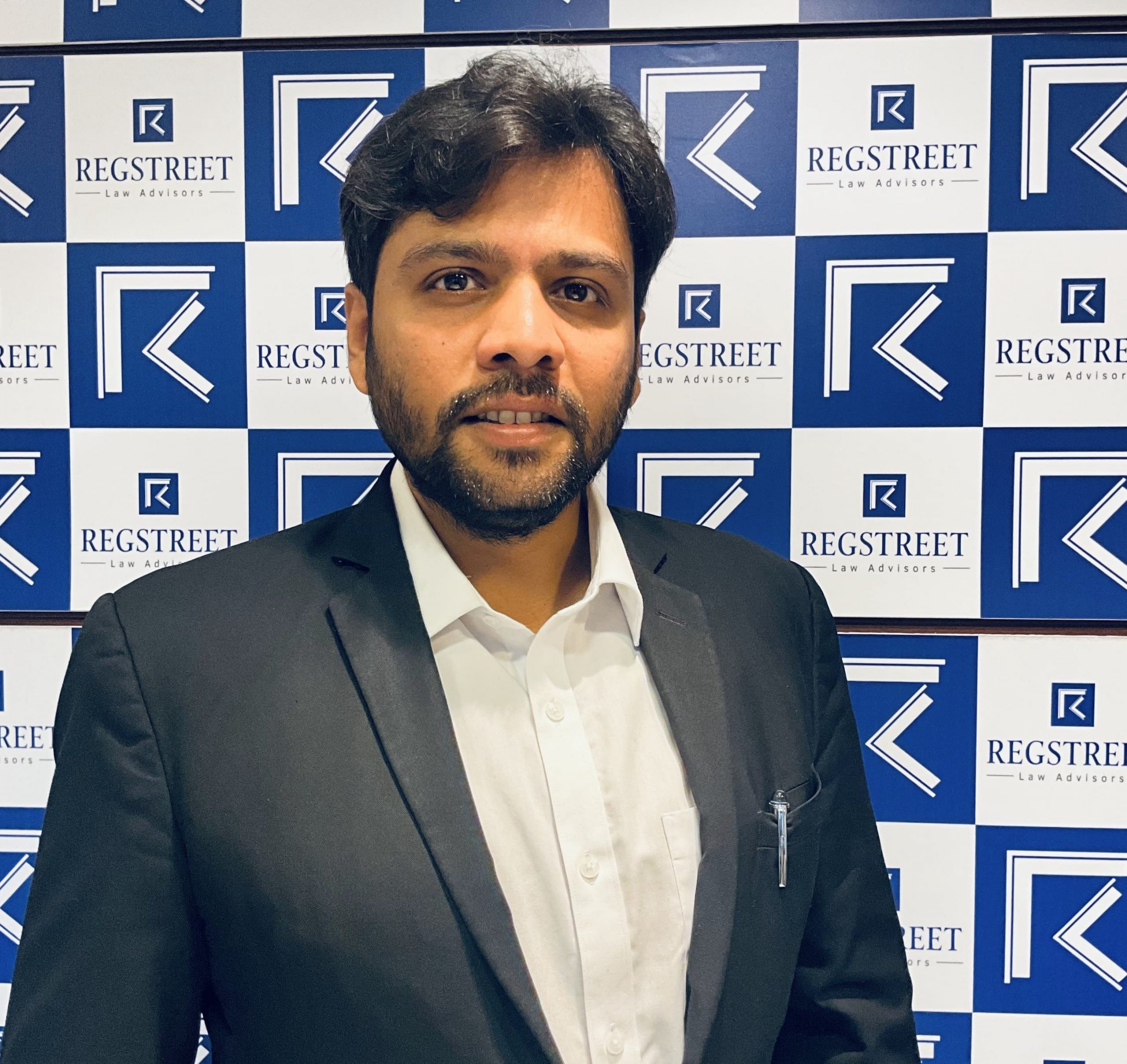
  • “Legal strategy must always be rooted in facts and law. However, in an age of media trials,  perception management becomes a necessary adjunct.” – Abhineet Pange, Designated Partner at Regstreet Law Advisors.

    “Legal strategy must always be rooted in facts and law. However, in an age of media trials,  perception management becomes a necessary adjunct.” – Abhineet Pange, Designated Partner at Regstreet Law Advisors.

    This interview has been published by Anshi Mudgal and The SuperLawyer Team

    Looking back, why did law resonate with you as your chosen path? 

    My early inclination toward debate, theatre, and structured argument made the law a natural  fit. The profession offered intellectual rigor, stability, and a meaningful way to engage with  real-world issues, both theoretically and practically. During my early career, I had the  opportunity to work in in-house roles and Litigation Chambers, which confirmed my affinity  for litigation. Since then, there has been no turning back. 

    What truly drew me in was the dynamic and intellectually stimulating nature of courtroom  practice. Over time, it became a calling. The constant influx of new challenges kept me engaged  and reaffirmed my decision to pursue law as a lifelong profession. 

    Your initial years in legal practice involved real estate disputes and civil litigation  before transitioning to regulatory and commercial litigation. How did those early  experiences shape your legal philosophy and prepare you for handling high-stake, sector specific financial regulatory matters today? 

    Starting out in civil and real estate litigation helped hone essential skills, such as precise  drafting, procedural discipline, and strategic planning. Early mentorships were instrumental. I  was fortunate to begin at Bhave & Co. and later work under Mr. Mehernosh Pardiwala. Both  mentors entrusted me with complex matters early on and encouraged independent advocacy,  which helped build courtroom confidence and strategic maturity. It was compounded by the  faith reposed in me by Ms. Priyanka Khemani at the then Anand & Anand & Khimani. 

    Civil litigation, particularly involving title disputes and contractual claims, instilled in me a  sense of procedural rigor and the value of legal precision. These foundational skills now serve  me well in high-stakes regulatory disputes where the stakes often involve reputational risk,  statutory interpretation, and deep sectoral insight. 

    At Regstreet Law Advisors, I have the privilege of working under Mr. Sumit Agrawal, a  leading authority in securities and financial regulatory law. We as Regulatory Lawyers use our  nuanced understanding of how law, policy, and financial markets intersect. One may not expect  the need to interpret balance sheets or NSE / BSE disclosures in legal pleadings, yet these  elements often define the outcome in financial regulatory litigation. For instance, we recently  succeeded in a matter involving allegations of non-disclosure of a penalty imposed by the  Hon’ble National Green Tribunal. To secure a favorable outcome, we had to integrate  environmental law, civil and criminal procedure, and corporate and securities law, a true  example of the 360-degree interconnectedness that defines modern regulatory law practice. 

    What inspired your decision to begin independent practice in 2017? Could you share  some of the key challenges you faced during that transition, and how you overcame them? 

    As a first-generation lawyer, the desire to build something of my own, grounded in courtroom  skill and client trust, was a powerful motivator. Independent practice meant owning every  aspect of litigation, drafting, arguing, client relations and even managing office logistics. 

    I was deeply inspired by senior advocates on both the Original and Appellate Sides of the  Bombay High Court. Watching them argue with clarity, depth, and composure reinforced my  aspiration to take ownership of cases end-to-end.

    The transition was demanding. With no safety net, just grit and a phonebook, I began reaching  out to friends and seniors across Maharashtra to offer court appearances, even for simple  mentions or adjournments. These appearances helped me gain visibility and build trust.  Gradually, I started receiving direct briefs and appellate work. 

    My first office was a modest 4×8 sq. ft. space in Yeshwant Chambers near Kala Ghoda. I  managed everything from filing, setting up a library to client meetings personally. I also  appeared in matters across jurisdictions, MIDC property disputes in Ankleshwar, revenue  entries before Tehsildars in Jalgaon, and DV Act matters in Vasai. I even had the opportunity  to appear in PMLA and Economic Offences Wing matters. These diverse experiences added to  my procedural agility before I eventually streamlined my focus on the Bombay High Court and  City Civil Court. 

    Those early years, though uncertain, taught me resilience, the value of consistency, and the  importance of professional relationships, all of which remain central to my practice today. 

    You’ve represented both high-profile individuals and corporate clients. How do you  balance legal strategy with media attention and client confidentiality so that the integrity  of the case isn’t compromised by public narratives or media trials? 

    Legal strategy must always be rooted in facts and law. However, in an age of media trials,  perception management becomes a necessary adjunct. Often, public narratives overshadow  judicial processes, which can unfairly influence outcomes or reputation. 

    In a world of deepfakes and viral outrage on Instagram, WhatsApp and X (formerly Twitter),  courtroom integrity matters more than ever. Public biases whether toward ultra-high net worth  individuals or marginalized communities are amplified. Blind faith in authority, or public  outrage, can distort the legal lens. My goal is to maintain faith in the judicial process and focus  on the courtroom while maintaining a strict code of discretion. The courtroom, not the comment  section, is where justice belongs.  

    In my experience with high-profile matters, media attention peaks during accusations but  dramatically drops once a favorable order is obtained. That’s why strategic restraint is often  more powerful than a soundbite. 

    I believe the only legitimate forum for justice is the courtroom. Media narratives can’t be  controlled, but they should never dictate strategy. While the clients may feel anxious, a lawyer  ought not to. With preparation, discretion, and a client-first focus, we safeguard both legal and  reputational interests. 

    As head of the Litigation & Dispute Resolution practice at Regstreet Law Advisors, how do you approach complex regulatory disputes in rapidly evolving sectors such as  competition law, especially considering your involvement in the landmark litigation  against Reliance Jio? 

    Regulatory disputes require a unique blend of legal depth, policy awareness, and sectoral  insight. At Regstreet, we adopt a layered approach, combining doctrinal legal strategy with  industry expertise and real-time regulatory updates.

    I’m supported by a remarkable team of associates whose diligence ensures that factual  accuracy, procedural compliance, and early-stage preparation are solid. This foundation allows  me to focus on broader strategy and advocacy. 

    Mr. Sumit Agrawal, our Managing Partner, has been an invaluable mentor. His regulatory  background as a former SEBI officer allows him to anticipate the thought process of  prosecuting authorities – insight that has shaped my litigation instincts and strategic outlook. Our philosophy is clear: respect the regulator, understand the sector, and advocate with clarity. 

    In the Reliance Jio case, I represented one of the respondents in the writ petition and the original  complainant before the CCI. The matter involved allegations of cartelisation to deny Points of  Interconnection (POIs) and delay Reliance Jio’s market entry. Being part of that matter so early  in my independent practice and arguing alongside some of the most eminent names in the legal  profession was transformative. It reinforced my faith in preparation, consistency, and  perseverance. 

    With growing legal scrutiny on digital platforms, how do you balance the defence of  artistic freedom with the legal thresholds of defamation and public sentiment in media  law cases? 

    Balancing artistic freedom with legal thresholds requires a constitutionally grounded yet  sensitive approach. A recent matter involved a stand-up comedian who made remarks about a  political leader. While some viewed the act as satire protected under Article 19(1)(a), others  saw it as defamatory. This divergence typifies the legal tightrope in media law. 

    In one case, I represented an artist (a well-known comedian) whose show faced an injunction  on the grounds of hurting religious sentiments. The Hon’ble Delhi High Court dismissed the  plea, allowing the show to be released. That experience affirmed the strength of our democracy and  the judiciary’s role in balancing expression with accountability. 

    Ultimately, the independence of our courts allows satire and expression to coexist with  legitimate legal recourse. In handling such cases, we focus on ensuring the content stays within  legal bounds while vigorously defending freedom of expression. 

    You’ve been actively involved in legal education, teaching business and media law, and  engaging with students through workshops and seminars. What is your motivation  behind taking up this role and what key advice would you offer young legal professionals  entering the field today? 

    My involvement in legal education stems from a simple but pressing need to bridge the gap  between what law schools teach and what legal practice actually demands. The endless debates of NLU vs. non-NLU, Tier 1 vs. boutique, money vs. exposure are increasingly irrelevant. The  real game is about learning faster than the world changes. It’s about upskilling every single  day.  

    Statutes and case law are taught well in classrooms. But what about courtroom craft? The  silence before an objection? The art of managing client trust or decoding what’s unsaid in a  negotiation? These are rarely part of the syllabus, yet central to practice. Through lectures and  workshops, we practitioners try to fill in those blanks to make legal education more holistic,  grounded, and practice-ready. 

    Teaching, for me, isn’t just a way of giving back. It keeps me intellectually agile, sharpens my  thinking, and refreshes my perspective. Being around young minds curious, unfiltered, and  sometimes irreverent is energizing. It also ensures I stay tuned in to emerging thought and even  pop culture, which often influences how the law is perceived and applied.  

    My advice to young professionals? Focus on substance. Master procedural law, contracts,  evidence, and constitutional principles. Explore internships widely, be it litigation, corporate or policy to discover your true calling. Build a reputation for reliability, not just credentials.  Law is a marathon, not a sprint. Stay curious, stay adaptable and most importantly, stay  grounded. 

    Further, as Artificial Intelligence evolves, legal practice must evolve with it. The issue isn’t the  use of ChatGPT or Deepseek – it’s a powerful tool, and we must embrace it. But no matter how  advanced technology becomes, it cannot replace the value of human judgment, analysing the  source of law or using your strategic insight. We must continue to apply our minds, not just  automate our outputs or look for a “template”. The real edge will always lie in how well we  integrate emerging tools while staying true to the craft. 

    Law is a marathon. It requires adaptability, resilience, and lifelong learning. As Steve Jobs  said, “Stay hungry, stay foolish” – a mantra that resonates deeply in the legal profession. 

    With a demanding career that spans high-stakes litigation, teaching, and public  speaking, how do you maintain a sense of personal balance and well-being? What  practices or routines help you sustain performance without burnout? 

    Litigation demands mental stamina, emotional composure, and the ability to stay sharp at all  times. But clarity doesn’t come from constant motion, it requires deliberate pauses. I make it a  point to disconnect periodically. Without that reset, it’s easy to slip into autopilot, and litigation  is no place for mechanical thinking. Strategy needs space. 

    At Regstreet, we believe in celebrating the process, whether it’s watching a film together,  attending a play, or unwinding at a concert after a long matter. These shared moments go a  long way in keeping the team grounded and cohesive. 

    Cricket has been a personal outlet. I’ve had the privilege of playing for and leading the Bombay  High Court team in several tournaments. It’s more than a game; it’s a way to channel focus,  discipline, and camaraderie. I also turn to theatre, trekking, cooking, and cinema to recharge.  Saturdays are usually reserved for such pursuits, while Sundays often involve preparing for the  week ahead. 

    Teaching, too, is a form of balance. It renews my intellectual curiosity and gives me space to  reflect beyond the courtroom. 

    Everyone’s rhythm is different. For me, personal well-being isn’t an indulgence – it’s a  professional investment. It’s what keeps the passion alive and the performance sustainable.

    Get in touch with Abhineet Pange –

  • “Be consistent and be curious. You don’t have to be brilliant right away, just be the person who shows up, delivers on time, and asks good questions.” – Shalin Arthwan, Partner Designate at C&S Partners.

    “Be consistent and be curious. You don’t have to be brilliant right away, just be the person who shows up, delivers on time, and asks good questions.” – Shalin Arthwan, Partner Designate at C&S Partners.

    This interview has been published by Anshi Mudgal and The SuperLawyer Team

    What initially got you into law, and how did law school shape that path?

    I actually started out studying History at Hansraj College and that played a bigger role in my legal journey than I realised at the time. History trains you to look at events from multiple perspectives, analyse cause and effect, and question accepted narratives, which is surprisingly similar to how lawyers think. When I got into law school, that background helped me connect the dots faster especially when it came to reading judgments or understanding how legal principles evolved.

    But what really drew me in was litigation  seeing how the law, theory and strategy all come together in a live forum. Law school gave me the foundation, sure, but it was the exposure — moots, internships, the energy of the courtroom that really cemented my interest in dispute resolution.

    You started your career at Luthra & Luthra, what were those early years like?

    Luthra was intense, but in the best possible way. From day one, you’re thrown into the deep end with big-ticket arbitrations and high-stakes matters. One of my earliest matters was a large infrastructure arbitration, and I still remember burning the midnight oil, poring over volumes of documents and prepping witness statements. It taught me that every detail matters, and that being thorough is non-negotiable. But more than that, it shaped how I think — not just about legal issues, but about strategy, how to read the room, how to anticipate what the other side might do.

    Now as Partner Designate at C&S Partners, how have those experiences shaped your current approach?

    I think the biggest shift has been in perspective. When you’re younger, you’re focused on mastering the law, getting the argument perfect. Now, it’s more about seeing the full picture — what the client really needs, what the commercial implications are, how to get to a solution without over-complicating it. The rigour from firms like Luthra definitely shaped my work ethic, but I’ve learned to balance that with flexibility and pragmatism. Clients want clarity — and a path forward. That’s what I try to bring to the table now.

    You were involved in the Raffles Design International arbitration. What are your thoughts on how India handles foreign-seated arbitrations now?

    That case was really interesting — it dealt with whether Indian courts can grant interim relief in support of foreign-seated arbitrations. The Delhi High Court’s ruling was quite progressive and set the tone for similar cases later. It’s encouraging to see Indian arbitration law evolving, especially in how courts are supporting the process rather than hindering it. That said, there’s still some inconsistency, and the system isn’t perfect — but the direction we’re heading in is the right one. Institutional arbitration still needs more buy-in, but we’re getting there.

    You’ve advised fintech clients under FEMA and PMLA. What trends are you seeing there?

    It’s definitely become a tighter regulatory environment, especially for payment gateways and e-commerce platforms. There’s a lot of focus now on cross-border flows, data trails, KYC processes — things that weren’t top of mind for startups a few years ago. What I often see is businesses scaling fast, but the compliance infrastructure doesn’t keep up. And that’s where trouble starts. A lot of our work now involves helping clients plug those gaps before they snowball into investigations.

    You’ve handled international arbitrations under SIAC rules. How do Indian clients experience that compared to domestic forums?

    There’s definitely a learning curve. International arbitration is much more structured and documentation-heavy. Indian clients sometimes find it overwhelming — the timelines, the formal tone, the costs. But they also appreciate the discipline and neutrality that come with it. What we do is act as a bridge — help them navigate the process, simplify the legalese, and make sure they’re not caught off guard. Documentation is a big challenge — we often have to reconstruct a paper trail that’s been loosely kept. So, we start early on that front.

    What advice would you give to younger lawyers entering dispute resolution?

    Be consistent and be curious. You don’t have to be brilliant right away — just be the person who shows up, delivers on time, and asks good questions. Watching court arguments taught me more than any textbook — how seniors frame things, how judges respond. Also, build your fundamentals — research, drafting, reading judgments — that’s your toolbox. And don’t chase glamour early on. Focus on being reliable — that’s what builds trust and gets you bigger opportunities.

     Litigation can take over your life. How do you manage that balance now?

    It’s something I’ve had to work on consciously. In the early years, especially at Luthra, there was a lot of pride in pulling all-nighters and being available 24/7. But over time, you realise it’s not sustainable. Now, I try to be more intentional with time plans, delegate when needed, and switch off when I can. Having a good team is a huge help. You stop feeling like you’re carrying it all alone. And when you do take time off, actually disconnecting helps you come back sharper.

    Get in touch with Shalin Arthwan –

  • “To protect intellectual property in businesses, companies should adopt a proactive IP strategy that includes identifying the IP in various products, securing protection through timely registration of patents, trademarks, copyrights, and designs early on.” – Geetanjali Visvanathan, Partner at Ira Law.

    “To protect intellectual property in businesses, companies should adopt a proactive IP strategy that includes identifying the IP in various products, securing protection through timely registration of patents, trademarks, copyrights, and designs early on.” – Geetanjali Visvanathan, Partner at Ira Law.

    This interview has been published by Anshi Mudgal and The SuperLawyer Team

    With nearly 16 years of distinguished experience in the legal field, what initially motivated you to pursue a career in law? Which aspects of the profession have resonated with you the most, and how did your time in law school contribute to shaping your legal journey?

    My taking up law as a career path was unexpected, considering that I had taken up science in 12th standard. While preparing for various entrance examinations, I was introduced to a book on law by my dad. The questions there sparked my curiosity, and I loved how everything was reason and logic based, which prompted me to pursue law.

    Law School provided a crucial foundation. I participated in moot courts during my college days, where I discovered the excitement of building a case, researching legal propositions, advocating and thinking from either side, and arguing the case before judges, which is ultimately what shaped my choices after law school. 

    Having completed your LL.M. at New York University with a focus on Competition, Innovation, and Information Law, what factors influenced your decision to choose this particular program and university? How has your experience at NYU shaped your career, and how has this advanced degree contributed to your professional growth?

    Having started my career in a top tier Intellectual Property Law firm, I always wanted to pursue an LL.M. in the same field. As NYU was offering an integrated course covering these subjects, I knew that was the right course for me given the new legal challenges that we face in the ecosystem of rapidly changing technologies. 

    My experience at NYU was extremely rewarding as it afforded me the opportunity to engage with lawyers from diverse backgrounds and jurisdictions. 

    At the outset of your career, you worked with a renowned firm. What were the key experiences during this time that significantly enhanced your understanding of the law, and how did these early experiences help shape your career trajectory? 

    I was fortunate to have had a diverse portfolio of matters early in my career which provided me with better and practical understanding of the various IP laws. Each case I worked on and every mistake I made were valuable learning experiences that contributed to my growth.

    I vividly remember my first case, which centered around infringement of an iconic and classic Bollywood film. Attention to detail in the documents proved pivotal in securing a favorable order for us – a learning that I have carried along till date. Similarly, each day in court is a new experience, which has helped me grow, and continues to teach me something new every single day. 

    With your extensive experience in negotiating and drafting music licensing agreements, how do you approach negotiations with international platforms such as Spotify, Apple Music, and TikTok? What challenges do varying jurisdictions present in these types of negotiations, and how do you navigate them?

    My approach to any negotiation, not just for music agreements, is to understand the four key elements of the deal and of the partners involved i.e. Who, What, Why, and How.

    First, identifying the ‘Who’ involves studying the counterparties and their role in the negotiation. For music licensing, this could be a music publisher, record label, or tech platform, each approaches a negotiation differently. 

    Next, understanding ‘What’ entails grasping the underlying technology or platform, including what the usage of music is like and what are the business needs and objectives of my client.

    The ‘Why’ pertains to why and for what purpose the legal rights are needed, such as copyright, mechanical rights, or sync or publishing licenses.

    Lastly, recognizing ‘How’ involves aligning the deal with your client’s business needs and objectives.

    By comprehensively addressing these factors, I have been able to navigate the complexities of music licensing negotiations.

    As a legal advisor to major media and entertainment clients like T-Series, how do you balance intellectual property protection with the evolving legal landscape surrounding IP in the entertainment sector?

    As outside counsel, it’s essential to align my thinking with the client’s objectives while ensuring compliance with the law. Technology is dynamic and constantly evolving and hence, the only solution is to deliver innovative, out-of-the-box solutions that bridge the gap between intellectual property law and the business needs of a client.

    Given your substantial expertise in advising clients on privacy and information technology laws, how do you evaluate the impact of India’s rapidly expanding digital economy on privacy regulations and intermediary liability issues?

    India’s growing digital economy presents both exciting opportunities and significant challenges in the areas of privacy and intermediary liability. As the country moves toward greater digitization, the sheer volume of personal data being generated and processed has increased multifold. This growth puts more pressure on privacy regulations to ensure that individuals’ personal information is adequately protected from misuse. There is also a greater need to ensure effective regulation in relation to collection, storage and sharing of personal information by various entities. The Digital Personal Data Protection Act, 2023 addresses some of these concerns on paper but only time will tell how the Act protects personal data.

    Regarding intermediary liability, digital platforms like social media, e-commerce, and content-sharing services face greater scrutiny nowadays on their role in regulating user-generated content. India’s digital economy requires privacy laws that are flexible and proactive, as well as clear guidelines on intermediary liability to ensure that platforms operate responsibly while fostering growth in the digital sector.

    With your experience in managing and leading teams of lawyers, what do you believe are the most essential qualities for driving strategic decision-making in complex legal matters, particularly those involving emerging technologies and cross-border negotiations? 

    The most essential qualities are a solid grounding in legal fundamentals, staying current with evolving laws and technologies, the ability to distill relevant facts from complexity, and strong teamwork and communication skills to align all stakeholders effectively.

    What advice would you offer to law students aspiring to build a career like yours, particularly in the fields of intellectual property and data protection? What skills or qualities do you consider crucial for success in these areas, and how can aspiring legal professionals best prepare for this path?

    My advice is to know the ABCs of the law you intend to practice. Don’t be afraid to make mistakes—just make sure you learn from them. Stay curious, not just about changes in Indian law but also global developments and never hesitate to ask questions. Attention to detail and analytical thinking are key. No one is perfect, but if you can harness these skills with consistency and a willingness to grow, you’ll be well on your way.

    Drawing from your extensive experience in resolving high-stakes litigation, what intellectual property strategies would you recommend to businesses particularly in the technology sector seeking to protect their IP while navigating the complex legal landscape in India?

    To protect intellectual property in businesses, companies should adopt a proactive IP strategy that includes identifying the IP in various products, securing protection through timely registration of patents, trademarks, copyrights, and designs early on. Having regular IP audits and clear licensing policies and systems in place and lastly, monitoring infringement including initiating swift enforcement actions. 

    Get in touch with Geetanjali Visvanathan –

  • “Litigation is not about instant gratification, it’s a slow build, where every draft, every appearance, every client interaction contributes to your growth.” – Mustafa Bohra, Associate Partner at Solomon & Co.

    “Litigation is not about instant gratification, it’s a slow build, where every draft, every appearance, every client interaction contributes to your growth.” – Mustafa Bohra, Associate Partner at Solomon & Co.

    This interview has been published by Anshi Mudgal and The SuperLawyer Team

    Sir, your legal career spans a diverse array of practice areas, including criminal and civil litigation, writ petitions, and domestic arbitrations. Reflecting on your journey, what initially inspired you to pursue law as a career, and how did you cultivate expertise in such varied areas of law? 

    Looking back, my journey into law wasn’t driven by a single “aha” moment, but by a gradual and irresistible fascination towards it. What first drew my attention was my fascination with going to courts. There was something about the atmosphere, the energy and the way arguments unfolded, that captivated me from the start. Watching advocates argue complex matters with clarity and conviction inspired me to be part of this legal world. This fascination soon turned into a deeper interest towards law. What truly sealed it for me, though, was participating in several moot courts during law college. That’s where I for the first time experienced the thrill of legal research, strategy, and structured argument. Mooting gave me that rush, which made the law feel alive. It sparked a passion that’s been hard to resist ever since. 

    One of the most valuable lessons I picked up early on was learning to argue a case from both sides. It not only strengthens your understanding of the law but teaches you empathy, critical thinking, and the ability to anticipate and respond. These skills are crucial in any type of litigation be it civil, criminal or arbitration. 

    As for cultivating expertise across varied practice areas, there’s no shortcut. For me it’s been a deliberate process deeply rooted in constant reading and curiosity. I ensure that I not only read statutes and judgements but also apply those laws to hypothetical scenarios. It’s my way of pressure-testing the law and developing a deeper, more intuitive grasp of it. It sharpens interpretation, builds a nuanced understanding of law and prepares me to handle diverse cases with confidence. It also keeps me in a constant zone of learning, which is essential because the law is always evolving.  

    Can you share your journey from law school to the early years of practice? What challenges did you encounter when starting out in the legal profession, and how did you navigate those obstacles to establish yourself in your practice areas? 

    My journey from law college to the profession has been shaped by discipline, resilience, and a relentless desire to carve my own space in the legal world. Being a first generation lawyer, I come from a background where nothing was handed on a silver platter and from day one, I knew I had to work harder than most if I wanted to make it in the legal world and the journey still continues.  

    While studying law in college, I worked part time as a Karate instructor, juggling classes, internships and training. Balancing all this meant my days often started well before sunrise and ended well past midnight, but the discipline taught me how to manage time, stay grounded and never lose sight of my goals. 

    Before I formally entered the profession, I had already completed approximately three years of internships with a litigator because I wanted to be as ready as possible when the first opportunity came, and it eventually did, I was selected at Solomon & Co., a place that has shaped me significantly and allowed me to grow in arbitration, civil and criminal litigation. The principle which I followed as a student and an intern continued at the firm as well which was to never say no to any work. Even when a task or assignment felt beyond my comfort zone, I saw it as a chance to grow. 

    What I have learned is that success in law doesn’t come easy and certainly doesn’t come from shortcuts, it comes from showing up everyday, putting in the work and being willing to learn, unlearn and grow. I still carry the same hunger today, and I believe that as long as that fire burns, the journey will remain exciting. 

    Your career at Solomon & Co. has been marked by impressive growth, from Associate to Senior Associate, and now Associate Partner. What were the key milestones, accomplishments, or lessons that have contributed to your rise within the firm? How do you view your current role as an Associate Partner in shaping your long-term goals and aspirations within the firm? 

    My journey at Solomon & Co. has been defined by consistent growth, strong mentorship of my seniors and a deep-rooted passion for dispute resolution. From joining as an Associate to now working as an Associate Partner, every step has brought with it new challenges, learnings and opportunities that shaped me both professionally and personally. 

    Some of the key milestones in this journey include handling high stakes litigation, managing and nurturing a diverse team, and successfully building and maintaining client relationships. Each role I have taken on has reinforced the value of strategic thinking, clear communication and adaptability. These skills are fundamental for navigating the dynamic world of dispute resolution. 

    As an Associate Partner, my focus has expanded to including mentoring junior team members, broadening our practice areas, and actively participating in business development initiatives. It’s a role that demands not just legal acumen but also vision, patience and leadership and the same also aligns perfectly with my long-term goal of contributing meaningfully to the firm’s legacy, while continuously evolving into a well – rounded leader.  

    I am especially grateful for the trust and responsibility placed in me by Solomon & Co. and particularly by Mr. Aaron Solomon, our Managing Partner and other Partners at Solomon & Co with whom I have worked, their mentorship and support have played a pivotal role in my growth. The learnings and trust reposed by the firm helps me and continues to motivate me while raising the standards of work in my team and across practice areas ensuring the best possible client service. 

    The road ahead is exciting, and I look forward to continuing to grow with Solomon & Co. while making a lasting impact in the field of litigation and dispute resolution.  

    With your extensive experience in domestic arbitration, what do you consider to be the key elements for a successful arbitration process in India? How do you prepare for an arbitration hearing, and what are some common misconceptions clients have about arbitration that you make sure to clarify for them?

    With the evolution of arbitration law and practice in India, a successful domestic arbitration hinges on a few key elements. 

    First and foremost, clarity in the arbitration agreement is essential. Many disputes begin with ambiguities in the arbitration clause itself, be it the seat, governing law, or the process for appointment of arbitrators. A well drafted arbitration clause reduces the scope for preliminary procedural challenges and delay. 

    Secondly, efficiency and preparedness are critical. Unlike court proceedings, arbitration gives parties greater control over timelines and procedure. To make the most of this, it’s important to have a focused strategy right from the statement of claim/defence stage, with clearly defined issues, timelines, and a vision of how the matter should proceed. When I prepare for an arbitration hearing, I focus not just on the legal merits but also on the narrative as to how to present a case in a concise and persuasive manner. Understanding the tribunal’s style and anticipating procedural objections or evidentiary challenges are all part of the preparation. Arbitration is often document – heavy, so organizing the record meticulously and preparing a tight chronology helps the tribunal follow the case seamlessly.  

    As for client expectations, one common misconception is that arbitration is always faster and cheaper than litigation. While it often is, especially when managed well, that’s not universally true. I also find that clients sometimes think arbitration is informal or less serious whereas in reality, it can be just as rigorous and adversarial, especially in complex commercial matters. 

    Another myth is that the arbitrator will find a middle ground to resolve the dispute. I always clarify that arbitrators are bound by law and evidence, and their role is adjudicatory, not conciliatory. Ultimately, the goal is to demystify the process for clients, set realistic expectations, and execute the strategy with precision and integrity.  

    You regularly appear before various judicial and quasi-judicial forums, including Magistrate Courts and the Bombay High Court. How do you adapt your legal strategies to suit the procedural differences in these distinct forums? 

    Each forum whether it is the Magistrate’s Court or a quasi-judicial tribunal, or the Bombay High Court has its own procedural framework, pace, and expectations. Adapting legal strategy to suit these differences is not just important but also essential for effective advocacy. In Magistrate Courts, proceedings tend to be more procedural, and form driven. The focus is often on compliance with statutory timelines, procedural filings, and the careful presentation of evidence especially in criminal complaints or cases under the Negotiable Instruments Act. Here, precision in pleadings, attention to procedural nuances, and consistent follow-up are key. Oral arguments are usually brief and factual, and the focus is on moving the matter through its procedural stages efficiently. 

    In contrast, when appearing before the Bombay High Court, especially on the original side, the approach is significantly different. Matters here involve a broader canvas such as complex commercial disputes, writs, appeals etc., requiring deeper legal analysis, structured submissions, and often layered case law support. Strategy here includes anticipating judicial thinking, being well-versed with recent precedents, and presenting arguments with clarity and brevity to match the Court’s time constraints. 

    At the core of my approach is a simple principle: form must follow function. Strategy is tailored not only to the forum, but also the nature of relief sought, the urgency involved and the profile of the adjudicator. One size never fits all.  

    As an experienced litigator who frequently handles high-profile cases, could you share a particularly complex or high-stakes litigation that you’ve managed? What were the main challenges involved, and how did you craft a successful strategy for your client?

    One of the more complex matters I have handled involved representing a landowner, where we are defending a Suit and connected litigation concerning a large-scale redevelopment project in Mumbai. The dispute revolves around the ownership of land and other issues. 

    The main challenge lay in the multi – forum nature of the dispute: while the core issue is being adjudicated by the Suit Court, there are parallel proceedings before Magistrate’s Court, Deputy Registrar of Co-operative Societies, Land Revenue Officers etc. 

    Given the commercial and reputational stakes, the pressure to act swiftly and strategically was high. My approach was to first disentangle the overlapping legal issues and create a unified litigation roadmap. I worked closely with the client to identify his core priorities, staying adverse enforcement actions etc. 

    We focused on defending the grant of ad-interim reliefs from the High Court, which set the tone of the rest of the proceedings. What is important is a mix of legal precision and tactical patience. We avoided combative stance where unnecessary and instead leveraged procedural opportunities to bring the other side to the table for Mediation. 

    Cases like this reaffirm that high stakes litigation isn’t about winning, its about knowing when to push and when to pause.    

    With your wealth of experience across multiple areas of law, you are in a unique position to guide aspiring legal professionals. What advice would you offer to law students and young lawyers, particularly those looking to build a successful career in dispute resolution? Are there any key skills, resources, or strategies that you believe are essential for success in this field?

    Dispute resolution is a deeply rewarding field, but it demands patience, precision, and perseverance. For law students and young lawyers aspiring to build a career in this area, my first piece of advice would be: embrace the grind. Litigation is not about instant gratification, it’s a slow build, where every draft, every appearance, every client interaction contributes to your growth. 

    Foundational skills like legal research, drafting, and court etiquette are non-negotiable. The ability to think analytically, anticipating judicial thinking, communicate clearly, and adapt to different forums is what makes a good Advocate. Early on, focus on understanding procedural law, it’s the spine of litigation. You may know the law, but if you don’t know how to apply it procedurally, you’re at a disadvantage. 

    I also encourage young professionals to observe courtroom proceedings, even when they’re not arguing. There’s no better classroom than a courtroom. Watch how seasoned counsel frame their submissions, how judges respond, and how strategies shift in real time. Over time, this exposure will shape your own courtroom style. 

    In terms of resources, commentaries, live cases, and judgments are vital but so are podcasts, lectures, and articles that give you practical insights. Law is no longer just about black-letter rules; it’s about staying curious, current, and commercially aware.

    One underrated skill is client management. Understanding your client’s priorities, maintaining transparency, and managing expectations are as important as your legal strategy. After all, dispute resolution isn’t just about fighting, it’s about solving.

    Finally, build your credibility. That comes from consistency, honesty, and being dependable not just with seniors or clients, but with your team as well. Reputation in this field is earned slowly. If you’re willing to put in the hours, keep learning, and stay grounded, dispute resolution offers you a career of intellectual challenge and professional impact. 

    Achieving a work-life balance in a demanding profession like law can be challenging. Given the pressures of high-stakes litigation and various professional commitments, how have you managed to maintain a balance between your career and personal life?

    Work – life balance in the legal profession is a constant work in progress, especially in litigation, where the unpredictability of court dates, client emergencies and deadlines often spill over into personal time. I haven’t cracked it yet, but over the years, I have learned to manage the chaos.  

    What has helped me the most is being fully present wherever I am. When I’m in court or working on a case, I give it my undivided attention. But once I step away from that space, I consciously switch off, even if it’s just for a short walk, dinner date or watching one episode of a show on any OTT platform. Those moments of disconnection actually recharge me and help me return to work with better focus.  

    I have also learned the value of prioritizing ruthlessly. Delegation, trusting my team and setting realistic expectations have been key to avoiding burnout. Spending time with loved ones, traveling when possible and pursuing personal interest keeps me grounded. They are essential for mental clarity and long – term sustainability in a profession that can be all consuming. 

    Most importantly, I have realised that the balance isn’t about spending equal time, its about being aligned with what matters most in each moment. Some weeks will tilt towards work and others towards personal time. As long as I don’t lose sight of the people and passions outside the profession, it all evens out in the long run.  

    Get in touch with Mustafa Bohra –

  • “The key to building a successful legal career is to have a strong understanding of core legal principles. I would advise law students to intern in different practice areas and gain experience in both litigation and corporate law.” – Mansi Singh,   Partner at BTG Advaya.

    “The key to building a successful legal career is to have a strong understanding of core legal principles. I would advise law students to intern in different practice areas and gain experience in both litigation and corporate law.” – Mansi Singh, Partner at BTG Advaya.

    This interview has been published by Anshi Mudgal and The SuperLawyer Team

    With your distinguished and extensive legal career, could you share the initial catalyst that sparked your passion for law? Was there a defining moment or experience that led you to pursue this field, or did your interest develop gradually over time?

    I arrived at my career choice after exploring various options and narrowing down the ones that did not align with my interests or goals. In other words, I kind of chose this career by crossing out everything I did not want to do but once I chose my career path, I dedicated myself fully to it. I consistently worked hard to develop my skills and grow within the field. 

    Looking back at the early stages of your career, what were some key experiences that significantly enhanced your understanding of the law? How did these formative moments influence the direction and trajectory of your professional journey?

    In the early stages of my career, the key learnings came from actual exposure to client work which also included litigation where observing court proceedings and drafting pleadings gave me a strong understanding of the real-world application of legal principles. On the corporate front, client interactions and negotiations helped me understand legal documents from a business perspective. I learnt that no client is looking for a lengthy memo full of disclaimers. Clients seek practical, commercial and easy to implement legal advice. While a strong understanding of the law is of the utmost importance, it is crucial to find business friendly solutions for the client. 

    Another defining moment for me was winning the International Bar Association’s Aviation Law Committee’s Annual Scholarship in 2017 and travelling to Sydney for the Annual Conference. This included an opportunity to make a presentation before senior legal professionals. The IBA conference brings together thousands of legal professionals from across the globe. The opportunity to interact with senior lawyers from different jurisdictions helped me understand the legal trends, opportunities and challenges faced by lawyers in different parts of the world. It also helped me improve my communication skills by engaging in panel discussions and networking events. Most importantly, I made many global connections that I truly cherish. 

    I have also been lucky to find mentors who trusted me when I was a young lawyer trying to understand the nuances of legal practice. Mona Bhide, Managing Partner, Dave & Girish & Co. and Ramesh Vaidyanathan, Managing Partner, BTG Advaya have been instrumental in shaping my growth by not only providing guidance on navigating complex legal issues but also invaluable insights on balancing personal and professional growth.

    Your practice involves advising both multinational and domestic corporations on various corporate and commercial matters. Could you outline some of the primary challenges companies encounter when doing business in India, and how do you assist them in overcoming these obstacles?

    Doing business in India, entails navigating a complex regulatory landscape. Any person looking to invest in India must perform due diligence to ensure that they can invest in the planned activities. It is important to include sufficient contingencies in planning and timelines for setting up business in India.  Indian company laws and labor laws set out extensive operational requirements, and non-compliances can lead to fines, penalties, and criminal liability, including liability attaching to directors and management of the Indian company. The key to successfully doing business in India is to have experienced legal advisors and compliance managers and maintain an annual audit checklist. 

    Corruption risks in India are generally perceived to be high due to the bureaucratic environment, particularly in specialized sectors such as government procurement and real estate. I advise my clients to clearly communicate the company’s ‘zero tolerance’ policy towards corruption and institute whistleblower and anti-bribery training programs for India-specific projects.

    India’s tax regime is complex and evolving, with stringent compliance requirements. The nuances of Indian tax laws and documentation requirements can significantly impact transaction structures. Failure to address these tax considerations early can lead to unexpected tax costs, compliance delays, and potential legal challenges, ultimately derailing business objectives. A proactive approach to Indian tax planning is essential to avoid surprises and safeguard strategic goals.

    As an external member of Internal Committees under the anti-sexual harassment law, what are the key legal considerations companies should keep in mind when establishing these committees? How do you ensure they effectively address complaints and foster a safe working environment?

    The Prevention of Sexual Harassment of Women at Workplace (Prevention, Prohibition and Redressal) Act, 2013 (“POSH Act”) requires an employer to set up an Internal Committee (“IC”) at each office of an organization employing ten or more employees to hear and redress grievances pertaining to sexual harassment. There must be a minimum of four IC members including a senior level woman employee as the Presiding Officer, two other members from employees and an external member. While the minimum requirement is to have four IC members, it is advisable for the IC to have an odd number of members to effectively address any conflicts that may arise. 

    Further, it is important to sensitize employees and train IC members about the requirements of the POSH Act. Many companies rely on online training platforms for employee education but conducting at least one in-person workshop every year led by a professional expert in this field can offer employees and the IC a comprehensive understanding of the POSH Act. Some key aspects that the IC must keep in mind while addressing sexual harassment complaints is that sexual harassment is not just about the man’s intent but the women’s perception, the IC must follow principles of natural justice and provide fair opportunity to both the parties to make their submissions, act in an unbiased manner as per due process, maintain confidentiality and ensure non-retaliation at all times. The IC must document/record every aspect of the enquiry process and adopt an empathetic, objective and fair approach. 

    With your extensive experience in aviation law, particularly regarding aircraft registration and deregistration, what are some of the primary legal and regulatory challenges in these processes? How do you support your clients in ensuring compliance with aviation regulations?

    Registration of an aircraft is a comparatively easier process, but clients often face challenges during deregistration and repossession of aircraft. In case of leased aircraft, once an application is received from an aircraft lessor being the irrevocable deregistration and export request authorization (IDERA) holder in the prescribed format, the Directorate General of Civil Aviation (“DGCA”) must deregister the aircraft within 5 working days. However, the airport operator must be paid the dues relating to the aircraft if the same are unpaid. Similarly, any other entity that has outstanding dues pertaining to the aircraft may also submit their claims to the DGCA. In cases where the lessee refuses to make the above payments, the lessors often end up paying them on behalf of the lessee and thereafter recovering them from the lessee is often an expensive and time-consuming process. 

    India acceded to the Cape Town Convention in 2008, but an enabling legislation was not passed. As a result, some domestic laws such as the Insolvency and Bankruptcy Code, 2016 (“IBC”) conflicted with the provisions of the Cape Town Convention. If an airline filed for bankruptcy (such as the recent Go First case) the lessors were prohibited from repossessing their aircraft during the moratorium period. However, by way of a notification that was issued in October 2023, aircraft and aircraft equipment were exempted from the moratorium provisions under the IBC. Also, the Cape Town Convention Bill is presently awaiting Presidential assent to become the law. Once, the Cape Town Convention Bill is passed, it will accord supremacy to the Cape Town Convention and will streamline the process for deregistration and repossession of aircraft from India. 

    I assist my clients by providing them with regulatory and compliance support, assisting them in liaison with the DGCA and other regulatory authorities, assisting with drafting and reviewing transaction documents such as aircraft purchase and lease agreements and advice on structuring of transactions and risk mitigation strategies.

    In your practice involving airline operations, what are some of the most frequent consumer grievances, and what legal frameworks exist to address these issues?

    Most consumer grievances relate to delays, cancellations and refunds. The DGCA has launched the “AirSewa” web-portal/mobile application to deal with passenger grievances.  The Civil Aviation Requirements also provide for facilities/compensation to be provided to passengers by airlines due to denied boarding, cancellation of flights and delays in flights. Passengers can file grievances related to delays, cancellations, etc., on the AirSewa portal.   The Consumer Protection Act, 2019 also provides for remedies for passengers to claim compensation for any deficiency in the services provided by the airlines.

    As the Senior Vice Chair of the Aviation Law Committee of the International Bar Association and Chair of the India Wing of the International Aerospace Women’s Association, how do you envision the future of Indian aviation?

    The aviation industry in India has emerged as one of the fastest growing industries in the country and has recovered from the Covid-19 pandemic with passenger numbers exceeding the pre-COVID levels.  With disposable income in India growing, the demand for air travel will only keep increasing. To cater to the growing demand, the airlines in India have huge order books and the Government of India has been working towards increasing the number of airports. The success of Indian aviation will depend on infrastructure development to support the growing demand, policy reforms to meet global expectations and availability of skilled labor. Investments in emerging technologies with a focus on sustainability will also be an indispensable consideration for the growth of the industry. 

    For aspiring law students who wish to follow a similar career path, what advice would you offer in building a successful legal career? In today’s evolving legal landscape, especially with the growing impact of technology, what skills or personal attributes do you consider most vital for achieving long-term success?

    The key to building a successful legal career is to have a strong understanding of core legal principles. I would advise law students to intern in different practice areas and gain experience in both litigation and corporate law. This will help in understanding the full spectrum of legal work from courtroom procedures to commercial drafting and negotiations. Early exposure to different practices also helps in discovering one’s interests and strengths. Internships also provide an opportunity to build professional relationships, and this may open doors to future job opportunities.  Further, we live in a fast-paced world driven by technology and it’s a lot easier to stay updated today. One should inculcate a habit of reading every day to stay abreast of legal developments. 

    Throughout your career, what strategies do you employ to maintain a healthy work-life balance, and what advice would you offer to others seeking to balance career ambitions with personal responsibilities and community involvement? 

    Maintaining a healthy work-life balance is not always easy but you have to put that on your priority list. There will be days when you manage work better and there will be days when you manage your personal life better, there is no perfect balance. Prioritizing and having a written to-do list helps me to identify and focus on the most important tasks each day. Over the years I have also learnt the importance of saying ‘no’ without feeling guilty.  If you ever feel overwhelmed by the increasing workload that could result in stress or reduced productivity, I suggest having an open conversation with your seniors. 

    It is also important to build a strong support system. Having colleagues you can trust and rely on and having a family that supports your aspirations and well-being is the biggest blessing. Finally, invest in self-care. Try to find some time to exercise, sleep well and take that holiday that is on your bucket-list to re-energize yourself. Remember that you cannot pour from an empty cup. 

    Get in touch with Mansi Singh –

  • “From the standpoint of honing your skill-sets as a lawyer, be a voracious reader, aim at polishing your legal language, keep pace with latest developments, take the study of jurisprudence and statutory interpretation seriously.” – Apoorva Thakur, Partner at MKA Legal Law Offices.

    “From the standpoint of honing your skill-sets as a lawyer, be a voracious reader, aim at polishing your legal language, keep pace with latest developments, take the study of jurisprudence and statutory interpretation seriously.” – Apoorva Thakur, Partner at MKA Legal Law Offices.

    This interview has been published by Anshi Mudgal and The SuperLawyer Team

    Law is often regarded as both intellectually stimulating and socially impactful. What inspired you to pursue a legal career, and was there a pivotal moment or personal experience that influenced this decision?

    The term, ‘Advocate’, unlike a lawyer or law graduate, always used to amuse me since it’s all about championing causes. While growing up, I was almost always appreciated for my ‘gift of gab’, innovative thinking, problem-solving abilities, and my flair for writing. 

    Additionally, my role models and famous personalities about whom I liked to read, namely Dr. BR Ambedkar, Chittaranjan Das, Robin Sharma, Abraham Lincoln, Fali Nariman, etc. were all lawyers.

    On a lighter note, my love for Hindi movies with exaggerated and over-dramatized courtroom-scenes might have subconsciously sown the seeds of embarking on the path of rendering legal services and making a difference to the infamous “taareekh-pe-taarekh” system. 

    After completing your master’s degree, you embarked on an academic career.  What motivated you to take this path, and what valuable learning experiences did you gain during that time?

    My intellectual curiosity got me bitten by the ‘research-bug’, which motivated me to share with aspiring lawyers my learning-takeaways and enthusiasm for new knowledge in this dynamic domain of law. 

    It is pure delight to witness my students get empowered and blossom into successful legal professionals, Magistrates, etc. and receive heartfelt messages from them on Teachers’ Day and invites to their weddings. No fee can match that feeling of joy.

    My brief teaching-stints at CLC (DU), HILSR (Jamia Hamdard), MAIMS (GGSIPU), and NorthCap University gifted me with diverse exposure, pan-India network, and the golden chance to positively impact young and bright minds.  

    Your background as an Assistant Professor and NET-qualified academic in law is impressive. How did you blend your teaching methods with real-world legal practice, and how did your students benefit from your diverse experience in litigation, consulting, and working with corporate and government organizations?

    Creative interpretations of law, interactive case study-discussions, narration of courtroom-anecdotes and real-life client-handling experiences made my sessions interesting, I was told. 

    Guest interactions and internship opportunities with those in my circle, event-sponsoring through my firm, etc. were additional benefits for the students.  

    I have been blessed to have had responsive seekers as my mentees, most of whom resonated with my passion for breaking barriers as a first-generation lawyer, being unapologetically self-made, and experimenting with research on law in multidisciplinary shades.      

    Could you give an overview of the role and contributions of a Resource Person working with various MNCs, organizations, and NGOs? 

    Mainly, the common thread comprises assisting them with navigation through legal complexities in their daily workings, observance of relevant compliances, urgent legal support, policy-making and risk-management strategies.  

    With a client base that includes MNCs, MSMEs, and educational institutions, how do you approach legal consulting for large corporations versus smaller businesses? What unique challenges do you face when working with startups compared to established companies, and how do you tackle those?

    The focus changes, and approach to legal problems also gets affected thereby. 

    It is my observation and experience that startups and smaller businesses focus more on short-term productivity and long-term rapid growth, while larger establishments aim at steady and consistent momentum. The former may be achieved through innovative and tailormade solutions that are cost-effective and sector-specific, while the latter require transaction advisory, stable plans for dispute-resolution, calculated policy-modifications to suit changing times or industry trends or amendments in regulations/laws.

    Could you share your perspective on the role of mediation in dispute-resolution in India, and how its dynamics have evolved over the years? Additionally, how has technology contributed to simplifying the proceedings?

    From our age-old panchayat system to the popular ‘Lok Adaalats’, and from the mandatory pre-litigation mediation under the Commercial Courts Act of 2015 to the recently passed Mediation Act of 2023, this simple-yet-effective out-of-court settlement technique of dispute-resolution has witnessed an evolving landscape in India and is here to stay with a promising future. 

    I personally feel that it offers an expeditious means to reach amicable and self-binding solutions to legal problems.    

    With technological progress nowadays, ODR (online dispute-resolution) through SAMA, AGAMI, and other such portals is the pleasant reality to experience the magic of mediation sitting anywhere in India.

    As a partner at MKA Legal and the head of LAWGYSTIX Foundation, what is your approach and vision for your legal practice? What has been one of the most challenging cases you have dealt with so far, and how did you manage it?

    Bridging gaps between the industry and academia, and awakening students of law to their ‘social engineer’ Advocate self has been my vision for enjoying a ‘rule of law’ based society around us. 

    A holistic, multi-disciplinary, ethical and humanistic approach has always worked wonders for me and kept me grounded.

    Though all matters present unique challenges, I personally cherish the one through which I learnt nuances about powers of the Trial Court hearing Criminal Revision. It wasn’t a cake-walk to get a 1100+ day-limitation condoned in the interest of justice, and to get the charge successfully modified in a murky cross-case involving factual elements of modesty-outrage and attempt to murder. Working on cases related to men’s rights in false complaints under the PoSH law, or intriguing IPR advisory have also been full of learning.

    Client probing, issue analysis, brief preparation, witness examination (if the matter is at trial level), applying knowledge of human psychology, engaging in avid research etc. enable us to effectively assist Courts in delivering justice while helping oneself evolve as a practising counsel. 

    I am deeply indebted towards my mentors in chamber litigation, namely Late Sh. LK Upadhyay, Senior Advocates Gopal Subramaniam, Priya Hingorani, and Anil Sapra who have all nurtured and guided me in their special ways. 

    You’re not only a successful legal professional but also an image consultant, soft skills educator, and energy healer, among other roles. What strategies have you used to maintain a healthy work-life balance? What advice would you give to others trying to balance career aspirations with personal responsibilities?

    Donning multiple hats keeps me on my toes, and the various things I do help me get my ‘battery-recharge’ when needed. 

    Though the Indian law prescribes certain boundaries for licensed Advocates, I have experienced that all domains of knowledge have the ability to fuse into one another, provided we know how to use the integrated version. 

    Following the Hindu way of life and being a practitioner of Nichiren Buddhism, I surrender to cosmic plans for my own inherent wisdom and infinite potential to unleash when necessary. So, no specific strategies.

    On the personal front, my parents are my biggest strength, with my mentors being my compass, friends being my biggest cheerleaders, and marriage being a great teacher.

    Live in constant gratitude, and learn from everyone and everything. There might be crooked turns and deep pits on your way, but see dreams, set your goals, have a vision, wake up to your unique mission every morning, maintain a loving heart, work for others’ growth alongside your own, and keep moving ahead. 

    Once your work becomes your real fuel, your spiritual engine will keep you motivated and wisely guided towards healthy habits and holistic approach towards life.

    With your extensive experience across various areas of practice and academia, what advice would you offer to students aspiring to build a career like yours? Additionally, could you recommend some resources to help them stay informed about the latest legal trends?

    From the standpoint of honing your skill-sets as a lawyer, be a voracious reader, aim at polishing your legal language, keep pace with latest developments, take the study of jurisprudence and statutory interpretation seriously. 

    Rest, from a macro perspective, I would only suggest- focus on the soul’s progress, and the rest will smoothly follow. And trust the divine to unravel your life purpose, since whatever happens, happens for the best.

    As regards resources, the Universe has no dearth of those. However, as they say that, “Beauty lies in the eyes of the beholder”, be a life-long learner and coachable mentee whose appetite is not restricted to judgments, news, interviews, amendments, debates, conferences, publications, social media content, MOOCs, etc. 

    Use your superpowers wisely, and the world will be your playground. Always remember that life is precious, and good karma is the eternal, indestructible currency.

    Get in touch with Apoorva Thakur –

  • “Law has always intrigued me because of its power to shape businesses, resolve disputes, and create order in an otherwise complex world.” – Ishaan Duggal, Associate Partner at HSA Advocates.

    “Law has always intrigued me because of its power to shape businesses, resolve disputes, and create order in an otherwise complex world.” – Ishaan Duggal, Associate Partner at HSA Advocates.

    This interview has been published by Anshi Mudgal and The SuperLawyer Team

    What initially inspired you to pursue a career in law?

    Law has always intrigued me because of its power to shape businesses, resolve disputes, and create order in an otherwise complex world. While I did not have a predetermined path toward law, I was drawn to its logical reasoning, problem-solving, and impact on society. As I began to explore the legal field, I was drawn to the idea of working within a law firm environment, where I could help clients navigate complex legal challenges, whether in business, litigation, or personal matters. The opportunity to collaborate with skilled professionals and offer practical, strategic solutions to clients was something that truly inspired me. Ultimately, I saw a career in law as a way to apply my skills in critical thinking and problem-solving to advocate for clients and create lasting, positive outcomes. Over time, I developed a keen interest in commercial and financial laws, which eventually led me to specialize in insolvency and restructuring.

    What motivated you to pursue an LLM (Professional) in Banking and Financial Studies from NLU Delhi?

    After completing my law degree and practicing for a few years, I understood that it is crucial for legal professionals to stay ahead of the curve, and hence I wanted to deepen my understanding of banking, securities, insolvency and investment laws. The LLM (Pro.) in Banking and Financial Studies at NLU Delhi provided a strong foundation in areas like banking and finance, securities and investment laws, arbitration, insolvency and financial restructuring—topics that are highly relevant in today’s economic environment. This specialization has been instrumental in my practice, particularly where financial acumen is as critical as legal expertise.

    What were some key learning experiences in the early years of your career?

    The initial years of practice were a mix of excitement and steep learning curves. I quickly realized the importance of building strong client relationships. At first, I focused heavily on legal research and analysis, but I learned that a successful practice also requires understanding clients’ needs, building trust, and communicating complex legal issues in a way that is clear and actionable for them. Another key experience was learning to manage multiple cases and deadlines simultaneously while maintaining attention to detail. I also had the opportunity to work closely with senior attorneys, where I learned the value of mentorship, strategic thinking, and how to approach complex legal problems creatively. It was through these experiences that I developed a deeper understanding of how to balance legal expertise with client service, and how to work effectively as part of a team in a fast-paced law firm environment. 

    As far as my practice area is concerned, one of the most valuable experiences was understanding the practical application of insolvency laws, especially how different stakeholders—creditors, resolution professionals, and debtors—navigate the process.
    One key moment that stayed with me was working on a case where a corporate debtor’s revival depended on strategic negotiation rather than just legal arguments. This reinforced my belief that law is not just about statutes but also about commercial awareness and strategic thinking.

    What are the key challenges in insolvency proceedings in the Renewable Energy and Automobile sectors?

    Both industries present unique challenges. In the renewable energy sector, insolvency cases often involve long-term power purchase agreements (PPAs), regulatory approvals, and government policies, which can complicate resolution. In contrast, the automobile industry faces issues like supply chain disruptions and asset-heavy structures, making liquidation complex.
    One of the biggest challenges is finding resolution applicants who see long-term value in distressed assets. In such cases, we work closely with financial institutions and potential investors to structure resolution plans that align with industry-specific constraints.

    What was the primary legal issue in the ARCIL vs Bishal Jaiswal judgment, and what impact did it have on insolvency law?

    The Hon’ble Supreme Court vide judgment dated April 15, 2021 in the matter of Asset Reconstruction Company (India) Ltd v. Bishal Jaiswal & Anr. decided a crucial question of law pertaining to whether entries in the Balance Sheet would amount to an acknowledgment of debt for the purpose of extending the period of limitation as provided under Section 18 of Limitation Act, 1963 (Limitation Act) as far as the IBC is concerned.  

    In this landmark judgment which is undoubtedly significant to all stakeholders under the Insolvency and Bankruptcy Code, 2016 (IBC), the Apex Court took cognizance of the fact that although the filing of a Balance Sheet is a statutory requirement as per the provisions of the Companies Act, 2013, however, doing the same can amount to an acknowledgment of debt depending on the facts of the particular case as to whether an entry made in a Balance Sheet qua any particular creditor is unequivocal or has been entered into with caveats. These caveats could be in the form of notes to accounts or other qualifications made in the Balance Sheets.

    This judgment also set aside the majority decision of the Hon’ble National Company Law Appellate Tribunal (NCLAT) in the matter of V. Padmakumar v. Stressed Assets Stabilisation Fund wherein the majority opinion of the five-member bench was that entries in Balance Sheets would not amount to an acknowledgment of debt to extend limitation under Section 18 of the Limitation Act.

    In addition to the above, the Hon’ble Supreme Court relied upon its decisions in Sesh Nath Singh & Anr v. Baidyabati Sheoraphuli Co-operative Bank Ltd & Anr. and Laxmi Pat Surana v. Union Bank of India & Anr8 and observed that it is not possible to accede to the arguments that Section 18 of the Limitation Act cannot be made applicable to proceedings under the IBC.

    What advice would you offer to aspiring lawyers?

    • Hone your research and drafting skills, as the best arguments stem from well-researched positions.
    • Understand the commercial impact of legal proceedings—clients seek solutions, not just legal opinions.
    • Develop a strong foundation in commercial and financial laws, as they are critical for corporate litigation.
    • Stay patient and persistent—the legal profession demands continuous learning, adaptability, and strategic thinking.

    How do you maintain a work-life balance in a demanding legal career?

    Balancing work and personal life in the legal profession can be challenging, but I make a conscious effort to manage it effectively. A few strategies that work for me include:

    • Prioritizing tasks and setting clear timelines for completing them.
    • Taking short breaks and staying engaged in non-legal activities to maintain perspective.
    • Most importantly, understanding that while work is demanding, personal well-being is equally important for long-term success in this profession.

    Additionally, I’ve learned that there are certain periods, especially during high-stakes cases, when work demands more attention, and I adjust by being more strategic about my personal commitments during those times. The key is knowing that it’s a cycle—some weeks will be more intense than others, but I always make time to recharge when I can. In the end, it’s about being proactive in managing my time and knowing when to push and when to step back.

    Get in touch with Ishaan Duggal –

  • “I believe that one should broaden their perspective beyond law, as a fair understanding of business, economics, philosophy, and current affairs can make one a more effective lawyer.” – Shubham Saigal, AOR at Supreme Court of India and Partner at Jain & Saigal Law Offices.

    “I believe that one should broaden their perspective beyond law, as a fair understanding of business, economics, philosophy, and current affairs can make one a more effective lawyer.” – Shubham Saigal, AOR at Supreme Court of India and Partner at Jain & Saigal Law Offices.

    This interview has been published by Anshi Mudgal and The SuperLawyer Team

    With over eight (8) years of distinguished experience in the field of law, including being an Advocate-on-Record (AOR), Supreme Court of India, what initially inspired you to pursue a career in law? What was the driving force behind your decision to join such a prestigious profession?

    Studying law after school was never on my list; I loved Physics and Mathematics, so I chose “Science with Maths” after 10th grade. Simultaneously, I started preparing for IIT-JEE – a common choice for a Science student. One day, on my way to coaching, a traffic police officer stopped me, checked my documents, and made me wait 30 minutes without assigning any reason. I complied, unaware of my rights and the police officer’s powers. This incident sparked my interest in Political Science and Civics, which discussed the concepts of rights, duties, government, democracy, civil liberties, etc. I discussed this new interest with my parents, who were astonishingly supportive of my shift in career aspirations. In fact, it was my father (not a lawyer) who suggested me to pursue a career in law – a suggestion I was keen to explore. The idea that knowledge of the law could empower individuals became a driving force in my decision to pursue law. My father introduced me to a law student, who apprised me of CLAT and National Law Universities. Thereafter, I appeared for CLAT and secured admission to National Law University, Odisha in 2012—an achievement I deeply cherish.

    How has your journey as an advocate evolved, contributing to your expertise and success in the field?

    My journey has been both exciting and challenging. Despite being a first-generation lawyer, I’ve been fortunate enough to have great mentors—from college seniors to the seniors in the profession, especially my bosses—who have played a crucial role in shaping my career.

    Towards the end of law school, I interned with the Supreme Court team at Karanjawala & Co., a top-tier law firm. I was lucky to secure a job there during my internship, marking the start of my career in law. As a fresher, I gained invaluable experience at Karanjawala —assisting in briefing senior advocates, preparing update emails for clients, managing paperwork, and analysing court cause lists. These foundational skills continue to help me till date. I would like to make a special mention of my senior Mr. Utsav Trivedi (now Managing Partner at TAS Law) for his guidance.

    I later joined Luthra & Luthra Law Offices, the team of Mr. Faisal Sherwani, Partner. He was not just a boss, but a true leader—the one who leads by example. Mr. Sherwani has been instrumental in shaping my career and continues to do so. His passion for constitutional law once led to a discussion on the Supreme Court’s judgments on “basic structure doctrine”. This discussion inspired me to prepare for the Advocate-on-Record (AOR) exam. Mr. Sherwani himself is an AOR and I have learnt a great deal from him. 

    At Luthra, I handled diverse matters pertaining to property disputes, IT laws, motor vehicle laws, IP, and criminal law. I significantly honed my drafting skills during my time in Luthra. However, I always aspired to start my independent practice—an idea fully supported by Mr. Sherwani.

    After starting my independent practice, I realized the need to refine my courtroom advocacy. Seeking mentorship, I joined the chambers of a prominent senior advocate, Mrs. Madhavi Divan (former Additional Solicitor General of India), who was kind enough to include me in her team. No discussion on my career trajectory would be complete without mentioning her contributions.

    Madhavi ma’am has a strong work ethic and unwavering consistency in preparation and performance. Despite thoroughly reading briefs, I often felt underprepared in conferences with her, as her questions pushed my intellectual limits. Over time, I began following her line of arguments and anticipating her questions. While assisting her in various matters, including arbitration, insolvency, property disputes, constitutional matters, I learned key advocacy skills—when not to speak in court, how to gauge a judge’s mind, restructuring arguments on the spot, etc. Mrs. Divan has been instrumental in my growth, and I continue to learn from her.

    Having worked with law firms and a senior advocate, what motivated you to establish your own practice? What were the initial hurdles you faced, and what inspired you to take the leap into independent practice, building a firm that reflects your values and legal expertise?

    I think every advocate in dispute resolution aspires to argue before the courts. While working at top-tier law firms, I worked on high-stake matters and assisted in briefing senior advocates but rarely got the chance to argue—rightly so, as I lacked the skills then. However, the urge to start my independent practice never faded. Unfortunately, the demanding law firm schedule left little time to act on it.

    Ironically, the Covid-19 lockdown gave me the opportunity to rethink my career path. Instead of picking up a new hobby, my then flatmate, Mr. Siddharth Jain (now my partner in our law firm), and I focused on taking up independent matters. We started by sending legal notices for corporate clients—companies looking for young lawyers who offered quality work at competitive fees. This instilled confidence in some clients, leading to the launch of our law firm, Jain & Saigal Law Offices, in September 2020.

    Starting out wasn’t easy. The biggest dilemma was leaving a handsome retainer for complete uncertainty—a tough decision every entrepreneur faces. Renting office space, hiring associates, and managing operations brought hidden challenges we hadn’t anticipated. But our determination and positive attitude helped us navigate the journey and build something we truly believed in.

    Starting your career as an associate in law firms and participating in high-profile and landmark insolvency cases must have been a significant learning experience. Could you share some key insights from these cases?

    When I had entered into the profession i.e., in 2017, the Insolvency and Bankruptcy Code, 2016 (IBC) was in its early days. The Reserve Bank of India had identified twelve (12) highly stressed corporate debtors—the “dirty dozen”—for resolution under IBC. Given the stakes, litigation was inevitable, with cases reaching the Supreme Court of India to address legislative gaps and uncertainties in the law. Most of the law firms across the country were engaged in these high-profile matters.

    My interest in insolvency law developed during law school days, even before IBC was enacted. I closely followed mechanisms like Corporate Debt Restructuring and Strategic Debt Restructuring, introduced after statutes such as SICA, SARFAESI, etc. failed to achieve the intended objective. Naturally, I wanted to work on the insolvency matters, and at Karanjawala, I was fortunate to be involved in cases concerning the “dirty dozen”.

    Attending long-hour conferences with clients and senior advocates was invaluable. These conferences made me learn about different perspectives involved in preparing arguments to be presented before the courts. It is not just the provisions of the statutes and their interpretations, or researching the case laws, but also the business’ perspective. In addition to studying the laws applicable, it is equally important for an advocate to understand the intricacies of its client’s business. Laws are meant to regulate business and commerce and not to prohibit them. Thinking beyond legal texts and grasping real-world business implications was my biggest takeaway from these experiences.

    Clearing the AOR exam is a remarkable achievement that speaks volumes about your legal acumen. How did you prepare for this challenging exam, and how has passing the AOR exam enhanced your legal practice, especially in terms of the quality of your representation and legal strategy?

    Preparing for the exam was a nostalgic experience. I studied with my law firm partner and an ex-colleague and a friend I met in Mrs. Divan’s chambers. It felt like college days again—last-minute cramming and somehow making it through. We had organized our schedules efficiently, giving us a full twenty (20) days to prepare. Fortunately, friends who had cleared the exam in the past few years guided us well.

    For me, self-study was the key. I had numerous notes and strategies from friends and other contacts, but they only added to my stress. What truly helped was analyzing past question papers, watching lectures by senior advocates, and studying the material available on the Supreme Court of India’s website. I am immensely grateful to the senior advocates who took time from their busy schedules to help us prepare through their lectures and notes.

    It’s still early to assess how passing the exam has impacted my legal practice, as the results were declared just a couple of months ago. However, the “Supreme Court matters” section in my firm’s “list of matters” is growing noticeably. We remain committed to delivering our best while strictly adhering to the Supreme Court Rules, 2013, and the Apex Court’s directions for the AORs.  

    Representing a high-profile retired bureaucrat in criminal defamation matter, is certainly a critical responsibility. What key legal arguments did you present in this case, and how did you approach defending such a prominent individual against serious allegations, ensuring a successful outcome?

    Unfortunately, this matter is sub-judice before the High Court of Delhi, therefore I cannot comment on this.

    You have been representing homebuyers in multiple courts across Delhi in recovery proceedings initiated by banks against those unable to pay EMIs after being deceived by builders. Could you share the key legal challenges you faced in these cases and the strategies you employed to secure a favourable outcome for your client? Additionally, how do you foresee the evolution of laws surrounding homebuyers’ rights and real estate projects in India moving forward?

    Despite multiple legal remedies available to homebuyers against builders under consumer laws, IBC, and RERA, they lack protection from banks’ recovery proceedings. Many homebuyers, after investing their savings and taking home loans for their dream house, continued paying EMIs, only to realize they had been duped by builders who never began construction or could not complete it in time. When some stopped paying the EMIs, banks initiated legal action(s) against them.

    The clauses of the contract obligates the homebuyers to repay the banks. Therefore, one of the biggest challenges was to determine the appropriate legal forum and remedies to protect the clients from banks’ recovery proceedings. Approaching the Delhi High Court under writ jurisdiction was not fruitful, as the Delhi High Court denied exercising its writ jurisdiction in matters concerning rights of the homebuyers arising purely out of contracts. Thus, beseeching the Supreme Court’s inherent jurisdiction was the only recourse. Initially, the Supreme Court stayed proceedings against homebuyers, but it has now allowed the proceedings before DRT and other tribunals to continue—while prohibiting the issuance of recovery certificates. Additionally, the Apex Court has ordered a special investigation team to probe the nexus between banks/ financial institutions and builders.

    The legal framework for homebuyers’ rights and real estate in India is evolving to enhance consumer protection and transparency. While RERA has strengthened safeguards, enforcement remains a challenge.

    Moving forward, I anticipate further judicial and legislative developments aimed at addressing delays in project completion, streamlining dispute resolution mechanisms, and imposing stricter compliance requirements on builders and banks/ financial institutions. Additionally, the interplay between RERA, insolvency laws and consumer laws, particularly in cases where builders default, might see further clarifications to ensure that the homebuyers’ rights are prioritized.

    There is also a growing demand for digitization in real estate transactions, which could lead to the integration of blockchain technology for property records and increased transparency in financial dealings. The state of Andhra Pradesh has already taken steps in this direction. The role of AI in addressing industry challenges remains to be seen. 

    Your unwavering commitment to the legal profession is truly inspiring. What has been the most rewarding aspect of your legal career so far, and what continues to fuel your passion for law? Additionally, what advice would you offer to the younger generation aspiring to build a successful career in law?

    The most rewarding aspect of my legal career has been the journey of establishing my own law firm. Building my practice from scratch, navigating complex legal challenges, and progressively gaining clients’ trust has been both fulfilling and humbling.

    As a first-generation lawyer, the challenges are constant and sometimes make me question my decision. However, these very challenges push me to improve, adapt, and thrive. The core driving force remains my fundamental duty—to listen to my clients’ concerns, provide them with the best possible solutions available under law, and represent them effectively before the courts.

    I am not sure if I have gained enough experience in the profession to be able to give advices. However, there are a few personal thoughts I can share from my journey so far. As a professional, one needs to always show up and inspire confidence in one’s surroundings—this profession demands commitment, and it is important to rise to the occasion. I also believe that one should broaden one’s perspective beyond law. A fair understanding of business, economics, philosophy, and current affairs can make you a more effective lawyer. Additionally, never trust the shortcuts that would inevitably come your way. Success in any profession is a marathon, not a sprint! Lastly, there is no thumb-rule for success, every individual has its own trajectory. One must trust the process and continue to give one’s best, success and excellence will follow.  

    Balancing a demanding legal career with personal well-being is undoubtedly challenging. How do you manage to strike a harmonious balance between your professional responsibilities and personal life, and what strategies do you employ to ensure that both aspects thrive without compromising either?

    Balancing a demanding legal career with personal well-being is undoubtedly challenging, and honestly, I often find myself struggling to fulfill my personal responsibilities. While I firmly believe that achieving harmony between professional and personal life is essential, I am yet to devise an effective strategy. It is something I am actively working on, especially because my mentors have always emphasized the importance of managing work in a way that ensures every aspect of life is taken care of. I hope that with time and effort, I will be able to strike that balance.

    Get in touch with Shubham Saigal –

  • “I encourage younger lawyers to develop a deep understanding of the law, cultivate strong communication and advocacy skills, and maintain a high level of professionalism in their practice.” – Ishaan Chhaya, Partner at Revera Legal.

    “I encourage younger lawyers to develop a deep understanding of the law, cultivate strong communication and advocacy skills, and maintain a high level of professionalism in their practice.” – Ishaan Chhaya, Partner at Revera Legal.

    This interview has been published by Anshi Mudgal and The SuperLawyer Team

    After over 13 years of experience in representing clients in disputes, through arbitration and court proceedings, can you tell us what initially inspired you to pursue a career in law? What motivated you to establish your professional journey in this field?

    My initial outlook towards law was fraught with ignorance – in school, one never saw it as an option. Law opened up as a career when I fortunately received admission into National Law University, Jodhpur and decided to join on my parents’ insistence. As time passed and as my studies progressed, having already been a voracious reader, I became drawn to the intellectual challenges and problem-solving aspects that the legal profession offers. I realised that law pervades almost every aspect of life and society which leads to learning new and interesting things every day. Once I graduated, the satisfaction of being the means for clients to secure their rights provided (and still provides) the drive for my legal practice..   

    Having gained substantial experience at law firms such as Phoenix Legal, and Tuli & Co., how has your approach to dispute resolution evolved over time? What unique perspectives have you brought to Revera Legal in your current role as Partner?

    Over the years, my approach to dispute resolution has evolved from a purely academic and legalistic approach to a more holistic and practical one. I have come to realize that effective dispute resolution requires not only a deep understanding of the law but also a keen awareness of the commercial and practical realities facing my clients. I believe in taking a proactive and solution-oriented approach, working closely with my clients to develop strategies that not only achieve their legal objectives but also align with their business goals. At Revera Legal, I have brought this perspective, along with my extensive experience in handling complex commercial disputes, to provide our clients with comprehensive and commercially sound legal advice and representation.   

    You’ve handled high-profile arbitration cases, including disputes in an LCIA-administered arbitration. What legal strategies did you employ to address the complexities of fraud and misrepresentation allegations in international arbitration, and how do you navigate challenges arising from differing governing laws and jurisdictions in cross-border disputes?

    Proving fraud requires demonstrating that the person committing fraud acted with intent to deceive, which can be difficult to establish through evidence in a civil trial. Fraud cases often involve intricate fact patterns and transactions, making it challenging to present a clear and concise case to the arbitral tribunal. In arbitrations involving fraud and misrepresentation, I therefore focus on building a strong evidentiary foundation. This includes meticulous document review, financial analysis, and engagement of forensic experts if needed. I also carefully analyse the arbitral tribunal’s procedural rules and the applicable law to tailor my arguments. In cross-border disputes, navigating jurisdictional and governing law issues requires a thorough understanding and crafty application of conflict-of-laws principles. In fact, as I speak, we are currently preparing for a potential dispute which presents an interesting conflict between Indian and US jurisdictions

    In the case of National Insurance’s claim against Chubb European Group under a  reinsurance policy, what challenges did you face when representing the insurer before the National Consumer Disputes Redressal Commission?

    The National Insurance case presented a unique challenge as to whether the scope of consumer disputes includes reinsurance disputes. To address this, our team at the time. I  focused on demonstrating that the reinsurance policy in question was not being used for commercial purpose but rather a means for National Insurance to protect itself from significant losses that may affect its bottomline in the event that it settles a large insurance claim. The challenge was that to an untrained eye it would appear that an insurer, being in the business of providing insurance, was simply leveraging its reinsurance cover for receiving heftier premia in its insurance policies. We drafted submissions based on the specific terms of the policy and reinsurance notes, IRDAI regulations governing reinsurance in India, industry practices, , and relevant case law to show that obtaining a reinsurance policy is not used for generating profit but rather acts as security for unforeseen losses to the insurer. A final decision in the matter is pending I believe and I hope that the foundation that we created in the case years back, leads to the Hon’ble Commission ruling that an insurer is a consumer of reinsurance coverage and therefore can file a consumer complaint against its reinsurer.

    Drawing from your experience in providing pre-arbitration strategic advice for a FIDIC-based contract with the Ministry of Defence, what are the critical considerations when preparing the client for such disputes and future arbitration proceedings?

    A fundamental strength of FIDIC contracts is their emphasis on clearly defining and allocating risks between the employer and the contractor. When advising on FIDIC-based contracts, I first emphasize proactive contract management to mitigate potential disputes. This includes ensuring clear documentation of all project-related communications, adherence to contractual timelines and procedures, and prompt identification and resolution of any ambiguities or disagreements within the framework provided by the contract. However, should the case proceed to arbitration  the focus always remains on building a strong case file,  which needs in depth identification, analysis and organization of evidence much prior to invocation., Successful claims (or counter-claims) in such an arbitration and often depend on lawyers efficiently and accurately synchronizing and linking timelines, technical evidence and contractual provisions before formulating the statement of claims or defence.

    Your commitment to fostering diversity within the legal profession is admirable. How do you ensure that aspiring lawyers receive the mentorship and opportunities needed within your firm? What key qualities do you look for when mentoring young lawyers, and what guidance do you offer them as they navigate their legal careers?

    At Revera Legal, we are committed to fostering a diverse and inclusive work environment. We provide aspiring lawyers with mentorship opportunities, training programs, and challenging assignments to help them develop their skills and advance their careers. When mentoring young lawyers, I look for qualities such as intellectual curiosity, strong work ethic, and empathy with a client’s position. I encourage younger lawyers to develop a deep understanding of the law, cultivate strong communication and advocacy skills, and maintain a high level of professionalism in their practice. Irrespective of personal or professional difficulties throughout their career, lawyers must foremost ensure that their client’s best case is presented.

    Given the demands of your career and leadership position, how do you personally manage to maintain a work-life balance? Additionally, how do you encourage your team to prioritize a healthy work-life balance while excelling in their professional roles?

    Maintaining a work-life balance is crucial for both personal well-being and professional success. Though this appears to be a difficult endeavour in the practice of law, which requires constant attention, reading and mental exertion, do attempt and encourage proper time management,  and distribution of responsibilities amongst the team to the extent possible. Lawyers are always doing a lot of heavy lifting, whether in court practice or transactional negotiations. In such a situation, having a  flexible work environment, rewards and recognition for achievements and drawing boundaries between work and personal life ensures sustainable growth in the profession. 

    In your view, what role will technological innovation play in shaping the future of the legal profession, particularly in the areas of arbitration and dispute resolution?

    Technological innovation is transforming the legal profession as I knew it at the inception of my career, and I believe this trend will continue to accelerate. In arbitration and dispute resolution, we are seeing the rise of online dispute resolution platforms, the use of artificial intelligence for document drafting and review as well as the adoption of virtual hearings by courts throughout the country. I also see that several lawyers and esteemed judges have altogether stopped using paper, instead using tablets and laptops in court, all of which are helpful in organizing, reviewing and carrying voluminous files, and are certainly friendly to the environment. In fact, I believe even notarial services are now being offered online, which are helpful when parties are located in far flung jurisdictions or locations. These innovations have the potential to make the dispute resolution faster, more efficient, cost-effective, and accessible. I am excited to embrace these advancements and leverage them in my firm and practice.

    Get in touch with Ishaan Chhaya –