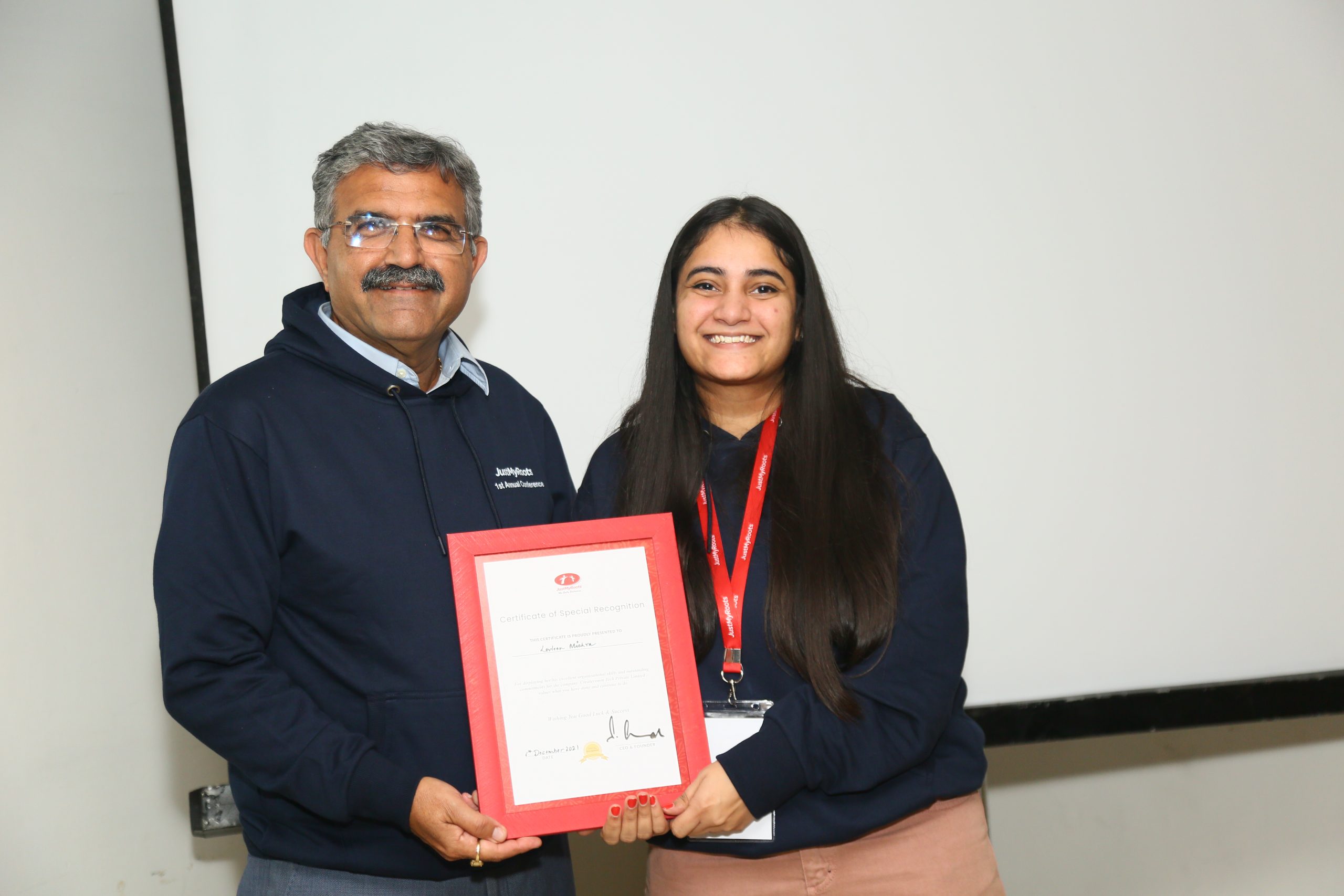
Category: Manager-Legal

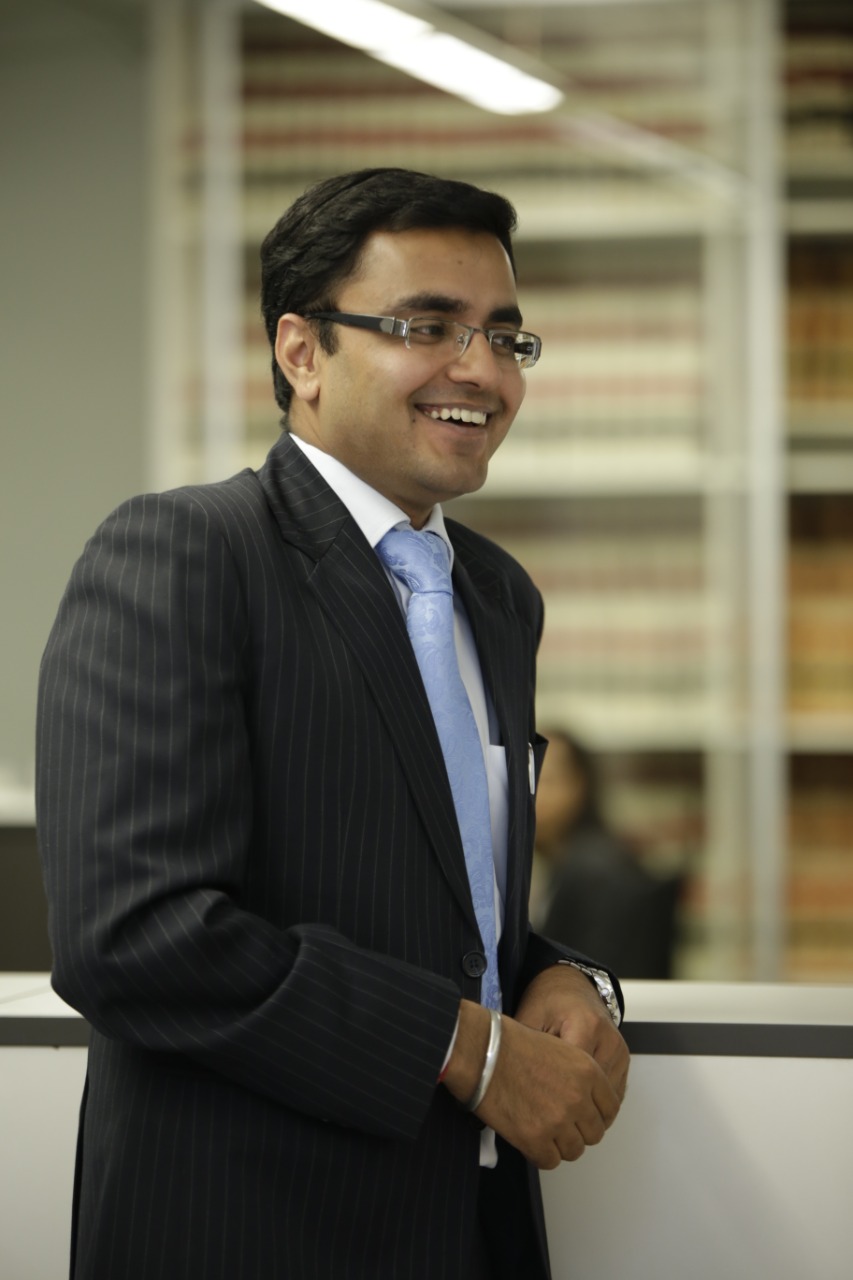
  • I consider my inclination towards the use of technology along with my acquired skills in project and data management, data analysis, and risk assessment to be the most important factors that have largely contributed to my success- Ayan Chakraborty, Senior Legal Manager, Bharti AXA Life Insurance

    I consider my inclination towards the use of technology along with my acquired skills in project and data management, data analysis, and risk assessment to be the most important factors that have largely contributed to my success- Ayan Chakraborty, Senior Legal Manager, Bharti AXA Life Insurance

    This interview has been published by  Priyanka Karwa and The SuperLawyer Team

    What’s your typical workday like?

    Insurance law practice in particular and in-house corporate legal practice in the BFSI segment in general, demand you to be ‘always on your feet’. In an in-house legal role, the exposure that one gets at a very early stage of your career is enormous. Every day there’s a new case/challenge and a new kind of legal advice that you are required to come up with. Along with some ongoing work, there are also certain ad-hoc requirements which needs to be catered to. There’s no dearth of work on a typical workday.

    My role as a generalist resource, gets me involved in almost everything that is whatever’s happening in the legal space of involving the organization I am associated with and be on top of all assignments. The gamut of cases helps me broaden my horizon. Apart from strategizing and analysing the cases, I supervise the data management for the department. Maintaining a tracker of assignments, projects and daily actionable makes it easier. So there’s also some bit of data work every day along with the tracking and closure of the tasks.

    On typical workdays, I negotiate contracts, vet documents to be submitted in the court and supervise the work of my team.

    An interesting workday entails peer-to-peer connect, brain-storming with team and other departments on special cases or planning the Friday evening! 

    Cups of strong black coffee and ginger tea helps me keep going through the day.

    Throughout your career, you have achieved numerous accolades and recognitions. Could you highlight one or two achievements that you are particularly proud of and explain why?

    Starting from the ‘WOW’ Award at Exide Life Insurance Company Limited in January 2017 for single-handedly successfully managing PAN India Insurance Ombudsman complaints with significant financial impact, to the recent recognition by Bharti AXA Life Insurance Company Limited as an achiever for the ‘Xtra Mile’ demonstrated within six months of joining. 

    There’s this is one that I would like to highlight: the ‘Customer Centric Icon’ of Edelweiss Tokio Life Insurance Company Limited. It was the very first time in my career to receive an award on stage, with a thousand people glued to me. That was the first time I realized how glorious perseverance can be.  

    Also, I would like to share a special moment when Shri Bharatkumar S. Pandya (Hon’ble Insurance Ombudsman in Mumbai) shared a testimonial to appreciate one of my reportees for her impeccable performance. This empowered me as a mentor and helped me gain more confidence from my juniors to guide them in the right direction, just as I have always been guided.

    Throughout your career, you have demonstrated exceptional performance and received recognition for your work. What do you believe are the key qualities or skills that have contributed to your success?

    To start with, as my mentor says – “jo dikhta hai, wohi bikta hai”. And here’s how do I do it – Dashboards, discovery and plugging of gaps, going beyond the call of duty whenever required, and continuing exchanging dialogues with my seniors on any critical or regulatory assignments that I handle. 

    I consider my inclination towards the use of technology along with my acquired skills in project and data management, data analysis, and risk assessment to be the most important factors that have largely contributed to my success.  Persistent performance with constant self-monitoring, understanding of the product and the business, and staying abreast with the latest developments, changing products & regulations in my area of practice; have also helped.

    You have been involved in audit management as well. How to ensure that the legal function is audit-ready and compliant with all relevant regulations?

    Yes. Fortunately, I have had my share from both sides of the table, as far as audits are concerned. 

    Wearing the Auditor’s hat, to certify the Legal Department or any department, I’ll delve into: process notes and it’s adherence, Process improvements in sync with the latest trends and good practices, Data and Documentation. More than half the battle is usually won by the Auditee if these are well taken care of.  

    In insurance, where every step is closely monitored by the regulator – given the robust regulatory regime, it is indeed a task to ensure audit readiness. Given the expertise and knowledge on different aspects of businesses that it requires, I’ll not be surprised if, in the coming days, the in-house Legal departments start hiring resources dedicated exclusively to ensuring audit readiness and compliance with all applicable relevant regulations, and for end-to-end audit management for the department. 

    As an Auditee, I endeavor to keep the legal function, audit-ready, by maintaining a checklist of the requirements under relevant regulations. This is a ready reckoner for me. Besides, there is meticulous data management, frequent sample checks/mock audits, and proper documentation of all the identified deviations. It’s a continuous process with stringent monitoring.

    With your extensive experience as a generalist resource in legal departments, and the professional growth that you have had in a short span of around 7 years, could you share some insights into the challenges in your role and how to effectively handle them? 

    Understanding the requirement and articulating in a manner acceptable to business, while, in the process, also ensuring that the interest of your organization is not compromised, is a challenge I deal with daily. Umpteen situations warrant balancing business demands and market dynamics vis-a-vis the spirit of the law. So, I think being a business enabler is very important. 

    What are some of the common issues or challenges faced by the insurance industry, and how do you think can these be navigated?

    Out of all the challenges, the one that the insurance industry certainly cannot lose is the protection of the interests of its Policyholders. The nuisance of Instigation Agencies (operating under the façade of ‘Grievance Resolution Agency’ and against the interests of the Policyholders) is probably the most common hurdle that the industry is facing today. Vexatious Customer Grievance, Ombudsman Complaints, Litigation & Police Complaints are on a constant rise due to the menace of these Agencies. Need-based selling of insurance, enhanced due diligence at the time of on-boarding of customers, investment on spreading awareness and a very firm action-oriented approach can address this plague.

    Then there’s the on-going fundamental shift and transformative changes in the regulatory landscape that has driven all the attention to the insurance industry. Industry is in the sweet spot now and the biggest challenge is to leverage this to the benefit of all stakeholders – policyholders, distributors, employees and shareholders. A lot is happening in the Regulator’s endeavour of “Insurance for All by 2047” – State Insurance Project, tie-up limits increase for distributors, promotion of ‘ease of doing business’ besides simplification of the process of setting up an insurance company in India, ‘Use and File’ procedure for insurance products, proposed changes in the business mode and more. To manage the expected traffic and to stay in the game, insurance companies will be expected to level up many folds – in terms of enhancing and setting it’s processes right, adapting to technology in every walk of the customer journey right from on-boarding of a Policyholder to dispute resolution. To support this journey – Legal, Compliance & Risk functions will be required to provide best-in-class experiences to Operations & Sales.

     ‘… provide best-in-class experiences to Operations & Sales.’ How?

    Implementation and acceptance of technology. We are talking about ‘Insurance for All” and ‘ease of doing business’ here. 

    Based on your experience, what advice would you give to fresh graduates who are considering a career in law and young lawyers?

    Always remember, “To be a good lawyer is different from a successful lawyer” – Late His Lordship Hon’ble Justice Protik Prokash Banerjee to me on the last day of my internship under his able tutelage in July 2013.

    Never compromise on your integrity.

    Embrace the change and the technology, equip yourself with MS Excel & MS Powerpoint skills – there are no better tools to showcase and market yourself in the corporate sphere. With channelized effective efforts and persistent hard work, the ‘sky is the limit’.

    Above all, find yourself a mentor in the early stages of your career, whom you can look up to … a mentor who can guide you in having your career shaped in the right direction.

    Get in touch with Ayan Chakraborty-

  • Jyoti Kapoor, Senior Manager (Legal Counsel) at Diageo, In a Discussion With SuperLawyer On Unconventional Career Options In Law

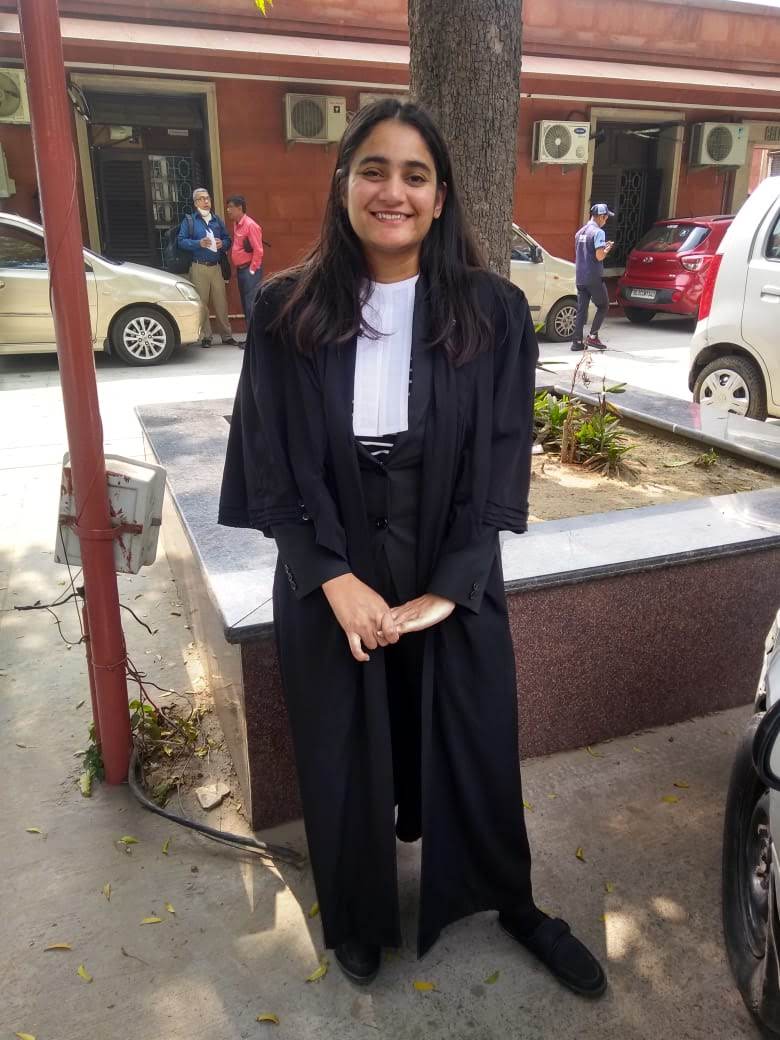
    Jyoti Kapoor, Senior Manager (Legal Counsel) at Diageo, In a Discussion With SuperLawyer On Unconventional Career Options In Law

    This interview has been published by Prabhjot Singh, Priyanka Karwa and The SuperLawyer Team

    What motivated you to choose law as a career? And how has been the journey so far for you?

    While growing up, I remember my mother telling me that she always wanted to be an advocate. However, since she came from a humble background, she could not pursue it.

    As they say, “When it comes to life, we spin our own yarn, and where we end up is really, in fact, where we always intended to be”, somewhere, I believe that destiny had a major role to play while I chose to study law and pursue it as my career since I was very inclined to pursue fashion designing.

    God has been very kind to me, I have met some wonderful mentors during my journey who have constantly guided me through. It has been an eventful journey, very rich in terms of learning, not monotonous. I feel that I am fortunate to have discovered on how to be assertive and support the business while not losing my own ground. That’s the best part, isn’t it?

    What were the challenges that you faced in the beginning of your career?

    I moved out of the ‘city of dreams’ after pursuing law from Government Law College, while I had a PPO in my hand just to feed my own curiosity of what’s in store for me in a new city, in a new role? I just wanted to understand how a company works and what role does a lawyer play in building it. Many of my friends chose to work in law firms but somewhere I was determined to pursue an in-house role in real estate.

    I am a very passionate human being and an extrovert as well, and I feel that it somewhere affected my first promotion. Early on, I remember when I got rejected for this promotion, I felt devastated. It undoubtedly was one of the first failures which I had tasted. I had been an academically bright student who predominantly scored well and therefore, it took a lot of time for me to heal.

    During this phase, while I was trying to find job opportunities and relocate myself to Bombay, I largely faced rejections. I remember, feeling miserable about myself and questioning my own skills and choices. I held my patience and kept myself motivated and as they say “Tough Times Never Last, but Tough People Do!” and some fantastic opportunities came my way.

    As I progressed in my professional journey as an inhouse counsel, I learnt a little later in life that you need to be very solution driven towards the business. A strict ‘no’ to a business proposal even with a solid rationale is something that may not work.

    Among all the specializations, i.e., drafting, vetting, due diligence, risk mitigation, which area of law is the most interesting to you and why?

    Risk mitigation to me is the most interesting. I believe that this exercise teaches you to research the moot points, evaluate and assess the business proposal accordingly. Alongside this, it also makes me build and present the best and worst business case for my stakeholders.

    Having said that, doing due diligence and creating an title trail as a real estate lawyer is also challenging and interesting at the same time. As you may know that the land laws are very region specific and even consist of cryptic language, hence to derive and create a title trail is both complex and absorbing.

    Jyoti, how do you balance your work and personal life effectively?

    I believe that I am organised when it comes to my work and personal life both, which makes it very easy for me to balance both effectively. I love to travel which means I take frequent breaks and therefore planning is the key. I often try to work backwards which gives me immense time to think, strategize and plan my work and life, both. By following this thumb rule, I do not procrastinate and stress myself. I believe that work is an integral part of my life but not my whole life.

    What can be some of the toughest considerations while someone from a non-legal background has to see before opting law as a career?

    I do not see it challenging if someone from a non- legal background starts one’s journey as a lawyer. Having said that, the choice of a law school is very integral. I am proud to be a GLC’ite. As a student of GLC, I had the freedom to explore different fields of law by interning with law firms/ companies, senior counsels, or maybe just venture into a different horizon altogether. It essentially gave me time to introspect and perspective on who I want to become and most importantly how I want to be.

    I am a first generation lawyer and feel that I have an advantage here, as I have the freedom to make mistakes without feeling any threat of being judged. With each mistake that I have committed, I have learnt to be wiser. All of our journeys are different and they can be absorbing yet very fulfilling, if we see from the right lens. We just have to dive in deep and we shall definitely find our way, the perspective has to be right.

    What is a typical day like for you?

    I am an early riser and start my work day usually around 9-9:30AM by checking/ replying to emails and messages. I, then write my to do list (and sometimes also get overwhelmed with the tasks that I have put down for myself to be completed in a day!) and then get started with the projects that have my top priority. I find that I am most productive during the day, hence I try to read as much as I can so as to advise my stakeholders on their business proposals or build strategies to move ahead before I start to jump into meetings and commence the contracting work. Before ending my work day I mostly look back and assess what’s one new thing which I learnt today. This is one of the ways which helps me to be grateful to the job that I do.

    Jyoti, could you highlight some of your success habits that enable you to meet your goal?

    The most important success habit which has always helped me to achieve results is discipline. I live by the principle that “discipline is the bridge between goals and accomplishments”. Discipline helps me in taking charge of my own life be it professional or personal; it also helps me to train myself much ahead in time.

    I also feel that performing yoga consistently, pursuing my hobby alongside work and travelling has helped me to largely reduce work fatigue.

    Last but not the least, I feel that we must trust our leaders, mentors, team and colleagues. I fully echo the thought that together we can do so much, togetherness comes with a team and teamwork begins by building trust. With my own experiences, identifying and trusting my mentor/ leader and building a team has helped me in facilitating my accomplishments much earlier.

    Lastly, what advice would you give to someone starting out?

    For someone dreaming to choose law as their career, I believe that you should first assess if you are passionate towards pursuing it. One must be brave and also wise to assess what is the right thing to do. You also have to be patient in this journey and not fear to evaluate yourselves in different fields of law. To conclude, I feel that one must believe in oneself, have faith and make your own country proud.

    “Every accomplishment starts with a decision to try”.

    -JYOTI KAPOOR

    Get in touch with Jyoti Kapoor-

  • Lokesh Bhola, Managing Partner at Legal Icons In Conversation With SuperLawyer Shares His Side On Struggles For A First Generation Lawyer

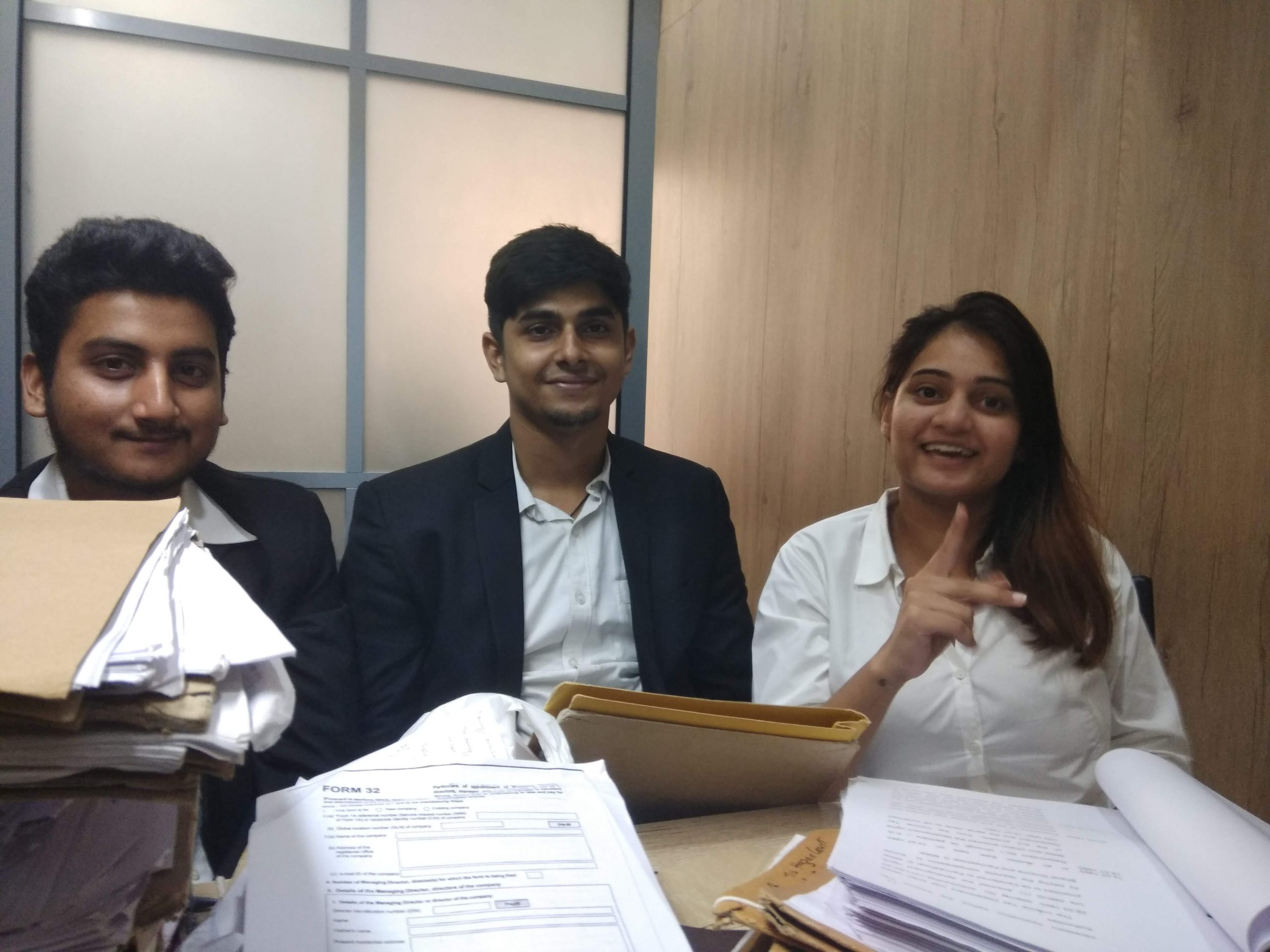
    Lokesh Bhola, Managing Partner at Legal Icons In Conversation With SuperLawyer Shares His Side On Struggles For A First Generation Lawyer

    This interview has been published by Prabhjot Singh, Priyanka Karwa and The SuperLawyer Team

    Was pursuing law planned for you or it all happened in a flow? Kindly share with our readers.

    It was not at all planned. After completing 10+2 in commerce stream, I opted to become a Chartered Accountant. I had even took admission and deposited fee for that. During that time, five year course from I.P. University, Delhi was introduced and  my father influenced me take a plunge in the field of law. I had appeared in the common entrance test conducted by the University and was fortune to get admission in limited ‘free seat’ on basis of merits.

    Initially it was more of subjective learning rather than practical and took some time to get myself adjusted in that flow. Afterwards, I had started developing my interest and scored well thorough out all semesters. Never thought that I would become first-generation lawyer in my family, however destiny has chosen so for me.

    What do you think, which specific advice has helped you come thus far in law? What is that one motivation that keeps you going in life?

    As a first-generation lawyer, the journey has been quite tough yet exciting. Working as the junior most associate in the Law Firm to heading a boutique Law Firm has been an overwhelming and enriching experience.

    The hurdles on the path of this journey, especially as a litigation lawyer, are tough to handle. Consistency and Dedication are two stepping stones for almost every success.

    Do not expect quick results especially while practicing as litigation lawyer. Change the mindset from working as employee to working like a professional. Own responsibility for every step taken by you while working on a matter. Success does not come without failures. We cannot have favourable results the way we thought every time, however we should be capable enough to be responsible for those results.

    Initially many colleagues even left the profession due to various reasons like low income, great hard work with slow or no results and that had sometimes demotivated me to choose this profession, but like a pillar of strength and motivation my family stood beside me and here I am today, enthusiastically climbing the ladder with more than seventeen years of experience and having Law Firm of my own. 

    Could you brief a case you were led on that substantially broadened your knowledge of the legal field?

    In last seventeen years, I had the privilege to lead as well as assist my senior colleagues in various corporate commercial matters across different Courts and Tribunals. 

    I fairly remember a matter dealt by me in my previous law firm, where we used to brief Late Mr. P.P. Rao, Senior Advocate in a constitutional matter being tussle between State Government and Union Government to enact law to control and supervise State Universities in the State of Himachal Pradesh.

    We used to take him for hearings before High Court of Himachal Pradesh at Shimla. In my entire career, I have not come across any other Senior Advocate like Mr. Rao, who was so thorough and clear in his understanding on the constitutional matters.

    He used to throw case law citation as well as its relevant paras to us while briefing him. That matter has surely broadened my concepts on educational and constitutional matters. I think it was his hard work and good wishes that we won that matter on his birthday.

    As an empanelled Arbitrator with prestigious Delhi International Arbitration Centre at High Court of Delhi, I have gained experience of deciding matters judiciously which has helped me in proving reasoned and more apt interpretation of legal issues.

    Lokesh, you have over a decade of experience in legal, how do you see the legal industry coming up with new concepts and creating exciting opportunities?

    India is a large country and the biggest democracy in the world. We have by far the longest constitution in the world, so the laws are accordingly quite vast. Similarly, there are host of Cases pertaining to Supreme Court and High Courts. Both these are referred regularly in the current set of cases and used immensely in the courts and by the lawyers. All this can happen only through digitization and having effective analytical tools which can help a Lawyer to quote relevant cases in the court and the corresponding Legislations and Provisions.

    I can see a lawyer walking into the court with a simple Tab and referring to relevant Legislations/Cases and the Judge verifying the same through his online terminal linked to the Master Registry. No more attachments of papers/cases/book portions etc. It makes the system faster, accurate and efficient.

    There is a huge role for Digital Transformation to play in the Legal Industry. We are far too behind in this area compared to our western counterparts. Undoubtedly, thanks to corona period, we have come a long way in transforming ourselves from a paper-based judicial system to a digital system. However, lot more is required to do in this field to help in surviving in faster pace.

    You have been there in some really big deals, how would you educate our readers about the risks attached to the same?

    Every journey has up and down graph like an ECG report. It is always fascinating to deal big ticket matters, however the same comes with many fold of challenges and expectations from client and senior colleagues. It’s true that our hard work should not depend upon the quantum of the matter dealt by us, however high stake matters involves greater effort and strategy to deal the same.

    Don’t hesitate to take opinions from expert or senior colleagues in a ticklish matter. A direction is must to achieve a goal. In a litigation, experience has bigger role than the academics. One should always adapt to learn not only by reading and research, but learning from experience of others especially your senior colleagues.

    A small court crafting skill can save you from multi-fold hurdles and that comes from court experience. A young lawyer should sit and watch proceedings in court rather than roaming outside courtroom waiting for his turn to come. A lawyer must not enter courtroom without reading his brief as you never know what may come from bench as a query.

    What strategies do you use to ensure that your clients receive the best possible?

    My preparation for a matter starts from first meeting with the client. We should make goal oriented strategy in a matter that too keeping in mind the financial implications on the client. Now a days, thanks to multiple courts and forums, we have various alternatives available to churn out results in a given matter in a most possible and economical manner. My endeavour is to pull our best suitable remedy out of bunch of options available for a given client considering his financial capabilities and timelines to get desired results.

    At the same time, a lot depends upon the zeal and hunger of client to get results in a given time frame. Many clients opt not to disclose correct and complete facts on the threshold which leads to multiple hurdles and greater time to achieve the desired goal.

    Workplace harassment also contributes to mental health issues that last forever, what are your views on the same? 

    Work-life balance is very important to ensure a long term efficiency in work and a satisfaction in your personal life. Workplace stress can be managed by fixing short term goals and taking all possible effort to achieve the same.

    Being a Partner, I try spend sometime with my team members to interact and discuss work and the general life related aspects. However, one needs to prioritise the work and maintain a discipline during the working hours.

    I am a strong supporter of not carrying the work related stress to home and spend my away time playing with my daughters as well as working out. It is equally important to take care of your health and therefore, I have made it a routine not to carry work at home except in dire emergency.

    Lastly, any 5 best pieces of advice for our readers?

    Legal field requires continuous study and keeping yourself updated of the latest developments. So, it is very important to make an early habit of reading latest judgments as well as precedents. Young lawyers should also visit Courts and hear established legal practitioners argue the cases in Court.

    There are no substitutes for hard work in law. I’ll quote J.R.R Tolkien, when he said “Shortcuts make long delays.” There are 5 P’s success formula  – Passion, Patience, Punctuality, Perfection and Politeness.


    Get in touch with Lokesh Bhola-

  • Harsha Rathore, Legal Manager at Cinepolis India In a FireSide Chat with SuperLawyer On Role of In-House Counsel

    Harsha Rathore, Legal Manager at Cinepolis India In a FireSide Chat with SuperLawyer On Role of In-House Counsel

    This interview has been published by Prabhjot Singh, Priyanka Karwa and The SuperLawyer Team

    Tell us about yourself and what inspired you to pursue a career in corporate law?

    I am born and brought up in Delhi. Despite being amongst the toppers in my school, I was not sure what I wanted to pursue professionally. I took up Biology with Maths in XIIth in order to keep my options open. After passing out of school, still unsure of what I wanted to do, I zeroed in on studying Business Administration on a whim, as I did not want to pursue medicine or engineering, which was the most opted for career option back then.

    It was during graduation days that I discovered my love for law when I was introduced to Business Laws as a subject. I also realized then that my natural personality traits were aligned with being a lawyer, when I used my skills to negotiate and convince my Professors and HODs to help my friends who ran into trouble with them for multiple reasons.

    Of course, being amongst the good books of my teachers helped to a certain extent in that.

    This naturally progressed into me opting for law when I cracked Delhi University’s entrance exam and studied law in the prestigious Campus Law Centre. Thereafter, I was a practising lawyer for a few years before I chose to move In-House with a Company.

    During my very enriching stint as a first-generation lawyer, where apart from handling cases for individuals, I also got to work closely with several Companies while handling their litigations and arbitrations, I got fascinated by the multi-faceted workings of a Company and the various factors that played part in assisting the top-management take crucial business decisions.

    This piqued my interest in corporate law, and life came a full circle when Business Laws subject in BBA helped me discover my inclination towards law, and after practising law and building my base in understanding the workings of a court, I moved In-House.

    What are some of the most challenging aspects of your job as an In-House Counsel?

    Law is a demanding profession, and whether you are a practising lawyer or an In-House Counsel, every day comes with new challenges, and with each challenge, comes a new opportunity. To pin-point the most challenging aspects would be difficult, as every day is different.

    The job is to assist the Company in all legal affairs, and it can involve anything and everything under the Sun.

    A regular day as an In-House counsel involves a wide spectrum of activities ranging from handling aspects of general corporate advisory, looking after the litigations of the Company, interacting with external lawyers for the same, attending matters, drafting and red-lining of pleadings and agreements, negotiating on closing deals for the Company, briefing senior counsels, interacting with several departments for assisting them in dealing with regular operational issues and commercial transactions, and so on and so forth.

    Simply put, the challenge is to align business objectives with the legal standpoint to the best benefit of the stakeholders, both internal and external, but that is also where the fun lies.

    What strategies do you use to stay abreast of legal developments in the corporate world?

    Frankly, I found it easier to stay abreast of the latest developments in law when I was a practising lawyer, as daily interactions with colleagues outside Courtrooms while waiting on matters to reach would organically help in exchanging new information.

    I did not realize the importance of relevant information just coming to you without you making conscious efforts towards the same. It is a tad bit tougher for an In-house counsel and it requires conscious efforts to stay abreast with the new developments, both in the dynamics of law and business.

    My learnings from my practise days is what works for me in staying aware of the new developments in the corporate world.

    Just that my casual chats with my colleagues outside courtrooms is now replaced with interactions with my colleagues from various departments of the Company, who enlighten me with their knowledge and new developments in their respective fields, and collectively, that gives me a bird’s-eye view of developments in the corporate world.

    Thereafter, my curiosity about the new information pushes me to read extensively on the new developments from a legal standpoint, and as a legal professional, the research skills acquired during my internship and practice days help a great extent in gathering the relevant knowledge.

    Now we are all surrounded by legal tech tools that help in contract drafting and in so many other forms as well, how do you see these tools changing the world of lawyers? What do you think the future of corporate law when AI and the role of legal tech is added on as well?

    These tools are contributing a huge deal in reducing the burden on lawyers. The contract drafting tech tools save up on a lot of time by giving a format to start with. The same, of-course, has to be worked on to suit the specific needs and requirements of the business, and in my view, the legal expertise in doing so cannot be replaced by the Artificial Intelligence behind these tools.

    Besides contract drafting tech tools, there are several other tech tools that help manage the MIS of the multiple litigation’s in a Company and helps In-House counsel in keeping a track of the matters. These tech tools also help in providing data for analyzing the reports for strategizing plans and actions of handling various matters. I see these tools as very important helping hands in assisting lawyers and In-House counsels to work in a more effective and efficient manner.

    What do you consider to be the most important skill for a successful In-House Counsel, and any roadmaps for the same?

    I am still learning new skills every day, and I think the quest to keep learning is the most important skill for a successful legal professional, whether In-House Counsel or a practising lawyer.

    Apart from that, what I have learnt till now is that it is important to put your thoughts into actions. As lawyers, we develop the skill to formulate multiple strategies and plan of actions, but it is crucial to execute the plans in a timely manner to suit the needs of a fast-paced environment of a Company. I feel there is no fixed roadmap for the same, and all ways to achieve the same are the right ways, given one is consistent, conscientious, and persistent towards it.

    Harsha, what do you consider to be the most rewarding part of your job?

    I consider the contentment I derive after a good day’s work where I feel that I contributed towards meeting the Company’s objectives and assisting the various business functions in taking important business decisions, as the most rewarding part of my job.   

    Lastly, any 4 pieces of advice for our young law generation.

    Law is an intellectually rewarding field and is an extremely demanding one as well. It is important to understand that in this field, knowledge is power, and the learning is never-ending.

    A few of my learnings that I would like to share for young professionals:

    1. Go to Courts. I know Corporate Law has been glamorized enough with the multiple perks it comes with as compared to the challenges one faces as a practising lawyer, but I cannot stress enough on knowing the basic functioning of courts before joining a Company as an In-House counsel. The courts are where all the action is, and the learnings you gather there will help you in the longer run. Once you know the drill, you would not be taken for a ride by others, and you would be a better asset to the Company. Your initial few years as a practising lawyer would also give you clarity on which industry appeals to you.
    2. Take responsibility. That’s the way you learn at the beginning of your career. There could be days when you could not present your case before court, because the clerk did not reach on time with the file, or any such fiasco. It helps to internalize the situation instead of pushing the blame on others. Analyse what you could have done better to avoid the situation, learn, and not repeat in future. Pushing on the blame or justifying yourself before your senior would only stagnate your individual growth, while taking complete responsibility would make you adept at better handling such practical problems that you may face.
    3. Don’t be afraid to fail. A cliché, but your failures will teach you more than your successes.
    4. While we are students, exams are held once or twice annually, but once you are a professional, every day is an exam, minus the syllabus. So brace yourselves for the challenges, and have fun while at it.

    Get in touch with Harsha Rathore-

  • In conversation with Lovleen Mishra, Manager-Legal at JustMyRoots, an intercity food delivery company, sharing her experience of taking up diverse roles in the Legal field.

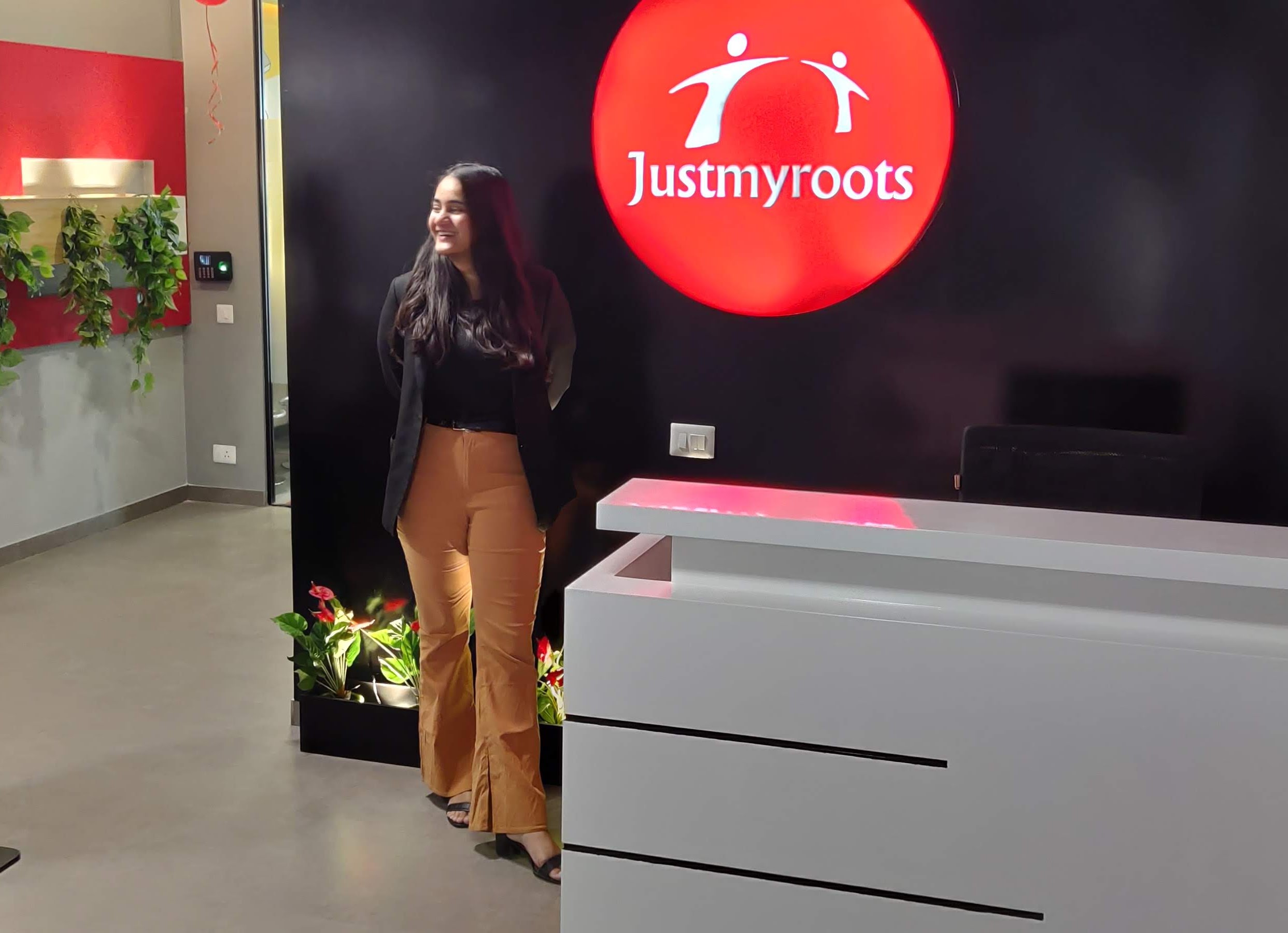
    In conversation with Lovleen Mishra, Manager-Legal at JustMyRoots, an intercity food delivery company, sharing her experience of taking up diverse roles in the Legal field.

    This interview has been published by Sonali ParasharOjuswi Sahay and the SuperLawyer Team


    To start at the beginning, was studying law a pre-decided career path for you? What was your motivation behind growing within the legal field?

    I wanted to be many things, but a lawyer was never one of them. I stumbled upon the idea of studying law in a casual “if not this then what?” conversation with a classmate, did a crash course on law immediately after my high school graduation (not that it was of much help), and the rest is history. During law school and in my professional career I have realised that being a lawyer is not just about the law. You have to be a meticulous writer, a conversationalist and most importantly you should know how to read between the lines. 90% of being a lawyer probably is understanding what people need from you and with time you can learn and grow into the remaining 10%. I reckon this is what interested me the most, the 90% and motivation came naturally with it. 

    You started your journey with litigation and had an experience of practice at the Supreme Court of India, where you litigated on matters related to film and media. How would you describe this experience of yours?

    It was exhilarating, to say the least. It had the excitement and eagerness of the first job and the anxiety of everything else that was my first as well. Litigation like any other thing comes with its own pros and cons. I was given the chance to learn from the best and since we had a lot of film and media matters, there were a lot of movie screenings in our chambers where we had the petitions opened in front of us and we formed our arguments. Most of the film and media petitions are usually filed a week before the movie’s premiere, so all we have is one week. There are sleepless nights and hours and hours of research which go into creating a brief. These matters are stressful for both, the client, and the advocate since the hearing takes place a day or two before the premiere and what we have at stake is years of hard work of hundreds of crew members and the money that went into making the film. In this job every day I thought through the perspective of the other party and my time management skills enhanced drastically while working here.

    Working for Sapphire and Sage on MSME, Arbitration and Energy Laws matters while heading the firm’s MSME and Energy Laws Teams, what motivated you to change your path this way, and how did this change treat you?

    Though I had been in various arbitration proceedings before, when I started working for S&S, I was given my first independent matter of MSME Arbitration. I knew the bare minimum about MSMEs so honestly, it was not I who specifically went for this change, but an opportunity presented itself and I took it and with that matter, my journey started in the field of MSME. As for the Energy Laws; I graduated with Energy Law Hons. from UPES, Dehradun. During the first wave of COVID, our partner at the firm suggested that we start exploring the solar energy industry. So, we started working with industry professionals and subject matter experts; hosted webinars and wrote handbooks on both MSME and Energy Laws. During my time with S&S, I not only worked on the above matters but explored Aviation, Real Estate, and Criminal and Corporate Laws. I remember the Partner in our firm used to check our drafts with a pencil in his hand and everybody would gather around and compare to see who had got the least slashes on their drafts. It was here where I honed my drafting skills and with each document, the number of slashes decreased. 

    You are currently working for JustMyRoots in the capacity of Manager-Legal. Tell us a bit about the organisation and your role in it?

    JustMyRoots is an intercity food delivery company. As the description suggests, it is a platform through which one can send perishable food products from one city to another. JustMyRoots has developed a special food packaging which keeps the food fresh for 24-36 hours by maintaining the temperature between 5-8 degrees Celsius and keeping the moisture intact. The work here is exciting and challenging at the same time. Every day we try to be better than yesterday and with that, we work on things we have never explored before. I currently head the legal department here and majorly work alongside the other departments in contract drafting and vetting, negotiations, advisory, compliances, investments, new projects, and strategy. Since we are a small company; apart from the law, I delved and worked in every single department of the Company and with that, I grew here more in the past year than I did in my entirety of law school and career. I have been fortunate to be a part of every new project. Each day is a new opportunity, and the learning curve has always gone up.  

    Your organisation JustMyRoots is a unique build in itself. What aspirations of growth do you hold for it in the future?

    It is, isn’t it? I was elated to see that something like this actually exists. We are present and operational in 30 cities in India; I hope this number increases exponentially and with that, every single person in the world can taste their nostalgia. 

    What are some of the highlights about each sector you’ve worked in, which you believe could be a guiding factor for upcoming Law graduates?

    Let me give you a quick black and white rundown. Film and Media are fast-paced and come with very high risks. In my opinion, MSME matters take comparatively less time to get resolved but the number of appeals is very high. Documentation in Energy Laws is very exhaustive, and you’d be surprised to see the requirements of water in the Solar PV Plants. If you are an in-house counsel, you must know everything about everything (at least the matters which concern your company). But I want the upcoming graduates to know that everything comes with its flaws and maybe some of the flaws are acceptable to you while some are not and that is okay. It is okay to not have a plan or to know everything about the profession you are in. It is okay if the cons of a sector are too much for you to take or if you are stuck at a place without the means to choose something else. I want them to know that not everyone’s career starts at the same age, at the same time, and in the same manner so if you see someone succeeding at 20 or 25, don’t think any less of yourself. It is also okay if you are having doubts about your choices, I have seen people who chose an entirely different career path for themselves after law and are content with their lives. There is no time limit to be whoever you want to be and do whatever you want to do. But I hope that you have the courage to change, make mistakes, and work towards the things that excite you. 

    How has the shift from litigation to Law firms to your current role of Manager – Legal been for you? Do you plan to explore litigation again in the future?

    From an organisational perspective; I have been rather lucky to have the support from my colleagues to make the transition seamless. On the other hand, the shift changed my way of looking at legal issues. I do not think that I will be exploring litigation again in the future. I thoroughly enjoyed my work while being there but over time I have realised that it wasn’t really my calling. That being said, it is my perspective today and it might change a few years down the road.

    Finally, being a woman in Law, what advice do you have for upcoming aspirants, especially the females in the field?

    As I mentioned earlier, there are no rules to this thing. The only advice I can give to the upcoming aspirants is to be the change they want to see in the world and to never give up on their dreams. The rest will follow. We have miles to go before we sleep!


    Get in touch with Lovleen Mishra –