Category: Interviews

  • Shriya Maini on choosing Oxford over Cambridge, Scholarships and the role of higher studies in Litigation

    Shriya Maini on choosing Oxford over Cambridge, Scholarships and the role of higher studies in Litigation

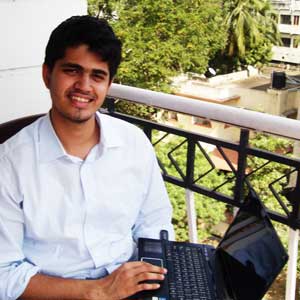
    Shriya Maini graduated first in class from Gujarat National Law University, Gandhinagar in 2013 with four gold medals, including that of Best Student. Thereafter, she joined the Litigation department of Amarchand Mangaldas & Suresh A. Shroff, New Delhi as an Associate in their Dispute Resolution Team. After working there for a few months, she paid heed to her calling and is pursuing the Bachelor of Civil Law Programme from Oxford on a full scholarship. In this interview, she talks about the difference in pedagogy between Indian and Foreign institutes and the relevancy of a traditional BCL degree for litigation practice.

    We took this opportunity to ask her about:

    • Experience working in the litigation department of Amarchand & Mangaldas
    • Importance of Internships
    • Choosing BCL from Oxford over LL.M from Cambridge
    • Writing a proper SOP for an LL.M
    • Applying for different types of Scholarships for high studies


    Tell us a bit about yourself. What motivated you to choose law for a career?

    If I were to answer this question absolutely honestly, I never really wanted to study law. Though, in retrospect, my family lineage reveals a close legal association (my grandfather retired from the Indian Home Ministry and my father is a practising lawyer), I don’t think I was ever motivated to make a career out of law as such. I was busy exploring the scientific world and was rather intrigued by it. I faired well in my A Levels and decided to follow my mother’s footsteps and pursue a career in medicine. Little did I know that future had something else in store for me! Over one of the many dinner table conversations, my grandfather casually mentioned how a centralized national level entrance examination called CLAT was being organized for the very first time for direct admissions to law school. I did not even know of the existence of National Law Universities until then and was reading their names for the first time on the examination brochure. To me this seemed very alluring, as a back up option, in the event that I failed my pre-medical tests. Besides, the examination (fortunately) had no negative marking. A week later, I was walked out of the hall, immensely proud of the fact that I had attempted every question on board, correct or not. Once the results came out, GNLU fell into my lap. I suppose I got lucky with my guesswork! Being a devoted daddy’s girl, I decided not to walk out on him, packed my bags and took the plunge. Hence, law happened purely by chance and not choice.


    How did you plan your internships? Were they all meticulously planned or did they just happen to you as you went through law school? Any tips you would like to share with people who want to intern at top-notch firms?

    As my vita indicates, I didn’t have a strict ‘to-be followed’ normative pattern of internships. However, I consistently endeavoured to intern at each and every place that I possibly could, be it chambers or law firms. I was sure that wherever I interned, I would substantially gain technical proficiency for my knowledge and experience, both were limited. In effect, I knew I had nothing to lose. Hence, on one hand, I thoroughly explored the corridors of the Supreme Court and Delhi High Court and on the other, I vacationed every year with commercial law firms, such as Amarchand Mangaldas & Suresh A. Shroff, Dua Associates and Jyoti Sagar Associates. Such a wide-range of internship opportunities helped me understand the everyday working and nuances of laws, be it civil, criminal or commercial.

    In the penultimate year of law school, I realized that my calling was only in Court. I was drawn towards litigation and the internships most definitely, opened me to a whole new world. I interned twice in the litigation team of Amarchand Mangaldas & Suresh A. Shroff, New Delhi under the guidance and supervision of Mr. V.P.Singh, one of the most dynamic partners of the firm. I had a fantastic experience interning with him. He had a galaxy of juniors assisting him who made the experience even more worthwhile.

    Likewise, by the end of third year, I advise all law students to have a fair idea of what they want to do. I believe the last two years are very crucial when it comes to painting career silhouettes, the so called deal makers or breakers. Hence, I strongly advise that if you haven’t already had some form of internship exposure, now is the time to get that on your CV. It would be a good idea to split the law school tenure of five years into a 3+2 structure and avidly apply for varied internship openings until the third year. Explore what you enjoy, much like the hit and trial method. I would also advise all law students to acquaint themselves with the backgrounds of firms, judges, lawyers and wherever they are making Internship applications, so that they can make an informed choice about joining them. The importance of a tailored CV cannot and must not be underestimated at any cost. I would also caution that the fourth and fifth year, being most important could be channelized towards improving one’s CGPA as much as possible. I can now affirm that though top-notch firms do not solely and specifically look for a high GPA, but it makes for a fine impression if your CGPA is more than respectable. It gives you that ‘added-edge’.


    Right after graduation you got to join the Litigation team of AMSS. How did the appointment take place?

    I secured a job with AMSS all thanks to GNLU’s Committee on Recruitment Affairs (CRA). As a core college body, CRA annually facilitates students and recruiters, on a rolling basis for on as well as off campus recruitments. I was one of the few lucky ones to grab an internship with the Litigation Team of AMSS, in my penultimate year of graduation. The selection was purely based on class rank. I vacationed once again during the winters and six months later, on the College’s zero day, I was offered a job in their Dispute Resolution Team (Litigation and Arbitration).


    What all came under your responsibility at AMSS? How was your first visit to court?

    I was rather lucky to work with some of the most hardworking people in the litigation practice at AMSS. My area of work encompassed commercial litigation and arbitration. Within the team, our supervising partner had allotted a couple of matters to each one of us. I was given an opportunity to work on an international commercial arbitration at a very early stage in my career. I worked under the leadership of some of the best people in the fraternity and handled these matters from scuff. I also drafted the first cuts of Rejoinders for a matter. On a lighter note, if I could pick one responsibility that truly came my way at AMSS, it was drafting e-mails. I learnt the significant skill of ‘written communication’, its necessity and nuances. Though challenging and interesting, these months made me actively re-think my options and pursuits. While I spent hours drafting legal documents and e-mails before a bare computer screen, some part of me began to miss the ambience and actual working of a Courtroom.


    Is it true that it is not possible to get a job in a top tier law firm without top grades and being in the top of the class?

    I am often asked this question. Being brutally honest, top tier law firms often filter students on the basis of class ranks and/or scores. Good grades most definitely matter, at least while securing internships. Unless you are offered a PPO based on your performance during an internship, even during recruitment, most top law firms are bound to take grades most seriously. This is purely due to the fact that a high CGPA depicts an academically consistent upward moving graph. However, I believe that moots and publications could also be an equally essential pointer when it comes to specialized interests. By this I mean that for a law student specifically interested in International Taxation, a paper publication or mooting experience at Nani Palkhiwala could silently speak volumes during a recruitment interview.


    What prompted you to decide to leave the largest law firm and venture out at as a sole practitioner?

    It was the same year, infact within a span of five months that I decided to leave AMSS and venture into entrepreneurial practice. Amidst sleepless nights and long office hours, I was at crossroads with my passion for ‘learning and living the law’. I would often feel academically stagnated while making document summaries, indexing compilations or drafting e-mails. One of those mundane Monday mornings when I had to report to the office at 8, I turned the wheel to reach Court instead. Yes, I admit that it was rather drastic and bold a call to take at such an early point of my age and career. Friends and family tried convincing me otherwise cautioning how hard-hitting litigation practice could be.

    Had it not been for the latter half of the year when I practised at the Supreme Court and Delhi High Court, I would not have been able to secure a scholarship for the BCL at Oxford. Hence, I firmly believe if you are true to your work, you shall most definitely reap its results, if not today then tomorrow.


    Would you say being from a family of lawyers helped you in forming your practice? How did you find your mentor? How important is a mentor in the field of litigation?

    After a brief stint at AMSS, I devoted the next 7 months to independent legal practice. It would be wrong for me to shy away from admitting that my father was the sole reason I could pivot my practice from the position at which I had left AMSS. I was fortunate to land a few cases, which were handed over to me by my father. They were a mixed bag of both, civil and criminal. He gave me a tiny working chair in the chamber apart from full freedom to not only strategize, draft and file matters but also argue them. Before I knew it, I was running a mini-office with 4-5 odd matters.

    So, I didn’t have to find a mentor! He was right there, my father. I think it is very important to have a mentor who would guide you through the myriad experiences of life, especially when we make the strategic shift from law school to the real world of practice, which can be very demanding. The two stages are immensely different and challenging in more ways than one. Law school demands academic mentoring where a guide’s role may be limited to ensuring his student performs well and steers on the right path of intelligible growth. However, at the professional level, especially in the field of litigation which is plagued with cut throat competition, it is rather difficult to perform without a mentor. My father would discuss each and every line of a case with me and always shadow me in Court, even if I was the one arguing. To him, the sole rules of survival in litigation practice were to consistently work hard, be true to your profession and never turn a client back. I hope the same would benefit some of you law students as well.


    Which universities did you apply for LL.M? How did you go about choosing which college to go to for your LL.M.? Did you ever consider Indian colleges for LL.M. now that they are also offering one-year course?

    When I began to practice, I realized that to deal with the complexity of legal and social issues, a mere Bachelors degree would not suffice. For law to evolve, it had to be understood and reasoned, not imitated and blindly followed. I decided to pursue my intellectual drive and made applications to three U.K. law Universities, including Oxford and Cambridge. I specifically did not apply to any of the U.S. law colleges for I was determined to stick to a common law background. It is ironical that now I read a lot of American case-laws, in particular contrasting the civil law approaches as opposed to the common law ones. Within the U.K., my most obvious choice was the Ox-bridge duo.

    Though I didn’t personally consider an Indian LL.M, I am sure it has much to offer. However, from my limited experience of studying my undergraduate degree at an Indian law school, I firmly believe that in terms of teaching methodology and content, we still have a long way to go. I understand that cost could be a pinching factor, but an international exposure with the most intelligent minds of the world is totally worth it.


    How did you plan your SoP? Please share your SoP with us. Please share some tips for a successful application.

    I’d like to first answer the second limb of the question. There is no set recipe of making a successful LL.M Application. A good idea could be to first zero down on a country and then pick colleges accordingly, depending upon your subject interest and of course, University reputation. You could easily find U.K. University ratings on weblinks such as http://www.topuniversities.com/university-rankings/university-subject-rankings/2014/law-legal-studies.

    These could be indeed helpful to begin with. Another piece of advice would be to filter about 5 Universities and make Applications to only those. On a personal note, I spoke to a lot of people, discussing and debating at length how the BCL was different from a conventional LL.M. Hence, I believe interacting with seniors could most definitely be an enlightening experience to help you choose a college.

    Coming to first part of the question now, an SoP should exactly be structured on the lines of the questions you have put forth in this interview. To elucidate, an SoP must explain why you’re applying to a particular University and not any other on the list. Akin matrimonial ads, SoPs in effect are intended to sell oneself in more ways than one, preferably subtle. A good head start could be to divide the SoP into three paragraphs, the first being a general introduction about who you are, where you’re coming from and what you do. The second could be about what you want to do in the future, perhaps stating a subject focus. I also suggest you add a personal touch to an SoP and include a life story or specific incident reasoning how the same prompted you to take up higher studies. For instance, there are a couple of people I know who wanted to specialize in Medical Law and Ethics and they applied to Oxford, describing at length in their SoP a heart wrenching medical story of losing a loved one.

    Another important thing to keep in mind is tailoring the SoP to suit each college. For instance, Oxford SoP must not run beyond two pages. So, an SoP for LSE or Cambridge could be fairly descriptive and detailed, but an Oxford SoP must be very crisp and coherent. You could end your SoP with a paragraph about how you could contribute as an Asian lawyer in the room.

    And yes, I would be more than willing to share my SoP with you all.

    Click here to download the Statement of Purpose


    You had decided to pursue BCL from Oxford University over Cambridge. Any specific reasons for that? How relevant would be a traditional BCL degree for your litigation practice?

    Yes, I was fortunate to have been admitted to both, the BCL (Bachelor of Civil Law) at Oxford and LL.M (Masters in Law) at Cambridge. After thorough deliberation and critical evaluation, I decided to pick the BCL over the Cambridge LL.M. Knowing that it is one of the most rigorous taught Masters in the world, I decided to challenge myself yet again. While the Cambridge LL.M is often picked by those interested in International Law or specifically Corporate Law, the Oxford BCL is definitely more litigation oriented. Hence, I naturally picked the BCL. There is another slightly less known course called the MLF (Masters in Law and Finance) which is jointly taught by the School of Business and Law at Oxford and those of you who are keen in a commerce background could definitely have a look at that.

    Another reason why I chose the BCL was the unique teaching method of Tutorials. Every term (we have trimesters at Oxford), our tutor discusses the erstwhile seminars and lectures with each and every student, in person, in effect clarifying and revising the course content. Students are given a list of questions prior to every tutorial, of which they must attempt one in writing and submit to their tutor a day before the personal session. Such an exercise is immensely helpful for students are well prepared to answer questions well in advance of the examinations. The tutorial system of teaching is unique to Oxford and hence, I would advertise the BCL even more strongly.

    I would be better equipped to answer the second question a year later. However, from hearsay sources and personal interaction with ex-BCL graduates, I can assure you all that the degree most definitely gives you a cutting edge, in terms of legal knowledge and presentation. It pushes you to think out of the box and to some extent challenge the existing laws, aimed at the formulation of ground-breaking legal arguments. Hence, the precedent based litigation practice in India could benefit multi-folds from a holistic and global degree, such as the BCL.


    shriya-maini-2

    What should one do differently in college if he wants to pursue higher studies after graduation? Would you suggest having a brief work experience before applying for LL.M?

    There is nothing particularly different that one must do as a prospective Masters student. However, in order to get a Scholarship/funding, it is essential that students keep the following in mind. Apart from consistently studying hard and smart for five years, maintaining high CGPAs and participating in a few moots or ensuring a couple of publications, one should apply well in advance if he or she intends to pursue higher studies. Applications open a year prior to admissions and in the U.K. Universities List, Cambridge is the first deadline to be met. Next is Oxford and then the others.

    Each Application has a scholarship column which all Applicants must tick in the affirmative. These ensure that wherever possible, University/college funding would automatically consider the Applicant’s request for scholarship or fees waiver. I was fortunate to have received the Dr Mrs Ambriti Salve Scholarship 2014-15 and the Bodh Raj Sawhny Memorial Trust Scholarship 2014-15 from the University of Oxford, Exeter College and hence, my studies are fully funded. In a nutshell, I would advice all law students to try and procure scholarships, researching well in advance the criteria for each, be it Inlaks, Aga Khan or the Commonwealth and accordingly, tailor your CV during law school.

    I personally believe a year’s work experience was the sole reason for me having made the cut for the Salve Scholarship. I definitely feel more confident, relaxed and sure of myself than I was when I stepped fresh out of law school. The whole Oxford experience could rather be very overwhelming and emotionally take a toll on someone who, fresh out of law school has not ventured into the real world so to say.


    Please tell us about how you applied to these abovementioned scholarships and ultimately got selected for them. What according to you is a good profile for scholarships like these?

    I was fortunate to have received the Dr. Mrs. Ambriti Salve Scholarship and Bodh Raj Sawhny Memorial Trust scholarship for the academic year 2014-15. Following a generous gift made by Mr Harish Salve, a Friend of Exeter College, University of Oxford, the scholarship is awarded each year on the basis of academic excellence to an Indian student reading for the BCL. The Salve Scholarship fully funds my tuition fees, besides granting me a cover for my living expenses.

    No, I did not make any separate Applications for the abovementioned scholarships. In fact, both of them are College linked, i.e. awarded by the Exeter College, University of Oxford. For such scholarships, you just have to tick the relevant box (affirming you want any and all type of funding available at Oxford) within the main Application that you make for the BCL. However, it would be a good idea to browse through the College websites and have a look at specific scholarships, course wise. These could require a separate application or additional documents. For instance, a useful link where you all could start from would be the official webpage of Oxford enumerating the funding options available –

    http://www.law.ox.ac.uk/postgraduate/scholarships.php.

    There is also a similar provision on the Cambridge GRADSAF for Commonwealth and Gates Scholarships, which you must apply for. No separate Application (only another SoP) is required for the same.

    The other kinds of scholarships are the ones offered by Indian organizations and donor trusts, such as Aga Khan, Narotam Sekhsaria etc. These are also worth applying for but require separate Applications to be made once you have received your offer of admission. Hence, call for such scholarships are usually doled out after March end.

    I guess I was lucky and blessed to have received such a mammoth funding award. I cannot pin point and say how the selection process exactly works but I could share with you some indicators, which could be of help.

    Firstly, it is necessary to have good grades and by this I mean, try and maintain a class rank within the first three of your batch. Secondly, it would be a good idea to pursue extra-circulars such as moots and publications in college. These look very attractive on a scholarship profile. I would also suggest that if the scholarship Application requires a write-up, play up your ‘need’ for funds factor.

    Lastly, you must be able to demonstrate why you wish to undertake studies in a particular subject specific to a College/University. I think preparing answers to these questions would be more than sufficient to organically create a decent scholarship profile.


    Given a chance to turn back the clock would you have done anything differently from what you’ve done?

    No doubt, I have taken some rather risky decisions to pursue what I truly believed in and felt was right for me then. However, I am very satisfied with each of those and stand by them even today. Having tasted the flavours of the commercial world, I am now actively involved in academia, living the law much closer than I could ever imagine. I am thoroughly enjoying and doing what I best like to – ‘studying’. Hence, even if I was given a hundred chances to turn the clock back and do things differently, I’d never do so.


    Lastly, what would be your message to a law student who is yet to decide his/her career?

    My only message to a law student who is at the brink of deciding his/her career would be to have the courage to follow your heart and grit to pull off your plan once you decide to do something different. Just because one of the paths at the crossroad appears financially alluring, it could prove to be rather professionally unpleasant. With age on your side, give yourself a complete gamut of experiences that a lawyer could have without regretting a single decision whatsoever.


    Photo Credits: Pratibimb

  • Khushi Pandya, PhD Scholar, University of Westminster, on higher studies, SoPs and Practice at Gujarat HC

    Khushi Pandya, PhD Scholar, University of Westminster, on higher studies, SoPs and Practice at Gujarat HC

    Khushi Pandya is a currently a Doctoral Researcher at University of Westminster. She is an alumnus of Maharaja Sayajirao University of Baroda. She pursued her LL.M in International Commercial Law from University of Westminster. She was a practising advocate before the Gujarat High Court. She has also served as a Grievance Redressal & Legal Consultant at Woman & Child Development Department, Government of Gujarat.

    In this interview she talks about:

    • LL.M and Ph.D from the University of Westminster
    • Tips on SOPs, Recommendation Letters and publications
    • Practising at the High Court of Gujarat
    • Working as a Legal Consultant in a Government Department


    Given that most of our readers are law students and young lawyers, how will you introduce yourself to them?

    Hello! I am Khushi Pandya, currently a Doctoral Researcher at University of Westminster, London. I am a proud alumnus of Maharaja Sayajirao University of Baroda, India from where I read my law degree – B.A. LL.B.  I have done my LLM in International Commercial Law from University of Westminster, London in 2011-2012. I was a practising advocate before the Gujarat High Court, State Legal Consultant with Government of Gujarat and a proud volunteer engaged with Mahiti Adhikari Gujarat Pahel. I hold an ordinary and average kind of student profile. I belong to Ahmedabad, Gujarat and have completed my schooling in the vernacular.


    How did you gravitate towards law? Tell us about your college life at  Maharaja Sayajirao University of Baroda. What activities did you partake in?

    Well, my inclination to pursue law developed as early as Class 10. My father is a journalist based in Ahmedabad and was extensively engaged from 1996 to 2005 covering various feature stories involving human rights issues or rather, I would say, stories which outline the common man’s struggle for getting what they are entitled to under the laws of our country. Hence, from the age of 8-9, consciously or sub-consciously I too, was associated with the thoughts and stories he used to share with his fellow colleagues and it gradually developed my interest in the subject. My father’s profession indirectly provided me a platform to understand that in reality, the struggle for rights has somehow become a part of an ordinary man’s life. By the time I reached Class 9 or 10, I very well understood that law is the mechanism which helps people to redress their grievances against many odds.  I completed my schooling in 2005 and chose MSU to pursue five years integrated law course – B.A. LL.B. I was in the first batch of integrated law course- B.A. LL.B at Baroda School of Legal Studies, Faculty of Law, The M. S. University of Baroda and it had all the factors you come across by being the first batch of any Course and that was mostly related to infrastructure and scarcity thereof. But renowned and experienced faculty members played very a important role during this time to nurture students’ knowledge and perspective as budding lawyers. Having renowned mentors help you a lot in getting insight of practical aspects of law. Faculty of Law, MSU gave many Justices in various High Court and Supreme Court, Advocate General, Government Pleaders, Senior Advocates and it has helped us extensively.

    At the same time, one should remember that MSU is the only residential University of Gujarat and it has its positive aspects. Like any college student, I have enjoyed a lot for five years. As one of my favourite writers C.K. Bakshi has rightly said that, “You learn more from outside of class than from within four walls of a classroom.” MSU provided me many opportunities to explore and expand my vision – be it extensive and intense election process, weeklong Youth Festival or cosmopolitan environment.

    As far as academic activities are concerned, I was ordinarily involved with studies throughout five years. During the first year of study, I was kind of an obedient student but in the following years I have bunked many classes and have spent time in the canteen discussing various developments in legal and political field. I have always scored well in semester examinations without any ATKT. I was overall a good student. Apart from day to day studies I have participated in various Legal Research and Writing Competitions/Seminars/Workshops – both in English and Gujarati language and have performed well too.

    As far as extra-curricular activities are concerned – I have extensively participated in various activities during Youth Festivals like –story and poetry writing competitions, debate or poetry recitation. I topped in Story and Poetry Writing Competition for two consecutive academic years.

    By and large those five years at BSLS, MSU were extra-ordinary in every sphere – it gave me a lawyer’s perspective by observing all facets of University life.


     What were your areas of interest during your graduation? How did you go about developing expertise and knowledge in these areas?

    Ever since I decided to take up law as a career, my entire consideration was towards issues which affect human life. Hence, during my college days my area of interest remained more towards Human Rights or instead should I say my inclination was towards Human Rights based approach. I was associated with a voluntary group which runs a legal aid clinic and focuses on legal awareness. Stories from people who came to attend such programmes are much more interesting and a kind of reality-check. Expertise come with years of practise but the various internships I undertook have definitely helped me to develop my perspective. Talking with seniors/fellow colleagues/clients, attending office helps you to gain knowledge and practical aspects of legal procedures  and that’s how you understand things. For practising law you need to understand practical aspects more; of course, books do help you but you need to understand what is termed by practising advocates as “Court Craft”.


    After graduation, you started practicing before the Gujarat High Court. What kind of difficulties did you face during that period? How did you overcome them? How would you describe your experience as?

    After graduation, I joined the Chambers of Dr. Mukul Sinha at High Court of Gujarat in May 2010 and trained until August 2011. I would say the experience was simply the best in each aspect – the kind of comfort and freedom you get as a fresher, I was made part of all kinds of discussions, I was allowed to participate in all court matters, I had access to all infrastructures and I learnt a lot. The reason behind mentioning all these is that ‘law firm culture’ is not yet developed in Ahmedabad and there are very few juniors – esspecially anyone without a background in the legal profession who get such freedom and liberty and comfort to work with Senior Advocates.

    My experience as a junior member at the Bar was fair enough. I was exposed to a variety of matters in this short span like – matters pertaining to service law, contempt law, furlough applications, constitutional matters and few other matters involving civil rights of people against politically motivated actions.


    khushi-pandya-3

    What made you pursue your LL.M from University of Westminster, London?  How would you describe your experience as? Tell us about the course structure and specialization of Master of Laws at University of Westminster?

    After working at Gujarat High Court I felt that exposure in foreign country to pursue Masters Degree in Law would be worth it. At the root of making the decision to pursue LL.M from abroad was just to get exposure – both professionally and personally. Also, the idea of going back to the classroom is always fascinating one. I made a decision in May 2011 that I want to study further and started searching for Universities and short listed a few Universities in UK. I got offers from Queen Mary, Nottingham, Durham, Birmingham and Westminster. I was awarded the Taught LL.M Scholarships 2011-12 – a fee waiver scholarship at University of Birmingham. But somehow I finalised University of Westminster to pursue my LL.M.

    The prime reason behind choosing UoW was faculty members – Dr Reza Banekar, Richard Earle, Adam Samuel, Dr Aurora Voiculescu, Simon Newman, John Flood, Joseph Tanega and many more. All of them are oceans of knowledge and I was lucky to have mentors like them. Classroom discussions and lectures were interactive in nature and it helped me a lot in developing a skill to speak up my mind and raising my views to a larger audience.

    LL.M Course at UoW is divided into  7 modules – two compulsory modules and they were : Foundations of International Commercial Law and Dissertation; five  optional modules and I took up : International Commercial Litigation, International Commercial Arbitration, Comparative Commercial Arbitration, Corporate Social Responsibility, Business and Law and Research Methodology. The course is of 180 credits – 6 modules comprising of 20 credits each and dissertation module comprising 60 credits.

    The assessment method is totally different from the one we have in LL.M courses in India. Assessment of one module is divided in two or three parts – open book class room exam, research essay, assignment to finish from morning to afternoon and problem solving questions.  Further, Masters Degree in Law from UoW requires its students to answer their questions within a specific word limit and it nurtures your habit to frame your arguments in a most precise manner. Gradually it developed the skill to reach your audience in few words.

    One of the other reasons behind choosing Westminster was that it is situated in the heart of London – just a minute walk from Oxford Circus tube Station!.

    Most fascinating and important part about studying at UoW was its library service and kind of resources you get for your research – it was simply the best.


    What are the key ingredients of a well written SOP? Can you make it personal? Any tip to those making their SOPs? What might be the one mistake that the majority make?

    Well, there is no strict formula to write an SOP. It varies from  need to need and as far as SOP for a course in a University abroad is concerned, they provide you a frame within which you have to explain yourself and that is too general and simple. My personal belief is that a well written SOP should be free of any jargon. When any organisation asks you to write a Statement of Purpose, it has to be your statement behind your inclination to take up something and your objective behind the same can be anything – personal reason, fascination, or just like that. A well written SOP, as per my opinion, can include reason to join a specific course – personal reason or any professional mileage you may get after completing that course. My suggestion rather than a tip to those making their SOPs is: write your SOP at your own, don’t copy from others’ SOP and most importantly – your consultant for higher education abroad is not supposed to write your SOP, it’s you who has to write it and penning down your mind might take up a day or two, but at the end it will exactly reflect your mind and would be far better from a stereotypical SOP written by your Consultant. I would certainly say that majority of students who consult Foreign Education Advisors leave it up to them to write one. Please don’t do so.

    Writing an SOP for applying for a scholarship/studentship equally requires you to pen down your need to seek financial assistance. When the SOP is for a scholarship, don’t embark solely on your achievements or need. All you can do is, collaborate your achievements, need and the benefit you are going to get after completion of the course.

    As far as writing down your thoughts is concerned, to sum up I would quote Friedrich Nietzsche that, “Style ought to prove that one believes in an idea; not only that one thinks it but also feels it.”

    I believe writing down your thoughts and perspective will definitely make a good SOP and  it has certainly helped me to get the Law Research Studentship Award to pursue Ph.D at UoW.


    khushi-pandya-2

    Do you think that having your recommendation letters written from distant acquaintances with influential position may backfire against you while making your application? What is the proper thing to do instead?

    My opinion is that all you need is a Recommendation Letter and it can be from anyone who knows you well – professionally or academically. Majority of institutes ask for recommendation letters from the last academic institute you have attended and in some cases they allow to have a recommendation letter from your employer. Recommendation letters are to support your application to an institute and the institute does not decide on your application solely on the basis of the recommendation letter – they do look at your grades, SOP, whether you meet  other criteria or not,  etc.


    You have publications in various renowned journals. How should one go about writing papers and getting the same published? Please share somehighlights of your best work.

    The first legal research paper I wrote was for a seminar organised by Bhavnagar University and that was in Gujarati language, discussing violence against women coming from culturally nomadic tribes. An important point to keep in mind is – writing what appeals to you is necessary – it may be purely legal, socio-legal, a novel, a story or a poem. It is said that practice does make you perfect and being in a legal profession, the habit of writing at regular intervals help you a lot. Nowadays we are in the era of social media – everything is virtual and so is your presence! As a Doctoral Researcher, during my interactions with many renowned Professors across the world, they have repeatedly advised that writing is the most important element for this profession. Publication indeed is an important factor because what you write or analyse must reach others and that’s how it is channelized across the wider community and that’s what academia actually means.

    I am in the process of producing my best work. But issues on which I have written include – Right to Potable Water in this era, Muslim Personal Law with special reference to Fatwa, scientific methods used in criminal investigation and its impact, right to information, unification of arbitration law, investor-state dispute mechanism under investment treaty regime, interface between human rights law and Bilateral Investment Treaty regime, to name a few. Currently along with my Ph.D research work, I am engaged with the  task of codifying various Government of Gujarat Resolutions along with relevant parts of Land Revenue Code pertaining to agricultural land and associated rights of farmers. I am genuinely looking forward to the outcome of this project and believe that it will be very helpful to farmers in understanding their rights and will bring awareness.


    How did publishing affect your legal career? Apart from academia, does it help one to secure jobs at all?

    I would say it boosts your confidence when you see your thoughts or work published in any peer-reviewed journal, newspaper or magazine. If you want to pursue career in teaching, having good publishing record will definitely play an important role and that is one of the University Grant Commission’s requirements too. My opinion is that solely a good publication record really does not help one to secure a job but along with that you are required to meet particular job criteria. If you are looking for a core litigation work area where you would  attend courts and meet clients on weekends or in the evenings, your senior might not be even bothered whether you have any publishing record or not. But I am told that when you are willing to secure a job in top tier law firms, publications during your academic years might be of important consideration.


    How do you identify and decide on a topic or area of law to write on? What is the process like? What are the top three things you consider as sine qua non for great research work?

    During the initial years, topic or area which appeals to you in some way or the other, you write about it. There is no strict formula or process. You choose a topic and start writing. A good point about participating in legal research paper writing competitions is you are given a specific area to write about and it makes the task easy. I believe that finding a topic to write is bit difficult and most of the time  lapses in thinking about the topic only.

    Three things as sine qua non for good research work are:

    • Interest in the topic – and be clear about three things – what you want to research on, why you want to research and how you want to research?
    • If you are involved with serious kind of research (M.Phil/Ph.D/Post-Doc kind of research) – please be aware of all developments taking place in your research subject, know all big shots involved in this research area and do in-depth reading.
    • Time-table and discipline – be clear about the time frame within which you want to finish your research work because as a human being you may procrastinate and it delays the process. So many developments are taking place and it may happen that what you are dealing with has already been dealt with by many other people just because you didn’t follow your time frame. You need to follow a military discipline at times.

    I used to serve as a Volunteer for Mahiti Adhikar Gujarat Pahel, Ahmedabad from March 2013 until I came to UK, for free Legal Aid Clinic where a number of people across Gujarat come to seek advice about various legal issues they are facing. Many a time, stories from general people help you to find a topic to write an article on. You can very well co-relate the social issues they are facing and the law/rules pertaining to the same and research further and shape it as an article.

    It is not always necessary to get it published in a journal or news paper or magazine. You can put it on your blog and seek a wider audience.


    At present, you are a Doctoral Candidate at University of Westminster. What motivated you to pursue a Ph.D.?

    Ever since I took up my LL.M dissertation, I have thought of taking it further to Doctorate research. My interest in the subject was the prime motivation to pursue a Ph.D. Along with that, encouragement and support provided by my Director of Studies who was my LL.M dissertation supervisor too, my professors, my parents and friends motivated me to take up this research project. Since my teenage years I had vaguely dreamt of pursuing a Ph.D before I turn 30; so that factor has also played a role in enrolling for a Doctorate Programme.

    It is not about studying too much. It is unlike a typical study or course and in fact, it is a kind of work i.e. research and writing which you like and that’s how you go further into it. It is a process of evolving during years of your doctorate studies – both personally and professionally. But there is some inner force which keeps on motivating you to take the process further and further. That’s all.


    Prior to pursuing a Ph.D , you’ve also worked as Grievance Redressal & Legal Consultant at Woman & Child Development Department, Government of Gujarat. Please tell us about it.

    Yes, I was a Grievance Redressal & Legal Consultant at Women & Child Development, GoG. A walk-in interview was scheduled for the appointment where all candidates had to undergo a written test and if short listed; had to face an interview. As many as 55-58 candidates appeared for the written test and 8 were shortlisted for interview and I was one of them.  Five panellists were there – Principal Secretary, WCD; Director, ICDS and three other top officers of WCD and the interview lasted for 7-8 minutes. They asked a  few general questions about my alma-mater MSU, laws pertaining to prohibiting sexual violence against women, drafting skills and my course at UoW. It was a kind of formal talk after waiting for 7.5 hours at WCD Office at Gandhinagar.

    Being a State Consultant there were many tasks to deal with. My main task was to handle all litigation before High Court and Supreme Court, preparing affidavits in reply, co-ordination with Government Pleaders. Majority of cases were Public Interest Litigation, service law matters and commercial matters arising out of tender process. Apart from that contract vetting was one of  my tasks.


    Please tell our readers about the environment of a Government department. How do the daily activities take place?

    Working with a Government Department is a different experience altogether. Important tasks include preparing affidavits in reply, monitoring all Court matters, instructing District Offices about matters pending before District Courts, briefing  higher authorities about any important developments, conferences with GP/AAG/AGP.

    In a Government Department, everything goes on file and you will hear people saying “file chalana padega iske liye”. The working environment is typical and in your initial days it annoys you too. The working style is completely different from the one you have in Chambers or Law Firm.   You keep on searching for a particular file and still couldn’t find because the person who initiated that file was transferred to some other department and the new one would say he actually doesn’t know about this issue because it’s a new subject for him/her. But gradually you learn to handle such situations and get the work done. But at the same time working with top officers of the State is also a learning opportunity.

    I was the only legal consultant in the Department managing all sorts of legal issues and had many responsibilities to deal with. Normal days were packed with work and handling various matters and attending Court. Overall it was a nice experience.


    What is your Ph.D research topic.? What was your motivation behind the selection of that topic?

    My thesis deals with the interface between the Bilateral Investment Treaty regime and International Human Rights Law. I show the conflict seen between two regimes of law- Investment law and Human Rights Law and it aims to study the need to balance investor protection vis-a-vis human rights obligations of the state and sovereignty of the state under Investment Treaty regime.


    What plans do you have once you finish your Doctoral Research? What do you plan to accomplish in the coming five years?

    I will be looking forward to teaching. But my long term goal is to get actively involved in spreading right based legal awareness in India.


    Lastly, what would be your message to law students interested in going for higher studies from India?

    If you have a dream or are willing to pursue higher studies in foreign country, you should absolutely go for it. But at the same time it must be kept in mind that higher studies in foreign country might not guarantee a dream job at the first instance when you return to India simply because you hold foreign LL.M Degree and that’s why your  purpose has to be to explore a new world- academically and personally rather than solely aiming at job employability; and  a commitment to your own self to excel in whatever work you take up would benefit ultimately. Make the best out of your one year LL.M or any other Programme in all aspects and explore a new country – culturally, academically and personally. And at last, be ready to embrace the uncomfortable!

  • Janaki Bhide, Associate, W S Kane & Co., on LL.M in IPR from QMUL and work experience in Intellectual Property

    Janaki Bhide, Associate, W S Kane & Co., on LL.M in IPR from QMUL and work experience in Intellectual Property

    Janaki Bhide graduated from ILS Law College, Pune in 2012. Her interest in Intellectual Property law led her to move to London right after graduation and pursue Masters in Intellectual Property law from Queen Mary University London. She also holds a Diploma in Corporate Commercial Law and Mergers and Acquisition Laws. Thereafter, she came back to India and started working as an Associate at W.S. Kane & Co., one of the prestigious IP law firms in India.

    In this interview, she talks about:

    • Her time at ILS amongst co-curricular activities
    • Deciding to pursue Masters in IPR after graduation
    • Law School experience at Queen Mary University of London
    • Induction and work at a top IPR Law firm: W S Kane & Co.


    Most of our readers are law students and young lawyers. How will you introduce yourself to them?

    Hi all! I am a lawyer working with W. S. Kane & Co. as an associate for the past one year. I graduated from ILS Law College, Pune in year 2012. Shortly after my graduation I moved to London to pursue my Masters specializing in Intellectual Property Law from Queen Mary University of London. Presently I am working in Mumbai. My career as a lawyer has only just begun!


    How did you gravitate towards law? Why law and not engineering or medical studies?

    I belong to a family of lawyers. My grandfather and my father are in the same profession. Since my childhood I have had affinity towards law. In school, I particularly enjoyed political science, English literature and science. I was also actively involved in theatre activities, debates and elocutions and cultural activities. I gravitated towards law as it is a very challenging profession. As a lawyer one has to constantly learn and adapt.


    Please tell us about your time at ILS.

    ILS is a great college. It has a great legacy. So personally I believed it was the right choice for me. It was a big step since it was my first time outside my hometown. It took me some time to adjust, but after that I ended up having a great time in Pune! I made some amazing friends.

    Apart from the subjects which were part of my curriculum, I also took up short specialized diploma courses in International Human Rights, Mergers and Acquisition Law and Corporate & Commercial Laws.

    I was greatly involved in college activities, the cultural team and the theatre group in particular. I participated in many inter-collegiate drama competitions. As a part of cultural team I was responsible for organizing a lot of activities in college. Five years spent at ILS were very instrumental in shaping my personality and making me the person I am today.


    Right after graduating, you went for LL.M. When did you finally decide that you need to do masters? What were the considerations you had in mind while looking at various universities?

    Yes, I went for my masters right after my graduation. I think it is a personal decision. I made the decision after a lot of counselling from home and other senior students. It was general opinion of everyone that it gets very difficult to go back to the learning phase after you start working and making money. I started looking out for good universities in my final year of graduation. I was searching for law schools that offered strong courses in Intellectual Property Law.


    janaki-bhide-3

    How did you choose Queen Mary over other colleges? What was the decisive factor? How should one go about choosing a university?

    I think it is very important while choosing a University to carefully go through the courses offered, the faculty teaching the courses and its reputation. You must keep in mind that the highest ranking university might not have the best academicians for the course you are interested in.

    I was really impressed by the courses offered at QMUL. Intellectual Property courses at Queen Mary are some of the best in the world and students get opportunities to learn from the best IP practitioners and luminaries in the profession

    I would also advise students to also get in touch with the Alumni or current students from the University you are interested in and find out more about the academic as well as the cultural atmosphere surrounding it. I contacted a couple of seniors from ILS who were then studying in QMUL and through them I got a lot of information about the culture in the University.

    .

    Would you tell our readers about the application procedure and other requirements?

    The procedure for application in a foreign Law School is quite standard. Every university has specific conditions/factors that they consider while accepting students. Be sure not to overlook them and apply accordingly. Since India is not an English speaking country, clearing International English Language tests such as IELTS or TOEFL is an important criterion. Another important thing would be getting recommendation letters from your professors, lawyers you have worked with in the order of relevance to your planned course of study. Next up is getting your Statement of Purpose (SOP) right. Your SOP needs to be properly written. Apart from these things every university would obviously be looking into your academic background, extracurricular/ co-curricular activities etc.


    What were your areas of interest while you were an undergraduate student and how have they helped in choosing your subjects/courses for the LL.M programme?

    Your graduation curriculum involves a plethora of subjects that you are required to study during your five years. It is only towards the final two years that you are allowed to choose one subject of your interest in a year. I found Intellectual Property very interesting and entertaining when I attended the first orientation class and I took that up as an optional subject. But of course, studying IP for one semester was way too short a time to understand it completely. It was after that semester I decided that this is the subject I would like to explore more and build my career in.


    janaki-bhide-1

    Tell us about your time during LL.M. What kind of activities were you involved in over there?

    Time spent in QMUL was very enriching and enlightening. I was exposed to new experiences, new cultures and a new lifestyle! Education system there quite suited my expectations. Universities in the UK have a more wholesome approach towards studies. There is less classroom teaching compared to Indian Universities. Students are given study material for pre-class reading so that all students enter the lecture with a basic awareness of the subject. All the students are encouraged by professors to share their viewpoints. As a student of QMUL I had access to two libraries which included access to IALS, one of the greatest libraries in the world. I was quite relieved to have only 4 classes per week, which ensured that I had plenty of time to read up, participate in extra-curricular activities and take up a part time job.

    I got a chance to participate in the “Oxford Price Media Law Moot Court”. It was an altogether different experience for me to be part of an International moot team and compete with the chosen teams from the best law schools and be judged by experts from all over the world. Participating in the moot made this otherwise impossible dream come true!

    I also wrote a runner up prize winning essay for Prieskel Prize Essay Competiton 2012-13 on “Open Source Free Software: Current Issues in IP”.


    Soon after Masters, you joined W S Kane & Co. as an Associate. Tell us about your induction into the firm. What does a normal workday entail?

    Yes, soon after I returned from my masters I joined W. S. Kane & Co. I was keen on working here as it is one of the best firms for IP Law in India. Managing partner of the firm, Mr. Himanshu Kane is one of the most knowledgeable people in the IP circle. Working with someone of Mr. Kane’s standing & expertise is providing me with a strong foundation with regards to IP.

    WSK has a good work culture. People are very friendly and there is a lot of encouragement to new entrants to the profession like me from the seniors. One thing I appreciate the most is their open door policy. Anyone can approach any person from the senior management including Himanshu Sir. People are always willing to help out.

    I am passionate about my work and truly enjoy working in the field of IP. I just finished one year at WSK. My career has only just begun!


    Does W S Kane & Co. take interns? What do they look for in their prospective interns/employees?

    Yes, WSK does take interns. I would say sincerity and a genuine liking for the subject is an important criterion apart from a good academic background.


    Many lawyers would say that the actual learning takes place in the years of practice. How far would you say it is true? What was the case in your situation?

    I absolutely agree with that notion. I finished my graduation and went straight to LLM, but I would say that my real education begun last year when I started working. All the subjects you studied at Law School, everything you know is put to test every day. You also get to learn and develop valuable skills such as drafting, communicating with clients so on and so forth. Since the field of IP is so dynamic and ever changing, there is always a lot to keep up with. It is also very important to keep reading and updating yourself.


    What would be your advice to students interested in Intellectual Property Rights?

    Intellectual Property Law in India is growing at an exponential rate. There is tremendous scope for growth. I would advise students who are interested in making a career in IP to keep up with the latest developments and judgements. They should also try and secure internships with good law firms practising IP. It would also help to take up diploma courses in Intellectual Property. All the best!

    In closing, I would like to thank you and congratulate you for this wonderful initiative that is SuperLawyer. I am sure a lot of young students will benefit from this forum.

  • Saurav Kumar, Administrative Officer-Legal, New India Assurance Co. Ltd., on work and appointment

    Saurav Kumar, Administrative Officer-Legal, New India Assurance Co. Ltd., on work and appointment

    Saurav Kumar graduated from National Law Institute University, Bhopal in 2012. After doing various litigation internships at both the High Court and Supreme Court, he was recruited by New India Assurance Company Limited.

    Among all his academic commitments he played a lot of sports in law school and was prominent member of Sports Committee at NLIU. He had always planned to pursue a career in government sector since his days in law school and is currently working as an Administrative Officer-Legal at the New India Assurance Co. Ltd.

    In this interview he talks about:

    • Studying at NLIU, Bhopal
    • Litigation internships
    • Recruitment procedure at NIACL


    How would you like to introduce yourself to our readers who are primarily young and aspiring lawyers?

    Hello, I am Saurav Kumar, 2012 batch graduate from National Law Institute University, Bhopal, currently working as an administrative officer-legal at The New India Assurance Co. Ltd.  I am an extrovert by nature and have likelihood for all things outdoor. I like interacting with new people, exploring new things and travelling a lot.


    What motivated you to choose law as a career?

    Honestly speaking, choosing law as a career wasn’t much of a planned move. I was exploring many options after passing 10thand I found law very interesting as a career option.  Initially I was attracted because of fancy newspaper articles related to whole court room drama and other high profile cases where lawyers had very important role to play but slowly after reading more about legal profession my perception changed a lot.


    Why did you decide to study law? Did you ever think of alternate career options?

    After my 10+2, I was lucky to have been ably guided by my father and some of his friends who are lawyers of good repute about the various avenues that the field of law has to offer. So despite having chosen science as my stream after 10th, there was always an inclination towards law. Personally too, I was of the opinion that I had a better aptitude for legal studies than anything else.


    Tell us in detail about your time at NLIU. Which activities did you participate in?

    My involvement was more in campus activities than the regular stuff like mooting and debating etc. which is the general trend among most of the students in NLUs.  As is often appropriately said that college is not only where you grow academically but also evolve as a person, so has been my time at NLIU. While learning the nuances of law it has made me ever more confident as a person. The memories and the self-dependency that the hostel life gave me are things I would forever cherish.


    saurav-kumar-2

    At NLIU, you were associated with student committees. What skills did you acquire while serving various committees?

    I was not directly associated with any committees, except sport committee in final year but I always enjoyed working with my seniors and my batch mates in organizing various events.  Working as a team always helps you to learn from others.  It also gave me invaluable lessons in man-management and organizational skills, team-work and keeping others motivated in a unit. I was lucky to get support from students across the batches whenever I needed, which I think was possible only because of one mantra I always followed “give respect to others if you want to get respected by them”.


    What kind of internships did you do in your law school? Which internships will you consider to be right at the top and why? Did you have institutional support for procurement of internships?

    Most of my internships have been litigation based, which I got by applying directly or through personal contacts.  I interned with advocates of High Court and Supreme Court but the one I would put on the top is with Mr. Rajiv Sinha, advocate at the Civil Court.  Lower Court is a court of fact as opposed to HC and SC which are essentially courts of law. It is the first stepping stone. I gained valuable experience in drafting, pleading, framing of arguments, research work etc.  Also there is a lot of court procedure one does not simply learn through the procedure codes. Now that I am working on field, my work mostly involving supervision of lawyers, I can vouch that the nitty-gritties learnt at the trial level have been very handy to me.


    You are currently working at the New India Assurance Company Limited as law officer. How did you go about getting a job there? Please tell us about the recruitment process at NIACL.

    I was preparing for the judicial services examination, notification for most of the state judiciary was delayed that year. In the meanwhile I came to know about notification for recruitment of legal officer in NIACL. Recruitment process is similar to most of the PSUs.  There are two stages, written test and interview. Recruitment process in all four public sector general insurance company was not conducted as it was required in last few years, resulting into shortage of officers in various departments.  Many of the seniors officers are at the stage of retirement in next few years, therefore these companies are planning to recruit a large number of officers in upcoming years.  There are vacancies for legal officers in most of the offices; it is a very good opportunity for new graduates.  Our batch was first in that process and it will continue for at least next 2-3 years.


    What does NIACL look for in prospective employees? Is the induction process any different from Law Firms?

    I don’t know much about the induction process in law firms; people working in law firms can guide you better. After joining NIACL we had attended 12 weeks training program in Pune. During our induction training basic information regarding various departments was given by respective department heads.  In the last stage of training special session was conducted for practical knowledge.  As a legal officer they expect us to be well-versed with the basic concepts of procedural laws and some other important subjects like tort, contract etc.  Most of us were not good in insurance related laws but at the time of training they spent enough time on these subjects.


    Tell us about your job interview. What kinds of questions were asked? Do you remember any of the questions? How did you prepare for it?

    Before the interview, we were asked to fill a sheet which consists of questions regarding academics, co-curricular activities and some other general questions.  They asked a few question based on whatever I had written on that sheet, after that they asked questions from Evidence, CPC, Contract, Torts and IPC.  I remember most of the questions; they asked a few hypothetical questions related to vicarious liability, strict liability, defamation, void agreement and voidable contracts. They also asked direct questions related to topics like res judicata, estoppel, injunction, and general defences etc.


    What kind of work do you have to do there? How is the experience so far?

    I got posted in the divisional office, my work is mostly related to motor third party claims, consumer cases, workman compensation cases etc.  We  also represent the company in matters of arbitration.  In higher offices like regional office and head office people also have work related to ombudsman cases, agreement drafting and other corporate related work.  Up to scale 3 normally officers handle the department in which they are specialized but after that they will have to take additional burden of other department. In my office I am the only legal specialist, therefore the workload is more than what I was expecting at the time of joining.  As a young officer we are getting support from the higher authorities but at the same time expectation is also very high.  There are pros and cons in every job but my experience is very satisfactory till now.


    Does NIACL take interns? What is the process for same?

    NIACL is not taking interns but during our training program many new officers have suggested the higher authority to start taking interns to get better quality and giving opportunity to the students to understand actual work in general insurance sector which I think is very limited at present.  This will help both, the company as well as the students.  Our General Manager (HR) has responded positively, we are hoping that NIACL will start taking interns like other PSUs in coming years.


    Many law students strongly believe that getting a job while in law school s mostly about securing a high GPA. Would you agree?

    Not necessarily. It largely depends on the sector you are aiming for. As far as the corporate sector goes, good internships and publications weigh equally. As for the public sector and government jobs, a minimum percentage stipulated by them respectively is sufficient. A high GPA might always help you getting good internships though.


    If you could re-live your 5 years in Law school, is there something you would do differently?

    One could always say that something or other could have been better but as far as I see it was perfect and given a chance to live another  5 years at NLIU, I would live them the same way I did 3 years ago.


    Lastly, what would be your parting message for our readers?

    Always try to make decisions on your own, taking advice or sharing experience is good but at the end you should feel comfortable in whatever you are doing.  Something can’t be right or wrong only because majority is in favour of that.  Instead of complaining, try to make the most out of the opportunities which you are getting during 5 years in law school.  Lastly and most importantly enjoy every moment and contribute as much you can to the place where you are spending the most important half decade of your life.

  • Nilanjan Banerjee, Senior Consultant, Ernst & Young on being a research assistant at SC, work at CPA Global and Lexplosion

    Nilanjan Banerjee, Senior Consultant, Ernst & Young on being a research assistant at SC, work at CPA Global and Lexplosion

    Nilanjan Banerjee pursued his LL.B degree from Hazra Law College (Department of Law at Calcutta University). Thereafter, he pursued his LL.M from WBNUJS, Kolkata. After graduation, he worked at the Supreme Court as a Research Assistant. He then worked at CPA Global followed by Lexplosion. Currently, he is a Senior Consultant at Ernst & Young.

    In this interview, he talks about:

    • Studying at Hazra Law College, Kolkata
    • LL.M from WBNUJS, Kolkata
    • Being a Research Assistant at the Supreme Court
    • Working at CPA Global, Lexplosion and Ernst & Young


    Tell us a bit about your childhood and pre-college life. Did you have lawyers in your family?

    Well, my childhood was like that of any other kid of my generation. Being born in the early part of the 80’s had its own share of advantages and to some extent some minor glitches too. We were not from the internet generation which guys born in the 90’s had access to. Our access to knowledge and the outside world were initially limited to the classroom teachings imparted in our school and through news series like “The World This Week” aired on Doordarshan during those days.

    Having said that, I did my schooling from one of the best schools in my hometown in Durgapur, St. Michael’s School and was among the rankers in my school. Passing the ICSE in 1999, I was still not sure about my future and did my Higher Secondary in Science in 2001. It was then that I was at crossroads, with very few people at that time sticking to higher studies in Bengal and opting for Engineering and Microbiology courses (which was a craze at that time) from states like Karnataka and Maharashtra, my dad asked me to pursue law. I am the first lawyer in my family and initially I was sceptical about the idea of pursuing law


    nilanjan-banerjee-3

    What brought you into legal studies? Did you face stiff opposition from your friends about becoming a lawyer? What were your objectives while still in the preliminary years of Law College?

    Well as highlighted in the previous para, my foray into legal education was not planned at all. My parents felt that it would be the ideal educational background for me since I was always good in elocution and analytical skills from my childhood days. They thought that potentially I could be a good lawyer and hence I went by what they suggested like any other typical kid during my days in early 2000.

    While most of my friends went outside to places like Bangalore and Aurangabad to do their further studies in the field of science and engineering, I joined a traditional college to do my law which was one of the least coveted professions during my time. It was more so since there were no good law schools (recall NUJS had only started in 2000 and no one could predict the prospects of doing law from the same since it was early days for the institution), and law as a profession was meant for people who had no other option during those days. My friends and relatives were apprehensive about my decision and so was I.

    To be honest, I could not figure out what I wanted to do after completing my five years of legal studies during the first three years of the LL.B. course. I was not sure about the entire course structure, about the way it was taught and about the career prospects since most of the people doing law during those days were not aware of the law firms and law was supposed to be meant only for practicing advocates who were in the field of litigation. But I was sure of one thing, that I would not be a part of the struggling litigation community in Kolkata.


    In Kolkata, universities are always charged up with a political atmosphere. How was your experience as a student of Calcutta University?

    My initial few days in the college where I studied law was more of a cultural shock coming from the background where I belonged to. I studied in a convent co-ed school in Durgapur where things were well planned and structured which was quite opposite to the scenario I faced in Hazra Law College which is the Department of Law of Calcutta University. The college had an active Union affiliation and all the newcomers in the First year were forced to be a part of the same. I dreaded going to college for the first few days since I always avoided political affiliations during those days. To be honest, my experience as a student of the college was not so good during the first couple of years. But I stood my ground and I was firm about the fact that studies were a priority for me since I had come away from my hometown to do the same. Things fell in place from the third year of my college life and seniors could understand that I could never be a part of their group and join in the political discourses that they wanted me to join.


    nilanjan-banerjee-2

    What were your plans after graduation? Did you think of joining the Civil Services or litigation ever? How did you decide to pursue LL.M?

    As I previously mentioned, I had no plans or intention of joining the domain of litigation. My father though wanted me to give the Judicial Services examination but I did not want to join the same. Hence, I decided to do my LL.M since by that time I had developed an active interest in the field of law and wanted to pursue my higher studies from a reputed institution to sharpen my understanding and skills in the same. Somewhere at the back of my mind, I knew that I might want to pursue Ph.D and settle in the education sector at a later stage of my life. Hence, the decision to do my LL.M course.


    How valuable would you say your legal education was?When did you actually experience the learning curve? Would you agree with people who say that all that they have learnt is in their years of practice?

    Well, not all was bad in Calcutta University. We had subjects which were quite elaborative in nature and there were some good professors who would take the pain and effort to teach us law in the way it should be taught. Further, owing to the fact that the college where I studied had its own tradition and history behind it, I got to know some legal luminaries and gained valuable insights from them.

    I do believe that what you learn in your college days is just a small part of it. The actual learning is on-the-job learning that you gain while either during your years of practice or in the sector that you work in when you start your career. It is true that the college helps you to build your base and foundation and helps you to decide where you want to head after your education is over. But true learning and potential is realised once you start working.


    nilanjan-banerjee-1

    How difficult would you say it was cracking the CLAT for Masters at WBNUJS, Kolkata? Which universities did you consider for your post-graduation?

    Well for me, it was not difficult at all to be honest. I knew I had to do masters and I also knew I was not in a position to move out of the state at that time. So the only good option for me was NUJS and I did give the CLAT during that time. Luckily for me, I fared well in the entrance and during the interview and group discussion that we had and the rest followed.


    How do you recall the academic setting of NUJS? How was your experience with the faculty and facilities of NUJS?

    For us, being a part of the LL.M fraternity in NUJS, things were easier for us vis-a-vis our interactions with the faculty members and easy access to them. What I could realise during my early days in NUJS was that the university wanted us to be a part of them after we passed out and we were treated accordingly. The set up was completely different from what I had experienced during my LL.B at CU. The library, the infrastructure, the course structure, classroom lectures were of the top notch and far different from my previous college. It was only during that time that I really enjoyed going to the college and attending the lectures of the faculty members of NUJS.


    Right after your post-graduation you started work at the Supreme Court as a Research Assistant. How did this happen? What was the application procedure and profile requirement?

    Well, I would say that I had been lucky throughout all these years. I got the right break at the right time and maybe that helped me get the little bit of success I have achieved so far. I remember that we were the first LL.M batch of NUJS to have framed our own Placement Committee and I was the co-ordinator of the same. Initially, the University was a bit apprehensive of the idea since LL.M students were supposed to join the University as faculty members and we were asked to do the same. But thankfully all my batch-mates were of the similar opinion that they did not see their future in litigation. It was during that time that we got to know of this opportunity that the University had received from the Supreme Court Registry for LL.M. candidates who were willing to join the Registry as a Research Assistant. We were asked to apply for the same after which our profiles were shortlisted. I was the lucky one to have got a chance and I happily accepted the opportunity that came through


    After serving the Supreme Court how did you get appointed at CPA Global? How did you adjust to a different work profile? What were your typical workdays at CPA like?

    My LL.M dissertation was on Intellectual Property Rights. To be precise, my dissertation paper was on the non-obviousness or inventive step requirement which is one of the patentatibilty requirements for a successful patent application. It was during my days at Supreme Court in Delhi that I got this opportunity from CPA Global which is the largest Intellectual Property Service Provider in the world. Knowing very well that I did not see my future in the domain of litigation and that I always had interest in IP, I happily took up the offer that I got from CPA.

    CPA was an out an out professional organisation. It was my first major corporate experience. The work culture, colleagues, set up and everything was so different from that of Supreme Court and I thoroughly enjoyed my experience. Adjusting to the set up was not difficult majorly owing to the team and colleagues I was working with. Having a good background and knowledge in Intellectual Property helped me as well. Working with CPA was fun and enriching. The work life balance was amazing with holidays on weekends. Typical workdays were from 9 am to 6 pm and we had all the facilities that we wanted.


    You have also worked at Lexplosion for about two and a half years right after quitting CPA. How did this transition take place? What did your work profile consist of at Lexplosion?

    The major turning point of my career came when I was forced to shift back to Kolkata due to family obligations. It was then that Lexplosion happened. Lexplosion, by that time, had developed into a major player in the Legal Compliance sector and was one of the few good companies in Kolkata. Lexplosion helped me to use my analytical and legal skills to their complete potential and the clients that I was catering to further helped me to grow myself as a lawyer in the legal domain.

    My major responsibilities included among others:

    1.  to maintain and manage the regulatory legal compliance of major Indian Clients through extensive research on existing laws and preparation of an extensive and comprehensive compliance inventory;
    2. To work closely with the in-house legal teams of client and their legal counsel on matters relating to labour disputes, appeals to the appropriate forum and guide them on the future course of action;
    3.  Leading the process of end to end compliance management for top Indian companies and MNCs through the dedicated compliance management software of Lexplosion- “Komrisk”.


    Currently you are a Senior Consultant at Ernst & Young. Would you say your experience at CPA and Lexplosion helps you at your current job?

    EY is a different ball game altogether. At EY you always have to be on the money and perform at your highest competence level. Obviously working with a brand like EY has its own major advantages. The exposure that one gets, the learning opportunities and the challenges that you face all put you in good stead as an individual and a professional. The professionalism and international exposure that I gained working with CPA has immensely helped me deal with the MNC clients at EY. Further, my knowledge of Indian laws and regulatory compliance matters which I have carried forward from Lexplosion is a niche skill set required of my job responsibilities at EY.


    How did your appointment at E&Y take place? Were there traditional interviews and short-listing procedures?

    I had got a call from a recruitment consultant who had mentioned about the opportunity with EY. I accepted the opportunity, interviews were scheduled and it was a smooth process thereafter. Since my resume was forwarded by the recruitment consultant to EY from the job portal, I would not be able to comment on the shortlisting part of it, because I am not aware of the same. But the entire process was smooth and did not take much time.


    Many young lawyers at corporate firms complain about the work being too exhausting, and that maintaining a work-life balance is just not possible. Could you share any tips on this?

    I personally believe that it all depends upon you, how you approach your career and where you want to head. I believe that if you are confident of your abilities, and have the experience required, the organisation would recognise your abilities and you can have your say when required. Work-life balance is a matter of perspective and there can be no straitjacket formula or answer on how to tackle issues pertaining to the same. But you have to be focussed and realise that organisations which provide you with the right opportunities and have the right learning curve for your career would expect you to deliver. When there is more work, there are more opportunities, and when there are more opportunities there are more ways to progress in your career. It’s a matter of choice for an individual.


    Do in-house counsels have it easier than lawfirm employees?

    I personally don’t feel that it makes any difference now in the competitive market that we are in. Law is no more a profession limited to the area of litigation and there are so many opportunities and versatility this domain has now. Thus, it provides equal opportunity to all. If you are good in what you do, the companies would hire you since there is a requirement at every level for good, competitive lawyers. While in-house counsels typically bring their experience working on issues pertaining to a specific industry they cater to, lawyers from law firms have their own versatility since they are not limited to a specific industry or domain. Further, I believe law firms owing to their structure teach you to absorb pressure and challenges. Again, as I mentioned, I would want to reiterate that it all boils down to one’s own abilities and skill sets.


    Do you offer internship opportunities at E&Y? What are the elements you would look for in a cover letter and C.V.?

    We have internship opportunities at EY, but to be honest it is not explored to that extent owing to the confidentialities and ambit of operations that we have.

    A resume should highlight your strengths, the areas that you have worked on and your professional experience. I have noticed that many a time a typical resume focuses too much on your academic laurels and publications. While I believe those are necessary, but in a professional set up like EY we focus more on the work experience and versatility of work profile of a candidate.


    Lastly, what would be your message to an Indian law student who wishes to have an illustrious legal career after the five years of law school?

    I would suggest that once a person decides to invest his five years for studying law, it is of paramount importance to indentify the institution from where he wants to study. There is no short cut to success as everyone says and that is more so correct for this profession. Law is a coveted profession now and there are multiple opportunities in the legal domain. Owing to the complexity of an organisation and the transactions/business opportunities that it caters too, there is an ever increasing need of legal professionals to deal with intricate and complex issues that these organisations face. Hence, any budding law student must focus on the area of law that interests him/her and accordingly must prepare for achieving the success that he/she dreams of.

  • Sneha Nainwal, on BCL from Oxford, work at LKS and moving to the UK

    Sneha Nainwal, on BCL from Oxford, work at LKS and moving to the UK

    Sneha Nainwal graduated from Symbiosis Law School in 2010. Soon after graduation, she went on to pursue BCL at University of Oxford. She has a very rich experience of working in India and United Kingdom. She then worked at LakshmiKumaran and Sridharan for about two years.

    Being a tax specialist she also has a keen interest in opportunities involving commercial litigation and arbitration.

    In this interview, she talks about:

    • Law school experience at Symbiosis and University of Oxford
    • Work experiences at LKS, SGH Martineau LLP,
    • Experience as a Contract Attorney at Bird & Bird, Hausfeld and Pinsent Masons
    • Work culture in India and the UK


    How would you like to introduce yourself? Please tell us about your pre-college experience.

    I am a dreamer by faith and lawyer by profession.

    My brother and I had a fairly modern upbringing that offered a unique blend of traditional values and liberal outlook. My father is a judge and my mother is a home-maker. We were always encouraged to find our own inspiration in life and so we did. While I followed my father’s footsteps and joined the legal field, my brother is now a user interface designer with Facebook in California.

    As part of our family tradition, I was sent to a boarding school in Nainital at a very young age. The 7 years spent at St. Mary’s Convent, one of India’s finest residential public schools, have had the greatest influence on my life. With its focus on an all-round education, character building and the belief that one’s competition is only with oneself, the years spent at Ramnee gave me the courage and integrity to be myself. My stay at Symbiosis Law School, on the other hand, gave me the opportunity to interact with fellow aspiring legal professionals and an inspiration to succeed. I made some great memories, and even better friends!

    I read for the BCL at the University in Oxford in 2010-2011. I then worked at Lakshmikumaran & Sridharan, Attorneys in New Delhi for about 2 years. Pursuant to my appointment at SGH Martineau LLP, an international law firm in London, I moved to the UK in 2014 and am currently qualifying as a Solicitor in England & Wales. I reside in London with my husband, who works in investment banking.


    When and how did you decide to study law? How did you settle for Symbiosis Law School?

    With most of my family being reputed members of the legal fraternity, law has always had an impact on my life. My father has served the Indian Judiciary for over 25 years. The sight of those red and black books with their slightly musty smell in his library, his typewriter and his black gown always held a strange charm for me. I was an inquisitive child, easily dissatisfied with popular reason and superficial explanations.

    At school, this nascent curiosity developed into a lively quest for academic research and love for debates. Being naturally good with numbers, I enjoyed subjects like maths and accountancy and took up the commerce stream for my ISC Levels. I came to realise that my skills were best suited for a career which demanded potential for research, logical aptitude and commercial acumen.

    The choice was between business school and law school. It was then that my father told me about the dual program in business and law (B.B.A.LL.B), being one of a kind at the time, offered at Symbiosis. It was an ideal opportunity to pursue my interest in business and law simultaneously. I took the entrance exam and there has been no turning back.


    When people say “Law school”, they look no further than the National Law Universities. As a graduate of Symbiosis, have you faced any such bias? What would you say to the future graduates of Symbiosis regarding this?

    It depends on who your audience is. The university league tables and rankings have created a very competitive educational environment and it’s hard to avoid its impact on one’s academic experience. An element of prestige is definitely associated with leading institutions, be it the Ivy League, Red Brick Universities or some of our very own NLUs but it isn’t a prophecy of professional success. The two things that truly matter are – what your university has to offer and what you make of that.

    Symbiosis offered me a rich gamut of opportunities, both academic and personal, and I plunged headlong into making the most of it. It was an intellectual adventure that I thoroughly enjoyed (and that’s not something you’ll hear a law graduate say often!). Those five years so moulded me that there was little room for any bias or prejudice and my career trajectory bears testimony to this fact. In addition to securing top internships and winning national moot competitions, I was offered a place at two of the most competitive law programs, BCL and MLF, at the University of Oxford and have since worked at leading national and international law firms. Similarly, my peers went on to do their LL.M at Harvard, Cambridge, NYU et al and are now working with leading law firms. The point I am trying to drive home is that meritocracy should not be underrated by us.

    To the future graduates of Symbiosis – pride and prejudice are volatile social forces and often over-rated. Your biggest competition is yourself and it is only when you don’t realize your true potential that you fail. These five years could define you – make sure you choose the definition wisely.


    Many lawyers say that the first year after graduation is the most difficult year for young lawyers. What was your experience? What were the biggest challenges you faced?

    It was a very different experience for me as I went on to do my LL.M after graduation. For me, that one year was truly inspiring. The biggest challenge was of course the BCL! It was like an intellectual roller coaster, marked with alternating phases of ingenuity and despair, but nevertheless, exhilarating. I was thrilled to interact with some of the finest minds from across the globe, in a setting that presented a confluence of cultural diversity, and was thus, a privilege in its own right. That year taught me a lot about self-discipline, time management and social networking – skills that have greatly helped me on the professional front. The year was also very enriching in terms of my social experience – I was the International Student Representative for my college, I performed at the Oxford Playhouse in a student production by ‘Chutney and Chips’ and I also shared the screen with Akshay Kumar in a scene from the Bollywood movie ‘Desi Boys’ (it was shot at Oxford)! On the personal front, too, it was an exciting year as I met my husband, Simon, in Oxford. He is the Feinstein Scholar from the Department of Economic History and we studied together at St. Catz.


    What prompted you to opt for BCL from University of Oxford soon after graduation? How difficult would you say it was gaining admission? What advice would you like to give about the application process?

    My reasons for pursuing the LL.M were purely intellectual, which is why I started working on my applications in the penultimate year of law school. As my focus was more on common law centric courses, I was keen on pursuing my LL.M in the UK. I only applied to Oxford and Cambridge, as they were my dream institutions, and was offered a place on two graduate law programs at Oxford – BCL and MLF. My keener interest in the subjects of Restitution and Jurisprudence, which the Oxford Law Faculty enjoys an unrivalled reputation for, led me to choose the BCL over MLF.

    The competition for any world class university is naturally fierce. The selection panels are keen to identify well rounded individuals demonstrating a balanced set of academic and extra-curricular accomplishments. While strong academic credentials are vital, a sustained participation in other co-curricular activities significantly enhances the merit your application. Personally, I see my admission into Oxford as a culmination of all past achievements throughout my academic career. Over the years, I had actively participated in internship programs, moots, sports, debates, dramatics, and pro-bono activities and every single stint was a building block in shaping my application. Having said that, I must also stress the importance of a compelling SOP. Yes, SOPs are read and taken very seriously (while being offered a place on the MLF at Oxford, I was personally told that the admissions committee was specifically impressed with my SOP). It had taken me over a month to finalise that SOP, which was proofread by all my friends and edited with painstaking attention to detail by my elder brother (in whose literary skills I have immense faith!). My recommendation letters, two academic and one professional, came from professors and a senior judge who knew me well to give a detailed and personalised account of my skills, accomplishments and personality. I must add here that the faculty at Symbiosis, particularly our then Vice Principal – Dr C.J. Rawandale, was extremely helpful throughout the process. I also submitted a written piece of work. The entire application process is quite time consuming so it is advisable to start well in advance and follow a methodical approach.


    sneha-nainwal

    Did you apply for any scholarships? How was the academic culture at Oxford?

    I was shortlisted for the Rhodes Scholarship but did not win it. The BCL at Oxford is popularly known as the academic Everest and rightly so, for it is by far, one of the most gruelling law programs in the world. The rigour of the course may vary, to some extent, with the combination of subjects. For instance, subjects like Jurisprudence, Restitution, Conflicts, Corporate Insolvency and Evidence, amongst others, are considered to be more voluminous and exacting, but if they float your boat, then Oxford is the best place to study them. I studied restitution and loved it! What is unique about the academic environment at Oxford is that it celebrates independent thought and intellectual freedom – it makes you think! You start to look beyond the letter of the law to conceptualize ideas, challenge legal philosophy and interpret case laws in ways that you would otherwise think were not even possible. The traditional Oxford tutorials, which are not common to other graduate law programs, are an excellent opportunity to have one on one academic interaction with the faculty. Needless to say, the library resources and facilities are world class. Oxford is the city of modest geniuses and a great place to be inspired!


    After finishing your BCL you started work at LakshmiKumaran and Sridharan. What prompted you to join LKS? Please tell us about your days at LKS.

    I completed an internship program with LKS in the final year of law school and was offered a pre-placement offer, which I had to defer to take my place on the BCL. On my return from Oxford, I joined LKS as an Associate at their Delhi office. My reasons for joining LKS were twofold – its unrivalled reputation in tax and the work environment. In my opinion, tax is the most dynamic, multi-faceted and exciting field of law. Personally, it offers a unique opportunity to combine my core strengths in the fields of maths and accountancy with my aptitude for legal analysis in a commercial setting. I was keen on tax specialisation and LKS, with its proven expertise, was the best place to do it. LKS also has an impressive work environment, where it offers every advantage of a big firm, yet retains an originality and personal touch that is often lost in the rigid corporate culture of its other competitors. I found that very refreshing.

    My stay at LKS was personally enriching and professionally gratifying. I started out in the Indirect Tax Litigation team where I mainly dealt with excise duty matters. There was ample opportunity to take true ownership over my work under the guidance of experienced seniors. I drafted replies to show cause notices, filed appeals before higher forums and argued matters before the commissioners and tax tribunals (CESTAT). I also advised clients on tax benefits and exemption issues. I was very fortunate to work directly with the partners on some very high profile matters, particularly the excise duty demand against Cadbury India. In my second year, I was promoted to the position of Senior Associate and was also appointed as the Officer on Special Duty reporting directly to the Senior Partner. The new position offered exposure to a wider range of matters including VAT, Service Tax, Sales Tax and Income Tax. LKS will always be a very significant chapter in my career history, where I met some inspiring lawyers and made great friends.


    What led to your decision to leave LKS and move to the UK to join SGH Martineau LLP? How was the selection process? Please tell us about the conversion course and funding options.

    My decision to move abroad was inspired by my desire to work in an international environment and my growing interest in the field of international taxation. My love for England, however, can be traced to the influential works of Jane Austen, and my husband, Simon Holmes.

    I was looking for an international law firm that could offer early responsibility, good exposure and accelerated career development. SGH Martineau LLP was then in its post-merger phase and looking to recruit two trainees for its London office. It was a good time to join in and participate in the high-paced growth and strategic expansion of the Firm. There is something inherently rewarding about working at a firm that is in such an exciting phase of its growth. As there were only two positions available, the level of competition was very high. I made an online application and was invited to attend an assessment day, followed by a partner interview, in London. After being offered and signing the training contract, I then secured a partial exemption from SRA (Solicitors Regulation Authority) in respect of the GDL/LPC (the conversion course). I was required to submit elaborate documentation in support of my undergraduate studies but once again, the faculty at Symbiosis was extremely supportive. I am currently enrolled at University of Law where I am completing the remaining modules on the conversion course. As for the funding, most training contract offers include sponsorship for GDL and LPC.

    The training providers, too, offer scholarships and bursaries of their own. I won the Law First Scholarship in 2014, which is a merit based funding for postgraduate students at University of Law. I also have a sponsorship from SGH Martineau.


    You have recently worked with Bird & Bird LLP, Hausfeld and Co. and Pinsent Masons LLP as Contract Attorney – how was that experience? How this stint proved to be helpful here? What were the events that led to your induction? Were there any interviews or selection processes?

    As I hold a partial exemption from the conversion course, I have been working as a Contract Attorney alongside my studies. I have completed projects at Bird & Bird LLP, Hausfeld & Co. and Pinsent Masons LLP. The work portfolio has been pretty diverse, ranging from cartel pricing cases to financial fraud investigations. It has been a good opportunity to work alongside foreign lawyers and experience the work culture at different law firms. These projects are lucrative, flexible and a great platform for professional networking. Applications can be made either directly or through placement agencies. The selection process varies with the firm in question and may include an assessment day or interview. All of my placements were finalised by my agents and did not involve any interview. I was selected on the basis of my CV and previous work experience.


    Tell us a bit about work culture at law firms in the United Kingdom. How is it different from the Indian LLPs?

    The work culture would vary depending on where you are working. However, there are some general points of difference. There is a clearer distinction and finer balance between professional and personal lives. Punctuality is taken more seriously and workdays usually start early and end early. Working on weekends, if at all, is a rare exception. The interaction with seniors is less formal. The relationship with colleagues is less personal. There is greater global diversity.


    How difficult was it for you, as a lawyer who had theretofore been used to the Indian legal system, to adjust to the environment of a foreign work place?

    It has been a very refreshing change for me. The conversion course has been an excellent opportunity to solidify my theoretical knowledge of English Laws, which has translated well to practice and made the transition rather smooth. The short term projects have provided a real insight into the work culture and practice areas at different law firms. As for my Indian experience, it offers a natural advantage in terms of domestic expertise while working on cross-jurisdictional matters that involve Indian laws. I am still getting used to the differences in procedural laws, legal jargon and even the general work culture but so far, it has been rather exciting than overwhelming.


    Can you give us advice on applications and interviews, especially with foreign law firm?

    “Give me six hours to chop down a tree, and I will spend the first four sharpening the axe” – Abraham Lincoln

    The key to success is preparation. It is always a good idea to do a fair bit of research on the Firm that you are applying to – its background, operational structure, work ethos, practice areas and recent deals. This will make your application less generic and highlight your interest in the Firm. Know your resume inside out and be prepared to explain/defend it. The recruitment process typically involves preliminary stages such as online psychometric tests, assessment centre and written tasks. A lot of information, useful tips and sample exercises are available online so use that to your advantage. Research your interviewer well, where possible, and ask intelligent questions. Competency based interviews are extremely popular in the UK so identify the core competencies for the role that concerns you and practice answering behavioural questions. I cannot stress enough how important this is! And now for every recruiter’s favourite buzzword – ‘commercial awareness’! Most law firms will test you for this competency at one stage or another – make sure that you are prepared to deal with it.


    Lastly, what would be your parting message for our readers?

    Follow your heart, not the conventions.


  • Subhash Bhutoria, Senior Associate, Lall & Sethi on work experience in IPR matters

    Subhash Bhutoria, Senior Associate, Lall & Sethi on work experience in IPR matters

    Subhash Bhutoria graduated from National Law University, Jodhpur in 2009. He started his legal career with Lall and Sethi as an Associate. Later he switced to IPR Litigation and Enforcement team of Lakshmi Kumaran & Sridharan Attorneys where he worked as a Senior Associate. After three and half years of work at LKS, he got an offer from Lall and Sethi to rejoin as a Senior Associate which he could not refuse. Currently, he works as a Senior Associate in the litigation team of Lall and Sethi.

    We asked him to share his experiences and strategies he used over the years. In this interview, he talks about:

    • Law school experience at NLUJ
    • Work experience at LKS and Lall & Sethi
    • How to prepare for an interview with an IPR Law firm


    How would you introduce yourself? Could you please share a little bit of what motivated you to pursue law as a career?

    I am a practicing lawyer, specializing in IPR laws related to litigation and advising. Law was not the first choice as I was preparing for medicals, but the gradual understanding of the subject and experience at NLU, motivated me to pursue this field.


    How would you describe your time at National Law University, Jodhpur? Did you take part in extracurricular activities?

    I owe immensely to NLU, Jodhpur for turning a novice into the lawyer I am today. The elaborate course was well designed and made the legal learning quite an experience. The overwhelming assignments, projects along with compulsory internships, skilled me with able research abilities, which I honestly believe, gave me an edge in the profession. To work under pressure, stick to basics and being involved in every good, bad or ugly task, were the key learning for me at NLU.

    Extra and Co-Curricular activities were integral part of the NLU experience and indeed I was part of  quite a few of them. I was also a part of the cultural committee and could get a better view of what goes behind in organizing and managing such activities at University level. Among other things, we also formed a music group called Alfaaz during law school.

    In addition to adding ‘Hues’ to largely an academically oriented university and student mass, these activities are instrumental in interpersonal interactions and team building. Personally, these activities helped me boost my confidence and maintain calm in adversity, which is of immense help to me as a legal practitioner. In my view, these activities are vital for a comprehensive learning and hence be encouraged both by the universities and the students.


    How was your first year after graduation? Do law schools in India prepare their students for their professional life? What would you suggest to a fresh law graduate?

    Since campus placements did not do any wonders, I was interning with Lall and Sethi Advocates and was retained by the firm thereafter. It took a while to understand the KRAs as an associate, but having being well trained by NLU, I had no apprehension, whatsoever and hence I could learn more and earn well. Honestly, one cannot foresee the outcome and hence every task is an opportunity. It is always to be borne in mind that nothing goes unnoticeable, which is my advice to the fresh law grads.


    subhash-bhutoria-2

    Right after graduation, you started working with Lall and Sethi as an Associate. How did you appointment take place? How would you describe you working experience there?

    Having no job in hand at the brink of the last semester, I was also running helter skelter and was offered a job at an LPO in Pune. In the meantime, my internship with L&S was confirmed and took the risk of letting go the offer at hand for the internship. I was extensively working with the IP enforcement team and it was yet another task and my contribution to the same, which came to the senior’s notice and I was offered an appointment.

    I started with the trademark prosecution team and learned the basics and intricacies of filing and procedure. I later shifted to the litigation and enforcement team and had probably the best time on field, assisting and coordinating with my able colleagues. Having said so, I believe L&S offered me what could not have been expected from any top-tier firm at that instance.


    How difficult were the first few months of Lall and Sethi given that it focuses mainly on a specific field of law?

    With an honours in IPR laws, understanding the laws was not at all difficult and working with learned seniors at L&S, I could understand the practice and procedures well. In particular, the volume of work and clientele, considerably improved my drafting and response time.


    You have specialized in IPR. What made you interested in the same?

    My inclination was always towards sciences and could relate the same more with IPR laws. The fascination with IPR grew further while dealing with well known brands and works at L&S.


    Thereafter you joined IPR Litigation and Enforcement team of Lakshmi Kumaran & Sridharan Attorneys as a Senior Associate. What had contributed towards this appointment? How did that go?

    LKS was a quick decision to explore new possibilities and work. I got to work primarily on both criminal and civil copyright litigation, involving extensive traveling and appearance in various courts and tribunals across India. Undoubtedly, it was a wonderful time working with LKS.


    Have you ever considered litigation or starting up on your own? Would you say the opportunity a firm provides for a young lawyer is worth the trade off in building a reputation?

    I have not considered establishing my own practice as my work profile and association with L&S offers me the same satisfaction. I beg to differ with the trade off comment as a budding lawyer, one should always consider value addition than reputation. In my opinion, smaller firms provide with immense opportunities and in turn you get recognized in the organization and otherwise.


    You rejoined Lall and Sethi as a Senior Associate. How did this opportunity come back to you?

    Let’s just say, I was made an offer to rejoin L&S, which I could not refuse.


    What is a normal workday like at Lall and Sethi? Being a Senior Associate, what are your responsibilities?

    Litigation team does not have the comfort of workday and times. For me it starts at about 9ish in the morning and depending upon the work, varies from 11-13 hours each day. I, along with my able colleagues, are responsible for taking care of courts, counterfeit actions and related advisory works.


    How did you build up your command in IPR? What are the primary essentials of an IPR lawyer? How do you say a fresh graduate can work on building these skills?

    As I always suggest to interns and junior colleagues, reading is the key to excel in any law, let alone IPR. Since IPR laws are largely uniform across the world and Indian jurisprudence has not developed much as yet, the Indian Courts not only refer to, but also rely upon the international precedents. I would advise fresh grads to keep themselves informed and updated about such developments.


    What is the procedure to apply for an internship and recruitment at Lall and Sethi? What are the qualities which they look for in one and his/her CV?

    Students can apply for internship or recruitment through email at hr@indiaip.com. Job is subjective and largely depends upon the requirement at the firm. Although many associates are hired and offered job on the basis of their internships, including me, it is not the primary criteria for hiring at L&S. In addition to being adequately qualified, it is always an advantage if the candidate has prior experience in IPR laws and law firms. Being a paper-less office, good knowledge of computers and operating system is a must.


    What would you suggest to someone who is preparing to work with an IPR law firm? What are the basic subjects (apart from IPR subjects) which one should read and have understanding of before sitting for an interview?

    One must be well acquainted with consumer and contract laws, civil and criminal procedures. IPR practice substantially involves application of doctrines and tests laid down by both Indian and international Courts and hence the candidate must be aware of established precedents and doctrines.


    Please give our readers a few tips in order to land a job in IPR firm.

    IPR firms offer great opportunities and a rewarding career. Interestingly, IPR practice is not limited to consideration of case specific facts and interpretation of the law, but also entails extensive search and research for historical facts and information, scientific discoveries, international and trans-border data and precedents etc. Therefore, the candidates must have an across the board outlook.


    What would be your parting message to our readers?

    Law is a highly rewarding field and all it requires is good understanding of the subject and respect for the due process, that is what a super lawyer is.

  • Megha Suri, Senior Associate, Indirect Tax, Vaish Associates on a career in Taxation Law

    Megha Suri, Senior Associate, Indirect Tax, Vaish Associates on a career in Taxation Law

    Megha Suri graduated from Guru Gobind Singh Indraprastha University, Delhi in 2008. She is a qualified Company Secretary and also holds a Diploma in French Language. She has an enviable academic, debating record and an excellent series of internships at top law firms. Soon after Graduation she started working as an Associate at Mahajan Law Offices. Later, she joined Vaish Associates as an Indirect Tax Associate and after three years of work, she was promoted to Senior Associate.

    In this interview, she talks about:

    • Expertise in Indirect Tax Associate
    • Work at Vaish Associates
    • Growing from an Associate to Senior Associate at Vaish


    How would you like to introduce yourself to our readers who are mainly law students and lawyers?

    I am an indirect tax consultant working with Vaish Associates Advocates for over 6 years now. I practise my work passionately not because Indirect Taxes is my passion, but because Law is. After having associated with the field of law, I realise that it was way easier to complete 5 year law course and absorb the pressure of exams happening each fortnight, than taking dip in the ocean of law with each passing day and getting more drenched, with each deciding case!!


    What brought you into studying law? Was it fate or plan?

    Ever since I was class IX, I was quite focused on becoming a lawyer. Though not getting impressed with any eminent lawyer or the procedures of law, I got inclined towards legal practise by following a popular American TV series ‘The Practise’. Funny as it may so sound, but this is exactly what drove me to pursue law.


    Did you take part in moots when at Guru Gobind Singh Indraprastha University, Delhi or indulge in academic legal writing? What are your thoughts on these activities?

    I was an active Debater at school and the passion for debating continued in college as well. Consequently, I participated in many inter-college debate competitions. However, I didn’t take part in many moot court competitions. In fact, in totality I must have participated in just 3 or 4 moot court competitions in entire 5 year law course.

    However, for becoming a good lawyer, I think it’s extremely important for each student to take off the court fear and present himself as a good orator. In my view, for grooming budding lawyers, participation by each student in minimum of one moot and one debate competition per semester, should be made mandatory.


    Do you think being from a non-NLU has ever proved to be a hindrance for you? Many non-NLU students complain that they feel being discriminated against during career opportunities. What has been your experience?

    Well, I was lucky enough not to have faced such discrimination at the law firms where I had interned. However, I remember few friends of mine sharing bitter experiences, who, fortunately or unfortunately, did happen to intern at other Tier I law firms and were cornered for not belonging to the ‘NLU Lobby’, as it was called. The discrimination was to such an extent that students from National Law Schools were paid stipend as against non-national law school students, who weren’t even paid conveyance charges.


    Right after graduating, you worked for a very short period of three months at Mahajan Law Offices as an Associate and then joined Vaish Associates as an Indirect Tax Associate. How did your appointment take place?

    Prior to joining Mahajan Law Offices, I had interned with Vaish Associates Advocates for a period of 6 months (with the Corporate Law Department), as required under our curriculum at GGSIPU. I was willing to join the Corporate Law Department of Vaish Associates Advocates right after completing my internship. Unfortunately, as there was no vacancy then, my candidature was not considered. Subsequently, I got an opportunity to work with Mahajan Law Offices, where I was handling litigation as well as issues pertaining to corporate laws. However, three months later, I got a call from Vaish Associates regarding an opportunity with their Indirect Tax Department. I had never studied Indirect Taxes ever before, not even in my law college. Nonetheless, I wanted to join Vaish and give it a try.


    After three years of work as an Associate at Vaish Associates, you were promoted to Senior Associate. What qualities do you think helped you to achieve this status?

    Initial phase of your career is the most decisive and crucial for framing your path ahead. First three to five years require lot of hard work, self-motivation and persistence to make good knowledge base and grow. Being driven by these factors and my passion to learn Indirect Taxes, which was absolutely new to me, helped me to achieve the expectation of my seniors, which helped me to get promoted to being a Senior Associate. This certainly proved to be cherry on the cake and motivated me to work even harder!!


    You had also managed to pursue the company secretary course. Tell us why did you chose to do it and how did you manage it with work?

    While I was interning at Vaish with the Corporate Law Department, I got an opportunity to work with many Company Secretaries and many lawyers who had dual degree (one of law and other of company secretary). The amount of knowledge these people possessed about Companies Act and various issues related to Companies Act was absolutely tremendous. It encouraged me to join the course of Company Secretary (‘CS’). After I started working with Indirect Tax Division, the zeal to learn about Companies Act did not really fade away. I was still quite enthusiastic to complete the course. Additionally, my love for studies always encouraged me to pursue and finish the course.

    I was fortunate enough to have completed Law before as few subjects in the course of Company Secretary were covered by my curriculum of Law, making it simpler for me to appear in those papers. However, it was a challenge to study Cost Accounts and Financial Management, for which subjects, I used to taken tuitions before starting work in the morning. I had great support from my seniors and Partner, who gave me leaves during my exams. Moreover, by working for various clients, it gave me a practical edge to the theoretical studies that I did during the CS course. This made it easier for me to complete the course.


    Tell us about the nature of work you’re entrusted with therein and what’s a typical day like? How do you say one can gain expertise in Indirect tax? What does it take to be a good Indirect tax lawyer?

    I am majorly looking after various issues pertaining to Value Added Tax (VAT), Central Sales Tax (CST Act), Works Contract Tax (WCT) on pan India basis, along with issues under Service Tax, Customs and Central Excise. I am involved in rendering advisory services on various issues under Indirect Taxes, along with handling litigation services for various clients. We have matters under various forums like Commissioner, Tribunal, High Court and Supreme Court.

    Gaining expertise in any field of law entails persistent reading and creating a strong knowledge base. Clarity of concepts and its understanding and applicability is another important way of gaining expertise in any subject. Apart from this, being abreast with latest case laws is extremely essential. A lawyer can become a good indirect tax lawyer once he is determined to become so and works towards the same by following aforementioned path.


    Is the work significantly different from other transactional lawyers? How much of your work does involve litigation, if at all?

    A transactional lawyer would be involved in everything right from understanding the intention of the parties, to getting requisite approvals, to drafting and freezing the Agreement. My work involves this all from a specific angle of indirect taxation. Resolves issues like whether the transaction would have any bearing under prevalent indirect laws in India, how can we mitigate the cost from indirect tax perspective etc. is where we get involved into.

    We have lot of litigation matters, especially before Commissioner and Tribunal level. That is the route where all litigation arises for various companies. Visits to courts and presenting our case is a regular feature.


    What changes has being a Senior Associate brought into your life, do you ever feel that there is excess of work load on you? How do you manage to strike a balance between your personal and professional life?

    Becoming a senior associate is certainly an added responsibility. You become more accountable not just to your senior, but also to the client. Work load is there but it is manageable as I have colleagues at Associate level to help me.

    I am in office for almost 9-10 hours. I make it a point to finish all work in office rather than taking it back home and working. However, there are certain times, when I have to either sit back late or take work home and finish. But fortunately that’s nota regular feature. It is important for everyone to strike work life balance.


    You must have guided several interns. How would you say that an intern can generate a positive feedback in the limited time they have?

    It is very important for law students to explore as much as they can during their law course. This not only helps them giving a broader perspective of available career options to choose from, but also provides an insight into various legal issues. It is upon each individual how they want to make best use of available resources. Interns should focus on the work assigned to them and try finishing them after doing in-depth research as required. That will automatically generate positive feedback about them.


    What has been your strategy to deal with errors and mistakes? How would you suggest a young associate to deal with them?

    To err is human. I had literally done blunders when I had just started working. I still do mistakes, but the frequency and gravity has certainly gone down. I guess that’s what experience is.

    The best way to learn from mistakes is to make a note of them at a place which is easily accessible. If the note comes in front of you on daily basis, the chances of occurrence of mistakes would surely come down. It’s not possible to work sans committing errors. It is always good to realise mistakes and better to mend them.


    People often complain about the highly skewed work-life balance at the top law firms. What is your workday like? How do you maintain your work-life balance?

    As I said before, it is extremely important to maintain a healthy personal life along with a wealthy professional life. I start my day around 10 and work till 8. There are days when I have to do late sitting when I have a matter in Court the next day. There are exceptional circumstances when late sitting can’t be avoided. Since I handle VAT related issues on pan India basis, my work does involve travelling to lot of places.

    But in regular days, leaving office in time is quite possible. The only way to maintain work life balance is to finish office work in office hours. Quite a number of law firms have the culture where Associates dilly-dally during major part of the day and start their actual work only around evening time. In such cases, there is no chance that people can strike the chord between their professional and personal life, which is truly quite detrimental to their future.


    What would be your message to our readers who are budding lawyers and law students?

    Law is not as simple as it looks. Law isn’t either as fancy as it looks. Law is such a discipline of study, which requires great amount of commitment and focus to prosper. My senior always says “Law is like a deep ocean. The deeper you take a dip, the more drenched you get with knowledge.” Maintaining strong knowledge base is the essence of roaring success in this discipline of study.

    It entails great amount of hard work and zeal to become a successful lawyer. It is quite important to love whatever study you choose. Whatever be your core practise area, it should be the one which you love to do. Only then will success come to you as easily and naturally as if it was always meant to.

  • Medha Chhabra, Executive-Legal, Piramal Enterprises, on work as an in-house counsel

    Medha Chhabra, Executive-Legal, Piramal Enterprises, on work as an in-house counsel

    Medha Chhabra graduated from Symbiosis Law School in 2011.During law school, her internships were a mixed bag of law firms and companies including Philips and Vodafone. She started her legal career Sesa Goa Limited as an Associate Manager-Legal. Currently, she works at Piramal Enterprises Limited as an Executive-Legal.
    In this interview she talks about:
    • Law school experience at Symbiosis
    • Importance of co-curricular activities and CGPA
    • Appointment and work at Piramal Enterprises Limited


    Though it’s one of the most asked questions but yet, why law?

    I used to watch a lot of Hollywood movies and TV series (Boston Legal in particular) and was always fascinated by the characters depicting lawyers and their lifestyle, the courtroom drama, the confessions and the on table corporate discussions. Subconsciously, I drew an image of a lawyer as the person, who possesses righteousness and superior knowledge, has a good conscience and is guardian of common man. That is it.


    Tell us something about your college life? What all activities did you participate in?

    I went to Symbiosis Law School, Pune. The things I appreciate most about Symbiosis are the curriculum and the exam pattern (i.e. objective driven) which compelled the students to do an in-depth study, especially of the bare acts. The second best thing was the class timings. It offered students ample time to participate in extracurricular activities or do whatever they wanted to do.

    I was in-charge of the PR and Media relations for Symbiosis as a part of the student council. Also, I served as a student cabinet (the core decision making group for all the events organised in the college) member of Symbiosis Law School. Further, I was a member of the Corporate Law Cell of Symbiosis to enrich my area of interest.


    What were your areas of interest during your graduation? How did you go about developing acumen in these areas?

    Initially, I was fascinated by intellectual property laws the most. To pursue it further, I completed a diploma in the same and worked as an intern with Mars and Partners, a Delhi based IP boutique law firm. Subsequently, my various internships with multinationals ignited my interest in Contracts, Consumer and Labour laws.


    medha-chhabra-2

    At Symbiosis Law School, you were associated with a lot of student committees. Can you share with us your some of your experiences which you think have been helpful in the long run?

    Being a part of student council demanded a lot of time and energy. It made me realise that people management and networking can be the most challenging task of all.

    Such experiences helped me evolve as an independent being and a professional.  It helped me inculcate self-discipline, being firm and empathetic. I had to be tougher on myself, take decisions for others and ensure that the same are well executed. I learnt to put individual interest aside and to work as a team and achieve common goals against pressing timelines.


    What kind of internships did you do in your law school? Which internships will you consider to be right at the top and why?

    My internships were a mixed bag of law firms and in-house.

    I would not say that any particular of them was better than other. I equally enjoyed all of them. All these internships helped me learn about some fundamentals of the law profession such as objectification of the issue/ legal point, developing an optimistic approach for solution, devising a plan of action and finding a solution to the same. This is the key mantra, I learnt from them, and I have applied the same to all aspects of my life.

    Our college used to offer internships during our semester breaks.


    Did you learn any skills while interning? What are these skills and how did you acquire them?

    While interning, in addition to what has been stated above, I learnt that hard work and perseverance are the two indispensable skills which every professional should imbibe in him/her.

    My legal acumen definitely developed during my internships. I learnt to be punctual, multitask and deliver within the pressing deadlines. Most important of all, I learnt to be meticulous and to have an eye for detail.

    Interning at different palaces gave me a fair idea as to the work culture at various places. I got an insight as to how law firm culture differs from that of a company in terms of skills and expectations which helped me take further professional decisions in my life.


    What do you feel about the importance of a good CGPA & networks when attempting to secure an internship?

    In my personal opinion, a good CGPA is very charming factor, not only from an internship perspective but also from a overall good resume perspective which helps you fetch a good job and may be a very good offshore study opportunity in the end. It shows consistency of efforts and academic excellence of a candidate.

    As a lawyer, networking is an essential expertise. Needless to state, it helps you by several means.


    What do you have to say about mooting at law school and legal writing for journals? Do they have any ‘bonus’ value when seeking jobs?

    They certainly help you understand the finer law points, their evolvement, objectivity, and learn presentations and many more skills. As a fresher, these co-curricular activities may bag you an extra point.


    After graduation, you joined Sesa Goa Limited as an Associate Manager-Legal. What had contributed towards this appointment? What does Sesa Goa Limited do and what was the nature of your work there?

    From college placement, I was recruited by Vedanta Resources Plc. and was offered to join their subsidiary Sea Goa Limited.

    As we know, Vedanta Resources is the largest private sector mining company in India. Sesa Goa is involved in iron ore mining, marketing and selling the same in domestic as well as international market.

    My work profile constituted of commercial contract drafting and negotiations, briefing counsels of corporate litigations, secretarial compliances and liaising with various government departments.

    I enjoyed working at Sesa and needless to state, loved the city. Legal team was excellent and highly supportive.


    After having worked at Sesa Goa for a year, how did the shift to Piramal Enterprises Limited take place?

    After a year I had decided to relocate to Mumbai and was looking for a job. I came to know through a friend that there is a vacancy at Piramal Enterprises Limited. I approached them myself and got recruited.


    What does your current work profile at Piramal Enterprises Limited consist of? What’s a typical day like?

    My work profile consists of commercial contract drafting and negotiating on behalf of business team with legal counsel of external parties like customers, vendors, suppliers etc., briefing counsels for corporate litigations and advising business teams on various day to day legal issues.

    Every day at Piramal is different and brings upon me different challenges. The day typically starts with emails and drafting agreements. To understand the need of business, I may need to attend meeting with business teams from different departments on various issues. Sometimes it leads to attending meetings with external parties as well. Not very often but there are hearings at courts for the litigation matters in which I have been involved in. My portfolio also includes international businesses of the Company, hence, sometimes, there are late evening calls with the business teams located at the jurisdictions other than India and their external parties.


    What would be the one misconception you’d say you’d always held about real life legal work till the time you were an intern but changed once you started working as a lawyer?

    As a student I never thought that there could be a problem in enforcing a law but as I entered the profession, I realised that the mechanism to enforce law in our country lacks strength. The factors contributing to the same, in my view, are huge population, lack of technology, and sometimes, the will of the people to obey the law.


    Lastly, what would be your parting message for our readers?

    Law is an ever evolving subject. I believe that one should never stop learning. Reading and keeping ourselves updated about the latest developments in various fields of law would help in professional development and skill enhancement.

    Separately, life is short, live it to the fullest. Do whatever you like and try to be the best at it.


  • Rima Bhardwaj, Legal Manager, Wal-Mart India on the job of an in-house counsel

    Rima Bhardwaj, Legal Manager, Wal-Mart India on the job of an in-house counsel

    Rima Bhardwaj graduated from ILS Law College, Pune in 2010. As a law student she has been quite active and participated in many moots, debates, MUNs and conferences. She also has multiple publications to her credit during her five years in law school. Her internship experience is a healthy mix of both law firms (Khaitan and Co., AMSS, Fox Mandal) and corporate houses (Tata Steel, Tata Motors, JUSCO). By the time she graduated, she had received a job offer from Nestle India Limited where she worked for three and half years as an Assistant Legal Manager. Later, she joined Wal-Mart India Pvt. Ltd and currently works as a Legal Manager there. In August 2014, she was awarded with Star Performer of the Year Award and that too within 6 months of joining the organization.

    In this interview, she talks about:

    • Moots, Internships and Publications
    • Work at Nestle India
    • Appointment and work at Wal-Mart
    • Bagging the Star Performer of the Year Award


    How would you introduce yourself? Could you please share a little bit of what motivated you to pursue law as a career?

    A warm ‘Hello!’ to my esteemed colleagues of the legal fraternity and the budding, incumbent entrants to the same. This is Rima Bhardwaj, currently working as a legal counsel for the India arm of the leading retail giant, Wal-Mart. I have a work experience of more than 4.5 years behind me and would identify myself as someone who has set sails for a humble journey to achieve the greater things in life.

    Hailing from a non legal background, the sole motivation to turn towards law was my own conviction and deep respect for this noble profession. It is infact one of the oldest and honoured professions recorded in the history of mankind and; a number of game changers throughout social and political history of the world have been legal luminaries.


    Please tell our readers what motivated you to take up legal studies?

    Right from childhood, I believe I had a knack for arguing well. In fact, my parents often used to joke amongst themselves that I should be a lawyer; little knowing that it would come true! I also had a keen interest in watching legal dramas/movies and analyzing the legal interpretations being taken in each one of them. What followed thereafter was the direct result of this intrigue and fascination towards the subject, born within me right from a young age.

    Rather I feel that more than the mode of motivation, what is important is the fact that you enter into any profession after careful thought and for the right reasons. This alone will ensure sustainability and satisfaction.


    rima-bharadwaj-3

    Tell us a bit about your days at ILS Law College, Pune.

    I studied in ILS for 5 years i.e. from 2005-2010. They were some of the best years of my life. It was also the first time that I was away from home, due to which I could learn the delicate task of balancing freedom with responsibility. The bi-semester course in ILS is very well structured so as not to put unnecessary pressure or burden upon students. The resultant time obtained apart from studying, was used by me in pursuing other productive activities like moot courts, research articles, NGO work, diplomas etc. I believe that for a holistic development, apart from scholastics, any student of law should be exposed to other avenues of learning law as well, which would help him/her to be a more confident individual and less of a bookworm. Such activities help a student to apply the law, to interpret it, to understand its true significance as a consequence of which they would never feel lost in the real world even if they don’t have a textbook handy. I am happy I could be one of those lucky few.


    How were your internship experiences?

    My internship experience is a healthy mix of both law firms (Khaitan and Company, Amarchand Mangaldas Suresh A. Shroff and Company, Fox Mandal) and corporate houses (Tata Steel, Tata Motors, JUSCO). The best experience that I have had as far as internship goes is with Khaitan and Company, Kolkata. The primary reason for the same being that the interns there are trusted with considerable amount of work and information. Any good work done is duly appreciated and rewarded through performance based stipends.

    Internships are a great way of knowing and experiencing a slice of what awaits you once you graduate out of college. However, my primary issue is with the fact that the interns are generally given half baked information or incomplete research to work upon: the larger context or the  actual facts are never explained to them due to which they are often on a wild goose chase of a misinterpreted fact and position. Balancing the confidentiality issues, the concerned associate should spend more time and energy to make their internship more enriching.


    How important do you think that extra-curricular activities are to a law student?

    Extra-curricular activities do give a fresh lease to an individual’s way of thinking and outlook. People who indulge in such activities get the opportunity to take time off from studying or scholastics and devote it to equally productive pursuits. However, at the same time, one shouldn’t lose sight of his/her ultimate goal that is to graduate with good credentials.

    Students should partake of such activities voluntarily. I am a strong advocate of the fact that things which are mandatorily pushed into operation can never be sustainable in the long run. One derives maximum benefit from activities that they enter into, on their own free will.


    rima-bharadwaj-2

    You have participated in various moot court competitions while in law school. Tell us how important is mooting and what effect does it have on one’s CV?

    Taking the aforementioned point forward, the primary reason that I enjoyed participating in moot court competitions was because I wanted to do it myself. Moot court competitions are a great way to test, challenge as well as improve upon your public speaking skills, usage of accurate legal idioms and expressions, legal interpretations, knowledge on the recent trends in judicial pronouncements and case laws relating to your moot question, argumentative skills etc. Being a competition, it also brings out the healthy competitive spirit within you with the opportunity to learn on the way.

    However, from a practical perspective in terms of CV or further job opportunity, it doesn’t hold much material value. The recruiters perceive it as an interesting choice of activity to be engaged in within college but that’s about it. It is so because the actual scenario in the Courts, is much more complicated, drawn out, the issues much more rigged with red tapism and the law/legal decisions very poorly appreciated, which the limited experience of moot courts fail to address.


    Soon after graduation you joined Nestle India Limited as an Assistant Legal Manager. How did your appointment take place?

    I was successful in getting campus recruitment right after college, in the leading FMCG giant – Nestle, in mid 2010. They had come to college with the objective of taking only one candidate. Needless to say it was a tough flight in which 3 gruelling rounds were taken – 1 Group Discussion and 2 personal interviews. I was mostly quizzed in Arbitration, Law of Contracts, Company Law and Disclosures and Civil/ Criminal Procedure Code, which fortunately I could answer to their satisfaction.


    Generally the first year after graduation is the most defining time of a fresh law graduate. What would you suggest a fresh law graduate should do to hold spirit and utilise the opportunities available?

    First year post graduation is a journey of the second league of self discovery and of imbibing the legal profession within oneself as an accepted way of life. My advice for the fresh law graduates shall be to take it easy and to go with the flow. It is also the right time to self assess whether they are happy with the particular avenue they are pursuing, or whether they want to change their course and venture into some other legal field or area of law. Keeping an open mind and receptive attitude shall go a long way, in the first year to establish oneself in the right context. Matured decision making, legal acumen and effective planning shall follow with experience and time.


    You have published a lot of papers in various prestigious journals. Can you give us a few tips to ace the art of paper writing?

    Writing has always been my passion be it fiction or non-fiction. For writing an effective and informed legal article, it should ideally be preceded with an ample amount of research through reading from various modes possible be it books, internet, journals, case laws etc. One has to write and edit through several drafts to perfect the final piece. One also has to keep its reader in mind, and accordingly customize his/her article for a student magazine, university journal, website etc. The flow of the article should be structured, whatever might be the subject, it should always start with the introduction or genus followed by the meaning, any applicable international perception on the same, defining enactments and case laws which shaped the subject, conflicting opinions or pronouncements given and last but not the least a personal conclusion of the writer. It is foremost that your research should shine through and the effort put in clearly discernible.


    Tell us how has paper publishing and other co-curricular activities helped you in acquiring skills that are important for a successful legal career?

    Such activities have helped me to be multi-dimensional in my thought process and approach. When you engage in multiple co-curricular activities in your formative life in college, your way of thinking gets trained to run in more than one direction and process more than one view, even if they are conflicting towards one another. A good lawyer is not only one who subscribes to a particular view but one who keeps challenging his/her own view, multiple times, to arrive at a correct position.


    Currently you work as a Legal Manager at Wal-Mart India Private Limited. What made you choose this particular avenue? How did your appointment at Wal-Mart take place?

    Wal-Mart is relatively at its infancy in India. Considering it hasn’t yet got the FDI nod in multi brand retail, therefore the company is busy instead in establishing cash and carry wholesale model stores all over India, for the first time. Consequently there is a lot of opportunity for legal to be instrumental in helping the company to make an impactful decision and make a difference. It is the right place to be in and therefore I am.

    The hiring process constituted of 3 rounds- 1 HR interview and 2 personal interviews where I was most mostly quizzed on my past work experience and the difference that I can bring in, in case I am hired.


    We would love to hear about your work profile. What is a normal workday like? Being the Legal Manager, what are your responsibilities?

    A normal workday in office is pretty challenging in terms of my work profile. I am responsible for looking after all the litigations, notices, licensing queries, product safety norms and other miscellaneous matters. Due to the expansive portfolio, I get to work on various matters and the dullness of routine never creeps in.

    I would also like to state that unlike a law firm associate, an in-house counsel has to own his opinion and cannot afford to let even an iota of doubt colour his/her viewpoint. They have to be highly well read, first time correct always as well as be a jack of all trades, so that they can question the consulting advocates/ law firms and advance the company’s best interests, in a legally conducive manner. Rather an in-house counsel has a more challenging and tall order to answer to, then a law firm associate, which makes the job all the more interesting and intriguing.


    What were the biggest hurdles and challenges in the first few months? How did you deal with them?

    The biggest hurdle or challenge in joining any new organization is to make your presence felt and heard. People can be quite dismissive at first since they are yet to realize your true merit or potential. There are chances of getting lost in the crowd.

    In the first few months, you should set about doing just that; making yourself indispensable in the mind of the organization. Being well prepared, voicing your opinion smartly, participating voluntarily in discussions, performing within tight deadlines and making effective strategy decisions are some of the ways I made myself be noticed positively.


    In August 2014, you were awarded with Star Performer Award. How did you go about achieving this?

    It was a career highlight for me. I secured this award within 6 months of joining the organization and it was awarded to an individual member of the Legal Team for the first time.

    I set about achieving this by precisely doing the aforementioned activities. Something additional that I did was taking charge of things and taking complete responsibility for the completion of the same. My advice shall be in order to achieve anything, you have to come out of your comfort zone, ditch the routine way of approaching things and take risks. More often than not, you shall come out successful!


    What are the primary essentials of a corporate lawyer? How do you say a fresh graduate can work on building these skills?

    A corporate lawyer should set its client’s interest and well being as his/her top priority. They have to set themselves the task of going above and beyond the black and white precincts of enactments/ legislations i.e. of simply reading up on what’s legal and what’s not and rather explore the grey area of brave and unconventional interpretations as well as find the solutions within the four corners of law. A corporate lawyer cannot afford to be a hardliner opinionist nor a traditional operator. He/ She needs to be ready to break new grounds, challenge obsolete ways of understanding and attempt harmonious construction of a seemingly adverse position.

    Some of the ways of achieving it is to keep oneself well informed, having informed discussions with industry colleagues, and of course the best way is to actually work upon the issue which incidentally also happens to be the best way to learn.


    What is the procedure to apply for an internship and recruitment at Wal-Mart? What should one do and how to contact them to apply for a job? What are the qualities which they look for in one and his/her CV?

    Wal-Mart regularly takes summer interns for a period of 1 month – 2 months every year and also pays stipend. For internship, the candidate may approach through the HR link given in the corporate website or get in touch with me as well.

    As far as job is concerned, just like any other good corporate house, Wal-Mart also seeks multi faceted legal professionals with ability to structure, streamline, regularize and lead the work/ projects given. For applying, the candidate may approach through the HR link given in the corporate website or respond to the individual job postings featured from time to time. A legal degree from a reputed college with some additional work experience helps to get noticed faster.

    The candidate should also be well versed with corporate laws like company law, SEBI, contracts, mergers, acquisition and joint ventures, arbitration, real estate and licensing laws.


    Is there any other tip you would like to give to our budding professionals?

    The most important tip that I would like to give is to keep your individuality and unique way of approaching work and contributing towards it, intact. There is no well defined way or formula of achieving success. Each one of us has to find it using our own special set of skills and acumen; but yes, in short term we may like to model our ways according to the person we admire. Get inspired but not dictated; your belief in yourself and your choices shall hold you in good stead in the long term. Best of Luck!