Category: Interviews

  • Sannoy Das, Advocate, Calcutta High Court, on LL.M from Harvard and career experience in independent litigation

    Sannoy Das, Advocate, Calcutta High Court, on LL.M from Harvard and career experience in independent litigation

    Sannoy Das graduated from NLU Jodhpur in 2011 with a B.Sc.LL.B (Hons.) in Business Laws. His achievements during law school include winning the North India Rounds of the Phillip C. Jessup Memorial International Moot Court Competition in 2010. He was also a student volunteer at IDIA. After graduation, he was placed at Majumdar & Co., Mumbai, where he worked for a short period before switching to practising as an Advocate at Calcutta High Court. After three years of practice, he successfully applied to Harvard Law School, where he is currently a student. In this interview he talks about:

    • Mooting experience at Jessup
    • Shifting from a law firm job to litigation
    • Law school experience at Harvard Law School


    Please introduce yourself to our readers. How did you decide to take up law?

    At different times, I’ve called Mysore and Kolkata home; for a tiny bit, even Delhi. I started going to school in Mysore, and finished most of it in Kolkata, at M.P. Birla. As for law, it might have been accidental, but it’s been a while ago, so I’m a little foggy. A good friend of mine was preparing to take the exams (many back then), and I went along with her. If I hadn’t studied law, I’d have probably taken up political science.


    You graduated from NLU Jodhpur in 2011 with a B.Sc.LL.B(Hons) in Business Laws. How was your law school experience?

    It’s impossible to have a coherent strain of thought running through five years of law school. I’m sure I did a lot of things wrong, but I’m sure I left more happy than sad. I wish I had digested a few more books at the library, but one is always wiser in hindsight. Of course, as far as lessons in life go, five years at a residential law school are about as good as you will get. I also met my wife at law school. And they gave me the VC’s gold medal to go with it! So pretty good overall!


    You had Honours in Business Laws. Tell us about the Honours program at NLU-J. What other co- curricular and extra-curricular activities were you involved in, in law school?

    I think the Honours programs at NLU are pretty well designed. I think the idea of concentrations in different areas of law is a good one, and to say the least, the courses at NLU-J are well conceived. I could crib that at times, the courses weren’t well facilitated, but that seems to be a common complaint across our law schools. I think it’s also somewhat unfortunate that the overwhelming majority chose the business law concentration. I’m certainly guilty of having followed a crowd in that. Again, hindsight! I think for the Honours programs to make a good impact on a student, foundational courses have to be well-taught, and well imbibed. I think there’s a chance that at times, we slip on that count.

    As for other activities, I think I spent much more time on those than I’d consider prudent. Moot courts took up a lot of time. Even now, I don’t think I have had enough of them. I spent a few years on the moot court committee, finally as its joint convenor. I also took to debating (the parliamentary style) in college. Also, I played some badminton.


    You and your team won the North India Rounds of the Philip C. Jessup Memorial International Moot Court Competition in 2010. What are the important skills and knowledge one must possess in order to be a good mooter?

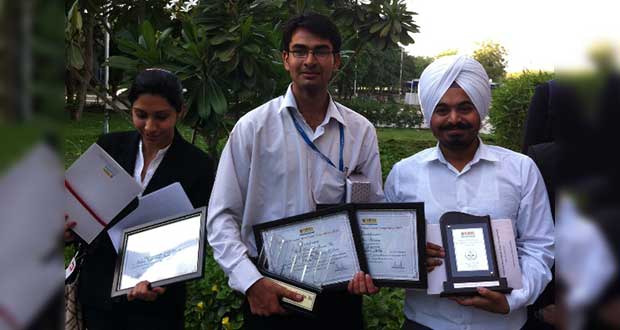
    Winning the North Rounds felt like a big deal. It was. We had to get over a very formidable NUJS team which had my good friend Deepak on it. We lost at the octa-final stage at the world rounds to Columbia. Till date, I’m sore about it. I think the months that I indulged in Jessup were the best months I spent at the University and I cannot stop gushing about it. Only recently, my team mate Manu Sanan said that Jessup now is a warm fuzzy memory. It really is; replete with an insane number of terribly lousy internal jokes. I only have good things to say about that experience. The team became great friends and still are. Not to forget our amazing coaches Giriraj and Yakshay.

    In mooting, as in everything, I suppose practice makes (somewhat) perfect. I had to go at it round over round. Of course, the love for research is very important. It’s more than just skill. Everyone on our team had a zealous drive to read one more article, one more book and one more case. As for speaking, I imagined I wasn’t too bad it, but it took many rounds of grilling to deliver some decent performances at the competition. I quite enjoyed picking up the best speaker awards at the India rounds. Even the world rank wasn’t too bad!

    Jessup continued to be a love affair thereafter. I’ve coached a few teams with varying degrees of success (but mostly disappointment). In my fifth, I enlisted as advisor to the NUJS team that year. They did a fantastic job at the international rounds.


    sannoy-das-2

    What internships did you do as a law student? What were your reasons for doing each of them and how was your experience?

    I was quite conservative about picking internships. I wouldn’t advise that any longer. I suppose an internship each at AMSS and AZB improved the chances of landing a job at a law firm, but I no longer find that an attractive idea. I have very little to talk about those internships, although I did decent work during most of them. I think I got lucky getting assigned to good partners each time. If I had to give a word of advice about picking internships, I’d strongly recommend getting a variety of experiences, at different courts and different sorts of firms.


    Upon graduating, you started working at Majmudar & Co., Mumbai as an Associate. How did you secure your appointment? Please describe the interview and induction procedure for a fresher?

    I was recruited to Majmudar on the first day of our recruitment process. Majmudar, back then, had the best recruitment procedure, which involved a three stage gruelling process – quite like big firms in other countries. The fact that their process was so thorough made me want to take the job. Also, the fact that it was a mid-sized firm meant that I was likely to shoulder more responsibility than a typical first year associate. That again, was an important factor in accepting their offer. I can’t say what it is to be inducted there now, it’s been a while since I left; but it’s certainly a good place to go if a fresher is willing to be at the business end of things in a short span of time. One tends to get baptized by fire there.


    OLYMPUS DIGITAL CAMERA

    You worked at Majmudar & Co. for six months. What did your work and responsibilities consist of? What were your reasons for leaving within such a short span of time?

    I have no complaints about the work I got at Majmudar. I had plenty of it, and that kept me happy. And I had enough time to savour Mumbai; all the good food and drink (in generous measure). So, maintaining the balance certainly wasn’t my problem. I advised on some corporate issues but most of my work was concentrated around huge sets of cases that we were handling across courts in India, and at the Bombay High Court in particular. I really cherish the exposure I had to high end litigation work in the earliest days of my career.

    Why did I leave? I had some reasons to go back to Calcutta. Also, the litigation bug bit me pretty strong while at Majmudar. Being at the Bombay High Court gave me a push to the ‘other’ side. So I packed my bag and imagined making forceful arguments every day at the Calcutta High Court.


    After leaving, you started practicing in Calcutta as an Advocate. Did you work under a senior lawyer or start your own practice? What were your reasons for moving from a corporate setting to litigation?

    Calcutta maintains the traditional solicitor-barrister/counsel divide. I cast my lot on the side of counsels, joined the bar library club and attached myself to the chamber of Mr. Samit Talukdar, one of the most prominent senior advocates of the court. In about three months, I had a few briefs trickling in. Then I had quite a few. As I said, the sheer attraction of arguing from the bar had drawn me to litigation. I lived some bit of it in the three years at the High Court. I had moved from wearing a tie to wearing a gown, but I was essentially practising a lot of company and commercial law. Even so, the sort of research that goes into preparing to write a brief or argue a case was infinitely more challenging than anything I had done before. It was like doing Jessup every day, at high speed. It was thrilling to be in the midst of volumes of case reports, treatises and piles of petitions. Very soon, my room at home, which I doubled up as an office, looked like a godown. Doing good litigation delivers great satisfaction, but mostly it’s a humbling experience, as I realized every day how much more there was to learn. I worked on a few matters with the top counsels of the court (and indeed of the country), and the challenge of being a worthwhile junior on a matter was quite great. I think I didn’t do too badly. Every once in a while, I heard a word of appreciation that made me dizzy with delight.


    After three years of practice, you decided to study further. What were your reasons for doing so, especially when the general notion is that for a career in litigation one requires practical experience more than an LL.M?

    It’s a somewhat correct notion that an LL.M. isn’t the best idea right in the middle of growing practice. I’d be lying if I said I wasn’t advised against it, and that came from quarters whose wisdom I have no reason to doubt. My seniors at the bar quite correctly advised me to be circumspect about making the decision. And I was. I don’t think I really made up my mind till pretty late. If I am to be really pragmatic, I doubt this LL.M. can have anything to do with setting up a better practice; at least not in Calcutta. If anything, having lost a year at a time when my practice was picking up, means having lost momentum. Fortunately, I did not make the decision of doing this LL.M. pragmatically. I did it because I simply felt some sort of an intellectual thirst, if you will. Not to suggest that working on cases can’t quench it, but I was craving to be theoretical, and was interested in taking liberties that I couldn’t have done while remaining committed to a client!


    Please tell us about your decision to pursue an LL.M at Harvard Law School. Please share some advice on acing the application requirements and procedure for Harvard.

    I’ve always gushed at the name Harvard. I’ve been here a while, and I still do. Not because it’s a reasonable thing to do, but I don’t espouse being reasonable all the time. As I said, I hadn’t decided about actually taking the year off to study when I applied. But when the admission letter came along, I think it was quite hard to look away. It also coincided happily with my wife’s career plans, and she was quite sure about taking her place up at the Chicago Law School. I think I’ve made a few decisions that don’t sit well with rationality. I wouldn’t advise following suit, as a matter of reasonableness. But I would advise it as a matter of principle, because I think it’s quite silly for us to be tied to decisions that we make when we’re all quite young. Not marriage of course. That one is forever!

    Applying to an LL.M., whether at HLS or elsewhere, requires some amount of dedication in crafting the materials. The key is just to start early in the admission cycle – get the referees to send in their letters and the universities in India to send in the transcripts etc. After that, it’s about writing a solid essay. I think the essay requires some good imagination more than anything else. I wrote my application on issues of private international law, because at that time I was quite committed to thinking about rules that govern conflict between jurisdictions. I think the essay requires the demonstration of both a clear understanding of a particular legal issue and a reasonable framework for thinking about solutions.


    It’s a dream for many law students to get through to Harvard Law School. What would be one thing they should necessarily do as a law student?

    They should necessarily study hard. It’s sine qua non to be reasonably well grounded in the laws of the jurisdiction one hails from. I can’t imagine what the factors are, that determine the selection process; I’m just lucky to be here. But if I were to hazard a guess, I think the admissions people at the top law schools are able to discover if the candidate has some real intellectual thirst.


    What were the subjects you were specialising in at Harvard? How has your experience been? Did you indulge in extra-curricular and co-curricular activities there?

    I came in imagining that I’d study a set of subjects that are useful in cross-border litigation. Instead, I’ve spent the year studying international and comparative law, international trade and legal theory. The LL.M. dissertation is focussed on an issue in international trade law (which for selfish reasons, I shall keep to myself). For the most part, I’ve been excited taking classes at HLS. I think the distinguishing feature of the experience for me has been the compulsion that I have felt to think critically, not only about existing regulation, but also about the existing normative views.

    HLS is abuzz with opportunities outside the classroom framework, and I’ve delighted myself attending a host of talks, conferences and symposia. Unfortunately, an LL.M. lasts only a year, and one can’t have everything. I’d have liked to do a lot of things in this one year – be a research assistant, work at the library, join a journal. I’ve managed none of that. Except Jessup. I enlisted as a coach to the team from HLS. Unfortunately, we didn’t make it past the semi-finals at the Northeast Regionals. Till now, one of the highlights of the HLS year has been a fellowship with the Salzburg Cutler Program, which is an awesome conference on all things about international law. It was my first taste of what it is like to defend a paper at a really serious academic workshop.


    Tell us about the faculty and facilities at Harvard. Please share with us a memorable incident from Harvard.

    One can’t have enough of being in awe of the faculty at Harvard. Everyone I’ve encountered is brilliant. I have special regard for my supervisor, Professor Mark Wu. But generally, it’s an environment where the intellectual stimulation is beyond anything I’ve experienced before.

    Watching six feet of snow accumulate over a week is pretty memorable. Otherwise, having studied under (the quite legendary) Duncan Kennedy, now in his year before retirement, is something worth writing in a diary.


    Going forward, how do you see your LL.M qualification would add to your career? Do you think of working abroad ever? Will you return to litigation?

    This is a question I’m not fully equipped to answer. I can make absolutely no prediction of how my career will be affected by this LL.M. I’m certainly not looking to work in a law-firm here. I can’t say further about litigation because I’m yet to sit down and make some hard choices. I am hoping to do some international trade related work.


    Please share with us your experience in litigation. What is one thing that gives premier law school students an edge over others in litigation?

    I’ve already spoken as to what my experience was as a counsel at the High Court. I enjoyed the work that I did at the High Court, and the challenges that came with doing that work. I think the second bit of this question is ill-conceived. I eschew the premier law school tag, and I think it’s an undeserving badge. Many of my contemporaries at the Calcutta High Court didn’t attend these so called ‘premier’ institutions, but were more competent than I could pretend to be. I suppose rigorous academic training makes a difference, but that’s certainly more up to the student than the institution. If on a general review, we could say that some law schools train students better than some others, then there’d be some advantage starting off; but, it gets quickly eroded in practice. I don’t think law schools train students to be practitioners, and I don’t think it’s their job to so. I think the real advantage rests with those who can learn the law as it gets applied in courts, quickly, along with court-craft and litigation strategy.


    Does the Calcutta High Court environment get stressful? What would be your suggestion to a fresher who is graduating this year and would join Calcutta High Court?

    I don’t know of any workplace where the environment causes absolutely no stress. Sure, there’s a fight for space and recognition, but it isn’t a place that a reasonably robust individual cannot survive. I was certainly privileged in the sense that I got to join a really good chamber and my senior was invested in my career. Also, I had plenty of financial muscle from my family to hold me up. Therefore, I don’t think my experience can be representative of the struggle that some others might have to go through, and I don’t intend to paint a picture that is rosier than reality. Having offered that as a caveat, I do think that the High Court is a good place to start (and continue) a great career in litigation. Of course, the court isn’t as active in the commercial space as the courts in Delhi and Mumbai, but there’s still enough work to be done. I think it’s important to have spent some time at the court before making the decision, and a graduating student would at least need to know who the best (and the most indulgent) seniors are.


    How much politics would you say is involved on the Calcutta High Court premises? How do you say one can possibly keep oneself away from this?

    If you are talking about factions in the profession, then my answer would be – yes, there are some and people get invariably implicated. Also, depending on the affiliation that a lawyer has (bar association/bar library club/incorporated law society), a degree of factionalism is almost impossible to avoid. I suppose a generally conscientious person can manage the fine line between good association and vile politicking. Also, I think the affiliations make for good cricket tournaments and the like!

    If you are talking of a political atmosphere, then I think it’s only fair that legal professionals have political views and are engaged in lawyering to achieve political ends. I think lawyering is a way of expressing ourselves as political beings and I certainly wouldn’t be shy in doing that.


    Who are your mentors and/or guides you look forward to for advice?

    I feel quite blessed because of the number of people who have advised me well during various stages from law school to the profession. I often turn to Justice N.N. Mathur, our former Vice Chancellor whenever I need to talk about career ideas, as also some of the senior advocates I worked with – my chamber senior Mr. Talukdar, Mr. S.N. Mookerji and Mr. Jishnu Saha. And my professors here at HLS – particularly, Mark Wu. However, I think the list is much longer and I must repeat myself in saying that I am indebted to more than a few people for having been mentors and guides.


    Lastly, what advice would you like to give our readers?

    I’m not going to pretend to have seen enough to dole out any meaningful advice. But to law students, I’d stress on the importance of being grounded in studying law at law school, and then making career decisions after seeing a wide spectrum of possibilities. I think there is considerable pressure exerted in law school to pick certain career paths, and while those are often excellent choices, they don’t work out so well for everyone.


  • Megha Bhagat, Independent Consultant, Human Rights in the non-profit sector, on a career in research

    Megha Bhagat, Independent Consultant, Human Rights in the non-profit sector, on a career in research

    Megha Bhagat graduated from Army Institute of Law, Mohali. She pursued an LL.M in Human Rights from NLSIU, Bangalore before going on to work at NASSCOM Foundation. She has received a Certificate of Recommendation from HRLN for extraordinary participation in the National Convention on Human Rights and Mental Health, a Certificate of Recommendation from the Supreme Court Bar Association and a Certificate of Appreciation from Amnesty International. She currently works as an independent consultant in the non-profit sector.

    In this interview, she talks about:

    • Law college experience at Army Institute of Law, Mohali.
    • Masters in Human Rights from NLSIU, Bangalore.
    • Interning and working at the NASSCOM Foundation.
    • Being an independent consultant in the non-profit sector.


    Please introduce yourself to our readers. How did you decide to take up law?

    I grew up as a typical military brat with schooling all over the country. This probably formed the foundation for making career choices that varied over the years since I got to meet different role models while moving schools. I can never answer “how” or “why” I decided to take up law but I distinctly remember saying to my history teacher back in the 9th grade that I will either be a lawyer or a journalist. I think the need to know how systems work triggered the decision to study law.


    You graduated with a BA.LLB from Army Institute of Law, Mohali. How was your law school experience? Looking back, what would you do differently?

    When I got into law college I was another 18 year old who had just gotten her first sense of academic freedom. The first year was about figuring out what was it about the subject that really fascinated me and this also typically meant not being a student who scored high grades. While the style of academics remained pretty much like school system, I started exploring the practical world of law and started embarking on internships and legal workshops. Since the college provided the option of specialising in human rights, corporate law or litigation in the 4th year I started building my understanding of what I really wanted to do.

    For the first 3 years I interned at all forms of legal offices- be it criminal lawyers in Punjab & Haryana High Court, Khaitan & Co for the corporate experience, district courts in Lucknow or Human Rights Law Network in New Delhi. This was to ensure that I knew with absolute certainty what kind of law inspired me to work in a particular sector. By the time 4th year happened it was clear that I wanted to study human rights law and interestingly I was the only student not only in the college but the complete university that opted to pursue human rights law! I spent the last two years being on my own (no faculty, no peers), not only studying the intricacies of law but also working on workshops and seminars outside the academic circle. That built my overall exposure to the various facets of options I had set for myself and created role models from the sector.

    I gave up on the idea of mooting pretty early in law college and that is one thing I would love to go back and change for myself! I think being a law student, it is a critical skill to evaluate yourself as a court room lawyer, so it’s something I missed out on.


    You received extraordinary accolades while still in law school. Please tell us about these.

    I received a Certificate of Recommendation by HRLN for extraordinary participation in the National Convention on Human Rights and Mental Health in October, 2004, a Certificate of Recommendation by the Supreme Court Bar association in April, 2005, and a Certificate of Appreciation by Amnesty International in August, 2007.

    One thing I was clear about was that I wanted exposure beyond academic life and therefore remained very active in social circles beyond law college. I worked on making long lasting professional connections at the internships I pursued and I was able to get access to opportunities that existed outside college. Since human rights was already my preferred area of expertise, I was able to find mentors very early in college who groomed me in the sector and that led to participating in sector-specific work with organisations like HRLN and Amnesty.

    I was involved in curating content for the mental health convention and leading a panel on mental health discourse. With Amnesty I was involved in working on the campaign against death penalty in India and wrote a paper on the same while at college. The Supreme Court Bar Association organises an annual conference which nominated students also attend and I was nominated by the college to take part in a discussion on changing trends in human rights discourse globally.


    You interned at the NASSCOM Foundation while in law school and were offered a job there upon finishing your studies. What should one do to get noticed in a large organisation during a short, month-long internship?

    It is very important that you are clear about how far off you see yourself in an organisation when you intern there. This gives you clarity in terms of your role in the organisation as an intern and leads you to make a better impression. In a large organisation it is critical that your interview has already hallmarked you as a different intern over others. For me, that has been my absolute strength- to have distinguished myself with specific skill sets over other interviewees. This impression is typically shared by your supervisor with other seniors in the organisation and that also defines the kind of work you will be doing as an intern.

    Secondly, it is important you join an internship with an inherent zeal and capacity to learn and unlearn. While the “interns fetch the coffee” mechanism may apply at most places I find that most organisations are looking at an intern as a nimble footer who can move between projects easily and effortlessly. I actually joined NASSCOM Foundation and before that GMR Foundation on program management roles which had nothing to do with law at all and yet I entered with a simple mantra of “it is never too late to learn new subject matters and skills”, this trait was duly recognised at both the organisations.

    You have to ensure that you have made a few solid skills of yours noticed and recognised. You can be a good researcher, a fantastic orator, a fabulous report writer, an awesome draftsman- you need to ensure that your work has made this known to the supervisor and also senior folks. They hire you back for skill sets they believe are missing in others and you have to figure that out while you are a part of the team. Lastly, socialise with the organisation! I have always believed that anybody is a person first and bosses/colleagues/peers later, so they are looking to know your working style as a person. Create/use opportunities to meet the seniors in the organisation, have personal conversations with them giving them a peek of where you come from and why you are working with them, pick up a few projects that are outside your work role and talk about those projects to the folks in the organisation. While at NF I was handling various projects from very varied perspectives and I had made my relationship building skills known to the organisation for them to hire me back to lead programs.


    You pursued an LL.M in Human Rights from NLSIU, Bangalore immediately after graduating. What were your reasons for doing so?

    I personally think it is an individual choice to pursue higher studies and their motivation to do so. My motivation was simple- I had deep dived deep into human rights studies during my under grad period without any faculty or guide support and I was deeply interested in rigorously studying the nuances of the subject under able guidance. I went on to pursue an LL.M immediately because I did not want a break in my studies and went on to specialise again in human rights at NLSIU. For me it was the best decision I ever made simply because I spent the next two years dissecting closely the working nuances of various human rights mechanisms and gathering more experience through trainings etc.


    Is it better to work for a couple of years and then go for an LL.M or do one immediately after graduating?

    Every law student should prioritise their 2 year plan right after law school early on. If you are interested in getting on with the job, then by all means pursue work immediately after law school. If you are interested in an LL.M adding specific specialities to your resume, then you should have either figured out by your final year of under-grad what subject excites you (through internships) or you can work for a few years and figure out what speciality makes the most sense to you. And of course if you are a learner like me then join an LL.M to explore what else you can extract from theoretical knowledge about the legal systems.


    You were a Research Assistant for a period of ten months on the topic of “Common Resources of Mankind”. Can you tell us the experience of taking part in this conference?

    This was for a Conference on “Commons” held in January, 2011 under the chairmanship of Nobel Laureate Elinor Ostrom. This was a huge opportunity that came along while I was pursuing my masters at NLSIU. We were chosen to participate in the research for the conference and the papers that would be presented thereof. I was a part of a small working group that was collecting global evidence of the “Common knowledge” and sharing growth stories. We worked on putting together data that indicated that not only were resources to be shared amongst nations but also that knowledge shared across nations was more conducive and relevant to the globalised world order.It was personally a very exciting and fulfilling experience since it added to my overall learning growth under such an esteemed academician.


    After graduating, you joined the NASSCOM Foundation, New Delhi as a Business Responsibility Officer. What was your work profile like? What were your main tasks?

    My work profile included program management for CSR, research and publication on relevant CSR subjects and support for the Disability Program of the organisation.

    In the first year I was tasked to build regional industry forums on Corporate Social Responsibility. I was leading 3 regions: Bangalore, Hyderabad and Chennai, and building working groups from within the IT industry to lead social impact projects within the cities. It was an interesting space to work in since it meant that I had to become well versed with all the IT/BPO companies in those regions and curate projects based on the skills that each company possessed and also work with CXO levels to change mindsets around CSR and social impact footprint of the industry.

    In the 2nd year two changes took place- I was handed the responsibility to set up operations for the organisation in Bangalore and also handed the Program Management responsibility for an internationally funded project by the Rockefeller Foundation. I moved to Bangalore to successfully start the Foundation’s south regional office and also worked on new skills of writing funding proposals, managing an international donor and pretty much moved towards program management work. I did stay in touch with the law with the Planning Commission’s work on the 5 year plan where Iwas representing the industry on the change in the disability schemes and law. Similarly, I stayed connected with policy making work while working with the Karnataka government on amending the policy for Rural BPO’s within the state and creating more inclusive policies for small entrepreneurs.


    After two years at NASSCOM, you joined the Fellowship Program at The Rockefeller Foundation. How did you secure your appointment as a Social Innovation Fellow? How was your experience there?

    The Social Innovation Fellowship at the Rockefeller Foundation was a nomination led process. All 18 fellows were selected and nominated by the Rockefeller Foundation based on our areas of specialisation and backgrounds. I was at that point of time also leading a project for the Foundation in India and working on creating a report for the global BPO industry.

    Like most fellowships this was a life changing experience. I was one of the youngest fellows in the cohort and this was especially exciting since I got to learn from very inspiring senior folks from the social impact sector. We were travelling every 3 months to a new country to look at social innovation on the ground and to learn theoretical tools from our faculty from University of Waterloo, Canada and Stockholm Institute of Resilience. The travelling diaries made the beautiful countries seem so much more closer and catered to the travel bug in me.

    It was riveting being amongst social change makers and witnessing NGO’s on the ground that were implementing social impact on a large scale and under various dynamics. At a personal level it made me introspect about my vision for myself and what else I wanted to do to change the world. I not only went on to make great friends but I’m also still inspired by the passion for social change that these amazing social innovators carry. I moved on from NASSCOM Foundation at the end of my fellowship program and started my own journey of creating social impact via various projects and organisations instead of limiting myself to one organisation.


    Please tell us about your current occupation. What do your main tasks and assignments include?

    Presently, I work as an independent consultant in the non-profit sector consulting with the International Institute of Education and Advisor at Education for Development, a non-profit organization in the education sector. I started consulting for non profits and start ups earlier this year. I currently lead operations for IIE’s new project called We Tech (Women Enhancing Technology) and led the foray of the program in India. I primarily work with the IT companies on mentoring high school girls to enter the coding space. The program is just going into its second year and I am working closely with the industry to scale the program.

    In my role with E4D I am working with a very inspiring youngster who graduated from college and decided to change the way learning systems run in the country instead of taking up a plush job. E4D set up a “maker space” on the outskirts of Bangalore and provides an alternative learning system to anybody who wants to learn from making. I work with the start up on business development, outreach to partners and organisation visioning.


    Your interest areas have been education, policy research and business strategy. How did you pursue these interest areas while still in law school?

    I have always been interested in pursuing different subjects and gaining new skills through that exploration. While at law school I was involved with various research organisations like HRLN, Amnesty, etc. and worked on research papers for various human rights subjects including education. I had a lot of time on my hand to write articles based on changing policies and utilised my professional circle to gain access to opportunities to present the research or work on new and developing research. While I interned with foundations of corporate houses I picked up the nuances of business strategy by working closely with the corporate, business development teams of the parent organisation. I was always interested in how one could integrate social responsibility within the DNA. The wide range of exposure got for myself gave me ample playing field to pursue my interests.


    You have been commended by your previous and current employers for being a people’s person and building strong working relationships. How important are social skills for a lawyer and how does one cultivate them?

    Personally I am a typical military girl, which means I am used to forming relationships where ever I go. Add to it the fact that all through my seven years of legal education I dabbled with varied institutions and organisations thus leading to an overall understanding of different industries and professionals.

    As a lawyer, I think social skills are extremely relevant if you want to grow out of your shell at a regular desk job! If you are looking to grow further up in the legal field or diversify later into varied sectors you need to socialise beyond the circle and form learning relationships with various professionals. It is important to go out of your comfort zone and interact with professionals in different fields, to have a childlike curiosity to learn something new and if there is one thing every human likes it is the opportunity to share knowledge. In my experience forming people relationships is an important component to grow as a professional and seeking out collaborators is useful in the long run. Whoever you meet through work should connect with you at a personal level too and that goes a long way in staying on as strong professional networks.


    It is a common belief that working in the areas of human rights and policy research doesn’t pay well or at least as much as a law firm does. How true is that notion and how much of a hindrance is it for people joining this area of work?

    Unfortunately the social impact sector does not have pay grades like law firms. This grim reality has led to keeping fresher level talent away from this sector. The growth in the sector takes place after the initial 4-5 years and “social work” “policy research work” haven’t picked up as mainstream skilled professions leading to much less people joining the sector. The other side of the coin is that the growth is phenomenal if you stay put for initial 3 years and learn the sector well enough. The sector requires nuanced expertise and once you have created a network for yourself and become a subject matter expert it doesn’t take much to grow from post to post.


    What are your plans for the future? What advice would you give to the students reading this interview?

    I intend to keep working in new subject areas and utilise my skills to work on solving varied social problems. I would hate to stay put in a specific area and therefore I see myself drifting from education to technology to urban development challenges to art and literature as forms of ending violence. The variety in the subject matter keeps me excited and thus will move from one project to another keeping my insane urge to travel also satisfied.

    I would say to the students that: Don’t restrict yourself to one particular field of study just because you entered a particular sector. Figure out for yourself what excites you the most and then pursue that ambition with or without law. There are amazing opportunities that exist outside the framework and as a lawyer you are already well equipped to be a rockstar in most of the nuanced sectors! Pursue a particular field because that is what inspires you every day otherwise you will just end up being another lawyer in the country!

  • Gaurav Singhal, Director and Principal IPR Attorney, Patracode Services, on his journey from Engineering to Law and a career in IPR

    Gaurav Singhal, Director and Principal IPR Attorney, Patracode Services, on his journey from Engineering to Law and a career in IPR

    Gaurav Singhal graduated with B.Tech degree from UPTU in 2006. His interest in IPR law led him to join Rajiv Gandhi School of Intellectual Property Law (IIT, Kharagpur) and pursue an LL.B.

    While in college, he co-founded Siddhast Intellectual Property Services. After graduation, he was placed at Siemens Information Systems Ltd. as Strategic IPR Counsel.

    Gaurav Singhal is currently the Director and Principal IPR Attorney at Patracode Services Pvt. Ltd.

    In this interview he talks about:

    • Law school experience at Rajiv Gandhi School of Intellectual Property Law
    • Co-founding Siddhast Intellectual Property Services and entrepreneurship
    • Working at Siemens Information Systems Ltd.


    Given that most of our readers belong to the legal fraternity, how would you introduce yourself to them?

    I’m a techno-legal professional living his dream to be an entrepreneur. My practice largely runs around Intellectual Property Rights, more specifically towards Patents. My approach is always problem-solution. I identify my customer’s requirement first and then give my best to solve it through the tools of law and business consulting. If the client is bootstrapping, I provide him certain lean strategies to protect his business interest, in spite of going pro-bono. Business Rights are commercial in nature, and are quite different from general civil rights, hence I believe that the client should bear the protection cost, as he shall be reaping commercial benefits from it in due course.


    Having done B.Tech from Uttar Pradesh Technical University, what motivated you to choose law as a career at Rajiv Gandhi School of Intellectual Property Law?

    My entry to law was well-planned, however the motive to be in law, was never to practise the law. When I was doing my B. Tech, I was an aspiring entrepreneur and had been practising entrepreneurship at a very small level, while still being at my engineering college. A friend and I had tried multiple fields like other engineering students, they were in and around education programmes, technology project installation, website design handling, business consulting, etc. However, none appeared to be lucrative to us as a business. During the same time we were attending various Business Conferences, and a few of them were based on Intellectual Property Rights. We found Intellectual Property Rights quite fascinating and had decided to pursue as our entrepreneurial career. The decision was validated by doing some mock business development activities with real prospects, which were highly successful.

    However, at that time, we were not sure about how to get the required skills to be in the area of Intellectual Property Rights. We knew that many LPO’s and KPO’s, even law firms take engineers as associates to practise Patents. But, we were sure that for a broader perspective we must do law. At that same time during 2006, IIT Kharagpur started the law school for technical graduates and science post-graduates. I considered that this law school was the right avenue for me to change my career’s direction.


    gaurav-singhal-2

    How did you get through to Rajiv Gandhi School of Intellectual Property Law?

    Getting through to IIT Kharagpur’s law school is another dramatic story. If certain  incidents had not occurred then, may be my career path would have been absolutely different.

    When I made the application for Law School, my final semester engineering exam schedule was not out yet. Had it been out, I would not had applied for Law School at all, as one of my final semester exams was in conflict with the Law School entrance exam dates. Once the schedule for final semester exam was out, I came to know about this conflict. I was almost hopeless at that time. However, suddenly some Public Sector Unit had announced their employment examination date, which was conflicting with my final semester exam date, which was conflicting with Law School entrance examination date.

    Hence, under pressure from lot of students, the UPTU had shifted the conflicting examination date to a later one. Now, the dates were not conflicting, however another problem was still there. The Law school entrance examination was being held at IIT Kharagpur, which was atleast 24 hours away from Ghaziabad, where my engineering institute was based. And between two final semester examinations, only 3 days were there, which means less than 72 hours. The law school entrance examination was placed exactly at one day’s gap from the end semester examination. So 48 hours of train journey, written examination, group discussion, personal interview of Law school entrance examination, and preparation for the end semester examination had to be done in less than 72 hours. A very tight situation was there. Even few hours of delay of anything may have jeopardized my future in some way or another. I had decided to take this risk and was eventually successful in both my end semester examination and as well securing a seat for me at Law school.


    What were your areas of interest during your graduation? How did you go about developing expertise and knowledge in these areas?

    During law graduation, my area of interest was purely mostly on Intellectual Property Laws with emphasis on Patents. Even the college was more focused on IP Laws and division of a number of permanent faculties towards other laws and IP Laws was also like giving a weightage to IP Laws. As IP laws, especially the case laws, are more matured in the US, our focus during studies was more towards studying US laws. Even for practical scenario understanding, we had a few visiting faculties coming from US too.


    As a law student which activities did you participate in?

    One of the prominent activities which I supported was a student group called Technology Transfer Group whose focus was enabling transfer of technologies developed by professors and researchers at IIT to the industry. One of the aspects of this group was that it supported increasing Patent filings from IIT Kharagpur, which dramatically increased during the year I was handling it. To practise IPR laws and especially patent laws, the guidance was very limited, as we had very limited exposure to practising IP Lawyers during graduation. Even my internships was planned by myself.


    What kind of internships did you do while you were a student? Tell us about your law school journey.

    I had been through a total of three internships. The first two were at a small IP services firm, Siddhast Intellectual Property Services, where I was a co-founder and had founded it during first year of Law School itself. After the first year, it was an obvious decision to do an internship in my own venture, because the business was not shaped up.

    I was still two years away from my Law school graduation, so it was obvious that we cannot start with legal services or legal support services. Hence, during those 2 months, my focus was to turn it into a technology transfer company.

    However, in the first 15-20 days itself we started getting the notion that India is still too immature for transfer of patents and technology. So, a steer of focus was required. We required choosing something, where legal services were not involved at all and even legal support should not be required, even it should be close to IP laws and allied area. At that time, we did a lot of market research of the Intellectual Property market and identified an area where legal support was not required, and it was Intellectual Property database, more specifically patents.

    At that time, there was not much competition for Patent database in Indian market and few players had not even entered the market. At that time, we carried out partnership development exercises with a few players and boiled down to Questel Orbit. I worked out my next internship too at Siddhast after 3rd semester’s end. By my second internship Siddhast was running as resellers to Questel’s database and starting getting recognition in National market too.

    However, for my summer internship after 4th semester, I decided to do it in legal services, as by that time I had received substantial exposure to IP Law. This internship I did at Marico’s legal department. When I entered as intern, the legal department was looking towards me more as an expert, as the in-house team was more focused to general commercial laws and very minutely to IP Laws. During these two months, I utilized all my knowledge gained at law school to structure their Trademark portfolio. However, for Patents, there was exposure, which was quite minute.


    Did you find that your law school education had prepared you sufficiently for the many tasks you were to required to execute during your internships and later at your job?

    My education at law school had surely prepared me for various activities at my internships and at my job. However, at my job with Siemens, I had to undergo a specialized traineeship to work as Patent drafter and prosecutor, which was my major responsibility. For advising on IP Laws and managing other IP portfolios, like Patents and Designs, my education at Law school had helped me a lot.


    How has your mooting experience been?

    Mooting I did majorly as part of college curriculum. However, mooting exposure had helped me to develop and present arguments, which as a practitioner I have to do in day-to-day business.


    You started your career at Siemens Information Systems Ltd. as Strategic IP Counsel. How did your appointment take place? Please share you experience with our readers.

    This phase was equally dramatic.  Siddhast, the company which I had co-founded was doing well, rather to say it’s turnover was around 50 Lakhs in 2008-09. I was in double-minds, whether to get an industrial exposure and then join Siddhast or shall I do it right away after school. I had not even applied for the campus placement program. During that time, I was just enjoying the placement process of my classmates.

    On 3rd or 4th day of the process, it was announced that one of my classmates and I were selected for the placement process of Siemens. I was quite amused about it. I was not expecting it, as I have not applied for the process at all. I had moved to my placement coordinator faculty regarding it, to which he mentioned that Siemens was looking for someone who has done graduation in Computer Science and there were only 2 profiles in school, including mine.

    As it was the first year for the college and it was about college’s reputation building, he wanted me to take part in the recruitment process of Siemens. He mentioned that after 6 months, if I do not like it, I may leave Siemens and join my own outfit. At that time, I thought if it is for my alma mater’s reputation, I will take part in the process and also perform. From Siemens, we were told that we shall be tested on Patent Claim drafting. We studied it academically; however the exposure was surely very limited to clear such test. To practise it, I had read through Landis on Patent Claim drafting thoroughly.

    On the test day, we were provided with a test based on European Patent Agent Qualifying examination. Surely, it would have been difficult to do it, if I hadn’t not read well. Almost after 15 days of writing the test, I received a surprise call from the Head of Intellectual Property Department, India of Siemens early at 7:30 am. It was a wakeup call which made my day. I was asked to visit Bangalore for final processing and it was a sponsored trip with flight tickets also sponsored. It was my first exposure to flights. Really, Siemens had given so much to me, at that time; it was not possible for me to say “No”. And, in this way my final induction into Siemens happened.


    Later, you switched to Patracode Services Pvt. Ltd. and currently work as Director and Principal IP Attorney. How did your appointment take place? How has your experience at Patracode been so far?

    I am entrepreneur at heart, and that is the reason a Corporate like Siemens was not able to hold me back for long. When I was on the verge of completing four years, I was sure that my further development shall be inhibited in a controlled structure of a Corporate and then I decided to leave. However, Patracode was started much earlier. After leaving Siddhast, I was in touch with our first employee at Siddhast, Kavita Poddar, who was also leaving Siddhast soon after her marriage. Kavita wanted to start an outfit and she was interested to partner with me for that. With Siemens Policies, I was not seeing a harm to start with her, I had nodded “Yes” to her with a condition that I shall be only able to invest, but may not be able to provide much input beyond Management inputs. So, in Patracode, for few years I was just an investor and later on I actively joined it as part of the Management and its Principal IP Attorney.

    In Patracode, I am a free bird and able to steer my ideas easily. Exposure to bootstrapping startups has also given another variation to my advice which are now more lean and yet unconventional. Even my learning path is quite stronger now. I am doing lot more new things every day.


    What kind of work and responsibilities does the Director and Principal IP Attorney of Patracode deal with?

    I would say that there isn’t a typical day, as we are very client specific. Someday, I shall  have a full day meeting with clients and attend conferences, some days I am with clients solving their problems, some days I shall be at office training my staff, or planning future strategies. The activities are too diverse and may even involve technical or business consultancies to the client.


    What type of cases do you deal with? What amount of legal work is there? How often is legal work outsourced and in what type of cases?

    The cases which we deal with are generally non-contentious and revolve around filing and prosecuting Patent, Trademark, Copyright and design applications. We do not outsource our work in general. However, where we provide legal support, we may outsource it, like in the case of legal and patent translations. We work almost as in-house IP Counsels to our clients.


    Does Patracode take interns? What is the process for same?

    Yes, we do take interns. The process is simple. A candidate should apply with his aspiration to achieve during the internship period. If we feel that we can do justice to his aspirations, we may accept him, based on space available with us.


    Many lawyers would say that the actual learning takes place in the years of practice. How far would you say it is true? What was the case in your situation?

    As they say, it is very correct that learning happens when you do it. However, grooming for receiving that learning happens at law school, where your gurus enable you with the tools to be a receptor of that learning.


    If you could list out 3 activities which on a scale of priority, should be at the top in any law student’s school-life what would those be?

    • Make your passion your career.
    • Be disciplined in following your passion.
    • Till the time you have tried very hard, don’t believe that you cannot achieve it.


    Lastly, what would be your parting message for our readers?

    Just don’t dream, live them. I am sure success lies in living your dreams. Also, don’t do anything which may look career promising, rather just make career in what you like to do. If you will live your passion, success shall follow.

  • Shantanu Sahay, Partner, Anand & Anand, on work experience in IPR and journey from Associate to Partner

    Shantanu Sahay, Partner, Anand & Anand, on work experience in IPR and journey from Associate to Partner

    Shantanu Sahay graduated from National Law Institute University, Bhopal in 2007. With an in-depth knowledge and interest in IPR laws, he joined the litigation team of Anand and Anand as an Associate in 2007. With his work, acumen and diligence, he was quickly elevated to the rank of a partner in June, 2014. We asked him to share his work experiences and career moves with us.

    In this interview, he tells us about:

    • Law School experience at NLIU, Bhopal
    • The journey from an associate to becoming a partner at Anand & Anand
    • Work at a top IPR Law Firm
    • Important skills of a lawyer and a partner


    What brought you into studying law? Was it fate or plan?

    I belong to a family of lawyers. In fact, I am the fifth generation lawyer from my father’s side. My father is still a practicing advocate at the Patna High Court. Also, both my grandfathers have been lawyers. Being born in a family full of lawyers, I definitely had some sort of a natural inclination towards this field and in view of this; it was very much a matter of fate too.

    However, I was also impressed by the concept of five years integrated law school course such as NLS, NLIU, NALSAR etc and thus I decided to sit for law school entrance examinations.

    I had the chance to score rank one at the all India entrance examination for NLIU, Bhopal in 2002 and therefore I decided to join it.


    Please tell us a little about your law school days at the National Law Institute University, Bhopal?

    I was in NLIU from 2002 to 2007 and it was one of the finest days of our lives.

    NLIU offered everything which we aspired as law students. From academics, sports, library and other infrastructural facilities, NLIU was just fantastic. It was five years full of fun and was a world in itself. I made a lot of friends at law school.

    Also, because it was an on campus residential set up, we used to have a lot of activities after college hours. Debating, sports, dramatics, moot courts etc gave us a lot of exposure in shaping our outlook towards life in general and legal profession is particular.


    shantanu-sahay-2

    How important do you say is a good CGPA for an illustrious career in legal?

    I would say fifty-fifty. Obviously, good CGPA is an indicator of how much hard work you put in into your academics at law school.

    Also, from the perspective of campus placement, having a good CGPA always stands to be an advantage. But that does not mean that a good CGPA will guarantee an illustrious career.

    Your performance at the law school is totally independent of your performance as a professional. In fact, there have been a lot of cases where a lot of law students who were not that high graders in law school performed really well after they joined the profession.


    You have specialized in IPR. How do you say one can gain expertise in it? What does it take to be good in IPR?

    I got interested in IPR from my first year itself. In the boys hostel during my first year I used to live around my seniors who were interested IPRs. They used to write various articles and do a lot of research work in various field pertaining to IPRs.

    Initially, I used to help them with their researches and it is from there my interested in this particular field of law took off.

    All my internships, publications, moots etc used to be in IPR. In fact, my resume was so much IP specific that I was not even short listed for any corporate based law firms during my final year. I interned at Anand and Anand in 2007 and joined the firm that very year.


    You joined Anand and Anand as an Associate in 2007 and became a Partner in 2014. For a law student it’s very difficult to think about becoming a partner in just seven years of joining work. What would you say helped you to join the ranks of a partner?

    I was inducted in the litigation department at A&A and was involved with the IT and E-commerce law practice group. The partner who was heading this vertical went on to become a client. From 2010, I started heading this practice and in 2014, I was called into partnership as the partner-in-charge of this vertical.


    What kind of effort should a young associate put in to work to get it appreciated? What distinguishes an associate with a partner when it comes to work?

    Execution of the assignments in a diligent manner is the mantra. Hard work and dedication really pays well and associates are recognized very well in terms of their visibility and their importance in a team.


    What does a partner at a Law Firm like Anand and Anand do? What falls within the scope of your responsibility? Tell us about a typical work day.

    As an in-charge of this practice, come a lot of responsibilities, targets and travels. You are responsible to the clients as well as the internal senior leadership. To add, there are also expectations in terms of getting new clients to the firm. These tasks are challenging but fun at the same time.

    Normally in the first half, I go to the Delhi High Court where I attend to my matters along with the team. Then I come back to office (which is in Noida) around lunch time. Post lunch is usually allotted for client meetings and conference calls. In the evening, I respond to all my emails and prepare for the matters listed the coming day. I try to leave office by 9 pm.


    How important is it for a law firm partner to be good at business development, or are great lawyering skills enough to become a partner? What separates the people who become partner from those who don’t?

    As a partner, it is important to engage in Business Development. Especially, as in charge of the vertical, I have been doing BD for a long time now. Rain makers in these law firm structures are always valued by the senior leadership and also increase chances for further promotions. One has to understand that partnership also has its own growth path.


    How is the work culture at Anand and Anand? If an associate commits a mistake or an error what course of action do you follow as a partner?

    Anand and Anand has a fabulous work culture. This is one place where performance takes precedence over seniority. Associates work in a relaxed environment and have a lot of independence and exposure to various challenging legal issues.


    What changes has being a Partner brought into your life, do you ever feel that there is excess of work load on you?

    Not much difference I should say. Work load remains same but responsibilities have increased. Travels have increased and so have client interactions.


    How is internship helpful for a law student? Esp. from the viewpoint of Anand & Anand?

    Anand & Anand in true sense takes internships very seriously and for us an intern is a potential recruit. Internships are important as they can give the real world experience to a law student as to how their life would somewhat be after they pass out from college.

    Internships, if done diligently can result in recruitment as has been my case.


    What are the qualities you look for in an intern at Anand & Anand?

    Hard work, dedication and having a right kind of attitude in terms of taking on assignments from their reporting teams. More than possessing the knowledge of law, it is important to have the right kind of aptitude in terms of knowing where to look for an answer to a legal proposition. Possessing soft skills, knowledge of how to use legal search databases such as SCC online, Manupatra etc. Overall the ability to work hard towards completion of an assignment.


    What do you feel makes an intern stand out and is very important for him to do to have a chance of getting a call back or even a PPO?

    Good performance is always noticed and a second application is accepted or a PPO is offered.


    What would be your message to our readers who are budding lawyers and law students?

    • Have the right kind of attitude towards profession.
    • Money should not be the first criteria in terms of choosing a particular field of law.
    • Give time to your profession and follow your professional ethics.
    • Be persistent and patient. Read a lot.
    • Keep informed about what is happening also at the policy and economic level which has bearing on your field of law.
    • Most importantly, work hard.
  • Gargi Panwar, Associate at Rajani Singhania & Partners, on LL.M from Nottingham Univ for a career in corporate law

    Gargi Panwar, Associate at Rajani Singhania & Partners, on LL.M from Nottingham Univ for a career in corporate law

    Gargi Panwar graduated with a BLS.LL.B degree from Rizvi Law College, Mumbai in 2010.She started her legal career as a Junior Associate in the Chambers of Advocate Flanian G. D’souza. Thereafter she went on to pursue Masters from University of Nottingham in International Commercial Law. After coming back to India, she joined Precept Legal as an Associate. She also holds a Diploma in Corporate Law offered by Asian School of Cyber Laws. Currently, she works as an Associate at Rajani, Singhania & Partners.

    In this interview, she talks about:

    • Law school experience at Rizvi Law College, Mumbai
    • Choosing to pursue higher studies over job
    • LL.M experience at Nottingham
    • Work at Rajani, Singhania & Partners


    Given that most of our readers are law students and lawyers, how would you introduce yourself to them? What is it that motivated you to take up law as a career?

    I am Gargi Panwar, a lawyer specialising in Property Laws and Mergers & Acquisitions in Maharashtra. My work involves a lot of communication with the clients, negotiations and meetings. I call myself a part time litigator because I handle a lot of Schemes of Arrangements and Amalgamations, Schemes of Revivals and therefore I can be often seen running into Company court (sometimes if not always in the rush hour).

    It’s a little cliché but I wanted to be a lawyer since I was a 14. By the time I turned 18, I was ever determined to pursue law as a career. I am happy that I could do what I really wanted to in my career.

    Motivation is not something that comes out of always winning but sometimes the setbacks in your life motivate you to walk on the chosen path with more determination and zeal. Therefore, no matter what everyone says, always ask yourself this question “do I want to pursue it?” and if you do, then give your 100% in achieving it.


    What do you think is the kind of interest or aptitude one needs to pursue law?

    A person needs to love reading because our profession is such that we can never know everything. There is a constant change in relation to laws and regulations and therefore, in order to be up to date one needs to read. In corporate law, I feel a person needs a lot of patience and tolerance to be exercised when clients act difficult. Also, one needs the aptitude to see different outcomes of a problem and then find the most viable option at hand. This is very important in litigation as one needs to be able to identify the key issues and find most appropriate arguments for the same.


    What were your areas of interest during your graduation? How did you go about developing expertise and knowledge in these areas?

    I was always inclined towards corporate law. Not because I do not enjoy litigation, but because I love negotiations. I feel any problem can be solved if two parties sit across each other and talk. Therefore, Company Law and Alternate Dispute Resolution were my fields.


    After your graduation, you started working as a Junior Associate at the Chambers of Advocate Flanian G. D’Souza? What kind of challenges did you face during this job?

    By the end of fifth year, I realised that I need to work under an Advocate who can give me an overall experience in various streams of law. Flanian D’Souza and Jerome D’Souza are very well known lawyers in Bandra, Mumbai for Civil Law & Property Law. I approached them through a friend who was working with them. Flanian Sir instantly appreciated my confidence and my good credentials and I started working with him from the next day. I had to leave the job because I wanted to study further.


    Did you always have higher studies in your mind? If not, what motivated you to go in for the same?

    More than me, my parents were keen on sending me abroad for my LL.M. Also, I love studying. If I could, I would be a student forever.


    gargi-panwar-1

    Do you think it makes sense for students to go overseas to study law when they want to practise in India?

    It depends on what kind of practice you will have once you come back to India. If you are interested in Maritime Law, Human Rights, International Insolvency, Intellectual Property Law or like me if you want to be a specialist in Mergers &Acquisitions, then studying abroad should definitely be your choice.

    Apart from this, students may also opt to study abroad as the experience of the international standards of education, meeting people and interacting with people from all over the world, making lifelong connections with people from all over the world are few of the many advantages of studying abroad.


    After pursuing Masters, you joined Precept Legal as an Associate. What was the nature of your work there?

    I dealt with Intellectual Property Law, Property Law and Civil Law.


    Currently, you are working as an Associate at Rajani, Singhania & Partners (RSP). What prompted you to make this choice and what made this shift possible?

    After coming back from studying for my LL.M, I was looking for a placement relating to Mergers and Acquisitions. I got that opportunity in RSP.


    What kind of work and responsibilities does an Associate at Rajani, Singhania & Partners deal with? What should a student do so that he gets placed in a prestigious firm like RSP?

    I am currently working in the M&A Team. I am currently working on matters involving corporate restructuring such as arrangements, amalgamations, mergers & demergers, revival scheme matters. It’s a round the clock job, exciting and exhilarating.

    Students should work towards doing internships with firms and know the work culture of the firm. The name of the firm is important but what is more important is what you want to pursue and how will you achieve success in what you want. Confidence is also a major factor in getting jobs in law firms. A well read person is always preferred.


    gargi-panwar-5

    Tell us about a case that you are particularly proud of. What steps do you take to prepare for a difficult case?

    I am currently working on a revival of a company after almost 75 years of its incorporation and about 50 years of the company being ordered to be wound up.

    One has to know the facts and read all the papers of their matters. Also, research on various aspects of the matter is also very important.


    What is the current scenario of studying corporate law as a career option in India?

    It’s a very positive and bright future for students who opt for corporate law. There is an unquenchable thirst to absorb good minds in every law firm.


    There is a school of thought that labels LL.M’s as being little more than an expensive holiday unless the individual concerned wishes to enter the world of academia/research? Now that you are working, do you feel the experience acquired during your LL.M is relevant to your professional life?

    Definitely, I am well versed with U.K. Law, U.S. Law and Indian Law because I got an international perspective while studying for my LL.M on various subjects including intellectual property, business law, banking and regulations, cross border mobility and insolvency.

    Also, I am much more confident and sure of myself than when I was before I went abroad for my LL.M.  My earning potential has also increased because of the  added qualifications.


    What do you cherish most about the experience you’ve had over the past two years?

    The fact that I have become a confident, smart and successful woman over the past two years, esp. for the LL.M which gave me the much required exposure. I would love to hold on to my LL.M experience.


    Last but not least, what’s next for you?

    Currently I have not thought about the future but I hope I have opportunities and matters to show my skill. Also I am planning to study further and maybe do my solicitors or an MBA. Well, time will tell.

  • Bharat Kumar, Senior Associate, Saikrishna & Associates, on work in litigation and pro bono commitments

    Bharat Kumar, Senior Associate, Saikrishna & Associates, on work in litigation and pro bono commitments

    Bharat Kumar graduated from Amity Law School, Delhi with a B.A.LL.B degree in 2009. He started working as an Associate in the litigation team of Saikrishna & Associates right after graduation and currently works as a Senior Associate there. He is also an empanelled counsel and counsellor for the Delhi State Legal Services Authority. In this interview he talks about:

    • Law school experience at Amity Law School, Delhi
    • Internship and recruitment at Saikrishna and Associates
    • The importance of pro bono work


    How would you introduce yourself? Could you please share a little bit of what motivated you to pursue law as a career?

    I was born and raised in Delhi and did my schooling from Ahlcon Public School. Essentially, I was a science student. Being from a typical ‘tam-bram’ family (and to be very honest with you!), I was rather fine-tuned since my childhood by my family members to someday become an engineer. Law, although, always fascinated me. I guess it was finally a couple of court excursions, which I did in the final days of my schooling that compelled me to pursue legal studies and become a (successful) advocate someday.


    bharat-kumar-3

    How would you describe your time at Amity Law School, Delhi? Did you take part in extracurricular activities? How important do you think that extra-curricular activities are to a law student?

    Time spend during college days was fun, yet informative. **Laughingly** Our college had a fairly strict attendance regime, which compelled us all to compulsorily amass knowledge! Internships were a regular during holidays. Guess that gave us all an insight into the area of law we desired to get into.

    Yes, I did take part in moot court competitions and played my hand at ‘Table-Tennis’, as a sport. Extra-curricular activities are quintessential to a law student as I believe they help not only in interpersonal skills, but also aid in nurturing the art of team management.


    A lot of law students promise to take up pro-bono work and do some socially relevant work. Have these ideas ever crossed your mind?

    Absolutely! Paying back to society should be if not our primary, but our next best ulterior motive. I did do an internship in the National Commission for Women (NCW) during my 3rd year in college, wherein I got an opportunity to be involved in a lot of cases concerning social issues. I am also currently an empanelled counsel and a counsellor for the Delhi State Legal Services Authority, whereby I help people belonging to the weaker sections of society by my legal services. My best advice to my younger brethren would be to help out as many needy people as possible, through your expertise or otherwise.


    How was your first year after graduation? What would you suggest a fresh law graduate should do to hold spirit and utilise the opportunities available?

    My first year was rather spent on learning (it continues to be so!). The emphasis was on a number of issues, more like, how to apply the law, be it procedural or substantive, onto a matter; how your senior argues a particular matter or even how interpersonal relations are to be developed in a workplace.

    Totally! I believe it takes a fair bit of time to settle in, in any workplace! I feel one should hold fort and not hold grudges against any fellow worker. Believe in your superior and he shall give you opportunities.


    Right after graduation, you started working in the litigation team of Saikrishna & Associates(S&A) as an Associate. How did your appointment take place? How would you describe your working experience there?

    During my final semester, I started applying in law firms. I was fairly sure that I wanted to pursue litigation only. I did receive interview calls from a few law firms, S&A being one of them. Fortunately for me and pursuant to a couple of interviews, I finally got a call to be a part of the firm.

    Working in S&A has been a delight! One is encouraged to handle matters on your own right from the start! Seniors are helpful with frequent discussions on legal issues. The emphasis is more on learning. I guess its fairly significant for any lawyer to have a good boss. I feel we have that in S&A.


    bharat-kumar-2

    How difficult were the first few months of Saikrishna & Associates(S&A) given that it focuses mainly on a specific field of law?

    Litigation offers one rather a protracted period of learning. Initial days in any organization can be challenging as practise may be reasonably different from what one has read. The first few months of my work was rather spent on learning drafting skills and getting deeper into the subject.


    What is the procedure to apply for an internship and recruitment at Saikrishna & Associates? If I say that I have never interned at Saikrishna & Associates, what should I do to apply for a job there?

    We have a fairly streamlined process of applying for an internship or for recruitment. Interns can mail their CV at interns@saikrishnaassociates.com. Pursuant to a screening of their credentials, they are allotted internships during various months of the year. A potential candidate seeking a place within the firm can apply on hr@saikrishnaassociates.com. This of course is subject to vacancies being present.


    What would you suggest to someone who is preparing to work with an IPR law firm? What are the basic subjects (IP and non-IP subjects) which one should read and have understanding of before sitting for an interview?

    It completely depends on whether one would want to get into prosecution or litigation or even work relating to policy. Considering the fact that one wants to get into litigation, one must have a reasonably good knowledge of the CPC. During college days, I presume we all tend to ignore the subject. Also, looking into the diversifications that have come forth in IP law, one has to be prepared even in the area of law he/she wishes to be in. Say for example, the requirements for a lawyer practicing copyright or trademark law is fairly different from a lawyer practicing patent law. The latter would surely require some expertise in science at a university level, in addition to legal studies. Nonetheless, the person going in for an interview should be updated with the latest developments in law. The recitation of a landmark case, together with your answer, during an interview would surely make an impact.


    Please give our readers a few tips in order to land a job in an IPR firm.

    One needs to make sure that their internship is promising and fulfilling. Working with outmost diligence and hard work will surely help in bagging one with a job.


    You have specialized in IPR. What made you interested in the same?

    IPR is an emerging field with a plethora of opportunities. Moreover, the same is also non-conventional, with an emphasis over the protection of rights concerning modern day issues. I believe IP issues, which I read rather habitually on a few popular blogs, elevated my interest levels and made me interested in the same.


    After four year of work as an Associate, you were promoted to Senior Associate. How did you go about achieving this?

    **Smilingly** Guess the question should rather be put to my supervisor(s)! I just did my bit. One needs to make sure that work’s done efficiently and well within the permitted period of time. Be thorough with your matter and with the subject. That’s what is required.


    Have you ever considered starting up on your own? Would you say the opportunity a firm provides for a young lawyer is worth the trade off in building a reputation?

    No. S&A provides us with the independence of arguing and handling matters all by ourselves. Our managing partner provides us with adequate liberty to handle and/or supervise even big ticket matters with minimal supervision.

    Absolutely yes! Firms currently provide a very good platform to help and make your mark. One gets adequate client interaction even during their initial days. It definitely helps in gaining a lot of exposure.


    What is a normal workday like at Saikrishna & Associates?

    A normal workday usually begins with matters in court. The same is followed by working on client issues together with preparation on matters coming up on subsequent day(s).


    What would be your parting message to our readers?

    College days are the best days of your life. Enjoy them to the hilt! Just make sure that you have above average credentials and good internship experiences. Once you’ve finalized where you would want to work, spend most of your time interning with that office. Give your best to it and believe me, your future’s secure!


  • Ayesha Nair, Senior Manager-Legal, Hexaware Technologies, on work experience

    Ayesha Nair, Senior Manager-Legal, Hexaware Technologies, on work experience

    Ayesha Nair graduated from Mumbai University in 2004 with a B.LS. LL.B. (Hons.) degree. While in college, she worked as a paralegal trainee with Bilawala & Co., after which she joined Sony Pictures Entertainment as Legal Counsel. Thereafter, she joined Hexaware Technologies Ltd. as a Legal Executive and she currently works as Senior Manager-Legal. In this interview she talks about:

    • Studying at Mumbai University
    • Working at Sony, Hexaware and Lehman Brothers
    • Internship and recruitment tips


    How would you describe your legal education? Did your legal education prepare you for the reality of legal practice?

    The legal education I received is the foundation on which my future is built. I would definitely state that the perception of the profession and the education system has changed over the period of years. Students have been keen on exploring other areas of law falling outside the purview of general practice, like corporate laws, intellectual property experts etc. My legal education gave me a better understanding of the actual application of the legal practice in my chosen profession. Having said that, I would also say that one does learn a handful while on the actual job.


    You have graduated with B.LS. LLB.(Hons.) degree from Mumbai University in 2004. Tell us about your law school experience. Share some highlights from your college days that shaped you as a lawyer.

    I did the five year law course which was a new option for aspiring lawyers during that time. I would state that it not only allowed me to complete my education a year earlier than what it would have taken me if I did the three year law course after B.A., but also gave me 5 wonderful years in the law college. The Moot courts were an excellent way of motivating students with actual court room scenarios and building their confidence essential for the profession. One lecture and Professor from Government Law College one would never give a miss, I am sure all students from GLC will agree with this one, Prof. Pithawala – Contracts & Company laws. I think this was one subject that gave me insight and focus to pursue corporate law as a profession today.


    You started your career at Sony Pictures as Legal Counsel and later joined Hexaware Technologies as a Legal Executive and currently work as Senior Legal Manager Legal there. Please tell us about your journey till now.

    As a matter of fact, my first job was in 2002 while I was completing my law education. I worked as a paralegal trainee with a legal firm – Bilawala & Co., pursuant to that in 2004 I joined Sony Pictures Entertainment as Legal Counsel. However there were not too many legal or complicated issues to handle here. I got my appointment in Hexaware through a Manpower placement agency and was initially appointed as a Legal Executive. The journey from a Legal Executive to being a Senior Manager – Legal meant hard work, sincerity to the profession, responsibility and most importantly the focus to reach where you want to. Subsequently, as the Company progressed, so did my career and I continued to deliver my job with dedication, commitment and customer relations.

     
    ayesha-nair-2

    You’ve been at Hexaware for nine years. What would you say has contributed towards your long stay at Hexaware?

    As a matter of fact, I did have a break of a short period in my career at Hexaware. That was when I explored working for a very brief period on the customer front with Lehman Brothers, but the job didn’t raise my adrenalin as much as in Hexaware. The customer front ending, the numerous challenges and the independence to work were all missing. Fortunately for me, Hexaware were unable to get a suitable replacement and they called me back. I was only too happy to rejoin. So in the real sense, if we don’t consider my four months short stint with Lehman Brothers, I will actually complete 10 years with Hexaware.


    Tell us what your typical work day is like. What kind of work and responsibilities do you deal with as Senior Manager – Legal? How has the journey at Hexaware been so far?

    We have a very small team of three legal professionals. With the technical title of Senior Manager – Legal, I functionally head the Legal Dept here. I report to the CFO. My colleagues are competent in their work. Basically the Legal team examines the terms and conditions of all contracts that the Company enters into around the world. There are penalty clauses, arbitration arrangements and certain conditions which are stipulated by different customers. Each contract is to be studied separately from the legal angle. Often we are required to directly interact with the Client’s Legal Department to arrive at mutually acceptable conditions. Apart from contracts we look into various other legal issues related to employees, property, intellectual property and litigations to name a few.


    What type of cases do you deal with? At Hexaware, how often is legal work outsourced? Tell us about a case that you are particularly proud of.

    We primarily deal with corporate laws and contracts, litigations are very rare. Fortunately, we have not lost any contract due to inability to resolve differences with clients and have never endangered the interests of the Company.

    Legal work is outsourced on case to case basis on rare events. I perceive each customer as a critical account and closure of the contracts with each of them brings a sense of pride in me, so it is really difficult to just name one.


    What are the primary professional ethics you follow while at work? How do you keep yourself abreast with latest industry news and trends?

    Protection of my employers interests within the legal parameters of the country. I keep myself abreast with the latest industry news and trends through the internet and various legal news letters. For Client counselling, understanding what the customer wants should be the primary focus.


    What has been your strategy to deal with errors and mistakes? How would you advise a young associate to deal with them?

    Errors and mistakes do happen in all walks of life. However in the legal profession one has to be extra cautious. If a lawyer is defending a person in Court on a murder charge there is no room for error or mistakes. It could make a difference of life versus death. However in the Corporate world there is one question that the fresher has to learn and retain with him/her during their entire career. Ask yourself that if you were the owner of the Company, what you would have done in a difficult situation that is presented before you. You will always get the correct answer.


    What is the procedure to apply for an internship or recruitment at Hexaware? What are the qualities which they look for in one and his/her CV?

    The best approach is to contact the HRD of the Company and ask for permission to submit the CV. One needs to also explain the type of job that he/she is looking for. For freshers, it will obviously be as a trainee only. The CV has to be neatly typed with all the relevant information. A more comprehensive CV is required only when the person is applying for a Senior post.Normally a fresher would needs to keep a watch for vacancies advertised in the newspapers. Manpower placement agencies may not be a good source of employment for freshers.


    What do you think differentiates a good intern from the rest? How can an intern make a positive impression in the limited time they have? What skills would you say is a sine qua non for an intern who wants to excel at work?

    A good impression is created by your presentation. Dress smartly, have a neat and logical CV and keep abreast of the news around the country. The fresher needs to read newspapers every day and watch News programmes on TV. This not only sharpens the mind, but also impresses the interviewer that he is looking at a person who knows what he is talking about. Also never give false information or use guesswork. If you do not know the answer or have not understood the question, they should clearly say so. Speech is also important. As the interview will be in English, the fresher should be proficient in the language.


    What do you cherish most about the experiences you’ve had over the past ten years?

    I cherish and value the growth and the challenges that I have lived through each day in the last ten years. The new challenges with a new day give my excitement levels  a new boost.


    Any plans for an LL.M abroad? What are your long term goals?

    My focus for the last four years have been on my son and office. I haven’t got the time out, but yes, in the future I wouldn’t mind exploring some other options. One area that interests me is Marine Law.


    Lastly, what would be your message for our readers?

    Stay focussed, believe in yourself and anything is achievable.


  • Dhruv Suri, Principal Associate, PSA Legal, on leading a student organisation, LL.M from Columbia University and work at Law Firms

    Dhruv Suri, Principal Associate, PSA Legal, on leading a student organisation, LL.M from Columbia University and work at Law Firms

    Dhruv Suri graduated from Guru Gobind Singh Indraprastha University, New Delhi in 2009. While in college he co-founded a student organization called United Students which initiated the Jessica Lall and Priyadarshini Mattoo campaigns. He was invited by the then President, A.P.J. Abdul Kalam to discuss problems of OBC reservations after receiving his memorandum on the same. He has interned with AZB & Partners and Valeo, Paris. He received a PPO while interning at PSA Legal Counsellors where he was an Associate for four years before opting for an LL.M from Columbia University, New York. He has joined PSA after coming back from Columbia. He is currently a Principal Associate at PSA Legal Counsellors. In this interview he talks about:

    • Studying law at GGSIPU, New Delhi
    • Recruitment and work experience at PSA Legal Counsellors
    • Masters from Columbia University, New York


    As an introduction, please tell us about your schooling and how you decided to pursue law.

    I was born and brought up in Delhi and did my schooling from Delhi Public School, Vasant Kunj. I graduated from school in 2003 and was unsure of what I wanted to do. So much so that my family registered me for one of the law entrance exams and I ran away to Mumbai with a friend for a holiday. Of course, that did not go down too well with my family after I came back. When I came back, I took admission in Delhi University where I studied English Hons. for one year. However, for that entire year, all I did was theatre and learn dance. My attendance at college was abysmal! In 2004, I was emotionally blackmailed by my mother to register for the law entrance exams once again on the pretext that I would be given a Maruti 800 to travel to law school and an increment in my pocket money. I fell for it and got an option to study at Amity Law School. Back then, Amity Law School was a building in south Delhi and did not have the atmosphere of a “campus” that I grown accustomed to in my one year at DU. So, I opted for the main Guru Gobind Singh Indraprastha University law school which seemed like a better option. Rest assured, I got no car and travelled 40kms a day in local Delhi buses. So, this is how my journey with law started- as a “victim” of emotional blackmail from my mother! J


    You completed your law degree from Guru Gobind Singh Indraprastha University, New Delhi in 2009. What activities were you involved in there? Looking back, is there anything you wish you had done differently?

    The first few years just went by in trying to understand what law is really about. I loved courses like Legal Reasoning, Jurisprudence, History, and Contract law. I also loved mooting and showed up at any and every audition, whether I was prepared or not. I was also very active in the debating society and ensured that I participated in as many competitions as possible. Since our campus was fairly big and had lots of engineering and management colleges as well, there was always some event or the other taking place. By the time I was in my 4th year, debating became a source of extra pocket money.  However, amidst all this, I was also focussed on getting good internships and a job. In fact, if there is any regret that I have, it is that all through my final year I worked after college hours, whereas all my friends were enjoying themselves, going for lunches, movies and ensuring that their last year as a “student” was memorable. When I look back, I could have probably worried less about my career and instead made the most of my final year at law school. Eventually we all had to work but I do feel that I missed out on some fun times with my friends.


    You started a student organization called United Students. You contested the Delhi University elections and initiated the Jessica Lall and Priyadarshani Mattoo campaigns. Please tell us more about it.

    United Students happened by pure accident. I was in the latter part of my 2nd year at law school when I met the other founder members of United Students at a coffee shop in central Delhi. I had always been someone who liked to initiate and take the lead in everything I did. The trial court verdict in the Jessica Lall case was out and I was having discussions and debates with people from all quarters about the merits of case, legal arguments advanced, etc. Some common friends connected me to like Aditya Raj Kaul, a young 17 year old (now a popular Times Now reporter), who had started an online campaign in connection with the Priyadarshani Mattoo case. Aditya and I realised how similar we both were and he introduced me to the other founder members. We were all passionate about bringing about a change and decided to collaborate. I think that really was the key reason for launching United Students. We wanted the organization to encourage young Indians, particularly students, to think and debate in a cohesive manner and take up issues of governance. The idea was to engage in discussions and debates, take an informed stand and then take steps on ground to the best of our abilities. I think the legal profession is somewhat similar. Discussions and debates are synonymous with research, which is very important to take a stand and advise the client. As I got busier with law and internships and all other members got more absorbed in their lives, the organization had a natural death. However, the entire experience played a big role in how I evolved as a person and it is something that I will always cherish.


    Why didn’t you pursue a career in politics? Do you think you will enter the field again in the future?

    I remember I was doing a shoot for a big news channel during the Delhi University elections and the spokesperson of one of the bigger political parties came to me and asked me to formally join them. I wonder how different life would have been had I actually done that! But on a serious note, I did consider pursuing politics more seriously but was equally eager to graduate and practice law. Who knows, one day I may actually be able to balance a legal and political career!


    dhruv-suri-3

    During your time at law school, you interned at AZB & Partners, New Delhi and Valeo, Paris. Please describe your experiences.

    All my internship experiences were very rich. At AZB I did my first all-nighter and got a real sense of how corporate law firms work. The lawyers were extremely kind and I am still in touch with some of them. Valeo was great because I got to work in-house and attend lots of business meetings. I realised how a “business lawyer” (whether in-house or external) cannot give pragmatic advice if he/she does not have a sound understanding of the business. This was the biggest take-away from this internship and till date, I try and adopt the same approach while advising clients at PSA. Of course, I got to spend a little less than 3 months in Paris which was fantastic and the first time I stayed by myself. I made sure I saw every bridge, every museum and (almost) ever cafe and bar there.


    You also interned at PSA Legal Counsellors and then received a PPO from them. What do the recruiters at PSA look for in potential candidates? How did you secure a PPO?

    One of the most preferred modes of recruiting at PSA is to give offers to final year law students interning at the firm and then training them internally as they grow. The firm encourages building in-house talent.

    In terms of how PSA approaches recruitments of potential candidates, I think it is more or less assumed that a first year associate will not know much about the law. However, she/he should be eager to learn and work hard, and also interact and work well in a team. PSA also believes that before becoming a specialist, it is important to be a good generalist. So, if there is a student who only wishes to work in the area of, say, capital markets or intellectual property or competition, PSA would not be the best place to work. Whereas if someone is keen to do everything and gradually pick areas of interest and focus on them, PSA would be an ideal place for them.

    In my specific instance, I interned with PSA all through my final year at law school. While I was still an intern, I got actively involved in a big PE transaction. The deal was still ongoing when I graduated so I just continued working on it and did not stop. Slowly I got drawn in on a lot of other matters and before I realised, I had spent almost 5 years at the firm!


    dhruv-suri-4

    Upon graduating, you started working at PSA as an Associate. What was your work profile like?

    Like I mentioned, at PSA, you do everything in your first year. So, my work profile was nothing different. I was actively working on a PE deal, but also assisting the senior lawyers in day-to-day corporate advisory, researching for litigation matters, working on intellectual property queries and even drafting board minutes and incorporating companies. Gradually the work becomes more sophisticated and challenging but the basic training I got in my first year continues to be invaluable and (I’d like to believe) set a strong foundation. Before I left for my LL.M in 2013, I was working on sophisticated M&A transactions, advising large conglomerates on complex legal queries pertaining to contracts, IP, tax, employment etc. and arguing matters before the Competition Commission of India.


    dhruv-suri-2

    After four years at PSA, you opted for an LL.M from Columbia University, New York. How did you secure your admission at Columbia? What was your specialisation?

    So, Columbia and Harvard are two schools that I know do not offer a specialised LL.M. In fact, even as a matter of personal preference, I did not want to do a super specialised LL.M. The application process was exhausting and almost impossible to manage with long work hours. I took 10 days off in October 2012 to work on my applications and finalized as many as I could. Even the 10 days were not enough and I spent a lot of weekends on my personal statement and other school-specific essays that were required. Now when I look back, I am so glad I put in that effort because Columbia really is one of the best things that ever happened to me! Plus I got to live in New York which just takes the LL.M experience to a whole new level.

    With respect to courses, there was a fair bit of flexibility so I made sure I had a variety on my plate. Some of my courses were “Strategic International Commercial Transactions,” “Financial Statement Analysis,” “Intellectual Property Drafting,” “Negotiations,” “Corporations,” etc. All of them were taught by top-notch professors who made studying such a pleasure, an area where, in my opinion, Indian law schools have a lot of catching up to do.


    You also worked as a Research Assistant for Professor Anu Bradford in the field of antitrust laws. On what basis were you chosen for the project? How was the experience?

    I have always been very interested in competition/antitrust law. During my first month at Columbia, we received an e-mail that Professor Anu Bradford was looking for LL.M research assistants to work in the field of antitrust law. I think I drafted a short cover e-mail and sent my CV within 5 minutes of receiving the e-mail. Professor Bradford called me for an interview and soon I started working for her. The experience was so enriching because the work she asked me to do involved coding antitrust laws of multiple countries (including India) and understanding key differences in how statutes are drafted across those jurisdictions with respect to restrictive agreements, cartels, abuse of dominance, etc.. The work gave me a deep and detailed understanding of antitrust laws. Plus, she is one of the most wonderful people I know and mentored me throughout the time I was at Columbia. I am just glad I got to work with her.


    Is it better to pursue an LL.M right after college or after working for a few years?

    This is a question that a lot of people aspiring to do an LL.M ask. Honestly, I don’t think it has a right answer. A lot of my friends went for their LL.M immediately after completing law school but I chose to go after gathering some work experience. Specifically for Columbia, which has an extremely competitive curriculum, it is rare for them to admit anybody with less than 2 years of work experience. Of course, there are exceptions. Based on my experience, I do think that work experience comes in very handy, especially when you are learning about a different legal system. You are definitely wiser and more mature to gauge concepts by linking them to your practical experience. Plus, you also tend to make a lot more of your degree by networking professionally, which, I think, can be challenging if you have never worked before.


    Do you think the LL.M has improved your career prospects? Do you have larger responsibilities at PSA now?

    The LL.M has definitely helped me a lot. If I had to point out one thing, it has made me surer of my work and more confident in my interactions with clients, both Indians and foreigners. In terms of my profile, I am now a Principal Associate at the firm and manage PSA’s start-up/PE/VC practice which is extremely exciting because I interact and work with dynamic start-ups and very passionate entrepreneurs.  While I continue to do legal work, a lot of my time and energy is also spent on business development, which I thoroughly enjoy. So clearly, the responsibilities have increased and the concept of weekends has dissolved. I have to be on top of whatever I am working on all 7 days a week and I actually prefer it like that.


    Lastly, what advice would you give to law students wishing to pursue a career in corporate law and considering doing an LL.M?

    I would say that, make sure you do internships in law firms in your 4th and 5th year and be proactive when working. I enjoy working with interns who are eager to learn, proactively follow-up with me and don’t hesitate to take responsibility of their work. It is a good opportunity for you to demonstrate your attitude towards work. Also, be prepared to do any and all kinds of work. You will realise much later how the most minuscule things you worked on as an intern or first year associate come in handy during negotiations or drafting contracts. So, approach work with an open mind. Finally, if you plan to do a LL.M, my advice usually is to work for 2-3 years. It will really change your perspective and you will be able to make the most out of your academic courses and the overall LL.M experience.

    In the end, I would just say that work hard but make sure you enjoy your student life as well. That time (unless you do your LL.M) will not return. Good luck!


  • Ronak Thakkar, Associate, Jyoti Sagar Associates, on the first year at a top law firm

    Ronak Thakkar, Associate, Jyoti Sagar Associates, on the first year at a top law firm

    Ronak Thakkar is currently an Associate at J. Sagar Associates, Mumbai. He graduated from Government Law College, Mumbai, and simultaneously earned his Company Secretary degree. His internships include Tata Motors Limited, P&C Legal and J. Sagar Associates, Mumbai. He has also completed a Diploma Course in Cyber Law from Asian School of Cyber Law, followed by the Advanced Certificate Course in Foreign Trade, International Business/Trade, Marketing and Dispute Resolution from the Indian Merchants’ Chamber. In this interview he talks about:

    • Academics and co-curricular activities at GLC, Mumbai
    • Internship, recruitment and work at corporate law firms
    • Pursuing a C.S. degree along with LL.B studies


    Our readers consist of law aspirants, law students and young lawyers. How will you introduce yourself to them?

    Firstly, thank you for giving me this opportunity to share my story. This interview is going to be an experience in itself as I am usually the listener and the one who asks questions.

    I rocketed to Earth as Ronak Thakkar. I’m a corporate lawyer, 23 years old, currently working in Mumbai (Bombay, for those who prefer it that way). I am passionate about law, live life with an open, accepting mindset and am always up for a high five.


    Tell us a bit about your childhood and pre-college life as well as educational background. Do you have lawyers in your family?

    I was blessed with a very good childhood and was fortunate to have caring and supportive parents. I was a last bencher at St. Pius X High School, an all-boys school. As you’ve guessed it right, the energy and the adrenaline rush were really high.

    Honestly speaking, school has been one of the best phases I have lived through so far. I guess the feeling is the same for all of us. I have learnt a lot, made many friends and it has definitely been the foundation stone to the positive attitude with which I stand in front of you guys today. About my educational qualification, I am a law graduate from Government Law College, Mumbai.

    I am a first generation Superlawyer. I also don’t have a surname that is well-established in the fraternity.


    In India there is bit of resistance towards legal education even now. What motivated you to choose law as a career?

    I don’t personally feel that there is any resistance towards legal education now. I think students in India today are more than happy to take up law mainly because law offers you many opportunities to do your best in your chosen interest areas. The Government is doing a lot to promote legal education and make it more accessible. In GLC there is about 50% reservation for students who belong to eligible quotas like SC/ST, sports, cultural etc. and these opportunities are being utilised.  I don’t think there is any resistance.

    As far my motivation to take up law and pursue law as a career is concerned, it was simple. I could relate to it more than anything else and definitely relate to it more than I could relate to K4Fe(CN)6 + H2SO4 + H2O = K2SO4 + FeSO4 + (NH4)2SO4 + CO.

    According to me law helps you to find solutions in real life situations and is a very practical subject. I felt that by doing law I will be standing for a purpose/cause and will work towards achieving it. Therefore I took it up.

    Curiosity is the word. Law is interesting; I felt I wanted to know more. I was sure that I will be better as a lawyer than a dentist or an engineer. It wasn’t very difficult to take that decision then.


    How did you get through to GLC, Mumbai?

    I was a science student before I took up law. I was weak with numbers, never got my chemical equations right. I had realised that I had failed to make the right choice. I was about to waste a year because it was a bit late by the time I decided to do law and GLC was the only college I was able to apply to.

    While going through the admission process, I learnt that in order to get through GLC, your HSC percentage is taken into account and you are not required to give CLAT which was motivating considering that I had not given the CLAT.

    I am very happy that I got through and was a part of this excellent institution.


    Which subjects did you enjoy during your qualifying degree? What about co-curricular activities?

    I enjoyed Company law, Banking laws and Constitutional law. I contributed to the Magazine Committee of GLC in my first year.  I moved on to learn German and Japanese in my second year as learning new languages and networking are my hobbies.

    I felt that much of the law related to people and their dealings with each other, and it was crucial to understand thought processes and society to be able to work towards solving social problems. Therefore, I took up voluntary community service at the Indian Red Cross Society, Mumbai and was a part of some of their programs.

    I became a part of AIESEC, Mumbai in 2011, a branch of the world’s largest youth run organization, AIESEC International which gave me an opportunity to network and facilitate student exchanges with partner countries. It was a very positive experience as AIESEC always welcomed new ideas, promoted teamwork and leadership. As an AIESEC Organizing Committee member for “Balakalakaar 2011” I worked towards empowering under-privileged children and was instrumental in giving them a platform to showcase their talents.

    In my final year of law school, I was an active member of the GLC Students Council, the apex student body where I worked towards organizing events and promoting various initiatives for the welfare of college.


    Tell us about the places you have interned at. Did you plan your internships throughout law school?

    I did not plan my internships. As a part of my C.S. coursework, I had to do a compulsory internship for which I approached ICSI, my C.S. Institute to know how to go about the internships. Based on their guidance, I applied to companies and procured my first internship at Tata Motors Limited where I did a mix of corporate secretarial and legal work.

    As I discovered that I am more inclined towards corporate and transactional legal work, I asked some of my friends to suggest good law firms where I can learn more. After doing a bit of research online, I was able to contact the H.R. departments of these firms and submit my resume for their consideration. That’s how I procured my internships at P&C Legal, Mumbai and J. Sagar Associates, Mumbai.


    How relevant did you find your law school education with the kind of work you were required to do at law firms?

    I found it quite relevant. A law school curriculum is designed to cover everything that a law student ‘must’ know before he/she starts practice. Working on a transaction/matter will teach you more about the practical application of law to transactions/matters. But from an academic standpoint, I feel the education was very relevant to prepare one for the practicalities.


    You also managed to pursue the Company Secretary course. Tell us how did you manage it with college?

    In my first year, I saw a few students from my college applying for it. So I walked up to one of them and asked them about the course. I was told it is “core corporate law”. So I went up to www.icsi.edu to find out more and was convinced to pursue it.

    Initially it was more like following the rat race but as I discovered that I was more interested in corporate transactional work, I continued with the course and it was very helpful academically as it had important insights on subjects like mergers and acquisitions, securities law etc. which were not covered by my law school curriculum but were otherwise very relevant.

    As regards, how I managed to do it with college, I have a secret formula which is – “Be humble, hungry and the hardest worker in the room”.


    Soon after graduation, you joined J. Sagar Associates as an Associate. How did your appointment take place? How was your interview? Please give our readers some tips to nail a law firm interview.

    I applied to work with J. Sagar Associates after I completed my internship. My appointment was based on a review of my performance as an intern with the firm. My interview was a formal one and was focused on confirming my resume and ensuring that I knew what I was talking about from a “technical” standpoint.

    The interview was also about finding out if I am the right fit for the position or culture at J. Sagar Associates.

    I haven’t faced many interviews, but if I were to highlight some important points for applicants to keep in mind while applying for a job, they would be:

    Research about the law firm where you wish to apply.

    Make an effort to really understand what the firm’s expectations are of you and whether you will be in a position to meet them.

    Know your career narrative well. The career narrative must be easy to remember and retell. It should meaningfully link your past successes to your near and long-term development needs and suggest the kinds of assignments that would help to achieve those objectives It must hang together with the right combination of honesty, humility, and personal flavour.


    ronak-thakkar-2

    How tough were the first six months at your workplace?

    They were not tough or difficult. J. Sagar Associates (JSA) has a very positive, supportive and friendly work environment. I have helpful team members and well-informed, accessible partners who guide me so that I can deliver my best. This is actually very encouraging and has motivated me to learn more and get better on the job.


    Tell us about the nature of work you’re entrusted with and what a typical day is like. What is the most challenging aspect of your job?

    I am entrusted mainly with transactional and advisory work. My practice areas are private equity, mergers & acquisitions, banking & finance. I also work on general corporate commercial matters and am involved in drafting, negotiating and reviewing a variety of commercial and financing contracts.

    In my view, the most challenging aspect of my job is time management. There are deadlines to matters and it is important to be responsive to clients. When you are on multiple active transactions it becomes a bit challenging to balance between long work hours and one’s personal life.


    Do your dual qualifications complement each other in terms of your work?

    Yes to an extent. The qualifications have helped me to understand concepts better and gain much needed academic exposure before facing a practical transaction/situation.


    There is a phenomenal obsession amongst law students with maintaining a very high CGPA. How important according to you is this in securing a job in a top tier law firm?

    My personal view is that a high CGPA is definitely an important reflection of your academic performance, but it is not the only parameter on which your capabilities to be a part of the top tier law firm are adjudged.

    If your CGPA dropped because you were involved in extracurricular activities due to which you weren’t able to devote sufficient time to your studies in a particular semester, that doesn’t mean you are not a performer. But it surely means that you are a multitasker!


    You did a Diploma course in Cyber Law from Asian School of Cyber Laws. Tell us about the course structure and the utility of pursuing such Diploma courses beside studies.

    The course gives you knowledge about the information technology laws of the country and how e-commerce is regulated in India. For more information on such courses please visit: asianlaws.org. The Asian School of Cyber Laws is doing a really good job. There are tutorials conducted to make you understand the subjects in detail, the study material is helpful and exams are open book.

    I personally feel that the IT law practice is still in its developing stages in India. And from what I foresee, we are being increasingly driven by technology in our personal and professional lives with each passing day. It is naturally important to know how the law relating to technology is and will be regulated.


    You have also pursued an Advanced Certificate course in Foreign Trade, International Business/Trade, Marketing and Dispute Resolution from Indian Merchants Chamber. What was this course all about? Do you think pursuing this kind of professional courses help?

    India holds an integral part and has an important position in the global economy today. Naturally, there are going to be many cross border transactions and opportunities coming to our doorstep. As a lawyer, one will be required to work/advise on these transactions.

    The Advanced Certificate course in Foreign/International Trade course gave an overview of export-import and commercial transactions, documentation and more importantly about the foreign trade policy and the Foreign Exchange Management Act. These are key regulatory areas which will be very important to take into account if you were working or advising on a cross border transaction.

    These subjects were not covered in sufficient detail in my law school curriculum and therefore I felt the need do this course.  You can know more about the courses offered at the Indian Merchants Chamber website.


    Where do you see yourself five years from now? Would you consider going for an LL.M. abroad?

    I don’t make five year plans. I have my fingers crossed and hope that I should be doing well five years down the line.

    Yes, I might consider doing an LL.M if I manage to get a scholarship.


    What would be your parting message to law students who want to get placed in a law firm?

    I believe that ‘effort motivates accomplishment’ and if you work towards something you want in the right manner, you will achieve it. There is a Superlawyer in each of us. Find what you love to do, and just give your best.

    Firms will be more than willing to welcome you if you are good. People at firms are sweet, trust me!

    I am reachable at LinkedIn and Facebook in case anyone needs to get in touch. I take this opportunity to wish law students all the very best and I will be the happiest to know about their success stories.


  • Nirupama Jayasimha, Associate, Telecom Media Tech team, Trilegal, on work and LL.M from Stanford Univ

    Nirupama Jayasimha, Associate, Telecom Media Tech team, Trilegal, on work and LL.M from Stanford Univ

    Nirupama Jayasimha is a graduate from Bangalore University batch 2003-2008. Currently she is an associate at Trilegal, working in the Telecom, Media, Tech team. She has had a brief stint with Infosys and then she worked at Wilson Sonsini Goodrich and Rosati. She has completed her LL.M. from Standford University.  She has also been an Exchange Student at Université Paris X Nanterre. She shares her experience as an Exchange Student and tells us why and how an exchange programme is beneficial for a law student.

    She tells us about JN Tata scholarship application and other procedures for further studies abroad. She also talks about the job opportunities available overseas.


    Though it’s one of the most cliché question, but yet, why law? What were your areas of interest while you were studying law?

    I come from a family of eminent lawyers and engineers. Dinner time conversations were filled with stories from the court or the latest developments in technology. This led to an interest in these fields from a very early age. My father thought I would make a better lawyer and persuaded me to take law. In the meantime, the growth of IT in Bangalore presented a unique opportunity to work at the cusp of law and technology. Most of my internships were in the legal departments of technology companies to help me understand the fundamentals of technology, business and its interaction with law.


    You have been a part of Université Paris X Nanterre as an Exchange Student. How do you think such exchange programmes are beneficial for a law student? Tell us about your experience there.

    When I signed up for the exchange program, apart from getting to live in Paris without paying for it, I couldn’t think of a single way the exchange program would benefit me. If anything, it seemed like opening a Pandora’s box. I had to attend classes and take exams in a language I didn’t understand well, the college administration was not sure if the courses taken in Paris would count towards graduation and I had to live away from home for eight months which I had never done before. Call it adrenaline rush, or the compulsion to be different, I just signed-up for the program. Apart from learning enough French for a lifetime, there were no immediate benefits I saw from the exchange program. It’s only much later that I reaped the benefits. While at Infosys, I worked closely with clients in France and having an idea of civil law and French was an added advantage. It may have influenced my admission to Stanford as I was one of two students in my university to have done the program. Even today, the networks I cultivated have stood me in good stead. So, I guess, my advice to anybody who wants to take up an exchange program is to go for it! Like Steve Jobs said “its only when you look back that you will be able to connect the dots”.


    nirupama-jayasimha-2

    You have studied LL.M from Stanford University, through the J.N Tata Scholarship. Tell us in detail about the application procedure for the JN Tata scholarships and other such scholarships.

    The J.N Tata scholarship requires applicants to submit a personal statement along with their application. Based on the strength of the application, candidates are shortlisted for an interview in Bombay. Candidates are interviewed by a subject-matter expert from their particular background for an hour. A week after the interview, successful applicants are intimated by mail. The final distribution of the scholarships is at a ceremony held at the Bombay House (where you may have a chance to meet Ratan Tata!). The ceremony is also attended by scholarship alumni and distinguished members of the Tata Group.

    The Stanford acceptance letter comes out well past the deadline for most scholarship applications. I just made it in time for the JN Tata scholarship and that’s only because an extension was granted! However, there are a few scholarships that you can apply prior to sending out your college applications. Applying to these will ensure you don’t lose sleep after receiving the acceptance letter.

    In terms of the selection process for the JN Tata Scholarship, it is hard to give a definitive answer of the traits required to bag the scholarship. My advice is that it is good to spend a few days thinking about why you want to do a LL.M, how you would use it to further your career and the interests of the society at large and then present it in your application in a compelling way. This is the most important question any scholarship panel asks and is also a defining part of the application you submit to colleges.


    How was your experience with faculty and academics at Stanford University?

    As a law student, I spent a lot of time reading and thinking about technology law issues like net-neutrality, P2P sharing, patent trolls, dispute resolution in e-commerce. Quite naturally, the opportunity to study at Stanford, at the bleeding edge of all the action, was an exciting prospect. And I was not disappointed at all. The Socratic method of teaching is crafted towards making you evaluate these issues by questioning the fundamentals. In addition, hearing perspectives from competing stakeholders on issues they deal with on a daily basis makes you appreciate and understand the different facets of the issue. For instance, in a panel discussion onP2P sharing, we had the ex-CEO of Napster, Hank Barry on the panel and a lawyer from Viacom. Meeting such stalwarts on a daily basis inspired me to contribute to the evolution of technology law in a meaningful way.


    How is the recruitment/ placement situation for overseas students?

    Well, it’s not easy to find a job. If you are looking to do an LL.M just so you may work in the US, then it may not be a wise decision. To land a job in the US, an extensive network of contacts will take you much further than a LL.M degree. When you interview for jobs after your LL.M, you are competing with JD’s. A law firm will not want to pick you ahead of a JD unless you have something a JD doesn’t. More often than not, that X-factor could be your ability to bring in work from your home country. As a general observation, I found that the network one has built in India is the most effective tool to land a job in the US.


    How did you get a job as a foreign legal specialist in Wilson Sonsini Goodrich and Rosati? What kind of work did you come across?

    My boss during my stint at Infosys, Samuel Mani generously referred me to a partner at Wilson with whom he worked closely. At Wilson, I worked with the Technology Transaction team which primarily worked in representing technology companies in business transactions driven by the development, use, acquisition, or divestiture of intellectual property, including licensing, mergers and acquisitions and public and private offerings. The most interesting piece of work I was involved in was preparing a memorandum for the Demi Moore and Ashton Kutcher foundation on the ethics of web scraping to help prevent child trafficking. Additionally being from India, I helped in cross-border transactions involving Indian clients.


    nirupama-jayasimha-3

    Is it easy to have a work-life balance in this profession?

    I think you need to identify as early as possible, the things important to you in life and then prioritize them accordingly. For me, health, family and work are the top priorities. The most important of course is to maintain a healthy lifestyle, without which one can neither do justice to work (no pun intended!) nor spend quality time with your family. If one is disciplined, it is not hard to set aside an hour everyday for some sort of physical activity. I also don’t let work get in the way of having timely meals. As for prioritizing between family and work, it is very contextual and one cannot blindly prioritize one over the other. There are times when you may need to give up working on an important deal because you have a prior family commitment, and there are times when you have to miss a family event because you are committed to closing a deal. I think planning and being organized helps a lot in navigating this tightrope. It is also important that people at work respect your priorities and that people at home understand. I have been lucky to have a very supportive family, and colleagues at work who understand the importance of striking a work-life balance.


    Is there any success mantra that you follow which you would like to share with our readers?

    Howard Roark, in Fountain Head (which is my favorite book of all time) says,

    “I have, let’s say, sixty years to live. Most of that time will be spent working. I’ve chosen the work I want to do. If I find no joy in it, then I’m only condemning myself to sixty years of torture. And I can find the joy only if I do my work in the best way possible to me.”

    This really sums up what I believe. Any work you choose to do, do it to the best of your ability. The rest will take care of itself!