Category: Interviews

  • Stuti Shrivastava on securing top-notch internships and a job offer from WIPRO

    Stuti Shrivastava on securing top-notch internships and a job offer from WIPRO

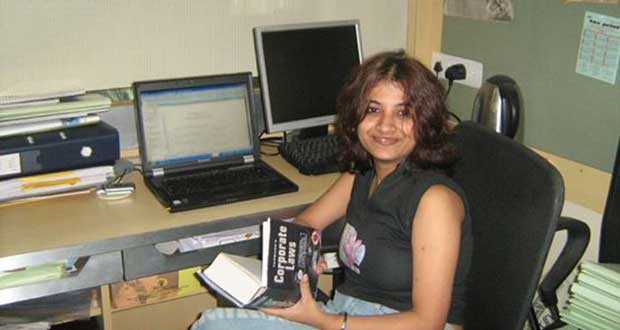
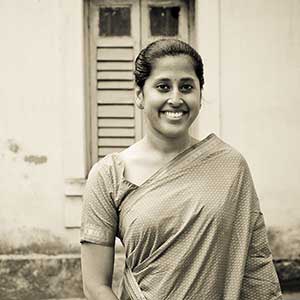
    stuti-shrivastava-1Stuti Shrivastava is currently a student of NLIU, Bhopal and shall graduate in 2015. She has an enviable academic record and has an excellent series of internships at top law firms. She has participated in various moot court and debate competitions. Her diligence paid off when she received a job offer from WIPRO.

    In this interview, she talks about:

    • Importance of mooting
    • Securing top-notch internships
    • Recruitment process at WIPRO


    How would you like to introduce yourself to our readers?

    I am currently pursuing my final year in Law from National Law Institute University, Bhopal. I would be joining Wipro next year. I would take this opportunity to reach out to the readers of SuperLawyer and share my experience as a law student and the opportunities thereafter.


    Why and when did you decide to do law? What interested you most about the subject at the time?

    I decided to pursue Law while I was in high school. It was just a couple of years back that the format of CLAT had been introduced for five year law courses. While deciding my career options, a five year law course seemed a good choice, firstly, because the demand for lawyers was on the rise and still is, and secondly, because there are a lot of avenues open for a lawyer as far as both private & public sectors and independent practise are concerned.


    How would you describe your time at NLIU-Bhopal?

    At NLIU, Bhopal we follow a trimester system which gets a little hectic sometimes. It might get slightly difficult to go through all the projects, mid-terms and end terms every trimester. But if you have a nice group of people to hang out with, college life at NLIU is really fun. I always had good friends here and that is what made my time here so great. I also learned a lot through academic and co-curricular activities like mooting.


    One can find it difficult to manage continuous evaluation through trimester exams, projects submissions, etc. How did you manage to keep up your grades?

    Honestly, I am not really at the top of the class as far as grades are concerned. However, I have always managed decent grades by studying a few days before exams. I don’t think there is a universal mantra for scoring well. It’s very subjective. Some students study all through the trimester while others study a night before the exams. However, students should be mindful that they do not enter ‘the vicious cycle of repeats’.


    Your internships at law school have all been with top tier firms. Our readers would be quite curious to know how you went about securing these internships.

    I acquired internships either through independent applications or through the college recruitment committee. While applying independently, I always made an effort to apply well ahead of time at various firms and to stay in touch with the HR department.


    How relevant did you find your law school education with the kind of work you were required to do at law firms?

    The laws that we study at law school form the basis of all the work that we do at law firms. Having said that, the practical scenarios that we face at internships are far different from the theoretical situations taught to us at law school. At internships, we are required to look into the practical application and interpretation of laws.


    Did you learn any skills while interning? What are these skills and how did you acquire them?

    I think the most important skills that I learned at internships were the analysis and practical application of laws. I acquired these skills by researching on practical legal situations and by analysing the interpretation and application of laws in such situations. Every assignment that I was given involved a new query which required me to thoroughly understand the law its application.


    You have participated in various moot court competitions including Willem C. Vis (East) international commercial arbitration moot, tell us how important is mooting and what effect does it have on one’s CV?

    Legal Education is not just about theoretical knowledge but also about practical application of law. Mooting helps a student get a taste of practical scenarios and assists in development of analytical skills. When mentioned in a CV, it shows that the student is not merely engaged in classroom activities but also makes an effort to branch out and participate in other co-curricular activities. Additionally, International moots like Willem C. Vis give the students an opportunity to interact with law students and jurists from top universities all over the world.


    How helpful do you think is mooting for a law student? Does it serve a real purpose or is just another way to crowd up the CV?

    Apart from developing analytical skills, mooting also helps in the development of oratory skills and in instilling confidence in the student. It is also a good way of acquiring research skills and increasing one’s pool of knowledge. In addition, the competition is a very good platform for meeting other law students from various universities and it facilitates exchange of ideas.


    Apart from mooting and academics what other co-curricular activities did you engage yourself in?

    I have participated in seminars and presented a legal paper.


    What do you have to say about mooting at law school and legal writing for journals? Are these activities that help with development of real world skills and do they have any ‘bonus’ value when seeking jobs?

    These activities certainly help a student in expanding his/her horizon of knowledge and legal skills. Also, while seeking jobs, these activities go on to show the interviewer that the student is a keen learner and is versatile.


    Recently, you bagged a job offer as in-housel counsel at WIPRO. How did you go about achieving this?

    I read up on all the assignments that I had mentioned on my CV and made sure that I knew them in and out. I also read up the basic laws and prepared the most anticipated HR questions.


    Please tell us about the recruitment process at WIPRO?

    The recruitment process was spread over a period of 2 days. On the first day we had an extempore and two rounds of interviews where we faced different interviewers. We were asked both, general legal questions and CV related questions. At the end of the day we were also given some legal and other assignments. On the second day we had a single round of interview where we were asked personality assessment based questions.


    Tell us about your interview? What kinds of questions were asked by the interview board? Any tips on how one should go about framing a C.V. and prepare for an interview?

    On the first day, I was asked basic legal questions and CV related questions along with HR questions. There were some questions based on general knowledge. The interview on the second day was solely based on personality assessment questions.

    One should always make sure that the assignments mentioned in the CV are precise and that there are no frivolous points in the CV. Preparing all the anticipated questions before the interview is always helpful.


    There is a phenomenal obsession amongst law students with maintaining a very high CGPA. How important according to you is this in securing a job?

    Grades are important but they are not the only thing that helps in a job interview. Thorough and clear understanding of the areas that one has worked in and is very important. Apart from knowledge, interviewers also look for other qualities in students like confidence, versatility, ability to work in a team and capacity to handle pressure. Students should also work towards developing these skills.


    Many people believe that working as an in-house counsel affords more work-life balance and is less demanding. Would you agree?

    Having interned at various law firms, I have firsthand experience of how demanding life is at such firms. In most of the places you are often required to work late and there is always high pressure to finish assignments on deadlines. In comparison to that, the job of an in-house counsel is not as demanding and therefore, it may provide a better work-life balance.


    Lastly, what would be your message to our readers?

    I would like to ask all the law students to not restrict their outlook as far as career after law is concerned. They should intern at different places and participate in various co-curricular activities before they decide to settle down on anything. Also, along with academics they should try and have fun with their friends and make good memories in college.

  • Mrudul Dadhich on pursing masters, applying to different universities and recruitment at a top law firm

    Mrudul Dadhich on pursing masters, applying to different universities and recruitment at a top law firm

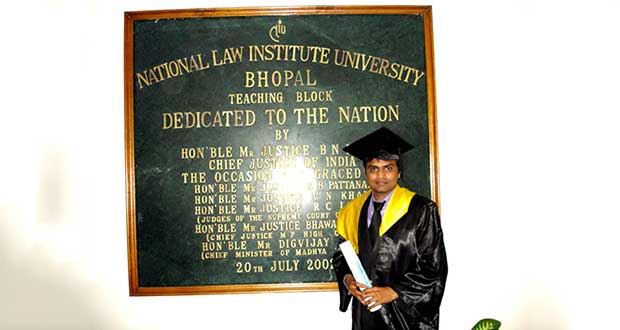
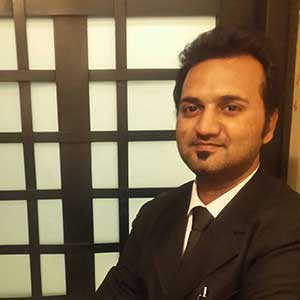
    mrudul-dadhich-2Mrudul Dadhich is a graduate of the batch of 2014 of  RGNUL, Patiala. He is currently pursuing Masters in European and European Legal Studies from the Europa-Kolleg, University of Hamburg and was awarded the prestigious Dr. Angela Merkel Scholarship Award.

    We spoke to him, among other things, about:

    • Tips on pursuing masters
    • Process of application to foreign universities for masters
    • His recruitment at J. Sagar Associates
    • Scope of career opportunities after graduating from a Tier II/III law school


    How would you introduce yourself to our readers which are mostly young students of law and lawyers?

    Hello everyone, I am Mrudul Dadhich, pursuing Masters in European and European Legal Studies from the Europa-Kolleg, University of Hamburg. I was fortunate to have been awarded the prestigious Dr. Angela Merkel Scholarship Award for pursuing my Masters. I have completed my B.A. LL.B. (Hons.) from Rajiv Gandhi National University of Law, Patiala.


    Please tell us a little about yourself, your hobbies, passions, interests and ultimate goal in life.

    I am young lawyer with a lot of aspirations to find my feet in the legal fraternity. My hobbies include watching sports (especially cricket, football and tennis). I am passionate about cricket in particular and have a special affinity for numbers (which partly explains my love for statistics in sports). As for the ultimate goal, I tend to take things one at a time and prefer to set short term goals, achieve them and then set another set of goals. So it will be difficult to tell you an ‘ultimate’ goal in life at this point.


    How did you decide to study law? Did you have lawyers in your family? Why law and not engineering or medical studies?

    I am a first generation lawyer in my family. During my school days, I was totally inclined towards Engineering and had never thought of taking up law. I didn’t know what I was getting into when I came here and in my first 4 or 5 months I was filled with awe. And over the years I have realized that it was the best decision I ever took. All professions have lot to offer, however, personally for me law has offered more dynamism and it has opened up a lot of opportunities and avenues.


    You have not only interned at some of the best law firms in India but also secured a job at JSA, Advocates and Solicitors. How did you go about achieving this?

    When I was in the 3rd year of my Law School, I realized my inclination towards corporate and business laws and luckily, I got the opportunity in my 3rd year itself to intern with a top-tier firm. Then with the feedback from seniors I soon realized that J. Sagar Associates is a dream place to work at. When I first got the internship I was ecstatic and frankly, was in awe with the work culture and environment at JSA. That internship was a great experience and after that I kept on repeating internships with the firm. And things took their own course afterwards.


    Please tell us the recruitment process at JSA?

    The recruitment process at JSA is quite transparent and well structured. In my case, we had a campus recruitment activity wherein 6 candidates were shortlisted for the final interview. Based on the interview, the final selection was made.


    We note that you have applied for top notch universities for masters. While making applications, what was your strategy – choose a university first and then a course or vice-versa?

    I just applied for 2 programmes. I applied for the BCL course at the University of Oxford and the other one was for the DAAD Scholarship (the Angela Merkel Scholarship). My approach was to first select the course and then the University.


    There is also a great amount of debate when it comes to allocating your time and energy between research papers and moots as a law student. What is your opinion regarding this?

    There is no straight jacket formula for defining which requires greater allocation of time and energy. It works differently for every individual. In my case, I participated in Moots only till my 3rd year. However, I believe that a well balanced CV is more important than excellence in any one field alone. It is very difficult to choose one over the other and one must have fair share of both. Personally, I feel once you have done both then you may decide to pursue the one which interests you more. I had always favoured writing research papers over mooting.


    Being a topper, one may safely assume that you chose to devote a substantial amount of your time to academics. However, a lot of people claim that the role of academics (and more specifically, the “CGPA”) is limited and often over-stated and hyped. What’s your take?

    I think academics do play a significant role. However, having said that, it also depends on what your future goal is. I think that, for securing a place in a prestigious institution for higher education, role of a sound academic record is highlighted. I reiterate that it is important to strike a balance between academics and the extra-curricular activities. I also believe that internships are also very important and are a great platform to gain valuable, practical experience. Finally, to answer your question, I would say that academics are not the only thing but it never hurts to have sound academic record. It always helps!!


    There’s a lot of hue and cry about how the lower-ranked colleges are discriminated against when it comes to opportunities being offered despite at times being equally meritorious as the students from the higher-ranked ones. Do you find any substance in this argument?

    I would not say there is any discrimination in the legal fraternity based on the colleges. Generally the recently established colleges (I prefer to use this phrase rather than ‘lower ranked colleges’ as in absence of a centralised transparent ranking system, it is unfair to call any college higher ranked or vice-versa) have a smaller alumni network which plays a very important role in getting more opportunities. But I don’t think there is any discrimination.


    Did being a student of a Tier II Law School act as a roadblock during your law school days?

    Again I have not come across the categorization of law schools in different Tiers. In my case, I think studying in RGNUL was a boon and since it (RGNUL) was in the nascent stages when I started law school, I got a lot more opportunities to explore and to learn.


    If you could list out 3 activities which on a scale of priority, should be at the top in any law student’s school-life (given that he wants to secure the same set of achievements as you), what would those be?

    I reiterate that maintaining a balance is the most important thing, being perseverant and keeping yourself motivated is the Mantra that worked for me. As for the priority list, I would place Academics (good grades really help you for being accepted for Masters), Internships (this not only gives a practical insight about the different challenges one may face after law school) and Research Papers.


    If you could re-do your 5 years in Law school, is there something you would do differently?

    No, I am happy with the way things have turned out. The greatest fun is in unpredictability and to respond to the situations as and how they come, it will be too boring if everything goes just as we plan them!!!


    Lastly, what would be your message for the readers who want to pursue masters?

    First of all decide if you really want to pursue Masters. Once you are clear about that, select the discipline in which you want to pursue it (based on your area of interest and the opportunities which it may present in future). Look for appropriate scholarships. There are many scholarships so research on that and most importantly, start with your applications well in advance. I wish all the readers the very best in their future endeavours.

  • Dr. Panayotis Protopsaltis on expertise in International Investment Law, the legal profession, experience in teaching and interaction with students

    Dr. Panayotis Protopsaltis on expertise in International Investment Law, the legal profession, experience in teaching and interaction with students

    Dr. Panayotis Protopsaltis is a Greek national and he is presently a visiting faculty at the GNLU, Gandhinagar. He is a reputed international scholar having expertise in International Investment, Cross Border Transaction and Dispute Resolution. It has been a great experience meeting him and talking with him at length about the pedagogy of different institutions and universities he has attended.

    Conversing with him has been a great experience and almost a tour through many European Institutes, therefore I took this opportunity to share his insights and experience with our readers.


    First of all, please tell us a bit about yourself. What is your current work profile?

    I studied law at the National and Kapodistirian University of Athens, Greece, at the University of Paris II (Panthéon-Assas) and at the University of Paris I (Panthéon-Sorbonne) from where I hold a doctoral degree in public international law. I have conducted research in the framework of various research centres and delivered lectures at universities in France and in Greece on international investment law. I am also a practicing lawyer, member of the Athens Bar Association. Since the beginning of my career, I was involved in transborder transactions, originally in the introduction of mobile telephony in Greece and subsequently in some major investment projects in Europe and in the Middle East. In the recent years, I have been retained to advise various public and private institutions on international investment law related matters.


    How did you decide to pursue law? In India a lawyer is still looked at with caution and doubt, how is the scenario in Greece?

    [sociallocker] As is the case with many people studying law, when I graduated from school, I did not know exactly what I wanted to do. I graduated in 1987 and information one could obtain at the time was much more limited than information available today. I decided to study law because a law degree offers tremendous opportunities for work in a number of sectors. Civil service or administrative work in international organisations is one solution, career in legal professions, law professor, judge or attorney, is another. I was perhaps also influenced by a number of family friends that had also studied law. When I began my studies I was fascinated by law and tried to improve my knowledge and skills, nothing else mattered.

    I have heard many times and in many countries that lawyers are looked at with caution and doubt. I am also familiar with the various jokes about lawyers. However, so far in my career in Europe I have never experienced caution and doubt. I am therefore not convinced that this assumption is correct.


    From where did you study your undergraduate degree in law? Please tell us about the academic structure of your undergraduate degree.

    I graduated from the National and Kapodistrian University of Athens, the major law school in Greece. Curricula in Greek law schools in the late 1980’s included four years of study and no specialisation. Lectures were delivered to all students, often 250 persons in an amphitheatre, by professors themselves or by their assistants and presence was not compulsory. Professors delivering lectures were rarely asking questions to their audience and vice versa. A free of charge manual was given to every student –usually written by the professor. Of course, there were no moot contests and student exchange programs, some students participated in small working groups and could present their work but this was the exception rather than the rule. Some exams were particularly difficult to pass and students had to sit twice or even more.

    Lectures were delivered in Greek and focused on Greek law but law school libraries have impressive collections of German, French and English books. This is because most professors had studied in Germany (private law), France (public law) and in the UK and the U.S.A. and a number of professors of Greek law schools hold permanent posts also in other European Universities. Greek students were therefore in close contact with European and U.S. bibliography.


    You earned a Masters and Doctorate from University of Paris. How was your experience there?

    I had already completed my vocational training at the Athens Bar Association and I was a full time lawyer in Athens but I was always interested in international law and in research. I therefore decided to enrol at the LLM of international economic law at the University of Paris I, recommended to me by one of my professors. Depending on the subject Germany, France and the UK were the normal destinations for young degree holders wishing to pursue further study.

    I did not know what to expect but found instead the good old continental model but students were now expected to do research on their own and actively participate at lectures. I was admitted for a research degree and so completing a doctoral thesis was ultimate aim. Doctoral research was long and slow, in France students rarely completed their thesis in less the five years and were working as assistants at various universities or managed to obtain posts in international organisations. A limited number of students gained scholarships and I was one of them. Doctoral research was therefore undertaken only by a limited number of passionate students.

    Interestingly enough, the French government at the time gave incentives to students to pursue further studies. This was because France had high unemployment and young people could not be absorbed by the market. Many unemployed chose to pursue further studies. This created a market for academic services, the need for more university professors and a generation of very well educated people.

    I benefited a lot from my stay in France. Along with my work on my doctoral thesis I had the opportunity to meet with some of the most important authorities in international law, participate in research groups and conferences, gain experience in teaching, to be involved in the work of international organisations and to some major international projects. I also benefited from the cultural events, museums and lectures on history and art, so abundant in Paris.


    You speak German, French and Turkish apart from Greek and English. How do languages help in your work and what are the difficulties in learning in a foreign language?

    I learned English and French from a very young age, it was very common -and still is- in Greece to learn two or three foreign languages and master them by the age of 18. I learned German and Turkish later on, as a university student. I made the effort to learn because languages are one of the most useful tools in everyday life and in academic research in Europe. Monolingual academics are usually at a great disadvantage.

    Students should not be afraid of studying abroad in a foreign language. First of all, their presence in the foreign country will allow them to acquire easily the necessary linguistic skills for communication. Then, post-graduate studies will learn all necessary legal terminology but as they have already read law, it will be easy for them to understand the corresponding meaning. Then, they may also seek help from native speakers. Foreigners at the beginning are of course at a disadvantage compared to native speakers but rarely post-graduate students fail solely because of poor linguistic skills.


    Would you recommend your students to pursue Masters and doctorate in continental Europe?

    I think Europe hosts some of the best universities of the world and students have a lot to learn from their presence there. Not only they will benefit from interaction with some of the most renowned academics of the world but they will also see a different way of work and approach to scientific problems.

    Continental universities follow a different system based on students’ responsibility. In that, the university differs from high school, students are given limited guidance, they are required to work on their own. Continental universities still favour theoretical analysis over practice and studies are not job-oriented, this is the essence of European academia. A drawback is perhaps that inter-disciplinary studies are not so common.


    What attracted you to research in international investment law?

    Originally, I took special interest in the problems of regulation of the Multinational Enterprises but I soon moved to examine the problems of international investment law. This shift in interest war normal since the two problems are inter-related. I was also lucky to have two mentors, Prof. Patrick Juillard and the late Prof. ArgyriosFatouros, both authorities in international investment law, who encouraged me to explore international investment law questions.


    panayotis-protopsaltis-2

    How has your experience in India and GNLU been so far?

    I came to India for a short visit two years ago, liked the country and wished to learn more about its institutions and its people. The invitation at the GNLU was a formidable opportunity for me to see Indian academia and meet with Indian academics and students. I delivered two courses, on the law of multinational enterprises and on international investment law and I am very happy with the interest that my audience takes on the topics.


    Students may be indifferent or disinterested in the subject being taught. How do you deal with these and revive interaction among students?

    Your question assumes that professor has to do something for indifferent or disinterested students. Well, I am afraid this is not the case. First, because there are always indifferent or disinterested students at class. Second, because, assuming that students have chosen to study law, they should be interested in the subjects being taught. Third, because students’ duty to learn does not depend on professors’ performance. Students cannot use professor’s poor performance as an excuse for not learning. There are other procedures to sanction professor’s poor performance, if there is one.

    I think that the professor should prepare himself to deliver a lecture and that the lecture is in some respects like a theatre play, the professor being the actor, the students being the audience. Some jokes and stories may help to attract students’ attention, participation of students at the lectures also but the professor must never turn lectures into a discussion forum. Academic conferences and research groups offer many opportunities to students to interact and express their opinion. I also believe that some professors are more inspiring than others but, alas, there is no objective criterion for that. I finally think that we all have to suffer from boring speeches or speakers if we are to learn how to make our lectures interesting.

    As I have already said, students have a duty to themselves, to their parents and to the academic community to learn. Students who are disinterested have again a duty to themselves, to their parents and to the academic community to explain why and in case they realise are generally disinterested in the topic of their study or in studies in general, to have the courage to change the topic or quit studies altogether, immediately. Otherwise, they will spend many unhappy years and will perform poorly at the university. In addition, they will spend valuable resources, their personal time, the money of their parents, the facilities of the university, the time of their professors that could be used more productively elsewhere.


    What would be your advice to students on performing well in academics?

    Performing well at university requires understanding the system of academic study. Method of reading, exercise in legal writing and interaction with other students and professors in the academic community are very important. Now some students obtain better marks than others. This may be due to a number of factors, insufficient preparation, failure to understand, failure to express themselves, to name just a few. Students have to learn from their errors and correct them. Yet, the key to success is, I think, genuine interest. Genuinely interested students are always very successful at university because they do a further effort for the sake of learning and adopt this inquisitive approach to problems which is a prerequisite for academic excellence.

     [/sociallocker]

  • Anuja Pethia on acing Moot Courts, LL.M from UNICRI and writing a statement of purpose

    Anuja Pethia on acing Moot Courts, LL.M from UNICRI and writing a statement of purpose

    anuja-pethia-3Anuja Pethia graduated from National Law Institute University in 2013. Thereafter she worked at the chambers of Senior Counsel Mrs. Indira Nair, High Court of Madhya Pradesh at Jabalpur for eight months and then went on to pursue Masters from United Nations Interregional Crime and Justice Research Institute and University of Turin, Italy. She is the founding member of the NLIU Law Review and was also the Co-convener of NLIU Journal of Intellectual Property Laws and Cell For Studies in Intellectual Property Rights. She has been recommended for Best Advocating Skills and Opening Statement, Best Mediation Plan and Non Native English Speaking Team, at 6th International Chambers of Commerce Mediation Competition, Paris in 2011.

    In this interview, she talks about:

    • Moot Court Competitions and acing them
    • Pursuing further studies and LL.M from UNICRI
    • Statement of Purpose and motivation letter


    Legal studies are still only a backup option for quite a lot of students. What motivated you to choose law as a career?

    It’s a difficult question. Because I don’t really remember wanting to do anything else, and quite surprisingly so, because I come from a family of doctors and entrepreneurs. I had a very strong liking for history, civics and political science through middle and high school. Law was a natural step from there.


    How would you describe your time at NLIU-Bhopal?

    Law school helps you grow a lot. It helps you meet amazing people, gives you some of the best opportunities you can expect at a young age, helps you explore and develop your intellectual pursuits – may it be reading, writing, debating, mooting or negotiating. In the long run, what helps you more than the surface value of ranking and ‘reputation’ of a good law school is the exposure and opportunities that you are given to explore your strengths and improve on your weaknesses.


    anuja-pethia-2

    Please share some of the memorable experiences of your college life. What made your college life exciting?

    Chai, moot courts and internships. I sound like a nerd, but it’s true. I am sure my fellow lawschoolites will empathize with the importance of chai between classes. Moot courts and internships are beautiful opportunities to learn, grow, work in new environments and of course to travel and meet new people.


    How did you decide to pursue Masters of Law in International Crime and Justice? Was it a professional requirement or a personal endeavour? What would you say helped your application get selected?

    I had been eyeing this LL.M. since I think third or fourth year in law school. I did not expect to get in as a fresher, since it’s a course majorly for working professionals. I applied, and am very fortunate that I got through. I was the youngest person in my class. I chose this LL.M. for many reasons.

    First, it is conducted by the United Nations which is, an organisation I have always been enamoured with. I wanted to see up close how the system and its organs work. I wanted to know about the life and working of people who work at the UN.

    Second, the location of the course was at the UN campus in Italy. The experience of dining with people working in ILO, UNSSC, NATO, etc., was absolutely amazing.

    Third, I have always been deeply interested in the area of International Criminal Law, comparative criminal law and interstate cooperation on criminal matters; probably UNICRI is amongst the few institutions in the world which offers a specialisation in this field.

    Fourth, UNICRI is a non-profit organisation. Thus, the cost of the entire LL.M is subsidised.


    What do you think clicked in your favour during the selection process? How do you think a law student can build up his profile to get through to the United Nations Interregional Crime and Justice Research Institute?

    Like any other LL.M application, your statement of purpose or motivation letter is the key to making your application stand out. With this particular LL.M, I think it is also necessary that your motivation letter and your CV reflect your alignment with the goals and principles of United Nations. Apart from that I think if your motivation letter is original, reflects honesty, keeps the reader engaged and is simple but unique; half the battle is won. It helps a lot if you have good internships, publications and other academic and extracurricular activities on your CV.


    How did you go about choosing which college to go to for your LL.M. and did you ever consider Indian colleges? Was it the course or the university which mattered for you?

    No. I was never interested in any other LL.M. It is only because of the UN and the subject matter of this LL.M. that I wanted to pursue this course.


    anuja-pethia-4

    How different UN Institute has been when compared to your graduating university? How is the study environment at any international organization, especially UN different from other universities? Did you undergo a rigorous academic schedule? How was that different from your under-graduate course?

    NLIU and UNICRI are two examples of completely different approaches to education. After 5 years of constant exams at NLIU, I absolutely did not know how to deal with an open book exam at UNICRI! However, both systems have their merits. UNICRI LL.M is based more on practical exercises than exams, which in my personal opinion are a better medium of education for law. UNICRI’s method of evaluation was more about moot courts, presentations, group work, working on collaborations with the Italian army, field exercises with members of NATO, written assignments and finally a research paper. There were also 3 open book exams.

    The study environment at UN was a great experience. For instance, at the beginning of the course we were trained on the difficulties of working in multi cultural groups, which we did not appreciate until we really had to work together and saw how amazingly different our approaches to work were depending on our nationalities! The classes were always fun with people from different work backgrounds, different continents and countries all pitching in with different views on their criminal law practice and international problems. Imagine judges, prosecutors, defense lawyers, journalists and people working with international organisations in one class – the discussions can never be boring. Being a consolidated LL.M, the class schedule was quite hectic, with classes from morning to evening. But with the Italian coffee and lively lectures, you get used to the schedule pretty fast.


    What was your topic of research for LL.M? Why did you choose that subject for research?

    My topic of research was ‘Terrorism and Counter Terrorism in International Law with a Special Reference to the Indian Position’. I wanted to work on a topic in International Criminal Law which is related to India. I chose this topic because I wanted to draw a comparison between the approaches used by different countries, including India, to counter terrorism, and analyse their legality under international law. The scientific committee of the LL.M course was very keen on me analysing the Italian Marines case also, so that sealed the box.


    Tell us about the faculty and facilities. Who all were the faculties at the UN Institute? How’s the Indian fraternity over there? Was there any Indian in your Batch?

    The faculty of the LL.M includes many sitting and former judges of the UN Tribunals like the ICTY. Lawyers, professionals and practitioners from the UN system, international courts and some countries like Poland and Brazil also visited; reputed academicians and well known names in international law such as founders of some leading NGO’s lecture frequently. Also, investigation, interviewing techniques and criminal psychology were a part of the LL.M., so we were also taught by people in law enforcement.

    The UN campus is quite huge and beautiful, it houses the training centre for the ILO, Turin School of Development and United Nations System Staff College. There were a total 46 of us in the course. I had two Indians in my class, but always saw many more in the numerous training sessions held by the UN on campus.


    How difficult was studying abroad in terms of finding accommodation, finances and settling in?

    Everything is online these days, so figuring out logistics is time taking, but easy. However, if you are going to study in Italy, you NEED to know basic Italian to get through everyday life.


    What is the scope after doing Masters of Law in International Crime and Justice?

    If you perform well in the LL.M., there are excellent internship opportunities that you can grab onto. You meet many people who work in The Hague- ranging from prosecutors and defense counsels to judges. All of them are very keen to help you go forward. Apart from this there are opportunities with the research teams working in UNICRI itself and some fellowship programs within the UN. This LL.M also gives a good platform to get in touch with NGOs and European organisations as well. At a practical level, this course widens the understanding and approach of criminal law in your own country. So, even as a domestic law practitioner, your perspective of viewing things evolves.


    Do you consider taking up a job outside India itself? What are the opportunities available to you?

    Not presently, but in the future I might. Presently, I have some opportunities in the ICC and ICTY in The Hague. Earlier, I was involved in some research projects of Global Rights Compliance – a law firm based in Paris.


    If you could re-live your 5 years in Law school, is there something you would do differently?

    Yes – I would utilise my fifth year a little more efficiently by doing some more moots.


    Lastly what would be your message to all the law students who aspire to work at the International Criminal Tribunal?

    Very good choice I would say. But usually it’s a long journey to get paid work there. So, you need to find the right platform, get in touch with the people who are working in these Tribunals, and get noticed through your academic work or otherwise. Be prepared to intern first, usually at least for 6 months. The competition in these Tribunals – especially at the ICC is very high. Also, if you have time, learn French. People with knowledge of English and French have a greater advantage in finding work there.

  • Vishnu Warrier on founding Lex-Warrier, cracking CLAT PG and work at Miniratna HLL Lifecare

    Vishnu Warrier on founding Lex-Warrier, cracking CLAT PG and work at Miniratna HLL Lifecare

    vishnu-warrier-1Vishnu S. Warrier graduated from University of Mysore in 2009. Thereafter he pursued LLM in Business law at National Law Institute University, Bhopal. While in NLIU, he founded an online law journal “The Lex-Warrier: Online Law Journal”. He has recently completed a Book on Arbitration which is about to release. Presently, he is working as an in-house counsel at HLL Life-care Limited (a Miniratna Co.) under the Ministry of Health and Family Welfare, Govt. of India.

    In this interview, he talks about:

    • Preparation for CLAT Post-Graduate
    • Establishing an online law journal
    • Interview and work at HLL


    Given that most of our readers are law students and lawyers, how would you introduce yourself to them?

    Well… I’m Vishnu, a post graduate in law from NLIU, Bhopal and did my graduation in law (Five Year Course) from University of Mysore. Currently I am associated with the In-house legal team of a Public Sector Undertaking under the Ministry of Health & Family Welfare, Govt. of India. Prior to that, I was working with the In-house legal team of Coromandel International Limited (A Murugappa Group Company). Besides, I have also founded an Online Law Journal titled “The Lex-Warrier: Online Law Journal” (ISSN: 2319-8338) accessible at www.lex-warrier.in and recently completed a Book on Arbitration which is about to release.


    Why and when did you decide to study law? You have done your graduation from Mysore University. How would you describe your time there? Tell us about the academic environment and faculty at the law department of the University.

    It was just few months before the completion of 12th Standard; I have decided to take up law as my profession. May be because, the subjects like Physics and Chemistry are not that digestible to me and neither had interest to go for either engineering or medicine. Further, the scope of the profession as well as its dignity in the society attracted me.

    I could say that, life at Mysore was one of the best times in my career as well as personal life. Five years of life @ Law College has very much changed my concept about the legal profession as well as my approach to legal studies. We have got an excellent library in our campus, and academic environment is very much inspiring as well as we were very much influenced by our Professors like Dr. CKN Raja etc. in moulding our approach towards the profession as well as academics.


    Do you believe that excellent CGPA is absolutely necessary for success?

    Well, to be frank I don’t believe in CGPA has any role in your success. As far as I am concerned it’s only a number which will decide whether you should be called for an interview or not (In case you are applying for any Job). All you need is thorough knowledge of the subject in which you are planning practice. Eg: Environmental Law. Further, you should have an idea of all other related subjects. However, in today’s competitive job market a candidate with higher CGPA will have a better chance to be called for any interview.


    What were your areas of interest during your graduation? How did you go about developing expertise and knowledge in these areas?

    May be because, I’ve taken Science in my 11th & 12th I had a special interest on IPR papers especially Patents and Trademarks. By reading lots of articles and journals on those areas (in any subjects) will help us to understand the concepts thoroughly and by going through various judgments will help us to understand the application of relevant provisions. In that, process it is possible that the reader may not agree with the author or he may have a conflicting opinion on the subject. When such situation arises, it is always recommended to discuss such topics with your fellow classmates, seniors and your Professors to develop a better understanding on the specific point of law. Discussions and debates will help us to understand law better.


    Did you do any internship during your graduation? Did you receive any assistance from your college?

    Yes. I have done few internships under practicing lawyers. In our college, papers like CPC, Cr.P.C, Evidence, Drafting, Pleading and Conveyance etc. are taught by Practicing Advocates. They were very much helpful for us to obtain internships under any lawyers or in any law firms.


    What do you have to say about the supposed ‘elite’ tag attached to certain law schools? Do you believe branding of college is something that’s very relevant/ important at any stage in a law student’s career?

    “Elite” tag has got a major role or importance in your career. It will give you a moral advantage in the job market. Nowadays it is noted that, candidates who are from top law schools are given more preference in any job interview. Therefore, branding is very much essential. After all in the job market candidate is marketing himself that, he is the most suitable person for the job which is notified.


    When and how did you decide to pursue Masters? Was it a professional requirement or an endeavour out of academic interests?

    As I mentioned earlier, I have developed some special interest towards IPR subjects during my 4th year of LL.B and further reading on the subject influenced me to go for higher studies. The decision to pursue Masters was purely out of my academic interest.


    How did you prepare for CLAT PG? Did you join any coaching? What books did you rely on?

    I was one among the 2nd batch of CLAT. During those days CLAT was hardly getting popularity and therefore there was not any coaching for CLAT as well as any books for the same. So was not attended any coaching for CLAT, however, there were lot of good study materials available in the market for other competitive exams like Judicial Service as well as Civil Services. I was more relying on those materials and of course respective reference books on each individual subjects were also referred during the preparation for CLAT.


    You have done your LL.M. from NLIU, Bhopal. Can you please share your experience at NLIU? How will you compare the pedagogy at NLIU with that of Mysore University?

    Life at NLIU was altogether a different experience comparing to the life at Mysore. However, I can’t compare both of them, because of the approach towards the profession was too different on both the occasion. At NLIU, I can say we were more serious professional towards our career. Of course there was a good healthy competition within our batch mates. The best part of NLIU is that, we have got a very good library and possibly one of the best in India and of course the Sports Complex 😉


    lex-warrier

    You are the founder and editor-in-chief of Lex-Warrier Law Journal. How did you come up with the idea of creating something like this?

    Idea was originated with a moto of sharing the knowledge. It was also some kind of experience for writing short articles. The efforts were appreciated by batch mates as well as our professors. In the mean time others also expressed their willingness to contribute, and slowly it started gaining popularity.


    You have been running the Lex-Warrier Law Journal for past four years. How is your experience so far?

    Content development was the toughest part which I faced during initial one year. However, I’m very much thankful to my friends Aakarsh Kamra and Garima Tiwari for their unconditional support which was very much instrumental for bringing the Journal to today’s stage. It is now very satisfying that, our struggles are giving us positive response like Researchers from Cambridge, University of Leiden and many Academicians preferred to publish their research papers with Lex-Warrier. However, the paper acceptability is hardly 10-15% of the total papers we receive. Major challenge we are facing in this regard is the plagiarism.


    You are currently working at HLL Lifecare Limited (A Miniratna Co.) under the Ministry of Health & Family Welfare, Govt. of India. How did you go about bagging this job? Please tell us about the recruitment process at HLL?

    I saw the advertisement on the Company’s website. And of course the organisation does publish advertisement on national dailies. This organisation looks for candidates who are good in academics as well as those who have good practical exposure. My selection was through Personal Interview.


    How was the job interview? Do you remember any of the questions asked to you?

    Interview was little bit tough. Because, I remember that, the knowledge on subject was tested very much in the interview. Questions were more of practical knowledge.


    What are your day-to-day responsibilities? How is the experience so far?

    Major responsibilities are IPR management of the Organisation, handling litigation, monitoring the statutory compliance level of the organisation etc. and provide legal opinions on case to case basis.


    Does HLL take interns? What is the process for same?

    Interns are only taken in the Secretarial Department who is pursuing CS. Vacancies will be notified from time to time and eligible candidates are taken through Personal Interview


    Lastly, what would be your message to our readers who are mainly young lawyers and law students?

    Well, I suggest first year of law school to concentrate more on the academics and be a good observer of various law school events such as Moot Courts, Debates, Seminars, Paper Presentation etc. next 3 years may concentrate on building your resume by participating in above mentioned events as well as doing internships, etc. However, it is always appreciated that, you do internships only on your vacations. And in final year of course you will be busy with your practical papers as well as your placement procedure so I suggest you to concentrate on your academics.

  • Shohini Sengupta on work at BPCL, full scholarship to Oxford and choosing M.Sc in Law and Finance (MLF)

    Shohini Sengupta on work at BPCL, full scholarship to Oxford and choosing M.Sc in Law and Finance (MLF)

    shohini-sengupta-1Shohini Sengupta is a graduate of 2012 Batch from National Law Institute University, Bhopal. After graduation, she worked with BPCL and thereafter joined Directorate General of Hydrocarbons. She has also received full scholarship under the Louis Dreyfus Weidenfeld Leadership Programme to study at the Prestigious Oxford University and is currently pursuing MSc in Law and Finance there.

    We asked her to share with us:

    • Work experience at BPCL and Directorate General of Hydrocarbons
    • Choosing M.Sc. in Law and Finance
    • Getting full scholarship to study at Oxford


    Given that most of our readers are law students and lawyers, how would you introduce yourself to them?

    This is always the most difficult part. I am a lawyer by profession, farcical writer by the day and comfort chef by night! I am a very curious person and willingly put myself in challenging positions, which may be good or bad. I am also a believer in knowledge, hard work and humour, though not necessarily in that order.


    Though it’s one of the most asked questions but yet, why law?

    I have always enjoyed the finer nuances of both written and spoken English. I heard a prolific speaker from one of India’s leading National law schools and got hooked. In addition to that, law seemed to be an excellent way to learn diverse subjects. Also, I was completely enthralled by the prospect of earning money by just speaking for hours.


    A lot of law students in their first and second year of law school plan to change the legal regime of India, work pro-bono on social issues, curb menaces and threats to the society. Have you ever felt that kind of thought crossing you?

    I think these law students are rare and a dying breed, and it is important for both institutions and people in the fraternity to nurture such thoughts. I do want to work pro-bono on social issues and my current Master’s course at Oxford is a step towards pursuing public policy in India one day. While I admit that these aspirations are in every way nobel and selfless, I want to do it purely because it interests me.


    What were your areas of interest during your graduation? How did you go about developing expertise and knowledge in these areas?

    I actually enjoyed all of my BA courses, including Economics, English and Sociology. I was particularly interested in ADR (Alternate Dispute Resolution) and commercial mediation. In pursuance of this, I did an internship at ONGC and worked on a commercial mediation paper and also competed at several mediaition tournaments, including the ICC Mediation Competition in Paris. After my graduation, I completed a course on dispute reoslution from the Indian Institute of Arbitration and Mediation, Kochi and am now a Grade ‘A’ mediator. I am not claiming to be an expert, but I hope I am taking a few concrete steps towards gaining more knowledge in this field.


    In your penultimate year at NLIU you interned with Anand and Anand, ONGC, Bharti Airtel Services etc. What kind of work was allotted to you during your internships? Are there remarkable experiences during your internships that shaped your career choices later?

    All of my three internships were fantastic. At Anand and Anand I learnt about design laws, something I hadnt been taught at law school. At ONGC, I looked at how commercial mediation was being effectively used in a government organisation in India and worked on a paper. At Bharti, I worked on investment laws in Africa and the procedures for setting up a business in the continent. In effect all these internships, particularly the last two, allowed me to view law in more than strict (law firm) commercial terms and offered me a glimpse into the social and business sides of the profession. For me, the interplay between business and law was arresting.


    Did you find that your law school education had prepared you sufficiently for the many tasks you were required to execute during your internships and later at your job?

    Law school is a very special place to grow up in. So I guess it prepapred me socially and intellectually, to be able to handle any challenge in a mature fashion. However, law is too dynamic a subject to be learnt only in class. Thus, the more I worked, the more I learnt.


    After graduation, you joined BPCL as an Executive Legal Officer. How did you go about achieving this? Please tell us about the recruitment process at BPCL?

    BPCL came to our college campus for their recruitment. There was a group discussion and a very long and engaging interview before they recruited me. Since BPCL is a marketing company, more than company lawyers, they need effective legal managers who can commit to making the business more lucrative, while protecting the interests of the company, which means they prefer integration with people over just academic brilliance. Contrary to popular belief, the work at the company is extremely challenging (they have only 25 lawyers in the country) and rewarding. It made me understand business like nothing else could. However, the recruitment process can change every year, depending upon their requirement.


    How did you go about preparing for your interview?

    Firstly, I did a thorough research about the business of the company and its recent business acquisitions and investments. This gave me an idea as to which area of law they might question me on. However, for an overall revision, I went through my resume very carefully and read through the bar exam preparatory material for a week.


    How do you think one should go about writing a CV when one is applying for a job?

    My best friend, Hita Kumar, who recently featured in one of your stories, is actually an excellent CV drafter and I would just suggest everyone to befriend her! The other option is to be honest, and keep the CV as short and precise as possible. More than anything else, the CV and cover letter should be altered according to the organisation where one is applying.


    After BPCL, you have also worked for Directorate General of hydrocarbons as an Executive Legal Officer. How did you get it and what prompted you towards it? How was the experience?

    DGH only takes a couple of people from other public sector companies on deputation, to regulate the upstream petroleum sector of India. Being interested in policy making and regulation in general, I applied for the post on being notified of a vacancy, and I was selected through an interview.

    Working for the Ministry of Petroleum was a very rewarding and enriching experience, and as a young lawyer, I had the opportunity to work on some of the biggest commercial arbitrations with some of the finest legal minds of the country. Further, I got a firsthand look at the drafting process of India’s exploration licenses and policies. It was fantastic.


    Also, Congratulations on being selected for Oxford University. What was your motivation behind pursuing Masters? When did you finally decide to pursue higher studies?

    Thank you! I was always interested in pursuing higher studies, but a big credit should go to my friends and family who kept pushing me continuously towards it. Since I was interested in the interplay between law and economics, the MSc in Law and Finance seemed to be a tailor made course for me. I also want to work towards drafting more economically viable policies for the government and I believe this course will help me learn this craft better.


    How did you choose Oxford over other? How should one go about choosing a university?

    Oxford has always been a dream for me, so much so that I did not even think of applying to Cambridge. I have grown up reading about the legends of Oxford. My grandfather worked in England for some time and it was in some respects his dream too to see someone from the family here. However, a big reason was that a course like the MSc in Law and Finance, with its unique course structure was only available at Oxford.

    The second question of choosing a university is a highly subjective one. It could be because of comfort with a particular culture or because of the reputation of the college and its professors or because of the availability of a particular course or funding. I would suggest a healthy dose of soul searching.


    What are the scholarships Oxford provides for students from India? Are there any other institutions which provide scholarships for post-graduation from Oxford?

    I received full scholarship under the Louis Dreyfus Weidenfeld Leadership Scholarship Programme, and thus I can claim that Oxford is a very supportive and nurturing University. There are a lot of funding opportunities and the best thing to do is to research their massive website thoroughly. They have specific scholarships for specific courses and also University wide scholarships. So it depends upon which course you are applying to, more than just the fact that you are from a particular country (though that might make you eligible for some scholarships like the Indira Gandhi Sustainability Scholarship).

    Apart from the University, there are a number of places in India like the Ministry of HRD, Aga Khan, Narottam Sekhsaria, Tata AIG, Inlaks Shivdasani which provide post graduate scholarships. Also, the British Council and the Oxbridge Society provide limited scholarships.


    Oxford is well renowned for its brilliant faculty. How is your experience with the faculty so far?

    I am spellbound. The problem, if you can call it so, with Oxford is that you are spoit for choices here. Thus, it makes choosing electives and course supervisors all the more difficult. Most of the faculty is exceptional and surprisingly, relatively young. However, the best part is that the relationship between a tutor and a student here is much more informal and relaxed, and in ways more mature than anything I have ever felt in India. The learning opportunities are tremendous and you can elect to sit in on any lecture, in any subject, in the University.


    How difficult is studying abroad in terms of finding accommodation, finances and settling in?

    I have actually been incredibly fortunate. I was allotted a beautiful and lavish college accommodation even without formally applying for one. Since I am on a scholarship, the financial angle hasn’t bothered me yet. Moreover, Oxford and its entire team is one of the friendliest you will find in the world. They will continue to scour for funding and allied support for people who need them even once your course has started. They genuinely want their students to succeed. Since this is a University town, accommodation, food, student jobs for everyone are plentiful. Lastly, the fresher’s week and the overwhelming social scene is good enough to make you smile more than once.


    What difference did you find in the pedagogy of Oxford relative to an NLU?

    I think it is unfair to compare them since Oxford is apparently older than the Aztecs. The NLUs are doing a commendable job of creating a league of extraordinarily accomplished young professionals. Hence, the pedagogy is more attuned towards securing a job.  Oxford has its USP in attracting mostly those students who genuinely love the subject, though there is an excellent careers advisory cell here. The teaching system is a mix of lectures, seminars (student discussions) and tutorials, compared to an NLU, which is mostly lecture based.


    There has been a recent trend amongst Indian law graduates to pursue higher education abroad. Why do you think this is happening?

    Firstly, the world and the work that we are expected to do as lawyers is getting more globalised. Second, we are becoming more aware of our options. Third, as graduate students, we are more focussed on our preferred likes and dislikes. In my case, a higher education at Oxford seemed like the only chance of learning an inter-disciplinary branch of law. A year studying will only help you hone your skills, rather than take away from your knowledge.


    What plans do you have once you finish your Masters?

    This is the toughest question of all! I am looking at a variety of options. I might apply for the Masters in Public Policy at the Blavatnik School of Government at Oxford. Alternatively, I might apply for a job, preferably in India, which allows me to indulge in a little bit of law and a little bit of policy making.


    Last but not the least, what would be your message for law students?

    Intelligence is over rated. Consistent hard work and a near obsessive zeal will get you seemingly impossible results. Humour helps, and so do supportive friends. As someone very intelligent once pointed out to me, the power to dream is almost magical.

  • Nidhi Khare on pursuing LL.M from NLIU, work as an Assistant Professor at Jagran Univ

    Nidhi Khare on pursuing LL.M from NLIU, work as an Assistant Professor at Jagran Univ

    nidhi-khare-3Nidhi Khare completed her graduation and post-graduation from National Law Institute University, Bhopal in 2013 & 2014 respectively. She was an avid mooter during her B.A.LL.B. days and has multiple publications to her name. She had always planned to pursue a career in academics since her days in law school. Presently, she is working as an Assistant Professor at Jagran University, Bhopal.

    We asked her to share her experiences and strategies she used over the years.

    • In this interview, she talks about:
    • Pursuing B.A.LL.B. and LL.M. from NLIU, Bhopal
    • Importance of co-curricular activities for a law student
    • Opting for teaching


    Most of our readers are law students and young lawyers. How will you introduce yourself to them?

    Well as far as introducing myself is concerned, I am a law student from the last six years and I am working as an Assistant Professor at School of Law, Jagran University, Bhopal. I take pride in the fact that I continue to be a law student and I have chosen a field wherein I can share my knowledge of law with young legal minds and carry on with the process of learning of law.


    How did you gravitate towards law? Why law and not engineering or medical studies?

    It wasn’t like I always wanted to do law. To be honest, initially I had a fear in mind about law and the heavy books that they are supposed to read. I got into law at my family’s advice but once I was into law, I found it is all just about logic and its practical application. I had no particular reason as to why not engineering or medical except the fact that I wasn’t good at physics and chemistry.


    How would you describe your five years of law school at NLIU?

    Five years at NLIU have changed me as an individual, as an intellectual to be precise. I believe the opportunities that a student can get at NLIU, or any national law school for that matter, are sufficient to develop the legal acumen that a law student needs. Also, I feel no shame in admitting the fact that before entering law school I used to have a tremendous public fear but by participating in competitions such as moot courts, client counselling, etc., I got rid of my public fear and I think I owe a lot to these opportunities that I could think of entering the profession of teaching.


    What kind of internships did you do while you were a student? Any remarkable experiences during your internships that shaped your career choices later?

    When I entered the law school, I did not have a set frame of mind as to what I want to do after graduation. When you enter a law school, especially if it is a National law school, there is a lot of hype created about working in law firms and Corporates and it is not unusual for a student to get carried away with it. To clear the mist that had settled in my mind, I interned in Majmudar & Partners, a leading law firm, and Wipro Technologies to have my share of experience, both with firms and Corporates. I also interned with ONGC to know about the work culture in government set ups. It was during these internships only that I realised that I had no interest in working on company contracts or fighting cases in Courts.


    You have been a member of multiple committees while in law school. Do you think these enhanced your skill-sets? Please share a few of your memorable experience.

    Yes I have been a member as well as Convenor of the Cell, as we call it in NLIU, and it has definitely taught me a number of things which probably classroom experiences don’t teach you. As a member of the Environment Cell, I learned the usual qualities of team work and patience but when I was a Convenor of the Consumer Cell, I learned to work and manage while dealing with people of different attitudes and mind-sets. It taught me the quality of being a patient leader.


    You have participated in various moot court competitions. Tell us how important is mooting and what effect does it have on one’s CV?

    Mooting, I think, is one of the most important exercises that a law student must do because it greatly improves your communication and argumentation skills. It also makes you think from a different angle altogether towards legal problems. Then ofcourse mooting helps a lot in removing the fear of public speaking. It brings clarity to your thoughts since when you know that you can be grilled by the judges on any assumption you make, you certainly do an in-depth research to have an authority backing all your arguments. It thus also improves your research skills.


    Right after graduating, you went for LLM.  What was your motivation behind pursuing LL.M.? When did you finally decide that you need to do masters?

    When I decided I have to go into teaching that was the point I knew I had to have a masters degree to be able to teach in a Law University. Also, because my interest area has always been criminal law but graduation doesn’t offer you an in-depth study into any particular field of law, I opted for LLM in Criminal Law.


    Tell us something about your LLM year at NLIU. How did this influence your career?

    I did the one-year course. It was actually introduced in that very year only. As far as the experience is concerned, yes it does certainly increase your knowledge on particular areas of law and the dissertation makes you have a deeper understanding of a particular concept.


    What was your topic of research for LL.M? Why did you choose that subject for research?

    My interest has always been women-centric laws, and I have worked a lot on sexual offences against women. I have a number of publications on sex trafficking of women, I have presented a number of papers both at national and international level on anti-trafficking laws and owing to this interest of mine, I chose rape as my area of study. My topic for research was ‘Development of Rape Laws in India: a Critical Analysis.’


    nidhi-khare-2

    What do you like best about teaching? What is the best thing about being a Professor and what’s the worst?

    I get a lot of satisfaction from teaching. This I realised when I used to teach the poor children staying in the village nearby our university who we used to teach as part of PULER, an NGO of our University, and they used to understand and learn from me. That was the point I decided that I will go into teaching. I taught in a coaching institute in Bhopal in my 5th year and while I was doing my LLM and those two years made me clear that this is the only thing I want to do for my entire life. I think the best thing about teaching is that you constantly learn and this profession offers you an opportunity to share knowledge and learn from others as well, including students. As far as the worst thing is concerned, I will say it’s not worst but it is bad that in India we don’t realise the importance of teachers in a student’s life as well as for the nation-building. They are considered to be doing an easy job and people think that if someone wants an easy life, he should go for teaching which is an absolutely wrong notion. A teacher has to do a lot of preparation to even stand for 15 min before the students. It is not an easy job at all.


    What are your favorite subjects? What subjects are you currently teaching?

    My favorite subject is criminal law. As of now I am taking contract law for the undergraduate students and I teach Business laws to students doing MBA in finance stream.

    Do you think students should behave the professors like friends, or is it necessary to maintain a disciplined environment to create a good classroom environment?

    I think it should be a combination of both.

    Describe an outstanding teacher. What do you think makes this educator outstanding?

    I don’t know how to define an outstanding teacher but I think a good teacher is someone who can communicate his thoughts clearly to the students and who feels that he is there to discuss with the students rather than to tutor them.


    Any important things which law school didn’t teach you but ‘teaching’ did?

    Yes, it brought more clarity to my understanding of concepts because when you are teaching, you can’t be anything less than perfectly sure of your concepts.


    Where do you see yourself five years from now?

    I see myself interacting with students in a class, and on the verge of or already completed my Doctorate.


    Lastly, what would be your message to people who want to take up a career in teaching?

    I will just say do not take up teaching just because you don’t see any other better option because as a Professor you are responsible for the life and career of all those students you teach, which you definitely cannot put at stake. So teach only if you enjoy teaching.

  • Garima Tiwari on pursuing masters from UNICRI, doctorate from Univ of Camerino and legal research

    Garima Tiwari on pursuing masters from UNICRI, doctorate from Univ of Camerino and legal research

    garima-tiwari-2Garima Tiwari is an exceptionally meritorious student of 2009 batch of NLIU, Bhopal. After working at National Judicial Academy, Bhopal for two year, her interest in International Crime and Justice led her to pursue Masters from United Nations Interregional Crime and Justice Research Institute in collaboration with University of Torino, Italy. She has been awarded the Justice Makers Fellowship by International Bridges to Justice, Geneva for project on awareness of HIV/AIDS amongst the criminal justice system as also legal aid for the under-trials. She has a number of publication and has authored various books. Currently, she is a Doctoral candidate at University of Camerino.

    In this interview, she talks about:

    • Course structure of Masters at UN Research Institute
    • Key ingredients of Statement of Purpose
    • Authoring books and publications
    • The best ways to do Legal Research


    Given that most of our readers are law students and young lawyers, how will you introduce yourself to them?

    I would first like to congratulate the whole team of SuperLawyer for concretising this innovative and stimulating idea of ‘inspiration dissemination’. I graduated from National Law Institute University, Bhopal in 2009. I worked at the National Judicial Academy, Bhopal as Law Associate (Faculty) for 2 years. I have a Masters in International Crime and Justice from United Nations Interregional Crime and Justice Research Institute in collaboration with University of Torino, Italy. In 2012, I was awarded the JusticeMakers Fellowship by International Bridges to Justice, Geneva for my project on awareness of HIV/AIDS amongst the criminal justice system as also legal aid for the undertrials.  Currently I am pursuing my Doctorate at the University of Camerino, Italy alongside my work as a Researcher in comparative law with Lexidale-International Policy Consulting, Cambridge MA. I am also co-founder and author at A Contrario ICL- an international think tank devoted to research and writings on International Criminal Law and senior editor with The Lex Warrier.


    How did you gravitate towards Law? Tell us about your college life at Bhopal. What all activities did you partake in?

    I remember reading the achievements of few of my seniors in the newspapers. Law always fascinated me, and when my father brought in the brochures of the law schools, I was all ready to get in. In 2004, there was no CLAT and all universities conducted their separate exams; I cleared the entrance and there I was at National Law Institute University, Bhopal. I concentrated more on my academics. When I joined law school, it was all about getting a corporate law job. I wouldn’t deny that I tried to fit in, but somehow I wavered from that path. I loved research and writing and I guess I made good use of the crazy amount of projects we were supposed to write. I could publish a lot of them subsequently. I was a part of the environment law cell and we conducted various activities including mock parliament, slum drives, awareness camps etc. I wasn’t into moot courts, was not my thing. I enjoyed my college life thoroughly, and it makes me nostalgic thinking that it’s been almost 10 years when I first stepped in there.


    What were your areas of interest during your graduation? How did you go about developing expertise and knowledge in these areas?

    I loved international law, comparative law and human rights. Internships for me were testing the water for what I wanted to do ahead. I interned in NGOs, Human Rights Commission, law firms and with lawyers.  During one of internships, I developed interest in international trade law and I decided to work further on it. In my fourth year itself, I started research and drafting work for an advocate practising in international trade law and on graduation, I went ahead and joined his law office, before joining NJA. My advice would be to use internships to understand what you like, and not as something to fret over. As for my interest in Public International Law, I knew I would someday do a specialisation in it and so I kept myself updated with its readings.


    You were one of the most exceptional students at NLIU. You bagged a silver medal during your B.A.LL.B. Please give us a few actionable tips on managing higher grades.

    Thank you for your kind words. For me nothing has replaced hard-work ever. It definitely helps to attend lectures but always make a point to read beyond them. That way, you develop an understanding for the subject that is not just exam oriented. It is easy to score high, if you are not stressed about it. Be regular in your studies. Don’t leave for later what you can finish today. Time management is a skill which one needs to develop gradually. Frankly, there is so much time that if one is disciplined and focussed, it is easy to manage academics, and extra-curricular.


    What made you pursue your LL.M from United Nations Interregional Crime and Justice Research Institute after pursuing LL.M. in IPR from IGNOU?

    I did MIPL from IGNOU when I was working at NJA.  MIPL is not an LL.M. It is specialised master programme for 2 years. After two years of work at NJA, I wanted to further my academic profile, and I decided to get an LL.M. Gaining insight into Indian judicial system at NJA, I was very much interested in studying international organisations and implications of international dynamics on the domestic legal system. Masters from UNICRI was an apt course for this. Located in beautiful Italy, there was nothing better than combining my interest for studies and travel.


    Tell us about the course structure and specialization of Master of Laws at UN Research Institute?

    UNITO/UNICRI LL.M was a wonderful experience and it introduced me to international criminal law, international organisations and international humanitarian law The LL.M is set at the United Nations Campus in Torino Italy. It is highly specialised and tightly scheduled programme of 3 months online phase and 6 months on-campus phase. The classes started at 8/9 in morning and continued till 6 in the evening. We were a batch of 42 people from 28 countries. The programme is a perfect combination of theory and practice. We were exposed to various exercises – mock trials, moot court, seminars, prison visits, practical exercises with the Italian Army, defence seminars and witness psychology classes. The moot court itself involved participation is an army camp where we enacted half of the problem of the moot court. It was an amazing learning experience, which worked on group dynamics. The faculty was very experienced and included lawyers and judges from international courts and tribunals. It was one of the best decisions I took, as it exposed me to the international and varied nature of law; of multiple career opportunities and a chance to travel the world.


    What is the key ingredient of a well written SOP? Can you make it personal? Any tip to those making their SOPs? What might be the one mistake that the majority make?

    Incorporate your strong points. While many other applicants will have similar traits, your SOP should be written in such way that these points make you stand out.

    Show that you are different from the lot, but do not go overboard in doing so.

    Highlight the reasons for going back to academics after your work. Stress on how your work profile, makes you a better candidate. Be articulate yet precise.

    Exaggeration is a common mistake. After working with many professors and selection committees, I can definitely say that use of complex language and bragging, generally puts the committee off. Do not forget it is a formal statement, and as a law student you are supposed to have some drafting skills. Though one needs to make it personal, but it cannot be an informal statement showing your desperation to join the course. You may ask colleagues and professors, to read and see what they make of it. It should not read a negative trait for you.


    Do you think that having your recommendation letters written from distant acquaintances with influential position may backfire against you while making your application? What is the proper thing to do instead?

    Definitely, one should use recommendation letters only from people who know you academically and professionally. Universities, may make a call to the person recommending and discuss about you. A distant acquaintance, might be left without clear answers on such occasions.  This also holds true, when the universities directly contact the referee with online forms. Therefore, it is always advisable to take recommendation from professors or employers you trust and who would be able to speak accurately on your profile.


    You have publications in various renowned journals. How should one go about writing papers and getting the same published?  How do you identify and decide on a topic or area of law to write on? What is the process like?

    Selection of the topic depends on the medium you are going to publish, the audience and definitely, based on your interest. If you are writing for a blog, I would suggest write posts on current issues of your liking. That not only gives readers a chance to understand different views, but would also help you to develop critical understanding. Unlike blog, for journals and authoring a book, deadlines are important. For writing articles in different journals, you have to carefully follow the guidelines provided by the journals regarding the word count, formatting, referencing and language. They may accept your paper in the first go, or may send it back for editing, it is all a part of bringing out quality work and so patience and an open attitude to criticism is the key.

    For books, there are in general two situations. If you already have a manuscript which you would like to get published-you have to write to the publishers, have discussions and come to a common ground. The other situation is when the publisher approaches you with a project, in which case, you have to decide whether you are comfortable working on the format and idea. Usually, you submit a sample chapter, before proceeding. Once that is accepted, there is an agreement outlining all the copyright and payment issues, and you are all set to go.


    garima-tiwari-4You have published 6 books also. Tell us about the whole process. How did it all start? Please give us the highlights of your best work. When did you start writing your first book? How much time did it take?

    I read on Facebook that LexisNexis India was looking for academic writers, and I applied. After discussions with them, I started working on the Quick Reference Guide on Jurisprudence I and subsequently Jurisprudence II. QRGs are quick referencer cum revision books mapped to syllabus of all law universities, focussing on quick conceptual clarity. It contains notes, case materials and important questions.  This was very challenging as for my first book itself, I was writing on jurisprudence which students find really difficult. So I concentrated on simplifying the subject yet still not losing the essence and details. Soon after, I was contacted for an innovative project by LexisNexis, to work on Understanding Law Series which is a series of books aimed to make different laws accessible and understandable to people interested in studying law, lawyers and common man. Essentially it aims at legal awareness. I worked on four titles under this series – 1. Understanding Laws –A Legal Quotient Primer 2. Understanding Laws: Contracts 3. Understanding Laws: Consumer Rights 4. Understanding laws: Cyber Laws and cyber crimes.

    I wrote all the 6 books in the 2013-2014 and it has been a very enriching journey.


    How did publishing affect your legal career? Apart from academia, does it help one to secure jobs at all?

    Research is highly respected in many countries and I am glad, that slowly India is also moving towards accepting legal research as a possible career option. Publishing articles, writing blogs and authoring books, all has definitely helped me in obtaining more work. Apart from the academic benefit it offers, publications have helped me to gain independent research projects with various organisations and companies. For jobs in legal research, you need to show you can write on varied subjects with precision .There is immense opportunity to travel and be part of amazing discourses. Good research pays really well, unlike what is normally understood. It was because of my publications during university and internships that I secured the position of senior researcher with Lexidale-International Policy Consulting Cambridge, MA. So, yes, publishing does help secure jobs.


    Presently, you are a Senior-editor at The Lex Warrier. What are the top three things you consider as sine qua non for a great research work?

    Knowledge on the subject you are researching. You should know where to look for the right and authentic material. Research is not cut-copy-paste.

    Good command over language-this requires a lot of reading. A good researcher is not just born overnight. Be ready with your diligence and patience.

    Carelessness in research shows in the product. One should be very precise and write only what is essential. Be honest and avoid plagiarism.


    garima-tiwari-3

    At present, you are a Doctoral Candidate at University of Camerino? What is your motivation behind doing so much study? What made you to pursue Ph.D.?

    Yes, currently I am in the second year of my doctoral research at the University of Camerino, Italy with full fellowship. With the same objective of understanding the impact of international law on domestic jurisdictions, that I pursued my masters, I am carrying out my doctoral research. My research deals with understanding legal imperialism and cultural relativism, from the perspective of countries like India in the era of international law. Ph.D will help me to specialise further in the area of knowledge. I believe the fact that I made career out of what I love to do, essentially motivates to me to study.


    What are your long-term goals? What do you plan to accomplish in the coming five years?

    I would probably be writing, teaching, researching and travelling to new places. I am already working on many research projects, so maybe I will start my own research venture and A Contrario is also shaping up well.


    Lastly, what would be your message to law students interested in going for higher studies from India?

    I say- go for it. LL.M from abroad will open up many new ideas and expose you to different career options which you might not be considering now. You will learn about other cultures which will broaden your thinking process. It does not matter in the long run, where you studied from, what matters is the quality and dedication in your work. Do what you love, dream big, and work hard towards it. Goodluck and have fun!

  • Debolina Saha on work at AMSS, quitting it to join Ashurst LLP and work at Allen & Overy

    Debolina Saha on work at AMSS, quitting it to join Ashurst LLP and work at Allen & Overy

    debolina-saha-1Debolina Saha graduated from NUJS, Kolkata. She worked at AMSS before getting appointed to Ashurst LLP, London. Currently, she is an associate of Allen & Overy based out of Hong Kong.

    In this interview she talks about:

    • Work experience at the largest Indian law firm
    • Appointment at Ashurst LLP without the necessity of masters in law
    • Working on tight schedules and time management
    • Work experience at a Magic Circle firm, Allen & Overy


    What impressed upon you the idea to study law? Being fairly a new concept and a new university how did you decide to pursue law from NUJS?

    I chose law for very different reasons. I always aspired to join the civil services and so thought at my undergraduate level it would be best to take up subjects that would be closely linked to subjects that I would be dealing with on a daily basis as a civil servant—and of course then the natural choice was the study of law.

    The fact that Dr. N.R. Madhava Menon would be the vice-chancellor of the new law school in Kolkata, was enough to strike both a chord of trust and optimism that NUJS too would soon be in similar leagues with the National Law School of India University at Bangalore and joining NUJS would definitely turn out to be one of the best decisions of life.

    Also NUJS came with the added advantage of being just 10 minutes walking distance away from my home -so I guess it was hard to say “no” to NUJS and it was the best way of savouring a few more years within the comforts of home, before a job required me to move out of Kolkata.


    How did you fare in your academics at NUJS? Would you say a great CGPA is a necessity to kickstart a good career in the legal profession?

    I missed out being on the top 10 student rank list of my class but was jointly ranked 11, in a class of 66 students. Doing well in academics was personally imperative to me. I come from a very simple family and being a first time lawyer in my family with no big names to back me up or provide me with references-I felt the only way for me to put my best foot forward was by means of doing well in academics.

    CGPA, does not reflect your level of intelligence or capability but what it does reflect to a person who first examines your curriculum vitae is that you believe in excelling, putting your best, are a focussed individual and have a higher degree of perseverance than the rest—-all of which qualities are highly valued at the job front.

    Sadly it is the truth, but CGPAs (which show your grade for a five year period and not just one semester) often gives the interviewer (who is a total stranger) a first impression about a candidate. But CGPA alone does not determine everything. Your personality, extra-curricular achievements and other volunteering activities—in short a “consistent” track record of achievements all put together, add to giving you that much needed ‘kickstart’ at a good legal career.

    Once into the profession, your CGPA really does not make any difference. I know of some fantastic lawyers who are doing very well in their profession but cannot boast of high CGPAs at law school.


    Right after graduation you got appointed at AMSS. What had contributed towards this appointment? What did you take away from a year long work experience at the largest Indian law firm?

    Amarchand gave me the strongest platform to start my career with and a brand name to pride myself—–an opportunity for which I would always be grateful. A consistent track-record of achievements at law school, a good group discussion round and an interview, I guess all contributed to securing a place with India’s largest law firm.

    Amarchand taught me that here was no replacement for hard work and to be honest it laid the foundation for my years to come and develop as a lawyer. Even as a fresher since I was deeply involved in transactions, at a very early stage of my career I got a bird’s eye overview of what my future as a lawyer would be. So while making my next move to Ashurst LLP in London, I was well prepared for the ‘life of a lawyer’—a life involving a whole lot of travelling, application of law, multitasking, dealing with stress, client management, working long hours and of course when not at work learning to make the most of leisure.


    Soon after completing a year at AMSS you started work at Ashurst LLP, London. How did this transition happen? Did you get an offer or did you apply for Ashurst?

    I have always been a strong believer of the fact that during one’s initial stages in the legal career, once should try and meddle with as many areas of law as possible before finally deciding the area that one would like to focus on.

    Unfortunately, during my time, we did not have a “rotation system” to various departments that many Indian law firms now offer their fresh associates. Having already been placed in India’s leading law firm, the natural way forward for me was to branch out beyond India. That was when I applied to Ashurst LLP, in London for a position in their international finance team. I was fortunate to have an associate role offered to me as opposed to a training contract. Generally with merely a single jurisdiction qualification (in my case India), only a year’s work experience in an Indian law firm and no master degree in law, one should be fortunate to just secure a training contract with a city-law firm in the United Kingdom.


    How different or similar was your work profile at Ashurst? What did you take away from your experience at Ashurst? How did your stint at Ashurst help you in making an ideal work profile?

    My role at Ashurst was more tilted towards the banking side, while at Amarchand I was a capital markets lawyer and the then Disclosure and Investor Protection Guidelines earned me my bread and butter.

    At Ashurst I was grappling on a daily basis with a host of new laws, never-heard-before terms that the Loan Market Association was throwing at me with every new read of the know-how documents and generally getting up to speed with a silver circle firm’s manner of drafting, various United Kingdom’s legislation, and associates who were already more experienced in this particular area of law. At least while, at Amarchand, certain laws and terms looked familiar and were taught at law school.

    Looking back now- my first four months at Ashurst taught me how it was more important to know where to find the law than what the law is, it taught me to be calm even when being out of one’s comfort zone, be willing to learn new things and most importantly being eager to experience the unknown. Though it can be daunting at first, once you cross the initial jitters, you would want to give yourself a pat on your back.

    Working for any international law firm especially a magic or a silver circle law firm goes a long way in opening up many channels of great opportunities for you. It is not just the work that you do in such law firms that help you secure better opportunities-the soft skills that you inculcate while working in such an environment can do wonders for your career.

    Amongst others your prospective interviewer very well gauges that having worked in an international law firm previously, you are a candidate who quickly adjusts to new unfamiliar surroundings, naturally adapts to people from varied cultures, you are sensitive to the needs of international clients and know how to conduct yourself in a demeanour that befits an international law firm. Needless to say, all this helps in making an ideal work profile for oneself.


    Generally it’s a notion that magic circle and silver circle firms take associates only from among post-graduates having expertise in corporate law. How far would you say this is true? What would you say substituted such a necessity in your favour for your recruitment at Ashurst?

    As a general concept, this may be true but I now see quite trend amongst a few English law firms picking up students from their campus recruitments in India. Also, some even offer extended internship opportunities over summer breaks to pick up some promising students as prospective trainees.

    All said and done, I would still say that for those of you, who think you are good to be in any of the international law firms and have well-balanced curriculum vitae with a consistent track record of achievements, be confident enough to apply. Remember being qualified in the foreign jurisdiction that you would be applying to is a great bonus, so you may consider adding this feather to your hat before seriously considering an application attempt. Also be perseverant and do not get disheartened with any rejection. Always remember that competition to these positions is fierce, and seats are very few, so if not this time, you will surely make it around at some point.

    I was cautiously advised by many to gain a few more years of experience in India and then after completing a master degree from a university abroad, make my way to an international law firm. That route seemed too long a wait at that point of time and besides a master in law would cost me a fortune-a sum that was beyond my reach at that point. So I thought, of giving an honest attempt at my Ashurst interview.

    In my feedback I was told that my eagerness, coherent and clear manner of speaking, general replies to interview questions with calm and composure and my sheer willingness to try new things and move into a part of the world where I did not know many people-convinced them, that I would be a quick learner at the job and a well-fit in my team.

    Over the years, I have learnt that what most international law firm interviews are geared to know if you will be a “well-fit” into the team and be happy as a person in new surroundings. Of course, knowing the law is important, but what is more important is that you are able to “find” that law and perhaps even more important is that you have a pleasant personality.


    After Ashurst, you worked at a couple of Indian law firms before deciding to join Allen&Overy, Hong Kong. Would you say the work experience garnered at Ashurst helped in your recruitment at A&O?

    Yes, most definitely but what I think worked in my favour was my qualification as a Solicitor, England and Wales. Having a widely accepted qualification goes a long way in securing a position with any international law firm.

    Besides law firms abroad look for individuals, who do more than just practice law. With the little time that we as lawyers have, at the end of the day it really looks good if your profile shows you as a holistic individual. So any publications, attempts to pursue serious hobbies, voluntary work, teaching assignments, any post-law school-added qualifications and every participation towards promoting any event on law would be highly appreciated.


    How diverse is your current workplace at Hong Kong now? Where do the associates hail from?

    One of the main reasons, while I personally enjoy working in an international law firm is its sheer diversity-both in terms of work and people. Though we are based in Hong Kong, we have people from all over the world. I will not be exaggerating in the least when I say that the office feels like a hub of global citizens. To name just a few we have associates from Sydney, The Netherlands, Hong Kong, United Kingdom, Thailand, The United States of America, Manila, Beijing, Korea, India and the list just keeps growing, depending on who joins us on “international secondments” from our offices abroad.


    How has been your experience working on tight schedules, meeting deadlines and with work-life balance?

    It is all about managing time and client expectations. As you grow in the profession, you become better at both the tasks, which leaves you more time for your personal pursuits. Besides, you learn to live life on the mantra of working hard when required and making the most of your holidays.

    It is important though to learn how to “switch off” and just enjoy yourself when on holidays. I personally don’t think that working on tight schedules or meeting deadlines should bother any lawyer-if one “enjoys” working as a lawyer. Trust me, the days when you have lesser work you realise how much you miss drafting, being across the negotiation table, or in short the constant adrenaline rush.

    Having said that, I think I must emphasise that those of you who are serious about joining law firms please be prepared for long hours at work, demanding clients, work on weekends and graveyard shifts (in the literal sense of the term) and a very competitive environment which may often leave you with very little time for yourself and your family, at least during your initial years as a professional.


    You have had the opportunity to judge the 12th Red Cross International Humanitarian Law Moot. What did you specifically look for in the mooters? How was the overall experience, being a general rounds judge at a prestigious moot?

    Well, I have always believed that if you are unable to put down complicated facts in a simple, coherent and clear manner, you really have not understood the moot problem. It is important that you understand the ‘facts’ clearly. So I was looking forward to see how mooters clearly explained me the facts and also applied the law to these facts.

    I was a little surprised when I saw how very well prepared the students were on the law but missed out on certain factual information, which perhaps cost them a few points but served them as a good reminder for their forthcoming rounds, to clearly brush up on facts which may seem insignificant at the first glance. Further a slow pace of talking, calm composure, clarity of voice and thought, and most importantly standing firm on arguments as opposed to readily conceding to the judge’s point of view helped me mark my score sheets for the team.

    Judging the top quality moot, with participants from all over the world was, needless to say, an exhilarating experience. I personally got to learn a lot from the students too and hopefully will get an invite again to hone my judging skills at the 13th Red Cross International Humanitarian Law Moot too.


    debolina-saha-4

    In between your schedules you have also managed to take not one but two clinical credit courses at NUJS. Tell us something about the courses and why you chose to do them? How has been your experience in teaching?

    I wanted students to make the most of their corporate internships and training contracts, starting day one itself. This was possible only if students were already familiar with certain integral, key, practical and basic terminologies used in day to day capital market, banking and finance and general corporate transactions. Most often what is taught in law schools is mostly theoretical law and students often fail to link this knowledge to their job.

    I wanted the students to be confident and know what they were doing while at their first job or during their internships. Sometimes it can take up to a couple of months or more for even a first year associate, to figure his or her way around a transaction and know exactly how and where his or her “piece” of work fits into the transaction. The aim of the courses I offered were to mainly provide the students with a chart of the various legs of a transaction, make them familiar with the manner in which due diligence was conducted and with certain terms used in loans transactions in the United Kingdom.

    As regards my teaching experience, I must admit I had my own set of apprehensions. I was forewarned as to how attendance would be low, students irregular and I might have to spend most of my time disciplining the students than teaching my proposed course.

    However, I was very pleasantly surprised with a class of regular attentive and enthusiastic students who left no stone unturned in getting the most out of the class and asking me some very intelligent and well thought out questions.

    What I personally understood from this experience is that if law teaching is coupled with practical anecdotes and the law itself is explained in simple, lucid and clear language with instances where such law may be applied, students are eager to learn and absorb such knowledge.


    debolina-saha-3

    You have also traveled to the Philippines to help support the people affected Typhoon Haiyan for fundraising and other activities. How did you contribute? What other volunteering opportunities have you been involved with?

    A few of us from our law firm traveled to the city of Bacolod in Philippines earlier this year, to help build toilets for some families affected by the Typhoon Haiyan. I was most humbled by the three-day experience. Yes, you heard that correctly-we built “toilets”!

    At the end of the trip, I must confess I was more proud of my bricklaying, cement and sand mixing skills than I was of my “lawyering” skills.

    I witnessed “sheer determination” and “will” amongst people who had very little by our standards. The houses that went down because of the typhoon, now stand stronger than ever showing how faith and unity in times of adversity could help one surpass any hurdle.

    I returned back from the “Land of Sweet People” more determined to continue participating in such activities and am already looking forward to my next volunteering opportunity.

    As regards my other volunteering opportunities, while in India, I made candles and taught English, on Saturdays, to visually challenged students, at the “The Blind Relief Association” in New Delhi for around a year. In London, I volunteered for the “Food for Life” program of the International Society for Krishna Consciousness, and helped in the preparation and distribution of food in the cold winter nights and also worked as a law volunteer at the Ipswich and Suffolk Council for Racial Equality. While at NUJS, as part of the legal aid society for three consecutive years, we traveled to some of the most remote villages in West Bengal and conducted legal awareness camps and on weekends assisted in providing free legal advice to people who came to the clinic.


    Having seen from the perspective of a student and a teacher, how do you say a student can perform better in examinations?

    I personally feel it is important to structure your answers to questions clearly and coherently. Most often students read lengthy articles, because of which at the time of examination, their thoughts are spread all over.

    After completion of any chapter in class, it is important to sit back and think of what questions you would have asked, had you been the teacher and looked at past question papers. Identify around 5-6 essay type question for each chapter and then write out the answers in a clear manner, clearly timing yourself.

    If this is done regularly then just before the date of your exams, instead of cramming long articles and chapters of books-you are concentrating only on your well-written answers. Your answers should always have a clear introduction, body (dealing with the issues posed by the question) and a conclusion.

    I am not at all saying do not read the books in the library. All I am saying is that it is of little use if you ponder over thick books just a day before the exam. In the library, you should spend time, learning to take note of matters which you would like to highlight in your answers.

    Your task would be always to ensure that teacher’s job in correcting the paper is made as easy as possible, and a good neat handwriting goes a long way in ensuring this.


    What would be your tips and advice for someone who aspires to join a magic circle law firm?

    If you plan early on in your law school days that you want to make your way to a magic circle law firm, it helps if you start building your curriculum vitae in that direction. There is no one straight jacket formula to make it to an international law firm. However, if you take note of all the matters that I have highlighted in my answers to the various questions in this interview, you simply increase your chances of selection.

    Also, it is important that you prepare for the interview well. Prepare a list of probable questions and think through the answers. Make sure your answers are honest; you dress smartly for the interview and have a firm handshake.
    Be confident and most importantly have faith in your abilities.

  • Smrithi Ramesh on LL.M in ADR from Berkeley and arbitration work at KLRCA

    Smrithi Ramesh on LL.M in ADR from Berkeley and arbitration work at KLRCA

    Smrithi Ramesh graduated from The Tamil Nadu Dr. Ambedkar Law University, Chennai and thereafter went on to pursue an LL.M in Alternate Dispute Resolutions from the University of California, Berkeley. Currently with her assorted skills in arbitration, mediation and negotiations she has joined the Kuala Lumpur Regional Centre for Arbitration.

    She shares with us:

    • Her reasons behind pursuing LL.M
    • Faculty, facilities and course structure at Berkeley
    • Building a career in Alternate Dispute Resolutions
    • Overall journey as a law student and post-law-school career


    smrithi-ramesh-2

    What impressed upon you the idea to study law? Did you have lawyers among your relatives?

    I consider myself a first generation lawyer. Growing up, no one in my immediate family practiced law. However, I did grow up listening to stories about my great grand-father being a lawyer and that had an amazing impact on me. A healthy dose of books like To Kill A Mocking Bird and John Grisham only cemented that desire. All my varied extra curricular activities in school also revolved around my fondness for interpersonal interaction, rationalization and in advocating my beliefs to people. Hence, choosing to study law was a logical consequence of my upbringing.

    Once I started law school, while my reasons to love the law became different and more coherent, the desire to become a lawyer stayed the same.


    How do you recall your law school journey? Did you partake in moots and extra-curricular activities?

    Law school was more of an adventure than a journey. I studied in the School of Excellence in Law and hence access to Courts and work on an everyday basis was a huge advantage. The timing of my college made it conducive for me to intern every day for the 5 years. Luckily for me I joined this leading law firm in Chennai called BFS Legal. The Partners were very encouraging and made sure that I was exposed to all kinds of work. It was lucky for me that I found mentors in my bosses who not only taught me the law but also channelized my interests in the right direction. Being avid mooters themselves, they encouraged me to take part in moots. There began a long relationship between me and mooting. I spent 5 years during various moots.

    Extra curricular activities were a huge part of what moulded my personality.

    A big turning point in all this was when my team won the Henry Durant Memorial Moot Court Competition. We went on to win the Asian Rounds in Bangladesh and then were placed Semi-Finalists in the International Rounds. This was a first for my institution and for us personally too. The exposure we got there meeting students and lawyers all over the world was phenomenal and that also prompted us to do the Willem C Vis Arbitration Moot. It was her that I first developed my interest towards International Arbitration.

    Apart from this, I was also a part of the Moot Court Association of my college. In the final year of college I was made President of the Moot Court Association. I was part of the team that successfully conducted four National Moot Court competitions in one year. We managed to pull off a successful event on a shoestring budget. I believe these experiences were crucial in learning valuable skills that continue to help me everyday at work and outside. In the final year, I also interned with the Ministry of Corporate Affairs.


    How did your appointment at Vichar Partners (now JSA) take place? What all constituted your work profile?

    Vichar Partners was one of the few firms in Chennai that was doing great transactional work. Towards the end of law school, I had begun to take a great interest in Arbitration and also Transactional Law. I applied to Vichar and went through the interview process successfully. My work profile primarily consisted of handling Dispute Resolution cases including Arbitration. I was also able to work on a few deals and was also a part of the team that conducted due diligence. VICHAR partners gave me hands on learning on the various aspects of Corporate Law. They also had a lot of cases relating to arbitration and electricity law. It was very interesting for me to work on this as it was new and challenging. Although I was no stranger to courts, it was here that for the first time I got to represent in various forums including the High Courts, Electricity Tribunal etc. None of the books you read or lawyers you watch prepares you for the sheer thrill you get when you appear before a bench in real life.


    After your work experience at Vichar you joined Mundkur Law Partners. What prompted you to make this shift?

    The shift was primarily owing to my relocation to Bangalore for personal reasons. However, once I joined Mundkur Law Partners, it was almost like a second tenure at law school. All my working life, I have been blessed with amazing bosses and Mr. Mundkur was no exception. My stint at MLP saw my drafting and research skills undergo a sea change. High standards of perfection was the norm at MLP. My exposure at MLP included Corporate Law, Dispute Resolution, Education and Foreign Investment.

    By now I had more or less understood the importance of an LL.M to bolster my CV and help me carve out a niche.


    What was your motivation behind pursuing LL.M.? When did you finally decide that you need to do masters?

    I was first considering doing a Masters immediately after my experience with mooting at an International forum. It made me realize the importance of learning in a multi cultural environment. By the time I was in MLP, I had pretty much decided that to really equip myself, with the skills and knowledge required to further my career, an LL.M was mandatory. It was also essential for me to understand and learn for myself how the different spheres of law worked and functioned.


    How did you choose the university/college? How should one go about choosing a university?

    A lot of research went into the schools I had decided to apply to. The one key thing while choosing an LL.M. is to look at it for the point of view of equipping oneself rather than finding a job out of the country. It is good to do some background research on the faculty and programs offered in your area of interest. I was interested in New Venture Law, Investment and Arbitration. To me California and Berkeley were a perfect fit. I was taught by the best lawyers in Silicon Valley and the arbitration faculty at Berkeley was also great.

    I was very keen on a multi-cultural university. The key thing to identify for yourself before applying for an LL.M is to decide what exactly one wants out of the program. Once those goals are established, applying to schools becomes easy.


    Does Berkeley provide students with scholarships? Are there other institutions which provide scholarships? How difficult was studying abroad in terms of finding accommodation, finances and settling in?

    Berkeley does provide some scholarships. There are also many institutions that provide scholarship both inside and outside of India. People looking to apply for an LL.M should get their research in order as regards scholarship applications. Most times, there is a separate procedure for applying for these scholarships including writing essays. The deadlines for scholarships also vary. So it is good to have a schedule before one even starts to apply to colleges.

    For anyone going from India, living in the USA is an expensive proposition. More so, if it is California or New York. The cost of real estate is fairly high. However thanks to social networking, it is easy to connect with former students and your own future classmates. It’s good to take their advice regarding places to stay, when to look for places etc. Settling in is not just easy but also fun. You make so many wonderful friends from all over the world that the entire process becomes such a joy. The only key here is to go with the flow.


    smrithi-ramesh-3

    Did you undergo a rigorous academic schedule? How was that different from your under-graduate course?

    My academic schedule was radically different from what I was used to in my under graduate course. My under graduate course was more flexible and most of my learning came from actually working. However, at Berkeley the academic schedule is pretty rigorous with some courses having continuous assessment. One is expected to be prepared with the readings before one heads to class. To me the most important thing that stood out was how much importance was given to practical application of concepts. For people who are used to the Indian method of examination, it’s quite a challenge to adapt to the new system. I was never before exposed to the concepts of open book examinations etc. However by the second semester, it became standard practice. The exams and the learning train you to think about application than mere learning by rote.


    Prof. Alexander Coward’s mail inspired thousands of students all over the world. How was your experience with faculty?

    Prof. Alexander Coward’s mail is a wonderful example how Berkeley gives you the freedom to be what you want to be, whether you are a student or a faculty. The faculty is extremely intelligent and it was a sheer delight to be a part of some classes which was interactive and stimulating. Most of the faculty members are also versatile and have a great experience. For eg, my New Venture Finance class was taught by a doyen in the Silicon Valley. Listening to his personal insights just made the class more interesting, relatable and real.


    How is the faculty & academic schedule (your typical day) over at Berkeley? Is there time enough for non-academic pursuits?

    The academic schedule primarily depends on the courses you elect to opt at the beginning of the semester. Some people had classes spread out over a week and for some it was clustered on a few days. Very early on you quickly learn to compromise on sleep for the one year that you are there. This leaves you with enough and more time for non-academic pursuits.

    The classes offered also provide for great variety. I also had the opportunity to audit a few classes in the South Asian Studies Department as I was very interested in those subjects. This gave me the opportunity to meet and interact with stalwarts such as Asma Jehangir, Gurcharan Das, Ramachandra Guha etc. I took a class called Negotiations ( on Saturdays) and this was literally the best decision of my life. I also managed to take a class from the HAAS , the B school at Berkeley called Power and Politics in Organizations. These classes are meant to develop your skills. To say that they changed my life would be an under-statement. There are so many skills that you pick up that aid you in my day to day work as a lawyer. For eg, in Negotiations class, our final grade mostly constituted of a simulated negotiation that was recorded. This helped us analyze and dissect every aspect of the negotiation including body language, effectiveness of skills, strengths and weaknesses of the negotiation tactic etc.

    On the other hand, Berkeley is literally the epitome of fun. Non-academic pursuits are just as integral as academic pursuits. I can safely say that I spent equal amounts of time if not more just having fun and trying or doing the things I loved.


    How did you go about your journey of job-hunting after graduation? How did Kuala Lumpur Regional Centre for Arbitration happen?

    My job hunting process began as early as January. By then, I had decided to focus my entire energy on finding a job in Arbitration or Negotiations. I was warned very early on that to get a break in the field of International Arbitration is nearly impossible. I spoke to a friend and mentor, Abhinav Bhushan who is with the ICC, Paris. His insights and experiences proved extremely useful as it was he who directed me to the possibility of applying to International Institutions. I learnt from his experiences and difficulties faced when applying. I took his advice to heart and set out to write to Institutions from the very beginning of January.

    I was forewarned about the multiple rejections that come your way. Persistence is the key to job hunting in a market like this. It is also important that while making these contacts, you make an effort to stay in touch with them even if they cannot at that moment give you a job.The job hunting process was in itself a learning experience.


    What does your work profile as a Case Counsel at KLRCA consist of?

    The Kuala Lumpur Regional Centre for Arbitration (KLRCA) was established in 1978 under the auspices of the Asian-African Legal Consultative Organisation (AALCO).

    My job at KLRCA primarily consists of case management. This involves from the commencement of an arbitration until the Award is rendered. As an International Case Counsel, I am in charge of monitoring every stage of the proceedings assuring that every step complies with the procedural rules that parties have agreed on. The cases varies in nature of the dispute, type of arbitration and whether it is an international or domestic arbitration. Case management involves many stages of the dispute resolution process, not only arbitration but mediation and recently adjudication as well.

    Apart from this, KLRCA offers Case Counsels the opportunity to lead and be involved in developmental projects both in Malaysia and in the International arena. Developmentally, KLRCA is a young Arbitration Centre. As such there is much room to be creative and come up with proposals to improve our services in arbitration and as a dispute resolution service provider generally. Since the appointment of the current Director, Professor Datuk Sundra Rajoo, KLRCA has increased the number of Cases drastically and has revamped itself as a complete ADR solution provider. KLRCA’s other ongoing projects are in diverse fields including Sports, Medico-Legal, Investment Arbitration, Domain Name Dispute Resolution amongst others. This proves to be not just challenging but also an extraordinary learning experience.


    When did you realise your calling for Arbitration? What would you advice budding arbitration enthusiasts?

    Arbitration is much of a keen interest. It was also not a sudden realization but that something that happened over time. The decision was made easier as I had previously the opportunity to experience various fields of law. From the time I was an intern, I worked on Litigation, Corporate and Transactional Law. Experiencing this first hand made it easier for me to narrow down on what interested me the most. Berkeley and my experience with studying Arbitration was the culminating point of an interest that grew gradually. I strongly believe that the Law is one field which is constantly adapting. After Berkeley and KLRCA, I realized the importance of not just arbitration, but also the necessity to focus on Alternate Dispute Resolution as a field in itself.

    As advice, I would pretty much say the same thing to budding Arbitration enthusiats. It makes the world of a difference when you keep an open mind. I would also suggest that you keep yourself update on the constant developments in the field of Arbitration. Speaking to people who are in the field is a definite advantage and necessary even.


    How do you think your LL.M has benefitted you in your career prospects?

    My LL.M at Berkeley not only equipped me with the knowledge and skills required for a career in Alternate Dispute Resolution, but also opened my mind to avenues I did not know existed before. The Berkeley tag is a definite advantage and a welcome addition to my resume. The contacts that I made in Berkeley break across territories and has already come in handy in my career. I think an LL.M is essential for anyone interested in the field of International Arbitration and this was no different in my case too.

    More importantly, it has given me fresh perspective on everything including the law.


    What would be your parting message to our readers?

    While it is important to plan ahead and work towards a career of your choice, it is just as important to experience every moment of it. The people around you change you and teach you just as much as the curriculum does. It can be very easy to get caught up in this and forget the real reason behind why one chose the law. I am no one to give advice. However, everytime I find that the process overwhelms me, I remember what Atticus ( Finch) says in the book:

    “Delete the adjectives and you will have the facts.”

    It’s that simple.