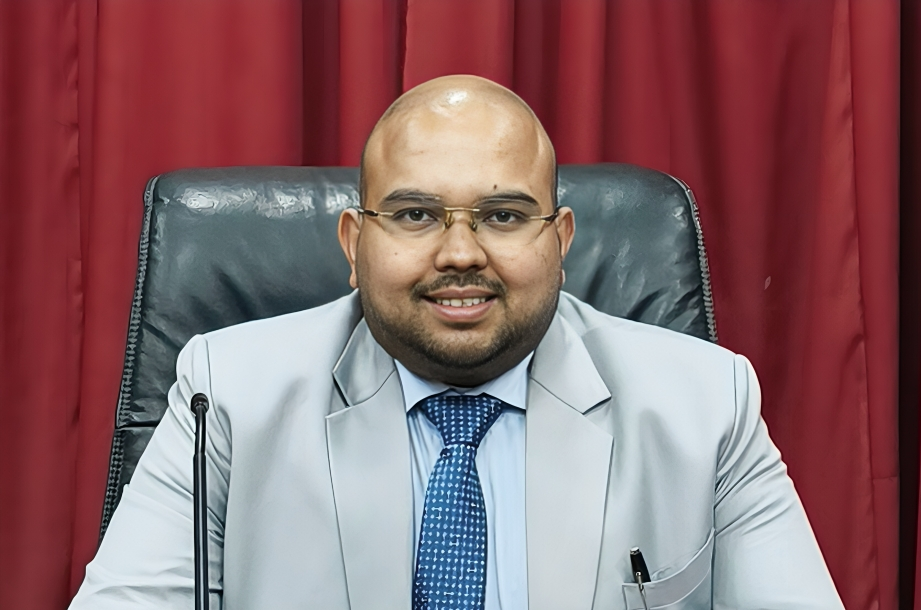
Category: Interviews

  • “Looking back, I’d say building an international legal career requires a combination of strong technical skills, cultural curiosity, and adaptability.” – Nayanika Ruia, Associate at Goodwin, United States.

    “Looking back, I’d say building an international legal career requires a combination of strong technical skills, cultural curiosity, and adaptability.” – Nayanika Ruia, Associate at Goodwin, United States.

    This interview has been published by Anshi Mudgal and The SuperLawyer Team

    Being dual-qualified in both India and New York is a remarkable achievement. What first inspired you to choose law as a career, and what motivated your decision to build an international practice?

    Hailing from a family of prominent lawyers and businessmen, I have been exposed to the world of commercial and legal transactions since a very young age. My initial interest in law was sparked during family dinner conversations about how legal frameworks influence business strategy and drive corporate growth. Those early discussions made me curious about the intersection of law and commerce and ultimately motivated me to pursue a career in law. My interest in corporate law was primarily triggered after I participated in a corporate and securities law moot court competition in law school, where I conducted research on issues relating to insider trading and investment fraud. My constant endeavor to explore and navigate through the practical aspects and intricacies of commercial laws motivated me to pursue internships with corporate law teams at premier law firms and various multinational companies. As I delved deeper into the field, I was drawn to the dynamic, fast-paced world of mergers and acquisitions and private equity—areas where legal precision, business insight, and negotiation strategy converge. After graduation, I gained extensive transactional experience in the M&A practice at AZB & Partners, Mumbai and Trilegal, Mumbai. Qualifying in India gave me a strong foundation in company laws and exposure to a rapidly evolving corporate landscape. However, I was increasingly working on cross-border deals involving US investors, Delaware entities, and multi-jurisdictional structures. This motivated me to pursue an LL.M. in the USA, not only to deepen my understanding of the US law but also to add value in cross-border transactions. My goal has always been to operate at the intersection of jurisdictions, helping Indian companies scale internationally and advising US private equity players and venture capital firms on investments into emerging markets. New York is the financial capital of this world and home to all the big multi-national corporations, private equity firms, and financial institutions. International qualification in New York was a natural step towards building that kind of practice and seeking the desired global exposure. I wanted to be at the forefront of my practice, in the city where all big-ticket matters unfold. Being dual-qualified in both India and New York has been instrumental in shaping my legal career, particularly in corporate law, where cross-border transactions are increasingly the norm.

    During law school, you completed 15 internships at some of India’s most prestigious law firms and multinational organizations. How did these diverse experiences shape your inclination towards corporate law, and what key lessons from those years continue to influence your professional approach today?

    Completing 15 internships during law school gave me an unparalleled opportunity to explore different areas of law and understand how legal theory translates into practice. From interning in the corporate teams of top-tier corporate law firms to in-house legal teams at multinationals, each experience offered a unique perspective. Learning the practical aspects of transactional work while undertaking due diligence exercises and drafting agreements gave me a hands-on exposure into the professional work at law firms and a glance into the legal requirements of companies from a client’s perspective. While this industry demands long and hectic working hours with challenging work-life balance, I enjoyed the fast-paced and high-stakes environment, and more importantly, I was fascinated by how lawyers help structure complex transactions, negotiate and draft key transaction documents, and manage stakeholder expectations by aligning legal solutions with business goals. I still remember the lessons I learned from my mentor, a counsel at Trilegal that continue to guide my professional growth till date: (a) Adaptability: working across diverse teams, sectors, matters and legal issues taught me how to quickly assess context and contribute meaningfully, even with limited time or background in this fast-paced industry; (b) Precision: handling high-value transactions at law firms taught me early on that attention to detail isn’t just expected, it’s essential. It’s not limited to the role of a junior associate reviewing documents, but rather a discipline that must be upheld at every level of the deal team; and (c) Communication: be it drafting a memo or conducting a due diligence review, clarity in communication and collaboration as a team make the long working hours bearable and the work more enjoyable. Looking back, those years gave me more than just technical exposure, they solidified my decision to pursue a career in corporate law and helped me build the skillset, habits, mindset, and curiosity that I carry into every transaction even today.

    At Columbia Law School, you not only pursued your LL.M. but also engaged deeply as a Research Assistant and took on leadership roles in student associations. How did these academic and co-curricular experiences expand your perspective on law and prepare you for a global career?

    Pursuing my LL.M. at Columbia Law School was transformative, not only because of the world-class academic environment, but also due to the breadth of co-curricular opportunities that enriched my understanding of the law from a global and interdisciplinary perspective. The opportunity to learn from distinguished professors and engage with the vibrant community made it an enriching educational experience! As a Research Assistant to Professor Jeffery N. Gordon, I had the opportunity to work closely on comparative legal issues, including research on complex M&A issues and legal grey areas, which not only sharpened my analytical and research skills but also gave me insight into how legal systems address ambiguity across jurisdictions. This role honed my ability to approach legal challenges from both doctrinal and policy-based angles. Beyond the classroom and theoretical learning environment, I took on leadership roles in student associations, such as, Student Editor for the Columbia Journal of Asian Law and Secretary of the Columbia Corporate Responsibility Association. I was also an active member of the Columbia Business & Law Association and Columbia Law Women’s Association. Organizing and moderating panel discussions alongside legal scholars and engaging/ interacting with BigLaw partners broadened my perspective on the practice of law across different commercial environments that I now regularly witness in my cross-border practice. My proactive participation in co-curricular activities allowed me to collaborate with my peers from diverse legal backgrounds, exchange perspectives on global legal issues, and build meaningful connections within the international legal community. Together, these academic and extracurricular engagements at Columbia Law not only enhanced my cross-cultural exposure but also equipped me with the global mindset to thrive in the US legal fraternity. In a nutshell, choosing to study at Columbia was one of the best investments I’ve made, not just academically, but personally as well. While the LL.M. program offered world-class legal training and exposure to a truly global network, living in New York added a whole other layer to the experience. I took full advantage of what the city had to offer, catching Broadway shows, exploring museums, trying out food from around the world, and just soaking in the vibe and energy of the city.

    Having worked with leading law firms before pursuing your international practice and master’s degree, what cultural and procedural differences stood out to you between legal systems? What were some things you had to learn, adapt, or even unlearn to navigate these differences effectively?

    Having worked on M&A and private equity deals in both India and the USA, the differences were striking. While the skillset of a corporate lawyer is arguably transferable and is not jurisdiction specific, in India, deal-making often involves more regulatory oversight, heavily negotiated transaction documents, partly due to enforcement uncertainties and foreign investment restrictions (FDI). In contrast, US transactions are typically fast-paced, more standardized, and heavily focused on commercial outcomes / business goals through precise contract drafting. For instance, I worked on a cross-border transaction that involved a Delaware entity that wanted to acquire an Indian company as its wholly owned subsidiary. As part of the transaction, I realized that Delaware enjoys significantly greater flexibility by providing the board of directors the discretion to govern the entity, whereas, in India, the corporate governance of an entity is more prescriptive and compliance-heavy with stricter rules on matters like related-party transactions, board composition, and structuring. While these legal safeguards in India serve important governance goals, they can sometimes limit the structuring creativity available in complex deals. Culturally, I had to adapt from a well-defined organizational structure in Indian law firms to a more collaborative, client-facing role in the USA, where lawyers early-on in their careers are expected to engage more directly and strategically with the client. I also noticed a shift from providing detailed legal analysis to offering simple, concise (to the point), business-oriented advice, which is critical in the US private equity and M&A space. This transition pushed me to unlearn overly cautious habits and instead focus on practical, deal-driven lawyering, a mindset that’s essential in global transactional work. One of the most appreciated cultural differences I experienced is that the “open door policy” in US law firms is genuinely practiced and not just stated. There’s a strong emphasis on accessibility, mentorship, and collaboration, regardless of hierarchy. Junior lawyers are encouraged to ask questions, contribute ideas, and engage directly with senior associates, partners and even clients, which fosters both learning and confidence.

    In your current role, you represent private equity firms, venture companies, and strategic investors in complex cross-border transactions. What have been the most rewarding aspects of working on such high-value deals, and how do you approach the challenge of reconciling multiple statutes and jurisdictions?

    I am currently a mid-level associate at Goodwin Procter, LLP, New York, focusing my practice on domestic and cross-border mergers and acquisitions, specifically leveraged buyouts, private equity transactions, and venture capital investments. Working on complex cross-border transactions has been incredibly rewarding, both intellectually and professionally. The most fulfilling aspect is helping clients navigate high-stakes decisions that directly shape and impact their business growth. The best part about my work is that it never gets boring!  Whether it’s representing private equity firms, venture-backed companies, or strategic investors, each transaction presents a unique set of challenges and opportunities. Being at the intersection of law, business and strategy is both challenging and energizing. There is a thrill in closing complex M&A deals. One of the key complexities is managing/ coordinating cross-border work and reconciling multiple legal regimes, especially when deal terms, corporate governance standards, or enforceability vary significantly across jurisdictions. We approach this by collaborating closely with key transaction stakeholders such as RWI insurer, opposing counsel, local counsel and by ensuring alignment on key provisions like representations and warranties, indemnities, and shareholder exit rights across transaction documents. Driving projects by setting timelines for internal workstream, determining and planning internal deliverables, and leading team calls to meet deadlines to increase efficiencies helps manage risk and maintain deal momentum across borders.

    Qualifying as a New York lawyer is no small feat. How did you prepare for the bar exam, and how has this qualification added value to your practice? What advice would you offer law students and young lawyers aspiring to clear the exam and pursue international opportunities?

    Preparing for the New York Bar Exam was intense, especially coming from a non-US legal background. While I recall it as being a traumatic experience, I did learn a lot along the way! I approached it with a structured plan and a strict routine. I enrolled in a bar prep course, followed a study schedule, and focused heavily on practicing questions and timed essays to build both speed and familiarity with the exam format. I mostly focused on practicing past exam questions because they really helped me get a solid grasp of the legal concepts and figure out how to manage my time during the test. Consistency and discipline were key. I used to wake up early to read through the study modules and watch all the videos and then spend the whole day practicing questions. This helped me understand and apply the legal concepts without the need to cram them up. Qualifying as a New York attorney not only adds credibility in one’s practice in the USA but is also a requirement for most BigLaw firms in making their decision to hire you to practice law in New York. As a New York qualified attorney, I am able to advise on US legal aspects directly, particularly in deals involving New York law-governed documents, which are common in my area of work. My advice is to treat the bar exam like a full-time job for those one to two months. Focus on understanding the test, its format/ structure and not just the law. No matter which bar prep course you choose, practice, practice and practice! This is very important. You don’t need to ace the exam (no extra points for high scorers) – you only need to pass it! Follow a study routine which works best for you but stick to it. There might be days when you may lack the motivation to study or feel burnt out but believe me, keep at it, be positive and put in the hard work because it definitely pays off!  

    With such elaborate professional responsibilities and a demanding work schedule, how do you strike a balance between your personal and professional life? What strategies or habits help you manage it all effectively?

    Balancing a demanding career in corporate law with personal life is definitely a big challenge! However, with time and experience I’ve found that setting clear boundaries and prioritizing both work and downtime is essential. While my law firm does strongly emphasis on physical and mental wellbeing by organizing retreats, wellness days and initiating activities to relieve work stress etc. I make it a point to schedule focused work hours and then fully disconnect during personal time, whether that’s spending time with family, exercising, or pursuing hobbies. I believe that following a proper routine and managing time consciously are key habits. I endeavor to stay organized and avoid burnout by using my vacation days to travel, which I deeply enjoy. I plan my weekends ahead and try to squeeze in activities which I really want to do such as watching a Broadway show or even going on hikes! Even when I get very little time for myself during rough days or intense work phases (when we are signing or closing a transaction), I try to do something that makes me feel calm and relaxed. I listen to music, play the piano or read a novel. I try to exercise regularly, stay hydrated and remain active during the day. Ultimately, I have learnt from my experience that work life balance is less about reaching a perfect equilibrium every day but more about putting in consistent effort to recharge and stay mentally fresh, which ultimately makes me more productive professionally and personally.

    Looking back at your journey, what advice would you give to students and young lawyers aspiring to build an international career like yours? Are there specific resources, skills, or values you recommend they focus on to thrive in this path?

    Looking back, I’d say building an international legal career requires a combination of strong technical skills, cultural curiosity, and adaptability. Moving to another jurisdiction and pressing the restart button in your professional life is not easy. One should have an open mind to adopt change and the strength to address any unforeseen challenges. It is important to develop a global mindset: stay curious about different legal systems, business cultures, and geopolitical trends. First and foremost, young lawyers still in law school should gain internship experience early on to understand the practical side of the legal profession. It’s essential to go beyond textbooks and see how law operates in the real world. A strong resume with good academic performance, complemented by diverse co-curricular and extracurricular activities, can significantly strengthen an application to study abroad. During my time in law school, I was an active mooter, and I continue to stay engaged with the community by judging some of the most prestigious moot court competitions globally. For those aiming to pursue an LL.M. in the US especially in corporate law, I strongly recommend gaining some hands-on experience in M&A or private equity transactions before applying. The LL.M. is a significant academic and financial investment, and it’s important to approach it with clear intent and direction. Students should not come with the sole aim of landing a job. The LL.M. is also an opportunity to grow as a lawyer, broaden your perspective, and experience true global exposure. Along the way, networking is absolutely key. Building meaningful and genuine relationships with alumni, law firm professionals, professors, and peers can open doors and provide lasting value well beyond the program. Finally, I would say: cultivate resilience and humility. The path can be challenging, especially as you navigate cultural, academic, and professional differences. But those who remain adaptable, open-minded, and solution-oriented will not only succeed but they will thrive.

    Get in touch with Nayanika Ruia –

  • “The responsibility of being an AOR is immense as you’re a bridge between the Registry and the Hon’ble Judges, not just in argument, but in procedure.” – Udian Sharma, Advocate-on-Record at the Supreme Court of India.

    “The responsibility of being an AOR is immense as you’re a bridge between the Registry and the Hon’ble Judges, not just in argument, but in procedure.” – Udian Sharma, Advocate-on-Record at the Supreme Court of India.

    This interview has been published by Anshi Mudgal and The SuperLawyer Team

    Coming from a background in Science from Hindu College, University of Delhi, what inspired you to pursue a career in law? How has your technical background  influenced your approach to complex commercial or infrastructure disputes? 

    As a first-generation lawyer, I often say that I did not choose law, law chose me. Growing  up, I was deeply influenced by my grandfather, who fought legal battles for decades to  protect our ancestral land. His relentless perseverance, even against an unresponsive  system, left a profound impact on me. By the time I graduated in Science from Hindu  College, I had already seen how the law could be both an obstacle and a tool for justice.  

    My scientific training gave me a structured way of thinking. In Science, you learn to  analyze problems by breaking them down into fundamentals. That has greatly helped me  in disputes involving infrastructure and complex commercial contracts, where one must go  through technical details like engineering reports, financial data, regulatory compliances,  and present them in a manner that is both legally persuasive and technically accurate. It  allows me to approach my cases not just as a lawyer, but as someone trained to understand  the “nuts and bolts” of technical issues. 

    It has been an interesting journey, from solving arithmetic problems and arriving at ‘LHS  = RHS’ to addressing complex questions of law and concluding with ‘Hence, this SLP’. 

    In the early stages of your career, you worked with various senior judges and  advocates. How did these experiences shape your approach, and which lessons from  that time have had a lasting impact on your professional philosophy? 

    I had the privilege of clerking with Justice A.K. Sikri at the Supreme Court and Justice Siddharth Mridul at the Delhi High Court. Observing them up close taught me two  invaluable lessons: the importance of clarity, and the importance of compassion. Justice  Sikri had an extraordinary ability to simplify the most complex constitutional questions,  and Justice Mridul always emphasized the human element in adjudication. 

    Later, when I began working with senior advocates and counsels at the Supreme Court, I saw how preparation and integrity defined good lawyering. One lasting lesson I carry is that courts are not swayed by theatrics- they are swayed by sincerity and substance. These  experiences shaped my professional philosophy, that law is not just about winning cases, but about ensuring justice is meaningfully served. 

    What motivated you to establish an independent practice, and what hurdles did  you face while launching your chambers during COVID? How did you overcome  them, and what was your vision for the practice? 

    The decision was born partly out of necessity and partly out of conviction. During COVID, the legal profession itself came to a halt. Many colleagues struggled, and I realized that if I wanted to carry forward my vision of a client-centric and socially conscious practice, I  had to build something of my own. 

    I started my chambers quite literally from one room in my home (with immense gratitude  to my parents who allowed me to turn it into an office) with files stacked in the boot of my car. The hurdles were immense, no physical hearings, clients uncertain about the future, and the financial strain of running an independent practice in such times. But adversity also  brought clarity. I invested in technology, conducted virtual hearings, and slowly built a  team that shared the same values of hard work and service. My vision was, and remains to create a Chambers that combines courtroom advocacy with policy thinking, and where  every matter, whether commercial or public interest, is handled with the same dedication. 

    You have handled complex commercial disputes and arbitration, including cross border infrastructure matters and international arbitration, across areas such as  employment law and customs law. Can you share some major challenges you faced in  a complex arbitration case and the unique difficulties it presented? 

    One of the most challenging arbitrations I handled involved a cross-border infrastructure project. The difficulty lay not just in the scale, but in the diversity of the issues, technical  construction delays, regulatory clearances, and overlapping jurisdictional laws. 

    The unique challenge was coordinating with multiple stakeholders, engineers, financial  experts, and foreign legal teams, while presenting a coherent case before an arbitral tribunal presided over by a retired Supreme Court judge. It taught me that arbitration advocacy  requires more than just legal arguments, it demands the ability to understand complex  technical data into a persuasive legal narrative. 

    You have demonstrated a commitment to advancing legal discourse and  contributing to scholarly debate. How do you balance active practice with legal  writing and academic contributions? 

    For me, writing is not separate from practice, it is complementary. Courtroom advocacy is about the urgency of the present; academic writing is about reflecting on the future. Balancing both is difficult, but I make time because writing forces me to step back and  critically examine the jurisprudence I am part of. Recently, I have also begun teaching law  to students and interns- a pursuit I deeply enjoy, as it allows me to give back to the fraternity  while shaping the next generation of lawyers. 

    During the pandemic, for instance, I wrote extensively on the importance of impartiality in arbitrations and timelines in insolvency laws. These writings later informed some of the  arguments I made in court. In a way, legal writing sharpens my practice, and practice keeps  my writing, whether it’s articles, blogs, or pleadings, grounded in reality. 

    Clearing the Advocate-on-Record exam on the first attempt is a remarkable  achievement. What were your preparation strategies, and what primary  responsibilities come with being an AOR? 

    The AOR exam is as much about discipline as it is about knowledge. I prepared with the  belief that procedural law is the backbone of effective litigation. My strategy was simple:  treat every question as a live brief. I wrote my answers as if I were filing in court or briefing  a Senior Advocate. That practical approach helped me clear the exam on the first attempt. 

    The responsibility of being an AOR is immense. You are the face of your client before the Supreme Court and a bridge between the Registry and the Hon’ble Judges, not just in  argument, but in procedure. You are responsible for ensuring filings are correct, deadlines are met, pleadings are true and that clients receive the highest level of professional care.  It’s a trust that must never be broken. 

    How has the arbitration landscape in India evolved over the last decade? With the  advent of technology, what changes do you see in Supreme Court litigation strategies  post-COVID? 

    Over the last decade, arbitration in India has been projected as having matured from an  ‘alternative’ mechanism to the preferred mode for commercial disputes, with a legal framework aligning with international standards.  

    However, the ground reality is far more complex. Arbitration has, in practice, become less  formal, yet more vulnerable to judicial intervention at almost every stage. In one matter I argued before the Supreme Court, the Arbitral Tribunal, the Single and the Division Bench  of the High Court, each gave separate findings every time a cross appeal was filed by the  parties, resulting in six different outcomes before the case finally reached the Supreme  Court. This not only delays justice but also makes arbitration extremely costly and  cumbersome. Increasingly, I see my clients preferring to opt out of arbitration clauses  altogether, choosing and trusting Courts as their primary forum for dispute resolution,  driven largely due to the greater efficiency brought in through the Commercial Courts Act. 

    Post-COVID, technology has changed Supreme Court litigation in profound ways. Virtual hearings, digital filings, and e-briefs are now routine. This has enhanced accessibility and opened new opportunities. Lawyers today can complement their oral advocacy with strong  digital advocacy, while clients too can easily attend and witness hearings in real time from  anywhere in the world, ensuring greater transparency and participation. 

    What has been the most challenging matter you have handled, and how did you  navigate it? You have also worked extensively in animal welfare, environmental law,  and public interest litigation. What motivates you to take up these cases? 

    One of the most challenging yet fulfilling matters I handled was Jaggo v. Union of India, 2024 SCC OnLine SC 3826, which I argued before the Supreme Court on behalf of the  Appellant. The case involved a woman Safai-Karamchari, who had been working with the  Central Water Commission for over two decades, as a so-called part-timer. Despite her  long service performing essential duties, her plea for regularisation was rejected not only  by her employer but also by CAT and the Delhi High Court. To make matters worse, she  was illegally terminated, even though she was the sole breadwinner of her family, surviving  on a meagre salary of just ₹4,000 per month. 

    I decided to take up her case pro bono, moved by her plight and the larger issue of systemic exploitation of temporary workers. The challenge was immense, not only did I have to  defend her against three concurrent adverse findings, but I was also pitted against the office  of the Additional Solicitor General (ASG). But the Hon’ble Supreme Court heard me  patiently, and it was deeply encouraging to see the Court give weight to every argument  raised by me in Court. 

    Ultimately, the Supreme Court held that such long-standing service warranted regularisation rather than termination, and that arbitrary dismissals without cause, violated natural justice. Drawing from constitutional principles under Articles 14 and 16, as well as international labour standards and comparative jurisprudence, the Court delivered a  landmark judgment that has since been widely relied upon across the country to protect the  rights of temporary and contractual workers. 

    For me, this case reaffirmed why I chose litigation. It was an uphill battle against the odds,  but it showed me that with persistence, empathy, and conviction, the law can restore dignity  and transform lives. 

    I’ve also had the privilege of being appointed as amicus curiae by the Hon’ble Delhi High Court to represent victims/ prosecutrix in POCSO cases, an experience that has deepened  my commitment to matters of public interest and justice. 

    How do you balance your personal life with such demanding professional  responsibilities, and how do you manage stress and maintain personal well-being? 

    Honestly, balance is not always easy. The legal profession demands long hours and deep  emotional investment. What helps me is grounding myself in simple things, spending time  with family, unwinding with my office colleagues, catching up with my close circle of  friends, and taking out time to travel with them. These moments keep me centered amidst  the demands of practice.

    I’ve realised balance in this profession is a constant work in progress. The long hours and  high stakes can be demanding, so I make a conscious effort to attend therapy and stay  grounded, whether by taking out time for myself, slowing down when needed, or ensuring  I maintain a non-toxic and supportive environment around me. 

    I try different ways to manage the stress that inevitably comes with the job, but what keeps  me going is focusing on the parts I truly enjoy, being on my feet in Court. That’s where I  feel most alive. After all, we lawyers live to hear the three words, ‘Issue Notice. Stay’.

    Get in touch with Udian Sharma –

  • Across Borders and Benchmarks: A Journey in Disputes, Insolvency and Restructuring. – Urvashi Salecha, Dual Qualified Lawyer and Legal Manager at Harneys, Hong Kong.

    Across Borders and Benchmarks: A Journey in Disputes, Insolvency and Restructuring. – Urvashi Salecha, Dual Qualified Lawyer and Legal Manager at Harneys, Hong Kong.

    This interview has been published by Anshi Mudgal and The SuperLawyer Team

    Your career trajectory is truly inspiring. Having started your journey in India, what initially motivated you to explore opportunities abroad? Was an international legal career always your goal, or did it evolve with time and experience?

    While an international career was always intriguing, I did not really plan for this move. I relocated to Hong Kong for personal reasons and in hindsight, this was the best God gifted turn in my career destiny. 

    After working at Khaitan & Co for over two years, I was constantly fidgeting with the idea of pursuing an LLM from the UK/US to enhance my skills. In fact, my initial career plan was always aimed at being part of the Indian Judiciary after procuring an LLM. However, I ended up with a real life LLM (something like the real life MBA) upon my move to Hong Kong. 

    Sorry but nothing riveting about my international legal career albeit a very fulfilling one indeed (whatever be the catalyst). 

    In the early stages of your career, you worked with several top-tier law firms. What were some of the key takeaways from those experiences that helped shape your foundation in dispute resolution?

    Yes, I was fortunate to intern and work with many reputed law firms, legal professionals and even clerks with a High Court Judge before joining Khaitan & Co in Mumbai. Given our Indian legal education system is largely based on rote learning and lacks the practical and critical thinking aspects of the law, it is crucial to explore your interests by way of practical traineeships during your law school breaks. I would say these internships not only built a foundation in dispute resolution (for me personally), they were essential in preparing me for the private practice role I undertook with Khaitan & Co. It is your first tryst as a professional and guides you to (i) figure out where your interests lie (i.e. private practice, corporate in-house, academia and several other fields within the practice of law), (ii) develop interpersonal and communication skills, and (iii) really get a hands on experience on the culture and workings of that specific role (e.g. a law firm or a company). 

    After spending two years at a leading Indian law firm, you transitioned to international practice. What prompted this shift, and how did you navigate the cultural and professional differences between the Indian and Hong Kong legal environments?

    As mentioned earlier, my relocation to Hong Kong was part of God’s plan. When I moved to Hong Kong, my only professional acquaintance in this new jurisdiction was my husband, who is a banker. Basically, I had to start from scratch, reintroducing myself as an Indian disputes lawyer looking for private practice roles. To make things more exciting, shortly after my arrival, the COVID-19 pandemic struck, bringing layoffs and market uncertainties.

    Despite these challenges, I reached out to numerous professionals, sent cold messages, and built new connections daily. This journey required humility and grit, as the Hong Kong legal industry is highly competitive. Being a newcomer without Hong Kong qualifications or international law experience, I was rarely a recruiter’s first choice.

    Transitioning from a top-tier law firm in India, with an established pedigree, to being completely unrecognized in Hong Kong was a profound experience. However, these initial years in Hong Kong marked my steepest professional growth. I learnt the art of networking and the benefits of a strong follow-up. I knew that positions won’t be created for a junior lawyer such as myself and I needed to keep hunting for the appropriate opening so that when there is one, I get a chance to interview for that role. 

    I also did not want to wait for the perfect opportunity and I took up an in house role with a leading manufacturing company (Rochdale Spears Group) immediately upon my move to Hong Kong (before transitioning to private practice at Harneys (my current role)).  Whilst at Rochdale, I also simultaneously prepared for the Hong Kong qualification exams given my interests always lied in pursuing litigation. 

    You’re currently focused on cross-border insolvency litigation and restructuring. Having practiced dispute resolution in India as well, how would you compare the Hong Kong legal system with the Indian system? Are there specific procedures or practices from Hong Kong that you believe could be effectively adapted into the Indian context?

    While both Hong Kong and India are common law jurisdictions, the practice, procedures and especially case management are fairly distinct. To clarify, whilst I am Hong Kong qualified, I’m currently working at an offshore law firm where we advise clients on BVI, Cayman Islands and Bermuda laws (all systems largely based on UK and common law). 

    In my experience, litigation in Hong Kong, UK or any of the offshore jurisdictions mentioned above, is more mature and structured. 

    Firstly, there is an emphasis on early settlement (i.e. out of court resolutions). There are even certain pre action protocols to be followed and pre trial settlement is highly encouraged. 

    Second, if a matter does go to trial, it won’t last for several decades unlike in India. In fact, the courts will block a week or two for a specific matter to complete the trial (including evidence and final arguments). Adjournments are rare as compared to India (and mostly at the behest of both parties i.e. by consent if they are exploring settlement negotiations for instance)

    Having said that, India courts (i.e. higher courts SC/HCs as well as tribunals and lower courts) have a very high workload with judges handling large volumes of cases daily compared with the courts of the other jurisdictions I mentioned earlier. So it’s obviously remarkable how the Indian judges are managing these volumes. However, an intrinsic balance needs to be found, with perhaps higher no. of judicial officers and moving towards a less adversarial approach towards disputes and incentivising pre trial settlement. 

    Lastly, even alternative dispute mechanisms such as arbitrations are concluded more efficiently, with challenges to the final award considerably lesser as compared to India (where majority of the arbitral awards are challenged in Courts). 

    Being qualified to practice in both India and Hong Kong, how has this dual qualification enhanced your cross-border legal practice?  Could you also share your experience preparing for and clearing the Overseas Lawyers Qualification Examination (OLQE)? What strategies or resources were most helpful to you during the process?

    As challenging as it was, I thoroughly enjoyed preparing for the OLQE. To put things in perspective, the pass rate for these exams is as low as 20% so you know the odds are not exactly in your favour. 

    The exams are highly technical with all questions being completely application based. So you are essentially answering real life legal queries (in a time bound manner). As Indian law school graduates, we are so used to rote learning and exams lacking critical analysis, I was not only preparing for the HK law exams, I was re-learning the study techniques too. 

    It was a test of disciplined, structured learning  and being consistent and completely focused in your preparation leading up to the exams. You also need to keep ample time for revision given the vast breadth of topics that are covered within a single head of an exam. With some luck, and blessing coupled with hard work and finding the right tutors, I was able to clear all heads in my first attempt. 

    To answer your first question i.e. engaging in different jurisdictions and legal systems, it really allows you to widen your scope of learning, you are not just learning two sets of laws, you are also exploring and servicing different cultures. For me, at Harneys, we deal with several Chinese clients on one hand and common law judicial systems on the other. So that’s balancing a lot of interests at the same time. I think being curious, understanding client’s needs and ensuring efficient service has kept me afloat while working in both jurisdictions

    You’ve taken on leadership roles in both diversity initiatives and business development, with BD and networking now being a key part of your responsibilities. Since these skills aren’t typically taught, especially in traditional legal training, how did you cultivate them, and what guidance would you give to legal professionals looking to build confidence in this area?

    Yes, I lead the Tone from the Top committee at Women in Law Hong Kong and have been part of WILHK as well as other DEI committees/member groups. I’m also quite actively involved in the BD initiatives at Harneys. Whilst both are distinct and serve differing objectives, it all stems from the art of networking. 

    As you rightly point out, this is neither taught or even considered as part of your skillset in law school or as junior lawyers. I believe this is a quintessential ability to develop in any profession (not just law).  

    So how to develop these skills. To me, it happened very organically. I was in a new jurisdiction, completely out of my comfort zone. All regular methods of finding a job had failed (i.e. through recruiters or applications to law firm websites or HR personnel). So, I had to be creative with finding opportunities. I started reaching out to people on LinkedIn (even if I did not know them), asking for 30 mins of their time/ or a coffee chat. At every meeting, I tried to expand the network by asking for introductions to more connections or membership in communities. This really helped build foundations on communication skills and confidence to hold conversations. 

    The transition to being involved in BD meetings and initiatives at Harneys was easier based on the foundations I built early on. I think it all comes down to being aware of the opportunities available if you can take that first step. It’s important to have a strong legal foundation and technical skills such as writing, analysis and research. However, at the same time, it is equally important to  ensure that you’re perceived as a good lawyer, who is capable of being the face of a firm or representing the firm in front of potential clients. As you get elevated (e.g. at partner level), these are the skills that matter more. So it’s always better to build on these from the beginning rather than waiting to be in a leadership position. 

    As a Hong Kong-qualified lawyer currently advising on various offshore litigation matters (including such as the implementation of schemes/restructuring) in the Cayman Islands, Bermuda, and BVI, how do you navigate the distinct legal nuances of these jurisdictions? Furthermore, how would you compare the commercial and dispute resolution frameworks Hong Kong and India, and what key differences do you observe in their approaches to cross-border transactions?

    A very good question indeed and while I marinate in these challenges daily, not something I discuss often haha. The key is compartmentalising. Given the niche I’m in, its very easy to get muddled up with the laws of different jurisdictions. Given I assist with several cross border matters and a single work day may involve drafting pleadings for a Cayman scheme of arrangement court sanction, assisting in a BVI law advice on insolvency laws and end with a client call exploring litigation in Bermuda. 

    I ensure that I have separate notes and sections (physically in my room as well as digitally on my desk) for each of the jurisdictions and then each of the matters. You have to be extremely organised with filings, matter segmentation etc. And of course, with some time and experience, you just get more confident in dealing with complex issues by breaking them down into simpler soluble pieces and then attending to each of them separately. And as lawyers, the most important thing is to have a mindset of continuous learning. 

    For students aspiring to build a career in international dispute resolution, what guidance would you offer? Are there any practical tips, skills, or experiences you believe are especially valuable as they prepare to enter this field?

    International dispute resolution is a pretty wide term. I’ll answer it this way, to build a career in law (whether in India or globally) requires consistent learning, hard work, resilience, critical thinking and most importantly patience. Unlike other career paths like AI, bankers (which are fast paced and also highly technical), law requires a lot of patience and experience. 

    As for practical tips, I’d say apart from the basics (i.e. building a strong foundational knowledge in your chosen niche, working on the succinct legal drafting/writing skills (again something not given enough attention to during law school) …

    Find a sponsor within your firm and a mentor outside. It is very important to build trust based networks and have someone back you within the organisation who genuinely is invested in your growth and development and a guide outside the firm, you can confide in and get the required support and learning. 

    Is there a motto or guiding principle you’ve followed throughout your legal career? In addition, how do you see the future of alternative dispute resolution evolving, especially with technological and global shifts in the legal profession? How do you personally stay updated on the latest developments in dispute resolution?

    Failure is not fatal, success is not final, it is the courage that counts~!

    This profession especially requires a lot of patience and resilience. In my opinion, there is no scope for instant gratification in law. You need to be thorough and keep learning and updating your knowledge base. 

    As for the impact of technology, we are definitely going to see some transformations. A lot of the tasks will be automated (are already being automated) which is potentially a good change because this may free up a lot of time spent by lawyers on admin/mechanical tasks and compliment the legal industry. As far as I’m concerned, I did attempt to get AI assistance at times, for presentations etc. I personally feel the problem of hallucinations needs to be solved, especially for legal tech AI – we cannot be citing wrong judgments made up by AI. Hopefully this will change soon. 

    Lastly, I would part by saying the cliché, you have to be curious and keep upskilling yourself (whether it is knowledge or technology). The world is moving and transforming very fast and one needs to keep pace. Having said that, this doesn’t mean you lose out on life, loved ones or your hobbies/interests. Almost every organisation (in law or elsewhere) values these additional extra curricular skills. For me it’s the water, and related outdoor activities like sailing, kayaking, windsurfing. A weekend in the sea and I feel refreshed to take on the work week!

    Get in touch with Urvashi Salecha –

  • “Technology today is the key source to research and development, a way by which people can now know, read, understand the aspects and issues in real estate and business transactions.” – Deepanshu Garg, Founder of Legal Assist.

    “Technology today is the key source to research and development, a way by which people can now know, read, understand the aspects and issues in real estate and business transactions.” – Deepanshu Garg, Founder of Legal Assist.

    This interview has been published by Anshi Mudgal and The SuperLawyer Team

    With your specialization in real estate transactions and property registration, what initially drew you to this niche area of law, and how has your interest evolved over the years?

    I have grown up in a family of lawyers, who are involved in this niche practice of law for the last 40 years. I am 4th generation in this side of practice. The environment, the discussions in family and social gatherings, watching of news roam around real estate and the law; the knowledge amongst citizens on the aspect of “how important is legal consultation before dealing in real estate transactions”; the growing real estate disputes in the family as well as in the market; the challenges faced by the citizens in the property registration process; the lack of future estate planning; etc., which gave me a good kick to enter into law, focus on this side and to scale up the practice to new boundaries.

    Through your practice, you have often highlighted the gap between property registration and ownership rights. What are the most common misconceptions people have when dealing with property transactions in India?

    From the very starting, I have strongly believed that people are unaware or ignorant of about the most important aspect when dealing with property transactions i.e. “Title Legal Due Diligence”.  This is the “laying foundation”. The money which people pay to buy a property, what exactly is that money for – is it the physical structure or the land on spot? Practically speaking, for people these are the two aspects only but wait, that value is actually weighed from “title ownership documents” which people execute and get registered. And that’s the major misconception prevailing amongst people. Even law clearly says, “Buyers beware”. If there is a discrepancy in the documents, the value you paid for that property is nothing more than a zero. 

    Another related misconception is that people believe drafting a document when dealing with property is “basic and regular and can be drafted on a set performa”, but no, there is no set performa prescribed anywhere in law. Any such document is a “contract” amongst the parties which govern their transaction and has to be drafted on case-to-case basis and on specific circumstances surrounding the entire transaction, overall considering the law.

    As the Founder of Legal Assist, a digital platform dedicated to property and business legal services, what inspired you to establish your practice, what were the key challenges you encountered in building it, and how do you envision technology transforming the future of property law practice? 

    Since many years now, the property registration appointment process has been made online, which is not only cumbersome but time taking too. It is not easy for a layman to take an appointment for registration. Further, we daily see the growing disputes arising in real estate transactions and business running. We further see the irregularities and unprofessional surroundings in the conveyancing field of practice of law.

    All this triggered me to develop an online platform where I can render my knowledge on the issues circumventing the real estate industry & transactions, property registrations, business industry & transactions, to help them and to make them cautious of their legal rights, obligations and safeguards. The major key challenges were to not be able to cover “all aspects/ issues” since they are vast in nature and the other was to actually make people believe in “what are the most important aspects” in real estate and business transactions. 

    Technology today is the key source to research and development,  a way by which people can now know, read, understand the aspects and issues in real estate and business transactions. Moreover, technology is the source to transparency and accountability, as by way of technology, things are not far away to come under one roof and better control of the government, assuring people more safety, trust and “ease of doing business”.

    Your work involves complex areas such as estate planning, inheritance, wills, and succession disputes. What are the most pressing issues clients face in matters relating to inheritance, and how do you guide them through emotionally sensitive cases?

    The most pressing issues I see are the disputes arising among the legal heirs after the death of deceased person who died intestate or without any future planning or without informing about his/ her assets to his/ her legal heirs and further, disputes arising in cases even where a deceased  left a WILL/ any other testament.

    Our approach of guidance is focussed initially on amicable settlement through mediation and consultation and if not this, by suggesting an equitable outcome, after considering the law from all four corners and the circumstances in hand, in a manner which rules out future disputes.

    Estate and succession planning is often overlooked until a dispute arises. What practical steps do you believe individuals should take early to avoid future litigation?

    Life is so uncertain these days. The most important aspect which I feel today is for a person to have a must is to initially have a broad family discussion amongst all members and align amicably whatever a person owns amongst his/ her family members. Then I believe in an equalization policy amongst members. If all the members accept this discussion, the family shall execute an Memorandum of Family Settlement incorporating the contents of such amicable understanding. Further, members, in such case or otherwise if family amicable understanding is not arrived at or possible, shall compulsorily make a testament/ WILL for writing down their wish in “clear terms” to be followed by each member after the death of the testator.

    If there’s less tunning amongst the family members and the above aspect cannot be worked out, then the best possible way is to distribute the assets during the lifetime only so that the respective beneficiary holds the same without any claim or objection from others.

    As someone who started with internships at leading law firms and later built independent practice, what lessons from those formative years still influence your approach to law and property related disputes?

    Clear understanding of law and being upgraded with current legal precedents; using the tool of mediation and conciliation; not merely focussing on making money but alongside guiding the client with result oriented approach. However small the matter or dispute may be, 100% efforts and hard work shall always be put.

    Property and inheritance laws are constantly evolving with new judicial precedents and legislative changes. How do you stay ahead of these developments, and what recent trends do you see shaping this field in India?

    My approach is to give daily an hour or more in watching the news, studying current market scenarios, blogs, judgments. By this, I am able to incorporate and utilize this knowledge in my practice practically.

    The upcoming centralized digitalized unique platform where property registration, all connected data such as data from Municipal Corporation/ Development Authority etc. will be inter-connectedly available and will be incorporated with ease of doing business policy of the government. The development of digital courts for NI Act cases, MSME Samadhan Portal, Pre-litigation process in commercial cases, Mediation Act, etc. are great initiatives of the government for early disposal of recovery matters. By such initiative and upcoming legal developments, people are becoming more aware about their rights and obligations.

    With such a diverse practice covering real estate, inheritance, litigation, and consultancy, what advice would you give to young lawyers who want to build a specialized yet well-rounded career in property and succession law?

    Thorough understanding of the real estate market and laws covering this industry is a must. The initial aspect is to be able to practically understand the “trends” of “disputes” in industry, thereby doing research in the light of actual circumstances and find out all the possible solutions to the problem and then picking up the best reasonable one. What is the best approach “practically” must be the concern always.

    Get in touch with Deepanshu Garg –

  • “To be a lawyer is to fight for justice, stand for truth, and give strength to those who cannot fight for themselves.” – Dr. Milap Narayan Chopra, Deputy Government Counsel, Government of Rajasthan.

    “To be a lawyer is to fight for justice, stand for truth, and give strength to those who cannot fight for themselves.” – Dr. Milap Narayan Chopra, Deputy Government Counsel, Government of Rajasthan.

    This interview has been published by Anshi Mudgal and The SuperLawyer Team

    Your academic credentials span law, commerce, business, and company secretaryship, culminating in a Ph.D. in Law. How has this multidisciplinary education shaped your approach to legal practice, especially at the intersection of law, business, and corporate governance?

    From the very first day of my law school, I carried a clear ambition to become a world-class corporate lawyer being inspired by Jim Carrey’s story, who wrote himself a $10 million check for “acting services rendered” and carried it as a reminder of his vision and by the mid-1990s fulfilled that vision through belief and intense hard-work. Motivated by this, I wrote my own paper slip in 2010 to myself; “Dr. Milap Chopra (Gold Medallist), B.Com., LL.B. (Hons), CS, MBA, LL.M., Ph.D.” and carried it in my wallet as a visualization and constant reminder of my ambition to become a world-class corporate lawyer. With that goal in mind, I carefully structured my academic and professional journey. Alongside my law degree, I pursued the Company Secretaryship (CS) course, completing both simultaneously to strengthen my understanding of corporate law and governance. I interned at India’s leading-top law firms including Amarchand, JSA, AZB, Anand & Anand, among others, gaining exposure to top-tier corporate practice across the metro cities. Throughout the academic journey of law school, I consistently maintained meritorious performance, ultimately graduating as the Gold Medallist and batch topper of Institute of Law, Nirma University.

    Yet destiny had a different plan. During the last semester of law school, my father, himself a practicing lawyer at the Bikaner Sessions Court, was elected as the First Citizen of Bikaner i.e., the Mayor of the city. He encouraged me not to take up a corporate job or join a law firm, but to pursue litigation. Respecting his guidance, I set aside the offers of a job I had received and began practice at the Rajasthan High Court, Jodhpur, as an associate in the chambers of Shri Mahendra Singh Singhvi, Senior Advocate. That experience was not just training or learning; it was an immersion into the craft of litigation, teaching me the temperament, discipline, and holistic approach required for meaningful legal practice. I am deeply thankful to God for that turn of events, because it helped me realise that true legal practice requires temperament and an inbuilt nature — qualities essential for anyone who wishes to pursue litigation meaningfully. Law is not just a profession; it is a noble calling. It remains unique in its ability to serve the public interest at large, where one’s work can directly benefit society through precedents, judgments, and observations/outcomes.

    After starting practice at the Rajasthan High Court, Jodhpur, I enrolled for Masters in Law at the prestigious Government Law College, Bikaner. This required remarkable dedication as in the first year, I travelled overnight every Tuesday from Jodhpur to Bikaner to give my six exams of the first year on every Wednesday; however, destiny had other pivotal moments as well, a life-threatening road-accident during that period became a blessing in disguise which forced me to pause and reflect, doctors advised me to pursue a desk job, and for a short while, my unfulfilled corporate dream seemed to materialize and I got the opportunity to work with the PwC at Gurugram, one of the world’s Big Four Consultancy firms wherein I soon realised I was not made for the corporate world. My temperament fit litigation, not a corporate desk. During my PwC days, I also pursued an MBA, completing it under tough circumstances, often writing three back-to-back exams of three hours each on weekends, as leave was nearly impossible in corporate life. That job experience further strengthened my resolve to practice at Jodhpur and added yet another dimension to my academic journey.

    Through it all, one firm belief and that paper slip has always guided me that extra qualifications add extra dimensions to one’s legal career. That conviction drove me to explore law, commerce, business, and company secretaryship, before finally pursuing a Ph.D. in Law. Today, this multidisciplinary foundation allows me to approach issues at the intersection of law, business, and corporate governance with a rare balance- offering solutions that are legally sound, commercially viable, & ethically responsible. And, finally, in July 2024, after 15 long years of academic and career journey, I added the “Dr.” prefix to my name, completing the journey I had envisioned on that first day of law school on a slip of paper. Through belief, conviction, hard work, and the courage to dream, every challenge i.e., exams, travel, job, courtroom battles, became part of the story. That slip was never just a piece of paper; it was a promise to myself, a compass that guided me to become the well-qualified lawyer I aspired to be, and a reminder that dreams nurtured with patience and perseverance truly come alive and I hope that anyone who reads this feels inspired to keep their own slips of hope alive.

    Pursuing CS and Law simultaneously is both ambitious and demanding. What advice would you offer to students who are considering this path? Are there any specific strategies or resources that helped you manage both effectively and could benefit others looking to do the same?

    Pursuing Company Secretaryship alongside a law degree is ambitious and demanding, but immensely rewarding if approached with purpose and discipline. From the very start of my law school, I aligned every step i.e., internships, academics, and extra qualifications with my goal of becoming a world-class corporate lawyer.

    My advice would be to treat both the programs as complementary, not competing. Law builds your legal reasoning and litigation skills; CS gives deep insight into corporate governance, compliance, and business operations. Today, modern litigation often involves complex corporate matters, and understanding both legal and corporate dimensions allows a lawyer to craft strategic, holistic solutions.

    Ultimately, my journey shows that combining CS and law not only prepares you for corporate practice but also enriches litigation skills. A modern litigating lawyer increasingly needs to understand business structures, governance frameworks, and compliance requirements to provide nuanced advice, anticipate challenges, and craft effective legal strategies. For students willing to embrace the challenge, the payoff is a multidisciplinary foundation that sets them apart and equips them to thrive in both courtroom and corporate boardroom settings.

    In your role as Deputy Government Counsel for Rajasthan, you’ve managed cases across diverse departments like Transport, Tourism, and Water Resources. Could you share a particularly challenging case or policy issue you handled, and how you approached its legal complexities?

    As Deputy Government Counsel for Rajasthan, one of the most challenging aspects has been handling cases that cut across diverse departments, from Transport and Tourism to Water Resources, Higher and Medical Education. Each case brings its own legal complexity, but the real challenge often lies in creating a channel of cooperation among multiple officers in charge of different departments and ensuring that a timely, coherent reply is filed before the Hon’ble Court. Unlike private practice, here you appear from the respondent’s side, where the responsibility is not only to defend but also to uphold the policies and decisions of the State.

    In matters like appointments, recruitments, examinations, policy changes, or large bunch-transfer cases, the pressure can be immense because of the far-reaching implications for both the government and the public at large. That is why I believe success depends on three things: having a good team of associates, valuing the effectiveness of court clerks or munshi’s, and maintaining proper updation of files and continuous monitoring of case status. These seemingly small practices are actually the backbone of timely and effective representation before the Court.

    My multidisciplinary background in law, commerce, business, & corporate governance has helped me approach these issues with a structured, solution-oriented mindset. Rather than being daunted by the complexity, I focus on building cooperation, managing deadlines under pressure, and ensuring that the State’s position is presented in a legally sound, precise, and persuasive manner. In many ways, these challenges mirror the lessons I’ve carried since law school that discipline, teamwork, and a holistic outlook are key to navigating the most demanding cases.

    What inspired you to establish Law Compass LLP? What were some of the early challenges you faced in building the firm, and what long-term vision do you hold for its role in the Indian legal ecosystem?

    The inspiration to establish Law Compass LLP came from my belief that the legal profession is not only about advocacy but about navigating people toward the best possible solutions. That’s why our firm carries the tagline: “Navigating you to the best possible legal solution.” As a co-founder, along with my Jaipur-based partner, Pranjal Singh, and our Delhi-based partner Siddharth Acharya, Advocate-on-Record, we envisioned a practice that offers clients both litigation and non-litigation expertise under one roof. Our diverse backgrounds allowed us to position Law Compass LLP as a one-stop solution for multifaceted client needs.

    The early challenges were the ones most young firms face i.e., building trust, managing resources, and delivering consistent results while ensuring timely compliance. But my multidisciplinary journey, coupled with our team’s strength in corporate law, governance, and litigation, gave us the foundation to bridge gaps effectively. We worked consciously on building a system that valued teamwork, proper updation of files, responsiveness, and a client-first approach, even under the extreme pressures that litigation often brings.

    What sets us apart is our functioning model. We focus not just on winning cases but on ensuring effective, time-bound relief, transparent communication, and value-driven fee structures. Like the big law firms in India, we are building a culture of professionalism, research-oriented strategy, and holistic solutions, but our boutique size allows us to remain nimble, personalized, and accessible. In this way, we hope to complement the Indian legal system by reducing delays, improving efficiency, and delivering justice in a way that clients find both approachable and dependable.

    Our long-term vision is to make a meaningful difference in the Indian legal ecosystem by providing solutions that are legally sound, commercially practical, and socially responsible. We aspire for Law Compass LLP to grow into a boutique firm that is known not only for legal excellence but also for its role in strengthening trust in the system itself — making the law work better for those it is meant to serve.

    You’ve represented a wide range of clients from banks and PSUs to co-operative societies and educational institutions. When handling government-related matters, what unique challenges arise, and how do you tailor your strategy to ensure effective and compliant representation?

    When it comes to government-related matters, the challenges are very different from private representation. The most unique difficulty lies in the volume of cases and the strict timelines within which replies and arguments must be prepared. The pendency of cases directly impacts the smooth functioning of governance, so the responsibility of a government counsel is not only professional but also systemic.

    To handle this, I firmly believe in the strength of a structured ecosystem which includes an effective court clerk/munshi, a reliable team of associates, regular updation of files, complete coordination with the OIC’s and constant monitoring of case status. Every stage i.e., from gathering factual reports, to preparing replies, to filing in the registry, to finally arguing with a well-prepared note ensuring that no matter goes unheard before the Hon’ble Court. For this, the cause list has to be noted with precision every single day, and it is the duty of a government counsel to make sure that not a single case is missed being represented. Even one lapse can have serious consequences for governance and public interest. Without that structure, government litigation can easily get derailed under its own weight.

    Fortunately, under the able leadership of our Hon’ble Chief Minister Bhajan Lal Sharma ji, the State of Rajasthan has made government-side litigation comparatively smoother and more systematic. We regularly hold meetings with the Officers-in-Charge (OICs) to review pendencies, address bottlenecks, and ensure that the State’s representation before the Hon’ble Rajasthan High Court is effective and timely. This cooperation between counsel and departments allows us to tailor our strategy in a way that is both compliant and efficient, ensuring that justice is not delayed for the people we ultimately serve.

    With such a strong academic foundation, do you believe that continuous scholarly engagement should be a part of every legal professional’s journey? How has your own academic work enriched your practice?

    Absolutely. On the very first day of my law school orientation, Senior Advocate Shri P.M. Thakkar told us that “a lawyer is always a student” that one must remain in constant learning mode, curious to know the “why” and committed to finding solutions through knowledge. That message struck me deeply. Inspired also by Jim Carrey’s story, I wrote on that slip of paper (which I have carried since my first semester) that I would remain a learner till the last day of my life.

    That conviction has shaped my journey. Even after completing my Ph.D. in Law, I regularly enroll in online courses, workshops, and other academic engagements. Today, my scholarly pursuits have come full circle, I now travel across institutions to deliver lectures, judge moot court competitions, and being a government counsel participate in government meetings and each of these experiences further refines my practice.

    For me, scholarship and practice are not separate but complementary. Continuous learning sharpens my arguments, broadens my perspective, and keeps me adaptable in a fast-changing legal landscape. In essence, my academic work has not only enriched my practice but also kept me aligned with the belief that law is a living discipline and to practice it meaningfully, one must always be willing to learn, unlearn, and relearn.

    Balancing a high-pressure legal practice with deep engagement in social leadership roles such as Founding Trustee of BEST Foundation Trust, Vice Chairman of JITO Youth Wing etc. is no small feat. How do you manage this balance, and what continues to motivate your commitment to social transformation alongside your legal career?

    Balancing law with social leadership has never felt like a burden; it has always been a calling. Two incidents, in particular, have shaped this approach for me.

    The first comes from my political legacy. My father, a deeply honest politician, always taught us that if society has given us everything, we must find ways to give back. That value has been a guiding principle in my life. With this conviction, I founded the BEST Foundation Trust “Better Education for Social Transformation”. Through this initiative, we work to make education accessible and meaningful by paying the school fees of underprivileged students, providing scholarships to meritorious ones, and creating opportunities for educational growth etc.

    The second defining moment was far more personal. During a life-threatening road accident, I was in a coma for 67 hours, and I lost a dear friend in that tragedy. That experience shook me and instilled a deep realization that we only have one life and the only way to honor it is by living with purpose & making a positive difference in society.

    So, even while managing the pressures of a legal practice, I consciously dedicate time and energy to social causes, supported by an effective team. What keeps me motivated is the belief that law and leadership must go hand in hand, one upholds justice in the courtroom, the other nurtures transformation in the community.

    You’ve been actively involved in initiatives focused on youth empowerment and educational access. What advice would you offer to aspiring legal professionals who wish to follow a path like yours? What mindset and resources do you believe are essential for building a meaningful legal career today?

    My advice to aspiring legal professionals is simple yet profound; always stay curious, always stay disciplined, and never forget to ask yourself the basic question: “Why Me?”

    Whether you are arguing before My Lords, preparing for a job interview, or even praying to God to fulfill your dreams, just pause and ask, why should this relief, this opportunity, or this blessing come to me? If you can honestly satisfy yourself with an answer, if you have worked hard enough to justify it, then trust me — it will be you.

    In my own journey, this mindset has been a compass. From managing rigorous studies in law, CS, MBA, LL.M. and Ph.D., to working with top firms, to practicing in court, to representing the State of Rajasthan as Government Counsel and even balancing social leadership, the “Why Me?” principle has kept me grounded and accountable. It pushes you to prepare better, to think deeper, and to act with integrity.

    So, to young professionals — build your career not just on ambition, but on clarity of purpose, a commitment to continuous learning, and the courage to answer that “Why Me?” every single day. That’s what transforms a legal career into a meaningful journey.

    Finally, what guiding motto or philosophy has carried you through your legal journey? And looking back, what inspired you to pursue a career in law in the first place?

    My guiding philosophy has always been that law is not merely a profession, but a noble calling; a lifelong duty to the Constitution and to society at large. A lawyer is entrusted with the privilege of defending rights, upholding justice, and ensuring that the rule of law prevails over fear, power, or influence.

    The inspiration to pursue this path came at a defining moment in my eleventh standard, when I had to choose my stream of study. At that time, the choices were clear — science for engineers, biology for doctors, commerce for accountants. Unsure of where I belonged, I asked my father what I should pursue. His answer changed the course of my life. Looking at my extrovert nature, my speaking skills, my temperament, and the qualities he believed reflected a good lawyer, he said to me:

    “You should become an Advocate and prepare for CLAT which has only recently been introduced. And then he said something that stayed with me forever: A lawyer is not just a professional, he is the guardian of rights and the defender of the Constitution. Law is supreme; it bows before no one, and neither can a true lawyer ever be bowed or broken. To be a lawyer is to fight for justice, to stand for truth, and to give strength to those who cannot fight for themselves. If you truly wish to live a life of meaning and difference, become a good lawyer because a good lawyer can never be silenced, never be tamed.” 

    Those words struck me to the core. They gave me a vision of law as a higher calling, a life of service through justice. And from that day onwards, I knew this was the journey I was meant for. As a strong believer in karma, destiny, and God, I have also realized that one must remain calm, patient, and consistent. If your deeds are sincere and your conviction unwavering, everything else eventually falls into place. Life has its own rhythm, and faith in that process gives you the strength to persevere even through the toughest trials.

    Looking back now, every academic pursuit, every courtroom battle, every social initiative I have undertaken has been guided by that conviction. For me, the practice of law is not just about winning cases — it is about carrying forward a legacy of courage, compassion, and constitutional duty. That is the motto that continues to carry me forward.

    get in touch with Dr. Milap Narayan Chopra –

  • Navigating Complexity From Corporate Law to White Collar Investigations with Trust and Insight – Varij Sharma, Founder and Partner at Gravitas Legal.

    Navigating Complexity From Corporate Law to White Collar Investigations with Trust and Insight – Varij Sharma, Founder and Partner at Gravitas Legal.

    This interview has been published by Anshi Mudgal and The SuperLawyer Team

    You have worked with a Fortune 50 company and have over 17 years of experience across sectors like corporate and commercial law, white-collar crime, and investment fund-related issues. What has been your motivation behind pursuing these sought-after niche fields, and how do you make them simpler for people who are often uncomfortable discussing them? How did you build your name in this niche of the niche, and what continues to drive you?

    Initially, when I started off as a lawyer, my concentration in fact was that whatever I do, I must do it in the best manner possible. As a young lawyer, that was my motivation. And while growing up, every day, it was almost as if going to a warfront, if I can put it that way, facing new challenges.

    And as a corporate lawyer facing new queries, dealing with different and new expectations every day. But one thing that remained constant was that I used to set my own milestones and my only motivation was that I wanted to be the best at what I could be and first test myself.

    I used to set those expectations for myself. As far as trying to be a general corporate lawyer or a decent enough general corporate lawyer, since the very beginning, I never thought of compartmentalizing myself or restricting myself to a particular field. I think that was also because of my upbringing at Dua Associates and I must take the name of my first mentor, Mr. Salil Gulati, who himself was a general corporate lawyer and I used to report to him. The way he nurtured and mentored me, and made me understand the concepts of law in terms of how they are supposed to be applied, was invaluable, because typically what we do in colleges is much different from what you actually end up applying, or rather how you end up applying.

    Of course, academic education or being good at academics is very important, but at the same time, one should know how to apply it. So since day one, I feel that I had a great mentor and he was the one who inculcated this fact, or rather this idea in my mind, that we don’t need to be specifically focused on a particular practice area.

    As a general corporate lawyer, we are capable enough of advising on all aspects of a company, of a business generally. Progressing from that, when I started Gravitas, beyond simply following the general corporate trajectory, we started two new spaces for ourselves, litigation and corporate strategy. Over a period of time, what had also happened and what I also started realizing was that when you advise companies, when you advise businesses, as a lawyer, you hold a position of great trust and confidence. And when anyone actually approaches you, they don’t approach you with a specific task, at least an Indian client doesn’t. They don’t approach you for a specific task.

    It always tends to evolve into something more. So my concentration always was that I should hold that position of trust and confidence so that people would be able to talk to me about all of their issues, not just a specific project or a particular transaction, but whatever other troubles or problems they are facing.

    So over a period of time I also tried to develop a conversationalist in myself. And today, when I speak to my interns or juniors, I try to make them understand the value of conversations and how, by having those conversations, you can develop trust, and how other people may also see what sort of knowledge you carry and the different aspects you can actually advise people on. Slowly, taking from there, when I deal with our foreign clients or institutions, it so happens that ultimately all of these clients also tend to look for something more than just legal advice from their lawyers. They would want that if there is a project, then there should be something more that a lawyer actually brings to the table, be it project knowledge, financial knowledge, and so on and so forth.

    So I kept on, and I still am, looking at avenues to learn more and develop my knowledge—more holistic knowledge, touching upon not just legal aspects of a deal or a business, but also all other aspects which would otherwise impact a particular scenario.

    Be it a transaction, a project, or generally just a legal query. That perspective also actually helps you in providing the right answer to a problem from the perspective of your client. Because sometimes what happens is we lawyers tend to go into too much detail of legal aspects and ultimately we just sort of go around in circles and probably don’t answer a query that requires a practical solution. So yes, that also enabled me to understand, answer, and respond to queries in a much more effective manner, I would say.

    In India, lawyers often focus only on legal aspects, but clients frequently trust us with personal or even psychological concerns. How have you managed this balance while maintaining professionalism and ethics, especially with international clients who often rely heavily on their lawyers? Additionally, how do you guide your juniors in handling such situations, and what strategies have you found effective?

    Sure. Thank you. So, see, like I said, it was also a drive. I mean, when I started realizing the true meaning of becoming a lawyer, that it is not just hidden in a particular opinion that we give or in a document.

    Regardless of whether you are talking to institutions, there is always a human behind that institution also. I always try and spend time on that human aspect. I give people time. I try to understand where the people are coming from. Sometimes, I would say not just sometimes, most of the time, things are not how they appear to be. I always had the zeal to constantly look behind the curtains. Let me just put it that way. I always wanted to understand where this aspect was coming from, rather than just treating a query or a requirement that our clients would send to us, treating it just on the face of whatever was being sought.

    I would always spend time on that query, and I would just think, you know, okay, fine, if someone is asking me a particular question, where is this coming from? Why is this question being asked? I would spend time on that aspect, and when I would try and answer that query—and of course, this happened much later in my life because initially, the concentration, or rather the focus, always used to be just to be a lawyer.

    You know, one would just be overwhelmed with the fact that this is a job and ultimately I have to do well at it and all of that. But over a period of time and later in my career, and especially this transition actually happened when we started Gravitas Legal.

    We wanted the firm to have a structure. We had thought about what we want, how we want our clients and other people to see us, people who approach us for any sort of assistance. How do we want them to see us? So, it was the drive, I would say it was the drive. And I constantly kept on looking for those behind-the-curtains or behind-the-scenes reasons of why and what was emanating. At the same time, I realized that position of trust and confidence that I was just talking about—everybody seeks that. I don’t think it matters whether it is an Indian client or a foreign client, an individual client, or a small, medium, or large business. They would always want their counsel, their lawyer, to gain that position of trust and confidence.

    And that position of trust and confidence, no matter how sound we are as a firm ethically, or what sort of name we have, generally how people know us, that position of trust and confidence is always reserved for the individual you are interacting with. For our clients, that position of trust and confidence will always be with the individuals they are actually interacting with. So when I interact with my juniors, my ex-juniors also, whenever I have interacted with them on these aspects, on these lighter or rather subtler aspects of relationships, I have always tried to tell them that when your client is actually approaching you, there is always something more. Try and strike friendships.

    Try and strike deeper relationships with them so that they can open up to you—deeper professional relationships, of course—where they are able to speak and open up to you to give you a more holistic picture of where the problem actually lies. It has happened so many times that people who have been representatives of my corporate clients have also ended up approaching me for their personal issues, and I have been more than happy to assist them, of course subject to there being no conflict. But at the same time, I think my ultimate win has always been that people are able to give me that position where they think they can actually rely on me and come and discuss those aspects with me.

    The last thing I would like to add is that I have been a very open communicator with my clients. If I have not felt—and look, a general corporate practice is actually quite different from other corporate practices because we are exposed to many more dimensions of a corporate than other, I would say, focused practices—so with general corporate practice, what tends to happen is that when you get that sort of exposure, you also inevitably get into those wider aspects.

    You get that exposure and you try to make the best out of it. And also when you are getting that exposure, I feel we should not hold ourselves back. We should be able to communicate very clearly what we as trusted counsels believe that a client is exposed to. Sometimes I have seen that people shy away from it—that if someone has asked me a question on the Companies Act, I will just answer that query. But I have never been that. Frankly, I can say one thing that I am very happy about myself as a professional, as a lawyer, is that I have never stopped myself from advising my client and being that voice in their ears saying this is right and this is wrong. And when something is wrong, I would never shy away from saying this is wrong.

    So, yes, that is again something that I have worked on and tried to focus more on.

    When handling internal investigations or whistleblower matters, how do you strike a balance between transparency, compliance, and protecting the reputation of the organization, while also managing sensitive internal information? Additionally, how do you maintain your own mental well-being during this process?

    I will give you some sort of an insight on how investigations, rather whistleblower investigations and white collar crime actually proceed and what tends to go into the process. I mean, everybody knows exactly what it means, but what tends to happen in the process, right?

    See, what happens is that when complaints such as this come through, we are supposed to act independently of the complainant as well as the organization and also probably the group of people who may be the potential accused.

    What tends to happen is that when you enter that arena, no matter who may have appointed you, everybody is just looking at you with a lot of anxiety, let me put it that way: what exactly are they going to find and what are they going to do with that knowledge?

    So you have to develop a very, very focused approach with very clear objectives in mind: what are you exactly here for? It’s very easy in such a situation, and let me tell you, when people actually start in such sensitive situations, when people start talking to you, there will be people ranging from the lower managerial positions right up to the top of the organization whom you have to interview and speak to. You may be required to go through thousands of documents to decipher and understand what exactly has happened, and whether ultimately what is being complained of has actually occurred or not.

    So in such situations, when you sit down and start talking to these people, and again they could be 25, 50, or 100 people that you’re talking to over a very short span of time, once again people open up, and your best case scenario, I mean, if you want to decipher something, it is all about whether these people are going to actually trust you and open up to you.

    Because that’s what you’re relying on. These are people who are actually working for an organization and they know that organization much better than you. It’s very easy to conduct an investigation which is absolutely objective, based on documents and policies, et cetera.

    But at the same time, whenever there is a human angle, you need to understand what is happening behind the scenes. So whenever we are in such a situation where we have to conduct an internal investigation, apart from going through the policies and documents, et cetera, we also need to go into the depths of what people perceive is wrong when a complainant is making a complaint. You have to understand from their perspective what exactly they are saying has happened in a wrong fashion, or the policies that have not been adhered to.

    There’s non-compliance, right?

    And they will not be able to write down that as per this particular policy this is wrong and therefore I’m complaining. It’s never that simple; it’s always gray. The practice of law itself, at least in India, most of the time deals with the gray.

    So as far as this process is concerned, one has to have a deeper understanding and should be able to create a very, very thorough process for themselves which can be followed in order to conduct an impartial investigation as an independent investigator, because most of the time these reports are actually submitted to either the board or the shareholders, and they should be able to communicate very, very clearly what the risk aspects are and what exactly has happened, what steps to take next as per the policy, and what steps are required to be taken as well. So, I would say a very clear and thorough process has to be devised. Most organizations have a very clear internal investigations or whistleblower policy, but of course they don’t prescribe a process, because processes are developed and created by the independent investigator, which comes through.

    And of course, you should be able to communicate very thoroughly and very clearly who the individuals are that you want to interview and what documents you need to look at. There is always resistance. I would say there is always resistance, but at the same time you should be able to get past that and thereafter conduct a meaningful and result oriented investigation.

    When investigating or working with a company, it’s difficult to build immediate trust, and the same applies to team members. You started Gravitas Legal about a decade ago, how did you find the right team members who share mutual trust and understanding with you? With the global presence you are now building, how has that been possible, and what strategies did you follow to develop and sustain that trust within your team?

    See, legal practice has changed a lot in the past decade or so. When we established Gravitas Legal back in 2015, I think that was around the same time there was this spurt of new generation law firms. I think that was the time around 2014, 2015 when there were a lot of breakaway firms that started coming through.

    The idea at that point in time, our main motivation rather, to start Gravitas Legal, was that we wanted to create something new and something better than what we had seen and what we had experienced. There were things that we wanted to do differently and probably advise differently, probably conduct the business differently, probably administratively we wanted to set up something new and different, probably partnership structure-wise, we wanted to create something new and different. So primary motivations were these. I am extremely thankful for all the people who have, in the past 10 years, worked with us, because each one of them has not only been instrumental in our growth but also has always ended up teaching us something new.

    I think the number of people or the newer people that we have worked with, they have kept us grounded in our upbringing also as a firm. Because like I said, in the past 10 years, the practice of law, the practice of law firms, has changed drastically.

    The market has changed drastically. There are opportunities like there have never been before. If you are a hardworking, focused person, there are opportunities galore for youngsters. At the same time, there is freedom. And I would also say that the perspective of clients has also changed.

    Clients have become very result-oriented, and they also allow the freedom that is required by lawyers and law firms to operate. The advent of so many newer firms actually shows that there is enough institutional work.

    There is enough corporate work in the market, and that actually shows the maturity that the Indian clientele is also achieving slowly. Of course, there are foreign clients also, but the Indian client has also matured in that they don’t want to go to the same old lawyers or the same old law firms. So the entire ecosystem has matured quite a bit. As far as my younger colleagues are concerned, younger colleagues or colleagues, my contemporaries are concerned, like I was saying, we are extremely thankful to them that they have spent the time they have spent with us and helped us grow immensely. There are a lot of our ex-colleagues who have now probably moved on and taken new roles in either different law firms or in-house. And actually, when I look back and remember where we all had started from and when I see that time has run so fast and people have grown so much and the growth has been mutual, frankly, that actually shows that perhaps we were doing something right and probably, somehow, slightly, we also contributed to their growth. I would say in that case, more than that position of trust and confidence, I think it was mutual confidence. Like I said, in the past 10 years, there are opportunities galore in the market, and still people trusted us, worked with us, and have been participating in our journey. I’m very thankful for that.

    Growing together not only feels good but also helps a law firm grow exponentially. Over the past 10 years, you and your firm have mutually grown, and along the way, you’ve worked on cross-border transactions, joint ventures, corporate law, and M&A, areas very different from what a general counsel usually handles. In today’s environment, where businesses are moving toward sustainable models, how do you see Gravitas Legal progressing in the next 5–10 years, and what plans have you made? While working in such niche fields, how do you identify which strategies work, which don’t, and how do you explain complex issues in simple language for clients who, though corporate, are still human? How do you train your team to do the same, keep everyone grounded despite pressures like money or mental strain, and ensure work is done beautifully, as you have been doing?

    Sure. Just concentrating on the first part of your question, considering the various areas of my practice or the firm’s practice, the firm actually practices general corporate, M&A, private equity, venture capital. We have a great and flourishing insolvency and restructuring practice, project finance, and we also do corporate litigation, indirect tax, criminal law. And they have developed, and let me just tell you this, we had started off with in the first instance.

    We started off as a boutique project finance law firm at that point in time. And then thereafter, we picked up. I was only 6 or 7 years into the profession when we had started, and I was responsible for building the general corporate and ancillary practices, as I call them. So, general corporate and M&A and PE VC funds, insolvency, restructuring, corporate and litigation strategy, everything came later. We were first a boutique project finance law firm.

    When starting off as a project finance law firm and when we saw that this is the only practice area that we are starting off with, our first concentration was on doing what we do best, which was project finance. Soon, when people also realized that now we are independent of any other tag and this is the ship that we are running, people would approach us, clients would approach us with different requirements.

    As from a young lawyer’s perspective, yes, you have to learn, you have to study while practicing also, you have to study. I have, despite having started Gravitas, while today it seems that time has flown like anything, it has been a journey which has required a lot of hard work. When you look at building new practice areas constantly, there are also things that you are dealing with for the first time. And practice areas which you have probably earlier not touched upon. There has to be an approach that you have to develop.

    It’s like how it goes for any lawyer who is just passing out from a law school and entering this business when they are a complete clean slate. When you start a practice area as a partner also, or rather as a leader at a law firm, the idea is that you should develop first a deeper understanding at your end of what you are dealing with or what you are approaching.

    What is that practice area that you want to master? Or rather, you should be able to go out there and say that we can do a major value add to whoever we are supporting in a new practice area. And then building credibility. Yes, organizations and institutions just don’t line up outside your door to give you work.

    You have to show them that you can actually perform, and there are a lot of smaller things that you would start with, things that make them gain confidence in you, and they should also be able to give you those opportunities.

    So from a young lawyer’s perspective, I would say that yes, these are not the times when you can be completely oblivious to whatever is happening around you. And you can just, you know, like this, you can just go enter your office, do your work, get up and go and live your lives.

    But one should be actually looking constantly at developing themselves as a professional. Keep on adding value into your own personality also. And that is what we try to do as a law firm as well. Probably, I would say the trajectories may be different, but the paths are the same ultimately.

    So, as far as our clients are concerned, yes, you are right. People are trying to create sustainable business models, and there is a huge concentration now on whether people are able to see you as an ethical business with sound governance models, sustainability models. So institutions, organizations, even smaller startups are also very conscious about this nowadays. And that is the way to go. I think the awareness that is now there, generally in the market regarding certain issues, especially environmental issues, there is a huge push towards creating sustainable models.

    When it comes to strategies, I’d like to ask about the base strategy you follow to take care of your own health, mental well-being, and also that of your team. Running a successful law firm obviously comes with pressure and challenges, so how do you overcome those? What kind of practices, trainings, or interactions do you use to ensure that everyone’s mental and physical health is taken care of, with the support and trust you’ve built within the team?

    Since the very beginning of my Gravitas Legal journey, or rather since the very beginning of my career, I’ve been very clear that I don’t carry my work home. By that I don’t for a moment mean that I don’t end up working at home sometimes, but I try to not discuss work at home, because if my family tends to get entangled in my work and if I carry my workplace stress home, then the office hours just keep on elongating. So I’ve tried to do that since the very beginning. I try to keep my Saturdays and Sundays very sacrosanct. It’s an effort, it’s an ongoing effort, but I try to ensure that I’m able to find clear me time or my family time on a very regular basis. My rules with my team are very clear that I will only ask you to work if I am working myself. So if I’m not working beyond 6 or 7 in the evening, they can also head home, enjoy life, enjoy whatever time that we can get.

    From an organization’s perspective, we try to set up a town hall every month or so, where we can just discuss things. It’s a great way to interact among different offices, and we try to discuss other things generally.

    In our town halls, we get to know so much about individuals that we are working with, rather than just the professionals. We found that one of us is a national-level athlete, for example. One of us was a great singer and an instrument player.

    So, in order to break the monotony of work, we try and make these efforts. Then we also try that, on a very regular basis, we do one or two youngster-type holidays, where we drive to the mountains and go to very difficult places where there is a lot of adventure and where everybody’s an equal. These are the kinds of things, at least stress busters, that we try to implement at the office. Generally also, we try to keep a very calm and casual environment in the office where people don’t feel over-pressurized. There is always pressure, there is always stress in the practice of law.

    There is no doubt about it, but at the same time these are the efforts that we try to make, and it’s a constant effort again, because times keep changing. There are a few months when there is no breathing space at all and there is constant struggle, there is no clock.

    Things like those happen, but then we try to manage our work well, and we try and find as much time as individuals also in our own lives.

    Get in touch with Varij Sharma –

  • “Moving from the courtroom to corporate boardrooms, I learned to switch between adversarial advocacy and collaborative problem-solving.” – Shreya Mehta, Counsel at TD SYNNEX.

    “Moving from the courtroom to corporate boardrooms, I learned to switch between adversarial advocacy and collaborative problem-solving.” – Shreya Mehta, Counsel at TD SYNNEX.

    This interview has been published by Anshi Mudgal and The SuperLawyer Team

    From completing your B.B.A LL.B from Symbiosis to pursuing an LL.M. at NYU, how has your academic journey influenced your perspective on law and policy in a global context?

    What began as a spontaneous decision to pursue law gradually evolved into a conscious and enduring passion. Studying law taught me to view it not merely as a fixed framework, but as an ever-evolving dialogue across jurisdictions. At Symbiosis, I built a strong foundation in core legal principles within the Indian context, and later, my time at NYU shaped and broadened my entire perspective about it. 

    My motivation to pursue a post-graduation degree was a bit different from a lot of students out there. After nearly eight years of work experience, I decided to pursue my LL.M. at NYU; not as a break, but as a deliberate step to step back, reflect, and re-engage with law in a global classroom. That year was transformative. That experience allowed me to appreciate how legal systems can be both deeply interconnected and strikingly different, particularly in the areas I focused on; technology governance, environmental and energy policy. I believe that it also instilled in me the belief that a lawyer today must not remain confined within national borders or existing judgments, but should be ready to question, reinterpret, and challenge what they encounter at every step. I am also convinced that cultural context significantly shapes the way law is interpreted and enforced. Hence, my academic path enabled me to learn law in a way that extends far beyond textbooks.

    What inspired you to specialize in environmental and energy policy, with a focus on emerging technologies, during your Master’s at NYU? How did that experience enhance your understanding and practice of these areas?

    The real catalyst for my interest came during my time with the Cambridge Centre for Alternative Finance at the University of Cambridge. While researching the sustainability challenges of crypto-assets, I realized that what seemed like a niche question- whether blockchain-based assets could ever be environmentally sustainable- was in fact a window into a much larger set of issues around climate change, sustainable development, and the governance of emerging technologies. Over those nine months, I found myself asking bigger questions: how do we balance innovation with responsibility, and what role should law and policy play in steering that balance?

    When I decided to pursue further study, I chose the U.S. very intentionally. It has been a leader in both clean technology and regulatory innovation, and I knew that immersing myself in such an environment would challenge me and give me the global perspective I needed. NYU was the natural choice because of its emphasis on international and interdisciplinary learning. At NYU, seminars and courses such as Environmental & Energy Law Colloquium, and Law and Global Governance, allowed me to engage with both theoretical and practical dimensions of these challenges. I learned from professors who are at the forefront of global policy debates and worked alongside peers who brought perspectives from every continent. These interactions helped me see the intricate linkages between technology governance and environmental goals in a way that was both global and deeply contextual.

    That experience did more than just enrich my knowledge; it sharpened my conviction. I came away believing that solving climate and energy challenges will require not only technological innovation, but also robust legal governance frameworks that can adapt to the pace of change. It was at Cambridge where the spark was lit, but it was at NYU where that spark turned into a sustained commitment to work at this intersection.

    Early in your career, what were some of the most formative experiences, and how have you integrated those lessons into your professional practice?

    My most formative years were the initial three years, which were spent as a litigating lawyer under the mentorship of Mr. Anupam Srivastava (now Senior Advocate). For those three years, I had the privilege of working on a wide spectrum of matters across the High Court of Delhi, ranging from high-stakes political cases to civil disputes and recovery suits. Those experiences shaped me into the lawyer I am today. The environment was demanding yet enriching; drafting petitions, appearing before different courts, and learning to think on my feet. I entered litigation with stage fright, but my seniors’ trust and belief in me from the very first day when he handed me a file and asked me to argue before a registrar, is something that helped me as a young lawyer. Today, when I look back, that moment and many similar ones in those three years helped me shed my fear and find my voice as an advocate.

    I believe that the lessons I gained from my mentors and seniors during those years have stayed with me throughout my career. The discipline of drafting in litigation helps me today when I negotiate and draft million-dollar contracts or company-wide policies at a Fortune 500 IT distribution company. The advocacy skills I mastered in court helped me adapt seamlessly at NYU, where the Socratic method requires you to engage, challenge, and defend ideas in real time. I owe much of my professional growth to those early years and to the mentorship I received in that chamber, and they continue to anchor me, along with my work, and give me confidence as I navigate newer, global domains of law and policy even today.

    You’ve navigated diverse legal domains, from litigation and corporate law to compliance and emerging technology regulations. How do you adapt your approach when moving across such varied fields?

    Litigation gave me the strongest toolkit a lawyer can ask for; clarity of thought, precision in drafting, and the ability to argue under pressure. These skills are transferable across every legal domain I have since navigated. Whether drafting a court petition, negotiating a transaction, or shaping Data Privacy or AI governance frameworks, the process is similar- understand the facts, identify the risks, and build persuasive solutions.

    What changes is the context, and that is where adaptability comes in. Moving from the courtroom to corporate boardrooms, I learned to switch between adversarial advocacy and collaborative problem-solving. Litigation instilled resilience and meticulousness in me, and corporate practice taught me pragmatism and strategy. The combination of both makes me comfortable navigating even uncharted and new territories like digital assets or AI regulation, even after years of practice.

    While managing legal and policy functions at a cryptocurrency trading platform and later at Yellow.ai, what were some of the most challenging regulatory or compliance issues you faced in the digital assets and AI space?

    In the digital assets space, I faced regulatory ambiguity, which was new from what I was practicing before. When I started working for a cryptocurrency startup, digital asset regulations were not even at the nascent stage; everything was fragmented across jurisdictions, and mostly contradictory. The challenge was to build robust compliance structures in a grey zone, ensuring innovation without regulatory backlash- worldwide. Whereas at Yellow.ai, the challenge shifted to AI-driven business models, where data privacy, AI ethics, and regulatory uncertainty required foresight. Here, I guess, approaching every issue systematically, anticipating risks, and preparing strong documentation and frameworks to withstand scrutiny helped a lot. 

    From litigation to working in fast-growing tech spaces, the change was quite different, but as I mentioned, the approach remained similar, and these experiences taught me that in emerging fields, lawyers must not only interpret law but also actively shape it through dialogue with regulators and industry stakeholders.

    In your current focus on data privacy, AI governance, and sustainability laws, what shifts have you observed in these areas, and how do you navigate these evolving dynamics?

    Currently, I look after Data Privacy & Protection, AI Legal Governance, and Sustainability Laws for an IT distribution giant across the Asia-Pacific Japan region. The scale itself is humbling; advising a multinational with thousands of employees and partners requires not just legal expertise, but also cultural sensitivity, strategic alignment, and the ability to anticipate risks in markets that are at very different stages of regulatory maturity.

    This role is a stark departure from my earlier years in litigation and tech startups, but the contrast has been invaluable. While litigation sharpened my advocacy and analytical skills, working with startups trained me to be agile in ambiguous regulatory spaces. Now, in a corporate environment of this size, the challenge is about building governance structures that are both robust and scalable.

    The biggest shift I’ve observed is the fine balance between principles and accountability. In Data Protection & Privacy, this means embedding privacy by design into products, processes, and systems, instead of treating it as an afterthought. In AI Governance, the conversation is rapidly moving from broad ethical principles to concrete, enforceable frameworks like the EU AI Act, where businesses must demonstrate active risk management and transparency. And, in Sustainability, voluntary ESG disclosures are giving way to mandatory reporting requirements, with investors, regulators, and even consumers demanding credible, data-backed commitments.

    To navigate this evolving landscape, I rely on two approaches. First, I lean on the structured thinking that my litigation and academic experiences instilled in me; fact-finding, risk assessment, and precise documentation are my constant go-to. Second, I draw on my corporate and policy exposure to design governance frameworks that don’t just tick regulatory boxes but align meaningfully with business goals, enabling companies to remain compliant while still innovating and growing.

    Looking ahead, I believe the role of lawyers in these domains will become increasingly proactive. We are no longer just interpreters of the law; rather, we are architects of governance, guiding organizations through uncharted territories where law, policy, and technology converge.

    Having worked at the intersection of environmental law, corporate governance, and emerging technologies, what trends do you see shaping the future of legal practice in these areas?

    I believe the practice of law in my area is moving toward a far more anticipatory and integrated role than it has been in the past. Instead of being called upon to interpret rules once they are in force, lawyers are already and will increasingly be involved in shaping how those rules are designed, tested, and embedded into business strategy from the outset. In my view, this is especially true for fields like data protection, AI governance, and sustainability, where the pace of innovation is far faster than the pace of regulation.

    Another change I see is the growing expectation that lawyers act as translators, not only of law into practice, but of complex issues across various disciplines. For example, when discussing sustainability with the management of a company, the lawyer will not only have to explain reporting requirements, but also connect them to investor risk, technology adoption, and long-term corporate resilience. That level of cross-disciplinary fluency is going to define successful practitioners in the coming decade.

    Also, the global-local tension will only deepen as we are witnessing. We may see convergence in certain areas, like sustainability disclosures, but fragmentation will persist in fields like data protection and A.I regulations. Lawyers of the future will therefore need to be not just regulators’ watchdogs, but strategic advisors, who can help organizations craft governance frameworks that are both globally coherent and locally responsive.

    In short, I see the role of the lawyer evolving from interpreter of law to designer of governance, someone who not only ensures compliance but also helps businesses earn trust, stay resilient, and lead responsibly in uncertain times.

    What advice would you give to young lawyers seeking to build multidisciplinary expertise across litigation, corporate practice, and global regulatory policy?

    If I were to give one piece of advice, it would be to start with litigation if you get the chance. Those years in the courtroom gave me the strongest foundation: clarity of thought, discipline in drafting, and confidence in advocacy. As mentioned above, I still draw on those skills every single day, whether I am negotiating deals, drafting contracts, or shaping governance frameworks for global companies. Beyond that, I would encourage young lawyers to stay curious and not box themselves into one practice area too early. The legal profession today rewards breadth as much as depth, and a non-linear career path is not a weakness- it is rather a strength. Every shift, whether from litigation to corporate advisory or from startups to global policy, adds another dimension to your skillset and makes you a more resilient lawyer. And I cannot overstate the importance of mentors. I was fortunate to have seniors early in my career who trusted me and gave me real opportunities, and that faith shaped my confidence and growth. Seek out mentors who challenge and guide you, and be willing to learn from every opportunity, no matter how small it seems at the time.

    With such a diverse portfolio and responsibilities, how do you maintain personal well-being and work-life balance? Are there any particular strategies or resources you rely on?

    For me, balance has never been about drawing a hard line between work and personal life; it’s about weaving them together in a way that feels organic in my day-to-day life. I have found that movement is my best anchor. Whether it’s an early morning workout or a long evening walk to clear my head, those moments give me the energy and mental space to reset. They are often when I do my best thinking, away from screens and meetings.

    I also try to pick up new hobbies from time to time, something completely outside the legal world. Recently, it has been experimenting with different dance forms and cooking. Having something creative to turn to reminds me that my identity is bigger than my work, and it helps me keep perspective when deadlines pile up. It was early in my career, I learned how easily work can take over every waking hour if you let it. Now I’m intentional about boundaries. I’ll close my laptop at a certain time, put my phone away during dinner with family and friends, and make sure weekends have at least one pocket of time just for me. These small choices add up eventually- I have come to see well-being not as a luxury, but as a professional necessity.

    Get in touch with Shreya Mehta –

  • “For students and young professionals moving from engineering to patent law, the first step is to maintain your strong technical knowledge.” – Iti Negi, Patent Practitioner.

    “For students and young professionals moving from engineering to patent law, the first step is to maintain your strong technical knowledge.” – Iti Negi, Patent Practitioner.

    This interview has been published by Anshi Mudgal and The SuperLawyer Team

    In the early stages of your journey, particularly while transitioning into the world of intellectual property, what were some defining experiences that helped shape your practice in patents? Could you share any formative instances that honed your core skills?

    Overall, my journey in the field of Intellectual Property (IP) has been both enriching and transformative. Each organization I have worked with has added a unique dimension to my understanding of IP, helping me grow both technically and strategically. While I have had the opportunity to learn immensely at every stage, there are two experiences that stand out. Not only because of the nature of the work involved, but also because they came at pivotal moments in my career and had a lasting impact on how I approach patent practice today.

    The first was my transition into an in-house role at LG Electronics, which marked a significant turning point. Although this was not at the very beginning of my career, it was one of my earliest exposures to working in a large, innovation-driven product company. It was an exciting time as the first iPhone had just launched, reshaping the mobile industry. I was one of the few patent professionals hired outside LG’s IP team in South Korea, which gave me a unique vantage point.

    This role gave me critical exposure to the intersection of product design and IP. I worked extensively on handheld devices, touchscreens, and human machine interfaces. I learned to break down products into their technical components and identify key innovation areas. It was here that I began to understand the importance of aligning patent strategy with product roadmaps, ensuring that each patent family supported not just a single product but an entire innovation trajectory.

    In addition, I had the opportunity to contribute to emerging areas such as smart TVs and smart home initiatives. This showed me how cohesive, ecosystem-level IP strategy can create stronger value than isolated patents. Collaborating with different business units and cross-functional teams deepened my appreciation for how patents can be leveraged as long-term strategic assets. That early experience of helping shape an IP function within a rapidly evolving tech landscape laid a strong foundation for my future roles.

    The second defining chapter came during my time at Nokia USA. As part of Nokia’s patent team, I worked across high impact areas like User Interface (UI) and User Experience (UX), Augmented Reality (AR) and Virtual Reality (VR), and digital health. Being immersed in Nokia’s global innovation ecosystem, from Nokia Research Labs and Nokia Bell Labs to academic collaborations across Europe and Asia, broadened my horizons both technically and culturally.

    My role encompassed a wide range of responsibilities including invention harvesting, portfolio development, prosecution, and strategic patent portfolio management across key jurisdictions such as the US, Europe, China, Japan, and Korea. I also got exposure to work with Technical Support teams for different patent licensing projects at Nokia. This includes preparing claim charts and evidence of use analyses, contributing directly to licensing and divestment strategies.

    This is where I gained a nuanced understanding of how the clarity and scope of a patent can directly influence its commercial value and enforceability. I began to think more holistically, not just about obtaining patents, but about building enforceable, high-quality assets that could withstand scrutiny in licensing and litigation contexts.

    Together, these two experiences helped me develop a well-rounded perspective, one that balances deep technical insight, legal precision, and strategic foresight. They taught me to view IP not just as a legal function, but as a business enabler, and that mindset has stayed with me throughout my career.

    With over 17 years of in-house patent experience, looking back, what initially inspired you to pursue a degree in law after completing your engineering? Was patent law always an area of interest, or did your passion for it evolve organically over time?

    Looking back, my path into patent law was not something I had mapped out early on. It was a journey that evolved gradually, shaped by experiences, exposure, and curiosity. What started as an interest in understanding how technology impacts real-world outcomes slowly matured into a deep, lasting passion for IP and patents.

    During my engineering years, I was always intrigued by how innovation could be protected, monetized, and scaled. Through internships and early professional experiences, I began to realize that I was drawn not just to the technical side of things, but to the intersection of technology, business, and strategy. I found myself wanting to explore the broader picture, what happens beyond the invention itself.

    That curiosity eventually led me to the field of intellectual property. I was particularly fascinated by how IP brings together technical analysis, strategic thinking, and legal structure. My initial experiences with patent work, mostly through hands-on projects and on-the-job learning, made a strong impression on me. The more I was exposed to the field, the clearer it became that I wanted to move beyond executing individual patent tasks. I was eager to contribute to broader innovation strategies and understand how legal frameworks support long-term business goals.

    As I worked across different projects and domains within the IP space, I gained a better appreciation for the breadth of the field. Patent law is vast, and exposure to varied technologies and business contexts helped me understand which aspects resonated with me the most. Over time, it became clear that deepening my legal understanding would allow me to be more effective and more strategic in my role.

    This was the turning point that led me to pursue a law degree. It was not about switching careers but about enhancing the one I was already building. Law helped me connect the dots between technology, innovation, and strategic value creation. It gave structure to the insights I had been developing through experience. 

    You’ve managed patent portfolios across major jurisdictions such as the US, Europe, Japan, China, Korea, and India. What are some of the most nuanced challenges you’ve encountered in aligning with these diverse legal frameworks?

    Yes, that’s right, managing patent portfolios across multiple jurisdictions involves navigating various topics and requirements, which can present nuanced challenges when trying to align a global strategy.

    One of the few topics to keep in mind is patent eligibility, particularly for software and business methods. Compared to other jurisdictions, the US tends to be more permissive but requires to show specific improvements in computer functionality or technological solutions to overcome eligibility rejections, following the Alice decision. Europe places strong emphasis on the technical contribution of an invention, where a business advantage alone may not be enough to establish patentability.

    Technical disclosure requirements also vary significantly, and this can impact claim amendments during prosecution. For example, the European Patent Office (EPO) is very strict about amendments not containing subject matter that extends beyond the content of the application as originally filed. When making amendments, it is important to specify where the support lies in the original application. Although exact wording is not legally required, examiners generally prefer amendments that closely match the original text. 

    Handling of prior art and grace periods differs across jurisdictions as well. The US offers a one-year grace period after disclosure, whereas Europe generally requires absolute novelty before filing. China and India allow limited grace periods under specific conditions. These differences make the timing of public disclosures and use of nondisclosure agreements important considerations.

    Inventive step criteria is another aspect to be mindful of. For example, the EPO primarily assesses inventive step using the problem-solution approach. This involves identifying the closest prior art, establishing the objective technical problem based on the differences, and determining whether the invention would have been obvious to a skilled person.

    When it comes to claims, jurisdictions also vary in their preferences and fee structures. For instance, there is often a dislike of excessive independent claims, and claim fees can increase significantly with multiple dependencies or a large number of claims. Careful planning of claim scope and format is therefore necessary to balance broad protection with cost-effectiveness.

    Overall, these jurisdictional nuances call for a careful and flexible approach. Understanding local laws, working closely with local patent agents and attorneys, tailoring claim language and prosecution strategies, and managing disclosures thoughtfully are important steps to building a patent portfolio that is both effective and enforceable across different regions.

    What inspired your transition from practicing in the Indian IP ecosystem to pursuing an international role, particularly within the U.S. patent system? After nearly a decade of working in India, how did you navigate the shift, both technically and culturally and what were some of the key experiences as you adapted to the U.S. IP landscape?

    My move to the US was not a planned career step but was driven by personal reasons. However, during my practice in India, I consistently worked with multinational companies, expatriates, senior leadership, and patent attorneys and agents from the US, Europe, and Korea. I also managed international patent portfolios and was regularly exposed to global patent laws and treaties, which provided a strong foundation for the transition.

    Technically, adapting to the US patent system involved gaining a thorough understanding of its examination procedures, claim drafting nuances, and administrative and legal standards. On the cultural side, I embraced the collaborative and fast-paced work environment, learning to navigate diverse communication styles and team dynamics effectively.

    Overall, my prior international exposure made the shift smoother and helped me quickly align with the US IP landscape while appreciating the cultural differences that enriched my professional growth.

    In your in-house roles, you’ve worked closely with engineers and product development teams to build high-value patent portfolios aligned with business strategy. From this experience, what are some common pitfalls you often see at the early stages of innovation or idea disclosure that, if left unaddressed, can lead to challenges or setbacks during later stages of patent prosecution? How can these be proactively avoided?

    A common pitfall at the early stages of innovation or idea disclosure could be insufficient technical details in the Invention Disclosures. Inventors may focus on what a new feature or a use-case is but sometimes fail to fully articulate the know-how and why behind its technical effect. This lack of depth may challenge later patent prosecution. To avoid this, we could implement a structured invention disclosure process where the patent practitioners work with the Engineers at an early phase of patent workflow and provide examples on the level of technical details needed.

    Industrial Application or Utility of Inventions. It’s good to work with Inventors to demonstrate a practical application for their inventions. Jurisdictions scrutinize “abstract ideas” or “computer programs per se.” To counter this, disclosures must highlight technical effects and improvements to, for example, existing computing or vehicles, not just a new user experience.

    Initial invention disclosures may focus solely on current product features, potentially overlooking future developments or competitive design-arounds. This can result in unduly narrow patent claims. It is therefore advisable to collaborate closely with inventors to explore potential workarounds, alternative technologies, and foreseeable product evolutions to ensure broader and more robust claim coverage.

    By proactively addressing these areas, early ideas translate into a robust, high-value patent portfolio that aligns with business strategy.

    Looking ahead, how do you foresee the role of an in-house IP professional evolving, especially in the context of generative AI, rapidly emerging technologies, and shifting regulatory environments? What skills, perspectives, or mindsets will be critical for IP professionals to stay ahead?

    The role of an in-house IP professional is fundamentally transforming, demanding consistent vigilance across both technical and legal domains due to their rapid evolution. The rise of generative AI exemplifies this shift, raising complex questions from Inventorship, AI governance and evolving standards of subject matter eligibility for AI-related inventions across different jurisdictions. Furthermore, the increasing use of AI tools in patent drafting and analysis requires us to master new proficiencies while mitigating risks like data security and “hallucinations.” Staying current in these areas is crucial, allowing IP professionals to move beyond traditional counsel to provide proactive, forward-looking strategic guidance that anticipates both technological breakthroughs and their unique legal ramifications.

    For patent professionals, this shift demands a deep understanding of these technologies, the ability to ask the right questions to the inventors so as to use the details to draft patent applications and create a patent portfolio that is robust, strategically aligned, and resilient to future developments (future-proof patent applications). Simultaneously, the use of AI in media and content generation is raising complex questions in copyright law, including issues around authorship, fair use, and derivative works. Navigating these emerging challenges requires both legal adaptability and technical insight.

    For students and young professionals exploring a transition from engineering to law and ultimately into the IP and patent domain, what advice would you offer? Could you suggest a potential roadmap or strategies to help them stay relevant and future-ready in this interdisciplinary space?

    For students and young professionals moving from engineering to patent law, the first step is to maintain your strong technical knowledge. As an engineer or STEM graduate, you have a solid foundation. Try to stay current with the latest technological trends within your specific field. Understanding the core technology is crucial, as patent law focuses on protecting innovations you thoroughly comprehend.

    Next, develop your legal knowledge. Immerse yourself in legal manuals, textbooks, and case studies. You must become comfortable with legal language, statutes, and court rulings. This new legal expertise will combine with your technical background, creating a unique and powerful skill set vital for the interdisciplinary world of intellectual property. This allows you to understand the interplay between technology and legal strategy.

    Finally, sharpen your writing skills. Much of your work will involve writing patent applications and legal arguments. Master both technical writing, for accurate invention descriptions, and legal writing, for clear application of the law. Also, cultivate essential soft skills like analytical thinking, perseverance, and attention to detail. These qualities are vital for success and will give you a distinct edge in this rewarding field.

    Balancing a demanding career with personal well-being is no small feat. How do you maintain that equilibrium? Are there personal practices, habits, or philosophies that help you stay grounded and balanced in both your personal and professional life?

    Balancing a demanding global IP role with personal well-being is vital. My approach starts with prioritizing well-being as a non-negotiable. This means regular self-care activities that recharge me. Exercise, mindfulness, hobbies, and time in nature are essential. I schedule short breaks daily to rest. Taking proper vacations allows me to truly disconnect from work. Maintaining 

    Effective time management helps me find that crucial balance. I plan my schedule carefully to allocate time for both professional responsibilities and personal commitments. This structured approach allows me to manage the high demands of my role without constant “on-call” pressure, creating a clear distinction between work and personal life.

    A strong support network is also critical. I cultivate relationships with colleagues, mentors, friends, and family. Their guidance, emotional support, and practical help are invaluable in navigating challenges. This network provides a crucial sense of community and perspective. My personal philosophy centers on finding purpose and meaning in my work, which boosts job satisfaction. I embrace continuous learning and growth to stay adaptable.

    Get in touch with Iti Negi –

  • “The ability to understand new industries, learn continuously, and adapt legal thinking to new realities will make a significant difference.” – Riddima Sharma, Partner at ADP Law Offices.

    “The ability to understand new industries, learn continuously, and adapt legal thinking to new realities will make a significant difference.” – Riddima Sharma, Partner at ADP Law Offices.

    This interview has been published by Anshi Mudgal and The SuperLawyer Team

    Today, with almost a decade of experience behind you, looking back, what first drew you to law, and how did your undergraduate years shape your interest in intellectual property and allied fields?

    My journey into law was less of a direct calling and more a process of discovery. Back then, I was more defined by the career paths I was closing the door on, and law felt like a world of opportunity. I treated my classes as an exploration, searching for that one area that would genuinely resonate with me. That moment finally came late in law school when I was introduced to Intellectual Property. As a still-developing field, it felt exciting, but what really captivated me was the unique space where creativity and legal protection meet.

    That curiosity turned into a passion during my first internship with Mr. Ameet Datta, (formerly a Partner at Saikrishna & Associates) now the Managing Counsel at ADP Law Offices. As I watched technology evolve and brands become more valuable, I realized just how vital IP is as a shield for innovation, ideas, and expression. It was that realization that truly set my career path.

    You went on to pursue an LL.M. at the Munich Intellectual Property Law Centre, one of the most respected programs in the world. What motivated you to choose this course, and how did studying in such an international academic environment broaden your understanding of IP law? Could you also share how aspiring candidates can enrol in such a prestigious program?

    You know, it’s funny, I was getting really into IP law, but I kept feeling like I was seeing everything through a keyhole. All the thinking, all the cases, were from my own country’s perspective, and I just had this nagging feeling that I was missing the bigger picture.

    MIPL stood out because it is uniquely focused on IP and brings together expertise from leading institutions such as Max Planck and the University of Augsburg. The program offered not only academic rigor but also the opportunity to learn alongside peers from across the world, each bringing their own perspective and experience. This international exposure was invaluable, as it gave me a broader view of how IP is understood and applied across jurisdictions.

    For aspiring candidates, I would say the most important step is to build a strong foundation in IP during undergraduate years and to engage actively with research and writing in the field. The selection process is competitive, but genuine interest, clarity of purpose, and prior work or academic contributions in IP can make a strong application.

    Alongside your studies, you published articles on significant IP issues such as copyright royalties, broadcasting rights, and the recognition of “well-known” marks. What inspired you to explore these themes, and how do you see academic writing contributing both to your professional practice and to the wider discourse on IP law?

    During my course (thanks to MIPLC), I realised that writing is one of the best ways to discipline one’s thoughts and meaningfully contribute to discussions in this field. As students, we are often trained to see issues from a purely academic perspective, where outcomes are framed as either right or wrong. What MIPLC taught me instead was that in law, nothing is absolutely right or wrong . Rather, it is the reasoning and interpretation that lends weight to a position. That shift in perspective stayed with me. At the time, I chose to write on subjects like copyright royalties, broadcasting rights, and well-known marks, not only because I was working on them closely, but also because they had direct implications for creators and businesses. Over the years, I have come to value writing even more as it contributes to the collective understanding of the profession and, at times, can influence how laws are read and applied. For me personally, it became a bridge between academic study and real-world practice.

    You began your professional career with Saikrishna & Associates, where you grew into the role of Senior Associate. Could you share some defining experiences from this phase whether in trademark prosecution, IP litigation, or consumer protection that played a key role in shaping your growth as a lawyer?

    My early years at Saikrishna & Associates were deeply rooted in IP litigation, where I had the chance to work on matters that were both complex and high-stakes. Most of my focus was on IP disputes, and I was fortunate to work alongside some of the sharpest minds in the field. Those years gave me invaluable exposure from the intensity of courtroom practice and the rush of filings, to client interactions and my own growth as a lawyer. 

    Another significant phase of my career was in consumer protection, where I was entrusted with leading a team for a leading mobile manufacturer. The role required me to think beyond just the legal arguments, it was about strategy, execution, and making sure the client’s interests were protected at every stage. What stayed with me from that experience was not just tackling the legal issues, but also learning how to manage a team, set direction, and maintain consistency across multiple jurisdictions. That combination of leading people while steering complex matters was a real turning point in my professional journey and continues to shape the way I approach cases even today.

    Over the years, you have gained exposure to diverse domains such as trade regulatory compliance, consumer law, employment disputes, and arbitration. How has this multidisciplinary experience been beneficial to handle complex, multi-jurisdictional matters for global clients? What sector-specific challenges have you faced while dealing with arbitrations for international clients?

    My experience across these different domains has taught me that client issues rarely fit into neat legal boxes. What I have found, especially with complex, multi-jurisdictional matters, is that an issue that begins as a regulatory query can quickly intersect with consumer law or have employment implications. Having that broad background helped me to connect those dots early on. Instead of looking at a problem from a single perspective, I can anticipate how it might evolve and build a more resilient strategy for the client, which is essential when you’re navigating different legal cultures.

    In arbitration, I have seen how sector-specific challenges can shape the course of proceedings. For example, in matters involving international clients, aligning the expectations of different legal systems with the procedural framework of arbitration requires careful navigation. There are also cultural and commercial nuances that need to be factored in, since what is persuasive in one jurisdiction may not resonate the same way in another. Learning to manage these differences while keeping the client’s broader objectives in mind has been an important part of my journey.

    In your current role, what inspired your transition, and how are you approaching the leadership responsibilities of managing large-scale IP litigation campaigns and advising clients across multiple industries? What essential qualities do you look for when building your team?

    The transition into my current role has been quite recent, so in many ways it is still a process of learning, adapting, and growing into the responsibilities that come with it. What inspired the move was the opportunity to work more closely with clients on a larger scale, not just on individual disputes but in shaping their overall IP strategy and helping them navigate complex litigation campaigns.

    When it comes to leadership, especially on these large campaigns, my philosophy is pretty simple: give people a clear map and a good compass, then trust them to navigate their part of the journey. My main job is to make sure everyone understands the ‘why’ behind what we’re doing, the client’s ultimate goal. Once that vision is shared, I find the best results come from giving talented people the autonomy and support they need to truly own their work. It’s about guiding the strategy without micromanaging the execution.

    As for building a team, a strong resume is just the start. I look for a certain mindset. I want people who are naturally curious, the ones who are always asking “what if?” because that’s how you stay ahead in a field like IP. I also look for a deep sense of accountability, where people treat a client’s problem as if it were their own. But above all, I look for a genuine collaborative spirit. A high-stakes litigation campaign is a team sport, and you need people who instinctively pick each other up and push each other to be better, especially when the pressure is on. That’s the kind of team that truly succeeds.

    Looking back on your journey from law school to partnership, what key values have remained constant? What advice would you give to young lawyers aspiring to build a career in intellectual property especially when it comes to balancing deep subject expertise with the ability to adapt to rapidly changing technological and regulatory landscapes?

    Looking back, the values that have remained constant for me are sincerity, consistency, and respect for the profession. No matter the stage of my career, I have found that showing up prepared, being thorough, and treating people with fairness has gone a long way in building trust with clients, colleagues, and even opponents in litigation. These values have shaped not only the way I work but also the way I lead. For young lawyers interested in IP, my advice would be to build a strong foundation in the subject while also remaining open to change. IP is deeply linked with creativity and technology, both of which are evolving faster than ever. The ability to understand new industries, learn continuously, and adapt legal thinking to new realities will make a significant difference. At the same time, it is important to stay grounded in the basics, because strong fundamentals are what allow you to adapt with confidence. If you combine deep subject knowledge with curiosity and flexibility, you can find a very rewarding path in IP law.

    Get in touch with Riddima Sharma –

  • “AI is certainly going to play an important role in compliance and investigations, but I don’t see it as something that will completely take over.” – Guneet Gudh, Principal Associate at Panag & Babu.

    “AI is certainly going to play an important role in compliance and investigations, but I don’t see it as something that will completely take over.” – Guneet Gudh, Principal Associate at Panag & Babu.

    This interview has been published by Anshi Mudgal and The SuperLawyer Team

    You have built a distinguished career as a Financial Crimes & Corporate Governance Lawyer. What initially drew you to this specialisation, and how did your academic background shape the perspective you bring to your practice today?

    I grew up around conversations on business and decision-making, so questions of accountability and systems were never abstract for me; they were part of daily life. That naturally drew me toward financial crimes and governance, because I could see how one weak link could impact an entire organization. My academic journey from JGLS to experiences at LSE and Augsburg University gave me the global perspective I needed. It taught me to look at compliance and governance not just as rules to follow, but as tools to build trust and resilience. That mix of early exposure and academic grounding still defines the way I practice today.

    In your experience across developed and emerging markets, what are the most striking differences in investigative and compliance strategies? Which international best practices could be effectively localised for India’s evolving landscape?

    I would challenge the notion that the differences in compliance approaches lie solely between developed and emerging markets. In my experience, the real distinction is not geographical; it stems from the ethics, priorities, and compliance mindset of an organisation’s leadership. When leadership is genuinely committed to integrity and transparency, even jurisdictions with evolving regulations can foster proactive and effective compliance. Conversely, where leadership is indifferent or evasive, even the most advanced regulatory systems can be rendered ineffective.

    That said, India can certainly benefit from selectively adopting global best practices, such as strengthening internal controls, conducting sharper and more independent compliance audits, and leveraging technology-driven tools for real-time monitoring. However, these mechanisms only achieve their purpose when reinforced by strong leadership and a well-equipped legal and compliance ecosystem that recognizes compliance not merely as a shield against penalties, but as a foundation for building sustainable trust.

    Looking toward the next decade, how do you envision the fusion of technology, governance, and cross-border regulation reshaping compliance practice, especially with the rise of AI and digital investigation tools?

    AI is certainly going to play an important role in compliance and investigations, but I don’t see it as something that will completely take over. The human element, the judgment, experience, and ethical grounding that specialists in this field bring, remains irreplaceable. Complex financial crime matters often involve nuance, intent, and context that no algorithm can yet fully grasp. It will take AI time to reach that stage.

    That said, I view AI as an additional strength in the lawyer’s toolkit. It can help sift through vast volumes of data, spot unusual patterns, and accelerate processes that once took weeks. But at the end of the day, AI is a supporting hand, not the lead investigator. The control, the strategy, and the interpretation still rest with the human professional.

    Right now, there is a tendency to overstate AI’s capabilities, almost treating it as magic. But in reality, it is just another tool, powerful, yes, but still a tool. I compare it to how Microsoft Office transformed law practice in the 1990s. Back then, it didn’t replace lawyers, but it fundamentally changed how we worked and made us more efficient. I believe AI will do the same; it will make us sharper and faster, but it won’t replace the human expertise at the core of the legal practice.

    The surge in online fraud, cyber-enabled financial crimes, and digital payment scams has created new challenges for regulators, corporates, and law enforcement alike. From your perspective, what gaps still exist in India’s current framework to address these threats, and how can legal practitioners play a proactive role in combating them?

    Online fraud is one of the fastest-growing risks, not just for individuals but for corporates and financial institutions. The sheer speed and cross-border nature of these crimes often outpaces traditional investigative and regulatory tools. While India has made strides with measures like the RBI’s fraud monitoring systems and the CERT-In framework, the ecosystem still faces gaps in coordination, reporting, and accountability.

    One of the biggest gaps is siloed response—banks, fintechs, law enforcement, and regulators often act reactively and in isolation. A more integrated framework, with real-time intelligence sharing, is urgently needed. Another issue is underreporting; many organisations hesitate to disclose fraud incidents out of fear of reputational damage, which only perpetuates vulnerabilities.

    Lawyers in white-collar practice can contribute significantly here: by advising corporates on robust fraud-prevention policies, ensuring compliance with reporting obligations, and guiding internal investigations that meet both legal and regulatory standards. Beyond that, we can help bridge the gap between technology and law—working with forensic experts, fintech players, and regulators to shape practical frameworks that keep pace with evolving digital threats. 

    As an established lawyer in governance, investigations, and white-collar matters, how do you mentor the next generation? What skills or tools do you recommend for them to thrive in today’s rapidly shifting regulatory and technological terrain?

    Mentorship, to me, is first and foremost about giving young lawyers the confidence to keep going and ensuring they don’t give up when the work feels overwhelming. This is a demanding field, and in the early years, it’s easy to doubt yourself. Sometimes the best role a mentor can play is simply to reassure them that discipline, consistency, and patience will carry them through.

    Beyond that, I see mentorship as preparing young lawyers not just for today’s challenges but for tomorrow’s uncertainties. I encourage them to cultivate adaptability, strategic thinking, and clear communication, because in white-collar practice, clients look to you as a trusted advisor, not just a lawyer. I also urge them to embrace technology – mastering data analytics, digital forensics, and regulatory tech platforms is no longer optional.

    Most importantly, I remind them that tools and trends will keep changing, but ethics, resilience, and statutory grounding never go out of fashion. Regulatory landscapes will shift, but if you stay curious, disciplined, and grounded in the law, you’ll be equipped to thrive at the intersection of law, business, and technology.

    Finally, what is your long-term vision for your practice as a Financial Crimes & Corporate Governance Lawyer? And how do you manage the demands and pressures of such an intense field while maintaining personal well-being?

    For me, discipline always tops the list. Without discipline, nothing else really sustains. Over time, discipline creates habits, and those habits make it easier to do the workday in and day out. In the early stages of your career, when you’re putting in long hours and truly immersing yourself, that consistency shapes you into a stronger professional. It’s like practice in any field—the more you repeat, the sharper you get.

    I also believe the right mindset matters just as much. Keeping the outlook of a leader, taking ownership, thinking ahead, and combining it with the endurance of an athlete helps you enjoy the journey rather than just endure it. This is not an easy profession, but when you bring discipline, habits, leadership, and endurance together, the work becomes something you grow with, not something you burn out from. That’s what keeps me motivated and makes the practice rewarding.

    Get in touch with Guneet Gudh –