Category: Interviews

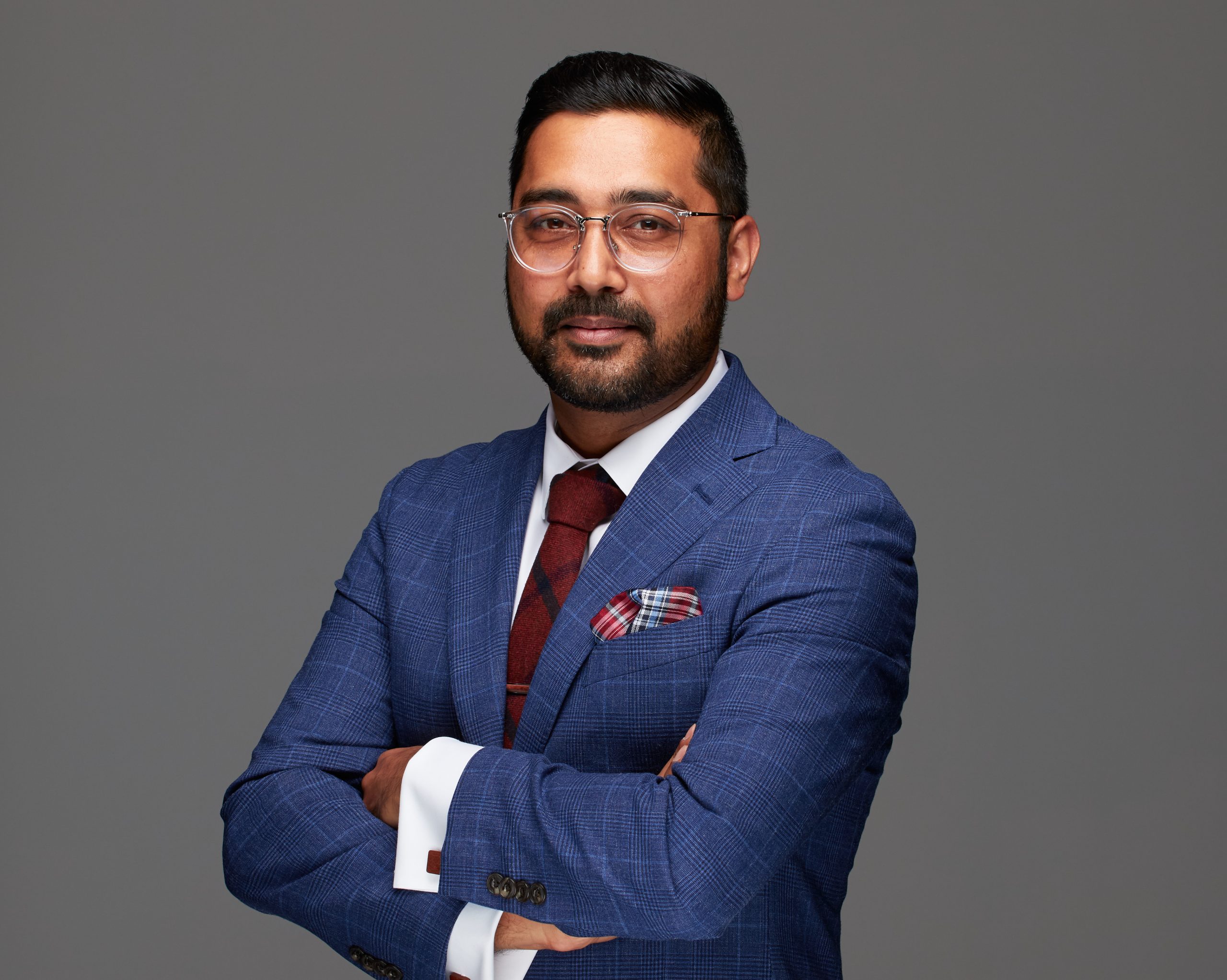
  • “I would rather believe that we can be energized by our daily routine, by the challenge of difficult cases, or by victories of small wins or overturning of a case on appeal”- Philip Teoh, International Lawyer and Arbitrator

    “I would rather believe that we can be energized by our daily routine, by the challenge of difficult cases, or by victories of small wins or overturning of a case on appeal”- Philip Teoh, International Lawyer and Arbitrator

    This interview has been published by Priyanka Karwa and The SuperLawyer Team

    Can you share your journey and what inspired you to pursue a career in law, specifically specializing in Maritime & Admiralty, International Law, and other related fields?

    When I started my law studies, I was interested in exploring the role of law as a foundation of business dealings, especially international business. 

    I was intrigued to discover the area of shipping was the connecting factor in these areas. Unlike some perceptions, the area of shipping was not small in scope. It encompassed international trade as traders used ships to transport their goods, international finance as banks financed these transactions, and insurers insure these shipments. I later found out there was Wet and Dry Shipping, Corporate or Transactional Shipping and Maritime Arbitration as well.

    That was the launch pad for my interest in shipping. With that interest, I took shipping and shipping-related subjects in law school. I was fortunate to be able to study at the National University of Singapore where I was taught and inspired by great teachers.

    Professor EP Ellinger was a powerhouse in Banking and International Finance, Professor FMB Reynolds who hailed from Oxford taught Agency and Shipping subjects and the most brilliant teacher was the late Professor Tan Yock Lin who taught Conflicts of law, he was a brilliant legal mind who made difficult concepts in Conflicts easily understandable. I did well in school and constantly called upon what I studied in my cases. I do encourage law students to concentrate well on their studies because these are invaluable foundations for practice.

    With over 33 years of experience, you have vast expertise in both contentious and non-contentious areas of law. How did you navigate and develop such a diverse skill set throughout your legal career?

    I saw law as a technical field, that cases and principles are building blocks to craft agreements, transactions and eventually. In litigation, I soon discovered that strategy and effective advocacy win cases, the more cases we handle we develop muscle memories which we can call upon in advocacy.

    Soon I was able to see that each witness can present a treasure trove of evidence to cross-examine. I also learnt to adapt; as much as we can prepare for a case, the circumstances of a trial or a judge’s questions and directions may force us to abandon our prepared script to adopt a better and different strategy.

    I started in litigation. After a few years into practice, I wanted to have both a transactional as well as a disputes practice and I am happy to say I handle both contentious and non-contentious areas.

    Some of the notable transactional work in which I was involved was various ship sale and purchase as well as ship financing cases. When MISC the Malaysian Carrier wanted to go into the energy business, it bought Newbuildings from Japanese Yards, these were the Puteri Vessels that kickstarted the business and MISC is not a major LNG carrier. I was the Syndicated Lenders’ local lawyer.

    I was also involved in several due diligence of Shipping Companies, Joint Ventures and reorganization of the Shipping Companies Malaysian assets and companies. When the Genting Group sold its luxury yacht Tranquility to a US buyer I acted for the buyer.

    Being recognized by Chambers and Legal 500, among others, for your expertise in Maritime Law, what do you believe sets you apart in this field, and how do you approach resolving matters to the satisfaction of your clients?

    In legal practice, it is not an effort if we enjoy our work and I do. Every case presents a challenge and a new learning opportunity. I do not believe that I possess any qualities different from other lawyers, apart from that I enjoy what I do.

    Some talk of finding one’s purpose in what we do, I don’t agree. I think purpose can change. I would rather believe that we can be energized by our daily routine, by the challenge of difficult cases, or by victories of small wins or overturning of a case on appeal. We need these to sustain us because law is a very involved and demanding profession.

    In addition to your legal practice, you’re also a Practising Arbitrator empanelled with various international panels. How does your role as an arbitrator complement your work as a lawyer, and what unique perspectives do you bring to dispute resolution?

    Arbitration and litigation are contentious legal practices. The skills of a litigator are important skills for arbitration too, whether one sits as an Arbitrator or as Counsel in Arbitration.

    You’ve been involved in notable cases, including arguing the inaugural reported decision of the Malaysian Admiralty Court. Could you share insights into the challenges and rewards of handling such significant cases in the maritime industry?

    Difficult cases challenge me. That forces me to figure out how to best strategize the handling of the case, the conduct of the litigation. There will always be an approach we can adopt which can make complex cases managable or make them simple. We need to develop muscle memory for this. Along the way the bonus is when the cases we argue establish law, a principle not established before. I have had a few of these.

    Your extensive contribution to legal literature, including authoring key practitioner texts, speaks to your commitment to legal scholarship. How has academic writing and research influenced your understanding of the law and your approach to legal practice?

    Some 2 decades ago I found a dearth of Shipping Texts in Malaysia. I convinced LexisNexis (then Malayan Law Journal) to introduce these in Malaysia and eventually, I wrote the original editions of Halsbury’s Malaysian titles in Shipping and related subjects. I was particularly happy to write the Volume on Conflict of Laws; Conflict of Laws issues often crop up in Shipping and International Arbitration.

    I also authored the Annotated Merchant Shipping Laws, Forms and Precedents on Shipping which contain transactional agreements. I was later invited by Sweet and Maxwell to write the Chapter on Carriage of Goods by Sea which contains precedent pleadings used in litigation and arbitration.

    The writing ensures that I have a good grasp of the law, and this is invaluable when I handle cases. Funnily I have faced opponents in Court citing my writing unknowingly.

    Having practiced in both Singapore and Malaysia, what are the unique challenges and opportunities you’ve encountered in each jurisdiction, especially in the context of maritime law?

    I started my practice in Singapore before returning to Malaysia. I was very happy when Malaysia established the Admiralty Court in 2010 and I was able to argue the inaugural reported case of the Court in the case of The Istana VI. Since then, I regularly handle cases in the Court amongst others prosecuting ship arrests or challenging them. 

    The laws applied by the Singapore Courts are not much different and I believe that both the Singapore and Malaysian Shipping Bar have good lawyers. The Singapore ecosystem however is more varied with a healthy variety of international firms including many specializing in maritime law.

    As an Adjunct Lecturer in BAC Malaysia’s law school, what advice do you give to law students looking to specialize in maritime law or pursue a career similar to yours?

    Be interested in what is taught. Not many universities have maritime law as a subject at the LLB level. Curiosity, Initiative and Hard Work are most important.

    It is good to have a specialization in mind, but maritime law can be acquired after graduation. It is important that the young lawyer enters a firm that handles the area. The on-the-job training is much more important.

    I have trained many young lawyers in this field, and they picked up the areas well. Tan Sri Nallini Malaysia’s first Admiralty Judge never did Shipping cases when she was a practitioner and Her Ladyship had done much to establish jurisprudence in the area. She is easily amongst Malaysia’s top judges.

    In your experience, how important is it for legal professionals to stay updated on evolving legal landscapes, especially in areas like maritime law, and what strategies do you employ to stay abreast of industry developments?

    Keeping up to date is crucial. I find that LinkedIn is a great tool to do that because the lawyers do post and share useful content. I do post from time to time too. Reading outside of the law widely is also important. 

    Lastly, considering your wealth of experience, what advice would you like to share with recent law graduates who are entering the field today, particularly those interested in maritime and admiralty law?

    Be curious about learning. Read widely. Seize opportunities when they appear, do not neglect the training experience, it is an invaluable time, not to be squandered. Get onto complex cases early even if the role is a minor one. Your friends and family will be your invaluable support through challenging times.

    Get in touch with Philip Teoh-

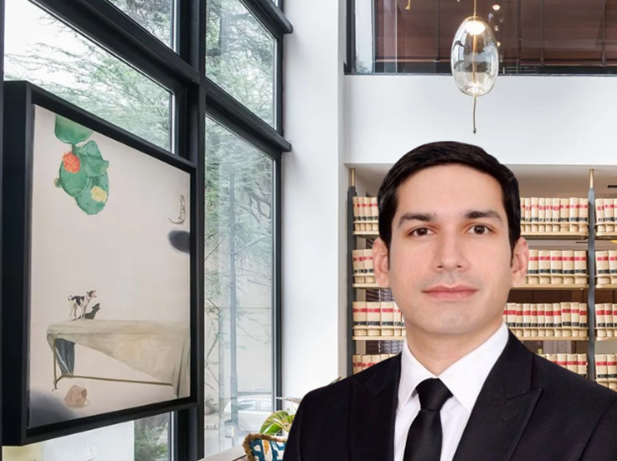
  • “Embrace challenges as opportunities for growth, fail fast, and learn from these failures, prioritize ethical practices, and strive for innovative problem-solving to thrive in the evolving legal landscape” – A Conversation with Harshit Ratan, Senior Corporate Counsel, Amazon.

    “Embrace challenges as opportunities for growth, fail fast, and learn from these failures, prioritize ethical practices, and strive for innovative problem-solving to thrive in the evolving legal landscape” – A Conversation with Harshit Ratan, Senior Corporate Counsel, Amazon.

    This interview has been published by Priyanka Karwa and The SuperLawyer Team

    Your journey from Kingfisher Airlines to Amazon is quite diverse. How did your early experiences in aircraft leasing shape your legal career, and what motivated you to transition into the e-commerce landscape?    

    My tenure at Kingfisher Airlines provided a strong foundation in navigating complex contractual arrangements, particularly in the aircraft leasing domain. This experience honed my skills in negotiation, risk assessment, understanding compliance in multiple jurisdictions and introduced me to work in regulated space. The dynamic nature of aviation taught me to adapt swiftly to evolving regulations, contractual intricacies (an eye for detail- what we say crossing your t’s and dotting your I’s) and apply them when such contracts are disputed in litigations. In these formative years, I was blessed to be trained by Clyde & Co. one of the top law firms in aviation finance. Kingfisher, also helped me understand importance of contractual clauses and how different jurisdictions can interpret them differently.  Transitioning to e-commerce was driven by a desire to explore new challenges and contribute legal expertise to a rapidly growing sector, which operated more in the grey due to lack of specific regulations. The burgeoning potential of the digital marketplace, prospect to innovate and contribute to its legal landscape motivated my transition.

    Having worked across various industries, from aviation to FMCG and now e-commerce, how do you adapt your legal strategies to fit the unique challenges each industry presents?

    Working across diverse industries taught me the importance of adapting legal strategies to fit unique challenges. In aviation, process for contract execution and adherence to regulatory compliance were paramount. Moving to FMCG demanded a focus on consumer laws, manufacturing, labor laws and supply chain intricacies. Now, in e-commerce, the emphasis shifts to innovate business structures in absence of specific laws, having high judgement skills and ability to assess risks. Flexibility, understanding industry nuances, and aligning legal strategies with business objectives are crucial elements in navigating these distinct landscapes. Over and above, I believe working in any industry to be an able legal counsel, innate understanding of the business/industry is crucial, each industry is unique in its own way and to understand critical parts of business where we can partner as a counsel is the expectation.  

    You’ve been recognized with awards such as the “Cowboy Award” at Amazon and “Best Employee of the Year” at Kingfisher Airlines. Can you share a memorable moment or achievement that stands out in your career and made you particularly proud?

    Winning the “Cowboy Award” at Amazon was truly a standout moment. It recognized my collaborative effort in successfully restructuring the business within challenging timelines. Working cross-functionally and limiting the impact on an ongoing business was complex.  Similarly, being awarded “Best Employee of the Year” at Kingfisher Airlines for spearheading a debt restructuring initiative was a proud moment. While we do so many important issues in our day to day engagements, but some standout given there shear impact on business continuity. These accolades reinforce the value of teamwork, resilience, and innovative problem-solving.

    From your early years negotiating complex agreements in aviation to your current role at Amazon, what have been the most significant lessons you’ve learned, and how have these lessons shaped your approach to legal counsel?

    The journey from being an aviation finance lawyer to my current role taught me the significance of meticulousness, adaptability, and foresight. Understanding the bigger picture while focusing on intricate details, anticipating regulatory changes, and fostering proactive legal strategies have become key elements in my approach as a legal counsel. I am a great believer in hard work and learning from mistakes – in my view to innovate it’s essential for you to fail fast and move quickly. Especially at Amazon, I have an equal seat at the table, the culture fosters independent thinking, and the ability to go beyond legal realms and be able to drive decisions and execute these in real world. Factors that help me shape myself are understanding the business and its needs, having a pragmatic approach and solution orientation.

    Given your experience in international negotiations and dealings with companies like Honeywell, how do you approach building and maintaining effective relationships with stakeholders, both within and outside the organization?

    Building effective relationships in international dealings involves understanding diverse cultural nuances and aligning legal strategies with mutual interests. Communication, transparency, and a collaborative approach are vital. Being proactive in addressing concerns and maintaining open channels of communication has been instrumental in fostering lasting relationships. Additionally, what I have realized is that you keep meeting folks you would have dealt in the past, so keep your relationships flourishing and even in most difficult situations treat people respectfully.

    As a Senior Corporate Counsel, you’ve been instrumental in setting up legal, secretarial, and product compliance teams. What challenges did you face in building these teams, and how did you foster a culture of innovation and efficiency within them?

    Each function requires a unique skill set, it is critical to understand the deliverables for each role and look for subject matter (SME) experts. Once you have the SME, it’s essential to help them scale up, making them aware of organizational nuances and let them flourish, help them build their respective teams and reducing your oversight to ensure their independence. Establishing legal, secretarial, and compliance teams presented challenges in resource allocation, skill development, and instilling a culture of innovation. Encouraging open communication, investing in professional growth, and fostering a culture of collaboration and creativity were vital in building efficient and innovative teams.

    Your success story highlights your ability to provide pragmatic legal advice for scaling up businesses. Can you share a specific instance where your legal insights played a crucial role in a significant business decision or strategy?

    Given we are bound by confidentiality; it may not be possible to provide a specific example. However, I can talk about implementing a business structure that operates pursuant to a regulatory approval and in this case a plain reading of the approval may have not have permitted us to even have a sustainable business model, I had the opportunity to interpret it ensure compliance and find the right balance for the business to operate. The one practice I find helpful in providing pragmatic advise is risk assessment frameworks – One way Door Vs Two Way Door i.e. reversible vs Irreversible decision making, risk heat matrix – judgment calls with an understanding what was legislative intent to have law/ regulation in place. On multiple occasions, my legal insights identified potential risks in a proposed partnership. Addressing these concerns strategically enabled us to reframe the deal terms, mitigating risks, and ensuring a mutually beneficial collaboration. This underscored the critical role of legal counsel in shaping pivotal business decisions.

    Apart from your legal expertise, how do you find a balance between the demanding legal world and personal life, and do you have any hobbies or activities that help you unwind?

    Achieving a balance between the demanding legal sphere and personal life involves prioritization & time management. I love to Ride and Drive, have driven cross country, I also enjoy going for long walks and playing table tennis occasionally, every year I make a list of books to read (albeit haven’t been able to accomplish this feat for the last two years), and spend quality time with family. These rejuvenate me and help maintain a healthy work-life balance.

    As a seasoned legal professional, what advice would you give to the upcoming generation of legal minds entering the workforce, particularly in navigating the complexities of the legal and business landscape? 

    To the upcoming generation of legal professionals, I emphasize the importance of continuous learning, adaptability, and developing a holistic understanding of the interplay between law and business. Embrace challenges as opportunities for growth, fail fast and learn from these failures, prioritize ethical practices, and strive for innovative problem-solving to thrive in the evolving legal landscape.

    Get in touch with Harshit Ratan-

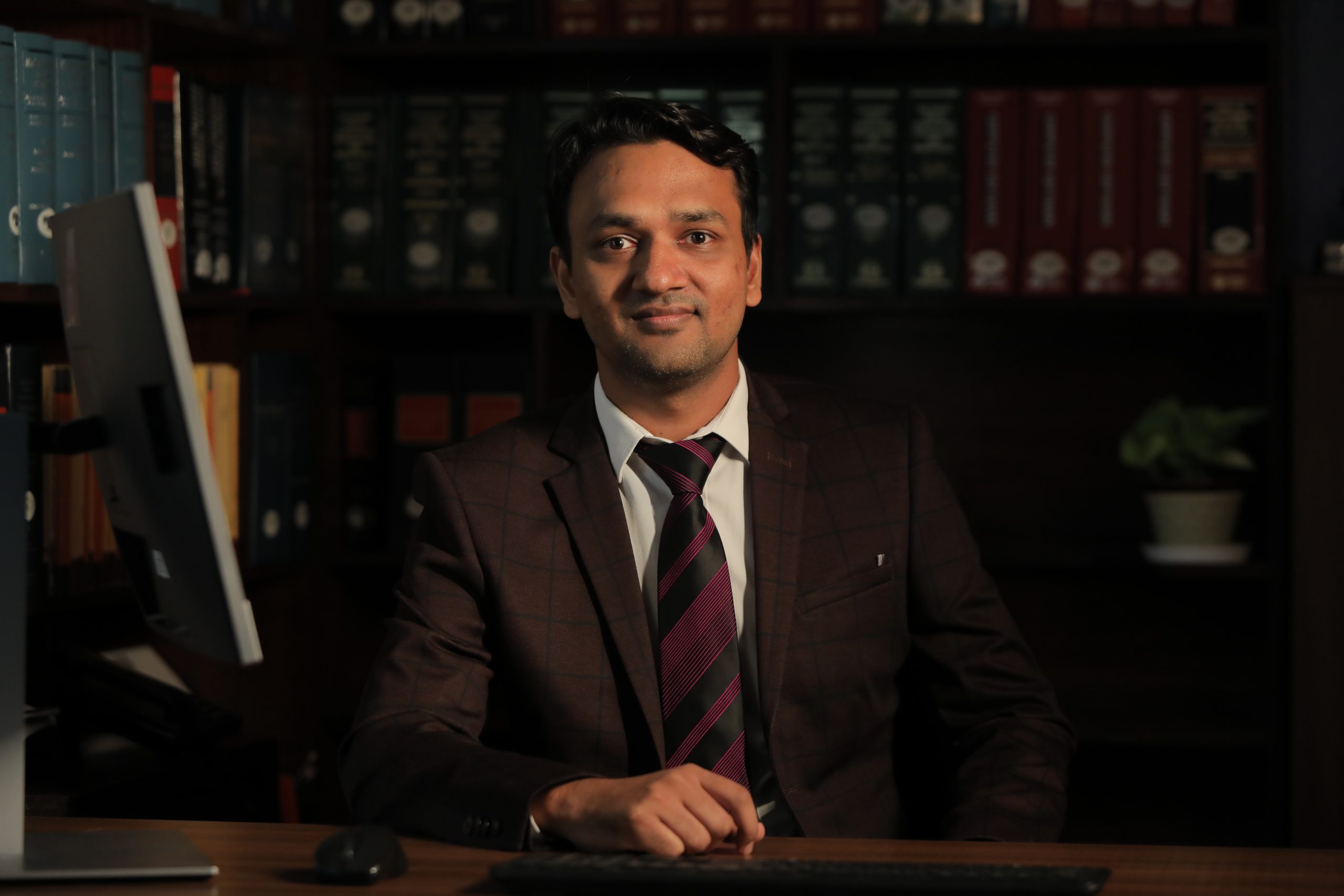
  • Dr. Shrikant Hathi delves into the unique perspectives gained through his dual qualification as an Advocate in India and a practicing solicitor in England and Wales – Dr. Shrikant Hathi’s as Managing & Practicing Partner at Brus Chambers

    Dr. Shrikant Hathi delves into the unique perspectives gained through his dual qualification as an Advocate in India and a practicing solicitor in England and Wales – Dr. Shrikant Hathi’s as Managing & Practicing Partner at Brus Chambers

    This interview has been published by Namrata Singh and The SuperLawyer Team
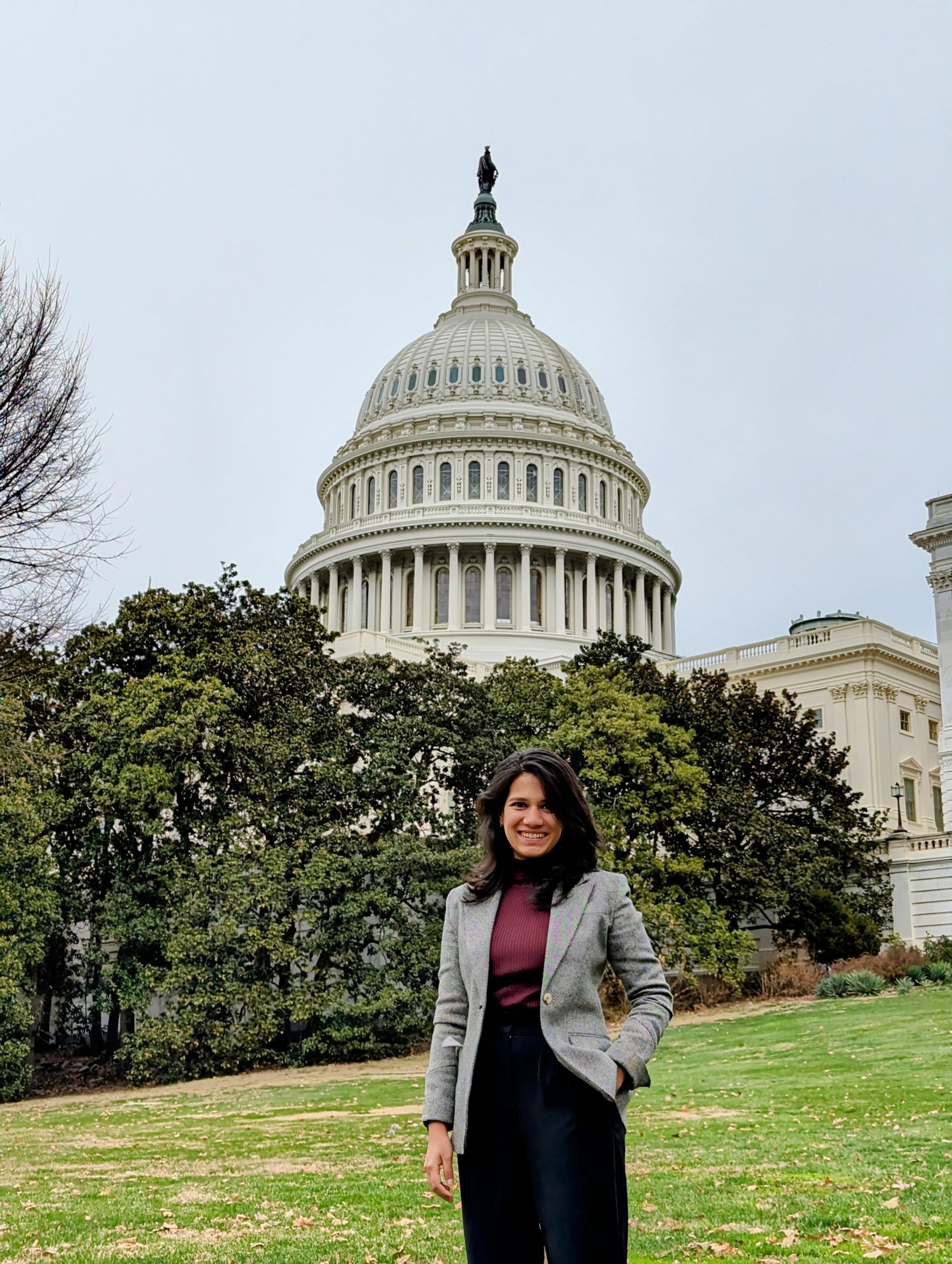
    Dr. Shrikant Hathi, it’s an honor to have you for this interview. Could you share some insights into your remarkable journey from being admitted to the Bar Council of Maharashtra & Goa to your current role as the Managing and Practicing Partner at Brus Chambers, Advocates & Solicitors, and the recognition you’ve received from prestigious legal entities?

    Certainly, it’s my pleasure to share insights into my legal journey. My legal odyssey began with my admission to the Bar Council of Maharashtra & Goa as an Advocate in India then completing my master’s in law and my doctorate. This was followed by acquiring the qualification of Solicitor from India through the Bombay Incorporated Law Society. Subsequently, I expanded my horizons by successfully completing the solicitor’s examination through the Oxford Institute of Legal Practice (OXILP) (Oxford University and Oxford Brookes University), enabling me to be enrolled with the Solicitors Regulation Authority (SRA), United Kingdom, as a practicing solicitor. This dual qualification, coupled with my admission as an Advocate on Record with the Supreme Court of India, has provided me with a unique perspective on legal matters across India and the United Kingdom.  Mr. Charles J E Grundy played a pivotal role in shaping my career as a shipping professional. As the Managing Partner at Little & Co, Solicitors, he served as my mentor, imparting invaluable knowledge and expertise. I owe a significant part of my understanding of shipping to his guidance and leadership during that time.

    My journey to becoming the Managing and Practicing Partner at Brus Chambers, Advocates & Solicitors, has been shaped by a blend of unwavering dedication, continuous learning, and a passion for legal excellence. Over the years, I have honed my expertise in shipping, projects, and dispute resolution, particularly in ship arrest matters. This expertise has been recognized by esteemed legal entities, including Legal 500, which has consistently ranked me as a Leading Individual for shipping work in India since 2005. I am also part of the Legal 500 Hall of Fame for my contributions to shipping law

    Throughout my career, I have strived to provide exceptional legal counsel to my clients, consistently exceeding their expectations. My commitment to integrity, professionalism, and client-centricity has been instrumental in building my reputation as a respected legal practitioner.

    Here are some key highlights of my journey:

    Admitted to the Bar Council of Maharashtra & Goa as an Advocate in India

    Acquired the qualification of Solicitor from India through the Bombay Incorporated Law Society

    Successfully completed the solicitor’s examination through the Oxford Institute of Legal Practice (OXILP) (Oxford University and Oxford Brookes University)

    Enrolled with the Solicitors Regulation Authority (SRA), United Kingdom, as a practising solicitor

    Admitted as an Advocate on Record with the Supreme Court of India

    Managing and Practicing Partner at Brus Chambers, Advocates & Solicitors

    Consistently ranked as a Leading Individual for shipping work in India by Legal 500 since 2005

    Inducted into the Legal 500 Hall of Fame for contributions to shipping law

    I am grateful for the opportunities and recognition I have received throughout my career. My journey continues, and I remain committed to providing the highest quality legal services to my clients while also contributing to the advancement of the legal profession.

    Your expertise spans shipping, commercial arbitration, infrastructure projects, and more. How has your dual qualification and experience as an Advocate in India and a practising solicitor in England and Wales shaped your approach to handling diverse legal matters?

    My dual qualification and experience as an Advocate and solicitor in India and a practising solicitor in England and Wales have been instrumental in shaping my approach to handling diverse legal matters. This unique blend of legal expertise has provided me with a comprehensive understanding of both Indian and English legal systems, enabling me to navigate the complexities of cross-border transactions and disputes effectively.

    Broader Legal Perspective:

    Dual qualification has equipped me with a broader legal perspective, allowing me to identify potential legal issues early on and advise clients on the most strategic approach to minimize risks and maximize their interests. This in-depth understanding of both Indian and English legal systems allows me to provide seamless legal advice to clients operating in a globalized marketplace.

    In-depth Knowledge of Multiple Legal Areas:

    My expertise in shipping, commercial arbitration, and infrastructure projects stems from my diverse legal practice in both India and England. This specialized legal knowledge enables me to provide tailored advice to clients operating in these sectors, ensuring that their specific legal needs are met effectively.

    Cultural Sensitivity and Global Understanding:

    Dual qualification and experience have instilled in me a deep appreciation for cultural sensitivities and global perspectives. This understanding is crucial when handling cross-border legal matters, as it allows me to build trust with clients from different backgrounds and communicate effectively with international legal teams.

    Ability to Adapt to Different Legal Systems:

    My experience in both Indian and English legal systems has honed my ability to adapt to different legal frameworks and procedures. This adaptability is essential for handling cross-border transactions and disputes, where legal requirements and practices can vary significantly.

    Network of Contacts and Relationships:

    Dual qualification has enabled me to build a strong network of contacts and relationships with lawyers, arbitrators, and industry experts in both India and England. This network provides me with valuable insights into the legal landscape and facilitates collaboration on cross-border matters.

    In essence, my dual qualifications and experience have provided me with a unique toolkit to handle diverse legal matters effectively. I am able to navigate complex legal landscapes, provide specialized advice, and build strong relationships with clients and legal professionals across borders. This combination of expertise and global perspective allows me to deliver exceptional legal services to clients operating in an interconnected world.

    Your career spans across India and the United Kingdom, with impressive credentials in both jurisdictions. How do you balance the legal landscapes of these two countries, and what unique perspectives do you bring to your role as Managing & Practicing Partner at Brus Chambers?

    Balancing the legal landscapes of India and the UK:

    Having practiced law in both India and the UK has enriched my professional journey and equipped me with a unique perspective. Balancing the legal landscapes of these two diverse countries requires an adaptable and nuanced approach. Here’s how I navigate this:

    1. Maintaining a deep understanding of both legal systems:

    I continuously update my knowledge of legal developments in both jurisdictions through ongoing research, engagement with legal professionals, and participation in relevant conferences and seminars.

    I actively cultivate relationships with legal experts in both countries to access local insights and ensure my advice is tailored to the specific legal landscape.

    2. Identifying common grounds and leveraging comparative law:

    While the legal systems of India and the UK differ significantly, there are often common threads and underlying principles. I strive to identify these commonalities to devise legal strategies applicable across both jurisdictions.

    My familiarity with both legal systems allows me to leverage comparative law, drawing on relevant precedents and legal principles from one jurisdiction to inform my approach in the other.

    3. Building cross-cultural understanding and communication:

    Effective legal representation necessitates understanding not only the legal system but also the cultural nuances of each country. I actively engage with both Indian and UK legal communities to stay attuned to cultural differences and ensure culturally sensitive communication with clients and colleagues.

    My ability to navigate both cultures facilitates seamless collaboration with teams and clients across both jurisdictions, fostering trust and effective communication.

    Unique perspectives brought to Brus Chambers:

    This combined legal expertise allows me to offer clients a unique set of advantages:

    1. Strategic guidance across jurisdictions:

    I can advise clients on legal matters spanning multiple countries, providing a holistic and integrated perspective.

    I can identify potential legal challenges and opportunities across different legal systems, enabling proactive risk management and strategic decision-making.

    2. Cross-cultural expertise:

    My understanding of both Indian and UK cultures allows me to build strong relationships with clients and stakeholders from diverse backgrounds.

    I can effectively navigate cultural differences in communication and collaboration, ensuring a smooth and successful legal process.

    3. Global legal network:

    My experience and connections in both countries have allowed me to develop a strong network of legal professionals across the globe.

    This network enables me to access resources, expertise, and support beyond the boundaries of India and the UK, further enhancing the value I can provide to clients.

    In summary, my experience in both India and the UK has equipped me with a unique blend of legal expertise and cultural understanding. This allows me to navigate the complexities of international legal matters and provide clients with strategic guidance, effective representation, and a global perspective, all hallmarks of my role as Managing & Practicing Partner at Brus Chambers.

    You are a co-author of the book ‘Ship Arrest in India and Admiralty Laws of India.’ What motivated you to contribute to the literature, and how do you believe such resources benefit both legal professionals and the broader community?

    My motivation stemmed from two key factors:

    1. Filling a critical knowledge gap: Admiralty law, particularly as it applies to ship arrests in India, is a complex and evolving field. Existing resources were limited and often scattered, making it difficult for legal professionals and academics to access comprehensive and up-to-date information. I saw a need for a comprehensive and authoritative work that would distil the complexities of the law and provide clear guidance on the practical aspects of ship arrest procedures.

    2. Promoting informed practice: The consequences of ship arrests can be significant, impacting both maritime businesses and the broader economy. By contributing to this book, I aimed to empower legal professionals with the knowledge and tools they need to handle ship arrest cases effectively and responsibly. This, in turn, would contribute to a more efficient and predictable legal framework for the maritime industry.

    How do you believe resources like “Ship Arrest in India and Admiralty Laws of India” benefit both legal professionals and the broader community?

    I believe this book offers several key benefits for both legal professionals and the broader community:

    For legal professionals:

    Comprehensive and authoritative reference: The book provides a detailed analysis of the relevant legal framework, including the Admiralty (Jurisdiction and Settlement of Maritime Claims) Act, 2017 and applicable international conventions.

    Practical guidance: The book offers practical guidance on various aspects of ship arrest procedures, including drafting applications, handling objections, and navigating court processes.

    Case studies and precedents: The book includes real-world case studies and precedents, providing valuable insights into how the law is applied in practice.

    For the broader community:

    Improved understanding of maritime law: The book helps to demystify the complex legal framework surrounding ship arrests, increasing transparency and accountability within the maritime sector.

    Enhanced predictability and efficiency: By providing clear guidance on legal procedures, the book can contribute to a more predictable and efficient legal environment for maritime businesses, facilitating smoother operations and reducing costs

    Promoting fairness and justice: By ensuring that legal procedures are followed correctly, the book helps to uphold fairness and justice within the maritime industry, protecting the rights of all stakeholders.

    Overall, I believe that “Ship Arrest in India and Admiralty Laws of India” is a valuable resource that can play a significant role in strengthening the legal framework for the maritime industry in India and beyond. I am proud to have contributed to this important work and hope that it will continue to benefit legal professionals and the broader community for years to come.

    My book Shop Arrest in India is available on the internet you can download the book at free of cost. Very soon my book will be integrated with artificial intelligence and will continue to remain free for all.

    Your career includes significant recognition, such as being listed in the Legal 500 “Hall of Fame” and as a “Leading Individual” since 2004. How do you handle the pressure and expectations that come with such acclaim, and what motivates you to maintain this level of excellence?

    While I am deeply honored to be recognized in the Legal 500 “Hall of Fame” and as a “Leading Individual” since 2004, I don’t see these accolades as pressure or expectations, but rather as affirmations of the dedication and commitment I bring to my work. Instead of feeling burdened, I find these recognitions to be motivational forces, driving me to continuously strive for excellence and exceed my own expectations.

    Here are some key strategies I employ to handle pressure and stay motivated:

    1. Refocusing on My Core Values:

    I ground myself in my core values of integrity, excellence, and client service. These values guide my decisions and actions, and remind me of the purpose and passion that drive my work. By staying true to these values, I feel confident and motivated, even under pressure.

    2. Embracing Continuous Learning:

    I believe that there is always room for growth and improvement. I actively seek out opportunities to learn new things, expand my knowledge base, and refine my skills. This ongoing learning process keeps me engaged, motivated, and confident in my ability to tackle new challenges.

    3. Setting Realistic Goals:

    I set specific, measurable, achievable, relevant, and time-bound (SMART) goals for myself. These goals are ambitious but attainable, and they provide me with a clear direction and sense of purpose. Achieving these goals fuels my motivation and reinforces my belief in my abilities.

    4. Maintaining a Positive Mindset:

    I cultivate a positive and optimistic outlook. I focus on the progress I’ve made and the opportunities that lie ahead. This positive mindset helps me bounce back from setbacks and stay motivated in the face of challenges.

    5. Prioritizing Well-being:

    I recognize the importance of maintaining a healthy work-life balance. I make time for activities that I enjoy, such as spending time with family and friends, exercising, and pursuing hobbies. This allows me to recharge and return to my work feeling refreshed and motivated.

    6. Utilizing a Supportive Network:

    I surround myself with positive and supportive individuals, including mentors, colleagues, and family members. These individuals provide me with invaluable feedback, encouragement, and support, which helps me stay motivated and on track.

    Finally, my greatest motivation comes from the satisfaction of helping my clients achieve their goals. Knowing that I have made a positive impact on their lives is truly rewarding and fuels my passion to continue exceeding expectations

    In conclusion, I don’t view recognition as pressure, but rather as motivation to keep pushing myself and reach even greater heights. By embracing continuous learning, setting SMART goals, maintaining a positive mindset, prioritizing well-being, and relying on a supportive network, I am able to sustain a high level of performance and continue to deliver exceptional results for my clients.

    You’ve been involved in various professional associations and committees. How does your role as the President of Shippinglawyers.NET contribute to your broader vision for the maritime legal community, and what initiatives are you passionate about in this regard?

    I’m passionate about the maritime legal community and firmly believe in the power of collaboration and collective action to advance the field. My involvement in various professional associations and committees, culminating in my current role as President of Shippinglawyers.NET, allows me to contribute to this vision in several ways:

    1. Fostering a Global Network: Shippinglawyers.NET is a unique platform that connects maritime legal professionals worldwide. As President, I strive to strengthen this network by:

    Organizing virtual and in-person conferences and events that facilitate knowledge exchange and collaboration across diverse legal systems and jurisdictions.

    Developing online resources and tools that support the professional development of maritime lawyers, particularly young practitioners.

    Promoting best practices and ethical standards within the industry.

    2. Advocating for Industry Interests: Shippinglawyers.NET plays a vital role in advocating for the interests of the maritime legal community. We actively engage with international regulatory bodies and government agencies to:

    Promote sound maritime legislation and policies that balance economic interests with environmental protection and safety at sea.

    Defend the rights and interests of maritime stakeholders in legal disputes and policy discussions.

    Contribute to the development of a more efficient and sustainable maritime industry.

    3. Shaping the Future of the Profession: The maritime legal landscape is constantly evolving due to technological advancements and emerging challenges. As President of Shippinglawyers.NET, I am committed to:

    Preparing the next generation of maritime lawyers for the challenges and opportunities of the future.

    Promoting innovation and technology adoption within the legal profession.

    Ensuring that the maritime legal community remains agile and adaptable in the face of change.

    Initiatives I’m Passionate About:

    Several initiatives are particularly close to my heart:

    Bridging the knowledge gap between developed and developing nations: I believe it’s crucial to ensure that maritime lawyers worldwide have access to the latest knowledge and resources, regardless of their location.

    Promoting diversity and inclusion in the maritime legal profession: A diverse legal community is essential for fostering creativity, innovation, and effective solutions.

    Advocating for sustainable practices in the maritime industry: We must ensure that the maritime industry operates in an environmentally responsible manner.

    By focusing on these initiatives and leveraging the power of the Shippinglawyers.NET network, I believe we can build a stronger, more vibrant, and future-proof maritime legal community that serves the needs of the industry for generations to come.

    Brus Chambers has been consistently recognized as a top-tier law firm for shipping work in India What, in your opinion, sets the firm apart, and how do you ensure excellence in delivering legal services to your clients?

    Brus Chambers’ consistent recognition as a top-tier shipping law firm in India is a testament to our unwavering commitment to excellence in legal services. Several key factors underpin our success:

    Specialization and Depth of Expertise:

    Dedicated Shipping Practice: Unlike many firms with a general practice, Brus Chambers boasts a dedicated team with extensive experience and expertise in the entire spectrum of dry and wet shipping law. This specialization allows us to provide clients with in-depth knowledge and nuanced understanding of the complexities involved in maritime legal matters.

    Recognized Leaders: Our team includes Dr. Shrikant Pareshnath Hathi, consistently listed as a “Leading Individual” for shipping work in India by Legal 500 since 2004 since few years am also listed in the Hall of Fame by Legal 500. This recognition reflects the exceptional skills and expertise of our individuals, which translates to superior client service Our firms other partners are also listed as Leading Individual; Rising Star ; Next Generation partner and are in the spotlight for shipping work in India. In this regard I would like a special mention of my wife and partner Ms. Binita Hathi who works alongside with me in shipping matters.

    Client-Centric Approach:

    Tailored Solutions: We build strong relationships with our clients, taking the time to understand their specific needs and objectives. This allows us to tailor our solutions to their individual circumstances, delivering practical and commercially-driven advice.

    Proactive Communication: We believe in clear and proactive communication throughout the process. We keep our clients informed of developments and potential challenges, ensuring they are actively involved in all decision-making.

    International Perspective: Recognizing the global nature of shipping, we offer an international perspective, drawing on our network of associates and partners worldwide to provide clients with comprehensive legal support across jurisdictions.

    Unmatched Track Record:

    Proven Success: Our impressive track record in handling complex shipping disputes and transactions speaks for itself. We have successfully represented a diverse range of clients, including shipowners, charterers, cargo interests, and financial institutions.

    Top-Tier Recognition: We are consistently recognized by leading legal directories such as Legal 500; Who’s Who Worldlawyers and Chambers & Partners as a top-tier shipping law firm in India. This independent recognition confirms our expertise and high-quality legal services.

    Commitment to Excellence:

    Continuous Learning: We are dedicated to providing our team with ongoing training and development opportunities to ensure they remain at the forefront of legal knowledge and best practices in the shipping industry.

    Investment in Technology: We leverage technology to optimize our processes and improve efficiency, ultimately leading to a better experience for our clients.

    Quality Assurance: We have a rigorous quality control system in place to ensure the accuracy and consistency of our work.

    By combining specialization, a client-centric approach, a proven track record, and a commitment to excellence, Brus Chambers has established itself as a leading force in Indian shipping law. We are dedicated to exceeding client expectations and delivering exceptional legal services that contribute to their success.

    With a busy and challenging legal career, how do you unwind and find balance? Can you share a bit about your personal hobbies or interests that provide a break from the legal intricacies?

    While the legal world can be demanding and complex, maintaining a healthy balance is crucial for well-being and long-term success. In my personal journey, I prioritize several strategies to unwind and find balance:

    1. Prioritizing Time for Disconnection:

    Setting boundaries: I practice strict boundaries between work and personal time, ensuring I disconnect from emails and calls outside of designated work hours.

    Digital detox: Regular digital detoxes, where I completely switch off from technology, allow me to reconnect with myself and my surroundings.

    2. Embracing the Power of Movement:

    Regular exercise: Physical activities like running or cycling help me release stress, improve focus, and boost energy levels.

    Yoga and meditation: Incorporating yoga and meditation into my routine provides a powerful tool for inner peace and stress reduction.

    3 Cultivating Creativity and Connection:

    Exploring artistic pursuits: I find immense joy in engaging in creative hobbies like painting, writing, or playing music. These activities allow me to express myself and unwind from the analytical demands of law.

    Nurturing relationships: Spending quality time with loved ones, friends, and family provides a sense of belonging and support, fostering a healthy work-life balance.

    4. Engaging in Activities that Spark Joy:

    Learning new skills: Continuously expanding my knowledge base through learning new skills, whether it be a foreign language, or photography, brings me immense joy and keeps my mind active.

    Exploring the outdoors: Immersing myself in nature through hiking, camping, or simply enjoying a quiet walk in the park allows me to reconnect with the world around me and find peace.

    5. Embracing Mindfulness:

    Practicing gratitude: Regularly reflecting on and appreciating the positive aspects of my life helps cultivate a sense of contentment and well-being.

    Living in the present moment: Mindfulness practices, like focusing on my breath and being fully present in the moment, help me manage stress and anxiety, allowing me to savor each experience.

    By prioritizing these strategies, I’ve discovered that maintaining balance is not only possible but essential for achieving personal and professional fulfillment. While legal work can be demanding, by nurturing my passions and dedicating time to self-care, I ensure that I show up energized and focused, ready to tackle any challenge legal practice throws my way.

    For junior lawyers aspiring to excel in the legal field, especially in areas like shipping and commercial arbitration, what new skill sets do you believe are crucial for achieving success in today’s legal landscape?

    Emerging Skill Sets for Success in Shipping and Commercial Arbitration

    The legal landscape is continuously evolving, driven by technological advancements and a rapidly changing global economy. For young lawyers aspiring to thrive in fields like shipping and commercial arbitration, mastering traditional legal expertise is no longer sufficient. Success demands a broader skill set that equips them to navigate the complexities of these dynamic fields. Here are some crucial new skill sets that junior lawyers should focus on:

    1. Technological Proficiency:

    Data Analytics: Familiarity with data analysis tools and platforms is crucial for effectively handling the increasing volume and complexity of legal data in shipping and arbitration. This includes extracting insights from contracts, invoices, and other documents to support legal arguments and identify potential risks.

    Legal Technology: Understanding and leveraging legal technology, such as contract management software, artificial intelligence-powered legal research platforms, and e-discovery tools, can significantly enhance efficiency and accuracy in legal work.

    Cybersecurity: As legal proceedings increasingly move online, understanding cybersecurity principles and best practices for protecting sensitive client information is essential.

    Artificial intelligence: Artificial intelligence is the next hop and is growing at a very high speed, this cannot be ignored. AI assist in improving our quality.

    2. Communication and Collaboration Skills:

    Effective Communication: The ability to clearly and concisely communicate legal concepts and strategies to diverse audiences, both verbally and in writing, is paramount for success in arbitration and complex legal matters.

    Cross-cultural Communication: Understanding and navigating cultural differences is crucial for working effectively with clients and colleagues from diverse backgrounds in international shipping and commercial arbitration.

    Collaboration: Building strong relationships and collaborating effectively with colleagues, clients, and experts from other disciplines is vital for achieving successful outcomes in complex legal matters.

    3. Business Acumen:

    Commercial Awareness: Understanding the commercial realities of the shipping industry and the broader business environment is crucial for providing clients with commercially sound legal advice.

    Negotiation and Dispute Resolution: Mastering the art of negotiation and developing strong dispute-resolution skills are essential for resolving complex legal issues efficiently and effectively.

    Project Management: The ability to effectively manage legal projects, meet deadlines, and stay organized is critical for handling complex legal matters with multiple stakeholders.

    4. Adaptability and Continuous Learning:

    Adaptability: The legal landscape is constantly changing, and lawyers must be adaptable and willing to learn new skills and technologies to stay relevant and competitive.

    Critical Thinking and Problem-Solving: Developing strong critical thinking and problem-solving skills is essential for analyzing complex legal issues, identifying potential solutions, and developing effective legal strategies.

    Continuous Learning: Cultivating a commitment to continuous learning and staying abreast of legal developments, industry trends, and emerging technologies is crucial for long-term success in the legal field.

    In addition to these specific skill sets, young lawyers should also cultivate strong ethical values, professional judgment, and a commitment to client service. By developing these diverse skill sets and remaining adaptable and eager to learn, young lawyers can position themselves for success in the ever-evolving legal landscape of shipping and commercial arbitration.

    Get in touch with Dr. Shrikant Hathi-

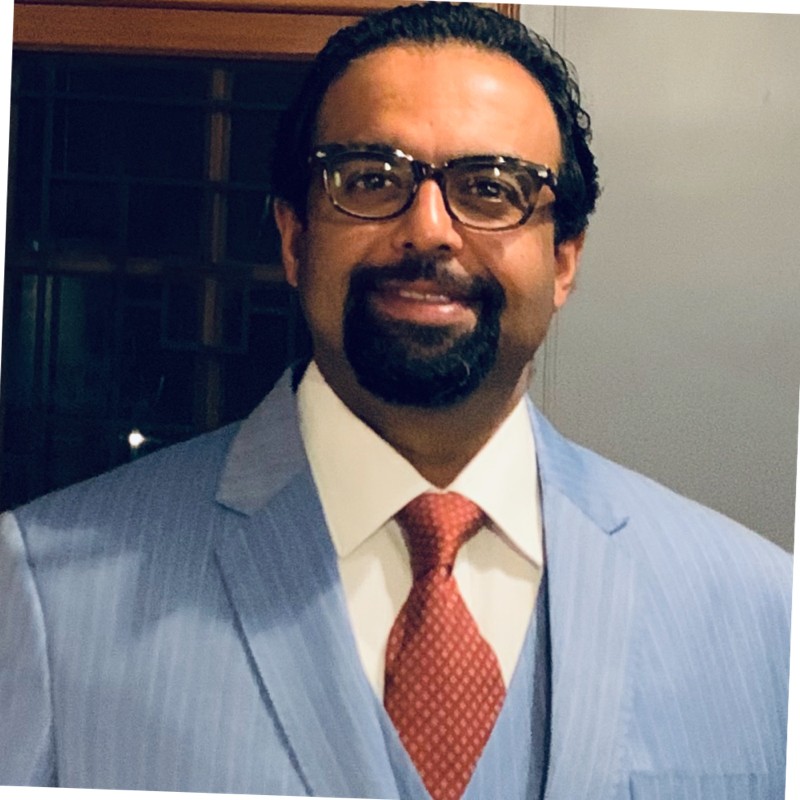
  • “A good lawyer is not one who knows the law, rather one who knows where the law is”- An In-Depth Conversation with Siddharth Batra, Advocate-on-Record, Supreme court of India

    “A good lawyer is not one who knows the law, rather one who knows where the law is”- An In-Depth Conversation with Siddharth Batra, Advocate-on-Record, Supreme court of India

    This interview has been published by Namrata Singh and The SuperLawyer Team

    From your diverse experience in the legal arena to your recent recognition with the ‘BW 40 Under 40’ award, can you share a bit about what motivates you in your legal journey?

    My journey in the legal field has been fueled by a combination of factors. At its core is a deep-seated passion for justice and equality, using the legal platform to advocate for these values in individual cases and broader policy realms. The legal profession’s intellectual demands and ever-changing landscape provide ongoing challenges and learning opportunities, which I find stimulating and rewarding.

    The impact of legal work on society is a significant motivator for me, as I aim for excellence and integrity in all my endeavors, understanding the substantial influence my work can have on people’s lives and societal norms. 

    The recognition and achievements, such as the ‘BW 40 Under 40’ award, validates my efforts and propel me to continue contributing meaningfully to the field. 

    Being part of a community of legal professionals and mentoring emerging talents enhances my journey, helping to shape the next generation of lawyers. This amalgamation of personal passion, intellectual curiosity, societal impact, professional recognition, community engagement, personal growth, and advocacy for change continues to drive my legal journey.

    You’ve had an extensive legal career, from district courts to the Supreme Court. How has your approach to cases evolved over the years, and are there any experiences from your early days that significantly shaped your legal philosophy?

    Reflecting on my extensive legal career, which has spanned from district courts to the Supreme Court, I have noticed significant change in my approach to legal cases. I moved to the Supreme Court in 2014 before which, I was at the Punjab and Haryana High Court at Chandigarh for 10 years. I essentially started my practice in 2004 at the District Courts Rohtak and later moved to Chandigarh when I got the opportunity to become an Assistant Advocate General in 2005. I left the office of the Advocate General in 2008 to start my own private practise and became retainer to the Haryana Urban Development Authority. In 2011, I became Additional Advocate General, Haryana.

    In my early days, my focus was primarily on learning and applying basic legal principles. However, as I delved deeper into the intricacies of law, my understanding and approach became more nuanced, especially when arguing before the Supreme Court.

    One of the most profound changes has been in my analytical skills. Initially, my approach was straightforward, centering on the direct application of the law. But with time and experience, I’ve shifted towards more complex legal reasoning and constitutional interpretation, considering various legal precedents.

    Moreover, my legal philosophy has evolved considerably. Landmark cases and mentorships in my early career significantly shaped my views. 

    I treat every new case with a new perspective and fresh outlook. My first major trial as a young attorney remains an experience that has definitely shaped my legal philosophy. It taught me the importance of thorough preparation and the profound impact of the legal system on an individual’s life. My father’s advice – “a good lawyer is not one who knows the law, rather one who knows where the law is” captures a profound truth about the practice of law. Over time, I realised that what mattered more was developing the skill to research efficiently, understand the context of the laws, and apply them appropriately to different scenarios. It is not just about what you know, but how you use your knowledge to find solutions. 

    You have worked as an Additional Advocate General for the State of Haryana in the past and presently you have an independent counsel practice at the Supreme Court. What do you think is the difference in both the kinds of practice? Would you go back to being a government counsel?

    Transitioning from being an Additional Advocate General (AAG) to an independent counsel practicing at the Supreme Court in India marks a notable shift in roles and responsibilities within the legal profession.

    As an AAG, my primary focus was on representing the State’s interests in various legal matters. It involved offering legal advice to government departments, handling constitutional issues, and representing the state in litigation proceedings. Working closely with government agencies, providing legal opinions, and defending the government’s stance in court were key aspects of this role.

    In contrast, as an independent counsel at the Supreme Court, I’ve had the opportunity to represent private clients or organizations across a wide spectrum of cases. This entails a broader range of legal issues spanning constitutional law, civil matters, criminal cases, and public interest litigations. The autonomy to select cases and clients and the diversity of legal subjects have been enriching aspects of this practice.

    The transition has brought about a shift in focus and clientele. While government counsel primarily revolves around serving the state’s interests, independent practice offers a more varied landscape, allowing me to choose cases aligned with diverse interests and work across multiple areas of law.

    The decision to return to government counsel or continue as an independent practitioner depends on various factors. While government service offers a sense of duty and the opportunity to serve the public, independent practice provides flexibility, a wider scope of cases, and personal career growth. My decision would be guided by a balance between these factors and my aspirations within the legal profession.

    As a legal professional with a commitment to growth and development, how do you balance your role as an Advocate-on-Record with your position as a Visiting Faculty and your involvement in various professional and academic bodies? How do these diverse roles contribute to your overall professional fulfillment?

    Balancing my roles as an Advocate on Record with my position as a Visiting Faculty  and an active membership of various professional and academic bodies is indeed challenging but immensely fulfilling. Each role complements and enriches the other. As an advocate on record, I deal with complex legal issues firsthand, which I then bring into my role as a Visiting Faculty, making my lectures more relevant and dynamic. On the other hand, interacting with students keeps me abreast of fresh perspectives and emerging legal theories, which informs my practice. My involvement with various professional and academic bodies allows me to keep myself updated with the latest legal development and professional standards. My diverse roles provide me with opportunities for networking with legal professionals, academicians and students. At times, these interactions lead to collaborative projects, thereby enriching my professional experience and contributing to my growth. Juggling these roles is not just about career advancement; it’s deeply fulfilling. Teaching allows me to give back to the legal community, shaping future legal minds. My court practice keeps me grounded in the practical realities of law, and my involvement in professional bodies lets me contribute to the legal profession’s evolution.

    Beyond the courtroom, you’ve been recognized as a BW 40 Under 40 Best Lawyer and Legal Influencer. How did it feel to receive such an award, and what does this recognition mean to you personally and professionally?

    I remember quite vividly that I received the email stating that I had won the BW 40 under 40 at 1:30 am at night and I felt extremely elated and joyous. I remember feeling extremely grateful for people who have supported me throughout my career and have pushed me in the right direction. Receiving an award of high stature indeed brings numerous rewards, including recognition and visibility, both personally and professionally. On a personal level, such an honor serves as a validation of my hard work and dedication. It’s a tangible acknowledgment of the countless hours, effort, and perseverance that I have put into my legal career. This recognition goes beyond mere professional achievement; it resonates with my commitment to excellence and the values I uphold in my practice.

    Professionally, an award of this nature symbolizes the high standard I have set as a lawyer. It enhances my credibility and reputation in the legal community, signaling to peers, clients, and the industry at large that my contributions are significant and impactful. This visibility can open doors to new opportunities, collaborations, and professional growth.

    Moreover, such recognition can serve as an inspiration to others in the legal field, especially emerging lawyers who may see in my journey a path to aspire to. It is a reminder that dedication and quality work are noticed and appreciated.

    In essence, while the award is a personal achievement, its implications extend far beyond, enriching my professional journey and potentially influencing the broader legal community.

    Your involvement in the Indo-French Chamber of Commerce & Industry highlights your connection to international matters. How do you navigate the legal landscape when working with French companies, and what unique challenges or rewards does this bring to your practice?

    My involvement with the Indo-French Chamber of Commerce & Industry indeed adds an international dimension to my legal practice, particularly in navigating the legal landscape when working with French Companies. Working with French companies requires an appreciation of cultural differences in business and legal practices. This includes understanding formalities, negotiation styles, and the general approach to contracts and disputes. Being culturally sensitive and adaptable is key to building strong professional relationships and trust. This provides an opportunity to work on diverse and often complex international legal matters, enhancing my expertise and broadening my professional horizon. It also allows for significant networking opportunities fostering a global perspective. 

    Outside the legal realm, what activities or hobbies do you engage in to unwind and recharge? Is there a particular hobby or interest that you find complements your legal profession in unexpected ways?

    Outside the legal realm, I engage in several activities and hobbies that help me unwind and recharge. 

    I used to be captain of my University Lawn Tennis Team at the time I was pursuing BA LLB. I really enjoy playing sports, whether it is Lawn Tennis or Cricket or Badminton. I regularly take part in SCBA Cricket Tournaments. 

    One of my favorite pastimes is reading. Delving into various books, without any specific genre preference, allows me to explore a wide range of ideas, cultures, and philosophies. “Tuesdays with Morrie” by Mitch Albom is a personal favourite of mine. It’s narrative is centered around Morrie’s reflection on life as he confronts ALS, and it provides invaluable lessons on the essence of human existence and relationships. 

    Apart from this, I greatly enjoy watching movies. They offer a complete escape into different worlds and narratives, providing a mental break from the rigors of law. My favourite movie is The Godfather.

    Each of these hobbies, in their own unique way, complements my legal career. They provide balance, enhance skills relevant to my profession, and keep me grounded and focused.

    With over two decades in law, what advice would you give to young lawyers starting their journey in the legal field, especially those who aspire to make a significant impact?

    The best advice I would give someone who is just starting their legal journey is that there is no substitute for hard work and there is no shortcut to success. A legal professional should always work hard and have faith in what he/she does. 

    Arguing in court is what every law student strives for. However, initially the focus should be entirely on honing your drafting skills and developing the skills of doing extensive and exhaustive research. In law, learning never ends. Even today, after practicing for 20 years, I continue to learn something new every single day. Law is constantly evolving and changing and you should try to keep yourself updated. Whether it is through legal news apps such as SCCOnLine or LiveLaw or following your mentors and senior lawyers on LinkedIn or through conferences and seminars. 

    When it comes to arguing in court, it’s okay to stumble occasionally. Everyone has ups and downs. The goal isn’t always to be the best but to make your point clear. Judges often understand and are patient with newer lawyers. Prepare well and present your case in simple terms. A solid grasp of the relevant law and case facts is essential.

    Get in touch with Siddharth Batra

  • “Figure out your “why” of continuing with litigation. The practice of law brings me peace and satisfaction”- Anu Shrivastava, Advocate on Record, Supreme Court of India

    “Figure out your “why” of continuing with litigation. The practice of law brings me peace and satisfaction”- Anu Shrivastava, Advocate on Record, Supreme Court of India

    This interview has been published by Priyanka Karwa and The SuperLawyer Team

    Please tell us a bit about your upbringing and what motivated you to study law?

    I was born to a doctor couple in Ranchi. I have an elder brother who is also a doctor. I finished pre-school from St. Mary’s Nursery School and enrolled at DPS Ranchi where I studied until I finished 12th grade. Ranchi used to be a small quiet town. We didn’t have much exposure and the career options were limited to medical or engineering.

    I had seen my parents at their workplaces but was somehow not attracted to their profession. I wanted to understand how the society and our legal system functions. There was a natural inclination to move from the study of sciences to social sciences (This is not to say that I didn’t enjoy science, I did quite well in my 12th board as a Biology student and I miss organic chemistry a lot!). I remember chancing upon the question paper for the first CLAT and finding the questions very interesting. I thought that this was something that would be fun to study. My parents were not keen with the decision at first. But I owe it to my school teachers who played a very important role in convincing them. They eventually came around. 

    How was your law school journey? We see that you’ve done a fair bit of extra-curricular activities as a member and head of the Music Club at GNLU. You’ve also been part of the organising committee for the GNLU International Moot Court Competition (“GIMC”) and the GNLU Moot on Securities and Investment Law (“GMSIL”). Tell us a bit about these. Are co-curricular and extra-curricular roles important for a law student?

    I think 5 year is a really long time if you have to just study law, so it is very important that you keep your interest going with other things. I have always loved playing music. I have even trained in Hindustani Classical. GNLU had a bunch of extremely talented musicians who formed the music club (a tradition that I’m glad to know has continued). Something very special and beautiful happens when a bunch of strangers with very varied backgrounds and interests in music come together to create music. I forged some excellent friendships through the music club, and I did it mostly for myself. It helped survive the grey walls.

    The Organising Committee roles started because I wanted to be among the “cool kids” on campus during GIMC. But over a period of time, it taught me responsibility and very strong organisational skills. The Organising Committee itself is divided into sub-teams for logistics, sponsorship, PR and hospitality, which have their respective team heads or coordinators. Organising a moot which witnesses such wide participation from teams and judges is a crash course in event management. By our 5th year, some of us who were part of the GIMC-OC founded GMSIL because to bridge the need for a moot exclusively for securities and investment law. Our moot court coordinator, Dr. Girish R. liked the proposal and took the idea forward. The University administration was extremely cooperative and helpful, and we had another moot to organise!

    Co-curriculars are definitely important for an all-round development, and somewhat even necessary given today’s competitive environment. I am not sure if extracurriculars help directly. Being involved with the organising committee of a moot court competition may not help you with job applications. But they do form good conversation starters. As an OC member, whether you like it or not, you will know something or the other about the moot problem, and learn a lot simply by hearing the oral arguments. Some of the younger judges who come might also help in mentoring and guiding.   

    Winning the Best Speaker at the 3rd All India Corporate Law Moot Court Competition and receiving an Honourable Mention at the 23rd Willem C. Vis International Commercial Arbitration Moot in Vienna are impressive achievements. Could you share some insights into these experiences and their impact on your career?

    It is incorrect to equate good speaking skills in a moot with a good career in litigation or even law, generally. Moot problems help you think. They come closest to making a student apply the law, think on your feet, and experiment with legal arguments. I picked up a lot on coherent, crisp, and succinct drafting when I was doing Vis (all credits to my team – Muskan, Shweta and Catherine, and to our team coach – Zehaan). Drafting is a very underrated skill. It is extremely important to be able to convey legal arguments in simple words and in a structured manner to have maximum impact on the reader. 

    As far as oral argumentation goes, the preparation for Vis was very different compared to AICLM. With AICLM our focus was very much on the law and clarity of thought and expression. Since it was a national moot we expected the judges to ask questions and preparation was done accordingly. Vis was trickier. We had prepare for arguments before judges from different jurisdictions who were used to hearing very different accents and dialects. I remember hitting rock bottom at one point in my preparation for the oral rounds, because I felt that I wasn’t getting better. Things got better once I identified that I cannot go by a scripted speech. In that sense, moot court competitions helped me discover an individual style of argumentation. 

    Most moot court competitions are based on a new and upcoming legal issue. They’re a great way to keep on your toes about legal developments and interesting areas of law. My main reason for participating moots was because they were a great learning experience. 

    You secured a pre-placement offer with Cyril Amarchand Mangaldas in your 3rd year at GNLU. What would be your placement advice to students?

    Honestly, I had not given much thought to placements back then. Our University had an excellent placement and internship committee which worked towards ensuring that students had internships and placements. I can’t speak of the standard procedures today but back then, a PPO was the culmination of repeat internships at any office. I had performed fairly well at my internships with the erstwhile AMSS. I was amongst the top rankers in my batch and had a well-rounded CV. Those factors did play a very large role in securing the PPO. 

    A strong resume is imperative for higher chances at a placement with any top-tier firm. But that does not necessarily mean an “academically good” resume. I can’t generalise but I think when firms come for placements, they are looking not just for talent, but also for a candidate that fits well with the larger work culture and ethos of the firm. Not everyone is a good fit for every firm.

    How was your experience of working at CAM, Delhi. Did it seem daunting at first? What tips would you give to fresh joinees at a law firm? 

    It was quite daunting in the beginning. It was the first time that I was living in Delhi by myself. But I shared a home with some of my college seniors who took out the time and energy to guide me. There was a fair bit of inhibition and self-doubt. What helped was to have seniors around who could guide, and I was quite fortunate that way. It is important for everyone to understand that there is a bit of a jump from being an intern to being an Associate at a law firm. Nobody is inherently good at law. Good lawyers are a by-product of good training. 

    I don’t have many tips for fresh joinees. Each team and each firm has a different style of working and requires a different skill set. Diligence, honesty, sincerity, humility, patience and a willingness to learn are just the starting points. It’s essential to look after one’s health – we often ignore that when we’re starting out. 

    What were your reasons for leaving a Tier-1 law firm and joining litigation? What advice would you give to students who want to join litigation?

    I wanted to be in and out of court more regularly and practice a wider range of law. I had great exposure at CAM, but the learning curve had started to plateau. I didn’t want to get too comfortable with the money and decided to move out young after finishing 2 years at CAM. That decision worked out really well for me because I had learnt my basics and was able to get up to speed on matters very easily. 

    The usual advice on patience and perseverance in litigation is quite common so I won’t repeat that. I have two pieces of advice for students. First, the horse is as good as the stable (as said by Fali Nariman in his autobiography). Find an office or a chamber which will really help you blossom into the best version of you.

    Second, figure out your “why” of continuing with litigation. Law in general is a demanding and challenging profession, if you want to go about it the right way. It looks very different from the outside than it is on the inside. So, you really need to have a pretty strong reason to be a litigating lawyer – it can be anything, whatever keeps you going. For me, it was not the money, or the adrenaline rush of being in court, or the glamour of being a senior advocate. At the risk of sounding nerdy and naïve, I have continued with this purely because I like reading briefs, I love reading law, I like applying my mind to the case and to the law, and I like drafting. The practice of law brings me peace and satisfaction. 

    Please tell us more about working at a Chamber in Delhi. How is it different from working in the litigation team at a law firm? 

    I joined the chambers of senior advocates after my stint at CAM. With a senior’s office you don’t draft so much but you are handling a larger number of matters on a given day. The drafting is already done by the firms and advocates who come to brief the senior. The input expected from a junior is to be thorough with the briefs they’re marked on, prepare notes for arguments and be quick on the uptake and legal research. All this happens post 3-4 PM when you are back in office from court. In court, a big part of your job is to keep tabs on what matters are reaching, avoid a clash to the extent possible and ensure that your senior appears in them. This last part is very important because all preparation goes to waste if your senior does not appear and the matter gets adjourned.

    Why did you decide to qualify as an Advocate on Record? Can you share some insights into the process of qualifying as an Advocate on Record and its impact on your career?

    The decision to qualify as an AOR was influenced due to the chambers that I had worked or interned at. I had interned with HMJ (Retd.) Indu Malhotra (before her elevation), who had been an AOR before being designated as a senior advocate, another internship with ADP Chambers where Mr. Debesh Panda is an AOR. I was already enamoured by the prospect of being an AOR because I witnessed first-hand the kind of responsibility it came with and the skills that it required. Post CAM, I joined the chambers of Mr. Dhruv Mehta, Senior Advocate who used to be an AOR too. I then joined Mr. Jayant Mehta who was an AOR when I joined him but got designated as a senior during my tenure at his chamber. Both my seniors are not only great lawyers but have been excellent draftspersons. I wanted to emulate that and hence, taking the AOR exam was another step in that direction. I also enjoy Supreme Court practice a lot and hope to build my practice as an AOR office.

    The impact of becoming an AOR is yet to be seen as I have only recently started my independent office. The process of qualifying is pretty straightforward and the details are available on the Supreme Court website itself. The exam comprises 4 papers – Practice and Procedure, Drafting, Advocacy and Professional Ethics, and Leading Cases.

    Your publication record is quite extensive, covering topics from arbitration to competition law. How has academic research and writing contributed to your growth as a legal professional, and do you see a synergy between your academic pursuits and your practical work? Please tell us a bit about your research papers such as, the one on the overlap of insolvency and arbitration laws in India and its implications? How do you decide to write on a particular topic?

    Despite several earnest attempts, I have not been able to keep up with a regular habit of writing. It is not mandatory to be engaged with academics and scholarly writing once you are a professional. Whatever little that I have published was purely because I have academic leanings and I enjoy writing on legal topics. I want to be a lawyer who is very actively involved in academia, and I have unrealistic ambitions of being able to author a commentary (someday, who knows?). 

    The more you read and keep updated, the easier it is to zero in on a topic. Being legally aware and updated automatically leads to a churning and overflow of ideas which often seek release in the form of an article. I also took my research projects in University seriously and chose topics which either piqued my interest or left room for creative scholarly work.

    Why did you decide to read for a masters at the University of Cambridge after working for a couple of years. Is post-qualification experience important to secure an admission? What advice would you give to students who want to pursue an LL.M. abroad?

    A masters’ degree wasn’t on my agenda when I finished my undergraduate. It was only during practice that I got the opportunity to dabble with very different areas of law. I’m truly grateful to my seniors’ chambers for that opportunity and for planting in me a genuine and deep interest in certain areas of law. I wanted to study these civil and commercial laws in depth and spend time in not just understanding how these laws work, but how they should work, and why.

    The importance of work experience depends on the University and the programme that you choose. There is really no one-size-fits-all approach. As far as Cambridge goes, they have a very inclusive selection process and work experience is not a pre-requisite to secure an admission. 

    Like litigation, figure out your reasons for doing your masters, and tailor your CV accordingly. A masters from a reputed University does increase your chances of getting hired with an international law firm but it is not a ticket to that job. There are people who have moved to international law firms without a masters too! It is best to do a masters right after law school if you know that you want to get into academia. But it is certainly not a necessity if you want to continue practicing law.

    How has the LL.M. helped in your career? How did you decide on your LL.M. subjects (International Commercial Litigation, Intellectual Property, Information Law and Advanced Private Law)? 

    As mentioned earlier, I chose these subjects because I was already familiar and interested in them through my work experience. I didn’t pursue my masters for any immediate or direct advantages to my career as far as employability is concerned. It did tremendously expand my knowledge, understanding and overall ability to think about the legal issues relating to my masters subjects. Since I continue to deal with these practice areas, they do contribute towards my outlook to briefs and my engagement with these laws on a regular basis. 

    Tell us a bit about your time at Cambridge – curricular and extra-curricular activities, both. What would a typical day look like for you? How challenging was it to deal with the reading lists and the academic work?

    Cambridge is a very peaceful and engaging place, almost a respite from the busy hustle bustle of my life in litigation. The whole city is full of students and the culture is such that it fosters academic growth. Every attempt is made by the colleges to help focus by taking care of all other pastoral needs. This is done, perhaps, to ensure that students are able to cope up with the humongous amounts of readings. In the LL.M. course it is not enough to know the law. The professors’ expect that you have thought deeply about your subjects and have reasoned with it well. They are more interested in hearing your original ideas.

    During term time, apart from attending class, I used to spend most of my time at my college library or at the reading room trying to cover up just the basic readings for my classes. It was impossible to finish the reading lists during term, so a majority of the break between terms was also spent in finishing the pending readings. For someone who has a genuine interest in their subjects and wants to be thorough, the entirety of the course duration can get used up in just finishing the readings. But the readings were divided into essential and optional to make things easier for students.

    It wasn’t all work though. I helped organise the Cambridge Arbitration Days – 2022 at the Faculty of Law. This was one of the first arbitration events that was being held in person post COVID. We had some of the best barrister chambers and solicitor firms come down for the sessions. I met some of the best legal minds here.

    I was a member of Darwin College at Cambridge which is right by the Cam River. Matter of fact, the backyard of my house opened into the college gardens which were adjacent to the river. Darwin has a special place in my heart – I made friends from all over the world and across disciplines. You could just be sitting and having a cup of coffee in the café and strike a very thoughtful and enriching conversation with a complete stranger who will most certainly have a thing or two to teach you. 

    I founded the Law Society at Darwin. I was very active with the swimming club. I would almost never miss our Saturday swims followed by brunch at the college. I did a fair bit of punting and kayaking. I signed up to become a punt captain at my college and by the end of my course I had become an expert at giving people punt rides along the river. I even did a night punting trip! Darwin has the best (and the most affordable) bar in Cambridge and is run entirely by students. I used to bartend once a week and earn some side money. I played a lot of cricket and football. I think I made the most of my time there, but that is how the environment is like at Cambridge. It ensures that you maximize your involvement with everything. This can also lead one astray. So it is important to not lose track of your priorities.

    In addition to your litigation work, you have advised on various aspects of data protection laws and have drafted privacy policies. How do you stay updated on evolving legal landscapes, especially in areas like data protection, and what advice would you give to legal professionals on staying current in today’s dynamic legal environment?

    I think it is easier to stay updated in today’s legal environment because important cases and developments get reported immediately. I think LiveLaw and Bar&Bench do a pretty good coverage of domestic legal developments. I have also been in the habit of reading international developments by customising my Feedly since I was in law school. There must be newer ways of staying updated now, would appreciate receiving tips on that myself. 

    A question that is often repeated- How difficult is it to be a first generation lawyer in the litigation circle? 

    It is difficult for sure, especially if you are not from Delhi, like me. But then again, it is not impossible either. The starting point differs if you are from a family of lawyers and you certainly have an edge over others. Even if you discount legacy, lineage makes things easier purely in terms of rent, expenses, office space, library and resources. But, I’m hopeful that in the longer run everyone does end up finding their ground. I can’t say for other cities but the Bar in Delhi is relatively more welcoming to outsiders. One of my law professors used to say in GNLU – Everyone will end up reaching the same place. If someone has an airplane, let them use that. You take the bus if that’s what you can afford.

    I must also count my blessings and check my privilege. I managed to work with some of the best chambers even though I didn’t have any connections to secure an entry for me. Hard work does get recognition across the board. My seniors, and the people I have worked and interned with have always been exceptionally kind to me. I have been able to keep litigation because my parents are not dependent on me and I have no liabilities. I have a spouse and in-laws who have been exceptionally supportive. It wouldn’t have been possible for me to transition to independent practice without their backing. I can imagine the trajectory being far more difficult for someone else.

    It is also important to understand that setting up an independent practice is not the only way that one can be a litigating lawyer. People are doing exceptional work at chambers and in law firms, be it small, mid-tier or big law firms. Being part of a team is less stressful than running your own establishment. It also gives more flexibility, allows room for experimenting with varied work, and ability to handle heavy briefs.

    As a woman at the Bar, do you face any particular challenges and how do you deal with them? What changes would you suggest for a more inclusive and diverse Bar? What future opportunities and challenges do you foresee?

    Women face more challenges in every field (personal or professional) and litigation is no different. A comparison of the number of men and women senior advocates and judges is self-explanatory. But I must point out that a career in litigation has a lot of longevity. There is always scope for coming back after a break, albeit, with initial struggles and difficulties. Since there is no linear career progression, it leaves room to carve a distinct path which may be very different from one’s contemporaries. 

    There are definitely a larger number of women at the bar today. With passage of time, courts have become more inclusive and accommodative spaces. There are also a large number of women who are re-joining the field once their children have grown up and they don’t need to be caregivers. I’m grateful for the Bar here which has an amazing set of women who have always been very encouraging and supportive. We have a long way to go but I’m hopeful about the future. We are the products of the hard work of all women who came before us and made our lives easier, and I hope that we’ll continue making things better for the future.

    Lastly, if you were to provide advice to recent law graduates entering the field today, what key pieces of wisdom or lessons learned would you share with them as they embark on their own legal journeys?

    “Own legal journeys” is the operative part here. The legal profession is very wide, diverse and rich. Each person has their fair share of struggles, blessings and rewards. There really isn’t a template to follow. Feel free to experiment, but do a good job with whatever you choose to experiment with. Another piece of advice is to have hobbies outside of law.  The profession (and life in general) is far too long to live without poetry, music, sports, food, art and culture.

    Get in touch with Anu Shrivastava-

  • “Encapsulates the essence of a legal professional who not only navigates the complexities of the legal world but does so with an unwavering commitment to honesty and fairness” – Aashdin Chivalwala, Principal Associate, Argus Partners

    “Encapsulates the essence of a legal professional who not only navigates the complexities of the legal world but does so with an unwavering commitment to honesty and fairness” – Aashdin Chivalwala, Principal Associate, Argus Partners

    This interview has been published by Priyanka Karwa and The SuperLawyer Team

    Aashdin, it’s a pleasure to have you featured. To start, could you share a bit about yourself and your journey, from your law school days at Mumbai University to becoming a seasoned Principal Associate at Argus Partners?

    Like many other emerging professionals, I too grew up in a humble background facing initial hardships. It is at those nascent stages that I found my strength and learned to transform my challenges into opportunities. Growing up, I was always taught to appreciate and value hard work.

    Soon after I graduated with B.A. (Psychology) degree from Mumbai University, my journey to become a successful lawyer began. It was with rigorous years of learning which included full day internships at the chambers of prominent counsel in Mumbai.

    The practical experiences that I was exposed to during my internship days were intense and overwhelming. Every day, after attending lectures in college (where I met my better half), I would reach the chamber of my senior where I was required to immerse myself in the intricacies of various statutes, legal precedents, and legal theories. I was encouraged by my senior to engage with him in brainstorming sessions and provide legal research which for me at the time seemed very complex.

    Upon receiving my law degree, the journey transitioned into a more professional realm as I embarked on a path of building a career as a successful lawyer. My early years as a lawyer were at HSA Advocates, where I got the opportunity to enhance my skills through research, drafting, and courtroom experience under guidance from my seniors.

    After spending about half a decade at HSA Advocates, the team along with me, advanced to Argus Partners.

    My journey as a lawyer is in progress as I continue to learn from my seniors and juniors. I am grateful to them as they continue to contribute to a career which I absolutely love.

    Your career spans over a decade, with notable experiences at HSA Advocates and now at Argus Partners. Can you reflect on some key milestones or cases that have played a significant role in shaping your expertise in dispute resolution and litigation?

    Every experience throughout my career has contributed towards my professional and personal growth. While some were joyous, others challenging, but each one of them have shaped my progress in the profession. 

    While I have been part of and contributed to a few significant cases which may be remembered as an important event, some of my notable experiences were created at the time of preparation and strategizing for hearings at conferences with counsel and colleagues.

    Representing clients in cases which are unusual, coupled with the uncertainties connected with litigation, provide for an exciting sense of anticipation which I absolutely yearn for.  While my professional journey has included diverse areas of law ranging from, suits for defamation, specific performance of contracts, varied commercial disputes, company petitions for oppression and mismanagement, Insolvency and Bankruptcy laws, laws relating to intellectual property, eviction cases to rent control measures, guardianship petitions and arbitrations including execution petitions, each aspect and involvement has had a significant role in shaping my skill in dispute resolution and litigation.

    A few of my experiences which I can recall at this moment, was my first reported case during my initial years at HSA Advocates in which I appeared (of course along with a prominent senior counsel and a well-known advocate from Goa) before the Bombay High Court at Goa. I remember the arguments that took place in court like it was yesterday. This was a case which emerged from an order of the Company Law Board and was an appeal under section 10-F of the Companies Act, 1956 which dealt with the law relating to the provisions of the Limitation Act, 1963 and the Depositories Act, 1996. 

    Another significant decision given by the Madras High Court, that I can recall, is whereby the High Court held that the mandatory time limit of 120 days to file a written statement in a commercial suit is not applicable to a written statement to a counterclaim. This issue was undecided by a court previously and the arguments and preparations that went in this case were interestingly exhilarated which led to a successful outcome for our client. 

    Recently also, before the National Company Law Tribunal at Mumbai I was fortunate to have appeared in cases whereby legal aspects of the Insolvency and Bankruptcy Code, 2016 were examined and with the help of judicial precedents the cases led to a successful and logical conclusion.

    All that said, I must acknowledge that the key milestones achieved by anyone, either professionally or in the personal chapter is a culmination of a dedicated team effort. 

    These experiences and milestones have collectively created a mosaic of memories that define my identity and contribute to the richness of my professional experience. 

    In addition to being a dedicated attorney, you hold a bachelor’s degree in psychology. How has your background in psychology influenced your approach to legal matters, especially in dispute resolution?

    I had never thought that after completing my majors in psychology, I would embark upon a journey as a lawyer.

    Though, in my years of practice, I have realised that psychology and law intersect in various ways.

    Understanding psychological factors of your clients can often be valuable in considering or deciding an appropriate approach towards your clients’ needs and achieving the desired outcomes in a case.

    With the increase in litigants and individuals opting for alternate dispute resolution methods, applying psychological principles become important especially for arbitrations, mediation, negotiations and conciliation in order to effectively facilitate communication and resolution between parties.

    The integration of psychology and law has enhanced my understanding of human behaviour and decision-making which ultimately lead to more informed and just legal outcomes.

    Your commitment to pro bono work and legal education initiatives is commendable. Can you share a specific instance where your pro bono services made a significant impact on someone’s life, and how did it shape your perspective on the role of legal professionals in society?

    I was always encouraged to take up pro bono work as a budding lawyer and made to understand that lawyers should contribute their expertise to help people who might not otherwise have access to legal services. This would help me build an ethical practice in the years to come.

    I can recall a few instances, one of which was when I advised a security guard and assisted him to recover his dues from his previous employment while on another occasion, I advised an elderly person from a chawl regarding a dispute with the developer relating to an alternate accommodation.

    I believe that pro bono work is essential for every professional to contribute towards the community which helps support the disadvantaged and creates a sense of morality and integrity amongst the public and uplifts the status of this profession.

    Having worked on both civil and criminal matters, is there a legal area that you find particularly intriguing or intellectually stimulating? What aspect of your work keeps you motivated and passionate about the legal profession?

    There is no particular legal area that I find more intriguing or intellectually stimulating than the other as both these practice areas are distinct, each dealing with different types of cases, legal issues, and consequences. I find both equally stimulating and fascinating.

    While the majority of my practice area involves civil law, there are a slight number of matters that I take up under criminal law too. Therefore, my focus as a lawyer practicing mainly under civil law, deals with resolving disagreements between the parties, suggesting and advising on the remedies available to my clients.

    Being mindful about what the outcome of a civil case or a criminal case could be is crucial for legal professionals and individuals involved in legal matters. 

    What drives me about the legal profession is the complexities and dynamic nature of law which is constantly evolving be it through legal precedents, social and cultural changes or otherwise.

    In your role at Argus Partners, you’ve been involved in a diverse range of matters, from civil and criminal cases to insolvency and arbitration. What aspects of these areas do you find most challenging and rewarding, and how do you approach them?

    Though mainly my practice areas involve civil litigation and a small amount of white-collar crime proceedings, I also represent financial institutions and asset reconstruction companies before the National Company Law Tribunal across the country. Each of these practice areas pose different challenges which depend on the peculiar facts of each case. Similarly, as every individual is different and has their own traits, the cases that a lawyer is engaged for are also distinct from each other, therefore applying the law on facts of those cases can be challenging and the ability to do that is rewarding.

    Each case must be approached with an open mind and accepting of the possible outcomes with the purpose of providing the best possible resolution to your client. 

    Beyond your professional pursuits, are there personal interests or activities that contribute to your growth and well-being? How do you manage the demands of a challenging legal career while ensuring personal enrichment?

    Well, I have never thought of keeping a boundary between my professional and personal life. I believe that my professional pursuits are very much aligned with my personal interests and passions. 

    I find it natural that my personal and professional life is integrated in such a way that my professional success ensures personal enrichment.

    I know of many professionals that find it challenging to compartmentalize their personal and professional lives, especially if work demands spill over into personal time or when personal issues affect their professional performance – thus, time management and self-awareness is crucial in such situations. However, I believe that being a professional is a full-time job and thus integrating it with your personal life can lead to a fulfilling lifestyle.

    With that said, I must add and appreciate that right from my formative years as a lawyer, my seniors have always provided a flexible work environment allowing me to blend my personal and professional responsibilities.

    As someone who provides free legal services and encourages students to uphold constitutional values, what advice do you have for young law students aspiring to make a positive impact in the legal field?

    From my experiences I have noticed that quite often people have preconceived opinions about individuals based on stereotypes. As lawyers, I would recommend that every young law student aspiring to be a lawyer inculcates principles of equality and ensures that every person who approaches them for their legal advice or assistance on any matter, should be treated fairly and without discrimination.

    It is necessary that every individual aspiring to make a positive impact upholds ethical standards and learns from mistakes and challenges, using them as opportunities for personal and professional development rather than being deterred and feeling dejected.

    As a student, it is vital that you choose a specific area of law that aligns with your passion and interests. You need to stay informed about changes in the legal landscape, recent case law, and emerging legal trends.

    Dedicate some time to pro bono cases, maintain a reputation for honesty and fairness as that will contribute to your long-term success.

    Get in touch with Aashdin Chivalwala-

  • “A lawyer, apart from a good strategist, must be a good story teller and must possess the art of presentability”- Dr. Farrukh Khan, Partner at Diwan Advocates

    “A lawyer, apart from a good strategist, must be a good story teller and must possess the art of presentability”- Dr. Farrukh Khan, Partner at Diwan Advocates

    This interview has been published by Priyanka Karwa and The SuperLawyer Team

    Can you share with us your journey into the field of law, from your early education at Aligarh Muslim University to obtaining a Ph.D. in Law from Sai Nath University? What motivated you to pursue such a diverse range of legal experiences?

    It was never in my plan to become a lawyer. After completing my High School in the year of 1999, I had the option to choose between the streams in either Science or Commerce, however, I opted for Commerce stream and completed my higher secondary. Thereafter, I was all set to opt for B.Com. and was even selected for the said course, however, upon the insistence of one of my friends, I sat into Entrance for B.A.(LLB) and was fortunately selected. The interesting part is that my friend, who had also appeared for said B.A.(LLB) Entrance, was not able to make it to the final list and was put on the waiting list. He was also on the waiting list in B.Com. Thus, it was resolved amongst us that in whichever course, his waiting list is cleared, I will go for the said course.

    A very interesting aspect is that although we both did our law from the faculty of law at AMU, yet, while I joined the profession, he opted to do M.B.A. in Singapore and is now working with a Singapore based Company in the management sector. I topped the first and second semester of B.A.(LLB), however, while I was in third semester, I was framed and suspended by the Proctorial Department of University in a case related to student protest. This particular unfortunate development, which has led to a paradigm shift in my thinking, I, simultaneously, deviated from my academics and turned out to be a full time student activist. At that time, the student union at AMU was defunct so I led agitation for its restoration. The agitation was successful and the student union was restored. 

    It is important to note here that to the best of my knowledge, the student union of AMU is the only student union in India, which has its existence in statute i.e. AMU Act, 1920. I am telling all these for a simple reason that my period as student activist and later on, I, being elected as honorary secretary of AMU Students Union by record margin till date, actually honed my skills of public speaking, which is now paying dividends and helps me a lot in my legal profession as an advocate. I completed my B.A.LLB in the year of 2007 and joined the profession. My LL.M. and Ph.D. were completed whilst I was also practicing. Fortunately, in those days, that was allowed. Therefore, my advent into the legal profession was purely accidental, it was never planned, however, as destiny would have it, I became a lawyer.  

    As the Managing Partner of Diwan Advocates, you’ve been involved in various aspects of law, including corporate, commercial, intellectual property, and civil matters. Could you highlight a specific case or project that stands out as particularly challenging or rewarding in your career?

    As an advocate for the last 16 years, I have been fortunate by the grace of Almighty to handle a diversified range of litigation, right from hardcore civil, criminal, corporate & commercial to intellectual property rights and so on and so forth. For a lawyer, every case which he/she handles is very special. However, since you have asked about a particular case, which has been challenging or rewarding, therefore, I would recall a case, where I was appointed by Hon’ble Delhi High Court as Amicus Curiae during the peak of Covid-19 pandemic. The said case was widely reported in the media. It was a case of a widow of the deceased, who was from Himachal Pradesh and while working in Saudi Arabia, he died. Despite the deceased being Hindu, due to certain mistakes on the part of the Indian Embassy and the officials based there in Saudi Arabia, he was buried as per Muslim rituals and customs. The widow, therefore, had approached Hon’ble Delhi High Court by filing a writ petition seeking direction to the Union of India for ensuring repatriation of mortal remains of the deceased.

    It was a very challenging case, since the directions only to the concerned officials of the Union of India would not have yielded any result since the mortal remains were to be repatriated from a foreign country and such case was unknown to that country as it did not have any prior history of such exhumation of mortal remains. Despite all these challenges, Hon’ble High Court took up the matter and during the course of the proceedings, I was appointed as an Amicus Curiae in the said matter. It was a time of enormous difficulty as Covid-19 pandemic was at its peak and the movement was restricted. Upon being appointed as an Amicus Curiae, which was then for the first time in my entire career, I was a bit nervous since I did not know what had to be done. However, I started collating all case documents and used my AMU related network to find out persons who are based out in Saudi Arabia so that they could render some assistance.

    Saudi Arabia, at that point of time, was also engulfed and confronted with Covid-19 pandemic and the mobility was also limited. However, one of my old friends, after understanding the matter, assured me of his help and he travelled from a far distant city of Saudi Arabia to the concerned hospital where the corpus was kept before its burial for tracking of relevant records. It was learnt by my friend, who later informed me that Saudi Arabia maintains the geo-tagging records of all the graves. Fortunately, with the help of technology, it was revealed that the deceased was buried in which particular grave. 

    After the above mentioned turn of events and initial breakthrough, the challenge was how to assist the Hon’ble Court to pass the appropriate directions to the concerned person back at Saudi Arabia since it was legally impossible. Accordingly, upon suggestion being made to the Hon’ble Court, the Hon’ble Court was pleased to request the Embassy of Saudi Arabia at New Delhi to explore the options. Simultaneously, directions were also passed to the concerned officials of Government of India to coordinate and facilitate the entire process of exhumation and repatriation of mortal remains.

    Last but not the least, after day to day hearing, which had transpired in the said matter, Union of India, under directions of the Hon’ble Delhi High Court, was successful in convincing the officials of the Saudi Arabia for exhumation of the mortal remains and same were repatriated to India by Charter Flight and were then sent to deceased’s native town in Himachal Pradesh, to fulfill the last rites. Appropriate compensations according to the policy of the Union of India and the Government of Himachal Pradesh were also awarded and the Hon’ble Court ensured that the said compensation is timely remitted to the bank account of the widow of the deceased. The aforesaid facts pertaining to the said case, seemingly straightforward, posed a significant challenge for me. Nevertheless, despite the complexity, I successfully contributed to the entire process with God’s grace.

    Your work experience extends internationally, including roles in Qatar and as a Legal Advisor to a Spanish corporate conglomerate. How has working in different cultural and legal environments shaped your approach to legal practice, and what unique challenges have you faced?

    I completed my B.A.(LLB) in the year of 2007 and got enrolled with the Bar Council of Delhi. Thereafter, I joined a reputed trial lawyer at Patiala House Courts, New Delhi. However, given my political ambitions, which were always at forefront, on account of I having served the student union as honorary secretary, my family was apprehensive that I might leave the profession and could join politics, the idea which my late mother had always resisted. Sensing this, my elder brother, who was working in Doha, Qatar, through his network, got me placed at an IP Law Firm in Doha as assistant paralegal. Though I was reluctant, yet, I joined as a trademark assistant paralegal and started working, where I was soon promoted from trademark assistant paralegal to junior associate in the said law firm.

    Thereafter, I changed my job and joined a leading real estate conglomerate in Qatar as their legal officer. The said real estate conglomerate was expanding its business operations in Spain. I was also appointed to look after the legal matters related to the said Spanish expansion of the said company.

    I spent nearly two years working abroad, and I found the work environment to be more flexible compared to what we typically experience in India. In those jurisdictions, lawyers rarely face the intense pressure and tight deadlines that are common here. The majority of litigation cases were of a commercial nature, as criminal matters were exclusively handled by Arabic-speaking lawyers.

    Despite the language barrier, the atmosphere was friendly, and I had the opportunity to collaborate with professionals from various countries, spanning from the Middle East to North America. They were cooperative, providing valuable assistance in training and mentoring me. My main challenge was my reluctance to learn the Arabic language; however, I was fortunate that commercial related legal aspects were conducted in English, allowing me to navigate and succeed in that environment. 

    Given your extensive experience in handling high-stakes litigation, could you share insights into a notable case where you successfully defended a client, whether it be a private corporation or a governmental agency, before the courts?

    In reply to this question, I would say that I have defended several private entities and corporations in high stake litigations. One case involves the matter that I was handling before the Hon’ble Allahabad High Court at Lucknow Bench. In the said case, the developer was allotted land by an instrument/agency of the State of Uttar Pradesh. Thereafter, the developer, after complying with all the procedures, started developing the said land and have almost sold the entire inventories in the said project. The moment when the construction and development works over the said land became noticeable, an agitation in the name of farmers grappled with the said project.

    The state machinery failed to protect the interest of the developer and approximately 1500 homebuyers who were associated with the said project, who turned out to be the collateral damage. Hence, we approached the Hon’ble Allahabad High Court at Lucknow Bench by filing the writ petition. The matter was contested by the erstwhile landowners and the role of the State was not more favorable. However, the matter proceeded for hearing and thereafter a detailed judgment was passed.

    By that time, the developer I represented was on the brink of bankruptcy, primarily due to personal circumstances and other compelling factors. Though I did not have any privity or any relationship with any of those homebuyers, yet, they started contacting and asking me to find some solutions so that the developer’s and homebuyers’ rights and interests could be secured. I told them categorically that there is conflict of interest and I cannot act against the interest of the developer. Nevertheless, I endeavored to address the conflicts and discrepancies that regrettably arose between the developer and homebuyers. In pursuit of resolution, multiple rounds of negotiations took place, with approximately 500-700 homebuyers attending each meeting, and I had no option but to navigate and lead the matter.

    The trust and confidence that the homebuyers placed in me is something unforgettable in my life. Despite being the counsel for the developer, they consistently relied on me. In the meantime, the Hon’ble Court allowed the said writ petition. Since the State machinery was not implementing the direction as passed by the Hon’ble Court, we approached the Hon’ble Court again by way of a criminal contempt petition against the then concerned officials. During the contempt proceedings, the senior officials were summoned before the Hon’ble Court and following a stern warning from the Hon’ble Court, the encroachment on the specified land was eliminated. Further, the developer, upon my persuasion, inducted some other partner who was flushed with liquidity. Collectively, these measures successfully addressed all concerns between the developer and the homebuyers. As a result, the project was not only built and developed but also delivered, with over 200 homebuyers currently residing in the completed development. Despite the passage of almost 7 years, several homebuyers and residents of the said flats continue to reach out to me through messages and calls. They maintain a friendly demeanor, treating me as if I were a part of their family. Moreover, numerous individuals extend invitations for me to attend events at their homes. The meaningful connections and relationships I created with these homebuyers are truly gratifying. As a lawyer, I often say that while we can attain financial success and recognition, the profound satisfaction of cultivating enduring relationships with clients, even after concluding a case, and being regarded as a trusted friend or family member is immeasurable. 

    In your role as a Corporate Legal Advisor for “The Wall Holdings” in Qatar, you oversaw legal aspects related to finance, construction, corporate, and commercial operations. How did this experience differ from your work in India, and what valuable lessons did you draw from it?

    The work which I was entrusted with while working in Qatar, was of non-contentious nature and was purely transactional works. Since I was not allowed to appear before the courts at Qatar, my duty was only confined to the preparation of cases and drafting of pleadings. While my responsibilities in Qatar were focused on contracts, opinions, due diligence, and other related advisory tasks, my work in India predominantly involved contentious matters, with a primary emphasis on litigation. Nevertheless, I have consistently maintained my relationship with non-contentious and transactional works. I believe that the amalgamation of my experiences in both contentious and non-contentious realms has endowed me with a wealth of valuable insights. The knowledge gained from my endeavors in Qatar significantly aids me in formulating effective defense strategies in litigation and delineating the line of attack in litigation. 

    With your involvement in intellectual property matters, especially at Aramarks Intellectual Property, could you discuss the importance of intellectual property rights in today’s globalized and technologically advanced business landscape?

    Intellectual Property, more particularly, Trademarks are very close to my heart. Actually, you would not believe it but when I was working at Aramarks as Assistant Trademark ParaLegal, I have always dreamt to be an IP Lawyer and even when I rejoined the profession by end of the 2009, I had this planning at back of my mind that I would only work for IP litigation and other non-contentious IP related tasks. However, the challenges for the first generation lawyer, that too, coming from a very remote area of Bihar and trying to survive in the cosmopolitan city like New Delhi are of different magnitude. I was getting less IP Works, therefore, I decided to venture into other aspects of litigations and as the luck would have it, cases of different and diversified nature started coming in, and gradually I started developing as a lawyer and the journey still continues till today and I pray to mighty that it continues till I am alive. 

    As someone passionate about interacting with law students, could you share an impactful piece of advice you received early in your career that has guided you, and how would you advise fresh law graduates entering the field today?

    Interacting with law students is my passion. Since I have been a student activist and student leader during my University days, therefore, when I go amongst them, I still find myself as young as I was in those days. I prefer not to lecture; instead, I aim to listen to them—embracing their questions, anxieties, and experiences and try to answer them from my own experience with this caution that solution and the respective problems pertaining to every person are not identical and anyone who tries to pick a ray of hope from others’ solutions should always be cautious that what has worked for ‘A’ could not work for ‘B’.

    Therefore, customization of solution of problems is must according to anyone’s personal needs. For fresh law graduates, since I am an intense litigator, therefore, I advise them to come to litigation and in these aspects, I am a little selfish, I will confess. It does not mean that I am against fresh law graduates going in the corporate or for in-house jobs, however, I always believe that even if a fresh law graduate wants to shape his/her career in corporate- for some initial years, he/she must come to the trial courts because the experience which you get in the trial courts cannot be developed in any other colleges/institution or even in the superior courts. The challenges which a fresh law graduate has to confront within the trial courts, actually strengthen his/her potential and that strength, which could only be developed at the initial stage of the career, is something to reckon with. 

    Your career spans various sectors, including technology, media, telecom, and pharmaceuticals. How do you stay abreast of the rapidly evolving legal landscape in these industries, and what advice would you give to legal professionals looking to specialize in dynamic sectors like these?

    Specialization in the legal sector or legal industry is evolving in India. However, being a hardcore litigator, I have quite an unpopular opinion. I believe that any litigation must have potential and caliber to handle any sort of litigation, for whatever he/she is entrusted with. Why I say this is because even judges who are there to adjudicate upon such specialized disputes are not specialized persons. Specialization of subject does not mean that for any contract or construction related dispute, only an engineer who has turned out to be a lawyer can handle the case or a person coming from a pharmaceutical background can handle a pharmaceutical related IP matter. Laws in India, in my humble opinion, are intertwined and interconnected. If one is an IP Lawyer, he must know the basic nuance and must be trained in civil litigation. The edifice of any IP litigation would be the CPC. What I have seen unfortunately is that fresh law graduates who want to go for specialization are lacking in procedural law and it is not good development for the legal profession in our country. That being said, if somebody wants to handle the special segment of a case aka specialization, in my opinion, that person, at least for 10 years, should work in every branch of law so that after 10 years he/she could caste a niche for himself/herself, and thereafter could shape his/her career. 

    I am not saying these all out of the context. Let us take examples of legends in our profession, such as the late Mr. Setalvad, the late Mr. Daftari, the late Mr. Ram Jethmalani, and even in the current generation, Mr. Kapil Sibal, Dr. Singhvi, Mr. Mukul Rohatagi, Mr. Arvind Datar, and the list goes on. They possess the ability to handle any legal matter on any subject and can effectively present and argue the matter before the courts. Thus, the specialization in the legal field has to be multi-dimensional. A lawyer, apart from a good strategist, must be a good story teller and must possess the art of presentability. A lawyer, in my opinion, must develop the art of re-calibrating himself into the spur of the moment so that whatever the challenges are, he/she can face the same with calm and politeness.

    Get in touch with Dr. Farrukh Khan-

  • The single most important trait to have for young legal professionals is self-belief, There is no alternative to self-belief. Starting from his aspirations as a scientist, detouring into management, and eventually finding his true calling in law – “An In-Depth Conversation with Rohan Kusnur, AVP-Legal at Kotak Mahindra Bank”

    The single most important trait to have for young legal professionals is self-belief, There is no alternative to self-belief. Starting from his aspirations as a scientist, detouring into management, and eventually finding his true calling in law – “An In-Depth Conversation with Rohan Kusnur, AVP-Legal at Kotak Mahindra Bank”

    This interview has been published by Priyanka Karwa and The SuperLawyer Team

    Rohan, thank you for joining us. To kick things off, could you please introduce yourself to   our readers, highlighting key aspects of your professional journey and areas of expertise?

    Hi! I am Rohan Kusnur. I am currently working as Associate Vice President – Legal at Kotak Mahindra Bank Ltd. My professional journey has been very colorful with diverse experiences across different fields. In school, I wanted to become a scientist. The things that intrigued me about science were understanding natural phenomena and applying that knowledge for the benefit of mankind. After completing my B.Sc. in Biotechnology, I started working with a coaching institute as a branch manager. I also enrolled for my M.Sc. in Biophysics. By the time I completed my masters while doing my coaching institute job, I realized that I have a much better aptitude for management and administration than scientific research. I had considered two options while deciding my future career trajectory namely, MBA and civil services. I decided to go ahead with preparation for civil services as I always had a keen interest in current affairs and wanted to do something in public service. While preparing for civil services, I fell in love with the Constitution of India. After an unsuccessful attempt at the UPSC civil services exam, my love for the Constitution led me to pursue LLB. During my UPSC preparation, I built a good network of seniors who were preparing for the exam or teaching in coaching institutes. One of my seniors recognized my talent and offered me a teaching job. I started teaching at ‘Sankalp IAS’ institute on weekends along with my LLB. 

    During my final year of LLB, I started interning at Bhave & Co. where I eventually joined as an associate after receiving my degree. I could continue at Bhave & Co. only for a few months as my mother was diagnosed with breast cancer. I had to manage her entire treatment protocol. Managing my mother’s treatment was not possible with a full time law firm job. Hence, I quit that job to start my independent practice. I was clueless about how to proceed at that point in time. Being a first-generation lawyer with a very brief experience at a law firm, it was very difficult to start. I just started sitting in the Bombay High Court Law Library hoping to network with other advocates and find some work. Adv. Rachana Chavan was kind enough to guide me in this anxious phase of my career. Soon, I built a good network and started getting small matters. During this phase, I advised a client with a tricky real estate matter, filed two writ petitions, appeared in a criminal matter, worked on a highly technical arbitration matter among other things. Independent practice gave me the time flexibility that I needed to manage my mother’s cancer treatment. By God’s grace, my mother fought hard and survived cancer. Towards the end of my mother’s treatment, I got to know about an opening in the legal team at Capri Global Capital Limited. Taking up this job would mean giving up practice and I was really enjoying my practice. However, since I started my career in law late, I didn’t have a lot of time to struggle in practice. I was already 30 years old when I completed my LLB and my parents were worried about the marriage prospects for their struggling advocate son. So, I decided to interview for the job and luckily, I was hired as a legal manager at Capri Global Capital Limited. That’s how my corporate career started. After 2 years at Capri, I decided to move to Kotak Bank. My current areas of expertise revolve around banking and real estate laws. 

    Your journey from being an Independent Practitioner to the Associate Vice President at Kotak has been diverse. How did your early experiences in independent practice shape your approach to the banking and financial services industry, and what motivated your transition to an in-house counsel role?

    It has been a wonderful journey. Situations in my personal life have prompted certain decisions in my professional life as I have described in reply to the previous question. When I started my independent practice, I was a complete novice. Although I didn’t have expertise at that time, I had the desire to work hard and succeed. You need a lot of self confidence to succeed as an independent practitioner especially in the early days of the career. You are still learning every day but you need to convince prospective clients to trust you with their matter. So, it was a very steep learning curve. This ability to work hard with self-belief helped me to make the transition to an in-house legal role. The transition to an in-house role was initially necessitated by the need for greater financial security but gradually I started enjoying my new role.

    The personality traits required for success in independent practice are different from those required for an inhouse role. However, the fundamental values don’t change. You need good people skills in both roles. Networking is the cornerstone of success in both roles. You need to anticipate situations and prepare. The difference lies in developing the skill of balancing legal risks with business growth. As an in-house counsel, you are helping your company to grow, while minimizing their legal risks. You can’t err either on the side of caution or be too liberal. Striking the right balance between the two aspects is the key to success in an in-house role.

    Having held significant roles at Kotak Mahindra Bank, including Chief Manager and now Associate Vice President, could you share some challenges you’ve encountered in the banking and financial services legal landscape, and how you navigated through them?

    When I started my career in an in-house role, I had very little knowledge about the financial sector. I was lucky to have Adv. Sujata Angadi as my first boss and mentor at Capri Global Capital Ltd. I knew the law but I didn’t know the nuances of the lending business. I observed and I learnt very fast. I was fortunate to have stalwart leaders like Adv. Muneesh Dhawan and Kaushik Chatterjee sir to inspire me. After I moved to Kotak Bank, I realized that the risk appetite of every company is different. My experience at Capri Global helped me greatly to navigate through Kotak. As I have stated earlier, the real skill to develop is understanding the risk appetite of your company and striking the right balance between business growth and legal risk.

    I began my stint at Kotak as a legal manager where I was assessing the title of the properties being offered for mortgage against different types of retail loans like housing finance, loan against property and working capital. Kotak is great at nurturing and developing talent. I was soon promoted through the ranks and given charge of a team for supporting the primary market sales team in housing finance. The primary market sales team builds relationships with different builders and developers for sourcing housing finance business directly from the developers. This reduces the cost of customer acquisition and improves the margins of the company. I was also designated as a legal deviation approval authority for taking informed calls on some legal deviations in the interest of business growth. I was also granted rights to give final legal approval for disbursement of loans in housing finance and loan against property up to a certain loan amount. In each of these roles, I come across various challenges which I navigate with the help of a great team. 

    Let me illustrate the balance of legal risk and business growth with an example. While assessing the title of builders for approving real estate projects, we sometimes come across pending litigations on project land. We need to approve projects in order to help the primary market sales team to source home loan applications from those projects. A practicing advocate will simply highlight the pending litigation in their title report and we know about the doctrine of lis pendens under the Transfer of Property Act. However, as an in-house lawyer, it is our job to assess the real risk of the pending litigation and advise the business leadership accordingly. We cannot theoretically apply the doctrine of lis pendens and reject everything. The skill lies in differentiating between real risk and theoretical risk. Once we highlight the real risk, the business team is in a better position to make an informed decision.

    In Kotak Bank, there is excellent support from the leadership and a wonderful work culture. This helps me in performing more effectively.

    You have a background in biophysics and biotechnology. How has your scientific education shaped your approach to legal problem-solving, and do you find any parallels between the two fields?

    My scientific education has helped me greatly in legal problem-solving. I would like to share one of the famous quotes of Albert Einstein. The great scientist had once said, “Education is training of the mind to think”. Every discipline of learning imparts a unique style of thinking and problem-solving to the learner. My scientific education helped me to develop very strong logic and reasoning skills. This greatly helped me in shaping my legal career. I had to simply apply the same style of thinking to law which I learnt while studying science. Further, scientific education also teaches you the importance of research. Good research skills are very important in both science and law. 

    Your career involves a mix of corporate legal roles and teaching civil service aspirants. What motivated you to engage in coaching, and how does teaching law influence your own understanding and application of legal principles?

    Of all the different things which I have done in my career, I have enjoyed teaching the most. I have loved teaching since the time I was a student. I have always helped my friends in understanding certain concepts which I understood better. I believe that you develop a better understanding of the subject every time you teach. This happens because you think about how to help the students to understand some concept and in the process, delve deeper into the subject yourself. Also, when the students ask you questions, you are prompted to think in a different way about the same subject and thereby your understanding of the various aspects of the subject is enhanced.

    When I was teaching Indian Polity to civil service aspirants, I had a peculiar challenge. I was teaching the Constitution of India and how it is applied in the functioning of Indian democracy. My students came from diverse educational backgrounds like humanities, commerce, management, engineering, medicine, law etc. I had to ensure that the law students don’t get bored and other students are able to understand the concepts. This greatly improved my communication skills and understanding of legal principles.

    Legal practice often involves intense scrutiny and attention to detail, especially in areas like title flow for mortgage creation. How do you manage stress and maintain accuracy in your work, and do you have any unique methods for unwinding after a challenging day?

    I am a family man. There is no greater joy than spending time with family. I have a wonderful 5- year-old daughter. She takes away all my stress every day when I return from the office. I have a very supportive life partner with whom I share all the highs and lows of my day. This helps me to unwind and relax after a challenging day. I love listening to music and watching web series in my free time. Proper relaxation is very important to recharge your batteries and perform your job accurately. 

    On a lighter note, outside of your professional life, do you have any hobbies or interests that you are particularly passionate about? How do you strike a balance between your career and personal life?

    I love food and frequently visit different restaurants and street food joints to explore newer tastes with my family and friends. I love hanging out with friends. I have a keen interest in personal finance. Apart from law, understanding the art of investment in equities is one of my passions. During my civil services exam training, I developed an interest in macroeconomics. I have built upon that knowledge over the years. I like to explore correlation between macroeconomic events and investment opportunities in the stock markets. I read a lot of finance related content and follow many experts in my free time to enhance my knowledge and skills. Investment is an art of predicting the future based on current data. I get great intellectual satisfaction from this activity. It is up to us to strike a balance between career and personal life. One should never forget that a successful career is just a part of a happy life. Happiness should be the ultimate objective

    Considering your journey, what advice would you offer to young legal professionals entering the banking and financial services industry, and what skills do you believe are crucial for success in this field?

    The single most important trait to have for young legal professionals is self-belief. There is no alternative to self-belief. Out there in the professional world, people will believe in your skills only after you have successfully demonstrated your skills. When you start a new journey, you don’t have any track record. You have to back yourself completely to succeed. Once you develop this self-belief, the next step is to have a vision and commitment towards that vision. To succeed in the banking and financial services industry, you need to understand the needs of the industry. There are a wide variety of legal functions that one can perform in an in-house role. Title related due diligence is just one of the functions. Likewise, if you wish to develop yourself as a practicing advocate catering to BFSI, you can perform a wide variety of functions. 

    The most important advice which I can give to young legal professionals is to not be rigid about specific areas of work or practice. Don’t refuse good opportunities just because it is not exactly what you wanted. Just start and learn along the way. Eventually you will find your niche area. Most young lawyers have preferences about areas of practice but nobody knows whether you will find meaningful work in those specific areas at the beginning of your career. Don’t say no to work. Take up the challenge and learn along the way. This brings us back to the most important trait to succeed which is self-belief. If you believe in yourself, nothing is impossible.

    Get in touch with Rohan Kusnur-

  • “All legal systems cannot deviate from the basic principle of ‘Justice’. The way it is delivered may be different”- Jurist Dr. Srikant Parthasarathy, Senior Managing Partner, Chakra Legal

    “All legal systems cannot deviate from the basic principle of ‘Justice’. The way it is delivered may be different”- Jurist Dr. Srikant Parthasarathy, Senior Managing Partner, Chakra Legal

    This interview has been published by Priyanka Karwa and The SuperLawyer Team

    Can you share with our listeners your journey and what led you to pursue a career in law and arbitration, especially with your background in finance and management?

    I have always been a fan of law. This may seem like a stereotypical answer, but imagine, law is one of the very few areas of study which mixes imagination with practicality. Reading a law or an act or a Bill is no different than reading a Grisham Novel. There is logic. There is context. There is ‘masala’ (if I may say so) and then a reader morphs into the lawmaker and thinks from the point of view of what was running in their mind when they wrote this. It is exciting. The same applies to Arbitration. Arbitration has a history which predates the formation of the Republic of India. Then, we have the UNCITRAL and the Model Law in 1996 coupled with the fervour in amending the law multiple times over the years. Finance is a numbers game along with strategy. To me, Law and Finance go hand in hand because, while the former sets the boundary for innovation, the latter sets the boundary for intricate analysis and strategy. Having been in 100+ Arbitrations and being commended by various courts, I can confidently say that the flavour of the two is currently being sought by the legal world.

    You’ve been involved in a wide range of arbitration and mediation cases, from finance to art and maritime law. Could you tell us about one particularly challenging case that stands out in your career and the lessons you learned from it?

    Contrary to what one may think, all arbitrations look rather similar in nature. I am not being a reductionist, however, when one has seen multiple arbitrations and strategies, it is rather easy to spot where it is heading. The case I am about to share is a case that made me the Lawyer that I am right now. A very senior lawyer was hired in a high-profile arbitration. They called me to represent a counterparty. We concluded the arguments in which I was accused of bias, which the arbitrator quickly dismissed. I was called a ‘Chote bacche’ during the session. I did not respond. The Senior Lawyer invited me for a drink in the evening (I am a teetotaller). I shared the camaraderie and joined them. In that meeting, she asked me how old I was. I quickly quipped “Not young enough to call me Beta, not old enough to call me ‘Uncle’ “. She is someone I still look up to. We became the thickest of friends and I am the Godfather to her grandson. This shows that arbitration hinges not entirely on the law, but in your ability to put up a strong face in spite of the oddities. 

    Being a certified mediator and arbitrator, what key skills and qualities do you believe are essential for success in your field, especially when dealing with complex international disputes?

    Patience and Listening is non negotiable. Everything is a learning in its own might. I believe that everyone is a student of law, no matter how senior they are. Law is so vast that our understanding is miniscule compared to what it has to offer. Once someone is an arbitrator, the job gets harder as every move of yours is questioned. 

    You’ve worked in various jurisdictions, including India, Singapore, UAE, UK, and more. How do you navigate the different legal systems and cultural nuances when handling international cases?

    All legal systems cannot deviate from the basic principle of ‘Justice’ . The way it is delivered may be different. Civil law countries have a system which ensures finality in the process and a certain level of deterrence from bringing vexatious claims. I have seen the UK Pre and post brexit. The nuances may be far more pronounced from, perhaps, wearing a wig (which I do, much to the amusement of my son). In the UK, it is difficult to take a matter to the UKSC unless the point of law in question is framed by the lower courts. They are very picky about what reaches the UKSC. UAE is a superb jurisdiction to practice finance and law, as you have the DIFC as well as the local courts. I sit in various arbitral panels of GCC and have advised them in framing the rules. They are very accepting of changes. I speak 13 languages and it certainly helps. 

    As a Certified Independent Director and with your extensive background in finance, what unique perspectives do you bring to corporate governance, and how do you see the role of independent directors evolving in today’s business landscape?

    Corporate governance in India is going through a difficult phase right now. Primarily, the need for transparency has grown exponentially and is available only through the SEBI. However, integrity in governance is non negotiable in a private entity too. This prompts investors to actively look out for individuals who can be the ‘true independent’ in protecting their investment and also looking out for the shareholders. This has brought in a whole host of ‘stapled agreements’ in the term-sheets which include the clause that ‘such independent director’ shall be appointed and it is not open to negotiation. Being the Ministry of Corporate Affairs certified Independent Director, it is vital that we live up to the expectations of protecting the entity and to give a fair and an independent assessment. Whistleblower protection in private entities is certainly an area that can be strengthened.

    Your involvement with the Government  in various capacities is intriguing. Could you explain your role and share some insights into the intersection of policy, investment, and arbitration?

    I have always felt that I should give back to society. Hence I teach in various schools for the visually challenged. I happened to meet a person who was a teacher in the school. We opened up and I realised that the person was a Secretary in the Government of India. He was very keen about my expertise. That is how the journey started with advising the Government on various bills and amendments. My work on the Arbitration Act of Maldives was appreciated and I was called in regularly as a person who can give a ‘Second Opinion’ on various laws. I consider it pure coincidence that my suggestions are the ones that finally made it to the law. Arbitration is strange. 

    With your teaching engagements at prestigious institutions and numerous publications, how do you balance your academic commitments with your professional practice? What motivates you to continue teaching and writing in addition to your legal work?

    Teaching keeps the student alive in you. I teach at the top 5 NLUs and 2 QS ranked International universities. Ask my students how I balance the commitments and they will rant about how the classes are frequently rescheduled. However, I have always maintained the top ranked visiting professor status. Writing keeps the child in me alive. Since I don’t talk much, perhaps the best way to communicate is to write. Boring as it may sound, I write about law & medicine, and read the most random Wiki pages when exhausted. 

    Finally, what advice would you offer to law graduates and aspiring professionals who want to follow a similar path in arbitration, mediation, and law in general, especially in an international context?

    Find the anchor in the career that you can latch on to. This is the person who you can ask anything and everything. I am what I am because of my juniors and my students. They call me by my first name (you are free to independently verify this). Arbitration is a practice that is more than what it seems and lesser than what you hear about it. Yes, it can be lucrative, but, be careful when you choose this path. Unlike litigation, where there is a fair amount of material available publicly, arbitration does not enjoy that benefit.

    It can be exhausting. It can be nerve wrecking. It can feel like everyone out there is trying to put you down. However, if you know your law, nobody can surpass you. 

    Get in touch with Dr. Srikant Parthasarathy-

  • A luminary in the legal realm with a diverse portfolio, shares his transformative journey from litigating lawyer to acclaimed General Counsel – “A Riveting Conversation with Dr. Mukul Shastry, Renowned General Counsel and Executive Director of Cube Highways”

    A luminary in the legal realm with a diverse portfolio, shares his transformative journey from litigating lawyer to acclaimed General Counsel – “A Riveting Conversation with Dr. Mukul Shastry, Renowned General Counsel and Executive Director of Cube Highways”

    This interview has been published by Priyanka Karwa and The SuperLawyer Team

    Dr. Shastry,  We are extremely delighted to have you with us for this interview.  Could you please introduce yourself for our readers and share the pivotal moments that led you to pursue a remarkable career in law, leading to your current role as the General Counsel and Executive Director at Cube Highways?

    At the outset let me thank Super Lawyer, it is absolutely my pleasure to be here with you. As regards my journey, I belong to a family of lawyers and judges. My father was a judge (District Judiciary), other uncles too judges and lawyers. Therefore, doing law was something in the blood. Post my studies I started as a litigating lawyer before Rajasthan High Court, Jaipur handling cases such as criminal bails, civil miscellaneous appeals, arbitration petitions, MACT appeals etc. As I was bright in academics, I completed my Masters (securing second rank across university) and also cleared UGC-Net in my first attempt. Hence, I was given a part time teaching assignment in Rajasthan University, Jaipur. 

    During that time Competition Act, 2002 was enacted which intrigued me as to why we need a law to regulate competition in the market and I enrolled myself in Ph.D. working on the hypothesis whether Anti-dumping duties would be relevant once Competition law comes to force. However, as there wasn’t much material in Jaipur at that time, my Ph.D. supervisor guided me to go to National Law University, Jodhpur. 

    At that time in NLU, Jodhpur, Prof. A.K. Kaul was the Vice-Chancellor who was an expert of Trade & Competition Law. He was kind enough not only to guide me but also to tell me what all materials I must read to understand the conundrum in other countries before I can start researching Indian markets. 

    Prof. Kaul goaded me that I must not sail in two boats. On one hand, I was practising law in Jaipur and on weekends was coming to Jodhpur to do my research. He insisted that I focus on one thing and I chose academics. At that time there was a vacancy in NLU, Jodhpur and I applied and cleared it. This is how my academic journey started. 

    After spending three and half years at NLU, Jodhpur and post completing my Ph.D. I wanted to work with a regulator. As during my research, I understood that the regulators’ perspective is the most important to execute the sector specific legislations. This was 2009 and at that time Competition Commission of India where I wanted to go did not have any vacancies, but RBI came out with Legal Officers vacancy. I applied and wrote the exam. I topped the All-India RBI Legal Officer – Grade-B, 2009 examination. 

    This is how my journey as a central banker started. In RBI I spent time giving legal advice to different departments such as Foreign Exchange Dept., Banking Supervision Dept. (DBS) etc. I spent around five and half years in RBI. After that I took a sabbatical and prepared for GMAT. I applied to IIM, Ahmedabad (India’s premier B-School) and got through. I did my MBA from IIMA (PGPx – One-year full time) and from there I was placed in RPG group, Mumbai.

    This is how my corporate journey started around a decade back. In the RPG group I used to handle the legal profile as well as the SPOC for a DBFOT project – Bikaner Sikar 440 KV line. I learnt the nuances of corporate life and applied my learnings from litigation, academics and regulator mixed with knowledge learnt at IIMA. 

    From RPG I went to Adani Group handling ports and logistics legal matters and then to Welspun Enterprises as Head Legal and now the General Counsel for Cube Highways.  

    Your journey includes a diverse range of roles from litigating lawyer to teaching criminal and competition law, and now as the General Counsel and Executive Director of Cube Highways. How has this varied experience shaped your perspective on legal practice, and what unique insights do you bring to your current role?

    An interesting question. The experience as a litigator turned academician turned central banker and then General Counsel has taught me different things. I understand how the court systems work and thus it helps in giving those advice from the perspectives of court practices. At times despite one’s case being strong on merits, it can have technical glitches and that can be disastrous. Therefore, I am extremely cautious as to how not to give those technical lose points whether it be laches, delay, non-response to a letter, conflict etc. 

    The academic knowledge helps me in doing in-depth research and those theoretical questions and acumen laced with practical prism helps in zooming in to minutiae details. The experience of a central banker helps in understanding how a bureaucrat will look into the decisions taken by a corporate. 

    Thus, the advice which I provide is holistic from litigator, academic, regulator and a GC’s perspective. This helps in much nuanced and sophisticated advice. 

    You’ve achieved a remarkable academic milestone with qualifications like LL.M, Ph.D. in Trade & Competition Law, MBA from IIM Ahmedabad, CS, and CAIIB. If you could go back to your early academic years, what advice would you give to yourself, considering the wealth of experience you’ve gained over the years?

    Well, if I sit in a time machine and go back, the advice I would give is that at times in pursuit of the different academic knowledge one loses focus on other good things in life. I now see my younger colleagues who are in college and along with being bright in academics are also focusing on hobbies such as sports, drama, singing, writing, playing some instrument etc. I still rue that I have not developed any such hobby that is necessary in shaping up your personality. 

    Thus if I could rewind, maybe I will pursue one or two courses less but would love to learn acting or singing or dancing or maybe play some sport like cricket, chess or badminton and  a much more engaging level. 

    Apart from your legal prowess, you have an extensive academic involvement, serving as Chairman, Industry Advisory Board at Amity and as a Ph.D. guide at two National Law Schools. What drives your passion for academic engagement?

    The youth attract me a lot. Whenever I am with young minds, I feel a kind of vibrance which otherwise is missing in the drudgery of corporate life. Whenever I interact with them their pointed questions, their free-wheeling attitude and the fireside chat intrigues me. The kind of questions they pose at times challenge me to re-think about my own knowledge and practices. That gives the biggest kick which even the astronomical salary and posh perks of corporates cannot give. 

    That’s why I make it a point to always find time to spend with young minds, to interact with them, share my life experience, learn from their perspective, and enjoy the vibrant energy all around. 

    Beyond the legal realm, you’ve been awarded Forbes Top General Counsel, BW Business World Top 100 GC, and Atal Achievement Award. How do you balance the demands of a high-profile legal career with such accolades and recognition, and what do these honors mean to you personally?

    Well, I have to thank Forbes, Legal 500, Business Worlds and Atal Award (Govt. of India) who have now started to recognize the General Counsels for the work they have done. It was not long back that General Counsels were not recognized, and many did not consider them lawyers. These recognitions have changed the perception in the past decade or so and I am extremely thankful to them. 

    Therefore, these recognitions mean a lot and more than me personally it helps the younger people to opt for in-house roles which have different challenges than faced by a litigating lawyer or a transactional lawyer in a law-firm.

    As regards balancing the demand, I must say that is the most difficult thing to do. But I make it a point that I allocate some time for these too as it is not only for personal satisfaction, but these inspire my younger colleagues to do great. Whenever, I have received any award it has inspired the people who know me that they must also strive harder to achieve such awards and to do good quality work. 

    Your commitment to contributing to positive change is evident. In what ways do you believe legal professionals can actively contribute to making a positive impact on society and the business environment?

    Nowadays legal professionals play a major role in any corporate. Their attitude, their approach to work, their work ethics play a critical role in shaping up the society they live in. Especially in a democracy, the stronger the legal fraternity, the stronger would be the democracy. To establish a rule of law and who better to ensure that than the lawyers and legal professionals themselves. 

    Whenever, a legal professional handles a matter whether it be of environmental violation, bad business practice, corrupt or fraudulent act, tortious conduct etc. if the same is handled with full devotion and keeping in the mind the fundamental principles enshrined in our constitution and legal jurisprudence, it not only impacts the society or business but the culture and legacy. 

    A wrong decision by the Supreme Court can shake up the investor confidence and wipe up the entire investment, which a developing country like ours requires. The government needs to be kept informed about the impact of the policy and bureaucracy approach and this primarily becomes the responsibility of legal professionals who along with handling litigation, transactional contracts are also responsible for regulatory interface. 

    Every successful journey faces challenges. Can you share a specific challenge or struggle you encountered during your career and how you overcame it?

    That is absolutely true. There can be no journey without its fair share of peaks and troughs. Well let me begin with sharing the biggest challenge. After spending a fair time in the government or regulatory sector when I joined the corporate sector the biggest problem was that now as a legal head, I was required to give solutions. Unlike the previous avatar of regulator or academician I was required to only put the legal position but now the task was to find the right and legitimate ways of getting the business done. 

    The senior management would require the solutions to the given business problem and that required not merely to state what the law is but to devise solutions, sometimes out of the box to achieve the business objectives. The most important thing to be kept in mind was that the solutions still had to be within the four corners of the legal and regulatory framework. 

    This required a sea-change in approach. I must say the learning at IIMA came absolutely handy. The syndi-approach of IIMA where the students were divided into a syni of 5 or 6 and they had to brainstorm and come out with solutions helped me in developing a wider horizon. Like in my IIMA days I had to interact with people who had worked in NASA or had come from a political background and that helped me understand differing perspectives. 

    This helped me in quickly adapting to the needs of the corporate sector and slowly and gradually I started delivering. Like Cube Highways which is a Private Equity run platform, and the issues that I faced here are different from that of an Indian promoter company, however due to the ability to understand different perspectives and angles, I more often than not am in position to solve them. 

    Away from the legal complexities and academic commitments, how do you unwind and recharge? Do you have any personal hobbies or activities that provide a break from the demands of your professional life?

    Well, my hobby is to read fiction, especially good science fiction or thriller murder mystery. I have read all types of top sci-fi novels starting from The Foundation, Dune, Leviathan Wakes etc. My current favourite is Marissa Mayers’ Renegade. 

    So, to unwind, I spend time reading these good prose while sitting at the comfort of my home. Sometimes, I switch off my phones and spend an entire weekend just lying down on the bed reading my favourite fiction novels. When I am not reading novels, I love to play gully cricket with my friends. 

    Your work involves connecting with industry stalwarts and senior counsels. Outside of professional networking, what’s one piece of advice you would give to young legal professionals who aspire to build meaningful connections in the legal and business world?

    Well for all my younger colleagues and legal professionals I have two pieces of advice. Firstly, as you yourself has stated, they must attend at least two or three conferences in a year and try to make as many connects as possible. Secondly, publish regularly and remain connected. I have always said that in legal field one has to publish or perish. Whether it is writing a simple piece on LinkedIn post or an editorial in news paper or in any magazine or on law blogs or anywhere, one must keep on publishing one’s thoughts. This helps in keeping you updated and build a network with like minded people. This also showcase your understanding of issues and at times these are seen by the senior general counsels and who’s who of the industry. That can help you land at your dream job.  

    Get in touch with Dr. Mukul Shastry-