Category: State Counsels

  • “All industries today are bound by numerous applicable laws, rules and regulations and strict compliance is not only the need of hour from regulators perspective but also from a perspective of maintaining good business hygiene”- Akanksha Khanna, Senior Legal Counsel at Flipkart

    “All industries today are bound by numerous applicable laws, rules and regulations and strict compliance is not only the need of hour from regulators perspective but also from a perspective of maintaining good business hygiene”- Akanksha Khanna, Senior Legal Counsel at Flipkart

    This Interview has been published by Pragya Chandni and The SuperLawyer Team

    Can you walk us through your journey into the field of law, particularly focusing on how you found your niche in brand protection and litigation counsel?

    Law as a subject had never been on my mind until school. It was a passion for my mother who due to her corporate profile at a major multinational bank and regular interactions with seasoned professionals inspired me to take up law. So, I can easily say law wasn’t planned for me; however, it just happened to me. Having said that, now 11 years down the line, I feel it was a beautiful accident which helped me shape my life both personally and professionally for the better. Being born and brought up in Delhi, I embarked on my journey of law through Guru Gobind Singh Indraprastha University, Delhi. 

    My first professional assignment was with Kochhar and Co.; however, owing to my area of interest in IP rights right from college, I made a switch to Saikrishna & Associates, a very well known name in the field of IP laws. It was my stint at Saikrishna & Associates that helped me identify my passion towards brand protection and enforcement of IP rights and eventually into associated litigation. I would take this opportunity to thank my mentor, Mr. Bharatvir Singh (Partner at Saikrishna & Associates) who led me through this journey of brand protection and made me aware of this vast space where brand owners and their niche brands are always at risk due to rampant counterfeiting. His vast experience, expertise and leadership and constant encouragement into direct client dealing made this otherwise difficult ride a smooth one.

    Thereafter I had a stint with Semita Legal, Advocates & Solicitors specializing in litigation and brand protection. It was during the tough COVID-19 times that the brand protection industry faced a tough challenge with ground movements and investigations being restricted. However, it was a great learning time as the industry re-invented with a major focus towards online counterfeiting. While strengthening the IP portfolio at Semita Legal, I was offered an interesting position with Flipkart to look after their litigation and regulatory issues. Hence, I moved to an in-house role to better equip myself with the corporate side of the legal challenges and to better appreciate the business angles and legal nuances.

    With your extensive experience across various industries such as e-commerce, FMCG, media, and apparel, what common challenges have you observed regarding brand protection, and how do you approach addressing them?

    Counterfeiting or sale of dubious quality products is a rampant issue being faced across all industries in general. The foremost sensitization should come to the brands that their goodwill which has been built over years of efforts and constant hustle is at major risk with brand dilution caused by counterfeiters by offering low quality products and ultimately putting the public at risk. Second major challenge is identifying and setting up a robust ground team and training them for identifying both offline and online counterfeits. The primary challenge kicks in when after successfully completing the two stages, the task of involving the law enforcement authorities comes into play. This involves strong liaising with enforcement authorities including Police, sensitising the authorities from time to time about the importance of copyrights and trademarks and the law which empowers them to undertake appropriate actions to curb this menace. We need to have regular interaction with authorities and keep them abreast about the latest developments and training in this space. The major fallout sensed by me when interacting with the authorities is that they feel once brands get their complaints registered, they don’t adequately support the further process of answering notices or attending Court dates. This to a large extent can be controlled by being vigilant to all requests related to complaints received from the authorities and providing them prompt support so that they are also not caught off guard before the Courts. Lastly, regular checks in the market and follow up actions on enforcements already conducted can help mitigate this evil to a large extent.      

    Given your background in handling regulatory matters, could you share some insights into navigating the complexities of compliance in industries with stringent regulations, such as food safety and legal metrology?

    All industries today are bound by numerous applicable laws, rules and regulations and strict compliance is not only the need of hour from regulators perspective but also from a perspective of maintaining good business hygiene. Firstly, we need to set up separate teams to look after the food safety and legal metrology compliances. They need to regularly conduct training at the ground to ensure awareness about the compliance requirements. Having said this, regular checks on the already compiled parameters need to be maintained to ensure non-expiry or any additional requirements that are required to be met. Constant tabs on the daily regulatory updates need to be kept so that the same can be promptly synced in with the business activities to avoid any actions from regulatory authorities by way of combining actions etc.

    Your role involves coordinating with law enforcement authorities and external stakeholders. How do you effectively manage these relationships to ensure swift action against counterfeit activities while maintaining a positive rapport?

    A4. Strong coordination and regular liaising with law enforcement authorities can take you a long time in initiating swift actions against the counterfeit activities. The most effective way to handle this is to always be prompt and responsive to any support being sought from the authorities, whether understanding the law, conducting regular training, providing them prompt responses to notices which ultimately aids in timely filing of chargesheets. Once the authorities develop confidence that proper support has been provided, they equally support in nabbing down the counterfeiters. Basically, it’s two-way traffic and to foster a positive roadmap to curb this menace, we need to be transparent and responsive to each other’s requirements.

    Could you elaborate on your strategies for identifying brand-specific threats and formulating proactive brand protection measures, especially in an increasingly digital landscape where counterfeiting is rampant?

    This requires a multifaceted approach. Here are some strategies: 1. Monitoring and Surveillance – employment of advanced tools and services such as keyword monitoring etc to track online mentions on social media and e-commerce platforms 2. Collaboration with Online Marketplaces for reporting counterfeit listings and consequent takedowns 3. Legal Measures to actively monitor infringements and take legal action against counterfeiters to protect brand’s goodwill and market share 4. Consumer Awareness to identify genuine products and distinguish them from counterfeit ones; provision of information on official websites and packaging about authentication methods etc. 5. Supply Chain Transparency and Security– to prevent unauthorized access to products or intellectual property. Implementation of technologies such as blockchain to track and authenticate products from manufacturing to distribution 6. Dedicated Brand Protection Team to work with specialized professionals that have expertise in identifying and combating counterfeit activities 7. Engagement with Law Enforcement– to investigate and prosecute counterfeiters 8. Continuous Improvement and Adaptation– regularly review and update the brand protection strategies to stay ahead of emerging threats and technologies used by counterfeiters.

    In your experience, what are some key considerations when devising litigation and brand protection strategies for corporate entities, and how do you ensure alignment with their overarching business objectives?

    When devising litigation and brand protection strategies, several key considerations should be taken into account: 1. Intellectual Property Portfolio Assessment including trademarks, copyrights, patents, and trade secrets 2. Risk Assessment to evaluate the potential risks and vulnerabilities faced by the company, including threats from competitors, counterfeiters, and unauthorized use of intellectual property; assess the likelihood of litigation and the potential impact on the company’s reputation, market share, and financials 3. Proactive Monitoring and Enforcement to detect and address instances of infringement, counterfeiting, and unauthorized use of the company’s intellectual property 4. Litigation Strategy Development that aligns with the company’s business objectives and risk tolerance; Factors to be borne in mind include strength of the company’s intellectual property rights, the nature of the infringement, the potential costs and benefits of litigation, and the likelihood of success in court 5. Alternative Dispute Resolution such as mediation or arbitration, as cost-effective alternatives to litigation 6. Continuous Evaluation and Adjustment of brand protection and litigation strategies and make adjustments on a need basis depending on changing business conditions, legal developments, and emerging threats.

    Can you share a memorable case or project where you successfully mitigated risks related to thefts, frauds, or process violations through timely legal intervention? What were the key factors contributing to its success?

    There was a huge theft and shrinkage of materials at the warehouse of a large corporate house wherein prime suspects were internal and contractual workers. A thorough enquiry was conducted, and an FIR was registered. Thereafter with promptness of Police officers and liaising with the legal team, the Police filed a chargesheet before the Court. This enabled the Company to recover the losses through insurance in a time bound manner. 

    Drawing from your journey and expertise, what advice would you offer to fresh law graduates aspiring to specialize in brand protection and litigation counsel roles?

    Fresh law graduates aspiring to specialize in brand protection and litigation counsel roles should foremost develop a strong foundation in IP Law and have a solid understanding of trademarks, copyrights, patents, trade secrets, and related areas of law. They should seek gaining as much practical experience as possible by way of internships, clerkships, or entry-level positions at law firms, corporate legal departments that specialize in intellectual property law or brand protection. Effective brand protection and litigation counsel needs strong research and writing skills to analyse complex legal issues, draft legal documents, and advocate on behalf of clients. Attend industry events, conferences, and networking opportunities to connect with practicing attorneys, legal professionals, and industry experts which helps to stay Informed about industry trends and developments. Most important in this field is to stay ethical and strictly professional in all enforcement related interactions. Integrity and ethical conduct are essential qualities for success in not only the legal profession but any field of work.

    Get in touch with Akanksha Khanna-
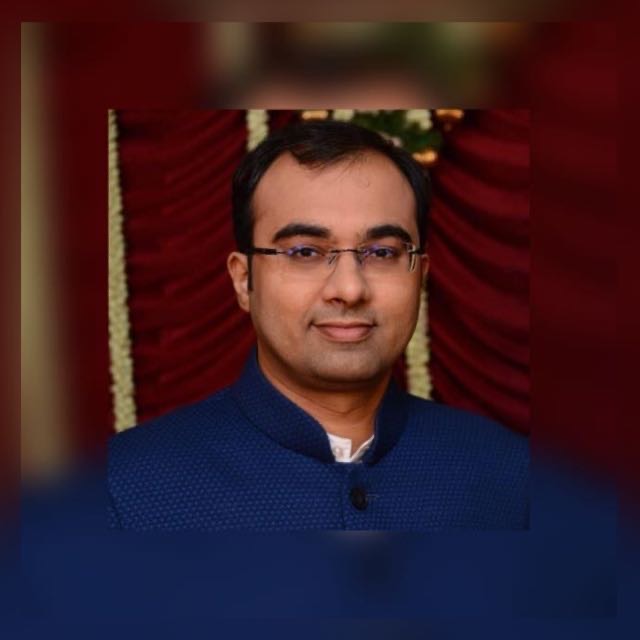
  • “Always remember, our credibility is something that will yield the best work and results in the profession for us. Without it, we cannot truly consider ourselves to be in the noble profession.” – Bhavik Lalan, Counsel at Bombay High Court(Chambers of Sanjay Jain)

    “Always remember, our credibility is something that will yield the best work and results in the profession for us. Without it, we cannot truly consider ourselves to be in the noble profession.” – Bhavik Lalan, Counsel at Bombay High Court(Chambers of Sanjay Jain)

    This interview has been published by Namrata Singh and The SuperLawyer Team

    Could you please introduce yourself to our readers and share the journey that led you from your early days as an Articled Clerk to your current role as a Counsel, Mediator, and Arbitrator?

    In 2009 I was a judicial intern with the then Bombay High Court Judge Mr. V. C. Daga that was the period when I decided to practice as a litigation lawyer upon my graduation. In the year 2010 I joined a Solicitor Firm M. S. Bodhanwalla & Co. as an articled clerk and had 4 years of work experience in the practice areas such as conveyance, civil and commercial litigation, legal opinions and advisory assignments from corporates like Hindustan Times, Lowe Lintas, RCF Ltd. etc. I recommend the young and buddying law students to undergo such a training process. In Mumbai, we have the option to appear for the Solicitors examination which is conducted by Bombay Incorporated Law Society. I appeared for said examination after which I joined Cyril Amarchand Mangaldas (“CAM”) in their dispute resolution team in Mumbai. My experience of working at CAM was very enriching. Handling litigations of high stakes involves tremendous readiness and preparedness in the back end. Also, in Mumbai, we follow a dual system of practice where Solicitor firms brief an arguing counsel and therefore, firms have to be always ready with briefing notes, compilation of judgments, and ensuring court records are updated and in order. My practice at law firms is of 6 years after which I started my counsel practice at Bombay High Court. I first joined the Chambers of Justice Mohit S. Shah (Former Chief Justice of Bombay High Court and Calcutta High Court) where I gained my Tribunal Secretary training and also had wide exposure to large stake arbitration matters. I then joined the Chambers of Mr. Sanjay Jain. Mr. Jain is an arguing counsel at Bombay High Court with a standing of 26 years. As an arguing counsel, my entire approach towards the practice has changed. I had to undergo a process of reformation where my basics of law were refreshed and my skills of drafting pleadings and evidence affidavits were sharpened to a great extent. In my view, these are the fundamental learning for every lawyer who desires to practice dispute resolution/ arbitration. In the year 2022 I completed my Masters in Mediation and Conflict Resolution from MNLU, Mumbai. It’s a two-year full-time course with a magnificent syllabus to enrich skill sets in mediation practice. After completing this Masters Course, I started getting references to act as an arbitrator and mediator in civil disputes. I have also been appointed as an Arbitrator by the Bombay High Court recently in a few matters and I consider myself to be fortunate that the Hon’ble Bombay High Court has entrusted with such a responsibility. While performing my role as a counsel, arbitrator and mediator I have to be constantly conscious that my responsibility is to assist the courts and parties in this process. We have to think about professional ethics and etiquttes while we take up our role as we are directly working in a public field/ domain and our actions and steps matter a lot to our clients and society at large. In the last 12 years of my practice, I have learned a lot from my seniors and colleagues. Law is a practice where learning does not stop till we retire. Our openness to learn even from our juniors testifies to our real approach towards problem-solving. 

    Could you walk us through what a typical day in your professional life looks like? What are some of the tasks and responsibilities that fill your day as a Counsel, Mediator, and Arbitrator?

    As litigation counsel, we have a long day of about 10-12 hours of working which involves court and arbitral hearings, conferences with client and senior counsels, reviewing/ settling of the pleadings and conducting legal research to keep ourselves updated. While doing this, I do spend time at our Advocate’s Bar Association Hall in High Court where interacting with senior counsels and colleagues provides me with an opportunity to exchange ideas and knowledge with them. I have seen that in the last 15 years, the trend of young Advocates sitting in the Bar Association Hall has drastically reduced. According to me, it’s a loss to such junior Advocates as they miss opportunities of gaining first-hand interactions with senior counsels and colleagues at the Bar. Having a little know-how of the practice and profession adds to the skill-set of lawyers which makes them multi-facet in approach.

    As a trained Mediator and Arbitrator, you’ve been involved in resolving several disputes. Could you tell us about a particularly challenging case you’ve handled and how you navigated through it to achieve a resolution?

    During my training process, I was taught that the goal of a good mediator is not to arrive at a settlement but to move the parties from their rigid position to a flexible one and provoke them to think about the solutions by encouraging dialogue between the disputing parties. My endeavour had always been to follow this teaching. So far I have handled about 150 mediations referred through the ODR platform SAMA to me and a couple of arbitrations that involve Bombay High Court-referred matters as well. Being a young practitioner sometimes I do find my role as a Mediator and Arbitrator challenging, but once we start practising to be a good listener and adopt neutrality it helps us a lot to navigate the parties towards solutions. This requires a lot of patience and controlled temperament. In one of the mediation matters (I cannot disclose particulars of parties due to confidentiality) where the dispute was between a multinational bank and a customer, the bank constantly tried to use the mediation meetings to pressurise the customer to pay back the alleged outstanding loan with interest. This was during the COVID period. The customer alleged that the bank was charging a higher interest wrongfully. Instead of speaking to each other parties initially resorted to the issuance of strong-worded legal notices, which triggered their egos. When the matter was referred to me, I had the challenge of bringing both the parties on same platform for a dialogue as they were not willing to see each other’s face. However, gradually with the mediation process moving further parties started attending mediation meetings. There was a time when they started exchanging verbal talks during the joint caucus. That was the time when I encouraged them to exchange some without prejudice written proposals. The parties did that and the dispute was resolved amicably. In this matter I see the victory of both parties, however, to bring them on same table to start the communication was a herculean task, by putting open ended questions to them, I had to prepare them mentally to leave their ego aside and come forward to have a joint talk.

    Transitioning from working at Cyril Amarchand Mangaldas (“CAM”) to starting your own practice must have been quite a journey. What motivated you to take this leap, and what are some key lessons you’ve learned along the way?

    My tenure of working at law firms was 6 years. I joined CAM after I worked at M. S. Bodhanwalla & Co. for 4 years. I was conscious that my role at CAM is going to be challenging as I was hired as a direct lateral and not through their campus recruitment annual training program. However, my earlier experience of working at a mid-size Solicitor firm helped me to navigate the work challenges of big law firm. At a big law firm, the infrastructure and support team provided to us is very helpful and efficient. Team learning and working is the main feature there. Delivering work before time is always expected on high mandate matters and that keeps us on our toes. If one cannot do this at the age of 25-26 when else will we do such action learning. This golden opportunity provided me the launch pad for leaping independent counsel practice. As a litigation counsel in Mumbai, the initial years are quite challenging in terms of getting briefed and generating revenue on your own. At the same time, the role of a counsel is of much more responsibility than the role of an Associate of a law firm. As counsel, we are all on our own when we appear before the court to argue a matter. We are shouldered with the responsibility to present the case before the court by applying the best of our abilities. Some cases have merits few don’t but our readiness to face the court and ensure best assistance to the judge is far more challenging. I got my inspiration from my spiritual mentor His Holiness Spiritual Sovereign Jainacharya Yugbhushansuriji Maharaj Saheb to take up this challenging role of an arguing counsel. His Holiness has entrusted upon several significant matters pending before the Supreme Court and High Courts/ Trial Courts in India, involving the rights of the Shwetamber Murtipujak Jain community. This role was challenging initially but later on after gaining good learnings from my seniors and colleagues I now do not find any challenge while appearing before the Supreme Court in such significant matters. The lessons which I have learnt so far is that we must first have faith in ourselves before we start looking for help outside. Litigation is a practice which provides fruit at a later stage but the sacrifice and rigours of initial days makes us efficient and better individual/ professional. So far I have had opportunities to assist legal stalwarts like late Mr. Fali Nariman, Mr. K V Viswanathan (presently a Supreme Court Judge), Mr. Harish Salve, Mr. Dushyant Dave, Mr. Arvind Datar, Mr. Darius Khambata, Mr. Navroze Servai, Mr. Ravi Shankar Prasad, Mr. C S Vaidyanathan in various matters involving tricky constitutional and such other legal issues. This was possible only after I chose to practice as a litigation counsel.

    You’ve been a frequent contributor on various issues, including public policy, diplomacy, and the use of technology in the legal field. Could you share your thoughts on how technology is shaping the future of dispute resolution and legal practice?

    Technology and law can go hand-in-hand. I am working from a paperless office post-COVID rollout. According to me, we lawyers will have to adopt technology wherever possible in our day-to-day practice as it has resulted in ease of doing practice. Imagine it was due to this advanced video conferencing technology that our Supreme Court and High Courts were able to function uninterruptedly even during the COVID lockdown. Today majority of my arbitration and mediation meetings are conducted virtually. Not limiting it to meetings, but data storage and utilisation are also done through cloud cloud-based system. Effectively, all my briefs are accessible to me 24×7. This has resulted in improved efficiency and quick delivery of solutions to the Attorneys/ clients. I am confident that in the next 5 years, we will have the majority of our Trial Courts providing us with virtual hearings and e-filing facilities. This will not only make the legal practice more inclusive and wide but will also cut down the pendency of cases.

    Balancing a legal career with personal interests can be challenging. Outside of your legal practice, what are some hobbies or activities you enjoy to unwind and recharge?

    Honestly, my first 10 years in the practice have been completely devoted to my work and training process under the guidance of my seniors and mentors. However, I have found my interest in reading the autobiographies of legal luminaries from India’s legal practice. I also read spiritual books regularly as it motivates me to take up higher challenges. Post-COVID health and fitness have been my priority and I ensure that I have physical exercise or morning walk sessions daily along with yoga. I have realised that those who do not take care of their mental and physical health during the early days of practice have to face tough times in the later phase. Our legal practice is such that with the rising age number of dockets keeps increasing, in such a scenario it is necessary to focus on health and mental well-being from the initial days. My thoughts for all my young colleagues is to stay away from addictions of smoking, drinking alcohol and drugs or any such harmful habits that shall severely affect our mental, physical and financial well-being. To be vocal about this, to some extent smoking a fancy cigar or cigarette might have been glamourised in our profession by some stalwarts but young lawyers should be mindful to understand that besides addictions we have many more other good qualities to adopt from them. I also, dedicate some time to pro bono matters which have been my activity to pay back to society. I am empanelled with the Bombay High Court Legal Services Committee where I am entrusted with cases to argue for the underprivileged and marginalised individuals. Appearing in these matters gives me a feeling of satisfaction.

    Your work involves advising clients on an array of transactional matters, including contracts and tenancy laws. What are some common misconceptions clients have about these areas, and how do you address them?

    Since I am practicing as a counsel in Mumbai my direct exposure to dealing with clients is very minimal. Conferences through a Solicitor with a client are a very easy thing to handle. But, there are occasions when I am entrusted tasks either through the Legal Aid Committee or through such pro bono service or social obligation where I have to come across direct interaction with clients and at such times I have to be mindful to keep very simple and lucid language while interacting with them. Using legal jargons during client counselling is not at all necessary. What matters is to give a simple solution within the framework of law. I have needed to recuse myself from situations where my advice was sought on some issues which to my mind were not legally feasible. I have made a point that I take a strong stand in such a situation rather than surrendering to the situation for the consideration of fees. Ours is a noble profession nobility of which is to be maintained by we people as the famous saying is “charity begins from home”.

    Reflecting on your experience as an Ad Hoc Committee Member of the Students’ Council and your participation in moot court competitions, how do you feel moots help students in their legal career or enhance their skills? Can you share some insights into the practical benefits you gained from participating in moot court competitions during your law school days?

    I was fortunate to have good exposure to moot court competitions at Government Law College, Mumbai (“GLC”). My college has been at the forefront in producing great mooters who have won several national and international moot court competitions. I participated in about 10 moot court competitions which are state, national and international. My first-hand experience in drafting a memorial for such a moot court competition is the foundation of my drafting skills. The mannerism to argue at moot court competition forms the bedrock of my present arguing skill. Conducting legal research by reading commentaries and journals was taught to us during our moot court preparations. I feel every law student must participate in at least 2-3 moot court competitions during their academic career. Also, today I cherish those days of preparing for the moot court competition where we used to fearlessly argue the propositions and by doing so regularly we developed a skill to argue real-life matters. I had many friends in my law school days who had stage fear and benefitted a lot due to their participation in moot court competitions. Being part of the Ad-Hoc Committee of the Students’ Council I feel it provided me with an atmosphere to develop a leadership skill and work in a team with modesty for shared goals. We executed several remarkable events (M C Chagla Lecture Series and many more) in GLC through the Students’ Council.  I was also part of the legal aid committee at GLC during my college days. I have had an opportunity to visit central jails and help the poor needy under trials to make their representations and letters for bail application.

    Starting a career in law can be daunting for many young professionals. What advice would you give to the current generation aspiring to make a mark in the legal field?

    Unlike other professions, ours is not a profession to only earns money. Rather ours is a “practice” which word is predominantly used to address the legal profession (a noble profession). May it be litigation or non-litigation; the practice provides us with several opportunities to serve the society. If we go back in the past, the majority of our freedom fighters and founders of the independent India were lawyers. They played a pivotal role in nation-building through their legal knowledge and acumen. Just like doctors we lawyers are also pillars of the society. My message to the current generation aspiring to make a mark in the legal practice is that have an ethical practice with honest conviction of the work which we do. Even the top practitioners and law firms in India and abroad have highlighted the importance of ethical practice in legal profession. This is because ethics and values play a big role in what we advise and perform. I often come across my Solicitor’s complaint regarding law students abruptly changing law firms during their internship/ para-legal period. I feel this practice should be discouraged as while doing these students create an image of being not reliable and credible. Always remember our credibility is something that will get the best work and results in the profession for us without which we cannot consider ourselves to be in the noble profession. Also, there is a hot issue in discussion these days whether interns/paralegals should be paid hefty stipends or not. I feel that generally during the internship days our priority should be learning. We should be thankful to those seniors who take up the responsibility to teach us initially at the cost of their time and resources. Few cases of exploiting interns cannot overshadow the process prevailing in our practice i.e. teaching and investing time in a junior/ student to make them efficient lawyers. If we observe the history of our profession in Mumbai, several of the stalwarts have undergone this process of training during their initial days without getting paid any salary/ or hefty stipend. At times, non-issues are glamourised more than the significant issues and that results in setting a wrong narrative in society. What I see now and for the next 50 years in India, the legal profession will have a paradigm shift i.e. 360 degree change. The systems are becoming more transparent now. We have a live streaming of court proceedings. The introduction of digital filing and virtual hearings has made things easy and economical for everyone. Those lawyers who are afraid to adopt technology may find it difficult to sustain with time, therefore, an open mindset to adopt technology wherever feasible is the only solution.

    Get in touch with Bhavik Lalan-

  • “To be well-prepared, one must consider all aspects of the file. While you may have read it, meticulous attention to every minute detail is essential, depending upon the nature of the case being argued.” – Ayush Negi, Advocate-on-Record, Supreme Court of India.

    “To be well-prepared, one must consider all aspects of the file. While you may have read it, meticulous attention to every minute detail is essential, depending upon the nature of the case being argued.” – Ayush Negi, Advocate-on-Record, Supreme Court of India.

    This interview has been published by Namrata Singh and The SuperLawyer Team

    Your family has a rich legal legacy, with your grandfather being the first Advocate General of Uttarakhand. How has this legacy influenced your journey as a third-generation lawyer, and what values or lessons have you carried forward from your family’s legal background?

    I have always been around lawyers at my house and have had the opportunity to be inspired by my grandfather and my father. My grandfather always used to tell me that all I can give you is the family name and the rest is upon you what you make out of it, so till date, I’m trying to live up to his legacy and be a better lawyer every day. The lesson I have learnt is that hard work is the key to success no matter what generation you are if you don’t work hard you will not get work one needs to constantly keep working on his advocacy skills and perform better every day.

    Transitioning from a small law firm to establishing your own practice is undoubtedly a significant step. Can you share a memorable experience or a turning point in your early career that shaped your approach to building your practice from the ground up?

     I learnt the basics of drafting and working with a small team at the law firm. I still remember my senior used to always ask us where do you see yourself in 5 years and I told him that I see myself as an Advocate on Record at the Supreme Court of India, so that was my manifestation and somehow with the grace of god I could achieve it in my first attempt. Thereafter I started hustling and doing small matters at the trial court and kept working constantly at honing my drafting and argument skills. I would like to especially thank Adv Dattatrey Vyas who was my immediate senior in the law firm for constantly helping me by vetting my drafts and guiding me through the drafting process while I was at the firm and later when I was away. I think I was lucky to have good mentors like Adv. Anurag Tomar who gave me constant opportunities to argue and appear before various forums right from the beginning of my career which paved the way for me to argue matters before the Supreme Court of India. One of the few instances I remember is while arguing an admission matter before a division bench presided by Justice Gyan Sudha Mishra at the Supreme Court, it was a MACT matter and I argued all the aspects and informed the court about the injuries on the lower part of the left leg of the petitioner, the court after hearing me asked about the exact part of the leg and the nature of the injury which at that point of time was not very clear in the documents as there was some medical term used which was not known to me or the court. The court then passed over the matter to enable me to take instructions about the same and eventually when the matter was heard I was able to answer the query of the court and notice was issued in the matter. The lesson I learnt is that one has to be well prepared from all aspects of the file no doubt you may have read the file, but one has to be careful about every minute detail depending upon the nature of the case being argued.

    You’ve been practicing law across various courts, including the Supreme Court of India and the National Green Tribunal. How do you manage the dynamics of different legal forums, and do you have a preference for any particular type of cases?

    Practicing across various forums can be tiresome at times as we have a lot of running around to be done apart from the preparation for the matters to be argued at various stages. But having a good team of associates around who help ease the burden by holding the fort while I can travel from one court to the other at times. But yes we have over time developed an effective way of taking separate dates for various courts so there is no clash between cases. But I constantly motivate my juniors to start arguing applications before the trial courts or tribunals so that they build up the confidence and eventually pave way for them to start their own practise later in life. Though I am most comfortable at the Supreme Court of India, but yes I love appearing before trial court and have had the opportunity of appearing before Trial courts and High courts across states like U.P, Uttarakhand, Punjab etc. There is a whole lot of thrill in the process of cross-examination which I truly love about trial court advocacy which requires a different skill set especially compared to appellate court advocacy and appearing before trial court is always enriching.

    As Counsel for the State of Uttarakhand at the National Green Tribunal, you’ve been involved in cases related to environmental issues. How does your role contribute to your personal commitment to environmental sustainability, and do you have any personal initiatives in this regard?

    I have been on the panel of State of Uttarakhand at the National Green Tribunal, Principal Bench Delhi right from 2017 and have been appearing regularly. After the retirement of Retd Justice Swatatantra Kumar from the post of Chairperson the approach of NGT of dealing with matters had changed drastically as they started the process of letter petitions the filing of Original Applications came down drastically and reduced the role of counsels to a large extent which in one way made the court more accessible to the common man, but yes the role of state counsels and other counsels was reduced to very minimal until and unless a specific response was called from a particular authority on an issue. Rest we keep assisting courts as and when we are called upon to file Joint inspection reports or filing responses and explaining the stand of the authorities. Further with regard to my personal view on sustainability I as an individual try to save water and electricity and follow basic civic rules of not littering around on highways or public roads etc. I think if all the citizens of the country follow these rules strictly then our country will be a much cleaner place. I think awareness amongst people about waste management can take our country a long way towards environmental sustainability.

    Balancing criminal trials along with civil trials is not common among lawyers. What motivated you to diversify into criminal trials, and how do you approach the unique challenges they present?

    As I have already mentioned my love for trial court advocacy, especially the part of cross-examination of a witness, so I have done my fair share of civil trials and  Criminal Trials under section138 Negotiable Instrument Act cases and had never thought of delving into criminal trials but, recently in 2021 one client approached me for conducting a criminal trial under POCSO Act at Ghaziabad Sessions court, after going through the file and as the matter was at evidence stage in the peculiar facts and circumstances I took up the matter and eventually the Prosecutrix a 11-year-old girl went hostile which led to the conviction of my client after the incarceration of 3 years. My experience in this trial was worth sharing first and foremost is the non-adhering to the basic principles of an In-camera trial as envisaged under the Section 37 of the Protection of Children from Sexual Offences Act 2012, though the same is followed to the teeth in the trial courts in Delhi, but I was shocked to see that the evidence of the prosecutrix including the examination in chief and the cross-examination was all done in open court.

    After this trial, I have taken up a few more matters including a trial under SC/ST act before the Rohini Court and another matter under section 376/354 of the IPC on behalf of the accused before the Dwaraka Sessions Court. But, yes for the readers I have to clarify that while I have taken up these matters I did thorough research on the subject matters of these cases and did a lot of consultation with senior colleagues who have had long experiences in handling these matters before the trial court, it is very crucial that we know the finer nuances of such trials before we start conducting one as life and liberty of person depends on us.

    Apart from this some basic things that I felt were a problem in other states was the lack of judicial infrastructure like stenographers for judges and in some courts, the courts even didn’t have a computer system. I think little changes in the whole justice administration system would affect the quality of the justice being delivered across all courts, especially trial courts.

    Your 45-day judicial internship with Justice Dalveer Bhandari seems to have been a turning point. How did this experience influence your perspective on legal practice, especially in the Supreme Court, and set the course for your career?

    The internship with Retd Justice Dalveer Bhandari is where it all started and it was my first experience at observing the practice and procedure at the Supreme Court of India. I along with my friend had the special privilege back then to join this internship as then the clerkship and the internship program was only for the students of the National Law Institutes and we would have had no chance at getting the internship if our Professor Ms Deesha Meshram had not provided us this opportunity. We were in our 8th Semester of 5-year Integrated law Course and had the basic knowledge of the subjects such as CPC, CRPC, Evidence etc, but this internship changed our perspective. During the internship our tasks included reading briefs of admission hearing matters and preparing a brief note and then finally presenting the matter before Justice Bhandari just like we do now in the Supreme court before the Hon’ble Judges, he would then ask us basic questions about the case about findings in the trial court judgement and things like issue involved etc. This exercise majorly helped me to see up close how the mind of a Supreme judge works and a brief idea of the kind of queries that can entail in a fresh matter. Our tasks also included providing the law clerk with research materials in the after-notice matters apart from observing the matters that we had briefed sir on being argued in court. It was truly an enriching experience and it was only after this internship that I made up my mind about settling down in Delhi and practising before the Supreme Court of India. Some of my positive takeaways from this internship were learning the basic skill of reading an SLP and the relevant papers, preparing a note and relevant case research on the subject matter and knowing how the synopsis and list of dates play a very crucial role in the fate of the matter before the Supreme Court.

    You’ve represented organizations like the National Institute of Technology, Srinagar (Garhwal), and provided litigation support to companies on a retainer basis. How do you navigate the dual role of legal advisor and litigator, and what challenges and rewards come with this multifaceted approach to legal practice?

    Over the span of 12 years of being a litigator i have had the opportunity to represent many corporations and companies before various courts some of them would be Uttarakhand University, NIT Uttarakhand,Transunion CIBIL, Carnival Cinemas etc. the key to working with big organisations and corporations is timely delivery of work and adhering to high professional standards. I completed my 1-year Post Graduate Diploma in Entrepreneurship Administration and Business Laws from NUJS, Kolkatta in 2016 which helped me equip myself with practical skills related to business laws. Later in time, I ventured into providing my services on the advisory side related to Contract Drafting and allied services related to day to day functioning of the companies so that the companies could avoid or at least try to keep their disputes and litigation to the minimum. Time management and organising the work schedule between courts and the advisory work is the key to balancing the work between both the fields and rest having a good team to assist me helps me a lot. The benefit of playing the dual role of litigator and legal advisor helps one to broaden one’s horizon and then you are never short of work.

    In addition to your legal responsibilities, you’ve represented the Cricket Association of Uttarakhand. Are you an avid cricket fan yourself, and if so, do you have a favourite cricket memory or player that you hold dear?

    I like the game of Cricket and follow all the major tournaments, IPL etc., but no I have not played cricket at any level as such. I have been appearing for the CAU before Uttarakhand HC, District Courts and before the Hon’ble Ombudsman which is an internal dispute mechanism at the Association. Associating with the CAU has also been a great learning experience in getting to know the nuances involved in the cricketing field and kind of dispute and the resolution process before the Ombudsman which all is done in terms of the Constitution of the Association which is framed under the aegis of BCCI.

    Clearing the AOR exams is a significant accomplishment. How has being an Advocate on Record at the Supreme Court impacted your career, and what advice would you give to aspiring lawyers aiming for a similar milestone?

    As I mentioned earlier, clearing the AOR Exam was my dream from the day I started practising because I had fair knowledge about the role that is played by an AOR in the Supreme Court of India through my previous internship experience with Retd Justice Dalveer Bhandari. Nowadays we see a lot of people who have not practised at the Supreme Court or intend to practice at Supreme Court think that it’s crucial for one to be an AOR to appear before the Supreme Court which is not the case. The fact of the matter is merely clearing AOR exam doesn’t help one start practise at Supreme Court, but yes my advice would be that one should join some chamber and get to know the basic procedures of the court and functioning of the court and then try to clear the exam it would really help to make the mark may be in your first attempt. Further with regards to the exam I would advise all those who are preparing to start with the Supreme Court Rules and practising drafting petitions on paper as with the advent of computers we are more used to typing on our laptops you may be thorough with drafting but it’s really a difficult task when comes to doing the same manually, so the key is to try and time yourself in solving the previous year’s drafting problems that will give you an edge while you write your paper. My last word of advice is that try and keep the presentation of your answer neat considering the time you have to write the paper and answer all the questions.

    Get in touch with Ayush Negi-

  • Legal Strategy is one of the most critical aspects in litigation.  A good legal strategy acts as the bedrock on which the entire case is constructed – Embark on an insightful journey with Shaurya Sahay, a seasoned Advocate-on-Record and Standing Counsel for the State of Uttar Pradesh.

    Legal Strategy is one of the most critical aspects in litigation. A good legal strategy acts as the bedrock on which the entire case is constructed – Embark on an insightful journey with Shaurya Sahay, a seasoned Advocate-on-Record and Standing Counsel for the State of Uttar Pradesh.

    This interview has been published by  Priyanka Karwa and The SuperLawyer Team

    Shaurya, your journey from being a law student to Advocate on Record and Standing Counsel for the State of Uttar Pradesh is quite remarkable. How do you recall your starting years as a legal professional? Please share your insights and struggles which you came across to reach here.

    Being a first generation lawyer, I knew little to nothing about the legal profession when I stepped into law school. My early internships exposed me to the hallowed corridors of the Supreme Court and that is when I was truly motivated and determined to someday have a practice of my own in the Supreme Court. My starting years as a legal professional included some of the cliched’ travails of having a low salary, extremely long working hours, and the existential dread of how I would ‘make it’ in the profession. 

    As luck would have it however, I was blessed with a wonderful mentor, Mr. Amit Kumar, Sr. Advocate who took me under his wings and it is under his tutelage that I gained invaluable experience as a practicing advocate. I never refused any assignment that came my way and I learnt to always be prepared in each matter, and be ready to grasp any opportunity.  On certain occasions when my requests for Passovers in matters were turned down, and I was requested to argue the matter by the Bench, I found myself prepared and equipped to handle the matter. This led to initial successes and brought with it much needed optimism and motivated me to keep going. In my view, the biggest struggle for a first generation lawyer in litigation is to remain motivated, however, I overcame this challenge by remaining disciplined and focused on improving my skills. Eventually, my skill sets improved, and with it came more work and a steady flow of income.  

    While hard work is often the answer to most of the challenges in the profession, it is also important to give the required importance to other facets of personal life such as physical and mental health. Having a close circle of friends in the early days of the profession helped me maintain a balance between the personal and the professional aspects of life and proved instrumental in helping me navigate the more challenging days of the profession.

    As the Standing Counsel for the State of Uttar Pradesh, you handle a wide range of litigations, from criminal disputes to matters related to Housing, Stamps, and Registration. What aspects of your role do you find most challenging and rewarding?

    Being the standing counsel for a State as large as Uttar Pradesh is a challenging but rewarding assignment. The biggest challenge being the sheer volume and diversity of cases one has to handle.  On most days, the assignment of Standing Counsel requires drafting multiple drafts, apart from having to argue several cases before different benches of the Supreme Court, therefore it is also important to keep abreast with the latest developments in the legal field.  Having to prepare for a heavy docket of matters, particularly on admission hearing days, i.e. Mondays and Fridays requires a strong support system. The importance of a good team of lawyers, clerks and office staff therefore cannot be overstated. In my personal opinion, one must try and identify a good team of colleagues, juniors and support staff as early as possible and invest in creating a team as early as possible. The diversity of cases to be handled also poses quite a challenge as the preparation of criminal cases requires a different approach when compared to civil cases. In particular, Land acquisition disputes are usually voluminous and therefore require rigorous preparation. 

    The most rewarding aspect of the assignment is the sheer exposure that it provides before the Supreme Court. As Standing Counsel, one gets to appear and argue before almost all courts of the Supreme Court, brief Senior Advocates, all of which helps gather invaluable experience.  The role of a Standing Counsel also provides an in-depth insight into the functioning of the Government. These are all extremely rewarding aspects of practice as Standing Counsel before the Hon’ble Supreme Court. To have the opportunity to handle such an assignment at a relatively young age is proving to be an extremely humbling experience.  

    As a Panel Counsel for the Government of Meghalaya, you were part of the team that successfully lifted the ban on coal mining. How do you approach high-profile cases, and what role does legal strategy play in influencing policy changes?

    Legal Strategy is one of the most critical aspects in litigation.  A good legal strategy acts as the bedrock on which the entire case is constructed, therefore considerable efforts must be spent in working out an effective strategy before proceeding with any case.  The issue concerning the ban on illegal coal mining in the State of Meghalaya is one of the most unique cases I have handled till date.  The issue pertained to the practice of indigenous mining techniques by the tribal residents of the State of Meghalaya which was deemed unsafe and environmentally harmful, resulting in the imposition of a complete ban by the Hon’ble National Green Tribunal in 2014. When the matter was earmarked to our team, before proceeding with the matter, we examined the historical aspects of the land tenure system in the State and its implications on the constitutional rights of the tribal residents of the State of Meghalaya. We were able to chalk out a legal strategy which indicated that the tribals are the absolute owner of the land and also the minerals extracted from the land, due to the constitutional status conferred to the State of Meghalaya as a 6th Schedule State, and also due to the land tenure system. Consequently, the Hon’ble Supreme Court upheld the contention that the both the land and minerals belong to the tribals, and therefore lifted the absolute ban on coal mining in the State, by permitting the mining to resume under the applicable legal regime of the Mines and Minerals (Development and Regulation) Act, 1957. The said judgment is a watershed moment, particularly for the State of Meghalaya, as nowhere else in the country has the Supreme Court recognised the right of the landowner over the minerals that may be found in his land. I personally do not distinguish between ‘high profile’ cases and other cases in terms of my approach to the matter. Surely, the pressure in ‘high profile’ cases is higher as the stakes involved for the clients are usually higher. However, I try to approach the matter like any other matter since I believe that as professionals, lawyers must remain objective in their assessment of a case.  

    Beyond the courtroom, you contribute to legal academia and write columns for popular legal websites. What motivates you to engage in these activities, and how do they complement your personal & professional life?

    My motivation for engaging in academic activities comes from my family background. My mother has been an educator for over 30 years and therefore I have always had a keen interest in academia. I still make time to write regular articles on various issues that I come across during my practice as I find that writing articles only solidifies the understanding of a particular area of law. Writing articles encourages discussion and debate on contemporary topics of law and I find that sharing of views is the best way to contribute to the development of the law.  

    Your academic achievements include winning Best Memorial in the Oxford Media Law Moot Court Competition. How has participating in moot court competitions shaped your advocacy skills, and what advice would you give to law students interested in mooting?

    Mooting was one of the most engaging activities during law school. It cultivated several habits which I till date implement in my professional life. Mooting required extreme discipline and dedication as it required one to gain subject matter knowledge on the topic involved to effectively deal with the issues raised in the moot proposition. This often involved our team staying up several nights reading up on new areas of law and refining our understanding of these areas. So far as helping shape advocacy skills is concerned, mooting trains one to develop arguments. It requires you to put your best argument first and find simple ways of explaining relatively complicated concepts. These aspects of mooting are very helpful in shaping advocacy skills. In my view, mooting, debating and other such activities are also a good way to gain confidence in public speaking which is an important skill required by any lawyer. 

    Coming to the personal side, what makes you happy personally other than Law? What keeps you motivated and inspired? 

    Music is a great source of solace and happiness for me. In particular, I enjoy collecting vinyl records and old cassettes.  

    Looking ahead, Are there any specific aspirations or goals you’re aiming to achieve in the coming years?

    If I were asked the same question a few years ago, I may have answered with a specific career goal in mind, but over the years if experience has taught me anything, it is that being happy, healthy and enjoying each day as it comes is the most important facet. I hope to focus on finding a good work life balance going forward.  

    Reflecting on your journey, what advice would you offer to law students and young legal professionals aiming to build a successful career in litigation, especially in the evolving legal landscape of India?

    One must have a voracious appetite for reading as it is the only way to stay abreast of the ever evolving legal landscape. A career in litigation is more of a marathon than a sprint. Pace yourself. While there is absolutely no substitute to hard work, but it’s important to find balance between the personal and professional.

    Get in touch with Shaurya Sahay-

  • By fostering open and transparent communication, I strive to establish a collaborative environment that promotes constructive dialogue and a mutual understanding of the parties’ needs- Ashutosh Shekhar Paarcha, Government Counsel, State of Rajasthan

    By fostering open and transparent communication, I strive to establish a collaborative environment that promotes constructive dialogue and a mutual understanding of the parties’ needs- Ashutosh Shekhar Paarcha, Government Counsel, State of Rajasthan

    This interview has been published by Priyanka Karwa and The SuperLawyer Team

    Sir, please tell us about your journey and how you ended up pursuing a career in law after graduating from the National Law School of India University?

    After graduating from the National Law School of India University, my journey in the field of law has been both fulfilling and exciting. I always had a deep interest in understanding legal systems and advocating for justice, which led me to pursue a career in law.

    During my time at the National Law School, I had the opportunity to study under renowned professors and engage in stimulating academic discussions. The rigorous curriculum and practical exposure provided me with a strong foundation in various aspects of law, including constitutional law, criminal law, corporate law, and international law, as well as developing skills like negotiating contracts, legal research, etc.

    During my internships at the Trial Courts and High Court of Delhi, I realized that the law taught to us in college, is different in terms of practice in Courts like procedure, evidence, etc. Therefore, following my graduation, I began my professional journey by joining a boutique litigation law firm, where I started as an associate. This experience allowed me to work on a wide range of legal matters, including litigation, contract drafting, due diligence, and legal research. I had the opportunity to collaborate with seasoned lawyers and gain valuable insights into the intricacies of the legal profession.

    While practicing at the law firm, I developed a particular interest in litigation and advocacy. This passion drove me to transition into a litigation-focused role, where I had the opportunity to represent clients in court, present arguments, and analyze complex legal issues. This phase of my career allowed me to refine my legal skills and develop a deep understanding of courtroom dynamics.

    Over the years, I have had the privilege of working in both litigation and corporate legal, being in-house counsel to various MNCs. I have also had the privilege to work in domestic as well as international markets and with the diversity of not only strictly legal, but also public policy, advocacy, etc.

    In addition to my professional work, I have also been actively involved in pro bono initiatives, providing legal aid to underprivileged individuals and contributing to social justice causes. This aspect of my career has been immensely rewarding, allowing me to use my legal skills to make a positive impact on society.

    Overall, my journey in law has been a result of my passion for justice, a drive to make a positive impact, and a constant commitment to enhancing my legal knowledge and skills. I am grateful for the opportunities I have had and look forward to continuing my journey as a legal professional.

    You have had a diverse range of experiences in both litigation and in-house legal roles. Could you share some key highlights or significant cases that have shaped your career so far?

    Throughout my career, I have had the privilege of working on various significant cases and handling crucial legal matters, which have personally challenged me and were exciting projects. It is difficult to pin-point a couple here. 

    But generally speaking there have been cases in litigation both criminal and civil where you may arrive at a point when you think you have no case or no argument and then one needs to take a step back and think a little outside of the box and develop an argument. I think that is the least we owe to our client, to give more than our 100%. And when the Judge appreciates your argument and the fact you were able to find the point, that feeling is pure ecstatic. And frankly, I think it’s that feeling that pushes us to keep doing better in litigation.

    Similarly, as an in-house counsel, I have been working with commercial transactional agreements, international or domestic, sometimes not only closing the agreement, which itself becomes a task, but also providing other solutions to get the maximum output from the deal. For example, bypassing domestic and international tax laws, corporate structuring of the deal, exposure to the least risk possible, etc. 

    These are just a few highlights from my career so far. Each experience has contributed to my professional growth, deepened my understanding of various legal domains, and reinforced the importance of being up-to-date with the laws, effective advocacy, strategic thinking, and meticulous attention to detail. 

    As the Director of Legal & Business Development at Indian Reprographic Rights Organisation (IRRO), you gained experience with international laws and commercial transactions. How did this role contribute to your professional growth, and what were some of the challenges you faced?

    As Director, at the Indian Reprographic Rights Organisation (IRRO), my role was basically spear-heading the Organization. It involved working on domestic and international laws and commercial transactions, which significantly contributed to my professional growth. It was basically a Non-profit think-tank which worked towards helping shape the IPR policy and provide the government with inputs.

    As it was the first time I was working in this kind of Organisation, the challenges were infinite. It was basically like working in a start-up. The team, initially, was small. I had to be responsible for all the decisions that were taken. Challenges like micro-managing everything, realizing that no one has heard of the Organisation, working with limited funds, government red-tape and diktat, FERA & FEMA regulations, etc. However, once you grasp your way around things, it becomes easy and the experience I gathered was amazing.

    It helped me grow as it provided me with international Exposure. Working on international laws and transactions exposed me to different legal systems, regulations, and business practices. It broadened my understanding of how laws operate in various jurisdictions, enabling me to navigate cross-border legal issues more effectively. It improved my contract negotiation and drafting skills. It provided me with insights regarding compliance with regulations.

    Overall, my role at IRRO provided me with invaluable experience in international laws, commercial transactions, copyright education, and stakeholder management. It enhanced my legal expertise, honed my negotiation skills, and deepened my understanding of the complexities of intellectual property rights. The challenges I faced, such as compliance complexities and managing diverse stakeholders, reinforced the importance of adaptability, strategic thinking, and effective communication in addressing multifaceted legal and business issues.

    In your role as General Manager – Legal for Franchise India Group of Companies, you headed the legal team and dealt with policy and advocacy matters. Can you elaborate on the challenges you encountered and the strategies you implemented to ensure legal compliance while supporting the growth of the conglomerate?

    As the General Manager – Legal for Franchise India Group of Companies, I was basically their Global Legal Head as Franchise India is an MNC with offices in 6 Countries and business almost everywhere in the world. My experience was different as the setup here was quite elaborate vis-a vis my previous Organisation. It had its own perks but its own challenges too. 

    A major challenge that I came across was that I have always been an individual contributor. While I did lead a decent team in my previous Organisation, being completely able to delegate work to someone who you have never worked with before, was tough for me. However, it took me a bit of time but that was the easiest of the challenges. 

    The more difficult challenges were dealing with multi-faceted legal compliance. The conglomerate operated in various industries, each with its own set of regulations and compliance requirements. Ensuring legal compliance across all sectors was a significant challenge. To tackle this, I developed a robust compliance management system that involved conducting regular audits, creating compliance manuals, and implementing training programs to educate employees about legal obligations. I also established strong relationships with regulatory agencies to stay updated on regulatory changes and engage in proactive compliance measures.

    Policy and Advocacy: Dealing with policy and advocacy matters required a comprehensive understanding of the legal and regulatory landscape. I closely monitored legislative developments, engaged with industry associations, and actively participated in policy discussions. I collaborated with internal stakeholders to develop and advocate for favorable policies that supported the conglomerate’s growth objectives while ensuring compliance with applicable laws and regulations.

    Contract Management: Since international agreements were a major part of the organization, it brought along the need to have knowledge of international laws and their domestic laws as well. The conglomerate engaged in a wide range of contracts, including lease and license agreements, strategic partnerships, service agreements, and distribution agreements. Managing and negotiating these contracts while safeguarding the conglomerate’s interests was a critical responsibility. I implemented standardized contract templates, streamlined contract review processes, and provided training to internal teams on contract negotiation and risk assessment. This ensured consistency, minimized legal risks, and expedited contract closures. Many times, there were language barriers too but I feel as long as both parties want to enter into an agreement, in good faith, challenges can be worked upon.

    In summary, my strategies focused on proactive compliance management, policy advocacy, efficient contract management, stakeholder engagement, risk mitigation, and effective dispute resolution. By addressing these challenges, I contributed to the conglomerate’s growth while ensuring legal compliance and minimizing legal risks.

    As the Legal Head for Medicover Group of Hospitals in India, you were involved in various acquisition and merger agreements, as well as corporate structuring. How did you navigate the complexities of these transactions, and what role did you play in ensuring smooth operations for the organization?

    When I joined Medicover, the biggest challenge was COVID-19. I joined the organization at the brink of COVID and the times were tough. The challenges began right away being employee issues as people didn’t want to come to hospitals to work. Although the Organisation was great and swiftly provided all the protective gear and things to employees, it was still difficult for people as no one knew about the virus and the magnitude of it.

    For smooth operations, I relied on the experience I have gathered till date. Before engaging in any acquisition or merger, conducting comprehensive due diligence was crucial. I oversaw the due diligence process, which involved analyzing legal, financial, and operational aspects of the target entities. By identifying potential risks, liabilities, and regulatory compliance issues, I provided valuable insights to the management, enabling them to make informed decisions.

    Secondly, Structuring Transactions. Each acquisition and merger presented unique considerations, such as regulatory compliance, taxation implications, and integration of operations. I worked closely with internal stakeholders, external advisors, and management to develop the most suitable transaction structures. This involved assessing legal and regulatory requirements, drafting and negotiating agreements, and ensuring compliance with applicable laws.

    Thirdly, Contract Negotiation and Drafting. This was comparatively easy as I have been doing this throughout my career and hence played a key role in negotiating and drafting acquisition and merger agreements. I ensured that the terms and conditions were favorable to Medicover Group while protecting its interests. This involved collaborating with the business and finance teams to identify key deal points, conducting negotiations with the counterparty, and drafting agreements that clearly defined rights, obligations, and protections. Throughout the acquisition and merger process, I identified and managed legal and operational risks. This included conducting risk assessments, implementing risk mitigation strategies, and advising the management on potential risks associated with the transactions. By proactively addressing risks, I helped safeguard Medicover Group’s interests and ensured the smooth functioning of the organization.

    Fourthly, Regulatory Compliance. Healthcare is a highly regulated sector, and compliance with various laws and regulations was critical for smooth operations. I worked closely with regulatory authorities, such as state and national governments and healthcare regulatory agencies, to ensure compliance with licensing, permits, and other regulatory requirements. I also advised internal teams on healthcare-specific regulations, including those related to patient privacy, medical ethics, and quality standards.

    Lastly, Integration and Post-Merger Activities. After completing an acquisition or merger, integrating the acquired entities into the Medicover Group was crucial for seamless operations. I collaborated with cross-functional teams to harmonize processes, systems, and policies. This involved managing legal aspects of employee transfers, aligning corporate governance structures, and ensuring compliance with Medicover Group’s policies and procedures.

    Overall, although my stint was short with Medicover, it provided me with immense experience and the Management was amazing. The healthcare industry is quite fast paced and there are multiple issues everyday being compliance issues, litigations, licenses, adherence to govt. notifications (due to COVID), etc. My CEO trusted me with almost everything and relied on my expertise and advice and didn’t micro-manage. Medicover provided me with great exposure into a new industry with both domestic and international issues to be dealt with.

    Throughout your career, you have gained extensive experience in contract drafting, negotiation, and management. What are some key strategies or approaches you employ when dealing with complex contracts or negotiations?

    When dealing with complex contracts or negotiations, I employ several key strategies and approaches to ensure effective outcomes. Here are some of the techniques I use:

    Thorough Understanding of the Subject Matter: Before entering into any contract or negotiation, I make sure to develop a deep understanding of the subject matter. This involves conducting comprehensive research, studying relevant laws and regulations, and familiarizing myself with the industry practices and standards. This enables me to identify key issues, anticipate potential challenges, and negotiate from a position of knowledge and strength.

    Clear Communication and Active Listening: Effective communication is essential during contract negotiations. I focus on clearly articulating my client’s objectives and requirements, while also actively listening to the counterparty’s concerns and interests. By fostering open and transparent communication, I strive to establish a collaborative environment that promotes constructive dialogue and a mutual understanding of the parties’ needs.

    Preparation and Planning: Adequate preparation is crucial for successful contract negotiations. I thoroughly review all relevant documentation, including the contract terms, supporting materials, and any applicable laws or regulations. This enables me to anticipate potential issues, identify potential areas of compromise, and develop a well-rounded negotiation strategy. I also establish clear objectives and priorities, ensuring that my client’s interests are protected while seeking mutually beneficial solutions.

    Building Relationships and Trust: Building trust and rapport with the counterparty is instrumental in reaching favorable outcomes. I strive to establish a professional and respectful relationship based on trust, integrity, and transparency. This can involve engaging in small talk, finding common ground, and demonstrating a genuine interest in understanding the counterparty’s perspective. By fostering a positive rapport, I create a conducive environment for finding common ground and resolving disagreements.

    Flexibility and Creativity: Complex contracts or negotiations often require flexibility and creative problem-solving. I approach negotiations with an open mind, exploring alternative solutions and considering various options. This allows me to think outside the box and propose innovative approaches that meet both parties’ interests. I am willing to consider different perspectives, explore compromise, and find win-win solutions whenever possible.

    Documenting Agreements and Managing Risks: Once an agreement is reached, I ensure that it is clearly documented in a comprehensive and enforceable contract. This involves carefully drafting the contract terms, considering potential future scenarios, and addressing any legal or business risks. I pay close attention to detail, ensuring that all relevant provisions are included and accurately reflect the parties’ intentions. By addressing potential risks in the contract, I help safeguard my client’s interests and mitigate future disputes.

    Continuous Learning and Adaptation: The legal landscape and business environments are constantly evolving. I prioritize continuous learning, staying updated on industry trends, legal developments, and best practices in contract negotiation and management. This enables me to adapt my strategies and approaches to the specific context and leverage new insights and techniques.

    By employing these strategies, I aim to facilitate effective contract negotiations, foster positive relationships, and achieve optimal outcomes for my clients.

    As someone with a successful legal career, what advice would you give to fresh graduates who are starting their journey in the field of law? Are there any particular skills or qualities they should focus on developing?

    Frankly, I don’t think that I am successful enough yet to give advice to other people. However, the few kids I mentor or if someone reaches out to me on LinkedIn for advice and how to proceed in their legal career after college, I just tell them a few things. Firstly, if its clear to you that you want to choose any specific field, that’s great. But if you are not clear, that works fine too. 

    For eg; some students are clear that they want to do only litigation. However, many first-generation lawyers like myself are not sure what to choose and how to go about it and of course there is lack of guidance. My suggestion is to try everything. Being a litigator has its own perks, but being in-house counsel is also great. It is only after trying things one can be sure if they like it or not. 

    The one thing non-negotiable is hard work. You must be willing to put in the hours with dedication. Smart work will only take to a certain level but hard work will always pay off in the long run.

    You have written articles and provided opinions on various legal issues, such as copyright, education policy, and IT rules. How do you balance your professional commitments with your passion for writing and contributing to legal discourse?

    To be fair, it is extremely challenging and hence I haven’t been able to publish more articles. However, I believe that engaging in legal writing and sharing my perspectives on important legal issues allows me to contribute to the broader legal community and promote meaningful discussions.

    I must attribute some credit to NLS for this. The curriculum is so intense, it makes you respect deadlines and provide your best work in the shortest time. To manage this balance, I allocate dedicated time for writing and research outside of my professional commitments. I stay updated on legal developments, both through my work and personal research, which helps me identify relevant topics to write about. By effectively managing my time and prioritizing my commitments, I ensure that I can devote sufficient attention to both my professional work and my passion for writing. It requires discipline and careful planning, but the opportunity to contribute to legal discourse and make a positive impact on the field makes it all worthwhile.

    Lastly, what are your future aspirations and goals within the legal field? Is there a particular area or cause that you are passionate about and would like to focus on in the coming years?

    In the future, I aspire to continue growing and excelling in the legal field while making a positive impact. I am passionate about various areas within the legal field, including intellectual property rights, technology law, E-commerce and corporate governance.

    One of my key goals is to contribute to the development and implementation of legal frameworks that promote innovation, protect intellectual property, and foster a fair and sustainable business environment. I am particularly interested in the intersection of law and technology, and I aim to stay at the forefront of emerging legal issues in areas such as data privacy, artificial intelligence, and digital rights. To keep myself updated with these, I try to take up courses available.

    Additionally, I am committed to advocating for access to justice and promoting legal awareness among marginalized communities. I believe in the power of legal education and empowerment to bring about positive social change. In furtherance of this cause, I volunteer with a couple of NGOs which work towards prevention of Human Rights. I am generally open to other causes as well and people reach out to me on LinkedIn for advice.

    In the coming years, I intend to deepen my expertise and provide my services to the clients. Apart from litigation, I am deeply interested in IPR Licensing, Financial Services & Insurance, Fin-tech, E-Commerce industries. I would love to work in these sectors and collaborate with organizations and stakeholders to drive legal reforms.

  • Working in the Supreme Court on a wide range of issues from various fields and areas of law requires a multidimensional approach, which is rewarding- Aditya Bharat Manubarwala, Counsel, Supreme Court of India

    Working in the Supreme Court on a wide range of issues from various fields and areas of law requires a multidimensional approach, which is rewarding- Aditya Bharat Manubarwala, Counsel, Supreme Court of India

    This interview has been published by Priyanka Karwa and The SuperLawyer Team

    Sir, could you please tell us a little about your background and how you first became interested in pursuing a career in law?

    I was born and raised at Mumbai before I finally shifted my primary base to New Delhi to practice at the Supreme Court of India apart from maintaining a dual practice in other regions of India particularly- Mumbai and Chandigarh. I hail from a quintessential family of Advocates and Solicitors. My mother is practicing as an arguing counsel at the Bombay High Court and other forums at Mumbai since the past 37 years while my father is an Advocate, Solicitor qualified from the Bombay Incorporate Law Society and Advocate on Record at the Supreme Court. This year (2023) he completes 50 years as a practicing Advocate. My elder brothers and their wives are Advocates as well. My father founded a full service law firm at Mumbai 45 years ago. I have subsequently established the litigation practice of the firm at New Delhi, Chandigarh and Ahmedabad with associate offices at Vijaywada, Chennai and Kolkata. Interestingly, my wife and her entire family including her parents and grand-father are also Advocates based at Shimla Himachal Pradesh. I have founded my own Litigation Chamber-set at New Delhi by the name –‘Chambers of Aditya Bharat Manubarwala’. My wife – Akriti A Manubarwala and I jointly operate the Chambers; our team includes four full time Junior Counsels as well as Six Of-Counsels at New Delhi and Mumbai.  Undoubtedly, being raised in a family of lawyers had its impact on me; my causal visits to my parents’ law firm, my interaction with their lawyer friends, my occasional visits to the courts, particularly the Bombay High Court made me develop basic knowledge and idea about the legal profession much more profoundly in comparison to my non-lawyer family background friends. However, despite this background, my interests as a child lay in becoming a Doctor; as a teenager I wanted to be a journalist.  My views changed completely after I got exposed to the lectures and interviews of Mr. Arun Jaitley, Senior Advocate, Supreme Court of India and former Finance Minister of India. I have been an ardent follower of Mr. Jaitley and a self-proclaimed fan since my school days. Since school days, it has been my deep desire to contribute to the growth and development of India. Initially I thought I could do so by being a doctor or a journalist, however, upon closely observing Mr Jaitley’s journey, I got inspired to practise litigation while concurrently dabbling in the field of public policy and politics. As a seventh grader, I was caught by parents mimicking an Arun Jaitley speech in front of the dressing table in my house. I feel, subconsciously, I continue copying and attempting to emulate him. He was truly Guru Dronacharya to me. He was a guru I never met, saw, or spoke with, but whose profound influence continues to shape my career and personality to this day and will almost certainly shape me until my death….

    Tell us about your journey from law school, to Supreme Court including your experience pursing the prestigious Master in Law (LL.M) in International Law Degree at the University of Cambridge?

    I graduated from Pravin Gandhi College of Law, University of Mumbai. Being from a conventional law college has its share of challenges in this NLU-driven legal education regime that we find ourselves in. Faced with this gargantuan challenge of proving my worth, I embarked upon my legal education in a rather structured manner thanks to the advice offered to me by Dr. Justice DY Chandrachud, Now Chief Justice of India, then Chief Justice of Allahabad High Court, who suggested I follow a theme-based model in relation to planning my internships. Themes suggested were – an NGO internship, a policy internship, judicial internship, litigation internship, etc. Apart from following the aforesaid model, I concurrently spent a significant amount of time and energy honing my public speaking skills by way of debates. I won fifteen national and international debate competitions and was even featured in The Indian Express for them. I wrote extensively, first in my own blog, then research papers in law journals and finally in newspapers and blogs. My habit of writing has continued, years after my graduation. I believe writing requires clarity of thought and precision derived from sound research. Writing regularly is akin to working out the mind, and this in turn has a direct positive impact on one’s speaking abilities. Regularly writing and researching has helped me develop my courtcraft as a counsel to a great extent. As of 18-10-2021, I have been published in newspapers and journals across nine countries, including the USA, UK, Belgium, Thailand, Bangladesh, Pakistan, India, Nepal, and Afghanistan. Even now I regularly contribute Op-Ed articles to prominent news papers like – The Hindu and The Indian Express    

    Looking back, it seems like quite a journey. My first brush with the Supreme Court was as a “Research Associate” in 2016 to Mr Justice F.M.I. Kalifulla, then a Judge, of the Supreme Court of India. I remember a rather funny anecdote. I was interning with Mr Justice Shantanu S. Kemkar, then a Judge of the Bombay High Court, in June 2016. It was my first judicial internship. Upon completion of my internship in June with Justice Kemkar, I informed him about my next internship as a Research Associate being in the Supreme Court of India in July 2016. Justice Kemkar in jest said that “you got promoted from High Court to Supreme Court in just a month, certainly much faster than me”. Although said in complete jest, his statements proved correct in a rather different sense. Upon commencing work at the Supreme Court, I grappled with vast, disparate laws. The breadth and sheer diversity of the work I experienced in the Supreme Court was far more than what I experienced in the Bombay High Court. It dawned upon me that practising in the Supreme Court is certainly difficult, but the experience and knowledge gained is insurmountable and unparalleled to working in any other court in India, or maybe the world.  My next brush with the Supreme Court was upon my selection as a Law Clerk-cum-Research Assistant to Mr Justice Vineet Saran, Judge, Supreme Court of India. I worked on one thousand cases whilst there. Working as a law clerk and subsequently as an Advocate at the Supreme Court of India has been one of the most enriching experiences of my life. Working in the Supreme Court on a wide range of issues from various fields and areas of law requires a multidimensional approach, which is rewarding.   As a law clerk, I provided significant research on on-going cases up for final hearing. Amongst other things, I also prepared short briefing notes which essentially summarised the entire special leave petition in 1 or a maximum of 2 pages. My ability to comprehend, process, and interpret vast, diverse, and frequently complex legal propositions grew significantly as well. One of the Judges of the Supreme Court of India once told me early in my tenure, that a lawyer, who can write well, is a lawyer who can speak well. I could not agree more with this. As a law clerk, a significant amount of time is spent reading paper books related to important cases, which is then processed and churned out into concise notes; a logical corollary of this is improved writing skills, which, in turn, significantly improves verbal communication. A clerkship serves as a great prepping experience for a lawyer attempting to build his/her life in litigation, especially as an arguing counsel.   Upon completion of my tenure as a law clerk, I pursued an LLM at the University of Cambridge. While there, I was offered a job as an associate by a top-tier law firm in London. However, all my life I viewed the law as a tool towards social transformation. I always believed in making a difference by being the difference. I deftly avoided succumbing to the temptation of a high paying “fancy” job in the UK and decided to return to India to play my small part in nation building. Once back in India, my experiences and exposure as a law clerk motivated me to commence practice at the Supreme Court of India as a counsel. I closely work on cases on behalf of the State of Maharashtra, State of Goa and State of Madhya Pradesh at the Supreme Court, apart from maintaining a commercial and corporate practice at the National Company Law Appellate Tribunal, New Delhi and Bombay High Court. I also appear on a regular basis before Arbitral Tribunals presided over by former Supreme Court and High Court Judges Apart from my life as a litigating lawyer, I also deliver guest lectures and speeches at national law universities, law colleges and professional bodies. I also work closely with the Parliament of India on issues of law and public policy. I have been appointed by the Union of India and the State of Madhya Pradesh as their Counsel at Supreme Court, making me one of the youngest Advocates representing them at Supreme Court.

    Kindly share with our readers your experiences as a young litigator at Supreme Court and share any advice you would like to young law students planning to join the field of litigation.

    I will not lie; initial years as a young litigating lawyer are tough. It is not a bed of roses. There is an assumption that having a legal background helps one get flooded with work. I beg to differ. Clients trust a lawyer by his own ability and more than anything else the results delivered. The best publicity in the legal profession is by word of mouth. It takes several years of hard work and consistent performance for ones practice to start developing. I have been fairly fortunate to have work coming to me from the word go. I initially joined the Chambers of Mr. Tushar Mehta, Solicitor General of India and concurrently worked as Of-Counsel to the then Mr. Arun Pednekar, Standing Counsel of Goa at Supreme Court (now Judge of the Bombay High Court.) Both my seniors were very encouraging, they helped me not only learn the tricks of the trade in terms of knowledge development and exposure but also gave me the freedom and confidence to develop my own private practice. I was advised by Mr. Soli Sorabjee who was our family friend that to survive at Supreme Court one needs appeals coming from at least two states regularly. I took these words very seriously and spent considerable amount of time developing my relations and networks in multiple Indian States including Maharashtra, Goa, Andhra Pradesh, Himachal Pradesh, Punjab, Haryana and Gujarat. Initially, I did not get much success but as time went by my work increased from all these States and now I have regular work flowing from these States. As my work started increasing, I would re-invest my earnings back in the profession by establishing my own office, dedicated team of staff and junior counsels. I believe that for optimal and sustained growth, young professionals should avoid saving money, they should re-invest what they earn back in developing their profession. For every amount invested in the profession, the profession gives back in leaps and bounds. It is important for a young lawyer to not get demotivated or dejected. The first five years in litigation are very demanding and most leave the litigation field due to lack of success. It is also important to not compare your financial growth with your peers in corporate law. The growth in litigation after initial years of struggle is multi-fold and much more than any possible increment in salary. A successful litigating lawyer is any day more well to do financially than a corporate lawyer. I also sincerely suggest young lawyers to never limit themselves to any one forum. I have been fortunate to get lot of work at Supreme Court initially but I am always open to going to other forums for work. Being a ‘Yes man’ is a mantra every young lawyer should master in relation to being open for work in other forums. It is also important to have your work coming from diversified sources. Being too dependent on one source can be very dangerous. For instance, I have not let any one source of work exceed 20% of my total work. This way even if one source of work stops, there is no devastating impact on ones work flow and income.    

    Can you share the type of work you do on a daily basis and the kind of cases you take up?

    I do a mix of commercial, corporate, criminal, service and civil litigation. I also appear on behalf of State of Madhya Pradesh and Union of India as their Counsel at Supreme Court. I also regularly appear before Hon’ble Supreme Court of India, New Delhi High Court, Bombay High Court, National Company Law Appellate Tribunal, National Company Law Tribunal, National Green Tribunal, Central Administrative Tribunal, National Consumer Forum, State Consumer Forum, Appellate Tribunal for Electricity. My area of practice broadly includes – Public & Constitutional Law, Banking law, Corporate laws, Insolvency & Bankruptcy Code, Civil and Commercial law, Energy law, Consumer and Insurance Law, White Collar crimes, Environmental law, Service and Labour law, Real Estate and Property

    Law, SEBI, Electricity laws amongst others.

    You have been in many international roles from the time you graduated-Advisory Board Member for Asian-African Chamber of Commerce and Industry, Global Peace Ambassador to India, Special Advisor to President of Afghanistan. What is the most challenging role you took up? And what is your most favourite role?

    All roles have had their share of challenges. I cannot single out one particular role, but the most unconventional role has been that of being Special Advisor to the Office of the President of Afghanistan, Ashraf Ghani. I assisted in working out a framework for the Afghan National Water Policy, focusing particularly on the international water dispute resolution mechanisms between Afghanistan and Pakistan and Iran. I also prepared a policy document on reforms to the courts and administrative system of Afghanistan adopting a comparative international approach, particularly studying the Indian, UK and American models.

    Get in touch with Aditya Bharat Manubarwala-

    Phone number- +91 98198 25338

  • In Conversation with: Syed Aatif, Advocate Supreme Court of India, Panel Counsel at Delhi State Legal Services Authority

    In Conversation with: Syed Aatif, Advocate Supreme Court of India, Panel Counsel at Delhi State Legal Services Authority

    This interview has been published by Prabhjot Singh, Priyanka Karwa and The SuperLawyer Team

    Let’s start from the beginning – What prompted you to choose law?

    I still don’t know what triggered me to choose law. Somehow I never even imagined about pursuing a career in any other profession. I always wanted to be a lawyer.

    Was choosing law came naturally or it felt easy to adapt?

    It was certainly not easy to adapt to it, definitely not when you choose to join litigation as a profession. It is the most difficult path to choose as a Law Graduate. At the same time, it’s the most interesting and fascinating one as well. Every day you learn something new irrespective of how many years you have been practicing for.

    What can be the real challenges while establishing a career in the field of law?

    There are way too many to list them out. However, I believe in just one mantra. The path is very difficult and you will get many reasons to quit. Both work and money won’t come for years. Just hold on and keep moving. A career as an advocate won’t be made overnight.

    How do you manage a balance between appearing before different tribunals? How do you plan all that?

    I have always believed, ever since my days in Law School that Tribunals are the most important part of our judicial system. They are headed by experts in law and believe in imparting speedy justice. The ease with which Tribunals in this country function helps me in managing my work.

    Could you please shed some light on “Personal Laws” so that our audience can understand that better?

    Broadly speaking, Personal Laws govern those aspects of our life that come under the wide umbrella of Freedom of Religion under Article 25 to 28 of the Constitution, for instance, laws relating to marriage, divorce, maintenance, succession, etc.

    These are those aspects of our lives that are governed by the religion one follows. Hindus, Muslims, Christians…all have different rules and a person belonging to any of these sects must adhere to these rules. The Constitution of our country grants protection to them provided they are not against the rules and limitations provided therein.

    Please share some insights on your Book “The Defective Sex Law of India”.

    The Defective Sex Law of India is my first book that was published in 2018. It is a detailed criticism of the criminal laws governing sexual relations in India viz., the law punishing Rape under the IPC,

    the erstwhile Section 377 that criminalized homosexuality, the provisions under the Protection of Children from Sexual Offences Act, 2012 and the provisions under the Evidence Act and the CrPC. The Book is available on Amazon.

    According to you, what necessary changes have to be made in women’s laws?

    All the women laws in India find their roots in Article 15(3) of the Constitution that gives Parliament the power to make special laws for women. The provision talks about protective discrimination and protects the interests of women and children. Because of this provision in law we have seen some path-breaking changes in the conditions of women in India society that have been devastating ever since.

    However, today we are witnessing that these laws that are made to protect women are in turn being used as a weapon to harass and extort people. False cases are rising and the judiciary is finding it very difficult to cope with them because of the loopholes in these laws. These loopholes have to be filled and the laws that are meant to protect women cannot be used as a weapon to harass anybody. It is the legislature that has to step in and amend these laws in a way that the true spirit of Article 15(3), Article 14 and the Preamble is protected.

    What is your life mantra to work stress-free?

    Stop bothering yourself about the future and stop lamenting about the past. Live in the present and give your best in what you do. Success or failure is not in your hands.

    Whether you succeed or fail, keep moving. Either way, it’s not the end of the tunnel. The road of your legal career is very long, precisely why a lawyer never retires. Keep moving.

    Any last piece of advice that you would like to give to the upcoming generation of legal professionals?

    Be patient. Success comes late for a lawyer. Most probably you’ll get the tag of a ‘successful lawyer’ when your hair are grey and your body has started to give up. Till then be ready to face criticism from your seniors to colleagues to judges to court staff and even family and friends. The only person who needs to believe in you is “YOURSELF


    Get in touch with Syed Atif-

  • Devashish Poddar- Senior Associate at Price Waterhouse & Co LLP working in the field of ‘Direct Taxation and other allied laws’

    Devashish Poddar- Senior Associate at Price Waterhouse & Co LLP working in the field of ‘Direct Taxation and other allied laws’

    This interview has been published by Tanmaya Sharma. The Interview was taken by The SuperLawyer Team.


    Working globally can prove to be challenging. Have you ever worked on a case that kept you in office long after the “office hours”? How did you handle the situation?

    Indeed, working globally proves to be challenging. But it comes with its pros and cons. As Lord Robertson once quoted, Globalisation will make our societies more creative and prosperous, but also more vulnerable. Working globally opens doors to a larger set of stakeholders which at times can become overwhelming.

    Yes, due to confidentiality requirements, there are times when we have to spend time beyond our office hours. The entire scenario becomes challenging and complex. However, finding a passion and zeal for the work helps me stay motivated and onboard. I realize that the moment I start spending more time with my work, I find creative and innovative ways to handle a particular situation. In turn, I begin to enjoy my work.

    You have crafted a niche for yourself in your area of expertise, i.e. Corporate and International taxation and regulatory services. At what point in your education curve did you realize you want to devote your career to this particular field? Besides your current speciality in law, what other specialities pique your interest? Do you have experience in those areas?

    I belong to a family of diversity. My grand-uncle is an economist and a tax professional. My father completed his LL.B. but was unable to pursue his career in law. My siblings, being chartered accountants/advocates, have been engaged in the field of tax for over a decade now. Being brought up in such an atmosphere always prompted me to take up ‘tax’ as my career. So to answer your question, it was during my preparations for final exams, I ensconced my thoughts to take up tax as a path ahead.

    Since many facets of tax are dependent on civil/criminal laws, others related to corporate laws and the Constitution of India, reading the same, intrigues my thoughts to come up with better, innovative and lawful solutions for my clients. Besides the same, in recent times, I have developed some interest in the field of Environmental, Social, and corporate Governance (ESG). The 2021 United Nations Climate Change Conference – COP26 held in Glasgow attended by the Indian Prime Minister Shri Narendra Modi enticed my interests in this area wherein the stakeholders are re-aligning their business strategy with environmental concerns to achieve sustainable development. Also, tax technology is another area of my interest.

    I was a part of the team which tested a newly-developed tax litigation tool in one of my previous organizations. In addition to the aforesaid, since every provision of law should sync with the intent of the Constitution of India, I have been a part of some assignments wherein I had multiple opportunities to explore the provisions of the Constitution of India related to the taxation statutes.

    You’ve previously worked in one of India’s leading law firms. What do you think is the main difference in work culture between L&L Partners, New Delhi (Luthra & Luthra Law Offices) and PWC?

    I believe most organizations turn out to be similar, only if a professional wants to work, learn, earn and grow. The same analogy applies to an Indian law firm and a global accounting firm. Indian law firms may not function under a global mandate, however, the trend of following ‘global best practices’ and developing a pool of stakeholders from different countries have made the law firms function in a manner that is not much different from a multinational enterprise. The work is similar, the clientele is similar, and again even the stakeholders and management function in a similar manner.

    However, the only difference is that while working with a multinational professional services network of firms, a person gets more opportunities to interact with peers and connections within the firm (both in India as well globally). A person can leverage the worldwide network of a global accounting firm to find more lucrative opportunities. Although the Indian law firms establish relationships with international law firms, the aforesaid difference is also fading away. On the other hand, Indian law firms provide you with ample opportunities to interact and communicate with some of the country’s top practitioners.

    Can you tell us briefly about the various global groups that you’ve assisted to set up their offices in India? What kind of work goes into setting up an office in a different country? 

    I have been a part of a team that assisted a global railway company set up its office in India. In addition, I had opportunities to assist-

    • British multinational telecommunications company
    • American multinational conglomerate company (world’s largest telecommunications company)
    • Canadian telecommunications and data networking equipment manufacturer
    • German automotive Manufacturing Corporation
    • Malaysian Oil and Gas Company
    • Private equity firms
    • International investment management firms
    • Massachusetts-based life insurance Company
    • And a few others.

    To set up an office (especially in India), the group should first decide about the form and structure of the entity. Since the efficiency of the presence in a country and the applicable laws flow from the type of entity being set up. Thereafter, if it is a company, then corporate laws applicable for registration and set-up are required to be adhered to. Similarly, if applicable, the entity in India is required to comply with RBI and SEBI laws. In addition, tax registrations (PAN, TAN, GSTIN, IEC, etc.) may also be required. If the entity decides to onboard employees, then employment laws and registration requirements may also warrant attention.

    You are a corporate tax lawyer, usually dealing with transactions, compliance and advisory, but you have hands-on experience in litigation and have dealt with some high-profile cases as well. Can you please share with our audience which part of your legal journey you enjoyed the most? 

    Being a CA as well as a lawyer, helped me experience the best of both worlds. While advisory and compliances have their own set of perks, litigation is an area wherein my mind becomes more creative. I believe I can enjoy and learn more while being engaged in a litigation project. The time spent on articulating thoughts and drafting a document to present one’s case in a simple, precise and crisp manner is satisfying. Representing a client before the court of law and achieving success is bliss.

    Finance Minister Nirmala Sitharaman introduced The Taxation Laws (Amendment) Bill, 2021 in the Lok Sabha recently, which seeks to withdraw tax demands made on indirect transfer of Indian assets before May 28, 2012, what major changes (if any) will be seen because of this? 

    The Taxation Laws (Amendment) Act, 2021 (TLA) amended the Finance Act, 2012. Earlier, due to the retrospective amendments vide the Finance Act, 2012, tax implications arose on a few of the largest Indian companies. Thereafter, there was decade-long litigation between the companies and the Government of India. Numerous international courts/arbitration forums were explored and approached by the companies aggrieved by the provisions of the Finance Act 2012. Therefore, to avoid such protracted litigation and dispute, the Government of India decided to settle the issue by giving a limited window to such aggrieved companies for settling the disputes forever.

    Such a move by the Government of India and the legislatures is a welcome move. The aforesaid would aid the companies to buy peace and seek the refund of taxes already deposited by them under protest. By introducing TLA, India is on its path to attracting foreign investments for the ‘Make in India’ campaign and in return fulfilling its objective of atma nirbhar Bharat, i.e. self-reliant India. The introduction of TLA has reposed the faith of big corporate houses in the Government of India. Multinational enterprises are now aware that the Indian Government and legislatures are well cognizant of the issues around the country and prompt laws are made to fulfil the objective of India as a welfare state.

    How do you see the Indian tax laws in the future?

    Laws are efficient only if they curb the menace. A complex and ambiguous set of provisions often defeat the legislative intent. India has tried to simplify the indirect tax regime by introducing the GST laws which have replaced numerous other statutes to form a single consolidated law for various indirect taxes in India. Similarly, I believe India may witness a change in its direct tax laws as well, wherein various deductions and exemptions can be done away with and a lower rate of taxation may be introduced to benefit the companies as well as individuals. Various ‘conditional’ deductions and exemptions provided in the direct tax laws may prove to be beneficial for professionals who are aware of the benefits provided by the law, but at the same time makes it difficult for the public in general to interpret the same. Due to the aforesaid, the legislature and the Government of India have already introduced a few provisions which provide for a low rate of tax while disallowing most of the deductions and exemptions. We may witness such similar changes in the future as well.

    What suggestions would you like to offer to our young lawyers, law students and law graduates? 

    I always resonate with the quote, “There is no shortcut to success”. Hard work has no replacement, especially in our country and in the field of law. However, we must all realise that the era demands not just hard work but smart work as well. We do not live long enough to spend a substantial portion of our life in the office or at work. We all need a work-life balance. And, there comes the smart work. A professional who works hard and at the same time smartly saves time, achieves desired results, adds value to the clients and also invests time in personal life and well-being. Even luck favours those who work hard and smartly at the same time.

    To sum up, I would quote the former president of the United States, Thomas Jefferson

    “I am a great believer in luck, and I find the harder I work, the more I have of it.”


    Get in touch with:

  • ADVOCATE ANJALI CHATURVEDI ON BEING A 2ND-GENERATION LAWYER, FORMER JUDGE AT THE DISTRICT CONSUMER DISPUTES REDRESSAL FORUM AND BALANCING LIFE & WORK

    ADVOCATE ANJALI CHATURVEDI ON BEING A 2ND-GENERATION LAWYER, FORMER JUDGE AT THE DISTRICT CONSUMER DISPUTES REDRESSAL FORUM AND BALANCING LIFE & WORK

    This interview has been published by Isam Kabir and The Super Lawyer team. The Interview was taken by Raunak Chaturvedi and Ankita Sen.

    1. We know you as a Judge and an Advocate. Would you like to share something else about yourself?

    Definitely yes– a mother and a home manager too. I have many more aspects attached to my personality, apart from the abovementioned. I am a sitarist and a dholak percussionist by hobby. I also have some training in Sanskrit. In total, I know five languages. I am also a philosopher and love to write short pieces about the meaning of life and the mechanisms of the cosmos. I also love to cook and always keep trying new recipes.

    I also have many ‘firsts’ attached to my name. I am the first woman in my family to become an Advocate and the first person to become a Judge. I am the first and, to date, the only woman in the entire Chaturvedi community to become a Judge. I am also the first woman from my ancestral village, Holipura (U.P.), to become an Advocate and the first person to become a Judge. In my in-laws’ family, too, I am the first person to become a Judge.

    1. What are the pros and cons of being a second-generation Advocate?

    The first problem of being a second-generation Advocate is that you have the first-generation Advocate, either your mother or your father, with you. They either keep guiding you so much that you are not able to apply your mind, OR they go silent totally, and you continue to act as their assistant merely.

    The second problem is, if you are working with your first-generation Advocate, then you seldom get an opportunity to collect fees for your contributions. If you claim fees, your relations start growing tense immediately after that.

    However, it is not that everything is wrong in being a second-generation Advocate. 

    You get a wonderful advantage by being a second-generation Advocate- a conducive atmosphere to work and learn amid the full-time guidance of your mother or father and their colleagues too!  

    My father being the first-generation Advocate in my case, I had the opportunity to avail myself of his guidance and work alongside his colleagues.  I had a lifetime opportunity of witnessing the advocacy of many prominent and eminent Advocates who either got promoted to the positions of High Court Justices, Chief Justices or high-profile Government Counsels. My father himself was made the Assistant Solicitor General of India for Bombay High Court, Nagpur Bench.

    1. What motivated you to take Law as a career?

    Everyone in his youth wants to fight for justice and the truth. Those who get an opportunity do it in their possible ways through their protests. For me, the Courts were the best and meaningful place to fight for justice, and hence I adopted Law as my profession. Besides, after witnessing my father and his workings from birth, I had no interest in anything but advocacy.

    1. Tell us about your experience working as an Acting President and a Judge at the District Consumer Disputes Redressal Forum.

    I was the first lady Member appointed for the Kolkata Unit-II Forum. Within a few months of my joining, the then President and the male Member retired, and one new male Member was appointed. 

    As per the Statute, I being the senior Member, was under an obligation to discharge the duties of the President too.

    This helped me gain the confidence of working independently while administering the Forum and taking care of all case-related matters with a prompt note of the decision.

    I introduced the mentioning hour concept in my Forum and ensured transparent working in my Forum. The Department of Consumer Affairs appreciated me for my positive efforts.

    One fascinating incident which occurred during my tenure was that when I was newly appointed, I observed that only the President was being provided with the facility of the Government car.

    However, the Act clearly mentioned that all the facilities (except the honorarium) were the same for everyone, be it the President or the Members.

    On objecting to this, I still remember the then President of my Forum saying, ‘Sheta toh apnar jonno noy, amra retired District Judges, tai amra gadi pabo. Apnader jonno na’, which if translated from Bengali means, ‘That (car) is not for you, we are retired

    District Judges, that’s why we will get the car. Not for you (Members)’. I immediately made a representation before the Chief Secretary of the Consumer Affairs Department. He very readily accepted my interpretation of the statute and sent it to the Centre for being approved. Within a few days, the approval was done, and my letter became an Official Order. All the Members across the State of West Bengal were being provided with a car, and still are being provided with this facility, only because of my letter and interpretation of the law.

    Advocate Anjali at Administrative Training.
    1. Tell us about three challenges you faced for being the first female Judge from your family?

    I can say I was newly married – just four years then. I was still in the process of striking a balance between my work and my family relations.

    During my working period, my son was born in 2001, and my mother-in-law had a cerebral stroke which confined her into bed with her right side paralyzed.

    To strike a balance between the working and the family responsibilities, I got one room of our flat converted into a nursing home with all the required medical gadgets installed, starting from a nebulizer to an oxygen support system and appointed trained nurses to look after her round the clock. She survived for almost 7 years after that.

    I used to prepare her food myself before leaving for my Forum around 9.30 am. My father-in-law was great support after my leaving for the Forum till I returned in the evening or late in the afternoon after completing the days’ work.

    On returning, I used to look after my son and my other family members too.

    1. Tell us about your three challenging cases? What were the challenges you faced while working on them?

    During my tenure, cases of medical negligence, electricity-related matters were in plenty.

    While dealing with Medical Negligence cases, it was necessary to ascertain the real negligence factor and then pass the orders. Otherwise, any wrong order passed may deprive the complainant or put stigma against a doctor who is otherwise a one-man industry. Those were the days when patient parties also used to file cases for recovering their fees paid by putting illogical or false allegations against the doctors. Forums were then being considered as pro-consumers. So, it was a challenge to screen the cases, especially in medical negligence matters.

    On one occasion, I had an excessive billing case against a famous telecommunications company. The bill amount was above Rs. 2 lacs (almost Rs.2.5 lacs) for one month, and the service provider claimed the correctness of his bill and insisted on the payment. I was bewildered to see such a heavy bill for a personal mobile connection. 

    In deciding this case, I first worked out with the then pulse rate charges and the talking time for which the bill was raised. It was observed that if the subscriber talked continuously, day and night, all through the month, even then, the bill would not have reached that figure.

    The billing was done for national calls, and there were no international calls billed. This made my calculations easy. This fact was questioned during the case proceedings from the service provider with the doubt that should we consider it as an exercise by the service provider to raise exaggerated bills before half-yearly publishing of half-yearly unaudited results of the company to increase the receivables and thus the profitability to get a better share value in the market. Should we recommend enquiry into the billing affairs of the service provider? The message went clear to the service provider.

    He returned on the next date with the affidavit that there has been a system error while generating the bills and that they are ready to correct the bill amount to read as Rs.2000/- against the bill raised of above Rs.2 lacs. He admitted that a few lacs of bills with that high figure had been generated, and they are ready to correct those also.

    The matter was clear.

    I insisted that they publish the stand being taken in the daily newspaper regarding the bills as submitted before us so that all those who have not come to the Forum are also relieved. In deciding this case, my B.Com studies helped to crack the problem.

    Now let me take two examples from my initial years at the Nagpur High Court. Once a person had come to us regarding a matter about the Narcotic Drugs and Psychotropic Substances (N.D.P.S.) Act. The accusation was that he had been caught transporting drugs.

    When my father argued the matter, the presiding Judge specifically asked for me to argue the case. When the Judge asked me to argue, I became tremendously nervous, as those were my initial days, and I was not very used to arguing such complicated criminal matters. Thus, I prayed to him for some time to prepare and argued to the best of my ability on the next date. However, due to the strong incriminating evidence, we could not win the case; it was a great experience for me.

    Another such case had happened within a few days of my joining the Bar. It was a property matter. When my father went to argue, the presiding Judge asked my father to ‘sit down and let her junior argue’. I was up. Again, I did not know anything about the matter. His Lordship himself asked me to take a week to prepare and argue the matter again. What finally happened with that case has slipped my memory, but I had argued the case quite fiercely, as much as I remember.

    1. After a few months from your appointment, your husband, Advocate Anurag Chaturvedi, also joined a different Forum as a Judge. Would you like to tell us about the three incredible events that you’ve had during that time?

    We made history as both husband and wife being selected during almost the same period for different Fora.

    We went to Delhi for our judicial training together. During the training sessions, we had the opportunity of interacting with retired Supreme Court Justices. We suggested a few Amendments in the Consumer Protection Act, 1986, to make it stronger. To our surprise, those recommendations were accepted, and the C.P. Act was amended in a very short span thereafter.

    I was privileged to head the lady Members’ wing, and my husband was asked to lead the male Members’ group.

    Advocate Anjali at Consumer Seminar.
    1. Would you like to tell us about your experience of working as an Arbitrator for M.M.T.C., Kolkata?

    It was quite interesting and not very difficult to work with them. Altogether it was a comfortable exercise at my end.

    1. You have perfectly balanced your life between working as a Judge, an Advocate and a mother? What would be your advice for mothers who find it difficult to work as an Advocate?

    Children are the gift of God. Almighty is always there with us to give us strength to rare them up. Balance your hours between family and work and let the child grow under your kisses and blisses.

    And be a proud mother.

    Get in touch with

  • Advocate Anurag Chaturvedi B.Sc., LL.B., E.D.P. Trained, Hons. Dip A.S.M., C.C.A.P., Ex. Member-Judge, D.C.D.R.F., Govt. of W.B.

    Advocate Anurag Chaturvedi B.Sc., LL.B., E.D.P. Trained, Hons. Dip A.S.M., C.C.A.P., Ex. Member-Judge, D.C.D.R.F., Govt. of W.B.

    This interview has been published by Isam Kabir and The Super Lawyer team . The Interview was taken by Raunak Chaturvedi and Ankita Sen

    The  following interview is an excerpt of a conversation with Anurag Chaturvedi

    You chose Law after graduating in science. What motivated you to take Law as a career option?

    In our days, Law was the stream of study which could be pursued only after graduation, unlike Engineering or Medical, which were five-year courses and could have been pursued after completing 12th grade. Law was a three-year course to be pursued after graduation. When I joined the University of Calcutta, I joined Law in the 1st batch of this 5-year course, but by that time, I was already a graduate, by having a B.Sc.

    And as regards joining the course,  In my days, Law was considered a safe stream of study where everyone could pass out. But, at the same time, it was supposed to be a source of income at different levels in the working hierarchy- whether in Courts or outside and in the commercial arena.

    How was your journey as a young advocate? How were your initial days different from budding advocates today? Can you give us three examples of the same?

    My journey as a young Advocate was quite comfortable and encouraging too. In my family, I had my father, Mr K.C. Chaturvedi was an Honorary Magistrate of District Lakhimpur Kheri, U.P., from 1952-1959 and my maternal grandfather, Mr L.N. Chaturvedi as the Sessions Judge of the Balson Princely State and a series of other Advocates in the maternal family. So, I always had something to boast about with me.

    My initial days were different from today’s budding Advocates in so far and so much that we never had Google Baba, and we had to depend on Boi Maa that is ‘Book Auntie’, in Bengali. For any query or rule or reference, we had to meddle with the books and circulars and the law journals, and we had to decide which portion was relevant and which was not. 

    This gave us an evaluating capability and has made us different from today’s budding lawyers. For every small thing, they use the Google search engine and accept the information without any exercise of mind for evaluation of the Law, its rule, and much more. Instead, input is accepted on their face value, outright.

    Today’s lawyer fails to think of the relief immediately. In contrast, we immediately had the vision of striking at the possible relief in the case and drafting our cases to keep the end relief in prayer before the Ld. Courts.

    Today’s lawyers find it difficult to some extent.

    A seminar of Consumer Affairs, with the then Consumer Affairs Minister of West Bengal, Mr Naren Dey.
    A seminar of Consumer Affairs, with the then Consumer Affairs Minister of West Bengal, Mr Naren Dey.

    A seminar of Consumer Affairs, with the then Consumer Affairs Minister of West Bengal, Mr Naren Dey.

    You started school in 1993. What legal formalities do we need to follow if we want to start a school?

    One has to envision the nature and the class of school one wants to start.

    School may be a Kindergarten / Primary / High / Secondary School.

    Permission from the Board under which the school shall be recognized is necessary if it is other than a Kindergarten school. If one wants to have the school run under a Board other than the local State Board, then a No Objection is to be obtained from the local State Board only after which the other Board, like C.B.S.E. or I.C.S.E. shall entertain the application for recognition.

    Teachers appointed should be on the guidelines of the Board to which the school gets affiliated to. The school has to have an internal guideline of rules and regulations for its students and also for its working staff and teachers. The position of a principal is mandatory.  And there are many other formalities and requirements to be fulfilled for running a school.

    How to undergo the transition from being under a senior to becoming an independent practitioner? Can you tell us about three things we need to prepare before starting our independent practice?

    Seniors only talk of their successes and make young lawyers run with a file for obtaining adjournments or filing papers in the court and carrying briefs with the seniors going for appearances in cases.

    To be a successful lawyer, one has to develop writing petitions, drafting cases and marking appearances whenever and wherever becoming possible. This will make them slowly and gradually indispensable to their seniors, who will entrust them with more work and help them grow into independent lawyers soon. To be a successful lawyer, one has to be punctual, hardworking and soft in his approach towards his colleagues. He has to be submissive and should learn to sell his talent along with his tears, which he shall have to swallow time and again to make him shine.

    If someone wants to become a judge in a Consumer Forum, what preparation one needs to have to deliver his duties properly?

    In whichever Court you work and discharge duties as a Judge, you have to have the reading skill and prompt decision-making ability. Because for many petitions coming, before passing the final order, one has to decide on Dias itself. One must have the patience to hear both the parties and should not try to make the third case of his own. 

    How was your experience as an Acting President of a Consumer Forum? Can you tell us about three remarkable instances?

    It has been a remarkable experience. Three of my remarkable stints as the Acting President of the Howrah Forum may be noted as follows-

    1. I looked after the administration of the entire forum and its finances too. And got Pending payments cleared through getting adequate budget sanctioned for our forum in time and gave relief to all service providers by getting their payments pending for more than three years to get released within three months of my taking responsibility. 

    2. Under my pen, I could make working guidelines for my forum.

    3. I enforced punctuality, honesty and timely delivery of orders in my forum, clearing the pending backlog of cases and timely discharge of cases.

    What critical component of this position as a Judge makes the work challenging?

    Awareness of applicable laws and knowledge of any precedents or ruling from the higher courts’ hierarchy. As a Judge, one has to be neutral and must strike a balance between the convenience and the inconvenience of the case parties and ensure that an order is not passed on such impractical terms that it never gets executed.

    How was your transition from being a Judge to becoming an advocate once again, and why did you leave your position as a Judge?

    The transition from a Judge to an Advocate is never a happy journey. When you plead as an Advocate, and you know the relief to be given is not given, you get lowered not only in your own eyes but also before the clients. Unpleasantness in nature grows. 

    Seeing my working capabilities, the West Bengal Government wanted me to go to all those Courts where working needed an overhauling. They started transferring me. I had my responsibilities towards my ailing mother, so I decided not to leave her in her last days. I discontinued putting this fact on record after accepting few transfers.

    You had a dynamic career; how do you summarize it in a few words?

    Experience pays. It builds your confidence and makes you challenge-worthy.

    What is your advice for young advocates who are planning to establish a successful legal practice?

    Aim at Judiciary. It gives you satisfaction in working and the joy of discharging justice honestly.