Let me start with the most important question, what motivated you to specialize in immigration consulting, particularly in areas like humanitarian and compassionate, medical, admissibility, and other complex matters? And how did Settle Immigration Services come into existence?
Interestingly, this is actually my second career. Back in 2009, I was pursuing Chartered Accountancy. My father is a CA in both India and Canada, and as is often the case in India, the son typically follows in the father’s footsteps.
At that time, immigration consulting was a growing field, and I thought I’d explore it as a side interest. But once I attended my first course, I realized this wasn’t something you could do casually – it’s vast and nuanced. There are so many areas: economic immigration, business streams, enforcement, family sponsorship, and more. So I decided to commit fully. Back then, ICCRC was the regulatory body.
I completed the program, passed the licensing exams, and launched my practice in 2012. In the beginning, I handled every type of case to gain hands-on experience. Over time, I developed deep expertise in certain areas – especially humanitarian and compassionate applications and Procedural Fairness Letters (PFLs).
For context, a PFL is issued when IRCC has concerns about an application. It gives the applicant a chance to respond. Often, the officer may have already made up their mind, but the process demands procedural fairness. We’ve had a strong track record – over 90% success in responding to PFLs in the last 12 years. Most PFLs we deal with are the result of DIY applications, which is why retaining a legal expert is so important.
Settle Immigration offers a full range of immigration services, but my personal focus is on refusal cases, H&C submissions, and family sponsorships.
From almost becoming a CA like your father, you built a successful career in a completely different field and are now Chair of the Board at the Canadian Association of Professional Immigration Consultants (CAPIC). Can you share more about that journey and your responsibilities?
It’s been an interesting and rewarding journey. Initially, without business experience and determined not to rely on my father, I learned the hard way. There were moments when people suggested unethical practices – selling LMIAs, for example – which unfortunately occur in the industry, even among some lawyers.
But I chose integrity. I wanted my work to speak for itself. It took years, but today I’m proud to say our clientele is purely referral-based – 100% word of mouth.
I started with the Finance Audit Committee at ICCRC, which later became the College. I joined CAPIC in 2018 as a committee member, became a board member in 2021, and was elected Chair of the Board in 2024. This would not have been possible without the support of my parents – financially and emotionally.
As Chair, my role includes providing strategic leadership, ensuring CAPIC remains a strong voice for immigration consultants across Canada. I work with the Board to set long-term goals, advocate for policy reforms, and maintain professional integrity. I also attend stakeholder meetings with CICC, IRCC, and CBSA. In fact, I recently co-chaired a meeting with IRCC’s Assistant Director Tammy Lynn on December 18th.
The role allows me to help shape the future of our profession through reforms, continuing education, and advocacy.
For skilled professionals abroad, particularly from India, how do you guide them in immigrating to Canada? What are key considerations?
I start with a comprehensive assessment. I like to call myself an immigration doctor. I diagnose eligibility, identify the right stream (Express Entry, PNP, etc.), and tailor the path to the client’s goals.
People often confuse Express Entry with PR. Express Entry is a system that manages applications under multiple programs: CEC, Federal Skilled Worker (FSW), and PNPs. For FSW, you first need 67 points out of 100. CRS is separate and draw-based.
Many applicants fixate on the IELTS “7778” benchmark, but language is just one of six FSW factors. Job duties – not titles – are critical. Under section 87.1 of IRPR, the applicant must perform the majority of duties listed in the NOC. Even if your title is “Receptionist,” if you perform the duties of an “Administrative Assistant,” your role may be skilled.
We pay close attention to experience letters – ensuring 60% of duties align with the NOC. Many employers, especially large ones, use rigid templates, which can be problematic. If needed, we request alternate letters from supervisors.
Foreign experience letters often lack detail. I advise clients to secure complete, detailed letters before leaving their job. And never copy-paste duties, customization is key.
We’ve never received a PFL for PR applications we handled from scratch in 12 years, that’s our benchmark.
Could you elaborate on Express Entry vs. other pathways, and the common challenges applicants face?
Express Entry gives you a score and lets you create a profile. But eligibility is the first step. The system favors younger applicants; points start dropping after age 29.
Even if your score is low, register. Back in February 2021, there was a draw with a cut-off of 75 – the lowest ever. Profiles are valid for one year, and you can update them if you improve your language scores.
If you’re paid in cash, that’s okay, just document it. Get a letter from your employer, bank statements if available, or tax filings. If income is below the tax threshold, provide an affidavit. If documentation is limited, secondary evidence like supervisor letters can help.
For PNPs, some require job offers and others are draw-based. Applicants inside Canada usually have more options. Some streams like Ontario’s Human Capital Stream, pick you from the Express Entry pool.
If you’re already here, Ontario has pathways for recent graduates and skilled trades. A master’s degree can give you 30 extra CRS points and some PNPs allow direct PR application after graduation.
Alternatively, prepare well for IELTS and French. The French TEF or TCF can boost your CRS by 62 points, and IRCC now conducts French-specific draws. This is often underutilized.
Spending $40K–$70K on a degree might not be necessary if you can reach a higher score through language preparation. That money could go toward a house down payment instead.
What are some of the most common mistakes applicants make?
First, eligibility is misunderstood. Selecting the wrong NOC can lead to refusals. Documentation errors are also frequent, such as submitting the wrong form.
People also fail to disclose past visa refusals, even from other countries. That’s serious – under Section 40, it’s misrepresentation, which leads to a 5-year ban or removal if you’re in Canada.
Always disclose, and always hire a legal expert if unsure. Small errors can lead to big consequences.
How have global events like COVID or regional conflicts impacted immigration, and what does the future look like?
Conflicts in Ukraine, Israel, and elsewhere have led to increased refugee claims and backlogs. Despite claims that AI only assists decisions, we’ve seen refusals issued by automated systems.
Processing times have been affected, though IRCC says they’re using historical and projected data to improve accuracy. With high immigration volumes, economic pressures have led to reduced targets.
Now more than ever, improving your score through language tests, especially French, is critical.
Is there any final piece of advice you’d like to share?
Yes – do not misrepresent. It’s taken very seriously here. Don’t submit false duties or experience. It may seem like a shortcut, but it jeopardizes your future and your family’s future too.
If you want to gain skilled experience, ask your employer to give you those duties first, then apply. The integrity of your application must be protected at all costs.
What inspired you to pursue a career in law? Was there a defining moment or personal experience that influenced your decision to enter the legal field?
I wasn’t always drawn to law. As a child, I was more interested in creative pursuits, exploring stories and ideas rather than legal principles. But over time, I found myself captivated by how law shapes society and protects individuals. One pivotal moment was when I witnessed a close family friend navigate a complex legal issue. Seeing how the right legal guidance could change someone’s life made me realize the profound impact of this field. That experience planted the seed of curiosity, and the more I learned, the more I saw law as not just a set of rules, but a way to advocate, solve problems, and create meaningful change. What started as a passing interest grew into a true passion, and today, that commitment to justice is what drives my legal career.
Early in your career, what experiences significantly shaped your understanding of legal practice? Could you share any pivotal moments or cases that contributed to your growth as a trial lawyer?
Early in my career, I was fortunate to be mentored by Senior Advocate Mr. Ajay Burman after graduating in 2011. Under his guidance, I learned the nuances of trial advocacy—everything from drafting precise pleadings to developing effective courtroom strategies. His mentorship provided an invaluable foundation, shaping my approach to legal practice and reinforcing the importance of meticulous preparation.
When I started my independent practice in 2013, it was a turning point in my journey. Representing clients across district courts, High Courts, and tribunals across India sharpened my ability to handle diverse procedural complexities. Each case brought its own challenges, but those experiences pushed me to refine my skills and deepen my understanding of the Indian legal system. Whether it was navigating intricate statutory interpretations or advocating for clients in high-stakes matters, those years played a crucial role in shaping me as a trial lawyer.
As Nelson Mandela once said, “I never lose. I either win or learn.” That philosophy has resonated throughout my career—every challenge, every case, and every setback has been an opportunity to grow and refine my craft. The lessons I’ve learned early on continue to guide me, shaping the way I approach advocacy and justice.”
What led you to establish your own practice, RDB Associates? What vision drove this decision, and what challenges did you encounter during the process?
The decision to start RDB Associates in 2022 wasn’t just a career move—it felt like the culmination of everything I’d learned and cared about as a lawyer. After years of working independently across different courts and states, I kept thinking, What if I could build a firm that doesn’t just handle cases but truly fights for people? I wanted a place where strategy and empathy weren’t buzzwords but the foundation of every case. That’s how RDB Associates was born—a team built to tackle tough legal battles while keeping clients’ voices at the center.
Funny enough, the name “RDB” wasn’t part of some grand plan. Back in law school, friends and professors started calling me that as a nickname—almost like a joke! But over time, it stuck. By the time I started my practice, clients would say, “We’re going to RDB for help,” and I realized it had become part of my identity. When I launched the firm, using that name felt right—it carried the trust I’d earned and the scrappy, personal approach I’ve always believed in.
One case early on shaped everything for me. A client came to me completely broken by a legal battle—they’d almost lost faith in the system. I remember sitting with them, hearing their story, and thinking, This is why I do what I do. We worked day and night, dissecting every angle, and when we won, it wasn’t just about the judgment. It was about watching them walk out of court with their heads held high again. That moment crystallized my philosophy: Law isn’t just about arguments in a courtroom; it’s about restoring people’s dignity.
Building the firm hasn’t been easy. Finding the right team—people who genuinely care about clients as much as winning—took time. Scaling across states while staying true to our “human-first” approach? That’s still a daily balancing act. But every time we take on a tough case or hear a client say, “You made this feel possible,” I know we’re on the right track. For me, RDB Associates isn’t just a firm—it’s a promise to turn legal battles into stories of resilience, one client at a time.
You’ve been at the forefront of medical ethics and healthcare litigation, especially during the COVID-19 crisis. Based on your experience, what legal reforms are essential to better safeguard the rights of patients and healthcare providers in future public health emergencies?
During my time working on the front lines of the COVID-19 pandemic—advising hospitals, patients, and government agencies on everything from vaccine mandates to life-and-death resource allocation decisions—I saw firsthand how our legal frameworks struggled to keep pace with the chaos of a public health crisis. Those years weren’t just about interpreting policies; they were about sitting across from exhausted ICU directors wondering if they’d face lawsuits for triage decisions, or patients’ families begging for clarity on why loved ones couldn’t access treatments. Those experiences convinced me that we need fundamental reforms to protect both caregivers and communities when the next crisis hits. That’s the exact reason why I enrolled in the Postgraduate Diploma in Medical Law & Ethics (PGDMLE) at NLSIU Bangalore. I realized I couldn’t just rage at the system’s flaws; I needed the tools to rebuild it. Studying the ethics of triage protocols, patient autonomy, and distributive justice gave me language for the moral vertigo I’d witnessed. But it also hardened my resolve: we must do better next time.
A few priorities stand out to me. First, we have to address the legal gray areas that left healthcare providers paralyzed by fear of liability. I’ll never forget a Zoom call with a rural hospital team who’d reused PPE against normal protocols because they had no other choice—they spent more time worrying about lawsuits than patient care. We need laws that shield providers acting in good faith during emergencies, so they can focus on saving lives, not second-guessing every choice.
Second, patients deserve more than vague promises during crises. Early in the pandemic, I worked with families who couldn’t get straight answers about vaccine access or ventilator allocation. That confusion eroded trust. We need enforceable rights to transparency—clear, legislated standards for how hospitals communicate priorities and allocate scarce resources. It’s not just ethical; it’s practical. Trust is the currency of public health.
Third, the pandemic exposed how rigid regulations can stifle rapid response. I saw hospitals delay adopting telehealth because reimbursement rules weren’t updated, or scramble to interpret conflicting state/federal guidelines. We need “emergency mode” compliance frameworks—agile, pre-authorized systems that let providers adapt quickly without drowning in bureaucracy.
And finally, telemedicine isn’t going anywhere. But its legal foundation? That’s still catching up. I advised dozens of clinics on privacy and licensing hurdles when they pivoted to virtual care overnight. We need durable laws that secure telehealth’s role in equitable care, not just temporary pandemic fixes.
These lessons didn’t come from textbooks—they came from late-night calls with nurses, tense meetings with regulators, and too many conversations with grieving families. If we want a healthcare system that’s both compassionate and resilient, we have to build these reforms into its DNA now. Because the next crisis isn’t a matter of if—it’s when.
As technology continues to reshape the legal landscape, how do you foresee cyber law evolving in India over the next few years, particularly with advancements in AI, increasing concerns over data privacy, and the rise of digital defamation cases?
When I think about the future of cyber law in India, I’m struck by how rapidly technology is outpacing our legal frameworks. We’re at a pivotal moment where innovation and regulation must collaborate to protect citizens while fostering growth. Let me share my perspective on the key areas shaping this evolution.
The Rashmika Mandanna deepfake incident last year was a wake-up call for me. Seeing how easily AI can manipulate reality made me realize how unprepared our laws are. I’ve spent hours discussing with peers: Who’s liable when a deepfake ruins a reputation? The creator? The platform hosting it? Right now, it’s a gray area. I strongly believe India needs AI-specific laws—or amendments to the IT Act—that enforce transparency and hold both developers and distributors accountable. Without this, misinformation could erode trust in digital spaces altogether.
The DPDP Act of 2023 was a milestone, but I’m not convinced it’s enough. Take the Aadhaar breaches—these aren’t just technical failures; they’re systemic risks. In my research, I’ve noticed smaller companies often lack robust compliance frameworks. We need stricter audits, sector-specific rules (like for healthcare or finance), and real consequences for breaches. Personally, I’d advocate for a public awareness campaign too. People deserve to know how their data is used—and how to fight back when it’s misused.
Last month, a friend’s startup was nearly derailed by a viral false review. It reminded me how fragile reputations are online. While free speech is sacred, I’ve seen too many cases where social media platforms hide behind “neutrality” to avoid accountability. My take? We need specialized cyber tribunals to resolve defamation cases faster. And intermediaries should be legally nudged to act responsibly—maybe by mandating takedown mechanisms for verified slander.
The Air India data breach shook me. It wasn’t just about stolen passports—it exposed how vulnerable critical infrastructure is. I’ve spoken to cybersecurity experts who stress that reactive measures won’t cut it. Proactive steps like mandatory audits for utilities, ethical hacking certifications, and cross-border collaboration are vital. Frankly, if we don’t treat cyberattacks as acts of war, we’re leaving the door open for chaos.
The RBI’s cautious stance on crypto is understandable, but ambiguity breeds risk. I’ve met young investors who don’t realize their crypto gains could be taxable—or that scams have little legal recourse. We need clear laws on fraud prevention, taxation, and consumer rights. Blockchain itself isn’t the enemy; it’s the lack of rules. Let’s regulate smartly, not stifle innovation.
To me, cyber law isn’t just about rules—it’s about building trust in a digital India. Yes, laws must evolve faster, but collaboration is key. Lawyers, technologists, and policymakers need to sit at the same table. If we get this right, India could become a global model for balancing innovation and justice. And honestly, that’s what excites me most about working in this field.
Your fluency in Japanese is quite rare among Indian legal professionals. How has this cultural and linguistic proficiency influenced your work with Japanese clients and impacted your approach to international legal matters?
Learning Japanese started as a quirky lockdown project—honestly, I never saw it becoming part of my legal career! While most people mastered Dalgona coffee recipes, banana bread recipes or binge-watched entire seasons of TV shows, I decided to shake things up—I learned Japanese.
Here’s the thing: speaking Japanese isn’t just about translating words. For Japanese clients in India, it’s about catching the quiet stuff—the pauses, the unspoken hesitations. In Japan, communication is layered. You don’t just say what you mean; there’s a dance to it. I remember one case where a corporate client kept avoiding direct answers in emails. When I switched to speaking Japanese in our meeting, their relief was instant. Suddenly, we weren’t just talking at each other—we were problem-solving together. That trust? You can’t Google Translate that.
There’s a saying in Japanese: “Kotoba yori kimochi”—feelings matter more than words. I’ve seen this play out in messy cross-border disputes or even delicate family cases. Once, in a tech contract negotiation, a tiny phrasing mismatch in English drafts nearly blew up the deal. But because I could explain the legal nuances in Japanese, we untangled it over a 10-minute call. The client joked afterward, “You’re like a legal diplomat with a dictionary brain.”
Sure, it’s fun to surprise people when I switch languages in meetings, but the real win is this: law isn’t just about arguments. It’s about making someone feel heard, especially when they’re far from home. Whether it’s a corporate fraud case or a criminal defense matter, speaking Japanese lets me bridge two worlds. I’m not just their lawyer—I’m someone who gets why a bow matters more than a handshake, or why silence sometimes speaks louder than a contract clause.
Funny how life works, right? A lockdown hobby became the tool that lets me turn legal headaches into human connections. And honestly? That’s the part of my job I love most—not just winning cases, but making sure no one gets lost in translation.
You’ve built strong collaborations with international law firms. How have these alliances strengthened your ability to manage cross-border disputes, and what are some of the key challenges in reconciling international legal standards with Indian practices?
One of the most rewarding parts of my career has been working with international legal teams—especially those involving Japanese stakeholders in tech, healthcare, or fraud cases. My fluency in Japanese and understanding of cultural nuances aren’t just “skills on paper.” They’ve been lifelines in building trust and untangling disputes that span borders. Let me give you an example: early in my career, I worked on a cross-border corporate fraud case where a Japanese tech firm was navigating a joint venture dispute with an Indian partner. The legal stakes were high, but so were the cultural ones. Being able to draft documents in Japanese, interpret subtle cues in negotiations, and explain the “why” behind India’s regulatory frameworks helped bridge gaps that might’ve derailed the case.
These collaborations have taught me that cross-border work isn’t just about knowing the law—it’s about weaving together perspectives. For instance, working with EU teams on healthcare compliance, I saw firsthand how GDPR’s strict data privacy rules clashed with India’s evolving digital health policies. By pulling insights from both sides, we crafted hybrid strategies that satisfied regulators in Brussels and Mumbai. It’s like being a legal translator—not just of language, but of intent.
But let’s be real: harmonizing international standards with Indian practice isn’t a tidy process. I remember a case where a Japanese client insisted on arbitrating a dispute in Tokyo under Japanese law, while the Indian counterpart demanded litigation in Delhi. The tension wasn’t just about “choice of law”—it was about pride, precedent, and perception. We navigated it by framing arbitration in Singapore as a neutral middle ground, but getting there required hours of candid conversations about what each side truly feared losing.
Procedural differences can be landmines too. Once, during discovery in a U.S.-India fraud case, I realized the American team’s aggressive document requests were seen as invasive by the Indian witnesses. We had to recalibrate—explaining the “why” behind U.S. discovery rules to our clients, while gently pushing the U.S. team to respect local discomfort with overly broad requests. It wasn’t in any textbook; it was about empathy as much as strategy.
And enforcement? That’s where theory meets reality. I’ll never forget the scramble to enforce an arbitral award from London in an Indian court—only to hit roadblocks because of a missing stamp paper. It felt absurd in the moment, but it taught me to sweat the small stuff and see the bigger picture: global rulings mean nothing if you don’t understand local procedural quirks.
At its core, this work is about more than legal frameworks. It’s about asking questions like: How does a Japanese CEO’s expectation of “consensus” align with India’s more hierarchical corporate culture? Or Why might a German tech firm balk at India’s approach to interim injunctions? Those human, cultural layers are what make cross-border work so messy—and so fascinating. Every case is a crash course in humility, creativity, and finding common ground when the rulebooks disagree.
Your pro bono work reflects a strong commitment to legal inclusion and social justice. What fuels this dedication, and how do you envision the broader role of legal professionals in expanding access to justice for marginalized communities?
Justice isn’t just my profession—it’s a responsibility that defines how I approach the law. While my resume may not explicitly list pro bono hours, my career has been shaped by a conviction that legal advocacy should never be a luxury. Early in my practice, I represented a single mother facing wrongful eviction. She hadn’t slept in days, terrified of losing her home, yet she hesitated to seek help because she assumed the system was ‘not for people like her.’ That moment crystallized for me how deeply fear and complexity alienate marginalized communities from the very institutions meant to protect them. Since then, I’ve anchored my work in dismantling those barriers.
My commitment starts with direct action. I’ve prioritized cases where individuals, like that single mother, lack the resources to fight systemic inequities. Whether it’s negotiating with landlords, defending workers’ rights, or guiding survivors of domestic violence through restraining orders, I’ve learned that access is the first hurdle. Many never reach a courtroom because they don’t know their options. That’s why I partner with NGOs to host free legal clinics in underserved neighborhoods. At one clinic, a teenager asked me, ‘Can the police really do that?’ after facing harassment. We drafted a complaint together, but what stayed with me was his shock that he had rights. It’s not enough to represent people—we have to empower them.
This is where legal literacy becomes transformative. I’ve spent weekends leading workshops in rural communities, breaking down laws into relatable terms. For example, explaining inheritance rights to women through stories instead of statutes, or using role-play to teach villagers how to file RTI requests. When people grasp their rights, they shift from feeling powerless to becoming advocates for themselves and their communities. Technology amplifies this. During the pandemic, I collaborated with a tech startup to create a chatbot that guides users through labor law disputes in regional languages. One textile worker used it to reclaim months of unpaid wages—proof that innovation can democratize justice.
But individual efforts aren’t enough. The legal fraternity must confront systemic flaws. I’ve joined advocacy groups pushing for reforms like simplifying bail procedures for low-income defendants and expanding legal aid funding. Last year, I testified before a state committee about how archaic procedural rules delay justice for rape survivors. It’s frustrating work—progress is slow—but necessary. We can’t fix a broken system without challenging its foundations.
Mentorship is equally critical. I volunteer at law schools to nurture students who see law as a tool for social change. One mentee, now a public interest lawyer, recently texted me after winning a landmark case for tribal land rights: ‘You showed me that justice isn’t just in textbooks.’ That’s the legacy I want—inspiring the next generation to prioritize ethics over billable hours.
Ultimately, justice is about dignity. Dr. King’s words—‘Injustice anywhere is a threat to justice everywhere’—ring truer today. When a farmer can’t contest land grabs or a Dalit student faces caste-based harassment without recourse, it corrodes our collective faith in the system. My role, as I see it, is to bridge the gap between the law’s promise and its practice. That means showing up in courtrooms and communities, drafting policies and pamphlets, leveraging tech and tradition.
Yes, the challenges are vast—underfunded legal aid, bureaucratic inertia, and a culture that equates legal success with corporate pay checks. But every small victory, whether it’s a client’s relieved smile or a law student’s spark of idealism, reminds me why this work matters. Justice isn’t abstract; it’s the assurance that the system sees you, hears you, and fights for you. And until that’s a reality for every Indian, I’ll keep pushing—case by case, reform by reform, heart by heart.
As a current member of the Sentence Review Board for the Delhi Government, you help review clemency and early release cases. What are the major aspects you have to keep in mind while making such decisions?
I, though not a member, while assisting the Sentence Review Board, have learned that every case is a mosaic of stories, laws, and emotions. Let me share a few moments that shaped my perspective.
There was a case involving a young man, barely 21, who’d been incarcerated for a non-violent drug offense. His file showed a troubled past—no family, homelessness, and exploitation by a local gang. But over time, he’d transformed. He earned a high school diploma in prison, taught others to read, and even started a small vegetable garden in the prison yard. The warden shared how he’d mediate conflicts among inmates, calling him a ‘quiet peacemaker.’ When compiling his case, I made sure to highlight not just his clean disciplinary record, but the person he’d become. It wasn’t about excusing his crime—it was about asking, Has he earned a chance to prove himself outside these walls?
Then there was the heart-wrenching case of a 65-year-old woman serving time for embezzlement. She’d been a single mother, desperate to fund her daughter’s cancer treatment. Her remorse was palpable in every interview. She’d spent her incarceration stitching clothes for orphanages and writing letters of apology to the victims. But what stayed with me was her daughter, now cancer-free, pleading for a chance to care for her aging mother. I remember sitting with her file late one evening, thinking about the weight of punishment versus redemption. How do you measure justice when regret is so profound?
I also recall a case where victim impact steered the conversation. A man convicted of assault had exemplary conduct in prison—counseling peers, earning certifications—but the survivor, still battling PTSD, feared his release. There were no easy answers. I worked closely with social workers to ensure her voice was central in the report, even including her request for a restraining order. It reminded me that fairness isn’t just about the offender; it’s about holding space for those still healing.
Collaboration is key. Once, a prison nurse flagged an inmate’s terminal illness—a man with months to live, too frail to pose any risk. His brother, a farmer in Punjab, wanted to take him home to spend his final days with family. The medical reports, the brother’s letters, and the quiet dignity of the prisoner’s acceptance of his fate… these details became the backbone of my recommendation. The Board approved his release, and I later heard he passed away surrounded by loved ones. It reinforced why we must never reduce people to their worst mistakes.
These experiences taught me that clemency isn’t about leniency—it’s about listening deeply to the law, the evidence, and the human heart. My job is to ensure the Board sees the full picture: the tears behind the paperwork, the growth amid the grit, and the fragile hope of second chances.
You regularly engage with academic institutions and legal forums. What core principle do you emphasize to aspiring lawyers that you feel is often overlooked in formal legal education? Additionally, what guidance would you offer to young professionals still finding their footing in the legal field?
When I mentor young lawyers, I always start with this: The law isn’t just about books and courtrooms—it’s about the person sitting across from you. Early in my career, I represented a single mother fighting a wrongful eviction. She wasn’t just a “tenant” in a file; she was terrified of losing the home where her kids took their first steps. That case taught me something no textbook ever did: empathy isn’t soft—it’s strategic. You can’t fight for someone if you don’t see them.
Here’s what I wish someone had told me when I was starting out: Stay curious, but stay grounded. The law changes faster than TikTok trends—today it’s AI regulation, tomorrow it’ll be space law! But don’t chase shiny things at the expense of fundamentals. I still rehearse courtroom procedures in my head like a nervous rookie. Why? Because last year, I won a case on a procedural technicality my opponent overlooked. Basics matter.
Words are your secret weapon. Early on, I wrote briefs packed with Latin phrases, thinking it made me sound smart. Then a judge pulled me aside and said, “Counsel, I’ve got 50 cases today—make me care in one page.” Now I write like I’m explaining things to my grandma. Clarity beats complexity every time.
Your reputation isn’t a LinkedIn badge—it’s your currency. Once, a client asked me to hide evidence. I walked away, even though it meant losing a paycheck. Two years later, that same client referred a friend, saying, “You’re the only lawyer I trust.” Integrity compounds.
Find your people. I wouldn’t be here without my mentor, Justice Kapoor, who once told me over chai, “Law is 10% argument, 90% listening.” Surround yourself with folks who’ll call you out when your ego’s writing checks your skills can’t cash.
And burnout isn’t a trophy. I learned this the hard way during a marathon corporate trial. By day three, I was running on vending machine coffee and hubris. When I fumbled a simple objection, the opposing counsel smirked, “Tired, RDB?” Now I treat rest like it’s part of the job—because it is.
Winston Churchill once said, “Success is not final, failure is not fatal…” I’ve lived that. I’ve lost cases I should’ve won and won ones I had no business touching. But what sticks with me isn’t the verdicts—it’s the client who hugged me after reuniting with their child, or the retiree who whispered, “You gave me hope again.”
At the end of the day, great lawyering isn’t about being the smartest in the room. It’s about being the one who notices—the trembling hands, the unasked question, the quiet victory hidden in a compromise. Master that, and you won’t just practice law. You’ll change lives.
The field of law is intellectually stimulating but undoubtedly comes with its own set of challenges. What initially inspired you to pursue a career in law, and what continues to drive your passion for this profession?
During my school days, even though I was a backbencher, I was deeply committed to my studies and consistently ranked among the top five students. In 12th grade, my sole focus was to score well in the board exams. At that stage, I didn’t have the right exposure or mentorship to guide me through structured career entrances like CLAT, so I missed that opportunity. But in hindsight, I believe everything unfolded as it was meant to.
My journey into law began soon after, and it felt like a natural progression. What initially inspired me was the intellectual challenge the field presents—law requires critical thinking, structured reasoning, and a constant engagement with real-world issues. I was drawn to its power to bring order, resolve disputes, and protect rights.
What keeps me passionate today is how dynamic and impactful the profession is. No two matters are ever the same. Whether I’m drafting arguments, interpreting statutes, or strategizing for a client, there’s always something new to learn and contribute. The sense of purpose that comes from knowing my work can help individuals, shape policies, or uphold justice is incredibly fulfilling. Law constantly challenges me to grow, not just as a professional but as a person. That’s what keeps me inspired every single day.
After completing your law degree, what motivated you to pursue a Master’s in Corporate and Business Law from Gujarat National Law University? Why did you choose this particular specialization and institution?
Before pursuing my Master’s, my journey as a first-generation lawyer was rooted in curiosity and a hunger to learn through experience. With no mentors in the field, I gravitated naturally toward litigation. My first internship was under Hon’ble Mr. Justice Aniruddha P. Mayee, who was then an Advocate-on-Record at the Supreme Court and is now a sitting judge of the Gujarat High Court. Observing his sharp advocacy and structured thinking left a lasting impression on me. It was there I discovered the energy and depth of courtroom practice, and I knew litigation was my path.
Being a hands-on learner, I expressed a desire to continue training under him. He encouraged me to first build a strong foundation at the trial court level, and referred me to a boutique litigation firm in Jangpura. For nearly three years, I balanced my law school schedule with intensive training at the firm, gaining invaluable exposure to real-world practice.
Later, I decided to pursue a Master’s in Corporate and Business Law from Gujarat National Law University. Having missed the NLU experience earlier, I was determined to learn in that ecosystem. GNLU’s academic rigor and national stature gave me the perfect platform to complement my practical litigation background with a solid corporate legal framework.
In the early stages of your legal career, what were some formative experiences that deepened your understanding of the law? How significant do you believe was the role of mentors or seniors during this phase?
In the early stages of my legal career, what truly deepened my understanding of the law was being exposed to its ground-level application. Working closely at the trial court level, I learned that law is not just about theory or interpretation; it is about people, timing, and precision. I saw firsthand how a strong cross-examination or a well-crafted written submission could influence the outcome of a case. This practical immersion gave me a sense of how justice is pursued step by step.
One particularly formative experience was learning to draft under tight deadlines in live matters. I understood the value of clarity, accuracy, and urgency. No classroom could have replicated that intensity.
Mentors played a critical role during this time. Their guidance was not limited to legal advice; they taught me how to carry myself in court, how to listen, when to push, and when to hold back. Their trust in giving me real responsibilities early on helped build my confidence. Being corrected in real time and then being encouraged to do better was more valuable than any textbook. These early lessons laid the foundation not just for my knowledge of law but for how I practice and perceive it to this day.
You have represented constitutional writ petitions involving sensitive issues, such as the rights of transgender and sexual minority prisoners. What inspired you to take on such complex matters? How do you approach the legal, ethical, and emotional dimensions of cases that receive widespread media attention?
Yes, I’ve always been deeply driven by causes rooted in social justice and constitutional values. My journey into such complex and sensitive matters began in 2020, when I filed a PIL in my own name before the Delhi High Court, seeking protection of attorney-client privilege in virtual communications during the COVID-19 pandemic. The court issued directions to the Bar Council of India, following which the BCI requested the government to specify secure apps for confidential communications. That experience showed me how a focused legal intervention can protect fundamental rights, even in emerging digital contexts.
Shortly after, I was approached by a legal correspondent who brought to my attention a disturbing gap, the complete absence of data regarding transgender in the NCRB’s prison statistics. This struck a chord with me. I filed another PIL arguing that in a system where transgender persons are neither acknowledged on paper nor provided with basic facilities in jails, their dignity and identity are systematically denied. I sought urgent judicial intervention to include “third gender” as a separate category in national prison statistics.
The Hon’ble Court took serious note, and the Union Government committed to including transgender persons in future jail data reporting.
Cases like these require more than legal knowledge, they demand empathy, courage, and a strong ethical compass. I approach such matters with humility and responsibility, knowing that they affect real lives and attract public scrutiny. My role is not only to argue persuasively but to uphold the dignity of those whose voices often go unheard. Media attention never distracts me, it reminds me of the greater duty I carry as a lawyer committed to constitutional values and human dignity.
After working with various Advocates-on-Record and Senior Advocates, what led you to establish your own independent practice? What were some of the initial hurdles you encountered, and how did you navigate those challenges?
I was fortunate to work under some of the finest legal minds in the profession, who not only sharpened my understanding of the law but also instilled in me the discipline, ethics, and confidence essential for courtroom practice. The exposure I received, whether through detailed research, complex drafting, or closely observing strategic litigation, made me realize the kind of advocate I aspired to become.
Eventually, I felt the urge to take ownership of my own matters and arguments. I believed that building an independent practice would allow me to grow beyond execution and step into strategic thinking, decision-making, and direct client advocacy. It was not an easy transition.
One of the biggest hurdles was earning the trust of clients without the backing of a senior’s name. I had to prove my capability in every brief and every appearance. There were also financial uncertainties and administrative pressures that come with running your own practice. But I overcame them through consistency, networking, and staying deeply committed to every matter I took up, big or small.
The challenges were many, but the sense of professional growth and personal fulfillment that comes with independence has made the journey deeply rewarding.
As an AOR you represent both private and government clients, particularly in matters under the Electricity Act. What are some recurring legal or procedural challenges you face in this domain?
As destiny would have it, my exposure to electricity and regulatory law began early in my career at one of the offices I worked in, where I had the opportunity to assist on matters for a panel representing electricity distribution companies before the Delhi High Court. That experience sparked a genuine interest in the regulatory framework under the Electricity Act. I gradually took on more responsibilities, working closely on drafting, strategy, and regulatory filings. Recognizing my growing familiarity and aptitude for the subject, the panel encouraged me to formally associate and handle matters independently. That marked the beginning of my journey in this specialized field.
Electricity law is a unique blend of legal, technical, and regulatory dimensions. One recurring challenge is navigating the procedural overlaps between forums such as the State Commissions, the Central Electricity Regulatory Commission, and Appellate Tribunal. Each has its own timelines, jurisdictional nuances, and compliance obligations. Another frequent hurdle is the technical complexity of issues, including tariff computations, grid code compliance, and power purchase agreements, which often require a detailed understanding of engineering and finance concepts.
To overcome this, I make it a point to engage regularly with technical experts and stay updated on evolving regulatory guidelines and judicial precedents. Whether I represent government utilities or private players, I approach each matter by balancing legal strategy with technical clarity. This intersectional understanding is what helps deliver real value to clients in this challenging yet intellectually rewarding area of law.
What has been one of the most challenging cases you’ve handled so far? Could you share insights into how you prepared for it and managed its complexities?
There have been several challenging cases in my journey, and each one, whether a high-stakes regulatory dispute or a sensitive constitutional matter, has tested my legal acumen in different ways. What I’ve learned is that no case is “simple” once you delve into its details. Every matter demands thorough preparation, a clear strategy, and a deep understanding of both law and facts.
I approach complex cases by breaking them down systematically, starting with exhaustive legal research, understanding procedural nuances, and aligning the facts with the most persuasive legal framework. Often, the real challenge lies in navigating unpredictability, whether it is evolving judicial trends, stakeholder expectations, or tight timelines.
Support from peers and mentors, along with constant self-discipline, has been critical. I believe the ability to remain calm under pressure, think logically, and communicate clearly both inside and outside court is what ultimately helps turn legal complexities into opportunities for impactful advocacy.
What advice would you offer to young lawyers starting their careers? Are there specific habits, mindsets, or resources that played a key role in shaping your professional journey?
My advice to young lawyers, especially those stepping into litigation, is to embrace patience and perseverance. This profession doesn’t offer immediate rewards but it promises lasting growth for those who are committed. In the early years, it’s easy to feel disheartened when you see peers in other fields earning more or progressing faster. But law, particularly litigation, is a long game. The knowledge, credibility, and client trust you build over time compound into something far more meaningful than just a paycheck.
One habit that shaped my journey was showing up consistently, even when the work felt repetitive or unrewarded. Staying curious, reading beyond case files, and learning from seniors helped me sharpen both my understanding of the law and the courtroom. I also found it crucial to remain humble. This field rewards those who are open to learning every day.
Litigation tests your character before it builds your career. But if you remain focused, disciplined, and honest in your work, the profession will eventually give you more than you imagined. There’s no shortcut, only the steady climb. And that’s what makes every milestone worth it.
Being an AOR and balancing a demanding legal practice with personal life can be challenging. How do you manage your professional responsibilities while also making time for yourself? What do you do to unwind and stay focused?
Balancing a demanding legal practice as an Advocate-on-Record with personal life certainly has its challenges, but I’ve come to believe that balance isn’t about doing everything; it’s about doing what truly matters with focus and intention. I’ve learned to manage my schedule by prioritizing what needs my attention most and creating small pockets of time for myself, no matter how busy the day is.
To unwind, I rely on simple but grounding routines: spending time with loved ones, going for long walks, and staying physically active. I also make it a point to disconnect from screens and step away from work conversations when I’m off duty. That break, however brief, allows me to return to work sharper and more focused.
For me, it’s not about achieving a perfect work-life balance every day, but about being present in whatever I’m doing, whether I’m in court or at the dinner table. That mindset keeps me centered. Over time, I’ve realized that sustaining a successful legal career isn’t just about how hard you work; it’s also about how well you care for your own well-being along the way.
Coming from a commerce background, what inspired you to pursue a career in law? In what ways has your academic foundation in commerce complemented your legal journey, particularly in corporate or commercial legal matters?
While I began my journey in commerce, my deeper purpose was always rooted in empowerment—especially through education. I saw law as a transformative tool, not just to resolve disputes but to elevate people’s understanding of their own rights. That vision pushed me to transition into the legal field.
During my B.Com, I worked as an Internal Stock Auditor and Stock Researcher. That experience grounded me in the practical workings of the corporate world—from compliance intricacies to financial accountability. It didn’t just teach me numbers; it taught me how businesses breathe. So when I entered law, especially corporate and commercial law, I wasn’t looking at statutes in isolation—I understood the business realities behind them. This dual perspective has helped me serve clients with both strategic insight and legal precision. At every step, law has enabled me to blend purpose with profession—using my legal acumen to educate, empower, and break barriers, whether it’s through my professional practice or through initiatives like BLU.
How was your experience pursuing an LL.M. in Intellectual Property Rights and Information Technology? What drew you to this specialization over others, and how has it shaped your perspective on law and innovation?
Growing up as a millennial, I witnessed the Internet evolve from dial-up modems to streaming platforms, memes, and digital marketplaces. That transformation fascinated me. I was always curious about how technology shaped communication, expression, and even identity. At the same time, I was a budding writer—scribbling short stories, blogging, and researching how books get published. That’s when I stumbled upon the concept of Intellectual Property. It felt like unlocking a new superpower—realizing that ideas, like inventions or writings, had legal lives of their own. Back when I was in law school, IP wasn’t yet the buzzword it is today. But I could see its future relevance—how creativity and innovation would increasingly become the currency of our generation. That foresight, combined with my natural curiosity for tech and content, made IPR and IT Law a very intuitive choice for my LL.M. Pursuing this specialization gave me a profound appreciation of the balance between innovation and regulation. It shaped my ability to not only advise creators and tech companies but also advocate for ethical, accessible, and inclusive innovation. Today, whether I’m working on a deal, mentoring students through BLU, or speaking on digital rights, my perspective is shaped by that early blend of passion, foresight, and learning.
In the early phase of your career, you were drawn to academics. What were some of the key experiences during that time that deepened your understanding of law and the subjects you taught? What eventually motivated your transition from academia to law firm practice?
I’ve always had the heart of an academician. Even while pursuing my Master’s, I found myself teaching, mentoring, and constantly questioning the “why” behind every legal principle. That dual role—as both a student and a lecturer—helped me look at law from both sides of the lens: as a learner and a guide.
Among all the subjects I engaged with, Contract Law left a lasting imprint. It’s one of those timeless areas of law—centuries old yet constantly evolving. No matter how advanced technology becomes or how industries pivot, contracts remain the language through which businesses and individuals build trust. Teaching contracts made me realize how theory and practice often diverge, and that’s when the spark was lit—I wanted to experience how these doctrines come alive in boardrooms, negotiations, and deal-making. That desire to move beyond the black-letter law and engage with the real-world intricacies of business is what eventually drew me to law firm practice. I wanted to see how contracts function under pressure, in dynamic sectors, across jurisdictions—and how I, as a lawyer, could bring both legal integrity and commercial sensibility to the table. Even today, that academic lens hasn’t left me. Whether through social work or mentorship, I continue to teach—but now with the added richness of my experience and applied insight.
Transitioning to an in-house counsel role marks a significant shift in a legal career. You’ve worked with some of the biggest names in the media and entertainment sector. How have these roles differed from one another, and could you share one of the most challenging cases you encountered along the way?
Having worked both at a law firm and as in-house counsel, I’ve come to realize that the shift isn’t so much about a change in career—it’s a shift in perspective. In a firm, you operate as a specialist—often brought in to solve a specific legal problem. But as an in-house counsel, you’re a strategic partner. The role demands that you understand the pulse of the business, anticipate risks before they arise, and offer solutions that don’t just check the legal box, but help the business move forward with confidence. What’s unique about the media and entertainment sector is that it may appear as one unified industry, but it’s actually a convergence of many touchpoints—IP, contracts, advertising laws, digital platforms, privacy, broadcasting compliance, and more. Each company I’ve worked with has had its own rhythm—some with a strong content-first approach, others more tech-driven or distribution-led. Understanding the nuance of each business model has been essential, because legal advice isn’t one-size-fits-all; it needs to be context-aware and commercially sound. As an in-house lawyer, I see my role as that of an enabler—ensuring the legal function supports innovation, protects creative vision, and helps the business build sustainable value while staying compliant. That blend of law and business strategy is what makes this role both challenging and deeply fulfilling.
As in-house counsel, how do you navigate the ever-evolving legal landscape especially with regard to content licensing, intellectual property, and digital media regulation in a fast-paced, highly regulated industry?
Law, by its very nature, is in a constant state of evolution. Even as we speak, it’s shifting—adapting to new technologies, redefining old principles, and responding to societal and business needs. As a legal professional, evolving alongside it isn’t optional—it’s essential. In an industry like media and digital content, where disruption is the norm, my approach has been to be informed. I don’t believe in simply forwarding the latest update or echoing headlines. For me, it’s about pausing, reading deeply and asking—what does this mean for our business? That habit of consciously engaging with the law, not just reacting to it, helps me filter noise from relevance. It ensures that when I advise on licensing structures, IP risks, or platform regulations, the counsel is not only current but also considered. The joy is in doing the work, not just knowing the jargon.
Ultimately, being an in-house counsel is about bridging change with clarity—guiding your team through uncertainty, while staying rooted in both principle and practicality. Your expertise spans IPR, media, and technology laws, with a focused interest in data privacy. In your view, what steps can India take to strengthen its data protection regime and bring it closer in alignment with global frameworks such as the GDPR?
India’s journey toward a comprehensive data protection framework is both necessary and timely. As the world’s largest democracy with a rapidly digitizing population, our approach must be inclusive, scalable, and rooted in our constitutional values. Frameworks like the GDPR have certainly set global benchmarks, and there is much we can be inspired by—particularly in areas like user consent, accountability, and transparency. But our legal and societal landscape is distinct, and that calls for a framework that is uniquely Indian in its design and delivery. One key difference lies in the scope of government exemptions. Our law, in its current form, allows certain leeways for the State in matters of data processing. While this reflects the need for governance flexibility, it also places a greater onus on transparent implementation and robust oversight. As citizens, we must remain aware of our rights and engage in the legal process, so the law can evolve to reflect the democratic ideals it’s built upon. Ultimately, the goal isn’t to replicate GDPR—it’s to build a framework that works for India, encourages digital trust, and empowers every citizen in this data-driven age. And I believe we are well on our way to achieving that.
As an author and a mentor deeply engaged with the next generation of legal minds, what gaps do you observe in contemporary legal education? How does your initiative, Basic Law Understanding(BLU), aim to bridge the gap between academic theory and practical legal application?
We often say that the next generation is tech-driven—and that’s a wonderful strength. But in a world shaped by AI and automation, we need to ensure that not just GenAI is well-trained, but also that Gen Next of professionals are trained to think independently, apply critical reasoning beyond just algorithms.
BLU is not just a knowledge exchange—it’s a purpose-driven initiative to empower. It is designed for the masses—to bridge the gap not only between classroom and courtroom, but between citizens and their rights. Whether it’s a student understanding broadcasting rights or a citizen decoding consumer rights. The aim is to be ‘Aware’.
Having actively contributed to grassroots activism, corporate legal affairs, academic publishing, and mentoring while also leading social initiatives, how do you maintain a balance between your professional responsibilities and personal well-being?
For me, the idea isn’t to chase balance—it’s to create blend. I don’t see my life as separate compartments of “work,” “passion,” and “personal time.” Instead, I try to design my day—and my purpose—in a way that all these facets flow into one another. But at the core of it all is one intention: to use law as a tool to empower.
This blend helps me stay connected to what I do and why I do it. I’ve learned that personal well-being doesn’t come from disconnecting from work—it comes from doing work that is aligned with your values, surrounded by people who believe in impact over optics. Of course, I have my “DND” moments too—where I switch off, read something that has nothing to do with the law, or spend time with the people who keep me grounded. But I don’t put pressure on myself to perform a balance like a checklist. Instead, I remind myself: if what you do fuels you, then you’re already living in alignment. Whether it’s Gen Z finding their calling or seasoned professionals reinventing their role, I believe the future of law lies where empathy, and empowerment coexist naturally.
What advice would you give to aspiring lawyers at the beginning of their careers? Are there any key habits, mindsets, or resources that you found particularly helpful in shaping your own path in law?
My biggest advice? It’s that idiom
“Jack of all trades, master of none, but better than being stuck mastering just one.”
Law is a vast and layered field, and the more you expose yourself to its different shades—be it contracts, litigation, dispute resolution —the clearer your own voice and direction will become.
In the early years, don’t rush to define your niche. Explore, assist, volunteer, write, question. “The legal profession isn’t a linear path—it’s more like a mosaic. Each experience, even the smallest one, adds depth to your understanding.” It’s okay to not have all the answers at the start—curiosity will take you further than certainty ever can.
What helped me most was following what intrigued me.
And finally, stay rooted in empathy and purpose. Read beyond the law, fuel your hobbies. Listen to voices outside your echo chamber. Do something that connects you to yourself the most.
Your journey is your own, so don’t fear the unconventional. Walk it with awareness, and you’ll find not just success, but meaning.
*All views and responses mentioned here are personal.*
After completing your B. Com (Hons) from Delhi University and qualifying as a Company Secretary from the Institute of Company Secretaries of India, what inspired you to pursue a career in law? Was there a particular moment or experience that led you in this direction?
Truly speaking, I always aspired to pursue a career in law. However, instead of enrolling in a 5-year integrated law program, life took me on a different path. My brother, who was then pursuing Chartered Accountancy, encouraged me to join the Company Secretary (CS) course. That decision proved to be a turning point.
During my undergraduate studies, I found myself particularly drawn to subjects such as Business and Corporate Laws, and Information Technology Laws, quickly becoming my favourites. These disciplines didn’t just pique my interest — they ignited a genuine passion for the legal field. In fact, the CS course deepened my interest in the legal field and broadened my understanding of its practical applications in the corporate world. This growing passion led me to appear for the law entrance examination at the University of Delhi in my final year of graduation. Determined to align my career with my true interests, I appeared for the law entrance examination conducted by the University of Delhi. I was thrilled to clear the exam in 2012 and enrolled in the three-year LL.B. program, becoming a part of the 2012–2015 batch. The moment marked the realization of a long-cherished dream, one that had only grown stronger with time and still motivates me every day.
In the early phase of your career, you dealt with a wide range of matters from RERA and intellectual property to corporate compliance. What were some of the key skills and insights you gained from working across such diverse areas? How did these shape your understanding of the legal field?
During my tenure at KNM & Partners, Law Offices, I was fortunate to be entrusted with a wide range of responsibilities, each offering me the opportunity to grow as a legal professional. My role encompassed advising on business setup, drafting and reviewing transaction documents, conducting due diligence, managing secretarial compliances for a diverse clientele, and providing legal advisory on various aspects of general corporate law. The breadth of work not only sharpened my technical skills but also nurtured my ability to approach legal issues from multiple perspectives, the versatility at work provided me with an ability to handle different legal domains.
One of the most defining phases of my career was in 2016, when two landmark legislations — the Real Estate (Regulation and Development) Act, 2016 and the Insolvency and Bankruptcy Code, 2016 came into force. At the time, our firm represented several real estate clients, and the enactment of RERA brought with it a surge of queries, concerns, and restructuring needs. I took this as an opportunity to engage deeply with the legislation, dissecting each provision and analysing its impact on ongoing and upcoming real estate projects. It was an intellectually enriching experience to assist clients through this legislative shift, helping them align their operations with the new regulatory framework.
Simultaneously, the introduction of the Insolvency and Bankruptcy Code opened another complex legal frontier. I undertook a coordinated study of both RERA and IBC, which proved essential in redrafting agreements and project documentation to align with the changing legal landscape. While the full implications of these reforms were difficult to predict at the time, our early analysis proved prescient, especially as high-profile insolvency cases in the real estate sector, like Jaypee and Amrapali, unfolded. I take pride in the fact that we were able to anticipate critical challenges and guide our clients effectively through an evolving and often uncertain terrain.
In addition, I was actively involved in navigating the changes introduced by the Trademark Rules, 2017, which significantly streamlined the trademark registration process in India. Being part of this period of rapid legal development gave me first-hand insight into how legislation evolves in response to market needs and how practitioners must adapt quickly and thoughtfully to serve their clients’ best interests.
These diverse experiences have helped me build a strong foundation in corporate and commercial law, instilling a deep appreciation for the interconnectedness of legal domains. Each assignment strengthened not only my analytical skills but also my ability to view the law in its broader business and societal context. I remain grateful to the seniors and mentors at KNM & Partners whose precision, discipline, and attention to detail continue to inspire my approach to legal practice.
After starting out in a law firm, you transitioned to working with various government establishments over the years. What motivated this shift? How would you compare the working dynamics of a law firm to those of public sector roles, particularly in terms of impact and approach?
The transition from a flourishing law firm career to government and policy-focused roles was a deliberate and deeply considered decision. Having witnessed the enactment of the Insolvency and Bankruptcy Code (IBC) in 2016, I was eager to move beyond advisory and transactional work to engage directly with the mechanisms of business restructuring. I wanted to be at the forefront of this legal and economic transformation, not just interpreting the law but shaping its implementation.
I was privileged to be among the first cohort of Research Associates recruited by the Insolvency and Bankruptcy Board of India (IBBI). Working under the visionary leadership of Dr. M.S. Sahoo, along with senior members such as Mr. Navrang Saini, Ms. Mukulita Vijayawargiya, and Ms. Suman Saxena, was both an honour and a turning point in my career. It gave me the rare opportunity to contribute to the institutional framework of a law still in its infancy, and to witness firsthand how regulations are designed, tested, and refined in the real world.
One of the most meaningful aspects of working in the public sector is the shift in purpose from serving the interests of individual clients to contributing toward broader economic and societal goals. At IBBI, I experienced how law, policy, and economics intersect and how legal reform can influence market behaviour, investor confidence, and systemic integrity.
Building on my insolvency experience, I later served as a Legal Consultant in the Department of Economic Affairs, Ministry of Finance, where I had the opportunity to work on emerging areas such as the digital economy and fintech regulations. This role further deepened my understanding of how legal frameworks must evolve alongside technology, innovation, and global economic shifts. The work was intellectually demanding but equally fulfilling, as it required a macro-level perspective and a fine balance between enabling innovation and safeguarding systemic stability.
Subsequently, my engagement with the Confederation of Indian Industry (CII) allowed me to interface closely with both industry stakeholders and government institutions. It reaffirmed the importance of collaborative policymaking, where the voices of regulators, businesses, and civil society come together to shape balanced, forward-looking legal solutions.
These transitions have not only broadened my subject-matter expertise but also enriched my professional ethos. Moving from a law firm to policy and regulatory roles has equipped me with a multidimensional view of the legal ecosystem, i.e., from ground-level enforcement to high-level strategy and governance. Each step has reaffirmed my belief in the power of law as a tool for structural change.
You pursued an LL.M. in Cyber laws from IP University. How did this specialized legal education support your work at the Department of Economic Affairs, Ministry of Finance especially while handling complex fintech issues like virtual banking, cryptocurrencies, data protection, and cybersecurity? Could you share a key takeaway from that experience?
My LL.M. in Cyber Law significantly complemented and enhanced my professional engagement with the Department of Economic Affairs (DEA), Ministry of Finance. In this role, I was entrusted with the critical task of coordinating actions among multiple Ministries and departmental committees involved in implementing the recommendations of the Steering Committee on Fintech-Related Issues.
This period coincided with a transformative phase in India’s digital economy — UPI was reshaping the payments landscape, emerging technologies were disrupting traditional financial systems, and conversations around cryptocurrencies and blockchain were gaining momentum. The government was actively focused on policy formulation, technology integration, and the development of robust data governance frameworks to promote innovation in fintech while also addressing the challenges posed by rapidly evolving technologies.
My academic grounding in cyber law proved invaluable as I navigated complex regulatory questions and worked at the intersection of law, technology, and financial innovation. This experience not only deepened my understanding of the legal implications of digital finance but also reaffirmed my commitment to contributing to policy frameworks that are both forward-thinking and resilient.
In your current role, you are closely involved in policy research and development. Could you share an example of one of the most interesting or impactful policy projects you’ve worked on recently, and what made it stand out to you?
One of my most recent projects involves stakeholder engagement on the newly enacted Digital Personal Data Protection (DPDP) Act, 2024. Given the Act’s cross-sectoral impact, it is poised to influence not just business operations, but also the daily lives of individuals. Naturally, it has attracted diverse and often divergent viewpoints from industry, civil society, and regulatory bodies.
Facilitating dialogue in such a dynamic environment requires both sensitivity and strategic clarity. Achieving consensus among varied stakeholders is inherently challenging, but it is essential for shaping effective and inclusive implementation frameworks. What guides my approach is a belief that every concern raised deserves to be addressed thoughtfully and with the best available expertise and resources.
While the legislation itself marks a critical milestone, I firmly believe that its true evolution will occur over time, as market dynamics, technological advancements, and social expectations come into play. Participating in this ongoing process where law adapts to the real-world context continues to be one of the most intellectually and professionally fulfilling aspects of my work.
Given your active engagement with regulatory bodies such as MCA, SEBI, CCI, and RBI, has there been an instance where you had to manage conflicting stakeholder interests? How did you navigate the situation? In your view, what are the key elements of drafting an effective and balanced policy?
When engaging with a diverse group of stakeholders, everyone brings their own unique perspective, shaped by personal and professional experience. In such a setting, especially when actively working with regulatory bodies, managing conflicting interests becomes both an art and a science.
Articulation of differing viewpoints is essential, but so is the ability to facilitate collaboration, build trust, and guide dialogue toward consensus. Successfully liaising with a broad spectrum of stakeholders requires deep research, a nuanced understanding of varied perspectives, and the ability to clearly and objectively communicate those positions.
Drafting balanced, effective suggestions to the policies in such an environment demands more than legal or technical expertise; it calls for empathy, strategic thinking, and the capacity to harmonize competing priorities while keeping the broader public interest at the core.
With such a demanding professional role, how do you manage your time, focus, and energy between work and personal life? What’s your approach to unwinding and maintaining balance?
Balancing a demanding professional role with personal well-being is both a challenge and a conscious commitment. Over the years, I’ve realized that effective time management is not just about scheduling, it’s about setting clear priorities and boundaries.
I approach my work with dedication and structure my day with focused time blocks, which allows me to be fully present in what I’m doing, whether it’s working on projects, attending meetings or handling tasks at hand. I believe in working smart, not just long — which means delegating when appropriate and leveraging tools and systems that promote efficiency.
That said, I also place great value on personal time. To unwind, I turn to reading — especially motivational books that lie outside the legal realm and occasionally journalise and reflect. Quiet evenings with family, walks in nature, and mindfulness practices like meditation help me reset and recharge. These moments of stillness and connection give me the clarity and emotional resilience to bring my best self to work.
Ultimately, for me, balance doesn’t mean equal time for everything but rather being fully engaged in whatever I’m doing — and knowing when to step back to rest and realign.
Looking ahead, what advice would you offer to young lawyers who aspire to work in government advisory roles or pursue a career in public policy and research? What skills or experiences should they focus on developing?
I will be glad if my career path and skills provide a source of guidance to the young fraternity. I would advise to develop a strong foundation in law and gain diverse experience-work in different legal areas and with various organizations, be it-law firms, government bodies, industry associations. Cultivate policy research and advocacy skills early on. The ability to analyse policy issues, conducting research, and articulating positions effectively is crucial. Working with government and regulatory bodies requires strong communication and the ability to collaborate with diverse stakeholders.
You have a demonstrated history in corporate commercial litigation, particularly in insolvency laws, arbitration, and commercial disputes. What initially inspired you to pursue a career in law, and what drew you specifically to these areas of practice?
Once I started with law school, regular brainstorming sessions in a group was something which I got inclined to, and it always helped me in achieving appropriate results subject to the long enjoyable hours of work and preparations.
Initially, the idea of law school was to begin a law firm journey on the corporate side but as fate decided, I always ended up with internships with litigation teams.
As destiny worked, I commenced my career with a litigation chamber where I worked upon and assisted the seniors in matters pertaining to different facets of law. However, arbitrations and insolvency always got my interest. Till today, my workload primarily focuses on insolvency and arbitrations but has over the time also expanded to regulatory, civil and criminal laws as well.
The early years in the legal profession can be particularly demanding. When you began your career, what were some of the initial challenges you faced, and what insights did you gain from overcoming them?
I believe that litigating lawyers are on probation till the time they are litigating lawyers owing to the level of uncertainty. ??? This needs a better explanation.
The most common challenges which every new lawyer faces (specially those like me who do not come from a legal background) is in getting appropriate answers to “what” and “why” of the legal profession and the answers to the said questions vary from lawyer to lawyer which often creates further dilemma upon discussions with the fellow lawyers. This dilemma is resolved differently by every person in their own way as there are no set formulae or a defined path to go forward in this profession. Every lawyer has his own storyline.
Despite having a positive outlook to life, I would admit that the initial years of my practice were tough in terms of coping up with the pressure, getting overwhelmed before every hearing even when I was not appearing before the court and only assisting and especially looking at my colleagues who, as per my understanding, were doing better etc.
However, I was lucky to have the support of a few great friends and mentors who guided me smoothly through all the difficult paths and further helped me in shaping my career as well as understanding the perspective of law.
I would say that till today, the struggle of a litigating lawyer continues which is perpetual. Every day is a new learning curve, a new challenge, a new perspective to the fact situation. However, I am in a better place professionally continuing with the thought that there is no short cut to achieving your goals but hard work, sincerity and dedication to the profession along with working smartly (given the latest AI tools and technology at one’s disposal) helps you grow in the legal profession.
How are construction arbitration matters typically approached in your experience, particularly those you’ve handled independently? If you could share the key challenges you faced and how you addressed them?
Construction Arbitrations specifically in India as compared to other jurisdictions are an assortment full of contentious points like price escalation, variation in quality/quantity or both, technical hindrances, delay etc. The said matters being highly technical in nature require a streamlined approach with a proper understanding of the tenders and its clauses. The key challenges which are usually faced during such proceedings are dependent upon how diligent the party being represented was during the tender/contract implementation stage as maintenance of proper records and communications plays a very important role in the outcome. Furthermore, high-stake construction arbitrations, specially where cross border parties are involved, require specific experts for delay analysis, claim preparation which are over and above the expertise of most of the lawyers. For instance, delay analysis can be done by an expert in several ways basing on the agreement between the parties which would include but is not limited to – As Planned vs As Built method, Time Impact Analysis, Window Analysis etc.
You’ve been involved in several landmark judgments under the Insolvency and Bankruptcy Code. What was it like to be part of such high-stakes litigation, and how did you prepare both legally and strategically for these cases?
Every case, especially which concerns the Insolvency regime is a high-profile case these days as it is an infant law as compared to other laws and is evolving day by day mostly by way of precedents. The fate of the company is largely dependent on the successful resolution. While working on a high-stake matter, either independently or while being associated with an office, the simple approach which I have always relied upon is firstly know your facts and file. Knowing facts clearly and being able to reproduce/argue them concisely is something which gives your case a clarity. Once there is clarity to the facts of the case, the law is applied “skilfully”.
In representing real estate, trading and textile companies under the IBC, what common legal and operational hurdles have you observed? Based on your experience, what proactive measures can these companies take to better navigate insolvency proceedings?
While dealing with such matters, the common issues which arise are always lack of contemporaneous communication to safeguard the interests of the party we represent. Owing to lack of such communications and proper compliances, several sound companies suffer. Timely and sound legal advice during the regular day to day functioning of the company also plays a crucial role. The role of lawyers has expanded considerably to not just advise on law but to advise companies on business transactions and to protect the business interests.
Leading a team of associates alongside an Equity Partner in complex arbitration and insolvency matters can be quite demanding. How do you approach team management and foster a collaborative working environment that ensures efficiency and high-quality outcomes? Additionally, what key qualities or skills do you value most in your team members?
Once a lawyer reaches at one point in his or her career, delegation and sharing of work load with the team becomes essential. To have a streamlined and disciplined working environment having proper quality standards while meeting stringent deadlines, it is mandatory that the responsibilities are shared equally and delegated amongst the team which eventually also creates a sense of responsibility towards the assignment.
The first and foremost skill we look for in a candidate joining our team is an ability to take decisions and take up responsibilities individually. Secondly, is the zeal to take up litigation and work around the “not talked about” adversities of the profession. A team grows when a member of the team grows individually and eventually when the set backs are approached collectively with a positive mind set with an enthusiasm to keep moving ahead.
When representing prominent real estate developers before arbitral tribunals and High Courts, what key strategic considerations shape your approach? Additionally, are there any resources that you regularly rely on and would recommend to others in the field?
The disputes which real estate developers and their promoters are privy to are diverse in nature which would include applicability of criminal laws, insolvency laws in certain cases, RERA compliances etc. The main strategic approach to deal with such matters at hand requires a lawyer to deal with all the cases at priority and with due efficiency as on one pretext or the other, the said cases will be linked or will be dependent on each other either on facts, law or the way proceedings are conducted.
A proper way to deal with such cases where there is multiplicity of litigation, it is advised to have a brief background of each case so that nothing inconsistent is submitted. Particularly, for matters concerning real estate industry, EPC Contracts etc, commentaries like Building and Engineering Contact by PC Markanda and others can be used apart from usual research tools such as SCC Online, Manupatra etc..
With your wide-ranging experience in litigation and corporate commercial litigation, what advice would you offer to law students or early-career lawyers aspiring to succeed in this profession, especially those looking to build careers in corporate litigation? Are there any resources, habits, or mindsets that you consider essential in today’s legal landscape?
There is no hard and fast rule for pursuing the professional per se, however, some changes in the daily execution may prove to be beneficial. Every other lawyer, may it be a senior or a beginner in the profession, develops their own way of drafting, arguing etc however, being connected to the fellow lawyers, knowing all the amendments, new precedents always acts as a stepping stone and a boost to the knowledge. Furthermore, build trust and rapport with the mentors, team and colleagues which eventually will be a big part in the long-standing journey. It is very important to build a solid foundation to understand the proceedings, laws and procedures.
It is helpful if you assess at an early stage that if you’re passionate about litigation and towards pursuing it further and if yes, then be patient while continuously evaluating yourself qua the performance.
A story of success is always backed by a story of failure and trials.
Given your demanding professional commitments and deep involvement in high-profile cases, how do you maintain balance between your personal and professional life? Are there any core principles or philosophies that guide you in both spheres?
Being a lawyer always comes along with its own set of challenges such as long working hours. There is no shortcut to it as it is a service industry which is very dynamic and ever evolving and whereby everything is based on the efficiency and quality of the service provided.
The work life balance and the outlook one looks at differs from person to person, however certain habits which should be taken up early in the profession are that one should be able to set boundaries between work and personal life while setting deadlines. Time management and efficient organisation ensuring the allocation of work and time are important. Lastly, flexibility is the key for successful implementation of the above two points as it helps a person to adapt and adjust the schedule as and when required.
The field of law is intellectually rewarding yet comes with its unique set of challenges. What initially inspired you to pursue a career in law, and what continues to motivate you on this journey?
My journey into the field of law began right after my 12th grade when I chose to pursue my LL.B (5-year course) at KLE Society’s Law College. Initially, I aspired to join the Indian Armed Forces, driven by a deep-seated desire to lead and serve. However, my struggle with mathematics and science meant that clearing the NDA exams was not in my destiny. I vividly remember sitting in solitude, reflecting on my strengths and weaknesses. It was during those moments of introspection that I realized my passion for reading and writing—two things that had always been close to my heart. This realization sparked the decision to pursue law. Although I did briefly consider journalism, my inclination towards the structured reasoning and the sense of justice that law offered steered me in this direction.
Coming from a family with no legal background, convincing my parents to support my decision was no small feat. Yet, the very moment I stepped into the law classroom, I knew I had found my calling. I was immediately drawn to the subjects and spent countless hours in the law library, which felt like a sanctuary of knowledge. From day one, I was resolute that my journey as a lawyer would be guided not merely by the ambition to win cases, but by the deeper purpose of resolving disputes and restoring harmony.
Participating in moot courts and debate competitions further solidified my passion, providing me with an inexplicable high. Two books that profoundly influenced my perspective were My Experiments with Truth by Mahatma Gandhi and Roses in December by M.C. Chagla. Their writings inspired me to see the law not just as a profession, but as a powerful instrument for social change.
Now, sixteen years since I first walked out of the gates of law college and into the courtroom, that initial excitement remains undiminished. The thrill of crafting arguments, the challenge of persuading a judge to consider a perspective against the odds, and above all, the joy of representing the underprivileged and witnessing the smile of relief when justice is served—these are the moments that keep me going and motivated. For me, the law is not just a career; it is a calling, a journey to bring justice and dignity to those who seek it.
In the early stages of your career, you had the opportunity to intern and work with several prominent organisations and senior advocates. Could you share some of the most enriching experiences from that period? Are there any insights or principles you learned then that continue to guide your practice today?
In the initial years of my legal education, the concept of internships was virtually non-existent—at least in my college. Our curriculum did not mandate internships, and the very idea of interning was something I stumbled upon almost by chance. I remember the first time I heard about internships; I was genuinely thrilled at the prospect of working on real-world cases and putting my theoretical knowledge to the test.
Interestingly, I did not follow the conventional path of interning under senior advocates or established law firms. My first real exposure to corporate law came through the encouragement of a very close friend, Karthik Kannappan, who was my senior in college and had secured a position as a legal associate in an MNC. He not only persuaded me to explore corporate law but also recommended me for an internship. This was quite a breakthrough, considering that major corporations and MNCs traditionally reserved internship slots for students from National Law Schools. For me, getting that opportunity felt monumental.
Another significant internship experience was with an LPO, where I worked on preparing chains of title for Hollywood movies. It was an eye-opening experience that introduced me to non-litigation work and gave me a glimpse into American laws—a perspective that would later shape my appreciation for international legal frameworks.
I vividly recall my conversation with Sanjay Bhatia, my Head of Department at the LPO, during my final days of internship. When I requested him for a few words of wisdom, he humorously remarked, “Hard work is the stepping stone for more hard work.” Though said in jest, that statement resonated with me and has been proven true time and again throughout my career.
If I have learnt any insights or principles that continue to guide my practice today it is that, if I am sincere in my heart and put in the hours of hard work without the immediate expectations of money or fame, the profession becomes not just rewarding but truly beautiful. The early years of toil and perseverance lay the foundation for a career that is both intellectually and spiritually fulfilling.
Having begun your career in the corporate sector, what inspired your transition into litigation and eventually led you to establish your own firm? What were some of the initial challenges you encountered, and how did you overcome them?
Three months before my final semester exams in law school, I secured a position with a startup LPO. With the blessing of my beloved Principal, I began working even before completing my degree. By the time my results were announced, I had already been promoted to Team Lead, managing a team of ten lawyers. Our primary task was contract drafting as part of a pilot project for a UK-based client who was building automation software for legal documentation. It was a thrilling start—high-pressure deadlines, intricate contract terms, and a steep learning curve. Yet, within a few months, the work grew monotonous.
Back in law college, I had harboured a dream of standing tall and presenting my arguments in Court Hall 1 of the Supreme Court of India. That vision seemed to fade with each passing day in the corporate environment. One fine day, with sheer conviction and a heart full of ambition, I put in my papers, bidding farewell to the corporate world once and for all. I took the leap to establish my own law practice—an audacious decision that stemmed from my unwavering confidence in my drafting and argumentative skills.
The initial days, however, were not without challenges. The most daunting of all was understanding procedural law. Despite relentless reading, the layers of procedural intricacies remained elusive. It felt as though I had to reinvent the wheel, learning the ropes one step at a time. For the first three years of my independent practice, I focused exclusively on criminal cases. Over time, I began to appreciate the nuances of the Criminal Procedure Code, witnessing firsthand how the principles I had studied unfolded in real-world scenarios. I saw the wheels of justice in motion and felt a profound sense of purpose.
I must express my deep gratitude to the entire fraternity of the Advocates Association, Bengaluru. Whenever I sought guidance, there was always a senior colleague willing to help—selflessly and without expectation of remuneration. This collective spirit of learning and mentorship was instrumental in my growth.
There came a point when I felt I was being stereotyped as a “criminal lawyer.” Although I cherished the title, I was eager to explore the civil side of practice with the same intensity and passion. It was then that I met my mentor and guru, Sri. K.V. Narasimhan. He took me under his wing, polished my skills, and guided me through the labyrinth of civil litigation. I consider myself a disciple to him, and even today, I seek his guidance with the same reverence. His mentorship is a debt of gratitude I shall carry for a lifetime.
The transition from corporate law to litigation, and the subsequent establishment of my own firm, was driven by an unyielding belief in my abilities and the support of the legal fraternity. Those formative experiences not only shaped my career but also solidified my commitment to the ideals of justice and advocacy.
You have appeared and argued in a diverse range of matters, including writ petitions, civil and criminal disputes, and public interest litigations across various judicial forums. Could you tell us about a particularly complex or memorable case you handled, and how you approached its legal or procedural intricacies?
Over the course of my career, I have had the privilege of handling numerous cases spanning writ petitions, civil and criminal disputes, and public interest litigations. While each case carries its own significance, there is one case that stands out as particularly complex and memorable—not just for its legal intricacies, but for its far-reaching implications on the privacy and constitutional rights of over 140 crore Indians.
In 2019, I was approached by Col. Mathew Thomas, a retired Indian Army Officer, who sought my legal opinion on a certified copy of a contract entered into between the President of India, represented by the Director of Unique Identification Authority of India (UIDAI), and certain private companies headquartered in the United States. As a trial advocate primarily focused on courtroom practice, my initial impression was that this was just another contract review. However, as I delved deeper into the document, I was astounded to discover the magnitude of its implications.
The agreement, dated back to 2010, was executed on a mere ₹500 stamp paper, which seemed oddly insignificant considering the enormity of what it entailed. The contract granted these American private companies—some of the largest defence contractors to the U.S. Government and various international agencies involved in global surveillance, spying, and espionage—unfettered rights to USE, STORE, COLLECT, PROCESS, AND TRANSFER the biometric and demographic data of Indian citizens collected during Aadhaar enrolments. This wasn’t just routine information; it involved highly sensitive data, including fingerprints, iris scans, and personal demographic details of millions of Indians.
As I pored through the clauses, it became alarmingly clear that these defense-linked corporations were given sweeping access and control over critical personal data of all Indians without adequate safeguards or oversight. Effectively, the contract enabled foreign entities deeply tied to global surveillance networks to potentially exploit or misuse this information, posing severe risks to India’s data sovereignty and the privacy rights of its citizens.
Realizing the gravity of the matter, I promptly filed a Public Interest Litigation (PIL) before the Hon’ble High Court of Karnataka and appeared as a counsel on behalf of Col. Mathew Thomas, challenging the legality and constitutional validity of the agreement. Given the critical nature of the issue, the High Court, in its wisdom, granted us the liberty to move the matter before the Hon’ble Supreme Court of India.
Although this was not my first appearance before the Hon’ble Chief Justice of India as I had the privilege of appearing in earlier matters as well, this case carried a different weight, a deeper resonance, because it wasn’t just about a dispute—it was about safeguarding the very essence of privacy and national integrity.
The Hon’ble Supreme Court, after considering the submissions, remanded the matter back to the High Court of Karnataka for further consideration, and the matter is now pending adjudication. The experience reinforced my belief in the power of law as a protector of civil liberties and as a beacon of justice for the common man. For me, this case is a reminder that the true essence of legal practice transcends mere arguments; it is about upholding the sanctity of individual rights and the sovereignty of our nation.
This case remains etched in my memory not just for its scale and complexity, but for the realization that as advocates, we hold the profound responsibility to safeguard the rights and freedoms of society at large, often against formidable odds.
With extensive experience across multiple domains such as Negotiable Instruments, Consumer Protection, Insurance, and Revenue matters, how do you adapt your legal strategy when appearing before quasi-judicial authorities as compared to regular courts, where do procedural nuances differ?
The essence of legal strategy, whether before quasi-judicial authorities or regular courts, is rooted in a fundamental principle: learning never ends. This is precisely why the legal profession is called a “practice.” Mastery over subjects of law is not merely beneficial—it is the foremost duty of a lawyer. Over the years, I have embraced every opportunity to study new areas of law, constantly expanding my knowledge base. I truly believe that the moment one claims there is nothing more to learn is the very moment one begins to stagnate in this profession.
When it comes to quasi-judicial authorities, the strategy is simple yet profound: understand the core of the problem and the root cause of the dispute. If these foundational aspects are grasped well, I believe half the battle is already won. My years of practice have taught me that irrespective of the forum, if you are well-versed in the Civil and Criminal Rules of Practice, you are effectively equipped to navigate most procedural nuances.
Of course, quasi-judicial authorities bring their own procedural peculiarities—whether it’s the summary nature of proceedings under the Negotiable Instruments Act, the consumer-friendly mechanism under the Consumer Protection Act, or the evidentiary flexibility permitted in Insurance and Revenue matters. Each of these specialized forums is birthed from distinct legislative enactments, and their procedural requirements reflect the legislative intent to deliver faster, more focused justice.
To adapt effectively, I ensure that I invest time in understanding the specific procedural mandates and jurisdictional subtleties of these forums. While it is true that procedural lapses can sometimes occur, I firmly believe that with proper study and preparation, these can be minimized, if not entirely avoided. My approach has always been to meticulously understand the enactments governing these bodies, thereby positioning myself to present my arguments seamlessly, whether it be in front of a tribunal, commission, or an appellate authority.
In summary, my strategy is underpinned by relentless learning, deep understanding of the core dispute, and rigorous preparation tailored to the procedural framework of the forum I am appearing before. I consider it not just a strategy, but a philosophy of practice.
Election petitions are often intricate and high-stakes in nature. What are some of the key legal considerations to keep in mind while arguing such matters? If possible, could you share an experience from a case you’ve handled in this area?
Election Petitions are a unique category of legal proceedings governed by the Representation of the People Act, 1951, wherein the High Court assumes the role of the Election Tribunal. These matters are distinct, as the trial is conducted before the High Court itself, unlike other civil or criminal matters. Key legal considerations while arguing Election Petitions include Locus Standi, Grounds of Challenge, Strict Adherence to Procedure, Burden of Proof, Speedy Disposal. Under Section 81 of the Act, an Election Petition can only be presented by any candidate at the election or any elector. As per Section 2(e) of the Act, an elector is defined as any person whose name appears in the electoral roll of the constituency and is free from disqualifications under Section 16 of the Representation of the People Act, 1950.
One particularly memorable case that I handled in this regard was the challenge of a Biennial Election to the Rajya Sabha. A Member of Parliament had been unanimously elected, and his nomination was contested by a voter on grounds of material suppressions in his affidavit. The challenge, however, was that the petitioner was not an elector as per the Act.
The Representation of the People Act, under Section 81(1) Explanation, defines an elector as someone entitled to vote at the election, even if the person did not actually cast a vote. In this case, there was no voting at all—the election was unanimous. All candidates were sponsored by political parties, and hence, MLAs and MLCs were the only recognized electors.
I represented the petitioner before the High Court, arguing that the “explanation is not a rule; an explanation cannot defeat the purpose of the enactment; and an explanation cannot override the definition.” I put forth the contention that I, as the petitioner, was the elector’s elector—a voice for the common man who is ultimately the foundation of electoral democracy. I argued that the spirit of the legislation was to enable challenges to irregularities and that the unanimous nature of the election should not bar the electorate from questioning it.
As anticipated, the High Court dismissed the petition, not on the merits but purely on locus standi. But for me, the true journey began when I moved the Hon’ble Supreme Court of India, appearing before the Hon’ble Chief Justice. I argued vehemently, challenging the conventional understanding of the Explanation to Section 81. Although the Hon’ble Supreme Court was not inclined to allow my prayer, I walked out of the courtroom with a profound sense of satisfaction—a victory of learning, strategy, and courage to stand up for what I believed in. The hours of rigorous preparation, studying every nuance of the Representation of the People Act, and foreseeing every possible counter-argument gave me an unmatchable treasure of knowledge.
In retrospect, while the case did not result in a favorable verdict, it was a landmark experience for me—proof that the real triumph sometimes lies in the fight, not just the outcome.
What advice would you offer to young professionals and law students aspiring to build a career in this field? Are there any books, resources, or habits you would recommend that helped you in your own journey?
I believe that offering blanket advice to young professionals and law students would be superficial because each individual comes from a distinct family and societal background that shapes their present circumstances. However, through my own journey, I have discovered certain habits and principles that I would strongly recommend to anyone aspiring to build a career in law.
The cornerstone of this profession is passion. Be genuinely passionate about the law and the pursuit of justice. There will be times when financial and personal constraints may make you question your path. Despite those moments of doubt, the secret to becoming a good advocate is to persevere even when the odds are against you. Never give up; your persistence will be your greatest ally.
There is no shortcut in law. Make it a habit to read at least four hours a day. This should include not just legal texts but also judgments, commentaries, and even works of literature that sharpen your articulation and depth of understanding. The law is ever-evolving, and staying updated is not just an advantage—it is a necessity.
Law can be an all-consuming profession. It is intense, demanding, and at times, overwhelming. Developing hobbies outside of law—whether it’s playing a sport, writing, traveling, or painting—provides a much-needed escape and helps in maintaining mental balance. These hobbies act as a sanctuary when the weight of the profession becomes too heavy.
One thing that is often overlooked is physical and mental health. Eat well, because brains need fuel to think. An empty stomach leads to fatigue, loss of focus, and poor decision-making. Sleep well, because your sharpness and ability to argue effectively are heavily dependent on rest. The mind is your greatest tool; take good care of it.
Finally, take time to celebrate your victories—both big and small. If you are someone who does not find joy in life, chances are you won’t find joy in the profession either, because for an advocate, the profession becomes life. Embrace it, enjoy it, and let it be your passion. Learn to enjoy the journey of learning. It is not the cases you win or lose that define you, but the person you become in the process.
Balancing a demanding legal practice with personal life can be challenging. How do you manage your professional responsibilities while also making time for yourself? What do you do to unwind and stay rejuvenated?
Time is a man-made construct. I have deeply understood this, and that understanding forms the very basis of how I manage both my professional and personal life. For a busy man, there is always time for everything; for a lazy, pessimistic procrastinator, there is only shortage and dearth.
I begin my day with something that brings me immense joy—cooking. I am a good cook, and I start each morning in the kitchen, preparing breakfast and lunch for my wife and daughter. It is my way of setting a positive tone for the day—nurturing my family before stepping into the world of law.
One day a week, I completely disconnect from work and dedicate that time to playing leatherball cricket. It’s my way of feeling like a kid again, venting out all the stress, and just enjoying the pure thrill of the game. Sports, I believe, is a fantastic way to stay rejuvenated and grounded.
Travel is another escape I hold dear. Once or twice a year, I go on bike rides—a passion that I cherish deeply. In 2021, I went solo from Kanyakumari to Jammu, covering the entire stretch over 18 days. It was a journey of solitude, reflection, and freedom that I hold close to my heart.
I also sketch, doodle, and paint occasionally. Playing with colors is incredibly refreshing for me, offering a creative outlet that’s far removed from the rigors of legal battles. I am a lover of Carnatic music and an ardent listener. During my college days, I used to play the violin, although the demands of practice have left me with little space to pursue it actively now.
Of late, I have embraced creative writing. I recently published my fiction novel, Tales of Lawyer Ramachandra Shastry, which has been a deeply fulfilling journey. I also won the 21st Century Emily Dickinson Award from Book Leaf Publishing Co. for my collection of poems titled How to Lose Your Keys and Find Yourself – Poems for the Beautifully Flawed. It consists of 30 acrostic poems that reflect on philosophy and life. I have also completed a philosophical work on Advaita, which is due for publishing soon.
For me, life is a balance of passion, purpose, and play. Each role I take up—as a lawyer, a writer, a cook, a traveller, and a cricketer—nourishes a different part of me. It’s not about managing time; it’s about embracing it.
Sir we’ll start with a very prominent question of why and when you decided to do law after UPSC examinations, and what were the decisive moments that may have led you to choose law instead of what you were doing already. What ways do you think that all that experience that you garnered over the years influenced your approach towards the legal profession?
The reason for me, for doing law after I was not able to qualify for UPSC, the main motive for even preparation for the UPSC was to serve the nation or serve the people of the country, and law is another field where in other ways we are able to serve the society, serve the people, either appearing on behalf of the defense side or on behalf of the prosecution side.
Basically, we’re there to help the society. If any person is involved in any legal trouble, they approach the lawyer. In that way, we are helping the people. The purpose and the objective for doing law was only for to help the people at the grassroot level.
“Sir, how did you cope mentally when your UPSC plans didn’t work out, and what motivated you to continue serving society? Could you also share some key challenges and successes that made a real impact on both the people and your own life?”
I completed my law in the year 2011 and then thereafter from 2011 to 2021, I was mainly a defense counsel on the criminal side of the bar. I was defending the accused persons in cases of Delhi Police, CBI and ED. So, in that way while I was representing the people I also came to know the challenges that the prosecution faces, what type of legal requirements are there to even build up for fool proof cases is the first one.
So, in that context, the first thing that I came to understand that the nuances of the criminal practice are very demanding and it requires one to go into the nitty-gritties and to get into the details on each and every aspect of the case. The second thing that I have experienced so far is that people are going through so much pain, so what I was trying to do so far was to actually help those people in a proper manner to the best of my capability, and that’s how the journey started first.
Since 2011 to 2015, I was an associate with my Senior Rajesh Anand and I have learned lot from him about the nuances of the criminal law.
2015 onwards, I started as an independent practitioner and I will say my first big case as an independent lawyer was the Coal Scam case wherein, I represented one of the Sitting Director, Mines, Jharkhand Government. I was also one of the youngest lawyers amongst those who were representing the other co-accused in the same case and that case was the first in all of the coal scam cases that came to be registered so forth. So that’s how my journey as an independent lawyer started.
Prior to that as well when I was working with my Senior Rajesh Anand, I got the opportunity to work in some very good cases, one of those cases was the TWG scam, Commonwealth game scam. So that was my first case, I will say, where I got an opportunity to represent the accused in which the CBI was the prosecuting agency and I would say the bulkiest cases in terms of the volumes of the documents, in terms of the volumes of the accused and in terms of the magnitude of the case.
So that’s how my journey started, and even before that, with my Senior Rajesh Rana, I also got an opportunity to learn from him the nuances of the cross-examination, which I will say is the root thing or the most important thing for any criminal lawyer to understand. The problem is that sometimes there are people who don’t want to get the trial experience.
However, in my individual opinion, cross examination is the most important aspect for any criminal lawyer, and that is the evidence on which the superior courts whether it be magistrate trial, session court trial, the Honourable High court or the Honourable Supreme court finally decides at the stage of the appeal, either filed by the accused person by the state. Therefore, the most important thing for the purpose of any criminal trial is the recording of the evidence, either by the prosecution or the cross-examination. So, for a defense counsel to learn the art of the cross-examination is the most important thing, and for that, I give my all thanks my Senior Mr. Rajesh Anand.
There was a time when I was doing most of the MCOCA case for the defence side that being from 2015 to 2021.
Thereafter, I got an opportunity to represent the Delhi police in one of the case, State Vs. Sukesh Chadrashekhar, where the accused persons were booked under MCOCA and I was approached by the Delhi Police to represent them as a Special Public Prosecutor.
So that’s how my journey started, being a special public prosecutor to represent the Delhi Police. Thereafter, I represented Delhi Police in a number of cases as a special public prosecutor, the Parliament security breach case being another one. I am also representing the Delhi Police in Norco terrorism cases. Primarily I’m representing Delhi police in cases where MCOCA has been involved against a number of the organized crimes syndicate.
I’m also representing the Delhi Police in another peculiar case with the Khalistan front angle, where local terrorist and local gangster along with some of the gangsters sitting abroad who have formed a nexus and were indulged in terrorist activities within the territory of India.
So effectively I’m representing Delhi Police in multiple cases as a Special Public Prosecutor and I’m trying to give my level best.
Sir, given the intense nature of the cases you’ve handled, how have they impacted your understanding of human psychology, and how do you protect your own mental and moral well-being while staying professionally involved?
The problem with being an advocate is the work-life balance, and I totally agree with that. There is no hesitation in accepting that. I totally agree with the fact that we as lawyers are able to devote very less time to our family from what is required. Every profession has its own demands. Every profession has its own pros and cons, but once I chose this field, my priority has always been the work along with the life aspects.
And yes, at times one thing takes a toll on the another, but it shouldn’t be so on the cost of another thing. Secondly thing regarding maintaining, yes, we hardly get time to sleep. I will totally agree with that, but yes, we need to be physically and mentally fit. And the most important thing is the presence of mind, particularly in the court room, because sometimes a query comes from the honourable court on a specific aspect and if we are not able to keep ourself physically and mentally fit, there can be a situation where we will not be able to respond properly, and the ability to respond to such queries comes from the aspect that how much you are prepared with your file.
My understanding about the criminal law is that every time when you go through the file, you learn a new thing. Because see, there is always everything in the file. I will say that is, in my opinion, either you appear on behalf of the state or either you appear for the defense, file is everything, and reading the file is the most important thing.
The number of the times you read the file, your orientation or your perspective or you’re understanding about the file changes at instances because maybe there can be an occasion at times you miss certain very important things on the facts of the case. I was doing a drug-trap case, anti-corruption ban, Delhi police case and I was representing one of the accused who was caught red handed, there was also the recording of the entire trap, so for the first time when I read the file, I was unable to gather as to how or in what manner I’m going to represent the accused because being a criminal lawyer we also need to strategize our cases.
But yes, after going through the file again and again and again and again, finally I got some legal aspect on the ground of which finally I got the video of the trap inadmissible before the honourable court in terms of the evidence.
I will say my understanding about the reading of the file, my understanding about how to approach the case, and in my opinion, that’s how I tackle the file can be one, but I am also open to my associates because, I need to be receptive with their opinion as well because I am not the person who can say that knows everything.
Maybe my associate who is less experienced than me in terms of the years in practice, can also have a brilliant idea. He can have a different understanding about the same subject matter in a, which is more helpful to me. So, in that way, we basically go through the file, all the associates, to whom the specific files are marked are open to share their own opinions, ideas, or their understanding about the file. I am ready to share my opinion, ideas with them as well.
Thereafter, finally we come to the conclusion or strategize how to approach any of the cases. So that’s how I approach any of the case. The same approach is applicable even when I am appearing as a special public prosecutor in any of the cases.
Any case is dependent upon two things. The first thing is that the fact, facts cannot be changed. But the law is not dependent upon the fact, however the fact is dependent upon the law. Therefore, we have to approach or search for an appropriate law on that subject matter and as and when the situation arises.
In 2015, you represented an accused in a high-profile coal scam case as the youngest lawyer on record. How did you strategize to stand out among senior advocates, and what key lessons or experiences did you take away from securing your client’s acquittal?
In 2015, I was representing a client in the name of Vipin Bihari, who happened to be at that point of time, the sitting Director of mines and mineral department, government of Jharkhand, so in that case, I was one of the youngest lawyers of all the counsels who were representing the different accused, and that case was basically registered by the CBI.
So, for me, the best way to understand the case was from the perspective of the client and I would say that I was quite blessed that my client was also very, very keen to share the nuances of his case.
Since he was also a learned person. He has also worked in various departments on behalf of the government of Jharkhand and for the entire 2 years – 2015-2017, I worked almost on every Sunday also. I can say that, because my client used to come from Ranchi to Delhi, so he used to come on Saturday. Then on the entire Sunday, we used to basically discuss about the case and prepare about the strategies and I will also say that the co-operation from the honourable court was also immense. I’m very thankful to the honourable court and also to the presiding officer at that point of time for giving me the confidence to represent such type of case. And I’m quite thankful to you and my way to approach the case was, again, read the file repeatedly because everything is in the file, either for the prosecution side or from the defence side.
We need to have a command on our file. There is no other way to approaching any file, and if you have a command over your file, you are always one step ahead with your opposition. That is my way to approach the case.
Sir, it’s eye-opening to hear how deeply you engage with case files something many overlook today. You’ve handled landmark cases like the Unnao rape, Commonwealth scam, and the parliamentary breach. How did you manage such high-profile and sensitive matters simultaneously? Specifically, for the Unnao case, what key factors guided your approach? Could you share an example of a major challenge you faced while maintaining confidentiality and ensuring justice?
When I started appearing on the Unnao Case, the biggest challenge facing was the time management, first thing. The reason for that is that the Honourable Supreme Court had basically passed an order to complete the trial within a timebound manner. So what we were basically doing, when we were there in the court, cross-examining the witness at some time, even at 7 to 8:00 AM till the night also. That case started from September, 2019, and finally the judgment came in the month of March, 2020.
The Unno rape incident follows 5 cases. Just for your knowledge. One case is the rape case. One case is the death of the father of the prosecutrix. One case is where the police personnel were charge sheeted for falsely implicating the father of the prosecutrix. Another case is the gang rape case, which was the fourth case. And the fifth case was regarding one accident case, which basically triggered the transfer of all of the cases, bunch of the cases from the state of UP to the city of Delhi. So, I was representing in the murder of the father of the prosecutrix case.
And in that case, I was representing the Investigating Officer of that case who was basically charge sheeted by the CBI for falsely implicating the father of the prosecutor. I will say it was one of the most challenging cases of my career being a defence counsel, where on a daily basis. In the evening, at around 7 or 8:00 PM we would come to know that these are the two or three witnesses who were summoned for the next day. So again, from the Tis hazari court, we have to rush to our office. At that point of time, my office was in a defence colony, so we had to rush to my office and thereafter, again, entire midnight burning of the oil.
Because only in the late evening we would come to know that these are the three witnesses, who have been called for the next date for the purpose of the deposition of the witnesses. And within that period of time, we had to prepare. We had to go through the statements recorded under 161 CRPC or 164 CRPC, and further prepare for the purpose of the cross-examination.
But yes, that gave me a very good sense of the satisfaction, though there was a conviction against my client, I will also say that, but it was one of the most challenging and it also helped me to learn how to tackle the situation where there is extreme urgency, where there is extreme level of involvement required.
I can say I got a lot of help at that point of time, from all of my associates, from my family members also to that extent I’m thankful to all.
Sir, you mentioned how deeply these cases impact an attorney’s psyche. Your shift from defense to becoming a Special Public Prosecutor for Delhi Police was a major turning point. What inspired this transition, and how did you adapt to the change in role? How different was your approach when handling cases from the prosecution side? What was going through your mind during this shift, especially after years of defending clients?
I’ll say that was the biggest challenge for me when I moved from the defence side to the prosecution side, because all of a sudden, I was defending a client on a legal aspect. Thereafter I had to oppose the same purpose, but standing on a different side on the same legal aspect, so that was a very good challenge for me.
But what attracted me or what I will say pushed me that there is a, in my opinion, a very good sense of satisfaction. When you represent the state and the state is imposing a faith on you, and the duty and the responsibility on your shoulder is increased by many more, because you are there to basically represent a state in those cases where the government has imposed faith on you, despite being the availability of the regular prosecutor, so my job was to work much more harder and to go represent the state to the best of my capability.
Being a special public prosecutor, there is only a single person who represents the state, but in the same case, there are 10 accused, 11 accused, 5 accused, and for every accused, there are different counsels. So, I had to basically, legally counter all the multiple counsels for those accused persons just for example, there is a case, my first case of Sukesh Chandrashekhar, presently, in which there are 22 accused, so 22 accused are represented by the different counsels.
So, at the same time I have to, counter those 22 legal opinions or legal arguments, which are advanced by those people in the court. So that requires more preparation, more going into the depth of the issue.
Sir, you transitioned from conventional criminal cases to complex ones under UAPA and NDPS Acts. What drove this shift, and how did your thought process evolve with such uniquely challenging laws? These cases are quite different in structure and sensitivity how did you approach them? Could you share some of the specific challenges you faced? And how did you manage handling such high-stakes matters?
By representing the state as a special public prosecutor, it is my duty to help the state in the best of my capability, that’s the first thing. Whenever I get appointed, in any case, the first thing that I do is have a meeting with the investigating officer. Understand the case firstly from their perspective, thereafter understand the case from my perspective.
Thereafter we strategize as to how to represent that evidence before the honourable court
Due to this, at some point during the trial the defense council can take benefit of instances where the evidence was not placed properly before the court. So, the first step is to help the investigating officer prepare the case, to the best of their capability.
Every special act has a different procedures and requirement, for example, requirement under the MCOCA is different, requirement under the UAPA different and the requirement under the NDPS Act is also different.
So, the understanding of the subject matter of special cases in which I am doing, it’s my first duty to understand the subject matter.
Thereafter, I will only be in the position to help the state or to represent the state in the best of my capability. That is my way to approach any case to date.
So, sir throughout your career you have demonstrated a different kind of commitment towards justice. An impressive understanding of complexities is also involved in the kind of high-profile cases that you have gone through. After these many years of handling such intricate and emotionally challenging cases.How have you kept your motivation and passion for criminal law, not only alive, but moving forward as well?
First of all, I will say that the first day when I entered into this field, I’ll say that I was blessed that I joined that office where most of the cases were pertaining to the criminal law.
And since that day, I developed a keen interest in the criminal law. And till date, I have never felt as to why I am practicing the criminal law. In my opinion, criminal law is the most challenging, and there is always something more because understanding of the criminal law attracts me. To understand the nuances of the criminal law further motivates me. The best thing with criminal law is that there is no two cases are ever similar to each other. Every case has an independent, different fact, which not at all has any bearing on another case.
That is why in the beginning, I stated to first have command over the fact and thereafter upon the law. Legal aspects, judgements are going to help you, but if you don’t have control over the facts of the case, then the judgements are not going help you. So, understanding the facts of the case, understanding the subject matter is the most important thing for me.
There is an inquisitiveness which motivates me to read the file, to go through the judgment passed on a day-to-day basis by the Honourable Supreme Court and the Honourable High Courts and the same attracts me. It cannot be expressed in words, but yes, something’s there.
Sir, having seen both defense and prosecution sides, I’ve noticed how deeply criminal cases affect one’s psyche. With cases involving serious mens rea and disturbing circumstances, how do you mentally stay strong and not let fear or negativity from such cases affect your daily life? You play a key role in protecting society where does that inner grit come from? Also, with your experience in high-profile cases like Unnao and white-collar crimes, have you ever thought about writing a book exploring the psychology behind such crimes?
Book will come when it has to. But yes, something is definitely in the pipeline. The second thing, I only get attached to the file. I am least bothered about names of the people which are mentioned in the file, and that is the foremost thing I need to do because if I start getting affected by the names of the accused, either on the defence side, and specifically on the prosecution side, then I would not be representing the state or defending any accused. Because I am there to represent the state according to how case has been filed, I need to be totally disassociated and detached.
I am not even expected to know why they have committed crime. I believe that if the crime has been committed then, justice should be delivered to people. The thing is that my duty is to represent the state as per requirement of present legal system. For me, any accused is only X, Y, Z, nothing beyond that. So, this is how I get myself psychologically disassociated with any of the accused persons.
How did your academic journey from earning a B.A., LL.B. at Karnataka State Law University to completing an LL.M. in Business and Finance at The George Washington University Law School shape your approach to international transactions and corporate advisory work?
By my third or fourth year of law school, I knew that I wanted to be a corporate transactions lawyer. I didn’t know much about the field back then, but I knew this was the path for me. Interning with top-tier Indian law firms during college gave me a strong foundation and later working in those firms helped sharpen my skills.
When I decided to pursue an LL.M., I wanted to expand my horizons. At George Washington University, my focus was Business and Finance Law, but the university also had a strong International Law program. This gave me the perfect blend. I studied U.S. corporate law and international investment law side by side.
The exposure I got there, especially learning from professors who worked with major international companies and firms, helped me develop a more global, practical, and mature approach to law, something I continue to apply every day at Team Counsel.
In the early phase of your career at a law firm, what were some of the key experiences that enhanced your understanding of the law? How would you describe those formative years in practice?
The early years were intense but transformative. I was in the trenches doing due diligence, legal research, drafting contracts, and attending negotiation meetings, all of which helped shape my legal thinking.
One lesson stood out: the 10,000 hours matter. There’s no shortcut, you have to show up, keep your head down, and learn the craft patiently. Those formative years were very impactful, they shaped who I am today. They also gave me the foundation I needed to make the most of my LL.M. and continue building a better, more thoughtful practice.
While working as a research assistant to Mr. Marcelo Vázquez-Bermudez at the United Nations’ International Law Commission, what insights did you gain that shaped your perspective on international investment law and cross-border legal frameworks?
Assisting Mr. Marcelo Vázquez-Bermudez, the Special Rapporteur for the UN International Law Commission, provided invaluable insights into international law. I contributed to a landmark research project on general principles of law under Article 38(1)(c) of the ICJ Statute, focusing on their application within the Indian legal system as both a domestic and international source of law. This experience deepened my understanding of how legal frameworks are developed and influenced across different jurisdictions.
During the same time, I was selected for a semester-long externship at the Multilateral Investment Guarantee Agency (MIGA), part of the World Bank Group, where I was exposed to investment guarantee transactions in Asia and Africa. To better understand the real world implications of my research project, I also had the opportunity to help organize a discussion event at MIGA with the Special Rapporteur.
All these experiences helped me understand international law and investments from a global, systems-level perspective, something that continues to inform how I support clients navigating cross-border issues today at Team Counsel.
After working with various top-tier law firms and international organizations, what motivated you to establish your own practice? What was your vision behind founding Team Counsel, and how do you see it evolving in the future?
I always knew I wanted to start my own consulting practice, but I thought it would happen much later. Life had other plans.
Just before the pandemic, I was finishing up my LL.M. and preparing to take the New York Bar, with plans to join a global law firm abroad. But COVID changed everything. I returned to India and joined a top law firm, amazing team, big-ticket deals but deep down, something felt off.
Shortly thereafter, I left Big Law, and joined a global venture capital fund, supporting venture growth investments across India, Southeast Asia, and the U.S., which gave me deep insight into cross-border deals and the startup ecosystems around the world. I helped close over 45 investments worth USD 12 billion across India, Southeast Asia, and the U.S within a period of a year or so.
It was exciting work, but I realized I wanted more. I wanted to work with startups and use my experience to help them grow. And, I wanted to build something of my own.
But most importantly, I wanted to disrupt legal for the startup ecosystem with innovative and client centric service models.
That’s how Team Counsel was born from two clear goals:
1. Make world-class legal support accessible to startups without burning their budgets.
2. Build transformative legal solutions that help startups operate more efficiently and grow sustainably.
The startup ecosystem has been so welcoming. Today, we have supported 20+ startups and investors, guiding them from start to finish, and we are just getting started! Most importantly, we have built a passionate team that’s hungry for more wins. Much like in my favorite poem, “The Road Not Taken”choosing the road less traveled and starting Team Counsel has made all the difference for me.
You’ve closed over 80 high stakes deals across multiple jurisdictions. What has been the most complex transaction you’ve worked on, and how did you overcome its challenges?
Over my decade-long career, I have worked on numerous complex high-value M&A, PE, and venture-growth deals, closing almost 90 transactions worth USD 20 billion across 8+ jurisdictions, including India, Southeast Asia, and the U.S.
But honestly, I find the most challenging deals are often the early-stage ones. That’s because founders and investors are new to the game. There’s a lack of clarity, experience, and sometimes, even awareness. A big part of my role is to educate both sides, helping founders understand investor expectations and
guiding investors on what really matters at that stage. It takes patience and step-by-step effort to bring everyone on the same page.
With your membership at New York Bar Examination and experience in cross-border transactions, how does dual qualification enhance your ability to advise clients on international legal matters, especially between India and the U.S.?
While I’m not yet a New York bar qualified Attorney, I am eligible and had planned to take the exam before COVID hit. Travel restrictions delayed everything and I got busy with work, but it’s still on my list, hopefully next year!
That said, my U.S. education and work experience already help me a lot. At Team Counsel, we work with clients in the U.S. and other jurisdictions regularly. Being familiar with both Indian and U.S. legal systems gives me an edge in handling cross-border matters more effectively from understanding regulatory expectations and deal structures to anticipating potential risks across jurisdictions.
There’s real value in being dual-qualified, especially in today’s global economy where startups and investors are constantly crossing borders. It builds trust, adds credibility, and allows me to bridge legal systems with confidence.
You’ve advised across a wide range of sectors, from renewable energy and pharmaceuticals to media and education. When working with startups both domestic and international, what do you see as the major legal challenges they face in navigating regulations, particularly in India?
Startups face a very different landscape compared to large corporates. When I worked with global enterprise clients, they typically had experienced legal teams and established processes in place. But for most startups, especially in India, the reality is quite different, there’s often a lack of awareness about legal obligations, limited access to quality legal support, and no tailored regulatory framework designed specifically for early-stage businesses.
One of the biggest challenges is helping founders recognize that legal compliance isn’t just about avoiding problems, it is a key driver of long-term value. At Team Counsel, we work closely with startups to simplify the complex, break things down into actionable steps, and guide them through building a strong legal foundation. Our focus is on making them investor ready, helping them scale with confidence, and ultimately supporting the creation of sustainable, high impact businesses.
Outside of your legal career, you enjoy reading and spending time with your pet. How do these personal interests help you maintain balance and resilience in such a demanding profession?
I love reading and spending time outdoors with my boy, Rocky. These simple joys help me stay balanced. They allow me to disconnect from the day-to-day rush, clear my head, and come back with a fresh perspective.
In a profession that can be all consuming, it is important to have something that grounds you. For me, these moments are a reminder that there’s more to life than just deadlines and deals and that clarity makes me better at what I do.
What advice would you give to young lawyers and law students aspiring to build an international legal career like yours? Are there any specific resources or habits you’d recommend for staying ahead of the curve in this dynamic field?
As a first-generation lawyer, I started out with no roadmap, just a lot of questions and a strong sense of curiosity. What made the difference was staying committed, being open to learning, and finding mentors who guided me along the way. If you are passionate and ready to put in the work, you absolutely can build a successful international legal career.
My biggest advice is to be proactive, read industry reports, keep up with global legal and business trends, and show up at events that push you out of your comfort zone. Also, the legal profession is evolving rapidly with the rise of AI and tech, so it’s crucial to always plan with a long-term mindset, think five years ahead. And most importantly, don’t be afraid of your weaknesses; if you embrace them, they can become your greatest strengths. That’s where your edge lies.
What inspired you to pursue a career in law? Was there a particular moment or influence in your life that steered you in this direction?
During my school years, I developed interests in Social Studies, particularly History and Political Science. I was always intrigued by topics like civil and political rights, the Constitution, and the legal and regulatory framework that governs societies. However, when it came time to choose my stream in Plus-2, I opted for Science. This decision was heavily influenced by my parents, who believed that a background in Science would keep more academic and career options open. They often said that while one could shift from Science to Commerce or Humanities, the reverse was much harder. At the time, I wasn’t entirely happy with that decision. I felt disconnected from the subjects I was passionate about and often regretted not pursuing Humanities. But in hindsight, I now appreciate the wisdom behind my parents’ advice. Studying Science has given me the ability to grasp scientific and technological concepts with relative ease—an advantage I now value immensely. As I progressed through my Plus-2 education, it became increasingly clear that my true interests did not lie in Science. I found myself disengaged and uninspired, and I realized that continuing in this field would not fulfil me intellectually or personally. Transitioning to legal studies felt like a natural and inevitable step—a return to the subjects I was genuinely passionate about. Some of the then contemporary developments garnered my attention towards law, policy and governance. I was fortunate to have studied at JSS Law College, Mysuru, as it opened up many opportunities to explore along with like-minded friends and classmates.
What drew you to specialize in Energy Laws during your LL.M. at the University of Petroleum and Energy Studies, Dehradun? And now, as you pursue a Ph.D. at Gujarat National Law University, how has that academic journey shaped your legal perspective?
My inquisitiveness towards learning law led me to explore emerging and specialised areas which were niche and still developing at that point in time. After completing my graduation, I found my interests and inclination towards International Law and Diplomacy, Dispute Resolution like Mediation and Conciliation, Financial Markets, Energy laws among others. Very few universities in India, at that point in time, offered courses beyond the traditional subjects and Energy laws garnered my interest and drew me to explore and learn more about it. Continuing with the studies, I understood the legal framework in the energy sector, specifically Oil and Gas, Power sector has tremendous potential for professional practice and in academic research. Under the guidance of my supervisor Prof. (Dr.) Shanthakumar, Director, GNLU, I am working on a Regulatory framework for the Upstream Hydrocarbon sector in India, by re-examining the present framework.
Reflecting on your early years in the legal field, what formative experiences deepened your understanding of the law? Are there any moments or mentors that continue to resonate with you today?
After completing graduation and post-graduation, I gained varied and meaningful experience working under the guidance of my senior – Mr. S. Srinivasa Murthy, in Bengaluru. This foundational experience got me acquainted with nuances of litigation and client interaction. After working for a year, I had an opportunity to do Clerkship at the High Court of Karnataka. I was fortunate to work under the mentorship and guidance of Hon’ble Justice B.V. Nagarathna (now judge of the Supreme Court), then Judge at High Court of Karnataka. This Clerkship marked a major turning point for my career. It offered intricacies of judicial decision making, including interpretation of law and assessing its applicability in varied factual context. The most profound learning however, was, understanding how a judge approaches any matter, the temperament required to listen and analyse many cases on a daily basis. Clerkship opportunities, both at the High Courts and the Supreme Court, offers unparalleled insights for law graduates. The work entails preparing synopsis, case briefs, research and identifying applicable precedents, assisting in preparing articles, speeches among other duties. Clerkship fosters a deep sense of judicial discipline, highlights ethical boundaries, procedural clarity and broader appreciation of the role that courts play in delivering justice across broad spectrum of matters.
During your time at CEERA, NLSIU, you were involved in high-impact research and consultancy projects for institutions such as the MoEFCC, ISRO, and the Directorate of Municipal Administration. Could you share some insights into your experience there, and how your contributions influenced these projects?
Working as a Teaching Associate at CEERA, NLSIU, Bengaluru, I had the privilege to work in legal academia and research. Under the mentorship of Prof. (Dr.) Sairam Bhat and Prof. (Dr.) M.K. Ramesh, I was involved in workshops, conferences, classroom teaching, legislative drafting, and legal research. This hands-on experience, including client consultations and litigation work, enriched my academic delivery and deepened my understanding of law in practice. Collaborating with government departments such as the Directorate of Municipal Administration (GoK) and contributing to major legislative projects like the Climate Bill and Municipalities Bill provided valuable insights into policy and governance. CEERA has actively contributed in legal and policy reforms, implemented by the Government and its various departments. My time at CEERA was instrumental in shaping my perspective as a legal academic and researcher, and I was fortunate to learn from a diverse network of dedicated peers and professionals.
What motivated you to establish your own legal practice? What were some of the major challenges you encountered, and how did you navigate them?
Since 2022, I have been managing my independent legal practice in Jayanagar, Bengaluru, alongside my partner Mr. Vivek Raviprakash and our team of associates. Having been actively involved in client interactions early in my career, establishing my own chambers was a natural progression aligned with my passion for litigation. A key challenge has been building and sustaining a reliable clientele—an aspect many in independent practice will recognize. While acquiring clients is challenging, maintaining long-term relationships truly reflects a firm’s strength and professionalism.
Another systemic issue is the judicial backlog or ‘docket explosion,’ which has increased delays in case resolution. This challenge, however, has catalyzed the growth of alternate dispute resolution methods like arbitration and mediation, offering more efficient alternatives.
Drawing from both academic and litigation experience, I see a clear need to bridge the gap between legal education and practice. Initiatives such as moot courts, law fests, and intercollegiate sport events offer valuable platforms for students to gain exposure, build networks, and enhance their understanding beyond classroom learning. Encouraging such engagement fosters holistic growth and better prepares students for the realities of the profession.
You’ve appeared before a range of judicial and quasi-judicial bodies, from the High Court and other Tribunals. In your work on matters involving education and reservation policies, is there a particular experience that was challenging for you? How did you approach its legal and constitutional aspects?
Litigation, by its nature, involves addressing both simple and complex issues that often arise from the friction between societal expectations and the existing regulatory framework. Two important cases stand out, as it ultimately led to changes in laws and guidelines. One such case is Sripathi G. v. Union of India and Others (2024:KHC:43993-DB), where the petitioner, a former member of the District Consumer Commission, was barred from practising before any Consumer Commission in India under Rule 11(2) of the 2020 Model Rules. This restriction was arbitrary and without justification. Upon challenging the rule, and shortly after notice was issued, the Central Government amended the provision, effectively removing the prohibition and restoring professional rights to retired members.
Another notable case was Priyanka Patil v. Kendriya Sainik Board and Others (2023 SCC OnLine Kar 1), which involved constitutional issues of gender rights and discriminatory policy. The petitioner, daughter of a martyred ex-serviceman, was denied employment reservation benefits due to a clause that restricted ESM identity cards for female dependents only “till marriage or disability,” while no such condition applied to male dependents. The Karnataka High Court struck . down Clause 5(c) of the Guidelines as violative of Articles 14 and 15 of the Constitution. Following the judgment, the Kendriya Sainik Board revised its guidelines, establishing a more gender-equitable policy.
When approaching any matter, it is essential to strategize and compile all relevant documentation. Tools such as filing RTI applications for procuring official records, effective coordination with authorities, and timely communication via letters, emails, and notices are vital in building a strong case. In matters involving the constitutional validity of central guidelines, ensuring all necessary parties are included helps prevent procedural delays and keeps the focus on the core issue.
With your extensive background in both litigation and academia, what key advice would you give to young lawyers starting out, especially those who aim to bridge courtroom practice and policy engagement?
Based on my experiences since law school, I would like to reassure students who feel anxious about their future that a legal education opens up a wide array of opportunities. It is essential to take internships seriously, using them not just for exposure but also to develop key professional skills. In today’s evolving landscape, the legal profession is incredibly versatile and intersects with almost every sector of society. Career options range from traditional paths like the judiciary, advocacy, and clerkships, to roles as policy and legislative consultants, members of the armed forces through the JAG branch, corporate legal professionals, in-house counsels, Academics and Teaching, and ADR specialists such as arbitrators, mediators, and conciliators, Insolvency Professionals and freelancing. Emerging fields like legal tech, energy laws, AI and data privacy among other upcoming areas present promising prospects.
The key lies in staying vigilant and proactive in identifying and pursuing these opportunities. My own journey over the past years in practice has been both fruitful and enlightening. I firmly believe that maintaining an academic inclination enriches one’s understanding of the law and enhances professional growth. It also enables legal practitioners to engage meaningfully with stakeholders beyond the courtroom, contributing to broader conversations in their areas of interest. I am a firm believer that Academicians must be permitted to practise and appear in courts, as that would enhance the academic standards throughout the country.
Given the high-pressure nature of legal work, especially when balancing court cases and government consultancy, how do you take care of your mental health and sustain your well-being?
One of the key lessons I have learned through my professional journey is the importance of coordination, team-building, and effective delegation. These elements are crucial not only for achieving sustained performance but also for long-term growth. The support of family plays an equally vital role in navigating the demands of the legal profession. I am fortunate to have the unwavering support of my friend and wife, Geethanjali K.V., an IP law practitioner, with whom I often engage in enriching discussions that broaden my perspectives on both law and life.
To manage the pressures that come with the profession and life in general, I have found it essential to maintain a balanced routine. Personally, cooking and working out serve as meaningful outlets that help me de-stress and stay grounded. Ultimately, I believe that when one is committed to the profession, it has a way of giving back—providing purpose, resilience, and fulfilment.






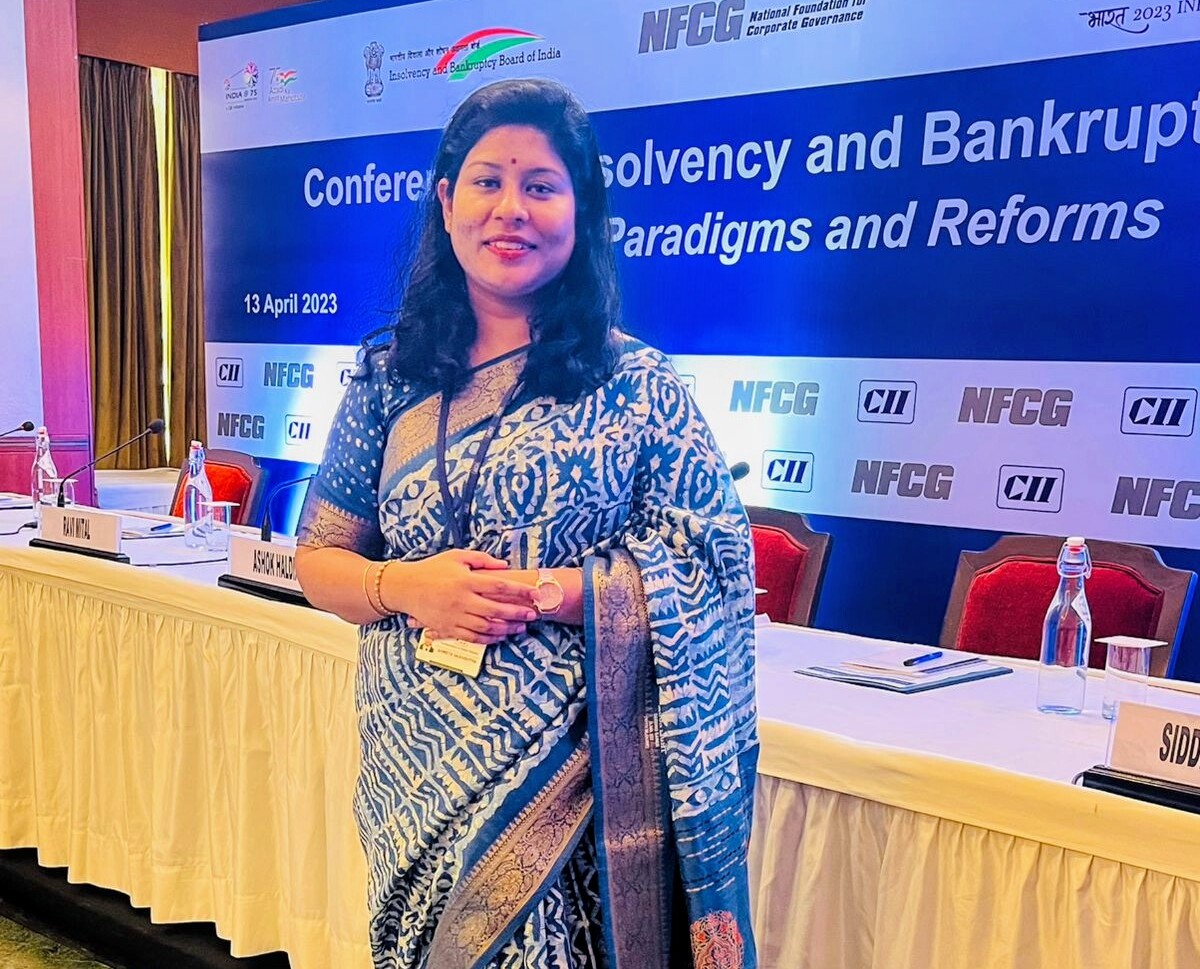








 Allow notifications