Blog

  • Deepu Krishna on starting up with DK Studs, cracking CLAT and authoring a book

    Deepu Krishna on starting up with DK Studs, cracking CLAT and authoring a book

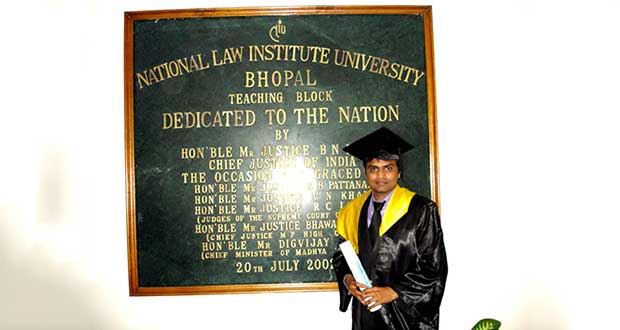
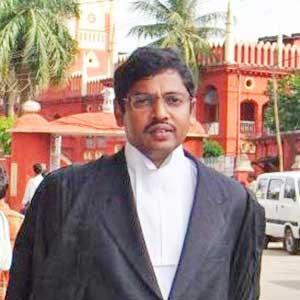
    deepu-krishnan-1Deepu Krishna graduated from NLIU, Bhopal in 2006. Currently, he is the Director of DK Studs, a law entrance preparation coaching. He set up this institution after working with a law firm. We asked him about:

    • Starting up with and building DK Studs
    • Advice to law students who could’t make it to top NLUs
    • Skills to crack CLAT
    • Authoring ‘Lexis-Nexis/DK STuDs CLAT’


    The career of a lawyer in India is still just a backup option for most students. What motivated you to choose law as a career? Did your family and friends not suggest you to go for Engineering or Medical Studies?

    As a child hailing from a middle-class family, I was often commended by my parents for my ability to come up with prompt and witty conversational replies and reactions. This was indicative, according to them, that it was the black and white that was the uniform most apt for me. When I was in the 10th standard, I made one of the most rebellious decisions of my life, by opting for Commerce even though I had obtained good marks in Maths & Science.

    I remember being called by my cousins, who are from the IT sector and live abroad, threatening to disown me if I took up commerce. My decision was perhaps considered this rebellious since I belong to a traditional South Indian family which believes that “Engee’nears” are the most gifted creations of god on earth. However, being the stubborn lad that I am, I opted for Commerce because I knew I wanted to do Law and prove each of my disbelievers wrong. I researched extensively and a cousin of mine from Bangalore helped me prepare for the National Law School entrance exams. I remember now that the one thing that motivated me to study was the fact that one day I would to be my own boss and work in an office where I set the work culture and not be just a part of the crowd. I dreamt of owning an SUV before I turned 26.

    I planned to relieve my Father from all burdens after his retirement, which included not taking any financial aid form him for my higher studies. I even vowed to marry the girl that I had liked right from my childhood. My Friends called me too mature for my age of 17, but I had to just that after I lost my brother in an accident and. I knew that being an average student, I could achieve my goals only by pursuing Law. Today, I am proud to say that I accomplished all of them. I appeared for NLSIU and NLIU, and I was successful in getting admission in both. However, I opted for NLIU as I had lost my Brother the previous year, and my Mum wanted me to stay back in Bhopal, rather than go to Bangalore – the city where my adventurous personality had resulted in me breaking my limbs. This was the one time that I finally listened to them, unlike in the past.


    Tell us about your life at NLIU-Bhopal?

    In the first class I attended at NLIU Bhopal, our then Director, the legendary Professor V.S. Rieki bellowed in the class, his words of advice : Law is for smart students and those who feel they can handle pressure, however remember that you have to live the life of a hermit and work like a Horse”. Within months after understanding the curriculum and the set conventions inside the law school, I did decide that Prof. Reiki was right, however I would also enjoy my life like a law student. I take pride in saying that I have been taught by one of the best faculties in the history of NLIU Bhopal. Prof. V.S. Reiki, Prof. Moolchand Sharma, Dr. Ghayur Alam, Prof. Surya Deva, Prof. Rajiv Khare. Prof. Uday Pratap Singh, Raj Shekhar Sir to name a few who have not only shaped me as a law student, but also been a law mentor. I am nothing but an amalgamation of all these legends.

    I have no shame in saying that I do copy their style of teaching and I suppose that makes me whatever my students call me. If I have to sum it up in one word, I’ll call it “Renaissance”. It was a completely new “Me”. I came from an all-boys school and was totally shy, lacking both confidence and public speaking skills. My world started with Bhopal and had Bangalore in its dreams. My reasoning was confined to the then MTV and Zee classic shows. The Constitution and the Rights I had known till then was confined to what my Civics classes had taught me. In just 6 months, my Dad observed that there was this “Class” in me. From peer to parents, everyone recognised that I had transformed into someone everyone could now look upto.

    A remarkable incident was when my friend, a commerce graduate, called me to train him for his IIM GD-PI interview mock drill and asked me to train him. He was a graduate back then, and I was still an undergraduate but he was of the belief that my interpersonal skills had graduated much above him, and that I could train him to be like “Me”. This was the one moment when I got a hint that training was an alternate career I could consider. As a student, I was average student who used to score average marks in subjects I disliked, like CPC and exceptional marks in subjects I loved, like Constitutional Law, IPR, etc. Another major positive I gathered from my law school life was the politics and backstabbing in Law School, since it made me ready for the life ahead. I used to lament on my decision to take up law, since I had good friends in school, and here everyone was mean and selfish. But once out of law school, I faced bigger betrayals, not once, but thrice in my career. Things got ugly to the point where a cartel published a malicious, defamatory and paid article in a yellow paper, to shake the monopoly I held. They did achieve their objective, but they couldn’t break my spirit. My students used to ask me, “Sir, how do you handle these things and still work with all your might?”I would reply, “In Law school they trained me for these things as well, and even if I do get affected, I know how to bounce back.”


    Law school can be monotonous at times. What did you do to keep yourself busy? What activities did you participate in and how did they shape up your career decision?

    Well, I don’t agree with the statement that it can be monotonous. It may be true for those who want to remain only with books and spend the majority of their time in the library. My law school life was completely different, as I said, thanks to my mentors who told me that studying law is beyond books, and is more practical. I did most of my projects using the empirical method, which was fun and educative. I remember going to a red light area for one of my projects and coming back crying on achieved through the legal system. I realised how women in our country, though worshipped and idolised, still struggle to achieve equality, be it inside a house or a Multi-million corporate office. As I was fascinated by Corporate law. I remember taking assignments on Transnational validity of laws on Bankruptcy, Insolvency, Formation etc. I made a few friends from Harvard Law School and Yale through a conference on the same.

    Today, when I hear the Law ministry contemplating on these issues I do feel proud to have learnt and researched on those issues, which truly shaped my thinking. I never felt bored throughout the five years. Yes, I must not lie: when my friends from other courses were graduating when I was in the third year, there was surely this unnerving feeling that my graduation was so far away. Yet, I kept myself busy with many extra-curricular activities to subdue this agony. I am currently pursuing my L.L.M from JLU, and many ask me the reason behind this long break. Well, after getting placed and starting my own venture, I just felt that I needed to learn more and update myself. Thankfully, right now, I am working under very good patrons like Prof. Dr. C. Gurudutt, Prof. Dr. Yogendra Shrivastava and Dr. Shobha Bharadwaj Madam who have been rejuvenating my thinking. After graduation, I missed my law school and had decided to invest one year to upgrade myself and even now, I am involved with researching, and I plan to be a part of some seminars. This is almost an addiction for me now.


    What kind of internships did you do while you were a student? Are there remarkable experiences during your internships that shaped your career choices later?

    Well, they were largely Corporate in nature, barring a few that I did as a first year student with a few NGOs. I loved researching and advising, and in one of my Internships, I remember a senior advocate telling me that my interpretation skills are good. You can either be a good Judge or a Teacher. I used to observe a lot of things as a student and study their societal impacts. I had written an article on the Jessica Lal murder case, and one day, as an intern, I happened to meet Mr. D.P. Yadav, since the advocate whom I was interning with was counselling him. I still remember the interactions between both of them, since I witnessed how Law can make the powerful kneel before it.

    If you ask me about the most remarkable internship I had, it has to be the Judicial clerkship I did with Justice B. N. Shrikrishna. Sir is a legend. He is a Sanskrit scholar and each evening after work I remember sitting with him and discussing Constitution of India , the principles of Law, comparing and analysing them in the light of Upanishads, Bhagwad Gita etc. He had written an article on Maxwell v Mimansa, and I still use it in my constitutional law classes to give students the insight on the spirit of law. I had a deep interest in Hindu religious philosophy and Sir, being the scholar that he is, enhanced my curiosity. He used to teach us how a point of law is deliberated, discussed and decided.

    He told us why study of law is a power, a power to determine what is right and wrong in the society. He is such a good human being, He was so compassionate. He knew that we were living away from our parents, so he used to make us have lunch and dinner with him so that we didn’t spoil our health through junk food. I learnt a lot from him. I suppose that the mentor that students adore in me is because of the skill of being compassionate, considerate and warm hearted to a student’s curiosity, which is something that I learnt from Srikrishna Sir.


    What are the skills you have learnt at internships and you could not have learnt otherwise? Do they still feel relevant to you?

    Well, Internships do teach you a lot. Outside the office: Firstly, if you are in a cosmopolitan city like Mumbai, you learn how to be street smart. If you are in a Metro like Delhi, you learn how to handle pressure and power from people possessing it. Inside the office: well it depends what on the kind of associate you are assigned. One of the primary lessons that I learnt was that, in a firm, there is a reporting time, but the time out depends a lot not just on your boss’s mood but also upon the nature of work you have been assigned proportionate to the deadline given to you. Internships tell you specifically that law is more than what the book reads. Internships are your gateway to a job placement if you do them correctly and with diligence.


    You worked with a law firm before starting DK Studs. What made you make the jump?

    Well, in short- The creator of Law entrance prep in India- Sachin Malhan. I remember him convincing me over a coffee why it was his belief that I was not just a good teacher but also had good managerial skills. He told me how what we do is not just teaching but changing lives and giving children an option to explore the growing field of study.

    I would be lying if I said that I didn’t enjoy corporate litigation. Justice Ruma Pal had once praised me openly in the court room for my eloquence and clarity. I remember giving a tea party at the Supreme Court canteen to celebrate the feat. But if you speak about job satisfaction, I did that feel teaching pulled me towards it more. The decision to jump came after a case I won for my firm. Quite contradictory, but yes, because by winning the case, I rendered a female aged 60 homeless. The same day CLAT results came and the All India rank 2 holder was my student. The joy these students shared won me over and I decided that I always wanted to be on the winning side and never wanted people losing.


    Why did you decide upon opening a law test prep coaching? What motivated you to start DK Studs? What is the story of your start-up?

    I always resist the notion of people calling me an entrepreneur- I would rather call myself an Acadprenuer {I have coined it myself}. You can’t be a business man if you are a teacher, a mentor. Business is not what you do with students. I would rather treat each of my student as a family. This trend of start-up has started in this pious field because more and more businessmen are venturing into it. They do treat it as business. I somehow can’t agree with that. Flipkart could be a start-up; Alma Mater could be a start-up.

    When Sachin Malhan started law entrance prep, business was secondary for him. He quit Amarchand Mangaldas and was not a jobless person or from a family which owned a fortune. He quit it and started this entire industry because he felt for it. I remember him telling me that he likes teaching and each class gives him a different high. He knew his skills and the call from inside. I belong to that school of thought. I don’t have sales target, even a sales team to assist me. I don’t maintain relationships with the media or press and you won’t even see any of my ads screaming things which I can’t prove. Coming back to why I started “teaching and mentoring students at DK-Studs”, when I left LST, I remember it was because I had to attend to my dad’s health and a competitor was placing me as a National head with more jump in all forms in my home town. It was again Mr. Malhan who said “I would love to see you as a competitor rather than join one, you are like a brother, and joining the competitors goes against ethics and what I have taught you.”

    When I came down to Bhopal, a school friend of mine proposed that we both start a partnership. With the confidence I had, we opened up a venture and in a single year managed to give Madhya Pradesh its first NLSIU selection and a ratio of 89% selection. We even made Hindi medium students successful in CLAT. The high it gave me cannot be explained. Today, I am associated with CLAT possible for our CLAT training, and DK STuDs is basically now a major educational services unit which caters to different needs of law graduates.

    I am starting a programme “Lex Academia” specifically for those students who don’t get through CLAT; I feel they are similarly talented and just could not do justice to those 2 hours. This is my way of contributing to those who couldn’t clear CLAT directly or indirectly. I do hold myself responsible if they don’t, and this way, I can help them in becoming what they once dreamt of becoming-a good legal professional, even if not from a National Law School. If they decide to follow law as a career option, we have planned a course which shall train them in all the skills which make them a perfect law student, i.e. we shall train them on those skills which are required to survive in the profession. We shall also help them in placements and internships.

    I have a dedicated team who are graduates from Harvard, London School of Economics, Cambridge, University Of Edinburgh etc., helping me out in this programme. I have started a small mediation cell called “Proxy-Path”, which is basically a venture by me, along with my students who have passed out of Law schools-some of them who are in fact still pursuing their graduation, but keep doing the clerical work. And, believe me, I am not doing this as a start-up. These are all dreams and we are just making them real. A dream I once saw sitting at the last bench of my classroom in NLIU – of leading similar minded people.


    With so much of competition existing in the coaching and teaching field, what makes DK Studs different from its peers?

    From my viewpoint I don’t have competition because I belong to the genre which created this market. As one of my student put it – you are the market, they devise separate plans of marketing against you and that itself is evidence of your stature. Today we are in a position at DK-STuDs that we select our students -you can’t get into this academy just because you want to. We don’t fill in large chunks of no-hopes who are doing Law just because their friend is doing it, or they love the parties in law school. We have an interview system, a Psycho metric test and a two week trial class and the student has to undergo our trials and only then we allow admission to them. This command we have is because we have already undergone the stage they are in, and currently we are in a position where we can afford to be this choosy. I told you that we don’t have a marketing personnel or department. There are no calls made by us or schemes that we come out with, like they do in a business enterprise. We don’t give discounts, (the term surprises me because one cannot give a discount on education!) we have scholarships which we give to academically proficient students and students who are from weaker financial backgrounds.

    The scholarship is named after my late brother and so it is close to my heart. We are costly not because we want to be, but because I pay my faculties well and keep them content. There are institutes who are taking in large chunks of students and charging not even 50% of what we charge, and students do understand the difference when it comes to national ranking of CLAT possible in every mock test. Faculties with more than 9 years of experience with pan India fame teach them. Now the reason why DK-STuDs is different from its peers could be an unlimited number of things that I can boast about. However, I would just want you to deduce it from the fact that, when we started this firm, it was not as a business but as a craze, and a dream, something you will feeling every student and alumni of DK STuDs. Even the students that I have taught through my Youtube video are close to me.

    Our Alumni is the strongest in any National law School and the camaraderie they share can even be seen there. Today, my students call all Bhopal is irrespective of any coaching, a Dk-Stud by default, which is in itself the evidence of how we are placed. As I was giving you this interview, I just received this information that an Alumni of DK-STuDs has been chosen as Miss India-New Zealand. We are everywhere and all we do is appreciate what good others do, get shocked on their mistakes and boasts and just smile on the way they compete with each other. I feel it’s not about being different. It’s just about delivering what you promise and we do that each year. On a personal level too, I am the happiest amongst my competitors. I have a family, and I give time to them.

    I have a loving wife who helps me with my academy. When I return home, I have a 2 ½ year old son who welcomes me with selfless love. I am pursuing my Post Graduation with my own earned money. I do not belong to a business family and did not have a financial backing, but still made an academy out of my own hardwork, without anyone’s help. I never followed a trend, rather created trends in the market, which others follow, like we launched CLAT & Commerce under the same roof and people are trying to ape it already. I do everything I once dreamt of as a child, like owning portable gaming device, etc. Well, happiness and peace of the heart have been my biggest earning.


    deepu-krishnan-3

    What are your plans regarding DK Studs for the upcoming years? What are the top three things you would require to keep the growth sustained?

    As I have already told you, the name of DK-STuDs itself means “My Students and I”. There are plans which I have with my students when they graduate, and the ones who have graduated are already working on that area. We have collaboration with CLAT possible and that is now really working well with the pan India connect we have. I contribute to their growth with my goodwill and they do appreciate it. Together we have become very strong. The other two projects I have on my mind right now are on task list. Again – I am starting a new field, so I am so pepped up about it. It is me helping the students who saw failure in CLAT realise that irrespective of any law school you are in, you can work magic with acquiring these skills that we shall teach. In Proxy Path we handled 3 cases and managed to get 2 of them reconciled. By the age of 40, I plan to enter freelance teaching, giving these projects to the able students I have. I already have offers from University of Wellington; they made the offer after watching my YouTube videos. I would want to teach Jurisprudence and subject of law at University levels on a freelance basis. I am designing few lectures for the same and my research, too, is on the same field. I have a deep interest in philosophy and would want to come out with my own theories in Political science and Global Justice. As I said, when I chose teaching, it was not that I did not have anything to do. I knew what I was doing. I had already planned my dream ahead.


    Do you think CLAT scores are truly indicative of a student’s potential? What kind of aptitude do you think is necessary to crack CLAT?

    No. Some of my real good students have not managed to crack it and some of my very average students have got through the best. I feel it isthose2 hours and the temperament you keep that counts at the end of the day. I read a lot of metaphysics and think that if you train yourself in the manner required to give you your best in those two hours, it is one of the easiest exams. But then, it is very difficult to be that sharp, and sometimes you just realise that in one go. Inside the campus, I have met students who don’t understand how they got in and don’t know how to survive. They just performed better in those two hours and got through, that’s the reality. My Endeavour with my new course “Lex Academia” is banking upon this feature, as I already told you. To me, any student who wants to create a strong career is more important than the horde which opts for it just as an option or backup


    For GK and Legal Reasoning sections, how important is it to read the newspaper regularly? What sections should one focus on?

    General knowledge requires interest, you cannot just cram and go. They ask you questions which are basic in nature yet they have some questions which require you to have a good deep knowledge. Cramming up current affairs won’t help, or even merely reading the newspaper or appearing in some quiz. If you are reading the news, you should have the ability to research and critically analyse it. You can do this only when you know the history, the backdrop from the viewpoint of science in some respects. Your geography has to be good to understand world polity. All in all, as I said, it’s about interest. If you don’t have interest, generate it through discussions and writing essays on the same. Debate on the issues concerning world polity and do not just read from the newspaper, read it in a very diverse manner. I recommend my studs to read “India after Gandhi”, and then read history. We discuss the Spartacus struggle against Rome and then how Rome is still alive and we link it to the Israel –Palestine issue. There is a lot we learn, and not just cram.

    Legal Aptitude requires just a strong sense of power of application of logic, given to you in the form of principle. An ability to stick to the question at hand, and not getting deviated and answering it in the spirit of the question asked.


    Students who top CLAT often claim that they never studied a lot; however many students who have, miss out on a good rank. Do you believe CLAT is all about innate skills, then? Or that a particular approach should be applied to clearing it? If yes, what should it be?

    I already answered that it’s about those two hours and how you handle pressure. Students who read more than 8 hours tend to disturb their own inner peace- they have conflicts going on inside them and that takes a toll on them. Aspirited student is smart and he/she knows how to manage time, and not drain his/her energy in a futile manner. As I said- “Meta-physics”, you see. I don’t allow my students to sleep between 3-5pm (the timing of the CLAT exam) because I feel that they should be at their intellectual best during this time. It does work for the majority of time.


    deepu-krishnan-2

    Have you had students who were brilliant but still couldn’t make it to a National Law University? If yes, what is your message to those students?

    I did have. My only suggestion: Law is a profession. If you acquire good skills, you shall always succeed, no matter which law school you belong to. Coming from a National Law School, you do get an easy start but if you are good with your legal knowledge and your skills are apt, you won’t ever be let down by this profession.


    CLAT 2015 is probably going to be online; how do you think students should get themselves prepared for an online exam?

    It maybe a farce. I don’t think it’s possible for it to go online. They weren’t even able to enforce a proper online registration, now if the exam is done online, it’s going to be a much bigger issue. Undergraduate examinations, especially exams like CLAT, are better managed offline. However, even if it is online, we are well equipped, at CLAT possible, to handle it. So that won’t be an issue, with students accustomed to online testing.


    Do you provide any work opportunities for law students? Do you recruit undergraduate law students as part time faculty?

    Undergraduates in my academy only teach students how to crack CLAT and how to attempt questions like they did. They don’t take full length classes. These sessions help students interact with those who have been there, done that. Work opportunities for law students and graduates – yes, as I said, I have already recruited some of my graduated students and with time, we shall have an army of them. And that’s an additional advantage of being a DK stud -I trust them blindly.


    You came out with a standout compilation of study materials for students, which was one of the most sold books last year. How did you conceive the idea of the book?

    Yes, the book is called Lexis-Nexis/DKSTUDs CLAT study kit. The idea was conceived back in 2006. I was unable to find anyone who could understand what I had visualised. Lexis Nexis, with its young management team they, realised what I was hinting at. We wanted to tap into the unexplored area and give students something to learn from even while at home, without having to join any coaching institution. The book is different in many different ways, one of them being the “FAQ section”, where the student can actually obtain answers to questions he/she usually has problems with, related to some subjects. In the Maths module, we have answered questions like “When should I attempt Maths?” amongst others. This year we are releasing the 2nd edition and once again, there will be surprise for the students once they buy the pack. For confidential reasons, I can’t comment on the same, however the new addition is very productive for students of CLAT.


    What does it take to be an entrepreneur? What are the three great skills of an entrepreneur according to you?

    I already told you I am not an entrepreneur. I am an academician who knows how to create core value systems, mentor students and work out an academy with these values. I am alien to terms like Baniya, Gujju, Sindhi style, etc., which people usually use to define business in India. For me it has to a lot do with the mantra that if you love something – work for it, and achieve it. I read a lot of Richard Branson and Robin Sharma, and have learnt a lot from them. I cannot enumerate any three – I just feel that anyone in my profession should follow some simple things like, maintain ethics, and be a slave to them. Set principles and standards, and always stand by them. In this profession students tend to become like you. They follow you. You are effecting change, so it means a lot. Become a visionary to them, rather than making them business-minded. Give back something to the society in any form that you can, in a pro bono manner.


    Lastly, what would be your message to law students and young lawyers who want to pursue alternative legal careers or entrepreneurship?

    Law is an endless field. Once you take up law, you shall always remain a student. So if you seriously have this urge to learn things and always remain updated, you have chosen the right profession. If you think that it’s just a way to earn money and live your life easily, that is not true. Your real life will start post law school. Law school shall make you ready for it, but only if you are willing to learn. For alternate careers, Law shall surely increase your capacity to think, comprehend and create. It shall stimulate your communication skills and shall surely make a better manager out of you {managing grades, moots, project submission, series completion, etc. is tough, so you need to manage them}. Venture into anything only if you feel like doing it. You shall always succeed. Don’t do it because someone else is doing and he has found success in it. We all have our core specialities – it could be teaching, it could be music, it could be just about anything. Pursue it, and you shall always succeed.

  • Kapil Duggal on declining AMSS PPO for an Indian LL.M, driving NLIU MCC to zenith and being a batch topper

    Kapil Duggal on declining AMSS PPO for an Indian LL.M, driving NLIU MCC to zenith and being a batch topper

    Kapil Duggal is the topper of NLIU Batch of 2014 (set to receive the Gold Medal on 15 November), who bagged a PPO at Amarchand & Mangaldas & Suresh A. Shroff & Company, an accomplished mooter, a successful Convenor of Moot Court Association (Took NLIU from #23 to #1 on the MPL and retained the numero uno position for 4 months), a debater and sportsman among others.

    In this interview, he talks about:

    • His experience in taking NLIU from Rank 23 to Rank 1 in MPL
    • Choosing Masters at NLIU over PPO from AMSS
    • Few tips on framing C.V.


    How would you like to introduce yourself to our readers? What motivated you to choose law as a career?

    I am a 2014 batch graduate from National Law Institute University, Bhopal. I would like to take this interview as an opportunity to share my views and insights on life in a law school and career decisions that a law student has to take.

    Law was not my first choice. I was pursuing engineering when at the end of the first Semester, I realized that I was not cut out to be an engineer. A couple of friends suggested me that I should look at law as a career option. I browsed through their preparation material for CLAT, it caught my eye, and a few months later, I ended up at NLIU, Bhopal.


    You’ve done your graduation from NLIU and currently pursuing Masters there. How would you describe your experience?

    Well my experience has been nothing short of fantastic! I’ve got the opportunity to explore many dimensions of my personality. For instance, I had never participated in any public speaking event/competition when I was in school. And one year into law school, I was representing my University at the United Asians Debating Championship in Bangkok, followed by another National Debating Championship at NLU, Delhi.

    National Law Universities provide you with plethora of opportunities in every field. I led the University basketball team at various National Sports Fests like Spiritus, Virudhaka, Yuvardha and Sportomania.

    I also organized the first round table conference on Need for Legal Regulation of Coaching Institutions, wherein after debating and discussing the nitty-gritty of the subject with all the stakeholders, we drafted a paper and forwarded the recommendations to Ministry of Consumer Affairs, Food & Public Distribution, Government of India.

    NLIU also gave me the opportunity to interact with many legal luminaries and have discussions with them over a vast range of subjects. I will never forget my discussion with (Retd.) Justice VS Sirpurkar regarding the challenges faced by the judiciary and the criminal justice system, when he visited our campus for delivering a Guest Lecture and was kind enough to spare some time from his schedule to interact with the students. I also organized a guest lecture by Senior Advocate Ms. Geeta Luthra on Trial by Media, which is cherished by students of NLIU till date.

    So it has been an incredible experience at NLIU, which was one of the reasons I opted to pursue the Master’s degree at the same institution.


    You have been among the top rankers during your college days. What are the tips and strategies you would like to share with our readers who are currently law students?

    Sincerity and dedication are one of the most essential factors to be considered. One need not entirely focus on reading the course material. It might even be tedious at times. A rather interesting approach, which worked well for me, is to read latest judgments on the subject. Actual cases in a courtroom are not quite simple and straightforward, and involve interplay of multiple provisions and in many cases, of multiple statutes. And a Supreme Court judgment would usually trace the first case which dealt with the subject and eventually come to the contemporary interpretation before finally arriving at a conclusion. So by reading one judgment, a law student can understand multiple provisions while getting acquainted with landmark cases.


    kapil-duggal-1

    You were the Convenor of the Moot Court Association at NLIU and during your tenure, NLIU gave its one of the best ever performance in mooting circles. How did you achieve such a feat and what skills do you get to hone while managing such a responsibility?

    NLIU had ended up at #23 on the MPL in 2013 and that’s when I assumed the office of Convenor, MCA. I straightaway took up the challenge of taking NLIU to the zenith. I reviewed the existing policies, inspired the mooters to put it in their 100%, and created a moot pool specially for our First Years students, so that we could groom them and send them for national competitions in their freshman year itself. Our alumni were very supportive and gave us their valuable inputs whenever necessary. Consequently, we were able to achieve #1 on the MPL and retain that position for 4 months i.e. for about one-third of my tenure. Even our mooters from the First Year brought home 4 awards in the moots they participated in.


    You have also judged the 5th NLIU-Juris Corp Moot this year. What is your advice to budding mooters? What factors do you think contributed to your success?

    The first step to success in a moot court is doing good research. And once you are standing before a judge, you should be in a position to argue your case without even glancing at your memorial. You ought to know the facts and the law on your fingertips.

    Having argued before a total of 10 Supreme Court and High Court judges in different moot courts, I’ve experienced that the situation in final round(s) of a moot court is generally a bit different from all other rounds because sitting/retired SC/HC judges would be on the bench, and they generally don’t appreciate inferences drawn from the factsheet, for want of evidence. So you must modify your strategy and strictly argue on points of law.


    How helpful do you think is mooting for a law student? Does it serve to build any practical skill?

    Absolutely. First of all, mooting helps improve your researching skills, which prove to be a great asset during one’s internships. Secondly, since you have to argue on behalf of both the petitioner/appellant and the respondent, you get to train yourself in applying the same law to opposite situations and thereby get to learn interpretation of statutes, which is one skill you hardly get to develop in academics. Thirdly, you get to keep yourself updated of legal aspects of contemporary issues as mostly, moot problems are drafted on contemporary issues.


    What would you say differentiates between the best speakers and the rest? What are the top three things you consider sine qua non for being a great speaker?

    Knowing the law- both for and against a proposition, ability to put your best points forward effectively in the given time frame and, and ability to take the bench with you on every point are the things that differentiate a good mooter from other participants. Equally important is knowing when to concede a point and taking the decision of moving to the next argument. This comes only by experience.


    You secured a PPO from AMSS during fourth year of your graduation. Still, you wrote CLAT and joined NLIU for Masters. What prompted you to leave a lucrative career opportunity and pursue LL.M from an Indian University? Was it a part of your long term plan?

    Interning with AMSS was a great experience, it’s a terrific place to work. I liked the work there, and would have loved to join AMSS. Senior Advocate Ms. Geeta Luthra had a profound effect on my decision-making. She along with Professor (Dr.) S.S. Singh and Prof. (Dr.) Kumar Kartikeya guided me to the nuances of a career in litigation and inspired me to take it up. I intend to practice in the field of Constitutional and Administrative Law (after completing my LL.M degree). It made more sense to me to undertake an in-depth study and analysis of laws that I would be dealing with on a day-to-day basis, as against pursuing LLM from a foreign university, where I wouldn’t have got an opportunity to do so. NLIU, Bhopal being one of the top universities in the country and the only top institution offering a course on Constitutional & Administrative Law, made my decision easier.


    What kind of work did you come across during your internship at AMSS? What are the things you consider sine qua non for positive feedback from an internship?

    I worked with Project Finance and Litigation teams of AMSS, Mumbai. The nature of work included drafting, preparing research notes including for some very interesting topics like law regarding spot-fixing in cricket, etc.

    Sticking to deadlines, formidable research work, making sure that your work is updated with latest case laws are sine qua non for a positive feedback. You must be thorough in the work you are submitting for you can be called at any time and asked to give details regarding the cases you have cited, if the associate finds them of great use.


    Did you have to undergo an interview before securing your PPO? Any tips on how one should go about framing a C.V. and prepare for an interview?

    While drafting your C.V., you must precisely state the topics which you have worked upon during your internships. You must also keep yourself updated of any new developments regarding them. Customize your CV according to the firm/company/lawyer you are applying for, and stress on those parts of your work experience which hold value for them. If your CV is heavily loaded with co-curricular activities, you can cut down on the section of extra-curricular activities in your CV.

    I was interviewed by AMSS as well as by Khaitan & Co. for a PPO. I received an offer from AMSS first and hence I requested Khaitan & Co. to allow me to opt out from the PPO process and they were kind enough to oblige. You must read up on the topics that you have worked on during your internship, including the latest developments. Having knowledge of the market situation and practical aspects is definitely a plus point. You should not miss out on reading up even a single topic which you have mentioned in your CV. You should also be able to readily answer any question regarding the field of law you would like to specialize in, which should be supported by your CV (you should have written papers/articles or participated in moot courts/conference relating to that field of law). These would significantly help you in preparing for an interview.


    Lastly, what would be your message for our readers?

    You must make the most out of your vacations. Intern with a lawyer/firm whenever you get an opportunity to do so, for you will learn the practical aspects of what you read in law school, which will give you an edge over others. Also, manage your time wisely and do take out time for your hobbies/sports, so that you enjoy your time while in law school.

  • Jayantika Ganguly on being a corporate lawyer at AMSS, and Khaitan & Co.

    Jayantika Ganguly on being a corporate lawyer at AMSS, and Khaitan & Co.

    Jayantika Ganguly graduated from WB National University of Juridical Sciences, Kolkata, back in 2008. She has thereafter worked at Amarchand & Mangaldas & Suresh A Shroff & Co (“AMSS”) for more than three years, and is currently working as a Senior Associate at Khaitan & Co. (“KCo”).

    We asked her to share her journey from being a law student to being a corporate lawyer.


    Given that most of our readers are law students and young lawyers, how will you introduce yourself to them?

    “Hello, Lawdroids! Greetings from a sample of Lawdroid Ice-cream Sandwich!”

    <Disclaimer: I do not own the terms “Lawdroids” or “Ice-cream Sandwich” and these are merely being used for representative purposes.>


    Back in 2003, NUJS was a fairly new institute. What motivated you to choose law as a career?

    It might sound a tad fickle, but law was simply the most interesting option for me at that stage. Law was exciting and a heady blend of the secure and intrepid – which just felt right.Perhaps a side-effect of growing up on detective stories!

    NUJS was fairly new back then (we were the fourth batch) – but we had the legendary Dr Madhava Menon as the Vice Chancellor! The rank #3 in the entrance exam helped, too.


    In retrospect how would you compare NUJS with other premier law institutions of the country?

    NUJS is undoubtedly one of the best. As an alumnus, my hindsight might be a little more rose-tinted than reality – but NUJS did a great job of not only training us in law, but also preparing us for our professional lives. The courses, internships, projects, moots, extra-curricular activities – it was all great. I think NUJS might have one of the most active student populations amongst the law schools. It certainly gave us a twinkle in our eye and a swagger in our stride.


    How did your recruitment at AMSS take place? How do you recall your anticipation of the job offer?

    Campus recruitment – our Placement Committee did a spectacular job. The procedure was fairly standard – CVs were sent, shortlisted students were called in for a Group Discussion, and further selected students were called in for individual interviews. I remember frantically reading the Companies Act before the scheduled date – but in the end, it wasn’t required. We were tested for our aptitude, oratory and analytical skills.


    Many lawyers would say that the actual learning takes place in the years of practice. How far would you say it is true? What was the case in your situation?

    I would take that statement with a grain of salt – but then, this is my personal opinion. I feel the internships and the way they are structured in law schools are very advantageous and we are not caught unawares upon joining a firm/company. You study a subject, and then you get to apply your knowledge during your summer internship. I certainly learnt a lot this way. Obviously we do not learn everything in college and during internships – but we definitely gain a general idea of how things function, and that is what ultimately influences the decision on where to work.


    You worked at AMSS for more than three years before joining KCo. Being the largest law firm in India, how did it shape up your work profile?

    At AMSS, I worked in the Project Finance team. Headline-grabbing deals and late nights were the norm. It was a fantastic learning experience – fast and glamorous.


    After having worked at AMSS for more than 3 years how did the shift to KCo take place?

    The move to Kolkata, for family reasons, was the operative factor. By a happy coincidence, KCo Kolkata was looking to recruit and I got lucky!


    What does your current work profile at KCo consist of? How is a typical workday like?

    At KCo, I am a part of the Corporate Team, so I get to work on a wider range of transactions here. A typical work day would have a few phone calls, a meeting or two thrown in, some discussion sessions and a lot of emails, document review and drafting.
    jayantika-ganguly-2

    It’s been six years of your work experience in corporate law. What would you say contributes to the high attrition rate of the top law firms?

    There are a fair number of reasons. A lot of lawyers wish to work for a few years before going in for their Masters degree. Some move either out of a desire for change or for personal reasons. In my opinion, though, the biggest culprits behind high attrition rates are burnouts and breakdowns. The frantic pace and glory of big deals feels amazing at the beginning – but gradually, it gets exhausting. Health problems start cropping up – and that is when most people leave. Some are able to adapt, some are able to change their lifestyle and continue. This is more common with first jobs, I think, because as students, we are unable to accurately gauge what we are getting into – we are too star-struck. Also, the elation of the first all-nighter, the euphoria of a successful closing, the excitement of seeing your deal in a newspaper, the feeling of being ‘important’ – these are all quite addictive, so, more often than not, we tend to ignore our health concerns until something goes seriously wrong.


    In these six years you must have guided a lot of interns at AMSS and KCo. What do you think differentiates a good intern from the rest?  How can an intern make a positive impression in the limited time they have?

    The best interns I have seen are prompt and meticulous. The characteristics of a good intern are pretty much the same as the characteristics of a good associate. Take your deadlines seriously. If you don’t have the bandwidth to take on additional assignments, say it upfront and request an extended deadline if possible – if not, check with the senior for priorities. Listen to instructions carefully – ask questions if you do not understand. Be meticulous. No one will penalise an intern for not knowing an obscure detail of law – but silly mistakes, shoddy submissions are not good. Do your research well and be prepared to answer questions on the assignment you have been given.


    Life for lawfirmites can be very hectic at times. What is your take on work-life balance? How do you unwind?

    Work-life balance is very important to me. I think it is a somewhat misunderstood concept. Work-life balance does not mean that you leave your time-sensitive transaction hanging and wander off because your work-hours are over – that is simple irresponsibility. What it means is that you do your work to the best of your ability, but you also keep some time to yourself, indulge in something you are passionate about, and you also keep an eye on your wellbeing. It is about finding a passion beyond your work and making time for it. It will have a positive effect on your work efficiency as well, as you will be more organised and work down the priority list.

    There are plenty of unwinding activities I indulge in. I love travelling – be it for work or leisure – and I try to travel as much as I can. I also fancy (or, perhaps, delude) myself to be a bit of a writer. I like to explore new cuisines and new languages. I am an avid Sherlockian as well – and a fan of music, art, dance and drama.


    Many young law students want to have a flourishing career in corporate law. What would be your advice to the future corporate lawyers?

    Other than thoroughly studying the corporate laws, keep abreast of the market news. Being up-to-date on information as well as laws is important. Try and intern with companies as well as law firms – this will give you a well-rounded idea about how things work on both sides. Hone your drafting and negotiation skills – this will form a major chunk of your work hours.

  • Apeksha Mehta on trimester system at NLIU, tips on C.V. and work at LKS

    Apeksha Mehta on trimester system at NLIU, tips on C.V. and work at LKS

    apeksha-mehta-2Apeksha Mehta is a graduate from National Law Institute University, Bhopal (Batch of 2014). She has participated in various co-curricular activities and has multiple publications to her name. Her diligence paid off when she received a job offer from Lakshmikumaran & Sridharan (LKS) in her 5th year of law school. Currently, she is working as an Associate there. We asked her to share her experiences and strategies she used over the years.

    In this interview, Apeksha talks about:

    • Trimester system at NLIU
    • Importance of co-curricular activities
    • Few tips on framing CV
    • Securing a job at LKS


    Tell us about your pre-college life as well as educational background. Why did you decide to study law?

    I belong to Ratlam in Madhya Pradesh and I completed my schooling from the same place. I have always been an average student. However, I think I managed fairly well, despite my sluggish attitude towards studies. I am a first generation lawyer in my family. My interest in law developed gradually when I started exploring the options I  had after 12th standard. I researched about law schools, the subjects, design of the five year law course and the opportunities it bestows thereafter and found it akin to my liking.


    First year of law school usually determines a lot about how the rest of the four years will be. It can also be very challenging. What was your experience?

    I will not prefer to call it challenging. Law school or for that matter any professional degree course is a start of a new phase in a student’s life. It is different, it amuses you and you are more than ready to go with the flow. First year of law school actually determines very little about the coming four years. But, it anyways builds your foundation. It teaches you how to go about the rest of the college life. Every year is a new experience in itself. I scored decently in the first trimester which developed a sense of fear regarding the coming trimesters as to keeping the score constant since every trimester introduced heavier subjects than the last trimester.  But the first year of law school I think is the best amongst all the years as there is comparatively less pressure and far less competition.


    One can find it difficult to manage continuous evaluation through trimester exams, projects, submissions, etc. in a law school. How did you manage your studies?

    Many people from other colleges think that a trimester system is difficult to manage. However, if you get into the routine of studying in a trimester system, it isn’t very difficult at the end of the day. It might get exhausting at some point of time, but it doesn’t entirely tire you out. All you need to have is interest in what you are pursuing and the rest follows.


    How much time does it take to manage academics properly in a law school like NLIU, especially in light of the trimester system?

    According to me, it should take you two trimesters at the most. Everything is new for a student in the first trimester. But, by the end of the first trimester itself, you start understanding how much more you need to put in to score good, or how frequently you need to participate in the co-curricular or extra-curricular activities. Of course, such realisation strikes only if you make the effort of planning out your schedule for the coming trimester.


    How would you describe your time at NLIU-Bhopal? What are the co-curricular activities you took part at NLIU?

    NLIU brought about a lot changes in how I perceived things before joining college. I got a lot more disciplined towards my studies. As a law student, I became more aware and more responsive towards my surroundings. National Law Schools offer ample of opportunities to explore one’s area of interest within law. I was more inclined towards paper publications and presentations. I have presented a paper entitled ‘Fairness Opinion of Independent Directors in Takeovers’ at a conference on independent directors at NLU, Jodhpur. I have also written an article entitled ‘Dumping: It’s Fair Unless it’s all Politics’ published in the A38 Journal of International Law.


    Which internships that you have pursued will you consider to be right at the top and why? Tell us about some interesting internship experiences.

    My internship experience at Nishith Desai Associates is what I would describe as the best. The variety of work and the work culture that I got to experience there was amazing. Besides Nishith Desai Associates, Jyoti Sagar Associates and Link Legal were also very good learning experiences. The appreciation for good work that you get as an intern boosts your morale. Internships also polish your research skills. While interning at Link Legal, I was asked to research on execution of a high court order in case of a merger. The client did not want to go ahead with the merger despite the order being passed by the court. I researched and found some noteworthy cases which helped save the client thus putting me in the good books of the partner and also helped me secure a call back.


    What are the skills you learned from internships? How did you ensure that you get noticed during internships for the work you do?

    Apart from a drastic improvement in your research skills, internships bring you a lot closer to how law works in real life. You apply the law to real life facts and hence, it helps you to learn to read between the lines and deduce the point of law which the client may have missed or may have misinterpreted. It also teaches you that sometimes there is no solution to the client’s problem and brings you out of the fantasy world of Mike Ross and Harvey Spector who always manage to find a solution for the client. Internships teach you a lot about the benefits of socialising, networking and also how do you deal with the expectations of a client. The best part about interning is that it keeps you posted regarding the industry.


    What brought you towards Tax Law?

    When my fifth year started and the time for placements was near, I decided I will not narrow down my choices to some particular areas of law. I knew I want to start my career with a law firm job and that was my sole aim. I had a previous internship experience with LKS and so I had an idea of the kind of work they do. Nothing about tax was new to me as such and hence, I did not mind giving myself a chance to work in this area.


    You secured a job at Lakshmikumaran & Sridharan (LKS) in your 5th year of law school. How did you go about achieving this?

    If you know what the recruiter expects from the person sitting in front of them, it gets a little easier to crack the interview. At the time LKS came to our campus, they had a 5 day lecture series scheduled, which gave us a fair idea about the working of the firm, work culture, the areas of law they deal in and what do they expect from freshers who join them. I also had the advantage of an internship experience at LKS, so I think I was in a better position as compared to others to decipher the expectations of the recruiter.

    LKS basically doesn’t expect you to know the tax law at length. What they expect is that you know the basic law and you have enough sincerity to join the firm. I studied the basics of indirect and direct taxation apart from whatever else was there on my CV.


    How many times did you intern at LKS before you bagged the job offer? Please tell us about the recruitment application process at LKS?

    I interned at LKS once at the end of my third year. I got recruited through the campus recruitment program in our college. The campus recruitment program at LKS involves shortlisting of CV’s of candidates who are desirous to sit for the interview. Thereafter, an interview is conducted with each of the shortlisted candidates.


    What kind of questions were you asked during the interview with LKS?

    They started off with making me comfortable by asking me about my city and family. Eventually, they started asking questions from the LKS internship and other internships. The majority of questions related to indirect taxation (sales tax, service tax and excise law) from my LKS internship, SEZ/EOU related questions, a few IPR related questions and FDI related questions from my other internships. They also asked me questions related to the certificate courses I pursued in Maritime Law and Legal and Financial Services.


    How do you think one should go about writing a CV when one is applying for a job?

    One should definitely very clearly mention the work done during the internships. Recruiters pay a lot more attention on the variety of work that the candidate has undertaken. A diversified CV is an interesting CV. Internship is not a time for you to select one area of law or practice and continue interning in the same. The idea is to explore and keep exploring until you find what interests you. Also, from my personal experience, if you are keen on getting through a law firm at the starting of your career, you should start interning in law firms right after your second year. Getting a job also depends a lot on the grades that you score. You need not be the topper of your batch, but a decent grade might also sometimes help you land a job interview.


    Many law school students struggle to secure a job. What do you think they are doing wrong, from your observations?

    A majority of students look at big law firm jobs as a matter of social eminence. This is a wrong approach and a totally inappropriate attitude for a person who is just starting his/her career. If it is difficult for you to determine your area of interest right at the start, have patience and slowly move towards something which allures you. If you know what attracts you then go ahead and grab the job that you think is fit for you. There are a number of mid-tier law firms which are excellent in their respective areas. Try to look beyond big names. Apart from this, the way you present your CV especially the cover letter makes a lot of difference. If all this is fine, then it totally depends on how your interview goes.


    Lastly, what would be your message to our readers?

    After having spent 4 months in the professional sphere soon after college, I realise there should be an alteration in the way students usually study at law schools. Trimester system or no trimester system, what is needed is a strong foundation to be built. So, even if you are being taught only case law ‘x’ in the classroom, make sure you have knowledge of what the status of the case was right when it came before the court. I know it is easier said than done. But, you will realise the importance of a strong foundation when you start working. I am stressing on the need of a strong foundation because any place you join after college expects you to know the basics. They make sure you turn into excellent lawyers, but they will only recruit people who have got their basics right.

  • Vishaka Deshwal on maintaining CGPA, research papers and recruitment at WIPRO

    Vishaka Deshwal on maintaining CGPA, research papers and recruitment at WIPRO

    vishakha-deshwal-1Vishaka Deshwal is one of the most diligent and illustrious scholars of the 2015 batch of NLIU, Bhopal. She has participated in various co-curricular activities and has multiple publications to her name. With such a dynamic profile and her dedication to work, she has recently received a job offer from WIPRO. We asked her to share her experiences and strategies she used over the years.

    In this interview, she talks about:

    • Maintaining a decent CGPA
    • Importance of co-curricular activities
    • Writing research papers
    • Recruitment process at WIPRO


    How would you introduce yourself to our readers who are mostly law students and young lawyers?

    I am currently undergoing my final year at the National Law Institute University Bhopal. I would like to take this interview as an opportunity to share my views and insights on life in a law school and career decisions that a law student has to take.


    How did you decide to study law? Did you have lawyers in your family? Why law and not engineering or medical studies?

    There are no lawyers in my immediate family. I used the elimination method while deciding the subject of graduation because I knew what I did not like.

    I got to know about the Common Law Admission Test (“CLAT”) while reading something online and I liked the concept of an integrated law course. The more I read about the National Law Schools, the more I got interested in getting into one.


    As a law student which activities did you participate in? Did you have any guidance on how to go about your academics, co-curricular activities and internships?

    I did not devote my time to only one co-curricular activity. I tried my hand at Parliamentary Debates, Moot Courts, Mediation Competitions, Paper Presentations, etc. I did not want to miss on anything so I made it a point to at least try out most of the activities.

    From the first year onwards, I participated in Mediation Competitions, Client Counselling, Debating, as these do not require any prior substantial knowledge of law. I participated in moot courts and also tried my hand at writing research papers. I have also been associated with the Alternative Dispute Resolution Cell in the college since my first year.

    All in all, I tried a bit of everything and every activity turned out to be an add-on to my skills. Our seniors were always welcoming and helpful in guiding us on how to go about participating in various co-curricular activities.


    One can find it difficult to manage continuous evaluation through trimester exams, projects submissions, etc. in a law school. How did you manage to keep up your grades

    I think continuous evaluation through trimester system is not as difficult as it may seem from the outside. After a point, you just get used to making projects and writing examinations every three months. It is just that one needs to be regular so that the projects or submissions do not get piled up and become unmanageable. Although, I am not the topper of the class but I managed to keep my grades consistently above average. I was not always attentive in the classes but still managed to sail through. Scoring good grades is not a very difficult thing I realised.

    There is enough incentive to keep up your grades in a law school. Good grades are like cherry on the top. Sometimes, grades may even help you get through good internships.


    You have published a lot of papers in various prestigious journals. Can you give us a few tips to ace the art of paper writing?

    Research Papers are an integral part of any discipline. As law keeps evolving with time, there are always some loopholes or grey areas which need to be corrected. Mostly research papers  aim at bringing out the fallacy in the law and suggesting the remedial measures. Therefore, I think that writing papers has a much broader relevance for a law student than just enhancing the CV.

    There are two necessary things we should remember before writing a paper. First is choosing the right topic. The topic should be specific and should highlight an important point of law that needs consideration or analysis. Second is that there should always be a new proposition or suggestion at the end of the paper.

    Rest, I think all law students know about the basics of researching. The more you read up, the better understanding you would have about the topic.


    Your internships at law school have mainly been with top tier firms. Our readers would be quite curious to know how you went about securing these internships.

    I was prompt in applying for the internships especially internships at law firms. Also, I made it a point to follow up with the HR to know about the status of my application. I also got through some of the internships through the Placement Co-ordination Committee of our College. I think the key is relentless punctuality.

    I think there is nothing wrong with interning at law firms from the very beginning provided that you have made up your mind about joining one after college. I think it depends from person to person, if you are not sure which career option is best suited for you then it is better to try out all possible options and then make up your mind.


    Did you plan out your internships throughout law school or did it all just happen by chance?

    I did not plan my internships as such. I took up whatever came my way. The only thing that I made sure was that I get to work with different kinds of organisations be it- NGOs, Government Departments, Law firms or Office of Senior Advocates.

    I think one should try and narrow down the options by start working with different kinds of organisation form the first year only.


    How relevant did you find your law school education with the kind of work you were required to do at law firms?

    I think what we are taught at the law school is very much relevant. The research and interpretation skills that we acquire at the law school help us through the internships.


    How has your mooting experience been?

    I am not a hard-core mooter. I did one International Law based moot court in my fourth year and one National Moot Court in my second year. The kind of in depth study and research that we undertake while preparing for Moot Courts is incredible and makes the whole effort worthwhile.

    Although, I really liked mooting and it taught me a great deal, I found it very time-consuming. That is why I participated in a limited number of Moot Court Competitions.


    You have been a member of multiple committees while in law school. Do you think these enhanced your skill-sets? Please share a few of your memorable experience.

    I have been a member of the Alternative Dispute Resolution Cell (ADRC) form the first year itself. Mediation is one of my favourite areas of law and I enjoyed participating as well as assisting in organising Mediation Competitions as a member of the cell.


    Recently, you secured a job offer at WIPRO. How did you go about achieving this? Please tell us about the recruitment process at WIPRO?

    WIPRO had come down to our campus for the first time, for recruitment purpose. The process was divided into three stages: first of all, an extempore was conducted. Some of the candidates were eliminated at this stage. Next, there were two rounds of interviews with different panel of interviewers. While the focus of the first interview was personality assessment, the second was majorly limited to legal questions. After the two set of interviews, there was further short-listing. The selected candidates were given a written assignment which was to be submitted the next day i.e. the day of the final interview. The final interview only comprised of questions relating to personality assessment.


    How did you prepare for the job interview? What kinds of questions were asked to you?

    While preparing for an interview, it is of utmost importance to be thorough with your CV. Mostly, the interviewers ask you about areas of law that you have worked on in your internships and seldom about your publications or other co-curricular achievements. Therefore, reading up the topics that I had mentioned under my internship experiences was the first thing I did.

    While making my CV, I made it a point to states the title of the work that was assigned to me on the internship (specifically mentioning the provision or name of any case law involved) leaving no scope for any vagueness or open-endedness. This way I was able to limit the number of probable questions.

    The bottom-line is that most of the questions can be anticipated and prepared for well before. By doing so, you feel confident while articulating your answers during the interview.


    Many law students strongly believe that getting a job at one of the top 3 law firms is mostly about securing a high GPA. Would you agree?

    Good grades or co-curricular activities alone are not enough. It is a combination of the two that projects you as a dynamic lawyer. Maintaining grades is important as that is the core of law school curriculum but we should not limit ourselves to writing exams and securing good marks.

    Many people believe that working as an in-house counsel affords more work-life balance and is less demanding. What is your opinion?

    Compared to working at law firms, job of an in-house counsel is less demanding thereby it affords more work-life balance. However, one should always strive to achieve work-life balance irrespective of the nature of the job.


    If you could re-live your 5 years in Law school, is there something you would do differently?

    I do not wish to change anything about my time spent in the Law School. I think even the mistakes that I made eventually helped me improve in some way or the other.


    Lastly, what would be your message for our readers?

    I think we should never stop exploring because there is always a plethora of opportunities out there; we just need to have an open mind.

  • Stuti Shrivastava on securing top-notch internships and a job offer from WIPRO

    Stuti Shrivastava on securing top-notch internships and a job offer from WIPRO

    stuti-shrivastava-1Stuti Shrivastava is currently a student of NLIU, Bhopal and shall graduate in 2015. She has an enviable academic record and has an excellent series of internships at top law firms. She has participated in various moot court and debate competitions. Her diligence paid off when she received a job offer from WIPRO.

    In this interview, she talks about:

    • Importance of mooting
    • Securing top-notch internships
    • Recruitment process at WIPRO


    How would you like to introduce yourself to our readers?

    I am currently pursuing my final year in Law from National Law Institute University, Bhopal. I would be joining Wipro next year. I would take this opportunity to reach out to the readers of SuperLawyer and share my experience as a law student and the opportunities thereafter.


    Why and when did you decide to do law? What interested you most about the subject at the time?

    I decided to pursue Law while I was in high school. It was just a couple of years back that the format of CLAT had been introduced for five year law courses. While deciding my career options, a five year law course seemed a good choice, firstly, because the demand for lawyers was on the rise and still is, and secondly, because there are a lot of avenues open for a lawyer as far as both private & public sectors and independent practise are concerned.


    How would you describe your time at NLIU-Bhopal?

    At NLIU, Bhopal we follow a trimester system which gets a little hectic sometimes. It might get slightly difficult to go through all the projects, mid-terms and end terms every trimester. But if you have a nice group of people to hang out with, college life at NLIU is really fun. I always had good friends here and that is what made my time here so great. I also learned a lot through academic and co-curricular activities like mooting.


    One can find it difficult to manage continuous evaluation through trimester exams, projects submissions, etc. How did you manage to keep up your grades?

    Honestly, I am not really at the top of the class as far as grades are concerned. However, I have always managed decent grades by studying a few days before exams. I don’t think there is a universal mantra for scoring well. It’s very subjective. Some students study all through the trimester while others study a night before the exams. However, students should be mindful that they do not enter ‘the vicious cycle of repeats’.


    Your internships at law school have all been with top tier firms. Our readers would be quite curious to know how you went about securing these internships.

    I acquired internships either through independent applications or through the college recruitment committee. While applying independently, I always made an effort to apply well ahead of time at various firms and to stay in touch with the HR department.


    How relevant did you find your law school education with the kind of work you were required to do at law firms?

    The laws that we study at law school form the basis of all the work that we do at law firms. Having said that, the practical scenarios that we face at internships are far different from the theoretical situations taught to us at law school. At internships, we are required to look into the practical application and interpretation of laws.


    Did you learn any skills while interning? What are these skills and how did you acquire them?

    I think the most important skills that I learned at internships were the analysis and practical application of laws. I acquired these skills by researching on practical legal situations and by analysing the interpretation and application of laws in such situations. Every assignment that I was given involved a new query which required me to thoroughly understand the law its application.


    You have participated in various moot court competitions including Willem C. Vis (East) international commercial arbitration moot, tell us how important is mooting and what effect does it have on one’s CV?

    Legal Education is not just about theoretical knowledge but also about practical application of law. Mooting helps a student get a taste of practical scenarios and assists in development of analytical skills. When mentioned in a CV, it shows that the student is not merely engaged in classroom activities but also makes an effort to branch out and participate in other co-curricular activities. Additionally, International moots like Willem C. Vis give the students an opportunity to interact with law students and jurists from top universities all over the world.


    How helpful do you think is mooting for a law student? Does it serve a real purpose or is just another way to crowd up the CV?

    Apart from developing analytical skills, mooting also helps in the development of oratory skills and in instilling confidence in the student. It is also a good way of acquiring research skills and increasing one’s pool of knowledge. In addition, the competition is a very good platform for meeting other law students from various universities and it facilitates exchange of ideas.


    Apart from mooting and academics what other co-curricular activities did you engage yourself in?

    I have participated in seminars and presented a legal paper.


    What do you have to say about mooting at law school and legal writing for journals? Are these activities that help with development of real world skills and do they have any ‘bonus’ value when seeking jobs?

    These activities certainly help a student in expanding his/her horizon of knowledge and legal skills. Also, while seeking jobs, these activities go on to show the interviewer that the student is a keen learner and is versatile.


    Recently, you bagged a job offer as in-housel counsel at WIPRO. How did you go about achieving this?

    I read up on all the assignments that I had mentioned on my CV and made sure that I knew them in and out. I also read up the basic laws and prepared the most anticipated HR questions.


    Please tell us about the recruitment process at WIPRO?

    The recruitment process was spread over a period of 2 days. On the first day we had an extempore and two rounds of interviews where we faced different interviewers. We were asked both, general legal questions and CV related questions. At the end of the day we were also given some legal and other assignments. On the second day we had a single round of interview where we were asked personality assessment based questions.


    Tell us about your interview? What kinds of questions were asked by the interview board? Any tips on how one should go about framing a C.V. and prepare for an interview?

    On the first day, I was asked basic legal questions and CV related questions along with HR questions. There were some questions based on general knowledge. The interview on the second day was solely based on personality assessment questions.

    One should always make sure that the assignments mentioned in the CV are precise and that there are no frivolous points in the CV. Preparing all the anticipated questions before the interview is always helpful.


    There is a phenomenal obsession amongst law students with maintaining a very high CGPA. How important according to you is this in securing a job?

    Grades are important but they are not the only thing that helps in a job interview. Thorough and clear understanding of the areas that one has worked in and is very important. Apart from knowledge, interviewers also look for other qualities in students like confidence, versatility, ability to work in a team and capacity to handle pressure. Students should also work towards developing these skills.


    Many people believe that working as an in-house counsel affords more work-life balance and is less demanding. Would you agree?

    Having interned at various law firms, I have firsthand experience of how demanding life is at such firms. In most of the places you are often required to work late and there is always high pressure to finish assignments on deadlines. In comparison to that, the job of an in-house counsel is not as demanding and therefore, it may provide a better work-life balance.


    Lastly, what would be your message to our readers?

    I would like to ask all the law students to not restrict their outlook as far as career after law is concerned. They should intern at different places and participate in various co-curricular activities before they decide to settle down on anything. Also, along with academics they should try and have fun with their friends and make good memories in college.

  • Mrudul Dadhich on pursing masters, applying to different universities and recruitment at a top law firm

    Mrudul Dadhich on pursing masters, applying to different universities and recruitment at a top law firm

    mrudul-dadhich-2Mrudul Dadhich is a graduate of the batch of 2014 of  RGNUL, Patiala. He is currently pursuing Masters in European and European Legal Studies from the Europa-Kolleg, University of Hamburg and was awarded the prestigious Dr. Angela Merkel Scholarship Award.

    We spoke to him, among other things, about:

    • Tips on pursuing masters
    • Process of application to foreign universities for masters
    • His recruitment at J. Sagar Associates
    • Scope of career opportunities after graduating from a Tier II/III law school


    How would you introduce yourself to our readers which are mostly young students of law and lawyers?

    Hello everyone, I am Mrudul Dadhich, pursuing Masters in European and European Legal Studies from the Europa-Kolleg, University of Hamburg. I was fortunate to have been awarded the prestigious Dr. Angela Merkel Scholarship Award for pursuing my Masters. I have completed my B.A. LL.B. (Hons.) from Rajiv Gandhi National University of Law, Patiala.


    Please tell us a little about yourself, your hobbies, passions, interests and ultimate goal in life.

    I am young lawyer with a lot of aspirations to find my feet in the legal fraternity. My hobbies include watching sports (especially cricket, football and tennis). I am passionate about cricket in particular and have a special affinity for numbers (which partly explains my love for statistics in sports). As for the ultimate goal, I tend to take things one at a time and prefer to set short term goals, achieve them and then set another set of goals. So it will be difficult to tell you an ‘ultimate’ goal in life at this point.


    How did you decide to study law? Did you have lawyers in your family? Why law and not engineering or medical studies?

    I am a first generation lawyer in my family. During my school days, I was totally inclined towards Engineering and had never thought of taking up law. I didn’t know what I was getting into when I came here and in my first 4 or 5 months I was filled with awe. And over the years I have realized that it was the best decision I ever took. All professions have lot to offer, however, personally for me law has offered more dynamism and it has opened up a lot of opportunities and avenues.


    You have not only interned at some of the best law firms in India but also secured a job at JSA, Advocates and Solicitors. How did you go about achieving this?

    When I was in the 3rd year of my Law School, I realized my inclination towards corporate and business laws and luckily, I got the opportunity in my 3rd year itself to intern with a top-tier firm. Then with the feedback from seniors I soon realized that J. Sagar Associates is a dream place to work at. When I first got the internship I was ecstatic and frankly, was in awe with the work culture and environment at JSA. That internship was a great experience and after that I kept on repeating internships with the firm. And things took their own course afterwards.


    Please tell us the recruitment process at JSA?

    The recruitment process at JSA is quite transparent and well structured. In my case, we had a campus recruitment activity wherein 6 candidates were shortlisted for the final interview. Based on the interview, the final selection was made.


    We note that you have applied for top notch universities for masters. While making applications, what was your strategy – choose a university first and then a course or vice-versa?

    I just applied for 2 programmes. I applied for the BCL course at the University of Oxford and the other one was for the DAAD Scholarship (the Angela Merkel Scholarship). My approach was to first select the course and then the University.


    There is also a great amount of debate when it comes to allocating your time and energy between research papers and moots as a law student. What is your opinion regarding this?

    There is no straight jacket formula for defining which requires greater allocation of time and energy. It works differently for every individual. In my case, I participated in Moots only till my 3rd year. However, I believe that a well balanced CV is more important than excellence in any one field alone. It is very difficult to choose one over the other and one must have fair share of both. Personally, I feel once you have done both then you may decide to pursue the one which interests you more. I had always favoured writing research papers over mooting.


    Being a topper, one may safely assume that you chose to devote a substantial amount of your time to academics. However, a lot of people claim that the role of academics (and more specifically, the “CGPA”) is limited and often over-stated and hyped. What’s your take?

    I think academics do play a significant role. However, having said that, it also depends on what your future goal is. I think that, for securing a place in a prestigious institution for higher education, role of a sound academic record is highlighted. I reiterate that it is important to strike a balance between academics and the extra-curricular activities. I also believe that internships are also very important and are a great platform to gain valuable, practical experience. Finally, to answer your question, I would say that academics are not the only thing but it never hurts to have sound academic record. It always helps!!


    There’s a lot of hue and cry about how the lower-ranked colleges are discriminated against when it comes to opportunities being offered despite at times being equally meritorious as the students from the higher-ranked ones. Do you find any substance in this argument?

    I would not say there is any discrimination in the legal fraternity based on the colleges. Generally the recently established colleges (I prefer to use this phrase rather than ‘lower ranked colleges’ as in absence of a centralised transparent ranking system, it is unfair to call any college higher ranked or vice-versa) have a smaller alumni network which plays a very important role in getting more opportunities. But I don’t think there is any discrimination.


    Did being a student of a Tier II Law School act as a roadblock during your law school days?

    Again I have not come across the categorization of law schools in different Tiers. In my case, I think studying in RGNUL was a boon and since it (RGNUL) was in the nascent stages when I started law school, I got a lot more opportunities to explore and to learn.


    If you could list out 3 activities which on a scale of priority, should be at the top in any law student’s school-life (given that he wants to secure the same set of achievements as you), what would those be?

    I reiterate that maintaining a balance is the most important thing, being perseverant and keeping yourself motivated is the Mantra that worked for me. As for the priority list, I would place Academics (good grades really help you for being accepted for Masters), Internships (this not only gives a practical insight about the different challenges one may face after law school) and Research Papers.


    If you could re-do your 5 years in Law school, is there something you would do differently?

    No, I am happy with the way things have turned out. The greatest fun is in unpredictability and to respond to the situations as and how they come, it will be too boring if everything goes just as we plan them!!!


    Lastly, what would be your message for the readers who want to pursue masters?

    First of all decide if you really want to pursue Masters. Once you are clear about that, select the discipline in which you want to pursue it (based on your area of interest and the opportunities which it may present in future). Look for appropriate scholarships. There are many scholarships so research on that and most importantly, start with your applications well in advance. I wish all the readers the very best in their future endeavours.

  • Dr. Panayotis Protopsaltis on expertise in International Investment Law, the legal profession, experience in teaching and interaction with students

    Dr. Panayotis Protopsaltis on expertise in International Investment Law, the legal profession, experience in teaching and interaction with students

    Dr. Panayotis Protopsaltis is a Greek national and he is presently a visiting faculty at the GNLU, Gandhinagar. He is a reputed international scholar having expertise in International Investment, Cross Border Transaction and Dispute Resolution. It has been a great experience meeting him and talking with him at length about the pedagogy of different institutions and universities he has attended.

    Conversing with him has been a great experience and almost a tour through many European Institutes, therefore I took this opportunity to share his insights and experience with our readers.


    First of all, please tell us a bit about yourself. What is your current work profile?

    I studied law at the National and Kapodistirian University of Athens, Greece, at the University of Paris II (Panthéon-Assas) and at the University of Paris I (Panthéon-Sorbonne) from where I hold a doctoral degree in public international law. I have conducted research in the framework of various research centres and delivered lectures at universities in France and in Greece on international investment law. I am also a practicing lawyer, member of the Athens Bar Association. Since the beginning of my career, I was involved in transborder transactions, originally in the introduction of mobile telephony in Greece and subsequently in some major investment projects in Europe and in the Middle East. In the recent years, I have been retained to advise various public and private institutions on international investment law related matters.


    How did you decide to pursue law? In India a lawyer is still looked at with caution and doubt, how is the scenario in Greece?

    [sociallocker] As is the case with many people studying law, when I graduated from school, I did not know exactly what I wanted to do. I graduated in 1987 and information one could obtain at the time was much more limited than information available today. I decided to study law because a law degree offers tremendous opportunities for work in a number of sectors. Civil service or administrative work in international organisations is one solution, career in legal professions, law professor, judge or attorney, is another. I was perhaps also influenced by a number of family friends that had also studied law. When I began my studies I was fascinated by law and tried to improve my knowledge and skills, nothing else mattered.

    I have heard many times and in many countries that lawyers are looked at with caution and doubt. I am also familiar with the various jokes about lawyers. However, so far in my career in Europe I have never experienced caution and doubt. I am therefore not convinced that this assumption is correct.


    From where did you study your undergraduate degree in law? Please tell us about the academic structure of your undergraduate degree.

    I graduated from the National and Kapodistrian University of Athens, the major law school in Greece. Curricula in Greek law schools in the late 1980’s included four years of study and no specialisation. Lectures were delivered to all students, often 250 persons in an amphitheatre, by professors themselves or by their assistants and presence was not compulsory. Professors delivering lectures were rarely asking questions to their audience and vice versa. A free of charge manual was given to every student –usually written by the professor. Of course, there were no moot contests and student exchange programs, some students participated in small working groups and could present their work but this was the exception rather than the rule. Some exams were particularly difficult to pass and students had to sit twice or even more.

    Lectures were delivered in Greek and focused on Greek law but law school libraries have impressive collections of German, French and English books. This is because most professors had studied in Germany (private law), France (public law) and in the UK and the U.S.A. and a number of professors of Greek law schools hold permanent posts also in other European Universities. Greek students were therefore in close contact with European and U.S. bibliography.


    You earned a Masters and Doctorate from University of Paris. How was your experience there?

    I had already completed my vocational training at the Athens Bar Association and I was a full time lawyer in Athens but I was always interested in international law and in research. I therefore decided to enrol at the LLM of international economic law at the University of Paris I, recommended to me by one of my professors. Depending on the subject Germany, France and the UK were the normal destinations for young degree holders wishing to pursue further study.

    I did not know what to expect but found instead the good old continental model but students were now expected to do research on their own and actively participate at lectures. I was admitted for a research degree and so completing a doctoral thesis was ultimate aim. Doctoral research was long and slow, in France students rarely completed their thesis in less the five years and were working as assistants at various universities or managed to obtain posts in international organisations. A limited number of students gained scholarships and I was one of them. Doctoral research was therefore undertaken only by a limited number of passionate students.

    Interestingly enough, the French government at the time gave incentives to students to pursue further studies. This was because France had high unemployment and young people could not be absorbed by the market. Many unemployed chose to pursue further studies. This created a market for academic services, the need for more university professors and a generation of very well educated people.

    I benefited a lot from my stay in France. Along with my work on my doctoral thesis I had the opportunity to meet with some of the most important authorities in international law, participate in research groups and conferences, gain experience in teaching, to be involved in the work of international organisations and to some major international projects. I also benefited from the cultural events, museums and lectures on history and art, so abundant in Paris.


    You speak German, French and Turkish apart from Greek and English. How do languages help in your work and what are the difficulties in learning in a foreign language?

    I learned English and French from a very young age, it was very common -and still is- in Greece to learn two or three foreign languages and master them by the age of 18. I learned German and Turkish later on, as a university student. I made the effort to learn because languages are one of the most useful tools in everyday life and in academic research in Europe. Monolingual academics are usually at a great disadvantage.

    Students should not be afraid of studying abroad in a foreign language. First of all, their presence in the foreign country will allow them to acquire easily the necessary linguistic skills for communication. Then, post-graduate studies will learn all necessary legal terminology but as they have already read law, it will be easy for them to understand the corresponding meaning. Then, they may also seek help from native speakers. Foreigners at the beginning are of course at a disadvantage compared to native speakers but rarely post-graduate students fail solely because of poor linguistic skills.


    Would you recommend your students to pursue Masters and doctorate in continental Europe?

    I think Europe hosts some of the best universities of the world and students have a lot to learn from their presence there. Not only they will benefit from interaction with some of the most renowned academics of the world but they will also see a different way of work and approach to scientific problems.

    Continental universities follow a different system based on students’ responsibility. In that, the university differs from high school, students are given limited guidance, they are required to work on their own. Continental universities still favour theoretical analysis over practice and studies are not job-oriented, this is the essence of European academia. A drawback is perhaps that inter-disciplinary studies are not so common.


    What attracted you to research in international investment law?

    Originally, I took special interest in the problems of regulation of the Multinational Enterprises but I soon moved to examine the problems of international investment law. This shift in interest war normal since the two problems are inter-related. I was also lucky to have two mentors, Prof. Patrick Juillard and the late Prof. ArgyriosFatouros, both authorities in international investment law, who encouraged me to explore international investment law questions.


    panayotis-protopsaltis-2

    How has your experience in India and GNLU been so far?

    I came to India for a short visit two years ago, liked the country and wished to learn more about its institutions and its people. The invitation at the GNLU was a formidable opportunity for me to see Indian academia and meet with Indian academics and students. I delivered two courses, on the law of multinational enterprises and on international investment law and I am very happy with the interest that my audience takes on the topics.


    Students may be indifferent or disinterested in the subject being taught. How do you deal with these and revive interaction among students?

    Your question assumes that professor has to do something for indifferent or disinterested students. Well, I am afraid this is not the case. First, because there are always indifferent or disinterested students at class. Second, because, assuming that students have chosen to study law, they should be interested in the subjects being taught. Third, because students’ duty to learn does not depend on professors’ performance. Students cannot use professor’s poor performance as an excuse for not learning. There are other procedures to sanction professor’s poor performance, if there is one.

    I think that the professor should prepare himself to deliver a lecture and that the lecture is in some respects like a theatre play, the professor being the actor, the students being the audience. Some jokes and stories may help to attract students’ attention, participation of students at the lectures also but the professor must never turn lectures into a discussion forum. Academic conferences and research groups offer many opportunities to students to interact and express their opinion. I also believe that some professors are more inspiring than others but, alas, there is no objective criterion for that. I finally think that we all have to suffer from boring speeches or speakers if we are to learn how to make our lectures interesting.

    As I have already said, students have a duty to themselves, to their parents and to the academic community to learn. Students who are disinterested have again a duty to themselves, to their parents and to the academic community to explain why and in case they realise are generally disinterested in the topic of their study or in studies in general, to have the courage to change the topic or quit studies altogether, immediately. Otherwise, they will spend many unhappy years and will perform poorly at the university. In addition, they will spend valuable resources, their personal time, the money of their parents, the facilities of the university, the time of their professors that could be used more productively elsewhere.


    What would be your advice to students on performing well in academics?

    Performing well at university requires understanding the system of academic study. Method of reading, exercise in legal writing and interaction with other students and professors in the academic community are very important. Now some students obtain better marks than others. This may be due to a number of factors, insufficient preparation, failure to understand, failure to express themselves, to name just a few. Students have to learn from their errors and correct them. Yet, the key to success is, I think, genuine interest. Genuinely interested students are always very successful at university because they do a further effort for the sake of learning and adopt this inquisitive approach to problems which is a prerequisite for academic excellence.

     [/sociallocker]

  • Anuja Pethia on acing Moot Courts, LL.M from UNICRI and writing a statement of purpose

    Anuja Pethia on acing Moot Courts, LL.M from UNICRI and writing a statement of purpose

    anuja-pethia-3Anuja Pethia graduated from National Law Institute University in 2013. Thereafter she worked at the chambers of Senior Counsel Mrs. Indira Nair, High Court of Madhya Pradesh at Jabalpur for eight months and then went on to pursue Masters from United Nations Interregional Crime and Justice Research Institute and University of Turin, Italy. She is the founding member of the NLIU Law Review and was also the Co-convener of NLIU Journal of Intellectual Property Laws and Cell For Studies in Intellectual Property Rights. She has been recommended for Best Advocating Skills and Opening Statement, Best Mediation Plan and Non Native English Speaking Team, at 6th International Chambers of Commerce Mediation Competition, Paris in 2011.

    In this interview, she talks about:

    • Moot Court Competitions and acing them
    • Pursuing further studies and LL.M from UNICRI
    • Statement of Purpose and motivation letter


    Legal studies are still only a backup option for quite a lot of students. What motivated you to choose law as a career?

    It’s a difficult question. Because I don’t really remember wanting to do anything else, and quite surprisingly so, because I come from a family of doctors and entrepreneurs. I had a very strong liking for history, civics and political science through middle and high school. Law was a natural step from there.


    How would you describe your time at NLIU-Bhopal?

    Law school helps you grow a lot. It helps you meet amazing people, gives you some of the best opportunities you can expect at a young age, helps you explore and develop your intellectual pursuits – may it be reading, writing, debating, mooting or negotiating. In the long run, what helps you more than the surface value of ranking and ‘reputation’ of a good law school is the exposure and opportunities that you are given to explore your strengths and improve on your weaknesses.


    anuja-pethia-2

    Please share some of the memorable experiences of your college life. What made your college life exciting?

    Chai, moot courts and internships. I sound like a nerd, but it’s true. I am sure my fellow lawschoolites will empathize with the importance of chai between classes. Moot courts and internships are beautiful opportunities to learn, grow, work in new environments and of course to travel and meet new people.


    How did you decide to pursue Masters of Law in International Crime and Justice? Was it a professional requirement or a personal endeavour? What would you say helped your application get selected?

    I had been eyeing this LL.M. since I think third or fourth year in law school. I did not expect to get in as a fresher, since it’s a course majorly for working professionals. I applied, and am very fortunate that I got through. I was the youngest person in my class. I chose this LL.M. for many reasons.

    First, it is conducted by the United Nations which is, an organisation I have always been enamoured with. I wanted to see up close how the system and its organs work. I wanted to know about the life and working of people who work at the UN.

    Second, the location of the course was at the UN campus in Italy. The experience of dining with people working in ILO, UNSSC, NATO, etc., was absolutely amazing.

    Third, I have always been deeply interested in the area of International Criminal Law, comparative criminal law and interstate cooperation on criminal matters; probably UNICRI is amongst the few institutions in the world which offers a specialisation in this field.

    Fourth, UNICRI is a non-profit organisation. Thus, the cost of the entire LL.M is subsidised.


    What do you think clicked in your favour during the selection process? How do you think a law student can build up his profile to get through to the United Nations Interregional Crime and Justice Research Institute?

    Like any other LL.M application, your statement of purpose or motivation letter is the key to making your application stand out. With this particular LL.M, I think it is also necessary that your motivation letter and your CV reflect your alignment with the goals and principles of United Nations. Apart from that I think if your motivation letter is original, reflects honesty, keeps the reader engaged and is simple but unique; half the battle is won. It helps a lot if you have good internships, publications and other academic and extracurricular activities on your CV.


    How did you go about choosing which college to go to for your LL.M. and did you ever consider Indian colleges? Was it the course or the university which mattered for you?

    No. I was never interested in any other LL.M. It is only because of the UN and the subject matter of this LL.M. that I wanted to pursue this course.


    anuja-pethia-4

    How different UN Institute has been when compared to your graduating university? How is the study environment at any international organization, especially UN different from other universities? Did you undergo a rigorous academic schedule? How was that different from your under-graduate course?

    NLIU and UNICRI are two examples of completely different approaches to education. After 5 years of constant exams at NLIU, I absolutely did not know how to deal with an open book exam at UNICRI! However, both systems have their merits. UNICRI LL.M is based more on practical exercises than exams, which in my personal opinion are a better medium of education for law. UNICRI’s method of evaluation was more about moot courts, presentations, group work, working on collaborations with the Italian army, field exercises with members of NATO, written assignments and finally a research paper. There were also 3 open book exams.

    The study environment at UN was a great experience. For instance, at the beginning of the course we were trained on the difficulties of working in multi cultural groups, which we did not appreciate until we really had to work together and saw how amazingly different our approaches to work were depending on our nationalities! The classes were always fun with people from different work backgrounds, different continents and countries all pitching in with different views on their criminal law practice and international problems. Imagine judges, prosecutors, defense lawyers, journalists and people working with international organisations in one class – the discussions can never be boring. Being a consolidated LL.M, the class schedule was quite hectic, with classes from morning to evening. But with the Italian coffee and lively lectures, you get used to the schedule pretty fast.


    What was your topic of research for LL.M? Why did you choose that subject for research?

    My topic of research was ‘Terrorism and Counter Terrorism in International Law with a Special Reference to the Indian Position’. I wanted to work on a topic in International Criminal Law which is related to India. I chose this topic because I wanted to draw a comparison between the approaches used by different countries, including India, to counter terrorism, and analyse their legality under international law. The scientific committee of the LL.M course was very keen on me analysing the Italian Marines case also, so that sealed the box.


    Tell us about the faculty and facilities. Who all were the faculties at the UN Institute? How’s the Indian fraternity over there? Was there any Indian in your Batch?

    The faculty of the LL.M includes many sitting and former judges of the UN Tribunals like the ICTY. Lawyers, professionals and practitioners from the UN system, international courts and some countries like Poland and Brazil also visited; reputed academicians and well known names in international law such as founders of some leading NGO’s lecture frequently. Also, investigation, interviewing techniques and criminal psychology were a part of the LL.M., so we were also taught by people in law enforcement.

    The UN campus is quite huge and beautiful, it houses the training centre for the ILO, Turin School of Development and United Nations System Staff College. There were a total 46 of us in the course. I had two Indians in my class, but always saw many more in the numerous training sessions held by the UN on campus.


    How difficult was studying abroad in terms of finding accommodation, finances and settling in?

    Everything is online these days, so figuring out logistics is time taking, but easy. However, if you are going to study in Italy, you NEED to know basic Italian to get through everyday life.


    What is the scope after doing Masters of Law in International Crime and Justice?

    If you perform well in the LL.M., there are excellent internship opportunities that you can grab onto. You meet many people who work in The Hague- ranging from prosecutors and defense counsels to judges. All of them are very keen to help you go forward. Apart from this there are opportunities with the research teams working in UNICRI itself and some fellowship programs within the UN. This LL.M also gives a good platform to get in touch with NGOs and European organisations as well. At a practical level, this course widens the understanding and approach of criminal law in your own country. So, even as a domestic law practitioner, your perspective of viewing things evolves.


    Do you consider taking up a job outside India itself? What are the opportunities available to you?

    Not presently, but in the future I might. Presently, I have some opportunities in the ICC and ICTY in The Hague. Earlier, I was involved in some research projects of Global Rights Compliance – a law firm based in Paris.


    If you could re-live your 5 years in Law school, is there something you would do differently?

    Yes – I would utilise my fifth year a little more efficiently by doing some more moots.


    Lastly what would be your message to all the law students who aspire to work at the International Criminal Tribunal?

    Very good choice I would say. But usually it’s a long journey to get paid work there. So, you need to find the right platform, get in touch with the people who are working in these Tribunals, and get noticed through your academic work or otherwise. Be prepared to intern first, usually at least for 6 months. The competition in these Tribunals – especially at the ICC is very high. Also, if you have time, learn French. People with knowledge of English and French have a greater advantage in finding work there.

  • Vishnu Warrier on founding Lex-Warrier, cracking CLAT PG and work at Miniratna HLL Lifecare

    Vishnu Warrier on founding Lex-Warrier, cracking CLAT PG and work at Miniratna HLL Lifecare

    vishnu-warrier-1Vishnu S. Warrier graduated from University of Mysore in 2009. Thereafter he pursued LLM in Business law at National Law Institute University, Bhopal. While in NLIU, he founded an online law journal “The Lex-Warrier: Online Law Journal”. He has recently completed a Book on Arbitration which is about to release. Presently, he is working as an in-house counsel at HLL Life-care Limited (a Miniratna Co.) under the Ministry of Health and Family Welfare, Govt. of India.

    In this interview, he talks about:

    • Preparation for CLAT Post-Graduate
    • Establishing an online law journal
    • Interview and work at HLL


    Given that most of our readers are law students and lawyers, how would you introduce yourself to them?

    Well… I’m Vishnu, a post graduate in law from NLIU, Bhopal and did my graduation in law (Five Year Course) from University of Mysore. Currently I am associated with the In-house legal team of a Public Sector Undertaking under the Ministry of Health & Family Welfare, Govt. of India. Prior to that, I was working with the In-house legal team of Coromandel International Limited (A Murugappa Group Company). Besides, I have also founded an Online Law Journal titled “The Lex-Warrier: Online Law Journal” (ISSN: 2319-8338) accessible at www.lex-warrier.in and recently completed a Book on Arbitration which is about to release.


    Why and when did you decide to study law? You have done your graduation from Mysore University. How would you describe your time there? Tell us about the academic environment and faculty at the law department of the University.

    It was just few months before the completion of 12th Standard; I have decided to take up law as my profession. May be because, the subjects like Physics and Chemistry are not that digestible to me and neither had interest to go for either engineering or medicine. Further, the scope of the profession as well as its dignity in the society attracted me.

    I could say that, life at Mysore was one of the best times in my career as well as personal life. Five years of life @ Law College has very much changed my concept about the legal profession as well as my approach to legal studies. We have got an excellent library in our campus, and academic environment is very much inspiring as well as we were very much influenced by our Professors like Dr. CKN Raja etc. in moulding our approach towards the profession as well as academics.


    Do you believe that excellent CGPA is absolutely necessary for success?

    Well, to be frank I don’t believe in CGPA has any role in your success. As far as I am concerned it’s only a number which will decide whether you should be called for an interview or not (In case you are applying for any Job). All you need is thorough knowledge of the subject in which you are planning practice. Eg: Environmental Law. Further, you should have an idea of all other related subjects. However, in today’s competitive job market a candidate with higher CGPA will have a better chance to be called for any interview.


    What were your areas of interest during your graduation? How did you go about developing expertise and knowledge in these areas?

    May be because, I’ve taken Science in my 11th & 12th I had a special interest on IPR papers especially Patents and Trademarks. By reading lots of articles and journals on those areas (in any subjects) will help us to understand the concepts thoroughly and by going through various judgments will help us to understand the application of relevant provisions. In that, process it is possible that the reader may not agree with the author or he may have a conflicting opinion on the subject. When such situation arises, it is always recommended to discuss such topics with your fellow classmates, seniors and your Professors to develop a better understanding on the specific point of law. Discussions and debates will help us to understand law better.


    Did you do any internship during your graduation? Did you receive any assistance from your college?

    Yes. I have done few internships under practicing lawyers. In our college, papers like CPC, Cr.P.C, Evidence, Drafting, Pleading and Conveyance etc. are taught by Practicing Advocates. They were very much helpful for us to obtain internships under any lawyers or in any law firms.


    What do you have to say about the supposed ‘elite’ tag attached to certain law schools? Do you believe branding of college is something that’s very relevant/ important at any stage in a law student’s career?

    “Elite” tag has got a major role or importance in your career. It will give you a moral advantage in the job market. Nowadays it is noted that, candidates who are from top law schools are given more preference in any job interview. Therefore, branding is very much essential. After all in the job market candidate is marketing himself that, he is the most suitable person for the job which is notified.


    When and how did you decide to pursue Masters? Was it a professional requirement or an endeavour out of academic interests?

    As I mentioned earlier, I have developed some special interest towards IPR subjects during my 4th year of LL.B and further reading on the subject influenced me to go for higher studies. The decision to pursue Masters was purely out of my academic interest.


    How did you prepare for CLAT PG? Did you join any coaching? What books did you rely on?

    I was one among the 2nd batch of CLAT. During those days CLAT was hardly getting popularity and therefore there was not any coaching for CLAT as well as any books for the same. So was not attended any coaching for CLAT, however, there were lot of good study materials available in the market for other competitive exams like Judicial Service as well as Civil Services. I was more relying on those materials and of course respective reference books on each individual subjects were also referred during the preparation for CLAT.


    You have done your LL.M. from NLIU, Bhopal. Can you please share your experience at NLIU? How will you compare the pedagogy at NLIU with that of Mysore University?

    Life at NLIU was altogether a different experience comparing to the life at Mysore. However, I can’t compare both of them, because of the approach towards the profession was too different on both the occasion. At NLIU, I can say we were more serious professional towards our career. Of course there was a good healthy competition within our batch mates. The best part of NLIU is that, we have got a very good library and possibly one of the best in India and of course the Sports Complex 😉


    lex-warrier

    You are the founder and editor-in-chief of Lex-Warrier Law Journal. How did you come up with the idea of creating something like this?

    Idea was originated with a moto of sharing the knowledge. It was also some kind of experience for writing short articles. The efforts were appreciated by batch mates as well as our professors. In the mean time others also expressed their willingness to contribute, and slowly it started gaining popularity.


    You have been running the Lex-Warrier Law Journal for past four years. How is your experience so far?

    Content development was the toughest part which I faced during initial one year. However, I’m very much thankful to my friends Aakarsh Kamra and Garima Tiwari for their unconditional support which was very much instrumental for bringing the Journal to today’s stage. It is now very satisfying that, our struggles are giving us positive response like Researchers from Cambridge, University of Leiden and many Academicians preferred to publish their research papers with Lex-Warrier. However, the paper acceptability is hardly 10-15% of the total papers we receive. Major challenge we are facing in this regard is the plagiarism.


    You are currently working at HLL Lifecare Limited (A Miniratna Co.) under the Ministry of Health & Family Welfare, Govt. of India. How did you go about bagging this job? Please tell us about the recruitment process at HLL?

    I saw the advertisement on the Company’s website. And of course the organisation does publish advertisement on national dailies. This organisation looks for candidates who are good in academics as well as those who have good practical exposure. My selection was through Personal Interview.


    How was the job interview? Do you remember any of the questions asked to you?

    Interview was little bit tough. Because, I remember that, the knowledge on subject was tested very much in the interview. Questions were more of practical knowledge.


    What are your day-to-day responsibilities? How is the experience so far?

    Major responsibilities are IPR management of the Organisation, handling litigation, monitoring the statutory compliance level of the organisation etc. and provide legal opinions on case to case basis.


    Does HLL take interns? What is the process for same?

    Interns are only taken in the Secretarial Department who is pursuing CS. Vacancies will be notified from time to time and eligible candidates are taken through Personal Interview


    Lastly, what would be your message to our readers who are mainly young lawyers and law students?

    Well, I suggest first year of law school to concentrate more on the academics and be a good observer of various law school events such as Moot Courts, Debates, Seminars, Paper Presentation etc. next 3 years may concentrate on building your resume by participating in above mentioned events as well as doing internships, etc. However, it is always appreciated that, you do internships only on your vacations. And in final year of course you will be busy with your practical papers as well as your placement procedure so I suggest you to concentrate on your academics.