Blog

  • Faisal Sherwani, Senior Associate, Parekh & Co., on breaking the NLU myth, studying in the US, and his work experience

    Faisal Sherwani, Senior Associate, Parekh & Co., on breaking the NLU myth, studying in the US, and his work experience

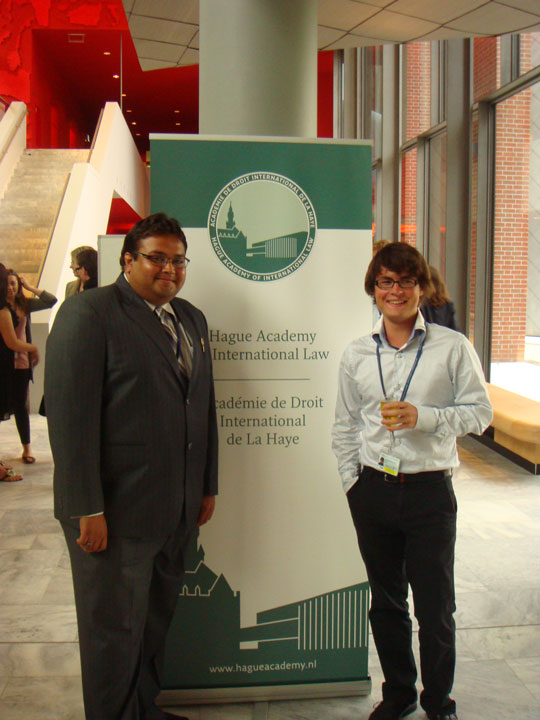
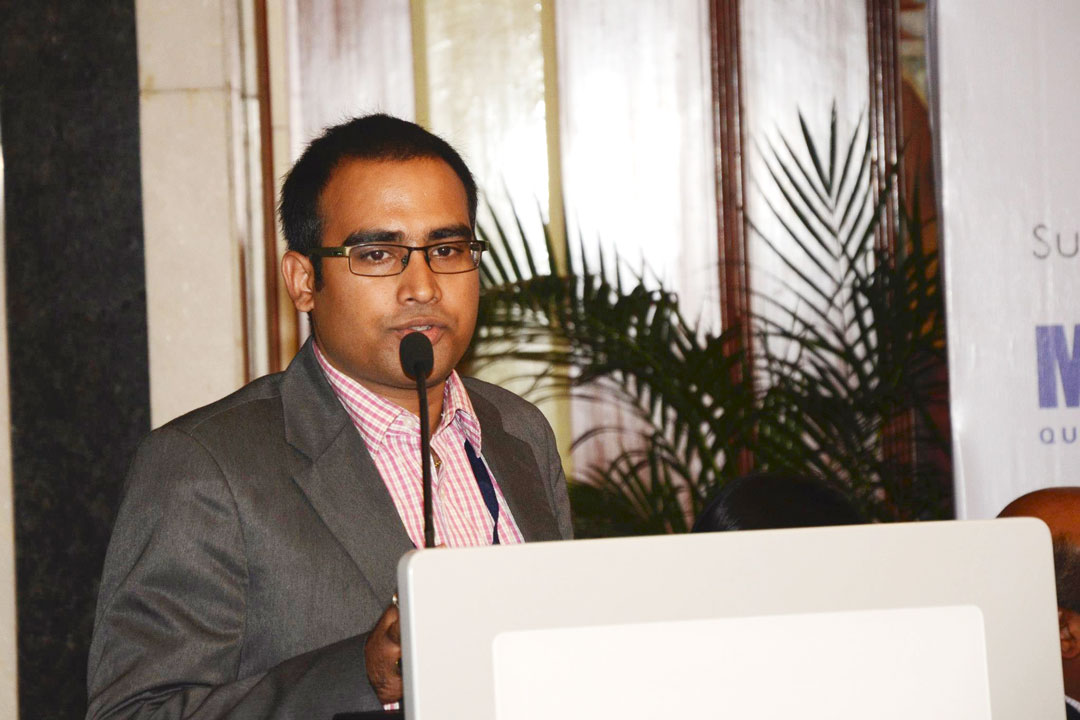
    Faisal Sherwani graduated from the Faculty of Law, Aligarh Muslim University, in 2009. Thereafter he received the prestigious Thomas Buergenthal scholarship and completed his LL.M. from George Washington University Law School, USA. Since then, he has served as Counsel in the chambers of Mr. Rakesh Dwivedi, Senior Advocate. He is currently working as a Senior Associate at Parekh & Co.

    In this interview we speak to him about:

    • Graduating from a non-NLU
    • Studying in America
    • His experience at Parekh & Co.


    What motivated you to pursue law?

    Part of my early schooling was in Blackburn, England, where my father worked as a doctor. Thereafter, my family moved back to my hometown in Aligarh and I completed my schooling there. After my basic schooling, I developed an instant fascination  for Political Thought, History, and Economics. I was drawn towards writings which advocated freedom of speech, religion, thought and life of the individual. Before I knew it, I was drawn towards law. Though not my immediate family, but a large part of my extended family was in the legal profession. Many of such family members mentored me into going to law school and taking up law as a career.


    Tell us something about your life at Aligarh Muslim University.

    I have fond memories of my university. It was an extremely lively place to study law in and it helped me and grow up into a young man. I remember it to be one of the most multicultural and diverse places. We had students from troubled parts of the country as well as those who were from abroad. Such students, often did not necessarily agree with your point of view, your beliefs or the policies of our Governments. It is here that I became an ardent advocate of freedom of speech and of the individual (this often landed me up in trouble with more popular and conventional groups). Probably the best thing that I learnt there apart from law, is that even as friends, we can disagree. During my time as a law student at AMU, I interned at the National Minorities Commission, at Fox Mandal & Little, Advocates & Solicitors, and at the Chambers of Mr. Rakesh Dwivedi, Senior Advocate.


    Would studying in a National Law University have helped you in any way?

    Not at all. In fact, if asked, I would do it all over again. My strongest inclination was always to practice law and the Faculty of Law, at Aligarh, provided the perfect platform. We had the opportunity of meeting judges from the Allahabad and Lucknow Benches of the High Court, law officers serving in the Government and young aspirants of the Judicial Services. The University, gave me an opportunity of addressing and speaking to large groups of students (who I remember would give you a hard time, for reasons of divergent views, different ideals or just out of plain boredom) this removed any stage fright which I might have ever had. I also participated in various moot court competitions and would often meet students from the National Law Schools at such events. They were bright and often better organised than us, but that apart I realised we were all the same lot of law students.


    What was your motivation behind doing an LL.M.?

    In the final years of my studies at the Faculty of Law at Aligarh, I realised that I was not done with my academic pursuits. By this time, I had developed an interest in foreign legal systems and a taste for Property and Corporate Law. I had the opportunity of meeting the Dean and Associate Dean from the George Washington University Law School, Washington DC, who were travelling to India at the time. I invited them to visit the Faculty of Law at Aligarh. They instantly showed an interest in me. I had applied to several other foreign Universities by this time but then, I applied to GWU too. I remember receiving an acceptance letter from my Dean with a personal note, which I cherish to this day and before I knew it, I was packing my bags for Washington, D.C.


    How should one go about choosing a university for their masters?

    I had applied to various other law schools throughout the USA and UK. The idea really should be to ask yourself what you want to study rather than pick a college which has a great name for itself, but does not necessarily match your requirements in terms of modules you would like to study or credits you would want to earn from them. It is common knowledge that some law schools are just better for some specific subjects while that might not be the case for subjects that one might want to concentrate on.


    faisal-sherwani1Tell us about your experience in George Washington University.

    The experience at GWU was a once in a lifetime kind. The faculty was warm and just as interested in the diverse experiences of its foreign LL.M students as we were in what the law school and its faculty had to offer. The best thing about studying at GWU is the fact that it sits in the Nation’s Capital and all important Government establishments are just around the bend. One can attend hearings at the Federal Circuit and speak to Ambassadors from different countries, lawyers and important functionaries who visited the law school for talks with the students. The faculty was great at what it did, courses were taught by professors who were noted academicians in their field, one by a sitting judge and another by the former Register of copyrights for the United States.

    I lived just ten minutes walking off-campus at Massachusetts Avenue in a rented apartment. It provided for a healthy walk every morning, walking past the White House, IMF Building and World Bank.


    Anything memorable that is stuck in your mind?

    The most memorable moment has to be a few days before I was scheduled to leave DC and be back in India. I got a call from my Dean asking me jokingly, “When would you get the hell out of his country and go do some good in the courts in India?” I then met him, shook hands and promised to stay in touch. It was an emotional moment.


    How was the academic schedule?

    It was a rigorous course schedule and I remember we were required to complete 28 credits in order to graduate. Course sessions were interactive, loaded with food for thought and always challenging. Though there was a lot of course work, organisation and belief in yourself ensures that one sails through.


    What did you study?

    As stated earlier, by the time I had decided to go abroad for further studies, I had developed an interest in Property Law and Corporations. Though I had studied a lot of the conventional property law back home in India, including the statutory and codified aspects of the same, I wanted to study Intellectual Property. This interest had been garnered by earlier internships where I had had the opportunity to work on such subjects. I also studied Corporations and Legislation, which amounted to extra credits for me. Apart from these courses, which I officially studied, I would often attend course sessions such as Government Contracts, International Business Law etc.


    How’s the Indian fraternity over there?

    My batch of LL.M students had quite a few Indians. They are the same old lively lot, we celebrated festivals like Diwali together and talked about the affairs back in the home country.


    Are there any scholarships available specifically for Indian Students?

    I had applied for and was awarded the Thomas Buergenthal Scholarship. This covered my tuition fees. There are various scholarships available for foreign LL.M aspirants at the law school, though not specifically for Indian students.


    What would be your advice to law students who plan to go for higher studies?

    Pin point your interests and ask yourself why you want to study a particular specialisation and then go about short listing your desired Law School.


    How do you expect this experience to influence your career?

    I have always believed that any experience is better than none. GWU was a rich experience and the interactive sessions which I was exposed to there have helped me till date to better analyse, understand and help real life clients which I entertain today as a lawyer.


    faisal-sherwani2 What does a regular workday at Parekh & Co. entail?

    Parekh & Co. has been the perfect platform to practice hardcore law. We handle complex and high stake litigation for major business houses, consortia and even for Government Institutions. I had been working in the Supreme Court for about couple of years and I would often meet the Partners at the firm in Court. They have been generous enough to make a place for me here. A normal day starts with a drive to the Bengali Market Office, which is just ten minutes from the Supreme Court. We have a 9:30 AM meeting in order to ensure who is handling what and who is going to attend early morning court hearings. This is rather essential, I believe, as a litigation office can often prove to be a frantic place, with court room items swiftly passing by and often boards collapsing. Thereafter, depending upon schedules, I usually find myself entertaining clients during the early part of the afternoon. The late evenings are reserved for conferences with Senior Advocates and briefings for matters scheduled for the coming morning.


    Do you accept interns at Parekh & Co?

    We most certainly do accept interns. It wouldn’t be the same without them! I am sure I speak for all the Associates at Parekh & Co. that working with interns is the most refreshing part of a hectic day and it takes us back to our early days. All applications can be sent to parekhco@parekhco.com. We are interested in interns who have an urge for learning and who can bring their own experiences to the firm.


    Based on your interaction with the law students, what do you think they should do in order to excel in their internships?

    The greatest favour that a young law student can do for oneself is to have an urge to learn from the experiences of others who are on the job. One should always feel free to ask questions. We appreciate it when interns concentrate their thoughts and take the initiative. After all, that is how we all started.


    What would be your parting message for our readers?

    Believe in yourself and your capabilities. Work hard and everything else will follow.

  • Shreyas Tirunagari, Legal Consultant, Sriram Associates, on interning at the United Nations, being a judicial clerk, and plans for the future

    Shreyas Tirunagari, Legal Consultant, Sriram Associates, on interning at the United Nations, being a judicial clerk, and plans for the future

    Shreyas Tirunagari is a graduate from NUJS, batch of 2011. During his undergraduate years, he interned with the United NAtions, Since then, he has worked under Ministry of Finance, Government of India, as Associate and later as Consultant. He was also a judicial clerk to Justice Dipak Mishra, Supreme Court of India. Following his stint at the Supreme Court, he joined the National Institute of Public Finance and Policy (NIPFP) on the Black Money Report commissioned by the Ministry of Finance in 2011.
    He is currently Legal Consultant at Sriram Associates, where he provides legal advice on various sectors including infrastructure, finance, real-estate and energy.

    In this interview we speak to him about:

    • His time at NUJS
    • Being a judicial clerk, the process of application and the responsibilities it entails
    • Plans for the future


    Why did you decide to study law?

    I did not really decide to study law as a career choice. Barring a few options such as Liberal Arts, in the Indian educational set-up students are required to make a choice of professional career at a rather young age. Most colleges are professionally exclusionary and do not permit students to transit from engineering to life sciences and then to law. Well, that being said, I was inclined to understand what bound a society together and so, law was a natural choice. As for how it came to be NUJS, it was a choice of city – Calcutta being steeped in history, culture and as a symbol of liberal development was quite an attraction. If you ask me about it now, I’d say I was mistaken – attending NUJS can and should be a compelling choice. It is a top-3 law school, it has a culture that embodies innovation and enterprise, and it provides a great platform from which to build a career.


    shreyas-t3Tell us about life in NUJS.

    One’s time in college is perhaps the most receptive phase of life—after early childhood—to the process of habit-formation in the human life. As such, the habits I formed at NUJS continue to occupy a sweet spot in my everyday life. For one, the library was the only room with an air-conditioning facility and it became habitual to spend time reading there. Since then, reading has become a habit and I continue to devote some time to reading despite moving across very different environments.

    That apart, NUJS has a very collegiate atmosphere that provides many opportunities to explore avenues within and outside of the law. During my time, I was also fortunate to have a very inspiring set of faculty members who drove students to understand, introspect and challenge the norm.

    Recently, we had a batch Reunion in Delhi where I caught up with some old friends and it led me to reflect on one critical aspect of the growth process–diversity. We had a very diverse student body with students from Punjab, Bengal, Tamil Nadu, Kerala, Shillong, Gujarat, Bihar, M.P. – pretty much all states were covered as were all income, social and cultural classes. This diversity set up a great recipe for embracing new cultures, taking up new initiatives and learning a lot in the process.

    Moreover, Calcutta is a city soaked in culture and arts. There are film festivals, book festivals, football games, quaint neighborhoods, some amazing culinary options and a relatively safe and indigenous nightlife. In comparison with the other NLUs, I feel that NUJS is a first among equals in the ‘uniqueness’ of the experience.


    Which one has been your most memorable internship?

    My most memorable internship was at a United Nations Agency, the World Intellectual Property Organization in New York during the summer before final year. I interned alongside 350 other people from over 50 different countries. In a nutshell, that is why it ranks as the best internship I’ve done during college.
    The wide variety of perspectives that were available provided an opportunity to learn from different cultures and critically evaluate the role of one nation vis-à-vis 192 others. Moreover, this was in the summer of 2010 – at a time when the Football World Cup was in full swing. For the first time, I had witnessed the enormity of a platform that was divisive and unifying while being friendly ! Watching a Nigerian Finance Minister and a Belgian Trade Representative let their hair down at the Vienna Cafe, the UN Lounge where all games were being screened, was a sight to behold, indeed!

    Beyond the global dimension to this internship, working at the UN was quite professionally challenging. I was assigned the task of covering ongoing negotiations and meetings at different segments of the UN ecosystem – in the morning I would be at the ECOSOC only to be told to rush to the Sixth Committee meeting by the afternoon, following which I would prepare reports, participate in meetings and draft memos to be sent to other UN offices. The nuances of diplomacy are deeply entrenched in cultural, social and professional engagements. As such, observing and participating in diplomatic interactions on the plank of intellectual property led me to see the ‘bigger’ picture within which economics works alongside politics which works alongside law which works alongside business and so on.

    Before this internship, I had worked in the securities division of Crawford Bayley, the office of Senior Counsel P.P. Rao, and the legal department of TCS. All of them were strictly legal internships that focused on handling legal transactions – both, corporate and litigation, and so in comparison, this was a truly unique experience. So while I cannot say that this was the best internship, it was the most interesting.


    How do internships help in the evolution of a legal profession?

    As I mentioned right above, internships are great avenues to evaluate what you read in the classroom in the real world. For example, most of the assigned case-readings for class are primarily Supreme Court judgments. And for a diligent student, it is likely that they will have a reasonable grasp over the case-law of the subject. However, if one were to go practice in the lower courts, it is more often than not other aspects of the law such as legislative instruments and local regulations that will assist one’s arguments. Internships help in understanding how theory fits into the dynamics of the world. It is also an eye-opener.

    To analogize in cricketing terms, internships are T20s – fun, short and exciting. Your career is the Test Match – strategically engaging, long and detailed.


    You were engaged as a judicial clerk in Supreme Court after your graduation. Why did you make this choice?

    Firstly, it is the Supreme Court of India and a place that, especially in these politically and economically volatile times, wields enormous influence in shaping the direction of the country. Even now, the Supreme Court’s recent judgments on 2G, Subrato Roy, the Novartis case and Section 377 have led the charge on financial propriety, global intellectual property and the individual-societal conflict of identity.

    In my fourth year of law school, I undertook a policy research project on the pharmaceutical industry, and found that the idea of government policy and processes fascinated me. The fact that millions of people can be impacted by a change in the script of one or two documents is something I that I found incredible. One government order here, one new court decision there, and all of a sudden interest rates are changing, investments are soaring/crashing, crores of rupees are released in pension schemes.

    The Supreme Court is one of those places that makes decisions on subjects that affect us daily in our lives – it’s like one of the control rooms in a big ship, and so when I got a chance to be in that room, I just did.
    Moreover, let’s not forget that as law students, most of our readings and studying had to do with Supreme Court judgments – it was but a natural progression to understand the judicial process and explore career options thereafter.


    Is it difficult to get a judicial clerkship with a Supreme Court judge?

    The difficulty of a clerkship I think is two-fold; the first rung of screening is perhaps a preliminary screening for eligibility. Most of the judicial clerks are selected from a handful of law schools such as the NLUs and a couple of others such as ILS and Symbiosis with the rest of the law schools out of the running. This makes the process numerically difficult. If one were to attend a lower-ranked state school, it is probably harder to get a clerkship. That being said, the NLU graduates compete internally with the graduates of similar schools for the clerkship positions. This makes up the second rung of competition.

    Within the application process, the first stage is to send in a completed application form along with a CV. After the court receives all applications, the Court conducts a preliminary screening. Following this process, the Court invites applicants for an interview conducted by a panel of three Supreme Court judges. A few weeks after the interview, the Court makes decisions and informs applicants.

    While I can’t definitively point out what contributed to my selection, I can only presume it is a combination of one’s academic performance, work experience, as well as the interview. At the time that we interviewed for the clerkship, a few of my classmates with higher grades didn’t make the cut while some with lower grades than me were selected. I think the Court seeks out candidates who they can find a workable fit with – it is very important that the clerk understand the Judge’s methods of working and adapt quickly to fill that role.


    What kind of tasks were you given as a judicial clerk?

    My day-to-day duties would be flexible depending on the cases, the work for that day, conferences/seminars etc.

    There are of course, some tasks that almost all judicial clerks will do, and one of them is handling SLPs.
    The way Special Leave Petitions work is that the Supreme Court allows SLPs to be introduced on Mondays and Fridays, and invariably 30-40 such petitions always show up in every Judge’s office. As a clerk, you’re required to review these briefs, and prepare short summaries of facts, arguments and point of issue.

    This is a cyclical process – the Friday filings come into office by Tuesday, and the Monday filings come in by Thursday. That gives you two to three days to go through each set, and this cycle is essentially the first pillar of work schedule for most law clerks.

    In addition to SLP briefings, there are cases that are being argued at the court and when they move into stages of final arguments, there is a heavy focus on case-briefing, research and preparation for that case. This is the second pillar of work.

    Another pointer here is that unlike a law firm/lawyer who is free to hire many juniors, a judge is assisted primarily by his law clerks. And judges usually hire just two clerks. This limitation creates a situation where the clerks have to be flexible in their duties, and the workload keeps fluctuating depending on how many cases are being argued in court. Just as lawyers prepare briefs for filing in Court, judges must prepare judgments and pronounce them. This brings us to the third significant task and perhaps the most exciting one–helping the Judges in researching, editing and drafting judgments. In my case, I did get a chance to work on one constitutional case, and to me, that’s the holy grail – to be a part of cases that will later go into law textbooks.


    How do you think the experience of being a clerk is now helping your career?

    As I mentioned earlier, the Supreme Court more often than not adjudicates issues that have national significance. Given the nature of the work at the Court, a clerkship is one of the pathways to exploring the depth of an idea, broadening one’s perspective and learning to see ‘the bigger picture’. Other than that, let us remind ourselves that the Judges of the Supreme Court possess a staggering intellectual and strategic strength that is built over years of adjudicating complex issues. I believe in the idea that the people are shaped and influenced to some degree by their surroundings–in this regard, a clerkship is an amazing surrounding to be influenced and shaped by.

    Anyone with these goals in mind should pursue a clerkship. This is not to say that a clerkship is useful only for an open-ended exploratory mind; even a fixed and defined career path can benefit immensely from the process of understanding judicial process, understanding a broader context and building an essential skill set. Specifically, as a judicial clerk, you end up constantly reading briefs and so, finding the main point and evaluating it’s strength slowly becomes habitual. And that, I believe is a skill that can be useful both within and outside the courtroom.


    You also worked with the Government on financial policy and black money. What was the nature of your work and what is a day’s work like?

    It was a unique experience and one that I cherish. For most lawyers, including me, working in a corporate or litigation practice means that the work is focused, defined and there are clear pathways to get to solutions. This project was the exact opposite.

    Understanding illicit finance and the black money market means that you have to navigate a lot of uncertainty and dense materials. Let me give you an example – we all know that there’s a lot of corruption, that money gets distributed during elections, that money laundering happens, and so on. Now how do you find out how much money travels to the wrong pockets, and how does it get there? That was my job and my favorite part of my work there was in digging things out from layers and layers of dust.

    My team also made my work memorable because it was very flavorful – senior bureaucrats, policymakers, economists, lawyers and statisticians. I had never worked with such a diverse and multidisciplinary team before! All in all, that sort of work led to developing new skill sets, understanding and integrating multiple perspectives. In a nutshell, a day’s work involved lots of researching policies and briefs, discussions, meetings, and a lot of ‘figuring things out’.


    Do they take interns? How can one apply?

    Yes, they do take interns but a lot of it depends on the requirements of the current projects. If I had to guess, it would be that interns with backgrounds in economics, law and politics are preferred. When they are on the lookout for lawyers though, I am sure the national law schools are on their radar.


    What career goals have you set for yourself?

    I plan to work on developing an entity that integrates business with policy and thus, participate in the rapid global changes that are taking place. For now, that’s the most I have; as for the achievement bit, I believe in keeping my eyes and ears open, work hard and build opportunity where it arises. I picked up the habit after reading this book. Who moved my cheese? It’s a compact book with lots of wisdom.

    Sniff and scurry all the time, and things will figure out a way of falling into place! It is a formula that has worked in the past for me, and I am confident it will work in the future.


    What would be your parting message to our readers?

    The world is changing and the future will bring exciting developments at a pace and in ways that were previously unimaginable. For example, we have recently developed the ability to understand, modify and change genetic structures. Such developments will fundamentally alter our world. Let’s be a part of the story.

  • Om Agarwal, Founder, EazyCoach, on being an entrepreneur, the startup climate in India, and juggling law with business

    Om Agarwal, Founder, EazyCoach, on being an entrepreneur, the startup climate in India, and juggling law with business

    Om Agarwal is a student of WBNUJS, Kolkata, batch of 2016. He embarked upon his entrepreneurial venture, AimCLAT along with a few of his batchmates in the beginning of law school. He later developed EazyCoach, an online mentorship portal that helps students discover colleges globally, get admission help from college seniors and alumni, enabling them to pursue their dream. They are a portfolio company of NASSCOM and have been sponsored by tech heavyweights like Google, Microsoft, Amazon, and IBM. He is currently travelling to the US on an all expenses paid trip.

    In this interview we speak to him about:

    • Taking the entrepreneurial plunge
    • Managing law with business
    • Travelling to the US on an all expenses paid trip

    How will you introduce yourself to them?

    Crudely stated, I am an entrepreneur studying law. I love to discuss and experiment with new ideas, no matter how crazy it seems.


    Given your love for tech startups, why law? Why not engineering?

    From Google to Facebook to Snapchat, our lives have been deeply influenced by tech startups. I love using them and am working on creating new ones.  However, you do not have to write lines and lines of code to pursue your love for them. All you need is a great team, determined to work towards a problem worth solving. I love interacting with people and prefer to spend my time knowing what excites them. I know how to build a great team and keep them motivated.

    Law, centered around people and research skills, has helped me with all aspects of my startups: searching for a co-founder, doing market research for my idea, attracting good talent and preparing business plans, which make sense.


    You have been a part of many initiatives. Would you please give us some insight on them?

    Right from AimCLAT, an online portal for law aspirants, to DesignTurks, an organization helping college students create their own digital impression, I have always wanted to solve the problems, faced by students like myself. Aspiring to take this to the next level, I am working round-the-clock on my upcoming startup, EazyCoach.


    So, what is Eazy Coach?

    Simply put, Eazy Coach is a P2P guidance platform for college entrances. It would help students aspiring to get into the top colleges in the world, by getting them personally coached from students already studying the same.


    And what has been the progress till date?

    We have been included in the Microsoft BizSpark programme, entitling us to receive lots of free perks. We even went up to the finals of the business plan competition of IIM Ahmedabad. Right now, a prospective investor of Eazy Coach has sponsored my way to USA to learn the startup ecosystem and network with like-minded entrepreneurs in the West.


    Getting an all expenses paid trip to USA is just awesome! How do you feel about it?

    Well. I am presently in the States and I am loving it. Interacting with people much better than you, is a great experience in itself. Plus, the trips to places like Niagara Falls and Times Square provides the ‘fun’ element. Today (18/05/14), I am going on a weeklong trip to Wharton, Harvard and MIT. Thrilled, is the word.


    So what do you expect to learn from this trip? How would it be beneficial for the EazyCoach project?

    I am taking numerous courses on growth hacking, hiring talent, building revenue models, raising funds, etc. These would definitely help me towards my current and future startups. Apart from this, I am trying to attend as many networking events as possible. New York is turning into one of the most startup friendly state in the world and entrepreneurs are swarming in from all around the world to showcase their awesomeness. It is great to network with such people.


    When are you expecting it to launch?

    Right now, we are on our way to complete the web version of the platform and are busy fixing bugs. We are expecting it to be online in a few weeks. However, you can sign up to get early access by logging on to Eazy Coach.


    How did you find the time to do so many things? What motivates you to keep going?

    Law school is hectic, but we always find time for the things we love. Building a product from scratch, getting it to the market and improvising it every now and then, is an amazing experience. Customer appreciation provides those added cookies.


    How has your entrepreneurial experiences changed your life? Are there any anecdotes on this?

    The one major thing I learnt was to never take yourself lightly. I always felt that being a student, I am somehow at a lower position compared to those people, with years of experience. One thing I learned from Eazy Coach is that age and past experiences do not matter in the startup world. All that matters is your passion and your hard work.

    After a business plan competition last year, I got the first investment offer for Eazy Coach. However, the investor primarily seemed to discount my startup’s valuation due to the fact that I was a student. One side of me wanted the money (which student doesn’t). However, I decided to go with my guts and I rejected the offer. It paid off well and Eazy Coach is currently valued double the offer, even before launch!


    Does law school in any way facilitate or impede your ventures?

    A law school, with its tight deadlines isn’t very supportive of start-ups. There were times, when project submissions were a day away, and I had to complete my pitch deck for a competition. However, it is the love and passion for startups which has kept me afloat till now (and I hope it does for the next two years).


    Will you ever do an MBA?

    Yes. I surely plan to pursue an MBA after law school, provided I can sponsor the same with own initiatives. The entrepreneurship environment of B-Schools interest me more than the classroom teaching. The thought of studying at a place where people are as motivated to bring about a change, as you are, gets me excited. Wish me luck for that.


    What would be your message for wannabe entrepreneurs and law students?

    I can just say one thing from experience. Start-ups always have a J-curve. It is easy to get discouraged if one does not get a viral opening like Facebook; and couple it with the demanding law school life, we decide to quit. But only if we stick through the initial slump of the “J”, can we be eligible for the sharp growth coming our way.


  • Sandipan De, NALSAR, on commercial law, his diverse internship experience, and bagging a Training Contract with Allen & Overy

    Sandipan De, NALSAR, on commercial law, his diverse internship experience, and bagging a Training Contract with Allen & Overy

    Sandipan De is a student of NALSAR, Hyderabad, batch of 2015.  He has earned three gold medals through his years of B.A. LL.B. He has secured internships with the likes of PwC, Khaitan & Co., CNBC TV 18, Argus Partners (formerly Udwadia Udeshi & Argus Partners), Talwar Thakore & Associates (Indian 'best friend' firm of Linklaters LLP)Talwar Thakore & Associates, and AZB & Partners. He also received  the opportunity of signing a Training Contract with Allen & Overy, London. In this interview he talks about:

    • Taking up varied internships and developing specific interest
    • Securing a contract with Allen & Overy
    • A typical workday at a Magic Circle law firm


    Why did you decide to study Law? What inspired you to do so?

    I was interested in commerce and business from a very early age. I remember I used to read the Economist, BusinessWeek and preferred the Economic Times over a normal daily. I think that built up my interest in the commercial world. The choice was between doing something finance related or commercial law. I had a flair for the language and logical reasoning. I thought law would best marry both my interests. Thus, law school happened.


    What do you have to say about mooting at law school and legal writing for journals?

    I have done only one moot- Vis. I think I might not be best suited to air my views about mooting but I genuinely feel that mooting as an activity is over hyped in Indian law schools. During my exchange semester at Santa Clara I figured that Indian law schools seem to privilege mooting over other activities but the sort of help, coaching and resources in foreign law schools is unmatched here in India. You should definitely try your hand at mooting but it isn’t the be all and end all of law school. The experience and learning is great but it isn’t something you can’t do without. I think legal writing and editorial positions are possibly very important. The sort of skills you develop there are extremely relevant and the reason why I tried my hand more at legal writing was because it let me delve into any area I wanted- topics that interest me as opposed to the confines of a set problem.


    Tell us about your internship in the chamber of Senior Advocate, Saha & Ray Associates & IMS Learning Resources.

    Well a bit of both to be honest. I wanted to try out the experience of litigation and see how a small law firm worked. I liked the experience and helped me decide that I did not see myself in litigation. Transactional practice was what I wanted. I have been teaching at IMS since my second year of law school. I really like this, as it keeps me in touch with the law aspirants and I enjoy teaching really bright students and try to advise them in making informed decisions.


    Coal India Limited & CNBC TV 18 are unconventional internship choices. What went behind making those decisions?

    I have to admit that by this time I was sure that I wanted to be in commercial law and had a sort of idea of what I wanted to do. I planned to see commercial law in action from every different facet possible. Commercial litigation, a behemoth PSU, etc. I interned with the only show that dealt with corporate law in India, while at CNBC, and that possibly was one of the best experiences during internships because of its unconventional nature.


    What kind of exposure did you gain with PwC?

    I worked with the in-house counsel’s team which was in the risk management vertical. Working with a Big Four was a different cultural experience and the risk management team was a whole new experience- it was about one client and trying to ensure best practices and the best risk management policies. I am not at liberty to divulge the sort of work I did but it was really interesting, tested your mettle and understanding of the business and involved coming up with best practice policies to guard against present and future liabilities.


    What is a typical day like working at law firms?

    AZB is still freshly etched in my memory. It was brilliant work. The work hours were exceptionally long but I enjoyed the thrill of working on India’s biggest transactions. It involved everything from simple research work to even trying your hand at drafting documents. I have to accept that the work I got from seniors was top-notch, they relied on you, gave you responsibility, expected you to put in the long hours but appreciated you for it. UU Argus was a relatively smaller environment and I really enjoyed the personal touch and the individual attention I got. Possibly, this is where I had completely made up my mind on transactional practice.


    You were selected in the Winter Vacation Scheme of Allen & Overy. Our readers are very keen to know how the entire application process works and what they look for in a student when making selections?

    After you get selected for the vacation scheme A&O is the only firm which gives Indian students the option of going for a winter scheme as opposed to the conventional summer scheme. The Magic Circle and Silver Circle firms come down to a select few law schools in India and interview the candidates for their vacation schemes (which are akin to an internship) after having shortlisted students on the basis of the application form which is released in July of fourth year through the RCC.  Some law firms have more rounds after the application form including but not limited to critical reasoning and verbal reasoning tests. The interviews are usually sometime in September.


    How was your experience in the UK working at Allen & Overy? How did you manage the finances and accommodation?

    Finances and accommodation including travel are paid for by the firm. On top of that the firm pays you a weekly stipend. London is not just a great city but a financial, cultural and political capital. It is a thrilling experience to be working in the City of London (which is the financial district) and enjoying the thriving cultural life that London offers which is truly unparalleled. You are working in the world’s greatest financial centre on the biggest and best of deals- transactions that are FT headlines. A&O is a great place- possibly the friendliest of the Magic Circle firms, offers great quality work, exposure and training. Possibly, that is true for all of the MC firms but what really sets A&O apart is that they treat you as an individual, really care about you as a person, your career, future and training and the work atmosphere is collegiate. I never felt like ‘just an intern’. It was the best experience I had had and I was sure that if I was offered the TC A&O and London is where I wanted to be.


    Tell us about your typical working day and the sort of work you were expected to do? How were your fellow co-interns?

    I am presuming that you are asking about the A&O work during the vacation scheme. A standard day involved a commute on the famous London tube to work and reach ingoffice by 8:30 a.m. Put in half an hour of personal work (glancing through the FT, reading up on the topic for the client pitch exercise, mailing a couple of people to benefit from their expertise on a particular area, etc.). I would then carry out the tasks delegated to me by my Trainer, possibly meet my fellow vac schemers for coffee at eleven on the rooftop restaurant which gives you possibly one of the best views of the City and catch up on where we are with our client pitch exercise. Go back to my desk and continue with my allocated tasks. Usually there would be a networking lunch with different people drawn from diverse practices of the firm to know more about the practice areas and the firm in general. We would typically have a couple of talks scheduled by the HR, Partners, etc. during the afternoon which we would need to attend. Following that there would be that surprise drinks counter at the inhouse bar called Lavanda where you would grab a couple of drinks with your fellow vac schemers and catch up on the latest, know more about each other’s work in different departments and then head off to your accommodation unless you had a dinner or social event to attend. The dinners are usually at top-end restaurants and the social event would be really exciting stuff like ice skating at the Tower of London where you would be accompanied by your Trainer buddy and other young trainees at the firm with whom you can informally interact and they would give you informal advice and buy you a couple of drinks after a hard days’ work. You then get back to your accommodation and prepare for your interview or research for your group exercises and then try to catch some sleep to prepare for another exciting day ahead.


    You are joining Allen & Overy after graduation. How did this work out? What would be your advice to those law students who want to secure such a contract?

    After the vacation scheme you fill up a form for the Training Contract application and appear for an interview with a Recruitment Partner on your last day. Once you get back to India the HR will let you know the outcome within a week’s time. Be yourself. There is no one sort of personality that they are looking for. Technical competence is a given. The HR can look through if you are feigning interest and thus I would suggest that you venture down this road if you are really interested in commercial law and you know that this is your calling. Try your hand at everything in law school but keep yourself focussed. Be commercially aware. Very very aware. Do you apps very well so that your real personality is communicated through it. At the interview stage do not try to be a person you are not. I remember that a few people mentioned two so-called ‘tests’ that you need to pass- one is the client test and the other is ‘can we work with you test’. The latter is self explanatory and the former essentially points to whether the firm can put you in front of a client and can you hold your own. The other difference I have to highlight is that the foreign firms value a more holistic approach rather than just technical knowledge. As I said, technical competence is a given, client context and permeating a legal solution through a commercially viable idea is what is expected.


    Any tips for an intern who wants to get noticed at work by dint of her performance?

    Again, be yourself. Don’t try to be someone you are not. Work hard and network with people. Talk to people. Never be afraid to walk through someone’s door and ask for work. The worst that can happen is that person telling you that there is no work at present to delegate and you should ask someone else. Lawyers are a very intelligent crowd. Be a person whom people can work with. I would say know your politics, current affairs, music, etc. At the end of the day you need to be a person with whom everyone enjoys working with. You can spew all the jargon you want but hitting up a conversation with a person on a topic he is keenly interested in would cast a far deeper impression than knowing a particular SEBI regulation. Of course that too is important. (Remember the ‘can we work with you test’)


    How well do you think your education at law school prepared you for real world practice? What do you feel about 5th year in the B.A. LL.B course at NLUs? Is it sufficiently utilized or needs a huge revamp?

    I think the new academic model at NALSAR and the practical and industry oriented courses have really gone a long way in helping us prepare for the real world of practice. I have to thank the seniors and the informal mechanisms at NALSAR which are a sine qua non. I think all that forms a part of the legal education package. I like the idea of fifth year. Lot of partying to look forward to. I can’t speak for all NLU’s but the new model at NALSAR with single credit optionals on such varied subjects along with interesting opportunities like Teaching Assistantships are really exciting and I look forward to the last year of law school. I am TA-ing for Contracts and can’t wait to get back to college.


    You were part of the RCC at your college. What prompted you to volunteer for it?

    I am part of the RCC which is a peer-elected body as the placement process at NALSAR is completely student run. I wanted to run for the RCC because securing your job is important but if you can play a small part in facilitating your batchmates’ jobs- people whom you have literally lived with for the four years in law school- there is no satisfaction like that. The work involves negotiations with organisations, facilitating on-campus interviews, working in a team and trying to secure jobs for all. Involves drafting documents, making pitches, interacting with industry honchos, strategising and not so glorious tasks like running around getting tea, arranging desks and chairs, moving beds to arrange for interviews, etc. The experience is definitely worth it. I work with a great team of people in the RCC. I think the excellent Day Zero figures from NALSAR are a testament to that. I am proud to have a batch where everyone is behind the RCC and don’t just retire into their rooms and let the RCC do all the work. Plus, we have an extremely proactive and excellent administration who always have your back. My sincere hope is to see all my classmates placed as soon as possible.


    Does being from one of the top three NLUs really come with additional perks?

    Well, this might be controversial but I do believe that the top NLUs do have it better for their students. I think it is about getting an edge over others. However, it is not something that one can’t make up.


    How important are grades in securing a job?

    It is definitely important. It does get your foot in through the door but CGPA isn’t the only thing. At the end of the day once you are inside that interview room or in that internship it is your competence that matters and not just your gradesheet.


    Any advice you would like to give to law students aspiring for a job at top law firms?

    Go for it only if you really like commercial law. Try to understand the business and commercial angle to things. That makes it really interesting. Try to learn as much as you can. Contrary to the popular gyan on the topic no task is unimportant- even if you are doing a proofread you are getting the chance to see a document which you would have otherwise never seen. I would say put your mind to it try to understand the transaction, the clauses, ask questions. No one will mind if you are interested and ask questions about the work that they are doing. I think you should rather prepare from your first two years. Try to figure out early in the day where your interests lie. Whether it be commercial law, policy work, social justice or opening a restaurant- figure out early and work towards it from the beginning.


    Lastly, what would be your message to our readers?

    I had a great time at NALSAR over the past four years and made friends for a lifetime, had seniors that I would look up to forever, some of the greatest professors to whom I would be indebted to forever. Don’t lose yourself over CGPA and the proverbial ‘CV building’. Surely that is important but do enjoy law school. It is a unique experience. Very few careers in India offer you the sort of opportunities that law school does. Pay homage to the Old Monk, be intensely loyal to your university, make great friends, and have the time of your life.

  • Nimisha Mund, GNLU, on securing a PPO, her diverse internship experience, and the importance of extracurricular engagements

    Nimisha Mund, GNLU, on securing a PPO, her diverse internship experience, and the importance of extracurricular engagements

    Nimisha Mund is a student of GNLU, batch of 2015.  She has interned with the likes of O.P. Khaitan & Co., Solicitors & Advocates, Phoenix Legal, and Trilegal. During her time as an undergraduate she has also participated in the Herbert Smith Freehills NUJS Moot Court Competition, 2013, 15th DM Harish International Moot Court Competition, 2014 (on Public International Law), has been a member of the Legislative Drafting Clinic for the “Trade Secret Bill” under the guidance of Ms. Kalpana Reddy, First Secretary for Intellectual Property, Embassy of the United States of America, India and Mr. Hitesh Barot, Senior Intellectual Property Counsel & Vice President, Technology Policy, GE India. Her other accomplishments include being Student Research Assistant in the Microsoft Research Chair, established in GNLU and being the Elected Female Representative of GNLU, batch 2010-15.

    Nimisha has secured a pre-placement offer from Trilegal an astounding one year and seven months prior to the completion of her degree.

    In this interview we speak to her about:

    • Importance of extra-curricular activities
    • Securing top-notch law firm internships
    • And working at a top law firm and getting a PPO

    Tell us a bit about your life before college; did you have lawyers in your family?

    Well, my pre-college life did not feature anyone from the legal fraternity in it. What it did feature, however were inspiring individuals who allowed me to imbibe the qualities, which, I’d like to believe make me a good lawyer. Pre-college life otherwise was fun, much more relaxed. I played a lot of sports, and read a lot through school but inherently was the same- I approached everything with the tenacity of a bloodhound!

    Why did you decide to study Law? What inspired you to do so?

    In the beginning it was quite by accident. I had intended on concentrating on preparation for other entrances and the course I took for a month offered an hour of law coaching for four Saturdays. Once I saw the extent of analysis involved in the legal education, I, frankly, was hooked. Thereafter I decided there was no other vocational calling for me. And then of course, there’s the brass tacks!

    How important is it to have publications to your name?

    The gold stars on the CV have been identified as such because of what they show about the lawyer and not the other way round. I believe there is no better way to exhibit your legal acumen and yes, to add to your CV. Though this I feel is contingent on your manner of writing. Its about taking a stance and not just assimilating and disseminating the jurisprudence on the topic.

    How was this novel experience of working with Ms. Kalpana Reddy?

    A very rewarding experience. Learning the nuances of drafting a legislation, choosing the best from foreign legislations, interviewing the stakeholders and learning how to plug loopholes in the law is something, the gains of which I shall carry throughout my life as a lawyer. And the best part is still to come…that is when you look at that piece of legislation once it gets passed and say, Hey! I helped draft that!

    How important are extracurricular engagements?

    Extremely important. And I cannot stress on this enough. It’s a run of the mill answer but that does not take away from the truth of it- that it gives you the skill of being a good team worker bracketed by the ability to hold your own as a leader. More specifically to sports, the way you learn to push your boundaries is amazing.

    Our readers would be quite curious to know how you went about securing your internships.

    Some were on merit, while some were not. I had my heart set on Trilegal –especially after a talk we had from a Partner at Trilegal in our college, and each internship was undertaken to enable myself to deliver well at Trilegal and secure a placement. I planned to do this in the fourth year, but when our college called for internships in the third year, I decided I was prepared. One other important thing I did was, that rather than get more ‘names’ on my CV, I interned at the same place again, because that allowed me to get better work, and learn a lot more, as then they trust your capabilities.

    Did you stagger your internships throughout law school as part of a deliberate plan or did it all just happen by chance?

    Very much deliberate. Some things in corporate law really impressed me. Taking the common example of securitization for instance—such ‘man-made processes’ (for want of a better word)—the fact that people thought of such efficient systems really intrigued me. I continued with corporate law in most internships and that held me in good stead.

    While there is nothing better than hands-on-experience, one shouldn’t undermine the education you get in a classroom. Citing a simple example, while you’re at your internship, its much easier to navigate your way through laws when you are given a proposition, if you’ve studied the law beforehand.

    What kind of work did you have to do during your internships?

    Well everyone gets menial work once in a while, I did too. Take everything positively. Getting a document to proofread is still an opportunity to dissect the agreement, find out what are the boiler-plate clauses (the must haves). Few are wise enough to avail of such opportunities.  Besides that I’ve been  lucky to be given some fantastic work as well. I’m a total sucker for an innovative argument, so any proposition that had me look totally out of the box, and I loved it.

    How must one go about organising their internships?

    Well, one must start out with a litigation internship in my opinion. If you intern at a firm in the early years, it won’t really be a mutually beneficial experience, that is to say that the firm might not really gain from your contribution, but it is indisputable that you will. It might even give you an edge over others. But keep in mind that there is a high attrition rate from firms so if one day you wish to leave that field and start litigation, you should have some experience to fall back upon.

    What do you think an intern should accomplish in the course of their internship to get a “callback”?

    Diligence as well as intelligence. Deliver work on time and once you’re done you should be able to go and brief the person who allocated the work to you in the best manner. Soft Skills are important. To perform better, I’d say there’s nothing like a good dose of curiosity! Don’t shy away from asking the lawyer the background that they want the research in, it’ll give you a deeper understanding of the way things work. A simple example being, that what you might have thought was a simple research point on contingent contracts might actually be to build an argument for option contracts and the lawyer was too busy to tell you that. So ask away.


    Did you have to undergo an interview before securing your PPO?

    Yes, I had an interview with barely an hour’s notice! Thankfully I was abreast with the latest developments in the corporate world. The most important factor is knowing all the work in your CV in and out. Not just that but all the latest developments and anything ancillary to that. Confidence in an interview is extremely important. My advice to all reading this is that there’s one thing you constantly need  to question- “why me”. Why should they pick you out of the hordes of applicants. Everybody can have an answer, it’s hardly the holy grail and it not only increases your confidence but will shine through to your interviewer. Yet more important is that you know your audience, gauge your interviewer’s style, you need to know when you have to have the tact to swallow back an acerbic retort, as it’ll be frowned upon and when it will be appreciated.

    How important are good grades in securing a job?

    I’d say its extremely important. I’m not a topper. But it’s not the end of the world if you don’t have a great CGPA. It’s just that you have to compensate by performing much, much better.

    What should one law student aspiring for a job at top law firms do?

    I know it’s a cliché but there is no substitute for hard work. Couple that with smart work, i.e. knowing the right websites to keep you updated etc. and I think everyone will have the right concoction.

    Lastly, what would be your message to our readers?

    I’d say that we’re lucky to be in a profession where our job need not be just a means to an end. We don’t have to be just chanting “TGIF” and plod doggedly through the week but actually enjoy our work, its dynamic and analytical nature. So keep that in mind, enjoy your work, be opinionated and on a more serious note, if you pick a niche area in your work, pick it wisely.

  • Roshni Manuel, Associate, Veritae Legal, on studying in Nottingham, maritime law, and plans for the future

    Roshni Manuel, Associate, Veritae Legal, on studying in Nottingham, maritime law, and plans for the future

    Roshni Manuel graduated in law from ILS Law College, Pune, in 2010. She then went on to pursue her Master’s degree from the University of Nottingham, specializing in Maritime Law. She is currently Retainer Associate-Corporate, at Veritae Legal, where her role and responsibilities include General Corporate Practice, Trademark Registrations, and Corporate Agreements.

    In this interview, we speak to her about:

    • Maritime Law as a career and its scope.
    • Life at ILS and University of Nottingham.
    • Important requirements for application to a university in UK.


    Given that most of our readers are law students and lawyers, how would you introduce yourself to them?

    I am only a beginner in this big arena with just a year’s experience. I am thankful to the whole team for choosing to take my interview. And I’d like to introduce myself as an aspirant of law.


    What motivated you to pursue law?

    I was always interested in the humanities and hence, law. Another explanation would be, I wanted to be on the other side of the crowd who knows exactly how policies in this country are drafted and what its legal implications are. I must say I have not reached that level of analysing law and policy but I do keep a track of it whenever I get time.


    roshni-manuelHow about your college life at ILS—do you miss it?

    Life at ILS, Pune was very colourful and competitive like any top 10 law schools. My college has got a very heritage look and it is a very peaceful place with acres of timbre and wild birds. So, whenever I think of my college all I think of is the peaceful Campus, my friends and dear professors and of course, the famous library. Something about grad school is you wont miss it until you pass out; it could be because at some point you may think five years is a little too much to tolerate;  I never thought I will miss it so much until I joined LL.M. at Notts.


    What kind of internships did you do while in law school that helped you in shaping your career choices later?

    In my case it was my first internship which helped me choose my stream of interest. It was in a Maritime Law Firm at my hometown. I have tried my hands in different areas of law but I find Maritime a very interesting and a suitable field for my caliber.
    I guess rather than going for the popular one or the one with better scope, one should always choose the field which matches their caliber and interest.


    What made you go for higher studies so early in your career?

    I planned for LL.M. when I was in 4th year law. I don’t have a specific explanation for taking it up early but at some point during ILS days i thought i should be more focused on my field of interest and that could be one reason for opting LL.M soon after graduation.


    How did you develop an interest in a field as niche as maritime law?

    I hail from a port city, Cochin, and my parents are also in the shipping industry but not lawyers. Them being in the same industry surely opened the gates but I think it was my first internship which planted the interest for the subject in me.


    Why University of Nottingham? What other universities did you apply to?

    As you know I was keen on Maritime law since my time as an undergraduate and hence applied only to universities which had maritime law as a specialized field. Other universities I applied to include University of Southampton, Swansea, and UCL. I chose Nottingham for its ranking and for the faculty, especially Prof. Bennett (Marine Insurance maestro).


    Would you tell our readers about the application procedure and other requirements?

    Firstly you should be sure about the subject to specialize; you must make your own list of universities and should never take advice from any education abroad consultancy in this matter. Every university has different criteria for selection. I have applied to only UK universities so the procedure below is just for UK

    1. IELTS score above 7
    2. Aggregate marks should be 60% or more
    3. 2 references
    4. Statement of Purpose

    Visa requirements keep changing so please check the UK consulate website for details.


    Tell us something about your LL.M. years.

    I would say LL.M. abroad widened my perspective. It is totally different when it comes to studies there. I found their method of teaching very interesting. It is basically seminars; the student is expected to prepare for every seminar and participate in the discussion. I was part of the LL.M society and Indian Society. I got the opportunity to organize events and interact with well established lawyers. Apart from the regular activities, if you are lucky, by using the university contacts you could snatch a summer internship in Europe as well.


    Currently, you are member of Maritime Law Association of India. Tell us something about your role over there.

    The partners of the firm United Maritime Law Chambers are part of the governing council. And me as their associate got the opportunity to interact with aspirants in maritime field, judges and International Lawyers. And I did get an opportunity to publish one of my articles.


    You work as an Associate with United Maritime Law Chambers. What kind of work are you involved in over there?

    I am entrusted with maritime case research, case follow-ups, drafting, contract review, marine insurance matters, etc. and occasional corporate work for shipping companies.


    How is Maritime law different from other areas of law?

    Maritime law includes norms of national law, referring to various branches (civil, administrative, criminal, etc.) and norms of international public and private law. Commercial maritime law which includes carriage contracts is basically law of contracts and the maritime aspect in it makes it different.


    What would be your advice to students interested in Maritime law?

    You should be studying subjects like Maritime law, Carriage of goods by sea, law of the sea, International sale of goods, Marine insurance and should have a very strong base in law of Contracts. It is a very interesting and popular field. The opportunities are many if you are really keen; like shipping companies, law firms, P & I clubs, etc.


    Last but not the least, your advice to future lawyers and current law students?

    Dream high and make as many contacts as you can. Make merry with your classmates as those connections will help you in future and would be something you can trust and rely on.

  • Roma Das, law student, RMLNLU, on getting an offer from AMSS, her internship experience and plans for the future

    Roma Das, law student, RMLNLU, on getting an offer from AMSS, her internship experience and plans for the future

    Roma Das is a student at RMLNLU, batch of 2014.  She has secured a pre-placement offer from Amarchand & Mangaldas & Suresh A. Shroff & Co.

    In this interview we speak to her about:

    • The importance of mooting and of grades in law School.
    • How to choose an internship.
    • What it takes to get a call back


    Why did you decide to study law?

    I took commerce with math in my 12th, and had not thought of doing law. But that was more cause I didn’t know much about the profession. Career counselling workshops introduced it as an interesting and viable option.


    Do you have any lawyers in your family?

    I don’t have any lawyers in my family. And I do think that having relatives with legal backgrounds is invaluable for everyone who wants to litigate. It makes the process much easier.


    What are the extracurricular activities you took part at RMLNLU?

    I participated in moot court competitions, debates and other literary events.


    Do you think mooting is beneficial for law students?

    I would definitely recommend mooting for every law student. After all, law school is all about developing reasoning and researching skills. However, I don’t think  mooting is the be-all and end-all of a law student’s college life. But having said that, I maintain that it is an invaluable part and reflects that one can manage extra-curricular activities as well as academics.


    What are the law firms where you interned?

    Apart from AMSS, I’ve interned at a couple of other firms specializing in corporate and media law.


    What was the procedure you followed to apply to these law firms?

    Since I was always interested in Corporate Law, I looked for firms that had that as a major practice area. Once I had zeroed in on the firms, I just sent my internship application and followed up.


    What was the kind of work was allotted to you during your internships?

    During the span of all of my internships, I was fortunate enough to get a wide variety of good work. So while I drafted agreements, legal opinions and notes, I also did a lot of standard research work.


    You secured a job with AMSS as a ‘PPO’. How was the experience of that internship?

    Roma DasI interned at AMSS once before I secured my PPO. I interned with the General Corporate Team and got good work.


    What do you think an intern should accomplish during an internship in order to get a “call back”?

    You should give your best to every assignment and not merely focus on mechanically completing tasks.


    How do you think one should go about writing a CV when they are applying for a job?

    I think it’s important that your CV reflect the kind of work you want to do.  So for example, if you’re interested in corporate law, the work you’ve done at your previous internships should reflect that.


    How did you go about preparing for your interview?

    I brushed up my basics: Contracts, Business Laws, Property, IPR. I also kept up with the latest legal developments and prepared everything that I’d put on my CV.


    Do the law firms usually provide the candidates with an option to work with the teams of their choice while recruiting?

    A preference of practice area is usually provided.


    Many law students strongly believe that getting a job at one of the top 3 law firms is mostly about securing a high GPA. Would you agree?

    I cannot negate the importance of grades, but at the same time would like to emphasize that ultimately it’s all about how you work, and whether your team is happy with your work.


    Your advice to the law students aspiring to secure a job at top law firms?

    It is absolutely essential to have a grasp on basic subjects like contracts, company law, property, Constitutional law, IPR, and arbitration. This list is not exhaustive, of course, and one needs to keep in mind their areas of interest, but the basics are essential. Apart from that, it is important to keep abreast of the legal developments taking place in the country and abroad. This is all about what one can do to build his knowledge base. The next important thing is that one should aim at internships at law firms that have the relevant practice areas. So for example, if you’re sure you want to practice Corporate Law, there is just no point in going on doing litigation internships. And good grades don’t hurt, of course. That’s the first thing recruiters see on your CV.

  • Divya Swamy on mooting, internship and Judicial Clerkship

    Divya Swamy on mooting, internship and Judicial Clerkship

    552294_446406408729080_681169104_n

    Divya Swamy a student of 2014 batch of RMLNLU talks about mooting, internships and Judicial Clerkship. She elaborates on the details of doing a judicial clerkship and it’s importance for those who aspire to do an LL.M. from a foreign university.

    Key takeaways:

    • Mooting and its importance
    • Law firm internships
    • Judicial Clerkship


    Why did you decide to study Law? What inspired you to do so?

    Law is a field that ensures an over-all development of an individual. It makes us aware about our society so much more than any other field. As a student, just out of school, it seemed like the most rigorous form of personality building exercise to me, and this motivated me to study law.


    Which stream did you study at School? Was that beneficial in preparing for CLAT?

    I was a Commerce student at school. I wouldn’t say that it helped me much in preparing for CLAT but it left me with more options. In my opinion, the curriculum for CLAT is such that it requires only a couple of months of dedicated study in the right direction. There is no section in the CLAT paper that would make it more favorable for any stream. It tests only what ordinarily can be expected from any student who has passed Class 12.


    Do you have any lawyers in your family? Do you think having family members with a legal background help in this profession?

    No. I am a first-generation lawyer.

    Yes of course, having some guidance from the family always helps. In fact, it makes it easier to make decisions as regards internships, moots and even about the future after law school. Also, it is easier to break through. But, surviving in the legal industry is only subject to merit. There are innumerable examples of people who have excelled in the field without having any law-oriented family background. The beginning may be tough but what matters is how you use your 5 years in law school. I think that developing a skill set is the key to surviving in the fraternity.


    What are the extracurricular activities you took part at RML NLU?

    I participated in Moots and debates. Besides participating as a Debater, I was also actively involved in adjudicating Debates. I engaged in free-lance researching and also assisting a Professor in research in the last 2 years of law school.


    You have taken part in a lot of Moot Court Competitions in college, can you share a few mooting experiences?

    My favourite mooting experience has been at Surana & Surana Trial Advocacy because I will be practicing law soon and the exposure in this format of mooting is immense. The structure of the moot is different from other Moot Court Competitions and here, one is supposed to train witnesses, solve legal issues and conduct a proper trial. It fascinated me and gave me an experience as close to real Court as possible, in a simulated environment. It was because we enjoyed it so much that our team went on to win the tournament.


    Do you think mooting is beneficial for Law students or is it just to make your CV look fancy?

    I think that mooting adds more value than just decorating your CV. In fact that is the area where it least contributes. The exposure that one receives in a Moot is unparalleled. It is a learning experience in terms of helping you with developing research skills and speaking skills. It grooms one for the real competition. In fact personally I think that the subjects that I learnt while mooting, are the areas that I am most confident about and this is because you learn the law in the most practical way possible.


    What are the law firms and other places where you interned? Which internships will you consider to be right at the top and why?

    Well, since I am a first generation lawyer, I preferred to intern at the most varied places so as to choose my area of interest.  I interned at firms like Parekh & Co. in the corporate and litigation departments, with reputed Senior Advocates like Dr. M.N. Krishnamani and various other internships in the Supreme Court, Delhi and Calcutta High Courts and District Courts.

    The most noteworthy experiences have been while I interned with Mr. Subhiksh Vasudev, Advocate at the Delhi High Court since I learnt the Court procedure. I learnt how to draft legal documents and most important, I attended Court proceedings. Also, my internship with Hon’ble Ms. Justice Hima Kohli as a Law Researcher has been the most enriching experience because I researched on fresh cases and had the opportunity to work on many briefs at a time while also becoming comfortable with the procedure.


    What was the procedure you followed to apply for these law firm internships?

    I applied about 3 months in advance by sending in my CV. It is very important to follow up by sending e-mails and making phone calls after applying at any place.


    What was the kind of work was allotted to you during your internships?

    There was research work on various points of law, preparation of legal documents, preparing briefs and so on based on the place I was interning at.


    What do you plan to do for the next 1 year?

    I will be doing a Clerkship at the Delhi High Court.


    Why did you choose to do a Judicial Clerkship? What is the daily schedule of an Intern at a Judicial Clerkship?

    I chose to do a Clerkship because it is the most convenient and efficient way of learning the Court procedure. In fact, for those who believe in learning by observing, working as a Law Researcher at High Court is a very good option. Further, the interaction with Judges is unparalleled since it they teach you how to look at the law from a different perspective. In fact, I think that the nature of work is apt for a fresh law graduate who wants to learn the law.

    The nature of work for an intern working as a Law Researcher is different depending on the Court and the Judge. Generally one must reach Court by 10 a.m. and make all necessary corrections and proof read the orders that had been dictated the previous day. Then, attend all fresh matters for the briefs you prepared the previous day. You must then do all the necessary research as required and prepare briefs for the next day at Court. Besides this, research needs to be done on reserved judgments. Ordinarily the day ends at about 8 p.m.


    Did you learn any skills while interning at the Court? What are these skills and how did you acquire them?

    I observed that the nature of work for an Intern is the same as that of an Associate at a Law firm or a Law Researcher in Court. If one goes with an open mind and desire to learn, there is a lot to gain from internships. I think all skills of drafting and researching are best learnt at internships. In my opinion, while working as an intern, networking is also a necessity for any law student.


    How did you obtain the Judicial Clerkship? What is the standard procedure to do so?

    I had worked as an intern twice. This is when my application to work full-time got accepted. Generally, one must either intern with a judge or apply to the Registrar in the respective Courts. Annually, during this time of the year, posts are offered by High Courts and the Supreme Court. Interested students must keep checking the respective websites for the vacancies. There is an interview in the Supreme Court for the shortlisted candidates.

    To secure a clerkship with a judge, there are 2 ways:

    One applies to the Registrar in the High Court or Supreme Court, as the case may be, requesting for an opportunity by filling in the requisite form that is available on the website or you should have interned with a Judge, who MAY if impressed, permit you to work as a Law Clerk after graduation.

    To secure an internship with a judge, one should:

    Apply to the Registrar in the High Court or Supreme Court, as the case may be, requesting for an internship with a judge or apply to the office of the concerned judge, where you intend to intern.

    Even if one secures the internship by applying to the office of the concerned judge, the final approval is by the Registrar.


    How is it beneficial for further studies?

    Generally, besides the skill development, the Recommendations of Hon’ble Judges is held in high regard by foreign Universities. However, one does not get a recommendation letter as a matter of right. It is based on the quality of work during the clerkship and the sincerity shown in the work.


    What do you plan to do when the term of your clerkship expires?

    I plan to pursue a Masters in Law.


    Your advice to the law students aspiring to do an LL.M.?  What do they need to do, how should they prepare in the last 3 years of law school?

    For those who want to do a Masters abroad, immediately after law school, must start applying by their 4th year. For Indian Universities, one must prepare for the entrance examinations based on the format followed in the precious years. But irrespective of what one wants to do after Law school, it is most essential to love the law. So, read the law as much as possible because it helps you identify what you would want to do for the next 50 years of your life.

  • Smrithi Mariam on steps to getting good internships and a PPO

    Smrithi Mariam on steps to getting good internships and a PPO

    Smrithi Mariam a student of  the 2014 batch at RMLNLU  has secured a Pre Placement Offer from Lexygen. We asked her to share her experiences and strategies she used over the years. In this interview she speaks about:

    • Mooting and its benefits for a law student
    • Preparing a C.V. and interviews
    • Getting good internships and a pre-placement offer


    Why did you decide to study Law? What inspired you to do so?

    It took me a while to figure out what exactly I wanted to do after the 12th and being a science student I wrote all the possible engineering entrance exams. At the back of my head I knew that this wasn’t my thing and I began coaching for the CLAT. That’s when I realized that I could see myself as a lawyer and that most of all studying law would make me happy.


    Do you have any lawyers in your family? Do you think having family members with a legal background help in this profession?

    I’m a first generation lawyer, but I do have a lot of friends who have lawyers in their families and yes, I do think that it helps to have a family member in the profession to guide you in the  and show you the how things work. But, on the other hand NOT having such a person means that you need to stand up for yourself, take charge, be resourceful and figure out the ropes on your own.


    What are the extracurricular activities you took part at RML NLU?

    Sport has always been an important part of my life and I’ve been a member of the college basketball team throughout my law school life. I have also taken part in Parliamentary Debates, I enjoying ‘JAM’ing, traditional debating and other literary events.


    You have taken part in a lot of Moot Court Competitions in college, can you share a few mooting experiences?

    My first national moot was the Nani Palkhivala National Tax Law Moot, I was in my third year and we finished runners up at the competition. This moot holds a very special place in my heart and I vividly remember the finals, where we argued in front of Bombay HC Judges on a matter that was actually pending at the ITAT. The finalists at this moot are awarded internships a top tier tax law firms in the country which is a bonus. I also took part in the Stetson International Environmental Law Moot and our team finished semifinalists at the world rounds and we secured speaker and memorial citations. Arguing against law students from schools in Poland, USA, Ireland, etc was enriching and being able to connect with them and exchange stories from our home towns was an unforgettable experience. In my final year I took part in the North India rounds of the Phillip C Jessup International Moot and was part of the team placed third. That was a bitter sweet end to our mooting life, so close yet so far!


    Do you think mooting is beneficial for Law students or is it just to make your CV look fancy?

    I love mooting and everything that comes with it. The crazy workload, the compulsory reading, the brain storming sessions, the sudden burst of energy when someone comes up with an argument, the list goes on. In my opinion, mooting helps you learn how to work in a team, how to keep your head together and work on a single matter for months together, how to logically work your way out of situations and come up with novel arguments and most importantly it allows you the freedom to learn and explore a new subject at your own pace without a project or an exam deadline breathing down your neck. Yes, mooting may make your CV look good but that’s not why you should take it up.


    What are the law firms at which you interned? Which internships will you consider to be right at the top and why?

    I have interned at JSA, AZB, AMSS, ELP, Trilegal, Samvad Partners and Lexygen. I enjoyed all my internships, but my stints at Samvad, Lexygen and ELP would be the ones I consider most enjoyable. The work environment, quality of work and most importantly the unbiased nature towards students from ‘lower rung’ law schools in these places really impressed me.


    What was the procedure you followed to apply to these law firms?

    Continuous emails to the HR of the firms and then follow up phone calls. It’s easier said than done and one has to listen to a number of rejections but it is possible. My college RCC also helped out with one internship.


    What was the kind of work was allotted to you during your internships?

    Work given to interns depends largely on the firm you are working with and their policy towards interns. Some firms trust interns with meaty assignments and allow them be a part of an ongoing client matter, while other firms hand out a lot of due diligence work. I have had my fair share of both types of work.


    You secured a job with ‘Lexygen’ as a ‘PPO’. How many times have you interned there before? How was the experience of that internship (if you did one) and how was it different from other internships?

    I have worked with Lexygen on two occasions for a total of 12 weeks. After short listing your CV they conduct a telephonic interview based on which they offer you the internship. The firm offers internships only to 4th and 5th year students strictly for the purpose of assessing whether they can be absorbed into the firm after they graduate. Lexygen is a great place to intern at; the firm ensures that interns are a part of weekly training sessions where the latest law or judgment on a particular subject is discussed. The intern has to make a presentation at the end of the internship period and there is continuous assessment of the work done; the intern receives feedback on the completion of every assignment.     


    What do you think an intern should accomplish during an internship in order to get a “call back”?

    Get people to notice your work! There are no two ways about it. Many people seem to think that it is the people you get work from that make the difference, be that as it may, it is important to note that even if you are given work from a junior associate and you manage to impress them and continue to do so, a recommendation may be in the pipeline. A ‘call back’ also depends on a little bit of luck- being in the right place at the right time, etc. For example, interning when there are a large group of interns considerably lowers your chances of getting noticed as the work load splits among all of you.


    Did you learn any skills while interning? What are these skills and how did you acquire them?

    One skill that most law students acquire while interning is time management. More often than not interns are given a strict deadline by which they need to submit their work and managing your time is very important.


    How do you think one should go about writing a CV when they are applying for a job?

    I don’t think I should be an authority on the format of a CV but from what I have picked up, while applying for internships one must ensure that you change your CV as per the type of firm you are applying to. For example if you are applying to a Tax law firm highlight the tax work you have done at your internships or a paper you published in tax law journal, etc. Besides that, be clear, precise and to the point in your CV.


    How did you go about preparing for your interview?

    I was fortunate enough to secure the PPO without an official interview as I had been thoroughly assessed at both my internships. But in general for an interview be it for a job or for an internship knowing all the work that you have mentioned in your CV is the most important thing.


    Do the law firms usually provide the candidates with an option to work with the teams of their choice while recruiting?

    I understand that most law firms ask the candidate their area of interest, but there is no guarantee that you will be put in the team of your choice. It normally depends on the need of the firm and the vacancies available in their teams.


    Many law students strongly believes that getting a job at one of the top 3 law firms is mostly about securing a high GPA. Would you agree?

    Having a high GPA is important, but it is not the be all and end all of securing a job at a tier 1 firm. I personally know of people who have been placed at these firms with just above average grades. Especially in the case of PPOs, it is the quality of the work that you do and that is more important than your GPA.


    What would be your advice to the law students aspiring to secure a job at top law firms? What do they need to do, how should they prepare in the last 3 years of law school?

    As someone who is fresh out of law school, I do not feel competent to answer this question, but I will do my best by telling you my personal experience. Being in a law school that is not considered a ‘top’ one and wishing to secure a job in a ‘top’ law firm is hard but it is possible and I have seen it happen. Ensuring that you intern at the right time and making a mark at your internships can do wonders to your morale as well as your chances of getting a job.


    Follow her on LinkedIn: Smrithi Mariam Punnoose

  • Piya Bose on believing in dreams, leaving law firm & starting up Girls on the Go Club

    Piya Bose on believing in dreams, leaving law firm & starting up Girls on the Go Club

    piya-bose1Piya Bose is a corporate lawyer who left her job to follow her passion: Travelling. She now writes regularly for travel magazines and have also given presentations for TEDx events. Here, she discusses her decision to leave a safe, lucrative career and following her dreams. In this interview, she talks about:

    • Discovering her passion for travelling.
    • Her startup – Girls on the Go Club and it empowers woman.
    • Difference between Legal Education and Legal Profession.
    • Why is it important to follow your dreams.


    Given that most of our readers are law students and lawyers, how would you introduce yourself to them?

    Though I have chosen to take up tourism as a profession, it still does give me pride that I have a degree in BSc.LLB from the prestigious National University of Juridical Sciences(NUJS) and have worked with great legal minds.

    The training I received at law school has helped me greatly in the work I do, starting from research methodology, to drafting a contract with people I do business with or being aware of my rights and liabilities as a service provider. So, to sum it up, I would not say I have totally left the profession as law is very integral to the work I do. Being from a legal background, gives greater credibility and respect to the work I do now.


    Though it’s one of the most asked questions but yet, why law?

    Frankly, I never gave much thought to it at the time of applying for the course. I was fresh out of school and it was one of the many options I was exploring. I happened to get through NUJS first and decided to stick to it, as everyone advised me a professional course like this would be a good degree to pursue. So, in a sense I think I just let destiny lead me and I got great exposure to different thought processes and interesting subjects, which are valuable to me even today.


    If you have to sum it up in a word, what would that be?

    Intense.


    You worked with a law firm before starting off with Girls on the Go Club. What made you make the jump?

    Frankly, I could not see myself sitting at a desk for the larger part of the day and working graveyard shifts for the rest of my life. Even when you really like the work you do, there has to be a work – life balance that I found totally missing. My mind would wander off to exotic islands and snow capped mountains and I realised that given the kind of work timings I had I would probably never get to travel to even a fraction of places in my bucket list. So, I had to make a decision about whether I wanted to continue with my current lifestyle and of course earn a great salary or just risk it all, take a leap of faith and start living my bucket list. I chose the latter option and then there was no looking back at all.


    Starting an all girls club is certainly a very interesting concept but why just an all girl club?

    I have been travelling since I was 16 years of age. My first solo trip was to Brazil as a Rotary Exchange student. Little did I know then, but that experience did shape my views greatly and taught me that there is a world outside the box I live in, just waiting to be explored.

    I continued of course with school and went on to get my LLB degree.

    But something in me was begging to get out there and travel. Even while I was working at a law firm, I would get out of the city at every possible opportunity. I would research on interesting travel routes and places. I remember telling a colleague once that it is possible to travel from India to London by land and he thought I had completely lost it. Since I did not have the time for extensive travel, I hosted several travellers from various countries. I remember listening in awe to the tales of a 18 year old woman from Israel and how she had been backpacking for a year and I thought if women from other countries could do it, what was stopping Indian women to travel on their own?

    When my wanderlust got the better of me, I decided to put in my papers one day and take off for a trip from Lucknow – Nepal – Tibet. Standing in front of the Mount Everest I got my calling to do something unique in the field of travel. In the weeks following the trip, I gave it some thought and decided I wanted to infect other women who were scared to travel on their own, with my travel bug. That is when I started ‘Girls On The Go’ in 2008 and since then more than 1,000 women have travelled with us from Nagaland to Bali and now we are braving it to Antarctica.


    Leaving a cushy well paying job and taking the plunge requires good amount of guts, plus our society generally has this concept of being realistic. Keeping all this in mind, did you face any difficulty while starting up?

    Yes, it was like sailing over very choppy waters. Parents and well wishers thought I would just move on to another law firm or do something else in the field of law. They were disturbed to see that I was quitting the legal profession and in their opinion throwing 5 years of legal education down the drain. I could not make them understand that though I would not be in the mainstream legal field, but my 5 years of legal training would come into maximum use now that I was starting a venture on my own.

    Convincing family was really tough, so I had to really steel myself up to work very hard and prove myself. Once the first few trips took off and the media encouraged me by featuring GOTG in prominent newspapers, magazines and news channels, it was only then that they started seeing some sense in what I had set out to do.

    Startup capital was a challenge. I had spent almost all my savings in travelling to Tibet. Everyone thought it was impossible for me to start a business without money. But I knew deep down that with the correct combination of passion, out of the box thinking and determination, I could start my venture on a zero cash model. This is what economists call ‘Human capital’ which we tend to not even consider when we talk about startup capital. I was not scared of failure, because frankly I had nothing in the first place to lose. So, I decided to fully use the potential of my creativity, my power of conviction (thanks to my legal training), research skills etc to get the first trip going. Once the trip took off, I knew I was on the path I was meant to be and there was no going back.


    A roller coaster ride or a pleasant journey in woods, which describes your journey so far in a better way?

    I would say a bit of both. The thrills of a roller coaster ride and the highs and lows and the challenges of coming out in broad day light from the woods unharmed.


    piya-bose2How is a typical day for you like?

    A typical day for me is full of exciting research on the next place to take women travelling to, attending travel conferences, meeting suppliers from various countries, meeting up clients (I really look forward to this, as I get a chance to meet phenomenal women from various backgrounds) or interacting with them on social media, catching up with travellers etc. I also love to write or blog once in a while. English Literature was always the subject I wanted to study, but destiny had different plans for me.

    Most importantly I get to spend quality time with family and friends and have a healthy social life too.


    You have written for publications like Outlook Traveller, Hindustan Times and websites like Makemytrip.com. Tell us something about that.

    I love writing and I love travelling. So, it is but natural that I would do some amount of travel writing, describing the sights and sounds of every new place I visit.


    Not intending to make it sound like a 5 year government plan, but yet, where do you see yourself five years down the line?

    I definitely plan to expand GOTG, so I can get every woman in this country to travel like never before. My work will only be truly fulfilling, when every woman irrespective of her economic background can travel. To me, travel is empowerment and liberating and every woman travelling on her own would be absolute empowerment in my opinion.


    piya-bose3

    Last but not the least, what would be your advice to law students and dreamers?

    A dream is something that does not let you sleep. If there is a burning desire in you to do something, you really must do it. It could be a change within the profession or stepping outside it. Irrespective, your legal knowledge will never go wasted. In fact it will really push you to put all the skills you have learnt in law school and your legal acumen to the very best to survive.

    Law as subjects of study and as a profession are two very different genres and one must remember the difference. You may leave the profession of law (i.e. not work in a law firm, court, in house legal team etc), but you can never really get out of studying law as a subject. Irrespective of the profession you choose, there will always be contracts, legal bindings, tax laws, intellectual property rights etc that one has to be familiar with. Everyone with a legal background is privileged that we have a basic understanding of this discipline and that puts us in a more favourable position. So, in that sense remember ‘you can check out any time you want, but you can never leave’.