Blog

  • Anwesha Pal, Masters candidate, Nottingham University, on staying in academia, pursuing IP Law and plans for the future

    Anwesha Pal, Masters candidate, Nottingham University, on staying in academia, pursuing IP Law and plans for the future

    Anwesha Pal is a graduate from NUJS, Kolkata, batch of 2009. She then went on to pursue her LL.M. in IP Laws from Nottingham University.

    In this interview we speak to Anwesha about:

    • Her time in Nottingham, the curriculum and faculty
    • Application procedures and scholarships available
    • Her decision to pursue a career in academia and plans for the future


    What was your motivation behind doing an LL.M.?

    I have always wanted to teach and when I realized that teaching law at prestigious institutions is indeed possible, I decided on pursuing my masters in law. LL.M. is an academic degree. Therefore, if you are thinking about a career in academia, then an LL.M. is mandatory. Also international exposure could be an added benefit in more ways than one. LLM should be done primarily if you want to gather more knowledge in your area of interest. An LL.M. is mandatory if you wish to study further. It is not entirely true in the present day job market that only a master’s degree in law will help you in grabbing high paying jobs.


    anwesha-pal2

    How did you choose the university? Where else did you apply?

    To do an LL.M. I thought UK would be best suited to my needs. I was interested in Intellectual Property laws and other commercial laws. I had applied to King’s College London, QMUL, University of Warwick and University of Nottingham. I went through the course structure for each, the faculty concerned with the subjects I chose to study, the place of study and the costs involved.

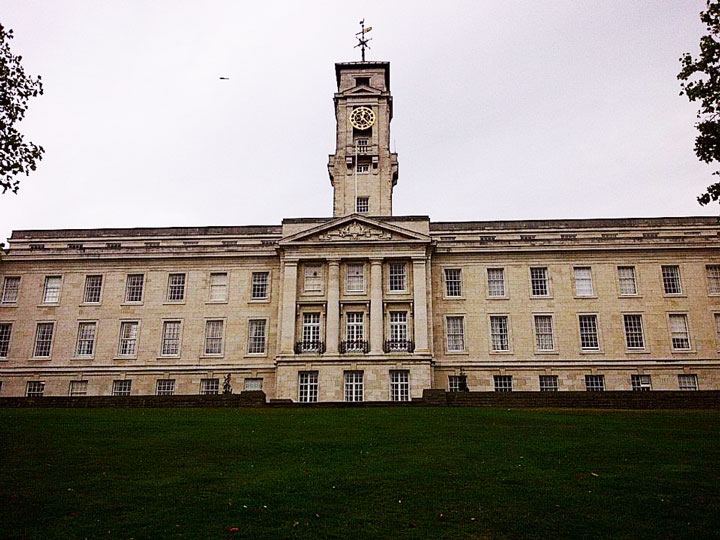
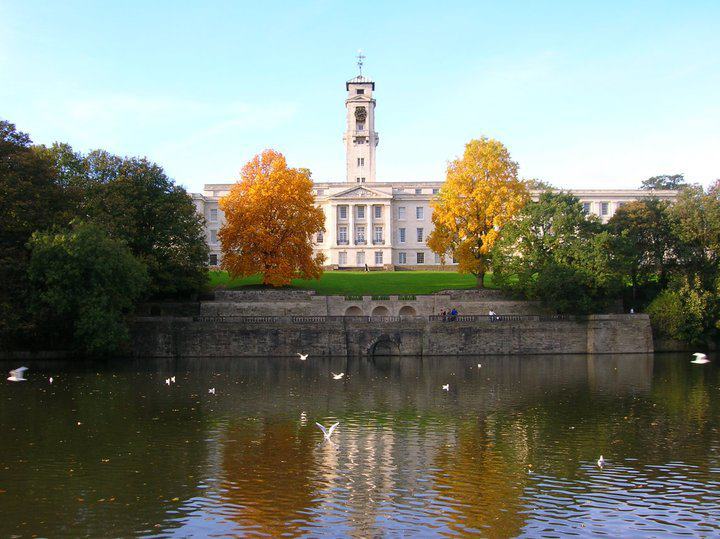
    University of Nottingham has one of the best faculties for Intellectual property laws in the UK and one of the most intensive courses in Masters of International Commercial Laws. With an amazing library and a brilliant atmosphere for studies and a superbly picturesque campus, every second spent there studying has been worthwhile.


    Any interesting details about the course worth sharing?

    To start with, our Intellectual property law course instructors were Dr. Estelle Derclaye and Dr. Paul Torremans who are very renowned in their fields. For all the other subjects, the seminars were coupled with lectures from Mahesh Uttamchandani from the World Bank, Pascal Kamina for Intellectual Property law and some other eminent dignitaries.


    How was your experience? Tell us about the faculty and facilities. Any memorable instances you might want to share with us?

    Situated two and a half hours from London, the facilities in and around this university are incredible. The 24 hour access to all the buildings and the library within the university was very helpful since we had to prepare for the day-to-day seminars on almost all the days and additionally research for our papers due at the end of the term. The faculty was very helpful and understanding. The staff in the school of law were equally well-informed and organised.

    The hand-outs and the manuals were extremely helpful in preparing for the classes and the students’ portal was very well designed to cater to all our research needs. University of Nottingham has access to innumerable journals across the globe in almost all the major areas of research and studies. The library is huge and divided into levels. The basement and the ground levels being group study zones designed with brightly coloured walls and a brilliantly designed cafeteria. The other two levels above it are the silent study zones with in-built study carrels that have a plethora of books and journals for almost all the humanities related subjects.

    anwesha-pal8The University of Nottingham, UK is divided into four campuses where the University Park Campus is the one where the school of law is situated amidst beautiful gardens and a lake with swans and lots of greenery. The hopper bus services are very effective which transfer you from one campus to the other for free. These are double-decker buses which run every few minutes.

    A funny thing to note here would be that two of University of Nottingham’s campuses had been shown in a Bollywood movie called Teri Meri Kahaani, which some of our European and English professors went to watch too!
    Well, I think one of the best experiences while living in the UK was when I got the opportunity to watch the Olympics (rhythmic gymnastics) at the Wembley Stadium.


    Holi at Nottingham
    Holi at Nottingham

    How’s the Indian fraternity over there? Are there many Indian students?

    The Indian community in the University is not very big. The LLM Class of 2011-12 had around 100 students out of which 25 were Indians and a few Indian origin UK citizens. The Asian community is pretty big there with a lot of students from China, Korea and South East Asia. There are many societies such as the Indian society, the Hindu society, the ISKCON society and so on where you can meet a lot of Indians too who are enrolled in various fields of study at Nottingham. These societies make you feel like you are a part of a family away from home and the activities during Holi and Diwali were very well organised which my friends from all cultures and ethnicities enjoyed alike. There are quite a few excellent Indian restaurants that have all-you-can-eat buffets in store. They are preferred by Indians and non-Indians alike.


    How is the recruitment/ placement situation for overseas students?

    Ever since the UK did away with the PSW (Post study work visa), the placement situation has not been very encouraging for international students in UK. However, there are a lot of companies including banking companies and other organisations that introduce the graduate program each year. One can always apply for the same and get recruited at the end of the training period. For students applying to law firms in the UK, I found in addition to the international law firms such as Clifford Chance, Herbert Smith and the likes, there are many ethnic minority law firms which release their training contract schemes and vacation schemes every year. The best place for the information regarding employment opportunities is in the law fairs organised by your universities.

    The University of Nottingham has the reputation of getting the majority of students employed each year, undergraduates and postgraduates alike. However, if you are interested in a career in academics, you should keep an eye out for various research associate positions in various universities in the UK including your own university. The Careers and Employability Services cell of University of Nottingham was very helpful with such information.


    How was the academic schedule? Was there a lot of academic work?

    The academic schedule was brilliantly designed, although the courses were very demanding. The course was a mix of full year and half year options along with a dissertation at the end which summed up to 180 credits overall. The students were at liberty to choose the subjects they wanted to take. The assessments for all the subjects were not the same. For some, 15 page essays had to be submitted, whereas for some there were exams in the end. The majority of the subjects one took decided the specialisation such as Masters in International Commercial Laws, European Laws, Human Rights Laws, Maritime law and so on.

    Yes, there was a lot of academic work. For the LL.M. students there were two hour seminars each day for the subjects one chose. The hand-outs for these seminars were given out and additional reading material was put on the portals a week in advance. Studying the given topics thoroughly was a must since the seminar could not be followed otherwise and moreover one would not be able to take advantage of the seminars and the discussions in the class if they were not familiar with the topics. Also, the class performance, which was instrumental in getting recommendations from the professors, was gauged according to one’s participation in the class.

    Formative assessments were also very crucial in understanding the expectations of the professors with regards to our assessments. These were not marked and were meant for practice alone. Apart from that, all the professors were very approachable and always ready to help with your doubts.


    anwesha-pal5What about accommodation?

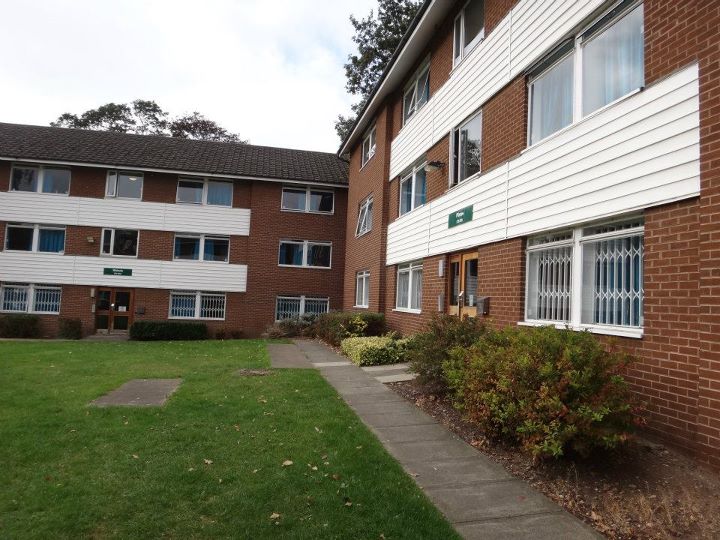
    The accommodation that I had booked before I left for the university was Broadgate Park. It is situated in Beeston that is a 5 minutes’ walk from the School of Law and other administrative buildings. The road leading to the university goes alongside huge playgrounds, a lake with swans and a small hillock paved with neatly trimmed lawns and bushes with concealed lights that give you the feeling of living in a scenic resort.

    The experience was brilliant. The best part of it was when I was placed in the students’ accommodation with girls from various countries in my flat. I made new friends from various cultures, learnt a lot from them and shared my own too.

    With vast green expanses sunny days were enjoyed by the students whiling away their time on these lawns, debating over issues of politics, playing games and flying kites. We would even organise barbecues during summer break.

    Broadgate Park
    Broadgate Park

    Broadgate Park also organises balls every half a year. The Christmas ball is an extravagant affair with European expert acrobats performing difficult acts followed by prom dances by the guests later on in the night.

    The accommodation that I chose was that of a single study, although there are a wide variety of accommodations that one can choose from, including lesser expensive options.

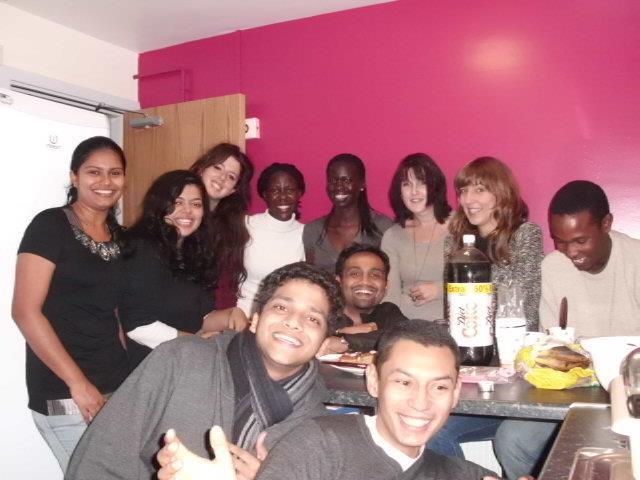
    The flat that I was allotted had flatmates from Canada, Uganda and China. I found really good friends in them. They were very accommodating and immensely helpful. Exploring Nottingham with them was an experience I will never forget. Social get-togethers with classmates were another highlight that was a very culturally enriching experience. I would encourage students going abroad to take advantage of the international experience as a whole and not limit their world to studies alone.

    The accommodation also organises feasts on various occasions for free for the residing students. At such events one can get sumptuous grub, cultural exchange and make new friends.

    Nottingham is a beautiful town that hosts one of the biggest fairs in Europe which is called the Goose fair. The largest Indonesian festival in the UK was held here as well. It is the land of Robinhood and his friends and you can even find the roads of the town named after them such as the Maid Marian Way, Friar Tuck lane and so on.


    anwesha-pal3Tell us about your classmates, was there a predominantly international crowd? What was the general age group of students?

    My classmates were predominantly European and Chinese students. However, there was an eclectic mix of students from the continents of Africa and other Asian countries. The style adopted in their countries regarding research and studying case laws is very different from the ones adopted in India. The way of teaching was mostly in the form of discussion and reading beyond what was enlisted in the seminar hand-outs.

    The general age of students varied from 24 to 40 years. I met students from Pakistan and Africa who were in their 40s and were either already teaching at various institutions in their countries or working at solicitor firms or were Barristers in London. There was even a student from Czech Republic who was in his mid-thirties and had been working at Clifford Chance for a few years. Some of them were working in Government organisations in their countries.


    Did you get time for any extracurricular activities?

    The course had been designed very beautifully that it even left quite some time for pursuing activities other than the one that were related to academics. During the summers when the lake was not frozen, one could participate in rowing activities around the lake or join the swimming club or the belly dancing societies to learn something new. There are several student-run activities for the health conscious too. Also one could even join the baking club to learn baking or help with the charity functions. There was even a Quidditch society for the Harry Potter buffs. There were societies that enacted period wars, replete with costume and props. For those who were passionate about volunteering, there were charities that needed volunteers to work at the local departmental stores and places like the British Heart Foundation and Cancer Research Institutions to help raise money.

    However, for people who wanted to earn some extra bucks during the breaks, Nottingham being a university town was full of opportunities for students to work in. The ones offered by the university was the Note-taking service and other related support work for the disabled or people with handicaps in the university. The pay was very attractive with almost 16 to 20 pounds per hour with an extra holiday pay. Jobs offered by the university were by far more lucrative than any other jobs that were being offered by other organisations.


    How does one go about scholarships? Does the institute offer any scholarship?

    There are many scholarships on offer such as the Commonwealth Shared Scholarship Scheme, The Developing Solutions Masters Scholarship, IELTS Scholarships, Charles Wallace India trust Scholarship, Aga Khan foundation Scholarships, Goa Education Trust (GET) Scholarships, Chevening Scholarship and so on. The detailed information is given on the university’s website. The University offers a scholarship as well. This scholarship is given by the International Office of the University. Information about the same has been provided on the website.


    What are your future plans? Going forward, how do you expect this experience to influence your career?

    My plan at the moment is to focus on my academic career and move ahead with it. I believe the experience that I have had at Nottingham coupled with my undergraduation from NUJS would be a stepping stone to an academic career that I have always dreamt of. I hope to find better opportunities for my higher research degrees with my experience in Nottingham.

  • Roshan Santhalia, Advocate, High Court, on studying criminal law at Oxford, starting his own boutique firm and plans for the future

    Roshan Santhalia, Advocate, High Court, on studying criminal law at Oxford, starting his own boutique firm and plans for the future

    Roshan Santhalia graduated from NALSAR University in 2011. He has interned with Hon’ble Justice Madan B. Lokur, High Court, Delhi, Hon’ble Justice J.M. Panchal, Supreme Court of India, UN Anti-Corruption and Crime Prevention Department, and Cambridge Police Executive Programme during his time as an undergraduate. He then went on to pursue his masters in criminal justice at Oxford University, batch of 2012. He is currently a litigator based in Delhi, and primarily practices at trial courts and the Delhi High Court. He also founded his own boutique firm, Santhalia Law Chambers, in 2012.

    We have taken this opportunity to ask him about:

    • His motivation behind pursuing a LL.M Degree.
    • His experience as a student of the Oxford University.
    • The recruitment rate for overseas students.
    • Means of securing a scholarship to study at a foreign university.


    What was your motivation behind doing LL.M.? When did you finally decide to do your masters?

    I have always wanted to litigate in courts right from the beginning of law school. My primary and predominant motivation for pursuing an LL.M. was to improve my capabilities as a litigating lawyer. Moreover, I have always believed that as a first generation lawyer, the an LL.M. from a reputed university will help me build my litigation practice. As of now, the plan seems to be working. It was by the end of my second year in law school that I had made up my mind to take up an LL.M. after my first law degree.


    How did you choose the university/college?

    I believe that choosing the right university for your LL.M is extremely important. I have always advised my juniors to not apply to universities which are average or below average. With the upsurge in the global education market, there have been numerous universities which have come up with their own LL.M programs. It is important that every LL.M aspirant emphasizes on two aspects of the LL.M program. These are the overall brand reputation of the university and the quality of the faculty in the area of your interest. For instance, an aspirant might want to go to Oxford because of the brand name it has, but, if he/ she wants to specialize in Intellectual Property Right laws then Berkeley or Stanford are much better options. The right balance needs to be struck between these two factors and an ideal combination would be one in which the target university has a good brand name along with having a good faculty in the area of the desired specialization of the aspirant.


    What did you study? Why did you decide to take up this particular subject?

    I took up Criminal Justice at Oxford because I have always wanted to practise criminal law. All throughout my law school career, I have devoted a major portion of education and learning in the field of criminal law. I believe that every aspirant should first locate his or her lead in a particular area of law. An area which interests the aspirant much more than other areas of law and other similar factors should be taken into consideration. It is important that by the end of the first half of one’s law school career, he/ she should decide his/ her lead area so that he/ she can concentrate and build his/ her CV accordingly.


    How has your experience been so far? Tell us about the faculty and facilities. Anything memorable that has stayed with you?

    It’s been about six months since the completion of my masters. I would say that my experience as a Masters student was a bit poorly balanced. The academic side of my entire experience took away all the time in which I should have probably socialized and done other extracurricular activities in and around the town in which I was living. I was very lucky to be a part of a class at which luminaries like Professor Andrew Ashworth and Professor Lucia Zedner taught. One does not need to worry about the faculty if he/she is going to renowned universities. Professors abroad are extremely professional and diligent. They would never ever give you an opportunity to be critical of them in any form.


    How’s the Indian fraternity over there? Are there many Indian students?

    Indians are everywhere, aren’t they? I believe that all the good LL.M schools across the world have an excellent Indian fraternity. We have done very well across different disciplines and therefore, one will never find any dearth of friendly and helpful Indian students in any university. Not to forget, the children of Indians who have settled abroad also form a substantial portion of the Indian fraternity abroad.


    How is the recruitment/ placement situation for overseas students?

    Prior to the recession, I hear that the placement rate for overseas students was good. Currently, I believe that it has become very difficult for anyone who does an international LL.M to get a job in the international market. One needs to appreciate the fact that LL.M is a masters degree and therefore, it is more analytical, jurisprudential and theoretical in nature. As compared to this, the JDs and other undergraduate equivalents in foreign law schools teach the practical aspects of the local laws to their students. Therefore, the undergraduate students always have a better bet with local jobs of that particular jurisdiction. Having said this, I must say that exceptional candidates who do very well in their LL.M programs do end up getting good jobs too.


    How is the academic schedule? Is there a lot of academic work?

    Yes. A lot of academic work. LL.M programs across the globe are designed in a manner that a huge amount of course content can be compressed in one single year. As I have answered before, a major portion of my time which should have been spent discovering other things around Oxford was taken up by the excessive academic pressure which was exerted by the LL.M course on me. One should be mentally prepared for a lot of academic reading during the course of their LL.M program.


    How did you manage food and accommodation?

    Accommodation varies from university to university. Oxford and Cambridge have a collegiate system which means that every student will be allotted a college which shall essentially take care of the residence and food for that student. US universities, I have heard have halls of residence within their faculty of law or very near to it.


    Tell us about your classmates – is there a predominantly international crowd? What is the general age group of students?

    My class had students from all over the world. I had classmates from all the seven continents. The general age group of students is anything between 24 – 30. However, there are certain students who are also more than 30 years old.


    How does one go about scholarships? Does the institute offer any scholarship?

    Comprehensive scholarships to high quality law schools are very difficult to get. Again the mode of scholarship and the way in which one can get it varies from one law school to the other. The US and UK employ different mechanisms to provide academic scholarship to deserving candidates. One needs to do his/ her research very well to apply for all the appropriate scholarships. You can either get a full scholarship or tuition fees waiver depending on your class rank in the undergraduate law school and the interview which you give to the scholarship committee.


    Going forward, how do you expect this experience to influence your career?

    I believe that every LL.M has two major components to it. One is the substantive component of the course which basically relates to the substantive law and theories which you have gained from your LL.M course. The other component is the improvement in your capabilities to analyze, think, draft etc. on different legal issues. I believe that my higher education experience has added much more to the second component mentioned above than the first. The first component is primarily municipal/ local in nature as the theories and substantive law which one learns in his/ her masters can be most related to that particular jurisdiction in which the law school is located. In contrast to this, skills of analysis, drafting and how to critically develop a perspective on any particular area of law are skills which are universally applicable in different fields and sectors of law.


  • Rukmini Das, Masters candidate, international dispute settlement, on studying in Switzerland, demanding curricula, and plans after masters

    Rukmini Das, Masters candidate, international dispute settlement, on studying in Switzerland, demanding curricula, and plans after masters

    rukmini-das2Rukmini Das graduated from NUJS, Kolkata, in 2011. Following that, she worked with PXV Law Partners as an associate for three months, before deciding to pursue her masters.  She is currently pursuing a masters in international dispute settlement, a degree which is jointly offered by the Geneva University Law School and the Graduate Institute of International and Development Studies, Geneva.

    In this interview we speak to her about:

    • Studying in Switzerland as opposed to more conventional destinations abroad
    • Application procedure, scholarships and her curriculum
    • Her experience studying in Switzerland and plans thereafter

    What was your motivation behind doing LL.M.? 

    At the graduation level, we only touched upon all the main branches of law, learning only a little more when we took optional subjects. I decided during  my 5th year that I would pursue an LL.M., but was not yet sure when or where. However, following the herd mentality, I started working in a corporate law firm right after graduation. Halfway through the year, although I liked the work atmosphere, loved my colleagues and superiors, I realized that I cannot see myself doing this year after year. This was not my area of interest! Then I started applying for LL.M.

    How did you choose the university/ college? Where else did you apply? How should one go about choosing an university?

    I came across the course I am studying now, on the website of the International Law Students Association (ILSA), while preparing for the Jessup Moot in 5th year (ILSA organizes Jessup). This is not a particular university/college, it is a programme organized jointly by the Geneva University Law School and the Graduate Institute of International and Development Studies, Geneva. I want to stress that I selected the course, not the school. This is very important for anyone deciding on an LL.M. [for example, Harvard is famous for its business law, and maybe some other kinds of law, but may not be the best for all branches of law. Don’t go to Harvard for the sake of Harvard, as long as your other option is among the better ones].
    The main reason for zeroing in on the course that I did? The faculty! Recruitment chances are also a consideration.
    I had also applied to Queen Mary’s arbitration programme (chose not to take it up) and Cambridge University (did not get a call).

    What are you studying now? Why did you decide to take this particular subject? Any interesting details about the course worth sharing?

    I am studying Masters in International Dispute Settlement (MIDS). I selected this for the course structure and content. It is one of a kind in the world (www.mids.ch). There are so many interesting things, I don’t know where to begin! Though the course focuses on private and public international dispute settlement (why I selected it in the first place), there are opportunities to take optional courses from the regular courses offered at the graduate institute and Geneva university law school, which means I can also take courses in substantive law subjects. There are also many intensive courses offered at MIDS, over two to three days, by the best in the profession. Tutorials are also an integral part of the curriculum, not to forget conferences, site visits to international institutions, etc. I could go on and on.

    How is your experience so far? Tell us about the faculty and facilities. Anything memorable that is stuck in your mind?

    The Course directors (professors of our main courses on dispute settlement), the staff all make us feel like part of a family, with regular cocktail events which give us an opportunity to talk about stuff outside class. The experience has been mind blowing! Everything is memorable. Especially memorable were the public international law tutorials because of our Tutor, who is now a professor at Geneva University, and I feel really bad for future MIDS students, who will not have the opportunity to be taught by him.
    Facilities are great, giving us access to two libraries (Geneva Uni and Graduate Institute) as well as facilities coming with them.

    How’s the Indian fraternity over there? Are there many Indian students?

    My class has only 33 students, with one other Indian. There have been two Indians in every year of the programme, which commenced in 2008. The graduate institute has many Indian students, in economics, social sciences, development studies. I am not sure of Geneva University.

    rukmini-das3How is the recruitment/ placement situation for overseas students?

    All students are overseas in my class – not a single Swiss citizen. We get all the help possible from the career services of the graduate institute. We keep getting information on internship and job openings, via email. Career services is always there to help us with any questions we may have.

    How is the academic schedule? Is there a lot of academic work?

    Because of the immense flexibility in courses we can choose, in terms of optionals and intensives, and the conferences and institution visits we go for, hardly anybody has the same schedule as another. Schedules also vary from week to week. There is a LOT to read, a LOT. One week (the worst), we had to read about a 1000 pages. Except for that week, readings are in the vicinity of 500 pages, and are manageable if you manage your time well. Moreover, if you like the reading material, which you should, since you selected the courses, time should just fly. Classes are not just one-way lectures with note-taking, they are full of interesting discussions, made even more exciting with the presence of students from around 25 countries and teachers of such vast experience.

    What about accommodation?

    Depends on how much money you have. Of course, Geneva is among the most expensive cities in the world. Taking that into consideration, accommodation offered by MIDS administration is pretty good. Kitchens are provided, there is no concept of a “mess”. Cooking is ideal anyway – saves a lot of money!

    Tell us about your classmates – is there a predominantly international crowd? What is the general age group of students?

    I don’t have a single Swiss classmate. The students largely come from Europe, few from North and South America, and a decent number from Asia. I don’t have any classmates from Africa, but that is probably a coincidence this year. I have met quite a few at the Graduate Institute, part of other courses. Ages of my classmates ranges from 23 to 32 years. Many have come for their second LL.M., some have come here in the middle of their Ph.D.

    Do you get time for any extra-curricular activities?

    No. Partly because there’s too much to read, partly because a lot of the Geneva University activities requires a good knowledge of French!

    How does one go about scholarships? Does the institute offer any scholarship?

    MIDS offers a few scholarships every year (from an external sponsor). As far as I understand, they are merit-cum-need based. There are also scholarships offered by the Swiss government for Indian students, but the deadline generally expires before the MIDS offer letter arrives.

    What are your future plans? Going forward, how do you expect this experience to influence your career?

    My future plans are related to public international law. No further comments on that! Too early to say anything concrete. The MIDS is perfect for the faculty there, the opportunities one gets for contact-building, the variety of job opportunities in a single city! I strongly recommend it.

    rukmini-das4

  • Khagesh Gautam, Masters in Law, Columbia University, on Comparative Constitutional Law, scholarships, and student debt

    Khagesh Gautam, Masters in Law, Columbia University, on Comparative Constitutional Law, scholarships, and student debt

    Khagesh Gautam graduated from Campus Law Center, New Delhi in 2008. Subsequently he has taught at tutorials which train law candidates for the CLAT. After working as associate for Desai & Dewanji, he went on to pracitise at the Punjab and Haryana High Court. He is currently studying at the prestigious Columbia Law School. During his time in Columbia Khagesh has also been documenting his experiences in his photoblog giving viewers a glimpse of life in New York.

    In this interview, he talks about:

    • His passion for Constitutional Law and the reason he chose to pursue an LL.M.
    • Picking the right University for your LL.M.
    • His experience at Columbia University – faculty, environment, accommodation and recruitment.


    What was your motivation behind doing LL.M.?

    I decided to do an LL.M. in early 2011. I made up my mind in April, 2011 and then started looking for law schools that I should apply to.

    My motivation to pursue one was strictly intellectual. I wanted to do a serious study of comparative law with particular emphasis on comparative constitutional law. I graduated from Campus Law Centre, Delhi University in 2008 and the seeds of serious study of constitutional law were sown in me in the second year of law school itself. That passion continued with me through the four years I practiced law. I was lucky to get an opportunity to work on some really complex constitutional matters during my practice which helped fuel my passion. Somewhere in between college and work, I also read some books on American history and political science and that got me interested in American Constitutional Law and comparative constitutional law. So I decided to do pursue an LL.M.


    How did you choose Columbia University?

    I started my research by first, making a list of law schools that I would like to study in. Then I went to their respective websites and looked at the courses they were offering. Any school that was not offering the subjects that wanted to study was crossed off my list. After this, I looked at the professors teaching those subjects and did some online research to find out what the professional standing of these professors was. Following this method, I was able to zero in on a few law schools that were offering the courses that I wanted to study. Columbia Law School was on the top of my list because they had a special chair on Indian Constitutional Law (Dr. B.R. Ambedkar Chair). The faculty there was brilliant. For example, in this last semester, I took a course on Indian Constitutional law that was taught by Professor Sudhir Krishnaswamy. And previously, the same  course had been taught by Professor Akhil Reed Amar who is a highly respected name in American Constitutional Law.

    I applied to Columbia, Virginia, University of Pennsylvania and Harvard. I wanted to apply to Yale, Michigan and Cambridge but due to professional obligations I wasn’t able to complete the application formalities on time.
    I began the process of choosing a University by first consulting with my friends who had done their masters from foreign law schools. They advised me to first, make up my mind as to what I wanted to study and then look for law schools that offered those courses. The idea to research on the professional standing of the professors teaching the course was my own I also spent some time reading the published works of some of these professors.


    khagesh-gautam-3

    What are you studying at Columbia University?

    I always wanted to study comparative constitutional law. In my first semester at Columbia I took a course in American Constitutional Law and in Indian Constitutional Law. I took a seminar on Regulation of Capital Markets in which I wrote a paper on Credit Rating Agencies and the First Amendment Commercial Speech Defense that they took post the 2008 financial crisis. Even in a Capital Markets course I was doing constitutional law! I took a course in International Investment Treaty Arbitration as well. In the second semester that is about to begin, I am concentrating completely on comparative constitutional law and some more international law. I spend most of my free time reading about competition law (or anti-trust law as it is called in the US).


    How has your experience been so far?

    My experience has been good so far. The facilities in Columbia Law School are amazing and I have been able to put the resources in the law library to good use. The only thing that could stop you from pursuing knowledge at Columbia Law School is you, yourself, because every single resource conceivable, both academic and otherwise, is made available to you. There are several societies and groups that one can join. I joined the anti-trust group. There are also always some distinguished personalities visiting the University for a lecture or a talk. I attended Justice Aahron Barak’s (former President of the Israeli Supreme Court) lecture on proportionality. There was also a series of guest lectures on monetary systems last semester. I managed to attend a few of them.

    On a personal front, I enjoy photography and New York City is an amazing place for virtually every kind of photography. I have spent quite some time walking around with my camera. Living in NYC itself is a unique experience. There is always something going on that you would be interested in, on or off campus.


    How’s the Indian fraternity over there? Are there many Indian students?

    Apart from the few American JD students of Indian origin that were classmates in the course on Indian Constitutional Law and other courses, and the few family friends that I have here, I can’t really say much about the Indian fraternity. The students that I have met seem to be very hardworking and focused on their studies. I understand that the Indian professionals in USA, most of whom are in the IT field, have done well for themselves.
    There are about twelve or thirteen Indian law students in the LL.M. program in the 2012-13 batch.


    How is the recruitment/ placement situation for overseas students?

    There is a placement office here which is very active and helpful. I have several friends and colleagues, Indian and from other countries in the LL.M. program who will soon be sitting for interviews. I think every major British and American law firm is represented in the placement interviews. Most of the jobs seem to be in the transactional corporate practice areas.

    As to how many international LL.M. students will be able to get employment remains to be seen. It also depends on what kind of person the law firms are looking for. For example, if a firm is specifically looking for a Spanish or Mexican speaking lawyer then the potential group of applicants becomes smaller. A few firms seem to be looking for people well versed in public international law for investor-state arbitration and similar disputes but even in these jobs sometimes, there is a language qualification.


    khagesh-gautam-1

    How is the academic schedule?

    The academic schedule is busy and demanding. The standard objection is that the readings prescribed for a course are unjustifiably more than the credits for the course. Though I concede that in some cases this objection is true, on the whole I am satisfied with the quality and quantity of reading required for the courses that I took. I have interacted with students taking courses in corporate laws and in my opinion, they seem to have been prescribed too much to read. The casebooks prescribed are usually expensive but one can manage to rent them or buy used copies online for cheap.
    The academic work depends on what kind of courses you take. For example, if you take a seminar course and have to write a paper for it then things are different. Though the readings for the course might not be much, you would have to do additional research for your paper and then actually write the paper, which is not easy if you are trying to develop or propose a new idea. If you are taking an exam course then things are different because now you may not have to write anything new but you still have to do all the reading prescribed. Even if it is an open book exam, which most of the exams that I know of are, you still have to do your reading thoroughly.


    What about accommodation?

    Columbia Law School LL.M. students are not allotted accommodation in campus dorms. Most of the LL.M. students live in Lenfest Hall (in either studios or apartment shares), Lionsgate (studios or apartment shares) or other Columbia University Apartment Housing facilities. I was able to secure housing through the Columbia University Off-Campus housing facilities. Housing in New York can be expensive so one needs to be thorough in one’s efforts to find housing close to campus which is affordable and comfortable.

    One of the first things I did after coming to New York was to start a photoblog. This is the link to the photoblog. This blog has pictures taken at the Columbia campus, outside my apartment building etc. Some of them are citiscapes and nightscapes of New York. I will continue to post on this blog for the duration of my stay in New York.

    Tell us about your classmates – was there a predominantly international crowd? What is the general age group of students?

    In the LL.M. course the crowd is truly international and almost all countries in the world represented. The general age group seems to be between 27 and 29. Though I have not been able to interact with all the students every single one that I know of has had some kind of work experience before or is pursuing a Ph.D. in his or her home country. An overwhelming majority of all LL.M. students have an ambition to clear the New York Bar Exam and start practicing in New York.

    Do you get time for any extra-curricular activities?

    I joined the Legal Outreach program here as a Constitutional Law Debate Coach. In this program they pair high school students with law school students who coach these high school students for their constitutional law debates. I was assigned a high school sophomore student to coach last semester. The problem was based on economic rights. My student won that debate and  I had the opportunity to meet her parents, who were very kind and humble people, after the prize-distribution function. It was a great experience overall. This semester I have been assigned another high school student. The problem is on the constitutional validity of the Defense of Marriage Act which deals with the legality of same-sex marriages which is a big issue in America right now. I am having a great time coaching these high school students. This is the only extracurricular activity I am actively engaged in.


    How does one go about scholarships? Does the institute offer any scholarship?

    Every law school has a list of scholarships available on their website. That is usually the starting point. There are other scholarships like Rhodes and Fulbright etc. which are also available to Indian students. Columbia Law School offers scholarships and fee-waivers. There is a fee-waiver form that one must fill and submit. They consider every application for waiver and decide accordingly i.e. whether or not to waive fees and if yes, then how much to waive. All this information is easily accessible on the internet.


    What are your future plans? Going forward, how do you expect this experience to influence your career?

    The future is always uncertain. My long term plan is to become an academician in constitutional theory. The immediate plan however, is to find a job that allows me to pay off my student loan as quickly as I can. The way I see it now, I might have to return to practising  law but I have no ambition to do so in New York. If I do return to practice, it will be in India.

    There are two ways in which I see this experience influencing my career. First is an intellectual influence, as I have had access to a wealth of resources and knowledge that I never had in my life before and have had the opportunity to come across some really cutting edge legal research – intellectual and empirical. Thus, the intellectual influence has been immense. Second is a professional influence as I have met like-minded people from across the globe with whom I share common interests. I have been lucky to make friends with some very intelligent people during my stay here.


  • Deepak Raju, Masters in Law, Cambridge University, on the curriculum, scholarships and plans thereafter

    Deepak Raju, Masters in Law, Cambridge University, on the curriculum, scholarships and plans thereafter

    Deepak Raju graduated from WBNUJS, Kolkata in 2011. During his time in NUJS, Deepak has won the University Gold Medals in Administrative Law, Property Law and Corporate Law. He went on to work with Amarchand & Mangaldas for a period of ten months where he gained experience in the financial regulatory practice of the firm. Subsequently he was engaged with Clarus Associates for a period of five months where he worked on various aspects of international law including international trade law, international investment law, international environmental law, etc.

    In this interview we speak to him about:

    • Bagging the Shared Commonwealth Scholarship to pursue his masters in Cambridge
    • His curriculum in Cambridge and the university’s academic diversity
    • Deciding on his area of specialization


    Tell us about your experience at Cambridge. How would you say is it different from an Indian university?

    The experience has been wonderful for many reasons. First of all, having done my undergraduate education from NUJS, this is my first brush with a university in the traditional sense, which offers a variety of disciplines. One day I find myself listening to an art historian talk about the evolution of the printing press and the next day, it is a cancer researcher trying to make me understand what he is doing. The collegiate system in Cambridge allows students and researchers from different disciplines and backgrounds to exchange ideas and engage in the craziest discussions cutting across a large variety of topics.

    The faculty of law is amazing. The highlight of the experience is Professor James Crawford who was the International Law Commission’s Special Rapporteur on State Responsibility and an agent before the ICJ in a large number of cases. He has also been nominated by Australia for a position as a judge in the ICJ commencing in 2014. He teaches two of my subjects and listening to his background stories and in depth analysis of ICJ cases is a highly enriching experience. Every Friday, the Lauterpacht Centre for International Law hosts a lunchtime lecture on international law. Apart from the free sandwiches (if you ever attend one, go for the prawn sandwiches), the lectures feature some of the greatest names in international law – Sir Elihu Lauterpacht, Professor Malcolm Shaw, Professor Marcelo Kohen, etc. Most professors in the faculty are the leading authorities in their disciplines and some are great practitioners too.

    In addition to all this, Cambridge is a beautiful town that looks like a scene from Harry Potter. There are ancient castles and a vibrant young crowd everywhere. As I type this, I am sitting on Charles Darwin’s ancestral property (Darwin College), and the beautiful river Cam flows outside my window. Newton’s apple tree is rumoured to be in the botanical garden. Oliver Cromwell’s head is supposed to be buried in one of the colleges. King’s college boasts of 31 Nobel prizes and Darwin (my college) of 31 single malts… So Cambridge is not all about studies, it is a lot of fun.

    To top it all, I saw Stephen Hawking!


    You went to Cambridge on a scholarship. Can you tell our readers about available student aids and the procedure it entails?

    The major scholarships that Indian students coming to Cambridge can apply for are those offered by the Cambridge Commonwealth and Overseas Trusts and the Cambridge Gates Scholarship. The applications for these scholarships are made through the same online application system as the one for admission. Each scholarship has a different set of requirements and some have an earlier deadline for application. Hence, it is very important to check the details relating to each scholarship. There are also some smaller bursaries and awards that various colleges in Cambridge offer.

    In addition to these scholarships offered by Cambridge there are some India specific scholarships that applicants to Cambridge are eligible for. These include Inlaks and Chevening. The Indian government also gets to nominate a few students to the British government for the Commonwealth Scholarship. This process is administered by the Ministry of HRD and a notification comes out on the ministry website. But I have some reservations about the selection process for this nomination.


    Students can often be indecisive about the courses they want to take for their masters. How did you make this decision?

    An LL.M. is a very challenging intellectual exercise. It is also an expensive affair unless one has a full scholarship or a very rich parent. Given this, I would personally not embark on the journey unless I knew what areas I was interested in. I have always been interested in public international law. So, the choice of subjects was not difficult for me.

    Once one has a broad understanding as to what area(s) of law (s)/he wants to pursue, the selection of specific courses can be done once the classes start. Cambridge holds introductory talks on all the subjects and allows students to attend classes in any number of subjects they want before they finalise the list of subjects.


    deepak-raju-1

    What are your future plans after finishing your LL.M.?

    I am planning to consult Didi’s (Mamata Banerjee) astrologer who has reportedly been appointed to the executive committee of my alma mater (WBNUJS, Kolkata). On a serious note, I am not yet sure about what I will do immediately after the LL.M. The long term goal is a career that combines the practice of international law with academic research and teaching.


    What would be your advice for the students planning to pursue higher studies?

    There is no ‘one size fits all’ way to get into a reputed university or get a scholarship. At the LL.M. program here, we have an ex-cop, at least two ex-bartenders and a 50 something old ex senior associate at a reputed international law firm. They look for a diverse set of interesting and promising people. I feel the most important part of the application process is your personal essays where you describe why you want to do a specific program. It is important to highlight your interest/experience in your selected field and how the LL.M. will contribute to your future plans. The scholarships may also need you to demonstrate some social commitment. Write these essays well ahead of the deadline and have them reviewed by a few friends with excellent drafting skills.

    As I mentioned earlier, an LL.M. is a challenging and expensive affair. So, do not apply unless you are ready for it. I would personally discourage those who take a loan for an LL.M. since the job markets are bleak and the amounts involved are large.