Having over a decade of experience now, what were the initial years of your practice like? What inspired you to choose law as a career, andhow did law school help shape the foundation of your professional journey?
It’s been 10 years in this profession, yet the early days feel like just yesterday, when I was practicing in Delhi and learning to navigate the world of black and white. It didn’t take long to realize that this profession is far more about practicality than pure theory. Knowing the law and mastering your case file is essential, but equally important is understanding the judge, not personally, but in terms of their courtroom approach: their patterns, reactions, and preferences. From the very beginning, I developed the habit of sitting in court and observing judges closely. That practice, simple as it may seem, has proven invaluable throughout my journey as an advocate.
I come from a small town in Haryana called Karnal, where I completed my schooling. After that, I pursued my law degree at Amity University, Noida. My legal journey began with a litigation office in New Delhi, where I practiced for almost four years. In 2018, I moved to Chandigarh to start my own practice. As a first-generation lawyer, it was important for me to establish my name in my hometown, where I felt more connected and grounded. It wasn’t easy, there were no set plans, and no one in my family had a legal background. It all started when a cousin suggested corporate law while I was preparing for my 12th boards in 2010. I gave the entrance exams, got selected at Amity, and the rest unfolded from there.
You began your career as an associate, handling a wide range of civil litigation and domestic arbitration matters. How did this early exposure influence your approach to complex disputes, and what key skills proved most valuable in the formative years of your practice?
In the initial years of my practice as an associate, I was fortunate to be exposed to a wide range of civil litigation and domestic arbitration matters. This diversity of work taught me very early on that no two disputes are ever alike. Each case requires a tailored approach in terms of a legal strategy. What shaped me the most was learning how to balance theory with practicality. The law may be uniform, but its application depends on the facts, the forum, and often the perspective of the judge or tribunal. Observing court proceedings, understanding patterns of arguments, and seeing how small details could shift the direction of a case gave me a very grounded view of dispute resolution.
As a first-generation lawyer, what motivated you to establish your independent practice? What vision did you have when you started, and how has it evolved over time?
As a first-generation lawyer, what motivated me most to establish my own practice was the desire to build something independent, driven purely by merit, hard work, and client trust. Starting out, I had no legacy to rely upon and that became my greatest strength. It pushed me to focus on credibility, consistency, and results from the very beginning. My initial vision was quite simple: to create a practice that delivered practical, solution-oriented advice rather than just theoretical legal opinions and dragging each and every client to Court even if it could be settled outside the court. That was when Hans Law Associates was established. Over time, that vision has evolved into building a full-service firm where teamwork, innovation, and long-term client relationships are at the core.
You have represented clients before the Punjab and Haryana High Court, consumer forums, RERA, and various tribunals. How has this diverse litigation experience enhanced your understanding of dispute resolution across different legal platforms?
Representing clients before the Punjab & Haryana High Court, consumer forums, RERA, and various tribunals has given me a broad perspective on how dispute resolution functions across different platforms. Each forum has its own procedure, pace, and expectations, for instance, the High Court demands sharp legal reasoning and precedent-based arguments, while consumer forums and RERA focus more on quick, pragmatic relief to aggrieved parties. Ultimately, this cross-forum exposure has made me a more versatile advocate, able to approach disputes not just from a legal standpoint, but from a strategic, client-centric perspective.
You have handled matters before the Haryana Real Estate Appellate Tribunal, the Haryana Real Estate Regulatory Authority, and several other tribunals. What unique challenges have you encountered in this specialized field, and how do you navigate them effectively?
Handling matters before the HREAT, HRERA, Pkl, and other tribunals has been both challenging and rewarding. Real estate law, especially under the RERA framework, is indeed a booming area of practice. With rapid urbanization and increasing consumer awareness, disputes in this sector are growing both in volume and complexity. The unique challenges I’ve faced include balancing the interests of buyers and developers, staying updated on any recent precedents as it is a very new law and most importantly, ensuring enforcement of orders. While RERA was designed to be consumer-friendly, practical hurdles often arise in execution. I’ve found that navigating this space requires not only sound legal knowledge but also adaptability and persistence. This blend of legal precision and pragmatic follow-through has allowed me to add real value to clients in this fast-growing field.
As a mediator at the Punjab and Haryana High Court, how do you see ADR evolving in India? In your experience, what advantages does mediation or arbitration offer compared to traditional litigation?
As a mediator at the Punjab and Haryana High Court, I have witnessed how Alternative Dispute Resolution (ADR) is rapidly evolving in India. With rising pendency in courts, ADR is no longer an alternative but an essential tool for timely and effective justice.
The recent “Mediation for the Nation” drive initiated by the Hon’ble Supreme Court reflects this growing recognition. By encouraging parties to resolve disputes amicably, the judiciary has underlined mediation’s role in reducing litigation, promoting harmony, and ensuring quicker resolutions. I myself have seen a rise in settlements after the said initiative.
In my experience, mediation preserves relationships and empowers parties to design their own solutions, while arbitration offers efficiency, confidentiality, and subject-matter expertise. Both provide speed, practicality, and satisfaction compared to traditional litigation that may take years. With institutional support and initiatives like Mediation for the Nation, ADR in India is poised to become a truly transformative mechanism for access to justice.
You have drafted agreements for a variety of clients, including music and production companies as well as professionals like psychologists. What key challenges do you see in the entertainment sector, and how can these be addressed proactively through careful contract drafting?
Drafting agreements in the entertainment sector brings its own set of unique challenges. Unlike traditional contracts, these often deal with creative rights, intellectual property, royalties, confidentiality, and moral rights, all of which can be highly sensitive and prone to disputes if not defined clearly. One of the biggest challenges is the ambiguity around ownership of content, whether it lies with the creator, the producer, or the platform. Another is the lack of awareness among artists and professionals about the long-term implications of exclusivity clauses, revenue-sharing models, and termination rights. Proactive solutions lie in clear, precise, and balanced drafting.
What advice would you give students aspiring to enter the legal profession, and what resources would you recommend to help them stay ahead in a constantly evolving field?
My advice to students aspiring to enter the legal profession is to focus on fundamentals and be patient enough to adapt. Courtroom practice teaches you quickly that law is not just about theory but about how you apply it in real, practical situations. Developing habits like observing proceedings, reading judgments daily, and sharpening communication skills goes a long way. It’s a never ending learning process. I see a lot of individuals backing out from the profession as it may not satisfy you monetarily but once you understand the responsibilities that come with it, I am sure we are ready to go a long way. I’d also recommend building a mentor network and learning from senior advocates and peers. In a constantly evolving field, the ability to keep learning, unlearning, and relearning is the best resource you can carry with you.
Balancing a demanding legal career with personal life can be challenging. How do you manage stress, maintain focus during high-stakes matters, and create balance between your professional and personal responsibilities?
Balancing a demanding legal career with personal life is indeed challenging, but I’ve learned that discipline and perspective makes the difference. During high-stakes matters, I manage stress by preparing thoroughly as confidence in your case reduces anxiety. I also practice detachment after court hours, giving time to family, fitness, and spirituality, which keeps me grounded. For me, balance isn’t about strict separation but about ensuring that both professional duties and personal responsibilities get the attention they deserve. This balance not only helps me stay focused but also makes me more effective in my practice.
With over a decade of experience spanning litigation, arbitration, and corporate advisory, what inspired your transition from an academic background in economics to a full-fledged legal career? What drew you to the practice of law?
Anyone who chooses to pursue a challenging or demanding field must first ask themselves a fundamental question about their motivation and commitment. For me, the transition from Economics to Law was shaped by a single, thought-provoking evening discussion with my mentor, who questioned me about my future career path while I was in the second year of my undergraduate program. Unlike many of my peers who found Economics dry and difficult subject to grasp, I had a different perspective. Economics not only deepened my understanding of fundamental commercial principles, such as demand and supply, but also sharpened my analytical thinking and ability to evaluate situations rationally. I truly realized that law was my calling when I began to understand how the legal system serves as a tool to help individuals identify and secure their rights, while safeguarding their interests.
You’ve represented clients in high-stakes civil and commercial disputes. Could you share one of the most challenging cases you’ve handled so far, what made it particularly demanding, and how did it shape your approach?
Maintaining the confidentiality of parties is essential to preserve their dignity and integrity. One such instance involved a family dispute where the daughter-in-law claimed rights over the assets of her mother-in-law based on a Memorandum of Family Arrangement executed among the family members. The mother-in-law and daughter-in-law were residing in the same house, while the son (and husband of the daughter-in-law) was living abroad.
The mother-in-law, who had inherited both movable and immovable assets from her deceased husband, was dependent on the court’s intervention to access and utilize these assets for her daily maintenance. However, due to the COVID-19 outbreak, court proceedings were delayed, disrupting the entire legal process. Eventually, through the intervention and mutual discussions facilitated by the legal representatives of both parties, a settlement was amicably reached.
The family settlement not only resolved long-standing disputes and differences but also brought much-needed relief to the family members, allowing them to move forward amicably in their respective lives. Personally, this case gave me immense satisfaction, as the elderly mother-in-law finally found peace and solace in her old age, gaining relief from what could have been an unending cycle of family disputes and disagreements.
This experience was one of the most significant family settlements I have been involved in, and it changed my approach to handling family disputes. Since then, I have consistently advised my clients to consider amicable resolution and mutual settlement wherever possible, rather than engaging in prolonged and indefinite litigation.
In your advisory work with startups on legal compliance and employment law, what are some of the common legal pitfalls you’ve observed? How do you tailor your guidance to meet the unique needs of early-stage businesses?
Each startup venturing into the development of its unique business model in today’s competitive market is not only driven by innovation but also holds confidential and proprietary data and information. At inception, the intent is almost always to build the business in an atmosphere of complete confidentiality and discretion. However, due to a lack of awareness regarding legal requirements and compliance frameworks, many startup founders inadvertently overlook key statutory obligations.
When a startup founder or their associate seeks legal advice, I make it a priority to first educate them on the bare minimum legal and compliance requirements necessary to establish their entity in a structured and compliant manner. I then advocate the importance of legal structuring to ensure smooth and sustainable business operations.
In my view, guidance is not a one-time exercise—it is a continuous process. However, the role of a legal advisor extends beyond merely offering guidance. Accessibility and consistent availability are equally critical in enabling early-stage businesses to remain legally compliant and to gradually manoeuvre independently with confidence. A legal advisor must act not just as a consultant, but as a reliable partner throughout the startup’s journey, ensuring that the foundation is strong and the business is equipped to navigate complexities on its own over time.
I firmly believe that it is an advocate’s professional and ethical responsibility to provide clients—whether a startup or an individual—with clear interpretations of the law, as well as a thorough explanation of their roles, responsibilities, rights, and duties. This, to me, goes beyond a moral obligation; it is part of our code of conduct as legal professionals.
Having worked both as an independent practitioner and within a law firm, how would you compare the dynamics, responsibilities, and client expectations in each setting? What motivated your decision to establish a law firm?
In my view, independent practice and firm practice are two sides of the same coin. As an independent legal practitioner, the focus is largely on litigation matters, including Alternative Dispute Resolution. On the other hand, firm practice generally offers a broader scope—you cater to both litigation and non-litigation matters.
That said, if a firm intends to maintain a more focused approach, it can adopt a boutique law firm model, which specializes in a limited set of core areas. This ultimately depends on individual choice and the vision one has for their practice.
At VR Law, we follow the boutique law firm model. We handle a mix of litigation and non-litigation work, such as general commercial litigation and contracts, while consciously narrowing our focus to ensure depth and quality. Our primary intention is to deliver optimum outcomes to our clients.
Now, if I were to compare firm practice with independent practice, I would say it’s not a matter of one being better than the other—they simply operate differently. In firm practice, there is more structured client interaction, compliance, documentation, and continuous updates to clients. It also requires being consistently aware of amendments, circulars, and procedures in order to provide prompt and accurate solutions.
Independent practice, of course, carries responsibilities as well, but compared to firm practice, the quantum of compliance and client management is relatively lighter. In the end, both have their own value depending on what a lawyer seeks in their professional journey.
Your legal practice spans a wide range of sectors from real estate to intellectual property catering to a diverse clientele. How do you keep yourself abreast of changing regulatory frameworks and sector-specific legal developments?
This is actually a tough one, but I believe there is one thing common to all lawyers—whether attorneys, counsels, or legal practitioners—and that is reading. Regardless of the format or medium we adopt in our daily routine, reading is a must. Like most budding and practicing lawyers, I make it a point to read or listen to the latest judgments, legal updates, circulars, or notifications.
There are times when professional or administrative responsibilities take over, and I may not be able to keep up on a daily basis. But I always make sure to go back, revisit, and update myself. Thanks to social media platforms and digital resources, access to legal updates has become much easier.
That said, I firmly believe that nothing can replace the bare act. I make it a habit to go back to the law itself—read the provisions, understand the legislative intent, and refresh my interpretation at regular intervals. What’s interesting is that each time you read a bare act, your understanding of a concept deepens, and your perspective evolves, allowing you to apply it in a more refined and effective manner.
Most importantly, I would like to share an advice given by my senior, Mr. Chaitanya Mehta (Managing Partner, Dhruve Liladhar & Co.) in the early years of my practice i.e.‘Whatever you read in life never goes wasted.’ This advice has always stayed with me and continues to guide my approach to learning and paving my journey as a lawyer.
You’ve contributed to legal education through seminars and guest lectures. What drives your commitment to academic engagement, and what is your idea to bridging the gap between classroom theory and real-world legal practice for aspiring lawyers?
As a first-generation lawyer, my curiosity and drive to learn have always pushed me to attend seminars and lectures that broaden my understanding of different areas of law. Over time, I realized that while these forums provide valuable insights, the information is often presented in a complex and highly technical manner. So, when I got the opportunity to conduct sessions myself, I made it a point to simplify the content, weave in real-life professional and personal experiences, and make it relatable for aspiring lawyers.
To bridge the gap between classroom theory and real-world practice, I focus on making law relatable and practical. Beyond seminars and guest lectures, I also got opportunities to mentor juniors/budding lawyers. Along with sharing case experiences, I encourage juniors to read and critically evaluate the law, and whenever possible, I give them opportunities to appear and represent clients.
This combination of theory, mentorship, and hands-on exposure not only motivates them but also builds their confidence as aspiring lawyers. For me, academic engagement is not just about transferring knowledge—it’s about empowering young lawyers to connect theory with practice and grow into confident professionals.
Looking back to your early years in the profession, what were some of the initial hurdles you faced as a young lawyer? Now, with a diverse practice in place, what vision do you have for your future and that of your firm?
The challenges faced as a young legal practitioner vary for each individual. When I began my career as an independent lawyer, I quickly realized that building a practice from scratch extended far beyond courtroom appearances. Key initial hurdles included:
Establishing a Professional Network: Building meaningful relationships with fellow colleagues, including senior counsels and peers, was critical to gaining credibility and support in the legal community.
Client Accessibility and Trust: Ensuring clients could easily approach me required consistent availability, clear communication, and regular updates on their cases to build trust and confidence.
Staying Updated with Legal Developments: Keeping abreast of the ever-evolving legal framework, including new provisions, amendments, and modifications, demanded continuous learning and adaptability.
Balancing Multiple Roles: As an independent practitioner, I had to manage not only legal work but also administrative tasks, client consultations, and providing well-reasoned legal opinions.
When I transitioned from my independent practice to establishing my boutique law firm, the scope of responsibilities expanded significantly. Beyond administrative duties, new challenges emerged such as :
Team Management: Leading a team of juniors, associates, and interns involved reviewing their work, discussing their perspectives on cases, assigning clients, and fostering a collaborative environment through team-bonding sessions.
Feedback and Growth: Providing constructive feedback to team members while also seeking their input was essential for creating a supportive and dynamic workplace.
Self-Evaluation: Continuously assessing my own performance and behavior as a leader and colleague ensured I maintained strong relationships within the team and the broader legal community.
Hurdles in a legal career never truly disappear; they evolve with time. However, these challenges become more manageable with a supportive team and a strong professional network. My vision for the future of my practice and firm is rooted in growth, collaboration, and excellence by Building a Resilient Team, Expanding Client-Centric Services, Contributing to the Legal Community and Personal and Professional Growth.
With the unwavering support of my family, colleagues, and team, combined with divine blessings, I was and am still able to navigate challenges and achieve my vision as a lawyer.
What advice would you offer to students aspiring to enter the legal profession? Are there any resources, reading materials, or experiences you would recommend to help them build a strong foundation?
Although I personally believe that I am still in the process of maneuvering and exploring the dynamics of legal studies and practice, I firmly believe that one must continuously focus on Learning, Reading, and Adapting.
Learning goes beyond textbooks—it is about broadening one’s knowledge through practical exposure, observation, and critical engagement with real-world issues. Reading, on the other hand, does not merely mean going through books, judgments, or case studies; it also means reading between the lines, evaluating facts, analysing circumstances, and interpreting the unstated aspects of a situation. Adapting is equally vital—it requires embracing the ever-evolving dynamics of law and thoughtfully adopting them into one’s practice.
One of the most important lessons I have imbibed and also share with aspiring lawyers is this: always place yourself in the situation first, and then prepare your legal framework. This approach not only safeguards the client’s interest but also enables a lawyer to anticipate potential challenges and assess the possible adverse implications of any act or deed.
Today, we are surrounded by umpteen sources of knowledge—both in print and digital media. Yet, the strongest foundation for any lawyer lies in the habit of reading bare acts thoroughly. This means not just skimming through provisions, but studying them holistically—from the long title, statement of objects and reasons, and definitions, to the substantive provisions, explanations, and even the repealing and saving clauses. At the initial stage, the significance of this practice may not be apparent. However, as one delves deeper into the subject, it becomes evident that every word in a statute carries its own weight, purpose, and interpretation.
With the growing judicial backlog in India, ADR mechanisms are increasingly being viewed as effective alternatives. How do you foresee the evolution of ADR in India, especially in light of recent legislative reforms and institutional developments?
Alternative Dispute Resolution (ADR), particularly arbitration, has fundamentally changed the
approach to dispute resolution in India. Increasingly, parties—especially in small and medium-sized businesses—are making it a practice to include arbitration clauses in their contracts, reducing judicial dependency and facilitating resolution through neutral third parties.
The enactment of the Mediation Act, 2023 has given further impetus to ADR by providing statutory recognition to mediation as a structured process, thereby enabling early resolution of disputes and further reducing the burden on courts but at a preliminary stage. Alongside this, the shift towards institutional Arbitration and Mediation is a development we should accept with open arms. Institutional mechanisms ensure greater consistency, procedural discipline, and credibility, in contrast to ad hoc practices which often lead to delays and inefficiencies.
That said, the evolution of ADR in India will require time and investment in capacity building— whether in terms of institutions, trained professionals, or awareness among litigants. Encouragingly, the interest of the younger generation of lawyers in ADR is growing rapidly. Coupled with legislative reforms and judicial support, these developments are poised to revolutionize India’s dispute resolution framework, making ADR a central pillar of justice delivery in the years ahead.
With over a decade of experience in the legal field, what initially inspired you to pursue law as a profession? What were the key factors that influenced your decision to enter this career path?
From a young age, I found myself deeply intrigued by the concepts of justice and fairness. The initial spark that inspired me to pursue law came from observing how the law could be a powerful tool to bring about positive change and ensure that everyone’s voice is heard. I remember watching courtroom dramas in old Hindi movies and reading about the interesting cases that shaped history. These moments left a lasting impression on me and fuelled my desire to become a part of that world.
Several key factors guided my decision to enter the legal field:
Growing up, I always felt a strong sense of justice and a desire to stand up for others. The thought of helping individuals navigate the complexities of the legal system and fight for their rights was incredibly motivating.
Law offers a unique blend of intellectual rigour and continuous learning. I was drawn to the challenge of analyzing complex issues, crafting persuasive arguments, and staying updated with ever-evolving legal precedents. The idea of using my analytical skills to solve real-world problems was both exciting and fulfilling.
At the core of my decision was a genuine desire to make a positive impact on society. Whether through litigation, policy-making, or community outreach, I wanted to contribute to creating a fairer and more just world. The ability to influence meaningful change and help those in need was a driving force behind my career choice.
Throughout my journey, I was fortunate to have mentors and role models who embodied the values I aspired to uphold. Their dedication, integrity, and unwavering commitment to justice inspired me to follow in their footsteps. Their guidance and encouragement played a pivotal role in shaping my path.
Ultimately, my decision to pursue law was a combination of personal passion, intellectual curiosity, and a heartfelt commitment to making a difference. The legal profession has allowed me to channel my strengths and values into a career that is both challenging and rewarding.
During the early stages of your career, you had the opportunity to work with several esteemed advocates and law firms. What were some of the most formative experiences from this time that shaped your practice, and are there any particular moments or lessons that continue to inspire you today?
Working with esteemed advocates and prominent law offices in the early stages of my career was an incredible learning experience that profoundly shaped my practice. One of the most formative experiences was my time at Anand & Associates, where I had the privilege to work on very interesting cases under the guidance of Mr. Sanjeev Anand, Senior Advocate and Mrs. Kajal Chandra, Advocate. Such experiences taught me the importance of meticulous preparation and attention to detail. Watching seasoned advocates dissect complex legal issues and craft compelling arguments was truly inspiring.
Another pivotal moment was when I collaborated with Mr. Narendera M. Sharma, Advocate, a renowned figure in International Commercial Arbitration Laws. His mentorship and guidance were invaluable. He instilled in me the significance of ethical conduct and the need to uphold the principles of justice at all times. He often reminded me that behind every legal matter lies a person with real emotions and struggles, and it is our duty to represent them with compassion and integrity.
Additionally, working with a diverse group of talented individuals, each bringing their unique perspectives and expertise, reinforced the idea that the best solutions are often the result of collective effort. This experience taught me the value of effective communication, mutual respect, and the power of a united team.
Overall, these experiences have instilled in me the values of diligence, empathy, teamwork, and a steadfast commitment to justice. They continue to inspire and guide my practice, reminding me of the profound responsibility and privilege it is to be a legal professional.
After gaining experience with various law firms and professionals, you chose to establish your own practice. What motivated you to take this step, and what were some of the key challenges you faced in building P.A.M.S. Legal?
The decision to establish my own practice, P.A.M.S. Legal, was driven by a combination of personal ambition, professional growth, and a desire to create a firm that aligns with the values and vision of my other Partners of the Firm. After gaining valuable experience with various law firms and working alongside esteemed professionals, I felt a strong pull towards building something of my own—a place where I could fully integrate my principles, creativity, and client-centric approach. Key challenges included managing resources, establishing a reputation, handling administrative tasks, and attracting top talent. Despite these obstacles, building P.A.M.S. Legal has been incredibly rewarding and fulfilling.
Given the diversity of cases you handle, including partition suits, trademark infringement, and contractual disputes, what are the critical issues you come across while handling cases related to trademark infringement?
Handling trademark infringement cases involves several critical issues, including proving that the defendant’s use of the mark causes consumer confusion, ensuring the trademark is legally valid and registered, and gathering sufficient evidence of infringement. Defenses such as fair and bonafide use and prior use must be addressed, and it is essential to calculate and prove damages while seeking appropriate remedies. Navigating jurisdictional complexities and effectively enforcing trademark rights across various regions also pose significant challenges. These issues require a comprehensive and strategic approach to protect and uphold trademark rights effectively.
In matters concerning oppression, mismanagement, and creditors’ winding-up procedures before the National Company Law Tribunal (NCLT), how do you approach these cases? Could you also share some of the more complex challenges you’ve encountered in Insolvency and Bankruptcy proceedings?
When handling cases of oppression, mismanagement, and creditors’ winding-up procedures before the National Company Law Tribunal (NCLT), my approach is systematic and client-focused. I begin with a thorough analysis of the company’s financial health and gather detailed evidence to support claims. Crafting a robust legal strategy and ensuring clear communication with clients are essential steps. Effective negotiation and mediation skills are crucial to navigating these complex matters and achieving favourable outcomes.
In Insolvency and Bankruptcy proceedings, we often encounter complex challenges such as accurate asset valuation, managing competing creditor claims, uncovering fraud and misconduct, and balancing the interests of various stakeholders. These challenges require a blend of legal expertise, strategic planning, and effective communication to navigate successfully.
Could you share insights from some of the more intricate arbitration cases you have worked on, particularly those involving international or institutional arbitration? How do you manage challenges such as the enforcement of foreign arbitral awards? Additionally, as a trained mediator, what do you see as the future of Alternative Dispute Resolution (ADR) in India?
Arbitration cases, especially those involving international or institutional arbitration, often present complexities such as jurisdiction issues, choice of law, and language barriers. Institutional arbitration requires adherence to specific rules and the careful selection of arbitrators, which can significantly influence outcomes. The enforcement of foreign arbitral awards is facilitated by the New York Convention, yet challenges persist with local court procedures and public policy considerations.
As a trained mediator, I envision a bright future for Alternative Dispute Resolution (ADR) in India. ADR methods, including mediation and arbitration, are gaining momentum due to the overburdened judiciary and the growing demand for quicker, cost-effective dispute resolution. In India, the growing popularity of ADR methods is driven by an overburdened judiciary and government initiatives aimed at promoting quicker, cost-effective dispute resolution. The future of ADR in India appears promising, with an increasing number of trained mediators and arbitrators and a focus on developing a more efficient and effective dispute resolution ecosystem. Government initiatives and legislative reforms are promoting ADR, with the Arbitration and Conciliation Act, 1996 (with recent amendments) and the Mediation Act, 2023, being a notable example.
Looking ahead, I foresee an increase in the number of trained mediators and arbitrators, which will enhance the efficiency and effectiveness of ADR processes. As ADR becomes more ingrained in the legal culture, it will provide parties with more amicable solutions and reduce the litigation backlog. Overall, the future of ADR in India is promising, with continued growth and improvement in the ADR ecosystem.
What resources, tools, or methods do you use to stay informed about the latest developments in Intellectual Property Law, as well as in other areas such as civil and consumer law?
To stay updated on Intellectual Property Law, civil law, and consumer law, I use:
For law students or young professionals looking to specialize in Intellectual Property Law, what advice would you offer? What skills and qualities do you consider essential for success in this field?
For law students or young professionals looking to specialize in Intellectual Property Law, I recommend building a solid foundation through relevant courses and practical experience, staying updated on legal developments, and engaging in professional networks. Essential skills include attention to detail, analytical thinking, research proficiency, strong communication, problem-solving abilities, technical knowledge (especially for patents), negotiation skills, and maintaining high ethical standards. These qualities will help you excel in the dynamic field of IP law.
Given your extensive expertise and experience, was law always your first choice of career, or did your path evolve over time? Could you share some key moments from your academic journey at National Law Institute University, Bhopal?
Law was never my first career choice. I even prepared and appeared for engineering entrance examinations, including IIT JEE. Law happened completely by happenstance. My father heard his colleagues including a District Magistrate speaking to another colleague (in the context of his son’s higher education) about entrance examinations of National Law Universities which, in their words, were like the “IITs of Legal Education” and if one could get through such NLUs, they would have a very bright career. After enquiring further with the said District Magistrate about the NLUs and the entrance procedure, my father, in the evening broached the possibility of my appearance for law entrance examinations. In a way, law immediately sparked my interest, and I immediately went to the so-called ‘cyber-cafes’ of those days and researched further about the scope of the entrance examinations and how I could prepare for the entrance examination. I then came across Law School Tutorials (LST) and ordered their study material and started my preparation. I subsequently qualified the entrance examinations of Symbiosis Society Law School, Pune, Army Law School, Mohali, GGSPIU, NLIU (Bhopal) and several other entrance examinations and eventually joined NLIU, Bhopal, after briefly enrolling and studying at SSLS, Pune. So clearly, the road that led me to law evolved over time.
After completing your law degree, what motivated you to pursue an LL.M. at Queen Mary University of London, and how did it enhance your previous education? Can you also share your experiences and the differences you observed in their teaching pedagogy?
I was of the firm belief that at all times after you graduate, you must either be in the pursuit of earning or learning. I had been harbouring this desire to pursue an LL.M. right since I graduated. When COVID-19 struck, I took this opportunity and enrolled myself for an LL.M. in International Dispute Resolution at QMUL, UK. It was very hard to keep up with the expectations of the teachers in terms of the pages to be read per day, despite the substantially reduced work pressure but I somehow managed to graduate with Merit. The biggest difference in the teaching pedagogy between the two great institutions was that at NLIU, at the undergraduate stage, the focus somehow remained more on foundational, theoretical, lecture-based learning while at QMUL, in the graduate programme, stress remained on in-depth analysis, critical thinking, and practical understanding of key concepts. There was no scope of securing good marks at QMUL, if one did not understand the intricacies of the key concepts concerned. Mostly the questions were in the form of real-life situations and one was supposed to write a suggestive note as to what one, as a Counsel, would have advised one’s client in the fact situation concerned. The other key difference was in the method of marking and evaluation at QMUL. Upon the end of the evaluation of the answer sheets, at QMUL, we would not only receive the marks but also detailed comments from the evaluating teachers which would further help us acquire an in-depth understanding of the concept and also help us understand where we lacked in the evaluation of the given factual situation. That was, in my view, a game-changing aspect. If one would not understand what one could have done better, one would commit the same mistakes again and achieve the same range of marks. However, a clear understanding of the areas where one could have done better in terms of expression or otherwise, would always promote a deeper learning of relevant concepts.
In the early stages of your career, you must have encountered various learning experiences. Could you share some of these with aspiring lawyers? Additionally, what prompted you to start your own practice, and what were some of the initial challenges you faced in establishing it?
I would like to first underscore the importance of the answer to this question for your readers. Please note that this is the most important and relevant part of this interview, from the perspective of an aspiring lawyer or a law graduate. I was indeed exposed to many learning experiences, especially in the early stages of my career. I would begin with saying that the early stages of a lawyer’s career can be analogically likened to the early stages of development of a child. One needs to have an extremely inquisitive and childlike approach towards learning the law and the legal procedures in the early stages of one’s career. The first year was mainly about familiarising myself with the procedures and practices at the Hon’ble Supreme Court, the Hon’ble High Court, the District Court and the various buildings and rooms that formed a part thereof. I, fortunately, had a senior from my college who was working as an Associate at the first chamber I joined immediately after graduation. I used to pose at least 100 questions to him on a daily basis in the course of our daily trips to the court. He was very patient with me and answered all my questions with calmness and ease. Thanks to him, I quickly understood the basic legal procedures, including but not limited to the courtroom etiquette, which side of the dias to stand on when representing either side, how to give appearance slips to the court staff, how to hand over documents/judgments at the bar, the position of the various courts, the important offices of the officers of the registry, how to inspect the file etc. It is very important to have gone through the grind yourself at the initial stages because if you haven’t done something yourself once, you’ll never get to understand the procedure in detail and will encounter issues even while delegating it to your juniors/clerks in future.
One of the early learning experiences taught me to show up at the courts at least 15 minutes before the designated court commencement timings to avoid missing your matters and eventual embarrassment, regardless of the position of your matter on the causelist. In my initial years, a matter was listed at item no. 42 in a cause list listing a total of 70 matters for consideration of the Hon’ble Court. Assuming that the matter would certainly not be called out in the first hour, I turned up at 11:30 am instead of 10:30 am when the court concerned would commence the hearing. Much to my surprise, the matter had already been called out and taken up. Upon enquiry with the court master, I learnt that between Item no. 1 and 42, there were two connected batches cumulatively concerning 35 matters and that the rest of the matters had been passed over and therefore the matter came up for consideration earlier than expected. I had to wait till the court had taken up all the other matters and was to rise when I mentioned my matter and got my presence recorded and thankfully prevented any harm to the client’s interests.
Through one of the other learning experiences, I learnt to not take pleadings casually and to be absolutely accurate with the words while drafting pleadings. In one of the cases being conducted by one of the Advocates I was associated with in my early years (who held the brief for the defendant), I observed that while denying the pleadings of the plaintiff in the written statement, instead of the word ‘plaintiff’, the word ‘defendant’ was wrongly used. The enormity of the consequence of this inadvertent error was such that a civil suit filed by the plaintiff was decreed, under Order XII Rule 6 of the Code of Civil Procedure, 1908, on the sole basis of this inadvertent ‘admission’. This caused immense loss to the client and massive embarrassment to the concerned Advocate. After learning this important lesson, I haven’t ever filed any pleading/statement in any case without reading it at least thrice and believe you me, I have found some mistakes even in the third reading. I feel there is no other way to ensure accuracy. I further think that as an Advocate, you shouldn’t be making careless mistakes. You are paid not to make mistakes by the client. As such, you must conduct your cases with a heightened sense of responsibility.
Another learning that I drew from the whole episode was that one should keep one’s eyes and ears open and learn from the mistakes committed by others, without waiting to commit a mistake oneself, at the expense of one’s client.
Lastly, through another experience that I had with a client, where the client abruptly denied a clear understanding which I had with a client, I learnt that an Advocate should record the understanding arrived at with the client in regard to any aspect of the matter being handled for the client. Before filing pleadings/statements on behalf of the client, one should always email it to the client and ask the client to read the same in great detail and then respond to that email with an instruction to file the same if the same is in order. In my experience, following this practice will certainly save a legal practitioner from many embarrassing situations on more than one occasion in future. Further, in answer to question at serial no. 8, I have enlisted many other useful lessons I have learnt in the last 15 years as an Advocate.
In so far as the second part of your question is concerned, there comes a stage in every lawyer’s life when you feel that you’re ready to take the plunge. The stage is usually marked by reasonable confidence that the lawyer would be able to handle a given matter by himself/herself before the court and that he/she will be able to sustain his/her basic expenses without any external help. When I got reasonably sure in regard to both the aspects mentioned above, I took the plunge into private practice, in October of 2015 and god has been kind ever since. I always tell my associates that the biggest challenge in advocacy is not advocacy itself, but the art of dealing with the clients so as to ensure that the clients pay up your fee well in time and your relationship with your clients remains cordial and transparent, built on the edifice of trust. In this regard, please note that the issue of fee should be discussed and settled soon after the client has conveyed his decision to hire you, without any delay. There should be no hesitation in discussing and settling fee with the clients at the earliest opportunity. I realise that this is easier said than done and that it takes years to get good with this but this is one of the most important aspects of advocacy. That said, the other biggest challenge which you have to overcome in setting your own practice is to get enough clients to sustain your practice and to grow it sustainably. You may be an exceptional advocate, but you don’t get to display your skills unless you appear before Courts frequently and that doesn’t happen unless you hold enough briefs for your clients to make that happen. The initial challenges for me too, therefore primarily pertained to having a good number of clients, getting those clients to realise the value of my legal advice and getting them to pay up my fee on time.
Having represented clients in both domestic and international commercial arbitration, could you describe one of the notable cases you’ve worked on, especially your experience in the ICC Arbitration in Zurich?
The international arbitration matter between an Austrian Company which was represented by me and a government organisation functioning under the aegis and administrative control of the Government of India, deserves a special mention here. Brief redacted facts were that my client was an Austrian Company which, along with its Indian Collaborator, supplied a complex chemical plant to a government organisation. The contract subsequently ran into rough weather and our client issued a Request for Arbitration [RFA] to the said government organisation, in accordance with the terms of the contract and the ICC Arbitration Rules [ICC Rules]. The seat of arbitration was Zurich and the other side was represented by a well-known and established Indian law firm which was substantially bigger in size than our team. The valuation of the subject matter of this arbitration was in excess of Rs. 1000 crores. We first represented the client before the Hon’ble Delhi High Court and obtained a stay against encashment of the client’s bank guarantee. This reaffirmed the client’s faith in us and led us to represent the client in the entirety of arbitration proceedings. The arbitral tribunal comprised of 3 members, including a former Chief justice of India, and a German engineer as co-arbitrators and a lady from Beirut, Lebanon, as the chairperson of the tribunal. The arbitration was administered under the aegis of ICC and governed by the ICC Rules. We had the hearings of this arbitration at Zurich, Paris and London and eventually succeeded in the case. Our claim was largely allowed and the Respondent’s counterclaim was dismissed. The victory was significant and it sparked my interest in arbitration which would become a lifelong association in times to come.
You have significant experience in sports-related litigation. Can you discuss some landmark cases you’ve handled involving National Sports Federations and the Indian Olympic Association?
I was introduced to sports-related litigation by a dear friend of mine in the year 2020 and since then, it’s been a constant in my practice. I have represented/advised the Kho Kho Federation of India, the Handball Association India, the Rajasthan State Olympic Association, the UP Olympic Association, the Pondicherry Olympic Association, the Delhi State Kabaddi Association, and famous discus thrower in a wide array of legal proceedings, including proceedings before Hon’ble Courts/arbitration tribunals. One of the landmark cases that I’ve been a part of is the PIL bearing W.P(C) 195/2010, titled “Rahul Mehra vs. Union of India and Ors.”. In this matter, I represented KKFI, which was an impleadment applicant. By way of the judgment dated 16.08.2022, a division bench of the Hon’ble High Court of Delhi held that the National Sports Code is applicable to the Indian Olympic Association and the National Sports Federations along with their constituents. The Hon’ble Court further extensively dealt with and ruled on various aspects of the administration of the Indian Olympic Association and National Sports Federations including the validity of permanent posts like life president in IOA, differential voting rights to National Sports Federations and State Olympic Associations in IOA, the applicability of Model Election Guidelines, the applicability of age and tenure guidelines on members of the Executive Committee of NSFs and IOA, size of the Executive Committee, eligibility of a person against whom charges have been framed to contest the elections. Though the judgment is under challenge before the Hon’ble Supreme Court, it makes for an essential read for every sports lawyer in the country just for the ground it covers in the realm of sports regulation and administration.
The said judgment was challenged by the Indian Olympic Association before the Hon’ble Supreme Court by way of SLP(C) 14533/2022. In the said matter, the Hon’ble Supreme Court initially appointed a one-man committee headed by a former judge of the Hon’ble Supreme Court tasked with the mandate to suggest amendments to the constitution/Memorandum and Rules of the Indian Olympic Association. The said committee held public hearings at the Jawaharlal Nehru Stadium, which were attended by all stakeholders including the representatives of the National Sports Federations and State Olympic Associations. I represented the Kho Kho Federation of India, the Handball Association India and the Rajasthan State Olympic Association at the public hearing. The matter is still pending adjudication before the Hon’ble Apex Court and I am fortunate to be representing the Kho Kho Federation of India and the Handball Association India who are the impleadment applicants before the Hon’ble Apex Court in the said matter.
Another seminal sports-related litigation was a challenge to the elections of the then President, IOA by way of a civil suit for Declaration preferred by an eminent sportsperson whom I represented. The matter was hotly contested with several senior counsels representing either side. The matter went on for a couple of years and was ultimately rendered infructuous midway as the then President, IOA, voluntarily resigned from the said position before the end of his term and the matter was rendered infructuous as the desired objective was achieved before the conclusion of the trial.
With your background in sports law and international arbitration, how do you foresee the future of sports law in India over the next 5-10 years?
I foresee great developments for sports law showing up on the horizon. As of this day, the sports organisations, principally being the Indian Olympic Association and the National Sports Federations are regulated by the government through the Ministry of Youth Affairs and Sports [MYAS] by issuance of executive instructions, circulars and letters which are binding on the NSFs and IOA. A compilation of such executive orders, instructions, circulars, and notifications issued by the government over a period of time, created in theyear 2011, came to be referred to as the National Sports Development Code of India, 2011 [National Sports Code]. The National Sports Code has been holding the field to date. However, recently, the MYAS introduced the Draft National Sports Governance Bill, 2024, which was also put up for public consultation in the recent past. The bill proposes many reforms, making provisions for establishment of Sports Regulatory Board of India to regulate and supervise the National Sports Federations (NSFs); establishment of an internal grievance mechanism for athletes and coaches; establishment of an Appellate Sports Tribunal tasked specifically with the objective of adjudication of sports-related disputes, reservation for women and sportspersons of outstanding merit [SOM] in Executive Committee posts; establishment of Athlete’s Commission; relaxation of eligibility criteria for contesting of Executive Committee posts for wider representation. Once the National Sports Governance Bill, 2024 is promulgated into law, it is going to revolutionise the administration and regulation of sports and herald a new era of sports development in India.
How do you manage the complexities of handling a wide array of civil and criminal matters at the Supreme Court of India? Can you share an example of a particularly interesting case and how you addressed the challenges it presented?
My practice before the Hon’ble Supreme Court of India is mostly confined to matters on the civil side. That said, one can manage the complexities of any case, one handles, with an in-depth knowledge of the factual and legal issues involved. The soundness of your research, the clarity of your expression, and the dint of your hard work would dispel the complexities with ease.
One particularly interesting case that I can immediately remember was a bunch of 5 SLPs preferred by a group of Nursing Colleges situated in a particular state, inter-alia, against the Nurses Registration Council [NRC] of the said state. The Petitioners were represented by a number of AORs, Counsel and Senior Advocates and the NRC was singularly represented by me as its Standing Counsel. The matter came up before Court No. 2 of the Hon’ble Supreme Court, headed by a division bench of 3 Hon’ble Judges of the Hon’ble Court, quite early in the morning and since the matters cumulatively comprised at least 2000 pages, I requested the Hon’ble Court to grant me some time for filing of proper counter-affidavits to the said SLPs. Considering the stress on the ‘urgency’ involved in the said matter and considering the ‘future of the students’ was said to be at stake in the said matters, the Hon’ble Court declined my request and asked me if I could prepare a summary and a chart to assist the Hon’ble Court by the following day. Daunted at the prospect of being able to comprehend and assist the court effectively with the matters in less than 24 hours, I requested the Hon’ble Court to grant me time till the day after. The Hon’ble Court, kindly agreed to my request and posted the matter for final hearing after two days. The task was daunting, still as these were the first 5 matters assigned to me by the MPNRC and I was at that point in time, not familiar with even the applicable statutory provisions, rules and regulations governing the subject matter of the said SLPs. Regardless, I put everything else aside and started grasping the essence of each one of the said 5 SLPs. With great difficulty, after sleeping for less than 6 hours in the intervening 48 hours, I ended up making a note and table for the Hon’ble Court’s consideration. When the matter was taken up, I cumulatively argued for more than 30 minutes, without having to look at any of the case files. Several Advocates and Senior Advocates marshalled their arguments against the position taken by me. However, at the culmination of the hearing, the Hon’ble Court thankfully dismissed the entire batch of matters, on the strength of the arguments advanced by me and barred the Petitioners therein from approaching the Hon’ble Apex Court ever again on the said issue. The process that led to the culmination of the aforementioned matter not only enriched me immensely as an advocate but also reaffirmed my faith in my advocacy and on the principle that with hard work you can surmount insurmountable odds. Further, as is the case with the overcoming of any challenge, I felt victorious and encouraged to work harder and harder to sharpen the essential tools for my law practice.
What advice would you offer to young lawyers who aspire to have a successful career like yours? Are there any resources or practices you recommend for staying updated with evolving legal trends?
Some of the good habits I would encourage young lawyers to inculcate in the early years are:
Treat the matters of your senior as your own and handle them with the same level of ownership and responsibility. This will help you immensely later when you start your own practice.
Read your drafts at least thrice before filing the same. Every time you run through it, mark my words, you’ll find mistakes. Impeccable drafts create a great primary impression in the mind of the judge.
Never try taking shortcuts in the profession. They’re likely to do more harm than help you.
Read the whole judgment. Don’t just read the headnote to grasp the ratio.
Never give in to the lure of unethical practices.
Always be loyal to your client but at the same time, remember that your ultimate loyalty lies with the court.
Never mislead a judge and answer questions posed by the bench directly and promptly.
Have a sincere demeanour becoming an advocate while sitting inside the court. Don’t engage in fun or banter inside the court.
Communicate your fee structure to your client promptly, and without delay, and if possible, during the first meeting itself.
Be thorough in your research and endeavour to know the jurisprudence regarding the legal proposition applicable to your case, in all its variations and limitations.
Lastly, remember that above-average intelligence, along with sincerity and hard work will do the trick for you in the profession.
Further, it is substantially easier to stay abreast with the evolving legal trends than it was for the previous generation of lawyers. Earlier, to stay updated, lawyers had to rely majorly on law reports and journals. In contrast, today you have the advantage of a world connected with hi-speed internet which makes this job a whole lot easier. The other day, while I was patiently sitting and waiting for my matter to be taken up by the Hon’ble Supreme Court, a matter pertaining to legal ramifications arising from obscene comments made by a popular content creator was taken up by the Hon’ble Court. I was surprised to note that even before the matter got over, a popular online platform publishing legal news had already published a whole article on the issue. Today we live in a fast-paced world driven by technology where one has ready access to online law journals, online news portals, online legal research portals, video lectures on law by prominent jurists, and the latest addition to the list is AI driven legal research tools. With all this at one’s command, one can learn immensely and stay abreast with the latest legal trends at the same time, with ease.
Managing a demanding legal career alongside a personal life can be difficult. How do you balance your professional commitments while maintaining a healthy work-life equilibrium?
My senior once told me that if you’ll not strike a work-life balance, you will never find enough time to complete the endless work that will keep you drowning till neck deep in its vast expanse. He always told me to leave for home on time every day so that you make the most of your days with your family. Law, as they say, is a jealous mistress. It certainly demands a lot of time and dedication from you, if you aim to excel in the legal profession. However, I am a firm believer of the age-old adage which states in the relevant part, that “if health is gone, everything is gone”. I endeavour to go to the gym 3-4 times a week to ensure my physical and mental well-being andI try to leave the office by 7-7:30 pm every day so as to be with my family by 7:45-8:15. These two habits have helped me in maintaining a healthy work-life equilibrium.
What inspired you to pursue a career in law despite having a background in science? What drove you to choose law as your profession, and how did your B.Sc. (Hons.) Computer Science contribute to your legal career?
When I completed my B.Sc. (Hons.) in Computer Science from University of Delhi, some of my friends who had completed their engineering were placed in reputed Patent Analysis firms. A good science background is a mandate to work as a Patent Analyst. I found it interesting too and completed a few online primer courses on Intellectual Property Rights (IPR) from World Intellectual Property Organization (WIPO). I also completed a Patent Analyst training program from an institute and thereafter joined a Patent Analysis firm in Noida. During all this I got a good exposure to IPR laws of India. But after some time, I realised that I needed a degree in law to excel more into this field so that I do not remain confined to the corporate offices and thus I resigned. I cracked the entrance exam and joined the prestigious Campus Law Centre, Faculty of Law, University of Delhi for three-year LL.B.
A background in science gives me an edge in IPR practice. Apart from this, a good understanding of Computer Science helps me a lot in handling cases of cybercrimes.
How was your experience at Campus Law Centre? When did you decide that you will go for litigation?
In CLC, within no time I realised that it was not just IPR laws that I was interested in but in all types of laws. From my first semester at CLC and till date there has never been a second thought in my mind about litigation. Some of my classmates used to do corporate internships, some used to prepare for government exams, some were planning for LL.M. and some used to prepare for the judiciary. I did none of these. Whenever I got time, I used to go to various courts. I used to watch court proceedings and meet various advocates.
From a first-generation lawyer to the Founding and Managing Partner of Sharma and Associates (S&A), how has been your journey? What early experiences in your career were most influential in shaping your understanding of law and motivating you to establish your own practice?
Immediately after completing my LL.B., I joined the office of a senior in my home town where I got initial exposure to drafting and court craft. I started going to various district courts of Delhi and Haryana and also Delhi High Court. Luckily, I started getting my personal cases also from my relatives and friends. I started accepting my independent cases side by side from the beginning itself which cumulatively later helped me in taking the decision of going independent.
I never went for a corporate office. I worked for a very less time with seniors but whatever work I did initially was completely court litigation from morning till evening. I got a full-fledged exposure to the court atmosphere right from the beginning of my career which included interactions with the judges, advocates and court staff.
The kind of work that I got from seniors during initial months of my practice played a significant role in shaping my independent practice. I never used to appear with my seniors in the court. I had to handle cases on my own on the basis of the instructions. This created the platform of self-confidence which later helped me in going independent at a very early phase of my career.
How has your LL.M. (Professional) in Intellectual Property Rights from USLLS, Guru Gobind Singh Indraprastha University, Delhi, helped you tackle complex legal issues in the realm of intellectual property?
It proved to be a very good decision for my career. The class consisted of practicing advocates, AORs, legal officers, judicial officers and government officers. All used to discuss their works and experiences with each other which significantly increased my understanding of the legal profession. I got a network worth keeping for a lifetime.
It was a weekend programme. All the classes and exams used to take place only on Saturdays and Sundays. Thus, my practice did not suffer at all during this course. I recommend this to all practicing advocates in Delhi who wish to pursue LL.M. along with their practice.
The course was not theory oriented for me. I used to correlate my experiences of IPR practice with the lectures and discussions of the professors. The valuable insights gained during the classes and discussions enhanced the quality of my IPR practice.
How do you see the relationship between Alternative Dispute Resolution (ADR) and traditional litigation evolving? When do you think ADR is a more effective alternative compared to litigation in court?
ADR and litigation go hand in hand these days. There are mediation centres in almost every court with well qualified mediators and staff. There are arbitration clauses in almost every agreement which we come across. Lawyers are common to ADR and litigation. A lawyer can represent his client before any ADR process or court as per the situation. People don’t come to the court to fight cases, they come to the court for relief and solutions. Mediation takes place in so many cases in the court on a regular basis. So, an advocate these days must have an understanding and skills of ADR.
We at Sharma and Associates have the objective of providing solution-oriented services to our clients whether it be through litigation or mediation or arbitration. We have this strong philosophy that we charge our client not for the case but for the solution. There is a view that if a case gets settled the advocate will not get the fees which is actually not true. People come to court mostly when initial settlement talks fail. So, if an advocate even then gets the case settled between the parties on the basis of his skills, he can always charge his professional fees.
I always say to the parties in civil and matrimonial disputes that time is money. ADR saves time and money for the litigants. I have personally seen that in settled cases the relation between the parties remains cordial as compared to decided cases. So, ADR is overall good for society as well.
Given your vast experience, what have been the most challenging cases you’ve handled? How did you approach the challenges, and what resources or strategies did you employ?
I had Successfully argued application seeking cancellation of bail of the rape accused before the Additional Sessions Judge (Fast Track Special Court), Tis Hazari Courts, Delhi in 2021. After being granted the bail, the accused had not only launched an aggressive and defaming campaign on Facebook against the victim but had also circulated the victim’s mobile number to various people to harass her. I had been representing the victim pro bono right from the beginning in that case which involved allegations of rape on false pretext of marriage and cybercrime. It took several rounds of arguments by me and consequent detailed investigation by the police team to satisfy the Hon’ble Court about the misconduct of the accused.
I had Secured Anticipatory Bail for my client in an alleged cheating case (420 IPC) of Rs. one crore related to FMCG goods in 2023 from the Sessions Court in the very first attempt itself. The complainant in that case was a mighty man with very good connections in the Police department and Court. I started my submissions with the clear facts and concluded with the settled laws through case laws. I addressed and satisfied the Court as to why the Custodial Interrogation of the accused was not required in the case. I also relied on the observation of the Supreme Court in Gagan Banga v. Samit Mandal & Anr. [Criminal Appeal No. 463 of 2022] that continuing trend of projecting purely civil financial dispute as criminal matter despite repeated judgments appears extremely disturbing.
Considering the demands of your profession, how do you manage to maintain a work-life balance? What strategies do you implement to safeguard your health and well-being while balancing a busy legal career?
The issue of work-life balance comes before only those people who either take their work as a mandatory burden or who lack interest in their work. For me work and life are not different things. I don’t agree with people saying their work is their life either. Were you not living when you were not working? Will you not live when you will stop working? Work is a very important element of life but remember it is just one of the elements of life. Indulge in your hobbies, spend time with your family and friends, go on vacations and always spare some time for your body and mind.
I always ask my team to complete preparations for the cases of the coming month well in advance. I keep a note of pending works whether it be professional or personal in my phone and keep updating it. It is advisable to include different heads in this note like drafting, calls, research, meetings etc. I keep my clothes, bags and files ready for the next day before going to sleep to avoid hurrying in the morning. To be very honest it is not possible for me to go to the gym every day. I wake up a little early in the morning and do light exercises and meditation every day. I practice gratitude in the morning and evening every day to keep myself away from stress. I avoid using lifts whether it be courts or any other places. I can comfortably use stairs for going to the court rooms even on the seventh floor.
For aspiring lawyers who wish to make an impact across various areas of law, what advice would you offer? Are there any specific resources or approaches you recommend to stay current with the ever-evolving legal landscape?
Don’t just focus on learning law. That is essential and mandatory for the litigation career but not sufficient. Keep your eyes and mind wide open. Observe and understand the society around you. Observe and understand the people around you. Your understanding of the society and the people must keep improving. People of all age groups will come to you for their legal problems. Your personality must reflect a certain level of maturity regardless of your age.
Networking is another essential requirement for litigation. Don’t meet and network with people just to expect cases from them. I have seen people doing that but trust me it won’t take you long. Keep building long term meaningful relationships and cases will come to you as a side product.
There is always a great emphasis on reading judgments of the Supreme Court and the High Courts. That is essential but not sufficient to excel in trial litigation. When I started my practice in trial courts, I adopted a different approach. I used to arrange and read the judgments of the trial courts where my cases were pending. Judgments of the trial courts contain facts, replies, issues, evidence, chief examinations, cross examinations, laws, arguments, relied citations and conclusions. By reading a trial court judgment, you can learn how to fight that type of case on behalf of either of the parties.
During initial years of practice, a young lawyer should accept all types of cases and legal queries. This makes your foundation strong. Later you can narrow down your areas of practice as per your interests and circumstances. Try to join a senior who allows you to take up your independent cases. Remember that the habit of salary is a slow poison if you wish to set up your independent practice. Aim to set up your independent practice at a reasonable early phase because later going independent becomes more and more difficult due to financial and other reasons. Some young advocates start their independent practice in partnership with other advocates which gives many benefits if goes well.
Having such immense experience in diverse fields, can you share the story behind your choosing law as a career and what kind of moments or experiences have motivated you to continue for almost two decades now?
Well, I think simply because one life is not enough for law. Every day passes by, and you know you have learned something new. There will not be a single day in this profession where you will not go to bed with a feeling that you have learned something new today. And yet when you try to ask yourself, do I really know the subject, the answer will definitely be no, because it’s vast, it’s huge, and it is dynamic.
For example, several of the subjects we practice today, we have not studied in law college. They are new to us, and we learn every day. And the profession, I mean, now, of course, there are various aspects. Once you have your law degree, there are various ways in which you can put your legal education to use. But even if we are just talking about litigation alone, every day you will learn something new. I have been doing this for almost two decades, as you rightly pointed out, but there are still so many areas of law that are new to me, and I’m still looking for an opportunity to learn and grab that.
So I think that’s the romance of law. That’s the whole idea and the fun of being a lawyer: you learn every day. I mean, look at it like this — suppose I were in a different profession, you would have called me a middle-aged woman, but I’m a toddler in the profession still. We have a very long professional life that keeps us young and alive, and that’s the beauty of the profession. That’s why it’s all worth it. When we were in school, the usual thing was that if you’re a good student, you would study science. So, I also wanted to believe that I was a good student. I took maths with biology as a subject in class 12, which clearly shows that I was confused and not very clear about what I wanted to do. But yes, everybody said, we have to now sit for the competitive exam. I had though had one advantage, my parents had studied law. And I think by far, I have, in that sense, inherited my father’s passion for law, for the subject. So, I remember my evenings were earmarked for me with my father. And once, where I think what sparked the interest was when I was in class 7th or 6th, my father was reading Lord Denning’s closing chapter. And he would come back, and, you know, I still have a very vivid memory of the time he would spend with me asking me what I was doing. He would sit on the corner of a sofa and just sit with a book, and perhaps he was so engrossed in reading it.
I thought, who is this bald man who has eaten up all my time? I wanted to know who this bald man was, not knowing that who actually Lord Denning was. And that’s where I started actually going through his books and all. So, very often it happens that we are interested in, or we choose a field because we have a role model, and we want to become something, we want to become a lawyer. So, we want to study law. In my case, it was the other way around. I was so confused about what I wanted to study and what I really enjoyed reading. Today, I am able to articulate it, but when I was a young girl, I had difficulty in articulating or understanding my own interest.
So, while I was interested in stories, history, and all sorts of books around me, when I looked at even science subjects like Math, Physics, Chemistry, and Biology, the ones I was reading to score marks, it was more out of a curious interest. My hobby or the time when I had to recreate or my leisure was all filled with all kinds of books. My father once pointed out to me that, “Look here, this is your bent of mind. This is what you should look at making your profession.” So I would write poems, I would read poems, I would do things, but I was really never able to understand it. And as I was telling you, I did clear an engineering entrance exam.
And a day before I cleared, and interestingly, when we were in school, the whole quest about getting into a law college — there weren’t so many law colleges then — and my father is the old-world person in that sense of the term, believing that if you want to study law, you should have certain maturity. He says, “You can’t teach fundamental rights to a 17-year-old boy.” That’s how he looked at it. So, when I first started expressing myself that I wanted to study law, my father was of the view that I should do a graduation program in any subject I wanted and then take up a three-year law course. Because, as he still believed, how could a 16-year-old person understand jurisprudence or what is a fundamental right? And he would always tell me, “To understand the right to life, you have to live a life.”
There were some five-year law colleges that had come up. So, I finally managed to convince my father to let me sit for an entrance exam. Or, if I can recollect correctly, there was National Law School, Bangalore, which I could not appear for because by the time I convinced my father, the dates had closed. So, the only entrance exam I took was for Symbiosis. In those days, there was only one Symbiosis, which was in Pune and affiliated with Pune University. It wasn’t even a deemed university then. I remember I had my entrance exam at Teen Murti Bhavan, and I enjoyed the entrance exam like anything. I knew the answers at the back of my hand.
See, Maths, Physics, those legal deductions, when you were studying Math in class 12, were like baby steps. It wasn’t difficult at all. General knowledge — I realized that’s where I really understood that I knew almost everything. For example, there was this question, “What does Parliament consist of?” I knew that it was Rajya Sabha, Lok Sabha, and the president. There were questions on legal news and current affairs, and I knew all of that. I remember when my name came up, I was at serial number eight on the list.
So, when I went to my father and said, “Let’s go for this,” and that’s where my mentor, Dr. Akilen Pandey, played a very important role in my final decision. Because, all said and done, even in those days, someone would call you a fool for giving up engineering and studying law. But I was glad I was surrounded by people passionate about law, who were able to guide me and show me how beautiful the subject was. And once I was in college, I remember after the first class, I called up my father and said, “I finally know what I’m going to study for the rest of my life.” My soul had found its place. So, for me, it was more about the passion for law. Even today, you know, while I am a lawyer, I practice law in court, it’s not about what I want to become; it’s always the subject that is the core of everything I do. It’s the love for the subject that takes precedence over everything else.
I enjoyed it, actually. You know, there are two exams that I enjoyed thoroughly. One was my law entrance and the other was my advocate-on-record exam. Even if a bomb would have dropped outside, I would have cared less. I would have perhaps continued participating in the process.
Ma’am, at the very start of your career, you had the option of joining esteemed advocates like Advocate Gopal Subramanium. How did that experience shape your approach towards law, your research, and the way you work today?
You know, the most important thing in a lawyer’s life is the chamber they start from. I had been exceptionally blessed because of the people I worked with, particularly in the initial years. In our profession, we say that the horse is from which stable—that’s your genealogy, your pedigree. And I am very lucky in that way because that’s what shapes you. On the face of it, it may look like we were just assisting them, but the relationship between a senior and junior is very much like a parent and child.
When you are a baby, you hate everything that your parents say. You disagree with them. You don’t understand why they’re doing something. Sometimes, you find them irrational. But as you grow up, you begin to realize why they behave the way they do. And to your nightmare, you’ll realize that you’ve also turned into them.
So, in a way, there are things, like for example, Mr. Subramanium’s chamber — I can bet you, you go to any junior who has come from that office, you will see we all have a style of preparing a note that we take to court. This is the note we used to prepare for sir. I still don’t know how to read a file or go to court without a note in my hand. Now, of course, my notes have shifted to electronic notes, but even today, while I use LiquidText and its features, I still make my note. All my files have a note. It’s a very typical thing, and I can bet any junior today from Mr. Subramanium’s chamber would not have a note in their file. We don’t know how to read our files without the note.
So, it’s like I just said, this is one thing we’ve all imbibed. We’ve all imbibed certain traits, the way we work, the way we think. For example, Mr. Subramanium was an early riser. He would start early in the morning. Now, most offices work late into the night. I have, by default, become an early morning person. I can start early because he worked that way. So we got acclimatized to the way he worked.
Those things you may not realize like I didn’t realize it for a very long time, but now, when I sit back and reflect, I think I’m always more comfortable starting early rather than doing something late at night. I like to read my files, revise them early in the morning, or have a meeting with clients in the morning rather than late at night.
So, it defines almost everything. And it’s not just the people you work with — we also have the benefit of working with some of the stalwarts in the profession, assisting them. Every time we assist them, there’s something you learn from them. By just observing them, watching them. If you ask me, the person who actually teaches you the law is the judge sitting on the other side. That person, and if you want to learn the procedure, the person sitting in the registry will teach you the procedure. So, these two people are actually our gurus in that sense, because we learn while interacting with them. They are the best teachers, actually. The judges are the best teachers in that sense.
Ma’am, you practically take out all that guru factor from everywhere you go—from the registry to judges, to even your juniors, and seniors. Obviously, everyone has their own style. How did you choose your style, and when did you decide to start your own practice? What kind of motivation was behind all of it? Because it’s not always easy, I would say, to make the decision to go independent and start a whole firm for yourself. When and how did you decide to take that step?
So, there wasn’t a particular moment when I decided. I started working at my first chamber, which was an advocate-on-record’s chamber. I had the advantage of being clear in my head that if I wanted to practice in the Supreme Court, I needed to become an advocate-on-record (AOR).
I knew it would take me five years, but effectively six, because our results in Pune University were declared in June, so by the time we got our certificates and enrolled, it was July. The AOR rule requires you to complete one year of training after four years of enrollment before taking the AOR exam. For us, post-April enrollments meant an additional year, so it became a six-year process for me. I started preparing for the AOR exam during this time.
My journey began in the chamber of an advocate-on-record. After that, I got an opportunity to work with Mr. Subramanium. Back then, he was Solicitor General, and his practice was focused entirely on Supreme Court work. I worked with him for a while, but the exposure I gained was mainly in the Supreme Court.
By 2009, after three years of practice, I realized I had zero experience in original side work, trial courts, or High Courts. The only forum I’d worked in was the Supreme Court. However, being based in Delhi, I had the advantage of having access to various courts and tribunals, and I was eager to learn. I started taking up work from different people and assisting whenever I could in trial courts, learning things I hadn’t done before, like drafting plaints.
Then, Mr. Sanjay Ghosh came into the picture, and his practice in the High Court gave me my first exposure to original side work. I also started volunteering for arbitration proceedings, marking them on my calendar and following them as if they were my own cases, even though I had no client or fee.
By the time I became an AOR, I had some matters here and there. But once I passed the exam, my practice truly began to take off. One major benefit of being an AOR is the liberty it offers—you can take on a case pro bono and still handle everything, from drafting to arguing, without needing to depend on anyone else. This flexibility allowed me to build a practice independently and create opportunities for myself.
Ma’am, there are times when people question this aspect as well that if you keep doing things for free, when will you start charging? I’m just stating what has often been said. How have you navigated such challenges and strategized your practice? What suggestions would you have for newcomers or people who want to create their own path? You’ve worked in such diverse areas like service laws, company laws, taxation, civil, constitutional law, etc. How have you managed all of that?
One of the best strategies is not to let an opportunity slip by, even if it seems like something that cannot be monetized immediately. Sometimes, what appears to be free work today can translate into valuable opportunities later.
For example, when the Sexual Harassment Act was passed in 2013, many organizations struggled to set up their sexual harassment committees. Some of my clients from PSUs reached out to me for advice, and though I didn’t charge for it initially, I helped them understand the new rules and how to form committees. It seemed like free work at the time, but it eventually led to more billable work, and what started as a small thing turned into a significant opportunity.
It’s important to note that this doesn’t mean you should work for free indefinitely. In fact, it’s essential to know your worth and charge for your time when it’s appropriate. But early in your career, you must recognize that sometimes giving away a bit of your expertise for free can build trust and open doors.
For instance, my pro bono work with the All India Judges Association started in 2014. Although I wasn’t paid, that work led to other opportunities. Similarly, the work I did for free or at a minimal rate built a foundation for my practice to grow.
The key here is not to have a myopic view of your career. Understand that, as a lawyer, you are not an employee. You are an entrepreneur. It’s different from a regular job where you can clock in and clock out. As a lawyer, particularly if you’re aiming to be an arguing counsel, you need to realize that you’re in charge of your own success.
Once you understand this, everything becomes easier. You won’t get caught up in the conventional expectations of time sheets or packages. You’ll embrace the ups and downs of the profession because you’re building your own practice, and that mindset will ultimately make the journey smoother.
Ma’am, you have also been involved in a lot of gender awareness initiatives, especially your role in the internal complaint committee under the Sexual Harassment of Women at Workplace Act and your position as an external member for organizations such as Rashtrapati Bhavan. What kind of challenges do you face when addressing gender sensitization issues, particularly concerning sexual harassment prevention? How do you assist or advocate for individuals in overcoming these issues, especially with more women entering the workforce in various environments? How have you addressed these challenges under your supervision?
There are two main aspects to the work I’ve done. First, gender sensitization is a subject I’m deeply passionate about. In fact, I’m currently pursuing a PhD in feminist jurisprudence, an area of growing interest for me as I continue working on these issues. I’ve had the opportunity to engage with this law in three capacities: as a lawyer, where I represent clients in court; as a member of an internal committee, adjudicating complaints under the law; and through conducting awareness workshops, which I love doing. These workshops have been conducted in various institutions, each with its own unique challenges.
One of the biggest challenges is that, as a country, we’re still not entirely clear on what constitutes sexual harassment from a legal standpoint. For example, the Vishakha guidelines were established in 1997, and although the 2013 Act is essentially a continuation of those principles, the law remains quite skeletal. It states that sexual harassment includes any unwelcome advance, but what qualifies as an advance is not clearly defined. In the virtual world, what might be considered a form of sexual harassment could be something as simple as sending a WhatsApp message or insisting on a cup of tea when someone is uncomfortable. It’s unclear how these actions should be categorized.
Another issue is the diversity of workplaces – the law applies to a law firm, a school, a multinational company, and even Anganwadi workers, each with distinct sensitivities. For example, in multinational companies, a simple gesture like a peck on the cheek may not be seen as problematic, but in other workplaces, it may be inappropriate. So, determining where the line is between workplace conflict and sexual harassment is often not easy. The definition of sexual harassment is still a point of confusion, even within legal circles.
I’ll give you an example. In 2015, the Ministry of Women and Child Development came out with a handbook categorizing various incidents as “sexual harassment,” “may or may not be,” or “definitely not.” However, this handbook is just a guide and not legally binding. So, even though it can help, it still leaves room for confusion in how to conduct inquiries and address harassment cases.
A particularly common mistake is when people try to substitute their own sensibilities for the person making the complaint. For example, if a woman reports that a man tried to touch her, a person might dismiss it as just a handshake. But we need to understand whether the person making the complaint is genuinely uncomfortable with it. This has been a difficult concept for many, including judges, to grasp. The challenge is to put aside your own sensibilities and view the case from the perspective of the individual making the complaint. We need to ensure we’re not dismissing their feelings just because we would have acted differently. It’s essential to have training that allows us to understand these issues in layman’s terms so that people can really apply these systems with clarity.
Ma’am, you’ve stated that you’ve gone paperless and, in your words, you’ve become a semi-technology-equipped lawyer. With more of our lives going online, such as court appearances and meetings, do you think we’re addressing online harassment in the same way we’re addressing physical harassment? In particular, the psychological impact of online harassment, which can be unforeseen, and what steps are being taken to address that?
That’s a great question. In fact, Rajasthan High Court recently ruled that the concept of “workplace” under the Sexual Harassment Act should also apply to virtual spaces. This means that online meetings and virtual workplaces are covered under the Act, which is a step in the right direction. The issue is now clear: even online harassment is covered. There’s also international precedent, with countries like Australia issuing similar guidelines during the COVID-19 pandemic. Many organizations have updated their sexual harassment policies to ensure that online platforms, emails, and WhatsApp groups are covered.
The challenge is that people often still don’t recognize that online harassment exists. It’s difficult for many to comprehend that harassment can happen without any physical contact. Even in situations where we’re having a conversation online, harassment can occur. That’s why sensitization is so important. People need to understand that harassment isn’t just about physical actions—it’s about respecting another person’s comfort level.
It’s also crucial to recognize that sexual harassment doesn’t always involve a clear sexual offense. Many people confuse harassment with sexual offenses, simply because the word “sexual” is involved. Some individuals believe that their actions, such as making a comment or joking, are harmless because they don’t intend to cause harm. But it’s not about intentions; it’s about whether the other person feels uncomfortable. Understanding each other’s sensibilities is key to creating a respectful environment, whether online or offline.
Ma’am, balancing your roles as an advocate, faculty member, and the head of your law firm is incredibly demanding. There’s also the aspect of mental health in this profession, something that isn’t often discussed. How do you manage to balance all of these responsibilities? What advice would you give to young professionals entering this field, which is both demanding and stressful?
You’ve raised an important issue. The most important thing for a successful lawyer is good mental health, but we don’t talk about it enough. As lawyers, people come to us with problems—emotional, financial, personal—and we bear that burden too. Balancing all the different roles you mentioned requires resilience. For me, it’s essential to find time to laugh, stay positive, and not get overwhelmed. Burnout is a real issue, especially with the long hours we often work. Many of my students, after about 10 years in practice, experience this burnout.
The first thing I would advise young professionals is to pay attention to your health—both mental and physical. Don’t skip meals, don’t compromise on sleep, and make sure you’re doing something that rejuvenates you, whether it’s exercise, reading, or even just watching a movie. I often ask my interns when the last time was that they went out for dinner or watched a movie. Many of them are so stressed out they don’t even want to talk about it. It’s important to take a step back and realize that life isn’t just about work.
As women in this profession, there’s also the issue of “pipeline leakage,” where many women drop out between the ages of 30 and 45, especially when they’re balancing career and family life. It’s a challenging time, and the profession doesn’t always make it easy. But for me, having a supportive environment at home has been a huge privilege. I live with people who are gender-neutral and more progressive than I could ever claim to be, which makes a huge difference.
I always tell young lawyers that there’s no rush. The profession is long, and you don’t need to achieve everything by the age of 30 or 35. Take care of your mental and physical health, and enjoy what you do. If you enjoy your work, it won’t feel like a burden.
Ultimately, work-life balance is individual. Everyone has their own version of balance, and you have to find what works for you. For me, teaching gives me a different perspective and rejuvenates me to come back to my litigation work. So, I stay busy, but I enjoy everything I do. And that’s the key: to find joy in your work and make time for fun along the way.
With a decade of experience in commercial disputes, what initially inspired you to pursue a career in law, particularly in the area of dispute resolution?
So I did not really have it all figured out for me initially when I was making a career choice. Like most teenagers, I was confused and didn’t even know what I wanted to do. I had done 11th and 12th grade in the Science stream and at that point of time I had never fancied a career in law. I was more inclined towards doing either medicine or any other para medical field. Due to some family circumstances at that point in time, I was unable to pursue medicine and had to fall back on the next best career choice. The confusion did not end here. I saw both law and journalism as reasonably good career options. While the power that came with being aware of our rights inspired me to pursue law, I was equally enticed by the power to make a mass impact that came with being a journalist. I wanted to be able to make some sort of impact in what I did, so I secured admission in a journalism college on the same day when the first merit list at GLC was to come out. But as life would have it, something made me realise that I can make an impact even by pursuing law. So I left the admission secured in journalism and signed up for the five year law course instead. That was how I began my journey in law.
After earning your degree and being designated as a Solicitor, how did your early experiences in litigation at various law firms help shape your approach to handling complex commercial disputes? What were the key lessons you learned during this period?
While in my 4th year of college I made an unconventional but conscious choice of signing articleship for 3 years for qualifying as a Solicitor with a small boutique law firm in Mumbai which was primarily into dispute resolution. Even after qualifying as a Solicitor I continued working at this firm for a couple of years before I moved to a bigger firm. I was fortunate to be exposed to some very sensitive matters at this time including arbitrations, suits and writ petitions that were both complex and high value. So right from the start I was directly put into the hot tub and had to find my way into understanding complex commercial disputes and finding ways to resolve them. I believe that it was the training that I received during this time which set an extremely solid foundation for a decade of my career in dispute resolution that lay ahead. Many litigation lawyers are often given the advice that you must start practicing with the smaller courts, because this is where you actually learn the nitty gritty of trial and procedure. I did quite the opposite. I started my career with litigation in the Bombay high court and even supreme court, and quite honestly, I think it worked out beautifully well for me. The precision that is required for handling complex disputes in the higher courts forced me from the very start to pursue accuracy in whatever I was doing. Since the stakes in every matter that I was handling were high, there was very little room for error, which forced me to check, and re-check my work which was, I think, an extremely essential skill that one needs to develop in this profession. As far as nitty gritty of procedure is concerned, in my experience, I did handle a fair amount of disputes in the lower courts as well, and to be honest, I felt that the higher courts followed a more precise way of following the procedure with lesser adjournments and delays and more precision in interpretation of the law. Another key lesson that I learnt in my initial years at law firms was how to handle clients. Client counseling is a skill that is extremely crucial for the purpose of understanding a dispute and then effectively resolving it. Exposure to different kinds of clients, both corporate and individuals, understanding the dispute, understanding what exactly is the remedy that they are seeking, these things were extremely important. A client himself can make or break his own case and to get the right information out of the client is sometimes a very underrated skill. So these were some of the key learnings that I had during my initial years.
You have significant exposure to both domestic and international arbitration. Can you share how these two spheres differ in terms of legal approach and challenges, and what has been your strategy for effectively navigating both?
I believe, earlier on, while institutional arbitrations were not as popular in India, and ad hoc would be the natural first choice of parties, there was a vast difference in the way arbitrations were conducted in India and Internationally. Thankfully, the UNCITRAL and CIArb have done so. Post the 2015 amendment and the increasing pro-arbitration jurisprudence in India, the gap has narrowed down quite a fair bit . For example, something as simple as fast track arbitrations or document-only arbitrations was a concept India was oblivious to until recently. Fair to say that on interpretation of the law, there were not much difference in the approach, however International arbitrations have their own challenges when it comes to costs of arbitration. However, more than the arbitration proceeding itself, the major difference, which I believe will always exist, is in the system of the courts of various jurisdictions in challenges to the arbitration award or the arbitration procedure. The best strategy to effectively navigate both kinds of arbitration is to be open to learn, no matter how experienced you are in the profession, to be flexible in your approach to learning and most importantly to be observant of the smallest details.
As a Fellow at the Chartered Institute of Arbitrators, how has this designation enriched your skills and approach to arbitration?
I had taken the Accelerated Route to Fellowship, from CIArb London and I must say it went a long way in widening my knowledge of arbitration. The standards of procedure and conduct of international arbitration was meticulously explained by CIArb and the method adopted to teach during the course was key in building skills which are absolutely essential for a successful career in arbitration. The study was a rigorous one, which contained case study based, and unconventional questions, which forces one to think out of the box and present solutions. It ended with a rigorous award writing assessment, which further trains the mind to think from the arbitrator’s perspective and balance equities in a dispute. CIArb is also an internationally acclaimed standard and exposed me to a network of some of the brightest minds in Arbitration. I highly recommend budding arbitration practitioners to pursue the fellowship from CIArb to widen their knowledge and network.
In your current role, you focus on banking/real estate litigation and advisory relating to enforcement of security by Financial Institutions . What are the most common challenges faced by financial institutions in these areas, and how do you tailor your legal strategies to meet their needs?
In my current role I work on complex matters relating to recovery of stressed assets by financial institutions as well as Banking and real estate related litigation. I have come across cases with large amounts of money which turn into non-performing assets for these financial institutions due to the default of the borrowers. Most commonly, the challenges faced by these financial institutions comprise of dealing with fraudulent transactions made by the defaulting borrowers like multiple sales of their security, siphoning of monies and even forgery. Another major challenge faced by these institutions are the legal complications that arise due to the interplay of various laws in the country like RERA, SARFAESI, Transfer of Property Act, Slum Rehabilitation Law and general laws that sometimes form an impediment in enforcing their security effectively and delay the recovery process. My job in my current role is to work on effectively designing the best legal strategies for helping the clients achieve fast recovery of the stressed assets in the most efficient manner, and thereafter to implement that strategy, which may contain a combination of remedies. The most effective way of doing this is to keep myself abreast with the latest legal developments in banking and real estate related law and applying the latest law to the peculiar circumstances of the given case in order to come up with the best way forward.
Given your diverse background, what do you think are the key skills and qualities a lawyer needs to thrive in the fast-evolving legal environment, particularly when dealing with multi-jurisdictional disputes or complex financial matters?
I think the 2 most important skills that a lawyer needs, in order to thrive in the fast evolving legal environment, is preparedness and humility. I always believe it is extremely essential to know your brief like the back of your hand. Preparedness in law is a tool that can make a lawyer formidable. This must be coupled with humility. As our senior Mr. Fali Nariman put it, I quote : “The moment you say, you know everything, I’m afraid, that’s the beginning of your downfall.”
In addition to your demanding legal practice, how do you maintain a healthy work-life balance? Are there any personal habits or practices you find particularly useful in maintaining focus and achieving long-term success in your career? What strategies do you use to remain calm in high-pressure situations?
I am sometimes unable to stay consistent, but I do follow some sort of physical exercise for half an hour in the morning. It could be home work outs or yoga or just stretching exercises. Physical movement works wonders to keep the mind balanced and cope with stress. I also try and make it a point to travel whenever I get the opportunity. Also, meditation and spending time with Animals or in nature goes a long way to give the mind the much needed pause and refuel back into action. I read this somewhere and I believe it is so important for everyone in the hustle culture to know this- “Rest is not taking the foot off the gas, it is putting fuel in the tank” .
What advice would you offer young lawyers who wish to specialize in arbitration and build a successful practice similar to yours?
Few things: 1. Never be lazy to read. Know the difference between just reading something mechanically and understanding what you read. 2. Organise your brief well. We often underestimate the impact organisation has on productivity and when dealing with voluminous papers and proceedings, organisation can sometimes make or break your case 3. Cultivate the practice of updating yourself with the latest judgments. Arbitration as a practice area is evolving very fast with jurisprudence changing almost every day. Keeping abreast with the latest law makes a huge difference when it comes to advising clients.
You have an incredibly diverse legal career with expertise in several areas. Could you share with us what initially inspired you to pursue law as a profession?
Thank you for the kind words! Honestly, my decision to pursue law wasn’t something I planned from the beginning—it grew out of a strong desire to help people navigate a system that often feels overwhelming and inaccessible. Coming from a family with no legal background, I saw how intimidating the legal world could be for those without connections or guidance. That’s what inspired me: the idea that I could bridge that gap for people who felt unheard or unsupported.
When I started Juhi Arora & Associates, it wasn’t just about building a career—it was about creating a space where clients feel seen and empowered, knowing they have someone who genuinely cares about their rights and their story. Law, for me, has always been about standing up for fairness and justice, and every case reminds me why I took this path.
It’s been a journey filled with learning, growth, and moments of real impact. I often say that the beauty of law is that it’s not just about solving problems; it’s about giving people the courage to face them. That’s what keeps me going.
As the Founder of Juhi Arora & Associates, how do you manage the challenges of running a law firm along with your practice in high-profile cases and on several legal panels?
Honestly, it’s not easy, and there are days when it feels like I’m juggling too many things at once. But I’ve learned that you can’t—and shouldn’t—do it all alone. My team at Juhi Arora & Associates is my biggest strength. I’ve always believed in trusting and empowering the people I work with. They handle so much with confidence and dedication, which lets me focus on the things that really need my attention, whether that’s a high-profile case or contributing to a legal panel.
I also rely on good planning. It’s about taking things one step at a time and being realistic about what can be done in a day. I try to keep my priorities clear—clients always come first, but so does ensuring my team has what they need to succeed.
Of course, there are moments when it feels overwhelming, but that’s part of the journey. I remind myself that it’s not about being perfect—it’s about staying committed. What keeps me going is knowing that the work we do matters. Whether it’s helping a client in crisis or shaping a broader discussion on a legal issue, it’s all worth it.
At the end of the day, I think the key is to stay grounded, take a deep breath when things get hectic, and remind myself why I started this journey in the first place.
One of your notable cases was challenging a tender issued by NCERT in the matter of Samit Khanna v. UOI & Ors. What was the motivation behind this case and how did you prepare for it?
This case was particularly close to my heart because it wasn’t just about legalities—it was about fairness and accountability in public processes. The motivation came from the realization that the tender process in question wasn’t transparent. The eligibility criteria were vague, and the evaluation process seemed unfair, raising questions about whether it truly allowed equal opportunity for all participants.
Preparation for this case was intense and detail-oriented. We started with a thorough review of the tender documents, comparing them against legal standards for public procurement. This involved identifying where the process fell short and how it potentially violated principles of fairness and equality under Article 14 of the Constitution. We also researched past judgments to strengthen our arguments and present a clear picture of why this tender needed scrutiny.
For me, the case wasn’t just about challenging NCERT’s actions—it was about standing up for the idea that public institutions must be held to the highest standards of integrity. Fairness isn’t optional; it’s foundational. Cases like this remind me why I became a lawyer: to ensure that the principles of justice are upheld, no matter how complex the issue.
In family law, you have represented clients in cases such as Sandhya v. Manish and Kavita Malik v. State of NCT of Delhi. What are some of the key takeaways for you from these cases, especially regarding the evolving dynamics of marriage and divorce laws in India?
Family law cases are always deeply personal, and working on cases like Sandhya v. Manish and Kavita Malik v. State of NCT of Delhi has been both challenging and eye-opening. These cases have really shown me how the law is evolving in response to the changing dynamics of marriage and divorce in India.
In Sandhya v. Manish, we dealt with issues of domestic violence and financial dependency. It made me realize just how hard it can be for women to assert their rights within a marriage, especially when societal pressures or economic factors come into play. This case highlighted the importance of legal safeguards that protect women’s rights—both emotionally and financially—during and after a marriage.
Then, in Kavita Malik v. State of NCT of Delhi, the focus was on post-divorce maintenance, and it was heartening to see how the courts are increasingly taking a more holistic approach to divorce. It’s no longer just about ending a marriage; it’s about making sure that both parties can move forward with dignity and financial security.
The key takeaway for me has been how marriage and divorce laws are no longer seen just through the lens of tradition but are also evolving to protect individuals and ensure fairness. Whether it’s about addressing domestic violence or ensuring financial stability after a divorce, the law is moving toward a more inclusive and balanced approach, one that recognizes the complexities of relationships today.
These cases remind me why I’m passionate about family law—because it’s not just about the law itself, but about making sure people feel supported and heard in some of the most difficult moments of their lives.
You’ve been a strong advocate for women’s rights, and your efforts have earned you several awards, such as the Nari Shakti Award. In your opinion, how can the legal profession further empower women and ensure gender equality?
As a woman in law, I believe the legal profession plays a pivotal role in empowering women. One of the first steps is to increase women’s representation in leadership roles—whether in law firms, the judiciary, or academia. Diverse leadership brings new perspectives, and that’s essential for shaping a fairer legal system.
Mentorship is also crucial. Senior women lawyers need to actively support and guide younger women in navigating career challenges, from overcoming biases to achieving work-life balance. It’s about creating a support system that helps them grow and thrive in the profession.
We also need stronger policies to tackle discrimination head-on—ensuring equal pay, offering flexible work arrangements, and creating more inclusive environments for women.
Finally, training lawyers to handle cases involving women’s rights with greater empathy and sensitivity is key. When the legal profession takes these steps, we can set the stage for gender equality, not just within our field, but across society.
Your expertise as a Certified Mediator by DDRS shows your dedication to Alternative Dispute Resolution (ADR). How do you think ADR is transforming dispute resolution in India, and how can it be more widely accepted?
As a Certified Mediator by DDRS, I am deeply committed to Alternative Dispute Resolution (ADR) because it aligns with my core belief that disputes can be resolved more peacefully, efficiently, and collaboratively. ADR methods such as mediation, arbitration, and conciliation offer not just a cost-effective solution, but also one that prioritizes mutual respect and understanding. Given the growing pressure on our judicial system, ADR is an essential alternative that helps parties resolve their issues quickly, while encouraging a more cooperative approach to conflict.
In India, we’re starting to see a cultural shift towards ADR, particularly in commercial disputes, family matters, and labor issues. ADR creates a platform where parties can engage in open, productive conversations, leading to mutually beneficial outcomes. However, awareness around ADR is still developing, especially in smaller towns and rural areas, where many are unaware of its advantages or lack access to trained professionals.
To make ADR more effective, we need to focus on increasing awareness, providing better training for mediators, and ensuring ADR services are accessible and affordable for everyone. Legal reforms that integrate ADR into the mainstream legal framework would further promote its use. With continued support, ADR can not only help ease the burden on our courts but also foster a more peaceful, efficient, and collaborative approach to resolving disputes across the country.
As a lawyer, how do you maintain a work-life balance, especially when handling complex cases and public appearances? Are there any personal practices that keep you grounded?
Maintaining a work-life balance as a lawyer, especially when dealing with complex cases and public appearances, is certainly challenging, but it’s essential for both professional success and personal well-being. For me, it’s about prioritizing and setting clear boundaries.
Firstly, time management is crucial. I make sure to plan my day carefully—balancing court appearances, client meetings, and my family time. Of course, there will be days when work demands more attention, but I ensure that I carve out personal time in my schedule, whether it’s spending time with my children or pursuing my hobbies, like cooking or painting, which help me recharge.
I also delegate tasks to my trusted associates at the firm. Delegation is not about relinquishing control; it’s about empowering your team to handle matters effectively while you focus on the bigger picture. This helps in reducing the pressure on myself and ensuring that we’re all working together efficiently.
On a personal level, I’ve always found it important to stay grounded and connected with my roots. I practice gratitude regularly and believe in taking moments to reflect on how far I’ve come and how much I still have to achieve. This perspective helps me stay focused on what truly matters. I also make it a point to exercise—a good workout or a walk always clears my mind and helps me stay energized throughout the day.
Above all, self-belief is the key. When you’re confident in your abilities, you can handle the pressure without losing sight of your personal life. And yes, having a support system—especially family—plays a big role. My mother, for instance, has been a huge source of inspiration and support for me. Balancing work and personal life aren’t easy, but it’s all about managing your time, staying organized, and remembering that you’re in control of your journey.
As a woman in a highly competitive profession, what advice would you give to young women who aspire to pursue law, especially those who wish to establish themselves as successful legal practitioners?
As a woman in this highly competitive profession, my advice to young women aspiring to pursue law would be simple yet powerful: believe in yourself and never underestimate your potential. The legal field is demanding, and yes, it’s tough, but remember, as women, we are naturally resilient, intuitive, and capable of handling challenges that come our way.
First and foremost, education and continuous learning are key. Law is a dynamic profession that evolves with time, so you need to stay updated with the latest developments, case laws, and legal trends. Secondly, embrace hard work and discipline. There will be times when you’ll feel overwhelmed, but your perseverance will be what sets you apart. Don’t expect shortcuts to success; it’s the long hours and dedication that will ultimately take you far.
Additionally, don’t be afraid to take up challenges. When opportunities come your way, grab them with both hands, even if they seem daunting. Seek mentorship from senior lawyers and build relationships with your peers. Your network will help you grow both personally and professionally.
Lastly, I cannot stress enough the importance of integrity and honesty. In our profession, we deal with the truth, and the way you practice will define your reputation. Stand by your values, be ethical, and ensure that justice remains at the heart of everything you do.
Remember, success in law isn’t just about winning cases—it’s about the respect you earn, the difference you make, and the justice you help deliver. Keep your vision clear, stay grounded, and trust the process. You’ve got this!
Could you walk us through your journey from completing your LL.B. to specializing in corporate compliance and dispute resolution, particularly in arbitration?
After completing the 5 yr LL.B. (H) program I joined a law chamber for about a year. The idea was to get an exposure to the trial work and gain an understanding of the ‘real world’ dispute resolution system. I remember on the first day of law school our constitutional teacher told us “you will spend 5 yr in law school to learn certain things that you will spend the next 1 year unlearning when you start practicing”. It was quite true. In fact interacting with a client and analysing facts to understand his underlying desired outcome is something I started learning during that period. I also wanted to add work experience before applying for LL.M. to improve chances of getting admission to a good university. During the LL.M. my focus was on ADR and business transactions. The classes on ADR introduced me to the advanced Mediation process being followed in the US at a time when Mediation was still not considered an effective alternative here. The Arbitration law had undergone a generational shift a few years ago and it was early days. The classes I took in LLM helped me grasp universally applicable principles in Arbitration which helped me when I came back and gradually focussed on ADR practice. Over the years working with several good corporate clients we realised that they were focussed on being legally compliant and always needed legal advice to avoid any pitfalls. I guess I kind of developed the necessary expertise to address the regular compliance issues of clients.
What motivated you to pursue a Master of Laws (LL.M.) degree with a specialization in ADR and international business transactions law at the University of Southern California (USC)?
The idea of doing LL.M. from a foreign university is not only to learn but to also develop additional skill sets and make new connections. Most of the faculty are practicing professionals from top tier firms and share the industry specific best practices. At that time there was a lot of focus on Bharat and with a lot of cross border transactions there was a growing market in the US for lawyers with working knowledge of Indian law and understanding of the legal ecosystem here. With the major focus on Arbitration as a dispute resolution option, the International ADR course seemed a logical extension of being prepared for practicing in that area. Unfortunately, the subprime mortgage crisis led to a prolonged economic downturn and cut short the plans to work on transactions but being taught ADR by some of the best faculty motivated me to focus part of my practice area on Arbitrations. It only helps to service clients today with a global presence as I am still connected to my fellow classmates from the LL.M. program who are based in Europe, Middle East and SouthEast Asia.
Your work involves representing both private and public sector corporations (PSU). How do you navigate the differences in handling legal matters for these different types of clients?
Whether you represent a government entity or a private party, a counsel’s approach towards finding a solution to those disputes remains largely the same. However, there is a wide difference between the two sides when it comes to the work culture and decision-making process especially when it comes to matters related to litigation or Arbitration. Whether its negotiating contracts or working on case strategy the private client is either more willing to settle with a reasonable outcome or pursue legal options up to the Apex court but there is finality in the decision making, however when it comes to PSU client we have to weigh the slow decision making process and also impact of any policy decisions made by government on the strategy being followed. We also have to understand that decisions for PSU clients are impacted by legal costs involved as it will burden the exchequers ultimately. I must add that though some lawyers may feel less incentivised to pursue government side work however, I feel that working on the government side allows one to get great exposure to a variety of complex legal problems and it is also a matter of great pride as one gets to be of service to the public in a way.
Could you share a particularly challenging case you’ve worked on and how you approached resolving it?
Every case comes with its own sets of challenges and in fact sometimes a case involving most basic issues can throw a completely new challenge at you at any stage of the case. Once a client came to us who was a defendant in a claim involving recovery of money which he was unable to pay due to the financial crisis. His right to cross-examine had been closed by the Court due to failure on part of his legal team, therefore he was clearly facing an adverse outcome ultimately. We were able to get the appeal admitted on legal issues and also conveyed our willingness to the court for closing the matter for a reasonable settlement. Since our client had previous long standing business relations with the plaintiff, I advised him to have the settlement discussion with the management of the plaintiff directly and fairly convey his difficulty and work out a structure for making reasonable payments over a period of time which included a large chunk of interest accrued. During the hearing the Judge appreciated the genuine effort being made by us and understood the financial distress caused during Covid period and prevailed upon the plaintiff to accept a reasonable payment structure. It ultimately saved our client from going out of business.
You’ve been heavily involved in advising on labour and HR compliance, as well as issues related to Sexual Harassment at Workplace (POSH Act). What are some common challenges you encounter in this area, and how do you address them?
Most common challenge we face when it comes to HR related issues is that there is a lack of awareness about the enforceability of various clauses that are put in contracts or conditions in the HR manual being followed by the entity. Sometimes the policies put in place are outdated and not in sync with the current legal scenario. Another issue we see is non implementation of policies across the offices in different places of the same company. For example, some organisations have policy for Maternity benefits under the Act but their implementation varies depending on the location and economics involved. When it comes to POSH related issues, I feel that implementation of the law in its true spirit is missing. Sometimes even the top management is not sensitized enough to understand that training sessions are not meant for female coworkers only but requires equal participation from male coworkers as well. I think the law itself requires to be redesigned to address some of the grey areas, the current issues and evolving work culture. But there is a serious need to at least have a system for enforcing the provision, as they exist, so that it is followed uniformly in every organisation / entity covered under it.
Your involvement as a certified Mediator and being empaneled with various legal bodies is impressive. How do you balance your role between advocacy and mediation, and what benefits do you see in offering both services to your clients?
I am a certified mediator empanelled with the Delhi High Court Mediation and Conciliation centre called “Samadhan” as well as the Mediation cell with NCDRC. In my 6-7 years of experience in mediating a range of disputes, I have realised that settling disputes through mediation is much more fulfilling professionally as it helps the litigants with timely relief compared to endlessly litigating with greater costs and worsening relationships. As a mediator, I do not have to think about the interest of only one party as there is no side to choose and the ultimate goal is to help parties in reaching an amicable solution to the entire dispute. While at the same time the process helps me in honing the negotiation skills as well.
I must confess that many of our colleagues believe that mediation is antithetical to a lawyers’ dispute resolution practice which is incorrect. In fact being a certified Mediator helps me in advising the client holistically. I always initiate a counselling session with the client to understand their underlying expectation of the outcome of either a negotiation or litigation with the opposite party and use mediation skills to help them understand their best-case scenario in case of failure to settle. The process helps the client to have a realistic assessment of his case and the actual time and costs involved. The ever growing importance of mediation was highlighted by the CJI Hon’ble DY Chandrachud at the National Conference on Mediation held last year, who called for a ‘Youth-based mediation’ and even J. Manmohan, the current acting Chief Justice of Delhi High Court remarked that mediation be made a part of curriculum for students as early as possible to ‘catch them young’.
I find mediation to be very rewarding and I hope more lawyers consider taking up mediation as a prominent part of ADR practice. In fact at a recently concluded Arbitration event, Hon’ble J. Sanjiv Khanna, Judge, Supreme Court of India remarked that some mechanism needs to be evolved to merge mediation process with the Arbitration Act in order to have a quick, party-driven dispute resolution mechanism.
With nearly 17 years of practice, what changes have you observed in the legal landscape, especially concerning arbitration and dispute resolution, and how have you adapted to them?
Arbitration proceedings in India were very different prior to the amendments introduced in 2015. Though the time consuming issues were addressed but still it was fraught with difficulties that made it challenging to obtain the arbitral award and far more challenging to execute it. Now with last amendments and a proactive approach by the bench over time, we are able to see arbitration proceedings working close to its objectives of being quick and efficient. However as recent decisions have shown, that many issues involved are still getting adjudicated and will take some more time to authoritatively address many complexities in interpretation of the clauses and unfettered powers of arbitrator which sometimes lead to situations where outcome in similar situations are not based on legal principle but on the understanding of particular arbitrator. I believe that greater push is rightly being made by the government towards institutional arbitration in the country to bring some sort of uniformity in the whole process.
When it comes to the dispute resolution system, I believe the greatest change brought in recent years is through complete digitisation of the court records especially in Delhi High Court and the availability of virtual hearings which has truly taken the justice delivery to every doorstep. As lawyers, efficiency and productivity of our practice has immensely grown due to the above changes and in almost all the Arbitrations I am involved in they are being conducted through virtual platforms. I believe that the continued promotion of digitisation of courts led by the Hon’ble Supreme Court and equally adopted vigorously by the Hon’ble High Court is commendable and deserves appreciation.
As a member of various legal associations and advisory boards, how important do you think networking and community engagement are for legal professionals, and what advice would you give to those looking to establish similar connections?
Aristotle is famously quoted for saying “Man is by nature a social animal” I believe he was thinking of lawyers when he said it! But on a serious note, I think networking for lawyers is as important as any other skill and maybe some have used it exceptionally to be quite successful. Not only does a good network allow one to bounce off different ideas and broaden their own horizons but can also help by opening doors for more opportunities and growing as a professional especially when it comes to young lawyers. I think young lawyers who are not part of lawyer networking events should try to attend conferences and lectures as much as possible which can help them with finding an opportunity or connecting with the right mentor. Also take up the membership of at least a couple of associations even if they are not connected with any particular court. Being a member of various bar associations especially at Delhi High Court has helped in connecting with colleagues over various sports activity or cultural programs and seminars which are organised regularly and in fact are equally supported by the bench also.
Can you share your journey from practicing law in India to your current role as a Legal Advisor for the Magistrates in the UK’s Ministry of Justice?
To begin with, I did my B.A.L. LL.B. , five years integrated course from University Law College, Bangalore University. In October 2010, I was called to the bar after completing my All India Bar exam and immediately after being called to the bar at the Karnataka State Bar Council, I started practicing. I started practicing under a senior and my main practice area involved insurance, banking, domestic arbitration, and other civil matters. Along with this, I also used to practice before the Debt Recovery Tribunal.
After practicing for over four years in Bangalore, I moved to London to do my Master of Laws post-graduation from City University, London. My areas of specialization were Alternate Dispute Resolution and Civil Litigation in reference to the UK law. I completed my post-graduation in 2015 and my final dissertation as part of the course was about International Investment Treaty Arbitration. After this, I had to move back to India because of Brexit issues and I joined a startup company in Bangalore as a legal counsel. After working there for less than a period of six months, I joined Tatva Legal Bangalore as an associate in their litigation team. Working at Tatva Legal gave me a wide exposure to the other fields of law namely Corporate Law, Corporate Litigation and International Commercial Arbitration. In 2016, the New Companies Act and Insolvency & Bankruptcy Code were passed in India and as a result the National Company Law Tribunal were established. I started practicing before the NCLT for a period of two years.
In 2019, I got an opportunity to work with the Financial Ombudsman Service, London as an investigator/ adjudicator. This role gave me an opportunity to resolve disputes in a quasi-judicial setting. I had to take a small break during the COVID lockdown to attend to my personal work.
In 2022, I started applying for Civil Service roles in the UK. Civil service recruitment in the UK is based on open competitive examinations.
These posts are advertised and applications are invited from eligible candidates, preferably candidates with law degree or experience in a common law jurisdiction. In August 2022, I cleared my competitive examinations and I was appointed as a Crown Court Advisor/ Clerk. I was mainly responsible for most of the administrative and procedural functions of running the Crown Courts. I got a very good opportunity to understand the criminal justice system in the UK. After having worked for one and a half years in this role, I got an opportunity to be promoted through an internal campaign and after having cleared my interview and other written tasks, I was appointed as a Legal Advisor for the Magistrates in the East London local justice area. I have been working in this role for the last two months.
How did your experience in litigation, merger & acquisition, insurance, and international arbitration prepare you for your role as a legal advisor at His Majesty’s Court & Tribunal Service?
As we all know, India is a common law jurisdiction, and this acted as an advantage for me. My litigation experience in India gave me all the understanding and the tools required regarding the court procedures. Because of this experience, I wasn’t a stranger to the legal system in the UK, even though there are a few procedural and other administrative differences between the two countries, the overall legal system is very identical. Because of this, I was able to understand, implement and do my best in the roles that I have been performing in the UK till now.
My litigation experience in India helped me in clearing my Bar exam in England and Wales, and also in my applications, written tasks and interviews for the legal positions that I applied for in the UK.
My experience in the field of insurance was advantageous when I worked at the Financial Ombudsman Service. My main responsibility at the Financial Ombudsman Service was to deal with insurance, banking and pensions disputes between the customers and the businesses. Having practiced insurance law for a period in India, it was easy for me to understand the concept, the difficulties and the nature of cases that were brought to the Financial Ombudsman Service for investigators or adjudicators like me to resolve. My experience in the field of domestic or international arbitration helped me in almost all the roles that I have been performing till now.
What inspired you to pursue a Master of Laws in Civil Litigation & Dispute Resolution at The City University, London, after practicing law in India?
In the year 2010, when I graduated with my law degree, it was sort of a practice for every other law graduate to go abroad to pursue Masters. I have had a few friends who went to the UK, the US, Australia and other places to pursue their masters. I had an opportunity to speak with them about their experiences, their expectations, and the advantageous position that they were in when they returned to India.
In my experience and understanding it is a bit important for any legal professional to have a specialization in one or more fields of law and I was very keen on specializing in at least one field of law which could give me an advantage over other candidates when it comes to the job market and this was one of the reasons why I decided to pursue my Masters.
However, I was not sure about which field of law I wanted to specialise in. Initially I started my practice in insurance and banking law, then moved on to property law, then moved on to other fields of law. I wanted to make sure that I understood which field of law I would like to specialise. This could have been possible only by my own experience and work rather than anyone’s advice. After four years of practice, I realised that alternative dispute resolution was my field of interest and that is the field in which I would prefer to specialise in.
How has being dual-qualified as a Barrister in India and England & Wales influenced your legal career and approach to practicing law?
It was always my aim or dream to qualify as a Barrister in England and Wales. Also, being a person interested in history and having read about many well-known jurists, freedom fighters and other people who have been in some of the very responsible positions, I realised that most of them were Barristers. I’ve heard the argument that it doesn’t require a qualification for a person to do great things. However, in my view, I was always interested in belonging to the list of people from India who are qualified as Barristers in England & Wales. Being a dual qualified Barrister does have its own advantages. I get to practice or work in two jurisdictions. It is also a very prestigious and respected profession in both the countries. I have had the opportunity of practicing before the courts in India and working in the courts in the UK. I believe this dual qualification has allowed me to work as I always wanted to. The dual qualification has also given me the advantageous position when it comes to applying for various positions or for my professional growth.
Could you elaborate on your experience as an Investigator and Adjudicator at the Financial Ombudsman Service in London and how it shaped your understanding of dispute resolution?
The Financial Ombudsman Service (FOS) is a service which resolves disputes between the businesses and the consumers without having the customers go to the courts. The legal system or the court system in the UK is very expensive when compared to that in India. This is one of the reasons why consumers or common people would like to bring their issues to FOS to be addressed. FOS deals with almost all types of commercial and business disputes including insurance, pensions, banking, credit, frauds and scams etc.
The role of an investigator or an adjudicator is to listen to both the parties, be impartial, unbiased and decide in the favor of the party which is right. This could involve penalizing the business or asking the business to do something that they are expected to do. I had the opportunity of working and resolving disputes in the insurance and banking team. I had the opportunity to resolve disputes in the Insurance, Banking and Pensions team. This gave me an opportunity to understand the various requirements, the way of interpretation of the law and drafting judgements. It also gave me an opportunity to speak with experts in the field of law and business to enable me to decide the disputes. Further, it gave me an opportunity to understand the quasi-judicial setup in the UK and the procedure for parties to go to the courts or tribunals to resolve their disputes. This role prepared me for applying to other legal based positions.
What unique challenges have you encountered while advising lay Magistrates on legal matters and procedural issues at His Majesty’s Court & Tribunal Service?
Magistrates in the UK are also known as Justices of Peace. They are individuals from all walks of life who are passionate about making a difference in their local communities. This role is a volunteer role. Magistrates are people from all walks of life, usually with no legal qualification or training. The legal advisor sits with the magistrates in the courtroom to advise them on the legal procedures and the rule of law.
No two days are the same for a legal advisor as it depends on the experience of the magistrates, the type of cases and the number of cases that are heard. As a legal advisor, we are expected to not only know the law, procedure but also the facts, recent developments in the field of law, recent judgments that might affect a particular case.
The legal advisors are in a unique position as a lawyer. They are not fighting a case from a particular side, but instead looking at the law itself and ensuring it is applied in the correct way. A legal advisor acts with a judge’s hat on rather than as a stereotypical lawyer. This role places me at the heart of the criminal justice system. It is not only about advising the magistrate, but also assisting the parties who are unrepresented.
As someone deeply involved in both Indian and UK legal systems, what differences have you observed in the legal cultures and practices between the two jurisdictions?
India is a mix of common law and civil law however, mostly adheres to the common law principle just like the UK. The judicial system in India is highly influenced by that of the British system which was framed and practiced pre-independence. The system is very identical and as such is not difficult for an experienced lawyer to understand.
Some of the differences that I could point out between India and the UK legal systems are the volume of cases (due to population), the time in disposing of the cases, the police system, and the working of various other departments that are involved in the administration of justice.
The major difference is that administration of Indian courts is managed by the judiciary themselves. However, in the UK it is managed by the organization which I’m part of called His Majesty’s Court and Tribunal Service (HMCTS).
The practice and procedures are very identical, the court language used are very similar, the civil procedure, criminal procedure, admissibility of evidence are all very identical as well.
Overall, the Indian and the UK legal system are identical and they’re also complementary to one another.
Lastly, what advice would you give to recent law graduates aspiring to pursue a career in litigation, arbitration, or judiciary, considering your diverse experiences in the legal field?
I do not consider myself to have the experience to advise law students, however being a first-generation lawyer in my family, I had very little advice when I wanted to choose law as a career. This resulted in me waiting for a number of years before I could understand and decide what and how to do things. As such, I am keen on advising law students, especially first-generation lawyers who do not have much exposure or understanding about this profession.
As said, the legal profession is a noble profession. One must have a lot of patience to survive and to do well in this profession. It is a very long and tedious process to become a lawyer and to specialize in a particular field of interest, and to make a name for oneself. But this should not deter anyone from pursuing their dream. Majority of my professional dreams have been fulfilled as I speak. My next and my aim is to enter the Judiciary which in my view will happen in the next few years.
Believe in yourself, work hard as there is no substitute for hard work and get the right advice from the right people.
Career in law need not have to be restricted to civil or criminal practice; there are various fields of law that one can excel in. Make the right choice, take your time, get the right advice and follow your dreams.
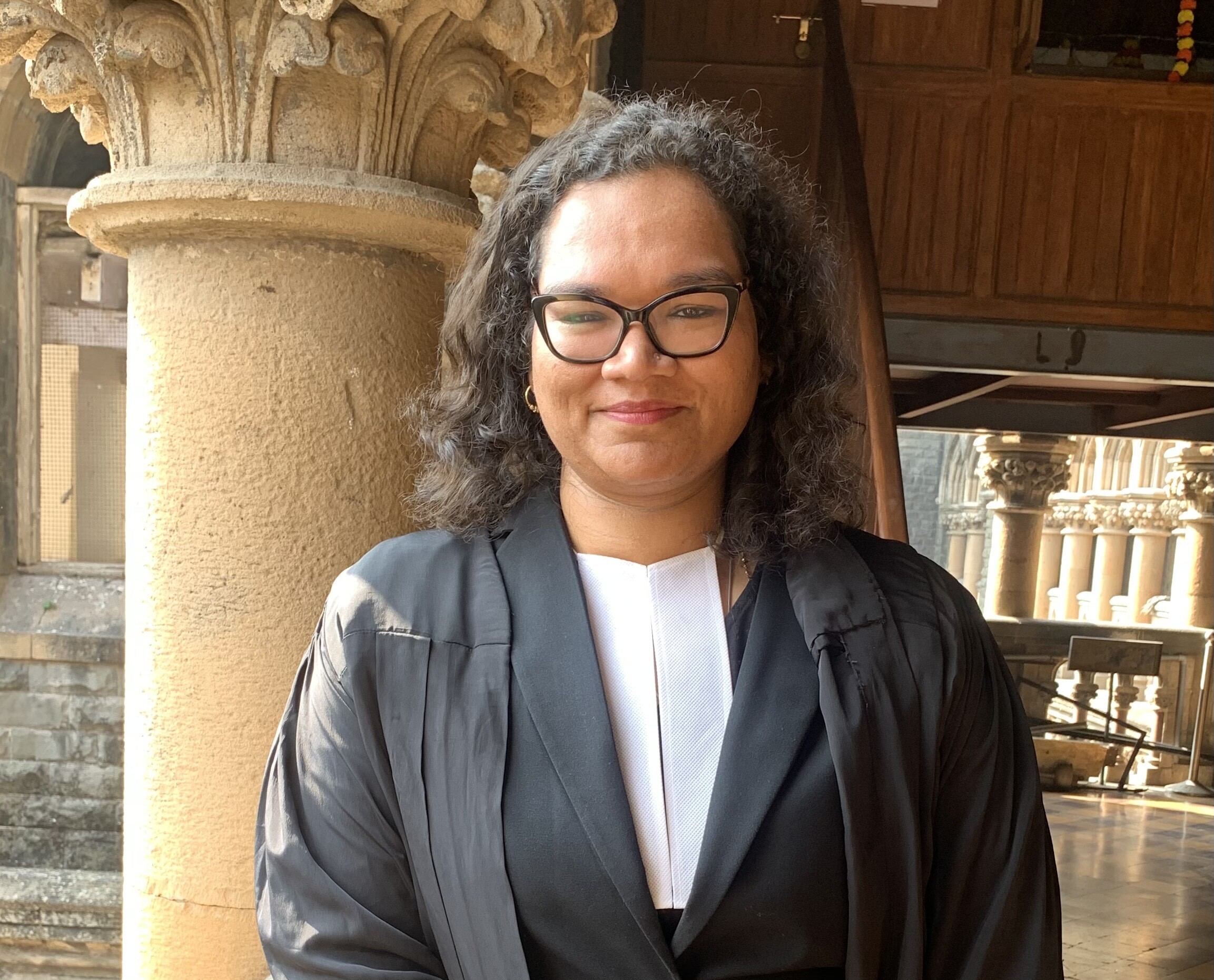





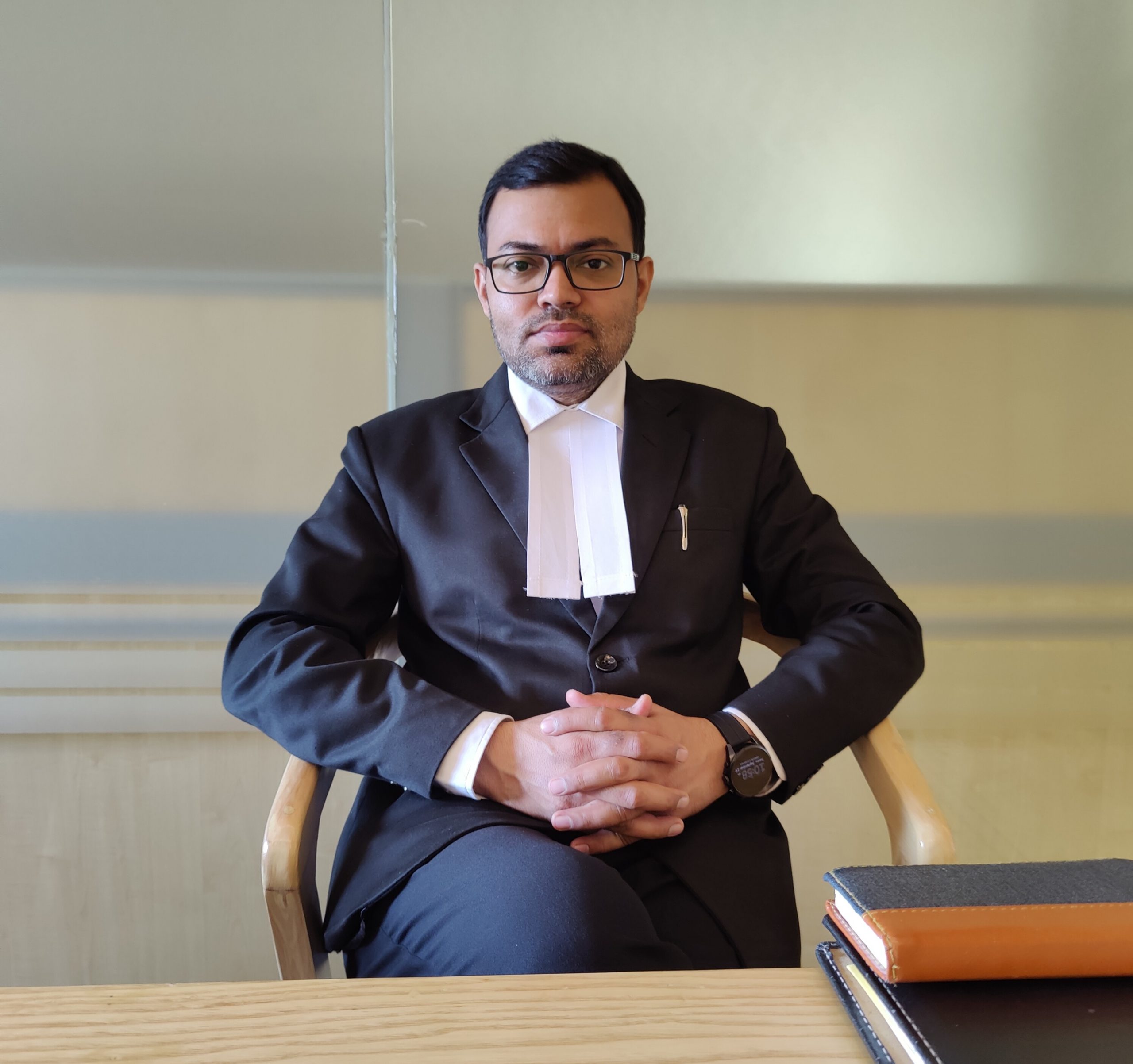




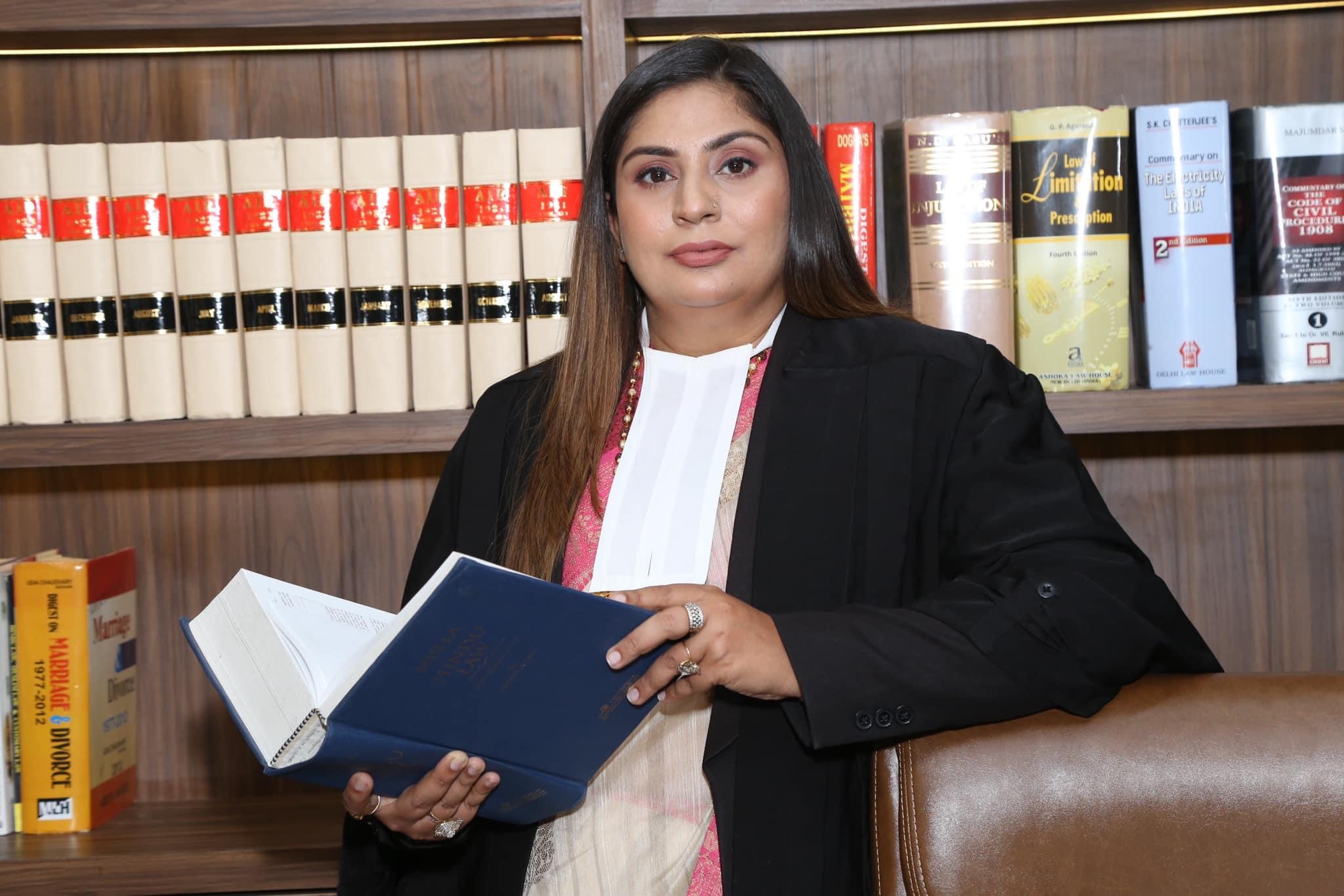


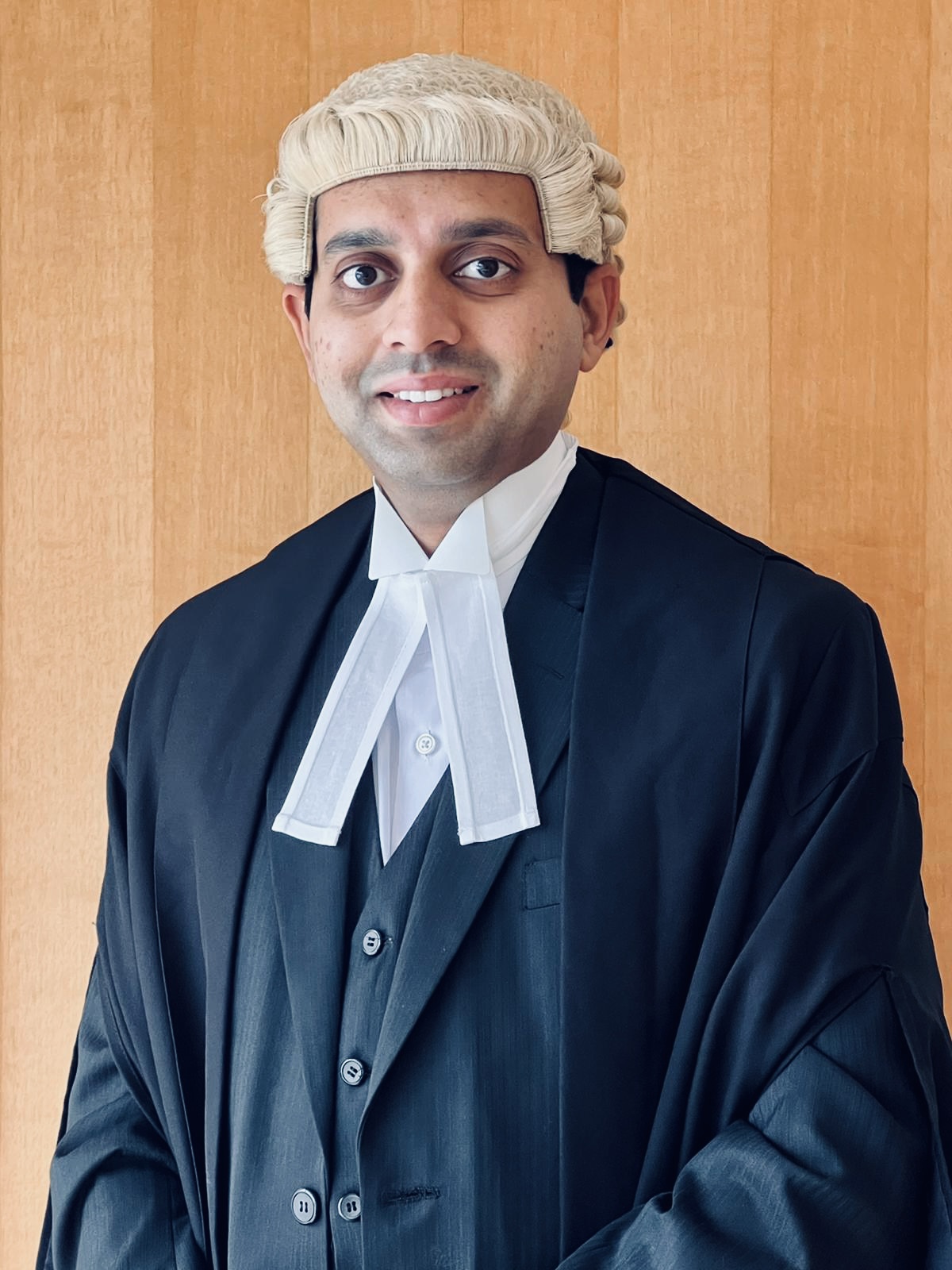


 Allow notifications