Tag: ADR

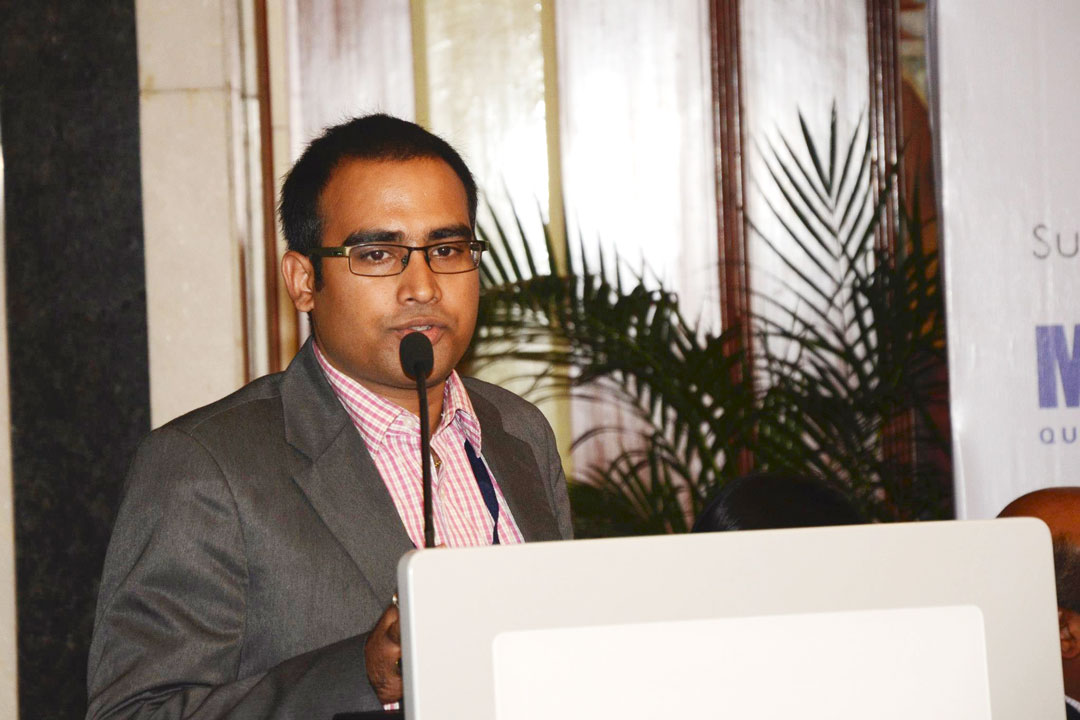
  • Vaibhav Kumar, Advocate-on-Record, Supreme Court of India, on litigation, ADR, and his diverse experience

    Vaibhav Kumar, Advocate-on-Record, Supreme Court of India, on litigation, ADR, and his diverse experience

    Vaibhav graduated from Campus Law Centre, University of Delhi, in 2008. He has handled litigation as well as advised clients across a broad range of issues like commercial disputes, information technology law, intellectual property law, drafting and vetting of contracts, sale/lease deeds, corporate issues, consumer disputes, arbitrations, writ petitions, appeals, real-estate, matrimonial & family disputes, Wills and estate planning etc. An ardent supporter of alternate dispute resolution mechanisms like mediation and counselling, he has also assisted several clients in resolving their disputes amicably. Amongst his clients are up and coming companies in the SaaS, ITES and e-commerce sectors who deploy cloud-based solutions like AWS, Salesforce etc. for enterprises across all sectors, as well as other medium and small enterprises whom he has helped on various aspects like corporate structuring, shareholder issues, advisory services related to expansion to other territories, drafting of Master Service Agreements with clients, Vendor agreements, Non-Disclosure Agreements, Employee agreements etc.

    In this interview we speak to him about:

    • Being an Advocate-on-Record
    • His passion for litigation
    • His interest in ADR


    Given that most of our readers are law students and young lawyers, how will you introduce yourself to them? 

    I am an independent lawyer, with a broad focus from civil to corporate matters. Early in the profession, I recognized that practising law at all different levels – from the District courts to the High Courts to the Supreme Court – was not only something I enjoyed, but was something that gave unique value to my clients. Since I practise along this broad spectrum, not only do I serve the A-Z needs of my litigating clients, but I am also in a unique position to advise my corporate clients. Having recently been designated as an Advocate-on-Record, I look forward to the AOR practice adding another dimension to my practice.

    I gained inspiration to study law from my maternal grandfather, Justice Gyan Chand Mathur, who was a judge several decades ago in the Allahabad High Court. Unfortunately, my decision to join the legal profession came several years after he passed away, so de facto I have had to build my practice as a first-generation lawyer. I did not even benefit from his comprehensive legal library, which we donated to a charitable institution soon after he passed away.


    What made you decide to pursue a career in law after obtaining a BA degree? 

    I earned my B.A. degree from Kenyon College, USA, with a major in Anthropology and a minor in Mathematics. At the time of my undergraduate studies, law was not anywhere in my mental framework, and initially I had considered a career in academia in the field of Anthropology. However, several circumstances brought me back to India, when I narrowed my choices down to doing a MBA or Law.

    The legal profession stood out to me as uniquely diverse in that a lawyer could in the same day work on a large corporate matter as well as on a pro-bono/ public interest matter. Secondly, I recognized that so long as you worked across a range of matters and didn’t narrow yourself, the variety of cases you can be involved in would ensure that life never got boring and each day would be different from the previous one, even more so if one was practising in different courts. Especially at that age, the idea of being stuck at a desk, day in and out, seemed extremely undesirable to me. Thirdly, if you have your own practice, you have the power to determine the pace and path of your professional career. I had recognized early on that building my own practice was a definite goal for me, and I have been extremely happy in this role as an independent practitioner. And so, the choice to do Law was a fairly easy one over doing a MBA.

    I graduated with a three-year LL.B. degree from the Faculty of Law (CLC), University of Delhi. I am a big proponent of the three year LL.B. program after a Bachelor’s degree, because having a Bachelor’s degree in something unrelated gives a person a broad horizon and a general understanding of a larger world. Law is something that we will knock our heads against for the rest of our career, and the years after school are some of the most formative years of a person. It is not by accident that historically some of the most accomplished litigators were people with a tremendous breadth of interest in the arts, music, literature, etc.

     

    How was your experience in law school? Have you ever felt the NLU- non NLU divide?

    Ours was a three-year program, and there weren’t many opportunities for us to interact with NLU students. In the practice of law, I feel there is no divide between NLU/ Non-NLU and really what defines you in this profession is your personal abilities and achievements, not which law college you come from. Maybe if you are working in a firm, the institution you studied Law might be relevant for the first couple of years in the profession, especially in the recruitment of associates fresh out of law school, but after that it’s not much of a factor.


    What was your first job after law school? 

    I started my practice working with Ms. Maninder Acharya, who at that time was a standing counsel for the Municipal Corporation of Delhi, and has since been designated as a Senior Advocate. Her office was like jumping into the proverbial deep water, as with the volume and time sensitivity of our work, I had to hit the ground running immediately. With multiple matters listed every day (if I recall correctly the maximum reached 26!), her office was perfect in giving me unmatched exposure and responsibility in handling matters myself. I found myself appearing almost daily before the Delhi High Court and that helped me tremendously in gaining confidence in arguing matters.

    From Ms. Acharya’s office, I moved to Mr. Virender Goswami’s office, which was a truly formative experience. Mr. Goswami is in my opinion of the most formidable lawyers I have seen especially when it comes to witness examination, which is an art that is unfortunately lost on most in our profession. In his office, I was given the opportunity to be personally responsible for several matters, and was given the chance to appear in several courts, especially the District courts, where I feel the true meat-and-bones of any case really lies.

    I got both these positions by way of recommendations through personal and well-meaning contacts, and I am thankful for that serendipity.


    How important is CGPA to recruiters? 

    Everywhere that I have worked so far, has been in a litigating position and typically in small to medium offices, so I can’t speak for recruitment in corporate and large law firms. In my experience, while every recruiter would certainly want to review your resumé, good recruiters would put the most emphasis in the interview, because that’s where you can tell a lot about a person’s personality, maturity and capability. In my opinion, there’s little correlation between your CGPA scores and your professional success, so for a recruiter to place undue importance on CGPAs etc. would eventually be detrimental to their own organization.


    Do you recall the first time you argued a matter in court? 

    If anyone ever told you that they were confident the first time they appeared before a court or argued a matter, they would be lying! Arguing in court is immensely challenging, because if you want to be good at it, you need to not only know your facts and law inside out, you also need to know how to read the judge and the flow of the proceedings. While arguing, you are of course a bundle of nerves, but if you do perform well, in my experience most judges are very receptive and encouraging, as are other members of the bar. On occasion, I have had the counsel for the other side comment positively on my arguments, and that always adds a little spring in your step! If I had to give only one piece of advice, it would be to never ever appear before a judge without reading the file, even if you are just stepping in for a colleague to ask for a passover or adjournment.


    Can you describe an ordinary day of a litigator?

    The best part about being a litigator, and a generalist at that, is that there is no “ordinary” day. I could be working on a motor accident compensation case one minute, then a property dispute, and then be advising a client on how to structure their company when expanding to new areas, and then be counselling a couple having marital discord. While you work as an associate under other lawyers, they would of course set the tone for how the office works in terms of work timings etc. I have seen lawyers who are unforgiving of unpunctuality (“9:00AM means 9:00AM, and not 9:01AM”) and I have seen lawyers who give you complete flexibility to work as you want to, even from home, provided that the work is never compromised and deadlines are met. I personally gravitate towards the latter, as I think not only does it keep everyone in the office happy, but also boosts productivity and creativity at work.
     

    What are the skills one needs to develop in order to succeed as a litigator?

    That is an extremely tough question, not in the least because it presupposes that there is a single definition to what is “success” as a litigator. Some people define it in terms of money and the car that you drive, while others define it in terms of the respect you get from the bar and the bench, and there are numerous other criteria you could posit. What each person needs to do is to discern what is their definition of success, and then understand the skills you need to achieve it.

    That said, a few skills that that one could say are somewhat universal are communication skills, your ability to think out of the box, paying attention to detail, ability to deal with different personalities with respect to your client, the other side’s lawyer, the judge etc. Moreover, as a litigator you need to be master of a number of other skills in order to run a successful practice, not the least of which are time management, ability to manage an office, ability to keep a track of billing etc. One of the most important tasks in running an independent practice is business development, which comes easy to some and harder for others.


    How did you secure a position at O.P. Khaitan? 

    As with my other positions, it was a colleague who was aware of a requirement at the firm who introduced me to them. By this time, I had practiced with a number of lawyers, and I felt joining a firm was the natural progression towards my career growth. At O.P. Khaitan, I worked on a number of litigation matters ranging from corporate disputes, real estate disputes, matrimonial matters, etc. and was also introduced to new aspects like filing trademark applications globally for clients who were expanding their business in a big way. I had a great experience there and got to work with the Managing Partner and a Senior Partner directly, and was also given the responsibility to handle many matters on my own. My decision to leave was based on an offer I received from Luthra & Luthra.


    How did you secure a position at Luthra & Luthra? 

    I joined Luthra & Luthra to work under a partner with whom I was acquainted over the years. He was looking for someone with my experience and the ability to handle matters independently, and I think it was a good fit both ways. In L&L, apart from general litigation, I got the chance to work on some high stakes matters such as those involving some of the largest telecom companies, arbitration matters etc. I left L&L when I felt it was time to start my own practice, and I had enough experience, skills and confidence commensurate with what is required to build your own practice.


    How was working at a law firm different from working at a lawyer’s chamber?

    The smallest office I have worked in was two lawyers (myself included!) and the largest about 200. They are completely different experiences, and I encourage young lawyers to try them both before making a long-term choice. Law firms are great in terms of the exposure they give you to large clients and important matters, as well as to have a steady and good income, but can be restrictive in terms of personal responsibility, bureaucracy, politics and most importantly skill growth. Working in a lawyer’s chamber can be invaluable in terms of the skills and independence you have no choice but to embrace.

     

    What are your areas of specialisation as a lawyer? 

    I have been conscious of not narrowing down my work to specialized domains. Even in terms of my clientele, I assist SMEs as well as individual clients. I love having a wide breadth of work and enjoy exploring new domains of law that I have not previously dealt with.

    As for fresh graduates finding their domain, if you do not already have a strong leaning towards a particular specialization by the time you graduate (and it’s okay not to), I recommend working for a chamber or two that has a wide breadth of work, and you will over time either organically gravitate towards a specialization, or like me find out that you prefer to be a generalist.

    Can you briefly tell us about some important matters you have worked on? 

    I wouldn’t be at liberty to talk about specific matters. However, as far as preparing for a day in court, there are no surprises there. If there is an argument, one needs to be well versed with the file and the relevant case law, and you need to anticipate the arguments the opposing counsel is likely to lead, and prepare for your response to them as well. That said, there is never a point you feel 100% prepared. Every now and then, you will feel prepared, only to appear and have the judge throw a googly at you. An important skill set is how you respond and react on your feet in this position.


    Have you ever considered pursuing higher education? 

    Over the course of my career I had thought about applying to LL.M. programs on several occasions, but never did. To summarize a whole lot of advice I got from numerous people in India and abroad is this: a LL.M. is great for your personal development in terms of your knowledge and skills (which you can control through studying and hard work), and can also be great for developing a network (which you unfortunately have little control over and left largely to luck). That said, most LL.M.s especially abroad are extremely expensive, and from a financial perspective you get little-to-no-value in terms of career growth and jobs. Most people who get LL.M. degrees return to the same city and perhaps even the same office they were with before, with little-to-no-growth in terms of promotions, salary etc. (certainly not commensurate with the money you would have paid for the program). So, in a nutshell for most people: if you are blessed with the financial means and have value for personal growth (skills and knowledge), then pursue a LL.M. Else, don’t.

    What is the process of being designated an Advocate on Record? 

    To become an AOR, there are some stringent qualifications you have to meet, but briefly put you need to work with an established AOR for at least a year, and then pass the AOR examinations that are held once a year. The examinations are tough, and it doesn’t make it easier that most people appearing would have last taken an exam anywhere from 5-10 years ago. Nor are most people accustomed any longer to writing for 3+ hours straight every day for 4 days straight! I don’t think there is one set path to success in the exams, especially since the examiners can change every year (and hence what they look for in the answers also changes), but what worked for me was to review the past several years’ exam papers, as well as to use the literature provided on the Supreme Court website and make my own notes. If you practice with a good AOR, then the Practice & Procedures and Drafting papers may require little effort and just a little bit of brushing up. For me personally, the last paper, on leading cases, was the most difficult as there is a LOT of information to digest there, and I would highly recommend that you space out reading those judgments over one or two months leading to the exam.


    What do you think is the future of ADR in India?

    I am a big believer in the power of mediation and counselling. I have seen cases where you would think the parties would not be ready to even talk to each other, much less compromise, eventually open up in the semi-formal setting of a mediation before an independent mediator, and resolve their issue amicably. The power of mediation and counselling is immense especially in domains like matrimonial law, where prolonged litigation really only serves the lawyers in the case, and the parties end up depleting their mental, emotional and financial strengths. My advice to clients, in matrimonial matters especially, is to aim for a divorce by mutual consent, and even in the business world, most business leaders recognize that litigation should only be a last resort after expending all efforts to find a middle ground. Increasingly, businesses are themselves building in mandatory mediation in the dispute resolution provisions in their agreements.

    However, I am less optimistic about arbitration, as I feel the same deficiencies have crept up in arbitration as is the bane of litigation (long adjournments, unnecessary formalities, arbitrariness, bureaucracy etc.). However, if we were to embrace the model used abroad where formal institutions administer arbitrations and mediations with more adherence to a transparent and efficient process, I think that could be a game-changer.


    What are the challenges you have faced in building your career as it stands today? 

    The single biggest challenge for me as an independent practitioner has been business development, and the never-ending process of looking for clients and work continuously. As lawyers are not allowed to advertise or solicit for work (which therefore relegates lawyers and clients meeting each other only through word of mouth) this particularly makes it harder for first generation lawyers to build their practice, and easier for generational lawyers to build upon the existing practice. The best that I can do is to maintain high-standards for the services I provide to my clients and a high level of integrity, and trust that satisfied client would not only return but would recommend me to others. So far, this strategy has worked for me and a majority of my work comes through referrals, and repeat clients.


    How do you maintain a work life balance?

    A part of my decision to go independent was to be able to manage my own time, clients, personal and professional time as per my needs. I am fortunate to have my office in Neeti Bagh, which also happens to be my residence. Due to this, I am able to cut travel time, and most courts are quite close too. I feel a lot of lawyers are victims of inadequate time management skills and regressive work timing policies, and a lot of time in law offices especially is spent unproductively. By culling this unproductive time from my life, I have been able to be actively involved in raising my daughter, and have also had the time to follow other pursuits like travelling. I see this change in my other colleagues who have their own independent practices as well, who have been able to balance their focus not only on work, but also on personal time and space.


    What advice do you have for our readers who are primarily college students?

    I think a lot of lawyers you have interviewed have probably covered the basics. What I would add is that you should use your internships and time in college to see how different career paths in the legal profession work. Don’t do it for the certificate. This is an invaluable time for you to explore and discover what attracts you the most. Law has a very high attrition rate (globally) with very few people studying law ending up being involved in the legal profession five years after graduation. I think a lot of that has to do with unrealistic expectations of your day-to-day life in a law office, and I know of several young lawyers who burnt out too fast working in offices which demanded fourteen to sixteen hour workdays, six to seven days a week. The good part is that even if you decide not to have a legal career at the end of it, the law degree is uniquely advantageous in that it will enhance virtually whatever you choose to do in life.
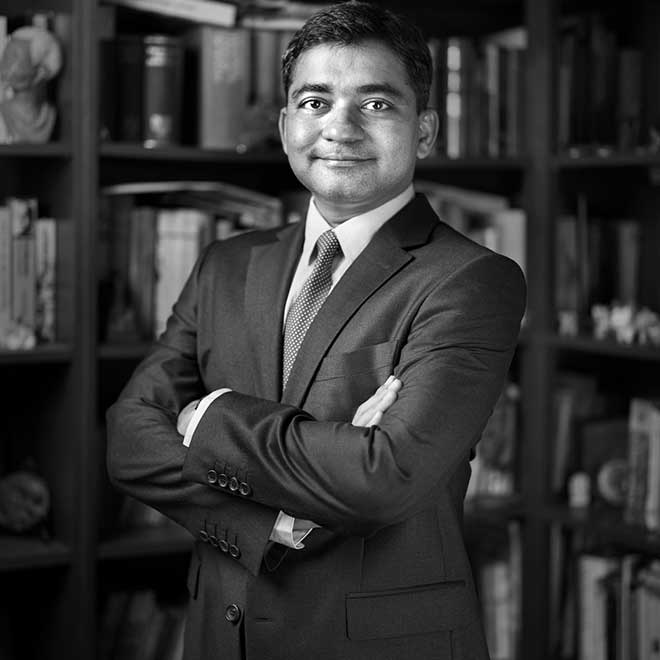
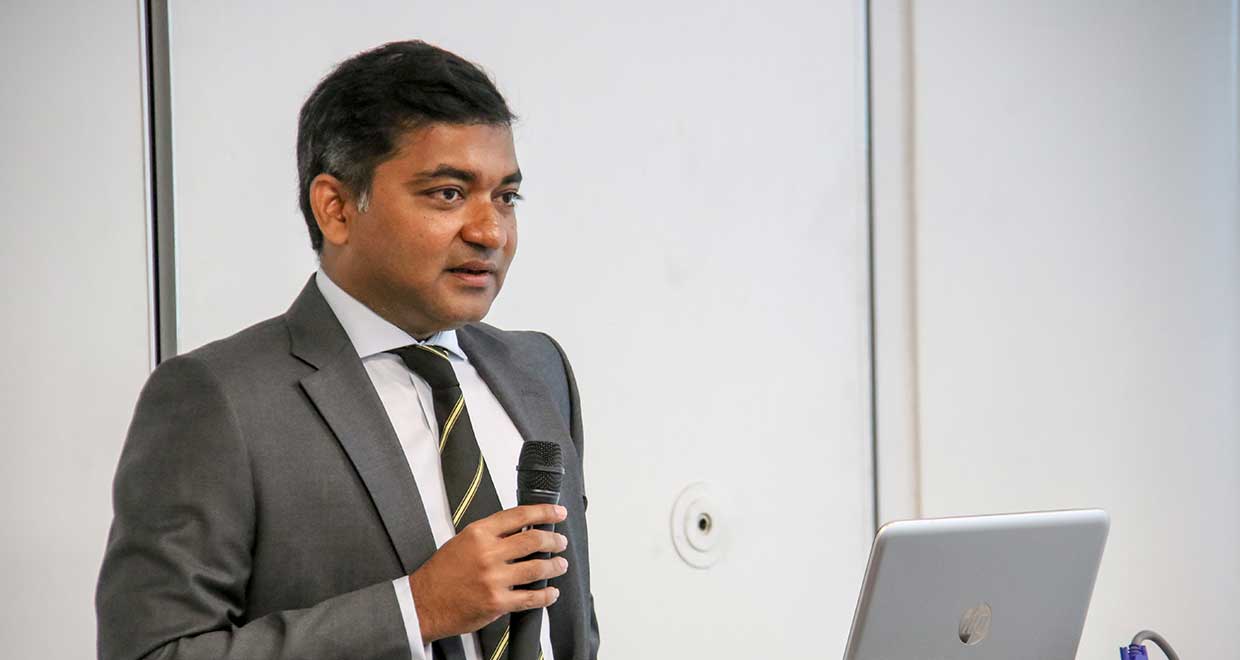
  • Devesh Juvekar, Partner, Rajani Associates, on litigation, ADR, and his diverse experience

    Devesh Juvekar, Partner, Rajani Associates, on litigation, ADR, and his diverse experience

    Devesh Juvekar graduated from K C Law College, Mumbai University, in 1995. Devesh Juvekar started his career with M/s Gagrat & Co in 1995 and went on to work with Hariani & Co, Dua Associates, Khaitan & Co and Kalpataru Ltd prior to joining Rajani Associates. He has an experience of twenty years at the Bar in traditional and alternate dispute resolution. He has handled, a wide array of matters such as Commercial Arbitrations, Recovery proceedings, Intellectual Property issues, Conflict of Laws, Product Liability cases, Writ Petitions and General Commercial Litigation. Devesh has appeared as well as briefed Senior Counsels, in numerous fora including at the Supreme Court of India, High Court of Bombay (Original and Appellate Side), various High Courts in India, City Civil Court, Small Causes Court, Sessions Court, Metropolitan Magistrate’s Court, Debt Recovery Tribunal, Company Law Board, Securities Appellate Tribunal and various other tribunals and quasi judicial authorities.

    In this interview we speak to him about:

    • His current role as Partner
    • The evolution of the legal industry from then to now
    • His experience in litigation and ADR


    How would you like to introduce yourself to our readers?

    I always perceived myself as a social creature first, lawyer next. I believed, and still believe in dealing directly with the person, rather than the facts and figures – it just makes more sense to me.

    Though my days in law college is a chapter best left unexplored, I do still fondly think back to those stray occasions where I attended classes and enjoyed subjects like contracts and constitutional law. It was a different world for our profession when I was still in law college – a world without seven figure salaries for fresher (articled clerks used to vie for stipends of ninety rupees), or competition among firms for poaching talent. While we didn’t wend our way through law college worrying about internships and letters of recommendation, we had our own worries. For one, it was difficult enough finding a job back then, much less a “paying” job! 

    Even without the scores of technological advances in communication, we made our connections with batch mates and stayed in touch with them during and after law college and those contacts helped.

    Presently, I am a partner at Rajani Associates, Mumbai based law firm and head its dispute resolution practice. 


    What  propelled you to pursue law as a career?

    In my days as a law student, law as a major was almost taboo – a major reserved for the trouble-makers, chronic flunkers and the aimless. It took a considerable bit of haranguing and begging back home to even get in. But law was something I knew I wanted to do, simply because I did not want to be a run-of-the-mill engineer or doctor or a chartered accountant that everyone else was looking to be. I guess it was more a choice from negation than an active preference, in that sense.


    What was the legal profession like back in the day?

    Like I said before, it was a very different profession back when I was in law college. National law schools were yet to make a mark and create the hiring heaven for law graduates that it has now. I had my heart set on becoming a Solicitor, and had even signed my articles with erstwhile Gagrat & Co., under the tutelage of Mr. P. A. Jani and started working towards it. A series of unexpected personal setbacks, however, compelled me to discontinue it. I do not regret the decision, however – it was an experience that enriched me while it lasted.

    Law practice in Bombay (as it then was), was steeped in traditions dating back to the nineteenth century – you slog in underpaid anonymity to become a Solicitor and earn the respect of your peers, or you slog it in unpaid anonymity as a Counsel till you find a sure footing in the Courts.


    What type of skills should a law student strive to develop while in a law school?

    Learn as much law as you can. But bear in mind that for every hour you put in law college, you will still need to put in an additional hundred once you get into the profession, simply into learning. I think reading is the most important skill for a law student which one should strive to develop while in law college. It makes the understanding of law easy and helps one in drafting too, both of which are immensely important for a lawyer. 

    Do not listen to those hundreds of people saying litigation is the way to go for bright students; it isn’t necessarily so. Litigation is something that requires hard work, commitment, and a willingness to emulate the Counsels – slogging away in unpaid anonymity. A lawyer who wishes to litigate would need to develop a lot of resilience – against irate clients, obdurate opponents, and (more often than not) a well intentioned judge who just won’t get your point. It is a long term commitment – one that cannot be taken idly and one that cannot be given up so easily.


    What were the difficulties you faced in the early days of your practice?

    Finances, of course, are the biggest difficulty that any budding lawyer would face in the early days and my case was no different. Articled clerkship was especially notorious for the stipends (or lack thereof) that came with it. My experience, even otherwise, was not very different from what you would normally hear from any lawyer growing up in the nineties – finding work, finding a good senior to guide you, making a mark with (and at) the bar, and trying to keep your head afloat through all this.

    I come from an era where internet was a luxury and mobile phones were only for the opulent. Research meant book/commentary unlike today where one has plethora of options on the internet and the information is just a click away.

    Building and maintaining a client both require hard work and utmost care towards them. Beside work of precision, maintaining harmony between good work and good relation is quite vital. Thus, I think, its good work alongwith being updated on various laws and not number of years is which bring in good clientele. Besides, good recommendation also adds to one’s list of client.


    Could you tell us about the atmosphere in each of the places you have worked at?

    (Erstwhile) Gagrat & Co.As one knows,to get a breakthrough in Gagrat was extremely difficult. For me, beginning my journey with such a reputed law firm was indeed special. Gagrat was an old school firm which gave me a very strong foundation with the help of supportive colleagues and superiors.

    Due to the old school style working of Gagrat, the court clerks also played a vital role in each matter. I still remember taking guidance from court clerks on the technical aspects for which they guided me swiftly.

    Hariani& Co.: Even though Hariani, was then, a mid-size law firm, it gave me tremendous exposure in variety of litigation. Besides free hand in various assignments, working under strict timelines was essential at Hariani. This gave me immense confidence in my field.

    Dua Associates.: It was during Dua that I started concentrating more on dispute resolution and arbitration. It was a leap towards next level in my career.  

    Khaitan & Co.: I worked in Khaitan & Co for more than six years. Thus, one can imagine how pleasing it was to be associated with Khaitan & Co for such a long time. I grew along with Khaitan, which gave me the key to handling various top notch clients.

    Rajani Associates: My present work place, Rajani Associates has a very homely environment with every one closely bonded to each other. I think this makes Rajani Associates a comfortable place to work, which, I must add, has a positive effect on the work. I have dedicated team members and each one of them are hard working.

    Different law firms have different style of working and so does the environment vary.  Work environment plays a very vital role for ones success at any work place. I think one should analysis how compatible one would be with the environment he/she is about to enter. Nonetheless, monetary consideration and nature of work one wishes to pursue also requires to be kept in mind.

    Please tell us a bit about your work profile Rajani Associates?

    As I said, I head the dispute resolution practice of Rajani Associates and you can find me in courts/tribunal or in arbitration, more than in office. My profile also includes lot of advisory work where corporates are apprehending or proposing litigation. Beside, we even do a lot of opinion oriented work.


    How was your work at Khaitan and Co.?

    I joined Khaitan & Co as a senior associate of their dispute resolution practice and was soon promoted to rank of a principal associate. I was involved in various types of litigation at Khaitan& Co be it property, commercial, admiralty or company court matters.

    Since Khaitan was involved in variety of corporate transactions, it also had challenging company related matter. I was involved in quite a number of company scheme matters which were complex and time bound.

    How has your transition from litigation to alternate dispute resolution been?

    It could hardly be said to be a transition – it is but the same institution in just a different container. Litigation and ADR (alternate dispute resolution) have always been interpolated and connected with each other.

    Of course, in the past ten years there has been a shift from court to ADR, corporates or for the matter, even individuals, off lately, are getting inclined towards arbitration as a method for dispute resolution. One can see, each agreement containing an arbitration agreement which speaks volume of the transition. Though we doubtless enter ADR with a markedly different mindset – with a focus on brevity in proceedings – it can hardly be said that the shift was so considerable as to consider it a transition. It was more a matter of re-alignment – of thought, strategy, focus, and endgame.

    ADR is making its mark – especially with the Government making a big push for it now, with the amendments to the Arbitration and Conciliation Act, 1996. But let us be clear on this: any litigator who is worth his salt in court should handle the shift comfortably enough.


    Is mediation a better option than litigation in India?

    Mediation is definitely an option to explore before initiating any litigation. It cannot, however, be regarded as an alternative to litigation per se – certainly not in every case. The idea behind mediation is to attempt to find a middle ground between the parties, and save everyone the resource outlay needed for a long drawn litigation. One rarely finds this in commercial litigation – where strategies are often fine tuned for multiple eventualities arising during an ad-interim hearing. 

    I must, however, add that the institutionalisation of mediation is definitely a step in the right direction – in terms of the statute. All that is left is for us to wait for the institution itself to catch up in terms of infrastructure, penetration and training the mediators. Even though, parties in India engage themselves in mediation process, thanks to the contract or the court intervention, personally speaking, it seldom ends on a positive note. I also believe for a mediation to become successful, parties have to be open-minded and should not remain adamant on their demand. Only then can the entire process of mediation succeed.  


    What are your comments on the current state of Arbitration Law in India? 

    I think with the amendments in the arbitration law, particularly the 2015 amendment to the Arbitration and Conciliation Act, 1996, it has come at par with the international arbitration laws. I have seen the shift from the 1940 act to the 1996 act and it is a whole new era for the Indian arbitration. Court interference, in an arbitration, has become less, while earlier courts used to, or if in can say, was required to intervene considering the structure of the prevailing extant laws.

    However, I think there is still scope for further smoothing the process of arbitration. Few of the examples which still require better clarity are as follows:-

    • Whether the 2015 amendment applies to all the on-going proceeding (arbitral proceeding or proceeding related to arbitration) or only to arbitration proceeding initiated after October 23, 2015? This controversy is pending before the Apex Court and presently different High Courts have had divergent views.
    • Execution of foreign awards are still halted for technical reasons.
    • The schedule of fees prescribed for the arbitrator in the 2015 amendment is strictly not followed.


    What advice would you have for law students who wish to take up Arbitration as a career option?

    Arbitration and conventional litigation go hand in hand, so don’t assume you’re going to evade one by choosing the other. Attend as many internships while in law school/college – the experience matters a lot for yourself (and not necessarily to your recruiter, I’m sorry!). Read judgements – as many of them as you can. Master the art of reading judgements, because you’ll need to do it a lot, and fast, especially in your foundational years. If at all possible, learn patience, for you’ll need a lot.


    What are you recommendations for making alternate dispute resolution more popular and common in India?

    More institutionalised arbitrations, better infrastructures for the institutions, and a greater impetus from the Government is definitely the way to go. I think arbitration is already quite popular in India with certain caveats.

    One cannot ignore the role to be played by lawyers in advising their clients to opt for ADRs, but I believe it would certainly follow once a certain assurance can be had that costs, time schedules and issues won’t escalate. The 2015 Amendments are definitely a step in the right direction for that, but one now needs to see how the implementation occurs. As ironic as it may sound, the Courts will be key in safeguarding ADR laws!

    I also think mediation particularly needs a shot in the arm to become as popular as arbitration. I believe mediation process has great potential. However, as said earlier, the perception about mediation of individuals/corporates need to change in order for mediation to become a success.


    Certain international commentators have seen and argued that the host state should keep an eye on functioning of the judiciary. What are your views?

    Courts in India have held that the executive, the legislature and the judiciary are required to function independently without each other overstepping their limits. In fact, Judiciary even has the power to declare laws made by legislature as unconstitutional or ultra vires if they are in conflict with the fundamental rights of a citizen. I believe it is very important that Judiciary is left independent and the function whereof should not be interfered by the state.


    Is there any skill or secret you picked up over the years that you believe is critical to a lawyers success?

    Patience. I see youngsters itching for a promotion barely two years into a team – sometimes actively campaigning for it. It was unthinkable of, in my early days, to even ask our boss whether we’ll be paid for working in his chamber. A lawyer’s retainer is something that he commands, not demands and that will take its time arriving, one needs to be patient for that.


    What would be your parting message to all the law students?

    Don’t miss the wood for the trees in this profession; it is all about the people. Facts, figures, precedents, legal acumen, an eidetic memory – these will get you far, don’t get me wrong but, connect with the persons you meet along the way. Listen, empathise, be eager to learn, develop contacts and make your impression. That’ll take you much further than just the skills.

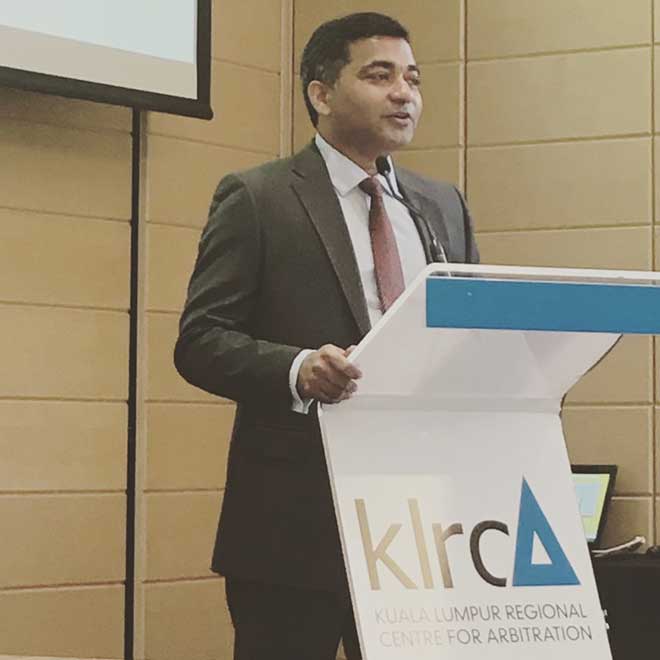
  • Thayananthan Baskaran, Partner, Zul Rafique & Partners, on ADR, and practice in Malaysia

    Thayananthan Baskaran, Partner, Zul Rafique & Partners, on ADR, and practice in Malaysia

    Thayananthan Baskaran graduated in law from King’s College, London, in 1998. Presently, is a Partner with Baskaran, Kuala Lumpur, and an associate member of Crown Office Chambers, London.

    Thaya’s primary area of practice is construction law. He drafts various building and engineering contracts, advises on disputes arising from such contracts and appears as Counsel to resolve these disputes.

    Thaya is a co-author of The Belt and Road Initiative: Legal Risks and Opportunities Facing Chinese Engineering Contractors Operating Overseas published by Kluwer Law International in 2019. Thaya is an editor of Construction Law International, the magazine of the International Bar Association’s International Construction Projects Committee. Thaya was also the President of the Society of Construction Law Malaysia (2016-2017).

    In this interview we speak to him about:

    • Practice in Malaysia
    • His experience in arbitration
    • His expertise in construction law

    How would you like to introduce yourself to our readers?

    I am an advocate and solicitor based in Kuala Lumpur with chambers in London.  My primary area of practice is construction law. I draft various building and engineering contracts, advise on disputes arising from such contracts and appear as Counsel to resolve these disputes.  I also sit as an adjudicator, arbitrator and mediator.


    Share with us some of your experiences as a student of law at King’s College, London.

    I read law at King’s College, London, almost twenty years ago.  I enjoyed studying criminal law and jurisprudence in College and particularly recall writing an essay on how rape should be regarded as a form of heinous assault or bodily injury.  I would like to have studied human rights law but was wary as there was no textbook on the subject at the time.  Apart from the College, I very much enjoyed my time in London.  London remains one of the great cities of the world, and I spent a lot of time at the bookshops, galleries and theatre.


    What advice would you give students about avoiding a decision paralysis?

    My advice would be to start practice after completing the bachelors degree and being called to the Bar.  Once you have started practice and decided on the area you would like to specialise in you can consider doing your masters in that area.  Practice is quite different from theory, so it is perhaps best to practise first before deciding to specialise in an area.


    Have you always been keen on a career in contract and ADR?

    When I started practice in 2000, the metro rail was being completed in Kuala Lumpur.  I was involved in advising on disputes arising from this project.  Like most construction lawyers, one project leads to another, and before you know it you have specialised in the area without actually having consciously decided to do so.

    The standard form construction contracts used in Malaysia and internationally provide for the resolution of disputes by arbitration.  So, from advising on these disputes, it was a natural progression to appearing as Counsel in arbitration.

    Later, I was appointed as an adjudicator, arbitrator or mediator to determine these types of disputes, as well as more general commercial disputes.


    What was your path to being empanelled on several prestigious arbitration centres like? 

    As mentioned above, my area of practice to some extent naturally led to my sitting as an adjudicator, arbitrator or mediator.  There are certain key persons who have encouraged me to pursue this.  Firstly, I must mention Datuk Professor Sundra Rajoo, the Director of the Kuala Lumpur Regional Centre for Arbitration, who encouraged me to sit for the Chartered Institute of Arbitrators examinations and be empanelled with the KLRCA.  Once I had become a Fellow of the Chartered Institute of Arbitrators, been empanelled with the KLRCA and sat as an arbitrator in Kuala Lumpur I was able to apply for and be accepted at various international arbitration centres.  I must also mention Dr Cyril Chern, a barrister at my chambers, Crown Office Chambers, and the author of Chern on Dispute Boards, who encouraged me to pursue contractual adjudication and was instrumental in having me elected a Fellow of the Dispute Board Federation Geneva, which led to my being on their Expert Panel.  

    It has always surprised me to some extent, from my experience as an arbitrator, that people, disputes and the basic principles of law are the same around the world.  Despite the apparent divide between the civil and common law traditions, I believe there is more in common in principle than there are differences.


    Could you please share with us some of the key nuances of good drafting and how rookie mistakes can be avoided?

    The key to drafting construction contracts is to firstly thoroughly understand the model that the client intends to use.  There are many models in the construction industry, such as conventional contracts, design and build contracts, design build operate contracts, and so on.  There are also the newer and more innovative models such as partnering and alliance type contracts.  Secondly, once the model has been understood, it is perhaps always best in the construction industry to start with a standard form contract that suits the selected model and the division of risks between the parties.  The standard form may then be amended to reflect the particular needs of the client.  These amendments should be of a minimally invasive nature so as to prevent affecting the structure of the standard form.


    What are the key attributes that one must develop in order to excel in the field of arbitration and mediation? 

    I would highly recommend doing the Diploma in International Commercial Arbitration offered by the Chartered Institute of Arbitrators.  This provides a solid theoretical basis for future practice.  In terms of practice, one should set aside sufficient time before the hearing to read the papers thoroughly, to enable clarification of matters during the hearing.  Most arbitrations are decided on the facts, which are, in turn, largely reflected in the documents.

    As to mediation, again it is best to start with some formal training.  I was trained at the Singapore Mediation Centre, which offers an excellent course in Asia.  Loong Seng Onn, the Executive Director of SMC, plays a leading role in the training, which provides an understanding of the skills required of a mediator.  These skills are quite different from those of an arbitrator.  Here, the key really is to keep an open mind and determine the common interests of the parties that will facilitate a settlement.  Once these interests are identified, from my experience, even if a settlement is not reached at the mediation it is likely to be achieved soon after.


    Having worked in Kuala Lumpur, Singapore and London, what are the cultural differences that you find in the legal environments of these countries? 

    There is more in common between us than there are differences.  English and the common law system are used in all these jurisdictions, which helps.  Having said that, there is always much to learn from other jurisdiction.  The skilful cross examination of barristers in England is a pleasure to attend and may be adapted in Kuala Lumpur.  The efficiency of solicitors in Singapore is well known and can serve us as a benchmark for practice.


    As a Partner at Zul Rafique & Partners, what does a typical work day look like for you?

    I’m afraid I don’t really have a typical work day, as my work is so varied.  It depends whether I’m in court or at an adjudication, arbitration or mediation or whether I’m in Kuala Lumpur or overseas.  Much of the pleasure of my practice is the varied nature of the work and the travel it involves.


    In your opinion, has Alternate Dispute Resolution fulfilled the role of administering speedy justice while ameliorating the heavy backlog of cases in the courts?

    Again, I’m sorry, or rather, I’m delighted to say that there are no backlogs in the courts in Malaysia after the reforms initiated by The Right Honourable Chief Justice of Malaysia Tun Zaki Tun Azmi.  Cases in the High Court are disposed of within six to nine months and appeals are disposed of within three months.  The challenge now is to justify arbitration to clients.  In international contracts, arbitration is more easily justified as the award may be enforced almost globally under the 1958 New York Convention.  In purely domestic contracts, arbitration is now justified more in terms of the expertise of the arbitrator, the confidentiality of the proceedings and the relative informality of arbitration, as compared to the courts.  However, domestic arbitration will have to keep up with the speed of the courts.  Parties will have to explore more innovative forms of arbitration such as, documents only arbitrations and chess clock hearings to reduce time and cost.  These innovations are becoming more common in practice.

    Apart from arbitration, statutory construction adjudication in Malaysia does have an advantage in terms of time and cost over court proceedings.  Generally, these adjudications only take three months and are determined solely on documents.  They have proved very popular.  However, the adjudication decisions are only temporarily binding.


    Could you tell us a little about your upcoming book? 

    My book is essentially a commentary on the Malaysian Arbitration Act 2005, which is based on the 1985 UNCITRAL Model Law on International Commercial Arbitration.  The commentary includes judgments by the courts of Malaysia on the Act as well as reports and analysis by the UNCITRAL.  Writing the book, while being in active practice, has involved managing my time I try to write every night after work.  I have a substantial library in my house, which I am able to refer to and work from.  Writing the book has been one of the greatest pleasures of my practice and I look forward to its publication later this year.


    What books, judgements that you have read, have played an integral role in shaping your legal philosophy as a lawyer?

    In terms of arbitration, I have very much enjoyed reading the works of Professor Emmanuel Gaillard, in particular the Legal Theory of International Arbitration.  Professor Gaillard’s ability to transform what is essentially a very dry subject into compelling reading is really incomparable.  

    In terms of judgments, the ground breaking and yet simple and lucid judgment of Lord Atkin in Donoghue v. Stevenson never fails to amaze me.  It should be read and reread in terms of how to be quietly revolutionary.


    How do you manage to maintain a work-life balance as a busy legal professional?

    I don’t attempt to maintain a balance, as I do not see a distinction.  I enjoy my work very much and do not, in that sense, see it as work.  The words of the Bhagavad Gita on duty come to mind in this regard:

    It is better to do thine own duty, however lacking in merit, than to do that of another, even though efficiently.  It is better to die doing one’s own duty, for to do the duty of another is fraught with danger.


    How do you keep yourself abreast with all the daily news, happenings and legal developments in the world?

    I read journals.  Recently, I have discovered that the Supreme Court of the United Kingdom has some important judgments read out and recorded.  These recordings are available on their website and have become my favourite ‘movies’.


    What advice would you like to give our readers, who are mostly law students and young lawyers?

    Enjoy your work, it will be much of your life.


    LAST UPDATE MADE ON 28.07.2021 BY ISAM KABIR  AND THE SUPER LAWYER TEAM


  • Indian Institute of Corporate Affairs, Mediation Project

    Indian Institute of Corporate Affairs, Mediation Project

    Indian Institute of Corporate Affairs (IICA) is in the process of setting up India International Mediation Centre (IIMC), the first of its kind in India for handling various domestic and cross border commercial disputes at pre and post litigation stage. As a first step in its initiative, IICA proposes to carry out a series of mediation training across India (Delhi, Mumbai, Ahmedabad, Hyderabad, Kolkata, Chennai and Gauhati).

    The team responsible for conduct of the training program is headed by Dr. Vijay Kumar Singh, head of the School of Corporate Law and Associate Professor at IICA. Vijay has previously worked as Deputy Director (Law) at Competition Commission of India. He is a trained mediator from The International Centre for Alternative Dispute Resolution (ICADR). He is also a certified trainer on “Managing Disputes and Difficult Conversations on the Board” by Centre for Effective Dispute Resolution (CEDR) and the IFC Corporate Governance Group.

    Vijay is assisted by Anuroop Omkar and Kritika Krishnamurthy as consultants for the course. While Anuroop is a trained mediator from USA and Europe, Kritika is trained from The International Centre for Alternative Dispute Resolution (ICADR). They are Fellows of World Mediation Organization (WMO), Berlin, Germany. Anuroop is the youngest mediator appointed by Delhi Dispute Resolution Society, Ministry of Law and Justice, New Delhi.

    In this interview, they talk about

    • The need for mediation as a means of dispute resolution and its future in India
    • Their upcoming training programme and what they hope people will gain from it
    • The number of different types of people in different fields that will benefit from both their training programme and mediation skills in general.


    Tell us a bit about your team

    Vijay: Our team is headed by Dr. Bhaskar Chatterjee, Director General and CEO of Indian Institute of Corporate Affairs (IICA). Dr. Chatterjee is an ex IAS officer and has introduced the concept of CSR in India, as the first principles of CSR for the Public Sector Enterprises were written during his tenure as Secretary, DPE. His work experience has given him wide exposure in negotiation and experience of the fallacies of dispute resolution mechanisms prevalent in India. He believes corporate India is in great need of mediation which saves not only time and money but also goodwill of disputants. I am the Course Director for the training program. I am also the Head of School of Corporate Law at IICA. Before IICA I was working as a Deputy Director at the Competition Commission of India. Anuroop Omkar and Kritika Krishnamurthy are our course consultants. They are practising corporate lawyers, mediators and co-authors of the book ‘The Art of Negotiation and Mediation- Wish Bone, Funny Bone and Backbone’ by LexisNexis.


    What made you conceive the idea of mediation training and International Centre of Mediation when arbitration and litigation are the most accepted ways of dispute resolution?

    Vijay: Time and again we harp on the fact of the overburdened courts in India and the escalating cost of undertaking arbitration which many times leads to court appeals. India is on the way of becoming the global business hub of the world. We are strong propagators of the ‘ease of doing business’ but our rankings are dismal. Most foreign investors and joint venture partners are hesitant of the Indian market because of the stories they have heard of long drawn litigations in India. We need an efficacious dispute resolution mechanism for commercial disputes and mediation is the right fit. Mediation has a success rate of 80-85% in developed jurisdictions. Businesses shall get the chance to negotiate a solution to their own disputes with promise of full confidentiality. But there is lack of trained mediators in India who truly understand the essence of what mediation should be as an experience for disputants. We are on the lookout of promising mediators who can help disputants settle differences in a relaxed, informal atmosphere without prejudice. Hence, the mediation trainings- to train and empanel mediators for our proposed mediation centres.


    Where do you plan to set up the International Mediation Centre?

    Vijay: Of course, we would like to begin with our home ground which is New Delhi. But if we get the right talent pool and collaborations, we wish to set up mediation centres all over India; particularly in the cities where the trainings are planned- New Delhi, Mumbai, Ahmedabad, Hyderabad, Chennai, Kolkata, and Gauhati for the businesses in the North East of India. In our second phase, we may also target other industrial and emerging business centres in India.


    Does this training have any correlation to the NCLT & NCLAT that has been recently brought into force replacing the CLB, which would also exercise powers available with High Courts earlier in certain company law matters?

    Vijay: The pioneering step of commencement of National Company Law Tribunals and Appellate Tribunal has already been taken on June 1 this year. Section 442 of Companies Act, 2013 provides for resolution of company law disputes before the tribunals through mediation. Most of the disputes which come under these provisions are shareholder disputes, oppression and mismanagement, winding up of company owing to inability to pay debts, etc. I think these disputes are apt for resolution through mediation since the parties have a lot at stake and there is scope for win-win solutions and beneficial commercial arrangements through assisted negotiations. If given an opportunity we would be glad to assist the NCLT and NCLAT in mediation of these disputes. We also wish to promote pre-litigation of commercial disputes in India.


    Where all are the trainings happening and what is the duration of each training?

    Kritika: The trainings shall follow the international certification format of 40 hours. The training shall be for 6 days from 2 PM onwards at the following places:

    New Delhi: 19-24 July, 2016

    Mumbai: 25-30 July, 2016

    Hyderabad: 31 July-5 August, 2016

    Ahmedabad: 1-6 November, 2016

    Kolkata: 7-12 November, 2016

    Gauhati: 13-18 November, 2016

    Chennai: 19-24 November, 2016


    What should the course participants expect from the training program?

    Anuroop: Participants should expect skill based learning. Becoming a mediator requires a psychological change in your perception towards disputes. We cannot bring about this change in the participant’s mindset through only one-sided classroom teaching. The training program will also have extensive mock mediation practice and other skill based exercises to engage the participants in the training process and give the participants an actual practical insight into the practice of mediation. The training will equip the participants to deal with difficult disputants and deadlocks in negotiation. These skills are not just useful for a mediator but any corporate professional.


    For whom shall this training be beneficial to attend?

    Kritika: The training is for any person who wishes to become a mediator. It is not necessary for them to be a practising lawyer since we all face disputes and negotiate in everyday life. However, here is a tentative list of persons for whom this training shall be beneficial:

    • Judges
    • Advocates
    • In house counsels
    • Chartered Accountants
    • Company Secretaries
    • Cost & Work Accountants
    • Bureaucrats & public servants
    • Members of National Tribunals
    • Members of National, State and District Consumer Forums
    • Professional Students
    • Faculty (Law, CA, CS, Management, Commerce etc.)
    • Bankers
    • Members and employees of various sector regulators
    • Social Workers
    • Entrepreneurs & Working Professionals
    • HR and Management Professionals

    We welcome both active practioners and superannuated professionals


    Who will be Training faculty for the Mediation Training and why?

    Vijay: Avv. Stefano Cardinale shall be the Master Trainer for all the training programs. Avv. Cardinale is currently a member of the order in Rome and Barcelona, where he practices as a lawyer, professional negotiator, mediator, international management consultant and trainer. He is external independent expert of the EU Commission. He runs his own law firm Legal and Consulting International with offices all over the world. He has been guest speaker in international conflict management and mediation lectures at the World Trade Center of San Diego, at University of California San Diego (USA), at the American Chamber of Commerce of Milan, at the International Development Law Organization, at Magna Graecia University of Catanzaro, at Verona University, at Padova University (Italy), at Kharkov Law School (Ukraine), at Bar Council of India Golden Jubilee Celebrations in 2012 (India).

    The co trainers for the training program shall be practicing mediators from India so that the participants shall get exposure to the international best practices of mediation as well as their applicability in the Indian scenario.

    A tree cannot flourish unless we nourish its roots. Mediation needs to be taught by actively practising international mediators so that the first batch of commercial mediators for the India International Mediation Centre understand the right approach and mindset required to conduct mediation. Mediation fails many times not for any other reason other than faulty practises and hasty mediators. We wish to avoid that. Mediation has set best practices and if we introduce them in India with required customization, it will soon catch up in India. But we need good international exposure.


    Where do you see mediation as a practice of dispute resolution in next 5 years’ time?

    Anuroop: With increasing popularity and success of campaigns such as Startup India, Stand up India and Make in India, India is developing a new brand of entrepreneurs. They are looking for innovative dispute resolution mechanisms which will allow them constructive closure in disputes so that they can devote more time in business development. Business houses will any day choose a mechanism where they have a say in the outcome over a mechanism where there is a win-lose result. If India can learn to recycle, we can also learn to make business out of disputes. With the changing face of corporate India, the dispute resolution mechanism shall also have to keep pace. In the next five years, we see mediation as the ‘Go-to Mechanism’ for commercial disputes in India.


    Any advice for the future commercial mediators of India?

    Anuroop: Mediation has been widely accepted as one of the most preferred dispute resolution mechanism in the world. It has got an acceptance because of its broad elements which includes empathy towards disputants, time effectiveness, confidentiality and win-win solution. Various countries in the world have gone upto legislate mediation as a mandatory practice before resorting to the judicial system. My advice to the future mediators would be- in order to effectively and efficiently advice both domestic and international business houses in India we should understand that time, money and confidentiality hold a great importance to them. Keeping that in mind, we should advise them and structure their various contracts and agreements with an effective dispute resolution clause with mandatory mediation before resort to any other dispute resolution mechanism.


  • Trisha Mitra, Legal Trainee, Shearman & Sterling, on Masters in International Dispute Settlement from GIDS, Geneva and a career in Int’l Arbitration

    Trisha Mitra, Legal Trainee, Shearman & Sterling, on Masters in International Dispute Settlement from GIDS, Geneva and a career in Int’l Arbitration

    Trisha Mitra graduated as a lawyer in 2012 from the Symbiosis Law School, Pune. During her years of law school she participated in various events. She was awarded the Advocate S.K. Jain Scholarship for being the topper of B.A.,LL.B. from her batch.

    Prior to pursuing her Masters in International Dispute Settlement from Graduate Institute of International and Development Studies, she served as an associate at the ADR teams of Bharucha and Partners and Wadia Ghandy & Co.

    Soon after the completion of her masters she had the opportunity to work with Prof. Pierre Tercier and later joined Shearman and Sterling as a legal trainee in their International Arbitration team.

    In this interview we talk about –

    • Her years through law school and her growing interest in Arbitration.
    • Significance of Post Qualification Experience (PQE) before pursuing Masters.
    • Receiving Hans Wilsdorf Scholarship offered by the Swiss-based Hans Wilsdorf Foundation.
    • Studying Masters in International Dispute Settlement from Graduate Institute of International and Development Studies.
    • Working as a trainee in the International Arbitration group at Shearman & Sterling LLP
    • Working as Legal Assistant to Prof. Pierre Tercier


    What inclined you towards the field of legal education?

    Looking back, I believe my involvement in extra-curricular activities during school paved the way for choosing law as a career. I have always been an avid reader and that inspired my passion for writing and oration. In school, I actively participated in essay competitions, poetry competitions, debates, Model United Nations, extempores and just about any event that involved speaking and writing.

    When it came to a stage where I had to decide what degree I would pursue after school, my instinct was to choose a profession which has its core both these passions of mine, law. I do not have any lawyers in my family or close relations. However, I was extremely fortunate to have supportive parents who encouraged me to make this choice, despite the popular belief that law is not a profession meant for girls.


    How instrumental was Symbiosis Law School in shaping your legal career. Did you have interest in arbitration and dispute resolution while at law school?

    My time at Symbiosis Law School set the foundation for my legal career. I have always maintained that I was lucky to be in a law school that gave me the freedom to learn, develop skills and explore opportunities, both within and outside the classroom. I firmly belief that learning cannot be restricted to lessons in classrooms and my time at Symbiosis is reflective of that. At Symbiosis, I actively took part in both national and international Moot Court competitions, numerous Model United Nations, intra-law college sports tournaments, essay competitions and parliamentary debates. Further, my internships and interactions with practitioners and academics helped me gain an essential practical understanding of the law. Being awarded the Advocate S.K. Jain Scholarship for Topper of B.A.,LL.B. was a recognition of this fact.

    My interest in Alternate Dispute Resolution, and Arbitration specifically, began as a result of curiosity in the second year of my law school. Having heard about it from a friend, I decided to research further on it and found the concept extremely interesting and a practicable means of dispute resolution. The benefits of Alternate Dispute Resolution, i.e. speed, cost-effectiveness and expertise, appealed to my sense of how the system should be and I decided to gain as much experience and knowledge as I could in it. Therefore, I pursued a Diploma in Arbitration, Conciliation and Alternate Dispute Resolution offered by Symbiosis. Also, most of my internships after that were directed towards alternate dispute resolution. I interned with the arbitration and dispute resolution teams at Advani & Co., Kachwaha & Partners, Bharucha & Partners and this cemented my interest for arbitration.


    trisha-mitra-6

    Please tell us about your work profile at WG and Bharucha.

    (Trisha worked in the Dispute Resolution team of Bharucha and Partners and Wadia Ghandy & Co. before she decided to pursue Masters in International Dispute Settlement.)

    Working as an Associate at both Bharucha and Partners and Wadia Ghandy & Co. was an important stepping stone in my professional career. I was fortunate to have guidance and mentorship from the partners at both firms and a collegial set of colleagues, who made the transition from a student to a working professional smooth. At both firms, I was involved in high-stake commercial litigation cases and international and domestic arbitrations.


    According to you, is it better to pursue higher education right after graduation or after gaining some Post Qualification Experience?

    It depends on a lot of factors. Pursuing a Master or higher degree is usually a step towards a professional goal that a person envisages for himself. Thus, a decision to pursue it is best taken when the person is reasonably certain of his professional goals or at least what his/her next steps after the Masters will be.

    Many of the people who pursue an LL.M. already have work experience before taking up the course. Gaining prior work experience in the field of law for the person who wishes to pursue higher studies is advisable – that way the person can be sure that he/ she wants to continue working/studying in that field of law. Having said that, there are also several people who are sure of their areas of concentration and take up higher studies right after graduation, and have done well for themselves.


    trisha-mitra-5

    Apart from Graduate Institute, which other universities offer good arbitration courses? What made you choose MIDS over others?

    The interest among Universities to have a specialised programme dedicated to Arbitration is relative now but fast picking up. Most Universities offer one or two courses on Arbitration, which the student can combine with other courses during their LL.M. Some notable Universities that offer good arbitration courses are Columbia Law School, Queen Mary University of Law, Georgetown Law School, Stockholm University and recently Miami School of Law.

    The Masters in International Dispute Settlement (MIDS) offered jointly by the Graduate Institute and University of Geneva is quite unique in that sense. The entire programme is geared towards giving its student an exposure to various dispute resolution mechanisms, with a particular focus on International Arbitration. At the MIDS, courses are offered on both Public and Private International Law, and more specifically on WTO, ICJ, UNCLOS, Investment Arbitration, International Commercial Arbitration and Sports Arbitration. As regards International Arbitration, MIDS has specific courses on international arbitration in specific regions like United States, European Union, China, Latin America etc and also intensive courses on the different facets of arbitration like the Arbitration Agreement, New York Convention, Definition of Investment in Investment Arbitration etc. These courses are taught by well-known practitioners and academicians in those fields. For example, Professor Gabrielle Kaufmann-Kohler and Zachary Douglas took courses on commercial and investment arbitration, Professor Albert van den Berg took a course on New York Convention, Professor Jan Paulsson took a course on Investment Arbitration and Professor William Park on Arbitration in the United States. It truly was learning from the best!

    The well-designed programme as well as the location in Geneva, which is home to numerous international organizations, made the choice to take up the MIDS an appropriate one.


    Having been the recipient of the Hans Wilsdorf Scholarship and Ratan Tata Travel Grant, tell us more about scholarships for Indians at the MIDS?

    The Hans Wilsdorf Scholarship is an incredible opportunity offered by the Swiss-based Hans Wilsdorf Foundation to allow students pursue graduate courses at the Graduate Institute. It is a full scholarship and was an essential factor in my being able to pursue the MIDS. Similarly, the Ratan Tata Travel Grant is offered by the Sir Ratan Tata Trust to students travelling abroad for post-graduate or doctoral studies.

    The MIDS administration encourages applicants from all over the world, and every year a considerable percentage of the intake is from India. Professors have often chided that there is an “Indian mafia” at the MIDS! The Hans Wilsdorf Foundation offers quite a few scholarships to students admitted into the MIDS – in my year at the MIDS, an estimated 8-10 students had the Hans Wilsdorf Scholarship.

    Apart from this, students from India also have the option to apply to other scholarships, which are not necessarily MIDS-centric. For example, scholarships are offered by the Sir Ratan Tata Foundation, Aga Khan Foundation, Inlaks etc.


    trisha-mitra-4

    Tell us in detail about the academic programme at the MIDS. What differences did you find in the education systems of India and Geneva?

    To answer the last question first, the education systems in India and Geneva, and abroad generally, differ greatly.

    Pursuing an LL.M. abroad is an act of discipline and perseverance. For starters, the readings for each class were usually enormous, often going upto 500 pages for a single class of 5-6 hours. We were told that for one hour spent in class, there would be readings for atleast two-three hours. This is significantly different from the approach in Indian law schools. The classroom teaching style differs in that there is more learning through discussions and debates. The professors pay a lot of attention to the viewpoints of the students and give inputs from their experiences or jurisprudence to add to the discussion. To gain from this level of exchange, it was necessary to be thorough with the prescribed readings.

    MIDS, like other foreign LL.M.s, provides mentoring and assistance to its students to help them adjust and settle into the system. We had a set of amazing tutors who were always at hand to answer our queries and provide guidance whenever needed. The administration was extremely friendly and helpful and helped us with everything from visa to permit to choice of courses to career counselling.


    Do you think knowledge of European languages such as French or Spanish helps in areas related to Private or Public International law?

    Most definitely. In International Arbitration, a lot of the case-load originates from Latin America, Russia or Europe. Plus, some offices of even international firms have a huge French or Spanish population and prefer persons who speak those languages. Thus, fluency in one or more European languages is a huge advantage.


    After the MIDS, you joined WilmerHale in London as a legal intern in their International Arbitration team.  Tell our readers about the experience.

    Anyone who has ever studied or practiced arbitration knows Gary Born. The fact that he leads the International Arbitration practice at WilmerHale made the choice of firm easy for me.

    WilmerHale has a straightforward application process for its internship programme. Once the application makes it past the first round, there is an interview with the Internship Committee. Successful candidates are then invited to intern with them for three months.

    WilmerHale has a wide portfolio of International Arbitration and international law cases, including human rights cases. At any point of time, they are handling arbitrations seated around the world and are also pro bono representing victims of human right violations. The team at WilmerHale is young, energetic and welcoming. I was fortunate enough to assist with both their arbitrations and a human rights case in the African Court on Human and Peoples’ Rights.


    You have recently joined as a Trainee in the International Arbitration group at Shearman & Sterling LLP– Tell us about your experience.

    Shearman & Sterling is a well-renown practice in International Arbitration and is touted to have one of the best portfolios of cases, both in international commercial arbitration and investment arbitration. Their International Arbitration practice in Paris office is headed by Emmanuel Gaillard, a stalwart in the field.

    As a result, my experience so far has been extremely interesting and gratifying. I have been working on energy arbitrations and investment arbitrations and enjoying every bit of it. Of course, it requires a lot of hard work and long hours, but it is all completely worth it.

    The application process at Shearman & Sterling is quite comprehensive – once the application is selected, there are 2 rounds of interviews – the first one is usually taken by Associates along with a Counsel, and the second one is taken by a Partner.


    trisha-mitra-1

    You also served as Legal Assistant to Professor Pierre Tercier. Do you think it is better to work with an arbitrator rather than an ADR firm? Tell us your experience.

    I consider myself extremely lucky to have had the opportunity to work with Professor Pierre Tercier. Professor Tercier is considered one of the top arbitrators in the world and consequently, sits as arbitrator in some of the most interesting investment arbitrations and international commercial arbitrations.

    Working with an arbitrator is a different experience than working with a law firm. As Legal Assistant to Professor Tercier, I gained valuable insight into the functioning of an arbitral tribunal – a hitherto unknown process to me. As a counsel, it is one’s duty to assist the tribunal navigate the case and come to a decision. Watching a tribunal work is like peeking behind the curtains and learning how best to do this.

    I do not have a preference of working with an arbitrator over a counsel practice, or vice versa. Both involve equally interesting and exciting work and maybe at this stage of my career, I look forward to gaining more experience in both.


    Lastly, what would be your parting message for our readers?

    If you have a passion and do not mind facing a few challenges, you can get what you want. Also, do not hesitate to reach out to people you will be surprised how often they go out of their way to help you.

  • Shalaka Patil, Senior Associate, Nishith Desai Associates, on work in Dispute Resolution and LL.M from Harvard

    Shalaka Patil, Senior Associate, Nishith Desai Associates, on work in Dispute Resolution and LL.M from Harvard

    Shalaka Patil graduated from Government Law College, Mumbai in 2009. She started her legal career as an Associate at Bharucha & Partners. Thereafter she went on to pursue Masters from Harvard Law School. She has also been a Rajawali Fellow at the Ash Centre for Democratic Governance, Harvard University, John F. Kennedy School of Government. Thereafter she worked as a Foreign Associate at Pestalozzi, Zurich. Currently, she works as a Senior Associate at Nishith Desai Associates and her main practice area is Dispute Resolution.

    In this interview, she talks about:

    • Law school experience at GLC, Mumbai
    • Choosing to pursue higher studies over job
    • Bagging the Rajawali Fellowship
    • Work at Nishith Desai Associates as a Senior Associate


    How did you decide to pursue legal studies?

    It was fortuitous. I wanted to become a journalist since I had been writing for a number of publications in Bombay from the age of 16. I thought I’d specialize in law so I could report niche cases. But once I enrolled in law, I never looked back!


    shalaka-patil-2

    Did you take part in moots while at GLC, Mumbai or indulge in academic legal writing? Do you think that these activities should be left to the discretion of students or made mandatory?

    I don’t think anything should be mandatory in law school other than your curriculum and avenues that allow you to test your analysis skills. Some people prefer mooting while others like writing, law counselling or projects. I did a few moots until my third year (such as ITAT and DMH) which really helped in engaging with a legal problem and honing my research skills. From the 3rd year though, I wanted to focus on legal writing and getting as many quality publications out as possible.

    I worked with this aim in mind and I also joined the college Students’ Council and Law Review committee. I participated in and won a few legal essay writing competitions as well during this time. In my view, the work that went into research, critically thinking through and defending problems through legal writing went a long way in building a strong foundation during my formative years. I would recommend it to law students who want to pursue a career in academics or even law firms. Mooting helps you think on your feet, writing helps you take a step back and think through the entire problem and give it your own perspective / defence.

    Other than this, I’d say doing a broad variety of internships helped me eliminate what I did not want to do and focus on areas that interested me (even though this area was quite extensive then). So all through law school I worked largely with disputes firms (I started at Bharucha as a trainee and before that I had interned at other law firms as well in Bombay). In addition, I was keen to gain some experience in the area of public policy as well and accordingly I worked at the Indian Parliament with an MP, at a think tank in Delhi and interned at the Law commission as well as an NGO. All of these opportunities gave me a first-hand experience of how the field really works and how policy translates outside of what I had read.


    Right after graduating, you worked for a year at Bharucha & Partners as an Associate and then went for LL.M. Why did you decide to go for higher studies?

    I wanted to study international arbitration and public law. I knew this right from my second year at GLC and I was determined to pursue this goal single-mindedly. The LL.M. was a means to study at a premier institution in an international environment (and one to which I had had limited exposure until then.) I also knew that other than teaching me the nuances of international arbitration and providing me with an excellent network of professionals and academicians, I would also be growing as a person with an exposure to best practices from around the world. The LL.M. proved to be all these things and more.


    Tell us something about your LL.M year at Harvard Law School. How did this influence your career?

    It taught me a number of things I know today and love about international arbitration. It gave me the opportunity to work with international law firms. It introduced me to the writing of experts such as Gary Born, Martin Hunter, Jan Paulsson and an opportunity to meet many of these stalwarts. I also studied and learned to view dispute resolution itself as a field outside of the traditional approach of Bombay High Court litigation that I had known until then. I was introduced to (and now love) investment arbitration and the world of Bilateral Invest Treaties. As a student, I was always interested in international law but knew that working in the field has limited opportunities. International commercial arbitration and investment arbitration allowed me to marry my interests of international law with commercial dispute resolution through arbitration.

    At Harvard I took very unique courses such as “Disputes System Design” where we studied ways of customising and designing dispute resolution systems for work places or companies keeping in mind their problems. I also took the popular ‘negotiations workshop’ in the spring semester where we negotiated through a series of problems whether local or international. Through this I was learning the new language of dispute resolution which was as important to me as court briefs and arguing.  My other interest was (and remains) public law / policy and I had the opportunity to engage in this as well through courses at the Kennedy School on the US Congress and law making.

    Needless to say Harvard is a place where at any given time a number of activities are going on and it is a melting pot where one gets to listen to various significant people and interact with leaders across various fields. I think this multi-disciplinary approach has really shaped my thinking as a lawyer.

    Lastly, not everything was nerdy and I did go out a lot too and met people from various countries and with cultures very different from mine!


    You were a Rajawali Fellow at the Ash Centre for Democratic Governance, Harvard Kennedy School.  Could you tell us about the experience?

    Kennedy School was a phenomenal experience. My research was focussed on political accountability at the Indian parliament. I interacted with a number of other MPP and MPA candidates. One really fun experience was a class I took with Professor David King on campaigning in the US. Here we studied about campaign finance, super PACs and even campaigned for a local election in Boston where one of the candidates was from HKS. The previous year I had done a class on US Congress so this was a good follow up from there. In any case, I am always keenly following new developments in world politics (the Middle East conflict being my current area of interest) and this class was a stepping stone.


    Currently you are working as a Senior Associate at Nishith Desai Associates. How has that experience been?

    I work in the area of disputes (with a focus on arbitration including international arbitration). NDA has given me the opportunity to work with a number of clients across various fields such as infrastructure, oil and gas, private equity and the service sector. It has deepened my understanding of business in these sectors and given me a flavour of trial work (my absolute favourite) since we run our arbitrations independently mostly. At NDA, I started working at the Delhi office and then moved to the Bombay office. Thus, I have had the opportunity to work at various courts other than the Bombay High Court right from the Supreme Court to trial courts in Delhi. NDA has an outward looking focus since a large part of its clientele is international. This is something I always wanted from my career. I was also seconded for a short time to Singapore to another top Singapore law firm which was also a fantastic experience. Having run a few international arbitrations at NDA with institutions such as SIAC, I envision this area of dispute resolution only growing in the coming days.


    What’s a typical day at work like? How do you strike a balance?

    A typical day is usually very busy with urgent deliverables, client calls and hearings and sometimes court work. But the rush of deadlines is what makes it exciting. But one has to just put one’s head down and power through the work. Long hours and lost weekends are a part of the process but as lawyers we all know what we sign up for so when you get some free time you should take it wholeheartedly!


    What do you feel makes an intern stand out and is very important for him to do to have a chance of getting a call back or even a PPO?

    Hard work, the ability to do a thorough job, thinking through questions and excellent research skills. It helps if you have read the latest decisions in your area of interest and are abreast with the latest developments.


    What would be your message to our readers who are budding lawyers and law students?

    Enjoy the process, don’t sweat the small stuff, think big and give it your all.


  • Shishir Dholakia, Senior Counsel, Supreme Court, on a career in Arbitration in India and the White Industries effect

    Shishir Dholakia, Senior Counsel, Supreme Court, on a career in Arbitration in India and the White Industries effect

    Mr. Shishir Dholakia is a Senior Counsel at the Supreme Court of India with 45 years of experience in litigation practice, over 1000+ cases with specialization in arbitration, commercial and tax laws. He is a leading expert on arbitration law, in particular on the value and applicability of the UNCITRAL Model Law to India.

    The GNLU Digital Media Team had the opportunity to interview him at ‘Changing Face of Arbitration’ seminar about some very specific areas of the Arbitration Law in India.


    What would be your advice to law students who wish to take up arbitration as a career?


    What kind of skills must a student have if he/she wants to take-up arbitration?


    What are your comments on the current state of Arbitration Law in India?


    After the recent White Industries award which went against India, what do you think shall be the implication on the Arbitration regime of our country?


    Certain International Commentators have taken a counter view and they have argued that the host state should keep an eye on functioning on Judiciary. What are your views?


    Some newspaper reports has suggested that the Govt. of India has started revising all its BITs after this award. What do you think can be done for improving the investment law regime as a whole?

  • Dwijen Joshi on being an exceptional scholar, LL.M. from NUS and a career in International Arbitration

    Dwijen Joshi on being an exceptional scholar, LL.M. from NUS and a career in International Arbitration

    Dwijen Joshi is an exceptionally meritorious student of 2013 batch of GNLU, Gandhinagar. He has been a gold medalist in Arbitration. His interest in arbitration and litigation led him to pursue an LL.M. from National University of Singapore. He talks about the Arbitration proceedings in Singapore and he has a lot to say about the opportunities there.

    We asked Dwijen about:

    • Winning a gold medal in Arbitration and scoring well in exams
    • Studying LL.M. for a career in International Arbitration
    • Faculty, Finances and overall academics at NUS
    • Developing interest in Arbitration and ADR
    • Scope of Indian Lawyers in Singapore


    Most of our readers are law students and young lawyers. How will you introduce yourself to them?

    I completed my under graduation from Gujarat National Law University in 2013. Immediately after completing my undergraduate studies I headed to National University of Singapore to pursue Masters in Corporate and Financial Services Law. Within the broad legal sphere I have carved out my interest for Arbitration Law. Other than Law, I am very passionate about Music. I have been learning/playing Tabla since my childhood. During my time in GNLU I was part of a talented bunch of musicians in the Music Club.


    How did you gravitate towards law? Why law and not engineering or medical studies?

    I chose Law as I think there is no other field that has a convergence with all walks of life. I never saw myself as doing anything else other than being a Legal Professional. This is a profession, which tests your assertiveness and sensitivity to the aspects of society, which requires some attention or examination. I believe law is as much about contemplation and thinking as much as it is about voicing out your stand.

    It is the most dynamic profession that gives you the liberty and tools to question things that would not seem obvious to someone not trained in law. Though there are different branches of law dealing with two main building blocks of society – Government and Corporations, there is one general theme running in the undercurrents and that is of ‘fairness’. I have always been fascinated by this word.

    My family background also influenced my decision to study law. At a very young age, I began to understand the nuances of Law from my father and grandfather. Though, I always had family support in whichever field I joined, learning law was a very natural process and I took the plunge.


    You were one of the most exceptional students at GNLU. It’s not every day that someone bags gold medals! Please give us a few actionable tips on managing higher grades.

    Thanks for a very generous description! I am very grateful to GNLU for awarding me the ‘Late Mr. Milon Kumar Banerji Gold Medal’ for Alternative Dispute Resolution (Arbitration). It is a very heartening recognition.

    As far as studies are concerned it is a very personal thing so what worked for me may not be best for others. Therefore my advice is very holistically directed. I think hard work is sine qua non for good grades. Life in law school is like a marathon you have to keep running till the last semester and closely watch your pace throughout the five years.  I believe that higher grades are the by-products of the grit and passion that you show towards learning and therefore, learning should be the goal and not the grades. This will make studying enjoyable.

    I always preferred to study from my own notes as it narrows down your area of focus and can be helpful for revisions during the exams. It is very important to maintain a good mental outlook throughout the whole process. Also, I would say smart work is more important than hard work. Try to identify more relevant areas and focus on them. Regular studies will help manage your time better throughout the semesters.

    To save myself from falling into nerdy bracket, in my defense, I believe five years is a golden period to enjoy to the fullest. For some it will be the last few years as a student. So it is more important to have fun, engage in extra-curricular activities and have a balanced routine. I have been fortunate to meet amazing people here and forged relationships for lifetime.


    What was your motivation behind pursuing LL.M.? When did you finally decide that you need to do Masters?

    The decision to pursue LL.M. was the most important decision that I made in last two years. It was in my fourth year of undergraduate studies that I felt I still had one more year of student life left and took the decision. Therefore, I did not get myself registered with Committee on Recruitment Affairs (CRA) for placements. My motivation to pursue an LL.M was to have an exposure of studying law in a top ranking International Law School. It was a risky decision as it was an investment of time, energy and money. And I had again exposed myself to academic judging for sixth year in a row. But it was my passion to experience the intellectual rigour of a Law School such as NUS, which kept me driven.

    I had planned to build specialized knowledge base and skill set through an LL.M, which was not possible through an undergraduate degree. An LL.M provided me with a head start into such complex legal concepts which otherwise would be possible only after two or three years of practice.


    How did you choose NUS over others? How did you go about choosing a university?

    I followed bottoms-up approach while making the applications. I sorted out my areas of Interest and my expectations from an LL.M in terms of knowledge and skill-set. Then I went about choosing the universities, which are reputed I was interested in. Finally I had short-listed only five universities where I eventually sent my applications. All were UK based except for NUS.

    I chose not to apply to US, as pursuing LL.M there is little expensive affair. In London-based universities one gets to study four modules throughout the LL.M. whereas NUS requires completion of total 40 credits, which means one has to study 10 modules of four credits each. I chose to go to Singapore also because of my interest in Arbitration Law and increasing popularity of Singapore as a Hub of Arbitration in Asia.


    Does NUS provide students with scholarships? Are there any other institutions, which provide scholarships?

    NUS does provide for scholarships. The criterion for selection is competitive. I am not sure if they have instituted scholarships especially for Indian students. There are some scholarships awarded by British Council for UK universities. Felix and Inlaks scholarships are also very famous amongst law students. The former is only for UK universities. Ministry of HRD also has some scholarship schemes that keep changing so one has to look for it constantly.


    Did you undergo a rigorous academic schedule? How was that different from your under-graduate course?

    Life in NUS was rigorous in comparison to the under-graduate course. Time management is the key to grapple with the demands of the respective modules chosen. The faculty will expect you to go through the reading materials before each class. For some modules the assigned reading for each seminar may be painfully long and may run up to nearly hundred pages or more. The class hours are also very long. One Seminar will be three hours long.

    The class contains a very diverse group of people. Some of them will have had experience of working in law firms in their home jurisdictions on the issues being discussed in the class. So for some modules the faculty recommends to have some foundational understanding. The assessment patterns for the courses are diverse. The assessments are split across the semester and the submissions may fall within close dates. Evaluations include class presentations, research paper submissions, group exercises – I also had a chance to appear in an Arbitration moot for one of my courses.


    NUS is well renowned for its brilliant faculty. How was your experience with the faculty?

    The NUS law faculty consists of professors who have established an international repute for their contribution intheir respective areas of expertise. The best part of NUS is that it invites professors from different universities across the world to come down and conduct intensive courses in NUS itself. Intensive modules last for about three weeks. I had an opportunity to undertake Word Trade Law seminars conducted by Prof. Joseph Weiler. He is currently President of European University Institute, Florence. He is a world-renowned academician in the field of Trade Laws. He is also a distinguished panel member of World Trade Organization. I took a module on International Investment Law taught by Prof. Loukas Mistellis. He is the Director of International Arbitration at Queen Mary University, London.

    Some courses have very high demand and usually oversubscribed including the Mergers & Acquisition course conducted by Prof. Umakanth Varottil. He is an ex AMSS partner who is revered for his expertise in Corporate Law. The way stalwarts like them conduct the seminars sometimes becomes very exhilarating. As, some may follow Socratic method of teaching. In Prof. Weiler’s class it is suicidal to go unprepared. His random questions thrown at you compels you to spontaneously frame complex legal arguments and make you think on your feet. An unanswered question may bring embarrassment. It is this unique learning experience, which helps one develop exceptional skill-set necessary for an international lawyer to be. Some professors prefer lecture method of teaching and the class aura is cool with such professors.


    How difficult was studying abroad in terms of finding accommodation, finances and settling in?

    Finding an accommodation is not an issue at NUS. The university has built state of the art accommodation infrastructure called UTown. It is situated at Kent Ridge campus that is few metro-stations away from the Bukit-Timah campus where the law school is situated. The policy of NUS is to give preference to research students pursuing a doctorate and exchange students while allocating accommodation. Nevertheless, many people are able to successfully get accommodation within the university accommodation itself.

    NUS provide internal bus service to shuttle students between Utown to law campus.  Other than that, there are private hostels, which are just walking distance away from the law campus. Two such places popular amongst LL.M students coming to NUS are Evans Hostel and Singapore International Campus. I was putting up at College Green Villas, which was just a stone’s throw away from the law campus. As for finances my parents supported me.


    You were involved in a Bilateral Investment Treaty (BIT) case last year. What was this all about? How did you get to work on this? What did your job entail?

    International Arbitrations can be broadly classified into International CommercialArbitration and Investment Treaty Arbitration. India is signatory to several Bilateral Investment Treaties (BIT) with various countries. A foreign investor from the country, which is Signatory to a BIT with India, can invoke Investment Arbitration against India under such treaty. This is a developing area of Arbitration and the law is still in formative stage. The issues pertaining to jurisdiction and enforcement are most likely to come-up in such cases. I knew of a law firm in Delhi – Dutt Menon and Dunmorrsett that dealt with the famous Vodafone Tax case. They provided me an opportunity to work with them on a BIT arbitration issue. It was a very exciting opportunity and a constructive engagement before heading back to NUS.


    What are the internship opportunities in Singapore?

    It is possible to get internships in Singapore-based law firms provided the applications are sent at the right time to the right firm. For those coming to NUS for LL.M it will be helpful to them if they prepare a list of the firms where they want to intern before coming to Singapore. During the course of the semester managing internship applications alongside the usual coursework tasks, becomes little edgy.


    How did you develop interest in Arbitration? Where do you see yourself by the end of the coming five years?

    I had an interest in Dispute Resolution especially litigationeven before joining law school. At that time I did not know much about arbitration. My first initiation into the subject was when I chose to write a paper on it in my first year of Law School itself. Gradually with internships, interactions with the experts in the area and of course with formal initiation into the subject in GNLU, I realized that I have a knack for this area. Five years down the line I see myself as a counsel involved in Litigation as well as Arbitration. In the long term I see myself as working in Dispute Resolution practice area of an Indian Law firm. Moreover I see myself as an Indian lawyer qualified to practice in UK and Singapore after having cleared QLTS (Qualified Lawyer Transfer Scheme) and FPE (Foreign Practitioner Examination) for the respective jurisdictions.


    Do you think that Singapore is gradually becoming the hub of Arbitration in Asia, especially for Indian Arbitrations? What are your thoughts on this? What are the opportunities for Indian Lawyers?

    Singapore is becoming a favorite destination for the Arbitration Practitioners across Asia including India. The number of Arbitration agreements involving Indian parties, stipulating Singapore as a seat of Arbitration is increasing. A lot of sophisticated Indian Arbitration disputes are being settled in Singapore International Arbitration Center. It is a preferred destination also for ad-hoc arbitrations as Singapore courts have adopted a very favourable arbitration policy. Many Indian companies have their investments in Singapore so it becomes easy to enforce the award. In Singapore, Foreign-qualified lawyers who pass the Foreign Practitioner Examinations (FPE) can apply for a Foreign Practitioner Certificate (FPC) from the Attorney General to practice in permitted areas of Singapore law.


    Lastly, what would be your message to people who want to take up a career in Arbitration?

    I will say it is an exciting career option.  It is also very challenging at the same time. Arbitration and Litigation are two sides of the same coin. So if one enjoys spending more time arguing cases outside the office comforts, this is where they should see themselves. The skill set required for a counsel arguing before a court and before an Arbitration Tribunal is same. Except in the case of International Arbitration, the style of arguments differs if the Tribunal consists of experts trained in Civil Law in which case the style of arguments is substantially different from what Common Law lawyers like us are trained to use.

    Lastly, I will say for those who do not have a legal background in their family and want to pursue litigation as a career option, just go for it if that is your calling. There will be hardships in the beginning, the incentives are less but in the end it is your passion, which will drive you forward towards success – so that in the end you can proudly say ‘And that has made all the difference’.

  • Anuroop Omkar on truth of law school life, career in mediation & work as a junior partner

    Anuroop Omkar on truth of law school life, career in mediation & work as a junior partner

    Anuroop Omkar is a graduate of 2012 batch from GNLU, Gandhinagar. He has earned a lot of repute in the domain of Mediation and Dispute Resolution in a very short period of time. Presently, he is a Partner at K. R. Chawla & Co, the Managing Director of Bridge Mediation India which is partner of the Media Logos Italia and conducts Mediation for Delhi Dispute Resolution Society. This interview is for all those law students who had sleepless nights, nervous breakdown, anxiety, and lack of appetite, worried about their legal career after reading the earlier interviews.

    Anuroop would tell us about:

    • His unconventional (or rather the most commonplace) law school experience
    • The change from an ordinary student into a mediation enthusiast
    • A career in mediation
    • Being a Junior Partner at K R Chawla & Co.


    Why law and not engineering or medical studies? Was it fate or a deliberate choice?

    I was never good at Chemistry merely as a subject so that did not allow me to pursue a career in either medicine or engineering. I was hell bent on entering a premier institute- IITs, AIIMS, other CBSE medical colleges as an option was ruled out. The only few options along with a premier institute tag was limited to NLUs and NIFTs. There are a couple of premier institutes relating to various other domains of education but I was not well informed those days.

    Moreover, I am a true example of being a deviant, adamant and argumentative Indian. My parents spotted it early on; I fervently desire the world to recognize it in the near future. So even my parents agreed to allow me to pursue my career in law because they felt I will be able to excel in the field. I am really not able to answer whether it was a matter of fate or deliberate choice (choice- rule out other options, fate- not good at chemistry so landed up here).


    How was your law school experience? What do you have to say about moots and academic legal writing?

    My career in law school was extremely dramatic. While writing this interview I was having a chat with my girlfriend. She laughed aloud, agreed and said, “Omkar, you didn’t even give me a moment to breath. It was too dramatic…” I began my series in law school with five ducks and four runs in one match (5 attendance backs and one paper with 4 CGPA on a scale of 7). My point of telling you this is that those days GNLU had a rule that students with back papers could not participate in moots. By the end of third semester when I managed to clear all papers, I had really lost interest in mooting and I decided to continue without any moots on my CV, I was sure that I would anyway crack a job which I managed to do being the first one to get a PPO in my batch in third year.

    However, on the request of my beloved girlfriend, to have something on my CV, I participated in one Corporate law moot where I definitely did not come up with flying colours (all thanks to KK and Surabhi Gupta presently 5th year GNLU for drafting the memo and preparing the compendium as well). Off the record – as I was not well prepared apart from my desire to visit Bhopal, I made a fool of myself during the rebuttal. It is only when you make a fool of yourself in public that you truly realize the importance of preparing before a client meeting. However, I must clarify that I turned a little hardworking in my later series (semesters) and ended my law school with a CGPA of above 6 on a scale of 7 in the last four semesters out of ten.

    I am a strong believer in ‘Non CCPs (Cut Copy Paste)’. I believe many of the articles written by various law school students is merely a subject of cut-copy-paste and a CV building exercise. Write when you feel the urge to write and you believe your write-up can be the best piece with a completely different analysis about a particular issue of law. I am still in the quest of creativity to dawn on me which allows me to write a master piece.

    However, I must honestly admit mooting and legal writing enhances three essential acumen in lawyers – drafting, legal analysis and court craft. May be that is the reason why my friends are doing much better and are way ahead of me in the legal profession. So guys, it’s up to you to decide.


    You have had a wide variety of internships during your time as a college student. Do tell us about the places you have interned at and whether these were all planned or happened on the go?

    As I did nothing during the semesters I decided to learn law during the holidays. Hence, I interned. My internships taught me everything ranging from professionalism, interpreting law from a practical point of view and being a more convincing and deadline-driven individual. I wanted to pursue a career in corporate law. Hence, my internships were somehow planned. I kept my internships limited to corporate law firms as I wanted to grab a PPO (Pre Placement Offer).


    Did your internships help you discover and further develop your interests in the field of mediation law or was this something that happened independent of them?

    My internships had nothing to do with mediation per se. My interest in mediation was fostered through GNLU’s strong focus on international collaborations. Mr. Stefano Cardinale was those days an international visiting faculty to GNLU and also founder of Bridge Mediation Italia. He selected me through an interview process to be sent to USA for a two month extensive mediation training and internship on a full scholarship basis.

    Post my return from USA, I realized that mediation is an amazing route or mechanism to resolve disputes but has not been implemented properly in India. Hence, I decided to work on bringing awareness among the people about international mediation best practices in India.


    You have acquired an Advanced Degree in Mediation from the Central European University & Certificate Degree on Mediation from Bridge Mediation. Was it professional requirements or personal desires which prompted you to do so?

    I think it was a combination of both- personal and professional desire. My personality as a person is such that even when I am trying to resolve personal disputes I like creating a win-win situation for both disputing parties. All relationships, business and personal should never get stuck in the vicious competition of ‘winning an argument’ or ‘having the upper hand’.

    Moreover, I have always found the perception of right and wrong to be very misguiding and confusing. What is wrong here may not be wrong somewhere else. What is right today may not be right tomorrow. Disputes and conflicts are merely outcomes of conflicting views and miscommunication. I realized the importance of this mindset and wanted to introduce it as a professionally managed dispute resolution procedure.


    Further, professionally what are your outlooks on the future of this particular line of work?

    Barring Criminal law practice, mediation can be implemented in all other spheres of law in India as it is more about understanding a human’s psychology and the roots of the dispute rather than just focusing on the delivery of justice. The future of mediation in India is very bright. With the legal awareness coming up in India, people prefer to avoid or delay using the mechanism of litigation. Even the mechanism of arbitration is slowly failing due to factors such as cost, time and corruption. Recent instances of corruption in the judiciary and one sided arbitration awards constantly appealed in the courts is slowly putting off disputing parties from litigation and arbitration.

    The factors which make mediation somehow better than litigation and arbitration in India are comparatively low costs and lesser time required for resolution of any dispute. Litigation and arbitration are not focused on finding a solution. They are a public process where both disputants lose face and more commercial information about the parties becomes public. Mudslinging is common. However, mediation is a completely confidential process where no party is tainted and goodwill is preserved.

    It allows the parties to go beyond the issues that appear on the surface and many times make their relationship stronger than it was before the dispute ever surfaced. Mediation works as a catalyst to promote healthy, positive, sustainable and feasible solution to both parties.

    The new Companies Act, 2013 recognizes mediation and provides for mediation of corporate disputes. Various government setup mediation centres have been very effective in peacefully resolving family disputes and debt recovery disputes for banks.

    More and more people now wish to take control of the outcome of disputes rather than allowing a third person to decide for them. I think mediation is slated to play a very important role in the dispute resolution system of India. Mediation of civil and commercial disputes before approaching courts is already mandatory in Europe. I think India should also come up with such a law. It will go a long way in reducing the backlog at courts and making India a business friendly nation.


    Tell us about your work at the Delhi Dispute Resolution Society?

    DDRS practices pre-litigation mediation in India. Mediation before resorting to litigation is the most effective way of practicing mediation. At that stage, the parties are more open to the idea of finding a solution. They talk more openly about the ‘real reasons’ of the existence of the dispute. They more readily admit to mistakes because no documents or affidavits have been filed before a judicial forum which generally is strongly worded to reveal how a disputant is ‘right’ and the opposite party is ‘wrong’. So, you really get the satisfaction of implementing all skills as mediator. Mediations at DDRS conducted by mediators including me have a high success rate because prevention is better than cure.


    Do you feel the extent of preparation provided at law schools for alternative modes of dispute resolution are adequate to meet real world needs? Where do you feel they need improvement?

    I think mediation to be really effective requires a mediator who has had practical, skill based training by other practicing mediators. Presently, mediation is taught as a part of courses titled ‘Alternative Dispute Resolution’. The curriculum lays a lot of focus on arbitration since it has been legislated upon in India (Arbitration and Conciliation Act, 1996). Of course the Act also has a portion on ‘conciliation’.

    But internationally, conciliation and mediation are two different things and this difference needs to be really stressed on to ensure effective use of the methods. Very few hours are devoted to mediation and the training is not skill based. Hence, skill based training with practical exposure is the need of the hour for law students interested in ADR.


    anuroop-omkar1
    Le Meridien, Delhi – Mediation hot spot.


    In your experience working at Bridge Mediation & Consulting where you’ve conducted many training sessions at law schools what are the qualities and skills you have Indian law students lacking in?

    Students perform differently when they find out that the training requires them to really focus on modifying their personality, developing and adopting skills rather than reading some course material and merely writing an examination.

    I find many law school students lack practical insight into application of law. They require more exposure in the commercial aspects of business transactions as well as emotional aspects of messed up personal relationships. They are very goal oriented and lack empathy. They are focused on creating innovative opposing arguments and hence, it takes them time to switch to instead creating innovative solutions. I find them very theoretical both in the application of law and the problems of life and society in general.

    We as law students should humbly accept that we are an ancillary part of the society and not paramount. We are not all pervasive nor are we big enough to make important decisions for others. Most importantly, we need to keep changing with the demands of times and situations.

    Students need to focus more on being creative and out of the box rather than just interpreting legal provisions and precedents.


    You are a junior partner at KR Chawla & Co. Tell us how your journey has been in this regard and the nature of work you deal with it at this stage in your professional career?

    I have just been lucky to get few good seniors right from my law school days who taught me, guided me and are my well-wishers too. To name a few- Manoj Menon, Partner Dua Associates Bangalore, Ekta Behl, Partner Tatva Legal Hyderabad, Gerald Manoharan, Partner JSA Bangalore, Bikash Mohanty, Managing Partner Lis Partners and my present boss and a very renowned name in the field of corporate law – Dr. Harvansh P. Chawla.

    Presently, at KR Chawla, I deal with a wide variety of legal works including private equity, M&A, joint venture, intellectual property rights, direct taxes, arbitration and competition laws.


    You have seen many interns in your line of work. What advice would you give them so as to make themselves stand out?

    Believe in yourself.


    You are the founder of Bauribandhu Mohapatra & GNLU Award for Community Service. How did you conceive the idea?

    Getting into law school pushes you into a mad rat race. Though the grinding process brings out a very successful, efficient and dynamic lawyer, the process of churning sucks out a great deal of basic human empathy and fellow feeling. Being a successful lawyer definitely entails being a good human and having a sense of giving back to the society. Law schools over the years have recognized talents in the field of moots, high scorers, and good legal writers, everything that adds up to make a good CV. But somehow, the law schools had left out the core of legal system that is all about serving the society.

    From my first year, I saw one of my friends Mr. Konark Rai work tirelessly in the field of social engineering through his NGO Calyphso. However, I never felt he got the due recognition for what he did. This inspired me to come up with this concept of which does not absolutely focus on those certain sections of selfish people who score for themselves, grab a high paying job and only make money for themselves but focus on those people who though try to make their life standard better but alongside do something for the betterment of the society and care for the world.


    Any message you would like to be passed on to the law students reading this?

    Guys, don’t worry for building a strong CV but please try and improve your intellect. If you want to be a successful lawyer, not just merely a retainer with any legal concern, read the legal subjects with utmost passion and a desire to learn. Law is definitely not a set of rule books.

    Practice of law requires an absolutely practical mind which can understand a particular situation and find the specific solution for it compliant with the law. Law requires a reasonable, human approach to a particular situation rather than a black and white legal analysis. Get into the shoes of the person raising the query. Empathy works better than sympathy.