Tag: Advocate

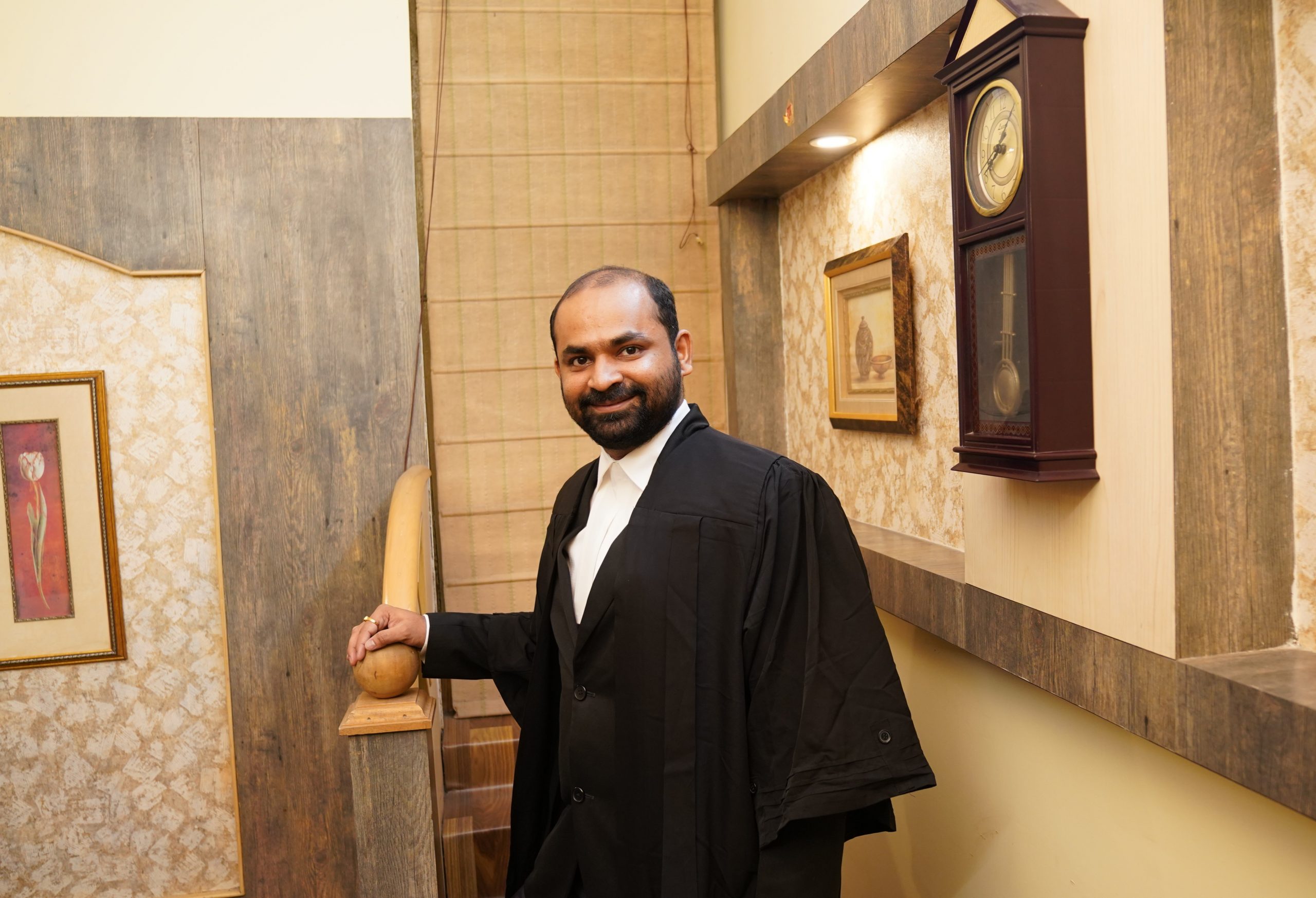
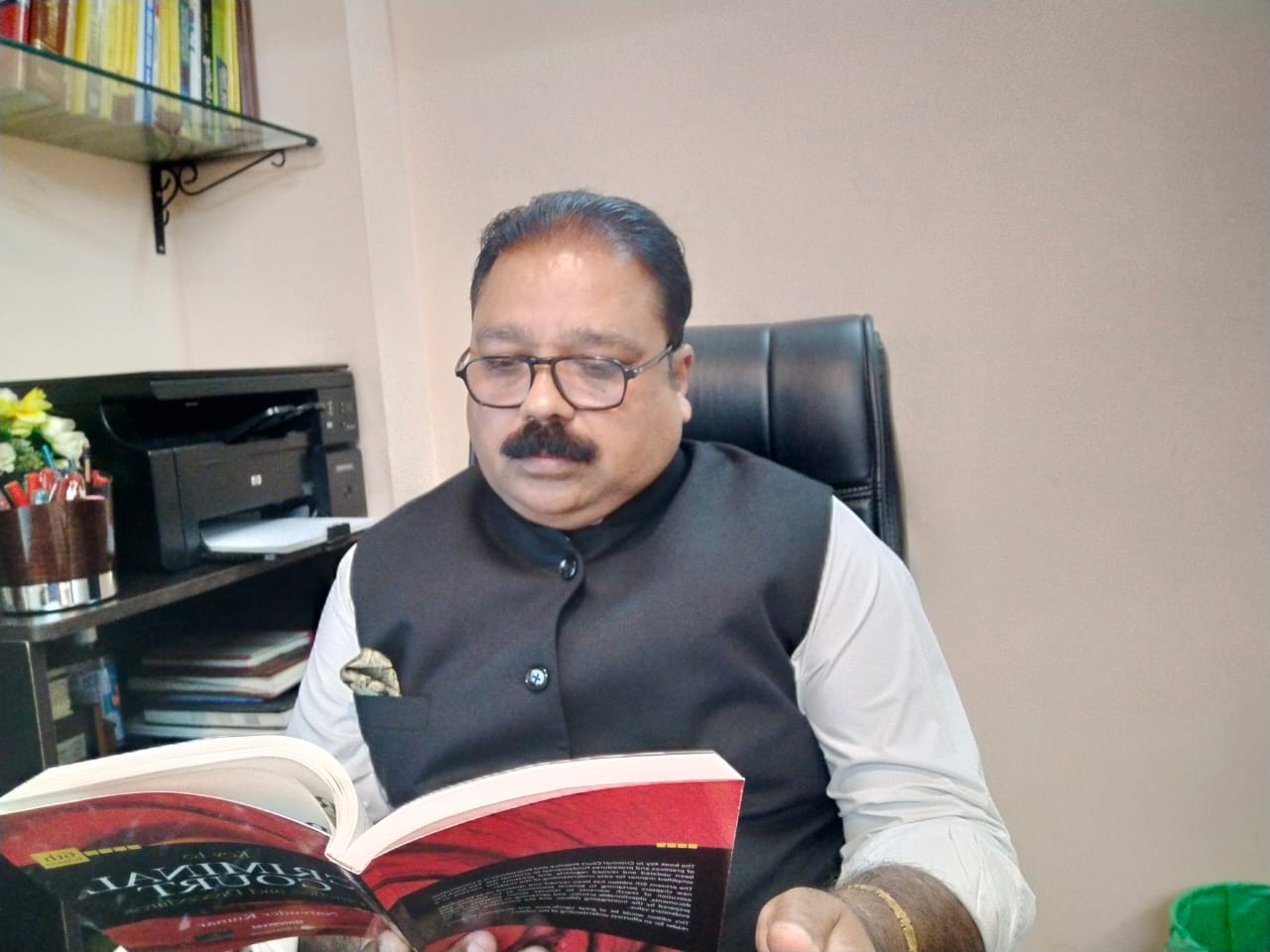
  • “Be open to collaborations and aim for higher. Working together with an advocate or a friend on a sharing basis will yield better results.” – Adv Pushkar Patil, Advocate at Adv Pushkar Patil and Associates.

    “Be open to collaborations and aim for higher. Working together with an advocate or a friend on a sharing basis will yield better results.” – Adv Pushkar Patil, Advocate at Adv Pushkar Patil and Associates.

    This interview has been published by Namrata Singh and The SuperLawyer Team

    Could you share what motivated you to pursue a career in law and how your journey began, especially your initial experiences in the legal field?

    I am a second-generation lawyer, many people think that it is only because my father is an Advocate, that I have come into this field. It is partly true, watching him as a kid has always been the real source of inspiration. But I always wanted to be into Sports, to be honest. I have played at National Level Cricket, but being in the shoes of an Advocate is something I have always been passionate about. And if I rightly remember, I have been visiting the Court since I was 6 years old.

    Reflecting on your early career, what were some of the significant challenges you faced when you first started practicing, and how did you overcome them?

    After completing my LLB degree, I simultaneously pursued my education in Diploma in Corporate Law and a Diploma in Housing Law. I also worked with a Real Estate group that was engaged in buying and selling of properties that initially had my liking. However, I completed my LLM from University of Glasgow, Scotland and I intended to work in the United Kingdom itself. But maybe it wasn’t destined. I came back to India and immediately went to Mumbai and joined Jaykar and Partners. It was a good experience. One fine day, I got a call from my close friend who was facing multiple cases, and since the “fee” part wasn’t the initial criteria for me, I took up his cases and that’s how the real journey began. Contrary to what others think, my father did not entertain me in his firm, which I believe was a good decision. As of the challenges you may ask, yes, it was difficult, I used to take guidance from many friends and seniors who sometimes did guide well. The truth is, you never find perfection in practice, there is nothing called stability, l or fixed income, there are always going to be downfalls, it depends on every individual how sportingly he takes it and faces the situation. For me, I have always taken it positively, as the legend says, every Storm is followed by the calm.

    How did your time at the University of Glasgow, particularly studying LLM in International Commercial Law, influence your approach to legal practice and contribute to your expertise in handling complex cases?  

    There is a vast difference between studying LLB and LLM, on top of it there is a huge difference between the LLM in India as well as the LLM in Scotland. The LLM courses in the United Kingdom also differ from university to university. Just as any other ordinary kid, I was guided by the Consultancy firms to opt for a good university. In 2013, University of Glasgow, School of Law ranked No. 1. It was but natural I opted for taking admission there. The course was indeed difficult, but you learn through the course. Not just in studies, I had the opportunity to meet new people and explore new opinions, new cultures, new traditions, and new concepts and I also found small-time jobs where I made new friends. All this affects our thinking plus the Dissertation studies also helped me a lot to work on research techniques. In real life, these things help a lot. In simple words, you find out that to reach the top of the mountain, there are multiple ways, you just have to find the right ones. In situations of studying and appearing complex and complicated cases, sometimes hiring an expert along with you always gives a new direction and a new perspective with experience of course.

    You were awarded the Cyber – Techno Legal Pioneer award in 2021. Could you elaborate on the contributions that led to this recognition?

    When I begin my practice, initially I only wanted to work in the Corporate field and that was the exact reason I completed my LLM in Commercial Law and I joined a corporate firm. But down the line, handling my friend’s case and the cases referred by friends and relatives, had a variety in them. From Civil disputes, Matrimonial Disputes, criminal cases, etc., to mediation, all of this variety pushed me into the different types of matters which were neither of the same nature nor similar facts. Since I did not completely understand the law regarding electronic evidence or I would say there was not much awareness about the same in the beginning of year 2015, I started researching on the authenticity of electronic evidence. In this phase, cyber frauds had also started to begin, and this was something worth exploring. I started to handle matters that had the part of electronic evidence, electronic records and areas that covered the Information Technology Act. It is here I received appreciation from the legal fraternity, including Police officers who would also call me up and ask for guidance. I have in fact delivered over 75 lectures to various colleges and institutions which covers the topic of Cyber Crimes. The word quickly spread and it’s here. I came into contact with Dr. Rohan Nyayadhish who recommended my name for the Cyber-Techno Legal Pioneer Award in 2021. It felt really good. 

    With over 1000 cases handled, can you discuss a particularly challenging case and what unique legal strategies you employed to achieve a successful outcome?  

    Well amongst thousands of cases that me and my firm have handled, we dealt with a case of rape and bigamy. There has been a long debate as to whether Matrimonial Rape is punishable or not, but this unique case we dealt with was regarding Bigamy and cheating as well. So whether this can amount to Rape (having sexual intercourse with a second wife), was a real question. Although the Indian Penal Code defines Consent, in this case, we had to research the very concept of “Consent” obtained by deceit and fraud. The case was almost 13 years old and because of the strict guidelines of the hon’ble High Court, this case was expedited to be concluded within 3 months. The prosecution testified several witnesses to prove every section in isolation and I had the opportunity to cross-examine them at length. This case also had the angle of Information Technology where we challenged the “65B certificate” as it was not in proper format. We succeeded in getting our client acquitted because of various lacunae of the prosecution and the failure by prosecution to prove the “fraudulent intention” of our client.

    How do you see the role of technology evolving in the practice of law, particularly in the areas of criminal and cyber law, and what steps have you taken to integrate technological advancements into your legal practice?  

    Technology has become a basic need for our human society. Hate it or love it, you cannot ignore it. With the Rapid growth in digitalisation and the courts also moving towards adopting the good uses of Artificial Intelligence, there are going to be several challenges to not just the Courts, but also to the investigation agencies and this also means a good area of practice to all the lawyers to explore. Since the implementation of mandatory e-filing and the requirement to upload every application online first, we have no choice but to work in hybrid mode. So we have to adopt what is existing and although there is no smoothness in the work as yet, it will eventually become normal, we have to go with the flow and adopt the changes. For the basics, getting a good-sized semi Commercial Printer Scanner Xerox machine is what every lawyer needs along with a good speed Internet and a good Mobile Tablet with a good camera. This has been a modern-day basic in practice.

    You’ve been a guest lecturer on various legal issues at numerous prestigious institutions. How has this experience contributed to your professional growth and understanding of the law?  

    I have delivered lectures to various institutions on various topics. Every time I have to deliver a lecture, I make sure to give at least 2 full days for its preparation. I also prepare a PPT which gives the listeners an ease in understanding the concept. Once again, before any lecture, what I do is research. This is something I have learned during my LLM course and this has helped me alot to sharpen my own knowledge. To simplify it, the more and more books you read, the more and more you understand a concept and then you can explain it to the others which again sharpens your knowledge. Delivering lectures is stressful, but the sense of satisfaction that I see on the faces of the listeners at the end of it is everything that matters. In all my lectures, the only thing I try to do is, Keep it simple.

    Working with a team of 17 advocates and 6 interns at Patil and Mantri Associates, how do you ensure effective collaboration and maintain high standards of legal practice?  And  what advice would you give to young lawyers and law students who aspire to specialize in criminal and cyber law?

    To all the students, aspirants and upcoming lawyers and freshers reading this, I would suggest you, welcome and be open to collaboration on a sharing basis. You cannot become a master of all the concepts overnight. Law is vast, but you can always be smart enough to accompany another advocate who has an expertise in that matter and work alongside them for the benefit of your client and a fair amount of professional fee. With the debate going on in various parts of the country over the stipend, I would suggest you to aim for higher. “Stipend” will cut off your wings and settle you down for less, but working together along with an advocate or your friend on a sharing basis will yield better fruits. Once you are into a good experience, take up pro-bono matters, work for legal aid and use your experience, expertise and knowledge to give back to society. To the lawyers, I advise you to read a lot of articles, case laws, judgments etc and observe the cross-examinations in Trial Court, do not jump to higher courts. And to the law students, I would suggest in addition to all of these, participating in the Moot Courts, it helps.

    You’ve mentioned interests in activities like gym and American football. How do you balance these personal hobbies with the demands of your legal career? Please share how important it is to unwind yourself from work?

    Well, I do have a lot of interest in staying fit. I have been into sports since childhood; I have played National Level Cricket and have also for a brief period, been into kickboxing. I have also held the Vice-president post for Wako Kickboxing Trust, Pune and I suggest that every lawyer must give at least an hour of his busy schedule daily to work on his body. A good appearance and a wonderful personality is a positive energy. A positive energy keeps the mind calm and open to learning new things. No man on earth is so busy that he cannot give time to work on his health, so please make sure you stay fit. Be it any sport you love. Do not settle for less.

    Get in touch with Adv. Pushkar Patil-
  • “Change starts with individuals who challenge the status quo and advocate for justice. Building alliances and understanding cultural nuances are key to addressing global human rights issues,” – Dr. Anthony Raju, Advocate at Supreme Court of India & Chairman of Indian National Human Rights Protection Council

    “Change starts with individuals who challenge the status quo and advocate for justice. Building alliances and understanding cultural nuances are key to addressing global human rights issues,” – Dr. Anthony Raju, Advocate at Supreme Court of India & Chairman of Indian National Human Rights Protection Council

    This interview has been published by Namrata Singh and The SuperLawyer Team

    Dr. Anthony, with such an impressive and diverse list of roles – Advocate, Human Rights Activist, TEDx Speaker, and more – could you share with our readers a bit about the journey that led you to wear so many hats?

    My journey began in a very humble setting in Meerut, Uttar Pradesh. Growing up in a poor family, I had to work from a young age, selling newspapers and working in small shops to support my family while pursuing my education. This early exposure to hardship instilled in me a deep sense of empathy and a desire to fight for justice. My legal education and subsequent practice as an advocate opened up avenues for me to address issues I deeply care about, such as human rights and social justice. Over time, my roles expanded naturally as I found myself addressing these issues in various capacities – be it as a lawyer, activist, or speaker. Each role complements the other, enabling me to make a broader impact.

    Juggling between being a lawyer, human rights activist, and so much more must be quite a feat. How do you maintain a balance between your legal profession and your various social and humanitarian roles?

    It indeed requires a delicate balance, but the key lies in passion and prioritization. My legal profession and humanitarian roles are interconnected, as both strive towards the common goal of justice and human dignity. I allocate specific times for my legal practice, social work, and speaking engagements, ensuring that each receives the attention it deserves. Effective time management and a dedicated team also play crucial roles in helping me manage these diverse responsibilities without compromising on any.

    Your dedication to human rights is evident not only in your professional life but also through your social work in tribal and underprivileged areas. What motivates you to spend a significant amount of your time in these communities, both nationally and internationally?

    The motivation stems from my early life experiences and the realization of the stark inequalities that exist in our society. Spending time in tribal and underprivileged areas allows me to directly engage with and understand the challenges faced by these communities. It’s one thing to advocate for human rights from a distance, but it’s entirely different to be on the ground, witnessing the struggles and triumphs of the people. This direct engagement fuels my passion and commitment to making a tangible difference in their lives.

    As a dynamic criminal advocate and human rights ambassador, you’ve spoken at TEDx. Can you share a moment in your career that you consider a turning point or a particularly proud achievement?

    One significant turning point was when I founded the All India Council of Human Rights, Liberties & Social Justice (AICHLS). This platform has allowed me to channel my efforts more systematically and mobilize support for various human rights causes. Another proud moment was speaking at TEDx, where I could share my journey and inspire others to join the fight for justice and equality. Receiving the “International Human Rights Awards” and honorary doctorates were also affirmations of the impact of my work and further motivated me to continue my advocacy.

    You’ve been recognized with several awards, including honorary doctorates and the “International Human Rights Awards.” How do such accolades fuel your commitment to the causes you champion?

    These accolades serve as important validations of the work being done and the causes being championed. They bring attention to critical human rights issues and inspire others to join the movement. For me, these recognitions are not just honors but also reminders of the responsibilities that come with them. They reinforce my commitment to continue advocating for those who cannot speak for themselves and to push for systemic changes that uphold human dignity and justice.

    In addition to your legal practice, you founded the International Human Rights Advisory Council. Can you tell us more about the council’s mission and some of the key initiatives it has undertaken?

    The International Human Rights Advisory Council aims to promote and protect human rights globally through education, advocacy, and direct intervention. One of our key initiatives is providing free legal aid to marginalized communities, ensuring they have access to justice. We also run awareness campaigns on issues such as child rights, women’s rights, and the right to education. Additionally, we collaborate with other organizations to address human trafficking and violence against women. Our mission is to create a world where every individual can live with dignity and freedom.

    How has your venture, Legal and Legal Associates, made a significant difference in people’s lives by providing free legal aid, intersected with your role as a criminal lawyer, and can you share a challenging or interesting case where your dedication and skills played a crucial role in securing justice?

    Legal and Legal Associates has been instrumental in providing free legal aid to those who cannot afford it, ensuring that justice is accessible to all. One particularly challenging case involved a group of tribal women who were falsely accused of theft. My team and I worked tirelessly to gather evidence, advocate for their rights, and eventually secure their acquittal. This case highlighted the intersection of my roles as a criminal lawyer and human rights activist, demonstrating the impact of dedicated legal advocacy in protecting the vulnerable.

    How does your commitment to fostering understanding through the World Inter-Faith Council for Peace & Human Rights align with your initiatives like “Giving with Compassion,” and how do you envision the intersection of human rights and interfaith dialogue inspiring individuals to contribute to social causes on an individual level for a more peaceful world?

    The World Inter-Faith Council for Peace & Human Rights and “Giving with Compassion” both stem from the belief that understanding and empathy are crucial for social harmony. Interfaith dialogue promotes respect for diverse beliefs and fosters a sense of shared humanity. By encouraging individuals to look beyond their differences and unite for common causes, we can inspire them to contribute to social justice initiatives. The intersection of human rights and interfaith dialogue is powerful because it not only addresses legal and social issues but also nurtures the moral and ethical dimensions of peace and justice.

    How has your journey as a change maker shaped your approach to navigating the complexities of international relations as a diplomat and advocate, all while realizing the profound impact that an individual can have on society?

    My journey has taught me that change starts with individuals who are willing to challenge the status quo and advocate for justice. As a diplomat and advocate, I approach international relations with a focus on collaboration and mutual respect. Understanding cultural nuances and building alliances are key to addressing global human rights issues. Realizing the impact one individual can have inspired me to continue pushing for systemic changes and mobilizing others to join the cause. It’s about creating ripples that lead to broader societal transformations.

    On a more personal note, can you share a hobby or interest that you turn to for relaxation and rejuvenation amidst your busy schedule? How does it complement your work-life balance?

    I find solace in reading and meditation. Reading allows me to explore new perspectives and ideas, which is essential for my work as an advocate and speaker. Meditation helps me maintain mental clarity and emotional balance, enabling me to handle the various demands of my roles effectively. These hobbies provide me with the necessary downtime to recharge and stay focused on my mission.

    Aside from your professional endeavors, we’ve heard that you are involved in teaching and training. What advice do you have for aspiring advocates and human rights activists entering the field today?

    My advice to aspiring advocates and human rights activists is to stay committed to the cause, no matter how challenging it may seem. Dedication, hard work, and perseverance are crucial. Always remain empathetic and understand the struggles of those you are advocating for. Continuous learning and staying informed about legal and social issues will equip you to be effective in your efforts. Lastly, never underestimate the power of collaboration and building networks, as collective action can amplify your impact.

    Ge in touch with Dr. Anthony Raju–

  • “Life is what happens to you when you are busy making other plans” – From Medicine to Mastery in Law: Rajvendra Sarswat, Independent practitioner & Senior Standing Counsel for Union of India

    “Life is what happens to you when you are busy making other plans” – From Medicine to Mastery in Law: Rajvendra Sarswat, Independent practitioner & Senior Standing Counsel for Union of India

    This interview has been published by Namrata Singh and The SuperLawyer Team

    Could you please help our readers get to know you better by sharing how you came into the field of law? We’d love to hear about your journey, who inspired you to join the legal profession, and the challenges you faced initially.  

    Many of us will agree that growing up in the nineties, there used to be primarily two career choices every student had to make at a certain stage, either medicals or engineering, and similarly I was also in the same mainstream preparing to be a doctor someday. Law was surprisingly introduced to me by my brother which intrigued me when I explored more about it as a profession. As I always believe in the quote that ‘life is what happens to you when you are busy making other plans’. I joined National Law University, Jodhpur as its first batch student and graduated in the year 2006 with Corporate Law Honors in B.B.A. LL.B. and thereafter joined Kanga & Company, Mumbai and also worked with Majmudar & Partners, Mumbai till close to 2011 end. While working with these firms it was purely general corporate, M&A and PE transactional work with almost negligible work related to litigation and the learning I received from both these places left a significant impression in my approach towards work. My initial years into litigation were very challenging and every new case I got was accepted as a blessing. I was appointed as amicus curiae or Court commissioner in many Public Interest Litigations during my initial years which gave me the opportunity to appear regularly before the court and to make myself relevant. I was always open to any area of law and focused myself to take each case as the most important and crucial for me for building myself as a litigation lawyer.   

    As Senior Standing Counsel for Union of India, GST, Central Excise / Customs, what are the key challenges you face in representing such a broad spectrum of governmental interests?

    The most fascinating part of representing tax department in the High Court is that mostly the controversies involved are interpretational issues where constitutional validity is under question and having serious implications wherein invariably I get the chance to argue against the best and top tax lawyers of the country, which I believe is a valuable learning experience for me. As we know that the Goods and Service Tax law is new and evolving so many issues are nascent and completely innovative in its challenge which is a constant learning experience. One has to keep in mind the complexity of Laws, diverse stakes, managing the litigation coupled with the factor in change in the policy. However, balancing the government’s interests with the broader public interest can be a delicate task. Ensuring that legal actions align with public expectations and serve the overall welfare of the society is important. Navigating these challenges requires a deep understanding of legal intricacies, effective communication skills, strategic thinking, and the ability to adapt to dynamic legal landscapes.

    We want to understand how different the study of law is compared to the practice of law. What was the most challenging aspect of transitioning from academic learning to actual legal practice?  

    What we study in law school is a very fundamental yet primitive part of law. The actual application and understating of the practical aspects of law comes only when we enter in the profession. As a first generation lawyer, the journey is altogether different and difficult because you inherit nothing and have to build everything from scratch but the good part is that you have an empty canvas and you are the artist. A fresh law school graduate who wishes to enter into litigation should always start with fundamental and practical aspects including the process of filing or curing of defects therefore I also advise to start from trial courts for at least two years before practicing in higher forums. Nowadays it’s good to see that law schools are also focusing on practical learning aspects other than just theoretical teaching. Applying legal principles to real cases, clients, and situations requires a different skill set than memorizing legal theories. In academia, the emphasis is often on analysing case law and statutes. However, in practice, building strong client relationships, effective communication, and understanding client needs become crucial. Developing these interpersonal skills can be challenging for some. In a practical legal environment, time management becomes critical. Meeting deadlines, handling multiple cases simultaneously, and managing client expectations require efficient time management skills that may not be as emphasized in academic settings. And, most importantly grappling with ethical dilemmas, maintaining client confidentiality, and upholding professional conduct standards are integral parts of legal practice that go beyond academic discussions of legal ethics. I also happen to be a guest faculty at a few law universities. I also give lectures at many intuitions and this helps me keep my own learning in the game.     

    How do you approach the complexities of constitutional writs compared to other types of legal matters you handle, and what strategies have proven most effective for you?  

    The unique feature of writ jurisdiction is that it’s an extraordinary remedy and how you can convince the court to get a favourable order depends upon how innovative and ingenious you can be. In my experience of being into litigation, I believe there is only one strategy and that is there is no strategy. You have to be quick on your feet, well prepared and thoroughly researched. One of the key focuses should be on the drafting because there may not be occasion for you to change your pleadings in the later stage if you have missed out a crucial fact or legal ground. You must know what to speak and more importantly what not to speak. Court crafting is an art and it takes patience and keen openness for observing to learn on a daily basis which cannot be taught but has to be learnt. By combining thorough legal research, precise drafting, effective oral advocacy, and a deep understanding of constitutional principles, handling constitutional writs can be approached with the rigor and strategic insight they demand. This ensures that the complexities of these cases are navigated effectively, maximizing the chances of a favourable outcome. When I joined litigation, I ensured to be in the court and get the chance to hear senior advocates arguing their matters because one can learn a lot from mere observation as to how a particular case was presented and how the questions of the court were replied back. 

    What innovations or changes would you like to see in the Indian judicial system to improve efficiency and fairness in legal proceedings? Additionally, what steps are you personally taking or planning to take to help achieve these improvements?   

    We are presently in a rapidly growing and evolving legal system. Before the covid pandemic, none ever imagined the idea of having courts running online where lawyers and even litigants were attending courts from home. Now we have a seamless virtual platform where any lawyer can not only do the filing but also attend the court. We just need more adaptability and openness to it. However, that is mostly at the High Court and Supreme Court or other higher forums, which needs to be adopted at all the levels. This requires proper infrastructure and training. Once this is achieved, service of process, examination of witness, inspection etc. many such procedural aspects which delays the justice dispension system can be curtailed. We are currently transitioning our entire office from physical file to digital file and do not carry physical file to the dias. This way we have access to the entire office record, documents and relevant judgments with ease even if we are travelling. 

    You transitioned from being an associate to a legal head and then switched back to a senior associate role. What differences did you observe in both practice areas during these transitions, and what motivated your move back to the litigation?  

    You cannot compare being an associate in a corporate non-litigation firm with being an in-house counsel with any corporate organisation with having your independent practice as they all work within their uniquely peculiar sphere. The kind of work you do, the atmosphere you work in, the people you deal with on a daily basis, the issues you have to handle independently, they all are different and distinct. The initial journey is always difficult, nonetheless, they all have their own challenges and benefits. After graduating from law school; my primary interest was to work with a good corporate law firm, either in Delhi or Mumbai. I got a chance to work with two very reputed firms in Mumbai and a brief period to be legal head of a public limited company. However, after working for a few years I realised the quench of working on my own started bubbling up. I remember I had visited the High Court once for a matter related to one of my relatives and after observing the lawyers and court room, from there the idea of starting my own practice triggered inside. It was a very difficult and risky decision to take after investing years into Mumbai and then coming back to Jodhpur coupled with the fact being a first generation lawyer, but somehow I took the plunge. My initial few years as a litigation lawyer were difficult with self-doubts and fear as to who will give me work and how will I sustain; but I also believe that such fear keeps you motivated too.

    Mr. Sarswat, transitioning from prestigious firms to independent practice is often a significant milestone. Could you share how your independent practice is evolving, and which specific areas of law are you currently focusing on? Additionally, what qualities do you look for in interns who seek to work under your guidance? Any suggestions you would like to give them?

    I practice primarily constitutional writs, civil, arbitration and a few criminal matters too. Public Interest Litigation has inspired me to a significant manner which lead me to file and appear in many such PILs involving public issues around me, where we have been successful to get very favourable orders from Court either as the counsel or as the amicus curiae. We also do a lot of arbitration practice. The qualities which I aspire and look for in anyone who is willing to join litigation is patience, persistence and hard work. There is no shortcut in this profession and if one can maintain that, the sky’s the limit. I firmly believe that every person has a unique journey and the only comparison you should have is with yourself as to what you were one year back in the past. I find young lawyers getting impatient, which is inevitable though, but this is a lifelong building profession and takes time. One has to be well prepared with facts and position of law, latest judgment on the issue involved. If you are sincere and hardworking, you will automatically stand out and become noticeable. If one can manage to do that, one will be picked up at the right time from the right people and the path will appear. Lastly, never be too focused that you miss out little opportunities at the corner of your eyes and if you wish to take litigation as a serious and primary choice of profession, then only join it otherwise don’t start it with as plan B.

    Outside of law, what hobbies or personal interests do you pursue that help you maintain a balanced perspective?  

    I love to read and travel. I believe the more you read and travel, the broader perspective you achieve about various aspects of life. One should have a habit of reading at least 15-20 pages daily, other than office work. I also write and paint at times. Every new place you visit, teaches you a lot about yourself as a person too. I also love running and keeping myself physically fit because a healthy body can only give you a healthy mind. I love to listen to old school music and my favourite bands or artists are U2, Bob Dylan and all time legends Kishore Kumar and Jagjit Singh.  

    Get in touch with Rajvendra Sarswat-

  • “As a Panel Advocate, I developed ethical practising skills and increased my corporate legal field knowledge.” – From Ayurveda to Advocacy: The Transformative Journey of Deen Dayal Purohit, Advocate at the Jaipur High Court & Purohit & Associates,

    “As a Panel Advocate, I developed ethical practising skills and increased my corporate legal field knowledge.” – From Ayurveda to Advocacy: The Transformative Journey of Deen Dayal Purohit, Advocate at the Jaipur High Court & Purohit & Associates,

    This interview has been published by Namrata Singh and The SuperLawyer Team

    Could you please introduce yourself to our readers and walk us through your journey? Also before pursuing your LL.B., you completed a diploma in Ayurveda Ratna. What motivated you to switch to law after seven years in Ayurveda? What inspired you to pursue law?

    Yes, I’ll feel grateful to introduce myself and about my journey to you. From 1985 to 2000, I served as a consultant in the renowned Ayurveda Pharmaceutical company, meanwhile, in 1997 my brother B.P. Chhangani was selected for judicial service. He motivated me to do an LLB course, and as you know I cleared LLB in the year 2000 and started practising as an Advocate from 2000 onwards to continue.

    Could you please elaborate on the main practice areas you specialize in and the types of cases you most frequently handle in your legal practice?

    My main practising areas are Criminal, and Writs in the High Court.

    What responsibilities does your position as a Public Notary for the Government of India entail, and how does it integrate with your other legal work?

    In the tribunals and high courts, documents need to be notarized, so, it is a part of day-to-day professional practice.

    You have been a panel advocate for numerous institutions. How does this role differ from private practice, and what skills have you developed from these experiences? Please share some insights from your work as a panel advocate.

    Panel Advocating work is different from private practice. As a Panel Advocate, I’m working in corporate culture. During my work as a Panel Advocate, I developed ethical practising skills and increased my corporate legal field knowledge. 

    Could you please discuss the significance of the reportable judgments you were involved in, such as Priyanka Shrimali Vs. State of Rajasthan and Hindustan Zinc Ltd. Vs. State of Rajasthan and Ors.? Also you could share some insights from the case.

    In the case of Priyanka Shrimali Vs. State of Rajasthan the significance of this matter was “Married daughter is entitled to the compassionate appointments in the Government service”. Before this judgment, the Married daughter was not entitled to the compassionate appointment. In the case of Hindustan Zinc Ltd. Vs. State of Rajasthan and Ors., the significance of this matter is “the challenge to the vires of provisions of sec 38(C) & 39 of the Act and Rule 24(1) of the Rules fails. The writ petitions are dismissed. However, the petitioners, if aggrieved by the entry made in the provisional assessment list, shall be at liberty to file the appropriate objections before the Assessing authority and in the matters wherein final assessment orders have already been made. The demands have been created, they shall be at liberty to file an appeal before the Appellate Authority, if not already filed, within thirty days from the date of this order. The amount, if any, deposited by the petitioners against the demand created in terms of interim orders passed by this court or otherwise, shall be adjusted against the amount payable to satisfy the condition of pre-deposit for maintainability of the appeal”.

    Beyond your areas of expertise, which other fields of law do you find particularly fascinating or are passionate about exploring further, and why?  

    In Legal Service Authority Act, Insolvency and Bankruptcy Act and Companies Act, but especially in Article 39 A of the constitution of India enacted Legal Service Authority Act because the Legal Service Authority Act, sec 12 is about free and competent legal services for the needy person and other persons that need the justice.

    As an experienced lawyer, what do you think the current generation can do to prepare themselves for successful careers in law and beyond?  

    The current generation has ample opportunities to prepare and develop for successful careers in legal fields, like International Arbitration, Companies Law, Banking Law, Legal Drafting and several other fields.

    Outside of the legal realm, what are your hobbies or interests that help you unwind from the demands of your profession?  

    Outside the legal realm, I’m working for several legal awareness campaigns at various places like schools, colleges, and public places on subjects like POSH, POCSO, IT, CYBER CRIME, SENIOR CITIZEN’S RIGHTS, LABOUR ACT, PCMA ACT etc.

    Could you tell us more about Purohit and Associates, the types of legal practices they specialize in, and what opportunities they offer for interns looking to gain experience in the legal field?  

    The Purohit & Associate practices in the subordinate court, tribunals, High Court, DRT, State Commission and various other fields, and It develops the skill of Associates in practice as well as in the competition of judicial exams and gives enough opportunities to the Associates working under the Purohit & Associates, and also provide opportunities to intern about “earn while learn”.

    Get in touch with Deen Dayal Purohit-

  • “If you understand that you follow the reporting protocols and are clear about when you need to accelerate a matter to a more senior person or when to take a matter off the table of a senior person and put it into junior hands, you help yourself a lot”- Roma Bhagat, Founder, Roma Bhagat Associates

    “If you understand that you follow the reporting protocols and are clear about when you need to accelerate a matter to a more senior person or when to take a matter off the table of a senior person and put it into junior hands, you help yourself a lot”- Roma Bhagat, Founder, Roma Bhagat Associates

    This Interview has been published by Pragya Chandni and The SuperLawyer Team

    Can you share with us your journey into the field of law? What inspired you to pursue a career in this domain, particularly focusing on such diverse areas as civil and criminal law, intellectual property, disability rights, and more?

    As a child, I visited a lot of courtrooms with my father and it seemed like a natural progression to find my way there as a qualified Lawyer. My journey, thereafter, in the legal field was just an accident. As I grew older one thing I realized was that law is a profession that didn’t offer me only diversity but also Independence, and I liked it. I joined an Intellectual Property Law Firm in order to gain experience in the field that my father did not practice in. After a point when I realized that it would take me very long to become independent in this field of law, I shifted to Civil Law practice. Along the way, I became associated with an office that was dealing in matters relating to customs, excise, para, and the like. I think I have a very low threshold of boredom and enjoy diversity. So I have done almost any and every matter that has come my way. I recognized as a very junior lawyer that law is nothing but knowing where to find what you need and the old-added seek and ye shall find actually works.  

    I was essentially a civil lawyer till one of my clients got arrested in a customs matter. For some reason, he declared that he would stay in jail rather than be represented by anyone else even though I didn’t practice criminal law. This weight of responsibility made me dive into criminal Law and after that, I didn’t look back. Falling into sports law was also an accident. I had a client who was very passionate about sports and was suffering greatly. I took some matters to Court for him. Before I knew it, I was handling a lot of sports matters. I think my journey in sports law was also helped by the fact that I was a trustee in the Special Olympics for 7 years and as a litigation lawyer I had a distinct advantage in knowing both sides of the system.

    You’ve been deeply involved in advocating for persons with disabilities, working on legal aid, policy advocacy, and training programs. What initially drew you to this cause, and what are some key challenges you’ve encountered in this area of practice?

    Disability is very close to my heart. I have severely impaired vision myself. And I understand disability up close in person, as they say. I think the twin challenges of disability are attitude and awareness. When I was in 9th standard and opted for humanities, my school wanted to know why I wasn’t taking science because I was “a good student”. When my parents informed them that my eyesight precluded me from taking science subjects because I wouldn’t be able to do the required experiments, my school started talking about careers in basket weaving and pottery. In my case, I consider myself lucky that their attitude didn’t influence me or my parents. But in my interactions with disabled persons and the mainstream world, I find this attitude is a two-way street that diminishes the person with a disability and impacts their ability to negotiate their environment.  

    I believe that only concentrating on macro-level cases in disability is problematic. Class action writs, or individual writs for that matter, are necessary to access rights. Stopping short at that is discriminating, in itself. I believe that a disabled person cannot be identified only by their disability. They therefore should have proper representation for cases relating to mainstream law such as property, inheritance, contract, criminal justice, and family. Hence, the legal aid. 

    The importance of training is something that I cannot emphasize enough. And it was for that reason that I will always try and make time for them. One small but telling incident comes to mind. An autistic boy was being questioned by the police and it was a frustrating experience for both. I observed that the police officer would start his questioning by saying “I am going to ask you one to two questions”. The autistic boy would respond to two questions and then wonder. I explained to the police officer that when this “one or two questions” is stated to a non-autistic person, the understanding would be that it would translate to a “few questions”. However, the autistic person would take it as a specific number

    and after two questions will think that the questioning was over. By simply modifying the statement to say that I have some questions to ask, we managed to get the necessary information. This incident, though funny, is also revealing of the fact that if we are able to modify the environment keeping in mind the requirement of a disabled person, things move a lot more smoothly.  

    As someone who has worked with a range of clients from domestic to international corporate houses, what do you believe are the essential qualities or skills that make a lawyer successful in navigating such diverse legal landscapes?

    I think the most important ingredient is inspiring confidence in your client that you will do the job to the best of your ability and it will be a “good best”, that is because you will do your homework. Law is such a vast field that no one person can know it all. It’s good to be aware of this fact and be clear with your client that while you will not have the answer, you have the capability to find it and the acumen to know where to look for it. One of my best clients was the person whose first case I lost. Then when he appeared with another matter, I asked why have you come back to me when I lost your case, and then he replied that I followed you in every step of the case. If anyone would have won it, you would have. It was a bad case but it didn’t stop you from fighting. One thing I’ll add is that clients are clients, national or international, rich or poor, the differences between them are personality-based and cross-cutting. Some clients simply unload their troubles on you and others want to micro-manage and that has nothing to do with what they are paying you. As far as corporate clients are concerned, it is necessary to remember that every company has a certain hierarchy and a way of functioning. If you understand that you follow the reporting protocols and are clear about when you need to accelerate a matter to a more senior person or when to take a matter off the table of a senior person and put it into junior hands, you help yourself a lot.

    Your involvement with organizations like the National Human Rights Commission and the National Trust reflects a commitment to broader social issues beyond legal practice. How do you balance your legal career with your advocacy work and community engagement?

    I believe if you learn to balance your priorities, you can always find time for things you really want to do. Effective time management and assistance of able juniors has always helped me sail through these commitments.  

    You’ve been part of various committees and expert groups focusing on legal reforms and housing policies. Could you shed some light on the role of legal professionals in shaping legislative frameworks and policy decisions, particularly in areas like land reforms and housing?

    When it comes to drafting Bills that eventually translate into Acts, or Policies for that matter, Lawyers have a mind that is already trained to read legal statutes and decode them. Furthermore, people come to the Lawyers with their problems, looking for solutions/effective remedies that would “solve” their problem[s]. Over time, a Lawyer’s mind is trained to analyze a set of facts so as to conceptualize the actual problem, look for the root cause and then offer an effective and efficient solution. This analytical bent of mind, coupled with domain specific expertise, goes a long way in assisting in formulating or shaping Legislative Reforms/frameworks (to cure any mischief) and policy decisions. Furthermore, Lawyers, particularly those who practice in diverse fields, have the capability to assess and understand domain-specific facts in so far as they are material to the matter in hand and be able to use it in that fashion. In my case, my past experience in the domains such as Disability Law and Social Housing and related Land Reforms etc came to my assistance and we were able to bring in targeted reforms.  

    Given your experience in arbitration proceedings, both as an arbitrator and counsel, could you discuss the unique challenges and advantages of alternative dispute resolution methods, especially in international work contracts?

    If conducted properly, arbitration is an extremely efficient way of dealing with dispute resolution. I think the key for me has been due process. If due process is followed then arbitrations move on a fast track. It saves time, stress, and in the long run, opportunity cost. Another advantage of the Arbitration process is having Domain/technical experts as Arbitrators, specifically in the cases of competitive and technical work contracts. I can particularly think of quite many instances where the Arbitrators, being qualified domain experts, understood the

    technicalities of the matter immediately and the proceedings were concluded in record time, with most effective resolutions to the disputes. In the matters relating to International Work Contract[s] sometimes u have conflicting jurisdictions, and in such circumstances, accessing the Domestic Courts and obtaining an Executable Decree can be a challenge. Arbitration overcomes that hurdle. 

    Some of the challenges of Arbitration Proceedings relate to the question of Interim Relief[s] and the enforceability of Awards. I have personally never encountered a situation where an award wasn’t honored, but should that be the case I would imagine there could be issues arising out of the complex nature of the interactions between different sets of, perhaps clashing, domestic Laws .

    Finally, what advice would you offer to law graduates who aspire to build a successful and impactful career in the legal field, considering your wealth of experience and expertise?

    The first piece of advice I have to offer is to recognize and grab every opportunity. The second is to do your homework and be prepared. Thirdly, be organized. You have one shot at the Arguments, be prepared. Fourthly, mistakes will happen. A good lawyer looks for a way to rectify those mistakes, so damage limitation is very important. If you are a civil lawyer then cultivating the ability to think laterally is extremely important, because in civil law there are no straightforward answers. There could be multiple solutions to the same problem. Lastly, seek and ye shall find. Keep working hard and smart. 

    Get in touch with Roma Bhagat-

  • “Always consider yourself as a student throughout your lifetime and commit to lifelong learning. Master the fundamentals before branching out into multiple practice areas.” – Nidhi Mathur, Advocate & Managing Partner at Lawgical Associates

    “Always consider yourself as a student throughout your lifetime and commit to lifelong learning. Master the fundamentals before branching out into multiple practice areas.” – Nidhi Mathur, Advocate & Managing Partner at Lawgical Associates

    This interview has been published by Namrata Singh and The SuperLawyer Team

    Reflecting on your journey from college to becoming a Managing Partner at Lawgical Associates, could you share what initially inspired you to pursue a career in law? What experiences or influences shaped your decision to specialize in diverse areas such as labor law, corporate law, and sexual harassment laws?

    From my earliest memories, the legal world was ingrained in my upbringing. I come from a family of lawyers and judges and growing up in such a family where law was not just a profession but a way of life, I was surrounded by discussions about cases, debates over legal principles, and the importance of justice. As I delved deeper into my legal studies, I became fascinated by the complexity and diversity of legal issues. I realized that the law touches every aspect of our lives, from business transactions to workplace dynamics and individual rights. This realization motivated me to explore different areas of law and develop expertise in various specialties. 

    Corporate law appealed to me because of its intersection with business and commerce, offering opportunities to work with diverse clients and navigate complex legal frameworks. Abor and employment law was an extension of my experience as a HR professional. It brings in a human element while engaging with real people be it employer, employee or unions. Labor law has a potential for social impact as you have to handle a diverse range of issues.

    My interest in sexual harassment laws stemmed from a deep commitment to combatting gender-based discrimination and creating safer, more inclusive workplaces. I recognized the importance of addressing workplace harassment and discrimination and saw an opportunity to make a meaningful impact through legal advocacy and representation while holding perpetrators accountable.

    Overall, my decision to pursue a career in law and specialize in diverse areas was shaped by a combination of personal passion, intellectual curiosity, and a desire to contribute to positive social change. As I progressed in my career and eventually became a Managing Partner at Lawgical Associates, I remained committed to these core values and dedicated myself to using my legal expertise to serve clients and advocate for justice in all its forms.

    Your educational journey is quite diverse, starting with a B.Com followed by an MBA before transitioning to law. What motivated this transition?

    My family was very professionally driven and encouraged us to have a professional career of our choice and an identity of our own. I did B.Com and MBA in HR as I wanted to be professionally qualified. Post my MBA I worked in private Organizations including Telco wherein I realised that having a law degree especially working in HR & Labour Law domain was not only an additional advantage but necessity especially while dealing with women, blue collared and white collared employees. It also gives you an advantage to see things from a larger perspective. My journey through different fields of study was driven by a combination of curiosity, passion, and a desire for personal growth. In this diverse journey, I have learned that education isn’t a linear path; it’s a mosaic-each piece contributes to the whole.

    You have achieved lot of credibility and recognition on the area of Sexual harassment matters with clients across industries. Please elaborate your journey in this area.

    Thank you for appreciating and recognising my work in the area of sexual harassment matters. It’s a field that requires both dedication and sensitivity due to the complex and often emotionally charged nature of the cases involved. My journey in this area has been multifaceted, involving both professional development and personal commitment to advocating for justice and equality. It began with a recognition of the pervasive nature of sexual harassment in workplaces across industries and a commitment to addressing this issue head-on. Early on, I sought out opportunities to educate myself on the legal frameworks surrounding sexual harassment, including relevant laws, regulations, and case precedents.

    As I delved deeper into this field, I actively sought out opportunities to work with clients across various industries, offering legal guidance and support in navigating sexual harassment allegations and incidents. This involved providing advice on policies and procedures for preventing and addressing sexual harassment, conducting investigations into allegations and representing clients in legal proceedings when necessary.

    One of the key aspects of my journey has been building strong relationships with clients and earning their trust as a knowledgeable and reliable advisor in this sensitive area. I prioritize open communication, empathy, and a commitment to understanding each client’s unique needs and concerns. Over time, my efforts have been recognized, leading to increased credibility and recognition in the field of sexual harassment matters. This recognition has opened up opportunities to collaborate with diverse industries, including corporate, nonprofit, educational, and governmental sectors. I provide comprehensive legal counsel on developing and implementing effective sexual harassment policies, conducting investigations into complaints, and advising on appropriate disciplinary actions.

    I’ve been actively involved in raising awareness about sexual harassment prevention through speaking engagements, training sessions, and contributing to publications and thought leadership initiatives. By sharing insights, best practices, and practical strategies, I aim to empower organizations to create environments where harassment is not tolerated and where all individuals can thrive. 

    My experience and commitment in this area has led me to be empanelled with the Ministry of Women and Child Development, Government of India.

    Throughout my journey, I remain dedicated to supporting victims of sexual harassment, holding perpetrators accountable, and promoting environments where all individuals feel safe, respected, and valued. My work in this area is driven by a passion for justice, equity, and creating positive change in the workplace and beyond.

    How do you leverage your expertise in consumer laws and medical negligence matters to ensure fair representation for your clients, especially when dealing with sensitive issues like healthcare?

    As an advocate with a focus on consumer laws and medical negligence, my approach is to ensure fair representation for clients with a blend of legal acumen, empathy, and strategic advocacy. I delve deep into consumer protection laws, medical jurisprudence, and precedents. Healthcare issues are always emotionally charged so having empathetic listening is crucial which also allows me to tailor legal strategies to align with their unique circumstances. At the same time, it is my responsibility to demystify the legal complexities to my clients and give them right potential outcomes and available options so that they can make informed decisions.

    Building a strong case is equally important which I do by gathering medical records and taking expert opinions. I collaborate with medical experts, doctors, specialists and forensic professionals. Their testimony provides objective and insight which in result strengthens our case. At the same time, I believe not all cases need to be courtroom battles so I also explore negotiation and mediations. A fair settlement can provide for a quicker relief without prolonged litigation.

    Having advised both Indian and multinational clients on anti-corruption laws, what unique challenges do you encounter in ensuring compliance, and how do you address them effectively?

    Advising clients on anti-corruption laws presents unique challenges that require a delicate balance of legal expertise, cultural awareness and strategic thinking. Operating across borders means navigating diverse cultural norms, business practices, and legal systems. Anti-corruption laws vary globally like FCPA (U.S.), UK Bribery Act, Indian Prevention of Corruption Act, (India). Therefore, I have to be constantly updated on legal developments in different jurisdictions to conduct a thorough due diligence. Multinational companies rely on third parties—suppliers, distributors, agents, etc.-these intermediaries can pose corruption risks. Therefore, implementing a robust due diligence process for such third parties is not only a compliance need but an obligation. Further, to strengthen the systems, I also advise my clients to encourage a whistleblower protection scheme to encourage employees to report corruption without retaliation.

    Further, employees and stakeholders must understand anti-corruption policies for which regular training sessions and workshops have to be conducted to reinforce compliance expectations. For this also I conduct training workshops for my clients. Compliance is an ongoing process so risk assessment and updating of policies including being aware of changing legal landscapes needs to be there. Effective anti-corruption compliance fosters a culture of integrity, accountability, and transparency. 

    Given your involvement in conducting legal audits could you elaborate on the importance of due diligence in today’s legal landscape, especially in cross-border transactions? 

    In today’s complex legal landscape, due diligence plays a pivotal role, especially in cross-border transactions. Given the complexity and potential risks involved in cross-border transactions, conducting thorough due diligence is not just advisable but necessary for ensuring the success and legality of the deal. Different countries have varied laws and regulations governing business operations, contracts, taxation, employment, intellectual property etc. Conducting due diligence helps ensure that the transaction complies with all applicable laws and regulations in each relevant jurisdiction. Cross-border transactions often entail higher levels of risk due to differences in legal systems, cultural norms, political stability, and economic conditions. Due diligence helps identify and assess potential risks associated with the transaction, allowing parties to take appropriate measures to mitigate them.

    Thorough due diligence enables parties to assess the financial health and stability of the target company or assets involved in the transaction. Due diligence helps uncover any issues that could damage the parties’ reputations or lead to negative publicity, allowing them to address these issues proactively. The insights gained from due diligence inform the negotiation process and enable parties to make informed decisions regarding the transaction’s terms, structure, and valuation. Due diligence helps ensure that legal documentation, such as contracts, agreements, and disclosures, accurately reflect the terms and conditions of the transaction and adequately protect the parties’ interests.

    Whether acquiring a foreign company, forming joint ventures, or expanding globally, thorough due diligence maximizes the chances of a mutually beneficial and successful transaction

    As someone who has handled employment and labor law matters extensively, what advice would you give to organizations aiming to foster a harmonious employer-employee relationship while ensuring compliance with labor regulations?

    Fostering a harmonious employer-employee relationship while ensuring compliance with labor regulations is essential for organizational success and stability. A positive employer-employee relationship contributes to productivity, loyalty, and overall organizational success. 

    Having extensive experience in this domain both as a lawyer and a HR professional my advice to Organization would be: firstly, stay updated on labor laws, regulations and compliance requirements relevant to your industry and location. Secondly, encourage open and transparent communication between management and employees. Thirdly, Implement non-discriminatory policies and practices in recruitment, hiring, promotion, compensation, and other employment-related decisions. Fourthly, develop clear and comprehensive policies and procedures that outline employee rights, responsibilities, expectations, and disciplinary processes. Implementing an effective mechanism for resolving conflicts and grievances in the workplace ensures that disputes are addressed promptly and fairly

    Further, invest in training and development programs to enhance employee skills and knowledge. This not only improves job performance but also demonstrates a commitment to employee growth and well-being. Creating a positive work environment also goes a long way in building employer-employee relations. Recognize and reward employee contributions and achievements regularly. Encourage teamwork, collaboration, and mutual respect among colleagues

    With the ever-increasing stress which individuals face these days, it is advisable to recognize the importance of work-life balance and support initiatives that help employees achieve it which may include offering flexible work arrangements wherever feasible.

    When in doubt about compliance with labor laws or handling complex employment related issues, it is advisable to seek guidance from experienced legal professionals specializing in employment and labor law. This would help Organizations in mitigating risks and ensuring adherence to legal requirements.

    With your extensive experience, what advice would you offer to aspiring legal professionals looking to carve a niche in multiple practice areas, similar to your trajectory?

    First and foremost, advice to young professionals is always consider yourself as a student throughout your lifetime and commit to lifelong learning. Explore diverse legal fields during your education and early career. Master the fundamentals before branching out into multiple practice areas.

    Another important aspect is understanding your own strengths and interests and not copying others. Reflect on what aspects of law resonate with you. Gain practical experience in different practice areas through internships, clerkships, or volunteer opportunities. Intern or work in different legal settings be it an individual lawyer, law firms, PSU’S, NGOs or private companies in their corporate legal departments. This hands-on experience will not only help you determine your areas of interest but also develop a versatile skill set.

    Another crucial piece of advice I would like to give to young professionals is to develop effective communication skills. As you move forward in your professional journey, the ability to communicate complex legal concepts clearly and persuasively becomes paramount. Work on your oral advocacy, writing, and presentation skills to effectively convey your expertise to clients, colleagues, and other stakeholders.

    With your demanding schedule and multifaceted legal practice, how do you unwind and recharge outside of work? Could you share some of your hobbies or activities that help you maintain a healthy work-life balance? 

    While my schedule can indeed be demanding, but I carve out time to maintain a healthy work life balance Outside work, some of the activities I really like to do is: Travelling – I like exploring new places and experiencing different cultures and cuisines. It allows me to break away from routine, gain new perspectives, and create lasting memories. Music also helps me to unwind and relax. I Iike listening to all kind of music be it classical or upbeat tunes. I myself have learned sitar and table during my college days. Spending time with family and friends helps me to recharge my energy; whether it’s sharing a meal, engaging in meaningful conversations, or simply enjoying each other’s company, these moments help me to unwind and relax.

    Would you please share a memorable success story or a particularly challenging case you’ve handled, highlighting the lessons learned and the strategies employed to achieve a favorable outcome? 

    It was a sexual harassment case against a very renowned doctor of Delhi with more than 30 years’ experience. The complaint was made by two young nurses working with him. Unfortunately, the hospital was more concerned about the doctor and their own reputation rather than addressing such a serious allegation. It was a challenging situation where the credibility and reputation of a renowned doctor was being weighed against grave allegations of sexual harassment made by those nurses. Even within the ICC (Internal Complaints Committee), there was hesitation and discomfort among members about proceeding with the inquiry and few wanted to resign from the ICC. The reluctance of ICC members to continue stemmed from fear of backlash and disbelief in the allegations. It was understandable that the ICC members had reservations about their involvement in such a sensitive and high-profile case. However, their agreement to participate in the inquiry proceedings was a positive step forward, even if it left much of the responsibility on my shoulders as an external member.

    Additionally, it was vital to create an environment where the complainants would feel safe and supported throughout the process, despite the challenges posed by the doctor’s reputation and the hospital’s stance. Gathering evidence and securing witness cooperation was equally challenging, compounded by the doctor’s over-confidence and references to high-profile contacts, requires careful management. I knew what was my role in this complex case and so I looked into the matter very objectively without getting pressured by external factors.

    Despite the doctor’s challenges and references to high-profile contacts repeatedly, I remain impartial and focused on the facts of the case. I ensured that the inquiry proceeds according to established procedures and protocols, without being swayed by external influences. Though the doctor was very reactive and aggressive, I responded in a calm and professional manner clearly explaining to him the purpose and process of the inquiry, emphasizing the importance of gathering all relevant information to ensure a fair and thorough investigation. I also reassured the witnesses of their confidentiality and protection from any potential repercussions for cooperating with the investigation. I also reminded them that their safety is paramount and their testimony is critical to uncovering the truth. I documented all attempts to influence or obstruct the investigation and this information became relevant for inquiry proceedings. I followed up with witnesses regularly, addressed any concerns they may have, and continued to explore alternative avenues for obtaining information. I conducted a comprehensive investigation into the allegations, interviewing affected employees and reviewing relevant documentation. This helped in uncovering patterns of behavior that supported the claims of sexual harassment. I remained persistent and diligent in my efforts to gather evidence (both direct & corroborative) and secured witness cooperation. Finally, truth prevailed and despite the challenges faced, truth prevailed and appropriate action was taken against the doctor.

    Dealing with challenges and resistance in such cases can be emotionally taxing, but it’s important to remain resilient and committed to upholding justice.

    ********

    Get in touch with Nidhi Mathur-

  • “The process of learning in an advocate’s life is imperative and keeps you in line with the advancement of life, law, and technology,” – Dr. Mohit Singhvi, Founder and Head at Singhvi & Co.

    “The process of learning in an advocate’s life is imperative and keeps you in line with the advancement of life, law, and technology,” – Dr. Mohit Singhvi, Founder and Head at Singhvi & Co.

    This interview has been published by Namrata Singh and The SuperLawyer Team

    Can you share with us how your journey into the field of law began? What motivated you to pursue a career in law, and what challenges did you encounter during your formative years in the legal profession?

    Frankly speaking, I was really bad at science and mathematics so that door was closed but had always liked to engage into arguments only to ensure that I have to fight for the right coupled with the attraction of the robes that lawyers carried in the courts which motivated me to the core. Now, I thank myself for choosing law as my career as well as my family and friends who supported my decision. 

    I never faced any challenge by the way, as I loved what I was doing, that included drafting, reading, researching as well appearing before the courts and tribunals. The only difficulty was to cope up with the financial doldrums. So, with whatever time I could manage and owing to my passion for teaching which I had developed during my law school, I engaged myself in taking up classes at universities, coaching institutes including taking up training sessions at ICSI and ICAI and was the youngest guest faculty at most of the places. That not only encouraged me to read and be well versed with the latest updates, it also helped me to have a harmonious balance between my expenses and income. Though the journey at Infosys, Vaish and thereafter with my litigation guru, Late Shri MR Singhvi, Senior Advocate and most importantly, my favourite mentor, Sr. Advocate Shri Ravi Bhansali was phenomenal and all the hard work and perseverance has led to the present day, for which I can’t thank enough to all those who had supported me in minutes.  

    As the Founder and Head of Singhvi & Co., what inspired you to establish your own legal consultancy firm, and what were some of the challenges you faced in the initial stages?

    I always believe that as a team of young individuals, you can always do more, think more and prosper more. The idea to have a team was dawning on my mind since law school days when we used to intern at various law offices and see the seamless way of functioning and sharing of thoughts and ideas. As a first generation lawyer, when you think of having your team, it brings along that guts to incur expenses of having proper office space, payment of professional fee to the team as well as office administration expenses. So, during the initial days, I ended up squeezing all my income in order to cope up with the management of the office. Though, the scope of work increased along with the client base and we could eventually end up serving varied clients at different locations with ease and came out with amazing reliefs and results from Hon’ble Courts and tribunals apart from serving the clients on non-litigation work. 

    Empanelled as counsel for various esteemed institutions, could you shed light on the significance of such partnerships in your legal practice? Also could you please share some insights to your role.

    In the beginning of my career, I always saw others engaging and thriving into empanelment of various private and government institutions but I was always busy serving my clients and could not spare time to invest in the effort to get myself empanelled anywhere. I always focused on work and ensuring timely resolution of my client’s grievances. With 7-8 years of experience in my kitty and having developed little name and reputation, there came a time when various institutions and companies approached for engaging me as a retainer/empanel as their lawyer and time just went in a jiffy without realizing the journey which has been extremely rewarding, challenging and full of learning nuance. The focus is yet again on serving clients with honesty and integrity and that is the success mantra. 

    Given your interest in contract and arbitration, could you discuss the evolving landscape of dispute resolution mechanisms in India, particularly in light of recent legal developments?

    Even as a law student, I was very keen in learning about the Arbitration and Conciliation Act, 1996 and used to request the seniors during my internships to involve and engage me in the respective arbitration and dispute resolution team which nurtured my mind at the very inception. The timely resolution of the disputes with such flexibility in approach revolutionized my mind and shaped me to work more and more towards this stream and today I have the honor to have resolved disputes related to partnerships, infrastructure, construction and JV and working capital consortium agreements amassing more than 3000 Crores. India has passed the proverbial litmus test after conjoint efforts from across the wings of the government in the last decade or so and has left no stone unturned to transform India into a matured arbitration hub and the future seems to be extremely promising and fructifying. 

    As a visiting faculty member at various institutions, how do you integrate academic insights into your legal practice, and what do you hope to impart to aspiring legal professionals through your teaching engagements?

    I always believe that the best way to keep yourself updated is to read and exchange. When you have to teach, you end up doing both though you do not realize that you gain so much from the students and professionals you engage with which will shape you into a better, healthier and smarter lawyer. I have been very practical in my approach towards my life as well as profession and that’s what I request each and every individual.

    As someone deeply involved in real estate transactions, what are some key legal considerations that individuals or companies often overlook when engaging in such deals, and how do you ensure comprehensive due diligence?

    Land due diligence is the most critical aspect which was not really considered by the general public, barring corporate dealing into big land parcels. Over the past 10-15 years, I have witnessed imperative growth and recognition which has been extended to DD which assists to thoroughly investigate and assess the details & risks associated with a transaction before taking a final decision on the execution and acts as a shield to protect against possible fraud which is very common these days.

    As someone pursuing CS [Final], how do you perceive the intersection of company secretarial practice with your legal expertise, and how does it complement your role as a legal consultant? Also what motivated you to pursue a Ph.D. in Law, and how has this advanced degree contributed to your expertise and outlook in the legal field?

    I understood the importance of studies and knowledge gaining while being a part of Infosys which believed in the Continuous Education Programme (CEP) and that motivated me to improvise my skills and knowledge and learn every day. The process of learning in an advocate’s life is imperative and keeps you in line with the advancement of life, law and technology. Doctorate in law allowed me to understand the importance of research which I was always very keen on and is one of the important pillars for any one practicing law. 

    As a visiting faculty member interacting with students, what positive attributes do you find most prevalent among the current generation, and conversely, are there any areas you believe they could improve upon to excel in the legal profession?

    The present generation is advanced, well-read and extremely stylish. Though,  I see that they need to learn to remain grounded and stick to the basics of law and life which will prepare them to accommodate and live with the day to day challenges and set-backs litigation can offer you. Being punctual can add feathers to your profession as you may miss your matter by a fraction of second and the litigant suffers. This is just not a profession, this is service to the society and that’s why we lawyers are known as social engineers. Though, I believe that the upcoming generation should focus on dress well, address well and redress well. 

    With your busy schedule and demanding profession, it’s essential to find moments of relaxation. Could you share some activities or practices you engage in to unwind and recharge outside of work?

    I am fortunate to have my life partner, Deepika as a professional partner as well and that keeps us occupied and entertained. We travel a lot for work and use it for leisure as well and that maintains work-life balance. Thankfully, in Rajasthan we have a long summer break and decent winter break, which we dedicate to travel abroad with family and this has now become a norm of our lifestyle. We also enjoy cricket and our leisure time is mostly spent with family and friends while enjoying music and rejuvenating ourselves. 

    Your internship experience includes working with Infosys, a renowned IT company. How has this experience influenced your perspective on legal matters, and what differences, if any, did you observe between working in a law firm and an IT corporation?

    The work there was limited to compliance and drafting with minimal court work. Though, working with the top in-house legal team with fantabulous work style and strategies shaped my capacity to perceive, interpret and implement complex legal issues which has culminated into a matured and calculated approach in the legal profession. 

    Get in touch with Dr. Mohit Singhvi-

  • “Being a lawyer is a continuous learning process, Dedication, Punctuality and Patience are the most important attributes to be successful in the profession” – Sankalp Anantwar, Founding and Managing Partner at SMA Law Partners and Advocate at Bombay High Court

    “Being a lawyer is a continuous learning process, Dedication, Punctuality and Patience are the most important attributes to be successful in the profession” – Sankalp Anantwar, Founding and Managing Partner at SMA Law Partners and Advocate at Bombay High Court

    This interview has been published by Namrata Singh and The SuperLawyer Team

    Could you please introduce yourself to our readers and share your journey of how you embarked on the path of law? What inspired you to pursue this profession, and could you walk us through the pivotal moments that shaped your journey from your initial interest in law to becoming a founding and managing partner at SMA Law Partners?

    My journey started in my childhood when I saw my father getting ready for court hearings every day. Initially, as a child, I often wondered what my father did in court. As time passed by, my inquisitiveness grew, and I insisted on going to Chambers with him. I gradually began going to Chambers with my father and I think that’s when I developed a keen interest in law. Thereafter, I never looked back and decided to pursue law. My father realized that I had developed an interest in law and I was allowed to go to his Chambers and sometimes to court to witness proceedings. I can say with conviction that my father is my role model and my first mentor.

    As a second-generation lawyer, I was blessed to have exposure to the legal fraternity even before joining the profession.

    I was always encouraged to pursue further education after my LL.B. Degree which led me to pursue an LL.M. program from the prestigious University of London.

    As my father practices at Nagpur, I always wanted to practice at Nagpur and follow in his footsteps after returning from London. However, my father had a better plan and wanted me to practice in Mumbai and get exposure in Commercial matters and Arbitration. Being my role model and mentor, I could not think of anything but to take his advice for a bright and better professional future and explore opportunities in Mumbai.

    When I was exploring work opportunities in Mumbai, I got through a not-so-known law firm (now one of the leading law firms in Mumbai). Initially, I was sceptical about joining the law firm as I was unsure whether I would get any exposure there. However, I was encouraged to join the firm and was told I would get better opportunities to learn and work on matters in smaller firms. The decision to join a not-so-know law firm changed my life. I was exposed to such diverse matters and practice areas. I got opportunities to argue matters and also brief Counsels and Senior Counsels. I got an opportunity to extensively work on Arbitration matters. My partner and seniors at the firm also encouraged me to appear in the matters and gradually I was given independent assignments and then a Team to work. My first workplace in Mumbai enriched me with good exposure to diverse matters and instilled confidence in me to be a better lawyer. Thereafter, I worked with various leading law firms to gather more knowledge and experience. However, the enriching experience at my first workplace has played a pivotal role in my journey to become a Founding and Managing Partner at SMA Law Partners.

    How has your experience studying law in different locations, such as London and India, influenced your approach to legal practice?

    When I joined Law College, more attention was given to theoretical aspects. That is how the university curriculum was designed. Though theoretical knowledge is essential to understand the basic concepts of law, practical knowledge is also required to shape students for better application of law which is vital for lawyers in practice. The LL.M. course in London changed my perspective towards law and made it interesting by giving a practical approach in understanding the subject better.     

    However, now the scenario has completely changed and legal education in India has transformed to impart better education in terms of practical knowledge to the students.

    You’ve specialized in various areas of law, including Corporate and Commercial, Insolvency and Bankruptcy, Civil and Criminal Litigation, among others. What drew you to such diverse practice areas?

    Mumbai is a financial capital and is a hub for diverse business and financial transactions. This leads to various disputes under the commercial contracts between the parties. As a lawyer practicing in the courts in Mumbai, I was always exposed to disputes related to commercial transactions. I have appeared for various PSU Banks and Financial Institutions. With the introduction of the Insolvency and Bankruptcy Code, 2016, which amended and/or repealed almost 20 existing statutes, I entered this specialized sphere with an intention to explore new opportunities. As I commenced my journey in Insolvency and Bankruptcy Law, I developed a keen interest in it.

    Balancing the roles of an Advocate at Bombay High Court and a Managing Partner at SMA Law Partners must be demanding. Could you walk us through a typical day in your life and shed some light on how you effectively manage your responsibilities in both realms?

    It is undoubtedly demanding. The role at Bombay High Court and various courts is solely of a lawyer whereas the role of a Managing Partner is both, a lawyer and an administrator.

    I start my day early which helps me plan my day effectively. As a lawyer, my typical day is nothing different from other lawyers. The day starts with reading briefs for the matters, sometimes conference with the clients and Counsels/Senior Counsels for the matters which are listed in court on the same day. As the day progresses and the matters before the Courts are over, I return to chambers to work on various drafts to deliver them to the clients within the best possible turnaround time. Evening time is usually dedicated to conferences with either the clients or with the Counsels and Senior Counsels. Though the day is long and ends with preparing for matters that are listed the next day, the thrill of the profession is never-ending.

    Can you elaborate on your involvement with the Rights Protection Programme during the ICC World Cup in 2011? How did this experience shape your perspective on law and its broader societal implications?

    I was one of the fortunate final-year students to be selected from my college to participate in the Rights Protection Programme of the International Cricket Council (ICC) during the Cricket World Cup in 2011. I got an opportunity to interact with the Rights Protection Team of the ICC which comprises of members from various nationalities. The programme gave me an insight into how the Rights Protection Team of ICC worked towards protecting the copyright and trademarks of its sponsors and other associated entities during the World Cup event.

    Could you discuss a particularly complex or challenging case you’ve worked on, and what lessons you took away from it?

    There were many complex and challenging cases that I have worked on. But one case I remember is that of a challenge to the Maratha Reservation Statute in the State of Maharashtra. We were representing the students enrolling for medical courses in one of the Petitions out of many on a similar issue. This was a Constitutional Law matter and gave me an opportunity to work with leading Senior Counsels from Mumbai and Delhi. I was actively involved in the matter working in tandem with lawyers appearing for other bunch of Petitioners and the Senior Counsels. The matter gave me an insight on meticulous way of working on a matter and interpretation of law from the Senior Counsels and Stalwarts of the professional.

    Your LLM program in Commercial and Corporate Law at Queen Mary, University of London, provided you with international exposure. How did this experience shape your perspective on law, and what insights did you gain from studying in a diverse and cosmopolitan environment like London?

    The experience of pursuing an LLM Program in London was indeed a wonderful and once-in-a-lifetime experience. The program was designed to impart practical knowledge to students. The personal interaction with the professors was frequent. Group Discussions and Presentations were a regular affair. Right from choosing a topic for the dissertation/thesis till its completion, the professors guided us well enough to make us comfortable to complete the dissertation/thesis. The Professors also insisted on regular discussions on its progress. All these practical aspects alleviate your knowledge and perspective on law. In addition to academics, we also meet people of various nationalities and understand the laws and legal concepts of their countries and diverse perspectives. Pursuing studies abroad with professors and students of varied nationalities is a life lesson and should be experienced by everyone. 

    Outside of law, you have interests in music, etc. How do these personal hobbies contribute to your professional life, if at all?

    Since childhood, I have been fascinated with Indian Classical music which developed my interest in playing Tabla. Though I could not continue it due to professional commitments, I sometimes play Tabla whenever I get leisurely time. I was also associated with the Society for Promotion of Indian Classical Music and Culture Amongst Youth (SPICMACAY) which is an organisation established by an IIT Delhi Alumni and works towards the promotion and preservation of Indian Classical music. I regularly listen to Indian Classical Music which gives me peace of mind and rejuvenates me to prepare for another hectic day in court.

    Given your experience, what advice would you offer to law students considering further education? Do you recommend gaining practical experience before pursuing an L.L.M., or do you believe it’s beneficial to pursue postgraduate studies immediately after completing an undergraduate law degree?

    Pursuing postgraduate courses is always beneficial as it enhances your knowledge and also improves your perspective. My advice to law students who intend to practice law would be to pursue postgraduate courses immediately after completing an undergraduate degree in law. It is sometimes difficult to pursue full-time post-graduate courses after entering the profession.

    What would be your advice for lawyers who have recently entered the profession?

    Dedication, Punctuality and Patience are the most important attributes to be successful in the profession. As rightly said by Justice Joseph Story, “The law is a jealous mistress and requires long and constant courtship. It is not to be won by trifling favors, but by lavish homage”. Being a lawyer is a continuous learning process. I would advise the lawyers who have recently entered the profession to learn the nuances of the profession and absorb as much as they can around them, follow these attributes and success will follow. 

    Get in touch with Sankalp Anantwar–

  • “Being a lawyer is not merely a vocation. It is a public trust, and each of us has an obligation to give back to our communities” – Adv Anjana Sharma,  Founder of Anjana Law Offices

    “Being a lawyer is not merely a vocation. It is a public trust, and each of us has an obligation to give back to our communities” – Adv Anjana Sharma, Founder of Anjana Law Offices

    This interview has been published by Namrata Singh and The SuperLawyer Team

    Your journey from a small village in Bengal to becoming a leading figure in the legal industry is truly inspiring. Can you take us back to when you first started your law education and share some of the challenges you faced during those initial stages of your career? How did you overcome them, and what lessons did you learn along the way that have shaped your path to success today? 

    Yes it’s always a difficult journey for everyone who hails from a small area with no opportunities, less exposures, no proper infrastructures and so was mine being  born in a Family where  providing best of educations to girl child ( specially in the legal field) and sending them to English Medium or even to  different cities like Mumbai, Kolkata, Delhi, Varanasi  etc  for getting Higher Education  was so very financially , socially difficult and challenging even for my parents that time.  Gratitude to them. Through sheer perseverance and determination, I’ve managed to carve out a path for myself in this profession. Visualisation, Full Commitments and love towards your work  Resilience and believing in your dreams can take you places. You don’t need to come from a family of lawyers to make it in this field 

    Journey has  been filled with challenges and triumphs that I never could have imagined.  When Arjun asked for guidance, Krishna said the Gita. In it he went to the root of all conflict: the conflict between the human will and the divine will.  See the omniscient has the best plan for everything; When we willingly and intelligently play our part in His plan, we enjoy the fulfillment of love and the achievement of success and that’s what I am doing till date amidst all my challenges and conflicts in this life  Initially, my Father had this vision of me going into civil services or judiciary, but fate had other plans for me. When I  was in Delhi preparing for my UPSC my social passion  in my heart  that we are born on this earth for some purpose,  pulled me towards the law and appeared for the entrance and then did my LLB from Faculty of Law University of  Delhi.  The law faculty days were also  challenging at the same time they were a great life learning lessons from attending faculty classes, contesting Student Union Elections, attending Seminars,  conferences etc  in ISIL,   working with Professional Book Publishers , to  going to  learn basics  Tis Hazari Courts to Supreme Court of India  to gain practical knowledge. I remember it was difficult during those days to get internships in big law firms, with big dignatories in the legal arena as compared to now in this easy digitally approached world.  I was opposed and obstructed by many when I thought after completion of law  to start independently initially Anjana Law Offices from Delhi  many factors were there like  being underestimated ,no family background /generations also initial stage  who will give cases and how will  I manage finances and everything   but I just  went with the Flow as I believe in the Super Power who is there to guide and enlighten and make our path  we are not the doers everything is destined only we have to enlighten ourselves in such a way that we get that light which will show that path and we just have to walk on with our full  dedication by believing in ourselves. 

    Journey as a first-generation and also a female  lawyer to face in a profession that was earlier dominated by men for so long  has been quite a rollercoaster ride 

     Initial struggle days were same like many first generation lawyers from starting with no work no money (not getting clients, cases,  initially with no office space, as it was hard to get one without money and somehow getting both ends meet) and many other issues   to reaching out to this level after 15 years I am living in gratitude always.  With Benedictions of God and well wishers and family we  have now expanded our wings. Deciding to have a law firm office in commercial city Mumbai in Maharashtra, that was also a whole different ball game.  I mean, grappling with a new language, dealing with financial constraints, and not having any family background in law—it was tough, to say the least. But I wasn’t about to let any of that hold me back. I dove headfirst into learning the language, worked tirelessly, often without even getting paid, and I made some incredible connections with fellow enthusiasts along the way.

    As the founder of Anjana Law Offices, you’ve expanded your practice across multiple cities, recently launching a branch office in Chandigarh. What motivated you to establish such a widespread presence, and what challenges did you face along the way?

    As someone who’s deeply connected to spirituality, I have this unwavering belief in the vastness of the world around us. It’s like echoing the timeless wisdom of Sanatan, where even the cosmos itself is in a perpetual state of expansion. I see myself as just a tiny part of this grand essence of Brahma, playing my role in the greater unfolding of things.

    And speaking of expansion, our decision to grow Anjana Law Offices into multiple cities, including our recent branch in Chandigarh, wasn’t merely a strategic move. It was a deep commitment to providing top-notch legal services. Sure, we faced some hefty challenges along the way, like maintaining our high standards and navigating through complex regulations. But our expansion is fueled by a fierce determination to reach out to diverse communities and make a positive impact.

    Through sheer perseverance and a steadfast dedication to our core values, we’ve managed to overcome these obstacles. It’s a testament to our unshakable commitment to ethical excellence in everything we do.

    Your dedication to social causes, especially your work with senior citizens, women, children, and the differently-abled, is commendable. Can you tell us about a particularly impactful case or initiative where your legal expertise made a significant difference in the lives of those you’ve helped?

    Our Constitution of India also ensures that  everyone regardless of their background or financial status has the ability to have their legal rights and grievances properly heard, represented and addressed. However despite its importance, access to justice for many people we see while practicing is a challenge altogether.   Role of lawyers is very important. I firmly believe in this quote “Being a lawyer is not merely a vocation. It is a public trust, and each of us has an obligation to give back to our communities”. 

    In one of my recent case in  the Supreme Court  wherein it  held that the Sessions Court or High Court that would have the power to grant interim/transit anticipatory bail, when the FIR is not registered within the territory of a particular State but in a different State has not only impacted our client life but also will have an impact in many innocent people’s lives  Earlier different courts had different views on such issue but now after this judgment there is a clarity so far as this bail criminal jurisprudence is concerned.
    At our office we also give time in helping people who are really needy  and are victims too to help them come out of their legal problems to the best of their capacity. Through our social projects we have been able to  help many needy people through law. Many times I have even faced threats to my life and limb. I am  grateful for having a great team who is my ALO Pariwar I call who always assists me wholeheartedly whether it be my social initiatives or may it be our corporate business commitments.  Well  there are many cases which  were landmark in  my and my firms growth  covering almost all spheres of laws and cannot be shared in details here  There is a  case which comes to my mind  where a  Senior Citizen  was admitted by children to a renowned Hospital for treatment,   she never had imagined that she would be lying there  for almost 8 months with no visible improvement in her health and also was a victim of medical negligence her health has only become worsen but somehow the hospital managed to rack up a bill of Rs more than 30  lakh  She left to the heavenly abode though but the legal entanglement faced by children is still going on and we are still fighting for her rights. As in medical negligence cases so far as our country is concerned  the fight is real tough the way we find the views of Courts recently MP High Court had quashed petition of medical negligence in case of three doctors, then Karnataka High Court quashed similar petition for want of expert opinion. One divyangjan who lost his life at a port trust his family  got compensation  Recently  I  fought for rights of a victim who was just 36 years old and  he was forced to burn himself alive  before the DSP office for not registering the FIR against culprits and he also had released a video. Beyond legal help we also tried to help him get blood and other requirements when he was admitted. Such cases involves lot of risk to life and limb as it’s a fight with the system is very challenging specially 

    Your commitment to social engineering and providing pro bono legal services to the needy is remarkable. Could you share a story or experience that touched your heart and reinforced your belief in the power of law to bring about positive change in society?

    Indeed Law is a powerful tool if effectively used to spread peace and humanity throughout. Well  at the end justice matters and lawyers are the  powerful social engineers who can bring great transformation to the society.  However though  in practice many times it is seen that justice is delayed however not denied. This happens because when we talk about rule of law and democracy there are wide gaps between policies and practical procedures and also lack of awareness of  basic laws  The Supreme Court of India has priorities and bolstered legal aid by forging a crucial link between Article 21 of the Indian Constitution and the right to free legal assistance, particularly highlighted in the Hussainara Khatoon v. State of Bihar case it was commitment to empower marginalized communities and enhance legal awareness, the Supreme Court established the Supreme Court Legal Services Committee also 

    Well I remember one matter where  helping one girl child from Bihar  and her family trapped in a  false Child Labour Offence case is worth mentioning. I remember not sleeping for a couple of days when we were at this  project with goose bumps. It gave us practical hands-on experience with the darker side of an 94 year old NGO institution whose administration involved abusing physically, mentally and sexually abusing the children. It was a real tough legal battle where we used our  legal knowledge with par excellence and strategizing the case Well  the basic objective of the Child Labour (Prohibition & Regulation) Act, 1986, was  to ban employment of children below the age of 14 years in factories, mines and hazardous employments, and to regulate the working conditions of children in other employments, however how  some syndicates are operating whereby genuine people are trapped also is a big question mark on the government , administration, policy and implementations system. 

    Your authored book, “The Art of Managing Housing Society,” is a notable achievement. What inspired you to write this book, and could you provide us with an overview of its contents and the key insights it offers to readers, particularly those involved in housing society management? 

    “The Art of Managing Housing Society” was inspired by the need to address the unique challenges faced by housing societies in India.  I was  involved in a few society matters where people came to me  to take legal help both from  management committee against their members and members against their management committee corruption exposures.During that time only I had taken a stay order against one management committee notification given to a third party  parking contractor. So I realized that people  are entangled in legal issues from various spheres and most of the cases occurred due to lack of legal knowledge  towards society’s laws. This book offers practical insights tailored to the Indian context, covering legal compliance, administrative best practices, financial management, conflict resolution, and community engagement. Readers gain practical guidance on effectively managing housing societies, promoting harmonious living environments, and fostering a sense of community. Through this resource, I aim to empower readers to navigate the complexities of housing society management and promote a culture of cooperation and well-being.

    Having represented various high-profile clients, political figures, media professionals, and Bollywood personalities, among others, what are some key lessons you’ve learned about navigating the complexities of legal representation in such cases?

    Representing high-profile clients, including political figures, media professionals, and Bollywood personalities, has provided me with valuable insights into navigating the complexities of legal representation in such cases.  Here are key lessons learned: Confidentiality: Strict adherence to privacy and discretion builds trust and credibility. Media Management: Clear communication strategies help shape public perception and protect the client’s reputation. Legal Strategy: Thorough analysis and strategic planning are essential for achieving favourable outcomes. Ethical Standards: Upholding professional ethics safeguards the lawyer-client relationship and the integrity of the legal process. Effective Communication: Transparent communication fosters trust and collaboration between the legal team and the client. Crisis Management: Swift action and proactive planning are crucial for mitigating potential damage. Collaborative Approach: Leveraging diverse expertise ensures comprehensive support tailored to the client’s needs

    As someone who has conducted numerous workshops and training sessions on law and legal awareness, what do you think are the most pressing legal issues facing society today, and how can individuals contribute to addressing them?

    Here are the most pressing legal issues facing society today and how individuals can contribute to addressing them: Access to Justice: Many face barriers in accessing legal services. Individuals can support legal aid organizations and advocate for equal access to justice for all. Discrimination and Gender-Based Violence: Promoting awareness of laws against discrimination and gender-based violence and supporting initiatives that address these issues are crucial steps in protecting human rights. Environmental Protection: Advocating for stronger environmental regulations and supporting conservation efforts can help address environmental challenges such as climate change and pollution. Cybersecurity and Data Privacy: Increasing awareness of online risks and advocating for robust data protection laws are essential in safeguarding individuals’ privacy and security in the digital age. Criminal Justice Reform: Supporting efforts to address systemic inequalities in the criminal justice system, advocating for police accountability, and promoting restorative justice practices are vital for reform. By educating themselves, supporting advocacy efforts, engaging in legal advocacy, and promoting dialogue and collaboration, individuals can contribute to addressing these pressing legal issues and promoting justice and equality  in society.

    You’ve been recognized for your persuasive communication skills and spiritual quotient. How do you incorporate spirituality into your legal practice, and how does it influence your approach to advocacy and mentorship?

    Incorporating spirituality into my legal practice is integral to my approach to advocacy and mentorship. As someone who practices yoga and pranayama techniques and reads spiritual philosophy, I prioritize maintaining a clear head, good health, and spiritual wellbeing. These practices help me rise above stress and short-term thinking, allowing me to approach legal matters with a calm and centered mindset. Spirituality influences my advocacy by fostering empathy, compassion, and a deep understanding of human nature. I strive to connect with clients on a deeper level, recognizing their inherent dignity and worth. This approach enables me to advocate for their rights and interests with authenticity and conviction, seeking outcomes that align with principles of justice and fairness. In mentorship, spirituality guides my interactions with aspiring legal professionals. I emphasize the importance of integrity, ethical conduct, and mindfulness in their legal practice. Through mentorship, I encourage them to cultivate a sense of purpose and meaning in their work, empowering them to make a positive impact in the lives of others. Overall, spirituality infuses my legal practice with a sense of purpose, mindfulness, and compassion. By integrating yoga and pranayama techniques into my daily routine and engaging with spiritual philosophy, I strive to maintain balance, clarity, and spiritual well-being, enriching both my professional and personal life. 

    Apart from your impactful work in the legal field and your dedication to social causes, what activities or hobbies bring you joy and relaxation outside of your professional life? How do you unwind and recharge after a busy day of advocating for justice and supporting those in need?

    Outside of my demanding professional life, finding time for relaxation and rejuvenation is crucial. Though my schedule leaves me with limited free time, I prioritize spending quality moments with my loved ones which brings me immense joy and provides a sense of balance amidst the demands of my work. Additionally, I find solace and fulfillment in pursuing my personal interests, even within the realm of law. I devote time to reading legal texts out of my own volition, continuously seeking to expand my knowledge and deepen my understanding of the field. Furthermore, I am drawn to Indian spiritual and philosophical texts, which offer profound insights and nourishment for the soul. Engaging with these texts not only enriches my spiritual journey but also provides a source of inspiration and perspective beyond the realm of law. In essence, while my professional commitments are demanding, I prioritize finding moments of relaxation and enrichment outside of work. Whether spending time with loved ones, delving into legal literature, or exploring spiritual texts, these activities allow me to unwind, recharge, and find fulfillment beyond the courtroom.  

    Your dedication to mentoring youth and first-generation lawyers is commendable. Can you share a piece of advice or a mantra that has guided you throughout your career and that you pass on to those you mentor?

    For young juniors entering the field of law, trust, confidentiality, patience and diligence are paramount. In advocacy your good behaviour and your communication skills  also matters as people who come to you to seek justice are already in trouble.  Working under a seasoned senior provides invaluable guidance and a platform for learning. Curiosity about the ever-evolving landscape of law is essential, especially in the face of advancing AI technologies and the consequential social and political shifts. Developing strong drafting skills begins with being a voracious reader. Reading extensively about law and related subjects not only enhances knowledge but also hones the ability to craft articulate arguments and documents. With the convenience and accessibility of e-books and smartphones, there’s never been a better time to cultivate a habit of reading. I believe big dreams become pure only after overcoming big difficulties. This is the truth. There is never a shortcut to anything in life. It is necessary to apply it with the spirit of human welfare Your company also matters with whom you sit, it is very important that intention is important, with what intention you are doing the work, it is necessary to surrender to the Master all your acts, be spiritually dedicated towards your work , make it your love  and worship, only then will you  get a stable success and blessings will pour like anything in all  forms  no matter what you do, he will always be with you.

    Get in touch with Anjana Sharma-

  • “Law is an instrument of socio-economic change for me. Being an Advocate is both a privilege and responsibility.” – Aditya Singh, Founder and Chairman of Alexis Group

    “Law is an instrument of socio-economic change for me. Being an Advocate is both a privilege and responsibility.” – Aditya Singh, Founder and Chairman of Alexis Group

    This interview has been published by Namrata Singh and The SuperLawyer Team

    Aditya, looking back at the start of your career, what were some of the biggest challenges you faced, and how did you overcome them? Could you share a bit about your journey from your early days to where you are now?

    I am a first generation Advocate and lifelong student of law. I transitioned from management consulting to law in my late twenties. At the start of my career, some of the biggest challenges were uncertainty about career direction, lack of social networks within the legal profession, moral and ethical dilemmas, cultural and social barriers, facing rejection from potential clients, getting a fair remuneration, and difficulty in building the personal brand. 

    To overcome these challenges, I started seeking guidance and mentorship from seniors at the Bar, gaining practical experience by assisting them in a variety of matters, exploring different industries, prioritizing time management, viewing rejection as a learning opportunity, engaging in networking activities, pursuing continuous learning, and remaining adaptable to change.

    I believe that by persevering, staying resilient, and embracing opportunities for growth and development, I am navigating through these challenges and progressing in my career. 

    Now, I am working on a wide variety of matters in civil, criminal, commercial, constitutional, corporate, service/employment, and labour & industrial relations domains. My focus is on corporate advisory, dispute resolution, governance and compliances, research and analysis, and legal awareness and education. I also serve as a Legal Advisor or Empanelled Advocate for various companies, firms, and organisations such as the Vodafone Idea Limited, Docland Services Limited, and Uttar Pradesh Kabaddi Association to name a few. 

    You may learn more about me and my journey on www.adityasingh.co

    Could you tell us more about Alexis Law? What kind of work does the law firm undertake, and how do you leverage its resources and network to drive your initiatives in legal practice, public policy, and youth empowerment?

    Alexis Law is a full-service law firm based out of Lucknow. The firm offers wide range of legal services, spanning arbitration and mediation, litigation, corporate advisory, policy advocacy, and more. Leveraging its resources and networks, the firm undertakes pro bono work and community engagement efforts, such as legal clinics, legal awareness camps, and educational seminars. Furthermore, the firm supports youth empowerment initiatives by offering internships, and mentorship programs, thereby promoting diversity in the legal profession. 

    Please tell us about your latest initiative – Alexis Legal? What is your vision for this initiative?

    Alexis Legal is a global alliance of legal and dispute resolution professionals. Our team includes leading advocates, consultants, chartered accountants, company secretaries, cost accountants, and insolvency professionals.

    It is a values driven and membership based organization built on the principles of equity, fairness, and trust. Our core values are Integrity, Excellence, Commitment To Justice, and Continued Innovation.

    This alliance is a one of its kind professional development platform for enhancing the income and impact of legal professionals by improving their discovery and expanding their expertise, practice areas, and jurisdictions.

    As an advocate and consultant, you’ve been involved in various legal matters across different jurisdictions. Can you share a memorable experience or case that has shaped your perspective on the legal profession and advocacy?

    Law is an instrument of socio-economic change for me. Being an Advocate is both a privilege and responsibility. I have joined this noble profession for advancing social justice, protecting human rights, and fostering positive change at both the individual and systemic levels.

    In a recent case argued by me, Hon’ble High Court of Judicature at Allahabad, Lucknow Bench observed that True Love Between Adolescents Can’t Be Controlled Through Rigours of Law or State Action in its reportable judgement.

    It was a case of inter-caste love marriage which turned into an ugly legal battle as the family members of the girl lodged criminal complaints against the boy and his family members. The case was of technical nature due to various stringent sections of IPC and POCSO Acts.

    After dealing the case on technical and maintainability grounds, I presented three crystallised arguments, (a) Love knows no caste boundaries, (b) Romantic relationships between consenting adolescents must not be viewed as criminal acts mechanically, and (c) Happiness and well-being of an innocent couple and their children needs to be protected by the Hon’ble Court using its inherent powers u/s 482 Cr.PC. to uphold rule of law in the society.

    Hon’ble Court graciously allowed the application by accepting our submissions along with relevant judgements and quashed all the criminal proceedings.

    In this case, my team could secure relief for the client and his family in an 11-year-old case. Overall, it was a very fulfilling experience. 

    You’ve been involved in initiatives related to the environment and climate change. How do you see the role of law and advocacy in addressing these pressing global challenges, especially from the perspective of youth engagement?

    Law and advocacy play a vital role in addressing global environmental challenges, with youth engagement serving as a catalyst for positive change. Through policy advocacy, young people can push for the development and implementation of sustainable legislation at various levels of governance. Additionally, they can utilize litigation and legal action to hold governments and corporations accountable for environmental harm, demanding justice for affected communities and action on climate change. By raising public awareness and promoting education, youth-led initiatives can mobilize communities to adopt sustainable practices and advocate for environmental solutions. 

    I firmly believe that innovation and collaboration are fostered through interdisciplinary approaches, technology, and creative solutions, driving systemic change in environmental policy and practices. Furthermore, youth engagement in international forums like the United Nations Climate Change Conferences amplifies their voices on a global scale, fostering solidarity and cooperation in addressing shared environmental challenges. 

    Overall, law and advocacy provide a powerful platform for youth to effect positive change, shaping a more sustainable and resilient future for generations to come. Through strategic engagement in legal and advocacy efforts, young people can play a pivotal role in driving forward the global environmental agenda and promoting a healthier planet for all.

    Your participation in the UN Water Conference in New York and the UN Climate Change Conference in Dubai is quite remarkable. What insights or learnings did you take away from these global platforms, and how do you bring them back to your work in India?

    Last year, I got the opportunity to participate in the UN Water Conference in New York and the UN Climate Change Conference in Dubai as a representative of the Alexis Foundation.

    The 2023 UN Water Conference was held at the UN Headquarters in New York. I led a 7-member delegation and hosted an official side event on the topic – Innovative Solutions for a Sustainable Blue Economy through Water Action, Cooperation and Youth Engagement at the conference. 

    During this conference, I gained a deeper understanding of the global water crisis and the importance of collaborative efforts to address water scarcity, pollution, and access issues. Learning about innovative solutions and best practices from around the world has inspired me to advocate for more sustainable water management practices in India. I have incorporated these insights into my work by promoting water conservation, supporting community-led initiatives, and advocating for policies that prioritize equitable access to clean water for all.

    On the side-lines of this conference, I also met several dignitaries from around the world and Indian leaders and diplomats such as the Hon’ble Minister of Jal Shakti, Government of India, Permanent Representative of India to the United Nations, and Consul General of India, New York.

    The 2023 UN Climate Change Conference was held at the Expo City in Dubai. I led a 5-member delegation to the conference and Alexis Foundation was admitted as an Observer to the United Nations Framework Convention on Climate Change. This conference offered me valuable perspectives on the urgency of addressing climate change and the need for ambitious, collective action at both the global and local levels.

    Witnessing the global dialogue and negotiations first-hand reinforced the importance of interdisciplinary collaboration and stakeholder engagement in tackling climate-related challenges. I have leveraged these insights to advocate for climate resilience measures, renewable energy adoption, and sustainable development policies in India. Additionally, I am working to raise awareness about the impacts of climate change on vulnerable communities and promote climate justice principles in my advocacy efforts.

    Overall, my experiences at these global platforms have deepened my commitment to addressing pressing environmental issues and advancing sustainable development goals in India. By applying the insights and learnings gained from these conferences to my work, I strive to contribute to positive change and empower communities to build a more resilient and equitable future for all.

    Your journey includes several prestigious fellowships and certifications. How have these experiences contributed to your personal and professional growth, and what role do you see continuous learning playing in your career?

    My journey has been instrumental in shaping both my personal and professional growth. These experiences have provided invaluable opportunities for networking, mentorship, and exposure to diverse perspectives, all of which have enriched my understanding of the field of law and expanded my skill set.

    Participating in prestigious fellowships has allowed me to engage with leaders and experts, fostering mentorship relationships that have provided guidance and support in navigating complex professional challenges. These experiences have also exposed me to innovative ideas and approaches, pushing me to think creatively and critically about my work.

    Moreover, earning certifications has demonstrated my commitment to excellence and expertise in specific areas of interest such as Arbitration and Mediation, Constitutional Law, White Collar Crimes, Intellectual Property Law, Technology Law, and Right to Information. These credentials have enhanced my credibility and opened doors to new opportunities for career advancement and impact.

    Continuous learning is essential for staying relevant and effective in any career, but particularly in the ever-evolving field of law. Embracing a mindset of lifelong learning enables me to adapt to changing trends and technologies, deepen my expertise, and remain at the forefront of innovation. Moreover, it allows me to constantly refine my skills, broaden my knowledge base, and drive meaningful progress in my career.

    In essence, my journey through prestigious fellowships and certifications has underscored the importance of continuous learning in my career. By embracing opportunities for growth and development, I have become better equipped to navigate the complexities of the legal field, contribute to meaningful change, and achieve my professional goals.

    Given your background in both law and management, what approach do you employ to drive innovation and strategic thinking within your legal practice and social impact initiatives?

    As someone who has navigated the intersection of law and management, I have integrated Environmental, Social, and Governance (ESG) efforts into the firm’s strategy and operations and recommend the same to my clients and partner organizations.

    In legal practice, innovation means adapting to client needs. Therefore, Alexis Law has embraced technology to streamline processes, and enhance client experiences. Our team members embody the values of empathy, integrity, commitment to justice and continued innovation.

    To sum up, my approach combines legal acumen, management principles, and a commitment to positive change.

    When you’re not immersed in your professional endeavours, how do you like to unwind and recharge? Any hobbies or interests you’d like to share with our readers? 

    I am a firm believer in the philosophy of work-life integration. To unwind and recharge, I take short vacations every quarter and travel around the countryside in India and around the world. As a spiritual and religious person who loves nature, history, art and culture, I prefer to visit ancient temples, forts, palaces, museums and art galleries. My hobbies are photography, numismatics (collecting coins and notes), and philately (collecting stamps).

    What advice would you give to the current generation looking to pursue a career in law or advocacy, considering the evolving landscape of legal practice and social issues?

    For those aspiring to pursue a career in law or advocacy, it’s crucial to stay informed on legal trends, policy changes, and social issues, developing strong communication and critical thinking skills, and embracing technology. I believe that building a professional network, prioritizing ethics, and remaining adaptable and resilient are essential for success in the evolving legal landscape. 

    Furthermore, practical experience through internships and clerkships is invaluable, as is focusing on social impact and contributing positively to the society. Last but not the least, it’s imperative to prioritize self-care and well-being to sustain a fulfilling career amidst the demands of the legal profession. 

    Overall, aspiring legal professionals must strive for a combination of knowledge, skills, ethical integrity, adaptability, resilience and a commitment to making a difference in the society.

    Get in touch of Aditya Singh-