Tag: AMSS

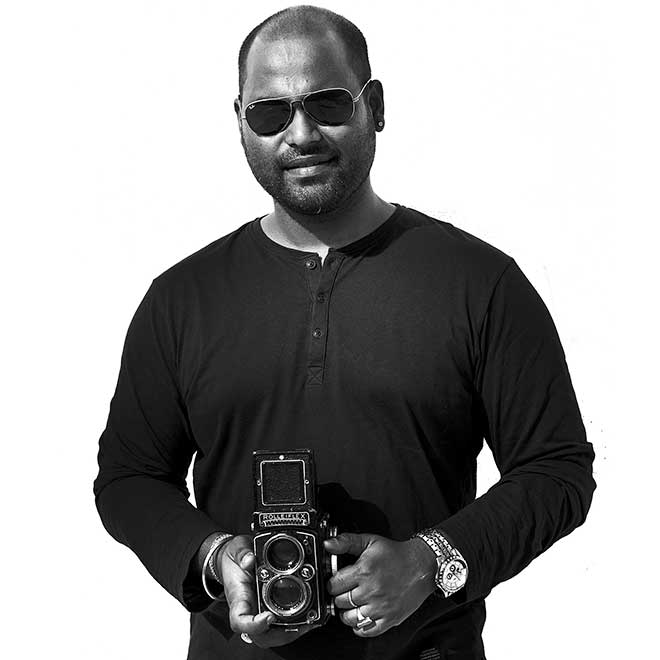
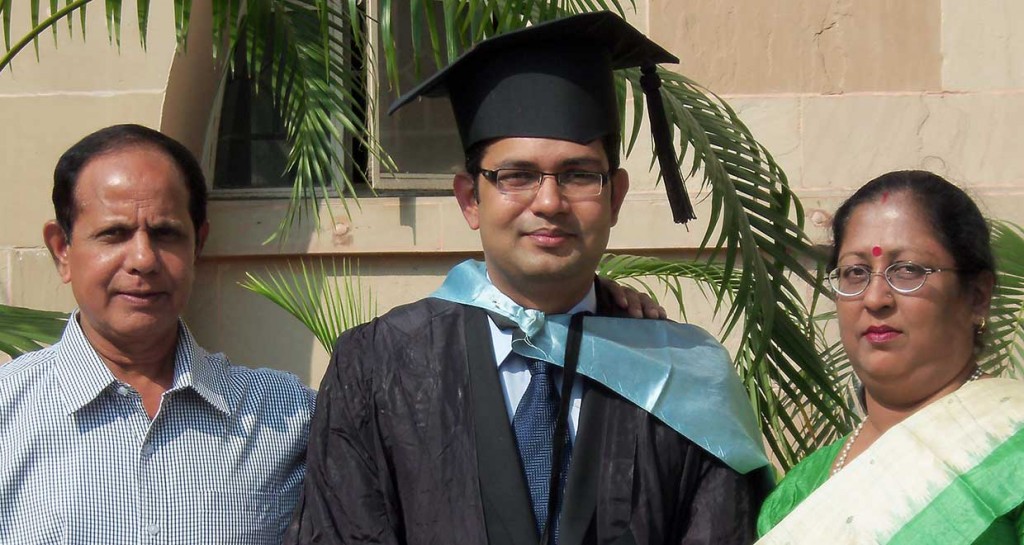
  • Devottam Sengupta, Senior Legal Counsel, Structured Trade Finance (Global), Louis Dreyfus Company (LDC), Singapore

    Devottam Sengupta, Senior Legal Counsel, Structured Trade Finance (Global), Louis Dreyfus Company (LDC), Singapore

    Devottam Sengupta graduated from NLSIU, Bangalore in 2005. He started his career at Trilegal where his work involved practice in Corporate Finance, Banking, Private Equity, etc. After working at Trilegal for almost two years he went for The European Master Programme in Law and Economics (EMLE) on the Erasmus Mundus scholarship. His EMLE degree was conferred jointly by the University of Hamburg and the University of Manchester.

    After returning from the EMLE programme he joined Amarchand Mangaldas, Delhi in 2008 and then later in 2011 he moved in-house to Cargill where he tasted Structured Trade Finance. He is now responsible as the Senior Legal Counsel at Louis Dreyfus Company (LDC), Singapore where he continues to work in Structured Trade Finance since the last three years.

    In this Interview Devottam shares his insights with Rounak Biswas of SLS, Pune on the topics raised by Reshma Ravipati of NLU, Jodhpur.


    How would you like to introduce yourself to our readers?

    I am the Global Lead Lawyer for Structured and Trade Finance at the Louis Dreyfus Company Group (LDC), based in Singapore. LDC is one of the four biggest agricultural product traders in the world, and is headquartered in Geneva. Working with the STF business, I get to work on banking and trade transactions across the globe – at the moment, I’m advising on matters in places as disparate as Uruguay, Kenya, Qatar and Vietnam!

    However as anyone who has worked in-house would tell you, – you are almost never doing only what your role was meant to be! You have to wear many hats, juggle many roles and be able to pitch in wherever needed to be a successful in-house lawyer. As such, I am also the financing counsel for the LDC Group for Asia-Pacific and a part of the global M&A team.

    But my work is only a part of my life. I’m an avid traveller, a fanatical foodie, a published translator, budding Instagrammer and a regular pub quizzer. My varied interests help contribute to my ability to view issues through multiple lenses, which in turn helps me in bringing new and fresh energy and insights to my work.


    Why did you choose to pursue a degree in law, amidst the many options that you had after school?

    Sadly I don’t have a great answer for this question. I got into law more by chance than a focus on the profession. My legal path was built by the simple fact that I cleared the NLSIU entrance, while I had assumed I would end up doing something in business administration. However, my first year at NLS really changed my perception of law – I stopped looking at it as a job but more as a vocation.

    I do not think that one becomes a lawyer by the simple fact of graduating from law school. The key advantage of the study of law is that you come away with ingrained core skills which give you a foundation to pursue any profession you choose to pursue thereafter. My wife is a lawyer by training but works with the United Nations on social policy by profession; I have close friends who are running successful businesses; there are those who have succeeded in investment banking or consulting. Your options following law school are only limited by your imagination. And this I learnt in my first year of law school, which made me want to stay on and see it through. The rest, as they say, is history.


    Give us a brief overview of your personal experience at NLSIU. Is the NLU culture truly more conducive to legal education, as compared to other universities that provide legal education?

    As with all meaningful experiences, my time at NLSIU was full of ups and downs, just as one’s student life should be. Alongside my law studies, I was deeply involved in co-curricular and extra-curricular activities. During my time at NLSIU (2000-2005), I participated in pretty much every extra-curricular activity, organised some significant academic conferences, was on the student committees, helped my classmates get jobs, and represented NLSIU at various competitions. All of these were as essential a part of my education as my classroom studies, but I wouldn’t have minded a higher CGPA! I can however definitely say that pursuing these multiple co-curricular paths helped me become a more well-rounded individual and have helped me build my career post NLS.

    I think the question on NLU culture is a little misleading in today’s world. I think very little distinguishes NLUs (as originally envisaged) from private law schools and the traditional law schools. The question therefore isn’t so much on NLU culture as it is about culture of the best law schools. The best law schools in India, whether you’re talking NLSIU, GLC Mumbai or ILS, all have a culture of learning and imparting professional skills. Besides, what is an NLU today? Amity Law School, Army Institute of Law, ILS and JGLS have the same format, without being “NLUs”, so what is the dividing line?

    By professional skills, I don’t solely mean the skills required for litigation or corporate law job, but the most basic ones required for all lawyers – research, analysis, problem solving and drafting. No matter which stream you finally end up in – academia, in-house lawyering, completely non-legal jobs, or politics – these basic skills help you succeed. Therefore, it’s more a question of whether your institution creates the right environment and delivers on imparting these skills.

    I think the advantage NLUs start out with is that being (a) residential and (b) over five years, there is more time to deliver and hone these skills, compared to a non-residential or a three-year law school. What the institution (and the students they select) does with the time is what sets apart the best ones from the also-rans. There is no point being structured as an NLU if the students don’t receive access to the best academic resources, to high quality internships, backing for co-curricular and extra-curricular activities, and the space to practice what they learn in the classroom.

    One of the key elements of NLSIU’s success, in my mind, is that the student body has practiced what the Constitution of India has preached. Freedom of speech and expression is sacrosanct, there is equality for all, principles of natural justice are followed and there is representative decision making. I think this manifestation of lessons learnt in the classroom and in other facets of campus life helps to concretise certain core beliefs in most students. This, together with the academic rigour needed to write numerous papers and provide analytical answers in most exams does help in building future lawyers, and I’m happy to see so many NLUs have successfully adopted these methods.


    What are your areas of specialisation and how did you go about choosing these fields to specialise in?

    Formally, I am a structured finance lawyer and a specialist in trade finance, though like I said at the outset, I still consider myself a generalist. Even though I have been a trade finance focused lawyer for many years now, I have concurrently worked on M&A, private equity transactions and general corporate finance, and don’t hesitate to get involved in other areas of law as and when I get the opportunity.

    I didn’t choose structured and trade finance so much as it chose me! My first job after NLSIU was with Trilegal Mumbai, which was best known at the time for its banking and finance practice. The years I spent at Trilegal were during the booming mid-2000s, and I was fortunate that I was able to work on some of the best structured finance work to have taken place in India. This experience laid the groundwork for pretty much the rest of my career, with subsequent jobs with Amarchand & Mangaldas Delhi (now Shardul Amarchand), with earlier Cargill and now LDC, all being grounded in the banking and structured finance experience I gained at my first job.


    At what stage in one’s law school life must one pick a specialisation? What words of wisdom would you offer to someone who is yet to make this choice?

    My humble advice is one should never pick a specialisation voluntarily, especially not in law school. Unless you are absolutely certain you will be miserable doing anything other than criminal law litigation or writing books on public international law, most of us have very little experience of the day-to-day realities of professional life while in law school, and certainly not enough to make career-defining choices before we’re old enough to drink in most states in India.

    I would instead recommend gaining as much experience as possible in a wide variety of fields, so that when you graduate, you are able to cope with anything life throws at you. Whether it’s a corporate role, or litigation or studying further, extra knowledge will never be a waste. Lack of knowledge on the other will always hold you back.

    The right time, to my mind, to specialise, is two to three years after graduating from law school, where you have a more realistic idea of what you want to do with your life and what you enjoy doing professionally. This is borne out by the international standards in the practice of law – US law schools are postgraduate institutions, which do not accept students straight from their undergraduate degrees; UK firms require all associates to have spent two years on a training contract, where you’re shuffled around to gain as much experience as you can, while the firm judges what you’re best suited for. Anecdotally too, I find that most of my friends have ended up specialising in fields quite different from those they had in mind when in law school.

    By all means, we should aim for certain jobs which attract us the most, and do everything that it takes to be considered for that job, including gaining as much knowledge relevant to the dream job as we can, but that shouldn’t to the exclusion of general knowledge.


    Who was your mentor, or main source of inspiration who/which motivated you all along the way?

    Throughout my career, I’ve been fortunate enough to consistently have had seniors from whom I drew inspiration. Before your readers get the wrong idea about this, I’m not saying this to be diplomatic or politically correct! I firmly do believe that I have learnt something from every senior I’ve worked with, and each of them has in some form or fashion motivated me to do better or helped me to grow as a lawyer and a person. I have even found inspiration from some of my talented and hardworking peers. I must however say that working under Mr. Shardul Shroff was a great learning experience, given the breadth of work he handles and the depth of his knowledge.

    A mentor though isn’t necessarily a person who has always been nice and helpful to you, but someone who has taught you lessons you needed to learn in order to grow, even if you do not realise it at the time. You can seek out inspirational figures, but a mentor will not merely inspire you, they will be teachers who can show you the right path.  This is not restricted merely to legal skills, but also extending to crucial soft skills of people management as well as ability to understand business concepts and come at issues from a solution-oriented lens.

    That said, there are individuals whose advice and training have been foundational and critical to my career. From my private practice career, I owe a debt of gratitude to Avinash Umapathy (now at CAM) and Nishant Parikh (Trilegal) for their patience and guidance, which certainly did help shape my career in unexpected ways. And from my in-house life, Aditya Bhagat (India legal head at Cargill) and the current APAC GC for LDC- Massimiliano Talli have taught me about what it takes to be a successful in-house lawyer and become a successful team leader.

    Last but not the least, my understanding of the structured trade finance business would be incomplete without the guidance of Gopul Shah, who used to head the business for Cargill in India.


    You had previously worked with Amarchand & Mangaldas, Delhi and Trilegal, Mumbai. What does it take to make the cut and land a Tier-I job?

    What does it take to make the cut?

    You should be able to demonstrate to the recruiter an ability to work hard, to deliver solutions and an interest in the job beyond the paycheck. Whether this is through selection of elective courses, moot court excellence, articles in journals, organising academic conferences, or something else altogether, there really isn’t a “correct” answer, but it has to be apparent from your CV. It is not sufficient to be considered the smartest person alive by your classmates – what you are able to put down on paper is what helps you get to your dream job.

    At the same time, it is not enough to say you are interested in a particular job if you haven’t done the basic research on it and have no idea what it takes to do well in that field. For example, when applying for a corporate law role, the one article you might have written on corporate law on the developing law of insolvency or that internship with a small corporate law firm in your second year might be more valuable than winning a medical law moot or a dozen debating tournaments. While moot court wins and debating experience does undoubtedly have value, the corporate law angle would demonstrate that you know your audience just that little bit better.

    What law firms look for?

    A disclaimer here – what law firms look for when they’re hiring varies significantly between Indian firms and foreign firms, especially when the economy is booming. In times of rapid growth, the only thing a firm might look for is a heartbeat. That’s a joke, but only just – firms often hire large numbers during good times, secure in the knowledge that they will naturally shed underperformers when times are bad.

    But to be more specific, what gets someone hired in a top tier law firm are certain skills needed to succeed in a corporate law firm role, and which is what most partners look for in prospective associates.

    Primarily, these skills would be

    1. ability to get things done,
    2. ability to multitask and cope with pressure; and
    3. of course a high standard of core legal skills (research, analysis, problem solving and drafting).

    Of these, I think the third one is pretty self-explanatory, so I will focus on the first two parameters.

    When I would interview associates, I would rate a person with decent grades but a broader set of skills over someone who might be ranked first in class but have nothing else at all on their resume. A successful corporate lawyer has to be able to do many things at once –juggling 5 transactions at the same time, developing client relationships, working to grow their practice, thinking proactively of their clients’ future needs, chasing up on bills – no corporate lawyer I know succeeds without being able to multitask.

    Being able to multitask brings with it the ability to cope with competing demands and pressure. You will never have enough time to do everything that is required of you in a law firm. And I don’t mean in your early associate days, but through your entire career as a corporate lawyer. The demands and pressures change, but if you’re not multitasking and trying to cope with time constraints, then your growth as a corporate lawyer may stall.

    And a corollary to the demands on your time is the ability to get things done. This is not the euphemism common in government offices, but refers to being able to find ways to deliver on what you’ve been asked to do. Whether it’s by doing simple things like being enough of a team player for others to help you out when you are overloaded, or your ability to prioritise, or being able to quickly find the right answers, the ability to deliver on promises and expectations goes a very long way in ensuring professional success.

    Lastly, it might be useful to do some research as to which teams the firms hiring for, even if it is for more senior roles. Some teams need more people urgently than others, and it’s always best to spend a little bit of time trying to figure out how you can demonstrate your value for existing vacancies than be lumped in for general roles.


    What is the level importance given to a student’s Grade Point Average with respect to recruitments at Tier-I firms?

    It’s an important consideration as a cut-off. Like I mentioned earlier, law firms try to gauge a candidate’s skills in making a hiring decision, but GPA standalone provides limited insight on quality. What it does provide though is a useful benchmark for determining which students are likeliest to have the necessary skills and qualities.

    I personally had an average GPA, so I wish this wasn’t true, but the fact of the matter is that law firms, especially Tier 1 law firms, have to use GPA a screening mechanism. Each firm receives hundreds of applications for internships and entry level associate roles, and there are a limited set of objective criteria for predicting which applicants might be good enough for the firm – reputation of institution, GPA and past work/ internship experience.

    And more often than not, you’ll be competing with people from the same law school and with similar work experience. GPA is therefore bound to be a major differentiator at the outset. However, once that first hurdle is cleared, then it comes down to subjective criteria, where the lower GPA candidate might actually be a better fit than the higher GPA candidate.


    How do you say interns should go about their work at a firm like Trilegal, so as to get noticed in a positive way in the limited time they have?

    Be excited, willing to learn, open minded and proactive. If you’re morose about being at the firm, whatever be the reason, it will show and come across to the associates and partners as disinterest. No associate is going to stick their neck out for an intern who does not seem to be excited at the prospect of being at the firm.

    Another quality the lawyers at the firm will pick up on is your willingness to learn. Assume you’re pulled into something you’ve never looked at before, or even heard of – very few law students would have ever come across Food Safety Standards or Air Information Circulars. It’s how you react to such a challenge which will be noticed. Did you come in with a closed mind or a willingness to learn and take on the challenge? Did you give up immediately or did you work past the difficulties in finding an answer? Did you go back empty handed or did you ensure you had some leads, if not an answer? More often than not, the partner or associate asking you the question already knows the answer, but wants to check your response.

    Open-mindedness is pretty crucial when interning with any law firm. So you didn’t get the office or the team you really really wanted…so what? You’re still at the firm right? The aim is to get the job offer, so it’s better to be a star intern in the IP team than to be the person who moped about because s/he wasn’t in the Capital Markets pool. Once you get the job, you can always seek an internal transfer after you’ve established your worth. One of the best juniors I’ve had in private practice was originally hired for Amarchand’s tax team, but is now an M&A partner at SAM.

    Lastly, proactively seeking out work will take you a long way. Just because you’re not being given work is no reason for you to skip out early or take a day off for a Netflix marathon. As an intern, you should actively go up to associates, if not partners, and ask for work. If you see your seniors struggling on a project, go and offer to help. If your fellow intern is struggling, lend a hand. You may not learn anything or even be given work, but the fact that you asked will be remembered.

    One bonus tip – always assume you’re auditioning for the job during every interaction at the firm, whether in office or outside. That means always put forward yourself as a candidate, whether that is when you are having coffee with your senior from law school, at the office party, or if you’re stuck in the elevator with the managing partner.


    What was the reason for your transition from firm practice to being an in-house legal counsel for corporate houses? What is difference (if any) in the work culture at the two places?

    I moved from private practice to in-house legal as I wanted to move from a service provider role to a business side role and more specifically participate in the practical running of a business. I acknowledge that some lawyers are so trusted by their clients that they become business advisers, but this more an exception than the norm. Especially in India, but also true generally globally, private practice lawyers have little to no say on business decisions. In my mind I had always wanted to get closer to the business side of things. To this end, even my LL.M wasn’t a traditional legal degree, but a Masters in Law and Economics.

    This is not to generalise and say that in-house lawyers are all heavily involved on the commercial side, but if you choose your employer wisely, build your business skills and demonstrate your acumen, business teams will get you involved on commercial decision-making. I have been fortunate that both in Cargill and in LDC, I’ve worked with business teams who have valued my skills and judgement enough to make me a part of the business decision-making, rather than look at me only as a legal expert or worse as a legal roadblock.

    But I do not want to generalise and compare private practice and in-house roles. There are already too many negative stereotypes and myths about in-house roles, and it will not be helpful to make sweeping statements. Every private practice role comes with its unique challenges, as does every in-house role. So I think it would be better served for me to try and dispel some notions about in-house life.

    One of the silliest and most baseless assumptions I hear about in-house counsels is that lawyers go in-house when they want an easy life. This certainly is not true in today’s cost conscious business world. No company will tolerate the cost of an in-house lawyer who is not working at least as hard as the business team; nor will they tolerate an in-house lawyer who incurs additional costs on external counsel. If anything, in recent years, in-house legal teams have expanded greatly in pretty much every company across the board, which is a testament to how cost effective in-house advice is in comparison to external advice.

    Given the increasing role of in-house legal teams, a natural corollary is increased pressure to deliver. While private practice lawyers live or die by short deadlines, in-house lawyers face a different type of pressure – you MUST find the right answer for your company, because you will be held accountable for it. You cannot go back with a bad answer, because if things go sour, the external counsel is not the one being held accountable. Whether it’s in finding a solution to a seemingly impossible problem, or finding hidden risks in that otherwise sure deal, external counsels are at best trusted advisers, but not the decision makers. In-house lawyers on the other hand are on the hook for every decision taken by them. Remember – no business means no need for your job. So you better get it right!


    Which would you recommend for a fresh graduate who’s looking to start off his/her career?

    There isn’t a right answer to this. For fresh graduates, it might be better to join the in-house team of some companies than to join some law firms, where the former could be a role better suited for the person’s career goals. Many friends have started out in in-house roles and are now highly rated partners in law firms. On the flip side, some friends had joined law firms and had very quickly become disillusioned and left the practice of law altogether. It depends very much on the law firm or the company in question. My recommendation to any fresh graduate is to do their research on the job before saying yes or no. Is the law firm known for promoting their younger talent? Do they work on areas that interest you? Do they have a high attrition rate? Do they have a reputation as a good employer? If the answer to these is no, then you might be better off going to a company.

    At the same time, there are some critical questions which one should reflect on when considering an in-house role:

    What kind of work would be expected of you as a junior lawyer?

    If the answer is primarily corporate secretarial and filings, run away at top speed. Conversely, if you’re expected to review contracts and provide memos, you might actually end up with more responsibilities than your roommate who joined a law firm.

    How big is the in-house legal team and which business teams will be your internal clients?

    Small in-house teams are not necessarily bad, especially if you have a large number of internal clients. But size usually correlates to greater amounts of work for the legal team, which could give you as much exposure as your law firm friend.

    At what stage in transactions is the legal team brought in?

    The earlier the better for you personally, and more generally, would be demonstrative of higher responsibility.

    Who are the internal stakeholders or clients for the role?

    If your clients are primarily business teams or Treasury, your role will give you greater transactional approach, than if you’re primarily dealing with other support teams.


    Give us a brief overview of your current work profile with Louis Dreyfus Company (LDC) Group. What does a regular working day look like for you?

    As the Global Lead lawyer for structured finance at LDC, I am the primary point of contact for the financial services business of the company, and responsible to the business for review of all transaction structures and documents. At the same time, I am responsible to the senior management of the company for controlling risks taken by the business team and for ensuring compliance with company policies and laws generally.

    What this means on a day to day basis is that I have to work with my colleagues on the business side to ensure that we proceed with transactions with counterparties in a manner which is in compliance with the law and safeguards the company’s interests while minimising risks. To do this, I review transactions while they are still being planned, review the transaction documents, work with external counsel to ensure we are accounting for all regulatory requirements, participate in negotiating documents with counterparties, and lastly, work on addressing any concerns raised by other stakeholders and the senior management of the company.

    Given the broad geographical scope of my work, I am often working simultaneously on transactions from places as dissimilar as Colombia, Nigeria and China! Which also means that I could find my mailbox bombarded overnight by my colleagues in South America, try and resolve crises during the day for the China team, and in the evening, get onto calls with colleagues in Africa to negotiate with a counterparty there! Thankfully I have a great set of colleagues on the business side, and great support from juniors in the legal team.


    How important is it to have a foreign qualification in working overseas as an in-house lawyer? Can someone with only an Indian qualification be considered for international roles?

    It is not a prerequisite but it definitely helps to be dual qualified. We are fortunate that India has a common law system, which allows us to easily understand and work on transactions under English or other common law systems. But the Indian legal system is still not as commonly used in international trade as those from England, New York, Singapore or even China. It is possible to be considered for international roles within companies in certain very globalised segments – IP related roles and banking come to mind –  but without a second qualification, you’ll have a tougher time demonstrating your knowledge and ability.

    The good thing is the English law qualification is open to Indians without much hassle, under the Qualified Lawyers Transfer Scheme. It is not cheap, but given the relative cost of an LLM, I think investing in English law qualification is a better bet, especially if it’s one or the other. Even if you never end up working abroad, it shows your international credentials to companies and your interest to international law firms. Also, it might give you an edge when it comes to some very highly sought after in-house positions.
     

    Is there any other suggestion you would like to make to our budding lawyers?

    Keep learning and investing in your personal growth. It doesn’t matter if you work in litigation, private practice, in-house or in academia, if you stop learning, you will cease to be relevant as a lawyer.

    Also, underestimate the importance of networking in the legal profession at your own peril. It is easy to make fun of people who seem to be endlessly attending conferences, or those posting on professional networks or writing for magazines, but remember that your dream employer could be at that conference or reading your post or article and ultimately can will help build your profile to show why you are the ideal candidate for your dream job.

  • Krishnava Dutt, Managing Partner, Argus Partners, on working at ICICI, AMSS, and his experience

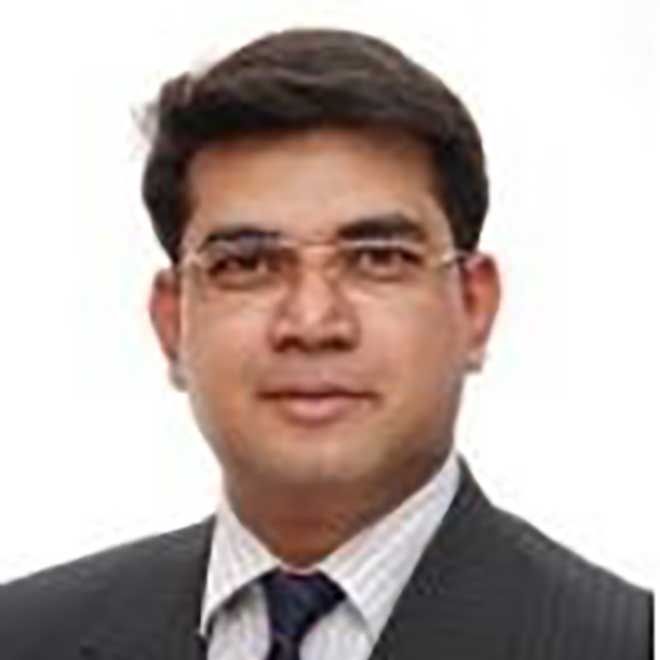
    Krishnava Dutt, Managing Partner, Argus Partners, on working at ICICI, AMSS, and his experience

    Krishnava graduated from Symbiosis International University, batch of 1999, with a degree in BSL LLB. Krishnava started his legal career in the Calcutta High Court where he practiced civil law. After a short stint at the High Court, he joined ICICI Bank in Mumbai where he gained several years of experience in handling transactions in the stressed assets space and international banking sector. He joined Amarchand & Mangaldas & Suresh A. Shroff & Co. in 2005 and became the partner in charge of the eastern operations of the firm in the year 2007. He retired from Amarchand & Mangaldas & Suresh A. Shroff & Co. as a partner in June of 2009. Krishnava is currently the Managing Partner of Argus Partners.

    In this interview we speak to him about:

    • Pursuing a BSL LLB degree
    • His experience spanning time in court, the banking sector, and law firms
    • Being Partner

    How would you like to introduce yourself to our readers?

    I am very fortunate to be a part of this profession and am extremely passionate about the subject of law. I am grateful for having seniors, peers and juniors from whom I have constantly learnt and continue to learn. I feel blessed because even after almost two decades, I absolutely love what I do.


    Do you feel that there is a divide between NLU and Non-NLU students?

    I personally did not find any difference. In my first job at ICICI Limited (as it then was), I had a large number of NLSIU almuni colleagues, some of whom are still my closest friends.

    One’s own career trajectory is based entirely on one’s own capabilities. While law school/college may help you find initial space in the ecosystem, the future and destiny of your career lies entirely in your own hands.


    What is unique about the B.S.L. course that you undertook and how did it contribute to your career in law?

    Law and society are really two sides of the same coin, intertwined and interdependent. One of the subjects I remember fondly is legal history and evolution of law against the backdrop of a dynamic society.


    What, in your opinion, is the level of importance that needs to be attached by a student to GPA? 

    Law school scores are the only objective criterion in a CV. Although a higher CGPA is definitely a significant indicator, co-curricular (publications and articles) or extra-curricular activities also play a significant part in shortlisting candidates.


    What kind of internships did you engage in during your student years?

    In all my years through college, I only interned at a counsel’s chamber – Mr. Abhrajit Mitra in Kolkata. Without a doubt, my learning there has been invaluable, and still holds me in good stead.


    What are your areas of specialisation and how did you go about choosing these fields?

    I straddle largely two practice areas i.e. General Corprate/M&A, as well and Banking & Finance. Having said that, I am also involved with quite a few commercial disputes.


    At what stage in one’s law school life must one pick a specialisation? 

    In law school, one’s career is at a nascent stage. Specialisation at that level is something I don’t really encourage. It’s very important for one to go out and learn and then decide their forte. We must be grateful that our profession offers us a boundless universe of knowledge. The initial years must be spent exploring that universe. Unless one has a very strong reason to choose a specialized area of law, one must navigate this labyrinthine world of law to really and truly appreciate any specialisation.


    What must the CV of one who is aspiring to land an internship/placement with a top notch corporate firm look like?

    Apart from the CGPA, co-curricular engagements such as articles and publications play a vital role while screening the CVs. Another area which is considered, is the extracurricular activities that one is engaged in, to ascertain a well- rounded development.


    Having started off at ICICI Bank, why did you choose to make the transition to a law firm?

    I must mention that the learning I received in ICICI was absolutely unparalleled. However, my transition was purely a personal choice. I wanted to explore areas beyond banking and finance.  Having said that, today, I see extremely bright minds in in-house roles. The last few decades, of course, driven by market dynamics, have created challenging opportunities in the in-house space with an identified trajectory which makes it an attractive career choice.


    Give us some insights on the qualities that Tier-I firms look for in prospective candidates.

    (Krishnava has previously worked at Amarchand & Mangaldas, one of the most sought after firms by law students, as Partner.)

    Broadly, the qualities one should demonstrate in an interview are:

    (a) good technical skills. Remember, it is a technical job which you are applying for after finishing five years of gaining technical knowledge. It takes just a few minutes for the interviewer to assess whether you are speaking from knowledge, or you are merely trying to second guess based on logic;

    (b) an analytical mind with a high level of curiosity on the subject. If you are discussing a paper you have written (or a moot or an internship note you have worked on, do demonstrate the breadth and depth of the research that you have undertaken to write/work on the paper/moot/note.

    (c) an ambitious and confident attitude with  a sense of purpose and meaning in what you want to achieve (while demonstrating this quality one must be careful not to be seen as over confident, brash or disrespectful). A word of caution, while a friendly disposition is always welcome, being overfriendly or casual during the interview may be counterproductive.


    Tell us about your current association with Argus Partners as a Managing Partner. 

    After resigning from Amarchand Mangaldas, I founded Argus Partners in 2009. In the year 2012 we merged with the firm Udwadia & Udeshi, which upon the merger, changed the name to Udwadia Udeshi & Argus Partners. In 2015, the firm Udwadia Udeshi & Argus partners changed its name to Argus Partners.


    Give us a brief capsule of the life of a partner and your average working day experience.

    Because of the young demographic matrix of our country, a partner of a law firm in India also goes through various stages. At a junior partner level, she is the main execution person leading the team and the transaction/matter. The responsibility is not only to the transaction/mater at hand but to also to strengthen the Firm’s relationship with the client. At a senior level the responsibility lies in expansion of the firm’s practice in all areas. This apart, various administrative functions of the firm are also supervised by some partners. At all levels, a partner must be a thought leader with the ability to inspire the next generation. Personally, as a Managing Partner of the firm, my time is divided between client work and various adminstrative matters.


    Is there any other suggestion you would like to give to our budding lawyers?

    In the age of social media where success and happiness of friends and colleagues are proudly displayed on their respective walls and continuously so, I am reminded of an old Chinese proverb which says, “the biggest source of unhappiness is over estimating the happiness of others”.  The future which will befriend artificial intelligence will also pay a hefty premium for cerebral input, for truly an intelligent mind. And the intelligent mind is the one who picks the nuances and expresses her mind from the depths of knowledge. There is no alternative to knowledge.

    Remember, you are the future and nothing can be more powerful than that. Believe in chasing dreams. Remember, winners are not made overnight, and also remember that success is not a destination but the journey, and a beautiful one at that!


  • Animesh Singh, Managing Partner, A&S Law Chamber and Consultants, on working with Amarchand & Mangaldas, and starting his own firm

    Animesh Singh, Managing Partner, A&S Law Chamber and Consultants, on working with Amarchand & Mangaldas, and starting his own firm

    Animesh Singh graduated from Symbiosis  Law School, Pune, in 2009. After a successful stint as Associate at AMSS, New Delhi, as Associate, he co-founded his own firm, A&S Law Chamber and Consultants, in Bhubaneshwar.  His areas of expertise include conducting litigation, conveyancing, drafting pleadings and contract agreements, arguments/ conducting hearings in the courts, client conferencing/consultation, legal research, drafting legal opinions, fact finding investigation/due diligence.

    In this interview we speak to him about:

    • His time at Symbiosis
    • His experience at AMSS
    • Starting his own firm

    How would you like to introduce yourself to our readers?

    I am a first generation lawyer. I chose to study Arts after my 10th because I associated more with the field of humanities, literature and philosophy. I have always been a hyperactive kid; thus, I was more into NCC and sports during my +2, and had decided to join the Indian Army thereafter. However, I had to change my career plans suddenly, because of an unfortunate accident and injuries sustained during one of the NCC trainings. Thereafter, pursuing Sociology as my higher studies was the plan, but Law being another challenging profession and a vast arena to explore, struck my inquisitiveness. Hence, I took up the challenge and today this profession supplements the kind of person I am. Further, it gives me many opportunities to satiate my habit to learn about various subjects and assimilate them to build questions of significance and law.


    Give us a brief overview of your life at Symbiosis.

    I had a fabulous time in Pune while studying law at Symbiosis. The initial three semesters I was mostly restricted to the classes and the hostel room due to the injuries I had sustained then. That apart, I have thoroughly enjoyed studying law there and getting the best of my friends for life. I really owe a lot to my faculty there; some of them have really shaped my vision for life and practising law. The number of subjects per semesters was grueling at times at Symbiosis Law School, and that did bring out the best in me.

    It’s not about a law school being private or government aided, but it certainly matters to be part of one premier law school in India as it holistically tailors one’s approach to learning and interpreting law by getting introduced to like minded people. And to be specific about Symbiosis, I would vouch that the kind of intellectual and creative freedom it provides to its students is incredible in itself, and such an atmosphere makes the students compete with oneself and not with each other irrationally, which I think is the best way to grow in life and profession. Lastly, I would state that, to me and to all, his or her law school is as “Rosebud” is to “Mr. Charles Foster Kane”, so I refrain from comparison.


    How much of a role do GPAs play in shaping one’s career path?

    GPAs are as important as salt to taste. GPAs would qualify one for the next university/institution, but not for the real working world and the unique level of stress one deals with while working independently. I was more or less a thorough and inquisitive student, yet not a scholarly one. My GPAs were only above average as I mainly focused on a lot of other activities and interests even during my law studies. Back then I spent a lot of my leisure time reading film literature and watching a lot of world cinema (ranging from African to Oceanian cinemas, esp. Indian, British, French, Polish, Bosnian, Brazilian, Japanese, Korean, Argentinean, African, Latin American, Iranian, Italian and Australian to even Thai etc). Pune being the breeding ground for filmmakers in India (having FTII and National Films Archive of India) I got introduced to many notable as well as aspiring filmmakers, which subsequently did alter my perception towards cognitive, societal, and universal issues in a notable way. I believe those who want to practice law should not restrict themselves only to the law syllabus provided by the university; everything that has rules/procedures is Law in itself, be it Fine Art, life, or Rocket Science.

    Juxtaposing GPAs and Career goals, I believe, once a professional degree is obtained, one can explore the new world; of course that requires the most basic necessity called inquisitiveness for everything tangible and intangible. In my view, one must concentrate on exploring his/her own personality and taste for life during the course tenure, rather than just getting entangled in Sections and Sub-sections. The best lessons of jurisprudence are scattered around outside the text books.

    If you are good, you are good; no GPAs or a certificate can define anybody who is going to practise law. One has to earn his medals in the battle ground only.


    What kind of internships did you engage in during your student years?

    I had undergone corporate as well as ligation internships during my student time. However, the corporate internships did actually outline my working style and perspective towards practicing law in the courts as I follow the same model of work culture even while practising litigation today.

    I specifically value my internship in JSA, Bangalore, during my fourth semester, and to be specific, I am grateful to Mr. Sajai Singh (Partner) for how he encouraged me during my internship to work on complicated legal matters single handedly without having to worry about committing mistakes. He too taught me to never judge one by his/her current capabilities, as those who keep constantly working with interest get better in that field sooner. That confidence building in me had proved to be really helpful in taking courageous decisions in my profession in later stages. That is the reason, we at A&S Law Chamber and Consultants focus greatly on training our interns/associates and provide them with the best work culture, learning experience, and creative freedom with whatever limited resources we have currently. We believe, as the human generation changes every 25 years, we would try our best in creating at least a few next generation top brasses in this profession.


    What are your areas of specialisation, and when/how did you go about choosing these? 

    Currently, we at A&S are dealing with a lot of cases relating to the Contract, Real Estate, Labour, Consumer, Family, Mining, Arbitration, Banking, Service and Criminal Laws. Our practice ranges from the tribunals to the trial courts up till the higher judiciary. I personally appear for many government matters, which give me ample opportunities to represent the public interests at large and is enormously satisfying. Categorically, there is no specialisation, per say, as I don’t consider it prudent to limit the practice areas and bring monotony to my advocacy skills.

    If I have to advise to any promising aspirant of advocacy, I would suggest him/her to explore various subjects in law before restricting to any specific area, as specialisation is a matter of eventuality and choice after considerable years of gathering experience and mostly falling short of time to focus on different courts and subjects. Thus, when one is energetic and young he/she must travel the distance and get enlightened before being branded wise and worthy to pick a single subject to propagate.

    Would you say law school prepared you for the real world practice of law?

    As soon as I graduated, I joined Amarchand & Mangaldas’s New Delhi office and it was a marvelous experience to be part of a Tier-I law firm in India. I worked majorly on Supreme Court matters there, drafting SLPs, researching legal principles and briefing eminent Senior Counsels of the Supreme Court of India during my tenure.

    Even though every law school prepares one in learning the basics of law and advocacy, the real world of practice has many variable factors to it other than these two. I believe my colleagues and friends in the profession definitely would agree to my statement. It’s a diverse, satisfying and unique experience to practice law especially on your own and all together, to each his own.


    What are the challenges that one needs to prepare himself/herself for when they step out of the comfort of a law school and into the real working world?

    Law school prepares one for the real working world just as Abhimanyu in Mahabharata was prepared for the Chakryavyuh. From my personal experience, and being entirely blunt, I must say, law students (first generation lawyers) who are aspiring to argue matters in the court rooms must not expect charity or abundance of opportunities just by the legacy of their alma mater; it’s a tough and merciless world out there. Though there are many Hon’ble Judges who really encourage young advocates to argue before them, one needs to either have his/her own clients or the permission by the mentor.

    Everyone must always know that whenever they are completing any professional course and joining the profession, they are starting again from ground zero. If one is extremely fortunate he/she will find a mentor especially in this profession. Moreover, as this profession involves the best of the soft skills in every sphere, very seldom would one find that guru who is going to train the fresh graduates out of his/her own volition. It is painful and tragic sometimes, but it is worth it to be a first generation lawyer in the end. So in my opinion, the aspiring first generation advocates having the heart of the legendary Sempronious Densus only must enter the profession guarding their “own will power” every moment, as the glory shall follow for sure though after a good deal of ordeals.


    Who or what was your main source of inspiration which motivated you all along the way?

    My developmental years as a lawyer were mainly mentored by my introspections. I mostly take my inspiration from Mother Nature; she’s truly the best teacher and answer book one could ever have. However, I admit, I have been professionally stirred by reading about many eminent lawyers and other notable personalities (just like Ekalavya), as I had no direct training under them.

    My father was a civil servant, whom I have watched closely since my childhood dealing with complicated law and order  situations and taking wise decisions in the most adverse conditions; those moments have lasting impressions on me and inspire me to deal with issues and interests of people and the society as well as to work under challenging environments.

    Then there are many scriptures and literatures that have left an indelible mark on my life and personality. In addition to the support of my family, there are many near and dear ones who have moulded me, supported and motivated me constantly to make me what I am today. I consider myself to be perpetually obliged to all of them for their contribution, concern and affection towards me. In short, my main source of daily motivation is to make them proud and bring them a smile.


    What does a Tier I firm like Amarchand & Mangaldas (where you’ve worked previously) look for in prospective employees?

    Law firms like Amarchand & Mangaldas are warehouses of brilliance; they are the hardest training grounds any young lawyer can look forward to. The Top tier law firms generally look for one’s capability to work hard and smart; mostly doing the research, drafting and briefing work. However, anybody who is looking forward to being an advocate having notable court crafts and not just a lawyer, he/she must focus on either training under a good senior counsel or go independent and develop his/her own crafts.

    I have really enjoyed working with Amarchand & Mangaldas, though it was for a brief period of time. However, I feel, I have mastered my skills of advocacy during the course of my independent practice, where I had the liberty to make my own mistakes, amend it and learn my lessons.


    Tell us about your current association with A&S Law Chambers and Consultants as a Managing Partner. 

    My association with A&S Law Chamber and Consultants originates with the firm itself, as I am one of the founding partners of the same. My other Partner Mr. Susrut Varun Das is an alumnus of HNLU, Raipur and University of Aukland, New Zealand. We were batch mates during the +2 days before we even decided to study law. After completing our law studies and respective brief stints in two different legal sectors, we finally decided together to set up A&S Law Chamber. Mostly, the start up idea originated as we would often deliberate that the kind of legal services and solutions an advocate/lawyer can provide are colossal, but the same have always been overlooked by the traditional methods those are being followed since ages. Thus, we are constantly innovating novel ideas for the legal sector at A&S, which are in the pipeline and soon will be launched within a few years.

    We work 24/7 as of now and will continue to do so in building a team of lawyers, who would not only be competent, creative, ethical and smart, but also work on war footing and are ready to cater to the needs of the clients and the society at any moment.


    Give us a brief capsule of the life of a partner and your average working day experience.

    As I have expressed earlier, as a Managing Partner of a law firm and a growing organisation, I work 24/7. Only the associates and support staff avail the luxury of holidays and rests. My average work day is not restricted to any particular hours. I take rest when I crash out; either once in two weeks if the workload is too much or I just take a day off in a month or two, just to recouperate and come back to the job.

    Mostly, my day begins around 5 AM as I wake up and look after my small terrace garden taking care of my plants. Then by 7 AM I am caught up with phone calls even at home and it is followed by logging into the office by around 9-9:30 AM. Generally, on the hearing days, I log in by 8-8:30 AM and then the whole day is spent in the court rooms or travelling between different courts, and then after 5 PM I am either drafting or researching or meeting clients till the late evening till around 11 PM. Many times, even I leave office the next day morning around 6 AM, freshen up, and resume office again at 8 AM. There are no specific working hours for me, as is the case with every young lawyer.

    On the weekends, I remain caught up delivering lectures in various institutes pertaining to legal subjects, or else, if there is free time, I do some old school photography or catch up with some friends for a coffee or dinner (though, that luxury is very rare now). However, it is gratifying to be at the office and working for longer hours, as we have a very liberal set up and we are like a family at A&S.


    Is there any other suggestion you would like to give to our budding lawyers?

    I feel inadequately equipped to impart any wisdom as I consider myself to be a budding lawyer as well. I strive hard to learn new things every day. However, as a note of appreciation, I could state, the new generation of budding lawyers is truly inspiring in terms of their skills and capabilities. Thus, they must work collectively towards shaping society and not getting swayed away by the auxiliary perks this profession offers and forget their actual goals. All my impatient young friends in the profession should not worry for pecuniary success immediately and must remain determined (stitha-pragyan) while keeping in mind the Verse 38 from Chapter II, of the Bhagavat Gita that says,

    By equalizing happiness and sorrow, profit and loss, triumph and failure while encountering a battle, and thus doing the duties one shall not incur any sin.”  

    I even love to learn from my associates and interns, who really honour their work.

    The only thing I could mark as the bottom line to this specific question is “the world is a school and you must never stop learning”.

  • Zubin Pratap, New Business Development Manager, Telstra, Melbourne on varied work experience in Corporate firms and MNCs

    Zubin Pratap, New Business Development Manager, Telstra, Melbourne on varied work experience in Corporate firms and MNCs

    Zubin Pratap graduated from NLSIU, Bangalore in 2003. After working at Amarchand & Mangaldas & Suresh A Shroff & Co for one and a half years, he moved to Luthra and worked there for a short period. Thereafter Zubin moved to Melbourne and in 2007 he found a role at Baker & McKenzie where he went on to join General Motors in a secondment, Zubin continued at Baker & McKenzie till October 2010.

    Soon Zubin joined Telstra and is currently a New Business Development Manager there, he has been in the organisation for the last six years.  He has served as a Board Member at Communication Rights Australia. He founded NobleGenie which seeks to change the way we seek and obtain specialised information from qualified experts by being the first step in a search for quality advice and information from an ecosystem of professionally qualified advisors, and recently Zubin also created an app called Remynd which works as a mind mapping software.

    In this interview he talked to us about:

    • Interning at the United Nations office of Drugs and Crime in Vienna
    • Balancing his passions and his interest in music and stand-up comedy along with work
    • His journey from working at a corporate law firm to moving to Telstra
    • His experience as an Indian lawyer working in Australia


    Could you tell us a little about yourself please? Just by way of introduction to our readers.

    Well, my name is Zubin Pratap. I was born in Bangalore, raised in both Bangalore and Delhi and went to NLS to study law. I love music, still play the guitar and sing and I read a lot – mainly in science, philosophy and psychology. I am a nerd, and proud of it! I love dogs. I had a relatively privileged childhood – good education, stable and doting family, great friends and no real hardships to speak of. I moved to Australia nine years ago, and am now settled in Melbourne.


    You were an international moot participant and debater while at NLSIU and took part in many extra-curricular activities. How did you ensure you maintained a balance with academics?

    Balance? Ha! I’m sure some of my classmates would question my “balance”! I did what I enjoyed and felt passionate about, be it academics or otherwise. But I always had high energy and drive.I believe that having fun makes work more playful. That pretty much became my guiding principle – if I am not having fun, why am I doingit? And if I am having fun then long hours melt away and the efforts you put in are hardly tedious.


    At present you are pursuing an Exec MBA from IE Business School in Madrid. What was the thought process behind choosing that course and that business school?

    After 11 years in corporate law I was at a crossroads – I had to choose between continued success and “seniority” in law and putting myself in the way of new opportunities. By then I had also come to question what it was that truly motivated me. The pursuit of excellence drove me to NLS, but at 17 you’re far too young to intelligently realise what you mean to do with your life. I wanted to push myself in new directions because I have a strong curiosity and am relatively fearless about failure. I’ve discovered that I’m most happy when I’m slightly out of my comfort zone and learning something very new.

    When I was offered an opportunity to move into the business side at Telstra, I felt it was an opportunity to re-invent myself. I was curious – what would happen? What would success look like? What would disaster look like? Would it be as risky as people said? Would it be as scary as everyone promised? Will I love or hate it? But to optimise my ability to switch careers after a decade, I chose a program that let me study and work at the same time. It was an accelerated program that I had no choice but to complete in a short, 15 month sprint. It literally is sink-or-swim at the IE Global Executive MBA program. Its top 6 ratings, the calibre of the cohort, and the fact that it emphasises a more holistic view of management and growth (as opposed to only rapacious profiteering) appealed to me immensely. Once again, I feel privileged to be a student with some incredible achievers. It is, however, the hardest test of discipline and intellectual stamina I’ve ever undertaken. But if you’re not slightly daunted by your choices, you’re too comfortable. Right?


    You recently created an app, Remynd! What inspired that and what does the app do?

    Two things impelled me to do it: First, when I finished school in ’98, the internet wasn’t really a huge thing yet. Google was still a box mounted on a Lego frame. The world really was different. I’ve always regretted that I never learned to code. So I did. Well, a little bit.

    The second factor was that I had noticed that the busy-ness of life imposes a giant burden on our short term memories, which are notoriously short term. This is a feature of “cognitive load”. We are literally loading our brain with all kinds of working memory tasks that are tiring. I really believe that technology requires us to remember less but process a great deal more – and for that you need to free up brain power (like CPU power). Our minds should be augmented by the tools we use. I decided to do something about it. So ReMynd was born. I was working in Jakarta on a JV at the time and kept forgetting all the things I wanted to say to my boss, back in Melbourne, each time we spoke! There was just so much going on! And emails added to inbox clutter. I realised that there is nothing out there that brings up a specific mental note when a specific person calls or texts. ReMynd solves the problem of forgetting “notes to self” where you need to say something to someone when you next communicate with them. Its on Android for now and I’m working on newer features. But it is more of a way for me to learn and do something new – not really a startup.


    When did the interest for music and stand-up comedy grow? Were they areas you were able to sustain while studying?

    I’ve loved music since I was a baby. I was literally named after Zubin Mehta for that reason! I learned the guitar in my teens (but I regret never having learned to read music). I love performing and public speaking. And in the 90s, and early noughties, stand up wasn’t a feature in the Indian pub and bar scene. I’d always been very curious – litigation felt easy compared to stand up. A stand up gig and a courtroom have very different kinds of judging going on! Melbourne has an active scene and it was a really fun way for me to meet people, sharpen my performance skills, be creative, and say things on stage that I cannot usually say at the dinner table. It was a license to speak plainly – how could I resist? As for sustaining these things – taking time off study is as important as studying. Very few things soothe the soul like friends, music or laughter. Nothing dissipates stress like a good chuckle or a great tune.


    We see that you rehabilitate racing grey hounds once their careers end. Would you urge every student to take up and promote a cause?

    Yes I used to be a rescue and foster carer for greyhounds. I no longer have the right circumstances to foster but I do remain active in promoting awareness.  I think every human being should believe in making a change somewhere. But what they choose to make a change in is entirely up to them. I don’t like people who treat causes as though they’re a badge of honour or a way to distinguish themselves. Believing in something and trying to make a difference is a deeply personal thing and ultimately it’s got to align with whatever you value. I would urge people who feel that they have something to contribute, to contribute – no matter what it is. Don’t judge yourself and give yourself permission to believe in what you do. Just remember J.S. Mill’s words: “Your liberty to swing your fists ends just where my nose begins”.


    Tell us a little about your stint at the UN.

    It was an internship at the UN Office of Drugs and Crime, in Vienna. The UN Convention Against Corruption was in its final stages of negotiation at the time, and it was a fantastic experience to witness world leaders negotiate delicate matters that had cultural, economic, political and linguistic nuances. It was also my first time working overseas for a longer length of period and I had a fantastic time. Most importantly I realised just how necessary a good, strong education is for one’s confidence and that how Indians are really quite impressive even with structural and infrastructural disadvantages – somehow we manage to win with less and that creates confidence.


    When did you decide on corporate law and why? Were there any particular measures you began to take to prepare yourself for success in the field?

    I found myself slightly disillusioned with litigation in India after about 2 years of practice. I also developed an urge to see how others lived and worked in other countries. I was deeply ambivalent about corporate law. I had mistakenly bought into the disdain that was popular in the 90s that corporate lawyers weren’t “real” lawyers. But I absolutely loved it. It appealed to my need for quick, conclusive results and a sense of impact. I also loved that negotiations required finesse, EQ and persuasive logic. It was a big change from the primacy of precedent – and I found that I could be creative in my advice to clients. I then got an opportunity with Baker & McKenzie in Melbourne and that was my “big break”. It brought me closer to business and prepared me for the tech revolution that followed.

    Had I remained in litigation, I don’t believe I would have had quite the ring-side view of the revolution that was taking place in the mid 2000s. I guess, in hindsight, I didn’t really have measures to prepare myself for success. I just stayed true to myself – I did what I really wanted to do, even if it was unorthodox, and enjoyed myself thoroughly and that brought modest successes, new opportunities, learnings and skills.  I think that is something we could do better – be true to ourselves. Too often we make choices that others will approve of and follow convention because we assume that people older than us know a great deal more about what makes us happy. But while we choose to please others in our acts, we are alone in managing the consequences. Ultimately, it is our life. If we take ownership over our life, then we make choices true to ourselves, even if others disagree.


    zubin-pratap-2

    As a highly commended team leader, would you please share a few pointers on how to do the same effectively?

    This is old wine in a new bottle – but it is 100% true. You can’t lead well unless you’ve followed well. To follow well you must be self-aware –know what drives you, what upsets you or impairs you, what you love and what you merely tolerate. Knowing these things help you to understand just how hard it is to lead people – because ALL people feel these things, but in different ways. Therefore, to lead well you need to have an excellent memory of how YOU felt when you were poorly led or poorly motivated. That will give you empathy to perceive the consequences of your words and actions on those that follow you and remind you that people have feelings and feelings are powerful motivators or impediments.  If you lead people with emotion backed by reason, people will outdo themselves. And that is the goal of every leader – to help others outdo themselves.  The best feeling is when you see the surprise in their eyes – when they’ve literally surprised themselves with their ability and achievement. There is no greater professional joy.


    What areas do you focus your reading on? How, in your opinion, should law students approach the task of selecting their reading material?

    I read whatever is of interest. I don’t follow politics very closely. I am partial to science, philosophy, psychology and tech. I think it’s harder than ever to decide what to follow. But everyone needs to realise that it’s like drinking from a firehose now. So you must accept that a choice is inevitable. Prioritise what matters to you (its personal and always valid  – don’t let people con you into thinking there is superior reading and inferior reading). Ultimately YOU must get value out of it. That’s the only test of your choices – do you get satisfaction out of it.


    What work do you currently do for Telstra?

    I’ve actually just taken on a new role. I now do New Business Development – my mandate is to help identify, partner, prototype, validate and commercialise new business opportunities that will drive new revenue growth for Telstra. It is, quite literally, the most exciting thing I could do right now with my life and energy. Every day I will get to work with brilliant people, building and testing ideas, gunning for excellence and doing some new, innovative and game changing businesses. I left the law about 18 months ago. In the interim, I was in channel and commercial management – running deals with our distribution and channel partners.


    In 2014, you founded NobleGenie. Will you elaborate a little on that please?

    It was a brief experiment. I had started teaching myself about tech, startups, entrepreneurship, design thinking, innovation and problem-solving. I had also just bought a house. I realised that in Australia property is a big part of the “story” of a person’s life – up there with graduation, turning 21, finding love, etc. I also noticed that you need an ecosystem of professionals – an advice marketplace – of lawyers, conveyancers, accountants, financial advisers, mortgage brokers etc. NobleGenie was going to be a platform that brought together these professionals to respond to client queries as a way to win the confidence of clients.  Professional services is a “credence good” – we can never really know the quality of the service (advice) and we are totally dependent on trust when handing over our money. It is not like a car that you can test drive. By having peer reviewed interactions to discrete queries, I felt a system could be designed whereby clients can “test” their professional advisers-to-be. It also helps professionals to build their profile and for the legions of practitioners who want to freelance or work flexible hours, to build their practices. Sadly, i couldn’t spend the time that was required of me on it due to my work commitments (in Jakarta for 2014!) and after completing the coding for the site, I elected to move on to other projects.


    What was it like as a Board Member of Communication Rights Australia and how were you placed on the Board?

    I wanted to volunteer my skills for an organisation that could do a lot more with it than I could on my own. I applied, interviewed for the position and joined the board. What amazes me about the NFP sector is that people are so passionate and motivated about causes  and they aren’t even paid for most of it. Its volunteer based. As a leader, it presented me with a fantastic way to observe how people are motivated without financial gain. There are many studies that show that monetary incentives actually impair the quality of work done. Intrinsic motivation is dramatically more effective – and I can empirically confirm this! I also learned that it doesn’t matter how “senior” or “accomplished” a person is – they are very human, with frailties, foibles, weaknesses, blindspots and flaws just like any of us. That gave me confidence that there is no “secret sauce” or mysterious ability – we are all perfectly capable of excellence and our beliefs limit us more than our abilities.


    Now you live in Melbourne. What is your experience as an Indian lawyer in Australia?

    I have had a great experience here. Most of all I’ve learned about competing globally, and not being parochial. Things have changed a lot since 2007 when I moved here. Globally, it’s become harder to move as a lawyer. It’s actually harder for all jobs really, but law has the added challenge of requiring re-qualification in each new jurisdiction.


    What would be your message to our readers who plan on launching a career abroad?

    For those who want to try and work overseas, I would say think very carefully whether you want to stay in the law or not. Living overseas and experiencing the cultures the world has to offer is (for some) more valuable than a given profession. It’s very hard to move as a lawyer – there are only 2-3 places you could go to realistically. And it’s a lot of effort. If you decide to leave the law do it early – it gets exponentially harder after 5 years. If you’re staying in the law, then start by moving to a place that recruits foreign lawyers actively – but recognise that it is a long hard slog and presents much more uncertainty.

    If you want to launch a life or career or project abroad, the best advice I can give is that the world and the people are not what you think they are – some are better, some are worse – but it’s always different. So don’t take your plans and yourself too seriously. And be adventurous. Your rewards are rarely what you aimed for, but that makes them more interesting.


  • Shabbeer Ahmed, Principal Associate, Kochhar & Co, on Corporate Law experience at top law firms

    Shabbeer Ahmed, Principal Associate, Kochhar & Co, on Corporate Law experience at top law firms

    Shabbeer Ahmed graduated from National Law Institute University (NLIU), Bhopal in 2008. After this, he was working in leading corporate law firms such as Amarchand Mangaldas Suresh A. Shroff & Co. (AMSS), Mumbai and Fox Mandal & Associates, Hyderabad. He is currently a Principal Associate at Kochhar & Co.

    In this interview, he talks about:

    • His time at National Law Institute University, and how to prioritise your commitments there. The importance of keeping yourself motivated and also keeping company of similarly motivated individuals.
    • How to go about getting publications, and how to pick topics and issues appropriate for you.
    • His work experience at the firms he has been employed at as well as his internships, and what to expect from such professional environments.


    How would you like to introduce yourself to our readers?

    I am currently working as a Principal Associate in the Litigation team of Kochhar & Co., Hyderabad. I have graduated from National Law Institute University (NLIU), Bhopal in the year 2008 and previously worked with prestigious firms such as Amarchand Mangaldas Suresh A. Shroff & Co. (AMSS), Mumbai and Fox Mandal & Associates, Hyderabad in the positions of Associate and Senior Associate respectively.

    Was it a childhood dream to take up law? What motivated you to pick this field?

    I have always dreamt of becoming a civil servant like my father. Law happened to me by accident. I was never interested in pursuing a career in law.However, my father has a great fascination for law. It was only in deference to my father’s wish that I  chose law. However, I have no regrets about it now. I owe my success to my father as he has been a great inspiration for me. My interest in law has picked up gradually. Law began to interest me more when I started excelling in co-curricular activities such as moot courts and publications.


    As it is popularly said, “All is well that ends well”. I am currently at this position – enjoying every bit of it – rendering legal services to a variety of clients on a wide range of areas of law.

    Tell us about your time at NLIU. You were involved in a number of co-curricular and extra-curricular activities. How did you divide your time amongst them while also maintaining a stellar academic record?

    Law school days were the most memorable days of my life till date and whenever one takes the name of my college, I become nostalgic and I can go on speaking for hours,reminiscing the wonderful time spent there. It’s very important to have a good circle of friends who are all focussed in college. I have seen many students with brilliant academic records till 12th standards, who managed to crack some of the toughest entrance examinations in the country and joined reputed colleges, only to get distracted. They would also become involved in many other avocations, all because of the circleof friends they fell in with. I was fortunate to have a good bunch of friends who are quite academic and career oriented since the very first year of the law school and we used to exchange each others’ notes and involve in combined study during our examinations. We all have been fortunate to pass out from law school with placements in top tier law firms of the country, and we owe this to our parents and also the wonderful faculty we had in our college those days. Your focus on studies and the activities you take up in law school largely dependson your own motivation as well as the company you keep. One should never forget that these are the most important and constructive days of your life which would pave a path for your glorious career ahead. Needless to say that apart from being engaged in academic and extra-curricular activities, I had a gala time hanging out with my group of friends on and off the campus. The location of NLIU campus amidst greenery with thick forest cover offers a wonderful scenic view from the windows of your class rooms and also hostel rooms and you feel like you haven’t had enough of it even after 5 years.

    Coming to managing both academics and co-curricular activities, it’s definitely a difficult task – especially if you follow the trimester system in law school – however, it’s not impossible to manage. One should give equal importance to both academics and extra-curricular activities such as participating in moots courts, seminars, conferences and organising activities on behalf of internal committees.However, if there is a conflict at any point of time, academics should take precedence over the extra-curricular activities. It all depends on how one manages their priorities. I used to plan ahead and opt for those moot courts which would take place just after winter or summer vacations so that they did notclash with either my examinations or internships. Generally, when college reopens, there would not be too much pressure inthe initial few days on the academic front. I also used to allot some of my timeduring my internship on carrying out research on the moot problem. Further, I often converted the project assignments which I undertook and presented during the course of my internships in the law firms into a research paper and tried to get them published in reputed journals. In most law schools, there is a system of submission of project report on a topic in each of the subjects you study in a particular trimester or semester. In case a student works on atleast 5 projects in a semester or trimester, he can work seriously on atleast one out of the five projects by choosing a topic having contemporary relevance and carry out an in-depth research on the issue. Such project reports(being a piece of original work) can later be modified into a well drafted research paper with proper footnoting of sources and bibliography and send them to legal journals and magazines for publication. Participation in moot courts and involvement in article writing / research papers would hone your research and drafting skills, which is very crucial for the legal profession. Therefore, one can manage activities such as moot courts and publications by planning things in advance like choosing of moot court based on its schedule and conversion of project assignments in college and internships into research papers so that such activities would not eat out the time meant for preparation of academic exams.

    Further, I was also part of many internal committees such as Moot Court Committee, Cell for IPR and Cell for Research in International Law at different periods of my law school. I was also one of the editors in a student-run legal magazine called ‘The Edict’ for a brief period. By being part of such internal committees and groups, one would learn the art of organising college level and national level conferences and competitions and it further broadens your exposure and outlook as you would get to interact with students and faculties from various colleges and also some legendary guests participating in such events which would mould you into a highly motivated team player at the end of the day.

    What sort of activities must a student take up in law school to not only enhance one’s CV, but to also become a well-rounded graduate?

    One should have a balanced approach towards the academics and co-curricular activities in the law school which would result in maintaining a balanced CV. A candidate with wholesome CV with equal proportion of everything (curricular, co-curricular and extra-circular) is always the desired choice for both campus recruitment and also for getting admission into LLM in foreign universities. The top tier firms which come for campus recruitment would look for a candidate having a CV which reflects his overall development and not just the academics. Though I was never the topper of my batch, I had maintained a consistent academic record and managed to be among top 10 percentile in the batch and complimented that with my achievements in co-curricular activities such as moot courts, seminars and publications and this really mattered a lot during my campus interview with AMSS.

    For achieving a balanced CV and becoming a well rounded graduate, consistency in performance is very important. One should never neglect academics and try to manage to be among top 10 or 15 rankers of the batch. Further, participation in moot courts, seminars and paper publications would hone your oratory, research and drafting skills. As I stated above, the experience of being part of internal committees in the university and organising various events would motivate you to be a good team player, which becomes crucial once you join a law firm or corporate house. Last but not the least, having good internships from reputed law firms would definitely have an edge in securing a good campus placement or bagging a pre-placement offer. Candidates should chose internships especially from fourth year onwards based on the career path they chose. A candidate interested in working in corporate firms should aim to work at best possible law firms while the one who wants to pursue litigation practice is advised to intern with trial court or high court advocates. And there is no harm if a candidate who is seriously interested in pursuing civil services does not do any internship provided he utilises the vacation period in building his basics strong in terms of general knowledge, law and also reading NCERT text books and magazines related to competitive exams.

    You have completed an LL.M program in Constitutional Law. When did you develop an interest in this field and what drove you to pursue an LL.M in the same? You did your LL.M program in an Indian institution, which is not usually considered by most NLU students. Can you explain your rationale behind doing an LL.M in India as opposed to going abroad?

    I have done my LL.M through distance education from Acharya Nagarjuna University while I was preparing for civil services after quitting AMSS. Constitutional & Administrative Law has always been my favourite area of law since college. In fact, all my moot court competitions were on the subject of Constitutional Law. The primary reason for pursuing LL.M is that if I would ever retire from this profession, I might end up being a faculty in some law school and I would then love to teach Constitutional & Administrative Law. As per UGC norms, one is required to have qualified NET (National Eligibility Test) conducted by UGC every year to be eligible to become a faculty (Assistant Professor) in UGC recognised universities. The eligibility for appearing in NET exam is to have a post graduation degree from a university recognised by UGC. Therefore, I had chosen to do LL.M (post graduation) from an Indian University (recognised by UGC) and also subsequently qualified the NET exam in Law. I am now eligible to apply as a faculty in any university for teaching law. I am not against an LL.M degree from a foreign university, however, the law firms in India would mostly prefer a candidate having good work experience in a specialised area of law to a candidate who has just returned with an LL.M degree from a foreign university. Moreover, a candidate who wants to pursue LL.M in a subject like Constitutional Law and further intends to practice in either a High Court or the Supreme Court, or teach in an Indian University is advised to pursue it from an Indian universityas different countries have different constitutions. Besides, as we all know, India has the longest written constitution in the world.Where else one can learn better about constitution if not in India?

    shabbeer-ahmed-1

    You have to your credit publications on a wide variety of topics. Do you feel it is better to play to one’s strengths and only publish on a particular subject, or to diversify and explore various aspects of law?

    Writing and drafting skills is one of the most prominent aspects in legal profession and especially in corporate law firms. What to write and what to avoid is another essential element in drafting of pleadings to be filed before the Court and preparing legal opinions for the clients. It is better to have one’s drafting and research skills honed during law school days by writing articles or research papers. It depends upon one’s choice as to whether the candidate wants to have publications only on a particular subject or diversify and explore various areas of law. For example, for a candidate who intends to pursue his career in IPR, it is preferred to concentrate in having publications only on IPR related issues, which would fetch him good opportunities in the career path he has chosen. I write mostly on contemporary issues which interest me. I am an ardent reader and follower of daily newspapers and news channels and try to be uptodate with the current affairs. My way of reacting to the happenings in the society or to a latest legal development is by writing short articles. Coming to publication of research papers, most of those are the modified versions of project reports which I have prepared as part of my curriculum in college or during the course of my internships, as stated above.  I have always been interested in Litigation, due to which I have publications on a wide range of topics such as law & sociology, criminal law, partnership, Arbitration etc. It’s easy to get publications in legal magazines if one chooses topics having contemporary relevance or a burning issue during a given point of time or an issue in which the law is still unsettled.

    You have won many awards at various Moot Court competitions. What should students focus on to achieve success at such competitions, especially if it is the first time they are participating in such an event?

    Mooting was my passion in law school. Even now, I visit NALSAR and other local colleges to judge state and national level moot court competitions. I never won a moot court competition; however, I was finalist in all the moots I have participated in. I won best speaker in KLA Constitutional Law moot court competition and won best memorials in all the moots that I have participated in. I was fortunate to have wonderful team members (Abhijeet Swaroop, Amar Pratap Singh, Smarika Singh & Gaurav Gopal),and team work really matters in moot court preparation. The first and foremost element in preparation for a moot court competition is to read the moot problem as many times as possible, understand it thoroughly and identify the issues involved in it. One should inculcate the habit of reading between the lines in the moot court problem and try to find tricky points. Once the issues are identified, one needs to carry out thorough research on the said issues and compile all the research material relevant to the issues consisting of both primary and secondary sources of law. Thereafter, based on the accumulated research material, one needs to prepare the line of argument to reach a particular conclusion on the identified issues. Such arguments supported by research have to be captured well in a language that is easy to understand in the Memorial. Citations and footnotes have to be incorporated in accordance with Bluebook. If you are thorough/well versed with your research and what you have written in the Memorial, you can advance oral arguments with ease. One needs to rehearse oral submissions as many times as possible and try to anticipate questions from the judges and prepare answers accordingly. The Oral submissions have to be precise and to the point and one should aim to cover all the submissions within the prescribed time limit. I personally feel that you need to be as humble as you can and be clear in your presentation while addressing the bench. Without having regard to the result, participation in moot competitions and arguing the cases before judges (who are at times sitting or retired Judges of High Court and Supreme Court) would enhance one’s confidence levels and you would easily get rid ofany stage fear, or even develop an interest in public speaking.


    You are currently a Principal Associate at Kochhar & Co. Can you tell our readers about your responsibilities there? Does it vary majorly from the responsibilities you had at Fox Mandal & Associates or at AMSS?

    I am currently taking care of the litigation vertical of Kochhar & Co., Hyderabad which is overseen / supervised by the resident partner, Ms. P.V. Aruna Kumari. My team consists of one Senior Associate and three Associates. I primarily take care of the execution of work in litigation. I am fortunate to have a partner who gives me enough independence to handle the matters from start till end. I involve myself in all the litigation related work, from holding initial discussions with the client to strategising the case, suggesting way forwards, drafting pleadings, briefing of counsels, and representation before courts. I also delegate the work among my teammates with respect to drafting of pleadings and representation before courts. At Kochhar, I have got the opportunity of independently conducting the case from start till end including arguing and winning few cases without the engagement of senior counsels.


    At Fox Mandal, I joined as an associate with just one year of post qualification experience and most of my practical learning has happened at this place. I rose from a junior level to senior position at this place, winning the confidence of my seniors and partners from time to time. I had also interned at this place during the third year of my law school. At Fox Mandal, I used to be a major support to my litigation partner in the form of drafting pleadings and legal opinions. My senior used to appreciate my drafting & research skills, pro-active approach in taking up assignments and out of the box thinking quality on the issue at hand which has developed confidence in my abilities. I have grown as a professional during the span of my 5 year tenure at Fox Mandal.


    Coming to AMSS, I was recruited for its Mumbai office through my campus placement and worked there for about a year. AMSS has offered me a great learning curve and exposure at the very nascent stage of my career. Working with the best law firm of the country at the initial stages of your career and trying to cope up with the demands and pressure of such top tier firms would make you strong enough to take up challenges with ease going forward. I used to mostly be involved in drafting and research work and also used to accompany my seniors and partner for briefing sessions with the senior counsels.


    You have worked with some of the best firms in the country. Could you tell us about the atmosphere in each of the places and what one should keep in mind before joining?

    It depends upon whether you are joining as a fresher or a lateral with good amount of post qualification experience. Work atmosphere in almost all the leading firms is similar, and it largely depends upon the team you are placed in and the kind of senior you would be attached to. I was fortunate to have wonderful seniors who guided and motivated me well at all the places I have worked at so far. As a fresher, it’s important to get into a job though it is in a mediocre firm with less pay. One or two years of practical experience at mediocre firms may fetch you good opportunities at tier one firms. So, at the initial stage, one should concentrate more on learning rather than earning. Money comes in with experience. It is always advisable to join a firm where you have work life balance.


    Any parting words for our budding lawyers?

    Love your work. Only dedication, consistency and perseverance can take you to reach greater heights in your profession. If you win the confidence of your senior / partner by taking up initiative at work and possess good analytical skills in strategising the cases more so in litigation, then rest assured that the sky is the limit for you. Needless to emphasise that you must have a work life balance and give sufficient time to your family. Having said that, I must thank my wife for being quite patient, supportive and understanding since I give a miss to work life balance on several occasions J

  • Ramanuj Gopalan, General Counsel, SAIF Partners on being one of the youngest GC in India and work experience

    Ramanuj Gopalan, General Counsel, SAIF Partners on being one of the youngest GC in India and work experience

    Ramanuj Gopalan graduated in the year 2007 from the West Bengal National University of Juridical Sciences. He got a Pre-Placement offer from Amarchand & Mangaldas & Suresh A Shroff & Co, Delhi, and was part of the M&A and Corporate Advisory Teams. He was made Principal Associate in 2013, after working there for six years. During his career, he has also published articles relating to FDI in major publications. Currently, he is one of the youngest General Counsels in India, at SAIF Partners. SAIF Partners is a venture and growth capital fund invested in helping Asia’s exceptional companies grow from concept to IPO.

    In this interview he discusses:

    • His time at AMSS and his perception of the field
    • The reasons behind his success at AMSS
    • His shift from AMSS to SAIF, India
    • The scope and nature of his responsibilities as General Counsel


    How would you like to introduce yourself to our readers?

    I am a commercial lawyer presently working as general counsel with SAIF in India. In terms of background, I was born and brought up in Kolkata. I did my schooling in Don Bosco School, Park Circus and did my law from WBNUJS, Kolkata. I received a pre-placement offer from Amarchand, Delhi and joined its M&A and General Corporate Advisory team in 2007, worked there for 8 years and then joined my current position.


    What motivated you to pursue this field? Are there any lawyers in your family?

    I am a completely first generation lawyer. No one in my family is a lawyer.

    My introduction to law was mainly from American novels, movies and serials which both my sister and I used to like. Lawyers such as Atticus Finch and the ones in Grisham’s novels fascinated me. I was a science student in school, and while engineering and medicine were popular choices in my region, I was not too interested to pursue these as a career. In fact I had taken the form for JEE but did not give the exam. The plan to study law however, was not fixed till my last year of school. This was when WBNUJS had just opened in Kolkata under Dr. Madhava Menon. While I was not very sure of my chances as I had not prepared very hard or taken any coaching for the exams, I was very happy when I got through as it gave me an opportunity to stay in the city and be with my family.


    Tell us about your experience at NUJS, Kolkata.

    College and staying in a hostel were life changing experiences for me. There was good exposure and guidance in core academic and co-curricular areas such as publications, mooting etc. The experience of staying independently away from home and interacting with people from diverse backgrounds and cultures in college and hostel was also invaluable.

    We had a very vibrant student body at least in our first few years when Dr. Menon was there as Vice Chancellor and Professor Shiju as warden. In the last couple of years, because of the pressure of placement and recruitments this tapered off a bit.

    Since I was from Kolkata, I used to stay in the hostel and go home during weekends or holidays, so in that sense I had the best of both worlds. Of course it was easier for me compared to students from other cities who may have found it difficult initially away from home. Our college is located very centrally and it is very easy to go around the city. Apart from academics I was part of the Recruitment and Placement Committees and also the Constitutional Law Society.


    What advice do you have for law students on maintaining a good academic profile?

    I find students today to be a lot more focussed and clear about their career goals so not sure I am the best person to be giving advice on this! In terms of academics I was never the type to study a lot. However, what I found helpful was to listen attentively in class and take notes as that helped in absorbing what the teachers said and was also helpful to study before the exams.


    You have published many articles in the field of business laws. What advice do you have to give students on how to go about writing publishable articles?

    ramanuj-gopalan-2There are several publications today that are looking for good articles on topical issues. For business related articles the key is the topic selection. It must be relevant and preferably bring some new perspective on the issue. The other important area is that it has to be comprehensive but still concise. The difference with pure academic articles is that the article must be presented in a reader friendly format and not become too technical or legalistic as your audience would lose interest.


    How did you decide on this particular field of expertise? Did your internships help in shaping your current career trajectory?

    Yes, to an extent. The other big factor was career certainty. In my view at least till a certain level a law firm (and a corporate job) is certainly more merit based and democratic than private practise. While private practise also interests me, I feel it is very difficult to find your feet in litigation practise initially and there is very less financial security. So for someone from a middle class background and without any family connections in law like me, a law firm or corporate job was ideal. Corporate law also has its own nuances and constantly challenges you so it is not difficult to remain motivated.


    Tell us about your time at AMSS, Delhi. Did your perception of the industry change in the eight years you spent with them?

    I had a very good time in Amarchand and worked with Mr. Shardul Shroff and some great team members during my time there. I was fortunate to have worked on a lot of interesting and headline deals which gave me great exposure to different areas of law and sectors. One advantage with working in a firm like Amarchand is that you work on larger and more complex deals involving issues from different areas of law, including other practise groups such as IP, Competition, Tax etc. The corporate team, by project managing the deal, has a 360 degree view of the issues involved. Another big advantage is of course the network effect in working with leading lawyers in the country. Systems, infrastructure, training and knowledge management within the firm was much organised. It helps in building a strong base.

    On the second question, yes of course. A large part of what we do develops with practise and experience. When we are new graduates, while there is enthusiasm and energy there still exists a big learning gap which only gets overcome through experience. With increasing liberalisation of the economy the legal field as well as perception of lawyers has also changed for the better over the years.


    What are the secrets to your outstanding performance while you were at AMSS, Delhi? What must one keep in mind before joining such an organisation, especially immediately after graduating?

    Well I guess the first question is subjective but I performed to the best of my abilities and the firm was kind enough to recognise and appreciate my efforts. I feel what is critical in practising commercial law is not just spotting issues but to also find solutions to those issues. One must be keenly aware of what the business requirements are. In general terms, like in any field, there is a lot of hard work and commitment required. Since law firms are in the service industry there must be absolute dedication to the client who is paying a premium for your service. Be eager to learn and committed and have good attitude is what I would advise young lawyers before joining.


    What falls within your scope of responsibility as a General Counsel?

    All legal matters essentially from beginning to end and during the life of the investments. These include fund structuring, investments and exits in companies, litigation and disputes, review of ongoing legal issues, advising portfolio companies, advising directors, sectoral review, coordinating with and managing external counsel and advisors.


    ramanuj-gopalan-3

    What prompted your shift to from handling headliner deals at AMSS, Delhi to becoming General Counsel at SAIF India? How different is the nature of work and the challenges you face?

    While I had very good growth in Amarchand, SAIF presented a fantastic opportunity so it was in a sense moving because of the role. Working as a General Counsel for a fund like SAIF gives me an exposure which would have been difficult in Amarchand at the position I was in.

    The nature of work is very interesting. Handling transactions not just from start to finish but also during the life of companies gives a very unique perspective. It is in a sense putting theory into practise. The people both within my organisation as well as outside I deal with are very dynamic since that is the nature of the fund and the investments. I have to work alongside the deal team and business teams on the transaction, keeping in mind what is required for the transaction/business. Except for the requirement of business development, my work is as challenging (if not more) as was in Amarchand.

    In terms of challenges nothing specific per se but of course the level of support that one has in a large firm both in terms of peer group support, legal infrastructure and databases, domain knowledge is not something that can be found in-house.


    You were with AMSS, Delhi for Eight years. Was it difficult to handle a change after such a long time? What helped make the transition smoother?

    Moving out was really difficult as in a sense you are moving from the really close relationships you have built in the firm over time. Then I had to shift from Delhi to Gurgaon so there was the whole shifting process and adjustment process which my wife and I had to handle. In terms of work there was some learning curve to adjust to the documents, thinking and existing advisor relationships of SAIF. The SAIF team was very helpful so the shift was smooth in that sense.


    Given that you are one of the youngest General Counsels in India, is age a factor, either positive or negative?

    In the venture capital space I would say age is a definite positive as the thinking is very dynamic and hands on and the overall team is also young. It is also easier to learn and adjust at a younger age. In more traditional sectors as well as litigation practise being older would probably be a positive.


    What do recruiters look for in the current crop of law graduates?

    I would say good attitude and commitment are very important. The law school one belongs to, CGPA and co-curricular activities also matter, especially early on and help in getting interview/PPO opportunities. One must be confident and articulate with good communication skills.


    What would be your advice to our budding lawyers?

    Be good in what you are and you will definitely get results. A lot of opportunities are there for lawyers and the legal market in India is also maturing. Keep abreast of technology as I feel legal practise both on the corporate side as well as litigation will increasingly embrace technology in the next few years.

  • Shweta Luthra, An independent Legal Consultant, on switching from Corporate Law to Criminal Law

    Shweta Luthra, An independent Legal Consultant, on switching from Corporate Law to Criminal Law

    Shweta Luthra graduated from National University of Juridical Sciences, Kolkata in 2007. Her research, which started in 2011 and is still ongoing, is focused on the socio-legal aspects of fitness to plead and stand trial in English and Indian Courts. It involves a comparative analysis of the trial procedures for defendants who are charged with criminal offences, but are unable to plead or participate in their trial, as a result of mental disabilities.

    She currently acts as the external member on fifteen ICCs and as a legal consultant to many other organisations. She has worked with IISc (Indian Institute of Science), KEONICS, Orange County Hotels and Resorts, Skyway International Tours and Travels, CMCA (Children’s Movement for Civic Awareness), the Nature Conservation Foundation and Quikr. She also provides consulting services to a global technology support company with over 5000 employees in India alone, a global MNC providing customer engagement software and services, and a leading Life Science and High Tech company.

    In this interview she talks to us about:

    • Her areas of interest and developing expertise and knowledge in these fields.
    • Biggest hurdles faced in her career.
    • Her experience at Amarchand & Mangaldas.
    • Her experience as a trainer, legal consultant and external member to ICCs on sexual harassment matters.


    How would you like to introduce yourself to our readers?

    I am a legal professional interested in aspects related to human rights, especially those of persons with mental illnesses and victims of sexual harassment, since their issues have not received as much attention (until quite recently) as other issues.
    An Alumni of NUJS, Kolkata (2007 batch), I worked with AMSS Bangalore for two years before deciding to follow my true interests and joined the University of Oxford in 2009 to read for the MSc in Criminology and Criminal Justice (Research Methods).After completing my MSc, I started my Ph.D. at the School of Law, the University of Leicester on a part-time basis, which I am still pursuing.
    Since 2013, I have taught Principles of Criminal Law at Christ Law School, Bangalore as guest faculty and now work with an NGO, SASHA (Support Against Sexual Harassment), where I provide legal consultancy on matters relating to sexual harassment at the workplace.


    What inclined you towards legal education?

    As a child, I really enjoyed puzzles and mysteries. As I grew older, this interest moved towards brain teasers, and then towards logical reasoning and analysis. While I would have preferred to become a detective, that did not seem to be a very stable career option! I was also excellent at arguing (not just debating) and seriously considered becoming a criminal lawyer. When I got accepted at NUJS, studying law seemed like an excellent career prospect.


    What were your areas of interest while you were in law school? How did you go about developing expertise and knowledge in these areas?

    What I found most interesting at law school, was criminal law. What I did not realise then, was that my interest lay more towards the psychological aspects of crime and the socio-legal aspects of criminal law, rather than substantive or procedural law – why certain acts are considered to be criminal; why the same acts and behaviours that are punishable offences in some countries, are not criminalised in others? Most importantly, why, despite knowing that an act would result in punishment, people still continue to commit crimes?

    I was not at all sure where I would go with these interests. When you think of criminal law, you immediately think “litigation”, as did I. To that end a majority of my internships were with litigating lawyers – at all courts (trial to Supreme Court), and while I enjoyed trial court litigation most, I was not convinced enough to make a career out of it.

    By 3rd year, my interest took me towards criminology (which I chose as an elective), and during my summer vacation, I decided to conduct some research on the treatment of mentally disordered offenders. For this, I interviewed nearly 30 mentally ill persons who were either under trial or convicted and serving time at the Bangalore Central Prison. I spoke to mental health professionals and prison psychiatrists about the treatment received by such prisoners and realised what an abominable state they were in. It was this project that ultimately defined my career. My M.Sc dissertation and Ph.D. thesis, both are related to mentally disordered offenders and how law and society, both need to change to improve their situation.


    What do you think were the biggest hurdles and challenges in the early days of your career? How did you deal with them?

    Despite wanting to work in the specific area of criminal law relating to the mentally ill, I had no idea where to start, and with the pressure of placements, I applied for a job in corporate law, just like everyone else. My only corporate law internship had been with Amarchand Bangalore (in my 4th year), and when they offered me a PPO, I accepted it. It’s hard to refuse such an offer, especially against peer pressure as well as family pressure. Most families do not want their daughters running around prisons to speak to convicts suffering from Psychosis.

    While I adjusted to the job at Amarchand, I never really felt excited by it.A big challenge for me was the long hours required of a capital markets lawyer. Markets were booming at the time that I joined, and there was more work than we could comfortably manage. It’s easy to burn out quickly when you do not see yourself making a career out of that job. But, the biggest hurdle for me was to convince my family that I wanted to leave a coveted high paying job in order to enter into completely unknown territory, with no clear career prospects.


    How was the job interview? Do you remember any of the questions asked to you? Please give our readers some tips to nail a law firm interview.

    A lot of the questions asked during these interviews are about your personal opinions and aspirations. They want to know about the sort of person you are and whether you would fit into that particular law firm culture. They want to know where you see yourself in 5 or 10 years. What could you bring to that law firm, that is unique? Sometimes, they also ask you for your opinions on current legal affairs.
    While many applicants are quite scared to answer these questions because they want to sound impressive, the thing to remember is that there is no right or wrong answer. Rather than expecting a perfect answer, I believe that recruiters want to know if you have the ability to self-introspect and whether you have any future goals or not. Whether your aspirations are limited to getting the highest paying job at a huge law firm, or if you have actually thought of a long term plan. They also want to know if your knowledge is limited to what you have been taught in the classroom, or are up to date with and can critically discuss what is happening in the world.


    Describe your experience at Amarchand & Mangaldas. Why did you shift from Corporate Law to Criminal law and research?

    I was assigned to the capital markets team along with a majority of the new recruits. That is something that I was clueless about, never having worked in the area. But, considering the IPO boom at that time, they needed all hands on deck. I learned quite a lot during my two years there, but I missed my prison research and finally decided to study further, but not law – I wanted to study criminology and criminal justice. When I got accepted at Oxford, there was no looking back.


    What can help a student get through the application process at the  University of Oxford? How different was the work environment at that University?

    Unlike many high ranking global universities, Oxford does not put as much weight on your previous academic record, as it does to your potential.

    To gauge this, in addition to the statement of purpose, which is the most important part of your application, you are also required to submit two essays on subjects of your choice (not necessarily related to the course you are applying for), through which they analyse your ability to write, research and think critically. The latter is essential – Oxford looks for uniqueness rather than the ability to score high marks in exams. They would like to know that their students are interested in long term achievements rather than just a degree.
    I had an average GPA and was ranked in the middle of my class, but they took me anyway. I believe what they found interesting, was my research and ideas on the law related to Mentally Disordered Offenders.
    They also ask for three references, instead of the usual two – one of which needs to be non-academic.


    Please share a bit about your Ph.D. research experience with medical and legal professionals in India.

    My Ph.D. relates to the socio-legal aspects of fitness to stand trial for persons with mental disorders. I am looking at trial procedures followed in India and England if the accused is suffering from a mental disorder that prevents him from participating in his defence or from instructing his lawyers.

    During my research, I realised that legal professionals in India know very little about this area of law, and many steers clear of it. There are cases of mentally disordered offenders being imprisoned as under-trial prisoners for decades!A factor that further intensifies the implementation of this law is the stigma attached to mental illness, which prevents many from admitting that they are unwell, and therefore not fit to undergo a normal trial.

    On the flip side, until quite recently, this law could be misused very easily – there have been many cases where families who wanted to rid themselves of the responsibility of a mentally ill relative, accused them of criminal offences like rape or sexual harassment and then let them stay in jail until a proper trial, indefinitely. When India ratified the United Nations Convention on the Rights of Persons with Disabilities, many changes were brought into the Indian legal system. More than sixty Indian legislations that related to disabled persons (including persons with mental disabilities) are currently being reviewed and amended in order to harmonize them with this convention. That is currently the main focus of my research.

    When I started my research and conducted pilot interviews with legal and medical professionals, I realised that a major issue in India was not lacuna in the law, but more as a result of our legal culture and society. Besides the lack of awareness of these legal provisions, there are also contradictions between the medical and legal definitions of concepts like insanity and disability, in addition to how such persons should be treated. My Ph.D. may not be able to resolve these issues, but I aim to bring those issues to light, that have previously been ignored or disregarded.
    IMG_20151017_134953

    How did you become a legal consultant? What are the skills one must acquire to become a legal consultant?

    SASHA actually happened quite unexpectedly. In 2014, I was approached by Kanti Joshi, an old family friend who convened SASHA, as she was looking for lawyers to join her.Since the notification of the Sexual Harassment of Women at Workplace (Prevention, Prohibition and Redressal) Act in December 2013, she had suddenly seen an upsurge in her work as there was an immediate requirement of experts in this field. I attended a few of her sessions, read about the requirements under the law and realised that very few lawyers had this expertise.

    I was instantly drawn to this issue because in, addition to its relation to human rights and criminal law, it is another issue that has been ignored for too long.I initially started conducting awareness and training sessions on sexual harassment, and as I gained experience, I started analysing the law and became an external member of Internal Complaints Committees and also started providing legal consultation on this subject to other companies, who already had external members, but required expert knowledge of how to handle certain complicated cases.

    As such, there is no specific skill set required to become a legal consultant. In fact, lawyers working at law firms are legal consultants. Providing consultation is simply a practice, where instead of providing litigation services, the lawyer provides legal advice to individuals or businesses. However, most legal consultants have expertise in particular subjects. A big advantage for me has been the fact that as an independent legal consultant, I can keep my own work timings, and usually work out of my home office. I am very family oriented. I have a four-year-old son, with whom I get to spend a good amount of time, despite having a successful career. Also, as a result of this flexibility, I am able to dedicate a fair amount of time towards my Ph.D. research.


    Share your work experience as a trainer, legal consultant and an external member to ICCs on sexual harassment matters.

    The Sexual Harassment Act requires every organisation with more than 10 employees to have an Internal Complaints Committee to deal with cases of Sexual Harassment.For this, they need training on the provisions of the law as well as an external member who is either a legal professional or has expertise on this subject. The law also requires these organisations to conduct awareness sessions for the prevention of sexual harassment in the workplace.

    At SASHA, we provide all these services. Presently, I am an external member on the ICCs of 17 companies, where I assist them in resolving sexual harassment complaints. I also conduct training and awareness sessions for various organisations including hospitals, educational institutions, BPOs, IT companies, companies in the manufacturing, travel and tourism sectors, as well as various government departments and corporations.

    Despite our efforts, and efforts of other similar organisations, there is still some resistance to comply with this law. Many organisations are hesitant to sensitise their employees towards sexual harassment law, as they are worried that the provisions of this law will be misused. Their negative opinions towards this law include the fact that this legislation is just a political gimmick and that creating this law has resulted in giving power to women employees to retaliate against their superiors when unhappy with their professional progress. While not unfounded, these fears are a result of a lack of knowledge of the new law.

    Sexual harassment is a universal problem, unrestricted by financial or social status or the type of organisation one works for. No employer can be blamed for the behaviour indulged in by their employees, but closing their eyes to it is also not feasible. Many victims do not come forward with their grievances as they are unsure of what acts and behaviours amount to sexual harassment, and are unaware of what to do if faced with them. Many also do not have enough faith in their employer to deal with a complaint in a sensitive and supportive manner.

    It is my aim to spread as much awareness as possible, as I believe that to be the most effective way to bring about the desired impact.


    What would be your message to our readers?

    Don’t concentrate only on the subjects that are taught in law school. Learning about procedural and substantive laws is important, but what is more important, is how you practically apply that knowledge in the real world. I think internships are the best way to gather this knowledge. An internship can help you to understand the realities of the legal profession. You may learn Contract law and Company law at school, but you do not learn how to draft a contract or negotiate it.
    Also, you may not realise that you enjoy a specific field of law unless you have worked in it, so you should try your hand at internships in a variety of fields. In addition to learning the practice of law, internships are a great forum to learn from the experiences of professionals working in that field.
    Most importantly, keep an open mind. Litigation and Corporate Law are not the only options for legal professionals.

  • Abhishek Tripathy, on joining Indian Revenue Service and quitting BigLaw

    Abhishek Tripathy, on joining Indian Revenue Service and quitting BigLaw

    Abhishek Tripathy graduated from NUJS, Kolkata in 2011. Thereafter, he worked at AMSS, Mumbai for almost a year. Not much later, he realized that working in a corporate law firm was not merely what he wanted. Looking for a work area that allowed him to work at the intersection of law, policy and governance, Abhishek decided to sit for the famously tricky UPSC exams. Today, after a steady pace of determined preparation and hard work, he has qualified the UPSC and is all set to join the IRS.

    In this interview, he tells SuperLawyer about:

    • His early experiences that led him to the desire of working for the people of the country
    • His realization that mooting and other law school activities helped even those who looked for a non-legal career
    • His experience at a premier law firm and then his decision to avoid the lures of this firm and prepare for the UPSC
    • The preparation that went into cracking the UPSC exam
    • His reason for choosing the IRS


    How would you like to introduce yourself to our readers who are mostly law aspirants, law students and young lawyers?

    I graduated from NUJS in 2011, and was working briefly at AMSS Mumbai. I decided to write the UPSC CSE in 2012, after leaving AMSS. I have secured a rank of 151 in the 2014 CSE, and will soon join the Indian Revenue Service.


    How would you describe your childhood and educational background before college? Do you have lawyers or bureaucrats in your family?

    I did my schooling from BJEM School and Class XII from BJB Junior College, both in Bhubaneswar. I had science in my higher secondary course. I was active in extra and co-curriculars all through. I was an avid debater and loved public speaking and elocution.

    My family has a great diversity of professionals which includes lawyers and bureaucrats. There was thus never a dearth of role models while growing up. My mother is trained in Indian Classical music. She used to perform songs written by my maternal grandmother, in the All India Radio while she was in college! Music and literature therefore had a tremendous impact on me.

    My father was a sports-person and a marathoner. My father and grandfather encouraged me to read the newspaper daily, without fail.

    Due to my father’s frequent and long spells of postings in the Kalahandi-Bolangir-Koraput (KBK) region of Odisha, I travelled through these areas quite a bit. What I found tragic was the deprivation, but what was startlingly redeeming was the rich culture of the people. That phase had a deep impact on me. I decided to commit to the UPSC preparation due to an awareness of ground realities in such areas.

    Looking back, that helped me learn many practical things.


    How would you describe your experience as a student aspiring to study at an NLU? How would you describe your academic life at law school?

    (Abhishek graduated from West Bengal National University of Juridical Sciences, in the year 2011)

    Education at a leading NLU is as comprehensive as it gets. It exposes you to diverse life experiences. It prepares you for life. To every law school aspirant, my simple message is to just do everything in your capacity to make the cut.

    To every law school student, I would simply tell you to absorb as much as your student life offers you. Your experiences will eventually define the lawyer that you will become.

    I had a great learning experience in law school. A great pool of motivated and driven batchmates made the experience challenging and thoroughly enjoyable. We were lucky to be taught by some of the finest law professors, from India and abroad. Besides, it was a time when research output was beginning to be focussed on substantially in NUJS, under Prof. MP Singh’s visionary leadership.


    abhishek-tripathi-1

    Did you like the combination of law and humanities right from the beginning, or was it an afterthought when you realized that you had to prepare for the UPSC exams?

    I really liked the humanities subjects, especially Sociology and Political Science. Economics taught at law school helped me a lot during my UPSC preparation, as there is a clear focus on Macro-Eco. Sociology helped me build bridges and link topics. Most importantly, it taught me the art of questioning seemingly mundane aspects of life, which we take for granted.

    For example, during one of my internships I was working on sanitation and public health, and in another I was working on disaster mitigation and management and had the opportunity to interact with women’s Self Help Groups (SHGs). This confluence of law, finance, policy and grassroots issues helped me a lot while in law school and as a lawyer. It helped me even more while preparing for the UPSC. I was not just reading concepts and problems, I actually began having a fair idea about how things work in real life.

    Further, we had a good set of professors to learn from in NUJS and that in itself is a privilege.


    How was your experience with internships? Did they help you in the long run?

    I planned my internships in order to have a good variety of work experience on my resume.

    I have worked with German and Spanish Red Cross Delegations to India, on some stimulating field and research based internships. I value this phase a lot. I have interned with a Singapore based law firm. The exposure to mediation and alternative dispute resolution mechanisms in Singapore was educative.

    I have interned at most of the major law firms in India. Somehow, ironically, I never quite enjoyed these much.


    You have academically done well both in NUJS as well as in your Junior College and in School. Any actionable tips to score well in law school for our readers?

    I came into law school with the single point agenda of not just building a good CGPA but also of getting an education that taught me practical life skills.

    I was always very active in all that each of my educational institutes had to offer. In law school as well, I was focussed on diversifying my resume and learning life skills. Since I was never targeting higher education right after law school, I was not obsessed about my CGPA. But I saw so many around me who went to great lengths to gain astronomic scores, irrespective of what they lost out on. I was never a part of this race!

    In the semester I had my lowest GPA, I learnt how to swim, interned at some of the best Indian law firms, wrote and published papers and so on. Looking back, I am richer for the things I did, and the way I prioritised my life at that point, than for the GPAs I lost out on.

    Therefore, I value life skills over college grades.

    Having said that, I should clarify that for all practical reasons like an LLM or an ideal Day Zero job, a CGPA unfortunately is the sine qua non. But there are ways to find a balance.

    I really wish law firms and other recruiters found a more comprehensive way to look at a person’s life experiences. Law is all about the real life dynamics. It should not be evaluated solely on the merits of how many sections one crams or how high your scores shoot up! These are fairly important, but eventually, parts of a whole. At present, these things are treated with undue importance, if I can put it that way.


    You were an avid mooter in your law school and participated in national moots. How does mooting help if you choose a non-legal career?

    Firstly, I have not really been an ‘avid’ mooter! Yes, I have mooted and enjoyed it. But I have never been obsessed about it really. I did it as something that I ought to have done as a young law student, so that later there were no regrets. NUJS has a thriving mooting culture which is difficult to avoid initially.

    As such, mooting structures the thought process of fresh law students. It teaches valuable research skills, presentation of arguments and marshalling of facts. Most importantly, it equips us to look at both sides of a fact. All of these are precious skills, irrespective of which profession one eventually chooses. To illustrate my point, my debating and mooting skills helped me do well at my law firm interviews. My UPSC personality test was also much easier to deal with, given the continued exposure to speaking. And it certainly has helped me improve my inter-personal and communication skills as a professional.


    Did you enjoy legal writing while at law school?

    To be honest, I was more interested in legal writing and research than mooting. I was in the Magazine Committee with a team of absolutely talented seniors to learn from. I was associated with the NUJS Law Review for a fairly long time, beginning as a junior Associate Member and then subsequently rising to become an Editor. This phase taught me crucial skills like attention to detail, communication, financial and regular administration. In addition, I was taught the important of rigorously skimming through many papers, picking out the better ones and editing them thoroughly. The unique NUJS Law Review model has been path-breaking. I am glad I was a part of it, at a time when this institution was being built from scratch by Professor MP Singh and a team of brilliant seniors.


    After law school you joined AMSS, Mumbai. How was the BigLaw experience?

    (At AMSS, Abhishek worked for almost a year in the firm’s Private Equity/Mergers and Acquisitions Team)

    It was my first job, a day zero placement at that. It shall always be very special. Mumbai shall always be close to my heart for various reasons. I had always wanted to work with a major Indian law firm. But with each of my internships I realised, that I was growing disenchanted with the entire idea of corporate law firms and the typical lifestyle changes that are inevitable.

    The real life experience at AMSS made me realize that only corporate law, or even law for that matter, would not motivate me. It had to be more holistic, more challenging, and this transition had to happen on my terms.


    abhishek-tripathi-2

    When and how did you decide to go for the civil services?

    The intersection of law, policy and governance deeply interests me. The Civil Services promised that along with great diversity and a unique opportunity to work for the people directly. I was very happy being a lawyer, but I was not satisfied with just that. I wanted to marry policy and governance to it, which is why the shift to bureaucracy made sense. In many ways, the UPSC CSE presented the next level for me as a lawyer: that is, connecting the citizens and public with law and governance.

    But I wanted to pursue this career for the right reasons. So I first decided to put in my papers. I did not leave AMSS because I wanted to do the UPSC CSE.

    I left the lure of a very prestigious and glamorous job at the best Indian law firm, because it did not align with my vision and priorities in life. After two months of resigning, I finally struck out all other competing and compelling alternative career choices, and decided that I should give the UPSC exams a shot. It was based on a year-long and excruciating cost-benefit analysis, which had started while I was still in AMSS.

    For me, it has always been about following my inner vision and motivation: with some courage, a lot of guts and an unfailing faith in my actions and thoughts. The thrill of risks, backed with thorough background research, gives me an adrenaline rush! I did not write myriad exams just for practice, as many of my friends did. My only singular priority was clearing the UPSC CSE. Nothing more, but nothing less!


    To gain exposure for UPSC, what all did you do?

    I pursued independent legal and policy research. I got back to blogging on different genres and themes. That helped me in my UPSC preparation tremendously. I was attached to an international NGO, which helped me appreciate the grassroots issues. I was blogging for a junior from law school, on her website www.lawschoolsterrace.com. I liked connecting with the young law school students community through this.

    I did not want to be just another aspirant, doing what lakhs of people always do: only study! I wanted to pursue my interests and hobbies also. I wanted to grow as an individual. I wanted to reflect that in my attitude towards this exam.


    Tell us what drove you to join the Indian Revenue Service? What were your service preferences?

    My service preferences were: IAS-IRS–IPS-IFS.

    This is not going to be my first job and as such, I have no star dust in my eyes regarding the civil services. I can only do a job that I am interested in really, and one that fits into my larger vision -personally and professionally.  The IRS fit the bill perfectly.


    You have secured a very high rank in the UPSC Exam. Tell our readers how to prepare for these exams to achieve success and on preparations you underwent to crack the exam.

    This was my second attempt. I failed to clear the prelims in my first attempt as I had no understanding of what the UPSC expects of the students. Lack of focus and complacency are largely to be blamed in hindsight.

    I prepared for a year all by myself at Bhubaneswar. I moved to Delhi for around 3 months and joined Sriram’s IAS. Sriram Sir was the perfect mentor I could ask for. That short stint helped me consolidate my preparation. I came back home for my second attempt in 2014, and joined Career Launcher and another local institute, Aarohan, for prelims tests only. I did not attend the classes at these places. I only wanted to polish my preparation.

    I made use of the internet and newspapers thoroughly. I wrote tests regularly and had a fixed, yet flexible timetable with daily, monthly and exam level targets. My uncle, Mr. Santosh Behera, helped me prepare systematically for the personality test round.


    How do you plan to go ahead in time?

    As long as I am committed to my job, and keep referencing back to my law school training, I can ensure I do my work as is expected of me. The biggest impact often comes from doing the simplest of acts with great faith, honesty and sincerity.


    Please give our young readers and followers some tips to help them ace the mighty UPSC.

    Focus, and you shall have it!

    Many of us are obsessed with our Plans B, C, D so much that Plan A (clearing the UPSC) gets compromised. A friend of mine told me once that there is a reason Plan A takes time. Give it the time and energy it deserves. It will reward you, one way or the other.

    If I were to borrow the thoughts and words of the Greek poet, Constantine Cavafy, this ‘Journey to Ithaca’, is totally worth its while! So enjoy the process, and wait for success to come at its own time!

    Godspeed and best wishes to all the aspirants!


  • Hitesh Sablok, Founder, PackandShift.com, on entrepreneurship and quitting BigLaw to start-up

    Hitesh Sablok, Founder, PackandShift.com, on entrepreneurship and quitting BigLaw to start-up

    Hitesh Sablok studied law from Vivekananda Institute of Professional Studies (affiliated to IP University, New Delhi) in the Batch of 2003-08. A corporate lawyer by experience, now turned entrepreneur, he has worked at Vaish Associates and Amarchand & Mangaldas. Recently he has started his own business in logistics: PackandShift.com.

    PackandShift is his new venture, it is an aggregation based platform which renders economical, reliable and hassle free transportation and relocation services.

    In this interview he talks about:

    • His experience in the corporate world, the responsibilities involved.
    • Founding a startup, gathering the initial investment, finding a co-founder and other aspects regarding the same.
    • PackandShift’s main business model and facilities provided.
    • Advice for law students venturing into entrepreneurship.


    Tell us a bit about your childhood and pre-college life as well as educational background. Did you have lawyers in your family?

    I was born in Meerut and brought up in Delhi. My complete education has been from Delhi, so it won’t be wrong to call me a Delhi boy! I have been an average student throughout but always had a knack for connecting everything with logic, related concepts, application, techniques etc. My interests ranged from technology and science to nature to war history to superheroes. Major source of all this back then was the Discovery Channel, which started around the same time and till date is my favourite on TV.

    My dad, who is also a lawyer, played a very vital role in shaping up my career. In fact, it was on his advice and guidance that I entered into a law school. In fact now we have another lawyer in our family – my better half!


    You were till recently working at Vaish Associates as a Principle Associate. What constituted your work profile? What were your daily tasks and responsibilities?

    At Vaish Associates I lead teams on transactional assignments; primarily relating to M&A and PE. I was responsible for every aspect of the deal i.e. from structuring of a transaction from a regulatory perspective, discussing and negotiating the commercial terms of the deal with the opposite party, drafting, reviewing and finalizing the agreements required in accordance with the deal structure and last but not the least – ensuring proper closing the transaction (including some post-closing activities/ filings). The day used to start early and revolved around con-calls, client meetings (be it for discussing an ongoing deal or for business development) and finalizing drafts of agreements/ documents for one or the other on-going transactions.


    Earlier you were working at Amarchand Mangaldas, what was the work that you dealt with?

    At Amarchand Mangaldas I was directly reporting to my Partner and was responsible for any corporate matter that came to our team (be it a transactional matter or an opinion or general corporate advisory); however, even then my work majorly revolved around transactional assignments. It was a short but a beautiful experience working at Amarchand Mangaldas and taught me so many fine things that a professional should practice.


    Share the biggest challenges that you faced in the early days of your career. How did you address them?

    I entered as an intern and gradually became an associate… Ours was a populated team of about 20 people. Each and everyone wanted to outshine the other and get the best work. Every senior wanted the best junior to work with him, which is a very fair need. That was my initial challenge…to prove my worth! To be the best one out of the lot… I knew that the only way was to prove my ability and that’s what I went after; BUT, how do you do that when you do not have any work? I started taking up assignments which no one was probably wanting to take (cause of whatever reasons) and I also started picking up small researches from my seniors and even from my colleagues and used to give more than my 100% to the minutest aspect possible. It was from one of such researches that I got involved in my first major and full time assignment. To my surprise I was the only junior on that matter and then there was no looking back. However, this was not an easy road – there was endless brainstorming (so as to think out of the box and come up with workable, effective and legally tenable solutions), great deal of hard work (in successfully capturing the understanding in the document) and flawless execution (which used to be the icing on the cake).

    The point that I am trying to make here is that till you get an opportunity keep preparing yourself and keep finding ways to generate an opportunity; when you get it – make the best of it.


    What are the skills you banked upon to successfully carve out a niche in the corporate world?

    A focus on three important skills:

    1 – understanding the situation/ facts (UNDERSTAND);

    2 – analysing all the pros and cons and regulatory hurdles revolving around the situation (ANALYZE); and

    3 – following a problem solving approach and providing a solution basis the first two steps (SOLVE). With one’s experience and knowledge increasing every day, the inputs in the above steps shall keep on increasing; however the outcome remain constant – coming out with a best possible solution!

    The above approach coupled with discipline, dedication, hard work and ownership of work will definitely take you a long way!!


    Recently you left your job at Vaish Associates, to co-found a start-up. Do tell us a little more about packandshift.com, the business model and the idea behind it?

    🙂 After around 6 years in the profession and having experienced everything that a transactional lawyer can imagine, I wanted to take on a bigger challenge and also had this feeling of doing something of my own. After discussing with my family and a few close friends I decided to go for it and give it my best short. But this was only one third of the road to the start point.

    The second important thing was to find someone trustworthy to start-up with and on this front I was lucky to have one of my close friends Sougata (my co-founder at www.packandshift.com) to agree on taking this road with me. The last and the most difficult thing for us was to identify the sector. PackandShift’s idea originated from one of our personal experiences wherein my family and I were relocating from Delhi to Gurgaon and it was a pain for us to identify and appoint an economical and a reliable relocation service provider. Very soon we realized that finding both these qualities in one person and that too in this sector was next to impossible. Therefore, we let go of the economical part and moved forward with the reliable part and zeroed in on one of the best relocation companies in India.

    This became the starting point of our research into the completely disorganized sector and after months of research and discussion we finalised on transportation/ logistics as the sector where we would operate in and PackandShift was born.

    Currently we offer three kinds of services:

    1 – Relocation Services – Under this head we arrange for hassle-free, economical and reliable services to the customers so that they can completely sit back and relax throughout the entire relocation process. Being economical and that too along with hassle-free and reliable services is the hardest part of the game as the current players in the market who are reliable and provide hassle-free solutions are definitely not economical from a common man’s perspective.

    2 – Intra-City Transportation Services – Under this head we arrange for small trucks for anyone who requires to transport within Delhi NCR. We provide very attractive and transparent prices and the customer is also saved from the hassle of calling multiple transporters and negotiating to get the best price. This segment is very helpful for distributors, retailers, individuals buying items which can’t be transported in their personal vehicle.

    3 – Inter-City Transportation Services – Under this head we currently arrange for trucks of any size (basis the requirement) for anyone who requires to transport anything from one city to another.


    In how many cities is your business operational?

    It is impossible to start all the above segments in multiple cities at the same time. Its only been around 3 months that we have commenced operations. Currently, the focus of our Relocation Services and Intra-City Transportation Services is Delhi NCR; however, for the Inter-City Transportation Services we are currently focusing on any requirement moving to/ from Delhi NCR.

    We operate on an aggregation model and for all the above services we have identified and verified transportation partners who actually render the services to the client; however, PackandShift monitors and controls the quality and the prices (in the capacity of a third party) so that the customer can get the best possible user experience.


    Is this a new venture and concept in today’s market?

    It would be incorrect if I say that this is a new concept in today’s market; however, the approach and the mindset is different. Being transactional lawyers and being in the service industry since long, both Sougata (my co-founder) and I

    (i) understand and appreciate the importance of customer satisfaction; and

    (ii) are able to understand nuances of any sector quickly and adapt accordingly (as we have been trained to do that while advising our earlier set of clients who were operational in various sectors).

    I personally believe the above skills and approach will make the entire difference in developing an economical and a hassle free experience for any client.


    Was it a big jump from being a corporate lawyer to being an entrepreneur? Could you elaborate on why you opted out of the legal scenario?

    Throughout my legal career I was blessed to have brilliant people around me (which is a luxury today) who taught me and who have guided me always towards the right direction. My seniors always trusted my capabilities and gave me all the room and independence to handle my assignments from a very early stage. Everything was in the right place and I very much enjoyed every bit of it; however, as they say, it lacked soul! There was always an impending feeling of something missing. I always wanted to do something of my own, my own brainchild, and my very own venture! And this feeling became stronger and stronger with every passing day (especially in the last year of my legal career). This feeling coupled with the idea of PackandShift was the time I decided that now was time to take the plunge. It was definitely a very big decision as the switch was from a white collar job and corporate lifestyle (which revolved around AC offices, corner workstation with a beautiful view, client meetings and negotiations, teams and support staff to manage all your requirements etc. etc.) to a blue collar job and complete field job (having no practical office, complete day spends in the field, managing all tasks – from that of a peon to that of a CEO).


    hitesh-sablok-2

    How much market research did you conduct before going ahead with the start up? What were the odds that were not in your favour, what all obstacles did you have to overcome?

    Once we had identified the problem areas, we undertook a mammoth research to understand whether the solution would qualify as a business case or not. After we had satisfied ourselves with the business viability, we discussed and researched for about 5-6 months to understand the prevailing scenario in the sector followed by competition analysis. Once we had a grip on all this information, we started developing our model and eventually it was time to hang our boots! Honestly speaking we never went into discussing the odds in our favour or against us as we believed that the solution and the service which we aim at rendering shall only make life easy for people and therefore, there was no reason for not liking it.

    During all stages of our venture (starting from the conceptualization stage to the operations stage), the greatest obstacle was to understand this highly unorganised sector. Further, acting as an effective medium between the operators/ service providers and the customers also emerged as a herculean task considering that the demands and expectations at both the ends completely differ. However, for every problem we have always had only one solution “Customer Satisfaction” and what differs in every situation is the path to reach that solution.

    Since then it has been a continuous learning process and every day new challenges surprise us & we surprise them back! 🙂


    How did you find a co-founder? Was it an easy task?

    In my case finding a co-founder was easy. Sougata is a very close friend of mine and we have known each other and worked together for around 4 years now. We understand each other’s strengths and weaknesses and are able to make up for each other’s short comings.


    For a start-up, probably the most important factor is investment. In this regard, how did you manage the initial investment in your new business?

    Very true!! Money is a key ingredient for any start-up recipe and same was the case with us. The only thing which differs from case to case is the quantum of the monetary requirement.

    In our case, both Sougata and I have been corporate lawyers and since graduating from college, we have worked with leading law firms of the country. Thanks to our previous jobs and help from our family and friends, we were able to raises the initial investment amount and commence operations of our business.


    You have worked at larger law firms earlier and then after starting your own venture do you feel the work/life balance has changed? Is it more comfortable being your own boss or is the pressure of work almost similar?

    “Being your own boss” does not make a difference for me. If you are responsible and dedicated to your work then it actually does not matter whether you work for yourself or you work for anyone else. In both the cases you will put in your best to deliver timely results. So practically for me there has been no change in terms of work pressure. The bottom line has always and still remains “complete everything within the deadline and move to the next task”.

    Coming to work/ life balance – I definitely feel work/ life balance has changed; work takes more time now 🙂 when you decide to become an entrepreneur, it’s your job to lay down the foundation and set-up the business. At the initial stage one works for the whole office but it’s all futile if you don’t get the desired support from your family. I must say I am lucky and blessed to have a supportive family who always encourage me and stand by me. I try to spend as much time I can with my family…


    What advise will you give to young lawyers who aspire to become entrepreneurs?

    I only have two pieces of advice.

    First – always have a logical reason and a rationale for what you want to do.

    Second – understand what you wish to deliver and only then the path would be clear.

    Following these two steps have helped me throughout both my careers as they bring clarity to the entire situation and one is able to systematically approach towards the required things.


    What skills and qualities do you think have helped you achieve your current position and stature?

    I think the journey has just started for me and it’s a bit early to answer this question 🙂

    However, the basic skill set comprising of dedication, responsibility, timely delivery, result oriented approach, is useful irrespective profession and therefore, one should aim at developing and mastering them; and the only way to do that is by completely imbibing it in your routine.

    Education definitely plays an important role in shaping one’s career, but more importantly, the experience one gathers while working first hand on something, i.e. on the job training, and hard work has NO substitute. One should aim at practical experience as it plays a vital role in developing the overall thought process and the ability to take right decisions. It’s simple – the more you see, the more you understand and better you deliver.

    All of these are very small things and have been very critical in shaping my career…


    What is your long term plan, with regard to the start up? Do you plan on expanding?

    Our current and top most priority is to strengthen and stabilise PackandShift’s operations in the Delhi NCR region and thereafter, we shall plan to expand in different geographies basis the respective market and dynamics.


  • Namrata Chatterjee, Associate, Shardul Amarchand Mangaldas, on leaving law firm for FIFA masters, studying law at NLU Jodhpur and cracking job interview

    Namrata Chatterjee, Associate, Shardul Amarchand Mangaldas, on leaving law firm for FIFA masters, studying law at NLU Jodhpur and cracking job interview

    Namrata Chatterjee is a graduate from National Law University, Jodhpur (2013 batch). She worked with Amarchand Mangaldas & Suresh Shroff & Co, Delhi (now Shardul Amarchand Mangaldas) for around two years and has just left the organization to pursue the FIFA Master Program; a masters in humanities, management and law of sports, on a full tuition fee waiver. We asked her to share her law school and work experiences, and reasons for leaving one of the best jobs in the country.

    In this interview, she talks about:

    • Law school experience at NLU Jodhpur and all about balancing Academics with co-curricular
    • Cracking AMSS interview, work experience at AMSS and the first year of graduation
    • Applying for the FIFA Masters programmer and qualifying for full tuition waiver


    How would you introduce yourself? Could you please share a little bit of what motivated you to pursue law as a career?

    Hi, I am Namrata Chatterjee, a graduate of the 2013 batch of National Law University, Jodhpur. I worked with Amarchand Mangaldas & Suresh Shroff & Co, Delhi (now Shardul Amarchand Mangaldas) for around two years and have just left the organisation to pursue the FIFA Master Program; a master in humanities, management and law of sports, on a full scholarship (full tuition fee waiver).

    To be honest, Law was never my first choice career option. I had taken up the science stream and was preparing for the engineering entrance exams during my XIth and XIIth standard. Though a lack of passion in the subjects I was pursuing made me realize it would be a mistake to keep continuing down a path which wouldn’t give me work satisfaction. Hence, I then decided to pursue law. The fact that my father, who is in the Civil Services also has a law degree and my mother is also a lawyer, though she left practice a long while back had me interested in the legal profession. Though ultimately, the decision to take up law came after my elder sister, Amrita Chatterjee commenced her legal studies at NUJS, Kolkata. Therefore, while giving CLAT, my first choice was NUJS so that I could study in the same college as my sister, after studying in the same school, D.P.S R.K. Puram together.

    However, as luck would have it, I did not get through NUJS and made it to NLU, Jodhpur instead. Initially I was unhappy about the same, but in hindsight I feel it was a great thing to have happened to me as studying in a different college than my sister gave me a lot of different exposure and surely made me much more independent in life.


    How did you make the initial shift from a science background to law? Would you say it was difficult settling in?

    I had taken up the science stream as that was the most encouraged field to be taken up after securing over 90% in my class Xth Board exams. Though once I did take up science, I began to realize that a career in engineering wasn’t my real calling. Though when I made the shift to law, there again I got the option of taking up B.A/B.BA/B.SC (LL.B) in NLU, Jodhpur. However, this time around I decided to go with the pure social sciences and opted for B.A LL.B (Hons). Though there was one thing about the science stream that helped me in my legal studies and that was the enhanced logical reasoning skills and the propensity to question. So, I would say, it was never difficult for me to settle into legal studies.


    Tell us about your college life at NLUJ. What all activities did you partake in?

    In a sentence, College life at NLU, Jodhpur has given me memories of a lifetime. Though, I took a little time to settle down in Jodhpur initially having lived in Delhi for most part of my life. However, soon I became used to the quaint environment of Jodhpur. NLU, Jodhpur not only stressed on academics, wherein we had continuous assessments throughout the semester along with presentations and compulsory court room exercises in the law subjects, it also gave ample opportunities for interested students to take up mooting, debates, MUN’s, cultural activities and sports among other things. In fact, if likeminded students got together, they had the independence to start a lot of interesting activities etc. I participated in MUN’s and paper presentations and that helped us to travel along with getting a good exposure.


    Please tell us about the manner in which you approached academics while in college. Please share some highlights from your college days that shaped you as a lawyer.

    I always took academics seriously. I maintained a good CGPA throughout the five years. Though I’ll be honest, I did not pay attention to everything that was taught in class always and rarely ever took notes. Rather, only subjects of my interest and especially the classes taught by some of the teachers who made the classes rather engaging caught my full attention. However, to prepare for the continuous tests and exams, I always studied in groups and studied from the notes taken by my friends and generally always fared well in the exams. I would not have specific highlights that shaped me as a lawyer, but it was more of a gradual process, being aware of your rights and trying to reason with the teachers and administration to convince them, debates and discussions with my friends and finding evidence to back my points amongst other things shaped me as a lawyer.


    A lot of law students in their first and second year of law school plan to change the legal regime of India. Many of them promise themselves to work pro-bono on social issues, curb menaces and threats to the society. Have you ever felt that kind of thought crossing you?

    Yes, I wouldn’t deny these thoughts having crossed my mind at several occasions. Not just during college but even when I worked at Amarchand. Sometimes a cab driver while dropping me to the High Court would seek my legal advice or my house maid would approach me with a legal dispute and at those moments, I kept feeling the need to give back to the society and help the under-privileged with whatever legal knowledge I have. However, to be able to do some pro-bono work, firstly I think it is important to gain more knowledge, work experience and the resources to truly be in a position to help others and yes, if possible someday if not full time, I would hope to assist in some way in taking up pro-bono matters in whatever field I am pursuing.


    How did you fare in your academics at NLUJ? Would you say a great CGPA is a necessity to kickstart a good career in the legal profession?

    I maintained a consistent CGPA in college and stood within the top ten percent of my batch. A good CGPA is not the only measure to secure a good career in the legal profession. Interest in what you pursue and working hard in internships and other extra-curricular activities help as well. However, as the recruitment scenario of the big law firms go, if you have a good CGPA, it helps you to get shortlisted for the interview comparatively easily. Though maintaining a good CGPA is hard work in itself. However, that gives you the leeway from the stress of securing a PPO through the internships. Further, moot courts, publications and such activities does help in building a good CV, but as I can say from my own example, these things are not necessary to secure a good job. I only participated in one moot late into my 4th year that too since it was a moot in IPR, a subject of my interest and I did not have any publications during law school. So, it is not necessary to participate in a lot of moots etc. However, if you are interested in them, taking them up would be an added benefit. However, a good CGPA and a good interview helped me to secure a job at Amarchand.


    Which subjects did you enjoy during your qualifying degree? How did you go about developing expertise and knowledge in these areas?

    I particularly enjoyed the Intellectual Property Rights and related law subjects the most in law school. I even took up IPR as my specialisation or honours subject. Though, even more than IPR, I was passionate about sports law. From my childhood, I have loved sports and this field of sports law gave me a chance to explore the interplay of sports and law. However, sports law as a subject was not taught in my college. Therefore, to pursue my interest in the field, I constantly kept reading websites like lawinsport and pursued internships in the field. I even mentored some of my juniors in sports law under the academic mentorship program initiated by some of the students in my college. In furtherance of this interest, I even took up sports law as my seminar paper in my final semester. Even in IPR, I was more interested in copyright and trademarks as opposed to patents and I constantly kept reading, writing and researching on the congruence of IPR and sports law. Even for the research paper/projects we had to develop in most of the subjects taught in college, I would try to write them on sports related topics.


    namrata-chatterjee-2

    How did you plan your internships? How relevant did you find your law school education with the kind of work you were required to do at law firms?

    I actively planned to take up at least one internship in a year. I never over burdened myself with internships as I always wanted to keep some time off to spend with my family and friends at home. However, I pursued internships keeping my interests in mind. In my first year, I interned at NHRC, subsequently I pursued litigation internships with advocates and law firms like Luthra & Luthra and Parekh & Co. Though from my third year onwards, I started streamlining my internships even further to explore and gain experience in areas I was most interested in, being IPR and sports law. Therefore, I interned at Law Offices of Nandan Kamath, a boutique sports law firm in Bangalore and Copyright Integrity International. I even interned with Retd. Justice Mukul Mudgal and gained firsthand experience of interesting work in sports law.

    Law school education is the foundation to develop how you interpret the laws and the approach towards legal thinking. Though from experience, I would say that we learn more on the job than we learn in law school.


    Did you find that your law school education had prepared you sufficiently for the many tasks you were required to execute during your internships and later at your job?

    As I just said, law school education helps you to develop a legal thinking and good researching skills. Further, the subjects that one takes interest in law school, those subjects and certain landmark cases therein stays with us always. However, we learn most subjects and topics on the job when we are faced with a practical situation regarding the same. In a way, the curriculum at NLU, Jodhpur and the continuous tests, mid-terms, vivas, projects, presentations, moots throughout the semester prepared us to work late into the night when required and meet deadlines in any manner and these things surely help us to be prepared with the work life and expectations at your job.


    Soon after graduation, you joined AMSS as an Associate. How did your appointment take place? What worked for you in securing the job?

    I got placed at AMSS at day zero of our placements that year. I had never interned at AMSS before so did not know what to really expect there. However, I was shortlisted for the interview based on my CV and my good CGPA I believe. I think my interview happened very comfortably and I was confident throughout the interview and that helped me secure the job. As also, as I have previously mentioned, a good CGPA, some varied and good internship experiences and participation in paper presentations and such activities helped my case.


    How was the job interview? Do you remember any of the questions asked to you? Please give our readers some tips to nail a law firm interview.

    The first round of my job interview was the group discussion round and we got to discuss and debate on the Indian Premier League, since I am very passionate about sports, the topic put me at complete ease. Post the GD, we had a personal interview round which was a mix of HR and technical questions. Though, I would really like to mention that staying calm and comfortable in an interview really helps. Even if you are unsure about a particular question, put it across to them that this is what you think and tell them that on this particular point you may not be completely sure. However, the subjects you are interested in and things mentioned in your CV about projects or internships, those things one should be aware of while preparing for the interview. Know your CV well and what you tell them you are interested in and at least show that you have taken some steps towards your interest. Further, for the HR questions don’t make up answers or take long to think and answer rather use your wit and give appropriate answers, it would surely help.


    How was your first year after graduation? What do you think were the biggest hurdles and challenges in the early days of your career? How did you deal with them?

    The first year, more so the first six months in your job are the most difficult. If one can mentally survive through the challenges that come up in the initial phase of your job, it becomes easier to handle pressure further. Since, in AMSS they had a policy of rotation for the fresh graduates who joined them; I was placed in a corporate team for the first phase post joining AMSS before being ultimately placed in the litigation/dispute resolution department. However, since I was always interested in pursuing litigation in AMSS and having never really interned in a corporate law team in any of my previous internships, I was not very comfortable in starting my career doing corporate law. Therefore, initially I took time to settle down, took more time to complete assignments, though some of the seniors understanding my position really guided me well. So, it is very important to get good seniors to guide you initially and one should not hesitate to ask questions and soon one figures out the expectations of their seniors and how to handle timelines without compromising quality.


    What kind of work and responsibilities does an Associate at AMSS deal with?

    In the first year of my time at AMSS, being in the corporate department, my work responsibilities included research, assisting in drafting responses and opinions and assisting in drafting due diligence reports, though once I shifted to the litigation department, my work responsibilities increased due to shorter deadlines before court hearings. Most of my work responsibilities included research, drafting the first draft of some of the pleadings and counsel briefing notes as well as providing assistance in counsel briefings and court hearings. Also, we are expected to know the files well and be adept at paper management in briefings and hearings to aptly assist our seniors. Due to large number of matters across various judicial forums, in a lot of matters I got the chance to go to courts by myself for filing as well as minor appearances.


    Tell us about a case that you are particularly proud of. What steps do you take to prepare for a difficult case?

    There have been one or two high profile cases I have been involved in and due to the high stakes of those matters, it has been very interesting to work in them. The biggest advantage I felt of working in Amarchand was the diversity of matters and especially the big matters that we got involved in. These matters involved various complex questions of law and gave us a chance to closely work with senior counsels and adopt their good practices as well.

    Difficult cases require extensive research and thinking out of the box. One should always keep thinking of innovative arguments and put forth their views to their seniors.


    namrata-chatterjee-3

    What has been your strategy to deal with errors and mistakes?

    It is only human to err. Even I have made some errors and mistakes in my time at the firm, but dealing with them and finding quick fixes is one more thing this job has taught me. In fact, I would say along with work experience, this job has taught me more of life experiences. In terms of mistakes, I can give an example, say, if at all I would forget to bring copies of an important case law to the court, I would go to the court library and secure copies of the same before the damage is done. Therefore, it is important to reach for conferences and court a little before time and know your bags and papers well, so that these kinds of errors can be fixed within time. However, if you have made mistakes which you cannot easily fix, always bring it to the notice of your seniors so that they can use their experience for crisis management rather than hiding it from your seniors.


    How do you keep yourself abreast with latest industry news and trends?

    It is indeed important to be abreast with latest news in our profession. Reading the newspaper daily helps in this regard. So many times while researching for a case, I can remember reading about similar cases in the newspaper and then that helps with finding relevant and recent cases. It is also important to keep reading articles and SCC Online etc for the latest cases especially the landmark ones that come up. It is also very important to check the current position of law regarding every proposition one has to argue for their case.


    There is a considerable attrition rate at the top law firms, what do you think contributes to this? What has been your personal experience?

    The attrition rate is considerably high at the top law firms because the work pressure is surely a lot. Also, it more so depends on the reason one enters the law firm. Some people come to gain some good work experience before proceeding for their masters, which is somewhat my own case as well. While some people cannot deal with the daily demands and stringent deadlines, some people after joining realize this is not their interest area and move towards what they are really interested in. However, this is true that if one wants a less hectic life and most of their weekends free and finds it difficult to maintain the quality of work in extremely short deadlines, then it is difficult to continue in a big law firm.

    Personally also, after working here for around two years, I am now moving on to pursue my masters in a field which I have always been keenly interested in, i.e sports law. I applied to colleges and courses specifically providing for masters in IPR or sports law and applied and secured admission to University of Zurich, ISDE Madrid, George Washington University and the FIFA Master program and even secured a scholarship everywhere. So once I received the full scholarship (full tuition fee waiver) at the FIFA Master program, I knew it was time for me to pursue a field I am more interested in and the experience at Amarchand would definitely help me everywhere ahead. So, my reason for leaving the organisation was that though I was doing good litigation work, it did not involve a lot of sports related disputes and I wanted to always pursue my masters post getting a couple of years work experience.


    Life for lawfirmites can be very hectic at times. What is your take on work-life balance? How do you unwind?

    Yes, life at a law firm is hectic but during court vacations, things are less hectic and most people take their leaves at that time. I feel it is very important to have a work life balance; otherwise one tends to lose interest in their work and is busy dealing with deadlines and stress rather than enjoying what they do. So, as much as possible one should relax as well as go out with their family and friends on the weekends and try and avoid getting work back home, unless the situation really demands for it. Even in office, one should take small breaks to interact with their friends and walk around a bit to avoid sitting at their desk at a stretch for long hours.


    How did you decide to leave a cushy law firm job for the FIFA Masters programme? Please tell us about the programme and how you got gravitated towards it.

    I agree, it isn`t an easy decision to make when it comes to leaving a secured and well paying job for an uncertain path. However, I did what I feel will give me the right platform to pursue my field of interest.

    I have been a sports buff since my childhood. My father always found a partner in me to watch matches with him and then engage in endless discussions about various players and game strategies! Therefore, once I took law, it was only natural that sports law caught my attention the most. Now, to try and succeed in a sports related field, it is important that I obtain the right exposure and specialised knowledge. In that regard, the FIFA master fit my requirements perfectly.

    The FIFA master program is an international M.A teaching three different aspects which form the core of working in a sports related field, being humanities of sports, management of sports and law in sports.

    The first module is the humanities module which takes place in DeMontfort University, Leicester and covers aspects relating to the history and development of sports and sports organizations. The second module is the management module and is held at SDA Bocconi school of Management, Milan and the last module of the 10 months program is the law module dealing with the legal aspects of sports, dispute resolution, ethical issues in sports etc, to be held at University of Neuchatel, Switzerland. The final degree is awarded by all the three partner universities in association with CIES and FIFA.

    Along with the classroom teaching and guest lectures, the program also includes field visits to various sports clubs and organizations like FIFA, UEFA etc in order to learn about their fuctioning, marketing, governing regulations etc from the relevant experts.

    I have decided to undertake this program as along with sports law, this also widens my arena to cover management of sports which are upcoming fields in India and post completion of this masters, hopefully I would be able to contribute to further developments in these fields.


    How did you manage to get a full tuition fee waiver? Could you please detail the procedure in details?

    The option to apply for the scholarship is present in the main application itself and the selection procedure for the course takes place in two stages. If one is shortlisted based on the application, they then have to give an interview to be finally selected. So, during my interview I was told that they generally do not give the full tuition fee waiver scholarship to one person rather look towards dividing it amongst a few students. However, post the interview which wasn`t really a technical one, when I was finally informed of my selection, I was also informed that I have been awarded the full tuition fee waiver. The scholarship is given on the basis of need as well as merit.


    The question that whether one should specialise in a particular area of law or be more of a general lawyer often comes up before law students. What is your opinion on the same?

    I am going to pursue the FIFA Master program which in itself is a very specialised and unique course. This is a program organised by CIES and FIFA and taught by three partner universities being De Montfort University, SDA Bocconi School of Management and University of Neuchatel across England, Italy and Switzerland respectively. This program teaches the most relevant inter-disciplinary fields related to sports-humanities, management and law of sports. This program would surely enhance my knowledge and interest of sports law and along with it would also open the ambit of sports management if I choose to pursue the same. I agree, leaving a secure job and going to do something so niche might be a bit of a risk. However, I believe one should at least try to pursue what they love rather than keep regrets in life. So, particularly I feel if one has figured that they are interested in a specific field over the others and performs their best while dealing with work in that area then they would always enjoy what they do and get appropriate outcomes too. Working on laws that one does not find interesting, like I never enjoyed corporate laws doesn’t help in one’s growth and development as a lawyer. So, it is important to start as a general lawyer but if you feel there are some areas you enjoy more than the others, I would suggest and encourage one to pursue them further.


    What would be your parting message to law students?

    Work hard, enjoy what you do and don’t be afraid to take risks and explore options.