Tag: arbitrator

  • As India moves towards more open market, and many businesses also move outwards for opportunities exploring other markets in the world, the work for commercial disputes is bound to increase- Srikanth Hariharan, Advocate (India) and Solicitor (England and Wales)

    As India moves towards more open market, and many businesses also move outwards for opportunities exploring other markets in the world, the work for commercial disputes is bound to increase- Srikanth Hariharan, Advocate (India) and Solicitor (England and Wales)

    This interview has been published by Priyanka Karwa and The SuperLawyer Team

    With your wide range of practice areas, could you share with us how you developed such a diverse expertise in the field of law?

    I have been practicing as a litigating lawyer for just over 10 years now before the High court and National Company Law Tribunal and also International and Domestic Arbitration. I also do general corporate practice, as my firm is an authorized partner with Ras Al Khaimah Economic Zone Authority (RAKEZ) assisting companies to set up businesses in Emirate of Ras Al Khaimah.  When you are in litigation, it is very difficult to build an exclusive specialized practice from the start and it is equally very important, initially, to accept briefs or assignments in all areas of law, as it would also increase one’s horizon of knowledge and experience, which is a valuable asset. The practice at the High Court, generally involves knowledge of multiple enactments. One day you are advising and drafting a petition for interim measure in an international commercial arbitration for a client in Singapore and the next day you are representing a farmer from a remote village to obtain his just compensation in a land acquisition process from the government and the day after that you are representing a government employee in a service matter before the High Court or assisting a company to set up their business in Ras Al Khaimah. I had also advised Insurance Regulatory Development Authority on the draft of their health insurance regulations, which gave me an insight into manner of drafting of subordinate legislation and policy. I believe as  a lawyer, one should be able to any do any kind of work that the client has a requirement with initially and it is only in the later years, the market will decide one’s area of specialization. When you accept a variety of briefs, the word of mouth spreads about your competence. With the result and partly due to COVID and use of technology, I have business houses calling from remote parts of Maharashtra, Chattisgarh and West Bengal for advise on their commercial transactions and potential disputes.

    You have specialized in domestic and international commercial arbitration and insolvency and bankruptcy law. What drew you to these particular areas of law, and what experiences or cases have had the greatest impact on your career in these fields?

    My specialization in LLM program at Cambridge was in the field of International Dispute Settlement and International Commercial Litigation. Legal certainty and predictability is very important in commercial disputes, which enables businesses to make sound and informed decisions. Time is money for any business. The object of any commercial litigation is not to be to litigate and spend valuable resources on litigation but to find a way to amicably settle the dispute. It saves great amount of time and money for small and medium businesses. It is always exciting to strategize in commercial disputes as there can never be a one-stop solution for all commercial disputes. Each case is different. That is one of the exciting aspects of commercial disputes.

    Initially in my career, it was very heartening to see some small scale business owner trying to enforce his contractual rights against large corporations, as it would be a make or break situation for the small scale business and the survival depends on payments which are yet forthcoming from large businesses. Such cases give confidence and purpose to what I do. Over the years, as one’s visibility and ability to perform increases, the larger corporations also engage you in one of their disputes, perhaps keeping in mind your representations and arguments in a previous matter for small scale business owner.

    Could you tell us more about your time at Cambridge and how it shaped your career path?

    My time at Cambridge was one of the most memorable time of my life, which was enriching academically and was also a stepping stone for further opportunities. My specialization was in the field of International Dispute Settlement and International Commercial Litigation and Law of World Trade Organization. The academic environment created in Cambridge automatically propels one to perform. I was fortunate to complete my thesis in Investment Arbitration under the supervision of late Professor James Crawford, Former Judge of the International Court of Justice and secure first class in the thesis. The interactions and discussions I had with him are now part of my cherished memories. Thereafter, I also had an opportunity to assist Prof Peter Van Dan Bossche, Former Member, Appellate Body Secretariat, WTO in the drafting and research of the TRIPS Chapter of his book ‘Law and Policy of the World Trade Organization: Texts, Cases and Materials’. These little opportunities propelled my career path towards international arbitration or secure an internship with the WTO Appellate Body Secretariat.

    From your advocacy and advisory work to your internships at the World Trade Organization and Debevoise and Plimpton LLP in London, could you share some notable experiences or cases that have helped shape your approach to law?

    During my internship experience at the Appellate Body Secretariat, WTO, Geneva, I got first hand experience of how laws applied at an international level and how a member’s view or perspective has the effect on a ruling and how geo-politics also has an effect on how cases are viewed by members.  The AB Secretariat is assisted by several dispute settlement lawyers who assist the AB in preparation and research of the AB reports in the cases brought to it by member states. In one such issue, the issue was whose appeal is to be numbered first, if the appeals are filed on the same day. The nations at issue were two large economies of the world, one democratic and the other non-democratic. The representatives of both nations were at logger heads as to their appeal to be numbered first. Then it was decided by the AB that there will be a draw of lots and the first chit out of the box will have their appeal numbered first. A meeting was called for of the representatives and all the lawyers and staff were directed to be present. The next issue was who has to pick the lot. And lo behold, I was the person summoned to draw the lot as I was the junior most person in the room. I picked one. It gave me insight into how international rules are applied to see that disputes, howsoever trivial, are resolved. It gave me an insight into a realistic approact to application of the law to resolve disputes. Apart from that, I had also a chance to attend and witness meetings of the Dispute Settlement Body which are held on a regular basis and understand each member’s view point on a dispute pending before it.

    During my time at Debevoise, London, I was mostly assisting the arbitration team in investor state arbitration and international commercial arbitration. The firm was representing a nation state in a commercial arbitration dispute which was primarily with respect to construction of oil and gas pipeline in the Middle East. The case involved issues of law of nation state as well as applicability of public international law in respect of state responsibility. I had also a chance to work on a research paper as to the advantages and disadvantages of use of artificial intelligence in international arbitration. It was an open ended topic so I had a chance to be creative with thought provoking ideas.  I also had an opportunity to assist the team, which was advising a client on business integrity issues in respect of performance of contract with a contractor in a least developed country.

    As someone qualified to practice law in both India and the United Kingdom, how do you navigate the different legal systems and regulations in these jurisdictions? What challenges and opportunities do you encounter in your international legal practice?

    There are quite a few similarities between the English law and Indian law in field of commercial contracts and commercial disputes. Most of the aspects of law such as interpretation of contracts, law of damages and assessment of quantum of damages, which we see in India, have their basis in English law.

    Culturally, India is not a litigious society. As India moves towards more open market, and many businesses also move outwards for opportunities exploring other markets in the world, the work for commercial disputes is bound to increase. I see that lawyers in India are equally competent and competitive and foresee opportunities for them also increase. However, for over a century now, London continues to hold the preferred seat for arbitration and commercial litigation for cross border disputes and English law as the choice of law for such disputes, though the companies may have no physical presence in England. Possibly it is because of certainty, predictability and stability in the legal system that London has to offer. If an Indian Company has the option of engaging an English qualified Indian Lawyer, it would be easier for them in terms of comfort as well as cost. Infact,  I would like to see a foreign seated company engage a Indian law firm or an Indian lawyer for their international commercial arbitration outside of India. When it can happen in information technology services sector, why not in legal sector.

    The challenge the Indian legal system now faces, is one of pendency and effectiveness in terms of enforcement of judgements. Both reasons have grave effect on how foreign investors view the Indian Legal system to be a preferred mode of system for settlement of disputes. There are about 8-10 forums providing rights for creditor to initiate recovery proceedings like civil suit, commercial court, debt recovery tribunal, insolvency, winding up, MSME facilitation council, arbitration councils but still the last mile delivery of enforcement of the decrees before the decree holder actually sees the recoveries or monies in his account is very slow. That may create some anxiety in minds of few with respect to the effectiveness of the legal system.

    You’ve published several papers and articles in domestic and international law journals. Could you highlight one or two of your publications that you believe have had a significant impact or have generated interesting discussions within the legal community?

    Though the publications are on varied subjects, I believe the stand out to be one in field of nuclear liability, which was published in the International Energy Law Review. It was written just after the Fukushima nuclear accident.  The article was a comprehensive analysis of the international law and national laws in respect of regulations and laws with respect to nuclear safety and safeguards, rules governing the international trade in nuclear waste and rules with respect to transportation of radioactive material and the domestic and international law in respect of the liability regime in the event of nuclear accident. The object of the regulations is to attract private investments and also trade in nuclear fuel in a peaceful and environmentally sustainable manner. I had also argued that capacity building in nations and cooperation amongst nations is the primary requirement to have a peaceful mode of trade in nuclear fuel, which is essential peace, security and development of any nation state.

    You’re frequently invited to law colleges to judge moot court competitions and deliver guest lectures in corporate law and arbitration. What motivates you to engage with law students and young professionals in this manner, and what advice do you often find yourself giving to those entering the legal field?

    Moot Court competitions, guest lectures and webinars are good platforms for brain storming sessions and exchange of ideas, and is part of the learning curve and self-enquiry. It also keeps one abreast with latest updates of law and also understand perspectives, which may be difficult in regular rigmarole of litigation practice. As a lawyer, whether in litigation or general corporate practice, it is important to be updated with the new changes in the law and also updated with the latest judgements of the supreme court. Any judgement read, the judgement should be noted down in a ‘green book’ whereby it is very easy to again reference back to it when the need arises. I maintain a ‘green book’ which has a list of judgements subject wise, with the relevant citations. Though internet research is a very useful tool, it is important to have a personal database written as it is edged in one’s memory forever.  It is always important to read a wide variety of subjects apart from law, such as politics, economics, non-fiction, biographies, historical fiction, editorials which increases your horizon of knowledge, vocabulary and perspective. The more one reads on varied subjects including law the more one is confident to represent in court.

    Considering your vast experience and expertise, what advice would you like to share with fresh graduates who are just starting their careers in law? 

    The opportunities that are available to young graduates are endless. Aspire for excellence in law and never settle for mediocrity. It is important to have an open mind as to opportunities around you. There are several rural and marginal groups who lack knowledge to enforce their rights in a court of law, so that way the potential is unlimited.

    If one is planning to enter into litigation practice as a career option, it is important to bear in mind that one has to be ready for a grind which is for the long haul, and there is no option for a short term stint in litigation. The waiting period for recognition is now, perhaps, reduced to 5-7 years, which was earlier 15-20 years in the previous generation. Having said that, one is also required to put in long hours in the initial days, after which the existential and survival issues are taken care of. The variety and range of clients one meets, small, big, rich, highly educated, illiterate,  elite, poor and downtrodden and the variety of problems that one deals with in litigation and the privilege of having been given an opportunity to solve them is extremely gratifying. I do understand young graduates may have some anxiety about financial security, but they need not worry about that in litigation, as once one is established in practice, remuneration is not far away.

    Lastly, it is important to be brutally honest with your advice to the client, as the client is entitled to the best in you and in what you can offer. It is very important that in order to gain the trust of one’s client, the lawyer and client are on the same page at every step of the matter. Even if the client may not like to hear what advice you have to give, as a professional, one is required to be honest to the client.

    Get in touch with Srikanth Hariharan-

  • One of the most rewarding aspects of being a lawyer is the continual learning that comes with the job- Ish Jain, Arbitrator at Delhi International Arbitration Centre

    One of the most rewarding aspects of being a lawyer is the continual learning that comes with the job- Ish Jain, Arbitrator at Delhi International Arbitration Centre

    This interview has been published by Priyanka Karwa and The SuperLawyer Team

    To start our conversation on a lighter note, we would like to know why did you choose to be a lawyer?

    From a young age, I was drawn to the idea of a profession that would allow me to serve others while also growing and developing as a person. As I progressed through my higher education, it became clear to me that law was the ideal field to achieve these goals. I would say, one of the most rewarding aspects of being a lawyer is the continual learning that comes with the job. Every day presents new challenges and opportunities to expand one’s knowledge and skills. Whether I’m studying a complex legal issue or working on a case, I am constantly pushed to think critically. That feeling of being pushed to think critically and the feeling of ‘rush’ that comes along with it is what gets me stoked to be a lawyer. In addition, being a lawyer also provides me with a sense of purpose and fulfilment. By using my legal expertise to assist clients and advocate for justice, I can make a positive impact on society. Whether I’m working on a high-stakes commercial matter or representing an individual, I am driven by the knowledge that my work is making a meaningful difference in the lives of others. Ultimately, my passion for the field of law stems from the fact that it allows me to combine my desire to learn and grow with my commitment to serving others. It is a challenging and demanding field, but I believe that the rewards of being a lawyer far outweigh the challenges.

    We understand that you have so many distinguished accolades attached to your name, especially in the field of arbitration. Please tell our audience about your illustrious career as an arbitrator.

    My passion for arbitration as a career was ignited during my tenure as an assistant to retired Hon’ble Justice M.S. Rane. Witnessing the transformative power of arbitration in resolving disputes sparked a deep interest within me, and I knew that this was the field that I wanted to pursue. My interest in arbitration only grew as I pursued my LL.M. from the prestigious Queen Mary, University of London, UK, where I studied Oral and Written Advocacy in Arbitration as well as International Commercial Arbitration law. This formal education not only sharpened my skills but also gave me a broader perspective on the field.

    Since 2004, I have had the privilege of working in the field of Arbitration in a wide range of disputes, including complex commercial disputes, construction disputes, intellectual property disputes,  technology law, Aviation law, Maritime disputes, etc. My expertise in the field has been recognized through various accolades and appointments. In the last 8 years, I have had also the privilege of serving as an independent Arbitrator and I am presently empanelled with more than 26 institutes as an Arbitrator in Asia, the UK, and the Middle East.  In addition, I am also actively involved in promoting the field of arbitration and advocating for its benefits as a dispute resolution mechanism. I have been invited to speak at various conferences and seminars on the topic. I am proud to have been working in this field and am eager to continue making a positive impact through the transformative power of arbitration.

    Being in the Arbitration profession since 2004, what were some of the defining moments?

    In my career, I have had many defining moments that have shaped my professional journey in the field of Arbitration. From representing noteworthy real estate developers and high net-worth individuals to businesses and entrepreneurs from diverse sectors of the business community, I have had the privilege of working with some of the best lawyers in the field. However, one particular case stands out as a truly fascinating experience.

    I had the opportunity to work on a case that involved a manufacturing defect in an Aircraft and the failure of the landing gear in a new Aircraft. This case not only challenged me as a lawyer, but also allowed me to push myself to the limits of my knowledge and expertise in dealing with Arbitration cases and ICC Rules. It required me to think outside the box, exercise creative problem-solving skills, and work collaboratively with a team of experts to achieve a favourable outcome for my client.

    It was a defining moment in my career, as it taught me the importance of perseverance, adaptability, and strategic thinking. This experience helped me grow both as a lawyer and as an Arbitrator, and I am grateful for the lessons learned.

    Overall, my journey has been filled with many defining moments, each one contributing to my growth and development in unique ways. I look forward to continuing this journey, embracing new challenges, and striving for excellence in everything that I do.

    Since Arbitration is a growing field in our country, what is the major difference in other jurisdictions/countries compared to India? How do you look at the potential in this field for law practitioners in India?

    Arbitration has become increasingly popular in resolving disputes in India, as well as in other jurisdictions/countries. In fact, the Bar Council of India opening up avenues for foreign law firms in India and allowing Foreign lawyers to appear for their clients in International Commercial Arbitration will definitely allow India to be one of the hubs of International Commercial Arbitration.

    However, there are some notable differences between the practice of arbitration in India and other countries. One major difference I would like to point is the level of institutional support for arbitration. In some countries, such as UK, France, Switzerland, Singapore and Hong Kong, there are well-established institutions that provide administrative support and expertise in arbitration. These institutions have established rules and procedures for resolving disputes, which can make the process more efficient and reliable. Another difference is the extent to which the courts are involved in arbitration proceedings. In some countries, such as the UK and Singapore, the courts are heavily involved in the arbitration process and can play a significant role in enforcing arbitration awards.

    In terms of potential for law practitioners in India, the growing field of arbitration presents a significant opportunity. As businesses in India increasingly seek to resolve disputes through alternative means, there is a growing demand for legal professionals with expertise in arbitration. This can include both lawyers who specialize in dispute resolution as well as those who have experience in related areas such as international trade and investment. Overall, the potential for law practitioners in India in the field of arbitration is significant. However, it is important for practitioners to stay up-to-date with developments in this area and to develop the necessary expertise and skills to succeed in this growing field.

    As you are pursuing a PhD, how do you manage your workload and maintain a balance between your academic responsibilities, work, and life?

    Balancing work, education, and personal life can be a challenging task, but it is essential to ensure that I am productive, efficient, and not compromising on my personal life. To balance these three aspects, I follow a few key strategies: First, I plan and prioritize my tasks by making a to-do list and scheduling my day accordingly. This helps me stay organized and ensures that I am making the most of my time. Second, I set realistic goals for myself, both short-term and long-term, and try to achieve them. This helps me stay motivated and focused on what I want to achieve. Third, I manage my time effectively by avoiding procrastination, limiting distractions, and making the most of my productive hours. I take short breaks in between work or study sessions to refresh my mind and avoid burnout. Fourth, I seek support from family, friends, or colleagues if needed to ease the workload and reduce stress. Finally, I maintain a healthy work-life balance by making time for myself, spending quality time with family and friends, exercising regularly, and pursuing hobbies that help me relax and rejuvenate, for e.g. picking up a sport like Tennis helped a lot. Overall, finding the right balance between work, education, and personal life is essential to avoid stress and burnout. By following these strategies, I am able to balance these three aspects and achieve my goals while also taking care of my personal life.

    To wrap this conversation up, what advice would you give to legal professionals in their initial years?

    To all young lawyers, I would like to emphasize the importance of merit and perseverance in achieving success. While it is true that smart work is crucial in today’s fast-paced world, however, it cannot be a substitute for hard work and effort. It is essential to put in the effort to maximize your potential and achieve your goals. For instance, if you aspire to practice in the field of Arbitration, you must dive deep into the legal and business aspects of the field. You cannot simply skim the surface; you must understand all the consequences and have the ability to listen fairly and impartially to a dispute before issuing a legally binding award. This level of expertise comes with experience, and gaining that experience requires hard work and dedication. So, my message to all young lawyers is this: strive for excellence and put in the necessary effort to achieve your goals. With perseverance, dedication, and a commitment to constantly improve, you can achieve great things in your career and beyond.

    Get in touch with Ish Jain-

  • In Conversation with: Ameyavikrama Thanvi, Advocate-on-Record, Supreme Court of India

    In Conversation with: Ameyavikrama Thanvi, Advocate-on-Record, Supreme Court of India

    This interview has been published by Prabhjot Singh, Priyanka Karwa and The SuperLawyer Team

    Tell us about yourself, what motivated you to choose law as a career path?

    I am an Advocate-on-Record at the Supreme Court of India. My practice is primarily focusses on civil, commercial and constitutional disputes. 

    How I came to choose law as a career was partly by elimination and partly by choice. As a high school student I was interested in history, political science, debates, I was a regular at MUNs and was also quite certain that I didn’t want to pursue a career in science stream.

    So, I chose to study commerce to keep my options open – between pursuing CA and Law. Eventually, given my co-curricular interests and the width of learning that studying law provided, Law came on top.

    Even with my commerce background, law seemed like a good professional course to undertake and so with the idea of pursuing a integrated course in BBA-LLB (it would eventually not be so as I switched to BA-LLB), I embarked on the journey of clearing CLAT and studying law.

    How did you envision you career while you were in law school and how did it turn out?

    Honestly, I did not envision a career in law. My primary goal was to clear the civil services exam and become a diplomat or a bureaucrat. Law, for me, was a backup option. But while in law school I was certain to not treat the course as Option-B and explored different options by undertaking internships across board.

    By my penultimate year I was certain that I enjoyed dispute resolution more than anything else and so if law were to become my career it would be in dispute resolution. So, in those terms I am doing exactly what I wanted to do.

    Where my plans differed from my reality was in terms of execution. I had always imagined being at a law firm and rising through the ranks; or alternatively I would be in the non-profit sector but instead I ended up at the jungle jump of counsel practice. Now I do a good mix of pro-bono and commercial disputes in equal measure.

    One thing I must say is that I imagined it to be straightforward career path but it has been quite a journey thus far with lots of twists, turns and even stoppages – all of which have contributed to the end result. And I am very hopefully looking forward to whatever’s to come next.

    We all know you have dealt with a plethora of cases in your career, is there any special case that has affected you deeply as a person or which has changed your mindset towards the litigation world?

    In a way every case one deals with is a learning curve of some shape – some are very steep, others not so much; and each of these cases, in my limited experience tend to give you a new perspective.

    The ambit of the question you put to me is quite large in the sense that “litigation world” entails within its ambit multiple small universe. However, there are some instances I would definitely want to highlight.

    First is regarding the reach or impact that a case you do has – however big or small. I recently did a probono case where an inter-faith couple that had eloped to get married was slapped with false and fabricated criminal charges as a measure of punishment by their family. If in terms of revenue or even legal questions one were to see, it was a rather straightforward open and shut case but the impact it had on someone’s life was quite large. After fighting and winning in court only can they today imagine returning home.

    Second, in terms of reach, I have been involved in the case where recently the Supreme Court interpreted that Medical Termination of Pregnancy Act and in another case where provisions of the Surrogacy Act and the Assisted Reproductive Technology Act have been challenged for being in violation of rights guaranteed by the Constitution – the number of people who have reached out to be me from parts of the country I didn’t even know exist to thank me and my colleagues for undertaking these projects is tremendous!

    Third, on a different note, litigation has an image problem that there are certain families which dominate the professions – while strong family presence is undeniable but one thing I’ve learnt from experience is that even if you do not have family in the profession but you’re sincere about your work, there are many at the bar who will stand by you and support your growth. The condition, however, is full and complete sincerity towards work.

    Lastly, practitioners are least expected to say this but my academics, especially the courses I undertook during graduate studies, greatly impacted my understanding of litigation. It gave me perspective which I lacked until then of looking at issues holistically and of exploring any given case from different perspectives before deciding on the best alternative.

    Appearing before various tribunals and forums needs extra effort, how do you plan your work to be super-efficient?

    Most important requirement to be efficient is to be organised. In litigation, if one wants to be efficient it is essential that one learns the art of time management. Unlike structured organisations here you have no HR to monitor your performance in terms of time given to do a task.

    This can be a boon or a bane depending on how one handles time. Work, by its nature, tends to expand with time. So I set for myself deadlines and try and stick to them.

    Apart from that I necessarily do a review of work twice a week– to ensure I complete all that was planned for the week and to ensure that there is sufficient time at hand to do things that I enjoy apart from work.

    Secondly, on most days one attempts to not spread oneself too thing across fora and since my primary practice is in the Supreme Court I try and avoid any other forum on Monday and Friday. In the older system of non-miscellaneous days (Tuesday, Wednesday and Thursday) I used to first attend the matters in SC and then attend other forum but now with the system of regular matters being taken up first, that issue has been taken care of.

    Lastly, as lawyers we often face flake that we have too many holidays but litigation is a stressful job –a lawyer takes upon themselves troubles of their client and then constantly engages in mental gymnastics of getting relief. Apart from that litigation itself is also a physically draining profession.

    It requires your presence in court at 10:30 every morning extending well into the afternoon and the “desk-job” aspect of practice mostly starts only around 5 pm which is when most other jobs close shop. So, to maintain efficiency it is necessary that regular breaks are taken.

    Could arbitration be seen as just another trend or does it hold a future?

    I think arbitration is too entrenched in our system of dispute resolution to be compared to a trend. It is sure to stay here in the near future. However, it may be said that in the Indian markets arbitration hasn’t yet reached its optimum beneficial levels. Arbitration is certainly a buzz word in dispute resolution circles in tier-1 cities but many a businesses operate in tier-2 and tier-3 cities where arbitration is still surely but rather slowly developing.

    This mode of dispute resolution is also facing some teething troubles in the sense of limited number of experts, high costs and judicial interference (which is steeply declining with every passing day). But these are common initial troubles across jurisdictions, which will be resolved as arbitration takes stronger roots in the Indian dispute resolution universe.

    At macro-level if one were to see most practitioners – and even academicians – today are only engaging with commercial arbitration between organisations whereas arbitration holds potential to resolve disputes also between individuals, between commercial organisations and countries, and  between countries even.

    These are practices that exist globally and are widely studied too. However, in India we are still in nascent stage and these constitute an untapped market and an under-studied academic field for us.

    Looking, however, at how there is a concerted effort now from the government as well as the legal industry and business community, arbitration is certainly going to flourish in India in the near and long term.

    Based on the list of cases that you handled, is there any particular case that boosted your legal career?

    For a young lawyer every case done which leads to a further referral and/or the client is satisfied with outcome of the case, is a career-boosting case. I am happy to report that I have been fortunate to have a good amount of those cases for me.

    That said, I think I have done the most landmark case of my life thus far only recently when I got the opportunity to assist the Court in interpretation of the Medical Termination of Pregnancy Act.

    I am now working with my friend and colleague Ms Mohini Priya on a case where constitutional validity of provisions of the Surrogacy Act and ART Act have been challenged before the Supreme Court. Reproductive jurisprudence is not very well developed in India yet and some clarity and certainty is required by the court.

    Apart from litigation I think what also gave a big boost to my career was the opportunity to work with the International Law Institute where I got the opportunity to pen a report in International Investment Arbitration, which was tabled before the UNCITRAL Working Group-III for wider consultation and consideration on reforming investment arbitration.

    What are the preparation tips you would like to give for our readers wrt AoR Exam?

    AoR Exam is a great learning experience, let’s start with that. So, first off I’d say it would be best not take it as merely an exam but also an opportunity to undertake an in-depth study of how the Supreme Court of India really works.

    Now regarding the syllabus, it seems a little overwhelming at first but it’s not much if you have practical experience of practice before the Supreme Court so ideally practice for at least two years at the Supreme Court before embarking on the journey of taking the exam (of course a pre-requisite for the exam is one year training with Aor, additional years, in my experience, only prove more beneficial).

    This is especially useful for the paper on Practice and Procedure, the syllabus for which is essentially in part Constitution and in part Supreme Court Rules – both of which can be mastered best by practice.

    Secondly, stay updated on latest legal developments, particularly landmark judgments delivered by the SC because the aim of the exam is not to test your legal knowledge per se but to test how much you understand about the working of the Supreme Court. This exercise will also help aspirants while tackling the paper on “Leading Judgments”.

    Thirdly, and I don’t know for how long this advice is going to be useful but at least so long as the exam is not computer based, I’d say aspirants must stay in practice of writing on paper. This is particularly important today when we’re moving completely away from physical filed and pen-paper world in law schools as well as at courts.

    Would you like to give any career/life tips to the readers?

    I am not sure if I’m qualified enough to give tips yet on life or career but I’d say be sincere and honest to yourself on whatever path you choose for yourself.

    In the field of law today a plethora of career paths exist – choose the one which really interests you because each of these paths has a long gestational period. Unlike other professional careers, law demands an intentional consistency of dedication towards your career.

    I would also suggest that students and young professional reach out to their role models and seniors who have been working in the field of their choice.

    Not everyone will respond but you’d be surprised the number of people happy and willing to help you if you show promise. All the best!


    Get in touch with Ameyavikrama Thanvi-

  • In Conversation with: Dhruti Kapadia, Arguing Counsel , AOR SC of India , International Arbitrator , Lecturer , Trained Mediator , Policy Analyst, Writer & Corporate Trainer

    In Conversation with: Dhruti Kapadia, Arguing Counsel , AOR SC of India , International Arbitrator , Lecturer , Trained Mediator , Policy Analyst, Writer & Corporate Trainer

    This interview has been published by Prabhjot Singh, Priyanka Karwa and The SuperLawyer Team

    What was your “slam-book career aim”? How well did it go?

    My Slam Book Career Aim was to be a lawyer since the time I was around 8 years old. I studied in ICSE SCHOOL  QUEEN MARY , I  enjoyed literature and that fascinated me to get into law . I liked the English Lawyer style. I was from my early teen days involved in social work and have worked on multiple causes in slums and also have uplifted few transgender by providing skill center to them. I always liked questioning if I saw something wrong I could not stop objecting. I planned my career from my school days as I opted to choose commerce as an option in school and economics instead of maths and science .

    My career plans from my secondary school had already started towards law. I did my BLS LLB from government law collage, church gate , I must reveal I had done my first year law from Pravin Gandhi Law Collage at Juhu and topped that college WITH HIGHEST SCORES BOTH THE SEMESTERS to get transferred in GLC  which was the best collage in my times in Mumbai. SO JOURNEY HAS BEEN ADVENTUROUS – from academics to  article ship and to be a solicitor which is like the toughest exam to crack , I think was very fortunate and I owe a big thank you to my family and best friend(my buddy who was with me in my toughest phase of life –he was there for  me  in my struggle phase and helped me  to be what I wanted to be).

    I also took up courses from my first yea example r of law for diploma in cyber law while studying first year of law in 2005 and I studied MASTERS IN INTELLECTUAL PROPERTY RIGHTS AND INFORMATION TECHNOLOGY. I took my second master’s degree in MASTERS IN PUBLIC POLICY.

    I was always a court person so I chose to be a Counsel and I got to see reality of  arguing before fantastic judges in my junior days gave me glimpse of court craft.I got my first appearance before Justice S J.Kathawalla it boosted my confidence , Justice Rajesh Ketkar who appreciated my hard work in his order made me feel I can do better and Justice Shantanu Kemkar who corrected me on a point when I was arguing made me feel there is lots to learn with every matter in hand.

    Three to four experiences from the bench I personally experienced -made me  feel more hard work more better results.  It was learning experience and it still is. I also got best opportunity to be junior Justice B.N. SRIKRISHNA  and I must say with pride he has been a fantastic mentor.I joined him to get exposure in arbitration and I absolutely got to gain lot of knowledge working with him.

     I also decided to take up matters which meant to make difference in the society like national level matters METOO MOVEMENT where I appeared pro bono for Vinta Nanda. I also took up social issues in covid-19 times pertaining to door to door vaccination for bed ridden people and  senior citizen and succeeded as couple of policies were framed by state and centre by the directions in my PIL. From High Court Litigation to matrimonial DISPUTES in Family Courts made me get my focus on mediation and I established myself into trained mediation. I am empanelled International Arbitrator as well which makes me feel it is good journey so far.

    I have taught law from 2012 in various colleges in Mumbai and even now I teach law and train students on various academic subject . It is like what you have that is knowledge must be shared is what I believe in . Many times I am appointed as amicus curie in matters where courts feel I can be of good assistance. I also appear for civic bodies and government bodies apart from my private practice. I am also doing transactional work and that keeps me happy. Being an ADVOCATE-ON-RECORD, SUPREME COURT OF INDIA –I ENJOY APPEARING IN APEX COURT OF OUR COUNTRY. I have experienced appearing   for all kind of individuals including politicians to celebrities to pro bono matters and that has been my complete hard work that’s been put in for than 13 years now as a lawyer and 12 years as a solicitor.

    What can be the real challenges while establishing a career in the field of law?

    To get a nice chamber to join , or  a branded law firm to join is not easy for first generation lawyer and then to prove your talent and ability is hard core competitive market is a major challenge.

    Sometimes as juniors you may get less opportunities so one must be patient. Invest 5 to 10 years in profession to make your name by doing honest work. Fees are compromised unless you have a brand created.

    How was your experience while judging during the moot competitions?

    I feel the young talent pool of brilliant to be lawyers are there -while I judge them , I feel all of them work too hard as to do their best . Sometimes it gets difficult to actually give marks and gives you a feel of a sitting judge to decide either one way or the other. I enjoy momentary pleasure of being a judge and I feel I too have learnt a lot from students who have participated. It is enriching experience.

    How challenging has it been maintaining a work-life balance and how young legal professionals can learn to strike that balance in their professional lives?

    I have my own chamber where I usually meet attorneys/clients after court hours. I owe my time for my family during dinner I make it a point I am with family on dinner table so 9pm-10pm no one can disturb me on calls or messages.

    Weekends I get into my relaxing mode I partially work and I catch up with friends. I keep some ME TIME .. I LIKE FREE TIME TO CHILL OUT, travel , music therapy and sports. Balancing your physical health vis a viz mental health with luxury of what you like is a must and that will help bring out quality work.

    Follow this- work time work-play time play . Vacations are for experiencing new things-learn , evaluate your work performance, try out good food if you like it will give you happy refreshing feeling to join back and perform better.

    According to you, how crucial is Psychology in matrimonial matters and how sufficiently it can be used there?

    It plays a vital role I would say counselling –psychology works there. Take an example A wants Y amount as alimony, B desires to give nothing yet A wants it -how do you make A get Y AMOUNT OF X Amount? . You got see what will TEMPT A’s mind and how will he/she come up to negotiation for something rather than nothing and how that something would make A feel I have got something close to Y . That juggling in minds and art of negotiation is inter-related with human psychology and as lawyer to know clients mind and psychology is essential.

    YOU LEARN IT WITH EXPERIENCE.

    As digital platforms are consistently increasing, such as Metaverse, Do you think there would be a large scope for lawyers because of this?

    Yes indeed. Global world will be here right before us . Experience we had in covid-19 times and e-concepts talks volumes. We have seen the success rates of performance which is booming up. BUSINESS WORLD GETS CLOSER AND EASILY CONNECTED AND THAT BRINGS GLOBAL CLIENTS IN THE MARKET WHICH DEFINITELY WILL BOOM COMMERCIAL MARKETS IN LEGAL INDUSTRY.

    What were the activities, curricular and extra-curricular, that you undertook during your law school days which helped to shape your career? / What kind of internships did you undertake during your law school?

    I took up courses and moots I participated in .  article ship  3 years I did it as that’s mandatory for me to get trained to appear for solicitors exams that kept me too busy and internship molded me practically. I worked on the grass root level to understand public policy and socialism. I started writing articles which are published in newspapers as well.

    Do you think it is crucial to have a career plan beforehand or one should move with the flow?

    Certainly you must have some plan MAY BE 5 YEARS PLAN IN HAND TO EXECUTE. AFTER 5 YEARS JUST GO WITH THE FLOW.

    What would be your parting message to our readers and the young budding lawyers?

    Believe in yourself, If I can do it you too can do it! Have confidence and please never ever get bullied by anyone. You are best in your own way. Don’t mix with negative people if you get positive vibes with people you associate with be there or leave. Them There are many opportunities waiting for you. Be honest and go ahead and do your best and leave the rest. Take compliments but don’t get elated.

    You still have miles to go before you sleep so keep working hard as that’s the only key to success. Live a dignified life as that ultimately  holds you high.


    Get in touch with Dhruti Kapadia-

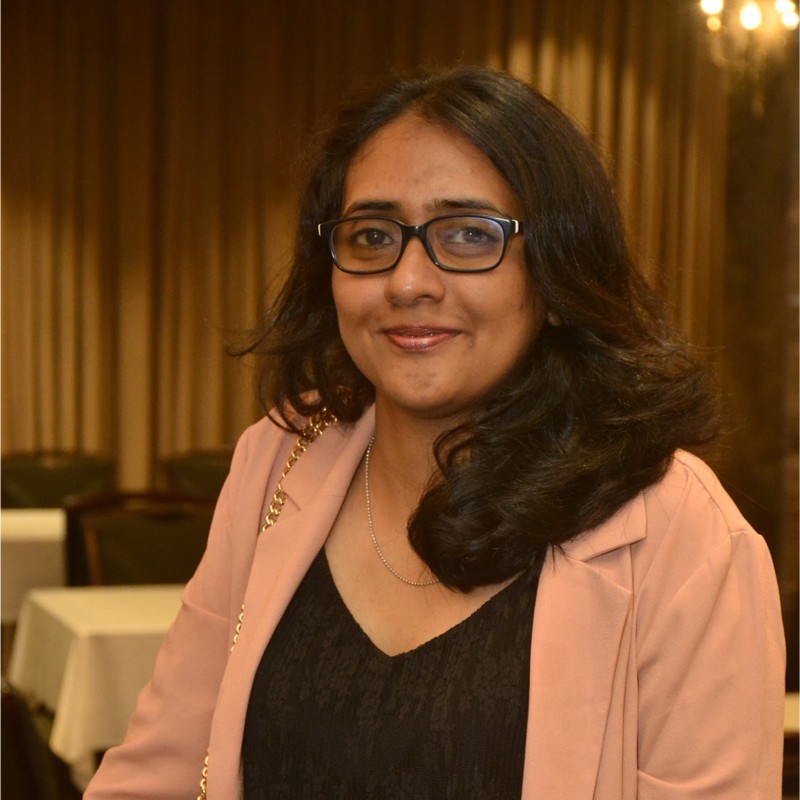
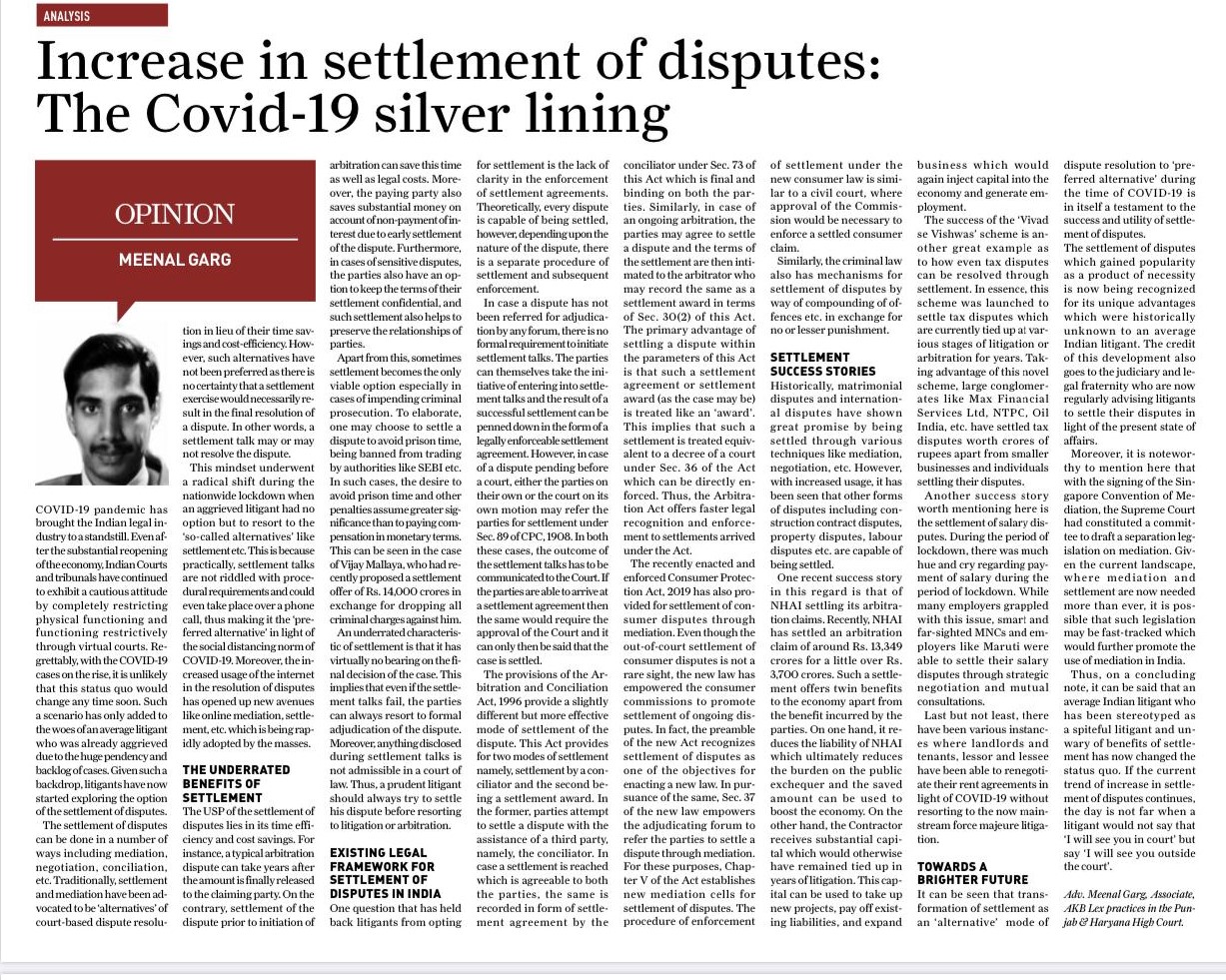
  • Meenal Garg- Associate at K.N. Legal, a boutique Arbitration Law Firm, also an ODR Consultant, Member of Young ICCA, SIAC, LCIA and MCIA, a libertarian exploring Arbitration

    Meenal Garg- Associate at K.N. Legal, a boutique Arbitration Law Firm, also an ODR Consultant, Member of Young ICCA, SIAC, LCIA and MCIA, a libertarian exploring Arbitration

    This interview has been published by Tanmaya Sharma. The Interview was taken by The SuperLawyer Team.


    Did you always want to become a Lawyer or was it something that you decided in the later part of your school life? What other career options would you have considered, if not law?

    Law was never my first choice. In fact, I was oblivious to the law as a profession and wanted to be an engineer like most of my peers. In my 10th standard, I was inevitably put to choose a career path like any other 14-year-old kid. Though I didn’t have any preference in my mind, I was introduced to the law as a profession by my father. After talking to my friends, neighbours, teachers etc. about the same, I was convinced that law would be the perfect field for me as it could help me fulfil my dream of doing a corporate job while learning something new every day. I believe that had I not been a lawyer, I would probably have been a CA or an MBA executive or maybe even an engineer.

    You are quite active on LinkedIn. How important do you think LinkedIn is for professionals? Does that also discourage young struggling minds?

    I believe that after COVD, Linkedin has become the foremost place for networking amongst the legal fraternity. According to me, if used properly, anybody can immensely benefit from this platform. At the same time, it cannot be denied that students may feel discouraged after seeing the achievements of their peers or lack of response. However, this cannot be treated as a hurdle and rather this is the necessary motivation required to reap the full benefits of this platform. According to me, continued usage of Linkedin along with posting valuable content can easily boost someone’s career. Networking has never been so simple and accessible in the legal profession before Linkedin.

    You also took part in various competitions and have published numerous papers and Articles. How important do you think these are in shaping your understanding of law?

    Writing is one of the most rudimentary skills of a lawyer. As a law firm associate or as a junior lawyer, much of a young lawyer’s time is spent drafting briefs, research notes and petitions. Therefore, through writing a lawyer can improve his understanding of the law and how to communicate his thoughts properly. Another underrated advantage of writing is a novelty. Lawyers are required to generate out of the box solutions every day to tackle everyday problems. Writing papers compels a lawyer to think and to bring novelty in his arguments. I believe that all my writing achievements and endeavours have played a major part in shaping my career and helped me reach where I am today.

    You have been working on Arbitration cases since the beginning of your career and are now working as an Associate at KN Legal. Why did you choose Arbitration and what scope do you think it has in the future? 

    I have always considered myself to be a libertarian. Therefore, the consensual basis of arbitration resonated with the libertarian in me. Moreover, as I started exploring arbitration, I just couldn’t think of anything else apart from arbitration as my career path. This is because virtually every commercial contract contains an arbitration clause today. Disputes may be big or small, but today every commercial dispute is adjudicated through arbitration. Moreover, I believe that arbitration is the future of commercial arbitration. Anyone desiring to work in a corporate setup or the commercial litigation sector necessarily needs to know about arbitration. Furthermore, in the context of India, we may see more and more instances of mandatory statutory arbitration. Therefore, the scope of arbitration is limitless.

    You also happen to be a member of various International Arbitration Centres. Besides ADR, you are a mediator and ODR Consultant at Sama. Do you think it is time for India to adopt ODR on a larger scale?

    ODR has been a subject matter of debate in India for quite some time now. However, it was because of COVID that litigants were compelled to explore ODR as an option. Moreover, in my experience, such litigants have now started to recognize the benefits of ODR. Another factor is that India’s digital infrastructure has considerably improved and therefore, repeat players should consider adopting ODR for at least less complex and repetitive disputes.

    Meenal Garg

    Can you walk us through a day in your life?  What is the life of an Associate of a boutique law firm like?

    To say that a law firm associate’s life is busy would be an understatement. Moreover, with the advent of COVID and the work from home option, the lines between professional and personal life have considerably blurred. However, this comes with a silver lining as it allows me to develop my specialisation at a quicker pace. Moreover, I am involved in every step of arbitration and litigation including pre-litigation strategy, client meetings, drafting and appearing during the hearings etc. Furthermore, the small size of the team helps to ensure effective communication. 

    You completed your Masters’ dissertation on the topic ‘Promoting Efficiency of Arbitration in India by Using Technology’. Can you tell us a bit about it and how you see promoting Arbitration using Technology in India?

    In spite of being a practising lawyer who has seen virtual arbitrations every day, I was surprised to see that there was no information regarding the use of technology in Indian arbitration. There is no awareness regarding the use of technology in arbitration in India. Therefore, I took up this topic to discover the viability of the use of technology in the Indian arbitration landscape. After my interactions with various industry experts (whom I cannot thank enough), I believe that there is a huge scope for use of technology in Indian arbitration especially in small value disputes because of its cost-effectiveness. Moreover, this market seems to be niche and only a handful number of players and users exist which is largely due to COVID. However, through proper endeavours, technology can have long term benefits for India seated arbitrations.

    Lastly, is there any suggestion or advice that you’d like to give to our readers? 

    I always say that ‘it is good to dream big but it is not bad to start small’. Students and young professionals like me should see every opportunity as a learning opportunity. With the advent of COVID, knowledge and opportunities have never been easier to grasp. Contrary to popular beliefs, quality internships can be done right from the comfort of home. Furthermore, as already stated above, writing is the most important skill for a young lawyer. Lastly, reading and engaging in meaningful conversations pertaining to any area of law can be a sure shot way to be a successful lawyer.


    Get in touch with: