Tag: CA

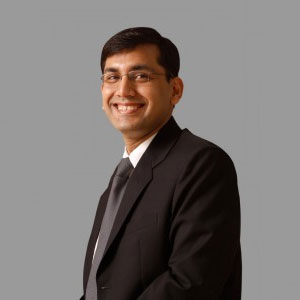
  • Anupam Sanghi, Founder, Anupam Sanghi & Associates, on Competition Law, her pro-bono work, and plans for the future

    Anupam Sanghi, Founder, Anupam Sanghi & Associates, on Competition Law, her pro-bono work, and plans for the future

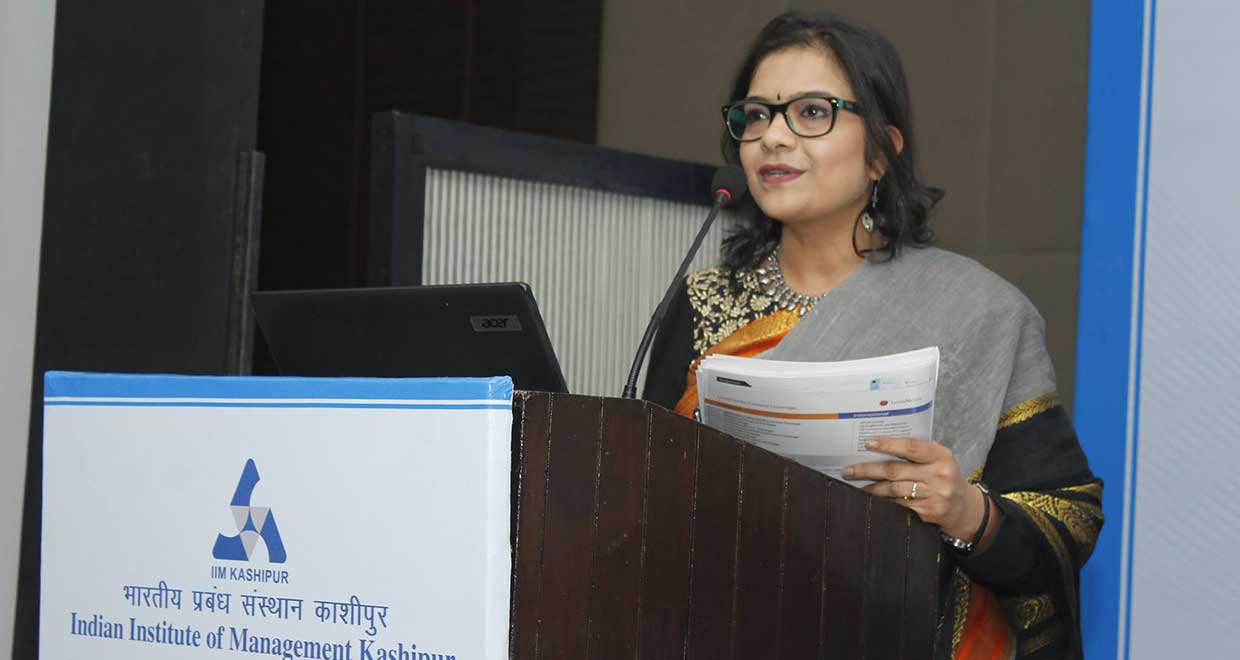
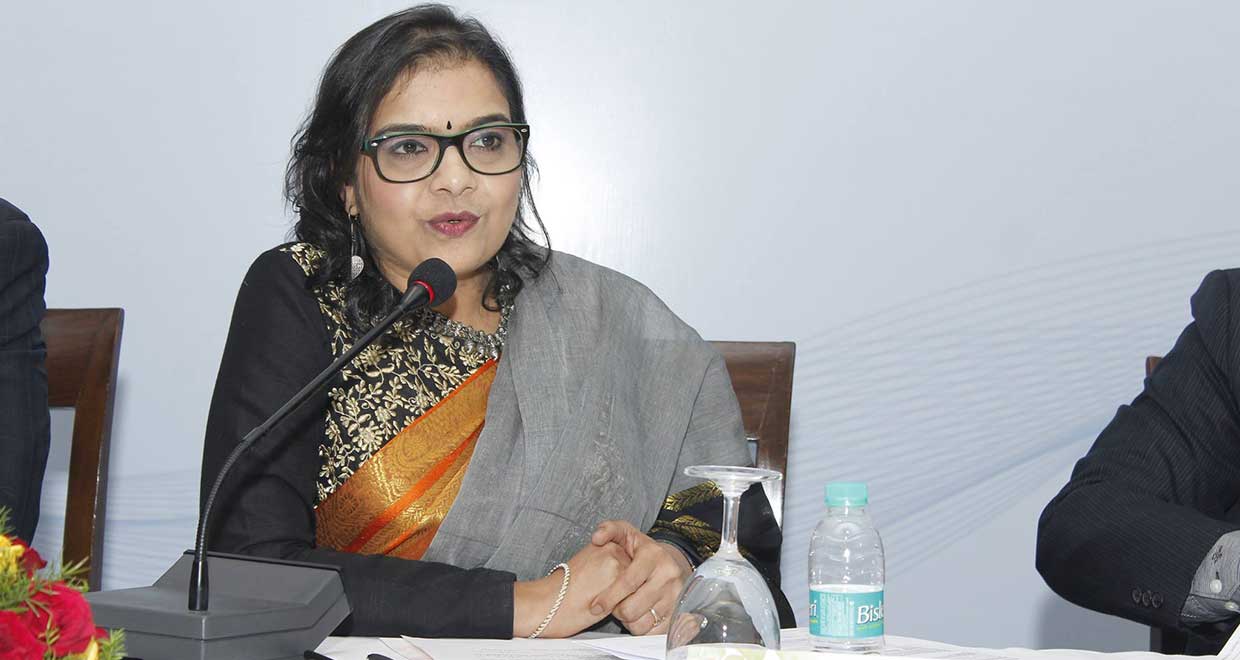
    Anupam Sanghi graduated in law from Nagpur University in 1997. She then went on to pursue her Masters in Competition Law from Kings University, in 2010. Anupam is the Founder and Managing Partner of Anupam Sanghi & Associates (ASA), and heads the TMT, Competition/Antitrust and Regulatory Practice. She has pioneered in these areas for the last eighteen years of practice, advising MNCs and SMEs on every aspect of legal & regulatory strategy, M&A transactions, compliance & training, intellectual property rights and dispute resolution / arbitrations. She is also a frequent writer, speaker and presenter at national and international conferences and seminars.

    In this interview we speak to her about:
    • Her experience in competition law
    • Her pro-bono work
    • Starting independent practice

    How would you like to introduce yourself to our readers? 

    Hello Superlawyers, to all those who consider themselves so! I initially wanted to be a CA, and law was the second option in that list. But it’s turned out to be the best choice I’ve made. I find the legal profession exciting and creative as it has the potential to transform society and move us towards a growth trajectory.  

    What motivated you to take up law? 

    I am actually a third generation lawyer. My grandfather, Late Vishnu Kumar Sanghi, was a leading lawyer, practising at the Nagpur Bench of the Bombay High Court during the period of 1940 to 1990. My uncle, Late G.L Sanghi, was a Senior Advocate, practising in the Supreme Court of India between 1957 and 2006. My grandfather inspired me to study law. He wanted me to pursue law even if I didn’t intend to practise it in the future. Though I had enrolled in the CA/CFA programme initially, I decided to pursue law soon after. As a final year law student, I worked in the chambers of Mr. Rajiv Nayyar where I got a chance to learn drafting Intellectual Property and Commercial Litigation matters. Once I started to work, I was more and more inclined to making this my career and soon found myself jumping into it like a fish takes to water.
    Did you take part in co-curricular activities while in college?

    As a student, in school as well as college, I was interested in co-curricular activities and participated in music and sports. I am trained in Indian classical music. I have participated in table-tennis championships. My love for sports made me play other games like squash and lawn tennis. In my opinion, co-curriculum is a very important aspect in a student’s life. These activities have helped in shaping my personality as a person who loves to take challenges and never gives up. A very important life lesson that sports teaches one is to accept defeat graciously and never give up. The defeats have in fact motivated me to do better. I feel it is a must for students to be part of co-curriculum, to take challenges and to realise that winning and losing is part of the learning curve. Engaging in sports, debates and other hobbies would certainly help students and fresh graduates to get a holistic perspective of life, deal with their pressures more positively and not get overwhelmed with the competitive atmosphere they face.  


    What books, judgements that you have read would you say have played an integral role in shaping your legal philosophy?

    In the beginning of my career I had picked up Nani Palkivala’s We The People. His speeches on the Indian economy were illuminating. He elaborated on the advantages of de-control and modernization in his budget analysis. In my opinion, the fundamentals of capitalism discussed by him in the book are very relevant in today’s time and would help budding entrepreneurs understand the economy better. He dedicated his time meticulously to work, as best exemplified by his success in the case of Keshavananda Bharati, one of the landmark matters he  argued in the Supreme Court. Interestingly, as a man of such sharp intellect, he also enjoyed reading self-improvement books (especially those  by Peter Drucker).

    The other legal luminary who has immensely inspired me is Soli Sorabjee. Besides the books he has authored, I used to be thrilled to read “Soliloquies”, his column published in the Indian Express. The way he made even inane matters seem humorous left me in awe of his staggering wit. 

    My Uncle, Late G. L. Sanghi, who was a Senior Counsel in the Supreme Court also had a very powerful mentoring effect on me. He was deeply perturbed by the the rampant human rights violations all around. However, he was always optimistic and truly believed that the legal profession would play a significant role in finding a solution. He felt deeply about the role of law societies (like LAWASIA where he was a past President) in these changing times. He also encouraged me to attend seminars from the very beginning of my career. I have been part of various seminars, in India and overseas, and am an active member of LAWASIA. At the LAWASIA conferences, I have met various brilliant jurists from all over the world who are like family to me today.

    In practice, all my seniors have played a crucial role in shaping me, both as an individual and as a professional. I was fascinated to meet Mukul Rohatgi, who was my first senior. He would argue in fifteen to twenty matters one after the other. Working with him, I learnt court craft and brevity. I am still learning how to be precise and make sharp arguments like him. After about a year I joined my dream firm, the erstwhile Amarchand & Mangaldas & Suresh A Shroff & Co. At the Firm, I was drafting and handling clients and court matters, dealing with senior counsels, billing, and so on. I was a part of all the activities required to run a practice. I was fortunate to handle big litigation matters in emerging areas like Telecom and Arbitration. I single handedly worked on the matters, used to report to Pallavi Shroff or Ritu Bhalla. They were extremely demanding as bosses and they brought out the best in me. For me, every day was a new test and a new incarnation of she-who-must-excel. I would have never learnt so much if I would have stayed under the family umbrella. In AMSAS, I also got a chance to work with Shardul Shroff in a couple of advisory matters and it was at this firm that I harboured dreams of one day setting up my own practice independently.

    In order to further polish my skills as a practitioner, after three years in AMSAS, I joined the chambers of Neeraj Kaul when I was also appointed as a Counsel for the Central Government. With him, I learnt court strategy and how to think on my feet. Besides sharpening my skills as a litigator, he made me take inspiration from my work and to work harder rather than questioning the sluggish legal system.


    Could you tell us about the internships you took up?

    Before I graduated as a lawyer, I interned with EY and learnt accounts, cost auditing and also a fair bit of accounting standards. I also worked in the Chambers of the present Attorney General, Mukul Rohatgi. There I learnt court strategy and case research. In those times research wasn’t as convenient as it is today. We didn’t have sites like SCC online and Manupatra to assist us. In order to get the relevant judgment, one had to understand the proposition to be argued and also the applicable legislation and provisions. Today, even non-lawyers can mindlessly do a keyword research and get relevant judgments. Knowing the exact point in issue is an art, which I learnt while working in the chambers of Mr. Rohatgi. I consider myself very lucky to have had such an opportunity.
     

    From a law student to a lawyer, how will you describe the transition?

    A part of me is still a student. It keeps my enthusiasm and the eagerness to learn more alive. To be a good lawyer, it’s imperative to be a good learner. My journey has been very fulfilling and enriching. I took the learning path by first joining the chamber of a senior counsel to know and understand the law well, then a law firm to apply the law and to learn to manage a legal practice. Then I went on to develop myself as a professional and as an independent arguing counsel and finally as a specialist in niche areas. My transition has been enlightening and I hope I can inspire my juniors to find their niche practice and polish their knowledge and skill sets in the same.


    Given the dynamic nature of the field you practice in, how do you keep yourself updated about the latest developments in the law?

    I wake up early morning for a walk and before going to courts or meetings, I must sit and read some case laws or articles on current issues for an hour. In the beginning of my career, I inculcated the practice to read a lot and to reflect the same in my work.

    I have been sharing my insights on new developments in Competition law on various social media platforms like Linkedin, Facebook, etc. It has the advantage of getting responses and knowing the viewpoints of others.

    I have been part of the LAWASIA network since 2003 where I participate in seminars on different areas of law every year. Since the enforcement of competition law in 2009, I have had the opportunity to speak in antitrust / competition law events organized by other forums around the world.

    What are the causes you feel strongly about? 

    I like to guide and support senior citizens with their legal issues and wills, especially when they are torn between their children who are too busy in their lives to care about their parents. Another segment which I think needs help is juvenile delinquency. I have been involved with the cause, whether it’s relating to their legal issues or overall development. I am also part of Project Abhimanyu where we provide free guidance and mentoring to law students. Lately, I have been involved in guiding young Indian entrepreneurs who lack awareness of legal and regulatory matters for their startups. I truly believe that it is not possible to have a sustainable business in an unsustainable policy environment. All business models rely on certain external conditions. Most important among these are a country’s economic policy and regulatory framework.

    There is a yawning communication gap between the government and businesses. With the right mindset, this gap can be bridged and doing business can be made a lot simpler. The economy needs to grow steadily to ultimately alleviate disparity and poverty as well. Creating a competition culture by proper enforcement of competition law will surely enable this.
     

    Tell us about your early professional experiences at Amarchand & Mangaldas. 

    Before I joined AMSAS, I was already working till midnight in the chambers of my uncle who was a Senior Counsel (Late Mr. G. L. Sanghi) in the Supreme Court. I used to be delighted to work with him, I would read and research with him till late night, post dinner. I used to enjoy getting an insight into issues that came to his mind at real time. However, in senior counsels’ chambers, Friday evenings were sacrosanct and there was always a pre-planned dinner or outing with other lawyer friends.

    Though I already had long working hours, at AMSAS, the pressures were different – it was more about client handling, team work, drafting and filing matters. I had to give up on Friday evening plans and even work through weekends. But at the end of the day I was happy and satisfied with the work, so the long working hours never bothered me.

    What were the challenges and learning opportunities that you faced in establishing Anupam Sanghi & Associates?

    One major challenge that I faced while developing my clientele is that managers in the corporate sector often look at small term solutions. Although I would show them the importance of looking at a long term solution to mitigate legal and regulatory risks, they cannot look beyond temporary corrective measures. If stakeholders appreciate the need to seek strategic advice, follow compliances before legal issues arise, a lot of knee jerk litigation can be avoided resulting in smooth functioning of their business plans. It gets very challenging to explain this to some business managers, especially those managing the Tech Start-Ups who need to safeguard their investments the most. However, they are beginning to see the benefit of my approach with the funding drying up and fire fighting not helping them in their litigation strategy.

    Also, the legal field is getting so competitive that we lawyers tend to get caught up in the rat race. Since I was finding this frustrating, I focused on developing my practice in a few niche areas. Thankfully, I could overcome this challenge as I resisted the rat race and stayed focused in specializing in niche areas, like competition and regulatory law.

    Building a team was also difficult as a hard task master. Now I can say I have been lucky enough to work with a dedicated and hardworking team that enjoys working on emerging issues. I feel in this day and age of social media distractions, it’s important for budding lawyers to be disciplined and to be molded into thorough professionals from the very beginning of their careers. The attractive salary packages being offered by big law firms also pressurizes them to target on earnings while they lose their formative years of knowledge building.

    Can you tell us about your experience interacting with legal stalwart Prof. Richard Whish?

    (Prof. Whish’s book on Competition Law is followed as part of the curriculum in almost every college, globally, and Anupam has had the opportunity to attend training sessions by him.)

    While doing telecom litigation, I would be looking for solutions to bring about a level playing field as DoT & PSUs like BSNL / MTNL have policy better policy benefits compared to the private players who were sinking in huge funds only to be at risk in an uneven playing field. I found that competition law did have the solution as it can be a great leveler. I enrolled at King’s College for their Postgraduate Diploma in EU Competition Law to add to my knowledge base. Prof. Richard Whish made the subject so easy and interesting that I would not blink in the entire session from 9 AM to 5 PM. The course was never ending as the latest case until the date of examination had to be studied, analysed and applied. Even for a lawyer, competition law as a subject  is not easy to understand theoretically. However, I treated Prof.  Richard Whish’s book like the Bible and what seemed like a complicated subject with more of economics became interesting. The college does have a great faculty, the other professors who took some modules were also quite good and made the subject interesting for us. I think I would never be able to understand the real philosophy behind competition law if I had did not gone through the program. It has helped me to wear two hats – one as a lawyer and the other as an economist.

    I used to enjoy studying  macro economics and costing while studying CFA (from ICFAI) prior to law. So, I think I found what was closest to my heart by studying competition law at Kings, London.
    How do you feel about the present competition law regime in India? 

    The Competition Regulator, Competition Commission of India (CCI) has created an impact in several sectors by fining for anti-competitive business conduct. For instance, the CCI has imposed a penalty of around Rs.6300 Crores on the cement cartel for price fixing, Rs.250 Crores on the LPG cylinder cartel for bid rigging, Rs.2500 Crores on car manufacturers for exclusive dealerships, Rs.630 Crores on DLF for abusing their dominance by unilateral agreements, and so on. The CCI has also come down heavily on PSUs such as Coal India for abusing their dominant power by forcing one sided terms in their Fuel Supply agreements with SEBs.

    These are record breaking fines making headlines since 2011 and by now CCI has created a fear amongst managers who are conscious of getting under the CCI scanner.

    Some of the other giants under CCI investigation are Ola, Google, Monsanto & Ericsson. In the last seven years, CCI has made its presence felt well. Though there is still a long way to go as most of these orders imposing penalties are challenged before the Delhi High Court, questioning the jurisdiction of CCI, the appellate tribunal COMPAT has remanded back cases to CCI to comply with principals of natural justice. Few matters are also before the Supreme Ccourt on issues regarding CCI’s jurisdiction and to decide on the method of calculation of the penalty. So, the courts would hopefully further evolve the law enabling in creating a competition culture. The characteristics of online markets are quite different compared to the traditional markets and free pricing / predatory issues arise. So, although the key prohibitions that violate competition law would be the same, the market data has to be analysed with a different approach as technology has changed the way the market works. Due to lack of sophisticated market definition and economic analysis, in the earlier years, CCI passed some inconsistent and / poorly reasoned orders, with two different approaches to market definition in similar markets. Advocacy for a level playing field at the policy level, following international jurisprudence and trends set by competition authorities from developed jurisdictions would help develop this sector.

    On what parameters do you choose the projects you work on?

    I have been focusing my work on evolving regulatory issues in the TMT space. So, I consciously developed a practice around Telecom, ICT / Technology sector. Competition regulation is an overarching law. Further, as a complete / holistic lawyer, it’s imperative to deal with dispute resolution. Therefore, I have developed a corporate / commercial law practice involving litigation & advisory in niche areas.


    How do you manage your time between your professional and personal interests? 

    Work keeps me wired in all the time but I do snatch out time for my love for concerts and music jams, going to the sports club on weekends, reading good humour by witty authors like P. G. Wodehouse and Oscar Wilde, Bill Bryson who depicts his traveling so hilariously. There is no other way but to somehow squeeze in these activities in my agenda.


    Where would you like your career to take you five years down the line?

    I would like to contribute to the development of competition law as a practitioner and academically as well. Actually, I would like to spend more time visiting universities sharing practical guidance with students and corporate managers, organize more events for students as a mentor in Project Abhimanyu. Hopefully, I will be working on a Artificial Intelligence (AI) project to further simplify my legal practice.


    What advice would you like to give our readers, who are inclined to developing a proficiency in Competition Law?

    Competition law is an emerging field. It is going to take some time before every firm develops a particular team for Competition law. Lawyers/freshers who want to develop a career in competition law will have to be patient to get work opportunities. It is imperative to focus on learning and research and finding solutions to every grey area in the field. Also as competition is a niche area the cases are limited as compared to general litigation. Having said that, every year the practice is evolving and is becoming more demanding. It is important for the lawyers to be focused at this stage, as this field will certainly gain an edge over other practices.


  • Bhoomika Choudhury, Founding Partner, Svadhā Legal, on her time in Symbiosis, the future for start-ups and the importance of pro bono work

    Bhoomika Choudhury, Founding Partner, Svadhā Legal, on her time in Symbiosis, the future for start-ups and the importance of pro bono work

    Bhoomika Choudhury is a graduate in law from Symbiosis International University, batch of 2012. Thereafter, she has gone on to practise with leading firms like Amarchand & Mangaldas & Suresh A. Shroff & Co., Mumbai (now Cyril Amarchand Mangaldas) and boutique tax firm Vaish Associates Advocates, New Delhi. She has also worked as a junior in the Chambers of Dr. Rajeev Dhavan, one of the leading senior counsels in the Supreme Court of India. She has experience handling administrative, civil, criminal, service, bail, intellectual property, tax and water disputes matters. She also has experience in briefing and assisting senior counsels. In 2016, she founded her own legal firm, Svadhā Legal, which offers representation in corporate, commercial, tax, civil and criminal litigation and arbitration matters.

    In this interview, we speak to her about:

    • On being a Chartered Accountant alongside with being a lawyer
    • On the future of “Make in India”, “Start-up in India” and “Skill India”
    • The importance of holistic development as a person in order to be a sentient lawyer
    • On her diverse experience and eventually going independent


    How would you introduce yourself, given that most of our readers are young law students and young lawyers?

    I would introduce myself as a sincere lawyer who has become what she is today solely through her single-minded devotion to be a sensitive and responsible person. If anything other than my work defines my persona, it is the fact that I value and respect relationships, both at the personal and professional level, and feel concerned about developments in our society. Like my name suggests, I have different roles to play during my lifetime and my endeavour will always be to do them to the best of my abilities. I am a daughter, sister, friend and a girlfriend along with being a dutiful lawyer.

    What were the factors which drove you to join law school? Did you ever consider exploring any other fields?

    My father being a college teacher in English, I grew up surrounded by a whole lot of literary classics, and endless discussions on literary topics, and together they had a powerful influence on me. Reading literary classics thrilled me to no end and I realized my career options must be narrowed down to a vocation that must include a lifelong engagement with the humanities. The second most important consideration behind my choosing a law career was my concern for social issues and my pursuit for a vocation that provided fodder to my curious mind. I was greatly influenced by Einstein when I was young and this quote caught on to me greatly:

    “Only a life lived for others is a life worthwhile. I have no special gift. I am only passionately curious. I want to know God’s thoughts… all the rest are details. Joy in looking and comprehending is nature’s most beautiful gift. It’s not that I’m so smart, it’s just that I stay with problems longer.”

    A career in Law seemed to be the ideal choice for me as it combines my literary and social interests along with vocational needs.


    You graduated in law from Symbiosis Law School, Pune. How did the law college prepare you for practice in law?

    To say that Symbiosis Law School is a great place of learning will be an understatement. It takes meticulous preparation to understand the law both in theory and in practice.  This institution gives its students the right portion of both. I was particularly lucky to learn a lot more by way of extracurricular activities as I was selected as the President of Human Rights Cell. As part of the cell, some of the projects we worked on gave us ground level exposure to areas like rights of commercial sex workers in the red light district of Pune, disability rights, an after school educational program for underprivileged children, etc. But we had to go through our own share of trials. My father had accompanied me to Pune for the admissions and I remember him looking a little worried as he came to know the city’s liberal and indulgent way of life. But he had very lovingly only once asked me to shun all the negative influences around the college and the city. I promised him as much and I am happy that I never betrayed his trust.

    How important are internships for a law student? Tell us about your internship experiences while in college.

    It is an important part of a student’s academic life in the sense that it gives real life exposure to the kind of work one will be called upon to shoulder in future. Considering that there are varied kinds of jobs that are available to a law student upon graduation, internships give an opportunity to get a taste of everything and decide on one or two areas on which he/she could focus. It also gives a chance to leave your mark in an office where you would later like to bag a pre-placement offer. Even though your first few internships may appear highly challenging as you are yet to fully learn theoretical aspects of the law, you will gather a great deal of knowledge after working with these offices.

    I tried to keep my basket of internships diverse by picking from NGOs, independent litigating offices, in-house legal team of corporate houses and law firms. I distinctly remember, my social issues have been very dear to me from my early school/ college days, and this interest took me to an NGO called ‘Solidarity for Developing Communities’ and a State Human Rights Commission during the first two internships in my 1st  year of Law School. My experience in these two offices further heightened my interest in human rights issues, so much so that it has become an integral part of me today. By this time I had fully realized the benefits of internships. So when I went for internship assignments to the Essar Group, Mulla & Mulla, Craigie Blunt and Caroe, and the senior advocate of Jharkhand High Court, Mr. Anil Kumar, I was determined to make the most of it. The nature of the legal issues I encountered during my internship was diverse, as were their benefits. My internship stints ended with Amarchand Mangaldas and Phoenix Legal.


    Do you think that Moot Courts are an essential component for the overall development of a law student? Tell us about your experience.

    It is an elaborate rehearsal a law student undertakes, as it accurately reflects the rest of their lives as lawyers and litigators. The very fact that these involve facing rival teams and competitors, both at the national and international level, serves as motivation for every student to put their best foot forward. Ultimately each of these extracurricular activities i.e. participating in moot court competitions, writing research papers, internships, etc. go a long way in shaping you as a lawyer, pushing your name a few notches up during placements and enhancing your chances in getting admission in top law schools.

    One must remember that applications received by law offices, corporate houses or top law schools are filled with students who have managed decent grades in their respective universities. Participation in extracurricular activities makes all the difference in getting your dream job!

    These competitions gave me the opportunity to work with my fellow participants, prepare our case to the best of our abilities, and compete with some of the brightest minds from the legal fraternity. The crowning glory was getting to attend the William C. Vis International Commercial Arbitration Moot Court competition in Vienna in my 4th year of law school. The whole experience was a turning point in my life as a student of law. Getting the opportunity to participate in such a prestigious affair was a very uplifting moment.

    Do you feel that academic excellence is essential to be successful in life?

    The question is too general in nature to beg a straightforward, universal answer. If we are to understand the meaning of ‘success’ in a knowledge economy, as identified with the successes of only the reasonably, moderately educated people, not to speak of the highly educated, talented people with high academic credentials, the importance of education or academic excellence can never be underestimated. The contemporary economic and social conditions acknowledge and respect academically bright people. However, we also know of innumerable successful people who have failed miserably in their initial years of work. The list is endless with celebrated names like Thomas Edison, Albert Einstein, Van Gogh, J.K. Rowling, Oprah Winfrey and the like. However one thing common to all of them is that they were persistent. It is not a shortcoming on their part, it is the world that takes time to identify geniuses.


    You have taken ACCA examinations at the Association of Chartered Certified Accountants, United Kingdom. Tell us about your experience.

    Midway through graduation, it struck me that a course in accounting will be very useful to me in future, especially given my interest in tax law. It was this simple reason that drove me to take up this ACCA course, and I must say that I enjoyed studying and appearing in the examinations, though it was sometimes tough on me to take out time from my regular studies. What helped me greatly is the flexibility that ACCA examinations allow its students. Moreover, the ACCA follows the International Financial Reporting Standards and is globally recognized too.


    It is generally seen that law students and law graduates tend to shy away from taking up pro bono cases. Is this advisable?

    It is advisable that law students and law graduates of our country do not shy away from taking up pro bono cases. In a country such as ours where the majority are poor and cannot afford legal help, it is inhuman on the part of the legal fraternity not to devote some of their time and energy to come to their rescue. This assumes greater importance for law students and law graduates as they themselves will be richer in their learning experience as well as in their moral responsibility towards society. In fact, it ought to be considered a great opportunity for young lawyers.


    You have worked in the Chamber of Hon’ble Mr. Justice Rajiv Shakdher as a Law Researcher- cum- Clerk. Can you tell us about the experience?

    Working with Hon’ble Mr. Justice Rajiv Shakdher was an opportunity I still thank my stars for. I can never thank him enough for the encouragement and the guidance he always gave me whenever I needed. HMJ Shakdher is an extremely well-read, honest and hard working judge who worked very meticulously on each case, and he expected the same qualities from his law interns, assistants, researchers, and clerks. I gained much confidence, learnt such a great deal during the one year time I worked with him, that it helped me in many ways to build my image as a trustworthy lawyer. Whatever I am today is because of his influence on my career. I must say that at the very mention of his name, my head bows down in obeisance and a prayer goes out from my lips for his long, happy life.


    You had previously worked with Vaish Associates and Cyril Amarchand Mangaldas. Tell us about your experience at these firms.

    My time at both these firms was a very productive experience. At this point of my career I wanted to work with taxation related firms to gain more knowledge on this subject or area. The realization was dawning on me that I must at least learn a good deal more than the fundamentals of some areas of legal practice, and I made the best of my time there by learning about taxation, arbitration, corporate tax, and taxation related litigation. Fortunately both my seniors and colleagues at these two firms were very helpful and supportive in my handling of assignments, and the experience has enriched my knowledge of these areas vastly. I owe my special gratitude to Ms. Kavita Jha of Vaish Associates who was extremely helpful and supportive of my work, and always went the extra mile to assign me other litigation cases too. Ms. Jha being one of the division heads at the Supreme Court and High Court, I learnt a great deal during my time at Vaish Associates. My relationship with her and other colleagues will always be very special. The year I worked with Cyril Amarchand Mangaldas too was extremely enriching and fulfilling as I happened to work on some of the very high-profile, well-known cases.


    At Vaish Associates and  Cyril Amarchand Mangaldas, you were concentrating mainly on tax litigation and arbitration, but later you decided to go for litigation practice. What motivated this shift?

    The reason I changed my focus away from taxation-related areas for sometime is the necessity of learning other areas of litigation. With an expertise in one technical area of law, I was veering towards the view that I must learn a great deal on other aspects of legal practice, before I am able to enter into litigation practice on my own. For any lawyer with some aspirations in life, I suppose this is a very modest decision one has to take at the earliest possible time.


    You have assisted eminent lawyer, Senior Advocate Dr. Rajeev Dhavan. Tell us about your experience.

    I consider it my good fortune that Dr. Rajeev Dhavan accepted me as a junior to assist him in his office. I knew it would be a daunting task to meet his high standards, but I was looking forward to it nonetheless. He is a legal luminary and a legend of our times, and his scholarly pursuits, the huge number of books and articles he has written, all of this weighed heavily in my mind as I immediately sat down to work for him. The knowledge and experience I gathered at Dr. Dhavan’s office was immense. I knew I was working for one of the finest legal minds of our time. It was difficult to hold your own and not be intimidated. However the unimaginably rich experience I gathered with Dr. Dhavan has vastly improved my level of confidence, the honesty and integrity of the manner in which I ought to work in future, and more importantly, the realization that I have a long way to go in my further higher studies, in order to pay my little tribute to my godfather. His encyclopaedic knowledge, and his unmatched wit and sense of humour will continue to inspire me throughout my life. It is not for nothing that his academic stature, his unmatched courage, and the unconventional, radical stand he often took in his appearances in the Supreme Court has become made him a legend of our time.

    Earlier this year, you founded Svadhā Legal. What were the challenges you faced in setting up the firm? Could you give us a brief description of the firm and the activities  it performs?

    Svadhā Legal is a dream fulfilled. Legal matters as varied as human rights, taxation, arbitration, corporate law, civil cases, etc. have all been of interest to me, and I thought setting up a law firm will be the best way to handle the wide variety of cases that I expected to come my way. A law firm run as a professional entity will be a good way of attracting prospective clients as well as engaging junior, younger colleagues for those cases.

    Svadhā Legal will also be a great intermediary for pro bono cases that are dear to me, in the sense that considering the large number of cases that are awaiting justice on pro bono basis, the firm will be able to engage or delegate some of the cases to younger professionals looking for such avenues. These were some of the reasons that prompted me to set up Svadhā Legal, and I am happy that quite a number of my friends, colleagues, and juniors have joined me as associates in the firm.

    There were challenges in setting up this firm, considering the fact that I am a first generation lawyer, but I was determined to overcome any such disadvantage coming my way. It is my firm conviction that serious pursuit of a dream will admit no hindrance on the way, and this conviction gives me enough patience and tolerance to pursue my goal. Another challenge was facing rampant sexism in the professional sphere. But here too, I am determined to prove that gender can never be a disadvantage for anyone in any respect, though one will be forced to walk the extra mile to prove that.

    It is a heartening feature of this enterprise that my considerable network of friends and lawyers across the country are helping and encouraging me in my endeavour.


    As a partner at Svadhā Legal, what is an average day at work like? Our readers would love to hear about the day-to-day responsibilities which need to be handled by someone in your position.

    My average work life normally starts early in the morning when I sit down to work at home for at least 4-5 hours before I head to the Courts for my appearances or hearings, and other related work. I find the early morning hours to be the best time of the day for work. Then after a short lunch break it’s time for me to interact with clients, discuss cases, and then devote some time for business development and public relation exercises. Normally I always make a mental plan of work for the day, and it makes it easier for me to complete all my work in time. And then it’s time to head home and may be after a brief rest, it’s back to work and other personal studies.


    A number of campaigns such as “Make in India”, “Start-up India” and “Skill India” have been launched by the Govt. of India. Your views on these campaigns?

    The aim behind the “Make in India”, “Start-up India”, “Skill India”, and “Digital India” schemes is to leapfrog this country into that of an advanced and economically sound country in the shortest possible time.

    The “Make in India” initiative was developed to establish India as an efficient manufacturing unit and lure global markets to consider the subcontinent as a viable investment.  The government promises all kinds of support to the new investors, including the promise of quick clearances and approvals through a channel called Single Window clearance in order to avoid delays and red-tapes. The initiative has already started bearing results in the form of many international automobile, aerospace, software, military hardware, and other manufacturing majors considering setting up manufacturing plants in the country. If the campaign is to achieve its full potential and desired results, what the government must do is to not slow down the momentum and see to it that it is followed in a rigorous manner.

    A similar but a very innovative campaign has been launched by the central government in the form of “Start-up India” in order to help unconventional business plans take flight. There are innumerable success stories of new start-ups having generated remarkable revenue levels owing to their out-of-the-box strategies. There is little doubt that our economy in future is going to be dominated by more and more of these start-up enterprises, most of them in the service sector, and contributing hugely to the economy.

    The central government’s other initiative called “Skill India” too is another campaign that has been launched in order to impart vocational training to the unskilled workforce of our country. Uneducated, semi-educated, and under-employed labourers can learn skills of their choice to aspire for better employment opportunities. The success of the first two campaigns will, to a large extent, depend upon the success of this campaign. It should be implemented in a very urgent basis, without any let-up or loss of momentum.

    These specially, carefully selected campaigns have been launched to make this country a global hub of manufacturing, a great place for young, talented people with innovative ideas to realize their dreams of setting up new enterprises or start-ups and create the best possible infrastructure for the development of the required skill for our millions of young students who will be capable of handling the needs and demands of the new age technological, industrial enterprises. Since we are living in these times, we must make optimum use of these opportunities and participate fully to make our country the most powerful nation on earth.


    Tell us about your experience of working with start ups.

    It all started because of my large network of friends, many of them happening to be young engineering graduates, and quite a few of them deciding to quit their jobs and starting their own start-ups. They are a very talented lot, with new and innovative ideas of developing new technological tools and models for a wide spectrum of use by industries, business enterprises and a host of other organizations. My association with some of these Start-ups began because of their need for legal assistance in preparing regulatory formalities and agreements. It was a great learning experience for me and I was in a way encouraged a great deal by their dreams, motivations, and infectious energy. What’s more, my modest accounting background proved to be of great help in my work.


    Name a few of your hobbies, and how have they proved to be an advantage to you?

    The things that have drawn my continuous interest are literature, painting, gardening, cooking and sports. Some of these interests have grown with me over the years since my childhood, and it would be wrong to say that I am not seriously pursuing or devoting time on a regular basis to all of these areas of my interest. My love of nature has in a way taken the shape of gardening, and I love planting, watering, and taking care of my little collection of indoor plants at my home. I am an inveterate traveller, and I love going places, both popular tourist haunts and less frequented, quaint spots. I love meeting new people on the way and getting to know them.

    These are the areas of my interest and together they constitute my life. I am hopeful that these interests will go a long way in my realization of myself in the future. The journey of self-discovery is still on. A few of my hobbies or interests such as reading literature, humanities studies, and social issues may have proved beneficial to my professional life. But in a broader sense, all the other hobbies have equally contributed to my evolution as a decent human being. In my view I should be a decent human being first, and a good lawyer after that. The two complement each other, and you cannot be the latter without being the former.


    What is your advice for fresh graduates who wish to enter law firms as associates? How should they prepare themselves to cope with the challenges they will face?

    Working for someone, be it an individual or an organization, one has to come to terms with the fact that times are difficult. Considering the nature of the profession one has to look at all the inconveniences as normal and as part of the learning process, and with patience and dedication. Law firms expect from law associates a lot of hard work and the willingness to put in extra hours of work whenever needed. But it is during this time that one learns the most.

    What would be your parting message for our readers?

    Life is too precious a gift to be wasted. We should realize that it is not only what we do, but how we do it that also matters a lot. Ultimately, what matters is not how much money or wealth we have earned, but how decent a life we have lived, how much use we have been to others. There will be hundreds of voices that will discourage you, but just listen to that one voice within; it always knows what is best for you. Dream as much as you wish and realize them all, but remember that a life lived for others is far more fulfilling.


  • Rajesh Sharma, Founder Director of LetsComply.com, on why legal knowledge is necessary for a CFO

    Rajesh Sharma, Founder Director of LetsComply.com, on why legal knowledge is necessary for a CFO

    Rajesh Sharma passed out as a Bachelor of Commerce from Shaheed Bhagat Singh College, the University of Delhi in 1990. After that, he pursued LLB from the University of Delhi and graduated by 1993. Besides LLB, he also pursued Company Secretary from Institute of Company Secretary of India (ICSI) and Cost & Management Accountants from Institute of Cost and Works Accountants of India (ICWAI) and finished these professional courses in 1993.

    With his qualifications in the realm of law, finance and accounting, he started his versatile work life full of enviable achievements. He started his professional career as Manager – Merchant Banking with Category-1 Merchant Banker, collaborated with the manufacturing company and IT companies before joined as the Founder Members of Singhania and Partners LLP. Afterwards, he was the Head of Finance, Accounts & Legal Department of Global Healthline Private Limited – 98.4, one of the best retail pharmacy chains in North India. He played major role at Barista Coffee Company Limited during his long tenure from 2006 to 2012 as a Chief Finance Officer, wherein he was instrumental not only in setting up all systems and processes for nationwide coffee chain, implemented SAP for retail but he was also key member to get Barista acquired by LAVAZZA, Italian Coffee player. Later, he served as a Group CFO at Carnation Auto India Private Limited; wherein he was instrumental for equity and debt fund raising for setting up multi-brand automobile workshops and used car business. He was Partner with Rajani Singhania & Partners, an international Law Firm. Presently he is Director, Fashion TV Hospitality. He founded Juris NextGen LLP and Affari Consulting, Inc. in 2010 and 2011, respectively.

    Finally, being an emerging entrepreneur, he founded LetsComply.com, which is a technology driven platform in India to provide world-class, affordable and convenient professional services relating to legal, finance & taxation at one click under the guidance of an experienced team of professionals, whose knowledge & credentials are proven.

    An independent entrepreneur with a string of achievements at a very young age, Rajesh Sharma talks about his thoughts, ideas, experiences and advice to young entrepreneurs and students of law and CA.

    In this interview, we cover his academic and professional journey, while focusing on:

    • The combination of his qualification in B.Com, LL.B, C.S. and CMA.
    • Varied work experience as a CFO, Founder Members and Director of various companies.
    • Part of Startups, provided Legal, Finance & Taxation support to create systems and processes and helped them to raise funds and now providing mentorship to various startups directly as well as through various incubation centres.

    How would you introduce yourself to our readers? Please tell us about your pre-college days.

    I belong to a very middle class & humble family. In spite of not been able to get the education from Big B-Schools, it is the learning by experience and connectivity with grass-roots for work with qualitative education; I could able to achieve this position.

    What plans did you have for your future? What inspired you to embark on this entrepreneurial journey?

    I feel blessed and fortunate that in spite of limited resources, I find myself at the pinnacle of my career by achieving and delivering good as a Legal & Finance professional. Now, I think this is the time to give back what I have achieved throughout my entire life and career. I got myself associated with a couple of incubation centres, NGOs and other bodies wherein I provide my services as Mentor to the new entrepreneur for their entrepreneurship journey. India is providing an excellent environment for startups, enormous options and opportunities available to the young entrepreneurs, and hence, I am also contributing to my best.

    How important is it for a law firm partner to be good at business development, or are great lawyering skills enough to become a partner? What skills or qualities distinguish the people who become partner from those who don’t?

    Being an entrepreneur, it is not necessary to be a good worker, he/she has to be a good leader at the same point in time. While he/she should be able to understand and manage with expertise, but should be able to manage a good team as well.

    Having done B.Com, what motivated you to choose law along with CS and CMA as a career?

    Though it is obvious, if you want any professional degree beyond graduation. Since I had interest both in Legal & Finance domain, therefore I opted for both courses (also since not having proper guidance, I chose two courses to have backup, if I could not make one)

    What challenges did you face while serving as a CFO at several companies? How did you overcome those challenges?

    Challenges are of multiple kinds, being cost controller and always pushing for implementation of system & process; CFO faces challenges from external as well as internal members of your own organization. No one like to listen no for the money and everybody realizes in the last working hour, therefore, to push your own team members to go to the system and processes, you actually develop negative relationship with your peer group but once you explain and help them to implement these methods, they like and start implementing these processes.

    You’re the Founder Director of LetsComply.com. Please tell us about LetsComply.com.

    LetsComply is the only technology driven platform in India to provide world-class, convenient and affordable professional services relating to legal, finance & taxation at one click.  LetsComply provides services under the guidance of an experienced team of professionals, whose unimpeachable expertise, backed by proven credentials, needs no emphasis.

    In pursuance of our humble resolve to serve, we have always looked for the ways and means to make it easier for the entrepreneurs and corporate establishments to function better, and we realized that since the world is progressing and taking online route to grow and expand, it would go a long way if we could provide Legal, Financial & Taxation services in a structured fashion with the assistance of a team of experts without making it too expensive or inconvenient. That’s how the idea of LetsComply germinated.

    We, at LetsComply, are committed to help entrepreneurs and business owners to start, manage and grow their businesses by taking care of the legal, financial & taxation side of the business so as to allow them to focus on innovation and expansion without having to fret over compliance issues, which certainly matter a great deal and can’t be left unattended.

    We aim to be a partner in the entire business lifecycle at all stages of the entrepreneurship — Startup, Growth, Acceleration & Progression Stage — to make sure that the businesses do not fall back on compliances and grow manifold. In today’s Digital world, we bring you the concept of Virtual Intelligence by way of Virtual CFO (vCFO) and Virtual General Counsel services to enable accelerated growth to your business. We are a team of experienced Chartered Accountants, Company Secretaries, Cost Accountants, Corporate Lawyers, Management Graduates, IP Attorneys and Technologists ready to assist you at all times.

    I believe that today when the world is moving towards a higher technological and economic order, allowing oneself to be bogged down by various mandatory compliances is a waste of precious time and energy. It cannot be ignored that the statutory compliances have a very significant role to play in sustaining the business environment conducive to fair competition and commercial growth. Therefore, it is essential to be cautious about the compliance of various statutes at the initial stage itself to not only avoid later complications and harassment but also to contribute to the sustenance of a healthy business ecosystem. And to keep you comfortable with all the compliances, the professionals at LetsComply are always ready to extend any and every assistance that you might require in this regard.

    How do you plan to expand LetsComply.com regarding operations, infrastructure, as well as attracting more investments? Can we expect a mobile app in forthcoming time?

    We have just started and thrilled with the response we are getting from our users. Therefore, we have preponed our plans for expansion. Operationally, our offerings are quite wide, but we need to create the infrastructure to execute and deliver that. We are working not only to create and set up additional office space but also developing technology team as well. Though for operations, we may not need investments but to expand rapidly and to bring technology and marketing we would need investments. We are not aggressively losing for funding unless we get right partner. Yes, you can certainly expect mobile app.   

    You have a vital role in several companies by providing them a tremendous boost in their business. What are the key areas a Startup needs to focus on?

    The major need for any startup is to focus on execution and have the right partner in place. They should focus on their core activities without losing any attention.

    As you have recently addressed a conference on ESOP in Amity Innovation Incubator, please tell us how does ESOP work as a good tool for startups?

    ESOP is genuinely a very tool to attract & retain the right talent. You can attract talent with entrepreneurship mindset to grow fast.

    How important would you say are business development skills at such higher roles in a corporate law firm?

    Growth is never ending. One should always be hungry for growth so as Business Development skills are. The leader has to lead by examples, and he should always be upfront about facing challenges. Unless the Leader fights from the front, he cannot ask his army to step forward on the battle ground.

    Lastly, what would be your advice to students and young entrepreneurs reading this interview?

    Life moves forward like a “Business Cycle”, wherein phases such as ‘Peak’ and ‘Trough’ are ubiquitous. One needs to establish one’s stand at those stages. If he/she is tangled in the Trough Phase, there is nothing to blame upon. Be focused, there is no shortcut to success. Efforts never go waste. If everything seems to be on his/her side during the Peak Phase, there is nothing to claim upon. Keep your thirst for growth alive and continue to move forward with the same.


  • Puneet Bansal, Managing Partner, Nitya Tax Associates, on being a CA + Lawyer and practice in Indirect Taxes

    Puneet Bansal, Managing Partner, Nitya Tax Associates, on being a CA + Lawyer and practice in Indirect Taxes

    Puneet Bansal graduated in B. Com. from Hansraj College, Delhi University in 1998 and thereafter he acquired an LL.B degree in 2007 by eking out time for the evening classes of Campus Law Centre of Delhi University. Over the course of his highly successful career he has worked as a Partner at Lakshmi Kumaran & Sridharan as well as BMR Associates. He is at present a Managing Partner at Nitya Tax Associates.

    In this interview he tells us about:

    • Chartered Accountancy – his time in college, the contours of the course and tips to ace the entrance exam.
    • The work in an advisory practice, his law degree and experiences as a Partner at two firms.
    • The importance and convergence of law and taxation, advice for Tax Law enthusiasts, his views on the GST and setting up Nitya Tax Associates.


    How would you introduce yourself to our readers? Please tell us about your family and childhood.

    I was born and brought-up in a middle class family. My father is a business man and mother is a house maker. Being in a middle class household, my upbringing was normal. I was a pretty average student till Class X.


    Were you always clear about your career plans considering you pursued commerce in senior secondary and went on to graduate from Hansraj College, Delhi University in B.Com?

    Never. I choose Commerce in Class XI as I was not interested in Science and Arts. It was in Class XI that I developed an interest in studies and started doing well. Since my marks in Class XII were good, I joined Hansraj College. I didn’t have any career plan till then.


    How did you manage college with your CA preparations?

    One of my uncles filled the Chartered Accountancy form and that’s how I started doing CA. Indeed, CA used to be a tough course earlier as well. I used to go to college in the first half and come back to the CA firm in the second half when I was interning. It was a tough 3 years of managing both studies and internships.


    Please tell us about your CA Articleship. What was the application procedure? How competitive was it to secure an Articleship? What was the work assigned to you?

    I did an internship in a medium-size CA firm. My senior in the CA firm was a family friend so I got the internship with ease. I did accounting, company law and Income tax related work during the internship. Importantly, I was not at all exposed to indirect taxes during my internship which is my area of profession now. The period of my internship was a thorough enjoyment and was my first chance to peek into the professional services space.


    You graduated from Hansraj College in 1998 and finished your CA course in 1999 with an All India Rank. Please enlighten our readers with some valuable tips to ace the CA examinations.

    I cleared all CA exams in the first go and was the All India 27th rank holder in the CA final. I have followed one rule for preparation for CA exams, and in fact, now as well when I am practicing on my own I abide by it and that is ‘whatever you do, do with passion and then everything will fall in place. Otherwise do not do it’. I was always interested in understanding concepts rather than clearing exams. The conceptual clarity in all the CA final subjects only helped me in clearing the exams.


    puneet-bansal-2

    Our readers would like to know about your initial days as a CA professional. Could you share with us any interesting anecdotes?

    When I became a CA, I thought that life henceforth would be easy. But I was confronted with reality soon and realized clearing CA is the start of struggles in one’s professional career. Clearing the CA exam only opens the gates to the professional world. At each stage of our professional lives, we need to prove ourselves with hard work and competence.


    Was it difficult for you to shift to a new place of work, which was primarily a law firm? Please tell us about your work experience at L&S.

    (Puneet joined Lakshmikumaran & Sridharan in 2003 as a Chartered Accountant in their indirect tax litigation practice.)

    Indeed. I was working in Maruti Udyog and suddenly decided to shift to L&S. My family was stunned and couldn’t understand my decision. Also, the decision to shift from an Industry to a Law firm was a big change in my career. Working at L&S was a great experience. It was a close knit family environment comprised of competent professionals. Initially I did litigation, and later, set up their advisory practice. It was 9 years well spent in my career.


    In 2004, you joined Delhi University to pursue law. What was the driving force behind this decision?

    As I was working in L&S and wanted to make a career in litigation, I decided to do law. The admission procedure at the Delhi University required clearance of an entrance test. Clearing the entrance test was not tough.


    Please tell us about your law school days. Did you participate in any student activities? How active were you in other college activities?

    I did law from the Campus Law Centre, Delhi University evening batch, so I used to attend the classes and write the exams. As I was working full time in L&S, I didn’t participate in student or college activities during my law school days.


    How helpful was your law degree in terms of the added legal perspective to your existing knowledge? What career advantages did it bring?

    (Puneet qualified in Law in 2007, after that he continued with L&S.)

    The law degree really helped in giving me perspectives on the Indian Constitution and various other Commercial laws. I would recommend it as a “must do” if one needs to practice tax. Further, the law degree opens an opportunity for you to appear in the High Court and Supreme Court.


    What work does advisory practice include? What were the added responsibilities as a partner of one of the leading firm in indirect taxes?

    (After establishing the advisory practice of L&S, Puneet headed this team as a partner from 2010 to 2012.)

    The advisory practice involved advising clients on Indirect Tax issues involving legal interpretation, structuring business models etc. As a Partner of a large law firm, I was responsible for advising leading corporates of India. I also had the responsibility of managing a team of 10 – 12 professionals.


    Please share with us your work experience at BMR.

    (In 2012, Puneet joined BMR & Associates LLP as a partner.)

    My professional journey wouldn’t have been complete without joining BMR. It was a totally different way of practicing when compared to a law firm. The advisory practice was more focused on bringing legal, practical and implementable solution for clients. Furthermore, I really liked the professional practices in BMR. Overall, it was a great experience.


    How important is taxation as a subject for law students? What advice would you give our readers to consider taxation as an area of practice?

    Taxation is a very important subject for law students especially if one is focused on commercial laws. Taxation plays a key role in business transactions and has the effect of making and breaking the business. The current times are most exciting times for tax professionals with so many things coming up or growing up, be it GST, Transfer Pricing, International Taxation etc. This is right time to be in the taxation field.


    What issues did you face while setting up Nitya Tax Associate? Our readers would love to know about the significance of “Nitya” in the firm’s name.

    (Puneet recently founded an independent indirect tax boutique “Nitya Tax Associates” at New Delhi.)

    The decision to start Nitya was an attempt to create something on our known outside a framework of large firm. In professional services firm, only two things are important – clients and people. Some of the leading corporates have reposed faith in us and the going has been good till now. There were initial challenges on getting good people but now, we have a good team.

    The name ‘Nitya’ has its origination in the Sanskrit word and stands for ‘continuity’ / ‘eternity’. The name is a reflection of our belief and commitment to be available to our clients.


    Please introduce us to your team. What plans do you have to take forward Nitya Tax Associates, in terms of workforce as well as setting up branches in other major cities of India?

    We have a good team with some members with experience ranging from five to eight years. Kulraj Ashpnani, Deepak Suneja and Gaurav Narula have worked in large and reputed professional services firms. As of today, we are twelve professionals -a mix of Accountants and Lawyers. As of now, our focus is on NCR though we continue to cater to clients in other parts of India. For the next one, two, years, we plan to operate from Delhi and to strengthen our foothold first.


    What are your views about the upcoming GST regime?

    The GST will significantly simplify the indirect tax regime. During the first few years, it will open a floodgate of opportunities for professionals be it accountants or lawyers.


    What are the preferred legal issues you like to work on? Do you have any hobbies that help you unwind after a long day at work?

    Working on complex Indirect Tax issues for large manufacturing clients is my favorite as of now. I also enjoy doing litigation. Spending time with my kids and watching Hindi movies really helps me unwind.


    What would be your parting message for our readers?

    It does not matter what career you choose, but whatever you choose, do it in the most exemplary way and then everything will fall in place. Success is not a destination; it is a never-ending journey.


  • Nipun Bhatia, Senior Consultant, Legal League Consulting, on work experience in Law Firm Management and being a C.A.

    Nipun Bhatia, Senior Consultant, Legal League Consulting, on work experience in Law Firm Management and being a C.A.

    Nipun Bhatia is a Senior Consultant with Legal League Consulting, India’s first management consultants to the global legal industry. After graduating in B.Com he pursued LL.B from Faculty of Law, Delhi University, and graduated in law in 2008. Besides being a lawyer, he is also a qualified Chartered Accountant. He has worked with Lall & Sethi Advocates as their Senior Manager – Finance, Administration & Human Resource Development. He has done a Post Graduate Certification Course in IPR from Indian Society of International Law.

    In this interview he talks about:

    • Pursuing C.A. and law
    • Working at Legal League Consulting
    • Law firm management and Enterprise Resource Planning (ERP)


    Please introduce yourself to our readers.

    I am a Senior Consultant with Legal League Consulting, India’s First Management Consultants to the Global Legal Industry. While I deal with all aspects of Law Firm Management, my core areas of expertise include Finance, Human Resource Management and Enterprise Resource Planning. Besides being a lawyer, I am a qualified Chartered Accountant, which explains the interest in finance and number crunching. Prior to joining Legal League Consulting, I have worked with Lall & Sethi Advocates (now Singh & Singh Lall & Sethi), a leading IPR Firm, as their Senior Manager – Finance, Administration & Human Resource Development. My first job, however, was with an Ad Agency, which was a subsidiary of Future Group.


    nipun-bhatia-2

    When did you think you were suited to a career in law? How did you get through to Faculty of Law, University of Delhi?

    While studying for the Chartered Accountancy course, our curriculum included studying various laws and to my surprise I used to enjoy studying them. Reading of Acts and their practical application generated a lot of interest and I decided to give the LL.B. Entrance Test after getting through the Intermediate level of CA Course. Surprisingly, I cleared the test and made up my mind to pursue the course. Also, on a lighter note, the family used to always complain that I have this habit of arguing and sharing my views upfront in every matter, so lawyer is the best suited career option for me! Once I got through, they realized that I had taken it a tad too seriously!


    After your graduation, you have pursued a Post Graduate Certification Course in IPR from Indian Society of International Law. Was it a professional requirement to enhance your career?

    From college days itself, I found IPR to be a very interesting area of law and something which a common man relates to. Reading about Trademarks, Infringements, and Counterfeits etc. intrigued me and I decided to take up the Certification Course, in order to have a longer stint with the subject. At ISIL, I thoroughly enjoyed the class room sessions since the faculty encouraged live discussions and took up real life case studies. Out of the sheer interest and due to such fabulous class room training, I worked very hard on the project submissions. It also helped in studying diligently, which earned me not only the highest score in the entire batch, but also a gold medal which is my prized possession till date.


    What were your areas of interest during your graduation? How did you go about developing expertise and knowledge in these areas?

    As mentioned above, during the LL.B. course, I had begun to like IPR a lot. Apart from IPR, I meticulously studied for Jurisprudence as it explained a lot about evolution of law and the rationale behind it. I still remember that my notes used to be photocopied by colleagues and juniors since I used to make very neat hand-written notes, after referring to a lot of books and doing my own research. Till then, the use of typed notes and e-mails was not very common.

    Another subject that was very interesting was Family Law. Being a Hindu, we have always been exposed to Hindu Customs and Practices. Thus, when we were introduced to nuances of Muslim Law, I found it very interesting to read.


    You have also managed to pursue Chartered Accountancy. Tell us why did you chose to do it and what is the utility of having a qualified CA degree in your domain?

    Chartered Accountancy came into the picture because my mother always wanted me to take it up as a career. When I cleared Senior Secondary Examination, I managed to score in decent eighties in Accountancy (99.99% score was not the norm at that time, as it is now). So I was told that I should pursue Chartered Accountancy since I have scored decently well and the subject is not that hard as compared to any other pure mathematics based option. So I just filled the form and cleared the Foundation Examination after nine months of study. It was only when I entered the Intermediate level that I realized that it is anything but easy!

    It requires a very disciplined approach towards studies and a belief that one should never ever give up. While I would always jokingly tell the young aspiring students that one should not take up CA as a career choice since it is a very demanding commitment, I would also like to outline here that all the hard work put in through the number of years of studies and all the sacrifices made during this course are really worth it! The kind of respect this profession earns you makes every sacrifice made during the course of journey worthwhile.


    What were the biggest challenges in the first year of your graduation? How did you deal with them?

    I did my law graduation from Law Centre – II of Delhi University, the classes of which are held in the evening. Being an evening college, it was a favoured choice for a lot of Govt. Servants and people who have already achieved a stature in life. In the first year, it had a mixed effect on me. I used to feel intimidated by the presence of such stalwarts beside me since all of them were very intellectual and would pose lot of questions in the class. I was also hesitant to make friends with them due to the age gap. However, over the period of time, as the interaction increased, I figured out that there is lot to learn from them. The fact that they were willing to work hard at that age and gain further knowledge despite being successful professionals motivated me to a very large extent. They were not only friendly, but were very helping and tolerant towards our generation.


    You have worked for a short period of time with a premier Apparel Brand and got to hone your creative skills over there. How did your appointment take place? What worked for you in securing this job?

    This, being my first job, will always hold a very special position in my life. I was shortlisted through a famous online job portal and was selected after a couple of rounds of interview. After the initial few hiccups, I developed a comfort level with the Managing Director of the Company and worked under him directly. My finance background and my legal knowledge both helped in securing the job since it involved a lot of work with respect to drafting of contracts and agreements, along with regular Financial MIS Reporting. Also, the experience gained during the internships helped a lot since I was able to put the knowledge to practical testing.


    Before moving to Legal League Consulting, you have worked with a leading IPR Law Firm as a Senior Manager – Finance, Administration & HR Development for three years. What kind of responsibilities were you entrusted with?

    Getting a job with Lall & Sethi (now Singh & Singh Lall & Sethi) was a path breaking move in my life. Ms. Bithika Anand (Founder & CEO of Legal League Consulting and under whom I work currently) was entrusted with the responsibility of finding a Finance person for the Firm.

    Through a consultant she interviewed me and found me apt for the role. Besides CA and LL.B., my certification from ISIL in IPR field also favoured me in getting selected for this role. Since the day I was appointed at the Firm, there was no looking back. Under superb training from Mr. Chander M. Lall, who is a visionary and legend in himself, I was given one challenging role after the other.

    Thus, while I joined them as a Finance Manager, within a short span of two years I was promoted to Senior Manager – Finance, Administration & Human Resource Development. Had it not been for the fantastic grooming I was given under Mr. Lall, I would have still been just an accountant! Also, it is very important to mention here that being a fitness freak, Mr. Lall is an inspiration for a lot of youngsters like me. I joined the Firm as an accountant who weighed 92 Kgs and slowly got into fitness after being inspired by him. Thus, in less than a year, I was able to knock off almost 25 Kgs from my weight. I would not be exaggerating if I say that the Firm and its wonderful people brought a 360 degree turn in my personality.


    How did you decide to work with Legal League Consulting?

    I think I have been very fortunate to meet just the right people in my life. As mentioned above, I was initially interviewed by Ms. Bithika Anand, who placed me with Lall & Sethi. I was very sure that whenever I would decide to move on, I would go back to her. Her dynamic personality almost instantaneously surrounds you with a positive and energetic aura. Hence, it was always in my mind to work with her. So when I planned to shift my base to Mumbai, I got in touch with her. At that time Legal League Consulting was already very well known in the fraternity and I almost immediately liked the kind of work the Firm was doing. While later my plans to shift base to Mumbai were shelved, Ms. Anand took me on board and I was given assignments of handling some leading law firms within Delhi. I must also mention that coming on board with LLC was a seamless transition. Right from the very first day I was entrusted with Client Handling and Ms. Anand allowed absolute creative freedom to us in handling the mandates. The colleagues at LLC gave a hearty welcome and were more than willing to help. I always tell Bithika Ma’am that coming back to work with her at LLC was the much destined ‘Home Coming’ for me.


    LLC is the first law firm management company in Indian legal industry. Can you tell us something about the kind of work LLC does?

    Legal League Consulting takes pride in being a one-stop solution to all Law Firm Management needs. We assist firms in areas of strategy, acquisition, compensation benchmarking, performance appraisals, human resource management systems, employee retention, partner reward system, training, recruitment, branding and business development, knowledge management, and IT solutions amongst other services.

    Apart from this, we are also actively involved in exploring and securing strategic alliances between law firms. Since more and more firms are moving towards institutionalizing themselves, we play an important role in structuring of firms. We have also been involved in setting systems and processes in place for LPOs and Legal Departments in Corporates.


    Tell us in brief about your role as  a  Senior Consultant  in the area  of  Finance and HR Management Solutions at Legal League Consulting.

    All Senior Consultants at LLC work on specified client portfolios, headed by Ms. Bithika Anand herself and supported by a team of Consultants. Having expertise in Finance, I have majorly been involved in improving cash flows in firms. We monitor the timings of inflows and outflows of cash and encourage the firms in budgeting. There is also a substantive internal audit undertaken to identify the financial health of the firms, which is followed by suggesting best practices to be followed. We also conduct thorough checks on the profitability of the firm and compare the same with global standards, Indian standards and industry standards to show a true picture to the firm.

    As far as Human Resource Management is concerned, we ensure that the performance of workforce is constantly monitored and motivation levels are maintained always. Wherever required, benchmarks for performance are set both in financial and non-financial terms, which are followed by appraisals. We suggest and implement strategies for retention of the right people by ensuring that they are suitably rewarded in the firm and their growth needs are taken care of.


    You have introduced Enterprise Resource Planning (ERP) Systems across various entities to bring all facets of a law-firm in sync with each other. What is this all about? Tell us in brief about this venture introduced by you to our readers.

    My interest in ERP developed manifold while working at Lall & Sethi since they were about to launch their proprietary software called ‘ClickIPR’. It enabled me to bridge the link between the lawyers’ needs and IT Professionals’ delivery. Mr. Chander M. Lall, under whom I was working at that time, used to say that ‘If I can think of it, technology can deliver it’. It is this thought that kept me driving till a particular solution was achieved for every problem at hand. The experienced gained during this stint was really helpful in suggesting ERP for law firms and implementing the same with change management.

    As the firms would grow in size and geographical locations, it would be impossible to rely on paper, human effort and simple software like word and excel files. Hence, the top management understood the need for switching to a common platform where all their needs could be taken care of. Thus, manual procedures are abandoned in favour of automated solutions. ERPs today offer total management of the firm through integrated technology approach. It is your document management system, calendar management system, time-recording software, contact manager, docketing and diary manager and internal work allocation tool.


    What is the main agenda of Law Firm Management? How do you think aspiring young lawyers would get benefit from this programme?

    Being a successful lawyer is not just about technical skills. Every profession requires us to be a total package these days. Law Firm Management aims to broaden the horizon of the law students and get them acquainted with aspects related to everyday working of a law firm environment, ranging from billing, client management and handling, supervising administrative staff, understanding cost implication of decisions relating to schedule of fee etc., keeping your resources motivated and how to self motivate yourself, why are smooth cash flows important for survival of firm, etc., to name a few.


    We would love to hear about your work profile. Being a Senior Consultant, what are your responsibilities? How is a typical day at work?

    While most of the points relating to my work profile have been outlined above, a typical day at work could be defined as ‘exciting’. All of us at LLC are an excited lot, constantly bubbling with ideas. The day involves meetings at client places, internal meetings for strategy planning and work updates and a lot of sharing of knowledge with each other. There is also a steady flow of e-mails from the clients and we endeavour to get back to them in the shortest possible turnaround time. Team LLC is very well connected with each other and all latest updates are circulated within the team, except any client information which is confidential and sensitive. Ms. Bithika Anand is always approachable by a single phone call and we always keep persons working on a mandate apprised of all developments. Thus, at any given point, all people marked on a mandate are very hands-on.


    How challenging is it to advise Top-Tier law firms in India? 

    While most of the assignments are challenging since we deal with human resources (and that’s the fun part!), the pressure is surely large when it comes to dealing with the Top-Tier Firms, since each decision – whether small or big, affects many people. Therefore, before any decision is taken and implemented, there is a proper plan conceptualized and shared with the top management. Upon their approval, and after incorporating any amendments suggested by them, buy-in is taken from all the people from top to bottom so that there is preparedness towards the change. Many times the conflicting views have to be reconciled and moderated, which is a challenging but enjoyable task.


    What would you say contributes to the high attrition rate at many top law firms?

    Well, I would say that it is not one, but a combination of factors that usually leads to it.  We all are aware that some of the top law firms give handsome packages to lawyers at all levels, yet face a high attrition rate. I believe that at some levels, hoarding of work and not passing on the same to the juniors contributes to dissatisfaction of juniors. The younger lot today want to learn and excel. If there are not enough opportunities extended to them, they tend to leave and find their calling elsewhere. Thus mentoring of juniors and training them to work independently should be encouraged. Contrary to this, where there is too much pressure is put on juniors, making them forcefully compromise with their work-life balance, it is also a culprit. Besides that, it is equally important to maintain calm during the moments of pressure. Unnecessary shouting, scolding in front of peers and juniors, sending stinkers over e-mails and texts are bad practices and build up the urge to walk out of the situation. Thus the organization should aim to achieve a healthy and balanced work environment, with right amounts of work pressure and creating sufficient bandwidth/expertise to handle urgent situations.


    What are your thoughts on work-life balance? How do you achieve it yourself?

    I believe work-life balance is a very important but ignored aspect by most of us. I would also like to mention here that some people think that sitting late and working extra hours is a way to impress their seniors. During my practical experience, I have actually seen people from the management having such expectations from their people which is very disappointing. Let me clear a basic premise here. I believe all of us are mature human beings and understand our responsibilities. Sitting late cannot be the measure of someone’s efficiency. I also do not agree with the theory that people who sit late are inefficient since they ought to have finished their work in time (during the day). I do not support either of the views. The management should make their people aware of their responsibilities and should have realistic expectations on delivery. The people, on the other hand, can put in extra effort during the need of the hour or exigency. However, by making it a habit or not speaking up if unreasonable work load is offered to them is also not correct on their part. They should share with the management when the work expectations cannot be delivered in time.

    As regards my work-life balance is concerned, I believe in the theory of work hard and party harder. I am approachable by my clients round the clock and the whole LLC team extends support at odd hours too when there is requirement to help and support a client. That is how we strive to become trusted advisors of our clients and give them comfort to fall back on us at the time of need. However, normally, I hang out with friends and family almost thrice or four times a week. Ms. Anand takes us out every few months for team dinners and get-togethers, where work is strictly not to be discussed. Since my best friend is a lawyer himself, we do take holidays at least twice a year during the court holidays and travel within and outside India. LLC retreats happen every year as well. All this gives us sufficient time to unwind and bounce back with a refreshed mind.


    Where do you see yourself five years down the line? What kind of work will you like to do?

    I have to admit here that the legal fraternity has given me a lot and I would always be indebted to it. Therefore, I am very sure that I would like to be associated with this field for all my life. There is so much more to achieve. Law Firms are yet to embrace technology in its true sense. Many firms are yet to implement systems and processes to make their day go day running smooth and more profitable. I view loopholes and problems as opportunities to help and improve. Just as a painter starts mentally conceiving a painting upon looking at the blank canvass, I start thinking of ideas to improve the moment I come across a problem. Thus, I would work in the field of Law Firm Management for years to come. However, it is my desire to get involved in teaching sometime. Anyone from Universities & Institutions reading this article?


    Would you like to start your own consultancy firm one day?

    To be very candid, I don’t think I am entrepreneur material! I am more than happy working for someone and realizing my dreams while helping others achieve theirs! I have worked very closely under all my bosses and strived to make their life easy. I think I derive passion out of ‘serving’. Therefore, I don’t think starting my own consultancy is on cards anytime soon, or later!


    As a concluding message, what would be your suggestions to law students?

    While it may sound very philosophical, I would just say ‘Follow your heart!’ While walking the path, temptations will always come in your way. Sometimes you will overcome them, sometimes they will overcome you, it’s human. But do not let it bog you down. Study, work hard, stay updated and in between take time out for yourself. Spend time with family, make a best friend, fall in love, pursue a hobby, there is so much to do! One very important thing, choose the right people – be it a mentor, or boss, or friend or colleague or roommate. I have been blessed with right mentors, very helpful colleagues, doting friends and an awesome best friend. Our company has a lot of influence on us, so choose people with positive vibes and bright mindset. During the insane moments of your life, these choices will bring you a lot of sanity.