Tag: Campus Law Centre

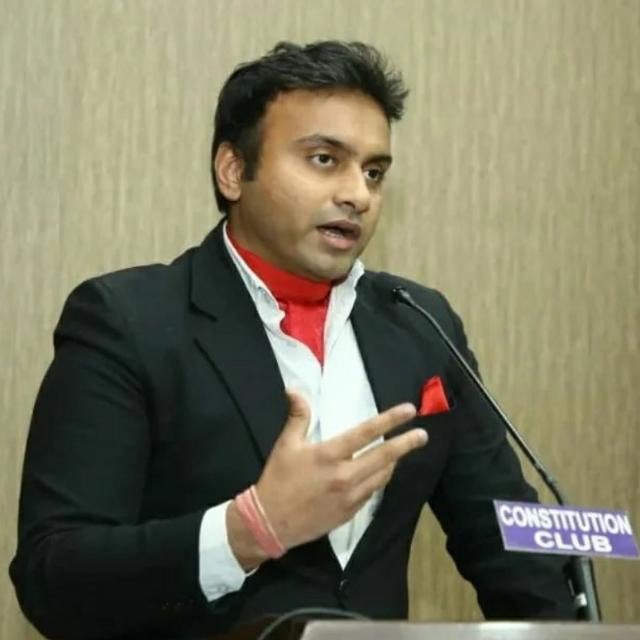
  • “The ability to work hard, good recollection capacity, vivacity, positive attitude are what I feel some of the most important qualities for a litigation lawyer” – Nishant Kr. Srivastava, Advocate-on-Record at Supreme Court of India and the Founder & Managing Partner at Actus Legal Associates & Advocates.

    “The ability to work hard, good recollection capacity, vivacity, positive attitude are what I feel some of the most important qualities for a litigation lawyer” – Nishant Kr. Srivastava, Advocate-on-Record at Supreme Court of India and the Founder & Managing Partner at Actus Legal Associates & Advocates.

    This interview has been published by Anshi Mudgal and The SuperLawyer Team
    As an Advocate-On-Record (AOR) and with over a decade of experience in the field of law, what initially inspired you to pursue a career in law, and how did your passion for the legal field evolve over the years?

    Honestly speaking, it was destined for me to become a lawyer! I had been a Civil Services aspirant after my Graduation and had also reached till the Interview stage the Civil Services Exam (CSE) conducted by UPSC. In 2005 I joined Law Centre-II (at that time evening classes at Atma Ram Sanatan Dharma College) of the Faculty of Law, University of Delhi, Delhi during the later period of my CSE preparations. However, in the same year I once again cleared the Prelims and had to write my UPSC Mains and the dates coincided with my First Semester Law exams and I had to make a choice. I chose the UPSC Mains over the law exam and so did not attend the law classes resulting in shortage of attendance and my not being able to fill the form and appearing in the exams. 

    Later on in 2009, I again joined the Faculty of Law, but this time the Campus Law Centre (CLC), Faculty of Law, University of Delhi, Delhi. 

    Coming from a relatively small city i.e., Gorakhpur (UP), I, for the first time, realised during my preparation period in Delhi that law is just not only a respectable career option, but also Delhi is the best place for anyone who has no other support system/ a first generation lawyer, apart from her/his own hard work and competence. 

    Also, from the college days, my friends used to tell me that I was good at communication- both oral as well as written, and once my attempts at CSE were over in 2006, I was faced with a grim situation and I was required to find a career option, where I could utilise my strengths to support my choice of career. And at this time law as a carrier option looked to me as the best career option, looking at my ability to study for long hours (honed during my CSE preparation days) and a good communication skills, especially in English, and having my earlier small brush with the study of law made the decision to pursue law as a career option a forgone conclusion. 

    In the early stages of your career, you worked with trial court seniors and also managed your independent practice, handling cases across all the three tiers of the courts in Delhi-trial, High Court and the Supreme Court of India. What were the most valuable lessons you learned during this phase that helped shape your career path?

    In my 2nd year at the CLC became the Student Convenor of the Seminar & Discussion Society of the CLC, apart from being one of the Student Editors of the Delhi Law Review (DLR), the renowned Journal published by the Faculty of Law, University of Delhi, Delhi, and I was also one of the Student Convenors of the Legal Aid Society of CLC. This gave me enough exposure and opportunity to meet and initiate an informal conversation with some of legal legends and top jurists of the country. It was during those discussions and interactions, I realised that being a first generation lawyer, I must know the basics and go for an organic growth and progression in my career- from trial works to appellate works. When all my Batchmates were planning to join some of the top lawyers and chambers in the Supreme Court and the High Court, I was searching for a good trial court senior, by the time I completed my course.

    Building a career in litigation can be challenging, especially as a defense lawyer dealing with white-collar crimes. What were the initial obstacles you faced, and how did you navigate and overcome them to establish yourself in this competitive field?

    Usually in any case involving allegations of a white collar crime, the accused is a well to do person having all the facilities, including a battery of lawyers. In such a scenario, initially it was difficult to make such risk aversion taking people to convince that I can handle their case well and have the requisite competence and skills, however I think what worked for me was the fact that in the courts whenever I was acting as a defense counsel, even in smaller cases, I used to give my 100% and used to put more hard work than many of the established lawyers would have put. This became noticeable not only to the Presiding Officers, Additional Public Prosecutors, Niab Courts and the police officials, but also to the litigants waiting for their cases to be called. This gave me visibility. Also, I enlisted myself with the South District Legal Aid Society (DLSA-South) in the initial days and rendered my services to the best of my abilities  as a Legal Aid Counsel (LAC) in those matters where the poor accused persons, because of lack of wherewithal, were unable to get good representation in the courts. 

    When handling both ad-hoc and institutional arbitration cases, what core skills and strategies do you rely on? Can you share an example of a particularly difficult arbitration case that you were able to resolve successfully?

    I would honestly say that Arbitration is akin to an exalted Civil Trial. And if one doesn’t have the experience of conducting trials, especially in civil cases starting from drawing up the case from the scratch and skill in cross-examination of witnesses, that is going to be a big handicap for the lawyer intending to succeed in the field of arbitration. Fortunately, I started my career in the beginning years in trial courts, apart from frequent appellate and HC/ SC/ NCDRC works. And this decision to start from the trial courts was only because I was fortunate enough to interact with the stalwarts and who and who of the Indian legal system during my Law Faculty days as the Student Convenor of the Seminar & Discussion Society of the CLC. It was one unanimous piece of advice, as a student of law, I had received from them, i.e., to know the basics and to learn the trial works, especially being a first generation lawyer and an outsider in Delhi. 

    In my first Arbitration case, the seat of which was in Kolkata, West Bengal, before the Ld. Sole Arbitrator Sh. Sushanta Chatterjee (who recently passed away), former Judge Calcutta High Court, where the Respondent had, citing a big theft at their site because of the alleged deficiency of service and dereliction of duty on the part of my client (a Manpower Supplier), had withheld payments of my client. Much depended on the veracity of the story of theft as alleged by the Respondent. At that point of time, my first-hand experience at cross-examination stood in good stead in Kolkata and I was able to show/ expose that the alleged theft never took place and it was a just ploy on the part of the Respondent to not to pay the dues of my client. This clinched the case in my favour and I won the Award for my client.

    In defending clients in cases involving economic offenses, such as those handled by the EOW, CBI, or ED, what do you believe are the key considerations in crafting an effective defense strategy? Could you highlight a case that was particularly interesting to you?

    Usually, and if I may say, invariably, the EOW and CBI has a penchant for filing voluminous chargesheet and enlist 30/50/85 witnesses, if not more. And here there is enough scope of contradictions and loopholes. As a defense lawyer representing an accused, I am not required to prove that my client is innocent beyond reasonable doubt, since the same is the burden of the Prosecution and not the accused. A careful reading of the chargesheet and statements particularly of the key witnesses, gives sufficient points and opportunities to show to the Court that there is difficulty in accepting the case of the prosecution and there are doubts and contradictions and there are two views possible and after that I leave the rest to the Court to decide. In fact in many EOW cases, I have got my clients discharged at the initial stage itself. Obviously, the knowledge about the latest judgment is something, inter alia, which clinches the decision in your favour. In an interesting case being tried u/s 420 IPC, the CBI has summoned on a single day a number of witnesses. The trial had started almost 6/7 years after the case was registered. By that time many witnesses were not traceable and those who had come had shifted to different places outside Delhi and had travelled to Delhi from distant places. That very day, due to the sheer number of witnesses (complainants) and the heavy board of the court concerned, matter was getting adjourned. The witnesses showed reluctance to come again for the examination in chief and cross-examination. At that point of time, I was able to get them to compromise and get their statements recorded. On that single day most of the witnesses compromised with the accused and the case became very weak. Later on, in the cross examination of the few remaining witnesses, I was able to show that the prosecution was not able to prove its case beyond reasonable doubt.

    You are highly regarded for your expertise in matrimonial disputes and family law. How do you view the changing landscape of women’s rights in matrimonial cases, and what are the major challenges you come across while dealing with matrimonial cases?

    Unfortunately, matrimonial disputes are one of the fastest increasing legal disputes in India, at least in Metropolitan cities like Delhi. The ability to adjust and let go of certain things, which at the first place should not have been an issue at all, I am sorry to state, has become more and more scarce these days. Intervention of the family members, especially because of the instant calls and the tendency of the people to “create evidence” has weekend the mutual trust and faith a couple ought to have for any marriage to work. I am happy to see that the Courts in Delhi have become more and more gender neutral, especially in the matters instituted under the various provisions of the Hindu Marriage Act, 1955. The same is the situation in cases instituted under s.144 of the Bhartiya Nagarik Suraksha Sanhita (BNSS) (old s. 125 CrPC). Over implication of the relatives and distant relatives in DV Act matters by the aggrieved are being frowned upon by the Judicial Magistrates. 

    The major challenge, I think, is the lack of cogent and convincing evidence in matrimonial disputes, since most of the allegations pertain to something which had happened within the four walls of the matrimonial home. And this many a time, gives opportunity to a party to level baseless and sometimes ridiculous allegations!  I am also especially sad to see how the children suffer due to the mutual fight between their own parents. I strongly  feel that any lawyer handling such matrimonial cases must be a sensitive person herself/ himself because that is the only thing which might help the litigating couple who are blinded by their mutual distrust and hate towards each other and who would go to any extent to prove that the other person was wrong and he/she has been wronged. 

    As the founder and managing partner of Actus Legal Associates, how do you effectively manage a team of 7-10 lawyers while ensuring consistent performance and a steady flow of work across the firm?

    I believe in self-control and believe that no one can help a person who is not willing to help herself/ himself. So, I always try to make my colleagues and juniors realise that they have to take responsibility and deliver the results. Litigation, among other legal areas of practice and when compared with other areas of practice in law, is very demanding. Only highly motivated people can survive in litigation. 

    I believe in situational leadership and delegation. Once the expectations are clear and one is clear with the facts of the case at hand, I trust my team to deliver the results. Discussions and deliberations and constant evaluation of the progress of the cases we are handling through our own internal mechanism, I think helps us to ensure consistent performance and steady flow of work across the firm.

    For young lawyers aspiring to specialize in litigation, arbitration, or criminal defense in India, what advice would you offer? What key skills and personal qualities do you believe are essential for success in these areas of law?

    Your this question is precisely the same question, which as a law student and the Student Convenor of the Seminar & Discussion Society of the CLC, I used to ask the Legal Luminaries, since I was one coordinating and inviting those Supreme Court and High Court Judges and the doyens of the Bar to the CLC for events, lectures and conferences and many a time, I used to get some free time with these seniors in the profession. Since many of them were alumni of CLC, the chats were pretty friendly. I was told invariably by everyone I had put this question, that I must know the basics and spend some initial years learning trial work, both civil and criminal and this is what I will advise the young lawyers aspiring to specialize in litigation, arbitration or criminal defense in India. 

    Inter alia, the ability to work hard, good recollection capacity, vivacity, positive attitude and what I feel are some of the most important qualities for a litigation lawyer, I also feel that a litigation lawyer must be ready and be there in the court much before the court starts. Being before time, gives sufficient time to once again go through your file, talk to the client and be abreast with facts of the case at hand. Many times, your ability to keep an open mind and not acting only as per your strategy made last evening, just being alive to the requirements and queries of the court, carries the day for you. Ability to network with people outside your profession is also one of the important skills and qualities, I believe are essential for success in these areas of law.

    Looking back at your career, what has been your most fulfilling case, and what were the learning experiences that you’d like to share with us?

    In one of the matrimonial disputes cases, where both the parties had married with each other after their unsuccessful first marriage and had a baby born out of this second marriage, I played a crucial role to ensure that the matter is settled through mediation in which there was no intervention of the families of both the parties. Actually, I sensed during the initial days of my engagement as a counsel for one of the parties that the real culprit for the impasse were the parents of both the parties and the couple were having almost cordial relationship and it was only because of the unintended but damaging interference by the parents from both the sides, the relations had become strained to the extent that one of them had filed a petition for divorce on the ground of cruelty. I impressed upon the Ld. Family Court to send the matter (despite I having been drafted the WS and carrying the same in my hand to the Court) to the Mediation Centre and be taken up under the supervision of the most experienced Mediator and the parents of both the parties be strictly barred from entering the Mediation Room. That worked! The moments the parents were barred from interfering, the couple was able to come to an amicable settlement and resolve their grievances. I am happy to inform you that as on date those warring couples are living happily together with their beautiful child. 

    The experience which I gained here was that a lawyer must also be a good listener, especially in family matters and the best way to resolve a matrimonial dispute is amicable settlement. Dehors the din, usually matrimonial matters are more about small issues generally connected with adjustments and if one is able to point out and target and resolve those small issues, many families may be saved from disintegration and ending up in divorce.

    Get in touch with Nishant Kr. Srivastava –

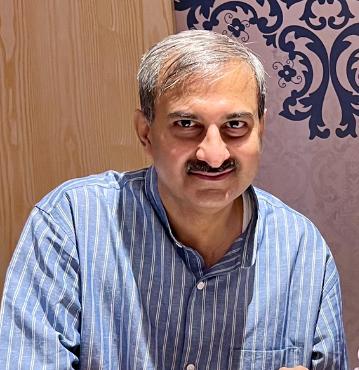
  • The journey of a first-generation lawyer is never easy, but through hard work, personal networking, and an unwavering commitment to ethics, success is achievable for anyone,” -Vaibhav Mishra, Advocate-On-Record at the Supreme Court of India.

    The journey of a first-generation lawyer is never easy, but through hard work, personal networking, and an unwavering commitment to ethics, success is achievable for anyone,” -Vaibhav Mishra, Advocate-On-Record at the Supreme Court of India.

    This interview has been published by Namrata Singh and The SuperLawyer Team

    Could you share what inspired you to pursue a career in law, and how your journey has evolved from your early days at Campus Law Center, Delhi University, to becoming an Advocate-On-Record at the Supreme Court?  

    In a way, I am an accidental lawyer as after my graduation in 2009 with B.Com (Hons.) course from Zakir Husain Delhi College(erstwhile Zakir Husain College), Delhi University I was preparing for CAT and other MBA entrance exams along with Combined Defence Services examination. I cleared my Combined Defence Services examination and went to 14 SSB (Service  Selection Board) Allahabad around March 2010. Unfortunately, I could not clear the Service Selection  Board interview and later joined Aon Hewitt (erstwhile Hewitt Associates) as a Research Associate.  In the meantime, I had cleared the Faculty Of Law, Delhi University entrance exam and got a decent rank so I took up the 3-year LLB course at Campus Law Centre. 

    During my days at Campus Law Centre, I took part in many Moot Court Competitions all over India and debates within the college itself. The atmosphere in Campus Law Centre is different as compared to other Law Schools’ be it National Law Universities or any other Law School. The vibe of studying at Delhi University, especially on North Campus and the exposure which one gets there develops the personality of an individual holistically. My internship stints in different offices after classes also helped me in making my decision towards taking up litigation as a career.  

    After my graduation in 2013, I was working as a Law Clerk with HMJ. (Retd.) Shiva Kirti Singh in  Hon’ble Supreme Court and later on in many different offices such as Suri & Co., Luthra & Luthra  Law Offices India (erstwhile L&L Partners), Chambers of Sr. Adv. Ajay Verma, C&C Associates,  M/s. Dev Bhumi Cold Chain Pvt. Ltd. before going fully independent. All these offices helped me in becoming a better individual in my professional career and maybe in life as well. The exposure of dealing with different kinds of people and different complex situations has its advantages &  disadvantages which one tries to navigate.  

    I had the opportunity to clear my Advocate-On-Record exam on my second attempt and got the result around April 2023. I think for establishing one’s career in litigation in the Supreme Court although it is not mandatory becoming an Advocate-On-Record does help as a stepping stone.  

    You are currently enrolled in the Professional Final Level of the Company Secretary course. What motivated you to pursue this course at this stage of your career? Do you see it as a strategic move for future growth in your field, or do you have any new plans or directions you aim to explore with this qualification?  

    I think this course will help as an add-on if one still pursues law as a career. I did B.Com  (Hons.) before doing law so I found taking up another course such as Company Secretary as an advantage. But mind you this course does take up quite some time & energy in preparations, even though I  am a bit held up in the Professional Final Level for quite some time. But it is also my opinion that the benefits after clearing this course are quite immense in commercial client buildups for individual practitioners specifically related to NCLT & NCLAT matters and even for those who want to join  Commercial Legal Practice of Law Firms or Corporate In-House jobs. 

    It is also a reality that at the end of the day one might have 2-3 or 7-8 academic/educational course degrees, but if one does not know how to use them practically, then it does not make much of a difference in a practical professional career.  

    As an Advocate-On-Record at the Supreme Court, could you describe the unique responsibilities and challenges associated with this role compared to other legal positions you have held? 

    As an Advocate-On-Record, one must be mindful of the Special Leave Petitions or other drafts drafted and filed in Hon’ble Supreme Court, since the language is explicitly read and re-read by Judges and Counsels in open Court. Anything that is seen as amateurish or even bordering contempt of court can have serious repercussions for the Advocate-On-Record on whose name the document has been filed. The strictness of the Hon’ble Supreme Court is also legitimate since there is no appellate court as per se after the Hon’ble Supreme Court. 

    The stakes are high being an Advocate-On-Record due to the responsibility being attached with cases in Court, hence that will be a big difference as compared to other positions held in my legal career.  

    Could you share some insights or memorable experiences from the high-profile cases you have handled, such as those involving the Delhi Development Authority (DDA) or the Airport Authority of  India? 

    With DDA, most cases were general land acquisitions in the manner of Writ Petitions in the High Court or Arbitrations related to the 2010 Commonwealth Games; henceforth, they were property law or commercial and arbitration-related. 

    However, there was one case while appearing for a private party against the Municipal Corporation of  Delhi wherein a commercial establishment was sealed which was against the Hon’ble Delhi High Court order. I was working at C&C Associates at that time and we had to apply with regard to the same in the High Court, got it mentioned and then listed so that it can be heard as soon as possible.  We argued in the evening and got a favourable order around 5:30-6 P.M. The efforts and the result of doing everything on almost the same day made this case special. 

    While looking after litigation matters at M/s. Dev Bhumi Cold Chain Pvt. Ltd. I had the opportunity to look after a case filed through a local Counsel in the United States Of America in the state of Washington, which required me to see witness depositions in a Court there till 2-4 A.M. in the night (Indian Standard Time) about 3-4 time and mediation attempt between parties couple of times, also had the opportunity to prep up an Indian witness being deposed in the Court in United States. I  must add that based on my experience just like most Indian Courts are not as depicted in Indian movies, similarly courts in the United States are not as depicted in their movies (may I mention A Few  Good Men!).  

    Another case was in Sikkim High Court wherein I flew to Gangtok to argue and get a stay order for the client. We had to file a Special Leave Petition in the Supreme Court to get the stay application heard in Sikkim High Court I think during winter vacation time. The climate terrain in that part of the region during winter is very cold, hence matter of preparation and getting a favourable order in an environment which one is not used to had its charm. I must add that North-East  India is extremely beautiful and if one can then one should see the natural scenery there. 

    What has your experience been like as a Group ‘A’ Panel Counsel for the Central Government, and how do you balance this role with your private practice? 

    Being a Group ‘A’ Central Govt. Counsel in the Hon’ble Supreme Court is a mixed bag, from criminal to tax to service matters all kinds of cases come up. The work quality gives great exposure and managing it with private practice is not that big a task if one gets used to handling it quickly &  efficiently.  

    You have significant experience in arbitration and mediation. What are the key skills a lawyer needs to succeed in these areas, and how do you prepare for arbitration proceedings? 

    I don’t know if I have significant experience in this field as it’s quite broad, but I can say that the preparation for cases in this area should be thorough since commercial arbitration matters have a lot at stake in terms of commercial repercussions. One should know the relevant provisions of law and the procedure before the appointment of an Arbitrator and after the appointment of an  Arbitrator.

    In Mediation proceedings, if parties are willing to settle the issues at hand, then all endeavours should be utilized to do so. Otherwise, prolonged litigation is in the interest of no one in the long run as compared to speedy disposal of a case at hand.  

    You have authored articles and a book on legal topics. How important do you think it is for practising lawyers to contribute to academic discourse, and what impact does it have on their practice? 

    I have written two books one on Patna High Court and its judgments and the other one on my  Grandfather Late Shri Lalit Narayan Mishra (Former Railways Minister). I believe writing is a flare that helps in augmenting the drafting skills of a lawyer. I also contribute articles for The Daily  Guardian, so I’ll encourage writing articles as a scope as well.  

    A practising lawyer should try to contribute to the academic discourse as a Guest Faculty or through any other medium as long as it does not affect the professional practice of the lawyer.  

    As someone with a highly demanding career, how do you manage to maintain a work-life balance,  and what advice do you have for young lawyers struggling with this aspect? 

    In my opinion, work-life balance goes for a toss whether you are an Independent Practitioner or working in a Chambers/Law Firm/In-House Corporate Office. The reason for the same is competition in the market especially when it’s difficult getting clientele for your practice or job in someone’s office.  

    Time management is quintessential in such situations. Although time management is still a work-in-progress for me, those who can handle time durations for work and family along with extracurricular activities such as theatre or sports can still have a decent work-life balance.  

    Based on your extensive experience, what advice would you give to young legal professionals who are just starting their careers, particularly in the areas of civil and commercial law?  

    My advice to someone would be to do your best, so you don’t have too many regrets later. Those who are young in the profession should work on what they can do rather than thinking of  something which might not be in their control for example applying for as much legal empanelment work as possible rather than waiting for work to come. 

    It’s a tough field where different types of people will come across in the profession, some as friends some may be something else. Always remember to value yourself no matter what the situation is while avoiding the fine line between self-confidence and arrogance.  

    The client whether an individual or a corporate house will be posting faith in you as a lawyer, so avoid letting someone down. Be ethical, since shortcuts and cutting corners will lead someone nowhere in the long run. 

    Any newcomer in the field should read the file at hand a lot and should be well-versed with the facts of the case while being updated with the recent judgments on the moot question in the matter. If opportunity is there then one should enjoy the process of arguing before the judge, whether District  Court or Supreme Court to the best of one’s ability; the next client/the next opportunity could very well be watching the proceedings.  

    I also believe that the difference between first-generation and second/third-generation lawyers is in the first few years of the profession, it all gets levelled out based on the hard work and personal networking skills of the individual. There are enough first-generation lawyers in the field who are role models for many. 

    Get in touch with Vaibhav Mishra-

  • “The ongoing appeal is a testament to the complexities and nuances involved in IP litigation and underscores the importance of jurisdictional clarity in legal proceedings.” – Shruhita Amit, Joint Partner at Photon Legal

    “The ongoing appeal is a testament to the complexities and nuances involved in IP litigation and underscores the importance of jurisdictional clarity in legal proceedings.” – Shruhita Amit, Joint Partner at Photon Legal

    This interview has been published by Namrata Singh and The SuperLawyer Team

    Can you share what inspired you to pursue a career in law and how you embarked on this journey?

    Growing up, I always had a keen interest in understanding the intricacies of systems, whether economic, social, or legal. However, after completing my Economics Honors degree, I was still determining my next steps and decided to take the Delhi University LLB exam. The decision to sit for the Delhi University LLB exam was initially driven by practical considerations; law seemed like a vocational course with promising career prospects.

    However, as I delved into my law studies, I developed a keen interest in commercial laws, particularly in the area of Intellectual Property (IP). This interest was sparked during internships at leading IP firms, where I witnessed the importance of trademarks and other IP elements in protecting business identities and innovations. My enthusiasm for law translated into academic success; I consistently ranked among the top 5% of my batch, which comprised around 800 students. My dedication led to an opportunity with Anand & Anand, a prestigious IP firm, which marked the beginning of my professional journey in law. What started as a pragmatic decision evolved into a fulfilling career focused on the intricate and impactful field of IP law.

    You’ve managed high-stakes litigation for leading companies. Can you describe one of the most challenging cases you’ve handled and the key takeaways from that experience?  

    In my career, I’ve been involved in several trademark litigations, successfully enforcing rights related to brand names, logos, trade dresses, copyrights, and other similar IP rights. One of the most challenging cases I’m currently handling is an ongoing appeal at the Delhi High Court in a patent matter. The dispute centers around the appropriate jurisdiction for filing an appeal against a refusal order issued by the Delhi Patent Office, despite the patent application being initially filed in Mumbai. We contend that the Delhi High Court should have jurisdiction since the refusal order was passed in Delhi.

    The case took a complex turn when a single judge bench at the Delhi High Court declared the appeal non-maintainable. We have now escalated the matter to a division bench, seeking a reconsideration of the jurisdictional issue. This case is particularly intriguing as it could set a precedent for similar jurisdictional disputes in IP law. The outcome will significantly impact the strategic considerations for patent litigation in India. The ongoing appeal is a testament to the complexities and nuances involved in IP litigation and underscores the importance of jurisdictional clarity in legal proceedings. [FILO EDTECH INC. Vs UNION OF INDIA LPA 375/2024]

    As an expert in Intellectual Property Law, what do you consider the most critical elements when managing trademark prosecution and litigation?

    In managing trademark prosecution and litigation, I find that the most critical elements revolve around preparation, strategy, and adaptability. First and foremost, comprehensive research is key. Before filing a trademark, it’s crucial to conduct thorough searches to ensure the mark is distinctive and doesn’t infringe on existing rights. This groundwork helps avoid potential conflicts and sets a solid foundation for the trademark’s protection.

    Another important aspect is strategic planning. Anticipating challenges whether, during the prosecution phase or in potential litigation, allows us to develop a proactive approach. For instance, being prepared for opposition or knowing when to negotiate versus litigate can significantly influence the outcome.

    Communication also plays a vital role. Clear and persuasive communication with clients, examiners, and even opposing parties can make a big difference. Whether, it’s drafting responses to office actions or presenting arguments in court, articulating our position effectively is crucial.

    Lastly, I believe in staying adaptive and informed. The landscape of IP law is constantly evolving, so keeping up with the latest legal developments and industry trends is essential. This not only helps in staying ahead of the curve but also in providing the best possible advice to clients.

    Overall, it’s a mix of thorough preparation, strategic thinking, clear communication, and continuous learning that I find most critical in managing trademark prosecution and litigation.

    What emerging trends in corporate and intellectual property law do you believe will shape the future of legal practice, and how should legal professionals prepare for these changes? 

    Emerging trends in corporate and intellectual property law are increasingly shaped by advancements in technology, particularly AI. AI is revolutionizing how we draft legal documents, from contracts to IP pleadings, by streamlining the process and handling repetitive tasks more efficiently. This shift is exciting because it allows us to focus more on the strategic aspects of our work and provides clients with faster turnaround times. However, while AI can handle many routine tasks, we legal professionals must remember that the nuanced understanding and strategic insight we bring to the table can’t be replicated by machines.

    To prepare for these changes, we need to embrace technology and stay updated on the latest tools and trends. Learning how to use AI effectively will enhance our productivity, but we should also focus on developing skills that complement these tools, such as critical thinking and personalized client interactions. By combining technological proficiency with our unique legal expertise, we can continue to add significant value and remain indispensable in a rapidly evolving legal landscape.

    You developed an online certificate course on Copyrights for Lawctopus. How do you see the role of online education in shaping the future of legal training?  

    Online education is revolutionizing legal training by making valuable knowledge more accessible and affordable. Platforms like Lawctopus, where I developed a course on Copyrights, exemplify how online courses provide keen learners with the opportunity to dive deep into specialized areas of law without the constraints of traditional, lengthy, and costly degrees. For me, online courses have been a game-changer. When I wanted to expand my practice to include complex corporate law assignments such as multi-jurisdictional M&As, advisory on equity structures, cross-border transactions, and corporate restructuring, these well-crafted courses allowed me to gain the necessary expertise efficiently and economically.

    The beauty of online education lies in its ability to offer flexible learning options that cater to various levels of expertise and interest. It empowers professionals to stay current with evolving legal trends and deepen their knowledge base, all from the comfort of their own homes. This democratization of education not only enhances individual careers but also contributes to a more knowledgeable and agile legal community.

    Outside of your professional life, do you have any hobbies or interests that you feel contribute to your legal thinking or problem-solving skills?  

    Outside of my professional life, my hobbies play a significant role in enhancing my legal thinking and problem-solving skills. I’m an avid reader with a broad range of interests, including fiction, history, and philosophy. Additionally, I have a strong interest in personal development literature, which offers valuable insights into human behaviour and decision-making. This diverse reading habit sharpens my critical thinking and helps me approach legal issues from multiple perspectives, enriching my problem-solving abilities.

    Travelling is another passion that complements my legal work. Exploring different cultures and engaging with people from various backgrounds provides me with unique viewpoints and approaches to problem-solving. This exposure fosters a more adaptable and open-minded approach, which is essential for tackling complex legal challenges. Both reading widely and travelling allow me to bring fresh insights and innovative solutions to my legal practice.

    As someone deeply involved in the legal aspects of emerging technologies, what do you see as the most pressing IP challenges in areas like AI and cybersecurity?  

    In the realm of AI, one major challenge is defining and protecting intellectual property rights for innovations that are driven by machine learning algorithms. Determining ownership of AI-generated inventions or works can be complex, especially when AI systems are creating novel solutions without direct human intervention. This raises questions about patentability and copyright, and whether current IP frameworks are adequate for these advancements.

    In cybersecurity, the challenge is ensuring that our intellectual property is safe from cyber threats. One notable example was when I was involved in a case where a company’s proprietary encryption algorithms were compromised during a sophisticated cyber-attack. The breach not only jeopardized their trade secrets but also raised complex questions about the effectiveness of their security measures and their legal obligations to protect their IP.

    A key technical challenge here was understanding the intricacies of how the encryption was bypassed. This required working closely with cybersecurity experts to assess the vulnerability and determine how it could have been exploited. We had to delve into the specifics of the encryption technology, analyze the breach, and then figure out how to fortify the IP protection moving forward. This experience highlighted the need for a legal approach that’s deeply integrated with the technical aspects of cybersecurity. It’s not just about having legal protections in place but also understanding the technology to ensure that our IP safeguards are robust and adaptable to evolving threats.

    Considering your diverse experience, if you could create a new area of IP law to address future challenges, what would it be and why? 

    If I could create a new area of IP law, it would focus on AI-generated innovations and Ownership Rights. As AI technology advances, it’s increasingly capable of generating new inventions, designs, and creative works autonomously. However, current IP frameworks are struggling to keep up with these developments, particularly in defining ownership and protection for AI-generated outputs.

    The new area of law would address several key issues: establishing clear guidelines for determining ownership of AI-generated inventions, defining the role of human contributors versus AI systems, and creating a framework for protecting AI-created intellectual property. This would involve setting standards for patent and copyright eligibility when an AI is the primary creator and resolving disputes related to the rights of the developers versus the AI itself.

    This proposed IP domain is crucial because it would ensure that as AI continues to innovate, the legal system can adequately protect and manage these advancements. It would help address the gaps in current IP laws and provide a structured approach to the future of creativity and invention in the age of AI.

    You’ve witnessed the rise of digital platforms and their impact on IP. How do you envision trademark and copyright law evolving to address challenges in the digital space? 

    On the trademark front, online counterfeiting is a significant menace that demands more effective legal measures. In the digital landscape, where brands are prevalent across social media, online marketplaces, and app stores, companies face persistent issues with unauthorized use of their trademarks. This often involves numerous counterfeiters operating anonymously or under false identities, making it challenging to address each instance individually. Therefore, trademark law needs to implement more robust policies and practices to combat these widespread infringements efficiently. Instead of pursuing multiple litigations against individual offenders, we need a streamlined approach that can address these issues comprehensively and proactively.

    As regards copyright, the digital revolution has made it incredibly easy to copy and distribute content, which complicates enforcement. I’ve dealt with cases where copyrighted materials were pirated across multiple platforms, making it a daunting task to track and address infringement. The law will need to evolve with better digital rights management tools and more effective takedown procedures. Additionally, as user-generated content becomes more widespread, we need to rethink how copyright law balances protecting original works by accommodating the way people build upon and remix existing content. This may involve developing new legal frameworks that both safeguard the rights of original creators and support the collaborative and adaptive nature of digital creativity.

    As someone who’s navigated law firms, what insights can you share about the different dynamics and challenges in these environments?   

    Navigating law firms across different cities has given me a unique perspective on the varying dynamics and challenges in these environments. While the essence of law firms remains consistent—a client-driven focus aiming to provide top-notch services and build strong portfolios—there are notable differences influenced by local practices and court systems.

    For instance, I’ve observed distinct operational nuances between law firms in cities like Delhi and Mumbai. The Delhi High Court and the Bombay High Court, for example, have different procedural practices and court cultures. Understanding these regional variations helps law firms tailor their strategies and services to better meet local demands and navigate the specific challenges of each jurisdiction. It also highlights the importance of adaptability and local expertise in providing effective legal solutions across different cities.

    Get in touch with Shruhita Amit-

  • “Whatever you pursue, do it with passion, dedication, and honesty. Integrity is crucial. Trust that your honesty, dedication, and hard work will eventually yield rewards.” – BijoyLashmi Das, Experienced Legal Professional

    “Whatever you pursue, do it with passion, dedication, and honesty. Integrity is crucial. Trust that your honesty, dedication, and hard work will eventually yield rewards.” – BijoyLashmi Das, Experienced Legal Professional

    This interview has been published by Namrata Singh and The SuperLawyer Team

    Bijoylashmi Das is a seasoned legal professional with 16 years of experience, known for her dedication to providing strategic legal guidance to corporations across various industries. Throughout her career, she has consistently demonstrated a deep commitment to helping companies navigate the intricacies of the legal landscape while aligning with their business objectives. Bijoylashmi specializes in corporate law, where she excels in drafting, reviewing, and negotiating contracts to ensure favorable terms for her clients. Her expertise in contract negotiations has been instrumental in securing agreements that protect the interests of the corporations she represents. She is also highly proficient in litigation, where her skills in managing legal disputes have led to favorable outcomes in complex cases. Compliance and risk management are other critical areas of Bijoylashmi’s practice. She has a keen eye for identifying potential legal risks and developing comprehensive strategies to mitigate them. Her proactive approach to compliance ensures that the companies she works with adhere to all relevant laws and regulations, minimizing the risk of legal issues and penalties. Bijoylashmi’s proven track record of success is evidenced by her ability to help companies achieve their business goals despite legal challenges. She is adept at providing strategic legal counsel that aligns with the overall objectives of the corporation, ensuring that legal considerations support rather than hinder growth and innovation. Her extensive knowledge and expertise make her a trusted advisor to executives and stakeholders. Bijoylashmi is known for her ability to communicate complex legal concepts clearly and effectively, empowering decision-makers to make informed choices. Her strategic insights and practical solutions have earned her the confidence of those she advises, making her an invaluable asset in driving corporate objectives and growth initiatives forward. In summary, Bijoylashmi Das is a highly experienced and dedicated legal professional whose comprehensive expertise in corporate law, contract negotiations, litigation, compliance, and risk management has consistently supported the success and growth of the corporations she serves.

    Can you share with us how you started your career in law and what motivated you to choose this field? Could you please walk us through your journey?

    Since childhood, I’ve been known for my courage, fearlessness, assertiveness, and strong sense of justice. My approach to everything has always been logical and evidence-centric—things were either black or white for me. Even from a young age, my parents recognized that my debating skills were unmatched because I always backed up my arguments with solid evidence. I have a deep-seated intolerance for injustice or bullying, and I’ve always felt compelled to stand up for innocent people.

    My journey from being a girl from Guwahati to establishing myself in Delhi has been filled with challenges. I graduated from college in 2008 without any influential connections or shortcuts. I started my legal career by diligently navigating through district courts, district forums, and eventually gaining experience in the High Court and Supreme Court. I strategically planned my career progression, focusing initially on trial experiences before advancing to higher courts. Subsequently, I made the transition to the corporate sector.

    Through my diverse experiences with various lawyers and law firms, I have earned a solid reputation within the organizations I have served. My dedication and hard work have been recognized with numerous accolades and awards along the way.

    You have over 16 years of experience in various legal domains. How has your journey evolved over the years, and what are some of the significant milestones? 

    My journey has been a thrilling roller-coaster ride, marked by both successes and setbacks. Through it all, I’ve remained extraordinarily hardworking and persistent. My strong willpower has consistently propelled me forward, regardless of the challenges.

    Early in my career, I had the privilege of learning from accomplished lawyers who have carved out distinguished reputations in the field. Their mentorship taught me invaluable legal skills.

    Reflecting on some significant milestones, one standout moment was in a service matter where we faced a particularly challenging situation. Through diligent research, I unearthed a case law remarkably similar to our case, and it had been adjudicated by the same judge hearing our matter. This discovery proved pivotal, leading to our victory. I vividly recall my senior exiting the courtroom, giving me a high five, and attributing our success to my efforts—a moment of profound recognition.

    Another memorable achievement was successfully representing a previous organization in the Supreme Court. It was a daunting case with slim chances of winning, but meticulous preparation and thorough counsel briefing enabled us to secure a l win and I ended up recovering a substantial amount for the organization.

    Additionally, I fondly remember negotiating a critical endorsement agreement where the opposing party was a renowned law firm. As the sole negotiator from our organization, I effectively closed the deal on mutually agreeable terms. This accomplishment delighted our department head so much that he even offered me the opportunity to meet a Bollywood icon, though I graciously declined, the gesture left me elated.

    Throughout my career, I’ve also contributed significantly to business transfer agreements and IPO processes, enhancing my professional journey and earning multiple accolades along the way. Each milestone has shaped me and reaffirmed my passion for the legal profession.

    You’ve successfully negotiated numerous complex agreements. Can you share a particularly challenging negotiation experience and the key takeaways from it?

    Negotiating a contract is a critical process that exposes you to potential risks inherent in the business deal. It’s crucial to accurately capture the business understanding and protect your organization from risks and defaults. In one instance, during negotiations where the other party held significant leverage as the revenue generator and threatened not to sign the agreement, I remained composed. I patiently explained the rationale behind each clause, ensuring they understood how each provision aligned with the overall deal. This approach ultimately led to agreement and closure.

    The key takeaway from this experience is to always provide clear rationale behind your suggestions or edits during negotiations. It’s essential for the other party to understand your thought process and how it aligns with the objectives of the deal. Additionally, it’s important not to succumb to pressure and agree to clauses that may be one-sided or disadvantageous to your organization.

    How do you believe your work in the legal field has helped companies achieve success and gain knowledge, and what role does legal support play in business growth?

     I have made significant contributions in business transfer agreements and IPO processes. These efforts have generated substantial revenue, goodwill, and reputation for the companies I have served. Additionally, as part of legal teams, our vigilant monitoring of risks and proactive mitigation strategies has shielded companies from various threats. We protect brand values, recover outstanding dues, and draft contracts that effectively preserve our rights and remedies. Collectively, these actions significantly contribute to the growth of any organization.

    Balancing a demanding career with personal interests is challenging. How do you manage your work-life balance, and what hobbies or activities do you enjoy in your free time?  

    Yes, achieving work-life balance can be challenging. However, whenever possible, I prioritize spending quality time with my daughter. We enjoy engaging in various activities together such as colouring, reading, dancing, and watching movies.

    With the legal landscape constantly evolving, what are some emerging trends in corporate law and compliance that you believe will shape the future of the legal profession?  

    Certainly! In India, the legal landscape in corporate law and compliance is evolving rapidly, driven by regulatory reforms, economic changes, and technological advancements. Here are some emerging trends that are likely to shape the future of the legal profession in corporate law and compliance:

    Digital Transformation and E-commerce Regulations: With the rapid growth of digital platforms and e-commerce in India, there is a need for robust regulatory frameworks governing data protection, cybersecurity, electronic contracts, and consumer rights. Corporate lawyers will need to navigate these evolving regulations to ensure compliance and mitigate legal risks for companies operating in the digital space.

    Regulatory Technology (RegTech) and Legal Tech Adoption: The adoption of RegTech and Legal Tech solutions is on the rise in India, offering innovative tools for legal research, compliance monitoring, contract management, and regulatory reporting. Corporate lawyers who embrace these technologies can enhance efficiency, reduce costs, and provide strategic advice to clients.

    Ethical Business Practices and Corporate Ethics: There is a growing awareness and importance placed on ethical business conduct, transparency, and corporate integrity. Corporate lawyers are expected to advise companies on adopting and implementing ethical frameworks, whistleblower policies, and conducting internal investigations into misconduct allegations.

    These emerging trends highlight the dynamic nature of corporate law and compliance in India. Corporate lawyers who stay abreast of regulatory changes, industry developments, and technological innovations will be well-positioned to navigate complexities and provide value-added legal solutions to their clients.

    Your career includes a significant transition from being an associate lawyer to a legal consultant. What prompted this change, and how did you make the choice to shift from a traditional law firm role to a consultancy position?  

    I’ve always had a passion for exploring diverse areas. If you look at my career trajectory, I’ve immersed myself in every aspect of litigation that a lawyer could possibly undertake. After gaining extensive experience across various courts, I made a deliberate move into the corporate sector to delve into its intricacies and challenges.

    What advice would you give to young legal professionals aspiring to build a successful career in corporate law and litigation?  

    Whatever you pursue, do it with passion, dedication, and honesty. Integrity is crucial. Trust that your honesty, dedication, and hard work will eventually yield rewards. Embrace your struggles and difficult times—they shape who you are today and will make you proud of your journey.

    As senior legal professional, what are your primary responsibilities, and how do you manage the legal challenges you face in daily dealings?  

    My main roles encompass strategic planning, risk management, contract negotiations, dispute resolution, and problem-solving. In addition, I oversee team management, providing guidance and collaborating with them to achieve organizational success.

    A significant challenge I encounter is aligning with diverse internal and external stakeholders whose perspectives may differ from ours. Through extensive discussions and deliberations, we work together to navigate these differences and reach common ground effectively.

    How did you manage to switch industries from the consumer sector to real estate sector and how has it been different?

    After dedicating nearly 8 years to the consumer goods industry, I made a deliberate decision to transition and explore a new industry. My goal was to gain insights into its operations and intricacies. I believe that cultivating diverse knowledge and experience is invaluable, offering broader perspectives and opportunities for growth compared to staying within a single domain.

    Certainly, while the sectors themselves may differ significantly, the core responsibilities of lawyers remain consistent across industries. Whether in consumer goods or any other sector, our primary duties include drafting sound contracts, successfully handling litigations, and establishing processes and policies to mitigate risks. Therefore, apart from the specific business activities of each organization, the functioning of legal teams tends to maintain a consistent approach and focus on these fundamental tasks.

    Get in touch with BijoyLashmi Das-

  • “My guiding philosophy is to be kind to others and to work hard. I believe in not transferring pressure onto others, focusing on the fundamentals, and simplifying complexities.” – Kumar Bankatesh, Head of Legal at C K Birla group Company

    “My guiding philosophy is to be kind to others and to work hard. I believe in not transferring pressure onto others, focusing on the fundamentals, and simplifying complexities.” – Kumar Bankatesh, Head of Legal at C K Birla group Company

    This interview has been published by Namrata Singh and The SuperLawyer Team

    What motivated you to pursue a career in law after your schooling at Sainik School Tilaiya and your experience with the NDA? How did your time at Campus Law Center, Delhi University, shape your legal perspective?

    After completing my 10+2 from a Sainik School, I was selected for the NDA but could not join due to some medical issues. I then moved to Delhi for my graduation and enrolled in History (H). Initially, I chose Law to prepare for competitive exams, but I soon developed a genuine interest in the field and decided to pursue it as a career. During my college years, besides NLUs, the Campus Law Centre stood out with its excellent faculty and talented students. The case study method of teaching there fostered my interest in developing legal acumen.

    What is your personal philosophy or mantra that you live by? How has it guided you through various phases of your life and career?  

    My philosophy and mantra in life is to be kind to others and work hard. Try not to pass the pressure on others. try to do the basics right and make things simpler. 

    Can you share your experiences working as a Legal Retainer at Indian Express Newspapers and simultaneously doing court reporting for UNI? How did this dual role contribute to your legal acumen?

    I joined Indian Express Newspapers as a Legal Retainer immediately after completing my final semester exams. In this role, I represented the organization before various Courts and Tribunals. During my time with Indian Express, I had the privilege of working closely with some of the finest legal minds, particularly Mr. Nachiket Joshi. This period was a tremendous learning experience, and the knowledge I gained continues to benefit me in my current role as an in-house counsel. It has enhanced my decision-making abilities and problem-solving skills, which I feel are often lacking in colleagues without direct courtroom experience.

    My extensive court reporting experience helped me build a strong rapport with court staff. Attending high-profile case hearings and grasping the essence of judgments early in my career was invaluable. Regular interaction with the judiciary significantly boosted my confidence. It became routine for me to visit the court in the evening and inquire about any significant judgments of the day. Publishing exclusive stories always brought a great sense of satisfaction.

    You have worked in various sectors including mining, manufacturing, environment, real estate, media, and the automobile industry. How has your experience been in learning and adapting to the legal intricacies of each sector? What strategies did you employ to efficiently transition and excel in such diverse fields?   

    I feel that when you start thinking about how our legal system works in a given situation you can adjust and add value to any particular Industry. Many times you bring a fresh perspective to a new Industry. Yes, you need to understand the Business processes and intricacies in detail. Before joining any new industry, I spend some time reading the landmark judgements that have disrupted a particular industry. My exposure to Mining Industry when nothing was going in favour of the Industries due to court orders related to wildlife and Environmental clearances, renewal of Leases, and Illegal mining. It was a great challenge to convince the Management that everything would be normal over time.

    This experience is now helping me cope with stress when things are not going my way.

    As the Head of Legal at C K Birla Group Company, what are some of the most challenging cross-border transactions or contract law cases you’ve handled? Can you share any unique experiences or lessons from these cases?  

    During my present stint with C K Birla Group Company wherein I am heading NBC Bearings, an automotive Component manufacturer, one of the challenging situations I faced was when I joined the organisation there was a pending CCI investigation faced by the Industry, Now when the final judgement is pronounced and are in public domain I feel that there is no harm in sharing the details, Company has volunteered and filed a leniency application and accepted participating in one of the meetings, Though they were second in the marker therefore not eligible for full leniency. Now my concern was how to get full relief for the Company, in my view the Cartel was not made out. We tried to build our case on that principle. We pleaded that it was a case of coercive cartel even if we participated in one of the meetings. finally, CCI directed a cease and desist order but didn’t impose any penalty.  On the Contract front also many of our customers are large OEMs who have standard contracts and are reluctant to modify them for different suppliers, in that case, you have to show your soft skills and put up your point and document it so that in case of any future dispute it can be relied upon. As I have worked for the OEM I also initially found it a little difficult but later on I realised that the real test is to convince the other party when you have lesser bargaining power.

    We always approach the Big Four firms and top consultants for foreign acquisitions. However, challenges arise when it comes to managing the small companies we have incorporated abroad, especially in a cost-effective manner. This company has experienced substantial growth during this period, which has consistently kept the legal team on its toes.

    How do you mentor and drive your legal team to ensure they are equipped to handle complex legal issues? What are the key qualities you believe are essential for a successful legal team?  

    Our legal team is not big as compared to many other companies but I always try to motivate them with challenging situations and rewards.  Many times the aspirations of the legal team do not match with the company’s policy of reward and recognition but we always try to push the case of a specialist. Mentoring the young talent is the most crucial part of our team, I do not micromanage the things with my team. A firm believer in delegating work and decision-making.

    What advice would you give to young legal professionals who aspire to have a diversified and impactful career like yours? What are the key skills and experiences they should seek out? 

    My advice to young lawyers particularly the first-generation lawyers would be to work hard and read the bare acts and judgments. nowadays with ready-made apps and online search engines we all at times take shortcuts and settle for superficial knowledge. Also, they must get some additional professional degrees like CS and others. It helps in difficult times. Also, be connected to the Bar.

    Outside of your legal career, what personal interests or hobbies do you pursue? How do these activities help you maintain a work-life balance and stay motivated in your professional life? 

    I like to Travel, and now most of my leisure time is spent with my Pet. It helps me to be in the present.

    Based on your extensive experience, what do you see as the future trends in legal practice, especially in the fields of litigation and compliance? How should current and future legal professionals prepare for these changes?   

    I believe that mediocre-level legal tasks will face significant competition from AI. However, I also feel that it will be a while before people start relying solely on AI tools. Certainly, these tools can be helpful to legal practitioners. In the coming days, legal professionals will need to be versatile advisors, sometimes offering counsel in fields beyond law. While it is easier to build a repository for compliances, there are many instances where taking a calculated risk is necessary to compete and succeed. That’s where sound legal advice becomes invaluable for risk assessment.

    How have recent global events, such as the pandemic or changes in international trade policies, impacted your legal strategies?

    Pandemics have touched and changed all strata of society including the Legal field, We have also gone for a complete paperless documentation system, remote working is seen as a norm today. Sometimes it increases productivity also. Many times when you are in the office it is difficult to concentrate on high-stakes documentation.

    Finally, I can say that when I started my career it was a time when we used to point out that this is not permissible as per Law, Slowly I moved to the narration that it’s a Business call, now with more than 20 years of experience I am in a position to say it’s my call, As I understand both Business and Law.

    Get in touch with Kumar Bankatesh-

  • “Develop a habit of continuous learning, establish a professional network and uphold high standards of integrity and ethics. These principles are crucial for success in the legal field.” – Nishant Menon, Senior Partner & Co- Founder at  SAMAGRA LAW

    “Develop a habit of continuous learning, establish a professional network and uphold high standards of integrity and ethics. These principles are crucial for success in the legal field.” – Nishant Menon, Senior Partner & Co- Founder at SAMAGRA LAW

    This interview has been published by Namrata Singh and The SuperLawyer Team

    Can you walk us through your decision to study law? What inspired you to pursue a career in the legal field, and how did your time at Campus Law Center, University of Delhi, shape your outlook on the profession? What were some of the initial challenges you faced in launching your career, and how did you overcome them?

    Like many others, I too was uncertain about my career path, so I explored various fields. I had a background in science from school and pursued a Commerce degree in college. It was during this time that I discovered law, which sparked a deep interest in me. 

    My time at the Campus Law Center, University of Delhi, played a pivotal role in shaping my outlook on the legal profession. The dynamic environment, enriched by diverse peers, inspiring mentors, and numerous opportunities, fuelled my enthusiasm. The rigorous academic curriculum, combined with practical experiences, provided me with invaluable insights into the complexities of legal practice.

    Challenges that I Initially faced were transitioning from academia to professional practice, adapting to the practical demands of legal work, such as client interactions, case management, and navigating the intricacies of the legal system, which required a steep learning curve. However, I overcame these challenges through perseverance, continuous learning, and seeking guidance from experienced colleagues and mentors.

    In your experience, what are the most common misconceptions people have about arbitration, and how would you clarify them?

    Some common misconceptions about arbitration include that it is always faster and cheaper than litigation, that the arbitral awards are final and binding and hence cannot be appealed. Actually, arbitration can be more efficient, but not always. Although there are limited grounds for appealing a decision of the arbitrators, they can be set aside. 

    A common misconception that I often come across doubts the integrity of the arbitrators. I have always sought to reassure the clients that arbitrators are bound by strict ethical standards and the selection processes as provided in law ensures impartiality.

    What inspired you to co-found SAMAGRA LAW, and what unique value do you believe your firm brings to clients?

    While working at established firms has its merits, there’s a certain spark that comes with building something new. Perhaps that was my inspiration for Samagra Law to co-found a more dynamic and collaborative legal environment. A place where clients aren’t just cases, but partners in achieving their goals.

    Our team structure prioritizes a well-rounded approach. Senior partners with extensive experience bring a wealth of knowledge and strategic thinking. This, combined with a team of enthusiastic associates, fosters a blend of expertise and fresh perspectives.

    Outside of your professional life, what hobbies or interests do you pursue to maintain a balance? How do they contribute to your work-life balance?

    Balancing the demands of my legal career with personal interests can be quite challenging. Beyond my professional commitments, I prioritize reading and cherish quality time with my family, especially as a dedicated father and son to my aging parents and with childhood friends. While these roles occupy a substantial portion of my time, I also make sure to carve out time for reading, swimming and exercise.

    As someone who handles technically complex cases, what strategies do you employ to communicate effectively with clients who might not have a legal background?

    When dealing with technically complex cases, effective communication with clients who lack a legal background is essential. To ensure that clients understand the complexities of their cases without feeling overwhelmed, I make a conscious effort to use plain language instead of legal jargon. I break down complex legal concepts into clear and simple explanations and use relatable analogies or real-life examples to illustrate key points. Additionally, I actively listen to my clients to understand their concerns and questions, enabling me to tailor my explanations to their specific needs. I encourage clients to ask questions throughout our discussions to create an open dialogue where they feel comfortable seeking clarification on any aspect of their case. Regular updates on the progress of their case are provided in straightforward language to keep clients informed and reassured about the status and next steps. I approach each client interaction with empathy and patience, creating a supportive environment where clients feel empowered and informed. Managing expectations and providing realistic insights about case outcomes and the legal process helps foster trust and reduce anxiety. By implementing these strategies, my goal is to ensure that clients with limited legal knowledge feel informed, supported, and confident in their understanding of their cases and the legal strategies being pursued on their behalf.

    How do you envision the role of technology shaping the future of legal proceedings?

    Over the next few years, technology is poised to take legal proceedings to a whole different level. In my view, artificial intelligence will be vastly applied in legal research and review, which will really speed up the preparation stage of a case and involve reduced costs associated with case preparation. Virtual hearings—the creation of necessity throughout pandemics—will have become much more common, bringing improved accessibility and efficiency. Video conferencing and data analytics are going to further revolutionize courtrooms and litigation strategies. Blockchain technology could provide frontiers in smart contracts and secure document storage. We do, however, have to be very conscious of the challenges that are to be contended with, such as access to technology by all and efficient security and confidentiality processes in the legal proceedings.

    Reflecting on your early days in the legal profession, do you remember the first time you fought a case? Could you share with us some anecdotes or memorable moments that occurred in the courtroom during that experience?

    Yes, I do remember the first case that I fought in court. It was a civil suit filed by a vendor against my client, an automobile manufacturing company before the Agra district court. 

    An interesting anecdote, I used to be very curious every time I went to that court because the tablecloth on the judge’s table, which was white in color but the portion falling on the side where the lawyers used to stand and argue was varying shades of red. I couldn’t help but ask the court master about this and was most amused to hear from him that some of the local lawyers used to wipe their tobacco chewing mouths while making submissions before the court. 

    My opposite counsel was a veteran lawyer of the district court. He was somehow deeply impressed by my dedication to reach the court early in the morning on each date of hearing from Delhi as well as my research skills – citing relevant judgements before the court. I finally succeeded in getting the suit dismissed for lack of cause of action. I was pleasantly surprised when he congratulated me and wished me success in my career. Later, he recommended me to some of his colleagues for their cases before the NCDRC, which was really a sweet gesture from him. 

    With your background in aviation law and dispute resolution, how do you see the landscape evolving in the next decade, particularly in India?

    In the first place, I hope to see specialized tribunals in India at the national level, such as the HCAA in Europe, to deal with aviation-related disputes, therefore providing a forum possessing the necessary expertise in handling complex aviation cases.

    Arbitration is set to play an increasingly prominent role in resolving aviation disputes. It is uniquely suited to the aviation sector because it is fast, confidential, and expert-driven. We may see an increase in institutional rather than ad hoc arbitration to obtain greater consistency in results and to build up a jurisprudence of sorts.

    There is also a growing requirement for more global legislation and arbitration within aviation. Environmental considerations can easily be envisioned to feature largely in aviation law in the future. We are going to witness more sustainability- and reducing-emissions-centered rules and disputes in the near future.

    What advice would you give to young professionals aspiring to succeed in the legal field, especially in areas like litigation and arbitration?

    What I’d like to tell young professionals who want to excel at litigation and arbitration would be:

    • Develop a habit of continuous learning. Laws and regulations are constantly evolving, especially where the field is so dynamic.
    • Specialize in a niche area within litigation & arbitration, as that will further enhance career prospects by showcasing your expertise and differentiation. 
    • Establish a professional network. These are the relationships that will sustain you during your career with colleagues, mentors, and even opposing counsel.
    • Uphold high standards of integrity and ethics. Your character is your most valuable asset in the legal profession.

    In your role representing government regulatory agencies and advising aerospace companies on offset contracts and technology transfer, Please share with us what unique insights have you gained about the intersection of legal frameworks and the rapidly evolving aerospace industry?

    In my previous role, the interface with government regulatory agencies and aerospace companies provided me a vantage view of just how complex the intersection of legal frameworks and an evolving aerospace industry really is. This sector is controlled by a multi-faceted regulatory environment involving agencies like DGCA to AERA, coupled with multiple acts and policies. Consolidation is turning into a trend across global supply chains, driven by digitization and environmental factors. Such consolidation is producing new legal challenges and opportunities, especially within M&A activity, where due diligence is an increasingly important function. 

    Nishant, amidst your diverse legal expertise, is there a particular area of law that you’re especially passionate about or that resonates with you on a personal level? If so, could you share why it holds such significance for you?

    I was introduced to arbitration in 2002 or 2003 and since then my passion for the same has only increased. In subsequent years, I was fortunate enough to be part of domestic and international arbitrations, ad hoc & and institutional arbitrations where I represented foreign clients and sometimes the PSUs. I got to work with some of the finest arbitrators and arbitration expert lawyers. Not only that, it also gave me an opportunity to interact with engineers, IT experts, financial analysts and the valuable takeaways helped me in my future cases. 

    The reason that I like arbitration is that it not only involves months of hard work but also the strategy behind the constitution of the tribunal and the structuring of the claim statement or the statement of defense‌. Conducting cross examination of the opposition witness has always been an enjoyable experience. 

    Besides that, it is an extremely dynamic field where law is constantly evolving, be it by the legislature or the courts. There were also instances where we could not find helpful judicial precedents under the Indian law and therefore had to look at English and other jurisdictions. So, to be constantly updated on various aspects of arbitration is an intellectual challenge that constantly drives me to learn and improve.

    Get in touch with Nishant Menon-

  • “The legal profession is not just about earning big money but making citizens aware of their legal rights and protecting them from being exploited,” – Shipra Ghose, Advocate-On-Record at the Supreme Court of India

    “The legal profession is not just about earning big money but making citizens aware of their legal rights and protecting them from being exploited,” – Shipra Ghose, Advocate-On-Record at the Supreme Court of India

    This interview has been published by Namrata Singh and The SuperLawyer Team

    You have a distinguished career as an Advocate-on-Record at the Supreme Court of India. Could you share with us how you began your journey in law?  And your father, Late Sankar Ghose, was a Senior Advocate at the Supreme Court of India. How did his career influence your decision to enter the legal field, and what lessons did you learn from him?    

    I was always  interested in studying law coming  from a family of lawyers. I graduated in Political. Science (Hons ) from Delhi University  wherein I studied  the Indian Constitution, international relations and other allied subjects and in my third year I had participated in model Parliament organized by the Delhi University and all  these  factors  reinforced my desire to pursue a 3 year LLB course from the  Faculty of law,  Delhi   University  (1988 -1991  batch). Thereafter  I  had wanted to pursue LLM in international law, as my first love was to pursue a  career   in  academia   and  research   however   the   same   didn’t  materialize  and   my   father  motivated  me  to  join  the  legal    profession  as  a  practicing  lawyer. He  felt  that  I  had  good communication  skills. He  also  emphasized  there  was  ample  scope  for  research while  studying   a question  of  law in  a case, the  lawyers needs  to  have clear  understanding  of  law, conduct   legal   research   to  support   the  client’s  case  and stay  updated  with  recent  judgements, laws  and  give  his  client  the  most  appropriate  advice  in  a particular  situation.  

    After  I graduated  in  Law   for  a year  I  worked  with  M/s  Khaitan  &  Company,  Delhi  appearing  in their Delhi High   Court  matters  ( mostly  of  Civil  nature)  and also also  drafting  related documents  and  also conducted a  few admission/denials. My father always  insisted  before  one finally  steps   into  the  Apex  Court  work  one must  learn  the   original   side  work  and  conduct  trials and  master  the  Code  of Civil  Procedure .   

    I  joined  the  legal  profession  in September 1991  and I  passed  the  Advocate  on  Record   Examination  in 1997 in  the  first attempt. My father  was  suffering  from  Prostate  cancer from the year 1996  and I lost him in  February 1998.      

    I  had  an  opportunity  many  a times to  work   with  my  father  while  attending   his  chamber ,  I  researched  on  various   questions  of  law  and  I also drafted   notes  of  Arguments and I learnt from him how to improve upon  them and make them more precise. This  itself was a great learning experience.         

    You have been on the panel of the Supreme Court Legal Services Committee, often dealing with criminal and matrimonial matters, and have served as Amicus Curiae. How do these roles contribute to the legal system, and what impact do you believe your work has on the lives of individuals seeking justice? Additionally, what drives your commitment to pro bono work, and how do you choose the cases you take on?

    I  being  a Panel Counsel  of  the  Supreme  Court   Legal  Services Committee  ( SCLSC)  and Amicus  Curiae   get  an  opportunity  to provide  legal   services  to  the  less  fortunate people in the society  this stems   from   my  belief   nobody   should   be  deprived  to  represent  himself  or  herself  through  a  lawyer  irrespective  of   his  or  her social  status  and  justice  is accessible  to  all. I also  feel  by  doing  pro bono  work  I  am   able  to  give  back  to  society. The  legal  profession  is  not  just  about  earning  big money  but  I  think  we  lawyers  have  a duty  to   make  citizens,  the less  fortunate ones  aware  of  their  legal  rights  and  also  protect  them  from   being  exploited .

    I  have  dealt  with  many criminal  matters being  in  the  above two  panels, in  one  of  my  cases the appellant had already undergone more than 21 years incarceration and I  had  prayed he should be released on sympathetical considerations. The  Apex  Court  observed  since  the appellant has undergone such a long period in custody, he may apply for remission as per the policy of the Government  in vogue and  further directed that even in case, the appellant was not  able to make any application for remission, the State was obliged to consider this aspect in accordance with the policy of the State.  The  Apex   Court  dismissed  the  Appeal  with  the  above  observations(Criminal Appeal No(s). 1681/2013 PANKA VIZ PANKU(s) VERSUS THE STATE OF CHHATTISGARH   decided  on   08. 05.2024). I  feel  the  above  observations  would be  a great  help  to  the  accused. In certain  criminal matters  

    I  also had   an opportunity  to work  on   matrimonial  matters  and  civil  matters  bring  on  the  panel  of  SCLSC  panel ,I  had  an  opportunity  to draft  many  transfer  petitions  for  wifes  and  got  their   matrimonial matters  transferred from one state to another ,these days in some cases the wives are working and well paced , it was not easy to get their matter transferred but one has to convince the Court that the wife is facing genuine difficulties only then one succeeds in getting a transfer.

    I  have  represented  a few  clients   before  the  Supreme  Court  Mediation Cell   where  some  cases  involving   matrimonial   disputes, and  other civil   disputes  were  referred  to  Mediation  Cell  by  the Judges  of Apex  Court wherein  we  the  lawyers  from  both  sides  had an opportunity  to  make  the   parties sit   under  one  platform  under  the  guidance  of  mediators  and  impressed  upon  them that   where  a child  was  involved  in   the  well  being  of  their  child  they  should  live together, were we  failed  to convince  the  parties  to  live together, the  mediator‘s  impressed  upon them that   instead of  filing  contentious  cases  against  each  other  they  should   resolves  all  their  disputes  and  part  amicably. In  some  cases the  meditators  was  able   to  prevent custody  battles  amongst  parents  and  worked   out   a  shared custody  of  the  child  and sharing  of  expenses  for  the  child,  in  some  cases  where the  wife was   not working,  the meditators worked out  a  lump sum  alimony  for  the  wife  and child  and  visitation  rights for  the   father of  the  child. I  feel we  lawyers  should  always give  the  correct  and  appropriate   advice to  our  clients  and  if  there  is  a possibility of  out  of  court  settlement  we  should  encourage  the  same  as  that  it  would  be  beneficial  for  the  client, our  legal  system, save  costs and   not  unnecessarily  prolong  litigation.

    What do you consider the most important qualities and skills that a successful lawyer should possess today? What advice would you give to the new generation of lawyers to help them excel in the field of law? Are there any specific skills or strategies you believe are essential for success in today’s legal landscape?

    To be  a  successful lawyer one  must possess excellent communication skills, analytical  skills, argue with persuasiveness before the Court of Law,  which  can be learned and developed by appearing  in  various  cases  and  watching   and  observing   seniors  argue cases. A lawyer  should  not always take the paths of the precedents  but  should be creative and possess the ability to think out of the box  to   reach  the   best  possible solution.

    I  feel a newcomer  after law school  if   he opts for  litigation, he  should  either join a lawyer with 10-15 years of experience who has a lot of work, or with a government lawyer, or litigation law  firm. I  also  advice   law   students during  their  five  year  law  course  to  do varied internships  like  work  with  a NGO, work  with   a  litigation  law  firm or  corporate  law  field  (whichever  field  they  wish  to choose)  and  make  informed  career  choices. 

    In today’s time  Lawyers have to stay updated with all  legal developments, changes in law and  be techno savvy.

    Given your broad experience across different legal areas, how do you incorporate interdisciplinary approaches in your cases, especially in complex matters that intersect with economics, sociology, or technology? And how do you manage to stay updated and proficient in such diverse fields of law?

    My broad expertise developed through years of studying and practicing law across different domains. I  was   also   an empanelled  ‘B’ counsel of Union of India, Supreme Court from 30.9.2009 to 29.9.2014  wherein  I  had  the  opportunity  to   draft, appear  and  brief   law  officers  and  Senior Counsel  in  matters relating to direct and indirect taxation, Land Acquisition matters, Defence matters/ Military matters, Service matters, Matters relating to Railway, Trade Mark n  Matters, Arbitration matters.

    I  am  also  in the panel of PSU’s, wherein  I had an  opportunity   to  work on cases involving disputes arising out of     Construction Contracts  and therein we  took  assistance  of  engineers  to  understand  the  technicalities of  the   Construction   Contracts . These disputes were often  referred  to  Arbitral   Tribunal.The composition of an arbitral tribunal may involve each of the claimant(s) and the respondent(s) appointing one member each while the two so appointed, nominate the presiding arbitrator. In such a situation, government agencies could consider nominating a technical member on the arbitral tribunal so that the tribunal is not required to seek external expert assistance on matters of technicalities     

    I find the diversity of legal issues fascinating. The intersection of law with other disciplines such as economics, sociology, business, finance, technology etc., are   becoming increasingly  dominant. We   lawyers have  to possess interdisciplinary skills  and  must   sometimes   work   as   a team  of  varied  professionals depending  on  the  nature  of  legal  work   to  provide the best  possible  solution  to  complex legal issues.

    Balancing a demanding career and personal life can be challenging. How do you manage to maintain this balance, and what hobbies or interests do you pursue to unwind?  

    I think  it  is  very  important  to  balance  professional and  personal  life, after  becoming  an  advocate  on  Record  I  embarked  upon  my Independent  Practice, it was initially very challenging to ensure inflow of  regular work  to my office, to continuously follow up  payments and ensure all establishment costs are made.

    However having a home office had its own advantages as  I  had  a growing   daughter, it  was  easier  to  manage  home, work  and  spend  quality  time  with  her. Since  the year 2019 I  have a chamber in the  Supreme  Court, now   my  daughter is  now a working  professional, I can afford  to  spend  more  time  in  my  Supreme  Court  Chambers.

    I  don’t  get  much  time  to  pursue  my  hobbies  but  I am fond  of traveling, photography,  and listening  to  good  music .

    With the increasing integration of technology in the legal field, such as virtual courtrooms and AI-driven legal research, how do you see technology reshaping the practice of law?

    Technology  is  a boon, every  lawyer  needs  to  embrace technology  in today’s era  and  as  the  same helps  in enhancing efficiency  of  lawyers.  Legal Tech provides lawyers with instant access to vast databases of legal information and facilitates faster and  enables lawyers to find relevant precedents, analyze legal issues, and develop stronger arguments. 

    When this COVID pandemic arrived, the Indian courts adopted this new system of  digitalization. Virtual  hearings were  introduced which  have multifarious  advantages  The  above  system  has  introduced  e filing. Physical hearings continue side  by side. Lawyers and parties spread across  different states, and even countries, can file cases and argue their case from the comfort of their home.  Many  Courts  in  India launched a digital platform to ensure that all its orders are available online with digital signatures free of cost for the lawyers and litigants. This provides the dual benefits of cost and time saving. We hope  the  digitalization  of  Courts  in India  will  help to clear  the  backlog of cases.

    As someone who has worked under distinguished legal minds like Late Dipankar Gupta and in firms like Orr, Dignam and Co., how important do you think mentorship is in the legal profession? Also could you please share how these work experiences helped you in nurturing your legal knowledge and expertise?

    My mentors and  seniors  have not merely made  an impact on my approach to practicing law, they have all  shaped  me  into the lawyer and the person I am today. My father  Late   Sankar  Ghose  Senior  Advocate was my first  mentor  who imbibed in me the love for litigation and court craft. I  worked  in the office of  Mr. Late  Dipankar Gupta Senior Advocate  when he  was  the  Solicitor General  of  India  for  a year. I learnt  to work on  Government  Briefs. I learnt how a person of his stature prepares for matters, deals with the pressure, the adulation and the criticism, and keeps the dignity of the Court and the need of the matter at the forefront.

    I had an opportunity to work with the law  firm, ”Orr  Dignam  &  Company  (Solicitors and Advocates  law  firm“ from the year 1995 to 1997 when Rahul Dave, Advocate on Record had taken over the Delhi office  it was a growing  law firm  with  three partners and six associates. I got better opportunities to learn and work on matters independently as  it  was an upcoming law  firm.  I was  looking  after  their  Supreme Court  matters,  drafting  SLPs, TP.s and Writ  petitions  and  also  argued matters  before  the  Apex  Court and briefed Senior Counsels. I got an opportunity to extensively work on Civil, Taxation, indirect taxation  Arbitration matters contractual and criminal matters. I  also got an opportunity  to appear  in various  other  forums like Consumer courts, Company law Tribunal, Delhi High and also have  drafted matters  to  be filed  in  these  forums. 

    The  partners  in the  firm were  encouraging   towards  each  of  their associates. Since I was  regularly doing their Supreme Court work involving  myself  in the process, right from researching to preparation to  drafting to filing, listing and arguing the matter, all  this  severed  as  a ground  work for preparation  for  my Advocate on  Record  exam. Thereafter, I cleared my Advocate on Record exam in the year 1997 in the first attempt  and  embarked  upon  my independent  practice

    You have been in the legal profession for over three decades. Can you share the ups and downs you experienced while establishing yourself, especially considering the challenges of your times? Additionally, please provide some unique insights on the learning and evolution of the legal landscape from when you started to the present day.  

    My  initial years of practice  was  all  about   learning, seizing  each  and every opportunity that came my way wholeheartedly. I  never  said   no  to  any case  be  it a corporate client  or  a  less fortunate  client  (pro bono  cases ) as  I  felt  no case  is big  or  small,  as  every case  provided  an unique  learning  opportunity and   makes  one grow  immensely. Similarly  I  was  open to  learning  all  branches  of  law  be  it  civil, contractual, taxation,  arbitration,  rent  cases, service, criminal  etc.,  on  whatever  I  got  an  opportunity  to  lay  my  hands  on and consequently I emerged  a  an  general  practitioner which   greatly helped  me in  my  practice  as an Advocate on Record  of  the  Supreme  Court  of  India.         

    One  of  the  biggest  challenges  was   passing my  Advocate  on  Record  Examination in  the  first  attempt  in the  year  1997 while I was working in a law firm and my daughter was only 3 years old. After  becoming  an  Advocate  on  record  I  had  an  inflow of some basic works  like  Transfer Petitions,   Service Matters, Land Acquisition matters, Indirect Taxation , Rent matters, Arbitration matters and Criminal matters.

    I also   managed   to  get  some  work   from   the  lawyers  in  Calcutta  High  Court, even  if  a  drafted  SLP had  come  to my  office  I always  went   through  the  drafting   and   ensured  the  every  matter  which  is  filed  through   my   office  is  drafted  in  a language   appropriate   with  the Court  norms.  I  have also   drafted  many  special  leave   petitions, transfer   petitions  and  writ   Petitions,  argued  many matters  independently  and  briefed  Senior  Counsels  as  and  when  required. Sometimes  I  appeared  and  argued as  an AOR  on  cases  involving  a pure question  of law which  involved  extensive  research . One  such case  of  the Apex Court  being   State  of   West   Bengal  vs   Sarkar   &   Sarkar  being   CIVIL APPEAL NO.5939 OF 2007 decided  on 19th  April  2017 where  I  argued and   got  a verdict  in  favor  of  my  client.

    In  another  public   interest  litigation  which I filed  ‘SAYAN MUKHERJEE vs. THE PRINCIPAL SECRETARY TO HIS EXCELLENCY THE GOVERNOR OF WEST BENGAL Diary No.- 12854 – 2024‘  challenging the inaction on the part of the West Bengal Governor Dr C.V. Ananda Bose in giving assent to the West Bengal Universities (Amendment) Bill 2022, which was passed by the State legislature in June 2022, the  Apex Court on 22nd April  2024  issued notice and  has sought a response from the Principal Secretary to the Governor of West Bengal, the Union as well as the Principal Secretary of the Department of Higher Education in this regard.    

    Along with my AOR practice in the Apex Court I continued my practice in other forums like Delhi High Court, consumer courts, district Courts, Debt recovery Tribunal etc. I never  got  any  clients from  my  father  as  he being  Senior  Advocate, never entertained litigants directly. I also had to  build my law practice from scratch and my journey is  full of high and lows and when I was able to get justice for my client, I was happy but at the same time I learnt from every mistake I made.

    Get in touch with Shipra Ghose–

  • “Emerging technologies such as artificial intelligence are poised to revolutionize various aspects of the legal profession. Cultivate resilience by maintaining a positive attitude, embracing adversity as an opportunity for growth” – Ritesh Kumar, Advocate-on-Record, Supreme Court of India

    “Emerging technologies such as artificial intelligence are poised to revolutionize various aspects of the legal profession. Cultivate resilience by maintaining a positive attitude, embracing adversity as an opportunity for growth” – Ritesh Kumar, Advocate-on-Record, Supreme Court of India

    This interview has been published by Namrata Singh and The SuperLawyer Team

    Could you please share with us your journey into the legal profession? What initially inspired you to pursue law, and what challenges did you encounter during your formative years in the field?

    My journey into the legal profession was not pre-planned but rather a serendipitous occurrence that unfolded unexpectedly. 

    While my initial career aspirations varied in many different directions, fate had other plans in store for me.

    I was doing a chartered accountancy course along with my graduation when I took Delhi University’s LLB entrance test in the final year of my graduation and got selected. I completed my law in 2002 from the Campus Law Centre, Delhi University, and that is how my journey into the legal world began. 

    In my initial years into the profession, I had the privilege to work under Hon’ble Justice Siddharth Mridul, who was then the Standing Counsel for Union of India in Delhi High Court and thereafter with Mr. Amarjit Singh Chandhiok, Senior Advocate. Working in the office of a standing counsel does provide a great deal of opportunity and it immensely benefited me too. Working in the most sought-after senior’s chamber in Delhi High Court inculcated discipline. It not only shaped my career but has also enriched my life in ways I could never have imagined.  

    With a special penchant for litigation, I decided against joining a law firm and chose to establish my own independent practice. Despite my enthusiasm, the journey was not without its challenges. As a first-generation lawyer, I lacked the familial connections and resources that are often advantageous in navigating the legal landscape. However, I refused to let these obstacles deter me. Instead, I embraced them as opportunities for growth and learning.

    Yet, it was precisely this avant-garde journey that imbued me with a unique perspective and a tenacity to succeed. I embraced each challenge as an opportunity for growth, seizing every chance to expand my knowledge and hone my skills.

    What motivated you to pursue and successfully complete the Advocate-on-Record (AOR) exam for the Supreme Court of India?

    Initially, I did not realise the importance of being an AoR and did not take the examination despite being eligible in 2007-2008 itself, i.e., after 5 years of practice. However, I realised my mistake when it became evident that Supreme Court practise is an integral part of litigation and being an AoR is a clear advantage, more so, for a first-generation lawyer like me. Many of my peers went on to successfully qualify the exam and with their encouragement and support I also took the exam and became an AoR in my first attempt in 2011. 

    You have been involved in cross-border commercial disputes. Could you elaborate on the unique challenges and strategies required in such cases?

    Since arbitration is a mechanism of resolution of disputes that, unlike court, takes place in private, it is always open to the parties to choose the substantive law and law governing the arbitration agreement as well as the seat and venue of the arbitration. Problems arising out of an arbitration call for the application of proper law of the contract, which is the law governing the contract creating the substantive rights of the parties; proper law of the arbitration agreement; and curial law, i.e., the law governing the conduct of the arbitration. Lawyers are confronted with situations where all these three may differ. Thus, one of the primary challenges in cross-border disputes is jurisdictional issues and matters related therewith. Determining the appropriate forum for resolution can at times be complex, owing to the parties based in different countries with conflicting laws and regulations. Also, building strong relationships with local counsel can be instrumental in achieving successful outcomes in cross-border disputes.

    As a member of Insol International, how does your expertise contribute to resolving insolvency and restructuring matters?

    Development in any other branch of law in India, in all likelihood, cannot be matched by the pace at which the insolvency regime contained in the Insolvency and Bankruptcy Code has evolved in the short period that it has been in existence in India. 

    INSOL International is a federation of national associations of professional who specialise in turnaround and insolvency. It facilitates key stakeholders to come together and share experiences by promoting best practices and providing a forum for debate on key issues facing the industry and the profession. Through this organisation, I am constantly exposed to the latest developments, trends, and best practices in insolvency and restructuring from around the world. This global perspective allows me to adapt and apply innovative strategies that have proven successful in different jurisdictions.

    With your extensive experience in telecommunications and technology-related litigation, how do you anticipate the impact of emerging technologies on future legal disputes?

    The rapid pace of technological innovation has reshaped the legal landscape, presenting both opportunities and challenges for lawyers and their clients.

    Emerging technologies such as artificial intelligence (AI) and machine learning are poised to revolutionize various aspects of the legal profession, including case analysis, document review, and predictive analytics, which have the potential to streamline legal processes, improve decision-making, and enhance the efficiency of legal services. 

    Our Supreme Court has already started publishing the transcript of the hearing in select cases using Artificial Intelligence to transcribe hearings. 

    I see innovative technologies reducing administrative work for lawyers. However, it is unlikely that technologies and AI will replace human lawyers and judges. 

    You’ve been appointed as Arbitrator by the Delhi High Court multiple times. How does this experience contribute to your understanding of legal procedures and responsibilities? Please share some insights from this role.

    The Hon’ble Chief Justice of India had recently remarked that the arbitration space in India resembles an old boy’s club. He highlighted how only retired judges dominate arbitral appointments, and, in the process, several promising candidates (such as lawyers and academicians) are overlooked. 

    I am glad to share that the Delhi High Court does appoint lawyers as arbitrators.  Serving as an arbitrator appointed by the Delhi High Court is a significant and enriching experience that has deepened my understanding of legal procedures and responsibilities in dispute resolution. This role has afforded me invaluable insights into the complexities of arbitration proceedings and the nuances of adjudicating disputes outside the traditional court system. Additionally, this role has underscored the importance of effective case management and maintain procedural integrity in arbitration proceedings.

    Beyond the courtroom, how do you engage in community outreach or pro bono work to promote access to justice and legal literacy among underserved populations?

    Being the first one, in my entire family, to choose law as my profession, I do recognize the barriers that many individuals and communities face in accessing legal assistance. My office is open to everyone and anyone seeking any legal assistance. I am also empanelled with The High Court of Delhi (Middle Income Group) Legal Aid Society and I actively seek opportunities to leverage my skills and expertise to make a positive impact outside of traditional legal settings. My pro-bono work is driven by a deep-seated belief in the importance of promoting access to justice and legal literacy for all. 

    Outside of law, what hobbies or interests do you pursue that contribute to your professional development or enhance your perspective as a legal practitioner?

    Balancing professional with personal interests is essential for maintaining a well-rounded perspective as a legal practitioner. One of my passions outside of law is literature and writing. I try to keep abreast of current affairs and make it a point to read couple of newspapers including financial ones.  Additionally, I am an avid traveller and explorer. Traveling not only exposes me to diverse cultures, languages, and customs but also challenges me to adapt to new environments and navigate unfamiliar terrain—a skill that is invaluable in the legal profession, where each case presents its own unique challenges and complexities.

    Can you share a pivotal moment or case from your career that significantly influenced your approach to law and litigation?

    I have had opportunities to represent the Government of India and was part of the teams led by the Learned Law Officers before the Constitution Benches of the Supreme Court in several matters involving substantial questions of law as to the interpretation of the Constitution of India. I have handled numerous cases which are significant for one reason or another.  

    One pivotal moment in my career that profoundly influenced my approach to law and litigation was a case in the Supreme Court arising out of a controversial phone tapping. The issue involved as to whether a public figure has a reasonable expectation of privacy. Guidelines were issued by the Supreme Court which led to framing of the standard operating procedures (SOP) by the Government for legitimate phone tapping. 

    Having said that, I approach each case, with utmost sincerity, and take it as an opportunity to serve the clients in getting justice which they deserve. 

    With over two decades of experience in the legal profession, what suggestions or advice would you offer to the upcoming generation of aspiring lawyers and legal professionals navigating their way through the complexities of modern legal practice?

    I would like to share with the upcoming generation of aspiring lawyers and legal professionals navigating the complexities of modern legal practice to embrace lifelong learning. The legal profession can be demanding and unpredictable, with its fair share of setbacks and challenges. Cultivate resilience by maintaining a positive attitude, embracing adversity as an opportunity for growth, and developing coping mechanisms to navigate stress and uncertainty effectively. You must uphold the highest ethical standards in all your interactions, prioritize the interests of your clients, and adhere to the rules of professional conduct and legal ethics. 

    Get in touch with Ritesh Kumar-

  • “I always request everyone in my family, as well as in my office, to learn to say no. The moment you learn to say no, ethical problems and other issues will never come your way.” – Ashok Kumar Singh, Senior Advocate, Supreme Court of India

    “I always request everyone in my family, as well as in my office, to learn to say no. The moment you learn to say no, ethical problems and other issues will never come your way.” – Ashok Kumar Singh, Senior Advocate, Supreme Court of India

    This interview has been published by Namrata Singh and The SuperLawyer Team

    Hello and welcome, today we have with us the esteemed Ashok Kumar Singh sir, who is a senior advocate. And we would like to start the interview by asking the most important and most pertinent question Sir, what inspired you to pursue law and how has been your journey from the beginning till the time when you are doing arbitration and dispute resolution with so much ease?

    My father was a government servant. I have seen bad days in my life. He was a small, hardworking government servant and an honest man. To survive with honesty at that time, when I studied professionally back in 1977 and 1978, was a difficult job. So, I thought of not joining any service and doing something different. Business was not an option because I had no money. Ultimately, I decided to adopt a profession that required little or no money. I thought of joining law and, in 1975, I joined the law faculty at Delhi University. I graduated in 1978.

    Before I graduated in 1978, I started going to the courts. At that time, there was no concept of internships. My senior would take me to court, and it was usually assumed that I was a new clerk. Sometimes, it was very humiliating and insulting when someone asked if I was a new clerk, and I couldn’t say yes or no. I started the profession because I wanted to do something different and had no money to invest in a business.

    Why did I come into arbitration and dispute resolution? Initially, I started as a criminal lawyer. To this day, I love doing criminal work; it is in my blood. In 1986 or 1987, a gentleman who was an additional general manager in the Delhi Transport Corporation gave me a challenge in arbitration. It was against NPCC, and his CMD told me, “Mr. Singh, even if you get it compromised at 20 lakh rupees, I will be the happiest person.” Twenty lakh rupees in 1985-1987 was a big amount. By the grace of God, it was the first case in my life, and I did it.

    A NIL award was passed, but no award was granted to NPCC. This brought a major change in my life. I realized that besides criminal clients, dealing with civilized, highly-placed clients allowed you to invite them to your place, your office, or chit-chat with them.

    You can have a cup of coffee, but with a criminal client, you can’t have all this liberty. Secondly, I realized that good money was transferred to me even at that time. I charged per hour and per hearing. I was the only counsel in Delhi Transport Corporation who was paid this much.

    Thereafter, some other government departments tried me. I worked in Delhi, outside Delhi, and gave good results in arbitration as well. People started liking me for arbitration work too. It was a matter of chance that I started working in arbitration. Slowly, around 2010, somebody from the US approached me. He wanted an Indian counsel to represent them in an international arbitration in different jurisdictions like London, Singapore, Mauritius, the Cayman Islands, and the Isle of Man. I thought he would pay me a certain amount as a fee, but he asked for my fee schedule in hours. He indicated that he didn’t want a petty lawyer, suggesting that I could charge a good amount. This gave a twist to my life. I started working for them as an Indian counsel because Indian laws and properties were involved. They needed someone knowledgeable about civil law, criminal law, and income tax.

    English counsels were very costly for them, so they wanted someone to assist the English counsels. Within six months, they made me the second leading counsel in the matter. In a year, I became the leading counsel, overseeing all litigation in the USA, Singapore, London, Mauritius, and other countries. All the counsels were working under me, and they found that I was much cheaper compared to English counsels who charged heavily.

    The best part, which I must share with you, is that a claim of about 1700-1800 crore rupees was filed against our client. When we entered the case, we reviewed the entire file, made a claim, and issued a notice for the counterclaim. Within a few months, the chairman of the claimant approached us for a compromise. Without contesting the case too much, they gave our client 192 crore rupees in Indian currency. The claimant didn’t get even a single penny. The respondent, whom we were defending, got 192 crore rupees. Obviously, we also received a good fee and gained confidence that we could handle international resolutions and deliver good results to clients globally. This confidence was earned by our hard work. It wasn’t just me; my team also contributed significantly. Other lawyers working with me helped a lot. That was another turning point in my life. I decided to focus more on arbitration rather than criminal cases because in criminal law, people initially look for a laborious, good lawyer.

    I was getting plenty of work. I must say I got plenty of work. I’m not boasting, but I consider myself one of the busiest counsels in District Court and later in High Court on the criminal side. But suddenly, things changed over time. Clients started approaching me with the idea, “Sir, you know such and such person, you know the government counsel.” This was not my cup of tea.

    So I slowly started moving away from that. It was a bit disturbing, and when you say, “No, I don’t know,” or “I don’t believe in this sort of practice,” they wouldn’t want to continue with you. They would go to others. But in arbitration and civil practice, I realized that people appreciated your expertise.

    They appreciated your knowledge, and over time, even till date, I’m getting good work from domestic as well as international clients. I have no problem. This is how I entered into arbitration, all with the grace of God and a little effort—a little effort, a little zeal to work, and a little enthusiasm to work. That is required too.

    Since you picked up such a new field of arbitration and, the field was absolutely new in 1986, as you said. During this course of time, what kind of changes have you seen in commercial dispute resolution as well as the kind of arbitration which we are seeing nowadays? There must be some difference because we suddenly opened up for the world, India, especially in 1991. So you must have seen a lot of change as you had shifted from criminal to arbitration and commercial dispute resolution. We would love to hear that, sir.

    There have been a lot of changes as far as arbitration is concerned. You know, it’s a very difficult question you’ve asked. I know a lot of people would get annoyed with my answer. Now it is dominated by a particular class. India wants to become the hub of arbitration. It is said so. But what I feel is, it is something, a slogan which we have been given, that it should be the hub of arbitration. If it is so, then why are about 36 percent of the arbitrations in Singapore conducted by Indians? Why are about 30 percent of arbitrations in Hong Kong or about 30 to 33 percent in Kuala Lumpur conducted by Indians? Why are they not coming back to India? Why are they not engaging Indian arbitrators? Why are they not relying upon Indian counsels? Why are they not relying upon the system which we have, even though it has improved a lot?

    The system doesn’t carry that much weight. The people who have to somehow work in the system are very important. How the arbitrators are appointed, who they are, how they behave, how much they charge, and whether it is feasible for international clients to engage them are all important. What is their tone and temperament? That is very important because an international client would not like to be dictated to, as we normally are. Secondly, internationally, when we go out to conduct a matter, we know that early in the morning at 9 o’clock, we have to report, or at 9:30, and by 10 o’clock we will start.

    It will continue up to 5 o’clock, and we are paid for that. Hourly basis, arbitrators are also paid hourly. The amount is also very reasonable, 500 pounds or 600 pounds, which is 55,000 or 60,000 rupees in Indian currency per hour. Even the arbitrators charge that much amount. But here it is a little costly affair, as you would appreciate. Normally arbitrators, though Schedule 4 is there for domestic cases, that is something different. But in international arbitration, there is no schedule. Arbitrators are charging fees according to their own choice. Normally charges are 2.50 lakhs per hearing of two hours or more.

    A good amount of time is wasted in looking into diaries to find out the actual dates. Then, two hours sometimes are completed or not completed. It is something, you know, which pinches the international clients. If you ask me, 2.50 lakhs means 1.25 lakhs rupees per hour, which is a little higher in comparison to international market rates. They give you a good amount. It doesn’t mean that they don’t make the payment. Their payment is much more than ours, but they give it in different forms, such as hourly preparation of the case. After preparation, when you prepare for the drafting of the awards, they pay you a good amount. For consultation and meetings in between, they give you a good amount. But hearings always go on in one go, from 10 to 5, 10 to 3, or 10 to 4, whatever the time given. And in a very disciplined manner. That is lacking somewhere here because we don’t have many institutional applications, if you ask me.

    There are only a few institutions here. And those institutions are also somewhere state-wise, somewhere region-wise. So international clients are unable to choose whom they should go to. Whether it’s the Mumbai International Arbitration Center, Delhi International Arbitration Center, Chennai International Arbitration Center, or Chandigarh International Arbitration Center, there’s no certainty.

    So you have to develop a particular city, find a particular city, and then develop it. Like in Singapore, they have a center in Singapore. It doesn’t mean the entire Singapore, it’s a particular place. There are also many other international arbitration centers working there.

    I am also an advisor to them, but you have to develop a particular center. You have to choose this, and that center should be completely free from judicial interference. Completely. It should be in the hands of only independent persons. Alright? Highly placed arbitrators, highly placed persons who have good knowledge in arbitration, only they should run it.

    Then, probably, we can make a difference. Previously, arbitrations were uncommon in this country, so the system was a little different. I still recollect when I would go to any arbitrator, he would welcome us warmly, invite us for a cup of tea, and teach us as if we were his children. Things are changing. Those days are gone. Now, we have become more commercialized. That is the difference I am noticing.

    Secondly, regarding labor, I don’t blame the arbitrators. Nowadays, we are getting 100-page judgments, 200-page judgments. By the time you rely on one judgment, another judgment comes in, contradicting the previous one. Sometimes in a month, we get two or three judgments that are not in line with each other. Nobody is following what was decided earlier.

    This creates a lot of difficulty for the clients. Their position is also very bad. Now the provisions are made very stringent. Normally, it should be in line with international practice, but we have to consider our country’s practice as well. In Section 34, there is no chance to get any relief unless the issue is something different. It’s the same with Section 37.

    I’m not accusing anyone, but the possibility and probability of a few arbitrators out of 100 becoming dishonest cannot be ruled out. Just imagine the plight of those clients and the impression they would carry if they had not been able to prove their case, despite knowing that an injustice has been done to them.

    There should be some judgment for clients facing such great difficulty and injustice. My experience is that most of the arbitrators I work with are very honest and dedicated.

    India is a very big place. We have the maximum number of arbitration cases in the world. Most of them are not institutional. When they are not institutional, arbitrations are happening in small places as well, where even the area in charge or market pradhan conducts arbitration. Those arbitrations are also covered by Section 30.

    I feel that while we are making the laws very stringent, we should also consider those who are losing good cases because of the arbitrator’s decision. The court says it is not sitting in appeal and that whatever is decided is final. This aspect needs to be looked at differently. The changes have both good and bad sides. It is very difficult to explain all these things.

    There are many things you can’t or don’t want to explain openly, but yes, a lot of changes are required. It’s time we make arbitration reach the roots of society. We should include people from society as arbitrators, like lawyers, senior lawyers, engineers, architects, academicians, chartered accountants, and company secretaries.

    Whenever I go to institutions to teach law or other aspects, the question they usually ask is, “Sir, will we be appointed as arbitrators sometime in our life?” I can’t say anything to them because appointments are done by someone who is not under my control. We all know how it should be, but I don’t want to open that discussion again.

    Alongside your legal career, you’re also a Professor at Sanskriti University. How do you balance your roles in academia and legal practice, and what do you enjoy most about teaching?

    When I was in London conducting the matter, I realized that most of the judges worked as part-time lecturers. My son also studied there, and my daughter studied in the US. So, I always got the impression that the judges would come in the late evening, sometimes at 10:30 or 11 o’clock. The message would be floated that they were coming to discuss a legal proposition, and they would come and teach the students.

    During the pandemic, I was in touch with my juniors, and we were discussing various aspects of law: arbitration, the IBC code, and other criminal laws. Online, I shared whatever knowledge I had with them. At this point, one or two universities approached me to speak to their students online. One of the universities made me an honorary professor. I don’t go very regularly to teach, but whenever they require my attendance for a particular subject or practical experience for the students, I love to go and share my experiences.

    I have realized, and I personally feel, that we should help because universities find it difficult to call us since their curriculum is different from what we have in mind. When we go and discuss practical problems, the students find it challenging. They say, “Sir, we have been taught this much, but you are saying it is to be done like this.” Particularly, there are so many problems in life. You know it very well.

    A student who has learned criminal law, when he comes to court, has an idea just like Shatrughna Sinha would come from the back and say, “My Lord, how can you do it?” And the matter would be decided in five minutes. At the time of a bail application, a hearing will take place, or evidence will take place. This sort of idea always remains because they are fascinated by movies and films.

    To make them understand that it is very difficult, I always tell my interns that this is not something to teach you. This is something to teach you only discipline in the office: come on time, sit over there, learn the legal propositions, and leave at the appropriate time. If you don’t learn discipline, you won’t be able to be a good lawyer.

    We can’t make them lawyers in three months, four months, two months, or six months. No, we can’t. We have to just make them understand what the law is so that tomorrow they should not get frustrated and run away from the profession. You won’t believe that 85% of young lawyers who join the profession leave within two to five years. They don’t continue, especially those who are not in corporate but in trial cases. They get frustrated much earlier because what they have in mind is not there.

    Getting clients is a difficult job, getting money from the clients is a very difficult job, and getting relief from the court is the next most difficult job. Unless they get relief, the clients will not come back to them. They won’t get new clients, so they soon get frustrated because they need to settle in life. They come in at the age of 23 or 24, and by 28, 29, or 30, if they are not able to earn even 50,000 rupees per month, they get frustrated. So, besides the legal education we give in universities and colleges, we have to make them aware of the practical aspects as well.

    I thought of doing something different besides what is written in the books, to inform them about the practical aspects of the legal profession. Getting this done is not difficult. I recollect one of my seniors, who greatly influenced me. He is no longer in this world, but he always said, “Vyast woh hain jo ast vyast hain.” If I have to take out the time, I will take out the time. If I don’t have to take out the time, I will not take out the time. I just manage. I don’t take up too much work that I can’t do. It is an injustice to the client, to myself, and to my family.

    Take only as much work as is required. In the initial stage, yes, I did a lot of work. I was working from 7 in the morning to 12 o’clock at night, conducting 20 to 25 cases in a day. Now, I don’t do that much work. I feel that whatever is required for me, God is giving me. I’m happy with that.

    Taking out time is not difficult. You have to manage your schedule. You don’t have to do too much work. You have to give proper time to your family, work, staff, hobbies, and yourself.

    I would like to ask you the next question related to the new entrance to the legal field and all the kind of stress that you were talking about that after five to seven years, usually they get frustrated because they have that filmy thought that this is how trial court will work. What would you suggest to those entrants and such kind of thought process, how to build this inherently that later when they enter the profession, they do not feel frustrated. There must be something because as you said, in your early days, you used to take a 25 cases a day. That’s a huge thing, but you must have managed that in some manner. So if you could impart some thought about that, because that will be very helpful to the new generation as well.

    For the newcomers, we can give much advice, but before giving any advice, it is better that we change ourselves. I’m still finding it very difficult to persuade my friends to give at least some amount to the interns or junior lawyers. If you go to district courts, you will find the position is also very tough for them.

    If we have to ensure that good lawyers join the profession, we have to support them for three years, maybe two, three, four, or even five years. It becomes the duty of every senior who is keeping a junior to cover at least the minimum possible expenses. This support is a great help to them in the initial stage. Even if they are asking for money from their parents, they are happy to receive 20,000, 15,000, 25,000, or 30,000. For a trial lawyer, when you join a law firm, the situation will be different.

    Learning in a law firm is a little slow, which I am not against. I have all respect for them, but it is slow. A person working in the district court, starting from zero, and learning from the beginning becomes a very good lawyer. He knows when the accused will be produced, what to do when the bail application is moved, how the bail bond is to be moved, how charges are to be framed, how sensible suit issues are to be framed, and the meanings of rejoinder, application, and written statement.

    He learns a lot of things in the process. So, before giving a suggestion to newcomers, I request all my colleagues who are well-placed in the system to extend their hands to help newcomers. That will be much better. The moment you do it, many will stay in the profession and prove to be good lawyers.

    The second aspect is that none of the newcomers want to go to the lower courts. Out of 100, you will find hardly 5 or 10 who go to the lower court. Everybody is interested in coming to the High Court or the Supreme Court in their father’s car, enjoying a cup of coffee, some snacks, or smoking with friends, and then going back in the evening with a new white shirt and coat, with a smiling face.

    They don’t appreciate that spending two, three, five, or even ten hours per day at the High Court is not going to help them in any case. The High Court has its own limitations, and the Supreme Court has its own limitations. Basic law is to be learned in the lower courts, which nobody wants to learn.

    They also have to change their temperament. They have to decide what they want to do. People come to me and say, “Sir, we want to work in the High Court only.” That’s fine, but you will get a chance to work in the High Court after working for five years in the lower court. Then you will be in a position to understand the basic concepts of law, the basic concepts of practice, and the basic difficulties of practice.

    So, we should also make them understand that it is better to work for two, three, four, or five years in the lower court, and then come to the High Court or the Supreme Court.

    Ninety percent of those who start in the High Court and Supreme Court, 85 to 90%, leave the profession midway because there is nothing. You can work in a law firm for two, three, four, or five years, but eventually, you have to show your worth. They are not going to pay you throughout your life without you showing your worth.

    You will show your worth when you learn something. The learning process is a difficult job. So, my humble advice to all newcomers is that they should spend some time in a law firm. Learn from the beginning, whether on the criminal side or the civil side. Learn from the beginning what civil law is, what criminal law is, the basics of the civil procedure court, the Limitation Act, the Specific Relief Act, the Stamp Duty Act, and other important provisions of law. On the criminal side, learn the CrPC, IPC, and Evidence Act. They should understand these and then come to the High Court to try their luck. They might be more successful in comparison to what they are today.

    Sir, as you have interacted with so many international and national clients parallelly, kind of ethical complexities, I would say, have you encountered any while representing such clients? And how did you upheld that kind of principle of justice and fairness that we always talk about as lawyers? How has it worked for you? How have you gone through the whole process?

    It depends on the person. Simply put, if I am honest, I am honest. If I’m not, I’m not. If I have to do something, I will do it. If I don’t have to do it, I won’t.

    I always request everyone in my family, as well as in my office, to learn to say no. The moment you learn to say no, ethical problems and other issues will never come your way. If you are concerned about something, just say no. What is the problem with that? That is the best way out. If you don’t say no and continue with something despite difficulties, it becomes problematic.

    It happens, right? Secondly, most people say the profession is degrading. Yes, in some aspects, I do agree, but in my 45 years of practice, I have never been abused for any work. No High Court judge, Supreme Court judge, or minister has ever approached me to manipulate a case. They know me well and are close friends. No member of parliament has ever asked me to ruin a session.

    You have to build up your image. Once your image is good, you won’t face such problems, whether domestic or international. No one has ever dared to approach me to say, “Sir, we have to do it in this fashion.” It’s my prerogative, my decision. You have given the problem to me. I will discuss it with you and suggest solutions. If you are happy, that’s fine. If not, give me a counter solution, and I will examine it. No illegal business, no hanky-panky in my office. If I’m sure of my integrity, I won’t face any difficulties.

    Problems arise when one doesn’t maintain their character. Otherwise, they don’t. At least, I haven’t faced such problems in the last 45 years. Not a single person has approached me inappropriately. I have handled the second largest arbitration case in the country, worth about 15,000 crore rupees. It’s not a small amount. I’ve also handled other cases worth 500, 1,000, and 2,000 crore rupees. I have been a senior legal advisor to many government departments.

    But nobody has ever approached me to do something against my principles. I don’t boast, but even for one of the biggest business houses in the country, when I was a legal advisor for a particular department, a substantial work assignment was based entirely on merit.

    So, it depends on the person. I have not found any difficulty, and I don’t think anyone should if they are a person of character. However, a person of character might face difficulties. People might consider you egotistical or form different opinions about you. They might say you don’t visit their chambers or listen to anyone.

    But in my heart, I’m happy that I have never compromised my principles in my life.

    Sir, that being said, when you mentioned the second-largest case of 15, 000 CR, if you are comfortable sharing some details and how it made a course for you, a difference in your life on your professional front, as well as personal, because this is the biggest thing which one can hear because you were handling such a huge case. How did it bring change in your life?

    Look, as far as the case particulars are concerned, they are always confidential.

    But I will say again that two things count a lot in all these matters: your reputation and your ability to plan effectively. If one knows how to prepare a case and how to achieve the ultimate relief, this planning must be done in the initial stage. Good work must be done before starting a case.

    Someone who was very highly placed in the Government of India, after retirement, became an advisor to that company. He had seen me working for about eight or ten years, dealing with matters worth millions of rupees and achieving positive results. So, he recommended my name, and that matter was assigned to us. We worked for about six months to make a strategy and prepare the case.

    I must say, it was a very well-prepared case. I’m happy that I worked on it, even though it presented different challenges. One of my friends, whom I must call a friend because of our long-standing relationship, came to me while I was handling the matter for the Delhi Transport Corporation. He got to know about me, and later, when he became the CMG of a department, he assigned me a case.

    He said, “Despite our best efforts, we are unable to recover the money from this gentleman who is politically very highly placed.” With the help of the concerned officers, who were also very nice and dedicated, and my staff, we worked day and night. It was very difficult, like trying to catch a snake that would run here and there. We got an order in the department, and I proposed filing an appeal.

    It was a very interesting issue. I proposed filing an appeal, which nobody wanted to do. Luckily, the chairman agreed, and we got the order modified. In the appeal, about 94 crore rupees were additionally paid to the government department. I’m happy that more than 400 crore rupees were recovered from that client for the government department.

    All this happens sometimes because of luck, sometimes because of hard work, sometimes because of your reputation, and sometimes because of your relationships. But somewhere, someone is deciding our destiny and making these things happen. I don’t attribute anything special to myself; it’s all the work of the Almighty.

    Sir, on that note, I cannot stop myself, but ask you all of this going around, definitely there must be some stress. I know not that much with your kind of thought process, but still, how do you come out of that kind of stressful situation? How do you take care of yourself? Your mental health and what kind of hobbies do you look forward to when you want to de stress yourself?

    The very simple process that I am doing, I don’t know. For so many years, early in the morning, I get up and, after getting fresh, my routine is that I do my pranayama.

    If I get time, then I go for meditation. For the last three or four years, I’ve been doing Sudarshan Kriya, Guru Shri Ravi Shankar’s. Whenever I get time, I also do my yoga asanas and take my bath. In the evening, if I get time, I like to spend quality time with my wife. My children are well settled with their families, so I have only my wife to help me. I had a good time with her. We are more friends than husband and wife and enjoy life beautifully.

    Before Corona, we travelled at least four or five times a year abroad and within the country. After Corona, we started travelling again. We were in Thailand and Cambodia just two weeks ago. Now we are planning to go to the US and Canada next month. You have to make time and choose the right company.

    God has already chosen the company for me, so my wife is there to give me company.

    As far as hobbies are concerned, I love reading. Sometimes, late at night, I read books of my choice. Previously, it was good literature and history; nowadays, I read spiritual books.

    Get in touch with Ashok Kumar Singh

  • “Education knows no bounds – Specialization has its strengths, but exploring diverse branches enriches one’s legal knowledge” – Neeraj Malhotra, Senior Advocate at Supreme Court of India

    “Education knows no bounds – Specialization has its strengths, but exploring diverse branches enriches one’s legal knowledge” – Neeraj Malhotra, Senior Advocate at Supreme Court of India

    This interview has been published by Namrata Singh and The SuperLawyer Team

    Reflecting on your college days, what prompted you to pursue a career in law, and could you share some fond memories or experiences from your time as a law student? Also Can you share with us some pivotal moments or experiences that shaped your career, especially during your early years of practice? 

    My decision to pursue Law and become a lawyer was not planned. Upon completion of my matriculation from Delhi Public School, R.K. Puram, New Delhi, I opted for the Commerce stream as I had intended to pursue Chartered Accountancy and become a Chartered Accountant. In furtherance of the same, I took up the B.Com (Hons.) course in Delhi University in 1986 and persuaded the same till 1989. During the said period, I came in contact with another student in my college, whose father was a practicing advocate in the District Courts and the Delhi High Court. During my frequent visits to my friend’s residence in that period, I also had the occasion to communicate and interact with my friend’s father and he encouraged me to pursue a career in law and become a lawyer. That shaped the trajectory of my career and I  decided to travel the path towards becoming an advocate. 

    Talking about my time as a Law Student in the Campus Law Centre, Delhi University makes me feel all nostalgic. The three year period was filled with excitement, hard-work and also the apprehension about the future which the legal profession would hold for me. I was anxious and happy at the same time. However the entire period of my graduation in law was very informative, enriching and satisfying wherein I was taught by best legal brains and scholars in multifarious subjects of law, which included Professor Upendra Baxi, Professor Mata Din, Professor Tahir Mahmood and Professor M.P. Singh. As a student, I was always zealous to learn and gain knowledge. I remember an instance when Professor Upendra Baxi did not come to the college on a particular day. Determined, not to miss a class and the passion to learn , I attended another class which was being taught by Professor Mool Chand Sharma, despite the fact that I was not a student of Professor Sharma’s class. I am also reminded of the fact that during that period we had wooden benches and tables in our classroom and had a small canteen, unlike a café today, where I used to have my tea during the Class breaks, along with some of my batchmates. We hardly had any moot courts at that point of time. My travel used to be in a DTC Bus on a monthly pass of Rs. 12.50 and the journey to and fro my residence and my college is still fresh in my mind. 

    During my initial and formative years as a Lawyer, I learned invaluable lessons from my seniors. I had the benefit of being mentored and guided by two seniors viz Mr. Justice Sanjay Karol, an incumbent Supreme Court Judge, who was a practicing advocate at that point of time and Mr. Sanjay Jain, Senior Advocate and ex-Additional Solicitor General of India. They taught me to be work centric and being meticulous in my work. I was asked to prepare my cases at least a week in advance of their hearing dates. I was also briefed about the manner in which case notes were to be prepared and how to undertake and execute quick and effective legal research qua any particular subject of law and dig out the most appropriate legal precedents . I also learnt the invaluable lessons of being “all ears to one’s clients”, to read the relevant statute(s) before venturing out to draft any pleadings, to be respectful towards the judges and practice ethically in the profession. 

    One instance which I would like to share with my readers relates to a judgment which had been passed by the Delhi High Court against one of our Clients. My Senior asked me to assail the same but without specifying whether the same should be done by means of a Review Petition or an Appeal. I drafted and filed an Appeal and when the same was listed for hearing , I apprised my Senior that I had drafted and filed an Appeal before the Division Bench of the High Court. After reading the judgment under Appeal , my Senior pointed out that the appropriate remedy was a Review Petition and not an Appeal. Though I attempted to convince him legally that an Appeal was the appropriate remedy instead of a Review, he was apprehensive that the Appeal would not be entertained and asked me to appear before the Appellate court. I appeared reluctantly and argued the Appeal for Admission . The Division Bench on the first hearing itself allowed the Appeal in our favour and disposed of the matter . The reward was prompt and my Senior took me out for lunch the very same day.  

    ​​Your expertise spans across various branches of law including Arbitration, Capital Market, Electricity, Environment, Insolvency, Insurance, Intellectual Property (specially Patents) and Telecom. What inspired you to diversify your practice, and how do you manage to stay updated with the ever-evolving legal landscape in multiple domains?

    I had the advantage of undertaking myriad and multitudinous cases for drafting, research and arguments in different Courts and Forums including the Supreme Court, High Court, MRTPC, NCDRC, Press Council of India, CAT, DRAT, DRT, CLB , during my initial years of practice , as my Seniors practice spanned over multifarious courts and Tribunals.  I owe my knowledge and expertise in the niche subjects of law to the work which  was entrusted to me during my period as a Junior Advocate / Associate and also to my decision to be acquainted with varied branches of law, instead of specializing in one branch which would have curtailed my legal knowledge. Specialization in a particular branch of law comes with its strengths but also has its disadvantages. It ultimately depends on the personal choice of a lawyer as to whether he wishes to attain specialization in a particular branch of law or specific branches of law or explore all branches of law. I chose to specialize in some upcoming and niche branches of law and to delve in other branches of law also. 

    After the grooming in my formative seven (7) years as a Junior Lawyer / Associate , I decided to venture out on my own and resultantly I joined hands with another lawyer and expanded my practice in diversified branches of law which included Arbitration Law, Banking Laws, Commercial Laws, Capital Market Law, Competition Law, Corporate Law, Criminal Laws, Electricity Law, Environmental Laws, Indirect Taxes, Insolvency Law, Insurance Law, Intellectual Property Rights related laws, Mining Law and Telecom Law, whereafter I was designated as a Senior Advocate in 2017. 

    It is very important to keep oneself abreast of the latest developments in all branches of laws including the amendments in various statute(s) and the latest judicial pronouncements on various branches of laws . Since I am an avid reader, I have subscribed to various online legal softwares besides different legal journals , which keeps me updated about the latest developments in law. Besides the above , I also read books and commentaries on various subjects of law in which I specialize . Legal Conferences also give me an insight to the latest developments as well as the changing trends around the globe and I actively participate in Indian and International Conferences. Additionally, I also run through articles on different subjects of law and articles which critically examine the interpretation of various judgments. 

    Your contribution to the development of competition law in India, especially through challenging the levy of pre-payment penalties by banks, is noteworthy. Could you share some insights into the challenges you faced during such landmark cases and how they have influenced your approach to similar matters?

    Answer: In the year 2009, I filed a Complaint in my name under Section 19(1) of The Competition Act, 2002 against various Banks and the Indian Banks Association. My Complaint alleged that various banks were indulging in the practice of imposing prepayment penalty charges for the premature closure of housing loans which was ranging from 1 – 4 % , either on the entire principal amount of the loan or on the outstanding balance of the loan and this practice was creating a deterrent to a borrower from switching over and migrating to another Bank offering a lower rate of interest which could enable a borrower to avail of a reduced rate of interest and thereby a cheaper loan (also called refinancing the loan) from the other Bank . This practice was thus anti competitive and anti consumer as the same indirectly determined and controlled the price of the services and also created a barrier for new entrants in the market. Thus as per my Complaint, the Banks were contravening the provisions of Sec 3(1), 3(2), 3(3) (a) and 3(3) (b) and Sec 4(1), 4(2) (a) (i) of The Competition Act, 2002. My complaint was numbered as Case No. 5/2009 and was titled as Neeraj Malhotra, Advocate V/s Deutsche Post Bank Home Finance Ltd. & Ors.

    The Commission after hearing me as the informant and considering the information and the documents filed by me arrived at a prima facie finding that a case of appreciable adverse effect on Competition existed against the Banks as mentioned in my Complaint and ordered investigation by the Director-General, CCI (DG) vide its order dated 10.09.2009​.

    The DG in his report recorded the finding that the allegations pertaining to the Banks imposing prepayment penalty/charges were found to be correct . Further, concerning my allegations of violation of Section 3(3) (a) & Section 3(3)(b) of the Act, the DG recorded his finding that Section 3(3) (b) of the Act was violated. The DG investigation further revealed that in the context of Section 19(3) of the Act, levying of prepayment penalty created a barrier to a new entrant in the market in a way that if the new entrant was providing competitive/lower interest rates, better services etc, the borrower of  the existing banks could only avail the services of the new entrant by incurring an additional cost in the form of prepayment charges. The levy of prepayment penalty by banks made the exit expensive and thus acted as a deterrent to the borrower. It was further stated by the DG in his report that the group of banks (under the IBA) had come together and taken a collective decision to limit market competition and to generate fee-based income. The said collective decision of the bank was beneficial to the banks but on the contrary, was anti-consumer and anti-competitive. Given above, the DG came to a finding that levy of prepayment charges by the banks violated the provision of Section 19(3) (a) (c) and (d) also.

    However, by a majority judgment of 4:2 pronounced on 02.12.2010, the Commission held that there was no contravention of Sections 3 and 4 of the Competition Act. The minority decision however dissented from the majority judgment and held that the Banks could not enter into any agreement for charging the above prepayment penalty. 

    I think the major takeaway from the above case was that after the passing of the above judgment, the Reserve Bank of India took up the said issue and clarified that the Banks and NBFCs could not impose prepayment penalties on loans sanctioned to individual borrowers.,  After the same, a substantial number of Banks waived off the prepayment penalty. 

    The biggest challenge faced by me while researching and drafting the above case was the collection of data pertaining to the banks which were levying the prepayment penalties, the rates of the penalties, the extent of loans  availed of by the borrowers who intended to switch over to other banks ,the percentage of such borrowers etc. In addition to the same the law which was prevalent in other jurisdictions across the Globe pertaining to levy of prepayment loan penalty had also to be unearthed . During the stage of arguments , the tough queries put to me by the 6 member bench of the Commission , which consisted of experts on the subject , were also very challenging.         

    Being an avid writer and reader, how do you think literature and the habit of reading have enriched your legal practice? Are there any particular books or authors that have had a profound impact on your professional journey?

    I have always been a very avid and a keen reader and devote a substantial part of my time on reading books relating to law. I believe that all of us, irrespective of being lawyers or not, must inculcate a habit of reading in any form whatsoever. Literature, viz. Written works are a form of human expression and have a high and lasting value on a human mind, be it Classical Literature, Modern Literature or Legal Literature. The benefit of reading enables a reader to understand the form of expressing an idea and also to improve one’s vocabulary and his manner of speech. Speaking about myself, I can say that the habit of reading has immensely contributed to my development as a lawyer. I attribute a significant part of my proficient drafting and oratory skills to my habit of reading . Literature has also contributed to my learning the art of cross-examination and I take pride in the fact that I am one of the few lawyers who have and are being engaged specially to cross-examine witnesses , including expert witnesses in highly complicated and high value disputes , before courts and in Arbitrations.  

    I have in the past two decades focused on books primarily pertaining to conducting cross examination, law lexicon with maxims, conducting civil and criminal trials besides books discussing aspects of articulating arguments, the thinking of judges, the idea of justice and the due process of law. In addition to the above, the autobiographies and biographies of various Legal Eagles including Nani Palkhivala, Fali S. Nariman, Moti Lal Setalvad, Justice Rajinder Sachhar have also been my favourite reads. 

    My favourite authors have been Lord Alfred Denning, Fali S. Nariman, Bhawani Lal, Moti Lal Setalvad, M.K. Gandhi, Richard A. Posner and Micheal S. Lief. Some of the books, which have contributed to my successful legal journey, include –  My Life – Law & Other Things, How Judges Think, The Articulate Advocate, The Idea of Justice, You Must Know Your Constitution, The Due Process of Law, Courtroom Genius, The Devil’s Advocate and Extraordinary Trials. 

    You’ve authored a handbook on the Capital Market Laws. What motivated you to undertake this initiative, and what insights have you covered in this book?

    Answering: My association with the Capital Market Regulator viz. Securities & Exchange Board of India (SEBI) relates back to the year 1997 when I got empaneled with SEBI and started conducting cases for SEBI in the Delhi High Court. Due to my proficient handling of their cases, I was assigned further matters by SEBI in other courts and Tribunals in the following years and my scope of work increased. I was one of the few lawyers who was handling important and sensitive matters of the Capital Market Regulator before the High Court of Delhi , Special Criminal Court, Central Information Commission , Company Law Board etc. 

    Due to my long and continuous association with SEBI, my expertise in the said Branch of Law and on account of my frequent appearances before the Delhi High Court, I was asked by one of the sitting judges of the Delhi High Court in early 2016 to author a  handbook on SEBI for a better and holistic understanding of the law pertaining to the Securities Market, as the same was a Specialized branch of law. Taking a cue from the same and also considering the fact that knowledge was meant to be disseminated for the benefit of the Institution ,  I ventured on the job of penning down a basic hand-book on SEBI which I titled as “Securities & Exchange Board of India – A Broad Overview – 2016”. 

    The said hand-book  gave a broad overview of the Securities Market Regulator wherein I traced the origin of the Securities Market in India, dealt with the history of the regulator of the securities market prior to the birth of SEBI viz, the Controller of Capital Issues, elucidated SEBI’s objectives, duties and powers, cited the key Regulations governing the securities market, touched upon other statutes which are interconnected with the SEBI Act, referred to the  significant developments in the securities market, adverted to some important legal precedents and finally culled out the notable achievements of SEBI since its inception. 

    After printing the said hand-book , I presented a copy of the same to all the sitting judges of the Delhi High Court.

    With the legal profession undergoing rapid changes, especially in the digital era, what advice would you give to aspiring lawyers looking to build a successful career in today’s dynamic legal landscape?

    The legal profession is very challenging and equally competitive. In the past two decades, the legal profession has witnessed a large number of aspiring as well as practicing lawyers going abroad for studies to hone their knowledge in the legal field. The aspiring lawyers should realise that the legal profession has benefited immensely from the advancement in technology in the last two decades and the accessibility to the legal software on the mobiles and laptops has enabled them to be more aware and informed about the latest developments in law while being on the move and they should take advantage of the same . Aspiring lawyers  should participate in moot courts and take up regular internships so as to build up their confidence and also get more exposure to real time practice in Courts and Tribunals. They should also make the optimum use of legal softwares and develop a strong aptitude for legal research. They should also endeavor to host webinars on different legal subjects by calling reputed lawyers from diversified fields of law. They should   participate in legal conferences and widen their legal spectrum. They should be mindful of their objective and interests while  choosing a Seniors chamber and should endeavour to associate themselves with a Chamber which aligns with the areas and branches of law of their interest and the courts/ forums where they intend to practice in the future. They must watch and observe the manner in which their Senior addresses arguments in the courts. They should remember that there is no substitute to hard work. They must be strong, be determined , be focused and be ethical. 

    Balancing a successful legal career with personal interests and hobbies can be challenging. How do you manage to maintain this balance, and are there any activities or hobbies that you find particularly rejuvenating outside the courtroom?

    It is very important but equally difficult to balance one’s professional career, his hobbies and family commitments at the same time. The balance attains importance in view of the facts that a lawyer cannot put his professional guard down and has to be dedicated to his professional career. At the same time, he has to devote ample time towards his family and also has to cull out time for himself to pursue his hobbies in   his areas of interest. 

    I balance my work, my hobbies and my family time to the best of my abilities. I ensure that I wind up my work by 9.00 PM and thereafter I spend quality time with my family till 11.00 PM. Hereafter again I read my briefs till around 1.00 AM. I manage to rise by 7.00 AM and thereafter go out for my walk / jog or play badminton. What I find very rejuvenating is to go out on a small vacation for 3-4 days and spent a relaxing time during the said sojourn by going out for walks or simply by reading my favourite books. 

    Your involvement in addressing sitting Judges from various High Courts on different aspects of law is commendable. Can you share some insights from these experiences and how they have influenced your perspective on legal education and awareness?

    Answer: I have had the occasion to address sitting judges from various High Courts in the National Judicial Academy, Bhopal on more than one occasion. The first address by me was on the law pertaining to the Capital Markets and the said address was co-chaired by me along with Mr. U.K. Sinha, the then Chairman of SEBI. The second address was on the law pertaining to the Partnership Act, which I co-chaired along with Justice (Retd.) Sanjay Kishan Kaul, an erstwhile judge of the Supreme Court of India. 

    The experience of addressing sitting High Court Judges was very unique and interesting. The fact of a lawyer being on the dias and speaking on a branch of law in front of sitting High Court Judges actually reverses the role of a judge and  lawyer , as otherwise the judges usually address lawyers on legal issues in legal conferences and seminars. The experience in the Academy was very meaningful inasmuch as the sitting judges actively participated in the session and put various queries to the Speakers. This was a manifestation of the fact that  law is ever evolving and one is always a student of law, be it a lawyer or a judge . It should be understood that there are always areas to be explored in different branches of law and one can never be a jurist unless he reads, listens , queries and explores. The informal interaction by the sitting judges after the session was over was very encouraging and equally heartening as the judges praised the speakers for their in depth knowledge of the particular branch of law . This further evidenced the simplicity of the judges and their openness to become aware of the specialized branches of law. As the saying goes – Education is not subject to the law of diminishing returns. 

    As someone who has mentored and guided numerous aspiring lawyers, could you share your perspective on the importance of internships for law students? What advice would you give to students seeking meaningful internships to enhance their legal education and practical skills?


    There is no substitute for hard-work, dedication and commitment in the legal profession. If you are focused on your work, you will succeed. An aspiring lawyer must have the zeal and enthusiasm to train oneself and emerge as a formidable lawyer. The stream of practice and the chamber which a lawyer joins, determines the trajectory of the career of lawyer. 

    Internships are a very important facet in the career of a lawyer. Internships give an aspiring lawyer a real feel of being on the job. Aspiring lawyers should prefer undertaking online internships instead of offline and should juxtapose legal research along with  attending courts and observing court proceedings during their internships. During this period, they should also emphasis on writing legal articles on different aspects of law, which would enable them to improve their thinking, writing and research skills. They should be part of the conferences which takes place between their Seniors and Clients so as to learn the art of dealing with and handling of, the clients. They must have a full overview of the case before they go to the Court and should observe how their seniors argue in the Court. During their entire college tenure, they should endeavor to undertake internships in different chambers viz; with an individual lawyer, a designated senior lawyer, a law firm and also with Arbitrators,  so as to have a myriad experience of different chambers of law . 

    Get in touch with Neeraj Malhotra–